Perched high above the city of Lhasa on the slopes of Marpo Ri, or Red Hill, the Potala Palace is one of the world’s most recognizable religious and architectural landmarks. Towering over the Tibetan capital at an altitude of more than 3,600 metres (11,800 feet), the palace has long served as the spiritual and political heart of Tibet. With its massive white walls, crimson central structures, golden roofs, and labyrinth of chapels, halls, tombs, libraries, and sacred shrines, it stands as a monument to Tibetan Buddhism, Tibetan culture, and centuries of history.
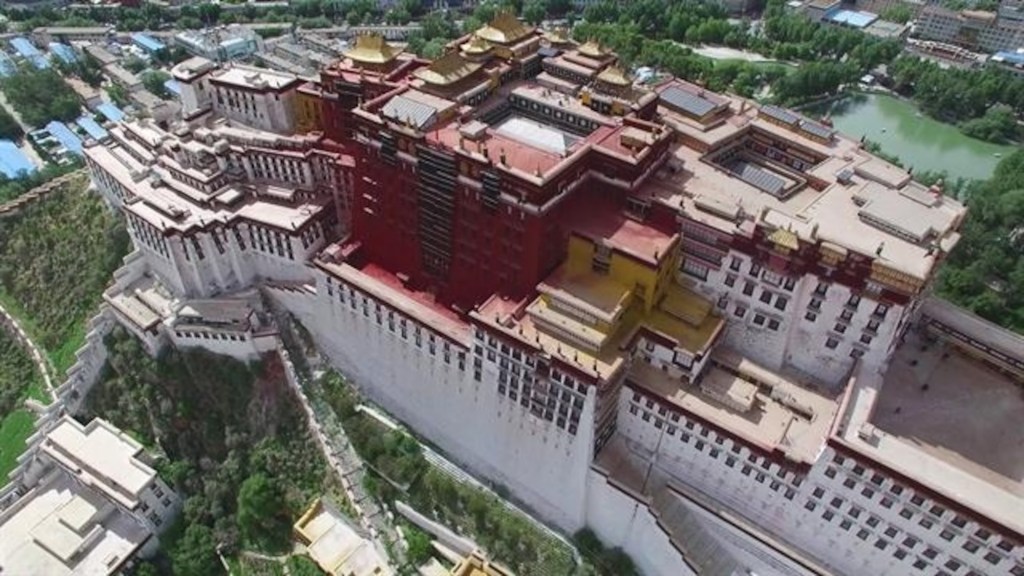
For centuries, the Potala Palace was the winter residence of the Dalai Lamas and the seat of the Tibetan government. It was a centre of religious scholarship, political administration, artistic achievement, and pilgrimage. Today, it remains one of Tibet’s most sacred sites and a symbol of Tibetan identity recognized throughout the world.
The palace is not merely a building. It is a vast sacred complex containing thousands of rooms, priceless works of art, magnificent stupas, ancient manuscripts, and some of the most important relics in Tibetan Buddhism.
Origins of the Potala Palace
The origins of the site date back more than 1,300 years.
The first structures on Red Hill were built during the reign of Songtsen Gampo in the seventh century. Songtsen Gampo is one of Tibet’s most celebrated kings and is credited with unifying much of the Tibetan Plateau.
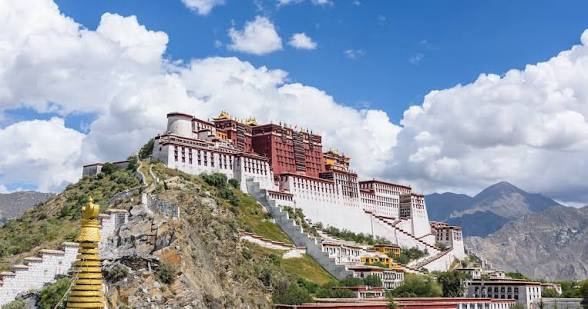
According to historical accounts, the king built a palace on the hill after marrying two Buddhist princesses: Princess Wencheng from China and Bhrikuti from Nepal.
These marriages helped introduce and strengthen Buddhism in Tibet.
The original palace reportedly contained hundreds of rooms and served as an imperial residence. However, much of the structure was destroyed during periods of political upheaval and warfare following the decline of the Tibetan Empire.
For centuries, only remnants of the original complex survived.
The Fifth Dalai Lama and the Modern Palace
The Potala Palace seen today is largely the work of Ngawang Lobsang Gyatso, often known as the Great Fifth.
During the seventeenth century, the Fifth Dalai Lama unified much of Tibet under his leadership and established the Ganden Phodrang government.
In 1645, construction began on a new palace atop Red Hill.
The project was enormous. Thousands of workers, artisans, monks, and craftsmen laboured for decades to create what would become the most important building in Tibet.

The palace served both religious and political purposes. It would be the residence of the Dalai Lama, the headquarters of government administration, and a major centre of Buddhist learning and worship.
Construction continued even after the Fifth Dalai Lama’s death in 1682. In fact, his death was reportedly kept secret for several years while work on the palace progressed.
By the end of the seventeenth century, the Potala Palace had become the magnificent structure recognized today.
Why Is It Called the Potala Palace?
The name “Potala” derives from Mount Potalaka, the mythical abode of Avalokiteshvara.
Avalokiteshvara is one of the most revered figures in Mahayana Buddhism and is regarded in Tibetan Buddhism as the embodiment of compassion.
Tibetans traditionally regard the Dalai Lamas as manifestations of Avalokiteshvara.
Naming the palace after the bodhisattva’s celestial dwelling emphasized the sacred role of the Dalai Lama and the spiritual significance of the palace itself.
An Architectural Masterpiece
The Potala Palace is among the largest and most impressive historic buildings in Asia.
The complex rises approximately thirteen storeys above the hill and contains more than 1,000 rooms, thousands of shrines, and vast networks of corridors and stairways.
Its walls are extraordinarily thick, some reaching five metres in width at the base. This provided structural stability and protection against earthquakes and harsh weather.
The palace covers more than 130,000 square metres and dominates the skyline of Lhasa.
The design incorporates traditional Tibetan architectural principles while reflecting influences from Nepal, India, and China.
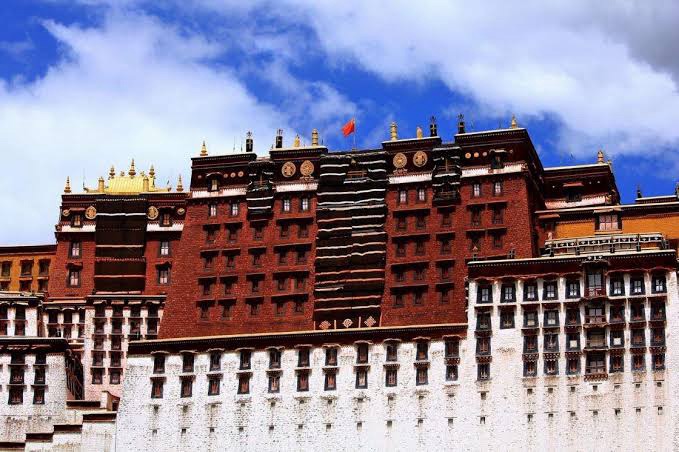
White walls symbolize peace and administrative authority, while the red central section signifies religious power and spiritual devotion.
The palace’s golden roofs glisten in the high-altitude sunlight and can be seen from great distances.
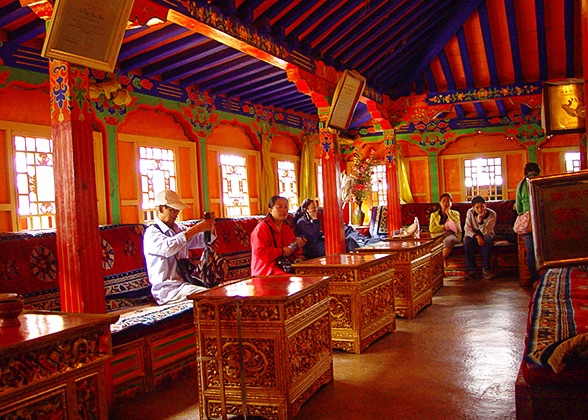
The White Palace
The Potala is divided into two main sections: the White Palace and the Red Palace.
The White Palace served primarily as the administrative and residential centre.
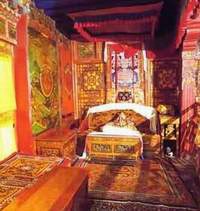
It contained the living quarters of successive Dalai Lamas, government offices, reception rooms, meeting halls, and official chambers.
From these rooms, Tibet’s political affairs were conducted for centuries.
Foreign envoys, government officials, and religious leaders were received here.
The White Palace also housed monks, attendants, and staff responsible for managing the vast complex.
Today, visitors can still see many of the residential and administrative areas that once formed the heart of Tibet’s government.
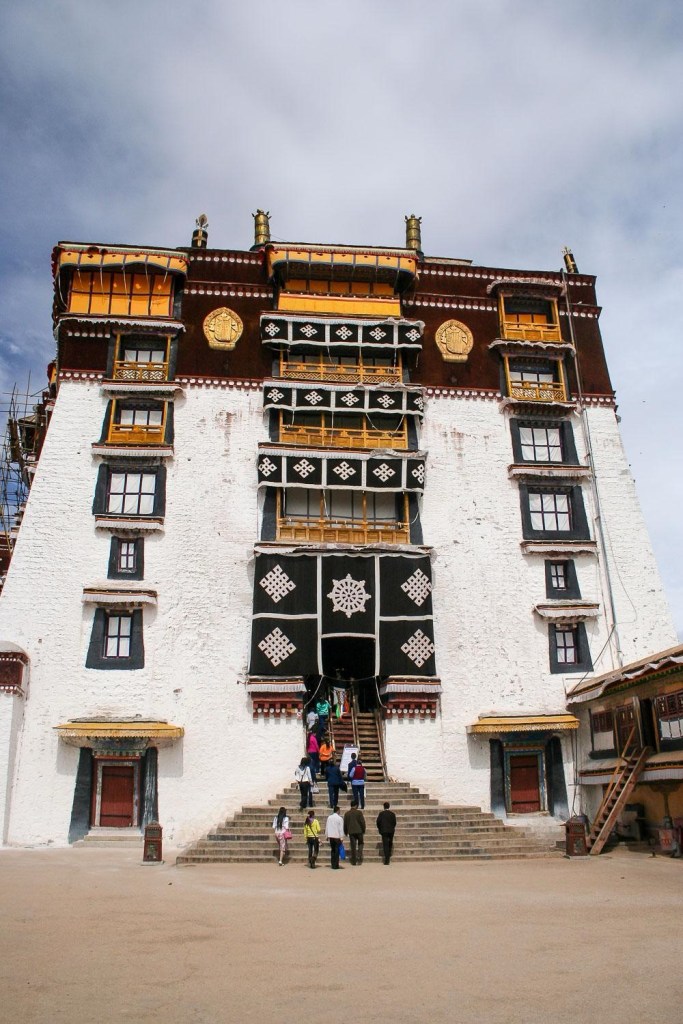
The Red Palace
At the centre of the complex stands the Red Palace, the spiritual heart of the Potala.
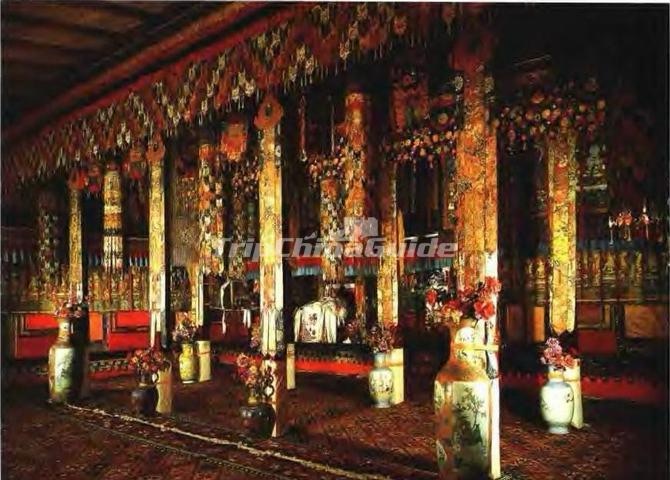
The Red Palace contains the most sacred chapels, shrines, meditation halls, and reliquary stupas.
Its rooms are richly decorated with murals, statues, sacred texts, and religious artwork.
Pilgrims often regard the Red Palace as the most important part of the entire complex.
Here, architecture serves religious purposes. Every chamber, image, and ornament reflects Buddhist teachings and Tibetan spiritual traditions.
The Tombs of the Dalai Lamas
Among the most famous treasures of the Potala Palace are the monumental stupas that contain the remains of several Dalai Lamas.
The most spectacular belongs to the Fifth Dalai Lama.
His golden stupa stands approximately fifteen metres high and is covered with vast quantities of gold and precious stones.
The structure is considered one of the greatest artistic achievements in Tibetan history.
Other stupas commemorate later Dalai Lamas and contain priceless religious artifacts, jewels, sacred objects, and relics.
These tombs remain important pilgrimage destinations for Tibetan Buddhists.
Sacred Chapels and Shrines
The palace contains numerous chapels dedicated to Buddhas, bodhisattvas, protective deities, and important teachers.
Among the most revered are chapels honouring:
Siddhartha Gautama
Avalokiteshvara
Tsongkhapa
Various Dalai Lamas
Important tantric deities
Many chapels contain ancient statues crafted from bronze, gold, silver, clay, sandalwood, and precious metals.
Butter lamps burn continuously before sacred images, creating an atmosphere of reverence and contemplation.
Murals and Artwork
One of the greatest treasures of the Potala Palace is its vast collection of art.
The walls are covered with elaborate murals depicting:
Buddhist teachings
Historical events
Lives of the Dalai Lamas
Tibetan kings
Religious ceremonies
Sacred landscapes
Cosmic diagrams
Many murals are centuries old and provide invaluable records of Tibetan history and culture.
The artistic quality is extraordinary. Bright colours, intricate details, and symbolic imagery combine to create visual narratives that educate, inspire, and preserve tradition.
The palace is often described as a living museum of Tibetan civilization.
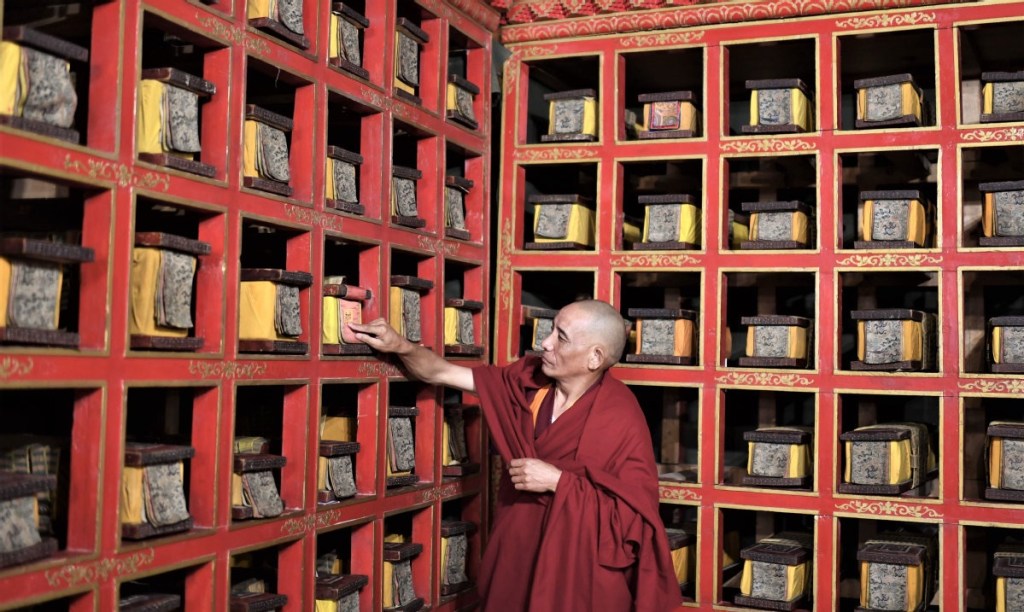
Libraries and Sacred Texts
The Potala contains extensive collections of manuscripts and religious texts.
For centuries, monks copied scriptures by hand and preserved them within the palace.
Among the treasures are editions of the Buddhist canon, including the:
Kangyur
Tengyur
Many texts are written in gold or silver ink on dark paper.
The palace also preserves historical records, biographies, legal documents, and works of philosophy.
These collections represent one of the most important repositories of Tibetan intellectual and religious heritage.
Daily Life in the Palace
For centuries, the Potala functioned as a living institution rather than a monument.
Monks conducted daily rituals and ceremonies.
Government officials managed state affairs.
Pilgrims arrived from across Tibet to pay homage.
The Dalai Lama received visitors, studied Buddhist philosophy, performed religious ceremonies, and oversaw political matters.
The palace was therefore both a monastery and a government centre.
Its corridors echoed with chanting monks, official delegations, religious festivals, and daily administrative activity.
The Fourteenth Dalai Lama
The most famous modern resident of the Potala Palace was Tenzin Gyatso.
Recognized as the Fourteenth Dalai Lama in childhood, he spent much of his early life within the palace’s walls.
There he received his religious education and training.
Following political upheaval and the 1959 Tibetan uprising, the Dalai Lama fled Tibet and established a government-in-exile in India.
Since then, the Potala Palace has ceased to function as the residence of the Dalai Lama.
Nevertheless, it remains deeply associated with his legacy and the institution he represents.
UNESCO World Heritage Status
The historical and cultural significance of the Potala Palace has received international recognition.
In 1994, UNESCO designated the Potala Palace a World Heritage Site.
The designation acknowledged the palace’s exceptional architectural achievement and its importance to world culture.
Later, nearby sacred sites including Jokhang Temple and Norbulingka were added to the World Heritage listing.
The recognition helped support preservation and conservation efforts.
Preservation Challenges
Preserving the Potala Palace presents significant challenges.
The structure is centuries old and exposed to harsh climatic conditions at high altitude.
Large numbers of visitors can also create wear and tear on fragile interiors.
Conservation experts continually monitor the palace’s condition.
Efforts focus on protecting murals, structural elements, wooden beams, statues, manuscripts, and decorative features.
Balancing preservation with tourism remains an ongoing challenge.

A Symbol of Tibet
Beyond its architectural and historical importance, the Potala Palace has become a powerful symbol.
For Tibetans, it represents their religious traditions, cultural heritage, and historical identity.
For Buddhists worldwide, it stands as one of the great sacred centres of Tibetan Buddhism.
For visitors, it evokes a sense of wonder through its dramatic location and remarkable beauty.
Its image appears in books, films, documentaries, paintings, and photographs across the world.
Few buildings are so instantly recognizable.
The Potala Palace is far more than a magnificent structure overlooking Lhasa. It is a repository of Tibetan history, spirituality, art, and culture spanning more than a millennium. From its origins under King Songtsen Gampo to its transformation by the Fifth Dalai Lama, the palace evolved into the religious and political heart of Tibet.
Within its walls are sacred chapels, golden stupas, priceless manuscripts, breathtaking murals, and countless treasures that tell the story of Tibetan Buddhism and the Tibetan people. For centuries it served as the residence of the Dalai Lamas and the seat of government, while also functioning as a centre of pilgrimage and devotion.
Today, despite the political changes that have reshaped Tibet, the Potala Palace remains one of the world’s great cultural monuments. Rising above Lhasa like a vision from another age, it continues to inspire awe, reverence, and fascination among all who encounter it.
Tim Alrerman ©️ 2026

