Introduction
Today the word “Luddite” is commonly used to describe someone who dislikes technology. It conjures images of people refusing to use computers, smartphones, or the internet.
History tells a very different story.
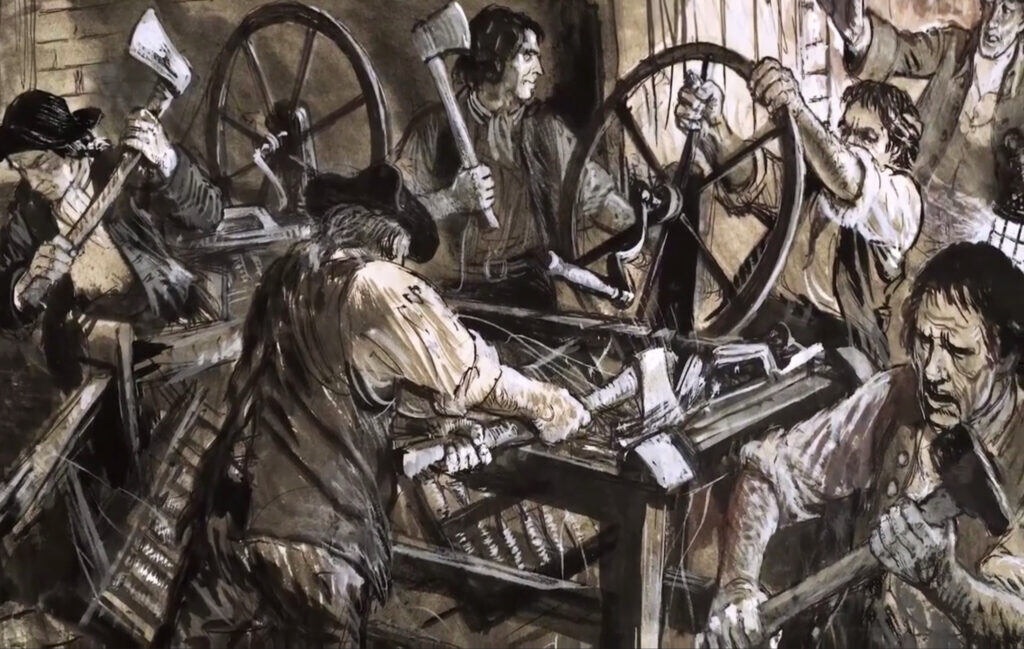
The original Luddites were not opposed to machinery itself. Rather, they opposed the way new technology was being used by factory owners to cut wages, replace skilled craftsmen, and increase profits while ordinary families sank deeper into poverty.
Between 1811 and 1817, thousands of textile workers across Nottinghamshire, Yorkshire and Lancashire became involved in one of Britain’s first major industrial protest movements. Their actions frightened the government so much that more troops were eventually deployed against them than were serving under the Duke of Wellington in parts of the Peninsular War.
Far from being enemies of progress, the Luddites were fighting for dignity, fairness and survival.
Britain on the Edge
The years following the Combination Acts saw conditions deteriorate even further.
Britain remained at war with Napoleonic France.
Trade suffered.
Food prices remained high.
Harvests were poor.
Industrialisation accelerated.
Traditional skilled trades disappeared.
Factory owners increasingly introduced machines capable of producing goods more cheaply than experienced craftsmen working by hand.
For many families, generations of specialised knowledge suddenly became almost worthless.
Who Was “Ned Ludd”?
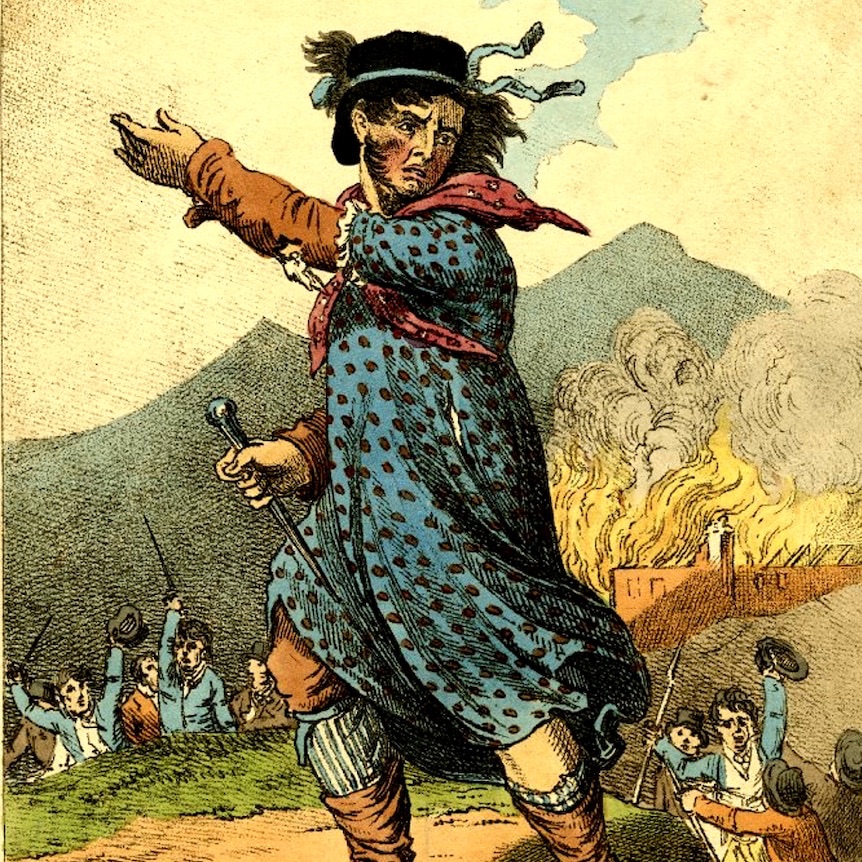
The movement supposedly took its name from Ned (or Edward) Ludd.
According to popular legend, a young apprentice named Ned Ludd smashed two knitting frames in Leicestershire during the late eighteenth century after being punished by his employer.
Whether Ned Ludd ever actually existed remains uncertain.
Most historians believe he became a mythical figure—a symbolic leader rather than a real one.
Luddites often signed threatening letters:
“General Ludd”
or
“King Ludd.”
The mythical leader united thousands of workers who never actually met one another.
What Were They Fighting?
Contrary to popular belief, Luddites did not smash every machine they encountered.
Instead, they targeted specific machines used by employers whom they believed were acting unfairly.
These employers often:
cut wages dramatically
hired untrained labour
produced poor-quality goods
ignored long-standing agreements with skilled craftsmen
exploited desperate workers
Machine breaking became a form of industrial protest.
It was aimed at employers rather than technology itself.
The Night Raids
Many attacks took place after dark.
Groups of masked men would gather secretly before marching to mills or workshops.
Armed with heavy hammers, they destroyed:
stocking frames
shearing frames
power looms
spinning equipment
Some raids lasted only minutes.
The men then disappeared into the countryside before soldiers arrived.
Communities frequently protected them by refusing to identify participants.
Yorkshire and the Woollen Mills
Yorkshire became one of the movement’s strongest centres.
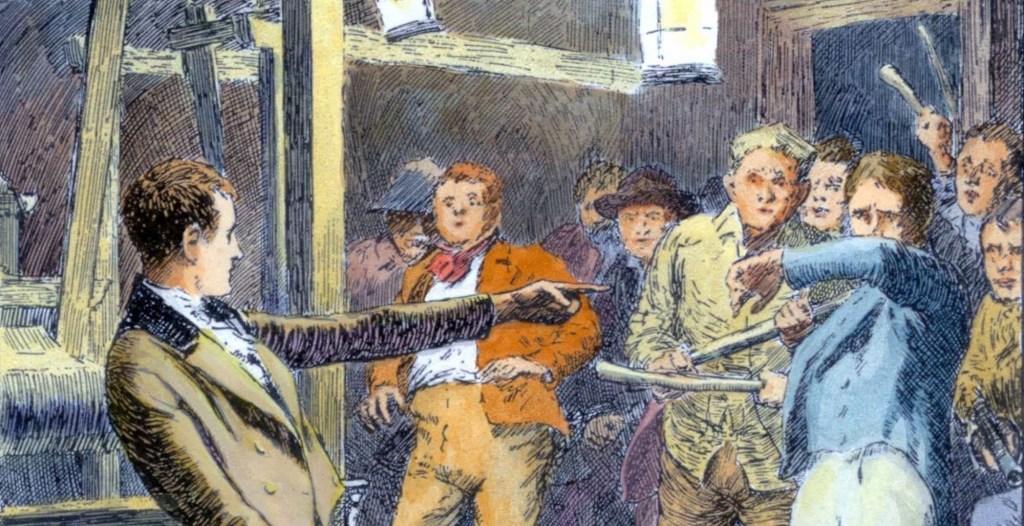
The woollen industry had relied upon highly skilled cloth finishers known as croppers.
New shearing frames allowed employers to replace many experienced craftsmen with cheaper, less-skilled labour.
For croppers, the machine represented unemployment.
The issue was never simply technology.
It was who benefited from it.
William Cartwright and Rawfolds Mill
One of the most famous confrontations occurred in April 1812.
Mill owner William Cartwright fortified Rawfolds Mill near Huddersfield, expecting an attack.
When several hundred Luddites assaulted the mill, they found armed defenders waiting.
Shots were exchanged.
Several Luddites were killed.
The failed attack marked a turning point.
Government determination to crush the movement intensified.
Parliament Responds
The British government reacted with extraordinary severity.
Thousands of troops were sent into industrial districts.
Informers were rewarded.
Suspected leaders were arrested.
In 1812 Parliament passed the Frame Breaking Act, making machine breaking punishable by death.
It was one of the harshest responses ever directed at an industrial protest movement.
Trials and Executions
The government intended to make examples of those involved.
Following mass arrests in Yorkshire and Nottinghamshire:
dozens received transportation
many were imprisoned
several were executed
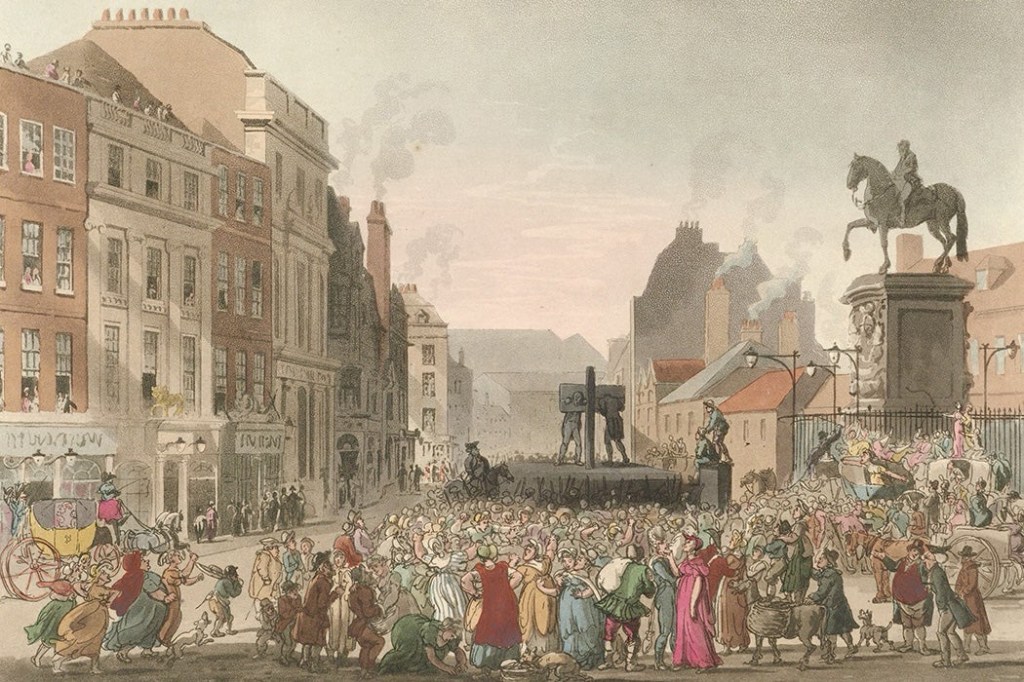
Executions took place publicly.
Authorities hoped fear would destroy the movement.
Instead, many workers regarded the condemned as martyrs.
Employers Strike Back
Factory owners also adapted.
Some hired armed guards.
Others built stronger mills.
Many recruited replacement workers from elsewhere.
This was the beginning of a pattern that would continue throughout the nineteenth century.
Employers frequently imported labour from other districts—or from Ireland—to keep mills operating during strikes.
The newcomers were often branded “scabs” by striking workers.
Yet many of these men were victims themselves, driven by hunger and unemployment rather than any desire to betray fellow workers.
Employers exploited desperation on both sides, deepening divisions among working people while preserving their own profits.
Were the Luddites Successful?
In the short term, no.
The movement was crushed.
Industrialisation continued.
Factories expanded.
Machines became even more widespread.
Yet the Luddites left an important legacy.
They forced Britain to confront difficult questions.
Should technological progress benefit everyone?
Or only those who owned the machines?
Those questions remain remarkably relevant today.
Modern Parallels
The Luddites are often misunderstood because history remembers the smashed machinery rather than the reasons behind it.
Modern workers face similar anxieties.
Automation.
Artificial intelligence.
Robotics.
Digital technology.
Again, the debate is not whether technology should exist.
It is whether society shares its benefits fairly.
In that sense, the Luddites were asking questions that continue into the twenty-first century.
The Armour of Light
Ken Follett captures this period exceptionally well.
The strike, Hornbeam’s use of replacement workers from Dublin, the overcrowded back-to-back housing, and the growing bitterness between employers and employees all reflect real practices of the early Industrial Revolution.
Hornbeam is not merely a fictional villain. He represents a type of mill owner who embraced technological innovation while resisting any suggestion that workers deserved a voice in how those changes affected their lives. His willingness to import strike-breakers illustrates another historical reality: employers often found it easier to pit one group of workers against another than to negotiate improvements in wages or conditions.
Conclusion
The Luddites were never simply enemies of progress.
They were skilled workers watching their livelihoods disappear in an age of breathtaking technological change. Their protest was born not from ignorance but from fear that industrial progress was enriching a few while impoverishing many.
Although the movement was defeated, its struggle helped shape later debates over workers’ rights, trade unions, collective bargaining and the social responsibilities that accompany technological innovation.
Perhaps the greatest injustice done to the Luddites is that their name has become shorthand for resisting technology, when in reality they were among the first people to ask a question that still echoes today:
Who truly benefits from progress?
Tim Alderman ©️2026
Sources
E. P. Thompson, The Making of the English Working Class.
Malcolm I. Thomis, The Luddites: Machine-Breaking in Regency England.
Adrian Randall, Before the Luddites.
Eric Hobsbawm, Industry and Empire.
Kirkpatrick Sale, Rebels Against the Future.
Parliamentary Archives (UK), records relating to the Frame Breaking Act (1812).
Trades Union Congress (TUC), historical resources on the origins of British trade unionism.

