Tag Archives: AIDS

A 40 Year Journey Into (And Out Of) Fear Part 1

I love history. Always have, and excelled at it at school. Not just local and world history in general, but individuals personal history as well. Though often distorted, edited to fit the times, world history is fixed. There is only one truth to it, no matter what narrators may say. Personal histories are quite a different thing. A hundred people will produce a hundred histories, each distinctly individual, never duplicated by anyone else. I have written much about my experiences with HIV over the last 25 years, most of it via “Talkabout”. Though personal, and often intimate, none have really gotten into the nitty-gritty of my personal, lived experience. This reflective piece is to rectify those omissions, giving both a factual and lived insight into a period in gay history that should never be forgotten. The recent Covid experience really drove home to me how HIV, its past, and still present history, was no longer of any consequence. Covid was being spoken about as though it is the only pandemic of recent time. It would be interesting to see where Covid sits in 40 years time. So this is my history with HIV/AIDS. It is more detailed, and more anecdotal than my previous writings…which also means it’s much longer. It is, with no strutting involved, a story of survival, but if survival is the gauge of one’s strength and tenacity, then I have come out at the end of it with flying colours, the glass half full, so to speak.

Over 40 years has passed since I sero-converted to HIV. I remember it well…I was managing a retail store in Sydney and was due to go on leave in August 1983. My last day before going off on my break was hellish. Temperature, diarhhea, extreme lethargy, disorientation…I couldn’t wait for the day to end. As it turned out…for the fortnight it went on for to end. I had only been out for 3 years…a late closet jumper…and I have to admit to being very trashy, making up for lost time as it was. I have wondered over the years, as have many, just who it was that infected me…and where! Was it that hot American boy who was staying in The Connaught in Darlinghurst, who picked me up one night just after my return from Melbourne (very likely!) or was it a Melbourne or Sydney local who had returned from a holiday in the USA, or, like me, gotten off with American boys (the flagour of the month) here. Of course, I’ll never know, but the speculation remains anyway!

Since that time, both as a writer, and as a 12-year public speaker with the Positive Speakers Bureau, I have told of my journey with HIV/AIDS. But the story has always had constraints…either in word length with articles, or time restrictions in talks. There is a lot more to the story than I tell in these…often done by rote…sessions.

I have just finished reading Cheryl Wares “HIV Survivors In Sydney – Memories Of The Epidemic”, an oral history project that I was part of, contributing a 21/2 hour interview with Cheryl when I lived in Gaythorne, Queensland in 2014. I was disappointed in the book, for as much as Cheryl wanted it to be a story of ordinary gay men surviving HIV/AIDS, and how it affected their lives both then, and now, it really came across as a voice for…and was hijacked by… HIV activists, rather than just us bar crawling gays-on-the-Golden-Milers. I was left feeling that both my contribution, and the contribution of others like me who weren’t part of the activist community was largely overlooked…again. I know it sounds like sour grapes, and mine is only one of a thousand survivor stories, but like many others I want there to be some sort of public record of many aspects of the HIV/AIDS survival story that doesn’t make it into many articles, or talks. The one thing Cheryl’s book did do was to invoke memories of so many personal experiences…and feelings…that made my personal HIV journey…MY journey.

This is not the first time I’ve contributed to interviews and photo sessions on HIV/AIDS survival, and either been left out in the cold, or had my story overshadowed by activists…or academics. But more on that as we go along. Because this is a personal transcript, I am not putting a word limit on it, so it’s going to be long. I want all this unknown or forgotten information to be in one article. It’s not a soul-cleansing, so don’t get me wrong. I see it more as an addendum to HIV history. I want it in writing before I either forget it, or confuse it in the fog of ageing. Luckily, I am a bit of a hoarder, so have copies of a lot of the things I will be referencing as the story unfolds. To make sense of it, I guess I need to go back to the beginning.

I have written a lot on my family, the dysfunctionality of my growing up, in my blog (http://timalderman.com), so I am not going to rehash already told stories here. In a nutshell, I was born in St. George Hospital, in Kogarah (NSW) on the 18th January 1954. I had one younger brother, Kevin, who was born in 1959. My childhood was pretty uneventful until I was 11, where with my mother deserting the family home, when my brother and I were at school. My father was a difficult man, trapped in a past that had long gone! Yet, he managed to find the housekeeper from hell…to this day I have no idea where he found her, though her move from the bed in the sunroom of our Sylvania home to the bed in the master bedroom occurred within a week, so I am left to wonder… entering our lives. Her persecution of my ADHD brother was relentless, and led to the death of him, at my father’s hands, in the waters below the cliff top known as The Gap. This blew my innocence all to the shit. My knowledge of “being different” at age 9, and my eventual coming out after my father’s suicide are also on my blog, so let’s move it all along.

1980 finds me in Melbourne, where I had just come out as a 26 year-old. A HIV story begins. Little did I know that both my life as a gay man, and my life as a HIV+ man were to walk the same road.

So what was it really like in 1982 to be reading snippets in our local gay press about this mysterious illness (KS, or Kaposi Sarcoma), rearing its ugly head in the gay ghetto’s of America, that seemed to be targeting gay men who frequented the saunas, and quickly killed them? Well, cynicism and disbelief to start with, and the surety that within a short period of time they would find an antibiotic to clear up yet another STD. However, the snippets were to become columns, the columns pages as the mysterious and deadly virus…originally labelled as GRID (Gay-Related Immune Deficiency (Gay plague/Gay syndrome) in 1981, it was followed by HTLV-3 in 1083…human T-lymphotrophic virus type 3…leapt from the shores of America and found its way into the gay scene here. The panic and fear began!

Our response was mixed. The first case of AIDS was reported in Sydney in October 1982 by Dr Ronald Penny. In July 1983, the first recorded Australian death from AIDS-related causes occurred in Melbourne.. The most notable death in these early days was Bobby Goldsmith (1984).We had our usual ratbags who yelled and screamed about “God’s vengeance on the evil, sick and perverted gay lifestyle”…obviously a different God to the compassionate, all-forgiving one that Christians liked to rant about…the most vocal and notable being the Rev Fred Nile MLC and his Festival of Light, and Call To Australia affiliations, the advocates of hate and intolerance who demanded quarantine for all infected persons, and those of the citizenry who either quietly or vocally wished that we would all die or just go away. Mind you, we did have our fun with them. I vividly recall one early Mardi Gras…back then, joining the parade was a very informal process…where the Festival of Light were protesting at the parades starting point. Myself and some friends, dressed in leather chaps with our bare backsides hanging out of them, deliberately stood in front of them, shaking our booty, much to their horror and disgust.

There is no watering it down…discrimination and stigmatisation was rife. It was frightening!

Thankfully, common sense eventually prevailed and both the government and the grassroots gay community combined to put both AIDS Councils and NGO programs in place. Our quick response was instrumental in Australia always being at the forefront of HIV/AIDS care. Within 2 years every state had an AIDS Council under the national umbrella of NAPWA (National Association of People with AIDS), and the formation of support organisations such as The Bobby Goldsmith Foundation (BGF), Community Support Network (CSN) PLWA (which was to become PLWHA), ActUp, and Ankali. Without these organisations life would have been grim for those infected. They provided financial, emotional and spiritual support for those who, quite suddenl found them selves with a death sentence hanging over their heads, along with the fear of unemployment and homelessness in the midst of the hysteria going on.

I digress! In 1985 testing was introduced. It was a bit of a strange affair in the early days. Due to the hysteria, discrimination, and fear of being dragged off to quarantine…a genuine fear… no one wanted their personal details on a database, so at clinics like the Albion St Centre you chose a fictitious name, and the clinic then issued you with a number that then became your ID. Mine was Peter 3080. When things cooled down, the fictitious name was dropped, and replaced with your real name. You had a blood test, and waited for two to six weeks – talk about high anxiety – to get your result. At the time of my HIV test, I already suspected that I had sero-converted and was going to come up HIV+. I was right. Counseling? Oh yeah, we had a lot of that back then. “You’ve got about 2 years to live”. Shrug shoulders “Okay”. And off we went knowing the inevitable was rapidly approaching! The initial window periods were reasonably long, but got much shorter as time progressed, and the virus mutated. That I did not get seriously ill with AIDS until 1996…though their were other factors in play…I always put down to getting infected early in the history of the virus, thus getting a much weaker mutant of the virus than what was to come. I was in a relationship at that time, and my partner came up HIV-…already the juxtaposition between positives and negatives had begun. The strange thing was that I felt no need to hide my status. I turned up at the Oxford Hotel and said to friends…oh well, I’m positive. Of course, I was far from being the only one.

Then the horror stories started! The disgusting treatment of young Eve Van Grafhorst is something for all Australians to be ashamed of. Born in 1982, she was infected with HIV via a blood transfusion. When she attempted to enrol in her Kincumber pre-school in 1985, parents threatened to withdraw their children due to the (supposed) risk of infection. The family was literally hunted out of town, and forced to leave the country and go to NZ. I will never forget the sight of this poor, frail girl on her way to the airport. I, like many others, was horrified that this could happen in Australia. Thankfully, her NZ experience was quite the opposite, and she lived a relatively normal life until her death in 1993 at 11 years of age. Her parents received a letter from Lady Di praising her courage

To be continued

Tim Alderman ©️ 2024

HIV Long Term Survivors Awareness Day Reflection

In early 1994, I had a huge 40th birthday party at the Stronghold Bar, in the basement of the Clock Hotel in Surry Hills. At the same time, I dumped the beautiful man who had been my boyfriend.

With declining health, I thought it would be my last big birthday party.. I hoped I might get another year…maybe 2. I did not want my boyfriend to be lumbered with the care of a dying man. There were others better equipped to do that. At that stage, I had no inkling that my guess would almost come to fruition, and that within those two years, HAART (Combination Therapy) would appear. It whisked me…literally…from the arms of death. Battered and bruised from my encounter with AIDS, I was thrown unceremoniously back into society.

Even at that stage I was already, along with others who walked similar though divergent paths, a long term survivor. According to the statistics, I should have departed this life around 1987. Four years would have been considered a good run, let alone thirteen! That I had survived that long…longer than most of my social circle…filled me with a strange mix of guilt, thanks, and hope. Having been given a second chance, nothing was going to be the same again! And it wasn’t!

Now at 70…way past the self-imposed 40 deadline…and as a 41-year long term survivor, the trepidation of those earlier days is way back in the dark past. Though I still get a jolt when I fully realise the implication of those two figures…70…41! It seems surreal. I did grab the opportunity, and reinvented myself…a university degree in writing, and two TAFE degrees in both cooking (chef), and fitness have positively changed my life direction.

As a long term survivor…and I wear the badge with modest pride, having beaten the odds…the other significant aspect of having been where I have, is the knowing that I have lived…and continue to…through the entirety of a pandemic. What irks me is that, as a valuable historical resource, my knowledge is overlooked, pushed into the background of history. Covid was nasty…and still is…but was treated as though it was the worst thing to happen to mankind. Yet only 40 years earlier, one of the worst pandemics of modern times had started to run its course, and over 40 million people have died as a result of it.

We have short memories!

Tim Alderman 2024.

That Crazy Weird Old HIV Guy

Let’s get one thing straight…I’m NOT a conspiracy theorist! I would like to think I weigh things up before coming to a conclusion. I’ve seen…and heard… a lot over the last 41 years of my life with both HIV, and AIDS! Some good, some not so good. Many will not agree with me on some, or all of these points, and that’s fine! But there are also a lot who will! There will never be a Royal Commission, not even a dissection of how HIV was handled “back in the day”. There was a thinking that drastic times called for drastic actions, and thus everything was acceptable, despite any damage it caused. I’m one of those who begs to differ, even if it makes me out to be a crackpot! Oh…and another point I need to make…yes, I AM suspicious of Big Pharma! Both their intentions, and practises!

So…why am I defending myself? Well…I have some “outside-the-square” theories/thinking on how the HIV community has been used by the drug companies over the decades. Of course, they are BIG, so have a lot of clout, and nobody ever seems to question their intentions.

I have always considered it a bit odd that there have been investigations into how Covid was handled, federally and on a state level, but nothing into the handling of the HIV pandemic. As stated already, it is almost like there was an “anything goes” attitude towards issues regarding HIV. As long as an action could be justified, it was okay!

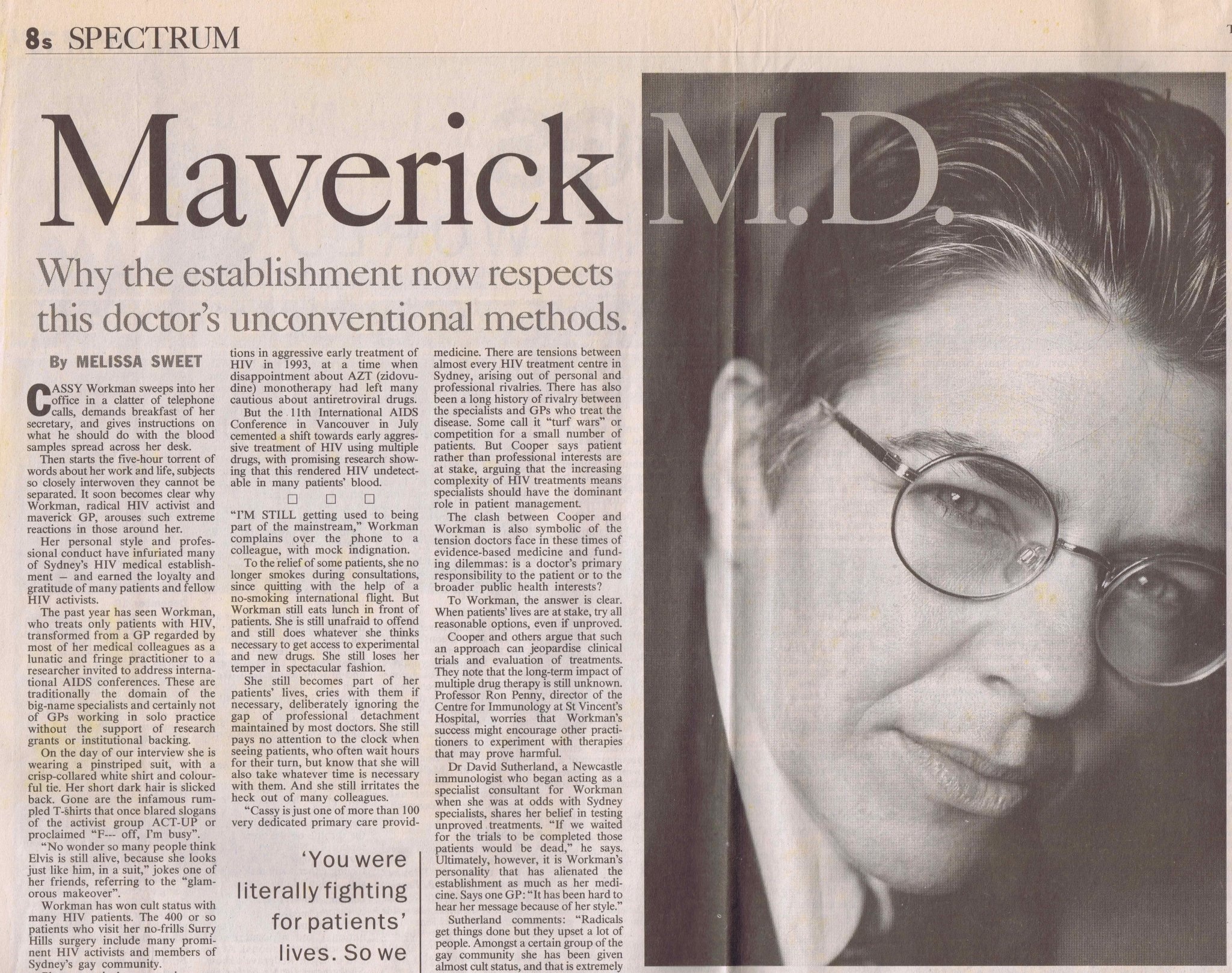
In 2018, I had a chapter dedicated to me in the “HIV Book Project” publication of the same name. Over the decades, I have had many interviews by media, including Good Weekend, and a segment on the television series Healthy, Wealthy & Wise. Apart from a very cringy article in The Bulletin in 1987, back when we knew fuck all about HIV treatment, and survival rates, my story, as interesting as it is, as told in interviews and photographic sessions, had never been published in the mainstream media. This has always appeared to be the domain of activists, HIV “hierarchy”, and academics. So much for the voice of the HIV guy on the street!

My interview and photography session for the HIV Book Project took place in Sydney Park, with an ex, and my dog, Benji tagging along. When they decided to include me in the book, I was, to a point, surprised! My opinions were controversial, and my actions to handle my HIV drug treatments my own way must have raised many an eyebrow. After all, compliance had been rammed down our throats for over 20 years, and that someone like me dared to defy the norm was, to say the least, foolhardy! To my way of thinking, our doctors didn’t decide our medication dosing…the drug companies did!

After being on one regime or another…extending back to the days of mono therapy…for over 25 years I was greatly concerned about how these drugs must have been knocking my body around. At that time, I was on a regime of three drugs twice a day. Over a 7 year period, I had made the very personal decision to halve my regime to once a day. This effectively cut out side effects I was experiencing at that time. It also gave my body some respite from the continued battering of long-term drug dosing. To make things worse…I was also taking a drug holiday every weekend. So these views and actions were published in the book. I had never admitted to anyone that I had taken this action. Not even my doctor!

After publication, I read the other stories in the book. Comparing my story to theirs, I actually felt as though I had come across as a bit of a weirdo! Perhaps to my own detriment, what I hadn’t explained was that when I started this action, my intention had been that if by halving my dosing my viral load climbed, or my CD4 count dropped, I would resume the prescribed dosing. Yet after 7 odd years of doing this, my viral load was still undetectable, and my CD4 count continued to climb! So much for the need for compliance! I’m not advocating that everyone on HIV drug regimes should do this…but it is food for thought!

And it doesn’t stop there! I openly defied those who love to claim that AZT was beneficial, and kept the wolf from the door! This was an incredibly toxic drug! Having failed as a cancer drug due to its toxicity, it was suddenly hailed as a breakthrough drug in the treatment of HIV, despite trials such as the Concorde trial (Britain/Ireland/France) labelling it as “human rat sac”. Anyone who saw “Dallas Buyers Club” would be familiar with the disdain in which the drug was held. Its side effects…and we were dosed massively with it…were horrendous, including liver and kidney damage, peripheral neuropathy, knocked the immune system around (immune suppression), and anaemia. On a HIV forum many years ago, I posted that I personally held AZT responsible for the sudden decline in my CD4 count, and the immune suppression that brought about my run in with AIDS. I thought I would cop a slamming for expressing such an opinion, only to find in the comments that many agreed with me! Like me, many regretted taking it!

I also question…please note that word…the ethics behind the pricing of HIV drugs! At one time, the actual retail price of the drug…usually in the many hundreds of dollars…was printed on the pharmacy label. Anyone on three or four drugs would never have been able to afford to buy them every month, especially anyone on a pension. One has to wonder that, without the PBS, would the drug companies have just allowed us to die…or would we also have had to run buyers clubs!

Which brings me to resistance testing…another drug company instigated test, and one I have always been…vocally…doubtful about. Excuse my cynicism, but if a drug company is developing and pushing a particular test, there has to be something in it for them!Has anyone noticed…and I’m sure you must have…that pretty well everyone who had a drug resistance test was taken off the older drugs (despite them still working) and placed on the newer drug regimes! Logic decrees that, considering the costs of research and development, Big Pharma would prefer us all to be on the newer drugs, considering that they would have the highest financial outlay! I reckon we were really duped on this one, especially considering that currently those who are experiencing weight gain…another point worth raising…from the newer drug regimes are requesting a return to the older drugs…which at some stage they would have been told they are resistant too. Interesting, that!

So call me a weirdo, or a ratbag! To be honest, I really don’t care! For no reason has the term HIV Industry been coined! Someone is making money from it, and undoubtedly keeping the shareholders happy…and it’s not US! I would rather be called a whacko…at the least, after 41 years being HIV+…that I’ve experienced enough, indeed seen enough, to know that if you are not one of the sheep who just goes along with the flow, if you are someone who thinks for themselves with a moderate dose of cynacism, you are always going to be attacked and slammed.

I have broad shoulders. I can handle a bit of criticism.

Tim Alderman ©️ 2024

Getting On With It! A 37 Year Retrospective of Life with HIV/AIDS (UPDATED)

The challenge of writing about 37 years of living with HIV/AIDS isn’t so much to write tomes about what actually was witnessed over that period. That is easy to do, and I could ramble on forever about it. The challenge lies in being objective and succinct, to tone down the schmaltz and sentimentality and cut to the chase. Not as easy as one may think, as these were the most challenging, relentlessly ruthless and heartbreaking years of my life. But if survival is the gauge of ones strength and tenacity, then I have come out at this end of it with flying colours. Indeed, the cup is half full!

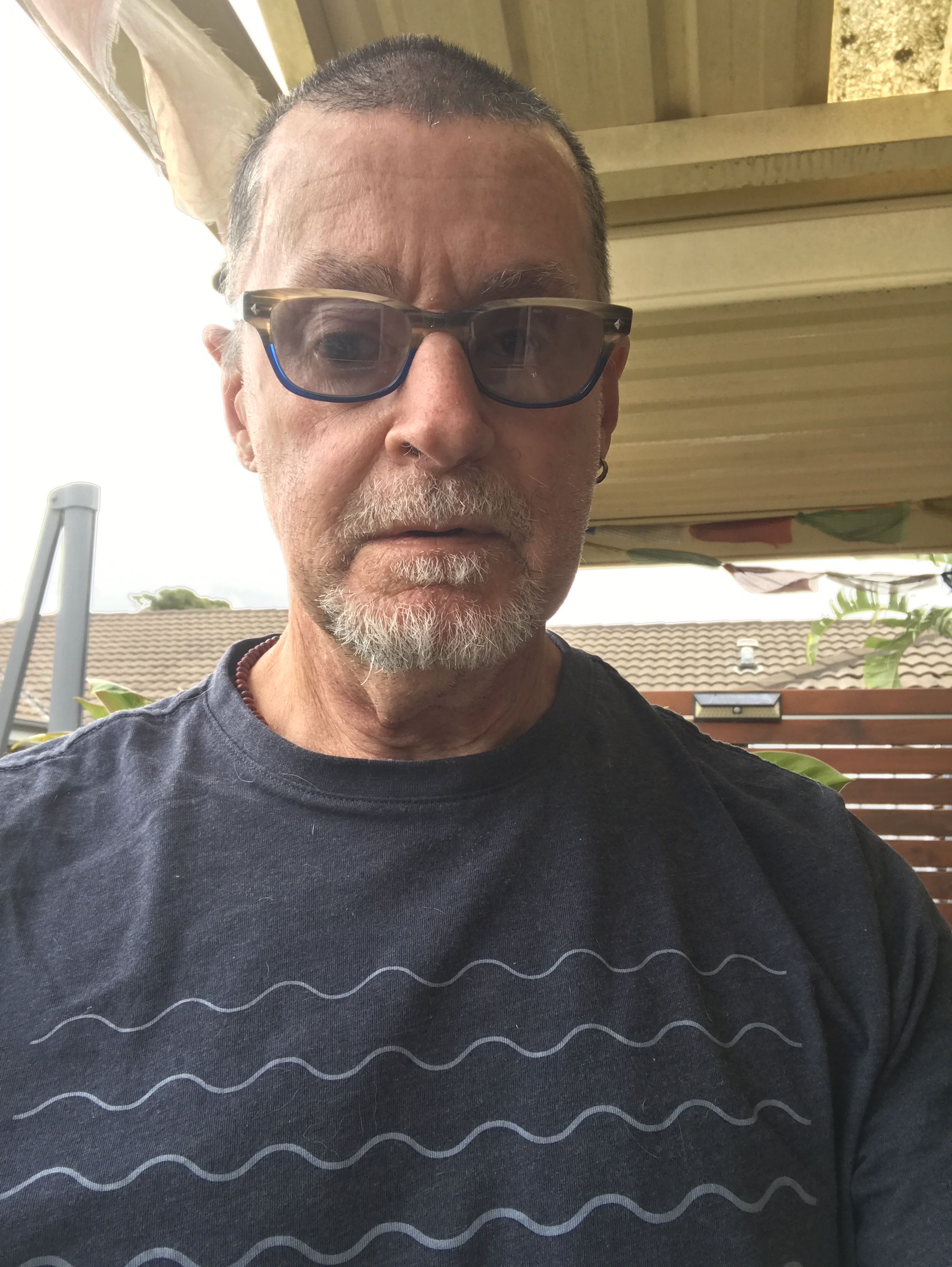
The author at 65

So what was it really like in 1982 to be reading snippets in our local gay press about this mysterious illness in The States that seemed to be targeting gay men who frequented the saunas, and quickly killing them? Well, cynicism and disbelief to start with, and the surety that within a short period of time they would find an antibiotic to clear up yet another STD. Soon the snippets were to become columns, then pages as the mysterious and deadly illness leapt from the shores of America and found its way here.

Our response was mixed. The first recorded case of HIV at home was 1982, and the first death in 1983. We had our usual ratbags who yelled and screamed about God’s vengeance on the evil, sick and perverted gay lifestyle (obviously a different God to the compassionate, all-forgiving one that I had heard about), the advocates of hate who demanded quarantine for all infected persons, and those who either quietly or vocally wished that we would all die or just go away. Not that easy folks!

Thankfully, common sense prevailed and both the government and the grassroots gay community combined to put both AIDS Councils and NGO programs in place. Our quick response was instrumental in Australia always being at the forefront of HIV/AIDS care. Within 2 years every state had an AIDS Council under the national umbrella of NAPWA (National Association of People with AIDS), and the formation of support organisations such as The Bobby Goldsmith Foundation (named after the first person to die from AIDS in Australia), Community Support Network (CSN) and Ankali. Without these organisations life would have been grim for those infected. In 1985 testing was introduced. It was a bit of a strange affair in the early days. Due to hysteria and discrimination no one wanted their personal details on a database, so you chose a name, and Albion Street Centre issued you with a number that then became your ID. You had a blood test, and waited for two weeks – talk about high anxiety – to get your result. I had a mystery illness in 1982, a flu-type illness that wasn’t the flu, and already suspected that I had sero-converted and was going to come up HIV+. I was right. Counseling? Oh yeah, we had a lot of that back then. “You’ve got about 2 years to live”. Shrug shoulders “Okay”. And off we went knowing the inevitable was rapidly approaching, and it was time to PARTY!!! What else could you do?

However there were horror stories. The disgusting treatment of young Eve Van Grafhorst is something for all Australians to be ashamed of. Born in 1982, she was infected with HIV via a blood transfusion. When she attempted to enrol in her Kincumber pre-school in 1985, parents threatened to withdraw their children due to the (supposed) risk of infection. The family was literally hunted out of town, and forced to leave the country and go to NZ. I will never forget the sight of this poor, frail girl on her way to the airport. I, like many others, was horrified that this could happen in Australia. Thankfully, her NZ experience was quite the opposite, and she lived a relatively normal life until her death in 1993 at 11 years of age. Her parents received a letter from Lady Di praising her courage.

Eve van Grafhorst was diagnosed with HIV and hounded out of Australia, but her legacy endures

Meanwhile, the Australian nightmare was well and truly hitting home. My first close friend, Andrew Todd, died in 1986. At that time there was no dedicated AIDS ward, and Andrew was shifted between wards as beds were needed for other cases. He died on Boxing Day in A&E (called St Christopher’s ward, due to people usually just “travelling” through it on their way to a dedicated ward) at St, Vincent’s Hospital In Darlinghurst. It is interesting to note here that the Sisters of Charity, who founded this hospital, put the hospital at the centre of HIV care very early in the epidemic, and also provided palliative dare through the attached a Sacred Heart Hospice. I had the sad duty of ringing all my friends at a party to tell them the sad news. Party pooper recognition acknowledged! Ward 17 at St Vincent’s eventually became the dedicated AIDS ward, and for the next 10 years was never empty. Other hospitals such as Westmead hit the headlines for all the wrong reasons; full contamination clothing for those working with HIV people, rooms not being cleaned, meals left outside doors. Even the poor old mosquito copped a hiding as a means of contamination, along with toothbrushes, glasses, cutlery and crockery. An advertising campaign featuring the Grim Reaper bowling down poor people created an apocalyptic vision of HIV that scared the life out of everyone. It was quickly withdrawn. In the interim, my 2 years became 4, which became 6 followed by 8. My life became a haze of alcohol and cigarettes, not shared alone.

In the 80’s I held a lot of parties with anywhere from 40- 60 friends attending. By 1996, if I had tried to hold a party I would have been lucky to have dug up 10 friends to attend. In the blink of an eye my social circle was effectively wiped off the face of the earth. Hospitals, hospices, funerals and wakes became the dreaded regular events. It was death on a relentless and unforgiving scale. The Quilt Project became the focus of our sorrow, and it’s regular unfoldings and name readings were tear-filled times of remembrance and reminiscence, along with the yearly Candlelight Rally. I attended until I became so empty that I could no longer bear it. I submitted my names but no longer attended. In the early 90’s four friends died close together – two from AIDS, one a heart attack and one cancer. This was a particularly heavy blow as two of these friends had been regular “gutter drag” partners, and that part of my life effectively ended. In a perverse way, it seemed strange that the Big A wasn’t the only thing stalking our lives.

Ready to do a quilt unfolding at the Government Pavilion, Sydney Showgrounds, around 1991. From left Peter McCarthy, Peter Gilmore, Bevan Lambert, Steve Thompson, Tim Alderman.

Despite its reputation for being human Ratsac (the Concorde Study in France named it such, after conducting an unethical trial; turns out they were correct!) I started taking AZT when my CD4 count started to take a dive. Hard work, long hours, heavy drinking, chain smoking, a shit diet and emotional turmoil didn’t help. Pub culture became lifestyle. Did several drug trials – D4T, which was sort of successful, though the same class of drug as AZT. Also p24 VLP (Very Light Protein) which proposed that stimulating the p24 antigen may help control HIV. Total waste of my time. It did nothing. We started alternating drugs – 6 months on AZT, 6 on D4T, 6 on DDI, 6 on DDC. Perversely it seemed to keep the wolf from the door. Dosage was huge. Everyone on it ended up with kidney problems and peripheral neuropathy. Prophylactics added to the drug burden. In the meantime there was no HIV dental service and our teeth rotted or fell out due to bouts of candida. I left work in 1993 after being seriously knocked around by viral pneumonia which should have killed me…but didn’t.

Like many, I went on every drug or alternative trial that came my way. There are those who have described us guinea pigs as brave, or “heroes”, but we certainly didn’t feel like that at the time, despite it being a very selfless act. The thinking at such a desperate time was that…well, if it works for me, the benefit will flow onto everyone else! But there were, in the early days at least, more failures than successes. D4T:FAILURE…caused anaemia; P24-VLP:FAILURE…was hoped it would boost the p24 antigen – it did nothing: Goat Serum:FAILURE…though I did get a very scary skin rash from it; Vitrasert Implants: FAILURE…though due more to HAART eradicating the scourge of CMV retinitis. Were intended to leach Ganciclovir into the eye over a 9 month period, thus eliminating the need to have it injected into the eye regularly. Two minor operations to insert them, with an initial estimate of a 4% chance of developing cataracts. Turned out to be a 100% chance, thus further operations to remove the cataracts. Fun, baby!

I was shuffled onto the pension, and given rent subsidised housing by DOH (Department of Housing). The subsidy seemed like a good idea at the time. After all, weren’t we all eventually going to be killed by the Big H, so no one would be on it for that long? Famous last words! My alcohol consumption and chain smoking increased, if that was possible! Was losing weight at an alarming rate, and naturally no one noticed because I took to wearing baggy clothes to disguise it. Nothing quite like being delusional. Moved from Darlinghurst to Bondi. Nothing like moving away from the scene to help your health…not! Collapsed in the street, and admitted to St Vincent’s not with PCP as suspected but a collapsed lung. Two weeks later and a change of female GP’s saw me back in the doctor’s rooms while she read my hospital discharge report. Had they tested me for CMV retinitis? No! Was I having trouble with my vision? Yes, but I do wear glasses. Guess what? We’re sending you for a little holiday at Prince Henry Hospital (now closed). I was a little bit sick. Chronic CMV retinitis, chronic candida, chronic anemia, had 10 CD4 cells and weighed 48 kgs. Mmm, prognosis was not good. Well, it had been a good life. I was certainly joining a band of party people. But no! Life hadn’t finished with me yet. Protease Inhibitors had come along at an auspicious time, and within a fortnight I had been stolen from the arms of death. Mind you, that fortnight had been no picnic. Ganciclovir injections into the eye, Deca-Durabolin injections to help put weight back on, blood transfusions, and enough finger prick blood readings to last me the rest of my life. And the problems had just started for this return-to-lifer. Not dying when you are supposed to really fucks up your head space.

So started the next round of therapies. Peer Support groups; counselors; Caleo (Greek word which means “To Stick”, a treatment management group who help you maintain the impetus to take the billion pills a day (I was taking over 360 pills a week – anti-retrovirals, prophylactics, and pills to control side effects – at one stage) we were taking); clinics; dental care (now up and running); volunteer work (to keep one sane). What started out as volunteer work at the then PLWHA (NSW) Inc (now Positive Life) turned into paid employment as a research assistant. I started writing for “Talkabout” magazine, joined the Positive Speakers Bureau, and learnt to use a computer. A couple of stints back in full-time employment made me realise that big changes needed to be made with my life. By this time my health was pretty well back together. A couple of nights out pushed home just how few people I knew, however did lead to meeting my current (now ex) partner. A brief encounter with Indinivir sludge in my kidneys (which involved having a stent inserted then removed) also made me aware that for HIV+ people the unexpected can happen at any time. Yet another change of doctor. Self-empowerment had become an important issue, and I wanted a say in my health management, as distinct from being dictated to. Big changes were about to happen.

In 2000 David and I did a big (and expensive) holiday to the Red Centre. It was an amazing experience. Before leaving Sydney I had applied to the University of Technology in Sydney to do my degree in writing. Shortly after arriving back home I was informed that I had been accepted. Ah, the advantages of mature age AND disability. So spent three years doing my Graduate Certificate in Writing, was office- bearer for the Special Needs Collective…in fact I WAS the Special Needs Collective, and discovered I hated having to deal with the moronic “radicals” who called themselves the Student Association and did nothing except rant and rave, and waste student money. I was glad to leave uni. Towards the end of 2004 I decided to get my chef’s credentials from East Sydney TAFE, and crammed a 12-month course into 6 months. As much as I hated uni, I really loved TAFE and found it more grassroots and honest. David and I started Alderman Catering, a top-end catering business though it only lasted about 2 years as I found it very exhausting. I then sort of returned to my retail roots by opening a web site called Alderman Providore to sell Australian made gourmet grocery items. The site proved successful, and within 4 years I was opening my second site, this time specialising in tea, coffee and chocolate products. I got involved in a trial using Goat’s Serum to treat HIV, but again another waste of time. I did manage to get a skin rash from it, and managed to score a $1,000 for participating. In late 2009 the GFC hit, and online shopping took a major hit. After a disastrous Christmas that left me severely out if pocket, I decided to sell the business and put it behind me.

More eye problems followed, this time involving my blind eye. Back to the regular rounds at the Sydney Eye Hospital, and an injection of Avastin (a cancer drug that reduces blood flow) into the blind eye to stop it creating new blood supplies to an eye that couldn’t see. By this time, the interior of the bad eye was collapsing, and it took on an unnatural colour. Before this I hadn’t looked blind. Now I did! Scary how anyone you talk to can pick an anomaly – and stare at it while talking.

The next step, which sort of brings us up to date (this was 2011), was a major move. Plans to move north had been on the agenda for 10 years – in 2011 it finally happened, though we did jump the border which wasn’t in the original plan. No sooner were we there than my retina detached (I had been warned to eventually expect this, due to the amount of CMV scar tissue in the eye) in my one seeing eye…or rather was pushed off by all the scar tissue present from my original CMV infection. An emergency operation to scrape down the scar tissue, and replace the retina and fluid (called a vitrectomy) has seen my sight degenerate even further and I am now the proud owner of a white cane curtesy of Guide Dogs Queensland. It has become obvious that our two Jack Russell’s are not, despite their best of intentions, good seeing-eye dogs. I can see, though very poorly. A lot of life is a blur these days.

However, I am not going to complain. I have always enjoyed a challenge, and this presents yet another one. I gave up smoking 23 years ago, and drink only lightly and socially these days. I adopted a healthy diet and exercise program 10 years ago when I started getting unattractively over-weight and inactive.I have turned my life around by adopting this course of action. In 2013 I attended Southbank Institute of Technology in Brisbane and obtained my Certificate III in Fitness. I hoped this would lead on to becoming a Personal Trainer for mature-age and disabled people both individually and in conjunction with my local gyms. I was almost 60 by the time I finished. Just in time for the next stage of my life.

In 2014 David and I called an end to our 16 year relationship. It had run its course, and with a 14-year age gap…I’m the older…we were both at different stages of our lives. It was amicable, and we are still friends. However, it was the start of a year from hell. A disastrous 60th birthday followed, them an attack of shingles that was the worst Royal Brisbane Hospital’s Infectious Diseases Unit had ever seen, leading to an infection in the blisters that landed me in hospital with blood poisoning, followed by two weeks with a portable drip through their Hospital In The Home initiative (Neuralgia and numbness from this are still a problem 5 years down the line). Then our first rescue dog, Ampy, died. I was also faced with some serious decisions. With the parting of our ways, I could no longer afford to live in the house we were in being on a pension, and of the options open to me, returning to Sydney to move in with an ex from the 80s was the only viable one. I also made a nerve-wracking decision to have my blind eye removed, and replaced with a prosthetic. After years of ongoing problems with it, was time it came to an end, and the operation occurred in early 2015 just prior to my other dog, Benji, and myself returning to Sydney.

I stayed in Sydney only for as long as I needed to be there. I hated it! A cold, over-populated, rude city. Within 12-months, we…I include my housemate, who also came with me…moved to the Central Coast, where life is quiet, and more civilised. Life goes on…I’ve lived long enough now to start seeing the truth finally being told about many aspects of HIV – the high toxicity and ongoing problems caused by AZT, exploitation by Big Pharma, misuse of funding, unresearched and often inaccurate advice on therapies and treatments, the rushing through of many treatments that proved detrimental to those who took them. It’s time to clear the air, and take the sentimentality out of an often rose-coloured glasses view of the epidemic.

37 years eh! OMG where have those years gone? Despite all the discrimination, stress, anxiety, illness, deaths, survivor guilt and despair, there have been moments of great introspection, illumination, strength and enlightenment. That over-used word “empowerment” springs to mind and that is perhaps the one word that sums all those years up. Victim? No way! Survivor? Not in my words! And I have never been one to wallow in self pity. You just need to grab life by the balls, and get on with it. I trust that is what I have done.

Tim Alderman 2019

Exonerating “Patient Zero”: The Truth About ‘Patient Zero’ And HIV’s Origins

The man blamed for bringing HIV to the United States just had his name cleared.

New research has proved that Gaëtan Dugas, a French-Canadian flight attendant who was dubbed “patient zero,” did not spread HIV, the virus that causes AIDS, to the United States.

A cutting-edge analysis of blood samples from the 1970s offers new insight into how the virus spread to North America via the Caribbean from Africa. More than 1.2 million people in the United States currently live with HIV.

The research, conducted by an international team of scientists, was published this week in the journal Nature.

“No one should be blamed for the spread of a virus that no one even knew about, and how the virus moved from the Caribbean to the US in New York City in the 1970s is an open question,” co-author of the research, Dr. Michael Worobey, a professor and head of the ecology and evolutionary biology department at the University of Arizona, said at a news conference Tuesday.

“It could have been a person of any nationality. It could have even been blood products. A lot of blood products used in the United States in the 1970s actually came from Haiti,” he said. “What we’ve done here is try to get at the origins of the first cases of AIDS that were ever noticed. … When you step back in time, you see a very interesting pattern.”

‘Patient zero’ and the power of a name

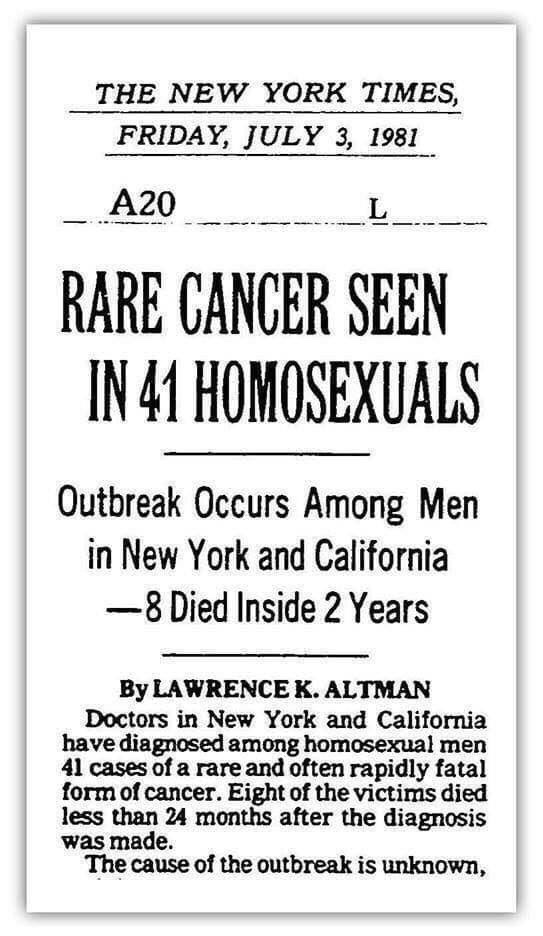
In 1981, researchers at the Centers for Disease Control and Prevention first documented a mysterious disease. In their research, they linked the human immunodeficiency virus, or HIV, to sexual activity.

In 1987, the National Review referred to him as the “Columbus of AIDS,” and the New York Post called him “the man who gave us AIDS” on its front page.

“We were quite annoyed by that, because it was just simply wrong, but this doesn’t stop people from saying it, because it’s so appealing. You know, ‘The man who brought us AIDS.’ Well, if it were true, it would be annoying, but since it isn’t true,

Gaëtan Dugas was dubbed “patient zero.”

However, the letter O was misinterpreted as a zero in the scientific literature. Once the media and the public noticed the name, the damage was done.

Dugas and his family were condemned for years. In Randy Shilts’ seminal book on the AIDS crisis, “And The Band Played On,” Dugas is referenced extensively and referred to as a “sociopath” with multiple sexual partners.

In 1987, the National Review referred to him as the “Columbus of AIDS,” and the New York Post called him “the man who gave us AIDS” on its front page.

“We were quite annoyed by that, because it was just simply wrong, but this doesn’t stop people from saying it, because it’s so appealing. You know, ‘The man who brought us AIDS.’ Well, if it were true, it would be annoying, but since it isn’t true, it’s even more annoying,” said Dr. James Curran, dean of Emory University’s Rollins School of Public Health and co-director of the university’s Center for AIDS Research.

Curran, who was not involved in the new research, coordinated the AIDS task force at the CDC in 1981 and then led the HIV/AIDS division until 1995.

“The CDC never said that he was patient zero and that he was the first person,” Curran said of Dugas.

“In addition to the potential damage to his reputation, it was also a damage to scientific plausibility. That there would be a single-point source to start the epidemic in the United States is not very likely. It’s more likely that several people were infected,” Curran said. “I think that the concept of patient zero has always been wrong and flawed, and scientists never said it.”

Dugas died in 1984 of AIDS-related complications. Now, more than 30 years later, scientists have used samples of his blood to clear his name.

Going back in time with blood

For the new research, Worobey and his colleagues gathered archival blood samples in New York and San Francisco that were originally collected for a hepatitis B study in 1978 and 1979. The samples came from men who had sex with men.

The researchers screened the samples and noticed that “the prevalence of HIV positivity in these early samples from hepatitis B patients is really quite high,” Worobey said Tuesday.

From the samples, the researchers recovered eight genome sequences of HIV, representing the oldest genomes of the virus in North America. They also recovered the HIV genome from Dugas’ blood sample.

As many of the samples had degraded over time, Worobey’s lab developed a technique called “RNA jackhammering” to recover the genetic material.

The technique involves breaking down the human genomes found in the blood and then extracting the RNA of HIV to recover genetic data about the virus, an approach that’s similar to what has been used to reconstruct the ancient genome of Neanderthals in separate studies.

“The major contribution which interested me the most was their capacity to restore full sequence genomes from very old serum samples using the jackhammer technique,” Curran said of the new research.

After analyzing the genomes, the researchers found no biological evidence that Dugas was the primary case that brought HIV to the United States, and the genome from Dugas appeared typical of the other strains already in the United States at the time.

The researchers discovered strong evidence that the virus emerged in the United States from a pre-existing Caribbean epidemic in or around 1970.

How HIV arrived in the United States

Sequencing genomes allows scientists to take a peek back in time to determine how a virus emerged and where it traveled by examining how many mutations appear in the genome.

Scientists estimate that HIV was transmitting in humans after a chimpanzee infected a single person sometime in the early 20th century in sub-Saharan Africa. The general consensus among scientists is that HIV then crossed the Atlantic and quickly spread through the Caribbean before it arrived in the United States, probably from Haiti, Curran said.

Scientists at the University of Oxford published a separate study in June suggesting that HIV spread through specific migration routes — based on tourism and trade — throughout the past 50 years as it made its way around the world.

The research team behind the new genetic analysis now hopes that its findings may lead to a better understanding of how HIV moved through populations — and how blaming a single patient for the pathogen’s rise remains troublesome.

“In many ways, the historical evidence has been pointing toward the fallacy of this particular notion of patient zero for decades,” Richard McKay, a historian of medicine at the University of Cambridge and a co-author of the new research, said at Tuesday’s news conference.

“The study shines light from different angles to better understand the complexity of an important period in the past,” he said. “In view of this complexity, one of the dangers of focusing on a single patient zero when discussing the early phases of an epidemic is that we risk obscuring important, structural factors that might contribute to its development: poverty, legal and cultural inequalities, barriers to health care and education. These important determinants risk being overlooked.”

Reference

Gay History: 30 Years Later, a Look at the First AIDS Drug.

The FDA approved AZT in a record 20 months, a move that remains controversial today

All these years on, we are finally telling the truth about this insidiously poisonous drug, and the great marketing job by Big Pharma to sell it to a desperately ill population of people, and doctors who were also desperate, to provide some hope for their patients! The movie “Dallas Buyers Club” tells some of the story, of those who wanted something better than AZT to assist them in staying alive until something beneficial came along – which it eventually did! Things were not quite so bad here as far as pricing went, as with our Medicare system, the drugs were listed on the Pharmaceutical Benefits Scheme as soon as they became available, and cost a mere couple of dollars per script to buy. But the big sell by Big Pharma also happened here, as did the results of several badly run trials. Like many, the biggest mistake I ever made back in those early days of drug treatments was to let my doctor eventually talk me into taking AZT – against my better judgement! And it’s not just me, but many others who will attest that all our immune system and declining health problems started at the same time we decided to take AZT. It’s not as if we were only on a couple of pills a day – we were on massive doses, and as I have already said, this drug was poison…”human Ratsac” was how it was described in a report from the “Concorde” trial…another unethically run trial, but one that didn’t sugar-coat the truth about AZT. Those who took the massive doses of AZT back in the late 80s/early 90s suffered from problems such as anaemia, peripheral neuropathy, and renal problems…and still do to this day!

HIV was first reported in 1981, but it wasn’t until six years later—in March 1987—that a drug to fight the virus was approved by the Food and Drug Administration (FDA). On the 30th anniversary of this milestone, Time magazine takes a look at the story behind the controversial med azidothymidine, commonly known as AZT.

Also known as Retrovir or zidovudine, the compound AZT was not originally created with HIV in mind but was developed in the 1960s to battle cancer. Decades later, scientists at pharmaceutical giant Burroughs Wellcome made a version of AZT to fight HIV.

To fast-track the med, the drugmaker conducted a trial with 300 people who had AIDS. After 16 weeks, it was halted because those taking AZT were doing so much better than those not on the med. The results were considered a breakthrough, and the FDA approved the drug on March 19, 1987, in a record 20 months, according to Time.

The approval was granted despite many questions remaining unanswered—for example, how long did the benefits last?—and despite other issues surrounding the trial itself. In fact, Time notes, the trail remains controversial today.

Then came a bigger controversy: the price tag. At about $8,000 a year ($17,000 in today’s dollars), AZT was unattainable to many.

Today, we have more than 41 drugs to treat HIV, many in combo form and with much fewer side effects.

Reference

Gay History: When Gay Journalists Were Closeted: A History of AIDS Coverage at ‘The Times’

Mark Frankel

November 23, 2015
Days after New York State approved marriage equality in 2011, Samuel G. Freedman, a School of Journalism professor and former reporter for The New York Times, mused to friends about how the world had changed since he had worked at the paper in the 1980s.
Now an enthusiastic proponent of gay marriage, The Times was then a place where gay reporters feared being exiled to obscure beats and watching their careers wither. Freedman’s musings centered on his friend and mentor, Jeff Schmalz, a brilliant Times reporter dying of the disease who in 1992 and 1993 produced groundbreaking articles about people living with AIDS.
“Jeffrey who?” people often asked. Out of those encounters has come Freedman’s eighth book, Dying Words: The AIDS Reporting of Jeff Schmalz and How it Transformed The New York Times.
Produced as an oral history of dozens of Schmalz’s colleagues and friends, the book and an accompanying radio documentary focus on how journalism responded to the AIDS crisis in the 1980s and early ’90s, when many gay and lesbian journalists felt tremendous professional pressure to remain closeted, and discrimination against them was widespread. It also recounts the moment AIDS became a full-fledged health crisis, breaking out of the gay and IV-drug communities into the larger population.
“Jeff’s reporting played a real role in starting to turn opinion, certainly within The Times, but also within the broader public, from fear, suspicion, finger-pointing and blaming gays, to empathy and acceptance,” said Freedman. The 60-minute radio program will be broadcast on some two dozen public radio stations as part of events marking World AIDS Day on December 1. That same day, Freedman will host a panel on Dying Words at 6 p.m. at the Journalism School.
Schmalz was a rising star at the Times in the 1980s, a consummate journalist and skilled newsroom politician and mentor to younger journalists. When Freedman arrived at the paper in 1981, he soon was among those taken under Schmalz’s wing.
Though out of the closet to close friends at the paper, Schmalz kept his orientation hidden from higher-ups such as Abe Rosenthal, its executive editor from 1977 to 1986, and then-publisher Arthur Sulzberger.
“Abe Rosenthal hired me and promoted me, and I owe him a lot, but in doing this research I became very aware of his antipathy toward gay staffers at The Times,” said Freedman. “And it also became apparent that, in a less visible way, Punch Sulzberger also had a blind spot about gays.”
Critics inside and outside the newsroom accused the paper of being late to cover the AIDS crisis.
In December 1990, Schmalz, then deputy national editor, suffered a seizure in the newsroom. The diagnosis was full-blown AIDS, then a death sentence. For Schmalz, the closet was no longer an option. “Jeff commanded tremendous authority at the Times. So for him to come out had a tremendously sensitizing effect on the paper,” recalled Freedman.
When Schmalz returned to the paper in mid-1992, he was sick but determined to report on AIDS. By then, the paper had a new editor and publisher and, Freedman said, was more accepting of its gay and lesbian employees.
Over the next 15 months, Schmalz captured the many faces of AIDS, gay and straight, in some three dozen articles. He profiled Magic Johnson, the Los Angeles Lakers forward who quit basketball when he was diagnosed as HIV-positive, and AIDS activists Mary Fisher and Larry Kramer. “In a weird way, the diagnosis set him free,” recalled his sister, Wendy Schmalz Wilde. “He found a new empathy for other people who were sick and dying.”
Schmalz’s reporting took AIDS “from a medical story, a public health story, a science story, and made it a deeply human story,” said Freedman. “He got on the beat right when this was a disease crossing the lines of race, class and sexual orientation.” His articles also raised the bar on the paper’s AIDS coverage, setting a standard for other news organizations. His last story, which decried growing public complacency, appeared several weeks after his death in November 1993.
Freedman teamed with veteran radio producer Kerry Donahue to produce the radio documentary, which will be distributed by the Public Radio Exchange. Funds came from the Journalism School and a Kickstarter campaign that raised $28,000. A significant backer was current New York Times publisher Arthur Sulzberger Jr., who contributed his own reminiscences to Dying Words.
Schmalz’s death still haunts Freedman. “Jeff was an example of a supremely talented person who died at 39,” he said. “The world is still losing incredibly talented people at young ages. It’s a reminder of the continuing need to do the research that will cure the disease and of the role that journalists need to play.”

In December 1990, Schmalz, then deputy national editor, suffered a seizure in the newsroom. The diagnosis was full-blown AIDS, then a death sentence. For Schmalz, the closet was no longer an option. “Jeff commanded tremendous authority at the Times. So for him to come out had a tremendously sensitizing effect on the paper,” recalled Freedman.

When Schmalz returned to the paper in mid-1992, he was sick but determined to report on AIDS. By then, the paper had a new editor and publisher and, Freedman said, was more accepting of its gay and lesbian employees.

Over the next 15 months, Schmalz captured the many faces of AIDS, gay and straight, in some three dozen articles. He profiled Magic Johnson, the Los Angeles Lakers forward who quit basketball when he was diagnosed as HIV-positive, and AIDS activists Mary Fisher and Larry Kramer. “In a weird way, the diagnosis set him free,” recalled his sister, Wendy Schmalz Wilde. “He found a new empathy for other people who were sick and dying.”

Schmalz’s reporting took AIDS “from a medical story, a public health story, a science story, and made it a deeply human story,” said Freedman. “He got on the beat right when this was a disease crossing the lines of race, class and sexual orientation.” His articles also raised the bar on the paper’s AIDS coverage, setting a standard for other news organizations. His last story, which decried growing public complacency, appeared several weeks after his death in November 1993.

Freedman teamed with veteran radio producer Kerry Donahue to produce the radio documentary, which will be distributed by the Public Radio Exchange. Funds came from the Journalism School and a Kickstarter campaign that raised $28,000. A significant backer was current New York Times publisher Arthur Sulzberger Jr., who contributed his own reminiscences to Dying Words.

Schmalz’s death still haunts Freedman. “Jeff was an example of a supremely talented person who died at 39,” he said. “The world is still losing incredibly talented people at young ages. It’s a reminder of the continuing need to do the research that will cure the disease and of the role that journalists need to play.”

Reference

The Terrifying Truth About HIV Long-Term Survival!

The harsh reality is that the only people really qualified to comment on long-term survival are – long-term survivors.

Being a HIV long-term survivor is a bit like being a Vietnam veteran…more often than not you feel delegated to the sidelines of history. Like the Vietnam vets, we fought a socially unpopular and unacceptable war, and like them, our continuing presence is a reminder of things that many would sooner either forget, or just not acknowledge.

That is a harsh – and raw – assessment, and I can see hackles rising already amongst those who choose to observe it through rose-coloured glasses. The harsh reality is that the only people really qualified to comment on long-term survival are – long-term survivors.

On June 5th, 2018…if it’s occurred in the 5 years since, I am unaware of it…was HIV Long-Term Survivor Awareness Day. I can’t say that I didn’t personally feel a certain…pride…not the right word, though I’m hunting for the right one…that at last there was an acknowledgement of my part in HIV history. I posted the event as a Facebook status update, and I’m truly humbled by the response from my friends, and at the same time reminded that there are others in my current social “circle”who are also chalking up survival terms equal to my 36 years. Yet despite the acknowledgement, the most telling word to me was”Awareness”! And perhaps that word, more than any other, takes us back to the start of this article. It is an important word, as it suggests – very strongly – that we are the forgotten, those of HIV “past”, and our very existence needs to have attention drawn to it; that there needs to be a reminder that we didn’t all succumb to the ravages of AIDS.

Reality hurts, doesn’t it! And that really is the reality of long-term survival. To be honest, I don’t think anyone knows what to do with us, apart from just leaving us alone to muddle through. On the general overview of HIV history, and considering the numbers of those who died – and continue to – as a result of AIDS, the numbers of us who have survived 20 years or more are small. We are now a disparate group, spread far and wide by the great diaspora that resulted from HIV diagnosis in the day. We are no longer concentrated in the areas of ground zero for the HIV/AIDS pandemic, and in many respects that is a major reason for our being in the background of modern day HIV.

I don’t want to call this “awareness” day tokenistic…but, recognition of the sheer tenacity of HIV long-term survivors has been a hell of a long time coming! Considering that those of us with early diagnosis, who were still alive in the late 80s/early 90s were already long-term survivors…it’s recognition that is – like so much in HIV – well and truly overdue!

I have attempted to convey the harsh reality of long-term survival in past articles, and in my talks when I was a speaker for the Positive Speakers Bureau (PSB). Myself, and other speakers, whose history went back to the key points of HIV in Sydney were always in demand, as we were the living history of HIV and AIDS, the harbingers of the tales of horror, stigma, discrimination, political and religious turmoil, and the community response to the pandemic. But over time – I was a speaker for 12 years – I saw this group slowly dropping away for various reasons, and by the time I chose to retire from speaking I was one of the last of these “history” speakers. By that time, I personally felt that HIV in its modern guise was leaving me behind, lost in its dust as it moved into new territory. A HIV diagnosis still came with its fears and insecurities, but it was no longer a death sentence.

To be honest, I don’t think anyone knows what to do with us, apart from just leaving us alone to muddle through.

So, who are these people who are having “awareness” drawn to them? I can only speak for myself; can only put a personal perspective on HIV long-term survival. Perhaps the reality of it has always been something I have downplayed, in an attempt to NOT come across as a victim! The true reality of the horror years was TERROR!

My CMV diagnosis in 1996 filled me with terror! It was the ultimate reality that I was now on borrowed time. But even before that time, it was terrifying to get what was a death sentence in 1985! It was truly terrifying to watch the horrendous deaths happening around me on a daily basis! It was terrifying to know that that was what could be in store for me! It was terrifying every time I visited the doctor, every time I had a blood test! It was terrifying to know that treatments were limited, and of short duration! It was terrifying to be subjected to the side-effects of huge dosages of same treatments – side-effects I still live with today! It was terrifying visiting friends and lovers in hospital, knowing each kiss could be the last! It was terrifying to find myself losing weight, and trying to hide the fact under baggy clothing! It was terrifying to find myself the figure of HIV discrimination in my workplace, and powerless to do anything about it! It was terrifying to realise I could no longer go on working! It was terrifying after a lifetime of independence to realise that I would need to go onto DSP, and housing subsidies! It was terrifying watching myself head towards alcoholism, chain smoking and life in the fast lane to deal with everything that was going on – uncontrollably – around me! It was terrifying to find myself in hospital for the first time – a collapsed lung! It was terrifying to lie there for 2 weeks, having Sandy from the Oxford Hotel visit another friend and suddenly stumbled upon me! It was terrifying to see – very briefly – the look in her eyes! It was terrifying to think I could be there for reasons of HIV – yet denying it…I would go home…life would go on…yeah…right! It was terrifying to live the 24 hours between my possible CMV diagnosis, and its confirmation! It was terrifying to know that this was a reality- AIDS! It was terrifying only hours after that, getting off a bus at Prince Henry Hospital at La Perouse, and wobbling towards admissions…and thinking…what the fuck! It was terrifying to realise the reality of your health status; 10 CD4 cells, 48kgs weight…could that be right? Chronic candida, chronic anaemia, chronic CMV retinitis! It was terrifying to realise I was dying! It was terrifying to lie again in a hospital bed with nurses, and drips, and medications…and wondering if it was all worthwhile! It was terrifying finding myself at POW the next day, having drugs injected directly into my eyes! It was terrifying that day…and every day after! It was terrifying to sit in that waiting room days later, holding the hand of another guy going through the same thing, trying to reassure him as he wept, a reassurance I didn’t feel myself! It was terrifying trying new drug combinations, not knowing if they would be successful, or in time! It was terrifying to realise I accepted my fate, and was not frightened! It was terrifying to be told the combination had worked, and I’d soon be going home! It was terrifying to realise that I felt robbed, felt that I didn’t deserve to be spared that which so many I loved had not been saved from! Terrifying to realise I was going back to a world I no longer knew! Terrifying to realise that in many respects, I was now a freak…someone who just didn’t fit in! It was terrifying to know that no one, no individual, no organisation, was prepared in any way for the return of the living dead! It was terrifying to sit at home…lost, alone, isolated, unsure, unknowing, afraid! It was terrifying to have the reality of ongoing life, of being whisked from deaths door! It was terrifying going through the panic attacks, the anxiety, the depression! It was terrifying to discover that every one was so unprepared for “us” that necessary help was not available when we needed it! Terrifying to be taking massive numbers of drugs – 3-4 medications, with anywhere from 4-6 pills for each medication, 3 times a day (with dietary and time compliances on them), plus prophylaxis, plus pills to control side effects! It was terrifying to find I needed medication compliance counselling, return-to-life counselling, peer support groups, weekly clinics, specialists! Terrifying that I felt myself useless, at a loose end, disconnected! Terrified to realise I wanted nothing to do with life as it had been – so few friends survived the ravages of AIDS, and those not infected had no point of connection with me, and where I now was. I cut back my drinking, stopped smoking, adopted a healthier lifestyle, decided I wanted my life to head off in different directions to that which it had been going in! It was terrifying to find that there was no one to help me do that, and despite being at the forefront of a needs assessment project concerning the return-to-work requirements of others like me, the reality was that help was a couple of years away! It was terrifying to have lost the sight in one eye, and a good deal of the sight in the other due to the CMV, and learning to deal with that, and its uncertainties! It was terrifying to fall flat on my face on footpaths due to lack of depth perspective; tripping over tree roots, or low street benches, or falling down steps because I could not see the edge; It was terrifying going through the surgery to have Vitrasert implants put in my eyes to negate the regular intraocular injections, then surgery to remove the cataracts caused by same! Terrifying to get the Deca-Dorabolin injections to help put weight back on! Terrifying to return to a normal job – albeit temporarily – knowing that it made access to doctors appointments and hospitals (for drugs) very difficult! Terrifying to find myself collapsing in a gift store, and unable to use my legs…and even more terrifying to find the store owner dumping me in the gutter under the illusion I was a druggie…and everyone else ignoring me – then finally managing to walk again, only to collapse in the middle of Bondi Road on my way home! Terrifying to find I was losing my ability to walk a straight line, but drifted all over the footpath…and no one knew why! Terrifying going through many tests and scans- with dire predictions of what was happening in my head – to finally ascertain that THE virus had jumped the blood/brain barrier and was resident in my brain! The terrifying wait for it to resolve itself! Terrifying to go out to a pub for the first time after an 18-month recovery period! Terrifying to know I knew no one in the pub! Terrifying to go home with someone despite a previous very promiscuous life! Terrifying to get into a relationship again!

Terrifying! Terrifying! Terrifying! I could go on and on with the lists of terrifying experiences over this period, but the word count would be astronomical! Suffice it to say – terror had a name…HIV/AIDS! No one diagnosed these days will – I hope – ever have to go through it.

Survivor guilt was something that came later, after all the pandemonium of getting my health back on track quietened down, and left me with time to think, to mull over the events just past. It felt so unfair that I was still here! Felt unfair that, having prepared myself to die, it hadn’t eventuated, and I was left to continue mourning for those gone, continuing to live thanks to the hoped for medications that others hadn’t managed to hang around for! It was unhealthy thinking, but it happened anyway! More counselling to reconcile that!

So – has the terror stopped? For me, not really! A detached retina, and complex surgery to replace it in 2013, and the removal of the blind eye -it is now a prosthetic – in early 2015 has reduced what was bad vision even further. I joke that every time I walk out onto the street, I take my life into my hands…but it is, in reality, no laughing matter! It is quite frightening! It restricts what I do in some respects, but I deal with it. However, the fears of further detachments – I had one scare recently – or anything else that may affect what little vision I do have is always there.

However, it hasn’t all been terrifying over the last 22 years. I’ve taken control of my own health, I’ve reeducated myself, and fulfilled a few frustrated ambitions. I’ve reconnected with some old mates through social media, and it pleases me to know that not all disappeared like many did. I’m in a happy place as far as everyday life goes.

I hope this gives those that bother to read it an “awareness” of what long-term survival is really about. It would be fulfilling if something could be set up to make us more visible, less confined to the sidelines of HIV. I don’t have an answer to that conundrum only to say that it should have nothing to do with sitting in a circle, knitting and discussing HIV! Now that is a truly terrifying thought!

Tim Alderman © 2018.

Rumination of the Day (2nd December 2016)

WORLD AIDS DAY

It’s the day after WAD, and as usual, I’m ruminating! For many years now I have been looking at how I now view HIV/AIDS – through the lense of objectivity. Emotion only muddles the issue, and history has a trail of misinformation, mixed objectives, venom and misunderstanding! 

Even recently I have encountered those who, for reasons known only to themselves, have never been able to move on! The hate is still alive, the dragons still circling. I could be one of these, who still feel that the experiences of the 80s & 90s are still alive, an uncompromising hard line that leaves me stranded in a time that has passed by. Fuck knows there is a lot in my past that I have never fully moved on from – family business that could, at any time in the past, have left me sitting in a gutter, needle dangling…or in a bar, in an alcoholic stupor – and fuck knows I flew very close to the latter at one stage! More so than many, I have reason enough to be bitter, to be a victim. My experience with AIDS has left me close to blind, and there are many who would agree that that is reason enough. But, as in my latter teens, with full knowledge of my families dysfunctionality, living with a solitary knowledge of my younger brothers horrendous death, of violence and unspoken secrets, of my being gay, I made a quiet vow to myself that I was not going to let it get the better of me, to smother me, to stop me being who I would be! So to with AIDS – my survival alone was an unexpected surprise – and blindness! To buckke under, to attribute blame, to become a victim, to allow it to hold me back, swallow me up, would be saying…I do not have the strength for this, the self-empowerment whereby I would become someone who even I didn’t recognise! 

To move on, one has to acknowledge that the past is just that – the past! Yes, what happened was dreadful – the hatred, the discrimination, the accusations, the blame, the misinformation, the segregation, the fear! We need to acknowledge – 40 years along now – that we were all scared shitless. Straight, gay, male, female, religious, non-religious, politicians, doctors, journalists, activists…ad infinitum…were all scared. Perhaps not since the scourges of the Black Death have we encountered something we all knew absolutely nothing about – not even those who, perhaps, should have known! And what does human nature do when it is faced with an unknown that can just kill at will, shows no mercy, is no respecter of life at all – it looks for scapegoats, attributes blame, hands out punishment! It just so happens that the scapegoat was the gay community, and given what was happening at that time, it perhaps should not have been surprising. Minority groups have a long history of misunderstanding, stigma, discrimination, hate and ignominy! I am not defending the direction it took…I’m not going to shoot myself in the foot…but the point is, it was quite a while back now, and as awful and relentless as it was, as a community we not only survived it, but we fought back with the tools to hand – knowledge, facts, patience and dogged determination. 

One can’t deny that some of the negatives from that era live on. There is still prejudice, discrimination, stigma and musunderstanding! But it is also true that we don’t have it on our own – just ask any person with Down Syndrome. To hang onto the hate, and all the other negatives from that period in our history is to hold no one back but yourself! You know, we all walked in the footsteps of those that suffered, those that died! But by walking in their footsteps, when their footsteps stopped…ours continued on! To live with the negativity is to deny that a lot of good, positive, beautiful things were still going on. The community still lived, loved, and laughed. We supported each other, we were staunch in the face of adversity, we celebrated the lives of those who died with a gusto that was ever born of love. If ever there was a time I was proud to be a member of the gay community, it was through the 20 years of that horror!

Okay, it damaged me! As a fanatical reader & writer, it chose to attack perhaps the most important assets I had – my eyes! But it also presented me with new opportunities, new roads to venture down, new challenges to tackle. I can’t carty the hate because, despite everything, my life has not stopped, nor my humour, my inquisitiveness, my talents, nor my ability to just get on with it. I no longer go to candlelight vigils, or other AIDS memorials. It is too raw, too emotion charged, to ready to rip open healed wounds. I don’t forget – those who died are too entrenched in my memories for that – but now I choose to remember in more gentle ways. What every single one of my dead friends would have wanted is for me to get on with my life. Once a year their ghosts are going to waft around, to cajole me to tears, to invoke memories of wonderful times that will stay with me forever. 

But I’ll wake up tomorrow, and the ghosts will be gone. And just as they wanted, my life goes on. Who am I to argue with them!

Tim Alderman (2016)

An Outsiders Overview of the HIV “Industry”

This year marks, for me, 33 years of living with HIV/AIDS…though now it is just HIV. I consider it a landmark, as back in 1996 I was admitted to Prince Henry hospital with chronic CMV retinitis, chronic candida, chronic anaemia, wasting syndrome (48 kg and going down), 10 CD 4 cells, and no immune system, and was not supposed to leave…at least not under my own steam. I did, thanks to advances in medications at that time, very aggressive treatment and a lot of will power. I don’t give a fuck how negative many HIV+ guys are about life with HIV. For me, this was the great singular event of my life, a pivotal point that resulted in life-altering decisions, a mental overhaul, and the knowledge that there was a hell of a lot more to life than HIV. It altered the course of my life, and for better or worse I have never looked back.

I was a speaker for the Positive Speakers Bureau for 12 years before realising that when you continually tell a story you start doing it by rote. The time came to opt out before it becomes totally meaningless. I have also written for “Talkabout” magazine (the flag ship publication of Positive Life NSW – formally PLWHA NSW Inc) for 15 years, as a features writer and a columnist. I also spent many years on the Publications Working Group. As a writer I see my role as not only to inform people, but to provoke debate, at times to be opinionated, to raise questions, to address abuses and unfairness and to be, when required, controversial. Unfortunately, my time with “Talkabout” taught me that to get published in a HIV publication you need to walk the safe road. To be controversial is to be tolling your own death knell. Mind you, this censorship has nothing to do with the editors who, in my experience, have been nothing but supportive. Community Health and a certain AIDS council provide funding to the magazine, so to poke your nose into sensitive areas will ensure your censure and non-publication.

As a HIV+ person writing about HIV issues I have always found my hands tied. I have written two extremely controversial articles on HIV Issues over the years. One, on Options Employment Services using HIV clients as a free work force in the guise of “work experience” was so watered down after threats of suing PLWHA, the editor and myself (I truly wish they had) that by the time of publication was a mere shadow of its original fiery tirade…despite the fact that I had evidence of this going on.The manager even took me aside and “suggested” that I quieten down my opinions as they were providing a service to the HIV community. Shortly after, they went broke and disappeared. The second article was amongst the best pieces I have ever written, and covered the controversial area of bug-chasing (HIV- guys who deliberately have unprotected sex with HIV+ guys in the hope of contracting HIV). The magazines working group deemed that by writing about bug-chasing I may have been promoting it amongst a certain sector of the community. Considering that the practice is well documented, is acknowledged and exists I failed to see how being informative about it was in any way promoting it…oh shit! I forgot that community health and certain HIV organisations wanted to keep their heads buried in the sand about the issue…and they held the purse-strings. Censorship is alive and well within the HIV community and always has been. Want to tell the truth about what is going on or want to expose something? Not on their watch!

But despite this I continue to write, though I keep it to the more nondescript these days. I do enjoy being published! Since moving to Brisbane I have been phasing out my writing for “Talkabout” (which after 15 years of being published in pretty well every issue, has gone unacknowledged by the organisation itself, though not by the editors), and have started writing for QPP “Alive”, the magazine of Queensland Positive People. Same story, different place as far as funding goes, I’m afraid. Nothing controversial will be coming out of here either.

33 years ago at the start of the HIV shit fight, people never questioned anything about treatments, definitions, philosophies, or courses-of-action. We were in crisis mode and anything was better than nothing. We let a lot happen that in more sane times, in more accountable times, would never have been allowed to happen. This far down the line it is time to start asking questions, time to demand investigations and redefinition into many aspects of treatment, time to look back at some of the historical record and say “we were wrong”, and set the record straight. I no longer allow my doctor, or the HIV establishment, or the drug companies to dictate my path to health for me. I follow my own path, which is dictated to by knowledge and experience. 11 years ago I made a decision to halve my daily medications, and dose myself once a day only. Considering the negative impacts of huge amounts of HIV medication on the body I decided to take a risk. Well, this far down the line my health has never been better (though diet and exercise also contribute to that), my viral load has remained at undetectable, and not only has my CD4 count remained stable, it has in fact risen considerably. In fact, on my blood tests all other readings – except CD4/CD8 – are within range. Considering the recent emphasis on drug regime “compliance”, and considering my own circumstances, I am forced to ask – controversially, naturally – if the compliance issue is being driven by HIV specialists, or by the drug companies who stand to make a fortune out of HIV drugs. I will leave that question in the air for you to mull over and answer for yourself. This is a personal opinion, and one I am entitled to.

With the release of the brilliant “Dallas Buyers Club” the truth about AZT is finally out there. Pressured by my doctor to go on it in the latter part of the 80s, it is the one decision of my HIV care that I regret. I had read the report from the “Concorde” study in France, I knew it was described as “Human Ratsac”, yet I still finally gave in, and witnessed the immediate decline of my health as it bashed my immune system into submission. Needless to say, the long-term affects are disabling, and were not worth the risk. I still hear those who work in the HIV “Industry” – as indeed it was and still is – banging on about how it kept the wolf from the door – it didn’t! It poisoned and destroyed our immune systems, and left us vulnerable to opportunistic infection! It effectively killed many of us. As a drug to assist with maintaining CD4 counts it was a total and complete failure! And I am not the only one to say so! Ask any one who survived AIDS their opinion on AZT! Minor control of HIV did not start AZT situation. How the FDA in America handled the AZT situation and allowed wed the drug companies to dictate treatment options, block other drugs put out by rival companies, and chose to ignore or acknowledge research from overseas was a disgrace.

Even now in 2014 ignorance lives on. I continually hear, read and see HIV being described as AIDS! It is NOT AIDS – it Is HIV or HIV+! For fuck sake get your facts right! HIV is a viral infection, and AIDS are as the initials infer – Acquired IMMUNE Deficiency Syndrome! They are infections contracted by a breakdown of the immune system! The two do not necessarily go hand in hand, and you can have one without having the other. People undergoing aggressive cancer treatments which knock the immune system around are left vulnerable to the same infections triggered by AIDS in the plague years. Drug addicts also.

There are – and I am not being unkind nor ungrateful – those who have worked in the HIV Industry for too long. They are burnt out, and out of touch. If you only wander in HIV circles, you will only know that singular perspective. These people are indoctrinated, lacking in vision, and single-minded in their approaches to HIV and its management. They are blinkered, and only ever spiel forth statistics and the same information that we have heard for the last 30-odd years. They seem incapable of acknowledging different perspectives, new ideas, or revisiting and re-evaluating the old philosophies and education. Without an insurgence of new blood, HIV is in danger of stagnating and just at a dead end. Their current publicity of “Ending HIV” is a fantasy, and they know it. As long as HIV is in Africa, and in countries like Russia and China where education is almost non-existent or played down, HIV will never end. Empty words to seem to appear to be doing something, is just a waste of money. The HIV Industry seems to be very good at this. Always about 2-years behind actual need – just look at the employment needs of AIDS survivors in 1997/98 – when services were introduced they were way off course. You can only have so many programs that teach you how to write a resume, or attend an employment interview. Every single return-to-work session I went to do talks at had the same people in them. They just moved from one group to another, never putting the teaching into action. Where was the advice for people who wanted to be re-educated, or start a business, or upgrade a hobby,or buy into a franchise? It was non-existent. These people were the ones who fell through the cracks for lack of support and services. This has always been an ongoing problem. Naturally, the lack of funding is always blamed – though enough money to pay huge salaries – when really it is a lack of foresight, and imagination. Of course, everything is now wrapped up under the umbrella of Community Health, so any hope of imaginative thinking is now out the window. Those who hold the purse-strings control everything. It is a sad state of affairs. Groups like “Positive Life” no longer acknowledge their roots, nor do they move in the directions set down by the original founders. They are out of touch with their memberships, are indeed losing them. In the race to save money they are dropping resources that keep everyone active within the group. Even Positive Speakers Bureau inductees are now told what to talk about, and bang on about the same old messages and sprout the same old statistics. The trouble is…no one gets sick any more, so there is nothing to talk about for an hour. Perhaps it has outlived its use.

If one has to be totally frank, service delivery, information and services are no better now than they were 20 years ago! In many cases, they are worse. One friend of mine complains of the lack if easy access to HIV meds, and he has to spend a lot of time travelling to obtain them. He also comments on how he and his partner feel isolated and-reclusive due to no social groups to mingle with, and the constant heed to continually go through your medical record every time you change providers. Pretty sad state of affairs considering he only lives in Canberra.

Being my 33rd anniversary of life with HIV, and with World AIDS Day approaching I have written a personal retrospective of that period hopefully for publication around that time. It is 2,500 words long…not a lot of words for 33 years. If you are interested, follow the link. Not quite as controversial as this!

Getting On With It! A 33-Year Retrospective of Life with HIV/AIDS

For information on the Concorde Trial – http://aidsinfo.nih.gov/news/5/concorde-trial
Tim Alderman
(C) 2014

IMG_0682.JPG