LGBT History In Surrey – Crime & Punishment

Homosexuality was illegal in England until 1967. The treatment of homosexuals in earlier times is difficult to gauge as the historical record rarely exists for anything other than criminal activity. Early punishments ranged from fines, hard labour, hanging, and the pillory (a wooden frame with holes for the head and hands, in which offenders were placed and exposed to public abuse). From the seventeenth to the nineteenth centuries the court of Quarter Sessions dealt with any complaints and allegations of homosexual behaviour, frequently referred to in the court records as ‘an unnatural crime’.

In Surrey, there are several examples which appear in the records, although survival of all evidence from the arrest to the sentencing of prisoners is not complete. Many of the accused were acquitted through lack of evidence. In the cases found, punishment ranged from the equivalent of a good behaviour bond to the pillory, or imprisonment for up to two years in one of the local houses of correction.

Calendar of prisoners for the House of Correction, Newington, 1812

Prisoner No.54. is Edward Long, committed on 24 Dec 1811.

Following the oath of John Smith, Long is charged with assaulting him at St Saviour’s, Southwark, with intent to commit an ‘unnatural crime’. He was detained for want of sureties (i.e. no one pledged money for his good behaviour) but this was eventually secured.

IMG_8756.JPG
Calendar of prisoners, featuring Edward Long, 14 Jan 1812 (SHC ref QS2/6/1812/Eph)

Calendar of prisoners, featuring Edward Long, 14 Jan 1812 (SHC ref QS2/6/1812/Eph)
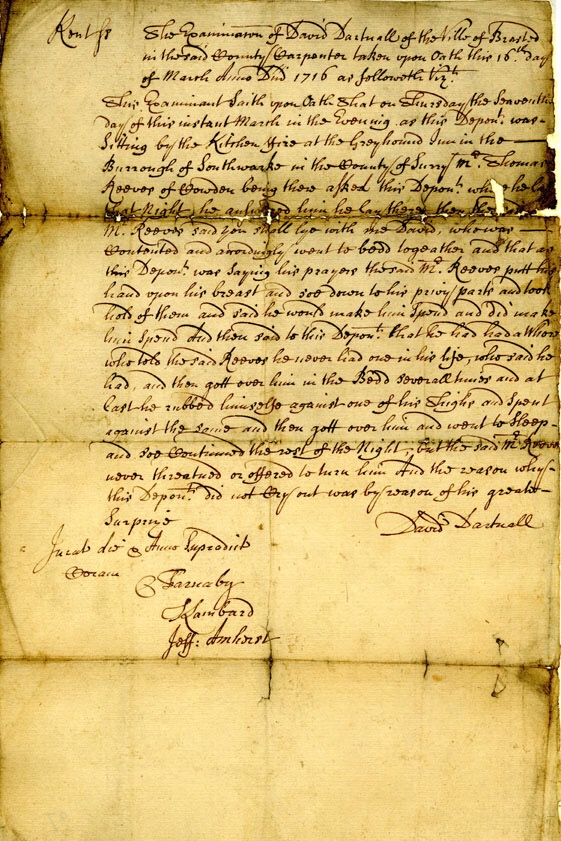
Examination regarding an alleged assault, Southwark, 1716

This curious case involved David Dartnall, a carpenter of Brasted, who in his examination claimed that whilst sitting by the fire in the kitchen of the Greyhound Inn, Southwark, he was approached by Thomas Reeves and asked where he would lie that night. Dartnall replied that he was sleeping at the inn and Reeves declared that he would lie with him. The examination gives a graphic account of the activities that took place but Dartnall did not protest and implied that Reeves ‘never threatened or offered to turn him’. The examination finished with Dartnall declaring ‘the reason why he did not cry out was the reason of his greater surprise’!

Unfortunately, as the further evidence for this case has not yet been located we do not know whether Reeves was punished or not. Click on the image below to see a larger version.

IMG_8757.JPG
Transcript of examination of David Dartnall, 1716 (Ref.QS2/6/1717/Eas/87).

The examination of David Dartnall of the ville of Brasted in the said County, carpenter taken upon oath this 16th day of March Anno D[omini] 1716 as followeth viz:
This examinant saith upon oath that on Thursday the seventeenth day of this instant March in the evening as this Def[endant] was sitting by the kitchen fire at the Greyhound Inn in the Burrough of Southwark in the County of Surrey, Mr Thomas Reeves of Cowden being there asked this Def[endant] where he lay that night, he answered him he lay there then the said Mr Reeves said you shall lye with me David, who was contented and accordingly went to bedd together and that as this Def[endant] was saying his prayers the said Mr Reeves putt his hand upon his breast and soo down to his private parts and took hold of them and said he would make him spend and did make him spend. And then said to this Def that he had had a whore who told him the said Reeves that he never had had one in his life, who said he had, and then gott over himin the bedd several times and at last he rubbed himself against one of his thighs and spent against the same and the gott over him and went to sleep – and soo continued the ret of the night; but the said Mr Reeves never threatened or offered to turn him And the reason ehy this Def[endant] did not Cry out was by reason of his greater Surprise.
[signed] David Dartnall
Jucat die et Anno superdictam
Coram
C Farnaby
S lambard Jeff. Arnhurst

LGBT Legislation

The 1885 Criminal Law Amendment Act made any homosexual act illegal, even in private.
Section 11 of the Act stated that any man convicted ‘shall be liable at the discretion of the court to be imprisoned for any term not exceeding two years, with or without hard labour’.
Controversially, this part of the Act was inserted at the last minute after being drafted by the MP Henry Labouchere. It did not fit in with the rest of the Act, which dealt with sex crimes relating to young women, but was still passed by the House of Commons.
The amendment was described as a ‘blackmailer’s charter’ as it effectively outlawed every form of male homosexuality. It prompted a number of prosecutions, most famously Oscar Wilde in 1895. Wilde served his sentence in Reading Gaol.
The Act was repealed in England and Wales in 1956, but homosexuality was not fully legalised until 1967. In Scotland this did not come into force until 1980, and in Northern Ireland, not until 1982.
The Gender Recognition Act of 2004 allowed transsexual people to change their legal gender.
Current legislation bans some anti-gay discrimination, as well as religion-based hate speech against homosexuals.

Information curtesy of Surrey History Centre and Exploring Surrey’s Past
http://www.exploringsurreyspast.org.uk/themes/subjects/diversity/lgbt-history/qs/

So Can You Cook? 38

Saturday is Takeaway!

nu⋅tri⋅tion  [noo-trish-uhn,
–noun
1.the act or process of nourishing or of being nourished.
2.the science or study of, or a course of study in, nutrition, esp. of humans.
3.the process by which organisms take in and utilize food material.
4.food; nutriment.
5.the pursuit of this science as an occupation or profession.
Origin:
1375–1425; late ME < LL nūtrītiōn- (s. of nūtrītiō) a feeding, equiv. to L nūtrīt(us) (ptp. of nūtrīre to feed, nourish ) + -iōn- -ion


Related forms:
nu⋅tri⋅tion⋅al, nu⋅tri⋅tion⋅ar⋅y, adjective
nu⋅tri⋅tion⋅al⋅ly, adverb

So, now that we know what nutrition is, we can cast all that aside, and make some decisions about it for ourselves. We are adults…right!

It doesn’t matter whether you watch the morning programs on tv, or the so-called current affairs programs at night, there is bound to be someone, at some stage, telling you what you should, or more often than not, should not eat. I don’t know about you, but I get a bit sick of it. Okay, I don’t eat the super diet that I supposedly should be consuming, but my diet, by and large,isn’t all that bad. I do cook my own meals 4-5 nights a week, and they do usually involve salads, meat, poultry, fish, fruit and vegetables, so they are what I consider to be reasonably balanced. I eat breakfast, I have a light lunch, and that on its own is pretty good going as far as I’m concerned. However, I refuse to be a food nazi, someone who views food as ‘just fuel for the body’, or an out and out vegetarian or vegan. I like meat, and no one with a sense of rightious superiority is going to tell me that I shouldn;t eat it. I don’t believe in diets (and aren’t there some idiotic diets out there!), nor do I believe in stupid trends like ‘detox’ diets. Anyone with half a brain knows that the kidneys and liver are there specifically to do that – detox. If they are working properly, they don’t need any help, though those making money out of the products probably don’t agree.

But what it really boils down, anda point that is often ignored, is to enjoy eating, making it a pleasure and something that can be used to help you wind down and relax. My lazy night of the week is Saturday night. I don’t cook – full-stop. It can be a pizza, or hamburgers, or fish & chips or even – heaven forbid – one of the three or four times a year when I will say “let’s do Hungry Jacks”. But we do it, and we enjoy it because we are not doing it all the time. And as for comfort foods, well they are just that, as are junk foods provided they aren’t the be all and end all of your diet. I enjoy my “Krispy Kremes”, and my potato chips and chocolate (Mmm), and during winter my hot chocolate with a couple of ‘Tim Tams’,
and nobody is going to make me feel guilty about it. I drink full-cream milk, eat full-fat cheese and have about 4-6 eggs a week (not to mention the bacon I often have it with). And it is the enjoyment aspect of it that I like to emphasise. I eat healthy meals on most occasions, and I can see absolutely nothing wrong with a treat or a comfort food being thrown in there when I feel like it. It is all about balance, and not feeling guilty about having a little extra something here or there.

So, the following recipes are for for the 4-5 nights a week when we do eat healthy, nutitious meals – what we do the rest of the time is nobodies business…so enjoy.

A couple of these are from my favourite Aussie chef Bill Grainger.

Toasted Grain & Nut Cereal:
125g unsalted butter
¾ cup honey
1½ teaspoons vanilla essence
500g rolled oats
1 cup unsalted sunflower seeds
1 cup slivered almonds
1 cup shredded coconut
¾ cup unsalted pumpkin seeds
1 cup rye flakes (try Health Food stores)
1 cup chopped, dried fruit such as sultanas, apricots or apples

Preheat oven to 170°C. Place butter, honey and essence in s small saucepan. Cook gently over a low heat, stirring occasionally, for 5 minutes or until honey and butter are combined. Place remaining ingredients, except fruit, in a large mixing bowl and mix well. Slowly stir in the butter mixture, making sure that each grain is evenly coated. Spread the cereal over a large baking tray and bake in the oven for 25 minutes, or until the grains are crisp and very lightly browned.. Stir occasionally to stop mixture sticking to the baking dish.
Remove cereal from oven and allow to cool. Add dried fruit, and stir through evenly.
The muesli can be stored at room temperature in an airtight container for up to 1 month.
MAKES 1.5 kg

Goat’s Cheese and Lentil Salad w/Roasted Beetroot
4 medium-sized beetroots
2 tablespoons olive oil
Sea salt
Freshly ground black pepper
! Cup of Puy lentils
¼ cup diced Spanish onion
¼ cup seeded and diced tomato
3 tablespoons extra-virgin olive oil
1 tablespoon balsamic vinegar
1 tablespoon finely chopped mint
¼ cup finely chopped parsley
To serve:
Mint leaves
8 asparagus spears, blanched and cooled
200g goat’s cheese
Extra-virgin olive oil, to drizzle

Preheat oven to 220°C. Place beetroot in a small baking dish and drizzle with the olive oil, salt & pepper. Cover with foil, place in the oven and bake for 40-45 minutes, or until tender when pierced with a knife. Remove from oven and allow to cool. Set aside.
Placelentils with 1½ cups water in a medium saucepan, and bring to the boil. Reduce heat and simmer for 15 minutes. Strain.
Place warm lentils, Spanish onion, tomato, extra-virgin olive oil, vinegar, salt 7 pepper in a bowl, stir and set aside.
Peel beetroots by rubbing gently with your hands (I recommend using gloves, and wear an apron) until they come off. Slice beetroot vertically into 1cm thick slices.
Stir mint & parsley through lentils.
To serve, Divide lentils amonst 4 plates, top with a few sprigs of mint and the asparagus. Slice goat’s cheese into generous slices and place on top. Add beetroot, and drizzle with extra-virgin olive oil.
SERVES 4

Spicy Chicken Salad with Lime:
4 Chicken breast fillets
Olive oil
Sea salt
Freshly ground black pepper
1 cucumber
1 cup coriander
1 cup mint leaves
1 teaspoon ground Szechuan peppercorns (spice section of supermarket)
1 tablespoon fish sauce (or to taste)
1 teaspoon sesame oil
3 tablespoons lime juice
2 spring onions, thinly sliced on the diagonal
To serve;
2 cups finely shredded iceberg lettuce
Lime wedges

Preheat oven to 200°C. Brush chicken with olive oil and sprinkle with salt and pepper. Brown chicken in a frying pan, then transfer to a baking dish. Bake in oven for 15 minutes or until the juice runs clear when pierced with a knife or skewer. Remove from the oven, and leave to rest for 20 minutes. Shred chicken into strips.
Slice the cucumber in half lengthways, and remove seeds using a teaspoon and discard. Slice thinly on the diagonal.
Place chicken, cucumber, coriander and mint in a large bowl. Sprinkle with Szechuan pepper, fish sauce, sesame oil, lime juice and spring onion and toss until well combined.
To serve, divide iceberg lettuce among 4 plates and pile chicken mixture on top. Serve with extra lime wedges.
SERVES 4

Fresh Tomato Pasta:
1kg vine-ripened tomatoes
1 tablespoon sea salt
½ cup extra-virgin olive oil
2 tablespoons red wine vinegar
Juice and zest of 1 lemon
2 cloves garlic, crushed
1 small red chilli, finely chopped
Freshly ground black pepper
300g spaghetti
1 cup lightly packed basil leaves, torn
To serve;
Parmigiano Reggiano

Score a cross in the base of each tomato. Place tomatoes in a large bowl and pour boiling water over them. Drain after 10 seconds, then peel the skin away from the cross. Halve the tomatoes, and squeeze to remove the seeds and excess juice (or use a teaspoon to scoop them out). Chop tomato flesh roughly, place in a sieve over a bowl and sprinkle with sea salt. Leave to drain for 30 minutes.
Place drained tomatoes, olive oil, vinegar, lemon juice and zest, garlic chilli and pepper in a bowl and stir. Leave for 20 minutes for flavours to combine.
Cook the spaghetti in rapidly boiling salted water according to packet instructions, Drain well. Toss through the tomatoes with torn basil leaves and serve with freshly shaved Parmigiano Reggiano
SERVES 4.

Tim Alderman
Copyright 2014


Reclaimations

Getting older is one of those things that seems to have caught up with me very quickly. One minute I was 40, then 50 and now at 57 rapidly approaching 60. I’m not complaining. I’ve survived AIDS (with a couple of disabilities but nothing to hold me back), and when all is said and done I am really enjoying the experience of getting older, the quietening down of life and the intuitiveness that seems to come with it. HIV is no longer something I feel concerned about – in fact, it is very much a backwater in my life. Everything is under control, and has been for a long time, so as far as I am concerned it is no longer an issue. It is just something that is, and is so integrated into my life that it is not a seperate issue.

However, there are aspects of ageing that I have not liked. I may be approaching 60 but there is much about the contemporary world that I love – like the latest music (and I still collect dance music) and technology and all the wonders it brings for starteres. I still like to dress well (though I try to avoid the mutton dressed as lamb scenario), I still groom myself well and like the fact that despite my age I can still look pretty good when I hit the streets. However, 12 months ago I started to notice things about my body that were in stark contrast to what I liked to think and feel about myself. Having been blessed with good genes that have allowed me to keep all my hair (most of it in its original black shade) and for most of my life a slim profile I was disconcerted to find that gravity was finally having its wicked way and changing – for the worst – my body shape. I was becoming flabby with a very discernable spare tire waistline, flabby tits, mishapen arse and bad posture. I was actually starting to look so “old” that it was starting to depress me and really knocked my self-esteem around. It also didn’t fit in with how I dressed and groomed myself and I was really aware of the fact that I wouldn’t go out in anything that clung to me, or in anyway showed off my body shape. To make matters worse, I started to go up in clothing sizes (from SM to M in shirts, and from 32” trousers and shorts to 34”. I wasn’t happy! Other nasty things that were happening were finding myself sitting on the edge of the bed to put on trousers and shorts, having my partner comment on how bad my posture was getting (that was a real “shit – is it” moment), and the doctor had started me on cholesterol meds, which was an additional pill that I really wasn’t happy about having to take.

Like others that I know, when I lived in the Eastern Suburbs in the 80’s and 90’s, I made a decision (despite the fashion for toned bodies at the time) to avoid going to the gym. They were places full of gay guys who were there not to get fit but to mould themselves into an image of what it was preceived that gay men looked like. They posed, preened, plucked, depilated and fake-tanned, and when they went oiut to the bars, only ever hung around with, and picked up, guys who looked like themselves. I made sure I hung around with the scrawny brigade so as not to feel out of place. It was a form of body fascism that I disliked then, and still do. However, a move to the outer edges of the Inner West brought about a change in my thinking and perceptions. With the body rapidly getting out of shape, with my self-esteem taking a beating, and with the prospect of 60 looming (and a potentially rickity ride into an unhealthy mature years) it was time to do something about it, so it was off to the gym in Marrickville. The fact that I added the word ‘gym’ to my vocabulary was a good start.

I loved – and still do – the gym, which sort of came as a bit oif a shock to me. From the word go I was made to feel comfortable, and a lot of the fallacies that I attributed to going to the gym were dispelled. To start with, no one else cares about what you are doing, and nobody is actually watching and assessing you (except yourself). Everyone else is too busy doing their own thing, and are too much in their own world to care about what you are up to. I had an initial assessment with a personal trainer who in no way criticised how I
looked, but she did help me to set some goals – the major ones being that I wanted to get fit, I wanted to loose excess fat, generally tighten my whole body up, fix my posture and inprove my general health. I wanted to reclaim my hips and arse, both of which had long ago disappeared. In other words, I had a determination to transform myself. And at 72kg, I wanted to do all this without losing weight, as weight wasn’t the problem. The other encouraging thing I found about just going to a local gym was the number of other mature aged men and women who were there, and really working hard and doing their best to get fit and healthy. There is now a few older role models around to encourage us to do something about being fit and older. Actors like Rob Lowe (God, how hot is that man), Rick Springfield (who despite his demons looks fabulous for someone in his 60’s), and dare I say it – Tony Abbott (hate his politics but admire him for his committment to fitness) – have given us a new way of looking at ourselves as we get older.

So, having set goals, and having been given a regime to follow, it was off to the beginners studio for a 10 week starters program. The first week…I suffered. Every muscle ached, and I looked at the piss-weak weights I was starting with, and wondering if I was ever going to be able to do things at the heavier end. And don’t think it doesn’t get tedious! Doing the same routines over and over again can get very boring. I started to vary things myself, made a lot of changes to what had been set out for me and found that helped me to get through the boredom barrier. I started going three days a week, for 1 hour each visit. And I bloody worked hard! Nothing was going to deter me from my goals. Within 7 weeks of starting, the miracles began. I was using a lot of resistance equipment, and found that the weights started to increase. The spare tire didn’t just reduce – it disappeared. I noticed my pecs tightening up and starting to show a firm profile, muscles appeared in my arms. My energy levels also increased, as did my flexibilty. My self-esteem started to go through the roof, and in turn this promted me to work harder, to really start to challenge myself. At the end of the 10 weeks, I looked fantastic. I couldn’t believe just how different I looked and felt. It was noticeable at the gym how regular I was and how hard I worked, and the gym staff gave me a lot of encouragement.

So, after the 10 weeks in the beginners studio it was time for another assessment, and a harder program of work, starting in what I jokingly called “the big boys room” where all the weights and serious resistence equipment are. I continued to flog myself three days a week (still for a total of three hours a week), and the changes continued. I was still having some problems getting a flat stomach (I wasn’t after a six-pack…I could probably get one but at my age it would be a constant battle to maintain it) so the tweaking of our diet at home started. Now, I’m sure everyone knows from my last column that I cook, so doing a diet tweak wasn’t a big issue as I knew that I had the recipes to over-ride any chance of blandness or boredom. I should point out that I don’t approve of diets, especially fad ones, but I do believe that you can create a healthy diet for yourself without going to extremes, without adding supplements, and without cutting out carbs and proteins. Your body needs these things to function properly – it is all a matter of proportion and balance. We cut out a lot of fatty foods, a lot of sugar (I have a terrible sweet tooth so this wasn’t easy), and increased the amount of raw vegetables, fish and poultry in our diet. This helped a lot, as well as a lot of repititions on the Ultimate Abdominal machine at the gym, and a lot of suspension work (whereby you suspend yourself, and lift your legs as high as you can for as long as you can, or hold your legs out at a 90° angle – you can really feel the pull on your abs). So I pulled, and pushed and strained and grunted through the main weight floor of the gym for the next 3 months.

By this stage, I have to say that I was starting to find it harder and harder to get myself to the gym to go through the routines. I realised that I needed to add some sort of variety to my program, so at New Years weekend this year I decided to do my first class. I looked at all the alternatives, and assessed what I thought I could do, and couldn’t do. I have done yoga before (and enjoyed it) but felt that it wasn’t dynamic enough to maintain the body profile I was aiming for. I still haven’t tried pilates, but it is on my list. Anything that involved balance was out (I have peripheral neuopathy…the numb type, not the painful. This means I have no feeling in my feet and ankles), anything involving too much co-ordination was out (I’m unco-ordinated at the best of times), and anything done in dark rooms – such as Spin – was out, as I’m partially blind and have night-blindness. So, this left me with Body Pump, a class that involves work with weights, and is very dynamic and very muscle and cardio-orientated. You really push your heart rate up doing these classes. I found I really loved Pump, and have stuck with it right through to now. I avoid lunges (for balance reasons), and do squats instead, which means a double session of squats every class, which can really push you to your limits, especially when you have 25- 28 kgs of weight sitting on your upper back to add to the challenge. The routine (all Les Mills classes are done in most gyms these days, so it doesn’t matter where you go, you will always know what to expect from a class) changes every three months, so just as you are getting bored with it, it changes. So, I started doing two morning classes a week (on Monday and Friday, and usually the token male in the class at that time of day), and did one day a week in the weight room to work whatever muscles didn’t get worked in the class. Having just moved from Sydney to Brisbane, I found the break in routine, and to a new gym and environment a bit unsettling.I have just got back into my two Pump classes, and will probably get back to my resistence work sometime in the next couple of weeks.

So, what has the end result of all this been. To be honest, the result has been staggering. I still look in the mirror and think to myself “Is that really you?”. I have my hips and arse back big time, and can walk around in a singlet without feeling embarrassed. I have pecs, I have muscled arms and legs. My posture has improved, as has my energy levels and my flexibility. I have gone off my cholesterol meds. My self esteem has gone through the roof, and I can honestly say that I feel absolutely fantastic, and that is reflected in how I look and dress. I have come to realise that there is more to me than I ever thought there was – I can set goals and challenges and achieve them, I can push myself beyond my limits when I have a reason to, and that I can establish routines and stick to them when I have an end objective. I now feel that I can go into my elder years truly fit and healthy, and that in many ways that is going to help cut back the risks that I would have faced without going through this metamorphisis. I can move forward knowing that I am still flexible, that high blood pressure and cholesterol aren’t going to plague me, and that problems that result from being over-weight have pretty well been eliminated.

What would I recommend to other guys my age? If you smoke…STOP! If you have a bad diet…FIX IT – it’s not rocket science. Don’t think that walking the dog is all you need to do – if you are over-weight, do something about it. Look at the long-term, not the short. It is not about having the body beautiful (though it helps) it is about being fit and healthy, and prolonging your prospects for good health and wellbeing as you progress through the years. Don’t think (like I did) that looking fit and healthy is just for the young. The flow-on affects of a good exercise routine are endless, both in your public and private life. Look good and feel good – you’ll thank yourself for it.

Tim Alderman.
Copyright 2010


Eat To Your Health

In my last column I talked about starting out at the gym as a way to start getting your fitness on-track, and since that was written there have been several articles out in HIV journals stating that diet and exercise are important for guys (and girls) in an ageing HIV population to promote a longer and healthier road to old age, and as a way of fighting off problems associated with obesity and bad diet. As a population in general, obesity is a big problem, especially as we get older, and lazier. One of the things that prompted me to get off my arse and start doing something about my health was observing people around me who were my age or older, and telling myself “that is NOT how I want to end up” as an older person. I don’t want to be fat, and wear my trousers up around my nipples; I don’t want to be stooped and crippled, relying on Zimmer frames and mobility scooters; I don’t want to have to rely on others to help me get about and just get through my everyday life; and I don’t want to be shuffling around and taking all day to move from one place to another. I saw a LOT of this in elderly people, and for me…it’s just not on!

Okay, so hopefully we have prompted some of you to start looking after your weight and mobillity. I brushed over diet in the last article, but in reality exercise and diet go hand-in-hand, even more so as you get older. It is such an easy matter to tweak your diet from unhealthy to healthy that I often wonder why people think it is so hard. There is very little that you have to give up in a balanced diet, though the emphasis does change from one of ‘oh, that is too much trouble’ to one of ‘okay, I’ll give that a go’ if you know you will achieve positive results.

I would like to think that we had all moved on from the diet we were presented with as we grew up, especially those of us brought up with the “meat and three veg” mentality of the 50’s and 60’s, though I do know of guys my age who still stick to that prescription, and have NEVER ventured outside the box. The move from ‘bad’ eating to healthier eating for me occurred with the discovery of Asian cuisine.The entire Asian approach to cooking (despite being a bit preparation – intensive, though fast to cook) with using all the proteins, plus fresh herbs and vegetables and sauces that were both tasty and healthy appealed to me from the very beginning. It is strange how my foods have changed over time, from a heavily red meat orientated style of cooking to a more poultry, fish and almost, on accasions, vegetarian styled cuisine. This was never intentional, it just seemed to happen, especially enhanced by the new exercise regimes I was putting myself through. As I mentioned in my last piece, I have a severe sweet tooth. I am one of those people who reads the dessert menu first in a restuarant, then decide what else to order from there. I have a weakness for potato chips, donuts, finger buns, cheese, chocolate and little cakey things from cafe’s. Have I given all this up in the rush for a better diet? Not on your life, though I do eat them in moderation these days. I have had finger buns twice this year – quite a severe deprivation for me, though I can’t say the same for chocolate. Full of antioxidants (I love really dark, bitter chocolate) is my excuse. So, what have I done to improve my diet? Nothing terribly radical, I have to say. To start with, I have never really followed diets, though did give the CSIRO diet a good bash, though I found it a bit too heavy with protein for my evolving tastes. I have to say it did work, and both myself & my partner lost weight while on it. I am currently personally promoting the Weight-Watchers recipe books, which are available from most newsagents. They started putting recipe books out about 10 years ago (originally only available through the WW organisation), and even then I was impressed with the variety and range of their recipes. I don’t follow their points system, though you can if you like – I just like theirrecipes, and they cover everything from breakfasts, to light meals, to main meals, desserts and snacks. They are one organisation that has moved with the times. There is a heavy emphasis on vegetables in their recipes which I personally like. So, what else can you do to help improve your eating habits? Eat a lot of fresh, raw leafy vegetables. With summer coming on, our diet will shortly go almost totally salad. It isn’t boring – there are many recipe books around now that just concentrate on healthy and interesing salads. Cut down on the amount of sugar and fats that you use for cooking. Use “Splenda” if you require a sweetener (it can be used for baking): substitute wholemeal plain & SR flour in baking: swap over to other oils for cooking such as Azalea, rice bran or grapeseed oils; use yoghurt and oil as substitutes for milk or cream in cooking; don’t overcook vegetables – vege cooking is one area where microwave ovens are great. Vege’s should still be a bit crisp when served; dry fry where possible, or grill; gives things like tofu a go – ignore the bad press, and make decisions for yourself (though I still hate soy milk). Cut back on coffee and drink tea instead. Limit alcohol consumption without going ‘dry’. All this will not cause miracles, but will be a good start and will give you the impetus to trial things yourself. A good, well-balanced diet will mean that you shouldn’t have to take supplements, though it seems to be very fashionable to do so. It is true that some ARV’s do cause depletion of certain vitamins and minerals in the body, though discuss this with a doctor or dietician before starting up on any supplement regimes. Don’t do things just because your friends do!

Now, for the big question! Do I believe in Superfoods? The short answer is…yes! The term “Superfoods” is used to denote foods that are packed full of nutrient and cover the gammit from exotic to mundane. The latest list includes Acai and Goji berries (it is well-reported that ALL berries are good for you and jam-packed full of goodies to help your skin, brain and heart, as wel, as helping to lower cholesterol; Coconut water which doesn’t taste half bad, and comes with some yummy additives these days – considered fashionable, especially amongt gym junkies; Probiotic cheese though I’d rather stick to a good sharp cheddar or a gooey brie myself; Omega-3-rich milk though there are other ways to get Omega-3, such as fish or fish oil capsules. If you do go to gym regularly, taking these fish oil capsules can help with your heart health as well as joint protection (not to mention assisting memory); Maitake mushrooms (yes, you read that right), though mushrooms in general are very good for you; Vine-ripened tomatoes, though the health benefits of tomato-rich diets are well known now – and how can you hate tomatoes!; Blue-Green Algae (Spirulina) is one I’ll pass on, thanks!; Yerba Mate (a South American tea) is something I’ve tried, but haven’t developed a taste for. There is quite a ritual involved in preparing it; Pomergranate juice expensive but oh so gorgeous and addictive it;s worth going into credit card debt for; and brazil nuts, which fortunately for me come in blocks of chocolate, so yeah, I eat them. I highly recommend you doing some internet research on superfoods, then pick out the ones you enjoy and include them in your diet.

So, the rules for good healthy eating are:
• Keep it fresh – fresh vegetables are not expensive, so stock up and learn to be creative. USE RECIPE BOOKS, don’t just steam and boil things…boring!
• Don’t deprive yourself of treats, just cut back on how often you have them. Keep health bars or trail mix in the cupboard for when you get those junk cravings – it works.
• If you get that ‘do I have to eat that’ thought when you are cooking a meal, then don’t cook it. If you don’t enjoy it you are not going to want to eat it. Nothing worste than making meals a chore.
• Cut back on fats and sugar – don’t cut them out, just rethink them. Remember that fruit juices are not always a healthy, sugar-free option.
• Don’t overcook foods like proteins and vegetables – you cook all the nourishment out of them by overcooking.
• Shout yourself a take-away occasionally – even I go to Hungry Jacks 2-3 times a year.
• Don’t cut out carbs and proteins from your diet – your body really needs them to function properly. If like me you go to gym early in the day, have a bacon and egg toastie after, and don’t feel guilty about it. Without the carb & protein hit you will go home and hit the wall. You burn a LOT of calories when you exercise.
• Eat as many raw vegetables as you like – they are so good for you.
• Don’t knock frozen and canned vegetables and pulses. Most vege’s are snap-frozen, and are often healthier than cooking them yourself. If you buy tinned beans and lentils, rinse them thoroughly before eating.
• Look at vegetarian options – you may be surprised. It is no longer the 70’s and 80’s, and slabs of eggplant with a melange of bland steamed vegetables.
• Buy wholegrain bread instead of white. Your body needs to work to get through all those seeds, so you feel full for longer. Also, rye breads and malted breads.
• I still like my full-cream milk, but there are plenty of options now. Don’t get caught up with all the trendy additives etc in milk now – these are things that are present in a balanced diet, and they really shouldn’t be in milk

Whatever you do, enjoy your food. It is one of life’s pure pleasures. But, like sex, think before you put it in your mouth!

Tim Alderman
Copyright 2014


So Can You Cook? 40

The End

This is my final column in the ‘So can you cook?’ series. I have been doing the column for six years now and feel it is time to draw it to a close before I start repeating what has already been done.
I have enjoyed my time with the column. I hope that in some way I have inspired people to be a bit more creative with cooking and that I have shown that you don’t need a long list of degrees to be able to produce good food. It is an art, yes! But it is also an art that is accessible to everyone and is versatile enough to be a bit complicated when you want to impress or simple enough for an everyday meal – from the charcoal sketch to the oils I guess you might say.
I also hope I have introduced some to new flavours and encouraged people to be a bit adventuresome in their approach to cuisine. The amount of produce now available in Australia is truly staggering, and it is now possible to recreate any recipe from any cuisine totally authentically.
We have certainly come a long way in the last 40 odd years! The embracing of our place in the Asian section of the Pacific has also opened up a whole world of food to us and I think that the way we have taken to Asian food from all such countries shows just how adaptable we are with absorbing the influences of other cultures. And we will no longer settle for watered down or ‘Australianised’ versions of the cuisines. We want the genuine article. Just try to get into Thai Pothong in Newtown on a Friday or Saturday night if you want to see a good example. And no suburb is now complete without a Thai and a Vietnamese restaurant.
This column has also given me a way to comment on things from a personal perspective, often not in a PC way, which I don’t apologise for. I’m afraid that you haven’t gotten rid of me with the ending of this column. I hope to continue to contribute via articles and hopefully still in my outspoken style.
I have been writing for Talkabout in one form or another for about 13 years now. I have always been a strong supporter of the magazine and whether I was or wasn’t writing for it I would still be one of its strongest advocates. I feel that the non-clinical, non-professional (or expert) and non-conformist voices in our community are entitled to an outlet and Talkabout has always provided that forum.
With the closing and sale of my business, and the cutting back of other commitments the most common thing I find I am being asked is “How are you going to fill in time?”. I will continue to research my family history, which has been ongoing for about 20 years now (and thankfully easier with the advent of the internet) and, after many years of nagging from friends and people who have heard my story through the PSB, I am finally going to put an autobiography together.
My life has been interesting (to say the least) and not without the usual dramas associated with surviving AIDS and having my roots in a dysfunctional family. I will probably take myself off to do a few more courses in writing and cooking, and I will have a bit more time to keep my home tidy and together, and get my garden back in order. One thing I can promise, I won’t be bored.
I would like to thank everyone who has read and supported my column over this time. I think that the best way to leave the column is with a bit of a bang by repeating some of my favourite recipes from the last six years. I’m desperately trying NOT to make them all chocolate…

Rich Chocolate Tart (from No 12)

Pastry
125g cold unsalted butter, chopped
1 tablespoon caster sugar
200g (1 1/3 cups) plain flour
2 tablespoons cocoa (Dutch, if you want a richer flavour)
2 egg yolks

Process butter, sugar, flour and cocoa in a food processor until mixture resembles coarse breadcrumbs. Add egg yolks and 1½ tablespoons iced water, and process until pastry just comes together. Form pastry into a disc, wrap in plastic wrap and refrigerate for at least 30 minutes.
Roll out pastry on a lightly floured surface until 5mm thick and ease into a 3.5cm deep 24cm tart tin with removable base, trimming edge. Line pastry case with baking paper and fill with pastry weights, dried beans or rice. Place on a baking tray and bake at 180°C for 20 minutes, then remove paper and weights and bake another 5 minutes until pastry is dry. Cool.

Filling
300g dark couverture chocolate, chopped
100ml double cream
125g unsalted butter, chopped
4 eggs
100g caster sugar
1 tablespoon golden syrup

Combine chocolate, cream and butter in a heatproof bowl over a saucepan of simmering water and stir continuously until butter is melted and mixture is well combined, then remove bowl from heat and set aside. Using an electric mixer, whisk eggs, sugar and golden syrup until pale and creamy, then fold into chocolate mixture. Pour into tart shell, then bake at 150°C for 35–40 minutes or until just set. Cool tart to room temperature before serving with double cream (optional). Tart will keep, refrigerated in an airtight container, for up to 4 days – if it lasts that long.

Thai Beef Salad (from No 22)

1/3 cup lime juice
1 tablespoon fish sauce
2 teaspoons grated palm sugar or soft brown sugar
1 garlic clove, crushed
1 tablespoon finely chopped coriander
1 stem lemongrass (white part only) finely chopped
2 small red chillies, finely sliced (remove seeds if you want milder)
2 x 200g beef eye fillet steaks
150g mixed salad leaves
½ red onion, sliced into fine wedges
½ cup coriander leaves
1/3 cup torn mint leaves
250g cherry tomatoes, halved
1 Lebanese cucumber, halved and thinly sliced

Mix lime juice, fish sauce, palm sugar, garlic, chopped coriander, lemongrass and chilli until the sugar has dissolved.
Preheat barbie chargrill plate to medium-high direct heat and cook the steaks for 4 minutes each side or until medium. Let cool then slice thinly across the grain.
Put the salad leaves, onion, coriander, mint, tomatoes and cucumber in a large bowl, add the beef and dressing. Toss together and serve immediately.

Banana Cake with Passionfruit Icing (from No 23)
125g butter, softened
¾ cup firmly packed brown sugar
2 eggs
1½ cups self-raising flour
½ teaspoon bicarbonate of soda
1 teaspoon mixed spice
1 cup mashed banana (preferably over-ripe)
½ cup sour cream
¼ cup milk

Preheat oven to moderate 180°C. Grease 15cm x 25cm loaf pan, lining base with baking paper.
Beat butter and sugar in a small mixing bowl with electric beater until light and fluffy. Beat in eggs, one at a time, until combined. Transfer mixture to a large bowl, using a wooden spoon and stir in sifted dry ingredients, banana, sour cream and milk. Spread mixture into prepared pan.
Bake cake in moderate oven for about 50 minutes. Stand cake in pan for 5 minutes before turning out onto wire rack to cool. Spread with passionfruit icing.

Passionfruit Icing
1½ cups icing sugar mixture (a mix of icing sugar and cornflour)
1 teaspoon soft butter
2 tablespoons passionfruit pulp (approx)

Place icing sugar in a small heatproof bowl, stir in butter and enough pulp to make a firm paste. Stir over hot water until icing is of spreading consistency, taking care not to overheat. Use immediately.

Chinese Beef and Asparagus with Oyster Sauce (from No 17)
500g lean beef fillet, thinly sliced across the grain
1 tablespoon light soy sauce
½ teaspoon sesame oil
1 tablespoon Chinese rice wine
2½ tablespoons vegetable oil
200g fresh, thin asparagus cut into thirds on the diagonal
3 cloves garlic, crushed
2 teaspoons julienned fresh ginger (fine slice)
¼ cup chicken stock
2–3 tablespoons oyster sauce

Place beef in a glass or plastic bowl with soy sauce, sesame oil and two teaspoons of Chinese cooking wine. Cover and marinate for at least 15 minutes.
Heat a wok over high heat, add 1 tablespoon vegetable oil and swirl to coat the wok. Add asparagus and stir fry for 1-2 minutes. Remove from wok.
Add another tablespoon of oil and add the beef in two batches, stir frying for 20 minutes or until cooked. Remove from wok.
Add remaining oil to wok, add garlic and ginger and stir fry for 1 minute or until fragrant. Pour the stock, oyster sauce and remaining cooking wine into wok, bring to boil and boil rapidly for 1–2 minutes or until sauce is slightly reduced. Return beef and asparagus to the wok and stir fry for a further minute or until heated through and coated with the sauce.
Serve immediately with Jasmine rice.

Waldorf Salad with a Twist (from No 34)
4 Granny Smith apples, thinly sliced
1 stalk celery, thinly sliced
1 cup walnuts, chopped
2 cups watercress sprigs

Blue Cheese dressing
¼ cup whole-egg mayonnaise
2 teaspoons lemon juice
2 tablespoons water
Sea salt & cracked black pepper
100g soft blue cheese, chopped

To make the blue cheese dressing, place the mayonnaise, lemon juice, water, salt, pepper and blue cheese in the bowl of a small food processor and process until smooth.
Arrange the apple, celery, walnuts and watercress on serving plates and spoon over the dressing to serve.

Serves 4

Oysters with Lemon & Vodka Granita (from No 34)
½ cup caster sugar
2½ cups water
½ cup lemon juice
⅓ cup vodka
18 oysters
Lemon wedges, to serve

Place the sugar, water, lemon juice and vodka in a saucepan over low heat and stir until the sugar is dissolved. Pour the granite mixture into a shallow 20cm x 30cm metal pan and place in the freezer for 1 hour. Remove the granita from the freezer and use a fork to take the top off and freeze for a further hour. Repeat every hour for 3-4 hours or until set.
Grate the granita with a fork to produce snow, and fill tiny shot glasses.
Serve with the oysters and lemon wedges.

Serves 6

Tim Alderman

Copyright 2014


Disclosure

My first disclosure was probably the easiest.

It was just after testing positive to HIV in 1985, when testing begun. It was done anonymously through the Albin St Clinic, and took a nerve-wracking two weeks for results to come in. Despite saying I probably wasn’t positive, my mind was saying otherwise, and the latter proved correct. So, my first disclosure, along with a lot of others guys who were undergoing the same process was at the bar at “The Oxford”, and was to a group of friends, some of who were also HIV+, some HIV-, and some who either didn’t know or didn’t want to know. Disclosure was imnportant at that time, as with a two-year survival period dangling there like a sword of Damocles over ones head, it was important to let everyone know that the supposed death sentence had been passed, then move on. It gave time for it to sink in both with myself and the friends I was closest to. They now knew what to expect – we had already experienced the quick decline of other HIV+ friends, and knew that the future was not something to look forward to. So let’s party! It was, I have to say, easier than I thought it would be to disclose.

The most recent time I disclosed was to a gym buddy and friend when we weree out for dinnerv one night. He asked me what I was doing these days, and I replied that I was doing some freelance writing for a couple of HIV magazines, and had been doing it for some time. That then led on to a conversation about how things had changed and you rarely heard of anyone dying from HIV these days. There was really no reaction from him at all – it was just a friendly chat about what we were up to, and HIV didn’t seem to register as anything devious or insideous in any way whatsoever.

In the interim between the first disclosure and latest, things haven’t quite always been that easy. Generally when cruising the bars for trade, I used to disclose as a way of getting rid of guys who couldn’t handle it, thus getting rid of the dross. It was also a way of picking up other HIV+ guys so that use of condoms could be dropped. We both knew where we stood. Though there was one negative guy who said it wasn’t a problem – at least until we were home and the jeans were down, thankfully at my place. He baulked, started to throw a drama and found the front door being held open to hasten his exit. That is the one and only person I have ever thrown out of my home.

The second problem disclosure – at work – was a big problem. Not for me, not for my staff, not for most of upper management. However, for one area manager it was a big problem and he bullied and harrassed me until I decided it really wasn’t worth the hassle anymore. I gave in notice, but didn’t let him off the hook that easily. I ensured that I gave notice at the most inconvenient place, at the most inconvenient time that would cause him the most hassles and problems. He didn’t speak to me for the two weeks of my notice period, and he didn’t say goodbye. Yeah, I was really upset about that. Not! I still have no regrets about disclosing on that job – I did the right thing by my staff, and if it cost me my position and my job, perhaps I didn’t want to be there anyway.

I have disclosed mid-fuck, as nothing had been said about condoms (we were at his place), and at the moment the evil deed was to be consummated I yelled out at him that I was HIV+ – several times, and it didn’t even cause a glitch in the proceedings. He disclosed nothing, and to this day I have no knowledge of whether he was pos or neg, though I did assume he was positive. It was all a bit too casual and nonchalant for him not to be.

As far as my everyday life goes these days with neighbours and new friends and the ilk I tend not to say anything, nor do I see any need to. Like a lot of people with health issues I
consider it my business, and it’s not as if I look ill or anything. It doesn’t affect my diet, my pill taking is done in private, and I just want life to toddle on without any hassles. As far as my local community goes I am just Joe Blow from next door or over the road, and that’s how I want it to stay.

Tim Alderman
Copyright 2010.


So Can You Cook? 26

The Season for Giving

I can’t believe it is nearly 12 months since my last Christmas column. Time to steam puddings and bake cakes…again. Well, on the good side I have managed to win the Christmas lunch debate with my mother-in-law. We are going to Canterbury Leagues for lunch. This battle has been going on for some years now, but after the whinging that went on last year I knew it was a good time to push the point. I think it is a relief to all of us. I think we are all sick of slogging ourselves to a melting-point-lather at a very hot time of the year getting food ready that everyone is only half inclined to eat if it is a really hot day.
We have a Christmas bash every year for friends in the jungle…oops, I mean backyard. It happens sometime between mid-November and early December, depending on everyone’s calendar. It is always looked forward to, and usually involves a lot of champagne cocktails – I have most of a bottle of Vanilla Vodka to get rid of at the moment, so know already what sort of cocktail it will be – a lot of wine, and bring-a-plate of food. Fortunately for us, all our friends are gourmands so the food will always be great and adventurous, despite the inevitable battle of who provides what for which course. It’s bad luck to the rest of them that I have desserts planned already, which they will be notified of shortly. Suck eggs, I say!
Part of the Christmas bash traditions is the exchange of gifts – another traumatic buying exercise, and usually ending up being CD’s. However, part of my traditions is the giving to each guest of what is laughingly referred to as a ‘charity bag’. Considering that most of them are too busy or too lazy to make any little luxury items for themselves, I try to do it for them. I find this kind of gift giving to be personally satisfying. There is something genuine about giving friends gifts that you have made yourself. I used to make the bags a mix of biscuits, sweets and preserves, however I have dropped the biscuits as from last year. They have to be made early due to my other commitments, and with the humidity and heat associated with Christmas, I have found that they go soft before they can be given out – as happens with biscuits with no preservatives. So, preserves it is…and a CD.
I have included a bit of a mix in this column of things you can either make to use for yourself, or use as gifts for your friends. They say it is better to give than receive…but they had better make sure I get something in return.
Happy Christmas to all my column readers. Keep yourself safe, don’t drink too much…meaning not to the point of passing out. Enjoy the conviviality of friendships and have a great New Year where all your wishes and hopes and dreams are fulfilled.
See you next year.

BASIC FRUIT MIXTURE:
You can make this mixture a month in advance, and store in a cool place like the fridge. Can be used in cakes, puddings or mince tarts. Or bottle and give as a gift.

6 cups (1kg) sultanas
2½ cups (375g) currants
2¼ cups (425g) raisins, chopped
1½ cups (250g) seeded dried dates, chopped
1½ cups (250g) seeded prunes, chopped
1¼ cups (250g) glace cherries, quartered
½ cup (125g) glace apricots, chopped (substitute dried if glace not available)
½ cup (115g) glace pineapple, chopped
½ cup (115g) glace ginger, chopped
¾ cup (120g) mixed peel
3 medium apples (400g) peeled, grated
2/3 cup (240g) fig jam
2 tablespoons finely grated orange rind
¼ cup (60ml) lemon juice
2 cups (440g) firmly packed brown sugar
1 tablespoon mixed spice
1 1/3 cups Grand Marnier (or substitute for any citrus-flavoured liqueur, rum, sherry or brandy)

Combine ingredients in a large bowl; cover tightly with plastic wrap. Store mixture in cool, dark place for a month (or longer) before using. Stir mixture every two-three days.

CHRISTMAS PUDDING:
¼ quantity basic fruit mixture (above)
250g butter, melted, cooled
3 eggs, beaten lightly
4 cups stale breadcrumbs
¼ cup plain flour

Combine fruit mixture in large bowl with butter and eggs, then breadcrumbs and flour.
Fill large boiler three-quarters full of hot water, cover and bring to boil. Have ready 2.5 metres kitchen string and an extra ½ cup plain flour. Being cautious, place a 60cm unbleached square of calico (if new, soak in cold water for 1 minute, then boil for 20 minutes, then rinse in cold water) in the boiling water for 1 minute, squeeze excess water out, then working quickly spread the cloth out and run flour into centre of cloth where the skin of the pudding needs to be thickest.
Place pudding mixture in centre of cloth. Gather cloth evenly around pudding, then pat into a round shape. Tie cloth tightly with string as close to mixture as possible. Gather and tie of the corners into a handle to make the pudding easier to move.
Lower pudding into boiling water, and tie the ends of the string to the handles of the boiler to suspend the pudding. If your boiler doesn’t have handles, place an inverted saucer or a round metal trivet in the bottom of the boiler to keep pudding from sitting directly on bottom of pan. Cover with tight fitting lid; boil rapidly 4 hours. Check water and refill regularly.
Remove pudding from the pan when cooked and DO NOT PLACE ON BENCH TO COOL. Suspend on a wooden spoon placed between 2 chairs or stools, or over a large bucket. If must suspend freely. If pudding has been cooked correctly, patches of cloth should to dry almost immediately. Suspend for 10 minutes.
To store pudding, allow to cool to room temperature, then either wrap in Glad wrap or store in a freezer bag. Store in fridge for up to 2 months, or in freezer for 12 months.
To reheat, bring to room temperature, then steam for 2 hours.

MOIST CHRITMAS CAKE
½ quantity basic fruit mixture (above)
250g butter, melted, cooled
5 eggs, beaten lightly
2½ cups plain flour
2 tablespoons Grand Marnier (or whatever you used to flavour the fruit mix)

Preheat oven to 150°C. Line base and sides 22 cm square cake pan with one thickness of brown paper and two thicknesses of baking paper, extending paper 5cm above sides.
Combine basic mixture in large bowl with butter and eggs; add sifted flour in two batches.
Spread mixture in pan. Drop pan from 20cm height 2-3 times to settle fruit. Level top with a spatula. Bake about 3 hours. Brush top with liqueur; cover hot cake in pan with foil; cool in pan.
Can be made three months ahead, and stored in an airtight container under refrigeration.

GOURMET ROCKY ROAD:
300g toasted marshmallow with coconut, chopped coarsely
400g Turkish Delight, chopped coarsely
¼ cup roasted almonds, chopped coarsely
½ cup roasted, shelled pistachios
450g white eating chocolate, melted

Grease two 8cm x 26cm bar tins, line base and sides with baking paper, extending paper 5cm above long sides of pan.
Combine marshmallow, Turkish delight and nuts in large bowl. Stir in chocolate; spread mixture into pans; push mixture down firmly to flatten. Refrigerate until set, then cut as desired.

CHERRIES IN VODKA
500g fresh cherries, pitted
¾ cup caster sugar
2 cups vodka, approx

Place clean jars on sides in large saucepan; cover completely with hot water. Boil, covered, 20 minutes. Remove jars from water, drain upright on board until dry.
Layer cherries and sugar in jars. Pour over enough vodka to cover cherries completely. Seal.
Stand in cool, dark place for at least six weeks before using; invert jars occasionally to help dissolve sugar.

Makes about 4 cups

CHOCOLATE TRUFFLES
½ cup pouring cream
300g good quality dark chocolate, chopped
cocoa powder for dusting

Place the cream in a saucepan over medium heat and bring almost to the boil. Add chocolate and stir for 1 minute. Remove from the heat and stir until smooth. Pour into a greased 15cm square cake tin lined with non-stick paper; refrigerate for 2 hours, or until firm.
To serve, cut into squares and dust with cocoa powder. Store in refrigerator for 10 days. Stand at room temperature for 20 minutes before serving.

Makes 16

PLUM & PORT SAUCE:
1 tablespoon olive oil
2 medium brown onions, chopped
3 cloves garlic, crushed
¼ cup red wine vinegar
¼ cup brown sugar
¼ teaspoon salt
8 medium tomatoes (1.5kg), peeled, chopped
6 medium (780g) blood plums, peeled, seeded, chopped
1 cup port
2 teaspoons juniper berries

Heat oil in large pan, add onions and garlic; cook, stirring, until onion is soft. Add remaining ingredients, stir over low heat, without boiling, until sugar is dissolved. Simmer, uncovered, stirring occasionally, about 30 minutes or until sauce has thickened.
Blend or process mixture in batches until finely chopped, strain, discard pulp. Pour hot sauce into hot sterilized jars. Seal immediately.

Makes approx 4 cups.

COCONUT CRUNCH COOKIES:
200g butter
1 cup caster sugar
1 egg
1 teaspoon vanilla essence
1 cup self-raising flour
1 cup desiccated coconut, toasted

Beat butter, sugar and vanilla essence in bowl with electric mixer until pale and fluffy. Beat in flour and coconut. Cover, refrigerate 1 hour.
Divide dough in half. Place each half onto plastic wrap and shape into a 22cm long log. Then wrap tightly and refrigerate overnight.
Cut dough into 5mm thick slices. Place on baking paper-lined baking trays about 5cm apart. Bake in moderate oven about 8 minutes. Stand cookies on trays about 5 minutes before coolong on wire racks. Dust lightly with sifted icing sugar.

Makes about 60. Will keep for 1 week in an airtight container. Keep uncooked dough in fridge 1 week, or in freezer for 2 months.

GINGERBREAD BISCOTTI:
3 eggs
¾ cup firmly packed brown sugar
¼ cup caster sugar
1¾ cups plain flour
¾ cup self-raising flour
1 tablespoon ground ginger
1½ teaspoons ground cinnamon
½ teaspoon bicarb soda
½ teaspoon ground cloves
½ teaspoon ground nutmeg

Whisk eggs and sugars in a small mixing bowl with electric beaters until just changed in colour. Transfer mixture to a large bowl.
Stir in sifted dry ingredients; mix to a firm dough. Knead on floured surface until smooth. Divide dough into 2 portions. Using floured hands, roll each portion into a 30cm log, place on lightly greased oven trays. Bake in moderate oven 35 minutes or until firm. Cool on tray.
Cut logs diagonally into 1cm slices, using a serrated knife. Place slices, cut side up, on oven trays. Bake in moderately slow oven about 15 minutes or until dry and crisp, turning once during cooking; cool on trays.

Makes about 40

GRAPEFRUIT MARMALADE:
1kg grapefruit
2 medium lemons
10 cups water
10 cups sugar, approx

Cut unpeeled grapefruit in half, slice halves thinly, discard seeds. Combine fruit and water in large bowl; cover; stand overnight.
Transfer mixture to a large pan, bring to boil, simmer, covered, about 45 minutes or until rind is soft.
Measure fruit mixture, allow 1 cup sugar to each cup of fruit mixture. Return fruit mixture and sugar to pan, stir over heat until sugar is dissolved.
Boil, uncovered, without stirring, for about 15 minutes or until marmalade gels when tested on a cold saucer. Pour into hot, sterilized jars; seal immediately.
Makes about 10 cups

Tim Alderman
Copyright 2014

So Can You Cook? 25

Rites of Passage
This is the 25th cooking column I have done for Talkabout, which means I have been doing this column for 4 years now. I’d like to thank everyone who has supported the magazine, and have enjoyed the various writings and contributions. I hope you have enjoyed reading my articles and columns as much as I have enjoyed writing them. My personal contributions to Talkabout now span a period of 10 years, including a long stint on the Publications Working Group. I have to say that reading back through all the articles and columns I have submitted over the years makes me aware of just how much my writing style has changed, and the pieces are in many ways indicative of how I have grown and matured through my experiences with HIV and AIDS. My articles range from the almost innocent in the early days; to the practical; up to the more cutting edge (some would say irascible) things that I write today, though my output article-wise isn’t as prolific as it used to be. I’m proud to say that a couple of articles have caused a huge furore – always an indication that you have hit a nerve – and a few have never been published because of their controversial nature. I’ve found the ageing process very satisfying, as I am no longer afraid to throw the punches, be it for the better or the worst. Despite anything, I am a passionate supporter of Talkabout. It is one of the few resources the HIV community has that allows those infected and affected by HIV to have a personal voice about life with HIV. The fact that Talkabout has now been going as long as it has shows just how valuable a resource it is. Writing can be a catharsis, a way of purifying and purging pent up frustrations and emotions. I feel some of the very personal stuff I have written over the last couple of years is some of my best. I still manage to surprise myself sometimes. To this end, Talkabout has truly proved its worth. Anyway, on to cooking. Got waylaid for a second there.

Few realize just how important a part food plays in our lives. It is present at every celebration and event in our lives, be it a baptism, a wedding, a birthday, an anniversary, a funeral, or the getting together to enjoy the conviviality of friendship. We celebrate with food at home, at the homes of friends and relatives, in cafes and restaurants, around the barbeque, on picnics and at parties. It is so integrated into our lives I doubt we even think about it. It covers all our rites of passage. It is cultural, indulgent, comforting, celebratory, and religious. I think we use food as much as we do as it is a way of sharing, something we can all share in common. Whether you are a carnivore, an omnivore, a vegetarian or a vegan you use your own style of food to celebrate the great things in your life, and sometimes the sad. It is an integral part of our existence. As a way of honouring the ritual of food, and to celebrate going into year number five with this column I would like to offer some truly indulgent treats to share with friends. Okay, they may be a bit work intensive, or perhaps a bit expensive but hey, isn’t that what it’s all about.
Enjoy; indulge; celebrate.

BRUNCH
Scrambled Eggs and Salmon on Croissants;
4 eggs
4 tablespoons pouring cream
40g unsalted butter
125 smoked salmon, sliced
2 teaspoons finely chopped dill
2 croissants or 2 brioche buns

Beat the eggs and cream together ina bowl. Season with saly and freshly ground black pepper.
Melt the butter in a non-stick frying pan over low heat, then add the eggs. Using a wooden spoon push the mixture around until it starts to set, then add the salmon and dill. Continue to cook, gently folding the salmon and dill through the mixture until the eggs are mostly cooked and there is just a little liquid left in the pan.
Serve the croissants filled with the scrambled eggs.
Serves 2
LUNCH
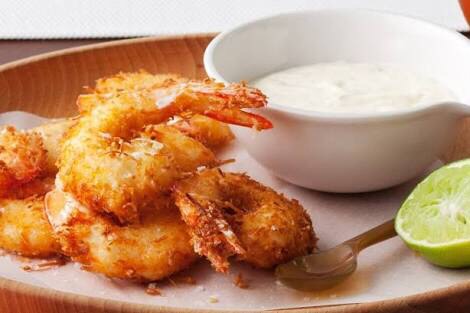
Chargrilled Prawns with Lime Aioli;
1 large green chilli, seeded
1 garlic clove
1 teaspoon dried oregano
½ teaspoon ground cumin
grated zest and juice of 1 lime
juice of 1 orange
4 tablespoons olive oil
24 large raw prawns, peeled and deveined, tails intact

Lime Aioli
4 garlic gloves
½ teaspoon salt
1 egg yolk
½ teaspoon finely grated lime zest
2 teaspoons lime juice
170ml olive oil

Using a mortar and pestle (or short bursts of a food processor if you don’t have a mortar and pestle) grind the chilli, garlic, oregano, cumin, lime zest, lime juice, orange juice and olive oil together to make a marinade. Season with a little sea salt and ground white pepper. Toss the prawns in the marinade, then cover and refrigerate for 1 hour.
Meanwhile, soak 24 small bamboo skewers in cold water for 30 minutes to prevent scorching.
To make the lime aioli, pound the garlic and salt to a smooth paste using a mortar and pestle (or your food processor). Scrape the paste into a large bowl, then whisk in the egg yolk, lime zest and lime juice. Whisking continually (again, this can be done in a food processor with the motor running) slowly add the olive oil a little at a time, until you have a thick mayonnaise. Season to taste, then cover and refrigerate until ready to use.
Heat a barbeque plate to high. Thread the prawns on the skewers. Cook the prawns for 1½ minutes or until they just turn pink and start to curl, then turn and cook for a further 1½ minutes , or until just opaque. Serve at once with the lime aioli, and Pumpkin & Hazelnut Salad.
Serves 4

Pumpkin & Hazelnut Salad;
1kg Kent or Jap pumpkin
1 tablespoon vegetable oil
100g hazelnuts
3 tablespoons tahini (now available in supermarkets)
125g plain yoghurt
1 teaspoon ground cumin
½ teaspoon finely chopped garlic
1 tablespoon lemon juice
200g baby rocket
1 tablespoon olive oil
1 teaspoon red wine vinegar

Preheat oven to 180°C. Peel pumpkin and cut into bite-sized chunks. Toss them in a bowl with the vegetable oil and season with sea salt and freshly ground black pepper. Spread over baking tray and roast for 20 minutes or until golden brown.
Meanwhile, roast the hazelnuts on another baking tray for 5 minutes or until the skins start splitting. Remove and allow to cool.
Mix the tahini, yoghurt, cumin, garlic and lemon juice to a smooth paste, then season to taste.
Rub the skins off the cooled hazelnuts and roughly chop the nuts. Put them in a bowl with the rocket and add the olive oil and vinegar. Toss together. Divide amongst plated, then top with pumpkin chunks and dollop with the tahini mixture.
Serves 4

DINNER
Parmesan Lamb Pies;
2 tablespoons olive oil
2 onions, peeled and finely diced
2 garlic cloves, chopped
500g minced lamb
2 celery stalks, finely chopped
¼ cup grated carrot
1 teaspoon ground cinnamon
400g tin chopped tomatoes
250ml red wine
3 eggs
200g Greek-style yoghurt
100g grated parmesan cheese

Preheat the oven to 200°C. Heat the olive oil in a frying pan over medium heat, then add the onions and garlic. Cook until the onion begins to soften and turn a golden brown. Add the lamb and increase the heat. Brown the lamb and add the celery, carrot, cinnamon, tomatoes and wine. Reduce the heat to medium and simmer until the liquid has reduced. Season to taste with sea salt and freshly ground pepper.
Spoon the mixture into four individual ramekins or a medium baking dish.
Put the eggs, yoghurt and half the parmesan into a bowl and whisk to combine. Spoon the mixture over the pies and sprinkle with the remaining parmesan. Bake for 20 minutes, or until the top is golden brown. Serve with Warm Vegetables with White Beans.
Serves 4

Warm Vegetables with White Beans;
½ cup olive oil
6 slices pancetta, finely chopped
1 red onion, finely diced
2 garlic cloves, crushed
1 teaspoon finely chopped fresh rosemary leaves
2 celery stalks, thinly sliced
1 large eggplant, finely diced
2 red capsicums, finely diced
400g tin chopped tomatoes
1 orange, zest grated, juiced
400g can cannelloni beans, drained and rinsed (always rinse canned vegetables)
2 tablespoons finely chopped flat-leaf parsley
2 tablespoons extra virgin olive oil
basil leaves, to serve

Heat the oil in a large frying pan over medium heat and add the pancetta, onion, garlic and rosemary. Cook until the onion begins to soften, then add the celery, eggplant and capsicums. When the eggplant begins to soften add the chopped tomatoes, orange zest and orange juice. Cover and continue to cook for 30 minutes.
Add the cannellini beans and cook for a further 1-2 minutes, then fold in the parsley and spoon onto a serving dish. Drizzle with the extra virgin olive oil, and scatter with basil leaves.
Serves 4

ANYTIME INDULGENCE
Chilli Chocolate Marquis with Poached Fruits
325g god quality cooking chocolate, broken up
75g unsalted butter, softened
1 hot red chilli, deseeded and finely chopped
100g icing sugar
2 egg whites
200ml crème fraiche (dairy case near sour cream)
1 small mango, halved and stoned (or use frozen if out of season)
300g lychees, peeled and stoned (use canned if out of season)
15g caster sugar
6 tablespoons tequila or rum
100g blueberries

Line a medium loaf tin with cling wrap.
Melt the chocolate in a medium-sized bowl and leave to cool.
In a separate bowl, beat together the butter, chilli and 50g of the icing sugar until smooth. Whisk the egg whites in a clean bowl until soft peaks form then beat in the remaining icing sugar.
Stir the chocolate into the chilli butter and then the crème fraiche. Immediately fold in a quarter of the whisked whites to lighten the mixture, then fold in the remainder. Turn the mixture into the tin, level the surface and chill for at least 4 hours until firm.
Slice the mango and halve the lychees. Heat the sugar in a small saucepan with 100ml water until the sugar dissolves. Bring to the boil and boil for 3-5 minutes until the liqid turns syrupy.
Remove the syrup from the heat and stir in all the fruits.. Leave to cool then turn the fruit into a bowl and stir in the liqueur.
Invert the marquis on to a plate and peel away the cling wrap. Cut into thick slices, transfer to serving plates and top with the poached fruits.

White Chocolate & Lavender Madeira;
150g white chocolate, broken up
8 lavender sprigs
25g sugar
125g unsalted butter, softened
2 eggs, beaten
125g self-raising flour
25g ground almonds
icing sugar, for dusting

Preheat oven to 180°C
Grease and line the base and long sides of a medium loaf tin with baking paper. Grease the paper. Melt the chocolate in a small bowl.
Pull the lavender flowers from the stalks and beat them in a bowl with the sugar and butter until smooth and creamy (discard the stalks). Gradually beat in the eggs, adding a little of the flour to prevent curdling.
Stir in the melted chocolate. Sift the remaining flour over the bowl and gradually fold in with the ground almonds.
Turn the mixture into the tin and level the surface. Bake in preheated oven for 40 inutes until risen and firm to the touch.
Transfer to a wire rack to cool, and serve generously dusted with icing sugar.

Tim Alderman
Copyright 2014
So Can You Cook? 24

Citrus

There is probably nothing in the world I enjoy more than the ‘cat’s-bum’ cheek- sucking, mouth-pursing bite of a really good citrus tart. Citrus are flavours that cleanse and add a bit of zing to anything they are cooked or served with. We have our own lemon tree, which at this very moment is full of ripening fruit, and it’s not all that long until I start churning out lemon tarts, lemon delicious puddings, lemon self-saucing puddings and passing all the excess I can’t use onto friends and neighbours.
Unlike David, my partner, who can pick up a lemon and just bite into it without pulling a single face, I prefer mine to be involved in a dish of some description. It is not all that long ago that trying to buy a lime was like looking for ocean in the Red Centre. Now, apart from them being atrociously expensive out-of-season, you can buy bags of them for as little as $3.00. Limes are probably the most versatile of the citrus family, and not only make great cakes, puddings and biscuits but are an integral part of nearly all Asian cooking. Oranges and grapefruits make fantastic enlivening additions to salads, and whole-orange cakes are a thing to lust for. Grapefruit marmalade is one neighbours favourite – I don’t make it all that often, but I can bet he will take every jar I offer. There is also the world of little citrus like cumquats. These also make a deliciously tart marmalade, or can be poached and stored in spiced syrup for spooning over ice cream or serving with a cheese platter.
Because of uncontrollable obsession with desserts this column is going to deal in the sweets (tart?) side of using these delectable and versatile fruits. By the way, slices of lemons and limes are also great when barbequed, and served with fish or poultry. Don’t forget to buy yourself some Preserved Moroccan Lemons – or make them yourself – to serve with cous cous, rice or Middle-Eastern dishes. Some brands can be found on my web site under ‘Condiments’.

By the time this column is published, the new Alderman Providore web site will be launched. We have had the new site designed by Duncan from Chirp Internet, and he has given it a fresh make-over, cleaning up all the untidiness that annoyed me with the old site, and expanding it to be a more interesting and comprehensive browse for our customers. We have also brought the site ‘home’ to a local host, and have changed to our local domain name. This is one of our short-term goals now completed. Please come and have a browse at http://www.aldermanprovidore.com.au. There is no obligation to buy, but I do like to tempt people.

Summer Soup of Red Fruits in Citrus Sauce;
Serves 6

Juice of 2 grapefruit
Juice of 2 oranges
Juice of 2 lemons
2 passionfruit, halved, pulp and seeds scooped out and reserved
1 kiwi fruit, peeled and finely diced6 strawberries, finely diced
1kg of mixed red fruits such as strawberries, raspberries, redcurrants – or use frozen if out-of-season. Just drain off the excess juice.

In a large bowl, mix together the citrus juices and stir in the passionfruit pulp and seeds, the diced kiwi fruit and diced strawberries.
Arrange the mixed red fruits in the centre of 6 serving plates. Spoon the citrus sauce and diced fruit mixture around the red fruits and serve the ‘soup’ at once.

Lemon & Almond Tart;
Serves 6

1 x large sheet sweet shortcrust pastry
2 eggs
150g icing sugar
4 lemons
100g butter, melted
75g ground almonds
icing sugar, to dust

Preheat oven to 220°C. Carefully work the pastry into a 20cm tart pan, and trim off the excess. Blind bake (cover with baking paper and some sort of weights eg ceramic beads or rice) for 10 minutes, remove paper and weights and return to the oven for a further 10 minutes until the pastry is crisp and golden.
Reduce the oven temperature to 180°C
In a bowl, whisk the eggs and the icing sugar together until fluffy. Mix in the grated zest of 2 of the lemons, the butter, ground almonds and juice of all 4 lemons. DON’T WORRY IF THE MIXTURE LOOKS CURDLED. It won’t affect the finished product.
Pour the filling into the pastry case and bake for 25 minutes, or until the filling is set. Leave to cool and serve dusted with icing sugar.

Orange and Almond Cake;
Serves 6-8

2 large navel oranges
6 eggs, separated
1 tablespoon orange blossom water or orange liqueur
1 cup caster sugar
3 cups ground almonds
1 teaspoon baking powder
3 more navel oranges, peeled, pith removed, thinly sliced, to garnish

Orange Syrup:
2 cups fresh orange juice, strained
¾ cup caster sugar
60ml sauternes (or any other dessert wine. If too expensive, use a sugar syrup of 1 cup sugar to 1 cup water boiuled until slightly thick.

Grease and lightly flour a 23cm springform cake tin. Put the whole oranges into a saucepan full of water. Boil for 2 hours, topping up water as needed. Remove the oranges, quarter them and process in a food processor until smooth. Cool thoroughly.
Preheat oven to 180°C.
Place the egg yolks, orange blossom water and caster sugar into a large bowl and beat until smooth, then stir in the orange puree and mix well. Whisk the egg whites in a clean dry bowl until firm peaks form. Add the ground almonds and baking powder to the orange mixture and stir well, then fold in the egg whites. Pour into the cake tin and bake for 1 hour, or until firm – cover with foil if it overbrowns. Cool in the tin, then transfer to a serving plate.

To make the syrup, put the orange juice, sugar and sauternes (or syrup) in a saucepan over medium heat and stir until the sugar is dissolved. Reduce the heat ands simmer for 20 minutes or until reduced by half and slightly syrupy – skimming off any scum.

Cut the cake into wedges, garnish with orange slices and drizzle with the syrup. Delicious served with cream.

Lemon Stars;
Makes about 22

125g unsalted butter, cubed and softened
½ cup caster sugar
2 egg yolks (freeze whites to use in meringues or pavlova)
2 teaspoons finely grated lemon zest
1¼ cups plain flour
¾ cup coarse cornmeal (polenta)
icing sugar, to dust

Preheat oven to 160°C. Line a baking tray with baking paper. Beat the butter and sugar until creamy. Mix in the egg yolks, lemon zest, flour and cornmeal until they form a ball of soft dough. Roll out on a floured surface to 1cm thick.
Cut out stars from the dough using a 3cm star-shaped cutter. Place on the tray and bake for 20 minutes or until lightly golden. Cool on a wire rack and dust with icing sugar.

Orange, Pistachio and Semolina Slice;
Makes 18 pieces

2/3 cup shelled pistachio nuts
200g unsalted butter, chopped
2/3 cup caster sugar
1 teaspoon vanilla essence
1 tablespoon finely grated orange zest
2 eggs
½ cup self-raising flour
½ cup orange juice
1½ cups fine semolina
1 cup caster sugar, extra
icing sugar, to dust

Preheat oven to 180°C. Lightly grease a 20cm x 30cm shallow baking tin and line with baking paper, leaving it hanging over the two long sides.
Bake the pistachios for 8-10 minutes or until they are lightly toasted. Cool, then chop.
Beat the butter and sugar with electric beaters until light and fluffy. Add the vanilla, orange zest and eggs, and beat until combined.
Add the flour, orange juice, semolina and pistachio nuts and fold in with a spatula until just combined – do NOT overmix. Spread into the tin. Bake for 30 minutes, or until golden brown and firm when lightly touched. Cool for 10 minutes in the tin, then on a wire rack placed on a tray.
Mix the extra orange juice and sugar in a small saucepan. Bring to the boil over medium heat, then simmer for 1 minute. Spoon over the slice. Cool and cut into squares or diamonds. Dust with icing sugar.

Key lime Pie;
Serves 6-8

375g block ready-made shortcrust pastry
4 eggs yolks
395g tin condensed milk
½ cup lime juice
2 teaspoons grated lime zest
Lime slices – to garnish
Icing sugar, to dust
Whipped cream, to serve

Preheat oven to 180°C. Grease a 23cm loose-bottomed flan tin. Roll the dough out between 2 sheets baking paper until it is large enough to fit into the flan tin. Lift and fit the pastry into the tin, then trim edges.
Line the pastry shell with baking paper and ceramic balls or rice. Bake for 10 minutes, remove paper and beads and return the pastry to the oven for another 5 minutes or until the base is dry. Leave to cool.
Using electric beaters, beat the egg yolks, condensed milk, lime juice and zest in a large bowl for 2 minutes or until well combined. Pour into the pie shell and smooth the surface. Bake for 20-25 minutes or until set. Allow the pie to cool, then refrigerate for 2 hours, or until well chilled. Garnish with lime slices, dust with icing sugar and serve with whipped cream.

Mandarin Ice;
Serves 4-6

10 mandarins
½ cup caster sugar

Squeeze the mandarins to make 2 cups juice, and strain.
Place the sugar and 1 cup water in a small saucepan. Stir over low heat until the sugar has dissolved, then simmer for 5 minutes. Remove from the heat and cool slightly.
Stir the mandarin syrup into the sugar syrup, then pour into a shallow metal tray. Freeze for two hours, or until frozen. Transfer to a food processor and blend until slushy. Return to the freezer and repeat the process three more times.

Tim Alderman
Copyright 2014

So Can You Cook? 23

Baked Classics
I often find myself back to nostalgia la la land in this column. Mind you, I don’t think that is an entirely bad thing. Most of us have very happy thoughts of our childhood, and the food we ate has a large part to play.. There are good things and bad things tied into nostalgia. In respect to food, some of the good things are comparing the then to now. The way we have embraced food styles from all over the world to start with, and how we have incorporated them into our fusion of traditional and modern is something we are all to be commended for. The huge choice of foods we have now is far more desirable than the limited range we had when I grew up. I have thankfully let go of the days of meat and three veg, and the boring monotony of chops on Monday night, cutlets on Tuesday night, sausages with gravy on Wednesday night etc as if by diversifying we would break some sacred ritual. So, there is a lot I don’t lament leaving in the past, except to use it as a simile of how NOT to do things.
But there are also some very important elements of food back then that we have lost, and that is very lamentable. Perhaps the greatest loss, particularly in our modern world where everyone is in such a rush to get things done as quickly as possible, is the lack of ‘neighbourhood’ in cooking, that silent, unacknowledged exchange of respect, love and communication that used to happen in the burbs of the 50s and 60s. I miss the Saturday cook-off more than anything else from that time. In Melrose Ave at Sylvania, every Saturday was baking day in every house on the street. You could smell cakes and pies baking as you walked down the footpath. Every mother excelled in particular products – in out house my mother made delicious jam and coconut tarts, and an apple and rhubarb pie that I can still taste; Mrs Gill next door to us did fantastic pumpkin scones and banana pikelets; Eadie Samways over the road did mouth-watering passionfruit sponges, and cup cakes. Mrs Johnson next door to her did apricot slice and truly delicious chocolate cakes…you get my meaning. But it wasn’t that they just cooked for themselves. The fruits of their labour were shared amongst the other households in the street. Doorbells would be ringing all day as tea towel covered plates of treats were shared amongst the other families in the street. And it wasn’t just the treats that were shared – those without the luxury of a Mixmaster would be lent one by a luckier neighbour, and recipes were swapped constantly. Baking helped to create community. As a kid growing up in this environment, I had an excellent time roaming from house to house sampling wares, licking beaters and bowls, hands sticky and eyes as big as dinner plates. It was a true assault on the senses.
That is perhaps the one thing I would like to see return. Now, if we can just teach people to love cooking instead of seeing it as a fast food chore…
This is a nostalgic look at baking.

SCONES:
2½ cups self-raising flour
1 tablespoon caster sugar
¼ teaspoon salt
30g butter
¾ cups milk
½ cup water (Approx)

Preheat oven to very hot (240°C) . Either grease an 18cm square pan or a baking sheet.
Sift flour, sugar and salt into a large bowl. Rub in butter with fingertips until it resembles fine breadcrumbs.
Make a well in the centre and add milk and almost all the water. Using a knife ‘cut’ the milk and water through the flour mix until you achieve a soft, sticky dough. Use your own judgement to decide if the rest of the water needs to be added or not..
Turn the dough onto a lightly floured surface and knead quickly and lightly to a smooth dough. DON’T USE TOO MUCH FLOUR FOR THIS, otherwise you end up with an over-floured dough.
Using hands press the dough out to a 2cm thickness. Don’t be too fussy – scones should be rough. Dip a 4.5 cm cutter (or a glass or a cup rim) into flour and cut rounds from dough. Continue reworking dough until it is all used up. Pack rounds together in cake tin, or on baking sheet.
Brush with milk and bake in very hot oven for 15 minutes. Turn onto wire rack to cool, or break in half and butter while hot to get that yummy, runny butter all over your hands as you devour it. Naturally, they are also great with strawberry jam and whipped cream. For variety throw in a handful of sultanas, raisins or dates.

APPLE PIE:
1 cup plain flour
½ cup self-raising flour
¼ cup cornflour
¼ custard powder
2 tablespoons caster sugar
125g cold butter, chopped
1 egg, separated
¼ cup iced water, appox

FILLING:
7 (1.5 kg) large apples
½ cup water
2 tablespoons sugar
¼ teaspoon ground cinnamon
1 teaspoon grated lemon rind

For filling – Peel apples, cut into quarters. Remove cores and cut in half lengthways. Place apples in a large saucepan with water; bring to the boil. Reduce heat; cover. Cook about 5 minutes or until apples are just tender. Transfer to a large bowl, gently stir in sugar, cinnamon and lemon rind. Cool to room temperature.
For pastry – Blend or process flours, custard powder, half the sugar and all the butter until combined. Add egg yolk and just enough water to get all ingredients to come together. Knead on lightly floured surface until smooth, then press to a disk and wrap in plastic wrap. Refrigerate for 30 minutes.
Roll two-thirds of the pastry between sheets of baking paper until large enough to line a 23cm pie dish. Line dish. Trim edges. Cover and refrigerate for 30 minutes.
Preheat oven to moderate (180°C)
Roll remaining pastry between sheets of baking paper until large enough to cover pie. Discard scraps.
Spoon filling into pastry case, brush edge with lightly beaten egg white. Cover filling with pastry sheet, press edges together then trim using knife. Pinch edges to make a frill. Brush top with remaining egg white and sprinkle with remaining sugar.
Bake pie in moderate oven for 40 minutes or until golden brown.

Raspberry Coconut Slice;
90g butter
½ cup caster sugar
1 egg
¼ cup self-raisinhg flour
2/3 cup plain flour
1 tablespoon custard powder
¼ cup raspberry jam (or to your own flavour)
Coconut Topping;
2 eggs, beaten lightly
¼ cup caster sugar
2 cups desiccated coconut

Preheat oven to moderate (180°C). Grease 19cm x 29cm slice tray; line the base and sides with baking paper, extending it over the edges of the pan by 2cm.
Beat butter, sugar and egg in a small bowl with an electric beater until it changes to a lighter colour; stir in sifted flours and custard powder. Spread mixture over base of prepared pan.
Bake in moderate oven for 15 minutes. Stand in pan for 10 minutes.
Spread slice base with jam, then sprinkle with coconut topping (for coconut topping combine all ingredients in a small bowl).
Return to moderate oven, bake for a further 25 minutes or until browned lightly. Cool in pan before cutting.

Best-Ever Sponge Cake; 

I used to think making sponges was a real chore, and they never seemed to be light as they should be – in fact, mine used to be like butter cakes. After experience – and a determination to get them right – I found that I was too heavy-handed with them. The trick is to get the eggs and sugar really aerated and foamy, then to quickly and lightly fold in the flour using either your hand (the traditional way) or a large metal spoon. Don’t fiddle with them, otherwise you loose the air that makes them so light.

4 eggs
¾ cup caster sugar
1 cup self-raising flour
1 tablespoon cornflour
10g butter, softened
1/3 cup hot water
1/3 cup lemon butter (or jam if you prefer)
¾ cup thickened cream, whipped
1 tablespoon icing sugar mixture

Preheat oven to moderate 180°C. Grease 2 x 20cm deep round cake pans.
Beat eggs in a large bowl with electric mixer until thick and foamy. Gradually add sugar about 1 tablespoon at a time, beating until sugar is dissolved between additions. Total beating time should be about 10 minutes.
Sift flour and cornflour together three times onto a sheet of paper. Sift flour mixture over egg mixture, then using a raking movement with your hand lightly fold and pull the flour mixture through the egg mixture. Use your hand to scrape the sides of the bowl.
Pour combined butter and the water down side of bowl, using one hand fold through the egg mixture. Pour mixture evenly into prepared pans, using metal spatula spread mixture to edge of pans.
Bake sponges in moderate oven about 25 minutes. Immediately sponges are cooked turn onto cooling wires spread with baking paper. Turn top-side up to cool.
Place one sponge on serving plate, spread with filling and whipped cream. Top with remaining cake and sprinkle with icing sugar mixture.

Banana Cake with Passionfruit Icing;
125g butter, softened
¾ cup firmly packed brown sugar
2 eggs
1½ cups self-raising flour
½ teaspoon bicarbonate of soda
1 teaspoon mixed spice
1 cup mashed banana (preferably 2 over-ripe ones)
½ cup sour cream
¼ cup milk
Passionfruit Icing:
1½ cups icing sugar mixture (actually a mix of icing sugar and cornflour)
1 teaspoon soft butter
2 tablespoons passionfruit pulp, approx

Preheat oven to moderate 180°C. Grease 15cm x 25cm loaf pan, lining base with baking paper.
Beat butter and sugar in a small mixing bowl with electric beater until light and fluffy. Beat in eggs, one at a time, until combined. Transfer mixture to a large bowl, using a wooden spoon stir in sifted dry ingredients, banana, sour cream and milk. Spread mixture into prepared pan.
Bake cake in moderate oven for about 50 minutes. Stand cake in pan for 5 minutes before turning out onto wire rack to cool. Spread with passionfruit icing.
Passionfruit icing: Place icing sugar in a small heatproof bowl, stir in butter and enough pulp to make a firm paste. Stir over hot water until icing is of spreading consistency, taking care not to overheat. Use immediately.

Date & Walnut Loaf; Although it is traditional to make this tea roll in a round tin, these can be expensive to buy if you don’t have them in the cupboard. Use an ordinary loaf pan instead, or use well-cleaned fruit tins with a double thickness of foil for a lid. These rolls can be frozen for up to three months.

60g butter
1 cup boiling water
1 cup finely chopped, seeded dried dates
½ teaspoon bicarbonate of soda
1 cup firmly packed brown sugar
2 cups self-raising flour
½ cup coarsely chopped walnuts
1 egg, beaten lightly
Preheat oven to moderate 180°C. Grease 2 x 8cm x 19cm nut roll tins (from any good kitchenware store), line bases with baking paper. Place tins upright on baking tray.
Combine butter and water in medium saucepan; stir over low heat until butter melts.
Transfer mixture to a large bowl; stir in dates and soda, then sugar, flour, nuts and egg.
Spoon mixture into prepared tins, replace lids.
Bake rolls, tins standing upright, in moderate oven about 50 minutes.
Stand rolls for 5 minutes, remove both lids and shake tins gently to remove rolls onto wire rack to cool.
Serve with lashings of deliciously unhealthy butter.

Tim Alderman
Copyright 2014