Gelug monks wear the yellow hats of their order during a formal ceremony. Jeff Hutchens / Getty Images
Gelugpa is best known in the West as the school of Tibetan Buddhism associated with His Holiness the Dalai Lama. In the 17th century, the Gelug (also spelled Geluk) school became the most powerful institution in Tibet, and it remained so until China took control of Tibet in the 1950s.
The story of Gelugpa begins with Tsongkhapa (1357-1419), a man from Amdo Province who began studying with a local Sakya lama at a very young age. At 16 he traveled to central Tibet, where the most renowned teachers and monasteries were located, to further his education.
Tsongkhapa did not study in any one place. He stayed in Kagyu monasteries learning Tibetan medicine, the practices of Mahamudra and the tantra yoga of Atisha. He studied philosophy in Sakya monasteries. He sought independent teachers with fresh ideas. He was particularly interested in the Madhyamika teachings of Nagarjuna.
In time, Tsongkhapa combined these teachings into a new approach to Buddhism. He explained his approach in two major works, Great Exposition of the Stages of the Path and Great Exposition of the Secret Mantra. Other of his teachings were collected in several volumes, 18 in all.
Through most of his adult life, Tsongkhapa traveled around Tibet, often living in camps with dozens of students. By the time Tsongkhapa had reached his 50s, the rugged lifestyle had taken a toll on his health. His admirers built him a new monastery on a mountain near Lhasa. The monastery was named “Ganden,” which means “joyful.” Tsongkhapa lived there only briefly before he died, however.
The Founding of Gelugpa
At the time of his death, Tsongkhapa and his students were considered to be part of the Sakya school. Then his disciples stepped up and built a new school of Tibetan Buddhism on Tsongkhapa’s teachings. They called the school “Gelug,” which means “the virtuous tradition.” Here are some of Tsongkhapa’s most prominent disciples:
Gyaltsab (1364-1431) is thought to have been first the abbot of Gendun after Tsongkhapa died. This made him the first Ganden Tripa, or throne-holder of Gendun. To this day the Ganden Tripa is the actual, official head of the Gelug school, not the Dalai Lama.
Jamchen Chojey (1355-1435) founded the great Sera monastery of Lhasa.
Khedrub (1385-1438) is credited with defending and promoting Tsongkhapa’s teachings throughout Tibet. He also began the tradition of high lamas of Gelug wearing yellow hats, to distinguish them from Sakya lamas, who wore red hats.
Gendun Drupa (1391-1474) founded the great monasteries of Drepung and Tashillhunpo, and during his life, he was among the most respected scholars in Tibet.
The Dalai Lama
A few years after Gendun Drupa died, a young boy of central Tibet was recognized as his tulku, or rebirth. Eventually, this boy, Gendun Gyatso (1475-1542) would serve as abbot of Drepung, Tashillhunpo, and Sera.
Sonam Gyatso (1543-1588) was recognized as the rebirth of Gendun Gyatso. This tulku became the spiritual adviser to a Mongol leader named Altan Khan. Altan Khan gave Gendun Gyatso the title “Dalai Lama,” meaning “ocean of wisdom.” Sonam Gyatso is considered to be the third Dalai Lama; his predecessors Gendun Drupa and Gendun Gyatso were named first and second Dalai Lama, posthumously.
These first Dalai Lamas had no political authority. It was Lobsang Gyatso, the “Great Fifth” Dalai Lama (1617-1682), who forged a fortuitous alliance with another Mongol leader, Gushi Khan, who conquered Tibet. Gushi Khan made Lobsang Gyatso the political and spiritual leader of the entire Tibetan people.
Under the Great Fifth a large part of another school of Tibetan Buddhism, Jonang, was absorbed into Gelugpa. The Jonang influence added Kalachakra teachings to Gelugpa. The Great Fifth also initiated the building of Potala Palace in Lhasa, which became the seat of both spiritual and political authority in Tibet.
Today many people think the Dalai Lamas held absolute power in Tibet as “god-kings,” but that is inaccurate. The Dalai Lamas who came after the Great Fifth was, for one reason or another, mostly figureheads who held little real power. For long stretches of time, various regents and military leaders were actually in charge.
Not until the 13th Dalai Lama, Thubten Gyatso (1876-1933), would another Dalai Lama function as a real head of government, and even he had limited authority to enact all the reforms he wished to bring to Tibet.
The current Dalai Lama is the 14th, His Holiness Tenzin Gyatso (born 1935). He was still an adolescent when China invaded Tibet in 1950. His Holiness has been exiled from Tibet since 1959. Recently he relinquished all political power over the Tibetan people in exile, in favor of a democratic, elected government.
The Panchen Lama
The second highest lama in Gelugpa is the Panchen Lama. The title Panchen Lama, meaning “great scholar,” was bestowed by the Fifth Dalai Lama on a tulku who was fourth in a lineage of rebirths, and so he became the 4th Panchen Lama.
The current Panchen Lama is the 11th. However, His Holiness Gedhun Choekyi Nyima (born 1989) and his family were taken into Chinese custody shortly after his recognition was made public in 1995. The Panchen Lama and his family have not been seen since. A pretender appointed by Beijing, Gyaltsen Norbu, has served as Panchen Lama in his place.
Gelugpa Today
The original Ganden monastery, Gelugpa’s spiritual home, was destroyed by Chinese troops during the 1959 Lhasa uprising. During the Cultural Revolution, the Red Guard came to finish whatever was left. Even the mummified body of Tsongkhapa was ordered burned, although a monk was able to recover a skull and some ashes. The Chinese government is rebuilding the monastery.
Meanwhile, exiled lamas re-established Ganden in Karnataka, India, and this monastery is now Gelugpa’s spiritual home. The current Ganden Tripa, the 102nd, is Thubten Nyima Lungtok Tenzin Norbu. (Ganden Tripas are not tulkus but are appointed to the position as adults.) The training of new generations of Gelugpa monks and nuns continues.
His Holiness the 14th Dalai Lama has lived in Dharamsala, India since he left Tibet in 1959. He has dedicated his life to teaching and to gain greater autonomy for Tibetans still under Chinese rule.
Reference
O’Brien, Barbara. “The Gelug School of Tibetan Buddhism.” Learn Religions, Feb. 11, 2020, learnreligions.com/the-gelug-school-of-tibetan-buddhism-449627.
A Roman Catholic priest has given a unique insight into day-to-day life at a remote and little-known rehabilitation home used by the church to treat alcoholic, gay and paedophiliac clergymen.
The priest was sent to the residential treatment centre in Gloucestershire after his bishop found out that he was a practising homosexual. Writing anonymously in today’s Independent, he gives a detailed account of his week-long assessment at Our Lady of Victory – a place he describes as being like “an open prison” – situated high on a Cotswold hill in Brownshill, near Stroud.
The church is guarded about life inside the centre. It is run by the Servants of the Paraclete, a religious congregation of men dedicated to ministering to priests and brothers with “personal difficulties”. Anyone who is “sent to Stroud”, as Catholic circles put it, for longer than the initial assessment must sign a confidentiality contract.
Our Lady of Victory purports to offer “therapy in a spiritual context”. But according to Father Kieran Conroy, director of the Catholic Media Office, the approach is more “therapist’s boot camp” than “therapist’s couch”. Fr Conroy said he understood the treatment to be “quite confrontational”. “They do face you with your own shortcomings and there’s no question of denial, at all. It’s a process of knocking down and building up again, which I think some people find difficult to deal with because they are particularly vulnerable.”
The Servants of the Paraclete was founded in 1947 by Father Gerald Fitzgerald, a priest from the Archdiocese of Boston, in the United States. It has about 30 priests at Stroud, and there is a waiting list. Our Lady of Victory hit the headlines in 1993 when Fr Sean Seddon, a 38-year-old Roman Catholic priest, was sent there to try to forget about his six- year romance with a teacher. On learning that his lover had lost their baby, he committed suicide by throwing himself under a railway station near the retreat.
Fr Conroy believes the majority of residents at Stroud are alcoholics on the Chemical Dependency Programme, based on the 12 Steps of Alcoholics Anonymous. “In the case of child abuse it would be assessment rather than treatment,” he added, “because most people realise that paedophilia is not a condition they can treat successfully.”
He said Stroud is not an alternative to the courts. Some of the priests undergoing treatment for child abuse have served prison sentences. At the end of the treatment, staff at Stroud assess the paedophiliac priest’s risk of reoffending, according to Father Conroy. “If they choose to remain in the priesthood – and presumably they will, otherwise they wouldn’t have spent six months or two years there – the church has to decide where the safest place for that person to work is. If he is high risk they must ensure that he is in a job that has little or zero risk of contact with children.”
To residents living near the centre, it is simply a “drying out clinic for boozy brethren”. But the priest recalls a “sense of listlessness” among inmates, “as if, realising the game was up, all the fight, all the desire for independence had gone.” He believes the “glassiness in their eyes” betrays “some form of brainwashing”. “How,” he asks, “is paedophilia `cured’ or any other form of addiction, sexual or otherwise?”
Former Questa priest named in new rape and abuse lawsuit
St. Anthony Catholic Church in Questa, where several priests who were found guilty of sexual abuse of a minor served.
Two men who were parishioners of Questa’s St. Anthony Church in the late 1960s have named a former priest as a sexual abuser in a lawsuit filed last week, marking another instance of alleged abuse by clergy associated with the beleaguered Catholic Church in New Mexico.
The lawsuit alleges Leo Courcy sexually abused the two boys on an overnight stay at the church rectory in the summer of 1969. One boy was raped and the other molested, according to the lawsuit filed Thursday (May 16) in the 2nd Judicial District Court in Albuquerque.
The lawsuit was filed against the Servants of the Paraclete, a largely inactive religious order that was founded in New Mexico in the 1940s, and its private foundation.
Aside from the sexual abuse allegations, the lawsuit also lays blame on the higher-ups of the Servants of the Paraclete for negligently putting known abusers into positions of power in underserved parishes across rural New Mexico.
The Servants ran a facility in Jemez Springs that became known as a dumping ground for sexually abusive priests from other dioceses. The religious order would assign priests to ministerial work as part of a “graduated program of rehabilitation,” according to the lawsuit.
The lawsuit alleges that “only four days after Fr. Courcy arrived at the Servants’ Jemez Springs facilities for a second bout of treatment [for sexually abusing a minor, the director of the facility] made and finalized arrangements to send Fr. Courcy to a supply ministry assignment at St. Anthony Parish in Questa.”
In 2017, the Archdiocese of Santa Fe released a list of more than 70 priests, brothers and other members of religious orders who were “credibly accused” of sexually abusing minors; the list included Courcy. Courcy was also named as an abuser in a lawsuit filed in September 2017 that alleges he abused another altar boy from the same year.
The lawsuit also claims the Servants did not keep a list of parish assignments for sexually abusive priests, or that it intentionally destroyed such documents when a wave of lawsuits were filed against it and the archdiocese in the 1990s.
The men who allege Courcy abused them aren’t named in the lawsuit, which refers to them as John Doe 127 and John Doe 143. The documents do not indicate if they are still residents of Questa.
The Servants and its foundation had not filed responses to the lawsuit as of press time. According to the archdiocese, Courcy is still living.
Unlike most lawsuits alleging abuse by priests and religious in New Mexico, this one was filed only against the Servant and not the Archdiocese of Santa Fe, which is in the midst of bankruptcy proceedings that is changing how sexual abuse lawsuits are getting filed in the state.
After decades of lawsuits and millions of dollars in settlements with sexual abuse victims, the archdiocese filed for bankruptcy in December 2018. Under federal Bankruptcy Code, the debtor – in this case, the archdiocese – comes up with a plan to pay its debts while continuing to operate.
Because of the bankruptcy, any new claims against the archdiocese must be dealt with as part of those proceedings, which have a June 17 cutoff, or “bar date.”
But according to attorney Levi Monagle, who is representing the John Does in the suit filed Thursday, the bankruptcy deadline does not “prevent the filing of lawsuits against other religious organizations like the Servants of the Paraclete, the Sons of the Holy Family, the Jesuits, the Franciscans, the Basilians, the Congregation of Blessed Sacrament Fathers or any other religious orders who were doing business in our state, and whose agents participated in raping children or protecting the rapists.”
The Servants of the Paraclete complex in Jemez Springs, N.M., in 1993 (Jeffrey D. Scott)
As early as the mid-1950s, decades before the clergy sexual-abuse crisis broke publicly across the U.S. Catholic landscape, the founder of a religious order that dealt regularly with priest sex abusers was so convinced of their inability to change that he searched for an island to purchase with the intent of using it as a place to isolate such offenders, according to documents recently obtained by NCR.
Fr. Gerald Fitzgerald, founder of the Servants of the Paracletes, an order established in 1947 to deal with problem priests, wrote regularly to bishops in the United States and to Vatican officials, including the pope, of his opinion that many sexual abusers in the priesthood should be laicized immediately.
Fitzgerald was a prolific correspondent who wrote regularly of his frustration with and disdain for priests “who have seduced or attempted to seduce little boys or girls.” His views are contained in letters and other correspondence that had previously been under court seal and were made available to NCR by a California law firm in February.
Read copies of letters Fitzgerald exchanged with U.S. bishops and one pope.
Listen to Tom Roberts discuss this story on the April 1 edition of “Here & Now,” a National Public Radio news program from WBUR in Boston. (Scroll down the page to just before the photo of the waxy monkey frogs.)
Fitzgerald’s convictions appear to significantly contradict the claims of contemporary bishops that the hierarchy was unaware until recent years of the danger in shuffling priests from one parish to another and in concealing the priests’ problems from those they served.
It is clear, too, in letters between Fitzgerald and a range of bishops, among bishops themselves, and between Fitzgerald and the Vatican, that the hierarchy was aware of the problem and its implications well before the problem surfaced as a national story in the mid-1980s.
Cardinal Roger Mahony of the Los Angeles archdiocese, reacting in February to a federal investigation into his handling of the crisis, said: “We have said repeatedly that … our understanding of this problem and the way it’s dealt with today evolved, and that in those years ago, decades ago, people didn’t realize how serious this was, and so, rather than pulling people out of ministry directly and fully, they were moved.”
Indeed, some psychology experts seemed to hold the position that priest offenders could be returned to ministry. Even the Paracletes, as the order developed and grew, employed experts who said that certain men could be returned to ministry under stringent conditions and with strict supervision.
The order itself ultimately was so inundated with lawsuits regarding priests who molested children while or after being treated at its facility in Jemez Springs, N.M., that it closed the facility in 1995.
Whatever discussion occurred during the 1970s and 1980s over proper treatment, however, for nearly two decades Fitzgerald spoke a rather consistent conviction about the dim prospects for returning sex abusers to ministry. Fitzgerald seemed to know almost from the start the danger such priests posed. He was adamant in his conviction that priests who sexually abused children (often the language of that era was more circumspect in naming the problem) should not be returned to ministry.
In a 1957 letter to an unnamed archbishop, Fitzgerald said, “These men, Your Excellency, are devils and the wrath of God is upon them and if I were a bishop I would tremble when I failed to report them to Rome for involuntary layization [sic].” The letter, addressed to “Most dear Cofounder,” was apparently to Archbishop Edwin V. Byrne of Santa Fe, N.M., who was considered a cofounder of the Paraclete facility at Jemez Springs and a good friend of Fitzgerald.
Later in the same letter, in language that revealed deep passion, he wrote: “It is for this class of rattlesnake I have always wished the island retreat — but even an island is too good for these vipers of whom the Gentle Master said it were better they had not been born — this is an indirect way of saying damned, is it not?”
The documents were sealed at the request of the church in an earlier civil case involving Fr. Rudolph Kos of Dallas. Eleven plaintiffs won awards in the case in which Kos was accused of molesting minors over a 12-year period. He had been treated at the Paraclete facility in New Mexico. The documents were unsealed in 2007 by a court order obtained by the Beverly Hills law firm of Kiesel, Boucher & Larson, according to Anthony DeMarco, an attorney with the firm that has handled hundreds of cases for alleged victims of sexual abuse in the Los Angeles archdiocese and elsewhere.
According to Helen Zukin, another member of the firm, the documents have been used in some cases to dispute the church claim that it knew nothing about the behavior of sex abusers or the warning signs of abuse prior to the 1980s.
In a September 1952 letter to the then- bishop of Reno, Nev., Fitzgerald wrote: “I myself would be inclined to favor laicization for any priest, upon objective evidence, for tampering with the virtue of the young, my argument being, from this point onward the charity to the Mystical Body should take precedence over charity to the individual and when a man has so far fallen away from the purpose of the priesthood the very best that should be offered him is his Mass in the seclusion of a monastery. Moreover, in practice, real conversions will be found to be extremely rare. … Hence, leaving them on duty or wandering from diocese to diocese is contributing to scandal or at least to the approximate danger of scandal.” The advice was ignored and the priest was allowed to continue in ministry, and was ultimately accused of abusing numerous children, for which the church paid out huge sums in court awards.
While Fitzgerald told anyone who would listen of the futility of returning sexually abusive priests to ministry, that conviction became less absolute as the order, today headquartered in St. Louis, grew and the scope of its work became more complex. Fitzgerald, by most accounts, was deeply motivated by a sense of obligation to care for priests who were in trouble. Originally a priest of the Boston archdiocese for 12 years, he became a member of the Congregation of the Holy Cross in 1934, and started the Servants of the Paraclete in 1947. His concern at the time was primarily for priests struggling with alcoholism. As his new order matured and its ministry became known, bishops began referring priests with other maladies, particularly those who had been sexually abusive of children. The order for years was the primary source for care of priests in the United States with alcohol and sexual problems.
At times, Fitzgerald appears to have resisted taking in priests who had sexually abused youngsters. In his 1957 letter he requested concurrence from the cofounder archbishop “of what I consider a very vital decision on our part — that for the sake of preventing scandal that might endanger the good name of Via Coeli [the name of the New Mexico facility] we will not offer hospitality to men who have seduced or attempted to seduce” children. “Experience has taught us these men are too dangerous to the children of the parish and neighborhood for us to be justified in receiving them here.”
In September 1957 the bishop of Manchester, N.H., Matthew F. Brady, sought Fitzgerald’s advice regarding “a problem priest,” John T. Sullivan, who seemed sincerely repentant and whose difficulty “is not drink but a series of scandal-causing escapades with young girls. There is no section of the diocese in which he is not known and no pastor seems willing to accept him,” Brady wrote. The “escapades” involved molestation of young girls. In at least one instance, he procured an abortion for a teenager he had impregnated. In another case, he fathered a child and provided support to the mother until she later married. The charges of molesting girls would follow him the rest of his life.
“The solution of his problem seems to be a fresh start in some diocese where he is not known. It occurred to me that you might know of some bishop who would be willing to give him that opportunity,” Brady wrote in his original letter.
Fitzgerald responded that in his judgment the “repentance and amendment” in such cases “is superficial and, if not formally at least subconsciously, is motivated by a desire to be again in a position where they can continue their wonted activity. A new diocese means only green pastures.”
Fitzgerald added that the Paracletes had “adopted a definite policy not to recommend to bishops men of this character, even presuming the sincerity of their conversion. We feel that the protection of our glorious priesthood will demand, in time, the establishment of a uniform code of discipline and of penalties.”
He acknowledged the degree of deference with which Catholic clergy were treated even by civil authorities. “We are amazed to find how often a man who would be behind bars if he were not a priest is entrusted with the cura animarum [the care of souls],” he wrote.
Sullivan apparently had already been pulled from active ministry. In October 1957, less than a month after contacting Fitzgerald, Brady wrote a response to the bishop of Burlington, Vt., among the first of more than a dozen bishops approached by Sullivan for the next five years, warning against accepting him.
Brady then wrote a letter that he sent out time after time to bishops inquiring about Sullivan after he had requested acceptance for ministry. “My conscience will not allow me to recommend him to any bishop and I feel that every inquiring bishop should know some of the circumstances that range from parenthood, through violation of the Mann Act, attempted suicide, and abortion.
“Father Fitzgerald of Via Coeli would accept him only as a permanent guest to help save his soul but with no hope of recommending him to a bishop.”
According to a 2003 Washington Post story, Sullivan, who had bounced around from diocese to diocese for nearly 30 years, “was stripped of his faculties to serve as a priest after he kissed a 13-year-old girl in Laconia, N.H., in 1983, when he was 66. He died in 1999, never having faced a criminal charge.” After his death the church paid out more than a half-million dollars in awards to Sullivan’s victims, including three in Grand Rapids, Mich., and one in Amarillo, Texas, two dioceses that did not heed the warnings of the bishops in New Hampshire. The victims said they were abused when they were between 7 and 12 years old.
In April 1962, Fitzgerald wrote a five-page response to a query from the Vatican’s Congregation of the Holy Office about “the tremendous problem presented by the priest who through lack of priestly self-discipline has become a problem to Mother Church.” One of his recommendations was for “a more distinct teaching in the last years of the seminary of the heavy penalty involved in tampering with the innocence (or even non-innocence) of little ones.”
Regarding priests who have “fallen into repeated sins … and most especially the abuse of children, we feel strongly that such unfortunate priests should be given the alternative of a retired life within the protection of monastery walls or complete laicization.”
In August of the following year, he met with newly elected Pope Paul VI to inform him about his work and problems he perceived in the priesthood. His follow-up letter contained this assessment: “Personally I am not sanguine of the return of priests to active duty who have been addicted to abnormal practices, especially sins with the young. However, the needs of the church must be taken into consideration and an activation of priests who have seemingly recovered in this field may be considered but is only recommended where careful guidance and supervision is possible. Where there is indication of incorrigibility, because of the tremendous scandal given, I would most earnestly recommend total laicization.”
But by 1963, Fitzgerald’s powerful hold on the direction of the order was weakening. According to a 1993 affidavit by Fr. Joseph McNamara, who succeeded Fitzgerald as Servant General, the appointment of a new archbishop, James Davis, began a new era of the relationship between the order, which was a “congregation of diocesan right,” and the archdiocese. Davis and Fitzgerald apparently clashed over a number of issues. Davis was far more concerned than his predecessor about the business aspects of the Santa Fe facility and demanded greater accountability. He also demanded greater involvement of medical and psychological professionals, while “Fr. Gerald [Fitzgerald] distrusted lay programs, psychologists and psychiatrists,” favoring a more spiritual approach, according to McNamara.
McNamara said Fitzgerald was eventually forced from leadership by a combination of factors, not least of which was a growing disagreement with the bishop and other members of the order over the direction of the Paracletes. After 1965, said McNamara, Fitzgerald “never again resided at Via Coeli Monastery, nor did he ever regain the power he had once had.”
Nor did he get his island. In 1965 Fitzgerald had put a $5,000 deposit on an island in Barbados, near Carriacou, in the Caribbean that had a total purchase price of $50,000. But the new bishop apparently wanted nothing to do with owning an island, and Fitzgerald, who died in 1969, was forced to sell his long-sought means for isolating priest sex offenders.
When asked for comment, a spokesman for the Paraceltes referred NCR to historic accounts previoulsy written about the order.
Early Alarm for Church on Abusers in the Clergy
The founder of a Roman Catholic religious order that ran retreat centers for troubled priests warned American bishops in forceful letters dating back to 1952 that pedophiles should be removed from the priesthood because they could not be cured.
The Rev. Gerald M. C. Fitzgerald, founder of the order, Servants of the Paraclete, delivered the same advice in person to Vatican officials in Rome in 1962 and to Pope Paul VI a year later, according to the letters, which were unsealed by a judge in the course of litigation against the church.
The documents contradict the most consistent defense given by bishops about the sexual abuse scandal: that they were unaware until recently that offenders could not be rehabilitated and returned to the ministry.
Father Fitzgerald, who died in 1969, even made a $5,000 down payment on a Caribbean island where he planned to build an isolated retreat to sequester priests who were sexual predators. His letters show he was driven by a desire to save the church from scandal, and to save laypeople from being victimized. He wrote to dozens of bishops, saying that he had learned through experience that most of the abusers were unrepentant, manipulative and dangerous. He called them “vipers.”
“We are amazed,” Father Fitzgerald wrote to a bishop in 1957, “to find how often a man who would be behind bars if he were not a priest is entrusted with the cura animarum,” meaning, the care of souls.
His collected letters and his story were reported this week by The National Catholic Reporter, an independent weekly. Father Fitzgerald’s papers were unsealed by a judge in New Mexico in 2007 and are now becoming public in litigation, although some letters were public before now, said Helen Zukin, a lawyer with Kiesel, Boucher & Larson, a firm in Los Angeles. The letters were authenticated in depositions with Father Fitzgerald’s successors.
The scandals, which began in the 1980’s and reached a peak in 2002, revealed that for decades bishops had taken priests with histories of sexual abuse and reassigned them to parishes and schools where they abused new victims.
It was not until 2002 that the American bishops, meeting in Dallas, wrote a charter requiring bishops to remove from ministry priests with credible accusations against them.
Asked why Father Fitzgerald’s advice went largely unheeded for 50 years, Bishop Blase J. Cupich of Rapid City, S.D., chairman of the United States Bishops Committee for the Protection of Children and Young People, said in a telephone interview that in the first case, cases of sexually abusive priests were considered to be rare.
Second, Bishop Cupich said of Father Fitzgerald, “His views, by and large, were considered bizarre with regard to not treating people medically, but only spiritually, and also segregating a whole population with sexual problems on a deserted island.”
And finally, he said, “There was mounting evidence in the world of psychology that indicated that when medical treatment is given, these people can, in fact, go back to ministry.” This is a view, he said, that the bishops came to regret.
A Vatican spokesman, the Rev. Federico Lombardi, said he could not comment because he did not have enough information.
Responding to Bishop Cupich’s comment about Father Fitzgerald, Ms. Zukin, who represents abuse victims, said: “If the bishops thought he was such a bizarre crackpot, they would have shut him down. In fact, they referred their priests to him and sent him financial contributions.”
She also said the psychiatrists who worked at the Servants of the Paraclete’s centers said in legal depositions that they had rarely recommended returning sexually abusive priests to ministry, and only if the priests were under strict supervision in settings where they were not working with children.
From the 1940’s through the 1960’s, bishops and superiors of religious orders sent their problem priests to Father Fitzgerald to be healed. He founded the Servants of the Paraclete in 1947 (“paraclete” means “Holy Spirit”), and set up a retreat house in Jemez Springs, N.M.
He took in priests who were struggling with alcoholism, drug abuse or pedophilia, or who had broken their vows of celibacy, whether with men or women. He called them “guests.” His prescription was prayer and spiritual devotion to the sacraments, which experts say was the church’s prevailing approach at that time.
At one point, he resolved not to accept pedophiles at his center, saying in a letter to the archbishop of New Mexico in 1957, “These men, Your Excellency, are devils, and the wrath of God is upon them, and if I were a bishop I would tremble when I failed to report them to Rome for involuntary layization.”
Laicization or removing a priest from the priesthood was what Father Fitzgerald recommended for many abusive priests to bishops and Pope Paul VI.
But that step was rarely taken, said the Rev. Thomas Doyle, a whistle-blower who often serves as an expert witness in cases against the church, “because the priesthood was considered to be so sacred that taking it away from a man was something you simply did not do.”
The Paracletes did not return calls for an interview.
After Father Fitzgerald died, his order grew and established retreat centers around the country and overseas, which became regular way stations for priests with sexual disorders.
His successors added psychiatry and medical treatment to the prayer regimen. They sent priests back into ministry, at the request of bishops. The Paracletes later became the target of lawsuits, and had to close most of their centers.
They came to a peaceful retreat in the mountains of New Mexico, bearing emotional troubles and sexual secrets.
Some had sinned with women; some, with men. Others were depressed or angry or anxious. One monk came for treatment of a foot fetish that drove him to steal socks. A priest from Africa arrived after it was discovered that he had several wives and many children.
But hundreds of the clergymen were sent to the treatment program in Jemez Springs because they had molested minors.
The public debate over the Roman Catholic Church’s handling of sexual abuse by its clergy members has focused on men like John J. Geoghan of Boston, calculating predators who appear beyond the reach of treatment.
But the history of the program at Jemez Springs, which in its 19 years of operation treated more than 500 priests and monks for sexual problems, suggests a more complex view.
In interviews, psychologists and psychiatrists who worked there said few of the clergymen fitted the image often presented in the news media.
For one thing, they said, the vast majority were not pedophiles: most had molested adolescents, not young children. In most cases, the clergymen’s transgressions were driven by confusion, fear, immaturity or impulse, not by cold calculation, the therapists said. Some of the clergymen had themselves been abused as adolescents. Many seemed to know little about human sexuality, and most initially tried to deny or rationalize their experiences, insisting that they had done nothing wrong or that their victims had benefited.
In some cases, said Dr. Robert Goodkind, a psychologist who worked at Jemez Springs in the 1980’s and 1990’s, the priests seemed oblivious that the boys they were abusing were minors. In psychotherapy, he said, they would talk as if they themselves were junior high school students, describing how they ”fell in love” or how they felt ”burned” when the boys did not return their affections.
”There was just a real absence of the perspective that this is a 30-year-old man talking about 15-year-old boy,” Dr. Goodkind said.
And while some clergymen — no one knows exactly how many — abused minors again after leaving the program, the therapists said, follow-ups indicated that many more did not. Rather, the men altered their behavior and rebuilt lives either inside the church or out.
The program at Jemez Springs, run by a small Roman Catholic congregation known as the Servants of the Paraclete, represented one of the the church’s earliest, most innovative and ultimately most controversial efforts to deal with sexual abuse among its clergy.
It was started in 1976 by two Paraclete priests, who sought to bring psychotherapy, education in human sexuality, medication and other modern tools to bear on sexual issues in the priesthood. By directly addressing sexuality, the program laid down a path later followed by other treatment centers for priests, like the St. Luke Institute in Maryland and the Institute of Living in Hartford. Experts at those centers said their experience of working with sexual abusers closely paralleled that of the staff at Jemez Springs.
By the mid-1980’s, when the case of a Louisiana priest, the Rev. Gilbert Gauthe, brought the problem to public view, the Paracletes had already treated hundreds of clergymen who had molested minors, said Dr. Jay R. Feierman, a psychiatric consultant to the program from 1976 to 1995.
But the church ended the treatment effort in 1995, when the Paracletes became mired in lawsuits over sexual abuse by priests who had been at Jemez Springs in the 1960’s and early 1970’s, before any systematic treatment program existed there. In those earlier days, priests’ sexual problems were addressed primarily through prayer, and some clergymen molested minors while visiting parishes to say Mass. The site, still owned by the Paracletes, now serves as a retreat center and retirement home for clergymen.
The abusers who came to Jemez Springs in the 1980’s and 1990’s, the former staff members said, were highly educated and socially skilled and they had more in common with university professors and social workers than incarcerated sex offenders. Few showed sociopathic tendencies, the staff members said, and the extent of their misconduct and the motivations underlying their actions varied greatly.
Still, the therapists said, every priest and monk who came to the program struggled with the challenges posed by their vows of chastity and celibacy.
Dr. Feierman said that in many cases, the clergymen lived double lives, on the one hand repressing ”sinful” thoughts and on the other, acting out sexually.
”They thought they were sinning if they entertained an impure thought,” he said, ”but at the same time they were having sex with boys.”
Priests and monks who came to Jemez Springs for treatment of depression or other emotional ills often found that their distress covered over conflicts about sexuality, Dr. Goodkind said.
”A lot of times people had been dealing with a secret inside them that they thought was quite horrible, and they had been keeping this secret for 10, 15 or 25 years,” the psychologist said. ”And after a while they just got terribly depressed and were not functional any more.”
But for all the sexual problems they saw, the therapists said they only rarely encountered pedophilia, an exclusive sexual attraction to prepubescent children.
Dr. Sarah Brennan, a clinical psychologist in Albuquerque, said that she treated hundreds of priests and monks in the 10 years she worked at Jemez Springs but that only one was a pedophile. Dr. Feierman, who studied 238 clergymen who were treated for sexual problems at Jemez Springs from 1982 to 1991, said that only a handful had molested young children or teenage girls; more than half, he said, had abused boys 12 to 17. Though his study was accepted in 1991 for publication in the Archives of Sexual Behavior, a scientific journal, it never appeared in print. The new director of the treatment program, the Rev. Peter Lechner, asked him to withdraw the manuscript, Dr. Feierman said.
He added that he now kept the paper in a safe deposit box and did not have permission from Father Lechner to discuss the study’s findings in more detail. Reached in St. Louis, where he is now the Paraclete congregation’s leader, Father Lechner confirmed that he had not wanted the report published but said it was because the study was based on the clergymen’s confidential records.
The age of the priests’ victims corresponds to the findings of other studies and to the observations of experts who have treated priests in other settings. It is significant, scientists said, because adults who become sexually involved with adolescents are considered more amenable to treatment than pedophiles. ”There’s a lot better prognosis,” said Dr. Eli Coleman, director of the program in human sexuality University of Minnesota’s Center for Sexual Health. ”It’s much easier to help someone who is attracted to postpubescent children to adapt to attractions to adults.”
Dr. Feirman said that in his view, many of the clergymen who abused older children were fixated on teenagers and were not attracted to adults, male or female. Other former staff members said that the priests they worked with were immature and confused about their sexuality, and their problem was bad judgment and a lack of impulse control rather than sexual fixation. Some priests were trying to ignore or suppress their attraction to adult men and ended up in furtive relationships with teenage boys.
Those relationships often began as fatherly bonds with altar boys or other adolescents who came to the rectory. In some cases, the boys had lost their fathers, and their mothers encouraged them to spend time with the priests and to regard them as role models.
Very few abusive clergymen, Dr. Feierman said, ”just had sexual relationships with the kids.”
”They would pick kids that were needy and needed things both emotionally and financially,” he said. ”They would take them on vacations, buy them clothes, buy them bicycles.”
But in a typical progression, the relationships moved gradually into touching and groping, and in some cases sexual penetration.
Dr. Fred S. Berlin, an associate professor of psychiatry at Johns Hopkins University, said complex relationships were typical between the victims of sexual abuse and their abusers.
”This is not the fox in the chicken coop,” Dr. Berlin said. ”These are often situations in which the adult has genuine affection for the child, and sadly, because they begin to feel tempted in a way that most of us don’t, they give in to temptation.”
Dr. Leslie Lothstein, the director of psychology at the Institute of Living in Hartford, confirmed that, like the men treated at Jemez Springs, most of the priests who came to Hartford after sexually abusing minors had molested older boys.
But Dr. Lothstein said that although some of the men were gay, many others were not. Some were older priests, he said, who, having entered seminary as teenagers, ”were sexually undernourished, didn’t date and never really defined their sexuality.”
Having sex with boys, he said, seemed safer to those priests than having sex with women. Other men were replaying their experience as the victims of abuse by abusing others.
”They’re a very heterogenous group,” Dr. Lothstein said.
It was the realization that clergymen often had difficulty sorting out sexual issues that led two young priests, the Rev. Michael Foley and the Rev. William Perri, to found the Paracletes’ treatment program in 1976.
”We tried to create a forum, both in the spiritual and psychological realm, not where they were acting out the sexuality but where they were talking about it,” Father Foley said.
The priests borrowed the techniques being used by sexual disorder clinics in secular settings, including focused psychotherapy, education in human sexuality, relapse prevention and, for some men, the drug Depo Provera, which reduces sexual drive.
Priests who had molested minors, Dr. Goodkind said, were sent back with the stipulation that they not be returned to unsupervised ministry with minors. They were told to remain in therapy, and follow-up visits were made by the program’s staff.
But ultimately, the decision about what happened to the men after they left Jemez Springs was made by bishops and religious superiors.
No one can say with certainty how many of the men at Jemez Springs committed offenses after leaving the program. Dr. Feierman said he knew of only 2 men who were later arrested for sexual abuse and perhaps 5 to 10 more who had been caught in suspicious circumstances. For example, he said, one priest was later seen sitting in a hot tub in his apartment complex with two teenage boys.
Father Lechner, who became director of the treatment program in 1989, said he conducted an informal study in 1992 of 89 men treated at Jemez Springs. Only one had relapsed, he said.
Still, by the early 1990’s, the number of clergymen arriving at Jemez Springs had begun to dwindle, as lawsuits over priests who had sexually abused minors made headlines in New Mexico and other states.
”The whole program became associated with ‘priest pedophiles,’ ” Father Lechner said. ”We felt that was unfair to the men who were coming there to deal with other issues like depression or anxiety.”
For his part, Father Foley, who founded the program, said he still believed in its mission.
”I believe that a lot can be resolved and healed,” he said.
Still, he worries.
”I run through the papers before I go to work in the morning,” Father Foley said, ”and hope and pray that I’m not going to recognize a name.”
The origins of the Bible are still cloaked in mystery. When was it written? Who wrote it? And how reliable is it as an historical record? BBC History Revealed magazine charts the evolution of arguably the most influential book of all time
In 2007, Time magazine asserted that the Bible “has done more to shape literature, history, entertainment and culture than any book ever written”.
It’s a bold claim, but one that’s hard to refute. What other book resides on bedside tables in countless hotel rooms across the globe? What other book has bequeathed the world such instantly recognisable catchphrases as “an eye for an eye”, “thou shalt not kill” and “eat, drink and be merry”?
Factor in the number of copies that have been sold down the centuries – somewhere in the region of five billion to date, swollen by a further 100 million every year given away for free – and there’s no denying that the Bible’s influence on Western civilisation has been monumental.
But if the Bible’s standing as a cultural behemoth is beyond doubt, its history is anything but. For centuries, some of the world’s greatest thinkers have puzzled over the origins and evolution of this remarkable document. Who wrote it? When? And why?
These are the thorniest of questions, made all the more tangled by the Bible’s great age, and the fact that some, or all of it, has become a sacred text for members of two of the world’s great religions – Judaism and Christianity – numbering more than two billion people.
An illumination from a Byzantine manuscript depicting Jesus Christ. (Photo by Werner Forman/Universal Images Group/Getty Images)
Where does the Bible originate?
Archaeology and the study of written sources have shed light on the history of both halves of the Bible: the Old Testament, the story of the Jews’ highs and lows in the millennium or so before the birth of Jesus; and the New Testament, which documents the life and teachings of Jesus. These findings may be incomplete and they may be highly contested, but they have helped historians paint a picture of how the Bible came to life.
Perhaps the best place to start the story is in Sun-baked northern Egypt, for it was here that the Bible and archaeology may, just may, first collide.
For centuries, the Old Testament has been widely interpreted as a story of disaster and rescue – of the Israelites falling from grace before picking themselves up, dusting themselves down and finding redemption. Nowhere is this theme more evident than in Exodus, the dramatic second book of the Old Testament, which chronicles the Israelites’ escape from captivity in Egypt to the promised land.
But has archaeology unearthed one of the sites of the Israelites’ captivity?
That’s the question that some historians have been asking themselves since the 1960s, when the Austrian archaeologist Manfred Bietak identified the location of the ancient city of Pi-Ramesses at the site of the modern town of Qantir in Egypt’s Nile Delta. Pi-Ramesses was the great capital built by Ramesses II, one of Egypt’s most formidable pharaohs and the biblical tormentor of the Israelites. It’s been argued that Pi-Ramesses was the biblical city of Ramesses, and that the city was built, as Exodus claims, by Jewish slaves.
It’s an intriguing theory, and one that certainly has its doubters. But if it were true, it would place the enslaved Israelites in the Nile Delta in the decades after 1279 BC, when Ramesses II became king. So what happened next?
The Bible is in little doubt. It tells us that Moses led the Israelites out of their captivity in Egypt (whose population had been laid low by ten plagues inflicted on them by God) before Joshua spearheaded a brilliant invasion of Canaan, the promised land. The historical sources, however, are far less forthcoming. As John Barton, former professor of the interpretation of holy scriptures at the University of Oxford, puts it: “There is no evidence of a great invasion by the Israelites under Joshua; the population doesn’t seem to have changed much in that period as far as we can tell by archaeological surveys.”
St Catherine’s Monastery in the shadow of Mount Sinai, where the Codex Sinaiticus came to scholars’ attention. (Image by RF CREATIVE/Getty Images)
In fact, the best corroborating evidence for the Bible’s claim that the Israelites surged into Canaan is Merneptah’s Stele.
What is Merneptah’s Stele?
Like all good autocrats, Merneptah, pharaoh of Egypt, loved to brag about his achievements. And when he led his armies on a successful war of conquest at the end of the 13th century BC, he wanted the world, and successive generations, to know all about it.
The medium on which the pharaoh chose to trumpet his martial prowess was a three-metre-high lump of carved granite, now known as the Merneptah Stele. The stele, which was discovered at the site of the ancient Egyptian city of Thebes in 1896, contains 28 lines of text, mostly detailing the Egyptians’ victory over the Libyans and their allies. But it is the final three lines of the inscription that has arguably excited most interest among historians.
“Israel has been shorn,” it declares. “Its seed no longer exists.” These few words constitute the first known written reference to the Israelites. It’s an inauspicious start, one that boasts of this people’s near destruction at the hands of one of the ancient world’s superpowers in their homeland of Canaan. But the Israelites would survive.
A replica of Merneptah’s Stele, now housed in the Egyptian Museum in Cairo. The last 3 of the 28 lines deal with a separate campaign in Canaan, then part of Egypt’s imperial possessions. (Photo by Universal History Archive/Universal Images Group via Getty Images)
And the story they would go on to tell about themselves and their relationship with their God would arguably eclipse any of Merneptah’s achievements. It would spawn what is surely the most influential book of all time: the Bible.
Merneptah’s Stele may describe more Jewish pain at the hands of their perennial Egyptian persecutors, but it at least suggests that they may have been in Canaan during Merneptah’s reign (1213–1203 BC).
If the early history of the Israelites is uncertain, so is the evolution of the book that would tell their story.
Who wrote the Bible?
Until the 17th century, received opinion had it that the first five books of the Bible – Genesis, Exodus, Leviticus, Numbers and Deuteronomy – were the work of one author: Moses. That theory has since been seriously challenged.
Scholars now believe that the stories that would become the Bible were disseminated by word of mouth across the centuries, in the form of oral tales and poetry – perhaps as a means of forging a collective identity among the tribes of Israel. Eventually, these stories were collated and written down. The question is by whom, and when?
A clue may lie in a limestone boulder discovered embedded in a stone wall in the town of Tel Zayit, 35 miles southwest of Jerusalem, in 2005. The boulder, now known as the Zayit Stone, contains what many historians believe to be the earliest full Hebrew alphabet ever discovered, dating to around 1000 BC. “What was found was not a random scratching of two or three letters, it was the full alphabet,” Kyle McCarter of Johns Hopkins University in Maryland has said of the stone. “Everything about it says this is the ancestor of the Hebrew script.”
The Zayit Stone does not in itself tell us when the Bible was written and collated, but it gives us our first glimpse of the language that produced it. And, by tracking the stylistic development of that language down the centuries, and cross-referencing it with biblical text, historians have been able to rule out the single-author hypotheses, concluding instead that it was written by waves of scribes during the first millennium BC.
Ask the expert: John Barton
John Barton is a former professor of holy scriptures at the University of Oxford and the author ofA History of the Bible: The Books and Its Faiths.
Q: Just how reliable is the Old Testament as an historical document?
A: Some parts, such as the early chapters of Genesis, are myth or legend, rather than history. But parts of Samuel, Kings, Ezra and Nehemiah describe events broadly known also from Assyrian or Persian sources. For example, Jehu, king of Israel in the ninth century BC, appears on an Assyrian monument, the Black Obelisk, doing obeisance to the Assyrian king. From about the eighth century BC onwards, the Old Testament contains some real historiography, even though it may not all be accurate.
Q: Does it matter if it’s not historically accurate? Are we guilty of placing too much emphasis on this question?
A: I think we are. Much of the Old Testament is about seeing God at work in human history rather than in accurately recording the detail, and sometimes we exaggerate the importance of historical accuracy. The Old Testament is not a work of fiction, but nor is it a modern piece of history-writing.
Q: How much does archaeology support the historicity of the Old Testament?
A To a limited extent. It gives us a context within which the Old Testament makes sense, but it doesn’t confirm a lot of the details. It mustn’t be forgotten that archaeology has also yielded vast numbers of documents from the ancient near-east, such as Assyrian and Babylonian annals, which illuminate the Old Testament world.
Q: How much do we know about the scribes who wrote the Old Testament?
A: The scribes are never described in detail in the Old Testament itself, but analogies with Egypt and Mesopotamia make it clear that there must have been a scribal class, probably attached as civil servants to the temple in Jerusalem or the royal court. After the exile of the Jewish people in Bablylon in the sixth century BC, scribes gradually turned into religious teachers, as we find them in the New Testament.
Q: When was the Old Testament assembled into the book it is today?
A: Probably during the first century BC, though parts of it were certainly regarded as holy scripture much earlier than that. But the collection is a work of early Judaism. It should be remembered that for a long time it was a collection of individual scrolls, not a single book between two covers.
Q: Did the Old Testament anticipate the figure of Jesus Christ?
A: There are prophecies of a coming Messiah – which means ‘anointed one’ – occasionally in the Old Testament, and Christians claimed them as foretelling Jesus. But messianic hopes were not widespread or massively important in first-century Judaism and are even less central to the Old Testament itself. Christians discovered texts they saw as messianic prophecies – for example, in Isaiah 7 – though other Jews did not read them that way.
Q: Why did the New Testament gain so much traction in the first centuries AD?
A: The New Testament was accepted because it was part of the package of the Christian message, which was massively successful in the early centuries. The message, which was that all humankind was accepted through Jesus by the God worshipped by the Jews, proved a winner.
Who was King David?
The first wave of scribes may, it’s been suggested, have started work during the reign of King David (c1000 BC). Whether that’s true or not, David is a monumental figure in the biblical story – the slayer of Goliath, the conqueror of Jerusalem. David is also a hugely important figure in the quest to establish links between the Bible and historical fact, for he appears to be the earliest biblical figure to be confirmed by archaeology.
“I killed [the] king of the house of David.” So boasts the Tel Dan Stele, an inscribed stone dating from 870–750 BC and discovered in northern Israel in the 1990s. Like the Merneptah Stele before it, it documents a warlord’s victory over the Israelites (the man doing the gloating was probably the local ruler Hazael of Aram-Damascus). But it at least indicates that David was a historical figure.
The Tel Dan Stele also suggests that,no matter how capable their rulers, the people of Israel continued to be menaced by powerful, belligerent neighbours. And, in 586 BC, one of those neighbours, the Babylonians, would inflict on the Jews one of the most devastating defeats in their history: ransacking the sacred city of Jerusalem, butchering its residents, and dragging many more back to Babylonia.
For the people of Israel, the fall of Jerusalem was a searing experience. It created, in the words of Eric M Meyers, a biblical scholar at Duke University in North Carolina, “one of the most significant theological crises in the history of the Jewish people”. And, according to many scholars, that crisis may have had a transformative impact on the writing of the Bible.
The Old Testament is far more than a formulaic story of a nation’s evolution, it’s also a chronicle of that nation’s relationship with its God. Did the sack of Jerusalem in 586 BC convince a new wave of Jewish thinkers that they hadn’t been keeping their side of the bargain? Did it spur them into revisiting all previous editions of the Jewish scriptures in order to sharpen the emphasis on the agreement or ‘covenant’ between the people and their one God?
Whether this theory holds or not, there’s little doubt that by the time they returned from their Babylonian exile, the Bible occupied a unique place in the consciousness of the Jewish people. However, it would be centuries before the book would be revered as a secret text for non-Jews. And the reason for that transformation from national to international significance was, of course, the figure of Jesus Christ. It’s the so-called New Testament, the account of Jesus’s life and teachings, that turned the Hebrew Bible into a civilisationshaping, global icon.
Who was Jesus? Did he really exist?
Most scholars agree that Jesus, a first-century religious leader and preacher, existed historically. He was born in c4 BC and died – reportedly crucified on the orders of the Roman prefect Pontius Pilate – in cAD 30–33. Then, for around 40 years, news of his teachings was spread by word of mouth until, from around AD 70, four written accounts of his life emerged that changed everything.
The gospels, or ‘good news’, of Matthew, Mark, Luke and John are critically important to the Christian faith. It is their descriptions of the life of Jesus Christ that have made him arguably the most influential figure in human history.
“We can’t be sure when the gospels were written,” says Barton, “and we know little about the authors. But the guess is that Mark came first, in the 70s, followed by Matthew and Luke in the 80s and 90s, and John in the 90s or early in the second century.
“In general, Matthew, Mark and Luke tell the same story with variations, and hence are called the ‘synoptic’ gospels, whereas John has a very different style, as well as telling a markedly different version of the story of Jesus. Matthew and Luke seem to be attempts to improve on Mark, by adding more stories and sayings from sources now lost. John is a different conceptualisation of the story of Jesus, portraying a more obviously divine figure.”
Though the variations in the four gospels may have proved a source of frustration to those trying to paint a definitive picture of Jesus’s life and teachings, they offer a fascinating insight into the challenges facing the early Christian church as it spread around the Mediterranean world in the first and second centuries AD.
Mark, it’s been argued, wrote for a community deeply affected by the failure of a Jewish revolt against the Roman empire in the AD 60s, while Luke wrote for a predominately Gentile (non-Jewish) audience eager to demonstrate that Christian beliefs could flourish within the Roman empire. Both John and Matthew hint at the growing tensions between Jewish Christians and the Jewish religious authorities.
As a Jew, Jesus would have been well-versed in the Hebrew Bible and, according to the gospels, saw himself as the realisation of ancient Jewish prophecies. “Don’t think that I came to destroy the law, or the prophets,” Matthew reports him saying. “I didn’t come to destroy, but to fulfil.” But for all that, by the time the gospels were written, schisms between Judaism and nascent Christianity were clearly emerging.
How did Christianity spread around the world?
The Epistles, or letters, written by Paul the Apostle to churches dotted across the Mediterranean world – which are our best source for the initial spread of Christianity – confirm that Christianity started in Jerusalem, but spread rapidly to Syria and then to the rest of the Mediterranean world, and was mostly accepted by non-Jews, says John Barton, former professor of the interpretation of holy scriptures at the University of Oxford.
“The epistles [which make up 13 books of the New Testament] are our earliest evidence for Christianity,” says Barton. “The first date from the AD 50s, just two decades after the death of Jesus.”
As Paul’s letters to churches such as the one in the Greek city of Thessalonica reveal, the first Christian communities were often persecuted for their beliefs.
And it’s such persecution, particularly at the hands of the Romans, that may have inspired the last book of the New Testament, Revelations. With its dark descriptions of a seven-headed beast and allusions to an imminent apocalypse, Revelations is now widely believed to be a foretelling of the grisly fate that the author believed awaited the Roman oppressors of Christianity.
Despite that oppression, by the fourth century Christianity had become the dominant religion in the Mediterranean world, with the New Testament widely revered as a sacred text inspired by God. “It was around this time,” says Barton, “that the 27 books of the New Testament were copied into single books as though they formed a single work.” One example is the Codex Sinaiticus, now in the British Library. “The first person to list exactly the books we now have as the New Testament is the fourth-century bishop Athanasius of Alexandria, but it’s clear that he was only reporting what was already widely accepted.”
By the end of the early fifth century, a series of councils across the Christian world had effectively rubber-stamped the New Testament that we know today: the Bible’s journey to being the most influential book in human history was well and truly under way.
Versions of the Bible
Different editions of the Bible have appeared over the centuries, aiming to further popularise the stories and teachings within. Here are three of the most notable versions…
King James Bible
On 24 March 1603, King James VI of Scotland was also crowned King James I of England and Ireland. His reign would usher in a new royal dynasty (the Stuarts) and a new era of colonialism (most especially in North America). But arguably every bit as significant was his decision, in 1611, to introduce a new Bible.
The ‘King James Version’ (KJV) wasn’t the first to be printed in English – Henry VIII had authorised the ‘Great Bible’ in 1539 and the Bishops’ Bible had been printed during the reign of Elizabeth I in 1568 – but, in terms of impact, the KJV would dwarf its successors.
Shortly after his coronation, James was told that existing translations of the Bible were “corrupt and not answerable to the truth of the original”. What his scholars produced was a book designed to be read out aloud in church – fast-paced, easy to understand, a masterclass in storytelling.
No other version would challenge its dominance in the English-speaking world until the mid-20th century. According tob historian Adam Nicolson, the King James Bible’s “particular combination of majesty and freedom, of clarity and richness, was for centuries held, particularly by the Victorians, to be the defining terms of our national identity”.
The Gutenberg Bible
In 1454, in the Rhineland town of Mainz, three friends – inventor Johannes Gutenberg, printer Peter Schöffer and financier Johann Furst – pooled resources and brainpower to come up with what the British Library describes as “probably the most famous Bible in the world”.
The Gutenberg Bible, as the three friends’ creation would come to be known, signalled a step-change in printing techniques. Whereas earlier Bibles were produced by printing presses that employed woodblock technology, the press that churned out the Gutenberg Bible used moveable metal type, allowing more flexible, efficient and cheap printing.
Gutenberg’s Bible also had massive cultural and theological ramifications. Faster, cheaper printing meant more books and more readers – and that brought with it greater criticism, interpretation, debate and, ultimately, revolution. In short, the Gutenberg Bible was a significant step on the road to the Protestant Reformation and ultimately the Enlightenment.
In the words of Professor Justin Champion of Royal Holloway, University of London: “The printed Bible in the hands of the public posed a fundamental challenge to papal dominion. Once released from Latin into the vernacular, the word of God became a weapon.”
Dead Sea Scrolls
Sometime between November 1946 and February 1947, a Bedouin shepherd threw a stone into a cave at Wadi Qumran, near the Dead Sea. When he heard something crack he headed inside to investigate. What he found has been described by the Smithsonian Institute as “the most important religious texts in the Western world”.
What the shepherd had chanced upon were the Dead Sea Scrolls, more than 800 documents of animal skin and papyrus, stored in clay jars for safe keeping. Among the texts are fragments of every book of the Old Testament, except the Book of Esher, along with a collection of previously unknown hymns and a copy of the Ten Commandments.
But what really makes the scrolls special is their age. They were written between around 200 BC and the middle decades of the first century AD, which means they predate by at least eight centuries the oldest previously known Hebrew text of the Old Testament.
Were the scrolls left in the caves by a Jewish community living near the Dead Sea or, perhaps, by Jews fleeing Roman troops in the first century AD? We may never know for sure.
Buddhism first reached Tibet in the 7th century. By the 8th-century teachers such as Padmasambhava were traveling to Tibet to teach the dharma. In time Tibetans developed their own perspectives and approaches to the Buddhist path.
The list below is of the major distinctive traditions of Tibetan Buddhism. This is only a brief glimpse of rich traditions that have branched into many sub-schools and lineages.
Nyingmapa is the oldest school of Tibetan Buddhism. It claims as its founder Padmasambhava, also called Guru Rinpoche, “Beloved Master,” which places its beginning in the late 8th century. Padmasambhava is credited with building Samye, the first monastery in Tibet, in about 779 CE.
Along with tantric practices, Nyingmapa emphasizes revealed teachings attributed to Padmasambhava plus the “great perfection” or Dzogchen doctrines.
The Kagyu school emerged from the teachings of Marpa “The Translator” (1012-1099) and his student, Milarepa. Milarepa’s student Gampopa is the main founder of Kagyu. Kagyu is best known for its system of meditation and practice called Mahamudra.
The head of the Kagyu school is called the Karmapa. The current head is the Seventeenth Gyalwa Karmapa, Ogyen Trinley Dorje, who was born in 1985 in the Lhathok region of Tibet.
In 1073, Khon Konchok Gyelpo (1034-l102) built Sakya Monastery in southern Tibet. His son and successor, Sakya Kunga Nyingpo, founded the Sakya sect. Sakya teachers converted the Mongol leaders Godan Khan and Kublai Khan to Buddhism. Over time, Sakyapa expanded to two subsects called the Ngor lineage and the Tsar lineage. Sakya, Ngor and Tsar constitute the three schools (Sa-Ngor-Tsar-gsum) of the Sakyapa tradition.
The central teaching and practice of Sakyapa is called Lamdrey (Lam-‘bras), or “the Path and Its Fruit.” The headquarters of the Sakya sect today are at Rajpur in Uttar Pradesh, India. The current head is the Sakya Trizin, Ngakwang Kunga Thekchen Palbar Samphel Ganggi Gyalpo.
The Gelugpa or Gelukpa school, sometimes called the “yellow hat” sect of Tibetan Buddhism, was founded by Je Tsongkhapa (1357-1419), one of Tibet’s greatest scholars. The first Gelug monastery, Ganden, was built by Tsongkhapa in 1409.
The Dalai Lamas, who have been spiritual leaders of the Tibetan people since the 17th century, come from the Gelug school. The nominal head of Gelugpa is the Ganden Tripa, an appointed official. The current Ganden Tripa is Thubten Nyima Lungtok Tenzin Norbu.
The Gelug school places great emphasis on monastic discipline and sound scholarship.
JONANGPA
Tibetan monks work on creating an intricate sand drawing, known as a mandala, at the Broward County Main Library February 6, 2007 in Fort Lauderdale, Florida. Joe Raedle / Staff / Getty Images
Jonangpa was founded in the late 13th century by a monk named Kunpang Tukje Tsondru. Jonangpa is distinguished chiefly by kalachakra, its approach to tantra yoga.
In the 17th-century the 5th Dalai Lama forcibly converted the Jonangs into his school, Gelug. Jonangpa was thought to be extinct as an independent school. However, in time it was learned that a few Jonang monasteries had maintained independence from Gelug.
Jonangpa is now officially recognized as an independent tradition once again.
When Buddhism arrived in Tibet it competed with indigenous traditions for the loyalty of Tibetans. These indigenous traditions combined elements of animism and shamanism. Some of the shaman priests of Tibet were called “bon,” and in time “Bon” became the name of the non-Buddhist religious traditions that lingered in Tibetan culture.
In time elements of Bon were absorbed into Buddhism. At the same time, Bon traditions absorbed elements of Buddhism, until Bonpo seemed more Buddhist than not. Many adherents of Bon consider their tradition to be separate from Buddhism. However, His Holiness the 14th Dalai Lama has recognized Bonpo as a school of Tibetan Buddhism.
Sami Sarkis / Photographer’s Choice RF / Getty Images
The standard answer to the question “What is a Buddha?” is, “A Buddha is someone who has realized the enlightenment that ends the cycle of birth and death and which brings liberation from suffering.”
Buddha is a Sanskrit word that means “awakened one.” He or she is awakened to the true nature of reality, which is a short definition of what English-speaking Buddhists call “enlightenment.”
A Buddha is also someone who has been liberated from Samsara, the cycle of birth and death. He or she is not reborn, in other words. For this reason, anyone who advertises himself as a “reincarnated Buddha” is confused, to say the least.
However, the question “What is a Buddha?” could be answered many other ways.
Buddhas in Theravada Buddhism
There are two major schools of Buddhism, most often called Theravada and Mahayana. For purposes of this discussion, Tibetan and other schools of Vajrayana Buddhism are included in “Mahayana.” Theravada is the dominant school in southeast Asia (Sri Lanka, Burma, Thailand, Laos, Cambodia) and Mahayana is the dominant school in the rest of Asia.
According to Theravada Buddhists, there is only one Buddha per age of the earth, and ages of the earth last a very long time.
The Buddha of the current age is the Buddha, the man who lived about 25 centuries ago and whose teachings are the foundation of Buddhism. He is sometimes called Gautama Buddha or (more often in Mahayana) Shakyamuni Buddha. We also often refer to him as ‘the historical Buddha.’
Early Buddhist scriptures also record names of the Buddhas of earlier ages. The Buddha of the next, future age is Maitreya.
Note that the Theravadins are not saying that only one person per age may be enlightened. Enlightened women and men who are not Buddhas are called arhats or arahants. The significant difference that makes a Buddha a Buddha is that a Buddha is the one who has discovered the dharma teachings and made them available in that age.
Buddhas in Mahayana Buddhism
Mahayana Buddhists also recognize Shakyamuni, Maitreya, and the Buddhas of previous ages. Yet they don’t limit themselves to one Buddha per age. There could be infinite numbers of Buddhas. Indeed, according to the Mahayana teaching of Buddha Nature, “Buddha” is the fundamental nature of all beings. In a sense, all beings are Buddha.
Mahayana art and scriptures are populated by a number of particular Buddhas who represent various aspects of enlightenment or who carry out particular functions of enlightenment. However, it’s a mistake to consider these Buddhas as god-like beings separate from ourselves.
To complicate matters further, the Mahayana doctrine of the Trikaya says that each Buddha has three bodies. The three bodies are called dharmakaya, sambhogakaya, and nirmanakaya. Very simply, dharmakaya is the body of absolute truth, sambhogakaya is the body that experiences the bliss of enlightenment, and nirmanakaya is the body that manifests in the world.
In Mahayana literature, there is an elaborate schema of transcendent (dharmakaya and sambhogakaya) and earthly (nirmanakaya) Buddhas who correspond to each other and represent different aspects of the teachings. You will stumble upon them in the Mahayana sutras and other writings, so it’s good to be aware of who they are.
Amitabha, the Buddha of Boundless Light and the principal Buddha of the Pure Land school.
Bhaiṣajyaguru, the Medicine Buddha, who represents the power of healing.
Vairocana, the universal or primordial Buddha.
Oh, and about the fat, laughing Buddha — he emerged from Chinese folklore in the 10th century. He is called Pu-tai or Budai in China and Hotei in Japan. It is said that he is an incarnation of the future Buddha, Maitreya.
All Buddhas Are One
The most important thing to understand about the Trikaya is that the countless Buddhas are, ultimately, one Buddha, and the three bodies are also our own body. A person who has intimately experienced the three bodies and realized the truth of these teachings is called a Buddha.
Reference
O’Brien, Barbara. “What Is a Buddha? Who Was the Buddha?” Learn Religions, Feb. 11, 2020, learnreligions.com/whats-a-buddha-450195.
The Bible has been translated into far more languages than any other book. Yet, as Harry Freedman reveals, the history of Bible translations is not only contentious but bloody, with many who dared translate it being burned at the stake…
In 1427, Pope Martin ordered that John Wycliffe’s bones be exhumed from their grave, burned and cast into the river Swift. Wycliffe had been dead for 40 years, but his offence still rankled.
John Wycliffe (c1330–1384) was 14th-century England’s outstanding thinker. A theologian by profession, he was called in to advise parliament in its negotiations with Rome. This was a world in which the church was all-powerful, and the more contact Wycliffe had with Rome, the more indignant he became. The papacy, he believed, reeked of corruption and self-interest. He was determined to do something about it.
Wycliffe began publishing pamphlets arguing that, rather than pursuing wealth and power, the church should have the poor at heart. In one tract he described the Pope as “the anti-Christ, the proud, worldly priest of Rome, and the most cursed of clippers and cut-purses”.
In 1377 the Bishop of London demanded that Wycliffe appear before his court to explain the “wonderful things which had streamed forth from his mouth”. The hearing was a farce. It began with a violent row over whether or not Wycliffe should sit down. John of Gaunt, the king’s son and an ally of Wycliffe, insisted that the accused remain seated; the bishop demanded that he stand.
When the Pope heard of the fiasco he issued a papal bull [an official papal letter or document] in which he accused Wycliffe of “vomiting out of the filthy dungeon of his heart most wicked and damnable heresies”. Wycliffe was accused of heresy and put under house arrest and was later forced to retire from his position as Master of Balliol College, Oxford.
Wycliffe firmly believed that the Bible should be available to everybody. He saw literacy as the key to the emancipation of the poor. Although parts of the Bible had previously been rendered into English there was still no complete translation. Ordinary people, who neither spoke Latin nor were able to read, could only learn from the clergy. Much of what they thought they knew – ideas like the fires of hell and purgatory – were not even part of Scripture.
With the aid of his assistants, therefore, Wycliffe produced an English Bible [over a period of 13 years from 1382]. A backlash was inevitable: in 1391, before the Bible was completed, a bill was placed before parliament to outlaw the English Bible and to imprison anyone possessing a copy. The bill failed to pass – John of Gaunt saw to that [in parliament] – and the church resumed its persecution of the now-dead Wycliffe [he died in 1384].
Shorn of alternatives, the best they could do was to burn his bones [in 1427], just to make sure his resting place was not venerated. The Archbishop of Canterbury explained that Wycliffe had been “that pestilent wretch, of damnable memory, yea, the forerunner and disciple of antichrist who, as the complement of his wickedness, invented a new translation of the scriptures into his mother-tongue”.
A page from John Wycliffe’s translation of the Bible into English, c1400. (Photo by Ann Ronan Pictures/Print Collector/Getty Images)
Jan Hus
In 1402, the newly ordained Czech priest Jan Hus was appointed to a pulpit in Prague to minister in the church. Inspired by Wycliffe’s writings, which were now circulating in Europe, Hus used his pulpit to campaign for clerical reform and against church corruption.
Like Wycliffe, Hus believed that social reform could only be achieved through literacy. Giving the people a Bible written in the Czech language, instead of Latin, was an imperative. Hus assembled a team of scholars; in 1416 the first Czech Bible appeared. It was a direct challenge to those he called “the disciples of antichrist” and the consequence was predictable: Hus was arrested for heresy.
Jan Hus’s trial, which took place in the city of Constance, has gone down as one of the most spectacular in history. It was more like a carnival – nearly every bigwig in Europe was there. One archbishop arrived with 600 horses; 700 prostitutes offered their services; 500 people drowned in the lake; and the Pope fell off his carriage into a snowdrift. The atmosphere was so exhilarating that Hus’s eventual conviction and barbaric execution must have seemed an anti-climax. But slaughtered he was, burnt at the stake. His death galvanised his supporters into revolt. Priests and churches were attacked, the authorities retaliated. Within a few short years Bohemia had erupted into civil war. All because Jan Hus had the gall to translate the Bible.
The capture of Jan Hus. Miniature of the ‘Chronicle’ of Ulrich of Richental. Prague, national library of the University. (Photo by Roger Viollet Collection/Getty Images)
William Tyndale
As far as the English Bible is concerned, the most high profile translator to be murdered was William Tyndale. It was now the 16th century and Henry VIII was on the throne. Wycliffe’s translation was still banned, and although manuscript copies were available on the black market, they were hard to find and expensive to procure. Most people still had no inkling of what the Bible really said.
But printing was becoming commonplace, and Tyndale believed the time was right for an accessible, up-to-date translation. He knew he could create one; all he needed was the funding, and the blessing of the church. It didn’t take him long to realise that nobody in London was prepared to help him. Not even his friend, the bishop of London, Cuthbert Tunstall. Church politics made sure of that.
The religious climate appeared less oppressive in Germany. Luther had already translated the Bible into German; the Protestant Reformation was gathering pace and Tyndale believed he would have a better chance of realising his project there. So he travelled to Cologne and began printing.
This, it transpired, was a mistake. Cologne was still under the control of an archbishop loyal to Rome. He was halfway through printing the book of Matthew when he heard that the print shop was about to raided. He bundled up his papers and fled. It was a story that would be repeated several times over the next few years. Tyndale spent the next few years dodging English spies and Roman agents. But he managed to complete his Bible and copies were soon flooding into England – illegally, of course. The project was complete but Tyndale was a marked man.
He wasn’t the only one. In England, Cardinal Wolsey was conducting a campaign against Tyndale’s Bible. No one with a connection to Tyndale or his translation was safe. Thomas Hitton, a priest who had met Tyndale in Europe, confessed to smuggling two copies of the Bible into the country. He was charged with heresy and burnt alive.
Thomas Bilney, a lawyer whose connection to Tyndale was tangential at the most, was also thrown into the flames. First prosecuted by the bishop of London, Bilney recanted and was eventually released in 1529. But when he withdrew his recantation in 1531 he was re-arrested and prosecuted by Thomas Pelles, chancellor of Norwich diocese, and burnt by the secular authorities just outside the city of Norwich.
Meanwhile Richard Bayfield, a monk who had been one of Tyndale’s early supporters, was tortured incessantly before being tied to the stake. And a group of students in Oxford were left to rot in a dungeon that was used for storing salt fish.
Tyndale’s end was no less tragic. He was betrayed in 1535 by Henry Phillips, a dissolute young aristocrat who had stolen his [Phillips’] father’s money and gambled it away. Tyndale was hiding out in Antwerp, under the quasi–diplomatic protection of the English merchant community. Phillips, who was as charming as he was disreputable, befriended Tyndale and invited him out for dinner. As they left the English merchant house together, Phillips beckoned to a couple of thugs loitering in a doorway. They seized Tyndale. It was the last free moment of his life. Tyndale was charged with heresy in August 1536 and burnt at the stake a few weeks later.
William Tyndale being tied to a stake before being strangled and burned to death. (Photo by Hulton Archive/Getty Images)
England was not the only country to murder Bible translators. In Antwerp, the city where Tyndale thought he was safe, Jacob van Liesveldt produced a Dutch Bible. Like so many 16th-century translations, his act was political as well as religious. His Bible was illustrated with woodcuts – in the fifth edition he depicted Satan in the guise of a Catholic monk, with goat’s feet and a rosary. It was a step too far. Van Liesveldt was arrested, charged with heresy and put to death.
A murderous age
The 16th century was by far the most murderous age for Bible translators. But Bible translations have always generated strong emotions, and continue to do so even today. In 1960 the United States Air Force Reserve warned recruits against using the recently published Revised Standard Version because, they claimed, 30 people on its translation committee had been “affiliated with communist fronts”. TS Eliot, meanwhile, railed against the 1961 New English Bible, writing that it “astonishes in its combination of the vulgar, the trivial, and the pedantic”.
And Bible translators are still being murdered. Not necessarily for the act of translating the Bible, but because rendering the Bible into local dialects is one of the things Christian missionaries do. In 1993 Edmund Fabian was murdered in Papua New Guinea, killed by a local man who had been helping him translate the Bible. In March 2016, four Bible translators working for an American evangelical organisation were killed by militants in an undisclosed location in the Middle East.
Bible translations, then, may appear to be a harmless activity. History shows it is anything but.
White Tara; detail from a Tibetan Tangka painting. Zzvet / Dreamstime.com
Tara is an iconic Buddhist goddess of many colors. Although she is formally associated only with Buddhism in Tibet, Mongolia, and Nepal, she has become one of the most familiar figures of Buddhism around the world.
She is not exactly the Tibetan version of the Chinese Guanyin (Kwan-yin), as many assume. Guanyin is a manifestation in the female form of Avalokiteshvara Bodhisattva. Avalokiteshvara is called Chenrezig in Tibet, and in Tibetan Buddhism Chenrezig usually is a “he” rather than a “she.” He is the universal manifestation of compassion.
According to one story, when Chenrezig was about to enter Nirvana he looked back and saw the suffering of the world, and he wept and vowed to remain in the world until all beings were enlightened. Tara is said to have been born from Chenrezig’s tears. In a variation of this story, his tears formed a lake, and in that lake, a lotus grew, and when it opened Tara was revealed.
Tara’s origins as an icon are unclear. Some scholars propose that Tara evolved from the Hindu goddess Durga. She appears to have been venerated in Indian Buddhism no earlier than the 5th century.
Tara in Tibetan Buddhism
Although Tara probably was known in Tibet earlier, the cult of Tara appears to have reached Tibet in 1042, with the arrival of an Indian teacher named Atisa, who was a devotee. She became one of the most beloved figures of Tibetan Buddhism.
Her name in Tibetan is Sgrol-ma, or Dolma, which means “she who saves.” It is said her compassion for all beings is stronger than a mother’s love for her children. Her mantra is om tare tuttare ture svaha, which means, “Praise to Tara! Hail!”
White Tara and Green Tara
There are actually 21 Taras, according to an Indian text called Homage to the Twenty-One Taras that reached Tibet in the 12th century. The Taras come in many colors, but the two most popular are White Tara and Green Tara. In a variation of the original legend, White Tara was born from the tears from Chenrezig’s left eye, and Green Tara was born from the tears of his right eye.
In many ways, these two Taras complement each other. Green Tara often is depicted with a half-open lotus, representing night. White Tara holds a fully blooming lotus, representing the day. White Tara embodies grace and serenity and the love of a mother for her child; Green Tara embodies activity. Together, they represent boundless compassion that is active in the world both day and night.
Tibetans pray to White Tara for healing and longevity. White Tara initiations are popular in Tibetan Buddhism for their power to dissolve obstacles. The White Tara mantra in Sanskrit is:
Green Tara is associated with activity and abundance. Tibetans pray to her for wealth and when they are leaving on a journey. But the Green Tara mantra actually is a request to be freed from delusions and negative emotions.
As tantric deities, their role is not as objects of worship. Rather, through esoteric means, the tantric practitioner realizes himself as White or Green Tara and manifests their selfless compassion.
Other Taras
The names of the remaining Taras vary a bit according to the source, but some of the better-known ones are:
Red Tara:is said to have the quality of attracting blessings.
Black Tara:is a wrathful deity who wards off evil.
Yellow Tara:helps us overcome anxiety. She is also associated with abundance and fertility.
Blue Tara:subdues anger and turns it into compassion.
Cittamani Tara:is a deity of high tantra yoga. She is sometimes confused with Green Tara.
Reference
O’Brien, Barbara. “Buddhist Goddess and Archetype of Compassion.” Learn Religions, Feb. 11, 2020, learnreligions.com/tara-archetype-of-compassion-450180.
There is some research suggesting a link between being closeted and being anti-gay. But while the notion feeds many jokes, it also obscures very real homophobia.
Photo Illustration by The Daily Beast
2017 has been a banner year for the armchair psychological theory that anti-gay public figures are secretly gay themselves.
Never mind the long-running jokes and memes about Mike Pence covering up some secret homosexual identity. There have been actual examples this year of outspoken anti-LGBT figures exhibiting behavior that seems to contradict their political ideology.
The same idea emerges every time: The hypothesis is that their bigotry doesn’t just make their sexual behavior hypocritical, it actually functions as a cover for it, consciously or otherwise.
Recently, there has been former Ohio state Rep. Wesley Goodman, who resigned late last week after it came out that he had had sex with a man in his office.
In March, former Oklahoma state Sen. Ralph Shortey resigned after being hit with child prostitution charges for allegedly soliciting sex from a 17-year-old boy. Shortey has reportedly decided this week to plead guilty to a child sex trafficking charge.
Both Goodman and Shortey are married men who were clear political opponents of the LGBT community while in office.
After Shortey was arrested, the Associated Press noted that he “routinely” voted for anti-LGBT bills, quoting the director of the LGBT advocacy organization Freedom Oklahoma who said, “He was never vitriolic about it, but he would make the bad votes.”
More strident was Goodman who, as the Columbus Dispatch reported, “consistently touted his faith and conservative values,” with a Twitter bio that read: “Christian. American. Conservative. Republican.”
As more information about their alleged misdeeds emerges—Goodman now stands accused of fondling an 18-year-old man at a conservative event, and of pursuing several young gay men—there is a certain grim catharsis in seeing such hypocrisy exposed.
The LGBT community will never tire of bringing up the long history of Republican gay sex scandals every time new—and increasingly unsurprising—allegations emerge, precisely because they seem to be so predictable in hindsight.
(As GQ sarcastically put it in response to the Goodman news: “Anti-Gay Ohio Republican Resigns After, Surprise, Having Sex with a Man in the State Capitol.”)
A 2012 study in the Journal of Personality and Social Psychology generated a fair number of headlines that year—including The New York Times’ “Homophobic? Maybe You’re Gay”—for suggesting that some self-avowed straight people who showed signs of same-sex desire were more likely to hold discriminatory attitudes.
Two authors on the study—psychologists Richard M. Ryan and William S. Ryan—wrote in their accompanying New York Times opinion piece that they had asked 784 college students to rate their sexual orientation on a 10-point scale and then told them to sort “images and words indicative of hetero- and homosexuality” into categories.
The “twist,” as they put it, were subliminal flashes of the words “me” or “other” before each image that can theoretically reveal subconscious bias based on how long it takes the subjects to sort images that don’t match their self-described sexual identity into the right category.
The result: The researchers isolated a “subgroup of participants”—more than “20 percent of self-described highly straight individuals”—who “indicated some level of same-sex attraction,” and who were “significantly more likely than other participants to favor anti-gay policies; to be willing to assign significantly harsher punishments to perpetrators of petty crimes if they were presumed to be homosexual; and to express greater implicit hostility toward gay subjects.”
“Thus our research suggests that some who oppose homosexuality do tacitly harbor same-sex attraction,” they concluded.
The psychological mechanism behind this subgroup’s anti-LGBT vitriol is, in theory, relatively simple: They are taking out their own issues with sexual identity on other people.
As Netta Weinstein, the study’s lead author, said in a press release, they “may be threatened by gays and lesbians because homosexuals remind them of similar tendencies within themselves.” So if you’re an American politician, there may be no more effective way to prove to yourself that you’re straight than to target LGBT people.
The 2012 study is certainly suggestive. It’s continually cited whenever it seems to apply to a homophobic figure, like after Pulse nightclub gunman Omar Mateen was rumored to have frequented the LGBT nightclub in the buildup to the shooting.
There are other studies that have come to similar conclusions. As Science magazine reported after Pulse, there is a “scattering of research” that suggests “some conflicted gay men might indeed be homophobic,” like a small 1996 study in the Journal of Abnormal Psychology that measured penile arousal and found a link between “homophobia” and “homosexual arousal.”
But the keyword in all of the above literature is “some.”
There is, at this point, enough research in this area to suggest that there may be something deeper to the armchair psychology. But the “secretly gay homophobe” theory is far from being a complete explanation of anti-LGBT prejudice in American politics.
Twenty percent of people who describe themselves as “highly straight” is still 10 percent fewer than the 32 percent of Americans who oppose same-sex marriage.
Just because that 20-percent subgroup is “significantly more likely” to tout an anti-LGBT ideology doesn’t mean we can assume someone like Mike Pence is likely to be covering up a secret past as a gay clubgoer just because of his anti-LGBT track record. So-called closet cases may be abundant, but there’s no way to prove that every Republican who tries to legalize anti-LGBT discrimination is hiding something.
In fact, overgeneralizing and joking as if that were the case may hurt LGBT people.
On Twitter, comedian Cameron Esposito, herself a lesbian, has criticized the homophobic undertones of the constant Mike Pence jokes—and has called out the media for being seemingly more interested in the salacious “homophobe caught having gay sex” story than in the mistreatment of LGBT people writ large.
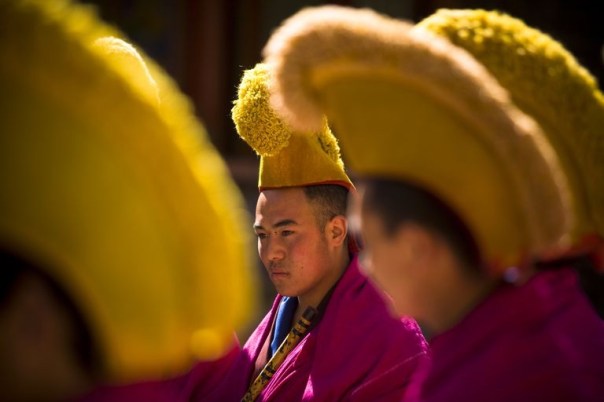

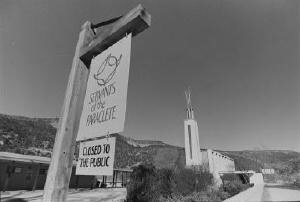

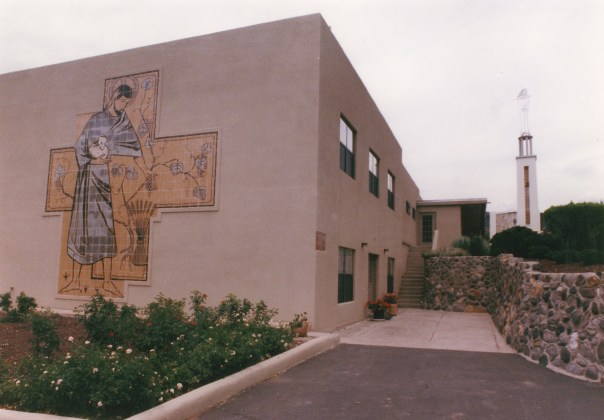


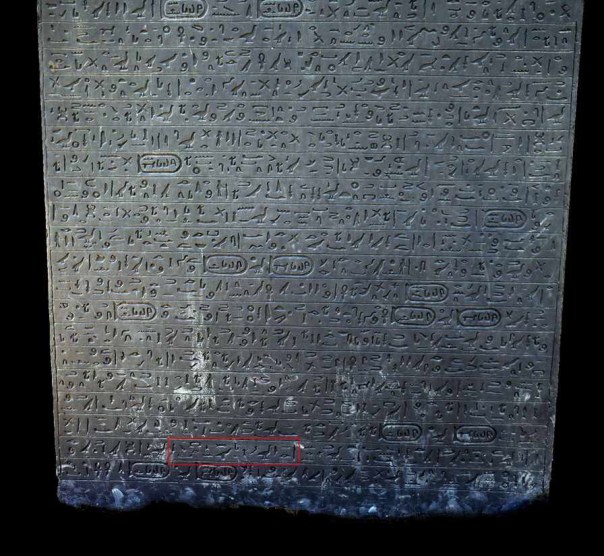
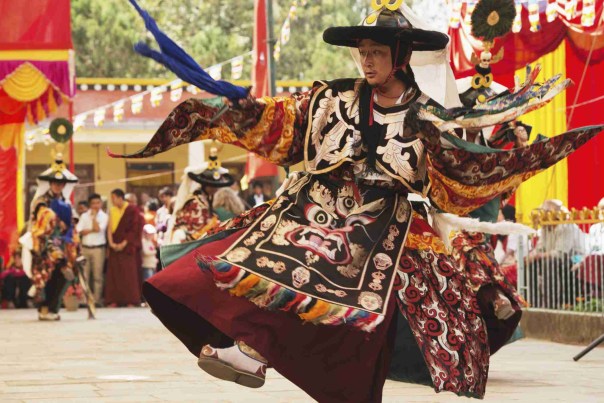
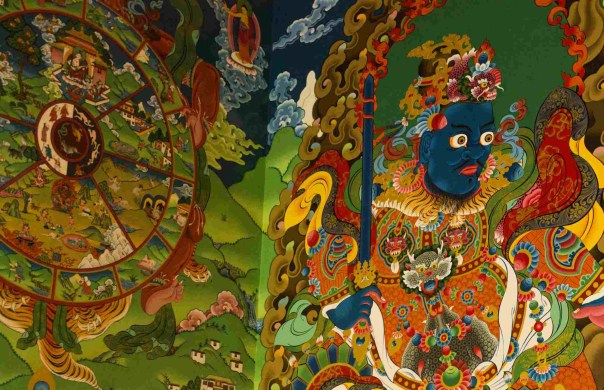

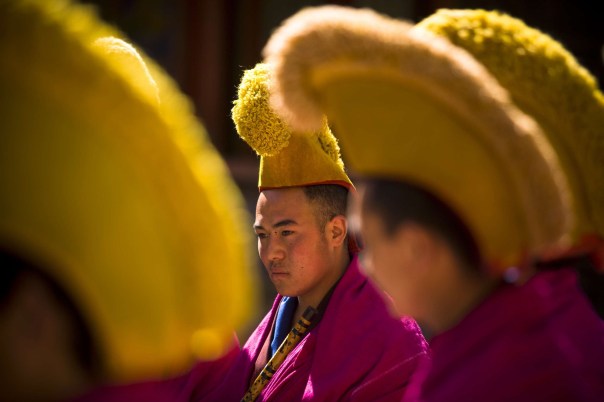
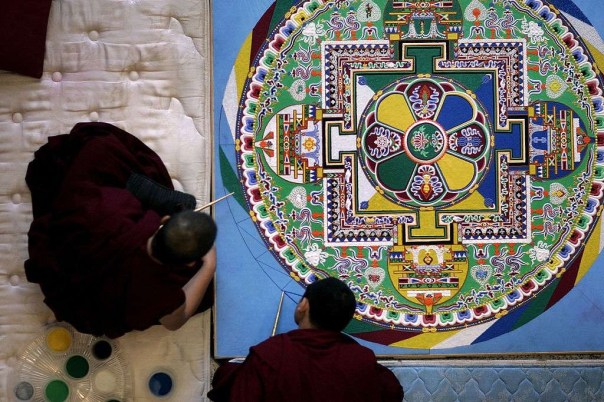

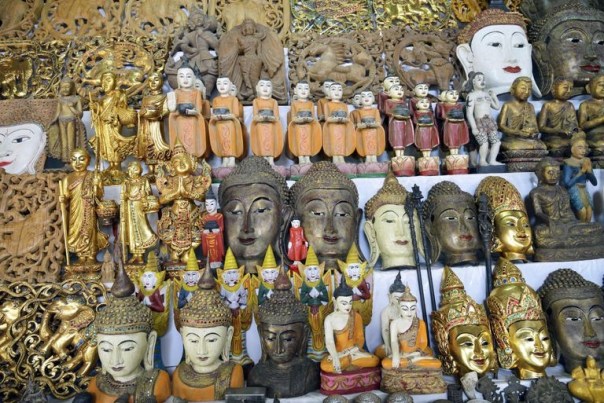
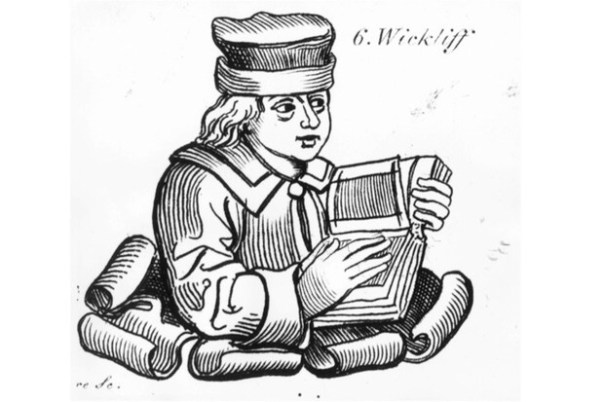
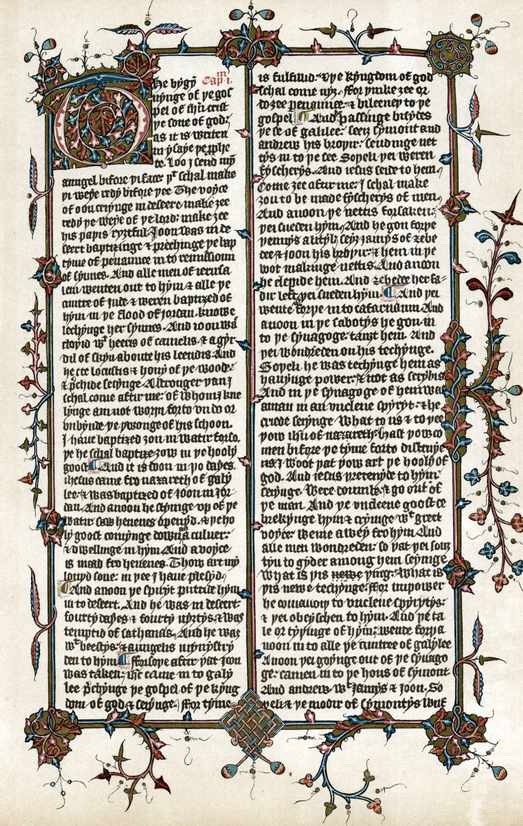
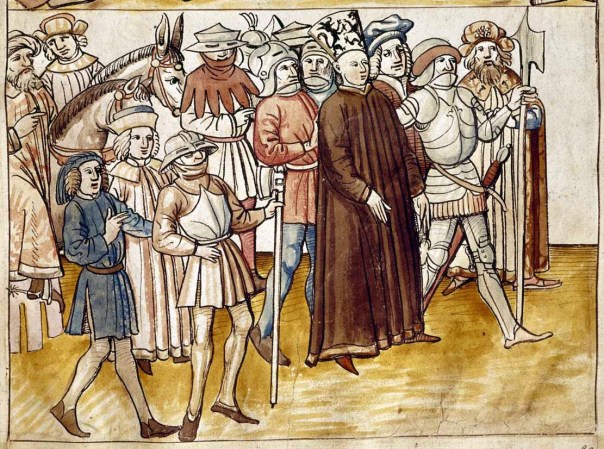

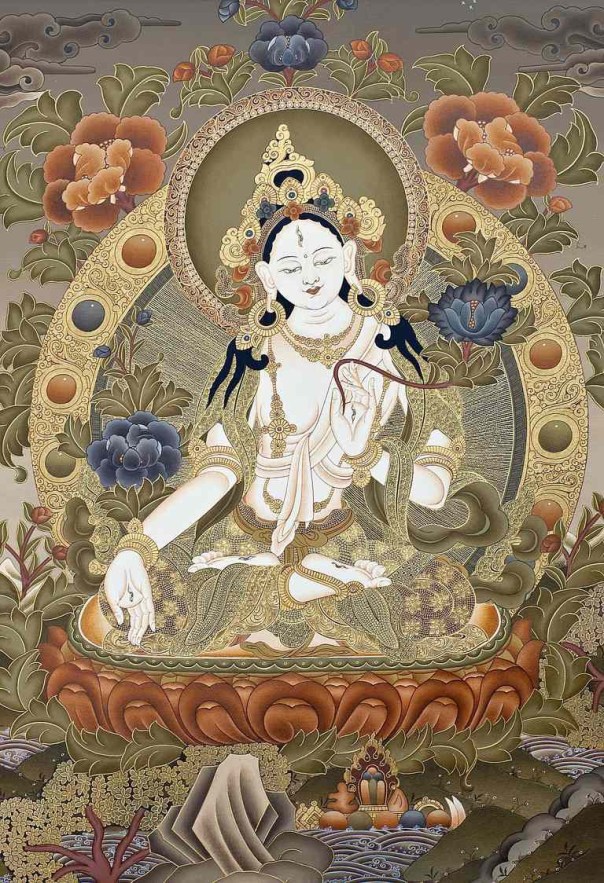

 timalderman