Category Archives: History

How Ireland Turned ‘Fallen Women’ Into Slaves

Until 1996, pregnant or promiscuous women could be incarcerated for life in Magdalene Laundries.

When the Sisters of Our Lady of Charity decided to sell some land they owned in Dublin, Ireland, to pay their debts in 1992, the nuns followed the proper procedures. They petitioned officials for permission to move the bodies of women buried in the cemetery at their Donnybrook laundry, which between 1837 and 1992 served as a workhouse and home for “fallen women.” 

But the cemetery at Donnybrook was no ordinary resting place: It was a mass grave. Inside were the bodies of scores of unknown women: the undocumented, uncared-about inmates of one of Ireland’s notorious Magdalene laundries. Their lives—and later their deaths—had been shrouded in secrecy.

For more than two centuries, women in Ireland were sent to institutions like Donnybrook as a punishment for having sex outside of marriage. Unwed mothers, flirtatious women and others deemed unfit for society were forced to labor under the strict supervision of nuns for months or years, sometimes even for life.

When the mass grave at Donnybrook was discovered, the 155 unmarked tombs touched off a scandal that exposed the extent and horrors of the Magdalene laundries. As women came forward to share their experiences of being held against their will in restrictive workhouses, the Irish public reacted with outrage.

The interior of the now derelict Sisters of Our Lady of Charity Magdalene Laundry on Sean McDermott St in Dublin’s north inner city on the day of The Irish Government has apologised to the thousands of women locked up in Catholic-run workhouses known as Magdalene laundries between 1922 and 1996. (Photo by Julien Behal/PA Images via Getty Images)

When the Magdalene Movement first took hold in the mid-18th century, the campaign to put “fallen women” to work was supported by both the Catholic and Protestant churches, with women serving short terms inside the asylums with the goal of rehabilitation. Over the years, however, the Magdalene laundries—named for the Biblical figure Mary Magdalene—became primarily Catholic institutions, and the stints grew longer and longer. Women sent there were often charged with “redeeming themselves” through lace-making, needlework or doing laundry.

Though most residents had not been convicted of any crime, conditions inside were prison-like. “Redemption might sometimes involve a variety of coercive measures, including shaven heads, institutional uniforms, bread and water diets, restricted visiting, supervised correspondence, solitary confinement and even flogging,”writes historian Helen J. Self. 

Ireland’s first such institution, the Magdalen Asylum for Penitent Females in Dublin, was founded by the Protestant Church of Ireland in 1765. At the time, there was a worry that prostitution in Irish cities was on the rise and that “wayward” women who had been seduced, had sex outside of marriage, or gotten pregnant out of wedlock were susceptible to becoming prostitutes. Soon, parents began to send their unmarried daughters to the institutions to hide their pregnancies. 

Initially, a majority of women entered the institutionsvoluntarilyand served out multi-year terms in which they learned a “respectable” profession. The idea was that they’d employ these skills to earn money after being released; their work supported the institution while they were there.

Nursery in the Sean Ross Abbey. (Credit: Brian Lockier/Adoption Rights Alliance)

But over time, the institutions became more like prisons, with many different groups of women being routed through the system, sometimes by the Irish government. There were inmates imported from psychiatric institutions and jails, women with special needs, victims of rape and sexual assault, pregnant teenagers sent there by their parents, and girls deemed too flirtatious or tempting to men. Others were there for no obvious reason. Though the institutions were run by Catholic orders, they were supported by the Irish government, which funneled money toward the system in exchange for laundry services.

Nuns ruled the laundries with impunity, sometimes beating inmates and enforcing strict rules of silence. “You didn’t know when the next beating was going to come,”said survivor Mary Smith in an oral history. 

Smith was incarcerated in the Sundays Well laundry in Cork after being raped; nuns told her it was “in case she got pregnant.” Once there, she was forced to cut her hair and take on a new name. She was not allowed to talk and was assigned backbreaking work in the laundry, where nuns regularly beat her for minor infractions and forced her to sleep in the cold. Due to the trauma she suffered, Smith doesn’t remember exactly how long she spent in Sundays Well. “To me it felt like my lifetime,” she said.

Survivors (left to right) Maureen Sullivan, Mary McManus, Kitty Jennette and Mary Smith, at the Law Reform Commission offices in Dublin to discuss proposed compensation packages, for those who survived Catholic-run workhouses known as Magdalene laundries. (Credit: Julien Behal/PA Images/Getty Images)

Smith wasn’t alone. Often, women’s names were stripped from them; they were referred to by numbers or as “child” or “penitent.” Some inmates—often orphans or victims of rape or abuse—stayed there for a lifetime; others escaped and were brought back to the institutions. 

Another survivor, Marina Gambold, was placed in a laundry by her local priest. She recalls being forced to eat off the floor after breaking a cup and getting locked outside in the cold for a minor infraction. “I was working in the laundry from eight in the morning until about six in the evening,” she told the BBC in 2013. “I was starving with the hunger, I was given bread and dripping for my breakfast.” 

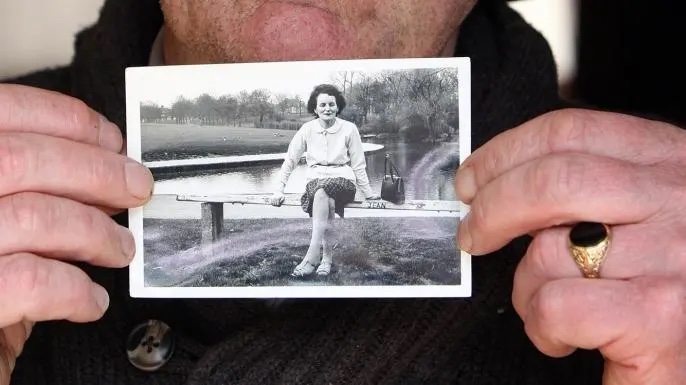
Some pregnant woman were transferred to homes for unwed mothers, where they bore and temporarily lived with their babies and worked in conditions similar to those of the laundries. Babies were usually taken from their mothers and handed over to other families. In one of the most notorious homes, the Bon Secours Mother and Baby Home in Tuam, scores of babies died. In 2014, remains of at least 796 babies were found in a septic tank in the home’s yard; the facility is still being investigated to reconstruct the story of what happened there.

John Pascal Rodgers, who was born in Tuam, Ireland, at a home for unmarried mothers run by nuns, poses with a photograph of his mother Bridie Rodgers. (Credit: Paul FaithAFP/Getty Images)

How did such an abusive system endure for 231 years in Ireland? To start with, any talk of harsh treatment at the Magdalene laundries and mothers’ homes tended to be dismissed by the public, since the institutions were run by religious orders. Survivors who told others what they had been through were often shamed or ignored. Other women were too embarrassed to talk about their past and never told anyone about their experiences. Details on both the inmates and their lives are scant.

Estimates of the number of women who went through Irish Magdalene laundries vary, and most religious orders haverefusedto provide archival information for investigators and historians. Up to 300,000 women are thought to have passed through the laundries in total, at least 10,000 of them since 1922. But despite a large number of survivors, the laundries went unchallenged until the 1990s.

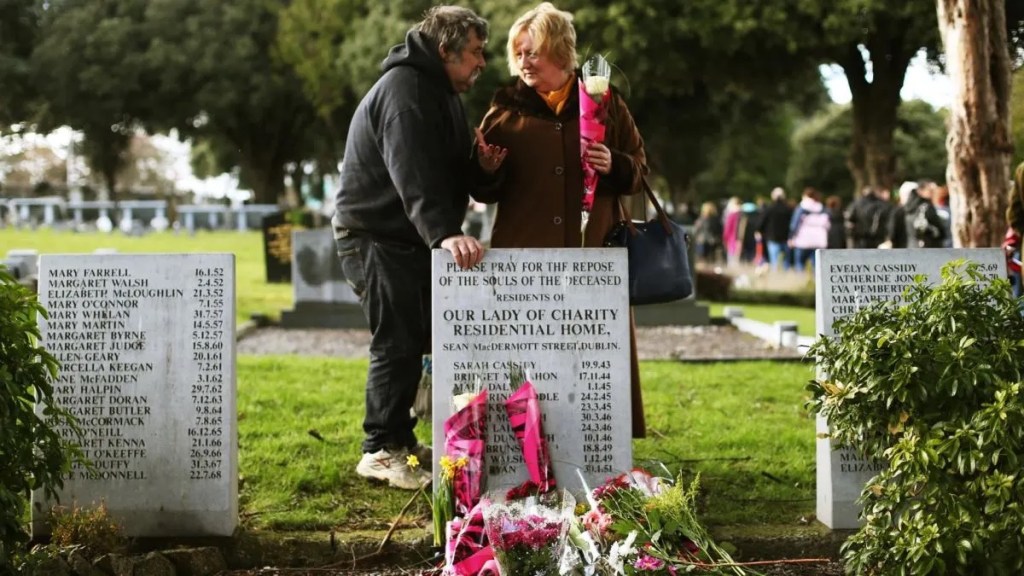
Then, the Sisters of Our Lady of Charity decided to sell some of its land in 1992. They applied to have 133 bodies moved from unmarked graves on the property, but the remains of 155 people were found. When journalists learned that only 75 death certificates existed, startled community members cried out for more information. The nunsexplained there had been an administrative error, cremated all of the remains, and reburied them in another mass grave.

Kevin Flanagan with Marie Barry, who was born at a Bessboro Mother and Baby home, at the 2014 third annual Flowers for Magdalenes remembrance event in Glasnevin cemetery, Dublin, to mark all of the women incarcerated in the Magdalene laundries. (Credit: Brian Lawless/PA Images/Getty Images)

The discovery turned the Magdalene laundries from an open secret to front-page news. Suddenly, women began to testify about their experiences at the institutions, and to pressure the Irish government to hold the Catholic Church accountable and to pursue cases with the United Nations for human rights violations. Soon, the UN urged the Vatican to look into the matter, stating that “girls [at the laundries] were deprived of their identity, of education and often of food and essential medicines and were imposed with an obligation of silence and prohibited from having any contact with the outside world.”

As the Catholic Church remained silent, the Irish government released a report that acknowledged extensive government involvement in the laundries and the deep cruelty of the institutions. In 2013, Ireland’s presidentapologized to the Magdalene women and announced a compensation fund. However, the religious groups that ran the laundries have refused to contribute to the fund and have turned away researchers looking for more information about the laundries. 

Due in part to the uproar surrounding the discovery of the mass grave, the last Magdalene laundry finally closed in 1996. Known as the Gloucester Street Laundry, it was home to 40 women, most of them elderly and many with developmental disabilities. Nine had no known relatives; all decided to stay with the nuns.

Although Smith managed to reclaim her own life, she understands the damage that long-term institutionalization can inflict. “My body went into shellshock when I went there. When that door closed, my life was over,” Smith recalled in her oral history. “You see all these women there and you know you’re going to end up like them and be psychologically damaged for the rest of your life.”

Reference

‘Dickensian’ Good Shepherd Institutions Covered Up Dysfunction In Canadian Society, As Late As The 1960s

Operated in reality as a form of incarceration, they sentenced women and girls as young as 12 or 13 to back-breaking, indefinite labour

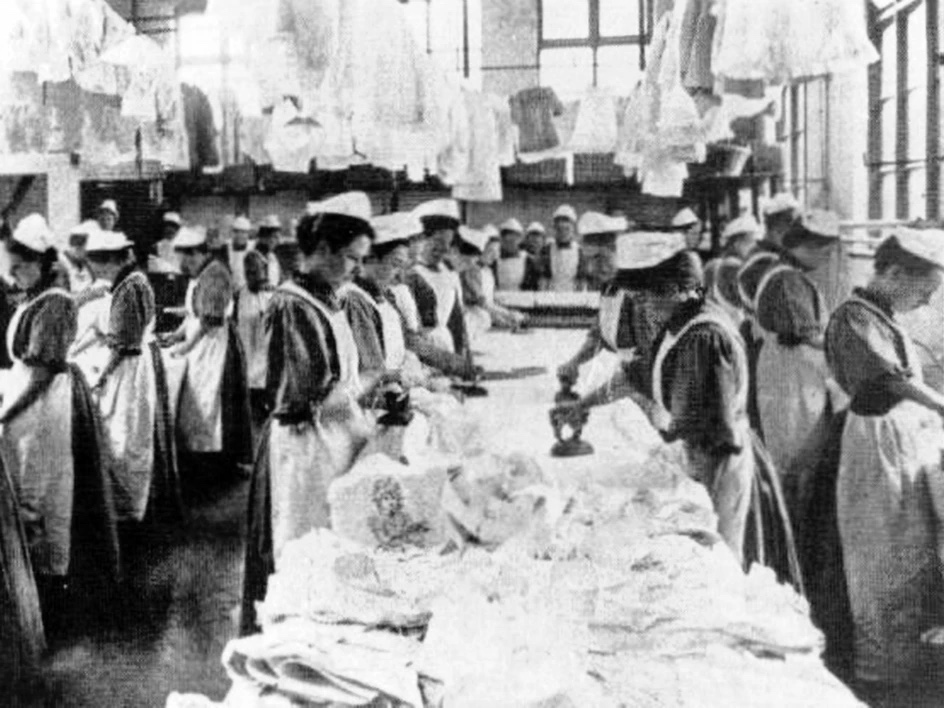
A Magdalene Laundry in England in the early Twentieth Century, from Frances Finnegan, Do Penance or Perish, Congrave Press, 2001. PHOTO BY WIKIMEDIA COMMONS

Thousands of academics gathered in Vancouver for the annual Congress of the Humanities and Social Sciences from June 1-7. They presented papers on everything from child marriage in Canada to why dodgeball is problematic. In its Oh, The Humanities! series, the National Post showcases some of the most interesting research.

If you saw the Oscar-nominated 2013 movie Philomena, you’ve heard of the Magdalene laundries — Catholic institutions that persisted in Ireland until, incredibly, 1996. They supposedly provided asylum to “fallen” women, such as former prostitutes and unwed mothers.

In reality, these institutions were understood, and operated, as a form of incarceration. They sentenced women and girls as young as 12 or 13 to back-breaking labour, living out their days boiling and stirring and rinsing and wringing and hanging laundry for the wealthy, respectable members of society

Until recently, the laundries were thought of as “an Irish phenomenon,” but they also existed in the U.K, Australia, New Zealand, the United States and, yes, Canada, says Rie Croll, associate professor of social cultural studies at Memorial University of Newfoundland and author of the new book Shaped by Silence: Stories from Inmates of the Good Shepherd Laundries and Reformatories.

The Sisters of the Good Shepherd ran more than a dozen institutions for girls and women across the country, from the Maritimes to Ottawa to Vancouver. They proliferated in the 19th century and were variously called homes, training schools, asylums, refuges, reformatories and laundries, Croll said. Of the Canadian institutions she examined, the last to close was the St. Mary’s Training School in Toronto, in 1973.

Croll presented two talks based on her research at the annual conference of the Canadian Sociological Association, part of the larger Congress of the Humanities and Social Sciences in Vancouver.

She interviewed survivors who entered institutions between the 1930s and 1960s, not long before they closed for good. Their accounts provide some of the most detailed information we have about Good Shepherd homes in Canada, which, despite being relatively recent, are now nearly forgotten. No one knows how many Canadian women were incarcerated in them or how many survive, though it’s “more than single digits,” Croll said. Few records were kept and the survivors and their families were shamed into silence. In fact, it took years for Croll to gain enough trust to sit down with survivors and hear their tales. She spoke to inmates from Canada, Australia and Ireland.

Almost to a body, the women described them as Dickensian

What she heard beggars belief. The institutions were so draconian that it seems impossible they existed within living memory, during the same period as the flappers were tearing up dance halls, as Civil Rights activists were marching, as The Beatles were scoring hits.

Their stated purposes varied and their practices were different across regions and over time. The Good Shepherd sisters had a set way of doing things that was quite uniform, Croll explained, and “almost to a body, the women described them as Dickensian.”

The day began before dawn. The nuns clapped their hands and the women jumped out of bed and dropped to their knees for prayers. They pulled their heavy, long cotton dresses and aprons over their nightgowns: It was forbidden to show their bodies even to other inmates. After a quick wash, they filed in silence into chapel for mass, in silence into the dining hall for a starchy, flavourless meal, and in silence into the heat of the workroom to do laundry, or sometimes other menial chores, all day. Depending on the institution, they may have had a few hours of basic schooling each day. For an hour before bed, they had a break. Often this time was used to make rosaries for sale.

“Everything was taken away that was a reminder of a possession of identity,” Croll said. Their street clothes were confiscated, their hair and nails chopped short and, in the laundries, they were given new names and forbidden to use their own.

This made it hard for survivors to find each other and organize in the years since — though the shame did that much more effectively.

The institutions were based on the idea of contagious “moral pollution,” Croll explained. Their purpose was not only to segregate the women and give them asylum from a cruel, judgmental society, but to keep society safe from their corrupting influence.

“They’re told that they are bad, they’re shameful, they’re sluts, that they have done something really wrong. The state has imprisoned them, and the Church has imprisoned them, and their families have abandoned them. The language that’s used to describe them is shameful — you need to clean, you need to clean, you need to clean, you need to be penitent. You are not worthy of your old name. You may not mention your former life. This is a stripping away, through ideology and words, that creates a stigma that becomes internalized and believed — believed as fact,” she said.

In one of her talks, Croll argued this breaking of the human spirit was a form of “symbolic violence,” a sociological concept articulated by the French theorist Pierre Bourdieu. “It broke their resistance to other more immediate and explicit forms of violence in their lives,” she said.

The state was working with the church and families were, too

Canadian women and girls were committed to Good Shepherd institutions for a huge variety of reasons. Their sentences could be indefinite or extended at will. Some had been involved in sex work or gotten pregnant out of wedlock, but others were simply considered “defiant,” “incorrigible,” or “wayward” because they’d been caught “lipping off to their parents, smoking cigarettes, stuff that in those days that would have been shocking,” Croll said.

None of the survivors she interviewed had done anything that would be considered a crime today. One was declared “unmanageable” and sentenced to a Toronto reformatory in 1961 for sneaking away from her abusive parents to spend the evenings with friends. Another was born into a Good Shepherd laundry in Saint John, N.B. in 1934 to a 13-year-old Indigenous girl who got pregnant after a gang rape. The two remained incarcerated together, working side-by-side from the time the girl was eight until she escaped over the fence at the age of 18.

These institutions were supposed to respond to some of the worst violence and dysfunction in society, but they ended up covering it up, Croll said, adding that adolescent girls who had been victims of incest often ended up in them. So it’s not surprising that there has been no big movement from surviving family members to get recognition and restitution for what happened.

“The state was working with the Church, and families were too,” she said.

Croll’s other academic talk was on the concept of the moral double standard. There’s the obvious, gendered double standard, in that women were committed to these institutions while men were not. Women were seen as “solely responsible for any sexual transgression that’s happening in society.”

Then there’s another layer of double standard: The gulf between the stated purpose of the institutions and their real effects.

“The very system of incarceration that was supposed to reform them, became a significant factor in shaping their lifelong inequality,” Croll said. “Those who the Church and state targeted for saving were simultaneously treated as bad, dirty and unsalvageable.”

The sisters, obviously, saw their work quite differently. Their motto then and now is, “One person is of more value than the whole world.”

The National Post’s attempts to contact the order for comment by phone, email and letter have so far been unsuccessful.

A call to the Good Shepherd office in St. Louis, Mo., was not returned by press time and a visit to the sisters’ listed address in Etobicoke, Ont. yielded nothing. A staff member at nearby St. Gregory’s church, though, remembered a nun called Sister Doris who loved to tell stories about her days working at St. Mary’s, a Good Shepherd reform school in Toronto.

Sister Doris died in 2018.

Croll argues the institutionalization of women created a lifelong loss of self-confidence and difficulty reintegrating into society. She spoke to an Irish politician who remembers the day in 1996 when the last Magdalene laundry was closed in Dublin.

“Those poor women. They staggered on to the street. He said they didn’t even know how to cross a busy, modern street. They were so institutionalized. It was heartbreaking.”

Reference

Gay History: All The Kings And Queens Who Were Allegedly LGBTQ+

For much of history, LGBTQ+ royalty needed to hide their identities. Even though some societies embraced homosexuality, most refused to accept a gay monarch. But before we talk about LGBTQ+ kings and queens, let’s start with the history of sexual identity.

The terms heterosexual and homosexual didn’t exist until the 1860s. And until the 1930s, heterosexual meant an abnormal attraction to the opposite sex. For centuries, many societies didn’t see sexuality in binary terms at all. Ancient Greeks and Renaissance Florentines took both male and female lovers. King Edward II of England openly kissed his male lover on his wedding day. And the Roman emperor Hadrian named a city after his male lover. Many kings and queens needed to keep their sexuality quiet, but others defended their lifestyle openly.

Queen Anne Was Clos4 With Her “Lady Of The Bedchamber”

Photo: Charles Jervas / Wikimedia Commons / Public Domain

The last of the Stuart monarchs, Queen Anne of Great Britain maintained a long-term relationship with Sarah Churchill in the early 1700s. Anne wrote to Sarah, “I hope I shall get a moment or two to be with my dear… that I may have one dear embrace, which I long for more than I can express.”

Anne has been called England’s lesbian queen because of her close relationship with Churchill, who served as “Lady of the Bedchamber.” But when Queen Anne pulled back, Sarah publicly accused the monarch of choosing another woman over her. Anne stayed above the fray, however, and remained popular through her death in 1714.

Pope Julius III Named His Lover A Cardinal

Photo: Girolamo Sicciolante / Wikimedia Commons / Public Doma

Pope Julius III ran the Catholic Church from 1550 to 1555. He also created a scandal thanks to his young male lover. Julius met Innocenzo, a 15-year-old beggar, in 1548, when Innocenzo was fighting with his pet ape on the street. The future pope swept the boy away and named him a cathedral provost.

When Julius became pope two years later, he convinced his brother to adopt Innocenzo, and later named his alleged lover a cardinal. Julius’s enemies called Innocenzo “Cardinal-Monkey” and complained the boy shared the pope’s bed.

Edward II Kissed His Male Lover In Front Of His Bride

Photo: Unknown / Wikimedia Commons / Public Domain

Most stories about a royal’s sexuality were only mentioned in secret and whispers. That’s not the case for King Edward II of England, who openly showed affection for his male lover, Piers Gaveston. When Edward married Isabella of France, he showered kisses on Piers in front of the entire court. 

As chroniclers wrote at the time, Edward’s affection for Gaveston was “beyond measure and reason,” “excessive,” and “immoderate.” One writer even said, “I do not remember to have heard that one man so loved another.” The relationship didn’t end well: Edward’s barons beheaded Gaveston.

Queen Elizabeth’s Partying Sister Allegedly Had A Female Lover

Photo: David S. Paton / Wikimedia Commons / Public Doma

The younger sister of Queen Elizabeth II, Princess Margaret, was known for being a party girl. In addition to multiple affairs, she married bisexual photographer Antony Armstrong-Jones, who explained, “I didn’t fall in love with boys, but a few men have been in love with me.”

Royal reporter Noel Botham claimed in his book Margaret: The Last Real Princess that Margaret had an affair with the American ambassador’s daughter, Sharman Douglas, known as Sass. One of Douglas’s close friends told Botham that Sass confessed to being the princess’s lover in the 1950s.

Richard The Lionheart Shared His Bed With France’s King

Photo: Unknown / Wikimedia Commons / Public Domain

Richard the Lionheart became King of England in 1189. Today, he’s famous for his role in the Third Crusade and his alleged association with Robin Hood. To others, though, Richard I is a gay icon. The king chose not to marry and never fathered an heir. Instead of having a queen by his side at his coronation, Richard invited his mother, Eleanor of Aquitaine, to play the role of his partner. 

According to historical documents written at the time, Richard shared a bed with King Philip II of France. One chronicler even wrote the men were so close that “at night the bed did not separate them.”

Prince George Had A Ménage A Trois With An Ambassador’s Son

Photo: Unknown / Wikimedia Commons / Public Domain

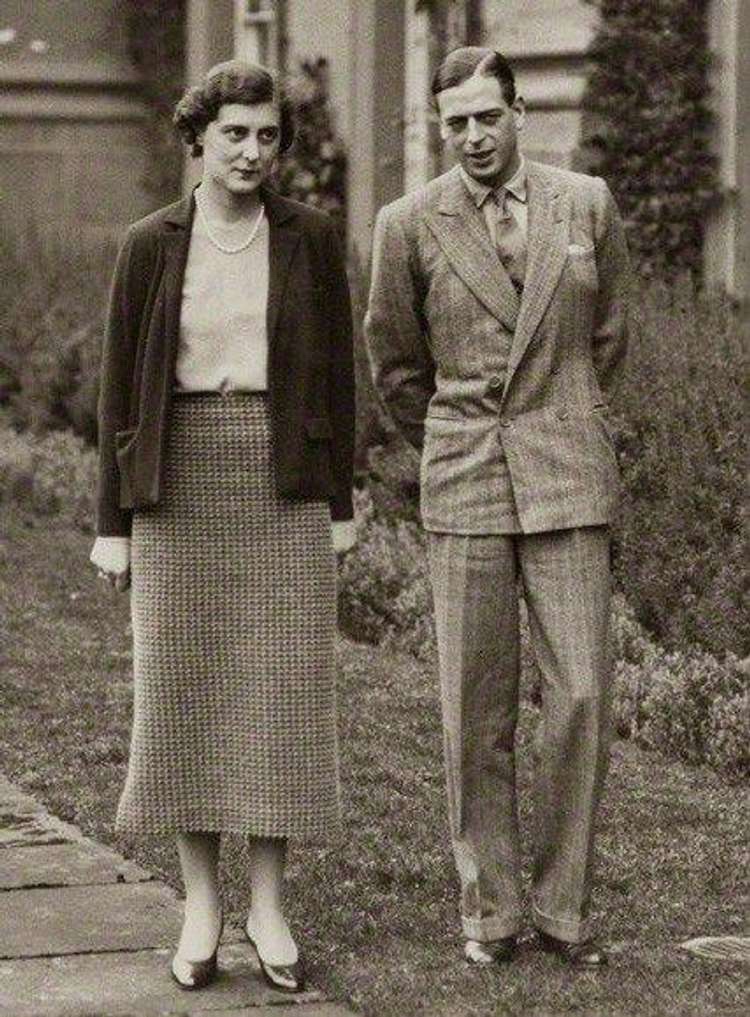
Prince George was the son of George V and the brother to Edward VIII and George VI. Called “the most interesting, intelligent and cultivated member of his generation” by biographer Christopher Warwick, George also allegedly carried on multiple bisexual affairs.

Married to Princess Marina of Greece and Denmark, Prince George never stopped partying. In the 1920s, George became addicted to morphine and cocaine during an affair with American socialite Kiki Preston – known as the girl with the silver syringe. George reportedly had a ménage à trois with Kiki and Jorge Ferrara, the son of Argentina’s ambassador. George died in 1942 in a tragic plane crash.

Hadrian Named A City After His Male Lover

Photo: Unknown / Wikimedia Commons / Public Domai

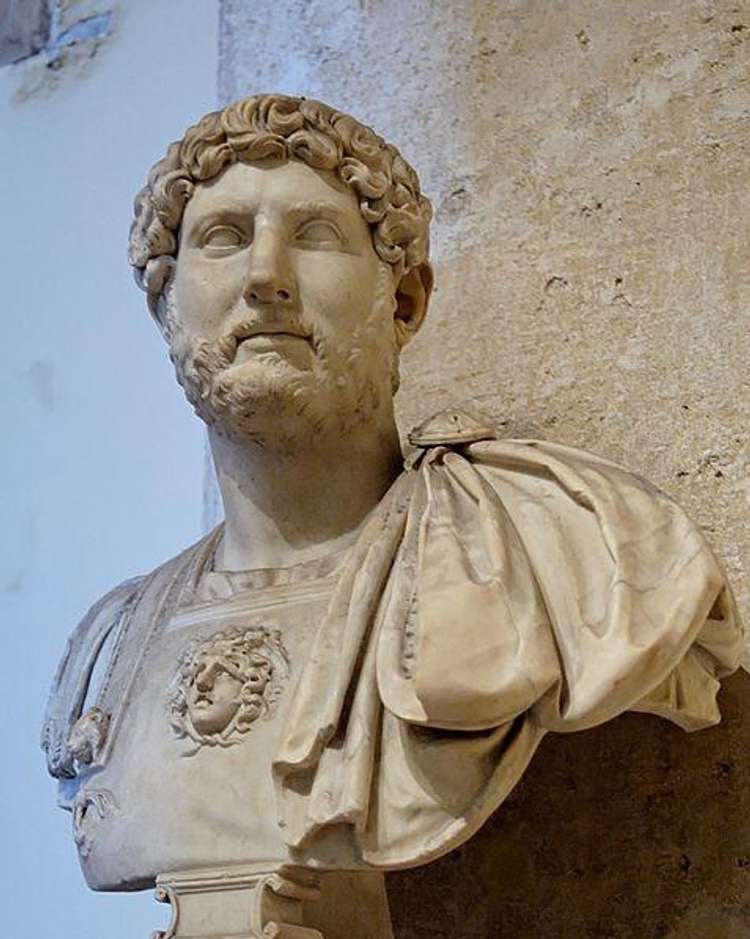
Roman emperor Hadrian is best remembered for building Hadrian’s Wall, marking the northern border of his empire. And although Hadrian married around the year 100 CE, he also had a male lover. Hadrian’s partner was a young Greek named Antinous. When his lover drowned, Hadrian founded a city in Egypt and named it Antinopolis in his honor. 

The Romans didn’t care about men taking male lovers. It was only important what part a man played during sex:

older men always needed to take a dominant, active role.

Alexander The Great Had Sex With A Eunuch

Photo: Meister der Alexanderschlacht / Wikimedia Commons / Public Domain

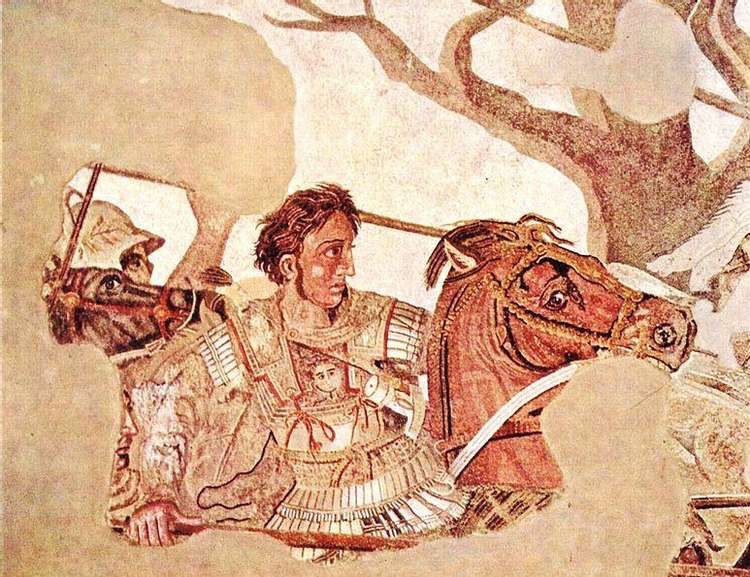
Alexander the Great conquered enough land to rule one of the largest empires in ancient history. During a whirlwind military campaign, Alexander toppled the Persian Empire and invaded India. But where did he fall on the spectrum of sexual identity? Historians still debateAlexander’s sexual preferences, but most agree he had sex with men and women.

Alexander’s most likely male lover was Bagoas, a eunuch. Being a eunuch, the Greeks didn’t see him as a man – instead, he was in a third category, between man and woman. Many also believe Alexander maintained a relationship with his companion Hephaestion. The ancient Greeks were very open-minded about homosexuality.

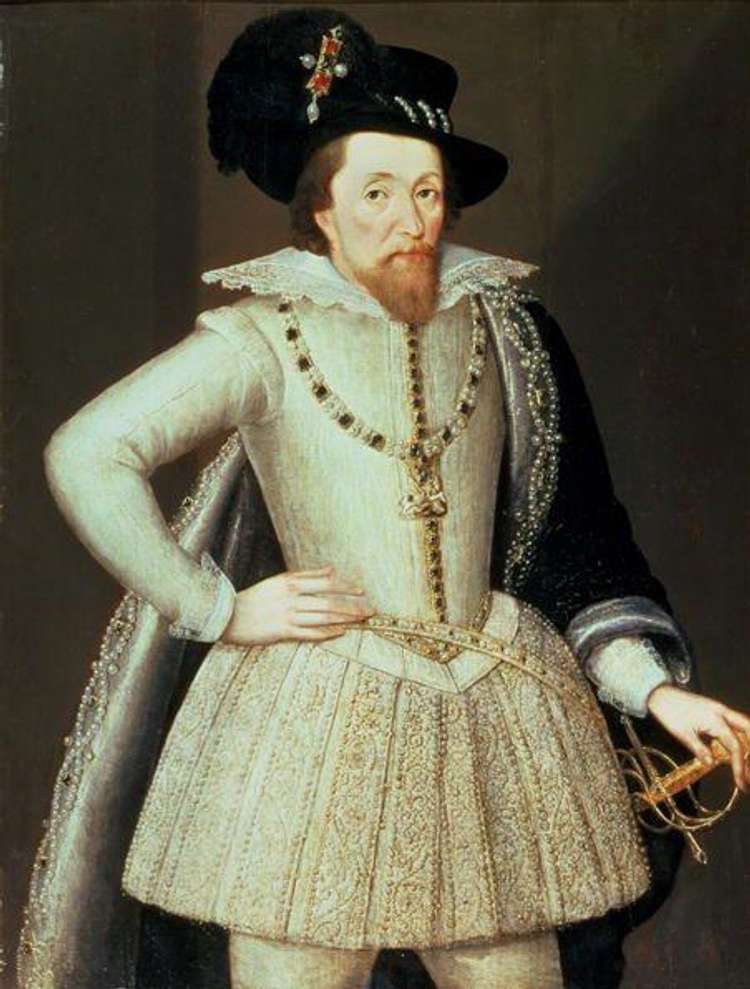
James I Defended His Right To Love Other Men

Photo: John de Critz / Wikimedia Commons / Public Domai

When James I of England took the throne in 1603 after the death of Elizabeth, he had big shoes to fill. England loved Elizabeth, and they remained uncertain of the Scottish ruler with a reputation for homosexual love affairs. In his early years, his new subjects circulated a Latin phrase which translates to “Elizabeth was King: now James is Queen.”

As James rode through the streets of London, people yelled out “Long live Queen James!” James himself defended his right to love other men in 1617, in a speech to his Privy Council: 

I, James, am neither a god nor an angel, but a man like any other. Therefore I act like a man and confess to loving those dear to me more than other men. You may be sure that I love the Earl of Buckingham more than anyone else, and more than you who are here assembled. I wish to speak in my own behalf and not to have it thought to be a defect, for Jesus Christ did the same, and therefore I cannot be blamed. Christ had John, and I have George.

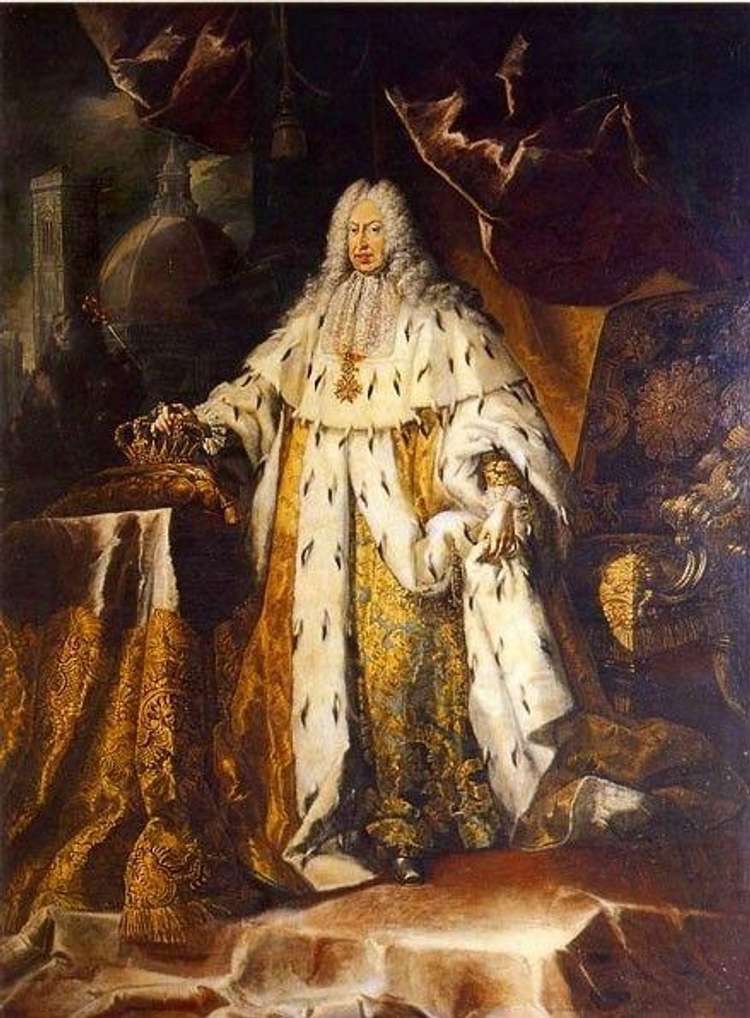
The Last Medici Ruler Lost Tuscany Because He Wouldn’t Have Sex With His Wife

Photo: Franz Ferdinand Richter / Wikimedia Commons / Public Dom

The last Medici to be Grand Duke of Tuscany, Gian Gastone, knew if he didn’t issue a male heir, his domain would go to the Bourbon rulers of Spain. Gian Gastone’s sister arranged his marriage to a German princess, but she refused to move to Florence. Gian moved to her small village, but eventually ignored her and spent his time with a male groom, Giuliano Dami, who reportedly became his lover. 

Gian Gastone also allegedly paid young male prostitutes for sex. They became known as the Ruspanti, after the coins (ruspi) Gastone gave them. Needless to say, Gian Gastone never produced an heir and the Spanish seized Tuscany when he died.

Henry III Of France Was Called A Buggerer And A Sodomite

Photo: Francois Quesnel / Wikimedia Commons / Public Dom

King Henry III of France was the son of Catherine de Medici and the last Valois king of France. In 1589, one of his subjects called the king “Henry of Valois, buggerer, son of a whore, tyrant.” During his lifetime, Henry was attacked for sexual deviancy, and people blamed the calamities of his reign on his sexuality. 

Although Henry endured repeated accusations of sodomy, most historians believe they were just rumors. As Nicolas Le Roux argued, “It is less the supposed or real sexual practices of the king and those close to him that interests the historian than the image of illegitimacy conveyed by the discussion of sex.” In short, regardless of his sexual identity, Henry’s enemies used slurs to attack his masculinity.

King William II May Have Had An Affair With A Bishop

Photo: Matthew Paris / Wikimedia Commons / Public Doma

The third son of William the Conqueror became King of England in 1087. William II, also known as William Rufus, was his father’s favorite, explaining why William the Conqueror skipped over his older sons to make him king. 

For centuries, rumors swirled about William Rufus’s sexuality. The king never married or fathered a child. His close advisor, Ranulf Flambard, is considered a possible sexual partner. William appointed Flambard as the Bishop of Durham in 1099. As William’s reign was over a thousand years ago, however, historians don’t have much to extrapolate from, other than the king’s close friendship with Flambard and his reputation for surrounding himself with attractive men.

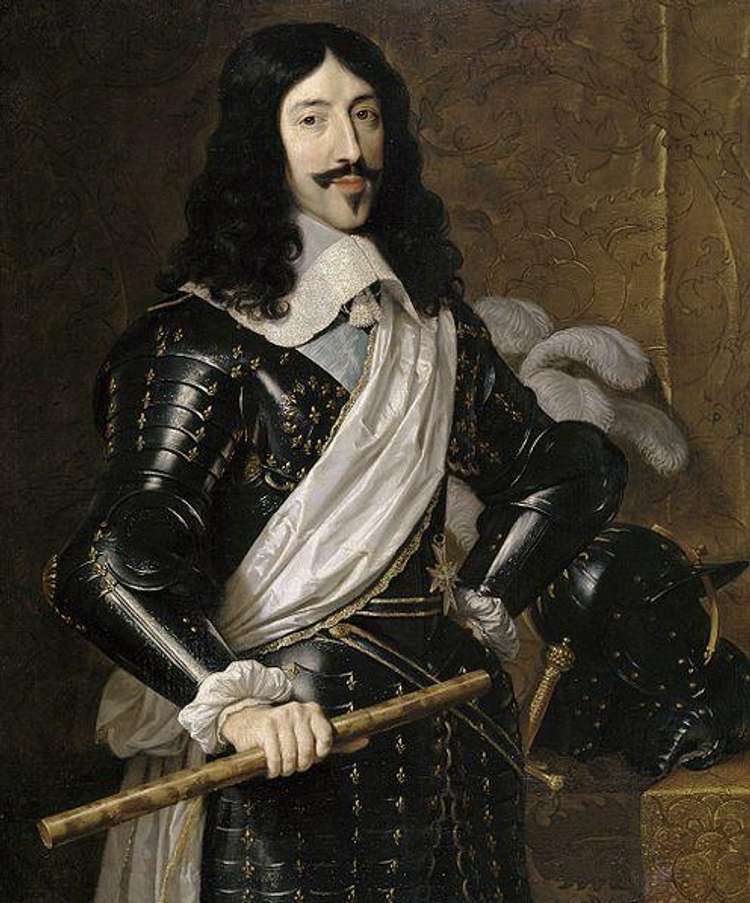
Louis XIII Of France Might Not Be The Sun King’s Father

Photo: Philippe de Champaigne / Wikimedia Commons / Public Domain

Most famous for his son, the Sun King, Louis XIII of France became king at 9 and helped transform France into a major European power. He married Anne of Austria at 14, and loathed her. Many assume Louis XIII was gay, and believe Louis XIV might not have been his son at all.

According to rumors, Louis carried on relationships with two men: Charles d’Albert, Duke of Luynes and Henri Coiffier de Ruzé, Marquis de Cinq-Mars. While little proof remains that Louis had sexual relationships with these men, many generally accept the king did not enjoy sex with women.

Reference

The Monks Who Spent Years Turning Themselves into Mummies—While Alive

Japan’s self-sacrificing sokushinbutsu were a very determined lot.

Danjōgaran, a temple on Mount Kōya in Japan. (Photo: V663highland/CC BY-SA 3.0)

THE JAPANESE CLIMATE IS NOT exactly conducive to mummification. There are no peat bogs, no arid deserts, and no alpine peaks perennially encased in ice. The summers are hot and humid. Yet somehow a group of Buddhist monks from the Shingon sect discovered a way to mummify themselves through rigorous ascetic training in the shadow of a particularly sacred peak in the mountainous northern prefecture of Yamagata.

Between 1081 and 1903, at least 17 monks managed to mummify themselves. The number may well be higher, however, as it is likely some mummies were never recovered from the alpine tombs.

These monks undertook such a practice in emulation of a ninth-century monk named Kūkai, known posthumously as Kōbō Daishi, who founded the esoteric Shingon school of Buddhism in 806. In the 11th century a hagiography of Kūkai appeared claiming that, upon his death in 835, the monk did not die at all, but crawled into his tomb and entered nyūjō, a state of meditation so profound that it induces suspended animation. According to this hagiography, Kūkai plans to emerge in approximately 5.67 million years to usher a predetermined number of souls into nirvana.

The first recorded attempt at becoming a sokushinbutsu, or “a Buddha in this very body,” through the act of self-mummification took place in the late 11th century. In 1081, a man named Shōjin attempted to follow Kūkai into nyūjō by burying himself alive. He, too, was hoping to come back in a far distant future for the good of mankind, but when Shōjin’s disciples went to retrieve his body, rot had set in. It would take nearly two more centuries of trial and error before someone figured out how to mummify himself and, they believed, cheat death to enter a state of eternal meditation.

A portrait of Kōbō Daishi from the 14th century. (Photo: Art Institute of Chicago/Public Domain)

The process of self-mummification is long and arduous, taking at minimum three years of preparation before death. Central to this preparation is a diet called mokujikigyō, literally “tree-eating training.” This diet can be traced through Shugendō to the Taoist practice of abstention from cultivated grains.

For a thousand days, the mokujikigyō diet limits practitioners to only what can be foraged on the mountain, namely nuts, buds, and roots from trees. Some sources also report that berries may have entered the diet, as well as tree bark and pine needles. Time not spent foraging for food was passed in meditation on the mountain.

From a spiritual perspective, this regimen was intended to toughen the spirit and distance oneself from the common human world. From a biological point of view, the severe diet rid the body of fat, muscle, and moisture while also withholding nutrients from the body’s natural biosphere of bacteria and parasites. The cumulative effect was to arrest decomposition after death.

At the completion of a thousand-day cycle on this diet, practitioners were considered spiritually ready to enter nyūjō. However, most monks completed two or even three cycles to fully prepare themselves. After the final cycle, the devout would cut out all food, drink a limited amount of salinized water for a hundred days, and otherwise meditate upon the salvation of mankind while waiting to die.

A wooden statue of Kōbō Daishi. (Photo: PHGCOM/CC BY-SA 3.0)

Many believe that some adherents at this stage drank tea made from Toxicodendron verniculum tree bark. A kind of sumac, the Japanese lacquer tree is called such because it is used to make traditional Japanese lacquer, urushi. Its bark contains the same toxic compound that makes poison ivy so poisonous. If ingested by these monks, urushi tea would have both hastened death and made the body even less hospitable to the bacteria and parasites that aid in decomposition.

When the devout felt death approaching, his disciples would lower him into a pine box at the bottom of pit three meters deep in a predetermined spot. They would then pack charcoal around the box, insert a bamboo airway through the lid, and bury their master alive. Sitting in total darkness, the monk would meditate and regularly ring a bell to signal that he was still alive. When the ringing ceased, the disciples would open the tomb to confirm their master’s death, remove the bamboo airway, and seal the tomb.

A thousand days later, the monk would be disinterred and inspected for signs of decay. If any such signs were found, the body would be exorcised and reinterred with little fanfare. If not, the body was determined to be a true sokushinbutsu and enshrined.

The last person to become a sokushinbutsu did so illegally. A monk named Bukkai died in 1903, more than three decades after the ritual act was criminalized during the Meiji Restoration because the new government deemed it barbaric and backwards.

By then Japan had entered the modern age, and most people considered Bukkai more madman than sage. His remains were not disinterred until 1961 by a team of researchers from Tohoku University, who were amazed by Bukkai’s pristine condition. Though he entered nyūjōin Yamagata, his remains now rest in Kanzeonji in neighboring Niigata Prefecture. There are 16 extant sokushibutsu in Japan, 13 of which are preserved in the Tohoku region. Seven of the eight found in Yamagata remain in the vicinity of Mt. Yudono, making it the ideal place for a pilgrimage.

The oldest and best preserved of these mummified monks can be found at Dainichibō, mentioned above. His name is Shinnyokai, and he entered nyūjō in 1783 at the age of 96. Like all the others, he sits in the lotus position behind glass in a box on small shrine within the temple that looks after him. His skin is an ashen grey, pulled taught over the bones of his hands, wrists, and face. His mouth is stretched into an eternal jackal’s grin, his face turned towards his lap.

Shinnyokai’s elaborate robes are ritually changed every six years, twice as often as all the other sokushinbutsu. The old robes are cut into small squares and placed inside padded silk pouches that can be purchased for ¥1,000 as protective amulets. Testimonials sent in by people swearing by these talismans’ miraculous effects are plastered around the base of Shinnyokai’s shrine.

Another sokushinbutsu, Tetsumonkai, resides at nearby Churenji, also mentioned above. Tetsumonkai entered nyūjō in 1829 at the age of 71, and of all the sokushinbutsu, his life is perhaps the best documented. Tetsumonkai was a commoner who killed a samurai and ran away to join the priesthood, an act that allowed him full legal protection. Later, Tetsumonkai visited the capital city Edo, present-day Tokyo. There he heard about an ophthalmic disease afflicting the city and gouged out his own left eye as an act of merit that might counteract the malady. Incredibly, Tetsumonkai is one of several sokushinbutsu to auto-enucleate—remove one’s own eye—as a charitable act.

Samantabhadra, one of the 13 Buddhas of Shingon Buddhism. (Photo: PHGCOM/CC BY-SA 3.0)

Tetsumonkai once served as head priest at Honmyōji, a short drive from where his remains are now kept. Here he was charged with looking after another sokushinbutsu, Honmyōkai, the oldest self-mummified monk in Yamagata. The samurai-turned-priest Honmyōkai spent a mindboggling 20 years in ascetic training until May 8, 1681, when his disciples lowered him, delirious with hunger, into a pit behind the temple and buried him alive. A massive, moss-covered stone epitaph marks the site where Honmyōkai entered nyūjō amid a grove of pine trees only a few dozen meters beyond the hall where his remains are now displayed.

These three sokushinbutsu are by far the closest to Mt. Yudono and the sites of their respective training. Dainichibō and Churenji are accustomed to tourists, and on weekends visitors are likely to encounter gaggles of retirees being ushered on and off the air-conditioned coaches that stop by these temples on their way to or from Mt. Yudono. The ¥500 admission Dainichibō and Churenji each charge, along with sales from protective amulets and other trinkets, keep the temple doors open and their history alive. Honmyōji charges no admission and receives fewer guests, but they’re still happy to show off their wish-granting mummy. The temples are happy with the attention and even went so far as to issue a sokushinbutsu stamp card in 2015, along with Nangakuji in the nearby city of Tsuruoka, to encourage visitors to stop by all four temples.

Nangakuji houses Tetsuryūkai, who was mummified in 1878, a decade after the practice was made illegal. Tetsuryūkai died of illness before he could complete his training and so is not technically a sokushinbutsu. His body is artificially treated in order to better preserve it, and the relatively simple shrine surrounding his remains offer the closest look one can get of a mummified monk in Yamagata. Tetsuryūkai’s failure to properly enter nyūjō is written all over his face, the skin of which is peeling away from his nasal cavity.

Kaikōji houses two sokushinbutsu. Chūkai, who died in 1755, and his former disciple, Enmyōkai, who died in 1822, now sit side by side in eternal meditation. Despite their difference in age you’d think they were brothers. They have the same taut, glossy and blackened skin, as well as the same bony hands, sunken eyes, and gaping toothy mouths.

Reference

Gay History: The Crossdresser From Dublin Who Tricked The British Army

Christian Davies donned her missing husband’s clothes and went to war to find him

Even after she found her husband, Christian Davies continued her soldier’s life until she fractured her skull at the Battle of Ramillies.

Historical stories of cross-dressing never fail to fascinate. Ideas of what constitutes “normal” sexual identity have shifted over the centuries. Christian Davies is a unique Irish example, in that we hear her account ostensibly in her own voice, as recounted to Robinson Crusoe author Daniel Defoe in The Life and Adventures of Mrs Christian Davies.  

“I had too much Mercury in me, to lead a sedentary life,” Davies tells Defoe. Born Christian Cavanagh in Dublin in 1667 and raised on a farm near Leixlipby industrious parents, her upbringing was comfortable, her education sound. But Davies was happier breaking a horse than doing needle-point: “…my inclinations, while a Girl, were always masculine.”

Adventure

Davies inherited her aunt’s public house in Dublin. There she met and married Richard Welsh, a former servant of her aunt’s, and the man whose disappearance would prompt her greatest adventure.

In 1691 Welsh went to pay a bill and never came back. A year later Davies received a letter saying he had stopped for a drink with an old school friend, and had woken up on a ship bound for the Netherlands. With no money to his name, he had been forced to enlist in the British Army.

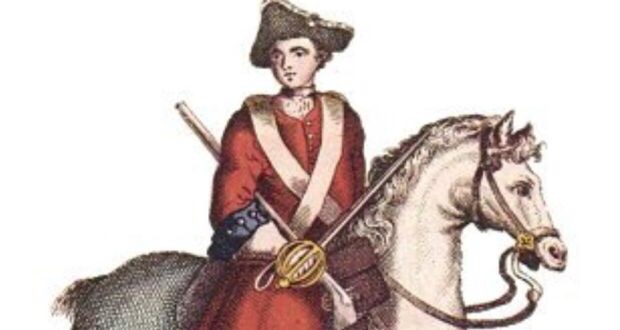
Davies’ thoughts turned to finding her husband and she left her children with her mother, dressed in her husband’s clothes, and enlisted. The recruiting officer in Dublin called her “a clever brisk young fellow”. Soon, she was on a ship bound for the Netherlands and the Nine Years War.

Her first battle was at Landen, where she suffered a leg injury and was captured by the French. Upon her release, she addressed her suit to a Burgher’s daughter, dismissing the affair as “a frolick”. However, when the girl was assaulted by a sergeant, Davies fought a duel with him, leading to her discharge from the army.

Still ostensibly on the hunt for her husband, Davies enlisted again in the second North Royal British Dragoons in 1697, fighting with them until the Peace of Ryswick. She recounts to Defoe an accusation by a prostitute that she was the father of her child. Initially insulted, Davies then agreed to support the child: “…it left me the reputation of being a Father, till my sex was discovered.”

After 13 years, Davies found her husband among French prisoners after the Battle of Blenheim. He was in a relationship with a Dutch woman and Davies decided not to take him back. The pair fought side by side for some time as brothers, and she continued her soldier’s life until she fractured her skull at the Battle of Ramillies.

A surgeon discovered her identity, but when the story got to Lord Hay, the Scots Gray commander, he ordered that she should be given a pension.

Military honours

Somewhat unusually among historical cross-dressers, Christian Davies returned to life as a woman, marrying again twice. She ended her life at the Royal Hospital Chelsea as one of its pensioners, having been honoured by Queen Anne, and was buried with full military honours.

So what are we to make of the rollicking tale of Christian Davies, as told to Daniel Defoe? By the time the story was recorded, Davies had had the benefit of many years’ practice at regaling an audience and perhaps a narrative framework had been created that fitted her audience’s ideas of what the story should be. The account begs the questions: did Davies want to find her husband? Or did she see his disappearance as an opportunity? Why would a woman of means throw herself into the life of a foot soldier? The questions that emerge from the gaps in this tale are perhaps as compelling as the narrative itself.

Reference

Gay History: Amelio Robles Ávila Was Mexico’s First Trans Soldier And A Revolutionary Hero, More Than 100 Years Ago

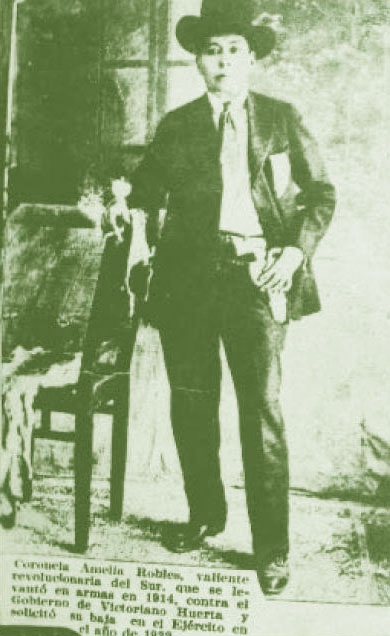
Robles in 1915

Today is Mexico’s Independence Day! After a war that lasted over 11 years, Mexico achieved independence from Spanish rule and would begin a path toward self-determination. On September 16, 1810, Miguel Hidalgo y Costilla, a Catholic priest, launched the Mexican War of Independence. Yes, decolonize!

To celebrate Mexican history, we’ll be focusing on one hero today, not of the Mexican War of Independence but of the Mexican Revolution. Colonel Amelio Robles Ávila is recognized as the first trans soldier in the Mexican military’s history. A decorated colonel, Amelio Robles Ávila lived as a man from the age of roughly 22 or 24 until the day he died at 95 years old. 

While some believe it was Ávila’s wealthy family that allowed him to live life as his truest self, it certainly may have helped, but his courage in battle and in life must be honored and celebrated. Ávila’s identity was not always met with kindness, but the soldier was well-equipped to deal with challenges to his gender. The pistol-whipping colonel was a ladies man, skilled marksmen, and hero. This is the story of Colonel Amelio Robles Ávila. 

Amelio Robles Ávila

Amelio Robles Ávila was born to a wealthy family on November 3, 1889, in Xochipala, Guerrero. In his youth, Ávila attended a Catholic school for little girls where he was taught to cook, clean, and sew. However, at a young age, he began to express his gender identity. He showed an aptitude for things that were, at the time perceived to be, masculine like handling weapons, taming horses, and marksmanship.

Perhaps, it was a natural response, if not the only response, to being pressured to conform to a gender identity that isn’t yours —  Ávila was perceived as stubborn, rebellious, and too much to handle for the school nuns. But it would be his tenacity and obstinance that served him in the long run. 

In 1911, when Amelio robles was arranged to be married to a man, he enlisted as a revolutionary instead. 

Not a woman dressed as a man, just a man.

To force the resignation of President Porfirio Dîaz and later, to ensure a social justice-centered government, Mexico needed to engage much of its population in warfare. This meant that eventually women were welcomed with many limitations. Soldaderas were able to tend to wounded soldiers or provide food for the militia but were prohibited from combat and could not have official titles. 

Amelio Robles legally changed his first name from Amelia to Amelio, cut his hair, and became one of Mexico’s most valuable and regarded revolutionaries. 

“To appear physically male, Robles Ávila deliberately chose shirts with large chest pockets, common in rural areas, and assumed the mannerisms common among men at the time,” according to History.com

While he was not the only person assigned female to adopt a male persona to join the war, unlike many others Ávila kept his name and lived as a man until the day he died. 

“After the war was over, their part in it was dissolved along with whatever rank they held during the fight, and they were expected to return to subservient roles. Some did,” writes Alex Velasquez of Into. “Others, like Amelio Robles Ávila, lived the rest of their lives under the male identities they had adopted during the war.”

You come at the king, you best not miss.

Ávila fought courageously in the war until its end. Becoming a Colonel with his own command, he was decorated with three stars by revolutionary general Emiliano Zapata. He led and won multiple pivotal battles where his identity and contributions were respected. 

However, that respect was sometimes earned through empathy other times through the whip of his pistol. Ávila was a man and anyone who chose to ignore this fact would be taught by force. On one occasion, when a group of men tried to “expose” him by tearing off his clothes, Ávila shot and killed two of the men in self-defense. 

Colonel Amelio Robles Ávila

Unsurprisingly, Amelio Robles was a bit of a ladies man, though he finally settled down with Angela Torres and together they adopted their daughter Regula Robles Torres. In 1970, he was recognized by the Mexican Secretary of National Defense as a veterano as opposed to a veterana of the Mexican Revolution, thus Colonel Amelio Robles Ávila is considered the first trans soldier documented in Mexican military history. The swag is infinite! 

After the war, Ávila was able to live comfortably as a man where he devoted his life to agriculture. He lived a life, that still for so many trans people around the world seems unfathomable. Colonel Ávila lived to be 95 years old and the rest — no all of it — is history.

Reference

Gay History: Oscar Wilde Goes To Jail

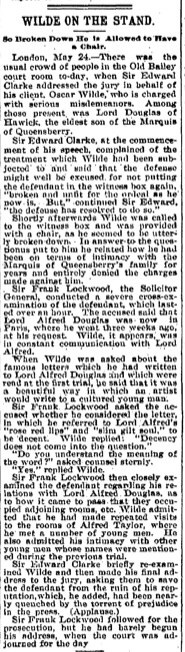
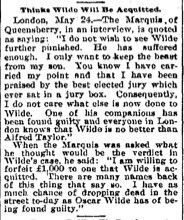
It was on this day (26 May) in 1895 that playwright Oscar Wilde was taken off to Reading Gaol, having been convicted of sodomy. This was a sensational trial. Historians of sexuality would want to note that homosexuality had only recently been made illegal in the UK. Below are two accounts of the trial and its conclusion. The first is from the Lowell Daily Sun (MA) 25 May 1895. The second article is from the Evening Herald (Syracuse, NY) 24 May 1895.

And, since it is Wilde, we should have a quote. This one is from The Picture of Dorian Gray, one of his most famous works:

“It is a said thing to think of, but there is no doubt that Genius lasts longer than Beauty. That accounts for the fact that we all take such pains to over-educate ourselves. In the wild struggle for existence, we want to have something that endures, and so we fill our minds with rubbish and facts, in the silly hope of keeping our place.”

Lowell Daily Sun (MA) 25 May 1895
Evening Herald (Syracuse, NY) 24 May 1895

Oscar Wilde Trial

Oscar Wilde was a playwright, novelist, poet and celebrity in late nineteenth century London. His flamboyant dress, cutting wit and eccentric lifestyle often put him at odds with the social norms of Victorian England. Wilde, a homosexual, was put on trial for gross indecency in 1895 after the details of his affair with a British aristocrat were made public. Homosexuality was a criminal offense at this time in England.


Oscar Wilde
 began publishing poems as a college student at Dublin’s Trinity University in the 1870s. He later moved from Ireland to England and studied at Oxford.

By the early 1890s he had become one of London’s most popular playwrights. His most acclaimed plays include Salome and The Importance of Being Earnest, though he is perhaps best known today for his 1890 novel The Picture of Dorian Gray.

Oscar Wilde was a proponent of the Aesthetic Movement in art and literature, which suggested these forms should focus on beauty rather than trying to convey a moral or political message. He bucked tight-laced Victorian fashion by wearing colorful velvets and silks and keeping his hair long.

Lord Alfred Douglas 

Wilde kept his homosexuality a secret. He married and had two sons. But in 1891, Wilde began an affair with Lord Alfred Douglas, a young British poet and aristocrat 16 years his junior.

Douglas’ father, the Marquess of Queensberry, was outraged by the relationship and sought to expose Wilde. He left a calling card for Wilde with the porter at the private Albemarle Club in London. The card read: “For Oscar Wilde, posing somdomite [sic].”

This caused a public relations nightmare for Wilde. Homosexual acts were a criminal offense in England at the time and remained illegal there until the 1960s.

Friends who knew of Wilde’s sexual orientation urged him to flee to France until the storm subsided. (France had decriminalized homosexuality in 1791 during the French Revolution.)

Against their counsel, Wilde decided to sue the Marquess for defamation. He took the Marquess to court for criminal libel.

Libel Case Against the Marquess of Queensberry 

Amid a frenzy of newspaper coverage, the libel case against the Marquess of Queensberry opened on April 3, 1895, at the Central Criminal Court of England and Wales, commonly known as Old Bailey.

The trial went poorly for Oscar Wilde. His main problem was that Queensberry’s allegations about his homosexuality were true, and therefore couldn’t be judged defamatory.

During the trial, Queensberry’s defense accused Wilde of soliciting 12 other young men to commit sodomy. The defense also questioned Wilde about the premise of his controversial 1890 novel The Picture of Dorian Gray, suggesting that Wilde had used the novel’s homoerotic themes to seduce Lord Alfred. In the novel, an older artist is attracted to the beauty of a younger man whose portrait he paints.

After three days of court proceedings, Wilde’s lawyer withdrew the lawsuit. The authorities saw this as a sign of implied guilt and issued a warrant for Wilde’s arrest on indecency charges.

Britain’s Criminal Law Amendment Act of 1885 had criminalized all sex acts between men as “gross indecency.” (Sex acts between women were never made illegal in England.)

Oscar Wilde On Trial 

Friends again urged Wilde to flee to France, but he decided to stay and stand trial. Oscar Wilde was tried for homosexuality on April 26, 1895.

He pleaded not guilty on 25 counts of gross indecency.

At a preliminary bail hearing, hotel chambermaids and a housekeeper had testified that they had seen young men in Wilde’s bed and found fecal stains on his sheets.

During the trial, Wilde was questioned extensively about “the love that dare not speak its name,” a phrase from Lord Alfred Douglas’ poem “Two Loves,” published in 1894, that many interpreted as a euphemism for homosexuality.

The trial ended with the jury unable to reach a verdict. Three weeks later, Wilde was retried. This time, Wilde was convicted of gross indecency and received two years of hard labor, the maximum sentence allowed for the crime.

Prison Sentence 

On May 25, 1895, Oscar Wilde was taken to prison. He spent the first several months at London’s Pentonville Prison, where he was put to work picking oakum. Oakum was a substance used to seal gaps in shipbuilding. Prisoners spent hours untwisting and teasing apart recycled ropes to obtain the fibers used in making oakum.

Wilde was later transferred to London’s Reading Gaol, where he remained until his release in 1897. Wilde’s health suffered in prison and continued to decline after his release.

He spent the last three years of his life living in exile in France, where he composed his last work The Ballad of Reading Gaol, about an execution that took place while he was imprisoned there.

Oscar Wilde died on November 30, 1900, at the age of 46. He was buried in Paris.

Reference

Battersea Fun Fair; The Fairground Attraction That Turned Into A Disaster…

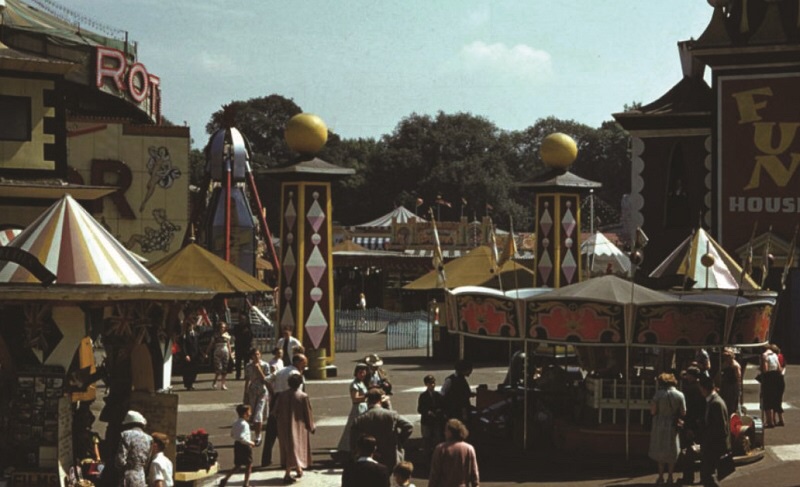
Battersea Fun Fair has been overlooked in the history of the Festival of Britain. But for many years, before Thorpe Park or Legoland, this was London’s amusement park and touched millions of lives over its 24 year existence.
Here NICK LAISTER and TOBY PORTER look at the history and we publish some extracts from his new book on London’s first modern amusement park – which was closed down when five children were killed and 13 injured in the Big Dipper tragedy of 1972.
Building the Battersea Big Dipper

Battersea Fun Fair opened in May 1951 and outlasted most of the prestigious exhibits on London’s South Bank.

The fair could well be seen as Britain’s first theme park – pre-dating Disneyland by four years.

It was themed around an imaginary Olde England and a futuristic theme.

Battersea Park was chosen as the venue for the lighter, more frivolous side of the Festival of Britain. It was the brainchild of Festival mastermind Gerald Barry.

Battersea Park Fun Fair – ROTOR

He felt the ideas being developed for the South Bank rather too clinical for his tastes, with Barry accusing architects and scientists of “running away with it”.

At the time, the proposed Pleasure Gardens section of Battersea Park was still in use as post-wartime allotments and a cricket pitch.

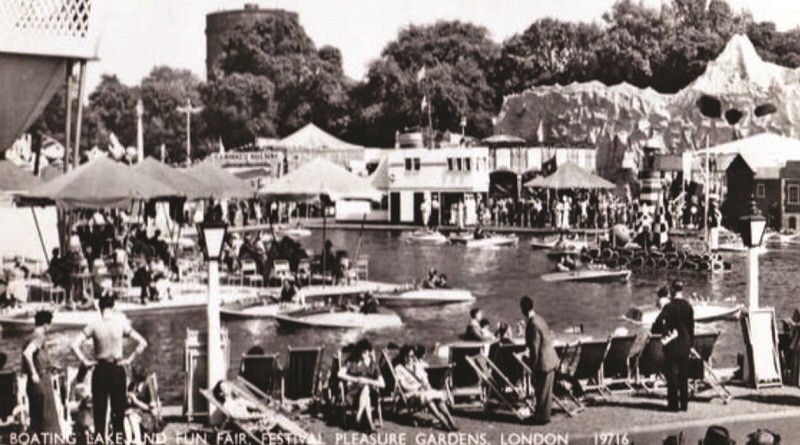
It was designed for just one year’s operation – but survived for more than two decades. According to Becky Conkin’s Architect’s Journal article Fun and Fantasy, Escape and Edification, the Pleasure Gardens offered visitors an “amusement park, a children’s zoo and pet corner, two theatres, one dedicated to music hall performances, the other to ballets, revues and marionettes, a fanciful tree-top walk, a Mississippi Showboat, and a huge tented performance pavilion”.

The Fun Fair occupied only nine acres out of the 37-acre gardens. It was smaller than most of the major seaside amusement parks like the 1924 Wembley Exhibition, Blackpool’s Pleasure Beach, Margate’s Dreamland and Southend’s Kursaal.

But it was bigger than Great Yarmouth’s nine acres.

But Battersea was affectionately regarded as London’s seaside fun park. Its location in the capital could draw on a huge population and remains, even today, better remembered than most lost coastal parks.

Battersea Park Fun Fair

Co-author Nick Laister, who has previously written about amusement history and was instrumental in rebuilding Margate’s historic Dreamland amusement park, said: “The story of Battersea Fun Fair has always fascinated me.

It is probably now sadly best remembered because of the Big Dipper tragedy in the early 1970s, but the park had a colourful history.

“I have been researching this book now for about 17 years, contacting people who visited the park or who worked there.

“These people have told me some incredible stories, and some even had photographs of the park, which are being published for the first time in this book. I am delighted that we are able to finally see it published.”

The rides removed at the end of the first year give a flavour of what the 1950s regarded as fun: Whittingham’s Ark, Hoadley’s Maxwell built Toboggan, Mont Blanc, Bubble Bounce, Boomerang, Loop–O–Plane, and the Sky Wheels.

But there were almost 2.5million admissions the following year.

The organisers constantly updated the mix of rides and always incorporated the latest attractions, making it a showcase for the whole country.

In the park’s initial years there was a very attractive ambiance created by the artistic and floral displays, but the approach changed.

Battersea Park Fun Fair – LAKE

New for 1954 were John Crowle’s Gallopers, Harry Gray’s Swirl & Chairs, J. Ling’s Moon Rocket and Botton’s Dive Bomber. Fresh Juvenile rides included a Double Decker and two Peter Pan attractions.

Head of the operation Leslie Joseph explained that the Gardens and Fun Fair were to be less arty and more gaudy.

He said: “This is what people expect and we intend to give them what they want. We aim to pack the rides and shows much closer together to create a more exciting atmosphere.”

In the centenary year of Battersea Park’s grand opening by Queen Victoria, 1958, Diana Dors opened the Fun Fair on Saturday, April 5, where she unveiled a special champagne fountain. New rides included the Globe Of Death and Harry Gray’s Flying Saucers Wheel.

In 1960, John Biddall’s Hurricane Jets was the year’s new attraction. It survived at Battersea until the park’s closure in 1974.

More than 10,000 bags of popcorn were sold during the Easter opening. During the week starting May 23, Sammy Davis Jnr was filmed in the park for his ABC TV spectacular.

Choreographer was Lionel Blair, for the hour-long musical with an ITV transmission on June 11, 1960.

Co-author Robert Preedy, who has written several books on the history of amusement parks, roller coasters and cinema, said: “I was on duty at BBC Radio London on the afternoon of the Big Dipper accident.

“I was part of the team that had to organise a reporter and a radio car to the site for live reports throughout the afternoon.

“This book entailed many hours of research at the British Library, combing the World’s Fair and national newspapers. There are many books about the Festival of Britain, but none on the Festival Gardens and Fun Fair.

Hopefully our book fills a gap.”

Battersea Park Fun Fair post crash
From screams of joy, to the screams of terror…

Battersea’s most famous ride was the Big Dipper, a notable presence on the park’s skyline that attracted long queues.

It was the London Eye of its day. The Duchess of Kent and her children took a ride in the three-car wooden rollercoaster in its opening year, while the Bolshoi Ballet climbed aboard in 1965.

But late in the afternoon of May 30, 1972, tragedy struck. Thirty one people had boarded a three-car wooden train.

As it reached the top of the first incline, some 15 metres above the park, it was prematurely detached from the drive chain.

Despite the best efforts of the brake man, the train slipped backwards under its own momentum on a 1 in 3 gradient. At the bottom, it hit a tight turn and derailed. The lower carriage was crumpled by those behind. Two teenage boys and an eight-year-old girl died at the scene, and two other children died later.

Carolyn Adamczyk, a passenger on the ride during the accident, said: “As soon as we started shooting backwards everything went into slow motion. I turned around and saw the brake man desperately trying to put the brake on but it wasn’t working. Most of the carriages didn’t go around the bend, one detached and went off the side through a wooden hoarding. People were groaning and hanging over the edge. It was awful.”

The disaster led to a review of fairground safety, and several charges of manslaughter. Prosecutors described the ride as a ‘death trap’, citing dozens of flaws and safety concerns. Despite the accusations, the park’s general manager and the ride’s engineer were both cleared of the charges in November 1973.

It wasn’t the first mishap on the ride. In May 1951, an empty car derailed, knocking over a parapet. Nobody was hurt on that occasion, although several passengers were marooned for 20 minutes.

A similar incident to the fatal crash seems to have occurred in 1968, when a woman broke her arm. In May 1970, £400,000 worth of damage was inflicted on the ride following a suspected arson attack. It was closed for two months.

A post-crash investigation revealed 51 faults on the ride.

Not one person or any party was held responsible nor found guilty of causing the accident – a shocking verdict after the loss of five young lives.

The Big Dipper was permanently closed and dismantled soon after the 1972 accident. It was replaced by a more modern steel roller coaster known as The Cyclone. But the iconic dipper’s retirement led to a swift decline.

Coupled with development wrangles, the fair’s fortunes dwindled until it finally closed in 1974. Temporary fair-grounds would occasionally set up in the park throughout the 1970s, but a permanent attraction like that established in 1951 would never again take root.

Battersea Fun Fair operated for the final time on Sunday, September 22. Many of the classic rides were advertised for quick sale as the site had to be cleared by early October.

1900 – The Hopetoun Blunder; The First Prime Minister Of Australia

The Hopetoun Blunder was a political event immediately prior to the Federation of the British colonies in Australia.

Federation was scheduled to occur on 1 January 1901, but since the general election for the first Parliament of Australia was not to be held until March of that year, it was not possible to follow the conventions of the Westminster system and appoint the leader of the majority in the House of Representatives as Prime Minister. Instead, an interim government would be appointed, holding office from 1 January until the result of the election was known.

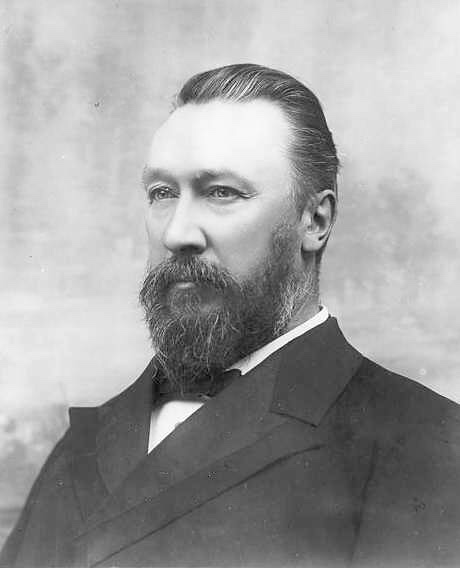
The first Governor-General of Australia was John Hope, 7th Earl of Hopetoun. His initial task on arriving in Australia on 15 December 1900 was to appoint a Prime Minister to lead the interim government. It appears that Hopetoun had little knowledge of the Australian political scene and had no formal instructions from the Colonial Office. On 19 December, following the precedent of the Canadian Confederation, Hopetoun commissioned the premier of the most populous colony to form a government. That state was New South Wales, and its premier was Sir William Lyne.

This was an unfortunate choice as Lyne had become premier in September 1899 only after the government of the more popular and experienced George Reid had lost its majority in the New South Wales Legislative Assembly. Lyne supported federation only at the last minute after long being a strong opponent and, as a result, he was unpopular with other leading colonial, pro-federation politicians including Edmund Barton and Alfred Deakin. The Bulletinsummed up many people’s view when it editorialised, “Among the men who can claim by merit or accident, to be front-rank politicians of Australia, Lyne stands out conspicuously as almost the dullest and most ordinary”.

Despite significant efforts, Lyne was unable to persuade other colonial politicians to join his government and was forced to return his commission to Hopetoun. Alfred Deakin, amongst others, then persuaded Hopetoun to appoint Edmund Barton as Prime Minister. Barton was successful in forming a government, which took office on 1 January 1901. He appointed Lyne as his Minister for Home Affairs in what many saw as a gesture of reconciliation.

Hopetoun’s error in calling on Lyne to form a government became known as the “Hopetoun Blunder”, and it marked the beginning of what many historians consider to be his unsuccessful term as Governor-General.

Reference

Newgate Prison: Public Hangings In Victorian London

You might assume that hanging people in public had died out in England after the 18th century but in fact, these gruesome events continued right up until 1868. The authors Charles Dickens and William Makepeace Thackeray both witnessed some of the last hangings – which still drew crowds of tens of thousands. In fact, Dickens seems to have been a serial attender at executions while also condemning them. He was present, for example, when murderer Marie Manning gasped her last outside the Surrey County Gaol in 1849 and outside Newgate prison when Francis Courvoisier dangled from the rope.

I have a battered old guide to the city – London As It Is Today – published for the Great Exhibition of 1851 and it tells visitors all about the delights of London’s prisons and even how they could be visited. It even lists some of the most recent executions!

Newgate prison was a huge jail standing where the Old Bailey is today. 19th century public hangings there included:

  • John Bellingham – executed in June, 1812 for shooting dead the prime minister Spencer Perceval. This was the only assassination of a prime minister in British history
  • Henry Fauntleroy – a banker hanged for forgery in November, 1824
  • Joseph Hunton – a well-known Quaker executed for forgery in December, 1828
  • George Widgett – the last person to be hanged for sheep stealing in May, 1831
  • John Bishop and Thomas Williams – for the murder of an Italian boy in December, 1831
  • Francis Benjamin Courvoisier – who killed Lord William Russell, his master, July 1840
  • Daniel Good – for the murder of Jane Jones at Putney in May, 1842
  • William Henry Hocker – for the murder of James De La Rue at Hampstead in April, 1845

My 1851 guide remarks on the imposing aspect of Newgate prison with its solid masses of granite walls.

In the open space in front of this prison, executions (now happily of rare occurrence), usually take place, with all their terrors; how many a young heart has here had its pulsation stopped! how many who once were the pride of their parents, and the joy and hope of their circle of friends, have here had their careers of profligacy and crime cut short, and in the pride of their strength, been “lighted away the way to dusty death”

In the prison chapel, there were galleries for male and female prisoners and at the centre – a chair for the following day’s condemned “shedder of blood”. Before the 19th century, his or her coffin would be placed at their feet during their last service just to rub the point home. In a small ante-room near the entrance to the prison was a collection of casts of the heads of well known executed individuals. Duplicates could also be seen in the Chamber of Horrors at Madame Tussaud’s.

Newgate prison dated back to the 12th century but the last building dated from 1770 to 1783 and was designed by George Dance, who was the son of the architect of the Mansion House in the City of London (still standing).

When it was decided to stop dragging condemned criminals from Newgate to Tyburn to be hanged (roughly where Marble Arch is today), they were simply led out to the front of Newgate and executed there – the first hanging being on the 7th November, 1783.

In another old guide to London in my possession, it states that on public execution days, local coffee shops and gin palaces would be bursting with people bargaining for seats to get the best view away from the crowds aside. You would hear the punters saying “excellent situation, comfortable room, splendid view”. The crush of people extended down Giltspur Street with criminals boasting loudly how their mates had been hanged, transported or imprisoned while they were still at large committing their foul deeds. City clerks often lingered too long and were late for work or even sacked.

When public hangings stopped in 1868 (Michael Barrett on the 26th May that year – an Irish Fenian), you would know that a life had been cut short within the prison walls by the flying of a black flag.

Should Victorian visitors wish to take a tour of the prison, they could apply to the Secretary of State for the Home Department (Home Office today), the Lord Mayor or the Sheriffs of London. Newgate Prison was finally torn down at the turn of the 20th century and the Central Criminal Court, or Old Bailey, was constructed between 1903 and 1906.

Reference