Category Archives: History

7 Controversial Saints In History

The 19th-century religious scholar and esteemed poet Cardinal John Henry Newman (1801–90) will on Sunday be declared a saint by Pope Francis. A dedicated educator and charitable individual, the “holiness of his life” and his “extraordinary purity of character” were hailed by the likes of William Gladstone. But, as historian Emma J Wells reveals, not all saints in history were altogether saintly…

St Augustine

St Augustine, or Augustine of Hippo as he is better known, is perhaps the most famous saint with a sinful past, which is rather surprising since his own mother (St Monica) was a devout Christian. He is remembered for stating: “God, grant me chastity and continence, but not yet.”

Born at Tagaste, North Africa in AD 354, Augustine was perhaps the greatest Christian ancient philosopher. Raised a devout Christian, he rejected his upbringing to live a life of hedonism, entertainment, and worldly ambition. The playboy had not one, but two mistresses, and an illegitimate son whom he abandoned at the prospect of marrying an heiress. He ran around for decades before having a change of heart, ditching his mistresses and spending the rest of his life celibate as a priest who related his story in a volume titled Confessions, while teaching and spreading the Christian message.

Augustine’s theology would become one of the main pillars on which the Church of the next 1,000 years was founded.

c420 AD, St Augustine, also known as Augustine of Hippo. (Photo by Hulton Archive/Getty Images)

St Angela of Foligno

St Angela of Foligno was recently declared a saint through the procedure of equivocal canonisation by Pope Francis in 2013, but while some saints show signs of holiness from an early age, Angela was somewhat different.

Born in around 1248 to a leading Italian family, she became immersed in the quest for wealth and social position, even though she was a wife of high social standing and mother to several children. More interested in this life of distraction than caring for her family, around aged 40 she experienced a conversion and realised the apparent emptiness of her existence. In 1285 she called upon St Francis, who appeared to her in a vision, and asked his advice on making a competent general Confession (a confessing of all sins of one’s past life, or of an extended period, instead of just those sins committed since a previous confession).

Seeking God’s help in the sacrament of penance, her Franciscan confessor helped Angela to seek His pardon for her previous actions and suggested dedicating herself to prayer and the works of charity. Sadly, just three years later, her mother, husband and children all perished in quick succession (some suggest this was at Angela’s cruel hand – so that she would be free of homemaking to follow God’s path). She therefore sold all her worldly possessions and, in 1291, enrolled in the Third Order of St Francis, a secular Franciscan order, and founded a women’s religious group to serve the poor.

St Dismas

Most Christians know St Dismas by a rather telling name: “The Good Thief”– he was allegedly one of the two thieves who ended up flanking Christ’s side at His crucifixion. It is said that Dismas actually had a run-in with the Holy Family [Jesus, Mary and Joseph] when Jesus was only an infant. Together with an accomplice, heheld up Mary and Joseph as they were fleeing to Egypt to escape Herod’s soldiers. Apparently Dismas is said to have been moved to compassion by the Holy Family and bribed his companion with 40 drachmas to let them pass safely without harm.

The Infant Jesus predicted that the thieves would be crucified with him in Jerusalem and that Dismas would then accompany him to Paradise. When crucified with Jesus, he asked Christ: “Remember me when you come into your kingdom.” (Luke 23:42) Therefore, when Dismas acknowledged his sinfulness, Jesus forgave him and promised that he would be in paradise that very day.

Of course, this story cannot be substantiated and is often considered myth.

Thomas Becket

Perhaps the most controversial historical saint, few among his contemporaries could have predicted that this Archbishop of Canterbury and adviser to King Henry II was destined for sainthood.

The son of a prosperous London merchant, Becket’s talents were noticed by Henry II, who made him his chancellor and the two became close friends. When the current archbishop, Theobald, died in 1161, Henry appointed Becket to the post (just over a year later), assuming his friend would be easily manipulated. He wasn’t – and the pair’s friendship soon fractured when it became clear that Becket was on the side of the church in disagreements with the crown. In 1164, after realising the extent of Henry’s displeasure, Becket fled into exile in France and remained there until 1170. Upon his return, he excommunicated bishops who had diplomatically supported Henry in his pursuit to dislodge clerical privilege. This infuriated the king, leading to the disaster that ensued on 29 December 1170.

c1162, Thomas Becket, whose murder at the orders of Henry II lead to Canterbury Cathedral becoming a popular place of pilgrimage. (Photo by Hulton Archive/Getty Images)

Four knights, believing Henry wanted Becket eliminated, murdered the archbishop, splattering his blood and brains across the northwest transept floor of Canterbury Cathedral and making him an instant martyr. From England and France, people flocked to his shrine, while a cult, associated with the curative power of Becket’s blood, began at Canterbury.

The first recorded miraculous cure occurred in January 1171, with a proliferation recorded thereafter. Canterbury became one of the most popular pilgrimage destinations in Europe, and his murder one of the most infamous events of the Middle Ages. Becket was canonised not even three years after his death, by Pope Alexander III on Ash Wednesday (21 February) 1173 at Segni, Italy.

Junípero Serra

Junípero Serra – a Spanish colonist who built a network of Catholic missions in modern-day California (formerly a province of New Spain), thereby bringing Catholicism in the 18th century – was canonised a saint by Pope Francis in 2015. Serra founded the first nine Catholic settlements from San Diego to San Francisco in the 1770s and 1780s, with the hope of herding native people onto farms and baptising them.

While Pope Francis described him as a priest who protected “the dignity of native communities” from abusers as he developed Catholicism in the New World, others suggest his baptised community were forced to remain in the settlements under terrible conditions such as overcrowding and the rapid spread of disease. The natives were also coerced into working on the settlements, and those who tried to escape were subjected to beatings. Serra, writing in 1780, even admitted supporting corporal punishment because other saints had endorsed it. His holy appointment therefore sparked great outrage, largely because many believed Serra unworthy as he was connected to a system that decimated the population of Native Americans in the colonial era.

Junípero Serra – a Spanish colonist who built a network of Catholic missions in modern-day California. (Photo by Getty Images)

St Colmcille

Few facts are known about St Colmcille, one of Ireland’s three patron saints. Colmcille – meaning “dove of the Church” in Gaelic; Columb (in Irish) or Columba (in Latin) – was born at Gartan in what is now County Donegal in c521 AD. At the age of 30 he entered the priesthood at Clonard Abbey, in modern Co. Meath. When his prince cousin, Fiachra mac Ciaráin, offered him land at Derry, he set about founding his own monastery, which allowed him to travel throughout Northern Ireland teaching about Christianity, and establishing a further 30 monasteries in a decade.

• The murderous history of Bible translations

• A history of the Bible: who wrote it and when?

Nevertheless, Colmcille was no angel – and his zealous character and preaching rankled many people. In AD 563 he was even accused of starting a war between two Irish tribes, while a number of clerics threatened to excommunicate him. Instead, Colmcille was sentenced never to see Ireland again. Exiled to Scotland with 12 companions, in AD 563 Colmcille left Ireland and settled with the Gaels of Dál Riata [a Gaelic kingdom comprising parts of Western Scotland], where he was granted the tiny west coast island of Iona to found his monastery and spend most of his remaining years.

Iona grew into one of the most influential centres of religious and cultural life in the Western world. And we can’t forget that in AD 565, Colmcille is also said to have encountered the Loch Ness Monster – apparently the first ever reference to the mythical beast.

Mary of Egypt

Mary of Egypt, or Maria Aegyptiaca, was born in the northeast African country in AD 344. At the age of 12 she left home, settling in Alexandria. She was said to be adept at using her body to gain what she wanted – some claim she was a harlot or prostitute, though others say she never accepted money for her “services” –  but either way, her life represents dramatic sin followed by holy asceticism. One day, after observing a large group of pilgrims en route to Jerusalem for the Feast of the Exaltation of the Holy Cross, she decided to join, with every intention of using her seduction skills to secure her way from Alexandria to Jerusalem by “corrupting” young men among the pilgrimage group.

• 10 things you (probably) didn’t know about ancient Egypt

• What was life like in Ancient Egypt?

Soon after her arrival, however, Mary abandoned her life of sin and became a model of repentance. This followed a chance encounter with the Virgin Mary, whom she heard telling her: “Cross the Jordan and you will find rest.” Traversing the east bank of the River Jordan, Mary spent the remaining 47 years of her solitary life praying and fasting in the desert – surviving mostly off herbs, according to the 7th-century patriarch, Saint Sophronius – where she could be close to God.

She was found by a monk from a nearby monastery named Zosima, who prayed, listened, and gave her Holy Communion shortly before her death. Zosima buried her, reportedly with the help of a lion that assisted in digging the grave with its paws.

Emma J Wells is an ecclesiastical and architectural historian specialising in the late medieval/early modern English parish church/cathedral and the cult of saints. She is also a broadcaster and the author of numerous books including Pilgrim Routes of the British Isles (Robert Hale, 2016).

 Reference

Buddhism 101: The Reason This Buddhist Monk Self-Immolated Is Uncomfortably Familiar

THOUGH OF HISTORICAL VALUE, THESE PHOTOGRAPHS PORTRAY A BUDDHIST MONK SELF-IMMOLATING, AND ARE QUITE EXPLICIT. PLEASE DO NOT READ THIS ARTICLE IF THESE PHOTOGRAPHS WILL HAVE AN ADVERSE AFFECT ON YOU!

In 1963, a Vietnamese monk committed self-immolation in front of hundreds of people. While his primary motivation was protest, the full reasoning behind his final act shed unexpected light on a deeply conflicted nation.

In the midst of the Vietnam War, South Vietnam was corrupted by religious intolerance. Although Buddhists comprised about 80% of the population, Ngo Dinh Diem, the newly-declared President of South Vietnam, was a Catholic who had decisively stripped the religious freedoms of Buddhists. This group was not allowed to fly their religious flags and were openly discriminated against by Catholics. Even though there were far fewer Catholics, they often held higher positions of power. 

The spring of 1963 saw numerous Buddhist protests, many of which were met with fierce resistance from the police and government. These clashes led to many fatalities – including those of children. 

This tension peaked on June 11, 1963, when an older monk named Thich Quang Duc performed a ritualistic ending to his own life in the middle of a busy Saigon intersection. He sat in the traditional lotus position as other monks poured gasoline over his head. After Duc uttered a Buddhist prayer, one of his colleagues lit a match and dropped it into his lap, engulfing him in flames.

The crowd that gathered was stunned by his act of martyrdom, and it was even captured by several Western journalists and photographers. The photos of the burning monk became an indelible image of the 1960s, and his final act of protest was a tipping point for the fight for religious tolerance in Vietnam.

The Monks Demanded Acceptance

Photo:  manhhai/Flickr/CC BY 2.0

President Diem’s discrimination of the Buddhist population pushed hundreds of monks to protest for change. In May of 1963, they presented the government with five demands, including proposed laws against religious discrimination and the freedom to fly whichever religious flags they chose.

The government had promised the monks a response, but Diem essentially ignored their requests. This silence from their government ultimately pushed the monks to much more drastic action to fight for their convictions.

A Journalist Captured Duc’s Utter Composure

Photo: Malcolm Browne for the Associated Press/Wikimedia Commons/Public Domain

Duc prepared himself for his fiery demise with a steady, calm demeanor. David Halberstam, a journalist for the New York Times, was present for Duc’s immolation and wrote about the dramatic act:

“I was to see that sight again, but once was enough. Flames were coming from a human being; his body was slowly withering and shriveling up, his head blackening and charring. In the air was the smell of burning human flesh; human beings burn surprisingly quickly. Behind me I could hear the sobbing of the Vietnamese who were now gathering. I was too shocked to cry, too confused to take notes or ask questions, too bewildered to even think… As he burned he never moved a muscle, never uttered a sound, his outward composure in sharp contrast to the wailing people around him.”

As for Duc himself, he left his final words in a letter:

“Before closing my eyes and moving towards the vision of the Buddha, I respectfully plead to President Ngo Dinh Diem to take a mind of compassion towards the people of the nation and implement religious equality to maintain the strength of the homeland eternally. I call the venerables, reverends, members of the sangha and the lay Buddhists to organize in solidarity to make sacrifices to protect Buddhism.”

Duc’s Heart Did Not Burn

Photo:  manhhai/Flickr/CC BY 2.0

After Duc’s self-immolation was complete, the other monks placed robes over his body and carried him away in a makeshift wooden coffin. He was later re-cremated for a proper burial, but mysteriously, his heart did not burn and remained intact. 

Duc’s heart was placed on display in a glass container in the Xa Loi Pagoda and was seen as a sacred relic representing compassion.

JFK Addressed The Moment’s Deep Emotional Impact

Photo: Malcolm Browne/manhhai/Flickr/CC BY 2.0

Once photographer Malcolm Browne sent his “monk on fire” photos to the Associated Press, they reached US newspapers within 16 hours. The Western reaction to the images was decidedly shocked, and President Kennedy was quoted as saying, “No news picture in history has generated so much emotion around the world as that one.” Browne was awarded the Pulitzer Prize for the photograph.

The photos, in addition to the news of religious discrimination in Vietnam, supposedly led Kennedy to reexamine America’s policies and presence in the country, ultimately culminating in the US’s involvement in the Vietnam War.

Other Monks Followed Suit

Photo: Richard W. Stewart/Wikimedia Commons/Public Domain

Although Duc’s immolation is known as a pivotal moment in Vietnam’s fight for religious equality, his sacrifice did not instantaneously affect President Diem’s policies. Several other monks followed in Duc’s footsteps in the proceeding weeks, amid continued protests by the Buddhist community. 

In November of 1963, members of the South Vietnamese military assassinated Diem and his brother during a coup, ending his Catholic reign over South Vietnam.

Reference

Buddhism 101: Random and Super Interesting Things About Buddhism

For the unenlightened, Buddhism can certainly come across as a mysterious, even confusing, religion. After all, there is no singular deity watching over. No strict commandments to govern with. And no “great book” to live by. So, what is it exactly? And how does Buddhism uniquely define itself in comparison with other religions around the world? 

The answer is simple: Buddhism extends beyond the ideas of organized religion, and instead presents itself more as a philosophy of life, focusing on morality, tolerance for others, and wisdom. While others seek to contain (and, in some cases, even control) their members through scripture, followers of Buddhism are taught that individuality and finding one’s own self is the core of their practice. That through a journey of self-discovery, they will gain knowledge not only about themselves – but also about their inner spirit.

With over 2,500 years and 300 million followers behind it, Buddhism certainly has a colorful history, one which is shared all around the world. Below are some of the most interesting facts that have arisen from this unique practice. 

That Big Guy Is Not “the” Buddha

Photo:  Lydia Pintscher

You may be familiar with the sight of a rather large bald man, perched cross-legged, and adorned entirely in gold, and perhaps first wonder if this is also what Donald Trump sees when he closes his eyes. But second, you may recognize this as a statue of Buddha himself. 

Well, you’d be wrong on one-and-a-half counts. 

Turns out, the most recognizable symbol (at least, in Western cultures) of Buddhism is not actually of Buddha, but rather Budai, a zen monk who lived in China during the 900s. 

A practicer of Buddhism, Budai was considered such an eccentric and good-spirited figure of the religion that he eventually became its most recognizable face. It was said that Budai always wore a smile, and was so charismatic that he was actually followed by children wherever he went. Because of this, his spirit represented all of which Buddhism strives for, and, as a result, we know his face to be that of one truly enlightened.

Siddhartha Guatama Was the “Real” Buddha

Photo:  Public domain

The real Buddha, however, was a twenty-nine year-old man named Siddhartha Gautama of Lumbini. Born into wealth, Gautama eventually realized that none of his fortune satisfied him, and he took to studying various religions and meditation practices around the world, before eventually becoming “enlightened,” and ultimately founding Buddhism. 

Perhaps ironically, the name “Siddhartha” is Sanskrit for “He Who Achieves His Goal,” a concept which underlines the core intent of Buddhism. 

There Is No Divine Creator

Photo:  Public domain

Just imagine no one looking over your shoulder, checking for sins. No one whispering in your ear to do the right thing. Not having to answer to anyone on a Sunday morning. 

Such is the way with Buddhism, where there is no “divine creator” lording above. True, there is the concept of the human spirit that dwells within, but the idea is more in sync with our consciousness, rather than with an entity that will eventually make its way up to heaven and join one of many hypothetical “big guys upstairs.”  

Instead, Buddhism focuses on the journey of oneself to our own enlightenment rather than seeking the approval of a higher power.

Women Can Never Achieve True “Buddhahood”

Photo:  ShahJahan

When Buddhism first began, some of the Buddha’s teachings about women were very controversial. Not because he taught that women should be subservient to their husbands (as was the case with most early religions), but that husbands should also respect their wives. 

Furthermore, while women were certainly not excluded from the religion (and were actively encouraged to participate), there came some caveats, with the worst of all being perhaps the entire point of Buddhism in the first place:

Despite her dedication to the religion, a woman can never achieve true “Buddhahood.”

Sex Is Sometimes a Complicated Subject

Photo: Otgonbayar Ershuu

For a religion that encourages the exploration of one’s self, sex (both with a partner and without) surprisingly comes with some very serious rules. 

First of all, if you’re a Buddhist monk or nun (referred to as Bhikkhus and Bhikkhunis, respectively), you better keep that inner temple to yourself because any act, including masturbation, prevents one from achieving supreme enlightenment. 

For the rest of practicing Buddhists, the rules aren’t quite as strict – though most of them are certainly frowned upon. Particularly because the Buddha perceived the craving for sex as a form of suffering. To that end, if one is consumed by the their sexual urges, they too will not be able to reach enlightenment. 

Not All Buddhists Are Focused on Reincarnation

Photo: Public domain

Among some of the more common misconceptions about Buddhism, are that all Buddhists believe in reincarnation. Such is not the case, as the belief in life after death is not focused on as much as one would believe. Instead, the focus lands mostly on one’s purpose in this life in order to become enlightened.  

Furthermore, there is a common belief that Buddhism originated as a Pagan religion, but this couldn’t be further from the truth. The reason being, because Buddhists don’t worship a god in the first place. Thus, Paganism, which is the worship of any god besides the Christian one, is an entirely different practice. 

Alcohol, Onions, Garlic, Leeks, Chives, and Scallions Are a No-no

Photo: Public domain

Like sex, the desire to over-indulge in certain foods is seen as a form of craving, which is, ostensibly, a form of suffering. 

But there are also specific guidelines to follow if one wished to truly follow the path. Among them, followers cannot enjoy alcohol. While many who “over-indulge” in occasionally shot-gunning beers or knocking back tequila shots would argue they’re at their most enlightened when hammered, in Buddhism, it is seen as a form of “intoxicant,” which, again, keeps one from being truly spiritually enlightened. 

Also, say goodbye to Indian food, as onions, garlic, leeks, chives, and scallions are considered too strong of odors in Buddhist cuisine. The reason? Because their odors are thought to be so pungent, that they incite anger and passion – both of which fall under the umbrella of suffering in Buddhism. 

There is also a common misconception about all Buddhist being vegetarian, but this is not the case. In fact, many Buddhist dishes feature meat. The rule behind this, however, is that Buddhist are not allowed to “kill any sentient being.” That is, they are not allowed to kill the animal and eat it themselves, but procuring meat from elsewhere is perfectly fine.

There Are Four Noble Truths

Photo: Public domain

While the core of Buddhism is the journey to self-discovery and enlightenment, there are a few important items to understand along the way. Described as the “essence” of Buddhism, these are the Four Noble Truths:

  • The Truth of Suffering
  • The Truth of the Cause of Suffering
  • The Truth of the End of Suffering
  • And, finally, The Truth of the Path that Leads to the End of Suffering

Together, these represent the path to self-liberation. A way to understand the plight of all humanity, and that there are certain undeniable events in life that are out of our control – but there is always a way through them. And by understanding and accepting them, we are on our way to true enlightenmen

There Are Two Different Types of Buddhism

Photo: Cheongpeongsa | photo by Alan Chan

Spiritual beliefs can sometimes cause a divide among followers. It’s why there are countless iterations of Christianity around the world. Some of whom believe in the spiritual teachings of Christ’s love, others who think it somehow it pleases him to march along funeral processions holding up hateful and often-misspelled picket signs. 

Clearly, the spectrum reaches far and wide as to what being a “good Christian” means.

Thankfully with Buddhism, there are only two different practices: on one hand, there is the Theravada (“School of the Elders”), and the Mahayana (“The Great Vehicle”). 

Theravada is perhaps the most common type of Buddhist practice, with the end goal of all individuals to reach a state of nirvana, which sees the inner spirit break the cycle of death and rebirth, and ultimately move on. 

In the case of Mahayana, an individual strives to achieve “Buddhahood” (supreme enlightenment), in which he or she remains in the cycle of rebirth with the intent of helping others become enlightened as well. 

In either following, the end goal of both types of Buddhism are to attain the highest level of spiritual connectedness. That is, once you peak, it’s time to either move on (Theravada) or pay it forward (Mahayana). 

A Full Moon Day Is Sacred

Photo: Pixabay

Every religion has their one uber-holiday of the year. For some it’s Christmas. Others Dwali. Some people give thanks on that magical day of the year when the McRib finally makes its triumphant return. 

Although Buddhism isn’t exactly a religion in the traditional sense, it’s not without its own special day to celebrate the spiritual journey that so many others are on. 

That day is called “Uposatha”, a day for the “cleansing of the defiled mind,” which falls in accordance of the four lunar phases, starting with the full moon. 

On Uposatha, Buddhist followers intensify their practice, reflecting on their goals to deepen their commitment to themselves and to others. 

There Is a Buddhism-Themed Amusement Park

Photo: By Hans Olav Lien – Own work/https://commons.wikimedia.org

Located just outside Ho Chi Minh city in Vietnam is the one and only Buddhist theme park — the Suoi Tien Cultural Amusement Park. 

Featuring roller coasters, rides, an artificial beach and water park, Suoi Tien offers a glimpse of the true happiness and sense of contentment one could only achieve by, well, practicing Buddhism until they reach spiritual nirvana, I suppose.  

Swathed in bright neon colors, the park is said be akin to “Disneyland on acid,” which will certainly help to explain why you’ll encounter men and women dressed up as unicorns, dragons, and Budai himself as they roam around the park grounds. 

But the idea of a Buddhist theme park begs the question: if one has already achieved spiritual happiness prior to buying a ticket, does that make a roller-coaster ride less fun?

Viharas Are Sacred Places

Photo: Cherubino

Also known as Buddhist monasteries, viharas were originally created to help in housing monks who would often only stay in temporary shelters. These early forms were little more than rock-cut caves, carved along trade routes, and which allowed passing monks to reside in and practice their faith safely. 

As time went on however, viharas evolved into much more than just a place for wandering monks to stay, but instead became temples themselves, ones which saw the monks recruiting students who wished to learn more about Buddhism. 

While the process of constructing viharas has certainly improved, the architects behind them today still retain the aesthetics of those once carved into the rock of caves.

The Famous Tooth of Buddha

Photo: Public domain

According to Sri Lankan legend, when the Buddha himself died and was eventually cremated in 543 BCE, he left behind a small souvenir for his followers: his left canine tooth. 

It was said that whomever came into possession of the tooth had the right to rule the country. Thus, it was fought over many times, but ultimately ended up in the town of Kandy, Sri Lanka, where has been held in reverence on display for over four hundred years. 

The Fig Tree Holds a Special Meaning

Photo: www.pixabay.com

Specifically, the ficus religiosa, a type of fig tree that grows only in southwest China. It earned its divine name for a very specific reason: it was under this type of fig tree that Siddhartha Gautama (Buddha) first achieved his spiritual enlightenment. Ever since, it has been regarded as sacred, and is a celebrated symbol in Buddhism. 

There Are Many Different Ways People Practice Buddhism

Photo: Public domain

Like many religions, Buddhists can choose to practice puja – the act of worship – either at home, via a personal shrine, or in a public temple. 

If at home, Buddhists create small areas dedicated to connecting with their faith. These shrines typically feature a statue of Buddha himself, as well as various candles, flowers, and incense burners.

Although the practice is a solitary one, Buddhists are never to worship at their shrine with their feet facing the Buddha. Such an act is considered disrespectful. 

If worshipping outside of the home, Buddhist will visit temples called Pagodas, which are vaulting, tower-like structures, or Stupas, which are wider, circular buildings.

Reference

The Story Of The Man Who Died From Drinking Too Much Radium

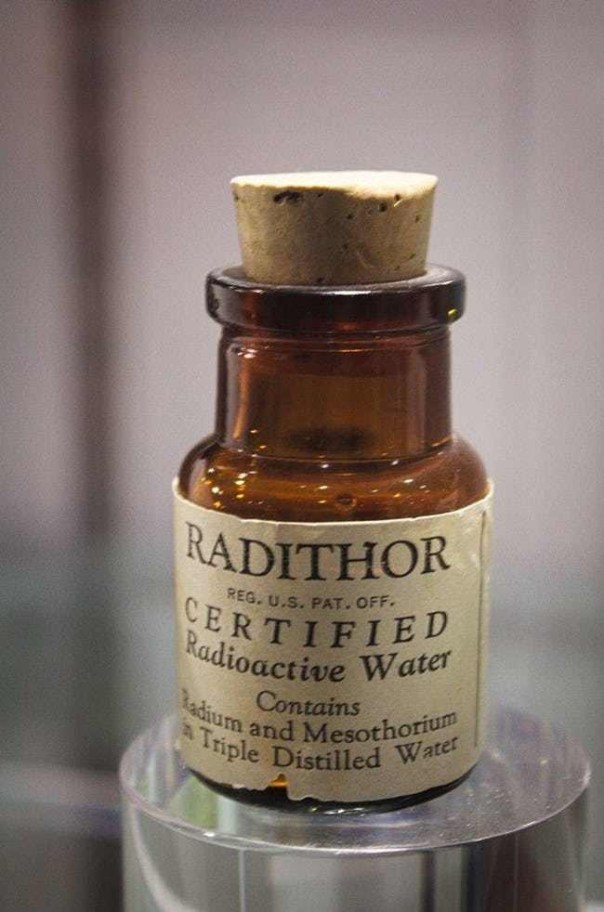
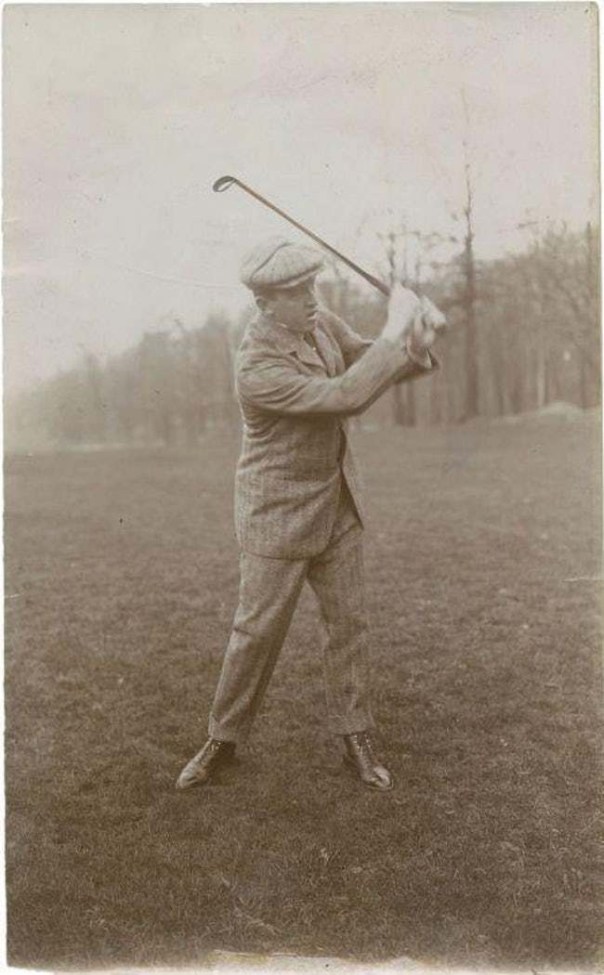
Eben Byers was an amateur golfer, an alumnus of Yale, and a notorious ladies man, but he is most famous for literally rotting from the inside out after spending three years drinking radium-infused water.

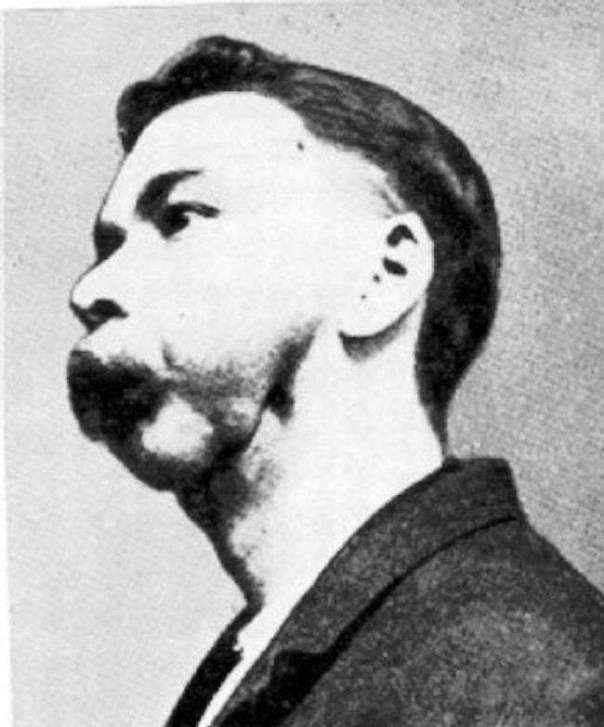
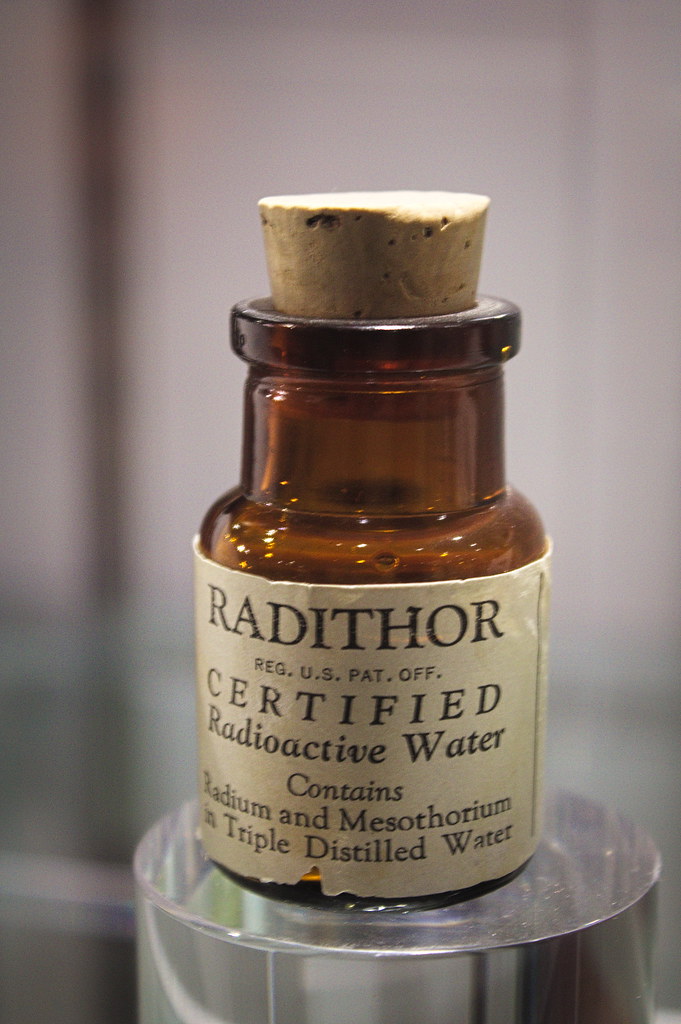
When Byers fell and hurt his arm in 1927, he was prescribed Radithor, a radium-infused elixir sold by a quack doctor named William Bailey. Radithor was supposed to alleviate aches, pains, and even invigorate one sexually. Yet what happened to Byers fell far afield of the positive effects Radithor was supposed to have. Instead, after three years of incessant use, Byers began rotting from the inside. His teeth fell out; his jaw had to be removed; holes formed in his brain and skull; and he eventually perished in 1932 from radium poisoning. Like the ill-fated Radium Girls before him, Byers demonstrated the clear and unequivocal bodily evidence that exposure to radium was lethal.

Byers’s tragic death is a story of medical deception and overdose, and it serves as a cautionary tale that there is, in fact, too much of a good thing – especially if that good thing is actually completely lethal.   

“The Radium Water Worked Fine Until His Jaw Came Off”

Photo: BlueShift 12/flickr/CC-BY 2.0

This was the title of a Wall Street Journal article that came out some time after Byers’s passing, succinctly summing up what happened to him. In 1927, Byers was on a train returning from a Harvard-Yale football game when he fell from his bunk and hurt his arm. The pain didn’t go away, so Byers’s doctor prescribed him Radithor.  

Radithor was simply radium dissolved in water, marketed as a healing tonic. At a time when radium-infused products were very popular, it was unsurprising that Byers was more than happy to take Radithor. In fact, Byers was so keen on the product and its supposed benefits that he ended up drinking three bottles every day for two years, until the poison caught up with him and began dissolving him from the inside out. 

William Bailey, The Man Who Prescribed Byers Radithor, Was A Known Fraud

Photo: Internet Archive Book Images/Wikimedia Commons/No Restrictions

William J.A. Bailey wasn’t a doctor, even though he claimed to be. He was a Harvard dropout who got rich quick after developing Radithor, a toxic solution of radium dissolved in water. He was a fraud who was repeatedly in trouble with the law and profited off numerous short-lived business start-ups.

The FDA shut down Bailey’s business, but Bailey had already done his damage. The amount of people who perished from Radithor is unknown, but he sold approximately 400,000 bottles of the tonic – 1,400 of which Byers himself purchased.

Byers Probably Took Radithor To Help His Performance In The Bedroom

Photo: Falk, NY/Wikimedia Commons/Public Domain

The quick story is that Byers fell on a train, hurt his arm, took Radithor, and thought it made him better so he kept taking it. There is, though, perhaps another reason Byers was so enthusiastic about Radithor, to the point where he reportedly even gave cases of the stuff to his girlfriends and his race horses. 

Byers had a reputation as a ladies’ man. At Yale, his nickname was “Foxy Grandpa.” His fall on the train reportedly injured not only his arm, but also his game. Byers complained of a sort of “run-down feeling” that affected his athletic and sexual performance. That’s when Byers discovered a product on the market that claimed to solve all of these issues. The sexually reparative nature of Radithor was only rumored, but it is unsurprising that a man entering his 50s with a reputation for being popular with women would seek out anything to help him maintain his “Foxy Grandpa” status.  

Byers’s Horrific Death Ended The American Public’s Romance With Radium-Infused Products

Photo: Radior Cosmetics/New York Tribute Magazine/Wikimedia Commons/Public Domain

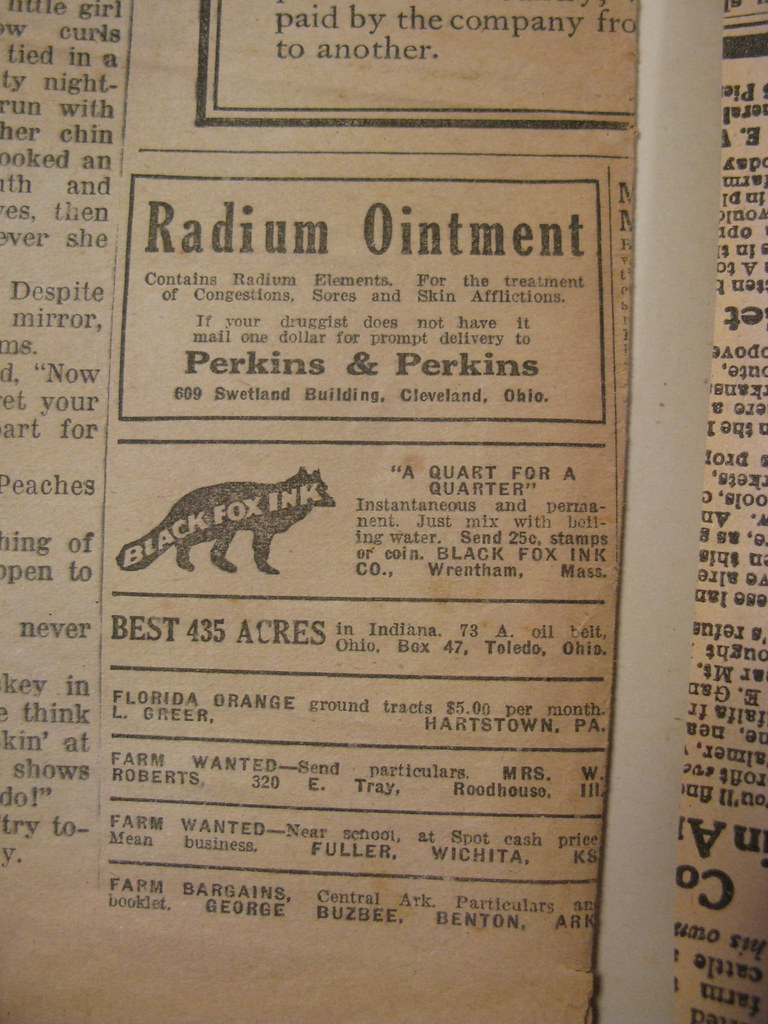
The problem with touting radioactivity as curative was that it simply wasn’t true. Luckily, most of these quack elixirs were phony, and contained no radium at all (of course, this was not the case with Radithor). Still, there were myriad products on the market meant to be extremely good for you – there were radium-infused beauty creams, toothpastes, soaps, bars of chocolates – you name it.

The American public had an obsession with radium in the 1920s and ’30s that only faded after Byers’s passing brought the real dangers of radium to light.     

Byers’s Story Probably Got So Much Attention Because He Was A Handsome, Upper-Class Man

Photo: flickr/CC0

Eben Byers was the son of a well-known entrepreneur, and he was the chairman of his father’s steel company. He attended Yale, golfed, raced horses, and was popular with women. He was the perfect candidate for a tragic, newsworthy story – made even more fascinating and terrifying because he perished after drinking what was touted as a health tonic, completely available to the public. Everything about Byers’s story differs from the devastating story of the Radium Girls. 

The tragedy of the Radium Girls – female factory employees who became painfully sick and perished of radium poisoning – was well covered by the media, but was less compelling to the government than the story of Byers, a socialite in the public eye. It wasn’t until Byers told the Federal Trade Commission about Radithor, while on his deathbed, that radium was removed from the federally approved list of medicines.

The Idea To Drink Radioactive Water As An Elixir Came From The Restorative Powers Of Hot Springs

Photo: National Institute of Standards and Technology/Wikimedia Commons/Public Domain

In the 1920s, people knew about – and believed in – the healing powers of hot springs. When it was discovered that the water in hot springs was mildly radioactive, due to the radon gas dissolved in the water, it was concluded that it was the radioactivity that was so curative. In The American Journal of Clinical Medicine, Dr. C.G. Davis claimed, “Radioactivity prevents insanity, rouses noble emotions, retards old age, and creates a splendid youthful joyous life.” It was no wonder products infused with radium, such as candy, hair tonics, and even blankets, were so popular.

However, radon gas is entirely different from radium, the element found in Radithor. Radon gas has a half-life of about three days – radium has one of 1,600 years. Seeing as Byers took three times the already toxic dose of Radithor, he was irrevocably doomed.      

Byers Deteriorated Rapidly and Painfully, But He Kept Drinking Radithor

Photo: Metaweb/GNU Free Documentation License

For the first two years Byers took Radithor, he was so pleased with the supposed results that he took three times the suggested daily dose. But, after a while, he began feeling sick. He lost weight, had headaches, and had a blinding pain in his jaw. He had been diagnosed with inflamed sinuses, but once his teeth began to fall out and his jaw began to crumble, Byers knew something was terribly wrong. Byers’s X-ray was sent to a radiologist, who confirmed that Byers’s fate was inevitable – he had the same lesions on his jaw as the Radium Girls. Sadly, Byers was so indoctrinated to rely on Radithor that he kept drinking it, hoping it would help him feel better when he began feeling sick.

An attorney dispatched to Byers’s house shortly before his passing remembered the state Byers was in due to his radiation poisoning:

We went to Southampton where Byers had a magnificent home. There we discovered him in a condition which beggars description. Young in years and mentally alert, he could hardly speak. His head was swathed in bandages. He had undergone two successful jaw operations and his whole upper jaw, excepting two front teeth, and most of his lower jaw had been removed. All the remaining bone tissue of his body was slowly disintegrating, and holes were actually forming in his skull.

Byers Had Enough Radium In His Body To “Kill Three Men”

Photo: Rana/Wikimedia Commons/CC BY-SA 2.0 fr

After Byers’s death, Popular Science Monthly wrote that Byers had the “largest amount of radium ever found in a human being – more than thirty micrograms, enough to kill three men.”

With symptoms such as blinding headaches, breaking bones, and a disintegrating jaw, Byers must have suffered immensely before he succumbed to radiation poisoning in 1932, five years after his first dose of Radithor.   

The Federal Trade Commission Accidentally Contributed To The Rise Of Radioactive Products

Photo: Mutter/Wikimedia Commons/CC BY-SA 4.0

Back when radium was immensely popular in consumer products, the FDA had very little power to regulate it. Not falling under food or drugs, it was out of their jurisdiction.

There was one department, however, that had control over radium: the Federal Trade Commission. Their job was to stand against false advertising claims; this meant that the FTC worked very hard to make sure that all the products on the market actually contained radium. Their strict regulation ensured that all the products people were buying were genuinely radioactive.

Byers’s Demise Led To Stricter FDA Control

Photo: Andrew Huff/flickr/CC-BY-NC 2.0

As Byers fell ill, and it became clear Radithor was the culprit, the FTC opened an investigation. They sought to challenge Bailey’s claim that Radithor and other products like it were “harmless.” They wanted Byers to testify, but he was too sick. They dispatched an attorney to his home to take a statement, which is when the attorney found him literally rotting from the inside out. It didn’t take long after that for the FTC to shut down Bailey’s business. 

The results of the FTC’s investigation led to the FDA getting more power over investigating suspicious health claims. Eventually, the FDA gained control over the entire pharmaceutical industry. 

Bailey Succumbed To His Own Lies, But It Was Only Discovered After His Death

Photo: UpperKasegirl/Youtube

Until the end, Bailey denied Radithor had anything to do with Byers’s demise. He claimed he had drunk more Radithor than Byers himself, and he was living proof that his “healing tonic” was perfectly safe.

Yet when his body was exhumed 20 years after his death from bladder cancer, medical researchers discovered his remains were riddled with radiation. His corpse was described as “still hot” after being unearthed.  

Reference

Horrific 20th Century Quack Medical Devices That Contained Radium

Marie Curie and her husband, Pierre, discovered radium, a radioactive element, back in 1898. However, people didn’t realize how dangerous the element was, and they began to use radium in household items. This led to radium in makeup, as well as in medical devices that claimed to cure everything from impotence to arthritis. However, what these quack devices actually led to was a plethora of surprisingly poisonous things, such as toothpaste, hair tonic, and suppositories. 

When people began dying of mysterious diseases, such as the ones suffered by the Radium Girls, who painted luminous watch dials with Undark, a radium-based paint that they wound up ingesting via their paintbrushes, doctors finally realized that radium was dangerous.

The history of radium poisoning is full of odd devices designed to improve one’s health and outer appearance. These everyday poisons were sold through magazine and newspaper ads – and in regular pharmacies. Thankfully, by the beginning of World War II, they had been phased out and are now an odd anecdote from American history. 

Radium-Lined Cups Were Used To Make Radioactive Beverages

Photo: Andrew Kuchling/Wikimedia Commons/CC BY 2.0

These days, people drink bottled or filtered water. Back in the early 20th century, those who could afford it drank radioactive water. One popular way of making this water, which supposedly could cure many different ailments, involved the use of a metal cup or container that was lined with radium. Any water poured into the vessel was exposed to the radioactive material and picked up its properties. The Revigator was one such device; its makers claimed that it contained radon. Of course, this only “worked” if the device actually contained radium – many of the “radioactive” medical marvels on the market were scams. 

People Submerged Themselves In Radium-Laced Water At Spas

Photo: Eternalsleeper/Wikimedia Commons/CC BY 3.0

Going to spas and spending some time submerged in radioactive water was supposed to be an invigorating experience. In actuality, the natural radiation in these mineral hot springs might have made the spa goers feel relaxed – that is, until a few decades later when they realized that the “hot” water did more harm than good. During the time period, however, even reputable medical journals touted the healing abilities of radium and similar materials, and some claimed radium hot springs were a literal fountain of youth that could help slow the aging process. Some radium-filled hot springs are still in business today, but they limit people’s exposure to any radioactive elements in the water. 

Laying In Radioactive Sand Was A Treatment For Arthritis

Photo: André Castaigne/Wikimedia Commons/Public Domain

One of the main byproducts of radium manufacturing is a fine-grained sand that is, of course, highly radioactive. Back in the early 1900s, before people realized how harmful exposure to it was, they claimed that exposure to the sand could successfully treat arthritis pain. Many spas opened up rooms where people could sit and rest their feet on the sand in the hopes of being cured. The ironic thing is that, even though people knew of the dangers that radioactivity could pose, these “Uranium Sitting Houses” were in business up through the 1950s. 

Men Placed Wax Coated Radium Rods In Their Urethras As A Cure For Impotence

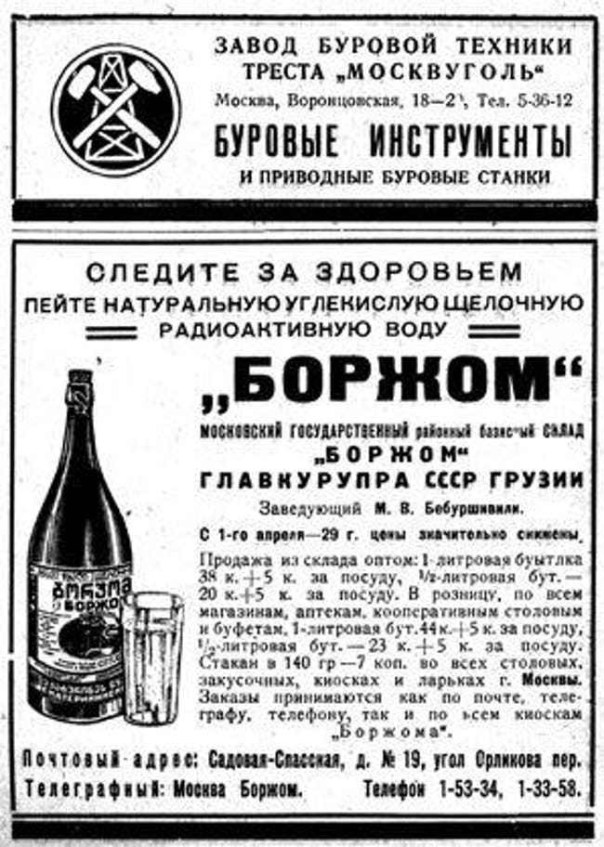
Photo: Мосрекламсправиздат/Wikimedia Commons/Public Domain

Men have always struggled with impotence. Now, there are medications like Viagra; back in the early 1900s, there were “bougies.” These were radium-laced wax rods that men inserted directly into their urethras to treat impotence. This treatment is now cringe inducing not only because of the way it took place, but also because placing radioactive material close to reproductive organs is a very bad idea. 

Radium Toothpaste Claimed To Make Teeth White And Shiny

Photo: Metaweb/CC-BY

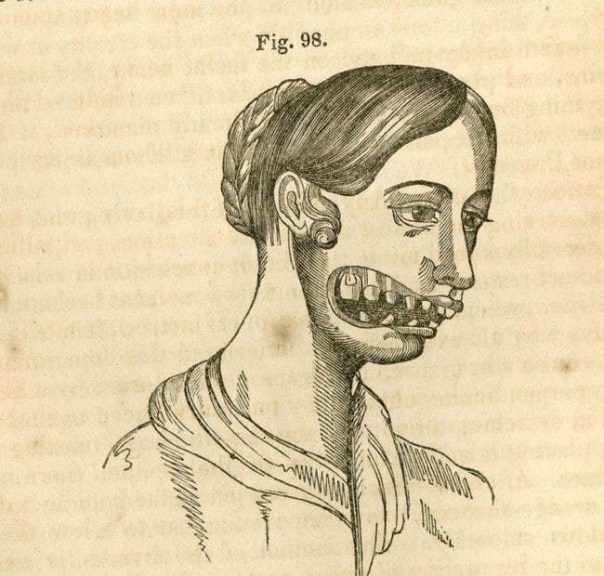
Radium wasn’t just used in medical devices – it made its way into everyday beauty and household products as well. One of these hygienic products was toothpaste. According to ads, a small amount of radium in the toothpaste promised to make users’ teeth very white and super shiny. Whether or not it worked is up for debate, but what is known is that radioactive exposure can actually make one’s teeth fall out and result in a jaw rotting from the inside out. 

Radithor Supposedly Cured Impotence And Other Health-Related Woes

Photo: Sam LaRussa/Wikimedia Commons/CC BY-SA 2.0

Radithor was a radium- and thorium-laced water that was sold in small vials. A few drops of it a day could cure impotence and “restore vigor” – or, so it purported to be the case. The product was made by Bailey Radium Laboratories of East Orange, New Jersey, who actually encouraged users to disprove its claims of containing the radioactive substances. The product was removed from the market after one heavy user who reportedly went through around three vials a day of the stuff, playboy Eben Byers, died a horrific death when his jaw disintegrated. 

Radium Suppositories Restored People’s “Vigor”

Photo: Mausweisel/Wikimedia Commons/CC BY-SA 3.0

Speaking of restoring “vigor,” how about a radium suppository? These small, radioactive pellets were sold in boxes and claimed to help men with their impotence issues. Made by several different companies, including the Vital-O-Gland Company and the General Remedies Company, there is no proof that the suppositories actually contained any radioactive material, or that they worked as they were supposed to. Thank goodness.

Glasses With Radioactive Lenses Corrected Vision Problems

Photo: Conrad von Soest/Wikimedia Commons/Public Domain

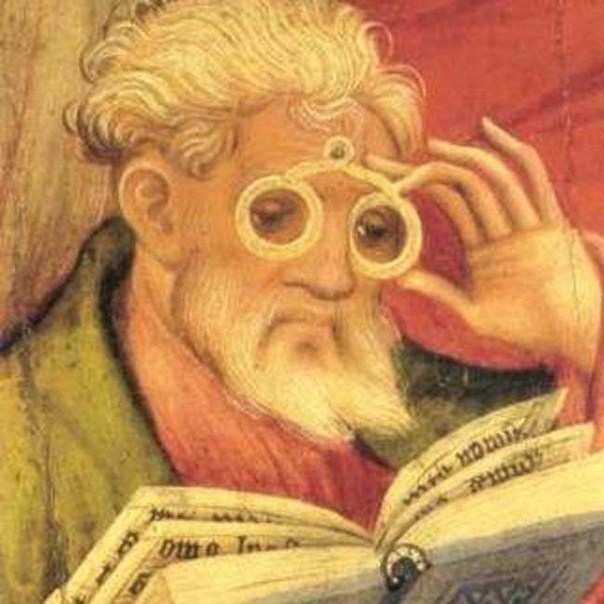
Before there was laser eye surgery, there were Dengen’s Radio-Active Eye Applicators. This device looked like a pair of simple spectacles, only instead of lenses, it had opaque pods that contained radium and other radioactive materials. Not only could they cure your eye ailments, claiming to repair things like nearsightedness and farsightedness, but they also took care of headaches and eye strain. What’s even more disturbing is the fact the eye applicators came in three different strengths. 

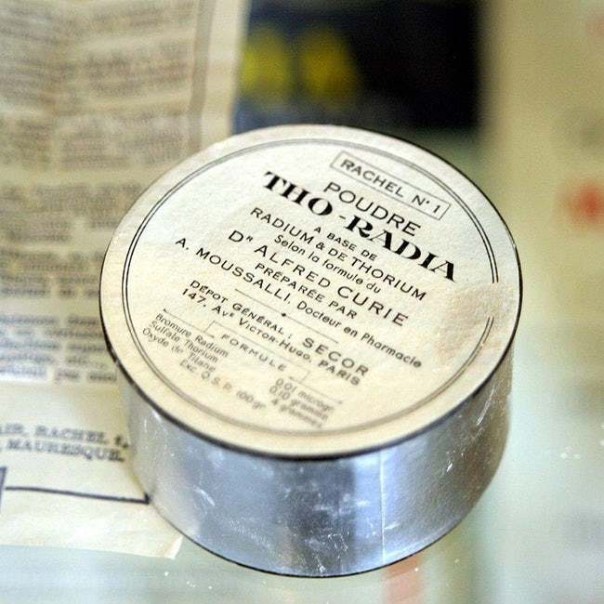
Tho-Radia Cosmetics Claimed To Brighten Skin

Photo: Rama/Wikimedia Commons/CC BY-SA 2.0

Tho-radia was a line of makeup and skin creams that contained radium. It was heavily marketed to women in the United States and France, who purchased the items in the hopes that the product’s claims – to rejuvenate and brighten skin – were true. To add a little extra cachet to the brand, its creator,  Dr. Alfred Curie (no relation to Marie and Pierre Curie) put his name on the ads. 

Radium Emanation Bath Salts Cured Insomnia

Photo: Myron Metzenbaum/Wikimedia Commons/Public Domain

Radium bath salts, which worked like modern-day bath salts – as in you dissolve them in your bath water before soaking in them – were sold as a cure for insomnia, various nervous disorders, and even rheumatism. What made them even worse (from a modern perspective, of course) was the fact that dissolving the radioactive bath salts would send small particles of them into the air, where they were also breathed into the lungs. These products were made by several different manufacturers, including the Denver Radium Service on what is now a Superfund site. 

Endocrine Glands Were Regulated With The Radiendocrinator

Photo: Hotel Will Rogers/Wikimedia Commons/Public Domain

The endocrine system regulates the body’s hormone production. The glands in the endocrine system include those in the neck – the thyroid – as well as the pituitary gland in the brain. However, the horrifying detail here involves the glands that men would treat with the Radiendocrinator – their testes. Treatment via the Radiendocrinator involved holding the device in place sometimes for hours at a time, with the handy (and included) strap that resembled an athletic supporter. Ironically, the creator of the device, William J.A. Bailey, died of radiation-induced bladder cancer in 1949. 

Gout And Neuralgia Were Taken Care Of With Radium Tablets

Photo: Wellcome Library, London/Wikimedia Commons/Public Domain

Radium tablets are still a legitimate medical treatment for people suffering from various types of cancer. However, back in the late 19th century, these tablets were sold on pharmacy shelves and supposedly cured gout, neuralgia (stabbing nerve pain), and numerous other ailments. These radioactive tablets, sold under brand names like Arium and Radione, were taken daily by people who simply wanted to feel better or have “the strength of iron.” 

Radioactive Heating Pads Cured A Number Of Ailments

Photo: Noble M. Eberhardt/Wikimedia Commons/Public Domain

A radioactive heating pad that was lined with radium claimed to cure everything from rheumatism to standard aches and pains. The instructions for this particular device include warming it up, keeping it dry, and then applying it to the area of the body that hurts. Users could supposedly leave it on for up to 12 hours a day, and they were even encouraged to roll it up around a painful body part, such as an ankle, and tie it into place. 

Uranium Blankets Helped With Arthritis P

Photo: Francis Mould/Wikimedia Commons/Public Domain

These days, uranium blankets are a part of nuclear reactors, and they aren’t even a little bit related to the therapeutic ones touted as cures for arthritis pain in the early 20th century. Those particular blankets looked like standard, quilted ones, only, within the fabric squares, were bits of uranium. These blankets were sold as cures up through the 1950s, even after the dangers of uranium exposure were well known. 

Radium Tonic Prevented Gray Hairs

Photo: Sinclair Tousey/Wikimedia Commons/Public Domain

A product called Caradium was created in the early 1900s. It was a tonic that was applied to hair to prevent gray hairs from growing, thanks to the power of its active ingredient – radium. It also promised to make any current gray hairs revert back to their old color. Caradium was the invention of Frederick Godfrey, a man whose credentials included “hair specialist.” 

Vintage Shoe-Fitting X-Ray Machines Will Zap Your Feet

How do you tell if a shoe is a good fit? Take a short walk? Squeeze the front-end with your fingers to make sure there is space for your toes? What about a dangerous, 20-second blast of unshielded x-rays? If you were buying shoes in the 1930s, 1940s and 1950s, it’s likely that you regularly inserted a tootsie into one of these death-rays.

The wooden cabinets, possibly first built by a Clarence Karrer in Milwaukee in 1924, had the x-ray source in the base, and it would fire upwards through your foot and shoe. Due to a lack of any kind of shielding, it wouldn’t stop there: the radiation would shoot right up into your baby-maker, clearly a perilous occurrence.

The machine, called a “Shoe-Fitting Fluoroscope” put out 50 kv from its x-ray tube, which – according to Wikipedia’s figures for today’s machines, isn’t too bad:

In medical radiography voltage from 20 kV in mammography up to 150 kV for chest radiography are used for diagnostic. Energy can go up to 250 kV for radiotherapy applications.

The problem was repeat exposure. While it was recommended that children not be subjected to more than 12 doses a year, there was no such luck for shoe-store employees. According to the article Shoe-fitting with x-ray in National Safety News 62 by H. Bavley (1950), store clerks would put their hands into the beam to squeeze shoes during fitting. Worse still was the fate of a poor shoe model, “who received such a serious radiation burn that her leg had to be amputated.”

Thank God there’s nothing this dangerous around today. Like, you know, full-body backscatter x-ray machines in airports.

Reference

The Craziest Ancient Rome Sex Scandals

Vote up the most insane stories from ancient Roman times—those that put Washington, D.C. and Hollywood to shame.

If the Ancient Romans knew how to do one thing well, it was party. When they weren’t busy inventing the aqueduct, concrete, or the basis for the modern calendar, they were discovering new and exciting ways to have a good time with each other. Sure, every emperor, senator, and nobleman under the sun promoted family values… but when that sun set, ancient Rome got into the kind of action that would make the writers of Game of Thrones blush.  

While the Romans probably weren’t the first in history to push the sexual envelope, they were among the first to keep detailed records. Regular talk of affairs, orgies, and contests spun around the rumor mill for centuries. Of course, the Romans weren’t above tabloid-level journalism. It’s no coincidence that the most extreme rumors were about the most hated emperors.

It wasn’t all fun and games, though. Since most of these Roman rumors involved the emperors, that meant most of them ended in either bloody coups or executions. It’s good to be the king, but only as long as people let you stay in power. So, as crazy as you think modern Washington controversies may seem, some of the ancient Rome sex stories on this list may make you appreciate just how far politicians have come over the last two thousand years.

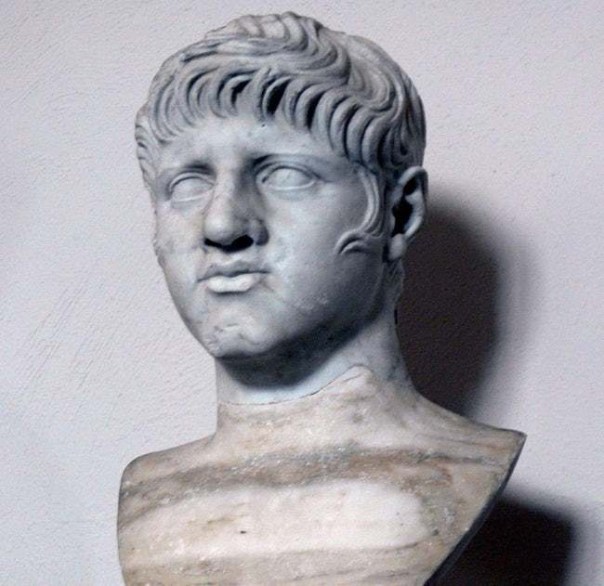
Nero Castrated A Man And Then Married Him

Photo: John William Waterhouse/Wikimedia Commons/Public Domain

For someone with the power and maniacal reputation of Emperor Nero, it was probably easy to get bored at having his every whim met. Perhaps that’s why Nero turned an innocent boy into a eunuch and then tied the knot. The boy, Sporus, was dressed as a woman in a veil for the official ceremony, and the pair even took a romantic honeymoon to Greece.

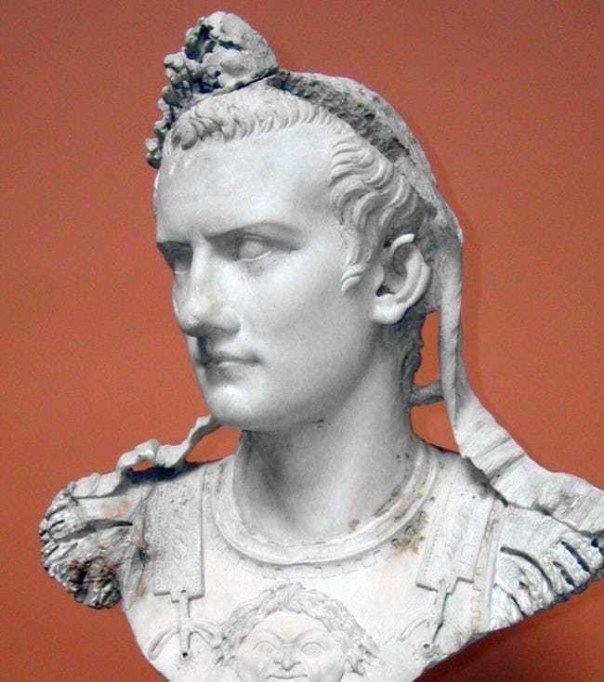
Caligula Went To A Wedding And Left With The Bride

Photo: Louis le Grand/Wikimedia Commons/CC BY-SA 3.0

Gaius Piso made the poor decision of inviting Emperor Caligula to his wedding. When Caligula showed up to the banquet, Gaius told the emperor not to touch his soon-to-be wife Livia Orestilla. So, naturally, Caligula stole her, married her, then banished her to an island where she was forbidden to sleep with anyone ever again. Moral of the story? Don’t tell Caligula he can’t do something.

Nero Got Nasty With His Mom

Photo:  Landesmuseum Württemberg/Wikimedia Commons/CC BY-SA 3.0 DE

For Emperor Nero’s mother, Agrippina, merely being the mother of the emperor wasn’t enough. Early in his rule as a teenager, Agrippina had a heavy hand in his decision-making. Rumors spread that she reinforced her influence with her body. Stories spread about Nero’s relationship with a consort who suspiciously resembled his mother as well as a public appearance together where his robes were noticeably stained.

Tiberius Went Skinny Dipping with Young Boys

Photo: shakko/Wikimedia Commons/CC BY-SA 3.0

Pushing the depths of depravity, stories said Emperor Tiberius trained young boys to fulfill his physical needs. He liked to go swimming with them, then have them lick and nibble him “between his thighs.” He called them “tiddlers.”

Caligula Slept With Guests’ Wives And Then Bragged About How They’d Gotten Down

Photo: Eustache Le Sueur/Wikimedia Commons/Public Domain

Dinner parties with Caligula were a nightmare for married couples. Caligula frequently invited married couples over for dinner, and if a certain wife struck his fancy, he’d take her back to his bed chambers and return later to tell their husbands everything that went down. If that wasn’t enough for him, he’d sometimes file a bill of divorce for couples just because he could.

Caligula Had A Favorite Sister

Photo: Marsyas/Wikimedia Commons/CC BY-SA 2.5

Although it’s been said he took all of his sisters to bed, Caligula’s favorite was allegedly Drusilla. Stories said their grandmother caught them in bed together when they were still minors. Later in life, he took Drusilla from her husband. When she died, Caligula declared an entire season of public mourning.

An Empress Had A Taboo Face-Off With A Famous Prostitute—And Won

Photo: Ricardo André Frantz/Wikimedia Commons/CC BY-SA 3.0

According to Pliny the Elder, Valeria Messalina, the third wife of Emperor Claudius and mother of his son, was known for her appetite for pleasure. Just for fun, the empress bet the best Roman courtesan of her time that she could sleep with more men in one day than said lady of the night. Messalina came out on top by bedding 25 men.

Nero Dressed Up As Animals For His Sexcapades

Nero may have had a weird childhood, but not even the most uncommon upbringing could explain his most ferocious urges. Stories said he liked to play a game where he dressed in animal skins, was let loose from a cage, and went to town on defenseless men and women who were tied to stakes.

Cleopatra Had A Love Child With Caesar And Paraded It Around Rome

Julius Caesar not only started the reign of Roman emperors; he was one of their finest playboys. Despite his marriage to Calpurnia, he took many mistresses—among them, the famous Cleopatra. When Caesar invited her to Rome, Cleopatra brought their baby and showed him off to everyone… including Calpurnia.

So what was an epic playboy to do? He gave the kid his name and drafted up a law saying he could marry as many women as he wanted.

Caligula Used His Sisters To Discredit Political Rivals

Photo: Wikimedia Commons/CC BY-SA 3.0

When Caligula wasn’t actually taking his siblings to bed, he often prostituted them off to his friends. This came in handy if he ever wanted to put those same friends on trial. He kept records of all the adultery and made them public to create an instant uproar whenever he needed to ruin a friend-turned-rival’s reputation.

Augustus Exiled His Daughter For Ruining Family Values

Photo: Santo Attilio/Wikimedia Commons/Public Domain

Emperor Augustus found himself in a bind with his daughter, Julia. Augustus was a supporter of family values and set out to make adultery illegal. Julia complicated his political stance by frequently indulging in vices, including public instances of adultery. Augustus was so upset that he exiled her to an island with no men or wine. As for the men she slept with, they were either exiled themselves or forced to kill themselves.

Emperor Elagabalus Was All About Role-Playing

Photo: Wikimedia Commons/CC BY-SA 3.0

Elagabalus would search for the most well-endowed men in all of Rome and bring them back to his palace. There, he’d pose for them as the goddess of love, Venus. He’d pretend his partner was Paris from the Illiad and let the fantasy go from there.

Caligula Turned His Palace Into A Brothel

Photo: Ed Uthman/Wikimedia Commons/CC BY-SA 2.0

When the Roman treasury was running low on money and taxes just weren’t doing the trick, Caligula turned his palace into a brothel. He put everyone on a line of credit with astronomical interest rates. Once, he allegedly saw two “Roman knights” who owed him passing by, so he had them seized and confiscated all their property.

Elagabalus Was a Part Time Emperor, Part Time Seducer

Photo: Lawrence Alma-Tadema/Wikimedia Commons/Public Domain

While Caligula turned his palace into a brothel, Elagabalus got in on the action himself. He had a room in his palace brothel where he’d stand at the door and try to entice clients into joining him.

Mark Antony Totally Went After Best Friend Caesar’s Girl After He Was Out Of The Way

Photo: Lawrence Alma-Tadema/Wikimedia Commons/Public Domain

Not long after Caesar met his end on the Ides of March, his closest friend and ally, Mark Antony, hooked up with his mistress, Cleopatra. Antony was named an enemy of Rome, but was too busy with the Queen of Egypt to care. Eventually, Caesar’s successor, Octavian, faced them down and defeated their forces. In the end they both took their own lives.

Claudius Executed His Wife For Organizing A Coup With Her Lover

Photo: Marie-Lan Nguyen/Wikimedia Commons/CC BY 2.5

Other than challenging prostitutes to feats of bedroom mastery, Emperor Claudius’s wife Valeria Messalina was famous for marrying another man, Gaius Silius, behind Cladius’s back. Together, they conspired to overthrow Claudius and rule the Empire. That all fell apart when Claudius found out—and executed them both.

Reference

The Antonine Plague Claimed 5 Million Ancient Romans — And Scientists Still Don’t Know Its Origin

The Roman Empire was so crippled by the Antonine Plague that many scholars believe it hastened the empire’s demise.

At the height of the Antonine Plague, up to 3,000 ancient Romans dropped dead every single day

The disease was first cited during the reign of the last of the Five Good Emperors, Marcus Aurelius Antoninus, in 165 or 166 A.D. Even though how the pandemic began remains unknown, one Greek physician named Galen managed to document the outbreak itself in startling detail.

Victims suffered for two weeks from fever, vomiting, thirstiness, coughing, and a swollen throat. Others experienced red and black papules on the skin, foul breath, and black diarrhea. Nearly ten percent of the empire perished this way.

Known as both the Antonine Plague and the Plague of Galen, the pandemic did eventually subside, seemingly as mysteriously as it had come.

The Antonine Plague rendered the empire of Ancient Rome a kind of Hell. Indeed, the most powerful empire of its time was utterly helpless in the face of this invisible killer.

The Antonine Plague Spreads Through Ancient Rome

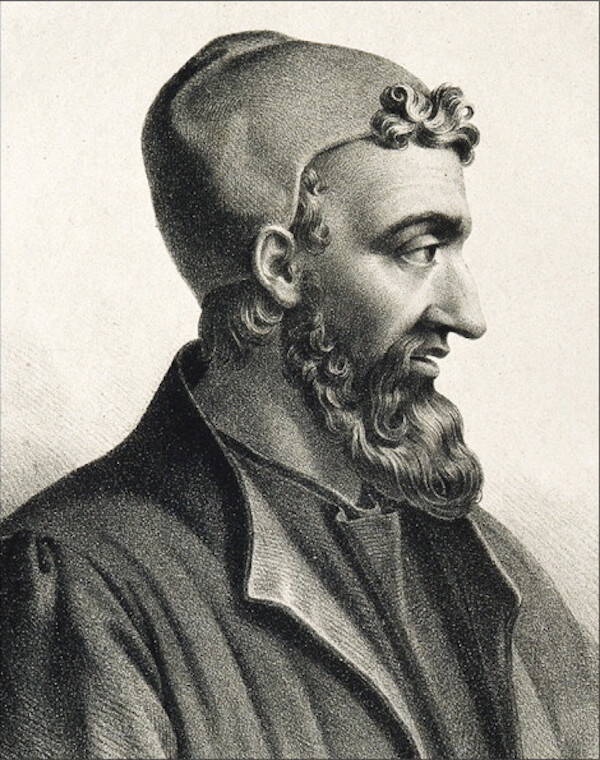
An 1820 portrait of Galen, the Greek physician who documented the Antonine Plague.

Sources largely agree that the disease first appeared in the winter of 165 A.D. to 166 A.D. It was the height of the Roman Empire.

During a siege of the city of Seleucia in modern-day Iraq, Roman troops began to take note of a disease among the locals and then its own soldiers. They consequently carried that disease with them to Gaul and further legions stationed along the Rhine river, effectively spreading the plague across the empire.

Though modern epidemiologists haven’t identified where the plague originated, it is believed that the disease likely developed first in China and was then carried throughout Euroasia by the Roman troops.

There is one ancient legend that attempts to describe how the Antonine Plague first infected the Romans. The legend proposed that Lucius Verus — a Roman general and later the co-emperor to Marcus Aurelius — opened a tomb during the siege of Seleucia and unwittingly liberated the disease. It was thought that the Romans were being punished by the Gods for violating an oath they’d made not to pillage the city of Seleucia.

Meanwhile, the ancient doctor Galen had been away from Rome for two years, and when he returned in 168 A.D., the city was in ruin. His treatise, Methodus Medendi, described the pandemic as great, lengthy, and extraordinarily distressing.

Galen also observed victims suffer from fever, diarrhea, a sore throat, and pustular patches all over their skin. The plague had a mortality rate of 25 percent and survivors developed immunity to it. Others died within two weeks of first presenting symptoms.

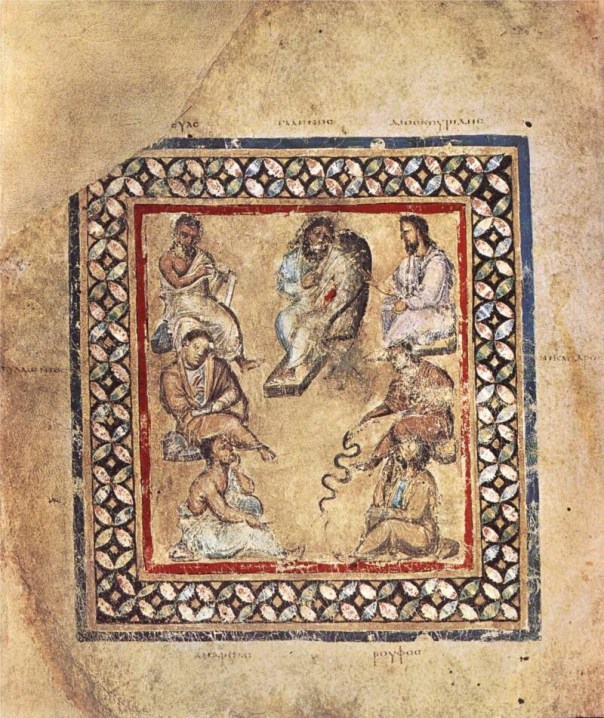
Galen (top center) and a group of physicians in an image from the sixth-century Greek-Byzantine medical manuscript, Vienna Dioscurides.

“In those places where it was not ulcerated, the exanthem was rough and scabby and fell away like some husk and hence all became healthy,” M.L. and R.J. Littman wrote in The American Journal of Philology of the disease.

Modern epidemiologists have largely agreed based on this description that the disease was probably smallpox.

By the end of the outbreak in 180 A.D., close to a third of the empire in some areas, and a total of five million people, had died.

How The Plague Of Galen Wounded The Empire

Both Marcus Aurelius Antoninus (represented here in a bust from France’s Musée Saint-Raymond) and his co-emperor Lucius Verus may have died from the plague.

Of the millions that the plague claimed, one of the most famous was co-Emperor Lucius Verus, who ruled beside Emperor Antoninus in 169 A.D. Some modern epidemiologists also speculate that Emperor Marcus Aurelius himself perished from the disease in 180 A.D.

The Plague of Galen also heavily impacted Rome’s military, which then consisted of around 150,000 men. These legionaries caught the disease from their peers returning from the East and their resultant deaths caused a massive shortage in Rome’s military.

As a result, the emperor recruited anyone healthy enough to fight, but the pool was slim considering so many citizens were dying of the plague themselves. Freed slaves, gladiators, and criminals joined the military. This untrained army then later fell victim to Germanic tribes who were able to cross the Rhine river for the first time in over two centuries.

This Roman coin commemorated the victories of Marcus Aurelius Antoninus during the Marcomannic Wars, which lasted from 166 to 180 A.D. — the year he died.

With the economy in trouble and foreign aggressors taking hold, financially maintaining the empire became a serious issue — if not impossible.

The Aftermath Of The Antonine Plague

Unfortunately, the Antonine Plague was only the first of three pandemics to destroy the Roman Empire. Two more would follow, devastating the economy and army.

The Antonine Plague begat a shortage in the workforce and a stagnant economy. Floundering trade meant fewer taxes to support the state. The emperor, meanwhile, blamed Christians for the pandemic, as they supposedly failed to praise the Gods and subsequently enraged them enough to unleash the disease.

Christianity, however, actually garnered popularity during this crisis. Christians were among the few willing to take in those suffering from or left destitute by the plague. Christianity was thus able to emerge as the singular and official faith of the empire following the plague.

As people from high classes fell to lower ones, the nation experienced collective anxiety about their own stations. This was previously unimaginable to those entrenched in Roman exceptionalism.

Ironically, it was the empire’s expansive reach and efficient trade routes that facilitated the spread of the plague. Well-connected and overcrowded cities once hailed as the epitome of culture quickly became the epicenters for disease transmission. In the end, the Antonine Plague was only a predecessor of two more pandemics — and the demise of the biggest empire the world had ever seen.

Reference

9 Laughably Unscientific Historical Theories Attempting To Explain The Universe

For as long as humans have been able to communicate, they have been trying to figure out exactly what is going on “up there.” This has resulted in a lot of interesting, but pretty inaccurate and outmoded, theories about space throughout history. These outdated beliefs about space, which attempt to explain just how the Earth is interacting with the cosmos, are surprisingly varied, and some of the weirdest aren’t as old as you might think. In fact, some of them are still believed in remote parts of the world. We may have a much better idea of the makeup of the universe now, but some of these old-fashioned attempts at astronomy are cooler than the truth.

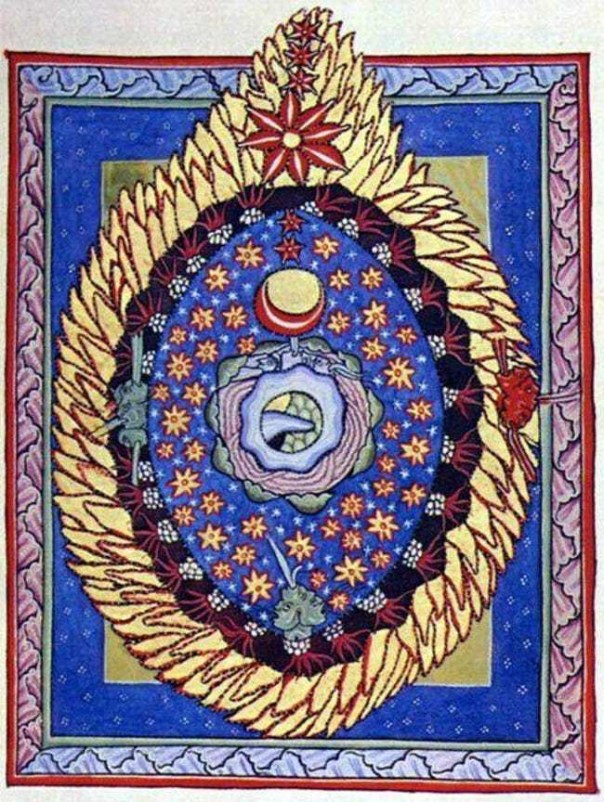
Space Is A Fiery, Cosmic Egg

Photo: Meister des Hildegardis-Codex/Wikimedia Commons/Public Domain

Hildegard von Bingen was one of the most industrious people of the Middle Ages, period. She was a Benedictine abbess who is often credited as being the founder of natural history in Germany. She was also a writer, composer, philosopher, and receiver of religious visions. For all of her innovating, Pope Benedict XVI named her a Doctor of the Catholic Church in 2012. She proposed that the cosmos were arranged into a fiery cosmic egg. It sounds pretty scary, but Hildegard saw it is a reflection of God’s vision – the egg of the cosmos followed a divine patterning. The outermost layer of the egg is fire, representing purification and judgement; the next layer is ethereal firmament, which signifies faith; the next is water, the element for baptism; and finally, there’s the Earth itself, which is made up of four elements.

A Scarab Beetle Rolls The Earth In The Watery Sky

Photo: Mullica/flickr/CC-BY-NC 2.0

The Ancient Egyptians’ view of space had something in common with Hildegard von Bingen’s fiery, cosmic egg theory: the idea that the world is surrounded by a layer of water. This “eternal water” was the habitation of the goddess Nut, and, beneath the Earth, a parallel netherworld known as Duat, home to both the good and the cursed, existed. In addition to this set up, the Egyptians attached a special significance to the dung beetle. They saw the dung balls from which young beetles emerged as representative of the always shifting and spherical sun and felt that the seemingly spontaneous birth of these scarabs was like that of the first God, Atum. But the importance of the dung beetle went beyond allegory; they also believed that Earth itself was being rolled by a giant, invisible dung beetle, which explained the changes in the sky at night. At least they got the rotation part right.

The Square Inside A Circle Concept of ‘Canopy Heaven’

Photo: By Jean-Michel Moullec [CC BY 2.0 ], via Wikimedia Commons
There were many conflicting theories about the cosmos in Ancient China. One popular theory was known as “gaitian,” or “Canopy Heaven.” Named after the round-roofed style of chariots at the time, those who aligned themselves with this proposed theory believed that the Earth was a cube, surrounded by the spherical heavens. It is believed that this theory inspired the common Chinese iconography of a square within a circle.

The Dome That Separates The Waters Of Earth From The Waters Of Heaven

Photo: George L. Robinson/Wikimedia Commons/CC0

There are many references to the structure of the cosmos in the Old Testament. The Hebrews imagined the universe as a dome structure, with a metal firmament separating the waters of Heaven from the Earthly sphere. In this conception, Earth itself rests on primeval waters, held up by pillars. The idea of the cosmos as water was one that could be found all over the ancient world at the time.

The Constellations That Produce Earthly Effects

Photo: agavegirl13/flickr/CC-BY 2.0

Some cosmic patterns are regional, and specific cultures and places have unique ways of understanding those patterns. Many Native societies, for example, see direct linkages between cosmic patterns and natural phenomena on Earth. For their part, the Barasana people of the Amazon have named a group of stars the “Caterpillar Jaguar.” As this constellation rises in the sky, they believe that the number of caterpillars on Earth rises to meet this father caterpillar. In reality, this is a coincidence, due to the rotation of the Earth and the seasonal needs and development patterns of caterpillars.

Earth Is An Island In The Watery Universe

Photo: Wikimedia Commons/Public Domain

Way back in the 8th century BCE, the pervading belief among the archaic Greeks was that the Earth was a domed island surrounded by a primordial river called “Ocean.” In this mode of thought, Ocean was like a vast outer rim that formed a shield-like structure for the Earth. The waters beyond the Ocean that they could see were, to the archaic Greeks, essentially infinite, and they feared this unknown, limitless expanse.

The Cosmos Is Surrounded By A Vast Void

Photo: WikiImages/Pixabay/CC0 1.0

Ancient Greek philosophers and astronomers had many incredibly complex theories about space. Most of them dealt with the question of whether or not the universe was finite. If the universe ended, that meant that there was nothingness outside of it, a complete void. This concept of an Earth and Heavens surrounded by a void was quite popular. The Stoic philosophers, however, believed that the universe was one pulsing, cyclical being, and therefore could not have voids within it, just as humans cannot have voids within them. They believed that there was a kind of “breath” or tension holding the cosmos together, and an empty void would tear it apart.

A Luminiferous Aether Fills The Cosmic Void

Photo: Wikimedia Commons/CC BY-SA 3.0

In the late 19th century, the concept of a “Luminiferous Aether” became quite popular. At the time, scientists were unable to explain how light waves could travel through voids because of the understanding of waves at the time. Newton, in particular, found it inconceivable that bodies in space could move and act upon one another without any physical substance connecting them; that would’ve run in the face of scientific explanations for action, reaction, and moving bodies. Thus, scientists postulated that the universe was filled with some kind of invisible substance through which light, electricity, and magnetism traveled, and this infinite material channeled but did not interact with the physical universe. They called this substance “Luminiferous Aether.” This theory became less and less prevalent as scientific understanding of light waves improved and people got tired of trying to prove something that they could not see.

The Milky Way River Separates Heaven And Earth

Photo: skeeze/Pixabay/CC0 1.0

Some cultures see the stars as Earth-like natural structures, separating the two worlds of Heaven and Earth. The Misminay people of the Andes see the Milky Way as an actual river in the sky, feeding water between the Heavenly and Earthly spheres. Because of their location, the Milky Way crosses over the village twice in one day, quartering it, which further indicates the divine utility of the structure.

Reference

Buddhism 101: The Gelug School of Tibetan Buddhism

School of the Dalai Lama

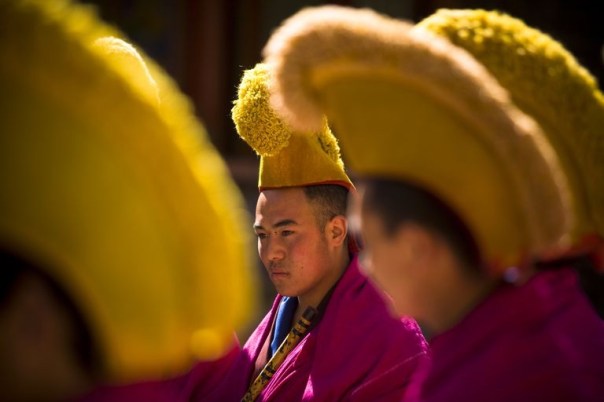
Gelug monks wear the yellow hats of their order during a formal ceremony. Jeff Hutchens / Getty Images
Gelugpa is best known in the West as the school of Tibetan Buddhism associated with His Holiness the Dalai Lama. In the 17th century, the Gelug (also spelled Geluk) school became the most powerful institution in Tibet, and it remained so until China took control of Tibet in the 1950s.

The story of Gelugpa begins with Tsongkhapa (1357-1419), a man from Amdo Province who began studying with a local Sakya lama at a very young age. At 16 he traveled to central Tibet, where the most renowned teachers and monasteries were located, to further his education.

Tsongkhapa did not study in any one place. He stayed in Kagyu monasteries learning Tibetan medicine, the practices of Mahamudra and the tantra yoga of Atisha. He studied philosophy in Sakya monasteries. He sought independent teachers with fresh ideas. He was particularly interested in the Madhyamika teachings of Nagarjuna.

In time, Tsongkhapa combined these teachings into a new approach to Buddhism. He explained his approach in two major works, Great Exposition of the Stages of the Path and Great Exposition of the Secret Mantra. Other of his teachings were collected in several volumes, 18 in all.

Through most of his adult life, Tsongkhapa traveled around Tibet, often living in camps with dozens of students. By the time Tsongkhapa had reached his 50s, the rugged lifestyle had taken a toll on his health. His admirers built him a new monastery on a mountain near Lhasa. The monastery was named “Ganden,” which means “joyful.” Tsongkhapa lived there only briefly before he died, however.

The Founding of Gelugpa

At the time of his death, Tsongkhapa and his students were considered to be part of the Sakya school. Then his disciples stepped up and built a new school of Tibetan Buddhism on Tsongkhapa’s teachings. They called the school “Gelug,” which means “the virtuous tradition.” Here are some of Tsongkhapa’s most prominent disciples:

Gyaltsab (1364-1431) is thought to have been first the abbot of Gendun after Tsongkhapa died. This made him the first Ganden Tripa, or throne-holder of Gendun. To this day the Ganden Tripa is the actual, official head of the Gelug school, not the Dalai Lama.

Jamchen Chojey (1355-1435) founded the great Sera monastery of Lhasa.

Khedrub (1385-1438) is credited with defending and promoting Tsongkhapa’s teachings throughout Tibet. He also began the tradition of high lamas of Gelug wearing yellow hats, to distinguish them from Sakya lamas, who wore red hats.

Gendun Drupa (1391-1474) founded the great monasteries of Drepung and Tashillhunpo, and during his life, he was among the most respected scholars in Tibet.

The Dalai Lama

A few years after Gendun Drupa died, a young boy of central Tibet was recognized as his tulku, or rebirth. Eventually, this boy, Gendun Gyatso (1475-1542) would serve as abbot of Drepung, Tashillhunpo, and Sera.

Sonam Gyatso (1543-1588) was recognized as the rebirth of Gendun Gyatso. This tulku became the spiritual adviser to a Mongol leader named Altan Khan. Altan Khan gave Gendun Gyatso the title “Dalai Lama,” meaning “ocean of wisdom.” Sonam Gyatso is considered to be the third Dalai Lama; his predecessors Gendun Drupa and Gendun Gyatso were named first and second Dalai Lama, posthumously.

These first Dalai Lamas had no political authority. It was Lobsang Gyatso, the “Great Fifth” Dalai Lama (1617-1682), who forged a fortuitous alliance with another Mongol leader, Gushi Khan, who conquered Tibet. Gushi Khan made Lobsang Gyatso the political and spiritual leader of the entire Tibetan people.

Under the Great Fifth a large part of another school of Tibetan Buddhism, Jonang, was absorbed into Gelugpa. The Jonang influence added Kalachakra teachings to Gelugpa. The Great Fifth also initiated the building of Potala Palace in Lhasa, which became the seat of both spiritual and political authority in Tibet.

Today many people think the Dalai Lamas held absolute power in Tibet as “god-kings,” but that is inaccurate. The Dalai Lamas who came after the Great Fifth was, for one reason or another, mostly figureheads who held little real power. For long stretches of time, various regents and military leaders were actually in charge.

Not until the 13th Dalai Lama, Thubten Gyatso (1876-1933), would another Dalai Lama function as a real head of government, and even he had limited authority to enact all the reforms he wished to bring to Tibet.

The current Dalai Lama is the 14th, His Holiness Tenzin Gyatso (born 1935). He was still an adolescent when China invaded Tibet in 1950. His Holiness has been exiled from Tibet since 1959. Recently he relinquished all political power over the Tibetan people in exile, in favor of a democratic, elected government.

The Panchen Lama

The second highest lama in Gelugpa is the Panchen Lama. The title Panchen Lama, meaning “great scholar,” was bestowed by the Fifth Dalai Lama on a tulku who was fourth in a lineage of rebirths, and so he became the 4th Panchen Lama.

The current Panchen Lama is the 11th. However, His Holiness Gedhun Choekyi Nyima (born 1989) and his family were taken into Chinese custody shortly after his recognition was made public in 1995. The Panchen Lama and his family have not been seen since. A pretender appointed by Beijing, Gyaltsen Norbu, has served as Panchen Lama in his place.

Gelugpa Today

The original Ganden monastery, Gelugpa’s spiritual home, was destroyed by Chinese troops during the 1959 Lhasa uprising. During the Cultural Revolution, the Red Guard came to finish whatever was left. Even the mummified body of Tsongkhapa was ordered burned, although a monk was able to recover a skull and some ashes. The Chinese government is rebuilding the monastery.

Meanwhile, exiled lamas re-established Ganden in Karnataka, India, and this monastery is now Gelugpa’s spiritual home. The current Ganden Tripa, the 102nd, is Thubten Nyima Lungtok Tenzin Norbu. (Ganden Tripas are not tulkus but are appointed to the position as adults.) The training of new generations of Gelugpa monks and nuns continues.

His Holiness the 14th Dalai Lama has lived in Dharamsala, India since he left Tibet in 1959. He has dedicated his life to teaching and to gain greater autonomy for Tibetans still under Chinese rule.

Reference

  • O’Brien, Barbara. “The Gelug School of Tibetan Buddhism.” Learn Religions, Feb. 11, 2020, learnreligions.com/the-gelug-school-of-tibetan-buddhism-449627.

Just A Slip Of The Tongue: A History Of Welsh Surnames; The Cornish Language; The Yorkshire Dialect

The History of Welsh Surnames

Have you ever wondered why there are so many Jones’ in a Welsh phonebook? In comparison to the plethora of surnames which appear in the History of England, the genealogy of Wales can prove extremely complex when trying to untangle completely unrelated individuals from a very small pool of names.

The limited range of Welsh surnames is due in large part to the ancient Welsh patronymic naming system, whereby a child took on the father’s given name as a surname. The family connection was illustrated by the prefix of ‘ap’ or ‘ab’ (a shortened version of the Welsh word for son, ‘mab’) or in the woman’s case ‘ferch’ (the Welsh for ‘daughter of’). Proving an added complication for historians this also meant that a family’s name would differ throughout the generations, although it wasn’t uncommon for an individual’s name to refer back to several generations of their family, with names such as Llewellyn ap Thomas ab Dafydd ap Evan ap Owen ap John being common place.

In the 1300s nearly 50 per cent of Welsh names were based on the patronymic naming system, in some areas 70 per cent of the population were named in accordance with this practice, although in North Wales it was also typical for place names to be incorporated, and in mid Wales nicknames were used as surnames.

It is thought that the patronymic naming system was introduced as a direct result of Welsh Law, which is alleged to have been formally introduced to the country by Hywel Dda (“Hywel the Good”), King of Wales from Prestatyn to Pembroke between 915AD and 950AD and often referred to as Cyfraith Hywel (the Law of Hywel). The law dictated that it was crucial for a person’s genealogical history to be widely known and recorded.

However, in the wake of the Protestant Reformation in Europe during the sixteenth and seventeenth centuries this was all set to change. Whilst the English Reformation resulted in part because of the religious and political movement affecting the Christian faith across most of Europe, it was largely based on government policy, namely Henry VIII’s desire for an annulment of his marriage to his first wife, Catherine of Aragon. Catherine had been unable to bear Henry a son and heir, so he feared a reprisal of the dynastic conflict suffered by England during the War of the Roses (1455-1485) in which his father, Henry VII eventually took the throne on 22 August 1485 as the first monarch of the House of Tudor.

Henry VIII and Catherine of Ar

Pope Clement VII’s refusal to annul Henry and Catherine’s marriage and leave Henry free to marry again, led to a series of events in the sixteenth century which culminated in the Church of England breaking away from the authority of the Roman Catholic Church. As a result Henry VII became Supreme Governor of the English Church and the Church of England became the established church of the nation, meaning doctrinal and legal disputes now rested with the monarch.

Although the last Welsh Prince of Wales, Llewellyn ap Gruffydd, had been killed during Edward I’s war of conquest in 1282, and Wales had faced English rule with the introduction of English-style counties and a Welsh gentry made up of Englishmen and native Welsh lords who were given English titles in exchange for loyalty to the English throne, Welsh Law still remained in force for many legal matters up until the reign of Henry VIII.

Henry VIII, whose family the Tudors were of welsh decent from the Welsh house of Tudur, had not previously seen a need to reform the Welsh Government during his time on the throne, but in 1535 and 1542, as a result of a supposed threat from the independent Welsh Marcher lords, Henry introduced the Laws in Wales Acts 1535-1542.

These laws meant that the Welsh legal system was completely absorbed into the English system under English Common Law and both the English Lords who had been granted Welsh land by Edward I and their native Welsh contemporaries became part of the English Peerage. As a result of this creation of a modern sovereign state of England, fixed surnames became hereditary amongst the Welsh gentry, a custom which was slowly to spread amongst the rest of the Welsh people, although the patronymic naming system could still be found in areas of rural Wales until the beginning of the nineteenth century.

The change from patronymic to fixed surnames meant the Welsh people had a limited stock of names to choose from, which was not helped by the decline in the number of baptismal names following the Protestant Reformation. Many of the new fixed surnames still incorporated the “ap” or ab to create new names such as Powell (taken from ap Hywel) and Bevan (taken from ab Evan). However, the most common method for creating surnames came from adding an ‘s’ to the end of a name, whereby the most common modern Welsh surnames such as Jones, Williams, Davies and Evans originated. In an effort to avoid confusion between unrelated individuals bearing the same name, the nineteenth century saw a rise in the number of double barrelled surnames in Wales, often using the mother’s maiden name as a prefix to the family name.

Whilst most Welsh surnames are now fixed family names which have been passed down through the generations there has been a resurgence of the patronymic naming system amongst those Welsh speakers keen to preserve a patriotic history of Wales. In the last decade, in a return to a more independent Wales, the Government of Wales Act 2006 saw the creation of the Welsh Assembly Government and delegation of power from Parliament to the Assembly, giving the Assembly the authority to create “Measures”, or Welsh Laws, for the first time in over 700 years. Although for the sake of the Welsh telephone book let’s hope the patronymic naming system doesn’t make a complete comeback!

The Cornish Language

This March 5th, mark St Piran’s Day, the national day of Cornwall, by wishing your neighbours “Lowen dydh sen Pyran!”.

According to the 2011 census data, there are 100 different languages spoken in England and Wales, ranging from the well known to almost forgotten. The census results show that 33 people on the Isle of Man said their main language was Manx Gaelic, a language officially recorded as extinct in 1974, and 58 people said Scottish Gaelic, spoken mainly in the Highlands and western Islands of Scotland. Over 562,000 people named Welsh as their main language.

Whilst many British people are aware of Welsh and Gaelic, few have heard of ‘Cornish’ as a separate language, despite the fact that on the census, as many as 557 people listed their main language as ‘Cornish’.

So why do the Cornish have their own language? To understand, we have to look at the history of this relatively remote, south western region of England.

Cornwall has long felt a closer affinity with the European Celtic nations than with the rest of England. Derived from the Brythonic languages, the Cornish language has common roots with both Breton and Welsh.

The words ‘Cornwall’ and ‘Cornish’ are derived from the Celtic Cornovii tribe who inhabited modern-day Cornwall prior to the Roman conquest. The Anglo-Saxon invasion of Britain in the 5th to 6th centuries pushed the Celts further to the western fringes of Great Britain. It was however the influx of Celtic Christian missionaries from Ireland and Wales in the 5th and 6th centuries that shaped the culture and faith of the early Cornish people.

These missionaries, many of whom were later venerated as saints, settled on the shores of Cornwall and began converting small groups of local people to Christianity. Their names live on today in Cornish place names, and over 200 ancient churches are dedicated to them.

The Cornish were often at war with the West Saxons, who referred to them as the Westwalas (West Welsh) or Cornwalas (the Cornish). This continued until 936, when King Athelstan of England declared the River Tamar the formal boundary between the two, effectively making Cornwall one of the last retreats of the Britons, thus encouraging the development of a distinct Cornish identity. (Pictured right: Anglo-Saxon warrior)

Throughout the Middle Ages, the Cornish were seen as a separate race or nation, distinct from their neighbours, with their own language, society and customs. The unsuccessful Cornish Rebellion of 1497 illustrates the Cornish feeling of ‘being separate’ from the rest of England.

During the early years of the new Tudor dynasty, the pretender Perkin Warbeck (who declared himself to be Richard, Duke of York, one of the Princes in the Tower), was threatening King Henry VII’s crown. With the support of the King of Scots, Warbeck invaded the north of England. The Cornish were asked to contribute to a tax to pay for the King’s campaign in the north. They refused to pay, as they considered the campaign had little to do with Cornwall. The rebels set out from Bodmin in May 1497, reaching the outskirts of London on June 16th. Some 15,000 rebels faced Henry VII’s army at the Battle of Blackheath; around 1,000 of the rebels were killed and their leaders put to death.

The Prayer Book Rebellion against the Act of Uniformity of 1549 was another example of the Cornish standing up for their culture and language. The Act of Uniformity outlawed all languages except English from Church services. The rebels declared that they wanted a return to the old religious services and practices, as some Cornishmen did not understand English. Over 4,000 people in the South West of England protested and were massacred by King Edward VI’s army at Fenny Bridges, near Honiton. This spread of English into the religious lives of the Cornish people is seen as one of the main factors in the demise of Cornish as the common language of the Cornish people.

As the Cornish language disappeared, so the people of Cornwall underwent a process of English assimilation.

However a Celtic revival which started in the early 20th century has revitalised the Cornish language and the Cornish Celtic heritage. An increasing number of people are now studying the language. Cornish is taught in many schools and there is a weekly bilingual programme on BBC Radio Cornwall. In 2002 the Cornish language was granted official recognition under the European Charter for Regional or Minority Languages.

The Cornish language even appears in the film and the book, Legends of the Fall by American author Jim Harrison, which depicts the lives of a Cornish American family in the early 20th century.

Here are a few examples of everyday phrases in Cornish:

Good Morning: “Metten daa”

Good Evening: “Gothewhar daa”

Hello: “You”

Goodbye: “Anowre”

Yorkshire Dialect

Did you know that August 1st is Yorkshire Day? To celebrate, we thought we’d share some great Yorkshire words and phrases with you.

Much of the Yorkshire dialect has its roots in Old English and Old Norse, and is called Broad Yorkshire or Tyke. Rather confusingly, someone born and bred in Yorkshire is also called a tyke.

Examples of the Yorkshire dialect can be found in literary works such as ‘Wuthering Heights’ by Emily Bronte and Charles Dickens’ novel ‘Nicholas Nickleby’. The reader will notice that in Broad Yorkshire, ‘ye’, ‘thee’ and ‘thou’ are used instead of ‘you’ and the word ‘the’ is shortened to t’.

Many people not from God’s Own County will consider the Yorkshire dialect as, shall we say, a little lugubrious. Indeed the words do seem to lend themselves to a Les Dawson-style of delivery.

‘Owt and Nowt

Two words used a lot in Yorkshire, meaning something and nothing. They are traditionally pronounced to rhyme with ‘oat’ rather than ‘out’, for example ‘Yah gooid fur nowt’ (you’re good for nothing). The old Yorkshire expression, “If there’s owt for nowt, I’ll be there with a barrow” would seem to bear out the impression that some people have of Yorkshire people, that they are careful, or tight, with their money. As the ‘Yorkshireman’s Motto’ goes:

‘Ear all, see all, say nowt;

Eat all, sup all, pay nowt;

And if ivver tha does owt fer nowt –

Allus do it fer thissen.

(Hear all, see all, say nothing; eat all, drink all, pay nothing, and if ever you do something for nothing, always do it for yourself).

‘Appen

This word will be very familiar to fans of Emmerdale, as a favourite utterance by most of the characters in the early days of the soap, in particular Amos Brealry and Annie Sugden. It means ‘perhaps’ or ‘possibly’ and is often preceded by ‘Aye’(yes) as in ‘Aye, ‘appen’. Other useful Yorkshire phrases include ‘Appen that’s it’ (that’s possibly true) and ‘Appen as not an maybe’ (you’re probably right).

‘Eee by gum

No, this isn’t just gibberish, it does actually mean something, although there is no direct translation. It means something like ‘Gosh!’, ‘Cor’, ‘Oh my God’ or ‘By gum’.

Nah then

This is often heard when friends greet each other and is used like a casual ‘hello’ or ‘hi’. Another way to say hello in Yorkshire would be ‘Eh up’.

Middlin’, Nobbut Middlin’, Fair t’ Middlin’

Again, these are expressions with no exact translation. Often heard in response to the question ‘Ow do’ (How are you), ‘middlin’ or ‘fair t’middlin’ would mean ’I’m ok’. ‘Nobbut middlin’ means less than middlin’, so more like ‘just alright’.

Middlin’ is not to be confused with middin which refers to a muck heap, rubbish heap or even the outside loo!

So for example:

Nah then,’ow do? – Nobbut middlin’.

Now you’re fluent in Yorkshire!

Reference