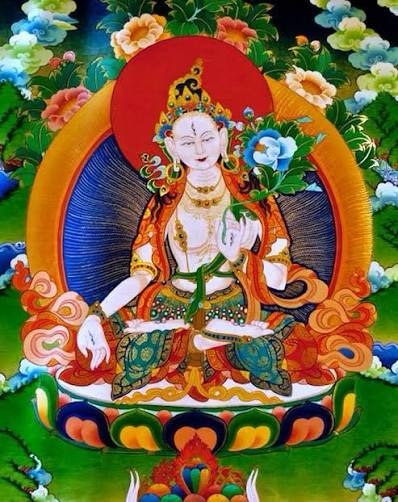
Among the most beloved and widely revered figures in Buddhist spirituality is Tara, the compassionate female bodhisattva who embodies enlightened wisdom, protection, and liberation from suffering. Worshipped throughout Tibet, Nepal, Bhutan, Mongolia, India, and increasingly throughout the Western world, Tara represents the active expression of compassion and serves as a guide for practitioners seeking enlightenment.
Known as the “Mother of Liberation” and the “Mother of all Buddhas,” Tara occupies a unique position within Buddhist tradition. While many Buddhist figures are depicted as male, Tara stands as one of the most important feminine embodiments of enlightenment. Her numerous manifestations, often referred to as the Twenty-One Taras, symbolize different aspects of compassion, wisdom, healing, protection, and spiritual accomplishment.
This article explores the origins of Tara, her significance within Buddhism, and the various incarnations through which she manifests to assist sentient beings.
The Origins of Tara
The origins of Tara are found primarily within Mahayana and Vajrayana Buddhism. Historical evidence suggests that devotion to Tara emerged in India between the sixth and eighth centuries CE. Over time, her cult spread throughout the Himalayan regions and became especially important within Tibetan Buddhism.
According to one popular legend, Tara was originally a princess named Yeshe Dawa, meaning “Moon of Primordial Wisdom.” She lived countless ages ago and dedicated herself to spiritual practice. Monks encouraged her to pray for rebirth as a man so she could more easily attain Buddhahood. In response, she rejected the notion that enlightenment was limited by gender.
She declared:
“There is no male, there is no female, there is no self, no person, and no consciousness. These labels have no ultimate validity.”
She vowed to attain enlightenment in female form and to continue helping beings as a woman throughout all future lifetimes. This vow established Tara as a powerful symbol of spiritual equality and feminine wisdom.
Another tradition describes Tara as emerging from a tear shed by the Bodhisattva of Compassion, Avalokiteshvara. Seeing the immense suffering of sentient beings, Avalokiteshvara wept. From one tear arose a sacred lake, and from the lake appeared Tara, who promised to assist him in liberating all beings from suffering.
These stories illustrate Tara’s essential nature: compassion transformed into action.
The Meaning of Tara
The Sanskrit word “Tara” means “Star” or “She Who Ferries Across.” Much like a star guides travelers through darkness, Tara guides beings across the ocean of suffering and ignorance toward enlightenment.
She is often regarded as a savior figure who protects devotees from physical dangers, emotional turmoil, spiritual obstacles, and negative karmic influences.
In Buddhist philosophy, Tara symbolizes:
- Compassion in action
- Wisdom and insight
- Protection from fear
- Swift assistance
- Liberation from suffering
- Feminine enlightenment
- Courage and fearlessness
Unlike some deities who appear distant or majestic, Tara is often portrayed as approachable and ready to respond immediately to sincere prayers.
Her posture reflects this readiness. In many depictions, one leg remains folded in meditation while the other extends forward, indicating her willingness to rise instantly and help those in need.
Tara and the Feminine Principle
One of Tara’s most important roles is her embodiment of the feminine principle within Buddhism.
In Vajrayana Buddhism, wisdom and compassion are often represented through complementary masculine and feminine energies. Tara embodies enlightened wisdom while simultaneously expressing boundless compassion.
Her prominence challenges misconceptions that Buddhism is exclusively male-oriented. Tara demonstrates that enlightenment transcends gender and that feminine qualities such as nurturing, intuition, receptivity, and compassion possess profound spiritual power.
For many women practitioners, Tara serves as an empowering figure who confirms the equal potential of women to achieve complete enlightenment.
Green Tara: The Most Popular Manifestation
Green Tara is perhaps the most widely recognized form of Tara.
She represents active compassion and immediate assistance. Green symbolizes vitality, growth, action, and enlightened activity.
Green Tara is often depicted seated on a lotus throne with her right foot extended outward, signifying her readiness to help beings at a moment’s notice.
Practitioners invoke Green Tara for:
- Protection from fear
- Removal of obstacles
- Safe travel
- Guidance during difficult circumstances
- Spiritual progress
One of the most famous prayers associated with her is the Green Tara mantra:
Om Tare Tuttare Ture Soha
This mantra is believed to invoke Tara’s blessings, protection, and compassionate presence.
Green Tara is often described as liberating beings from the “Eight Great Fears,” including pride, ignorance, anger, envy, attachment, wrong views, greed, and doubt.
White Tara: The Mother of Compassion
White Tara represents purity, healing, longevity, and maternal compassion.
She is usually depicted with seven eyes—two normal eyes, one on her forehead, and one in each palm and sole. These eyes symbolize her ability to perceive suffering throughout the universe.
White Tara is frequently invoked for:
- Healing illness
- Extending life
- Developing compassion
- Inner peace
- Spiritual maturity
Many Tibetan practitioners perform White Tara practices to cultivate longevity and support recovery from physical and emotional suffering.
Her calm and peaceful appearance reflects the nurturing and protective aspects of enlightened wisdom.
The Twenty-One Taras
Although Green and White Tara are the most widely known, Buddhist tradition recognizes twenty-one principal forms of Tara.
Each manifestation expresses a unique enlightened quality and serves specific spiritual purposes.
Among the most notable are:
Red Tara
Red Tara symbolizes magnetizing power, love, compassion, and spiritual attraction.
She helps practitioners attract positive conditions, beneficial relationships, and spiritual opportunities.
Red Tara transforms desire into wisdom rather than suppressing it.
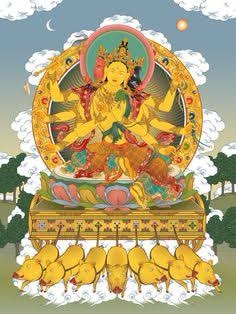
Yellow Tara
Yellow Tara is associated with abundance, prosperity, merit, and generosity.
She assists practitioners in overcoming poverty and developing a healthy relationship with material resources.
Yellow Tara reminds followers that wealth can become a tool for compassion and service.
Blue Tara
Blue Tara embodies fierce compassion and transformative power.
Her wrathful appearance is not an expression of anger but rather the energetic destruction of ignorance, hatred, and spiritual obstacles.
Blue Tara helps practitioners confront fears and break through deeply rooted negative patterns.
Black Tara
Black Tara is a protective manifestation who guards against harmful influences and negative energies.
She represents the fierce determination necessary to overcome adversity and defend the Dharma.
Golden Tara
Golden Tara symbolizes spiritual wealth, wisdom, and enlightened prosperity.
She is associated with generosity and the accumulation of merit through virtuous actions.

Tara and the Eight Great Fears
A recurring theme in Tara devotion is her protection from the Eight Great Fears.
Historically these included physical dangers such as:
- Lions
- Elephants
- Fire
- Snakes
- Robbers
- Imprisonment
- Floods
- Demons
However, Buddhist teachers interpret these symbolically as representing inner psychological obstacles.
For example:
- Lions symbolize pride.
- Elephants symbolize ignorance.
- Fire symbolizes anger.
- Snakes symbolize jealousy.
- Robbers symbolize false views.
- Floods symbolize attachment.
- Imprisonment symbolizes greed.
- Demons symbolize doubt.
Through Tara practice, practitioners learn to overcome these internal enemies and cultivate wisdom.
Tara in Tibetan Buddhism
Tara occupies an especially prominent position within Tibetan Buddhism.
All major Tibetan schools—including the Gelug School, Kagyu School, Nyingma School, and Sakya School—maintain Tara practices.
Daily Tara prayers are common among monks, nuns, and lay practitioners alike.
Many Tibetans begin each day by reciting praises to Tara and chanting her mantra.
Numerous revered masters have emphasized Tara practice, including Atisha, whose devotion helped spread Tara worship throughout Tibet during the eleventh century.
Today, Tara remains one of the most frequently invoked deities in Tibetan Buddhist ritual and meditation.
Tara as a Meditation Practice
Tara is not simply an object of worship but also a profound meditative focus.
In Vajrayana Buddhism, practitioners visualize Tara seated before them or imagine themselves embodying Tara’s enlightened qualities.
Through visualization, mantra recitation, and contemplation, practitioners seek to cultivate:
- Compassion
- Fearlessness
- Wisdom
- Patience
- Loving-kindness
- Spiritual confidence
The goal is not merely to receive Tara’s blessings but ultimately to recognize that Tara’s enlightened qualities already exist within one’s own mind.
In this sense, Tara serves as a mirror reflecting humanity’s innate Buddha nature.
Tara in the Modern World
In recent decades, Tara has become increasingly popular among Western Buddhists and spiritual seekers.
Many people are drawn to her because she combines compassion with empowerment. She is both gentle and strong, peaceful and active, nurturing and fearless.
Tara’s message remains deeply relevant in the modern world. Her teachings encourage individuals to face fear with courage, meet suffering with compassion, and transform obstacles into opportunities for growth.
For women especially, Tara provides a powerful spiritual role model whose enlightenment is inseparable from her feminine identity.
Her enduring popularity demonstrates the universal appeal of compassion expressed through action.
Conclusion
Tara stands among Buddhism’s most inspiring and beloved figures. Whether appearing as Green Tara, White Tara, Red Tara, Blue Tara, Yellow Tara, or one of her many other manifestations, she embodies the compassionate determination to alleviate suffering wherever it exists.
Her name, meaning “She Who Ferries Across,” captures her essential purpose: guiding beings across the turbulent waters of fear, ignorance, and attachment toward the shore of enlightenment.
The many incarnations of Tara are not separate deities but diverse expressions of a single enlightened reality. Each manifestation addresses different human needs while pointing toward the same ultimate truth—that wisdom and compassion are inseparable.
For more than a thousand years, Tara has inspired countless practitioners to cultivate courage, kindness, and spiritual awakening. Her enduring presence within Buddhism serves as a reminder that enlightenment is not distant or unattainable. Like Tara herself, it is always ready to arise in response to the suffering of the world.
In the words of countless devotees throughout the centuries, Tara remains the swift and compassionate mother who hears the cries of all beings and responds with boundless love.
Tim Alderman ©️ 2026

