Few items of clothing have become as instantly recognizable as the Speedo swim brief. Around the world it is known by many names: racing brief, swim brief, budgie smugglers, banana hammock, racing trunks, and simply “Speedos.” Loved, ridiculed, admired, and occasionally banned, the garment has become one of the most iconic pieces of sporting apparel ever created.
For nearly a century, the Speedo swim brief has been at the centre of changing attitudes toward sport, body image, masculinity, fashion, and public decency. It has clothed Olympic champions, lifesavers, beachgoers, bodybuilders, and generations of Australian men. At various times it has been regarded as daring, revolutionary, athletic, sexy, practical, and hopelessly unfashionable.
Its story is inseparable from Australia’s beach culture and from the evolution of competitive swimming itself.
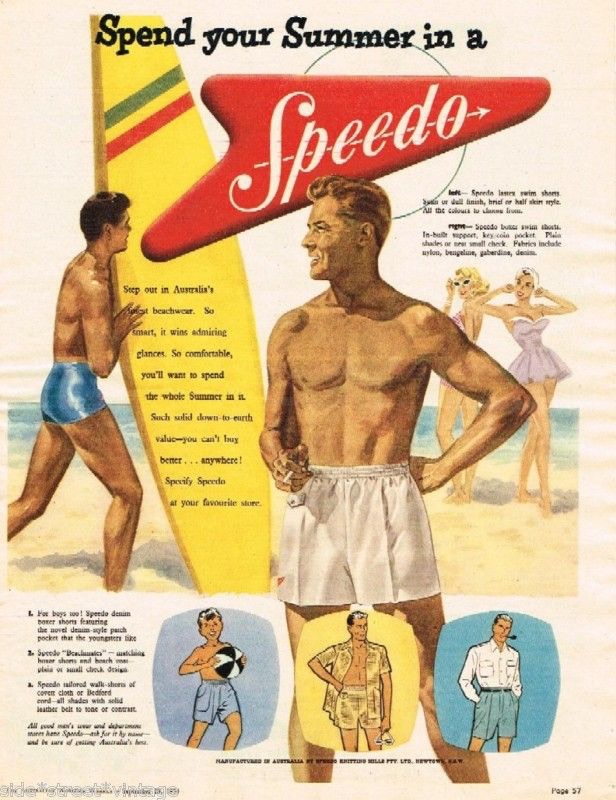
Before Speedo: Swimming in the Age of Modesty
In the nineteenth century, swimming attire looked nothing like modern swimwear.
Men often swam in woollen garments that resembled short-sleeved one-piece suits. These costumes were heavy, restrictive, and became even heavier when soaked with water.
Social attitudes demanded modesty. In many places, exposing too much skin was considered inappropriate or even illegal.
By the early twentieth century, men’s swimwear had evolved into sleeveless tank-style suits that still covered much of the torso and upper thighs.
Competitive swimmers increasingly complained that these garments restricted movement and created drag in the water.
The stage was set for change.
The Birth of Speedo
The company that would become synonymous with modern swimwear began in Sydney in 1914.
Founded by Scottish immigrant Alexander MacRae, the business originally manufactured hosiery and underwear.
The company later became known as Speedo Australia.
During the 1920s and 1930s, the popularity of swimming and beach culture exploded across Australia.
Australians embraced outdoor recreation, and beaches became central to national identity.
MacRae’s company began developing lighter, more comfortable swimwear that allowed greater freedom of movement.
The Racerback Revolution
One of Speedo’s earliest breakthroughs came in 1928 with the introduction of the “Racerback” swimsuit.
Although designed primarily for competitive swimmers, it represented a major departure from earlier swimwear.
The suit exposed more of the shoulders and back than previous designs.
Traditionalists were shocked.
Some regarded the garment as scandalously revealing.
Yet swimmers loved it because it improved performance.
The controversy surrounding the Racerback established a pattern that would repeat throughout Speedo’s history: every reduction in fabric generated public debate.

The Arrival of the Swim Brief
By the middle of the twentieth century, swimwear manufacturers increasingly experimented with shorter designs.
Competitive swimmers demanded garments that reduced drag while maximizing freedom of movement.
The swim brief gradually emerged as the logical solution.
Unlike traditional trunks, the brief hugged the body closely and eliminated excess material.
Its advantages were obvious:
Reduced water resistance
Improved mobility
Faster drying
Greater comfort during racing
Enhanced freedom of movement
For athletes, performance mattered more than modesty.
The Olympic Connection
The growth of the Speedo brief became closely tied to Olympic swimming.
Throughout the 1950s and 1960s, elite swimmers increasingly adopted streamlined briefs.
Television broadcasts brought competitive swimming into homes around the world.
Viewers became accustomed to seeing world champions wearing little more than a close-fitting brief.
The association between Speedo and athletic excellence became firmly established.
Olympic medals helped sell swimwear.
The message was simple: champions wore Speedos.

Australia’s Beach Culture
No discussion of the Speedo brief is complete without understanding Australian beach culture.
Australia’s climate, coastline, and outdoor lifestyle created an environment unlike almost anywhere else.
For much of the twentieth century, Australian beaches were dominated by practical swimwear rather than fashion-driven alternatives.
The swim brief became almost a national uniform.
It was worn by:
Lifesavers
Swimmers
Divers
Water polo players
Surfers during training
Beachgoers of all ages
For generations of Australian men, wearing a Speedo attracted little attention.
It was simply what people wore.
The Lifesaving Connection
Australia’s surf lifesaving movement played a major role in popularizing the brief.
Members of organizations such as the Surf Life Saving Australia required practical swimwear that allowed unrestricted movement.
The brief proved ideal.
It stayed secure in rough surf and provided minimal drag while swimming.
Images of bronzed lifesavers in red or navy briefs became iconic representations of Australian masculinity.
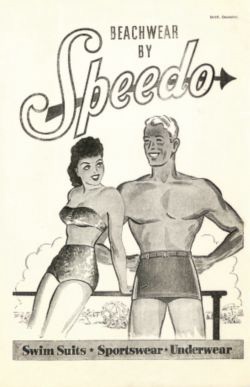
The International Divide
While Australia embraced the swim brief, other countries gradually moved in different directions.
In Europe, particularly around the Mediterranean, briefs remained popular.
However, in North America during the 1980s and 1990s, longer board shorts and baggy trunks became increasingly fashionable.
Cultural attitudes shifted.
Many younger men became self-conscious about wearing revealing swimwear.
As a result, the Speedo brief became associated more strongly with athletes, European beach culture, and Australia.
The garment’s practical advantages remained unchanged, but fashion trends had shifted.
The Rise of the “Budgie Smuggler”
Australia’s most famous nickname for the swim brief emerged in the late twentieth century.
The term “budgie smuggler” humorously suggests someone concealing a small bird inside their swimwear.
The phrase quickly entered Australian slang.
Unlike many fashion terms, it reflected Australia’s tendency to treat itself with humour and irreverence.
The nickname transformed what might otherwise have been an ordinary garment into a uniquely Australian cultural icon.
Even politicians, celebrities, and sports stars have found themselves photographed in budgie smugglers.
Body Image and Masculinity
The swim brief has always occupied a unique place in discussions about masculinity.
Unlike loose swim trunks, briefs reveal the shape and contours of the body.
This visibility has generated both admiration and anxiety.
At various times the garment has symbolized:
Athletic achievement
Physical confidence
Youthfulness
Body consciousness
Masculinity
Critics sometimes dismissed the brief as too revealing.
Supporters argued that it simply displayed the human body in a natural and practical way.
The debate continues today.
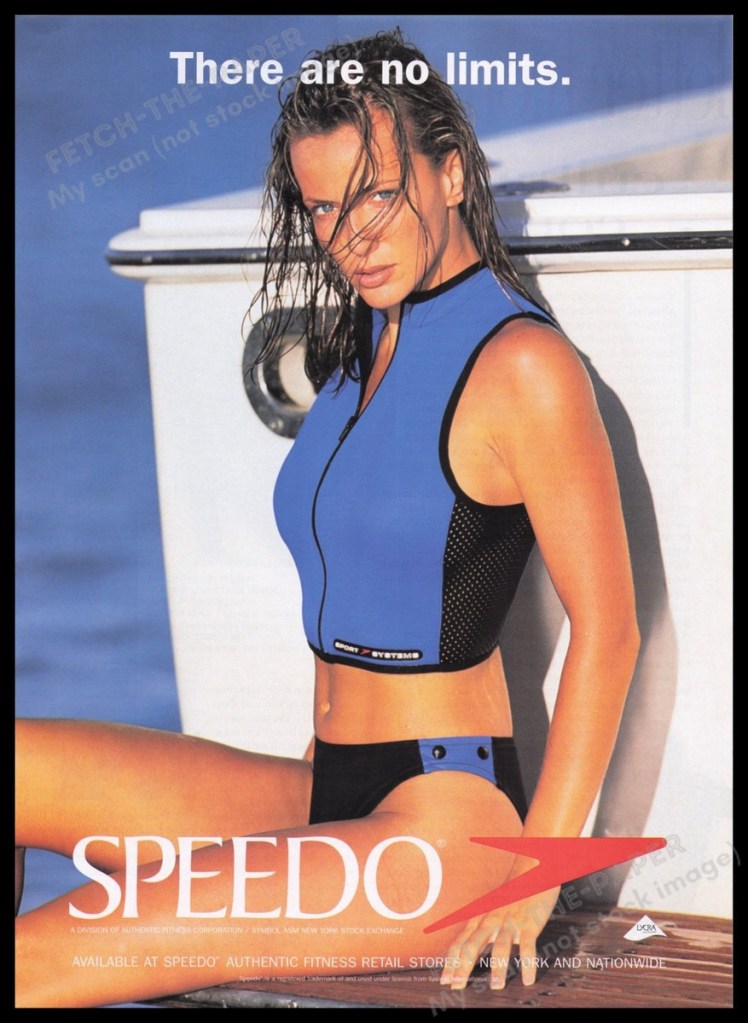
Competitive Swimming’s Choice
Despite changing fashions, competitive swimmers never abandoned the swim brief.
Elite athletes prioritize performance above all else.
The brief remains advantageous because it:
Creates minimal drag
Allows unrestricted kicking
Stays secure during racing
Reduces water retention
Although technological racing suits emerged in the late twentieth century, the swim brief remains a staple of training and competition.
Many swimmers continue to regard it as the most efficient swimwear ever designed.
The High-Tech Era
The late twentieth and early twenty-first centuries saw dramatic advances in swimwear technology.
Manufacturers developed fabrics that:
Reduced drag
Improved hydrodynamics
Dried rapidly
Resisted chlorine damage
Speedo became a leader in performance swimwear innovation.
Its advanced racing suits generated considerable controversy, particularly during the era of polyurethane-enhanced competition suits.
However, the classic swim brief remained part of the company’s identity.
Even as technology evolved, the traditional brief endured.
Popular Culture and Celebrity
The Speedo brief has enjoyed an extraordinary presence in popular culture.
Actors, athletes, models, and entertainers have all contributed to its image.
Some embraced it as a symbol of confidence.
Others became subjects of humour.
Unlike many garments, the Speedo brief rarely goes unnoticed.
It attracts attention precisely because it leaves little to the imagination while remaining entirely within the bounds of ordinary swimwear.
Fashion’s Cycles
Fashion trends have repeatedly declared the swim brief obsolete.
Yet each prediction has proven premature.
Periods of popularity have alternated with periods of decline.
In recent years, younger generations have shown renewed interest in classic swim briefs.
Part of this revival reflects broader trends toward vintage fashion and body positivity.
Many consumers appreciate the garment’s simplicity and functionality.
Why Men Still Wear Them
Despite countless alternatives, many men continue choosing swim briefs.
Common reasons include:
Comfort
Performance
Freedom of movement
Faster drying
Minimal tan lines
Athletic tradition
For swimmers and serious beachgoers, these practical advantages often outweigh concerns about fashion.
The brief remains one of the most efficient forms of swimwear ever invented.
Beyond the Stereotypes
The Speedo brief is often stereotyped as something worn only by athletes, bodybuilders, or older beachgoers.
The reality is far more diverse.
Men of all ages and body types continue wearing swim briefs around the world.
In countries such as Australia, Italy, Spain, France, and Brazil, they remain commonplace.
What one culture considers daring, another regards as entirely ordinary.
The garment’s reception often says more about cultural attitudes than about the swimwear itself.
The Enduring Legacy
Few pieces of sporting apparel have had the global influence of the Speedo swim brief.
Born from the practical needs of swimmers, it became a symbol of athletic performance, Australian beach culture, and changing social attitudes toward the male body.
Its design has remained remarkably consistent because its fundamental purpose has never changed.
It allows swimmers to move through water with maximum efficiency and minimum restriction.
That simple objective explains why, despite decades of fashion trends, jokes, and controversy, the Speedo brief continues to survive.
The history of the Speedo swim brief is ultimately a story of function triumphing over fashion.
From Sydney’s beaches to Olympic swimming pools, from surf lifesaving clubs to Mediterranean resorts, the brief has endured because it works.
It has challenged social conventions, sparked debates about modesty, and become one of Australia’s most recognizable contributions to global sporting culture.
Whether known as a racing brief, a Speedo, or a budgie smuggler, it remains one of the most iconic garments ever worn by men.
Nearly a century after its rise to prominence, the Speedo swim brief continues to do exactly what it was designed to do: help people move through the water as efficiently as possible, while carrying a cultural legacy far larger than the small amount of fabric from which it is made.
Tim Alderman ©️ 2026

