The plight of the Rohingya people has become one of the most significant humanitarian crises of the twenty-first century. Hundreds of thousands of Rohingya Muslims have fled violence in western Myanmar, particularly since 2017, seeking refuge in neighboring Bangladesh and beyond. Images of burned villages, overcrowded refugee camps, and desperate families crossing rivers and borders have drawn global attention.
Yet the Rohingya crisis presents a difficult paradox for many observers. Myanmar is a predominantly Buddhist nation, and Buddhism is often associated with compassion, nonviolence, and tolerance. How, then, did a conflict emerge in which Buddhist nationalism became intertwined with discrimination, persecution, and mass displacement?
The answer lies not in Buddhism itself, but in a complex mixture of history, colonialism, ethnic identity, politics, nationalism, and fear. The clash between the Rohingya and sections of Myanmar’s Buddhist majority is a story that stretches back centuries and cannot be understood through simplistic explanations.
Who Are the Rohingya?
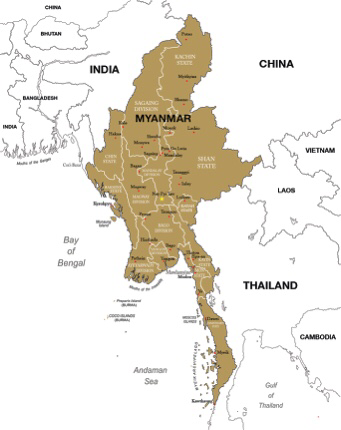
The Rohingya are a predominantly Muslim ethnic group who have lived for generations in the coastal region of Rakhine State, formerly known as Arakan, in western Myanmar.
The Rohingya trace their roots to a diverse mixture of peoples who settled in the region over centuries. Arab traders, Persian merchants, Bengali settlers, and local inhabitants all contributed to the cultural landscape of Arakan. Historical records indicate that Muslims were present in the area as early as the ninth century.
Today, most Rohingya speak a language closely related to the Chittagonian dialect spoken in neighboring Bangladesh. They maintain their own cultural traditions, religious practices, and social customs distinct from Myanmar’s Buddhist majority.
The Myanmar government, however, has long disputed the Rohingya’s claim to indigenous status. Officially, they are often referred to as “Bengalis,” implying that they are illegal immigrants from Bangladesh rather than a native ethnic group.
This disagreement over identity lies at the heart of the conflict.
The Historical Kingdom of Arakan
To understand the Rohingya issue, it is necessary to examine the history of Arakan.
For centuries, Arakan existed as an independent kingdom situated between South Asia and Southeast Asia. Its strategic location on the Bay of Bengal encouraged extensive trade and cultural exchange.
The kingdom’s rulers were Buddhist, but Muslim influence was also significant. Muslim officials served in royal courts, Islamic scholars lived in the region, and trade connections linked Arakan with the wider Muslim world.
This created a society in which Buddhist and Muslim communities coexisted, though not always peacefully.
In 1784, the Burmese kingdom conquered Arakan. The invasion caused massive upheaval, with many inhabitants fleeing to Bengal. This marked the beginning of a long period of political instability.
British Colonial Rule
The modern roots of the Rohingya conflict emerged during British colonial rule.
Following the First Anglo-Burmese War in 1826, Arakan became part of British-controlled Burma. Because Burma and India were administered as parts of the same colonial empire, migration across borders became relatively unrestricted.
Large numbers of laborers moved from Bengal into Arakan. Some were seasonal workers, while others settled permanently.
To local Buddhists, this migration altered the demographic balance of the region. Many Rakhine Buddhists viewed the newcomers as competitors for land, employment, and political influence.
The British administration often favored minority groups and immigrant communities for economic development, creating resentment among indigenous populations.
These tensions simmered for decades and intensified during the twentieth century.
World War II and Growing Hostility
The Second World War deepened divisions between Buddhists and Muslims in Arakan.
When Japanese forces invaded Burma in 1942, local communities aligned with different sides. Many Burmese nationalists supported Japan because they viewed the Japanese as liberators from British colonial rule.
Many Rohingya Muslims, however, remained loyal to the British.
The result was brutal communal violence. Buddhist and Muslim militias attacked one another, villages were destroyed, and thousands of civilians were killed.
The violence left deep scars that continued long after the war ended.
For many Rakhine Buddhists, memories of wartime atrocities reinforced perceptions of Muslims as outsiders and threats. For Rohingya communities, the violence became evidence of longstanding persecution.
Independence and Citizenship Questions
When Burma gained independence in 1948, questions immediately arose regarding who belonged in the new nation.
The country contained dozens of ethnic groups, many with competing claims to autonomy and recognition.
Initially, some Rohingya were recognized as citizens and participated in political life. Rohingya representatives served in parliament, and Rohingya-language radio broadcasts were permitted.
However, political attitudes gradually shifted.
Military governments that came to power increasingly promoted a vision of national identity centered on Buddhism, Burmese culture, and recognized ethnic groups.
The Rohingya found themselves excluded from this definition.
The 1982 Citizenship Law
A major turning point occurred in 1982.
Myanmar enacted a citizenship law that recognized 135 official ethnic groups. The Rohingya were not among them.
Under the law, full citizenship required proof of ancestral residence dating back before 1823, the year before British colonial rule began.
Many Rohingya lacked the necessary documentation.
As a result, large numbers became effectively stateless.
Without citizenship, Rohingya faced restrictions on movement, education, employment, marriage, and political participation.
Human rights organizations widely regard the 1982 law as one of the principal legal mechanisms that institutionalized discrimination against the Rohingya.
Buddhism and National Identity
Understanding the conflict requires distinguishing Buddhism as a religion from Buddhist nationalism as a political ideology.
Buddhism teaches compassion, non-harm, generosity, and loving-kindness toward all beings. The teachings of Siddhartha Gautama emphasize overcoming hatred through wisdom and compassion.
However, throughout history, Buddhist societies—like societies influenced by every major religion—have sometimes become entangled with nationalism and political power.
In Myanmar, many Buddhists view Buddhism as central to national identity. Centuries of invasions, colonial rule, and military conflict fostered a belief that Buddhism required protection from external threats.
Some nationalist groups portrayed the growing Muslim population as a demographic and cultural danger.
This narrative became increasingly influential during periods of political uncertainty.
The Rise of Buddhist Nationalism
In the 2010s, Buddhist nationalist movements gained prominence.
One of the most controversial figures was Ashin Wirathu, a monk often described by international media as the face of militant Buddhist nationalism.
Wirathu and allied organizations warned that Islam threatened Myanmar’s Buddhist character. They promoted campaigns against interfaith marriage, Muslim businesses, and perceived Islamic influence.
Supporters argued they were protecting Buddhism and national culture.
Critics accused them of spreading fear, misinformation, and religious intolerance.
It is important to note that many Buddhist monks and organizations rejected such views and actively advocated for peace, dialogue, and protection of minority rights.
The Buddhist community in Myanmar has never been monolithic.
Violence in Rakhine State
Communal violence erupted repeatedly during the 2010s.
In 2012, clashes between Rakhine Buddhists and Rohingya Muslims resulted in widespread destruction and displacement.
Thousands of homes were burned.
Entire communities became segregated.
Many Rohingya were confined to camps with limited freedom of movement.
The situation deteriorated further in subsequent years.
International observers increasingly warned that the conditions resembled apartheid-like segregation.
The 2017 Crisis
The most dramatic escalation occurred in August 2017.
The Rohingya militant group known as the Arakan Rohingya Salvation Army launched coordinated attacks on police posts and security installations.
Myanmar’s military responded with what it described as a counterinsurgency operation.
The scale of the response shocked the world.
Villages were burned, civilians were killed, and reports emerged of mass atrocities including rape, torture, and executions.
More than 700,000 Rohingya fled to Bangladesh within months.
The refugee influx became one of the largest and fastest population movements in recent history.
The United Nations described the campaign as a “textbook example of ethnic cleansing.”
Numerous human rights organizations documented evidence suggesting crimes against humanity and possible genocide.
Myanmar’s military denied many of the allegations and argued that its actions were directed against insurgents.
The Role of the International Community
The Rohingya crisis generated widespread international condemnation.
The United Nations launched investigations and humanitarian operations.
International courts became involved in examining allegations of genocide and crimes against humanity.
Countries around the world imposed sanctions on senior Myanmar military leaders.
Humanitarian agencies provided assistance to refugees living in enormous camps near the Bangladeshi city of Cox’s Bazar.
Despite these efforts, long-term solutions have remained elusive.
The Position of the Dalai Lama
The crisis prompted responses from prominent Buddhist leaders worldwide.
Tenzin Gyatso expressed sympathy for the Rohingya and repeatedly emphasized Buddhist teachings of compassion and nonviolence.
He urged Buddhists to remember that the Buddha would help suffering people regardless of their religion or ethnicity.
His statements reflected a broader view among many Buddhist leaders that violence against civilians contradicts fundamental Buddhist principles.
Refugee Life
Today, most Rohingya refugees remain displaced.
Large populations continue to live in camps in Bangladesh.
Life in the camps is challenging.
Residents face overcrowding, limited employment opportunities, vulnerability to natural disasters, and uncertain futures.
Many children have spent most or all of their lives in refugee settlements.
Opportunities for education and economic advancement remain restricted.
Efforts to repatriate refugees to Myanmar have repeatedly stalled because many Rohingya fear returning without guarantees of citizenship, security, and basic rights.
Is This a Clash Between Buddhism and Islam?
Many commentators caution against describing the Rohingya crisis simply as a conflict between Buddhism and Islam.
Religion is certainly part of the story, but it is not the whole story.
The conflict also involves:
Ethnic identity
Citizenship disputes
Colonial legacies
Competition over resources
Nationalism
Political power
Historical grievances
Security concerns
Many Buddhists oppose persecution of the Rohingya.
Many Muslims reject extremism and support peaceful coexistence.
Reducing the crisis to a religious confrontation risks overlooking the deeper structural and historical factors that have shaped events.
Lessons from the Rohingya Crisis
The Rohingya tragedy illustrates how questions of identity and belonging can become powerful sources of conflict.
When citizenship, ethnicity, religion, and national identity become tightly linked, minority groups may find themselves excluded from political and social life.
The crisis also demonstrates how fear and nationalism can override the ethical teachings of religious traditions. Buddhism’s principles of compassion and nonviolence remain widely respected around the world, yet political movements operating within Buddhist societies can sometimes diverge sharply from those ideals.
At the same time, the Rohingya experience highlights the importance of legal recognition, human rights protections, and inclusive citizenship policies in multicultural societies.
The conflict involving the Rohingya and sections of Myanmar’s Buddhist majority is one of the most complex and tragic disputes in modern Asia. Its roots stretch across centuries of migration, colonial rule, war, nationalism, and competing historical narratives.
While Buddhism itself teaches compassion, wisdom, and nonviolence, political movements that invoke Buddhist identity have at times contributed to hostility toward the Rohingya. The resulting crisis has left hundreds of thousands displaced, stateless, and uncertain about their future.
Understanding the Rohingya issue requires moving beyond simplistic assumptions about religion and examining the deeper historical, political, and social forces involved. Only by recognizing the humanity and dignity of all communities—Buddhist, Muslim, and otherwise—can meaningful reconciliation and lasting peace become possible.
Tim Alderman ©️ 2026