“Gay” is a great word. Here’s why: it rhymes with everything. Also, it’s brief. Therefore it should be no surprise that even before it meant “inverted sinner pervert homosexual” and still meant “happy.” What happened next was that gayness and happiness split up, but they’ve been getting back together ever since and are going strong. Look at our ancestors in gayness!
16 Vintage “Gay” Ads That Weren’t Actually About Gay People But Should Be Now
16.
which makes 4th of july a gay holiday
15.
the captain is actually waving goodbye to these girls who he hasn’t got a chance with anymore
14.
before R Family, there were these guys
13.
as we know it from watching ‘the real l word’!
12.
we go way back with beer
11.
if you know what haviland & riese vlog this line is from, you win a pony
10.
this teapot inspired the romi klinger hit track, “gay in LA”
9.
it’s a white tank top
8.
there are a lot of ways to look at this situation, i haven’t picked just one yet
7.
not as sweet as lesbian sex, but sweet
6.
but lately we’ve been really into these color-coded bandana things?
5.
it’s every straight girl’s favorite fantasy
4.
3.
this paint roller is detachable, p.s.
2.
every little girl’s dream, every parent’s nightmare
One doesn’t commonly associate the slogan “make love not war” with the U.S. military. Indeed, the United States military is feared and formidable precisely because it has proven so effective at conceptualizing clever and innovative ways to search, find and destroy, often with the simple push of a button.
However, in a departure from these hostile traditions, in 1994 the Wright Laboratory, part of the U.S. Air Force, produced a three page proposal for a “gay bomb”.
Documentation obtained by the Sunshine Project, an anti-biological weapons non-governmental organization, found that the Ohio-based Wright Lab requested a 6 year, $7.5 million grant to create a variety of non-lethal weapons. The bluntly titled project, called “Harassing, Annoying and ‘Bad Guy’ Identifying Chemicals” reads like a bawdy proposal penned by a Bond Villian- Auric Goldfinger perhaps?
It proposed a bomb “that contained a chemical that would cause enemy soldiers to become gay, and to have their units break down because all their soldiers became irresistibly attractive to one another”. While the laboratory also came up with similarly questionable ideas, such as bad-breath bombs, flatulence bombs and bombs designed to attract swarms of stinging insects to enemy combatants, one has to admit that the gay bomb is certainly the most novel.
The Pentagon maintains that the love affair with the gay bomb idea was brief. However, the Sunshine Project thinks the Pentagon doth protest too much, finding that they “submitted the proposal to the highest scientific review body in the country for them to consider”. Indeed, the proposal’s information was submitted to the National Academy of Sciences in 2002.
The Pentagon certainly admits giving the project consideration, releasing a statement affirming: “The department of defence is committed to identifying, researching and developing non-lethal weapons that will support our men and women in uniform.”
Nonetheless, the project never made it off the ground. But the question remains: how did they even come up with such an idea? Perhaps the best clue lies in the political climate at the time. When newly elected President Bill Clinton attempted to lift the ban on homosexuals in the military, there was a din of saber rattling, pitchfork sharpening and moral hand-wringing from the military brass.
The general consensus among many leaders of the military was touted by the Department of Defence, “Homosexuality is incompatible with military service.” And that allowing gay people in the military would pose a security risk and disrupt the needed order for the military to be effective.The resulting Don’t Ask Don’t Tell (later fully called Don’t Ask, Don’t Tell, Don’t Pursue, and Don’t Harass) compromise, which has since been struck down, was less than thrilling for the Pentagon at time.
In such a political climate, with rampant unfounded paranoia about gay people disrupting military discipline and morale, this project seems, notwithstanding its highly flawed premise, somewhat more understandable in terms of how they came up with the idea and why they believed it might be an effective weapon.
As to the science behind this military farce, while various companies, peddling scented sprays and rub-ons, find it expedient to claim that their product contains human pheromones which have an aphrodisiac effect, lab testing has lagged behind somewhat in actually confirming any of this. Admittedly, one section of the documents, entitled “New Discoveries Needed” acknowledges that, thus far, no such chemicals have been found to exist.
While the Gay Bomb project never became perhaps more than a pie in the sky dream of the Wright Lab, it has gained a second lease on life through news media, popular culture and even academia.
The news of this proposed weapon of mass de-lovin’ even spawned a musical, disappointingly entitled “Gay Bomb – The Musical”. Why they chose this title, as opposed to say “Brothers-in-Arms”, “Das Booty”, or “Saving Ryan’s Privates” is a mystery we may never solve…
For the attempt at making a gay bomb, the Wright Lab had the honor of winning the Ig Nobel Peace Prize in 2007. As the prize is organized by the Annals of Improbable Research, it seems to be an excellent home for the project, though perhaps a step down from the National Academy of Sciences.
Among other 2007 IG Nobel prize winners were Mayu Yamamoto (Chemistry), awarded for extracting vanilla flavour from cow dung, and Dan Meyer and Brian Witcombe, (Medicine) awarded for researching the side effects of swallowing swords. The levity of the event seemed lost on the gay bomb creators, however, who kept a straight face about the whole matter; they declined to attend the award ceremony to accept the prize personally. One hopes they were not insulted by this tongue-in-cheek gesture. After all, is all not fair in love and war?
A report released on Tuesday, July 18, found “a high degree of plausibility” that hundreds of boys at a prestigious Catholic boys’ choir in Germany were physically or sexually abused between 1945 and 1992. The choir was led at the time by Emeritus Pope Benedict XVI’s elder brother, Georg Ratzinger.
Just over a week ago – on July 10 – Cardinal George Pell, a top adviser to Pope Francis, returned to his native Australia to face criminal charges related to sexual assault. While the specific allegations and names of the accusers have not been made public, Cardinal Pell maintains that he has been a victim of “character assassination.” His case will be decided by an Australian court.
These are not the first times the Catholic Church has been rocked by charges of sexual abuse. While reforms in the Catholic Church in the United States have made it mandatory for priests to report instances of sexual abuse, there still remains much work to be done in the Catholic Church worldwide.
From my perspective as a Catholic scholar of religion, one of the challenges in tackling this issue is the hierarchy of the church itself. It is still difficult to hold high-ranking clerics responsible, either for the misdeeds of their subordinates or for the crimes that they may have committed themselves.
Church structure
At the top of the Catholic Church’s hierarchy is the pope. He is said to be the successor of the Apostle Peter, about whom Christ said, “You are Peter and on this rock I will build my church.” For Catholics, the pope is that “rock” that gives the church a firm foundation. The pope is considered to speak infallibly, “without error,” under specific conditions concerning doctrine and morals. But he is not infallible when it comes to personal judgment such as whom he chooses to get advice from.
Pope Francis speaks with two cardinals at the Vatican. Alessandro Bianchi/Reuters
Under the pope are bishops, who serve the pope as successors to the original 12 apostles who followed Jesus.
There are also cardinals, who are appointed by the pope, and only they can elect his successor. Cardinals also govern the church between papal elections. Cardinals rank higher than bishops, so not all bishops are cardinals. But now all cardinals are bishops, although in the past there have been exceptions. George Pell is both a bishop and a cardinal, as well as the third-ranking official at the Vatican.
The hierarchical structure of the Catholic Church resembles the military with its high level of administrative control. But the “church” in Catholic understanding is not just a bureaucratic body. It also is a sacred institution that is willed by God.
Priests and obedience
Male priests have the lowest rank in the formal hierarchy. When they are ordained, they take vows of chastity, poverty and obedience to superiors. Usually priests are under the immediate authority of their local bishop, whose administrative area is called a “diocese.”
While priests in many countries are mandated both by the church and civil law to report sexual abuse to church commissions and legal authorities, there has been a culture of denial and secrecy that prevented allegations from being fully investigated. A 1962 Vatican document instructed bishops to observe the strictest secrecy in sexual abuse cases and to address sexual abuse, or “solicitation,” as an internal church matter, not as an offense that should be reported to local authorities.
Despite establishing a commission to look into the problem and address a backlog of cases, Pope Francis has still not established any protocol for handling sex abuse allegations for the Catholic Church as a whole. But the pope has set guidelines for removing bishops who have been “negligent” in addressing cases of abuse. Still, some commentators believe this is not enough.
Sexual abuse ignored
The fact is that there has been a long history of protecting highly placed Catholic leaders from charges of sexual abuse.
When reports surfaced in 1995 that Austrian Cardinal Hans Hermann Groer had molested monks and schoolboys, the sexual abuse was dismissed by Bishop Kurt Krenn as “boyish pranks.” There were also claims that victims were paid “hush money” to buy their silence. The allegations of sexual abuse against Cardinal Groer proved to be true.
In another case from the late 1940s, Marcial Maciel, the Mexican founder of a religious order, The Legionaries of Christ, was a sexual abuser multiple times over. When allegations against Maciel were initially raised, John Paul II ignored them. Joseph Ratzinger, John Paul II’s confident and later successor, remarked: “one can’t put on trial such a close friend of the pope.” Though Maciel was eventually disciplined by Ratzinger when he took over as Pope Benedict XVI, Maciel avoided prosecution until his death in 2008.
In the United States, Cardinal Bernard Law, who protected abuser priests in the Boston archdiocese during his 1984-2004 tenure, has also escaped prosecution. In fact, Law was effectively promoted to a prestigious position as head of one of Catholicism’s most famous churches, Santa Maria Maggiore in Rome.
Challenges to reporting
In all these cases, the hierarchical structure of the church made it difficult to bring high-ranking figures to justice. When you give superiors nearly absolute obedience, the threshold for acting against them is high. By the same token, superiors can often protect offending priests.
A presumption of integrity goes with a high position in the Catholic Church. It is often difficult to believe that a bishop could commit or cover up a terrible crime such as rape or sexual abuse. Also, if the Catholic Church is a divine institution necessary for salvation, then there are those who will protect its reputation at all costs.
There is a tipping point, however. The key moment leading to the resignation of Cardinal Law was a letter, signed by 58 priests, asking him to resign.
Pell’s prosecution, a decisive moment
Cardinal George Pell leaves his house in Rome, Italy on June 29, 2017. Remo Casilli/Reuters
The compendium of Catholic beliefs, “The Catechism of the Catholic Church,” observes that the “sanctity” of the church is “real” but also “imperfect.” In other words, the church is composed of human beings who have their limitations. From this perspective, the problem is not hierarchy itself, but how people in high positions misuse their power.
While all Catholics are aware of the “humanness” of their church, the charges against Cardinal Pell are still traumatic for many Catholics who expect integrity in their leaders.
Cardinal Pell’s case marked yet another chapter in the Catholic Church’s struggle to address sexual abuse in its ranks. And now with this latest report concerning the choir school once led by the brother of the former Pope, the Catholic church clearly has much work to do in responding to allegations of sexual abuse.
It used to be a tribal signal but as gay style has moved into the mainstream, the look has become harder to pin down. It’s forcing creatives to really push the boundaries if they want to make a statement
Now and then … Sylvester in the 80s and John Grant in 2015. Composite: Getty
When he was studying at Central Saint Martins, London, in the late 00s, Craig Green wrote his dissertation on the adoption of gay style subcultures by straight men. In the preceding decades, perfumed dandies, dilly boys, mods, skins, clones, new romantics, scallies, fierce vogueing divas and muscle Marys had all been sieved out of their natural habitat on to the high street for brief moments of mass consumption. But by the time Green – currently reigning menswear designer of the year at the British fashion awards – was weighing up his thesis, things had changed. The bears – hirsute, gay men – crowded on the dancefloor of London’s XXL nightclub were barely distinguishable from bearded Bon Iver fans.
A reciprocal shared wardrobe, common across menswear emerged. “When I was younger,” says Green, who was born in 1986, “what I thought of as a very gay look was really a metrosexual thing, a bit Italian, clothes a tiny bit too tight, skinny jeans, tanned, tight T-shirt, worked out. Most of the men who dressed like that were straight. Gay men all seemed to be growing beards, too. It was a less specific time. You couldn’t really tell who was who any more. Had we come to a melting point?”
From the vantage point of the DJ booth in the capital’s Horse Meat Disco, Luke Howard has been well positioned to watch the changing appearance of gay men over the past 16 years. He has noticed something similar to Green. “Lads in a straight club in Sheffield or Leeds don’t look that different from an average crowd we get at Horse Meat Disco,” he says. “These days I can barely tell the difference between straight men and gay.”
At the beginning of last year I started writing a book, Good As You, about the mainstreaming of gay pop culture as gay men headed towards complete equality in British law; roughly, a journey from Smalltown Boy to same-sex marriage that felt personal and lived, but would hopefully reflect a wider shift in the country as the gay culture has come into the light. Across the 30 years I looked at (1984-2014), the sheer number and range of signals that gay men sent out through their personal, often tribal, style fitted a wider emerging narrative, reframing the British gay man’s story from victimhood to a kind of valiant heroism. By the time I had finished the book, a moustache was no longer a moustache, it was part of a suit of no-nonsense sex armour.
UK designer Charles Jeffrey. Photograph: Dave Benett/Getty Images for Daz
“Traditionally,” says Tim Blanks, editor-at-large of Business of Fashion, “gay style was about men who took a lot of care and attention about their appearance.” The Beckhamification of culture that begot the metrosexual ended all that. The most popular gay cultural figures in its slipstream were visibly paying less attention to their clobber than the majority. For Blanks, this is even truer of gay cultural figures now. “Where is gay style now concentrated?” he asks. “[Singer] John Grant’s statement is the most chic, stylish and sophisticated art. But it isn’t visual.” Like the musician Perfume Genius, AKA Mike Hadreas, Grant favours contemplation of the interior life over the exterior.
Yet just as the gay scruff-as-cultural-archetype boomed, a raft of new figures emerged, reframing sexuality and style, both in and out of high fashion. Demna Gvasalia (Vetements, Balenciaga) and Alessandro Michele (Gucci) became the most influential designers of their era by taking – respectively – utilitarian street style and ornate embellishment down strange, pleasingly radical avenues, upsetting the strict tenets of buttoned-up, sartorial menswear. Meanwhile, American designer Rick Owens has looked to the brilliantly extreme edges of performance art, taking inspiration from the purposefully surreal, absurdist and unsettling physical disposition of David Hoyle and Christeene Vale. Things have shifted. “Oh, I could look at [queer experimentalist] Arca 24 hours a day,” says Blanks. “He is phenomenal. His look embodies transgression, intellectual depth, incredible provocation and sensuality in exactly the way Bowie’s and Lou Reed’s did when I was teenage.”
For a young breed of designers, a sense of controlled, thrilling outrage – a sense incubated in gay nightlife – is once more tickling the underbelly of fashion. “You have all those children of Kim Jones,” Blanks notes. Jones, head of menswear at Louis Vuitton, made a path from 90s London gay club culture to the apex of men’s fashion. He was a regular at 90s gay clubs from Kinky Gerlinky to Queer Nation, which he has heavily referenced in his collections. Young designers including Christopher Shannon and Bobby Abley have done their own idiosyncratic takes on that journey, too. It’s a path that can work in reverse, too. In their earliest incarnation, Take That, five straight men from the north-west, were styled to catch the eyes of ritzy gay clubbers at La Cage in Manchester.
Another who trod that path was Green, whose richly specific fashion vernacular feels technically in the lineage of Yohji Yamamoto and Issey Miyake. Then there’s JW Anderson’s fruity gender play, putting men in frilly boob tubes and thigh boots during his early years.
As Green was writing his thesis, the young designer Charles Jeffrey was being beaten up in Glasgow for his appearance. An obsessive fan of Southend gothic revivalists the Horrors, he tried to emulate their style on a pocket-money budget. “I wanted the panda eyes and the big black hair but I had to buy winklepickers from Burton and women’s blouses from Primark,” he recalls. Hair was a big thing for Jeffrey, his point of differentiation, the “this is me” moment that many men have traditionally alighted on when they adapt publicly into a chosen gay identity. “I was called a ‘faggot’ and a ‘poof’ for having bright orange hair in what I thought of as really quite an aggressive look. I didn’t see it as being gay at all and I was punched in the face in George Square for it.”
“Gay men have co-opted both masculine and feminine imagery,” says Howard, “in an either/or way as regards their choices of clothes.” This delineation has precedent. “In the late 70s, you had new romantics with their velvet and face powder, which coincided with the clone look – handlebar moustache, muir cap, leather and denim – inspired by construction workers and uniformed personnel.” He thinks the reason these polarities exist might be connected to deeper identity questions. “Boys that grow up to become gay men have often personally experienced or at least witnessed anti-gay bullying, which perhaps then becomes either externalised – I’ll be as flamboyant as I want in my attire and to hell with you all – or internalised: I’ll be more masculine-looking than the most heterosexual men.”
Clubbers at Leigh Bowery’s club Taboo in 1986. Photograph: UniversalImagesGroup/UIG via Getty Images
The digital age has complicated personal identity issues for everyone. For many gay men, the closure of bespoke social spaces, as clubs and bars shut up shop, has meant formalising an identity online. “At the Blitz and Taboo,” says Blanks of the legendary London gay clubs, “it was always about not wanting to be stuck at home.” Times change and styles change with them. “Now, it is absolutely all about staying in.” The 2017 gay male archetype could easily be the bearded, topless selfie guy, stomach clenched, puckering up in his bathroom mirror, who routinely clogs the suggestion feeds of gay Facebook and Instagram users.
“What a shame,” Blanks continues. “The notion of community used to be absolute. The internet presents a different sense of immediacy. Your desire is now more important than your style.” In this sense, the most useful arbiter of gay style may be Ernesto Sarezale, the London nightclub fixture who frequently attends, dances and leaves completely naked.
Jeffrey’s Loverboy parties have seen the emergence of a newly radical slant on the club kids who have defined gay culture. “What I love about someone like [Loverboy regular] Harry Charlesworth,” says Blanks, “is that he’s sitting dressed like a southern belle with a hairy chest that Burt Reynolds would be proud of. It’s that visual idea that ties back to the Cockettes.” The revolutionary late 60s/early 70s San Francisco drag ensemble – a template for wild expression – are a touchstone in the gay style story.
“My gay style icon would have to be Sylvester,” says Howard, about the Cockette who broke free from the underground to define the sound, look and spiritual outer edges of disco. “He used his body and the clothes he wore as a way to express his liberation from the oppressive restrictions of heteronormative culture. If only more men, gay and straight, myself included, could be more like him.”
Model wearing a Tom of Finland print swim shorts. Photograph: The Washington Post/Getty Images
Wardrobe constraints can be further complicated by the thorny issue of sex. “Dress codes are generally about getting laid,” says GQ Style’s editor, Luke Day. “The connecting tissue between all gay subcultures is that you’re generally expressing your sexual preference in some sort of way. We are trying to attract. What we put out there is what we fancy.”
“There are gay men that I like the style of,” says Green. He mentions his former stylist and collaborator Julian Ganio, the fashion director of Fantastic Man magazine. “He wears things really well. It’s quite difficult to look good in denim shorts, a bucket hat and a pair of shearling loafers, but he’s got a magic way of holding himself.”
Ganio himself doesn’t think that gay men’s style has changed much over his time. “It never really does,” he says. “In 30 years’ time, it’s more than likely the leather queens will still wear leather, the bears will wear a plaid shirt and beard and the scallies will wear Reebok Classics with a Ralph Lauren polo shirt.”
Howard thinks the real influence of gay men on mainstream style may not even be on their own kind. “Perhaps, traditionally, gay men have had more time and money to spend on their clothes and bodies, but gay men have arguably had more influence on women’s style and fashion than men’s.” The recent appointment of Edward Enninful as editor of British Vogue would suggest that. As for the question that haunts the debate of gay men and style, Ganio has a simple and succinct answer.
Why are so many gay men designers?
“Because gays are fab,” he says.
Seven key gay styles
he Village People. Photograph: PA
The clone
Origins: Tom of Finland.
Subcultural habitat: The End-Up nightclub, San Francisco.
Crossover moment: Tom Selleck as Magum PI, the Village People.
The dilly boy
Origins: The rent boys of yore plying their trade at Piccadilly Circus.
Subcultural habitat: Smoking a Virginia Slim louchely under Eros with a Jean Genet paperback.
How outspoken gay figures like Milo Yiannopoulos and Caolan Robertson go down with right-wingers, who – traditionally – haven’t been big fans of the gays.
MILO YIANNOPOULOS AT THE REPUBLICAN NATIONAL CONVENTION CLEVELAND OHIO, USA, 21ST JULY 2016 (MARK REINSTEIN / ALAMY STOCK PHOTO)
In March of 2017, a terror attack in Westminster left 49 people injured and six dead or dying. While victims were still being driven away in ambulances, English Defence League (EDL) founder Tommy Robinson rushed to the scene with a camera crew to pace around outside the police cordon and rant about Muslims. Not long after he’d started, a younger man took over.
Pinching his thumb and forefinger together, the man raises his pinky and tells the camera: “If you import a culture, you get a culture.” Barking at unimpressed spectators, he finishes: “The blood. Is on. Your. Fucking. Hands,” with all the sassy-camp cadence of a RuPaul’s Drag Race queen.
That man was Caolan Robertson, a video producer with 12,000 YouTube subscribers, 41,000 Facebook followers and 35,000 Twitter followers. Robertson, who is gay, says that while “all religions are pretty bad… Islam is particularly worse”. Like fellow gay right-wing figure Milo Yiannopoulos – who became a darling of the alt-right on an anti-political correctness agenda – he has taken arch-campness to a twisted place.
That two public figures on the hard-right are openly gay might surprise some people, given that poster boys of this political persuasion are usually family-oriented and Christian-leaning, like Tommy Robinson and Britain First, or dullard conspiracy theorists, like Paul Joseph Watson. Also, right-wingers – from small-C conservatives up to neo-Nazis – historically haven’t been that keen on gays.
However, gay right-wingers aren’t actually as uncommon as you might think.
The recent case of neo-Nazi Ethan Stables, for example, who was convicted of preparing a terrorist act after plotting to attack a Pride event in Barrow, sharply counters this idea of heteronormative masculinity, as his defence involved an assertion of his own bisexuality. Elsewhere, European hard-right politicians Geert Wilders and Marine Le Pen have played to an LGB – but not T – crowd, while Germany’s far-right Alternative for Deutschland party promoted lesbian Alice Weidel to its leadership.
But how do people like Yiannopoulos – a gay man who harasses trans students on campuses – fit into the UK’s radical right?
Historically, brief radical right acceptance of white gay men plays against a backdrop of institutionalised homophobia. The Nazis’ momentary permissiveness of the gay Storm Battalion co-founder Ernst Rohm is a blip compared to the 50,000 homosexuals imprisoned and 15,000 homosexuals killed during the Holocaust. In 1999, neo-Nazi nail-bomber David Copeland attacked gay people, Bengali Muslims and black people with equal measures of hatred. Nicky Crane may have been a violent neo-Nazi secretly enjoying gay dalliances, but when he came out in 1992 he cast his political views aside, declaring them incompatible with his sexuality.
Then came 9/11, and a shifting – at least in the radical right’s eyes – of the hierarchy of minorities. Here was an opportunity to knit together different factions of the right against a common enemy: Islam.
Just as the Taliban’s treatment of women was seized upon by the Bush administration and its supporters to justify the war on terror, its treatment of queer people was used to cast all Muslims as anti-gay. In 2009, a Gallup Centre for Muslim Studies report seemingly backed up the radical right’s assertions: while 58 percent of the British general public thought homosexual acts were “morally acceptable”, zero percent of British Muslims agreed.
Even the liberal press focused on this statistic: “Patriotic, respectful, homophobic”, read The Independent’s summation. “Muslims in Britain have zero tolerance of homosexuality, says poll,” said The Guardian. Right-wing outlets, still bothered about gays in the Anglican church and the impending doom of same-sex marriage, didn’t quite know where to pitch up.
The day of the shooting at Orlando’s Pulse gay club in 2016, wChose Islam Over Gays. Now 100 People Are Dead Or Maimed”. In it, he describes the actions of an extremist as representing all of Islam, using the poll to back up his claims: “This isn’t about ‘radical’ Islam. This isn’t a tiny fringe,” he writes. “In Britain, a 2009 Gallup survey found that not one Muslim believed that homosexual acts were acceptable. Not one!”
Days later, Yiannopoulos addressed a small crowd in a YouTube livestream, calling for a Muslim ban on that basis. “This is not radical Islam… this is Muslims in the West,” he said, ignoring the fact that the same poll found that 19 percent of German Muslims and 35 percent of French Muslims thought homosexual acts were acceptable, implying countries with a longer legacy of Muslim immigration have more LGB-tolerant Muslims.which killed 49 people, Yiannopoulos wrote an article for Breitbart titled “The Left Chose Islam Over Gays. Now 100 People Are Dead Or Maimed”. In it, he describes the actions of an extremist as representing all of Islam, using the poll to back up his claims: “This isn’t about ‘radical’ Islam. This isn’t a tiny fringe,” he writes. “In Britain, a 2009 Gallup survey found that not one Muslim believed that homosexual acts were acceptable. Not one!”
Days later, Yiannopoulos addressed a small crowd in a YouTube livestream, calling for a Muslim ban on that basis. “This is not radical Islam… this is Muslims in the West,” he said, ignoring the fact that the same poll found that 19 percent of German Muslims and 35 percent of French Muslims thought homosexual acts were acceptable, implying countries with a longer legacy of Muslim immigration have more LGB-tolerant Muslims.
With that, the clash of civilisations narrative was set.
Weeks later, Donald Trump – whose campaign manager at the time was Stephen Bannon, then-CEO of Breitbart – became the first ever Republican nominee for the US presidency to mention LGBT people, using them as leverage to call for a Muslim immigration ban.
As Matthew Feldman – co-director of the Centre for Fascist, Anti-fascist and Post-fascist Studies, and Professor of the History of Modern Ideas at Teeside University – puts it: “The thinking is: ‘If this is another stick to beat Muslims with, we’ll take it. We’ll be silent on the LGBT question, we’ll just talk about their rights in the abstract.'”
ANNE-MARIE WATERS (PHOTO BY JAMES POULTER)
Trump’s views on LGBT people have since wavered, but other British groups are unafraid to exploit professed support for LGBT rights to attack Islam.
In 2016, a Stockton-on-Tees Pride march was organised by a group with no previous affiliations to the LGBT community, but many links to the EDL and Pegida UK, also founded by Tommy Robinson. The march was “appropriating tragedies to promote further bigotry”, warned anti-Islamophobia project Tell MAMA.
The next year, Gays Against Sharia (GAS) – set up by Tommy English, known as Tommy Cook, founder of the EDL LGBT division – carried the baton. Though Tommy Robinson hijacked one of GAS’s marches, rebranding it Unite Against Hate, in September of 2017 GAS held its own parade in Bristol. Footage shows English holding a rainbow flag reading “UNITED TOGETHER, TODAY AND FOREVER. HELP US STOP THE GROWTH OF AN EVIL, HATE-FILLED IDEOLOGY”. Pictured helping carry this banner is Anne-Marie Waters, the lesbian who ran for candidacy of UKIP on an anti-Islam ticket.
The demonstrators had re-framed Islam as the real and sole oppressors of LGBT people, and the far-right as minorities’ protectors – a narrative that’s as transparent as it is cynical.
As for the Gallup analysis, Dalia Mogahed – Director of Research at the Institute for Social Policy and Understanding – tells VICE it has been misinterpreted: “Saying homosexual acts are morally wrong is not evidence that Muslims will hurt the LGBTQ community.”
“Muslims have been part of the UK for literally hundreds of years, and unlike the Christian right do not advocate against the LGBTQ community,” added Mogahed. “In a democratic society, freedom of thought and belief are central principles, including beliefs that we may not agree with. We erode our own values when we start policing thought.”
Mogahed also pointed out the paradox of Yiannopoulos complaining about Muslim bigotry against LGBT people while advocating for the Muslim ban.
Luckily, Yiannopoulos isn’t the threat he once was, having lost the radical right’s affections, Breitbart’s employ and Robert Mercer’s funding after footage surfaced of him defending pederasty. Mind you, he’s still at it: his new website, Milo Inc, both damns gays and uses them as a shield to deflect accusations of Islamophobia. Two headlines read: “All The Studies Show, Gay Parents Are Not Good For Kids”, and “GOOGLE Aids Indonesia’s Muslim Government In Anti-Gay Crackdown”. There is, after all, a limit to how much homosexuality radical right LGBT people can appear to condone.
Caolan Robertson is more overt in his disdain for gay culture. In a video for far-right Canadian YouTube channel The Rebel Media, he attends London Pride 2017, mocks interviewees and calls the event “the most degenerate festival I’ve ever seen”. He also mentions a 2016 ICM poll with questionable methodology which suggests that 52 percent of British Muslims think homosexuality should be illegal, quoting when the stat before asking left-wing journalist and campaigner Owen Jones, “Do you think that’s something that’s a threat to gays in our country?”
Jones replies, succinctly: “Far-right groups… try to cynically appropriate gay rights for Islamophobia.”
In an another video – this time an interview with radical right vlogger, Millennial Woes – Robertson cites an unknown report alleging that “60 percent of gays in the UK admit to having over 500 partners”, adding, “[Gays] have literally shit all over all of the people who fought for their rights to be able to exist by behaving like this.” The only record which correlates to this is a 1978 sociological study regularly shared on Christian websites.
Robertson later left Rebel Media acrimoniously, and now works behind the camera on documentaries with fellow Rebel alumni, alt-right Canadian vlogger Lauren Southern.
Failed UKIP leader Anne-Marie Waters’ beliefs about LGBT rights and Islam can be summed up by one of her tweets: “I’m a gay woman who values my freedom, believe me, Islam is out to get me.” However, her new party, For Britain, makes no mention of LGBT people in its manifesto. Perhaps this is because the radical-right has little space for lesbians, who, as Patrik Hermansson of Hope Not Hate – who spent a year undercover in the alt-right – explains, “aren’t even discussed” due to its boys’ club chauvinism.
Hermansson understands how gay men come to be part of and celebrated by the radical right: “There’s this glorifying of the male body and an idea that men are the best in every possible way. It makes sense, then, that when men are close together, in those groups, homosexuality doesn’t have to be so strange.” He also cites the manosphere – made up of single men who feel “left out and oppressed by what they perceive as feminism” – as a common entry point to the radical right. Feldman agrees: “A close male bonding can go from homosociality to homoerotic to LGBT.”
There’s an argument to be had about the point at which fetishistic enjoyment of fascist iconography can tip into full-blown appreciation of the Nazi ideal of the Ubermensch – a strong, muscular and healthy Aryan man. Think Kenneth Anger’s Scorpio Rising, Tom of Finland’s predilection for uniformed antagonists and the gay skins culture. As Hermansson points out: “It’s like the bullied turning into bullies, but it only happens to white men because they’ve got that possibility.”
More pressing, though, is supposedly pro-LGBT groups leveraging a minority status to provide a get-out-of-bigotry-free-card in a cynical and manipulative attempt to gain the hard-right ethical kudos and more members. Not only can their arguments – propped up by sloppy and wilfully misinterpreted polling – be convincing, but these people also attempt to cast the left as the real oppressors of gay people. It was a Conservative government which introduced same-sex marriage to the UK, yes, but LGBT rights are more than marriage.
As that long fight showed, sexual orientation doesn’t always imply a political orientation, and it’s incumbent on everyone across ideological and political spectrums to continue the conversation about how the religious and socially conservative consider and treat LGBT people.
The radical right’s rebranding as well-dressed, slick and intellectual operators has worked to give the movement an undue credibility, but the gay-tolerant rendition of Islamophobia is transparently exploitative. It’s only a matter of time before they get found out.
As a gay Buddhist, and someone who has a lot of respect for His Holiness the Dalai Lama, I often have his sometimes controversial/sometimes contradictory comments on gays and gay marriage, thorn at me. It’s a difficult question, I know…how can I support someone who seems to be non-supportive if gays within the Buddhist community, yet support gay issues for non-Buddhists. I personally consider the Dalai Lama as a great man, capable of great compassion and understanding. I also know he is the head of a traditional Tibetan sect of Buddhism called the Gelug sect, and as such has his moral teachings within the beliefs of that sect. I would like to think that being the intelligent and loving man that he is, that these questions are something he has to often contemplate, and try to understand within an old tradition that has to live in the modern world. Buddhism is not just one sect, but many different sects all following diverse interpretations of the Buddha’s teachings. As such, there are conservative and liberal strands of Buddhism, so beliefs are not universal. The Dalai Lama is but the leader of one sect, and only speaks for that sect. I choose not to judge him to harshly! Om mani padme hum 📿🏳️🌈
A lot of people ask me what the “Buddhist take” on gay marriage is. Well, it depends on who you talk to. A few years back, in an interview with the CBC, the Dalai Lama rejected same-sex relationships to the surprise of many convert Buddhists, who sometimes too easily assume that Buddhist ethics are consistent with their typically progressive views.
As the Canadian interview bounced around the internet, some people were shocked and perplexed, but the Dalai Lama’s position shouldn’t have come as a surprise to anyone who has followed the issue. After all, he has been consistent. At a conference some 12 years ago, when gay leaders met with him in San Francisco to discuss the Tibetan Buddhist proscriptions against gay sex, he reiterated the traditional view that gay sex was “sexual misconduct.” This view was based on restrictions found in Tibetan texts that he could not and would not change. He did, however, advise gay Buddhist leaders to investigate further, discuss the issue, and suggested that change might come through some sort of theological consensus. But at a time when same-sex marriage has taken front-stage center in American politics, the Dalai Lama’s more recent statements come as unwelcome news to proponents of civil rights.
A lot of people ask me what the “Buddhist take” on gay marriage is. Well, it depends on who you talk to. A few years back, in an interview with the CBC, the Dalai Lama rejected same-sex relationships to the surprise of many convert Buddhists, who sometimes too easily assume that Buddhist ethics are consistent with their typically progressive views.
As the Canadian interview bounced around the internet, some people were shocked and perplexed, but the Dalai Lama’s position shouldn’t have come as a surprise to anyone who has followed the issue. After all, he has been consistent. At a conference some 12 years ago, when gay leaders met with him in San Francisco to discuss the Tibetan Buddhist proscriptions against gay sex, he reiterated the traditional view that gay sex was “sexual misconduct.” This view was based on restrictions found in Tibetan texts that he could not and would not change. He did, however, advise gay Buddhist leaders to investigate further, discuss the issue, and suggested that change might come through some sort of theological consensus. But at a time when same-sex marriage has taken front-stage center in American politics, the Dalai Lama’s more recent statements come as unwelcome news to proponents of civil rights.
Friends of mine have argued that the Dalai Lama doesn’t really look askance same-sex relationships, that he has no choice but to uphold his tradition’s dictates; and that maybe the Dalai Lama is just stuck with the old texts’ proscriptions in the same way that a Catholic, say, must deal with Thomas Aquinas. Of course, we can’t know and must take his public statements at face value. In his case, though, our expectations tend to be different than they might be for the local minister, priest or orthodox rabbi. And so many of us who have benefited greatly from his teachings are apt to feel disappointed.
The Rainbow Lounge raid occurred in the early morning hours of June 28, 2009, at the Rainbow Lounge, a newly opened gay bar in Fort Worth, Texas.[1] The raid was carried out by members of the Texas Alcoholic Beverage Commission (TABC) and the Fort Worth Police Department.[2] Several customers were arrested for public intoxication and one customer, Chad Gibson, received a severe head and brain injury while in custody. The police also claimed the customers made sexual advances and contact with them. Other customers were detained and later released without arrest.[3]
In response to this incident, several of the witnesses in the bar that evening, including Todd Camp, the artistic director of the local gay and lesbian film festival, began a grassroots awareness campaign with the launch of the informational Facebook page “Rainbow Lounge Raid.” Over the next several weeks, the page’s membership grew to nearly 15,000. Several local organizers planned a protest on the steps of the Tarrant County Courthouse the next afternoon. The Dallas-based LGBT rights group Queer Liberaction organized a candlelight vigil for the victim, a Milk Box event, and a later more formal protest.
It has been of particular interest to the media that the raid took place on the 40th anniversary of the Stonewall Riots, a notable raid of a gay bar which prompted the modern gay rights movement.[2] The address of the club, 651 South Jennings Avenue, is a classic location of gay bars in Fort Worth.[4]
Todd Camp, Journalist & Patron of the Rainbow Lounge the Night it Was Raided on June
At the City of Fort Worth’s first council meeting since the Rainbow Lounge Raid, and after an attendee of the meeting called out for an apology, the Mayor apologized for the events at the Rainbow Lounge.[5] The next day after the apology was reported nationally and internationally, the Mayor said the apology was taken out of context and that he was referring to the injury not the actual raid.[6]
The Rainbow Lounge in Ft. Worth, Texas
As a result of the raid, the Texas Alcoholic Beverage Commission fired 3 individuals and disciplined two others.[7][8] The agency also completed some previously scheduled changes including increased cultural diversity training.[9]
A separate “Use of Force” investigation determined that two charges: (a) “that the Rainbow Lounge was targeted for being a gay bar”, and (b) that TABC officers “used force beyond what was necessary and reasonable”, were both unfounded.[10] However, TABC Administrator Alan Steen announced that “TABC’s five regional Educational Liaisons are being re-named Community Liaisons, and will be tasked with reaching out to diverse community groups including GLBT organizations as well as associations representing racial, ethnic and religious minorities.”[10] Steen also appointed TABC’s Director of Communications and Governmental Relations as the agency’s liaison to the GLBT community “in an effort to improve communication around the state.”[10]
Raid at a Club in Texas Leaves a Man in the Hospital and Gay Advocates Angry
The Rev. Carol West and Brian Nesbitt at a candlelight vigil on Wednesday outside the Rainbow Lounge in Fort Worth. Credit John F. Rhodes/Dallas Morning News
FORT WORTH — The grand opening sign still hangs above the door of the Rainbow Lounge, but the recently opened dance club has already become a rallying point for gay men and lesbians here, after a raid by law enforcement last week left one man hospitalized with a head injury and prompted complaints of brutality.
The raid in the early hours of June 28 by Fort Worth police officers and agents from the Texas Alcoholic Beverage Commission has set off a political uproar and galvanized gay advocates in Fort Worth, who have traditionally been less vocal than in Dallas and Houston. After years of keeping a low profile, gay men and lesbians in Fort Worth say they are furious, and their complaints have spread on the Internet, attracting support from gay rights groups across the country.
They have organized protests and formed a new organization, Fairness Fort Worth, to keep track of various investigations into the incident that have begun or been requested. They also have taken up collections and organized a benefit concert to help the injured.
“It has brought this community together so tight — it’s almost impermeable now,” said Randy Norman, the manager of the lounge.
The incident has drawn even more attention because of its timing; it came on the 40th anniversary of the Stonewall riot in New York City, widely considered to be the start of the gay rights movement.
Law enforcement officials have begun an investigation into the accusations of brutality, and internal affairs officers from the state liquor authority were interviewing employees of the club on Friday afternoon, sifting through conflicting accounts of what had happened.
Fort Worth’s police chief, Jeffrey W. Halstead, initially stood behind his officers, saying Monday that patrons had provoked the scuffle by making sexual gestures toward officers.
But as the week went on, Chief Halstead backed away from that stance. By Thursday, he had ordered an inquiry, suspended operations with the state beverage commission and promised to give police officers “multicultural training.” He declined a request for an interview.
“Make no mistake, if our officers acted in error, this department will address the problem,” Chief Halstead said in an open letter to the community posted on the city’s Web site on Thursday. Chief Halstead said the state agents, not his officers, had been the ones who had taken the hospitalized man into custody.
Alan Steen, the administrator of the Texas Alcoholic Beverage Commission, has put two officers involved in the raid on desk duty and said an inquiry would be conducted.
Several witnesses said six police officers and two liquor control agents used excessive force as they arrested people during the raid.
Chad Gibson, a 26-year-old computer technician from Euless, about 15 miles northeast of Fort Worth, suffered a concussion, a hairline fracture to his skull and internal bleeding after officers slammed his head into a wall and then into the floor, witnesses and family members said. Mr. Gibson was still hospitalized on Friday evening as doctors monitored a blood clot in his brain, his mother, Karen Carter, said.
Another patron suffered broken ribs, and a third had a broken thumb, said Todd Camp, the founder and artistic director of Q. Cinema, a gay film festival in Fort Worth. Mr. Camp, a former journalist, said he was celebrating his 43rd birthday in the bar when the police arrived at 1:05 a.m.
The officers entered the bar without announcing themselves, witnesses said. Earlier in the night, they had visited two other bars looking for violations of alcohol compliance laws. Those bars do not cater to gay patrons, and the officers had made nine arrests at those establishments on public intoxication charges, officials said.
“They were hyped up,” Mr. Camp said of the officers in the Rainbow Lounge raid. “They came in charged and ready for a fight. They were just telling people they were drunk or asking them if they were drunk, and, if they mouthed off, arresting them.”
More than 20 people were taken out of the bar for questioning, handcuffed with plastic ties and, in some cases, were forced to lie face down in the parking lot, witnesses said. Five were eventually booked on charges of public drunkenness, the police said.
In a statement released Sunday, the police said that two of those arrested had made “sexually explicit movements” toward the officers. Another was arrested after he grabbed a state agent’s groin, the statement said.
Several witnesses dispute that account, saying they had not seen anyone harass the officers. So many questions have been raised about the police account that on Friday afternoon, Mayor Mike Moncrief asked the United States attorney for the Northern District of Texas, James T. Jacks, to review the Police Department’s investigation.
Tom Anable, a 55-year-old accountant who said he was in the bar during the raid, said that for more than a half-hour the officers entered the bar repeatedly in groups of three and escorted people out. Then around 1:40 a.m., he said, the officers started to get rougher, throwing one young man down hard on a pool table.
Minutes later, one of the state agents approached Mr. Gibson, who was standing on steps to a lounge at the back of the bar with a bottle of water in his hands, and tapped him on the shoulder, Mr. Anable said. Mr. Gibson turned and said, “Why?”
Then the officer, who has not been identified, twisted Mr. Gibson’s right arm behind his back, grabbed his neck, swung him off the steps and slammed his head into the wall of a hallway leading to the restrooms, Mr. Anable said. The agent then forced Mr. Gibson to the floor, Mr. Anable said.
“Gibson didn’t touch the officer,” Mr. Anable said. “He didn’t grope him.”
Two police officers and a second state agent arrived and helped subdue Mr. Gibson, kneeling on his back. A lounge employee, Lindsey Thompson, 23, said she saw an officer slam Mr. Gibson’s head into the floor while he was prone with his hands cuffed behind him.
The raid prompted swift action. Hours later, more than 100 people were protesting on the steps of the Tarrant County Courthouse. As the week went on, calls for an independent investigation grew, with a state senator, a group of local business leaders and two churches joining the chorus.
Yet some gay residents said the outcry had been loud in part because what happened at Rainbow Lounge was uncharacteristic for this city of 750,000 people. “This has been unnerving, I know, to a lot of people in Fort Worth because it’s not the Fort Worth we know,” said Joel Burns, a gay member of the City Council. “There is a lot of scratching of people’s heads.”
Kathleen Hicks, a council member who represents the neighborhood where the bar is located, said the accusations of police brutality have rattled the city government and warrant an independent investigation. She added that she had heard no complaints about the bar before the raid.
“It has caused a lot of soul searching within City Hall and beyond,” Ms. Hicks said. “Fort Worth has been able to move quietly along and avoid all the tension and strife that you have seen in other cities, but sometimes you need to have tension and strife. I hope that this will be a wake-up call.”
1 Huffstutter, P.J. (2009-07-06). “Police raid at gay club in Texas stirs ugly memories”. Los Angeles Times. Retrieved 2009-07-06.
2 ^ a b McKinley, James (July 4, 2009). “Raid at Club in Texas Leaves Man in Hospital and Gay Advocates Angry”. New York Times. Retrieved 2009-07-04.
3 ^ “Man injured during Rainbow Lounge raid in Fort Worth speaks out”. Dallas Morning News. 2009-07-06. Retrieved 2009-07-06.
4 ^ “Erect-a-Set”. Fort Worth Weekly. May 4, 2005. Retrieved 2009-07-15.
5 ^ Associated Press via the Los Angeles Times: Fort Worth mayor apologizes for gay bar raid
6 ^ Associated Press: Fort Worth mayor says apology for injury, not raid; Accessed: 18 July 2009;
7 ^ First Rainbow Lounge Investigation Report Complete Press release of August 6, 2009, TABC Website. Accessed 1 June 2010.
8 ^ TABC Chief Moreno Takes Action Following Rainbow Lounge Investigation Press release of August 28, 2009, TABC Website. Accessed 1 June 2010.
9 ^ Brown, Angela K., Texas liquor board fires 3 over gay bar raid, Houston Chronicle/Associated Press, 2009-04-28
10 ^ a b c Rainbow Lounge Use of Force Report Complete – Agency Announces Further Operational Changes Press release of November 5, 2009, TABC Website. Retrieved 1 June 2010.
11 ^ [1] Raid of the Rainbow Lounge, IMDB. Accessed May 11, 2012.
12 ^ First Rainbow Lounge Police Raid On Fort Worth’S Rainbow Lounge the Subject of New Documentary Article released February 29, 2012, TowleRoad Website. Accessed March 1, 2012.
13 ^ Raid of the Rainbow Lounge: Official Trailer Trailer posted February 21, 2012. Accessed March 1, 2012.
This litany of gay hate, murder and violence goes on everywhere in the world. Here in Australia alone there are, in Sydney, about 80 unsolved gay murders from the 80s alone. It is not a pleasant subject, but it’s a reality, and whether we like it or not, like war, it is part of our history. This article only goes up to June 2016 – it would be frightening to know the further extent of this awful violence since that date. It is a constant reminder to us that even in what we consider gay-safe spaces…we are not safe!
When a radiant President Obama declared June LGBTQ Pride month, he told the American people that “despite the extraordinary progress of the past few years, LGBT Americans still face discrimination simply for being who they are.” Nobody could have imagined how that statement would take on a tragic enormity just days later.
Sunday, Obama addressed the American LGBTQ community and the rest of the nation again to talk about the worst mass shooting in our history. He talked about the unthinkable contrast of the horror that happened in the early hours of Sunday morning in Orlando: “The shooter targeted a nightclub where people came together to be with friends, to dance and to sing, and to live. The place where they were attacked is more than a nightclub — it is a place of solidarity and empowerment where people have come together to raise awareness, to speak their minds, and to advocate for their civil rights.”
Less than two weeks before the country prepares to celebrate one year of marriage equality, the sight of two men kissing on the street is terrifying enough to someone that a hatred-fueled massacre we experienced at the Pulse in Orlando can be the result.
Unfortunately, Orlando is hardly the first major deadly attack against an LGBT bar or landmark.
Photo credit: GlobalGayz/Facebook
Until today, the deadliest attack had been in New Orleans, over 40 years ago. On the week when the LGBT community celebrated its fourth Gay Pride — four years after Stonewall — an arsonist set fire to the Upstairs Lounge at the French Quarter, killing 32 people on June 24, 1973. No suspect was ever charged.
On Nov. 18, 1980 a man named Ronald K. Crumpley opened fire outside the Ramrod bar in Greenwich Village in New York City. He said he believed gay men were agents of the devil, stalking him and ”trying to steal my soul just by looking at me.” His father, a minister, said in his testimony that Crumpley maybe had a ”a homosexual problem himself.”
On April 28, 1990 at Uncle Charlie’s, another gay bar in Greenwich Village in Manhattan, three men were injured in an explosion possibly caused by a pipe bomb. The police didn’t immediately arrest anyone for the crime. Five years later, federal prosecutors accused El Sayyid A. Nosair for bombing Uncle Charlie’s, planning to blow up New York City landmarks and killing a rabbi in 1990. They said Nosair, a muslim, attacked the bar because he objected to homosexuality on religious grounds according to report from the New York Times. In 1996, he was convicted of planning to wage a “war of urban terrorism” and was sentenced to life in prison.
Jon Christopher Buice is serving a 45-year sentence for the killing of Paul Broussard in Houston, Texas on July 4, 1991. Buice and nine of his friends tried go into several bars in a gay area of Montrose, but they were refused entry. They then attacked Buice and two other friends with nail-studded wooden planks, a knife, and steel-toed boots outside Heaven, a gay bar in the city’s heavily LGBT Montrose district.
On Feb. 21, 1997 a nail-laden device exploded at the Otherside Lounge, a lesbian nightclub in Atlanta. Five people were wounded. Eric Rudoplh confessed to the Otherside Lounge bombing, as well as the Atlanta Olympics bombings, and abortion clinics in Atlanta and Birmingham. “Homosexuality is an aberrant sexual behavior,” he wrote in a statement. “Like other humans suffering from various disabilities homosexuals should not attempt to infect the rest of society with their particular illness.”
Two people were killed and 81 were injured after a bomb exploded in a gay bar in London’s Soho, on April 30, 1999. The blast happened at the busy Admiral Duncan pub in the center of London’s very gay neighborhood at the start of a holiday weekend. Just like the Orlando tragedy, the attack happened in a place where people go to socialize and escape. Peter Tatchell, spokesman for the gay rights group OutRage!, said: “A lot of gay people saw the Old Compton Street area as a safe haven.They felt able to relax and hold hands without fear of attack. This outrage has destroyed that cosy assumption.”
In Roanoke, Virginia on Sept. 22, 2000, a man called Ronald Gay asked directions to a gay bar so he could “shoot some people.” He then walked calmly into the Backstreet Cafe on a Friday night, ordered a beer, and opened fire. He killed one person and injured six. Gay told police he didn’t like being called Gay. He also said it was his mission to make all gays move to San Francisco, which he thought would end AIDS. “He said he was shooting people to get rid of, in his words, ‘faggots,’” Lieutenant William Althoff of the Roanoke police was quoted as saying. He was sentenced to four life terms.
18-year-old Jacob D. Robida walked into a bar in New Bedford, Massachusetts in the evening of February 2, 2006. He asked the bartender if he was at a gay bar, ordered a couple of beers, and moved to the back of the bar, watching a game of pool briefly before taking out a hatchet — a small ax the size of a hammer. The bartender told CNN the man “started swinging the hatchet on top of this customer’s head”. He also struck a second patron with the hatchet, pulled out a gun and shot the first victim in the face and the second twice in the head, Phillip said. A third person also was shot in the abdomen. He killed himself three days later.
At the San Diego Gay Pride festival in July 30, 2006, six men were attacked with baseball bats and knives after leaving the Pride festival. The attackers used anti-gay slurs as they beat the victims. One almost died. Four men pleaded guilty in connection with the attacks and received prison sentences from two years and 11 months to 11 years.
20-year-old Sean William Kennedy was walking to his car outside Brew’s Bar in Greenville, South Carolina on May 16, 2007 when a car approached him. A young man got out, called him a faggot and punched him in the face so hard that caused his brain to disconnect from his brain stem.The killer, 19-year-old Stephen Moller, left the scene and let Kennedy die from his injury. He was sentenced to five years for involuntary manslaughter, but his sentence was reduced to three, because he was father. His mother said he later “left a message on one of the girl’s phones who knew Sean, saying, ‘You tell your faggot friend that when he wakes up he owes me $500 for my ‘broken hand!’”
Osvan Inácio dos Santos was leaving a gay bar in Arapicara a small city in the Alagoas, Northeast of Brazil with a group of friends, after he won a local ‘Miss Gay’ competition on Sept. 15, 2007. On the way home, he got separated from the group. They tried contacting him, but he didn’t answer. His body was found a day later. He’d been raped and beaten to death. Tedy Marques, president of the Alagoas Gay Group, said that “Homophobia is one of the worst problems Brazil faces. It is unacceptable that every other day in our country a homosexual is brutally murdered.”
Lance Neve was with his boyfriend and another friend at Snuggery’s Bar in Spencerport, New York on March 7, 2008 when a man named Jesse D. Parsons approached the group. He said he wanted to shake Neve’s hand because he had never shaken a gay man’s hand before, but Neve refused. Parsons then beat him up and left him unconscious. He was transported to an area hospital, where he was treated for a fractured skull, nose, left eye socket and upper jaw bone and blood on the brain. During his hearing, he told the court that “while he didn’t mean to hurt Neve as badly as he did, Neve deserved it.” He was sentenced to five years and a half in jail, and was ordered to pay $24,000 for Neve’s medical expenses.
Tony Randolph Hunter, was beaten outside the Be Bar Nightclub in Washington DC by 19-year-old Robert Hannah. He later died from the injuries on September 7, 2008. Hannah was sentenced to 6 months in jail and ordered to pay $50 in court costs.
On March 1, 2009, three friends threw concrete blocks at patrons inside Robert’s Lafitte Bar, in Galveston, Texas injuring two men. One of the victims, Marc Bosaw, required 12 staples in his head. One of the three suspects later told police their intent was to target homosexuals, said Galveston Police Department Lt.D.J. Alvarez. The trio also hurled homophobic insults, authorities said.
On April 11, 2009 Justin Goodwin was attacked at a bar in Gloucester, Massachusetts by as many as five people, who were using anti-gay remarks. The bashing left him blind in one eye, and deaf in one year. He committed suicide two years later.
On August 29, 2009 a shooting took place at a LGBT youth center in Tel Aviv. Two people died, 15 were injured. Most of them minors. A man named Hagai Feliciano was indicted for murder and a hate crime in 2013, but the charges were dropped in 2014. While not technically a bar, it is the equivalent for LGBT youth – a place of sanctuary and empowerment.
In New York City, a man named Frederick Giunta was charged and arrested on October 17, 2010 for allegedly attacking and assaulting people in two bars in Greenwich Village: Ty’s Bar on Christopher Street and nearby Julius Bar on W 10th St hurling anti-gay remarks. According to NYPD officials, Giunta has a history of committing crimes by targeting men at gay bars. The attack happened two weeks before the NYPD arrested two men on charges they attacked a patron inside the bathroom at Stonewall Inn.
In October of 2010, two men were arrested after attacking a man in the bathroom at the iconic Stonewall Inn in New York City. The suspects reportedly told the man, “We don’t like gay bars, and we don’t piss next to faggots” before the assault began. He later refused to apologize to the victim, because he has no regrets. “I’m not going to say sorry, because I don’t know what I should be sorry for,” said Francis, who also insisted he’s not a homophobe. “I don’t hate gay people. I don’t hate anybody.”
On October 25, 2011 a man sprayed 21-year-old Russel Banks with liquid fuel and threw a lit match at him at the Rainbow and Dove gay bar in Leicester City, England. Banks suffered third degree burns to 20 percent of his body.
On the first minutes of New Year’s Day, 2014 a man named Musab Masmari poured gasoline in a stairway to the balcony at the Neighbours Nightclub in Seattle, where 750 had gone to celebrate the New Year. An unidentified informant told the FBI that, in the numerous conversations after their first meeting, Masmari often expressed a “distaste for homosexual people,” and that Masmari “opined that homosexuals should be exterminated.” He was arrested a month later, and sentenced for 10 years in prison.
On June 1, 2014 two friends were killed after they left R Place, a gay club in Seattle. Ali Muhammad Brown confessed to the killings. He contacted the men via a hook-up app like Grindr, met them after they left the club and then shot them multiple times and killed them. Brown told the police the murders were a “bloody crusade” to punish the U.S. government for its foreign policies.
After months of violent anti-gay attacks, Central Station, Russia’s largest gay club closed its doors on March 27, 2014. The club was considered one of the only symbols of freedom for Russian’s LGBT community.
On October 1, 2014 a man named Wayne Odegard shot a man at the Salon, a popular gay bar in Minneapolis. He was passing by the bar when he saw two men kissing. He grabbed his gun, yelled “f**cking faggots,” and shot at them, injuring one. Odgegard admitted to police he said ‘faggots’ before the shooting, and said that seeing men kissing pisses him off.” He also recited a passage from Deuteronomy.
On March 22, 2016 a transgender woman was sexually violated inside a bathroom at the Stonewall Inn. According to the NYPD, she said that a man came into the bathroom claiming he only needed to wash his hands, but then proceeded to grope and rape her.
On April 8, 2016, an employee of a popular West Hollywood gay bar was attacked as he left the bar walking towards his car on an apparent hate crime. The person who attacked him took his wallet, but never used his credit card.
A few hours after the Pulse massacre in Orlando, on the West Coast the LAPD might have stopped another tragedy before it happened. 20-year-old Wesley Howell, a man from Indiana, was arrested on his way to attend the LA Pride festival, allegedly with an arsenal of weapons. Officials found him in a car with three assault rifles, high-capacity magazines, ammunition and a 5-gallon bucket with chemicals that could be used to create an explosive device.
These attacks should remind us all that we must remain vigilant while there are still people out there who remain so threatened by the sight of two men having a simple kiss that they will resort to violence to stop it.
As LGBT spaces continue to close down, we look at where they started.
PHOTO: TRADE
There’s been a lot of talk about the demise of the British gay bar. Of how queer spaces are disappearing or seriously under threat. And that’s because they are: in London alone, a string of iconic and important gay venues have closed over the past few years. So today, on the International Day Against Homophobia, Transphobia and Biphobia, it’s important to take stock of their importance and what more we stand to lose.
The best way of doing that? A history lesson.
There’s not a huge amount known about queer spaces in London before the 1700s; a combination of poor documentation and the need for the upmost levels of secrecy means historians know very little about where exactly those looking for same-sex contact would have flocked. The first gay cruising grounds and gay brothels are likely to have appeared towards the middle of the 17th century, but evidence is limited.
It was only in 18th century London that the first well-documented queer spaces started appearing, with “molly houses” the place to head if you were looking for a gay old time. Probably deriving their name from the slang for a homosexual male, these were havens for those looking for same-sex interactions in a society where sodomy was still punishable by death. Molly houses were spaces for female mimicry; mock marriages and births; of singing, of community and of sex. Most were brothels, but others simply places to fuck in relative peace. Some were housed in coffee houses and pubs, others in private residences.
Areas associated with high levels of crime and prostitution became homes for the molly house. According to historian Rictor Norton, these included the “markets” in the Royal Exchange, Moorfields, Lincoln’s Inn, the south side of St James’s Park and the piazzas of Covent Garden.
Mother Clap’s Molly House in Holborn – run by Margaret Clap between 1724 and 1726 – is perhaps the most notorious. Sunday nights were busiest – Mother Clap would have upwards of 40 guys in attendance – and, according to some accounts, until the place was raided in 1726 she ran the club for pleasure, not profit. When police did eventually bust their way inside, some 40 people were arrested, three of whom – Gabriel Lawrence, William Griffin and Thomas Wright – were hanged for their sexual “crimes”.
The raiding of the White Swan on Vere Street in 1810 was another significant example of a queer venue being attacked; it was here that the Reverend John Church – often claimed to have been the first openly gay minister in England –– is alleged to have conducted same-sex marriages.
Raids continued into the 19th century, although little is known about queer spaces during this time as the culture was pushed even further underground. Reports from the time show that entrapment was common, and that gay men were murdered for engaging in same-sex relations until the death penalty for buggery was abolished in 1861.
It wasn’t until 1912 that Britain saw its first “gay bar”, as we know it today, open its doors. The Cave of the Golden Calf may have only served customers for two short years, but in that time it developed a notorious reputation among the capital’s wealthy aristocrats and bohemians. Same-sex intimacy was tolerated as cabaret, dancing and drinking continued until dawn. To be gay was seemingly acceptable in this circle of the chattering class, if you could afford the door fee.
The infamous Caravan Club opened up in the 1930s, as did the Gateways Club on Kings Road – the first recognised lesbian bar in the capital, which kept its doors open until 1985.
In less privileged corners of society, clubs and bars still existed, but in a more subtle, transient way. According to historian Matt Houlbrook in his book Queer London, from pubs by the docks to bars in the city centre, at a certain time in the evening, if you knew where to head, you’d have witnessed a queer clientele quietly gathering. Lady Malcolm’s Servants’ Ball, for instance, was a notorious party on London’s queer scene in the 1920s and 1930s – a mecca for working class queers for whom high society was far out of reach.
As homosexuality slowly became more socially acceptable, north of the River Thames gay bars for the white cis male section of the queer community were continuing to appear; Earls Court, Camden Town and Notting Hill saw a particular surge. Meanwhile, on the other side of the river, queers were also creating spaces. While in the 1970s squats provided space for same-sex relations, underground and illicit bars were also popping up in working class corners of the capital.
“Shebeens” were illegal bars predominantly frequented by Afro-Caribbean people, transvestites, sex workers and queers; those perceived, at the time, to be at the bottom rung of society. One of the most notorious was on Railton Road in Brixton, managed by black artist Pearl Alcock, who provided a place for socialising and public sex (well, behind the station and in the public toilets round the corner).
Historian Mathew Cook notes a distinction between the squatting Brixton gays and the “straight gay scene” in the centre of the city in the 1970s – parallels with which can be seen today in Soho’s white, macho venues and the queer(er) spaces further east, in Haggerston and Dalston.
By the 1990s it was Soho that had established itself as the centre of London’s gay scene; after homosexuality was decriminalised in 1967 – 50 years ago this year – bars, clubs, saunas and other venues were able to exist openly and in relative peace. Scenes changed, as did the drinks and drugs being taken, but the gay bar flourished in its current form.
A short film about Haggerston drag bar, The Glory
In the past decade, however, queer venues have started disappearing – not because cops have been breaking down doors to raid them, but because with skyrocketing rents, wages stagnating and the proliferation of hook-up apps like Grindr, it seems gay bars and clubs in their most recent incarnation may no longer be a going concern. The closure of London’s infamous gay club Trade back in 2008, after 18 years on the scene, marked the end of those heady pill-popping years.
Nowadays you’ll still find the odd gay bar in most corners of the city – from the macho-men at Clapham’s Two Brewers to the nautical-themed sauna in Limehouse. Look further east and you’ll find a younger, more diverse crowd. While last month Molly Moggs – a Soho gay bar – was the latest central London space to shut up shop, over in Hackney The Glory – London’s hottest drag bar, which, full disclosure, I made the above film about – recently celebrated its second birthday.
So sure: the future of the queer bar is hardly clear. But if history teaches us anything it’s that something new and subversive will always appear. Venues have long adapted to what’s happening around them, for as long as there are gays in 21st century London, there will be bars, clubs and other venues to be found.
Mind you, if you’re really at a loss of where to find a queer space today, your best bet is the same as it’s always been: saunter down to an abandoned public toilet or a quiet bush in one of London’s many parks, hang around for long enough, and you’ll still find blokes – as you have done for centuries – looking for a quickie after dark. It’s even BYOB.
Thanks to Joseph Alloway, University College London, for the additional research.
Cheap Pints and Sanctuary in the UK’s ‘Most Remote’ Gay Bar
We went for a night out in Central Bar, an LGBT venue in Strabane, Northern Ireland.
It’s just past 11PM on a dreary Saturday when I arrive at the Central Bar in Strabane. It’s not the only place to get pissed in this small Northern Irish town; the pubs and bars that line the high street are a clear signal that people here like a drink. But unlike the other watering holes, this bar is out, proud and gay.
Sitting right on the border of Northern Ireland and the Republic, Strabane isn’t a place you’d expect to have a thriving queer scene. Back in 2005, professional stud-wall finders Kirstie Allsopp and Phil Spencer named it the eighth worst place to live in the UK, and this traditionally conservative corner of the British Isles is a far cry from the bustling streets of Soho, or Manchester’s Canal Street. Northern Ireland is yet to legalise same sex marriage, so in a town of just 17,000 an LGBT venue is quite unexpected.
But since its opening in 2008, the Central Bar has become a favourite among Strabane’s younger locals, opening its doors Monday to Sunday for queers and straights alike.
“I always thought there was a market for a gay bar in the area,” owner James Mccarran explains over the phone. He’s 46, heterosexual and unashamedly proud to be the landlord of the UK’s most remote gay bar. James has been in the bar business since the age of 13, and time and time again would ask his bosses to put on a gay night. “They’d always refuse to,” he says, “so I knew I wanted to open my own – it’s a market that needed to be tapped into.”
I’m somewhat hesitant as I step inside; middle-aged straight blokes don’t often run gay bars in small towns, and a part of me thinks this all might be some sort of god-awful trap. But the place feels reassuringly familiar: rainbow flags on the walls; a DJ in a polo shirt pumping out trashy pop songs; a sign advertising “BIG GAY WEDNESDAYS” hanging proudly above the bar.
SHAUNA
“I’ve been working here for nine months now, see,” 21-year-old Shauna tells me, “but I definitely drank here before then.” Passing me a pint – it’s two beers for a fiver tonight – she shows me around the busy bar. There are two main rooms, but just one is currently open, plus there’s a slightly dingy smoking area outside.
“Generally it’s a gay bar,” Shauna continues, “but it’s a mixed crowd of everybody, as everyone here is welcomed equal. There aren’t really gay bars in small Northern Irish towns like this – the nearest to here is Belfast [an hour and 45 minutes’ drive away].”
Shauna tells me that they never have any trouble, besides the occasional drunken spat, and that it’s rammed almost every night of the week. “It’s such a small town, but we sometimes even need to get extra staff in,” she adds proudly.
With Shauna off to serve another punter, I take a seat at an empty table, turning to talk to a group of guys. “No, I’m definitely not gay,” one of them assures me when I ask if any identify as LGBT, “but there’s nothing wrong with being gay either, mind.” Nobody else in the group is forthcoming, with one guy looking at me slightly awkwardly before also turning around.
In gay bars in larger towns and cities, straight invasions are often bemoaned by the queer clientele. But if Stonewall’s estimate that 6 percent of Brits are gay is correct, it stands to reason that, here, straight people are a necessary demographic to keep business ticking over.
STEVEN
Outside in the courtyard 18-year-old Steven Patton is drinking, and welcomes me over when I ask for a chat. “I’m here because I’m gay,” he tells me matter-of-factly, “and to be honest it’s the only bar I feel comfortable in in the town.” Born and bred in this small community, the bar has been a godsend for Steven. “This place normalised being gay in the town,” he continues, “so when I came out it wasn’t such a shock. Knowing there’s a gay bar in the town has helped people understand, to see. I already know so many trans people coming out here – I never thought that would happen in this town.”
We talk about coming to terms with our sexuality; how as a young queer person it’s an indescribably lonely task. LGBT isn’t a heredity condition, so finding guidance among your immediate support network can be a tricky prospect. Pop culture references and googling “what does gay mean” in an incognito Chrome window only takes you so far; human contact and an understanding ear are vital.
The gay bar, therefore, becomes nothing short of a sanctuary; a pilgrimage to be made when it’s time to explore and to escape. They’re spaces for contact, for community; places to embrace your desires in ways straight kids had for so long taken for granted. Small town teens usually have to travel for hours to find one, but not in Strabane.
“If this place wasn’t here, I don’t know what would have happened,” Steven smiles.
KELLY
As I head back inside someone shoves a shot in my direction. “Drink it!” they yell, and I happily oblige. Perched on the stool opposite is Kelly Devlin, another regular who lives just down the road. Born in London, the 34-year-old has been in Northern Ireland for nearly a decade, moving to Belfast before ending up here in Strabane.
“When I lived in Belfast for a wee while I met a guy and had a child,” she explains. “Then I came to Strabane and figured out that actually I like women. I got with a girl and, well, me and her split up, but since then I’ve been rolling with it! When I was younger you’d go to a certain bar and act a certain way around here; you’d have to talk a certain way, be a certain person. Now you can just come here and be yourself. It’s changed the community – it’s changed Strabane, for sure.”
WHITNEY (CENTRE)
With the place getting busier, an off-duty barmaid called Whitney grabs me to have a chat upstairs. “There are a lot of younger fellas who do come into the bar, but who’ve not come out to their family,” she says. “They feel it’s alright to talk to us about it; they feel comfortable here.”
A few drinks in and it’s normal for a guy to ask to pop outside with one of the team for a fag, for him to say that he’s gay and not sure how to handle it, looking desperately for a helping hand. “It feels great, like you’re helping people, as if you’re their mammy,” Whitney grins. “Sometimes they’ll come back during the week, when they’re not drinking, and have another chat. It’s such a small town, and I think people still find it hard to speak about being gay. It’s nice to be here to help them.”
The next few hours are pretty blurry, but there’s enough music, booze and unwanted groping to match any other big gay night out. As I stumble towards the exit, and beeline for the local chippy, it dawns on me just how much of an impact this place has already had. A home for local queers, and a place of advice and refuge, the Central Bar clearly serves its customers well. But more than anything it’s quite literally put “gay” on the map in this small town, starting conversations that force people to open up and chat.
Gay shame and stigma still run deep in our culture, and the earlier we confront what it means to be queer the easier the coming out process – and what follows – will become. And when there’s a gay bar at the heart of a small town community, you know that, at the least, it’ll be getting people to talk, especially when vodkas are a quid.
A gathering of gay men in Los Angeles in 1951. This group founded the Mattachine Society
In the wake of World War II a conformist impulse reasserted itself in American society. At the same time thousands of gay men found themselves in California after World War II, and they were presented with the problem of living a life in the midst of social disapproval and police repression.
In Los Angeles throughout the 1950s, the culture of gay men functioned very much below the radar. Under constant harassment by the police, homosexuals risked social ostracism and loss of employment if outed.
Homosexuality as a disease
The dominant perception of homosexuality in the 1950s was that it was a disease. The psychiatric community was nearly unanimous in this assessment and others took their cue from this stance. Most employers and government agencies barred homosexuals with morality clauses and they were widely considered to be security risks. In daily language they were often defined as “deviants”, “perverts”, or “inverts”, when they were not being painted as pedophiles.
Psychiatric opinions
In 1952 the American Psychiatric Association published the Diagnostic and Statistical Manual of Mental Disorders for the first time. It included homosexuality as a mental disease.
This was a predominant view in the mental health profession for the entire decade (an important exception was Evelyn Hooker). It was widely conjectured that homosexuality resulted from emotional traumas in childhood, as is the case with other mental illnesses, and that genetics played little to no role. On this basis the practice of conversion therapy took hold, with widespread attempts to change people from homosexual to heterosexual (here are just a few examples from students at Oberlin College in Ohio).
Employment restrictions
It was common practice for employers to prohibit homosexuality. Homosexuals had long been barred from employment in federal jobs, a policy that was reinforced in 1953 by Dwight Eisenhower’s Executive Order 10450. Private employers varied on this issue, but most would fire any employee who was discovered to be gay. Thus at a very basic level, to identify oneself as a homosexual in public was to invite a lifetime of poverty.
Social mores
The disapprobation of psychiatrists and employers reflected the overt hostility of the mainstream American mindset. An unfortunate tendency was for many people to conflate homosexuals with pedophiles and serial killers. Public safety videos of the time made this connection explicit and helped to spread much fear and misinformation.
A survey conducted as late as 1967 for a CBS documentary (see the full program or a shorter version) determined that two thirds of Americans viewed homosexuals with “disgust, discomfort, or fear” while a majority favored laws against all homosexual acts.
Sodomy was illegal in every state until Illinois decriminalized it in 1961, and the laws on this were well enforced in the 1950s. Campaigns in Sioux City, Iowa and Boise, Idaho resulted in multiple arrests and involuntary confinements. There were very few voices that dissented from this policy.
The rise of the gay bar in L.A.
Due to an important court case in 1951, California became the first state where gay bars could legally operate. Although the patrons were frequent targets of police harassment, Los Angeles had a decent number of such establishments by the mid-1950s. This corresponded with the first, halting steps towards creating advocacy organizations for gay rights.
Stoumen v. Reilly
In 1951 the California Supreme Court ruled that a bar could not lose its liquor license because it catered to gay clientele. The case was Stoumen v. Reilly.
While this did little to advance the public acceptance of homosexuality, it did allow gay bars to operate in much of California. While a number of these bars were established in Los Angeles by the 1930s, a new wave joined the fray in the wake of this decision (It should be noted that many were closed in spite of this court ruling in a mid-1950s wave of enforcement).
The Los Angeles gay bars
Some of the well-known gay bars of this time were the House of Ivy and the Windup in Hollywood, and the Crown Jewel, Harold’s, the Waldorf, and Maxwell’s in downtown Los Angeles.
Many of the gay bars in Los Angeles were located near Pershing Square, which was a cruising ground in
The character of these places varied widely, reflecting divisions within the gay community. The Crown Jewel was known as a rather straight-laced bar, with a dress code and many patrons who wished to remain discreet. Maxwell’s operated on a different end of the spectrum, with a much more flamboyant crowd.
The more conservative group of the gay community took pains to distance themselves from the “obvious” crowd, believing that they perpetuated negative stereotypes and drew unwanted attention. Helen Branson, who operated the Windup, wrote:
“I have not touched on the problem of the obvious homosexual. He is in the minority. I think he brings the censure of the public not only on himself, but is the main cause of all averse judgment against the group as a whole…. I do not welcome this type in the bar. I am rude to them, watch them closely for any infraction of my arbitrary rules, and they soon leave.”
Other recreation: bathhouses, parks, and parties
Bars were not the only place where gay men congregated in this time period. There were bathhouses and parks that were known to be more homosexual, and small groups held house parties and private engagements. None of these places were particularly more safe than the others in regards to police harassment. Even a private home party could be the target of a sting operation and as such, invitations to them were very few. It was thus quite difficult for individual gay men to coalesce into a broader community.
The homophile movement and the Mattachine Society
The creation of the first gay bars in L.A. corresponded with the rise of a group called the Mattachine Society.
The Mattachine Society was an organization founded in 1950 to advocate for the cause of gay rights. For at least a few years it was the only group of its kind in the United States. The initial founders were radical Communists, but the organization was taken over after a couple of years by more mainstream activists. It was in this time that the term “homophile” was coined — explicitly to take the word “sexual” out of homosexual.
ONE Magazine was founded by members of the Mattachine Society
This terminology placed the Mattachines at the more accommodating end of the gay spectrum, vis a vis the “obvious” homosexual. Divisions within the community would eventually come to a head in the late 1960s, and the homophile label fell by the wayside as the gay community asserted itself more forcefully.
The LAPD Vice Squad
The Los Angeles Police combatted the homosexual scourge with a notoriously vigorous Vice Squad. Using a large number of undercover officers who posed as gay man for purposes of entrapment, the Vice Squad harassed the gay community in L.A. for decades.
The entrapment process
It is said that the LAPD recruited heavily from that set of men who had failed to obtain acting roles in Hollywood. Often young and athletic, these men were trained to impersonate the gay mannerisms and language of the time, and were sent around to different bars. Often they had quotas for the number of “perverts” they were expected to bring in for a given week or month.
Helen Branson described it as such:
“They offer someone a ride or accept a ride and that does it. Some of them play fair, inasmuch as they wait for the gay one to make a pass at them, but many others wait only long enough to get in the car before declaring the arrest. The officer’s word, of course, will be taken as true, and they always count on the victim not wanting publicity. They know he will pay the fine and be quiet. The fines for this charge amount to a considerable sum in a year’s time.”
The results of entrapment
One the first successful defenses against this tactic came in 1952, when Dale Jennings of the Mattachine Society took his case to court. Jennings declared himself to be a homosexual, but asserted that the charges against him were manufactured. The charges were dropped after the jury deadlocked.
Most gay men did not realistically have the option of going to court if they could avoid it. Defending the charges in these stings would have nearly always led to loss of employment, and potentially other scandals. The most common outcome was to make a plea bargain for a lesser charge in the hopes of paying a fine. In this manner, the Vice Squad harassment became a recurring shakedown of the gay community, and it continued until well after the 1950s.
Many of those who were convicted of crimes became registered sex offenders. Many lost their jobs or otherwise had their lives ruined. Such was the price of being a gay man in the 1950s.

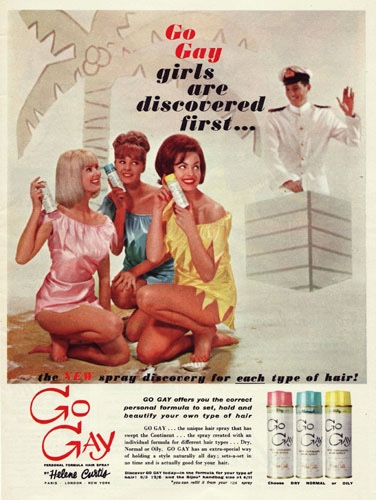


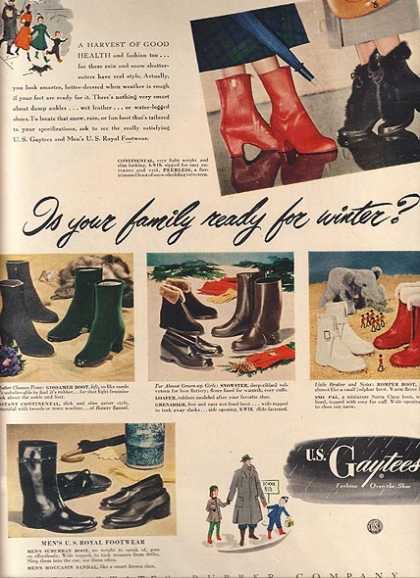


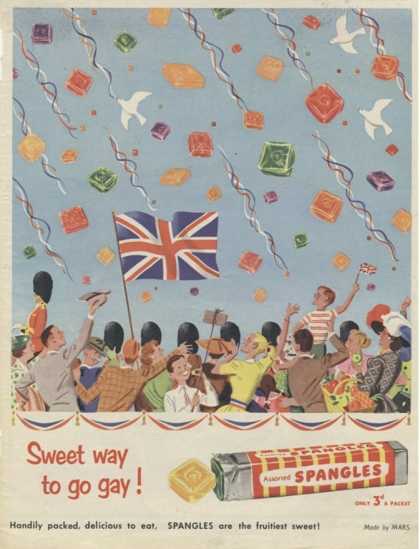


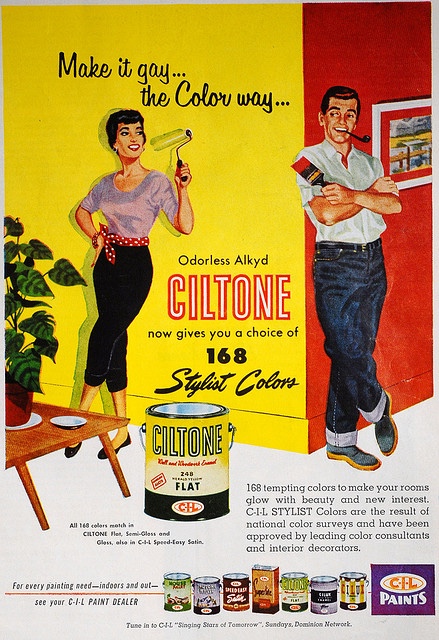
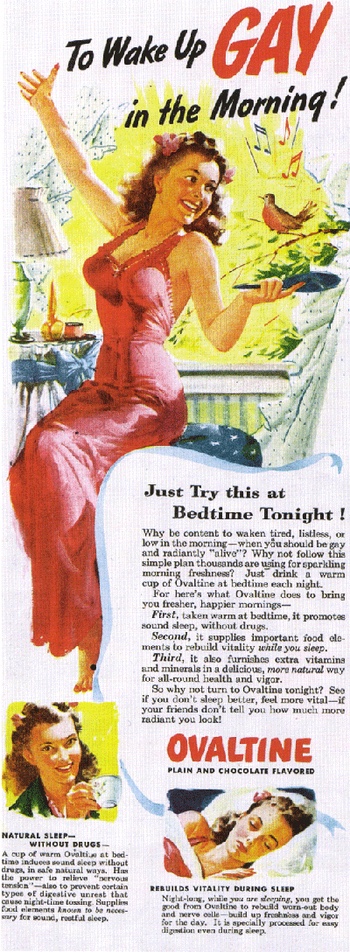


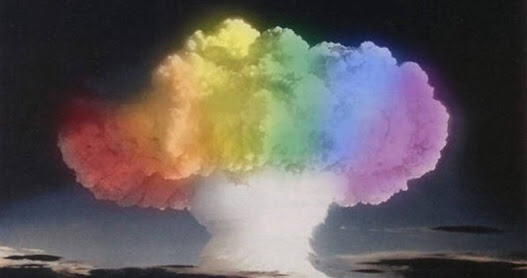


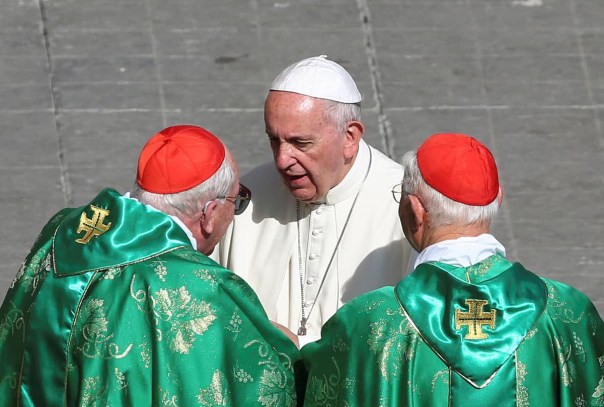
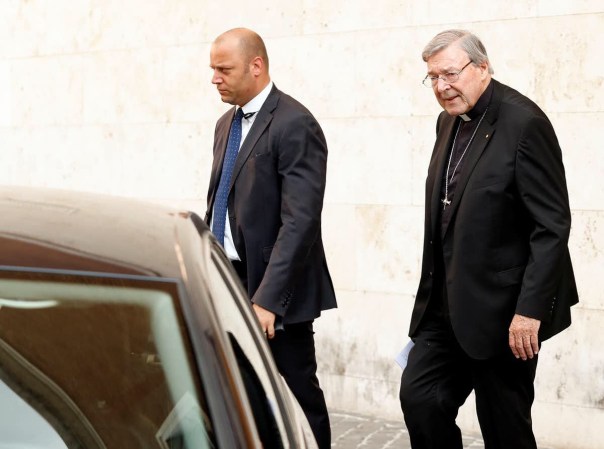

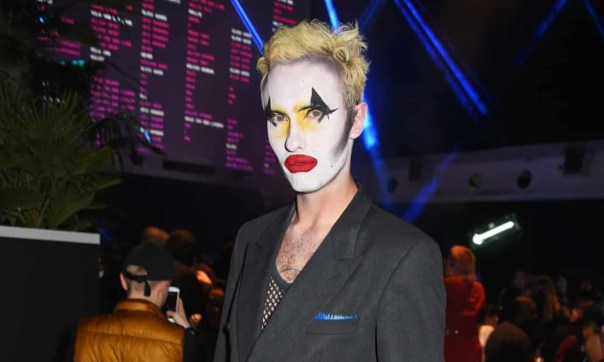




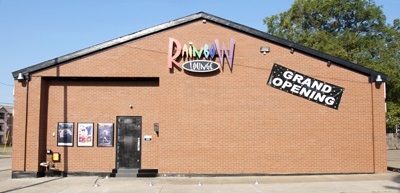
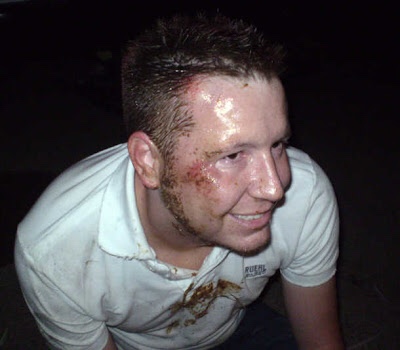




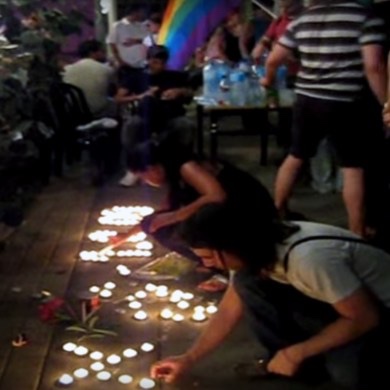
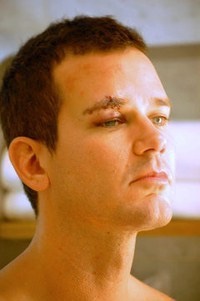


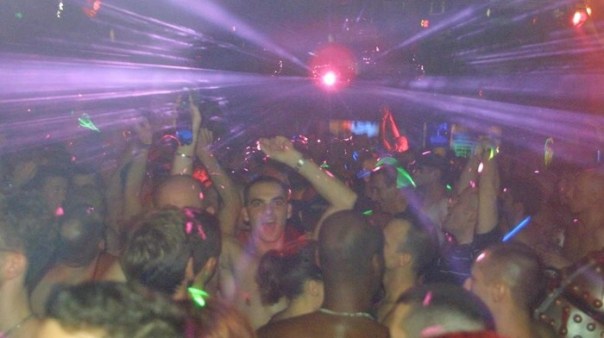
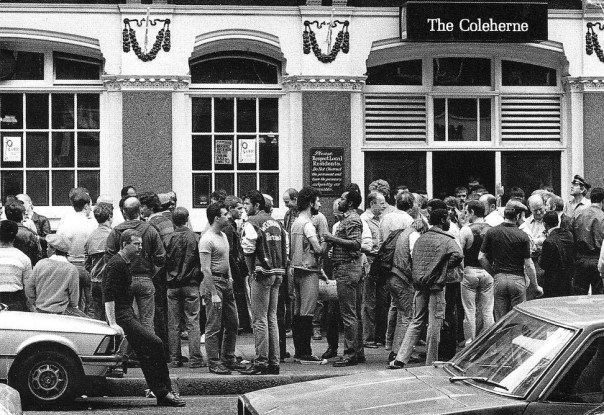
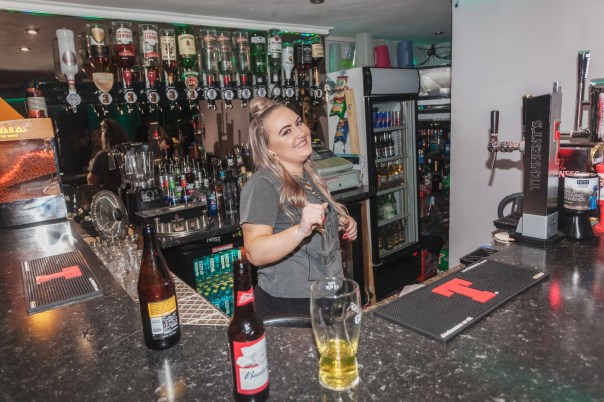
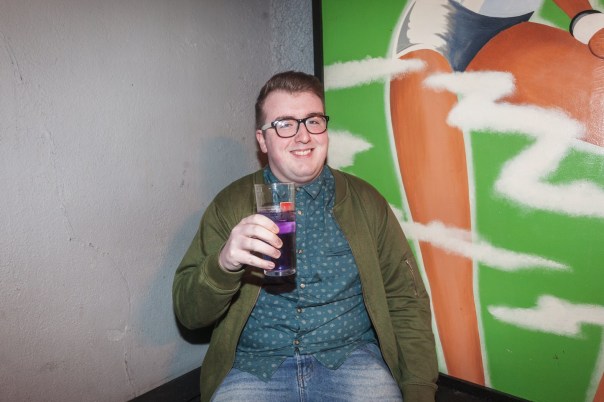
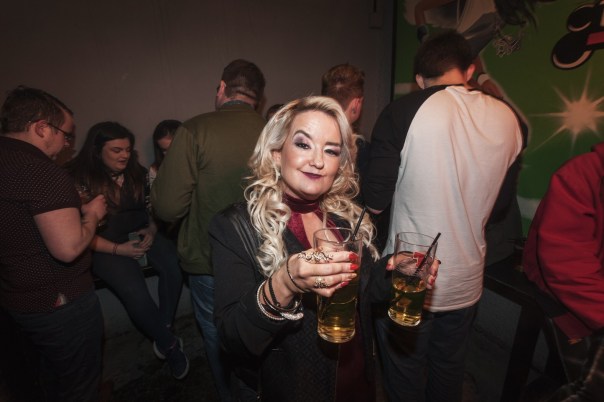
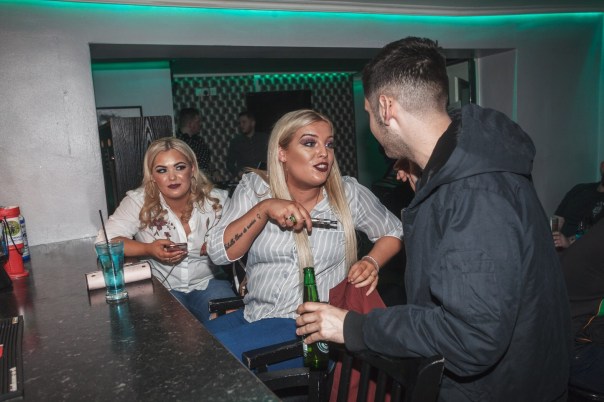
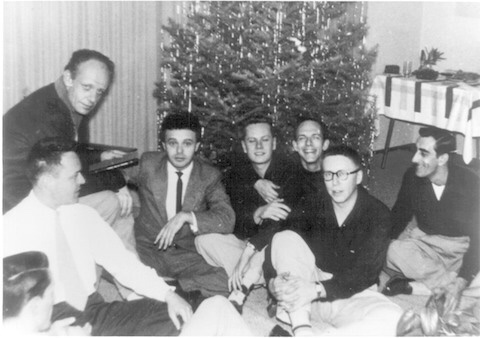


 timalderman