The 1911 factory blaze shocked the nation and spurred new regulations to protect factory workers.
Young women became trapped by tables, bulky equipment and doors that locked or opened the wrong way as flames enveloped the eighth, ninth and 10th floors of the Asch Building in New York City’s Greenwich Village on March 25, 1911. As people struggled to escape, several fell into the flames, their bodies piling by blocked exits. Others leapt—in twos and threes—out the burning building’s high windows.
The March 25, 1911 Triangle Shirtwaist Fire was one of the deadliest workplace catastrophes in U.S. history, claiming the lives of 146 workers, most of them women immigrants in their teens and twenties. The fire was so horrific it shocked the conscience of New Yorkers and others across the nation and, ultimately, led to changes in safety regulations and more diligent efforts to enforce them.
Fire hoses spray water on the upper floors of the Asch Building, housing the Triangle Shirtwaist Company, on Washington and Greene Streets in New York City, during the fire on March 25, 1911. Keystone/Getty Images
Deplorable Working Conditions
The fire, says Paul F. Cole, director of the American Labor Studies Center, “awakened a nation to the dangerous and deplorable conditions that many workers faced on a daily basis.”
The disaster’s causes were complex. In the early 1890s, immigrants from Italy and eastern Europe came to the United States in search of a better life, but instead often found themselves in places such as the Triangle Waist Company, where they worked 12-and-a-half-hour days for $6 a week, according to an AFL-CIO history of the fire. They had to supply their own needles, thread, irons and sometimes, even their own sewing machines.
Working conditions were so bad that the women didn’t even have access to a bathroom in the building, and doors were locked so that they couldn’t go outside and slow down production. And though the place was filled with highly flammable materials, there was little attention paid to fire prevention.
Discontent over wages and working conditions at Triangle and the city’s other garment factories led tens of thousands of workers to strike in 1909, seeking concessions such as a 20 percent pay hike and a 52-hour week, as well as safer working conditions. Most of the factory owners quickly settled, but Triangle’s owners resisted the demands. When the strike ended in February 1910, workers went back to their jobs without a union agreement, according to the AFL-CIO history.
“Triangle was the most hostile of the owners to the union,” explains Richard Greenwald, historian and dean of the College of Arts and Sciences at Fairfield University and author of a 2011 book, The Triangle Fire, Protocols Of Peace And Industrial Democracy In Progressive Era New York. “They moved production out of NYC in 1909 to avoid the strike, hired thugs to beat writers and most likely bribed the police to arrest strikers.”
Triangle Factory’s Fire Safety: Empty Water Buckets
On the afternoon of March 25, a Saturday, 500 people were working in Triangle’s factory, which occupied three floors in a building that had been built just 10 years before. Court testimony later placed the blame for the blaze on a fire that started in a fabric scrap bin on the eighth floor, which probably was ignited by a discarded cigarette, shortly before the factory’s 4 pm closing time.
Triangle had water buckets in place for extinguishing fires, a common practice in garment factories at the time. But as one worker, Mary Domsky-Abrams, later recalled in an early 1960s interview with author Leon Stein, the buckets were empty. “On that particular morning, the day of the tragedy, I remarked to my colleagues that the buckets were empty, and that if anything were to happen, they would be of no use,” she said.
Another worker, Cecilia Walker Friedman, who worked on the ninth floor, said that she was ready to leave work when she looked to the window and saw flames. Everyone around her started to scream and holler, but many were hindered in getting away. “The girls at the machines began to climb up on the machine tables, maybe because it was that they were frightened or maybe they thought they could run to the elevator doors on top of the machines,” Friedman said. “The aisles were narrow and blocked by the chairs and baskets. They began to fall in the fire.
The gutted remains of the tenth floor, with only the floors and walls intact. Bettmann Archive/Getty Images
Firefighters eventually found a six-foot-high pile of bodies jammed up against a door to the back stairway, according to the New York Tribune.
Friedman herself somehow made it to the elevator, only to watch as the elevator car went down the shaft, leaving the door open. Desperate, she wrapped a decorative muff around her hands, leaped into the shaft and grabbed the elevator cable, sliding all the way to the bottom. The impact broke her arm and finger, and she suffered a head injury and a burn that stretched the length of her body. But she survived.
Others weren’t so lucky. The fire escape bent under the weight of workers trying to flee. Some workers waited at the windows for help, only to watch in dismay as firefighters’ too-short ladders couldn’t reach them. Faced with being burned alive, some workers chose to leap—sometimes in twos and threes—to their deaths, according to a 2011 New York Times retrospective. The fire didn’t destroy the building itself, and by sunset, police and firemen were laying out bodies on the sidewalk.
New Yorkers Demand Reform
A week after the fire, New Yorkers packed an emergency meeting at the Metropolitan Opera House to call for action on fire safety. A few days later, an estimated 350,000 people joined in a massive funeral procession for the fire’s victims.
Demonstrators mourning the victims of the Triangle Shirtwaist Factory fire in New York City, 1911. PhotoQuest/Getty Images
The factory’s owners, Isaac Harris and Max Blanck, were put on trial for manslaughter, but were found not guilty in a trial that December, after the judge gave jury instructions that made it difficult to convict them. As journalist David Von Drehle, author of a book on the fire, notes in a 2018 essay, the pair had to be escorted out a side door of the courthouse to avoid an angry crowd. To settle lawsuits against them, they eventually paid $75 in compensation to each victim’s family—a fraction of the $400 per death that they were paid by their insurer, according to the U.S. Department of Labor.
While the factory had hazardous conditions inside, some of the blame also fell on New York City government, which hadn’t done much to ensure safe workplaces and wasn’t prepared for such a fire. “There was no clear city agency responsibility to insure the safety of workers and factories,” Greenwald says. “No one was responsible for building safety. There were no clear regulations for fire safety and no modern fire equipment.”
With public outrage growing, New York state legislators enacted a law creating the Factory Investigating Commission, a watchdog agency with sweeping powers to probe labor conditions throughout the state. Over the next two years, it would investigate thousands of workplaces—not just garment factories, but to meat-packing and chemical plants as well.
“The FIC was led by the Tammany Hall machine leaders, so the reforms that were suggested found their way into laws,” Greenwald says. “There were over 20 laws passed which changed fire safety, building safety, charged the state with worker safety.”
Reform Agenda Empowers FDR’s New Deal
Additionally, the fire helped unite organized labor and various reform-minded politicians, including progressive New York Governor Alfred E. Smith and Senator Robert F. Wagner, one of the legislative architects of President Franklin D. Roosevelt’s New Deal agenda. Frances Perkins, who served on a committee that helped to set up the FIC, would later become Roosevelt’s Secretary of Labor. “In a clear way, one can argue that the fire led to the New Deal,” Greenwald says. “Perkins said so herself in her oral history.”
On a larger scale, the Triangle fire convinced the nation that the government had a responsibility to ensure workers had a safe place to do their jobs.
What is a Shirtwaist?
An advertisement for shirtwaists, Courtesy: Fashion Institute of New York/SUNY
A button-down blouse, the functional shirtwaist was valued for its ready-to-wear, workplace appeal and its simple design, originally modeled on menswear shirts. It could be worn jacketless and fashionably tucked into the waistband of a skirt, and it was sold as both an individual piece and as an ensemble. By the early 20th century, designers added lace and frills to embellish the iconic blouse, which was already available in every color. Articles in Vogue magazine and advertisements showed various enhancements, including elaborate details and stitching to the collars, wrist cuffs, and bodies that elevated the simple blouse to haute mode. An article written for the Pittsburgh Press on September 16, 1906, stated, “A very fashionable woman with a half a hundred waists boasts that there are no two alike.”
At the turn of the 20th century, production of the shirtwaist was a competitive industry. Although sold across the country, the majority of shirtwaist blouses were created in Philadelphia and New York City. In Manhattan alone, there were over 450 textile factories, employing approximately 40,000 garment workers, many of them immigrants. The Triangle Shirtwaist Factory, located in the top floors of the Asch building in Greenwich Village, was one of many shirtwaist factories operating in Manhattan at the time. This boom in industry helped solidify New York’s status as an industrial center and provided jobs to the thousands of immigrants that arrived daily at Ellis Island.
The shirtwaist, however, came to represent more than a momentary fashion trend; the blouse was a symbol of newfound female independence in a time of progressive ideas. With their own jobs and wages, women were no longer dependent on men and sought new privileges at home and at work. The figure of the working woman, wearing the shirtwaist blouse and freed from domestic duties, was an iconic image for the women’s rights movement.
Pink Triangle Affixed to Gay Men’s Clothes in a Nazi Concentration Camp
Before the pink triangle became a worldwide symbol of gay power and pride, it was intended as a badge of shame. In Nazi Germany, a downward-pointing pink triangle was sewn onto the shirts of gay men in concentration camps—to identify and further dehumanize them. It wasn’t until the 1970s that activists would reclaim the symbol as one of liberation.
Homosexuality was technically made illegal in Germany in 1871, but it was rarely enforced until the Nazi Party took power in 1933. As part of their mission to racially and culturally “purify” Germany, the Nazis arrested thousands of LGBT individuals, mostly gay men, whom they viewed as degenerate.
The United States Holocaust Memorial Museum estimates 100,000 gay men were arrested and between 5,000 and 15,000 were placed in concentration camps. Just as Jews were forced to identify themselves with yellow stars, gay men in concentration camps had to wear a large pink triangle. (Brown triangles were used for Romani people, red for political prisoners, green for criminals, blue for immigrants, purple for Jehovah’s Witnesses and black for “asocial” people, including prostitutes and lesbians.)
Homosexual prisoners at the concentration camp at Sachsenhausen, Germany, wearing pink triangles on their uniforms on December 19, 1938. Corbis/Getty Images
At the camps, gay men were treated especially harshly, by guards and fellow prisoners alike. “There was no solidarity for the homosexual prisoners; they belonged to the lowest caste,” Pierre Seel, a gay Holocaust survivor, wrote in his memoir I, Pierre Seel, Deported Homosexual: A Memoir of Nazi Terror.
An estimated 65 percent of gay men in concentration camps died between 1933 and 1945. Even after World War II, both East and West Germany upheld the country’s anti-gay law, and many gays remained incarcerated until the early 1970s. (The law was not officially repealed until 1994.)
The early 1970s was also when the gay rights movement began to emerge in Germany. In 1972, The Men with the Pink Triangle, the first autobiography of a gay concentration camp survivor, was published. The next year, post-war Germany’s first gay rights organization, Homosexuelle Aktion Westberlin (HAW), reclaimed the pink triangle as a symbol of liberation.
“At its core, the pink triangle represented a piece of our German history that still needed to be dealt with,” Peter Hedenström, one of HAW’s founding members said in 2014.
Memorial plaques for homosexuals, Jehovah’s Witnesses and Wehrmacht deserters are placed where once stood one of the demolished barracks in Buchenwald concentration camp near Weimar, Germany. Horacio Villalobos/Corbis/Getty Images
Afterwards, it began cropping up in other LGBT circles around the world. In 1986, six New York City activists created a poster with the words SILENCE = DEATH and a bright pink upward-facing triangle, meant to call attention to the AIDs crisis that was decimating populations of gay men across the country. The poster was soon adopted by the organization ACT UP and became a lasting symbol of the AIDS advocacy movement.
The triangle continues to figure prominently in imaging for various LGBT organizations and events. Since the 1990s, signs bearing a pink triangle enclosed in a green circle have been used as a symbol identifying “safe spaces” for queer people. There are pink triangle memorials in San Francisco and Sydney, which honor LGBT victims of the Holocaust. In 2018, for Pride Month, Nike released a collection of shoes featuring pink triangles.
Although the pink triangle has been reclaimed as an empowering symbol, it is ultimately a reminder to never forget the past—and to recognize the persecution LGBT people still face around the world.
Nazi Concentration Camp Triangle Classification Flyer
It was a small mistake, but with great consequences. On September 2, 1666, Thomas Farrinor, baker to King Charles II of England, failed, in effect, to turn off his oven. He thought thefirewas out, but apparently the smouldering embers ignited some nearby firewood and by one o’clock in the morning, three hours after Farrinor went to bed, his house in Pudding Lane was in flames. Farrinor, along with his wife and daughter, and one servant, escaped from the burning building through an upstairs window, but the baker’s maid was not so fortunate, becoming the Great Fire’s first victim. Didthese cakesset fire to London?
The fire then leapt across Fish Street Hill and engulfed the Star Inn. The London of 1666 was a city of half-timbered, pitch-covered medieval buildings and sheds that ignited at the touch of a spark–and a strong wind on that September morning ensured that sparks flew everywhere. From the Inn, the fire spread into Thames Street, where riverfront warehouses were bursting with oil, tallow, and other combustible goods. By now the fire had grown too fierce to combat with the crude firefighting methods of the day, which consisted of little more than bucket brigades armed with wooden pails of water. The usual solution during a fire of such size was to demolish every building in the path of the flames in order to deprive the fire of fuel, but the city’s mayor hesitated, fearing the high cost of rebuilding. Meanwhile, the fire spread out of control, doing far more damage than anyone could possibly have managed.
Soon the flames were visible from Seething Lane, near the Tower of London, where Samuel Pepys first noted them without concern:
Pepys Diary Entry, September 2 1666
Some of our maids sitting up late last night to get things ready against our feast today, Jane called up about three in the morning, to tell us of a great fire they saw in the City. So I rose, and slipped on my night-gown and went to her window, and thought it to be on the back side of Mark Lane at the farthest; but, being unused to such fires as followed, I thought it far enough off, and so went to bed again, and to sleep. . . . By and by Jane comes and tells me that she hears that above 300 houses have been burned down tonight by the fire we saw, and that it is now burning down all Fish Street, by London Bridge. So I made myself ready presently, and walked to the Tower; and there got up upon one of the high places, . . .and there I did see the houses at the end of the bridge all on fire, and an infinite great fire on this and the other side . . . of the bridge. . . .
So down [I went], with my heart full of trouble, to the Lieutenant of the Tower, who tells me that it began this morning in the King’s baker’s house in Pudding Lane, and that it hath burned St. Magnus’s Church and most part of Fish Street already. So I rode down to the waterside, . . . and there saw a lamentable fire. . . . Everybody endeavouring to remove their goods, and flinging into the river or bringing them into lighters that lay off; poor people staying in their houses as long as till the very fire touched them, and then running into boats, or clambering from one pair of stairs by the waterside to another. And among other things, the poor pigeons, I perceive, were loth to leave their houses, but hovered about the windows and balconies, till they some of them burned their wings and fell down.
Having stayed, and in an hour’s time seen the fire rage every way, and nobody to my sight endeavouring to quench it, . . . I [went next] to Whitehall (with a gentleman with me, who desired to go off from the Tower to see the fire in my boat); and there up to the King’s closet in the Chapel, where people came about me, and I did give them an account [that]dismayed them all, and the word was carried into the King. so I was called for, and did tell the King and Duke of York what I saw; and that unless His Majesty did command houses to be pulled down, nothing could stop the fire. They seemed much troubled, and the King commanded me to go to my Lord Mayor from him, and command him to spare no houses. . . .
I hurried] to [St.] Paul’s; and there walked along Watling Street, as well as I could, every creature coming away laden with goods to save and, here and there, sick people carried away in beds. Extraordinary goods carried in carts and on backs. At last [I] met my Lord Mayor in Cannon Street, like a man spent, with a [handkerchief] about his neck. To the King’s message he cried, like a fainting woman, ‘Lord, what can I do? I am spent: people will not obey me. I have been pulling down houses, but the fire overtakes us faster than we can do it.’ . . . So he left me, and I him, and walked home; seeing people all distracted, and no manner of means used to quench the fire.
The houses, too, so very thick thereabouts, and full of matter for burning, as pitch and tar, in Thames Street; and warehouses of oil and wines and brandy and other things.
On February 24th 1667 Pepys notes in his diary:
Asking Sir R Viner what he thought was the cause of the fire, he tells me that the Baker, son and his daughter did all swear again and again that their Oven was drawn by 10 a-clock at night. That having occasion to light a candle about 12, there was not so much fire in the bakehouse as to light a match for a candle, so as they were fain to go into another place to light it. That about 2 in the morning they felt themselves almost choked with smoke; and rising, did find the fire coming upstairs – so they rose to save themselfs; but that at that time the bavins were not on fire in the yard. So that they are, as they swear, in absolute ignorance how this fire should come – which is a strange thing, that so horrid an effect should have so mean and uncertain a beginning.
Even on February 28th 1667 Pepys notes:
I did within these six days see smoke still remaining of the late fire in the City; and it is strange to think how to this very day I cannot sleep a-night without great terrors of fire; and this very night I could not sleep till almost 2 in the morning through thoughts of fire.
and on March 16th 1667:
The weather is now grown warm again, after much cold weather; and it is observable that within these eight days I did see smoke remaining, coming out of some cellars, from the late great Fire, now above six months since.
and on May 5th:
Sir Jo Robinson … doth tell me of at least six or eight fires within these few days, and continually stories of fires; and real fires there have been in one place or other almost ever since the late great Fire, as if there was a fate over people for fire.
John Evelyntook even less note of the fire during its first hours than had Pepys. His journal entry for the2nd, the day on which Pudding Lane first erupted, contains only the briefest of mentions. By the following day, however, Evelyn was drawn into the unfolding spectacle:
I had public prayers at home. The fire continuing, after dinner I took coach with my wife and son and went to the Bank side in Southwark, where we beheld that dismal spectacle, the whole city in flames near the water side; all the houses from the Bridge, all Thames street, and upwards towards Cheapside, down to the Three Cranes, were now consumed: and so [we] returned exceeding astonished what would become of the rest.
The fire having continued all this night (if I may call that night which was light as day for 10 miles round about, after a dreadful manner) when conspiring with a fierce eastern wind in a very dry season; I went on foot to the same place, and saw the whole south part of the city burning from Cheapside to the Thames, and all along Cornhill, (for it likewise kindled back against the wind as well as forward), Tower street, Fen-church street, Gracious street, and so along to Bainard’s Castle, and was now taking hold of St. Paul’s church, to which the scaffolds contributed exceedingly. The conflagration was so universal, and the people so astonished, that from the beginning, I know not by what despondency or fate, but crying out and lamentation, running about like distracted creatures without at all attempting to save even their goods; such a strange consternation there was among them, so as it burned both in breadth and length, the churches, public halls, Exchange, hospitals, monuments, and ornaments, leaping after a prodigious manner, from house to house and street to street, at great distances from one the other; for the heat with a long set of fair and warm weather had even ignited the air and prepared the materials to conceive the fire, which devoured after an incredible manner houses, furniture, and everything. Here we saw the Thames covered with goods floating, all the barges and boats laden with what some had time and courage to save, as, on the other, the carts, &c. carrying out to the fields, which for many miles were strewed with moveables of all sorts, and tents erecting to shelter both people and what goods they could get away.
Oh the miserable and calamitous spectacle!such as haply the world had not seen since the foundation of it, nor be outdone till the universal conflagration thereof. All the sky was of a fiery aspect, like the top of a burning oven, and the light seen above 40 miles round about for many nights. God grant mine eyes may never behold the like, who now saw above 10,000 houses all in one flame; the noise and cracking and thunder of people, the fall of towers, houses, and churches, was like an hideous storm, and the air all about so hot and inflamed that at last one was not able to approach it, so that they were forced to stand still and let the flames burn on, which they did for near two miles in length and one in breadth. The clouds also of smoke were dismal and reached upon computation near 50 miles in length. Thus I left it this afternoon burning, a resemblance of Sodom, or the last day. It forcibly called to my mind that passage–non enim hic habemus stabilem civitatum:the ruins resembling the picture of Troy. London was, but is no more! Thus, I returned.
September 4th
The burning still rages, and it was now gotten as far as the Inner Temple; all Fleet street, the Old Bailey, Ludgate hill, Warwick lane, Newgate, Paul’s chain, Watling street, now flaming, and most of it reduced to ashes; the stones of St. Paul’s flew like [grenades], the melting lead running down the streets in a stream, and the very pavements glowing with fiery redness, so as no horse nor man was able to tread on them, and the demolition had stopped all the passages, so that no help could be applied. The eastern wind still more impetuously driving the flames forward. Nothing but the Almighty power of God was able to stop them, for vain was the help of man.
September 5th
It crossed towards White-hall; but oh, the confusion there was then at that Court! It pleased his Majesty to command me among the rest to look after the quenching of Fetter lane end, to preserve if possible that part of Holborn, whilst the rest of the gentlemen took their several posts, some at one part, some at another (for they now began to bestir themselves, and not till now, who hitherto had stood as men intoxicated, with their hands across) and began to consider that nothing was likely to put a stop but the blowing up of so many houses as might make a wider gap than any had yet been made by the ordinary method of pulling them down with engines; this some stout seamen proposed early enough to have saved near the whole city, but this some tenacious and avaricious men, aldermen, &c. would not permit, because their houses must have been [among the first to be levelled]. It was therefore now commanded to be practised, and my concern being particularly for the Hospital of St. Bartholomew near Smithfield, where I had many wounded and sick men, made me the more diligent to promote it; nor was my care for the Savoy less.
It now pleased God by abating the wind, and by the industry of the people, when almost all was lost, infusing a new spirit into them, that the fury of [the fire] began sensibly to abate about noon, so as it came no farther than the Temple westward, nor than the entrance of Smithfield north: but continued all this day and night so impetuous toward Cripplegate and the Tower as made us all despair; it also broke out again in the Temple, but the courage of the multitude persisting, and many houses being blown up, such gaps and desolations were soon made, as with the former three days consumption, [that] the back fire did not so vehemently urge upon the rest as formerly. There was yet no standing near the burning and glowing ruins by near a furlong’s space.
The coal and wood wharfs and magazines of oil, rosin, &c. did infinite mischief, so as the invective which a little before I had dedicated to his Majesty and published, giving warning of what might probably be the issue of suffering those shops to be in the City, was looked on as a prophecy.
The poor inhabitants were dispersed about St. George’s Fields, and Moorfields, as far as Highgate, and several miles in circle, some under tents, some under miserable huts and hovels, many without a rag or any necessary utensils, bed or board, who from delicateness, riches, and easy accommodations in stately and well furnished houses, were now reduced to extremest misery and poverty.
In this calamitous condition I returned with a sad heart to my house, blessing and adoring the distinguishing mercy of God to me and mine, who in the midst of all this ruin was like Lot, in my little Zoar, safe and sound.
Pepys records 15 fires in his diary in addition to the Great Fire.
Most houses in London had timber frames. They were often high and were crammed together with little if any space between. Heating was by fires and lighting was by candles, whether rush, tallow or beeswax. Everywhere there were flammable materials – hay in stables, pitch and tar by the river for ships and boats, wood in yards everywhere, kindling in bakeries such as the one where the Great Fire began.
Fire fighters were not organised and had often little more than buckets and large syringes to spread the water. More effective was gunpowder to force a fire break and grappling irons to pull down thatch or weak timbers.
In January 1673 fire destroyed Pepys own house and in 1684 a later house was saved only by having his neighbour’s house blown up.
One of the results of these fires was that insurance companies began to take some responsibility for property loss and after about 1772 they established fire brigades. Houses rebuilt after the Great Fire were built to stricter regulations which included brick construction and improved water supplies.
The fire destroyed about four-fifths of the city, including roughly 13,200 houses, nearly 90 parish churches, and nearly 50 livery company halls–in all an area of more than 430 acres. In the aftermath, Sir Christopher Wren, the great architect, designed and oversaw the construction of 49 new churches, as well as the new St. Paul’s Cathedral. Amazingly, the fire claimed only 16 lives and may actually have saved countless more. After 5th September, the Black Plague, which had ravished London since 1664, abruptly declined, probably because so few of the rats that helped to transmit the disease escaped the flames.
Samuel Pepys is the best known diarist of his day. Although he was a minor public official, his diary contains more details of his private life than of London politics. Still, his accounts of both the Black Death and the Great Fire show that he was less than in awe of persons holding high office.
John Evelyn was an English writer best known for his diary, which, along with that of Samuel Pepys, provides us with our best glimpse into the social world of 17th century London. Evelyn was an ardent Royalist during the English Civil War, and held several minor offices after the Restoration.
The dome of St Paul’s Cathedral above the modern city skyline Credit: Art Kowalsky/Alamy
THE BLAZE IN SEPTEMBER 1666 RAGED FOR DAYS AND DESTROYED FOUR-FIFTHS OF THE CAPITAL, LEAVING BRITAIN’S TRADE, GOVERNMENT AND PROSPERITY IN RUINS
When, early on 2 September 1666, the famous diarist Samuel Pepys heard of a fire in the City of London that had already destroyed 300 houses, he hired a boat to view the scene from the Thames. To his horror he noted: “Everybody endeavouring to remove their goods, and flinging into the river or bringing them into lighters that lay off; poor people staying in their houses as long as till the very fire touched them, and then running into boats, or clambering from one pair of stairs … to another.”
The dramatic conflagration wasn’t the first – nor last – to strike the capital, but the Great Fire of London was one of the most devastating events in the city’s history. Raging from 1am on Sunday 2 September to dawn on Thursday 6 September, it resulted in four-fifths of the City being destroyed, including 13,200 houses and 87 churches. Miraculously, there were only six officially recorded deaths, but the very hub of Britain’s trade, government and prosperity stood in ruins.
Pudding Lane bakery
Seventeenth-century London was a turbulent place: the Great Plague had decimated a third of its population in 1665, while frictions between Protestants and Catholics, as well as England’s recent wars with France and the Netherlands, made its citizens nervous. In the event it was a spark in Thomas Farriner’s bakery in Pudding Lane that kindled the disaster. It’s thought his oven was not fully extinguished overnight and in the early hours wood beside it caught fire. While the baker and his family escaped, their unfortunate maid perished.
The fire could hardly have started in a more dangerous place, close to the river’s warehouses and shops packed with combustibles such as coal, timber, oil and alcohol. It had been a long, dry summer and, with a strong easterly wind fanning the flames, the City’s mainly timber-framed buildings were easily lit, their overhanging jetties and the crowded nature of the narrow streets inviting fire to spread. Yet the Lord Mayor Thomas Bludworth, called to the scene at 4am, dismissed the threat posed by the fire and returned to bed, saying: “A woman might piss it out.”
When Pepys conveyed the order to Bludworth in Cannon Street at noon, the Lord Mayor had changed his earlier tune. “To the King’s message he cried, like a fainting woman, ‘Lord, what can I do? I am spent: people will not obey me. I have been pulling down houses, but the fire overtakes us faster than we can do it.’”
A print of the Great Fire of London showing the ruins of a wall near Ludgate prison, with Old St Paul’s Church and Old Bow Church in the background Credit: Corbis
With no organised fire brigade in London in 1666, people were reliant on buckets and ladders, fire hooks to pull down buildings, and hand-pumped machines to squirt water. The fire rampaged down Fish Street Hill, onto London Bridge, along the Thames and north of Thames Street, destroying warehouses, St Magnus the Martyr Church and Fishmongers’ Hall, the first of dozens of livery company halls to be ruined. Terrified by such large-scale calamity, people began to fear a French or Dutch attack, and armed mobs hunted for foreign or Catholic arsonists. Militia were called in to control the crowds.
Over five days the conflagration spread across 436 acres, ripping through Lombard Street, Cornhill and the Royal Exchange, also Threadneedle Street, Baynard’s Castle, Cheapside, the Sessions House in the Old Bailey, Ludgate and Newgate Gaol (from which prisoners escaped), Temple and Fleet Street. When the fire reached within 300 yards of the Tower of London, all available resources rushed to the scene.
St Paul’s Cathedral, in wooden scaffolding awaiting restoration, was not so lucky; its roof collapsed and thousands of books stored in the crypt fuelled the inferno.
Local heroes
There are tales of heroism: a seaman and a soldier climbed onto the roof of Middle Temple Hall to beat out flames. And tragedy: an 80-year-old watchmaker refused to leave his home in Shoe Lane and it fell on him. But mainly people fled to the fields outside the City; the court packed its bags; even Pepys, hearing the fire was approaching Barking Church near his home, buried his wine and Parmesan cheese in the garden for safekeeping and temporarily absented himself.
During the fire, King Charles rode around the City distributing money to encourage fire-fighting efforts and he ordered supplies to be brought for the homeless thousands camped in the fields. His brother, James Duke of York, took command of operations from the second day and set up posts manned by civilians and soldiers to tackle the fires. From the third day, gunpowder was used to demolish houses more quickly than pulling them down and by that evening the wind had also dropped. The fire fighters gradually gained control.
Diarist John Evelyn records wandering through the eerie aftermath of the disaster, burning the soles of his shoes on smouldering ground and losing his way in the “dismal desert”. The next month an official day of fasting was held and £12,794 collected from across the country to provide aid to London’s newly destitute; many would move away.
The Monument
Much post-fire architecture has since vanished, but gems can still be found like the home (now museum) of the dictionary-compiler Dr Johnson in Gough Square. Visit, too, the Monument (junction of Monument Street and Fish Street Hill) constructed by Wren and Robert Hooke. Completed in 1677, the column is 61 metres tall – the exact distance between it and the site in Pudding Lane where the fire started – and 311 steps lead to a viewing platform offering superb vistas.
The most famous legacies of the rebuilding are Wren’s churches and his masterpiece, St Paul’s Cathedral. Twenty-nine of the 51 churches he designed still stand, remarkable for their striking array of steeples and spires: from the baroque of St Vedast to the Gothic of
St Dunstan-in-the-East, the slender spire of St Martin-within-Ludgate and the ‘wedding cake’ tiers of St Bride.
The ‘tabula rasa’ left by the Great Fire of London may not have been filled by a model renaissance city as proposed by visionaries like Wren, but it inspired some genuine treasures and made the capital an altogether safer city for generations to come.
The Untold Story of the Great Fire of London
The Great Fire of London started accidentally in a bakery, right? That wasn’t the view at the time – many believed it was a terrorist attack and violent reprisals against possible suspects soon followed.
The date 1666 is one burned on to the collective memory of a nation.
Everyone learns at school that the fire raging for four days in that hot, dry summer began in a bakery in Pudding Lane.
But a new Channel 4 documentary focuses on the lesser known story of the fire – it sparked a violent backlash against London’s immigrant population, prompted by the widely-held belief at the time that it was an act of arson committed by a foreign power.
In the days and weeks following the fire, ordinary Londoners – many of whom were displaced and homeless – gave evidence to a parliamentary inquiry swiftly launched to find out what happened.
GREAT FIRE IN NUMBERS…
Destroyed 373 acres of the City
13,200 houses, 84 churches and 44 company halls burned down
Raged from Sunday 2 Sept to Thursday 6 Sept
Fewer than 10 people thought to have died, although some perished in refugee camps
Rebuilding killed more than fire
All those witness statements can be found in the inquiry’s report, a 50-page document held in the capital’s Guildhall.
It suggests the city on the eve of the fire was one fraught with anxiety and paranoia, says Sue Horth, the documentary’s executive producer, and the finger of blame was pointed at two countries with which England was at war, Netherlands and France.
“We teach people about Pudding Lane and the hot summer but we don’t say that weeks before the Great Fire, the British Navy sailed into the city of West Terschelling in the Netherlands and set fire to it in an act of diplomatic piracy.
… AND IN QUOTES
‘Among other things, the poor pigeons, I perceive, were loth to leave their houses, but hovered about the windows and balconies, till they some of them burned their wings and fell down’
Samuel Pepys, 2 Sept 1666
‘God grant mine eyes may never behold the like, who now saw above 10,000 houses all in one flame; the noise and cracking and thunder of people, the fall of towers, houses, and churches, was like an hideous storm, and the air all about so hot and inflamed that at last one was not able to approach it’
John Evelyn, 2 Sept 1666
“London was expecting an act of reprisal against the city. It was expecting something bad to happen, not because it was superstitious or frightened, but because the government had done something bad. So when the fire happened, it was a natural and quite sensible suspicion for the people of London to have.”
As the fire raged, and rumours spread that the French had invaded, angry mobs hunted anyone who appeared to be foreign, says Ms Horth. A Swedish diplomat was lynched. A French woman trying to escape to a refugee camp in Spitalfields had her breast cut off because people thought the baby chicks she carried in her apron were fireballs.
“London was a city turned to constant night, with the ash cloud and smoke, and the sun couldn’t penetrate, so it was a frightening place to be. Thousands of buildings were razed. People either tried to escape or they fought the fire or they tried to find those responsible.”
This violence is the untold story of the fire, says Adrian Tinniswood, author of By Permission of Heaven: The True Story of the Great Fire of London.
The fire burned for four days
Most people thought it was an attack by the Dutch, because of the recent atrocity by the Royal Navy under Admiral Robert Holmes.
“There was cheering in the streets of London when that happened, so when the fire started, people thought it was the Dutch getting their own back.
“In fact, the fire was caused by a gale blowing across London for four days. It hit London in the early hours of Sunday morning, just as [Thomas] Farriner’s bakery goes up in flames. The gale blew embers and bits of straw across the city and fires broke out all over the place, so people said: ‘This isn’t a fire spreading, it has to be arson’.”
On the fourth day, when the fire was finally quelled, King Charles II, the newly restored monarch after years of civil war, tried to calm matters by going to a new camp of 100,000 homeless, and declaring the fire was an act of God.
Shaky confession
The king took a very enlightened view and always believed it was an accident, says Mr Tinniswood. His brother, James, Duke of York, went even further. He rode into the city with his bodyguards and rescued people from the mob, some of whom were in the very act of being hanged on street corners.
Hubert, in a detail of a wider picture of Catholic conspirators from 1667
The hunt for a foreign scapegoat continued, until one volunteered for the role. At the end of September, the parliamentary committee was appointed to investigate the fire, and a French Protestant watchmaker, Robert Hubert, confessed to having deliberately started the fire at the bakery with 23 conspirators.
Although his confession seemed to change and flounder under scrutiny, he was tried and hanged. Afterwards, colleagues told the inquiry Hubert had been at sea with them at the time, and the inquiry concluded the fire had indeed been an accident. No-one knows why he confessed.
Until the 19th Century, the plaque at London’s Monument stated that followers of the Pope were to blame, says Ms Horth, and named Hubert as the fire-starter. It was only after Catholic emancipation in the 19th Century that the government decided the plaque was inflammatory and had those inscriptions removed.
“This story [about it being an accident] is not necessarily the most helpful for us all to believe,” Ms Horth says. “The truth is that we will never know how it began. We now believe it was an accident but 350 years ago certain people thought differently. There are many perspectives to events and it’s up to us to understand them all.”
It’s natural the version of events told to youngsters should airbrush the gruesome details, says Meriel Jeater, curator at the Museum of London.
Christopher Wren built St Paul’s after the fire
“The traditional view taught in schools is that it all happened as a happily-ever-after sort of story. It was a terrible disaster, but not many people died, we rebuilt the city in brick so it was fireproof, and isn’t St Paul’s pretty?
“But the more you investigate, you realise it wasn’t all like that. The dark side was that the fire burst on to the surface religious tension and paranoia about national security.”
It’s a tale with echoes today, says Ms Jeater. “When I was curating the exhibition, it wasn’t long after the 7/7 bombings and when I was reading about the reactions against Catholics and the Dutch, it struck me that there were a lot of similarities with the backlash against Muslim people after the bombing. A lot of suspicion about people living in London.
“It’s different people and different events, but I think human nature is very similar.”
3 Myths About The Great Fire Of London You Probably Believe
The Great Fire of London is a very well-known disaster, and has been researched and written about extensively ever since 1666. However, there are still some enduring myths and misconceptions that the Museum of London’s Fire! Fire! exhibition (May 2016 – April 2017) aimed to tackle.
Myth #1: The Great Fire stopped the Great Plague
This is the myth that I hear people talking about most often. They may have read it in a children’s book or heard it at school. The idea is that there was a silver lining to the tragedy of the fire, as it ended the great plague that swept the city from 1665-66. This was the last major outbreak of the bubonic plague in London, and killed 100,000 Londoners- about 20% of the city’s population. The fire is supposed to have wiped out London’s rats and fleas that spread the plague and burned down the insanitary houses which were a breeding ground for the disease. If anyone asks you about this, you can tell them that it’s not true. Here’s why:
▪ The Great Fire only burnt about a quarter of the urban metropolis so it could not have purged the plague from the whole city.
▪ Though the outside walls of houses rebuilt after the fire had to be built from brick, there were no major improvements to hygiene and sanitation afterwards.
▪ Many of the areas that were worst affected by the plague, such as Whitechapel, Clerkenwell and Southwark, were not destroyed by the fire.
▪ The numbers of people dying from plague were already in decline from the winter of 1665 onwards.
▪ People continued to die from plague in London after the Great Fire was over.
This myth seems to have grown up because the two catastrophes were so close together and because the Great Plague of 1665-66 was the last major outbreak of the disease in this country. We are still not sure why the plague did not return to our shores after it faded out in the 1670s but it wasn’t due to London’s 1666 fire.
Myth #2: The Great Fire spread due to the thatched roofs of London’s houses
In fact, thatch had been banned within the City of London by building regulations dating back to 1189. These rules were reinforced after a terrible fire in 1212 when an estimated 3000 people died. Shortly after this fire, the City authorities ruled that all new houses had to be roofed with tiles, shingles or boards. Any existing roofs with thatch had to be plastered. The medieval regulations appear to have been successful in preventing large-scale fires. John Stow, in his 1598 Survey of London said ‘since which time [referring to introduction of the rules], thanks be given to God, there hath not happened the like often consuming fires in this city as afore.’
By 1666, the vast majority of houses in the City would have been tiled. Even if there were a small number of thatched buildings lurking in the densely-packed streets, they were not in significant numbers to be noted as a cause of the Great Fire by 17th-century authors. The London Gazette and Rege Sincera’s Observations both Historical and Moral upon the Burning of London both mention timber buildings as a problem but not thatch. Sincera wrote about ‘ the weakness of the buildings, which were almost all of wood, which by age was grown as dry as a chip’. The London Gazette’s reporting of the disaster says it began ‘in a quarter of Town so close built with wooden pitched houses’.
How many people died during the Great Fire?
We don’t know for sure. Amazingly, fewer than ten deaths were recorded. One of the people killed was 80-year-old watchmaker Paul Lowell. He refused to leave his house on Shoe Lane even though his son & friends begged him to go. His bones & keys were found in the ruins.
Myth #3: London was rebuilt in brick & stone thanks to the Great Fire
While it is true that the February 1667 Rebuilding Act stated that ‘all the outsides of all Buildings in and about the said Citty be henceforth made of Bricke or Stone’ there were many brick buildings in London beforehand. In fact, records show that there were even brick houses on Pudding Lane, that notorious street where the fire began, before 1666.
Royal proclamations dating back over 60 years demanded that new buildings be built from brick. In March 1605 James I said that no one was to build a new house in London unless it was made from brick or stone because he wanted to reserve the country’s timber for the navy’s ships. Uptake was slow, however, and later proclamations repeated this demand several times, such as in October 1607, when King James stated that new brick or stone buildings would ‘both adorne and beautifie his said City, and be lesse subject to danger of fire’.
As these rules only applied to new houses, and appear to have only been sporadically obeyed, the Great Fire became the opportunity to enforce, re-state and refine existing rules. The disaster affected such a large area that thousands of brick houses had to be built to replace those that had been destroyed. This has left us with a false impression that the fire introduced brick to London.
The Great Fire of London Was Blamed on Religious Terrorism
Why scores of Londoners thought the fire of 1666 was all part of a nefarious Catholic conspiracy
Oil painting of the Great Fire, seen from Newgate. ((C) Museum of London)
The rumors spread faster than the blaze that engulfed London over five days in September 1666: that the fire raging through the city’s dense heart was no accident – it was deliberate arson, an act of terror, the start of a battle. England was at war with both the Dutch and the French, after all. The fire was a “softening” of the city ahead of an invasion, or they were already here, whoever “they” were. Or maybe it was the Catholics, who’d long plotted the downfall of the Protestant nation.
Londoners responded in kind.
Before the flames were out, a Dutch baker was dragged from his bakery while an angry mob tore it apart. A Swedish diplomat was nearly hung, saved only by the Duke of York who happened to see him and demand he be let down. A blacksmith “felled” a Frenchman in the street with a vicious blow with an iron bar; a witness recalled seeing his “innocent blood flowing in a plentiful stream down his ankles”. A French woman’s breasts were cut off by Londoners who thought the chicks she carried in her apron were incendiaries. Another Frenchman was nearly dismembered by a mob that thought that he was carrying a chest of bombs; the bombs were tennis balls.
“The need to blame somebody was very, very strong,” attests Adrian Tinniswood, author of By Permission of Heaven: The Story of the Great Fire. The Londoners felt that “It can’t have been an accident, it can’t be God visiting this upon us, especially after the plague, this has to be an act of war.”
As far as we know, it wasn’t. The fire started in the early hours of the morning of September 2 on Pudding Lane in the bakery of Thomas Farriner. Pudding Lane was (and still is) located in the centre of the City of London, the medieval city of around one square mile ringed by ancient Roman walls and gates and rivers now covered and forgotten. Greater London built up around these walls in the years after the Romans left in the 4th century, sprawling out in all directions, but the City of London remained (and still remains) its own entity, with its own elected Mayor and home to around 80,000 people in 1666. That number would have been higher, but the Black Plague had killed roughly 15 percent of the entire city’s population the previous year.
Farriner was a maker of hard tack, the dry but durable biscuits that fed the King’s Navy; he’d closed for business on Saturday, September 1, at around 8 or 9 that night, extinguishing the fire in his oven. His daughter, Hanna, then 23, checked the kitchen at around midnight, making sure the oven was cold, then headed to bed. An hour later, the ground floor of the building was filled with smoke. The Farriners’ manservant, Teagh, raised the alarm, climbing to the upper floors where Thomas, Hanna, and their maid slept. Thomas, Hanna, and Teagh squeezed out of a window and scrambled along the gutter to a neighbor’s window. The maid, whose name remains unknown, did not and was the first to die in the fire.
At first, few were overly concerned about the fire. London was a cramped, overcrowded city lighted by candles and fireplaces. Buildings were largely made of wood; fires were common. The last major fire was in 1633, destroying 42 buildings at the northern end of London Bridge and 80 on Thames Street, but there were smaller fires all the time. The City of London’s Lord Mayor at the time, Sir Thomas Bloodworth, will ever be remembered as the man who declared that the 1666 fire was so small, “a woman might piss it out”. But Bloodworth, described by diarist Samuel Pepys as a “silly man”, wasn’t the only one to underestimate the fire: Pepys himself was woken at 3 that morning by his maid, but when he saw that the fire still seemed to be on the next street over, went back to sleep until 7. The London Gazette, the city’s twice-weekly newspaper, ran a small item about the fire in its Monday edition, among gossip about the Prince of Saxe’s unconsummated marriage to the Princess of Denmark and news of a storm in the English Channel.
A second report on the fire that week, however, was not forthcoming. Within hours of printing Monday’s paper, the Gazette’s press burned to the ground. By the time the newspaper had hit the streets, Londoners were very much aware that the fire that the Gazette reported “continues still with great violence” had yet to abate.
Several factors contributed to the fire’s slow but unstoppable spread: Many of the residents of Pudding Lane were asleep when the fire began and slow to react, not that they could have done much beyond throw buckets of whatever liquid – beer, milk, urine, water – was on hand. A hot summer had left London parched, its timber and plaster buildings like well-dried kindling. These buildings were so close together that people on opposite sides of the narrow, filthy streets could reach out their windows and shake hands. And because London was the manufacturing and trade engine of England, these buildings were also packed with flammable goods – rope, pitch, flour, brandy and wool.
But by Monday evening, Londoners began to suspect that this fire was no accident. The fire itself was behaving suspiciously; it would be subdued, only to break out somewhere else, as far as 200 yards away. This led people to believe that the fire was being intentionally set, although the real cause was an unusually strong wind that was picking up embers and depositing them all over the city.
“This wind blowing from the east was forcing the fire across the city much quicker than people were expecting,” explains Meriel Jeater, curator of the Museum of London’s “Fire! Fire! Exhibition,” commemorating the 350th anniversary of the fire. Sparks would fly up and set fire to whatever they landed on. “It seemed that suddenly, another building was on fire and it was, ‘Why did that happen?’ They didn’t necessarily think there was spark involved, or another natural cause… England was at war, so it was perhaps natural to assume that there might have been some element of foreign attack to it.”
Embers and wind didn’t feel like a satisfying or likely answer, so Londoners started to feel around for someone to blame. And they found them.
This map shows the spread of the Great Fire. ((C) Museum of London)Samuel Rolle’s book about the Great Fire revealed the extent of the emotional and financial toll on Londoners ((C) Museum of London)17th-century glass found beneath burnt debris in the Great Fire ((C) Museum of London)
At the time, London was the third largest city in the Western world, behind Constantinople and Paris, and roughly 30 times larger than any other English town. And it was international, with trade links all over the world, including countries that it was at war with, Holland and France, and those it wasn’t entirely comfortable with, including Spain. London was also a refuge for foreign Protestants fleeing persecution in their majority Catholic homelands, including the Flemish and French Huguenots.
That people believed that the city was under attack, that the fire was the plot of either the Dutch or the French, was logical, not paranoia. The English had just burnt the Dutch port city of West-Terschelling to the ground just two weeks earlier. As soon as the fire broke out, Dutch and French immigrants were immediately under suspicion; as the fire burned, the English authorities stopped and interrogated foreigners at ports. More troubling, however, was that Londoners began to take vengeance into their own hands, says Tinniswood. “You’re not looking at a population that can distinguish between a Dutchman, a Frenchman, a Spaniard, a Swede. If you’re not English, good enough.”
“The rumors reach a kind of crescendo on the Wednesday night when the fire is subsiding and then breaks out just around Fleet Street,” says Tinniswood. Homeless Londoners fleeing the fire were camped in the fields around the City. A rumor went up that the French were invading the city, then the cry: “Arms, arms, arms!”
“They’re traumatized, they’re bruised, and they all, hundreds and thousands of them, they take up sticks and come pouring into the city,” says Tinniswood. “It’s very real… A lot of what the authorities are doing is trying to damp down that sort of panic.”
But extinguishing the rumors proved almost as difficult as putting out the fire itself. Rumors traveled fast, for one thing: “The streets are full of people, moving their goods… They’re having to evacuate two, three, four times,” Tinniswood explains, and with each move, they’re out in the street, passing information. Compounding the problem was that there were few official ways able to contradict the rumors – not only had the newspaper’s printing press burned down, but so too did the post office. Charles II and his courtiers maintained that the fire was an accident, and though they were themselves involved in fighting the fire on the streets, there was only so much they could do to also stop the misinformation spreading. Says Tinniswood, “There’s no TV, no radio, no press, things are spread by word of mouth, and that means there must have been a thousand different rumors. But that’s the point of it: nobody knew.”
Several people judged to be foreigners were hurt during Wednesday’s riot; contemporaries were surprised that no one had been killed. The next day, Charles II issued an order, posted in places around the city not on fire, that people should “attend the business of quenching the fire” and nothing else, noting that there were enough soldiers to protect the city should the French actually attack, and explicitly stating that the fire was an act of God, not a “Papist plot”. Whether or not anyone believed him was another issue: Charles II had only been restored to his throne in 1660, 11 years after his father, Charles I, was beheaded by Oliver Cromwell’s Parliamentarian forces. The City of London had sided with the Parliamentarians; six years later, Londoners still didn’t entirely trust their monarch.
The fire finally stopped on the morning of September 6. Official records put the number of deaths as fewer than 10, although Tinniswood and Jeater both believe that number was higher, probably more like 50. It’s still a surprisingly small number, given the huge amount of property damage: 80 percent of the city within the walls had burned, some 87 churches and 13,200 homes were destroyed, leaving 70,000 to 80,000 people homeless. The total financial loss was in the region of £9.9 million, at a time when the annual income of the city was put at only £12,000.
On September 25, 1666, the government set up a committee to investigate the fire, hearing testimony from dozens of people about what they saw and heard. Many were compelled to come forward with “suspicious” stories. The report was given to Parliament on January 22, 1667, but excerpts from the proceedings transcripts were leaked to the public, published in a pamphlet. By this time, just a few months after the fire, the narrative had changed. Demonstrably, the Dutch and the French hadn’t invaded, so blaming a foreign power was no longer plausible. But the people still wanted someone to blame, so they settled on the Catholics.
“After the fire, there seems be a lot of paranoia that is was a Catholic plot, that Catholics in London would conspire with Catholics abroad and force the Protestant population to convert to Catholicism,” Jeater explains. The struggle between Catholicism and Protestantism in England had been long and bloody, and neither side was above what amounted to terrorism: The Gunpowder Plot of 1605 was, after all, an English Catholic plot to assassinate James I.
The official report issued to Parliament rejected much of the testimony as unbelievable – one committee member called the allegations “very frivolous”, and the conclusion declared there was no evidence “to prove it to be a general design of wicked agents, Papists or Frenchmen, to burn the city”. It didn’t matter: The leaked excerpts did much to solidify the story that the fire was the work of shadowy Catholic agents. For example:
William Tisdale informs, That he being about the beginning of July at the Greyhound in St. Martins, with one Fitz Harris an Irish Papist, heard him say, ‘There would be a sad Desolation in September, in November a worse, in December all would be united into one.’ Whereupon he asked him, ‘where this Desolation would be?’ He answered, ‘In London.’
Or
Mr. Light of Ratcliff, having some discourse with Mr. Longhorn of the Middle-Temple, Barrister, [reputed a zealous Papist] about February 15 last, after some discourse in disputation about Religion, he took him by the hand, and said to him, ‘You expect great things in Sixty Six, and think that Rome will be destroyed, but what if it be London?’
“You’ve got hundreds of tales like that: With hindsight, people are saying that guy said something like, ‘London better look out’,” said Tinniswood. “It’s that kind of level, it’s that vague.”
What’s even more confusing is that by the time the testimonies were leaked, someone had already confessed to and been hung for the crime of starting the fire. Robert Hubert. a 26-year-old watchmaker’s son from Rouen, France, had been stopped at Romford, in Essex, trying to make it to the east coast ports. He was brought in for questioning and bizarrely, told authorities that he’d set the fire, that he was part of a gang, that it was all a French plot. He was indicted on felony charges, transported back to London under heavy guard and installed at the White Lion Gaol in Southwark, the City’s gaols having burned down.
In October 1666, he was brought to trial at the Old Bailey. There, Hubert’s story twisted and turned – the number of people in his gang went from 24 to just four; he’d said he’d started it in Westminster, then later, after spending some time in jail, said the bakery at Pudding Lane; other evidence suggested that he hadn’t even been in London when the fire started; Hubert claimed to be a Catholic, but everyone who knew him said he was a Protestant and a Hugeunot. The presiding Lord Chief Justice declared Hubert’s confession so “disjointed” he couldn’t possibly believe him guilty. And yet, Hubert insisted that he’d set the fire. On that evidence, the strength of his own conviction that he had done it, Hubert was found guilty and sentenced to death. He was hung at Tyburn on October 29, 1666.
Why Hubert said he did it remains unclear, although there is a significant body of literature on why people confess to things they couldn’t possibly have done. Officials were in the strange position of trying to prove he hadn’t done what he said he did, but Hubert was adamant – and everyone else simply thought he was, to put it in contemporary terms, mad. The Earl of Clarendon, in his memoirs, described Hubert as a “poor distracted wretch, weary of his life, and chose to part with it this way” – in other words, suicide by confession.
Having someone to blame was certainly better than the alternative being preached from the city’s remaining pulpits: That the fire was God’s vengeance on a sinful city. They’d even named a particular sin – because the fire started at a bakery on Pudding Lane and ended at Pie Corner, opportunistic preachers took the line that Londoners were gluttonous reprobates who needed to repent now. Pie Corner is still marked with a statue of a plump golden boy, formerly known as the Fat Boy, which was intended as a reminder of London’s sinning ways.
The Catholic conspiracy story persisted for years: In 1681, the local ward erected a plaque on the site of the Pudding Lane bakery reading, “Here by the permission of Heaven, Hell broke loose upon this Protestant city from the malicious hearts of barbarous Papists, by the hand of their agent Hubert, who confessed…”. The plaque remained in place until the middle of the 18th century, when it was removed not because people had had a change of heart, but because visitors stopping to read the plaque were causing a traffic hazard. The plaque, which appears to have cracked in half, is on display at the Fire! Fire! exhibition. Also in 1681, a final line was added to the north-face inscription on the public monument to the fire: “But Popish frenzy, which wrought such horrors, is not yet quenched.” The words weren’t removed until 1830, with the Catholic Emancipation Act that lifted restrictions on practicing Catholics.
“Whenever there is a new bout of anti-Catholic sentiment, everybody harks back to the fire,” says Tinniswood. And 1681 was a big year for anti-Catholic rhetoric, prompted in part by the dragonnades in France that forced French Protestants to convert to Catholicism and, closer to home, by the so-called “Popish Plot,” a fictitious Catholic conspiracy to assassinate Charles II entirely invented by a former Church of England curate whose false claims resulted in the executions of as many as 35 innocent people.
In the immediate aftermath of the fire of 1666, London was a smoking ruin, smoldering with suspicion and religious hatred and xenophobia. And yet within three years, the city had rebuilt. Bigotry and xenophobia subsided – immigrants remained and rebuilt, more immigrants joined them later.
But that need to blame, often the person last through the door or the person whose faith is different, never really goes away. “The outsider is to blame, they are to blame, they are attacking us, we’ve got to stop them – that kind of rhetoric is sadly is very obvious… and everywhere at the moment, and it’s the same thing, just as ill-founded,” Tinniswood said, continuing, “There is still a sense that we need to blame. We need to blame them, whoever they are.”
In 1726, Mary Toft gave birth to rabbits. The case became a test of the doctors’ scientific principles.
‘Rabbet’, etching, 18th century. Wellcome Images
On a Friday two weeks before Christmas 1726 news reached Exeter of a curious theatrical performance which had taken place in London the previous Saturday night, on 10 December. An Exeter newspaper reported that, at the end of the main play at the Lincoln’s Inn Fields theatre, the audience witnessed an unexpected short entertainment called ‘Harlequin the Sorcerer’:
Harlequin, assisted by a Man Midwife, was delivered of 4 Rabbits, which ran about the Stage, and raised such a Laughter as perhaps has not been heard upon any other Occasion.
Whether these four rabbits were played by actors in costumes, took the form of some kind of model or puppet, or were actual living animals skipping about the London stage was not entirely clear from the report. But the hilarity of the audience was palpable: this performance of a sorcerer giving birth to rabbits provoked perhaps the loudest laughter ever to be heard in a London theatre.
Everyone at that performance understood the joke. London had been captivated by rabbit births since October, when a newspaper reported that three women working in a field in Surrey had chased a rabbit:
One of the Women has since, by the help of a Man Midwife, been delivered of something in the Form of a dissected Rabit.
Newspaper reports quickly became ever more detailed: the ‘poor Woman’ lived in Godalming, near Guildford, and was married with two children; the midwife was the ‘eminent’ John Howard and he was in contact with the Royal Society to discuss this ‘strange but well attested piece of News’. Several rabbit parts continued to appear but, during keen investigation by several doctors and other learned men, doubts emerged. By early December, the British Journal scoffed, ‘A fine Story!’ The hoax was revealed on 5 December, followed fast by Harlequin’s rabbit births on the stage at Lincoln’s Inn Fields. As the Exeter report made clear, the theatrical performance was ‘a Representation ridiculing the aforesaid Imposture’. But it also ridiculed those who had believed in the rabbit births in the first place. The play was part of a wave of print, poems and engravings that relished the evident absurdity of a woman giving birth to rabbits, as well as the credulity of the group of learned men who believed that she had.
Women’s imaginations
The woman at the centre of this affair was Mary Toft. Born in 1703, Mary Denyer was 17 when she married the 18-year-old Joshua Toft. She had already given birth to two children: Ann had died the year she was born but James was aged two and Mary was pregnant with a third child when the rabbit births began in 1726. Like other poor women, Mary made shift with seasonal agricultural work and, according to her testimony, the rabbit birth affair was triggered as she was weeding in a field. In several accounts, Mary explained that she had been pregnant when she saw and chased a rabbit that got away. She continued to think about the rabbit until, a short while later, she started to bleed and pass unidentified and fleshy parts. Toft appears to have experienced a prolonged and painful miscarriage and her account of this is moving and unique. It was only some time after this miscarriage that the rabbit parts began to appear. Her account – that something she had seen, desired but failed to capture had disrupted the normal course of a pregnancy and transformed the form of the unborn child within her – made the entire story both believable and captivating. Toft knew that this account might convince her audience. Later questioned about the affair, she began her first statement: ‘I was delivered of a true monstrous birth.’
Mary Toft of Godelman the pretended rabbit breeder’, mezzotint by J. Faber, c.1726. Wellcome Images.
An ancient medical theory, found in the works of Aristotle, Galen and Pliny, supposed that what a woman saw or felt when pregnant might make a literal impression on her mind, and that this could be imprinted upon her foetus. In the case of Mary Toft, the process was still going on. Her repeated rabbit births looked like the first live evidence that the pregnant woman’s imagination was so powerful as to transform a human foetus into a monster. As Nathaniel St André, the Swiss émigré doctor and surgeon and anatomist to George I’s Royal Household, put it, he visited Toft in order to be, ‘convinced personally of a Fact of which there was no Instance in Nature’. He meticulously described his findings in his pamphlet account, in which he was sure to separate himself from those ‘flying Reports and Conjectures’ already circulating. Here in Surrey, the classical theory of the maternal imagination appeared to have moved from hypothesis to observable scientific fact.
Scrupulous examination
The chance of a live performance of a monstrous birth generated considerable urgency; a steady stream of highly regarded doctors flowed to see Toft in Guildford. There they each witnessed deliveries of real animal parts. St André was there for the birth of the skinned torso of a rabbit, with the heart and lungs still intact. Cyriacus Ahlers, a German surgeon attached to George I’s German household, delivered the hind part of a skinned rabbit which bore both flesh and bones. Hearing reports of this, the physician and midwife Richard Manningham, who had been knighted in 1722, stayed up until the early hours waiting for his companion to take him to Guildford so he could see for himself. Manningham delivered a piece that he subsequently described as ‘like a piece of Hog’s Bladder’. Instead of immediately declaring the affair a fraud, he placed the piece between the pages of his pocket book and took it to London, where he would later show his fellow doctors. One of these men was James Douglas, a Scottish anatomist, midwife and member of the Royal College of Physicians. Douglas was to receive a note about the case from St André, written at midnight on 29 November:
I have brought the Woman from Guildford to the Bagnio in Leicester fields. She now has a Live Rabbit in her and I Expect shortly a Delivery: you will infinitely oblige me to deliver her your Self.
Douglas responded immediately and would arrive at the bagnio shortly afterwards.
Empirical observation, a hallmark of early modern science, was a principal tool of these doctors. The signs of pregnancy in Mary’s body were carefully scrutinised. A white substance emitting from her breast was checked to see if she was lactating. The animal parts that were taken from her body were tested to assess whether they had gestated within her body or had been placed there by human hand. Her swollen belly was examined and she underwent several vaginal examinations. The efforts undertaken by these men suggest that they took seriously the possibility of a monstrous birth.
It is striking, then, that none of the doctors discussed the theory of the maternal imagination as the cause of what they witnessed. Most were highly cautious and sceptical throughout. In his book, written after the hoax was exposed, Ahlers was careful to proclaim that he was the first doctor whose suspicions were aroused in Guildford. Nonetheless, the book closed with his five-page ‘Anatomical Description of the several Parts of the Sixteenth Rabbet’, which he took to show the king. Manningham retrospectively claimed that he had always suspected fraud, though he, too, took that supposed hog’s bladder back to London for verification.
The considerable efforts of these doctors can be explained partly by professional ambition. If this was a case of a genuine monstrous birth, they each wanted to be involved. This clearly drove St André, who, in claiming to several correspondents – including Sir Hans Sloane, president of the Royal College of Physicians and secretary of the Royal Society – that he had brought Mary Toft to London, sought out professional esteem and better connections. In turn, each of the doctors entered the newly dynamic 18th-century public sphere through print, making their case, giving their judgement and establishing their public status.
Cunicularii or the Wise men of Godliman in consultation, engraving by William Hogarth, 1726. Wellcome Images.
More important than the opportunity for professional advancement was the occupation of scientific enquiry. The strenuous efforts at investigation by these doctors showed not that they believed Toft, but instead that they were so committed to scientific examination of the available evidence that they would only denounce the monstrous births with certain proof. As James Douglas commented of his own motivation in investigating the case, his aim was:
to come at a speedy Discovery of the Imposture, by plain, sensible, and undeniable Facts, of which all the World might be Judges, and not Physicians and Anatomists only, who were capable of determining the Matter upon other Principles.
In Guildford and then in London, a group of trained medical men and respectable gentleman scholars debated the evidence before them. The rooms of the bagnio were put to good use, with Mary kept in a lodging room while the men would gather in the nearby dining room to view some of the animal parts. Historians have often viewed Mary Toft’s monstrous births as an example of the credulity of early-18th-century doctors and their ill-informed theories about conception and reproduction. Yet most of their efforts were not intended to uncover the truth of the monstrous births. Instead, in the context of the Scientific Revolution and the burgeoning medical fields on reproduction and foetal development, they went to considerable lengths to discern the limits of falsehood. Their treatment of Toft was disdainful and often cruel, but their attempts at scrupulous investigation exemplify the development of medical practice.
Royal curiosity
News of the case had reached the Royal Court by the middle of November. St André was accompanied to Guildford on 15 November by Samuel Molyneux, secretary to the Prince of Wales. Ahlers arrived in Guildford on 20 November at the behest, he wrote, of the king himself. He would return to show him the rabbit parts. St André, who claimed to have written to Richard Manningham on the suggestion of the king, also suggested that he had displayed animal parts to His Majesty. George I examining those that had exited Mary Toft’s body is one of the most remarkable scenes of this whole affair. This royal curiosity was most likely what propelled Mary Toft from Guildford to London. When, late on 29 November, Mary Toft was brought to the Leicester Square bagnio, one newspaper reported that this was ‘by Order of his Majesty’. The king’s stake in the affair was thus publicly declared. As long as Mary Toft went on producing rabbits, this was a legitimate interest in something that was potentially medically groundbreaking. But, if the rabbit births were revealed to be nothing more than a trick, this royal interest risked appearing faintly ridiculous. Just days after the king had supposedly brought Mary Toft to London, the porter at the bagnio reported that her family had asked him to smuggle in dead rabbits through the back door. The case in which George I had made a very public investment promptly crumbled.
The hoax will out
Initial interest in the case was driven by curiosity, professional ambition and medical enquiry among the doctors. When it was revealed that the rabbits were not a genuine monstrous birth, though, different questions were raised. If Mary Toft had not gestated rabbits, then what had happened and why? Efforts to uncover the truth of the hoax redoubled. Press interest intensified and the tone of the reports changed. If Mary Toft had once been described as the ‘poor’ woman, she now became a ‘wicked’ woman. She was taken into custody, aggressively questioned and subject to a criminal prosecution against her and the Guildford doctor, John Howard. Over night the case transformed from a medical to a political affair. Though the evidence does not show who initiated the prosecution, it is clear that those in positions of power – representatives of the state and the monarchy – were the protagonists.
One of the outstanding puzzles of the affair is why Mary Toft was subject to a criminal prosecution. Toft was accused of an ‘Abominable Cheat & Imposture’. In other words, she was prosecuted for pretending to have given birth to rabbits.
Yet no one had been defrauded of any money and no one – save the rabbits – had been harmed. A prosecution in the Westminster Quarter Sessions seems to be the proverbial sledgehammer to crack a nut. The public embarrassment of the king was surely one important factor and there is evidence that the man who prosecuted the case – the MP Thomas Clarges – was directly instructed by the king. But Clarges did not work alone; he was flanked by several men with government posts, royal court positions and active involvement in the criminal justice system. In acting against Mary Toft, these men were shoring up their authority at precisely the moment that it appeared to be under attack.
The Doctors in Labour; or a New Whim Wham from Guildford, engraving, 1726. Wellcome Images.
Mary Toft’s rabbits linked her directly to perceived threats to authority in the early 18th century, among them longstanding protests on the property of wealthy landowners. During the 1720s, direct social conflict had emerged within royal forests, originating in the area around the county borders between Berkshire, Hampshire and Surrey. Known to contemporaries as the ‘Blacks’ because they acted in disguise, often by blackening their faces, these groups damaged or stole property, including buildings and animals. Deer were a common target for these poachers, though other animals such as fish were also taken. Rabbits had been a focus for several protests: escaping from their warrens to wreck the land and livelihood of nearby tenants and freeholders, rabbits became a symbol of the exploitative and unchecked power of the landed elite. Rabbits were also a focus for social tensions because, as the prices of wool and grain declined between 1660 and 1750, rabbit farming had replaced dairy and arable farming in the sandy areas suited to warrens. The decline of the clothing trade in some areas went hand in hand with the growth of commercial warrening.
Godalming, Mary Toft’s home town, stood at the heart of this area. It was a particularly poor area of Surrey and had been damaged by the depression in the clothing industry. Though it escaped the protests seen in other places, there is evidence that the wider political unrest reached Godalming. Mary Toft’s husband, Joshua, was an unskilled clothworker. In the summer of 1726, he appeared at the Surrey Quarter Sessions alongside 37 other men charged ‘for a trespass in entering the ground or pond of James Stringer … with an intent to steale fish’. As Joshua Toft was facing prosecution for trespass and an attempt to steal fish, his wife was preparing to give birth to rabbits. Within a few short months, husband and wife had each been brought before the courts for disruptive and provocative behaviour that centred on problematic animals.
Perhaps the most unsettling of the couple was the woman whose force of mind had allowed her to use her own body to mysteriously produce those animals. Suspicions about women’s unbounded desire and unruly bodies underpinned the theory of the maternal imagination. The harsh treatment meted out to Toft by the stream of male doctors and elite observers also sprang partly from an undercurrent of misogyny, as did the vitriolic press coverage. Mary Toft represented not just potential unrest on the part of the poor but a potential threat to the social order: the conscious actions of a thinking woman.
Performance
By the time that Harlequin the Sorcerer took to the boards to deliver his rabbits, Mary Toft had been denigrated for her own fraudulent performance. Whether or not she had any choice in playing this role is difficult to judge. We do know that the performance was watched by crowds of people. The evidence describes the original scene in her home town of Godalming as one busy with family and neighbours, particularly women. Moved to nearby Guildford, ‘most of the People’ came to see her installed in the building of the local doctor, John Howard. While in the Leicester Square bagnio in London, not only was she kept under constant surveillance by the doctors and visited by a stream of prominent men investigating the case, it was reported that ‘Every creature in town, both men and women’ came to look. Finally, once incarcerated in the Westminster house of correction and awaiting the outcome of the criminal prosecution against her, one newspaper reported on ‘the infinite Crowds of People that resort to see her’.
Vicious prurience characterised this public fascination. And there is no doubt that this alone could sell newspapers. Yet the evidence suggests something even more sinister. Public opinion was being manipulated by those behind the prosecution. In the end, the public and the prosecutors were thwarted; the criminal case against both Mary Toft and John Howard was dropped because no criminal act could be proven. Marginal and lacking in formal power due to both her social position and gender, Mary Toft was nevertheless a profoundly unsettling figure for those who wished to preserve the early 18th-century status quo.
In Mahayana Buddhism, according to the doctrine of trikaya a Buddha has three bodies, called the dharmakaya, sambhogakaya, and nirmanakaya. Very simply, the dharmakaya is the body of the absolute, beyond existence and non-existence. The nirmanakaya is the physical body that lives and dies; the historical Buddha was a nirmanakaya buddha. And the sambhogakaya might be thought of as an interface between the other two bodies.
Sambhogakaya is the body of enjoyment or the body that experiences the fruits of Buddhist practice and the bliss of enlightenment.
Some teachers compare dharmakaya to vapor or atmosphere, sambhogakaya to clouds, and nirmanakaya to rain. Clouds are a manifestation of atmosphere that enables rain.
Buddhas as Objects of Devotion
Buddhas depicted as idealized, transcendent beings in Mahayana art are nearly always sambhogakaya buddhas. The nirmanakaya body is an earthly body that lives and dies, and the dharmakaya body is formless and without distinction — nothing to see. A sambhogakaya buddha is enlightened and purified of defilements, yet he remains distinctive.
Amitabha Buddha is a sambhogakaya buddha, for example. Vairocana is the Buddha who represents the dharmakaya, but when he appears in a distinctive form he is a sambhogakaya buddha.
Many of the Buddhas mentioned in Mahayana Sutras are sambhogakaya buddhas. When the Lotus Sutra cites “the Buddha,” for example, it is referring to the sambhogakaya form of Shakyamuni Buddha, the Buddha of the present age. We know this from the description in the first chapter of the Lotus Sutra.
“From the tuft of white hair between his eyebrows, one of his characteristic features, the Buddha emitted a beam of light, illuminating eighteen thousand worlds in the east, so that there was nowhere that it did not reach, down to the lowest purgatory and up to Akanishtha, the highest heaven.”
Samghogakaya buddhas are described in the sutras as appearing in celestial realms or Pure Lands, often accompanied by hosts of bodhisattvas and other enlightened beings. The Kagyu teacher Traleg Rinpoche explained,
“It is said that the Sambhogakaya manifests not in any kind of spatial or physical location but in a place that is not really a place; a place of nowhere called Akanishtha, or wok ngun in Tibetan. Wok mi means “not underneath,” suggesting that Akanishtha, because it is a field of nowhere, is all encompassing. Ultimately wok-ngun refers to emptiness, or sunyata.”
Are these Buddhas “real”? From most Mahayana perspectives, only the dharmakaya body is entirely “real.” The samghogakaya and nirmanakaya bodies are just appearances or emanations of the dharmakaya.
Possibly because they manifest in Pure Lands, sambhogakaya buddhas are described as preaching the dharma to other celestial beings. Their subtle form appears only to those ready to see it.
In Tibetan tantra, sambhogakaya is also the speech of a Buddha or the manifestation of the Buddha in sound.
Poetry challenges known as ‘flyting’ duels were the medieval equivalent of the modern-day rap battle.
The 16th century manuscript contains a poetry duel that uses the word “fukkit.”
Centuries ago, during a plague lockdown in Edinburgh, a bored student poet put pen to paper. The result became a collection of 400 poems featuring the works of numerous Scottish writers.
The anthology contains a poem that historians believe is one of the earliest recorded uses of the F-word in the English language.
According to local news outlet The Scotsman, the written F-bomb appears in a 16th-century manuscript known as the Bannatyne Manuscript. It was compiled by George Bannatyne and features his work alongside that of other writers.
As linguistic expert Joanna Kopaczyk from Glasgow University puts it in a forthcoming BBC documentary about the historic manuscript, the document contains “some very juicy language,” a sentiment echoed by the National Library of Scotland where the document is kept.
“It has long been known that the manuscript contains some strong swearwords that are now common in everyday language, although at the time, they were very much used in good-natured jest,” a spokeswoman for the National Library said of the Medieval manuscript.
The Bannatyne Manuscript is an impressive collection of Medieval Scots writing.
Back then, these exchanges of banter were called “flyting” duels and usually occurred between two poets — akin to the knock-downs exchanged during a modern-day rap battle.
In the Bannatyne Manuscript, a word battle titled The Flyting Of Dunbar And Kennedy, written by the poet William Dunbar of a duel with Walter Kennedy, features the insulting phrase “wan fukkit funling.”
The Flyting Of Dunbar And Kennedy is said to have been held before the court of King James IV of Scotland sometime around 1500, making “fukkit” one of the first recorded use of the f— word anywhere in the world.
In 1568, George Bannatyne, a merchant who was then a student at St Andrews, compiled the writings when the plague hit Edinburgh, forcing its residents into lockdown to contain its spread.
At the time, Europe was in the grip of the Black Plague which tore through the continent for decades before it finally began to subside in the late 1700s.
The Black Plague ravaged Europe beginning in the 14th century.
Public health measures such as citywide lockdowns and 40-day quarantines on traded goods were put in place to slow the spread. Sadly, by the end of its peak, the Black Plague had decimated 60 percent of Europe’s population, cementing it as one of the worst pandemics in world history.
Many credit Bannatyne’s boredom during his town’s lockdown as the motivation behind his poetry compilation project. Now, centuries later, the Bannatyne Manuscript is a historic piece of Scottish Medieval literature.
The impressive body of writing contains roughly 400 poems from 40 different authors. Among them William Dunbar, Alexander Scott, Sir David Lindsay, and William Stewart.
While many of the poems have been printed in other earlier manuscripts, the Bannatyne Manuscript’s unique anthology as a whole is of historic importance.
The Medieval document is considered “one of the most important surviving sources of Older Scots poetry,” the library’s spokeswoman told IFLScience.
The physical manuscript was kept by the descendants of George Bannatyne until it was donated to the Faculty of Advocates — a predecessor to the National Library — in 1772.
The National Library of Scotland in Edinburgh now holds the Bannatyne Manuscript.
“It might never quite make the tourist trail, but here in the National Library we have the first written ‘f—’ in the world. I think that’s something to be proud of,” Kopaczyk says.
But the Bannatyne Manuscript isn’t quite the oldest written record of the f-bomb.
The curse word was first cited in an English court case in 1310 of a man named Roger Fuckebythenavele whose peculiar name was believed to be a reference to “an inexperienced copulator… someone trying to have sex with the navel, or it’s a rather extravagant explanation for a dimwit, someone so stupid they think that this is the way to have sex.”
The discovery was made accidentally by Paul Booth, a former lecturer in Medieval history and an honorary senior research fellow in history at the UK’s Keele University.
Booth, who initially thought the name was a joke by the court clerk, stumbled upon it while combing through a set of Chester County court documents during his research on the reign of Edward II.
Prior to that, another historic incident with the f— word was the phrase “O d fuckin Abbot” which was scrawled by a monk in the margins of a manuscript by Cicero in 1528 — 40 years before the creation of the Bannatyne Manuscript.
In 1999, both “Blue” magazine (the “Bucking the Condomocracy” article, also reprinted in “Out” Magazine, July 1999, Vol. 7, No.12), and “HQ” magazine (“They Shoot Barebackers Don’t They?”) published articles on barebacking, the one in “HQ” being a reprint of an article from “Poz” magazine. The latter caused a bit of a furore in both “The Sydney Star Observer”, and in the “Sydney Morning Herald”…probably understandably. Read in the context of HIV education and safe sex messages at that time, they read almost as a promotion of barebacking.
I was writing regularly for “Talkabout” magazine at the time, and was on the magazines working group. When I read both articles, I thought they elicited a response, and started to put an article about it together. However, several things were going on at “Talkabout”’ at that time, most notably was a new editor, and I was unsure of how liberal she was going to allow the writing to be, and secondly was an article I had written about the “Options” Employment Agency, which was operating on Oxford St at the time, supposedly to assist HIV/AIDS people to return to work after surviving AIDS, or to re-educate. I had written an expose of them not really doing much to actually assist people, and using said clients to do unpaid “work experience” in their offices. The editor, in all fairness, had sent the article to them… and their response was to threaten to sue the organisation (PLWHA NSW), the magazine, and myself. It was “Bring it on!” from my perspective, but obviously from the organisations…and funding…perspective, it wasn’t something they wanted..As it turned out, my accusations were accurate (I had been quite outspoken about what was going on there for some time,…and had the written testimony of a number of guys who had personally encountered the rort…and had even had the office manager of Options…whose name escapes me now…invite me into his office, and made veiled threats about what I was saying) and the agency had its funding stopped, and closed down shortly after. The article was published, but was so heavily edited that it lost all its clout. I was very disappointed.
However, this made me a bit dubious about publishing another controversial article, and being unsure about the editors response to this piece, and time then passing, I never completed the article. I have been republishing most of my “Talkabout” articles on my blog over the last couple of years…some re-edited, some not…and came across the original draft for this article. I couldn’t actually remember the content of the magazine articles, so did a bit of googling, and thanking the gods of cyberspace that nothing ever disappears completely in the ethos…I found both original articles. I will now include them in my article, to have a permanent record of them. They both make interesting reading.
About 18 months or so further down the line, and with a different editor, I wrote yet another controversial piece on bug chasing…heavily researched, so unbiased…that was totally pulled from publication by the then “Talkabout” working group. It was with great trepidation that Glenn, the then editor, rang to tell me the decision. He knew how much work had gone into it, and I cannot ever recollect an article, written by a HIV+ man, being pulled from publication before in “Talkabout”. The reasoning: it was a great article, but because “Talkabout” was funded by NSW Community Health, there was a perception that said organisation may have seen it as a “promotion of the act of bug chasing” rather than an expose. I was furious. Bug chasing was being talked about within the HIV community, the whole sex dating mentality of “breed me” was a reality…it was happening! To my thinking…it was as if they were burying their heads in the sand, and pretending this just wasn’t happening! The mentality defied me!
Below is my original article with the articles now included. At the end is letters published regarding the “Bucking the Condomocracy” article, and a more recent article on the same subject. My bug chasing article can be found on this blog simply by searching for “barebacking”.
HIV Hyped
My, hasn’t the HIV community been blessed this month, with both a quarterly and a bi-monthly magazine taking up the HIV cause. I wish I could think that the sort of hype they give HIV/AIDS is harmless, but unfortunately, after reading through both articles – twice – just to make sure I hadn’t miss a subtle point, my conclusion is not so.
The article in HQ magazine (They Shoot Barebackers, Don’t They?), which has also received publicity via both the Sydney Star Observer, and the Sydney Morning Herald, is a reprint of an article from the American POZ magazine in February 1, 1999. When my partner and myself (also HIV+) read the article earlier this year, we were both quite horrified. It described in quite detailed account the so-called phenomena of ‘barebacking’, a current catch-cry for unsafe sex, especially between HIV positive and HIV negative men. This is supposedly by people who are ‘over’ practising safe sex and using condoms, and desire the thrill of ‘skin-to-skin’ sex. It reports on private parties in the USA for people who wish to indulge in this type of sex, and consider the risks of catching HIV minimal, compared to the joy of unprotected sex. Needless to say, the people who run the parties make sure everyone present signs a disclaimer. Wouldn’t want to get sued by people becoming infected, would we! The phenomena has reached as far as the Internet, where there are advertisements placed by HIV negative people to get HIV positive people to supposedly ‘father’ their own HIV infection. The mere implications of this sort of mentality would be enough to frighten anybody. There are also porn sites promoting galleries of photos with guys barebacking. Make it erotic, and you make it right, or so it would seem.
Of cause, the obvious question to ask is why is this happening? Have we stretched the limits of the practice and promotion of safe sex as far as it can go? Have people become so accepting of HIV that it is no longer considered a dangerous disease? Does the fact that we now have an arsenal of drugs to control HIV infection reducing people’s fear of infection? Do younger people consider the entire AIDS issue as a ‘generational’ thing? Is it just a millennium trend? Considering the current arguments going on around compliance and drug holidays, I don’t think it is feasible to even consider that HIV is either ended, or under control. Ask anyone infected and on drug regimes what they think of this! Ask them how much they enjoy taking the handfuls of pills everyday, and how much they enjoy the side effects of same. Ask them about how secure and comfortable they feel in the knowledge of a possible ten to twenty years with such regimes; always hoping the next generation of drugs is going to be easier on us. A vaccine is still a long way off.
Likewise, I also loved the article in ‘Blue” (“Bucking the Condomocracy”) which hit you in the face with the fabulous attention grabbing statement (in bold font) ‘POST-AIDS’. Now this article isn’t quite as bad as I originally thought. In the context in which it is written, it is in many respects correct. However, it does overlook a major point. If we are living with a ‘Post-AIDS’ mentality, then why are so many people in their mid twenties seroconverting? The article tends to cover the promise given by new treatments, but not the fact that playing down HIV is a dangerous road to take. It is full of trendy language, and as someone who has lived with HIV day in and day out for the last seventeen years, I haven’t heard of any of the expressions mooted by the author. Terms such as a ‘Protease Moment’, ‘vaccine optimism’ and ‘vaccine positive’ (in respect to forth coming language in the vaccine age) are all nice terms, and factually the article is right-there is more emphasis being placed on a preventative vaccine than a therapeutic, but that possibly is still a decade away. The article is, I grant you, full of positive images, which perhaps isn’t so bad in a world where doom and gloom are never far from the headlines. But it does seem to have made it look as though HIV is no longer happening. By being so nicey nicey about HIV, I feel it tends to play down the actual dangers inherent in contracting it. Again, ask anybody HIV positive if the would change sero status if possible, and you would get an almost one hundred percent resounding yes!
I felt, when originally reading the barebacking article earlier this year that it demanded a response, but being in an American magazine, and being a phenomena that I had not heard of occurring here (not, of cause, taking into account the many unsafe sex stories one hears from the saunas and backrooms), I decided to let it lie. The fact that HQ magazine has done a sideline on the Australian reaction to barebacking does not change the fact that, having the subject announced on the front cover is irresponsible journalism, to the extreme. The editor can defend it however she likes, but then she is not working in mainstream HIV/AIDS, and obviously knows very little about the subject, or the implications of the article. Trying to make barebacking a mainstream and fashionable pastime is not funny! An article published by Capital Q the same week as the SSO had its piece on HQ, showed the possible incidence of contracting HIV through unsafe sex. Odds of 120 to 1 (for unsafe anal) may sound good to many people, but considering the sex life of your average horny gay male, that makes the risk of infection from unsafe practices highly likely very early in their lives.
I grant that freedom of the press is a much-nurtured principle, but it can go too far, and the press often plays a major role in influencing people in a particular course of action that they may not otherwise take, and are often paramount in establishing new trends (Desirable, and undesirable). Journalists must stop looking at just headline stories to sell magazines, and consider the implications of what they are publishing.
LETTERS PUBLISHED IN “OUT” MAGAZINE SEPTEMBER 1999, VOL 8, NO. 3 IN RESPONSE TO “BUCKING THE CONDOMOCRACY”.
Barebacking is Dead. Long Live Barebacking!
Treasure Island Media
Leave it to science and rational thinking to ruin a popular sexual taboo.
The “bareback” label for sex without a condom has faded in the age of pre-exposure prophylaxis (PrEP) and U=U. People not living with HIV who are taking PrEP are protecting themselves from transmission, while people living with HIV who have an undetectable viral load are unable to transmit the virus to their sex partners at all. As the very definition of HIV risk is being rearranged, the problematic term “barebacking” is finally being relegated to the dust bins of history.
We all know the nature of taboo. The naughty, furtive longing for something forbidden. As the AIDS pandemic lurched from the murderous 80s into the 90s, sexual behavior among gay men pivoted, from horror at the very thought of sex without a condom to, well, something we just might like to do. Real bad. “Barebacking” instantly became part of the lexicon, spurred by maverick porn producers who capitalized on our carnal desire to have sex without a barrier.
Sex without a barrier. Unprotected sex. Barebacking. Also known as having sex. Ask a straight person.
Gay men have always barebacked, of course (along with every other human being and their parents), certainly before HIV ever showed up and yes, even immediately after. If we all had stopped fucking without barriers we would have halted the HIV epidemic in its tracks. Instead, we kept behaving like human beings, making mistakes or getting horny or saying yes when we should have said no or getting drunk or falling in love or being young and stupid.
And sometime, even in the darkest and deadliest years of the epidemic, to unload inside our partner was an enormous “fuck you” to AIDS. You might not understand the humanity of that choice, the triumph of it, or the search it represented for some kind of spiritual and physical release in the midst of relentless mortality. I guess you had to be there.
Not long after we emerged from the 1990s, shell shocked but ready to rumble openly again now that we were armed with effective medications, a renegade porn star bottom named Dawson collected orgasms in the double digits on video and his flick was so polarizing that it was banned in gay video stores. Today, his exploits seem positively quaint, and those same video stores and the countless internet sites that followed transformed themselves from featuring a barebacking category to dropping the category and lumping everything together. Sex without condoms in porn is now customary. Condoms are the outlier.
The actual term has lost its wicked luster. These days, you rarely hear your sex partner say, “oh yeah, fuck me bareback, man.” I mean, sure I will, dude. Yawn.
And gone, too, hopefully, is the judgment of those who labeled barebacking a deviant, destructive pathology. This may be the most painful aspect of our prevention legacy; the rush to demonize those who admitted to having sex without condoms before it became agreeable again, not to mention the furor over those of us who have spoken empathetically about sex without a barrier.
Activist and writer Tony Valenzuela became a community pariah when he wrote a piece in 1995 about being a young man living with HIV who had condomless sex with his boyfriend. He thumbed his nose at his detractors when he appeared naked on a horse for an infamous 1999 POZ Magazine cover (“They Shoot Barebackers, Don’t They?”) in which he discussed how the controversy angered and confused him. Valenzuela’s personal character was questioned and his professional life was derailed for years.
The late social anthropologist and author Eric Rofes (Reviving the Tribe) nearly caused a riot at a 1996 Atlanta town hall event for gay men when he discussed the spiritual and emotional value of sharing semen with a partner. And even as recently as 2013, my essay, “Your Mother Liked It Bareback,” produced one apoplectic comment, among many others, that remains the pinnacle of my blog infamy. “You,” it said, “are a vile merchant of death.”
Maybe, with our new biomedical tools of HIV prevention, those same people who once blindly damned sexual behaviors they didn’t understand — whether out of puritanical beliefs or their fear of their own desires – have reconciled their fantasies and their HIV risk. I hope they’re enjoying totally hot sex and the fluids are flying.
It is difficult to ignore the appalling homophobia, internalized and otherwise, that runs through this aspect of HIV prevention history. We held ourselves as gay men to a more grueling standard than the countless non-queers who get an STI (several of them life-threatening) or an unplanned pregnancy every year.
I have no illusions. Sexually transmitted infections continue, even if the very thought of gonorrhea just makes me feel nostalgic. The PrEP train hasn’t reached everyone who might benefit from it and there is misinformation about its efficacy and side effects. Meanwhile, nearly half of those living with HIV in the United States have not reached viral suppression. There is still reason to be cautious about the who and the when and the how of sex. Now, as ever, we are responsible for our own bodies and the risks we take.
Frankly, behavioral change has not served us well in the grand scheme of HIV prevention. There has always been some debate, tension even, between those who believed the answer to HIV infections is behavior modification, and those who welcome the advent of biomedical interventions such as PrEP and “treatment as prevention” (TasP) that don’t rely upon sexual behavioral choices to work.
Throughout the decades, we have all witnessed the dominant, primal pull that sexual desire has exhibited over caution, so I know which prevention strategy my money is on. But hey, to each his own strategy. For that matter, condoms are a golden oldie and a perfectly legitimate choice. You do you.
What has changed are the conversations and information gathering that happen between partners. PrEP, medications, who is undetectable or not, what sexual positioning in what combination will occur, all of these exist in a more informed landscape, at least among gay men in this country.
Barebacking, as an urban phrase and a taboo, is dead. Thank god and good riddance to this divisive bit of sexual branding. Sex, meanwhile, motors happily onward, unbothered by the judgments of man.
In the 1960s, it was almost unheard-of to find an out Queer person on television. Those that held a Queer identity were often forced into a ‘celluloid closet’ and made to keep their identities silent and hidden from public consumption. This was the case of Nancy Kulp, a closeted lesbian who is most remembered for her appearance as Miss Jane Hathaway in almost all of the 274 episodes of The Beverly Hillbillies, a television series airing on CBS from 1962 to 1971. Kulp would eventually come out, using her own terms, in a 1989 interview.
Nancy Jane Kulp was born in Harrisburg, Pennsylvania on August 28th, 1921 to Marjorie and Robert Kulp; the family would later move to Dade County, Florida. The only daughter of a lawyer and schoolteacher, Nancy was a bookish child from an early age and dreamed of becoming a journalist. Nancy would take the first step toward her goal when she graduated from Florida State University with a bachelor’s degree in journalism in 1943. During her years at FSU, Kulp worked as a feature writer for the Miami Beach Tropics, working on celebrity profiles.
Though she planned on continuing her education and obtaining her master’s degree, Nancy joined WAVES (Women Accepted for Voluntary Emergency Service) in 1943 to aid the US Navy during World War Two. While it was her patriotism and desire to work in an “all-female” atmosphere that led to her enlistment, Nancy determined that it was not her destiny to hold a career in the armed forces and left in 1945 after reaching the rank of junior-grade lieutenant. After leaving WAVES, Kulp took a position in Miami as a publicity director for a local radio station in 1946.
At the age of thirty, Nancy Kulp exchanged vows in an April Fool’s Day wedding celebration to Charles Dacus on April 1, 1951. While the marriage was short-lived, both parties parted on good terms and the relationship had a long-lasting impact on Nancy Kulp’s life. Nancy said that it was Charles Dacus who encouraged Kulp to leave her career as a publicist to achieve a career in acting (though she also later said that this inspiration came from director George Cukor). Following this encouragement, Nancy made her way to Hollywood where she took a position as a film publicist while she waited for her big break.
This break would come only three weeks later when she was discovered by A-list, gay, director George Cukor. Later that year, Nancy Kulp would make her big screen debut in Cukor’s 1951 film, The Model and the Marriage Broker. This role was larger than most others she would hold in movies though it was mostly silent and demeaning as she took on the role of a young woman desperately seeking matrimony from a marriage broker. This role was Kulp’s first foray into the sort of character she would often be type-cast to play- the spinster.
In 1954, Nancy would be cast in another Cukor film, the Judy Garland- led A Star is Born, though the scene in which she appeared would later be cut without the director’s knowledge or consent. Kulp would make several smaller appearances in many successful films such as Sabrina (the 1954 film starring Audrey Hepburn), The Three Faces of Eve (1957), Strange Bedfellows (1965), and The Parent Trap (1961), where Kulp played the butch troop leader.
While Nancy appeared in movies, most of her acting work was done for the small screen. She made several appearances, largely comedic, on various television shows. Her first recurring television role was as a bird-watcher named Pamela Livingstone on The Bob Cummings Show (1955-1959). The writer for The Bob Cummings Show, Paul Henning, would go on to write for The Beverly Hillbillies, and created a role specifically for Kulp. Nancy would become known across the country as Miss Jane Hathaway, a smart and confident secretary that worked for a bank. Miss Jane, as most of the characters called her, was also a character that played into Kulp’s type-casted role as a spinster. Kulp received an Emmy Award nomination in 1967 for her performance on the show.
After the final episodes of The Beverly Hillbillies, Kulp was given a regular role on the Brian Keith Show (1973-1974) and made appearances on Sanford and Son (1972-1977), The Love Boat (1977-1987), and Fantasy Island (1978-1984). Kulp also appeared on stage at summer stock and dinner theaters before eventually landing a role in Paul Osborn’s 1982 production of Mornings at Seven.
In 1984, the patriotic Nancy Kulp, who had long been interested in politics, decided to run for Congress in her district in central Pennsylvania, having settled in Port Royal. She ran as a Democrat against the Ninth District’s incumbent Republican representative, Bud Shuster. While she received an endorsement from friend and fellow showbiz personality Ed Asner, her Hillbillies costar Buddy Ebsen recorded a radio advertisement claiming that Kulp was “too liberal for Pennsylvania.” Kulp was enraged by Ebsen, a California resident, getting involved in her campaign, stating that she “was speechless at such a betrayal, and something so needless and cruel.”
Nancy Kulp would go on to be defeated by Shuster and would spend the next year at Juniata College in Huntingdon, Pennsylvania, teaching film and drama. She would later return to California to serve on the board of the Screen Actors Guild and take an active role in non-profits including the Humane Society of the Desert, United Cerebral Palsy, and the Desert Theater League.
In a 1989 interview with author Boze Hadleigh for the book Hollywood Lesbians: From Garbo to Foster, Kulp responded to Hadleigh’s “Big Question” (the question of her sexuality which she renamed the “Fatal Question”) Nancy remarked in her own words:
“As long as you reproduce my reply word for word, and the question, you may use it,” she told Hadleigh. “I’d appreciate it if you’d let me phrase the question. There is more than one way. Here’s how I would ask it: ‘Do you think that opposites attract?’ My own reply would be that I’m the other sort–I find that birds of a feather flock together. That answers your question.”
Never in the course of the interview did she refer to herself as a lesbian.
Nancy Kulp would die of cancer only two years later, on February 3, 1991, at her home in Palm desert, California. While she never actively owned a lesbian label, Nancy Kulp was hailed as being a lesbian ground-breaker in the field of acting for having portrayed her identity (though a secret) in her work.
Former “Beverly Hillbilly” Says She Didn’t Play The Political “Game″
WASHINGTON (AP) _ Nancy Kulp of ″The Beverly Hillbillies″ fame doesn’t blame fellow Hillbilly Buddy Ebsen for her election defeat last fall – but says he should have stayed out of the congressional race.
Ebsen, who starred with Ms. Kulp on the long-running television program in the 1960s and early 1970s, recorded a radio commercial for her opponent, Republican Rep. Bud Shuster. In the spot, aired several weeks before the election, Ebsen said, ″Nancy, I love you dearly but you’re too liberal for me.″
Ms. Kulp still bristles when she thinks about the ad. ″How dare he 3/8 It wasn’t his business,″ she said.
But she said there were other reasons for her defeat, notably her lack of political savvy, a shortage of campaign dollars and the popularity of President Reagan in Shuster’s sprawling rural Pennsylvania district.
“I didn’t play the game, I guess,″ Ms. Kulp, 63, said in a telephone interview from Los Angeles. She left her restored, three-story farmhouse in Port Royal, Pa., after the election and drove to California to visit friends.
While she raised $73,143 during 1984, Shuster, who was seeking his seventh House term, reported contributions of $269,597, according to campaign finance reports. Ms. Kulp reported gifts of $29,471 from political action committees, Shuster $138,817.
After years of involvement in local party politics and with the Screen Actors Guild, Ms. Kulp said seeking office was satisfying because ″you finally get to put your convictions on the line. It was one of the highlights of my life.″
But the experience left her with a helpless feeling that there was an image barrier between her and the voters that she could not surmount.
“You’re turned off by the distortions,″ she said. ″My feeling is a candidate is elected because they are perceived to be something. Ronald Reagan never talked issues; he waved the flag and the people loved it.
“I was perceived to be an ultra-liberal. If that is their perception – even if they like me – then I can’t win.″
The experience, she said, has left her ″ambivalent″ about the elective process and doubtful that she will seek public office again.
A central Pennsylvania native born in Harrisburg, Ms. Kulp began her acting career in 1952. She appeared in such films as ″Three Faces of Eve″ and ″The Parent Trap,″ and was featured on ″The Bob Cummings Show″ on television before the ″Beverly Hillbillies″ premiered in 1961.
On the ″Beverly Hillbillies,″ she played the secretary of a banker managing the account of a millionaire hillbilly, played by Ebsen. She and Ebsen used to talk politics on the set; they rarely agreed about issues, she said.
Ms. Kulp said she now is thinking about returning to the East Coast, possibly to teach. Juniata, a small liberal arts college 120 miles east of Pittsburgh, has expressed interest in her, perhaps for an ″artist-in-re sidence″ program, said college spokesman Robert Howden.
Who the F Is … Actress and Politician Nancy Kulp?
Who she was:A well-regarded character actress who eventually ran for public office and came out — rather obliquely.
What she accomplished:Nancy Kulp (1921-1991) endeared herself to baby boomers with her role on a silly but successful TV sitcom,The Beverly Hillbillies.From 1962 to 1971, she played the prim, efficient Miss Jane Hathaway, secretary to banker Milburn Drysdale. She and Drysdale were managing the millions of the Clampett family, a backwoods clan who had relocated from Tennessee to Beverly Hills after striking oil. The comedy arose from the contrast between the beyond-unsophisticated Clampetts — who made moonshine, kept “critters,” and called their swimming pool “the cement pond” — and the upscale Southern Californians who surrounded them. Hathaway, always called “Miss Jane” by the Clampetts and their kin, was unaccountably attracted to the dim-witted Jethro Bodine, nephew of patriarch Jed Clampett. Critics had no love for the show, but viewers found it hilarious, and it had an extended life in syndication.
Born in Harrisburg, Pa., Kulp studied journalism in college, then served in the WAVES during World War II. After the war she worked as a publicist for radio and TV stations in Florida, then came to Hollywood in the 1950s with an eye to continuing in publicity. Someone encouraged her to try acting — some accounts say it was her then-husband, Charles Dacus, whom she refused to discuss in later years; others say it was esteemed director George Cukor. At any rate, she quickly won a small role in a Cukor film,The Model and the Marriage Broker,starring Jeanne Crain, Scott Brady, and Thelma Ritter. It was one of the great filmmaker’s lesser efforts, but it launched her career. She played supporting parts, often uncredited, in some noteworthy movies —Shane, Sabrina,the Judy Garland version ofA Star Is Born,also directed by Cukor — and some now-forgotten ones. She also worked in TV anthology series and in guest-starring roles. BeforeHillbillies,she was a regular onThe Bob Cummings Show,playing a spinsterly bird-watcher named Pamela Livingstone. (Bird-watching was also one of Miss Jane’s hobbies.)
AfterThe Beverly Hillbilliesended, she continued to guest-star on various TV series; she had a recurring role onSanford and Sonfor a time, and like many aging actors she appeared onThe Love BoatandFantasy Island.She also performed on Broadway inMorning’s at Sevenin the early 1980s. But she had a passion for politics, dating back to Adlai Stevenson’s presidential campaign in 1952, and in 1984 she returned to central Pennsylvania to run for Congress. She was an underdog as a Democrat in a heavily Republican district represented by a popular incumbent. She got support from showbiz friend Ed Asner, but herHillbilliescostar Buddy Ebsen, who had played Jed, did a commercial in which he called her “too liberal” and endorsed her opponent. It caused a rift between them that lasted for years, although they reportedly eventually made up. She lost the election to the incumbent, Bud Shuster. Later, she taught acting at a Pennsylvania college and made some stage appearances, including one as the Nurse inRomeo and Julietat the 1987 Georgia Shakespeare Festival in Atlanta, then retired to the California desert, where she kept busy with volunteer work. Among other things, she served on the board of the Screen Actors Guild.
In 1989 she addressed her sexual orientation — to a degree — in an interview with Boze Hadleigh, published in his bookHollywood Lesbians.“As long as you reproduce my reply word for word, and the question, you may use it,” she said. “I’d appreciate it if you’d let me phrase the question. There is more than one way. Here’s how I would ask it: ‘Do you think that opposites attract?’ My own reply would be that I’m the other sort — I find that birds of a feather flock together. That answers your question.” Miss Jane would have appreciated the imagery. She also expressed admiration for gay congressman Barney Frank, and when Hadleigh asked if she would have come out in Congress, she said, “Not voluntarily. If I were outed, then I would not deny it.” Hadleigh waited to publish the book until 1994, when all his subjects were dead. Kulp died of cancer in 1991 at her home in Palm Desert, Calif.
Choice quotes:“If one is past 50 or 60, it’s almost like saying that most of your life you’ve been too embarrassed to admit it or to speak up.” — to Boze Hadleigh, on the possibility of coming out
“I think I’ve been successful in making the distinction between actress and politician. But there’s always someone who screams, ‘Where’s Jethro?’” — toPeoplemagazine, during her congressional campaign
10 times Miss Jane Hathaway let loose and ditched her pressed suit on The Beverly Hillbillies
Take a tour of Nancy Kulp’s silliest costumes.
At its heart, The Beverly Hillbillies was about breaking out of your comfort zone, and it wasn’t just the Clampetts experiencing the growing pains. Fans know that Miss Jane Hathaway, the snooty bank secretary who keeps an eye on the Clampetts, had as much to learn from the hillbillies about having fun as they did from her about fitting in with fine society.
We first meet Jane Hathaway in the bank, dilligently taking notes for Mr. Drysdale, her boss, the insanely wealthy bank manager. She’s wearing her signature pressed suit, a drab number we’d see her sport throughout most of the initial seasons. But it wouldn’t take the writers, costumers and hillbillies long to wrestle Miss Jane out of those stuffy suits and neckerchiefs just to stuff her into funnier outfits that drew extra laughs precisely because she’d been set up as such a straight character. It was one of many ways the show had fun with its audience.
Below, we’ve gone back through our favorite episodes of The Beverly Hillbillies to offer up this tour of Miss Jane Hathaway’s most dazzling and outrageous outfits over nine seasons. Played brilliantly by Nancy Kulp, Miss Jane remains one of the show’s most memorable characters, and here’s a parade of standout moments that show us how her wardrobe helped cement her legacy.
1.Miss Jane Hathaway the Artist
It only took seven episodes before we saw Nancy Kulp slip into something sillier, this artist look that we consider her character’s first masterpiece in transformation.
2.Is that Nancy Kulp or Groucho Marx?
In the later seasons, the volume got turned up on Nancy Kulp’s costumes, and this was perhaps the height of that hilarity.
3.A hillbilly before the first season ends.
By the end of the first season, we got our first look at Nancy Kulp in hillbilly garb, and even doing a dance with the whole Clampett family! Talk about letting loose! This primed us to expect the unexpected from the typically kempt Miss Jane.
4.Remember when Miss Jane posed as Uncle Sam?
The color episodes of The Beverly Hillbillies do not disappoint when it comes to costumes, especially this red-white-and-blue suit arguably louder than any other suit she donned the whole series.
5.Miss Jane, the pageant queen.
There were many plots that involved Elly and Jane in competition for a suitor’s attention, but this beauty contest in the third season was the first time they turned that trope into a swimsuit competition!
6.Don’t think Miss Jane’s beneath a denim suit!
Need proof that Miss Jane Hathaway is a trendsetter? Check out this denim suit she donned at the very start of the ’70s. It was her idea of beach attire, and the bucket hat just perfects the look, don’t you think?
7.Fancy Nancy!
There were plenty of times, as we’ll get into soon, when Nancy Kulp showed up looking stunning on The Beverly Hillbillies, but we get flashes of Carol Burnett and Friends when we saw this particular evening attire and wacky updo!
8.Miss Jane’s very first evening look.
Let’s take a moment to just genuinely appreciate how Nancy Kulp completely owned silk, pearls and simplistic elegance. Bask in the very first time we saw her in a seriously stunning evening look from the first season.
9.That’s not to say she didn’t also know how to overdo it…
Between the wig, costume jewelry and dangly everything, Miss Jane almost looks as out of sorts in this outfit as Elly May did in an evening gown!
10.Proper, even in pajamas.
Last look is all the proof you need that Miss Jane even prefers to sleep in a suit, donning these neat blue pajamas in contrast to Granny’s gowns, but that changes soon when the writers get her character stuck in a sleeping bag that Granny’s trying to free her from here. It’s just one more example of all the physical humor that came just from shaking up Jane Hathaway’s wardrobe!
The television world of Paul Henning stretched from the Appalachian Mountains to the Hollywood Hills. The sitcom creator struck gold (well, oil) three times with his beloved hits The Beverly Hillbillies, Petticoat Junction and Green Acres. That trio of smash shows delivered dozens of memorable characters, many of which crossed over from series to series.
Henning’s anything-goes brand of homespun comedy included a menagerie of clever animals, like Dog and Arnold, not to mention actors switching roles. Bea Benaderet played both Cousin Pearl Bodine on The Beverly Hillbillies and Kate Bradley on Petticoat Junction. But no role-hopping was quite so silly as Max Baer Jr. portraying both Jethro Bodine and his twin sister, Jethrine Bodine.
Jethrine, as you will recall, was simply Max Baer Jr. dressed up to look somewhat like Little Bo Peep. He slipped into a curly blonde wig and floral dress and hammed it up. The joke was made complete with Jethrine’s feminine voice, which was clearly not dubbed by Baer.
Henning hired his daughter, Linda Kaye Henning, to give Jethrine her voice. At the time, in 1962, Linda Kaye had just one credit to her name, a bit role in a single episode of Mister Ed which aired earlier that year. She would voice Jethrine in 11 episodes throughout the first season of The Beverly Hillbillies.
In 1963, Linda Kaye’s collaboration with her dad leaped to a new level when she joined the cast of Petticoat Junction as Betty Jo, the redhead in the trio of Bradley daughters. Betty Jo played a significant role in the series. She was the one who discovered Dog at the start of season two. Later, after a major ongoing romance, she would marry cropduster Steve Elliott, played by Mike Minor. Henning would go on to appear in more episodes of the series than any other actress, appearing in all but three. (Not to mention, she would marry Minor in real life.)
Alas, despite all the crossovers, Betty Jo and Jethrine never shared screentime. Jethrine disappeared in ’63, just as Betty Jo first popped her head out of the water tower.
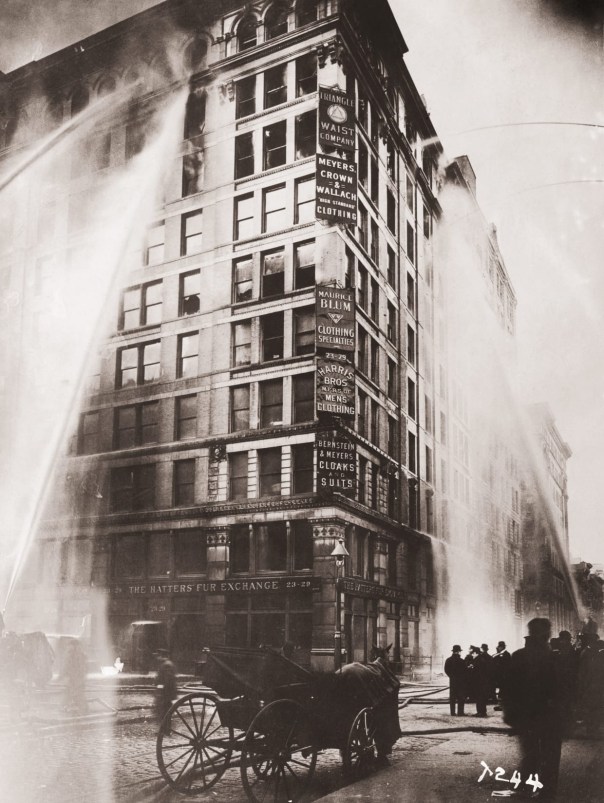


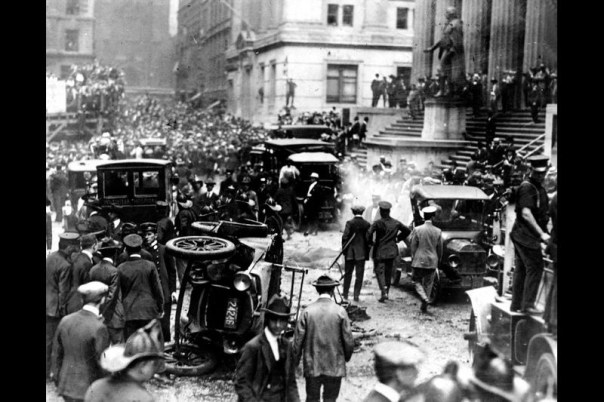
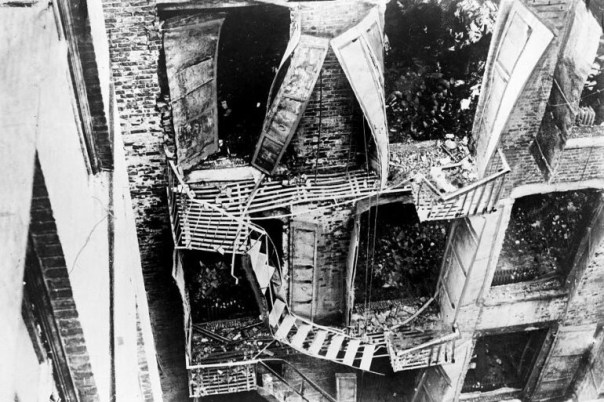
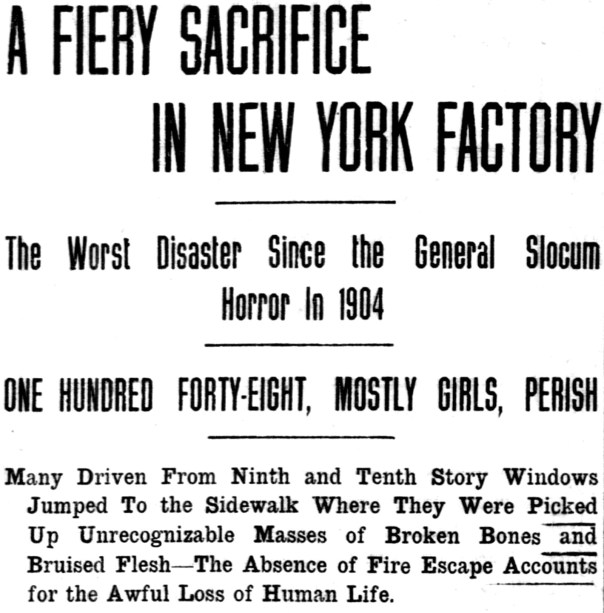
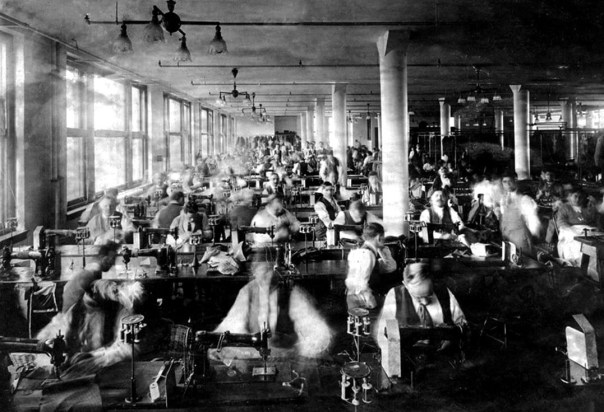


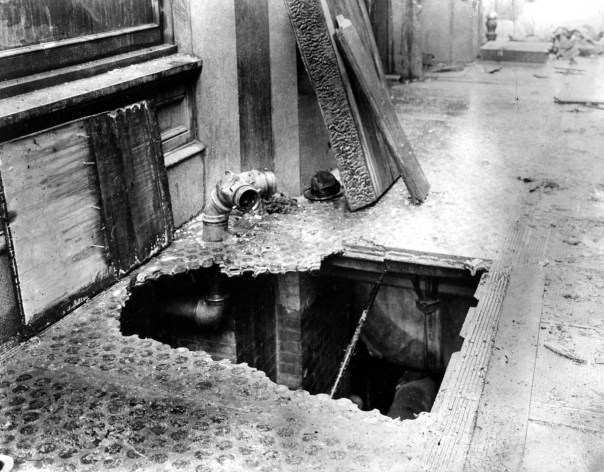
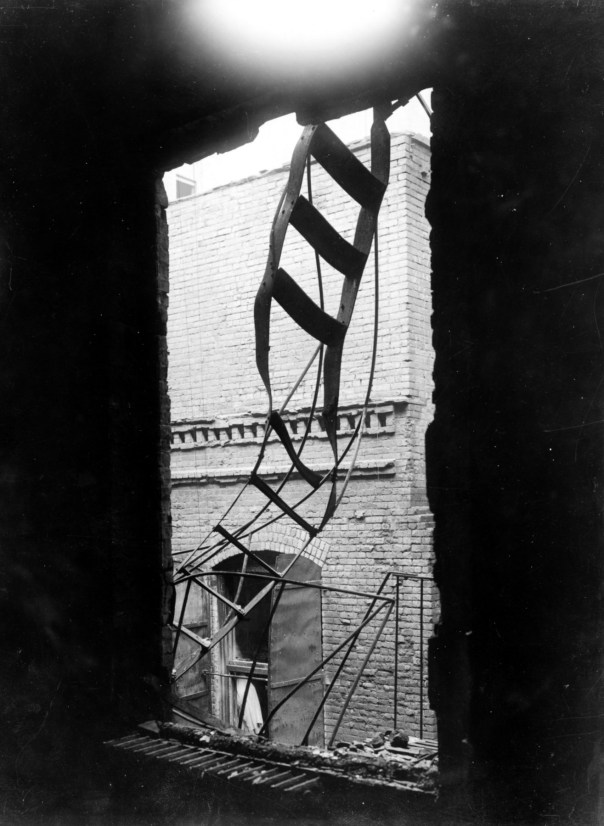


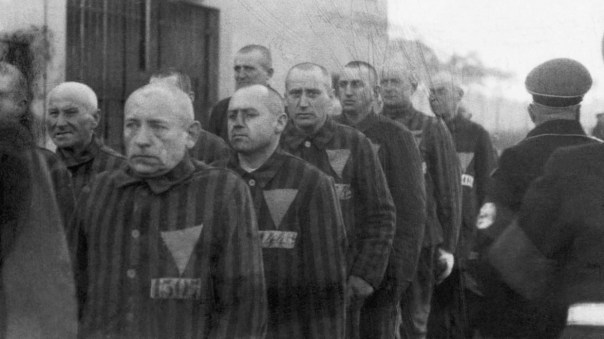



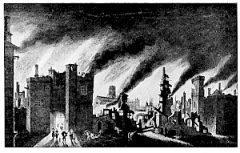
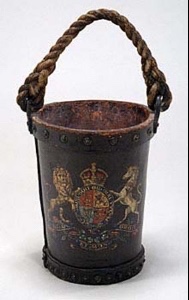
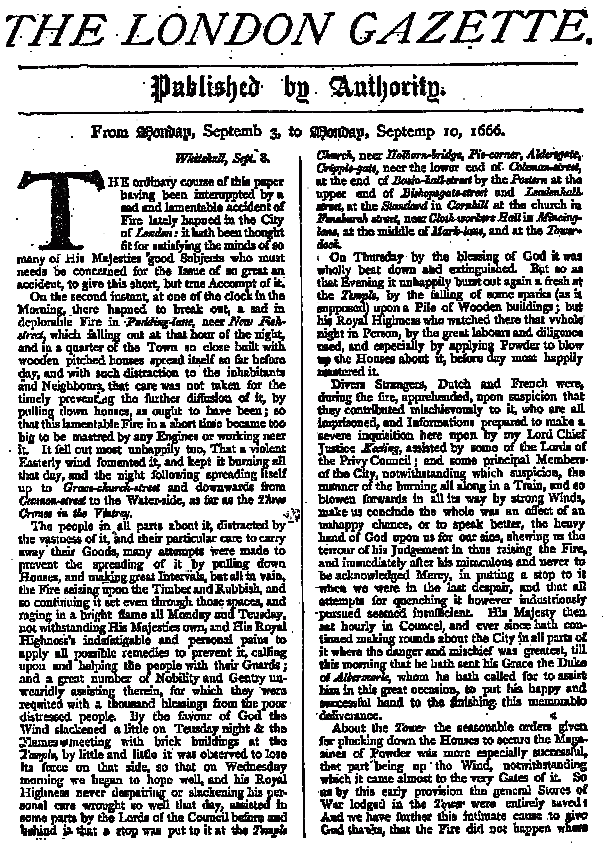


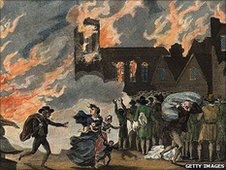

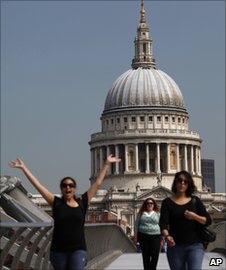
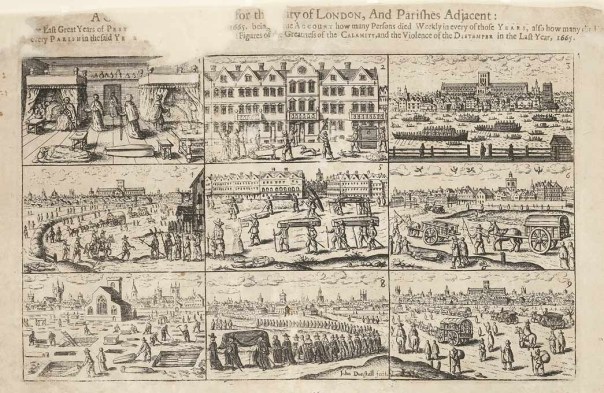


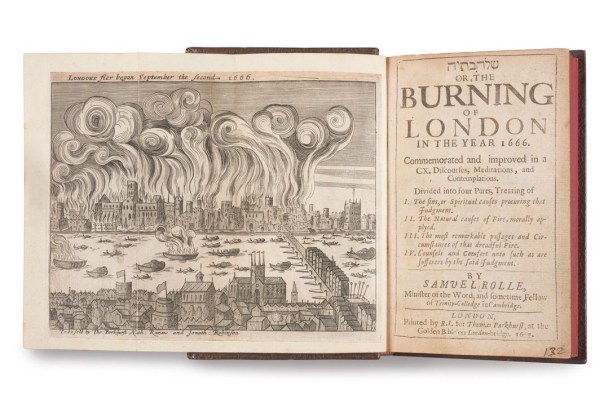
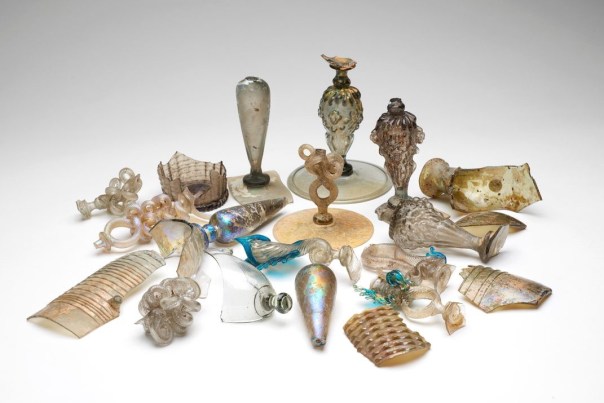

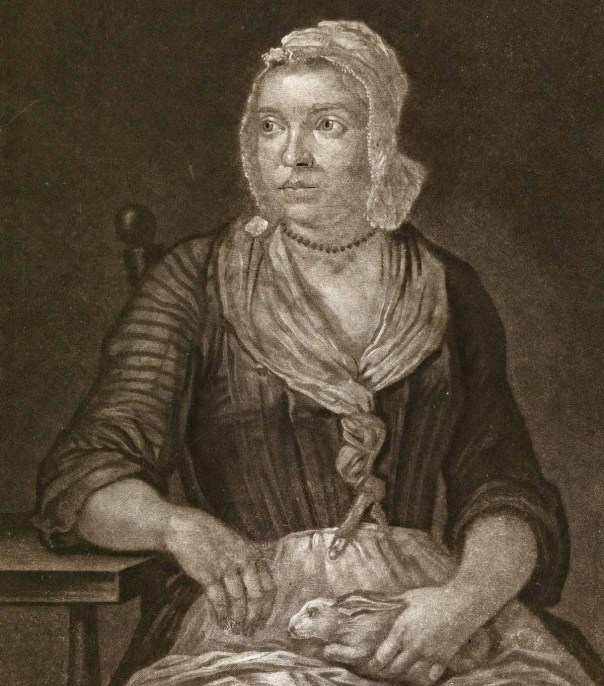


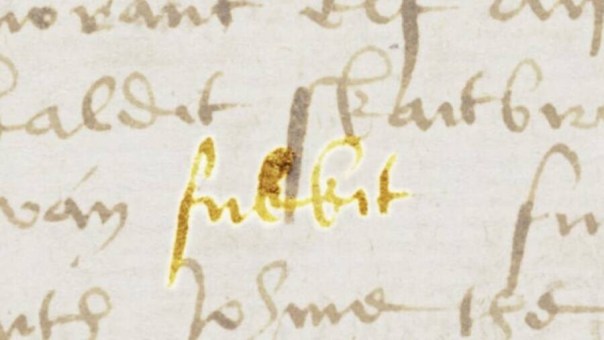














 timalderman