Flyer for Gay Liberation Front protest at the Examiner Building October 31, 1969, Courtesy of the GLBT Historical Society
“San Francisco is a refugee camp for homosexuals. We have fled here from every part of the nation, and like refugees elsewhere, we came not because it is so great here, but because it was so bad there. By the tens of thousands, we fled small towns where tobe ourselves would endanger our jobs and any hope of a decent life….”
Refugees from Amerika: A Gay Manifesto — Carl Wittman, December, 1969
Cover of Gay Sunshine, October 1970
By the time of the first night of protests at New York City’s Stonewall Inn, San Francisco had experienced months of demonstrations related to gay rights that would continue for the next few years.
Unlike Stonewall, the disturbances in San Francisco started over job rights, and a bar was not involved. But because the disturbances spread and issues multiplied, they would eventually include at least three bars, including Oakland’s White Horse.
The people who lit the fuse were recent arrivals. Gale Chester Whittington came from Denver in 1968 and Leo Laurence from Indianapolis in 1966.
Whittington got a job as an accounting clerk at the States Steamship Company (320 California).
Laurence was a journalist for the underground newspaper Berkeley Barb and the editor of the Society for Individual Rights magazine Vector.They met when Whittington volunteered to write for Vector.
A Vector photographer shared a photo from a shoot of Laurence and Whittington with The Barb. It was paired with an article from March 23, 1969, titled “Homo Revolt: Don’t Hide it.”
The article covered Laurence’s editorial call for gay revolution in Vector. Since the Barb had sex ads, it was read by several of Whittington’s straight colleagues at the shipping company. The day it was published, Whittington was fired. Because of the editorial Laurence was removed as editor of Vector.
Homo Revolt, Dont Hide It, Berkeley Barb, March 28, 1969
Whittington and Laurence then formed the Committee for Homosexual Freedom. Max Scheer, editor of The Barb, promised to cover their actions. On April 9, 1969 the picketing of the steamship company began with signs saying, “Let Gays Live,” “Free The Queers” and “Freedom for Homos Now.”
The protests continued for months. In May, The Advocate picked up coverage of the protests and by June the Rev. Troy Perry had begun a sympathy strike at the company’s Los Angeles offices.
Ultimately the protests didn’t succeed in getting Whittington’s job back, but because the San Francisco Chronicle, The Advocate and The Barb covered the protest (on an almost weekly basis) it spread the word nationally and CHF grew.
In Whittington’s autobiographical work, Beyond Normal: The Birth of Gay Pride, he mentions that Hibiscus and Lendon Sadler (of the Cockettes) and Carl Wittman (author of Refugees from Amerika: A Gay Manifesto) all took part in early CHF protests. Wittman read early drafts of his manifesto to the group.
By May protests spread to a second site: Tower Records. Employee Frank Denaro was fired after a security guard reported to management that he had returned the wink of a male customer. Unlike the steamship company, however, the record store was swayed by public opinion and by June the management offered Denaro his job back.
States Steamship Protest, Berkeley Barb, April 25 – May 1, 1969
Purple rain News about what was happening in San Francisco continued to spread. Berkeley Tribeprinted a letter saying Laurence’s articles, reprinted in a Minneapolis campus newspaper, had inspired a class in Homosexual Revolution from their Free University. In Beyond Normal, Whittington relates he received a telegram from New Yorkers who were at Stonewall and had been inspired by articles in The Barb. In October, both Laurence and Whittington were interviewed in the L.A. magazine Tangents.
By October 1969, Gay Liberation Front chapters opened in Berkeley and San Francisco. Two protests on Halloween show both coordination and fragmentation between new and old organizations.
At the first, called “Friday of the Purple Hand,” the Society for Individual Rights worked with CHF and both GLF groups to protest the editorial policies of the San Francisco Examiner. Earlier that week, Robert Patterson of the Examiner had written “The Dreary Revels of S.F. ‘Gay’ Clubs” which referred to gays as “semi-males” and lesbians as “women who aren’t exactly women” as well as referring to both as deviates.
Around 100 protesters picketed the Examiner building, and then had printers ink dumped on them from an upper floor by Examiner employees. The protesters used the ink to make purple hand prints all over the building (which gave the protest its name). The protesters were then attacked by the police Tactical Squad. Twelve people were injured and fifteen were arrested.
Friday of the Purple Hand coverage, San Francisco Free Press
The second event that day was a protest of the Beaux Arts Ball in the Merchandise Mart by Gay Guerrilla Theater and the Gay Liberation Coalition. Laurence reported in the Berkeley Tribe that the protest was focused on the acceptance of laws that only allowed drag on Halloween and New Year’s. He reported:
“I don’t dig drag myself (can’t imagine being a bearded lady)…but by God, I do feel the drags should have the right to do their thing; not just twice a year, but every day; not just at a drag ball, but at work, school, church and on the streets.”
This was among the first confrontations between older gay organizations and newer, more radical groups. Others included a protest of a S.I.R. dinner in February 1972 where Willie Brown was speaking on reforming sex laws (protested because of the cover charge of $12) and a takeover of the North American Conference of Homophile Organizations (NACHO) by the Gay Liberation Front in August 1970. GLF demanded that NACHO affirm its support of the Black Panther Party and Women’s Liberation and organize a national gay strike.
Clearly there was a generational difference between members of homophile organizations and the gay liberationists. Many of the younger generation had ties to the New Left and anti-war movements.
Laurence had been in Chicago for the ’68 Democratic convention and Wittman had written for the SDS before, for example. GLF members formed a gay contingent for the Nov. 15, 1969 Moratorium March Against the War. And by and large they read the underground press, not the gay press.
Demands for White Horse Protest, Gay Sunshine, October 1970
Horse sense The most dramatic confrontation between gay liberationists and gay bars came at the White Horse Bar in Oakland. Konstantin Berlandt, a long-time gay activist in Berkeley, was thrown out of the bar for selling Gay Sunshine by the owner Joe Johansen. The Gay Sunshine collective worked with the Berkeley GLF and picketed the bar. A list of demands included one that patrons be allowed to touch one another and slow dance. Within a week the bar capitulated to the protesters.
The White Horse wasn’t the only bar to raise the ire of liberationists.
Leonarda’s also refused to sell Gay Sunshineand a boycott was suggested (it’s hard to know how serious to take this, as the underground press kept reporting the bar’s name as “Leonardo’s”). The Stud also upset writers at the Berkeley Tribe by checking IDs at the door. They may, however, have just been opposed to bars as institutions. The article in the Tribesuggested:
“The bars can’t be liberated, they must be destroyed. They rip off our money, keep us in ghettos playing the same old weary games thinking that we are satisfied, and maintain all the divisions in Amerika — women and men, gay women and gay men, black and white, young and old. The Stud mentality in our heads has to be rooted out and killed too.”
Ultimately it was not the bars but the gay liberationists that disappeared as the 1970s progressed. I asked Gary Alinder, who was a member of Berkeley’s GLF, about burnout and the disappearance of Gay Lib in the ’70s.
“It evolved,” he said. “Gay liberation was a sudden uprising. Most of us were anti-organization. It was not meant to stay around for a long time. It was a burst of energy — an explosion. A second generation would come along that was more organized. But the message — to make people happy in themselves and come out — was valid.”
That burst of energy had a massive effect — it spread through LGBT organizations with programs like gay rap sessions to campuses across the country and created an explosion of new publications. Those publications and organizations did reach people. As a teen who picked up the Detroit Gay Liberator in the early ’70s, and who attended a gay rap meeting on my college campus, I can testify that those of us who followed were grateful for the work of the Stonewall generation.
Reference
From Stonewall to the White Horse: The Bay Area’s part in uprisings that changed the world, Bay Area Reporter, 26 June 2019, by Michael Flanagan https://www.ebar.com/bartab/bars//278089
After 55 years, Manly Sea Life Sanctuary closed its doors for the final time over the weekend, with hundreds turning out to bid farewell to a chunk of Sydney history.
But it’s not the only piece of our childhoods that’s shut down in recent years; from Wonderland Sydney to Mt Druitt Waterworks, we had plenty of amusement parks to pick from in the ’80s.
Old Sydney Town
Image via Old Sydney Town Facebook
Did you even go to school if you didn’t have at least one excursion to Old Sydney Town? Based on a map from the 1800s, the recreation of colonial Sydney opened in 1975 and saw actors taking on the roles of convicts and redcoats for re-enactments. Those bloody public floggings are still burned into our brains. Old Sydney Town eventually closed down in 2003.
Sega World
Image via Creative Commons
Sega World lived for just three short years, gracing us with the Ghost Hunter train, the Rail Chase indoor roller coaster and Aqua Nova, a 3D motion simulator back in 1997. But it was a victim of its own success; as technology improved, we left our Sega Mega Drives – and Sega World – behind.
African Lion Safari
Image via YouTube
How our parents ever thought that it was a good idea to take us to a theme park with the tagline “It’s scary, but nobody cares!” is beyond us. Vistors regularly had lions and tigers paw at, climb on and try to take a bite out of their cars and the park was eventually shut down in 1991. The animals, for a time, stayed behind but after a series of breakouts by resident lionesses, a bear and a number of water buffaloes, they were eventually relocated.
Australia’s Wonderland
Image via Creative Commons
How lucky were we to have Australia’s Wonderland right on our doorstep? Opening in 1985, the amusement park boasted rides like the Bush Beast, Space Probe and Bounty’s Revenge, with Hannah Barbera Land holding a special place in Sydneysiders hearts. Unfortunately, massive profits losses led to the closure of Wonderland in 2004, with the site demolished the following year.
Magic Kingdom Amusement Park
Image via YouTube
Australia’s Wonderland’s predecessor, Magic Kingdom Amusement Park opened in the 1970s and promised a massive day out for just $6. Waterslides, astro spin, dry slides, trampolines, stage shows, mini golf and magic… the 27-acre park, between Bankstown and Liverpool, was a huge draw for western Sydney families. When it came to the battle of the theme parks, though, Magic Kingdom lost out to Wonderland’s thrilling roller coaster rides and shut towards the end of the 1990s.
El Caballo Blanco
Image via YouTube
The Spanish-inspired amusement park, which opened in 1972, was as famous for its dancing Andalusian horses as it was for its waterslides, train rides and mini zoo. Owner Ray Williams’ beautiful performing stallions were such an attraction, he went on to establish a sister park at Disneyland in the US. The Sydney site eventually closed in 2003 after Williams’ death.
Mt Druitt Waterworks
Mt Druitt Waterworks had everything a theme park in the 1980s should have: waterslides, a beach pool and an urban myth about razor blades on the slippery dips. It was rumoured that the razors were what closed the park but the gossip was unfounded; Mt Druitt Waterworks, like pretty much every other Sydney amusement park, was simply losing money hand-over-fist. We’ll always have those ’80s summers, though.
The view north-west from the State Office Block construction site in about 1964. Photograph: City of Sydney Archives
Over the past two centuries Sydney’s architectural landscape has been continually transformed and many buildings have been consigned to dust. A new exhibition at the Museum of Sydney, Demolished Sydney, which opens on 19 November, remembers the city’s lost buildings from the Garden Palace to the ‘Black Stump’
RURAL BANK OF NEW SOUTH WALES, 1936-82
The bank, pictured here in the 1950s, was torn down and replaced by the Colonial Centre in 1985, despite vehement opposition from 7,000 Sydneysiders. The building was an important element in the harmonious art deco streetscape of Martin Place, where a number of commercial buildings complemented one another in style and size. The campaign to save the Rural Bank galvanised a new appreciation of the city’s art deco architecture and saved many buildings in the central business district.
Photograph: Commonwealth Bank Archives
PYRMONT INCINERATOR, 1937-92
The incinerator stood on a high sandstone promontory overlooking the Blackwattle Bay, now occupied by a Meriton apartment block. Designed by the architects Walter Burley Griffin and Eric Nicholls, it was a remarkable building, as stylish as it was functional. It was decommissioned in 1971 and deteriorated until the late 80s, when the site was sold. Despite protests the incinerator was demolished in 1992 – one of many local landmarks swept away by urban consolidation.
Photograph: City of Sydney Archives
HOTEL AUSTRALIA, 1891-1971
The hotel – once the city’s grandest – was a landmark for 80 years. When it opened in 1891 its belle époque opulence ranked it with the best hotels in Europe and the US. But, as new city hotels were constructed in the 60s, the Hotel Australia went into decline, unable to compete with international ‘jet set’ standards. The last guests checked out in June 1971. Most of the buildings on the block were demolished for Harry Seidler’s award-winning MLC Centre.
Photograph: Hall & Co/State Library of NSW
REGENT THEATRE, 1928-89
The Regent Place arcade and apartment tower stand where the Regent Theatre once screened Hollywood’s finest films. This part of George Street was an amusement mecca in the 30s and 40s, with the Trocadero Palais de Dance next door, the Century and the Plaza theatres across the road and the Victory Theatre three doors down. Cinemas struggled after the arrival of television in 1956. The construction of the first Hoyts multiplex in 1976 marked the end for single-screen theatres. The Regent, the grandest of them all, couldn’t last.
Photograph: Sam Hood/State Library of NSW
GARDEN PALACE, 1879-82
The Garden Palace was built for the 1879 Sydney International Exhibition and was one of the city’s most significant buildings until it turned to ash in a spectacular fire. A southern rival to London’s Crystal Palace (built for the Great Exhibition of 1851) and a testament to the industry and resources of the colony, it was framed in timber and clad in bricks and glass. A memorial gate now stands in the Royal Botanic Gardens in Macquarie Street.
Photograph: Richards & Co/National Library of Australia
COMMISSARIAT BUILDINGS, 1809-1939
The Museum of Contemporary Art today occupies the site where once stood the two oldest government buildings in the state – the convict-hewn Commissariat buildings, built in 1809 and 1812. In 1938 The Royal Australian Historical Society urged that these heritage buildings be retained as a museum of Australian history. But they were demolished in 1939 as part of a plan to build an overhead railway and expressway at Circular Quay, along with a Maritime Services Board building.
Photograph: Eleanor Georgina Shaw/State Library of NSW
ROWE STREET, 1875-1972
Before its demolition, Rowe Street’s tiny shops with their swinging signs created a lively, artisan atmosphere. The laneway was absorbed into the plaza beneath the MLC Centre tower and most of the shops were demolished. The street’s loss continues to be mourned by many Sydneysiders, who relished its cosmopolitan ambience.
Photograph: City of Sydney Archives
FORT MACQUARIE TRAM DEPOT, 1902-58
Before the Sydney Opera House was built, Bennelong Point was the site of the Fort Macquarie tram depot. And before that, it was a place for lime production, naval defence, transport and, finally, entertainment. Earlier still, it was Point Bennelong, named for the Wangal man who befriended the British colonists. To the Gadigal people, the traditional owners of this land, this spit of sandstone is Dubbagullee.
Photograph: State Records Authority of NSW
ST STEPHEN’S CHURCH, 1857-1935
The steepled church stood cheek by jowl with Victorian terrace houses and colonial shops on Phillip Street. It was requisitioned for the creation of a broad thoroughfare that would become Martin Place. The development was envisaged in 1891 but not completed until 1935. St Stephen’s was just one of the buildings swept aside to improve traffic flow at a time when Sydney was undergoing a rapid transition.
Photograph: St Stephen’s Uniting Church
STATE OFFICE BLOCK, 1967-97
The tower was known as the ‘Black Stump’ until its demolition, when it was replaced by Aurora Place. Part of the 60s renewal and modernisation of the city, the block was, briefly, the tallest tower in Sydney. It will be remembered as one of the city’s earliest examples of modern office layout, complete with revolutionary open-plan and modular spaces and Scandinavian design. When government policy shifted to leasing office space in the late 80s, the building was sold.
Synopsis: A British Businessman in South Africa, Member of Parliament in the Cape Colony, Prime Minister of the Cape Colony, imperialist, acquired a British Royal Charter, formed the British South African Company (BSAC) that colonized Zimbabwe.First Name: Cecil JohnLast Name: RhodesDate of Birth: 5 July 1853Date of Death: 26 March 1902
The Early Years
Cecil John Rhodes was born on 5 July 1853 in the small hamlet of Bishops Stortford, England. He was the fifth son of Francis William Rhodes and his second wife, Louisa Peacock. A priest of the Church of England, his father served as curate of Brentwood Essex for fifteen years, until 1849, when he became the vicar of Bishop’s Stortford, where he remained until 1876. Rhodes had nine brothers and two sisters and attended the grammar school at Bishop’s Stortford. When he was growing up Rhodes read voraciously but vicariously, his favourite book being The Meditations by Marcus Aurelius, but he equally adored the highly esteemed historian Edward Gibbon and his works on the great Roman Empire.
Rhodes fell ill shortly after leaving school and, as his lungs were affected, it was decided that he should visit his brother, Herbert, who had recently immigrated to Natal. It was also believed, by both Rhodes and his father, that the business opportunities offered in South Africa would be able to provide Rhodes with a more promising future than staying in England. At the tender age of 17 Rhodes arrived in Durban on 1 September 1870. He brought with him three thousand pounds that his aunt had lent him and used it to invest in diamond diggings in Kimberley.
After a brief stay with the Surveyor-General of Natal, Dr. P. C. Sutherland, in Pietermaritzburg, Rhodes joined his brother on his cotton farm in the Umkomaas valley in Natal. By the time Rhodes arrived at the farm his brother had already left the farm to travel 650 kilometres north, to the diamond fields in Kimberley. Left on his own Rhodes began to work his brother’s farm, growing and selling its cotton, proving himself to be an astute businessman despite his young age. Cotton farming was not Rhodes’ passion and the diamond mines beckoned. At 18, in October 1871, Rhodes left the Natal colony to follow his brother to the diamond fields of Kimberley. In Kimberley he supervised the working of his brother’s claim and speculated on his behalf. Among his associates in the early days were John X Merriman and Charles D. Rudd, of the infamous Rudd Concession, who later became his partner in the De Beers Mining Company and the British South Africa Company.
In 1872 Rhodes suffered a slight heart attack. Partly to recuperate, but also to investigate the prospects of finding gold in the interior, the Rhodes brothers trekked north by ox wagon. Their trek took them along the missionary road in Bechuanaland as far north as Mafeking, then eastwards through the Transvaal as far as the Murchison range. The journey inspired a love of the country in Rhodes and marked the beginning of his interest in the road to the north and the northern interior itself.
In 1873 Rhodes left his diamond fields in the care of his partner, Rudd, and sailed for England to complete his studies. He was admitted to Oriel College Oxford, but only stayed for one term in 1873 and only returned for his second term in 1876. He was greatly influenced by John Ruskin’s inaugural lecture at Oxford, which reinforced his own attachment to the cause of British Imperialism. Among his Oxford associates were Rochefort Maguire, later a fellow of All Souls and a director of the British South Africa Company, and Charles Metcalfe. At university Rhodes was also taken up with the idea of creating a ‘secret society’ of British men who would be able to lead the world, and spread to all corners of the globe the spirit of the Englishman that Rhodes so admired. He wrote of this society,
Why should we not form a secret society with but one object the furtherance of the British Empire and the bringing of the whole uncivilised world under British rule for the recovery of the United States for the making the Anglo-Saxon race but one Empire.’
His university career engendered in Rhodes his admiration for the Oxford ‘system’ which was eventually to mature in his scholarship scheme: ‘Wherever you turn your eye – except in science – an Oxford man is at the top of the tree’.
An Arch Imperialist
One of Rhodes’ guiding principles throughout his life, that underpinned almost all of his actions, was his firm belief that the Englishman was the greatest human specimen in the world and that his rule would be a benefit to all. Rhodes was the ultimate imperialist, he believed, above all else, in the glory of the British Empire and the superiority of the Englishman and British Rule, and saw it as his God given task to expand the Empire, not only for the good of that Empire, but, as he believed, for the good of all peoples over whom she would rule. At the age of 24 he had already shared this vision with his fellows in a tiny shack in a mining town in Kimberley, when he told them,
‘The object of which I intend to devote my life is the defence and extension of the British Empire. I think that object a worthy one because the British Empire stands for the protection of all the inhabitants of a country in life, liberty, property, fair play and happiness and it is the greatest platform the world has ever seen for these purposes and for human enjoyment’.
Rhodes’ British Empire corridor through Africa. Source
A few months later, in a confession written at Oxford in 1877, Rhodes articulated this same imperial vision, but with words that clearly showed his disdain for the people whom the British Empire should rule:
“I contend that we are the first race in the world, and that the more of the world we inhabit the better it is for the human race. Just fancy those parts that are at present inhabited by the most despicable specimen of human being, what an alteration there would be in them if they were brought under Anglo-Saxon influence…if there be a God, I think that what he would like me to do is paint as much of the map of Africa British Red as possible…”
One of Rhodes’ greatest dreams was a ribbon of red, demarcating British territory, which would cross the whole of Africa, from South Africa to Egypt. Part of this vision was his desire to construct a Cape to Cairo railway, one of his most famous projects. It was this expansive vision of British Imperial control, and the great lengths that Rhodes went to in order to fulfil this vision, which led many of his contemporaries and his biographers to mark him as a great visionary and leader.
Rhodes was both ruthless and incredibly successful in his pursuit of this scheme of a great British Empire. His contemporaries marvelled both at his prowess and incredible energy and capacity, but they also shuddered at his callousness and depravity in all his pursuit. His contemporaries, both awed and appalled by the man, wrote of him as a man of original ideas who sought more than the mere ‘getting and spending which limits the ambitions and lays waste the powers of the average man’. Yet although many people at the time saw Rhodes as a man of great vision, an unconquerable leader with the ability to pursue his aims across the vast African continent, there were nonetheless dissident voices who were shocked by Rhodes’ actions and those of his British South Africa Company. One such voice was that of Olive Schreiner, who, initially awed by Rhodes, had come to abhor him. In April of 1897 she wrote, in a letter to her friend, John Merriman:
“We fight Rhodes because he means so much of oppression, injustice, & moral degradation to South Africa; – but if he passed away tomorrow there still remains the terrible fact that something in our society has formed the matrix which has fed, nourished, built up such a man!”
The King of Diamonds
Rhodes’ plans for the Cape To Cairo Railway, 1899 Source
Whilst at Oxford, Rhodes continued to prosper in Kimberley. Before his departure for Oxford Rhodes had realised that the changing laws in the Kimberley area would force the ‘small man’ out of the diamond fields and would only leave larger companies able to operate in the mines. In light of this he sought to consolidate a number of mines with his partner, Charles Rudd. Rhodes had also decided to move away from the ‘New Rush’ Kimberley mine fields, that were higher in the ground and thus more accessible, back to the lower yielding ‘Old Rush’ area. Here Rhodes and Rudd bought the costly claim of what was known as old De Beers (Vooruitzicht Farm) which owed its name to Johannes Nicolaas de Beer and his brother, Diederik Arnoldus de Beer, the original owners of the farm Vooruitzicht. It was this farm that would lend its name to Rhodes and Rudd’s ever growing diamond company.
In 1874 and 1875 the diamond fields were in the grip of depression, but Rhodes and Rudd were among those who stayed to consolidate their interests. They believed that diamonds would be numerous in the hard blue ground that had been exposed after the softer, yellow layer near the surface had been worked out. During this time the technical problem of clearing out the water that was flooding the mines became serious and he and Rudd obtained the contract for pumping the water out of the three main mines.
Rhodes had come to the realisation that the only way to avoid the cyclical boom and bust of the diamond industry was to have far greater control over the production and distribution of diamonds. And so, in April 1888, in search of an oligopoly over diamond production, Rhodes and Rudd launched the De Beers Consolidated Mines mining company. With 200 000 pounds capital the Company, of which Rhodes was secretary, owned the largest interest in mines in South Africa. Rhodes greatest coup was to get Barney Barnato, owner of the Kimberley mine, to go partnership with Rhodes’ De Beers Company. Of the encounter Barnato later wrote:
“When you have been with him half an hour you not only agree with him, but come to believe you have always held his opinion. No one else in the world could have induced me to into this partnership. But Rhodes had an extraordinary ascendancy over men: he tied them up, as he ties up everybody. It is his way. You can’t resist him; you must be with him.”
With his acquisition of most of the world’s diamond mines Rhodes became an incredibly rich man. But Rhodes was not after wealth for wealth’s sake, he was acutely aware of the relationship between money and power, and it was power which he sought. Hans Sauer wrote of a conversation he had had with Rhodes whilst looking over the Kimberley diamond mine, where Sauer had asked Rhodes, ‘what do you see here?’, and, Sauer writes, ‘with a slow sweep of his hand, Rhodes answered with the single word: “Power”.’
In the early 1880s gold was discovered in the Transvaal, sparking the Witwatersrand Gold Rush. Rhodes considered joining the rush to open gold mines in the region, but Rudd, convinced him that the Witwatersrand was merely the beginning, and that far greater gold fields lay to the north, in present day Zimbabwe and Zambia. As a result Rhodes held back while other Kimberley capitalists hastened to the Transvaal to stake the best claims. In 1887 when Rhodes finally did act and formed the Goldfields of South Africa Company with his brother Frank, most of the best claims were already taken. Goldfields South Africa performed very poorly, prompting Rhodes to look towards the north for the gold fields that Rudd had assured him were lying in wait.
The Statesman
In 1880 Rhodes prepared to enter public life at the Cape. With the incorporation of Griqualand West into the Cape Colony in 1877 the area obtained six seats in the Cape House of Assembly. Rhodes chose the constituency of Barkley West, a rural constituency in which Boer voters predominated, and at age 29 was elected as its parliamentary representative. Barkley West remained faithful to Rhodes even after the Jameson Raid and he continued as its member until his death.
The chief preoccupation of the Cape Parliament when Rhodes became a member was the future of Basutoland, where the ministry of Sir Gordon Sprigg was trying to restore order after a rebellion in 1880. The ministry had precipitated the revolt by applying its policy of disarmament to the Basuto. Seeking expansion to the north and with prospects of building his great dream of a Cape to Cairo railway, Rhodes persuaded Britain to establish a protectorate over Bechuanaland (now Botswana) in 1884, eventually leading to Britain annexing this territory.
Rhodes seemed to have immense influence in Parliament despite the fact that he was acknowledged to be a poor speaker, with a thin, high pitched voice, with little aptitude for oration and a poor physical presence. What made Rhodes nonetheless so incredibly convincing to his contemporaries has remained much of a mystery to his biographers.
The Push for Mashonaland
Rhodes’ imperial vision for Africa was never far from his mind. In 1888 Rhodes looked further north towards Matabeleland and Mashonaland, in present day Zimbabwe. Matabeleland fell squarely in the territory which Rhodes hoped to conquer, from the Cape to Cairo, in the name of the British Empire. It also was believed to hold vast, untapped gold fields, which Rudd believed would be of far greater value than those discovered in the Witwatersrand.
In pursuit of his imperial dream and in his desire to make up for the failure of his Gold Fields Mining Company, Rhodes began to explore ways in which to exploit the mineral wealth of Matabeleland and Mahsonaland. The King of Matabeleland, King Lobengula, who was believed by the British to also rule over Mashonaland, had already allowed a number of British miners mineral rights in his kingdom. He had also sent a number of his men to labour in the diamond mines, thus setting a precedence for engagement with him. However, the King had consistently stated quite clearly that he wanted no British interference in his own territory.
In 1887 Lobengula signed a treaty with the Transvaal Government, an act that convinced Rhodes that the Boere were trying to steal ‘his north’. By this stage the ‘scramble for Africa’ was also already well under way and Rhodes became convinced that the Germans, French and Portuguese were going to try to take Matabeleland. These fears made Rhodes rapidly mobilise in order to get Matabeleland under British control. Although the British government at the time was against further colonial expansion to the north of South Africa, Rhodes was able to use the threat of other imperial powers, such as Germany, taking over the land to push the British Government to take action.
The Government sent John Smith Moffat, the then Assistant Commissioner to Sir Sidney Shippard in Bechuanaland (now Botswana) who was well known to the Matabele Chief Lobengula as their fathers were friends, to negotiate a treaty with Lobengula. The result was the Moffat Treaty of February 1888, essentially a relaxed British protection treaty. The Moffat Treaty was however between Lobengula and the British Government, Rhodes himself was hardly a relevant player in this. Worried that the Moffat Treaty was too weak to hold Matabeleland, and convinced that the Dutch and Germans were making plans to take the territory and desperate for exclusive mining rights in the region, Rhodes concocted to his own plan to take control of the territory. With his business partner Rudd, Rhodes formed the British South Africa Company (BSAC), crafted on the British and Dutch East India company models. The BSAC was a commercial-political entity aiming at exploiting economic resources and political power to advance British finance capital.
Shortly after the Moffat Treaty, in March 1888, Rhodes sent his business partner Charles Rudd to get Lobengula to sign an exclusive mining concession to the British South Africa Company. When Rudd arrived at Lobengula’s kraal however, there were a number of other British concession hunters already there, seeking to undertake the exact same manoeuvre as Rhodes’ BSAC. Through Rhodes influence however, Rudd was able to win over the support of the local British officials staying with Lobengula, a move which ultimately convinced Lobengula that Rudd had more power and influence than any of the other petitioners seeking concessions from him.
After much negotiation Rudd was eventually able to get Lobengula to sign a concession giving exclusive mining rights to the BSAC in exchange for protection against the Boere and neighbouring tribes. This concession became known as the Rudd Concession. Lobengula’s young warriors were angry and inflamed and were itching to kill the white men who were entering their lands. Lobengula however feared his people would be defeated if they attacked the whites, and so it is likely that he signed the Rudd Concession in the hopes of gaining British protection and thereby preventing a Boer migration into his lands which would then incite his warriors to battle. For Lobengula his options were essentially to either concede to the British or to the Dutch. In the belief that he was protecting his interests he sided with the seemingly more lenient and liberal British. Like so many documents signed by Africans during the colonial period, the Rudd Concession was however not what it claimed to be, but rather became a justifying document for the colonisation of the Ndebele and the Shona.
Using the Rudd Concession, despite initial protests by the British Government, Rhodes managed to acquire a Royal Charter (approval from the British monarch) for his British South Africa Company. The Royal Charter allowed Rhodes to act on behalf of British interests in Matabeleland. It gave the company full imperial and colonial powers as it was allowed to create a police force, fly its own flag, construct roads, railways, telegraphs, engage in mining operations, settle on acquired territories and create financial institutions.
Rhodes convinced the British Government to give his company the right to control those parts of Matabeleland and Mashonaland that were ‘not in use’ by the African residents there and to provide ‘protection’ for the Africans on the land that was reserved for them. This proposal, which would cost the British taxpayer nothing but would extend the reaches of the British Empire, eventually found favour in London. The charter was officially granted on 29 October 1889. For Rhodes is BSAC with its Royal charter was the means whereby which to expand the British Empire, which a timid government and penurious British treasury were not about to accomplish
Rhodes reclining on one of his many voyages to the north. Source
After gaining his charter from the British Government Rhodes and his compatriots in the BSAC essentially felt that Matabeleland and Mashonaland were now under their control. Rhodes felt that war with the Ndebele was inevitable and would not allow his plans for extending the British Empire to be thwarted by “a savage chief with about 8 000 warriors”. Rhodes was determined that white settlers would soon occupy Matabeleland and Mashonaland, and the Ndebele could not resist them.
To gain power over Matabeleland and Mashonaland Rhodes hired Frank Johnson and Maurice Heany, two mercenaries, to raise a force of 5 00 white men who would support BammaNgwato, enemies of Lobengula’s, in an attack on Lobengula’s kraal. Johnson offered to deliver to Rhodes the Ndebele and Shona territory in nine month for £87 500. Johnson was joined by Frederick Selous, a hunter with professed close knowledge of Mashonaland. Rhodes advised Johnson to select as recruits primarily the sons of rich families, with the intention that, if the attack did fail and the British were captured, the British Government would be left with no choice but to send armed forces into Matabeleland to rescue the sons of Britain’s elite. In the end Johnson’s attack was called off because Rhodes had received news that Lobengula was going to allow Rhodes’ men into Matabele and Mashonaland without any opposition.
Despite Lobengula capitulating and giving permission for vast numbers of BSAC miners to enter his territory, Rhodes calculated a new plan to gain power in the region. In 1890 Rhodes sent a ‘Pioneer Column’ into Mashonaland, a column consisting of around 192 prospecting miners and around 480 armed troopers of the newly formed British South Africa Company Police, who were ostensibly there to ‘protect’ the miners. By sending in this column, Rhodes had deviously planned a move which would either force Lobengula to attack the settlers and then be crushed, or force him to allow a vast military force to take seat in his country. In the words of Rutherfoord Harris, a compatriot of Rhodes:
“….if he attack us, he is doomed, if he does not, his fangs will be drawn and the pressure of civilisation on all his border will press more and more heavily upon him, and the desired result, the disappearance of the Matabele as a power, if delayed is yet the more certain.”
The men who formed part of the Pioneer Column were all promised both gold concessions and land if they were successful in settling in Mashonaland.
On 13 September 1890, a day after the Pioneer Column arrived in Mashonaland,Rhodes’s BSAC invaded and occupied Mashonaland without any resistance from Lobengula. They settled at the site of what was later to become the town of Salisbury, present day Harare, marking the beginning of white settler occupation on the Zimbabwean plateau. They raised the Union Jack (the British national flag) in Salisbury, proclaiming it British territory.
The prospectors and the company had hoped to find a ‘second Rand’ from the ancient gold mines of the Mashona, but the gold had been worked out of the ground long before. After failing to find this perceived ‘Second Rand’, Rhodes, instead of allowing the settlers mining rights, as had been agreed to by Lobengula, granted farming land to settler pioneers, something which went expressly against the Rudd Concession.
The end of the Matabele
In conceding Mashonaland to the BSAC Lobengula had avoided going to war with the British and had kept his people alive, and much of his territory intact. But unfortunately he had only been able to delay the inevitable. With no gold was found in Mashonaland, Rhodes’ BSAC was facing complete financial ruin. Leander Jameson suggested to Rhodes that ‘getting Matabeleland open would give us a tremendous life in shares and everything else’. Gaining the Matabeleland territory would also play directly into Rhodes megalomaniac vision of expanding the British Empire across Africa.
And so, in 1893, the BSAC eventually clashed with the Ndebele, in what Rhodes had perceived as an inevitable war. The settlers justified their initial attacks against the Ndebele to the British Government by arguing that they were protecting the Shona against the ‘vicious’ and ‘savage’ Ndebele impis. This was however a ploy, consciously concucted by Jameson in conjunction with Rhodes, in order to ensure that the British Government would not object to their further intrusions into Matabeleland by creating the impression that the Ndebele were the first aggressors. To fight their war the company recruited large bands of young mercenaries who were promised land and gold in exchange for their fighting power.
The final blow any hopes that the Ndebele might avoid war, came when Jameson was able to convince the British Government that Lobengula had sent a massive impi of 7 000 men into Mashonaland, who then gave Jameson leave to engage in defensive tactics. There is no indication that the impi Jamseon reported on had ever existed. Lobengula himself, in a last appeal to the legal/rational system the British seemed to so fervently uphold, wrote to the British High Commissioner saying, “Every day I hear from you reports which are nothing but lies. I am tired of hearing nothing but lies. What Impi of mine have your people seen and where do they come from? I know nothing of them.”
An artist’s impression of the British battling against the Ndebele Source
It was however far too late for Lobengula. With the permission to engage in defensive action from the British Government Rhodes joined Jameson in Matabeleland and his group of mercenary soldiers struck a quick and fatal blow at the Ndebele. Rhodes’ mercenaries were in possession of the latest in munitions technology, carrying with them into the veld maxim guns, which, like machine guns, could fire rapid rounds. The Ndebele Impis were helpless in the face of this brutal killing technology and were slaughtered in their thousands. Lobengula himself realised he could not face the British in open combat and so he burnt down his own capital and fled with a few warriors. He is presumed to have died shortly afterwards in January of 1894 from ill health.
The war against the Matabele, fought mostly by voluntary mercenaries, cost around £66 000. Most of the money to pay for this war came directly from Rhodes Consolidated Goldfields Company, which by this point had begun to produce excellent yields from the deeper lying gold fields. The conquered lands were named Southern and Northern Rhodesia, to honour Rhodes. Today, these are the countries of Zimbabwe and Zambia. By the 1890s these conquered territories were being called Southern and Nothern Rhodesia.
The Precursor to Apartheid
In July 1890 Rhodes became the Prime Minister of the Cape colony, after getting support from the English-speaking white and non-white voters and a number of Afrikaner-bond, whom he had offered shares in the British South Africa Company. One of Rhodes most notorious and infamous undertakings as Prime Minister in South Africa, was his institution of the Glen Grey Act, a document that is often seen as the blueprint for the Apartheid regime that was to come.
On 27 July 1894, Rhodes gave a rousing speech, full of arrogance and optimism, to the Parliament of Cape Town that lasted more than 100 minutes. In this speech Rhodes was opening debate on the ‘Native’ Bill that he had been working on for two years. The bill had initially been intended merely as an administrative act to bring more order to the overcrowded eastern Cape district of Glen Grey, but in his typical fashion Rhodes had turned this routine administrative task into something far bigger, the formulation of what he described as a ‘Native Bill for Africa’. In much of his speech Rhodes set out, in clear cut terms, the chief purpose of his ‘Native Bill’, to force more Africans into the wage-labour market, a pursuit which would undoubtedly also help Rhodes in his own mining claims in Kimberley and the Transvaal.
Rhodes opened his speech on the Glen Grey Act with the following words:
‘There is, I think, a general feeling that the natives are a distinct source of trouble and loss to the country. Now, I take a different view. When I see the labour troubles that are occurring in the United States, and when I see the troubles that are going to occur with the English people in their own country on the social question and the labour question, I feel rather glad that the labour question here is connected with the native question.’
He then continued,
‘The proposition that I would wish to put to the House is this, that I do not feel that the fact of our having to live with the natives in this country is a reason for serious anxiety. In fact, I think the natives should be a source of great assistance to most of us. At any rate, if the whites maintain their position as the supreme race, the day may come when we shall all be thankful that we have the natives with us in their proper position….. I feel that I am responsible for about two millions of human beings. The question which has submitted itself to my mind with regard to the natives is this ”” What is their present state? I find that they are increasing enormously. I find that there are certain locations for them where, without any right or title to the land, they are herded together. They are multiplying to an enormous extent, and these locations are becoming too small…. The natives there are increasing at an enormous rate. The old diminutions by war and pestilence do not occur… W e have given them no share in the government ”” and I think rightly, too ”” and no interest in the local development of their country. What one feels is that there are questions like bridges, roads, education, plantations of trees, and various local questions, to which the natives might devote themselves with good results. At present we give them nothing to do, because we have taken away their power of making war ”” an excellent pursuit in its way ”” which once employed their minds…. We do not teach them the dignity of labour, and they simply loaf about in sloth and laziness. They never go out and work. This is what we have failed to consider with reference to our native population… What I would like in regard to a native area is that there should be no white men in its midst. I hold that the natives should be apart from white men, and not mixed up with them… The Government looks upon them as living in a native reserve, and desires to make the transfer and alienation of land as simple as possible… We fail utterly when we put natives on an equality with ourselves. If we deal with them differently and say, ” Yes, these people have their own ideas,” and so on, then we are all right ; but when once we depart from that position and put them on an equality with ourselves, we may give the matter up… As to the question of voting, we say that the natives are in a sense citizens, but not altogether citizens ”” they are still children….’
The Glen Grey Act was to pressure Africans to enter the labour market firstly by severely restricting African access to land and landownership rights so that they could not become owners of the means of production, and secondly by imposing a 10 shilling labour tax on all Africans who could not prove that they had been in ‘bona fide’ wage employment for at least three months in a year. This land shortage coupled with a tax for not engaging in wage labour would push thousands of Africans into the migrant labour market. These were all measures essentially designed to ensure a system of labour migration which would feed the mines in both Kimberley and the Rand with cheap migrant labour. This section of the act instigated the terrible migrant-labour system that was to be so destructive in 20th century South Africa.
Another pernicious outcome of the Glen Grey Act was its affected on African land rights claims and restricted and controlled where they could live. According to the act ‘natives’, as African peoples were then termed, were no longer allowed to sell land without the permission of the governor, nor where they allowed to divide or sublet the land or give it as inheritance to more than one heir. The act also laid out that the Glen Grey area and the Transkei should remain “purely native territories”. This act was eventually to become the foundation of the 1913 Natives Land Act, a precursor to much of the Apartheid policy of separate development and the creation of the Bantustans.
Lastly the Glen Grey Act radically reduced the voting franchise for Africans. One of Rhodes primary policies as Prime Minister was to aim for the creation of a South African Federation under the British flag. A unified South Africa was an incredibly important political goal for Rhodes, and so when the Afrikaner Bondsmen came to Rhodes to complain about the number and rise of propertied Africans, who were competing with the Afrikaners and characteristically voted for English, rather than Afrikaans, representative. In response to the Afrikaners’ complaints, Rhodes decided to give them, in the Glen Grey Act, a policy which would disenfranchise the Africans competing with Afrikaners whilst also ensuring Africans could not own farms which would compete with the Afrikaners.
To disenfranchise Africans the Act raised the property requirements for the franchise and required each voter to be able to write his own name, address and occupation before being allowed to vote. This radically curtailed the number of Africans who could vote, essentially marking the beginning of the end for the African franchise. This new law allowed for the voter-less annexation of Pondoland. The Glen Grey Act also denied the vote to Africans from Pondoland no matter their education or property. Through the adoption of the Act, Rhodes managed to gradually persuade Parliament to abandon Britain’s priceless nineteenth-century ideal that in principle all persons, irrespective of colour, were equal before the law.
The Glen Grey Act was vigorously opposed by the English speaking members of the Cape Parliament, but Rhodes, with his forceful character, was able to push the act through Parliament, and in August 1984 Rhodes’ Glen Grey Act became law. The Glen Grey Act, which created the migrant labour system, formalised the ‘native reserves’ and removed the franchise of almost all Africans, is seen by many as lying the ground work for the Apartheid system of the 20th century.
The Fall of Giants
By 1895, at the height of his powers, Rhodes was the unquestioned master of South Africa, ruling over the destiny of the Cape and its white and African subjects, controlling nearly all of the world’s diamonds and much of its gold, and effectively ruling over three colonial dependencies in the heart of Africa.
‘The Rhodes Colosuss striding from Cape Town to Cairo’, from Punch Magazine, 1892 Source
Although Rhodes’ policies were instrumental in the development of British imperial policies in South Africa, he did not, however, have direct political power over the Boer Republic of the Transvaal. He often disagreed with the Transvaal government’s policies and felt he could use his money and his power to overthrow the Boer government and install a British colonial government supporting mine-owners’ interests in its place. In 1895, Rhodes precipitated his own spectacular fall from power when he supported an attack on the Transvaal under the leadership of his old friend, Leander Jameson. It was a complete failure and Rhodes had to resign as Prime Minister of the Cape and head of the British South Africa Company in January 1896. After having befriended the Afrikaners for so many years, Rhodes’ support of the Jameson Raid and his attempts to get the miners in Johannesburg to rise up in a coup against the leaders of the Transvaal, were seen by the Bondsmen and Afrikaners as a complete betrayal, and Rhodes’ hopes of ever uniting South Africa under one flag were dashed against the rocks.
Despite his meteoric loss of power and prestige Rhodes nonetheless continued his political activities. In mid 1896 the Shona and Ndebele people in Southern Rhodesia, present day Zimbabwe, rose up against their colonial oppressors in a bid for freedom. Rhodes personally travelled to the region to take charge of the colonial response. In his attacks on the Ndebele and Shona he was vindictive, resorting to a scorched earth policy and destroying all their villages and crops.
After months of fighting Rhodes decided that conciliation was the only option. Looking to negotiate a peace settlement with the Ndebele and Shona he headed into the Matopo Mountains where a great indaba was held. Rhodes asked the chiefs why the Africans had risen up in war against the colonisers. The chiefs replied that the Africans had for decades been humiliated by the white settlers, subjected to police brutality and pushed into forced labour. Rhodes listened to the complaints and told the chiefs, “All that is over”. The chiefs saw this as a promise that the conditions for them and their countrymen would be improved, and so they agreed with Rhodes that they would end their hostilities. As a part of their agreement Rhodes spent many days in the Matopo hills, and every day the Ndebele would come to him and voice all their complaints. In belief that their worries and complaints would be given just recognition, the Ndebele and Shona chiefs laid down their arms and returned to their fields. When he left Rhodes was lauded by the people whose suffering by the hands of colonists was only to increase in the next century, as the ‘Umlamulanmkunzi’, the peacemaker.
Vintage postage stamp of Cecil John Rhodes, founder of Rhodesia former Zimbabwe.
Thereafter, Rhodes was in ill-health, but he began concentrating on developing Rhodesia and especially in extending the railway, which he dreamed would one day reach Cairo, Egypt.
After the Anglo-Boer war that broke out in October 1899, Rhodes rushed to Kimberley to organise the defence of the town. However, his health was worsened by the siege, and after travelling to Europe he returned to the Cape in February 1902. He died on 26 March 1902 at Muizenberg in the Cape Colony (now Cape Town). Reportedly some of his last words were, ‘so little done, so much to do’. Rhodes was buried at the Matopos Hills, Rhodesia (Zimbabwe). He left £6 million (approx USD 960 million in 2015), most of which went to Oxford University to establish the Rhodes scholarships to provide places at Oxford for students from the United States, the British colonies, and Germany.
Rhodes never married and he did not have any known children and there is some suggestion that he was homosexual. This suggestion is based on the care and concern he showed to some men, but it is not enough to offer any solid truth
Almost 114 years after the death of Cecil Rhodes his memory lives on, with the Rhodes Must Fall campaign spreading from Cape Town to Oxford.
Once glorified by white colonialists, Rhodes is now more widely viewed as a prime villain in southern African history. Since his death he has been the subject of more than 30 biographies, so one is left to wonder if there is anything new that could be said about him. An attempt is made in the latest book by Robin Brown, The Secret Society: Cecil John Rhodes’s Plan for a New World Order – an attempt that fails.
The main claim of the book is that Rhodes established a “secret society” whose task was to extend British rule across the globe. This society continued to exist in different guises long after Rhodes’ death in 1902. Thereafter the society came to operate within, or under the guise of, other bodies – the Rhodes Trust operating as the “top layer of the structure”; in 1909 the society was renamed the Round Table; and from 1920 the Institute of International Affairs became its new face.
… a homosexual hegemony – which was already operative in the Secret Society – went on to influence, if not control, British politics at the beginning of the twentieth century.
Rhodes himself, the book alleges, was gay, and because homosexuality was a criminal offence in Britain at the time, he realised that gays only survived if they operated in:
… a society that remained secret, ring-fenced by wealth and political influence.
So it appears that the society’s secrecy was necessitated by both imperial aspirations and sexual inclinations.
The book contains major flaws, the chief of which is the lack of solid, supporting evidence. Brown claims that “Rhodes documented everything” – which was not actually the case in this regard. Just about the only documentary evidence cited to support the existence of this secret society is the codicil attached to Rhodes’ first will, which did indeed proclaim his intention to form such a society.
The problem is that this will was drawn up in 1877 when Rhodes had not yet accumulated great wealth. According to this early will he would leave all his worldly goods in trust to allow for the formation of a secret society, but his limited wealth at the time could hardly have made this possible.
The plan to form such a society also did not appear in Rhodes’ final will. One has to agree with Robert L. Rotberg – whose biography of Rhodes is the most substantial – that to read Rhodes’ plan today is:
… to sense the ruminations and even fantasies of a madcap bumbler.
Each chapter of Brown’s book has just a handful of endnotes, and there are hardly any references to source material that might substantiate the claims made. The problem is highlighted on pages 237-38. First it is stated that there is “clear evidence” that Lord Alfred Milner took over and transformed the secret society after Rhodes’ death. But on the very next page Brown writes that during this transformation process Milner “kept things covert” so that ‘there is little hard evidence’ of the society’s existence at the time.
This is the problem throughout the book – because the society was so secret it presumably kept no surviving records, meaning that there is no proof of its existence. The book thus comes to be based heavily on surmise and assertion. While critics can argue that it is impossible to prove that the society existed at all, Brown can retort that it is impossible to prove that it did not exist. What cannot be contested is that the book lacks referenced source material to substantiate its claims.
The suggestion that the Rhodes Trust was closely linked to the secret society is not credible. In Anthony Kenny’s massive bookon the history of the trust there are only three brief references to the idea of a secret society – and one of those is to a letter by Leo Amery stating that there was no such society.
The book contains some basic errors which undermine one’s confidence in the content and analysis. The cotton farm where Rhodes joined his brother on arrival in Natal in 1870 was not north-east of Durban, but to the west (p.6). Rhodes was not “of the era of British reformers who caused slavery to be outlawed”, nor did he display “liberal attitudes towards blacks” (p.19). Jameson was imprisoned for four months, not one (p.22). Rhodes’ brokers were not John Rudd and Robert Moffat – they were Charles Rudd and J.S. Moffat (p.57).
George V did not precede Victoria (p.154). Clinton’s presidential nomination speech was in 1991, not 1981 (p.168). Chamberlain was the colonial secretary, not foreign secretary (p.222 and elsewhere).
The book would have worked better had it been presented as an examination of the personal networks that Rhodes developed. There is no doubt that he succeeded in cultivating influential figures in the world of politics, business and finance in Britain, but Brown’s attempt to conjure up a secret society out of these networks is misguided and not adequately substantiated.
he book adds another dimension to this central thesis, making a rather startling assertion on page 144:
A man was walking his dog through Centennial Park in Sydney on the morning of February 7, 1986 when he noticed the body of a woman floating in Busby Pond. After police were alerted, two uniformed constables rowed out and dragged her in.
When detectives rolled her over on the riverbank, they realised it was 31-year old Sallie-Anne Huckstepp – the high-profile police whistle-blower and sex worker.
Huckstepp knew her days were numbered when she appeared on 60 Minutes in 1981and accused NSW detective sergeant Roger Rogerson of being a cold-blooded killer. The man she claimed Rogerson had killed was her boyfriend, heroin dealer Warren Lanfranchi.
The Lanfranchi hit
After robbing another dealer, Lanfranchi fired shots at a young policeman. To avoid facing charges, he asked his associate, notorious standover man Neddy Smith, to negotiate a price with Rogerson.
At the time, Rogerson had a sterling reputation in the force, and was slated to potentially become the next police commissioner.
Rogerson arranged for Neddy to drop Lanfranchi at Dangar Place in Chippendale, where he was waiting with 18 police officers.
He then shot Lanfranchi twice, later claiming it was in self-defence. Subsequent investigations found that while Rogerson may not have acted in self-defence, he had not done anything untoward. Rogerson was commended for his bravery.
Lanfranchi was the third man Rogerson had shot dead in a public place in five years.
Whistle-blowing
Two weeks later, Huckstepp turned up at police headquarters with her father and detailed a string of allegations against NSW police.
The claims included that Rogerson had executed her boyfriend, and stolen the $10,000 Lanfranchi had turned up to bribe the officer with. Huckstepp also gave details of payments she had been making to Vice and Drug Squad detectives for the past 10 years, while she had been a sex worker on Darlinghurst Road.
A life on the wild side
Huckstepp was born into a middle-class Jewish family and grew up in Sydney’s Eastern Suburbs. She attended the exclusive Dover Heights High School. But there was trouble at home. She didn’t get on with her step-mother and her behaviour became unruly.
At 14, she was sent to the Minda Remand Centre in Lidcombe. After being released, she found a job as a waitress at the Kings Cross club Whiskey A Go Go. She then got into heroin, and to support both her and her boyfriend’s habits, she started working the streets.
It was through her associations in Sydney’s underworld that Huckstepp became keenly aware that NSW police were heavily involved in criminal activities, and that Rogerson was one of the kingpins.
Partners in crime
In 1980, when Rogerson was moved to the Darlinghurst police station, he was the star detective of the Armed Holdup Squad. At the time, the heroin market was going through the roof in Kings Cross, and the opportunity to make some extra cash was hard to resist.
Neddy Smith was one of the top heroin distributors in the city, and he was raking it in. He and Rogerson formed a mutually-beneficial association.
Smith became a police whistle-blower in the early 1990s, testifying at the Independent Commission Against Corruption that Armed Holdup Squad detectives had been supplying information that enabled him to carry out a string of holdups.
However, Smith refused to name Rogerson during the hearing.
Society pages
Huckstepp had always lived a charmed, and somewhat tragic life. She shot to stardom after her television appearance, coming across as an articulate and engaging figure. And she had a significant impact in alerting the public to the high level of corruption amongst NSW police.
Penguin publishers gave her an advance to write an autobiography, and author Richard Neville arranged for her to move into artist Martin Sharp’s house.
Many believe her notoriety prevented Huckstepp from being knocked-off straightaway.
A life cut short
But by the time her body was dragged out of the water, five years had passed. She was using again and back working the streets. No one was paying attention anymore.
On the night she was murdered, Huckstepp received a phone call from heroin dealer Warren Richards: an associate of Rogerson and Smith. She told her flatmate that she had to step out for a moment, and would be back in 10 minutes. That was the last time she was seen alive.
False confessions
Smith ended up serving two life sentences for beating a tow truck driver to death, and for shooting brothel-keeper Harvey Jones. Police suspected that Smith was connected with a string of drug-related murders, so they bugged his cell and got his cellmate to chat with him.
Sure enough, Neddy bragged about killing seven people, one of which was Sallie-Anne. He outlined how he strangled her to death, and held her head under the water. His confession led to her body being exhumed from Rookwood Cemetery for DNA testing.
Smith later claimed he’d made up the story, as he knew he was being recorded. He went to trial for her murder, but was acquitted in 1999.
He claimed Rogerson wanted Huckstepp dead because she was “bugging” him by “ringing him up and leaving messages that he was a dog.” He said it was an associate of Rogerson who strangled Huckstepp, performing the deed to get on the good side of the detective. He said the man had never been to prison.
Smith added that the reason Huckstepp was left floating in the pond was that Rogerson wanted to leave a message.
Just desserts
Rogerson had an alibi for the night of the murder – he was drinking with police prosecutor Mal Spence in a Merrylands pub.
But Rogerson had no alibi when he stood trial earlier this year for the murder of 20-year-old UTS student Jamie Gao, as he was captured on CCTV footage.
In June, he was found guilty of murdering Gao during a drug deal at a Padstow storage facility in May, 2014. In September, he was sentenced to life in prison.
Sydney is today touted as a ‘festival hub’ and as one of the best festival cities in the world. Not a week seems to go by without a cultural festival taking place. But 60 years ago, Sydney (and indeed the rest of Australia) was a very different place; it was much more culturally conservative.
Waratah Princess lording it over some nymphettes aboard the City of Sydney float, 1965 (City of Sydney Archives, SRC18952)
The visit of Queen Elizabeth II to Australian shores in 1954marked a change in Australian cultural life. Her visits to the capital cities around the nation, in particular Sydney and Melbourne, attracted record crowds who gathered in the city centres to watch the royal spectacle. In the aftermath of her visit, civic forefathers in both cities saw an opportunity to attract people into the city centres with an annual festival.
Sutherland Shire Youth Crusade Gymea Baptist Sunday School float, 1965 (City of Sydney Archives, SRC18949)
Marching band in the Waratah Spring Festival procession, 1950s (City of Sydney Archives, SRC18287)
The festival was initiated by the Sydney Committee led by the NSW Premier and the Mayor of Sydney Municipal Council; it was organised by the Council.
An estimated 250,000 spectators lined up to watch the first Waratah Spring Festival procession in 1956 – there were 140 decorated floats, 26 bands and 5,000 ‘marchers’. It was a spring festival – so it was held in October – and because the theme was ‘spring’, over two million flowers (both natural and artificial) were used to decorate the floats. Every year, there was a Waratah Pageant and a ‘Waratah Princess’ was crowned. The first Waratah Princess was Colleen Pike from Newtown.
Sydney County Council’s float featuring a large plug, 1950s (City of Sydney Archives, SRC18258 )
In 1964, there were 45 decorated floats and up to 5,000 people took part in the procession, which extended almost two miles.
Eighteen Waratah Spring Festivals were held between 1956 and 1973. In addition to the public spectacle of the street parades, the festival grew to encompass other events including an art competition, a decorative floral competition in the lower town hall and cultural events including ballet and theatre.
Waratah Princess 1963 (City of Sydney Archives, SRC17470)
By the early 1970s, the Waratah Festival was attracting ever fewer visitors to the centre of Sydney, and was gaining the reputation of being ‘tatty’.
The final Waratah Spring Festival was held in 1973, to coincide with the opening of the Sydney Opera House. In a report prepared in 1974, the Sydney Committee noted that the major sponsors had withdrawn their support and that the Festival had outlived its usefulness as a major attraction. The event was abandoned.
On the night of November 18, 1901, in Mexico City, a disgruntled citizen called for the authorities to break up a party being held nearby. This party was a ball not the first, nor the last of its kind in the city, in which male elites dressed to the nines and danced the night away, oftentimes concluding the evening with a raffle in which the coveted prize was a male escort.
At this particular event, 42 men were in attendance half wore suits, the other half in expensive gowns and wigs. All but one were detained and later subjected to public ridicule; forced to sweep up the streets in dresses in plain daylight where the public was free to throw things and hurl insults at them. This would become a common punishment, not excluding police brutality, for homosexual acts. The incident was dubbed by newspapers “The Dance of the Forty-One” or “El Baile De Los Cuarenta y Uno.”
Due in large part to their social status, and overall influence on the authorities, the names of the detainees were never publicly released after the fact. In addition, all publications mentioning the event were destroyed and banned from further coverage, leaving only folklore and a vague though negative association to the number 41 and the LGBTQ community in Mexico, as well as the legend of the 42nd guest, Ignacio De La Torre y Mier, son-in-law to then-President Porfirio Díaz.
Frida Kahlo, poet Juana Inéz de la Cruz, both queer women whose contributions to Literature and art have cemented them as greats within Mexico’s vast history, are generally depicted as straight. Though tolerance for the LGBTQ community has (slowly) spread, history and religion are still seen as sacred and not to be questioned. This is especially harmful to queer kids coming to terms with their identity because it paints homosexuality as a relatively new development.
Growing up I’d heard relatives occasionally refer to the number 41 when making some kind of tasteless gay joke. I didn’t know what it meant or where it came from, but going by tone alone, I could sense it was a homophobic slur of some sort. A few weeks ago, while reading on the Mexican Revolution of 1910, one name kept peripherally popping up, and this piqued my interest. One dive into a Google black hole later, I found myself reading through every small piece of information most of it in Spanish that I could find on this guy. Significant historical figures have always been whitewashed in favor of heterosexual culture, so it’s no surprise that even people briefly connected to, say, a former President would be difficult to successfully research.
Born into a prominent family of sugar manufacturers, Ignacio De La Torre was brought up knowing only the best. He attended private schools in both Mexico and the U.S., and he was praised as a gifted student, furthermore, he was generally well-liked. At the age of 15, after his father’s passing, Ignacio took over the family business and ran it surprisingly well. The already fruitful franchise thrived further under his direction, due greatly to the tunnel vision like ambition young Ignacio possessed; a stubborn and competitive attitude toward business and finance that made him infamous for his reckless actions.
On one occasion, he even went as far as blocking a river channel that passed through his land for the sake of aesthetic, effectively causing multiple floods in the surrounding towns, yet he managed to avoid legal consequence; the incident was never even acknowledged by the authorities.
More than business savvy, however, Ignacio was known for his recreational activities, often involving alcohol, and his affinity for men. Money allowed him to live lavishly as well as shamelessly, and while Mexico’s toxic general views on homosexuality were no less inflammatory then than they are now, his reputation as a well-respected businessman was never tattered. It helped that he was admired for his charisma. He was so charming, in fact, that President Porfirio Díaz offered Ignacio his daughter’s hand in marriage despite his problematic reputation. Ignacio accepted, but the marriage quickly took a turn.
Not long after they were married, Amada Díaz and De La Torre grew apart; his drinking and dalliances leading up The Dance of The 41 proving to be too much for his bride. Eventually, the pair split up, though they remained legally married and living under the same roof, in different wings of their estate.
Only a few years after his involvement with the raid, Ignacio found himself connected to yet another public figure: future hero of the Mexican Revolution Emiliano Zapata.
Emiliano Zapata was well known amongst peasant workers and farmers as an organizer of protests against Hacienda owners and the monopolizing of land and natural resources. He was also known for his extreme dislike of queer and effeminate men. In addition, it was common knowledge that Zapata held a general dislike for Dictator Diaz, who was the personification of everything the agricultural movement was against. This was the primary source for public speculation regarding his connection to Ignacio De La Torre.
A descendant of a long line of farmers, Zapata was an expert horse trainer. As such, he was hired by De La Torre to get his horses and stables in order. The pair spent a period of six months together, alone for the most part, before abruptly going their separate ways.
Of course whatever official records that may have existed documenting their encounter will likely never be found, as is the fate of most queer history. However, pieces of their connection have been discovered elsewhere; such as in prison records indicating that on one occasion, after the overthrow of Porfirio Díaz in 1911, Zapata personally had De La Torre freed from detainment. In addition, there is an account in Amada Díaz’s personal journals citing the discovery of her husband in a compromising position with Emiliano Zapata in the stables.
Having lost his influence due to his connection to the former President, De La Torre came to realize he was no longer held in as high regard, and his shenanigans landed him in jail on several occasions. In one particular instance, he attempted to pass himself off as Emiliano Zapata in order to pull off a grain manufacturing-related scheme. Upon discovering this, Zapata had him arrested. This is speculated to have been what finally severed ties between them.
Ignacio De La Torre died in New York in 1919 of complications during a surgery relating to a severe hemorrhoid condition. He had fled prosecution in 1913 for his suspected involvement in the assassination of President Francisco I. Madero. He left behind an obscene amount of debt and a tale as colorful as the man himself.
Mexico is a country of rituals and tradition, and it is rich in culture. However, a large portion of that culture is rooted in Misogynist Patriarchal ideals and deeply religious beliefs that have heavily and negatively impacted the progression or lack thereof of LGBTQ rights. It has buried its queer history behind an antiquated belief system, and while our icons are loved and admired, their identities are nearly always erased.
Ignacio De La Torre was not a great painter or writer, and his wealth didn’t make him a philanthropist, but denying his connection to great figures does more harm than good. That being said, the extra elbow grease it takes to track down our past is all the more rewarding when it leads us to characters like De La Torre if only to assure ourselves and the world that we’ve always held a significant place in history.
Today, the national Latinx non-profit organization Honor41 is named in those who attended the dance. They work to promote “positive images of our community, creates awareness about our issues and builds an online family/community” and say that “by adopting 41 in our name, we take away the negative, oppressive power associated to the number; we educate others about this important moment in LGBTQ history; we honor their legacy, and honor our own lives and contributions to society.”
“We can say that even if we do not know anything about Rykener’s self-identification, hir life as a male-bodied woman was “transgender-like.” — Ruth Mazo Karras and Tom Linkinen
There is a fine line historians must walk between being thoughtful in using contemporary language for historical figures and erasing queer people from history. While someone from ancient Sumer wouldn’t have used the word “bisexual”, for example, we can discuss how their sexuality and experiences fit this modern term. We walk that line with every article, and we try to do so respectfully. There are, however, those who act under the guise of historical accuracy only to deny queer persons our history, particularly those stories of trans women.
Eleanor Rykener is often presented as, well, John Rykener. Little is known about her before her arrest in 1395; everything we know comes from her interrogation. Some years before her arrest, Rykener met a woman named Elizabeth Brouderer. Whether Eleanor was approached by Elizabeth or sought her out is, like many aspects of her life, unknown. There she was given her name and taught embroidery; that’s also where she got into sex work.
Elizabeth had developed an elaborate ruse in which she would trick the men her daughter slept with into believing they had slept with Eleanor. It’s likely that though she forced both women into this work, Elizabeth did not want her daughter to have the poor reputation of a sex worker. That reputation instead went to Eleanor. Another sex worker named Anna later taught Eleanor to have sex “as a woman”, as Eleanor called it.
Eleanor eventually left London for Oxford where she tried to find work as an embroideress. It’s important to note that embroidery was traditionally women’s work; Eleanor continued to dress, work, and live as a woman after leaving London. After finding less embroidery work than she had hoped, she focused on sex work. After a time, finding little to keep her there, she moved on to Burford.
There she found work as a barmaid, another profession held almost exclusively by women. While she continued doing sex work, we know that she was only paid by half of the men she slept with in Burford. Whether she expected payment or had a relationship with any of the men is, again, unknown.
We must pause here to mention how her relationships here have been read by modern historians. Often, we find the issue of straight historians erasing queer identities out of discomfort. Eleanor’s relations with these men cannot be denied—she herself talked at length about several of the men she slept with—so instead they are used to invalidate her gender. She is just a gay man who crossdressed.
Of course, the other side of the coin still exists, and we see that after Eleanor’s move to Beaconshire. Though she slept with two men there, she also slept with a woman named Joan. Though she undoubtedly slept with more men than women, their claim is that she only slept with men for work. Eleanor Rykener is then, in fact, a straight man who crossdressed.
Historians are quick to say that she was a crossdresser and a sex worker, though they aren’t as averse to using slurs when they describe her. They do, however, find the term bisexual problematic. Not because Eleanor didn’t have sex with men and women; we know for a fact that she slept with enough men and women that she wasn’t sure of the number. If we apply this modern label—bisexual—we may then have to acknowledge that in today’s language Eleanor would be called a trans woman. The idea that Eleanor was actually a man who tricked people into sex falls more in line with the idea that trans women are just men in dresses, that they are threats. Her sexuality is leveled against her to prove that she is a man, and that is still very much an issue for trans women today.
These historians also ignore the very real possibility that she presented herself as Eleanor, as a woman, to both the men and women she slept with. The original text of the interrogation mentions “ut vir concubuit cum” and ” concubuerunt ut cum femina”. While it explains that Eleanor had sex with Joan (active), it is careful to say that the two men had sex with her (passive). It’s assumed by most historians that Eleanor had sex with Joan as John, as a man, and had sex with the men as a woman. We don’t actually know this. There is, in fact, very little of the details of her relations that we do know. The interrogation is in Latin, having been translated from Middle English she would have spoken, and therefore does not contain quotes from her as she said things. Because Eleanor didn’t give her testimony in Latin, the intricacies of her testimony are lost.
In December of 1395, bundled against the frigid London winter, Eleanor caught the eye of one John Britby. He propositioned her, and the two made their way behind a nearby church. They were then caught by city officers and taken in for interrogation. She introduced herself as Eleanor Rykener. She readily admitted to everything, agreed with Britby’s account of the events, and hid nothing. She told them of her time with Elizabeth and Anna and her many moves throughout England. She told them of the many men and women she slept with; some married, some nuns and priests. She held nothing back, and she introduced herself as Eleanor.
There is a danger in applying modern labels to historical people. To call Eleanor Rykener a gay man is just as harmful as calling her a straight man. Erasing a queer person’s identity, even for the sake of another queer identity, is harmful. The case of Eleanor Rykener was actually revisited in recent years with the admission that transgender may be a more accurate term for Ms. Rykener. To simply call Eleanor Rykener a crossdresser is reductive; it ignores her life as she lived it. Often, we cannot say exactly how someone would describe themself, because we aren’t able to ask them. Eleanor, however, was asked over and over again. The only document of her life is her take on her womanhood and sexuality. Eleanor Rykener slept with both men and women, she worked as an embroideress, barmaid, and sex worker, and she was a woman.
The Questioning of John Rykener, A Male Cross-Dressing Prostitute, 1395
This document was brought to light by David Lorenzo Boyd and Ruth Mazo Karras in 1995 . It is apparently the only legal process document from late medieval England on same-sex intercourse. Since copyright law precludes presentation of such a recently published text, it was necessary for this web text to secure a copy of the manuscript source, transcribe it, and newly translate it. This has presented an interesting opportunity to show how historians acquire documents: here are presented: first, a translation; second, a transcription of the document; third a facsimile of the document itself.
Karras and Boyd recount how this text escaped notice. A. H. Thomas’ Calendar of Select Please and Memoranda of the City of London A.D. 1381-1412. 3 Vols. (Cambridge: Cambridge University Press, 1924-32) is the standard reference work on these particular records. It is a detailed calendar with a massive amount detail about each case. In Vol 3. Thomas began recording only “select pleas and memoranda”, but no longer records, for example, small debt actions. For the Rykener case Thomas recorded only “Examination of two men charged with immorality, one of which implicated several persons, male and female, in religiou orders” (p. 228). This is the only case in which anything but a will or formulaic document is summarized so briefly. And, of course, Thomas succeeds in hiding the homosexual subject matter of the case. Thus this case stands not only as a rare source for the history of tranvestite and homosexually active people in late Medieval England, but as evdience of the suppression of that history by scholarly historians in the 19th and 20th centuries.
As to the outcome of this case, it is not known. Nor is it know if the case was also prosecuted as sodomy in Church courts (since no records survive from the period). It is not even clear that a formal charge was made. For a discussion of the context, see the longer article by Karras and Boyd in Premodern Sexualities.
I: The Questioning of John Rykener 1395: Translation
On 11 December, 18 Richard 11. were brought in the presence of John Fressh, Mayor. and the Aldermen ofthe City of London John Britby of the county of York and John Rykener., calling [himself] Eleanor, having been detected in women’s clothing, who were found last Sunday night between the hours of 8 and 9 by certain officials of the, city lying by a certain stall in Soper’s Lane” committing that detestable unmentionable and ignominious vice. In a separate examination held before the Mayor and Aldermen about the occurrence, John Britby confessed that he was passing through the high road of Cheap on Sunday between the abovementioned hours and accosted John Rykener, dressed up as a woman, thinking he was a woman, asking him as he would a woman if he could commit a libidinous act with her. Requesting money for [his] labor, Rykener consented, and they went together to the aforesaid stall to complete the act, and were captured there during these detestable wrongdoings by the officials and taken to prison. And John Rykener, brought here in woman’s clothing and questioned about this matter, acknowledged [himself] to have done everything just as John Britby had confessed. Rykener was also asked who had taught him to exercise this vice, and for how long and in what places and with what persons, masculine or feminine, [he] had committed that libidinous and unspeakable act. [He] swore willingly on [his] soul that a certain Anna, the whore of a former servant of Sir Thomas Blount, first taught him to practice this detestable vice in the manner of a woman. [He] further said that a certain Elizabeth Bronderer first dressed him in women’s clothing; she also brought her daughter Alice to diverse men for the sake of lust, placing her with those men in their beds at night without light, making her leave early in the morning and showing them the said John Rykener dressed up in women’s clothing, calling him Eleanor and saying that they had misbehaved with her. [He] further said that certain Phillip, rector of Theydon Garnon, had sex with him as with a woman in Elizabeth Bronderer’s honse outside Bishopsgate, at which time Rykener took away two gowns of Phillip’, and when Phillip requested them from Rykener he said that [he] was the wife ofa certain man and that if Phillip wished to ask for them back [he] would make [his] husband bring suit against him. Rykener further confessed that for five weeks before the feast of St. Michael’s last [he] was staying at Oxford, and there, in women’s clothing and calling himself Eleanor, worked as an embroideress; and there in the marsh three unsuspecting scholars – of whom one was named Sir William Foxlee, another Sir John, and the third Sir Walter – practiced the abominable vice with him often. John Rykener further confessed that on Friday before the feast of St. Michael [he] came to Burford in Oxfordshire and there dwelt with a certain John Clerk at the Swan in the capacity of tapster for the next six weeks, during which time two Franciscans, one named Brother Michael and the other Brother John, who gave [him] a gold ring, and one Carmelite friar and six foreign men committed the above-said vice with him, of whom one gave Rykener twelve pence, one twenty pence, and one two shillings. Rykener further confessed that [he] went to Beaconsfield and there, as a man, had sex with a certain Joan, daughter of John Matthew, and also there two foreign Franciscans hall sex with him as a woman. John Rykener also confessed that after [his] last return to London a certain Sir John, once chaplain at the Church of St. Margaret Pattens, and two other chaplains committed with him the aforementioned vice in the lanes behind St. Katherine’s Church by the Tower of London. Rykener further said that he often had sex as a man with many nuns and also had sex as a iman with many women both married and otherwise, how many [he] did not know. Rykener further confessed that many priests had committed that vice with him as with a woman, how many [he] did not know, and said that [he] accommodated priests more readily than other people because they wished to give [him] more than others.
II: The Questioning of John Rykener 1395: Transcription
Corporation of London Records Office, Plea and Memoranda Roll A34, m.2 (1395)
Undecimo die Decembris anno regni regis Ricardi secundi decimo octavo, ducti fuerunt hic coram Johanne Fressh maiore et aldermannis civitatis Londoniensis Johannes Britby de comitate Eboracum et Johannes Rykener, se Elianoram nominans veste muliebri detectus. Qui die dominica ultimo preterita per quosdam dicte civitatis ministros noctanter inter horas octavam et nonam super quoddam stallum in venella vocata Sopereslane inventi fuerunt iacentes, illud vitium detestabile, nephandum, et ignominiosum committentes, pro seperali examinatione coram dictis maiore et aldermannis super premissa fienda et audienda etcetera. Qui quidem Johannes Britby inde allocutus fatebatur quod ipse per vicum regium de Chepe die dominica inter horas supradictas transiens, dictum Johannem Rykener vestitu muliebri ornatum, ipsumque mulierem fore suspicantem fuerat assecutus, petens ab eo, tanquam a muliere, si cum ea libidinose agere possit. Qui ab eo argentum pro labore suo petens sibi consentiebat, invicem transeuntes ad illud complendum usque stallum predictum. Ipsi tamen tunc ibidem per ministros predictos in eorum maleficiis detestabilibus capti fuerunt, carcere vero mancipati hucusque, etcetera. Et predictus Johannes Rykener in veste muliebri hic adductus de materia predicta allocutus cognovit se fecisse in omnibus prout idem Johannes Britby superius fatebatur etcetera. Quesitum fuit ulterius a prefato Johanne Rykener quis ei docuit dictum vitium exercere et quanto tempore, in quibus locis, et cum quibus personis masculis sive feminis illud actum libidinosum et nephandum commisit. Qui in animam suam sponte iuravit et cognovit quod quaedam Anna, meretrix quondam cuiusdam famuli domini Thome Blount, primo docuit ipsum vitium detestabile modo muliebri exercere. Item dixit quod quaedam Elizabeth Brouderer prius vestivit ipsum veste muliebri; quae etiam conduxit quandam Aliciam filiam suam diversis hominibus luxuriae causa, ipsam cum eisdem hominibus in lectis eorum noctanter absque lumine reponens et eandem summo mane ab eisdem recedere fecit, monstrando eis dictum Johannem Rykener veste muliebri ornatum ipsum Alianoram nominantem, asserens ipsos cum ipsa sinistre egisse. Item dixit quod quidam Philippus, Rector de Theydon Gernon, concubuit cum eodem Johanne Rykener ut cum muliere in domo cuiusdam Elizabeth Brouderer extra Bisshoppesgate, quo tempore dictus Johannes Rykener asportavit duas togas ipsius Philippi. Et quando idem Philippus illas petiit a prefato Johanne Rykener, ipse dixit quod fuit uxor cuiusdam hominis, et si ipse illas repetere vellet faceret maritum suum versus ipsum prosequi. Item dictus Johannes Rykener fatebatur quod per quinque septimanas ante festum santi Michaelis ultimo elapsum morabatur apud Oxonium et operatus est ibidem in veste muliebri in arte de brouderer nominans ipsum Alianoram. Et ibidem in marisco tres scolares ignotos, quorum unus nominatur dominus Willielmus Foxlee, alius dominus Johannes, et tertius dominus Walterus, usi fuerunt sepius cum ipso abominabile vitium supradictum. Item fatebatur prefatus Johannes Rykener quod ipse die veneris proximo ante festum sancti Michaelis supradictum venit apud Burford in comitate Oxonium. Et ibidem fuit commorans cum quodam Johanne clerc atte Swan in officio de tapster per sex septimanas proximas sequentes, infra quod tempus duo fratres minores, quorum unus nominatur frater Michael et alius frater Johannes Barry, qui sibi dedit unum anulum aureum, et unus frater carmelitus et sex diversi homines extranei commiserunt cum illo vitium antedictum. Quorum quidem fratrum et hominum supradictorum quidam dabat dicto Johanni Rykener .xii. d, quidam .xx. d, quidam .ii. s. Item fatebatur idem Johannes Rykener quod fuit apud Bekenesfeld et ibidem idem ut vir concubuit cum quadam Johanna filia Johannis Mathew, et etiam ibidem cum ipso concubuerunt ut cum femina duo fratres minores alienigenae. Item fatebatur dictus Johannes Rykener quod post eius ultimum adventum Londoniae quidam dominus Johannes quondam capellanus ecclesiae sanctae Margaretae Patyns et alii duo capellani in venellis retro ecclesiam sanctae Katerinae iuxta turrim Londoniensem commiserunt cum illo illud vitium antedictum. Item dixit dictus Johannes Rykener quod ipse sepius concubuit cum quampluribus monialibus ut vir, et etiam concubuit modo virili cum quampluribus mulieribus, tam maritatis quam aliis, quarum numerum ignorat. Item fatebatur dictus Johannes Rykener quod quamplures presbiteri fecerunt illud vitium cum illo ut cum muliere, quorum numerum ignorat, et dixit quod citius cepit presbiteros quam alios quia plus vellent sibi dare quam alii.
David Lorenzo Boyd and Ruth Mazo Karras, “The Interrogation of of a Male Transvestite Prostitute in Fourteenth Century London”. GLQ 1 (1995), 459-465
David Lorenzo Boyd and Ruth Mazo Karras, “`Ut cum muliere”: A Male Transvestite Prostitute in Fourteenth Century London”. In Premodern Sexualities. Edited by Louise Fradenburg and Carl Freccero. (London: Routledge, 1996), 99-116
Battling the ‘homosexual agenda,’ the hard-line religious right has made a series of incendiary claims. But they’re just not true.
Ever since born-again singer and orange juice pitchwoman Anita Bryant helped kick off the contemporary anti-gay movement some 40 years ago, hard-line elements of the religious right have been searching for ways to demonize gay people — or, at a minimum, to find arguments that will prevent their normalization in society. For the former Florida beauty queen and her Save Our Children group, it was the alleged plans of gay men and lesbians to “recruit” in schools that provided the fodder for their crusade. But in addition to hawking that myth, the legions of anti-gay activists who followed have added a panoply of others, ranging from the extremely doubtful claim that sexual orientation is a choice, to unalloyed lies like the claims that gay men molest children far more than heterosexuals or that hate crime laws will lead to the legalization of bestiality and necrophilia. These fairy tales are important to the anti-gay right because they form the basis of its claim that homosexuality is a social evil that must be suppressed — an opinion rejected by virtually all relevant medical and scientific authorities. They also almost certainly contribute to hate crime violence directed at the LGBT community, which is more targeted for such attacks than any other minority group in America. What follows are 10 key myths propagated by the anti-gay movement, along with the truth behind the propaganda.
MYTH # 1 Gay men molest children at far higher rates than heterosexuals.
THE ARGUMENT Depicting gay men as a threat to children may be the single most potent weapon for stoking public fears about homosexuality — and for winning elections and referenda, as Anita Bryant found out during her successful 1977 campaign to overturn a Dade County, Fla., ordinance barring discrimination against gay people. Discredited psychologist Paul Cameron, the most ubiquitous purveyor of anti-gay junk science, has been a major promoter of this myth. Despite having been debunked repeatedly and very publicly, Cameron’s work is still widely relied upon by anti-gay organizations, although many no longer quote him by name. Others have cited a group called the American College of Pediatricians (ACPeds) to claim, as Tony Perkins of the Family Research Council did in November 2010, that “the research is overwhelming that homosexuality poses a [molestation] danger to children.” A related myth is that same-sex parents will molest their children.
THE FACTS According to the American Psychological Association, children are not more likely to be molested by LGBT parents or their LGBT friends or acquaintances. Gregory Herek, a professor at the University of California, Davis, who is one of the nation’s leading researchers on prejudice against sexual minorities, reviewed a series of studies and found no evidence that gay men molest children at higher rates than heterosexual men.
Anti-gay activists who make that claim allege that all men who molest male children should be seen as homosexual. But research by A. Nicholas Groth, a pioneer in the field of sexual abuse of children, shows that is not so. Groth found that there are two types of child molesters: fixated and regressive. The fixated child molester — the stereotypical pedophile — cannot be considered homosexual or heterosexual because “he often finds adults of either sex repulsive” and often molests children of both sexes. Regressive child molesters are generally attracted to other adults, but may “regress” to focusing on children when confronted with stressful situations. Groth found, as Herek notes, that the majority of regressed offenders were heterosexual in their adult relationships.
The Child Molestation Research & Prevention Institute notes that 90% of child molesters target children in their network of family and friends, and the majority are men married to women. Most child molesters, therefore, are not gay people lingering outside schools waiting to snatch children from the playground, as much religious-right rhetoric suggests.
Some anti-gay ideologues cite ACPeds’ opposition to same-sex parenting as if the organization were a legitimate professional body. In fact, the so-called college is a tiny breakaway faction of the similarly named, 60,000-member American Academy of Pediatrics that requires, as a condition of membership, that joiners “hold true to the group’s core beliefs … [including] that the traditional family unit, headed by an opposite-sex couple, poses far fewer risk factors in the adoption and raising of children.” The group’s 2010 publication Facts About Youthwas described by the American Academy of Pediatrics as not acknowledging scientific and medical evidence with regard to sexual orientation, sexual identity and health, or effective health education. Francis Collins, director of the National Institutes of Health, was one of several legitimate researchers who said ACPeds misrepresented the institutes’ findings. “It is disturbing to me to see special interest groups distort my scientific observations to make a point against homosexuality,” he wrote. “The information they present is misleading and incorrect.” Another critic of ACPeds is Dr. Gary Remafedi, a researcher at the University of Minnesota who wrote a letter to ACPeds rebuking the organization for misusing his research.
In spite of all this, the anti-LGBT right continues to peddle this harmful and baseless myth, which is probably the leading defamatory charge leveled against gay people.
MYTH # 2 Same-sex parents harm children.
THE ARGUMENT Most hard-line anti-gay organizations are heavily invested, from both a religious and a political standpoint, in promoting the traditional nuclear family as the sole framework for the healthy upbringing of children. They maintain a reflexive belief that same-sex parenting must be harmful to children — although the exact nature of that supposed harm varies widely.
THE FACTS No legitimate research has demonstrated that same-sex couples are any more or any less harmful to children than heterosexual couples.
The American Academy of Child & Adolescent Psychiatry affirmed in 2013 that “[c]urrent research shows that children with gay and lesbian parents do not differ from children with heterosexual parents in their emotional development or in their relationships with peers and adults” and they are “not more likely than children of heterosexual parents to develop emotional or behavioral problems.”
The American Academy of Pediatrics (AAP) in a 2002 policy statement declared: “A growing body of scientific literature demonstrates that children who grow up with one or two gay and/or lesbian parents fare as well in emotional, cognitive, social, and sexual functioning as do children whose parents are heterosexual.” That policy statement was reaffirmed in 2009 and in 2013, when the AAP stated its support for civil marriage for same-gender couples and full adoption and foster care rights for all parents, regardless of sexual orientation.
The American Psychological Association (APA) noted in 2004 that “same-sex couples are remarkably similar to heterosexual couples, and that parenting effectiveness and the adjustment, development and psychological well-being of children is unrelated to parental sexual orientation.” In addition, the APA stated that “beliefs that lesbian and gay adults are not fit parents have no empirical foundation.” The next year, in 2005, the APA published a summary of research findings on lesbian and gay parents and reiterated that common negative stereotypes about LGBT parenting are not supported by the data.
Similarly, the Child Welfare League of America’s official position with regard to same-sex parents is that “lesbian, gay, and bisexual parents are as well-suited to raise children as their heterosexual counterparts.”
A 2010 review of research on same-sex parenting carried out by LiveScience, a science news website, found no differences between children raised by heterosexual parents and children raised by lesbian parents. In some cases, it found, children in same-sex households may actually be better adjusted than in heterosexual homes.
A 2013 preliminary study in Australia found that the children of lesbian and gay parents are not only thriving, but may actually have better overall health and higher rates of family cohesion than heterosexual families. The study is the world’s largest attempt to compare children of same-sex parents to children of heterosexual parents. The full study was published in June 2014.
The anti-LGBT right continues, however, to use this myth to deny rights to LGBT people, whether through distorting legitimate research or through “studies” conducted by anti-LGBT sympathizers, such as a 2012 paper popularly known as the Regnerus Study. University of Texas sociology professor Mark Regnerus’ paper purported to demonstrate that same-sex parenting harms children. The study received almost $1 million in funding from anti-LGBT think tanks, and even though Regnerus himself admitted that his study does not show what people say it does with regard to the “harms” of same-sex parenting, it continues to be peddled as “proof” that children are in danger in same-sex households. Since the study’s release, it has been completely discredited because of its faulty methodology and its suspect funding. In 2013, Darren Sherkat, a scholar appointed to review the study by the academic journal that published it, told the Southern Poverty Law Center that he “completely dismiss[es]” the study, saying Regnerus “has been disgraced” and that the study was “bad … substandard.” In spring 2014, the University of Texas’s College of Liberal Arts and Department of Sociology publicly distanced themselves from Regnerus, the day after he testified as an “expert witness” against Michigan’s same-sex marriage ban. The judge in that case, Bernard Friedman, found that Regnerus’ testimony was “entirely unbelievable and not worthy of serious consideration,” and ruled that Michigan’s ban on same-sex marriage was unconstitutional. Despite all this, the Regnerus Study is still used in the U.S. and abroad as a tool by anti-LGBT groups to develop anti-LGBT policy and laws.
MYTH # 3 People become homosexual because they were sexually abused as children or there was a deficiency in sex-role modeling by their parents.
THE ARGUMENT Many anti-gay rights activists claim that homosexuality is a mental disorder caused by some psychological trauma or aberration in childhood. This argument is used to counter the common observation that no one, gay or straight, consciously chooses his or her sexual orientation. Joseph Nicolosi, a founder of the National Association for Research and Therapy of Homosexuality, said in 2009 that “if you traumatize a child in a particular way, you will create a homosexual condition.” He also has repeatedly said, “Fathers, if you don’t hug your sons, some other man will.”
A side effect of this argument is the demonization of parents of gay men and lesbians, who are led to wonder if they failed to protect a child against sexual abuse or failed as role models in some important way. In October 2010, Kansas State University family studies professor Walter Schumm released a related study in the British Journal of Biosocial Science, which used to be the Eugenics Review. Schumm argued that gay couples are more likely than heterosexuals to raise gay or lesbian children through modeling “gay behavior.” Schumm, who has also argued that lesbian relationships are unstable, has ties to discredited psychologist and anti-LGBT fabulist Paul Cameron, the author of numerous completely baseless “studies” about the alleged evils of homosexuality. Critics of Schumm’s study note that he appears to have merely aggregated anecdotal data, resulting in a biased sample.
THE FACTS No scientifically sound study has definitively linked sexual orientation or identity with parental role-modeling or childhood sexual abuse.
The American Psychiatric Association noted in a 2000 fact sheet available on the Association of Gay and Lesbian Psychiatrists, that dealing with gay, lesbian and bisexual issues, that sexual abuse does not appear to be any more prevalent among children who grow up and identify as gay, lesbian or bisexual than in children who grow up and identify as heterosexual.
Similarly, the National Organization on Male Sexual Victimization notes on its websitethat “experts in the human sexuality field do not believe that premature sexual experiences play a significant role in late adolescent or adult sexual orientation” and added that it’s unlikely that anyone can make another person gay or heterosexual.
Advocates for Youth, an organization that works in the U.S. and abroad in the field of adolescent reproductive and sexual health also has stated that sexual abuse does not “cause” heterosexual youth to become gay.
In 2009, Dr. Warren Throckmorton, a psychologist at the Christian Grove City College, noted in an analysis that “the research on sexual abuse among GLBT populations is often misused to make inferences about causation [of homosexuality].”
MYTH # 4 LGBT people don’t live nearly as long as heterosexuals.
THE ARGUMENT Anti-LGBT organizations, seeking to promote heterosexuality as the healthier “choice,” often offer up the purportedly shorter life spans and poorer physical and mental health of gays and lesbians as reasons why they shouldn’t be allowed to adopt or foster children.
THE FACTS This falsehood can be traced directly to the discredited research of Paul Cameron and his Family Research Institute, specifically a 1994 paper he co-wrote entitled “The Lifespan of Homosexuals.” Using obituaries collected from newspapers serving the gay community, he and his two co-authors concluded that gay men died, on average, at 43, compared to an average life expectancy at the time of around 73 for all U.S. men. On the basis of the same obituaries, Cameron also claimed that gay men are 18 times more likely to die in car accidents than heterosexuals, 22 times more likely to die of heart attacks than whites, and 11 times more likely than blacks to die of the same cause. He also concluded that lesbians are 487 times more likely to die of murder, suicide, or accidents than straight women.
Remarkably, these claims have become staples of the anti-gay right and have frequently made their way into far more mainstream venues. For example, William Bennett, education secretary under President Reagan, used Cameron’s statistics in a 1997 interview he gave to ABC News’ “This Week.”
However, like virtually all of his “research,” Cameron’s methodology is egregiously flawed — most obviously because the sample he selected (the data from the obits) was not remotely statistically representative of the LGBT population as a whole. Even Nicholas Eberstadt, a demographer at the conservative American Enterprise Institute, has called Cameron’s methods “just ridiculous.”
Anti-LGBT organizations have also tried to support this claim by distorting the work of legitimate scholars, like a 1997 study conducted by a Canadian team of researchers that dealt with gay and bisexual men living in Vancouver in the late 1980s and early 1990s. The authors of the study became aware that their work was being misrepresented by anti-LGBT groups, and issued a response taking the groups to task.
MYTH # 5 Gay men controlled the Nazi Party and helped to orchestrate the Holocaust.
THE ARGUMENT This claim comes directly from a 1995 book titled The Pink Swastika: Homosexuality in the Nazi Party, by Scott Lively and Kevin Abrams. Lively is the virulently anti-gay founder of Abiding Truth Ministries and Abrams is an organizer of a group called the International Committee for Holocaust Truth, which came together in 1994 and included Lively as a member.
The primary argument Lively and Abrams make is that gay people were not victimized by the Holocaust. Rather, Hitler deliberately sought gay men for his inner circle because their “unusual brutality” would help him run the party and mastermind the Holocaust. In fact, “the Nazi party was entirely controlled by militaristic male homosexuals throughout its short history,” the book claims. “While we cannot say that homosexuals caused the Holocaust, we must not ignore their central role in Nazism,” Lively and Abrams add. “To the myth of the ‘pink triangle’ — the notion that all homosexuals in Nazi Germany were persecuted — we must respond with the reality of the ‘pink swastika.'”
These claims have been picked up by a number of anti-gay groups and individuals, including Bryan Fischer of the American Family Association, as proof that gay men and lesbians are violent and sick. The book has also attracted an audience among anti-gay church leaders in Eastern Europe and among Russian-speaking anti-gay activists in America.
THE FACTS The Pink Swastika has been roundly discredited by legitimate historians and other scholars. Christine Mueller, professor of history at Reed College, did a 1994 line-by-line refutation of an earlier Abrams article on the topic and of the broader claim that the Nazi Party was “entirely controlled” by gay men. Historian Jon David Wynecken at Grove City College also refuted the book, pointing out that Lively and Abrams did no primary research of their own, instead using out-of-context citations of some legitimate sources while ignoring information from those same sources that ran counter to their thesis.
The myth that the Nazis condoned homosexuality sprang up in the 1930s, started by socialist opponents of the Nazis as a slander against Nazi leaders. Credible historians believe that only one of the half-dozen leaders in Hitler’s inner circle, Ernst Röhm, was gay. (Röhm was murdered on Hitler’s orders in 1934.) The Nazis considered homosexuality one aspect of the “degeneracy” they were trying to eradicate.
When Hitler’s National Socialist German Workers Party came to power in 1933, it quickly strengthened Germany’s existing penalties against homosexuality. Heinrich Himmler, Hitler’s security chief, announced that homosexuality was to be “eliminated” in Germany, along with miscegenation among the races. Historians estimate that between 50,000 and 100,000 men were arrested for homosexuality (or suspicion of it) under the Nazi regime. These men were routinely sent to concentration camps and many thousands died there.
Himmler expressed his views on homosexuality like this: “We must exterminate these people root and branch. … We can’t permit such danger to the country; the homosexual must be completely eliminated.”
MYTH # 6 Hate crime laws will lead to the jailing of pastors who criticize homosexuality and the legalization of practices like bestiality and necrophilia.
THE ARGUMENT Anti-gay activists, who have long opposed adding LGBT people to those protected by hate crime legislation, have repeatedly claimed that such laws would lead to the jailing of religious figures who preach against homosexuality — part of a bid to gain the backing of the broader religious community for their position. Janet Porter of Faith2Action, for example, was one of many who asserted that the federal Matthew Shepard and James Byrd Jr. Hate Crimes Prevention Act — signed into law by President Obama in October 2009 — would “jail pastors” because it “criminalizes speech against the homosexual agenda.”
In a related assertion, anti-gay activists claimed the law would lead to the legalization of psychosexual disorders (paraphilias) like bestiality and pedophilia. Bob Unruh, a conservative Christian journalist who left The Associated Press in 2006 for the right-wing, conspiracist news site WorldNetDaily, said shortly before the federal law was passed that it would legalize “all 547 forms of sexual deviancy or ‘paraphilias’ listed by the American Psychiatric Association.” This claim was repeated by many anti-gay organizations, including the Illinois Family Institute.
THE FACTS The claim that hate crime laws could result in the imprisonment of those who “oppose the homosexual lifestyle” is false. The First Amendment provides robust protections of free speech, and case law makes it clear that even a preacher who publicly suggested that gays and lesbians should be killed would be protected.
Neither do hate crime laws — which provide for enhanced penalties when persons are victimized because of their “sexual orientation” (among other factors) — “protect pedophiles,” as Janet Porter and many others have claimed. According to the American Psychological Association, sexual orientation refers to heterosexuality, homosexuality and bisexuality — not paraphilias such as pedophilia. Paraphilias, as defined (pdf; may require a different browser) by the American Psychiatric Association, are characterized by sexual urges or behaviors directed at non-consenting persons or those unable to consent like children, or that involve another person’s psychological distress, injury, or death.
Moreover, even if pedophiles, for example, were protected under a hate crime law — and such a law has not been suggested or contemplated anywhere — that would not legalize or “protect” pedophilia. Pedophilia is illegal sexual activity, and a law that more severely punished people who attacked pedophiles would not change that.
MYTH # 7 Allowing gay people to serve openly will damage the armed forces.
THE ARGUMENT Anti-gay groups have been adamantly opposed to allowing gay men and lesbians to serve openly in the armed forces, not only because of their purported fear that combat readiness will be undermined, but because the military has long been considered the purest meritocracy in America (the armed forces were successfully racially integrated long before American civil society, for example). If gays serve honorably and effectively in this meritocracy, that suggests that there is no rational basis for discriminating against them in any way.
THE FACTS Gays and lesbians have long served in the U.S. armed forces, though under the “Don’t Ask, Don’t Tell” (DADT) policy that governed the military between 1993 and 2011, they could not do so openly. At the same time, gays and lesbians have served openly for years in the armed forces of 25 countries (as of 2010), including Britain, Israel, South Africa, Canada and Australia, according to a report released by the Palm Center, a policy think tank at the University of California at Santa Barbara. The Palm Center report concluded that lifting bans against openly gay service personnel in these countries “ha[s] had no negative impact on morale, recruitment, retention, readiness or overall combat effectiveness.” Successful transitions to new policies were attributed to clear signals of leadership support and a focus on a uniform code of behavior without regard to sexual orientation.
A 2008 Military Times poll of active-duty military personnel, often cited by anti-gay activists, found that 10% of respondents said they would consider leaving the military if the DADT policy were repealed. That would have meant that some 228,000 people might have left the military the policy’s 2011 repeal. But a 2009 review of that poll by the Palm Center suggested a wide disparity between what soldiers said they would do and their actual actions. It noted, for example, that far more than 10% of West Point officers in the 1970s said they would leave the service if women were admitted to the academy. “But when the integration became a reality,” the report said, “there was no mass exodus; the opinions turned out to be just opinions.” Similarly, a 1985 survey of 6,500 male Canadian service members and a 1996 survey of 13,500 British service members each revealed that nearly two-thirds expressed strong reservations about serving with gays. Yet when those countries lifted bans on gays serving openly, virtually no one left the service for that reason. “None of the dire predictions of doom came true,” the Palm Center report said.
Despite the fact that gay men and lesbians have been serving openly in the military since September 2011, anti-LGBT groups continue to claim that openly gay personnel are causing problems in the military, including claims of sexual abuse by gay and lesbian soldiers of straight soldiers. The Palm Center refutes this claim, and in an analysis, found that repealing DADT has had “no overall negative impact on military readiness or its component dimensions,” including sexual assault. According to then-Secretary of Defense Leon Panetta in 2012, the repeal of DADT was being implemented effectively and was having no impact on readiness, unit cohesion or morale. Panetta also issued an LGBT Pride message in 2012.
MYTH # 8 Gay people are more prone to be mentally ill and to abuse drugs and alcohol.
THE ARGUMENT Anti-LGBT groups want not only to depict sexual orientation as something that can be changed but also to show that heterosexuality is the most desirable “choice,” even if religious arguments are set aside. The most frequently used secular argument made by anti-LGBT groups in that regard is that homosexuality is inherently unhealthy, both mentally and physically. As a result, most anti-LGBT rights groups reject the 1973 decision by the American Psychiatric Association (APA) to remove homosexuality from its list of mental illnesses. Some of these groups, including the particularly hard-line Traditional Values Coalition, claim that “homosexual activists” managed to infiltrate the APA in order to sway its decision.
THE FACTS All major professional mental health organizations are on record as stating that homosexuality is not a mental disorder.
The American Psychological Association states that being gay is just as healthy as being straight, and noted that the 1950s-era work of Dr. Evelyn Hooker started to dismantle this myth. In 1975, the association issued a statement that said, in part, “homosexuality per se implies no impairment in judgment, reliability or general social and vocational capabilities.” The association has clearly stated in the past that “homosexuality is neither mental illness nor mental depravity. … Study after study documents the mental health of gay men and lesbians. Studies of judgment, stability, reliability, and social and vocational adaptiveness all show that gay men and lesbians function every bit as well as heterosexuals.”
The American Psychiatric Association states that (PDF; may not open in all browsers) homosexuality is not a mental disorder and that all major professional health organizations are on record as confirming that. The organization removed homosexuality from its official diagnostic manual in 1973 after extensive review of the scientific literature and consultation with experts, who concluded that homosexuality is not a mental illness.
Though it is true that LGBT people tend to suffer higher rates of anxiety, depression, and depression-related illnesses and behaviors like alcohol and drug abuse than the general population, that is due to the historical social stigmatization of homosexuality and violence directed at LGBT people, not because of homosexuality itself. Studies done during the past several years have determined that it is the stress of being a member of a minority group in an often-hostile society — and not LGBT identity itself — that accounts for the higher levels of mental illness and drug use.
Richard J. Wolitski, an expert on minority status and public health issues at the Centers for Disease Control and Prevention, put it like this in 2008: “Economic disadvantage, stigma, and discrimination … increase stress and diminish the ability of individuals [in minority groups] to cope with stress, which in turn contribute to poor physical and mental health.”
Even as early as 1994, external stressors were recognized as a potential cause of emotional distress of LGBT people. A report presented by the Council on Scientific Affairs to the AMA House of Delegates Interim Meeting with regard to reparative (“ex-gay”) therapy noted that most of the emotional disturbance gay men and lesbians experience around their sexual identity is not based on physiological causes, but rather on “a sense of alienation in an unaccepting environment.”
In 2014, a study, conducted by several researchers at major universities and the Rand Corporation, found that LGBT people living in highly anti-LGBT communities and circumstances face serious health concerns and even premature death because of social stigmatization and exclusion. One of the researchers, Dr. Mark Hatzenbuehler, a sociomedical sciences professor at the Mailman School of Public Health at Columbia University, said that the data gathered in the study suggests that “sexual minorities living in communities with high levels of anti-gay prejudice have increased risk of mortality, compared to low-prejudice communities.”
Homosexuality is not a mental illness or emotional problem and being LGBT does not cause someone to be mentally ill, contrary to what anti-LGBT organizations say. Rather, social stigmatization and prejudice appear to contribute to health disparities in the LGBT population, which include emotional and psychological distress and harmful coping mechanisms.
MYTH # 9 No one is born gay.
THE ARGUMENT Anti-gay activists keenly oppose the granting of “special” civil rights protections to gay people similar to those afforded black Americans and other minorities. But if people are born gay — in the same way that people have no choice as to whether they are black or white — discrimination against gay men and lesbians would be vastly more difficult to justify. Thus, anti-gay forces insist that sexual orientation is a behavior that can be changed, not an immutable characteristic.
THE FACTS Modern science cannot state conclusively what causes sexual orientation, but a great many studies suggest that it is the result of both biological and environmental forces, not a personal “choice.” A 2008 Swedish study of twins (the world’s largest twin study) published in The Archives of Sexual Behavior concluded that “[h]omosexual behaviour is largely shaped by genetics and random environmental factors.” Dr. Qazi Rahman, study co-author and a leading scientist on human sexual orientation, said: “This study puts cold water on any concerns that we are looking for a single ‘gay gene’ or a single environmental variable which could be used to ‘select out’ homosexuality — the factors which influence sexual orientation are complex. And we are not simply talking about homosexuality here — heterosexual behaviour is also influenced by a mixture of genetic and environmental factors.” In other words, sexual orientation in general — whether homosexual, bisexual or heterosexual — is a mixture of genetic and environmental factors.
The American Psychological Association (APA) states that sexual orientation “ranges along a continuum,” and acknowledges that despite much research into the possible genetic, hormonal, social and cultural influences on sexual orientation, scientists have yet to pinpoint the precise causes of sexual orientation. Regardless, the APA concludes that “most people experience little or no sense of choice about their sexual orientation.” In 1994, the APA noted that “homosexuality is not a matter of individual choice” and that research “suggests that the homosexual orientation is in place very early in the life cycle, possibly even before birth.”
The American Academy of Pediatrics stated in 1993 (updated in 2004) that “homosexuality has existed in most societies for as long as recorded descriptions of sexual beliefs and practices have been available” and that even at that time, “most scholars in the field state that one’s sexual orientation is not a choice … individuals do not choose to be homosexual or heterosexual.”
There are questions about what specifically causes sexual orientation in general, but most current science acknowledges that it is a complex mixture of biological, environmental, and possibly hormonal factors but that no one chooses an orientation.
MYTH # 10 Gay people can choose to leave homosexuality.
THE ARGUMENT If people are not born gay, as anti-gay activists claim, then it should be possible for individuals to abandon homosexuality. This view is buttressed among religiously motivated anti-gay activists by the idea that homosexual practice is a sin and humans have the free will needed to reject sinful urges.
A number of “ex-gay” religious ministries have sprung up in recent years with the aim of teaching gay people to become heterosexuals, and these have become prime purveyors of the claim that gays and lesbians, with the aid of mental therapy and Christian teachings, can “come out of homosexuality.” The now defunct Exodus International, the largest of these ministries, once stated, “You don’t have to be gay!” Meanwhile, in a more secular vein, the National Association for Research and Therapy of Homosexuality describes itself as “a professional, scientific organization that offers hope to those who struggle with unwanted homosexuality.”
THE FACTS “Reparative” or sexual reorientation therapy — the pseudo-scientific foundation of the ex-gay movement — has been rejected by all the established and reputable American medical, psychological, psychiatric and professional counseling organizations. In 2009, for instance, the American Psychological Association adopted a resolution, accompanied by a 138-page report, that repudiated ex-gay therapy. The report concluded that compelling evidence suggested that cases of individuals going from gay to straight were “rare” and that “many individuals continued to experience same-sex sexual attractions” after reparative therapy. The APA resolution added that “there is insufficient evidence to support the use of psychological interventions to change sexual orientation” and asked “mental health professionals to avoid misrepresenting the efficacy of sexual orientation change efforts by promoting or promising change in sexual orientation.” The resolution also affirmed that same-sex sexual and romantic feelings are normal.
A very large number of professional medical, scientific and counseling organizations in the U.S. and abroad have issued statements regarding the harm that reparative therapy can cause, particularly if it’s based on the assumption that homosexuality is unacceptable. As early as 1993, the American Academy of Pediatrics stated that“[t]herapy directed at specifically changing sexual orientation is contraindicated, since it can provoke guilt and anxiety while having little or no potential for achieving change in orientation.”
The American Medical Association officially opposes reparative therapy that is “based on the assumption that homosexuality per se is a mental disorder or based on an a priori assumption that the person should change his/her homosexual orientation.”
The Pan-American Health Organization, the world’s oldest international public health agency, issued a statement in 2012 that said, in part: “Services that purport to ‘cure’ people with non-heterosexual sexual orientation lack medical justification and represent a serious threat to the health and well-being of affected people.” The statement continues, “In none of its individual manifestations does homosexuality constitute a disorder or an illness, and therefore it requires no cure.”
Some of the most striking, if anecdotal, evidence of the ineffectiveness of sexual reorientation therapy has been the numerous failures of some of its most ardent advocates. For example, the founder of Exodus International, Michael Bussee, left the organization in 1979 with a fellow male ex-gay counselor because the two had fallen in love. Other examples include George Rekers, a former board member of NARTH and formerly a leading scholar of the anti-LGBT Christian right who was revealed to have been involved in a same-sex tryst in 2010. John Paulk, former poster child of the massive ex-gay campaign “Love Won Out” in the late 1990s, is now living as a happy gay man. And Robert Spitzer, a preeminent psychiatrist whose 2001 research that seemed to indicate that some gay people had changed their orientation, repudiated his own study in 2012. The Spitzer study had been widely used by anti-LGBT organizations as “proof” that sexual orientation can change.
In 2013, Exodus International, formerly one of the largest ex-gay ministries in the world, shut down after its director, Alan Chambers, issued an apology to the LGBT community. Chambers, who is married to a woman, has acknowledged that his same-sex attraction has not changed. At a 2012 conference, he said: “The majority of people that I have met, and I would say the majority meaning 99.9% of them, have not experienced a change in their orientation or have gotten to a place where they could say they could never be tempted or are not tempted in some way or experience some level of same-sex attraction.”
How a breakfast table staple sparked solidarity and protest in the queer community
CREDIT: ILLUSTRATION BY LAUREN KOLM
As she heeded the call to come on down, descending the Price Is Right’s audience riser wearing a headscarf with juicy swirls of lemon, tangerine, and lime, Yolanda Bowsley’s breasts jiggled out of her tube top. Producers flashed a thick blue bar over the contestant’s naked bits, people in the studio howled, but Bowsley looked neither freaked nor ashamed. Meanwhile, on ABC’s new sitcom Three’s Company—a show with double entendres about three-ways and casual lust—a pair of tangy orange throw pillows on the set’s central couch visually throbbed, the implied accoutrements of seduction. Sexual freedom in 1977 tended to express itself in fearless, provocative hues of citrus.
But not for the queen of orange juice herself. Not for Anita Bryant, who wore shirt-dresses the color of lemon meringue pie filling and tangerine cap-sleeve bodices as if they were the armor of the righteous in battle. Bryant saw sexual openness as a challenge to God’s order, a threat to what she liked to call “straight and normal America.” It lacked decency. It corrupted children. It had to be stopped.
Bryant had been Miss Oklahoma once, beautiful, with pale skin and dark eyes. She was Jackie Kennedy with a hard-spray flip and a soft country twang, raised on church suppers and sticky flour gravy. As a tightly poised pop singer in the early ‘60s, she’d built a shortstack of hits, earning three gold records. She married her manager, Bob Green, a hunk with a handsome mess of sandy hair who knew how to pair a blazer with a turtleneck. They were a dream couple, country stylish like Elvis and Priscilla but without the obvious diet pills and demons. They lived in a six-bedroom mansion on Miami Beach’s North Bay Road, where palms rustled and clouds billowed like Rococo scrollwork, framing a crystal blue sky.
In 1969 Bryant began her second and most lucrative career—the Florida Citrus Commission, a politically powerful consortium of the state’s largest growers, crowned Bryant the Sunshine State’s official OJ Sweetheart. She became the star of TV spots and magazine ads, a lifestyle ambassador for frozen concentrated orange juice.
In an early commercial, Bryant strolls a sunny citrus grove, stabs a spigot in a dangling orange and sings a loping jingle, “Come to the Florida Sunshine Tree,” as a five-foot glass fills with juice. She tugs the spigot out and collects the last golden sluice in a tumbler of normal size. She sips. And in an Oklahoma drag that’s genuine, gentle, and perfect, with just enough post-production echo to make it sound infallible, Bryant drops the tagline: “Breakfast without orange juice is like a day without sunshine.”
Orange juice was, in a way, the Sun Belt’s symbol: healthy, wholesome, and optimistic, like… well, sunshine. Anita was its avatar. Then she became its avenging angel.
Per capita American OJ consumption would end up just about filling the Citrus Commission’s mighty sloshing prop glass. Houseware manufacturers like Libbey included pony-size juice tumblers in starter sets. Bars invited in a back squad of OJ party cocktails—Screwdrivers and Tequila Sunrises—to soak up the glut of concentrated juice. They invented the Alabama Slammer and the Harvey Wallbanger to keep things percolating in fern bars and fairway lounges.
CREDIT: PHOTO BY GAB ARCHIVES VIA GETTY IMAGES
There was something else bending in OJ’s favor: a cultural tilt south. Starting in 1969, the collapse of the Rust Belt—factories in the Northeast and Upper Midwest closing, towns boarding up, labor unions shrinking—became an unavoidable narrative for papers and the evening news. The Sun Belt, a made-up political projection encompassing a westward sweep of the map from Jacksonville to San Diego, was where a new conservatism was spreading like the creep of subdivisions in the desert near Phoenix. Orange juice was, in a way, the Sun Belt’s symbol: healthy, wholesome, and optimistic, like… well, sunshine. Anita was its avatar. Then she became its avenging angel.
The year Bryant stabbed that orange with a spigot, 1969, was a year of events more tumultuous billowing up north. At New York City’s Stonewall Inn, demonstrations smoldered for days following a routine bust of queers, trans women, and drag queens that set off a riot, the official start of the gay liberation movement. In spite of an ambient distaste for homosexuals and the lack of even one openly gay or lesbian elected official anywhere in the nation, by the end of 1976, legislative bodies in 40 cities and counties and one state (Pennsylvania) had passed LGBT nondiscrimination laws in some form. An enlightened consensus was jelling. It said citizens shouldn’t be fired, or evicted, or denied service because they were gay, all standard under the old rules, when America discriminated righteously to thwart sodomy and other acts of moral degeneracy. But righteousness didn’t evaporate in the heat of Stonewall. Righteousness festered, biding its time.
As 1977 dawned in South Florida, liberals on the Miami–Dade County Commission passed a pretty standard homosexual nondiscrimination ordinance. Religious conservatives, including Bryant, representing her church, drew a line in the pale, sugar-fine sand. They spoke against the ordinance at a Commission hearing, arguing that the ordinance violated her rights as a person of faith. When it passed anyway, Bryant promised retribution, spinning a metaphor that, consciously or not, conjured a vision of Florida orange groves choked by a homosexual radicalism inching its sinister tendrils toward Washington and the Constitution. “The seed of sexual sickness,” Bryant said, “that germinated in Dade County has already been transplanted by misguided liberals in the U.S. Congress.”
CREDIT: PHOTO BY BORIS SPREMO VIA GETTY IMAGES
Bryant’s retribution came weeks later, when she and her allies delivered, in an enormous bulging old suitcase wheeled into the county registrar’s office on a dolly, signatures in favor of calling a special referendum on the Miami-Dade ordinance. Bryant and her allies launched Save Our Children, to urge voters to bury the homosexual nondiscrimination ordinance with a special referendum in June. Children were the true victims of the ordinance, which enabled homosexuals (and especially gay teachers) to bend the innocent ones toward a mincing evil. “Gays can’t reproduce,” Bryant would say—often—in variations on the line, “so they have to recruit.”
Gay and lesbian political groups nationally saw what was happening: Suddenly, Miami was America’s test case for the strength of the nascent homosexual civil rights movement. And they were going up against a star, a woman with a national profile, with the strength of one of Florida’s major industries tacitly, at least, behind her. They were up against the queen of frozen concentrated orange juice herself.
Some raised money to send to activists in Miami defending the ordinance. Jim Toy, an LGBT-rights pioneer in Michigan, remembers driving from Ann Arbor to Detroit to make the round of gay bars with a donation jar. Others tried to hurt Bryant at the source of her fame. “We didn’t know any way to get back at her,” says Wayne Friday, who in 1977 was president of San Francisco’s Tavern Guild, a powerful association of gay bar owners and employees. “So we just targeted orange juice.”
CREDIT: PHOTO BY FLICKR USER CHRIS
Weeks after the Miami-Dade special referendum was called, gay bars across the U.S. were boycotting orange juice from the Sunshine State, and activists including Harvey Milk, a vocal organizer in the new queer scene in San Francisco’s Castro neighborhood, were urging people to drop it at breakfast. Consumer boycotts were a persuasive tactic of the left, starting with farm labor organizer César Chávez’s call in 1966 for shoppers to shun California grapes and lettuce. In 1977, organized labor called for a boycott of Coors beer to protest the company’s labor practices, its union-busting and alleged racism and homophobia. But the Florida orange juice boycott was the first organized by gay and lesbian activists. They called it a gaycott. And it was strongest in what was, in 1977, the gayest city in America.
In April, San Francisco’s Tavern Guild printed up notices on orange construction paper for its member bars to post. The signs didn’t state so much as throw down: “TO PROMOTE HUMAN RIGHTS this establishment DOES NOT SERVE FLORIDA ORANGE JUICE or orange juice from CONCENTRATE.”
Wayne Friday says the public boycott started at a Polk Street bar, the N’Touch. Friday tended bar there. “Bars up and down Polk Street,” Friday says, “they’d have a thing where they’d say, ‘Okay, at 11 in the morning everybody pour out your orange juice in the street.’ We even got some non-gay bars to do it. The police would get a little mad but the city would just wash down the street.”
CREDIT: PHOTO BY FRANK LENNON VIA GETTY IMAGES
In some bars you could get a Screwdriver for half price if you brought in your own sack of oranges and squeezed them yourself, on little hand squeezers set out on the bar. You could bring in your own juice, but you had to know what you were carrying. “God help you if you brought a bottle of orange juice that was from Florida,” Friday says. “I’ve seen a bartender take it off the bar, look at the label, and pour it right down the drain.” Other bars pushed Greyhounds (vodka and grapefruit juice). Dan Perlman, a member of Ann Arbor’s Gay Student Union during the boycott, remembers a horrible grapefruit Tequila Sunrise, though a grapefruit Alabama Slammer tasted better (and still tastes better, he says) than the OJ original.
In his April 14 column for the Bay Area Reporter, a weekly gay newspaper, Harvey Milk urged readers to switch to pineapple juice for breakfast. “Some say that ONE can of OJ won’t make any difference,” he wrote. “Before Bryant becomes more powerful, remember that your ONE can adds up to millions of ONE cans throughout the nation. The only way to stop this bigot is to have a fully effective economic boycott.”
A queer cottage industry of anti-Anita protest gear popped up, with oranges as symbols of active (and sometimes passive) defiance: “Anita, Dear… Cram It”; “Stop V.D. Fuck Oranges.” People wore orange buttons that said “Squeeze Anita!” “A Day Without Human Rights Is Like a Day Without Sunshine,” read a popular T-shirt in all-caps bold, under a rough-skinned orange lurking like the Death Star.
Bryant spent the five months of the Miami-Dade campaign defiant, showing up at her church school to sing “Glory, Glory Hallelujah” with kindergartners as props. “Anita Bryant was once known as an orange juice saleswoman,” the local Miami NBC affiliate reported. “Not anymore. With a religious fervor that has made her the nation’s most controversial woman overnight, she has been selling her Save Our Children group.”
CREDIT: PHOTO VIA WIKIMEDIA COMMONS
Bryant portrayed her own martyrdom at the hand of the gaycott. “They’re coming, attacking my livelihood,” Bryant told a TV reporter, “and it has undermined a 10-year relationship with Florida citrus of goodwill. But I feel strongly, and I have great faith in God, that he’s going to take care of me. I’m not afraid. I have not been moved in that respect. And I do not believe that the product and the people I represent will be intimidated by that kind of a force.” She vowed to fight on, even if what she called her livelihood (in 1977 the Florida Citrus Commission paid her $100,000; adjusted for inflation that’s a little over $400,000 today) was stripped from her.
“We’re dealing with a vile and a vicious and a vulgar gang,” a young Jerry Falwell, Bryant’s supporter, said of Save Our Children’s foes.
The gays and their allies were simply outplayed. Save Our Children hired a Republican political consultant to produce a devastating ad, contrasting Miami’s annual Orange Bowl Parade with the San Francisco Pride march. The image of a baton twirler at the Orange Bowl, a girl with rosy cheeks, in a white, stylized military uniform, gives way to washed-out footage from San Francisco of a shirtless man in worn jeans and feathered hair, pelvic-thrusting on a float with a sad-looking palm tree, then cuts to another man in a black jockstrap and studded leather halter.
“The Orange Bowl Parade,” you hear a man say in voiceover, “Miami’s gift to the nation, wholesome entertainment. But in San Francisco, when they take to the streets, it’s a parade of homosexuals, men hugging other men, cavorting with little boys. The same people who turned San Francisco into a hotbed of homosexuality want to do the same thing to Dade County.” The dystopian gay metropolis appears furtive and frantic, fueled by speed and menace.
They never really had a chance, the gays and lesbians on OJ pickets at supermarkets or arguing their case at grocery co-op meetings, squeezing oranges or passing donation jars in gay bars. They thought the cause of civil rights, pretty much alone, would rally voters of conscience. They expected easier grounds for common cause with other minorities who’d suffered oppression.
As election news from 3,000 miles away seeped in through TVs, bars bumping Thelma Houston and Donna Summer emptied onto the streets of San Francisco’s burgeoning gay neighborhood that chilly night in June. By a two-to-one margin, voters in Dade County had killed the nondiscrimination ordinance. At an event she called the Lord’s victory supper, Anita Bryant was gleamingly triumphant. She vowed to take the fight to every city, county seat, and state capitol in the nation with laws protecting gay people.
The crowd in San Francisco marched from the Castro to Polk Street, chanting, carrying candles in Dixie cups.. They milled around City Hall, returned to the Castro, and sat down in a busy intersection. Harvey Milk marched at the head of the crowd; later he spoke. Nobody had seen such a large and spontaneous takeover of the streets by so many calling themselves “faggots” and “dykes.” “I feel like the bill of rights has been wadded up on a cheap piece of paper and thrown in the wastebasket,” a woman told a radio reporter that night. You could hear her anger.
CREDIT: PHOTO BY IMAGE PRESS VIA GETTY IMAGES
Others glimpsed a measure of victory in defeat. Bob Kunst, Bryant’s opponent on the ground in Miami, said the ordinance fight had galvanized world opinion. “She gave us every access to world media,” Kunst said from the post-referendum party in a quietly reflective at the Fontainebleau in Miami Beach. “We had over 50,000 news clippings, this was the turning point where ‘gay’ became a household word, and we opened up the entire debate on human sexuality.”
For Milk, defeat was a reckoning, a reminder that gays and lesbians had to unify, to organize, and most of all to come out. Later that year, Milk would become the first openly gay person to be elected to public office in America. Just 17 months later he’d be assassinated, shot by a former cop, but not before he’d inspired a more active national LGBT movement and urged every one of the estimated 15 million queer Americans to come out to President Jimmy Carter, by letter. It wasn’t until 1998, 20 years later, that Dade County passed a new gay and lesbian rights ordinance. It’s still in effect, though conservative groups tried to repeal it in 2002.
The orange juice gaycott went on after the referendum, petering out gradually. Bryant continued the work of Save Our Children; she was met with picket lines and protests everywhere she went. In Iowa, a protester nailed her with a cream pie. It is, perhaps, the enduring image of Anita, flicking pie crust out of one eye, praying for the man who threw it.
CREDIT: PHOTO VIA NBC NEWS
“At first the Florida Citrus Commission was bombarded,” Bryant told the Miami Herald after the referendum. “I guess people had nothing better to do than to write and to boycott. Then the mothers of America retaliated, I think. Sales are up 15 percent over last year. The citrus people say I’m a private citizen, that I can express my views.” It was an exaggeration, or wishful thinking. Two weeks after the referendum the public relations spokesman for Florida citrus said he wished Bryant would resign. At the end of 1978, in the same month Milk was assassinated, Bryant was fired. In 1980 she and Bob Green divorced. She experienced bankruptcy and decline. In 1990, trying to make a comeback with a new album, Bryant told Inside Story she had no regrets about what she did in Dade County in 1977. “I don’t regret it because I did the right thing.” She now lives quietly in Oklahoma.
On the night of the referendum, people called in to Fruit Punch, a gay radio show broadcast across the bay from San Francisco in Berkeley, to express their anger, fear, or despair. “I just about broke down in tears, something like this happening in our country,” a woman said in a weary tone. Another seemed almost chipper in her resolve. “I’m not gay myself,” she explained. “I just want to say that Anita Bryant has made me really mad because she’s wasting her time on negative things.”
She said she had a solution, said it with the optimism of the perpetually just. “We are giving up orange juice.”
Bob Green, Anti-Gay Bigot, Dies As Resentful As He Lived
Most people have no idea who he was. You can’t blame them. He was just a speed bump on the road toward equality of rights. Behind the scenes, however, he played an important role in creating the “culture war” that still plagues this nation.
Anita Bryant, the anti-gay crusader, was his wife. He didn’t play the role of sidekick; he was the power behind the throne.
Bryant was a would-be beauty queen, a Miss America runner-up who tried a singing career. She managed a small number of songs in the top 100 but was never star material. Green met her when he was a radio station DJ and escorted her to a music industry convention. They married in 1960, and he took control of Anita’s career.
Her career peaked when the Florida Citrus Commission hired her as a spokeswoman. Her commercials hawking orange juice made her a familiar face in American living rooms, something she used to her advantage in 1977 when she and Bob launched their anti-gay campaign. The couple trotted out all the usual anti-gay stereotypes, right down to naming their organization Save Our Children.
Their campaign resulted in numerous copycats working to repeal anti-discrimination laws around the country — but only those anti-discrimination laws that protected the LGBT community. Jerry Falwell rushed to Miami to support her but stole the lucrative anti-gay issue from under her by forming his Moral Majority.
In addition to pushing the usual stereotypes, Bryant even claimed that her “ministry” was capable of “curing” gay people through prayer. Save Our Children originated most of the talking points still used by the religious right in regard to gay people.
I made my way to Indianapolis on Oct. 7, 1977 to witness Bryant and Green in action. They were there to promote a “Right to Decency” bill introduced by Rep. Don Boys, a fundamentalist minister. Anita Bryant and Jerry Falwell were the draw for an evening rally. Earlier, her fundamentalist followers held a march in support of the bill. Some carried protest signs demanding that gay people be executed. Others seriously told me that the presence of homosexuals caused droughts. I jokingly asked if it were possible to control flooding by busing homosexuals, and one person seriously told me it would work.
Bryant had a concert/rally scheduled in South Bend on the Oct. 27, so I called the sponsoring minister and persuaded him to allow me to spend the day at the auditorium with Bryant and Green. It was eye-opening. Bryant was practicing, but between numbers she and Green would talk with me. When they weren’t talking to me, I was watching them.
Anita was plastered in make-up, though she was only 37 at time. Green, nine years her senior, dominated her completely.
Through the rehearsal he’d chastised her, pointing out every error or flaw. He wasn’t kindly, either. He barked at her. She didn’t talk back, but her body language was unmistakable. She tensed when he neared; her eyes shot barbs of contemptuous anger in his direction. Theirs was obviously a terminally ill marriage. Having experienced an abusive father at home, I was sensitive to the signs. I wondered how much worse it was behind closed doors, without a stranger watching.
At first, Save Our Children was rolling in money. But Falwell and other hate-mongers jumped into the market. Falwell’s television empire easily pushed Save Our Children out of the cash-generating limelight. Bryant’s records weren’t going to make her rich, and by publicly taking a political position, Bryant was poison as a spokeswoman. In 1979 the Florida Citrus Commission didn’t renew her expiring contract.
The final straw was a 1980 divorce. She claimed emotional abuse as the reason. Green insisted that they were still married according to the Bible and opposed her, publicly urging her to return to his side. The messy public divorce angered fundamentalists, her last source of support, guaranteeing her a well-deserved decline into obscurity. And when she was no longer in the public eye, Bob Green became a nobody. It took the media over a month to notice he had died.
Green remained bitter until the end. Bryant had told the world what I already knew, that their marriage “was never much good to begin with.” He never took responsibility for the decline and fall of Anita Bryant. He blamed gays, saying, “Blame gay people? I do. Their stated goal was to put her out of business and destroy her career. And that’s what they did. It’s unfair.” But Bob Green was the one who managed her into obscurity. He encouraged the crusade that lost her the spokeswoman career, and they couldn’t out-compete Falwell in the anti-gay market.
In The Miami Herald Steve Rothaus wrote, “For more than 30 years, Mr. Green lived quietly, alone and resentful.” He didn’t take responsibility for the choices he made. He convinced himself that it was all the fault of “the gays” and his ex-wife. Anita told Rothaus, “Bob internalized a lot of his own anger and frustration and disappointments. … I tried to be his friend, but you can only go so far.”
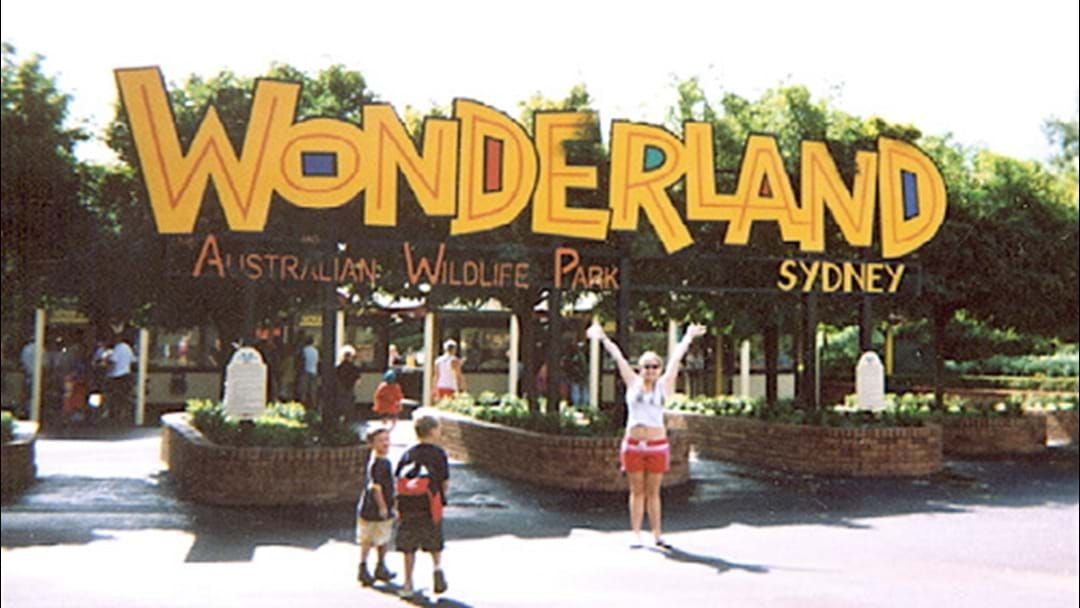


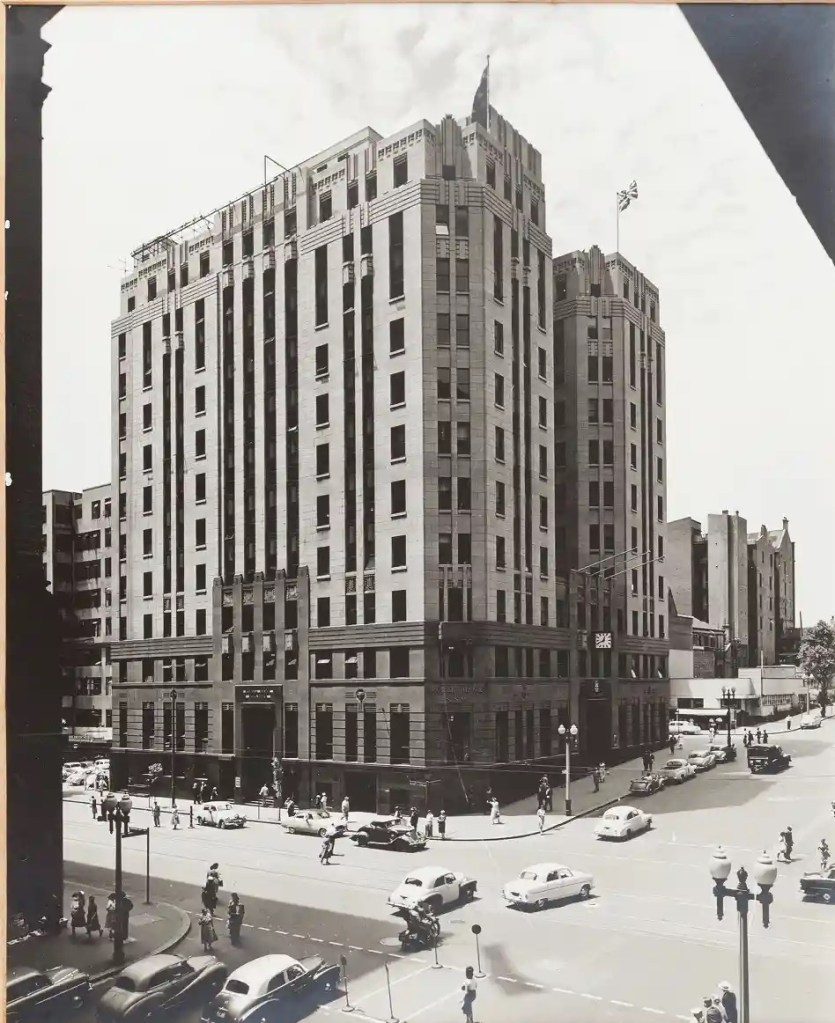
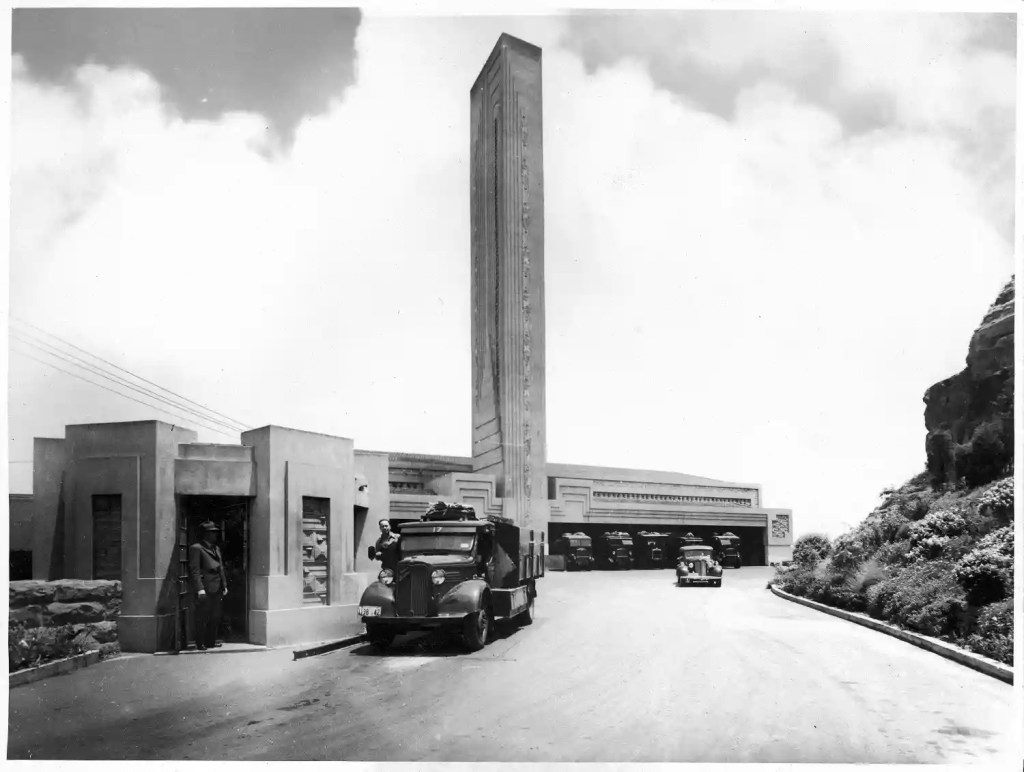
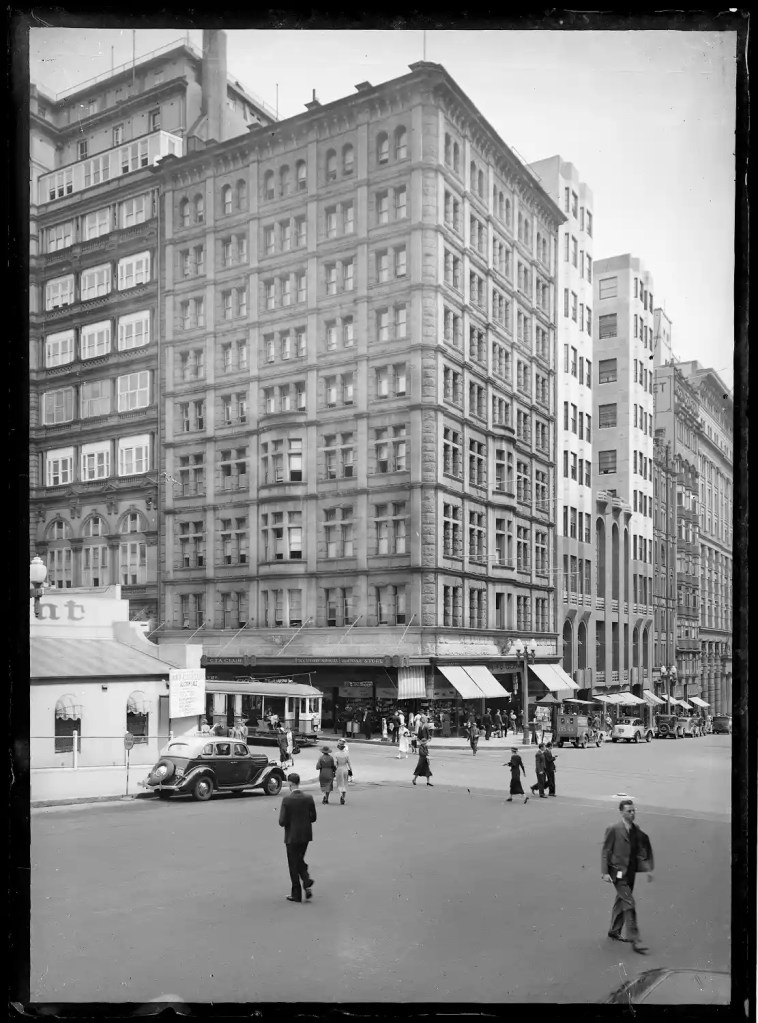


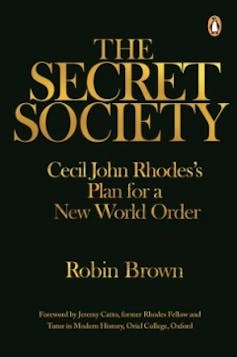

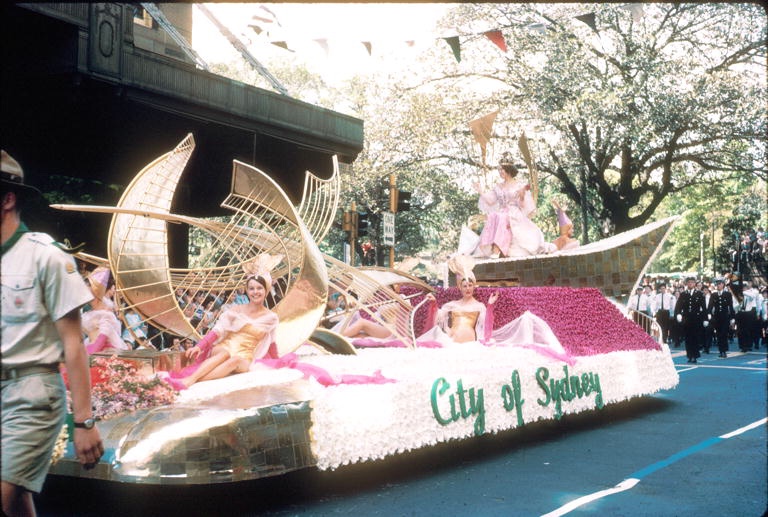
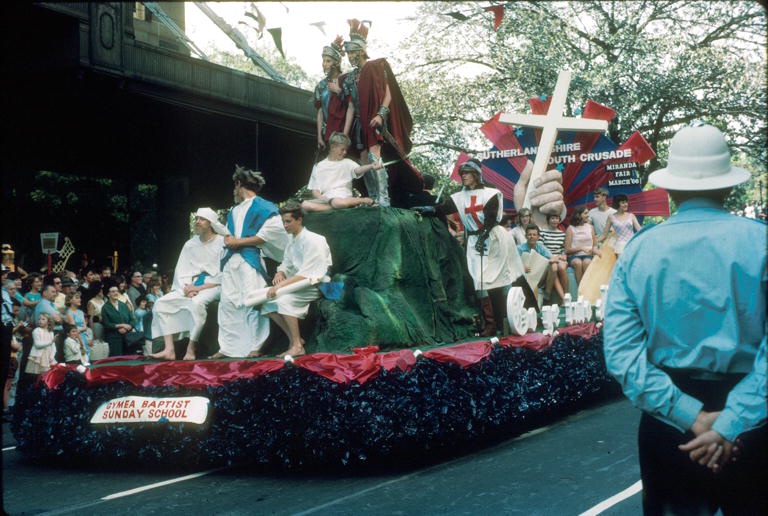


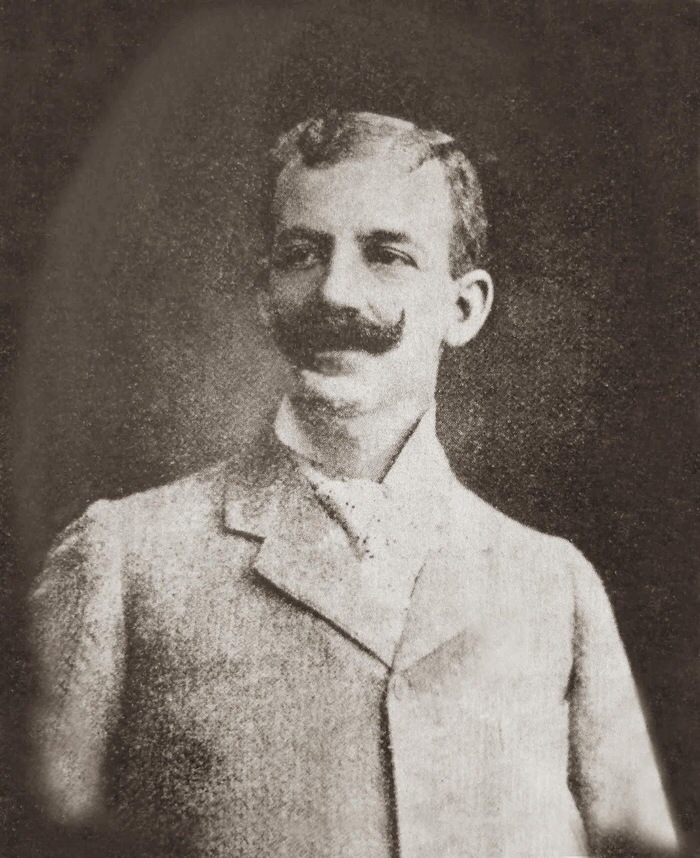

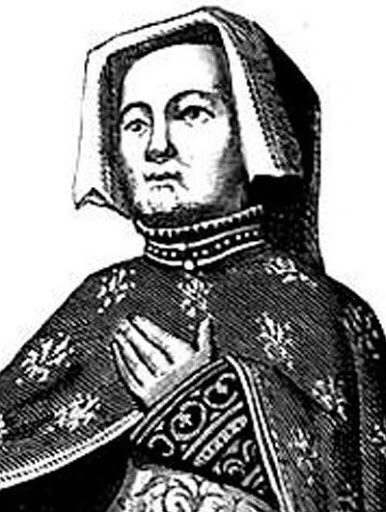


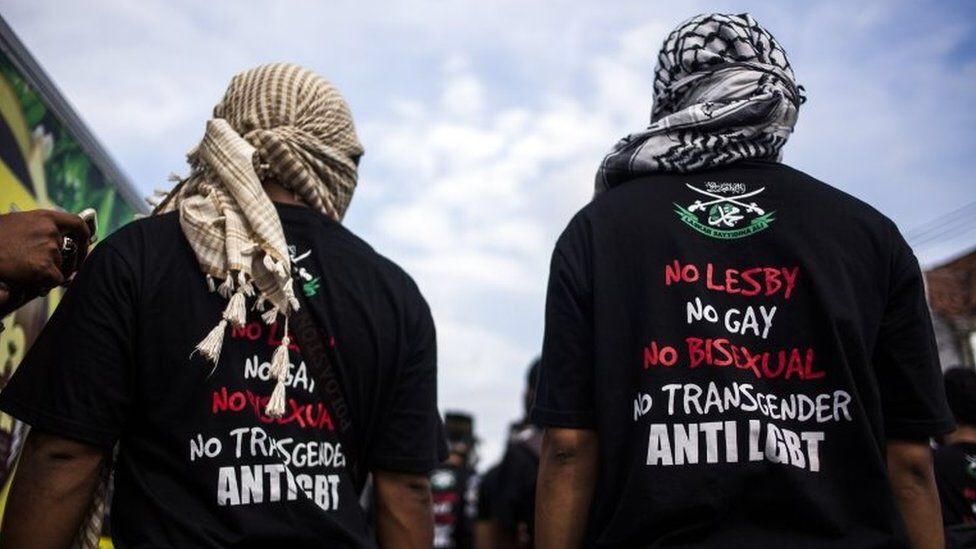
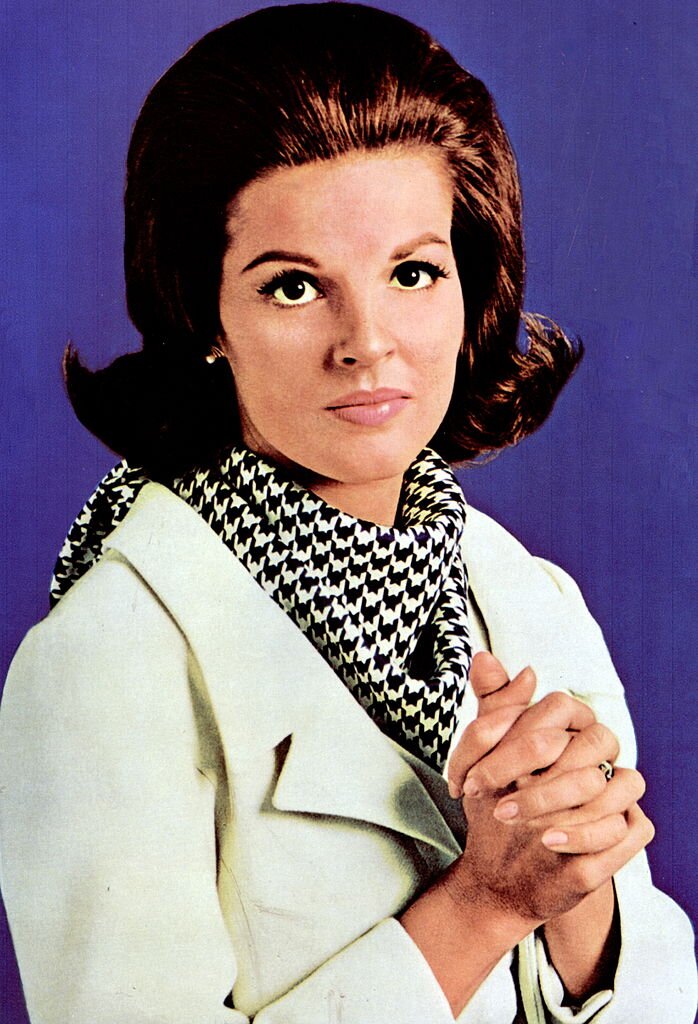
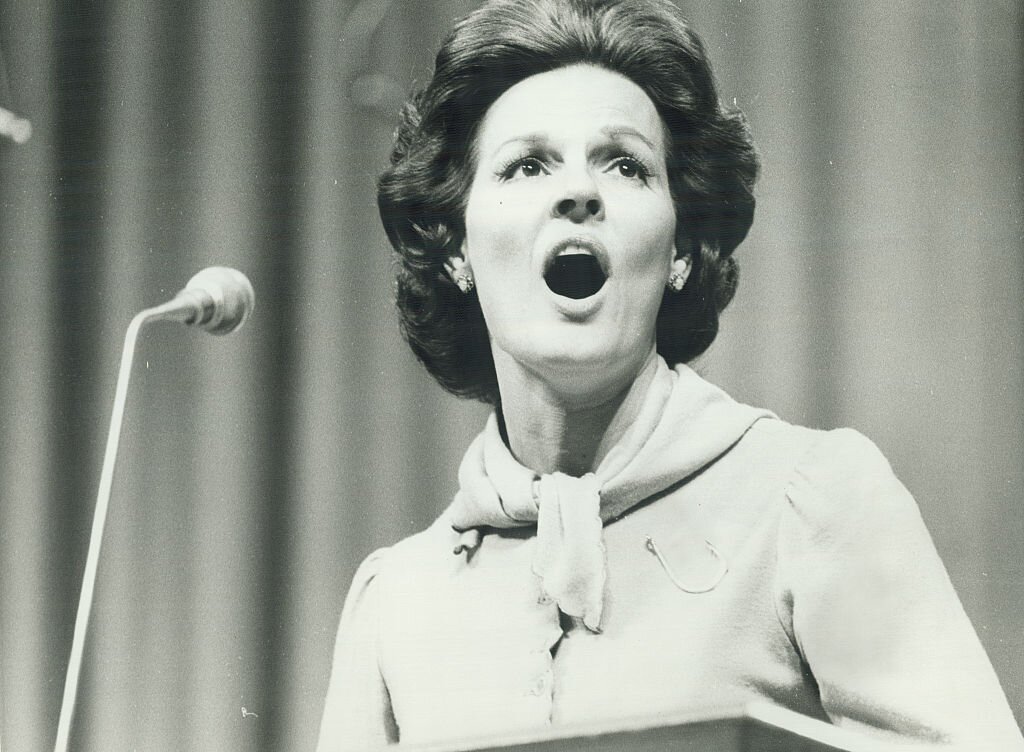
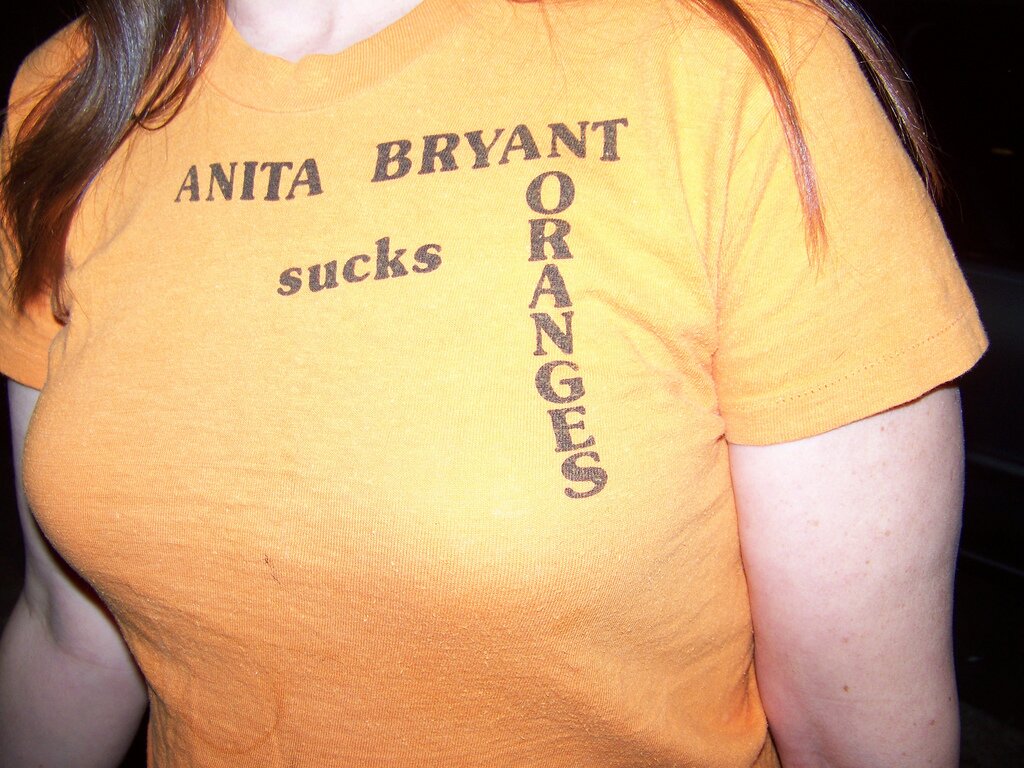
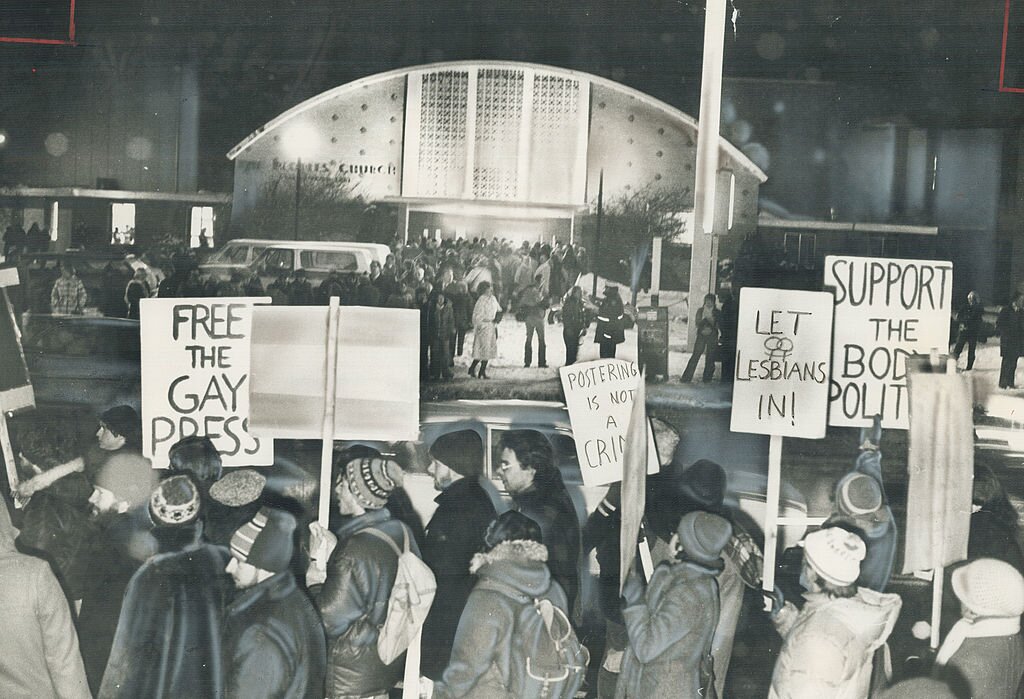
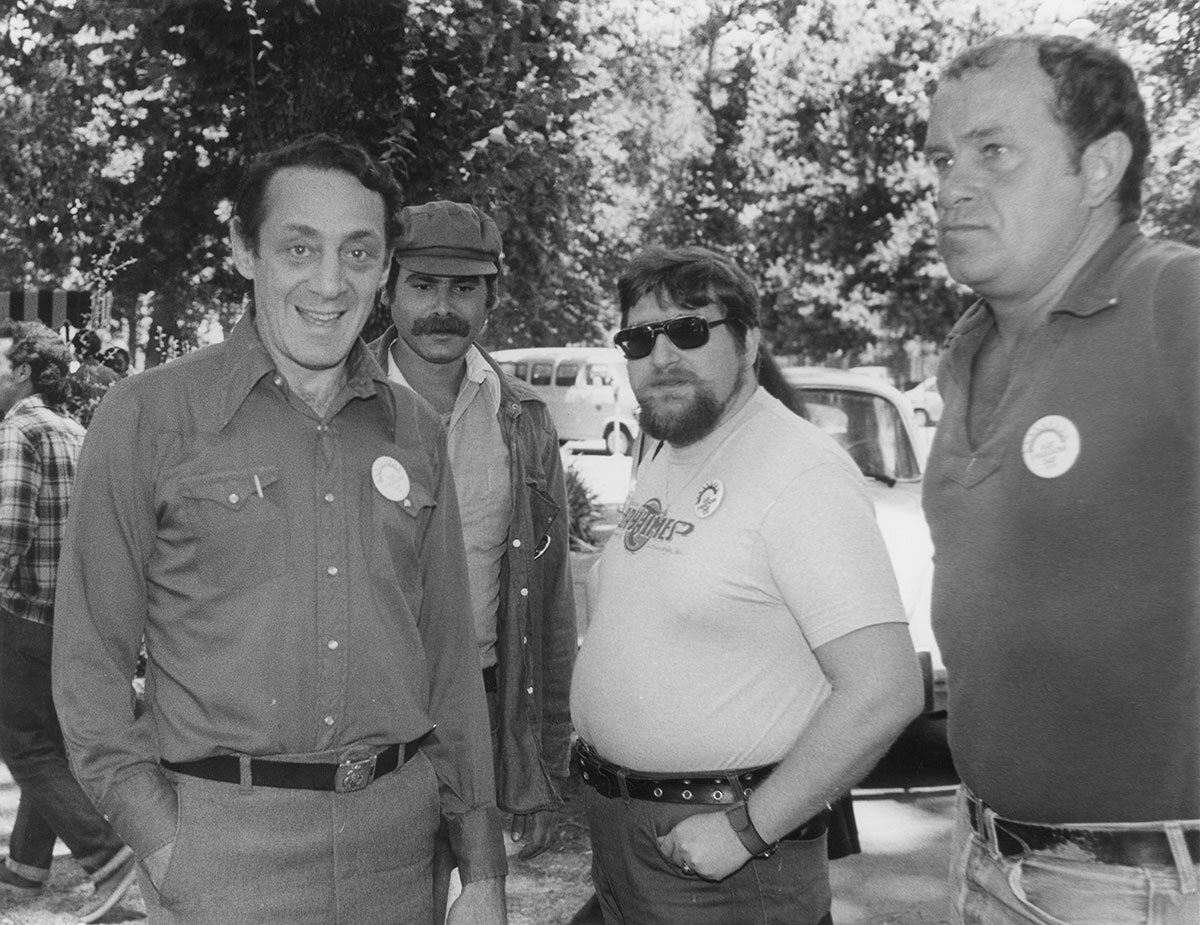
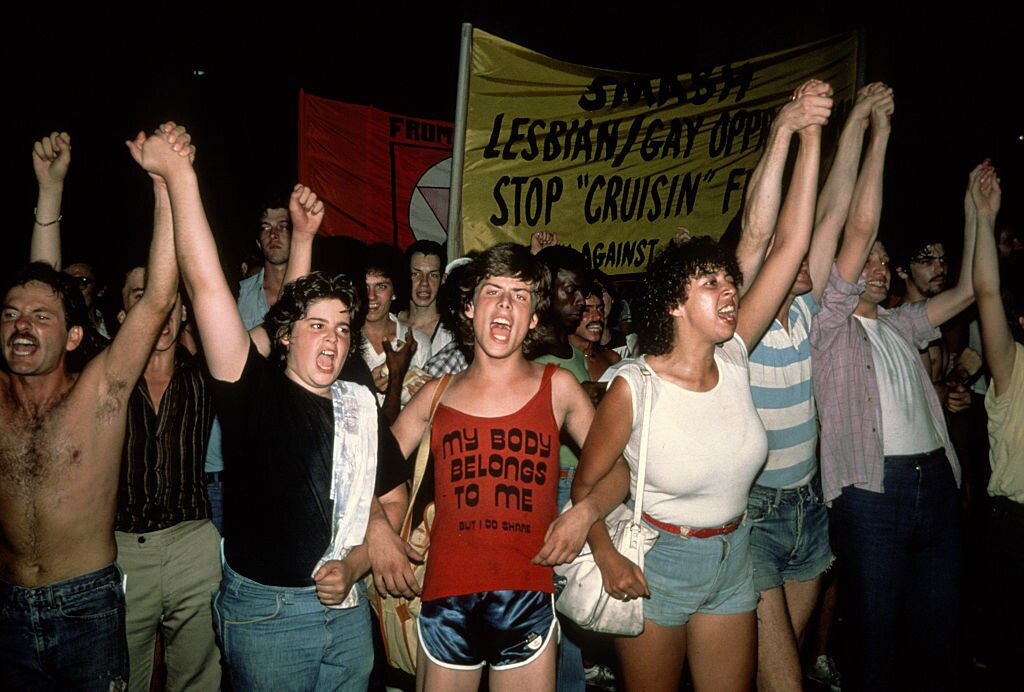
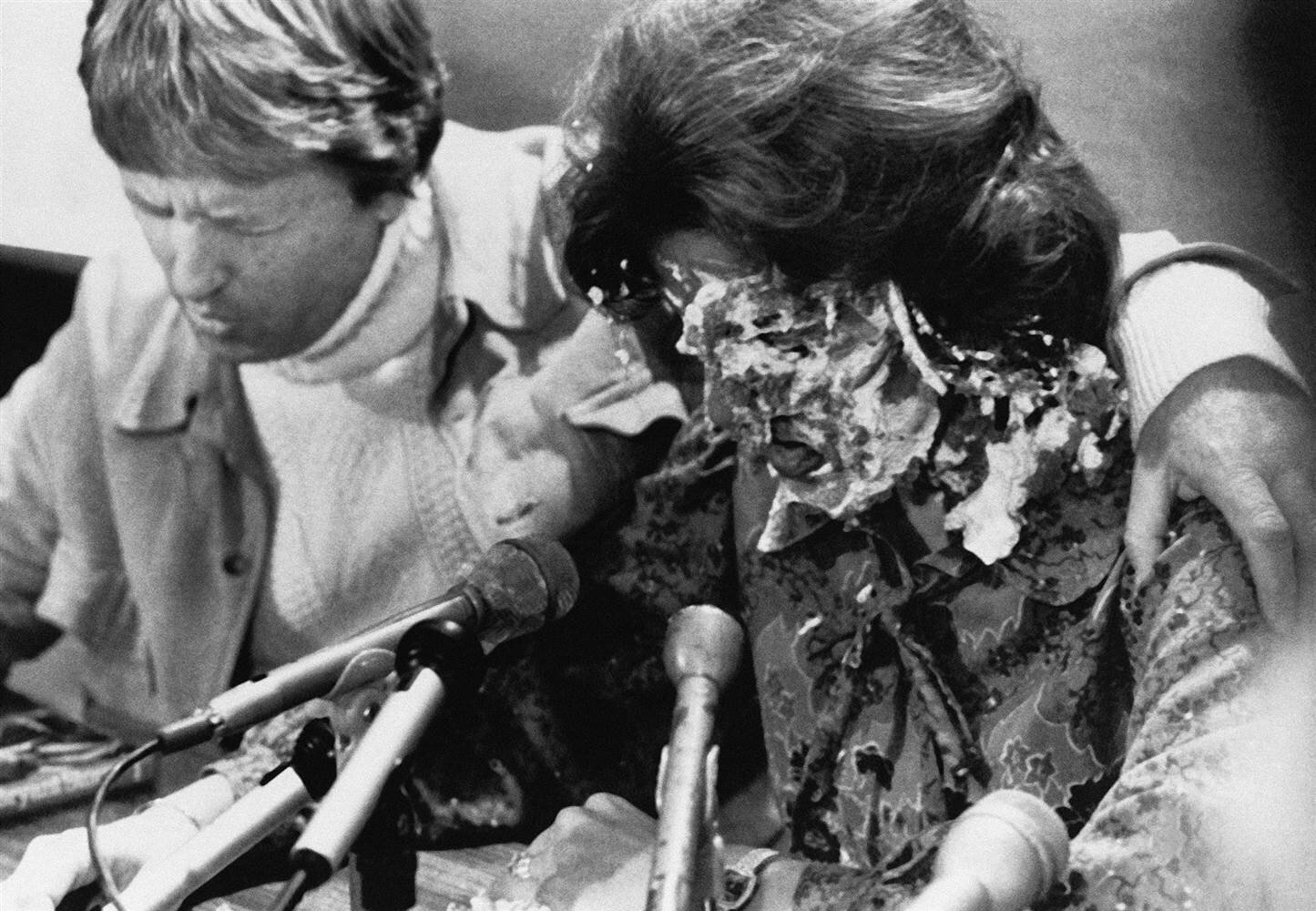
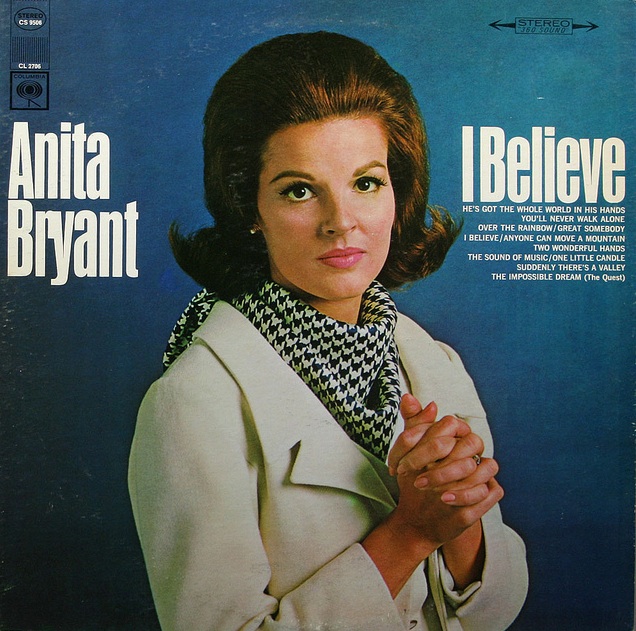
 timalderman


