Category Archives: History

An Eye For An Eye – Life After Cytomegalovirus Retinitis (CMV Retinitis).

This article, recently resurrected, was originally written in 2012, as I sat in the loungeroom at Ashgrove (Brisbane) after a panic attack drove me from my bed at 5am. I have revised & reedited the piece to cover the period between then and now. The original was published in “Talkabout” in 2012.
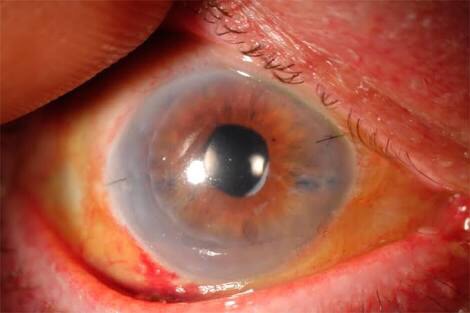

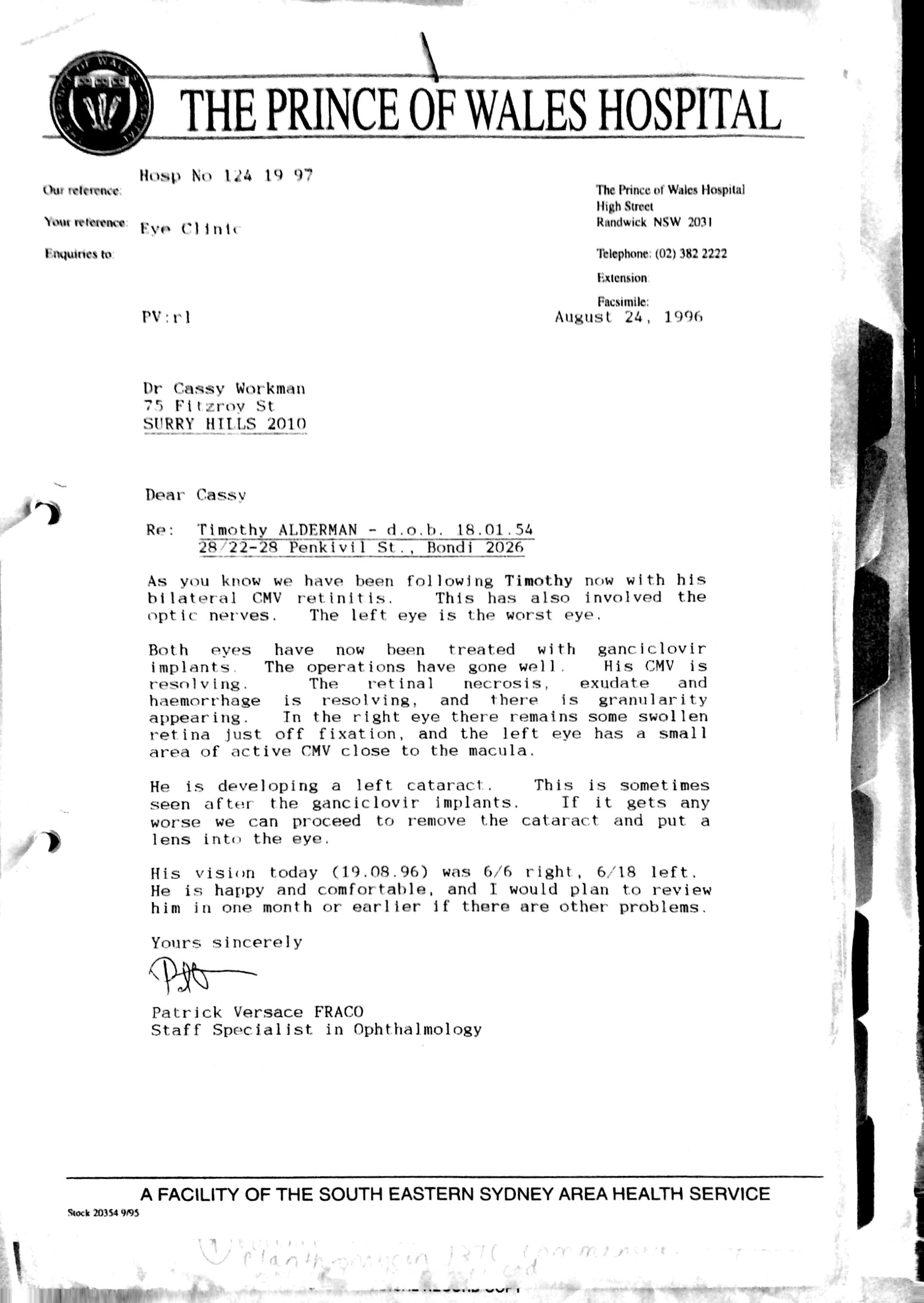
I shouldn’t actually be alive! And if it had been any time other than when it was – 1996 – that would have been the outcome. However, timing and medicine are everything, or so it seemed in that period of huge leaps in HIV care and treatment. As a 42-year-old HIV+ gay man who was admitted to Prince Henry Hospital (now closed) at La Perouse in Sydney, weighing in at 48kg, with chronic CMV retinitis, chronic anemia, chronic candida and 10 CD4’s I guess you could say I wasn’t well, and the truth be known my thoughts were more attuned to the after-life than being given a future. So, blood transfusions happened, heavy dosing of drugs happened (curtesy of my current regimen) and gancyclovir injections into the eyes happened – but perhaps most importantl…the new protease inhibitors happened and in combination with my other drugs created miracles. My severely depleted CD4 count did a small, slow rise, and my 100,000 viral load slowlt dropped to 10,000. Though still very weak and sick, I walked out of Prince Henry a couple of weeks later, then spent the next 18 months getting my health – physical & mental – back on track.

At this stage I could crap on endlessly about all the strategies that I used, the anabolic steroid therapy to treat Wasting Syndrome, the fears and uncertainties, the sheer strength of will needed to reconnect with life, not to mention the huge mental shift that drove my life off into uncharted territory and resulted in the man I am today. Blah, blah, blah!So instead of boring you with all that, I want to concentrate on the one aspect of all this that is still impacting my life today – the CMV retinitis.

Say CMV to most people these days and you will just get a blank look. It is an insidious disease, and one that was greatly feared in the era of rampaging AIDS infections. It is a virus that pretty well everyone has present in their body, but is usually only activated in immune-suppressed people. In its retinitis form it attacks the retina, and can spread to the macula by slowly destroying the cells. It is painless, though can be evidenced by a greying of vision and the appearance of floaters. If untreated it will eventually lead to blindness. By the time it was detected in my eyes a lot of damage had already been done, and I was aggressively treated with intraocular injections of gancyclovir…yes, that does mean injections directly into the eye. What fun! At the time this was going on, they were looking for guinea pigs to trial gancyclovir implants – called Vitrasert implants – in each eye. I volunteered, had two operations to insert them, then found that the 4% chance of developing cataracts turned out to be 100%, so back for another two operations to remove them, and replace the lenses, plus some laser work. The end result of all these operations and expectations for me was that they hadn’t caught it in time in the left eye, and despite a tiny sliver of vision I was effectively blind in that eye. Despite a lot of scar tissue, the majority of sight was saved in the right eye at that time.

It takes ages to adapt to changed vision, especially when one eye is effectively blind, so over the next 12 months I became accustomed to having accidents, including several falls thanks to tree roots bulging through pavements and bus seats that were just out of sight range. It gets to a point where you no longer get embarrassed. Both eyes appeared to stabilise, I adjusted to the changed vision and in some respects life went on. Apart from the falling over, other negative issues included an avoidance of crowds and busy places, and 3-D cinema was a total waste of time. You do adapt strategies, but it is not yourself that you need to worry about, but other people. There have been a number of occasions where I thought a tee-shirt emblazoned with the words “Vision-Impaired Person” would have been handy.

Vitrasert Implant (https://www.retinalphysician.com/issues/2014/september-2014/coding-q-amp;a)
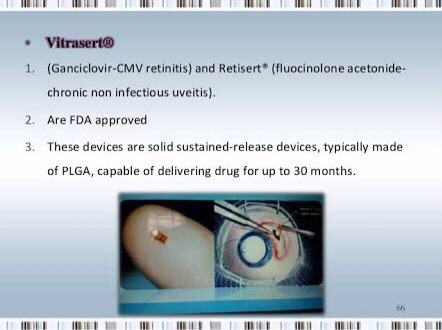
It was 2008 before I had any further problems, and that was with my blind eye. It developed what I thought was a grain-of-sand-in-the-eye irritation, so off to the ophthalmologist at RPA hospital, who then passed me onto the Sydney Eye Hospital. When specialists start passing you on to other baffled looking specialists you know you have a problem! Evidently the blind eye didn’t realise it was blind, and decided to start creating a new system of blood supply to the eye, which in turn was in the wrong places as well as increasing the pressure in the eye. There was a new injectable drug around called Avastin which cuts off the blood supply to cancer tumours, and it was decided to inject this into the eye to stop the new blood system developing. So, off for another intraocular injection. It did the job, but I was also told that the interior of the eye was collapsing, and that in time it would change colour. Oh joy of joys. Over the next 18 months it changed from a normal looking eye that just had no vision to this oddly coloured eye which made many people think I had two different coloured eyes (a genetic variance). And this is how it still looked until 2014.

However, this is good old HIV we are dealing with here, and it doesn’t like being ignored. Just as you think the worst of your problems are over it throws another bit of shit at you. I had been told previously that with the amount of scar tissue present in my good eye that there was a real chance of the retina detaching. So, shortly after moving to Brisbane, when the good eye started swapping between clear and blurred vision and finally settling on blurred, I knew something was wrong. A visit to A&E (on ANZAC day 2012) resulted in no clear result, so off to the RBH Eye Clinic the following day. The retina was off, and floating around, and there was a scare, with them thinking the CMV had reactivated…hard to believe seeing as I wasn’t immune suppressed, had a high CD4 count and an undetectable viral load – and another scare when they realised that I had highly toxic implants in my eyes (though long inactive, as they discovered). Instead of collecting some eye drops and toddling back home as I expected, I was put straight into a ward, and within 24 hours was in the operating theatre. A bad recovery room experience with an Asian Nurse Ratchet, whereby they weren’t informed that I was blind in my left eye, and leaving me to come-to in total blackness, occasioning a major panic attack is something I could have done without. The ongoing problems of anxiety and panic attacks (and this article being written at 5am) is something I am slowly getting over thanks to counselling and a letter to RBH formally requesting they look at the procedures and communication in the recovery room. My vision is now officially classified as blind. Glasses help a bit, but it is now a matter of me adapting to a low-vision life and devising some new strategies to deal with it. I can still read, though the font is huge, obviously I can still write though currently using huge fonts to do it. In 2013 I attended Southbank Institute of Technology to do the Certificate III in Fitness. I am not only the first 59yo to do the Certificate…I am the first severely vision-impaired person to do it. Threw TAFE into a panic, as they had to develop strategies to deal with me, and make sure tutors were on-board and up to speed. As much as I loved the experience, and the youngsters around me were absolutely wonderful, I came to realise that I was way too slow at moving around a gym to be a PT, so went no further. Atthe same time, I had done white cane training, and though finding the canes handy in certain circumstances – like whacking my way through the city – it is, as a general rule, more a hindrance than a help. However, it is great for getting seats on public transport!

In early 2015, after ongoing problems with my blind eye, and not wanting to go on infinitum with drops, I opted to have my blind eye removed. Unlike the old days, they now put an artificial ball into the socket, and attach the muscles to it, so it moves like a real eye. I had a prosthetic fitted, and to date no one has detected that it’s artificial.
However, my vision in general is now very severely impaired. Every trip outside my front door is a potential suicide mission – not to nention ducking and weaving around two Jack Russell Terriers at home…but I still challenge the risks, and get out and about under my own steam as often as possible. If anyone wants to date me…I’m a high maintenance date these days. Being night blind, I need to be guided around, and I move very slowly and cautiously. However, it has been pointed out to me that I can still spot a hot butt from some distance away! Some Gay traits over-ride everything!
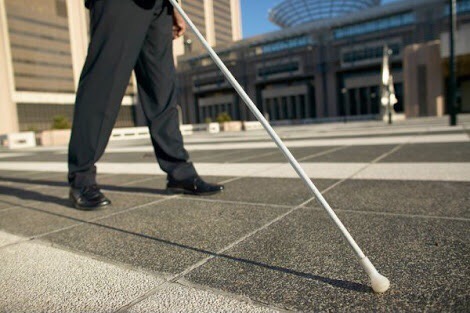
As for the future… who knows. I am trying to develop the “living in the moment” way of my dogs by just taking each day as it comes. I have had a lot of help and support, and despite whatever may happen that will always be there.


As they say, there are none so blind as those who will not see! I still walk my dogs every morning, I still read & write, still do my genealogy and my DJ mixes, go to gym, do the shopping, get around to local restaurants and cafes so I can’t complain. Life should always be an empowering experience, and the best way to achieve that is to own your disabilities – instead of letting both HIV and disabilities rule your life…YOU rule your HIV and disabilities! That is the road to freedom!


Tim Alderman.

Copyright 2012 © (Revised 2017)
A Brief (Personal) Memoir of HIV & AIDS

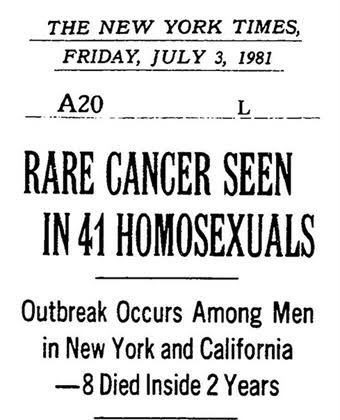
I discovered this older article recently while rummaging through my article archives. I present it here with some edits and newspaper inclusions. HIV & AIDS (note the separation of the two) has an intricate, but morbidly fascinating, national & international history. I watched “The Normal Heart” again only a couple of days ago, and the hospital scene where Felix is in the hospital ward with the meal sitting outside the door of his KS infected friend, and being told not to go in without contagion gear raised a whole plethora of unpleasant memories with me. To understand where HIV is now, you need to understand where it was! 


I can’t believe it has been about thirty seven years since we first started hearing about HIV/AIDS. I find it even harder to believe that I have been infected for thirty five years. Over half my life has been lived with this virus! In personal retrospection, I could say that compared to the bad, bad old days of 1981, life is a bed of roses today. But then I am aware that quite a lot of people would still not share that sentiment, so out of respect to them, I will avoid such romanticism.


I was living in Melbourne at that time, and I believe that HIV/AIDS got its first mention in the gay press a little earlier than 1981, though I could be wrong. There were only snippets, overseas briefs if you like, of a strange STD that seemed to be selectively attacking the San Francisco gay community, or more specifically, those members of that community who frequented the baths and back rooms of the famous city. I know that no one here was particularly concerned. We thought it was just another of ‘those American things’, or just a mutated form of the clap. Nothing that a pill wouldn’t fix! By the time I returned to Sydney in 1982, we had started to think quite differently. Some of us were getting very scared!

The media began drowning us in information, mainly from the United States. There was the dramatic scenario of ‘Patient 0’, from whom it was assumed the whole epidemic had spread like an out of control monster. The USA and France argued over who had discovered the virus, and made the link between HIV infection and AIDS (watch “Dallas Buyers Club” for an inkling of what this was all about!). A debate raged as scientists tried to decide what to call it and which acronym to use. We had GRID (Gay Related Immune Disease) and HTLV 1 & 2 (Human Transmitted Lymphoma Virus – if memory serves me well). They eventually settled on HIV for initial viral infection, and AIDS for any subsequent illnesses that resulted from the breakdown of the immune system. The original Center for Disease Control (CDC) classification system for the various stages of HIV and AIDS progression was so complicated that you really needed a university degree to be able to decipher them. To make things more manageable they finally settled on four classifications.

Then came ARCs (AIDS Related Conditions) but that was considered politically incorrect, so we settled on OIs (Opportunistic Infections).

The argument over names and classifications wasn’t half as frightening as the reality of the disease itself, which started to hit home in 1985. Official testing began in that year, and is still the earliest date that medicos will accept as a point of diagnosis with HIV. Any date earlier than that is declared to be a ‘self-report’. Like many others, I assumed I was HIV+ long before testing started. Virgin and chaste were not words to be found in my life resume. Sydney’s Albion Street Centre was the first here to begin testing, and it was done very discreetly and anonymously. We all used an assumed first name, and were issued with a number to identify who we were. (In 1996, when I needed to tap into my first HIV test results done at Albion Street, they were still there.) Counseling was atrocious. You were given your HIV+, or HIV- (if you were lucky) status very bluntly, then quickly shunted over to a counsellor before the shock had a chance to set in. You were also told, almost apologetically, that you probably had about two years to live. That was HIV diagnosis circa 1985.

A number of our conservative politicians, and some of our outraged Christian clergy started to say that they wanted us placed in quarantine. It was very specifically a gay disease, according to them, and they truly believed that fencing off the gay areas of Sydney and leaving it to run its course could contain it. These people wondered why we got tested anonymously!

By 1985 people were starting to die. There were no dedicated HIV wards in any of our hospitals, and patients were shuttled between temporary beds in wards and the emergency department. Reports started to filter through of hospital staff wearing contagion suits around patients with HIV. Worse still, meals were being left outside the doors of rooms, and would often be cold by the time the patient managed to get them. Cleaners refused to clean the rooms. There were scares of infection by contact with everything from a toothbrush, to a glass, to cutlery, so patients were offered very disposable forms of hygiene. Even mosquito’s copped some of the blame.

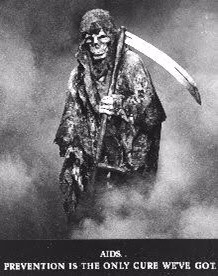
Then, of course, we had the living daylights frightened out of all of us with the “Grim Reaper”television ads. From 1985 to 1995, death lived with us on a daily basis. If you weren’t visiting sick friends, lovers, or partners in hospital, you were visiting them at home, or attending their funerals and wakes. Most of us lost the majority of our friends, and for most of us those friendships have never been replaced.

Around that time, the gay community took charge of what was quickly becoming an out-of-control situation. Tired of seeing friends dying in emergency wards, and getting only the minimum of care at home and in hospitals, we established our own care, support and advocacy groups. Out of the pub culture grew groups as diverse as BGF, CSN, ANKALI, ACON, and PLWHA. Maitraya, the first drop in centre for plwha was founded, and we raised the first quarter of a million dollars through an auction at “The Oxford” Hotel to start to improve ward conditions at St. Vincent’s Hospital. The gay community can forever take great pride in itself for bringing about great changes, not only in the care of plwha, but in the way the disease was handled, both politically and socially..

The Department of Social Security streamlined people with HIV/AIDS through the system and onto Disability Support Pensions, and the Department of Housing introduced a Special Rental Subsidy so that those on a Pension, and unable to wait interminable amounts of time for housing, were able to live in places of their own choice, at greatly subsidised rent. Home care became available through CSN, which, at that time, was not a part of ACON. By 1992, there was a perceived need for improved dental services for HIV patients, especially considering the high incidence of candida. The United Dental Hospital led the way with a HIV Periodontal Study, which at last provided reasonable dental care to plwha.

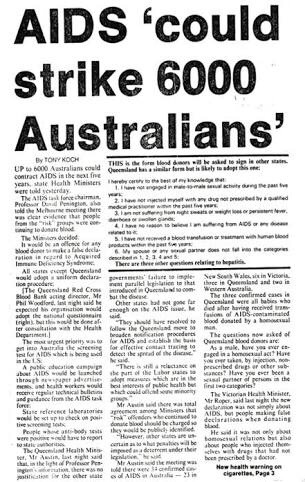
The first vaccine, p24VLP, was trialled with absolute zero results. There were quite a number of scares with HIV contaminated blood, and screening of blood donors was tightened. Discrimination reared its ugly head in the Eve van Grafhorst case, which forced this poor little girl to not only leave her school because of the hysterical reaction to her HIV infection, but to flee the country with her family.

In 1987, the first therapy for AIDS – azidothymidine (AZT) – was released in the USA, and its use in patients with HIV/AIDS was fast-tracked through the approval process here. In France a huge trial called ‘The Concord Trial’ was conducted – unethically – and its findings were found to be inaccurate. The resulting announcement that AZT was ineffective in the control of HIV, and the drug nothing more than ‘human Rat Sak’, caused a universal outcry. The damage was done. Many had no faith in the new drug at all, and local activists and proponents of alternative therapies tried to encourage people not to use the drug. Many of us chose otherwise. True, the effects of AZT were short-term only – maybe six to twelve months – but many saw it as a way to keep the wolf from the door long enough for some other drugs to come along. And come along they did. AZT was quickly followed by what are referred to as the ‘D’ drugs – d4T, ddi, ddc, and the outsider 3TC. However, these were all drugs from one class called Nucleoside Analogues and all had short effectiveness. Some doctors tried giving them in double combinations, but the effectiveness wasn’t much better. Despite their short life span, these drugs were being prescribed in enormous doses, which resulted in problems such as haematological toxicity, anemia, and peripheral neuropathy. We needed a miracle! Add travel restrictions in many countries, blood transfusion infections, and some babies dying as a result of this and things weren’t looking good!

Those of us who had managed to survive to 1996 were starting to give up hope. Most of us were on a pension, had cashed in and spent our superannuation and disability insurance, had a declining health status, and didn’t hold out much hope for a longer survival time. Prophylaxis for illnesses such as PCP, CMV, MAC and candida had helped improve most people’s lives, but they didn’t halt the progress of the virus. The first of the Protease Inhibitors, Saquinavir, was introduced that year, and evidence started to emerge of the effectiveness of combining the two classes of drugs into what came to be known initially as ‘combination therapy’ and later as HAART (Highly Active Antiretroviral Therapy). The results were astounding; those close to dying suddenly found their CD4 counts rising, accompanied by a return to reasonable health. Viral Load testing was introduced and people were finding not just a raising of their CD4 counts, but a drastic lowering of their viral load, often to the point of its being undetectable. This became known amongst doctors as ‘the gold standard’. Ganciclovir Implants to assist with the control of CMV retinitis were trialled the same year, and Albion Street Clinic started a trial using decadurabolane, a steroid, to assist in controlling Wasting Syndrome. The new drug combinations (NNRTI’s – Non-Nucleoside Reverse Transcriptease Inhibitors – a third class of drugs, were introduced shortly after) were not without their complications and problems. Most combinations still required huge quantities of pills to be taken daily, not just of the HAART drugs, but also prophylaxis and drugs to help control side effects such as nausea and diarrhoea. Their use required time and dietary compliance. Other problems such as lipodystrophy, lipoatrophy, and renal problems appeared, but we were, despite any drawbacks, a lot better off than we had been ten years, hell even two years earlier.

People’s health changed drastically, and suddenly new services started to take prominence. Some people required lots of counselling to help them reconnect with the life they thought had been taken from them. Others went to peer support groups or turned to treatment management groups, and some to the larger range of support services being provided by The Luncheon Club, The Positive Living Centre, NorthAIDS and other similar groups. There was recognition that there was a need for services to assist people with an improved health status, as some of them were contemplating returning to work. Despair had, to a large extent, been replaced by hope. Organisations concerned with people’s changing needs reassessed and changed their services to meet the demand. Those that changed have survived, and are still prominent in our community.

The war is far from over. New generations require new strategies, and while everyone seems happy that infection rates for HIV have remained steady in Australia (despite rampaging out of control in Third World countries), many feel it is still not good enough that, at this stage of 37+ years into HIV/AIDS, countries like Australia with high levels of education and accessibility to media and information should be seeing a decline in infections. Remembering my own youth I find it difficult to comment on the attitudes of young people. I grew up through the very worst that HIV/AIDS had to throw at us, and the lessons it taught are not easy to forget. I have to ask myself had I not had that experience, how would I be viewing it? It is no longer just the responsibility of the gay community to guard against new infections. Responsibility also rests with the straight community, and the IDU community, as infection rates remain at their current level. Some scaremongers have ventured forth theories of a ‘third wave’ of infection, but I trust we are too wise, and too educated to allow that sort of irresponsibility to happen.
Many of us (certainly not all) are going on to lead relatively normal lives. Many have returned to work either as volunteers, or in casual, part-time or full-time employment. Many like myself have returned to tertiary education, determined not to leave this world without at least fulfilling some gnawing ambition. However, we are not living in a ‘post-AIDS’ world, and to think so would be foolish. Even if the battles have been won at home, they still need to be fought elsewhere. We still need new drugs, and we still need people to trial both the emerging antiviral and opportunistic infection drugs and the immune-based therapies. We now have a fourth class of drugs in the form of Nucleotide Analogues. Many medical practices have adopted a holistic approach to medicine, and this can be judged to be a direct spin-off from the HIV/AIDS wars. Hopefully, soon please, a new vaccine will appear.

I really don’t know how much longer I will live now. Certainly with the standard of health care I get, and the close monitoring, I may live out whatever my allotted time was to be. Time will be a better judge of that than I will. For me, HIV/AIDS has been a two-edged sword. It has taken good health from me, I have permanent disabilities from AIDS, and I have seen far too many friends, lovers and partners die from this hideous disease. At the same time, it has presented me with opportunities I would never have grasped if it had not come along. I am re-educating myself, taking myself off along strange paths. It has given me a whole new understanding not just of HIV, but of disabilities in general, and a great respect for those who overcome difficulties and recreate their lives.

At a university tutorial last semester, a young woman asked me if I thought every day about having HIV. I don’t! It may have taken thirty five years, but it is now so integrated into my life, that I have trouble remembering the time when I didn’t have it. The pills are just pills now (and thankfully a lot less of them than even 4 years ago), and most of my current medical problems have more to do with ageing than with HIV.

I can tell you, that really gives me something to think about!

Tim Alderman (C © Revised 2017)

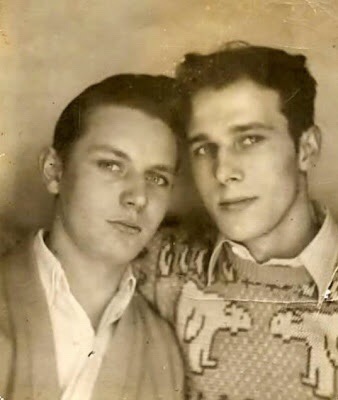
1950s Closeted Gay Couple Share An Illegal Kiss In The Safety Of A Photo Booth


For many young LGBT people, it’s hard to imagine what life would have been like for a young gay couple growing up in 1950s America.
At the time, many states had statutes on moral, lewd , or disorderly conduct, that allowed police to target and arrest gay and lesbian “deviants.”
“Such transgressions as wearing items of clothing of the opposite sex, propositioning someone of the same sex, or even holding hands with a member of the same sex” could land you in jail, as TIME points out.
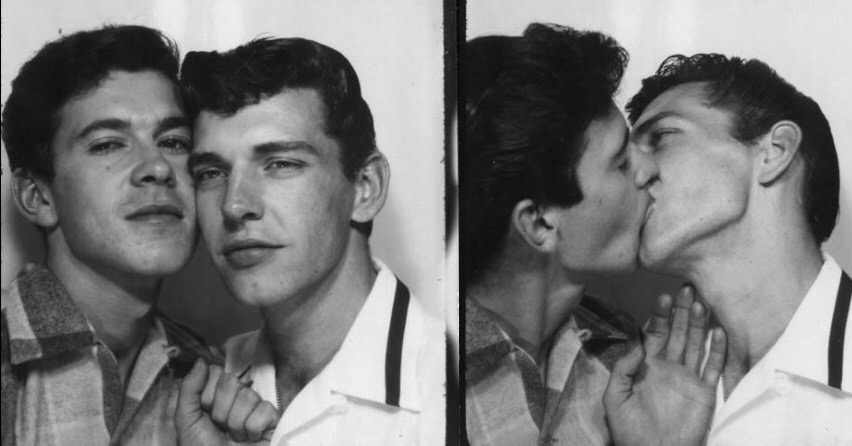
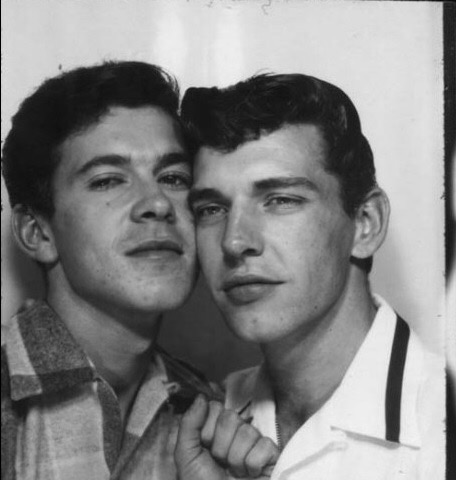
A photo booth picture, taken by a young daring gay couple in 1953, captured a beautiful moment of affection between the two love birds that could have also resulted in their arrests.


According to TIME:

The image is part of the ONE National Gay & Lesbian Archives at the University of Southern California Libraries – the largest repository of lesbian, gay, bisexual, transgender and queer materials in the world. The picture was once owned by the young man on the right-hand side of the image above, Joseph John Bertrund Belanger. Belanger, for most of his life, was a devoted collector of LGBT history. Born in Edmonton, Canada, in 1925, he served in the Royal Canadian Air Force and was a member of the Mattachine Society – an early instance of what today would be called an LGBT organization — in the early 1950s. It is thanks to his passion and foresight that the image survives today.


Here, in the midst of the 2014 pride season, what remains so remarkable and moving about this particular image is how quietly radical it feels all these years later. Belanger and another man have found a private safe-space in the unlikeliest of places — an ordinary photo booth – where they felt so at ease, and so themselves, they could kiss each other far from the prying eyes of a disapproving public.

Reference

https://www.thegailygrind.com/2014/06/25/1950s-closeted-gay-couple-share-illegal-kiss-safety-photo-booth-photo/
Tim Alderman (2017)

‘Sleep well my love’: A Beautiful Tragic Gay Love Letter From WWII!

Hans-Joachim Marseille and his fellow soldier
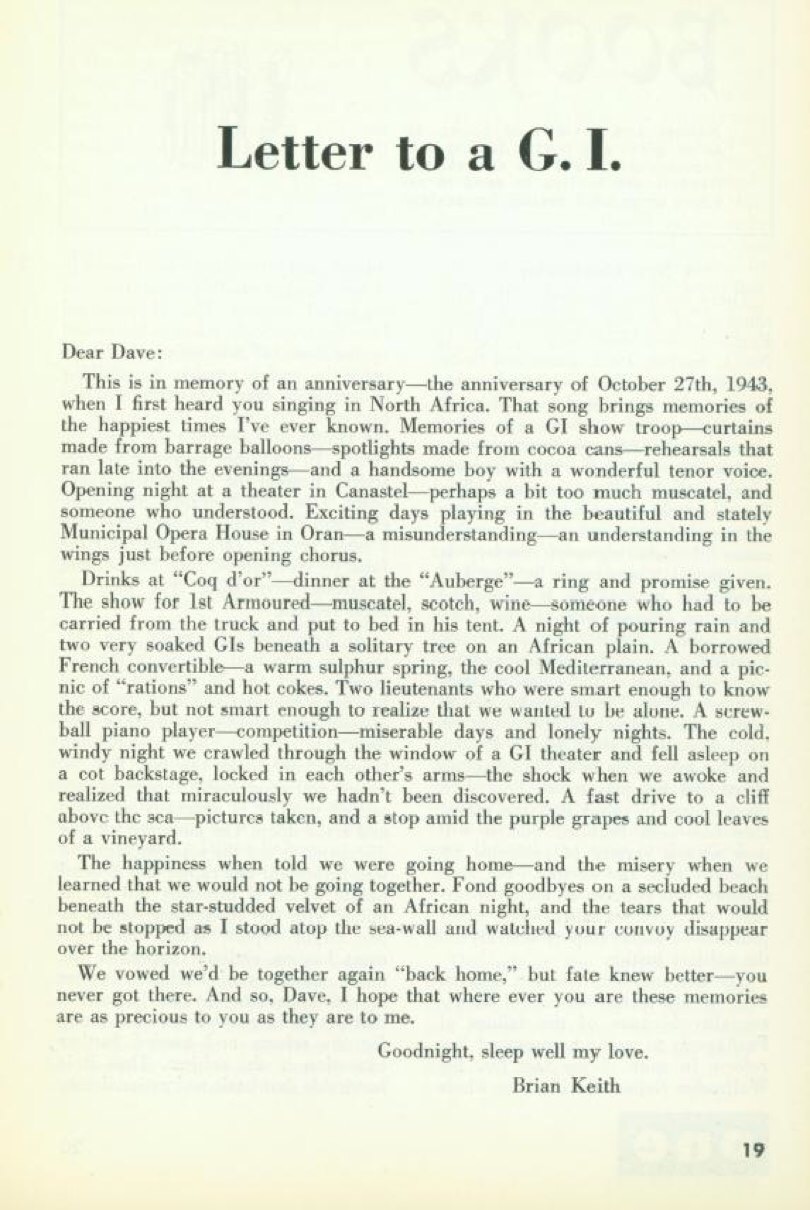
This amazing letter Brian Keith wrote to another soldier named Dave one year after falling in love with him overseas in 1943. Keith recalls the time the two shared while stationed together in North Africa. He writes about their chance encounter during World War II, waking up in his arms and the tears that flowed when they separated, and expresses regret that Dave never made it home after the war. The letter was reprinted in September of 1961 by ONE Magazine and the original is supposedly preserved in the Library of Congress.


Transcript of the letter above:

Dear Dave,

This is in memory of an anniversary — the anniversary of October 27th, 1943, when I first heard you singing in North Africa. That song brings memories of the happiest times I’ve ever known. Memories of a GI show troop — curtains made from barrage balloons — spotlights made from cocoa cans — rehearsals that ran late into the evenings — and a handsome boy with a wonderful tenor voice. Opening night at a theatre in Canastel — perhaps a bit too much muscatel, and someone who understood. Exciting days playing in the beautiful and stately Municipal Opera House in Oran — a misunderstanding — an understanding in the wings just before opening chorus.

Drinks at “Coq d’or” — dinner at the “Auberge” — a ring and promise given. The show 1st Armoured — muscatel, scotch, wine — someone who had to be carried from the truck and put to bed in his tent. A night of pouring rain and two very soaked GIs beneath a solitary tree on an African plain. A borrowed French convertible — a warm sulphur spring, the cool Mediterranean, and a picnic of “rations” and hot cokes. Two lieutenants who were smart enough to know the score, but not smart enough to realize that we wanted to be alone. A screwball piano player — competition — miserable days and lonely nights. The cold, windy night we crawled through the window of a GI theatre and fell asleep on a cot backstage, locked in each other’s arms — the shock when we awoke and realized that miraculously we hadn’t been discovered. A fast drive to a cliff above the sea — pictures taken, and a stop amid the purple grapes and cool leaves of a vineyard.
The happiness when told we were going home — and the misery when we learned that we would not be going together. Fond goodbyes on a secluded beach beneath the star-studded velvet of an African night, and the tears that would not be stopped as I stood atop the sea-wall and watched your convoy disappear over the horizon.
We vowed we’d be together again “back home,” but fate knew better — you never got there. And so, Dave, I hope that where ever you are these memories are as precious to you as they are to me.
Goodnight, sleep well my love.
Brian Keith
Reference:

By Brian Keith. Found on HyperVocal. Image courtesy of ONE National Gay & Lesbian Archives at USC Libraries. ]

Article curtesy of https://www.thegailygrind.com/2013/09/13/read-beautifully-tragic-gay-wwii-soldiers-love-letter-wwii-sleep-well-love/

Tim Alderman (2017)

WWII Gunner: A Provocative Photo Taken During Action at Rabaul.

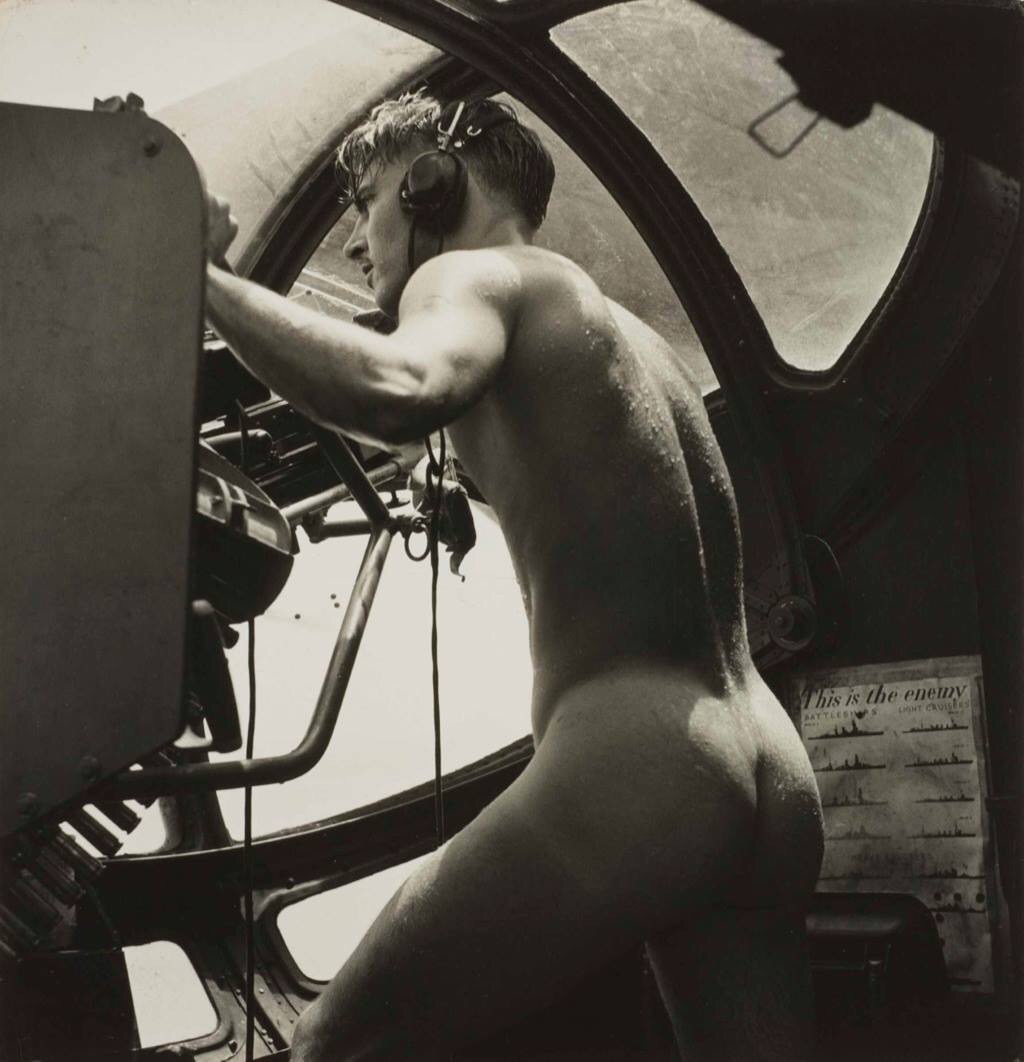
In the heat of battle, photographer Horace Bristol captured one of the most unique and erotic photos of WWII.

In the heat of battle, photographer Horace Bristol captured one of the most unique and erotic photos of WWII.
Bristol photographed a young crewman, who was a part of the US Navy “Dumbo” PBY rescue mission, manning his gun after having stripped naked and jumped into the water of Rabaul Harbor to rescue a badly burned Marine pilot. The Marine was shot down while bombing the Japanese-held fortress of Rabaul.
Rare Historical Photos writes: 

Since Japanese coastal defense guns were firing at the plane while it was in the water during take-off, this brave young man, after rescuing the pilot, manned his position as machine gunner without taking time to put on his clothes. A hero photographed right after he’d completed his heroic act. Naked.
Photo taken by Horace Bristol (1908-1997). In 1941, Bristol was recruited to the U.S. Naval Aviation Photographic Unit, as one of six photographers under the command of Captain Edward J. Steichen, documenting World War II in places such as South Africa, and Japan. He ended up being on the plane the gunner was serving on, which was used to rescue people from Rabaul Bay (New Britain Island, Papua New Guinea), when this occurred. In an article from a December 2002 issue of B&W magazine he remembers:
“…we got a call to pick up an airman who was down in the Bay. The Japanese were shooting at him from the island, and when they saw us they started shooting at us. The man who was shot down was temporarily blinded, so one of our crew stripped off his clothes and jumped in to bring him aboard. He couldn’t have swum very well wearing his boots and clothes. As soon as we could, we took off. We weren’t waiting around for anybody to put on formal clothes. We were being shot at and wanted to get the hell out of there. The naked man got back into his position at his gun in the blister of the plane.”
Photo curtesy of https://www.thegailygrind.com/2014/06/01/photographer-captures-nude-navy-wwii-hero-gun-battle-nsfw/

Tim Alderman (2017)

.

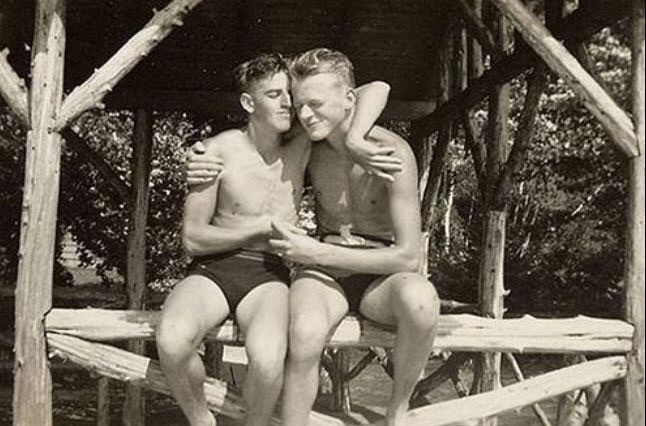
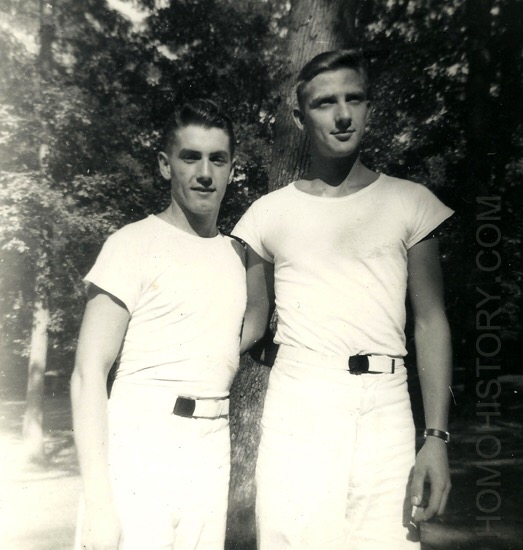
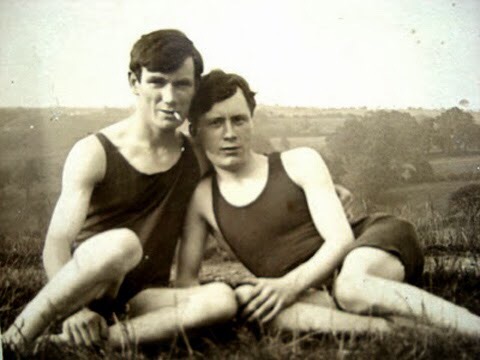
A Photo Essay of Male-To-Male Affection: 1800s-Mid 1900s.

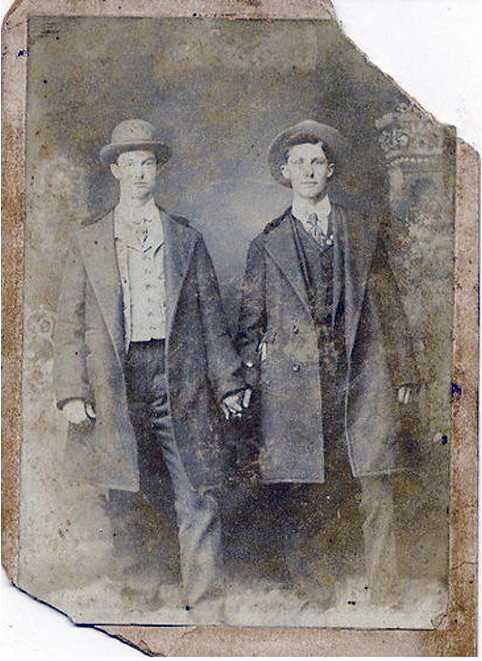
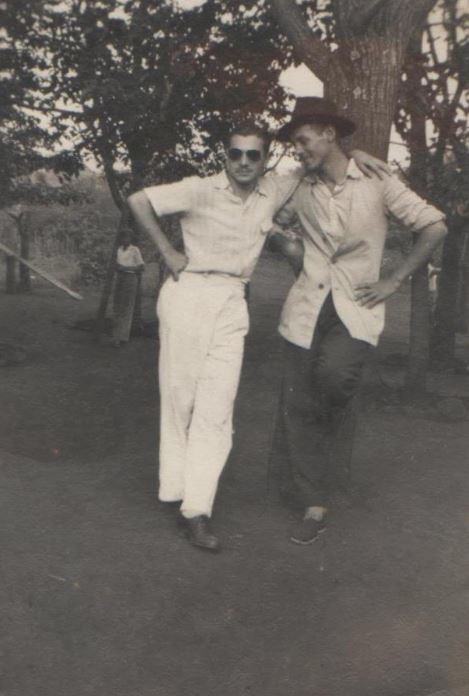
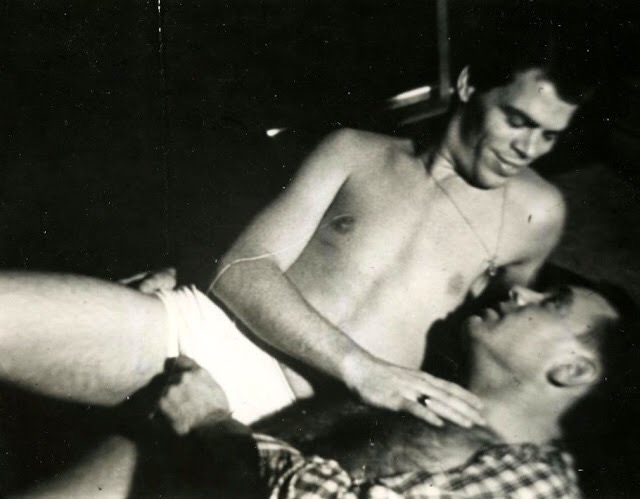
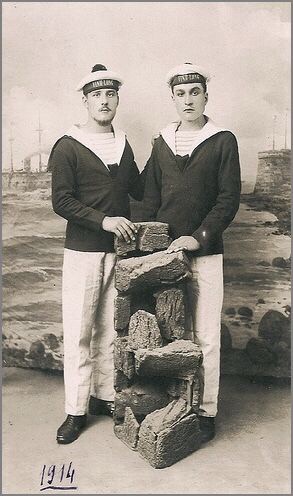
These beautiful photos of men showing affection to other men do not necessarily denote their sexual orientation. Because of the photographs age, and the lack of information about these unknown people, we do not actually know if they are gay, friends, brothers or relatives. But the lack of knowledge about each photograph does not detract from what are quite obvious, intimate relationships, and a daring – for the period – lack of restraint.

Where possible, references & attributations have been given.

Curtesy Matthew’s Island of Misfit Toys
 

Curtesy of Homohistory.com
England 1875: Curtesy Adrian Garcia gailygrind.com
Curtesy Adrian Garcia gailygrind.com
New York 1900: Curtesy Adrian Garcia gailygrind.com
Europe 1906: Curtesy Adrian Garcia gailygrind.com
Curtesy Adrian Garcia gailygrind.com
New York 1907; Curtesy Adrian Garcia gailygrind.com
WW 1: Curtesy Adrian Garcia gailygrind.com
1912: Curtesy Adrian Garcia gailygrind.com
1914: Curtesy Adrian Garcia gailygrind.com
Curtesy Adrian Garcia gailygrind.com
California 1923: Curtesy Adrian Garcia gailygrind.com
1925; Curtesy Adrian Garcia gailygrind.com
Curtesy Adrian Garcia gailygrind.com

Curtesy Adrian Garcia: gailygrind.com
 

Tim Aldernan (2017)
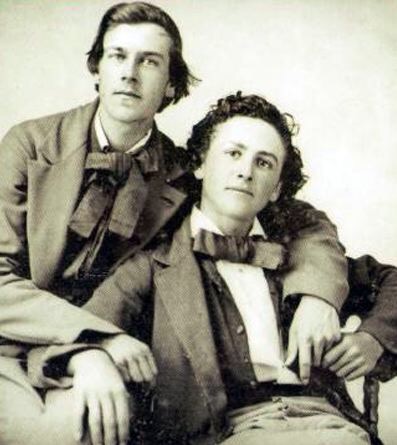
Gay History: The Hon. Percy Jocelyn (1764-1843); Bishop of Ferns, Ireland.


The Right Rev. and Hon. Percy Jocelyn was Bishop of the Diocese of Ferns from 1809-1820. Percy’s mother, Lady Anne Hamilton, was a member of the Clanbrassil Hamiltons, on whose land the Battle of Ballinahinch was fought in 1798, and her distant kin included the United Irish leader, Archibald Hamilton Rowan. In 1752, Lady Anne Hamilton married Robert Jocelyn, son of the Lord High Chancellor of Ireland. Through his father’s political success and his wife’s aristocratic connections, Robert Jocelyn attained high honours and became Earl of Roden. A year before the Rising, in 1797, Lord Roden’s eldest son, Robert Jocelyn (1756-1820), succeeded as the second Earl of Roden. The second son, George Jocelyn (1764-1798), was the father-in-law of both Walter Hore and James Boyd. But it was the third and youngest son, Percy Jocelyn (1764-1843), who proved to be the most interesting character in that generation of the family.

He graduated with a BA from Trinity College Dublin. At Trinity, he was regarded as something of a bookworm, spending much of his time in his rooms on Library Square. He was later described as “a tall thin young man with a pale, meagre and melancholy countenance, and so reserved in his manners and recluse in his habits that he was considered by every body to be both proud and unsociable”. Percy Jocelyn was born on 29 November 1764. Immediately after graduating, he was ordained deacon at the age of 23 and then priest. He quickly acquired a number of ecclesiastical positions, not because he was able and capable, but due to the cunning ambition that had made him a corrupt pluralist who amassed many posts, enriching himself with the income from accumulated tithes and endowments.
For all the offices he held from a young age, Jocelyn gave very little back in return to the parishes that sustained his lifestyle. He failed constantly to provide for the pastoral care of his parishioners or to take services in the churches and cathedrals to which he had been appointed. Between 1787 and 1809, he was Treasurer of Saint Fin Barre’s Cathedral, Cork (1787-1795); Rector of Creggan, near Dundalk, Co Louth, and Rector of Tamlaght, Co Derry, two parishes at opposite ends of the Diocese of Armagh (1788-1790); Archdeacon of Ross, Co Cork (1788-1790); Treasurer of Armagh Cathedral (1790-1809); and Rector of Disert, Co Waterford, in the Diocese of Lismore (1796-1809). Not even the holiest and most energetic of men could give due attention to these posts in four dioceses spread across five counties and three provinces while maintaining a city residence in Dublin at the same time.
Jocelyn’s contemporaries realised that he was incapable of giving due attention to his pastoral responsibilities and that he was idle to the point of negligence, seldom taking services and never preaching. Rev Thomas Hore said Jocelyn that he was the “most idle of all reverend idlers” and asked him rhetorically: “Do you ever write a sermon? Most worthy Rector of Creggan – not you.”

As a consequence of the events in 1798, Percy Jocelyn was elevated to the bench of bishops in the Church of Ireland. During the Rising, the Bishop of Killala, Joseph Stock, had suffered bitterly at the hands of the rebels, the French invading force, and the British authorities in Co Mayo. Once the Rising was over, Stock was naturally disillusioned with his see and was soon pursuing every vacant episcopal appointment. However, Stock was disappointed as he was passed over for preferment when the mad Bishop of Ferns and Leighlin, Euseby Cleaver, became Archbishop of Dublin in 1808. Stock had hoped to become Archbishop of Dublin, but now resigned himself to moving to Co Wexford, writing to his son: “If I cannot be Dublin, I shall be content with Ferns.” He must have been convinced of his chances of moving to Co Wexford, for four days later he wrote in similar terms: “I think I must have a chance of Ferns.” Despite his expectations, all Stock received was a polite note from the Lord Lieutenant, the Duke of Richmond. Instead, he was transferred to the Waterford and Lismore, and eventually, in 1809, the See of Ferns, vacated by Cleaver, passed to Percy Jocelyn. When he became Bishop of Ferns, Percy Jocelyn found himself in good company alongside the scandalous Chancellor of Ferns, Sir Henry Bate Dudley. But Jocelyn, for his part, spent very little time in his dioceses, seldom visiting those parishes in counties Wexford, Wicklow and Carlow that formed his diocese.

In 1811, Jocelyn’s brother John’s coachman, James Byrne, accused him of “taking indecent familiarities” (possibly buggery) and of “using indecent or obscene conversations with him”. Byrne was sued for criminal libel by Jocelyn and on conviction was sentenced to two years in jail and also to public flogging. In court, the bishop’s counsel was Charles Kendal Bushe (1767-1843), Solicitor General of Ireland and later Chief Justice of the King’s Bench, who was a clergyman’s son. Bushe confounded Byrne’s allegations by claiming the sexual practice the Bishop of Ferns was alleged to have indulged in was a “contagion” that had never reached Ireland. “There is no instance of its existence in the memory of any professional man,” Bushe told the court. Therefore, by deduction, the bishop must be innocent. At the trial, Byrne hardly bothered to defend himself for making what the judge called “so wicked a calumny that no idea is too horrible to be informed of you.” Jocelyn was described as “an exalted and venerable character, who, though raised to one of the highest dignities of the Church, is still less exalted by his rank than he is by the uniform piety of his life.” The bishop was virtuous, pious and devout, Mr Justice Fox agreed. Regretting that he could not pass harsher sentence, he jailed Byrne for two years and ordered that he should be whipped three times through the streets of Dublin. Byrne was whipped to within an inch of his life, and also spent the full two years and an extra 85 days in jail Recanting his allegations at the prompting of the bishop’s agent, the floggings were stopped. A public subscription was raised in 1822 to raise money for Byrne to try to make up for this miscarriage of justice.

Soon poor Percy put all these sordid events and Byrne’s allegations behind him. Others appeared to have had short memories too, including family members, and when the bishop’s nephew, also Robert Jocelyn, succeeded as third Earl of Roden in 1820, he actively sought the promotion of Percy from the Diocese of Ferns to the See of Clogher. Despite the image that had been bolstered by his family and in court, by the time Jocelyn moved from Ferns to Clogher there were rumours that the bishop was mentally imbalanced. Within weeks there were reports that he was selling off the furnishings of his new palace, a four-storey Classical mansion built only a year earlier by his predecessor, Lord John George Beresford. Worse was to come.

On 19 July 1822, at the age of 58, Percy Jocelyn was caught in a compromising position with a Grenadier Guardsman, John Moverley, in the back room of The White Lion public house, St Albans Place, off The Haymarket, Westminster. Jocelyn tried to escape, but his trousers were still down around his ankles, and he was arrested. Although dressed as a clergyman, he refused to reveal his identity. However, once in custody his name was soon discovered and the news of his arrest caused an immediate sensation in London’s clubs and coffee houses. He and Moverley were released on bail, provided by the Earl of Roden and others. The 22-year-old John Moverley was eventually committed to jail. The sordid details surrounding Jocelyn’s arrest were conveyed to the newly-appointed Archbishop of Armagh, Lord John George Beresford, by George Dawson, private secretary to the Home Secretary, Robert Peel. Only after lively correspondence involving the viceroy, the prime minister, the chief secretary, and Archbishop Beresford, was an ecclesiastical court summoned. The court, consisting of four bishops, George Beresford of Kilmore, William Knox of Derry, James Saurin of Dromore and William Bissett of Raphoe, met in Armagh in October 1822. Citations demanding Jocelyn’s appearance were posted on the doors of Clogher Palace and Cathedral, and on the doors of his townhouse in Dublin, but when he failed to appear in court, the process was begun to deprive the bishop of his ecclesiastical office.

But, even while the trial was proceeding, Jocelyn’s capacity for corruption remained unbounded. When he should have been appearing before the four bishops in Armagh, he was auctioning off the last remaining contents of his palace, so that the court ruefully recorded: “That splendid appendage of his dignity has been left as naked as a ruin.” Jocelyn was declared deposed by the Metropolitan Court of Armagh in October 1822. He was deprived of his bishopric, his holy orders and his authority “on account of divers crimes and excesses and more especially for the crimes of immorality, incontinence, sodomitical practices, habits, and propensities, and neglect of his spiritual, judicial, and ministerial duties.” It is, perhaps, the only example ever of a bishop in the Church of Ireland being reduced to the lay state. James Byrne, once flogged and jailed for his allegations against the bishop, now felt vindicated. The Times of London demanded he should receive public indemnity, a great dinner was organised in his honour in London, and a public subscription raised £300 for him.

Moverely had disappeared by now, and there were rumours that Jocelyn’s nephew had him bought off or even had him murdered; other reports said he had been executed. However, the records show that Moverly deserted on 7 August 1822. There is reason to believe that the government, rather than to have a bishop found guilty of the crime of sodomy, was willing to let him escape. There appear to be no documents in the regimental archive relating to a courts martial so possibly he was never caught. Meanwhile, Jocelyn had broken bail. The fugitive bishop first fled to Scotland and from there to Paris with the money he had extracted from his Episcopal Palace, and perhaps with the help of his nephew, Lord Roden. Two years later, in December 1824, the disgraced bishop was formally declared an outlaw. 

The last days of Percy Jocelyn were spent as a character who, by some standards, might be more pitied than despised. It is generally accepted that he ended his days in Scotland, working as a butler under the assumed name of Thomas Wilson. He died in Edinburgh in December 1843, and was buried there in the New Cemetery, with only five mourners present. The Latin inscription on his coffin is very telling: “Here lie the remains of a great sinner, saved by grace, whose hopes rest in the atoning sacrifice of the Lord Jesus Christ.”

However, a contrary end is provided by the English writer, Rictor Norton. After he writing a short sketch of the bishop, Norton was contacted by the Hon James Jocelyn, a brother of the current Lord Roden, who claimed that Percy Jocelyn did not die in Scotland as a disguised butler, but returned to his family in Co Down to live a quiet life. The bishop left most of his fairly large estate to his sisters, but his will also contained a dozen bequests to named individuals ranging from £100 pounds to £2,200, including £300 “to my good friend and relation The Reverend James Hill Poe of Nenagh … as token of Remembrance for all the Kindness and attention which my beloved sisters and myself have uniformly experienced from him for many years past during a period of extreme calamity and misfortune.” The will includes the following clause: “I desire and request that my remains may be committed to the Grave in the most private manner at a very early hour in the morning and that no Publicity whatsoever may attend my funeral, also that no name be inscribed on my Coffin and my age. And I desire no publication of my death to be inserted in any public paper.” Some years ago, the Jocelyn family vault at Kilcoo Parish Church in Bryansford, Co Down, was opened for structural repairs to the church, and when James Jocelyn went inside he found one more coffin than the number of grave markers indicated. This extra coffin was unmarked, and he argued that this belonged to the former Bishop of Ferns.

It is not surprising that Bishop Jocelyn never married. His closest family relations were the daughters of his nearest brother, George Jocelyn, and two of them married into prominent Co. Wexford families during Percy’s eleven-year tenure as Bishop of Ferns. In 1812, Harriet Jocelyn married the Rev Walter Hore, Rector of Ferns. Walter Hore, who was the son of Walter Hore of Seafield and grandson of Walter Hore of Harperstown, died on 28 September 1843. In December 1813, Georgiana Jocelyn married Major James Boyd of Rosslare, Co. Wexford. She died in July 1819, and Boyd died forty years later in 1859.

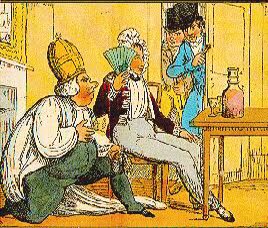
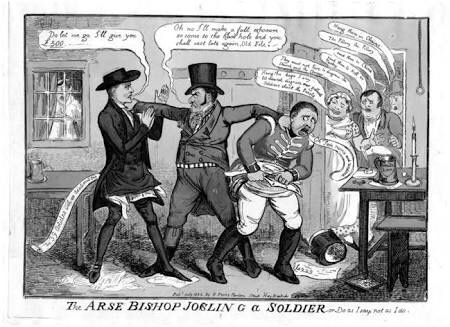
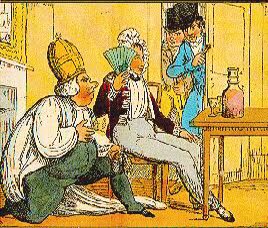
Jocelyn’s arrest sent ripples through both state and church. Robert Stewart, Viscount Castlereagh, who was both the Foreign Secretary and Leader of the House of Commons at the time, had an audience with King George IV on 9 August 1822 to reveal the fact that he was being blackmailed, and confessed: “I am accused of the same crime as the Bishop of Clogher.” The King is said to have advised Castereagh to “consult a physician.” Instead, he went to his English country seat in Kent, and three days later he slit his throat with a pen-knife. The reputation of the Irish clergy suffered as a result of the case, and Peel wondered whether it was advisable to appoint any of the Irish clergy to a vacant bishopric in the future. Shortly after Jocelyn’s arrest, the Archbishop of Canterbury, Charles Manners Sutton, claimed “it was not safe for a bishop to shew himself in the streets of London.” The former Bishop of Ferns was the most senior churchman in either Ireland or Britain to be involved in a public homosexual scandal in the 19th century. Initially, there was reluctance to discuss the case in the media, and a writer for The Times of London noted that “[m]ingled feelings of sorrow, humiliation, and disgust” had almost prevented him from writing at all. But Jocelyn was soon being ridiculed as the “Bishop of Sodom” and he became a subject of crude satire and popular ribaldry, resulting in more than a dozen illustrated satirical cartoons and numerous pamphlets and limericks. However, it is agreed generally that the case had many positive consequences, for it strengthened Archbishop Beresford’s hand in enforcing higher standards and instituting reforms of abuses brought about by lax and worldly clerics in the Church of Ireland. Nevertheless, the indiscretions of this former Bishop of Ferns have remained an embarrassment for generations. Percy Jocelyn rates a short and dismissive three-line entry in Leslie’s list of the Bishops of Ferns. Leslie’s separate eleven-line entries for him in the Armagh and Clogher lists of clergy and parishes merely state that he was deprived for by a court without hinting at the nature of his offence. There is no separate entry for him in the Dictionary of National Biography, and he is seldom referred to in the Roden pedigrees in Burke’s and other peerages. 

The Jocelyn case was a sensation at the time, as it would be even now, and researchers might expect to find details of the scandal in church archives. However, the Clogher Diocesan archives in the Public Records Office of Northern Ireland in Belfast, are essentially a record of the day-to-day running of the diocese and are silent about the deposition of Percy Jocelyn. For almost two centuries, the relevant papers in the Armagh Diocesan Registry Archive remained under an interdict imposed in 1822 by Primate Beresford. In the 1920s, Archbishop Charles Frederick D’Arcy, a former Bishop of Clogher, asked for the papers to be burned, although his instructions were never carried out, and the papers were released from closure only recently. An ecumenical but oft-forgotten twist to the tale is that Clogher Palace, which was quickly pillaged by Jocelyn after this move from Ferns in 1820, served as a convent for the Sisters of Saint Louis for most of the 20th century.

Tim Alderman (2017)

References

Rumination of the Day (2nd December 2016)

WORLD AIDS DAY

It’s the day after WAD, and as usual, I’m ruminating! For many years now I have been looking at how I now view HIV/AIDS – through the lense of objectivity. Emotion only muddles the issue, and history has a trail of misinformation, mixed objectives, venom and misunderstanding! 

Even recently I have encountered those who, for reasons known only to themselves, have never been able to move on! The hate is still alive, the dragons still circling. I could be one of these, who still feel that the experiences of the 80s & 90s are still alive, an uncompromising hard line that leaves me stranded in a time that has passed by. Fuck knows there is a lot in my past that I have never fully moved on from – family business that could, at any time in the past, have left me sitting in a gutter, needle dangling…or in a bar, in an alcoholic stupor – and fuck knows I flew very close to the latter at one stage! More so than many, I have reason enough to be bitter, to be a victim. My experience with AIDS has left me close to blind, and there are many who would agree that that is reason enough. But, as in my latter teens, with full knowledge of my families dysfunctionality, living with a solitary knowledge of my younger brothers horrendous death, of violence and unspoken secrets, of my being gay, I made a quiet vow to myself that I was not going to let it get the better of me, to smother me, to stop me being who I would be! So to with AIDS – my survival alone was an unexpected surprise – and blindness! To buckke under, to attribute blame, to become a victim, to allow it to hold me back, swallow me up, would be saying…I do not have the strength for this, the self-empowerment whereby I would become someone who even I didn’t recognise! 

To move on, one has to acknowledge that the past is just that – the past! Yes, what happened was dreadful – the hatred, the discrimination, the accusations, the blame, the misinformation, the segregation, the fear! We need to acknowledge – 40 years along now – that we were all scared shitless. Straight, gay, male, female, religious, non-religious, politicians, doctors, journalists, activists…ad infinitum…were all scared. Perhaps not since the scourges of the Black Death have we encountered something we all knew absolutely nothing about – not even those who, perhaps, should have known! And what does human nature do when it is faced with an unknown that can just kill at will, shows no mercy, is no respecter of life at all – it looks for scapegoats, attributes blame, hands out punishment! It just so happens that the scapegoat was the gay community, and given what was happening at that time, it perhaps should not have been surprising. Minority groups have a long history of misunderstanding, stigma, discrimination, hate and ignominy! I am not defending the direction it took…I’m not going to shoot myself in the foot…but the point is, it was quite a while back now, and as awful and relentless as it was, as a community we not only survived it, but we fought back with the tools to hand – knowledge, facts, patience and dogged determination. 

One can’t deny that some of the negatives from that era live on. There is still prejudice, discrimination, stigma and musunderstanding! But it is also true that we don’t have it on our own – just ask any person with Down Syndrome. To hang onto the hate, and all the other negatives from that period in our history is to hold no one back but yourself! You know, we all walked in the footsteps of those that suffered, those that died! But by walking in their footsteps, when their footsteps stopped…ours continued on! To live with the negativity is to deny that a lot of good, positive, beautiful things were still going on. The community still lived, loved, and laughed. We supported each other, we were staunch in the face of adversity, we celebrated the lives of those who died with a gusto that was ever born of love. If ever there was a time I was proud to be a member of the gay community, it was through the 20 years of that horror!

Okay, it damaged me! As a fanatical reader & writer, it chose to attack perhaps the most important assets I had – my eyes! But it also presented me with new opportunities, new roads to venture down, new challenges to tackle. I can’t carty the hate because, despite everything, my life has not stopped, nor my humour, my inquisitiveness, my talents, nor my ability to just get on with it. I no longer go to candlelight vigils, or other AIDS memorials. It is too raw, too emotion charged, to ready to rip open healed wounds. I don’t forget – those who died are too entrenched in my memories for that – but now I choose to remember in more gentle ways. What every single one of my dead friends would have wanted is for me to get on with my life. Once a year their ghosts are going to waft around, to cajole me to tears, to invoke memories of wonderful times that will stay with me forever. 

But I’ll wake up tomorrow, and the ghosts will be gone. And just as they wanted, my life goes on. Who am I to argue with them!

Tim Alderman (2016)

Gay History: Bandana Codes


PIt seems like only a brief minute ago that on any night out in a gay nightclub, you would see all manner of guys there sporting bandanas and keys in their rear pockets, advertising to those in-the-know what they were into. Which pocket I used depended on my mood as I raced out the door at home, but there was no guarantee that that was the side it would stay on if the right guy showed some interest! Same applied to keys.

It was sort of one of those things that we took for granted, without stopping yo think that there was a history behind it. In times where being gay, and trying to attract a sexual partner, could not be done blatantly, so things like earrings, bandanas, keys and language played an important role in advertising what we were looking for.

Research seems to suggest that bandana (or hanky) codes originated in San Francisco after the gold rush. With a shortage of women, men danced with each other at square dances, and used coloured bandanas to denote what role they played – blue for the male, red for the female. Their hair would curl if they knew what they stood for now!

These days, they denote fetishes, or preferences. Wearing a bandana (or keys) in one’s left rear pocket denoted an “active” or “top” position for whatever the colour suggested, whereby the right rear pocket denoted the “passive” or “bottom” partner. Despite what many straight men think, these are NOT male or female roles!

There are some regional differences for some of the lesser practiced fetishes, though colours for the basics, or more common practices, are pretty well universal. The following list contains most of the basic codes, including some I wasn’t aware of.


There is also this alternate list of – in my opinion – bizarre and impractical objects used for some very rare fetishes. How true-to-form this list actually is, I’m not sure. I have seen small teddy bears being displayed by guys who are into cuddling…but as for foil, ziplock bags, chamois, cocktail napkins, enema nozzles or doilies, I’ve never seen it – though perhaps because I wasn’t looking for it!

I would have thought a celery stick denoted into vegetarians, so there you go!

I put in this link to Cowboy Frank for those who want to check out some very comprehensive lists of colours and items. http://cowboyfrank.net/archive/hanky.htm

Apart from the odd occasional leatherman – generally older – I haven’t seen people out and using bandana codes for many a year now. Its heyday was the 80s.

I also was not aware that there was a Raver Code, so obviously the tradition is carried on in other areas.


I believe, according to an article on hanky codes in the Village Voice, a twink bandana code exists, but I’ve not to-date been able to track it down. For nostalgia purposes, I include this list from Image Leather, which would seem to be a leather bar.


Back in the day, bandana codes were useful for knowing what you were getting yourself into when you went home with someone, and prevented those “Oh…I’m sorry…I’m not into that!” moments, as the whips come out.

Purely for both interest, and novelty value, I attach several other lists to peruse, at the end of this article.

Tim Alderman (C) 2016
img_0965

img_0967