EXECUTION. — Yesterday morning, at an early hour, considerable numbers of spectators assembled before the Debtors’ door at Newgate, to witness the execution of William North, convicted in september Sessions of an unnatural crime.
The wretched culprit was 54 years of age, and had a wife living.
On his trial, he appeared a fine, stout, robust man, and strongly denied his guilt. On his being brought before the Sheriffs yesterday morning, he appeared to have grown at least ten years older, during the five months he has been in a condemned cell, with the horrid prospect before him of dying a violent death. His body had wasted to the mere anatomy of a man, his cheeks had sunk, his eyes had become hollow, and such was his weakness, that he could scarcely stand without support.
Though the consolations of religion were frequently offered to him, yet he could not sufficiently calm his mind to listen, or participate in them, even to the moment of his death. Sunday night he could not sleep, his mouth was parched with a burning fever; he occasionaqlly ejaculated “Oh God!” and “I’m lost;” and at other times he appeared quite childish; his imbecility of mind seemed to correspond with the weakness of his body. He exclaimed on one occasion “I have suffered sufficient punishment in this prison to atone for the crimes I have committed;” and when the Rev. Dr. Cotton and Mr. Baker, who attended him, asked him if he believed in Christ, and felt that he was a sinner? He replied “I pray, but cannot feel.”
The Sacrament of the Lord’s Supper was not administered to him, probably on account of his occasional delirium, and the generally disordered state of his mental faculties.
At five minutes before eight yesterday morning he was pinioned by the executioner in the press room, in the presence of the sheriffs and officers of the goal. As St. Sepulchre’s church clock struck eight, the culprit, carrying the rope, attended by the executioner, and clergyman, moved in procession with the sheriffs, &c. on to the scaffold.
On arriving at the third station, the prison bell tolled, and Dr. Cotton commenced at the same moment reading the funeral service “I am the resurrection and the life,” &c. of which the wretched man seemed to be totally regardless. On his being assisted up the steps of the scaffold, reason returned; he became aware of the dreadful death to which he was about to be consigned; his looks of terror were frightful; his expression of horror, when the rope was being placed round his neck, made every spectator shudder.
It was one of the most trying scenes to the clergymen they ever witnessed — never appeared a man so unprepared, so unresigned to his fate. — The signal being given the drop fell, and the criminal expired in less than a minute. He never struggled after he fell.
The body hung an hour, and was then cut down for interment. — The six unhappy men who are doomed to suffer on to-morrow morning, appear to be perfectly resigned to their fate.
News Paper Reports
Saturday 22 February 1823
His Majesty was pleased to order the following for execution: . . . Wm. North, convicted last September Sessions of an unnatural crime, on Monday morning next. (Morning Chronicle)
Tuesday, 25 February 1823
EXECUTION. – Yesterday morning, at an early hour, considerable numbers of spectators assembled before the Debtors’ door at Newgate, to witness the execution of William North, convicted in September Sessions of an unnatural crime. The wretched culprit was 54 years of age, and had a wife living. On his trial, he appeared a fine, stout, robust man, and strongly denied his guilt. On his being brought before the Sheriffs yesterday morning, he appeared to have grown at least ten years older, during the five months he has been in a condemned cell, with the horrid prospect before him of dying a violent death. His body had wasted to the mere anatomy of a man, his cheeks had sunk, his eyes had become hollow, and such was his weakness, that he could scarcely stand without support. Though the consolations of religion were frequently offered to him, yet he could not sufficiently calm his mind to listen, or participate in them, even to the moment of his death. Sunday night he could not sleep, his mouth was parched with a burning fever; he occasionaqlly ejaculated “Oh God!” and “I’m lost;” and at other times he appeared quite childish; his imbecility of mind seemed to correspond with the weakness of his body. He exclaimed on one occasion “I have suffered sufficient punishment in this prison to atone for the crimes I have committed;” and when the Rev. Dr. Cotton and Mr. Baker, who attended him, asked him if he believed in Christ, and felt that he was a sinner? He replied “I pray, but cannot feel.” The Sacrament of the Lord’s Supper was not administered to him, probably on account of his occasional delirium, and the generally disordered state of his mental faculties. At five minutes before eight yesterday morning he was pinioned by the executioner in the press room, in the presence of the sheriffs and officers of the goal. As St. Sepulchre’s church clock struck eight, the culprit, carrying the rope, attended by the executioner, and clergyman, moved in procession with the sheriffs, &c. on to the scaffold. On arriving at the third station, the prison bell tolled, and Dr. Cotton commenced at the same moment reading the funeral service “I am the resurrection and the life,” &c. of which the wretched man seemed to be totally regardless. On his being assisted up the steps of the scaffold, reason returned; he became aware of the dreadful death to which he was about to be consigned; his looks of terror were frightful; his expression of horror, when the rope was being placed round his neck, made every spectator shudder. It was one of the most trying scenes to the clergymen they ever witnessed – never appeared a man so unprepared, so unresigned to his fate. – The signal being given the drop fell, and the criminal expired in less than a minute. He never struggled after he fell. The body hung an hour, and was then cut down for interment. – The six unhappy men who are doomed to suffer on to-morrow morning, appear to be perfectly resigned to their fate. (Morning Chronicle)
CITATION: If you cite this Web page, please use the following citation: Rictor Norton (Ed.), “Newspaper Reports, 1823”, Homosexuality in Nineteenth-Century England: A Sourcebook, 29 December 2014; expanded 19 August 2016 http://rictornorton.co.uk/eighteen/1823news.htm
The case of Captain Rigby has everything a gay historian requires: sex, dramatic incident, humour, some degree of gay pride or at least defiance, personal human interest, and wider social relevance. It also holds together as an accessible story that can be easily grasped without the need for historical filters. The gay past here does not seem to be a different country, but a country very recognizeable to us today. Nevertheless, there is some historical context that would be useful to make some things more easily appreciated, which I mention in the following notes.
The following is the complete text of the trial of Captain Edward Rigby for sodomy in 1698. It documents the first recorded use of an agent provocateur, employed for the purposes of entrapment by the Societies for the Reformation for Manners. These Societies were formed in Tower Hamlets, London, in 1690, with their primary object being the suppression of bawdy houses and profanity. A network of moral guardians was set up, with four stewards in each ward of the City of London, two for each parish, and a committee, whose business it was to gather the names and addresses of offenders against morality, and to keep minutes of their misdeeds. By 1699 there were nine such societies, and by 1701 there were nearly 20 in London, plus others in the provinces, all corresponding with one another and gathering information and arranging for prosecutions.
Their first queer victim was Captain Edward Rigby. Early in 1698 he had been tried for sodomy at a court-martial, at which he was acquitted. But Reverend Thomas Bray, a leading member of the Societies for Reformation of Manners, believed Rigby to be guilty, and he worked out a plan with the constabulary to entrap him using as bait the servant named Minton who had previously been approached by Rigby. Minton’s master was Rev. Charles Coates, who was a parishoner of Thomas Bray. The trial below gives all the details.
Rigby’s trial was mentioned in several satirical ballads, including The Women’s Complaint to Venus.
The Societies for the Reformation of Manners were also responsible for the arrest of a group of sodomites in 1707, of whom several committed suicide while in prison. See The Tryal and Conviction of Several Reputed Sodomites.
Rigby’s trial is remarkable for showing that as early as the 1690s some men were aware of being part of a historical tradition: Rigby tells Minton, “it’s no more than was done in our Fore-fathers time.” As with many modern gay men, Rigby justified himself — and perhaps developed some sense of gay identity — by referring to historical figures and great men who were also gay.
It should be noted that his reference to Peter the Great is probably based upon first-hand evidence (I don’t think any biographer of Peter has referred to this contemporary evidence). Rigby must have observed Peter lying with Prince Alexander (a handsome lad Peter had picked up in the Moscow slums who became the most powerful man in Russia) during Peter’s visit to England from 11 January through 21 April 1698, aboard the royal yacht, or perhaps during Peter’s two-month stay in Deptford to examine the shipyards, where he caroused with the English sailors, or perhaps in the course of the sham naval battle that was staged for Peter’s entertainment on a visit to Portsmouth. Captain Rigby might well have had some official role to play during this state visit of the Russian monarch whose obsession was the buildilng of ships. Rigby had been made captain of the Mermaid fireship in 1693, and from 1695 until his arrest he commanded the Dragon, a 40 gun man- of-war in the squadron under Commodore Moody; he had taken two valuable prizes in the Mediterranean, and was an officer of some small fame.
Another man was indicted for aiding, abetting, and assisting Rigby in his sodomitical attempts, but was not named at the trial. He was probably Edward FitzGerald, one of two men with the same name, both of whom accused William Tipping, a clergyman, of suborning them to falsely charge Rigby with sodomizing them. Tipping was indicted for this conspiracy in July 1699, but the FitzGeralds’ charge was not believed, and the Grand Jury threw out the bill, with directions to seek out the two FitzGeralds to try them for perjury. Tipping was almost certainly another member of the Societies for the Reformation of Manners and a friend of Thomas Bray.
After serving his prison sentence, Rigby fled to France, where he became a Roman Catholic and entered the enemy’s service. In 1711 the French man-of-war the Toulouse was sighted by two English ships that were returning to Port Mahon in the Mediterranean. They engaged and captured her, and towed the badly damaged ship into port. The Second Captain of the Toulouse turned out to be none other than Edward Rigby. At Port Mahon the resourceful Captain Rigby found means to get on board a Genoese ship lying at anchor in the harbour, and by that means he again escape to France. He was highly regarded in France for his marine skills, and very well paid, though his pleasures were said to have been expensive.
The trial is preceded by several newspaper reports.
News Paper Reports
24 November 1698
There are now above 400 Prisoners in Newgate, 78 of whom are to Plead his Majesties Pardon next Sessions, and the rest are to come upon their Tryals, some of whom are for Buggery. (Dawks’s News-Letter)
10 December 1698
The Sessions is not yet ended, but 2 persons are convicted for that wicked crime of Buggery. (Dawks’s News-Letter)
Sat-Tues 10-13 December 1698
Yesterday the Trials ended at the Old Bailly [sic] when about 22 Criminals received Sentence of Death for different Crimes; a great many were Burnt in the Hand, and a certain Captain was fined in 1000 l. and ordered to stand 3 times in the Pillory for Buggery; as were some others for Misdemeanors, &c. Some others are Continued in Prison for Exchequer Notes, High-ways, &c. And then the Court Adjourned to 8 of the Clock on Friday Morning next, when above 70 persons are to plead their Pardons. Four Women that were Condemned to Die, pleaded their Bellies; and the Jury of Matrons returned 3 of them quick with Child, but the 4th otherwise. (The Flying Post)
13 December 1698
Yesterday the Tryials ended at the Old Bayly, when about 22 Criminals, received Sentence of Death for different Crimes, near 40 were Burnt in the Hand, and a Captain was Fined 1000l. and ordered to Stand 3 times in the Pillory for Buggery, and some others for other Crimes, &c. (Dawks’s News-letter)
17-20 December 1698
We are informed that a Man Servant, belonging to the Right Honorable the Lady Mary Howard, getting out of Bed on Monday morning last, came down Stairs, and putting himself in Womens Apparel, went up again to his Bed, and laid himself athwart it, and cut his own Throat. (The Flying Post) (Nearly the same report appeared in Dawks’s News-letter for 20 December.)
Tues-Turs 20-22 December 1698
On Tuesday last Captain Rigby stood in the Pillory, over-against the George Tavern in the Pall-Mall, and yesterday in Charing-Cross, according to Sentence, for attempting Sodomy; he appeared very gay. He is to stand again to morrow without Temple-Bar. (The Flying Post)
Tues-Thurs 20-22 December 1698
On Tuesday last Capt. Rigby stood upon the Pillory in the Pall Mall, before the George Tavern, and yesterday he stood at Chairing [sic Cross. (The Post Boy)
22 December 1698
Yesterday Captain Rigby stood on the Pillory at Charing Cross, and this day without Temple Bar. (Dawks’s News-letter)
Thurs-Sat 22-24 December 1698
On Thursday last Captain Rigby stood on the Pillory without Temple Bar, as did likewise two other Fellows in the Pillory within the Bar. (The Post Boy)
14 January 1699
I am informed that three other Indictments for Beastly Crimes are ready to be exhibited agianst Captain Rigby. (Dawks’s News-letter)
The Proceedings Against Captain Rigby
At the Sessions of Goal Delivery, held at Justice-Hall in the Old-Bailey, on Wednesday the Seventh Day of December, 1698. for intending to Commit the Abominable SIN of SODOMY, on the Body of one William Minton.
Printed by Order of the Court.
An Indictment was found against Captain Rigby, for that he, the Seventh day of November last, did Solicite, Incite, and as well by words as otherways, endeavour to perswade one William Minton (of about the Age of Nineteen Years) to suffer him the said Rigby, to commit the Crime of Sodomy with him the said Minton. And the said Rigby did also Endeavour and Attempt, to Commit the Crime of Sodomy with him the said Minton; and did also do and perpetrate divers other Enormities and abominable things, with an intent to Commit the Crime of Sodomy with the said Minton.
Captain Rigby being sensible of his Guilt, and unwilling the same should be disclosed to the World, would not therefore Plead Not Guilty to his Inditment; neither would he confess the same, but Demurr’d to the Indictment, in hopes, as his council alledged, that they might find some Fault therein; but upon Arguing the Demurrer, the Court were of Opinion the Indictment was good, and therefore Judgment was given against Rigby, which was the same as if he had Pleaded Guilty. And on the last day of the Sessions, the council for the King demanded Judgment against him, which could not be Adequate to his Crime; and for the Information of the Court, in order to give a Just and Exemplary Judgment, pray’d, That several Affidavits which were produced might be Read, which accordingly were Read; whereby it appeared,
That on Saturday the Fifth of November last, Minton standing in St. James’s Park, to see the Fireworks [i.e. the Guy Fawkes bonfire], Rigby stood by him and took him by the hand, and squeez’d it; put his Privy Member Erected into Minton’s Hand; kist him, and put his Tongue into Minton’s Mouth, who being much astonish’d at these Actions went from him; but Rigby pursued him, and accosted him again; and after much Discourse prevailed with Minton to tell him where he lodged, and to meet him the Monday following about Five a Clock, at the George- Tavern in the Pall mall, and to Enquire for Number 4. Minton the next day Acqainted Charles Coates, Esq; (with whom he lived) with what had happened to him the Night before, and desired his Advice and Direction therein; who with a Worthy Divine then present (being willing to detect and punish the Villany designed by Rigby) directed Minton to apply himself to Thomas Railto Esq; a Justice of the Peace for Middlesex; who being informed of what past between Rigby and Minton, appointed his Clark with a Constable, and two other Persons, to go with Minton to the George-Tavern, who were to stay in some Room adjoyning to the Room whereinto Minton should go: and if any Violence should be offered to him, upon crying out “Westminster” the Constable and his Assistance should immediately enter the Room.
That on Monday the Seventh of November last, about Four of the Clock in the Afternon, Rigby came to the George-Tavern, and left Number 4 at the Bar, with Directions, That if any Enquired for that Number, to send them to him; after Rigby had been about an Hour at the Tavern, (Minton not coming) Rigby called up one of the Drawers, and in a Passionte manner, bid him go to Minton’s Lodgings, and enquire for a young Gentleman; and if he were within, to tell him a Gentleman staid for him at the George-Tavern; the Drawer accordingly went, but Minton not being within, the Drawer return’d that Answer to Rigby.
That about six a clock Minton came to the George Tavern, enquired for Number 4. and was shewed into the room where Rigby was, and [t]he Constable and his assistance were placed in a Room adjoyning; Rigby seemed much pleased upon Mintons coming, and drank to him in a glass of Wine and kist him, took him by the Hand, put his Tongue into Mintons Mouth, and thrust Mintons hand into his (Rigby) Breeches, saying, “He had raised his Lust to the highest degree,” Minton thereupon askt, “How can it be, a Woman was only fit for that,” Rigby answered, “Dam’em, they are all Poxt, I’ll have nothing to do with them.” Then Rigby sitting on Mintons Lap, kist him several times, putting his Tongue into his mouth, askt him, “if he should F[uck] him,” “how can that be” askt Minton, “I’le show you” answered Rigby, “for it’s no more than was done in our Fore-fathers time”; and then to incite Minton thereto, further spake most Blaphemous words, and said, “That the French King did it, and the Czar of Muscovy made Alexander, a Carpenter, a Prince for that purpose,” and affirmed, “He had seen the Czar of Muscovy through a hole at Sea, lye with Prince Alexander.” Then Rigby kist Minton several times, putting his Tongue in his Mouth, and taking Minton in his Arms, wisht he might lye with him all night, and that his Lust was provoked to that degree, he had — [i.e. ejaculated] in his Breeches, but notwithstanding he could F[uck] him; Minton thereupon said, “sure you cannot do it here,” “yes,” answered Rigby, “I can,” and took Minton to a corner of the Room, and put his Hands into Mintons Breeches, desiring him to pull them down, who answered “he would not, but he (Rigby) might do what he pleased”; thereupon Rigby pulled down Mintons Breeches, turn’d away his shirt, put his Finger to Mintons Fundament, and applyed his Body close to Mintons, who feeling something warm touch his Skin, put his hand behind him, and took hold of Rigbys Privy Member, and said to Rigby “I have now discovered your base Inclinations, I will expose you to the World, to put a stop to these Crimes”; and thereupon Minton went towards the door, Rigby stopt him, and drew his Sword, upon which Minton gave a stamp with his foot, and cry’d out “Westminster”; then the Constable and his Assistance came into the Room, and seized Rigby, who offer’d the Constable a Gratuity to let him go, which he refusing, carryed Rigby before Sir Henry Dutton Colt, before whom Minton charged Rigby (who was present) with the Fact to the effect before related; who being askt by Sir Henry Colt, “Whether the Fact Minton had charged him with were True,” Rigby denyed not that the Charge against him was true, only objected against some inconsiderable Circumstances, which no ways tended to the lessening of the Charge.
That after all the Informations were read, Rigby was askt by the Court, “What he had to say for himself,” he desired that a Gentlemans Affidavit who was present when this matter was transacted might be read; the Court told him, “That that Gentleman stood Indicted in the same Indictment with him for being Aiding, Advising, and Assisting to him, in committing his Crime, and therefore could not be an Evidence for him.” Rigby was askt by the Court “what further he had to say,” he insisted on his Innocency, that he was misadvised by his Council in Demurring to the Inditment, which if he had known had been Confessing of the Fact in case the Court had been of Opinion that the Indictment was sufficient, he would not have done it; but seeing the Law was so he must submit to it; he said he was Drunk and might kiss Minton several times. To which it was answered by the Kings Council, “That his (Rigbys) Council had well advised him, and he knew his Guilt to be such, That it would be proved by Three or Four Witnesses beyond all contradiction,” and therefore Rigby Demurred to the Indictment, in hopes thereby his Crime would not be Disclosed, as it must have been if he had pleaded Not Gulty to his Indictment, and submitted to a Tryal; but as the Fact had now been made publick in Court; and it also appearing that he was not Drunk when he Committed it.
It was therefore prayed by the King’s Council, that the Court would give an Exemplary Judgment against him, for that Crime of which, by his own Confession, he stood Convicted, and was not in its Nature to be Aggravated.
And the Judgment which was pronounced by the Court against Rigby, was, viz.
That he stand Three several Days in the Pillory, for the space of two Hours, from Eleven of the Clock to One, in each of those days.
The first day over-against the George-Tavern in the Pall-mall; the Second day at Charing-Cross, and the Third day at Temple-Bar.
That he pay a Fine of 1000l. to the King.
That he lye in Prison for a Year, after he shall have paid his Fine.
And that before he be discharged out of Prison, he shall find sufficient Sureties for his good Behaviour for Seven Years.
Account of the trial for sodomy of Captain Edward Rigby (LMA reference MJ/SP/1698/12/024)References
SOURCE: An Account of the Proceedings against Capt Edward Rigby, London: Printed by F. Collins in the Old Bailey, 1698.
CITATION: If you cite this Web page, please use the following citation: Rictor Norton. Ed. “The Trial of Capt. Edward Rigby, 1698.” Homosexuality in Eighteenth-Century England: A Sourcebook. Updated 11 July 2013; http://rictornorton.co.uk/eighteen/rigby.htm
The 2nd Earl of Castlehaven, from a contemporary print published in the wake of his notorious trial.
Mervyn Tuchet (sometimes Mervin Touchet), 2nd Earl of Castlehaven (1593 – 14 May 1631), was an English nobleman who was convicted of rape and sodomy and subsequently executed.
A son of George Tuchet, 1st Earl of Castlehaven and 11th Baron Audley, by his wife, Lucy Mervyn, he was known by the courtesy title of Lord Audley during his father’s lifetime, so is sometimes referred to as Mervyn Audley.[1]
He was knighted by James I in 1608, before he studied law at the Middle Temple. He served as Member of the Parliament of England for Dorset in the Addled Parliament of 1614 and was a Justice of the Peace for the counties of Dorset, Somerset, and Wiltshire.[1] He succeeded his father on 20 February 1616/7 as Earl of Castlehaven and Baron Audley. He left seven children upon his death.[2]
Sometime before 1612 (records of the marriage are lacking), Lord Audley married Elizabeth Barnham, a sister-in-law of the philosopher and scientist Francis Bacon, and with her he had six children. By all accounts the marriage was a loving and successful one, ending with her death in 1622.[3] His second marriage, on 22 July 1624, at Harefield, Middlesex, was to the former Lady Anne Stanley (1580–1647), elder daughter and co-heiress of Ferdinando Stanley, 5th Earl of Derby (by his wife, Alice Spencer), and widow of Grey Brydges, 5th Baron Chandos. They had a daughter, Anne Touchet, who died young.[4] Lady Anne was significantly older than Castlehaven,[5] and the marriage was not a success, but in 1628 Lord Castlehaven’s son was married to her thirteen-year-old daughter, Elizabeth;[5] a marriage of step-children.
At a trial by his peers, it was stated that Henry Skipwith had arrived at Fonthill Gifford in 1621 and that within a few years he was so close to Castlehaven that he sat at the family’s table and was to be addressed as “Mister Skipwith” by the servants. Several years later, Giles Broadway arrived at the house and received similar treatment. It was not long before Castlehaven was providing Skipwith with an annual pension, and he was accused of attempting to have Skipwith inseminate his daughter-in-law, to produce an heir from Skipwith instead of his son. In fact, the countess and Skipwith had an adulterous relationship.
Castlehaven’s son, James, claimed that it was the extent of Castlehaven’s “uxoriousness” toward his male favourites which led to his initial lodging of a complaint in October 1630.[6]
Castlehaven’s trial aroused continuing public debate, and witnesses were almost certainly suborned. He maintained his innocence to the last, and the Privy Council was split on both charges, almost evenly on the sodomy charge. The case remains of interest to some as an early trial concerning male homosexuality, but ultimately its greatest influence proved to be as a precedent in spousal rights, as it became the leading case establishing an injured wife’s right to testify against her husband.[5]
Charges were brought against Castlehaven on the complaint of his eldest son and heir, who feared disinheritance, and were heard by the Privy Council under the direction of Thomas Coventry, Lord High Steward. Lady Castlehaven gave evidence of a household which she said was infested with debauchery, and the Attorney-General acting for the prosecution explained to the court that Castlehaven had become ill because “he believed not God”, an impiety which made Castlehaven unsafe. However, he insisted he was not guilty and that his wife and son had conspired together in an attempt to commit judicial murder. All witnesses against Castlehaven would gain materially by his death (as the defendant put it: “It is my estate, my Lords, that does accuse me this day, and nothing else”)[5] and “News writers throughout England and as far away as Massachusetts Bay speculated about the outcome.”[5]
Castlehaven was convicted, attainted, and three weeks later beheaded on Tower Hill for his sexual crimes: namely the “unnatural crime” of sodomy, committed with his page Laurence (or Florence) FitzPatrick, who confessed to the crime and was executed; and assisting Giles Browning alias Broadway, who was also executed, in the rape of his wife Anne, Countess of Castlehaven, in which Lord Castlehaven was found to have participated by restraining her.
The page who was executed, Laurence FitzPatrick, testified that Lady Castlehaven “was the wickedest woman in the world, and had more to answer for than any woman that lived”. In The Complete Peerage, Cokayne adds that the death of Castlehaven was certainly brought about by his wife’s manipulations and that her undoubted adultery with one Ampthill and with Henry Skipwith renders her motives suspicious. According to the historian Cynthia B. Herrup,[7] Anne was the equal of Lord Castlehaven in immorality.
Under the terms of the attainder, Castlehaven forfeited his English barony of Audley, created for heirs general, but retained his Irish earldom and barony since it was an entailed honour protected by the statute De Donis. When he was beheaded on Tower Hill on 14 May 1631, those Irish titles passed to his son James.
Mervyn Touchet’s first marriage (c.1611) was with Elizabeth Barnham (1592–c.1622/4), daughter of London alderman Benedict Barnham and his wife, Dorothea Smith, and they had six surviving children:
James Tuchet, 3rd Earl of Castlehaven (1612–1684), who married Elizabeth Brydges (1614/5–1679), daughter of his stepmother, but left no surviving children
Lady Frances Touchet (born 1617)
Hon. George Touchet (died c. 1689), who became a Benedictine monk
Mervyn Tuchet, 4th Earl of Castlehaven (died 1686)
Lady Lucy Touchet (died 1662)
Lady Dorothy Touchet (died 1635)
References
Ferris, John P.; Hunneyball, Paul (2010). “Audley, alias Tuchet, Sir Mervyn (c.1588-1631), of Stalbridge, Dorset; later of Fonthill Gifford, Wilts”. The History of Parliament.
Herrup 1999, p. ix.
Herrup 1999, p. 12.
[1]
a b c d e Herrup, Cynthia B. (January 2008) [2004]. “Touchet, Mervin, second earl of Castlehaven (1593–1631)”. Oxford Dictionary of National Biography (online ed.). Oxford University Press. doi:10.1093/ref:odnb/66794. (Subscription or UK public library membership required.)
Herrup 1999, p. 19.
Herrup, Cynthia B. (1999). A House in Gross Disorder: sex, law, and the 2nd Earl of Castlehaven. Oxford University Press.
Herrup, Cynthia (1999). A House in Gross Disorder: Sex, Law, and the 2nd Earl of Castlehaven. New York: Oxford University Press. ISBN 0-19-512518-5.
Lacey, Brian (2008). Terrible Queer Creatures: A History of Homosexuality in Ireland. Wordwell Books.
There is a plethora of information on the Vere Street Coterie, and it is a matter of sieving through it all to put this article on the event together. Considering the historic impact of the trial & punishment of members of the coterie, it is remiss that knowledge of it is not more widely spread. The 1810 conviction of London’s Vere Street Coterie led to the most brutal public punishment of homosexuals in British history.
The Vere Street Coterie began in 1810 when a man named Yardley introduced himself to James Cook. Yardley advised Cook that much money could be made by supplying the men of London with a male brothel. Cook, a self-proclaimed avaricious heterosexual, agreed to join Yardley in operating the White Swan in Vere Street, Clare Market.
The White Swan had a number of features designed to please its customers. The lower part of the house had one room with four beds, a ladies’ dressing room complete with every type of cosmetic, and a chapel for weddings.
Yardley and Cook followed the tradition established by the molly houses of the eighteenth century by allowing visitors to engage in sexual relations with each other free of charge. The upper section of the brothel housed prostitutes who lured casual customers in the manner of heterosexual brothels, presumably by wearing little clothing and offering various skills. No unusual interests, such as sadomasochism, were served.
The White Swan had been open for less than six months when the police raided it on July 8, 1810. Almost 30 of the inhabitants found themselves under arrest, including Cook. The police proved less of a problem than the mob, mostly female, who nearly killed the prisoners as they were transported in coaches from the watch house of St. Clement Danes to Bow Street for examination.
Most of the men were eventually set free for lack of sufficient evidence for prosecution. All seven of the men who were convicted belonged to the lower middle class, including William Amos, alias Sally Fox; Philip Kett; William Thomson; Richard Francis; James Done; and Robert Aspinal. Cook, found guilty of running a disorderly house, was never charged with sodomy.
All of the men except Aspinal were sentenced to stand an hour in the pillory. Aspinal had less culpability than the others and received a sentence of imprisonment for one year . Amos, for his third conviction on similar charges, received three years imprisonment, in addition to the pillorying. The others received terms of two years imprisonment, in addition to the pillorying.
The White Swan, The Gay Brothel in Vere Street – Lucy Inglis
Standing in the pillory involved locking the head and hands of a convict through one wing of a four-winged frame. The prisoner walked in a circle as the device rotated on an axis. The arrangement offered no means of protection to the convict.
On the day of the pillorying, September 27, 1810, the streets surrounding the Old Bailey were completely blocked by thousands of spectators. Shops were shut with the windows and roofs of nearby houses crowded with humanity. The mob, particularly the women, had built pyramids of mud balls that resembled shot. As the convicts moved in a wagon toward the pillory, the crowd hurled mud, dead cats and dogs, rotten fish, spoiled eggs, dung, offal, potatoes, turnips, brickbats, and verbal abuse. Several of the men began to bleed profusely from wounds.
Once placed in the pillory, the men walked for one hour while the violence continued unabated. About fifty women were permitted by authorities to form a ring among the men and pelt them incessantly. Cook and Amos, placed on the pillory without the protection of two additional prisoners’ bodies, suffered the worst, with Cook beaten almost insensible.
T wo members of the coterie, who were not present during the raid of July 8 but who were implicated by the testimony of an informer , were charged with buggery . Thomas White, a sixteen-year-old Drummer of the Guards in a Portugal regiment, and John Newbolt (or Newball) Hepburn, a forty-two-year-old ensign in a West India regiment, were captured after an acquaintance reported their involvement with the White Swan to a drum major . The officer arranged for both men to be brought for trial.
The Vere Street Gang at the pillory in 1810
Both soldiers were convicted and sentenced to death. They were hanged at Newgate prison on March 7, 1811.
The fate of the Vere Street Coterie terrorized the gay community in England. Part of a general crackdown on immoral behavior , the horrific punishment meted out to the group undoubtedly forced many gay men to re-evaluate their public activities.
Newspaper Reports of the Raid & Arrests
Tuesday, 10 July 1810
POLICE. Bow-Street, July 9. – In consequence of its having been represented to the Magistrates of the above office, that a number of persons of a most detestable description, met at the house of James Cooke, the White Swan, in Vere-street, Clare-market, particularly on a Sunday night, a privy search-warant was issued, and was put in execution on Sunday night last, when 23 persons, including the landlord of the house, were taken into custody, and lodged in St. Clement’s watch-house, till yesterday, at eleven o-clock,w hen they were brought before Mr. Read for examination; but the circumstance having transpired, a great concourse of people had collected in Bow-street, and which was much increased by the mob that followed the prisoners when they were brought from the watch-house. It was with the greatest difficulty the officers could bring them to and from the Brown Bear to the Office; the mob, particularly the women, expressing their detestation of the offence of which the prisoners were charged.
The following persons were first put to the bar, and gave their names and description:-
Esau Haycock keeps a shop near the Yorkshire Stingo, New Road.
James Amos, alias Fox, lodger, at the White Swan, (the house in question) a servant out of place, disabled in the arm. N.B. He was convicted and pilloried some time since for unnatural practices.
William Thopson, waiter at a hotel in Covent-garden.
Henry Toogood, servant to a gentleman in Portland-place.
Robert Aspinall, lodger, at No. 1, Brewer’s Court, Great Wild-street, taylor.
Richard Francis, a corporal in the 3d Regiment of Foot Guards.
James Cook, landlord of the house, and Philip Hot, the waiter.
Samuel Taunton, the officer, who had the executio of the warrant stated, that he and other officers went last night to the house about eleven o’clock, and apprehended the before-named persons, except the landlord and waiter, in a back parlour.
Two of the Patrole gave an account of their being in the house last night previous to the execution of the warrant [i.e. as infiltrators in disguise], and stated the particulars of the conversation and actions that passed while they were in the parlour, but it is of too horrible a nature to meet the public eye.
These witnesses also stated their having seen similar proceedings in the same parlour on the night of Sunday week, and identified several of the Prisoners as having been present at that time.
They were ordered to find bail for the misdemeanour, and in default were committed to prison.
James Spittle, a servant, in Chancery-lane; Matthew Saunders, of Duke-street, Aldgate; James Done, of Curran-road, shoreditch, bricklayer; William Barrow, of Furnival’s-inn; John Reeves, of Castle-street, Leicester-fields, traveller with goods, James Griffiths, Union-court, Holborn, servant out of place (well known at Bow-street); Edward Quaiffe, a soldier in the 3d Guards; George Boat, a waiter, out of place, lodging at the White Swan; John Clarke, Union-court, Holborn, a servant out of place; Timothy Norris, of Temple-street, Whitefriars, a servant out of place; Bernard Hovel, a soldier in the 1st Guards; Thos. Dixon, a soldier in the 3d Guards; Michael Hays, a servant out of place.
All these prisoners, except Dixon and Hays, who were in a dark kitchen, were found in a room on the first floor, but there being no evidence of what took place, they were all discharged except Done, who was proved to have been in the back parlour with the others, on the night of Sunday se’nnight. He was committed.
The crowd had, by this time, become so great in Bow-street, particularly facing the Office, that it was almost impossible to pass, and most of those who were discharged, were very roughly handled; several of them were hunted about the neighbourhood, and with great difficulty excaped with their lives, although every exertion was used by the constables and patrole to prevent such dangerous proceedings; and, in doing which, many of them were very roughly treated.
(Morning Chronicle; this newspaper cutting was pasted in William Beckford’s scrapbook now held in the Beinicke Library.)
Tuesday 10 July 1810
POLICE.
BOW-STREET, July 9.
On Sunday night, in consequence of some private information received by the Bow-street Magistrates, a strong party of police officers repaired to a public-house, the sign of the Swan, in Vere-street, Clare-market, said to be the rendezvous of a society of miscreants of a detestable description. The officers proceeded to search the house, where they found a company of 21 persons, the whole of whom, together with the landlord of the house, they apprehended, and lodged for the night in the watch-house of St. Clement’s parish. The house was a place of call for coffee-house and tavern waiters, and most of the persons taken were of that description. There were also amongst them some private soldiers of the Guards.
Yesterday morning, at eleven, the Bow-street officers proceeded with three coaches to the watch-house to bring up the prisoners for examination; but the concourse of people was so great that the carriages could scarcely proceed. Bow-street, and all the avenues leading to it, were also immensely crowded, and so continued till past 5 in the afternoon.
The prisoners underwent a long examination. Several were discharged, the proofs against them not being sufficiently strong to warrant their detention for trial; but their liberation was instantaneously productive of the most dangerous consequences. The multitude, male and female, fell upon them as they came out. They were knocked down, kicked, and covered with mud through every street in their endeavours to escape. The women, particularly those of Russel-street and Covent-garden market, were most ferocious in the application of this discipline; but the lower order of the male spectators were by no means lax in their exertions to mark their detestations of these wretches.
Out of the whole number, eight were ordered to find bail for the misdemeanour, and in default were committed to prison. They were housed for a time at the Brown Bear, in Bow-street, until the crowd should disperse. The crowd, however, continued to block up the Street and its avenues. A coach was drawn up before the door of the Brown Bear, for the conveyance of a part of the Delinquents to prison. This afforded a fresh signal to whet the eagerness of the mob, who pressed close round the carrige, and could not be kept off by the constables. It was, therefore, seen that any attempt to convey the Prisoners that way, must have exposed them to extremely rough handling, if not to urder. It was in consequence deemed prudent to detain the coach there, and by that means to fix the attention of the multitude, while the Prisoners were taken, about half-past four, over a wall at the rear of the Brown Bear, and into a large yard behind, which has an avenue to Russell-street, through which, after some time, they were conducted, hand-cuffed three together, to coaches, and conveyed to prison.
Tuesday 10 July 1810
POLICE.
BOW-STREET, July 9.
On Sunday night, in consequence of some private information received by the Bow-street Magistrates, a strong party of police officers repaired to a public-house, the sign of the Swan, in Vere-street, Clare-market, said to be the rendezvous of a society of miscreants of a detestable description. The officers proceeded to search the house, where they found a company of 21 persons, the whole of whom, together with the landlord of the house, they apprehended, and lodged for the night in the watch-house of St. Clement’s parish. The house was a place of call for coffee-house and tavern waiters, and most of the persons taken were of that description. There were also amongst them some private soldiers of the Guards.
Yesterday morning, at eleven, the Bow-street officers proceeded with three coaches to the watch-house to bring up the prisoners for examination; but the concourse of people was so great that the carriages could scarcely proceed. Bow-street, and all the avenues leading to it, were also immensely crowded, and so continued till past 5 in the afternoon.
The prisoners underwent a long examination. Several were discharged, the proofs against them not being sufficiently strong to warrant their detention for trial; but their liberation was instantaneously productive of the most dangerous consequences. The multitude, male and female, fell upon them as they came out. They were knocked down, kicked, and covered with mud through every street in their endeavours to escape. The women, particularly those of Russel-street and Covent-garden market, were most ferocious in the application of this discipline; but the lower order of the male spectators were by no means lax in their exertions to mark their detestations of these wretches.
Out of the whole number, eight were ordered to find bail for the misdemeanour, and in default were committed to prison. They were housed for a time at the Brown Bear, in Bow-street, until the crowd should disperse. The crowd, however, continued to block up the Street and its avenues. A coach was drawn up before the door of the Brown Bear One of those committed is a soldier; the reset of them flashy dressed fellows, in coloured clothes, with nankeen trowsers, silk stockings, &c. all hale robust fellows, the oldest not above 33.
Tuesday 10 July 1810
POLICE.
BOW-STREET, July 9.
On Sunday night, in consequence of some private information received by the Bow-street Magistrates, a strong party of police officers repaired to a public-house, the sign of the Swan, in Vere-street, Clare-market, said to be the rendezvous of a society of miscreants of a detestable description. The officers proceeded to search the house, where they found a company of 21 persons, the whole of whom, together with the landlord of the house, they apprehended, and lodged for the night in the watch-house of St. Clement’s parish. The house was a place of call for coffee-house and tavern waiters, and most of the persons taken were of that description. There were also amongst them some private soldiers of the Guards.
Yesterday morning, at eleven, the Bow-street officers proceeded with three coaches to the watch-house to bring up the prisoners for examination; but the concourse of people was so great that the carriages could scarcely proceed. Bow-street, and all the avenues leading to it, were also immensely crowded, and so continued till past 5 in the afternoon.
The prisoners underwent a long examination. Several were discharged, the proofs against them not being sufficiently strong to warrant their detention for trial; but their liberation was instantaneously productive of the most dangerous consequences. The multitude, male and female, fell upon them as they came out. They were knocked down, kicked, and covered with mud through every street in their endeavours to escape. The women, particularly those of Russel-street and Covent-garden market, were most ferocious in the application of this discipline; but the lower order of the male spectators were by no means lax in their exertions to mark their detestations of these wretches.
Out of the whole number, eight were ordered to find bail for the misdemeanour, and in default were committed to prison. They were housed for a time at the Brown Bear, in Bow-street, until the crowd should disperse. The crowd, however, continued to block up the Street and its avenues. A coach was drawn up before the door of the Brown Bear The crowd was not dispersed from Bow-street and its vicinity till near six o-clock, and appeared to be extremely mortified at the escape of their intended victims. (The Times, Issue 8029)
Thursday 12 July 1810
[ADVERTISEMENT]
ON Monday, the 9th day of July, 19810, as one of the Prisoners, that was taken up for an unnatural crime, was gong up Tavistock-street, Covent-Garden, after being acquitted by the Sitting Magistrate ofBow street Police Office, THOMAS HAYLETT, a young Man in the employ of a respectable Tradesman, in Tavistock-street, did assault and beat the above-mentioned acquitted person; and upon Mr. Rt. Shearsmith, Watch-maker, of No. 41, Stanhope-street, Clare market, from motives of humanity, requesting the said Thomas Haylett to desist from beating the man, he (T. H.) branded Mr. Shearsmith with being one of the disgraceful party, and did without any other provocation, strike Mr. Shearsmith a violent blow on the mouth, by which blow he nearly lost two or three teeth; for which unwarrantable attack the said Thomas Haylett doth thus publicly ask pardon of Mr. Shearsmith, in consideration of which, and the good character he bears, Mr. S. has condescended not to prosecute him.
&nsp; &nsp; &nsp; &nsp; THOMAS HAYLETT.
Witness – M. K. SUPPLE.
Morning Advertiser)
Monday, 16 July 1810
POLICE. DIABOLICAL CLUB IN VERE-STREET.
Bow-Street. – On Friday evening Esay Haycock, who was apprehended with a number of other persons at the White Swan public-house, in Vere-street, Clare-market, where they met, it was supposed, for the purpose of committing a most detestable offence, was brought to the Office from New Prison, Clerkenwell, and was admitted to bail himself in 100l. and James Smith, of Buckingham-street, New Road, in 50l. and John Colley, of York-street, Blackfriars-road, to 50l. for the prisoner to answer for the offence with which he is charged at the Sessions.
Henry Toogood, another of the persons who was apprehended at the same house with the same persons, was also brought from the prison, and was admitted to bail in 100>l. and two sureties, Wm. Baker, of Silver-street, Clerkenwell-green, and Wm. Wye, of Bunhill-row, in 50l. each.
Application was made on Saturday night to bail Cook, the landlord of the public house, but it was put off till this day.
(Morning Chronicle. From this report we can see how risky it was for any friends to provide sureties for a suspected sodomite, for their names would be published in the newspapers. Incidentally, according to the Morning Chronicle for 17 July 1810, Mr Nares the Magistrate refused Cook’s application for bail. Also incidentally, the Morning Chronicle for Thursday, 26 July 1810, reported the suicide “yesterday morning” of Mr Tranter, a footman in the service of the Prince of Wales, in Carlton House.)
17 July 1810
LONDON SESSIONS, MONDAY, JULY 16.
JOHN BARLOWE and WOLFE LYON, the latter a Jew, about 60 years of age, were indicted as accomplices in a high misdemeanour, with intent to commit a detestable crime, on the night of the 24th of April last. The Prosecutor, Scranton, having cause to suspect the intention of the Traversers, watched them from George-street, behind the Mansion-house, to a dark alley leading from Bearbinder-lane, into Lombard-street, where he detected them in the fact; he secured on the spot. But Lyon made his escape; and the Prosecutor apprehended him some weeks afterwards, in St. Paul’s Church-yard. The Prisoners were both found guilty. Lyon had been already twice convicted of the like offence. The first time in 1796, for which he was imprisoned in Newgate three years, and held in recognizance, hiimself in 100l. and two sureties for 50l. each, for three eyears after the expiration of his sentence; and the second time in 1805, when he was sentenced to four years imprisonment and similar recognizances. The Court, in consideration of his being thus shewn to be an incorrigible offender, ordered his second recognizance to be estreated [i.e. forfeited], and himself to be iimprisoned five years in Newgate: and to find the like recognizance for seven years after the expiration of his sentence.
Barlowe, who is a young man, and had been a Gentleman’s servant, was sentenced to two years imprisonment, and the same recognizances as Lyon.
THOMAS SINEY was indicted for an assault with the like intent upon a youth, named Nicholson, in Moorfields, on the 29th April. The assault was clearly proved. The prisoner, in a sanctified tone, made a long speech in his defence. – said he was coming from a place of worship, and that it was the prosecutor who made the assault upon him. He said he had been but three weeks in London, and was going from the Tabernacle to his lodgings in Tash-street, Gray’s-inn-lane, but he produced no witnesses even to character.
Verdict Guilty.
the Court sentenced him to two years imprisonment, and the like recognizance as in the preceding cases. (The Times, Issue 8036)
18 July 1810
At the Clerkenwell Sessions yesterday, four persons, of the names of Ramsey, Clarke, Goff, and Hill, were found guilty of an attempt to extort 10l. from T. Fitzhugh, a gentleman’s servant, by threatening to charge him with an unnatural offence.
Friday, 27 July 1810
Yesterday at Bow-street, the Ensign brought up by Revett, the officer, from the Isle of Wight, in consequence of a charge agaisnt him of an inhuman offence, at the Swan public house in Vere-street, underwent an examination before Mr. Justice Birnie. It is horrible to hear of the multiplied instances of this detestable crime; and in none have the circumstances been more atrocious, or the charge more distinctly proved. We, of course, abstain from all detail. The prisoner’s name is Hepburn, an Ensign belonging to a West India Regiment. He was fully committed to Newgate to take his trial, on the oath of a drummer in the Guards. (Morning Chronicle, Issue 12859)
Wednesday 1 August 1810
Yesterday at Bow-street, the Ensign brought up by Rivett, the officer, from the Isle of Wight, in consequence of a charge against him of a detestable offence, at the Swan public-house, in Vere-street, underwent an examination before Mr. Justice Birnie. It is horrible to hear of the multiplied instances of this detestable crime; and in none have the circumstances been more atrocious or the charge more distinctly proved. We, of course, abstain from alldetail. The prisoner’s name is Hepburn an Ensign belonging to a West India regiment. He was fullyi committed in Newgate to take his trial, on the oath of a drummer in the Guards. (Hereford Journal)
Saturday, 4 August 1810
Wednesday Dickinson, who was convicted at the last Westminster Sessions, of an assault upon a drum boy in the Guards, was exhibited, for an hour, on the pillory, at Charing-Cross; and received a most pitiless pelting from the indignant multitude, with mud, eggs, turnips, and other missiles. He is a well looking young man, about 22, and was a waiter at Hatchett’s hotel, Piccadilly. In the course of the first 10 minutes he was so completely enveloped with mud and filth, that it was scarcely possible to distinguish his back from his front; and it was with the utmost difficulty that the peace officers could prevent him from being torn to pieces by the mob, on his return from the pillory to the prison. (Ipswich Journal, Issue 4013)
Saturday, 18 August 1810
CHELMSFORD, August 17.
At our Assizes, . . . Samuel Mounser was convicted of an unnatural crime, and received sentence of death. (The Ipswich Journal, Issue 4015)
20 September 1810
OLD BAILEY, WEDNESDAY, SEPT. 19.
John Newbold Hepburn, aged 42, Ensign in a West India regiment, and Thomas White, a drummer in the guards, aged 16, were put to the bar on a capital indictment for a most detestable crime. but on the application of Hapburn founded on his affidavit that two drummers, now with their regiments in Portugal, were material witnesses for his defence, the trial was postponed until next session. (The Times)
Saturday, 29 September 1810
MIDDLESEX SESSIONS, SEPTEMBER 22.
Seven of the detestable club of Vere-street, viz. Wm. Amos, alias Fox, James Cooke, Philip Ilett, Wm. Thompson, Richard Francis, James Done, and Robert Aspinal, were tried for conspiring together at the Swan, in Vere-street, Clare-market, for the purpose or exciting each others to commit a detestible offence. Mr. Pooley stated the case for the prosecution, and the witnesses against the prisoner were Nichols, and another of the Bow-street patrole, who were sent to the house by the Magistrates, to watch the proceedings of persons assembled there. They gained admittance into the back parlour, which was the principal rendezvous of these miscreants, and were considered as persons of the same propensity, and treated without reserve. For three nights they witnessed such disgusting conduct and language, as to place beyond all doubt the intentions of the company. They gave information of all they had seen, and the prisoners, with a number of others, were brought before the Magistrates. The evidence being closed, Mr. Gurney, who had cross-examined the witnesses while giving their testimony, said that he was placed in the aukward [sic] situation of Counsel for the defendants, and had undertaken that task because he felt himself bound to do so by his oath, and duty as an advocate. In the course of the evidence he had done that duty to the best of his judgment, by giving the defendants every benefit of cross-examination. But he found the testimony so clear and uncontradicted, as to leave no ground of palliation upon which to make any appeal to the Jury, upon circumstances, which, if true, would go to excite an idea that the horrors of Sodom and Gomorrah were revied in London. He must therefore decline trespassing on the time of the Jury, and leave them to form their own conclusions. If the prisoners had any thing to offer in their defence, he had no doubt they would meet with every indulgence. The prisoners being then called on, each told his story, but it could have made no impression on the minds of any discerning Jury, and all the prisoners were found Guilty. Amost, having been trice before convicted of similar offences, was sentenced to three years imprisonment, and to stand once in the pillory in the Hay-market. Cooke, the keeper of the house, Ilett, Thompson, Francis, and Done, were sentenced to two years imprisonment, and the pillory in the same place; and Aspinal, to one year’s imprisonment only.
On sentence being pronounced they were all handcuffed, and tied to one chain in Court, and ordered to Cold Bath-fields prison. On leaving the Court, a numerous crowd of people, which had collected at the door, assailed them with fists, sticks, adn stones, which the constables could not completely prevent, although they were about 40 in number. The prisoners perceiving their perilous situation, immediately ran in a body to the prison, which they reached in a few minutes, and the constables, by blockading the streets, prevented the most fleet of their assailants from molesting them during their inglorioius retreat. (Jackson’s Oxford Journal, Issue 2996)
26 September 1810
An exhibition on the pillory of one of the wretches recently convicted at Clerkenwell took place yesterday, at 12 o’clock, opposite the Mansion-house when this human monster suffered all that could be inflicted by mud, rotten eggs, and potatoes.
The concourse of people collected upon this occasion was immense. Amongst other places particularly crowded was the ballustrade surrounding the Mansion-house, which, notwithstanding the exertions of constables placed there to keep off the crowd, was filled with spectators, some of whom had melancholy reason to regret their too eager curiosity as several of the rails and a great part of the coping stone gave way from the great weight of those clinging to it, and falling on some of the persons beneath, severely injured three, one of whom is not expected to recover; they were all taken to the Hospital. (The Times, Issue 8098)
Saturday, 29 September 1810
MIDDLESEX SESSIONS. — Unnatural Crimes. Seven of the infamous club of Vere-street, viz. Wm. Amos, alias Fox, James Cooke, Philip Islet, William Thompson, Richard Francis, James Done, and Robert Aspinal, were tried on Saturday, and all found Guilty.
Amos having been twice before convicted of similar offences and punished, was sentenced to three years imprisonment, and to stand once in the pillory, in the Hay-market, opposite Panton-street.
Cooke, the keeper of the house, Ilett, thompson, Francis and Done, were each sentenced to two year’s imprisonment, and the pillory in the same place; and Aspinal, as not having appeared so active as the others, to one year’s imprisonment only.
Four other wretches of the same description were found Guilty. (Leeds Mercury, Issue 2358)
27 September 1810
Notices were yesterday issued by the Sheriffs of Middlesex to all their officers, to appear this morning with their javelins at Newgate, for the purpose of escorting the Vere-street squad to the Haymarket, where they are to exhibit their faces precisely at 12 o’clock. (The Times)
Friday, 28 September 1810
PILLORY. – Yesterday William Amos, alias Fox, James Cook (the landlord), Philip Bell (the waiter), William Thomson, Richard Francis, and James Done, six of the Vere-street gang, stood in the Pillory, in the centre of the Hay-market, opposite Norris-street. They were conveyed from Newgate in the open caravan used for the purpose of taking the transports [i.e. those sentenced to transportation] to Portsmouth, in which they were no sooner placed, than the mob began to salute them with mud, rotten eggs, and filth, with which they continued to pelt them along Ludgate-hill, Fleet-street, the Strand, and Charing-cross. When they arrived at the Hay-market, it was found that the pillory would only accommodate four at once. At one o’clock, therefore, four of them were placed on the platform, and the two others were in the meantime taken to St. Martin’s Watch-house. The concours of people assembled were immense, even the tops of the houses in the Hay-market were covered with spectators. As soon as a convenient ring was formed [i.e. a space around the pillory], a number of women were admitted within side, who vigorously expressed their abhorrence of the miscreants, by a perpetual shower of mud, egs, offal, and every kind of filth with which they had plentifully supplied themselves in baskets and buckets. When the criminals had stood their allotted time, they were conveyed to Coldbath-fields Prison. At two o’clock the remaining two were placed in the Pillory, and were pelted till it was scarcely possible to adistinguish the human shape. The caravan conveyed the two last through the Strand, then to Newgate, the mob continuing to pelt them all the way. Notwithstanding the immense concourse of people, we are happy to learn that no accident occurred.
The horrible exhibition of yesterday must prove to every considerate spectator the necessity for an immediate alteration in the law as to the punishment of this crime. It is obvious that mere exposure in the pillory is insufficient; – to beings so degraded the pillory of itself would be trifling; it is the popular indignation alone which they dread: and yet it is horrible to accustome the people to take the vengeance of justice into their own hands. We avoid entering into the discussion of a crime so horrible to the nature of Englishmen, the prevalence of which we fear we must ascribe, among other calamities, to the unnecessary war in which we have been so long involved [i.e. the Napoleonic Wars]. It is not merely the favour which has been shown to foreigners, to foreign servants, to foreign troops, but the sending our own troops to associate with foreigners, that may truly be regarded as the source of the evil. For years we have observed with sorrow the progressive reovlution in our manners; and we have uniformly and steadily opposed all the innovations that have been admired in our theatres and our select places of amusement, as destructive of their character of the country.
Many of the most illustrious persons who at first charged us with illiberality, are now convinced of the right view which we took of the subject, and are zealously disposed to exert themselves in stemming a torrent of corruption that threatens to involve us in the gulph of infamy as well as ruin. We trust that the very first object of Parliament, on its meeting, will be the revision of this law.
(Morning Chronical. This newspaper cutting was pasted into William Beckford’s scrapbook, now at the Beinicke Library)
28 September 1810
Yesterday [i.e. 27 Sept.], Cooke, the Publican of the Swan in Vere-street, Clare-market, and five others of the eleven miscreants convicted at Clerkenwell Sessions last Saturday, of detestable practices, were exhibitedin the Pillory in the Hay market, opposite to Panton-street. Such was the degree of popular indignation excited against these wretches, and such the general eagerness to witness their punishment, that, by ten in the morning, the chief avenues from Clerkenwell Prison and Newgate to the place of punishment were crowded with people; and the multitude assembled in the Haymarket, and all its immediate vicinity, was so great as to render the streets impassible. All the windows and eventhe very roofs of the houses were crowded with persons of both sexes; and every coach, waggon, hay-cart, dray, and other vehicles which blocked up great part of the street, were crowded with spectators.
The Sheriffs, attended by two City Marshals, with an immense number of constables, accompanied the procession of the Prisoners from Newgate, whence they set out in the transport caravan, and proceeded through Fleet-street and the Strand; and the Prisoners were hooted and pelted the whole way by the populace. At one o- clock four of the culprits were fixed in the pillory, erected for and accommodated to the occasion, with two additional wings, one being alloted for each criminal; and immediately a new torret of popular vengeance poured upon them from all sides. The day being fine, the streets were dry and free from mud, but the dfect was speedily and amply supplied by the butchers of St. James’s- market. Numerous escorts of whom constantly supplied the party of attack, chiefly consisting of women, with tubs of blood, garbage, and ordure from their slaughter-houses, adn with this ammunition, plentifully diversified with dead cats, turnips, potatoes, addled eggs, and other missiles, the criminals were incessantly pelted to the last moment. They walked perpetually round during their hour [the pillory swivelled on a fixed axis]; and although from the four wings of the machine they had some shelter, they were completely encrusted with filth.
Two wings of the Pillory were then taken off to place Cooke and Amos in the two remaining ones, and although they came in only for the second course, they had no reason to complain of short allowance, for they received even a more severe discipline than their predecessors. On their being taken down adn replaced in the caravan, they lay flat in the vehicle; but the vengeance of the crowd still pursued them back to Newgate, and the caravan was so filled with mud and ordure as completely to cover them.
No interference from the Sheriffs and Police officers could refrain the popular rage; but notwithstanding the immensity of the multitude, no accident of any note occurred. (The Times, issue 8100; Most of this report was reprinted verbatim in the Annual Register, vol. 52, Chronicle entry for 27 September 1810)
28 September 1810
The disgust felt by all ranks in Society at the detestable conduct of these wretches occasioned many thousands to become spectators of their punishment. At an early hour the Old Bailey was completely blockaded, and the increase of the mob about 12 o’clock, put a stop to the business of the sessions. The shops from Ludgate Hill to the Haymarket were shut up, and the streets lined with people, waiting to see the offenders pass. Four of the latter had been removed from the House of Correction to Newgate on Wednesday evening, and being joined by Cook and Amos, they were ready to proceed to the place of punishment.
A number of fishwomen attended with stinking flounders and entrails of other fish which had been in preparation for several days.
The gates of the Old Bailey were shut and all strangers turned out. The miscreants were then brought out, all placed in the caravan. Amos began to laugh, which induced his companions to reprove him, and they all sat upright, apparently in a composed state, but having cast their eyes upwards, the sight of the spectators on the tops of the houses operated strongly on their fears, and they soon appeared to feel terror and dismay.
At the instant the church clock went half-past twelve, the gates were thrown open. The mob at the same time attempted to force their wayin, but they were repulsed. A grand sortie of the police was then made. About 60 officers, armed and mounted as before described, went forward with the City Marshals. The caravan went next, followed by about 40 officers and the Sherriffs. The first salute received by the offenders was a volley of mud, and a serenade of hisses, hooting, and execration, which compelled them to fall flat on their faces in the caravan. The mob, and particularly the women, had piled up balls of mud to afford the objects of their indignation a warm reception.
At one o’clock four of them were exalted on a new pillory, made purposely for their accommodation. The remaining two, Cook and Amos, were honoured by being allowed to enjoy a triumph in the pillory alone.
Upwards of fifty women were permitted to stand in the ring [in front of the pillory], who assailed them incessantly with mud, dead cats, rotten eggs, potatoes, and buckets filled with blood, offal, and dung, which were brought by a number of butchers’ men from St James’s Market. These criminals were very roughly handled; but as there were four of them, they did not suffer so much as a less number might.
After an hour, the remaining two, Cook and Amos, alias Fox, were desired to mount and in one minute they appeared a complete heap of mud and their faces were much more battered than those of the former four.
Cook appeared almost insensible, and it was necessary to help him both down and into the cart, whence they were conveyed to Newgate by the same road they had come. As they passed the end of Catherine Street, Strand, on their return, a coachman stood upon his box, and gave Cook five or six cuts with his whip.
From the moment the cart was in motion, the fury of the mob began to display itself in showers of mud and filth of every kind. Before the cart reached Temple Barm, the wretches were so thickly covered with filth, that a vestige of the human figure was scarcely discernible. They were chained, and placed in such a manner that they could not lie down in the cart, and could only hide and shelter their heads from the storm by stooping. This, however, could afford but little protection. Some of them were cut in the head with brick-bats, and bled profusely. The streets, as they passed, resounded with the universal shouts and execrations of the populace. (The Times)
Note: For a long report about this incident in the pillory, see Newspaper Reports for 3 October 1810.
29 September 1810
The Bow-Street officers and patrol apprehended many pickpockets in the crowd during the pilloring of Cook et al., including Samuel Brooke; William Hall; John Fregeur, a porter at the Saracen’s Head, Snow Hill; George Cohen. (The Times)
29 September 1810
We understand that in consequence of a proposition from Cooke the Publican, and one of the miscreants who were pilloried in the Hay-market on Thursday, there was a meeting of the Westminster Magistrates on Wednesday evening, to consider his offer for discovering a number of his accomplices in the same abominable system, but in a very different rank in life, provided his punishment of the Pillory was remitted; but that the Magistrates, after full deliberation, deemed it more for the advantage of public morals to reject his proposition, and let the sentence of the law take its course. (The Times, Issue 8101)
Monday, 1 October 1810
LONDON,
THURSDAY, SEPTEMBER 27, 1810
PILLORY. — Six of the monsters of the Vere-street Club were exhibited in the Pillory, in the Hay-Market, on Thursday. Between 30 and 40,000 persons were present. The indignation of the populace was so great that they scarcely escaped with their lives. (Hampshire Telegraph and Sussex Chronicle, Issue 573)
Tuesday, 2 October 1
James M’Namara, a low vulgar Irishman, seemingly a bricklayer’s labourer, and Thomas Walker, a squalid looking lad of about 17, a soldier in the first regiment of Guards, were tried for a similar crime, on the 14th ult.; and George Horiby, a cobbler, and John Cutmore, a soldier, were indicted for a similar crime, at the Star and Crown public-house, in Broadway, Westminster, on the 21st July. All four were found guilty. – Sentence deferred. (The Hull Packet and Original Weekly Commercial, Literary and General Advertiser, Issue 1238; the full report of the trial was otherwise identical with that reported by Jackson’s Oxford Journal for 29 September. The same brief report appeared in the Morning Chronicle for 24 September, which added the sentence “All four were caught in the fact.”)
Wednesday, 7 November 1810
MIDDLESEX SESSIONS, Nov. 6.
—— Haycock and —— Cooley, two of those miscreants who were apprehended at the Swan, in Vere-street, in July last, were convicted and sentenced to be imprisoned in the House of Correction for two years. (Morning Chronicle, Issue 12947)
6 December 1810
OLD BAILEY.
Yesterday the Sessions commenced before the RECORDER of LONDON, Mr. NATHANIEL GROSE, and Baron GRAHAM.
John Newbold Hepburn, formerly an officer in a West India regiment, and thomas White, late a drummer in the guards, (whose trials had been put off at the last and preceding sessions), were capitally indicted for perpetrating with each other a detestable crime, at Vere-street, Clare-market,, upon tesmony of another drummer in the guards, named R. MANN, and both found guilty. Hepburn is aged 42; White only 18. (The Times, Issue 8159)
Thursday, 6 December 1810
OLD BAILEY
These Sessions commenced yesterday before Mr. Justice Grose, Mr. Baron Graham, the Lord Mayor, Recorder, and Common Serjeant.
Thomas White and John Newball Hepburn stood capitally indicted for having committed an unnatural offence on the 17th of May last.
It was formerly mentioned, that the two delinquents were apprehended, shortly after the discovery of the detestable society in Vere-street, upon the accusation of a drummer, named James Mann, belonging to the 3d Regiment of Guards.
It appeared, from the testimony of Mann, that the Prisoner Hepburn accosted him on the Parade in St. James’s Park, a few days before the day on which the offence charged was committed: he told him that he was very anxious to speak to the boy who was then beating the big drum, meaning White, and said he would reward him if he would bring the lad to his lodgings, at No. 5, St. Martin’s Church-yard. Mann said he would tell White what he had said, and they then parted, Hepburn presenting him with half-a-crown. In the evening Mann and White went to Hepburn’s lodgings, who received them with great cordiality, and informed them that he belonged to a veteran regiment and was shortly going to the Isle of Wight. – Mann then went on to state that Hepburn invited them to dine with him on the ensuing Sunday at his lodgings, but to this White objected, observing it was not a good place, and proposed at the same time that they should meet at the Swan, in Vere-street. To this Hepburn agreed, and an appointment was accordingly made, which was punctually observed by all parties. On their arrival at the Swan, on Sunday, they were shewn into a private room where they had dinner; before and after which, conduct the most vile and disgusting passed between the two prisoners, the particulars of which it is impossible to detail without a gross violation of decency. It was on the detection of the monsters in Vere-street that Mann communicated the facts already stated to his Drum Major [presumably Mann had been linked to those arrested at the White Swan, and had agreed to testify against White and Hepburn to save his own skin], in consequence of which information White was instantly confined, and an officer was sent to the Isle of Man for Ensign Hepburn, the particulars of whose apprehension have already been stated.
The charge was most clearly and indisputably proved, and the Prisoners were both found Guilty – DEATH.
(Morning Chronicle. This newspaper cutting was pasted into William Beckford’s scrapbook, now at the Beinecke Library)
Monday, 10 December 1810
On Wednesday Ensign John Newbolt Hepburn, of the 4th West India Regiment (whose apprehension at the Barracks at Newport was stated in a former paper) and T. White, a drum boy, were tried at the Old Bailey, for a detestable crime. The prisoner Hepburn accosted Mann, the boy, whose evidence supported the prosecution, while on parade in the Park, promising to introduce him to White. The witness and White afterwards received an invitation to dine with him, and they met at the house in Vere-street, where the detestable gang was discovered some time since, and dragged to punishment. In consequence of information communicated by Mann to the Serjeant-Major of his Regiment, the prisoners were apprehended. Hepburn called several persons to speak to his character, but they did not attend. One witness, however, (Colonel Grant) stated that the prisoner had served in the same Regiment with him in 1794, and during that time Colonel G. had not heard any complaint against him. The other prisoner, White, also called a witness, who gave him a good character for orderly behaviour in his Regiment. The Jury found both prisoners – Guilty. the prisoner Hepburn is 42 years of age. (Hampshire Telegraph and Sussex Chronicle, Portsmouth, Issue 583)
The following description of the White Swan was written by the lawyer Robert Holloway, in his remarkable but trustworthy account The Phoenix of Sodom, or The Vere Street Coterie (London, 1813):
The fatal house in question was furnished in a style most appropriate for the purposes it was intended. Four beds were provided in one room – another was fitted up for the ladies’ dressing-room, with a toilette, and every appendage of rouge, &c. &c. A third room was called the Chapel, where marriages took place, sometimes between a “female grenadier”, six feet high and a “petit maitre” not more than half the altitude of his beloved wife! There marriages were solemnized with all the mockery of “bridesmaids” and “bridesmen”; the nuptials were frequently consummated by two, three or four couples, in the same room, and in the sight of each other. The uper part of the house was appropriated to youths who were constantly in waiting for casual customers; who practised all the allurements that are found in a brothel, by the more natural description of prostitutes. Men of rank, and respectable situations in life, might be seen wallowing either in or on beds with wretches of the lowest description.
It seems the greater part of these quickly assumed feigned names, though not very appropriate to their calling in life: for instance, Kitty Cambric is a Coal Merchant; Miss Selina a Runner at a Police Office; Blackeyed Leonora, a Drummer; Pretty Harriet, a Butcher; Lady Godiva, a Waiter; the Duchess of Gloucester, a gentleman’s servant; Duchess of Devonshire, a Blacksmith; and Miss Sweet Lips, a Country Grocer. It is a generally received opinion, and a very natural one, that the prevalency of this passion has for its object effeminate delicate beings only: but this seems to be, by Cook’s account, a mistaken notion; and the reverse is so palpable in many isntances, that Fanny Murry, Lucy Cooper, and Kitty Fisher, are now personified by an athletic bargeman, an Herculean Coal-heaver, and a deaf Tyre-Smith: the latter of these monsters has two sons, both very handsome young men, whom he boasts are full as depraved as himself. These are merely part of the common stock belonging to the house; but the visitors were more numerous and, if possible, more infamous, because more exalted in life: and “these ladies”, like the ladies of the petticoat order, have their favorite men; one of whom was White a drummer of the guards, who, some short time since, was executed for sodomy with one Hebden, an ensign.
White, being an universal favourite, was very deep in the secrets of the fashionable part of the coterie; of which he had made a most ample confession in writing, immediately previous to his execution; the truth of which he averred, even to his last moments.
That the reader may form some idea of the incontrollable rage of this dreadful passion, Cook states that a person in a respectable house in the city, frequently came to his pub, and stayed several days and nights together; during which time he generally amused himself with eight, ten, and sometimes a dozen different boys and men!
Sunday was the general, and grand day of rendezvous; and to render their excuse the more entangled and doubtful, some of the parties came a great distance, even so much as thirty miles, to join the festivity and elegant amusements of grenadiers, footmen, waiters, drummers.
Friday, 1 March 181THE PRINCE REGENT’S COURT.
Yesterday, at one o’clock, his Royal Highness the Prince Regent held a Court and Privy Council at Carlton House. Soon after one his Royal Highness gave audiences to the Lord Chancellor, Earl Camden (the Lord President of the Council), Sir Joseph Banks, and Mr. Pinkney, the american Minister. . . . His Royal Highness afterwards held another Council, which, in addition to the above, was attended by Lord Ellenborough, for receiving the Recorder of London’s report of the capital convicts at the December and January Old Bailey Sessions (except those for forgery), including Ensign Hepburn, and White the drummer, for an abominable offence, who were ordered for execution next Thursday; the others were respited during his Royal Highness’s pleasure. (Morning Chronicle, Issue 13045)
Friday, 8 March 1811
EXECUTION. — Yesterday morning, about five minutes efore 8 o’clock, Ensign Hepburn, and —— White, the drummer, a lad, only 16 years of age, for the perpetration of an unnatural crime, were brought on the scaffold, in front of the Debtors’ door, Newgate, and executed pursuant to their sentence. Their conduct since condemnation has been such as to evince a sincere contrition, and a just sense of the heinousness of their offence. They behaved in a manner becoming their unhappy situation; and after spending a few minutes in fervent prayer and devotion, with the Rev. Dr. Ford the Ordinary of Newgate, were launched into eternity, amidst a vast concourse of spectators. (Morning Chronicle, Issue 13051)
Saturday, 9 March 1811
The Duke of Cumberland, Lord Sefton, Lord Yarmouth, and several other Noblemen, were in the Press Yard, when Hepburn and his associate were executed. (Morning Chronicle, Issue 13052)
Monday, 11 March 1811
EXECUTION. — On Thursday, J. N. Hepburn, late an Ensign in a Veteran Battalion, and Thomas White, late a drum-boy in the Guards, were executed in the Old Bailey, pursuant to their sentence in December Sessions, for a crime of the most revolting nature. — Hepburn was 42 years of age, and White 17. White came out first; he seemed perfectly indifferent at his awful fate, and continued adjusting the frill of his shirt while he was viewing the surrounding popoulace. About two minutes after Hepburn made his appearance, but was immediately surrounded by the Clergyman, Jack Ketch [i.e. the hangman], his man, and others in attendance. The Executioner at the same time put the cap over Hepburn’s face, which of course prevented the people from having a view of him. White seemed to fix his eyes repeatedly on Hepburn. After a few minutes prayer, the miserable wretches were launched into eternity. Hepburn spoke to the Shieriff in a very firm and impressive manner, stating that the person who had sworn against him had perjured himself, and that every inta [? piece of evidence?] that he (Hepburn) had said, to prove the perjury, was perfectly correct. The Duke of Cumberland, Lord Sefton, Lord Yarmouth, and several other Noblemen, were in the Press Yard. (Hampshire Telegraph and Sussex Chronicle, Portsmouth, Issue 596)
Wednesday, 13 March 1811
EXCESSIVE GRIEF. — The mother of White, the Drummer, who was executed on Thursday, with Hepburn, the Ensign, died of a broken heart on the day subsequent to her son’s untimely end. She never left her bed after having taken farewell of the culprit on the evening previous to his execution. (Morning Chronicle, Issue 13055)
1811 – Thomas White & John Newbolt Hepburn of the Vere Street Coterie
Two centuries ago today, two men were hanged at Newgate Prison for buggery as a result of one of 19th century England’s most notorious anti-gay police raids.
Brits whose sexual palate ran beyond the stiff upper lip braved the force of the law to frequent molly houses, private clubs catering to homosexuality, cross-dressing, and the like.
In 1810, bobbies* busted mollies at one such establishment at the White Swan in London’s Vere Street. A press which evidently preferred its nicknames as vanilla as its coition dubbed these apprehended sodomites the Vere Street Coterie.
According to Phoenix of Sodom, a lasciviously queer-loathing account of the Coterie’s misadventures and of “the vast geography of this moral blasting evil” infesting London,
The fatal house in question was furnished in a style most appropriate for the purposes it was intended. Four beds were provided in one room – another was fitted up for the ladies’ dressing-room, with a toilette, and every appendage of rouge, &c. &c. A third room was called the Chapel, where marriages took place, sometimes between a “female grenadier”, six feet high and a “petit maitre” not more than half the altitude of his beloved wife! There marriages were solemnized with all the mockery of “bridesmaids” and “bridesmen”; the nuptials were frequently consummated by two, three or four couples, in the same room, and in the sight of each other. The upper part of the house was appropriated to youths who were constantly in waiting for casual customers; who practised all the allurements that are found in a brothel, by the more natural description of prostitutes. Men of rank, and respectable situations in life, might be seen wallowing either in or on beds with wretches of the lowest description.
It seems the greater part of these quickly assumed feigned names, though not very appropriate to their calling in life: for instance, Kitty Cambric is a Coal Merchant; Miss Selina a Runner at a Police Office; Blackeyed Leonora, a Drummer; Pretty Harriet, a Butcher; Lady Godiva, a Waiter; the Duchess of Gloucester, a gentleman’s servant; Duchess of Devonshire, a Blacksmith; and Miss Sweet Lips, a Country Grocer. It is a generally received opinion, and a very natural one, that the prevalency of this passion has for its object effeminate delicate beings only: but this seems to be, by Cook’s account, a mistaken notion; and the reverse is so palpable in many instances, that Fanny Murry, Lucy Cooper, and Kitty Fisher, are now personified by an athletic bargeman, an Herculean Coal-heaver, and a deaf Tyre-Smith: the latter of these monsters has two sons, both very handsome young men, whom he boasts are full as depraved as himself. These are merely part of the common stock belonging to the house; but the visitors were more numerous and, if possible, more infamous, because more exalted in life.
This intriguing little window into proto- or pre-gay culture opens to us at some cost to its participants, six of whom were confined to the pillory where the mob (“chiefly consisting of women”) bombarded them
with tubs of blood, garbage, and ordure from their slaughter-houses, and with this ammunition, plentifully diversified with dead cats, turnips, potatoes, addled eggs, and other missiles … They walked perpetually round during their hour [the pillory swivelled on a fixed axis]; and although from the four wings of the machine they had some shelter, they were completely encrusted with filth … On their being taken down and replaced in the caravan, they lay flat in the vehicle; but the vengeance of the crowd still pursued them back to Newgate, and the caravan was so filled with mud and ordure as completely to cover them.
Worse was to come.
Not arrested on the initial bust or included on the pillory, a 16-year-old regimental drummer named Thomas White was snitched out by a fellow-drummer for having also been a White Swan regular … and in fact, “an universal favourite … very deep in the secrets of the fashionable part of the coterie.”
The stool pigeon’s motivation was the usual in such cases: said pigeon was also making a bit on the side from the Coterie, and he had a mind to avoid his own self being completely covered with mud and ordure and dead cats and turnips.
This James Mann’s report to his superior officer, and subsequent testimony to the magistrates, got White and his partner in vice Ensign John Hewbolt Hepburn hanged for sodomy.
Our correspondent in Phoenix of Sodom notes the presence among that “vast concourse of people” who witnessed their deaths several nobles whom he clearly takes to be a vanguard of that homosexual agenda, “the Duke of Cumberland, Lord Sefton, Lord Yarmouth, and several other noblemen.” No word on Miss Sweet Lips or Blackeyed Leonora.
Merrie Olde England would go on issuing hempen discharges to gay soldiers for years to come.
As a footnote, the Rev. John Church, who might be the earliest openly homosexual Christian minister in England, was rumored to have performed gay marriages at the club.
CITATION: If you cite this Web page, please use the following citation:
Rictor Norton (Ed.), “The Vere Street Club, 1810”, Homosexuality in Nineteenth-Century England: A Sourcebook, 7 May 2008, updated 7 September 2008 http://rictornorton.co.uk/eighteen/1810vere.htm
COURT MARTIAL.
On the 2d instant a Court Martial was held on board the Salvador del Mundo, in Hamoaze, Plymouth, on charges exhibited by Captain Dilkes, of His Majesty’s ship Hazard, atgainst William Berry, First Lieutenant of the said ship, for a breach of the 2d and 29th articles; the former respecting uncleanness, and the latter the horrid and abominable crime which delicacy forbids me to name.
THOMAS GIBBS, a boy belonging to the ship, proved the offence, as charged to have been committed on the 23d August, 1807. Several other witnesses were called in corroboration, among whom was
ELIZABETH BOWDEN, a little female, who has been on board the Hazard these eight months; curiosity had prompted her to look through the key hole of the cabin door, and it was thus she became possessed of the evidence which she gave. She appeared in Court dressed in a long jacket and blue trowsers.
The evidence being heard in support of the charges, but the prisoner not being prepared to enter upon his defence, begged time, which the Court readily granted,until ten o’clock on Saturday, at which hour the Court assembled again, and having heard what the prisoner had to offer in his defence, and having maturely and deliberately weighed and considered the same, the Court were of opinion, that the charges had been fully proved, and did adjudge the said William Berry to be hanged at the hard-arm of such one of his Majesty’s ships, and at such time, as the Right Hon. the Commissioner of the Admiralty shall direct. – Sir J. T. Duckworth was the President.
The unfortunate prisoner is above six feet high, remarkably well made, and as fine and handsome a man as is in the British navy. He was to have been married on his return to port.
(Morning Chronicle; this cutting is in William Beckford’s scrapbook now in the Beinecke Library.)
[Royal correspondence: In The Later Correspondence of George III (Cambridge, 1968; vol. IV, p. 636), we learn that Lord Mulgrave informed George III of the sentence of the court martial and noted that “the full, clear & most disgusting evidence on which the Court has pronounced the awful sentence of death upon Lieutenant Berry leaves no opening for submitting any grounds for the extension of your Majesty’s mercy …” (Admiralty, 6 October 1807). George III replied that he “cannot hesitate in confirming the sentence of death passed on Lieutenant Berry of the Hazard sloop for a crime which, when fully proved, cannot admit of the interposition of the Crown. Consequently the law must take its course.” (Windsor Castle, 7 October 1807)] Saturday, 10 October 1807
On Friday a Court Martial, at which Sir J. Duckworth presided, was held on board his Majesty’s ship Salvador del Mundo, in Hamoaze, Plymouth, on charges exhibited by Captain Dilkes, of his Majesty’s ship Hazard, against William Berry, First Lieutenant of the said ship, for a breach of the 2d and 29th articles of war; the former respecting uncleanliness, &c. the latter the commission of an unnatural crime with thomas Gibbs, a boy belonging to the Hazard, on the 23d of august, 1807. The evidence being heard in support of the charges, the prisoner not having prepared his defence, begged time, when the Court readily granted, till Saturday at ten o’clock. At that hour the Court assembled again, and having heard what the prisoner had to offer in his defence, and maturely weighed and considered the same, the Court was of opinion the charges had been fully proved, and accordingly adjudged the prisoner to be hanged at the yard arm of such one of his Majesty’s ships, and at such time as the Commissioners of the Admiralty shall direct. One of the witnesses on this awful land horrible trial was the little female tar, Elizabeth Bowden, who has been on board the Hazard these eight months. She appeared in Court in a long jacket and blue trowsers; that part of her evidence which respected the prisoner, curiosity had prompted her to observe through the key-hole of the cabin door. (Jackson’s Oxford Journal, Issue 2841) Monday, 12 October 1807
COURT MARTIAL. – On Friday a Court Martial, at which Sir J. Duckworth presided was held on board his Majesty’s ship Salvador del Mundo, in Hamoaze, Plymouth, on charges exhibited by Capt. Dilkes, of his Majesty’s ship Hazard, against W. Berry, First Lieutenant of the said ship, for a breach of the 2d and 29th articles of war; the former respecting uncleanliness; &c. the latter for the commission of a crime we do not chuse to mention. The Court having heard what the prisoner had to offer in his defence, and having maturely considered the same, was of the opinion that the charges had been fully proved, and adjudged the prisoner to be hanged at the yard-arm of such one of his Majesty’s ships, as the Commissioners of the Admiralty shall direct. One of the witnesses was a little female Tar, Elizabeth Bowden, who has been on board the Hazard these eight months. She appeared in Court in a long jacket and blue trowsers; that part of her evidence which respected the prisoner, curiosity had prompted her to observe through the key-hole of the cabin-door. (Glasgow Herald) 22 October 1807
EXECUTION OF LIEUTENANT BERRY.
On Monday the sentence of the court-Martial was put in execution on Lieutenant Berry, late First Lieutenant of the Hazard sloop of war. The prisoner, being removed from the Salvador del Mundo, to the Hazard, lying alongside a hulk in Hamoaze, at nine o’clock uppeared, and mounted the scaffold with the greatest fortitude; he then requested to speak with the Rev. Mr. BIRDWOOD, on the scaffold; he said a few words to him, but in so low a tone of voice that he could not be distinctly heard: and on the blue cap being put over his face, the fatal bow-gun was fired, and he was immediately run up to the starboard fore-yard-arm, with a 32lb. shot tied to his legs. Unfortunately the knot had got round under his chin, which caused great convulsions for a quarter of an hour. After being suspended the usual time, he was lowered into his coffin, which was ready to receive him in a boat immediately under, and conveyed to the Royal Hospital, where his friends mean to apply for his body to inter. He was a native of Lancaster, and only 22 years of age. For the last week he seemed very penitent, and perfectly resigned.
A curious circumstance occurred while the prisoner was in the cabin with the Clergyman, receiving the sacrament. A woman came alongside the Hazard’s hulk, and handed a letter up, signed Elizabeth Roberts, addressed to the Commanding Officer, which stated that Lieutenant William Berry could be yet saved, and that the person who could do it was alongside; – it was by marriage. The woman was ordered on board, and put under the care of a sentinel. When the execution was over, Captain DILKES, with the Clergyman and others, questioned the woman: she said she had dreamed a dream last night, that if she went on board the Hazard this day, and that if Lieutenant Berry would marry her, he would not suffer death. On being asked who advsed her, she replied that she told her dream to some women where she lived in Dock, who recommended her to go, in consequence of her dream. She was admonished, and sent on shore.
(The Times; the “curious circumstance” was also reported in the Aberdeen Journal for 28 October.)
Monday, 26 October 1807
EXECUTION OF LIEUT. BERRY.
PORTSMOUTH, OCT. 19. – This morning, at eight o’clock, the signal for an execution was made on board the Salvador del Mundo, 112, Admiral Young, in Hamaore; and repeated by the Hazard, 18, Capt. Dilkes on board which ship the execution was to take place. About nine a.m. a boat from each ship, manned and armed, attended round the Hazard. Lieut. Berry was then conveyed from the flag-ship, attended by the Provost Martial, in a boat to the Hazard, where he spent some time in prayer, attended by the Chaplain of the flag-ship. He was then conducted along the gangway to a platform erected on the forecastle: the executioner then reeved the rope round his neck, when, declaring he was ready, the fatal bow gun fired, and he was run up to the fore-yard arm. He appeared to struggle for a few moments, by the struggling soon ceased. – After hanging an hour, his remains were lowered into a shell in a boat alongside, and conveyed to the Royal Naval Hospital to be delivered to his friends for interment. – Thus perished, by the hands of the executioner, a young gentleman, in the bloom of life, for a crime not fit to be named among Christians. He was of a respectable family in Lancashire, and his father and uncle are overwhelmed with grief at the unhappy exit from this world of a favourite son and nephew. (Glasgow Herald)
Tuesday, 27 October 1807
[Report of Berry’s execution identical to that of The Times, but with the following addition:]
For the last week he seemed penitent, firmly collected, and prepared to meet his fate. – Thus perished by the hands of the executioner, a young gentleman in the bloom of life, for a crime not fit to be named amongst Christians. – He was of a very respectable family; his father and uncle are overwhelmed with grief at the unhappy end of a favourite son and nephew. (The Hull Packet and Original Weekly Commercial, Literary and Genderal Advertiser, Issue 1085)
The interesting facts about witness Elizabeth Bowden (John Bowden) in the court martial of William Berty, HMS “Hazard”.
Elizabeth Bowden (or Bowen) seems to have had it rough from the very beginning. Born into obscurity and poverty some time in 1793 in Truro, Cornwall, she seemed destined to a bleak life. Things went from bad to worse when she was orphaned at age twelve or thirteen.
Elizabeth had an older sister who, to the best of the girl’s knowledge, lived in that haven of the Royal Navy: Plymouth. Being nothing if not hardy, Elizabeth walked from Truro to Plymouth with the idea that she would take up residence with her sibling. Unfortunate as usual, Elizabeth could not find her sister. Elizabeth, who in our day and age would be termed a little girl, was penniless, starving and alone. Like so many nameless others of her generation, she turned to the sea.
Dawning a boy’s trousers (and perhaps looking similar to this drawing by Thomas Rowlandson), Elizabeth signed aboard HMS Hazard at Plymouth in the last half of 1806 using the name John Bowden. Deemed fit to serve, she was rated a boy 3rd class and given the usual advance on her pay. Hazard left for sea not long after the new boy was taken aboard. No one seems to have questioned her sex, at least not right away.
Within six weeks something occurred, history is silent as to what, that gave Elizabeth’s gender away. One wonders if her menarche wasn’t the culprit but that is purelyspeculation. At any rate, rather than being turned ashore at the next port, Captain Charles Dilkes gave Elizabeth a separate sleeping space and made her an assistant to the officers’ stewards. This would have kept her out of the general ship’s population and put her more closely in contact with not only the stewards but the galley crew as well.
With all this, Elizabeth would probably have fallen through the cracks of history as did so many other women at sea. But a well publicized case of sodomy aboard HMS Hazard, and Elizabeth’s insistence that she had witnessed at least one of the incidents in question, brought her briefly into the lime light.
In August of 1807, while the ship was underway, Lieutenant William Berry was accused of regular abuse of a boy named Thomas Gibbs. Berry was twenty-two at the time but Gibbs, a ship’s boy second class, had to have been younger than fourteen as he was not charged at the court-martial. According to the trial records, Gibbs finally got fed up with Berry’s actions and told the gunroom steward, John Hoskins, what was going on. From the young man’s testimony it sounds as if there was physical as well as sexual abuse going on, although Hazard’s surgeon would say that he could “find no marks on the boy” and that Gibbs had only “complained of being sore”.
Hoskins took Gibbs to Captain Dilkes and had him repeat his story. Berry was questioned by the Captain who was evidently inclined to believe the boy. The Lieutenant wasarrested and a court-martial was arranged in October, aboard HMS Salvador del Mundo, when Hazard reached Plymouth once again.
I won’t go into the details of the trial, which was presided over by Admiral John Duckworth, as that is not the focus of this post. What is interesting is that Elizabeth Bowden, known to be a girl, felt comfortable enough to step up and offer her story in the case. Even more fascinating is that the Royal Navy court took her testimony, it seems without batting an eye.
Elizabeth claimed to have seen an exchange between Berry and Gibbs by peering through the keyhole of Berry’s cabin. She was asked if she observed Gibbs entering Berry’s cabin frequently and answered yes. When asked “…and what induced you to look through the keyhole?” Elizabeth replied, quite simply, that Gibbs in Berry’s cabin seemed curious, and “…I thought I would see what he was about.” The court recorded this testimony and noted that she was “Elizabeth alias John Bowden (a girl) borne on the Hazard’s books as a Boy of the 3rd class.”
Lieutenant Berry, who called in family and friends to vouch for his good character and even had a girl come along side ship and offer to marry him, was found guilty under the 29th Article of War and hanged from the starboard fore yardarm of Hazard on October 19th.
And that is all we know about fourteen-year-old Elizabeth “John” Bowden. Whether she continued on in navy service, like the intrepid William Brown, found a husband and settled down, or came to what would then have been called a bad end is impossible to say. Her brief story, however, gives us another example of the much debated acceptance of women at sea.
Reference
CITATION: If you cite this Web page, please use the following citation:Rictor Norton (Ed.), “A Navy Court Martial, 1807,” Homosexuality in Nineteenth-Century England: A Sourcebook. 26 November 2006; updated 2 March 2011 http://rictornorton.co.uk/eighteen/1807berr.htm
As far back as the late 60s-mid 70s, I had heard rumours about the Gerard Majella Society from members of other religioys orders (themselves not beyond reproach!). The nembers were often referred to as having odd practises, in an order that was, in no uncertain terms, set up and run in an odd, almost surreptitious way. There was talk of odd “dress-up” sessions occuring in the monastery, and of a certain “sleaziness” surrounding the priests who ran things. With all the recent controversy surrounding goings-on in the Vatican, and with the supposed return of Cardinal George Pell – the third highest ranking official in the Vatican – to Australia to face historic sexual abuse charges, it came to my mind to find out what had happened to the Gerard Majella Society. It is, with a shudder, frightening to me that I have been surrounded by sexual abuse amongst Catholic brothers and other clergy for most of my life…though not directly affected personally. My experiences at Marist Brother’s St Gregory’s Agricultural College whereby my Dorm 2 dorm madter – Brother Brian – was mysteriously “transferred” after molesting boys in the dorm; the Rev Father Peter Cominsole – who baptised me at St Gregs – who was Parish Priest at St John the Evangelist church in Campbelltown, and the college chaplain, was jailed on sexual abuse charges; recent research into St Greg’s shows a headmaster charged with sexual abuse, and several others charged bith there, and at St Joseph’s, Hunters Hill; my interaction with the St John of the Cross brothers whilst having a brief stint in a monastery myself, and the outcry when it was revealed that they were sexually abusing mentally incapacitated patients in yheir care. It goes on and on! The Gerard Majella Society has now been disbanded, and the priests in charge sentenced to – in my opinion – very short prison sentences for the amount of distress, and psychological damage that they caused those who suffered the abuse. This is the story of the Gerard Majella Society as exposed by researchers at Broken Rites.
By a Broken Rites researcher
In the 1990s, Broken Rites helped to reveal sexual abuse of young people by Catholic priests in the St Gerard Majella religious order in western Sydney. Two decades later, on 15 September 2016, this religious order was mentioned at a public hearing of Australia’s national child-abuse Royal Commission. This Broken Rites article gives the background of the St Gerard Majella Society.
In the late 1990s the Sydney District Court jailed three priests who comprised the entire leadership of the St Gerard Majella Society. This society, operating in the Parramatta diocese in western Sydney, consisted of a core of three priests who recruited and “trained” a pool of young Brothers. The three priests were convicted for committing sexual offences against the trainees.
FATHER John Sweeney, then 59, head of the order, was sentenced on 18 July 1997 to 2 years 3 months jail (18 months minimum) after a jury found him guilty of three counts of indecent assault against a 19-year-old trainee Brother. Sweeney still faced further charges involving five other young males.
FATHER Peter Harold Pritchard, then aged 53 (born on 21 May 1944), second-in-charge in the order (and known as Father “Joseph” Pritchard), was sentenced on 29 October 1997 to six years’ jail (four years minimum). Pritchard pleaded guilty to charges of buggery, intent to commit buggery; and indecent assault involving seven trainee Brothers and another young male, all aged 16 to 21, over a 19-year period.
FATHER Stephen Joseph Robinson, the order’s novice master and “spiritual” director, was sentenced on 27 March 1998 to a minimum of 18 months’ jail after two juries convicted him for acts of indecency on two trainees. At the time of his sentencing, he was aged 51 (born in 1946).
The victims in these court cases were not the only victims, just those located by police. The sexual abuse continued for decades, right under the noses of the diocesan authorities, but the church ignored it and the victims had nowhere to go.
In sentencing, the judges said the three priests took advantage of the trainees’ naively and their vow of obedience. The trainees lived an “almost a child-like existence” in the order.
Pritchard, for example, silenced his victims by saying “nobody would believe” that Catholic priests would commit such acts. The background
The St Gerard Majella Society was formed by Sweeney in 1958 to conduct religious classes for Catholic students in state high schools. It had the blessing of Cardinal Gilroy, the then archbishop of Sydney. Sweeney recruited like-minded men as Brothers, some being upgraded to priests. Members wore conservative neck-to-ankle clerical cassocks. It is believed that, in the 1990s, the St Gerard Majella Society comprised about eight priests, including the three who were convicted.
The Society administered the Catholic parish church at Greystanes (near Parramatta), of which Sweeney was the parish priest, and also the nearby Newman Catholic High School, where Pritchard was the principal.
The order had several monasteries where it conductedcamps and retreats for secondary school students and for young military personnel, such as naval apprentices. It trained novice Brothers (some beginning as young as 16), who were bound by rules of obedience to the priests in charge.
Parents, students and parishioners complained about the St Gerard priests but nothing was done. However, the cover-up began to crumble in April 1993 when Father Pritchard pleaded guilty in Liverpool Court to indecent assault of a young naval apprentice who was in his care. Pritchard was placed on a $2,000 good behaviour bond. Although it did not attract media attention, this case prompted other St Gerard victims to think about redress.
In December 1993, after Broken Rites was mentioned in the media, Broken Rites began receiving calls from several ex-Brothers. Each caller described the St Gerard Society’s systematic sexual abuse. The callers alleged that this order was virtually a paedophile organisation, running a male harem.
The ex-Brothers also gave Broken Rites several confidential memoranda written by Bishop Bede Heather, of the Parramatta diocese, indicating that the church was going into damage control. One memo, in May 1993, said Heather had asked two Sydney priests, Rodger Austin and Peter Blayney, to gather written statements from St Gerard Society victims about the abuse. After this process, a second memo in September 1993 said Heather was suspending Sweeney, Pritchard and Robinson from priestly duties.
However, the laity were not told the truth. For example, the Greystanes parish newsletter merely announced that Father Sweeney “has elected to resign” as parish priest to have “a necessary time of renewal”.
Broken Rites advised the ex-Brothers to give statements to the NSW Police child protection unit, which they did during 1994. Detectives then located further victims. The chief burglar
While this police investigation was proceeding, another cover-up in the Parramatta diocese became exposed. Broken Rites learned that one of the diocese’s most prominent priests, Father Richard Cattell, then 54, pleaded guilty on 19 August 1994 to five counts of indecently assaulting a 14-year-old boy. The boy had gone to Cattell (as a parish priest) in 1973-6 after being molested by a teacher.
In 1991 Bishop Heather appointed Cattell as his vicar-general to administer the 48 parishes of the Parramatta diocese (including Greystanes, where the St Gerard Society had its headquarters).
Therefore, anyone who wanted to complain about sexual abuse in the St Gerard Brothers in the early 1990s would have gone through a vicar-general who was himself a paedophile.
To report sexual crimes to the paedophile vicar-general Cattell was like reporting burglaries to a burglar. How many sex-abuse complaints were received by Cattell? And where, are the files?
[This is why Broken Rites recommends that victims should first report a church-abuse offence to the police child-protection unit, not merely to a church official. The church official is a colleague of the offender and may himself be an offender.] Police raid
Broken Rites alerted the media to attend Cattell’s sentencing on 9 December 1994, when he was jailed for two years. Heather later wrote a letter to Cattell’s parishioners, supporting Cattell.
“He [Cattell] continues to be our brother priest,” Heather wrote.
St Gerard Society victims informed Broken Rites that four days later, on 13 December 1994, detectives asked Heather to hand over documents (including the Austin/Blayney report) relating to the St Gerard sex-abuse complaints but Heather allegedly refused. The detectives therefore returned with search warrants for both Heather’s office and the Sydney Archdiocese offices and seized the missing documents, including many written complaints that had not been forwarded to the police
Three days later, on 16 December 1994, Heather quietly announced that he was disbanding the St Gerard Society. The church evidently hoped that there would be no organisation left for the police to investigate but Broken Rites tipped off the media, and therefore in late December 1994 the Sydney and Parramatta newspapers began revealing the St Gerard scandal. Broken Rites then received more calls from informants.
The church promptly began disposing of the St Gerard Society’s property, believed to be worth millions of dollars. This was a big windfall for the church coffers.
The disposal would make it difficult for victims to tackle the St Gerard Society for damages. Innocent Brothers who had spent their teens and perhaps their twenties in the St Gerard order now had no job and no qualifications for a new one.
On 19 December 1994, Heather wrote to his clergy about the Cattell and St Gerard matters. He gave Cattell’s prison address, with suggestions for those priests “intending to visit”. He also indicated his depressed mood about all the scandals, saying that “priestly ministry has suffered a severe setback in the eyes of many people.” (That is, it was unfortunate that the scandals had become public.)
Sweeney, Pritchard and Robinson were arrested in early 1995 and their court appearances spanned three years. A week before the sentencing of Sweeney, Bishop Heather suddenly took early retirement (this could be interpreted as an attempt by the church to continue its traditional cover-up).
Several priests from the St Gerard Majella religious order, who had not been charged by police for sexual offences, were absorbed into the Parramatta diocese or other dioceses. And in 1999, Newman College Greystanes (formerly administered by the St Gerard Majella Brothers) changed its name to St Paul’s Catholic College Greystanes.
Thus, the St Gerard Majella religious order is gone — but not forgotten.
This article, based on Broken Rites research, is the most comprehensive article available about the St Gerard Majella case. Broken Rites conferred with some journalists, who wrote articles in the following newspapers: Sydney Daily Telegraph 19-7-1997, 13-11-1997, Sydney Morning Herald 13-11-1997, 3-3-1998, 4-3-1998, 28-3-1998; The Australian, 23-12-1994, p13, Sydney Sun-Herald 16-11-1997, p56. Postscript, February 2012
In early 2012, according to several websites, Stephen Robinson is still associated with certain religious groups in Sydney (these groups are not in communion with the Vatican). For example:
A congregation known as the “Metropolitan Community Church Good Shepherd”, at Granville, in Sydney’s western suburbs, stated that one of its contact persons is “Stephen Robinson, BTh, MA, DipTG, DCH Dip. Reflexology, cert. massage.” (This western-suburbs group is not to be confused with another Metropolitan Community Church congregation, located in inner Sydney.)
Stephen Robinson has also had some connection with a body called Ecumenical Catholic Ministries. The National Library of Australia has a publication, by “Stephen Robinson, born 1946”, entitled The New Jerusalem Liturgy, which was produced in association with Ecumenical Catholic Ministries.
Apart from church matters, Stephen Robinson is also pursuing other interests. A website in February 2012 referred to Stephen Robinson in Sydney who is “currently in private practice as a body therapist and personal growth consultant”. And another website in February 2012 referred to Stephen Robinson running courses at the “College of Complementary Medicine” in Sydney — and his qualifications are said to include a Bachelor of Theology degree and a Diploma in Remedial Massage.
Postscript, April 2012
Stephen Robinson has been mentioned on the website of St Bernadette’s Catholic parish, Lalor Park (in the Parramatta diocese, western Sydney).
The website has stated on its “Parish History” page:
“In 2006, the Parish celebrated the 25th Anniversary of the building and dedication of their second church. The celebrations started on Friday 15th September 2006 with a Jubilee Mass for St Bernadette’s Parish School …
“New Hymn to St Bernadette and a new music Mass setting, dedicated to St Bernadette were composed by Stephen Robinson for the 25th Anniversary…
“Fr Andrew Robinson [the parish priest at St Bernadette’s] celebrated his 60th Birthday with his twin brother Stephen. The parishioners presented Father with a gift at the 10.00am Sunday Mass. After Mass the community shared a cuppa and birthday cake outside the Church to celebrate…”
“In 2008, icons of the Archangels Michael and Gabriel were painted by Stephen Robinson for the Sanctuary of the Church.”
On 13 March 2011, the St Bernadette’s parish bulletin stated:
“Our thanks are due to many people who assisted in making our Jubilee celebrations last weekend a special time at St Bernadette’s.
“…The Parish Ministry – singers, musicians who worked so passionately to learn the program of Sacred music, under the musical direction of Stephen Robinson… Thank you Stephen for composing all the hymns and Mass in honour of the Immaculate Conception for our Jubilee Year…”
Bishop Bede Heather ‘destroyed’ documents: Royal Commission
By Rachel Browne
The former Catholic Bishop of Parramatta Bede Heather has told a royal commission he destroyed documents relating to potential legal action against a paedophile priest.
Bishop Heather told the public inquiry he destroyed documents because he was traumatised by a police search of his office as part of an earlier investigation into sexual abuse by clergy.John Joseph Farrell (left) during a previous hearing. Photo: Barry Smith
The Royal Commission into Institutional Responses to Child Sexual Abuse heard Bishop Heather advised his lawyers Makinson & D’Apice of his actions in a 1996 letter.
“Following the police raid on our offices, shortly afterwards I took the precaution of destroying all papers of mine which could have been to the disadvantage of persons with whom I deal,” he wrote in the letter which was partly read out before the commission.
Bishop Bede Heather in 1996 Photo: Steven Siewe
“You’ve destroyed documents that might say something which could be adverse to an individual?,” commission chairman Peter McClellan asked.
“Yes,” Bishop Heather responded.
Justice McClellan: “That would include potential criminal offences?”
Bishop Heather: “It could, yes.”
The commission heard Bishop Heather destroyed material relating to a western Sydney priest who was first jailed for child sexual offences in 1994 even though he was aware there were potential further civil claims against the man.
Bishop Heather told the inquiry he became anxious about confidentiality following a police search of his office as part of a separate investigation into a local religious order, St Gerard Majella Society, which was part of the Parramatta Diocese.
“From that point onwards I became a bit cautious about what I kept on file,” he said.
“I was traumatised by the event . . . and suffered stress disorder as a result.”
Three brothers from the now defunct St Gerard Majella Society – Joseph Pritchard, John Sweeney and Stephen Robinson – were convicted of sexual offences, the commission heard.
Bishop Heather told the inquiry he did not report allegations about the brothers to the police when he first became aware of them.
“No I didn’t see that as my obligation,” he said. “I suppose I was principally concerned about the impact on the community, the church (and) the community of brothers.”
The fourth day of the hearing into how the Catholic Church responded to allegations about jailed paedophile priest John Joseph Farrell heard Bishop Heather accepted him into the Parramatta Diocese in 1990 because he wanted to “give him a fair go” despite knowing of child sexual abuse claims against him.
Bishop Heather told the commission he suspended Farrell in 1992 after learning he had behaved inappropriately with altar boys, checked to see if a school girl was wearing a bra and made a lewd comment to a teacher.
The commission heard Farrell returned to the Diocese of Armidale where he continued to work with children until at least 2000.
Former Bishop of Armidale, Luc Matthys, told the commission he did not believe people who had suffered abuse by clergy should get compensation from the Catholic Church.
The commission heard Bishop Matthys started the process of laicising Farrell on advice he posed an unacceptable risk to children.
Farrell was was sentenced to a minimum jail term of 18 years in May after being convicted of a string of child sex offences.
The hearing will resume on September 19.
Lifeline 13 11 14
NOTE: In May 1806 a group of twenty-four men in Warrington and surrounding areas were arrested for homosexual offences, nine of whom were eventually tried. At the Lancaster assizes in August 1806 five men were convicted of buggery; Samuel Stockton, Thomas Rix, John Powell, and Joseph Holland had regularly assembled at the home of Isaac Hitchen, where they engaged in sex and called one another “Brother”, and kept assignations at the shop of Holland, a well-off pawnbroker. Most of the men had relations with John Knight, one of the most affluent men in Warrington, and with the confectioner Thomas Taylor, who both turned King’s Evidence to save themselves. Hitchen and Rix were sentenced to death but respite, but Stockton, Powell and Holland were hanged on the new drop erected at the back of the castle in Lancaster. Two other men were acquitted of buggery but re-charged with attempted sodomy, including 72-year-old Peter Atherton who had practised sodomy “for a great many years”. In 2004 it was discovered that the names of the men and some notes by them survived scratched on the walls of their cells. (Information gathered by Andy Denwood, from working on a project for BBC Radio which did not reach broadcast stage.)
Thomas Taylor was a consenting partner, but in legal language this meant that he allowed or “suffered” himself to be “assaulted”. Taylor acknowledged that he had engaged in homosexual relations for the past ten years, and it seems likely that he regularly offered sex in exchange for “presents”. The other main witness, John Knight, also had sexual relations with more than one man, and in his case it seems likely that he offered favours to some of those who agreed to have sex with him. The sodomites’ main house of assignation was a public house in Sankey, a village on the outskirts of Warrington.
For additional details, see Newspaper Reports for 1806.
REMARKABLE TRIALS AT THE LANCASTER ASSIZES
HELD AUGUST 1806,
A T L A N C A S T E R.
BEFORE
Sir ROBERT GRAHAM, Knight,
One of the Barons of His Majesty’s Court of Exchequer.
FAITHFULLY TAKEN IN SHORT-HAND
By VALENTINE JACKSON.
PRINTED FOR AND SOLD BY
R. BUTTERS, 22, FETTER-LANE, FLEET-STREET,
[PRICE THREE SHILLINGS.]
JOSEPH HOLLAND
FOR AN UNNATURAL CRIME.
I N D I C T M E N T
JOSEPH HOLLAND was indicted for that he not having the fear of God before his eyes, nor regarding the order of nature, but being moved and seduced by the instigation of the Devil, on the 9th day of July, in the forty-second year of the reign of his present Majesty, at Warrington, in the county of Lancaster, in and upon one Thomas Taylor, of Warrington aforesaid, did make an assault, and that he then and there feloniously, wickedly, diabolically and against the order of nature, carnally knew him the said Thomas Taylor, and then did commit that horrid, detestable, and abominable crime called b——y [buggery]. [p.31]
To this Indictment the Prisoner pleaded — NOT GUILTY.
The case was shortly opened on the part of the prosecution by Mr. Serjeant Cockell.
EVIDENCE FOR THE CROWN.
Thomas Taylor, sworn.
Q[uestion] You keep a shop at Warrington I believe. — A[nswer] Yes.
Q What kind of a shop is it? — A A confectioner’s.
Q Do you know the prisoner at the bar? — A I do.
Q What business is he? – A A pawnbroker.
Q Do you remember some time in the course of last year, seeing the prisoner one evening as you were shutting up your shop? — A Not in the last year.
Q Well in the year before. — A To the best of my recollection it was about four years ago.
Q What month was it in? — A I believe in the month of July.
Q Now state what passed. — A He asked me to go home with him to his house to get a glass of ale; I went with him home, but declined drinking any ale. He then desired me to go up stairs with him.
Q Was his wife at home at that time? — A She was not. I followed him up stairs and he asked me to undress myself.
Q Did you do so? — A I did.
Q In what manner did you undress your self? — A I pulled off my coat, and afterwards my waistcoat and breeches. [p.32]
Q What did he do? — A He did the same; he then asked me to lie down on the bed; I lay down.
Court.
Q In what way did you lie down? — A I lay down upon my back.
Q Did he lie down too? — A Yes, at my side.
Q Now state what took place further? — A He put his p— p— [i.e. private parts] between my things [sic, but probably a misprint for “thighs”], I told him to be quiet.
Q Well? — A He then asked me to turn on my side, which I did with my b—m [bottom, or perhaps bum] towards him; after this he took and put his p— [penis, or perhaps prick] into my f—t [fundament].
Court.
Now state particularly what occurred. — A I found myself wet.
Q How long did he continue in the position you have described? — A A few minutes; he then left off.
Q Did he do this of his own accord, or was it by your desire? — A He left off when he had done. [Note that Taylor evaded answering the question, as presumably it was by his own desire.]
Q What did he do with his body at first? — A I bent my —— [bottom?] towards him, and he worked his body backwards and forwards.
Q What took place when this affair was over? — A I dressed myself, took up my hat, bid him good night, and went home.
Cross-examined by Mr. Scarlett.
Now Taylor, attend to what I say, were you not taken up upon suspicion of having committed [p.33] this crime yourself? — A I never committed it on any man.
Q Were you not charged with having more than once committed this crime yourself upon others? — A I was suspected, but never committed it.
Q That is not an answer to my question, I ask you whether when you were taken up, you were not charged with this crime by more than one or two persons? — A I was charged by John Knight, but I never perpetrated the crime on any man.
Q How long ago is it since you suffered any person to commit this infamous crime upon you? — A About eight or nine years since.
Q How old are you now? — A About forty-five.
Q Then when you first submitted yourself to be contaminated with this abominable crime, you were about thirty years old?
Court Nay that would be fifteen years ago.
Counsel — True, is it not more than eight or nine? — A It was ten or eleven.
Q So then at that time you were thirty-five? — A Yes.
Q Did you ever make any resistance or complaints when this crime was attempted to be committed upon you? — A I have resisted.
Q Did you ever make any complaints to any person on these occasions? — A I never did except to the person that had committed it.
Q When you have complained to the persons [p.34] themselves was it before or after? — A Both before and after.
Q Did you ever receive money from these persons at any time? — A Never.
Q Did you ever threaten to disclose if they did not give you money? — A No.
Q Did you receive any money from the prisoner? — A I never did.
Q So then, on these occasions you suffered these persons voluntarily to perpetrate this horrid crime upon you, or in short to do as they would. — A I have resisted.
Q Had you know the prisoner any time, or had you had any particular acquaintance with him when he asked you to go with him to his house? — A I had not.
Q Where had you seenm the prsoner before this time? — A I had seen him at Isaac Hitchin’s, about three weeks before.
Q Had you ever seen him act contrary to decency or good morals, before the night when you say you went home with him? — A I never did.
Q Now how could the prisoner ask you to go with him home for this purpose, having had so little acquaintance, unless he knew, or had some reason to believe, that you were a person likely to make no resistance to his desires? — A I cannot tell.
Q You might have made your escape, I suppose there was nothing to hinder you. — A I suppose so.
Q On what day were you taken up? — A On Sunday the 6th of April.
Q Did you give any information against any persons on that day? — A I did not on that day, [p.35] for I had not a perfect knowledge of the circumstances.
Q Did you the day before? — A I did, against John Howard and Alexander Chorley.
Q How many persons did you inform against? — A Three.
Q You gave information against the prisoner, did you not? — A Yes.
Q Was this before or after the time you informed against the two you have mentioned? — A It was before.
Q How is it then you say you did not inform against any person on the day you were taken up, on Sunday? — A It was on Sunday I gave information against the prisoner.
Q O, then you did inform against somebody on the Sunday? — A I did.
Q Now, sir, I ask you whether at any time after you were apprehended, any promises of pardon were made to you, provided you would make a disclosure of what you know respecting the matters then under investigation. — A I was told that if I spoke the truth it would be no worse for me.
Q I must have an answer to the question I put; were you not given to understand, that if you would tell all you knew, and make good your story against the prisoner, you should not be prosecuted? — A Yes, I was told if I spoke the truth I should not.
Q Not be prosecuted. — A Yes.
Q Now when you were committed to Lancaster jail what did you suppose was the reason? — A I cannot tell.
Q You come here to tell the truth as you say, is it so? — A Yes. [p.36]
Q And you expect to be pardoned, don’t you, if you speak the truth? — A I do.
Court.
Q If you tell the truth you expect to save your life? — A Yes, to save my life.
James Nicholson, attorney, sworn.
Q Mr. Nicholson, I believe you were present sir when the prisoner was examined at Warrington. — A I was.
Q You assisted the magistrate, I believe sir, on that occasion. — A I did.
Q Now I will just ask you sir, were any promises or threats made use of previously to his making the confession we are about to hear? — A Not the least sir; in fact, the greatest attention was paid to this; indeed when he was examined, I even asked him whether he wishes me to put down what he said, to which he replied he did.
Q You took his examination in writing, I believe. — A Yes, sir.
Mr. Scarlett
Q The prisoner I believe was in custody some time before he was committed. — A Yes, several days.
Q Was any body permitted to see him? — A Yes, several persons were admitted, but we always took care to be informed when any body came. [p.37]
Q Then whether any promises or threats, or any thing of that nature had been sent to him by any of these persons, you do not know. — A Certainly not, but from the care that was taken I could not conceive it possible.
Q Was the prisoner in charge of a constable? — A He was.
Q Did he sleep alone? — A Yes.
Q Who was the constable that attended him? — A Paul Caldwell.
Paul Caldwell sworn.
Q Caldwell, did you attend the prisoner when he was in custody? — A I did.
Q Did you at any time make use of any threats or promises to him? — A I did not.
Q Were any such to your knowledge used by any other persons? — A No, not to my knowledge.
The examination was then read, which stated that the examinant, Joseph Holland, having been charged with committing the crime of buggery on Thomas Taylor at Warrington, says, That the said Thomas Taylor was at his house, and says that they lay down on the bed together, but did not perpetrate the crime.
Mr. Nicholson recalled.
Q Mr. Nicholson, was Thomas Taylor also examined before the magistrate? — A He was. [p.38]
Q His examination was also, I believe, signed and read over to him. — A It was; I did not take it all down in his precise words, for he had use of some expressions I did not chuse to wrote down.
Q However, it was in tenor and substance the same, and was read over to him? — A Yes.
The Examination of Thomas Taylor was then read; it was to the following effect: The examinant having been charged with the crime of b—— [buggery] says, that he did go with one Joseph Holland to his house about two years ago, that he went up stairs with him, that they undressed and lay down upon the bed, and that the said Joseph Holland did then and there commit upon him in part, this crime.
Mr. Scarlett.
(To Mr. Nicholson) Then Mr. Nicholson, though you did not take down Thomas Taylor’s exactly in his own words, you certainly did not understand him to mean that this crime was perpetrated so far back as four years ago, as he now states in evidence. — A I certainly did not understand him to say that it was any thing near so long since.
Q Pray did you write his examination in different terms from what he made use of? — A By no means, it was in effect the same, but he stated some things in a way that I did not think proper to copy closely; for instance, he stated that the [p.39] penetration was not much, or so great as it might have been with a stronger man, describing Mr. Holland as being enfeebled, and said to the best of my recollection, that he had joggled at him.
Mr. Peter Nicholson,
Was then called by the counsel for the Prosecution, and said, that having seen the witness Thomas Taylor after his examination, he said to him, “Mr. Nicholson, I believe there was an error in my examination, stating that the crime had been committed two years ago, for it was four.”
Here ended the evidence for the prosecution.
The Prisoner made no defence: he called three witnesses to his character. The evidence of the first, John White, being as follows; –
EVIDENCE FOR THE PRISONER.
John White sworn.
Examined by Mr. Scarlett.
Q You live in Warringotn, I believe. — A I do.
Q What are you? — A A plumber and glazer.
Q Do you know the prisoner? — A I do.
Q Did you not go up to London with him once? — A I did.
Q How long did you remain there? — A About three weeks. [p.40]
Q Where was this? — A At a friend of the prisoner’s.
Q Did you sleep with him while you were there? — A Yes, the whole time.
Q Did you ever know him guilty of any indecencies, or if you had, should you have suffered him to remain in the same bed with you? — A I should not.
Cross-examined by Mr. Cockell.
Q What took you to London, had you any business there? — A No, it was a journey of pleasure.
Q Who paid your expences, did not the prisoner pay them? — A He paid a very trifling part, I cannot justly recollect how much.
Q Had you money before you went up? — A Yes.
Q Where had you that money from? — A From my father.
Court. How much; had you more than a guinea? — A I had more than that.
Q The prisoner was going up to London at the time and offered to take you along with him. — A Yes.
Q You mentioned it to your father, and had his consent? — A Yes.
Q And he gave you money for the purposes? — A He did.
Q I believe you are with your father, who is also a plumber and glazer. — A I am.
Q Is he in considerable business? — A Yes.
Q The prisoner was known to him, and is a man of property? — A Yes.
The Court summed up the evidence, and the Jury found the prisoner — GUILTY. [p.41]
—————
THOMAS RIX
Was indicted for having committed a similar offence upon John Knight at Warrington.
Q John Knight, where do you live? — A At Warrington.
Q Do you remember the prisoner? — A I do.
Q Do you recollect any body calling upon you in September last with a message from the prisoner? — A A person named Saunders called upon me at the glass house [factory where glass and pottery was made], and said a gentleman wanted to speak to me, who was at a public house.
Q Did you go where he told you? — A Yes, I went there and saw the prisoner.
Q Well, you had some conversation. — A We had some ale together, and afterwards he invited me to meet at Mr. Holland’s the next day, and to bring some glass dust with me.
Q Did you go according to his request? — A I went about twelve or one o’clock the next day to Mr. Hollands with the glass dust.
Q What, did you purchase the glass dust for him? — A No sir, we have it at the glass house.
Q Oh, you got it gratis did you? — A Yes.
Q Well, proceed with our story. — A When I went to Mr. Holland’s I saw him standing at the door, he calle me, and asked me how I was, addressing me by the name of Brother Knight.
Q You went into his house. — A He brought me into the kitchen, when I saw the prisoner.
Q Was Holland’s wife at home? — A She was not, we drank some gin together, and afterwards Mr. Holland went into the shop.
Q Relate what happened them. — A The prisoner came to me, began unbjttoning my breeches and feeling at my p—e p—s [private parts]. He unbuttoned his own and we went into the parlour. [p.44]
Q Was any body there besides yourselves? — A Nobody, there was one of the parlour windows shut, for to prevent our being discerned: There was a sofa in the parlour. I went and leaned my hands upon the sofa and the prisoner put his y—d into my f—m—t [i.e.put his yard into my fundament].
Q How long did he remain so? — A A few minutes.
Court.
Did you perceive any thing come from him? — A Yes.
Q What into your body? — A Yes, and also with my hand on the outside.
Q You are sure of that? — A I am quite sure of that.
Q Well, what took place after this? — A After this Mr. Holland came in, and we had some more liquor, and then I went away to my work.
Cross-examination.
Q Have you not informed against several persons, besides the prisoner at the bar, since you were apprehended? — A I did.
Q And you have been promised pardon, or have had hopes of pardon given you, if you would make good your story against these people? — A Yes, if I tell the truth.
Q You say all that happened in Mr. Holland’s parlour. — A Yes.
Q Which looks into the front street. — A No, the back. [p.45]
Mr. Sanders
Was then called, who confirmed a part of Knight’s testimony, relating to his calling upon him, &c.
Court (to the prisoner).
What have you to say in your defence?
Prisoner.
I am not guilty of this crime.
The court shortly summed up the evidence, remarked that if the jury believed Knight’s evidence, the charge was fully brought home to the prisoner at the bar.
VERDICT, GUILTY — DEATH. [p.46]
—————
JOHN POWELL
FOR AN UNNATURAL CRIME.
I N D I C T M E N T.
JOHN POWELL was indicted for a similar offence, charged to have been committed by him on the 25th day of July, in the forty-second year of his present Majesty, &c. upon John Knight, at Warrington.
Mr. serjeant Cockell
Opened the case to the jury.
EVIDENCE FOR THE CROWN.
John Knight sworn.
Q Do you know the prisoner at the bar? — A I do.
Q What is he, and where does he live? — A He keeps a public house near Sankey chapel, in the neighbourhood of Warrington. [p.47]
Q Do you recollect being there on a Sunday about four years ago? — A Yes.
Q What time of the year was it? — A About July or August.
Q Now tell us who you saw there. — A There was a Mr. Allen from Liverpool, whose sister had just died at Warrington, and he was come over to bury her. I also saw Mr. Powell’s brother and brother in law.
Q Well, what passed at the prisoner’s house after that? — A I had some conversation with Mr. Powell about the death of his sister, and out of friendship he offered me a glass of his ale; we drank and conversed together some time, and afterwards Mr. Allen went away.
Q Did you got too? — A No, I staid there till between eight and nine o-clock, and Mr. Powell said he would see me a part of the way; we went out together.
Court.
Did any person see you go out? — A I don’t know whether Powell’s brother might not.
Q Well, the prisoner took you where? — A He came with me as far as the bridge on the road to Liverpool, where we stopped; he then unbuttoned his breeches and mine, and began feeling at my p—e p—s [private parts]. We then went into a field through a gate opposite the bridge, and walked up to the top of the field; as it was a wet night I had my top coat on. The prisoner pulled off my top coat, and laid it on the grass; I then laid down on my coat on my belly, and the prisoner —— [p.48]
(The witness here related what happened, amounting to the full charge laid in the indictment.)
Court.
Is the prisoner a married man? — A He is.
Q Well, when this was over you parted. — A Yes, after this we got up, and I went on my way.
Cross-examined by Mr. Scarlett.
This is the fourth* [Knight had already convicted Rix, Hitchen, and Stockton.] time today that you have given evidence against persons accused with this crime? — A I believe it is.
Q You think it a good joke perhaps, and smile at it? — A No, I do not think it any joke.
Q How many had you accused besides? — A I had not accused any person when I was first taken up at Warrington.
Q When was it that you accused the prisoner after? — A It was between Warrington and Lancaster; I told the constable I would tell all I know whether I saved my life or not.
Q Have you accused John Allen? — A No, but I have sent for him here.
Q You say you had something to drink at [p.49] Mr. Powell’s, now tell us how much you drank that afternoon. — A I spent three shillings.
Q What did you drink? — A Only ale.
Court.
Did you drink it all yourself? — A No, not all, I gave it to others in return.
Q Were you not drunk? — A I was not so drunk but I could tell what was done by me.
Q Now, sir, I ask you upon your oath, did not you say when you were examined before the magistrate that you on that occasion were so drunk that you could not tell what was done? — A When I was before the magistrate I was so fluttered that I did say at the first I was so drunk as not to know all that passed.
Q What was the reason that Powell offered to go with you on your way home? — A Powell said that as I was in that state he would see me part of the way.
Q Then that was the only reason for going with you, I suppose? — A I thought so.
Q If his motive had been to commit this crime, might he not as easily have done it in his own house? — A I wanted to be going.
Q Well, but you know he might have had an opportunity of doing it before you went if he had been so inclined; I suppose he has rooms, stables, or cellars, at his house, where you might have done your dark deeds? — A I was pressed to sleep there that night, but I wanted to go home.
Q Then you say he accompanied you to the [p.50] bridge, and there did what you described; pray is not that situated on a public road? — A Yes, on the road to Liverpool.
Q It was in the summer time, and therefore not yet dusk? — A It was so light that we were obliged to go into a field to prevent being seen.
Q Yes, you went into a field just opposite the bridge? — A Yes.
Q Any body might see into that field? — A Not where we were, we went to the far end of it.
Q Now I ask you sir, upon your oath, were you not at that time so drunk as to be unable to know what the prisoner did when you came upon the field? — A I could tell very well what was done by me, I had occasion to remember it for a week after.
Q What you mean to saw you were hurt, pray sir how long had you been before that in the practice of submitting yourself to be contaminated with this abominable crime? — A I had never submitted to it before this time.
Court.
Oh, this was the first time was it? — A Yes, nobody had ever gone that length with me before.
Q Now, sir, I want to know, have you not been informed that if you made good your story against the prisoner at the bar and the others that you have informed against, that you would be forgiven? — (The witness paused.)
Q I repeat the question, do you not expect to remain in this country if you make good your story? — A I cannot tell that. [p.51]
Q But you think to save your life? — A I mean to tell the truth whether I save my life or not.
Q It was a wet night when this affair happened was it? — A Yes it was.
John Allen sworn.
I remember being at Sankey chapel in that year, it was the Sunday after the death of my sister, she died in the month of July, and I went to Warrington on the Saturday. On Sunday afternoon I was at the public house, where I saw the prisoner and the last witness Mr. Knight. The latter enquired about my sister, and we conversed and drank together for some time; I remained there, to the est of my recollection, till about half past five o’clock, after which I took my leave.
Cross-examined.
Q Mr. Powell’s house, I believe, was much frequented? — A Yes.
Q About what time was it you were there? — A Just after the evening service at Sankey chapel.
Q Now, I’ll just ask you, sir, how did the last witness Mr. Knight seem when you were there? — A He appeared about half drunk, as one may say.
Q And you left at half past five o’clock? — A Yes, about that time, as near as I can remember. [p.52]
PRISONER’s DEFENCE.
My LORD,
I never committed this offence. This witness, John Knight, has scarcely told one word of truth in all he has said; I am sorry to say he is imposing upon you, my lord, he really is, he is indeed, he is imposing upon you most shamefully, and is only trifling with the lives of different people, and what he says about the gate opposite the bridge, is all false, for there is no such gate there.
————
The judges, in summing up, told the jury to pay particular attention to the circumstances of Knight’s intoxication, and to be perfectly satisfied, that he was not so far gone, as to be incapable of knowing what passed in the field, before they attached that degree of credit to his testimony which might lead to convict the prisoner. Respecting the prisoner’s declaration that the witness, Knight, was deceiving them, and that all he said was entirely false, the learned judge remarked that it was not every man that was capable of expressing himself in that very energetic manner in which the prisoner had done, a circumstance that induced him to wish most sincerely that the prisoner had brought some witnesses to his character; it was nevertheless a most notorious fact, [p. 53] naturally resultilng from the peculiar odium and disgust which attended this most abominable crime, that many persons possessed of that purity of mind which they would consider as contaminated by being brought forward, in any shape, on these occasions, were naturally solicitous to remain unexposed, even when it might be in their power to say some things favourable to the accused parties.
This was a circumstance which, undoubtedly, often rendered it extremely difficult for the prisoner to bring forward the desireable evidence in his own behalf, and, therefore, the jury would take this into their consideration.
At the same time, gentlemen, (continued his lordship) I certainly cannot state to you, that you are authorised by any means to place the simple declaration of the prisoner at the bar on the same footing with the sworn testimony of Knight, which in some instances has certainly been conformed by another. As to his sporting with the lives of the innocent, really, gentlemen, I am quite at a loss to conceive, considering that he has already convicted three of these unfortunate men, what could induce him to go further, and maliciously and diabolically swer what he has against the prisoner, if he knew it to be false.
If on weighing these circumstances in their minds they were induced to attach full credit to Knight’s evidence, they would then have to satisfy themselves whether the prisoner had fully, and completely, perpetrated the crime [i.e. full anal penetration and ejaculation] laid to his charge, before they could bring it home to him in [p.54] all its force; if so, they would discharge the painful, but necessary, duty of finding the prisoner guilty; but on thee other hand, if after a consideration of all their circumstances, there still remained any doubt upon their minds, and certainly (his lordship observed) this was one of those cases in which satisfactory testimony to the prisoner’s character would have greatly increased his own, they would in this case no doubt feel it their duty to acquit him.
The jury consulted for about ten minutes, and then brought in their verdict
GUILTY — DEATH. [p.55]
—————
JOSHUA NEWSHAM
FOR THE SAME OFFENCE.
I N D I C T M E N T.
JOSHUA NEWSHAM was indicted for having committed the same offence upon John Scott, a young man, about nineteen, on the 23d day of May, at Warrington, &c.
Mr. serjeant Cockell
Opened the case on the part of the crown.
John Scott sworn, examined by Mr. Park.
Q Where do you live? — A At Warrington.
Q What trade are you? — A A fustian cutter.
Q How old are you? — A I was twenty last March.
Q Do you know the prisoner? — A Yes. [p.56]
Q How long have you known him? — A Several years.
Q What business did he carry on when you first knew him? — A He was waiter at the St. George in Warrington.
Q Who kept the St. George? — A His brother.
Q What were you at that time? — A I was with a hair dresser who kept a public house called the Talbot.
Q Where is it situated? — A In Sankey-street, not far from the St. George.
Q How did you become acquainted with the prisoner at the bar? — A He used to come to my master’s to get shaved.
Q Do you rememer, about four years ago, the players being at Warrington? — A Yes, it was in the month of May.
Q Do you recollect seeing the prisoner about this time? — A Yes, sir, I was going to the theatre one evening, and standing at the door, the prisoner came up, he asked me if I was going in, and said he would treat me; he paid for me a place in the gallery, and I went up.
Q Did he go up wiht you? — A No, he went up into the boxes; about an hour after he came up, and asked me if I would go down and drink with him; I went down with im into a public house, and there he gave me three glasses of warm brandy and water.
Q Well, when you had drank the brandy and water, what happened? — A We went back to the play again.
Q Where did you go there, into what part of the house? — A Into the gallery again. In a [p.57] few minutes the prisoner came up and asked me if I would go into the boxes with him; I went and staid with him in the boxes till it was over, and then we went out together, adn two other young men with us.
Q Where did you go? — A We walked on towards the prisoner’s house.
Q Was that in your way home, I don’t mean the hair dresser’s, but where you lived? — A Yes, we called at a coffee house, and then the prisoner ordered me a glass of rum and water, and a bottle of wine for himself and the other two.
Q Did ye give you any wine? — A I think I had one glass.
Q Was there any more than one bottle of wine drank? — A They drank three bottles.
Q Now after this what followed? — A The prisoner invited me to go and take half of his bed.
Q Did you agree to this? — A Yes, for I was afraid to go home, as it was late, and said my father would scold me.
Q How far was it to the place where you lived? — A I lived at —— Mills, about a mile and a half from where we were.
Q What in the country? — A Yes.
Q Well? — A I went home with the prisoner to the St. George, we found the passage to the bar closed; we went into the yard, adn the prisoner desired the ostler to go and see where his brother was; the ostler came back and said, it is all clear, your brother is sitting at the bar fire, and won’t see you; we then went in, and the prisoner desired me to stick close to him, and let me up stairs into his bed room; the room was dark.[p.58]
Q You had no candle? — A No, he bid me get to the food of the bed, and undress me as fast as I could; he put my clothes under the feet of the bed, lest his brother should come up into the room and see me; I got into bed, and the prisoner went down. I cannot remember any thing more that passed then, or at what time the prisoner came to bed, for having drank some liquor I fell asleep.
Q Well, you cannot remember what happened immediately, but state what you next observed. — A Some time in the night I awoke, and found the prisoner had got upon my body, with his —— into my —— [yard into my fundament].
Q How long did he remain so? — A Perhaps two or three minutes; I said “Oh dear, Joseph, what are you doing?” he bid me lie still, and said, he should not hurt me any more; I said I would not, and struggling pretty hard he got off.
Q Did you perceive any thing at that time? — A I did not.
Q What, nothing at all after he had got off? — A No, nothing. [In other words, ejaculation had not occurred.]
Court.
Nothing but what you have described? — A No, sir; I fell asleep again, and in the morning about five o’clock, a gentleman rang a bell, whicih came into the prisoner’s room; he got up, but desired I would be still a little longer.
Q How long did you lie after this? — A About five minutes, and then he came up, and said, my brother is not up yet, dress yourself quick, and [p.59] I’ll let you out; I put on my clothes and went out.
Q Did you feel any thing at this time? — A Yes, I felt extremely sore the next morning, and grew worse and worse; I continued in that state several months.
Q Did you in consequence make any application to the prisoner? — A I never was in his company after; I wrote a letter to hium, as if coming from my mother, and desiring him to lend me a guinea, which he sent me by an old man that delivers out letters.
Q Had you in fact said any thing to your mother on the subject? — A I had not.
Q Did you ever see the prisoner after? — A Yes, I saw him again some time after, when the mountebanks were in Warrington, I saw the prisoner then, but did not speak to him.
Mr. Scarlet.
I think it hardly necessary to ask any questions – however I’ll just put one.
Q You say you awoke in the night on that happening which you described, and the prisoner desire dyou to lie a little longer? — A Yes.
Q But this you refused? — A Yes, the moment I awoke I bean to struggle, and by that means I got away from him.
Q And perceived nothing but what you have mentioned? — A Nothing at all. [p.60]
Court, to Counsel for Prosecution.
Q Do you mean to pursue this case?
Mr. serjeant Cockell,
No my lord; they have got to understand the law, that is clear [in other words, the defendant had been charged with the felony of sodomy, which required proof of both penetration and ejaculation, but since ejaculation had not occured the felony charge could no longer be maintained]; but that boy shall not be let off, he has forfeited his life.
————
Gentlemen of the Jury,
The prisoner at the bar has been indicted as you have heard for a capital offence, and really, gentlemen, I must say that this case does appear to have been attended with circumstances of peculiar aggravation; that a man of years should have meditated the foul design of contaminating a young inexperienced man, as the witness undoubtedly was, and though there is not sufficient evidence in point of law to convict him of the capital crime, I shall undoubtedly order him to be indicted again for a lesser offence. Gentlemen, under the present circumstances, you must acquit the prisoner. [p.61]
The jury accordingly found the prisoner
NOT GUILTY.
Court.
I will take no bail for Newsham.
N. B. Newsham was ordered by the judge to remain in custody, and another indictment to be preferred against him for a misdemeanor. [p.62]
—————
PETER ATHERTON
FOR LIKE OFFENCE.
I N D I C T M E N T.
PETER ATHERTON (aged seventy-two) was indicted for suffering and soliciting John Hill to commit a similar offence upon him, on the 10th day of August, 1796, and against the statute in that case made and provided, &c.
Mr. serjeant Cockell,
In opening the case, remarked with peculiar emphasis, that this case was rendered particularly shocking and disgusting, from the age of the prisoner at the bar who was no less than seventy-two years of age, and, he was sorry to add, that he had been in the habit of committing this horrid crime for a great number of years.
The learned counsel then briefly recaptulated the circumstances of the case, and proceeded to call the witnesses on behalf of the prosecution. [p.63]
EVIDENCE FOR THE PROSECUTION.
John Hill sworn.
Examined by Mr. Topping.
Q You life at Warringotn, I believe? — A Yes.
Q How long have you known the prisoner? — A About thirteen or fourteen years.
Q In what way did you become acquainted with him? — A For about a year before this offence was committed, he came frequently to our house, and often pressed me to go home and see him; he came one day and invited me to go home with him.
Q About what time was this? — A Five or six o’clock in the evening.
Q What time of the year? — A In the summer time, I went with him to his house.
Q Well, did he say any thing, I don’t mean any thing bad, but had you some general conversation? — A Yes, we talked for a while, and then he asked me to go up stairs with him; we went up into his room.
Q Was there a bed in the room? — A Yes.
Q Now what passed in the room? — A He began of groping at my thighs and unbuttoning of my breeches and his own.
Q Well, what else? — A He then laid hold of my —— [yard] and pulled me back towards the bed; he leaned against it with his —— [backside] towards me.
Q What, had he still hold of your —— [yard]? [p.64] — A Yes, all the time, it went a little way into his f——t [fundament].
Q What by his pulling it? — A Yes, I asked him to let me go, but he stuck to me.
Q Well, what happened then? — A My [yard] then went betwixt his thighs, that is all that I know.
Q Had you not e——ed s—d [emitted seed] in his body? — A No, I had not.
Mr. serjeant Cockell.
They have known the law since Saturday; of course we cannot proceed upon his indictment [i.e. since ejaculation had not occurred, he could not be prosecuted for the felony of sodomy], but I hope your lordship will order him to be detained.
Court.
Oh certainly, let him be again indicted.
Mr. serjeant Cockell.
I believe there is another indictment against him for a misdemeanor.
Court.
In that case it may as well be tried now.
Clerk of the crown.
My lord, I do not find any other.
Court.
Very likely; for the grand jury having [p.65] preferred one, would probably think a second inconsistent.
(The bills were looked over, but none being found, the prisoner was ordered to remain in custody, having been acquitted of this charge by the jury, under the judge’s direction, for want of evidence.)
The jury, according to the instructions of the court, returned a verdict —
NOT GUILTY.
S E N T E N C E:
ON MONDAY, AUGUST THE 25th, 1806,
Joseph Holland, Thomas Rix, John Powell, along with Isaac Hitchen and Samuel Stockton who had also been convicted by John Knight were brought into court to receive sentence, [p.66] and after having been asked what they had to say why sentence of death should not be passed upon them according to law – the court proceeded to pass sentence of death on Holland, in nearly the following terms:
John Holland, you stand convicted by a jury of your country of a crime which, according to the very energetic terms of the law, is a crime not to be named amongst Christians. I will not, therefore, offend the ears of any of those who may be before me, on this solemn occasion, by making any observations on the enormity of the offence of which you have been found guilty: — it is a crime of that nature and magnitude, that it is the duty the legislature owe to that society over which it presides, to mark it with the severest and most inevitable punishment.
I warn you, therefore, not to indulge any expectation that pardon will be extended toward you, but rather to make the best use of that short time which you will be allowed, in order to prepare yourself for that state into which you must shortly enter. — It now only remains with me to fulfil the painful task of pronouncing the awful sentence of the law, which is:
“That you Joseph Holland be taken from hence to the place of execution, there to be hanged by the neck until you are dead, and may God Almighty have mercy on your soul!!” [p.67]
Mr. Holland appeared in the highest degree alive to his awful situation, and exclaimed, after the sentence was pronounced, upon his knees, “Amen, the Lord have mercy!”
The same sentence was passed on the rest. [p.68]
Newspaper at the time reported on these crimes.
Saturday 10 May 1806
The following persons have been committed to Lancaster Castle, since our last, by J. A. Borron, Esq. of Warrington, for the horrid crime of Sodomy. – viz. Joseph Holland, Alexander Chorley, John Howard, Joshua Smith, John Lightbourne, Thos. Rix, John Powell, John Hebden Cosntantine, James Ackerley, and Thomas Taylor.
The Manchester Mercury of Tuesday last mentions that two persons have been apprehended in that town, charged with a similar crime, the bare mention of which is nearly sufficient to freeze the blood of a human being. (Lancaster Gazette)
Tuesday 13 May 1806
Within these few days, fourteen persons have been committed to Lancaster Castle, (by a magistrate at Warrington) charged with the horrid and unnatural crime of Sodomy! – It is said that two others, charged with the same, have been apprehended at Manchester! (Cumberland Pacquet, and Ware’s Whitehaven Advertiser) Saturday, 17 May 1806
A discovery has lately been made in Warrington, and its vicinity, sufficient to freeze the bosom of humanity with horror. – The detestable crime of Sodomy appears to have been there systemized in such a manner, as to assume the form of a regular society, at the head of which are some of those men whom fortune had placed high in the list of respectability. About seventeen of the delinquents have been committed to Lancaster castle for trial, and some others found means to escape. The volunteers of that town were last week called out, and laudibly exerted themselves not only in securing the prisoners, but in protecting them against popular resentment. – Statesman. (The Newcastle Courant, Issue 6762) Friday 1 August 1806
A few days ago, in Lancashire, England, 40 men were committed to prison, charged with a most unnatural and horrid crime. Several persons of property are in the number, and all are to abide their trials at the next assizes for that Shire. (Hibernian Journal; or, Chronicle of Liberty) Friday 22 August 1806The calendar for the ensuing assizes at Lancaster (which commenced on Saturday), presents a dark picture of the human heart. – We are sorry to observe that there are no fewer than fifty-one prisoners committed for trial, among whom are five charged with murder, five with manslaughter, twenty-two with sodomy, four with forgery, two with croft-breaking, seven with burglary, two with picking pockets, and one with bigamy. (Stamford Mercury)
Saturday, 23 August 1806At Lancaster Assizes, which began on Saturday, there were four to be tried for forgery; fourteen for murder; and twenty-one for an unnatural crime. (Jackson’s Oxford Journal, Issue 2782)
Saturday 23 August 1806
True bills were found against Isaac Kitchen, Joshua Newsham, Joseph Holland, John Powell, John Hebden Constantine, Robt Aspinall, Jonathan alias John Denton, Peter Atherton, and John Smith, for sodomy; and against Samuel Stockton, Thomas Rix, Alexander Chorley, James Ackerley, Charles Davenport, George Ellis, and several others, for misdemeanours. – These remain to be tried. (Lancaster Gazette) Thursday, 28 August 1806
At Lancaster Assizes, five persons were found guilty of forgery, one for a rape, four for stealing; and Isaac Hitchen, Samuel Stockton, Joseph Holland, John Powell, and Thomas Rix, for an unnatural crime; and all received sentence of death. Other four were to be tried on Monday for the same horrible crime. (Caledonian Mercury, Edinburgh, Issue 13206) Saturday, 30 August 1806
Saturday, Isaac Hitchen, Samuel Stockton, Joseph Holland, John Powell, and Thomas Rix, five of the Warrington men, took their trials at Lancaster, for an unnatural crime, and were all found guilty. (The Ipswich Journal, Issue 3824. Similar brief report in Jackson’s Oxford Journal, 30 Aug. 1806, Issue 2783.) Saturday 30 August 1806
LANCASTER ASSIZES.
The Court met on Saturday, pursuant to adjournment, when the following persons were convicted:– Joseph Holland (aged 50) of committing an unatural crime upon Thos. Taylor, of Warrington; – Isaac Hitchin (aged 62) of a similar offence upon John Knight, of Warrington; – Samuel Stockton (aged 50) of a similar offence on Thos. Taylor; – Thos. Rix (aged 47) of a similar offence on ditto; – and John Powell (aged 45) of a similar offence on J. Knight, at Great Sankey – Aspinall, Denton, and Smith, charged with similar offences, at Liverpool, were acquitted.
On Monday, Joshua Newsham (aged 84) was acquitted of a similar charge; but remanded, to take his Trial at the next Assizes, on another indictment; as was also Peter Atherton (ag3ed 72) – George Ellis (aged 50) was convicted of assaulting J. Knight, with an intent to commit a similar offence.
Joshua Smith, James Ackerley, John Hebden Constantine, and Charles Davenport, charted with similar offences, traversed, and were remanded for want of sureties. – Alexander Chorley, for a simlar offence, traversed, and was admitted to bail. – T. Knight, J. Howard, J. Lightburne, T. Taylor, J. Hill, and F. Smales, were admitted as King’s evidence.
Same day, the Assizes concluded, when Baron Graham, in a solemn and impressive manner, passed sentence of death on the following thirteen capital convicts, viz. – Joseph Holland, Isaac Hitchin, S. Stockton, T. Rix, and J. Powell, for sodomy; . . . George Ellis, for a misdemeanour (see above) to be imprisoned two years, and to stand twice in the pillory at Lancaster, one hour each time; . . .
Ellis is to be exhibited in the pillory, in our Market Place, this day, at noon.
It appeared, on the trials of the Sodomites, that they pretended to hold a kind of Masonic Lodge, and had taken a house, to carry on their diabolical purposes, which was kept by old Hitchin, and where they met on Monday and Friday evenings. – They accosted one another with the title of “Brother!” – Holland was an opulent man, as were some of the others: – Powell kept a public-house at Great Sankey. (Lancaster Gazette)
Saturday, 30 August 1806
LANCASTER ASSIZES.
At these Assizes, which closed on Monday last, thirteen prisoners were capitally convicted, and received sentence of death, viz.
John Barlow, for stealing six pieces of calico, in the bleaching grounds of S. Nash, T. Jackson, and A. Lloyd, of Failsworth.
Luke Lockard and Peter Higgins, for having been concerned in forging and uttering a bill of exchange for 29l. 10s. with intent to defraud G. Gardner, J. Hudswell, and J. Thorp, of Salford.
James Sidebottom, for stealing a waistcoat, &c. the property of Z. Fletcher.
Ralph Bolton, for a burglary in the house of W. Horrocks, and stealing therein a desk containing a quantity of gold coin.
Charles Johnson and , for forging a bill of exchange of 30l. with intent to defraud J. and J. Irwin, of Manchester.
James Yates, for wounding and ravishing Mary Hoyle, of Spolland.
Isaac Hitchin, aged 62, for an assault, with an intent to commit an unnatural crime on John Knight.
Samuel Stockton, , and Joseph Holland, for a similar offence on Thomas Taylor.
And John Powell, for an unnatural crime with John Knight.
The Judge (Baron GRAHAM), in the most impressive manner, advised the eight last-mentioned malefactors to prepare to meet the fate which the laws of their country had affixed to their heinous offences. Hopes of mercy were held out to the other five.
It appeared on the trials of Hitchin, Stockton, Fox, Holland, and Powell, that they regularly assembled at the house of Hitchin, on Monday and Friday evenings. The Judge very properly ordered that no notes should be taken of these trials.
(Morning Chronicle, London, Issue 11634)
Tuesday 2 September 1806
Lancaster assizes concluded. – On Saturday se’nnight, Isaac Hitchen, Samuel Stockton, John Powell, Thos. Rix, and another, for an unnatural crime, were all found guilty.
On the trial of Denton, Smales, the only evidence against him, gave such an incoherent testimony, that the jury acquitted the prison; as they also did John Smith and Robert Aspinall, without further examination of Smales, the only evidence against them also.
On Monday, J. Newsham (aged 34), was put upon his trial for an unnatural crime. The evidence against him, however, not proving the actual commission of the crime [i.e. sodomy with penetration], he was acquitted; but, by the Judge’s order, immediately indicted for a misdemeanor [i.e. “attempted sodomy”], and remanded for trial at the next assizes. His Lordship refused to admit him to bail on any condition. Peter Hatherton (aged 72), was tried for a similar offence, and acquitted, but afterwards indicted for a misdemeanor. The indictment of John H. Constantine, as well as those of several others, were also changed to that of misdemeanors, and their trials postponed till next assizes. We understand that two of these wretched creatures are to be executed at Warrington, and the other tree, convicted of the same crime, at Lancaster. . . .
At the conclusion of this assize, a cause came on, which excited a considerable degree of interest in this city, the defendant being a resident tradesman of respectability, and a member of the volunteer corps, and from having, when upon permanent duty at Warrington, in 1805, been unfortunately introduced to one Robert Ball, late house steward to Colonel Patten, of Bank, near Warrington, who was admitted King’s evidence, and who, as it appeared upon the trial, has been an associate in that infernal gang, who have degraded themselves and human nature, by the commission of crimes (in the emphatic language of the law), not to be named among Christians, was by him charged with several indecencies, short of the capital crime [i.e. sex between men but short of sodomy with penetration]. The trial occupied but a short time; the defendant’s counsel, Mr. Scarlet (whose well-known abilities, accompanied with the most refined sensibility, need no eulogium from our pen), detected such glaring perjury upon the part of the witness, that, after an address to the jury, his Lordship would not suffer more than three of the defendant’s witnesses to be examined, but stopped proceedings to remark to the jury the impossibility of the defendant’s guilt, when the Attorney-General, actuated by the same conviction, begged to withdraw the prosecution. It was remarkable, that at the commencement of the trial, so strongly did the defendant’s innocence appear, that contrary to the usual practice, he was not placed at the bar, but was allowed to take a seat with his council at the green table. It is almost needless to add, that this honourable acquittal, almost unparalleled in the annals of criminal judicature, was received with the greatest exultation by a crowded court, who heartily and feelingly congratulated each other upon the blessings of an impartial administration of justice, and rejoicing, that even in the moment of indignation, excited by the preceding trials, still the modest voice of innocence was not disregarded. Baron Graham then congratulated the defendant upon his acquittal, and addressed him in these words:– “Young man, you will now return to your friends with unspotted purity of character.” His Lordship then ordered that the witness would not be discharged till he had procured bail to the amount of 1600l. to answer a bill of indictment, to be preferred against him next general assize. It is worthy of remark, that so great was the indignation of the populace against the evidence, Ball, that it was not thought advisable to trust him within the reach of their resentment. (Chester Courant)
Tuesday 16 September 1806
On Saturday last six of the unhappy culprits condemned at the last assizes, viz. two for forgery, one for a rape, and three for sodomy, were executed on the drop behind Lancaster Castle. They all demeaned themselves in a manner becoming their awful situation, except Yates, for the rape, who appeared to meet his fate with a degree of hardened impatience. Johnson and Thomas for forgery, and Hitchen and Fix for sodomy, have been respited – An immense concourse of spectators attended the execution. (Manchester Mercury) Thursday, 18 September 1806
Six of the unfortunate men, lately under sentence of death, at Lancaster, were, on Saturday the 13th, executed on the new drop, erected at the back of the Castle, viz. James Stockton, James Powell and James Holland, for an unnatural crime; Luke Lockard and Peter Higgins, for forgery; and James Yates, for a rape. Previous to leaving the Castle, the prisoners seemed to join the clergyman in devout prayer, and their awful fate appeared to make a sensible impression on their minds. (Morning Chronicle, London, Issue 11650) Friday 19 September 1806
Execution of the Malefactors at Lancaster.
Six of the unfortunate men, lately under sentence of death, at Lancaster, were on Saturday last executed on the new Drop, erected at the back of the castle, viz. S. Stockton, J. Powell, and James Holland, for sodomy; Luke Lockard and Peter Higgins, for forgery; and James Yates, for a rape. Previous to leaving the castle, the prisoners seemed to join the Clergyman in devout prayer, and their awful fate appeared to make a sensible impression on their minds. – The other prisoners in the castle, under sentence of death, viz. Chas. Johnson and Robt. Thomas, for forgery; Isaac Hitchen and J. Rix, for sodomy; are respited during his Majesty’s pleasure. (Chester Chronicle)
Saturday, 20 September 1806
Charles Johnson and Robert Thomas, under sentence of death in Lancaster castle, for forgery, are reprieved until his majesty’s pleasure be known: and on Friday night a respite was received, by express, for Isaac Hitchin and T. Rix, found guilty of sodomy. The other six unfortunate men, viz. Joseph Holland, S. Stockton, and J. Powell, for sodomy; Luke Lockard and Peter Higgins, for forgery, and Jas. Yates, for a rape, were executed on Saturday. (The Newcastle Courant, Issue 6780) Saturday 20 September 1806
Six of the unfortunate men, sentenced to die, at our last Assizes, were on Saturday last executed on the drop, at the back of the Castle, viz. Saml. Stockton, John Powell, and Joseph Holland, for sodomy; Luke Lockard, and Peter Higgins, for forgery, and James Yates, for a rape. – Soon after twelve o’clock, Stockton ascended the scaffold; he appeared much agitated, indeed his tembling limbs seemed almost inadequate to their task; Powell was the next, he seemed much affected; although he did not display such dejection as the former; Holland then ascended the steps, he appeared in a state of the greatest agitation, the contrition of his countenance truly indicating the penitence of his mind; on the scaffold his feelings appeared the most acute, he seemed impressed with all the horrors consequent to a situation so awful, and to implore the pardon of Almighty God with the greatest fervency, and scarcely seemed to bestow a single glance on the surrounded multitude; he was a man advanced in years, of a gentlemanly appearance, and was possessed of very handsome property. Yates (a young man) ran up the scaffold steps in a manner extremely indifferent, and seemed little affected; Lockard and Higgins, (young men) appeared both very much affected. – About half past twelve o’clock, when an awful silence prevailed, these poor unfortunate wretches were precipitated into eternity! – Isaac Hitchen, and Thomas Rix, for sodomy, are respited for a fortnight from Saturday last.
At Chester city sessions, which commenced on the 3d inst. John Vaughan, aged 79, for assaulting Samuel Jones, with an intent to commit an unnatural crime, was found guilty, and sentenced to be imprisoned in the House of Correction twelve calendar months, and during that time kept to hard labour. (Lancaster Gazette)
Saturday, 20 September 1806
Six of the unfortunate men, lately under sentence of death at Lancaster, were executed on Saturday last, viz. S. Stockton, J. Powell, and J. Holland, for an unnatural crime, L. Lockard and P. Higgins, for forgery, and J. Yates, for a rape; Stockton seemed much agitated, and Holland, a man advanced in years, of a gentlemanly appearance, and possessed of handsome property, appeared extremely agitated. Hitchen and Rix, for an unnatural crime, and Johnson and Thomas, for forgery, are respited during his Majesty’s pleasure. (Jackson’s Oxford Journal, Issue 2786) Saturday, 4 October 1806
On Saturday last, Isaac Hitchen and Thomas Rix, two of those who were convicted at our last Assizes, of sodomy, and whose sentences had been respited for fourteen days, were executed on the drop, behind the Castle. – They behaved with much fortitude, and appeared penitent. – Very few spectators attended the execution. (Lancaster Gazette) Thursday, 9 October 1806
On Saturday last, HITCHEN and RIX, two of the persons convicted of an unnatural crime at last Lancaster assizes, and who had been respited for fourteen days, were executed at Lancaster. (Caledonian Mercury, Edinburgh, Issue 13224) Saturday 1 November 1806
At Lancaster assizes, in August last, five persons were tried for an unnatural crime, and capitally convicted, viz. – Isaac Hitchins, Joseph Holland, John Powell, Thomas Rix, and Samuel Stockton. Sixteen others were to be tried for the same offence at next assizes, but six of them have been admitted King’s evidence. These persons pretend to hold a Mason Lodge, and took a house to carry on their diabolical purposes at Warrington. They were almost all young men of fortune. – Hitchins was worth L. 60,000. Holland possessed a fortune of L. 2000 a-year. The agitation of this poor man, when sentence was pronounced, was shocking in the extreme. He wrung his hands, beat his bosom and forehead, and shewed all the symptoms of the utmost extremity of despair. A rich Lancashire attorney, worth L. 40,000, implicated in the same crime, has absconded. On Saturday Sept. 13th, three of these unhappy men (Powell, Holland, and Stockton,) were executed on the drop behind Lancaster castle, alongst with two others for forgery, and one for a rape, amidst an immense concourse of spectators. Hitchins and Rix were executed at the same place on the 27th of Sept. They all demeaned themselves in a manner becoming their awful situation. (Scots Magazine) References
SOURCE: Various newspapers, dates as given.
CITATION: If you cite this Web page, please use the following citation: Rictor Norton (Ed.), “Newspaper Reports, 1806”, Homosexuality in Nineteenth-Century England: A Sourcebook, 5 May 2008, updated 17 February 2013, enlarged 19 January 2016 http://rictornorton.co.uk/eighteen/1806news.htm
SOURCE: Remarkable Trials at the Lancashire Assizes, London, 1806. (From copy in the Lancashire County Council Record Office.)
CITATION: If you cite this Web page, please use the following citation:
Rictor Norton (Ed.), “A Sodomite Club in Warrington, 1806”, Homosexuality in Nineteenth-Century England: A Sourcebook, 5 May 2008 http://rictornorton.co.uk/eighteen/1806lanc.htm
Just to show that there is nothing new under the sun, these newspaper reports of the Detestable Sin of Sodomy in the early 19th century show that you can’t kerp a good (gay) man down, despite the illegality of homosexual acts. Highlights are: A man apologises for libelling a servant (Aug. 1800); several cases of blackmail; conviction of a one-armed homosexual seller of obscene literature (Oct. 1802); a drunken servant molests his master (Jan.–Mar. 1803).
Saturday 16 August 1800
WHEREAS I John Mallett, of Bromeswell, labourer, have very grossly and falsely propagated and raised scandalous reports, to the great injury of the character of Francis Scarff, servant to John Vancouver, of Sutton, Esq. particularly in reporting him guity of that detestable Crime of Sodomy, and for which he has very justly commenced a prosecution against me, but the said Francis Scarff has promised not to proceed any further therein, upon my promising not to do the like again, paying the expences already incurred, the expences of this advertisement, and thus publicly acknowledging my fault. I hereby declare, That I raised the said report without any foundation, and I do return the said Francis Scarff many thanks for the lenity he has shewn, by ceasing all further proceedings against me, and I do promise never to be guilty of the like again. As witness my hand this 14th day of August 1800.
The Mark X of JOHN MALLET
Witnessed In Court, Richard W., Oldham.
(Ipswich Journal) Weekly Gazette)
Monday 22 December 1800
PORTSMOUTH,
SATURDAY, DECEMBER 20.
Last week a court martial was held on board his Majesty’s ship Gladiator, in this harbour, for the trial of John Hubbard and Geo. Hynes, two seamen belonging to the St. George, for an unnatural crime. The charges being fully proved against the prisoners, they were sentenced to be hanged on board such ship or ships, and at such times, as the Lord Commissioners of the Admiralty should direct. (Hampshire Chronicle)
Monday 29 December 1800
PORTSMOUTH, December 26.
Monday morning John Hubbard and George Hynes, two seamen belonging to the St. George, were executed on board that ship, pursuant to their sentence, for an unnatural crime. (Sherborne Mercury)
Monday 19 January 1801
[From a review of the travels of C. F. Damberger in 1781] From the country of the Caffrees [in the Cape] he turned westward, and continued his journey in a north-west direction, till he arrived in the kingdom of Angola. Among the Muhotians, a race not more savage, but more egregiously vicious than any horde he had before visited, he discovered the bodies of five Europeans, who appeared to have been cruely massacred; and was himself exposed to danger, from the unnatural lust of some wretches of that community. He, however, escaped from their brutality, and after long wanderings, came to Malemba, a walled town on the river Congo. (Hampshire Chronicle)
Saturday 28 February 1801
OXFORD February 28 This day Mr. Justice Rooke and Mr. Justice Lawrence will open their commission at Reading, for holding the Assize and General Gaol Delivery for the county of Berks. – And on Tuesday next their Lordships will open their commission for Oxfordshire, at the Town Hall, in this City, when the following prisoners are to take their trials, viz. [among others] John Bennwell, for an assault, with intent to commit an unnatural crime, at Newington; . . . (Jackson’s Oxford Journal, issue 2496)
Saturday 28 March 1801
Prisoners in Ipswich County Gaol.
. . . Wm. Chapman and Joseph Parker, charged with sodomy, and Robt. Norman, for theft, no prosecution. . . . (Ipswich Journal)
22 September 1801
PUBLIC OFFICE, BOW-STREET
Yesterday a person, calling himself John Sulman, was examined before A. Graham and William Kinnaird, Esqrs. on a charge of extorting 34l. 3s. from Mr. S. a publican in the neighbourhood of Hatton Garden, under a threat of charging him with an unnatural crime. Mr. S. stated that in the month of November last, as he was stopping under a gateway in Oxford-street the prisoner at the bar came up to him, seized him by the collar, charged him with an unnatural crime, and swore he would persevere in so doing, unless he would give him 20 guineas; that being extremely alarmed he consented to do it, and the prisoner followed him home, and waited in the street while he went and feched the twenty guineas, which he delivered to the prisoner, who went away. That in about three weeks afterwards, the prosecutor having been out of town in the interim, the prisoner called at his house, demanded some more money, making use of the same threats, and adding that he would write to his wife on the subject, unles he, the prosecutor, would make up the sum 40l.; that being under the same impression of fear as to his character, he gave the prisoner a ten-pound note, and they then went together to Fleet-street, where Prosecutor borrowed three guineas of an acquaintance, which he also gave to the Prisoner; and they again parted. That on Friday night last, between 10 and 11, he saw the Prisoner and another man in Oxford-street, when they followed him, and the Prisoner coming up to him, said, he would be damned if he would not have a gallon of brandy and a gallon of rum, which he ordered to be brought to him byi the Prosecutor yesterday morning, in Lincoln’s-inn-fields, saying, he would pay for the bottles but not the liquor. The Prosecutor then acquainting some friends of the transaction, they went at the appointed time yesterday morning to Lincoln’s Inn Fields, where they secured the prisoner, who had always represented himself to prosecutor as an officer of this Office (Bow-street), and had repeatedly threatened to take him to custody.
The prisoner, on being called on for his defence, denied the charge in toto. He was committed for further examination to-morrow, as there is reason to believe he has been guilty of other offences of a like nature, and which, in this case, amounts to a complete highway robbery. (Morning Chronicle)
Thursday 24 September 1801
PUBLIC OFFICE, BOW-STREET.
Yesterday John Solman, in custody for extorting money from the publican, under a threat of charging him with an unnatural crime, was re-examined before Aaron Graham, Esq. and fully committed to take his trial for a highway robbery, in stopping and taking the money from the prosecutor in the street. (Morning Chronicle)
Wednesday 11 November 1801
On Thursday the Sessions closed at the Old Bailey, when the following capital convicts received sentence of death:– William Keepe, only fourteen years of age, for taking a banknote out of a letter; Thomas Gout, and John Salmon [i.e. Solman], for robberies, by extorting money under pretence of accusing persons of an unnatural crime; . . . The convicts seemed to have very little sense of the awful situation they were in. (Hereford Journal)
Thursday 12 November 1801
The trials at the Old Bailey concluded on Thursday, when sentence of death was passed on . . . Thos. Gout and John Solman, for highway-robberies; . . . (Bath Chronicle and Weekly Gazette)
1 April 1802
EXETER, Wednesday, March 31 The Assizes for the County of Devon, held at the Castle of this city, before Sir Simon Le Blanc and Sir Soulden Lawrence, did not finish until Saturday last. – The following Prisoners were tried and convicted, viz.
[among others] Robert Harris for charging Sir Francis B. Y. Buller, bart. with an attempt to commit an unnatural crime, and for endeavering [sic] to extort from him 500l. by such threat, to be transported for 7 years. (Trewman’s Exeter Flying Post, issue 2006)
8 May 1802
Monday, at the city sessions, Bath, Joseph Tucker, convicted of an attempt to commit an unnatural crime, was fined 3s. sentenced to twelve months’ imprisonment, the three last in a solitary cell; and to be bound, himself in 100l. and two sureties in 50l. each, for his future good behaviour. (Jackson’s Oxford Journal, Issue 2558)
Friday 17 September 1802
WHEREAS an action was brought in His Majesty’s Court of Great Sessions for the county of Flint, by Nathaniel Griffith, of Holywell, in the said county, Flax-Dresser, against Evan Evans, of the same place, Cutler, for having charged the said Nathaniel Griffith of being guilty of an unnatural crime; and in order to stop all farther proceedings in the said action, the said Evan Evans hath paid all costs incurred in the said action, which the said Nathaniel Griffith hath consented and agreed to discontinue all proceedings, upon having the whole costs paid, and the undermentioned Declaration, signed by the said Evan Evans, and be made public, that he is innocent from the crime laid to his charge, of which the following is a copy:–
“I Evan Evans, do hereby declare, that Nathaniel Griffith is innocent from the crime of Sodomy, for ought I know to the contrary. As witness my hand this 4th day of September, 1802.”
The mark (X) of the said EVAN EVANS. Witness, G. WILLIAMS.
Holywell, 15th Sept. 1802.
(Chester Chronicle)
13 October 1802
GUILDHALL, TUESDAY. George Flamsted and his son Richard were fully committed for trial by the Lord Mayor at the Mansion House, charged, on the oaths of Abigail Seewright, John Watts, William Robinson, John Barnfield, and William Seewright, on suspicion of an attempt to commit an unnatural crime. His Lordship told the prisoners, that since had been Chief Magistrate he had not met with an investigation which had given him more heartfelt pain than the present; but as he could not find any thing against the characters of the witnesses, he found it his duty to commit them for trial, and let the Jury judge of the evidence. He ordered that, T. Sapwell, the constable, should be the prosecutor, at the expense of the parish. (Morning Chronicle, Issue 10421)
23 October 1802
POLICE
WESTMINSTER SESSIONS.
Yesterday John Harris was indicted for distributing and selling prints of an obscene and immoral tendency. The nature of his case will be best understood by giving an outline of the pernicious consequences which the prosecution was intended to counteract.
The Defendant, sensible no doubt of the enormity of his crime, and convinced that any defence would but add to the criminality of his conduct, very wisely judged it expedient to plead Guilty. It was of course [thereby] rendered unnecessary to go into all the details of the case, which otherwise might have been indispensible.
Mr. KNAPP opened the case for the prosecution, and stated that he appeared as the representative of a very respectable society, the object of whose institution was the promotion of morality, and the suppression of that corruption which at present formed so general a subject of almost universal regret. It was of course an indispensible part of their duty to watch over every thing which might have the least tendency to debauch the morals or to impair the decency of any class of society. The object which the society had in view was general reformation; but they properly wished to guard in the most particular manner against the attacks of those profligate individuals, who by the most insidious means were desirous of destroying all that is most amiable in private life. In the exercise of their duty they had found it necessary to direct their attention to a class of men, whose great business it was to distribute prints of the most obscene and disgusting description. It was not the class of reflecting and industrious individuals which they thought proper to address, but it was against the less protected and more innocent branches of the community that their attacks were directed. It was among women and children that these pernicious individuals chose to sow the seeds of their destruction. It was among these that vice had received the greatest encouragement; it was therefore among these that the efforts of the society were most particularly demanded. On these principles the Society had acted, and it was on these grounds that the present prosecution had been instituted. The prisoner was one of the most dangerous and criminal menbers which could exist in any civilized society. He had employed himself in circulating prints, the only tendency of which was to destroy whatever is most respectable or most amiable in the community of mankind. They were beyond description infamous and abominable. They would be produced to the Court, and the criminality of the Defendant in their circulation would require no effort to increase the enormity of his offence. Having stated these particulars, the learned Counsel adverted to the circumstance of the information, which was to be derived from the evidence of an agent whom the Society had appointed to search into the mystery of this most infamous and disgraceful business. This agent had on one occasion purchased six of these obscene pictures, and at that time the Defendant had forty more in his possession. He met the Defendant a second time, left a deposit for another purchase, and on the same occasion had a person in readiness to take him into custody. At the time of the prisoner’s apprehension he was possessed of a number of prints, but he pretended that they were for the use of his friends. Other particulars were added in evidence, which, from motives of delicacy, we are obliged to suppress.
The Prisoner, in his defence, said that it was needless for one in his situation to advance any thing in his defence. He threw himself on the mercy of the Court, and had only to plead that distress had driven him to the present criminal conduct.
Mr. MAINWARING, after a very appropriate and impressive address, pronounced the sentence of the Court, which was, that the culprit should be confined for two years in the House of Correction, and within one month be placed in the pillory at Charing Cross during the space of one hour.
This monster (for a milder epithet would want expression) has already stood twice in the pillory. On one of these occasions he suffered punishment for an attempt to commit an unnatural crime, and on the other he was convicted of the same offence for which he is again destined to suffer. (Morning Chronicle) (For the earlier offence, see News Reports for January 1798.)
28 October 1802
John Harris, sentenced at the late Westminster Sessions to two years’ imprisonment, and to stand once in the pillory for selling obscene books and prints. – The avowed professions of this man was that of a vender of ballads, which he daily exposed to sale on Privy Gardens Wall, nearly opposite the Treasury. Whenever boys or girls stopped to read his songs he took the opportunity of intimating to them in a sly, and sometimes facetious manner, that he had funny prints about his person, and of alluring them by various persuasive ats, to particular private places near at hand, where he produced and sold his indecent articles of trade. The places to which he generally resorted with his young customers were the back of the wall where he exhibited his ballads, behind the Banquetting House, and somewhere near Cannon’s-row; but his infamous dealings were not confined to these retired haunts: he frequently took young men and women home to his lodgings in St. Martin’s-lane, where he had a room into which he shewed his visitors, hung round with scandalous pictures. Here he had an assortment of prints and books, all of them indecent, and many of them of an obscenity so disgusting, unnatural and monstrous as to forbid the bare mention of their nature. This latter description of prints and books were known among those who purchased them, by the name of Novelties. Those who had transactions with Harris of the above nature were in general genteel youths, apprentice boys out on errands, and female servants, many of whom were nursery maids carrying children in their arms, and living in the neighbourhood of Westminster. We are also credibly informed that Harris confessed to one of the agents of the Society at whose instance the prosecution against him was instituted, that during a former imprisonment he had made a clear profit by the sale of one description of his infamous goods only, of 2l. 10s. per week. This disgraceful wretch has but one arm, is in advanced years, and of a very remarkable appearance. (Morning Chronicle)
15 January 1803
CHELMSFORD, Jan. 14. Yesterday Samuel Smith, one of the domestic servants of C. C. Western, Esq. Member for Maldon, was committed to our goal [sic], charged upon the oath of his master, with an assault upon him on the night of the 11th instant, and also with intent to commit an unnatural crime. (Ipswich Journal, Issue 3647)
Saturday 22 January 1803
Thursday, Samuel Smith, one of the domestic servants of Charles C. Western, Esq. M. P. was committed to Chelmsford Gaol, upon the oath of his master, with an assault upon him on the night of the 14th instant, with an intent to commit an unnatural crime. (Norfolk Chronicle)
Wednesday 26 January 1803
At the adjourned sessions for this county, holden at Lynn, January 18, . . . James Murden, being convicted of an assault, with an attempt to commit an unnatural crime, was ordered to pay a fine of 40s. and to be imprisoned in the said Bridewell for 12 months. Murden had officiated as a Methodist Preacher in a licensed house in Swaffham. (Bury and Norwich Post)
Monday 14 March 1803
CHELMSFORD
CROWN SIDE.
Before Mr. BARON HOTHAM, Saturday, March 12.
Samuel Smith, valet to CALLIS WESTERN, Esq. Member for Malden, was indicted for an assault upon his master, with intent to commit an unnatural offence. The circumstances of this case were very unusual, and, as related by Mr. WESTERN, as follow: he said, that he was at Chelmsford at the last Quarter Sessions, held on the 11th of October: the prisoner, his servant, accompanied him. On the evening of that day he supped with his brother Magistrates at the Saracen’s Head in the town, and about twelve retired to his lodgings; he felt himself very sick, and was apprehensive he should vomit. He ordered the prisoner to get him some warm water. The prisoner said, “Sir, let me rub the pit of your stomach, it will be of service to you.” He replied, “No, no, get me some warm water; I will get into bed, and perhaps I may fall asleep.” The sickenss he complained of, was not altogether the effect of excess, but was an habitual complaint, which was always relieved by the use of warm water. The prisoner left the room, and the witness went to bed and fell asleep. He could not have slept long, when he was awakened by something rubbing his stomach. At first, half awake, he could not tell what it was, but being roused, he felt the prisoner’s hand pressing indecently against him; he ordered him immediately to leave the room, which he did, saying something about doing him good. The next morning he felt himself very unhappy, and did not know what to do; at last he mentioned it to Mr. MONTAGU BURGOYNE, and Mr. BATE DUDLEY; they sent for the prisoner, and in their presence he told him that his conduct had been such, that he should dismiss him his service immediately. The prisoner said, he was so drunk the night before, he had no trace of recollection as to what passed, and begged his master to keep it a secret. This, Mr. W. said, he refused to do, but told him to go home, get his things away, and return to Chelmsford the next day. The prisoner did so, and was, on his return, committed to prison. On cross-examination, Mr. WESTERN said, he had hired the prisoner in May last, and had a fair character with him. He had behaved very well during all the time he had continued in his service, and had attended him in a severe illness, during which he sat up with him every alternate night, and had in all things, until this affair, conducted himself as well as a servant could do. He saw he was a little drunk when he came to wait upon him, but he thought he was sufficiently sober to attend him at his retiring to bed.
Mr. BATE DUDLEY corroborated the testimony of Mr. WESTERN, as to the examination of the prisoner before them, when he pleaded his being drunk, and said he knew not what had passed; the only recollection he had was, that he was roused as he was kneeling by his master’s bed-side. To disprove this assertion of the prisoner, the servant of the house where Mr. WESTERN lodged was called: she stated, that the prisoner came down for the tea kettle of boiling water, which he carrie dup stairs with apparent steadiness. The boy of the inn, with whom the prisoner slept, was also called, who said, that the prisoner came home, went up the ladder leading to the bed-room, undressed himself, put out the candle, and came to bed to him, observing, that it was a very cold night.
Mr. GURNEY, for the prisoner, rested his defence on the ground of intoxication, and called four witnesses, who swore that the prisoner had dined at the inn with three or four servants more; that they drank five bottles of wine, and four pots of beer, for dinner; that the prisoner afterwards drank brandy and water until near twelve, and, when he went to his master, was so drunk he could hardly stand.
Mr. GARROW, on replying to this evidence, commented with great indignation, and proper severity, on the profligacy of servants, who pampered their appetities until they were inflamed to the committing of most brutal crimes.
The Jury deliberated for about a quarter of an hour, and then returned a verdict of – Not Guilty. (Morning Post)
Monday 4 April 1803
At Taunton Assizes, Absolom, Hant., . . . Mr. Thomas Sampson, clothier, of Freshford, was tried on two charges of an unnatural tendency. Mr. Gibbs addressed the Jury in behalf of the accused, in a most earnest and eloquent manner, and pointed out the infamy of the prosecutions; and said that it was not enough for his client to have a verdict f acquittal from the hand of the Jury, but the world must be convinced that he had not a stain left upon his character. He strongly reprobated the conduct of the two prosecutors, Hart and Broad. Of both charges Mr. Sampson was acquitted.
At the Nisi Prius bar, there was an action of defamation, brought by the said Mr. Sampson, against one Startup, a taylor, of Freshford; wherein he obtained 50l. damages. (Gloucester Journal)
Wednesday 13 April 1803
At the Somerset Assizes, the Rev. G. Donisthorpe was found guilty of an assault, with an attempt to commit an unnatural offence: he is to receive judgment in the Court of King’s Bench. (Bury and Norwich Post)
Thursday 14 April 1803
At BRISTOL [assizes], Thos. Rowland, for an unnatural crime, to be confined in a solitary cell twelve momths, and to stand once in the pillory. (Bath Chronicle and Weekly Gazette)
Saturday 21 May 1803
A clergyman named Denisthorpe, for an attempt to commit an unnatural crime, was ordered to be imprisoned in the county gaol of Somerset for two years. (Newcastle Courant)
Saturday 18 June 1803
WHEREAS it has been falsely reported, that I had some time since accused Samuel Crosby of Tunstall in the county of Suffolk, wheelwright, of attempting to commit an unnatural crime upon me; Now I do hereby certify and declare, that the said Samuel Crosby never did attempt to commit the same, and that I never asserted any such thing. As witness my hand.
X The mark of ROBERT WALKER.
Signed in the presence of Samuel Crosby the 12th day of June 1803.
(Ipswich Journal)
Saturday 20 August 1803
ASSIZES. – At Warwick, last week, the following eight prisoner were capitally convicted and received sentence of death, viz. . . . Thomas Pitt, for a rape; . . . Joseph Bird, for an unnatural crime; . . . Pitt and Bird are left for execution, and the others reprived. (Oxford Journal)
Thursday 1 September 1803
Friday Joseph Bird was executed at Warwick, for an unnatural crime. (Bath Chronicle and Weekly Gazette)
Wednesday 30 November 1803
Friday the Rev. John Greaves received judgment, being convicted of an assault with an intent to commit an unnatural crime, when he was ordered to be imprisoned in Newgate for the term of two years; and find security for hs good behaviour for seven years, himself in 500l. and two sureties in 250l. each, and that he continue in confinement until the security be given. (Bury and Norwich Post)
Monday 12 December 1803
At the Old Bailey on Saturday . . . The Recorder then passed sentence upon the prisoners tried this sessions. Several were ordered to be transported, or to suffer similar punishments, and sentence of death was passed upon the following malefactors:– Daniel Fitzmorris and Michael Brown, for returning from transportation; Methuselah Spalding, for an unnatural crime; John Green, and John Pownsforth, for highway robbery. (Hampshire Chronicle)
I love these photo’s, taken in photo booths where space is limited, so you move in close. It captures a side of men not often seen – soft, vulnerable, loving, touching. There are no judgements or assumptions on these mens relationships to each other – some are obvious, others could be lovers, partners, brothers or close friends. Whatever they are to each other, they are beautiful.
Anyone who has seen the movie “Shattered Glass”, will be familiar with the story of disgraced “The New Republic” editor & journalist, Steohen Glass. The fascination, at least for me as a blogger isn’t that he faked many of his articles, but that he got away with it for so long! And in so many articles! We now live in a mad media world of “fake news” and “alternate facts”, where false reporting, inaccuracies, assumptions, and outright lies are part of the journalistic jungle we must hack our way through daily. But even in an era renowned for it’s fakeness and excesses, Glass was an anomaly! The shame of it is…he has a great sense of humour; comes up with clever titles for his pieces; and he’s obviously got a great creative imagination…but used in the wrong way! There is a huge divide between reportage – especially when you are being paid to report accurately on events – and short story writing…something Stephen found out the hard way!
Stephen Randall Glass was born in 1972, to a Jewish family in the Chicago suburb of Highland Park. As early as 1990, Glass was already proficient at the art of orchestration & fabrication! In 1990, as a high-school senior in the North Shore Chicago suburb of Highland Park, Stephen Glass—a theater-lover—had served as a technical director of Stunts, a group of talented students who produced their own work. (One production involved a Washington journalist caught up in a web of conspiracy and corruption.) The yearbook pictured Glass, directing the movements of the cast through a headset. “Stephen Glass,” read the caption, “peruses the script, ready to call the scenes, sets, and props.” Not that many years later, Glass would present other elaborate orchestrations of made-up scenes and characters, this time passing them off as journalism! (6). He attended the University of Pennsylvania from 1990-1994. His tenure as executive-editor of the universities student newspaper The DailyPennsylvanian wasn’t without its dramas! In one incident, an entire issue of the newspaper was stolen by the student body who objected to the commentsry & coverage by it’s columnists. According to Samuel Hugges in “Through a Glass Darkly” this storm in a teacup was no ore than that Glass hadn’t publicly praised his own staff, the scores of students who worked under him, “laboring to all hours in the night in their idealistic quest for truth, justice, and the American way.” (1). Then there was the ‘infamous’ water buffalo incident, a controversy at the in 1993, in which Jewish student Eden Jacobowitz was charged with violating the university’s racial harassment policy. The incident received widespread publicity as part of the increasing trend of political correctness in the United States in the 1990s. (2). Glass graduated from Penn in 1994, and then joined “The New Republic” in 1995 as an editorial assistant. Progressing to features writing, the 23-year-old, though employed full-time by TNR, also wrote for other magazines, including “Policy Review”, “George”, “Rolling Stone”, and “Harpers”. He also contributed to Public Radio International’s weekly hour-long program This American Life, hosted by Ira Glass (no relation to Stephen).
So what happened? What could have transformed the likeable, talented, high-minded young editor who was constantly asking people “Are you mad at me?” into a spinner of mendacious and increasingly whacked-out yarns about churches whose members believed that George Bush was the reincarnation of Christ and shopping-mall Santas whose fear of child-molestation suits led to a Union of Concerned Santas and Easter Bunnies? Not to mention less amusing brands of plagiarism and invention, one of which prompted George editor John F. Kennedy, Jr., to send a letter to Vernon Jordan, apologizing for a Glass-spun quote about Jordan’s sexual preferences. (1).
Despite being highly liked by staff at TNR, there were increasing rebuttals of his quotes, facts and events from the subjects of his articles. This lead to an eroding of his credibility, and a scepticism about his reportage from the nagazines insiders.
In December 1996, the Center for Science in the Public Interest (CSPI) was the target of a hostile article by Glass called “Hazardous to Your Mental Health” (article not available online). CSPI wrote a letter to the editor and issued a press release pointing out numerous inaccuracies and distortions, and even hinted at possible plagiarism. The organization Drug Abuse Resistance Education (D.A.R.E.) accused Glass of falsehoods in his March 1997 article “Don’t You D.A.R.E.” (4).
In May 1997, Joe Galli of the College Republican National Committee wrote a letter to the editor accusing Glass of fabrications in “Spring Breakdown” (5), his lurid tale of drinking and debauchery at the 1997 Conservative Political Action Conference. A June 1997 article called “Peddling Poppy” (article not available online), about a Hofstra University conference on George H. W. Bush drew a letter to the editor from Hofstra reciting Glass’s errors. The New Republic, however, stood by and defended him. Editor Michael Kelly wrote an angry letter to CSPI calling them liars and demanding the organization apologize to Glass. (3).
When Glass was finally caught in May 1998, he had risen to become an associate editor at The New Republic. The story that triggered his downfall was “Hack Heaven,” (7), which appeared in the issue dated May 18, 1998. It concerned a supposed 15-year-old hacker who intruded into the computer network of a company called “Jukt Micronics,” which allegedly then hired the teen as an information security consultant.
As with several of Glass’s previous stories, “Hack Heaven” depicted events that were almost cinematically vivid and told in present tense, implying that Glass was there as the action took place. The article opened as follows: “Ian Restil, a 15-year-old computer hacker who looks like an even more adolescent version of Bill Gates, is throwing a tantrum. “I want more money. I want a Miata. I want a trip to Disney World. I want X-Men comic [book] number one. I want a lifetime subscription to Playboy—and throw in Penthouse. Show me the money! Show me the money! …” Across the table, executives from a California software firm called Jukt Micronics are listening and trying ever so delicately to oblige. “Excuse me, sir,” one of the suits says tentatively to the pimply teenager. “Excuse me. Pardon me for interrupting you, sir. We can arrange more money for you.””
Fake Jukt Micronics website concocted by GlassUpon the publication of “Hack Heaven,” Adam Penenberg, a reporter with Forbes magazine’s digital division, undertook the task of verifying it, initially to find out how The New Republic had managed to scoop Forbes. Penenberg immediately became suspicious when he was unable to find a single search engine result for “Jukt Micronics.” Further contact with several government agencies solidified his suspicions that Glass had fabricated the entire story. More suspicious was the fact that “Jukt Micronics” only had one phone line, and its website turned out to be an amateur AOL webpage, which seemed very odd for a supposedly big-time software company!
When Penenberg and Forbes confronted The New Republic, Glass claimed to have been duped by Restil. Lane had Glass travel with him to Bethesda, Maryland, to visit the Hyatt hotel where Restil had supposedly met with the Jukt Micronics executives and the room where the conference had supposedly been held. Despite Glass’s assurances, Lane discovered that on the day of the alleged meeting the conference room had been close. Afterwards, Lane dialed a Palo Alto number for Jukt Micronics provided by Glass and eventually had a phone conversation with a man who identified himself as George Sims, a Jukt executive. This was the first piece of evidence substantiating Glass’s article. However, Lane learned from a passing remark by another of his editors that Glass had a brother at Stanford University, located adjacent to Palo Alto. Realizing that Glass’s brother was posing as Sims, Lane immediately fired Glass.
Lane offered this explanation for the scandal: “We extended normal human trust to someone who basically lacked a conscience… We busy, friendly folks, were no match for such a willful deceiver… We thought Glass was interested in our personal lives, or our struggles with work, and we thought it was because he cared. Actually, it was all about sizing us up and searching for vulnerabilities. What we saw as concern was actually contempt.”
— Charles Lane (8)
The New Republic subsequently determined that at least 27 of the 41 articles Glass wrote for the magazine contained fabricated material. Some of the 27, such as “Don’t You D.A.R.E.”, contained real reporting interwoven with fabricated quotations and incidents, while others, including “Hack Heaven”, were completely made up. In the process of creating the “Hack Heaven” article, Glass had gone to especially elaborate lengths to thwart the discovery of his deception by TNR’s fact checkers: creating a shell website, and voice mail account for Jukt Micronics; fabricating notes of story gathering, having fake business cards printed; and even composing editions of a fake computer hacker community newsletter.
Stephen Glass is still retracting his fabricated stories — 18 years later
As for the balance of the 41 stories, Lane, in an interview given for the 2005 DVD edition of Shattered Glass, said, “In fact, I’d bet lots of the stuff in those other 14 is fake too. … It’s not like we’re vouching for those 14, that they’re true. They’re probably not either.” Rolling Stone, George, and Harper’s also re-examined his contributions. Rolling Stone and Harper’s found the material generally accurate yet maintained they had no way of verifying information because Glass had cited anonymous sources. George discovered that at least three of the stories Glass wrote for it contained fabrications. Specifically, Glass fabricated quotations in a profile piece and apologized to the article’s subject, Vernon Jordan, an adviser to then-President Bill Clinton. A court filing for Glass’s application to the California bar gave an updated count on his journalism career: 36 of his stories at The New Republic were said to be fabricated in part or in whole, along with three articles for George, two articles for Rolling Stone, and one for Policy Review.
After journalism, Glass earned a law degree, at Georgetown University Law Center. He then passed the New York State bar examination in 2000, but the Committee of Bar Examiners refused to certify him on its moral fitness test, citing ethics concerns related to his plagiarism. He later abandoned his efforts to be admitted to the bar in New York.
In 2003, Glass published a so-called “biographical novel”, The Fabulist. Glass sat for an interview with the weekly news program 60 Minutes timed to coincide with the release of his book. The New Republic’s literary editor, Leon Wieseltier, complained, “The creep is doing it again. Even when it comes to reckoning with his own sins, he is still incapable of nonfiction. The careerism of his repentance is repulsively consistent with the careerism of his crimes.”[23] One reviewer of The Fabulist commented, “The irony—we must have irony in a tale this tawdry—is that Mr. Glass is abundantly talented. He’s funny and fluent and daring. In a parallel universe, I could imagine him becoming a perfectly respectable novelist—a prize-winner, perhaps, with a bit of luck.”
Also in 2003, Glass briefly returned to journalism, writing an article about Canadian marijuana laws for Rolling Stone. On November 7, 2003, Glass participated in a panel discussion on journalistic ethics at George Washington University, along with the editor who had hired him at The New Republic, Andrew Sullivan, who accused Glass of being a “serial liar” who was using “contrition as a career move.
“It was very painful for me. It was like being on a guided tour of the moments of my life I am most ashamed of.” Stephen’s reaction to the release of “Shattered Glass”
The feature film about the scandal, Shattered Glass, was released in October 2003 and depicted a stylized view of Glass’s rise and fall at The New Republic. It was directed by Billy Ray, and starred Hayden Christensen as Glass, Peter Sarsgaard as Charles Lane, and Hank Azaria as Michael Kelly. The film, appearing shortly after The New York Times suffered a similar plagiarism scandal with the discovery of Jayson Blair’s fabrications, occasioned critiques of the journalism industry itself by nationally prominent journalists such as Frank Rich and Mark Bowden.
Glass was out of the public eye for several years following the release of his novel and Ray’s film. In 2007, he was performing with a Los Angeles comedy troupe known as Un-Cabaret, and Ray told Vanity Fair that Glass was employed at a law firm, apparently as a paralegal.
In 2015, Glass again made the news after reportedly sending Harper’s Magazine a check for $10,000 – what he was paid for the false articles – writing in the attached letter that he wanted “to make right that part of my many transgressions…I recognize that repaying Harper’s will not remedy my wrongdoing, make us even, or undo what I did wrong. That said, I did not deserve the money that Harper’s paid me and it should be returned.”
References:
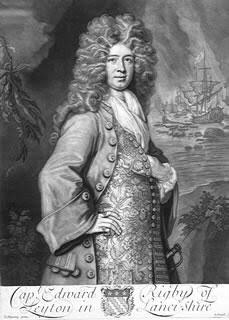
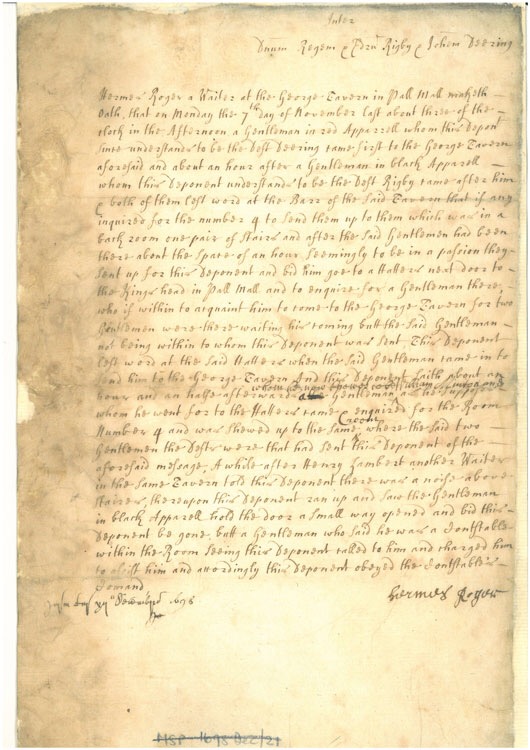
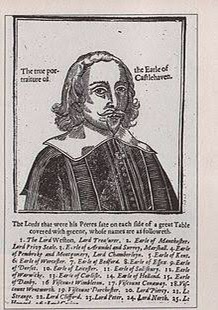


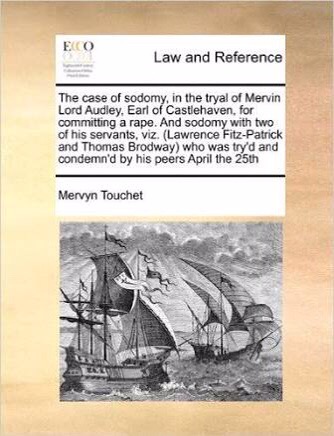
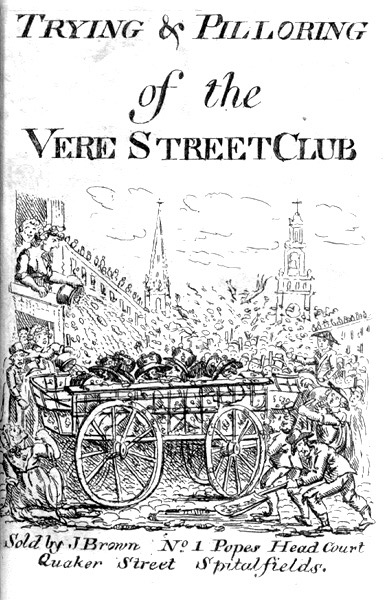
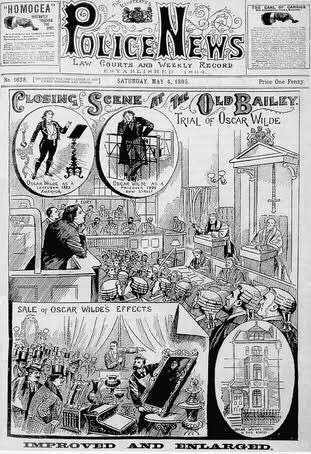
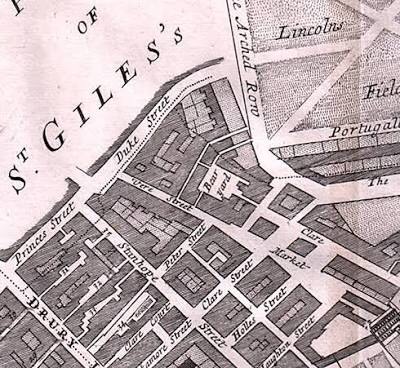
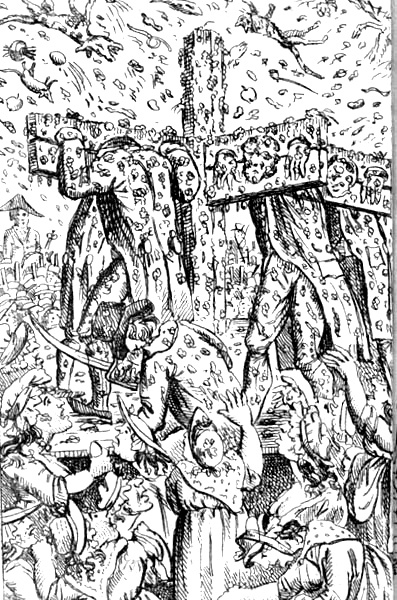
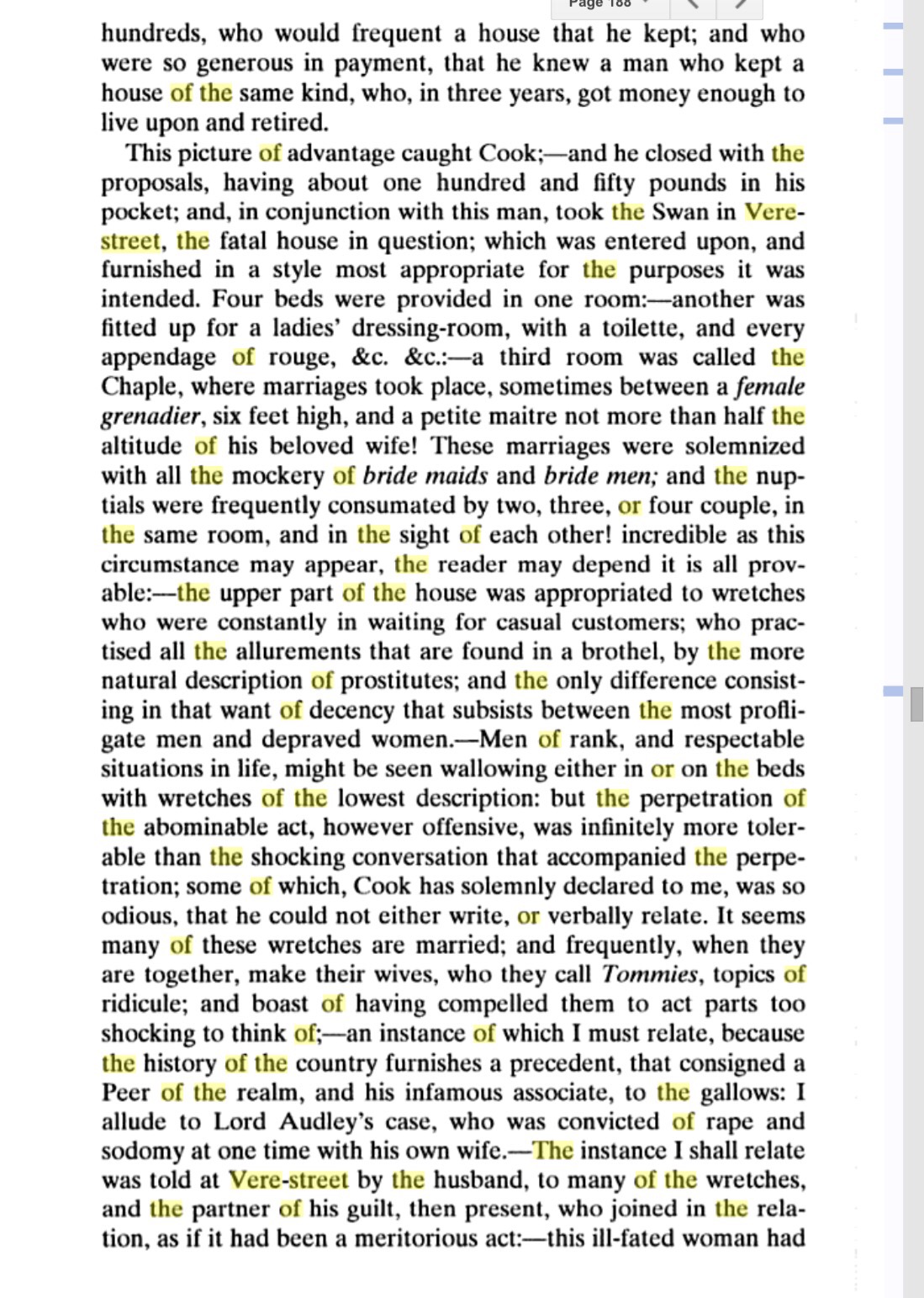
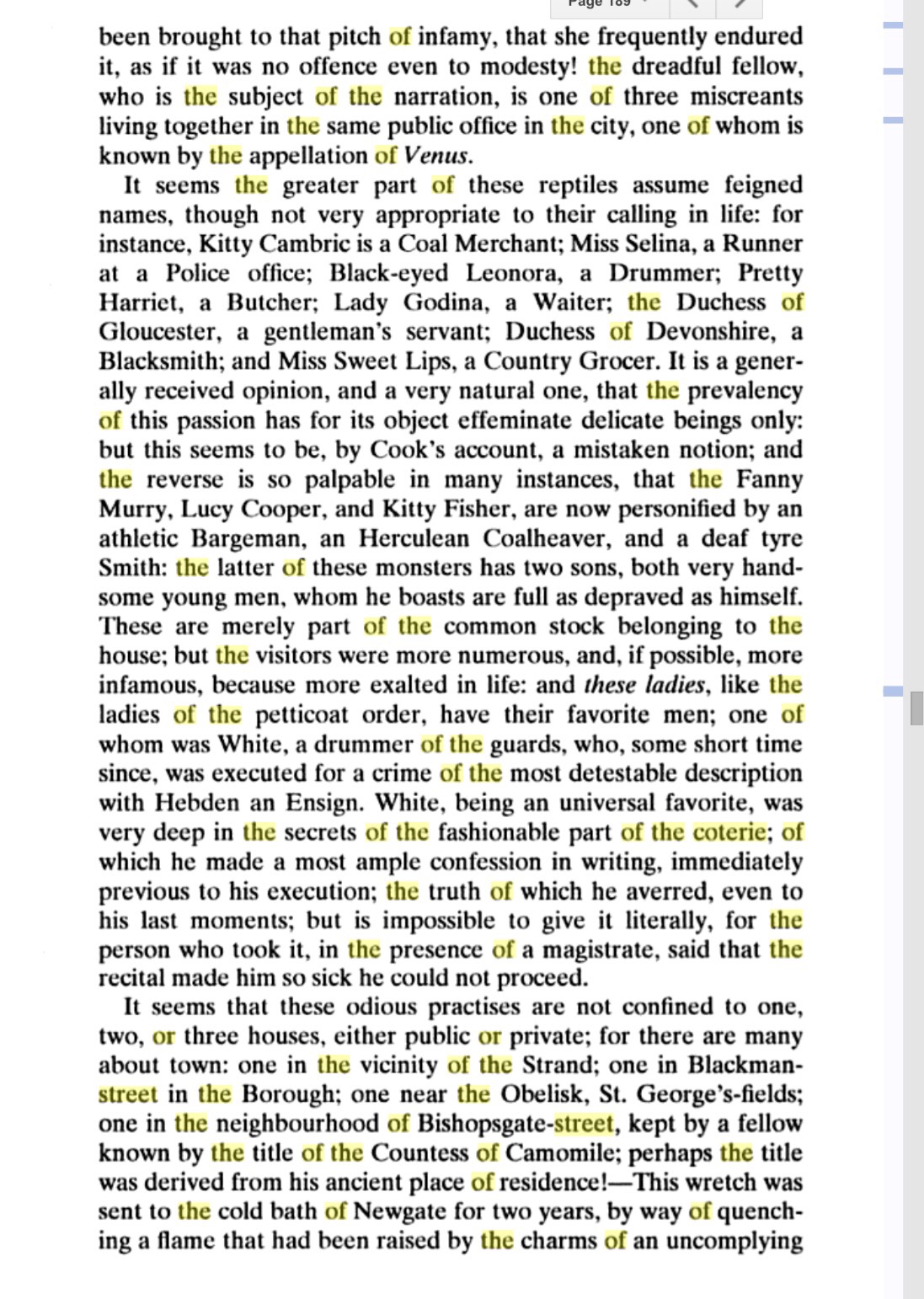

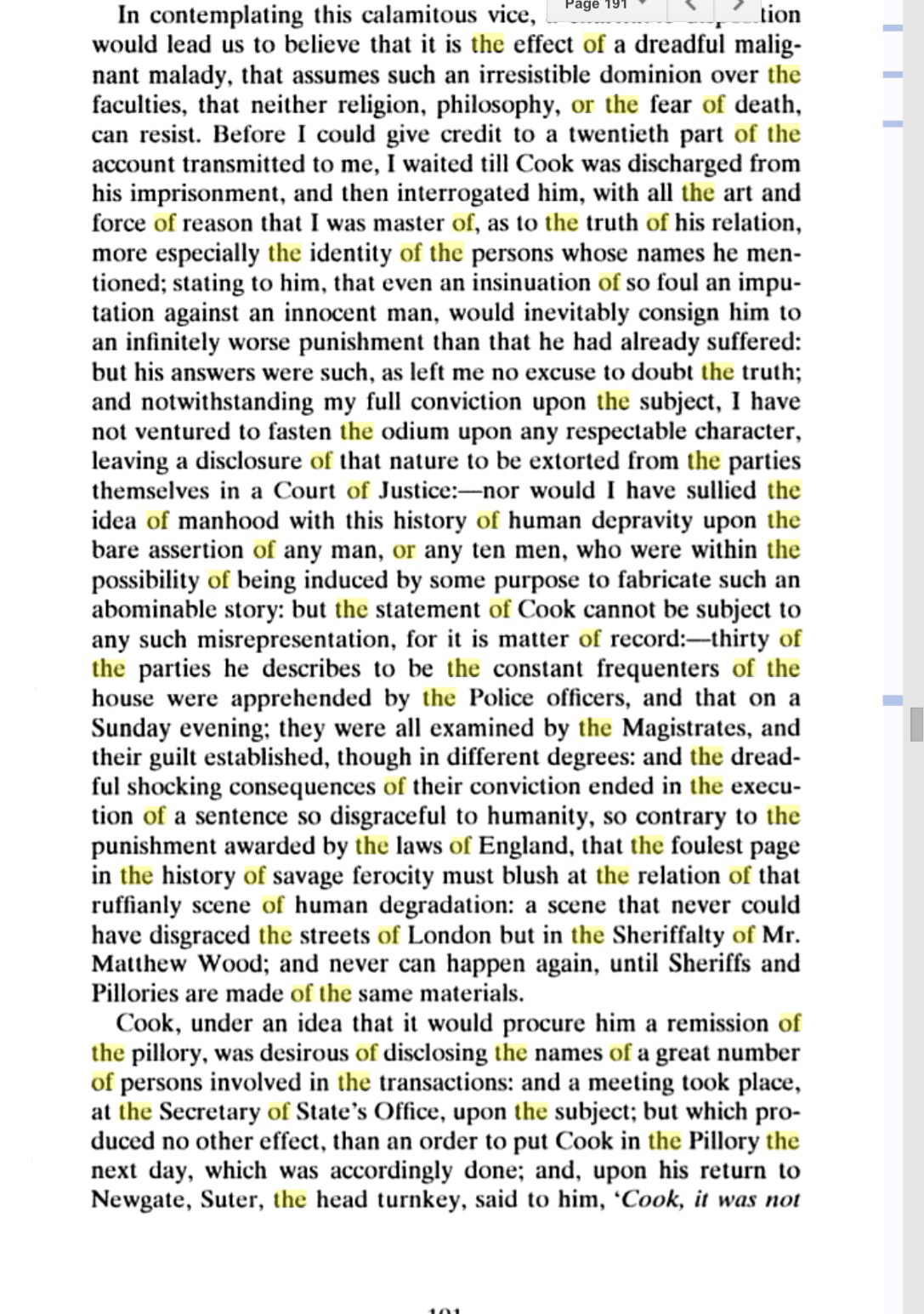
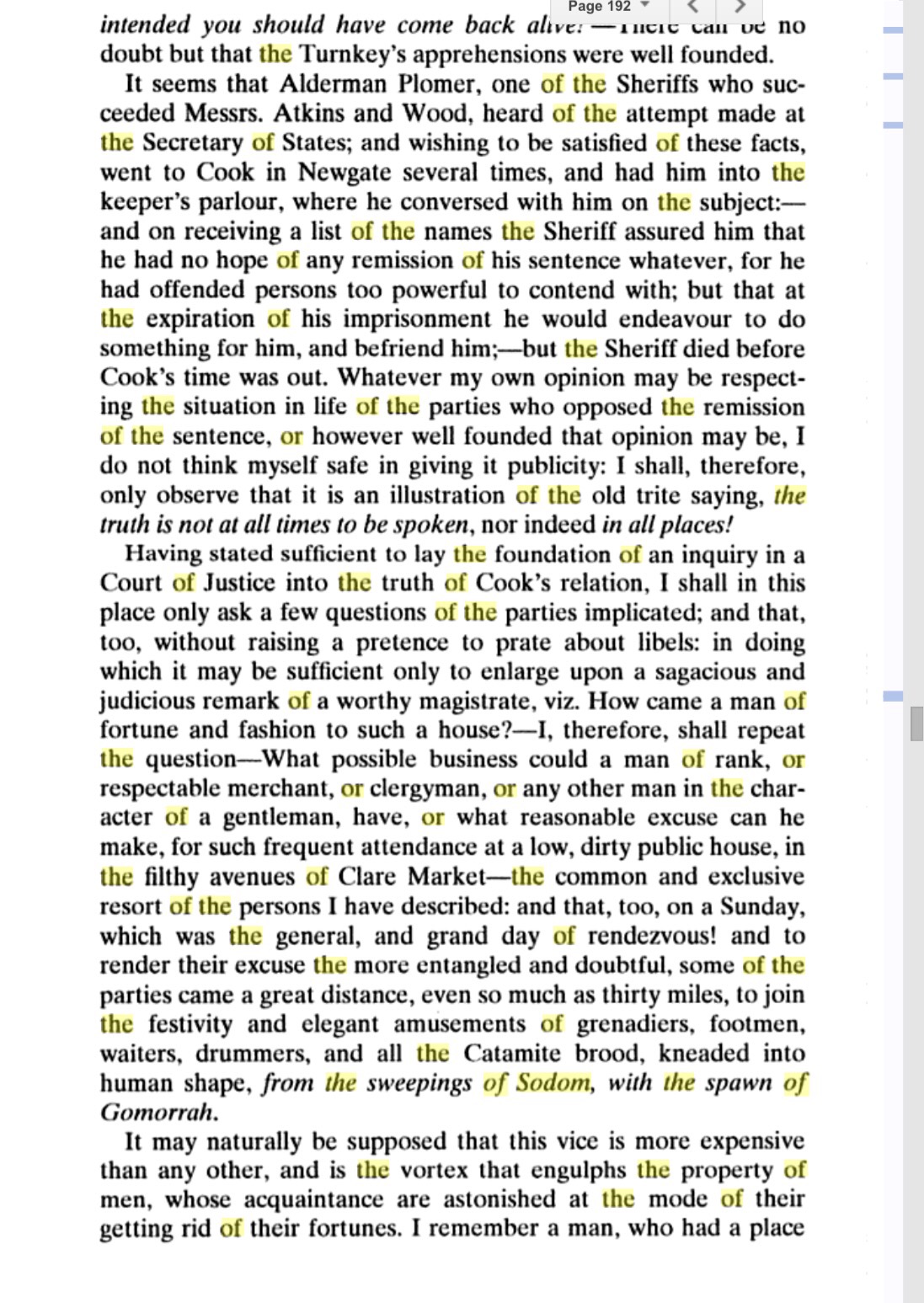







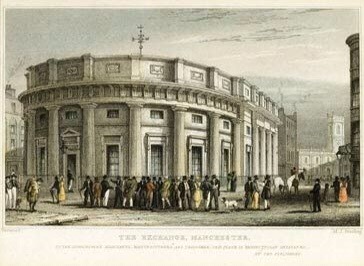


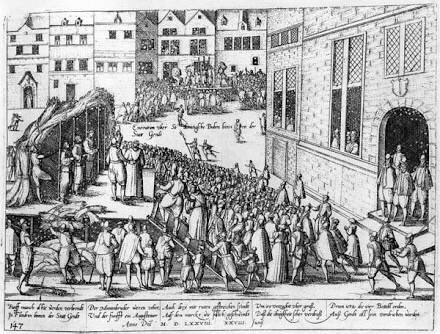
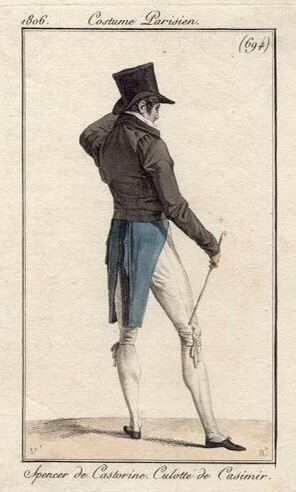

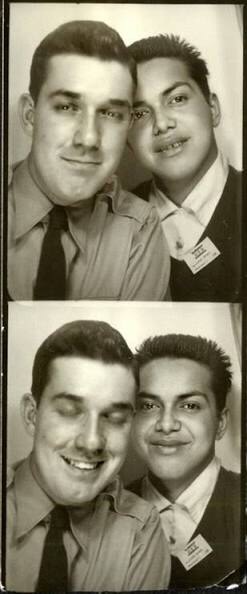



















 timalderman