Category Archives: History

20+ Powerful, Bleak Photographs From the Dust Bowl

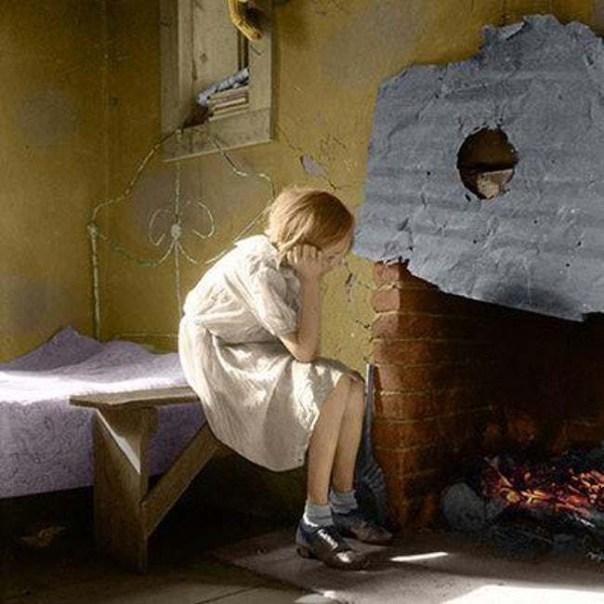
The 1930s came down hard on all of America, but the Great Plains area got it even worse with the advent of the Dust Bowl. This giant drought, a disaster for America’s breadbasket, made life unendurable for Midwesterners. Put out of farm work, people became migrant workers, trekking to California in search of jobs. At the time, photographers like Dorothea Lange began documenting American lives and struggles through the camera lens, capturing tragedies like Depression and Dust Bowl.

Collected here are photos of undernourished and sick children, homeless families, desolate farms, and storms engulfing the land in dust. As blunt and shocking they may look to you today, imagine how much they astonished those Americans living at that time.

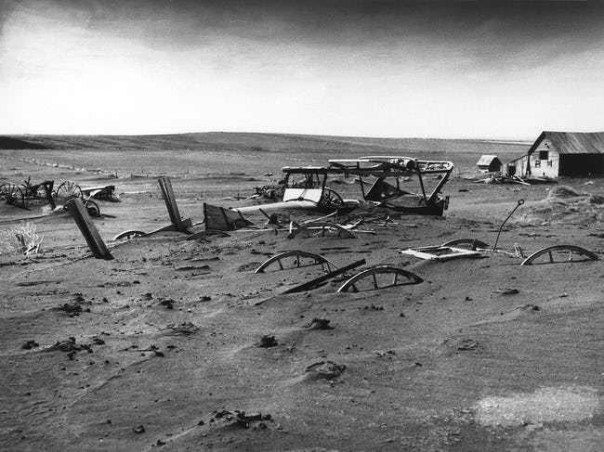
Machinery Buried By Dust In South Dakota, 1936

Photo:  Sloan /Wikimedia Commons/Public Domain

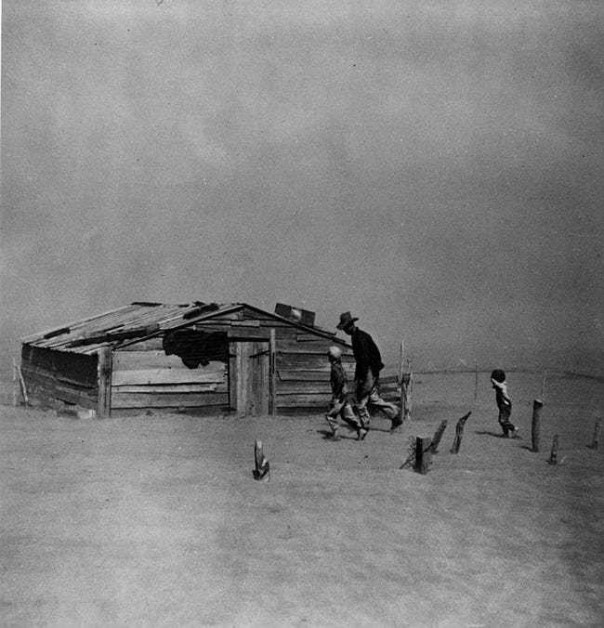
A Farmer And His Family Trudging Through A Storm, Oklahoma, 1936

Photo:  Arthur Rothstein/Wikimedia Commons/Public Domain

Dust Storm Approaching Stratford, Texas, 1935

Photo:  NOAA George E. Marsh Album/Brian0918/Wikimedia Commons/Public Domain

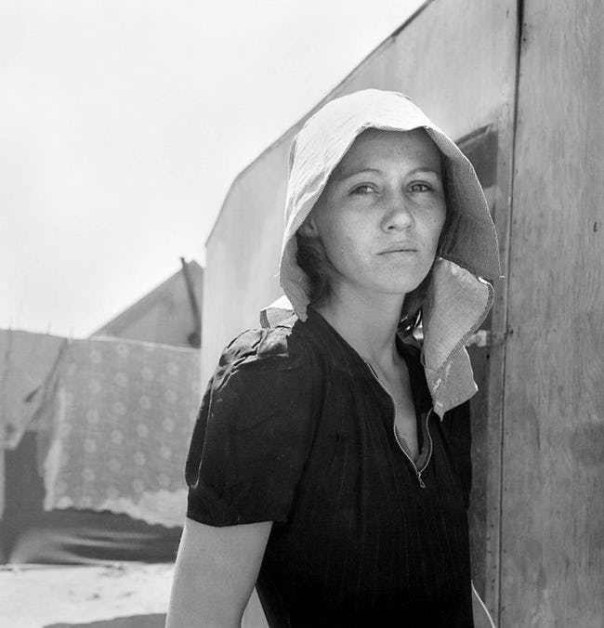
Young, Migratory Mother, California, 1940

Photo:  Dorothea Lange/Wikimedia Commons/Public Domain

Topsoil Eroded On Farm, Kansas, 1930s

Photo: U.S. Department of Agriculture/Wikimedia Commons/CC BY 2.0

Dust Storm Approaching Rapidly, Oklahoma, 1935

Photo: National Archives And Records Administration/Wikimedia Commons/Public Domain Mark 1.0

A Farmer’s Son Amidst Devastated Land, Oklahoma, 1936

Photo: Arthur Rothstein/Wikimedia Commons/Public Domain

Laborers’ Squatter Camp, California, 1940

Photo: Dorothea Lange/Wikimedia Commons/Public Domain Mark 1.0

Cultivating What Remains Of The Cotton Crop, 1930s

Photo: Wikimedia Commons/CC BY 2.0

Eroded Farmland, 1930s

Photo: Wikimedia Commons/CC BY 2.0

Dried-Out Farmland, Oklahoma, 1930s

No higher resolution available. Dust_Bowl_in_Texas_County,_Oklahoma.jpg ‎(728 × 519 pixels, file size: 141 KB, MIME type: image/jpeg)

A Farmer Inspecting His Land, Colorado, 1938

Photo: U.S. Department of Agriculture/Wikimedia Commons/CC BY 2.0

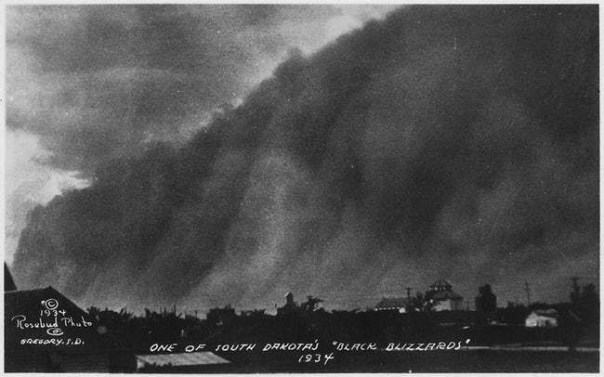
A Dust Storm (AKA “Black Blizzard”), South Dakota, 1934

Photo: U.S. National Archives and Records Administration/Wikimedia Commons/Public Domain

Child With TB On Crutches, Oklahoma, 1935

Photo: Dorothea Lange/Wikimedia Commons/Public Domain Mark 1.0

Resettled Farm Child, New Mexico, 1935

Photo: Dorothea Lang/Wikimedia Commons/Public Domain Mark 1.0

Another Dust Storm Rolling In, Kansas, 1935

Photo: Wikimedia Commons/Public Domain Mark 1.0

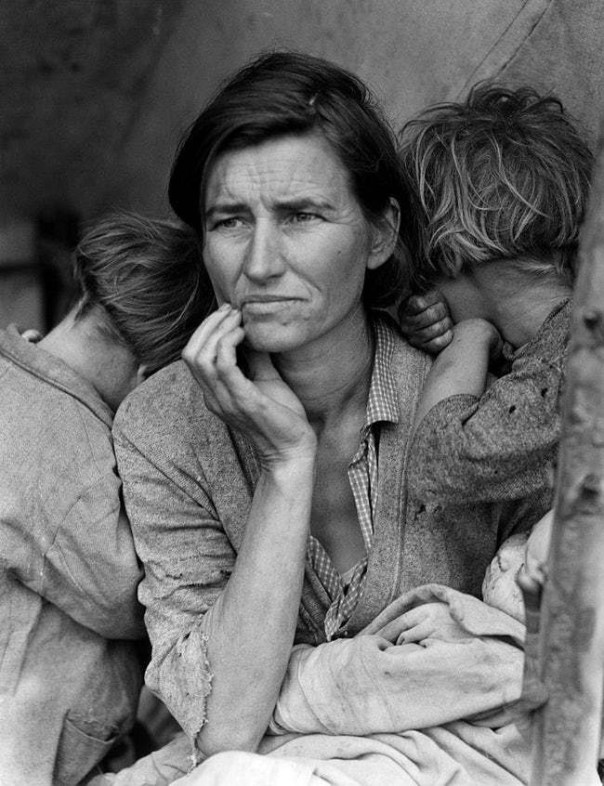
Migrant Worker Mom With Kids, California, 1936

Photo: Dorothea Lange/Wikimedia Commons/Public Domain

Wind-Eroded Farmland, Kansas

Photo: NRCS Photo Gallery/Wikimedia Commons/Public Domain

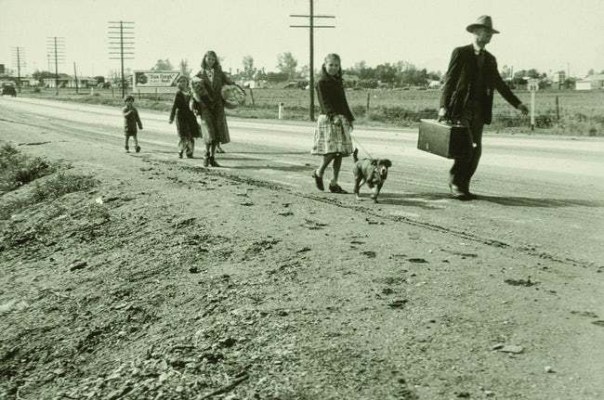
Homeless Family Trekking To Find Work, California

Photo: Dorothea Lange /Wikimedia Commons/Public Domain

Heading To Los Angeles For Work, California, 1937

Photo: Dorothea Lange/Flickr/No known restrictions

Awful Water Erosion, Alabama

Photo: USDA/Wikimedia Commons/Public Domain

A Dust Storm Rolls Over A Main Street, Washington DC

Photo: USDA NRCS Photo Gallery/Wikimedia Commons/Public Domain

Sharecropper Floyd Burroughs, Alabama, 1935-1936

Photo: Walker Evans/Wikimedia Commons/Public Domain

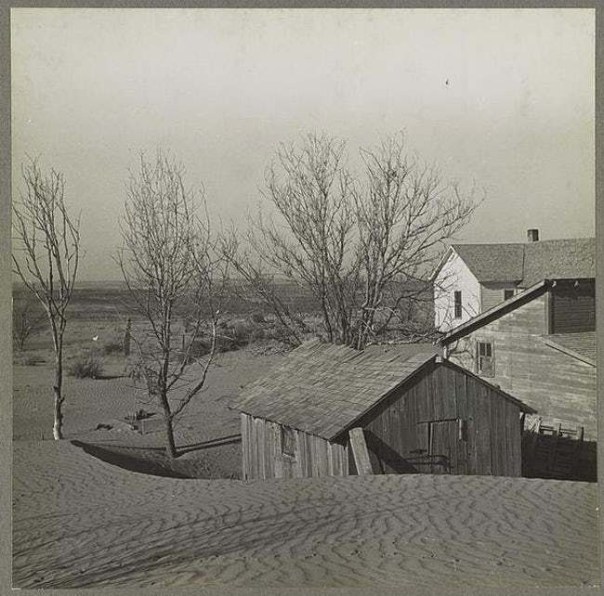
Dust Bowl Winds Pile Up Against Barn In Kansas

Photo: Arthur Rothstein/Library Of Congress/Wikimedia Commons/Public Domain

Dust Bowl Dune, circa 1936

Photo: NOAA National Weather Service/Public Domain

Dust Over Texas, circa 1935

Photo: Russell Lord/NOAA’s National Weather Service/Public Domain

Dust Over Dakota, circa 1935

Photo: Russell Lord/NOAA’s National Weather Service/Public Domain

Dust Bowl, Texas Panhandle, March 1936

Photo: Arthur Rothstein/Library Of Congress/Wikimedia Commons/Public Domain

Reference

Servants Of The Paraclete; Part 1: SCANDALS IN THE CHURCH: THE TREATMENT PROGRAM; Abusive Priests Are Varied, but Treatable, Center Found

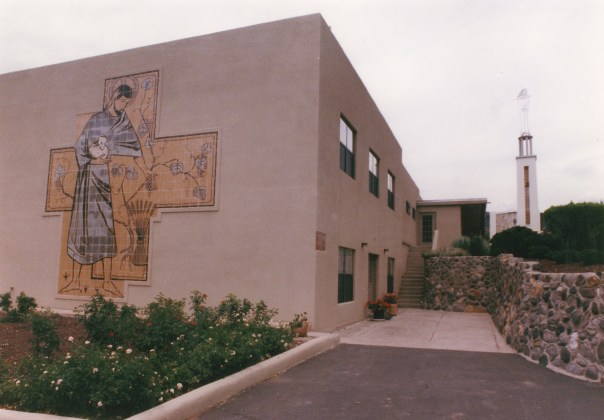
They came to a peaceful retreat in the mountains of New Mexico, bearing emotional troubles and sexual secrets.

Some had sinned with women; some, with men. Others were depressed or angry or anxious. One monk came for treatment of a foot fetish that drove him to steal socks. A priest from Africa arrived after it was discovered that he had several wives and many children.

But hundreds of the clergymen were sent to the treatment program in Jemez Springs because they had molested minors.

The public debate over the Roman Catholic Church’s handling of sexual abuse by its clergy members has focused on men like John J. Geoghan of Boston, calculating predators who appear beyond the reach of treatment.

But the history of the program at Jemez Springs, which in its 19 years of operation treated more than 500 priests and monks for sexual problems, suggests a more complex view.

In interviews, psychologists and psychiatrists who worked there said few of the clergymen fitted the image often presented in the news media.

For one thing, they said, the vast majority were not pedophiles: most had molested adolescents, not young children. In most cases, the clergymen’s transgressions were driven by confusion, fear, immaturity or impulse, not by cold calculation, the therapists said. Some of the clergymen had themselves been abused as adolescents. Many seemed to know little about human sexuality, and most initially tried to deny or rationalize their experiences, insisting that they had done nothing wrong or that their victims had benefited.

In some cases, said Dr. Robert Goodkind, a psychologist who worked at Jemez Springs in the 1980’s and 1990’s, the priests seemed oblivious that the boys they were abusing were minors. In psychotherapy, he said, they would talk as if they themselves were junior high school students, describing how they ”fell in love” or how they felt ”burned” when the boys did not return their affections.

”There was just a real absence of the perspective that this is a 30-year-old man talking about 15-year-old boy,” Dr. Goodkind said.

And while some clergymen — no one knows exactly how many — abused minors again after leaving the program, the therapists said, follow-ups indicated that many more did not. Rather, the men altered their behavior and rebuilt lives either inside the church or out.

The program at Jemez Springs, run by a small Roman Catholic congregation known as the Servants of the Paraclete, represented one of the the church’s earliest, most innovative and ultimately most controversial efforts to deal with sexual abuse among its clergy.

It was started in 1976 by two Paraclete priests, who sought to bring psychotherapy, education in human sexuality, medication and other modern tools to bear on sexual issues in the priesthood. By directly addressing sexuality, the program laid down a path later followed by other treatment centers for priests, like the St. Luke Institute in Maryland and the Institute of Living in Hartford. Experts at those centers said their experience of working with sexual abusers closely paralleled that of the staff at Jemez Springs.

By the mid-1980’s, when the case of a Louisiana priest, the Rev. Gilbert Gauthe, brought the problem to public view, the Paracletes had already treated hundreds of clergymen who had molested minors, said Dr. Jay R. Feierman, a psychiatric consultant to the program from 1976 to 1995.

But the church ended the treatment effort in 1995, when the Paracletes became mired in lawsuits over sexual abuse by priests who had been at Jemez Springs in the 1960’s and early 1970’s, before any systematic treatment program existed there. In those earlier days, priests’ sexual problems were addressed primarily through prayer, and some clergymen molested minors while visiting parishes to say Mass. The site, still owned by the Paracletes, now serves as a retreat center and retirement home for clergymen.

The abusers who came to Jemez Springs in the 1980’s and 1990’s, the former staff members said, were highly educated and socially skilled and they had more in common with university professors and social workers than incarcerated sex offenders. Few showed sociopathic tendencies, the staff members said, and the extent of their misconduct and the motivations underlying their actions varied greatly.

Still, the therapists said, every priest and monk who came to the program struggled with the challenges posed by their vows of chastity and celibacy.

Dr. Feierman said that in many cases, the clergymen lived double lives, on the one hand repressing ”sinful” thoughts and on the other, acting out sexually.

”They thought they were sinning if they entertained an impure thought,” he said, ”but at the same time they were having sex with boys.”

Priests and monks who came to Jemez Springs for treatment of depression or other emotional ills often found that their distress covered over conflicts about sexuality, Dr. Goodkind said.

”A lot of times people had been dealing with a secret inside them that they thought was quite horrible, and they had been keeping this secret for 10, 15 or 25 years,” the psychologist said. ”And after a while they just got terribly depressed and were not functional any more.”

But for all the sexual problems they saw, the therapists said they only rarely encountered pedophilia, an exclusive sexual attraction to prepubescent children.

Dr. Sarah Brennan, a clinical psychologist in Albuquerque, said that she treated hundreds of priests and monks in the 10 years she worked at Jemez Springs but that only one was a pedophile. Dr. Feierman, who studied 238 clergymen who were treated for sexual problems at Jemez Springs from 1982 to 1991, said that only a handful had molested young children or teenage girls; more than half, he said, had abused boys 12 to 17. Though his study was accepted in 1991 for publication in the Archives of Sexual Behavior, a scientific journal, it never appeared in print. The new director of the treatment program, the Rev. Peter Lechner, asked him to withdraw the manuscript, Dr. Feierman said.

He added that he now kept the paper in a safe deposit box and did not have permission from Father Lechner to discuss the study’s findings in more detail. Reached in St. Louis, where he is now the Paraclete congregation’s leader, Father Lechner confirmed that he had not wanted the report published but said it was because the study was based on the clergymen’s confidential records.

The age of the priests’ victims corresponds to the findings of other studies and to the observations of experts who have treated priests in other settings. It is significant, scientists said, because adults who become sexually involved with adolescents are considered more amenable to treatment than pedophiles. ”There’s a lot better prognosis,” said Dr. Eli Coleman, director of the program in human sexuality University of Minnesota’s Center for Sexual Health. ”It’s much easier to help someone who is attracted to postpubescent children to adapt to attractions to adults.”

Dr. Feirman said that in his view, many of the clergymen who abused older children were fixated on teenagers and were not attracted to adults, male or female. Other former staff members said that the priests they worked with were immature and confused about their sexuality, and their problem was bad judgment and a lack of impulse control rather than sexual fixation. Some priests were trying to ignore or suppress their attraction to adult men and ended up in furtive relationships with teenage boys.

Those relationships often began as fatherly bonds with altar boys or other adolescents who came to the rectory. In some cases, the boys had lost their fathers, and their mothers encouraged them to spend time with the priests and to regard them as role models.

Very few abusive clergymen, Dr. Feierman said, ”just had sexual relationships with the kids.”

”They would pick kids that were needy and needed things both emotionally and financially,” he said. ”They would take them on vacations, buy them clothes, buy them bicycles.”

But in a typical progression, the relationships moved gradually into touching and groping, and in some cases sexual penetration.

Dr. Fred S. Berlin, an associate professor of psychiatry at Johns Hopkins University, said complex relationships were typical between the victims of sexual abuse and their abusers.

”This is not the fox in the chicken coop,” Dr. Berlin said. ”These are often situations in which the adult has genuine affection for the child, and sadly, because they begin to feel tempted in a way that most of us don’t, they give in to temptation.”

Dr. Leslie Lothstein, the director of psychology at the Institute of Living in Hartford, confirmed that, like the men treated at Jemez Springs, most of the priests who came to Hartford after sexually abusing minors had molested older boys.

But Dr. Lothstein said that although some of the men were gay, many others were not. Some were older priests, he said, who, having entered seminary as teenagers, ”were sexually undernourished, didn’t date and never really defined their sexuality.”

Having sex with boys, he said, seemed safer to those priests than having sex with women. Other men were replaying their experience as the victims of abuse by abusing others.

”They’re a very heterogenous group,” Dr. Lothstein said.

It was the realization that clergymen often had difficulty sorting out sexual issues that led two young priests, the Rev. Michael Foley and the Rev. William Perri, to found the Paracletes’ treatment program in 1976.

”We tried to create a forum, both in the spiritual and psychological realm, not where they were acting out the sexuality but where they were talking about it,” Father Foley said.

The priests borrowed the techniques being used by sexual disorder clinics in secular settings, including focused psychotherapy, education in human sexuality, relapse prevention and, for some men, the drug Depo Provera, which reduces sexual drive.

Priests who had molested minors, Dr. Goodkind said, were sent back with the stipulation that they not be returned to unsupervised ministry with minors. They were told to remain in therapy, and follow-up visits were made by the program’s staff.

But ultimately, the decision about what happened to the men after they left Jemez Springs was made by bishops and religious superiors.

No one can say with certainty how many of the men at Jemez Springs committed offenses after leaving the program. Dr. Feierman said he knew of only 2 men who were later arrested for sexual abuse and perhaps 5 to 10 more who had been caught in suspicious circumstances. For example, he said, one priest was later seen sitting in a hot tub in his apartment complex with two teenage boys.

Father Lechner, who became director of the treatment program in 1989, said he conducted an informal study in 1992 of 89 men treated at Jemez Springs. Only one had relapsed, he said.

Still, by the early 1990’s, the number of clergymen arriving at Jemez Springs had begun to dwindle, as lawsuits over priests who had sexually abused minors made headlines in New Mexico and other states.

”The whole program became associated with ‘priest pedophiles,’ ” Father Lechner said. ”We felt that was unfair to the men who were coming there to deal with other issues like depression or anxiety.”

For his part, Father Foley, who founded the program, said he still believed in its mission.

”I believe that a lot can be resolved and healed,” he said.

Still, he worries.

”I run through the papers before I go to work in the morning,” Father Foley said, ”and hope and pray that I’m not going to recognize a name.”

Reference

Blasphemous Bibles And Cannibals At Sea: 4 Bad Days In History

History is full of famously bad days. Now, a new book pulls together 365 of the most tantalising and enlightening.

Stern reporter Gerhard Heidemann holds up the forged Hitler diaries, 25 April 1983. (AP-Photo/MS. Press Association Images)

In Bad Days in History: A Gleefully Grim Chronicle of Misfortune, Mayhem, and Misery for Every Day of the Year, bestselling author Michael Farquhar revisits some of the most entertaining calamities in history – from the disastrous marriage of Henry VIII to Anne of Cleves in 1540, to the mother-in-law that soured Harry Truman’s arrival at the White House in 1945.

Here, Farquhar shares four of his favourite excerpts…

6 May 1983, The Dummkopf “Diaries”

From the diary of a madman: “On Eva’s wishes, I am thoroughly examined by my doctors. Because of the new pills I have violent flatulence, and—says Eva—bad breath.” Certainly it was a rather bland entry, but a tantalising tidbit nonetheless—part of what promised to be a historic bonanza of insight into one of the world’s most evil men.

On 22 April 1983, the German news magazine Stern announced that it had in its possession the personal diary of Adolf Hitler—a long hidden set of some 60 volumes, spanning the years 1932 to 1945, for which the magazine had paid millions. It was a staggering sum, but the prestige that would come from such a scoop was priceless.

Australian media mogul Rupert Murdoch was among those who saw huge profit potential in the diaries and wanted to serialize them in his Times of London. To authenticate the documents, he dispatched British historian Hugh Trevor-Roper, a specialist in the 16th and 17th centuries who could barely read German. After hearing Stern editors relate the story of how the diaries had been retrieved from a plane crash in 1945 and secretly stashed away by a high-ranking East German officer, and then reviewing the massive pile of volumes, Trevor-Roper was “satisfied that the documents are authentic.”

Even as the world waited anxiously to read the private thoughts of this inscrutable monster, sceptics had reservations. Hitler biographer Werner Maser told Reuters at the time that “everything speaks against it. It smacks of pure sensationalism.’’ The chorus of doubt grew louder when Stern published a lavish special issue heralding the diaries on 25 April, and held a press conference to crow about it.

Instead of the expected huzzahs, however, editors were confronted with unwelcome questions about the diaries’ authenticity. And Trevor-Roper certainly didn’t help matters with his sudden and unexpected about-face when asked to address the suspicious press: “As a historian, I regret that the, er, normal method of historical verification, er, has, perhaps necessarily, been to some extent sacrificed to the requirements of a journalistic scoop.”

It was a disaster unfolding, the crowning blow of which came on 6 May when the German Federal Archives declared the diaries to be “a crude forgery” and the “grotesquely superficial” concoction of a forger with “limited intellectual capacity.”

Stern had been duped by a dope by the name of Konrad Kujau, a “jaunty and farcical figure,” as author Robert Harris described him, who apparently expended very little time or effort on his handiwork. The indications of forgery were obvious, from the paper, ink, and glue Kujau used—all of which were manufactured well after Hitler’s death in 1945—to the passages lifted directly, albeit often incorrectly, from a book of the führer’s speeches and proclamations. Kujau even messed up the Gothic initials embossed on each imitation leather volume, some of which read “FH,” not “AH.”

“We have every reason to be ashamed that something like this could happen to us,” announced Stern publisher Henri Nannen in the aftermath of the diary fiasco. Indeed, they did. The magazine’s editors had allowed their reporter Gerd Heidemann to run amok with the story, without even insisting he name his source. They also ignored the numerous warning signs of fraud that preceded publication. But at least Nannen and his colleagues could take a measure of comfort in knowing that some of what was written in the “diaries” was actually true. The führer really did have what his doctor described as “colossal flatulence . . . on a scale I have seldom encountered before.” And horrendously bad breath, too.

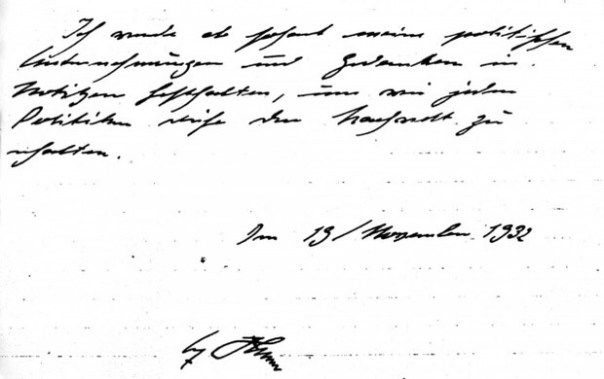
A page of what was thought to be Hitler’s personal diary, which reads: “Henceforth, I will take note of my political thoughts and actions to leave a record for posterity as does every politician”. Stern magazine handed out a reproduction of this page when they made public their ‘discovery’ on 25 April 1983. (AP-Photo/HO Stern. HO/STERN/AP/Press Association Images)

8 May 1632, The Holy (Mis)Writ

Some readers of a 1631 edition of the King James Bible were shocked (or at least pleasantly surprised) when they came across the Seventh Commandment in the Book of Exodus: “Thou shalt commit adultery.” Then there was the apparent blasphemy found in Deuteronomy, chapter 5: “The Lord hath shewed us his glory, and his great asse.” (The proper word was “greatnasse.”)

With these egregious errors, the 1631 version became known as the Wicked Bible or the Adulterous Bible, and on May 8, 1632, the printers were hauled before the fearsome Star Chamber for their blasphemous mistakes—with the additional charge of printing the Bible on bad paper.

“I knew the time when great care was had about printing, the Bibles especially,” declared the appalled Archbishop of Canterbury. “Good compositors and the best correctors were gotten being grave and learned men, the paper and the letter rare, and faire every way of the best, but now the paper is nought, the composers boys, and the correctors unlearned.” Worse, he said, even the dreaded Catholics took better care with their “superstitious books.”

The printers were heavily fined and banned from their profession, but were lucky enough not to have been mutilated or dealt a similarly gruesome punishment of the day. Meanwhile, history has no record of how many marital beds may have been violated with blessings from the Wicked Bible.

19 May 1884, Filet Mignonette

When young Richard Parker boarded the yacht Mignonette on 19 May 1884, it was if his fate had already been eerily determined. Nearly 50 years before, Edgar Allan Poe published his only novel, The Narrative of Arthur Gordon Pym – a tale of maritime adventure and disaster in which the starving survivors of a shipwreck draw straws to determine who among them would be sacrificed and eaten to nourish the others. A character by the name of Richard Parker comes up with the short one and is duly devoured by the rest.

In a remarkable echo of Poe’s story, the Mignonette was battered by storms while sailing around the Cape of Good Hope en route from Southampton, then England, to Sydney, Australia, and sank. Richard Parker survived the wreck, but not for long. The young man and his three companions drifted for weeks aboard a flimsy dinghy, fending off sharks and sustaining themselves on the two tins of turnips they had managed to salvage. Just as in Poe’s tale, the men did capture and eat a sea turtle, but starvation still loomed. Desperate for nourishment, the survivors began to eye one another. A maritime tradition known as the Custom of the Sea provided the solution for such situations: cannibalism. But not until straws were drawn to determine which man would become the meal.

The men of the Mignonette neglected this key provision because Richard Parker, dangerously ill from having consumed seawater, appeared very likely to die. Rather than wait for the inevitable, and risk eating corrupted, diseased flesh, the three other survivors instead killed the young man by stabbing him in the neck. Then they ate him.

“I can assure you,” one of the survivors recalled, “I shall never forget the sight of my two unfortunate companions over that ghastly meal. We all was like mad wolfs who should get the most and for men fathers of children to commit such a deed we could not have our right reason.”

Four or five days after this murderous act of necessity, the three survivors spotted the sails of the German ship Moctezuma. Salvation came, one of the men later said, just “as we was having our breakfast, we will call it.”

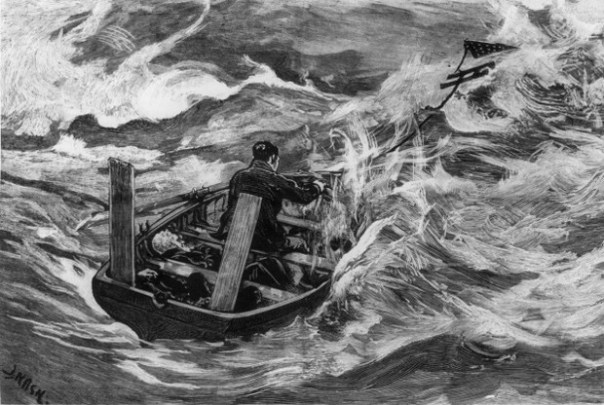
20 September 1884: a member of the crew of the Mignonette using a sea anchor in an open boat during stormy conditions at sea. Original Artwork: engraving by J Nash after sketches by Mr Stephens. (Photo by Rischgitz/Getty Images)

22 May 1856, Sumner’s Violent Schooling

In the decades before the Civil War — when sectional differences over slavery and state rights began to intensify to a dangerous degree — edgy lawmakers roamed the halls of Congress armed with pistols and daggers, practically daring any political opponent to defy them. The House of Representatives “seethed like a boiling caldron,” one observer wrote, as “belligerent Southrons glared fiercely at phlegmatic Yankees.” Lawmakers challenged one another to duels, took to the floor with scathing orations, and, in one scene reminiscent of a Wild West saloon, reacted like threatened cowboys after one member’s gun fell to the ground and accidentally discharged.

There were instantly “fully thirty or forty pistols in the air,” Representative William Holman of Indiana reported.

The tension was punctuated by one particularly violent episode in 1856, after Charles Sumner, an abolitionist senator from Massachusetts, delivered his rousing “Crime Against Kansas” speech, in which he argued vehemently against the expansion of slavery into that territory and attacked in particular Andrew Butler of South Carolina, one of the authors of the Kansas-Nebraska Act.

“The senator from South Carolina has read many books of chivalry, and believes himself a chivalrous knight with sentiments of honor and courage,” Sumner thundered. “Of course he has chosen a mistress to whom he has made his vows, and who, though ugly to others, is always lovely to him; though polluted in the sight of the world, is chaste in his sight—I mean the harlot slavery.”

Representative Preston Brooks, a nephew of Butler’s, was infuriated by Sumner’s inflammatory, sexually suggestive speech, and retaliated two days later, on 22 May. As Sumner quietly worked at his desk in the near-empty Senate chamber, Brooks approached him. “Mr. Sumner,” he said, “I have read your speech twice over carefully. It is a libel on South Carolina, and Mr. Butler, who is a relative of mine.” Without warning, Brooks then began whacking Sumner over the head with his cane. The assault didn’t stop, even after Sumner collapsed on the floor in a bloody heap, and his injuries were so grave that it would take him years to recover and return to his Senate seat.

Northern reaction to Sumner’s bludgeoning was one of horror. “The crime is not merely against liberty but civilization,” editorialised the Boston Evening Transcript. In the South, however, Brooks was hailed as a hero. “Sumner was well and elegantly whipped,” gloated the Charleston Mercury, “and he richly deserved it.” Southerners sent Brooks commemorative canes, with “HIT HIM AGAIN” inscribed on them. Meanwhile, the country careened ever closer to civil war.

Reference

A History Of The Bible: Who Wrote It- And When?

The origins of the Bible are still cloaked in mystery. When was it written? Who wrote it? And how reliable is it as an historical record? BBC History Revealed magazine charts the evolution of arguably the most influential book of all time

In 2007, Time magazine asserted that the Bible “has done more to shape literature, history, entertainment and culture than any book ever written”.

It’s a bold claim, but one that’s hard to refute. What other book resides on bedside tables in countless hotel rooms across the globe? What other book has bequeathed the world such instantly recognisable catchphrases as “an eye for an eye”, “thou shalt not kill” and “eat, drink and be merry”?

Factor in the number of copies that have been sold down the centuries – somewhere in the region of five billion to date, swollen by a further 100 million every year given away for free – and there’s no denying that the Bible’s influence on Western civilisation has been monumental.

But if the Bible’s standing as a cultural behemoth is beyond doubt, its history is anything but. For centuries, some of the world’s greatest thinkers have puzzled over the origins and evolution of this remarkable document. Who wrote it? When? And why?

These are the thorniest of questions, made all the more tangled by the Bible’s great age, and the fact that some, or all of it, has become a sacred text for members of two of the world’s great religions – Judaism and Christianity – numbering more than two billion people.

An illumination from a Byzantine manuscript depicting Jesus Christ. (Photo by Werner Forman/Universal Images Group/Getty Images)

Where does the Bible originate?

Archaeology and the study of written sources have shed light on the history of both halves of the Bible: the Old Testament, the story of the Jews’ highs and lows in the millennium or so before the birth of Jesus; and the New Testament, which documents the life and teachings of Jesus. These findings may be incomplete and they may be highly contested, but they have helped historians paint a picture of how the Bible came to life.

Perhaps the best place to start the story is in Sun-baked northern Egypt, for it was here that the Bible and archaeology may, just may, first collide.

For centuries, the Old Testament has been widely interpreted as a story of disaster and rescue – of the Israelites falling from grace before picking themselves up, dusting themselves down and finding redemption. Nowhere is this theme more evident than in Exodus, the dramatic second book of the Old Testament, which chronicles the Israelites’ escape from captivity in Egypt to the promised land.

But has archaeology unearthed one of the sites of the Israelites’ captivity?

That’s the question that some historians have been asking themselves since the 1960s, when the Austrian archaeologist Manfred Bietak identified the location of the ancient city of Pi-Ramesses at the site of the modern town of Qantir in Egypt’s Nile Delta. Pi-Ramesses was the great capital built by Ramesses II, one of Egypt’s most formidable pharaohs and the biblical tormentor of the Israelites. It’s been argued that Pi-Ramesses was the biblical city of Ramesses, and that the city was built, as Exodus claims, by Jewish slaves.

It’s an intriguing theory, and one that certainly has its doubters. But if it were true, it would place the enslaved Israelites in the Nile Delta in the decades after 1279 BC, when Ramesses II became king. So what happened next?

The Bible is in little doubt. It tells us that Moses led the Israelites out of their captivity in Egypt (whose population had been laid low by ten plagues inflicted on them by God) before Joshua spearheaded a brilliant invasion of Canaan, the promised land. The historical sources, however, are far less forthcoming. As John Barton, former professor of the interpretation of holy scriptures at the University of Oxford, puts it: “There is no evidence of a great invasion by the Israelites under Joshua; the population doesn’t seem to have changed much in that period as far as we can tell by archaeological surveys.”

St Catherine’s Monastery in the shadow of Mount Sinai, where the Codex Sinaiticus came to scholars’ attention. (Image by RF CREATIVE/Getty Images)

In fact, the best corroborating evidence for the Bible’s claim that the Israelites surged into Canaan is Merneptah’s Stele.

What is Merneptah’s Stele?

Like all good autocrats, Merneptah, pharaoh of Egypt, loved to brag about his achievements. And when he led his armies on a successful war of conquest at the end of the 13th century BC, he wanted the world, and successive generations, to know all about it.

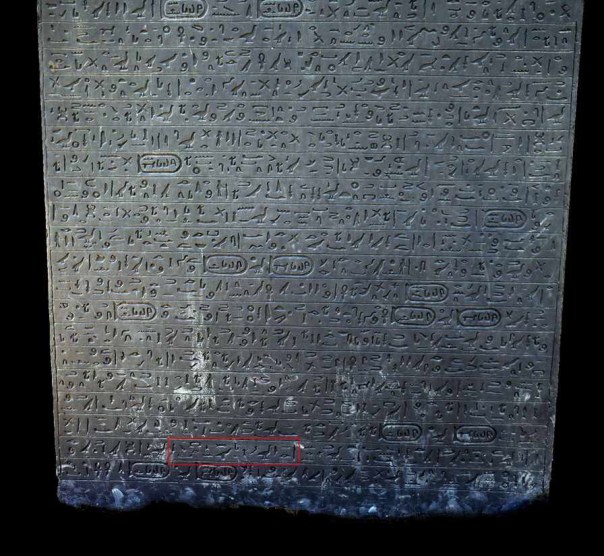
The medium on which the pharaoh chose to trumpet his martial prowess was a three-metre-high lump of carved granite, now known as the Merneptah Stele. The stele, which was discovered at the site of the ancient Egyptian city of Thebes in 1896, contains 28 lines of text, mostly detailing the Egyptians’ victory over the Libyans and their allies. But it is the final three lines of the inscription that has arguably excited most interest among historians.

“Israel has been shorn,” it declares. “Its seed no longer exists.” These few words constitute the first known written reference to the Israelites. It’s an inauspicious start, one that boasts of this people’s near destruction at the hands of one of the ancient world’s superpowers in their homeland of Canaan. But the Israelites would survive.

A replica of Merneptah’s Stele, now housed in the Egyptian Museum in Cairo. The last 3 of the 28 lines deal with a separate campaign in Canaan, then part of Egypt’s imperial possessions. (Photo by Universal History Archive/Universal Images Group via Getty Images)

And the story they would go on to tell about themselves and their relationship with their God would arguably eclipse any of Merneptah’s achievements. It would spawn what is surely the most influential book of all time: the Bible.

Merneptah’s Stele may describe more Jewish pain at the hands of their perennial Egyptian persecutors, but it at least suggests that they may have been in Canaan during Merneptah’s reign (1213–1203 BC).

If the early history of the Israelites is uncertain, so is the evolution of the book that would tell their story.

Who wrote the Bible?

Until the 17th century, received opinion had it that the first five books of the Bible – Genesis, Exodus, Leviticus, Numbers and Deuteronomy – were the work of one author: Moses. That theory has since been seriously challenged.

Scholars now believe that the stories that would become the Bible were disseminated by word of mouth across the centuries, in the form of oral tales and poetry – perhaps as a means of forging a collective identity among the tribes of Israel. Eventually, these stories were collated and written down. The question is by whom, and when?

A clue may lie in a limestone boulder discovered embedded in a stone wall in the town of Tel Zayit, 35 miles southwest of Jerusalem, in 2005. The boulder, now known as the Zayit Stone, contains what many historians believe to be the earliest full Hebrew alphabet ever discovered, dating to around 1000 BC. “What was found was not a random scratching of two or three letters, it was the full alphabet,” Kyle McCarter of Johns Hopkins University in Maryland has said of the stone. “Everything about it says this is the ancestor of the Hebrew script.”

The Zayit Stone does not in itself tell us when the Bible was written and collated, but it gives us our first glimpse of the language that produced it. And, by tracking the stylistic development of that language down the centuries, and cross-referencing it with biblical text, historians have been able to rule out the single-author hypotheses, concluding instead that it was written by waves of scribes during the first millennium BC.

Ask the expert: John Barton

John Barton is a former professor of holy scriptures at the University of Oxford and the author of A History of the Bible: The Books and Its Faiths.

Q: Just how reliable is the Old Testament as an historical document?

A: Some parts, such as the early chapters of Genesis, are myth or legend, rather than history. But parts of Samuel, Kings, Ezra and Nehemiah describe events broadly known also from Assyrian or Persian sources. For example, Jehu, king of Israel in the ninth century BC, appears on an Assyrian monument, the Black Obelisk, doing obeisance to the Assyrian king. From about the eighth century BC onwards, the Old Testament contains some real historiography, even though it may not all be accurate.

Q: Does it matter if it’s not historically accurate? Are we guilty of placing too much emphasis on this question?

A: I think we are. Much of the Old Testament is about seeing God at work in human history rather than in accurately recording the detail, and sometimes we exaggerate the importance of historical accuracy. The Old Testament is not a work of fiction, but nor is it a modern piece of history-writing.

Q: How much does archaeology support the historicity of the Old Testament?

A To a limited extent. It gives us a context within which the Old Testament makes sense, but it doesn’t confirm a lot of the details. It mustn’t be forgotten that archaeology has also yielded vast numbers of documents from the ancient near-east, such as Assyrian and Babylonian annals, which illuminate the Old Testament world.

Q: How much do we know about the scribes who wrote the Old Testament?

A: The scribes are never described in detail in the Old Testament itself, but analogies with Egypt and Mesopotamia make it clear that there must have been a scribal class, probably attached as civil servants to the temple in Jerusalem or the royal court. After the exile of the Jewish people in Bablylon in the sixth century BC, scribes gradually turned into religious teachers, as we find them in the New Testament.

Q: When was the Old Testament assembled into the book it is today?

A: Probably during the first century BC, though parts of it were certainly regarded as holy scripture much earlier than that. But the collection is a work of early Judaism. It should be remembered that for a long time it was a collection of individual scrolls, not a single book between two covers.

Q: Did the Old Testament anticipate the figure of Jesus Christ?

A: There are prophecies of a coming Messiah – which means ‘anointed one’ – occasionally in the Old Testament, and Christians claimed them as foretelling Jesus. But messianic hopes were not widespread or massively important in first-century Judaism and are even less central to the Old Testament itself. Christians discovered texts they saw as messianic prophecies – for example, in Isaiah 7 – though other Jews did not read them that way.

Q: Why did the New Testament gain so much traction in the first centuries AD?

A: The New Testament was accepted because it was part of the package of the Christian message, which was massively successful in the early centuries. The message, which was that all humankind was accepted through Jesus by the God worshipped by the Jews, proved a winner.

Who was King David?

The first wave of scribes may, it’s been suggested, have started work during the reign of King David (c1000 BC). Whether that’s true or not, David is a monumental figure in the biblical story – the slayer of Goliath, the conqueror of Jerusalem. David is also a hugely important figure in the quest to establish links between the Bible and historical fact, for he appears to be the earliest biblical figure to be confirmed by archaeology.

“I killed [the] king of the house of David.” So boasts the Tel Dan Stele, an inscribed stone dating from 870–750 BC and discovered in northern Israel in the 1990s. Like the Merneptah Stele before it, it documents a warlord’s victory over the Israelites (the man doing the gloating was probably the local ruler Hazael of Aram-Damascus). But it at least indicates that David was a historical figure.

The Tel Dan Stele also suggests that,no matter how capable their rulers, the people of Israel continued to be menaced by powerful, belligerent neighbours. And, in 586 BC, one of those neighbours, the Babylonians, would inflict on the Jews one of the most devastating defeats in their history: ransacking the sacred city of Jerusalem, butchering its residents, and dragging many more back to Babylonia.

For the people of Israel, the fall of Jerusalem was a searing experience. It created, in the words of Eric M Meyers, a biblical scholar at Duke University in North Carolina, “one of the most significant theological crises in the history of the Jewish people”. And, according to many scholars, that crisis may have had a transformative impact on the writing of the Bible.

The Old Testament is far more than a formulaic story of a nation’s evolution, it’s also a chronicle of that nation’s relationship with its God. Did the sack of Jerusalem in 586 BC convince a new wave of Jewish thinkers that they hadn’t been keeping their side of the bargain? Did it spur them into revisiting all previous editions of the Jewish scriptures in order to sharpen the emphasis on the agreement or ‘covenant’ between the people and their one God?

Whether this theory holds or not, there’s little doubt that by the time they returned from their Babylonian exile, the Bible occupied a unique place in the consciousness of the Jewish people. However, it would be centuries before the book would be revered as a secret text for non-Jews. And the reason for that transformation from national to international significance was, of course, the figure of Jesus Christ. It’s the so-called New Testament, the account of Jesus’s life and teachings, that turned the Hebrew Bible into a civilisationshaping, global icon.

Who was Jesus? Did he really exist?

Most scholars agree that Jesus, a first-century religious leader and preacher, existed historically. He was born in c4 BC and died – reportedly crucified on the orders of the Roman prefect Pontius Pilate – in cAD 30–33. Then, for around 40 years, news of his teachings was spread by word of mouth until, from around AD 70, four written accounts of his life emerged that changed everything.

The gospels, or ‘good news’, of Matthew, Mark, Luke and John are critically important to the Christian faith. It is their descriptions of the life of Jesus Christ that have made him arguably the most influential figure in human history.

“We can’t be sure when the gospels were written,” says Barton, “and we know little about the authors. But the guess is that Mark came first, in the 70s, followed by Matthew and Luke in the 80s and 90s, and John in the 90s or early in the second century.

“In general, Matthew, Mark and Luke tell the same story with variations, and hence are called the ‘synoptic’ gospels, whereas John has a very different style, as well as telling a markedly different version of the story of Jesus. Matthew and Luke seem to be attempts to improve on Mark, by adding more stories and sayings from sources now lost. John is a different conceptualisation of the story of Jesus, portraying a more obviously divine figure.”

Though the variations in the four gospels may have proved a source of frustration to those trying to paint a definitive picture of Jesus’s life and teachings, they offer a fascinating insight into the challenges facing the early Christian church as it spread around the Mediterranean world in the first and second centuries AD.

Mark, it’s been argued, wrote for a community deeply affected by the failure of a Jewish revolt against the Roman empire in the AD 60s, while Luke wrote for a predominately Gentile (non-Jewish) audience eager to demonstrate that Christian beliefs could flourish within the Roman empire. Both John and Matthew hint at the growing tensions between Jewish Christians and the Jewish religious authorities.

As a Jew, Jesus would have been well-versed in the Hebrew Bible and, according to the gospels, saw himself as the realisation of ancient Jewish prophecies. “Don’t think that I came to destroy the law, or the prophets,” Matthew reports him saying. “I didn’t come to destroy, but to fulfil.” But for all that, by the time the gospels were written, schisms between Judaism and nascent Christianity were clearly emerging.

How did Christianity spread around the world?

The Epistles, or letters, written by Paul the Apostle to churches dotted across the Mediterranean world – which are our best source for the initial spread of Christianity – confirm that Christianity started in Jerusalem, but spread rapidly to Syria and then to the rest of the Mediterranean world, and was mostly accepted by non-Jews, says John Barton, former professor of the interpretation of holy scriptures at the University of Oxford.

“The epistles [which make up 13 books of the New Testament] are our earliest evidence for Christianity,” says Barton. “The first date from the AD 50s, just two decades after the death of Jesus.”

As Paul’s letters to churches such as the one in the Greek city of Thessalonica reveal, the first Christian communities were often persecuted for their beliefs.

And it’s such persecution, particularly at the hands of the Romans, that may have inspired the last book of the New Testament, Revelations. With its dark descriptions of a seven-headed beast and allusions to an imminent apocalypse, Revelations is now widely believed to be a foretelling of the grisly fate that the author believed awaited the Roman oppressors of Christianity.

Despite that oppression, by the fourth century Christianity had become the dominant religion in the Mediterranean world, with the New Testament widely revered as a sacred text inspired by God. “It was around this time,” says Barton, “that the 27 books of the New Testament were copied into single books as though they formed a single work.” One example is the Codex Sinaiticus, now in the British Library. “The first person to list exactly the books we now have as the New Testament is the fourth-century bishop Athanasius of Alexandria, but it’s clear that he was only reporting what was already widely accepted.”

By the end of the early fifth century, a series of councils across the Christian world had effectively rubber-stamped the New Testament that we know today: the Bible’s journey to being the most influential book in human history was well and truly under way.

Versions of the Bible

Different editions of the Bible have appeared over the centuries, aiming to further popularise the stories and teachings within. Here are three of the most notable versions…

King James Bible

On 24 March 1603, King James VI of Scotland was also crowned King James I of England and Ireland. His reign would usher in a new royal dynasty (the Stuarts) and a new era of colonialism (most especially in North America). But arguably every bit as significant was his decision, in 1611, to introduce a new Bible.

The ‘King James Version’ (KJV) wasn’t the first to be printed in English – Henry VIII had authorised the ‘Great Bible’ in 1539 and the Bishops’ Bible had been printed during the reign of Elizabeth I in 1568 – but, in terms of impact, the KJV would dwarf its successors.

Shortly after his coronation, James was told that existing translations of the Bible were “corrupt and not answerable to the truth of the original”. What his scholars produced was a book designed to be read out aloud in church – fast-paced, easy to understand, a masterclass in storytelling.

No other version would challenge its dominance in the English-speaking world until the mid-20th century. According tob historian Adam Nicolson, the King James Bible’s “particular combination of majesty and freedom, of clarity and richness, was for centuries held, particularly by the Victorians, to be the defining terms of our national identity”.

The Gutenberg Bible

In 1454, in the Rhineland town of Mainz, three friends – inventor Johannes Gutenberg, printer Peter Schöffer and financier Johann Furst – pooled resources and brainpower to come up with what the British Library describes as “probably the most famous Bible in the world”.

The Gutenberg Bible, as the three friends’ creation would come to be known, signalled a step-change in printing techniques. Whereas earlier Bibles were produced by printing presses that employed woodblock technology, the press that churned out the Gutenberg Bible used moveable metal type, allowing more flexible, efficient and cheap printing.

Gutenberg’s Bible also had massive cultural and theological ramifications. Faster, cheaper printing meant more books and more readers – and that brought with it greater criticism, interpretation, debate and, ultimately, revolution. In short, the Gutenberg Bible was a significant step on the road to the Protestant Reformation and ultimately the Enlightenment.

In the words of Professor Justin Champion of Royal Holloway, University of London: “The printed Bible in the hands of the public posed a fundamental challenge to papal dominion. Once released from Latin into the vernacular, the word of God became a weapon.”

Dead Sea Scrolls

Sometime between November 1946 and February 1947, a Bedouin shepherd threw a stone into a cave at Wadi Qumran, near the Dead Sea. When he heard something crack he headed inside to investigate. What he found has been described by the Smithsonian Institute as “the most important religious texts in the Western world”.

What the shepherd had chanced upon were the Dead Sea Scrolls, more than 800 documents of animal skin and papyrus, stored in clay jars for safe keeping. Among the texts are fragments of every book of the Old Testament, except the Book of Esher, along with a collection of previously unknown hymns and a copy of the Ten Commandments.

But what really makes the scrolls special is their age. They were written between around 200 BC and the middle decades of the first century AD, which means they predate by at least eight centuries the oldest previously known Hebrew text of the Old Testament.

Were the scrolls left in the caves by a Jewish community living near the Dead Sea or, perhaps, by Jews fleeing Roman troops in the first century AD? We may never know for sure.

Reference

Both Men And Women Have Worn High Heels Throughout History

Could you imagine being a soldier riding a horse into battle wearing a pair of stilettos? As crazy as that may sound, it’s nearly historically accurate – except stilettos weren’t invented for another 1,000 years. 

Though they are more commonly worn by women today, high heels were originally made for men. High heels have enjoyed a largely unisex appreciation spanning many centuries and only became female coded in the last 300 years. Throughout history, the public opinion on how these fashionable yet painful shoes should look and feel and who should wear them has vacillated. 

High heels are an evocative symbol of power today. While these elements have remained consistent dating back to their early days, they also represented many more things: independence, social standing, self-importance, masculinity, and strength. Heel wearers were lauded for their fashion sense and despised for their perceived arrogance. 

As frivolous as dress shoes might seem, the origin of high heels is a microcosm of Western gender relations throughout the last millennium.

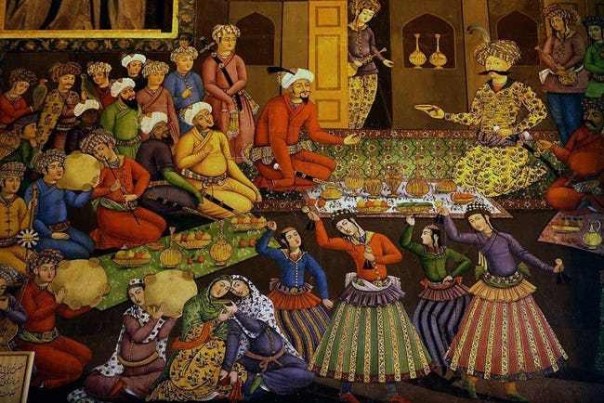
900s: High Heels Are Used In Horseback-Riding Cultures To Keep Feet In Stirrups

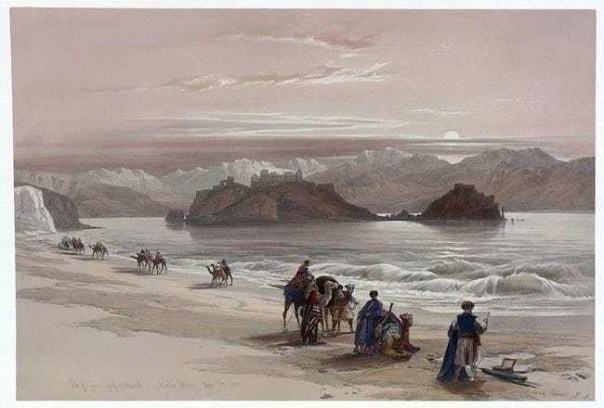
Photo: David Roberts/Wikimedia Commons/Public Domain

The first known high heel was worn by Persian men in the 10th century. They were neither decorative nor stylish, but they served a utility purpose: gripping the stirrups as they rode their horses.

This provided better control and the ability to ride closer to the horse. Heels were especially useful during wartime as the added control allowed the rider to remain steady on the horse and keep his hands free to access and deploy his weaponry. 

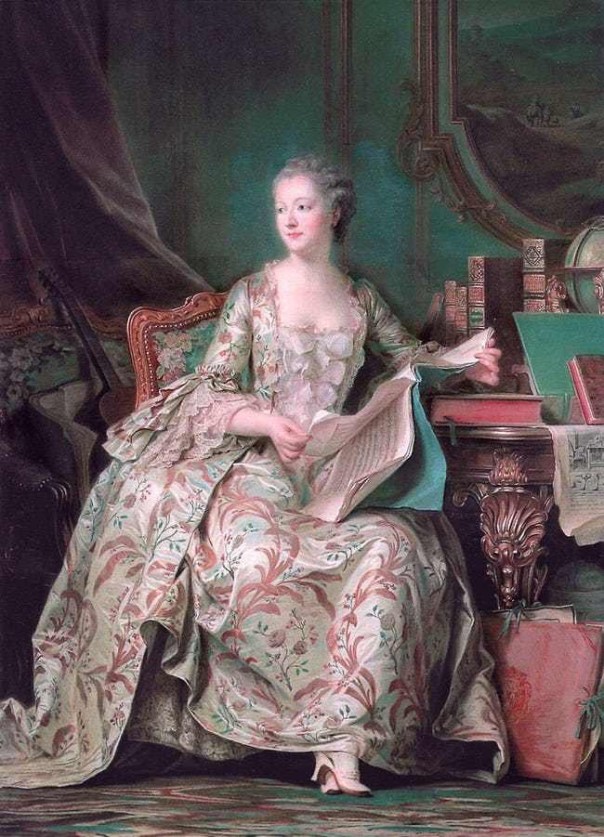
1500s: High Heels Are Worn By Courtesans

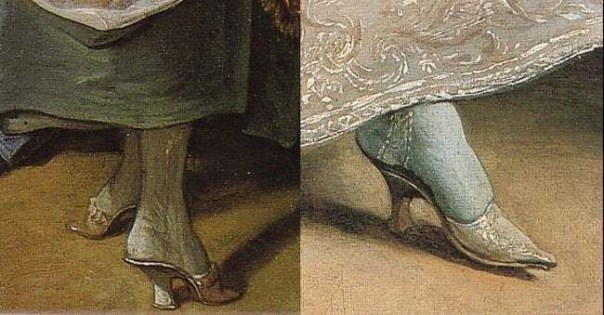
Photo: Maurice Quentin de La Tour/Wikimedia Commons/Public Domain

High heels were especially popular among one specific group throughout the 16th century: courtesans. The highest caste of harlots, courtesans were the predecessor to the high-end escort. 

They enjoyed privileges that were not available to most other women, let alone other workers like them. They were allowed to enter libraries and keep company with high ranking men. They were known to smoke, drink, and wear high heels to appear “elevated” above other women, and also because the men enjoyed what they saw. 

They were the women who commonly wore the dramatically high heel, often using male servants and noblemen as a human crutch. 

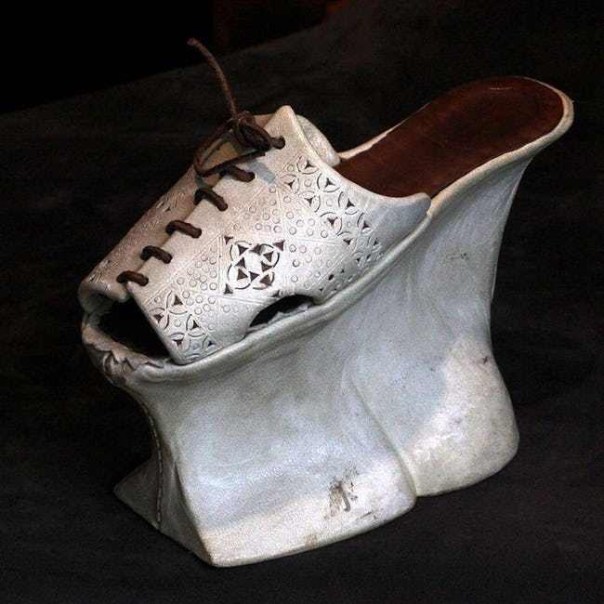
1500s: Aristocratic Women Wear Heels To Indicate Status

Reconstruction of an Venitian chopine, after models dating from 1500 to 1600. On display at the Shoe Museum in Lausanne.

The chopine platform shoe popular with women throughout the 16th century took heel wearers to unbelievable heights, with some shoes clocking in at over 22 inches tall. To keep from falling over, the aristocratic women would often use their maids as a crutch.

This was, understandably, a tremendous public health hazard. Many thought the bodily damage and potential miscarriage was worth it; and while no one could see the shoes, the real marvel was in the dazzling length of the skirt. The long skirts were meant to display wealth, as onlookers were scandalized by how much the extra fabric must have cost. 

Despite the finer shape of the heel, the high heel that followed the chopine was actually more balanced. 

1600s: Persian Migrants Bring Heels To Europe, Where Men Wear Them To Appear More Formidable

Photo:  Ninara/Wikimedia Commons/CC BY-SA 2.0

At the turn of the 17th century, Persian Shah Abbas I sojourned to Europe to seek diplomatic assistance in defeating the Ottoman Empire. Abbas and his entourage visited Russia, Germany, and Spain, resulting in a boom of interest in Persian goods and aesthetics. Aristocratic men quickly adopted the high-heeled shoe, valuing its projection of virile masculinity.

Whereas the Persian soldiers and noblemen used heels out of necessity, they were initially considered formidable and donned for their appearance. 

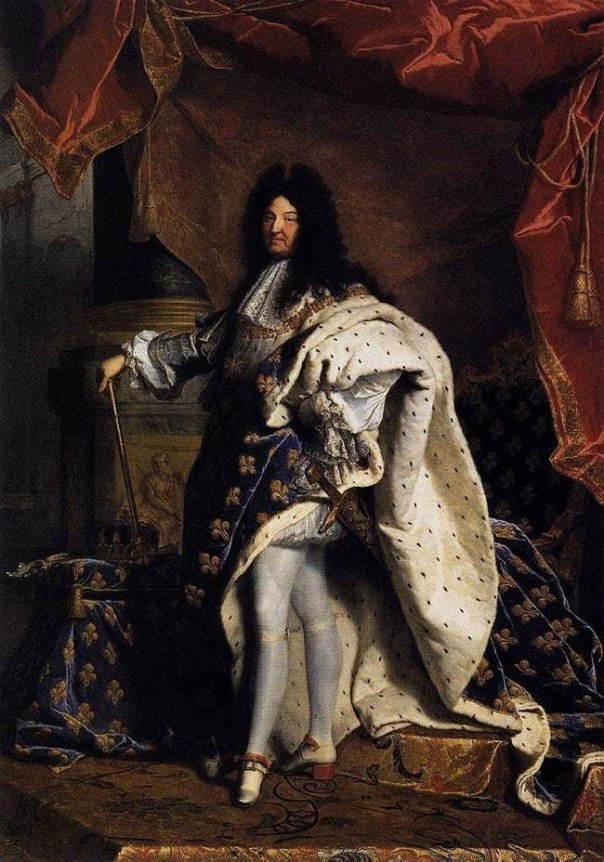
1700s: King Louis XIV Introduces High Heels With Red Soles To The French Court

Photo: Hyacinthe Rigaud/Wikimedia Commons/Public Domain

The first half of the 18th century was the peak of the men in heels movement. Louis XIV of France, also known as the Sun King, reigned over France for 72 years. Standing at 5’4,” King Louis was rather arrogant, to say the least. The Sun King moniker came from his deeply held belief that he was the center of the universe, and that France revolved around him.

Since Louis was a statistically below-average height man, and fancied himself as monumentally important, he was all about a high heel. He was known for the emblematic red-soled heel, predating Christian Louboutin’s red-bottom heels by 200 years. 

Plebeians were allowed to emulate him by wearing high heels, but only those in his court were permitted to wear the red soles. Doing so without prior authorization was grounds for punishment and being thrown out of court.

1700s: Men’s Heels Become More Broad And Sturdy, While Women’s Become More Decorative

Photo: Jean Francois de Troy/Wikimedia Commons/Public Domain

After a few centuries of a uniformly chunky heel, the design split off into distinct gendered categories. Returning to the original utility purpose of the shoe, the men’s heel became more broad and thick. In contrast, the women’s heel became more tapered and served as a decorative garment. This shift would signal the impending end of society’s acceptance of the unisex high heel.

Mid-1700s: Heels Are Perceived As ‘Frivolous’ And Are Worn Exclusively By Women

Photo: LACMA/Wikimedia Commons/Public Domain

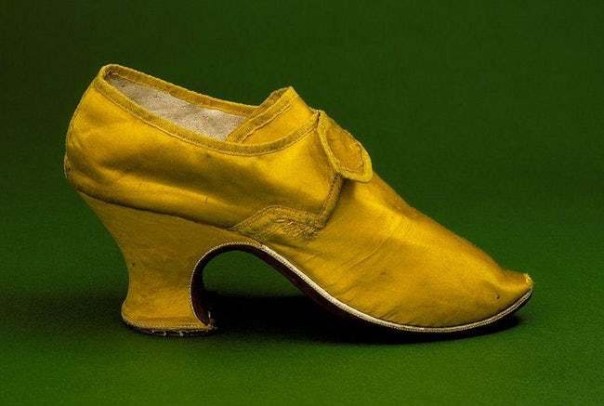
Despite the emergent popularity of high heels at the turn of the 18th century, they were quickly dismissed as frivolous women’s footwear. The design continued to skew more and more dainty and tapered over time, more closely resembling the thin heeled shoe that is worn today.

The purpose for wearing the high heel was not for emphasizing the shape of the wearer’s legs but rather the smallness of her feet. Skirts were still too long to show the contour of the foot, and small feet were a desirable feminine trait at the time. 

Late 1700s: Heels Go Out Of Style Following The French Revolution

Photo: Unknown/Wikimedia Commons/Public Domain

Soon after the gendered divide that diminished the widespread appeal of the high heel, one historical event in 1789 ended public interest in the shoes entirely. 

The French Revolution was a people’s movement that sought to do away with the aristocracy. Garb that emphasized social status became undesirable, and high heels became passe and undemocratic. The shoes were already widely dismissed for their “irrationality and superficiality,” so they were not missed. 

Mid-1800s: Photography And Adult Entertainment Reintroduce High-Heeled Fashion

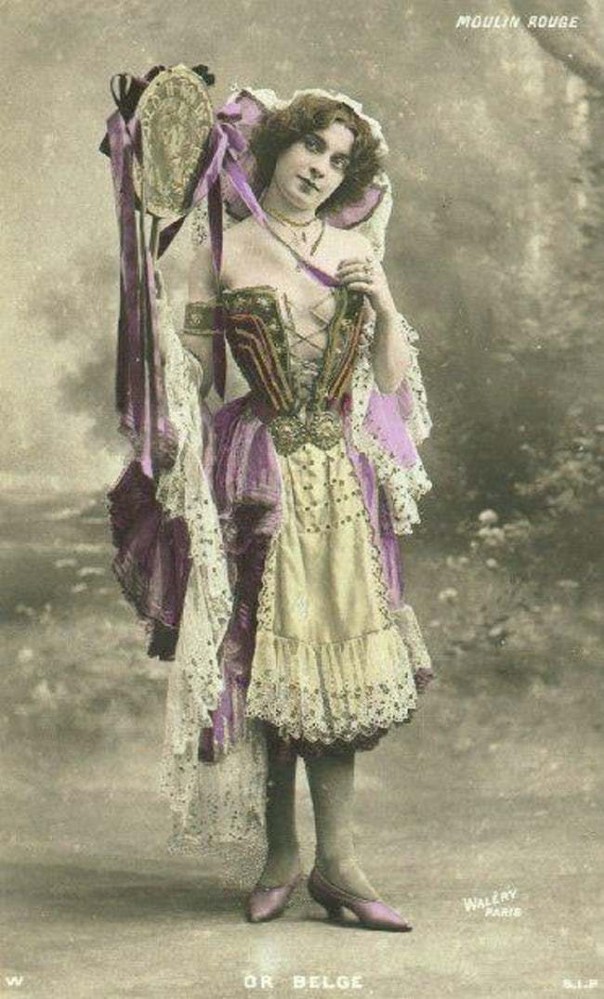
Photo: French Walery/Wikimedia Commons/Public Domain

Although heels were considered irrational and superficial at the end of the 18th century, they found popularity elsewhere as men began to enjoy the effect a heel had on the shape of a woman’s posterior. 

The advent of photography in the 19th century was monumental for countless reasons, but it also ushered in the renaissance of the high-heeled shoe. Adult postcards featuring women in heels became very popular in France, and the rest of Europe and America soon followed. 

Effectively, the invention of print adult entertainment was directly responsible for the high heel comeback, cementing society’s correlation between sexuality and high heels. 

1940s: Pin-Up Girl Posters Correlate High Heels With Female Sexuality

Photo: Alfred T. Palmer/Flickr/Public Domain

The progression of adult postcards led to the widely popular pin-up genre. Exceptionally tall, thin, and with sharp heels, these provocative shoes were allowed to be more visually intriguing and less structurally sound as the models only needed to pose in them for a few minutes at a time.

The pin-ups were especially popular in the men’s barracks throughout WWII, which inadvertently caused an innovative shake up that would change the shape of the heel industry forever. 

1945: The Stiletto Is Invented And Becomes A Women’s Fashion Staple Following WWII

Photo: Arroser/Wikimedia Commons/CC BY-SA 3.0

In the 1950s, high heel technology allowed for a new type of heel that was thinner, sharper, and more chic than ever before. Up until this point, heels were typically made out of wood, so they could only be carved as thin as was structurally sound. Once shoemakers began using steel to create the structure of the heel, they could be much thinner and still safely support the wearer’s weight, and thus the stiletto heel was born. 

The stiletto heel was a small piece of metal attached to the inside of the shoe, allowing the heel to pivot separately from the shoe and allow flexibility for the wearer. The interior steel piece is known as the “shank,” and it is placed on the back of the heel, rather than in the middle like the original style of heel. 

Late 1900s: Heels Remain Popular, But Designs Become More Casual And Comfortable

Photo: Pudsly/Wikimedia Commons/CC BY 3.0

2010s: As Drag Culture Goes Mainstream, Men Are Wearing Heels Once Again

Photo: DVSROSS/Flickr/CC BY 2.0

While performative cross-dressing has existed for centuries, our current understanding of drag culture quietly progressed in the shadows all throughout the 20th century. It has surged wildly in popularity throughout the early 21st century.

This newfound acceptance of female impersonation and gender fluid performers has made it fashionable once more for men to wear high heels, and this effect has spread beyond the realm of drag performance. This is not to say that the average guy on the street is wearing eight-inch stilettos, but tolerance for gender experimentation has blurred the lines of what clothing is “female” or “male.”

Time Immemorial: Stories Like ‘Cinderella’ Reinforce The Notion Of Heels As A Status Symbol

Photo: Oliver Herford/Wikimedia Commons/Public Domain

The status and desirability of heels has been primarily governed by class signaling and sociopolitical events. While there are many intricate and discrete factors throughout history, many of those dynamics can be best understood through allegorical stories about coveting the high heel.

One example, and possibly the oldest, is Cinderella. Stories using the “slipper test” plot device have been told since the first century in Egypt, and many individual cultures have their own retelling of this type of story. In the case of the present-day Cinderella, the glass slipper represents access to a higher social class. Without it, she appears normal, dowdy, and as a laborer. Due to her beauty and virtuous neighbor, however, she is rewarded by being innately worthy of wearing the shoe. 

Reference

The Tichborne Dole

The Tichborne Dole is an ancient English tradition still very much alive today. It takes place in the village of Tichborne near Alresford in Hampshire every year on March 25th the Feast of the Annunciation (Lady’s Day) and dates back to the 13th century.

Suffering from a wasting disease which had left her crippled, on her deathbed Lady Mabella Tichborne asked her miserly husband, Sir Roger, to donate food to the needy regularly every year. Her husband was reluctant but made a bizarre agreement as to how much he would give.

Sir Roger agreed to give the corn from all the land which his dying wife could crawl around whilst holding a blazing torch in her hand, before the torch went out. Lady Mabella succeeded in crawling around a twenty-three acre field which is still called ‘The Crawls’ to this day and which is situated just north of Tichborne Park and beside the road to Alresford.

Lady Tichborne charged her husband and his heirs to give the produce value of that land to the poor in perpetuity. But aware of her husband’s miserly character, Mabella added a curse – that should the dole ever be stopped then seven sons would be born to the house, followed immediately by a generation of seven daughters, after which the Tichborne name would die out and the ancient house fall into ruin.

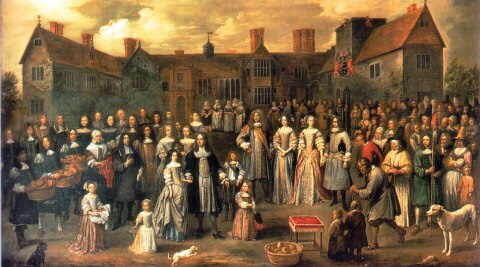
The Tichbourne Dole in 1671

The custom of giving the dole, in the form of bread, on 25th March, Lady Day continued for over 600 years, until 1796, when owing to abuse by vagabonds and vagrants, it was temporarily suspended by order of the Magistrates.

Local folk however, remembered the final part of the Tichborne legend and Lady Tachborne’s curse. The penalty for not giving the dole would be a generation of seven daughters, the family name would die out and the ancient house fall down. In 1803 part of the house did indeed subside and the curse seemed to have been fulfilled when Sir Henry Tichborne who succeeded to the baronetcy in 1821(one of seven brothers), produced seven daughters.

The tradition was hastily re-established and has continued to this day.

Roger, Henry’s nephew, was born before the restoration of the Dole and his younger brother Alfred afterwards. Roger was lost at sea in 1845 and was impersonated two decades later by the unsuccessful Tichborne claimant, Arthur Orton (pictured at the top of the article). Alfred was the only one to survive Lady Tichborne’s curse and thus the Tichborne name did not die out.

The Dole is held every Lady Day, March 25th. The parish priest carries out the traditional Blessing of the Tichborne Dole before the flour is distributed to the local people – only those families in Tichborne, Cheriton and Lane End are entitled to the dole. They receive one gallon of flour per adult and half a gallon per child.

Lady Day itself is celebrated in honour of the Virgin Mary as this day, nine months before Christmas, is the day of the Annunciation from the Archangel Gabriel that she would bear Christ. In the 12th century Lady Day was considered the first day of the year and persisted until the official calendar change of 1752.

Reference

The Murderous History Of Bible Translations

The Bible has been translated into far more languages than any other book. Yet, as Harry Freedman reveals, the history of Bible translations is not only contentious but bloody, with many who dared translate it being burned at the stake…

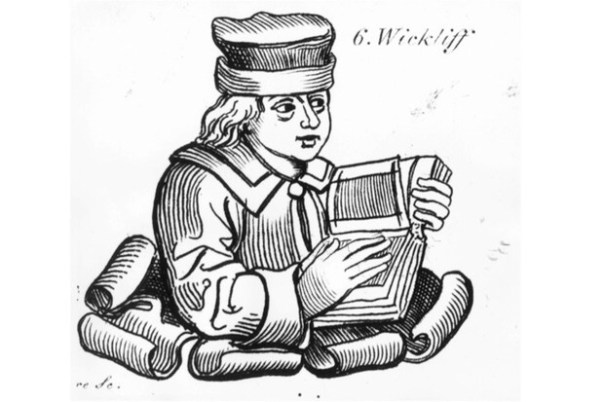
In 1427, Pope Martin ordered that John Wycliffe’s bones be exhumed from their grave, burned and cast into the river Swift. Wycliffe had been dead for 40 years, but his offence still rankled.

John Wycliffe (c1330–1384) was 14th-century England’s outstanding thinker. A theologian by profession, he was called in to advise parliament in its negotiations with Rome. This was a world in which the church was all-powerful, and the more contact Wycliffe had with Rome, the more indignant he became. The papacy, he believed, reeked of corruption and self-interest. He was determined to do something about it.

Wycliffe began publishing pamphlets arguing that, rather than pursuing wealth and power, the church should have the poor at heart. In one tract he described the Pope as “the anti-Christ, the proud, worldly priest of Rome, and the most cursed of clippers and cut-purses”.

In 1377 the Bishop of London demanded that Wycliffe appear before his court to explain the “wonderful things which had streamed forth from his mouth”. The hearing was a farce. It began with a violent row over whether or not Wycliffe should sit down. John of Gaunt, the king’s son and an ally of Wycliffe, insisted that the accused remain seated; the bishop demanded that he stand.

When the Pope heard of the fiasco he issued a papal bull [an official papal letter or document] in which he accused Wycliffe of “vomiting out of the filthy dungeon of his heart most wicked and damnable heresies”. Wycliffe was accused of heresy and put under house arrest and was later forced to retire from his position as Master of Balliol College, Oxford.

Wycliffe firmly believed that the Bible should be available to everybody. He saw literacy as the key to the emancipation of the poor. Although parts of the Bible had previously been rendered into English there was still no complete translation. Ordinary people, who neither spoke Latin nor were able to read, could only learn from the clergy. Much of what they thought they knew – ideas like the fires of hell and purgatory – were not even part of Scripture.

With the aid of his assistants, therefore, Wycliffe produced an English Bible [over a period of 13 years from 1382]. A backlash was inevitable: in 1391, before the Bible was completed, a bill was placed before parliament to outlaw the English Bible and to imprison anyone possessing a copy. The bill failed to pass – John of Gaunt saw to that [in parliament] – and the church resumed its persecution of the now-dead Wycliffe [he died in 1384].

Shorn of alternatives, the best they could do was to burn his bones [in 1427], just to make sure his resting place was not venerated. The Archbishop of Canterbury explained that Wycliffe had been “that pestilent wretch, of damnable memory, yea, the forerunner and disciple of antichrist who, as the complement of his wickedness, invented a new translation of the scriptures into his mother-tongue”.

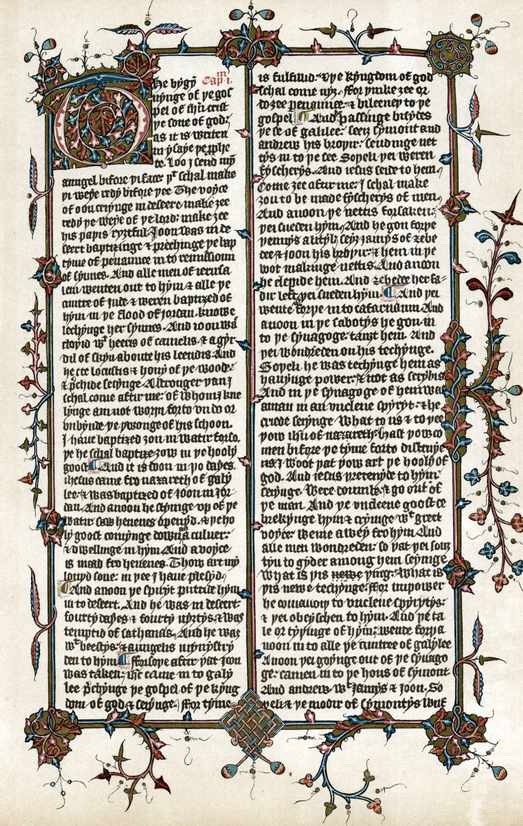
A page from John Wycliffe’s translation of the Bible into English, c1400. (Photo by Ann Ronan Pictures/Print Collector/Getty Images)

Jan Hus

In 1402, the newly ordained Czech priest Jan Hus was appointed to a pulpit in Prague to minister in the church. Inspired by Wycliffe’s writings, which were now circulating in Europe, Hus used his pulpit to campaign for clerical reform and against church corruption.

Like Wycliffe, Hus believed that social reform could only be achieved through literacy. Giving the people a Bible written in the Czech language, instead of Latin, was an imperative. Hus assembled a team of scholars; in 1416 the first Czech Bible appeared. It was a direct challenge to those he called “the disciples of antichrist” and the consequence was predictable: Hus was arrested for heresy.

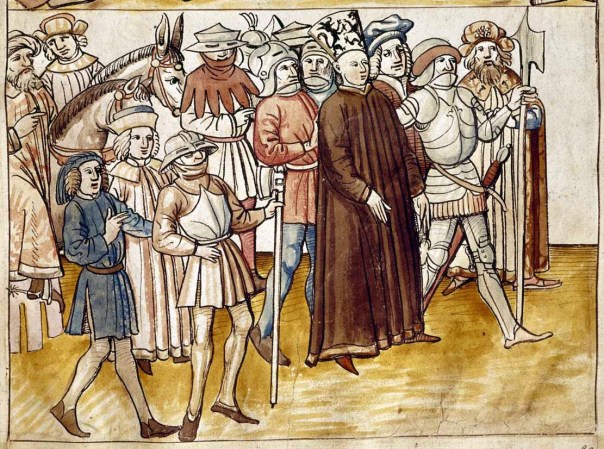
Jan Hus’s trial, which took place in the city of Constance, has gone down as one of the most spectacular in history. It was more like a carnival – nearly every bigwig in Europe was there. One archbishop arrived with 600 horses; 700 prostitutes offered their services; 500 people drowned in the lake; and the Pope fell off his carriage into a snowdrift. The atmosphere was so exhilarating that Hus’s eventual conviction and barbaric execution must have seemed an anti-climax. But slaughtered he was, burnt at the stake. His death galvanised his supporters into revolt. Priests and churches were attacked, the authorities retaliated. Within a few short years Bohemia had erupted into civil war. All because Jan Hus had the gall to translate the Bible.

The capture of Jan Hus. Miniature of the ‘Chronicle’ of Ulrich of Richental. Prague, national library of the University. (Photo by Roger Viollet Collection/Getty Images)

William Tyndale

As far as the English Bible is concerned, the most high profile translator to be murdered was William Tyndale. It was now the 16th century and Henry VIII was on the throne. Wycliffe’s translation was still banned, and although manuscript copies were available on the black market, they were hard to find and expensive to procure. Most people still had no inkling of what the Bible really said.

But printing was becoming commonplace, and Tyndale believed the time was right for an accessible, up-to-date translation. He knew he could create one; all he needed was the funding, and the blessing of the church. It didn’t take him long to realise that nobody in London was prepared to help him. Not even his friend, the bishop of London, Cuthbert Tunstall. Church politics made sure of that.

The religious climate appeared less oppressive in Germany. Luther had already translated the Bible into German; the Protestant Reformation was gathering pace and Tyndale believed he would have a better chance of realising his project there. So he travelled to Cologne and began printing.

This, it transpired, was a mistake. Cologne was still under the control of an archbishop loyal to Rome. He was halfway through printing the book of Matthew when he heard that the print shop was about to raided. He bundled up his papers and fled. It was a story that would be repeated several times over the next few years. Tyndale spent the next few years dodging English spies and Roman agents. But he managed to complete his Bible and copies were soon flooding into England – illegally, of course. The project was complete but Tyndale was a marked man.

He wasn’t the only one. In England, Cardinal Wolsey was conducting a campaign against Tyndale’s Bible. No one with a connection to Tyndale or his translation was safe. Thomas Hitton, a priest who had met Tyndale in Europe, confessed to smuggling two copies of the Bible into the country. He was charged with heresy and burnt alive.

Thomas Bilney, a lawyer whose connection to Tyndale was tangential at the most, was also thrown into the flames. First prosecuted by the bishop of London, Bilney recanted and was eventually released in 1529. But when he withdrew his recantation in 1531 he was re-arrested and prosecuted by Thomas Pelles, chancellor of Norwich diocese, and burnt by the secular authorities just outside the city of Norwich.

Meanwhile Richard Bayfield, a monk who had been one of Tyndale’s early supporters, was tortured incessantly before being tied to the stake. And a group of students in Oxford were left to rot in a dungeon that was used for storing salt fish.

Tyndale’s end was no less tragic. He was betrayed in 1535 by Henry Phillips, a dissolute young aristocrat who had stolen his [Phillips’] father’s money and gambled it away. Tyndale was hiding out in Antwerp, under the quasi–diplomatic protection of the English merchant community. Phillips, who was as charming as he was disreputable, befriended Tyndale and invited him out for dinner. As they left the English merchant house together, Phillips beckoned to a couple of thugs loitering in a doorway. They seized Tyndale. It was the last free moment of his life. Tyndale was charged with heresy in August 1536 and burnt at the stake a few weeks later.

William Tyndale being tied to a stake before being strangled and burned to death. (Photo by Hulton Archive/Getty Images)

England was not the only country to murder Bible translators. In Antwerp, the city where Tyndale thought he was safe, Jacob van Liesveldt produced a Dutch Bible. Like so many 16th-century translations, his act was political as well as religious. His Bible was illustrated with woodcuts – in the fifth edition he depicted Satan in the guise of a Catholic monk, with goat’s feet and a rosary. It was a step too far. Van Liesveldt was arrested, charged with heresy and put to death.

A murderous age

The 16th century was by far the most murderous age for Bible translators. But Bible translations have always generated strong emotions, and continue to do so even today. In 1960 the United States Air Force Reserve warned recruits against using the recently published Revised Standard Version because, they claimed, 30 people on its translation committee had been “affiliated with communist fronts”.  TS Eliot, meanwhile, railed against the 1961 New English Bible, writing that it “astonishes in its combination of the vulgar, the trivial, and the pedantic”.

And Bible translators are still being murdered. Not necessarily for the act of translating the Bible, but because rendering the Bible into local dialects is one of the things Christian missionaries do. In 1993 Edmund Fabian was murdered in Papua New Guinea, killed by a local man who had been helping him translate the Bible. In March 2016, four Bible translators working for an American evangelical organisation were killed by militants in an undisclosed location in the Middle East.

Bible translations, then, may appear to be a harmless activity. History shows it is anything but.

Reference

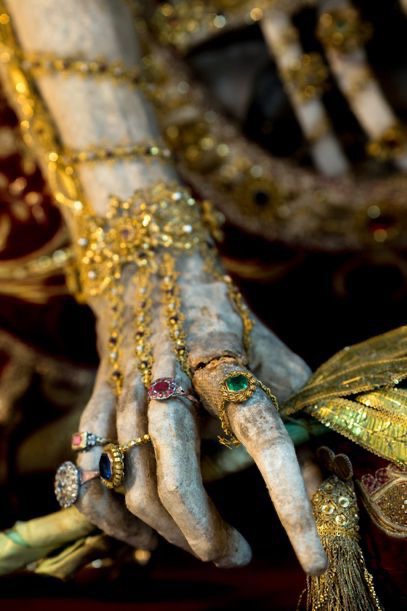
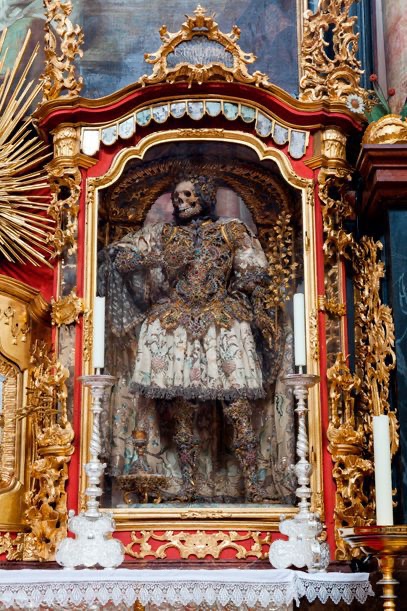
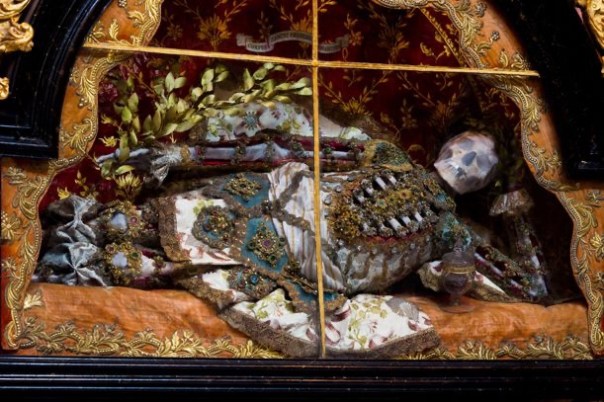
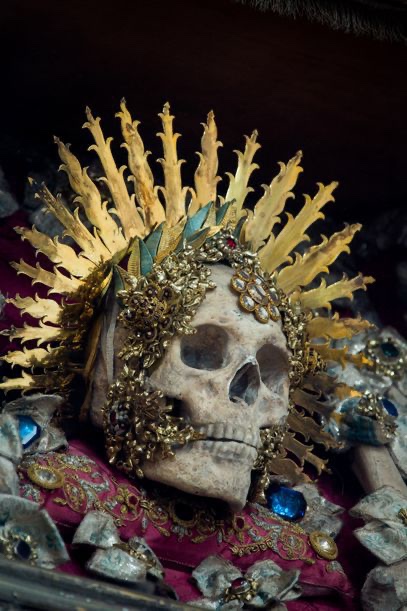
Meet the Fantastically Bejeweled Skeletons of Catholicism’s Forgotten Martyrs

Art historian and author Paul Koudounaris elucidates the macabre splendor and tragic history of Europe’s catacomb saints

Saint Coronatus joined a convent in Heiligkreuztal, Germany, in 1676 (Shaylyn Esposito)

Paul Koudounaris is not a man who shies away from the macabre. Though the Los Angeles-based art historian, author and photographer claims that his fascination with death is no greater than anyone else’s, he devotes his career to investigating and documenting phenomena such as church ossuaries, charnel houses and bone-adorned shrines. Which is why, when a man in a German village approached him during a 2008 research trip and asked something along the lines of, “Are you interested in seeing a dilapidated old church in the forest with a skeleton standing there covered in jewels and holding a cup of blood in his left hand like he’s offering you a toast?” Koudounaris’ answer was, “Yes, of course.”

At the time, Koudounaris was working on a book called The Empire of Death, traveling the world to photograph church ossuaries and the like. He’d landed in this particular village near the Czech border to document a crypt full of skulls, but his interest was piqued by the dubious yet enticing promise of a bejeweled skeleton lurking behind the trees. “It sounded like something from the Brothers Grimm,” he recalls. “But I followed his directions—half thinking this guy was crazy or lying—and sure enough, I found this jeweled skeleton in the woods.”

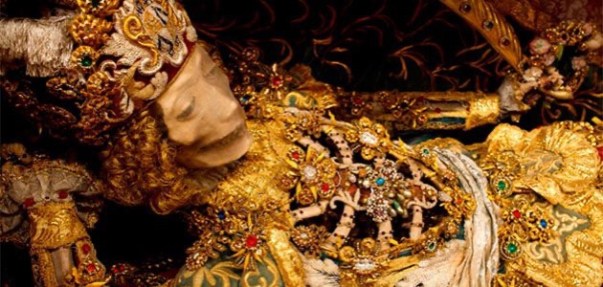
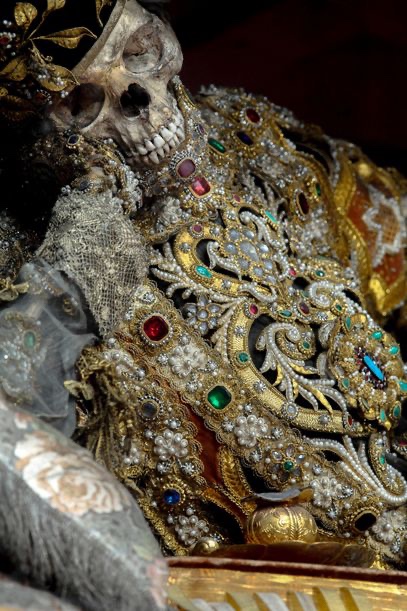
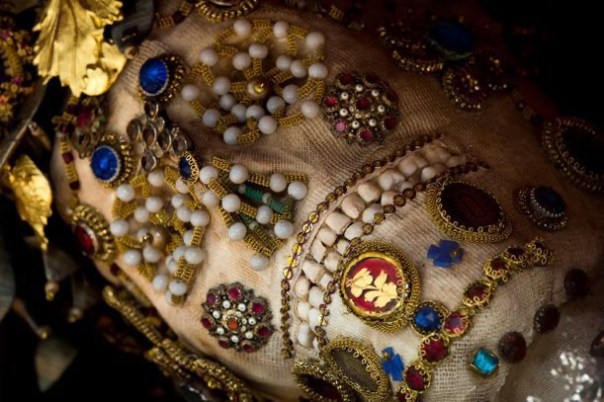
The church—more of a small chapel, really—was in ruins, but still contained pews and altars, all dilapidated from years of neglect under East German Communist rule. He found the skeleton on a side aisle, peering out at him from behind some boards that had been nailed over its chamber. As he pried off the panels to get a better look, the thing watched him with big, red glass eyes wedged into its gaping sockets. It was propped upright, decked out in robes befitting a king, and holding out a glass vial, which Koudounaris later learned would have been believed to contain the skeleton’s own blood. He was struck by the silent figure’s dark beauty, but ultimately wrote it off as “some sort of one-off freakish thing, some local curiosity.”

But then it happened again. In another German church he visited some time later, hidden in a crypt corner, he found two more resplendent skeletons. “It was then that I realized there’s something much broader and more spectacular going on,” he says.

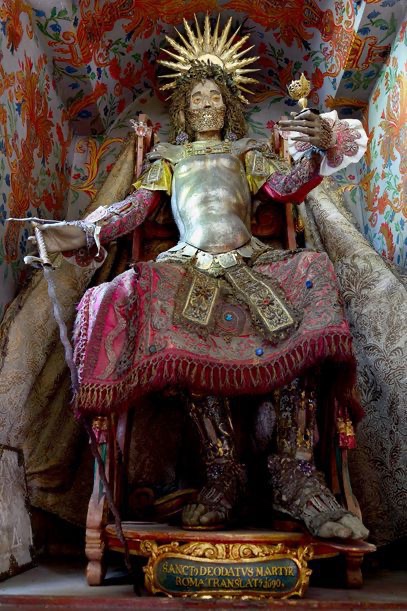
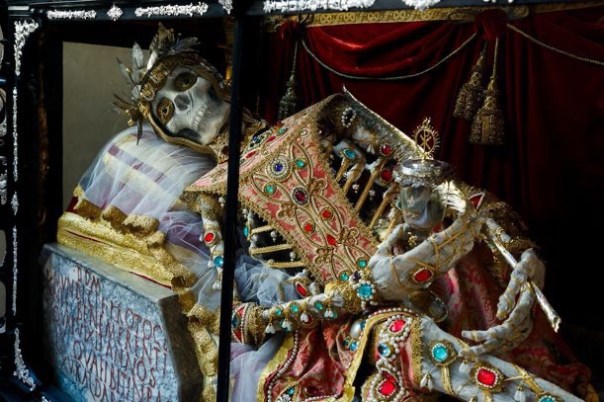
Koudounaris could not get the figures’ twinkling eyes and gold-adorned grins out of his mind. He began researching the enigmatic remains, even while working on Empire of Death. The skeletons, he learned, were the “catacomb saints,” once-revered holy objects regarded by 16th- and 17th-century Catholics as local protectors and personifications of the glory of the afterlife. Some of them still remain tucked away in certain churches, while others have been swept away by time, forever gone. Who they were in life is impossible to know. “That was part of this project’s appeal to me,” Koudounaris says. “The strange enigma that these skeletons could have been anyone, but they were pulled out of the ground and raised to the heights of glory.”

To create Saint Deodatus in Rheinau, Switzerland, nuns molded a wax face over the upper half of his skull and fashioned his mouth with a fabric wrap. (© 2013 Paul Koudounaris)

His pursuit of the bones soon turned into a book project, Heavenly Bodies: Cult Treasures and Spectacular Saints from the Catacombs, in which he documents the martyred bones’ journey from ancient Roman catacombs to hallowed altars to forgotten corners and back rooms. Though largely neglected by history, the skeletons, he found, had plenty to say.

Resurrecting the Dead

On May 31, 1578, local vineyard workers discovered that a hollow along Rome’s Via Salaria, a road traversing the boot of Italy, led to a catacomb. The subterranean chamber proved to be full of countless skeletal remains, presumably dating back to the first three centuries following Christianity’s emergence, when thousands were persecuted for practicing the still-outlawed religion. An estimated 500,000 to 750,000 souls—mostly Christians but including some pagans and Jews—found a final resting place in the sprawling Roman catacombs.

For hundreds of skeletons, however, that resting place would prove anything but final. The Catholic Church quickly learned of the discovery and believed it was a godsend, since many of the skeletons must have belonged to early Christian martyrs. In Northern Europe—especially in Germany, where anti-Catholic sentiment was most fervent—Catholic churches had suffered from plunderers and vandals during the Protestant Revolution over the past several decades. Those churches’ sacred relics had largely been lost or destroyed. The newly discovered holy remains, however, could restock the shelves and restore the morale of those parishes that had been ransacked.

The holy bodies became wildly sought-after treasures. Every Catholic church, no matter how small, wanted to have at least one, if not ten. The skeletons allowed the churches to make a “grandiose statement,” Koudounaris says, and were especially prized in southern Germany, the epicenter of “the battleground against the Protestants.” Wealthy families sought them for their private chapels, and guilds and fraternities would sometimes pool their resources to adopt a martyr, who would become the patron of cloth-makers, for example.

Saint Valentinus is one of the ten skeletons decorated by the lay brother Adalbart Eder. Valentinus wears a biretta and an elaborate deacon’s cassock to show off his ecclesiastical status. Today, he is housed in Waldsassen Basilica in Germany

For a small church, the most effective means of obtaining a set of the coveted remains was a personal connection with someone in Rome, particularly one of the papal guards. Bribery helped, too. Once the Church confirmed an order, couriers—often monks who specialized in transporting relics—delivered the skeleton from Rome to the appropriate northern outpost.

At one point, Koudounaris attempted to estimate in dollar terms how profitable these ventures would have been for the deliverymen, but gave up after realizing that the conversion from extinct currencies to modern ones and the radically different framework for living prevented an accurate translation. “All I can say is that they made enough money to make it worthwhile,” he says.

The Vatican sent out thousands of relics, though it’s difficult to determine exactly how many of those were fully articulated skeletons versus a single shinbone, skull or rib. In Germany, Austria and Switzerland, where the majority of the celebrated remains wound up, the church sent at least 2,000 complete skeletons, Koudounaris estimates.

For the Vatican, the process of ascertaining which of the thousands of skeletons belonged to a martyr was a nebulous one. If they found “M.” engraved next to a corpse, they took it to stand for “martyr,” ignoring the fact that the initial could also stand for “Marcus,” one of the most popular names in ancient Rome. If any vials of dehydrated sediment turned up with the bones, they assumed it must be a martyr’s blood rather than perfume, which the Romans often left on graves in the way we leave flowers today. The Church also believed that the bones of martyrs cast off a golden glow and a faintly sweet smell, and teams of psychics would journey through the corporeal tunnels, slip into a trance and point out skeletons from which they perceived a telling aura. After identifying a skeleton as holy, the Vatican then decided who was who and issued the title of martyr.

Saint Munditia arrived at the Church of Saint Peter in Munich along with a funerary plaque taken from the catacombs. (© 2013 Paul Koudounaris)

While there doubters within the Vatican, those on the receiving end of these relics never wavered in their faith. “This was such a dubious process, it’s understandable to ask if people really believed,” Koudounaris says. “The answer is, of course they did: These skeletons came in a package from the Vatican with proper seals signed by the cardinal vicar stating these remains belong to so-and-so. No one would question the Vatican.”

The Dirt and Blood Are Wiped Away

Each martyr’s skeleton represented the splendors that awaited the faithful in the afterlife. Before it could be presented to its congregation, it had to be outfitted in finery befitting a relic of its status. Skilled nuns, or occasionally monks, would prepare the skeleton for public appearance. It could take up to three years, depending on the size of the team at work.

The talented nuns of Ennetach decorated the ribcage of Saint Felix in Aulendorf. (© 2013 Paul Koudounaris)

Each convent would develop its own flair for enshrouding the bones in gold, gems and fine fabrics. The women and men who decorated the skeletons did so anonymously, for the most part. But as Koudounaris studied more and more bodies, he began recognizing the handiwork of particular convents or individuals. “Even if I couldn’t come up with the name of a specific decorator, I could look at certain relics and tie them stylistically to her handiwork,” he says.

Nuns were often renowned for their achievements in clothmaking. They spun fine mesh gauze, which they used to delicately wrap each bone. This prevented dust from settling on the fragile material and created a medium for attaching decorations. Local nobles often donated personal garments, which the nuns would lovingly slip onto the corpse and then cut out peepholes so people could see the bones beneath. Likewise, jewels and gold were often donated or paid for by a private enterprise. To add a personal touch, some sisters slipped their own rings onto a skeleton’s fingers.

Saint Kelmens arrived in Neuenkirch, Switzerland, in 1823 – decades after the original wave of catacomb saints were distributed throughout Europe. Two nuns decorated his bones. (© 2013 Paul Koudounaris)

One thing the nuns did lack, however, was formal training in anatomy. Koudounaris often found bones connected improperly, or noticed that a skeleton’s hand or foot was grossly missized. Some of the skeletons were outfitted with full wax faces, shaped into gaping grins or wise gazes. “That was done, ironically, to make them seem less creepy and more lively and appealing,” Koudounaris says. “But it has the opposite effect today. Now, those with the faces by far seem the creepiest of all.”

Saint Felix of Gars am Inn, Germany, was regarded as a miracle-worker. (© 2013 Paul Koudounaris)

They are also ornately beautiful. In their splendor and grandeur, Koudounaris says, the skeletons may be considered baroque art, but their creators’ backgrounds paint a more complicated picture that situates the bones into a unique artistic subcategory. The nuns and monks “were incredible artisans but did not train in an artisan’s workshop, and they were not in formal dialogue with others doing similar things in other parts of Europe,” he says.

“From my perspective as someone who studies art history, the question of who the catacomb saints were in life becomes secondary to the achievement of creating them,” he continues. “That’s something I want to celebrate.”

Devoted patrons often gave their own jewelry to the saints, such as these rings worn on the gauze-wrapped fingers of Saint Konstantius in Rohrschach, Switzerland. (© 2013 Paul Koudounaris)

In that vein, Koudounaris dedicated his book to those “anonymous hands” that constructed the bony treasures “out of love and faith.” His hope, he writes, is that “their beautiful work will not be forgotten.”

Fall from Grace

When a holy skeleton was finally introduced into the church, it marked a time of community rejoicing. The decorated bodies served as town patrons and “tended to be extremely popular because they were this very tangible and very appealing bridge to the supernatural,” Koudounaris explains.

Saint Gratian, another of Adalbart Eder’s Waldassen skeletons. Here, the saint is decked out in a re-imagining of Roman military attire, including lace-up sandals and shoulder, chest and arm guards. (© 2013 Paul Koudounaris)

Baptismal records reveal the extent of the skeletons’ allure. Inevitably, following a holy body’s arrival, the first child born would be baptized under its name—for example, Valentine for a boy, Valentina for a girl. In extreme cases, half the children born that year would possess the skeleton’s name.

Communities believed that their patron skeleton protected them from harm, and credited it for any seeming miracle or positive event that occurred after it was installed. Churches kept “miracle books,” which acted as ledgers for archiving the patron’s good deeds. Shortly after Saint Felix arrived at Gars am Inn, for example, records indicate that a fire broke out in the German town. Just as the flames approached the marketplace—the town’s economic heart—a great wind came and blew them back. The town showered Felix with adoration; even today, around 100 ex-votos—tiny paintings depicting and expressing gratitude for a miracle, such as healing a sick man—are strewn about St. Felix’s body in the small, defunct chapel housing him.

As the world modernized, however, the heavenly bodies’ gilt began to fade for those in power. Quoting Voltaire, Koudounaris writes that the corpses were seen as reflection of “our ages of barbarity,” appealing only to “the vulgar: feudal lords and their imbecile wives, and their brutish vassals.”

In the late 18th century, Austria’s Emperor Joseph II, a man of the Enlightenment, was determined to dispel superstitious objects from his territory. He issued an edict that all relics lacking a definite provenance should be tossed out. The skeletons certainly lacked that. Stripped of their status, they were torn down from their posts, locked away in boxes or cellars, or plundered for their jewels.

Catacomb saints were often depicted in a reclining position, as demonstrated here by Saint Friedrich at the Benedictine abbey in Melk, Austria. He holds a laurel branch as a sign of victory. (© 2013 Paul Koudounaris)

For local communities, this was traumatic. These saints had been instilled in people’s lives for more than a century, and those humble worshipers had yet to receive the Enlightenment memo. Pilgrimages to see the skeletons were abruptly outlawed. Local people would often weep and follow their patron skeleton as it was taken from its revered position and dismembered by the nobles. “The sad thing is that their faith had not waned when this was going on,” Koudounaris says. “People still believed in these skeletons.”

The Second Coming

Not all of the holy skeletons were lost during the 18th-entury purges, however. Some are still intact and on display, such as the 10 fully preserved bodies in the Waldsassen Basilica (“the Sistine Chapel of Death,” Koudounaris calls it) in Bavaria, which holds the largest collection remaining today. Likewise, the delicate Saint Munditia still reclines on her velvet throne at St. Peter’s Church in Munich.

In Koudounaris’ hunt, however, many proved more elusive. When he returned to that original German village several years later, for example, he found that a salvage company had torn down the forest church. Beyond that, none of the villagers could tell him what had happened to its contents, or to the body. For every 10 bodies that disappeared in the 18th and 19th centuries, Koudounaris estimates, nine are gone.

In other cases, leads—which he gathered through traveler’s accounts, parish archives and even Protestant writings about the Catholic “necromancers”—did pan out. He found one skeleton in the back of a parking-garage storage unit in Switzerland. Another had been wrapped in cloth and stuck in a box in a German church, likely untouched for 200 years.

After examining around 250 of these skeletons, Koudounaris concluded, “They’re the finest pieces of art ever created in human bone.” Though today many of the heavenly bodies suffer from pests burrowing through their bones and dust gathering on their faded silk robes, in Koudounaris’ photos they shine once more, provoking thoughts of the people they once were, the hands that once adorned them and the worshipers who once fell at their feet. But ultimately, they are works of art. “Whoever they may have been as people, whatever purpose they served rightly or wrongly as items, they are incredible achievements,” he says. “My main objective in writing the book is to present and re-contextualize these things as outstanding works of art.”

Only the head of Saint Benedictus – named in honor of Saint Benedict, the patron of the monastery – arrived in Muri, Switzerland, in 1681. (© 2013 Paul Koudounaris)

Accomplishing that was no small task. Nearly all the skeletons he visited and uncovered were still in their original 400-year-old glass tombs. To disassemble those cases, Koudounaris thought, would “amount to destroying them.” Instead, a bottle of Windex and a rag became staples of his photography kit, and he sometimes spent upward of an hour and a half meticulously examining the relic for a clear window through which he might shoot. Still, many of the skeletons he visited could not be included in the book because the glass was too warped to warrant a clear shot.

For Koudounaris, however, it’s not enough to simply document them in a book. He wants to bring the treasures back into the world, and see those in disrepair restored. Some of the church members agreed with Koudounaris’ wish to restore the skeletons, not so much as devotional items but as pieces of local history. The cost of undertaking such a project, however, seems prohibitive. One local parish priest told Koudounaris he had consulted with a restoration specialist, but that the specialist “gave a price so incredibly high that there was no way the church could afford it.”

Still, Koudounaris envisions a permanent museum installation or perhaps a traveling exhibit in which the bones could be judged on their artistic merits. “We live in an age where we’re more in tune with wanting to preserve the past and have a dialogue with the past,” he says. “I think some of them will eventually come out of hiding.”

Reference

The True Story Of The Aberfan Disaster, Featured In Season 3 Of ‘The Crown’

As the event that dominates the third episode of Season 3 of The Crown, the Aberfan Disaster remains one of the most devastating losses of human life in Welsh history. On the morning of October 21, 1966, the collapse of a soil tip triggered a slurry slide that ended 116 children and 28 adults in the village of Aberfan, Wales.

Located in Southern Wales, Aberfan was devastated by the disaster. Life revolved around nearby mining operations. As Aberfan residents carried out recovery and relief efforts, Queen Elizabeth II issued a statement – resisting the advice of Prime Minister Harold Wilson to visit the site of the tragedy. 

The events leading up to and in the aftermath of the Aberfan Disaster ultimately changed the role of royalty, the lives of countless Welshmen and women, and mining safety in Britain.

The Mine Near Aberfan Was Under The Authority Of The National Coal Board Of Britain

The Merthyr Vale Colliery included seven tips, the first of which dated back to 1869. In 1966, the colliery encircled Arberfan, a village that served as home to miners and their families. The Merthyr Vale Colliery was regulated by the National Coal Board (NCB), the overseeing body that was formed in 1947. The NCB nationalized mining in the United Kingdom, promoting the industry and setting production and distribution guidelines.

When Tip 7 of the Merthyr Valley Colliery was begun in 1958, it was built over an underground spring, creating an intrinsic instability. There were several tips at the mine built over these springs, resulting in several slips during the 1960s. In 1963, for example, an engineer at the mine noted, “danger from coal slurry being tipped at the rear of Pantglas School,” but the NCB failed to act on the warning. 

Aberfan Experienced Heavy Rains That Caused A Great Amount Of Ground Instability

October 1966 was a particularly rainy month for Aberfan and the surrounding region, with roughly 60 inches falling in the weeks preceding the disaster. As water filled streams and underground springs, the slag heap – where the mine discarded its waste – were susceptible to heavy rain, as well. 

Tip 7 began to show signs of weakness during the early hours on October 21, 1966. At around 7:30 am, mine workers observed settlement at the tip, something that increased over the subsequent hours. First 10 feet, then 10 feet more – the top of the tip was slowly giving way. Reportedly, the crew took a break, intent on working to remedy the problem as soon as they were done. 

A Collapse At Tip 7 Of The Mine Triggered A Slurry Surge That Struck A Nearby School

The students at Pantglas Junior School arrived for classes on Friday, October 21, 1966, expecting to enjoy the last day of school before their midterm break. The night before, 9-year-old Eryl Jones dreamed that school had been canceled for that day, describing “something black came down all over it” to her mother before she left home that morning.

When the school opened at 9 am, 240 students entered. However, within minutes, they heard what survivor Gaynor Madgewick described as:

A terrible, terrible sound, a rumbling sound. It was so loud. I just didn’t know what it was. It seemed like the school went numb, you could hear a pin drop. I was suddenly petrified and glued to the chair. It sounded like the end of the world had come. 

What Madgewick heard was a flood of slurry – a mixture of water, mud, and coal debris – descending the mountain as it approached the school. Other survivors described the sound as akin to, “a jet plane screaming low over the school in the fog.”

As the slide began, one of the workers at Tip 7 observed, “It started to rise slowly at first, sir… I thought I was seeing things. Then it rose up pretty fast, sir, at a tremendous speed. Then it sort of came up out of the depression and turned itself into a wave… down towards the mountain… towards Aberfan village… into the mist.”

Children Later Recalled Struggling To Breathe While Buried Under Waste

When the slurry hit Pantglas Junior School, children and teachers alike were immediately buried under “a [slurry] wave over 12 meters high and 7 meters wide traveling at speed down the valley.” 

There had been no warning since the telephone cables leading to the tip had been taken. As it approached the school, it wiped out the entire landscape, eventually leaving 6 to 9 meters of debris. Brian Williams, 7 years old at the time, “watched the classroom wall split from the bottom to the top. The wall came through and stopped. And the next thing I remember was it went very quiet, and then a lot of screaming and crying.” Williams had escaped being under the crumbling wall, having been shifted to another desk across the room moments before.

Survivor Jeff Edwards remembered “waking up [and] my right foot was stuck in the radiator and there was water pouring out of it. My desk was pinned against my stomach and a girl’s head was on my left shoulder. She was dead. Because all the debris was around me I couldn’t get away from her. The image of her face comes back to me continuously.”

Edwards spent the next 90 minutes listening to the “crying and screaming” of his classmates, but “as time went on they got quieter and quieter as children died, they were buried and running out of air.” He, too, struggled to breathe as he lay under the mixture of coal, water, and mud. 

Residents And Professional Miners Alike Tried To Dig To Find Survivors

Miners, bystanders, and municipal authorities frantically rushed toward the school. When police officer Yvonne Price, 21 years old at the time, arrived, she “was rigid with shock… you could see doors, tables, kitchen utensils floating in” black water. She witnessed “people from the village passing saucepans and buckets full of debris.”

The New York Times later reported, “Civil defense teams, miners, policemen, firemen and other volunteers toiled desperately, sometimes tearing at the coal rubble with their bare hands, to extricate the children. Bulldozers shoved debris aside to get to the children. A hush fell on the rescuers once when faint cries were heard in the rubble.”

Due to her small size, Officer Price was sent through a hole in the ground to see if she could find any survivors. She found none. 

Recovery efforts continued long after cries from under the debris could be heard. Alix Palmer, a journalist at Aberfan, saw, “the fathers straight from the pit… digging… no-one had yet really given up hope, although logic told them it was useless.” Every time a body was found, people would pause as a doctor made his way to check for signs of life. The last surviving child, Jeff Edwards, was pulled to safety at around 11 am.

Men and women continued to dig, pulling 67 bodies out of the rubble on the first day. One of the teachers, David Beynon, was discovered with five children in his arms. He had tried to protect them in their final moments. Nansi Williams, the school’s dinner lady, was collecting money when the slurry hit the school and she, too, lost her life protecting several students. All of the five children she covered with her body survived. 

The Bodies Of Children Were Identified By Items They Had In Their Pockets

When Reverend Irving Penberthy arrived on the scene of the Aberfan Disaster, he “stayed with the people who were watching and waiting” before taking his post at the Bethania Chapel. Soon, the chapel became a mortuary, one that received the bodies of children as they were extracted from under the slurry. Penberthy recalled watching as “fathers – it was mainly fathers, of course, not the women – just going around and lifting the blanket, and then going on further, and the shock when they finally found their own child. That was dreadful. And all we did was just cry together.”

As more and more bodies arrived, Charles Nunn, assigned as the senior identification officer at Aberfan, wrote, “a description of each child or adult and detail any possessions in their pockets – a handkerchief, sweets, anything that might help with identification. The little ones were laid on the pews, the adults on stretchers across the tops of the pews – males to the left and females to the right. By about the fourth or fifth day we had to start taking bodies up a difficult winding staircase to the upstairs gallery.”

While many of the children perished as a result of asphyxiation; there were some bodies that were deemed unsuitable for viewing due to extensive injuries. In a letter to her mother, journalist Alix Palmer wrote, “the slag had had time to corrode the skin of the children still buried and many brought out burned could only been identified by the clothing or things in their pockets. One little boy… was identified by a slip of paper with his name on deep inside his wallet.”

The Queen Resisted Efforts To Get Her To Visit The Site

As details of the disaster emerged and bodies continued to be pulled from the debris (dozens on the first day alone), Queen Elizabeth II resisted pleas to visit Aberfan. Just as it was depicted in the third season of The Crown, the monarch opted to send a proxy – her husband, Prince Philip.

In her initial statement, she expressed sadness and sorrow. While the show indicated a lack of emotion on the part of the queen, it’s been asserted that she didn’t want to pull attention and resources away from rescue efforts. She was said to have insisted, “People will be looking after me… perhaps they’ll miss some poor child that might have been found in the wreckage.”

The British government was represented by Harold Wilson, the Prime Minister, and Lord Snowdon Antony Armstrong-Jones, Princess Margaret’s husband. The latter, according to Prime Minister Wilson, “made it his job to visit bereaved relatives… sitting holding the hands of a distraught father, sitting with the head of a mother on his shoulder for a half an hour in silence.”

Prince Philip spent two hours with relatives of victims, surveying the site, and visiting the cemetery where more than 81 children had already been laid to rest. 

The Queen Did Make Her Way To Aberfan, Visiting The Day After The Last Body Was Recovered

Queen Elizabeth II arrived in Aberfan more than a week after the disaster struck and only one day after the last body was retrieved from the debris. When she and Prince Philip toured Aberfan on October 29, 1966, they were both visibly moved by the experience. As a young child handed Elizabeth a flower -“From the remaining children of Aberfan” – the stoic queen was said to have been on the brink of tears. According to Jeff Edwards, the last child to be found alive, “We know she did cry, because she went to Jim Williams’ house – and when she came down from the cemetery she was visibly crying.”

When the queen spoke to her subjects at Aberfan, she told them, “As a mother, I’m trying to understand what your feelings must be…  I’m sorry I can give you nothing at present except sympathy.” The queen’s former private secretary, Lord Charteris, told author Gyles Brandreth that not going to Aberfan earlier was one of her biggest regrets.

Survivors see her visit differently, however. Edwards, again, noted, “When she did arrive she was visibly upset and the people of Aberfan appreciated her being here. She came when she could and nobody would condemn her for not coming earlier, especially as everything was such a mess.” Marjorie Collins, the mother of one of the victims, similarly saw the visit as a supportive endeavor, observing, “They [Prince Philip and Queen Elizabeth] were above the politics and the din and they proved to us that the world was with us, and that the world cared.”

The Disaster Could Have Been Prevented Had Earlier Concerns Been Addressed

In his comments about the disaster at Aberfan, the chairman of the National Coal Board (NCB), Lord Robens, noted the impossibility of knowing “that there was a spring in the heart of this tip [meaning Tip 7].” 

The inquest and tribunal into the cause of the slide that took 144 lives thought otherwise, calling the event “a terrifying tale of bungling ineptitude by many men charged with tasks for which they were totally unfitted, of failure to heed clear warnings, and of a total lack of direction from above.”

The tribunal took place over 76 days, interviewing 136 witnesses and examining 300 exhibits. Earlier concerns about the tips were made very clear, as was the lack of NCB policy when it came to safely installing tips. In his testimony, Lord Robens ultimately admitted fault by the NCB, something with which the tribunal agreed, concluding in 1967:

Blame for the disaster rests upon the National Coal Board. This is shared, though in varying degrees, among the NCB headquarters, the South Western Divisional Board, and certain individuals… The legal liability of the NCB to pay compensation of the personal injuries, fatal or otherwise, and damage to property, is incontestable and uncontested.

No malice or criminality was found, but it was determined that the entire disaster could have been avoided but for “ignorance, ineptitude and a failure in communications.”

New Legislation Was Introduced In 1969 To Tighten The Oversight Of Mines 

Mining regulations became increasingly stringent in the years after Aberfan. New legislation was, according to Prime Minister Harold Wilson in 1967, “desirable” in light of the recommendations made by the tribunal. When Wilson saw the findings of the Aberfan tribunal, he was shocked and deeply concerned by its “devastating nature.” 

In 1969, two years after the tribunal’s findings, Lord Robens headed efforts that resulted in the 1974 Health and Safety at Work Act, legislation that continues to regulate mining in the United Kingdom. Although Robens had offered his resignation to the NCB, it was dismissed by members of Parliament and Prime Minister Harold Wilson – something that only contributed to Robens’s villainy in the eyes of the victims of the disaster.

In addition to the 1974 act, the Mines and Quarries (Tips) Act of 1969 and subsequent Mine and Quarries (Tips) Regulations of 1971 also brought standardization of mine building, construction, and management. According to the latter, any tipping activities required plans “showing all mine workings (whether abandoned or not), previous landslips, springs, artesian wells, watercourses and other natural and other topographical features which might affect the security of the intended tip or might be relevant for determining whether the land on which the tipping operations are to be carried out is satisfactory for the purpose.”  

In 1999, additional quarry regulations were put into effect, tightening oversight of waste materials including, “but… not limited to, overburden dumps, backfill, spoil heaps, stock piles and lagoons.”

Families Impacted By The Disaster Were Paid £500 By The National Coal Board 

A fund to support Aberfan and its community was established almost immediately after the disaster. A total of £1,750,000 – a sum worth more than £20 million today – was raised to rebuild the village and pay for medical care. Because the National Coal Board (NCB) refused to pay for the removal of the tips that still sat high above Aberfan, the money was used to bring those down, as well. In 1997, the British government repaid Aberfan the £150,000 from the fund that went toward the tip removal. 

The NCB offered each of the families impacted by the disaster £50 as an opening payment, a sum that later rose to £500. The Charity Commission of the NCB once considered asking parents, “Exactly how close were you to your child?” before paying out – presumably, parents who were not close to their children would not receive compensation – but decided against that option. The “generous offer” of £500 was paid to the families in 1970. 

Money would not cure the psychological scars in Aberfan, however. Survivor Jeff Edwards continues to struggle with survivor’s guilt, while families in Aberfan experienced a “strange bitterness between [those] who lost children and those who hadn’t; people just could not help it.” Post-traumatic stress disorder plagues the entire community and, while psychiatrists were initially brought in, “They didn’t really know how to deal with it and it wasn’t much help. There were sessions and we were offered different drugs.” 

Thirty-three years after the disaster, researcher Louise Morgan found that survivors “talked about the fear evoked at the sound of a lorry passing their house, or of an aircraft flying overhead. Intense memories are aroused by the slightest noise or smell. A number now have children the age they were. This seems to arouse new feelings.”

The Queen Made Repeated Visits To Aberfan In Support Of The Community

Queen Elizabeth II may have received criticism for delaying a trip to Aberfan in 1966, but she has made numerous trips to the Welsh town in support of its recovery. In 1973, she visited to attend the opening of a new community center and placed a wreath at a local memorial. While there, she called the community center “a symbol of the determination that out of the disaster should come a richer and fuller life.”

When she returned in 1997, she planted a tree in the Garden of Remembrance, again speaking to survivors and relatives of those who perished.

Another visit in 2012 saw the queen opening a new school, something that, according to Elaine Richards, was part of a promise Elizabeth had made decades earlier. Richards, who lost her daughter Sylvie in 1966, noted, “She kept her promise, she is a very gracious lady… Now we have children playing in the village again.”

Reference

Weird & Creepy Catholic Relics & Reliquies

The Wax-Encased Remains of Blessed Anna Maria Taigi

Basilica of San Crisogono, Rome, Italy

The mystic whose incorrupt corpse still attracts the faithful.  

HOUSED IN THE BASILICA OF San Crisogono, is a small chapel with a glass coffin. Inside are the remains of Anna Maria Taigi, covered in a wax visage made from her death mask.

Born in Sienna, Anna Maria and her family moved to Rome when she was six years old. She later married and had seven children. Known for her charity and devotion, she joined the Secular Trinitarians in 1802. Of the many holy gifts attributed to her, the most impressive was the “miracle of the mystic globe-sun.” She would have visions of a sun-shaped globe that held images of current, past, and secret events. 

When she died in 1837 it was only a few days before pilgrims started to visit her resting place despite a cholera epidemic (which some believe she was holding off while alive). In 1868 her coffin was opened and though her clothes had deteriorated, her body was found to be incorrupt. When examined again in 1920, she had begun to decompose and so her visible hands and face were covered in wax replicas. Pope Benedict the XV declared her protector of families and mothers in 1920. Special masses are still held in her chapel to this day.

Arciconfraternita Santa Maria dell’Orazione e Morte

Rome, Italy

At the crypt of St. Mary of Eulogies and the Dead you are left alone to ponder mortality among piles of skulls. 

WITH SKULLS CARVED ABOVE THE doorway and winged skeletons etched into plaques outside, the exterior of St. Mary of Eulogies and the Dead suits its macabre name. 

Once inside, visitors can make a small donation to the church and a nun will unlock the crypt for you. The nun will take you down a short flight of stairs and leave you alone, surrounded by skeletons. There are skeletons set in the wall, etched skulls stacked on shelves, bones piled by the altar and made into a cross. Even the chandeliers are made with human vertebrate. A scythe lurks near the altar.

The stretcher in the corner offers a clue to the story behind the crypt. The church was established in 1576 to provide a proper burial for abandoned corpses. While it used to include huge vaults where over 8000 bodies were buried, most of the vaults were destroyed during other construction in 1886. This chamber is all that remains.

22 Papal Hearts at Santi Vincenzo e Anastasio a Trevi

Bulgarian Orthodox Church

Rome, Italy

This former Roman Catholic Church still contains the embalmed hearts and organs of 22 popes. 

IN 2002, POPE JOHN PAUL II gifted use of Santi Vincenzo e Anastasio a Trevi in Rome to the Bulgarian Orthodox Church, but 22 hearts of the popes remain in the marble urns.

The popes are listed to the left of the altar and their reigns range form Sixtus V in 1583 to Leo XIII in 1903. The custom of separating the organs from the corpse was called praecordia and was done to prevent decay while funeral arrangements were made.

There is a large collection of ex voto in this church, most depicting the Sacred Heart. These are small metal ornaments that are left by the faithful as a token of thanks when their prayers are answered.

The church faces the more famous Trevi Fountain. As with many churches in Italy, the dress code is strictly enforced. Bare shoulders and knees are prohibited.

The Head of St. John the Baptist at San Silvestro in Capite

San Silvestro

Rome, Italy

One of four skulls claiming to belong to the beheaded St. John the Baptist is on display at this Roman church. 

THOUGH CHURCHES IN FRANCE, SYRIA and Germany also claim the skull of St. John the Baptist, the relic is what gives this church its name. The skull can be viewed in the first chapel to the left of the entrance. Don’t miss the stained glass in this room depicting St. John’s head on a plate. 

The church was built to house relics from the catacombs. These are not normally on display. Instead they’re housed in the confessio under the altar and listed near the front door of the church.

Santa Francesca Romana

St. Francesca Romana Church

Rome, Italy

St. Francesca Romana, patron saint of drivers, resides in the church she founded. 

THIS 8TH-CENTURY BASILICA HOUSES THE skeleton of its namesake, still wearing her habit and clutching her prayer book in the crypt below.

St. Francesca Romana founded the Olivetan Oblates of Mary in 1421, a religious order for widowed women that cared for the poor and sick. Despite her piety, she had a dark side too. She was known for her unusually harsh mortifications including whipping herself with metal chains and burning herself with animal fat. For a while she even drank from a human skull in an effort to ward off the devil.

During the restitution of the Forum to its original form, many constructions that had covered the sites of ancient imperial temples and basilicas were destroyed. The St. Francesca of Romana church is rumored to be the only surviving example of Christian intervention in the Forum. The church itself is said to be built on the spot where Simon Magus (a favourite of emperor Nero at the time) used black magic to fly, as part of a “miracle contest” between Simon and St. Peter. The apostles Peter and Paul prayed that he would fall. When God granted the apostles’ request Simon fell from the sky, broke both legs and was then stoned to death by an angry mob. The marble where the apostles knelt miraculously had their knee-prints pressed into it. The stone was removed and inlayed in the floor of the church. It can be found on the right hand side wall of the sanctuary, close to the tomb of Gregory XI.

In the sacristy is a 6th century colossal painting Vergine col Bambino, which may have come from Santa Maria Antiqua, and it is one of the most ancient Christian paintings in existence.

Francesca Romana is also the patron saint of drivers since it’s said that her path was always lit by an angel. On her feast day, March 9th, people park as closely to the church as possible to have their cars blessed (which of course causes an unbelievable traffic jam even by Roman standards).

The Sweating Cenotaph at the Archbasilica San Giovanni in Laterano

Rome, Italy

Stone memorial that’s said to predict the death of the pope and the site of the Cadaver Synod. 

THIS FORMER PAPAL PALACE HOUSES an unusual monument- Pope Sylvester II’s cenotaph (a funeral moment for a person whose remains are entombed elsewhere) that’s said to sweat profusely when the death of a pope is near. If it’s clammy or damp, the death of a cardinal or bishop is immanent. 

Interestingly, Pope Sylvester II has long been associated with the supernatural. His contemporaries (likely amazed by and maybe jealous of his intellect) said he was a sorcerer who built an automaton which acted like an oracle. The automaton told him that if he ever went to Jerusalem he would be taken by the devil. Taking the warning literally, he avoided the Holy Land but was struck dead when he said mass at Santa Croce in Gerusalemme, a basilica just down the street from San Giovanni in Laterano. His remains are still there and an alternate version of the legend says his bones rattle when a pope is about to die.

San Giovanni in Laterano was also the site of the Cadaver Synod in 897 when the rotting corpse of Pope Formosus was dug up and put on trial by Pope Stephen VI. Records show that an earthquake damaged the church during the trial and shortly after it concluded a fire nearly destroyed it completely. These events are usually viewed within the church as a sign of God’s displeasure with the macabre spectacle.

St. Valentine’s Skull

Basilica di Santa Maria

Rome, Italy

The skull of the patron saint of lovers lies in the Basilica di Santa Maria in Cosmedin—maybe. 

A SKULL RESIDES IN A glass reliquary in Rome’s Basilica di Santa Maria in Cosmedin, surrounded by flowers. Lettering painted across the forehead identify the owner as none other than of the patron saint of lovers, St. Valentine.

Knowing just exactly whose skull it is, though, is complicated. There was more than one Catholic saint known as Saint Valentine, and there was approximately 1500 years between those martyrs’ deaths and the enthusiastic distribution and labeling of bodies in the Victorian era. Finally, and most troubling, there is the fact that no less than 10 places around the world claim to house the saint’s relics.

Though not much is really known of the real men behind the myth, at least two of the Saints Valentine lived in Italy in the late 3rd century, and another in North Africa around the same time. Over time, the stories of these different men seem to have merged. Most of the mythology about Valentine centers around him being a patron of lovers. In 496, Pope Gelasius I made February 14—originally part of the Roman festival of Lupercalia—a feast day dedicated to St. Valentine.

The Basilica di Santa Maria in Cosmedin itself is very old, standing on the site of an ancient Roman temple that dates to the second century B.C. Most of what you see today dates to the 8th and 12th centuries, including the crypt located beneath the altar.

The skull can be found in the side altar on the left side of the church. While you’re there, stop by the portico to visit with the famous Bocca della Verità (mouth of truth).

The Catacombs of San Sebastian

Rome, Italy

Jesus’ footprints and the first catacombs in the world. 

KNOWN AS ONE OF THE Seven Pilgrim Churches of Rome, the Catacombs of San Sebastian have long attracted devout Christian pilgrims and curious visitors.

Along the first four mile stretch of Via Appia, are The Catacombs of San Sebastian. The martyred remains of San Sebastian were buried at the site in 350, and a basilica was erected over the grounds to worship the saint in the early 4th century. At the time, the subterranean burial area became known as ad catacumbas, which means “near the hollows,” due to the excavated mines near the site. This was the first use of term catacombs, and it has since signified underground Christian burials chambers.

Since the site was erected, many pilgrims have come to visit and see the relics held at the basilica as well. The basilica is dedicated to San Sebastian, who was martyred, and it houses the arrow that allegedly struck San Sebastian during his murder.

Besides the arrow relic, the basilica also possesses a set of marble footprints, that are attributed to Jesus, during his walk to Rome along the Via Appia.

Museum of the Holy Souls in Purgatory

Rome, Italy

A collection of objects supposedly singed by the hands of souls in purgatory. 

LOCATED IN THE BACK OF the Chiesa del Sacro Cuore del Suffragio on the banks of the Tiber, the tiny century-old Piccolo Museo Del Purgatorio, or “Museum of the Holy Souls in Purgatory,” holds a collection of bibles, prayer books, tabletops, and articles of clothing said to have been singed by the hands of souls in purgatory.

According to Catholic belief, the soul is stranded in purgatory until it atones for its sins, but can hasten its ascent to heaven through the prayers of loved ones still on earth. The scorched handprints and other burn-marks collected in this museum are believed to be the product of souls begging their earth-bound loved ones to pray harder.

Though not mentioned in the Bible, the idea of purgatory is a very old part of the Catholic faith, dating back to at least the 11th century. The notion that trapped souls might need to be freed comes from a story allegedly told to the Abbott Odilo of Cluny by a monk returning from the Holy Land. He told the Abbott how his ship had been wrecked, and he had been cast ashore on a mysterious island. A hermit who lived on the island related his own story of a mysterious chasm, from which burst forth demonic flames and the agonized screams of trapped souls. He pointed out that the demons were always complaining about losing souls when the living prayed or gave alms to the poor on their behalf.

The freeing of these trapped souls became a priority for the Church, and for family members grieving dead loved ones. November 2 was established as All Soul’s Day, whereon it was believed that prayers by the living could intercede on behalf of the faithful dead who had died without absolution, or babies who had died before baptism, thus freeing them for Heaven. (According to Catholic doctrine, one cannot go to hell from purgatory.)

Victor Jouet, the collector and French missionary, was supposedly inspired to build this purgatorial museum after a fire destroyed a portion of the original Chiesa del Sacro Cuore del Suffragio, leaving behind the scorched image of a face that he believed to be a trapped soul.

Santa Maria della Concezione Crypts

Rome, Italy

The crypts of Capuchin friars decorated with the bones of over 4,000 friars, including an entire “crypt of pelvises.” 

IN 1775, THE MARQUIS DE Sade wrote of it, “I have never seen anything more striking.” Granted, the crypt was to his tastes.

Mark Twain wrote about it in his 1869 book Innocents Abroad. When Twain asked one of the monks what would happen when he died, the monk responded, “We must all lie here at last.” And lie there they do. Some 4,000 Capuchin friars who died between 1528 and 1870 are still lying, hanging, and generally adorning the Santa Maria della Concezione crypt in Rome.

In 1631, the Capuchin friars, so-called because of the “capuche” or hood attached to their religious habit, left the friary of St. Bonaventure near the Trevi Fountain and came to live at Santa Maria della Concezione, of which only the church and crypt remain. They were ordered by Cardinal Antonio Barberini (the Pope’s brother and a member of the Capuchin order) to bring the remains of the deceased friars along with them to their new home so that all the Capuchin friars might be in one place.

Rather than simply burying the remains of their dead brethren, the monks decorated the walls of the crypts with their bones as a way of reminding themselves that death could come at any time. A plaque in the crypt reads, “What you are now, we once were; what we are now, you shall be.”

The ossuary contains a crypt of skulls, a crypt of leg bones, and perhaps the oddest—a “crypt of pelvises.” Mummified monks were dressed in friar’s clothes and hung from the walls and ceiling. With the addition of electricity, light fixtures were incorporated into some of the hanging monks, bringing a new meaning to the phrase “the eternal light.”

A particular highlight of the crypt is the skeleton enclosed in an oval of bones holding a scythe and scales—tools made entirely out of, yes, bones. The crypt is said to have been the inspiration for Sedlec Ossuary in the Czech Republic.

The body of St Francis Xavier

Goa

Francis Xavier was a 16th century Roman Catholic missionary in Goa, India. He also worked in Japan and China, among others, but he’s most famous for his work in India. Most of his body is on display at the Basilica of Bom Jesus in Goa, India. You’ll find him in a glass container and he’s been in there since 1637.

His right forearm was detached in 1614 and is now at the Jesuit church in Rome, Il Gesù. Another arm bone, the humerus, is in Macau, having been kept there for safety instead of going on to Japan.

The Basilica of Bom Jesus, and indeed the Saint’s body, appear in my ARKANE thriller, Destroyer of Worlds, as Morgan and Jake race to stop an ancient weapon being unleashed.

The Holy Right Hand

Budapest

The Holy Right Hand is thought to have belonged to King Stephen, the first Hungarian King, who died in 1038.

His death provoked unrest and his followers worried that his body might be desecrated. When he was exhumed, they discovered his right arm was perfectly preserved.

His arm was added to the Basilica’s Treasury. It was stolen and kept in Romania for a while, though it’s now back in the Basilica of St. Stephen in Budapest.

A chronicler noted that while it was in Romania, the hand wore St Stephen’s ring. The Holy Right Hand on display doesn’t wear one and doesn’t look like it’s ever worn one. Some wonder how genuine the Holy Right Hand actually is …

In my political thriller One Day in Budapest, the Holy Right is stolen and a right-wing faction move against the Jews of the city, as they did in the dark days of the Second World War. The right is rising

Mary’s Holy Belt

Prato

Most religious relics seem to take the form of body parts, but the Virgin Mary left her belt behind instead. Her handwoven belt is kept in a silver reliquary in Prato Cathedral. The arrival of the relic allowed the Cathedral to add a transept and a new chapel.

According to legend, she gave the belt to the apostle Thomas before she ascended to Heaven. That’s Doubting Thomas – and the Virgin allegedly gave him her belt as physical proof of her ascension. The belt, known as Sacra Cintola, is displayed five times a year in the chapel built especially to house it. In centuries gone by, it was venerated by pregnant women.

St Antoninus’ body

Florence

St Antoninus was a popular priest in Florence, getting by with only the bare essentials of life. He was so popular that Pope Eugene IV wanted to make him an Archbishop, and he threatened to excommunicate Antoninus when he declined the offer.

St Antoninus died in 1459 but his body wasn’t immediately embalmed as it should have been. Left to the elements for eight days, his body didn’t decompose. His followers took this as a sign of his incorruption, so he was placed in a glass coffin to display his divinity. You can see his corpse at the Church of San Marco.

Shrine of the Three Kings

Cologne

The bones of the Three Wise Men apparently rest in the ornate gold-plated sarcophagus inside Cologne Cathedral. According to legend, their remains originally lay in Constantinople, before being taken to Milan, then Cologne in 1164. The shrine is the largest reliquary in the western world. Some of the images on the shrine depict the dawn of time, as well as the Last Judgment.

It was damaged when it was hidden in 1794 to keep it from French revolutionary troops, but it was largely restored during the 1960s. Cologne is so proud to house the Three Magi that there are even three crowns on the city’s coat of arms.

The Blood of San Gennaro

Naples

St Gennaro was beheaded by Emperor Diocletian in 4th century. His dried blood is presented to local residents and pilgrims at Naples Cathedral on September 19, December 16 and the first Sunday in May. They wait for the blood to liquefy, making this a grisly religious relic.

As the patron saint of Naples, the liquefaction of his blood is thought to signify a miracle and protects Naples from disaster. In 1527, it failed to liquefy and Naples suffered an outbreak of plague. In 1980, they were struck by an earthquake. The relic was even venerated by Pope Francis in March 2015.

The Heart of St Camillus

Church of St. Mary Magdalene in Rome,

St Camillus started out life as a soldier and a gambler. He later repented and devoted his life to caring for the sick. After being denied entry to the Capuchin order thanks to a leg injury, he established the Order of Clerics Regular, Ministers to the Sick. They specialised in assisting injured soldiers on the battlefield. A large red cross was a symbol of the Order – centuries before the Red Cross was formed.

Many were so struck by his charity that they thought it must have left an imprint on his heart. So after he died, his heart was removed and preserved with salt. This religious relic is definitely more weird than wonderful. It’s now kept in a gold and glass container and it even went on tour. It visited Thailand, Ireland and the Phillippines.

The hand of St Teresa de Avila

Ronda

St Teresa de Avila reformed the Carmelite Order, and after she died, her remains were found to be incorrupt. Her left hand became a relic, but it was seized by General Franco in 1937. St Teresa had once been a contender for Spain’s national saint, and Franco used her during the Spanish Civil War as an ideal of traditional Spain.

According to legend, he kept the hand by his bedside until he died in 1975 – allegedly while holding the mummified hand. It now rests at the Iglesia de Nuestra Señora de la Merced in Ronda, Andalusia.

The Tongue and Jaw of St Anthony

Padua

At the age of 35, St Anthony of Padua succumbed to ergot poisoning – also known as St Anthony’s Fire. He sealed himself in a small cell under a walnut tree and waited to die. He actually died on the way back to Padua where he was buried in 1231.

32 years later, his followers pried open his vault. Most of his body had turned to dust, but his tongue was strangely still fresh. Many believe this is a testament to the power of his words while alive.

St Bonaventure had St Anthony’s tongue, lower jaw and vocal chords mounted in a metal shrine. His tongue even went on a tour of UK churches in 2013.

8 Missing Religious Relics That Have Never Been Found

Throughout Christian history there has been devotion to many relics. These are objects that are either the blood and bones of religious figures, or items that these figures have touched or been associated with. During the Middle Ages, these relics increased in popularity to the point where each altar was expected to possess at least one. A good relic could increase the economy of a town, as pilgrims would travel to come and see the sacred relic of a treasured saint.

This led to many fake relics and the stealing of relics, such as the body of Saint Nicholas. Strangely enough, the thefts were always admitted in order to verify the authenticity of the relic. Countless relics were destroyed during the reformation, and those that survive today are often called into question. Here are just a few relics from medieval and ancient history that are missing today. Some are rumored to have been destroyed, while others are believed to be hidden, their locations a mystery.

A piece of flesh believed to be the holy foreskin of Jesus. Catholic.org

The Holy Foreskin

Jesus was circumcised as an infant and it was believed by many that the skin cut from the infant was preserved. There was some reference to the foreskin being preserved by an old Hebrew woman in an alabaster box of old oil of spikenard. However, the foreskin largely disappeared after that, with no real mention of it again until the Middle Ages.

On December 25, 800, Charlemagne was purported to have given it to Pope Leo III in gratitude for crowning him Emperor. When asked where he got the holy foreskin, Charlemagne responded that it had been brought to him by an angel as he was praying at the Holy Sepulchre. Another report claims that it was given to him as a wedding present by Empress Irene. Pope Leo III then took the foreskin and placed it Sancta Sanctorum and there it remained until Rome was sacked in 1527.

A German soldier stole the foreskin during the attack and took it to Calcata where he was captured. The soldier managed to hide the relic in his cell and there it stayed until it was found in 1557. From then on, the foreskin remained in Calcata and had several miracles attributed to it. The story and the miracles were enough to have the Catholic Church approve the authenticity of the skin in Calcata over the numerous other claims of holy foreskin.

In 1900, the Church grew tired of the celebration of the foreskin. So the Vatican issued a warning that anyone who so much as talked about the Holy Prepuce would be excommunicated. This did little to deter the people of Calcata ,who were proud of their sacred relic and would march it through the streets every year on the Feast of the Circumcision. However, the practice stopped when the relic was stolen in 1983. Some believe that it was stolen by or sold to the Vatican in order to get people to stop talking about the foreskin. It has not been seen since.

Stained glass of Edward the Confessor and his ring. wjartuso.wordpress.com

Ring of Saint Edward

Saint Edward the Confessor was born in 1005 as the son of King Elthelred the Unready and his Norman Queen Emma. In 1042 he ascended to the throne. Edward was seen by many of his proponents as a deeply religious leader who removed unjust taxes, healed the sick and took a vow of chastity in order to remain devoted to his people and his religion. He built a cathedral to replace the Saxon church at Westminister in replace of the vow. The church then became known as Westminister Abbey.

There is one miracle that is attributed to Edward known as the miracle of the ring. It was said that while riding he was approached by a beggar who asked for alms. As Edward had no money on him, he took off his ring and gave it to the beggar. Years later, two pilgrims became stranded in the Holy Land.

There they were saved by St. John the Evangelist. With him, he carried the ring that Edward had given the beggar. He asked that when the pilgrims returned home to England that they give it to Edward with the message that he would be dead in six months.

The ring was one of many sacred relics that were kept from Edward the Confessor and were highly prized after he was made a saint 100 years after his death. The ring was kept at Westminister Abbey with other sacred relics. However, all the relics disappeared after the dissolution of the monastery in 1540. While the ring is lost, the sapphire that was in the ring is believed to be the center jewel on the cross atop the Imperial State Crown.

One of the largest purported pieces of the True Cross rests at Santo Toribio de Liébana in Spain. Wikipedia

The True Cross

There are many churches claiming to have fragments of the True Cross. It is believed that the cross was lost until Constantine’s mother Empress Helena traveled to the Holy Land in search of religious relics in 326-328. She traveled to the place where Jesus was said to have been crucified to discover that a temple had been built over it. Helena ordered that the temple be destroyed and the dirt beneath the temple removed.

Beneath the temple three crosses were found, the crosses were believed to be those that crucified Jesus and two thieves, St. Dismas, and Gestas. In order to discover which cross was the True Cross, a lady of rank that had long been suffering from disease was called to touch the crosses. The instant the woman touched one of the crosses, her disease disappeared and she was healed. Thus, Helena believed that she had found the True Cross and the Holy nails.

The Holy Nails were sent to Constantinople where they were added to Emperor Constantine’s helmet and the bridle of his horse. Part of the cross was also sent to Constantinople, while the rest was covered in silver and then given to the bishop of the city whom was asked to care for it carefully. The cross was cared for and taken out periodically for ceremonies until the fall of Jerusalem in 614.

The pieces of the cross in Jerusalem and in Constantinople were largely broken apart as both regions were conquered. Claims of splinters of the cross were found all over the world and men would wear small splinters in golden reliquaries around their necks. There are few who believe that most of these fragments are real, or that the story of Helena finding the cross is true. There is no definitive proof that the True Cross was ever really found, or that it survived at all.

Picture of Joan of Arc from a 1505 manuscript. Wikimedia

Relics of Joan of Arc

Joan of Arc was nothing more than a peasant girl until she rose to fame as leader of the medieval French forces. Joan was found guilty of heresy and witchcraft and burned at the stake in 1431 at the mere age of 19. It was said that her heart and intestines would not burn in the flames and therefore it was ordered that all of the ashes and remains of the body be thrown into the Seine River.

For this reason, there are no verified first class relics of Saint Joan of Arc. There is a jar of remains at the Chinon Castle Museum that is said to have been taken from the ashes at the stake of Joan of Arc, but it cannot be proven.

There are some other relics from Joan that survived for a time. There was a wax seal to one of Joan’s letters that she had placed one of her hairs. The hair disappeared during the second half the 19th century and no one knows where it is now. There was also a grey hat that was owned by Joan and given to Charlotte Boucher. It was given to the Oratorian Order of Priests in the 1600s where it stayed until it was taken by revolutionaries and purportedly burned in 1792.

There was also a sword that belonged to Joan and was kept by the descendants of her brother Pierre until it was lost during the chaos of the revolutionary period in France. It was also during the height of the French Revolution that Joan’s standard was believed to be burned and destroyed. Joan also kept a ring that was described during her trial. This relic is claimed to have been found and now in the possession of a private collector but the ring does not match the description given by Joan at her trial.

King David bearing the Ark of the Covenant into Jerusalem. Getty Images

The Ark of the Covenant

The Ark of the Covenant is one of the most famous relics of the Christian and Jewish faiths. The Ark of the Covenant was built by Moses according to a pattern provided to him by God. The Book of Exodus tells that the Ark was built while Moses was on Mount Sinai. The Ark was created to hold the Ten Commandments and was connected to numerous miracles, including clearing obstacles from their path and stopping the flow of the Jordan River so that the Israelites could cross.

In 597 and 586 BC, the Babylonian Empire conquered the Israelites. The Ark at the time was said to be housed in the temple of Jerusalem. After the Temple fell to the Babylonians, the Ark disappeared. There is no evidence as to whether the ark was destroyed, was hidden by the Israelites, or was stolen by the Babylonians.

There are several theories as to the fate of the Ark, and a few people have claimed to have found it. One theory is that the Ark was smuggled away to Ethiopia before the Babylonians reached Jerusalem. It is now believed by some to be at the St. Mary of Zion cathedral in Askum. Church authorities have only permitted one man, the guardian of the ark, to see it and have never allowed it to be studied for authenticity.

There was another theory that said that the Ark was hidden beneath the First Temple in Jerusalem before it was destroyed in 586 BC. The site is home to the Dome of the Rock shrine, and is sacred in Islam and therefore no digging to find the Ark is allowed. In 1982, Ron Wyatt claimed to find the Ark beneath the hill on which Christ had been crucified. The Ark was never seen again and Ron Wyatt was known for dubious archaeological finds.

Statue of Saint Christopher with missing relic. Metmuseum.org

Relic of Saint Christopher

The missing relic of Saint Christopher is particularly interesting because there are some who claim that he never existed. Some people debate whether or not he was a real person or if the term “Christopher” or “Christ-bearer” was a general title that was given to several people. The story for which he is most known was that he carried a child across a river before the child was later discovered to be Christ.

Saint Christopher was later said to have visited Lycia where he tried to comfort the Christians who were being martyred. The local king attempted to get Christopher to make a sacrifice to pagan gods but he refused. Then the king tried to tempt him with women and riches, but instead he converted the women to Christianity. The king then ordered that Christopher be killed, and the Saint was beheaded.

There is one relic that is said to be the gold plated head of Saint Christopher that is kept at the Museum of Sacred Art at Saint Justine’s Church in Croatia. The head is rarely seen but church tradition tells the story of when the bishop showed the relics in 1075 in order to convince the Italo-Norman army to stop the siege on the city. That is the only recorded relic of the Saint, but a statue at the Metropolitan museum suggests that there have been more.

This elegant statue beautifully depicts Saint Christopher with Christ upon his shoulder. The statue also features the staff which was said to bring the miracle of Christ for when Christopher planted the staff in the ground, it bore leaves and fruit the following morning. At the base of the statue is the spot where a now missing relic once resided. The relic would have been placed in a small box of crystal so that the relic could be seen.

Painting depicting Veronica holding her veil. Wikipedia

Veil of Veronica

The story of the Veil of Veronica was not recorded in its present form until the Middle Ages. The stories of Veronica and her veil began appearing in different forms in the 11th century, and the final Western version tells of a meeting between Saint Veronica and Jesus. Saint Veronica encountered Jesus along the Via Dolorosa and stopped to wipe the blood and sweat from his brow with her veil. When she did so his image was transferred onto the veil.

The veil was then believed to have mythical powers including heading the Roman Emperor Tiberius. It was said that it could quench thirst, allow the blind to see and even raise people from the dead. The veil then became a venerated symbol of the Church. There is written evidence that the Veil of Victoria was displayed through the 13th, 14th, and 15th centuries.

The fate of the veil became shrouded in mystery following the Sack of Rome in 1527. Some writers said that the veil was destroyed. Others say that it continued to be a presence in the Vatican and a witness to the sacking recounted that the veil was not found. Still another account tells that the veil was stolen and made its way through the taverns of Rome.

The mystery over whether or not the veil survived led to numerous people making replicas and copies which were passed around. In 1616, Pope Paul V prohibited the creation of copies of the veil, and in 1629 Pope Urban VIII ordered that all copies of the veil be destroyed. Anyone who refused to have their copy brought to the church to be destroyed faced excommunication. The fate of the veil has not been mentioned since.

Painting depicting the Holy Grail. History.com

Holy Grail

Few religious relics are as recognizable or as idolized as the Holy Grail. The cup is believed to have untold power and be the cup that caught the blood of Christ at the crucifixion. The Holy Grail was also the cup that Jesus drank from at the Last Supper and as such there are few religious artifacts with as much history to them. But there is no evidence the cup really existed.

The Holy Grail first started to be mentioned around the 12th century when it was presented as a divine object in “Perceval.” The poem “Joseph d’Arimathie” by Robert de Boron spoke of the grail being at the Last Supper and the death of Christ, which only added to the religious significance of the cup. After the cup grew in prominence, Knights such as Sir Galahad in the 13th century would set off in search of the relic. It was believed that anyone with a charitable spirit could set off in search of the Grail and have a chance at finding it.

There is no solid evidence that the grail was ever held in anyone’s possession. There are only written literary accounts of the grail and depictions of the grail in paintings and artwork. The mythology surrounding the grail and whether or not it ever truly existed have led numerous historians on a quest to find it.

There are some who believe the story of the grail emerged from Celtic mythology. Others attribute the grail to the sacrament of the Eucharist the medieval period believing that the story of the Grail might have been an attempt to renew the traditional sacrament.  The story of the grail continues to be retold to this day and there are many who believe that the grail existed and is out there somewhere.

Reference