Category Archives: General Interest

Spiritually Faithless!

First published in “Talkabout” magazine October/November 2007. I make no secret of my intense dislike – an understatement – of organised religion! No singular institution in the history of nankind has had such a stultifying influence on mankind’s collective mind! It has caused more deaths and suffering than all our wars combined, has held back the advancement of civilisation, and is singularly responsible for the hi-jacking of common sense, logic, and free thought! It’s sheer hypocrisy on being incapable of practising what it preaches, and being unable to judge itself so, is staggering in its breadth! Right at this very instant, somewhere in this world, people are being massacred or tortured in the name of religion! This is my perspective!

“Batter my heart, three person’d God…”

John Donne Holy Sonnet XIV

I started watching “The Abbey” on ABC TV on Sunday night. What a time-trip back to when I was 23 and living in an enclosed monastery, following the Rule of St. Benedict, at Leura in the Blue Mountains. How I ended up in a monastery – and eventually left – was quite a journey. One might even say a quest, a search for identity, spirituality and this unfathomable thing called faith. I found the first, still hold onto the second and lost the third along the way.
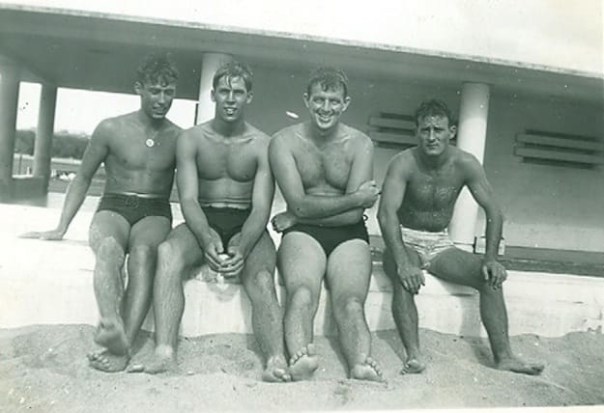
The quest started when, as a 12-year-old Protestant boy from very Congregational Sylvania, I managed to get into one of the states leading Catholic boarding schools – St Gregory’s Agricultural College in Campbelltown. They had filled their Catholic places at the school, and were willing to take Protestants. I lucked in. I have to admit that I loved going to school there, though with most of the boys being from country regions I didn’t make any life-long friends. I learnt to really loathe sport – Marist Brothers and their bloody sports – which I had just disliked up until that time. Also had a fleeting homosexual encounter with another boy…in speedos…in the pool. 

However, it was the Catholic religion that overwhelmed me. It wasn’t just one aspect of Catholicism, it was the whole shebang! The beauty of its rituals; the whole mystery of the mass; the adoration of Mary and the saints; the dogma and theology; and the people who devoted themselves to enacting and teaching these beliefs. As someone who had come from the sparse simplicity of protestant services, it took my breath away. So much so that at the end of my first year there I converted, being baptized in the school chapel with my history teacher, Mr Higgins – who, being a chain-smoker , stank of nicotine – and one of the Year 12 boys, Tim Sheen, as my sponsors. Little did I know that the priest who baptized me was, several years later, to be arrested for molesting his altar boys. My appetite for religion, especially the theological aspects of it, was voracious. In 1969 when I finished my final year one of the brothers asked me if I would like to join the Marist Brothers. Despite the faint inklings of a vocation, the Marist order really wasn’t my cup of tea. While at St Greg’s, I had a personal confessor from a Discalced Carmelite monastery at Minto. Through him I had quite a lot of contact with the monastery, including attending vocational seminars. 

I found the contemplative lifestyle much more to my taste, though decided to wait a few years before making any decisions.
In 1976 I contacted a small enclosed monastic community in Leura called the Community of St Thomas Moore, who followed the Benedictine Rule.
The community lived in this rambling old convent originally owned by the Sisters of Charity. It had the monk’s enclosure at one end of this huge ‘H’ design, the chapel, visitors parlors and Prior’s office at the other end, and a huge retreat section in between. The community supported itself by running retreats. As the youngest novice it was my duty to rise at 5am to set up the chapel for morning Office and Mass. I would then go to the common room in the enclosure to start breakfast and set the tables, as well as turning on the heaters to warm the enclosure. At 5.30 I would circle the enclosure with a bell to raise the rest of the community to prayer. Between prayer and work the day went very fast, with grand silence starting at 9pm and going through until after breakfast the next morning. Despite it being a tough life – and don’t for one minute think that these men are uneducated or unaware of what is going on in the world – I loved it. I loved the strong sense of community, the calmness of quiet contemplation in long silences, and the daily rituals of work and the Divine Office that bind communities like these together. The church regards these communities of enclosed religious as ‘powerhouses of prayer’, and there is little doubting that if you are on the inside. 

A very strong visual image of my time there, and one that has always stayed with me, is of being in the kitchen at 5.30 one morning and looking out the window. The monastery was set on the edge of a valley, and it was an icy cold clear morning. Outside the window was a leafless tree covered in frozen water drops glistening in the sun. Beyond it, a mist was rolling up the sides of the valley. It was one of the most profoundly contemplative moments I have ever had in my life. It was as if I was the only one observing this beautiful scene, as if it had been reserved especially for me for some purpose that was yet to be revealed. I can still see it in my minds eye as I write this. Now that’s impact!

However, one of the ‘problems’ with the large periods of introspection and contemplation that is part of the monastic ideal is that you tend to look deeply into yourself. Fears and hidden truths are often revealed. This can either lead one deeper into the religious nature of their community, or alienate you personally from the community. The realisation I came to, the fear I had, the thing that I was running from was that I was gay. Hiding in a monastery is not a healthy thing to do if you are gay – though heaven knows there are enough caught in this situation. Many stay on through fear of who they are. They think that if they work themselves to the bone, and pray hard it will just go away. It doesn’t! It ends in a life of bitterness, recrimination and self-loathing. Many, like me, decided that to really live life without hypocrisy they had to leave the safety of the enclosure and go back into the world. The decision to enter a religious community is difficult enough on its own. 

The decision to leave is even harder. Driving through the gates to go home was quite devastating for me, knowing that I was leaving all peace and tranquility behind me. I hoped to carry it inside myself, but the hectic, tumultuous real world makes it difficult, if not impossible. Another world awaited me.

I still didn’t come out immediately. My family was quite formidable and I knew I would have to choose my time well. In the meantime, I worked for and eventually became manager of Pellegrini & Co Pty Ltd – not familiar with the name? It was a huge Catholic emporium, supplying not just devotional goods such as statues and rosary beads, but furniture, church plate and vestments to all the local churches – firstly in Sydney, then to Melbourne where I came out. By this time my father was dead, my family alienated. Melbourne was a safe space for me. In the way of enforcing contrasts in my life, after I left Pellegrini in the early 80’s. I became manager of a sex shop in Oxford St called ‘Numbers’. It is often joked about that I gave up ‘praying’ for ‘preying’.

I must say that at this stage my faith was going through a shaky period. The fight for gay recognition, rights and anti-discrimination was in full swing, and the Catholic Church was one of the biggest bugbears to these rights. I joined “Acceptance” Gay Catholics in Melbourne, though not initially to fight the good fight, so much as a way to meet people through the shared common ground of religion. It was through “Acceptance” – I eventually became committee secretary, as well as working on several working groups – that I realised just how discrimination could alienate a group of people. We could only go to Mass in one church in Fitzroy, and then only at a certain time of the evening. The Servite Fathers, who were an independent order and not under the auspices of the local Bishop or Archbishop were the only order who could conduct our First Friday Home Masses. At one mass at my unit in West Brunswich confessions were going to be held in my bedroom. I had all this porn attached to the back of the bedroom door – as you do when young and single – and went to considerable trouble to ensure paper was taped over it to hide it. Evidently during one of the confessions the paper suddenly gave way, and priest and confessor were confronted with all these pictures of naked men. I believe the priest didn’t bat an eye, but I have to wonder if there weren’t additional sins for the guy with him to confess. Over this time I just got angrier and angrier at the hypocrisy of it all. Coming from Protestant roots, I still carried a lot of the simpler theology with me, and often found myself arguing against the stupidity and naivety that had crept into the Catholic religion through the centuries, which we were (are?) still living with, and decrying its inability to move forward and fit into a more contemporary era. It gained me quite a few friends, and earned me a few enemies. I got so frustrated that I dropped religion altogether, and have never really found my way back.

I returned to Sydney on the tide of HIV hysteria, and religion for me became even less relevant. Hearing our dear religious brethren, especially those in politics advocating hunting us down and locking us away in quarantine; the way they flaunted the view that this was God’s retribution against the gay community fuelled my increasing hatred for religion. Despite HIV being something that should have initiated reconciliation between my lost faith, and me it just drove a wedge in.. The soul-destroying slaughter of all my friends, lovers and acquaintances over this time didn’t bring me back to faith. However, it did cause me a revaluation of my need for spirituality of some description. The free-form style of the funerals that were going on over this period made me realise that we all practiced ‘faith’ in many different ways, and that having faith wasn’t the same as being spiritual. You could have one without the other. Religion, to just about everyone I knew, was an alien concept with little tie-in to their lives. However, many were searching for spirituality. One friend in particular surprised me by returning to the rudimentaries of faith just before he died. 

He did make me wonder what I would do if faced with the same situation – would I call on a priest and fall back to my Catholic faith; would I contact someone more in tune with the simplicity of my original faith, such as MCC; or would I just continue to refute it all up to the time I died. It is something I still ponder occasionally. 

In my search for spirituality I tried a return to a more primitive religion in Wicca, but found it unsatisfying. I studied the writings of Aleister Crowley and the Golden Dawn but found it too weird – and scary; the Jewish Kabbalah – real Kabbalah, not Madonna’s version – but found it too deep and complex, and I didn’t feel I had a lifetime to study it in.
So, I guess that in some ways I am still searching. It is not an easy world to find faith or spirituality in. Certain groups in our world have distorted the concepts to such a degree that you wonder what they find in the dry, humourless, destructive force they call religion. Others go on preaching what they don’t practice – and astoundingly never realise the contradiction; intolerance and hatred is rife. The Zen ideal is possibly the closest to pure spirituality that I have found, Buddhism being the one religion that seems to be the reverse of all else that is surrounding us. Like the monastic ideal, you can find peace in contemplation and meditation, something that cuts off the noisy world around us, and causes us to withdraw into ourselves.
Over the years, and before meeting my current partner, I have asked myself what I would do…where I would go…if I found myself old and alone in this world. I thought I would eventually return to a monastery, try to find all that I had lost. There are many who would tell me that faith is easy to find – it is just a pure act of selfless belief, a mere blinkered view to all the external forces that fight against faith; submission to dogma and ritual. I can no longer do that. I question too readily, and demand answers that aren’t esoteric.

So back to “The Abbey”. The five women who have gone into the Abbey to see if they can withstand the rigours of the monastic life are all in need of some form of self-redemption. Despite renunciations and doubts they are all seeking ‘something’. It is easy to see why Sister Hilda is the superior of this monastic community. Full of faith, a sense of humour, immense amounts of understanding and compassion, she is indeed the monastic mother. Just by listening to what these 5 women say, she is, possibly unknown to her, being a counsellor. In five weeks time when these women leave the monastery to go back to their normal lives, they are going to be intrinsically changed – you can see it already. They are going to confront things that they don’t want to confront, and if they allow themselves to just sink into the life of the monastery, to let it surround them and not fight it they are going to come to an understanding of themselves that they never thought possible – and their lives will be forever changed. I know. I’ve been there. Perhaps you can take the boy out of the monastery, but you can’t take the monastery out of the boy!

And as for me…well maybe John Donne and I fight the same demons;
“…I, like an usurpt towne, to’another 

      Labour to’admit you, but Oh, to no end,

      Reason your viceroy in mee, mee should defend,

      But is captiv’d, and proves weake or untrue,

      Yet dearely’I love you,’and would be loved faine,

      But am betroth’d unto your enemie:

      Divorce mee;’untie, or breake that knot againe,

      Take mee to you, imprison mee, for I

      Except you’enthrall mee, never shall be free,

      Nor ever chaste, except you ravish me.”

John Donne; Holy Sonnet XIV
Tim Alderman ©October 2007


Gay History: A Navy Court Martial: First Lieutenant William Berry of HMS “Hazard” – 1807 

Tuesday, 6 October 1807

COURT MARTIAL.
On the 2d instant a Court Martial was held on board the Salvador del Mundo, in Hamoaze, Plymouth, on charges exhibited by Captain Dilkes, of His Majesty’s ship Hazard, atgainst William Berry, First Lieutenant of the said ship, for a breach of the 2d and 29th articles; the former respecting uncleanness, and the latter the horrid and abominable crime which delicacy forbids me to name.

     THOMAS GIBBS, a boy belonging to the ship, proved the offence, as charged to have been committed on the 23d August, 1807. Several other witnesses were called in corroboration, among whom was

     ELIZABETH BOWDEN, a little female, who has been on board the Hazard these eight months; curiosity had prompted her to look through the key hole of the cabin door, and it was thus she became possessed of the evidence which she gave. She appeared in Court dressed in a long jacket and blue trowsers.

The evidence being heard in support of the charges, but the prisoner not being prepared to enter upon his defence, begged time, which the Court readily granted,until ten o’clock on Saturday, at which hour the Court assembled again, and having heard what the prisoner had to offer in his defence, and having maturely and deliberately weighed and considered the same, the Court were of opinion, that the charges had been fully proved, and did adjudge the said William Berry to be hanged at the hard-arm of such one of his Majesty’s ships, and at such time, as the Right Hon. the Commissioner of the Admiralty shall direct. – Sir J. T. Duckworth was the President.
The unfortunate prisoner is above six feet high, remarkably well made, and as fine and handsome a man as is in the British navy. He was to have been married on his return to port.
          (Morning Chronicle; this cutting is in William Beckford’s scrapbook now in the Beinecke Library.)

[Royal correspondence: In The Later Correspondence of George III (Cambridge, 1968; vol. IV, p. 636), we learn that Lord Mulgrave informed George III of the sentence of the court martial and noted that “the full, clear & most disgusting evidence on which the Court has pronounced the awful sentence of death upon Lieutenant Berry leaves no opening for submitting any grounds for the extension of your Majesty’s mercy …” (Admiralty, 6 October 1807). George III replied that he “cannot hesitate in confirming the sentence of death passed on Lieutenant Berry of the Hazard sloop for a crime which, when fully proved, cannot admit of the interposition of the Crown. Consequently the law must take its course.” (Windsor Castle, 7 October 1807)]

Saturday, 10 October 1807
On Friday a Court Martial, at which Sir J. Duckworth presided, was held on board his Majesty’s ship Salvador del Mundo, in Hamoaze, Plymouth, on charges exhibited by Captain Dilkes, of his Majesty’s ship Hazard, against William Berry, First Lieutenant of the said ship, for a breach of the 2d and 29th articles of war; the former respecting uncleanliness, &c. the latter the commission of an unnatural crime with thomas Gibbs, a boy belonging to the Hazard, on the 23d of august, 1807. The evidence being heard in support of the charges, the prisoner not having prepared his defence, begged time, when the Court readily granted, till Saturday at ten o’clock. At that hour the Court assembled again, and having heard what the prisoner had to offer in his defence, and maturely weighed and considered the same, the Court was of opinion the charges had been fully proved, and accordingly adjudged the prisoner to be hanged at the yard arm of such one of his Majesty’s ships, and at such time as the Commissioners of the Admiralty shall direct. One of the witnesses on this awful land horrible trial was the little female tar, Elizabeth Bowden, who has been on board the Hazard these eight months. She appeared in Court in a long jacket and blue trowsers; that part of her evidence which respected the prisoner, curiosity had prompted her to observe through the key-hole of the cabin door. (Jackson’s Oxford Journal, Issue 2841)
Monday, 12 October 1807
COURT MARTIAL. – On Friday a Court Martial, at which Sir J. Duckworth presided was held on board his Majesty’s ship Salvador del Mundo, in Hamoaze, Plymouth, on charges exhibited by Capt. Dilkes, of his Majesty’s ship Hazard, against W. Berry, First Lieutenant of the said ship, for a breach of the 2d and 29th articles of war; the former respecting uncleanliness; &c. the latter for the commission of a crime we do not chuse to mention. The Court having heard what the prisoner had to offer in his defence, and having maturely considered the same, was of the opinion that the charges had been fully proved, and adjudged the prisoner to be hanged at the yard-arm of such one of his Majesty’s ships, as the Commissioners of the Admiralty shall direct. One of the witnesses was a little female Tar, Elizabeth Bowden, who has been on board the Hazard these eight months. She appeared in Court in a long jacket and blue trowsers; that part of her evidence which respected the prisoner, curiosity had prompted her to observe through the key-hole of the cabin-door. (Glasgow Herald)
22 October 1807
EXECUTION OF LIEUTENANT BERRY.
On Monday the sentence of the court-Martial was put in execution on Lieutenant Berry, late First Lieutenant of the Hazard sloop of war. The prisoner, being removed from the Salvador del Mundo, to the Hazard, lying alongside a hulk in Hamoaze, at nine o’clock uppeared, and mounted the scaffold with the greatest fortitude; he then requested to speak with the Rev. Mr. BIRDWOOD, on the scaffold; he said a few words to him, but in so low a tone of voice that he could not be distinctly heard: and on the blue cap being put over his face, the fatal bow-gun was fired, and he was immediately run up to the starboard fore-yard-arm, with a 32lb. shot tied to his legs. Unfortunately the knot had got round under his chin, which caused great convulsions for a quarter of an hour. After being suspended the usual time, he was lowered into his coffin, which was ready to receive him in a boat immediately under, and conveyed to the Royal Hospital, where his friends mean to apply for his body to inter. He was a native of Lancaster, and only 22 years of age. For the last week he seemed very penitent, and perfectly resigned.
A curious circumstance occurred while the prisoner was in the cabin with the Clergyman, receiving the sacrament. A woman came alongside the Hazard’s hulk, and handed a letter up, signed Elizabeth Roberts, addressed to the Commanding Officer, which stated that Lieutenant William Berry could be yet saved, and that the person who could do it was alongside; – it was by marriage. The woman was ordered on board, and put under the care of a sentinel. When the execution was over, Captain DILKES, with the Clergyman and others, questioned the woman: she said she had dreamed a dream last night, that if she went on board the Hazard this day, and that if Lieutenant Berry would marry her, he would not suffer death. On being asked who advsed her, she replied that she told her dream to some women where she lived in Dock, who recommended her to go, in consequence of her dream. She was admonished, and sent on shore.
          (The Times; the “curious circumstance” was also reported in the Aberdeen Journal for 28 October.)

Monday, 26 October 1807

EXECUTION OF LIEUT. BERRY.
PORTSMOUTH, OCT. 19. – This morning, at eight o’clock, the signal for an execution was made on board the Salvador del Mundo, 112, Admiral Young, in Hamaore; and repeated by the Hazard, 18, Capt. Dilkes on board which ship the execution was to take place. About nine a.m. a boat from each ship, manned and armed, attended round the Hazard. Lieut. Berry was then conveyed from the flag-ship, attended by the Provost Martial, in a boat to the Hazard, where he spent some time in prayer, attended by the Chaplain of the flag-ship. He was then conducted along the gangway to a platform erected on the forecastle: the executioner then reeved the rope round his neck, when, declaring he was ready, the fatal bow gun fired, and he was run up to the fore-yard arm. He appeared to struggle for a few moments, by the struggling soon ceased. – After hanging an hour, his remains were lowered into a shell in a boat alongside, and conveyed to the Royal Naval Hospital to be delivered to his friends for interment. – Thus perished, by the hands of the executioner, a young gentleman, in the bloom of life, for a crime not fit to be named among Christians. He was of a respectable family in Lancashire, and his father and uncle are overwhelmed with grief at the unhappy exit from this world of a favourite son and nephew. (Glasgow Herald)

Tuesday, 27 October 1807

[Report of Berry’s execution identical to that of The Times, but with the following addition:]
          For the last week he seemed penitent, firmly collected, and prepared to meet his fate. – Thus perished by the hands of the executioner, a young gentleman in the bloom of life, for a crime not fit to be named amongst Christians. – He was of a very respectable family; his father and uncle are overwhelmed with grief at the unhappy end of a favourite son and nephew. (The Hull Packet and Original Weekly Commercial, Literary and Genderal Advertiser, Issue 1085)


The interesting facts about witness Elizabeth Bowden (John Bowden) in the court martial of William Berty, HMS “Hazard”.

Women At Sea: Witness for the Prosecution

Found at http://www.paulinespiratesandprivateers.blogspot.com

Elizabeth Bowden (or Bowen) seems to have had it rough from the very beginning. Born into obscurity and poverty some time in 1793 in Truro, Cornwall, she seemed destined to a bleak life. Things went from bad to worse when she was orphaned at age twelve or thirteen.

Elizabeth had an older sister who, to the best of the girl’s knowledge, lived in that haven of the Royal Navy: Plymouth. Being nothing if not hardy, Elizabeth walked from Truro to Plymouth with the idea that she would take up residence with her sibling. Unfortunate as usual, Elizabeth could not find her sister. Elizabeth, who in our day and age would be termed a little girl, was penniless, starving and alone. Like so many nameless others of her generation, she turned to the sea.
Dawning a boy’s trousers (and perhaps looking similar to this drawing by Thomas Rowlandson), Elizabeth signed aboard HMS Hazard at Plymouth in the last half of 1806 using the name John Bowden. Deemed fit to serve, she was rated a boy 3rd class and given the usual advance on her pay. Hazard left for sea not long after the new boy was taken aboard. No one seems to have questioned her sex, at least not right away.
Within six weeks something occurred, history is silent as to what, that gave Elizabeth’s gender away. One wonders if her menarche wasn’t the culprit but that is purely speculation. At any rate, rather than being turned ashore at the next port, Captain Charles Dilkes gave Elizabeth a separate sleeping space and made her an assistant to the officers’ stewards. This would have kept her out of the general ship’s population and put her more closely in contact with not only the stewards but the galley crew as well.
With all this, Elizabeth would probably have fallen through the cracks of history as did so many other women at sea. But a well publicized case of sodomy aboard HMS Hazard, and Elizabeth’s insistence that she had witnessed at least one of the incidents in question, brought her briefly into the lime light.
In August of 1807, while the ship was underway, Lieutenant William Berry was accused of regular abuse of a boy named Thomas Gibbs. Berry was twenty-two at the time but Gibbs, a ship’s boy second class, had to have been younger than fourteen as he was not charged at the court-martial. According to the trial records, Gibbs finally got fed up with Berry’s actions and told the gunroom steward, John Hoskins, what was going on. From the young man’s testimony it sounds as if there was physical as well as sexual abuse going on, although Hazard’s surgeon would say that he could “find no marks on the boy” and that Gibbs had only “complained of being sore”.
Hoskins took Gibbs to Captain Dilkes and had him repeat his story. Berry was questioned by the Captain who was evidently inclined to believe the boy. The Lieutenant was arrested and a court-martial was arranged in October, aboard HMS Salvador del Mundo, when Hazard reached Plymouth once again.
I won’t go into the details of the trial, which was presided over by Admiral John Duckworth, as that is not the focus of this post. What is interesting is that Elizabeth Bowden, known to be a girl, felt comfortable enough to step up and offer her story in the case. Even more fascinating is that the Royal Navy court took her testimony, it seems without batting an eye.
Elizabeth claimed to have seen an exchange between Berry and Gibbs by peering through the keyhole of Berry’s cabin. She was asked if she observed Gibbs entering Berry’s cabin frequently and answered yes. When asked “…and what induced you to look through the keyhole?” Elizabeth replied, quite simply, that Gibbs in Berry’s cabin seemed curious, and “…I thought I would see what he was about.” The court recorded this testimony and noted that she was “Elizabeth alias John Bowden (a girl) borne on the Hazard’s books as a Boy of the 3rd class.”
Lieutenant Berry, who called in family and friends to vouch for his good character and even had a girl come along side ship and offer to marry him, was found guilty under the 29th Article of War and hanged from the starboard fore yardarm of Hazard on October 19th.
And that is all we know about fourteen-year-old Elizabeth “John” Bowden. Whether she continued on in navy service, like the intrepid William Brown, found a husband and settled down, or came to what would then have been called a bad end is impossible to say. Her brief story, however, gives us another example of the much debated acceptance of women at sea.

Reference

Tim Alderman (2017)

Gerard Majella Society Sexual Abuse Case

As far back as the late 60s-mid 70s, I had heard rumours about the Gerard Majella Society from members of other religioys orders (themselves not beyond reproach!). The nembers were often referred to as having odd practises, in an order that was, in no uncertain terms, set up and run in an odd, almost surreptitious way. There was talk of odd “dress-up” sessions occuring in the monastery, and of a certain “sleaziness” surrounding the priests who ran things. With all the recent controversy surrounding goings-on in the Vatican, and with the supposed return of Cardinal George Pell – the third highest ranking official in the Vatican – to Australia to face historic sexual abuse charges, it came to my mind to find out what had happened to the Gerard Majella Society. It is, with a shudder, frightening to me that I have been surrounded by sexual abuse amongst Catholic brothers and other clergy for most of my life…though not directly affected personally. My experiences at Marist Brother’s St Gregory’s Agricultural College whereby my Dorm 2 dorm madter – Brother Brian – was mysteriously “transferred” after molesting boys in the dorm; the Rev Father Peter Cominsole – who baptised me at St Gregs – who was Parish Priest at St John the Evangelist church in Campbelltown, and the college chaplain, was jailed on sexual abuse charges; recent research into St Greg’s shows a headmaster charged with sexual abuse, and several others charged bith there, and at St Joseph’s, Hunters Hill; my interaction with the St John of the Cross brothers whilst having a brief stint in a monastery myself, and the outcry when it was revealed that they were sexually abusing mentally incapacitated patients in yheir care. It goes on and on! The Gerard Majella Society has now been disbanded, and the priests in charge sentenced to – in my opinion – very short prison sentences for the amount of distress, and psychological damage that they caused those who suffered the abuse. This is the story of the Gerard Majella Society as exposed by researchers at Broken Rites.

By a Broken Rites researcher

In the 1990s, Broken Rites helped to reveal sexual abuse of young people by Catholic priests in the St Gerard Majella religious order in western Sydney. Two decades later, on 15 September 2016, this religious order was mentioned at a public hearing of Australia’s national child-abuse Royal Commission. This Broken Rites article gives the background of the St Gerard Majella Society.

In the late 1990s the Sydney District Court jailed three priests who comprised the entire leadership of the St Gerard Majella Society. This society, operating in the Parramatta diocese in western Sydney, consisted of a core of three priests who recruited and “trained” a pool of young Brothers. The three priests were convicted for committing sexual offences against the trainees.
FATHER John Sweeney, then 59, head of the order, was sentenced on 18 July 1997 to 2 years 3 months jail (18 months minimum) after a jury found him guilty of three counts of indecent assault against a 19-year-old trainee Brother. Sweeney still faced further charges involving five other young males.
 FATHER Peter Harold Pritchard, then aged 53 (born on 21 May 1944), second-in-charge in the order (and known as Father “Joseph” Pritchard), was sentenced on 29 October 1997 to six years’ jail (four years minimum). Pritchard pleaded guilty to charges of buggery, intent to commit buggery; and indecent assault involving seven trainee Brothers and another young male, all aged 16 to 21, over a 19-year period.
 FATHER Stephen Joseph Robinson, the order’s novice master and “spiritual” director, was sentenced on 27 March 1998 to a minimum of 18 months’ jail after two juries convicted him for acts of indecency on two trainees. At the time of his sentencing, he was aged 51 (born in 1946).

The victims in these court cases were not the only victims, just those located by police. The sexual abuse continued for decades, right under the noses of the diocesan authorities, but the church ignored it and the victims had nowhere to go.

In sentencing, the judges said the three priests took advantage of the trainees’ naively and their vow of obedience. The trainees lived an “almost a child-like existence” in the order.
Pritchard, for example, silenced his victims by saying “nobody would believe” that Catholic priests would commit such acts.
The background
The St Gerard Majella Society was formed by Sweeney in 1958 to conduct religious classes for Catholic students in state high schools. It had the blessing of Cardinal Gilroy, the then archbishop of Sydney. Sweeney recruited like-minded men as Brothers, some being upgraded to priests. Members wore conservative neck-to-ankle clerical cassocks. It is believed that, in the 1990s, the St Gerard Majella Society comprised about eight priests, including the three who were convicted.

The Society administered the Catholic parish church at Greystanes (near Parramatta), of which Sweeney was the parish priest, and also the nearby Newman Catholic High School, where Pritchard was the principal.
The order had several monasteries where it conducted camps and retreats for secondary school students and for young military personnel, such as naval apprentices. It trained novice Brothers (some beginning as young as 16), who were bound by rules of obedience to the priests in charge.
Parents, students and parishioners complained about the St Gerard priests but nothing was done. However, the cover-up began to crumble in April 1993 when Father Pritchard pleaded guilty in Liverpool Court to indecent assault of a young naval apprentice who was in his care. Pritchard was placed on a $2,000 good behaviour bond. Although it did not attract media attention, this case prompted other St Gerard victims to think about redress.
In December 1993, after Broken Rites was mentioned in the media, Broken Rites began receiving calls from several ex-Brothers. Each caller described the St Gerard Society’s systematic sexual abuse. The callers alleged that this order was virtually a paedophile organisation, running a male harem.
The ex-Brothers also gave Broken Rites several confidential memoranda written by Bishop Bede Heather, of the Parramatta diocese, indicating that the church was going into damage control. One memo, in May 1993, said Heather had asked two Sydney priests, Rodger Austin and Peter Blayney, to gather written statements from St Gerard Society victims about the abuse. After this process, a second memo in September 1993 said Heather was suspending Sweeney, Pritchard and Robinson from priestly duties.
However, the laity were not told the truth. For example, the Greystanes parish newsletter merely announced that Father Sweeney “has elected to resign” as parish priest to have “a necessary time of renewal”.
Broken Rites advised the ex-Brothers to give statements to the NSW Police child protection unit, which they did during 1994. Detectives then located further victims.
The chief burglar
While this police investigation was proceeding, another cover-up in the Parramatta diocese became exposed. Broken Rites learned that one of the diocese’s most prominent priests, Father Richard Cattell, then 54, pleaded guilty on 19 August 1994 to five counts of indecently assaulting a 14-year-old boy. The boy had gone to Cattell (as a parish priest) in 1973-6 after being molested by a teacher.

In 1991 Bishop Heather appointed Cattell as his vicar-general to administer the 48 parishes of the Parramatta diocese (including Greystanes, where the St Gerard Society had its headquarters).
Therefore, anyone who wanted to complain about sexual abuse in the St Gerard Brothers in the early 1990s would have gone through a vicar-general who was himself a paedophile.
To report sexual crimes to the paedophile vicar-general Cattell was like reporting burglaries to a burglar. How many sex-abuse complaints were received by Cattell? And where, are the files?
[This is why Broken Rites recommends that victims should first report a church-abuse offence to the police child-protection unit, not merely to a church official. The church official is a colleague of the offender and may himself be an offender.]
Police raid
Broken Rites alerted the media to attend Cattell’s sentencing on 9 December 1994, when he was jailed for two years. Heather later wrote a letter to Cattell’s parishioners, supporting Cattell.

“He [Cattell] continues to be our brother priest,” Heather wrote.
St Gerard Society victims informed Broken Rites that four days later, on 13 December 1994, detectives asked Heather to hand over documents (including the Austin/Blayney report) relating to the St Gerard sex-abuse complaints but Heather allegedly refused. The detectives therefore returned with search warrants for both Heather’s office and the Sydney Archdiocese offices and seized the missing documents, including many written complaints that had not been forwarded to the police
Three days later, on 16 December 1994, Heather quietly announced that he was disbanding the St Gerard Society. The church evidently hoped that there would be no organisation left for the police to investigate but Broken Rites tipped off the media, and therefore in late December 1994 the Sydney and Parramatta newspapers began revealing the St Gerard scandal. Broken Rites then received more calls from informants.
The church promptly began disposing of the St Gerard Society’s property, believed to be worth millions of dollars. This was a big windfall for the church coffers.
The disposal would make it difficult for victims to tackle the St Gerard Society for damages. Innocent Brothers who had spent their teens and perhaps their twenties in the St Gerard order now had no job and no qualifications for a new one.
On 19 December 1994, Heather wrote to his clergy about the Cattell and St Gerard matters. He gave Cattell’s prison address, with suggestions for those priests “intending to visit”. He also indicated his depressed mood about all the scandals, saying that “priestly ministry has suffered a severe setback in the eyes of many people.” (That is, it was unfortunate that the scandals had become public.)
Sweeney, Pritchard and Robinson were arrested in early 1995 and their court appearances spanned three years. A week before the sentencing of Sweeney, Bishop Heather suddenly took early retirement (this could be interpreted as an attempt by the church to continue its traditional cover-up).
Several priests from the St Gerard Majella religious order, who had not been charged by police for sexual offences, were absorbed into the Parramatta diocese or other dioceses. And in 1999, Newman College Greystanes (formerly administered by the St Gerard Majella Brothers) changed its name to St Paul’s Catholic College Greystanes.
Thus, the St Gerard Majella religious order is gone — but not forgotten.
This article, based on Broken Rites research, is the most comprehensive article available about the St Gerard Majella case. Broken Rites conferred with some journalists, who wrote articles in the following newspapers: Sydney Daily Telegraph 19-7-1997, 13-11-1997, Sydney Morning Herald 13-11-1997, 3-3-1998, 4-3-1998, 28-3-1998; The Australian, 23-12-1994, p13, Sydney Sun-Herald 16-11-1997, p56.
Postscript, February 2012
In early 2012, according to several websites, Stephen Robinson is still associated with certain religious groups in Sydney (these groups are not in communion with the Vatican). For example:

 A congregation known as the “Metropolitan Community Church Good Shepherd”, at Granville, in Sydney’s western suburbs, stated that one of its contact persons is “Stephen Robinson, BTh, MA, DipTG, DCH Dip. Reflexology, cert. massage.” (This western-suburbs group is not to be confused with another Metropolitan Community Church congregation, located in inner Sydney.)

 Stephen Robinson has also had some connection with a body called Ecumenical Catholic Ministries. The National Library of Australia has a publication, by “Stephen Robinson, born 1946”, entitled The New Jerusalem Liturgy, which was produced in association with Ecumenical Catholic Ministries.

Apart from church matters, Stephen Robinson is also pursuing other interests. A website in February 2012 referred to Stephen Robinson in Sydney who is “currently in private practice as a body therapist and personal growth consultant”. And another website in February 2012 referred to Stephen Robinson running courses at the “College of Complementary Medicine” in Sydney — and his qualifications are said to include a Bachelor of Theology degree and a Diploma in Remedial Massage.

Postscript, April 2012
Stephen Robinson has been mentioned on the website of St Bernadette’s Catholic parish, Lalor Park (in the Parramatta diocese, western Sydney).

The website has stated on its “Parish History” page:

“In 2006, the Parish celebrated the 25th Anniversary of the building and dedication of their second church. The celebrations started on Friday 15th September 2006 with a Jubilee Mass for St Bernadette’s Parish School …

“New Hymn to St Bernadette and a new music Mass setting, dedicated to St Bernadette were composed by Stephen Robinson for the 25th Anniversary…

“Fr Andrew Robinson [the parish priest at St Bernadette’s] celebrated his 60th Birthday with his twin brother Stephen. The parishioners presented Father with a gift at the 10.00am Sunday Mass. After Mass the community shared a cuppa and birthday cake outside the Church to celebrate…”
“In 2008, icons of the Archangels Michael and Gabriel were painted by Stephen Robinson for the Sanctuary of the Church.”
On 13 March 2011, the St Bernadette’s parish bulletin stated:
“Our thanks are due to many people who assisted in making our Jubilee celebrations last weekend a special time at St Bernadette’s.
“…The Parish Ministry – singers, musicians who worked so passionately to learn the program of Sacred music, under the musical direction of Stephen Robinson… Thank you Stephen for composing all the hymns and Mass in honour of the Immaculate Conception for our Jubilee Year…” 

Addendum

http://www.smh.com.au/nsw/bishop-bede-heather-destroyed-documents-royal-commission-20160914-grgnxc.html
SEPTEMBER 15 2016

LICENSE ARTICLE

Bishop Bede Heather ‘destroyed’ documents: Royal Commission 

By Rachel Browne 
The former Catholic Bishop of Parramatta Bede Heather has told a royal commission he destroyed documents relating to potential legal action against a paedophile priest.

Bishop Heather told the public inquiry he destroyed documents because he was traumatised by a police search of his office as part of an earlier investigation into sexual abuse by clergy.

John Joseph Farrell (left) during a previous hearing. Photo: Barry Smith

The Royal Commission into Institutional Responses to Child Sexual Abuse heard Bishop Heather advised his lawyers Makinson & D’Apice of his actions in a 1996 letter.

“Following the police raid on our offices, shortly afterwards I took the precaution of destroying all papers of mine which could have been to the disadvantage of persons with whom I deal,” he wrote in the letter which was partly read out before the commission.

Bishop Bede Heather in 1996 Photo: Steven Siewe

“You’ve destroyed documents that might say something which could be adverse to an individual?,” commission chairman Peter McClellan asked.

“Yes,” Bishop Heather responded.

Justice McClellan: “That would include potential criminal offences?”
Bishop Heather: “It could, yes.”
The commission heard Bishop Heather destroyed material relating to a western Sydney priest who was first jailed for child sexual offences in 1994 even though he was aware there were potential further civil claims against the man.
Bishop Heather told the inquiry he became anxious about confidentiality following a police search of his office as part of a separate investigation into a local religious order, St Gerard Majella Society, which was part of the Parramatta Diocese.
“From that point onwards I became a bit cautious about what I kept on file,” he said.
“I was traumatised by the event . . . and suffered stress disorder as a result.”
Three brothers from the now defunct St Gerard Majella Society – Joseph Pritchard, John Sweeney and Stephen Robinson – were convicted of sexual offences, the commission heard.
Bishop Heather told the inquiry he did not report allegations about the brothers to the police when he first became aware of them.
“No I didn’t see that as my obligation,” he said. “I suppose I was principally concerned about the impact on the community, the church (and) the community of brothers.”
The fourth day of the hearing into how the Catholic Church responded to allegations about jailed paedophile priest John Joseph Farrell heard Bishop Heather accepted him into the Parramatta Diocese in 1990 because he wanted to “give him a fair go” despite knowing of child sexual abuse claims against him.
Bishop Heather told the commission he suspended Farrell in 1992 after learning he had behaved inappropriately with altar boys, checked to see if a school girl was wearing a bra and made a lewd comment to a teacher.
The commission heard Farrell returned to the Diocese of Armidale where he continued to work with children until at least 2000.
Former Bishop of Armidale, Luc Matthys, told the commission he did not believe people who had suffered abuse by clergy should get compensation from the Catholic Church.
The commission heard Bishop Matthys started the process of laicising Farrell on advice he posed an unacceptable risk to children.
Farrell was was sentenced to a minimum jail term of 18 years in May after being convicted of a string of child sex offences.
The hearing will resume on September 19.
Lifeline 13 11 14

Reference

Broken Rites Australia http://brokenrites.org.au/drupal/node/12

Further Reading

Barry M Coldrey: Religious life Without Integrity – The Sexual Abuse Crisis In the Catholic Church http://www.bishop-accountability.org/reports/2000_Coldrey_Integrity/integrity_23.htm

Child Sex Abuse In Australia Royal Commission http://www.tastessightssounds.com/2015/06/child-sexual-abuse-in-australia-royal.html

Photo Essay: Men In Photo Booths

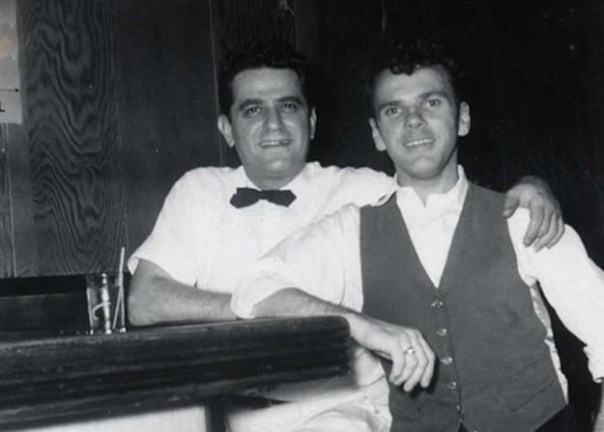
I love these photo’s, taken in photo booths where space is limited, so you move in close. It captures a side of men not often seen – soft, vulnerable, loving, touching. There are no judgements or assumptions on these mens relationships to each other – some are obvious, others could be lovers, partners, brothers or close friends. Whatever they are to each other, they are beautiful.

The Fake News BEFORE Fake News! The Fascinating Story of Stephen Glass.

Anyone who has seen the movie “Shattered Glass”, will be familiar with the story of disgraced “The New Republic” editor & journalist, Steohen Glass. The fascination, at least for me as a blogger isn’t that he faked many of his articles, but that he got away with it for so long! And in so many articles! We now live in a mad media world of “fake news” and “alternate facts”, where false reporting, inaccuracies, assumptions, and outright lies are part of the journalistic jungle we must hack our way through daily. But even in an era renowned for it’s fakeness and excesses, Glass was an anomaly! The shame of it is…he has a great sense of humour; comes up with clever titles for his pieces; and he’s obviously got a great creative imagination…but used in the wrong way! There is a huge divide between reportage – especially when you are being paid to report accurately on events – and short story writing…something Stephen found out the hard way!

Stephen Randall Glass was born in 1972, to a Jewish family in the Chicago suburb of Highland Park. As early as 1990, Glass was already proficient at the art of orchestration & fabrication! In 1990, as a high-school senior in the North Shore Chicago suburb of Highland Park, Stephen Glass—a theater-lover—had served as a technical director of Stunts, a group of talented students who produced their own work. (One production involved a Washington journalist caught up in a web of conspiracy and corruption.) The yearbook pictured Glass, directing the movements of the cast through a headset. “Stephen Glass,” read the caption, “peruses the script, ready to call the scenes, sets, and props.” Not that many years later, Glass would present other elaborate orchestrations of made-up scenes and characters, this time passing them off as journalism! (6). He attended the University of Pennsylvania from 1990-1994. His tenure as executive-editor of the universities student newspaper The DailyPennsylvanian wasn’t without its dramas! In one incident, an entire issue of the newspaper was stolen by the student body who objected to the commentsry & coverage by it’s columnists. According to Samuel Hugges in “Through a Glass Darkly” this storm in a teacup was no  ore than that Glass  hadn’t publicly praised his own staff, the scores of students who worked under him, “laboring to all hours in the night in their idealistic quest for truth, justice, and the American way.” (1). Then there was the ‘infamous’ water buffalo incident, a controversy at the in 1993, in which Jewish student Eden Jacobowitz was charged with violating the university’s racial harassment policy. The incident received widespread publicity as part of the increasing trend of political correctness in the United States in the 1990s. (2). Glass graduated from Penn in 1994, and then joined “The New Republic” in 1995 as an editorial assistant. Progressing to features writing, the 23-year-old, though employed full-time by TNR, also wrote for other magazines, including “Policy Review”, “George”, “Rolling Stone”, and “Harpers”. He also contributed to Public Radio International’s weekly hour-long program This American Life, hosted by Ira Glass (no relation to Stephen).

So what happened? What could have transformed the likeable, talented, high-minded young editor who was constantly asking people “Are you mad at me?” into a spinner of mendacious and increasingly whacked-out yarns about churches whose members believed that George Bush was the reincarnation of Christ and shopping-mall Santas whose fear of child-molestation suits led to a Union of Concerned Santas and Easter Bunnies? Not to mention less amusing brands of plagiarism and invention, one of which prompted George editor John F. Kennedy, Jr., to send a letter to Vernon Jordan, apologizing for a Glass-spun quote about Jordan’s sexual preferences. (1).

Despite being highly liked by staff at TNR, there were increasing rebuttals of his quotes, facts and events from the subjects of his articles. This lead to an eroding of his credibility, and a scepticism about his reportage from the nagazines insiders. 

In December 1996, the Center for Science in the Public Interest (CSPI) was the target of a hostile article by Glass called “Hazardous to Your Mental Health” (article not available online). CSPI wrote a letter to the editor and issued a press release pointing out numerous inaccuracies and distortions, and even hinted at possible plagiarism. The organization Drug Abuse Resistance Education (D.A.R.E.) accused Glass of falsehoods in his March 1997 article “Don’t You D.A.R.E.” (4).

In May 1997, Joe Galli of the College Republican National Committee wrote a letter to the editor accusing Glass of fabrications in “Spring Breakdown” (5), his lurid tale of drinking and debauchery at the 1997 Conservative Political Action Conference. A June 1997 article called “Peddling Poppy” (article not available online), about a Hofstra University conference on George H. W. Bush drew a letter to the editor from Hofstra reciting Glass’s errors. The New Republic, however, stood by and defended him. Editor Michael Kelly wrote an angry letter to CSPI calling them liars and demanding the organization apologize to Glass. (3).
When Glass was finally caught in May 1998, he had risen to become an associate editor at The New Republic. The story that triggered his downfall was “Hack Heaven,” (7), which appeared in the issue dated May 18, 1998. It concerned a supposed 15-year-old hacker who intruded into the computer network of a company called “Jukt Micronics,” which allegedly then hired the teen as an information security consultant.

As with several of Glass’s previous stories, “Hack Heaven” depicted events that were almost cinematically vivid and told in present tense, implying that Glass was there as the action took place. The article opened as follows:
“Ian Restil, a 15-year-old computer hacker who looks like an even more adolescent version of Bill Gates, is throwing a tantrum. “I want more money. I want a Miata. I want a trip to Disney World. I want X-Men comic [book] number one. I want a lifetime subscription to Playboy—and throw in Penthouse. Show me the money! Show me the money! …” Across the table, executives from a California software firm called Jukt Micronics are listening and trying ever so delicately to oblige. “Excuse me, sir,” one of the suits says tentatively to the pimply teenager. “Excuse me. Pardon me for interrupting you, sir. We can arrange more money for you.””

Fake Jukt Micronics website concocted by Glass
Upon the publication of “Hack Heaven,” Adam Penenberg, a reporter with Forbes magazine’s digital division, undertook the task of verifying it, initially to find out how The New Republic had managed to scoop Forbes. Penenberg immediately became suspicious when he was unable to find a single search engine result for “Jukt Micronics.” Further contact with several government agencies solidified his suspicions that Glass had fabricated the entire story. More suspicious was the fact that “Jukt Micronics” only had one phone line, and its website turned out to be an amateur AOL webpage, which seemed very odd for a supposedly big-time software company!
When Penenberg and Forbes confronted The New Republic, Glass claimed to have been duped by Restil. Lane had Glass travel with him to Bethesda, Maryland, to visit the Hyatt hotel where Restil had supposedly met with the Jukt Micronics executives and the room where the conference had supposedly been held. Despite Glass’s assurances, Lane discovered that on the day of the alleged meeting the conference room had been close. Afterwards, Lane dialed a Palo Alto number for Jukt Micronics provided by Glass and eventually had a phone conversation with a man who identified himself as George Sims, a Jukt executive. This was the first piece of evidence substantiating Glass’s article. However, Lane learned from a passing remark by another of his editors that Glass had a brother at Stanford University, located adjacent to Palo Alto. Realizing that Glass’s brother was posing as Sims, Lane immediately fired Glass.
Lane offered this explanation for the scandal:
“We extended normal human trust to someone who basically lacked a conscience… We busy, friendly folks, were no match for such a willful deceiver… We thought Glass was interested in our personal lives, or our struggles with work, and we thought it was because he cared. Actually, it was all about sizing us up and searching for vulnerabilities. What we saw as concern was actually contempt.”
— Charles Lane (8)
The New Republic subsequently determined that at least 27 of the 41 articles Glass wrote for the magazine contained fabricated material. Some of the 27, such as “Don’t You D.A.R.E.”, contained real reporting interwoven with fabricated quotations and incidents, while others, including “Hack Heaven”, were completely made up. In the process of creating the “Hack Heaven” article, Glass had gone to especially elaborate lengths to thwart the discovery of his deception by TNR’s fact checkers: creating a shell website, and voice mail account for Jukt Micronics; fabricating notes of story gathering, having fake business cards printed; and even composing editions of a fake computer hacker community newsletter.

Stephen Glass is still retracting his fabricated stories — 18 years later

As for the balance of the 41 stories, Lane, in an interview given for the 2005 DVD edition of Shattered Glass, said, “In fact, I’d bet lots of the stuff in those other 14 is fake too. … It’s not like we’re vouching for those 14, that they’re true. They’re probably not either.” Rolling Stone, George, and Harper’s also re-examined his contributions. Rolling Stone and Harper’s found the material generally accurate yet maintained they had no way of verifying information because Glass had cited anonymous sources. George discovered that at least three of the stories Glass wrote for it contained fabrications. Specifically, Glass fabricated quotations in a profile piece and apologized to the article’s subject, Vernon Jordan, an adviser to then-President Bill Clinton. A court filing for Glass’s application to the California bar gave an updated count on his journalism career: 36 of his stories at The New Republic were said to be fabricated in part or in whole, along with three articles for George, two articles for Rolling Stone, and one for Policy Review.

After journalism, Glass earned a law degree, at Georgetown University Law Center. He then passed the New York State bar examination in 2000, but the Committee of Bar Examiners refused to certify him on its moral fitness test, citing ethics concerns related to his plagiarism. He later abandoned his efforts to be admitted to the bar in New York.

In 2003, Glass published a so-called “biographical novel”, The Fabulist. Glass sat for an interview with the weekly news program 60 Minutes timed to coincide with the release of his book. The New Republic’s literary editor, Leon Wieseltier, complained, “The creep is doing it again. Even when it comes to reckoning with his own sins, he is still incapable of nonfiction. The careerism of his repentance is repulsively consistent with the careerism of his crimes.”[23] One reviewer of The Fabulist commented, “The irony—we must have irony in a tale this tawdry—is that Mr. Glass is abundantly talented. He’s funny and fluent and daring. In a parallel universe, I could imagine him becoming a perfectly respectable novelist—a prize-winner, perhaps, with a bit of luck.”
Also in 2003, Glass briefly returned to journalism, writing an article about Canadian marijuana laws for Rolling Stone. On November 7, 2003, Glass participated in a panel discussion on journalistic ethics at George Washington University, along with the editor who had hired him at The New Republic, Andrew Sullivan, who accused Glass of being a “serial liar” who was using “contrition as a career move.

“It was very painful for me. It was like being on a guided tour of the moments of my life I am most ashamed of.” Stephen’s reaction to the release of “Shattered Glass”

The feature film about the scandal, Shattered Glass, was released in October 2003 and depicted a stylized view of Glass’s rise and fall at The New Republic. It was directed by Billy Ray, and starred Hayden Christensen as Glass, Peter Sarsgaard as Charles Lane, and Hank Azaria as Michael Kelly. The film, appearing shortly after The New York Times suffered a similar plagiarism scandal with the discovery of Jayson Blair’s fabrications, occasioned critiques of the journalism industry itself by nationally prominent journalists such as Frank Rich and Mark Bowden.
Glass was out of the public eye for several years following the release of his novel and Ray’s film. In 2007, he was performing with a Los Angeles comedy troupe known as Un-Cabaret, and Ray told Vanity Fair that Glass was employed at a law firm, apparently as a paralegal.
In 2015, Glass again made the news after reportedly sending Harper’s Magazine a check for $10,000 – what he was paid for the false articles – writing in the attached letter that he wanted “to make right that part of my many transgressions…I recognize that repaying Harper’s will not remedy my wrongdoing, make us even, or undo what I did wrong. That said, I did not deserve the money that Harper’s paid me and it should be returned.”

References:

  1. http://www.upenn.edu/gazette/1198/hughes.html
  2. https://en.m.wikipedia.org/wiki/Water_buffalo_incident
  3. https://en.m.wikipedia.org/wiki/Stephen_Glass
  4. http://www.marijuanalibrary.org/NR_DARE_030397.html
  5. http://wp.lps.org/akabour/files/2013/12/Spring-Breakdown-Stephen-Glass.pdf
  6. http://www.vanityfair.com/magazine/1998/09/bissinger199809
  7. http://wp.lps.org/akabour/files/2013/12/Hack-Heaven-Stephen-Glass.pdf
  8. http://www.npr.org/templates/story/story.php?storyId=1509330

Further Reading

    Stephen Glass’ New Republic fraud still haunts his law career

    Tim Alderman (2017)

    An Eye For An Eye – Life After Cytomegalovirus Retinitis (CMV Retinitis).

    This article, recently resurrected, was originally written in 2012, as I sat in the loungeroom at Ashgrove (Brisbane) after a panic attack drove me from my bed at 5am. I have revised & reedited the piece to cover the period between then and now. The original was published in “Talkabout” in 2012.


    I shouldn’t actually be alive! And if it had been any time other than when it was – 1996 – that would have been the outcome. However, timing and medicine are everything, or so it seemed in that period of huge leaps in HIV care and treatment. As a 42-year-old HIV+ gay man who was admitted to Prince Henry Hospital (now closed) at La Perouse in Sydney, weighing in at 48kg, with chronic CMV retinitis, chronic anemia, chronic candida and 10 CD4’s I guess you could say I wasn’t well, and the truth be known my thoughts were more attuned to the after-life than being given a future. So, blood transfusions happened, heavy dosing of drugs happened (curtesy of my current regimen) and gancyclovir injections into the eyes happened – but perhaps most importantl…the new protease inhibitors happened and in combination with my other drugs created miracles. My severely depleted CD4 count did a small, slow rise, and my 100,000 viral load slowlt dropped to 10,000. Though still very weak and sick, I walked out of Prince Henry a couple of weeks later, then spent the next 18 months getting my health – physical & mental – back on track.

    At this stage I could crap on endlessly about all the strategies that I used, the anabolic steroid therapy to treat Wasting Syndrome, the fears and uncertainties, the sheer strength of will needed to reconnect with life, not to mention the huge mental shift that drove my life off into uncharted territory and resulted in the man I am today. Blah, blah, blah!So instead of boring you with all that, I want to concentrate on the one aspect of all this that is still impacting my life today – the CMV retinitis.

    Say CMV to most people these days and you will just get a blank look. It is an insidious disease, and one that was greatly feared in the era of rampaging AIDS infections. It is a virus that pretty well everyone has present in their body, but is usually only activated in immune-suppressed people. In its retinitis form it attacks the retina, and can spread to the macula by slowly destroying the cells. It is painless, though can be evidenced by a greying of vision and the appearance of floaters. If untreated it will eventually lead to blindness. By the time it was detected in my eyes a lot of damage had already been done, and I was aggressively treated with intraocular injections of gancyclovir…yes, that does mean injections directly into the eye. What fun! At the time this was going on, they were looking for guinea pigs to trial gancyclovir implants – called Vitrasert implants – in each eye. I volunteered, had two operations to insert them, then found that the 4% chance of developing cataracts turned out to be 100%, so back for another two operations to remove them, and replace the lenses, plus some laser work. The end result of all these operations and expectations for me was that they hadn’t caught it in time in the left eye, and despite a tiny sliver of vision I was effectively blind in that eye. Despite a lot of scar tissue, the majority of sight was saved in the right eye at that time.

    It takes ages to adapt to changed vision, especially when one eye is effectively blind, so over the next 12 months I became accustomed to having accidents, including several falls thanks to tree roots bulging through pavements and bus seats that were just out of sight range. It gets to a point where you no longer get embarrassed. Both eyes appeared to stabilise, I adjusted to the changed vision and in some respects life went on. Apart from the falling over, other negative issues included an avoidance of crowds and busy places, and 3-D cinema was a total waste of time. You do adapt strategies, but it is not yourself that you need to worry about, but other people. There have been a number of occasions where I thought a tee-shirt emblazoned with the words “Vision-Impaired Person” would have been handy.

    Vitrasert Implant (https://www.retinalphysician.com/issues/2014/september-2014/coding-q-amp;a)
    It was 2008 before I had any further problems, and that was with my blind eye. It developed what I thought was a grain-of-sand-in-the-eye irritation, so off to the ophthalmologist at RPA hospital, who then passed me onto the Sydney Eye Hospital. When specialists start passing you on to other baffled looking specialists you know you have a problem! Evidently the blind eye didn’t realise it was blind, and decided to start creating a new system of blood supply to the eye, which in turn was in the wrong places as well as increasing the pressure in the eye. There was a new injectable drug around called Avastin which cuts off the blood supply to cancer tumours, and it was decided to inject this into the eye to stop the new blood system developing. So, off for another intraocular injection. It did the job, but I was also told that the interior of the eye was collapsing, and that in time it would change colour. Oh joy of joys. Over the next 18 months it changed from a normal looking eye that just had no vision to this oddly coloured eye which made many people think I had two different coloured eyes (a genetic variance). And this is how it still looked until 2014.

    However, this is good old HIV we are dealing with here, and it doesn’t like being ignored. Just as you think the worst of your problems are over it throws another bit of shit at you. I had been told previously that with the amount of scar tissue present in my good eye that there was a real chance of the retina detaching. So, shortly after moving to Brisbane, when the good eye started swapping between clear and blurred vision and finally settling on blurred, I knew something was wrong. A visit to A&E (on ANZAC day 2012) resulted in no clear result, so off to the RBH Eye Clinic the following day. The retina was off, and floating around, and there was a scare, with them thinking the CMV had reactivated…hard to believe seeing as I wasn’t immune suppressed, had a high CD4 count and an undetectable viral load – and another scare when they realised that I had highly toxic implants in my eyes (though long inactive, as they discovered). Instead of collecting some eye drops and toddling back home as I expected, I was put straight into a ward, and within 24 hours was in the operating theatre. A bad recovery room experience with an Asian Nurse Ratchet, whereby they weren’t informed that I was blind in my left eye, and leaving me to come-to in total blackness, occasioning a major panic attack is something I could have done without. The ongoing problems of anxiety and panic attacks (and this article being written at 5am) is something I am slowly getting over thanks to counselling and a letter to RBH formally requesting they look at the procedures and communication in the recovery room. My vision is now officially classified as blind. Glasses help a bit, but it is now a matter of me adapting to a low-vision life and devising some new strategies to deal with it. I can still read, though the font is huge, obviously I can still write though currently using huge fonts to do it. In 2013 I attended Southbank Institute of Technology to do the Certificate III in Fitness. I am not only the first 59yo to do the Certificate…I am the first severely vision-impaired person to do it. Threw TAFE into a panic, as they had to develop strategies to deal with me, and make sure tutors were on-board and up to speed. As much as I loved the experience, and the youngsters around me were absolutely wonderful, I came to realise that I was way too slow at moving around a gym to be a PT, so went no further. Atthe same time, I had done white cane training, and though finding the canes handy in certain circumstances – like whacking my way through the city – it is, as a general rule, more a hindrance than a help. However, it is great for getting seats on public transport!

    In early 2015, after ongoing problems with my blind eye, and not wanting to go on infinitum with drops, I opted to have my blind eye removed. Unlike the old days, they now put an artificial ball into the socket, and attach the muscles to it, so it moves like a real eye. I had a prosthetic fitted, and to date no one has detected that it’s artificial.
    However, my vision in general is now very severely impaired. Every trip outside my front door is a potential suicide mission – not to nention ducking and weaving around two Jack Russell Terriers at home…but I still challenge the risks, and get out and about under my own steam as often as possible. If anyone wants to date me…I’m a high maintenance date these days. Being night blind, I need to be guided around, and I move very slowly and cautiously. However, it has been pointed out to me that I can still spot a hot butt from some distance away! Some Gay traits over-ride everything!

    As for the future… who knows. I am trying to develop the “living in the moment” way of my dogs by just taking each day as it comes. I have had a lot of help and support, and despite whatever may happen that will always be there.


    As they say, there are none so blind as those who will not see! I still walk my dogs every morning, I still read & write, still do my genealogy and my DJ mixes, go to gym, do the shopping, get around to local restaurants and cafes so I can’t complain. Life should always be an empowering experience, and the best way to achieve that is to own your disabilities – instead of letting both HIV and disabilities rule your life…YOU rule your HIV and disabilities! That is the road to freedom!


    Tim Alderman.

    Copyright 2012 © (Revised 2017)

    A Brief (Personal) Memoir of HIV & AIDS

    I discovered this older article recently while rummaging through my article archives. I present it here with some edits and newspaper inclusions. HIV & AIDS (note the separation of the two) has an intricate, but morbidly fascinating, national & international history. I watched “The Normal Heart” again only a couple of days ago, and the hospital scene where Felix is in the hospital ward with the meal sitting outside the door of his KS infected friend, and being told not to go in without contagion gear raised a whole plethora of unpleasant memories with me. To understand where HIV is now, you need to understand where it was! 


    I can’t believe it has been about thirty seven years since we first started hearing about HIV/AIDS. I find it even harder to believe that I have been infected for thirty five years. Over half my life has been lived with this virus! In personal retrospection, I could say that compared to the bad, bad old days of 1981, life is a bed of roses today. But then I am aware that quite a lot of people would still not share that sentiment, so out of respect to them, I will avoid such romanticism.


    I was living in Melbourne at that time, and I believe that HIV/AIDS got its first mention in the gay press a little earlier than 1981, though I could be wrong. There were only snippets, overseas briefs if you like, of a strange STD that seemed to be selectively attacking the San Francisco gay community, or more specifically, those members of that community who frequented the baths and back rooms of the famous city. I know that no one here was particularly concerned. We thought it was just another of ‘those American things’, or just a mutated form of the clap. Nothing that a pill wouldn’t fix! By the time I returned to Sydney in 1982, we had started to think quite differently. Some of us were getting very scared!

    The media began drowning us in information, mainly from the United States. There was the dramatic scenario of ‘Patient 0’, from whom it was assumed the whole epidemic had spread like an out of control monster. The USA and France argued over who had discovered the virus, and made the link between HIV infection and AIDS (watch “Dallas Buyers Club” for an inkling of what this was all about!). A debate raged as scientists tried to decide what to call it and which acronym to use. We had GRID (Gay Related Immune Disease) and HTLV 1 & 2 (Human Transmitted Lymphoma Virus – if memory serves me well). They eventually settled on HIV for initial viral infection, and AIDS for any subsequent illnesses that resulted from the breakdown of the immune system. The original Center for Disease Control (CDC) classification system for the various stages of HIV and AIDS progression was so complicated that you really needed a university degree to be able to decipher them. To make things more manageable they finally settled on four classifications.

    Then came ARCs (AIDS Related Conditions) but that was considered politically incorrect, so we settled on OIs (Opportunistic Infections).

    The argument over names and classifications wasn’t half as frightening as the reality of the disease itself, which started to hit home in 1985. Official testing began in that year, and is still the earliest date that medicos will accept as a point of diagnosis with HIV. Any date earlier than that is declared to be a ‘self-report’. Like many others, I assumed I was HIV+ long before testing started. Virgin and chaste were not words to be found in my life resume. Sydney’s Albion Street Centre was the first here to begin testing, and it was done very discreetly and anonymously. We all used an assumed first name, and were issued with a number to identify who we were. (In 1996, when I needed to tap into my first HIV test results done at Albion Street, they were still there.) Counseling was atrocious. You were given your HIV+, or HIV- (if you were lucky) status very bluntly, then quickly shunted over to a counsellor before the shock had a chance to set in. You were also told, almost apologetically, that you probably had about two years to live. That was HIV diagnosis circa 1985.

    A number of our conservative politicians, and some of our outraged Christian clergy started to say that they wanted us placed in quarantine. It was very specifically a gay disease, according to them, and they truly believed that fencing off the gay areas of Sydney and leaving it to run its course could contain it. These people wondered why we got tested anonymously!

    By 1985 people were starting to die. There were no dedicated HIV wards in any of our hospitals, and patients were shuttled between temporary beds in wards and the emergency department. Reports started to filter through of hospital staff wearing contagion suits around patients with HIV. Worse still, meals were being left outside the doors of rooms, and would often be cold by the time the patient managed to get them. Cleaners refused to clean the rooms. There were scares of infection by contact with everything from a toothbrush, to a glass, to cutlery, so patients were offered very disposable forms of hygiene. Even mosquito’s copped some of the blame.

    Then, of course, we had the living daylights frightened out of all of us with the “Grim Reaper”television ads. From 1985 to 1995, death lived with us on a daily basis. If you weren’t visiting sick friends, lovers, or partners in hospital, you were visiting them at home, or attending their funerals and wakes. Most of us lost the majority of our friends, and for most of us those friendships have never been replaced.

    Around that time, the gay community took charge of what was quickly becoming an out-of-control situation. Tired of seeing friends dying in emergency wards, and getting only the minimum of care at home and in hospitals, we established our own care, support and advocacy groups. Out of the pub culture grew groups as diverse as BGF, CSN, ANKALI, ACON, and PLWHA. Maitraya, the first drop in centre for plwha was founded, and we raised the first quarter of a million dollars through an auction at “The Oxford” Hotel to start to improve ward conditions at St. Vincent’s Hospital. The gay community can forever take great pride in itself for bringing about great changes, not only in the care of plwha, but in the way the disease was handled, both politically and socially..

    The Department of Social Security streamlined people with HIV/AIDS through the system and onto Disability Support Pensions, and the Department of Housing introduced a Special Rental Subsidy so that those on a Pension, and unable to wait interminable amounts of time for housing, were able to live in places of their own choice, at greatly subsidised rent. Home care became available through CSN, which, at that time, was not a part of ACON. By 1992, there was a perceived need for improved dental services for HIV patients, especially considering the high incidence of candida. The United Dental Hospital led the way with a HIV Periodontal Study, which at last provided reasonable dental care to plwha.

    The first vaccine, p24VLP, was trialled with absolute zero results. There were quite a number of scares with HIV contaminated blood, and screening of blood donors was tightened. Discrimination reared its ugly head in the Eve van Grafhorst case, which forced this poor little girl to not only leave her school because of the hysterical reaction to her HIV infection, but to flee the country with her family.

    In 1987, the first therapy for AIDS – azidothymidine (AZT) – was released in the USA, and its use in patients with HIV/AIDS was fast-tracked through the approval process here. In France a huge trial called ‘The Concord Trial’ was conducted – unethically – and its findings were found to be inaccurate. The resulting announcement that AZT was ineffective in the control of HIV, and the drug nothing more than ‘human Rat Sak’, caused a universal outcry. The damage was done. Many had no faith in the new drug at all, and local activists and proponents of alternative therapies tried to encourage people not to use the drug. Many of us chose otherwise. True, the effects of AZT were short-term only – maybe six to twelve months – but many saw it as a way to keep the wolf from the door long enough for some other drugs to come along. And come along they did. AZT was quickly followed by what are referred to as the ‘D’ drugs – d4T, ddi, ddc, and the outsider 3TC. However, these were all drugs from one class called Nucleoside Analogues and all had short effectiveness. Some doctors tried giving them in double combinations, but the effectiveness wasn’t much better. Despite their short life span, these drugs were being prescribed in enormous doses, which resulted in problems such as haematological toxicity, anemia, and peripheral neuropathy. We needed a miracle! Add travel restrictions in many countries, blood transfusion infections, and some babies dying as a result of this and things weren’t looking good!

    Those of us who had managed to survive to 1996 were starting to give up hope. Most of us were on a pension, had cashed in and spent our superannuation and disability insurance, had a declining health status, and didn’t hold out much hope for a longer survival time. Prophylaxis for illnesses such as PCP, CMV, MAC and candida had helped improve most people’s lives, but they didn’t halt the progress of the virus. The first of the Protease Inhibitors, Saquinavir, was introduced that year, and evidence started to emerge of the effectiveness of combining the two classes of drugs into what came to be known initially as ‘combination therapy’ and later as HAART (Highly Active Antiretroviral Therapy). The results were astounding; those close to dying suddenly found their CD4 counts rising, accompanied by a return to reasonable health. Viral Load testing was introduced and people were finding not just a raising of their CD4 counts, but a drastic lowering of their viral load, often to the point of its being undetectable. This became known amongst doctors as ‘the gold standard’. Ganciclovir Implants to assist with the control of CMV retinitis were trialled the same year, and Albion Street Clinic started a trial using decadurabolane, a steroid, to assist in controlling Wasting Syndrome. The new drug combinations (NNRTI’s – Non-Nucleoside Reverse Transcriptease Inhibitors – a third class of drugs, were introduced shortly after) were not without their complications and problems. Most combinations still required huge quantities of pills to be taken daily, not just of the HAART drugs, but also prophylaxis and drugs to help control side effects such as nausea and diarrhoea. Their use required time and dietary compliance. Other problems such as lipodystrophy, lipoatrophy, and renal problems appeared, but we were, despite any drawbacks, a lot better off than we had been ten years, hell even two years earlier.

    People’s health changed drastically, and suddenly new services started to take prominence. Some people required lots of counselling to help them reconnect with the life they thought had been taken from them. Others went to peer support groups or turned to treatment management groups, and some to the larger range of support services being provided by The Luncheon Club, The Positive Living Centre, NorthAIDS and other similar groups. There was recognition that there was a need for services to assist people with an improved health status, as some of them were contemplating returning to work. Despair had, to a large extent, been replaced by hope. Organisations concerned with people’s changing needs reassessed and changed their services to meet the demand. Those that changed have survived, and are still prominent in our community.

    The war is far from over. New generations require new strategies, and while everyone seems happy that infection rates for HIV have remained steady in Australia (despite rampaging out of control in Third World countries), many feel it is still not good enough that, at this stage of 37+ years into HIV/AIDS, countries like Australia with high levels of education and accessibility to media and information should be seeing a decline in infections. Remembering my own youth I find it difficult to comment on the attitudes of young people. I grew up through the very worst that HIV/AIDS had to throw at us, and the lessons it taught are not easy to forget. I have to ask myself had I not had that experience, how would I be viewing it? It is no longer just the responsibility of the gay community to guard against new infections. Responsibility also rests with the straight community, and the IDU community, as infection rates remain at their current level. Some scaremongers have ventured forth theories of a ‘third wave’ of infection, but I trust we are too wise, and too educated to allow that sort of irresponsibility to happen.
    Many of us (certainly not all) are going on to lead relatively normal lives. Many have returned to work either as volunteers, or in casual, part-time or full-time employment. Many like myself have returned to tertiary education, determined not to leave this world without at least fulfilling some gnawing ambition. However, we are not living in a ‘post-AIDS’ world, and to think so would be foolish. Even if the battles have been won at home, they still need to be fought elsewhere. We still need new drugs, and we still need people to trial both the emerging antiviral and opportunistic infection drugs and the immune-based therapies. We now have a fourth class of drugs in the form of Nucleotide Analogues. Many medical practices have adopted a holistic approach to medicine, and this can be judged to be a direct spin-off from the HIV/AIDS wars. Hopefully, soon please, a new vaccine will appear.

    I really don’t know how much longer I will live now. Certainly with the standard of health care I get, and the close monitoring, I may live out whatever my allotted time was to be. Time will be a better judge of that than I will. For me, HIV/AIDS has been a two-edged sword. It has taken good health from me, I have permanent disabilities from AIDS, and I have seen far too many friends, lovers and partners die from this hideous disease. At the same time, it has presented me with opportunities I would never have grasped if it had not come along. I am re-educating myself, taking myself off along strange paths. It has given me a whole new understanding not just of HIV, but of disabilities in general, and a great respect for those who overcome difficulties and recreate their lives.

    At a university tutorial last semester, a young woman asked me if I thought every day about having HIV. I don’t! It may have taken thirty five years, but it is now so integrated into my life, that I have trouble remembering the time when I didn’t have it. The pills are just pills now (and thankfully a lot less of them than even 4 years ago), and most of my current medical problems have more to do with ageing than with HIV.

    I can tell you, that really gives me something to think about!

    Tim Alderman (C © Revised 2017)

    1950s Closeted Gay Couple Share An Illegal Kiss In The Safety Of A Photo Booth


    For many young LGBT people, it’s hard to imagine what life would have been like for a young gay couple growing up in 1950s America.
    At the time, many states had statutes on moral, lewd , or disorderly conduct, that allowed police to target and arrest gay and lesbian “deviants.”
    “Such transgressions as wearing items of clothing of the opposite sex, propositioning someone of the same sex, or even holding hands with a member of the same sex” could land you in jail, as TIME points out.
    A photo booth picture, taken by a young daring gay couple in 1953, captured a beautiful moment of affection between the two love birds that could have also resulted in their arrests.


    According to TIME:

    The image is part of the ONE National Gay & Lesbian Archives at the University of Southern California Libraries – the largest repository of lesbian, gay, bisexual, transgender and queer materials in the world. The picture was once owned by the young man on the right-hand side of the image above, Joseph John Bertrund Belanger. Belanger, for most of his life, was a devoted collector of LGBT history. Born in Edmonton, Canada, in 1925, he served in the Royal Canadian Air Force and was a member of the Mattachine Society – an early instance of what today would be called an LGBT organization — in the early 1950s. It is thanks to his passion and foresight that the image survives today.


    Here, in the midst of the 2014 pride season, what remains so remarkable and moving about this particular image is how quietly radical it feels all these years later. Belanger and another man have found a private safe-space in the unlikeliest of places — an ordinary photo booth – where they felt so at ease, and so themselves, they could kiss each other far from the prying eyes of a disapproving public.

    Reference

    https://www.thegailygrind.com/2014/06/25/1950s-closeted-gay-couple-share-illegal-kiss-safety-photo-booth-photo/
    Tim Alderman (2017)

    ‘Sleep well my love’: A Beautiful Tragic Gay Love Letter From WWII!

    Hans-Joachim Marseille and his fellow soldier
    This amazing letter Brian Keith wrote to another soldier named Dave one year after falling in love with him overseas in 1943. Keith recalls the time the two shared while stationed together in North Africa. He writes about their chance encounter during World War II, waking up in his arms and the tears that flowed when they separated, and expresses regret that Dave never made it home after the war. The letter was reprinted in September of 1961 by ONE Magazine and the original is supposedly preserved in the Library of Congress.


    Transcript of the letter above:

    Dear Dave,

    This is in memory of an anniversary — the anniversary of October 27th, 1943, when I first heard you singing in North Africa. That song brings memories of the happiest times I’ve ever known. Memories of a GI show troop — curtains made from barrage balloons — spotlights made from cocoa cans — rehearsals that ran late into the evenings — and a handsome boy with a wonderful tenor voice. Opening night at a theatre in Canastel — perhaps a bit too much muscatel, and someone who understood. Exciting days playing in the beautiful and stately Municipal Opera House in Oran — a misunderstanding — an understanding in the wings just before opening chorus.

    Drinks at “Coq d’or” — dinner at the “Auberge” — a ring and promise given. The show 1st Armoured — muscatel, scotch, wine — someone who had to be carried from the truck and put to bed in his tent. A night of pouring rain and two very soaked GIs beneath a solitary tree on an African plain. A borrowed French convertible — a warm sulphur spring, the cool Mediterranean, and a picnic of “rations” and hot cokes. Two lieutenants who were smart enough to know the score, but not smart enough to realize that we wanted to be alone. A screwball piano player — competition — miserable days and lonely nights. The cold, windy night we crawled through the window of a GI theatre and fell asleep on a cot backstage, locked in each other’s arms — the shock when we awoke and realized that miraculously we hadn’t been discovered. A fast drive to a cliff above the sea — pictures taken, and a stop amid the purple grapes and cool leaves of a vineyard.
    The happiness when told we were going home — and the misery when we learned that we would not be going together. Fond goodbyes on a secluded beach beneath the star-studded velvet of an African night, and the tears that would not be stopped as I stood atop the sea-wall and watched your convoy disappear over the horizon.
    We vowed we’d be together again “back home,” but fate knew better — you never got there. And so, Dave, I hope that where ever you are these memories are as precious to you as they are to me.
    Goodnight, sleep well my love.
    Brian Keith
    Reference:

    By Brian Keith. Found on HyperVocal. Image courtesy of ONE National Gay & Lesbian Archives at USC Libraries. ]

    Article curtesy of https://www.thegailygrind.com/2013/09/13/read-beautifully-tragic-gay-wwii-soldiers-love-letter-wwii-sleep-well-love/

    Tim Alderman (2017)

    WWII Gunner: A Provocative Photo Taken During Action at Rabaul.

    In the heat of battle, photographer Horace Bristol captured one of the most unique and erotic photos of WWII.

    In the heat of battle, photographer Horace Bristol captured one of the most unique and erotic photos of WWII.
    Bristol photographed a young crewman, who was a part of the US Navy “Dumbo” PBY rescue mission, manning his gun after having stripped naked and jumped into the water of Rabaul Harbor to rescue a badly burned Marine pilot. The Marine was shot down while bombing the Japanese-held fortress of Rabaul.
    Rare Historical Photos writes: 

    Since Japanese coastal defense guns were firing at the plane while it was in the water during take-off, this brave young man, after rescuing the pilot, manned his position as machine gunner without taking time to put on his clothes. A hero photographed right after he’d completed his heroic act. Naked.
    Photo taken by Horace Bristol (1908-1997). In 1941, Bristol was recruited to the U.S. Naval Aviation Photographic Unit, as one of six photographers under the command of Captain Edward J. Steichen, documenting World War II in places such as South Africa, and Japan. He ended up being on the plane the gunner was serving on, which was used to rescue people from Rabaul Bay (New Britain Island, Papua New Guinea), when this occurred. In an article from a December 2002 issue of B&W magazine he remembers:
    “…we got a call to pick up an airman who was down in the Bay. The Japanese were shooting at him from the island, and when they saw us they started shooting at us. The man who was shot down was temporarily blinded, so one of our crew stripped off his clothes and jumped in to bring him aboard. He couldn’t have swum very well wearing his boots and clothes. As soon as we could, we took off. We weren’t waiting around for anybody to put on formal clothes. We were being shot at and wanted to get the hell out of there. The naked man got back into his position at his gun in the blister of the plane.”
    Photo curtesy of https://www.thegailygrind.com/2014/06/01/photographer-captures-nude-navy-wwii-hero-gun-battle-nsfw/

    Tim Alderman (2017)

    .