Category Archives: General Interest

Just A Slip Of The Tongue: A History Of Welsh Surnames; The Cornish Language; The Yorkshire Dialect

The History of Welsh Surnames

Have you ever wondered why there are so many Jones’ in a Welsh phonebook? In comparison to the plethora of surnames which appear in the History of England, the genealogy of Wales can prove extremely complex when trying to untangle completely unrelated individuals from a very small pool of names.

The limited range of Welsh surnames is due in large part to the ancient Welsh patronymic naming system, whereby a child took on the father’s given name as a surname. The family connection was illustrated by the prefix of ‘ap’ or ‘ab’ (a shortened version of the Welsh word for son, ‘mab’) or in the woman’s case ‘ferch’ (the Welsh for ‘daughter of’). Proving an added complication for historians this also meant that a family’s name would differ throughout the generations, although it wasn’t uncommon for an individual’s name to refer back to several generations of their family, with names such as Llewellyn ap Thomas ab Dafydd ap Evan ap Owen ap John being common place.

In the 1300s nearly 50 per cent of Welsh names were based on the patronymic naming system, in some areas 70 per cent of the population were named in accordance with this practice, although in North Wales it was also typical for place names to be incorporated, and in mid Wales nicknames were used as surnames.

It is thought that the patronymic naming system was introduced as a direct result of Welsh Law, which is alleged to have been formally introduced to the country by Hywel Dda (“Hywel the Good”), King of Wales from Prestatyn to Pembroke between 915AD and 950AD and often referred to as Cyfraith Hywel (the Law of Hywel). The law dictated that it was crucial for a person’s genealogical history to be widely known and recorded.

However, in the wake of the Protestant Reformation in Europe during the sixteenth and seventeenth centuries this was all set to change. Whilst the English Reformation resulted in part because of the religious and political movement affecting the Christian faith across most of Europe, it was largely based on government policy, namely Henry VIII’s desire for an annulment of his marriage to his first wife, Catherine of Aragon. Catherine had been unable to bear Henry a son and heir, so he feared a reprisal of the dynastic conflict suffered by England during the War of the Roses (1455-1485) in which his father, Henry VII eventually took the throne on 22 August 1485 as the first monarch of the House of Tudor.
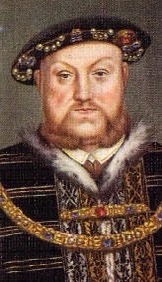
Henry VIII and Catherine of Ar

Pope Clement VII’s refusal to annul Henry and Catherine’s marriage and leave Henry free to marry again, led to a series of events in the sixteenth century which culminated in the Church of England breaking away from the authority of the Roman Catholic Church. As a result Henry VII became Supreme Governor of the English Church and the Church of England became the established church of the nation, meaning doctrinal and legal disputes now rested with the monarch.

Although the last Welsh Prince of Wales, Llewellyn ap Gruffydd, had been killed during Edward I’s war of conquest in 1282, and Wales had faced English rule with the introduction of English-style counties and a Welsh gentry made up of Englishmen and native Welsh lords who were given English titles in exchange for loyalty to the English throne, Welsh Law still remained in force for many legal matters up until the reign of Henry VIII.

Henry VIII, whose family the Tudors were of welsh decent from the Welsh house of Tudur, had not previously seen a need to reform the Welsh Government during his time on the throne, but in 1535 and 1542, as a result of a supposed threat from the independent Welsh Marcher lords, Henry introduced the Laws in Wales Acts 1535-1542.

These laws meant that the Welsh legal system was completely absorbed into the English system under English Common Law and both the English Lords who had been granted Welsh land by Edward I and their native Welsh contemporaries became part of the English Peerage. As a result of this creation of a modern sovereign state of England, fixed surnames became hereditary amongst the Welsh gentry, a custom which was slowly to spread amongst the rest of the Welsh people, although the patronymic naming system could still be found in areas of rural Wales until the beginning of the nineteenth century.

The change from patronymic to fixed surnames meant the Welsh people had a limited stock of names to choose from, which was not helped by the decline in the number of baptismal names following the Protestant Reformation. Many of the new fixed surnames still incorporated the “ap” or ab to create new names such as Powell (taken from ap Hywel) and Bevan (taken from ab Evan). However, the most common method for creating surnames came from adding an ‘s’ to the end of a name, whereby the most common modern Welsh surnames such as Jones, Williams, Davies and Evans originated. In an effort to avoid confusion between unrelated individuals bearing the same name, the nineteenth century saw a rise in the number of double barrelled surnames in Wales, often using the mother’s maiden name as a prefix to the family name.

Whilst most Welsh surnames are now fixed family names which have been passed down through the generations there has been a resurgence of the patronymic naming system amongst those Welsh speakers keen to preserve a patriotic history of Wales. In the last decade, in a return to a more independent Wales, the Government of Wales Act 2006 saw the creation of the Welsh Assembly Government and delegation of power from Parliament to the Assembly, giving the Assembly the authority to create “Measures”, or Welsh Laws, for the first time in over 700 years. Although for the sake of the Welsh telephone book let’s hope the patronymic naming system doesn’t make a complete comeback!

The Cornish Language

This March 5th, mark St Piran’s Day, the national day of Cornwall, by wishing your neighbours “Lowen dydh sen Pyran!”.

According to the 2011 census data, there are 100 different languages spoken in England and Wales, ranging from the well known to almost forgotten. The census results show that 33 people on the Isle of Man said their main language was Manx Gaelic, a language officially recorded as extinct in 1974, and 58 people said Scottish Gaelic, spoken mainly in the Highlands and western Islands of Scotland. Over 562,000 people named Welsh as their main language.

Whilst many British people are aware of Welsh and Gaelic, few have heard of ‘Cornish’ as a separate language, despite the fact that on the census, as many as 557 people listed their main language as ‘Cornish’.

So why do the Cornish have their own language? To understand, we have to look at the history of this relatively remote, south western region of England.

Cornwall has long felt a closer affinity with the European Celtic nations than with the rest of England. Derived from the Brythonic languages, the Cornish language has common roots with both Breton and Welsh.

The words ‘Cornwall’ and ‘Cornish’ are derived from the Celtic Cornovii tribe who inhabited modern-day Cornwall prior to the Roman conquest. The Anglo-Saxon invasion of Britain in the 5th to 6th centuries pushed the Celts further to the western fringes of Great Britain. It was however the influx of Celtic Christian missionaries from Ireland and Wales in the 5th and 6th centuries that shaped the culture and faith of the early Cornish people.

These missionaries, many of whom were later venerated as saints, settled on the shores of Cornwall and began converting small groups of local people to Christianity. Their names live on today in Cornish place names, and over 200 ancient churches are dedicated to them.

The Cornish were often at war with the West Saxons, who referred to them as the Westwalas (West Welsh) or Cornwalas (the Cornish). This continued until 936, when King Athelstan of England declared the River Tamar the formal boundary between the two, effectively making Cornwall one of the last retreats of the Britons, thus encouraging the development of a distinct Cornish identity. (Pictured right: Anglo-Saxon warrior)

Throughout the Middle Ages, the Cornish were seen as a separate race or nation, distinct from their neighbours, with their own language, society and customs. The unsuccessful Cornish Rebellion of 1497 illustrates the Cornish feeling of ‘being separate’ from the rest of England.

During the early years of the new Tudor dynasty, the pretender Perkin Warbeck (who declared himself to be Richard, Duke of York, one of the Princes in the Tower), was threatening King Henry VII’s crown. With the support of the King of Scots, Warbeck invaded the north of England. The Cornish were asked to contribute to a tax to pay for the King’s campaign in the north. They refused to pay, as they considered the campaign had little to do with Cornwall. The rebels set out from Bodmin in May 1497, reaching the outskirts of London on June 16th. Some 15,000 rebels faced Henry VII’s army at the Battle of Blackheath; around 1,000 of the rebels were killed and their leaders put to death.

The Prayer Book Rebellion against the Act of Uniformity of 1549 was another example of the Cornish standing up for their culture and language. The Act of Uniformity outlawed all languages except English from Church services. The rebels declared that they wanted a return to the old religious services and practices, as some Cornishmen did not understand English. Over 4,000 people in the South West of England protested and were massacred by King Edward VI’s army at Fenny Bridges, near Honiton. This spread of English into the religious lives of the Cornish people is seen as one of the main factors in the demise of Cornish as the common language of the Cornish people.

As the Cornish language disappeared, so the people of Cornwall underwent a process of English assimilation.

However a Celtic revival which started in the early 20th century has revitalised the Cornish language and the Cornish Celtic heritage. An increasing number of people are now studying the language. Cornish is taught in many schools and there is a weekly bilingual programme on BBC Radio Cornwall. In 2002 the Cornish language was granted official recognition under the European Charter for Regional or Minority Languages.

The Cornish language even appears in the film and the book, Legends of the Fall by American author Jim Harrison, which depicts the lives of a Cornish American family in the early 20th century.

Here are a few examples of everyday phrases in Cornish:

Good Morning: “Metten daa”

Good Evening: “Gothewhar daa”

Hello: “You”

Goodbye: “Anowre”

Yorkshire Dialect

Did you know that August 1st is Yorkshire Day? To celebrate, we thought we’d share some great Yorkshire words and phrases with you.

Much of the Yorkshire dialect has its roots in Old English and Old Norse, and is called Broad Yorkshire or Tyke. Rather confusingly, someone born and bred in Yorkshire is also called a tyke.

Examples of the Yorkshire dialect can be found in literary works such as ‘Wuthering Heights’ by Emily Bronte and Charles Dickens’ novel ‘Nicholas Nickleby’. The reader will notice that in Broad Yorkshire, ‘ye’, ‘thee’ and ‘thou’ are used instead of ‘you’ and the word ‘the’ is shortened to t’.

Many people not from God’s Own County will consider the Yorkshire dialect as, shall we say, a little lugubrious. Indeed the words do seem to lend themselves to a Les Dawson-style of delivery.

‘Owt and Nowt

Two words used a lot in Yorkshire, meaning something and nothing. They are traditionally pronounced to rhyme with ‘oat’ rather than ‘out’, for example ‘Yah gooid fur nowt’ (you’re good for nothing). The old Yorkshire expression, “If there’s owt for nowt, I’ll be there with a barrow” would seem to bear out the impression that some people have of Yorkshire people, that they are careful, or tight, with their money. As the ‘Yorkshireman’s Motto’ goes:

‘Ear all, see all, say nowt;

Eat all, sup all, pay nowt;

And if ivver tha does owt fer nowt –

Allus do it fer thissen.

(Hear all, see all, say nothing; eat all, drink all, pay nothing, and if ever you do something for nothing, always do it for yourself).

‘Appen

This word will be very familiar to fans of Emmerdale, as a favourite utterance by most of the characters in the early days of the soap, in particular Amos Brealry and Annie Sugden. It means ‘perhaps’ or ‘possibly’ and is often preceded by ‘Aye’(yes) as in ‘Aye, ‘appen’. Other useful Yorkshire phrases include ‘Appen that’s it’ (that’s possibly true) and ‘Appen as not an maybe’ (you’re probably right).

‘Eee by gum

No, this isn’t just gibberish, it does actually mean something, although there is no direct translation. It means something like ‘Gosh!’, ‘Cor’, ‘Oh my God’ or ‘By gum’.

Nah then

This is often heard when friends greet each other and is used like a casual ‘hello’ or ‘hi’. Another way to say hello in Yorkshire would be ‘Eh up’.

Middlin’, Nobbut Middlin’, Fair t’ Middlin’

Again, these are expressions with no exact translation. Often heard in response to the question ‘Ow do’ (How are you), ‘middlin’ or ‘fair t’middlin’ would mean ’I’m ok’. ‘Nobbut middlin’ means less than middlin’, so more like ‘just alright’.

Middlin’ is not to be confused with middin which refers to a muck heap, rubbish heap or even the outside loo!

So for example:

Nah then,’ow do? – Nobbut middlin’.

Now you’re fluent in Yorkshire!

Reference

20+ Powerful, Bleak Photographs From the Dust Bowl

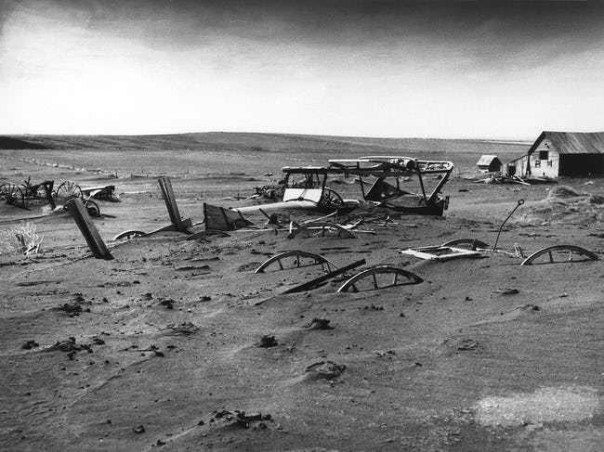
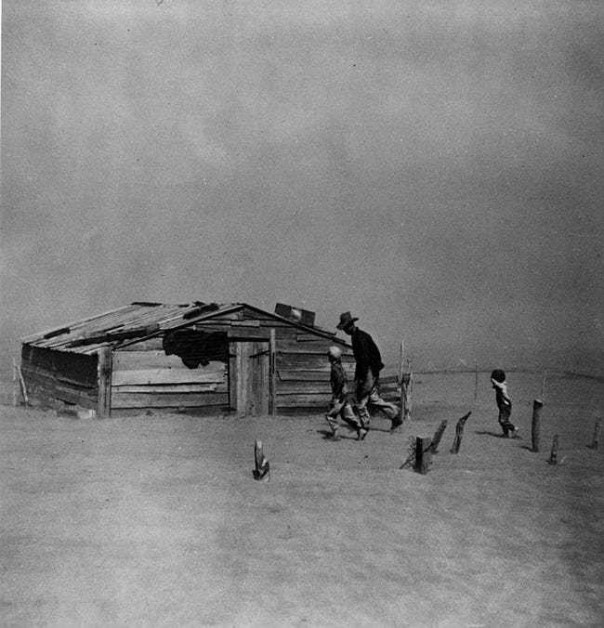
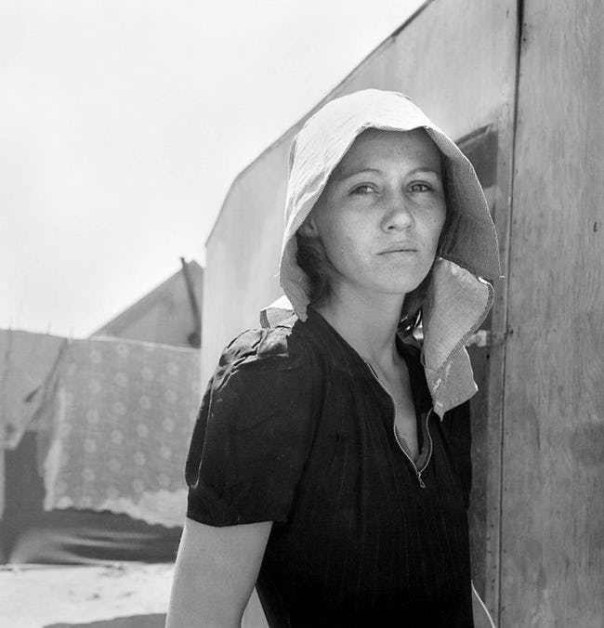
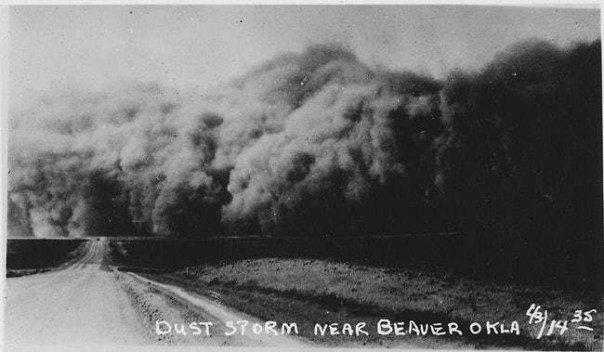
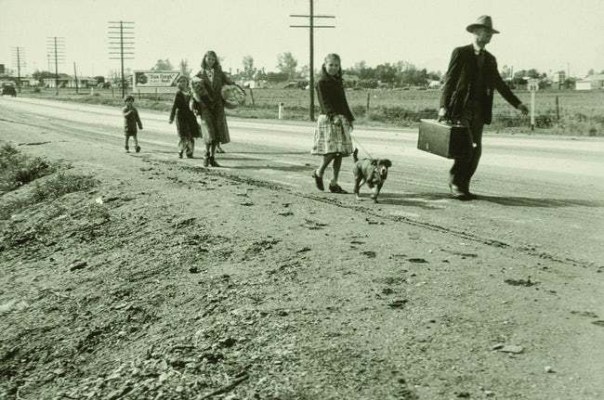
The 1930s came down hard on all of America, but the Great Plains area got it even worse with the advent of the Dust Bowl. This giant drought, a disaster for America’s breadbasket, made life unendurable for Midwesterners. Put out of farm work, people became migrant workers, trekking to California in search of jobs. At the time, photographers like Dorothea Lange began documenting American lives and struggles through the camera lens, capturing tragedies like Depression and Dust Bowl.

Collected here are photos of undernourished and sick children, homeless families, desolate farms, and storms engulfing the land in dust. As blunt and shocking they may look to you today, imagine how much they astonished those Americans living at that time.

Machinery Buried By Dust In South Dakota, 1936

Photo:  Sloan /Wikimedia Commons/Public Domain

A Farmer And His Family Trudging Through A Storm, Oklahoma, 1936

Photo:  Arthur Rothstein/Wikimedia Commons/Public Domain

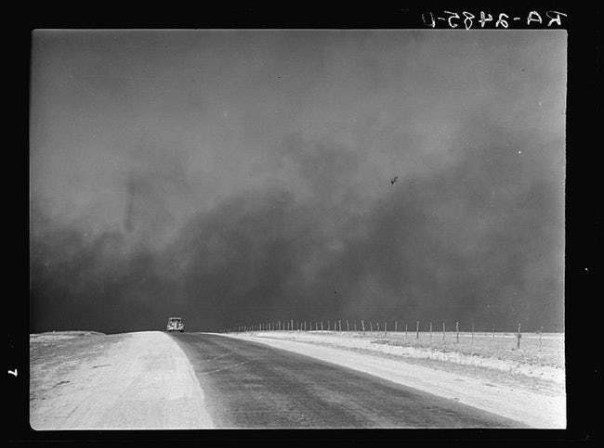
Dust Storm Approaching Stratford, Texas, 1935

Photo:  NOAA George E. Marsh Album/Brian0918/Wikimedia Commons/Public Domain

Young, Migratory Mother, California, 1940

Photo:  Dorothea Lange/Wikimedia Commons/Public Domain

Topsoil Eroded On Farm, Kansas, 1930s

Photo: U.S. Department of Agriculture/Wikimedia Commons/CC BY 2.0

Dust Storm Approaching Rapidly, Oklahoma, 1935

Photo: National Archives And Records Administration/Wikimedia Commons/Public Domain Mark 1.0

A Farmer’s Son Amidst Devastated Land, Oklahoma, 1936

Photo: Arthur Rothstein/Wikimedia Commons/Public Domain

Laborers’ Squatter Camp, California, 1940

Photo: Dorothea Lange/Wikimedia Commons/Public Domain Mark 1.0

Cultivating What Remains Of The Cotton Crop, 1930s

Photo: Wikimedia Commons/CC BY 2.0

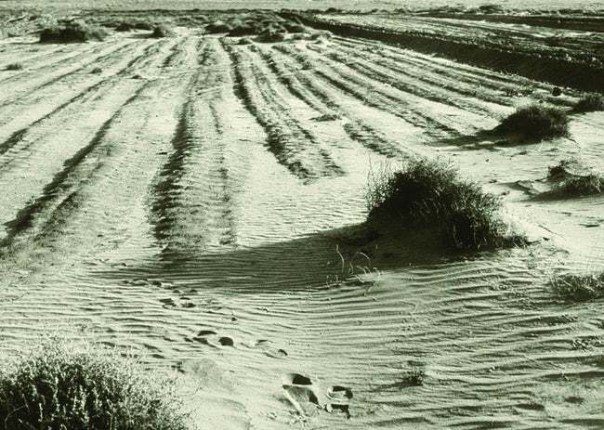
Eroded Farmland, 1930s

Photo: Wikimedia Commons/CC BY 2.0

Dried-Out Farmland, Oklahoma, 1930s

No higher resolution available. Dust_Bowl_in_Texas_County,_Oklahoma.jpg ‎(728 × 519 pixels, file size: 141 KB, MIME type: image/jpeg)

A Farmer Inspecting His Land, Colorado, 1938

Photo: U.S. Department of Agriculture/Wikimedia Commons/CC BY 2.0

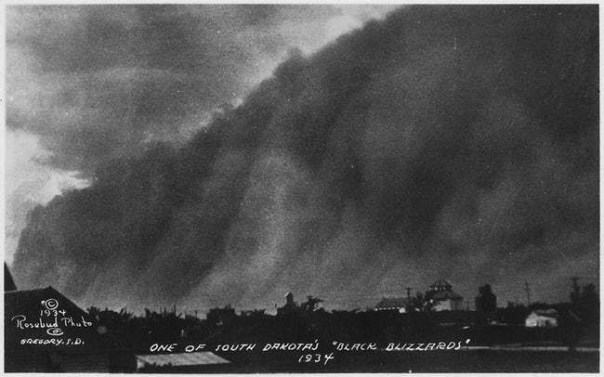
A Dust Storm (AKA “Black Blizzard”), South Dakota, 1934

Photo: U.S. National Archives and Records Administration/Wikimedia Commons/Public Domain

Child With TB On Crutches, Oklahoma, 1935

Photo: Dorothea Lange/Wikimedia Commons/Public Domain Mark 1.0

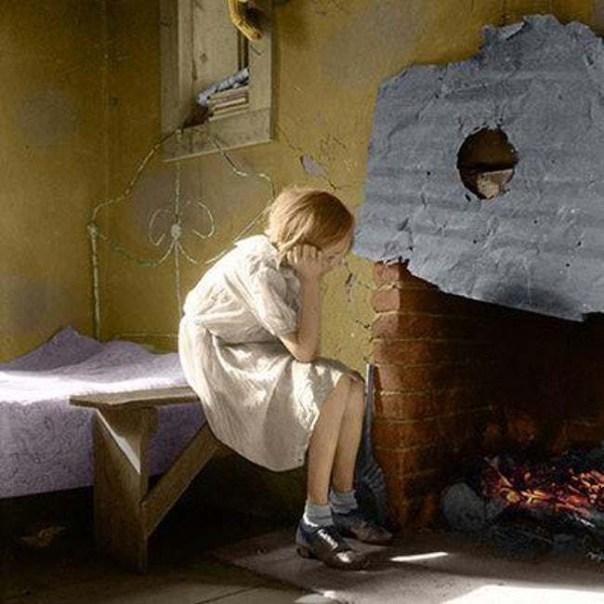
Resettled Farm Child, New Mexico, 1935

Photo: Dorothea Lang/Wikimedia Commons/Public Domain Mark 1.0

Another Dust Storm Rolling In, Kansas, 1935

Photo: Wikimedia Commons/Public Domain Mark 1.0

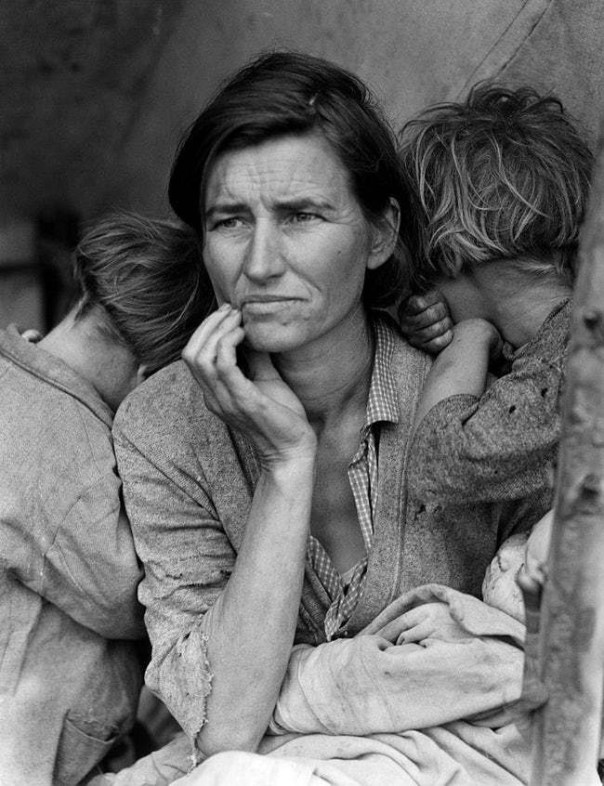
Migrant Worker Mom With Kids, California, 1936

Photo: Dorothea Lange/Wikimedia Commons/Public Domain

Wind-Eroded Farmland, Kansas

Photo: NRCS Photo Gallery/Wikimedia Commons/Public Domain

Homeless Family Trekking To Find Work, California

Photo: Dorothea Lange /Wikimedia Commons/Public Domain

Heading To Los Angeles For Work, California, 1937

Photo: Dorothea Lange/Flickr/No known restrictions

Awful Water Erosion, Alabama

Photo: USDA/Wikimedia Commons/Public Domain

A Dust Storm Rolls Over A Main Street, Washington DC

Photo: USDA NRCS Photo Gallery/Wikimedia Commons/Public Domain

Sharecropper Floyd Burroughs, Alabama, 1935-1936

Photo: Walker Evans/Wikimedia Commons/Public Domain

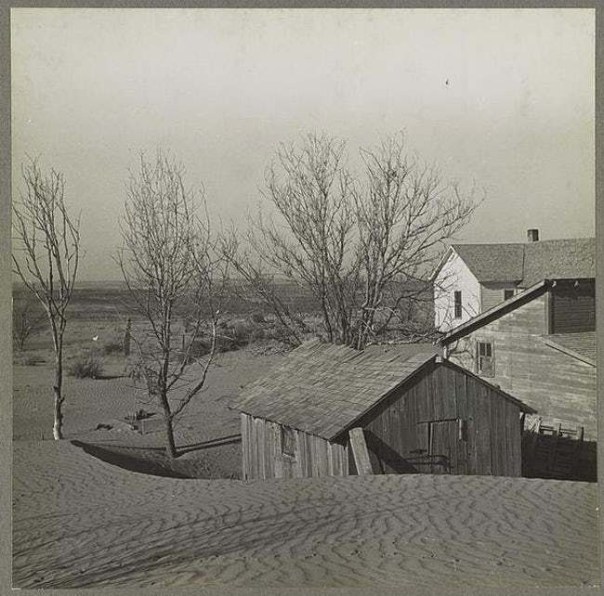
Dust Bowl Winds Pile Up Against Barn In Kansas

Photo: Arthur Rothstein/Library Of Congress/Wikimedia Commons/Public Domain

Dust Bowl Dune, circa 1936

Photo: NOAA National Weather Service/Public Domain

Dust Over Texas, circa 1935

Photo: Russell Lord/NOAA’s National Weather Service/Public Domain

Dust Over Dakota, circa 1935

Photo: Russell Lord/NOAA’s National Weather Service/Public Domain

Dust Bowl, Texas Panhandle, March 1936

Photo: Arthur Rothstein/Library Of Congress/Wikimedia Commons/Public Domain

Reference

Servants Of The Paraclete Part 3: Gay Priest Reveals Secret Of Catholic `Boot Camp’

A Roman Catholic priest has given a unique insight into day-to-day life at a remote and little-known rehabilitation home used by the church to treat alcoholic, gay and paedophiliac clergymen.

The priest was sent to the residential treatment centre in Gloucestershire after his bishop found out that he was a practising homosexual. Writing anonymously in today’s Independent, he gives a detailed account of his week-long assessment at Our Lady of Victory – a place he describes as being like “an open prison” – situated high on a Cotswold hill in Brownshill, near Stroud.

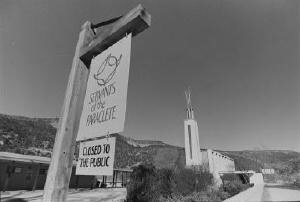
The church is guarded about life inside the centre. It is run by the Servants of the Paraclete, a religious congregation of men dedicated to ministering to priests and brothers with “personal difficulties”. Anyone who is “sent to Stroud”, as Catholic circles put it, for longer than the initial assessment must sign a confidentiality contract.

Our Lady of Victory purports to offer “therapy in a spiritual context”. But according to Father Kieran Conroy, director of the Catholic Media Office, the approach is more “therapist’s boot camp” than “therapist’s couch”. Fr Conroy said he understood the treatment to be “quite confrontational”. “They do face you with your own shortcomings and there’s no question of denial, at all. It’s a process of knocking down and building up again, which I think some people find difficult to deal with because they are particularly vulnerable.”

The Servants of the Paraclete was founded in 1947 by Father Gerald Fitzgerald, a priest from the Archdiocese of Boston, in the United States. It has about 30 priests at Stroud, and there is a waiting list. Our Lady of Victory hit the headlines in 1993 when Fr Sean Seddon, a 38-year-old Roman Catholic priest, was sent there to try to forget about his six- year romance with a teacher. On learning that his lover had lost their baby, he committed suicide by throwing himself under a railway station near the retreat.

Fr Conroy believes the majority of residents at Stroud are alcoholics on the Chemical Dependency Programme, based on the 12 Steps of Alcoholics Anonymous. “In the case of child abuse it would be assessment rather than treatment,” he added, “because most people realise that paedophilia is not a condition they can treat successfully.”

He said Stroud is not an alternative to the courts. Some of the priests undergoing treatment for child abuse have served prison sentences. At the end of the treatment, staff at Stroud assess the paedophiliac priest’s risk of reoffending, according to Father Conroy. “If they choose to remain in the priesthood – and presumably they will, otherwise they wouldn’t have spent six months or two years there – the church has to decide where the safest place for that person to work is. If he is high risk they must ensure that he is in a job that has little or zero risk of contact with children.”

To residents living near the centre, it is simply a “drying out clinic for boozy brethren”. But the priest recalls a “sense of listlessness” among inmates, “as if, realising the game was up, all the fight, all the desire for independence had gone.” He believes the “glassiness in their eyes” betrays “some form of brainwashing”. “How,” he asks, “is paedophilia `cured’ or any other form of addiction, sexual or otherwise?”

Former Questa priest named in new rape and abuse lawsuit

St. Anthony Catholic Church in Questa, where several priests who were found guilty of sexual abuse of a minor served.

Two men who were parishioners of Questa’s St. Anthony Church in the late 1960s have named a former priest as a sexual abuser in a lawsuit filed last week, marking another instance of alleged abuse by clergy associated with the beleaguered Catholic Church in New Mexico.

The lawsuit alleges Leo Courcy sexually abused the two boys on an overnight stay at the church rectory in the summer of 1969. One boy was raped and the other molested, according to the lawsuit filed Thursday (May 16) in the 2nd Judicial District Court in Albuquerque.

The lawsuit was filed against the Servants of the Paraclete, a largely inactive religious order that was founded in New Mexico in the 1940s, and its private foundation.

Aside from the sexual abuse allegations, the lawsuit also lays blame on the higher-ups of the Servants of the Paraclete for negligently putting known abusers into positions of power in underserved parishes across rural New Mexico.

The Servants ran a facility in Jemez Springs that became known as a dumping ground for sexually abusive priests from other dioceses. The religious order would assign priests to ministerial work as part of a “graduated program of rehabilitation,” according to the lawsuit.

The lawsuit alleges that “only four days after Fr. Courcy arrived at the Servants’ Jemez Springs facilities for a second bout of treatment [for sexually abusing a minor, the director of the facility] made and finalized arrangements to send Fr. Courcy to a supply ministry assignment at St. Anthony Parish in Questa.”

In 2017, the Archdiocese of Santa Fe released a list of more than 70 priests, brothers and other members of religious orders who were “credibly accused” of sexually abusing minors; the list included Courcy. Courcy was also named as an abuser in a lawsuit filed in September 2017 that alleges he abused  another altar boy from the same year.

The lawsuit also claims the Servants did not keep a list of parish assignments for sexually abusive priests, or that it intentionally destroyed such documents when a wave of lawsuits were filed against it and the archdiocese in the 1990s.

The men who allege Courcy abused them aren’t named in the lawsuit, which refers to them as John Doe 127 and John Doe 143. The documents do not indicate if they are still residents of Questa.

The Servants and its foundation had not filed responses to the lawsuit as of press time. According to the archdiocese, Courcy is still living.

Unlike most lawsuits alleging abuse by priests and religious in New Mexico, this one was filed only against the Servant and not the Archdiocese of Santa Fe, which is in the midst of bankruptcy proceedings that is changing how sexual abuse lawsuits are getting filed in the state.

After decades of lawsuits and millions of dollars in settlements with sexual abuse victims, the archdiocese filed for bankruptcy in December 2018. Under federal Bankruptcy Code, the debtor – in this case, the archdiocese – comes up with a plan to pay its debts while continuing to operate.

Because of the bankruptcy, any new claims against the archdiocese must be dealt with as part of those proceedings, which have a June 17 cutoff, or “bar date.”

But according to attorney Levi Monagle, who is representing the John Does in the suit filed Thursday, the bankruptcy deadline does not “prevent the filing of lawsuits against other religious organizations like the Servants of the Paraclete, the Sons of the Holy Family, the Jesuits, the Franciscans, the Basilians, the Congregation of Blessed Sacrament Fathers or any other religious orders who were doing business in our state, and whose agents participated in raping children or protecting the rapists.”

Reference

On The Trail Of Yma Sumac: The Exotica Legend Came From Peru, But Her Career Was All Hollywood

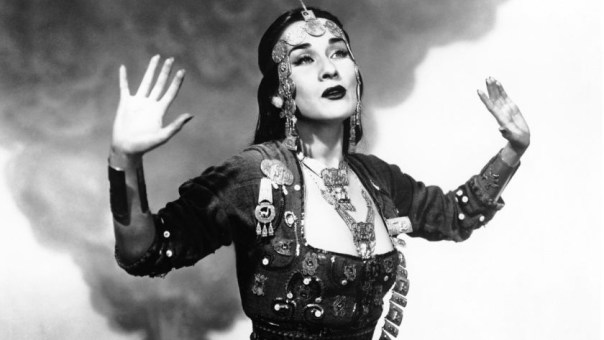
Yma Sumac poses for a portrait seen on the cover of her legendary 1950 album, “Voice of the Yxtabay.”(Michael Ochs Archives / Getty Images)
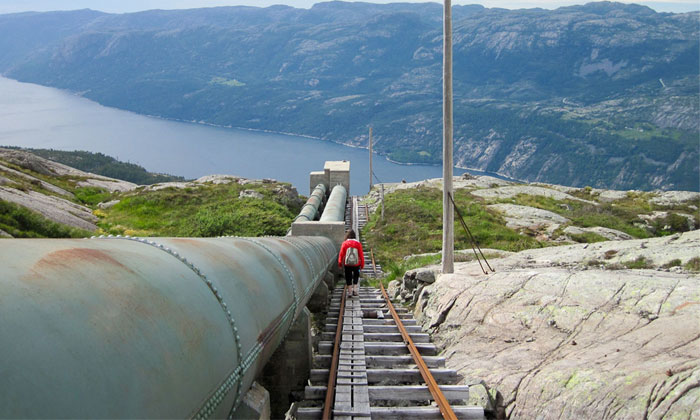
As a Peruvian kid growing up in Southern California, I’d pick through my father’s record collection, between the LPs of Peruvian creole waltzes and Mexican ballads, to admire a strange album by an alluring woman dripping in jewelry, posing before an erupting volcano.

The album was “Voice of the Xtabay.” And the woman was Yma Sumac, the Peruvian songstress with the four-octave voice that launched the musical genre known as exotica, a cinematic fusion of international styles that allowed mid-20th century audiences a taste of the mysterious and the remote.

Sumac was the imperious, raven-haired Inca princess — “descendant of the last of the Incan kings,” according to lore — who maintained an extensive wardrobe stocked with sumptuous gowns, her crimson lipstick always applied to perfection. It was this Peruvian girl’s ultimate fantasy.

It was also a piece of fiction. Yma Sumac may have been from Peru. But her exotic Peruvian persona was invented in Los Angeles.

“Hollywood took this nice girl who wanted to be a folk singer, dressed her up and said she was a princess,” says her biographer, Nicholas E. Limansky, author of “Yma Sumac: The Art Behind the Legend.”

“And she acted like it.”

“Voice of the Xtabay,” the 1950 album that introduced her to global audiences, seemed like otherworldly evidence of her power.

It opens with the smash of a gong, ringing in “Taita Inty,” a song described as a “traditional Incan hymn that dates back to 1000 B.C.” (Never mind that the Inca civilization didn’t get rolling until more than 2,000 years later.) It segues to tunes like “Tumpa,” full of guttural scatting that evokes a wah-wah trumpet. All of it is held together by Sumac’s operatic trills, which could leap from low growls to high-C coloratura that sounded as if it could shatter glass.

“She took Peruvian traditional music, set it in the popular music vein and sang it with the voice of a coloratura soprano but infused it with jazz and blues,” says Limansky. “It’s a fascinating concoction.”

With composer Les Baxter setting Sumac’s Andean stylings and symphonic interludes against groovier beats, “Xtabay” bore no resemblance to any Peruvian music I grew up with or have heard on any trip to Peru. (Gongs, for one, are from Asia, not the Andes.) The album sounds more like a soundtrack for a ’50s-era jungle epic, featuring melodies that beg for a rum drink in a ceramic Polynesian tumbler. It was irresistible.

Added to this were the machinations of the overheated publicity department at Hollywood’s Capitol Records, which fabricated all manner of legends about Sumac, the supposed Inca blue-blood, crooner of “mysterious” Andean hymns, as a way of drawing the public’s attention.

Among them: that the album’s title song, “Xtabay,” was about the legend of a “young Incan virgin” who had a “forbidden love” with a “high prince of an Aztec kingdom.” No such legend exists.

Audiences, however, ate it up. So did I. To me, Sumac was a rare representation of the Andean in U.S. popular culture (albeit one distorted by the funhouse mirror that is the entertainment industry). And it was a representation soaked in glamour. 

Sumac’s boom years were in the ’50s and ’60s, but thanks in part to Capitol’s epic myth-making, she had a surprisingly long career. performing into the 1990s, when she was well into her 70s.

Her first significant appearance, at the Hollywood Bowl in August 1950, was received with astonishment followed by rapturous applause. From there flowed numerous albums — including my favorite, “Mambo!” from 1954 — as well as performances all over the U.S. and Europe. In 1960, she undertook a historic 40-city tour of what was then the Soviet Union that lasted for months.

Cult following

Over the course of her life, Sumac appeared on television talk shows from Steve Allen to David Letterman. Her music has appeared in commercials and on numerous Hollywood soundtracks, including “The Big Lebowski” and “Mad Men.” And it’s been sampled by hip-hop musicians. The Black Eyed Peas employed the groovy opening from “Bo Mambo” in their 2003 single “Hands Up.”

Today, eight years after her death at age 86, Sumac remains the subject of fan sites, Pinterest pages and Facebook groups. She’s inspired a veritable rabbit hole of lip-sync videos on YouTube. (One by Argentine actor Luciano Rosso, looking piratical, is particularly delirious.) Last fall, she received the ultimate digital nod when she was featured as the Google Doodle on the 94th anniversary of her birth.

Sumac could have easily gone down in the history books as a musical footnote. And if she’d remained a run-of-the-mill folk singer, she probably would have. But the combination of her beauty, her unusual music and the colorful stories that surrounded her transformed her into a legend with a devoted cult following. (I was once chastised on social media by a fan for not being sufficiently reverent.)

The high camp didn’t hurt either — the feathered headdresses and eyeliner on fleek — not to mention her stage design, with Styrofoam volcanoes and totems. A Times review of a 1955 concert at the Shrine Auditorium notes her “phenomenal voice” as well as “a touch of the ridiculous,” namely a set studded with “pillars of fire.”

“She was unique in the combination of things that she embodied,” says Peruvian anthropologist Zoila Mendoza, chair of UC Davis’ Native American studies department and daughter of a woman who was close friends with Sumac as a teen. “It was a whole fantasy.”

Sumac was born Zoila Augusta Emperatriz Chavarri del Castillo in Peru’s Cajamarca region of the northern Andes on Sept. 13, 1922. (She later took the stage name Imma Summack, her mother’s name, which morphed into Yma Sumac after her move to the U.S.)

She was not, as one Parisian publication once wrote, raised in a “miserable hut of dried earth.” In fact, her well-to-do family included a physician and a judge. Her father was involved in local civic affairs; her mother was a school teacher.

“Definitely she was elite in the area,” says Mendoza, who’s studied indigenous performance in the Andes and written about Sumac.

As a teen, Sumac moved to Lima to go to school. It was there in Peru’s capital that she met Moisés Vivanco, a noted folk musician who would shape her early career — and whom she would ultimately marry and divorce (twice). One popular Sumac legend, crafted by the fabulists at Capitol Records, has Vivanco traveling for days to a “remote mountain region” to seek out the singer known for “talking” with the “birds, the beasts, the winds.”

Not quite. Vivanco met Sumac at a rehearsal in Lima, where, after hearing her sing, he invited her to participate in a folkloric event.

L.A. is full of people like her. People like Angelyne — these self-invented people. Joy Silverman, former director of LACE

All of this raises the issue of Sumac’s supposed Inca lineage. Her mother’s surname, Atahualpa, was that of the last Inca emperor. Whether that made Sumac a real-deal royal (or someone who could even claim indigenous identity) is unknown.

She likely spoke some Quechua, one of the principal indigenous languages of the Andes, as did most people who then lived in the highlands. But she was a fair-skinned mestiza, a mix of Spanish and Indian. “She was white compared to most Andean people,” Mendoza notes. “She had green eyes. She and my mother were very close friends. My mom also has green eyes. So they were these two pretty Andean women with green eyes.”

But Sumac emerged at a time when Peru was paying more attention to its indigenous roots. The wide dissemination of the archaeological wonders at Machu Picchu after 1911 brought attention to the country’s resplendent Inca past.

“In that context, the whole institution of folklore emerged,” says Mendoza, referring to the burgeoning industry built around Andean indigenous music. Recordings were made, radio programs launched and festivals held.

Sumac’s early repertoire reflected this musical current, including, for example, huaynos, brisk Andean highland ballads featuring strings and flute. (Some of these are in the 2013 compilation album by Blue Orchid Records: “Early Yma Sumac: The Imma Summack Sessions.”)

“By the time Yma Sumac came about, there was a whole infrastructure that allowed her to become a national figure,” Mendoza explains. “Before that, it wouldn’t have happened.”

Incas in the deli

Sumac and Vivanco became well known in Peru and had successful engagements in the important Latin American media centers of Argentina and Mexico. A successful recital at Mexico City’s prestigious Palacio de Bellas Artes came at the invitation of Mexico’s president. In 1946, the pair moved to New York City, figuring that their success in Latin America boded well for the U.S. market.

But American audiences weren’t exactly rushing out to see Andean folk music. Sumac’s early years in New York, as part of a group called the Inca Taqui Trio, were spartan. They played supper clubs, Borscht Belt resorts, business conventions and, for a time, a delicatessen in New York’s Greenwich Village, where a magazine writer for Collier’s would later write that Sumac could be found performing “in a back room richly blanketed with the aroma of pickled herring, salami and liverwurst.”

Hollywood took this nice girl who wanted to be a folk singer, dressed her up and said she was a princess. And she acted like it.

— Nicholas E. Limansky, biographer of Yma Sumac

The trio nonetheless developed a following. One local television appearance sparked the interest of a talent agent who helped Sumac land a deal at Capitol. The Inca Taqui Trio was too folkloric for the label, so the label instead built an album around Sumac’s voice.

Enter: Exotica master Baxter, and a post-World War II U.S. public ready to be seduced by fantasy.

Also, enter: Los Angeles.

The record deal necessitated a move to Southern California, and by the late 1940s the couple were comfortably ensconced in tony Cheviot Hills on L.A.’s Westside. The move was key in Sumac’s metamorphosis from talented folk singer to Inca exotica pioneer.

“I don’t know if this could have happened in another city,” says Limanksy. “New York has Carnegie Hall and the Metropolitan Opera … famous classical institutions, and things were geared around that. But in Los Angeles, you had the film industry and everything that entailed. Her whole transformation, it does smack of Hollywood. … It was very cinematic.”

The tarted-up Inca princess identity was not something that Sumac was initially wild about. “She wanted to be a folk performer,” says Limansky. “She really didn’t like it at all.”

But once Sumac re-invented herself, forced like many performers to create a new sound in the name of success, she embraced the role with haughty grandeur. Known for striding on stage as if she’d arrived to reclaim her empire, she demanded the undivided attention of her public. In later years, she’d storm off if spectators so much as opened their mouths.

“She looked like a princess and she acted like one,” says Limansky, who attended some of her New York shows in the ’80s. “She was entertaining, but not in a ‘let me get in your face and laugh with you’ kind of way. … She was very formal with the audience.”

This regal quality translated to her roles in Hollywood films.

In 1954, she appeared in the Charlton Heston adventure flick “Secret of the Incas” as Quechua maiden Kori-Tika. In it, Sumac gives a pair of surreal mountain-top performances at Machu Picchu. She also throws serious side eye at Heston’s European love interest, played by Nicole Maurey. When Maurey tells her, “You speak English very well,” Kori-Tika replies cattily, “So do you.”

It’s a very different depiction from that other mid-century South American icon, Carmen Miranda, “the Brazilian bombshell,” seen as the flirty Latin party girl in the towering fruit hat. Sumac was way too royal for that.

Interestingly, Sumac’s noble persona (a role some say she came to believe) was built around ideas of Inca culture that had blossomed during Peru’s indigenist period ideas that weren’t always rooted in fact.

“When she became a folkloric artist in the ’30s, there had been a couple of decades in Peru of composers and musicians who had been creating symphonies and these really sophisticated pieces of music based on an invented idea of what the Inca sound was like,” says Mendoza. “It had very little to do with what contemporary indigenous people were actually playing.”

Sumac was channeling a concocted notion of Inca identity as an invented Inca princess. A fiction born in Peru adds another layer of fiction in Hollywood, and from that fiction rises Yma Sumac. What could be more Los Angeles?

“L.A. is full of people like her,” says Joy Silverman, director of Los Angeles Contemporary Exhibitions through most of the ’80s. “People like Angelyne — these self-invented people.”

In the late 1980s, Silverman asked Sumac to perform at a LACE fundraiser when the organization was located in downtown L.A., a pioneer in what is now the thriving Arts District.

“She was exactly what you would imagine,” Silverman says. “You were in the presence of this dramatic Peruvian songbird. She was never out of character.”

Around the same time, Sumac also appeared — in sleek shades and plumed hat — in one of l.a.Eyeworks’ iconic magazine ads, part of a campaign that featured entertainers such as Grace Jones and Iggy Pop.

“It was Yma Sumac — we had to do it!” says l.a.Eyeworks co-founder Gai Gherardi, who recalls a petite woman of monarchical bearing with a taste for bananas. “Her image, she knew what it looked like, and she lived up to it.”

In her late years, Sumac played regular cabaret engagements at the now-defunct Cinegrill and the Vine St. Bar & Grill jazz club, not far from her star on the Hollywood Walk of Fame. (She’s the only Peruvian with that honor.) Her cabaret shows brought out a crowd that author Tom Lang, who worked at Vine St. in the ’80s, describes as “Sunset Boulevard on ayahuasca.”

“The pre-show atmosphere was anticipatory, a legend returns,” he says via e-mail from Bali, where he now lives. “Opening night, sold out. A group of tiny Peruvians, impeccably dressed, at one table. [Pianist and author] Leonard Feather in his regular booth (throne). Bill Murray and his entourage, up front.”

Sumac was an uneven performer in those years — with good nights, as well as terrible ones, her voice cracking, her temper foul. The show at Vine St. was one of the latter. “I wanted to take her off the stage and hug her and tell everyone else to leave her alone,” recalls Lang.

There are other L.A. stories, too. About her taste for El Pollo Loco and her shopping trips to Bullocks Wilshire. “She must have had 300 pairs of vintage shoes from throughout the ’50s,” recalls her friend and former assistant Damon Devine, who runs the tribute website yma-sumac.com.

The singer, who was sold to American audiences as a wonder from a strange land, was, in the end, just another grand dame living on the Westside (she later moved to West Hollywood), who might enjoy an afternoon of listening to Eurodance with her assistant.

Ultimately, it was in L.A., the city that made her who she was, that Yma Sumac would ultimately come to rest.

Not long ago, on a warm afternoon, I paid a visit to Sumac’s grave at Hollywood Forever Cemetery. It’s in the same mausoleum as Iron Eyes Cody, a second-generation Italian American performer also known for a manufactured indigenous identity. (He frequently played a Native American in the movies and told the press he was Cree and Cherokee.) In another part of the building lies Constance Talmadge, the silent-screen star.

My father used to roll his eyes at Sumac’s claims of Inca nobility. But Los Angeles, a mestizo city and land of the faux historic, requires a ruler. Why not Sumac? In the photo displayed on her tomb, she is perfectly made up, wearing an indigenous textile and earrings as big as chandeliers. Just like an Inca queen.

FOR THE RECORD:

March 24, 2017, 4 p.m.: An earlier version of this story reported that Yma Sumac was the only Peruvian with a star on the Hollywood Walk of Fame. She is one of two; radio personality Pepe Barreto is the other.

Reference

Servants Of The Paraclete Part 2: Bishops Were Warned Of Abusive Priests

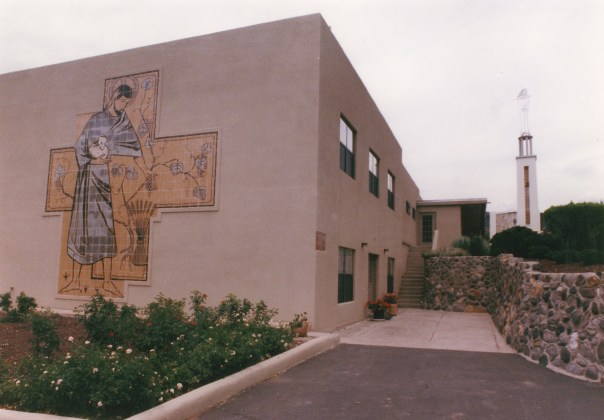
The Servants of the Paraclete complex in Jemez Springs, N.M., in 1993 (Jeffrey D. Scott)

As early as the mid-1950s, decades before the clergy sexual-abuse crisis broke publicly across the U.S. Catholic landscape, the founder of a religious order that dealt regularly with priest sex abusers was so convinced of their inability to change that he searched for an island to purchase with the intent of using it as a place to isolate such offenders, according to documents recently obtained by NCR.

Fr. Gerald Fitzgerald, founder of the Servants of the Paracletes, an order established in 1947 to deal with problem priests, wrote regularly to bishops in the United States and to Vatican officials, including the pope, of his opinion that many sexual abusers in the priesthood should be laicized immediately.

Fitzgerald was a prolific correspondent who wrote regularly of his frustration with and disdain for priests “who have seduced or attempted to seduce little boys or girls.” His views are contained in letters and other correspondence that had previously been under court seal and were made available to NCR by a California law firm in February.

Read copies of letters Fitzgerald exchanged with U.S. bishops and one pope.

Listen to Tom Roberts discuss this story on the April 1 edition of “Here & Now,” a National Public Radio news program from WBUR in Boston. (Scroll down the page to just before the photo of the waxy monkey frogs.)

Fitzgerald’s convictions appear to significantly contradict the claims of contemporary bishops that the hierarchy was unaware until recent years of the danger in shuffling priests from one parish to another and in concealing the priests’ problems from those they served.

It is clear, too, in letters between Fitzgerald and a range of bishops, among bishops themselves, and between Fitzgerald and the Vatican, that the hierarchy was aware of the problem and its implications well before the problem surfaced as a national story in the mid-1980s.

Cardinal Roger Mahony of the Los Angeles archdiocese, reacting in February to a federal investigation into his handling of the crisis, said: “We have said repeatedly that … our understanding of this problem and the way it’s dealt with today evolved, and that in those years ago, decades ago, people didn’t realize how serious this was, and so, rather than pulling people out of ministry directly and fully, they were moved.”

Indeed, some psychology experts seemed to hold the position that priest offenders could be returned to ministry. Even the Paracletes, as the order developed and grew, employed experts who said that certain men could be returned to ministry under stringent conditions and with strict supervision.

The order itself ultimately was so inundated with lawsuits regarding priests who molested children while or after being treated at its facility in Jemez Springs, N.M., that it closed the facility in 1995.

Whatever discussion occurred during the 1970s and 1980s over proper treatment, however, for nearly two decades Fitzgerald spoke a rather consistent conviction about the dim prospects for returning sex abusers to ministry. Fitzgerald seemed to know almost from the start the danger such priests posed. He was adamant in his conviction that priests who sexually abused children (often the language of that era was more circumspect in naming the problem) should not be returned to ministry.

In a 1957 letter to an unnamed archbishop, Fitzgerald said, “These men, Your Excellency, are devils and the wrath of God is upon them and if I were a bishop I would tremble when I failed to report them to Rome for involuntary layization [sic].” The letter, addressed to “Most dear Cofounder,” was apparently to Archbishop Edwin V. Byrne of Santa Fe, N.M., who was considered a cofounder of the Paraclete facility at Jemez Springs and a good friend of Fitzgerald.

Later in the same letter, in language that revealed deep passion, he wrote: “It is for this class of rattlesnake I have always wished the island retreat — but even an island is too good for these vipers of whom the Gentle Master said it were better they had not been born — this is an indirect way of saying damned, is it not?”

The documents were sealed at the request of the church in an earlier civil case involving Fr. Rudolph Kos of Dallas. Eleven plaintiffs won awards in the case in which Kos was accused of molesting minors over a 12-year period. He had been treated at the Paraclete facility in New Mexico. The documents were unsealed in 2007 by a court order obtained by the Beverly Hills law firm of Kiesel, Boucher & Larson, according to Anthony DeMarco, an attorney with the firm that has handled hundreds of cases for alleged victims of sexual abuse in the Los Angeles archdiocese and elsewhere.

According to Helen Zukin, another member of the firm, the documents have been used in some cases to dispute the church claim that it knew nothing about the behavior of sex abusers or the warning signs of abuse prior to the 1980s.

In a September 1952 letter to the then- bishop of Reno, Nev., Fitzgerald wrote: “I myself would be inclined to favor laicization for any priest, upon objective evidence, for tampering with the virtue of the young, my argument being, from this point onward the charity to the Mystical Body should take precedence over charity to the individual and when a man has so far fallen away from the purpose of the priesthood the very best that should be offered him is his Mass in the seclusion of a monastery. Moreover, in practice, real conversions will be found to be extremely rare. … Hence, leaving them on duty or wandering from diocese to diocese is contributing to scandal or at least to the approximate danger of scandal.” The advice was ignored and the priest was allowed to continue in ministry, and was ultimately accused of abusing numerous children, for which the church paid out huge sums in court awards.

While Fitzgerald told anyone who would listen of the futility of returning sexually abusive priests to ministry, that conviction became less absolute as the order, today headquartered in St. Louis, grew and the scope of its work became more complex. Fitzgerald, by most accounts, was deeply motivated by a sense of obligation to care for priests who were in trouble. Originally a priest of the Boston archdiocese for 12 years, he became a member of the Congregation of the Holy Cross in 1934, and started the Servants of the Paraclete in 1947. His concern at the time was primarily for priests struggling with alcoholism. As his new order matured and its ministry became known, bishops began referring priests with other maladies, particularly those who had been sexually abusive of children. The order for years was the primary source for care of priests in the United States with alcohol and sexual problems.

At times, Fitzgerald appears to have resisted taking in priests who had sexually abused youngsters. In his 1957 letter he requested concurrence from the cofounder archbishop “of what I consider a very vital decision on our part — that for the sake of preventing scandal that might endanger the good name of Via Coeli [the name of the New Mexico facility] we will not offer hospitality to men who have seduced or attempted to seduce” children. “Experience has taught us these men are too dangerous to the children of the parish and neighborhood for us to be justified in receiving them here.”

In September 1957 the bishop of Manchester, N.H., Matthew F. Brady, sought Fitzgerald’s advice regarding “a problem priest,” John T. Sullivan, who seemed sincerely repentant and whose difficulty “is not drink but a series of scandal-causing escapades with young girls. There is no section of the diocese in which he is not known and no pastor seems willing to accept him,” Brady wrote. The “escapades” involved molestation of young girls. In at least one instance, he procured an abortion for a teenager he had impregnated. In another case, he fathered a child and provided support to the mother until she later married. The charges of molesting girls would follow him the rest of his life.

“The solution of his problem seems to be a fresh start in some diocese where he is not known. It occurred to me that you might know of some bishop who would be willing to give him that opportunity,” Brady wrote in his original letter.

Fitzgerald responded that in his judgment the “repentance and amendment” in such cases “is superficial and, if not formally at least subconsciously, is motivated by a desire to be again in a position where they can continue their wonted activity. A new diocese means only green pastures.”

Fitzgerald added that the Paracletes had “adopted a definite policy not to recommend to bishops men of this character, even presuming the sincerity of their conversion. We feel that the protection of our glorious priesthood will demand, in time, the establishment of a uniform code of discipline and of penalties.”

He acknowledged the degree of deference with which Catholic clergy were treated even by civil authorities. “We are amazed to find how often a man who would be behind bars if he were not a priest is entrusted with the cura animarum [the care of souls],” he wrote.

Sullivan apparently had already been pulled from active ministry. In October 1957, less than a month after contacting Fitzgerald, Brady wrote a response to the bishop of Burlington, Vt., among the first of more than a dozen bishops approached by Sullivan for the next five years, warning against accepting him.

Brady then wrote a letter that he sent out time after time to bishops inquiring about Sullivan after he had requested acceptance for ministry. “My conscience will not allow me to recommend him to any bishop and I feel that every inquiring bishop should know some of the circumstances that range from parenthood, through violation of the Mann Act, attempted suicide, and abortion.

“Father Fitzgerald of Via Coeli would accept him only as a permanent guest to help save his soul but with no hope of recommending him to a bishop.”

According to a 2003 Washington Post story, Sullivan, who had bounced around from diocese to diocese for nearly 30 years, “was stripped of his faculties to serve as a priest after he kissed a 13-year-old girl in Laconia, N.H., in 1983, when he was 66. He died in 1999, never having faced a criminal charge.” After his death the church paid out more than a half-million dollars in awards to Sullivan’s victims, including three in Grand Rapids, Mich., and one in Amarillo, Texas, two dioceses that did not heed the warnings of the bishops in New Hampshire. The victims said they were abused when they were between 7 and 12 years old.

In April 1962, Fitzgerald wrote a five-page response to a query from the Vatican’s Congregation of the Holy Office about “the tremendous problem presented by the priest who through lack of priestly self-discipline has become a problem to Mother Church.” One of his recommendations was for “a more distinct teaching in the last years of the seminary of the heavy penalty involved in tampering with the innocence (or even non-innocence) of little ones.”

Regarding priests who have “fallen into repeated sins … and most especially the abuse of children, we feel strongly that such unfortunate priests should be given the alternative of a retired life within the protection of monastery walls or complete laicization.”

In August of the following year, he met with newly elected Pope Paul VI to inform him about his work and problems he perceived in the priesthood. His follow-up letter contained this assessment: “Personally I am not sanguine of the return of priests to active duty who have been addicted to abnormal practices, especially sins with the young. However, the needs of the church must be taken into consideration and an activation of priests who have seemingly recovered in this field may be considered but is only recommended where careful guidance and supervision is possible. Where there is indication of incorrigibility, because of the tremendous scandal given, I would most earnestly recommend total laicization.”

But by 1963, Fitzgerald’s powerful hold on the direction of the order was weakening. According to a 1993 affidavit by Fr. Joseph McNamara, who succeeded Fitzgerald as Servant General, the appointment of a new archbishop, James Davis, began a new era of the relationship between the order, which was a “congregation of diocesan right,” and the archdiocese. Davis and Fitzgerald apparently clashed over a number of issues. Davis was far more concerned than his predecessor about the business aspects of the Santa Fe facility and demanded greater accountability. He also demanded greater involvement of medical and psychological professionals, while “Fr. Gerald [Fitzgerald] distrusted lay programs, psychologists and psychiatrists,” favoring a more spiritual approach, according to McNamara.

McNamara said Fitzgerald was eventually forced from leadership by a combination of factors, not least of which was a growing disagreement with the bishop and other members of the order over the direction of the Paracletes. After 1965, said McNamara, Fitzgerald “never again resided at Via Coeli Monastery, nor did he ever regain the power he had once had.”

Nor did he get his island. In 1965 Fitzgerald had put a $5,000 deposit on an island in Barbados, near Carriacou, in the Caribbean that had a total purchase price of $50,000. But the new bishop apparently wanted nothing to do with owning an island, and Fitzgerald, who died in 1969, was forced to sell his long-sought means for isolating priest sex offenders.

When asked for comment, a spokesman for the Paraceltes referred NCR to historic accounts previoulsy written about the order.

Early Alarm for Church on Abusers in the Clergy

The founder of a Roman Catholic religious order that ran retreat centers for troubled priests warned American bishops in forceful letters dating back to 1952 that pedophiles should be removed from the priesthood because they could not be cured.

The Rev. Gerald M. C. Fitzgerald, founder of the order, Servants of the Paraclete, delivered the same advice in person to Vatican officials in Rome in 1962 and to Pope Paul VI a year later, according to the letters, which were unsealed by a judge in the course of litigation against the church.

The documents contradict the most consistent defense given by bishops about the sexual abuse scandal: that they were unaware until recently that offenders could not be rehabilitated and returned to the ministry.

Father Fitzgerald, who died in 1969, even made a $5,000 down payment on a Caribbean island where he planned to build an isolated retreat to sequester priests who were sexual predators. His letters show he was driven by a desire to save the church from scandal, and to save laypeople from being victimized. He wrote to dozens of bishops, saying that he had learned through experience that most of the abusers were unrepentant, manipulative and dangerous. He called them “vipers.”

“We are amazed,” Father Fitzgerald wrote to a bishop in 1957, “to find how often a man who would be behind bars if he were not a priest is entrusted with the cura animarum,” meaning, the care of souls.

His collected letters and his story were reported this week by The National Catholic Reporter, an independent weekly. Father Fitzgerald’s papers were unsealed by a judge in New Mexico in 2007 and are now becoming public in litigation, although some letters were public before now, said Helen Zukin, a lawyer with Kiesel, Boucher & Larson, a firm in Los Angeles. The letters were authenticated in depositions with Father Fitzgerald’s successors.

The scandals, which began in the 1980’s and reached a peak in 2002, revealed that for decades bishops had taken priests with histories of sexual abuse and reassigned them to parishes and schools where they abused new victims.

It was not until 2002 that the American bishops, meeting in Dallas, wrote a charter requiring bishops to remove from ministry priests with credible accusations against them.

Asked why Father Fitzgerald’s advice went largely unheeded for 50 years, Bishop Blase J. Cupich of Rapid City, S.D., chairman of the United States Bishops Committee for the Protection of Children and Young People, said in a telephone interview that in the first case, cases of sexually abusive priests were considered to be rare.

Second, Bishop Cupich said of Father Fitzgerald, “His views, by and large, were considered bizarre with regard to not treating people medically, but only spiritually, and also segregating a whole population with sexual problems on a deserted island.”

And finally, he said, “There was mounting evidence in the world of psychology that indicated that when medical treatment is given, these people can, in fact, go back to ministry.” This is a view, he said, that the bishops came to regret.

A Vatican spokesman, the Rev. Federico Lombardi, said he could not comment because he did not have enough information.

Responding to Bishop Cupich’s comment about Father Fitzgerald, Ms. Zukin, who represents abuse victims, said: “If the bishops thought he was such a bizarre crackpot, they would have shut him down. In fact, they referred their priests to him and sent him financial contributions.”

She also said the psychiatrists who worked at the Servants of the Paraclete’s centers said in legal depositions that they had rarely recommended returning sexually abusive priests to ministry, and only if the priests were under strict supervision in settings where they were not working with children.

From the 1940’s through the 1960’s, bishops and superiors of religious orders sent their problem priests to Father Fitzgerald to be healed. He founded the Servants of the Paraclete in 1947 (“paraclete” means “Holy Spirit”), and set up a retreat house in Jemez Springs, N.M.

He took in priests who were struggling with alcoholism, drug abuse or pedophilia, or who had broken their vows of celibacy, whether with men or women. He called them “guests.” His prescription was prayer and spiritual devotion to the sacraments, which experts say was the church’s prevailing approach at that time.

At one point, he resolved not to accept pedophiles at his center, saying in a letter to the archbishop of New Mexico in 1957, “These men, Your Excellency, are devils, and the wrath of God is upon them, and if I were a bishop I would tremble when I failed to report them to Rome for involuntary layization.”

Laicization — or removing a priest from the priesthood — was what Father Fitzgerald recommended for many abusive priests to bishops and Pope Paul VI.

But that step was rarely taken, said the Rev. Thomas Doyle, a whistle-blower who often serves as an expert witness in cases against the church, “because the priesthood was considered to be so sacred that taking it away from a man was something you simply did not do.”

The Paracletes did not return calls for an interview.

After Father Fitzgerald died, his order grew and established retreat centers around the country and overseas, which became regular way stations for priests with sexual disorders.

His successors added psychiatry and medical treatment to the prayer regimen. They sent priests back into ministry, at the request of bishops. The Paracletes later became the target of lawsuits, and had to close most of their centers.

References

Servants Of The Paraclete; Part 1: SCANDALS IN THE CHURCH: THE TREATMENT PROGRAM; Abusive Priests Are Varied, but Treatable, Center Found

They came to a peaceful retreat in the mountains of New Mexico, bearing emotional troubles and sexual secrets.

Some had sinned with women; some, with men. Others were depressed or angry or anxious. One monk came for treatment of a foot fetish that drove him to steal socks. A priest from Africa arrived after it was discovered that he had several wives and many children.

But hundreds of the clergymen were sent to the treatment program in Jemez Springs because they had molested minors.

The public debate over the Roman Catholic Church’s handling of sexual abuse by its clergy members has focused on men like John J. Geoghan of Boston, calculating predators who appear beyond the reach of treatment.

But the history of the program at Jemez Springs, which in its 19 years of operation treated more than 500 priests and monks for sexual problems, suggests a more complex view.

In interviews, psychologists and psychiatrists who worked there said few of the clergymen fitted the image often presented in the news media.

For one thing, they said, the vast majority were not pedophiles: most had molested adolescents, not young children. In most cases, the clergymen’s transgressions were driven by confusion, fear, immaturity or impulse, not by cold calculation, the therapists said. Some of the clergymen had themselves been abused as adolescents. Many seemed to know little about human sexuality, and most initially tried to deny or rationalize their experiences, insisting that they had done nothing wrong or that their victims had benefited.

In some cases, said Dr. Robert Goodkind, a psychologist who worked at Jemez Springs in the 1980’s and 1990’s, the priests seemed oblivious that the boys they were abusing were minors. In psychotherapy, he said, they would talk as if they themselves were junior high school students, describing how they ”fell in love” or how they felt ”burned” when the boys did not return their affections.

”There was just a real absence of the perspective that this is a 30-year-old man talking about 15-year-old boy,” Dr. Goodkind said.

And while some clergymen — no one knows exactly how many — abused minors again after leaving the program, the therapists said, follow-ups indicated that many more did not. Rather, the men altered their behavior and rebuilt lives either inside the church or out.

The program at Jemez Springs, run by a small Roman Catholic congregation known as the Servants of the Paraclete, represented one of the the church’s earliest, most innovative and ultimately most controversial efforts to deal with sexual abuse among its clergy.

It was started in 1976 by two Paraclete priests, who sought to bring psychotherapy, education in human sexuality, medication and other modern tools to bear on sexual issues in the priesthood. By directly addressing sexuality, the program laid down a path later followed by other treatment centers for priests, like the St. Luke Institute in Maryland and the Institute of Living in Hartford. Experts at those centers said their experience of working with sexual abusers closely paralleled that of the staff at Jemez Springs.

By the mid-1980’s, when the case of a Louisiana priest, the Rev. Gilbert Gauthe, brought the problem to public view, the Paracletes had already treated hundreds of clergymen who had molested minors, said Dr. Jay R. Feierman, a psychiatric consultant to the program from 1976 to 1995.

But the church ended the treatment effort in 1995, when the Paracletes became mired in lawsuits over sexual abuse by priests who had been at Jemez Springs in the 1960’s and early 1970’s, before any systematic treatment program existed there. In those earlier days, priests’ sexual problems were addressed primarily through prayer, and some clergymen molested minors while visiting parishes to say Mass. The site, still owned by the Paracletes, now serves as a retreat center and retirement home for clergymen.

The abusers who came to Jemez Springs in the 1980’s and 1990’s, the former staff members said, were highly educated and socially skilled and they had more in common with university professors and social workers than incarcerated sex offenders. Few showed sociopathic tendencies, the staff members said, and the extent of their misconduct and the motivations underlying their actions varied greatly.

Still, the therapists said, every priest and monk who came to the program struggled with the challenges posed by their vows of chastity and celibacy.

Dr. Feierman said that in many cases, the clergymen lived double lives, on the one hand repressing ”sinful” thoughts and on the other, acting out sexually.

”They thought they were sinning if they entertained an impure thought,” he said, ”but at the same time they were having sex with boys.”

Priests and monks who came to Jemez Springs for treatment of depression or other emotional ills often found that their distress covered over conflicts about sexuality, Dr. Goodkind said.

”A lot of times people had been dealing with a secret inside them that they thought was quite horrible, and they had been keeping this secret for 10, 15 or 25 years,” the psychologist said. ”And after a while they just got terribly depressed and were not functional any more.”

But for all the sexual problems they saw, the therapists said they only rarely encountered pedophilia, an exclusive sexual attraction to prepubescent children.

Dr. Sarah Brennan, a clinical psychologist in Albuquerque, said that she treated hundreds of priests and monks in the 10 years she worked at Jemez Springs but that only one was a pedophile. Dr. Feierman, who studied 238 clergymen who were treated for sexual problems at Jemez Springs from 1982 to 1991, said that only a handful had molested young children or teenage girls; more than half, he said, had abused boys 12 to 17. Though his study was accepted in 1991 for publication in the Archives of Sexual Behavior, a scientific journal, it never appeared in print. The new director of the treatment program, the Rev. Peter Lechner, asked him to withdraw the manuscript, Dr. Feierman said.

He added that he now kept the paper in a safe deposit box and did not have permission from Father Lechner to discuss the study’s findings in more detail. Reached in St. Louis, where he is now the Paraclete congregation’s leader, Father Lechner confirmed that he had not wanted the report published but said it was because the study was based on the clergymen’s confidential records.

The age of the priests’ victims corresponds to the findings of other studies and to the observations of experts who have treated priests in other settings. It is significant, scientists said, because adults who become sexually involved with adolescents are considered more amenable to treatment than pedophiles. ”There’s a lot better prognosis,” said Dr. Eli Coleman, director of the program in human sexuality University of Minnesota’s Center for Sexual Health. ”It’s much easier to help someone who is attracted to postpubescent children to adapt to attractions to adults.”

Dr. Feirman said that in his view, many of the clergymen who abused older children were fixated on teenagers and were not attracted to adults, male or female. Other former staff members said that the priests they worked with were immature and confused about their sexuality, and their problem was bad judgment and a lack of impulse control rather than sexual fixation. Some priests were trying to ignore or suppress their attraction to adult men and ended up in furtive relationships with teenage boys.

Those relationships often began as fatherly bonds with altar boys or other adolescents who came to the rectory. In some cases, the boys had lost their fathers, and their mothers encouraged them to spend time with the priests and to regard them as role models.

Very few abusive clergymen, Dr. Feierman said, ”just had sexual relationships with the kids.”

”They would pick kids that were needy and needed things both emotionally and financially,” he said. ”They would take them on vacations, buy them clothes, buy them bicycles.”

But in a typical progression, the relationships moved gradually into touching and groping, and in some cases sexual penetration.

Dr. Fred S. Berlin, an associate professor of psychiatry at Johns Hopkins University, said complex relationships were typical between the victims of sexual abuse and their abusers.

”This is not the fox in the chicken coop,” Dr. Berlin said. ”These are often situations in which the adult has genuine affection for the child, and sadly, because they begin to feel tempted in a way that most of us don’t, they give in to temptation.”

Dr. Leslie Lothstein, the director of psychology at the Institute of Living in Hartford, confirmed that, like the men treated at Jemez Springs, most of the priests who came to Hartford after sexually abusing minors had molested older boys.

But Dr. Lothstein said that although some of the men were gay, many others were not. Some were older priests, he said, who, having entered seminary as teenagers, ”were sexually undernourished, didn’t date and never really defined their sexuality.”

Having sex with boys, he said, seemed safer to those priests than having sex with women. Other men were replaying their experience as the victims of abuse by abusing others.

”They’re a very heterogenous group,” Dr. Lothstein said.

It was the realization that clergymen often had difficulty sorting out sexual issues that led two young priests, the Rev. Michael Foley and the Rev. William Perri, to found the Paracletes’ treatment program in 1976.

”We tried to create a forum, both in the spiritual and psychological realm, not where they were acting out the sexuality but where they were talking about it,” Father Foley said.

The priests borrowed the techniques being used by sexual disorder clinics in secular settings, including focused psychotherapy, education in human sexuality, relapse prevention and, for some men, the drug Depo Provera, which reduces sexual drive.

Priests who had molested minors, Dr. Goodkind said, were sent back with the stipulation that they not be returned to unsupervised ministry with minors. They were told to remain in therapy, and follow-up visits were made by the program’s staff.

But ultimately, the decision about what happened to the men after they left Jemez Springs was made by bishops and religious superiors.

No one can say with certainty how many of the men at Jemez Springs committed offenses after leaving the program. Dr. Feierman said he knew of only 2 men who were later arrested for sexual abuse and perhaps 5 to 10 more who had been caught in suspicious circumstances. For example, he said, one priest was later seen sitting in a hot tub in his apartment complex with two teenage boys.

Father Lechner, who became director of the treatment program in 1989, said he conducted an informal study in 1992 of 89 men treated at Jemez Springs. Only one had relapsed, he said.

Still, by the early 1990’s, the number of clergymen arriving at Jemez Springs had begun to dwindle, as lawsuits over priests who had sexually abused minors made headlines in New Mexico and other states.

”The whole program became associated with ‘priest pedophiles,’ ” Father Lechner said. ”We felt that was unfair to the men who were coming there to deal with other issues like depression or anxiety.”

For his part, Father Foley, who founded the program, said he still believed in its mission.

”I believe that a lot can be resolved and healed,” he said.

Still, he worries.

”I run through the papers before I go to work in the morning,” Father Foley said, ”and hope and pray that I’m not going to recognize a name.”

Reference

Discover the Most Deadliest…Spectacular & Dramatic… Staircases in the World

This is two different articles on the world‘s deadliest…and most spectacular…staircases, so there are a couple of double-ups which I have left, as the photographs are different. First article has been edited for clarity.

From way back, stairs are constructed to help in climbing heights, and to reduce the efforts associated with it. However, in some parts of the world, stairs are so terrifying that they look like nothing but passages leading to hell. They are scary in their design, and most of them have claimed lives. Here we present to you the scariest stairways in the world. Walk and be safe!

Pailon del Diablo Waterfall, Ecuador

Located adjacent to a stunning waterfall, and tropical scenery, this staircase is nothing short of a scary walk. The stairs are constructed with oversized pebbles to provide traction. However, the stairs are almost the same colour and blend in a way that creates an illusion of a stone slide. Moreover, they are slippery from the constant drizzle of the waterfall. Though there is a metal railing, it becomes useless after a drenching from the constant mist of water spray.

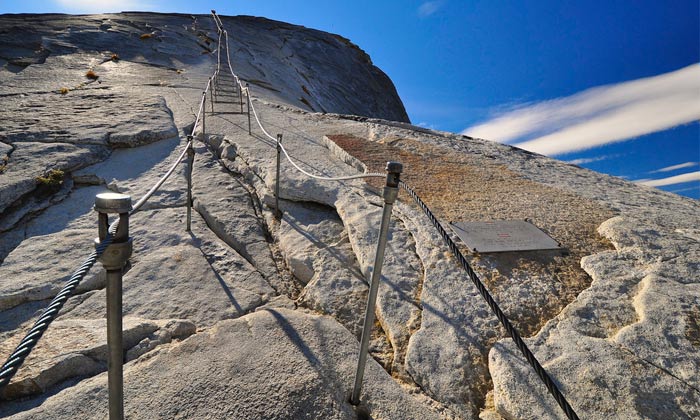
Half Dome, Cable Route, California

Half Dome, Cable Route, California

Stretching some 13 kms, The Half Dome Cable Route is a scary walk that takes you to an elevation of about 4,800 ft. In earlier days, because of the difficulty of the climb, the trail used to see fewer people, but in recent times its popularity has grown wider, with 800 visitors a day. This hiking trail takes you to the Vernal and Nevada Falls, then into Yosemite Valley to finally reach the Half Dome.

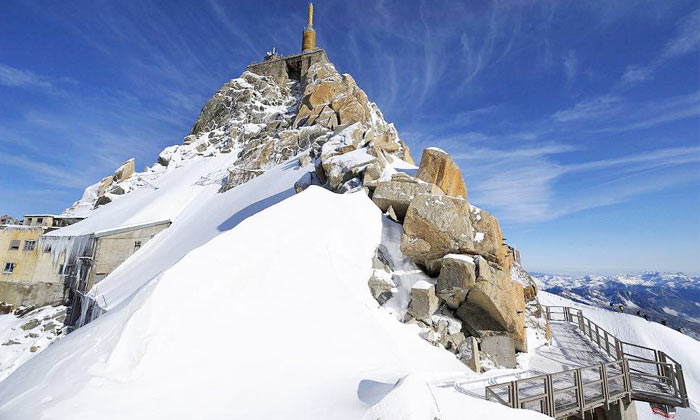
Janssen Observatory, Mont Blanc, France

Janssen Observatory, Mont Blanc, France

Located at the top of the magnificent mountain Le Mont Blanc, the stairs of the Janssen Observatory are something you should think twice about. Though the steps are short and are lined with a strong railing, it’s not the structure but the placement of the stairs which makes you feel nauseous.

Mount Huashan Heavenly Stairs, China

Mount Huashan Heavenly Stairs, China

Situated near the city of Huayin, Mt Hua Shan is a magnificent mountain that houses a steep, heavenly staircase. The walkway consists of a three-plank-wide path, with only side chains to hold and put your weight on to reach the next step. However, the moment you reach the final step, every risk that you have taken is rewarded with the most amazing views of the surroundings.

Flrli Stairs, Norway

Flrli Stairs, Norway

Located around the town of Lysefjord, this fascinating stairscase is featured in this list for two reasons: the stairs have 4,444 steps, and is sited at an altitude of 2,427 feet. Constructed wholly out of wood, this scary staircase takes you on a journey full of risk and adventure.

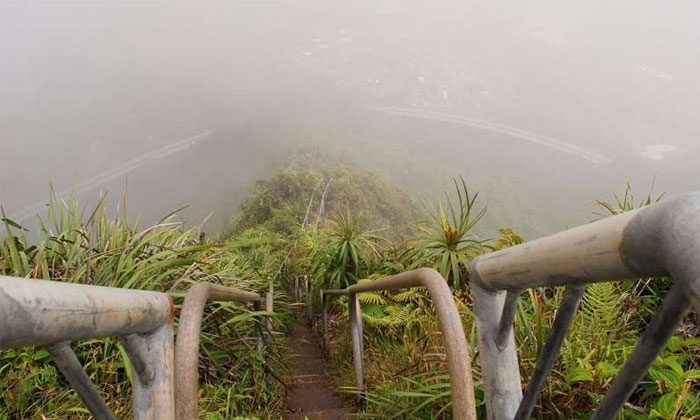
Haiku Stairs, Oahu, Hawaii

Haiku Stairs, Oahu, Hawaii

Leading up to the Oahus Koolau Mountain Range, Haiku Stairs are so steep and dangerous that it is illegal to climb, so much so that there is a guard placed at the bottom to stop anyone from going up. Also called the Highway to Heaven, the place is nothing short of the ultimate daredevil hike.

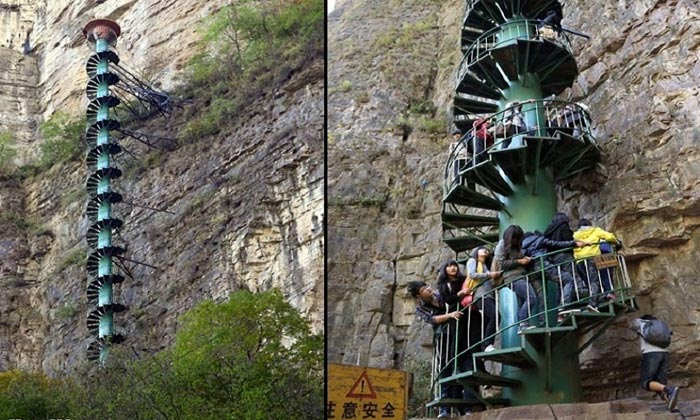
Taihang Mountains Spiral Staircase, China

Taihang Mountains Spiral Staircase, China

Attracting tourist from all over the world, this site in China is not for those who suffer from Vertigo. This 300 ft spiral staircase which is installed on the walls of the mountain, is in Linzhou and offers the most adventure-filled experience for mountaineers. The site follows age restrictions, and strict guidelines for the safety of those visiting it.

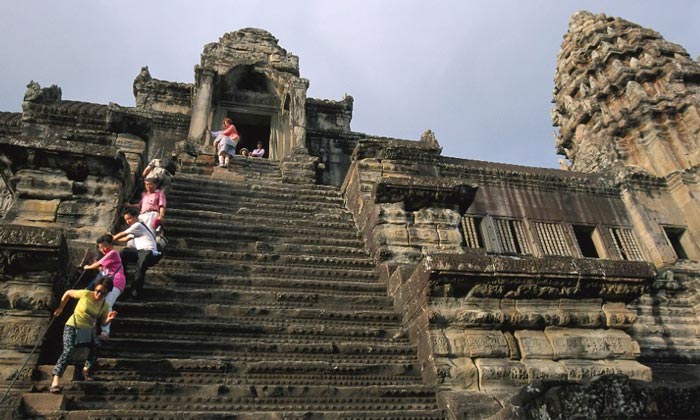
Angkor Wat Temple Stairs, Cambodia

Angkor Wat Temple Stairs, Cambodia

It is believed that the steps were made so steep to remind climbers about heaven, and the hardships you have to go through to attain it. This staircase is ancient, almost 70 percent inclined, with the risk falling constantly present .

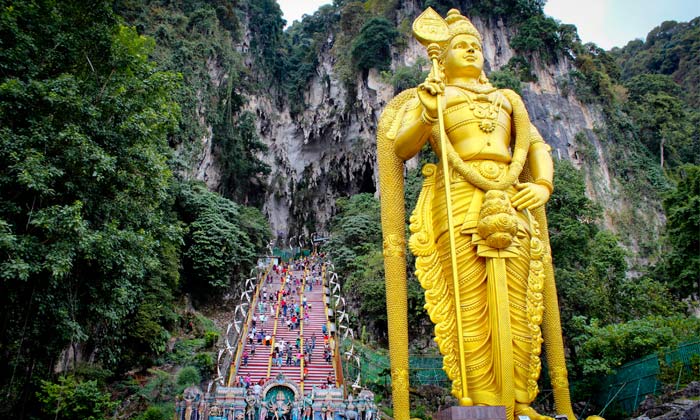
Batu Caves, Malaysia

Batu Caves, Malaysia

Situated around a mountain about 8 miles from Kuala Lampur, Batu caves is a famous Hindu holy site in India, housing one of the highest and most dangerous stairways to climb. The stairway consists of 272 steps and takes you to the height of 330 feet, to the main temple.

Sagrada Familia, Barcelona

Sagrada Familia, Barcelona
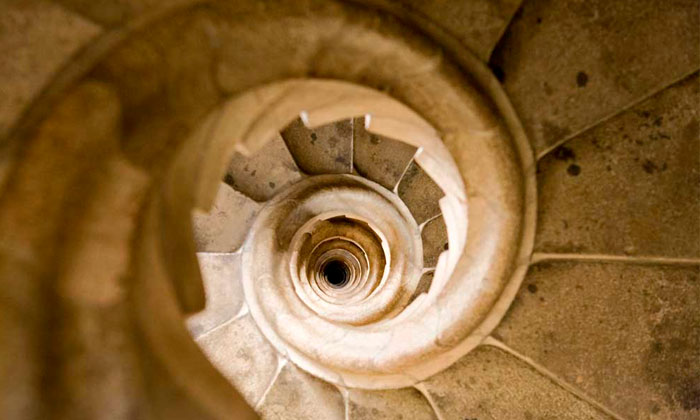
There is nothing like the Sagrada Familia, as you tackle this dangerous staircase in the bell tower of the basilica . The staircase coils around the tightly spiral walls and there is no railing to help you during your climb. And just to keep your nerves on edge, there will be large numbers of people walking up and down at the same time, making it all the more risky.

Duomo di Milano, Milan

Duomo di Milano, Milan

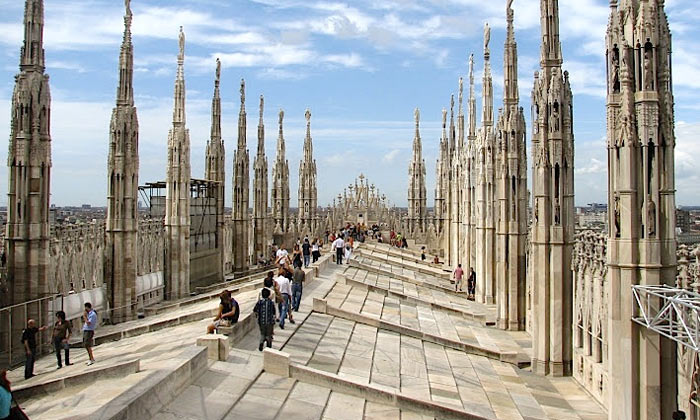
Any travelers visit to Milan is incomplete without visiting its famous Cathedral filled with more than 2,000 statues. But, in order to discover this landmark, you need to walk through the steep staircase in a shaft that remains congested with the crowd. The walk is indeed scary!

Inca Stairs, Peru

Inca Stairs, Peru
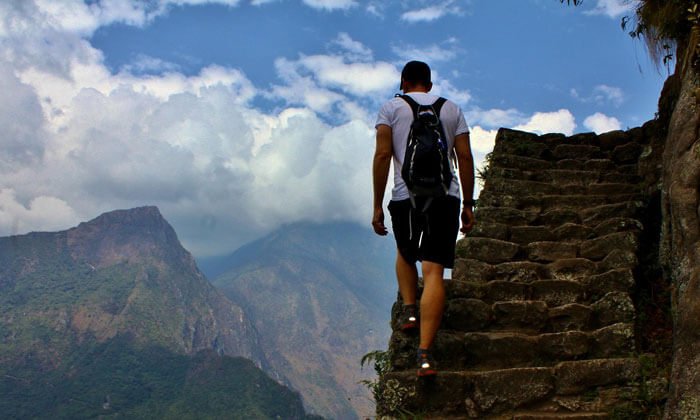
Leading to the Moon Temple at Machu Picchu, there are 600 feet or more of steep, slippery, cloud-covered granite rocks, that the Inca carved more than 500 years ago into the side of Huayna Picchu (the peak in everyone’s photos), which leads to the rarely visited Moon Temple—and a spectacular view of the ruins. The park limits the climb to the first 400 visitors each morning, and has added some metallic chains in the worst parts, so hold on because on one side is a sheer, damp wall and on the other, a straight drop into the Urubamba river.
Inside the statue of liberty Stairs, New York

Liberty Stairs, New York
Do you know that inside of the Statue of Liberty, is a dangerous stairscase that can literally take your breath away? After exploring the museum in the pedestal and going to visit the crown, there is a climb that can be called one of the deadliest staircases in the world. The climb itself is 354 steps, almost 20 storeys, and it is advised only for those in good physical health. Children who are at least 4 feet tall and accompanied by a responsible adult can be allowed to visit.

Discover 21 of the world’s most spectacular staircases

These staircases aren’t just a means of movement—they’re dramatic works of art.

DUISBURG, GERMANY Loop, curve, and climb up to nearly 69 feet on the walkable roller coaster, Tiger & Turtle Magic Mountain. Even with the epic loops closed off by a barrier to the public, the art installation’s twisted metal staircase gives amusement park lovers a new perspective on the classic and exhilarating ride. With 249 steps making up the walkway, visitors can catch striking views of the Rhine, and at night, the handrails are illuminated with LED lights.

PARIS, FRANCE Located in one of the world’s most well-known opera houses, the Palais Garnier’s staircases are rich in opulent beauty, intricate carvings, and detailed artwork.

CASABLANCA, MOROCCO The marble stairs in the Hassan II Mosque, one of the largest mosques in Africa, provides a beautiful foundation to the soaring arches, wide windows, and decorative wood carvings.

OʻAHU, HAWAII Once a path used during World War II to access a radio station antenna on top of Puu Keahi a Kahoe, the Haʻikū Stairs, also known as the Stairway to Heaven, climbs nearly 2,500 feet over O’ahu, Hawaii. While the nearly 4,000-step ladder provides stunning views of the island, it is illegal to climb the stairs from top to bottom after the government closed it due to massive weather damage. If caught taking the trek up, you may be slapped with a thousand-dollar fine on the way down.

SINGAPORE, REPUBLIC OF SINGAPORE Used as the command center during the Malayan Campaign and the Battle of Singapore in World War II, the Battle Box was an underground bunker beneath Fort Canning Hill. Explorers can take the cobbled steps down to see where the British made the decision to surrender Singapore to invading Japanese in 1942.

ABHANERI, RAJASTHAN, INDIA Consisting of 3,500 narrow steps over 13 stories, Chand Baori is one of the largest stepwells in the world. In Hinduism, water is a safe boundary between heaven and Earth and provided cleansing powers. Stepwells like Chand Baori were not only a place people could gather to find water and shelter from the heat, but also a haven for bathing, prayer, and meditation.

XINJIANG, CHINA Following the natural grooves of the Tianshan Grand Canyon, these stairs give climbers stunning views of the wonders that lie below.

PORTO, PORTUGAL Rumoured to have been J.K. Rowling’s inspiration when designing Hogwart’s magical moving stairs, the opulent red staircase in Livraria Lello brings its own magic to Muggles in Porto, Portugal.

MUNICH, GERMANY Two spiral staircases dance and twist to create “Umschreibung,” a 30-foot-tall sculpture whose name translates to “transcription” or “rewriting.” The flights interlock at the peak to create a continuous loop. Erected in 2004 by Danish artist Olafur Eliasson, the stairs can be found in front of the KPMG building complex in Schwanthalerhöhe.

PERU Tucked away in the Andes Mountains, the 26-mile-long Inca Trail to Machu Picchu boasts much of the original Incan architecture from the 15th century.

VATICAN CITY, ITALY Inspired by the original Bramante Staircase created by Donato Bramante in 1505, Giuseppe Momo’s 1932 take on the iconic staircase allows people to ascend and descend without ever crossing paths. The ornate bronze balustrade around the stairs is illuminated by the glass ceiling above.

VENICE, ITALY Resembling a snail’s spiraling shell, the Scala Contarini del Bovolo is a hidden gem in the Venetianneighborhood of San Marcos. Travelers can climb to the top of its 80 steps to find beautiful views over the rooftops of the city.

BANOS, ECUADOR The stairs around the dramatic waterfall El Pailón del Diablo, or the Devil’s Cauldron, are studded with observation platforms and jaw-dropping backgrounds. Raincoats are recommended and make sure to approach the slippery steps with caution.

BASEL, SWITZERLAND Just outside the Bahnhof St. Johann tram stop in downtown Basel, Switzerland, these stairs spiral to the heavens.

PITTSBURGH, PENNSYLVANIA Considered one of Pittsburgh’s first skyscrapers, the Bank Tower’s decorated marble staircase coils in semicircles from the lobby to the 16th floor.

HALSTEREN, NETHERLANDS Visitors can now explore the Fort de Roovere and submerge themselves in the fort’s moat thanks to the Moses Bridge Stairs. Originally an inaccessible island, builders created a sunken bridge so restorations could be made on the 17th-century Dutch fort. To preserve the natural appearance of the island, the bridge sinks walkers into the moat, and two dams at each end ensure that people stay dry.

GAZTELUGATXE, SPAIN Familiar to Game of Thrones fans, the tiny island of San Juan de Gaztelugatxe is connected to the mainland by a manufactured stone bridge. The narrow path leading up to a 10th-century church zigs and zags over 241 steps and fills visitors with awe. Pro tip: There is a local legend that after you reach the top you should ring the church bell three times and make a wish.

ROME, ITALY Made famous by the 1953 film Roman Holiday, the Trinità dei Monti steps, or Spanish Steps, were designed by the architect Francesco De Sanctis in the 1700s. A steep climb, the 174 steps are between the Piazza di Spagna and the church of the Santissima Trinità dei Monti.

BATU CAVES, MALAYSIA The Batu Caves, home to 13 Hindu temples, received a major makeover in August 2018. The 272 steps leading up to the caves were painted rainbow as part of site-wide renovation project.

NASSAU, BAHAMAS Locally known as the 66 steps, the Queen’s Staircase was built in the late 1700s to provide direct access from Fort Fincastle to Nassau City. While there are technically 66 steps, only 65 are visible due to the first step being paved over with asphalt in a restoration project.

ZÜRICH, SWITZERLAND To celebrate the Masoala Rainforest’s 10th anniversary in 2013, the Zoo Zürich opened the treetop walkway, so visitors can feel like they are a part of the jungle when discovering its native creatures. Comprised of two steel towers, each structure is covered in lianas and epiphytes, and a kapok tree grows in the middle of the large tower.

OTHER

El Peñón de Guatapé

© THE COLOMBIAN WAY/ GETTY IMAGES

Location: Colombia
Steps: 740
Rating: Tough, but not difficult
Also known as El Peñol, the Rock of Guatapé was once worshipped by Tahamies Indians. You can pay homage to the 656-foot high monolith by taking the 740 steps to the top of the uniquely surreal staircase built into the side of the rock.

Lion Rock

© EMAD ALJUMAH / GETTY IMAGES

Location: Sigiriya, Sri Lanka
Steps: 1,200
Rating: Not hard
Sri Lanka’s Sigiriya is an ancient rock fortress where a 5th century king built a palace on the summit and decorated its sides with colorful frescoes. Among the wonders is the Lion Staircase (pictured). The climb is not long, but those steps are steep.

Great Wall of China

© SINO / GETTY IMAGES
Location: China
Steps: 5,164 along the 26-mile marathon route
Rating: Hard — the steps go on forever
The official length of the Great Wall of China is 13,170 miles. Just along one 26-mile stretch — the official course of the Great Wall of China marathon — there are 5,164 stone steps. That’s a lot of steps.

Baroque Spiral Staircase of Melk Abbey

WHERE: Melk, Austria 

Melk Abbey was founded in 1089 and sits on a rocky outcrop overlooking the Danube River. The spiral staircase with Roccoco grate leads from the small library room to other library rooms, which are closed to the public. The undersides of the stone steps have been painted in great detail, adding to Melk Abbey’s reputation as one of the world’s most beautiful monastic sites. Other highlights are the stately royal rooms, the golden, glittering church, and the ceiling fresco by Austrian painter Paul Troger.

Tulip Stairs

WHERE: London, England 

In the Queen’s House in Greenwich, the elegant Tulip Stairs, an original feature from the 17th century, were the first geometric self-supporting spiral stairs in Britain. The bright shade of blue paint that coats the wrought-iron structure is made of crushed glass, and restaurateurs have followed this method ever since. The name of the stairs comes from the floral patterns on it, though the flowers in the balustrade are believed to be fleurs-de-lis. In 1966, the Rev R. W. Hardy’s took a famous “ghost” photograph which appears to depict two or three shrouded figures on the Tulip Stairs.

Barney’s Downtown

Monumental Steps of Bom Jesus do Monte

WHERE: Braga, Portugal 

Bom Jesus do Monte is a pilgrimage site outside the city of Braga with an outdoor Baroque staircase that climbs 381 feet. The staircase of dark granite covered in white plaster is known as the Sacred Way and leads to the 18th-century sanctuary of Bom Jesus (Good Jesus) on top of the hill. Although there are no visions or saints associated with the place, many pilgrims choose to uphold tradition and climb up the zig-zagging 577 steps on their knees. Each sense (sight, smell, hearing, touch, taste) is represented by a different fountain along the stairways giving the idea of purification of the faithful.

Reference

How Led Zeppelin III Was Their Most Misunderstood Album

Inspired by Welsh countryside, suffused with folk, acoustic and pastoral music, it was the Zeppelin album that confounded critics but truly brokered their legend

Image credit: Getty Images)
This article originally appeared in Classic Rock #198.

Nineteen sixty-nine was one helluva year for Led Zeppelin. In the short span of 12 months they played close to 150 shows, recorded two best-selling albums, toured the US five times, and established themselves as one rock’s top box-office draws. In the harsh winter of ’68 they had been lucky to get $1,500 (around £883) for a club gig, but by the time 1970 rolled around, they were demanding as much as six figures a show.

The band’s meteoric rise had been breathless. While the music press weren’t particularly kind to them, their dramatic, sexually explicit hard rock was almost irresistible to a new generation of kids searching for something new and exciting that wasn’t “the same old Beatles and Stones”. But after a year of non-stop touring, recording and shagging, the band were ready to take a break.

It was singer Robert Plant’s idea to head for the hills – the Cambrian Mountains in Wales, to be exact. The 22-year-old remembered an 18th-century cottage called Bron-Yr-Aur he had visited in his youth, and felt it would be great place to temporarily escape life in the fast lane and commune with nature. Plant extended an invitation to his co-writer, guitarist and producer Jimmy Page, and in the spring, the two men took their women, instruments and supplies to the bucolic retreat to recharge their batteries and “get back to the garden”.

“It was time to take stock, and not get lost in it all,” Plant said later. And what better way to keep it real than at a place with no electricity, candles for light, water from a stream and an outside toilet?

The story of Plant and Page’s regenerative trek to Wales looms large in Zeppelin folklore, with many assuming that most of the acoustic-based songs that eventually appeared on Led Zeppelin III were written there. Page disputes that notion, but doesn’t dismiss the significance of the journey.

“When Robert and I went to Bron-Yr-Aur we weren’t thinking: ‘Let’s go to Wales and write,’” says Page. “The original plan was to just go there, hang out and appreciate the countryside. The only song we really finished while we were there was That’s The Way, but being in the country established a standard of travelling for inspiration and set a tone for Led Zeppelin III.”

Celebration day, Zeppelin on stage at the Bath Festival, June 1970 (Image credit: Getty Images

While it might not have been conceived as a writing trip, the singer and guitarist’s stay in the Welsh mountains was deemed important and influential enough to be acknowledged on the album’s sleeve, stating: ‘Credit must be given to Bron Y Aur a small derelict cottage in South Snowdonia for painting a somewhat forgotten picture of true completeness which acted as an incentive to some of these music statements.’

Little did the band know that this ‘incentive’ and subsequent ‘tone’ would end up sending massive shockwaves throughout the rock world. Led Zeppelin’s pastoral third album was recorded at Olympic Studios in London and released in October 1970. It seemed almost self-destructively perverse – a 360-degree retreat from the testosterone-infused hard rock that had made them international superstars.

John Bonham teased the press about the band’s intended direction when Zeppelin regrouped for the first studio sessions of III in late May. ‘’We’ll be recording for the next two weeks and we are doing a lot of acoustic stuff as well as the heavier side,” he told the Melody Maker. “There will be better quality songs than on the first two albums.’’

The drummer wasn’t wrong. Six of the 10 tracks on the third album were built around the sweet ’n’ bitter strains of Page’s acoustic Harmony guitar as the band touched on everything from traditional bluegrass (Gallows Pole) to country blues (Hats Off To (Roy) Harper), to a folk song so upbeat you could square-dance to it (Bron-Y-Aur Stomp). To emphasise the rustic nature of the album, Zeppelin even changed their appearance, growing facial hair to Hobbit-like proportions and wearing clothes that made them look more like hippie farmers than sex gods. Fans and critics were dazed and confused, but the band stood their ground.

“We were so far ahead that it was difficult for people to know what the hell we were doing,” Page told journalist Brad Tolinski in the 2012 book Light & Shade: Conversations With Jimmy Page. “Critics especially couldn’t relate to it. Led Zeppelin was growing. Where many of our contemporaries were narrowing their perspective, we were really being expansive. I was maturing as a composer and player, and there were many kinds of music that I found stimulating, and with this wonderful group I had the chance to be really adventurous.”

Soon after the album’s release, Page was keen to emphasise Zeppelin’s evolution. “There is another side to us’’ he said. “Everyone in the band is going through changes. There are changes in the playing and the lyrics. Robert is really getting involved in his lyric writing. This album was to get across more versatility and use combinations of instruments. I haven’t read any reviews yet, but people have got to give the LP a reasonable hearing.’’

Jimmy Page, more hippie farmer than sex god for Zep III (Image credit: Getty Images)

Page would go on to read the reviews. Some writers went so far as to accuse the band of jumping on the Crosby, Stills, Nash & Young acoustic-rock bandwagon, which Page called “pathetic”, noting that acoustic guitars were all over the first two albums and arguing that they were at the core of everything the band did. The reviews so incensed the guitarist that he refused to grant any press interviews for the next 18 months after the album’s release.

Plant, at the time Led Zeppelin III came out, was more direct: “You can just see the headlines, can’t you? ‘Led Zeppelin go soft on their fans’ or some crap like that. But now that we’ve done [this album] the sky’s the limit. It shows we can change. It means there are endless possibilities for us to go in. We won’t go stale, and this proves it.”

The truth is, the third album should have come as no surprise to anyone paying full attention to the band. The radical seeds that sprouted onIII had been planted years earlier. Throughout the 60s, as Page toiled as London’s top session guitarist, very little escaped his attention. Like a musical sponge, he absorbed every lick the Chicago blues boom had to offer, took copious notes on contemporary folk-guitar virtuosos like John Fahey and Bert Jansch, and even purchased a sitar years before world music caught the attention of Beatle George Harrison.

He had already started applying those exotic flavours to rock’n’roll during his brief stint with The Yardbirds, and developed those ideas further on such early Zeppelin tracks as Black Mountain Side, which featured an Indian tabla musician, and Babe, I’m Gonna Leave You, which improbably married a Joan Baez song to heavy metal power chords and a flamenco guitar solo. The acoustic songs, Page opined, were designed to create dynamics both on the albums and in live performances, and that the harder songs “wouldn’t have as much impact without the softer ones”.

Yes, some thought Led Zeppelin III was commercial suicide, but in retrospect it was a brilliant gambit. Not only did the album prevent the quartet from becoming hard-rock caricatures like, say, Deep Purple or Ten Years After, but it also gave them an opportunity to take an important evolutionary leap forward. Often marginalised as ‘the acoustic album’, III was much more than that: it represented a truly daring leap in synthesising the folk, rock and world music elements found on the band’s first two albums into what one thinks of as ‘the Led Zeppelin style’.

The tense and mysterious Friends, for example, was the result of an experimental tuning Page designed specifically to capture the droning vibe heard in North African music. With its Eastern tonalities and ominous string arrangement reminiscent of English composer Gustav Holst’s Mars, Friends was undeniably a gateway to future masterworks like Kashmir and Four Sticks. And it makes you wonder if Stairway To Heaven or Over The Hills And Far Away would have existed without stylistic forerunners like That’s The Way or Gallows Pole.

Page was spreading his wings, and the Zeppelin III sessions also gave Robert Plant the opportunity to grow as a songwriter. No longer forced to simply beat his chest and crow about the size of his knob, he wrote his first truly great lyric, for That’s The Way. Amid Page’s cascading acoustic guitars, dulcimer and weeping pedal steel, Plant weaves a mournful southern Gothic tale on a par with Bobbie Gentry’s 1967 hit Ode To Billie Joe. With its haunting ambiguity, the song could be about class, racism, homosexuality or even ecological disaster. It’s sophisticated, secretive and flat-out beautiful. And, Lord knows, it’s a far cry from ‘I’m gonna give you every inch of my love’.

Plant has said the third album was “incredibly important for my dignity”. Perhaps the same could be said for the entire band.

Led Zeppelin were daring, but not crazy enough to completely abandon hard rock. While the album has its share of quiet moments, it also has plenty of loud ones – peculiar as they may be.

Immigrant Song is one of the heaviest and most exciting tracks in the band’s entire catalogue. On the surface it seems pretty straightforward, until you realise it’s a song about Vikings, the main vocal riff sounds like Bali Ha’i from the Broadway musical South Pacific, and that the rhythm guitar borrows from Link Wray’s rockabilly classic Rumble.

Its lyrical inspiration came when Zeppelin took some time out from the studio and ventured to Iceland to play a show in on June 22 as part of a cultural exchange arranged by the British Government. Their first gig in the best part of three months, it took place at Reykjavik’s Laugardalsholl Sports. More importantly, just as the Welsh mountains had proved inspiring earlier in the year, Plant let his imagination run riot as he contemplated Iceland’s endless day.

“It was one of those times when you go to bed at night but you don’t sleep because the daylight’s still there – a 24-hour day,” the singer said. “There was just an amazing hue in the sky, and it was one of those things that made you think of Vikings and big ships – and John Bonham’s stomach.”

Less than a week later the band returned to the UK to headline the Bath Festival Of Blues & Progressive Music. The new song had already made such an impact on Zeppelin that they chose to open the show with it, and the British public heard Immigrant Song for the first time.

Unsurprisingly, their Bath show was a sensation, prompting Melody Maker to enthuse: ‘Led Zeppelin stormed to huge success at the Bath Festival. About 150,000 fans rose to give them an ovation. They played for over three hours – blues, rock’n’roll and pure Zeppelin. Jimmy Page, in a yokel hat to suit the Somerset scene, screamed into attack on guitar, John Paul Jones came into his own on organ as well as bass, and John Bonham exploded his drums in a sensational solo. And the crowd went wild demanding encore after encore… a total of five

“Bath was a turning point in recognition for us,” Page said. “There have been one or two magical gigs and Bath was one of them.”

“Bath was great,” remembered manager Peter Grant later. “I went down to the site unbeknown to [promoter] Freddie Bannister, and I found out from the Met Office what time the sun was setting, and it was right behind the stage. And by going on at eight in the evening I was able to bring the lights up a bit at a time. And it was vital we went on to match that.”

Page, “Bath was a turning point for us” (Image credit: Getty Images

Even more crucially than any show-stopping sunset appearance, the Bath gig would herald a new era in Zeppelin’s evolution. Midway through their set, Jimmy Page swapped his Gibson Les Paul for a Martin acoustic guitar, and John Paul Jones picked up a mandolin. As Page played a few opening chords, Plant stepped to the mic. “This is called The Boy Next Door, for want of a better title [a better title would emerge – That’s The Way, when it finally appeared on Led Zeppelin III]” he said. It was the first time Led Zeppelin played acoustically in the UK.

It isn’t all folky acoustic bluster on Led Zeppelin III; there’s Since I’ve Been Loving You, a standard three-chord, 12-bar minor blues that actually has way more than three chords and who knows how many bars, because the damn thing never seems to repeat. Or what about Celebration Day, a song that sounds like a berserk Slinky due to the fact that John Paul Jones is playing his bass with a guitar slide?

Like I said, loud but peculiar.

Then, of course, there was the matter of the Aleister Crowley quote etched into the run-off groove of early pressings of the album. Yes, the Beatles had put his image among many others on the cover of 1967’s Sgt. Pepper’s Lonely Heart’s Club Band, but this seemed a little more covert; a little more dangerous, adding another disturbing layer to the already dark mythology of Led Zeppelin.

The phrase ‘Do what thou wilt’ and ‘So mote it be’ were inscribed on the vinyl by recording engineer Terry Manning during the final mastering process: ‘Do what thou wilt’ on side one, and ‘So mote it be’ on side two. The phrases were homage to Crowley, a practitioner of black magic who was once called “the most evil man in England”, and whom Page was quite enamoured with.

This phrase is from one of the fundamental principles of Aleister Crowley’s philosophy of Thelema: “Do what thou wilt shall be the whole of the law. Love is the law, love under will. There is no law beyond do what thou wilt.”

By the time of the release of the album, it was still rather an open secret that Page was interested in the dark arts, and the inscriptions on the album were one of the first public signifiers. It wouldn’t be until the next year that the guitarist would buy Crowley’s Loch Ness estate Boleskine House. This was something Page would downplay later, explaining to Rolling Stone in 1976: “I do not worship the devil. But magic does intrigue me. Magic of all kinds. I bought Crowley’s house to go up and write in. The thing is, I just never get up that way. Friends live there now.”

Page takes a seat at the Forum in LA in 1970 (Image credit: Getty Images

Whenever he’s queried today, Page silences any conversation on the subject by advising the hapless interrogator: “Forget the myths. Because it was really all about the music.”

Which mostly it was, and moving forward into the future. This was a band who were staunchly opposed to repeating what they’d done before. “There was no way the third album was going to be like the first. If there was a Zeppelin philosophy, it was always: ‘Ever onwards. Let’s see what we can do next,’” Page said in 2005.

“With Since I’ve Been Loving You, we were setting the scene of something that was yet to come,” says Page. “It was meant to push the envelope. We were playing in the spirit of the blues, but trying to take it into new dimensions dictated by the mass consciousness of the four players involved.

The same thing goes for the folk stuff as well. It’s sort of, ‘Well, this is how it was done in the past, but it now has to move.’ There was no point in looking back. We were just inspired with this energy that we had collectively.”

“On Hats Off To (Roy) Harper, Robert and I were just singing and playing in the tradition of Sonny Terry And Brownie McGhee. Then we put the vocal and harmonica through an amp and turned on the tremolo, and suddenly it sounded edgy and surreal. It was a perfect way to end the album. We were tipping our hat to the country blues, but presented it in a way that no one else had done.”

Perhaps the most surreal thing about Led Zeppelin III is that, after all these years, its time may have finally come. While it will never be their biggest album, it might be their most contemporary. Think about it: ‘dudes with beards, wearing expensive thrift-shop clothing, playing edgy folk music that borrows liberally from world music and heavy metal’ sounds very modern indie rock to these ears. It’s no wonder that the album has sold three times as many copies in the last two decades as it did in the first twenty years since its existence.

Perhaps this is what Page – ever the mystic – was talking about when he said: “We knew what we were doing was right and that it was actually breaking new ground. We were cutting with a machete knife through the jungle, and discovered a temple of the ages.”

Trailblazing can be tough business, but very satisfying when smart people follow your footsteps. Four decades later, it seems that the temple Led Zeppelin III built has become a very busy place indeed. Artists such as Laura Marling, Fleet Foxes, Devendra Banhart and even Mumford & Sons, whose thumping beats have at least one muddy boot in Bron-Y-Aur Stomp, have been known to drop in for a visit.

(Image credit: Getty Images

If one was really going to quibble with the concept of Led Zeppelin III, it might be with the notion that the band were doing anything particularly shocking or original. While it’s agreed that comparing them to Crosby, Stills & Nash was patently absurd, bands like Fairport Convention and The Byrds were all attempting to modernise folk music to some degree in the 60s and 70s. In a 2010 interview, Page flicked away that idea, but made a valid point, saying that while he admired those bands and what they were doing, he didn’t think anyone would ever confuse Led Zeppelin with Fairport or the Incredible String Band.

“They were coming from a much more traditional place, and I was coming from so many different areas. But maybe,” he adds with a laugh, “I was just coming from a rock’n’roll head. Something like Friends really isn’t – it isn’t traditional music, but I liked that we could go in that direction and put our own spin on it. At the same time, I don’t ever think we lost sight of the fact that we were a rock band.”

As for the bad reviews, Page has softened over the years, saying that in hindsight he could see how III was misunderstood. “Journalists were in a rush and they were looking for the new Whole Lotta Love and not actually listening to what was there,” he told writer Nigel Williamson. “It was too fresh for them and they didn’t get the plot. It doesn’t surprise me that the diversity and breadth of what we were doing was overlooked or under-appreciated at the time.”

In the final analysis, after the album was released in October and the dust settled, Zeppelin simply went on their way as they always had, and immediately began writing and working on what would eventually become their biggest album ever: Led Zeppelin IV. With the same acoustic guitar that he used on the maligned III, Page composed some of the band’s most beloved anthems, including Stairway To Heaven, The Battle Of Evermore, Going To California and Four Sticks. Critics – and everyone else – be damned.

Reference

The Best Chocolate Money Can Buy

Not all chocolate are created equal. Just as there are tiers of basic (and tiers of bad), there are tiers of good, excellent, and plain extravagant. 

Here are the best high-end chocolates money can buy, and just in time for the Easter holidays:

Marie Belle: River of Diamonds Cien Box

Price: $400 USD
The Draw: Chocolate meets art in this particular selection. Globally renowned painter, Chau Giang Thi Nguyen has replicated nine of this most famous oil paintings onto the ganaches within this box. So well crafted you’ll almost want to refrain from consuming them.

To’ak Chocolate: Cognac Cask 2014 Vintage Edition

Price: $385 USD
The Draw: This booze-infused bar is the accumulative efforts of two years testing, and four years of ageing. Mature and pleasurable.

DeLafée of Switzerland: Gold Chocolate Box with Antique Swiss Gold Coin 

Price: $315 USD
The Draw: This one leans towards more of the luxury for luxury sake mindset. These gold chocolates are 24-karat each, and comes with an antique Swiss coin that history buffs will supposedly love. 

Knipschildt Chocolatier: La Madeline au Truffle

Price: $250 USD (Per truffle)
The Draw: Indulgence is always fun, which makes this pick an entire crate-full of fun. The La Madeline au Truffle is wrapped in gold and handcrafted with 71% pure Ecuadorian dark chocolate. So it should come as no surprise that this is the most expensive truffle in the world.

THE BEST OF AUSTRALIA’S BEAN-TO-BAR ARTISAN CHOCOLATE]

Chocolate is without a doubt the ruling leader of the confection world. Whether it’s the joy that comes from savouring a piece, or the nostalgia that washes over you recalling the days you begged your parents for just one more bite, chocolate holds a very special place in our hearts.

And artisan chocolate is one of the best kinds. The bean-to-bar movement has picked up in Australia over the last few years, resulting in some incredibly creative boutique chocolate makers that are carving out their own identity alongside beloved established brands.

Some use native Australian ingredients to create unique flavour profiles. Others look to eccentric Asian flavours. And other still simply focus on highlighting the increasingly popular single origin movement.

Among Australia’s artisan chocolate offering, these are a few of our favourites:

Haigh’s Chocolates

Image: supplied

As Australia’s oldest family owned chocolate maker, Haigh’s Chocolates is rightfully considered a homegrown icon, pioneering the bean-to-bar movement in Australia.

Ask ten different people what their favourite Haigh’s chocolate is and you’ll get ten different answers. Though it’s hard to go past their dark premium fruit and nut block, which is flecked with juicy locally sourced fruits like pistachios, dried apricots, cranberries, and goji berries, and nuts like pecans, sunflower seeds and pumpkin seeds.

Haigh’s Chocolates has numerous stores throughout Melbourne, Sydney, and South Australia, as well as one in Canberra.

Hunted + Gathered

Just three to five ingredients – mainly organic cacao beans, organic coconut sugar and organic cacao butter – are used in the small-scale, boutique chocolate from Melbourne-based Hunted + Gathered.

This minimal, highly controlled profile, with the full bean-to-bar process carried out in-house, has earned owners and brothers Harry and Charlie Nissen a passionate following throughout Australia.

Aside from their Gold Medal winning Single Origin range, a must-try is their new collaboration with Four Pillars Gin, which is produced using spent gin botanicals and gin-steamed oranges from distillations of Four Pillars’ popular Rare Dry Gin. And if this collaboration is anything to go by, their next custom made chocolate bar with Australian specialty wine store Blackhearts and Sparrowsshould go down a treat. Wine chocolate, anyone?

Hunted + Gathered are stocked in numerous stores along the East Coast, as well as one in Perth. They also have a recently opened shopfront and cafe attached to their factory in Melbourne’s Cremorne.

Koko Black

Image: supplied

Widely recognised around Australia,  Koko Black turn hand-blended Belgium couverture chocolate into some of the country’s most beloved luxury chocolate bars, pralines and truffles.

With their range featuring well over 100 different varieties, the chocolate makers at Koko Black are able to showcase a wide range of local produce like organic walnuts from NSW, leatherwood honey from Tasmania, macadamia nuts from Queensland, and small batch spirits from the likes of Starward Whisky, The Rum Diary, and Four Pillars.

This is best represented in their new collaborative range with one of Australia’s most celebrated chefs, Brae’s Dan Hunter. The small collection, hinged on the idea of non-reliance on sugars and an appreciation of acids instead of excessive sweetness, highlights Australian native ingredients in flavours like macadamia and spotted gum honey crumble with caramelised white chocolate, and lemon myrtle with Venezuelan 72 percent single origin chocolate. Also on the menu: green ants with burnt butter cream and white chocolate.

Koko Black has one store each in Perth, Adelaide, Sydney and Canberra as well as numerous throughout Victoria.

Bakedown Cakery

Image: Alana Dimou

Using both premium quality couverture chocolate from Belgium and France, and single origin beans, Bakedown Cakery owner Jen Lo turns in some of the country’s most unique, distinctive and exciting chocolate bars.

Experimentation has been driving much of the boutique brand’s output lately, which includes a special Japanese condiment range that features flavours like pickled ginger with white chocolate, wasabi oil with dark chocolate, caramel soy sauce chocolate, and white sencha chocolate.

Unique Asian twists on premium quality chocolate also extends to Bakedown’s mainline range, where blocks of genmaicha oreo strawberry – using tea sourced from a plantation just outside of Kyoto – sit comfortably next to other creations like taro rice crispies, and pandan coconut lychee chocolates.

Aside from their online shop, Bakedown Cakery only has one store in Sydney’s St Leonards which is open every Thursday.

Jasper + Myrtle

Image: Jasper + Myrtle / Facebook

This small Canberra chocolate maker gets their beans cacao beans from Peru and Papua New Guinea, as well as from growing regions such as Vietnam and Bougainville. This gives self-taught chocolatier Li Peng Monroe many different flavour profiles to experiment with, and plenty of reason to focus on single origin dark chocolate bars highlighting provenance and allowing the natural flavour of the cacao beans to come through.

Completely handmade, Jasper + Myrtle have some of the most tempting flavour combinations in the country, including their award-winning dark chocolate with wakame and Himalayan rock salt, and the milk chocolate with lemon myrtle and macadamia.

Reference

Blasphemous Bibles And Cannibals At Sea: 4 Bad Days In History

History is full of famously bad days. Now, a new book pulls together 365 of the most tantalising and enlightening.

Stern reporter Gerhard Heidemann holds up the forged Hitler diaries, 25 April 1983. (AP-Photo/MS. Press Association Images)

In Bad Days in History: A Gleefully Grim Chronicle of Misfortune, Mayhem, and Misery for Every Day of the Year, bestselling author Michael Farquhar revisits some of the most entertaining calamities in history – from the disastrous marriage of Henry VIII to Anne of Cleves in 1540, to the mother-in-law that soured Harry Truman’s arrival at the White House in 1945.

Here, Farquhar shares four of his favourite excerpts…

6 May 1983, The Dummkopf “Diaries”

From the diary of a madman: “On Eva’s wishes, I am thoroughly examined by my doctors. Because of the new pills I have violent flatulence, and—says Eva—bad breath.” Certainly it was a rather bland entry, but a tantalising tidbit nonetheless—part of what promised to be a historic bonanza of insight into one of the world’s most evil men.

On 22 April 1983, the German news magazine Stern announced that it had in its possession the personal diary of Adolf Hitler—a long hidden set of some 60 volumes, spanning the years 1932 to 1945, for which the magazine had paid millions. It was a staggering sum, but the prestige that would come from such a scoop was priceless.

Australian media mogul Rupert Murdoch was among those who saw huge profit potential in the diaries and wanted to serialize them in his Times of London. To authenticate the documents, he dispatched British historian Hugh Trevor-Roper, a specialist in the 16th and 17th centuries who could barely read German. After hearing Stern editors relate the story of how the diaries had been retrieved from a plane crash in 1945 and secretly stashed away by a high-ranking East German officer, and then reviewing the massive pile of volumes, Trevor-Roper was “satisfied that the documents are authentic.”

Even as the world waited anxiously to read the private thoughts of this inscrutable monster, sceptics had reservations. Hitler biographer Werner Maser told Reuters at the time that “everything speaks against it. It smacks of pure sensationalism.’’ The chorus of doubt grew louder when Stern published a lavish special issue heralding the diaries on 25 April, and held a press conference to crow about it.

Instead of the expected huzzahs, however, editors were confronted with unwelcome questions about the diaries’ authenticity. And Trevor-Roper certainly didn’t help matters with his sudden and unexpected about-face when asked to address the suspicious press: “As a historian, I regret that the, er, normal method of historical verification, er, has, perhaps necessarily, been to some extent sacrificed to the requirements of a journalistic scoop.”

It was a disaster unfolding, the crowning blow of which came on 6 May when the German Federal Archives declared the diaries to be “a crude forgery” and the “grotesquely superficial” concoction of a forger with “limited intellectual capacity.”

Stern had been duped by a dope by the name of Konrad Kujau, a “jaunty and farcical figure,” as author Robert Harris described him, who apparently expended very little time or effort on his handiwork. The indications of forgery were obvious, from the paper, ink, and glue Kujau used—all of which were manufactured well after Hitler’s death in 1945—to the passages lifted directly, albeit often incorrectly, from a book of the führer’s speeches and proclamations. Kujau even messed up the Gothic initials embossed on each imitation leather volume, some of which read “FH,” not “AH.”

“We have every reason to be ashamed that something like this could happen to us,” announced Stern publisher Henri Nannen in the aftermath of the diary fiasco. Indeed, they did. The magazine’s editors had allowed their reporter Gerd Heidemann to run amok with the story, without even insisting he name his source. They also ignored the numerous warning signs of fraud that preceded publication. But at least Nannen and his colleagues could take a measure of comfort in knowing that some of what was written in the “diaries” was actually true. The führer really did have what his doctor described as “colossal flatulence . . . on a scale I have seldom encountered before.” And horrendously bad breath, too.

A page of what was thought to be Hitler’s personal diary, which reads: “Henceforth, I will take note of my political thoughts and actions to leave a record for posterity as does every politician”. Stern magazine handed out a reproduction of this page when they made public their ‘discovery’ on 25 April 1983. (AP-Photo/HO Stern. HO/STERN/AP/Press Association Images)

8 May 1632, The Holy (Mis)Writ

Some readers of a 1631 edition of the King James Bible were shocked (or at least pleasantly surprised) when they came across the Seventh Commandment in the Book of Exodus: “Thou shalt commit adultery.” Then there was the apparent blasphemy found in Deuteronomy, chapter 5: “The Lord hath shewed us his glory, and his great asse.” (The proper word was “greatnasse.”)

With these egregious errors, the 1631 version became known as the Wicked Bible or the Adulterous Bible, and on May 8, 1632, the printers were hauled before the fearsome Star Chamber for their blasphemous mistakes—with the additional charge of printing the Bible on bad paper.

“I knew the time when great care was had about printing, the Bibles especially,” declared the appalled Archbishop of Canterbury. “Good compositors and the best correctors were gotten being grave and learned men, the paper and the letter rare, and faire every way of the best, but now the paper is nought, the composers boys, and the correctors unlearned.” Worse, he said, even the dreaded Catholics took better care with their “superstitious books.”

The printers were heavily fined and banned from their profession, but were lucky enough not to have been mutilated or dealt a similarly gruesome punishment of the day. Meanwhile, history has no record of how many marital beds may have been violated with blessings from the Wicked Bible.

19 May 1884, Filet Mignonette

When young Richard Parker boarded the yacht Mignonette on 19 May 1884, it was if his fate had already been eerily determined. Nearly 50 years before, Edgar Allan Poe published his only novel, The Narrative of Arthur Gordon Pym – a tale of maritime adventure and disaster in which the starving survivors of a shipwreck draw straws to determine who among them would be sacrificed and eaten to nourish the others. A character by the name of Richard Parker comes up with the short one and is duly devoured by the rest.

In a remarkable echo of Poe’s story, the Mignonette was battered by storms while sailing around the Cape of Good Hope en route from Southampton, then England, to Sydney, Australia, and sank. Richard Parker survived the wreck, but not for long. The young man and his three companions drifted for weeks aboard a flimsy dinghy, fending off sharks and sustaining themselves on the two tins of turnips they had managed to salvage. Just as in Poe’s tale, the men did capture and eat a sea turtle, but starvation still loomed. Desperate for nourishment, the survivors began to eye one another. A maritime tradition known as the Custom of the Sea provided the solution for such situations: cannibalism. But not until straws were drawn to determine which man would become the meal.

The men of the Mignonette neglected this key provision because Richard Parker, dangerously ill from having consumed seawater, appeared very likely to die. Rather than wait for the inevitable, and risk eating corrupted, diseased flesh, the three other survivors instead killed the young man by stabbing him in the neck. Then they ate him.

“I can assure you,” one of the survivors recalled, “I shall never forget the sight of my two unfortunate companions over that ghastly meal. We all was like mad wolfs who should get the most and for men fathers of children to commit such a deed we could not have our right reason.”

Four or five days after this murderous act of necessity, the three survivors spotted the sails of the German ship Moctezuma. Salvation came, one of the men later said, just “as we was having our breakfast, we will call it.”

20 September 1884: a member of the crew of the Mignonette using a sea anchor in an open boat during stormy conditions at sea. Original Artwork: engraving by J Nash after sketches by Mr Stephens. (Photo by Rischgitz/Getty Images)

22 May 1856, Sumner’s Violent Schooling

In the decades before the Civil War — when sectional differences over slavery and state rights began to intensify to a dangerous degree — edgy lawmakers roamed the halls of Congress armed with pistols and daggers, practically daring any political opponent to defy them. The House of Representatives “seethed like a boiling caldron,” one observer wrote, as “belligerent Southrons glared fiercely at phlegmatic Yankees.” Lawmakers challenged one another to duels, took to the floor with scathing orations, and, in one scene reminiscent of a Wild West saloon, reacted like threatened cowboys after one member’s gun fell to the ground and accidentally discharged.

There were instantly “fully thirty or forty pistols in the air,” Representative William Holman of Indiana reported.

The tension was punctuated by one particularly violent episode in 1856, after Charles Sumner, an abolitionist senator from Massachusetts, delivered his rousing “Crime Against Kansas” speech, in which he argued vehemently against the expansion of slavery into that territory and attacked in particular Andrew Butler of South Carolina, one of the authors of the Kansas-Nebraska Act.

“The senator from South Carolina has read many books of chivalry, and believes himself a chivalrous knight with sentiments of honor and courage,” Sumner thundered. “Of course he has chosen a mistress to whom he has made his vows, and who, though ugly to others, is always lovely to him; though polluted in the sight of the world, is chaste in his sight—I mean the harlot slavery.”

Representative Preston Brooks, a nephew of Butler’s, was infuriated by Sumner’s inflammatory, sexually suggestive speech, and retaliated two days later, on 22 May. As Sumner quietly worked at his desk in the near-empty Senate chamber, Brooks approached him. “Mr. Sumner,” he said, “I have read your speech twice over carefully. It is a libel on South Carolina, and Mr. Butler, who is a relative of mine.” Without warning, Brooks then began whacking Sumner over the head with his cane. The assault didn’t stop, even after Sumner collapsed on the floor in a bloody heap, and his injuries were so grave that it would take him years to recover and return to his Senate seat.

Northern reaction to Sumner’s bludgeoning was one of horror. “The crime is not merely against liberty but civilization,” editorialised the Boston Evening Transcript. In the South, however, Brooks was hailed as a hero. “Sumner was well and elegantly whipped,” gloated the Charleston Mercury, “and he richly deserved it.” Southerners sent Brooks commemorative canes, with “HIT HIM AGAIN” inscribed on them. Meanwhile, the country careened ever closer to civil war.

Reference