Category Archives: Gay Interest

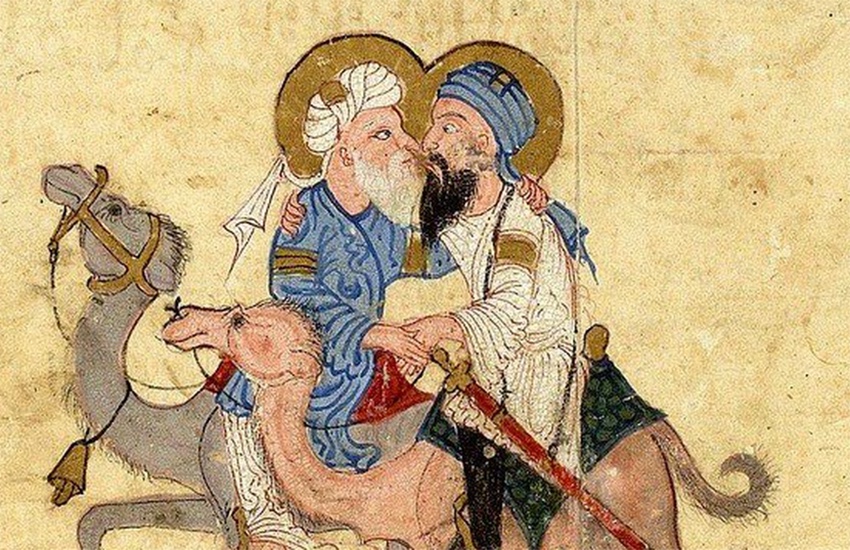
Gay History: The Secret Gay History Of Islam

Islam once considered homosexuality to be one of the most normal things in the world.

The Ottoman Empire, the seat of power in the Muslim world, didn’t view lesbian or gay sex as taboo for centuries. They formally ruled gay sex wasn’t a crime in 1858.

But as Christians came over from the west to colonize, they infected Islam with homophobia.

The truth is many Muslims alive today believe the prophet Muhammad supported and protected sexual and gender minorities.

But go back to the beginning, and you’ll see there is far mre homosexuality in Islam than you might have ever thought before.

1 Ancient Muslim borrowed culture from the boy-loving Ancient Greeks

The Islamic empires, (Ottoman, Safavid/Qajar, Mughals), shared a common culture. And it shared a lot of similarities with the Ancient Greeks.

Persianate cultures, all of them Muslim, dominated modern day India and Arab world. And it was very common for older men to have sex with younger, beardless men. These younger men were called ‘amrad’.

Once these men had grown his beard (or ‘khatt’), he then became the pursuer of his own younger male desires.

And in this time, once you had fulfilled your reproductive responsibilities as a man you could do what you like with younger men, prostitutes and other women.

Society completely accepted this, at least in elite circles. Iranian historian Afsaneh Najmabadi writes how official Safavid chroniclers would describe the sexual lives of various Shahs, the ruling class, without judgment.

There was some judgment over ‘mukhannas’. These were men (some researchers consider them to be transgender or third gender people) who would shave their beards as adults to show they wished to continue being the object of desire for men. But even they had their place in society. They would often be used as servants for prophets.

‘It wasn’t exactly how we would define homosexuality as we would today, it was about patriarchy,’ Ludovic-Mohamed Zahed, a gay imam who lives in Marseilles, France, told GSN.

‘It was saying, “I’m a man, I’m a patriarch, I earn money so I can rape anyone including boys, other slaves and women.” We shouldn’t idealize antique culture.’

2 Paradise included male virgins, not just female ones

There is nowhere in the Qu’ran that states the ‘virgins’ in paradise are only female.

The ‘hur’, or ‘houris’, are female. They have a male counterpart, the ‘ghilman’, who are immortal young men who wait and serve people in paradise.

‘Immortal [male] youths shall surround them, waiting upon them,’ it is written in the Qu’ran. ‘When you see them, you would think they are scattered pearls.’

Zahed says you should look at Ancient Muslim culture with the same eyes as Ancient Greek culture.

‘These amrads are not having sex in a perfectly consenting way because of power relationships and pressures and so on.

‘However, it’s not as heteronormative as it might seem at first. There’s far more sexual diversity.’

3 Sodom and Gomorrah is not an excuse for homophobia in Islam

Like the Bible, the Qu’ran tells the story of how Allah punished the ancient inhabitants of the city of Sodom.

Two angels arrive at Sodom, and they meet Lot who insists they stay the night in his house. Then other men learn about the strangers, and insist on raping them.

While many may use this as an excuse to hate gay people, it’s not. It’s about Allah punishing rape, violence and refusing hospitality.

Historians often rely on literary representations for evidence of history. And many of the poems from ancient Muslim culture celebrate reciprocal love between two men. There are also factual reports saying it was illegal to force your way onto a young man.

The punishment for a rape of a young man was caning the feet of the perpetrator, or cutting off an ear, Najmabadi writes. Authorities are documented as carrying these punishments out in Qajar Iran.

4 Lesbian sex used as a ‘cure’

Fitting a patriarchal society, we know very little about the sex lives of women in ancient Muslim culture.

But ‘Sihaq’, translated literally as ‘rubbing’, is referenced as lesbian sex.

Sex between two women was decriminalized in the Ottoman Empire in the 16th century, probably because it was deemed to have very little importance.

Physicians believed lesbianism developed from a hot itch on a woman’s vulva that could only be soothed by another woman’s sexual fluid. This derived from Greek medicine.

Much later, the 16th century Italian scientist Prosper Alpini claimed the hot climate caused ‘excessive sexual desire and overeating’ in women. This caused a humor imbalance that caused illnesses, like ‘lesbianism’. He recommended bathing to ‘remedy’ this. However, because men feared women were having sex with other women at private baths, many husbands tried to restrict women from going.

5 Lesbian ‘marriage’ and legendary couples

In Arabic folklore, al-Zarqa al-Yamama (‘the blue-eyed woman of Yamama’) fell in love with Christian princess Hind of the Lakhmids. When al-Zarqa, who had the ability to see events in the future, was crucified, it was said the princess cut her hair and mourned until she died.

Many books, especially in the 10th century, celebrated lesbian couples. Sapphic love features in the Book of Salma and Suvad; the Book of Sawab and Surur (of Justice and Happiness); the Book of al-Dahma’ and Nisma (of the Dark One and the Gift from God).

‘In palaces, there is evidence hundreds of women established some kind of contract. Two women would sign a contract swearing to protect and care for one another. Almost like a civil partnership or a marriage,’ Zahed said.

‘Outside of these palaces, this was also very common. There was a lot of Sapphic poetry showing same-sex love.’

As Europeans colonized these countries, depictions of lesbian love changed.

Samar Habib, who studied Arabo-Islamic texts, says the Arab epic One Thousand and One Nights proves this. He claims some stories in this classic show non-Muslim women preferred other women as sexual partners. But the ‘hero’ of the tale converts these women to Islam, and to heterosexuality.

6 Muhammad protected trans people

‘Muhammad housed and protected transgender or third gender people,’ Zahed said. ‘The leader of the Arab-Muslim world welcomed trans and queer people into his home.

‘If you look at the traditions some use to justify gay killings, you find much more evidence – clear evidence – that Muhammad was very inclusive.

‘He was protecting these people from those who wanted to beat them and kill them.’

7 How patriarchy transformed Islam

Europeans forced their way into the Muslim world, either through full on colonialism, like in India or Egypt, or economically and socially, like in the Ottoman Empire.

They pushed their cultural practices and attitudes on to Muslims: modern Islamic fundamentalism flourished.

While the Ottoman Empire resisted European culture at first, hence gay sex being allowed in 1858, nationalization soon won out. Twelve years later, in 1870, India’s Penal Code declared gay sex a crime. LGBTI Indians finally won against this colonial law in 2018.

But what is it like to be colonized? And why did homophobia get so much more extreme?

‘With the west coming in and colonizing, they think [Muslims] are lazy and passive and weak,’ Zahed said.

‘As Arab men, we have to prove we are more powerful and virile and manly. Modern German history is like that, showing how German nationalization rose after [defeat in] the First World War.

‘It’s tribalism, it’s the same problem. It’s about killing everyone against my tribe. I’m going to kill the weak. I’m going to kill anyone who doesn’t fulfil this aggressive nationalistic stereotype.’

Considering the male-dominant society already existed, it was easy for the ‘modern’ patriarchy to end up suppressing women and criminalizing LGBTI lives.

‘In the early 20th century, Arabs were ashamed of their ancient history,’ Zahed added. ‘They tried to purify it, censor it, to make it more masculine. There had to be nothing about femininity, homosexuality or anything. That’s how we got to how are today.’

8 What would Muhammad think about LGBTI rights?

Muhammad protected sexual and gender minorities, supporting those at the fringes of society.

And if Muslims are to follow in the steps of early Islamic culture and the prophet’s life, there is no reason Islam should oppose LGBTI people.

For Zahed, an imam, this is what he considers a true Muslim.

‘What should we do if we call ourselves Muslims now? Defend human rights, diversity and respect identity. If we trust the tradition, he was proactively defending sexual and gender minorities, and human rights.’

Reference

Gay History: Australia’s Secret History Of Sexual Fluidity

Gay, lesbian, bisexual, trans, fluid: The spectrum of sexuality and the labels we use to describe it might seem very new, but if we look back, we can see that Australia’s past is chock-full of queerness, Graham Willett writes.

PHOTO: Sexual fluidity may feel like a new thing but Australia’s history suggests otherwise.

There was a time when we had fewer choices. Respectable people called us “homosexuals”. Vulgar people called us “poofters” and “lezzos”. Generally, we called ourselves “camps” — or sometimes it was spelled “kamps”, which was supposed to refer to a police abbreviation for “known as a male prostitute”. 

These days we have a profusion of labels for “people” — gay, lesbian, bisexual, trans*, intersex, queer… It’s usually abbreviated to LGBTI, though I recently saw LGBTIQ+. 

I assumed the + was for HIV-positive people, but I am told that it means “everyone else”, or at least those who are not unambiguously heterosexual and cisgendered. The asterisk on “trans” itself gestures towards a plethora of identities, behaviours, attractions.

It all seems very new — and it is. But not perhaps in the way that people think. What’s new, really, is that people are inventing and celebrating these labels in very public ways, and insisting that society take them seriously. It is the visibility of sexual diversity that is new, and the politics.

Because, when we bother to look, we discover that Australia’s past is chock-full of queerness. 

Same-sex marriage in colonial days

There is, for example, a secret history of same-sex marriage (or “marriage-like relationships” if you prefer) in Australia that goes back to colonial days. One observer reported in 1846 that on Norfolk Island there were as many as 150 cohabiting male couples, happily describing themselves as married and referred to themselves as “man and wife”.

In Sydney, younger convicts had (or perhaps took) names such as Kitty, Nancy and Bet, and lived under the protection of older, more experienced men exactly in line with heterosexual norms of the time.

In the female prison-workhouses in Tasmania, women convicts flirted, and fought for the affections of the prettier girls, who “titivated” themselves to appeal to those they fancied. 

Women sent out as servants were known to behave badly, so as to be sent back to the workhouse where their partner was still incarcerated.

So, too, with cross-dressing. When Edward De Lacy Evans was transferred from Bendigo Hospital to Kew Asylum in 1879 it was discovered that he was a woman.

Edward De Lacy Evans was in 1879 discovered to be a woman, but he had lived, dressed, worked and loved for many years as a man.(State Library Victoria: James Waltham Curtis)

He had lived and dressed and worked and loved for many years as a man. He had married three times — and his third wife had given birth to their daughter in 1877. 

Then there was Bill Edwards, of Melbourne, who, in 1905, was discovered to have been born a woman and became known in the sensational media coverage thereafter as Marion-Bill Edwards. 

Far from shame, though, s/he embraced infamy and turned it into something very much like celebrity, penning an entirely unreliable memoir entitled The Life and Adventures of Marion-Bill Edwards, the most celebrated man-woman of modern times: exciting incidents, strange sensations.

Ellen Maguire, of Fitzroy, was a notorious prostitute, which was bad enough. When it became known Maguire was a man, John Wilson, whom many young men had paid for sex, he was condemned to death by the courts.

More on gender and sexuality

(The sentence was commuted, but he died in prison not long after, broken by his sentence of hard labour, in chains).

Ellen/John is an interesting moment in our history. But so, too, are the young men. Could they really not have known Maguire’s true sex? 

The sexual encounters took place in the dark, with both partners fully dressed, and sexual knowledge less widespread than it is today. It is possible they didn’t know; of course, the penalty for sodomy was death, so they had a pretty good reason for lying about it.

By the 1920s and thirties, Melbourne and Sydney had healthy kamp scenes, where men who loved men and women who loved women could mingle.

Cafes and pubs that catered to bohemians and theatricals and political agitators — and people “like that” were scattered around town. Parks and streets provided opportunities for smouldering glances, an exchange of pleasantries, coded conversations … leading to a quickie, or the start of something wonderful. 

Always quick to adopt new technologies and turn them to their own nefarious ends, kamp men and women used telephones and the post to keep in touch, and found cars and trains to be convenient alternatives to bedrooms and alleyways.

Kamp scenes of the 1920s: the start of something wonderful

In the 1920s, flats became popular as a way of living away from family — perhaps sharing with a ‘friend’ to split the cost. First-wave feminist activism sparked many a romance between middle-class women

Monte Punshon, c. 1920s (Published in City Rhythm magazine, 1985)

Pretty much everything we know, however, we know because something went wrong. Court records and the tattle-tale tabloid press were ruining lives by outing and shaming people, to be sure — but they were recording our history for us, too.

Which means that what we know must be nothing more than the tip of the iceberg.

All those women who passed as men and who did not get caught, all those men who fell in love and lived happily ever after and whose family and friends and workmates did not notice, or pretended not to — these don’t turn up very often in our histories, although historians are still discovering them.

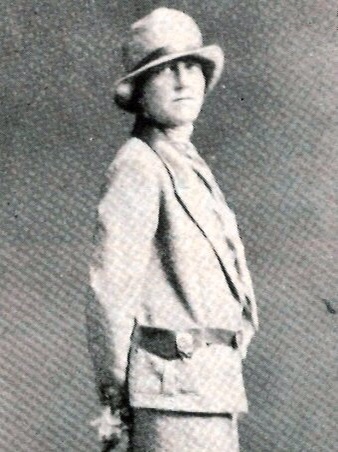
Monte Punshon was born 1882 in Melbourne and was a lover of women. Her great love was Debbie, but this was not her only love affair by any means. She mingled in a very camp world and when Debbie broke up with her, Punshon was consoled by a group of friends she called her “homosexual boyfriends”.

Monte Punshon, c. 1930s (Published in City Rhythm magazine, 1985)

We know about Monte’s life because, unlike many of her generation, she chose to talk about it — beginning at the age of 102! She never used the word lesbian, but she knew herself and created a life that allowed her to be that person.

All of these people — and many, many more than we will ever know — are part of our history. And by “our” I do not mean queer people only — these lives are part of the history of our cities, regions, states, nation. 

We understand ourselves better if we know about them; they remind us that human beings have a remarkable capacity for self-invention: as individuals, and through the creation of scenes, subcultures, communities and movements. That self-invention generates more social diversity that we might realise — and always has.

How we respond to it is the challenge we always face.

Reference

A Jock With Glasses Is Not a Geek

As mainstream gay culture transforms “geeky” into little more than a sexy look, how does an actual geek find his people?

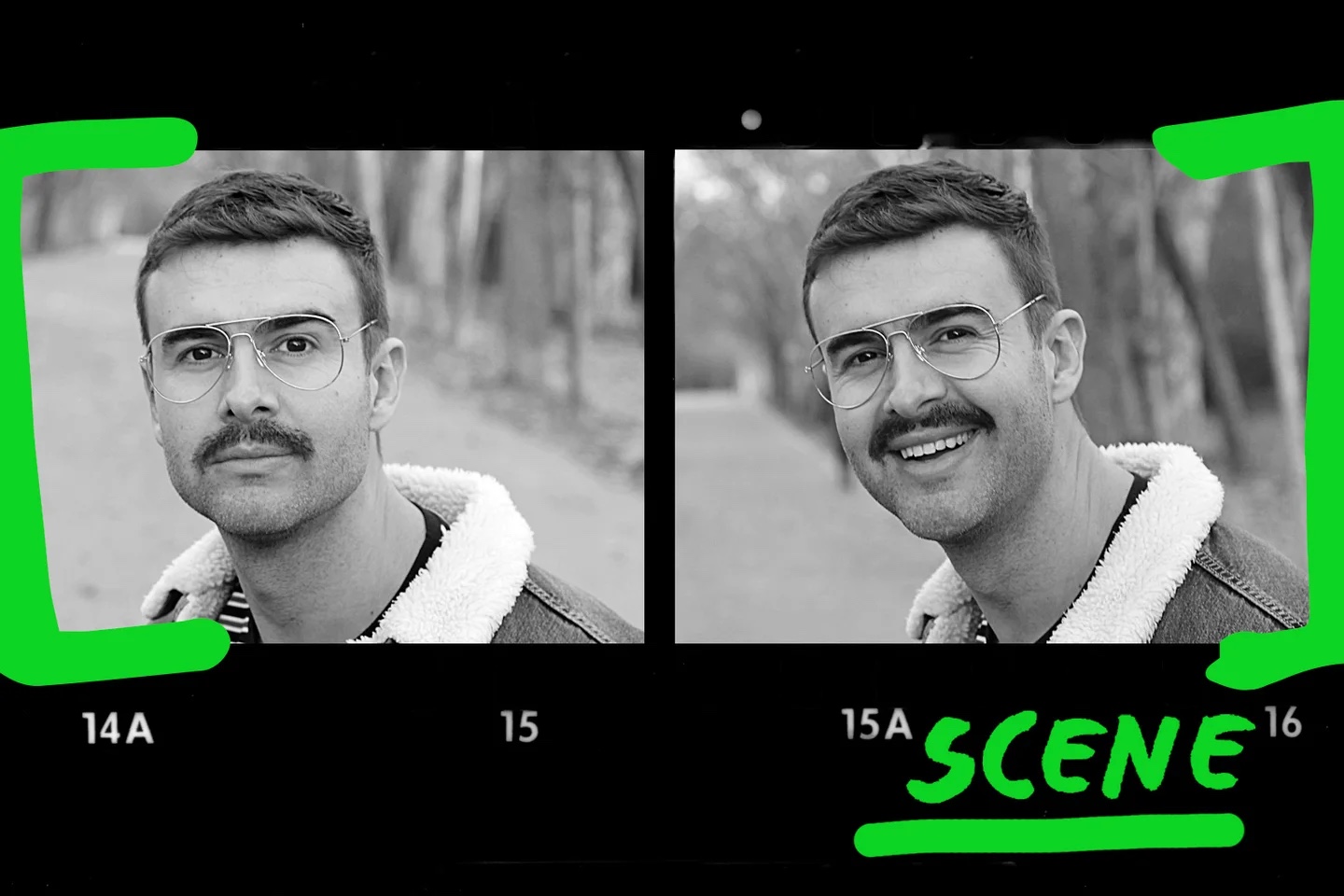
Photo illustration by Slate. Photos by THPStock/iStock/Getty Images Plus; ajr_images/iStock/Getty Images Plus.

You’ve probably heard of the idea of a queer “scene,” perhaps most often from people who don’t care for it. But what, exactly, is this scene? Who’s a part of it? Who isn’t? Who decides? Is there more than one? What happens when a scene evolves—or when it doesn’t? These are the questions we’ve gathered a group of writers to consider for an Outward special issue on “The Scene” in LGBTQ life today. You can read all of the stories in the issue here, and you can listen to a full episode of the Outward podcast covering more of the queer scene by subscribing on iTunes, Spotify, or wherever you get your audio.

So when I first came out as gay, it was easy to embrace my new identity because of the experiences I’d already had as a geek. In a sense, both involve rebuffing the expectations of society and taking pride in what made me me, regardless of what anyone else thought. But socially, there were big differences. Connecting with friends who share your geeky affinities is relatively easy, but finding community among other gay men has proved to be more of a Water Temple–level task.

Comparing the gay community to a stereotypical high school’s clique culture is unoriginal, but apt. Social capital is valuable and similarly earned by being attractive, cool, and “popular.” As I figured out how being gay intersected with the rest of my life, I immediately felt that participating in “the scene”—here meaning social clubs or bars—came with certain expectations about how I should look, what I should prioritize in my life, and what I should take an interest in. It was like there was a direct contradiction between what it meant to be a proud non-conforming geek and what it would take to be a proudly conforming gay man. As the dating apps came about, however, I noticed that they universally provided an option to self-identify as a “geek,” and I wondered if it was becoming increasingly possible to have the best of both worlds. But that’s not what happened.

When the Borg assimilate an individual, they retain any attributes that would add value to the Collective and replace all other parts with cybernetic adaptations. As the traditional lodestars of geekdom (like fantasy, sci-fi, and video games) have achieved more mainstream appeal with the advent of superhero blockbusters and binge-able prestige television, I’ve watched the gay community process the “geek” identity in much the same way, incorporating certain aspects into the calculus for how to achieve gay social capital while dismissing the rest. I’m now left feeling like the word “geek” just means “a jock with glasses”—and I’ve only got the glasses.

There was a somewhat recent milestone that demarcated the progress of this assimilation for me. In the first week of September 2016, many of the gay blogs were tittering about a new Men.com porn film called “Fuckémon Go.” With stars Johnny Rapid as Ash and Will Braun as Brock, the film capitalized on the popularity of the Pokémon Go app with campy fanfare. What struck me, however, is that unlike the rest of the site’s musclebound superhero-themed films, this particular parody took something I personally considered purely geeky and sexualized it with stereotypically twinkish, fit bodies. My takeaway: Geeks are welcome in a mainstream gay fantasy space like Men.com so long as they’re hot enough to turn a profit.

As someone who also identifies with the “bear” tribe (and not the similarly appropriated muscle- and daddy- varieties), it’s been hard not to see body image superficiality as the main gravitational force at the center of almost all gay scenes. Particularly as apps increasingly dominate our social interactions, what I have to offer in terms of personality, hobbies, or sense of humor takes a back seat to whether or not I measure up aesthetically. This has left me feeling betrayed by those who check the “geek” box on their profiles—and who maybe even list some geeky interests that catch my eye—then refuse to engage whatsoever. Are you really a geek if you’d let a person’s looks get in the way of connecting with someone who shares your niche interests?

But even among people I already know, engagement doesn’t always meet my expectations. I remember one brunch a few years ago with a group of gay men who I believed shared at least some of my geeky affinities. Not knowing all of them well, I tried to engage on topics I thought would serve up some stimulating dialogue. The brunch, however, ended up being dominated by discussion about the gym, including but not limited to: workout preferences, stories about other men they’d seen at the gym, and encounters flirting with men at the gym. It was a topic I had little interest in and little to contribute to.

Finding community among other gay men has proved to be more of a Water Temple-level task.”

I’ve been a geek as long as I can remember, certainly as far back as fourth grade, when I’d regularly wear the Star Trek: The Next Generation T-shirt I’d picked up at a convention. This aspect of my identity has meant having a deep (if not obsessive) appreciation for aspects of culture that are nuanced, complicated, high-minded, and importantly, not caring how anyone else feels about it. For example, I refused to read Harry Potter—for years—just to spite my friends who said it was “so much better” than “boring” The Lord of the Rings, even though they had only made it halfway through The Fellowship of the Ring. Popularity could not sway me from what I personally enjoyed.

I left the brunch feeling ostracized, like the admission price to communing even with fellow gay geeks was buying into an obsession with improving my body and feeding into others’ same concerns. But whatever other people think of my body, I’m not insecure about it, I don’t enjoy exercise, and I know—from trying—that forcing myself into that world was not a positive experience. I’m a geek: I want to like the things I like and not worry about conforming to everyone else’s expectations. I’m not here to demand anyone take up my geeky passions, but I don’t feel like the same respect is reciprocated when it comes to my disinterest in fitness.

That’s not to say I haven’t found occasional opportunities for my gay and geek identities to intersect. Groups like Geeks OUT create great little social meetups, and D.C.’s newest gay sports bar is equipped with some video game consoles. These inconsistently available experiences, however, still pale in comparison to what feels like the weekly takeover of the bars by the kickball teams. In high school, the jocks might have picked on us gays, but as gay adults, we’ve re-created the exact same social structure for ourselves.

Another entry point to the stereotypical scene I’ve found has been watching RuPaul’s Drag Race out at bars with friends. They might not admit it, but many people have a geek-like obsession when it comes to following their favorite queens, and discussing who should win the current season is a great icebreaker. The kink and leather community has also felt far more geek-friendly, which is not surprising given the similar investment many people make in that aspect of their lives (not to mention the taboo it still faces in society). But I don’t love drag or leather nearly as much as others do, so I’m still on the hunt for my gaggle.

To be sure, as a cisgender, white gay man, I know that my request for “the scene” to be more welcoming of geeks is small potatoes compared to some of the other work the queer community must undertake in terms of inclusion, particularly around race, gender, and gender identity. But with so many gay men already identifying as “geeks,” it seems like there’s an easy opportunity for the community to mature beyond the high school cafeteria and show that it’s capable of becoming a bit more heterogeneous without losing its distinct

A great place to start would be on the apps, which are increasingly serving as a substitute for the bars and community centers where the queer community traditionally communed. Don’t be afraid to let your geek flag fly in your profile! And if you see someone with some similar interests, why not throw a fellow geek a bone? For example, you could ask me about my favorite captain, Doctor, or Final Fantasy, come to a live West Wing Weekly taping with me, or help me theory-craft my next Path of Exile character build.

It’s fine if we’re not a sexual match. There’s still something joyous about finding someone who’s as obsessed with a certain fantasy universe as you are. And if we start building more social bridges that way, maybe someday we’ll be the ones taking over “the scene” in our brightly colored Stonewall Board Games or Stonewall Smash Bros. T-shirts. I happen to think there’s room for all of us. Can I get a “so say we all” up in here?

Reference

Gay History: History of Lesbian, Gay, Bisexual and Transgender Social Movements

Most historians agree that there is evidence of homosexual activity and same-sex love, whether such relationships were accepted or persecuted, in every documented culture.

A brief history of lesbian, gay, bisexual and transgender social movements/Bonnie J. Morris, PhD

On June 12, 2016, the popular gay dance club Pulse in Orlando was the site of a mass shooting by one assailant. With at least 49 dead and another 50 injured, this hate crime is being called the worst mass shooting in U.S. history. It occurred during what was LGBT Pride weekend for towns and cities in and beyond the United States. The immediate, caring response from mayors, police and FBI authorities, local and national politicians, and the President of the United States, who reached out to express outrage and concern, demonstrates the enormous shift toward acceptance and public support for the LGBT community. Although the LGBT community and individuals remain targets for hate violence and backlash throughout the world, the hard work of activists and allies made it possible to reach this era, where the perpetrators of violence, not the victims, are condemned as sick.

Social movements, organizing around the acceptance and rights of persons who might today identify as LGBT or queer, began as responses to centuries of persecution by church, state and medical authorities. Where homosexual activity or deviance from established gender roles/dress was banned by law or traditional custom, such condemnation might be communicated through sensational public trials, exile, medical warnings and language from the pulpit. These paths of persecution entrenched homophobia for centuries—but also alerted entire populations to the existence of difference. Whether an individual recognized they, too, shared this identity and were at risk, or dared to speak out for tolerance and change, there were few organizations or resources before the scientific and political revolutions of the 18th and 19th centuries. Gradually, the growth of a public media and ideals of human rights drew together activists from all walks of life, who drew courage from sympathetic medical studies, banned literature, emerging sex research and a climate of greater democracy. By the 20th century, a movement in recognition of gays and lesbians was underway, abetted by the social climate of feminism and new anthropologies of difference. However, throughout 150 years of homosexual social movements (roughly from the 1870s to today), leaders and organizers struggled to address the very different concerns and identity issues of gay men, women identifying as lesbians, and others identifying as gender variant or nonbinary. White, male and Western activists whose groups and theories gained leverage against homophobia did not necessarily represent the range of racial, class and national identities complicating a broader LGBT agenda. Women were often left out altogether.

What is the pre-history of LGBT activism? Most historians agree that there is evidence of homosexual activity and same-sex love, whether such relationships were accepted or persecuted, in every documented culture. We know that homosexuality existed in ancient Israel simply because it is prohibited in the Bible, whereas it flourished between both men and women in Ancient Greece. Substantial evidence also exists for individuals who lived at least part of their lives as a different gender than assigned at birth. From the lyrics of same-sex desire inscribed by Sappho in the seventh century BCE to youths raised as the opposite sex in cultures ranging from Albania to Afghanistan; from the “female husbands” of Kenya to the Native American “Two-Spirit,” alternatives to the Western male-female and heterosexual binaries thrived across millennia and culture. These realities gradually became known to the West via travelers’ diaries, the church records of missionaries, diplomats’ journals, and in reports by medical anthropologists. Such eyewitness accounts in the era before other media were of course riddled with the biases of the (often) Western or white observer, and added to beliefs that homosexual practices were other, foreign, savage, a medical issue, or evidence of a lower racial hierarchy. The peaceful flowering of early trans or bisexual acceptance in different indigenous civilizations met with opposition from European and Christian colonizers.

In the age of European exploration and empire-building, Native American, North African and Pacific Islander cultures accepting of “Two-Spirit” people or same-sex love shocked European invaders who objected to any deviation from a limited understanding of “masculine” and “feminine” roles. The European powers enforced their own criminal codes against what was called sodomy in the New World: the first known case of homosexual activity receiving a death sentence in North America occurred in 1566, when the Spanish executed a Frenchman in Florida. Against the emerging backdrop of national power and Christian faith, what might have been learned about same-sex love or gender identity was buried in scandal. Ironically, both wartime conflict between emerging nations and the departure or deaths of male soldiers left women behind to live together and fostered strong alliances between men as well. Same-sex companionship thrived where it was frowned upon for unmarried, unrelated males and females to mingle or socialize freely. Women’s relationships in particular escaped scrutiny since there was no threat of pregnancy. Nonetheless, in much of the world, female sexual activity and sensation were curtailed wherever genital circumcision practices made clitoridectomy an ongoing custom.

Where European dress—a clear marker of gender—was enforced by missionaries, we find another complicated history of both gender identity and resistance. Biblical interpretation made it illegal for a woman to wear pants or a man to adopt female dress, and sensationalized public trials warned against “deviants” but also made such martyrs and heroes popular: Joan of Arc is one example, and the chilling origins of the word “faggot” include a stick of wood used in public burnings of gay men. Despite the risks of defying severe legal codes, cross-dressing flourished in early modern Europe and America. Women and girls, economically oppressed by the sexism which kept them from jobs and economic/education opportunities designated for men only, might pass as male in order to gain access to coveted experiences or income. This was a choice made by many women who were not necessarily transgender in identity. Women “disguised” themselves as men, sometimes for extended periods of years, in order to fight in the military (Deborah Sampson), to work as pirates (Mary Read and Anne Bonney), attend medical school, etc. Both men and women who lived as a different gender were often only discovered after their deaths, as the extreme differences in male vs. female clothing and grooming in much of Western culture made “passing” surprisingly easy in certain environments. Moreover, roles in the arts where women were banned from working required that men be recruited to play female roles, often creating a high-status, competitive market for those we might today identify as transwomen, in venues from Shakespeare’s theatre to Japanese Kabuki to the Chinese opera. This acceptance of performance artists, and the popularity of “drag” humor cross-culturally, did not necessarily mark the start of transgender advocacy, but made the arts an often accepting sanctuary for LGBT individuals who built theatrical careers based around disguise and illusion.

The era of sexology studies is where we first see a small, privileged cluster of medical authorities begin promoting a limited tolerance of those born “invert.” In Western history, we find little formal study of what was later called homosexuality before the 19th century, beyond medical texts identifying women with large clitorises as “tribades” and severe punishment codes for male homosexual acts. Early efforts to understand the range of human sexual behavior came from European doctors and scientists including Carl von Westphal (1869), Richard von Krafft-Ebing (1882) and Havelock Ellis (1897). Their writings were sympathetic to the concept of a homosexual or bisexual orientation occurring naturally in an identifiable segment of humankind, but the writings of Krafft-Ebing and Ellis also labeled a “third sex” degenerate and abnormal. Sigmund Freud, writing in the same era, did not consider homosexuality an illness or a crime and believed bisexuality to be an innate aspect beginning with undetermined gender development in the womb. Yet Freud also felt that lesbian desires were an immaturity women could overcome through heterosexual marriage and male dominance. These writings gradually trickled down to a curious public through magazines and presentations, reaching men and women desperate to learn more about those like themselves, including some like English writer Radclyffe Hall who willingly accepted the idea of being a “congenital invert.” German researcher Magnus Hirschfeld went on to gather a broader range of information by founding Berlin’s Institute for Sexual Science, Europe’s best library archive of materials on gay cultural history. His efforts, and Germany’s more liberal laws and thriving gay bar scene between the two World Wars, contrasted with the backlash, in England, against gay and lesbian writers such as Oscar Wilde and Radclyffe Hall. With the rise of Hitler’s Third Reich, however, the former tolerance demonstrated by Germany’s Scientific Humanitarian Committee vanished. Hirschfeld’s great library was destroyed and the books burnt by Nazis on May 10, 1933.

In the United States, there were few attempts to create advocacy groups supporting gay and lesbian relationships until after World War II. However, prewar gay life flourished in urban centers such as New York’s Greenwich Village and Harlem during the Harlem Renaissance of the 1920s. The blues music of African-American women showcased varieties of lesbian desire, struggle and humor; these performances, along with male and female drag stars, introduced a gay underworld to straight patrons during Prohibition’s defiance of race and sex codes in speakeasy clubs. The disruptions of World War II allowed formerly isolated gay men and women to meet as soldiers and war workers; and other volunteers were uprooted from small towns and posted worldwide. Many minds were opened by wartime, during which LGBT people were both tolerated in military service and officially sentenced to death camps in the Holocaust. This increasing awareness of an existing and vulnerable population, coupled with Sen. Joseph McCarthy’s investigation of homosexuals holding government jobs during the early 1950s outraged writers and federal employees whose own lives were shown to be second-class under the law, including Frank Kameny, Barbara Gittings, Allen Ginsberg and Harry Hay. Awareness of a burgeoning civil rights movement (Martin Luther King’s key organizer Bayard Rustin was a gay man) led to the first American- based political demands for fair treatment of gays and lesbians in mental health, public policy and employment. Studies such as Alfred Kinsey’s 1947 Kinsey Report suggested a far greater range of homosexual identities and behaviors than previously understood, with Kinsey creating a “scale” or spectrum ranging from complete heterosexual to complete homosexual.

The primary organization for gay men as an oppressed cultural minority was the Mattachine Society, founded in 1950 by Harry Hay and Chuck Rowland. Other important homophile organizations on the West Coast included One, Inc., founded in 1952, and the first lesbian support network Daughters of Bilitis, founded in 1955 by Phyllis Lyon and Del Martin. Through meetings and publications, these groups offered information and outreach to thousands. These first organizations soon found support from prominent sociologists and psychologists. In 1951, Donald Webster Cory published “The Homosexual in America”, asserting that gay men and lesbians were a legitimate minority group, and in 1953 Evelyn Hooker, PhD, won a grant from the National Institute of Mental Health to study gay men. Her groundbreaking paper, presented in 1956, demonstrated that gay men were as well-adjusted as heterosexual men, often more so. But it would not be until 1973 that the American Psychiatric Association removed homosexuality as an “illness” classification in its diagnostic manual. Throughout the 1950s and 60s, gay men and lesbians continued to be at risk for psychiatric lockup as well as jail, losing jobs, and/or child custody when courts and clinics defined gay love as sick, criminal or immoral.

In 1965, as the civil rights movement won new legislation outlawing racial discrimination, the first gay rights demonstrations took place in Philadelphia and Washington, D.C., led by longtime activists Frank Kameny and Barbara Gittings. The turning point for gay liberation came on June 28, 1969, when patrons of the popular Stonewall Inn in New York’s Greenwich Village fought back against ongoing police raids of their neighborhood bar. Stonewall is still considered a watershed moment of gay pride and has been commemorated since the 1970s with “pride marches” held every June across the United States. Recent scholarship has called for better acknowledgement of the roles that drag performers, people of color, bisexuals and transgender patrons played in the Stonewall Riots.

The gay liberation movement of the 1970s saw myriad political organizations spring up, often at odds with one another. Frustrated with the male leadership of most gay liberation groups, lesbians influenced by the feminist movement of the 1970s formed their own collectives, record labels, music festivals, newspapers, bookstores, and publishing houses, and called for lesbian rights in mainstream feminist groups like the National Organization for Women (NOW). Gatherings such as women’s music concerts, bookstore readings and lesbian festivals well beyond the United States were extraordinarily successful in organizing women to become activists; the feminist movement against domestic violence also assisted women to leave abusive marriages, while retaining custody of children became a paramount issue for lesbian mothers.

Expanding religious acceptance for gay men and women of faith, the first out gay minister was ordained by the United Church of Christ in 1972. Other gay and lesbian church and synagogue congregations soon followed. Parents and Friends of Lesbians and Gays (PFLAG), formed in 1972, offered family members greater support roles in the gay rights movement. And political action exploded through the National Gay and Lesbian Task Force, the Human Rights Campaign, the election of openly gay and lesbian representatives like Elaine Noble and Barney Frank, and, in 1979, the first march on Washington for gay rights. The increasing expansion of a global LGBT rights movement suffered a setback during the 1980s, as the gay male community was decimated by the AIDS epidemic, demands for compassion and medical funding led to renewed coalitions between men and women as well as angry street theatre by groups like AIDS Coalition to Unleash Power (ACT UP) and Queer Nation. Enormous marches on Washington drew as many as one million gay rights supporters in 1987 and again in 1993. Right wing religious movements, spurred on by beliefs that AIDS was God’s punishment, expanded via direct mail. A New Right coalition of political lobby groups competed with national LGBT organizations in Washington, seeking to create religious exemptions from any new LGBT rights protections. In the same era, one wing of the political gay movement called for an end to military expulsion of gay, lesbian and bisexual soldiers, with the high-profile case of Col. Margarethe Cammermeyer publicized through a made-for- television movie, “Serving in Silence.” In spite of the patriotism and service of gay men and lesbians in uniform, the uncomfortable and unjust compromise “Don’t Ask, Don’t Tell” emerged as an alternative to decades of military witch hunts and dishonorable discharges. Yet more service members ended up being discharged under DADT.

During in the last decade of the 20th century, millions of Americans watched as actress Ellen DeGeneres came out on national television in April 1997, heralding a new era of gay celebrity power and media visibility—although not without risks. Celebrity performers, both gay and heterosexual, continued to be among the most vocal activists calling for tolerance and equal rights. With greater media attention to gay and lesbian civil rights in the 1990s, trans and intersex voices began to gain space through works such as Kate Boernstein’s “Gender Outlaw” (1994) and “My Gender Workbook” (1998), Ann Fausto-Sterling’s “Myths of Gender” (1992) and Leslie Feinberg’s Transgender Warriors (1998), enhancing shifts in women’s and gender studies to become more inclusive of transgender and nonbinary identities. As a result of hard work by countless organizations and individuals, helped by internet and direct-mail campaign networking, the 21st century heralded new legal gains for gay and lesbian couples. Same-sex civil unions were recognized under Vermont law in 2000 and Massachusetts became the first state to perform same-sex marriages in 2004; with the end of state sodomy laws (Lawrence v. Texas, 2003), gay and lesbian Americans were finally free from criminal classification. Gay marriage was first legal in the Netherlands, Belgium, Spain and Canada; but the recognition of gay marriage by church and state continued to divide opinion worldwide. After the impressive gains for LGBT rights in post-apartheid South Africa, conservative evangelicals in the U.S. began providing support and funding for homophobic campaigns overseas. Uganda’s dramatic death penalty for gays and lesbians was perhaps the most severe in Africa.

The first part of the 21st century saw new emphasis on transgender activism and the increasing usage of terminology that questioned binary gender identification. Images of trans women became more prevalent in film and television, as did programming with same-sex couples raising children. Transphobia, cissexism and other language (such as “hir” and “them”) became standardized, and film and television programming featured more openly trans youth and adult characters. Tensions between lesbian and trans activists, however, remained, with the long-running Michigan Womyn’s Music Festival boycotted by national LGBT groups over the issue of trans inclusion; like many woman-only events with a primarily lesbian base, Michfest had supported an ideal of ingathering women and girls born female. The festival ended after its fortieth anniversary in August 2015.

Internet activism burgeoned, while many of the public, physical gathering spaces that once defined LGBT activism (bars, bookstores, women’s music festivals) began to vanish, and the usage of “queer” replaced lesbian identification for many younger women activists. Attention shifted to global activism as U.S. gains were not matched by similar equal rights laws in the 75 other countries where homosexuality remained illegal. As of 2016, LGBT identification and activism was still punishable by death in ten countries: Iran, Iraq, Mauritania, Nigeria, Qatar, Saudi Arabia, Somalia, Sudan, Uganda and Yemen; the plight of the LGBT community in Russia received intense focus during the 2014 Winter Olympic Games, to which President Obama sent a contingent of out LGBT athletes. Supportive remarks from the new Pope Francis (“Who am I to judge?”) gave hope to LGBT Catholics worldwide.

Perhaps the greatest changes in the U.S. occurred between spring 2015 and spring 2016: in late spring 2015 Alison Bechdel’s lesbian-themed Broadway production Fun Home won several Tony awards, former Olympic champion Bruce Jenner transitioned to Caitlyn Jenner, and then in June of 2015, the Supreme Court decision recognized same-sex marriage (Obergefell v. Hodges). By spring 2016 the Academy Awards recognized films with both lesbian and transgender themes: Carol and The Danish Girl. And the Supreme Court had avowed that a lesbian family adoption in one state had to be recognized in all states. However, the United States also saw intense racial profiling confrontations and tragedies in this same period, turning LGBT activism to “intersectionality,” or recognition of intersections issues of race, class, gender identity and sexism. With the June 12 attacks on the Pulse Club in Orlando, that intersectionality was made plain as straight allies held vigils grieving the loss of young Latino drag queens and lesbians of color; with unanswered questions about the killer’s possible identification with ISIS terrorism, other voices now call for alliances between the LGBT and Muslim communities, and the greater recognition of perspectives from those who are both Muslim and LGBT in the U.S. and beyond. The possible repression of identity which may have played a role in the killer’s choice of target has generated new attention to the price of homophobia –internalized, or culturally expressed— in and beyond the United States.

Reference

  • History of Lesbian, Gay, Bisexual and Transgender Social Movements, American Psychological Association, 2009, by Bonnie J. Morris, PhD George Washington University Washington, D.C. https://www.apa.org/pi/lgbt/resources/history
  • Article References
    • Alison Bechdel, Fun Home: A Family Tragicomic, Houghton Mifflin, 2006
    • Kate Bornstein, Gender Outlaws: On Men, Women, and the Rest of Us, Routledge, 1994
    • Michael Bronski, A Queer History of the United States, Beacon Press, 2011
    • Devon Carbado and Dwight McBride, eds. Black Like Us: A Century of Lesbian, Gay and Bisexual African-American Fiction, Cleis Press, 2002
    • David Carter, Stonewall: The Riots That Sparked the Gay Revolution, Macmillan, 2004
    • Debbie Cenziper and Jim Obergefell, Love Wins: The Lovers and Lawyers Who Fought the Landmark Case for Marriage Equality, Harper Collins Publishers, 2016
    • Lillian Faderman, The Gay Revolution: The Story of the Struggle, Simon & Schuster, 2015; and To Believe in Women: What Lesbians Have Done for America – A History, Houghton Mifflin, 1999
    • Leslie Feinberg, Transgender Warriors, Beacon Press, 1996
    • Sue-Ellen Jacobs, Two-Spirit People: Native American Gender Identity, Sexuality and Spirituality, University of Illinois, 1997
    • David Johnson, The Lavender Scare: The Cold War Persecution of Gays and Lesbians in the Federal Government, University of Chicago Press Books, 2004
    • Cherrie Moraga and Gloria Anzaldua, This Bridge Called My Back: Writings by Radical Women of Color, Persephone Press, 1981
    • Daphne Scholinski, The Last Time I Wore a Dress, Riverhead Books 1998
    • Randy Shilts, And the Band Played On: Politics, People, and the AIDS Epidemic, St. Martin’s Press, 1987
    • Donn Short, Don’t Be So Gay! Queers, Bullying, and Making Schools Safe, UBC Press, 2013
    • Ryan Thoreson, Transnational LGBT Activism, University of Minnesota Press, 2014
    • Urvashi Vaid, Virtual Equality, Anchor Books, 1995

    Gay History: February 12, 1976: Actor Sal Mineo Murdered In West Hollywood

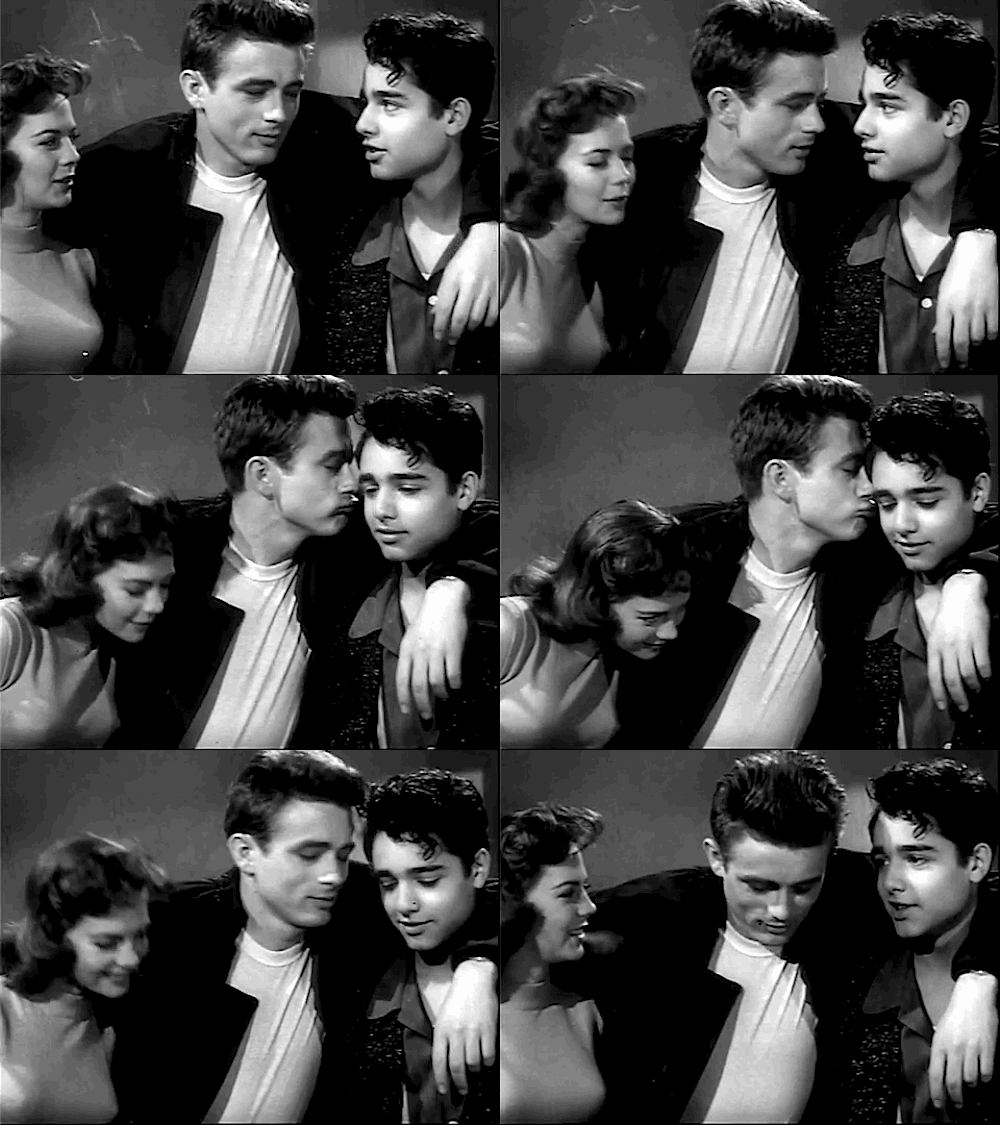
    Salvatore  Mineo Jr. better known to the world as Sal Mineo, was the baby-faced American actor whose legend and cult following largely stems from his iconic role as the doomed ‘Plato’ in Nicholas Ray’s 1955 classic of ‘switchblade cinema’ – ‘Rebel Without A Cause’. In the movie Mineo played a troubled high-school kid who emulates (actually as far as 50’s cinema could push that envelope)  falls in love with James Dean’s character Jim Stark, although there are reports of a real-life love affair between the two off-set).This was the role for which he would earn the first of two Academy Award nominations.

    In 1962 Jill Haworth Mineo’s “girlfriend” kicked open Mineo’s closet door, catching the 35-year-old actor bedding his buddy Bobby Sherman. (Yes. thatBobby Sherman.)  “But he didn’t stop,” she said. “He kept going at it.” Rumors of Mineo’s sexuality circulated. He found serious work even more difficult to procure, predominantly because filmmakers saw him as an embarrassing relic of the 1950s.

    On the night of February 12, 1976, actor Sal Mineo returned home following a rehearsal for the play P.S. Your Cat Is Dead. After parking his car in the carport below his West Hollywood apartment, the 37-year-old actor was stabbed in the heart by a mugger who quickly fled the scene. At first, the e police  suspected that Mineo’s work for prison reform had put him in contact with a dangerous ex-con. Then their focus shifted to Mineo’s personal life. Investigators had discovered that his home was filled with pictures of nude men. But the gay pornography also failed to turn up any leads and later became the basis for a hotbed of rumors that Mineo was killed by a “trick gone wrong”

    Out of the blue, Michigan authorities reported that Lionel Williams was arrested on bad check charges and was bragging to everyone that he had killed Mineo. Although he later retracted his stories at about the same time Williams’ his wife back in Los Angeles told police that he had come home the night of the murder drenched in blood. However, there was one major discrepancy in the case, Williams was black with an Afro and all of the eyewitnesses had described the perpetrator as a white man with long brown hair.

    Fortunately, the police were able to unearth an old photo of Williams in which his hair had been dyed brown and processed so that it was straight and long. In addition, the medical examiner had made a cast of Mineo’s knife wound and police were able to match it to the description of the knife provided by Williams’ wife. Lionel Williams was eventually convicted and given a sentence of life in prison. He was paroled in the early 1990s but rearrested after committing other crimes. Today, Williams whereabouts is unknown or weather or not he is still even alive.

    ***NOTE:  Because of the time period many are unsure of Mineo’s true sexuality.  Some have said that Mineo was “bisexual” but because of the time period in the 1970’s many gay men used the claim of bisexuality as a stepping stone to fully “coming out”.

    Reference

    Gay History: An Organiser of the Black Cat Protest Revisits That Fateful Night

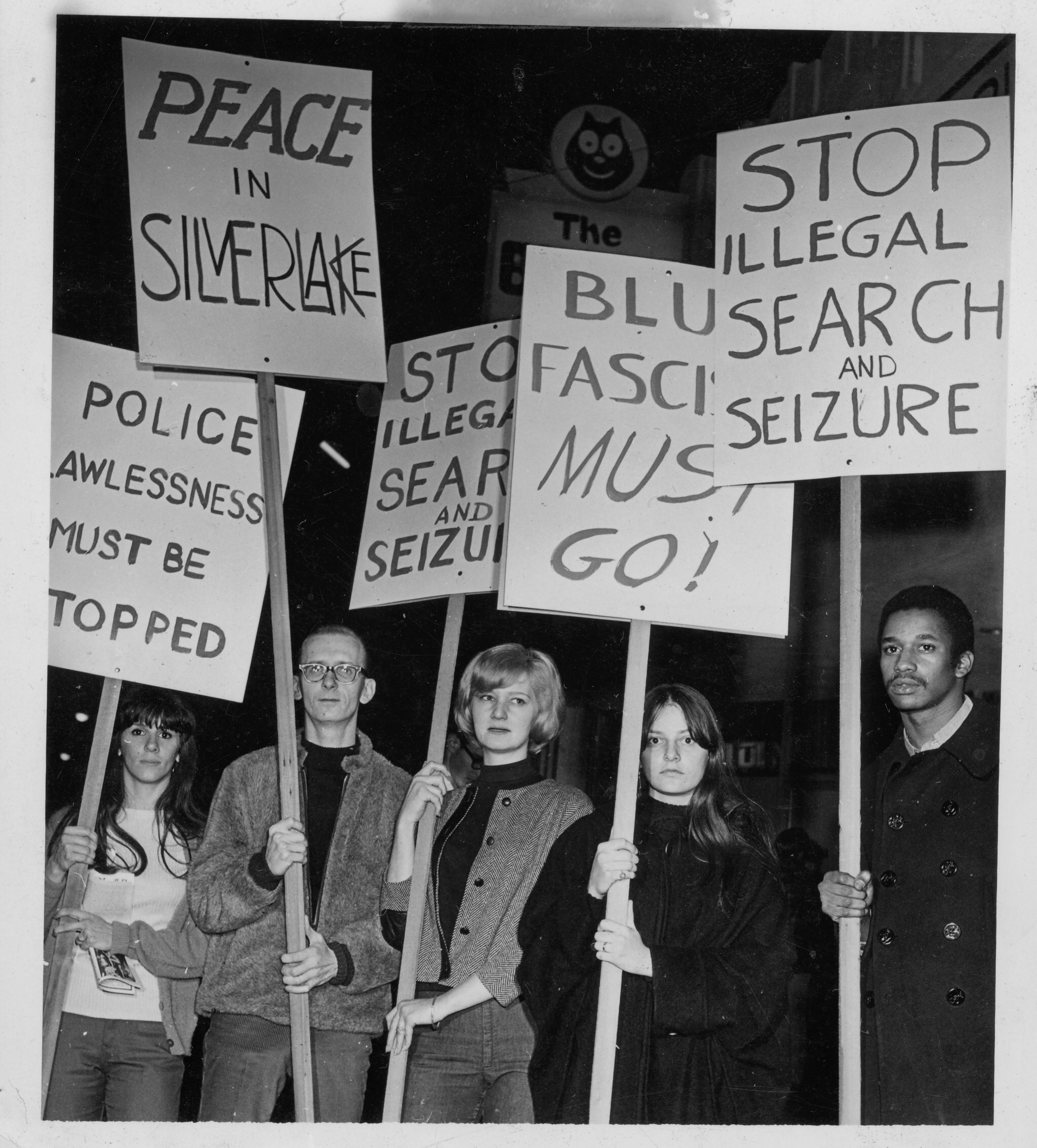
    Outside the Black Cat on February 11, 1967 Photograph: Courtesy ONE Archives at the USC Libraries

    On New Year’s Eve in 1966, undercover officers at the Black Cat Tavern in Silver Lakebegan to handcuff and beat the patrons and staff as everyone was exchanging celebratory midnight kisses. An estimated 14 people were arrested, many charged with lewd conduct and forced to register as sex offenders for the rest of their lives.

    Other Silver Lake gay bars, including New Faces, a few doors down, were targeted the same evening. Two years before the Stonewall uprising, more than 200 people came together outside the Black Cat for one of the earliest U.S. LGBTQ-rights demonstrations. Picketers gathered on February 11, 1967, to peacefully protest the police raids that had been conducted weeks before. Alexei Romanoff, a former owner of New Faces, describes the Black Cat demonstration as a turning point. During a time in which homosexuality was illegal in most states, LGBTQ people developed elaborate codes and survival strategies to avoid arrest. But that February night, Romanoff says, the community stood up and fought back.

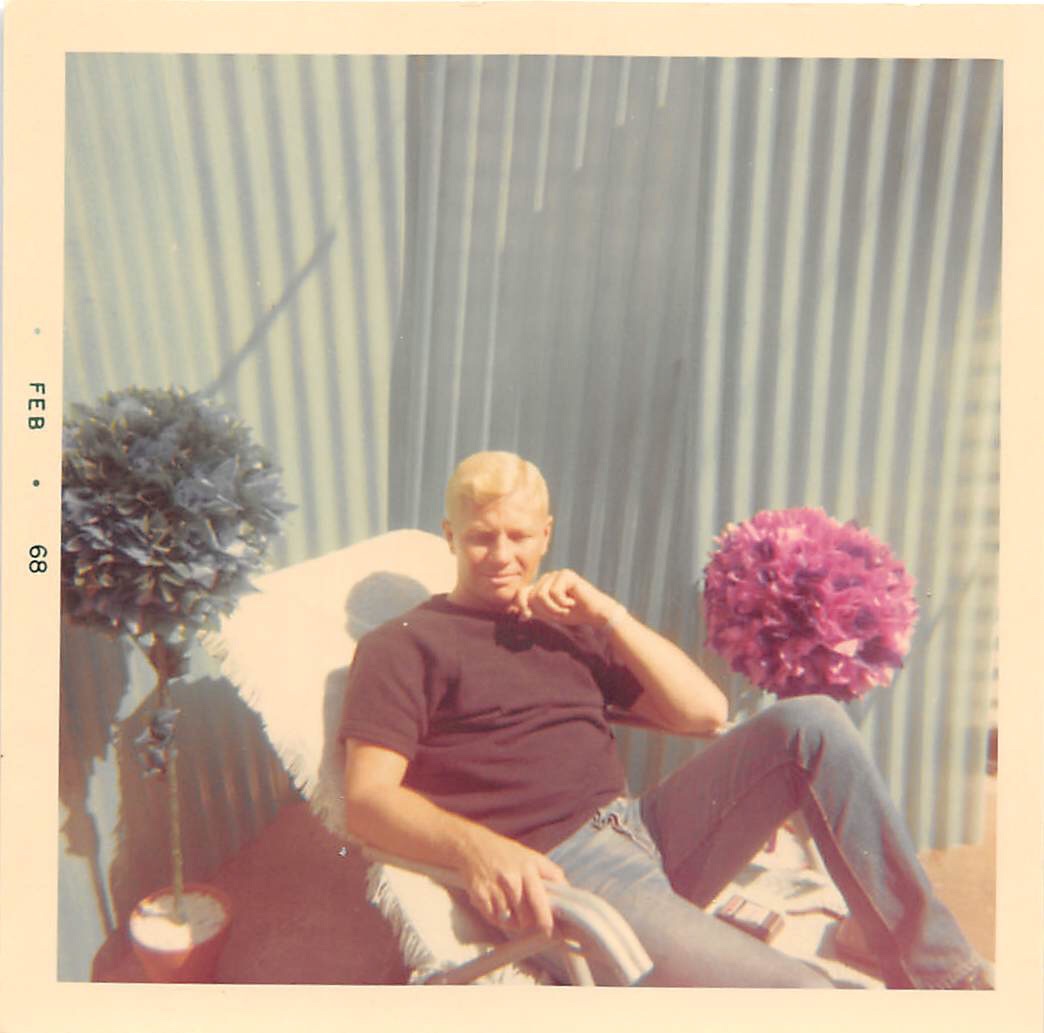
    Now 82, he is the last surviving organizer of Personal Rights in Defense and Education (P.R.I.D.E.), one of the groups that helped stage the 1967 stand. We traveled back to that monumental moment with Romanoff.

    Romanoff in 1968 Photograph: Courtesy Alexei Romanoff

    How were the protests organized?

    We didn’t have computers, we didn’t have cell phones, but what we did have was called a phone tree. One person would immediately call another 10 people and tell them what had happened, and then each of them would call 10 more people. It took us about two weeks to organize the protest. The Hub Bar [in Alhambra] was the only place that allowed us to meet. We were cautious. We kept moving the demonstration up and down the block so we couldn’t be charged with loitering. We had flyers printed up. People would ask what was going on. We’d give them a flyer, and if they dropped it, we would rush over, grab it and pick it up so we wouldn’t be considered to be littering.

    What was the protest like?

    If you look at the pictures, none of the regular news media covered us. They were all from the Free Press at the time. They were the only ones that covered the demonstration. A couple of years ago, I met with [former] police chief [William J.] Bratton, and we were looking at the pictures, when I said, “Do you see anybody smiling there?” He said no. And I said, “That’s because [the protesters] were all terrified to do this, but they knew they had to.” It took place in the evening because they had jobs they would likely lose the next day.

    What were the risks?

    If the major news media would have covered that demonstration, their faces would have been in the newspapers, but the newspapers didn’t think it was very important because it was only those “unhappy homosexuals.” At that time, we could be put into a sanitarium for being gay. And our families could have us committed if they were embarrassed by us. There, you were subject to shock treatments and chemically castrated. We were afraid, but we couldn’t take it anymore. You couldn’t just come in, beat us up and take us to jail because we were who we were.

    What was the aftermath of the protests?

    Once you let the cat out of the bag, there’s no stopping it. I started an organization, Santa Monica Bay Coalition for Human Rights. In 1970, we were marching in the LA Pride parade, and we had this big banner. I was in the front, and there were mounted police officers. I was nervous, but one of them turned his horse away from all the rest and gave me a V-for-victory sign. I knew we were going to be okay.

    And what was the legacy at the Black Cat?

    We got the Black Cat designated as a historic landmark. There’s a plaque on the front of the building now. When I went back one time, there was a note that was attached to the plaque, and all it said was “thank you.” That was enough for everything.

    Romanoff discussed the evening’s events with Time Out, and his account has been edited and condensed for length and clarity.

    Reference

    Why is There No Gay Men’s Body Liberation Movement?

    Photo by Randy Tarampi on Unsplash.

    “Gay Fat”

    “You’re not fat fat, but you are gay fat,” said the guy I was dating at the time when I expressed that I felt like I didn’t particularly fit into gay culture.

    These words, which at the time were deeply hurtful, continued to bother me for years. They illustrate the ridiculous, restrictive, and unattainable body norms that govern gay male culture. I often ponder what exactly it means to be “gay fat.” “Fat” is a social construction, a term that often functions as a general category in which we place anyone who does not meet cultural standards of size and/or appearance. The notion of being “gay fat,” as opposed to simply “fat,” illustrates that gay male culture and Western culture have different body standards.

    I call this ideal gay male type the normate gay: the slim, toned, appropriately masculine, appropriately hairy, white, cisgender, and able-bodied gay man who embodies the collection of characteristics gay culture values most. The bodies of gay men who have less social and sexual capital because they are regarded as “deviant” — those who are of color, trans, disabled, fat, or fem — are defined in contrast to the body of the normate gay. The normate gay does not, in fact, exist, but is an idealized and unattainable cultural figure. Though some gay men may embody the normate gay to a large extent, appearance standards are set to create a constant state of lack that aligns with consumer capitalism in the form of diet culture. As sociologists Nathaniel C. Pyle and Noa Logan Klein observe:

    “The prevalence of these media representations [the body promoted by mainstream gay media] creates an enormous pressure on gay men to conform to this narrow ideal body type, much like the beauty standards that are imposed on women and have been thoroughly analyzed by feminists. Rates of eating disorders and other body image disturbances are high among gay men, which may be taken as evidence that body image ideals exert pressures on gay men similar in strength to those faced by heterosexual women.”

    Gay men clearly suffer from a host of body image issues, disordered eating, and full-blown eating disorders. Yet, despite existing similarities between appearance standards for women and gay men, there is no gay men’s body liberation movement to the extent that one exists within contemporary feminism. In gay men’s culture there is little discussion of diet culture, body positivity, the concept of “health at every size,” or feminism.

    The absence of a sorely needed gay men’s body liberation movement is the product of cultural ideas of toxic masculinity — aspects of masculinity that produce socially harmful effects such as domination, misogyny, homophobia, and violence — and toxic gay masculinity, a subcategory of toxic masculinity that describes aspects of masculinity within gay male culture that are similarly detrimental.

    Toxic masculinity, as a set of cultural standards for what men should be or do, is not monolithic. Gay men can simultaneously be victimized by toxic masculinity, as expressed by straight men, and perpetuate toxic masculinity against other marginalized men. Toxic gay masculinity functions around the desire to embody the normate gay type and to police those who fall outside the parameters of this cultural ideal, thereby reinforcing structural forms of oppression such as sexism, cissexism, racism, lookism, sizeism, and ableism.

    I prefer the terms “body liberation” and “body justice,” as opposed to the more popular term “body positivity,” because body positivity is increasingly co-opted by the weight loss and diet industry. Some diets, for example, market themselves as involving “body positive weight loss.” Body positivity as a feminist concept stemming from the Fat Acceptance Movement, however, is about radically accepting and making peace with one’s body as is. “Body positive weight loss” is therefore at odds with the original intentions of body positivity.

    The now widespread use of the term may also prevent us from seeing sizeism as a social justice issue. It is not enough to feel “positive” about one’s own body or the bodies of those one interacts with on a daily basis. The word “positivity” can prevent us from seeing body liberation as a civil and human rights issue and that body size should be a protected category similar to race, gender, sexual orientation, and ability. The terms “liberation” and “justice,” which imply the need for systemic change where body size is concerned, are, by nature, more radical and less co-optable by diet culture.

    There is no gay men’s body liberation movement because norms of masculinity prevent gay men from seeing and addressing the extent to which diet culture and gay male culture are enmeshed.

    A Brief History of the Gay Male Body

    When the gay liberation movement emerged in the United States in the late 1960s, body standards for gay men were not the gym-toned aesthetic of today, but the thin, androgynous hippie style often adopted by New Left men of the period. As the Gay Rights Movement progressed, and gay people became more socially and culturally visible and enmeshed within emerging forms of consumer capitalism, body standards for gay men became more idealized, unattainable, and rigid. The expansion of gay gyms, bathhouses, sex clubs, and porno theaters represented the co-optation of the philosophy of gay liberation by capitalists.

    The normative body type that emerged during the mid-to-late 1970s is what some have referred to as the “Castro clone,” or, the sexualized image of the ideal white, working-class gay man. This look grew out of the Castro district of San Francisco, which became a gay mecca as urban gay communities expanded during the post-Stonewall period. The “Castro clone” often sported masculine fabrics such as denim and leather and typically wore form-fitting plaid shirts or t-shirts and Levis jeans, worn tight to emphasize the crotch area. A mustache or facial hair often topped off the hyper-masculine look. Some have also likened the “Castro clone” to the image of the Marlboro Man, a character of a rugged, working-class man used to market Marlboro cigarettes, who first appeared in advertising in 1954.

    Body norms for gay men shifted with the arrival of the HIV/AIDS epidemic in the early 1980s to an even further idealized slim, toned, white, and able-bodied aesthetic. The amplified masculinity of the rugged “Castro clone” was replaced by an imperative to be smooth, hairless, and clean shaven. Though scientifically inaccurate, AIDS was described by medical professionals and the media as an explicitly gay disease or “gay cancer” (the initial name used for the condition by the Centers for Disease Control was GRID, or, Gay Related Immune Deficiency). In contrast to prevailing notions that gay men were diseased, the ideal body aesthetic of the time was one that connoted health, cleanliness, and physical fitness in the form of muscularity.

    Activist and journalist Michelangelo Signorile, in his 1997 book Life Outside, argued that the muscular gym imperative heightened during the early years of the epidemic because doctors recommended steroids to HIV-positive gay men to combat wasting and other physical signs of illness. Signorile famously observed that, at this time, the most physically beautiful men were often those who were the most ill. Though doctors prescribed steroids with the intent to help patients combat the symptoms created by AIDS, steroid use in response to the epidemic further solidified gay culture’s masculine muscular ideal.

    The anti-identity movements of the 1990s, such as third wave feminism and radical queer and transgender movements, which questioned the efficacy of the gender binary and other gender and sexual norms, led, in part, to the emergence of bear and twink subcultures, though the gay gym aesthetic still predominated in the mainstream. Gay culture and sexuality remain taboo and attaining an ideal physique is a way for gay men to visually demonstrate their morality, virtue, and control in the face of a society that regards non-heteronormative ways of being as deviant and shameful. Due to internalized homophobia, some gay men might regard their sexual desires and practices as “excessive” and seek to mitigate shame by disciplining and exerting control over their body size and shape.

    Some historians trace the beginnings of contemporary diet culture to the work of the nineteenth-century social reformer Sylvester Graham. Graham argued that one’s appetite and morality were linked and that one could use food as a path to moral virtue. He prescribed a bland diet as a way for men to control their desires and exercise sexual restraint. It is therefore unsurprising that during the HIV/AIDS epidemic the ideal gay body type shifted from simply thin to a physique that was lean, sculpted, and hairless. The ideal gay male body type has developed over time to represent not just morality and virtue, but moral virtue on hyperdrive. Consumer capitalism, including gay media, further employs the precepts of diet culture to prey upon gay men’s desires to be socially and sexually worthy.

    Dear Gay Men, You Are On a Diet

    Lookism, or the personal, institutional, and social privileges and benefits conferred upon persons whose physical appearances align with cultural preferences, is rampant in gay male culture. The term was first coined during the 1970s by activists within the Fat Acceptance Movement. Michelangelo Signorile defines this concept as follows:

    “the setting of a rigid set of standards of physical beauty that pressures everyone within a particular group to conform to them. Any person who doesn’t meet those very specific standards is deemed physically unattractive and sexually undesirable. In a culture in which the physical body is held in such high esteem and given such power, body fascism then not only deems those who don’t or can’t conform to be sexually less desirable, but in extreme sometimes dubbed lookism also deems a person completely worthless as a person, based solely on his exterior. In this sense it is not unlike racism or sexism, or homophobia itself.”

    Lookism, then, does more than position someone as merely unattractive. It denies one’s very humanity on the basis of culturally-determined aesthetic standards. In gay male culture, it is not enough to be thin; rather, one must embody a set of idealized aesthetic characteristics in order to be considered desirable and worthy. Sizeism and lookism combine to create an ideal that is impossible for most to achieve.

    Diet culture is hard to recognize within the context of gay male culture because it often appears dressed in a masculine guise to make its precepts more palatable to gay men. Gay men talk about “fitness journeys,” “gyming,” “gym goals,” and “meal prepping” — not dieting. But as Harrisonexplains, diet culture also “masquerades as health, wellness, and fitness.” This facet of diet culture is only amplified within the masculinized space of mainstream gay male culture.

    Gay men may also engage in “clean eating” — another form of dieting under the guise of “health” — as a way to manage the stigma of being gay through appeals to bodily cleanliness and moral superiority. The assumption is that if we eat foods that are “clean,” we are, by extension, “clean,” and if we eat “unhealthy” foods we are therefore “contaminated” or “dirty.” I admit that for awhile I got into “clean eating,” in part, as a way to feel morally superior to other gay/queer men. My thought process was that if I didn’t have the ideal body aesthetic, I could at least feel better about myself because I was eating “cleaner” in comparison to others. In reality, food holds no moral value outside the value a culture — in this case Western diet culture — ascribes to it.

    The invisibility of diet culture within gay male culture also results in some gay men seeing the end results of their personal “fitness journeys” as something all gay men can attain through discipline and hard work. The message is that anyone can achieve acceptance within gay culture if only they hit the gym and eat “healthy.” Such messages are diet culture dressed up as “fitness inspiration.” They may further be seen as anti-homophobic messages — not diet messages — because gay men may link their “fitness journeys” to overcoming bullying, harassment, and internalized shame.

    The majority of these men, in the words of Harrison, “were born on third base but think they batted a triple.” Genetic privilege allows them to more easily conform to the normate gay ideal. Feminist activist and educator Warren Farrell refers to this phenomenon as “genetic celebrity,” or, the largely unearned adoration we bestow upon those whose physical appearances, based upon random combinations of genetic factors, fall within the parameters of what a particular culture deems “attractive” and thus desirable and worthy.

    While thin or “fit” gay men may also suffer from body image issues that intersect with experiences of homophobia, they should simultaneously acknowledge their thin privilege and the fact that they do not have to face the pervasive stigma and stress experienced by those who live in larger bodies. Put differently, there is no system of oppression that marginalizes thin people in the ways sizeism and lookism oppress those who are larger.

    Pointing out the extent diet culture and gay male culture are enmeshed is challenging because it unsettles notions gay men have long held as truths. It is difficult for some gay men to acknowledge and surrender the social and sexual privileges conferred by normate gay status and to work towards collective body liberation.

    Riot, Not Diet

    The Stonewall Inn Riots of 1969 are often cited as the origin myth of modern gay liberation (though, in fact, the Gay Rights Movement began several decades prior and a liberationist mentality developed across the United States simultaneous to Stonewall). Our gay ancestors, nevertheless, rioted, fought, and died so we would have the right to exist proudly and without shame. This includes the liberation of our bodies — not just sexually — but in all ways.

    The solution is not for women and fems to prioritize the inclusion of gay/queer men within ongoing body liberation movements. Gay men must do it themselves, must create their own movement informed by existing critiques, and must give up the hesitance to address diet culture and body liberation because dismantling long-held ideals means relinquishing the status and privilege that comes from normative masculinity. An essential first step is to recognize where and how diet culture operates within gay male culture. We must, as our gay predecessors did, and as a popular third-wave feminist slogan tell us:

    “Riot, not diet. Get up, get out, and try it.”

    Reference

    Gay History: Trio Of Drag Queens Saves Man From Being Bashed, Then Starts On The Attackers

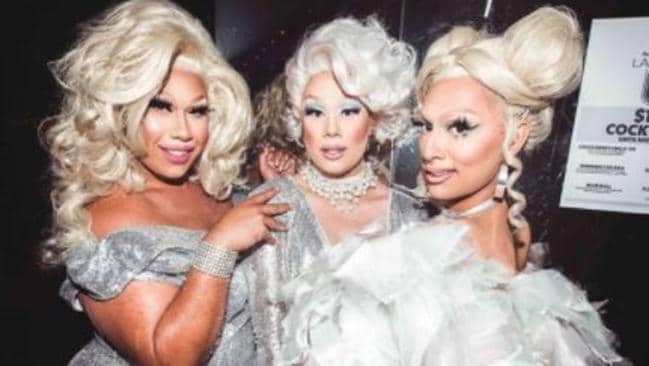
    WHEN Ivan was decked by a coward punch in Sydney he thought he might die. He prayed for a hero, and got three drag queens.

    A MAN who was decked by a coward punch while on a night out in Sydney, and said he feared for his life, was rescued by a trio of unlikely saviours. 

    Ivan Flinn, 34, from Surry Hills, said that during the attack earlier this month he hoped someone would come to his rescue. Help did arrive but not in the form he expected.

    “I am a bit religious and I really thought I was going to die, I was praying for a hero and I got three angels,” he told news.com.au.

    Those “angels” were three drag queens by the names of Coco Jumbo, Ivy Leaguee and Vybe. They stepped in after a night performing on the stages in Sydney’s neighbourhood of Darlinghurst, known for its large gay population and venues.

    Luke Karakia, who performs under the name Ivy Leaguee, ended up getting injured scuffling in the middle of the road with one of the alleged attackers. Nevertheless, his frocked-up alter ego didn’t think twice before stepping in.

    “Those boys sh*t themselves, they weren’t ready for some drag queens on top of them”.

    Ivan Flinn say he was the victim of a homophobic assault on Sydney’s Oxford Street. Picture: Benedict BrookSource:Supplied

    Mr Flinn is so grateful to the three for racing in to his rescue he’s helped raise $1000 to help them pay for their wigs and high heels that were damaged in the fracas.

    The IT project manager, originally from New Zealand, said he had left a local bar on the famous gay strip of Oxford Street after midnight on August 6 and had headed to a local kebab shop to get some sustenance for the trip home.

    Almost immediately he noticed a group of rowdy people behind him. “There were heaps of homophobic slurs, ‘you f**king f*ggot, you queer c**t,” all the slurs you can possibly imagine.”

    “I said ‘dude, don’t ever use the word f*ggot and specially not on Oxford Street of all places’”

    The advice did not go down well. Mr Flinn alleges one of the man then attacked him, ripped his shirt and punched him, dislocating his jaw.

    From left to right, drag queens Coco Jumbo, Vybe and Ivy Leaguee came to the rescue. Picture: FacebookSource:Supplied

    “He was really abusive, he had intent to assault.

    “After the punch I was stunned but the next thing I knew Ivy went in and was scrapping with the guy who punched me. They’re in the middle of the road, cars swerving around them, tooting, and I saw the guy rip her wig off.

    “They were bashing each other and she’s still wearing her high heels.”

    Ivy told news.com.au she was with her fellow performers getting an after work kebab when she noticed “dick heads being dick heads” shouting homophobic slurs

    One man turned to Ivy, she claims, and called her a freak. “I said, ‘I am a freak, I’m one of the freaks of Oxford Street, now get out of this shop’.

    “And then little Ivan walked into the middle of it.”

    The attack happened on Oxford Street, Sydney’s LGBTI heartland. Picture: Jeremy PiperSource:News Corp Australia

    Ivy said she saw Mr Flinn get attacked and she wasn’t having it. “I said, ‘you want to pick on little guys, you’ll need to fight the big freak. I’m a man underneath all of this, so let’s go.”

    Luke Waqa, who performs as Coco Jumbo, also piled in.

    “A guy pushed Ivy so I picked him up and threw him into the gutter.

    “I don’t think they knew what they were getting themselves into. I used to play rugby league. Plus I have an older brother,” Coco said.

    “He tried to run away and I chased him into the oncoming traffic. I’m surprised my wig didn’t come off.”

    Ivy’s wig certainly did come off in the scuffle — it was destroyed — while she said she sustained injuries on her leg as the two of them grappled on the road.

    She thought the attackers came off worse though. “These big burly guys couldn’t even throw a punch, all they could do was pull hair and run.”

    Mr Flinn, the trio of performers and the alleged attackers all spoke to police at the scene.

    A NSW Police spokeswoman confirmed to news.com.au officers broke up an attack in Darlinghurst earlier this month involving up to seven people.

    “Police are continuing to investigate the incident, including a possible motivation of homophobic bias.

    “NSW Police treats all matters of violence extremely seriously, including bias crimes motivated by sexuality or gender.”

    Ivy said she wasn’t afraid of what she might be getting herself into.

    “I don’t have a problem defending myself. Growing up gay, I’ve been picked on and bullied and there comes a time when you fight back and you don’t care if you’ll get hurt or what happens to your wig.

    vy Leaguee (centre) said she didn’t think twice about stepping in.Source:News Limited

    “I may be gay but I’m a man and if you’ll hit me I’ll hit you back,” she said.

    Mr Flinn said he was amazed by the three of them.

    “I really thought I was going to die that night if he had kept punching me.

    “Everyone was silent but they reacted so quickly. The drag queens fought my fight for me, they are my heroes.”

    He said he started the GoFundMe fundraising drive to try and replace some of the damaged clothes. He is due to hand over the proceeds this weekend.

    “Drag queens are the strongest people in the LGBTI community. They stand there and say this is who I am and I’m proud.

    “They saved my life, I wanted to thank them”.

    Ivy said it was “disgusting” some people came to Oxford St to cause trouble. However, she said there had been very few incidents in her seven years on the scene and the community looked after its own.

    “There are idiots everywhere but don’t come to our street and expect us to just take it.”

    Coco said she had a simple message for the homophobes: “Don’t mess with gay people. Let alone two men dressed as women. Silly boys.”

    She said they weren’t fazed by the damaged outfits and were touched by Mr Flinn’s fundraising.

    “It’s all just materials at the end of the day, there’s no use crying over split lace.

    “We’re just glad Ivan’s OK”.

    Reference

    Gay History: How a Long-Forgotten ‘Confirmed Bachelor’ Informs Our History

    Image: State Library of Queensland

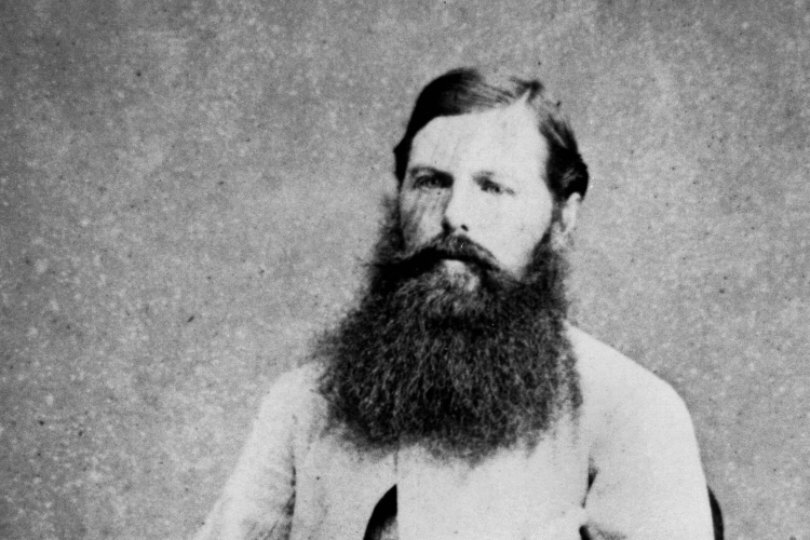
    When Robert Herbert and John Bramston sailed home to England after six years in the new colony of Queensland, John’s younger brother remained. A ‘confirmed bachelor’, Henry Bramston played a prominent role in Brisbane life but was quickly forgotten after his death.

    Robert Herbert, private secretary to Sir George Bowen, arrived in Brisbane in November 1859 to prepare the official welcome for Bowen in his role as Queensland’s first Governor. On his arrival, Bowen appointed Herbert to head the government of the new colony. John Bramston arrived next in January 1860. He had lived with Herbert since they met at university a few years before. Bramston took over as Bowen’s private secretary and later stood for election to parliament himself. Finally, Bramston’s younger brother Henry disembarked in Brisbane in February. Sailing from England to Australia took about three months at the time, indicating the threesome planned their staggered arrivals.

    Henry Bramston

    In 1864, Henry and a friend bought a property out in the bush near Roma with Robert Herbert and John Bramston as partners. The next year, the same year that his brother became Attorney-General, Henry received a very convenient government appointment as magistrate at Roma. Such blatant nepotism did not always provoke the same indignation then as now. Henry remained in the public service until the end of his life.

    Despite various rural appointments, he mainly lived in Brisbane. He proved a more social animal than either his brother or Herbert. That pair preferred the splendid isolation of their 50-acre farm. However, they were rarely alone at Herston. Robert Herbert and John Bramston welcomed a constant stream of similarly upper-class Englishmen who like themselves favoured boating, fishing, hunting and camping over elegant soirées.

    The local squattocracy generally laid on lavish social events in honour of unmarried British gentry resident in the colony. They seized on the opportunity to enhance their social standing by marrying their daughters to toffs. However, it seems the local nobs quickly discerned that Robert Herbert, John Bramston and younger brother Henry had little interest in vows of matrimony.

    Herston

    Herston Robert Herbert John Bramston gay premier henry bramston confirmed bachelor
    Herston with Robert Herbert, left and John Bramston. Images: State Library of Queensland

    A busy man

    Henry Bramston was a man about town and something of a dandy — an immaculate dresser and partial to fine jewellery.

    He served on the Acclimatisation Society, Philharmonic Society, Hospital and Turf Club committees and on the board of the National Association which ran the annual exhibition. He also worked tirelessly to raise funds for the construction of Fortitude Valley’s Holy Trinity Anglican Church.

    Henry owned a house opposite where the Normanby Hotel now stands. His gardens were much celebrated, particularly his potted plants and flowering ornamentals.

    He was a busy man.

    The Brisbane Courier records him ‘donning the pink’ to act as Clerk of Course at the races and organising balls at the School of Arts. He both supervised the Horticultural competition at the Ekka and won many of the prizes in that same competition.

    At the 1878 Ekka, he won 21 of the 39 awards for ornamental plants. Although he did not enter any pansies in the competition, he encouraged others to cultivate the large-flowered hybrid. He donated ten shillings for the best three pansies; the same for the best single pansy; and £1 for the best collection of five pansies.

    Dear Sir…

    Henry’s voluminous correspondence at times made the Letters column of the Brisbane Courier seem like his personal Facebook page. He reached for his quill to compose comments on any and every topic. Among his favoured subjects — hospital rules. Henry enthralled readers with lengthy treatises seemingly designed to smother with micro-management any patients who survived their ailments.

    Henry did not tolerate dissent. Only courageous souls dared propose concepts contrary to the Bramston Manifesto. First and foremost, he objected to charitable endowments that resulted in free treatment for the hoi-polloi. He abhorred benevolence toward a class of people he insisted ‘would never work for what they could get by begging’.

    A bit rich coming from a bloke who owed his position in life to a family connection.

    He took particular offence at a proposed children’s hospital, concerned that tending to sick children would encourage the lower classes to breed.

    A frequent postscript epitomised his routine tone.

    Crave pardon

    “I have written plainly… and if I have offended or hurt anyone’s feelings, I can only crave pardon for so doing.”

    Crave pardon as he might, Henry tolerated neither dissension nor any slight against his esteemed self — nor his prized bay gelding.

    When Henry entered the horse in the harness competition at the Ekka, Prince took second place. That bewildered a newspaper editor who thought the prize undeserved. He ridiculed Prince as using ‘his forelegs as though they were a pair of crutches’ and likened the horse to a cockroach.

    How very dare he! Henry dashed off an outraged response.

    “I must crave permission to take exception to your remarks.”

    Henry Bramston eventually ran into financial difficulties. He overspent during the construction of a grand mansion on 20 acres at Ascot and was forced to sell everything, including his prize-winning pot plants.

    He then moved to Newstead and died in 1891 in a private hospital on James St.

    Following his death, the newspapers eulogised Henry Bramston as ‘a very old citizen of Brisbane’. But Henry was only 55 years of age. He merely seemed old because of his constant fussing and ‘fuddy-duddy’ nature.

    Mayfield

    confirmed bachelor henry bramston john bramston robert herbert
    Mayfield: The mansion Henry Bramston built at Ascot later hosted Edward VIII when he visited Brisbane as Prince of Wales. The house, which burned down in the 1930s, gave its name to Mayfield St, Ascot.

    Bitchy old New Farm Queen

    In truth, Henry would fit easily into Brisbane’s inner-city suburbs today. We may loathe to admit it, but most Brisbanites have either said or heard the phrase, ‘bitchy old New Farm queen’.

    Unlike the elder brother he followed to Queensland, there is no evidence beyond stereotype to indicate his sexuality.

    Assuming Henry Bramston was gay because he fitted a stereotype would now arouse angry indignation. We insist emphatically — and correctly — that our communities are diverse. Not all gay men are effeminate, and not all lesbians are butch.

    But stereotypes did not simply emerge from the ether. Something inspired them.

    Stereotypes arose because of the commonalities manifested by people the general public became aware were same-sex attracted. The most obvious were generally effeminate men and butch women. While not representative, the individuals who refused to conform to heteronormativity were our public face.

    Their visibility promoted tolerance of difference long before we dared advocate for law reform.

    Sir Robert Helpmann

    Lifesavers once dumped Bobby Helpmann in the surf for daring to promenade on Bondi Beach with plucked eyebrows and painted fingernails. However, the openly gay ballet dancer later became Australian of the Year. How do we quantify the acceptance achieved via the social prominence of that celebrated queen of high camp?

    Likewise, many now disparage the mincing Mr Humphries from Are You Being Served? as a derogatory stereotype. Yet, mainstream television audiences of the 1970s and early 80s loved the character. They laughed with him, not at him.

    Here’s a little secret!

    LGBTIQ+ people also loved him. He gave us visibility, and the show promoted acceptance. While amused by the camp eccentricities of Wilberforce Humphries, his co-workers never displayed the slightest intolerance towards his sexuality.

    Lilian Cooper also warrants mention as Queensland’s pioneering female doctor and one half of a same-sex couple who lived together openly for half a century. Few accounts of Lilian fail to mention her butchness — both in dress and manner. Yet Lilian Cooper and Josephine Bedford became revered Brisbane citizens for their considerable civic contributions.

    In our commitment to repudiating stereotypes, we should not deny their role in advancing our cause. In an era of persecution and prosecution, likeable but stereotypical gay men and women bequeathed our communities visibility and increased acceptance.

    Queensland’s arch-homophobe Phyllis Cilento clearly recognised their impact. She admonished her readers on the subject in 1953.

    “The danger now is that after the first revulsion of feeling against homosexuality, people will become used to the idea, and take it for granted as ‘just one of those things’…

    “They will look around… and find homosexuals among men they formerly admired for their intellectual and artistic achievements or liked for their friendly and gentle manner, and they will feel that really this cannot be so heinous a crime.”

    Bachelors and spinsters

    The generation of Brisbane bachelors who followed Henry came of age at a time of increased wealth and more frequent social opportunities. Newspapers documented the social lives of nattily dressed ‘eligible bachelors’. Admiring belles surrounded the elegantly attired young men at every garden party, picnic race or masquerade ball. Their ranks included Claude Musson, the stock and station agent who orchestrated the city’s ‘gayest’ balls. And also ‘pretty Willie Morse with his golden curls’, whose father owned the Orient Hotel. Joining their coterie was George Love Warry, scion of a wealthy storekeeping family.

    With a wink and a nod, the papers wryly noted that as the years rolled by, some of the town’s most popular single men moved from the column of ‘eligible bachelor’ to that of ‘ineligible bachelor’.

    So was the general public as unaware and intolerant of LGBTIQ+ people as commonly asserted?

    Or was discussion of LGBTIQ+ people suppressed — and the hatred towards us directed — by the usual suspects? Were they the same people who cause us grief today — clerics insistent on universal submission to their personal god, politicians thirsting for notoriety and sensationalist media?

    Let us not forget that those same people acted as arbiters of our history. ‘History is written by the victors.’ But only temporarily. As time goes by, locked archives are accessed and previously hidden memoirs published. However, to some degree, queer history remains hostage to the people who refused us any input into the chronicles of our existence. We were, after all, ‘unfit for publication’.

    They told us, for example, how much ‘normal’ people despised homosexuals and illustrated their point with evidence such as the prosecution of Oscar Wilde.

    But wait a moment!

    Did the public actually despise Oscar Wilde? They continued to buy his books and attend his plays. Decades later, students continued to study Wilde’s The Importance of Being Earnest as part of the Queensland high school English curriculum. That was despite Premier Joh Bjelke-Petersen banning gay teachers in his quest to eradicate the scourge of homosexuality.

    In recent years, as researchers gained access to previously ignored or hidden archives, we learned the stories of less famous LGBTIQ+ people.

    We now know that Yorkshire’s Anne Lister, the notorious ‘Gentleman Jack’, managed to live an open, if not publicly discussed, life as a lesbian in the 1830s.

    In Brisbane, Lilian Cooper and Josephine Bedford lived together as a couple, worked together as a couple and were invited to social events together which they then attended as a couple. Did no one ever think, “Hold on? I wonder if this couple is a couple?’

    Likewise, did no one quietly ponder the living arrangements of Robert Herbert and John Bramston? Just a decade later, Queensland’s elite did not hesitate to employ homophobia against the foppish Governor Cairns. But Herbert and Bramston supported policies which enriched the local nobs. Cairns, on the other hand, advocated for Aboriginal people to have the same legal rights as anyone else. He fought against their dispossession and murder and was aghast at the enslavement of South Sea Islanders. The local establishment attacked the Governor not because of his sexuality but because of his insistence on fair and proper governance which would impact their profits.

    The Elephant in the Room

    Were we actually the social pariahs we’ve always thought?

    Certainly, members of our communities did risk prosecution even if surprisingly few actually faced it. Definitely, we suffered prejudice, as we still do. We were sometimes subjected to violence, as we still are.

    But with increased access to secrets of the past, we learn of LGBTIQ+ people who did not lead furtive and sorrowful lives: people who benefitted from tolerance in their communities even if their difference remained unstated.

    Perhaps we were just another elephant in the room.

    Public discussion ignored plenty of other social phenomena in days gone by. Issues like domestic violence, child abuse, alcoholism, teenage pregnancy and others remained taboo in polite society.

    Holy f***!

    One night in the 1990s, I partook of a few drinks with my mother and grandmother. We reminisced about life in my small rural home town in the 1960s. Our memories travelled house to house as we discussed people we remembered. I mentioned an out of the way house which I knew nothing of except that a single man in his early thirties lived there alone — unusual in a small country town.

    I once waited in the car while my father popped in there for some reason.

    “Ah yes,” they told me, “The barman. That’s where men went when their wives weren’t putting out.”

    Holy f***!

    I always assumed that only heterosexual sex ever occurred in our remote rural outpost — that even the cattle copulated exclusively in missionary position and with the lights off.

    But no! In rural Queensland in the 1960s, gay sex occurred and the entire bloody town — except me apparently — knew about it and tolerated it.

    Reference

    Gay History: After Stonewall Clones, Closets and Codes

    A work by Bill Costa, from the Leslie-Lohman collection. Registrar Branden Wallace traces the images of purity (white linen, smooth body) to the advent of AIDS and HIV. (Photo courtesy of the Leslie-Lohman Museum of Gay and Lesbian Art)

    Late June’s (2019) 50th anniversary of the Stonewall Riots is making this Pride month a particularly reflective one.

    But like a newly minted AARP member flipping through their high school yearbook, the modern gay rights movement’s “Big five-oh” moment brings, with its flood of memories, certain hard questions—not the least of which is: What possessed you to wear that?

    “I have, fortunately, no photos publicly available of me during my ’70s platform shoes and glitter rock period,” says Joseph Hawkins, director of the ONE National Gay and Lesbian Library and Archives at the USC Libraries, who spoke with the Blade about how the things we put in our literal closet can liberate us from the figurative one (or keep us there).

    “When I look at pictures of people back in the [pre-Stonewall] 1960s,” says the USC Professor of Anthropology and Gender Studies, “there was an assimilationist viewpoint, where you wanted to look like a good citizen. I think of people marching in front of the White House, where they’re dressed in their Sunday best.”

    “When the consequences of being an out homosexual were damaging to one’s life and career, there had to be codes to letting people know who you were,” observes registrar Branden Wallace, of NYC’s Leslie-Lohman Museum of Gay and Lesbian Art.

    Fashion, Wallace notes, “is a way to express one’s identity, specifically, for the time after Stonewall, when you had this bursting, where queer culture could actually be visible. They took their cues from things that were going on socially, and the trends in fashion, and also developed their own.”

    Registrar Branden Wallace, of the Leslie-Lohman Museum of Gay and Lesbian Art. (Photo by Gonzalo Casals)

    By the late ’60s, Hawkins recalls, “there was a lot of crossover [between the counterculture and gays]—ripped Hawaiian shirts, and ripped jeans. But later, that gave way that whole ‘clone’ thing, which came as a response to the term ‘sissy.’ Even within the gay community, a sissy would be ‘too’ effeminate. In the clone movement, the gay men were going to out-butch straight men.”

    There was very little “humor, in these bastions of gay masculinity… seriousness and masculinity were the same thing. That opaque perspective on masculinity was also a mockery of drag queens and effeminate men. They weren’t really men,” recalled Gerald Busby, in a recent Blade article (“Of cowboy drag, cruising, and cocaine”) about the “cowboy” look he donned to make it past the doors of NYC’s Spike and Eagle’s Nest, during the early 1970s.

    “It denoted seriousness of commitment to being gay and being masculine, as well as being decisive about what kind of sex you were after,” Busby noted, of the “alignment of costume and behavior… unmistakable symbols of sexual preference, such as blue or red handkerchiefs in left or right rear pockets of jeans, to indicate top or bottom.”

    This exaggerated working class “clone” look, whether denim, lumberjack, or leather, Hawkins observes, was, in its own way, a “liberation ideology. Part of what allowed the sexual revolution to occur was this idea that masculinity could be a gay phenomenon. That’s what fed the ‘clone’ thing. It was a response to the idea that gay men couldn’t be masculine.”

    Of his above-mentioned platform shoes ’70s look, Hawkins notes he paired it with skin-tight jeans, shoulder-length hair, and “an old saddle bag I carried. I don’t remember being ‘coded,’ though.” Working in an Office of Economic Opportunity program at the time, Hawkins recalls going on a field trip to Washington, D.C., when “a guy in my group turned to me and said, ‘Oh, girl, if you’re gonna sell that merchandize, you have to advertise.’ There were certain things you wanted to do to look gay, for people to know you were gay. You could walk down the street and catch someone’s glance. That was a different kind of coding.”

    In the decades after Stonewall, Wallace notes, cloning reared a new head, and coding morphed with the mainstream, to the point of merger.

    Sporting a well-groomed, muscled, manicured look and clingy shirts meant to showcase a sculpted gym body, the “Chelsea Boy” aesthetic ruled the late 1990s and early 2000s.

    “I called it the ‘A-Gays,’ a standard that is unobtainable” yet desirable and pursued, Wallace recalls, also noting the Chelsea Boy look shared its time in the sun with “grunge and goth, the alternative kids who, no matter how hard they tried, could not fit in. So it’s amazing that in gay culture [of that time], you have the perfectly coiffed, and this side that just didn’t care, and was for all genders.”

    There was also in this era, Wallace notes, “a drastic change in the photographic artwork. With the advent of AIDS and HIV, the art tends to go toward a smooth body, clean appearances. There’s usually white linen and water around. So artists like Herb Ritts and Bruce Weber are using these models for their purity; a perfect-looking body that is not possible.”

    Nowadays, “anything goes,” Wallace says. “Beards, which you never saw in a Chelsea Boy in the 1990s, bow ties and sweater vests, and everything… I’m probably raw denim, wearing a T-shirt, got a big keychain in my pocket and a hanky and a Mohawk. That’s usually paired with a suit jacket or a jacket of some sort. You really can do anything now.”

    “I don’t know why these things happen,” Hawkins admits, of trends and styles and looks that sometimes seem to defy explanation (he’s still wrapping his head around flip-flops). “Sometimes, in the middle of them, they make no sense. On the other hand, you look back and there are all these political and cultural cues. Maybe there’s an economic downturn or a wave of conservatism based on some sort of military action”—or, an event like Stonewall, which steps over lines in the sand while drawing new ones of its own. “Those things,” Hawkins says, “begin to infiltrate the way people think about fashion, and what they are going to do.”

    Gerald Busby in cowboy drag, ready to cruise at the Spike and the Eagle’s Nest. (Photo by Joanna Ney)

    Reference