Warning: Some people might find the following images to be offensive.
It seems like just yesterday that Little Suzy and Bobby were playing with miniature minstrel kits and toy dogs that could smoke cigarettes. Well… maybe not yesterday.
Thanks to a Kickstarter campaign titled “Politically Incorrect Toys,” our eyes have been opened to the ridiculous and highly insensitive world of vintage playthings. From a suspiciously accurate replica of a detective’s gun to a packet of “housewife” necessities aimed at young girls, the project seeks to bring odd relics of our past back into the spotlight.
“This project is a social commentary on how toys have changed over the years and how we, as a society can change our views about what is or is not socially acceptable,” explains Hawaii-based photographer David Murphey, the mastermind behind “Politically Incorrect Toys,” on his Kickstarter page.
“As a country, we’ve made great strides to equality, but at the same time we’ve gone backwards in some ways. We’ve lost the ability to laugh at ourselves and enjoy the individuality in each other. Wouldn’t it be great if we could put aside some of our sensitivities (once in a while) and find humor in our differences?”
Murphey has photographed a plethora of strange (and often shocking) toys, hoping to create a limited edition photography portfolio of all the knick knacks that somehow evaded exile on the Island of Misfit Toys. Scroll through a preview of the portfolio below, but be warned — your eyebrows will likely rise in confusion. If you’re hooked on the idea, you can help fund the project here.
Kids are often told that you can’t judge a book by its cover.
Even so, people often believe they can rely on their gut to intuit things about other people. Stereotypes often influence these impressions, whether it’s that a black man is dangerous, a woman won’t be a good leader or a fashionable man is gay.
Stereotypes related to gay men and lesbians often operate under the guise of “gaydar” rather than stereotyping. “Gaydar” (a portmanteau of “gay” and “radar”) is a term that first appeared in the 1980s and refers to a “sixth sense” for identifying who is gay. Like many purported intuitions, however, gaydar often relies on stereotypes.
While many people believe stereotyping is wrong, calling it “gaydar” merely provides a cover for using stereotypical traits – like someone’s fashion sense, profession or hairstyle – to jump to conclusions about someone being gay. Nonetheless, some researchers have published studies that, at first glance, appear to show that people have accurate gaydar.
In some recent work, my colleagues and I have been able to demonstrate how the perpetuation of the gaydar myth has unintended negative consequences. We’ve also identified a mathematical flaw in some previous gaydar research, calling into question the results.
Stereotyping in disguise
My colleagues and I suspected that even people who would normally try to refrain from stereotyping might be more likely to use gay stereotypes if they are led to believe they have gaydar.
To test this idea, we conducted an experiment. We told some participants that scientific evidence says gaydar was a real ability, led others to believe that gaydar is just another term for stereotyping and said nothing about gaydar to a third group (the control).
Participants then judged whether men were gay or straight based on information ostensibly taken from social media profiles. Some of the men had interests (or “likes”) that related to gay stereotypes, like fashion, shopping or theater. Others had interests related to straight stereotypes, like sports, hunting or cars, or “neutral” interests unrelated to stereotypes, like reading or movies. This design allowed us to assess how often people jumped to the conclusion that men were gay based on stereotypically gay interests. Those who were told gaydar is real stereotyped much more than the control group, and participants stereotyped much less when they had been told that gaydar is just another term for stereotyping.
These patterns provided strong support for the idea that belief in gaydar encourages stereotyping by simply disguising it under a different label.
What’s the big deal?
In some ways, the idea of gaydar – even if it’s just stereotyping – seems useful at best and harmless at worst. But the very fact that it seems harmless may actually be responsible for its most pernicious effects. Using gaydar as a way to talk innocuously or jokingly about stereotyping – “Oh, that guy sets off my gaydar” – trivializes stereotyping and makes it seem like no big deal.
But we know that stereotypes have many negative consequences, so we shouldn’t be encouraging it on any level.
First, stereotyping can facilitate prejudice. In a study on prejudice-based aggression, we had participants play a game that involved administering electric shocks to a subject in the other room. Participants learned only one thing about this other person, either that he was gay or simply liked shopping (people tend to assume men who like shopping are gay).
In one condition, therefore, the participants knew that the man was gay and in the other they might have privately inferred that he was gay though it wasn’t confirmed, but that wasn’t known to anyone else (who might have accused them of being prejudiced).
These conditions are especially important for a subset of people who are covertly prejudiced: They’re aware that they’re prejudiced and ok with it, but don’t want others to know. We can identify these people with some well-established questionnaire measures, and we know that they express prejudice only when they’re able to get away with it.
As we predicted, these covertly prejudiced people tended to refrain from shocking the man who was confirmed as gay, but delivered extremely high levels of shocks to the man who liked shopping. If they had shocked the first man, people could accuse them of prejudice (“You shocked him because he was gay!”). But if others accused participants of prejudice in the second condition, it could be plausibly denied (“I didn’t think he was gay!”). In other words, stereotyping can give people opportunities to express prejudices without fear of reprisal.
Second, stereotypes – even innocuous ones – are troublesome for a number of reasons: They lead us to think narrowly about people before we get to know them, they can justify discrimination and oppression, and, for members of stereotyped groups, they can even lead to depression and other mental health problems. Encouraging stereotyping under the guise of gaydar contributes – directly or indirectly – to stereotyping’s downstream consequences.
But what if gaydar is actually accurate?
Some researchers say that stereotypes about gay people possess a grain of truth, which could lend credence to the idea of having accurate gaydar.
In these studies, researchers presented pictures, sound clips and videos of real gay and straight people to the participants, who then categorized them as gay or straight.
Half of the people in the pictures, clips and videos were gay and half were straight, which meant that the participants would demonstrate an accurate gaydar if their accuracy rate were significantly higher than 50 percent. Indeed, participants tended to have about 60 percent accuracy, and the researchers concluded that people really do possess an accurate gaydar. Many studies have replicated these results, with their authors – and the media – touting them as evidence that gaydar exists.
Not so fast…
But as we’ve been able to show in two recentpapers, all of these previous studies fall prey to a mathematical error that, when corrected, actually leads to the opposite conclusion: Most of the time, gaydar will be highly inaccurate.
How can this be, if people in these studies are accurate at rates significantly higher than 50 percent?
There’s a problem in the basic premise of these studies: Namely, having a pool of people in which 50 percent of the targets are gay. In the real world, only around 3 to 8 percent of adults identify as gay, lesbian or bisexual.
What does this mean for interpreting the 60 percent accuracy rate? Think about what the 60 percent accuracy means for the straight targets in these studies. If people have 60 percent accuracy in identifying who is straight, it means that 40 percent of the time, straight people are incorrectly categorized. In a world where 95 percent of people are straight, 60 percent accuracy means that for every 100 people, there will be 38 straight people incorrectly assumed to be gay, but only three gay people correctly categorized.
Therefore, the 60 percent accuracy in the lab studies translates to 93 percent inaccuracy for identifying who is gay in the real world (38 / [38 + 3] = 92.7 percent). Even when people seem gay – and set off all the alarms on your gaydar – it’s far more likely that they’re straight. More straight people will seem to be gay than there are actual gay people in total.
If you’re disappointed to learn that your gaydar might not operate as well as you think it does, there’s a quick fix: Rather than coming to a snap judgment about people based on what they wear or how they talk, you’re probably better off just asking them.
The invention of AI ‘gaydar’ could be the start of something much worse
Researchers claim they can spot gay people from a photo, but critics say we’re revisiting pseudoscience
Two weeks ago, a pair of researchers from Stanford University made a startling claim. Using hundreds of thousands of images taken from a dating website, they said they had trained a facial recognition system that could identify whether someone was straight or gay just by looking at them. The work was first covered by The Economist, and other publications soon followed suit, with headlines like “New AI can guess whether you’re gay or straight from a photograph” and “AI Can Tell If You’re Gay From a Photo, and It’s Terrifying.”
As you might have guessed, it’s not as straightforward as that. (And to be clear, based on this work alone, AI can’t tell whether someone is gay or straight from a photo.) But the research captures common fears about artificial intelligence: that it will open up new avenues for surveillance and control, and could be particularly harmful for marginalized people. One of the paper’s authors, Dr Michal Kosinski, says his intent is to sound the alarm about the dangers of AI, and warns that facial recognition will soon be able to identify not only someone’s sexual orientation, but their political views, criminality, and even their IQ. SOME WARN WE’RE REPLACING THE CALIPERS OF PHYSIOGNOMY WITH NEURAL NETWORKS
With statements like these, some worry we’re reviving an old belief with a bad history: that you can intuit character from appearance. This pseudoscience, physiognomy, was fuel for the scientific racism of the 19th and 20th centuries, and gave moral cover to some of humanity’s worst impulses: to demonize, condemn, and exterminate fellow humans. Critics of Kosinski’s work accuse him of replacing the calipers of the 19th century with the neural networks of the 21st, while the professor himself says he is horrified by his findings, and happy to be proved wrong. “It’s a controversial and upsetting subject, and it’s also upsetting to us,” he tells The Verge.
But is it possible that pseudoscience is sneaking back into the world, disguised in new garb thanks to AI? Some people say machines are simply able to read more about us than we can ourselves, but what if we’re training them to carry out our prejudices, and, in doing so, giving new life to old ideas we rightly dismissed? How are we going to know the difference?
CAN AI REALLY SPOT SEXUAL ORIENTATION?
First, we need to look at the study at the heart of the recent debate, written by Kosinski and his co-author Yilun Wang. Its results have been poorly reported, with a lot of the hype coming from misrepresentations of the system’s accuracy. The paper states: “Given a single facial image, [the software] could correctly distinguish between gay and heterosexual men in 81 percent of cases, and in 71 percent of cases for women.” These rates increase when the system is given five pictures of an individual: up to 91 percent for men, and 83 percent for women.
On the face of it, this sounds like “AI can tell if a man is gay or straight 81 percent of the time by looking at his photo.” (Thus the headlines.) But that’s not what the figures mean. The AI wasn’t 81 percent correct when being shown random photos: it was tested on a pair of photos, one of a gay person and one of a straight person, and then asked which individual was more likely to be gay. It guessed right 81 percent of the time for men and 71 percent of the time for women, but the structure of the test means it started with a baseline of 50 percent — that’s what it’d get guessing at random. And although it was significantly better than that, the results aren’t the same as saying it can identify anyone’s sexual orientation 81 percent of the time. “PEOPLE ARE SCARED OF A SITUATION WHERE [YOU’RE IN A CROWD] AND A COMPUTER IDENTIFIES WHETHER YOU’RE GAY.”
As Philip Cohen, a sociologist at the University of Maryland who wrote a blog post critiquing the paper, told The Verge: “People are scared of a situation where you have a private life and your sexual orientation isn’t known, and you go to an airport or a sporting event and a computer scans the crowd and identifies whether you’re gay or straight. But there’s just not much evidence this technology can do that.”
Kosinski and Wang make this clear themselves toward the end of the paper when they test their system against 1,000 photographs instead of two. They ask the AI to pick out who is most likely to be gay in a dataset in which 7 percent of the photo subjects are gay, roughlyreflecting the proportion of straight and gay men in the US population. When asked to select the 100 individuals most likely to be gay, the system gets only 47 out of 70 possible hits. The remaining 53 have been incorrectly identified. And when asked to identify a top 10, nine are right.
If you were a bad actor trying to use this system to identify gay people, you couldn’t know for sure you were getting correct answers. Although, if you used it against a large enough dataset, you might get mostly correct guesses. Is this dangerous? If the system is being used to target gay people, then yes, of course. But the rest of the study suggests the program has even further limitations.
WHAT CAN COMPUTERS REALLY SEE THAT HUMANS CAN’T?
It’s also not clear what factors the facial recognition system is using to make its judgements. Kosinski and Wang’s hypothesis is that it’s primarily identifying structural differences: feminine features in the faces of gay men and masculine features in the faces of gay women. But it’s possible that the AI is being confused by other stimuli — like facial expressions in the photos. THE AI MIGHT BE IDENTIFYING STEREOTYPES, NOT BIOLOGICAL DIFFERENCES
This is particularly relevant because the images used in the study were taken from a dating website. As Greggor Mattson, a professor of sociology at Oberlin College, pointed out in a blog post, this means that the images themselves are biased, as they were selected specifically to attract someone of a certain sexual orientation. They almost certainly play up to our cultural expectations of how gay and straight people should look, and, to further narrow their applicability, all the subjects were white, with no inclusion of bisexual or self-identified trans individuals. If a straight male chooses the most stereotypically “manly” picture of himself for a dating site, it says more about what he thinks society wants from him than a link between the shape of his jaw and his sexual orientation.
To try and ensure their system was looking at facial structure only, Kosinski and Wang used software called VGG-Face, which encodes faces as strings of numbers and has been used for tasks like spotting celebrity lookalikes in paintings. This program, they write, allows them to “minimize the role [of] transient features” like lighting, pose, and facial expression.
But researcher Tom White, who works on AI facial system, says VGG-Face is actually very good at picking up on these elements. White pointed this out on Twitter, and explained to The Verge over email how he’d tested the software and used it to successfully distinguish between faces with expressions like “neutral” and “happy,” as well as poses and background color.
A figure from the paper showing the average faces of the participants, and the difference in facial structures that they identified between the two sets. Image: Kosinski and Wang
Speaking to The Verge, Kosinski says he and Wang have been explicit that things like facial hair and makeup could be a factor in the AI’s decision-making, but he maintains that facial structure is the most important. “If you look at the overall properties of VGG-Face, it tends to put very little weight on transient facial features,” Kosinski says. “We also provide evidence that non-transient facial features seem to be predictive of sexual orientation.”
The problem is, we can’t know for sure. Kosinski and Wang haven’t released the program they created or the pictures they used to train it. They do test their AI on other picture sources, to see if it’s identifying some factor common to all gay and straight, but these tests were limited and also drew from a biased dataset — Facebook profile pictures from men who liked pages such as “I love being Gay,” and “Gay and Fabulous.”
Do men in these groups serve as reasonable proxies for all gay men? Probably not, and Kosinski says it’s possible his work is wrong. “Many more studies will need to be conducted to verify [this],” he says. But it’s tricky to say how one could completely eliminate selection bias to perform a conclusive test. Kosinski tells The Verge, “You don’t need to understand how the model works to test whether it’s correct or not.” However, it’s the acceptance of the opacity of algorithms that makes this sort of research so fraught.
IF AI CAN’T SHOW ITS WORKING, CAN WE TRUST IT?
AI researchers can’t fully explain why their machines do the things they do. It’s a challenge that runs through the entire field, and is sometimes referred to as the “black box” problem. Because of the methods used to train AI, these programs can’t show their work in the same way normal software does, although researchers are working to amend this.
In the meantime, it leads to all sorts of problems. A common one is that sexist and racist biases are captured from humans in the training data and reproduced by the AI. In the case of Kosinski and Wang’s work, the “black box” allows them to make a particular scientific leap of faith. Because they’re confident their system is primarily analyzing facial structures, they say their research shows that facial structures predict sexual orientation. (“Study 1a showed that facial features extracted by a [neural network] can be used to accurately identify the sexual orientation of both men and women.”)“BIOLOGY’S A LITTLE BIT MORE NUANCED THAN WE OFTEN GIVE IT CREDIT FOR.”
Experts say this is a misleading claim that isn’t supported by the latest science. There may be a common cause for face shape and sexual orientation — the most probable cause is the balance of hormones in the womb — but that doesn’t mean face shape reliably predicts sexual orientation, says Qazi Rahman, an academic at King’s College London who studies the biology of sexual orientation. “Biology’s a little bit more nuanced than we often give it credit for,” he tells The Verge. “The issue here is the strength of the association.”
The idea that sexual orientation comes primarily from biology is itself controversial. Rahman, who believes that sexual orientation is mostly biological, praises Kosinski and Wang’s work. “It’s not junk science,” he says. “More like science someone doesn’t like.” But when it comes to predicting sexual orientation, he says there’s a whole package of “atypical gender behavior” that needs to be considered. “The issue for me is more that [the study] misses the point, and that’s behavior.”
s there a gay gene? Or is sexuality equally shaped by society and culture? Illustration by Alex Castro / The Verge
Reducing the question of sexual orientation to a single, measurable factor in the body has a long and often inglorious history. As Matton writes in his blog post, approaches have ranged from “19th century measurements of lesbians’ clitorises and homosexual men’s hips, to late 20th century claims to have discovered ‘gay genes,’ ‘gay brains,’ ‘gay ring fingers,’ ‘lesbian ears,’ and ‘gay scalp hair.’” The impact of this work is mixed, but at its worst it’s a tool of oppression: it gives people who want to dehumanize and persecute sexual minorities a “scientific” pretext.
Jenny Davis, a lecturer in sociology at the Australian National University, describes it as a form of biological essentialism. This is the belief that things like sexual orientation are rooted in the body. This approach, she says, is double-edged. On the one hand, it “does a useful political thing: detaching blame from same-sex desire. But on the other hand, it reinforces the devalued position of that kind of desire,” setting up hetrosexuality as the norm and framing homosexuality as “less valuable … a sort of illness.”
And it’s when we consider Kosinski and Wang’s research in this context that AI-powered facial recognition takes on an even darker aspect — namely, say some critics, as part of a trend to the return of physiognomy, powered by AI.
YOUR CHARACTER, AS PLAIN AS THE NOSE ON YOUR FACE
For centuries, people have believed that the face held the key to the character. The notion has its roots in ancient Greece, but was particularly influential in the 19th century. Proponents of physiognomy suggested that by measuring things like the angle of someone’s forehead or the shape of their nose, they could determine if a person was honest or a criminal. Last year in China, AI researchers claimed they could do the same thing using facial recognition.
Their research, published as “Automated Inference on Criminality Using Face Images,” caused a minor uproar in the AI community. Scientists pointed out flaws in the study, and concluded that that work was replicating human prejudices about what constitutes a “mean” or a “nice” face. In a widely shared rebuttal titled “Physiognomy’s New Clothes,” Google researcher Blaise Agüera y Arcas and two co-authors wrote that we should expect “more research in the coming years that has similar … false claims to scientific objectivity in order to ‘launder’ human prejudice and discrimination.” (Google declined to make Agüera y Arcas available to comment on this report.)
Kosinski and Wang’s paper clearly acknowledges the dangers of physiognomy, noting that the practice “is now universally, and rightly, rejected as a mix of superstition and racism disguised as science.” But, they continue, just because a subject is “taboo,” doesn’t mean it has no basis in truth. They say that because humans are able to read characteristics like personality in other people’s faces with “low accuracy,” machines should be able to do the same but more accurately.
Kosinski says his research isn’t physiognomy because it’s using rigorous scientific methods, and his paper cites a number of studies showing that we can deduce (with varying accuracy) traits about people by looking at them. “I was educated and made to believe that it’s absolutely impossible that the face contains any information about your intimate traits, because physiognomy and phrenology were just pseudosciences,” he says. “But the fact that they were claiming things without any basis in fact, that they were making stuff up, doesn’t mean that this stuff is not real.” He agrees that physiognomy is not science, but says there may be truth in its basic concepts that computers can reveal.
For Davis, this sort of attitude comes from a widespread and mistaken belief in the neutrality and objectivity of AI. “Artificial intelligence is not in fact artificial,” she tells The Verge. “Machines learn like humans learn. We’re taught through culture and absorb the norms of social structure, and so does artificial intelligence. So it will re-create, amplify, and continue on the trajectories we’ve taught it, which are always going to reflect existing cultural norms.”
We’ve already created sexist and racist algorithms, and these sorts of cultural biases and physiognomy are really just two sides of the same coin: both rely on bad evidence to judge others. The work by the Chinese researchers is an extreme example, but it’s certainly not the only one. There’s at least one startup already active that claims it can spot terrorists and pedophiles using face recognition, and there are many others offering to analyze “emotional intelligence” and conduct AI-powered surveillance.
FACING UP TO WHAT’S COMING
But to return to the questions implied by those alarming headlines about Kosinski and Wang’s paper: is AI going to be used to persecute sexual minorities?
This system? No. A different one? Maybe.
Kosinski and Wang’s work is not invalid, but its results need serious qualifications and further testing. Without that, all we know about their system is that it can spot with some reliability the difference between self-identified gay and straight white people on one particular dating site. We don’t know that it’s spotted a biological difference common to all gay and straight people; we don’t know if it would work with a wider set of photos; and the work doesn’t show that sexual orientation can be deduced with nothing more than, say, a measurement of the jaw. It’s not decoded human sexuality any more than AI chatbots have decoded the art of a good conversation. (Nor do its authors make such a claim.)
Startup Faception claims it can identify how likely people are to be terrorists just by looking at their face. Image: Faception
The research was published to warn people, say Kosinski, but he admits it’s an “unavoidable paradox” that to do so you have to explain how you did what you did. All the tools used in the paper are available for anyone to find and put together themselves. Writing at the deep learning education site Fast.ai, researcher Jeremy Howard concludes: “It is probably reasonably [sic] to assume that many organizations have already completed similar projects, but without publishing them in the academic literature.”
We’ve already mentioned startups working on this tech, and it’s not hard to find government regimes that would use it. In countries like Iran and Saudi Arabia homosexuality is still punishable by death; in many other countries, being gay means being hounded, imprisoned, and tortured by the state. Recent reports have spoken of the opening of concentration camps for gay men in the Chechen Republic, so what if someone there decides to make their own AI gaydar, and scan profile pictures from Russian social media?
Here, it becomes clear that the accuracy of systems like Kosinski and Wang’s isn’t really the point. If people believe AI can be used to determine sexual preference, they will use it. With that in mind, it’s more important than ever that we understand the limitations of artificial intelligence, to try and neutralize dangers before they start impacting people. Before we teach machines our prejudices, we need to first teach ourselves.
Born Eric Clinton Kirk NewmanClassification: MurdererCharacteristics: Cannibalism – Necrophilia – Dismemberment – Snuff movieNumber of victims: 1Date of murder: May 24, 2012Date of arrest: June 4, 2012 (in Berlin)Date of birth: July 24, 1982Victim profile: Jun Lin, 33 (Chinese university student)Method of murder: Stabbing with an ice pick and a kitchen knifeLocation: Griffintown, Montreal, Quebec, CanadaStatus: In prison awaiting trial
Newman’s Grade 10 yearbook photo from 1999. (Jon Hembry/CBC)
Luka Magnotta
Police remove a bag containing a human foot that was delivered to the Conservative Party of Canada’s headquarters in downtown Ottawa.
Montreal police said the grisly garbage discovery was the city’s 11th homicide of the year.
Interpol released images reportedly showing suspect Luka Magnotta passing through security at an airport. (Interpol)
Here, CCTV footage from the café shows Magnotta, second from left, being taken into custody by police on June 4, 2012 (Associated Press)
Kadir Anlayisli, who identified Luka Rocco Magnotta and warned police, stands next to the Berlin internet café where the suspect was arrested. (Markus Schreiber/Associated Press)
Mugshot of Luka Magnotta, taken by German police after his arrest in Berlin on June 4, 2012.
Luka Magnotta is taken from plane in Canada.
Lin (30 December 1978 – May 2012) also known as Justin Lin, was an international student from Wuhan and an undergraduate in the engineering and computer science faculty at Concordia University.
Luka Rocco Magnotta (born Eric Clinton Kirk Newman; July 24, 1982) is a Canadian pornographic actor and model accused of killing and dismembering Lin Jun, a Chinese international student, then mailing his severed limbs to political parties and elementary schools.
After a video allegedly depicting the murder was posted online, Magnotta fled the country, becoming the subject of an Interpol Red Notice and prompting an international manhunt. He was apprehended at an Internet café in Berlin while reading news about himself.
He was previously sought by animal rights groups for allegedly uploading videos of himself killing kittens.
Biography
Eric Clinton Kirk Newman was born in July 24, 1982 in Scarborough, Ontario. He attended I. E. Weldon Secondary School in Lindsay. He legally changed his name to Luka Rocco Magnotta on August 12, 2006.
In 2003, he began to appear in gay pornographic videos, occasionally working as a stripper and a male escort. He appeared as a pin-up model in a 2005 issue of Toronto’s fab magazine using the pseudonym “Jimmy”. In 2007, he was an unsuccessful competitor in OUTtv’s reality series COVERguy. Magnotta had multiple cosmetic surgeries and auditioned for Slice network show Plastic Makes Perfect in February 2008.
In 2005, he was convicted of one count of impersonation and three counts of fraud (against Sears Canada, The Brick, and 2001 Audio Video) after impersonating a woman to apply for a credit card and purchasing over $10,000 worth of goods. He pleaded guilty and received a nine-month conditional sentence with 12 months of probation.
Magnotta declared bankruptcy in March 2007, owing $17,000 in various debts. The bankruptcy was fully discharged in December 2007.
Rumors emerged in 2007 claiming Magnotta was in a relationship with Karla Homolka, a high-profile Canadian murderer, though he denied this in an interview with the Toronto Sun. During the murder investigation, Montreal police initially announced the pair had dated but subsequently retracted the statement and acknowledged that they had no evidence to corroborate the claim.
Many profiles on various internet social media and discussion forums were created over several years to plant false or unverified claims about Magnotta. Magnotta himself repeatedly dismissed such accounts as hoaxes and part of a campaign of cyber stalking against him. According to police, Magnotta set up at least 70 Facebook pages and 20 websites under different names.
Murder of Lin Jun
Lin Jun (Chinese: 林俊; pinyin: Lín Jùn) (30 December 1978 – May 2012) also known as Justin Lin, was an international student from Wuhan and an undergraduate in the engineering and computer science faculty at Concordia University. He worked part-time as a convenience store clerk in Pointe-Saint-Charles. Lin had been studying in Montreal since July 2011. Lin moved into a Griffintown-area apartment with a roommate on May 1. He was last seen on May 24, 2012 and his friends reported getting a text message from his phone at 9 PM. His boss became suspicious when he didn’t show up for his shift the next day. Three of his friends went into his apartment on May 27. He was reported missing to police on May 29.
On May 25, 2012, an 11-minute video titled 1 Lunatic 1 Ice Pick was uploaded to Bestgore.com depicting a naked male tied to a bed frame being repeatedly stabbed with an ice pick and a kitchen knife, then dismembered, followed by acts of necrophilia. The perpetrator uses a knife and fork to cut off some of the flesh and gets a dog to chew on the body.
During the video, the 1987 New Order song “True Faith” plays in the background, and a poster for the 1942 film Casablanca is visible on the wall. Canadian authorities were able to obtain a “more extensive” version of the video and confirmed that cannibalism may have been performed. Materials promoting the video appeared online at least 10 days before the murder took place.
On May 26, an attorney from Montana attempted to report the video to Toronto Police, his local Sheriff, and the FBI, but the report was dismissed by officials. Bestgore viewers also attempted to report the video. Police later confirmed it as authentic and identified the victim, an Asian male, as the same one whose body parts were sent to Ottawa.
At 11 AM on May 29, 2012, a package containing a left foot was delivered to the national headquarters of the Conservative Party of Canada. The package was stained with blood and had a foul smell. It was marked with a red heart symbol. Another package containing a left hand was intercepted in a Canada Post processing facility, addressed to the Liberal Party. A janitor discovered a decomposing torso inside a suitcase, left in a garbage pile in the alley behind an apartment building in the Snowdon area of Montreal. He first saw the suitcase on the 25th, but it was not picked up due to the large amount of garbage that day.
After searching the scene, police recovered human remains, bloody clothes, papers identifying the suspect, as well as “sharp and blunt objects” from the back alley. Footage from surveillance cameras inside the building showed a suspect bringing numerous garbage bags outside, and the images matched a suspect captured on video at the post office in Côte-des-Neiges.
At 23:33 EDT (03:33 UTC), police searched apartment 208, which Luka Rocco Magnotta was renting. He moved in four months prior, and his rent was paid up to June 1. The apartment had been mostly emptied before he left. Blood was found on different items including the mattress, the refrigerator, the table, and the bathtub. “If you don’t like the reflection. Don’t look in the mirror. I don’t care.” was written in red ink on the inside of a closet.
On May 30, 2012, it was confirmed that the body parts belonged to the same individual, later identified as Lin Jun. The suspect in the case was quickly identified as Magnotta, who had by then fled.
A note was found with the package sent to the Conservative Party, stating that a total of six body parts have been distributed and that the perpetrator would kill again. Notes were also included in the other three packages, but police declined to disclose their contents, citing concerns about possible copycats.
On June 5, 2012, a package containing a right foot was delivered to St. George’s School and another package containing a right hand to False Creek Elementary School in Vancouver. Both schools opened as normal the following morning. It was confirmed that both packages were sent from Montreal.
On June 13, the four limbs and the torso were matched to Lin Jun using DNA samples from his family. On July 1, his head was recovered at the edge of a small lake in Montreal’s Angrignon Park after police received an anonymous tip.
Lin’s body was cremated on July 11 and his ashes were buried on July 26 at Notre-Dame-des-Neiges cemetery in Montreal.
Luka Magnotta with his mother.
Luka Magnotta
Luka Magnotta
Luka Magnotta
Manhunt
An arrest warrant for him was issued by the Service de police de la Ville de Montréal (SPVM), later upgraded to a Canada-wide warrant by the Royal Canadian Mounted Police (RCMP), accusing him of the following crimes:
1.First degree murder; 2.Committing an indignity to a dead body; 3.Publishing obscene material; 4.Mailing obscene, indecent, immoral or scurrilous material; and 5.Criminally harassing Canadian Prime Minister Stephen Harper and several (unnamed) members of Parliament.
On May 31, 2012, Interpol issued a Red Notice for Magnotta at the request of Canadian authorities, and for several days before and after his arrest his name and photo were displayed prominently at the top of the homepage of the Interpol website. The Red Notice requested that Magnotta be provisionally arrested pending extradition back to Canada by any Interpol member state.
Magnotta flew from Montreal to Paris on May 26, using a false passport under the name Kirk Trammel. His cell phone signal was traced to a hotel in Bagnolet, but he had left by the time police arrived. Pornographic magazines and an air-sickness bag were found in the hotel room. He had contacts in Paris from a previous visit in 2010, and police were following a large-framed man who had been in contact with Magnotta. Another man he stayed with for two nights did not realize who he was until he had left. Magnotta then boarded a Eurolines bus at the Bagnolet coach station bound for Berlin, Germany.
On June 4, 2012, Magnotta was apprehended by Berlin Police at an Internet café in the Neukölln district while reading news stories about himself. He tried giving fake names before admitting who he was. His identity was confirmed through fingerprint evidence. Magnotta appeared in a Berlin court on June 5, 2012. According to German officials, he had not opposed his extradition. There was sufficient evidence to keep him in custody until extradition, and he agreed to a simplified process.
On June 18, 2012, Magnotta was delivered to Canadian authorities in Berlin and flown aboard a Royal Canadian Air Force CC-150 Polaris to Mirabel International Airport, north of Montreal. A military transport was necessary due to safety concerns with using a commercial flight and potential legal difficulties if the plane was diverted to another country. He was placed into solitary confinement at the Rivière-des-Prairies detention centre.
Aftermath
Reactions in China were highly critical, with some believing the murder was racially motivated. Some Chinese questioned public safety in Canada, as the killing was the second high-profile murder of a Chinese student there in slightly over a year. Foreign Affairs Minister John Baird called Chinese ambassador Zhang Junsai to convey his condolences.
On June 4, 2012, Canadian Prime Minister Stephen Harper said he was pleased that the suspect was arrested and congratulated the police forces on their good work in apprehending him. Interim Liberal Party leader Bob Rae said that Canadians should mourn the victim rather than “in any way, shape or form” celebrate Magnotta’s notoriety.
Two days later, Lin Jun’s family arrived at Trudeau Airport in Montreal. The Chinese Students and Scholars Association of Concordia University established a fund to defray expenses incurred by Lin’s family while in Canada and an award was created in his honor. A candlelight vigil was held in Montreal.
Magnotta was named Canadian Newsmaker of the Year by Canadian media, which caused controversy.
On July 16, 2013, Edmonton police charged BestGore.com owner Mark Marek with “corrupting morals”, a rarely used obscenity charge, for posting the 1 Lunatic 1 Icepick video online.
Luke Magnotta
Legal proceedings
Preliminary hearing
On June 19, Magnotta appeared in court by video link to plead not guilty to all charges through his lawyer. On June 21, Magnotta appeared in person at a high-security Montreal courtroom to request a trial by jury.
A preliminary hearing began on March 11, 2013. The evidence presented is subject to a publication ban. Magnotta’s defence team requested the media and the public be barred entirely from the hearing; this was declined the next day. Lin Jun’s father, Lin Diran, travelled from China to attend the hearing. On March 13, one of Magnotta’s lawyers resigned, due to a possible conflict of interest. Expert witnesses testified, including a forensic pathologist, a forensic toxicologist, a forensic odontologist, a bloodstain analyst, data recovery specialists and an Internet investigations officer. The prosecution also displayed video evidence. Both Magnotta and Lin physically collapsed at separate times during the proceedings.
On April 12, 2013, Luka Magnotta was indicted on charges of first degree murder, offering indignities to a human body, distributing obscene materials, using the postal service to distribute obscene materials and criminal harassment.
Trial
Following committal for trial, the preliminary inquiry judge set a tentative trial for the fall of 2014 on April 29, 2013. Magnotta elected to be tried by judge and jury.
Investigation into other possible crimes
Magnotta is alleged to be the person behind a series of videos of animal cruelty involving cats which were posted to YouTube beginning in 2010, including one titled “1 boy 2 kittens” which showed a man deliberately suffocating two kittens with a vacuum cleaner.
In January 2011, professional model and animal rights activist Sia Barbi joined a private Facebook group who had identified Magnotta as the person in these videos; subsequently animal rights activist groups offered a $5,000 reward for bringing him to justice.
In February 2011, Toronto police began investigating Magnotta in connection with the videos after receiving a complaint from the Ontario Society for the Prevention of Cruelty to Animals The OSPCA also contacted the Royal Society for the Prevention of Cruelty to Animals in England, the FBI, and police in Montreal due to the suspect’s extensive travels.
Alex West, a journalist for British tabloid newspaper The Sun, met Magnotta while he was living in London in 2011, following claims that he had made “Python Christmas”, an online video showing a kitten being eaten alive by a Burmese Python. The Sun contacted Scotland Yard, which denied that the python video incident had occurred within its jurisdiction, stating that the video had been “posted from somewhere in North America.” Following his meeting with Magnotta, Alex West said he received a threatening email, which he believed was sent by Magnotta.
On June 8, the Los Angeles Police Department announced they were in contact with Montreal police to determine if Magnotta was involved in the unsolved murder and decapitation of Hervey Medellin, known as the “Hollywood Sign Murder” but later announced that they did not believe he was involved in the crime. The animal rights group Last Chance for Animals claimed responsibility for posting YouTube videos linking him to the Hollywood Sign Murder in an attempt to lure Magnotta into contacting them. LCA offered a $7500 reward for information leading to his arrest while he was on the run.
The case also drew comparisons across North America to Mark Twitchell, a convicted murderer inspired by Dexter, who used social media in his crimes and to self-promote his work.[98] Author Steve Lillebuen, who wrote a book on the case, described a new trend in crime where social media allows killers to become “online broadcasters” and have direct, instant access to a global audience they may crave.
Wikipedia.org
Luka Magnotta: Owner of gore website rearrested in Edmonton
The Canadian Press
July 26, 2013
EDMONTON – Police in Edmonton say they have arrested a website owner who faces charges over a grisly video at the centre of the Luka Magnotta murder case.
A warrant was issued Thursday for Mark Marek on a charge of breaching conditions of his bail, which a judge granted last week.
Police say the 38-year-old was picked up at a gas station after they received a tip that led them to a nearby Edmonton-area storage facility.
Marek was originally charged with one count of corrupting morals for allegedly posting a video from Magnotta while knowing it depicted a real killing.
The video allegedly showed the killing and dismemberment of Chinese university student Jun Lin in Montreal.
Magnotta has pleaded not guilty to murder and is to stand trial in September 2014.
At Marek’s bail hearing, the Crown opposed his release, pointing out he had no Edmonton address and had made it clear to police that he planned to go back to his native Slovakia. Police had said he had been living out of his car since he returned to the city.
The defence said Marek had planned to visit family in the eastern European country in September, but didn’t intend to run away from his legal problems.
Marek told the judge that officers had already seized his passport.
Why Luka Magnotta’s trial won’t happen until 2014
Judge, courtroom availability key factors
By Daniel Schwartz, CBC News
May 7, 2013
Luka Magnotta’s murder trial is set for Sept. 15, 2014. Although that date is more than two years after his arrest in connection with the death of Jun Lin, that is not an unusual amount of time for a high-profile murder case to reach the trial stage.
Some have questioned why it takes so long for cases like Magnotta’s to get to court. Lukatrial.com, for example, the popular website that has been following the case from the beginning, says, “I will never understand how we can delay justice for so long in a case like this.”
The key determinant in most cases has to do with judicial resources, rather than issues related to the defence or the prosecution.
Ottawa criminal lawyer Ian Carter told CBC News that the 16-month delay between the preliminary hearing and Magnotta’s trial before judge and jury is not unusual. A trial like Magnotta’s “is normally set that far in advance because they need to find a courtroom and a judge.”
The Magnotta trial is expected to last six to eight weeks, a relatively big block of court time. The court facilities, the judge, the lawyers and the witnesses all need to be available at the same time, and there are always other trials in the queue competing for timeslots.
In the Magnotta case, his lawyer, Luc Leclair, had requested an earlier start date — April 2014 — but last week Justice Andre Vincent said September was the earliest possibility. “It’s a busy courthouse,” Leclair told reporters, adding, “I’m not completely surprised.”
Reasonable time
There are others factors as well that play a role in setting the date. The starting point is the Charter of Rights and Freedoms, which states, “Any person charged with an offence has the right … to be tried within a reasonable time.”
Section 11 of the Charter is also the one that says anyone charged should “be presumed innocent until proven guilty.”
A defendant who is to be tried by a superior court judge alone or a judge and jury usually has the right to a preliminary hearing. Magnotta’s wrapped up April 12 with an order to stand trial for first-degree murder and four other charges.
Carter says Magnotta’s preliminary hearing happened relatively quickly. “In terms of judicial resources, there’s a longer period of delay from the initial charge to the preliminary inquiry than there is between the preliminary and the superior court trial.”
“Technically, the preliminary is there to serve as a screening mechanism to see if there is some evidence of the offence you’ve been charged with, [but] in the vast majority of cases there’s no argument about committal to stand trial,” Carter said.
Where that does happen, sometimes, is in murder cases, with an argument over whether the charge should be first- or second-degree murder or manslaughter. Leclair argued unsuccessfully that Magnotta should be tried for second-degree.
However, Carter explained that the reality with preliminary inquiries is that, “In the vast majority of cases it’s used by the defence as discovery-type process, to get information about certain parts of the crown’s case,” and to get an idea of how witnesses will perform in the courtroom.
The Crown can avoid a preliminary inquiry by getting the attorney general to approve a direct indictment.
The decision to do so is made unilaterally by the prosecutors and the defence has no ability to argue against it. Last year, the Crown got a direct indictment in a terrorism case in which Carter is representing one of the accused, Misbahuddin Ahmed, who was arrested in 2010. In that case, the jury trial won’t begin until April 2014.
The availability of the lawyers for both sides, and the witnesses, is also taken into account when setting a trial date. Once the available date for a judge and courtroom are known, the two sides usually work out which option to choose.
After a trial date is set
Once the trial date is set, both sides have more work to do. Although most of the investigative materials should have been handed over to the defence ahead of the preliminary hearing, both sides will study the transcripts from the hearing.
The prosecution probably won’t put forward its full case at the inquiry, and “it’s a much bigger task doing it in front of a jury,” Carter explains.
The defence has to work out their strategy, line-up expert opinion, get extra evidence, and prepare to cross-examine witnesses, which Carter says will be different in front of a jury compared to the preliminary. And it’s likely there will be additional witnesses called.
“In a jury trial, there is always more work to be done,” he said. “As defence counsel you don’t necessarily want to show your entire hand at the preliminary.”
Pickton, Shafia, Bernardo murder trials
Compared to some other high profile murder trials in Canada, the expected timeline for the Magnotta trial appears to be about average. As a comparison:
For Robert Pickton, who was charged in 2002 in connection with the disappearance of dozens of women in Vancouver, it was four years, 11 months before his murder trial began.
For the three accused in the 2009 Shafia family murder case, two years and three months would elapse between the arrests and the start of the trial.
Paul Bernardo was arrested in 1993 for the murders of school girls Leslie Mahaffy and Kristen French. His trial began two years, three months later.
Magnotta’s trial is set to begin two years, three months after his arrest.
Luka Magnotta & his troubled history
CBC.ca
November 2012
Most of the world first learned of Luka Magnotta on May 30, 2012, when he was named as a suspect in a grisly Montreal killing involving the shipping of body parts to the headquarters of two political party.
But some online communities had taken notice of the man long before that. Over the years, Magnotta had littered the internet with information about himself – both untrue and true – using dozens of pseudonyms, all in an effort to attract the worldwide fame he craved.
Over time, friends, acquaintances and family members became concerned that something was amiss with the Scarborough, Ont.- born man.
Troubling signs
The following is a timeline of Magnotta’s life, the troubling signs that emerged and how an online community tracked him down, based on exclusive interviews and information obtained by CBC’s the fifth estate.
July 24, 1982
Born in Scarborough, Ont.
Magnotta is born Eric Clinton Kirk Newman in Scarborough, a suburban community on the eastern outskirts of Toronto, to mother Anna Yourkin and father Donald Newman. He is the eldest of three kids. His parents split while Eric is still young. Newman later goes to live with his grandmother, Phyllis.
1998
Attends high school
1998-2000: At some point, Newman’s grandmother and grandfather also divorce. Newman is home schooled for a period of time; in one blog post, he later writes that it was because he was told the world is a dirty and dangerous place. However, for at least two years, from 1998 to 2000, he does attend I.E. Weldon Secondary School in Lindsay, a rural community in the Kawartha Lakes region of southeastern Ontario. Former teachers and classmates remember him for his vanity and preoccupation with looks. He changes his hair colour often.
2002
Starts stripping
Around 2002 or 2003, Newman begins stripping at Remingtons, a nightclub in Toronto. By 2003, he has appeared in his first two pornography films, both as a straight man turned gay. The following year, he appears in at least two other pornographic films, including one where he appears as Jimmy – a name he would also adopt while working as a male escort.
2004
Allegations of sexual assault
Newman catches the attention of the Toronto Police after he befriends a 21-year-old woman with the mental capacity of a child eight to 12 years of age, convinces her to apply for credit cards and then racks up $10,000 in unpaid bills. He is charged with fraud. Initially, police allege he sexually assaulted the woman and videotaped it, but the Crown drops the charge before the case goes to trial. Newman’s lawyer at the time, Peter Scully, now says that the decision changed the course of Newman’s life “immeasurably, with huge ramifications to our society eventually.”
2005
Convicted of fraud
June 2005: Newman pleads guilty and is convicted of four fraud charges. Before sentencing, Newman’s lawyer shows the court a medical report revealing his client has “significant psychiatric issues.” In handing down the sentence, Madam Justice Lauren Marshall issues a stern warning: “You have a medical problem and you need to always take medication. If you do not, your life is going to get messed up.” Newman is given a nine-month community-service sentence and 12 months of probation.
2005
Dreams of policing
Newman continues to appear in low-level porn films. He also appears in Fab Magazine, a gay bi-weekly in Toronto, on the “Fab Boy” page as “Jimmy.” There, he describes himself as a “22-year-old soccer fan” born in Russia and living in Toronto who hopes to become a vice or homicide police officer.
2006
Changes name
Early in 2006, Newman meets Barbie, a transgendered woman, and they begin dating. “He said he wanted to be famous one day,” Barbie told the fifth estate in a recent interview. She recalls his apartment looking like a shrine dedicated to himself. “He would always beg me to take pictures of him,” she says. In April, several months after meeting Newman, Barbie breaks up with him. That summer, Newman legally changes his name to Luka Rocco Magnotta.
2007
Bankruptcy
March 2007: Magnotta files for bankruptcy, listing the cause as “illness, lack of employment and insufficient income to pay off debts.” He claims that he had to pay $200 each month in expenses relating to an unspecified medical condition.
2007
Reality show auditions
2007-2008: Throughout 2007, Magnotta continues his attempts to make a name for himself. In the summer, he auditions for the reality show Cover Guy, telling the judges, “Some people say I am devastatingly good-looking.” The judges reject him. In February of 2008, he also tries out for the reality show Plastic Makes Perfect. “I’ve had my nose done. I’ve had two hair transplants,” he tells them. “And I’m planning on having muscle implants in my pecs and my arms.”
September 14, 2007
Denies Homolka rumours
The Toronto Sun publishes a story by reporter Joe Warmington about how Magnotta had dropped by the newspaper’s headquarters to deny online rumours he was dating notorious schoolgirl killer Karla Homolka. The rumours were likely started by Magnotta himself. In later years, a tribute video to Homolka was created by a Luka Magnotta alias account on YouTube; all the videos uploaded/favourited are Magnotta- or Homolka-related.
2008
Online personas
Magnotta continues to try to garner attention online, posting comments about himself to create rumours and then using other profiles to deny them. Twice this year, he loses battles with Wikipedia to keep a page up about himself. He also posts an online escort ad under the alias Jimmy. One client posts an unflattering review describing him as cold and remote.
October 2009
A travel companion
Magnotta meets a 70-year-old man in Toronto who ends up becoming his travel companion. Together, they visit Russia, Italy and France. Henry, a fake name used to protect his identity, told the fifth estate they met at the Pickle Barrel restaurant located near Toronto’s Yonge and Eglinton intersection. “He walked as if he was on a stage or as if he was on a ramp for modeling clothes,” said Henry.
2010
Darker postings
Fall of 2010: In 2010, Magnotta’s online postings get progressively darker. On his Facebook page, he posts a link to a video called, 3 guys 1 hammer that shows a man being viciously beaten to death. The video was not by Magnotta. The myth about Magnotta’s relationship with killer Homolka grows. In one posting about Magnotta and Homolka, the user — likely Magnotta — writes, “Luka is unable to live unless there is chaos in his life, it makes him feel as though he matters.”
2010
Kitten-killing video
Dec. 21, 2010: Shortly before Christmas, a video called 1 guy – 2 kittens started circulating on discussion boards. Posted on Dec. 21, the video depicts an unidentified man, whose face is concealed, placing two kittens in a sealed bag and then sucking out the air with a vacuum to suffocate them. Though the video is quickly removed from YouTube, animal activists learn of it.
December 2010
Group seeks kitten killer
Soon after, Ryan Boyle, a former U.S. soldier who uses the online name Save Kitty, forms a Facebook group called “Find the Vacuum Kitten Killer for Great Justice.” About 4,000 people sign up. “These were not people who were doing it for money,” said Boyle, referring to the online activists. “They all had the same thing in mind: we want to catch this guy.” The group believes Magnotta joined the group under an alias, based on certain users’ online patterns of behaviour. When the group goes astray in its search for the kitten killer, they believe that Magnotta himself anonymously went on a message board frequented by the group and posted pictures from the video with the face no longer blurred.
December 28, 2010
$5,000 award posted
Rescue Ink, an animal protection group, posts a $5,000 reward for information leading to the arrest of the Vacuum Kitten Killer (VKK). “It’s a gateway crime, animal abuse,” Joe Panz, a founding member of the group, told the fifth estate. “Once somebody starts to open that door, that’s when things start to get really dangerous.”
2011
Contacts N.Y. lawyer
Jan. 4, 2011: Magnotta, now in New York, makes contact with lawyer Romeo Salta, expressing alarm about the firestorm over the kitten killer. “He was convinced the animal activists were closing in,” said Salta. Magnotta asks whether any arrest warrants are pending on him. There aren’t any.
2011
New online hunt starts
Early 2011: A new 11-member online group, called the Animal Beta Project or the AB Project, emerges in early 2011 with the goal of stopping Magnotta before he kills again. “We felt he would continue, that he would harm other animals and eventually move onto something even more violent, like hurting a person,” said John Green, an online alias. He spoke to the fifth estate on the condition of anonymity. The amateur sleuths analyze the kitten-killing videos frame by frame. They claim that furnishings and the kitten killer’s clothing in the videos are the same as those in other images of Magnotta posted on the web.
February 2011
Police file opened
Though the secretive AB Project group discovers a wealth of information about Magnotta online, they struggle to track down his physical location. The AB Project had been using exif (exchangeable image file) data from pictures posted of Magnotta online that told them when and where photos were taken. One innocuous photo from October 2010 taken on a cellphone stamped with a GPS locator finally suggests to them that Magnotta was in Toronto. The group contacted the Ontario Society for the Prevention of Cruelty to Animals with all their findings, who then reach out to the Toronto Police. The police open a file on Magnotta in February of 2011.
November 2011
New kitten videos
Late November and early December 2011: A year after the original kitten-killing videos appear online, more videos are posted. A man wearing a Santa hat is shown feeding a live kitten to a python. In another, a kitten is duct taped to a broom handle then drowned in a bathtub. “He was basically saying, ‘Look, I’ve done it again. You’re not going to catch me,'” said AB Project member John Green.
December 8, 2011
London encounter with reporter
After The Sun in London, U.K., publishes a story about the kitten killer, Magnotta turns up at their office to deny that he had killed a kitten. The paper has not asked about him and reporter Alex West describes the behaviour as “highly suspicious.” West wrote, “But behind the denials it seemed he was getting some sort of bizarre pleasure out of the attention.” Two days later, threatening emails are sent to the Sun’s offices, believed to be from Magnotta. “Next time you hear from me it will be in a movie I am producing that will have some humans in it, not just pussies,” the email says. The London police are notified but say it was outside their jurisdiction.
2012
Ties to Montreal
Early 2012: Investigators with the AB Project receive a tip in early 2012 that Magnotta might have moved to Montreal. The project members then begin searching through their archive of Magnotta pictures looking for any that connects him to the city. One photo with unique streetlights catches their attention. The online sleuths begin systematically looking at Montreal intersections using Google’s Street View and track the one in the picture to a neighbourhood in Montreal. Around this time, Magnotta’s online activity begins to accelerate with blog postings about necrophilia and sedatives.
May 15, 2012
New video promoted
May 15-16, 2012: Over the course of two days, from May 15 to 16, repeated references are made online to a new video, 1 Lunatic 1 Ice Pick, that hasn’t even been posted. One reference depicts a person in a purple hoodie with a fist holding an ice pick. On one site, a user asks, “Where can I watch the 1 lunatic 1 ice pick video?” Ryan Boyle, a former soldier who started a Facebook group looking for the kitten killer, believes this is similar to earlier patterns where Magnotta would build buzz about a video via aliases before actually releasing the video.
May 24, 2012
Silence, then a disappearance
After a flurry of online postings, Magnotta’s online activity appears to go black for a few days.
On May 24, Concordia University student Jun Lin fails to show up for his job.
May 25, 2012
Video posted
On May 25, a video titled, 1 Lunatic 1 Ice Pick, is posted on the web. It depicts a young male bound on a bed, initially alive and then lifeless. Then someone is seen repeatedly stabbing the corpse with an ice pick and dismembering the body with a knife. There are also acts of necrophilia and cannibalism.
May 29, 2012
1st body parts found
Staffers at Conservative Party HQ in Ottawa call police after receiving a package containing a foot. Ottawa police later say they found a second package containing a hand. Montreal police confirm they’re investigating a human torso found in a garbage pile in that city.
May 30, 2012
Suspect named
Montreal police say Luka Rocco Magnotta is wanted in the homicide investigation stemming from the body parts. He’s been on their radar since the day before, and can be seen on surveillance video of his apartment building and a Canada Post outlet.
May 30, 2012
Video analyzed
A video allegedly showing the murder and dismemberment of a man had appeared on a website days before. Mark Marek, the owner of the website, tells CBC News members of his site identified Magnotta. Police view the video for the first time this morning.
June 2012
Victim identified
Authorities identify the victim of the gruesome killing and dismemberment as Jun Lin, a Chinese national who was studying at Concordia University in Montreal. Meanwhile, police announce that Magnotta left Canada for France on May 26.
June 3, 2012
Magnotta spotted in Paris
Now at the centre of a global manhunt, Magnotta, who has been dubbed the “Butcher of Montreal” by French media, may have been spotted in a Paris café, according to eyewitness accounts being investigated by local police.
June 4, 2012
Magnotta arrested
Luka Rocco Magnotta is arrested at an internet café in Berlin, where he was reportedly reading stories about himself.
June 5, 2012
Magnotta awaiting extradition
Suspect Luka Rocco Magnotta is held in a Berlin jail awaiting extradition to Canada on charges of first-degree murder and other offences, after a global dragnet tracked him down in the German capital.
June 5, 2012
Hand & foot sent to B.C.
Staff opening the mail at two Vancouver elementary schools discover a human hand and a foot, and it’s later determined they came from Montreal — prompting speculation about a Magnotta link.
June 7, 2012
Link to L.A. homicide rejected
Law enforcement sources in California confirm there is no link between Magnotta and a case in which severed hands, feet and a head were found near the Hollywood sign, according to the L.A. Times.
June 8, 2012
Jun Lin Award created
Concordia University announces the creation of an award commemorating the life of Jun Lin, the Chinese student who was killed in late May and dismembered.
June 12, 2012
Jun Lin was family’s ‘pride and joy’
The family of Chinese student Jun Lin, who was brutally murdered and dismembered in Montreal last month, says his death was a “destructive blow” that left them physically and psychologically spent.
June 13, 2012
Vancouver body parts belong to Jun Lin
Montreal police Cmdr. Ian Lafrenière says DNA test results confirm that body parts delivered to Vancouver schools last week belong to Jun Lin.
June 18, 2012
Magnotta arrives home to face Canadian justice
Magnotta arrives at Quebec’s Mirabel airport by military plane in a highly controlled and secretive extradition operation orchestrated to minimize media attention on his return from Germany
June 19, 2012
Magnotta pleads not guilty
Appearing via teleconference at a Montreal courthouse, Magnotta pleads not guilty to a number of charges including first-degree murder, committing an indignity to a human body, posting obscene material, mailing obscene material and criminally harassing Stephen Harper and other members of Parliament.
June 21, 2012
Magnotta back in court for possible psychiatric evaluation
Luka Rocco Magnotta will appear in Montreal court via video-link today for a possible psychiatric evaluation request.
July 2, 2012
Investigators follow tip to remains in park
A tip led police to a Montreal park where remains were discovered near a small lake. Montreal police have not publicly linked the remains, which have yet to be confirmed as coming from a human, to the case.
July 4, 2012
Head found in Montreal park belongs to Jun Lin
Quebec authorities have confirmed that a severed human head found in Angrignon Park over the weekend belongs to Chinese student Jun Lin.
July 21, 2012
Jun Lin honoured at Montreal memorial
The parents of Jun Lin took part in an emotional and often tearful public memorial, as Montreal’s Chinese community gathered to remember the student two months after he was brutally killed.
Luke Magnotta
Luka Rocco Magnotta arrested in Germany
CBC News
June 4, 2012
Luka Rocco Magnotta, suspected of killing a Chinese university student in Montreal and mailing the dismembered body parts to Canadian political parties, has been arrested at an internet café in Berlin where he was reportedly reading stories about himself.
Magnotta, 29, is wanted by Montreal authorities on first-degree murder and other charges, including threatening Canadian politicians, in a case that has drawn international attention and spawned one of the largest manhunts in Montreal police history.
Montreal police Cmdr. Ian Lafrenière said Magnotta’s identity was confirmed through fingerprint evidence.
“The investigation is far from being over. We’ve got to bring the suspect down to Canada to face justice,” said Lafrenière, who added that some of the dead student’s body parts are still missing.
“There will be tons of questions to answer,” he said.
Magnotta was arrested in Berlin on an Interpol “red notice,” which under German law is considered a “provisional request from Canada for his extradition,” Julie Di Mambo, press secretary for Justice Minister Rob Nicholson said in a statement.
Canada is now required to submit a formal request for Magnotta’s extradition, accompanied by “documentation outlining the evidence supporting the request,” the statement said.
It’s unclear, however, when Magnotta will actually set foot on Canadian soil.
“It could take a very long time,” said Rene Verret, a spokesman for Quebec’s bureau of prosecutions.
Verret said his office will send a request in the coming days to Nicholson for Magnotta’s extradition, asking that it be forwarded to German officials. However, the legal process could extend for months if the extradition is contested.
Investigators are scheduled to hold a news conference Tuesday to provide more details on the case. It is their priority to return the accused killer to Canada.
Magnotta is suspected of killing Jun Lin — a 33-year-old Chinese university student with whom he had a relationship — recording video of the attack and mailing the victim’s dismembered body parts to federal political parties in Ottawa.
Berlin police spokesman Chief Supt. Stefan Redlich told CBC News that authorities arrested Magnotta at 2 p.m. Berlin time (8 a.m. ET) at the Helin Café on Karl Marx Street.
Seven officers were involved in the arrest, which was made after police were tipped off.
“As far as I know he was arrested alone, and there was no struggle,” Redlich said.
There is no doubt about the suspect’s identity, and “he is the person Canada is looking for,” he added.
Magnotta ‘went quietly’
The café’s owner, who spoke on condition of anonymity, said he witnessed the arrest.
“A colleague recognized him from his photo, because he’d just read the newspaper,” said the owner. “Nothing happened, it all went very quietly,” he said.
Kadir Anlayisli, the man who recognized the suspect and called police, works in the after-hours tobacco shop of the café. Berlin police confirmed that the arrest was mostly straightforward, but added that Magnotta initially denied his identity. Eventually he admitted, “OK, you got me.”
Magnotta is being held at the Berlin prison and is expected to be brought before a German judge on Tuesday.
But he likely won’t be questioned about the alleged crimes in Montreal, as “this is a Canadian case,” Redlich said.
Montreal police say they learned of Magnotta’s arrest at 12:40 p.m. ET, and the news came as a great relief for many investigators, said Lafrenière.
“We thank the media who broadcast his photo, and information on the web also had a part in coming to this result,” said Lafrenière.
Police will hold a full briefing on the case on Tuesday morning. Magnotta, dubbed the “Butcher of Montreal” by European media and “Canadian Psycho” at large, was spotted in Paris on the weekend, at a local café and in a hotel, after fleeing Montreal last week.
Magnotta had been reading stories about himself
Berlin-based freelance reporter Allan Hall said Anlayisli, who identified Magnotta, immediately recognized the man.
The café employee said Magnotta had been seated at computer number 25 reading stories about himself online. Anlayisli ran outside to flag down police.
“Anlayisli said the first police car stopped and the guy didn’t take him seriously,” Hall told CBC News in a telephone interview. “He had to stop another police car, then come into the internet café. The second police car called for backup.”
Hall added that Magnotta left his hotel in Paris on Friday and paid €100 to travel 14 hours from Paris to Berlin. Magnotta did not have to show a passport due to open border policies, he added. Police are working to reconstruct the timeline of Magnotta’s movements.
If investigators discover that Magnotta committed crimes while in Germany, the extradition process may become more complicated, reported Hall.
Harper congratulates police
Prime Minister Stephen Harper, who is in London for the Queen’s jubilee celebration, told reporters he is “pleased” Magnotta has been arrested.
“I just want to congratulate the police forces on their good work,” Harper said.
he prime minister is named, along with other Canadian politicians, in the police arrest warrant issued after Lin’s murder.
Magnotta is accused of criminally harassing Harper and other members of Parliament.
Interim Liberal Leader Bob Rae asked Canadians to remember the victim.
“Let’s not forget that a young man was killed in the most terrible of circumstances. He came to Canada to improve himself, and to improve his life, and he is dead.
“His family in China is mourning, and his friends are in mourning, and all of Canada should be mourning for the person who died, rather than … celebrate the notoriety of Mr. Magnotta.”
Magnotta also faces charges of first-degree murder, committing an indignity to a dead body, publishing an obscene thing, and mailing obscene matter.
Body parts suspect focus of global manhunt
Interpol joins search for Luka Rocco Magnotta after torso, foot, hand found
CBC News
May 31, 2012
Police say the intense media spotlight and international search for Luka Rocco Magnotta, the 29-year-old suspect in the grisly slaying and dismemberment of a victim whose body parts were sent in the mail, will make it difficult for him to remain on the lam.
Interpol posted a picture and information on Magnotta, a Montreal resident, on its website Thursday among a group of nine international suspects wanted for crimes including homicide, kidnapping and organized crime.
Interpol’s involvement came after Montreal police issued a worldwide warrant for first-degree murder.
Clues at the Montreal crime scene led police to expand their search abroad.
“We found some evidence,” said Montreal police Cmdr. Ian Lafrenière. “We found, also, a letter that was posted on a website making us believe he might be gone out of the country.”
He said the suspect may have fled to a different continent — but he would not confirm a report that the possible destination was France.
“There is no country in the world that is not talking about him,” Lafrenière said. “There’s a lot of heat on him. There’s a lot of pressure on him, so we believe that it’s going to be hard for him.”
“If you look on different websites, you see the appearance of that person could change dramatically — from a male to a female, wearing and things like that — so that’s the reason we’ve put a lot of effort trying to locate this suspect,” Lafrenière said.
Magnotta has family in the Toronto area, so investigators are still working with domestic police agencies in case, he said.
Victim likely in a relationship with suspect
Magnotta is wanted in connection with the slaying of a man whose body parts were sent through the mail and found stuffed in a suitcase behind a low-rise apartment in west-end Montreal, near the Décarie Expressway.
Police believe Magnotta was in “a relationship” with the victim, said to be a man in his 30s.
Investigators haven’t released the victim’s name and are awaiting autopsy results to confirm his identity.
However, Montreal police said they believe the victim was reported missing in Montreal several days earlier.
“There’s no family in Montreal, that’s why it’s going to be even more complicated,” Lafrenière said.
He said police believe the victim was killed last week. The property manager at the Montreal building where a torso was discovered stuffed in a suitcase in a trash pile said he first saw the luggage out on Friday.
Montreal police said they had received 15 solid tips about Magnotta’s whereabouts within two hours of releasing his photo Wednesday afternoon.
“We received many calls because a lot of people were shocked about this story,” Lafrenière said.
He said police are holding some information back to weed out false leads from the public.
Online investigation
Police said much of their investigation has been focused on the internet, because Magnotta did not have an extensive criminal record.
“There’s a heck of a history on the website now,” Lafrenière said. “We’re finding all kinds of images, all kinds of information.” Several websites show pictures of the suspect in modelling poses.
Sources have told CBC News that police believe they have evidence of the suspect videotaping the killing and dismembering the victim.
Police said they’re being careful in their release of images and video to help find the suspect, but cautioned this could be the kind of attention he is after.
“That type of suspect, I call him a suspect but a very deranged man, is looking for publicity,” Lafrenière said.
U.S. lawyer says he warned police about graphic video
A lawyer based in Montana told CBC News that he notified Toronto authorities over the weekend about a graphic online video that appears to depict the stabbing and dismemberment of a man.
Roger Renville, a civil litigation lawyer, said he came across the 10½-minute video Saturday morning on a website that showcases gory footage. Renville said he believes the video documents the killing and dismemberment of a man.
There isn’t any confirmation that the victim in the video is the same one that Magnotta is alleged to have killed.
But Renville said he is “extremely frustrated” at how Toronto police handled his weekend call.
“I kept insisting, and he told me that my story didn’t make sense,” he said in a Skype video interview Thursday. “Why would a killer film himself and then put it on the internet?”
Toronto police denied that they ignored Renville’s tip.
Remains still unaccounted for
The full scope of the crime came to light Tuesday when a torso was discovered in Montreal and the hand and foot surfaced in Ottawa.
The foot was sent to Conservative headquarters and a hand found at a Canada Post terminal that was addressed to the Liberal Party of Canada headquarters.
Montreal police said there are still remains that are unaccounted for, but they have no reason to believe they were also sent in the mail.
Magnotta, believed to be originally from Toronto, is also known as Eric Clinton Newman and as Vladimir Romanov. Montreal police give this description of Magnotta:
Five feet 10 inches tall. 135 pounds. Black or dark brown hair. Blue eyes.
Building manager Eric Schorer said Magnotta had lived there for four months but hadn’t been seen around in a while. He said there were never any complaints about noise in the unit, and that Magnotta passed a credit test to rent there.
Police in masks combed through the blood-soaked apartment Wednesday, having zeroed in on the source of a stench locals described as rotting meat, said a building resident.
A neighbour said police were showing neighbours pictures of two men — the suspected victim and the homicide suspect.
Montreal police said Magnotta was not known to them and had no criminal record. CBC News has learned, however, that he was convicted on four counts of fraud in Ontario in 2005. He served 16 days in pre-trial custody and was given a further nine-month conditional sentence and 12 months probation.
The suspect’s name has also come up in association with videos showing the killing of kittens. A CBC News source said police are also investigating a possible connection between the suspect and Karla Homolka.
Lafrenière said he would not substantiate internet rumours about the suspect.
Staff Sgt. Marc Habgood of the Peterborough Lakefield police service said they were contacted by Montreal investigators looking for Magnotta on Thursday.
“They advised us that they had a warrant for the arrest of a male party for [murder] and that he had family members in Peterborough, so he asked us to check a couple of residences,” he told CBC’s Peterborough affiliate, CHEX.
“We spoke to two family members and they hadn’t seen or heard of him in over a year… His family is here. They really stress that they’ve had nothing to do with him for over a year. They’re not anticipating hearing from him or seeing him.”
‘Horrible’ crime scene
The hand and foot mailed to Ottawa were sent from a fake Montreal address, police said.
Lafrenière described the scene of the alleged crime as “horrible” but said investigators would be releasing few details for now.
“The most important thing for us is to nab the suspect, and to make sure we don’t jeopardize a future trial. I’d have a lot of trouble, as a father, to sleep if that happened.”
Police find 2nd body part after foot mailed to Tory HQ
Reports of severed hand found after human foot delivered to Conservative HQ
CBC News
May 29, 2012
Ottawa police say they have found a second body part in a package as they investigate the delivery of a human foot to the Conservative Party of Canada’s headquarters in downtown Ottawa.
Police would not say what the body part was, nor where it was found, though they did say it was not found at the Conservative Party offices on 130 Albert St. where the foot was sent.
Media reports said the second package, containing a human hand, was not addressed to the Tory headquarters. Police said the major crime unit continues to investigate.
Police were called to the building at 11:20 a.m. ET after a suspicious package was delivered there. Police called for the hazardous materials unit after they noticed what appeared to be blood on the package.
The Hazmat Unit and Emergency Operations Section inspected the package and determined that there was possibly a human foot in the box. A coroner later confirmed it was a human foot.
Package delivered through Canada Post
Major Crimes Staff Sgt. Bruce Pirt said the suspicious package was delivered through Canada Post and conceded it’s possible it was sent as a “gruesome message.”
The foot was decomposing and there was a stench when a CPC employee opened it, said Pirt. He would not say whether the foot belonged to a male or female.
Police found the second package in the course of the investigation, but would not reveal any more details.
Police are working with Canada Post to determine the origins of the packages and said they may also be in touch with morgues and funeral homes to see if they are missing any body parts.
Ottawa police are also checking to see if their case is connected with an RCMP investigation in Montreal after police there found a human torso in a pile of garbage in the Côte-des-Neiges borough.
News shocks MPs
Sgt. Steve Hodgson said Conservative Party staff members were shaken up by the incident.
Conservative Party spokesman Fred DeLorey said Ottawa police are investigating and all questions should be referred to them.
Several members of Parliament said they were caught off guard by the news.
“It’s shocking for somebody to do that,” said Labour Minister Lisa Raitt. “I’d hate to be the one opening that.”
Torso found in Montreal garbage pile
Suitcase stuffed with human remains
CBC News
May 29, 2012
The major crimes unit of the Montreal police is investigating the discovery of a torso in a pile of garbage in the Côte-des-Neiges borough, west of Décarie Boulevard.
Police said a suitcase holding the human remains was found behind an apartment building at the corner of Place Lucy and the Décarie.
The building’s janitor made the grisly discovery Tuesday morning at about 10:15 a.m.
Mike Nadeau told CBC News he first noticed the suitcase in a large garbage pile last week, but only opened it Tuesday after people complained about a stench in the air.
He said there were maggots crawling all over the suitcase.
“As soon as we opened it, we just saw the body, with no head, and said, ‘We’re out of here, call the cops.'”
Police in Ottawa are working with Montreal police to see if a human foot dropped off at Conservative party headquarters Tuesday belongs to the same body.
Montreal authorities aren’t releasing any details about the age or gender of the body, but say it’s too soon to tell whether the torso belongs to a man or a woman.
They say more information will be available after an autopsy is performed.
On the night of November 18, 1901, in Mexico City, a disgruntled citizen called for the authorities to break up a party being held nearby. This party was a ball not the first, nor the last of its kind in the city, in which male elites dressed to the nines and danced the night away, oftentimes concluding the evening with a raffle in which the coveted prize was a male escort.
At this particular event, 42 men were in attendance half wore suits, the other half in expensive gowns and wigs. All but one were detained and later subjected to public ridicule; forced to sweep up the streets in dresses in plain daylight where the public was free to throw things and hurl insults at them. This would become a common punishment, not excluding police brutality, for homosexual acts. The incident was dubbed by newspapers “The Dance of the Forty-One” or “El Baile De Los Cuarenta y Uno.”
Due in large part to their social status, and overall influence on the authorities, the names of the detainees were never publicly released after the fact. In addition, all publications mentioning the event were destroyed and banned from further coverage, leaving only folklore and a vague though negative association to the number 41 and the LGBTQ community in Mexico, as well as the legend of the 42nd guest, Ignacio De La Torre y Mier, son-in-law to then-President Porfirio Díaz.
Frida Kahlo, poet Juana Inéz de la Cruz, both queer women whose contributions to Literature and art have cemented them as greats within Mexico’s vast history, are generally depicted as straight. Though tolerance for the LGBTQ community has (slowly) spread, history and religion are still seen as sacred and not to be questioned. This is especially harmful to queer kids coming to terms with their identity because it paints homosexuality as a relatively new development.
Growing up I’d heard relatives occasionally refer to the number 41 when making some kind of tasteless gay joke. I didn’t know what it meant or where it came from, but going by tone alone, I could sense it was a homophobic slur of some sort. A few weeks ago, while reading on the Mexican Revolution of 1910, one name kept peripherally popping up, and this piqued my interest. One dive into a Google black hole later, I found myself reading through every small piece of information most of it in Spanish that I could find on this guy. Significant historical figures have always been whitewashed in favor of heterosexual culture, so it’s no surprise that even people briefly connected to, say, a former President would be difficult to successfully research.
Born into a prominent family of sugar manufacturers, Ignacio De La Torre was brought up knowing only the best. He attended private schools in both Mexico and the U.S., and he was praised as a gifted student, furthermore, he was generally well-liked. At the age of 15, after his father’s passing, Ignacio took over the family business and ran it surprisingly well. The already fruitful franchise thrived further under his direction, due greatly to the tunnel vision like ambition young Ignacio possessed; a stubborn and competitive attitude toward business and finance that made him infamous for his reckless actions.
On one occasion, he even went as far as blocking a river channel that passed through his land for the sake of aesthetic, effectively causing multiple floods in the surrounding towns, yet he managed to avoid legal consequence; the incident was never even acknowledged by the authorities.
More than business savvy, however, Ignacio was known for his recreational activities, often involving alcohol, and his affinity for men. Money allowed him to live lavishly as well as shamelessly, and while Mexico’s toxic general views on homosexuality were no less inflammatory then than they are now, his reputation as a well-respected businessman was never tattered. It helped that he was admired for his charisma. He was so charming, in fact, that President Porfirio Díaz offered Ignacio his daughter’s hand in marriage despite his problematic reputation. Ignacio accepted, but the marriage quickly took a turn.
Not long after they were married, Amada Díaz and De La Torre grew apart; his drinking and dalliances leading up The Dance of The 41 proving to be too much for his bride. Eventually, the pair split up, though they remained legally married and living under the same roof, in different wings of their estate.
Only a few years after his involvement with the raid, Ignacio found himself connected to yet another public figure: future hero of the Mexican Revolution Emiliano Zapata.
Emiliano Zapata was well known amongst peasant workers and farmers as an organizer of protests against Hacienda owners and the monopolizing of land and natural resources. He was also known for his extreme dislike of queer and effeminate men. In addition, it was common knowledge that Zapata held a general dislike for Dictator Diaz, who was the personification of everything the agricultural movement was against. This was the primary source for public speculation regarding his connection to Ignacio De La Torre.
A descendant of a long line of farmers, Zapata was an expert horse trainer. As such, he was hired by De La Torre to get his horses and stables in order. The pair spent a period of six months together, alone for the most part, before abruptly going their separate ways.
Of course whatever official records that may have existed documenting their encounter will likely never be found, as is the fate of most queer history. However, pieces of their connection have been discovered elsewhere; such as in prison records indicating that on one occasion, after the overthrow of Porfirio Díaz in 1911, Zapata personally had De La Torre freed from detainment. In addition, there is an account in Amada Díaz’s personal journals citing the discovery of her husband in a compromising position with Emiliano Zapata in the stables.
Having lost his influence due to his connection to the former President, De La Torre came to realize he was no longer held in as high regard, and his shenanigans landed him in jail on several occasions. In one particular instance, he attempted to pass himself off as Emiliano Zapata in order to pull off a grain manufacturing-related scheme. Upon discovering this, Zapata had him arrested. This is speculated to have been what finally severed ties between them.
Ignacio De La Torre died in New York in 1919 of complications during a surgery relating to a severe hemorrhoid condition. He had fled prosecution in 1913 for his suspected involvement in the assassination of President Francisco I. Madero. He left behind an obscene amount of debt and a tale as colorful as the man himself.
Mexico is a country of rituals and tradition, and it is rich in culture. However, a large portion of that culture is rooted in Misogynist Patriarchal ideals and deeply religious beliefs that have heavily and negatively impacted the progression or lack thereof of LGBTQ rights. It has buried its queer history behind an antiquated belief system, and while our icons are loved and admired, their identities are nearly always erased.
Ignacio De La Torre was not a great painter or writer, and his wealth didn’t make him a philanthropist, but denying his connection to great figures does more harm than good. That being said, the extra elbow grease it takes to track down our past is all the more rewarding when it leads us to characters like De La Torre if only to assure ourselves and the world that we’ve always held a significant place in history.
Today, the national Latinx non-profit organization Honor41 is named in those who attended the dance. They work to promote “positive images of our community, creates awareness about our issues and builds an online family/community” and say that “by adopting 41 in our name, we take away the negative, oppressive power associated to the number; we educate others about this important moment in LGBTQ history; we honor their legacy, and honor our own lives and contributions to society.”
“We can say that even if we do not know anything about Rykener’s self-identification, hir life as a male-bodied woman was “transgender-like.” — Ruth Mazo Karras and Tom Linkinen
There is a fine line historians must walk between being thoughtful in using contemporary language for historical figures and erasing queer people from history. While someone from ancient Sumer wouldn’t have used the word “bisexual”, for example, we can discuss how their sexuality and experiences fit this modern term. We walk that line with every article, and we try to do so respectfully. There are, however, those who act under the guise of historical accuracy only to deny queer persons our history, particularly those stories of trans women.
Eleanor Rykener is often presented as, well, John Rykener. Little is known about her before her arrest in 1395; everything we know comes from her interrogation. Some years before her arrest, Rykener met a woman named Elizabeth Brouderer. Whether Eleanor was approached by Elizabeth or sought her out is, like many aspects of her life, unknown. There she was given her name and taught embroidery; that’s also where she got into sex work.
Elizabeth had developed an elaborate ruse in which she would trick the men her daughter slept with into believing they had slept with Eleanor. It’s likely that though she forced both women into this work, Elizabeth did not want her daughter to have the poor reputation of a sex worker. That reputation instead went to Eleanor. Another sex worker named Anna later taught Eleanor to have sex “as a woman”, as Eleanor called it.
Eleanor eventually left London for Oxford where she tried to find work as an embroideress. It’s important to note that embroidery was traditionally women’s work; Eleanor continued to dress, work, and live as a woman after leaving London. After finding less embroidery work than she had hoped, she focused on sex work. After a time, finding little to keep her there, she moved on to Burford.
There she found work as a barmaid, another profession held almost exclusively by women. While she continued doing sex work, we know that she was only paid by half of the men she slept with in Burford. Whether she expected payment or had a relationship with any of the men is, again, unknown.
We must pause here to mention how her relationships here have been read by modern historians. Often, we find the issue of straight historians erasing queer identities out of discomfort. Eleanor’s relations with these men cannot be denied—she herself talked at length about several of the men she slept with—so instead they are used to invalidate her gender. She is just a gay man who crossdressed.
Of course, the other side of the coin still exists, and we see that after Eleanor’s move to Beaconshire. Though she slept with two men there, she also slept with a woman named Joan. Though she undoubtedly slept with more men than women, their claim is that she only slept with men for work. Eleanor Rykener is then, in fact, a straight man who crossdressed.
Historians are quick to say that she was a crossdresser and a sex worker, though they aren’t as averse to using slurs when they describe her. They do, however, find the term bisexual problematic. Not because Eleanor didn’t have sex with men and women; we know for a fact that she slept with enough men and women that she wasn’t sure of the number. If we apply this modern label—bisexual—we may then have to acknowledge that in today’s language Eleanor would be called a trans woman. The idea that Eleanor was actually a man who tricked people into sex falls more in line with the idea that trans women are just men in dresses, that they are threats. Her sexuality is leveled against her to prove that she is a man, and that is still very much an issue for trans women today.
These historians also ignore the very real possibility that she presented herself as Eleanor, as a woman, to both the men and women she slept with. The original text of the interrogation mentions “ut vir concubuit cum” and ” concubuerunt ut cum femina”. While it explains that Eleanor had sex with Joan (active), it is careful to say that the two men had sex with her (passive). It’s assumed by most historians that Eleanor had sex with Joan as John, as a man, and had sex with the men as a woman. We don’t actually know this. There is, in fact, very little of the details of her relations that we do know. The interrogation is in Latin, having been translated from Middle English she would have spoken, and therefore does not contain quotes from her as she said things. Because Eleanor didn’t give her testimony in Latin, the intricacies of her testimony are lost.
In December of 1395, bundled against the frigid London winter, Eleanor caught the eye of one John Britby. He propositioned her, and the two made their way behind a nearby church. They were then caught by city officers and taken in for interrogation. She introduced herself as Eleanor Rykener. She readily admitted to everything, agreed with Britby’s account of the events, and hid nothing. She told them of her time with Elizabeth and Anna and her many moves throughout England. She told them of the many men and women she slept with; some married, some nuns and priests. She held nothing back, and she introduced herself as Eleanor.
There is a danger in applying modern labels to historical people. To call Eleanor Rykener a gay man is just as harmful as calling her a straight man. Erasing a queer person’s identity, even for the sake of another queer identity, is harmful. The case of Eleanor Rykener was actually revisited in recent years with the admission that transgender may be a more accurate term for Ms. Rykener. To simply call Eleanor Rykener a crossdresser is reductive; it ignores her life as she lived it. Often, we cannot say exactly how someone would describe themself, because we aren’t able to ask them. Eleanor, however, was asked over and over again. The only document of her life is her take on her womanhood and sexuality. Eleanor Rykener slept with both men and women, she worked as an embroideress, barmaid, and sex worker, and she was a woman.
The Questioning of John Rykener, A Male Cross-Dressing Prostitute, 1395
This document was brought to light by David Lorenzo Boyd and Ruth Mazo Karras in 1995 . It is apparently the only legal process document from late medieval England on same-sex intercourse. Since copyright law precludes presentation of such a recently published text, it was necessary for this web text to secure a copy of the manuscript source, transcribe it, and newly translate it. This has presented an interesting opportunity to show how historians acquire documents: here are presented: first, a translation; second, a transcription of the document; third a facsimile of the document itself.
Karras and Boyd recount how this text escaped notice. A. H. Thomas’ Calendar of Select Please and Memoranda of the City of London A.D. 1381-1412. 3 Vols. (Cambridge: Cambridge University Press, 1924-32) is the standard reference work on these particular records. It is a detailed calendar with a massive amount detail about each case. In Vol 3. Thomas began recording only “select pleas and memoranda”, but no longer records, for example, small debt actions. For the Rykener case Thomas recorded only “Examination of two men charged with immorality, one of which implicated several persons, male and female, in religiou orders” (p. 228). This is the only case in which anything but a will or formulaic document is summarized so briefly. And, of course, Thomas succeeds in hiding the homosexual subject matter of the case. Thus this case stands not only as a rare source for the history of tranvestite and homosexually active people in late Medieval England, but as evdience of the suppression of that history by scholarly historians in the 19th and 20th centuries.
As to the outcome of this case, it is not known. Nor is it know if the case was also prosecuted as sodomy in Church courts (since no records survive from the period). It is not even clear that a formal charge was made. For a discussion of the context, see the longer article by Karras and Boyd in Premodern Sexualities.
I: The Questioning of John Rykener 1395: Translation
On 11 December, 18 Richard 11. were brought in the presence of John Fressh, Mayor. and the Aldermen ofthe City of London John Britby of the county of York and John Rykener., calling [himself] Eleanor, having been detected in women’s clothing, who were found last Sunday night between the hours of 8 and 9 by certain officials of the, city lying by a certain stall in Soper’s Lane” committing that detestable unmentionable and ignominious vice. In a separate examination held before the Mayor and Aldermen about the occurrence, John Britby confessed that he was passing through the high road of Cheap on Sunday between the abovementioned hours and accosted John Rykener, dressed up as a woman, thinking he was a woman, asking him as he would a woman if he could commit a libidinous act with her. Requesting money for [his] labor, Rykener consented, and they went together to the aforesaid stall to complete the act, and were captured there during these detestable wrongdoings by the officials and taken to prison. And John Rykener, brought here in woman’s clothing and questioned about this matter, acknowledged [himself] to have done everything just as John Britby had confessed. Rykener was also asked who had taught him to exercise this vice, and for how long and in what places and with what persons, masculine or feminine, [he] had committed that libidinous and unspeakable act. [He] swore willingly on [his] soul that a certain Anna, the whore of a former servant of Sir Thomas Blount, first taught him to practice this detestable vice in the manner of a woman. [He] further said that a certain Elizabeth Bronderer first dressed him in women’s clothing; she also brought her daughter Alice to diverse men for the sake of lust, placing her with those men in their beds at night without light, making her leave early in the morning and showing them the said John Rykener dressed up in women’s clothing, calling him Eleanor and saying that they had misbehaved with her. [He] further said that certain Phillip, rector of Theydon Garnon, had sex with him as with a woman in Elizabeth Bronderer’s honse outside Bishopsgate, at which time Rykener took away two gowns of Phillip’, and when Phillip requested them from Rykener he said that [he] was the wife ofa certain man and that if Phillip wished to ask for them back [he] would make [his] husband bring suit against him. Rykener further confessed that for five weeks before the feast of St. Michael’s last [he] was staying at Oxford, and there, in women’s clothing and calling himself Eleanor, worked as an embroideress; and there in the marsh three unsuspecting scholars – of whom one was named Sir William Foxlee, another Sir John, and the third Sir Walter – practiced the abominable vice with him often. John Rykener further confessed that on Friday before the feast of St. Michael [he] came to Burford in Oxfordshire and there dwelt with a certain John Clerk at the Swan in the capacity of tapster for the next six weeks, during which time two Franciscans, one named Brother Michael and the other Brother John, who gave [him] a gold ring, and one Carmelite friar and six foreign men committed the above-said vice with him, of whom one gave Rykener twelve pence, one twenty pence, and one two shillings. Rykener further confessed that [he] went to Beaconsfield and there, as a man, had sex with a certain Joan, daughter of John Matthew, and also there two foreign Franciscans hall sex with him as a woman. John Rykener also confessed that after [his] last return to London a certain Sir John, once chaplain at the Church of St. Margaret Pattens, and two other chaplains committed with him the aforementioned vice in the lanes behind St. Katherine’s Church by the Tower of London. Rykener further said that he often had sex as a man with many nuns and also had sex as a iman with many women both married and otherwise, how many [he] did not know. Rykener further confessed that many priests had committed that vice with him as with a woman, how many [he] did not know, and said that [he] accommodated priests more readily than other people because they wished to give [him] more than others.
II: The Questioning of John Rykener 1395: Transcription
Corporation of London Records Office, Plea and Memoranda Roll A34, m.2 (1395)
Undecimo die Decembris anno regni regis Ricardi secundi decimo octavo, ducti fuerunt hic coram Johanne Fressh maiore et aldermannis civitatis Londoniensis Johannes Britby de comitate Eboracum et Johannes Rykener, se Elianoram nominans veste muliebri detectus. Qui die dominica ultimo preterita per quosdam dicte civitatis ministros noctanter inter horas octavam et nonam super quoddam stallum in venella vocata Sopereslane inventi fuerunt iacentes, illud vitium detestabile, nephandum, et ignominiosum committentes, pro seperali examinatione coram dictis maiore et aldermannis super premissa fienda et audienda etcetera. Qui quidem Johannes Britby inde allocutus fatebatur quod ipse per vicum regium de Chepe die dominica inter horas supradictas transiens, dictum Johannem Rykener vestitu muliebri ornatum, ipsumque mulierem fore suspicantem fuerat assecutus, petens ab eo, tanquam a muliere, si cum ea libidinose agere possit. Qui ab eo argentum pro labore suo petens sibi consentiebat, invicem transeuntes ad illud complendum usque stallum predictum. Ipsi tamen tunc ibidem per ministros predictos in eorum maleficiis detestabilibus capti fuerunt, carcere vero mancipati hucusque, etcetera. Et predictus Johannes Rykener in veste muliebri hic adductus de materia predicta allocutus cognovit se fecisse in omnibus prout idem Johannes Britby superius fatebatur etcetera. Quesitum fuit ulterius a prefato Johanne Rykener quis ei docuit dictum vitium exercere et quanto tempore, in quibus locis, et cum quibus personis masculis sive feminis illud actum libidinosum et nephandum commisit. Qui in animam suam sponte iuravit et cognovit quod quaedam Anna, meretrix quondam cuiusdam famuli domini Thome Blount, primo docuit ipsum vitium detestabile modo muliebri exercere. Item dixit quod quaedam Elizabeth Brouderer prius vestivit ipsum veste muliebri; quae etiam conduxit quandam Aliciam filiam suam diversis hominibus luxuriae causa, ipsam cum eisdem hominibus in lectis eorum noctanter absque lumine reponens et eandem summo mane ab eisdem recedere fecit, monstrando eis dictum Johannem Rykener veste muliebri ornatum ipsum Alianoram nominantem, asserens ipsos cum ipsa sinistre egisse. Item dixit quod quidam Philippus, Rector de Theydon Gernon, concubuit cum eodem Johanne Rykener ut cum muliere in domo cuiusdam Elizabeth Brouderer extra Bisshoppesgate, quo tempore dictus Johannes Rykener asportavit duas togas ipsius Philippi. Et quando idem Philippus illas petiit a prefato Johanne Rykener, ipse dixit quod fuit uxor cuiusdam hominis, et si ipse illas repetere vellet faceret maritum suum versus ipsum prosequi. Item dictus Johannes Rykener fatebatur quod per quinque septimanas ante festum santi Michaelis ultimo elapsum morabatur apud Oxonium et operatus est ibidem in veste muliebri in arte de brouderer nominans ipsum Alianoram. Et ibidem in marisco tres scolares ignotos, quorum unus nominatur dominus Willielmus Foxlee, alius dominus Johannes, et tertius dominus Walterus, usi fuerunt sepius cum ipso abominabile vitium supradictum. Item fatebatur prefatus Johannes Rykener quod ipse die veneris proximo ante festum sancti Michaelis supradictum venit apud Burford in comitate Oxonium. Et ibidem fuit commorans cum quodam Johanne clerc atte Swan in officio de tapster per sex septimanas proximas sequentes, infra quod tempus duo fratres minores, quorum unus nominatur frater Michael et alius frater Johannes Barry, qui sibi dedit unum anulum aureum, et unus frater carmelitus et sex diversi homines extranei commiserunt cum illo vitium antedictum. Quorum quidem fratrum et hominum supradictorum quidam dabat dicto Johanni Rykener .xii. d, quidam .xx. d, quidam .ii. s. Item fatebatur idem Johannes Rykener quod fuit apud Bekenesfeld et ibidem idem ut vir concubuit cum quadam Johanna filia Johannis Mathew, et etiam ibidem cum ipso concubuerunt ut cum femina duo fratres minores alienigenae. Item fatebatur dictus Johannes Rykener quod post eius ultimum adventum Londoniae quidam dominus Johannes quondam capellanus ecclesiae sanctae Margaretae Patyns et alii duo capellani in venellis retro ecclesiam sanctae Katerinae iuxta turrim Londoniensem commiserunt cum illo illud vitium antedictum. Item dixit dictus Johannes Rykener quod ipse sepius concubuit cum quampluribus monialibus ut vir, et etiam concubuit modo virili cum quampluribus mulieribus, tam maritatis quam aliis, quarum numerum ignorat. Item fatebatur dictus Johannes Rykener quod quamplures presbiteri fecerunt illud vitium cum illo ut cum muliere, quorum numerum ignorat, et dixit quod citius cepit presbiteros quam alios quia plus vellent sibi dare quam alii.
David Lorenzo Boyd and Ruth Mazo Karras, “The Interrogation of of a Male Transvestite Prostitute in Fourteenth Century London”. GLQ 1 (1995), 459-465
David Lorenzo Boyd and Ruth Mazo Karras, “`Ut cum muliere”: A Male Transvestite Prostitute in Fourteenth Century London”. In Premodern Sexualities. Edited by Louise Fradenburg and Carl Freccero. (London: Routledge, 1996), 99-116
If gay life was a giant ballroom (and it kind of is), kinky leathermen have been lingering in the back, in the shadows, for generations. But thanks to the Internet and porn giants like San Francisco-based Kink.com, fetish play has stepped onto the main floor over the last decade. Regardless if you’re kinky or vanilla, knowing some basic terminology will help you navigate Scruff profiles and boost your confidence at your local leather bar. And who knows? You might stumble across a term you didn’t know existed — and something you really want to try.
1. Kink and Fetish
These are the broadest terms on this list because, colloquially, they have become synonymous for most people. But since some kinksters (kinky people) stress their difference, we will define them separately. A kink is an unconventional sexual interest — that’s it. A fetish is a bit more particular. Fetishes are generally considered nonhuman objects that enhance sexual arousal, and for some people, they may be required for sexual arousal. Simply put: A fetish is a particular stimulus (feet, gas masks, certain items of clothing), while a kink is just something you’re into (bondage, spanking, etc.).
2. S&M (also written as S/M)
This stands for sadism and masochism. Sadism is sexual arousal that arises from inflicting pain on others. Masochism is sexual arousal from experiencing painful sensory stimulation. Guys into flogging (see #19) are sadists. Guys who enjoy getting flogged are masochists.
3. BDSM
This acronym stands for bondage, domination/discipline, submission/sadism and, masochism, and is sometimes used as an umbrella term for kink. This can be misleading, however, because someone may have kinks that do not fall under these terms. For instance, a guy may be exclusively into fisting (see #13) or forced tickling. This guy is kinky — he has “unconventional” sexual tastes, at least by vanilla people’s standards — but he is not into BDSM.
4. Dom/Dominant
Most kinks are enjoyed via a dominant-submissive sexual dynamic between two (or more) people. Someone takes charge and the other person submits. The take-charge person is the Dom, or Dominant. Male Dominants usually go by Sir, and may be called Mister, Daddy, Handler, Coach, etc. Female Dominants (also called Dommes and Dominatrixes) may go by Mistress or Lady. Don’t forget to capitalize the first letter!
5. Sub/Submissive
Every particular Dom-sub (typically shortened to D/s) relationship has a slightly different power dynamic, but the sub/submissive is always the one who relinquishes control to the Dominant. Note: sub guys are not exclusively bottom, but this is definitely more common.
6. Switch
A switch is a guy (or girl) who enjoys both domination and submission — the kink version of the ever-elusive, 50/50 versatile bedmate. Naturally, switches pair up best with other switches.
7. Scene
This is a somewhat debated term in the world of kink, but most kinksters agree that a “scene” is one particular kink, the culture surrounding it, and its community of practitioners. For instance, watersports (see #17) is a scene that many people are into. Debate occurs because the term is also used to mean the actual playtime between a Dom and sub. By this second definition, a scene begins when a sub and Dom start to play. While the length of time that scenes last vary based on pre-established limits, scenes typically have defined beginning and end points. (This writer does not encourage beginners to jump immediately into extreme 24/7 scenes, which can be emotionally and psychologically damaging without ample discussion and experience beforehand.)
8. Limits
Limits are important, and every submissive guy’s limits are different. A limit is the point beyond which you do not allow Dominants to go. “Soft limits” are things that you’re mostly against, but in certain circumstances may try. For instance, drinking urine is a soft limit for this writer — an act not done in most circumstances, but perhaps for special occasions (like this year’s Folsom Street Fair). Soft limits may change over time. A “hard limit,” by contrast, is nonnegotiable. This writer’s hard limits are the presence of blood and/or feces. If either one of these appear during a scene, I’m finished, and playtime stops.
9. Safe Word
Safe words are vital for beginners and experienced kinksters alike. A safe word is a word or phrase that submissives use to stop a scene. Like hard limits, safe words are nonnegotiable. If a Dom ignores a safe word, they are considered “unsafe” and will not be welcomed in the kink community. We don’t like unsafe Doms because they can really hurt people. In kink porn, the industry standard safe word is “red,” so that’s what most kinksters use. Since being gagged is one of this writer’s biggest turn-ons, the “safe word” is not a word at all. In this case, a snap of the fingers or a slap on the thigh means “stop right now.”
10. Leather
Leather is the most popular fetishized material, with rubber as a close second. Many guys get excited by the look and feel of leather clothing, boots, harnesses, and other gear. Leather is so commonly fetishized and has been closely linked to BDSM for so many years that many people now see the “leather community” — guys all over the world who enjoy wearing leather and attend leather events and competitions — as synonymous with kink and BDSM.
11. Bondage
Bondage is probably the most basic and widely known feature of BDSM. And it’s unfailingly one of the most erotic. Bondage involves making a submissive helpless and immobilized. This can be done with rope, handcuffs, leather cuffs, chains, stocks, and mummification (see #25).
12. CBT
Cock and ball torture. This includes ball-stretching (stretching the scrotal sac so that it hangs lower by using weights and other devices to pull on it) and ball-bashing, which is exactly what it sounds like: hitting the balls with small paddles and similiar blunt objects. E-stimulation (see #14) is also commonly used for CBT — especially for cock torture.
13. FF
Fisting/fist fucking. This is the practice of slowly stretching open the anus with fingers until the whole hand is inserted. With practice, skilled fisters (guys who give fists) and fistees (guys who take them) can go all the way to the elbow and even the shoulder — or get double-fisted. Novices generally start with toys and dildos and work their way up. Fisting is not for beginners. When done incorrectly, fisting can cause severe injury. If this is something you want to try, go slowly and use lots of lube. You can’t use too much lube in fisting — lube should be everywhere by the time you’re done. While it may sound extreme, fisting is one of the most erotic and intense experiences you can have with someone (and can produce the most mind-blowing orgasms) when done correctly.
14. E-Stimulation/Electrical Play
E-stim involves using electrodes and electric shock during BDSM play. This is another kink that is not for beginners. Professionally made electrical units have to be used.
15. Puppy Play
Puppy play is one scene in the world of kink that is growing rapidly in popularity. Puppy play is part of a group of scenes that fall under the umbrella of Animal Training or Animal Play, in which submissives act like animals. Pony play and kitty play also fall into this category. In puppy play, the Dominant is called the Owner or Handler, and the submissive is called the pup. During the scene, pups stereotypically act like dogs — they bark, walk on all fours, and come when called (when they feel obedient). Handlers give pups “treats” (sexual or otherwise) and discipline them when they misbehave. While there is no standard way to do puppy play, most pups and handlers agree that the power dynamic is very relaxed and playful.
16. Slave/Master
If pups and handlers have a relaxed power dynamic, Master-slave relationships are the opposite. This scene typically involves very hardcore BDSM and domestic service from the slave, with lengthy playtimes — some slaves and Masters practice live-in, 24-7 scenes.
17. Piss Play
Also called watersports, piss play fetishizes urine. Guys into this scene enjoy getting peed on or drinking piss. Since actual (canine) pups pee on everything, a lot of guys into puppy play are also into piss play.
18. Candle Play
Candle play is hardly a scene of its own, but we’re sure that somewhere out there is a sadistic guy exclusively into using candles to drip hot wax on submissives to create a painful sensation that typically does not leave long-lasting marks or long-term damage. Typically, though, candles are used alongside other S&M practices during BDSM scenes
19. Flogging
Flogging is an S&M practice in which a Dominant whips a submissive with a flogger, which is a multi-tailed whip that is typically made out of leather. Depending on the severity, flogging can feel like anything from a back massage to an extremely painful experience. Beyond floggers, other devices commonly used are bull whips and cat o’ nine tails (see #26).
20. Edging
Edging or edge play involves dominant guys withholding orgasm from a submissive. You’ve probably done this to yourself while watching porn: masturbating and barely reaching the point of cumming and then abruptly stopping. This is one of the hottest and most intense “tortures” to experience as a submissive, especially when you are allowed to play for hours and with a skilled Dominant.
21. Nipple Torture
Nipple torture typically involves using devices like nipple clamps, suction clamps, clothespins, needles, and mousetraps on the nipples in order to create a painful sensation, but using hands and teeth work fine too. Chew and suck for hours of enjoyment.
22. Corporal Punishment
Some submissive guys really enjoy the idea of getting “punished” during BDSM scenes. Some even intentionally “disobey” and talk back to their Dominants as part of the scene in order to get punished. Corporal punishment is a BDSM practice in which Dominants use repetitive spankings and paddling (along with interrogation, see #23) to change a submissive’s behavior.
23. Interrogation
Some kinky guys get aroused watching those hot scenes in war movies and spy movies where someone is kidnapped, blindfolded, tied to a chair, and interrogated — so it’s no surprise that interrogation has become a popular practice in BDSM, and one that requires extensive amounts of creativity, imagination, and role play. Remember, however, that everything in kink is consensual. All scenes — even intense and long-lasting interrogation ones — are eroticized pretend games that Doms and subs enjoy together.
24. Chastity
You’ve no doubt seen cock cages and male chastity devices somewhere on the Internet. These devices keep a penis from getting hard, so by extension they keep you from achieving orgasm or pleasing yourself. It’s a form of control that Doms exert over their subs. Some cock cages can only be opened with a key — which naturally belongs on a chain around Sir’s neck.
25. Mummification
This is a particular form of bondage in which the whole body is wrapped in some kind of material – typically plastic wrap. Since this form of bondage is completely immobilizing, it is not for beginners.
26. Cat O’ Nine Tails
This whip — a favorite among old-school S&M practitioners — has nine strands and is known to pack an especially nasty sting.
26. Age Play
Age play is a broad term for any kinky practice that involves the submissive acting younger than they really are or pretending to be a “son,” “baby,” etc. The fetishes of diapers and children’s toys are typically involved.
27. Hanky Code
The hanky code is a longstanding sexual color code that has been around since the 1970s. Long before hookup apps like Grindr and Scruff, gay and bisexual men seeking casual sex wore colored handkerchiefs in their pant pockets indicating what kind of sex they were seeking and whether they were a dominant/top or submissive/bottom. The color code is pretty extensive and includes various kinks and fetishes, and is still used today by gay clothing brands like Nasty Pig and CellBlock 13 — and, obviously, by kinky gay men.
28. Negotiation
When you meet a kinky guy that you are interested in, it is important for you two to talk honestly and clearly discuss what kinks you both enjoy, what you are both looking to do, what limits must be adhered to, and what safe words will be used. This period of discussion is called “negotiation.” For beginners, it is recommended that you do extensive negotiation before your first play session.
29. Contract
Thanks to the cringe-worthy series Fifty Shades of Grey, which thoroughly misrepresents the kink community, many people mistakenly believe that contracts are only used for 24/7, slave-and-master style D/s relationships. This is false. Contracts cannot be legally enforced, and will not hold up in court. They are simply written documents outlining and clarifying the parameters of the relationship, and typically list what safe words and limits will be adhered to.
30. Safe, Sane, and Consensual
This slogan is the golden rule of BDSM. Play should always be safe: long-term damage or injury is not permitted among the vast majority of the international kink community. And above all else, play must be consensual. There is a difference between “rape fantasy,” which is role-play, and actual rape — something the international kink community condemns. This is why safe words and hard limits must be respected: they keep the play consensual and safe and allow submissives to stop whenever the scene ceases to be enjoyable. Keep these three words in mind and you will find yourself part of an awesome community of people into more kinks than you can possibly imagine. Welcome to the ball.
The religious anti-gay right has been knocked back on its heels by gay rights advances. But its hardest core angrily presses on
Four teenagers commit suicide in a three-week span after being bullied, taunted or outed as homosexuals. Seven students — at least four of whom had endured anti-gay bullying — kill themselves over the course of a year in a single Minnesota school district. In New York, 10 suspects are arrested for torturing three gay victims. In Covington, Ky., a series of violent anti-gay attacks shock a trendy neighborhood. In Vonore, Tenn., a lesbian couple’s home, its garage spray-painted with “Queers,” is burned to the ground. A rash of attacks hits Washington, D.C. And in Michigan, a prosecutor harasses a local gay rights student leader for months.
All of this is only a sampling of the anti-gay attacks occurring around the nation, most of it drawn from just the last few months. Although the rash of student suicides drew major media attention for a few days, the reality, gay rights advocates say, is that the LGBT world has been plagued by hate violence for years.
Responding to the wave of teen suicides — including, most dramatically, that of 18-year-old Tyler Clementi, a Rutgers University student who leaped off the George Washington Bridge in New York City in September — anti-gay leaders instead blamed those who sought to protect students from bullying.
Bryan Fischer of the American Family Association said gay rights activists “pressure these students to declare a disordered sexual preference when they’re too young to know better, [so] they share some culpability.” Family Research Council President Tony Perkins, a key critic of anti-bullying programs, said gay activists were “exploiting these tragedies to push their agenda.” He said that gay kids may know “intuitively” that their desires are “abnormal” and that the claim, pushed by gay activists, that they can’t change “may create a sense of despair that can lead to suicide.” Matt Barber of Liberty Counsel said those activists want “to use the tragedies to increase pressure on the real victims: Christians.”
Anti-gay ideologues like Tony Perkins (from left to right), Bryan Fischer and Charles Colson were put on the defensive following years of sometimes vicious rhetoric.
In fact, the chief target of these anti-gay ideologues — the Gay, Lesbian and Straight Education Network (GLSEN) — has been working to get protection from school bullying for a wide range of racial, religious and sexual minorities, not only LGBT students. It’s extremely hard to see how their efforts are exploitative, or how the “real” victims of bullying are Christians. GLSEN’s mission statement says that it “strives to assure that each member of every school community is valued.”
What’s more, bullying is only the beginning of the violence experienced by gays in American society. The reality is that homosexuals or perceived homosexuals are by far the group most targeted in America for violent hate crimes, according to an Intelligence Report analysis of 14 years of federal hate crime data. The bottom line: Gay people are more than twice as likely to be attacked in a violent hate crime as Jews or blacks; more than four times as likely as Muslims; and 14 times as likely as Latinos.
A Changing Landscape Remarkably, most Americans today seem to have a sense of the violence that the LGBT community is regularly subjected to, or in any event are increasingly rejecting extreme religious-right narratives about the alleged evils of homosexuality. An October poll by the nonpartisan Public Religion Research Institute found that 65% of Americans believe “places of worship contribute to higher rates of suicide among gay and lesbian youth” (33% said “a lot” and 32% said “a little”). Seventy-two percent said places of worship “contribute to negative views of gay and lesbian people” (40% said “a lot” and 32% said “a little”). (At the same time, the survey found that 44% of Americans still view same-sex relations as a sin.)
This was not always so. In 2003, the legalization of same-sex marriage in most of Canada, plus the U.S. Supreme Court’s striking down of anti-gay sodomy laws in 13 states and a court decision in Massachusetts against gay marriage bans, produced a major backlash. By 2008, fueled by the anti-gay rhetoric and political organizing of religious-right groups, at least 40 states and the federal government had adopted constitutional bans or laws against same-sex marriages.
Since then, the record has been mixed. But it’s clear that public support for same-sex marriage — and opposition to its religious opponents — is on the rise.
Five states now allow same-sex marriage, and another three recognize such unions from other states. California allowed them for some months in 2008, but the Proposition 8 referendum ended that — until a federal judge this fall overturned the proposition, saying it discriminated unconstitutionally against homosexuals. A 2006 federal bill that would have prohibited states from recognizing same-sex marriage failed. By this August, according to a Roper poll, a majority of Americans supported same-sex marriage for the first time. The poll found that 52% said the federal government should recognize such marriages (up from 46% in 2009), and 58% said same-sex couples should be entitled to the same benefits as other couples.
An earlier Gallup poll, released in May 2010, had similar results. It found that Americans now see gay relationships as “morally acceptable” by a 52% to 43% margin — compared to a 55% to 38%unfavorable view just eight years earlier. Every demographic group within the data set grew more accepting — Catholics, for instance, polled as 62% favorable, compared to 46% four years ago.
This fall’s mid-term elections were the first since the 1990s with no measures to ban gay marriage on any state ballot, according to The Associated Press. And although same-sex marriage was an issue at press time in four gubernatorial races, the AP reported, Democratic candidates in Rhode Island and California were vying to become the fourth and fifth openly gay members of Congress.
“We’ve reached a tipping point this year,” said Wayne Besen, founder of TruthWinsOut.com, which monitors the anti-gay right. “The religious right is losing some of its steam. We’re going to win this issue quicker than people think.”
When Focus on the Family pastor Jim Daly made conciliatory moves toward gay activists, the hard-line Illinois Family Institute’s Laurie Higgins accused him of talking like a “homosexualist.”
When Focus on the Family pastor Jim Daly made conciliatory moves toward gay activists, the hard-line Illinois Family Institute’s Laurie Higgins accused him of talking like a “homosexualist.”
It may not be only gay rights advocates who think so. Last February, after founder James Dobson retired and pastor Jim Daly took over,Focus on the Family — for years, the powerhouse organization of the anti-gay religious right — markedly softened its anti-gay rhetoric. Daly began meeting with gay rights activists, ended the ministry’s controversial “reparative therapy” for gays and lesbians, and even suggested that legalized same-sex marriage might not be a disaster.
“I will continue to defend traditional marriage, but I’m not going to demean human beings for the process,” Daly told an interviewer. “I want to express respect for everyone, all human beings. It’s not about being highly confrontational.”
Digging In It is in just such situations — when long-held societal notions about blacks, Latinos, Catholics, homosexuals or other minorities are shifting — that violent backlashes often set in. As groups like Focus on the Family have moderated their positions on homosexuality, a hard core of anti-gay groups, sensing they are being politically marginalized, seem to be growing angrier and more radical still.
The reaction of Laurie Higgins of the Illinois Family Institute, may be illustrative. Upon hearing of Daly’s moves, she said the Focus on the Family leader was showing “surprising naïveté,” adding that he instead “better figure out how to stop the pro-homosexual juggernaut.” As to his comments about refusing to “demean human beings,” Higgins said, “The language employed by Mr. Daly here is the kind of language commonly employed by … homosexualists.”
“True conservatives,” Higgins added tartly elsewhere, “need to rethink their cowardly refusal to address the inherent immorality of homosexual practice and their deeply flawed strategy of calling for a moratorium on ‘social issues.’”
A leading criminologist and sociologist of hate crimes, Jack Levin of Northeastern University, sees evidence of the growing radicalization of the fringe in other ways. He says perpetrators of anti-gay hate crimes appear to be getting older. No longer are they dominated by teens engaging in thrill-seeking with predatory gangs of their peers. More and more, he says, lone adults are committing what Levin calls “defensive hate crimes” — crimes carried out in reaction to sweeping social changes that they see as threats to their home, family, religion, culture or country.
The shrinking size of the most virulent parts of the anti-gay religious right was much in evidence at the August “Truth Academy” staged outside Chicago by Peter LaBarbera and his Americans for Truth About Homosexuality. The three-day gathering immediately followed what to many anti-gay activists was a kind of nuclear disaster — the overturning by a federal appeals court judge of Proposition 8, which had temporarily ended gay marriage in California.
And what better motivator than a “homosexual judge” canceling out some 7 million votes against same-sex marriage? But that turned out not to be the case. Subtracting speakers, family members, volunteers and at least four interlopers who attended only to monitor events, the tally of those who paid to hear LaBarbera and the others speak during the first day was almost certainly fewer than 15.
Nevertheless, for many hard-liners, fighting homosexuality is a biblical imperative. They regard being forced to accept uncloseted gays as tantamount to being persecuted as Christians. If same-sex marriage becomes universally legal, the Family Research Council’s Perkins told the “Call to Conscience” rally held in Washington, D.C., on Sept. 4, “In one generation, we will have gone from banning the Bible in public schools to banning religious beliefs in society.”
As a result, the hard core of the anti-gay religious right is digging in. They have gravitated toward three particular tactics: “love the sinner” rhetoric; secular validation; and depicting gays as a global threat.
The Hard-Liners’ New Lines Not long ago, anti-gay propaganda was remarkable for its vulgar and wild-eyed tone — depicting homosexuals as immoral, feces-eating, disease-ridden pedophiles. And some of that tone, particularly the idea that gays seek to “recruit” children in school, remains in certain quarters. But that kind of approach doesn’t resonate much with younger audiences, who grew up with positive images of openly gay actors, musicians, artists, politicians and business leaders. As gays came out of the closet, others increasingly found they had gay friends and relatives.
Now, more and more groups on the religious right are framing their arguments with words that are meant to show respect for gays and lesbians. There is no better example of that than the Manhattan Declaration, drafted in 2009 by Watergate conspirator-turned-evangelist Charles Colson, Princeton University professor Robert P. George and Beeson Divinity School Dean Rev. Timothy George.
The declaration framed opposition to same-sex marriage as part of seeking an end to the “glamorizing” of promiscuity and infidelity generally. It emphasized that “our rejection of sin, though resolute, must never become the rejection of sinners.” It conceded that “there are sincere people who disagree with us … on questions of sexual morality and the nature of marriage.” “And so,” it concluded, “it is out of love (not ‘animus’) and prudent concern for the common good (not ‘prejudice’), that we pledge to labor ceaselessly to preserve the legal definition of marriage.”
That kinder, gentler language drew the support of many, but not as many as the religious right was used to getting. After setting a goal of obtaining 1 million signatures within 10 days of its Nov. 20, 2009, release, organizers said this Aug. 3 — almost nine months later — that they had amassed 463,000 signatures.
Another emphasis has been in seeking secular validation for anti-gay arguments — scientific evidence of the alleged pitfalls of homosexuality. Many on the religious anti-gay right now frame their arguments almost entirely around the idea that homosexuals present various dangers to children, that they will live short and unhappy lives, that they are more vulnerable to disease, and so on.
Paul Cameron of the Family Research Institute has been the source of many of the falsehoods touted by the anti-gay religious right.
The clearest statement of this may have come in late 2008 from Paul Cameron of the Family Research Institute: “We can no longer rely — as almost all pro-family organizations do today — on gleaning scientific ‘bits’ from those in liberal academia… . [W]e must subvert the academy by doing original, honest research ourselves and use this to advance the historic Christian faith.”
There’s just one trouble with this approach. Almost all the “facts” trotted out by the religious right about gays turn out to be false or misleading. And no one does more to create these myths than Cameron, whose work has been repudiated by three scholarly associations. (Others who are commonly cited as “researchers” by the anti-gay right include Joe Dallas, John R. Diggs, Joseph Nicolosi and the late Charles Socarides.) In addition, many scholars who do serious work in the area of sexuality say their work is misused by anti-gay groups. In fact, at least 11 legitimate scientists have recorded video statements saying their work was being mischaracterized by the religious right.
Related to this effort has been the creation of “ex-gay” therapies — programs run by the religious right that claim, against the weight of scientific evidence, to be able to turn homosexuals into heterosexuals. The problem is that so few people seem to have made the change — and so many who supposedly did later repudiated it.
A final new emphasis being used by many of the hard-core anti-gay groups is the charge that homosexuals make up, in effect, an active conspiracy whose agenda includes the destruction of Christianity and, ultimately, Western civilization. Sometimes, their propaganda sounds noticeably like Nazi descriptions of Jewish plots.
In a Feb. 6 column headlined “The bitter fruit of decriminalizing homosexual behavior,” for example, the American Family Association’s Bryan Fischer paraphrased another writer, agreeing that decriminalizing homosexuality had left society facing “a powerful, vicious, and punitive homosexual cabal that is determined to overthrow completely what remains of Judeo-Christian standards of sexual morality in the West.” Fischer adds that, “as [the writer] points out,” gays have received “special protections … which come at the expense of religious liberty, freedom of conscience, freedom of speech and freedom of association and lead to the punishment, intimidation and harassment of any who oppose their agenda.”
For his part, reflecting on “the rise of gay power in the culture,” Americans for Truth About Homosexuality’s LaBarbera sounded a similar theme during a radio broadcast last summer, saying, “The homosexual activist movement has very strategically insinuated itself into every sphere of power in our society.”
And at the Chicago-area Truth Academy, Robert Knight of Coral Ridge Ministriescited a 2008 Timemagazine article that he said “makes the case that the Democratic Party is a fully owned subsidiary of a group of homosexual billionaires.” (In fact, the article discussed a group of wealthy gay men and their effect on pro-gay politics.) Knight then went a few steps further, saying that homosexuals in the nation’s capital have “blackmail power.”
How is that? So many gays work in the hospitality industry, Knight claimed, that “they see congressmen dallying with their secretaries. They see them with their mistresses, and they let them know if they step out of line on the gay issue, it just might find its way into the wrong hands.” He offered no evidence.
“The gay Mafia in Washington,” he concluded. “It’s very real.”
Facing the Future In the end, many legal observers have suggested, same-sex marriage — or “marriage equality,” in the words of its backers — may well be legalized across the United States, whether through the actions of the courts or the legislatures. But that doesn’t mean that the hard core of religious resistance is about to disappear.
Frederick Clarkson, an independent journalist who has written about the American religious right for a quarter of a century, notes that the social conflicts set off by Roe v. Wade and Brown v. Board of Education continued for decades after the Supreme Court ruled. Moderating public attitudes toward homosexuality, he says, are viewed by the religious right as “symptoms of a society that has fallen away from God’s laws, seriously enough that God is ready to smack the country down.”
After all, to the hard core of that anti-gay religious right, Clarkson says, “homosexuality is a profound capital offense against God’s order.”
The upshot, in all likelihood, is that violence, hatred and bullying of those perceived as homosexual will continue into the foreseeable future. Although leaders of the hard core of the religious right deny it, it seems clear that their demonizing propaganda plays a role in fomenting that violence — a proposition that has sparked a number of Christian leaders to speak out in the wake of the latest series of tragedies.
“The recent epidemic of bullying-related teen suicides is a wake-up call to us moderate Christians,” the Rev. Fritz Ritsch, pastor of St. Stephen Presbyterian Church, wrote in October in the Fort Worth, Texas, Star-Telegram. “To most unchurched Americans — meaning most Americans — the fruit of the church is bitter indeed. … [T]he bullying crisis has put a fine point on the need for moderates to challenge the theological bullies from our own bully pulpits. We cannot equivocate. Children are dying. We need to speak up. If not now, when?”
The virgin cleansing myth (also referred to as the virgin cure myth, virgin rape myth, or simply virgin myth) is the belief that having sex with a virgin girl cures a man of HIV/AIDS or other sexually transmitted diseases.
Anthropologist Suzanne Leclerc-Madlala says the myth is a potential factor in infant rape by HIV-positive men in South Africa. In addition to young girls, who are presumed to be virgins because of their age, people who are “blind, deaf, physically impaired, intellectually disabled, or who have mental-health disabilities” are sometimes raped under the erroneous presumption that individuals with disabilities are sexually inactive and therefore virgins.
History
The myth was first reported in 16th-century Europe and gained prominence in 19th-century Victorian England as a cure for syphilis and gonorrhea among other sexually transmitted diseases. The origin is unknown, but historian Hanne Blank writes that the idea may have evolved from Christian legends of virgin–martyrs, whose purity served as a form of protection in battling demons.
Prevalence
People all over the world have heard this myth, including in sub-Saharan Africa, Asia, Europe and the Americas.
A survey by the University of South Africa (UNISA) in South Africa found that 18 percent of laborers thought that having sex with a virgin cures HIV/AIDS. An earlier study in 1999 by sexual health educators in Gauteng reported that 32 percent of the survey participants believed the myth.
According to Betty Makoni of the Girl Child Network in Zimbabwe, the myth is perpetuated by traditional healers advising HIV-positive men to cure their disease by having sex with virgin girls. In Zimbabwe, some people also believe that the blood produced by raping a virgin will cleanse the infected person’s blood of the disease.
In 2002, psychologist Mike Earl-Taylor wrote that the virgin cure myth may explain the staggering rise in child or infant rapes in South Africa, which is facing an HIV/AIDS epidemic. UNICEF has attributed the rape of hundreds of girls to the virgin cleansing myth.
However, it is unknown exactly how common the myth is and to what degree rapes happen because of the belief in it. The claim that the myth drives either HIV infection or child sexual abuse in Africa is disputed by researchers Rachel Jewkes and Helen Epstein, as well as by research on convicted sex offenders in Malawi, where no evidence was found to support the idea that the virgin cleansing myth prompted any rapes.
Importance of education
Ignorance with regards to HIV and AIDS infection serves as a barrier to prevention in numerous African nations.
Education has helped women such as Betty Makoni speak out against the myth and attempt to dissuade people from believing the virgin cleansing myth.
According to UNICEF, culture-based gender roles that prize innocence and ignorance in girls and that accept sexual licentiousness in men promote this myth. Girls may be forced to marry older men, which can increase the likelihood of HIV transmission to girls. The stigma attached to AIDS also stops many people from seeking information or health services to shield their status, contributing to further transmission.
In popular culture
The virgin cleansing myth is referenced in the Broadway musical The Book of Mormon. The minor character Mattumbo is stopped from raping a baby based on the belief that sex with a virgin will cure his AIDS. During the song “Making Things Up Again”, Elder Cunningham tells Mattumbo that raping babies is against God’s will, and invents a passage in the Book of Mormon in which God tells Joseph Smith to instead have sex with a frog to cure his AIDS.
By Katie Conry; Designed by Nic Buron; Photography by Lauren Crew
Out on a photo walk with friends, we spontaneously decided to climb up to the scenic vista point of Corona Heights. With my pink plastic Holga camera in hand, I snapped shots of my friends against the backdrop of brown boulders and the skyline of San Francisco, when suddenly, a giant purple caterpillar, a gnome in a ball gown carrying a purse, and a man in a fantastic blue dress and feather hat to match appeared at the top of the hill above us. In total awe, I ran up the hill to discover who these magical humans were. A group of 15 or so introduced themselves as the Feyboy Collective, a sect of a larger community called the Radical Faeries. My pals and I had happened upon them in the midst of a magazine photo shoot. A dazzling display of glitter, sass, and some sort of mock ritual sacrifice, these Feyboys were, hands down, the best thing I’ve ever found on top of a hill in San Francisco.
It turns out the Radical Faeries are more than just a handful of beautiful weirdos living in San Francisco. They’re a part of a politically radical movement of gay men who’ve been around since the 1970s, and include millions of members around the world. Through art and pagan-influenced rituals, the Faeries are all about challenging the status quo and creating a culture that celebrates the eccentric. Unsurprisingly, San Francisco harbors the largest and most active groups of these fabulous and progressive queers.
Excited to learn more, I was thrilled by the invitation to check out the HQ — the Feyboy Mansion, which was actually Pinkfeather and fellow Feyboy Kyle’s SOMA apartment. When I arrived, they welcomed me in with a hug, and we began discussing the colorful history of the Radical Faeries. In the ’70s, founder Harry Hay was the first person in the U.S. to recognize homosexuals as an oppressed cultural minority, and the first to promote being gay as a social identity. At the time, many gays thought that in order to gain acceptance, they should imitate heterosexuals. Harry founded the Radical Faeries in 1979 as a way for gays to reject society’s norms. The Radical Faeries spread their message through artistic and ritualistic gatherings and festivals, first all over the United States, and then around the world.
“There’s an aesthetic and vibe to every city. San Francisco Faeries are glittery and fantastically over the top, but also unpolished.” says Pinkfeather. “There’s a theatricality to us. In SF, gays have often been a little more outrageous, a little more gender fuck, a littler weirder.” This proud history of theatricality includes the Sisters of Perpetual Indulgence, founded by participants in a 1979 Faerie gathering that same year.
Harry Hay was also a communist, and the Faeries have always been class conscious and concerned with social justice. Kyle explained that the very nature of their community is anticapitalist. “We are working toward something more cooperative, something more about resource sharing and support; our very nature is anti-consumerist.”
All of the Faerie events are pay what you can, and no one is turned away for lack of funds. Anyone can stay for free at the Faerie sanctuaries, and Faeries can travel and stay with other Faeries all over the world for free.
DIY and thrift is a big part of the Faerie fashion aesthetic, and all goods and services are traded and bartered when possible. “Any time we can work outside of the capitalist system we do,” says Kyle.
The Feyboy Collective was founded to create an intentional community to help further the cause of the Radical Faeries for the next generation. On the collective’s website, they describe themselves as a “queerdo community center facilitating shared creative space, hosting events from D.I.Y. workshops to sex parties and acting as a launchpad for aspiring SF radical artists and activists.” Pinkfeather comments, “Weird girls like Kyle and myself are sidelined in mainstream gay culture. We moved to San Francisco to find the radical queers. We want to push boundaries of what we can get away with culturally and artistically.”
The Radical Faeries sound like the biggest thing that no one has ever heard of. Pinkfeather and Kyle say that’s somewhat on purpose. The movement, while totally inclusive, is an underground group. They want to maintain a safe space for its members, but they also want to be out in the open, interacting with the community at large. And that’s where their events come in.
The Feyboy Collective plans and hosts Radical Faerie events and funds a variety of art projects. Several years ago they were given a large space on Market and Castro the week leading up to and including Pride. From this blank canvas, Faetopia, was born. Faetopia 2012 included queer cinema screenings, a visual art gallery, burlesque, drag, historical exhibits, a DIY fashion workshop, and sex positive seminars. On Pride Sunday, the Feyboys hosted their signature event, the Faerie Freedom Village, which is one of the largest scale Radical Faerie events of the year.
Faeries from near and far travel to attend the Faerie Freedom Village. The grassy knoll at Civic Center Plaza is walled off and turned into a magical Faerie Garden where Faeries, and anyone else who is game, are welcome to party, dance, and do whatever s/he pleases. I attended this year and surveyed what seemed to be a relaxed garden party with outrageous clothing (or none at all). Two naked kids basked peacefully in the sun with their naked parents. Things got raucous when the drag show began, courtesy of drag group Meow Mix. Nothing says San Francisco like a lip-syncing, gyrating queen a stone’s throw from City Hall.
Harry Hay promoted gay as an identity separate from heteronormativity. What I saw that day was a celebration of that identity, and any identity different from traditional culture and gender roles. The Village is an accepting space created free of any form of capitalism, where a community can come together and connect through radical expression and celebrate their beautiful freakiness.
One of those beautiful freaks celebrated that day was Crumbsnatcher, a queer musician in a little kid’s dinosaur hoodie. Crumbsnatcher strutted onto the stage accompanied by two guys in full animal costume. “This guy is a furry,” the MC declared. “Let me introduce Crumbsnatcher!” While the furry dino rapped, his animal entourage did a freak dance that grew progressively kinkier. Eventually, a partygoer from the audience joined them, until all four were writhing on the stage. This glorious display of weirdness was definitely the highlight of my day. Being yourself can be a radical thing, and performances like this encourage people to be whatever kind of person they want to be.
Later that day my friend met a cute, pixie-ish boy in a black leotard, who she insisted was her spirit animal. He invited us to follow him to the official after-party. Our adventure through wonderland continued and turned out to be a more private version of the same kind of radical expression and celebration of queerness that we saw in the Village. At first glance it seemed like a calm, grown-up party in a nice condo with a wide offering of snacks. But this was no run-of-the-mill condo party. Throughout the night, I caught snippets of heated discussions about radical politics, but it wasn’t just the conversation that was passionate. We witnessed a lot of nudity and some cuddling, and later my friends and I stumbled upon a hot tub filled with naked men and accidentally walked into a sex dungeon complete with whips, chains, swings, and even more naked men.
When my only-in-San-Francisco night ended, I thanked the hosts for helping keep our city radical. As I walked out the door, I looked back at the regalia of dressed-up fabulous freaks and remembered something one of the Radical Faeries had said to me earlier that day: “There’s more to learn from wearing a dress in one day than a suit in a lifetime.”
Gay Spirituality and the Radical Faeries
When developing gay life in America starts to surface in books about the era, gay spirituality will emerge as one of the more fascinating subjects. A significant new book that deals with the subject has just appeared. It is “The Fire In Moonlight: Stories from the Radical Faeries,” edited by Mark Thompson, assisted by Richard Nealy and Bo Young and published by White Crane Books. The book has been nominated as one of 74 LGBT Books for Adult Readers by the Gay, Lesbian, Bisexual and Transgender Round Table of the American Library Association.
Described as “the gay community’s last authentic global grassroots movement,” the Radical Faeries had their inception on a remote site of the American Southwest in 1979. The book honors two men who played a key pioneering role, Harry Hay and Don Kilhefner. That historic “First Spiritual Conference for Radical Faeries” gave Hay an opportunity to pronounce: “I am saying to everybody who will hear that now we must begin to maximize the differences between us.” In other words, Hay was talking clearly about “shedding the ugly green frog-skin of hetero imitation.”
Will Roscoe, author of “The Zuni Man-Woman,” which received the Margaret Mead Award of the American Anthropological Association, has written a brilliant Introduction to the new book. “Same-sex love is distinguished from heterosexual love by the sameness and equality of those it united,” he says. Roscoe cites Walt Whitman as a gay teacher of primary significance. He finds that Harry Hay took Whitman’s insights one step further, “giving a name to the distinct mode of awareness this love of sames and equals fosters—subject-SUBJECT consciousness.”
“The Fire In Moonlight” has many remarkable storytellers among its collection of authors. The book is staggering in its scope and depth. Robert Croonquist is a Founder and Program Director of Youth Arts New York. He describes in detail a Faerie Camp gathering. “We circle the grove and call out names.” After many names from within the Faerie community “Others called out Marilyn Monroe, Allen Ginsberg, Judy Garland, Walt Whitman, Oscar Wilde. The young Faeries, it dawned on me, didn’t know anybody who had died. I kind of felt sorry for them and kind of felt better than them. And kind of, but not really, felt they were lucky.”
William Stewart has embarked on a quest to connect with other gay men who share an aspiration to live together in collective commitment and consciousness. His contribution to this book is a prophetic piece entitled “Stewarding the Future: A Call for Sacred Witness.” He cites “typical gay traits” as “the skills of artists, healers, tricksters, ritual makers, shamans and intermediaries between the worlds.” Stewart believes that Harry Hays’ assertion “that social function rather than sexual preference should be seen as the defining characteristic of our kind is as radical now as when he first conceived of it in the dark days of McCarthyism.”
Another contributor to the book is Allen Page who describes himself as “an intuitive spiritual counselor, channeler, teacher and gay elder.” He writes: “We are fathers, artists, athletes and sissies. We do not fear gentleness and have no need to compete. We believe in the power of contradictions and the magic of laughter. That the quality of energy exchanged in lovemaking is more important than the gender of bodies.”
Mark Thompson poignantly pulls together a description of the historic 1979 Faerie Gathering in Arizona with his personal vision of the future:
“Music was played again and each man made an offering to a basket that was passed around: a feather from Woolworth’s, a stone from the Ganges River, a lock of hair, a handwritten poem. We began to dance with the music and in a few moments noticed we were being joined in our merriment by a large horned bull. Naturally shy, the animal was drawn close in. The bull stood and watched motionless, like some ancient hieroglyphic painted on a cave wall, then he just as inexplicably vanished.
Soon, we too began to drift away into the dark chill air. None of us would ever find again this particular place of red earth that had nourished us so. But even to prompt a return would be missing the point. Our journeys as a new kind of men, having been thusly inaugurated, meant that we would have many destinations, far and wide, still to attend.”
“The Fire In Moonlight: Stories from the Radical Faeries” is a boundless delight to read, a poem that stirs up magic thoughts, and a piece of history as solid as the stone Lincoln
Following the Pansy Path
Forty years after its initial publication, does The Faggots and Their Friends Between Revolutions have anything to offer the queer present?
Ned Asta/Nightboat Books
This post is part of Outward, Slate’s home for coverage of LGBTQ life, thought, and culture. Read more here.
In 1977, author Larry Mitchell formed Calamus Press to self-publish his first book, The Faggots and Their Friends Between Revolutions. The slim volume was originally conceived, according to Mitchell, as a children’s book complete with whimsical illustrations by his friend Ned Asta, a fellow member of the Lavender Hill queer commune in Ithaca, New York.
In short, simple passages, the book describes the lives of “the faggots” and their various groups of friends—the “strong women,” the “queens,” the “queer men”—as they attempt to survive and find joy, beauty, humor, pleasure, and freedom in Ramrod, an empire in decline dominated by the oppressive, militaristic “men.” In The Faggots and Their Friends,Mitchell depicted queer life as it was beginning to emerge from the shadows in the late ’60s and ’70s, as communities formed and a movement blossomed. He turned his observations of pre-AIDS gay culture into a kind of parable conveying its values and conventions—such as they were—and imparting lessons meant to sustain future generations of queer people, with the ultimate goal of guiding them toward the social and sexual revolutions Mitchell hoped to see. Here is the queer world, here are its tribes, here is how they managed to survive and even thrive within a system of oppression. Beauty is currency; sexuality is sustenance. But more valuable than that is friendship—which usually involves some degree of sexual intimacy. Pleasure will keep you going. So will humor, possibly more effectively.
Out of print since 1988, a new edition of The Faggots and Their Friendswas recently published by Nightboat Books. It is at once heartening and chilling how relevant it remains more than four decades later. The various queer tribes and their individual quirks and characteristics are likely recognizable to anyone with a passing familiarity with contemporary LGBTQ culture (though Mitchell’s characterization of all women as nurturing earth mammas could stand to be complicated). Faggots—whether we embrace the reclamation of the term or not—persist in our pursuit of pleasure. We still cruise; we still create. We still run headlong toward our fantasies and embrace those discarded by mainstream culture, sprinkling them with fairy dust and reviving them as camp. “Some of the faggots are trashy. In fact, with the inspiration of the outcast women, the faggots developed ‘trashy’ into a high form of disruptive behavior.” Yeah, that tracks with the rambunctious queer scenes in places like Bushwick.
Ned Asta/Nightboat Books
The (drag) queens, still fearlessly irreverent, are even more visible today, embraced by a generation of fan girls thanks to VH1. The (radical) faeries still have their gatherings in their mountain retreats. I don’t know that we have a term now for Mitchell’s “queer men,” but you know who they are: The gay suits who concern themselves with respectability politics, who just want to get married, a few of whom probably still think the rest of us are setting a bad example, embodying “stereotypes” with our scantily clad antics at the pride parade. Some of them, corrupted by Reagan-era neoconservatism, probably became today’s Log Cabin Republicans. And it’s hardly a stretch, within Mitchell’s woolly, loving cosmology, to read gestures toward today’s genderqueers and pansexuals of all stripes.
I want to give a Xeroxed copy to Pete Buttigieg.
As much as he relished taxonomy, Mitchell recognized the fluidity of his categories long before we spoke of sexuality and gender as spectrums. “All the men could be faggots or their friends,” he writes. And later: “There is more to be learned from wearing a dress for a day than there is from wearing a suit for a lifetime.” Mitchell is invested in dismantling boundaries—between acceptable and unacceptable behavior, between sexual categories, between gender, but most importantly between people, a project that today’s radical queers continue.
More troublingly, the descriptions of Ramrod’s disintegration and the men’s hostility toward the faggots and their friends are echoed in Trump’s America. “Everyday the faggots and their friends can see, hear, and feel Ramrod’s empire disintegrating as the men lose more and more things they never owned in the first place.” Is it even possible to read that without stressing out over the apparent failures of American democracy or the wave of illiberal populism sweeping Europe? Mitchell recognized that social progress breeds backlash: “The men’s viciousness will grow as their panic increases.” And yet, you have to wonder whether he could have predicted just how bad it would get: the upticks in anti-LGBTQ violence as pro-LGBTQ sentiment increases even among younger conservatives, the push to limit legal protections for queer and trans people post–marriage equality. “It’s been a long time since the last revolutions and the faggots and their friends are still not free.” Word.
Reading The Faggots and Their Friends for the first time in 2019, I am of two minds about the philosophy it imparts. The vision it presents of a different way of being is heartening. I want to believe that we can set aside the master’s tools and open a magic portal within ourselves, to a more peaceful, loving world. The simple language Mitchell employs to convey queer values gives queer culture the weight of wisdom passed down through the ages. In the decades since it was published, bootleg copies of The Faggots and Their Friends were passed around like an occult text. I want to give a Xeroxed copy to Pete Buttigieg.ADVERTISEMENTnull
The artist and activist Tourmaline, who wrote the preface to the new edition, has described The Faggots and Their Friends as “an invitation to be dependent and reliant on each other’s care.” Mitchell’s involvement in queer communes like Lavender Hill was a reaction to the alienation and loneliness of the closet. Before Armistead Maupin wrote his tales of “logical families” filling the void left when LGBTQ people were rejected by their biological relatives, Mitchell was turning the notion of chosen family, of radical queer communities, into a quasi-spiritual wisdom. I can’t think of a more necessary ethos at a time when social media has left us paradoxically more disconnected than ever. The Faggots and Their Friends is a timely reminder that human connection is essential for revolution, not to mention survival. As the strong women advise: “We gotta keep each other alive any way we can ’cause nobody else is goin’ do it.”
At the same time, however, I’m uncomfortable with what seems to me like Mitchell’s ultimate strategy of divestment from the world of the men. “The fairies have left the men’s reality in order to destroy it by making a new one.” When I read that, I can’t help but think of those people who want to terraform Mars instead of passing legislation that could effectively combat climate change. The closing passages of The Faggots and Their Friends seem to suggest a kind of nihilism. “They begin to know … that they cannot be free until this dance is stopped,” Mitchell writes of his queer tribes. “The faggots and their friends and the women who love women can … stop and do no-thing.”
My friend, the performance artist Dan Fishback, points out that queer culture has often flourished most in separatist environments—New York’s ball scene, the leather community, faerie communes. But in 2019, tuning in, turning on, and dropping out—doing “no-thing”—isn’t an option. It’s tempting, for sure; our individual efforts can feel futile in the face of … you know, everything. But we’ve seen what happens when we lose faith in democracy, when we sit out elections, and stop paying attention. It may seem like a revolutionary strategy to retreat to the gardens of the faeries, to unplug and go off the grid. But who gets left behind when we do that? Which of our friends suffer from our disengagement? And how long before the men find their way into those gardens?
The Faggots and Their Friends Between Revolutions reads today almost like a sacred text from the queer past. As with any sacred text, our job is not simply to receive its wisdom, but to engage with it (passionately, critically, seriously) and apply it the best way we can to the world as we find it today.
Battling the ‘homosexual agenda,’ the hard-line religious right has made a series of incendiary claims. But they’re just not true.
Ever since born-again singer and orange juice pitchwoman Anita Bryant helped kick off the contemporary anti-gay movement some 40 years ago, hard-line elements of the religious right have been searching for ways to demonize gay people — or, at a minimum, to find arguments that will prevent their normalization in society. For the former Florida beauty queen and her Save Our Children group, it was the alleged plans of gay men and lesbians to “recruit” in schools that provided the fodder for their crusade. But in addition to hawking that myth, the legions of anti-gay activists who followed have added a panoply of others, ranging from the extremely doubtful claim that sexual orientation is a choice, to unalloyed lies like the claims that gay men molest children far more than heterosexuals or that hate crime laws will lead to the legalization of bestiality and necrophilia. These fairy tales are important to the anti-gay right because they form the basis of its claim that homosexuality is a social evil that must be suppressed — an opinion rejected by virtually all relevant medical and scientific authorities. They also almost certainly contribute to hate crime violence directed at the LGBT community, which is more targeted for such attacks than any other minority group in America. What follows are 10 key myths propagated by the anti-gay movement, along with the truth behind the propaganda.
MYTH # 1 Gay men molest children at far higher rates than heterosexuals.
THE ARGUMENT Depicting gay men as a threat to children may be the single most potent weapon for stoking public fears about homosexuality — and for winning elections and referenda, as Anita Bryant found out during her successful 1977 campaign to overturn a Dade County, Fla., ordinance barring discrimination against gay people. Discredited psychologist Paul Cameron, the most ubiquitous purveyor of anti-gay junk science, has been a major promoter of this myth. Despite having been debunked repeatedly and very publicly, Cameron’s work is still widely relied upon by anti-gay organizations, although many no longer quote him by name. Others have cited a group called the American College of Pediatricians (ACPeds) to claim, as Tony Perkins of the Family Research Council did in November 2010, that “the research is overwhelming that homosexuality poses a [molestation] danger to children.” A related myth is that same-sex parents will molest their children.
THE FACTS According to the American Psychological Association, children are not more likely to be molested by LGBT parents or their LGBT friends or acquaintances. Gregory Herek, a professor at the University of California, Davis, who is one of the nation’s leading researchers on prejudice against sexual minorities, reviewed a series of studies and found no evidence that gay men molest children at higher rates than heterosexual men.
Anti-gay activists who make that claim allege that all men who molest male children should be seen as homosexual. But research by A. Nicholas Groth, a pioneer in the field of sexual abuse of children, shows that is not so. Groth found that there are two types of child molesters: fixated and regressive. The fixated child molester — the stereotypical pedophile — cannot be considered homosexual or heterosexual because “he often finds adults of either sex repulsive” and often molests children of both sexes. Regressive child molesters are generally attracted to other adults, but may “regress” to focusing on children when confronted with stressful situations. Groth found, as Herek notes, that the majority of regressed offenders were heterosexual in their adult relationships.
The Child Molestation Research & Prevention Institute notes that 90% of child molesters target children in their network of family and friends, and the majority are men married to women. Most child molesters, therefore, are not gay people lingering outside schools waiting to snatch children from the playground, as much religious-right rhetoric suggests.
Some anti-gay ideologues cite ACPeds’ opposition to same-sex parenting as if the organization were a legitimate professional body. In fact, the so-called college is a tiny breakaway faction of the similarly named, 60,000-member American Academy of Pediatrics that requires, as a condition of membership, that joiners “hold true to the group’s core beliefs … [including] that the traditional family unit, headed by an opposite-sex couple, poses far fewer risk factors in the adoption and raising of children.” The group’s 2010 publication Facts About Youthwas described by the American Academy of Pediatrics as not acknowledging scientific and medical evidence with regard to sexual orientation, sexual identity and health, or effective health education. Francis Collins, director of the National Institutes of Health, was one of several legitimate researchers who said ACPeds misrepresented the institutes’ findings. “It is disturbing to me to see special interest groups distort my scientific observations to make a point against homosexuality,” he wrote. “The information they present is misleading and incorrect.” Another critic of ACPeds is Dr. Gary Remafedi, a researcher at the University of Minnesota who wrote a letter to ACPeds rebuking the organization for misusing his research.
In spite of all this, the anti-LGBT right continues to peddle this harmful and baseless myth, which is probably the leading defamatory charge leveled against gay people.
MYTH # 2 Same-sex parents harm children.
THE ARGUMENT Most hard-line anti-gay organizations are heavily invested, from both a religious and a political standpoint, in promoting the traditional nuclear family as the sole framework for the healthy upbringing of children. They maintain a reflexive belief that same-sex parenting must be harmful to children — although the exact nature of that supposed harm varies widely.
THE FACTS No legitimate research has demonstrated that same-sex couples are any more or any less harmful to children than heterosexual couples.
The American Academy of Child & Adolescent Psychiatry affirmed in 2013 that “[c]urrent research shows that children with gay and lesbian parents do not differ from children with heterosexual parents in their emotional development or in their relationships with peers and adults” and they are “not more likely than children of heterosexual parents to develop emotional or behavioral problems.”
The American Academy of Pediatrics (AAP) in a 2002 policy statement declared: “A growing body of scientific literature demonstrates that children who grow up with one or two gay and/or lesbian parents fare as well in emotional, cognitive, social, and sexual functioning as do children whose parents are heterosexual.” That policy statement was reaffirmed in 2009 and in 2013, when the AAP stated its support for civil marriage for same-gender couples and full adoption and foster care rights for all parents, regardless of sexual orientation.
The American Psychological Association (APA) noted in 2004 that “same-sex couples are remarkably similar to heterosexual couples, and that parenting effectiveness and the adjustment, development and psychological well-being of children is unrelated to parental sexual orientation.” In addition, the APA stated that “beliefs that lesbian and gay adults are not fit parents have no empirical foundation.” The next year, in 2005, the APA published a summary of research findings on lesbian and gay parents and reiterated that common negative stereotypes about LGBT parenting are not supported by the data.
Similarly, the Child Welfare League of America’s official position with regard to same-sex parents is that “lesbian, gay, and bisexual parents are as well-suited to raise children as their heterosexual counterparts.”
A 2010 review of research on same-sex parenting carried out by LiveScience, a science news website, found no differences between children raised by heterosexual parents and children raised by lesbian parents. In some cases, it found, children in same-sex households may actually be better adjusted than in heterosexual homes.
A 2013 preliminary study in Australia found that the children of lesbian and gay parents are not only thriving, but may actually have better overall health and higher rates of family cohesion than heterosexual families. The study is the world’s largest attempt to compare children of same-sex parents to children of heterosexual parents. The full study was published in June 2014.
The anti-LGBT right continues, however, to use this myth to deny rights to LGBT people, whether through distorting legitimate research or through “studies” conducted by anti-LGBT sympathizers, such as a 2012 paper popularly known as the Regnerus Study. University of Texas sociology professor Mark Regnerus’ paper purported to demonstrate that same-sex parenting harms children. The study received almost $1 million in funding from anti-LGBT think tanks, and even though Regnerus himself admitted that his study does not show what people say it does with regard to the “harms” of same-sex parenting, it continues to be peddled as “proof” that children are in danger in same-sex households. Since the study’s release, it has been completely discredited because of its faulty methodology and its suspect funding. In 2013, Darren Sherkat, a scholar appointed to review the study by the academic journal that published it, told the Southern Poverty Law Center that he “completely dismiss[es]” the study, saying Regnerus “has been disgraced” and that the study was “bad … substandard.” In spring 2014, the University of Texas’s College of Liberal Arts and Department of Sociology publicly distanced themselves from Regnerus, the day after he testified as an “expert witness” against Michigan’s same-sex marriage ban. The judge in that case, Bernard Friedman, found that Regnerus’ testimony was “entirely unbelievable and not worthy of serious consideration,” and ruled that Michigan’s ban on same-sex marriage was unconstitutional. Despite all this, the Regnerus Study is still used in the U.S. and abroad as a tool by anti-LGBT groups to develop anti-LGBT policy and laws.
MYTH # 3 People become homosexual because they were sexually abused as children or there was a deficiency in sex-role modeling by their parents.
THE ARGUMENT Many anti-gay rights activists claim that homosexuality is a mental disorder caused by some psychological trauma or aberration in childhood. This argument is used to counter the common observation that no one, gay or straight, consciously chooses his or her sexual orientation. Joseph Nicolosi, a founder of the National Association for Research and Therapy of Homosexuality, said in 2009 that “if you traumatize a child in a particular way, you will create a homosexual condition.” He also has repeatedly said, “Fathers, if you don’t hug your sons, some other man will.”
A side effect of this argument is the demonization of parents of gay men and lesbians, who are led to wonder if they failed to protect a child against sexual abuse or failed as role models in some important way. In October 2010, Kansas State University family studies professor Walter Schumm released a related study in the British Journal of Biosocial Science, which used to be the Eugenics Review. Schumm argued that gay couples are more likely than heterosexuals to raise gay or lesbian children through modeling “gay behavior.” Schumm, who has also argued that lesbian relationships are unstable, has ties to discredited psychologist and anti-LGBT fabulist Paul Cameron, the author of numerous completely baseless “studies” about the alleged evils of homosexuality. Critics of Schumm’s study note that he appears to have merely aggregated anecdotal data, resulting in a biased sample.
THE FACTS No scientifically sound study has definitively linked sexual orientation or identity with parental role-modeling or childhood sexual abuse.
The American Psychiatric Association noted in a 2000 fact sheet available on the Association of Gay and Lesbian Psychiatrists, that dealing with gay, lesbian and bisexual issues, that sexual abuse does not appear to be any more prevalent among children who grow up and identify as gay, lesbian or bisexual than in children who grow up and identify as heterosexual.
Similarly, the National Organization on Male Sexual Victimization notes on its websitethat “experts in the human sexuality field do not believe that premature sexual experiences play a significant role in late adolescent or adult sexual orientation” and added that it’s unlikely that anyone can make another person gay or heterosexual.
Advocates for Youth, an organization that works in the U.S. and abroad in the field of adolescent reproductive and sexual health also has stated that sexual abuse does not “cause” heterosexual youth to become gay.
In 2009, Dr. Warren Throckmorton, a psychologist at the Christian Grove City College, noted in an analysis that “the research on sexual abuse among GLBT populations is often misused to make inferences about causation [of homosexuality].”
MYTH # 4 LGBT people don’t live nearly as long as heterosexuals.
THE ARGUMENT Anti-LGBT organizations, seeking to promote heterosexuality as the healthier “choice,” often offer up the purportedly shorter life spans and poorer physical and mental health of gays and lesbians as reasons why they shouldn’t be allowed to adopt or foster children.
THE FACTS This falsehood can be traced directly to the discredited research of Paul Cameron and his Family Research Institute, specifically a 1994 paper he co-wrote entitled “The Lifespan of Homosexuals.” Using obituaries collected from newspapers serving the gay community, he and his two co-authors concluded that gay men died, on average, at 43, compared to an average life expectancy at the time of around 73 for all U.S. men. On the basis of the same obituaries, Cameron also claimed that gay men are 18 times more likely to die in car accidents than heterosexuals, 22 times more likely to die of heart attacks than whites, and 11 times more likely than blacks to die of the same cause. He also concluded that lesbians are 487 times more likely to die of murder, suicide, or accidents than straight women.
Remarkably, these claims have become staples of the anti-gay right and have frequently made their way into far more mainstream venues. For example, William Bennett, education secretary under President Reagan, used Cameron’s statistics in a 1997 interview he gave to ABC News’ “This Week.”
However, like virtually all of his “research,” Cameron’s methodology is egregiously flawed — most obviously because the sample he selected (the data from the obits) was not remotely statistically representative of the LGBT population as a whole. Even Nicholas Eberstadt, a demographer at the conservative American Enterprise Institute, has called Cameron’s methods “just ridiculous.”
Anti-LGBT organizations have also tried to support this claim by distorting the work of legitimate scholars, like a 1997 study conducted by a Canadian team of researchers that dealt with gay and bisexual men living in Vancouver in the late 1980s and early 1990s. The authors of the study became aware that their work was being misrepresented by anti-LGBT groups, and issued a response taking the groups to task.
MYTH # 5 Gay men controlled the Nazi Party and helped to orchestrate the Holocaust.
THE ARGUMENT This claim comes directly from a 1995 book titled The Pink Swastika: Homosexuality in the Nazi Party, by Scott Lively and Kevin Abrams. Lively is the virulently anti-gay founder of Abiding Truth Ministries and Abrams is an organizer of a group called the International Committee for Holocaust Truth, which came together in 1994 and included Lively as a member.
The primary argument Lively and Abrams make is that gay people were not victimized by the Holocaust. Rather, Hitler deliberately sought gay men for his inner circle because their “unusual brutality” would help him run the party and mastermind the Holocaust. In fact, “the Nazi party was entirely controlled by militaristic male homosexuals throughout its short history,” the book claims. “While we cannot say that homosexuals caused the Holocaust, we must not ignore their central role in Nazism,” Lively and Abrams add. “To the myth of the ‘pink triangle’ — the notion that all homosexuals in Nazi Germany were persecuted — we must respond with the reality of the ‘pink swastika.'”
These claims have been picked up by a number of anti-gay groups and individuals, including Bryan Fischer of the American Family Association, as proof that gay men and lesbians are violent and sick. The book has also attracted an audience among anti-gay church leaders in Eastern Europe and among Russian-speaking anti-gay activists in America.
THE FACTS The Pink Swastika has been roundly discredited by legitimate historians and other scholars. Christine Mueller, professor of history at Reed College, did a 1994 line-by-line refutation of an earlier Abrams article on the topic and of the broader claim that the Nazi Party was “entirely controlled” by gay men. Historian Jon David Wynecken at Grove City College also refuted the book, pointing out that Lively and Abrams did no primary research of their own, instead using out-of-context citations of some legitimate sources while ignoring information from those same sources that ran counter to their thesis.
The myth that the Nazis condoned homosexuality sprang up in the 1930s, started by socialist opponents of the Nazis as a slander against Nazi leaders. Credible historians believe that only one of the half-dozen leaders in Hitler’s inner circle, Ernst Röhm, was gay. (Röhm was murdered on Hitler’s orders in 1934.) The Nazis considered homosexuality one aspect of the “degeneracy” they were trying to eradicate.
When Hitler’s National Socialist German Workers Party came to power in 1933, it quickly strengthened Germany’s existing penalties against homosexuality. Heinrich Himmler, Hitler’s security chief, announced that homosexuality was to be “eliminated” in Germany, along with miscegenation among the races. Historians estimate that between 50,000 and 100,000 men were arrested for homosexuality (or suspicion of it) under the Nazi regime. These men were routinely sent to concentration camps and many thousands died there.
Himmler expressed his views on homosexuality like this: “We must exterminate these people root and branch. … We can’t permit such danger to the country; the homosexual must be completely eliminated.”
MYTH # 6 Hate crime laws will lead to the jailing of pastors who criticize homosexuality and the legalization of practices like bestiality and necrophilia.
THE ARGUMENT Anti-gay activists, who have long opposed adding LGBT people to those protected by hate crime legislation, have repeatedly claimed that such laws would lead to the jailing of religious figures who preach against homosexuality — part of a bid to gain the backing of the broader religious community for their position. Janet Porter of Faith2Action, for example, was one of many who asserted that the federal Matthew Shepard and James Byrd Jr. Hate Crimes Prevention Act — signed into law by President Obama in October 2009 — would “jail pastors” because it “criminalizes speech against the homosexual agenda.”
In a related assertion, anti-gay activists claimed the law would lead to the legalization of psychosexual disorders (paraphilias) like bestiality and pedophilia. Bob Unruh, a conservative Christian journalist who left The Associated Press in 2006 for the right-wing, conspiracist news site WorldNetDaily, said shortly before the federal law was passed that it would legalize “all 547 forms of sexual deviancy or ‘paraphilias’ listed by the American Psychiatric Association.” This claim was repeated by many anti-gay organizations, including the Illinois Family Institute.
THE FACTS The claim that hate crime laws could result in the imprisonment of those who “oppose the homosexual lifestyle” is false. The First Amendment provides robust protections of free speech, and case law makes it clear that even a preacher who publicly suggested that gays and lesbians should be killed would be protected.
Neither do hate crime laws — which provide for enhanced penalties when persons are victimized because of their “sexual orientation” (among other factors) — “protect pedophiles,” as Janet Porter and many others have claimed. According to the American Psychological Association, sexual orientation refers to heterosexuality, homosexuality and bisexuality — not paraphilias such as pedophilia. Paraphilias, as defined (pdf; may require a different browser) by the American Psychiatric Association, are characterized by sexual urges or behaviors directed at non-consenting persons or those unable to consent like children, or that involve another person’s psychological distress, injury, or death.
Moreover, even if pedophiles, for example, were protected under a hate crime law — and such a law has not been suggested or contemplated anywhere — that would not legalize or “protect” pedophilia. Pedophilia is illegal sexual activity, and a law that more severely punished people who attacked pedophiles would not change that.
MYTH # 7 Allowing gay people to serve openly will damage the armed forces.
THE ARGUMENT Anti-gay groups have been adamantly opposed to allowing gay men and lesbians to serve openly in the armed forces, not only because of their purported fear that combat readiness will be undermined, but because the military has long been considered the purest meritocracy in America (the armed forces were successfully racially integrated long before American civil society, for example). If gays serve honorably and effectively in this meritocracy, that suggests that there is no rational basis for discriminating against them in any way.
THE FACTS Gays and lesbians have long served in the U.S. armed forces, though under the “Don’t Ask, Don’t Tell” (DADT) policy that governed the military between 1993 and 2011, they could not do so openly. At the same time, gays and lesbians have served openly for years in the armed forces of 25 countries (as of 2010), including Britain, Israel, South Africa, Canada and Australia, according to a report released by the Palm Center, a policy think tank at the University of California at Santa Barbara. The Palm Center report concluded that lifting bans against openly gay service personnel in these countries “ha[s] had no negative impact on morale, recruitment, retention, readiness or overall combat effectiveness.” Successful transitions to new policies were attributed to clear signals of leadership support and a focus on a uniform code of behavior without regard to sexual orientation.
A 2008 Military Times poll of active-duty military personnel, often cited by anti-gay activists, found that 10% of respondents said they would consider leaving the military if the DADT policy were repealed. That would have meant that some 228,000 people might have left the military the policy’s 2011 repeal. But a 2009 review of that poll by the Palm Center suggested a wide disparity between what soldiers said they would do and their actual actions. It noted, for example, that far more than 10% of West Point officers in the 1970s said they would leave the service if women were admitted to the academy. “But when the integration became a reality,” the report said, “there was no mass exodus; the opinions turned out to be just opinions.” Similarly, a 1985 survey of 6,500 male Canadian service members and a 1996 survey of 13,500 British service members each revealed that nearly two-thirds expressed strong reservations about serving with gays. Yet when those countries lifted bans on gays serving openly, virtually no one left the service for that reason. “None of the dire predictions of doom came true,” the Palm Center report said.
Despite the fact that gay men and lesbians have been serving openly in the military since September 2011, anti-LGBT groups continue to claim that openly gay personnel are causing problems in the military, including claims of sexual abuse by gay and lesbian soldiers of straight soldiers. The Palm Center refutes this claim, and in an analysis, found that repealing DADT has had “no overall negative impact on military readiness or its component dimensions,” including sexual assault. According to then-Secretary of Defense Leon Panetta in 2012, the repeal of DADT was being implemented effectively and was having no impact on readiness, unit cohesion or morale. Panetta also issued an LGBT Pride message in 2012.
MYTH # 8 Gay people are more prone to be mentally ill and to abuse drugs and alcohol.
THE ARGUMENT Anti-LGBT groups want not only to depict sexual orientation as something that can be changed but also to show that heterosexuality is the most desirable “choice,” even if religious arguments are set aside. The most frequently used secular argument made by anti-LGBT groups in that regard is that homosexuality is inherently unhealthy, both mentally and physically. As a result, most anti-LGBT rights groups reject the 1973 decision by the American Psychiatric Association (APA) to remove homosexuality from its list of mental illnesses. Some of these groups, including the particularly hard-line Traditional Values Coalition, claim that “homosexual activists” managed to infiltrate the APA in order to sway its decision.
THE FACTS All major professional mental health organizations are on record as stating that homosexuality is not a mental disorder.
The American Psychological Association states that being gay is just as healthy as being straight, and noted that the 1950s-era work of Dr. Evelyn Hooker started to dismantle this myth. In 1975, the association issued a statement that said, in part, “homosexuality per se implies no impairment in judgment, reliability or general social and vocational capabilities.” The association has clearly stated in the past that “homosexuality is neither mental illness nor mental depravity. … Study after study documents the mental health of gay men and lesbians. Studies of judgment, stability, reliability, and social and vocational adaptiveness all show that gay men and lesbians function every bit as well as heterosexuals.”
The American Psychiatric Association states that (PDF; may not open in all browsers) homosexuality is not a mental disorder and that all major professional health organizations are on record as confirming that. The organization removed homosexuality from its official diagnostic manual in 1973 after extensive review of the scientific literature and consultation with experts, who concluded that homosexuality is not a mental illness.
Though it is true that LGBT people tend to suffer higher rates of anxiety, depression, and depression-related illnesses and behaviors like alcohol and drug abuse than the general population, that is due to the historical social stigmatization of homosexuality and violence directed at LGBT people, not because of homosexuality itself. Studies done during the past several years have determined that it is the stress of being a member of a minority group in an often-hostile society — and not LGBT identity itself — that accounts for the higher levels of mental illness and drug use.
Richard J. Wolitski, an expert on minority status and public health issues at the Centers for Disease Control and Prevention, put it like this in 2008: “Economic disadvantage, stigma, and discrimination … increase stress and diminish the ability of individuals [in minority groups] to cope with stress, which in turn contribute to poor physical and mental health.”
Even as early as 1994, external stressors were recognized as a potential cause of emotional distress of LGBT people. A report presented by the Council on Scientific Affairs to the AMA House of Delegates Interim Meeting with regard to reparative (“ex-gay”) therapy noted that most of the emotional disturbance gay men and lesbians experience around their sexual identity is not based on physiological causes, but rather on “a sense of alienation in an unaccepting environment.”
In 2014, a study, conducted by several researchers at major universities and the Rand Corporation, found that LGBT people living in highly anti-LGBT communities and circumstances face serious health concerns and even premature death because of social stigmatization and exclusion. One of the researchers, Dr. Mark Hatzenbuehler, a sociomedical sciences professor at the Mailman School of Public Health at Columbia University, said that the data gathered in the study suggests that “sexual minorities living in communities with high levels of anti-gay prejudice have increased risk of mortality, compared to low-prejudice communities.”
Homosexuality is not a mental illness or emotional problem and being LGBT does not cause someone to be mentally ill, contrary to what anti-LGBT organizations say. Rather, social stigmatization and prejudice appear to contribute to health disparities in the LGBT population, which include emotional and psychological distress and harmful coping mechanisms.
MYTH # 9 No one is born gay.
THE ARGUMENT Anti-gay activists keenly oppose the granting of “special” civil rights protections to gay people similar to those afforded black Americans and other minorities. But if people are born gay — in the same way that people have no choice as to whether they are black or white — discrimination against gay men and lesbians would be vastly more difficult to justify. Thus, anti-gay forces insist that sexual orientation is a behavior that can be changed, not an immutable characteristic.
THE FACTS Modern science cannot state conclusively what causes sexual orientation, but a great many studies suggest that it is the result of both biological and environmental forces, not a personal “choice.” A 2008 Swedish study of twins (the world’s largest twin study) published in The Archives of Sexual Behavior concluded that “[h]omosexual behaviour is largely shaped by genetics and random environmental factors.” Dr. Qazi Rahman, study co-author and a leading scientist on human sexual orientation, said: “This study puts cold water on any concerns that we are looking for a single ‘gay gene’ or a single environmental variable which could be used to ‘select out’ homosexuality — the factors which influence sexual orientation are complex. And we are not simply talking about homosexuality here — heterosexual behaviour is also influenced by a mixture of genetic and environmental factors.” In other words, sexual orientation in general — whether homosexual, bisexual or heterosexual — is a mixture of genetic and environmental factors.
The American Psychological Association (APA) states that sexual orientation “ranges along a continuum,” and acknowledges that despite much research into the possible genetic, hormonal, social and cultural influences on sexual orientation, scientists have yet to pinpoint the precise causes of sexual orientation. Regardless, the APA concludes that “most people experience little or no sense of choice about their sexual orientation.” In 1994, the APA noted that “homosexuality is not a matter of individual choice” and that research “suggests that the homosexual orientation is in place very early in the life cycle, possibly even before birth.”
The American Academy of Pediatrics stated in 1993 (updated in 2004) that “homosexuality has existed in most societies for as long as recorded descriptions of sexual beliefs and practices have been available” and that even at that time, “most scholars in the field state that one’s sexual orientation is not a choice … individuals do not choose to be homosexual or heterosexual.”
There are questions about what specifically causes sexual orientation in general, but most current science acknowledges that it is a complex mixture of biological, environmental, and possibly hormonal factors but that no one chooses an orientation.
MYTH # 10 Gay people can choose to leave homosexuality.
THE ARGUMENT If people are not born gay, as anti-gay activists claim, then it should be possible for individuals to abandon homosexuality. This view is buttressed among religiously motivated anti-gay activists by the idea that homosexual practice is a sin and humans have the free will needed to reject sinful urges.
A number of “ex-gay” religious ministries have sprung up in recent years with the aim of teaching gay people to become heterosexuals, and these have become prime purveyors of the claim that gays and lesbians, with the aid of mental therapy and Christian teachings, can “come out of homosexuality.” The now defunct Exodus International, the largest of these ministries, once stated, “You don’t have to be gay!” Meanwhile, in a more secular vein, the National Association for Research and Therapy of Homosexuality describes itself as “a professional, scientific organization that offers hope to those who struggle with unwanted homosexuality.”
THE FACTS “Reparative” or sexual reorientation therapy — the pseudo-scientific foundation of the ex-gay movement — has been rejected by all the established and reputable American medical, psychological, psychiatric and professional counseling organizations. In 2009, for instance, the American Psychological Association adopted a resolution, accompanied by a 138-page report, that repudiated ex-gay therapy. The report concluded that compelling evidence suggested that cases of individuals going from gay to straight were “rare” and that “many individuals continued to experience same-sex sexual attractions” after reparative therapy. The APA resolution added that “there is insufficient evidence to support the use of psychological interventions to change sexual orientation” and asked “mental health professionals to avoid misrepresenting the efficacy of sexual orientation change efforts by promoting or promising change in sexual orientation.” The resolution also affirmed that same-sex sexual and romantic feelings are normal.
A very large number of professional medical, scientific and counseling organizations in the U.S. and abroad have issued statements regarding the harm that reparative therapy can cause, particularly if it’s based on the assumption that homosexuality is unacceptable. As early as 1993, the American Academy of Pediatrics stated that“[t]herapy directed at specifically changing sexual orientation is contraindicated, since it can provoke guilt and anxiety while having little or no potential for achieving change in orientation.”
The American Medical Association officially opposes reparative therapy that is “based on the assumption that homosexuality per se is a mental disorder or based on an a priori assumption that the person should change his/her homosexual orientation.”
The Pan-American Health Organization, the world’s oldest international public health agency, issued a statement in 2012 that said, in part: “Services that purport to ‘cure’ people with non-heterosexual sexual orientation lack medical justification and represent a serious threat to the health and well-being of affected people.” The statement continues, “In none of its individual manifestations does homosexuality constitute a disorder or an illness, and therefore it requires no cure.”
Some of the most striking, if anecdotal, evidence of the ineffectiveness of sexual reorientation therapy has been the numerous failures of some of its most ardent advocates. For example, the founder of Exodus International, Michael Bussee, left the organization in 1979 with a fellow male ex-gay counselor because the two had fallen in love. Other examples include George Rekers, a former board member of NARTH and formerly a leading scholar of the anti-LGBT Christian right who was revealed to have been involved in a same-sex tryst in 2010. John Paulk, former poster child of the massive ex-gay campaign “Love Won Out” in the late 1990s, is now living as a happy gay man. And Robert Spitzer, a preeminent psychiatrist whose 2001 research that seemed to indicate that some gay people had changed their orientation, repudiated his own study in 2012. The Spitzer study had been widely used by anti-LGBT organizations as “proof” that sexual orientation can change.
In 2013, Exodus International, formerly one of the largest ex-gay ministries in the world, shut down after its director, Alan Chambers, issued an apology to the LGBT community. Chambers, who is married to a woman, has acknowledged that his same-sex attraction has not changed. At a 2012 conference, he said: “The majority of people that I have met, and I would say the majority meaning 99.9% of them, have not experienced a change in their orientation or have gotten to a place where they could say they could never be tempted or are not tempted in some way or experience some level of same-sex attraction.”
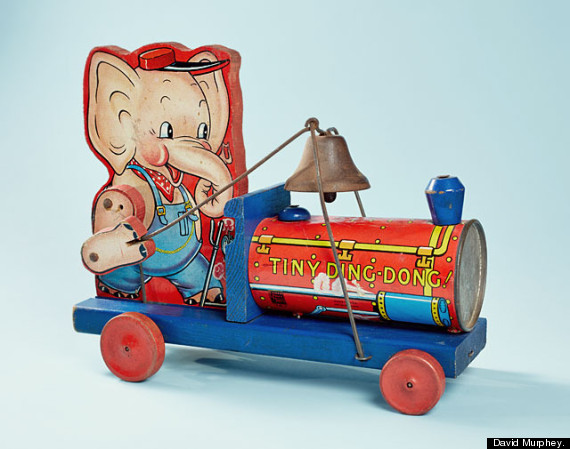
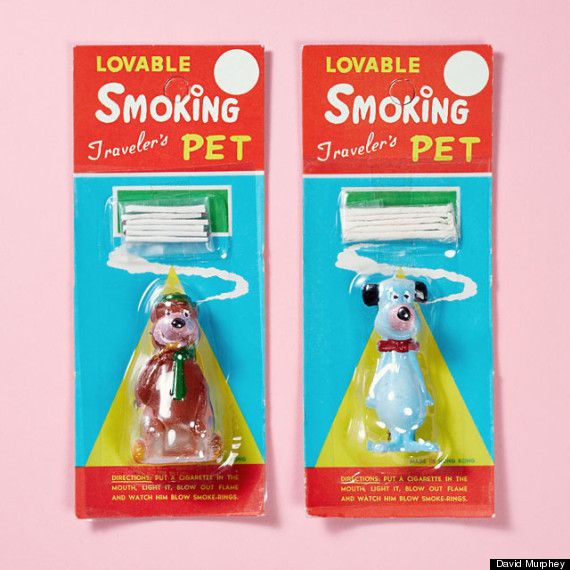

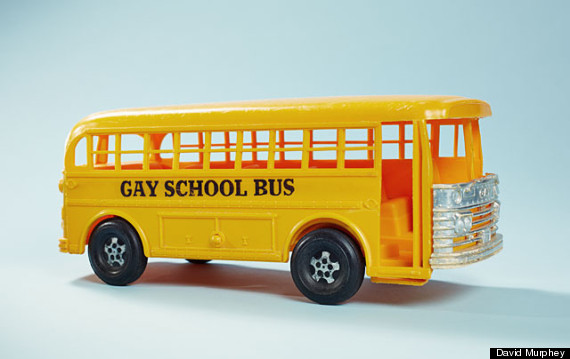
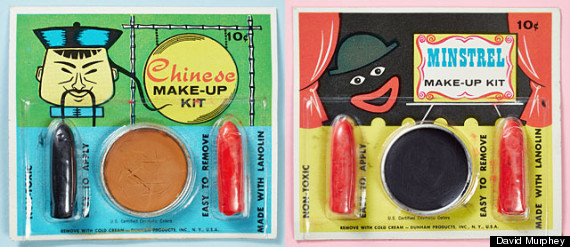
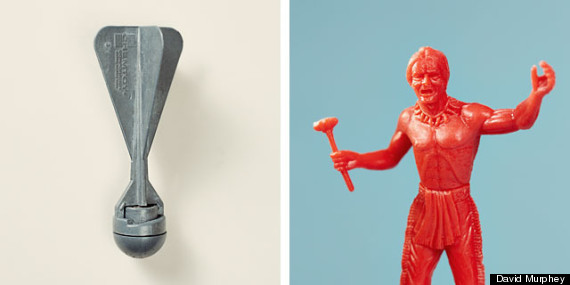
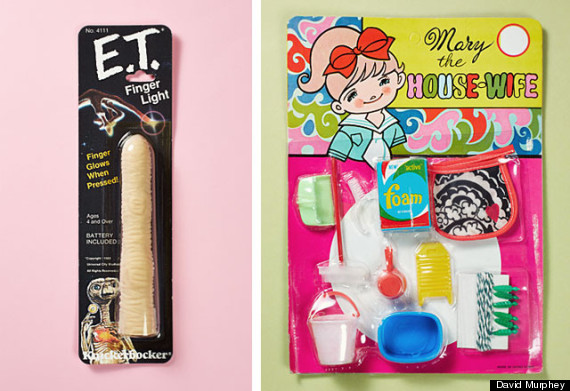
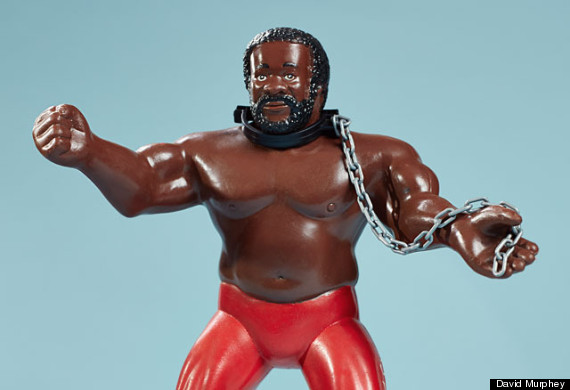

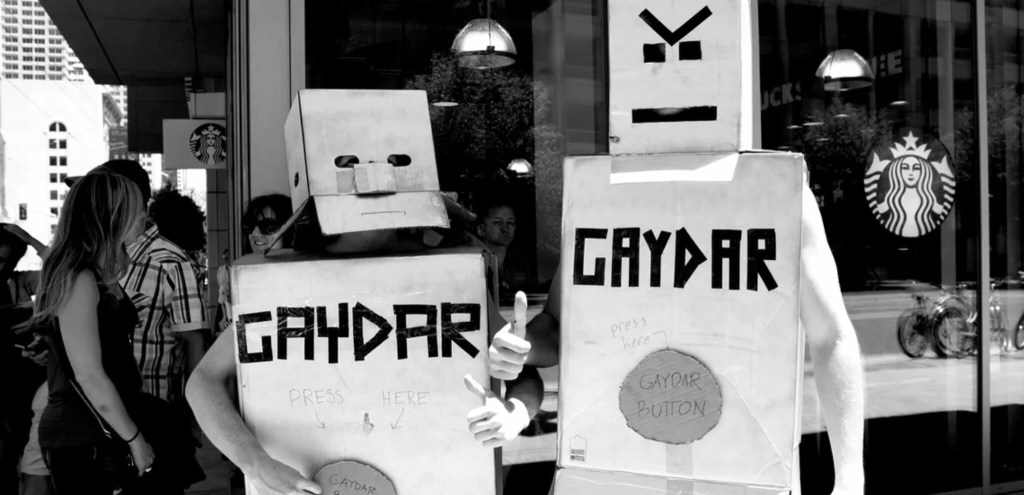



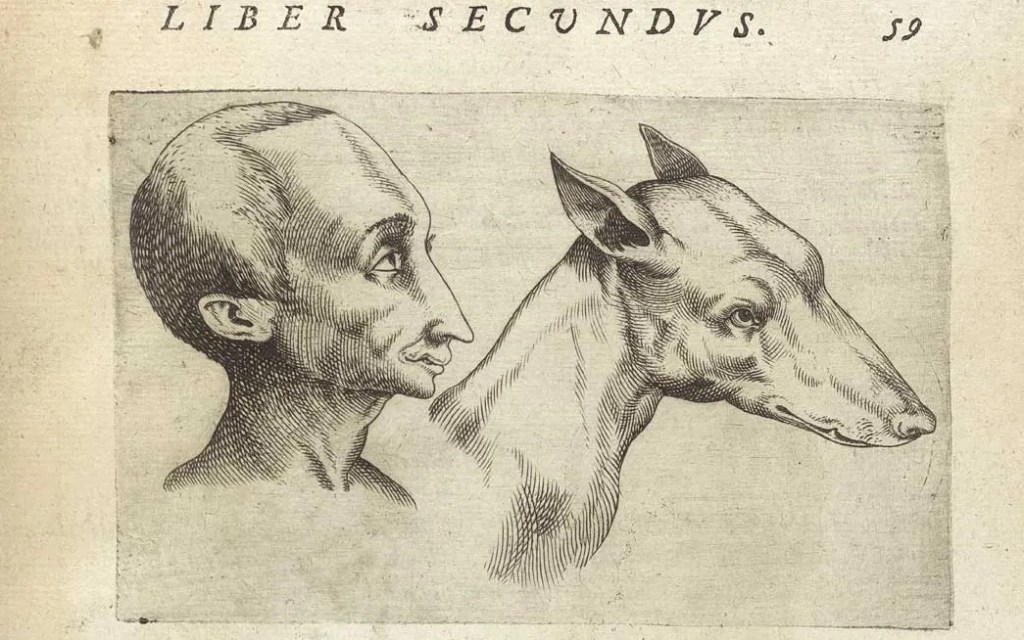
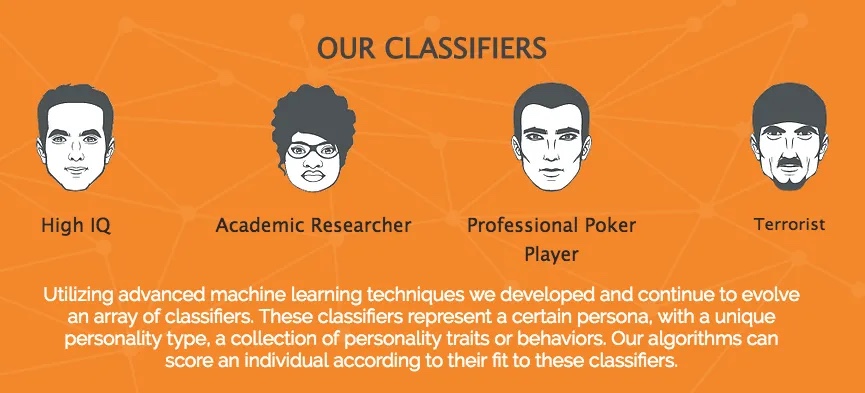



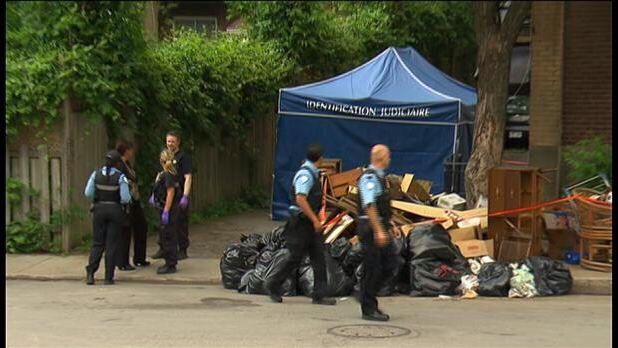


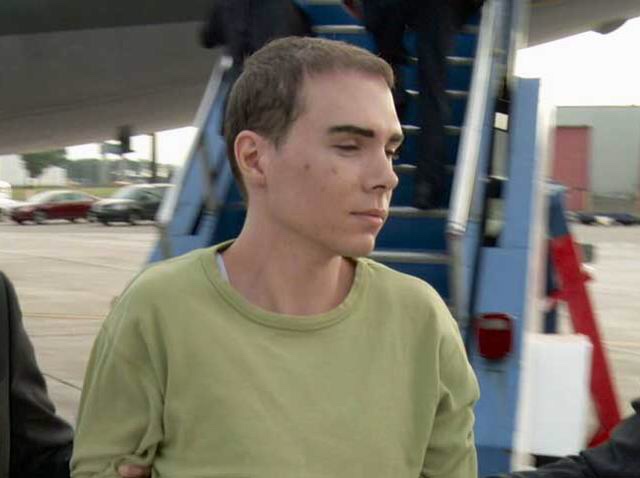







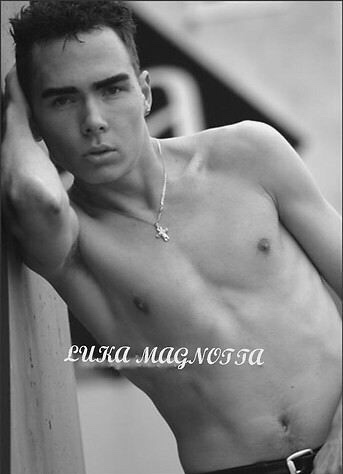

























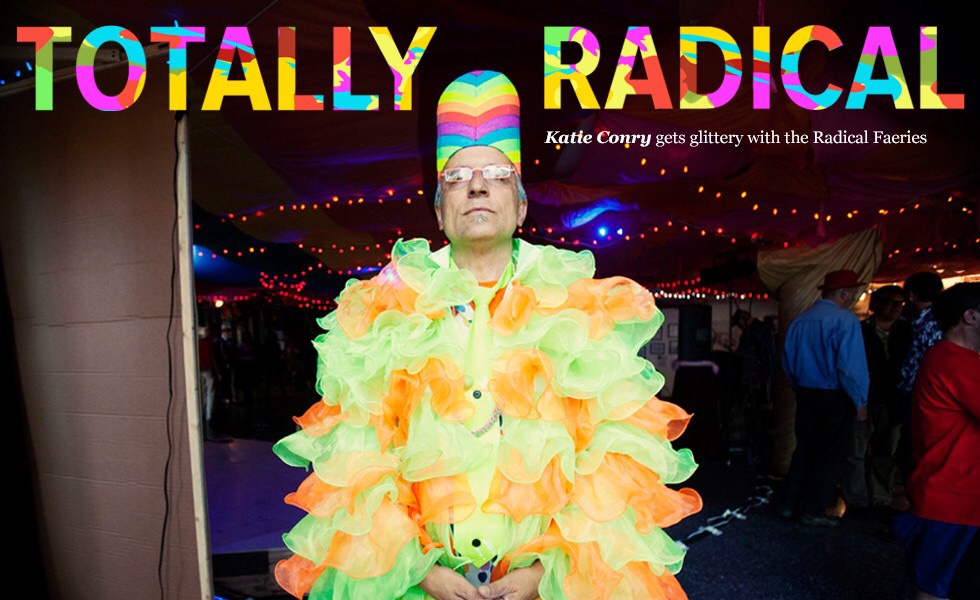


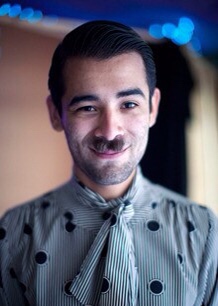



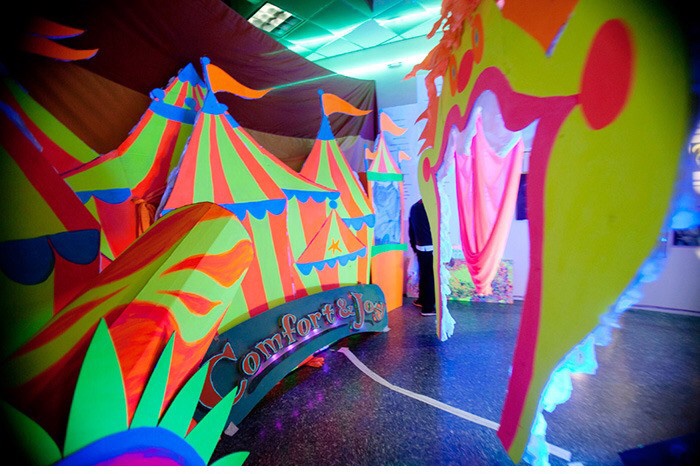
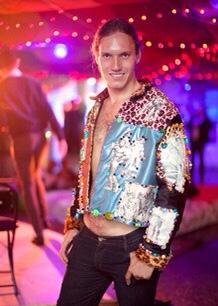
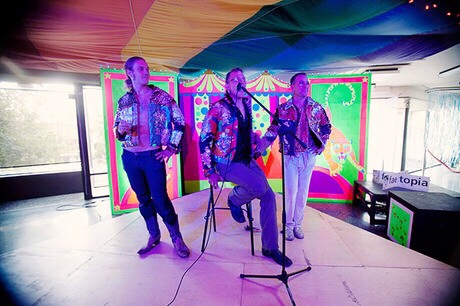

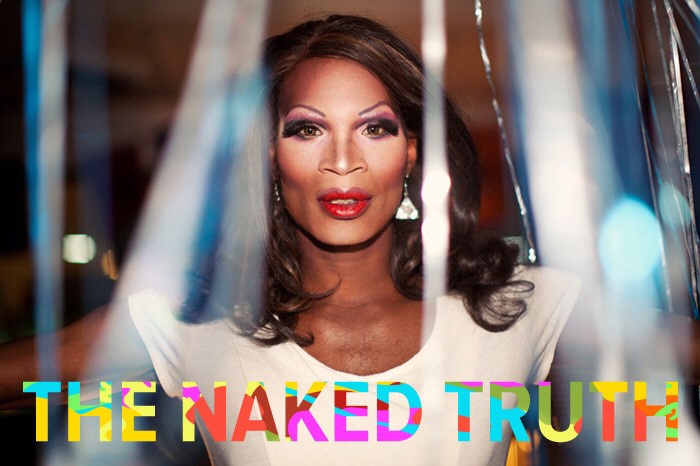


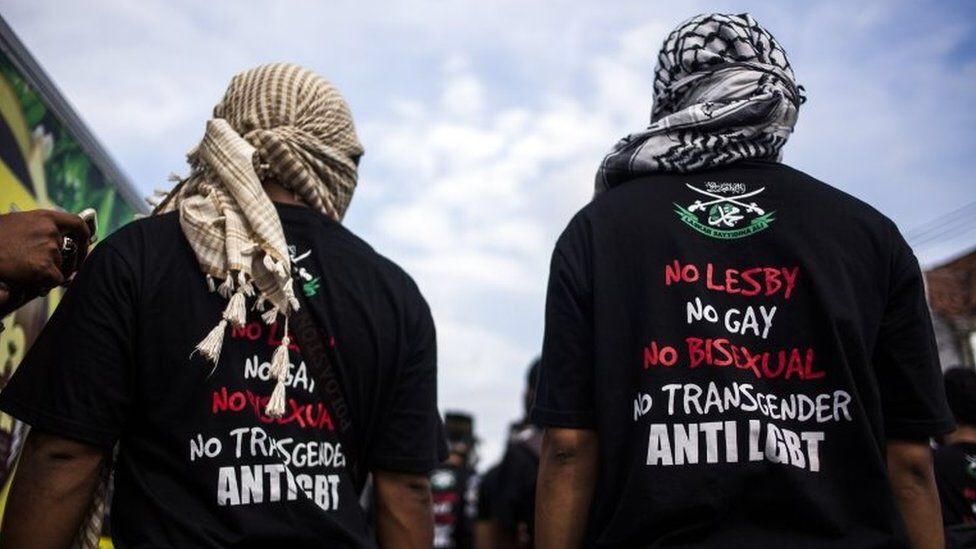
 timalderman