Ellie Cawthorne talks to Angela Steidele about the 19th-century gay pioneer Anne Lister | Complements the eight-part BBC One drama Gentleman Jack
At 2am one night in the 1890s, amateur code-breakers John Lister and Arthur Burrell were hard at work. The pair had been up for hours poring over mysterious documents John had inherited, among swathes of ageing ledgers and paperwork, when he had become master of Shibden Hall near Halifax. Entitled the ‘Diaries and Journals of Mrs Lister’, the 24 volumes documented the business affairs, social life and travels of one of Shibden Hall’s previous owners, Anne Lister (1791–1840), who had inherited the house in 1826.
While John, a distant relation of Anne, found the diaries diverting enough, what really intrigued him were large sections tantalisingly concealed in code. He enlisted the help of Burrell, an antiquarian, and the pair set to work deciphering Anne’s code of numerical figures, Greek letters and invented symbols.
Once they had cracked it, however, “the part written in cipher turned out to be entirely unpublishable…” What had been revealed was, in the words of Arthur Burrell, “an intimate account of homosexual practices among Miss Lister and her many ‘friends’; hardly any one of them escaped her”. Burrell was so appalled by the “unsavoury” discovery that he advised his friend to burn the diaries immediately.
Thankfully, John resisted the urge to fling the volumes directly onto the fire. Instead, he sealed them into a small chamber in Shibden Hall, keen to prevent anyone uncovering such salacious family secrets. Concealed behind wood panelling, they would go undiscovered until after his death in 1933.
Sexual adventures
Although Lister and Burrell may not have appreciated it at the time, the diaries they had decoded that night would go on to become a seminal source of British LGBTQ history – one that would force historians to reassess lesbian relationships in the early 19th century.
Running to more than 4 million words, Anne Lister’s journals are densely packed with the minutiae of her everyday life. Yet buried between exhaustive entries on the political situation in Prussia, canal tolls and toenail cutting are extraordinary accounts of her romantic and sexual adventures with women.
Lister embarked on her career as a master of seduction while still at school, starting up a relationship with her friend and roommate Eliza Raine, who she later reflected was “the most beautiful girl I ever saw”. Sexual encounters with various female acquaintances followed. As Anne boasted in 1816: “The girls liked me and had always liked me. I had never been refused by anyone.” According to Angela Steidele, author of a new biography of Lister, “it was easy for Anne to find lovers because she was a very attractive character: charming, flattering, witty and well educated. She was the heart of every party and could talk you in or out of anything.”
The greatest passion documented in Anne’s diary comes from her relationship with Mariana Belcombe, the “mistress of [her] thoughts and hopes”. For almost 20 years, the pair were involved in an on-off love affair which continued even after Mariana married – an institution that Anne bitterly compared to legitimised prostitution. The relationship eventually broke down after Mariana became increasingly anxious about its true nature being uncovered, leaving Anne with a heart “almost agonised to bursting”.
Despite this crushing rejection, Anne maintained that she had as much right to love and companionship as anyone, and was not afraid to pursue it actively. “There is one thing that I wish for… one thing without which my happiness in this world seems impossible,” she wrote in 1832. “I was not born to live alone… in loving and being loved, I could be happy.”
When she was in her early 40s, Anne began what would be her last – and arguably most significant – relationship, with Ann Walker, from a wealthy neighbouring family. Although she did not inspire the same passion as Mariana once had, Ann did meet many of the criteria of what Lister looked for in a partner: she was younger, pliable, obedient and well-off. “I shall think myself into being in love with her – I am already persuaded I like her well enough for comfort,” the cash-strapped Lister concluded in 1832. “Perhaps after all, she will make me happier than any of my former flames – at all rates we shall have money enough.”
Despite this somewhat lacklustre start, the pair embarked on a relationship. Walker moved in to Shibden Hall and, in 1834, the two women exchanged rings in York’s Holy Trinity Church. They took the Communion together, which they thought to be equivalent to marriage (180 years before same-sex marriages were legalised in England), though their union was not blessed by a priest.
Anne’s conquests were multiple, but “what is clear from reading her diaries is that the biggest love of Anne’s life was Anne herself”, says Steidele. “In fact, you could read these volumes as one long love letter to herself. She truly got lost in her diary, and was writing purely for her own satisfaction.”
And satisfaction really is the right word for it. Lister’s diary is extraordinarily candid in detailing her sexual encounters, going far beyond noting who she had seduced and when. Rather, her code conceals intimate descriptions of specific sexual acts and even keeps a tally of her number of orgasms. Assessments of each encounter are frank to the point of brusqueness – while one lover is praised for “know[ing] how to heighten the pleasure of our intercourse”, another is condemned as “dry as a stick”.
Physical acts
Such explicit details don’t just make the diaries compelling reading, says Steidele, it also gives them huge historical significance. “In earlier research on sexuality in the late 19th and 20th century, there was a legend that women never desired other women physically. The term that was often used was ‘romantic friendship’, implying that while some women enjoyed very close relationships, they never engaged in any physical acts.” Lister’s diaries however, act as the ‘missing link’ in British LGBTQ studies. By speaking directly of sex between women, they reveal the idea of ‘romantic friendship’ to be a false concept. This has led her writings to be hailed as the “Rosetta stone of lesbian history”.
“There have been homosexual acts throughout history, but what makes Lister different is her awareness of her own difference,” says Steidele. “Historians tend to say an awareness of homosexuality as an identity first emerged in the late 19th century, but Lister’s journals are an earlier proof of this development. That’s why she can be seen as Britain’s ‘first modern lesbian’.”
One lover is praised by Anne for “knowing how to heighten the pleasure of our intercourse”
It wasn’t only in her choice of lovers that Anne challenged the conventions of her time, but in her expression of gender too. She rejected the usual path laid out for women of her background, and was unafraid to send out strong signals of her difference. At a time when clothing was an important marker of identity, Lister chose to dress solely in black, adopting a self-consciously masculine appearance. This unconventional attire did not go unnoticed. She was referred to locally as ‘Gentleman Jack’, and wrote in 1818 that, “people generally remark as I pass along, how much I am like a man”.
Lister’s rejection of gender norms went far beyond clothing. As well as being a landowner at a time when few women owned property, she took a keen interest in business, taking on several ambitious, if not entirely profitable, entrepreneurial ventures. She established two coal mines (naming one the ‘Walker pit’ after her lover), ran a stone quarry and even launched a hotel in Halifax.
Her wealth and status as a gentlewoman undoubtedly offered Lister a degree of freedom unavailable to many women at the time. However, it did not render her completely immune against criticism of her unconventional lifestyle choices. She was mocked with anonymous letters, while a fake wedding announcement in the local paper congratulated Ann Walker on her marriage to a “Captain Tom Lister of Shibden Hall”.
Away from Shibden Hall, Anne embarked on numerous foreign adventures, hiking the Pyrenees and travelling as far as Azerbaijan. In fact, it was during one of these adventures that she died, succumbing to a fever at Kutaisi, Georgia in September 1840, aged 49. Ann Walker, who was travelling with Lister at the time, had her lover’s body embalmed and brought back to England. She was buried in Halifax, West Yorkshire.
Sparking controversy
A century later, following the death of Anne’s relative John, Shibden Hall fell to the Halifax Corporation, and Anne’s diaries were rescued from their hiding place. However, their contents were deemed far too scandalous for public consumption, and it would be several more decades until they were shared beyond a small group of archivists and librarians – a first edition wasn’t published until 1988.
More recently, interest in Lister and her diaries has sky-rocketed. In 2016, Shibden Hall was recognised as a “historic LGBTQ venue” by Historic England, and has become an important site of LGBTQ pilgrimage. This year sees Anne’s adventures being brought to life in an eight-part TV drama, Gentleman Jack, airing on BBC One from May.
In 2018, a plaque dedicated to Lister was unveiled at York’s Holy Trinity Church. Referring to Lister as a “gender-nonconforming entrepreneur”, it sparked anger by making no mention of the word ‘lesbian’. Following a petition, the plaque was reworded to describe Anne as a “lesbian and diarist”. In Steidele’s opinion, this is an important distinction. “While Lister did not directly refer to herself as a ‘lesbian’, her diary makes it clear that a big part of her identity was derived from her sexuality. There was no guilt, no self-hatred – Anne felt she too was God’s creation and that God had shaped her nature. This is really unique. That’s why it is so important to include the term ‘lesbian’ when we celebrate Anne with that plaque.”
Two centuries on, the diaries still hold lessons for today, argues Steidele. “In many ways we’re still fighting the same battles as Anne – for equal women’s and LGBTQ rights,” she says. “Anne didn’t accept any limitation placed on her by her sexuality and gender. She refused to believe in the natural inferiority of women, and insisted on living according to her own inclinations. I think that her courage in those convictions makes her an important role model.”
J. Edgar Hoover led a deeply repressed sexual life, living with his mother until he was 40, awkwardly rejecting the attention of women and pouring his emotional, and at times, physical attention on his handsome deputy at the FBI, according to the new movie, “J. Edgar,” directed by Clint Eastwood.
Filmgoers never see the decades-long romance between the former FBI director, and his number two, Clyde Tolson, consummated, but there’s plenty of loving glances, hand-holding and one scene with an aggressive, long, deep kiss.
So was the most powerful man in America, who died in 1972 — three years after the Stonewall riots marked the modern gay civil rights movement — homosexual?
Eastwood admits the relationship between Hoover, played by Leonardo DiCaprio, and Clyde Tolson, played by Armie Hammer, is ambiguous.
“He was a man of mystery,” he told ABC’s “Good Morning America” last week. “He might have been [gay]. I am agnostic about it. I don’t really know and nobody really knew.”
In public, Hoover waged a vendetta against homosexuals and kept “confidential and secret” files on the sex lives of congressmen and presidents. But privately, according to some biographers, he had numerous trysts with men, including a lifelong affair with Tolson.
Dissociation — denying homosexuality, but displaying sexual behavior — is “not uncommon,” according to Dr. Jack Drescher, a New York City psychiatrist who is an expert in gender and sexuality.
Men with strong attractions to other men can have different degrees of acceptance from being fully closeted to being openly gay. And even if they are homosexually self-aware, they can embrace it or reject it publicly.
“We confuse sexual orientation with sexual identity,” said Drescher. “Some men do not publicly identify as gay, regardless of their sexual behavior.”
Even the Centers for Disease Control and Prevention (CDC) tracks a group that is not labeled “gay” but “men who have sex with men.“
Roy Cohn, the lawyer who served as chief counsel to Sen. Joseph McCarthy in his anti-communist campaign of the 1950s and who successfully convicted Julius and Ethel Rosenberg of espionage, denied he was gay, despite an attraction to men.
Cohn, who died of AIDS in 1986, was a contemporary of Hoover and according to one biography, the two attended sex parties together in New York in the 1950s.
Cohn was characterized in a scene from Tony Kuschner’s play, “Angels in America,” speaking to his doctor: “…you are hung up on words, on labels, that you believe they mean what they seem to mean. AIDS. Homosexual. Gay. Lesbian. You think these are names that tell you who someone sleeps with, but they don’t tell you that … Roy Cohn is a heterosexual man, Henry, who f****s around with guys.”
Hoover’s degree of self-awareness may have been the same as Cohn’s. Despite his same-sex dalliances, he occasionally sought a “Mrs. Hoover” and even courted — albeit uncomfortably — actress Ginger Rogers’ mother and actress Dorothy Lamour.
Hoover and his constant companion for decades, Clyde Tolson. Getty Images
Hoover’s neuroses were likely rooted in childhood: He was ashamed of his mentally ill father and was dependent on his morally righteous mother, Annie, well into middle age. Until her death in 1938, Hoover had no social life outside the office.
In the film, Annie chastises her powerful son as he wilted before some of his FBI critics, telling him, “I’d rather have a dead son than a daffodil for a son.”
In a 2004 biography by Richard Hack, “Puppetmaster,” which was culled from the notes of Truman Capote, who had begun interviews on Hoover and Tolson’s relationship, the author says Hoover was not gay, but suggests the man was vicariously turned on by the smut he collected on others.
One 200-page secret document was on the extracurricular activities of Capote himself, who was openly gay.
But Anthony Summers, who exposed the secret sex life of Hoover in his 1993 book, “Official and Confidential: The Secret Life of J. Edgar Hoover,” said there was no ambiguity about the FBI director’s sexual proclivities.
“What does Clint Eastwood know about it?” he asked ABCNews.com. Summers collaborated with historians and conducted 800 interviews for the book, including nieces and those who were young enough at the time to have known the man personally.
“We were able to get a close view of the man as an individual and as a human being — as close as anybody who had not been afraid of him since he died,” said Summers.
With interest in the Eastwood film, publishers in the U.S. and in Britain are issuing a remake of the book.
One medical expert told Summers that Hoover was “strongly predominant homosexual orientation” and another categorized him as a “bisexual with failed heterosexuality.”
J. Edgar Hoover with child film star Shirley Temple. Getty Images
Hoover often suppressed his urges, but would break out in lapses that could have destroyed him — alleged orgies in New York City hotels and affairs with teenage boys in a limousine, according to interviews conducted by Summers.
“He was a sadly repressed individual, but most people, even J. Edgar Hoover, let go on occasion,” he said.
Hoover as a Cross-Dresser Is Controversial
One short scene in the film showed the FBI director in anguish over his mother’s death, putting on her dress and beads, a nod to Summers expose that Hoover had been a cross-dresser.
The Washington Post recently dismissed that account because of a discredited source, but Summers maintains he had two other independent sources from different periods in Hoover’s life.
Hoover often frequented New York City’s Stork Club and one observer — soap model Luisa Stuart, who was 18 or 19 at the time — told Summers she saw Hoover holding hands with Tolson as they all rode in a limo uptown to the Cotton Club in 1936.
“I didn’t really understand anything about homosexuality at the time,” said Stuart. “But I’d never seen two men holding hands. And I remember asking Art [Arthur] about it in the car on the way home that night. And he just said, ‘Oh, come on. You know,’ or something like that. And he told me they were queers or fairies — the sort of terms they used in those days.”
Hoover promoted men inclined to homosexual indiscretions, including Tolson, who had barely 18 months experience with the FBI when he became Hoover’s deputy.
The pair used to make “saucy jokes” about some of the other agents, like Melvin Purvis, who was a hero for arresting John Dillinger, according to Summers.
Purvis’s son shared his father’s 500-letter correspondence with Hoover, who teased the good-looking, blond-haired agent as “the Clark Gable of the FBI,” even though he was heterosexual.
Many were intimate and one was highly charged with innuendo, as Hoover referred to himself as the “Chairman of the Moral Uplift Squad.”
Ethel Merman, who had known Hoover since 1938, knew his sexual orientation, according to Summers. In 1978 when the actress was asked to comment on Anita Bryant’s anti-gay campaign, Merman told the reporter, “Some of my best friends are homosexual. Everybody knew about J. Edgar Hoover, but he was the best chief the FBI ever had.”
Harry Hay, founder of the Mattachine Society, one of the first gay rights organizations, confirmed that Hoover and Tolson sat in boxes owned by and used exclusively by gay men at their racing haunt Del Mar in California.
“They were nodded together as lovers,” he told Summers.
Another FBI agent who had gone on fishing trips with Hoover and Tolson revealed that the director liked to “sunbathe all day in the nude.” Even novelist William Styron told Summers that he once spotted Hoover and Tolson in a California beach house — the director painting his friends toenails.
But, according to Summers, “Nobody dared say anything, he was so powerful.”
The author interviewed the widow of respected Washington, D.C. psychiatrist Dr. Marshall de G. Ruffin, who treated Hoover in 1946 after his general practitioner had been “puzzled by a strange malaise in his patient.”
Monteen Ruffin told Summers that Hoover was “very paranoid” about anyone finding out, and he eventually stopped seeing the psychiatrist. She said her husband burned the evidence.
“He was definitely troubled by homosexuality,” she said in 1990, “and my husband’s notes would have proved that … I might stir a kettle of worms by making that statement, but everybody then understood that he was a homosexual, not just the doctors.”
As the movie depicts, after Hoover’s death, his loyal secretary Helen Gandy destroys the “official and confidential” files.
When Hoover died in 1972, President Richard Nixon ordered his “dirty tricks man” Gordon Liddy to scour the FBI director’s office for files. But when they arrived, someone had taken “drastic action,” said Summers. Nothing but tables and chairs remained.
Summers said he is often asked, but rarely answers the question about what he personally thought of Hoover as a human being.
“Yes, I had sympathy for somebody who has to bury their real preferences through a long life in the public eye,” he said. “But not sympathy for the way in which he was dictatorial, the way he behaved politically and personally to people right from the beginning in his late teens and early 20s.
“He was totally self-serving and the way in which he was a repressed homosexual didn’t require him to abuse individual rights and human liberties the way he did,” said Summers. “It does not begin to justify his behavior toward blacks and concoct an anonymous letter to Martin Luther King and suggest he end it all and kill himself.”
Psychiatrists have concluded that Hoover “no doubt” had a narcissistic personality disorder, perhaps because of his dependency on a forceful mother who had “great expectations for her son,” he said.
“Studies suggest that people with such backgrounds block their feelings and cut meaningful relationships,” according to Summers, who said Hoover would have been a “perfect high-level Nazi.”
However, Eastwood, who is a Republican, contends that J. Edgar Hoover was “probably good for the country,” and whether he was homosexual or not makes no difference.
“I don’t really know and nobody really knew,” he told ABC. “It’s definitely a love story. You can love a person and whether it goes into the realm of being gay or not, is here nor there.”
A younger generation of gays was moved by the film precisely because it portrayed such an iconic figure’s struggle with his sexuality.
“The audience I was in clearly rooted for Hoover to be gay and to have happiness in his sex and love life,” said Ben Ryan, a 33-year-old novelist from New York City. “In a pivotal scene between DiCaprio and Hammer in which the two men engage in the classic brawl-leads-to-furious-kiss, everyone got so excited when they finally locked lips.”
“Anyone in their right mind would see this movie and say, ‘Oh, well, of course Hoover was gay,'” he said. “The more suspicious among us might think that the filmmakers were still afraid of Hoover’s ghost suing them for libel if they just put it right out there that he was gay.”
Still, he said, the film is a “tragic story that should hopefully teach society lessons about how dangerous sexual repression is.”
Christian Davies donned her missing husband’s clothes and went to war to find him
Even after she found her husband, Christian Davies continued her soldier’s life until she fractured her skull at the Battle of Ramillies.
Historical stories of cross-dressing never fail to fascinate. Ideas of what constitutes “normal” sexual identity have shifted over the centuries. Christian Davies is a unique Irish example, in that we hear her account ostensibly in her own voice, as recounted to Robinson Crusoe author Daniel Defoe in The Life and Adventures of Mrs Christian Davies.
“I had too much Mercury in me, to lead a sedentary life,” Davies tells Defoe. Born Christian Cavanagh in Dublin in 1667 and raised on a farm near Leixlipby industrious parents, her upbringing was comfortable, her education sound. But Davies was happier breaking a horse than doing needle-point: “…my inclinations, while a Girl, were always masculine.”
Adventure
Davies inherited her aunt’s public house in Dublin. There she met and married Richard Welsh, a former servant of her aunt’s, and the man whose disappearance would prompt her greatest adventure.
In 1691 Welsh went to pay a bill and never came back. A year later Davies received a letter saying he had stopped for a drink with an old school friend, and had woken up on a ship bound for the Netherlands. With no money to his name, he had been forced to enlist in the British Army.
Davies’ thoughts turned to finding her husband and she left her children with her mother, dressed in her husband’s clothes, and enlisted. The recruiting officer in Dublin called her “a clever brisk young fellow”. Soon, she was on a ship bound for the Netherlands and the Nine Years War.
Her first battle was at Landen, where she suffered a leg injury and was captured by the French. Upon her release, she addressed her suit to a Burgher’s daughter, dismissing the affair as “a frolick”. However, when the girl was assaulted by a sergeant, Davies fought a duel with him, leading to her discharge from the army.
Still ostensibly on the hunt for her husband, Davies enlisted again in the second North Royal British Dragoons in 1697, fighting with them until the Peace of Ryswick. She recounts to Defoe an accusation by a prostitute that she was the father of her child. Initially insulted, Davies then agreed to support the child: “…it left me the reputation of being a Father, till my sex was discovered.”
After 13 years, Davies found her husband among French prisoners after the Battle of Blenheim. He was in a relationship with a Dutch woman and Davies decided not to take him back. The pair fought side by side for some time as brothers, and she continued her soldier’s life until she fractured her skull at the Battle of Ramillies.
A surgeon discovered her identity, but when the story got to Lord Hay, the Scots Gray commander, he ordered that she should be given a pension.
Military honours
Somewhat unusually among historical cross-dressers, Christian Davies returned to life as a woman, marrying again twice. She ended her life at the Royal Hospital Chelsea as one of its pensioners, having been honoured by Queen Anne, and was buried with full military honours.
So what are we to make of the rollicking tale of Christian Davies, as told to Daniel Defoe? By the time the story was recorded, Davies had had the benefit of many years’ practice at regaling an audience and perhaps a narrative framework had been created that fitted her audience’s ideas of what the story should be. The account begs the questions: did Davies want to find her husband? Or did she see his disappearance as an opportunity? Why would a woman of means throw herself into the life of a foot soldier? The questions that emerge from the gaps in this tale are perhaps as compelling as the narrative itself.
Today is Mexico’s Independence Day! After a war that lasted over 11 years, Mexico achieved independence from Spanish rule and would begin a path toward self-determination. On September 16, 1810, Miguel Hidalgo y Costilla, a Catholic priest, launched the Mexican War of Independence. Yes, decolonize!
To celebrate Mexican history, we’ll be focusing on one hero today, not of the Mexican War of Independence but of the Mexican Revolution. Colonel Amelio Robles Ávila is recognized as the first trans soldier in the Mexican military’s history. A decorated colonel, Amelio Robles Ávila lived as a man from the age of roughly 22 or 24 until the day he died at 95 years old.
While some believe it was Ávila’s wealthy family that allowed him to live life as his truest self, it certainly may have helped, but his courage in battle and in life must be honored and celebrated. Ávila’s identity was not always met with kindness, but the soldier was well-equipped to deal with challenges to his gender. The pistol-whipping colonel was a ladies man, skilled marksmen, and hero. This is the story of Colonel Amelio Robles Ávila.
Amelio Robles Ávila
Amelio Robles Ávila was born to a wealthy family on November 3, 1889, in Xochipala, Guerrero. In his youth, Ávila attended a Catholic school for little girls where he was taught to cook, clean, and sew. However, at a young age, he began to express his gender identity. He showed an aptitude for things that were, at the time perceived to be, masculine like handling weapons, taming horses, and marksmanship.
Perhaps, it was a natural response, if not the only response, to being pressured to conform to a gender identity that isn’t yours — Ávila was perceived as stubborn, rebellious, and too much to handle for the school nuns. But it would be his tenacity and obstinance that served him in the long run.
In 1911, when Amelio robles was arranged to be married to a man, he enlisted as a revolutionary instead.
Not a woman dressed as a man, just a man.
To force the resignation of President Porfirio Dîaz and later, to ensure a social justice-centered government, Mexico needed to engage much of its population in warfare. This meant that eventually women were welcomed with many limitations. Soldaderas were able to tend to wounded soldiers or provide food for the militia but were prohibited from combat and could not have official titles.
Amelio Robles legally changed his first name from Amelia to Amelio, cut his hair, and became one of Mexico’s most valuable and regarded revolutionaries.
“To appear physically male, Robles Ávila deliberately chose shirts with large chest pockets, common in rural areas, and assumed the mannerisms common among men at the time,” according to History.com.
While he was not the only person assigned female to adopt a male persona to join the war, unlike many others Ávila kept his name and lived as a man until the day he died.
“After the war was over, their part in it was dissolved along with whatever rank they held during the fight, and they were expected to return to subservient roles. Some did,” writes Alex Velasquez of Into. “Others, like Amelio Robles Ávila, lived the rest of their lives under the male identities they had adopted during the war.”
You come at the king, you best not miss.
Ávila fought courageously in the war until its end. Becoming a Colonel with his own command, he was decorated with three stars by revolutionary general Emiliano Zapata. He led and won multiple pivotal battles where his identity and contributions were respected.
However, that respect was sometimes earned through empathy other times through the whip of his pistol. Ávila was a man and anyone who chose to ignore this fact would be taught by force. On one occasion, when a group of men tried to “expose” him by tearing off his clothes, Ávila shot and killed two of the men in self-defense.
Colonel Amelio Robles Ávila
Unsurprisingly, Amelio Robles was a bit of a ladies man, though he finally settled down with Angela Torres and together they adopted their daughter Regula Robles Torres. In 1970, he was recognized by the Mexican Secretary of National Defense as a veterano as opposed to a veterana of the Mexican Revolution, thus Colonel Amelio Robles Ávila is considered the first trans soldier documented in Mexican military history. The swag is infinite!
After the war, Ávila was able to live comfortably as a man where he devoted his life to agriculture. He lived a life, that still for so many trans people around the world seems unfathomable. Colonel Ávila lived to be 95 years old and the rest — no all of it — is history.
The literary parlor game of “Who Is J. T. LeRoy?” got its final answer in February: The mysterious boy novelist with the horrifying tales of childhood abuse was the invention of a 40-year-old San Francisco woman. But the untold story behind this literary hoax is even more outrageous than the fictions.
Savannah Knoop dressed as J. T. LeRoy, Geoff Knoop, and Laura AlbertPHOTOGRAPH BY MICK ROCK.
Part One: The Making Of J.T.
J.T. LeRoy’s literary career seemed headed for a downturn, and he was only 24. Back in his teens, he had achieved cultish notoriety for his autobiographical fiction, which drew on a childhood marred by horrific physical and sexual abuse—most famously stints working in truck stops in his native West Virginia as an under-age transvestite prostitute, side by side with his drug-addicted mother. (“She felt angry about the competition, but she also liked the money, too” he told Terry Gross in an interview on NPR’s Fresh Air.) The truck-stop liaisons were only the most lurid episode in his past. He had had his first sexual experience at the age of five or six. He had been raped and regularly beaten. He eventually became addicted to heroin and at the age of 13 ended up living on the streets in San Francisco, working as a hustler. He was H.I.V.-positive. He cut himself. He burned himself. He associated love with brutality and exploitation, could only feel human connection through physical pain. It was a life story that read like an encyclopedia of the myriad ways children can be victimized by adults. But in a culture that fetishizes suffering and consumes memoirs of abuse as a form of off-the-rack therapy, it was a life story that also had commercial potential.
And in that J.T. appeared to have found salvation. A social worker, who had found him wandering into traffic in a daze, introduced him to a psychologist who encouraged him to write about his experiences. It turned out he had a native gift, producing fragments of raw but vivid memoir. By phone and by facsimile in those pre-e-mail days—J.T. would haul around a fax machine a kindly john had given him and set it up in public bathrooms and convenience stores—he reached out to established writers, many of whom took an interest in him and his work, taught him craft, and passed him along the literary food chain.
In 1997, when he was 17, he published his first piece of writing—about dressing up like his mother and seducing one of her boyfriends—in the Grove Press anthology Close to the Bone: Memoirs of Hurt, Rage, and Desire. No longer using heroin, he had formed an ad hoc family, living with the social worker who had helped rescue him, her husband, and their young son. A novel, Sarah, followed in 2000. A year later, when J.T. was finally old enough to have a legal drink, he brought out a collection of linked stories, The Heart Is Deceitful Above All Things. The books were mostly well reviewed, and even critics who didn’t care for the prose, or found the disturbing subject matter overwrought as art, paid obeisance to the horrible contours of the life.
By 2004, however, the well seemed to be running dry. He had a contract for a third book but hadn’t yet produced much that was worthwhile. When he did write, aside from completing a thin “novella,” he spent most of his energy on journalism for publications such as BlackBook, Nerve, and T: Travel, a New York Times Sunday-magazine supplement, which sent him to Disneyland Paris. Mostly he seemed to be caught up in a whirlwind of literary celebrity—“the Truman Capote highway,” in the words of one friend. He had long suffered from pathological shyness as a result of his childhood traumas—most of his writer friends had never met him in the flesh; he was famous for ducking people, even editors and agents—but around the time of his second book he began making tentative public appearances at literary events, a waif-like, androgynous figure hiding behind sunglasses, big blond wigs, and a girlish, whispery voice. He would sit tremulously to the side as a coterie of famous, mostly female admirers that included Rosario Dawson, Tatum O’Neal, and Shirley Manson read from his works. Madonna, an e-mail pal, reportedly sent him books on Kabbalah. Friends such as Carrie Fisher opened their homes to him. There were movie deals with the director Gus Van Sant (who optioned Sarah) and a Web site selling J.T. merchandise (including $17 necklace-ready raccoon-penis bones, or baculums, objects which figure prominently in Sarah). J.T. went on European tours, attended splashy parties with rock bands, took home racks of free designer clothes. He appeared in a feature in an Abercrombie & Fitch catalogue. He and his ad hoc family formed their own band, Thistle. J.T. wrote the lyrics; the social worker, Emily Frasier, who had begun calling herself Speedie, sang; her husband, known as Astor, played guitar.
There were also appearances in glossy magazines, among them Vanity Fair. In an introduction to his short Q&A with J.T., the singer-songwriter Tom Waits wrote, “He is the witness to all the tales that go on in the dark, and for all of us, long may he have the courage to remember.” This was accompanied by a photo of J.T. dressed as “Cinderella after the ball” in a tutu and beaded sweater.
And who, after what he had been through, would begrudge J. T. LeRoy a little harmless, glitzy fun? His agent, however, was growing impatient. “This was perhaps one of the more demanding—and I mean time-wise—clients I’ve ever had,” the agent, Ira Silverberg, told me recently. “Insanely long conversations not about writing, not about career, but about celebrities who he met and who he’d been e-mailing with. Endless, endless. It was a litany of name-dropping. You know, ‘Gus Van Sant came through town and we went out and I ate oysters at the most expensive restaurant in San Francisco and I said to Gus, “They taste like boogers!”’ For me it was like, ‘That’s great. You want to show me some pages?’ ” At the 2004 Cannes Film Festival, where the movie version of The Heart Is Deceitful Above All Thingspremiered, Silverberg took J.T. aside and lectured him: “Honey, you’ve got to get off the road. You’ve got to get back to the writing. The celebrity obsession is taking over your life.” Silverberg feared that his client was on the verge of becoming “the Grace Jones of literature, if you know what I mean.”
Others thought the fault lay less with J.T. himself than with Speedie and Astor, whose eagerness to piggyback on J.T.’s success seemed, at times, almost pitiable. Speedie, who spoke with a malleable British accent and who at times still went by Emily, seemed in particular to exert a Svengali-like influence on J.T. She almost never left his side in public and often answered questions for him. He would look to her for cues and ask her permission even for innocuous actions—taking off his wig in a hot, sweaty disco or breaking away from a group to go shopping. “She was clearly very manipulative of J.T.,” says Thomas Fazi, the writer’s Italian publisher. “She was clearly using the J.T. character in some way to suit herself, exploiting him economically.”
“I used to call Speedie and Astor the jailers,” says Roberta Hanley, one of 28 credited producers of The Heart Is Deceitful Above All Things. “J.T. seemed like a prisoner of this horrible rock band. I thought he should get away from these grifters who were living off his work. I wanted to sit him down and say, ‘You’re a famous writer. You should get your own place. You should get away from these people and stop sharing your salary with them.’ ”
Charlie Wessler, a film producer who has worked on most of the Farrelly brothers’ movies, met J.T. and Speedie/Emily one weekend last spring at Carrie Fisher’s home in Los Angeles. Wessler would become close to J.T., even buying him a computer, but he was surprised at the way Emily, within minutes of their introduction, began pushing J.T.’s books on him, as if she were his publicist. She also catalogued for him the various C-list celebrities J.T. was supposedly sleeping with—a discomfiting boast given J.T.’s recent past as an H.I.V.-positive child prostitute. Fisher, Wessler quickly learned, was not a fan: “Carrie couldn’t stand Emily. She thought this kid”—J.T.—“was living in this woman’s house and being dragged around by her. Carrie started sending these e-mails saying, ‘You’ve got to get away from this Emily woman. She’s ruining your life.’ Carrie thought she was a fucking idiot.” (Fisher herself declined to be interviewed for this article.)
For his part, J.T. remained stubbornly, sometimes touchingly loyal. In an e-mail response to a friend who had criticized Emily’s behavior, J.T. defended her with tenderness and generosity: “Emily had purity of intent. She is not bad or toxic for me. She gets lost sometimes coz she is also finding out who she is, so please just love on her the way you do. We all come from great pain.”
What wasn’t apparent at the time, and what in the light of day renders J.T.’s defense more than a little odd and, if you are of generous disposition, even heartbreaking, is that the writer was in fact defending himself. Or rather herself. Because as was revealed last fall and winter in a series of magazine and newspaper articles, first in New York magazine, then, more definitively, in The New York Times, J. T. LeRoy was the invention of Speedie/Emily, whose real name is Laura Albert. Now 40, she wrote all of J.T.’s books, articles, and stories, corresponded as J.T. by e-mail, and spoke as him on the phone, putting on a southern accent she thought was in accordance with J.T.’s supposed West Virginian origins. (The high, feminine pitch was sometimes explained away as a result of J.T.’s not having fully matured physically due to the abuse he suffered.) Her co-conspirators were Astor, whose real name is Geoffrey Knoop, 39, and his half-sister Savannah Knoop, a 25-year-old aspiring clothes designer who, once J.T.’s career took off, was drafted to play the writer in public—the wigs-and-sunglasses figure.
Many otherwise savvy people who thought they knew J.T. intimately, who had spent considerable time with him on the phone and even in person, who were touched by his story, connected the sometimes obvious dots only in hindsight—after all, who would second-guess a homeless, self-mutilating, H.I.V.-positive teenager struggling to overcome an unthinkable legacy of abuse?
The novelist Dennis Cooper was the first writer Laura Albert contacted. He had a long and sometimes emotionally draining phone relationship with J.T. and suspected he was being hustled on some level—that, of course, had been J.T.’s original profession—but at the same time Cooper thought he understood where the hustle ended: “I knew that he was a pathological liar, but I had a sense I knew him. I thought I knew whenhe was lying.”
Gus Van Sant bought the film rights to Sarah and commissioned J.T. to write a screenplay about a school shooting that provided the seed for the 2003 film Elephant (for which J.T. received an associate-producer credit). Van Sant met J.T. twice and spent hours with him on the phone. “I still kind of believe that he exists, just not in the flesh,” Van Sant says. “I think he exists in Laura’s head. Either it’s something she obsessively works on as a character or it’s something she can’t help but work on.
That’s a fine but telling distinction, one that many who knew J.T. have wondered about: to what extent was Laura Albert really in control of her creation? “God knows I’ve been over this in my mind, and I can’t picture the scenario in which someone would invest the amount of time and effort that this person went through with me personally for the ends they got,” says the novelist Joel Rose, who was another early champion of J.T.’s and who, like Cooper, not only extended himself professionally for J.T., helping him find an agent and a publisher, but also talked the younger writer through any number of supposed midnight crises. “If you’re going to pull off some kind of scam or hoax,” Rose says, “it seems like it could have been a lot more succinct.”
It certainly could have.
When talking about J. T. LeRoy, people who knew him tend to do two things. One, they try to mimic his seductive, high-pitched accent, which invariably sounds like someone’s cocktail-party imitation of Blanche DuBois. (You can hear J.T. “himself” in his 2001 interview with Terry Gross on NPR’s Web site. It’s an odd listen in that the southern-inflected voice is credible as an effeminate young man’s while at the same time, when you know who’s really speaking, clearly an older woman’s—the aural equivalent of the classic optical illusion where you see a crone and a young beauty in the same face.) And, two, with the benefit of hindsight, they tend to become extremely self-conscious when using pronouns. He, she, it, they—whatever. (Indeed, I’ve changed pronouns in quotes here and there for the sake of coherence.)
This is all true even of Geoff Knoop, whom I went to see in San Francisco this past February. He greeted me at the front door of his new home, which he shares with a childhood friend—he and Laura Albert separated last fall—in a blue-collar neighborhood by the beach; most of his things were still at his old apartment downtown on Russian Hill, from which he says Laura had locked him out. According to Geoff, they are in the midst of a legal wrangle over their communal property, a dispute complicated by the fact that the couple, though Geoff says they functioned as married, never bothered with the civic niceties of matrimony—that and the dawning realization that J.T.’s business and legal affairs are, to be gentle, muddled. (On the advice of their lawyers, they only speak regarding their 8-year-old son, whom they share custody of.)
Geoff had a complicated mix of motivations for talking to me. On the one hand, he seemed to want genuinely to come clean, to atone for deceptions he had helped visit upon people he admired and in some cases was close to. On the other hand, he was also angry that his contributions to J.T.’s art and life had often been overlooked, that he is unfairly seen as the enterprise’s Zeppo or Gummo. He insisted he had been a “vice president” equivalent in the J.T. enterprise with Laura, about whom he seemed similarly conflicted, his emotions fluctuating between tenderness, respect, and resentment. There was, perhaps predictably, a third motive for talking: he is hoping to cut book and movie deals.
If J. T. LeRoy often seemed interested more in name-dropping and expense-account meals than in the spartan but—people say—soul-nourishing rewards of the traditional literary life, it may have been because Laura and Geoff had for years been getting by on economic fumes. Laura, born in 1965, grew up in Brooklyn Heights. Her parents, both educators, split when she was young; she would often intimate to friends that hers had been a difficult childhood. She left her mother’s care as a teenager, spent time in a group home for troubled kids, and took fiction classes at the New School in Manhattan. She also became part of the early-80s punk scene in the East Village. With abundant drugs and sometimes ugly sex, it was a scene that would contribute ingredients to J.T.’s biography. “A lot of homeless kids in the New York scene turned tricks,” she would later tell the writer Steven Blush for his oral history of punk, American Hardcore. “Most were abused children. Some weren’t even sexually abused—it was emotional abuse. If you come from a dysfunctional family and a man comes along, you realize that you have something that somebody wants intensely; it’s a huge sense of power.” (Laura declined to be interviewed for this article.)
Geoff’s parents, restless midwestern bohemians, had moved to San Francisco in 1965. Geoff was born there in 1966 when the family was living in a rough neighborhood on the far edge of the Haight-Ashbury district; he remembers hanging out with Hells Angels, and that someone killed the family’s cat. His parents split when Geoff was two. For a time, the family went on welfare. A passionate guitarist, he got involved in San Francisco’s punk scene as a teenager. A band he was in earned a studio tryout with I.R.S. Records in 1983, when he was only 17, but, in the way of these things, the group fell apart before anything jelled. That remained his biggest break for nearly two decades.
Geoff and Laura met in San Francisco in 1989 when both were 23. To his eyes she was eccentric and high-strung—“She didn’t have a lot of filters” is how he puts it—but she was also sweet and, despite a weight problem, beautiful. Laura told him she’d been writing song lyrics, and the two began collaborating on songs—10 in a single afternoon on their first try. In truth, he was impressed as much by her musical talent, which was raw, as by her energy and fearlessness; she seemed like someone who could make things happen. They began performing together as an acoustic duo, though she felt uncomfortable onstage, self-conscious about her weight. In less pressured settings she could shine: friends remember a woman with a theatrical flair and a gift for storytelling; she was also a fabulous mimic, making people laugh with imitations of acquaintances.
Eventually Geoff and Laura moved in together, sharing a small studio apartment. For fun, they would sometimes call up local bands they admired and, pretending to be reporters, arrange to meet them. Eventually they formed their own band, naming it Daddy Don’t Go, in tribute to their parallel childhood experiences with broken homes. Laura, despite her unease in the limelight, was the lead singer, her voice reminiscent of Deborah Harry’s, though more brittle. According to Geoff, she would starve herself for weeks before concerts but still felt self-conscious onstage. “She couldn’t be the diva she wanted to be,” says a friend. “She was always apologizing for her weight.” Offstage, she demonstrated greater talent and resourcefulness in handling the band’s bookings and publicity, fearlessly cold-calling radio stations and newspapers, generating more ink and airtime than Daddy Don’t Go’s meager following probably merited. As Geoff says, “We looked like a huge success just because of our press.”
PHOTO: ISAIAH TRICKEY/FILMMAGIC.
Laura polished her cold-calling skills by way of her day job working for a phone-sex service. Aided by her gift for mimicry, she would become whomever clients wanted her to be—a Japanese girl named Yokiko, a black woman named Keisha, a dominatrix. The money was good, and Geoff quit his own day job delivering pizzas and began “doing calls,” too, specializing in she-males.
Daddy Don’t Go, meanwhile, had split up after what seemed like its big break—placing a song on a CD of aural erotica entitled The Edge of the Bed: Cyborgasm 2—proved not to be the case. (Geoff and Laura also contributed a spoken-word vignette about cross-dressing. Laura: “I’ll make you wear my panties every single day. I’ll make you into a nice little fucking cunt … ” Geoff: “Please don’t.”) But the couple didn’t get discouraged. According to Geoff, they kept their eyes firmly on the prize. She would think, If I could just be skinny I’d be fine. He would think, If I could just be a successful musician I’d be happy.
J.T. LeRoy’s biography begins in the mid-90s when Laura began reviewing pornographic Web sites for a local online magazine. The fact that she was once again flexing her writing muscles, Geoff says, led her back to fiction. At the New School, she had sometimes written in the voice of a young southern boy, and she tapped into that voice again. Late at night, she and Geoff would lie in bed and she would read her latest work. She was exhilarated to be writing fiction again, and the boy’s stories, told in the first person, multiplied. In one, the narrator was raped by a stepfather after both were abandoned by the boy’s mother. In another, the mother fed the boy methamphetamine.
Laura herself sometimes seemed surprised by what ended up on the page. After reading aloud a particularly brutal passage she would turn to Geoff and laugh, wondering, “Where did that come from?” (Later, after the early J.T. stories were collected in 2001 as The Heart Is Deceitful Above All Things, the couple would joke that, as Geoff says, “The faster somebody would read The Heart, the sicker they were. People would be like, ‘Yeah, I took The Heart to the beach and I couldn’t stop reading it, finished the whole thing in a couple of days, got a really bad sunburn.’ We’d be, Wow—you’re sick.”)
When she read to him Laura would use her normal voice, but from time to time Geoff would come into the apartment and discover that she was talking to herself in the voice of a southern boy. He found this unnerving until he finally put two and two together when she began calling writers pretending to be the teenager. According to Geoff, there was a precedent for this too: when Laura had moved to San Francisco from New York, she called a hotline for abused teenagers, pretending to be a young boy who needed to get away from a bad home situation. The woman on the other end of the line ended up inviting the “boy” to stay with her until he found a permanent place to live; somehow—Geoff is fuzzy on the details—this led to Laura finding her first place to live in San Francisco.
In Geoff’s memory, the first J.T. call, late one evening, was to Dennis Cooper. Laura had become obsessed with his novel Try, which featured a teenage male protagonist who, like J.T., was a kind of sexual pincushion. On the phone, she initially said her name was Terminator, which was supposedly J.T.’s nickname on the streets—an ironic reference to his slight stature, though also, perhaps, a less ironic and less innocent reference to his talents as a prostitute. In a boyishly breathless voice, Terminator told Cooper he was a huge, huge fan and wanted to interview him for a music magazine. The questions never really materialized—“He seemed to mostly want to talk about himself,” Cooper says—but the two struck up a phone relationship, and Terminator began showing Cooper his work.
According to Geoff, there was no aha! moment when Laura decided she was going to perpetrate a grand and elaborate literary hoax. In both their eyes the Terminator calls were only extensions of what they had been doing for years—pretending to be reporters, role-playing for phone-sex clients, making cold calls to promote the band. What’s the harm?, Geoff thought when Laura first called Cooper. It’s not like they’re ever going to meet …
They didn’t, until years later at a reading in Los Angeles. (Cooper would be surprised at how “strangely indifferent” J.T., now in the person of Savannah Knoop, proved to be during a stilted conversation between two supposed old friends. “Clearly,” he says, “Savannah was just trying to get rid of me.”) But if J.T. had been born into the real world as something of a lark, Laura was soon breathing as much life into her creation as she could. Cooper had passed Terminator on to the similarly edgy novelist Bruce Benderson, who in turn put him in touch with Joel Rose. Rose, a co-founder of the East Village literary magazine Between C & D, hooked up Terminator with his agent, Henry Dunow, and his editor, Karen Rinaldi, then at Crown. The young writer also struck up relationships with the poet Sharon Olds and the novelist and short-story writer Mary Gaitskill. Soon, everyone who was anyone in the literary world seemed to at least be acquainted with J.T.—Dave Eggers, Michael Chabon, Mary Karr, Rick Moody, Tobias Wolff. (J.T. boasted in the New York Press in 1999 that he had even spurned the amorous attentions of “Burroughs and Ginsberg and those guys.”) As someone noted at the time of the increasingly well-connected urchin, “He sure knows how to turn up on the right doorsteps.
Another person J.T. had reached out to was Dr. Terrence Owens, a San Francisco psychologist who works with abused and drug-addicted kids. J.T. would talk to Owens on the phone, sometimes patching in friends for three-way conversations. Other times, he would play people tapes of his therapy sessions with Owens—perhaps the ultimate test of friendship. In the public J.T. mythology, it was Owens who had convinced the scarred youngster to try his hand at writing. (Citing patient-therapist confidentiality—still—Owens declined to be interviewed.)
Given that the voice on the other end of the line was ostensibly a homeless teenager calling from, say, a pay phone in front of a shooting gallery, most writers were only too happy to extend themselves. But Terminator, who early on also went by Jeremy and Jeremiah, could be an exhausting and demanding phone friend. He would call three or four times a day, often late at night. There would be crises—he’d be threatening suicide, he’d be calling from a hospital where he was having his stomach pumped after a herculean overdose. He’d leave messages like, “If you don’t call me back, I’m going to kill myself. If you don’t call me back, I’m going to cut myself.” He was nakedly careerist. “I’d get 40 minutes of ‘I love you. I’d be dead if it wasn’t for you,’ ” says Cooper. “And then”—abrupt segue—“ ‘Would you mind talking to this reporter for me?’ It was clear I was being used to legitimize this project. But I felt like, how can I begrudge this kid?… I thought he was going to die any minute.”
“He had an incredibly filthy mouth,” says Panio Gianopoulos, an editor who worked on both Sarah and The Heart Is Deceitful Above All Things. “He’d say all these really sexual things. Not many in a come-on way, more in a juvenile, loved-to-provoke way. Kind of like testing boundaries.” Gianopoulos remembers J.T. bragging that he had a “sex slave” who typed his manuscripts for him. “You never really knew what was true and what was not.” There was, in fact, a kernel of truth in the sex-slave story: according to Geoff, Laura had a submissive phone-sex client who handled typing and other office chores for her; it was a barter arrangement.
As Terminator’s world grew ever more elaborate—“The more you lie or make things up, the more complicated things become,” concedes Geoff—he and Laura became characters themselves. As Emily, or Speedie, Laura would speak in an English accent, both to mask her own voice and to distance Emily’s from Terminator’s. In inspired moments she would go back and forth on the phone between Emily and J.T., rubbing the phone on her sleeve to simulate the handoff as if she were a character in a sitcom farce. The name Astor she made up off the top of her head one day when she needed to refer to Geoff; he has no idea where it came from, though at the time he thought the name was pretty cool. When the couple’s son was born, in 1997, he became Thor. (As a condition for our interview, Geoff asked that I not reveal Thor’s real name.)
Courtney Love, Laura Albert’s then husband, Geoffrey Knoop, Savannah Knoop dressed as JT LeRoy and Albert in character as Speedie, JT LeRoy’s manager. Photograph: Matthew Peyton/Getty Images
Terminator had a canny ability to tweak his personality in ways he thought would be appealing to specific listeners, a testament, perhaps, to Laura’s phone-sex skills. With his first agent, Henry Dunow, who has two young children and who wrote a memoir about coaching his son’s Little League team, Jeremy, as Dunow knew him, would talk a lot about family. He would ask after Dunow’s kids and occasionally send them little presents. “I felt like, oh, he wants me to be his dad,” Dunow recalls. “He’s looking for a father figure, which made perfect sense. I am a father figure.
Cooper, whose work is comfortably nestled in the “transgressive” wing of contemporary American letters—Try’s subject matter includes necrophilia and child pornography—saw another side of the young writer, who at times acted as if he had stepped out of one of Cooper’s own literary fantasies. Their conversations were charged. If Cooper suggested meeting, Terminator would balk and say that if Cooper wasn’t sexually attracted to him—“He was supposedly cut and abused so much he looked like a monster”—he would be so distraught he’d have to kill himself. He also claimed to have an erotic obsession with wanting to be murdered that, Cooper says, “I think Laura thought I would be into.” One night Terminator called and left a message saying he was in a limo with a john who wanted to kill him and that he was giving serious thought to acquiescing. Cooper, obviously concerned, wasn’t able to reach Terminator until the following morning; the voice on the line acted as if nothing had happened. Over time, the older writer, like many of J.T.’s early phone pals, threw up his hands: “At one point I said to a friend, ‘I can’t do this anymore. If this kid ends up dead, he ends up dead.’ ”
Laura’s initial expectations for her writing were so low that, Geoff says, when she learned Dr. Owens had been distributing J.T.’s stories to a class he taught for troubled kids and that they had liked them she was thrilled—an audience! J.T. to this point in his career existed only as a voice on the phone or a faxed manuscript, but, whether as Terminator or Jeremy or Jeremiah or J. T. LeRoy (the name Laura eventually settled on, the J for Jeremy, the T for Terminator, and LeRoy a friend’s name she thought sounded southern), he was generating buzz across the country in Manhattan. “It was so clear that he had raw, virtuosic talent, not really ready for publication, but it had some elemental power that you look for in writing and you don’t see too often,” says Karen Rinaldi, then a senior editor at Crown, now the publisher of Bloomsbury USA.
One day, Laura turned to Geoff and said, “I need to substantiate J.T. to a couple of people to make this fly. I think I can get a book deal, but people are wondering if there really is a J.T.” This was true: almost from the day J.T. dipped a toe in public waters there were rumors that he was an invention of Dennis Cooper’s or Mary Gaitskill’s or, later, Gus Van Sant’s.
The first person Laura wanted to “substantiate” J.T. with was Dr. Owens. According to Geoff, she sprang this on him at the last minute, on a Sunday morning not long before the scheduled meeting with Dr. Owens, set for 9:30. The couple jumped into their Tercel and began cruising up and down Polk Street, one of the city’s seedier drags, looking for an authentic teenage hustler to play Laura’s pretend one.
With only minutes to spare, they spotted someone blond, skinny, and strung-out: just the J.T. type. Laura chatted him up while Geoff stayed in the car. At first the kid was wary—what exactly was this couple interested in?—but Laura talked him into the Tercel with a promise of a few 20s and gave him his brief: “I need you to meet this guy. All you have to do is say, ‘Hi, I’m J.T.,’ and then get nervous and run away.” According to Geoff, the kid was “totally out of it—he was probably doing heroin—but he’s like, ‘O.K, O.K. No problem.’ ”
They drove to St. Mary’s Medical Center, the hospital where Dr. Owens worked; he was waiting for them in the parking lot. As Geoff remembers it, “The kid walks right up to Dr. Owens, shakes his hand, and then forgets the one thing he’s supposed to be doing—he tells him his real name. ‘Hi, I’m Richard.’ And Laura is standing right up against him, purposely, and like gives him a little elbow. Realizing he’s blown it, he goes, ‘Oh, I’ve had too much coffee!’ and runs off.” Geoff chased after Richard while Laura stayed behind and, presumably in the role of Emily, somehow explained J.T.’s behavior to the evidently broad-minded therapist.
Several months later, Laura decided J.T. also needed to meet Mary Gaitskill, who lived in San Francisco. The rendezvous was set for a coffee shop, where Gaitskill would be waiting at a table. The hapless Richard, mustered with great effort, was again given his instructions: “All you have to do—you don’t even need to say anything. Just walk toward the table, start to sit down, look at her nervously for a second, freak out, and leave.” This time, Richard, flanked by Geoff and Laura, played his role to perfection. Laura dashed out after him, pretended to comfort him on the street, and then returned to chat with Gaitskill, apologizing for J.T.’s “skittishness.” According to Geoff, it was a pivotal moment: “That was her first taste of getting to vicariously have the pleasure of meeting somebody she admired and interacting with them as Laura. Or, at least, as Emily.”
Geoff had his own taste of disconnect, a bittersweet one, when Karen Rinaldi, visiting San Francisco from New York, showed up unexpectedly at the door of his and Laura’s apartment with a care package of food. Geoff kept his cool and said J.T. wasn’t around, wouldn’t be around, and Rinaldi, though skeptical, eventually left. But a deep impression had been made: “She was really sexy, and she had groceries. And a limo. I was like, I’ll go for a ride in the limo. This was rock-star treatment for J.T.—that was the first time I saw something like that. And I just remember wishing like, God, I wish we were real.”
Clearly this was no ordinary literary hoax, but what, then, was it? Certainly there was calculation. According to Geoff, Laura had versed herself in the case of Anthony Godby Johnson, another sexually abused boy with AIDS who was rescued by a social worker; who published a best-selling memoir in 1993, A Rock and a Hard Place; and who was later exposed as the likely invention of the supposed social worker. “I think Laura learned a lot from that,” Geoff says. “How to do it better.” According to Geoff, Laura was acutely aware that editors, critics, and booksellers would be more interested in the autobiographical tales of a spectacularly abused teenage hustler than in the novice fictions, however accomplished, of a woman in her early 30s whose only previous literary endeavors were her lyrics for a failed rock band.
But masquerading as J.T. seemed to meet other needs as well. Geoff thinks that because of her self-consciousness about her appearance, Laura welcomed a way to venture into the world cloaked, present but hidden. In interviews, as J.T., Laura seemed to wrestle with this issue. “One thing I’m really working on in therapy is the way I crave attention,” J.T. told Interview magazine. “I can’t get enough of it, and at the same time it terrifies me.”
But J.T. seemed on occasion to be in the grip of forces beyond his—or possibly Laura’s—control. “If it was just a scam,” says Panio Gianopoulos, J.T.’s editor, “it just seems remarkable that someone would take the time to call me up on, like, a Sunday and pretend to be suicidal. He’d gotten the edits already. He’d had the attention. Why would you bother with this?”
On the phone, J.T. could fly into sudden, inexplicable rages or babble incoherently in what Henry Dunow describes as “some sort of dissociative state.” (Dunow was so concerned by one such conversation that he contacted Dr. Owens, who assured the agent that J.T.’s behavior was under control.) A number of people I spoke to said J.T. would sometimes exhibit evidence of multiple personalities. Dennis Cooper remembers “a series of calls where he’d be having all these personalities. There’d be a really innocent little girl, and a mean guy, and a mean little girl. There were four or five different personalities.” The mean guy had a name: Roy.
The Italian actress Asia Argento wrote, directed, and starred in (not altogether triumphantly) the film adaptation of The Heart Is Deceitful Above All Things.She would consult J.T. while she was writing the screenplay. In order to give her notes, she says, he would become Roy, “this mean, more masculine person”; it was the only way, she says, that J.T., or Laura, could be “firm” and “judgmental.”
Were these other characters just a bonus layer of deception—filigree from a master hoaxster? Or were they evidence of something more fundamental in Laura’s personality? Was J.T. himself some kind of psychic eruption? Though Geoff, probably wisely, declined to play armchair psychoanalyst for me, he did offer this: “Laura feels like J.T. is a part of who she is. I mean, the fact that she’s been writing in that voice all her life, and maybe telling stories in that voice all her life … ” Of course, a lot of writers believe their characters are a part of them. As Flaubert famously said, “Madame Bovary, c’est moi.” On the other hand, history has no record of Virginia Woolf ever pretending to be Mrs. Dalloway on the phone.
Author: The JT LeRoy Story. Photo: Courtesy of Magnolia Pictures
Laura herself may have revealed more than she intended when speaking as J.T. to the London Observer Magazine last year: “If people want to say that I don’t fucking exist then they can do that. Because in a way I don’t. I have a different name that I use in the world, and maybe J. T. LeRoy doesn’t really exist. But I’ll tell you one thing: I’m not a hoax. I’m not a fucking hoax.”
Karen Rinaldi eventually offered J.T. a book contract with an advance of what one person familiar with the deal calls a “ballpark figure” of $24,000—a very respectable sum for a first book of uncertain commercial prospects. But there was another hurdle to overcome: how does a nonexistent writer, and a minor to boot, sign an enforceable contract? Brainstorm: Laura enlisted a close friend to play J.T.’s “Uncle Bruce,” who was supposedly counseling J.T. and would speak to Dunow and Rinaldi on the phone. Conveniently, Uncle Bruce had his own good reasons for remaining as elusive as J.T.: he was a super-top-secret government agent who couldn’t reveal too much without compromising his cover. “This is bad-novel, bad-movie time, these kinds of constructions,” admits Dunow with a sigh and the benefit of hindsight.
Uncle Bruce co-signed J.T.’s contract. Payments were directed to the writer’s “cousin” JoAnna Albert, in reality Laura’s sister. A corporation, Underdogs Inc., was set up to handle J.T.’s financial affairs; its president was Laura’s mother, Carolyn Albert, who had long given Laura and Geoff financial advice. The first check from Crown—Geoff remembers it as being around $12,000—was cause for celebration, more money than Laura had made in a year, Geoff says. But the couple was cautious not to get too excited; they were still licking their wounds from Cyborgasm 2.
That first book became Sarah, a kind of fantasia on the theme of truck-stop prostitution, which Laura had written in a six-month spurt shortly after their son’s birth, in 1997. “She was in an odd state of sleep deprivation and breast-feeding, eating lots of chocolate late at night,” says Geoff. “I didn’t even know she was writing it.” Published in 2000, the book took the supposed details of J.T.’s life—Sarah was the name of J.T.’s “real” mother as well as the mother character in the book—and spun them through a fanciful blender, creating a trashy but myth-infused world where young hookers are venerated as saints and a shrine with a stuffed jackalope head serves as a kind of Lourdes; it was as if C. S. Lewis had decided to rewrite Tobacco Road and had also developed a slightly campy sense of humor. Anchoring all this is the young narrator’s genuinely painful longing for love, and for his mostly absent mother, but it is probably safe to say that Sarah is one of the more palatable novels about child prostitution ever published. By any measure, it is an impressive first novel, though maybe not to your or my taste. (The stories that would be collected in The Heart Is Deceitful Above All Things are more visceral and horrifying, though their power is undercut by sloppier writing and occasional descents into poor-little-waif kitsch.)
Publishers Weekly dismissed Sarah as a “curiosity,” but most critics were generous. Geoff and Laura were thrilled when they first saw a positive notice of the book, in Spin. “We were just starstruck. Wow! A glossy magazine!” This, Geoff says, was even better than being read in Dr. Owens’s teen-junkie class. They were more thrilled when, after years of having to dragoon friends to come see their band, 30 strangers turned up spontaneously for the first reading of J.T.’s work in San Francisco, even if, as Geoff puts it, the fans were mostly “misfits.”
Part Two: The J.T. Show
Sitting on a couch in his new living room, late-afternoon sun slanting in through a parlor window, Geoff was showing me a stack of photos, a visual record of J.T.’s progress through the world of comparative fame and fortune: “There’s Zwan, Billy Corgan’s band. We went to see them backstage at Saturday Night Live.… This is from a photo shoot we did for The New York Times, with Third Eye Blind up in Sonoma or Napa at Danielle Steele’s kid’s house.… That’s Eddie Vedder. He’d read the books.… There’s Winona [Ryder]—she was a bit tipsy or something—hosting the reading at the Public Theater.… That’s in Italy, on the book tour.… This is the party Courtney Love threw in our hotel room, and it was so Courtney—you know, blasto.”
And so on. (Geoff wasn’t name-dropping. I had asked to see the pictures.)
This was phase two of J.T.’s career. Shortly after Sarah came out, the young writer had told an interviewer, “I wrote Sarah from this really pure, honest place, from deep inside. Just feeling, like Braille. I hope it is a book people will feel. I guess my biggest fear is that no one will give a shit.” That last part was certainly true. Having already plowed through the literary world, and now with an actual product to sell, Laura moved on to more publicity-fertile fields. “There were always packages of J.T.’s books going out to celebrities,” says Geoff, who makes the work of collecting rock stars and actresses sound like the easiest thing in the world, and maybe it was: “Contact the assistant, get ahold of the publicist—whatever. Send the stuff. Keep calling. It just snowballs. Once you’re in with a few people—Bono, Madonna—of course Winona’s going to want to be at your reading.”
With participants such as Ryder and Tatum O’Neal and Lou Reed—actors and musicians responded to J.T. for the same reasons novelists and poets did—the readings became pressworthy events, even attracting corporate sponsors: Index magazine and Motorola for a 2003 evening at the Public Theater in New York City. There were readings in London with Samantha Morton and Marianne Faithfull, and in Los Angeles with Lisa Marie and Susan Dey. (Geoff laughed when I asked about J.T.’s connection to Dey; the Partridge Family and L.A. Law actress didn’t necessarily seem like the first person a transgressive novelist would network with. “Laura just went after anyone,” he said. “I don’t even know what the motivation was sometimes.” As proof of this, perhaps, he showed me a snapshot of Nancy Sinatra at a J.T. event.)
The missing piece in the charade had been an actual, physical J. T. LeRoy. Though with two mostly well-received books under his belt in as many years, he was doing better than 98 percent of the MacDowell Colony, Laura felt she needed a real J.T. to take his career to the next level. Richard was long since out of the picture, and Laura had approached at least one other person to play J.T. “Then, one day,” Geoff says, “it just sort of dawned on her that Savannah would be perfect. And Savannah was like, ‘Sure. Why not?’ ”
This was Geoff’s half-sister Savannah Knoop, then 21. She was attractive in a boyish way, vaguely resembling Jean Seberg in Breathless, which had obviously sparked Laura’s imagination; according to Geoff and others who know her, Savannah had an untutored charisma that was just waiting to be harnessed. “Basically, she can charm the pants off of anybody,” says Geoff. But as with many twists in the J.T. saga, Savannah’s part began as much as a shrug or a hunch as a long-term plan. The occasion for Laura’s brainstorm was an interview request by German television in the fall of 2001. Again, Geoff thought, what’s the harm? “Even though it was television,” he says, “it was Germany, so who cared? Nobody was going to know or see it.”
This was not impeccable, Mission: Impossible–style subterfuge. Geoff and Laura bought a cheap wig in a store on Mission Street, then did some test shots with Savannah in a photo booth. Laura primed Savannah with a few details about J.T.’s life. The German crew shot Savannah walking around Polk Street and ducking into bookstores. “J.T.” didn’t say much. It all went off without a hitch.
The impersonation was such a success that Laura decided to keep it going. Savannah’s initial marching orders were to be shy and awkward in public—to more or less keep her mouth shut. When she did talk, people who had phone relationships with J.T. were surprised that his voice in person didn’t match the one they were familiar with, and that he often seemed to have no idea who they were. (So sad: one more debilitating effect of all that abuse.) But, overall, Savannah’s effect was galvanizing. Through a mix of luck and design, Laura had created a genuine icon. As tremulous as a broken-winged fledgling, this J.T. broke down crying at a reading in New York and hid under a table when grilled by aggressive Italian reporters at a press conference in Milan. With slight stature, androgynous good looks, and floppy blond hair, he bore a striking resemblance to the cute, sexy, but non-threatening boy singers who paper the walls of pre-teen girls’ bedrooms—an Aaron Carter with a whiff of rough trade. To help explain away Savannah’s evident femininity, J.T. began telling people he was undergoing a sex change, which only added to his aura of being both not of this world and one of its more palpable victims. No one seemed to notice that the scars they had heard so much about had disappeared.
I didn’t have an iota of doubt,” says Ira Silverberg. “I totally believed that this was my client, that this was someone who was abused, had gender-identity issues. It made total sense—Laura set this whole thing up brilliantly. When you meet this genderless thing, hiding behind a wig and sunglasses, you accept that as the damaged person who somehow is only able to communicate by phone.”
“In my business,” says Kelly Cutrone, a New York fashion publicist who was befriended by J.T. and worked with the writer informally on events, “it’s not the first time there’s a possibility that a man is actually more like a woman.”
“I was always sort of rationalizing. I thought, well, maybe I had underestimated his phobias,” says Panio Gianopoulos, who was surprised when Savannah, as J.T., didn’t seem to know who he was when they met at a party. (The forthcoming DVD of The Heart Is Deceitful Above All Things includes footage of Savannah as J.T. at a reading last year in London looking so anxious she appears ready to throw up.)
This new J.T. held a somewhat different appeal from the J.T. Dennis Cooper had known. “My secrets I can share with him. I trust him and feel safe with him. I tell him things I probably don’t tell anybody else. He pours his heart out to me. So warm and understanding,” Liv Tyler told Vanity Fair’s U.K. edition in 2003. Winona Ryder gushed: “He’s one of those guys you can lay in bed with and watch movies with and cuddle with and feel safe doing that. He is so true, such a poet.”
Hollywood actresses weren’t the only ones to melt in J.T.’s presence. Italians, too: “We were very touched by whoever that person was,” says Thomas Fazi, the Rome-based publisher who hosted J.T. in 2002 and again last year. “It was a magnetic, very powerful, charismatic person, even if he didn’t say much, or even do much. It was like being next to a fallen angel, someone who had obviously been through a lot but retained something pure. I felt like I wanted to cuddle with him.”
Non-famous people who had themselves been abused or were H.I.V.-positive or transgendered or were just moved by his story—or morbidly fascinated—began flocking to J.T.’s events. “Laura understood the kind of prurient part of the American psyche that wants to know, ‘Oh, this boy really did get fucked in the butt, he really did bleed,’ ” says Patti Sullivan, a screenwriter who adapted Sarah for Gus Van Sant and worked closely, she thought, with J.T. “People looked at him—and I was at his readings—like some kind of fucking stigmata. It was astonishing. You had these really damaged people, and it was like these fundamentalists going to church to hear the word. These people were probably victims of child abuse, and all kinds of things growing up. And Laura was telling their story on some level. These hundreds and hundreds of people would just be swooning, almost. It was like they were hearing something being told back to them that, on some level, rang true.”
For Geoff and Laura, life had become bifurcated. At home, they were still holed up in a cramped, messy apartment that was becoming increasingly crowded with J.T.-related detritus. The advance for The Heart Is Deceitful Above All Things was “modest,” according to a source, not much more than the one for Sarah. Though both of J.T.’s books had been sold to the movies, the option on Sarah was bringing in only $15,000 a year, and The Heart Is Deceitful Above All Things, shot in Knoxville in 2003, was strictly a low-budget affair. Still cadging favors and gifts, J.T. would complain to friends about his bad book contracts and the burden of having to support a family of four. “I got the feeling they didn’t have any money. They were hungry,” says the photographer Mary Ellen Mark, who shot J.T. for Vanity Fair in 2001 and then took the quartet out for dinner. “They ordered all this stuff and took it home with them.”
But life on the road, drafting in celebrity’s tailwinds as producers and publishers flew “the circus LeRoy”—Ira Silverberg’s phrase—back and forth across the country and the Atlantic, was altogether different. Years of experience living the D.I.Y. punk life collided with promotional budgets, expense accounts, and credulous publicists to spectacular and, at least from a remove, sometimes amusing effect. There were riders demanding that hotel rooms be stocked with high-grade organic chocolates and ice cream. There were expensive clothes from photo shoots and premieres which filled Geoff and Laura’s closets. Ira Silverberg remembers a dinner held by Viking in New York in 2002 to celebrate the house’s signing of J.T.’s as-yet-unfinished second novel, The Pants: “What was meant to be dinner for, I think, 4, maybe 5, turned into a dinner for about 12. Because anytime anyone was available to pick up the tab for dinner, Laura would invite twice as many people to somehow show to her friends or whoever these people were—usually hangers-on of no renown, you know, some stylists, some hairdresser, some freelance fashion person, or something—‘Look, we’re getting taken out by the publisher,’ and Viking would get stuck with the tab. I remember actually at that meal, Laura taking the tab and looking at it and giving me this kind of look of approval, like, ‘Oh good, it’s over a thousand dollars. That’s appropriate.’ ”
For the premiere of The Heart Is Deceitful Above All Things at Cannes, Laura, Geoff, Savannah, and Thor were put up at La Colombe d’Or, the inn and restaurant in Saint-Paul-de-Vence, up in the hills behind Cannes, which is famous for its paintings by Matisse and Léger. “They were great grifters,” says Roberta Hanley, the producer. “Costume National was very generous and offered them clothes for the premiere. There was all this back-and-forth because they were getting clothes for girls and boys—they couldn’t decide which way they were going to dress J.T. In the end, they decided they needed everything they saw. They found no reason not to accept two steamer trunks full of clothes. Then they turned to this nice Italian boy who had brought the clothes up to the Colombe d’Or and said, ‘Those leather pants would be very nice.’ They tried to take the pants straight off his ass! I turned to Speedie and said, ‘You’re good.’ ”
Laura now found herself in the odd position of having to share her baby, as it were. Savannah, who for her troubles was being paid a small but livable salary by J.T.’s corporation, had initially been of two minds about becoming J.T., even quitting on a couple of occasions, but as she grew into the role and began talking more in public—she and Laura, who still played J.T. on the phone, eventually synchronized their voices—she felt at times as if she too were channeling J.T. “Every time she’d come back and do it,” Geoff says, “she’d feel more deeply like it was part of her.”
Like any skilled actress, or at least one with leverage, she began making the role her own. “I was starting to observe that J.T. was looking prettier, wearing make-up, lipstick,” says Chris Hanley, Roberta’s husband, another of the many producers of The Heart Is Deceitful Above All Things. “It was Savannah coming out. She was bursting at the seams.”
Charlie Wessler—who is straight—found himself uncomfortably smitten when he met J.T. at Carrie Fisher’s house: “I remember thinking, That J.T. is really cute. And I remember feeling really screwed up for thinking that, but it was true.” One evening, the producer recalls, Fisher and her houseguests were watching a movie. The actress brought up a topic that was on a lot of minds. “You’re having a sex change?” she asked J.T. “Yes,” Savannah said, “I’ve started hormone treatments.” Fisher then observed, “Well, it looks like you’ve got some tits going there.” Savannah lifted up her shirt and showed them off—an odd instance of natural passing for man-made.
In Laura’s formulation, J.T.’s sexuality had always been ill-defined, neither here nor there but definitely somewhere. He had once claimed to Dennis Cooper that abuse had left him so hormonally stunted that he had the genitals of a two-year-old, and though he could be seductive on the phone, he often said he was no longer sexually active.
Savannah’s J.T. was less conflicted. She launched into a series of flings and make-out sessions, including at least one with a young male movie star who thought he was taking a walk on a wilder side than was the case in genetic fact. Savannah struck up a more involved relationship with Asia Argento during the course of collaborating with the actress-director, including a visit to the film’s set, in Knoxville. “We kissed, we made out,” Argento told me. “She had breasts, very small breasts, so it felt womanly, her body, but, you know, I still thought that it was a boy that did an operation. I didn’t have sex so much that I could see that actually the sex was real female.” (A few hours after we spoke, Argento, now brimming with loose-lipped joie de vivre, further warmed to the subject in front of 200 or so audience members at the New York premiere of her film: “I slept with J.T. in the same bed and I was like, ‘Wow, they make really good pussies these days.… I touch, I look. It was dark. You never know how they make pussies these days.”)
At parties and readings, Laura enjoyed watching from the sidelines while celebrities fawned over her increasingly confident stand-in. “It was always ironic,” Geoff says, “because Laura would be sitting nearby, the true genius.” The sadder irony was that many of J.T.’s fans and professional associates actively disliked the woman who had created him. They found Speedie/Emily pushy and abrasive, grasping, even trashy. Laura had finally gotten her weight problem under control, becoming more assertive in public, but behind her back people laughed about her patently phony British accent and made fun of her appearance. She wore odd Victorian clothes and obvious wigs, usually a severe red one with bangs, which made her look like a Halloween reveler. People assumed she was a parasite. There were epithets: starfucker, vampire. Roberta Hanley, the producer, thought of her as a female Fagin.
“She was loud and faking this accent,” says Panio Gianopoulos. “She just seemed completely superficial and like, ‘Pay attention to me,’ in a kind of juvenile way.”
“It’s hard to believe she wrote the books,” says Thomas Fazi. “Speedie didn’t seem like someone who could write such warm, tender, moving books. She was a good agent, but she was cold. The person in the blond wig had the aura of a writer. Speedie didn’t.” If there was a sense that this was a Cyrano de Bergerac story, it was one that seemed headed for a sadder ending.
As Savannah had become central to the enterprise, Geoff was feeling more and more like a fifth wheel. He stayed behind in San Francisco taking care of Thor when Laura and Savannah went to Europe for a six-week book tour in 2002; he and Thor had been scheduled to go too, but at the last minute the couple decided it would be too stressful to bring the boy. Geoff fumed one night when he was stuck cooling his heels in a parking lot with Thor, who had fallen asleep in the car, while Laura and Savannah went to a post-concert party for U2. More and more, Geoff says, he was stuck in the role of househusband or nanny.
Laura was still supportive of Geoff’s music. As J.T., she wrote in an e-mail to a friend: “He is house husband, doin soccer stuff, and he should should be doin music, it might not look the way we dreamed, but he should be. He should be a rockstar.… I know what happened, is happening with me and my writing is a grace, a gift, but it should be for him too. It fuckin should.” The band Thistle, which was formed in 2001, had its fans and had made some promising contacts in the music business, working with the former Talking Head Jerry Harrison and Dennis Herring, a producer who has recorded the likes of Elvis Costello and Sparklehorse; but the group could never quite gain commercial traction. Just as, Geoff says, Laura knew her work was far more marketable as J.T.’s, he was aware that J.T.’s lyrical contributions drove interest in Thistle. Worse, he resented having to tell his own mother to be sure to call him Astor when she turned up at shows.
By 2004 the constant pressure of maintaining the ruse was taking a toll on both Geoff and Laura. He had begun urging her to “retire” J.T., to turn the writer into a recluse in the manner of J. D. Salinger or Harper Lee and do her own writing. She angrily refused. He gave her a copy of Writing Children’s Books for Dummies, hoping she might do something for kids under her own name. She took the gesture as an insult. Something in the couple’s dynamic had shifted: he felt he was losing her.
Geoff’s close friends and family—between 20 and 30 people were now in on the secret—were also pressuring Laura to give J.T. up. Like Geoff, many were especially concerned about the effect of the deception on Thor (who once wondered aloud why J.T. got to be famous when everyone else was doing all the work). Geoff’s older sister confronted Laura at a family gathering: “Someday the shit is going to hit the fan. What are you going to do? You have a kid. What’s your plan?” Laura turned defensive, then flew into a rage. “It’s me,” she screamed. “It’s part of me. It’s not a hoax.”
Geoff began suffering anxiety attacks, afraid he would be blacklisted as a musician if and when the truth about J.T. came out. By last year, Laura herself may have finally begun to weary of the charade. As J.T. she e-mailed Charlie Wessler, the producer, “I wanted to just be the best writer I could be, and be who I want. And I might wanna go off and be a dress maker or go to school and be a cook, I don’t want to be pinned to being that gay street hustler boy … none of which is me at this point. And they wanna secure me the fuck down, and thrust me out and say, this is who you are … I will play their game best I can, whilst sticking to mine. But Charlie it is hard.”
Another e-mail to another friend: “Just wondering why all this fame hasn’t fixed me cause it don’t.”
The end game was quick, though not half as quick as it might have been. After all, if you had cared to look closely, there were so many holes in J.T.’s story: as the writer Stephen Beachy pointed out in a well-reported article in New York magazine last October, how had J.T., back in his street days, managed to find public bathrooms with phone jacks for his fax machine? And, come to think of it, who ever heard of a pathologically shy hustler?
Beachy, a Bay Area novelist who attended the first J.T. reading in San Francisco, had become increasingly intrigued by gaps in J.T.’s story and the unlikeliness of much that was supposedly accounted for. Running down numerous leads over the course of a year, he put together a strong circumstantial case that Laura was in fact the author of J.T.’s books, but he had no smoking gun, and while some of J.T.’s friends and fans began wondering if they’d been conned, others found ways to dismiss the claim. Says Gretchen Koss, a publicist at Viking who had befriended J.T. and had helped buy the as-yet-unfinished second novel, “J.T. had e-mailed a mutual friend of ours a perfect reply about that New Yorkarticle, saying that the writer was jealous, that there was some competition between him and Astor or some such nonsense, and then went on to outline how ridiculous the whole article was. And so I just thought, Oh well, it is a ridiculous article then—they don’t know, they just don’t know.”
In January, however, Warren St. John, a New York Times reporter who had also been chasing the story for more than a year after writing a straightforward profile of J.T. in the paper’s Sunday Styles section, outed Savannah as J.T.’s public face in the Times. J.T. issued a Hail Mary statement claiming, “As a transgendered human, subject to attacks, I use stand-ins to protect my identity.” But even for those most invested in believing, this, finally, was the Emperor’s New Clothes moment. In a follow-up article St. John persuaded Geoff, who by that point had split from Laura, to confess to the deception’s broadest outlines.
The reactions of J.T.’s friends and associates have since ping-ponged back and forth between hurt and puzzlement, embarrassment and anger, and even amused admiration for what some see as a kind of extended performance-art piece. “It was like someone tapping you on the shoulder and saying, ‘By the way, you’re adopted,’ ” recalls Silverberg, who was not amused; he is especially angry that Laura invoked AIDS to gain his and other’s sympathy. Tipped off to the article about Savannah in the Times the night before it ran, he screamed at Laura, or whoever answered J.T.’s phone, demanding an apology—which he didn’t get, although he did receive a follow-up e-mail suggesting that Richard Gere should play him in the inevitable film. It was signed, “with love, us all … ” Silverberg no longer represents J. T. LeRoy.
“I try not to see myself as a victim of a hoax because you just don’t want to feel like you’re an idiot, and I think, well it was my job to edit him,” says Panio Gianopoulos. “I feel bad for people who took tons and tons of time out of their lives and got emotionally involved. But I don’t know, I guess writers have a lot of time to kill anyway.”
Since Geoff and Laura have been instructed by their lawyers to speak to each other only about child-care matters, he doesn’t know what Laura’s reaction to his confession was. It didn’t go over well, he suspects. He is mostly relieved to have unburdened himself, though uncertain about his future. He is currently working on his own music and producing songs for a local band, French Disco.
In February, shortly before Geoff and I first spoke, Laura and Savannah had asked to be flown to New York for the premiere of The Heart Is Deceitful Above All Things, but when the distributor, Palm Pictures, insisted it would foot the bill for a week-long trip only if the pair spoke to the media and acknowledged their deception, the two balked. (And anyway, says a person who worked on the film, “They were asking for stuff Tom Cruise would ask for, and from someone who doesn’t even exist, that’s a bit much.”)
“There’s a reluctance of both Savannah and Laura to discard this creation,” says Chris Hanley. “It really felt like the death of a child. Speedie said to me, ‘Why do I have to let my boy-child, my J.T., die?’ ” It took a month or so after the exposé for Laura’s representatives in Hollywood to begin acknowledging her authorship of the books; they avoid the word “hoax,” instead referring to “the controversy”—a smudgy locution also favored by intelligent-design advocates. According to Judi Farkas, formerly J.T.’s manager, now Laura’s, “Laura is not denying that she is J.T., but she hasn’t made any public statements. At some point she will absolutely tell her story, and it’s a story that’s so complex, subtle, layered, and incredible that there’s no way for other people to tell it. The real heart of this story is how Laura will explain herself herself.” She spent part of last fall writing for the upcoming season of Deadwood, but whether as J.T. or herself—or both—remains to be seen.
Like Laura, Savannah turned down my request for an interview, as she has other press entreaties. She did, however, e-mail me the following statement: “I started out being J.T. to help Geoff and Laura get their music and writing out there. But eventually it evolved into this exploration of gender, and it gave me permission to play with my identity. I read in Audre Lorde’s ‘biomythography,’ Zami: A New Spelling of My Name,that in the fifties it was rumored that crossdressing women could be arrested for wearing less than three pieces of their sexes’ clothing. Today we all have the right to don whatever hat or wig or undergarments we choose, as well as make as many different kinds of art as we please. I am grateful for all of these surreal adventures that Laura and Geoff and I had together. I look forward to giving voice to them.” She is currently working as a waitress to help support her small clothing company, Tinc; her designs reportedly “explore gender” as well.
In the end, does it matter who wrote the books? Can the work be separated from the author, or non-author? As a philosophical question, it’s up to the individual reader to work that out for him- or herself. (Personally, having come to the books late, I think I find them more impressive as works of imagination than I would have as thinly veiled autobiography.) As a commercial proposition, it’s a wash: sales of J.T.’s books have apparently been unaffected by his “outing.”
Karen Rinaldi hasn’t spoken to J.T., or Jeremy, as she calls him, in a few years. She claims she always kept the writer at an emotional distance, but her kiss-off is as resonant as any: “I said, ‘Jeremy, I don’t know who you are. I don’t know what part of your story is true. I don’t think you’re H.I.V.-positive. I think you’re full of shit. But here’s what I know: you’re a brilliant writer. You’re really good, and that’s what I care about. The rest of it doesn’t really mean that much to me.’ ” J.T.’s response? “He just giggled, and that was the last conversation I had with him.”
It was on this day (26 May) in 1895 that playwright Oscar Wilde was taken off to Reading Gaol, having been convicted of sodomy. This was a sensational trial. Historians of sexuality would want to note that homosexuality had only recently been made illegal in the UK. Below are two accounts of the trial and its conclusion. The first is from the Lowell Daily Sun (MA) 25 May 1895. The second article is from the Evening Herald (Syracuse, NY) 24 May 1895.
And, since it is Wilde, we should have a quote. This one is from The Picture of Dorian Gray, one of his most famous works:
“It is a said thing to think of, but there is no doubt that Genius lasts longer than Beauty. That accounts for the fact that we all take such pains to over-educate ourselves. In the wild struggle for existence, we want to have something that endures, and so we fill our minds with rubbish and facts, in the silly hope of keeping our place.”
Lowell Daily Sun (MA) 25 May 1895
Evening Herald (Syracuse, NY) 24 May 1895
Oscar Wilde Trial
Oscar Wilde was a playwright, novelist, poet and celebrity in late nineteenth century London. His flamboyant dress, cutting wit and eccentric lifestyle often put him at odds with the social norms of Victorian England. Wilde, a homosexual, was put on trial for gross indecency in 1895 after the details of his affair with a British aristocrat were made public. Homosexuality was a criminal offense at this time in England.
Oscar Wilde began publishing poems as a college student at Dublin’s Trinity University in the 1870s. He later moved from Ireland to England and studied at Oxford.
By the early 1890s he had become one of London’s most popular playwrights. His most acclaimed plays include Salome and The Importance of Being Earnest, though he is perhaps best known today for his 1890 novel The Picture of Dorian Gray.
Oscar Wilde was a proponent of the Aesthetic Movement in art and literature, which suggested these forms should focus on beauty rather than trying to convey a moral or political message. He bucked tight-laced Victorian fashion by wearing colorful velvets and silks and keeping his hair long.
Lord Alfred Douglas
Wilde kept his homosexuality a secret. He married and had two sons. But in 1891, Wilde began an affair with Lord Alfred Douglas, a young British poet and aristocrat 16 years his junior.
Douglas’ father, the Marquess of Queensberry, was outraged by the relationship and sought to expose Wilde. He left a calling card for Wilde with the porter at the private Albemarle Club in London. The card read: “For Oscar Wilde, posing somdomite [sic].”
This caused a public relations nightmare for Wilde. Homosexual acts were a criminal offense in England at the time and remained illegal there until the 1960s.
Friends who knew of Wilde’s sexual orientation urged him to flee to France until the storm subsided. (France had decriminalized homosexuality in 1791 during the French Revolution.)
Against their counsel, Wilde decided to sue the Marquess for defamation. He took the Marquess to court for criminal libel.
Libel Case Against the Marquess of Queensberry
Amid a frenzy of newspaper coverage, the libel case against the Marquess of Queensberry opened on April 3, 1895, at the Central Criminal Court of England and Wales, commonly known as Old Bailey.
The trial went poorly for Oscar Wilde. His main problem was that Queensberry’s allegations about his homosexuality were true, and therefore couldn’t be judged defamatory.
During the trial, Queensberry’s defense accused Wilde of soliciting 12 other young men to commit sodomy. The defense also questioned Wilde about the premise of his controversial 1890 novel The Picture of Dorian Gray, suggesting that Wilde had used the novel’s homoerotic themes to seduce Lord Alfred. In the novel, an older artist is attracted to the beauty of a younger man whose portrait he paints.
After three days of court proceedings, Wilde’s lawyer withdrew the lawsuit. The authorities saw this as a sign of implied guilt and issued a warrant for Wilde’s arrest on indecency charges.
Britain’s Criminal Law Amendment Act of 1885 had criminalized all sex acts between men as “gross indecency.” (Sex acts between women were never made illegal in England.)
Oscar Wilde On Trial
Friends again urged Wilde to flee to France, but he decided to stay and stand trial. Oscar Wilde was tried for homosexuality on April 26, 1895.
He pleaded not guilty on 25 counts of gross indecency.
At a preliminary bail hearing, hotel chambermaids and a housekeeper had testified that they had seen young men in Wilde’s bed and found fecal stains on his sheets.
During the trial, Wilde was questioned extensively about “the love that dare not speak its name,” a phrase from Lord Alfred Douglas’ poem “Two Loves,” published in 1894, that many interpreted as a euphemism for homosexuality.
The trial ended with the jury unable to reach a verdict. Three weeks later, Wilde was retried. This time, Wilde was convicted of gross indecency and received two years of hard labor, the maximum sentence allowed for the crime.
Prison Sentence
On May 25, 1895, Oscar Wilde was taken to prison. He spent the first several months at London’s Pentonville Prison, where he was put to work picking oakum. Oakum was a substance used to seal gaps in shipbuilding. Prisoners spent hours untwisting and teasing apart recycled ropes to obtain the fibers used in making oakum.
Wilde was later transferred to London’s Reading Gaol, where he remained until his release in 1897. Wilde’s health suffered in prison and continued to decline after his release.
He spent the last three years of his life living in exile in France, where he composed his last work The Ballad of Reading Gaol, about an execution that took place while he was imprisoned there.
Oscar Wilde died on November 30, 1900, at the age of 46. He was buried in Paris.
Dee Dee Blancharde was a model parent: a tireless single mom taking care of her gravely ill child. But after Dee Dee was killed, it turned out things weren’t as they appeared — and her daughter Gypsy had never been sick at all
For seven years before the murder, Dee Dee and Gypsy Rose Blancharde lived in a small pink bungalow on West Volunteer Way in Springfield, Missouri. Their neighbors liked them. “’Sweet’ is the word I’d use,” a former friend of Dee Dee’s told me not too long ago. Once you met them, people said, they were impossible to forget.
Dee Dee was 48 years old, originally from Louisiana. She was a large, affable-looking person, which she reinforced by dressing in bright, cheerful colors. She had curly brown hair she liked to hold back with ribbons. People who knew her remember her as generous with her time and, when she could be, generous with money. She could make friends quickly and inspire deep devotion. She did not have a job, but instead served as a full-time caretaker for Gypsy Rose, her teenage daughter.
Gypsy was a tiny thing, perhaps 5 feet tall as far as anyone could guess. She was confined to a wheelchair. Her round face was overwhelmed by a pair of owlish glasses. She was pale and skinny, and her teeth were crumbling and painful. She had a feeding tube. Sometimes Dee Dee had to drag an oxygen tank around with them, nasal cannula looped around Gypsy’s small ears. Ask about her daughter’s diagnoses, and Dee Dee would reel off a list as long as her arm: chromosomal defects, muscular dystrophy, epilepsy, severe asthma, sleep apnea, eye problems. It had always been this way, Dee Dee said, ever since Gypsy was a baby. She had spent time in neonatal intensive care. She had leukemia as a toddler.
The endless health crises had taken a toll. Gypsy was friendly, talkative even, but her voice was high and childlike. Dee Dee would often remind people that her daughter had brain damage. She had to be homeschooled, because she’d never be able to keep up with other kids. Gypsy had the mind of a child of 7, Dee Dee said. It was important to remember that in dealing with her. She loved princess outfits and dressing up. She wore wigs and hats
to cover her small head. A curly, blonde Cinderella number seems to have been her favorite. She’s wearing it in so many photographs of herself with her mother. She was always with her mother.
“We are a pair of shoes,” Gypsy once said. “Never good without the other.”
Their house, like everyone else’s around them, had been built by Habitat for Humanity. It had amenities specially built for Gypsy: a ramp up to the front door, a Jacuzzi tub to help with “my muscles,” Gypsy told a local television stationin 2008. Sometimes, on summer nights, Dee Dee would set up a projector to play a movie on the side of her house and the children of the neighborhood, whose parents usually couldn’t afford to send them to a movie theater, came over for a treat. Dee Dee charged for concessions, but it was still cheaper than the local multiplex. The money was to go to Gypsy’s treatments.
Dee Dee became particularly close with some people across the way, a single mother named Amy Pinegar and her four children. Over years of tea and coffee, Dee Dee would tell Pinegar her life story. She was originally from a small town in Louisiana, she said, but she’d had to flee her abusive family with Gypsy. It was her own father, Gypsy’s grandfather, who’d been the last straw; he’d burned Gypsy with cigarettes. So she’d lit out from her hometown for good.
She told Pinegar that Gypsy’s father was a deadbeat, an alcoholic drug abuser who had mocked his daughter’s disabilities, called the Special Olympics a “freak show.” As Pinegar understood it, he’d never sent them a dime, not even when Dee Dee and Gypsy had lost everything in Hurricane Katrina. It was a blessing that a doctor at a rescue shelter had helped them get to the Ozarks.
Sometimes, listening, Amy Pinegar found herself overwhelmed. “I wondered,” Pinegar told me over the phone last fall, “keeping this child alive… Is she that happy?” All she could do was be a good neighbor and pitch in when she could. She’d drive Dee Dee and Gypsy to the airport for their medical trips to Kansas City, bring them things from Sam’s Club. Ultimately, they did seem happy. They went on charity trips to Disney World, met Miranda Lambert through the Make-a-Wish Foundation. Looking back on it, Pinegar was sometimes even jealous of them.
It was a perfect story for a human interest segment on the evening news: a family living through tragedy and disaster, managing to build a life for themselves in spite of so many obstacles. But the story wasn’t over. One day last June, Dee Dee’s Facebook account posted an update.
“That bitch is dead,” it read.
Photo: Courtesy of Investigation Discovery
It was June 14, a hot Sunday afternoon that had driven a lot of people indoors to the blessings of air-conditioning. The first few comments on the status are from friends expressing wild disbelief. Maybe the page had been hacked. Maybe someone should call. Does anyone know where they live? Should someone call the police, give them the address?
As they debated it, a new comment from Dee Dee’s account appeared on the status: “I fucken SLASHED THAT FAT PIG AND RAPED HER SWEET INNOCENT DAUGHTER…HER SCREAM WAS SOOOO FUCKEN LOUD LOL.”
Kim Blanchard, who lived nearby, was among the first to react. Though Kim had a similar last name to the Blanchardes, she wasn’t a relative. She had met Dee Dee and Gypsy in 2009 at a science fiction and fantasy convention held in the Ozarks, where Gypsy could wear costumes and not be particularly out of place. “They were just perfect,” Kim said. “Here was this poor, sick child who was being taken care of by a wonderful, patient mother who only wanted to help everybody.”
Kim called Dee Dee’s number, but there was no answer. Kim’s husband, David, suggested that they drive on over to the house just to make sure everything was all right. When they arrived, a crowd of worried neighbors was already gathering. Dee Dee and Gypsy had sometimes been unreachable before, off on a medical trip without telling anyone. The windows had a protective film on them; it was hard to see in. Knocking on the doors brought no response. But everyone found it suspicious that Dee Dee’s new cube van, which could easily transport Gypsy around in her wheelchair, was parked in the driveway.
Kim called 911. The police couldn’t enter the house without a warrant, but didn’t stop David from climbing through a window. Inside, he saw nothing amiss. All the lights had been turned off, and the air-conditioning was on high. There were no signs of a robbery, or any struggle. All of Gypsy’s wheelchairs were still in the house. It was frightening to think about how helpless she might be without them.
The police began taking statements while they waited for a search warrant. Kim relayed information
back to Facebook. Yes, they’d been to the house; yes, the police had been called. Dee Dee’s online friends and acquaintances began bombarding Kim with questions. She answered as best she could, but the status was beginning to get shared around Missouri. “Here’s the thing guys…I know everyone is very concerned,” Kim wrote on Facebook. “We need to realize that whoever posted this can read all of this.”
The search warrant didn’t come through until 10:45 that night. The police found Dee Dee’s body in the bedroom. She’d been stabbed, and had been dead for several days. But there was no sign of Gypsy.
The next day, Kim organized a vigil and a GoFundMe account to take care of Dee Dee’s funeral expenses — and possibly Gypsy’s. Everyone feared the worst. All her life, Gypsy had evoked protective responses in people. She was so small and looked so helpless. Many people couldn’t understand why this had happened to her. Who could prey on someone who had no defenses?
Meanwhile, the police were starting to sort things out. A young woman named Aleah Woodmansee had approached them. There were some things she knew, things that might be helpful. For example, she told them, Gypsy had a secret online boyfriend.
Aleah was Amy Pinegar’s daughter, a 23-year-old who’d worked as a medical claims investigator. She felt like a big sister to Gypsy, and evidently Gypsy felt the same. But they were rarely alone together, as Gypsy’s mother was constantly by her side. So when Gypsy confided in Aleah, it was through a secret Facebook account, under the name Emma Rose.
“This is my personal account my mom is still overprotective so she don’t, know about this account,” Gypsy wrote in October 2014. Then she confessed she’d met a man on a Christian singles site. She was in love with him, she told Aleah. Gypsy hadn’t yet told her mother. She wrote that she knew Dee Dee wouldn’t approve, that she wasn’t allowed to date, though she longed to grow up and have a boyfriend like other girls her age.
“In the past I told my mom something mean I says I wished ur mom was my mom instead of my mom cus mrs Amy let Aleah date anyone she wanted so that hurt my mom,” Gypsy wrote.
The new boyfriend’s name, Gypsy revealed, was Nicholas Godejohn. They’d been communicating for over two years. He didn’t care that she was in a wheelchair. And Gypsy planned to marry him. They were both Catholic. They had agreed on names for their children. She was cooking up an elaborate plan for Dee Dee to casually meet Nick at the local movie theater, after which Gypsy was hoping they could be open about their relationship.
This wasn’t the first time Aleah had gotten clandestine messages from Gypsy about boys. She knew that Gypsy had tried to meet men online before, that in spite of what Dee Dee said about Gypsy’s 7-year-old mind, thoughts about romance and sex were taking root anyway. But she was concerned. Gypsy had always seemed naive to her. In October 2014, she wrote “I’m 18. Nick…is 24,” which made Godejohn six years older.
Plus, the way she talked about the relationship was odd. “It was like some kind of magnificent fairy tale was unfolding,” Aleah said over coffee in Springfield last fall.
She was worried, too, about Dee Dee, who’d confronted her in 2011 about her chats with Gypsy, telling her she was corrupting a child. “I’m not going to tell your mom about the things you said,” she told Aleah. “But I don’t want you talking to Gypsy like that.” Dee Dee took away Gypsy’s phone and computer for a time. Gypsy had always managed, nonetheless, to slip through some crack in her mother’s attention, find some other way of getting to Aleah. But the two saw each other less and less, and after the messages about Nick Godejohn in the fall of 2014, Aleah didn’t hear from Gypsy again.
Standing in front of the house half a year later with the crowd that had gathered, it occurred to Aleah that the police should know about all this. She showed them the Facebook messages, and they wrote the name down. The police also put a trace on the Facebook posts to Dee Dee’s account. The IP address was registered to a Nicholas Godejohn in Big Bend, Wisconsin.
On June 15, a team of officers in Waukesha County, Wisconsin, were dispatched to Godejohn’s house. The standoff was brief. Nick quickly surrendered. Luckily enough, Gypsy was with him, unharmed, in excellent health. Relief flooded everyone, at least for a moment.
“Things are not always as they appear,” the Springfield sheriff said at a press conference the next morning.
It turned out that, in fact, Gypsy hadn’t used a wheelchair from the moment she left her house a few days earlier. She didn’t need one. She could walk just fine, there was nothing wrong with her muscles, and she had no medication or oxygen tank with her either. Her hair was short and spiky, but she wasn’t bald — her head had simply been shaved, all her life, to make her appear ill. She was well-spoken, if shaken by recent events. The disabled child she’d long been in the eyes of others was nowhere to be found. It was all a fraud, she told the police. All of it. Every last bit. Her mother had made her do it.
“I just cried,” Aleah said, her sheer disbelief about everything that had happened overwhelming her.
Kim Blanchard cried, too. “At that point it really became: ‘I don’t know anything about this person. What have I been believing? How could I have been so stupid?’”
“No one asked for any more documentation. No one raised an eyebrow,” Amy Pinegar told me later. “Were they behind closed doors laughing at us” — she paused for a second — “suckers?”
COURTESY OF ID
Dee Dee’s legal name was Clauddine Blanchard. She’d used various aliases and misspellings over the years: DeDe, Claudine, Deno. By the time she reached Missouri, she went by Clauddinnea and always added an “e” to her last name. Not all of her stories turned out to be false. She was, indeed, from Lafourche Parish, in the ball of Louisiana’s foot. She had grown up in a town called Golden Meadow alongside five brothers and sisters, most still living. Her mother died in 1997, but her father is still alive.
So is Rod Blanchard, Gypsy’s father. He still lives in the area, in Cut Off, not far from Golden Meadow. Gypsy has his nose. He has a laconic manner, sometimes stoic, sometimes funny. He met Dee Dee when he was still in high school, and they dated for four to six months. He was 17 to her 24 when she became pregnant, and at the time the only logical thing he thought he could do was marry her. “I woke up on my birthday, on my 18th birthday, and realized I wasn’t where I was supposed to be,” he told me recently. “I wasn’t in love with her, really. I knew I got married for the wrong reasons.” He left Dee Dee, and though she tried on more than one occasion to get him back, the marriage would not stick.
Gypsy Rose was born shortly after the couple separated, on July 27, 1991. Rod said Dee Dee liked the name Gypsy, and he was a Guns N’ Roses fan. As far as he knows, neither of them knew about Gypsy Rose Lee, the 1920s vaudeville child star turned stripper whose early life was the basis for the Broadway musical Gypsy. That Gypsy had a controlling stage mother too, one who lied about her daughter’s age to make her seem younger, one who kept forcing her daughter to perform even though she didn’t want to.
Gypsy was healthy at birth, Rod said. But when she was 3 months old, Dee Dee became convinced that her baby had sleep apnea, that Gypsy would stop breathing in the night. It was then when Dee Dee began taking her to the hospital. As Rod remembers it, the doctors couldn’t find anything, in spite of three rounds of tests and a sleep monitor. The conviction that Gypsy was a sickly child took hold. She explained the increasingly bewildering array of problems to Rod by saying that Gypsy had a chromosomal defect. Many of Gypsy’s health issues, she claimed, stemmed from that one thing.
It all spiraled so quickly. Dee Dee always had a new idea about what was wrong with Gypsy, a new doctor, a new drug. She had once worked as a nurse’s aide; she had a knack for remembering medical terminology and spitting it back. The information overload acted as a kind of wall around mother and daughter. It always seemed that Dee Dee had things under control. She knew so much, and she was never troubled by questions — she always had an answer.
Rod eventually remarried and had two other children. He and his new wife, Kristy, saw Gypsy often over the first 10 years of her life, and can share pictures from various happy family outings right up until 2004. They remember going to the Special Olympics, too, but have good memories of it. “All smiles,” Kristy said. They have a picture of Gypsy grinning widely with her father and brother there. In all those years, Gypsy never said a word against her mother or anything else.
Meanwhile, Dee Dee’s relationship with her own family, never great to begin with, got worse. The cause isn’t clear. (In spite of repeated attempts to contact her father, Claude Pitre, I was never able to speak to her family directly.) She’d begun to get in trouble with the law, usually for small misdemeanors, like writing bad checks. Eventually, Dee Dee simply moved away, to Slidell, two hours north and kitty-corner to New Orleans across Lake Pontchartrain.
Dee Dee and Gypsy spent their years in Slidell living in public housing and visiting doctors at the Tulane University Hospital & Clinic and the Children’s Hospital. Dee Dee told doctors there that Gypsy had seizures every couple of months, so they put her on anti-seizure medications. Dee Dee insisted to one doctor after another that her daughter had muscular dystrophy even after a muscle biopsy proved she didn’t. There were problems with her eyes and ears, too, Dee Dee insisted, poor vision and frequent ear infections. Doctors dutifully operated on her. If Gypsy had a cold or cough, she was taken to the emergency room.
In 2005, Hurricane Katrina hit Slidell. The power was off for weeks. The pair turned up in a special-needs shelter in Covington, Louisiana, with pictures of their old apartment in rubble. She told the shelter staff she didn’t have Gypsy’s medical records with her because they’d been destroyed in the flood.
One of the doctors at the shelter, Janet Jordan, was from the Ozarks. (She declined to be interviewed for this article.) She was charmed by Gypsy in the shelter: “When I first met her, I had to cry a little bit, and she goes, ‘It’s okay, you’re only human.’” Jordan told a local news station in 2005. It was, apparently, she who suggested the Blanchards move to Missouri.
The story of a mother and disabled daughter left without anything proved irresistible to local press. It worked on charities, too. Dee Dee and Gypsy were airlifted to Missouri in September 2005, where they rented a house in Aurora. They lived there until the Habitat for Humanity house on West Volunteer Way in March 2008.
While Gypsy had been involved with charities for children with disabilities from the time she was quite small — Dee Dee often stayed at Ronald McDonald houses — this was obviously the largest benefit Dee Dee had managed to arrange. It seemed to give her an appetite for more. While in Springfield, they’d benefit from free flights from a volunteer pilots organization, stays at a lodge for cancer patients, free trips to Disney World through various charity organizations. (None of the organizations with which the Blanchards had confirmed links returned requests for comment.)
Dee Dee kept Rod updated on his daughter’s whereabouts and medical circumstances. She did this even as she told doctors and new friends in Missouri that he was a drug addict who had abandoned his daughter. Meanwhile, Rod and Kristy spoke to Gypsy pretty often. They always planned to visit, but “for one reason or another, it would never work out,” Rod said.
Rod continued to send, as he always had, $1,200 a month in child support to a New Orleans bank account. He also sent the occasional gifts Dee Dee asked for, television sets, and a Nintendo Wii. He continued to send these things even after Gypsy turned 18, because Dee Dee said Gypsy still required full-time care. “There was never a question whether or not I was going to stop paying,” he said.
There were, occasionally, small signs of deception. When Rod called Gypsy to talk on her 18th birthday, he said, he was excited to make all the jokes dads make to their daughters about becoming an adult. But Dee Dee intercepted the call, he said, to remind him that Gypsy didn’t know her true age. “She thinks she’s 14,” Dee Dee said. She asked that he not upset Gypsy by claiming otherwise. Rod heeded the instruction.
“I think Dee Dee’s problem was she started a web of lies, and there was no escaping after,” Rod said. “She got so wound up in it, it was like a tornado got started, and then once she was in so deep that there was no escaping. One lie had to cover another lie, had to cover another lie, and that was her way of life.” They never saw all the local news stories about Dee Dee and Gypsy that had been written and filmed up in Missouri. They knew nothing of any charity drives and trips except what Dee Dee told them, which was very little.
That all changed last June when Rod called Kristy, sobbing in the middle of a workday. Dee Dee’s sister had called him; Dee Dee was dead and Gypsy was missing. “I was in hysterics thinking she got brought somewhere and was left to die,” Kristy said. And if Gypsy was found, she continued, “how could I take care of her when Dee Dee knew everything on how to take care of her?”
The first time Rod saw his daughter walk was in a news report on Gypsy’s arraignment hearing in Wisconsin. No one had prepared them; Kristy had spotted the video on Facebook. Rod was so confused when he saw it that he said his first reaction was, “I was really happy that she was walking.”
When Gypsy’s attorney showed them Dee Dee’s autopsy report, Kristy said she stared for a while at the portion about Dee Dee’s brain. The lawyer asked her why.
“I want to know what the hell was going through her mind,” Kristy said. “What is in that brain of hers that triggered all of this shit?”
Dee Dee won’t ever be able to answer anyone’s questions. All there will be is Gypsy’s story. And Gypsy doesn’t know all of it herself. From the time she was arrested to my more recent talks with her in prison in Missouri, she is confused about details large and small. For example: When she was arrested, Gypsy told the police that she was 19. Rod and Kristy were able to straighten that out by giving authorities Gypsy’s birth certificate. She was actually 23.
Parents make your world, and Dee Dee made Gypsy’s into one where she did, indeed, have cancer. Gypsy told me her mother said some of the medications were related to it. Even as she grew older, she wasn’t sure how to question it. There are lingering questions, in fact, about exactly what medications Gypsy was given over the years. Some of them may never have been prescribed to Gypsy at all; her attorney, for example, suspects Dee Dee gave Gypsy some kind of tranquilizer.
The pile of bogus diagnoses, the confusing lists of drugs: It all points to a syndrome called Munchausen by proxy. Munchausen syndrome was first identified by a British psychiatrist named Richard Asher in 1951. A successor, Roy Meadow, identified Munchausen by proxy in 1977. It has been in the DSM, the diagnostic manual used by psychiatrists, since 1980. (In the latest version, the DSM-V, it goes by the name “factitious disorder,” but for clarity’s sake I’ll stick to the Munchausen nomenclature.) In short, a person with the syndrome either feigns or induces physical and psychological symptoms for no obvious benefit other than attention and sympathy. If the person does this to themselves, it’s plain Munchausen syndrome; when the symptoms are feigned or induced in others, it’s called Munchausen by proxy. The DSM-V recommends distinguishing Munchausen syndrome from what is called “malingering,” that is, faking or inducing symptoms of illness where there is some hope of material benefit. Malingering isn’t considered to be a mental illness. It’s just plain fraud.
While most with the syndrome are mothers, there are also documented cases of fathers doing this to their children, husbands doing this to their wives, nieces doing this to their aunts. And doctors often don’t detect it for months or years. In fact, it’s difficult to say just how prevalent Munchausen is in the general population. By its very nature, it hides in plain sight.
That doctors often miss Munchausen seems counterintuitive, but the doctor-patient relationship is a bond of trust that goes both ways. “As health care providers,” said Caroline Burton, a doctor at the Mayo Clinic in Florida who’s treated cases of Munchausen where the proxy is an adult, “we rely on what a patient tells us.” Even if a doctor suspects his or her patient is lying, there isn’t much incentive to refuse treatment based on the doubt. What if the doctor is wrong and the patient suffers for it? “You have to be careful not to overlook organic disease,” Burton said. “You’ve really gotta go through quite a lot of diagnostic hurdles.”
A diagnosis of Munchausen syndrome by proxy is attached to the perpetrator, not to the victim. Because Dee Dee is dead, it’s impossible to diagnose her. She didn’t leave behind a diary or some other documentation of her intentions. She did keep a binder of medical information in which she seemed to be sorting through the different information she’d given to various doctors. And she did fit certain parameters that doctors often cite as red flags for Munchausen syndrome: For example, she had some medical training. The number of doctors she took Gypsy to see over the years, and her propensity for changing locations so there was no clear medical trail, is also common. So are the concerns over sleep apnea, which is one way Munchausen often seems to begin in the various documented cases.
It is also not unusual, as Burton told me, for extended family members — and even sometimes immediate ones — to be totally unaware of the feigning of illness. “The perpetrators are very intelligent people,” she said. “They know how to manipulate other people.”
They manipulate their victims, too, and the longer it goes on, the higher the chances are that the actual patient might collude with the perpetrator. The desire to please a parent can be enough to enlist a child in the deception. But even in adult cases, there can be some kind of emotional attachment keeping the patient in on the lie. “The relationship that develops between the two is so unhealthy,” Burton told me, of the adult cases she had treated. And no source I consulted had ever heard of a case where the abuse went on for this long, into their adulthood. One thing seems certain: For the patient in a Munchausen by proxy case, the truth becomes corroded.
Gypsy’s medical records are sobering. All the way back in 2001, doctors at Tulane University Hospital tested Gypsy for muscular dystrophy. Her tests came back negative. In fact, all scans of her brain and spine were relatively clear. The records of all those tests survived Katrina. Nonetheless, Dee Dee continued to insist to doctor after doctor in Louisiana and Missouri that Gypsy had muscular dystrophy. Most doctors appear from these records to have taken her assertion at face value and didn’t probe. Instead they proceeded to treat Gypsy for various vision, hearing, sleep, and salivation problems that were presumed to flow from the muscular dystrophy. (The records I reviewed for this article appeared to cover only some of Gypsy’s care. It’s impossible to say how many other relevant records might exist.)
Some interventions were surgical. Gypsy’s eye muscles were repeatedly operated on for alleged weakness. Tubes were put in her ears for alleged ear infections. She was given a feeding tube and ate very little by mouth, surviving on cans of the meal replacement PediaSure well into her twenties. Her salivary glands were first injected with Botox, then removed because her mother complained that she drooled too much. Gypsy’s teeth rotted out and had to be extracted, though whether that was because of poor dental hygiene or a mixture of medications and severe malnutrition, it’s hard to say.
The repeated invasions of Gypsy’s body in the name of these illnesses she turned out not to have were, in short, serious and prolonged. It is difficult to say now whether any of it was medically needed at all. What is not difficult to say is that all of it began when Gypsy was impossibly young and could hardly have been expected to challenge authority figures — her mother or her doctors — about how she was feeling.
For their part, doctors did not pick up on innumerable hints that Dee Dee’s stories did not add up — not even the sleep doctor, Robert Beckerman, who saw Gypsy both in New Orleans and in Kansas City. Instead he featured his treatment of Gypsy in the hospital newsletter and mentioned repeatedly in the medical files that she and Dee Dee were his “favorite mother, daughter patient.” (Beckerman did not reply to requests for comment for this story.)
There was one exception. In 2007, a pediatric neurologist named Bernardo Flasterstein, consulting on the case in Springfield, became suspicious. In a recent phone conversation, Flasterstein told me he had his doubts from the first time he saw Dee Dee and Gypsy. Dee Dee’s stories about Gypsy’s myriad illnesses didn’t fly with him. In his notes to Gypsy’s primary care doctor after the first visit, he wrote, in bold, underlined type, “The mother is not a good historian.”
There was an “unusual distribution” to Gypsy’s weakness for a muscular dystrophy patient, he wrote in his notes. Still, Flasterstein says, he gave the case the “benefit of the doubt” and sent Gypsy for all the usual tests, the MRIs and the blood work. It all came back normal. “I remember having her stand up,” he told me, “and she could hold her own weight!” He said he told Dee Dee, “I don’t see any reason why she doesn’t walk.”
In between his visits with Gypsy, Flasterstein tracked down a doctor who had seen Gypsy in New Orleans. That doctor told him that the muscle biopsy in New Orleans had been negative for muscular dystrophy, and that Gypsy’s previous neurologist had explained that to Dee Dee. When confronted with the problem, Dee Dee simply stopped seeing those New Orleans doctors.
“Analyzing all the facts, and after talking to her previous pediatrician,” Flasterstein wrote in the file, “there is a strong possibility of Munchausen by proxy, with maybe some underlying unknown etiology to explain for her symptoms.” Dee Dee stopped seeing him after that visit. “I assume she got my notes,” Flasterstein says. He said nurses told him later that on the way out of his office on that last visit, Dee Dee was complaining that he didn’t know what he was talking about.
Flasterstein never followed up. He told me that in the network of Springfield doctors Dee Dee saw, “everyone bought their story.” He remembers being told to treat the pair with “golden gloves.” He says he thought that if he reported it to social services, they wouldn’t believe him either.
Thinking about it now, Flasterstein regrets not doing more. He says this was only the second case of Munchausen he’d seen in his decades-long career. He heard about the murder when a former nurse in his office wrote him about it last year. “Poor Gypsy,” he told me. “She suffered all those years, and for no reason.” He wishes he “could have been more aggressive.”
It was not the only missed opportunity for authorities to intervene. In the fall of 2009, someone made an anonymous call to the Springfield Police Department, asking for a wellness check. The person said that they had doubts that Gypsy was suffering from all the ailments her mother described. (Flasterstein says it was not he who made that call.) The police drove over to the house, but Dee Dee put their fears to rest. She told them that the reason she sometimes used inconsistent birth dates and spellings of her name was to hide from an abusive husband. No one called Rod Blanchard, or checked on these claims. The police accepted the explanation. Gypsy “does suffer from some type of mental handicap,” they wrote in their report. The file was closed.
Gypsy also tried, once, to escape her mother. She met a man at the science fiction convention that Kim Blanchard and her husband also attended. Gypsy and this man began communicating online. At the time, in February 2011, Gypsy and Dee Dee were leaving everyone with the impression that she was 15. (She was actually 19.) According to Kim, the man in question was 35. He took Gypsy back to his hotel room. Through conventioneer intelligence — “We were all overprotective of her,” Kim Blanchard said — Dee Dee found them. She apparently knocked on the hotel room door with papers that showed Gypsy was a minor, and the man let Gypsy leave. (He could not be reached for comment.)
After that incident, Dee Dee was furious to the point of public spectacle. She smashed the family computer with a hammer, cursed the internet to her friends. When she eventually replaced it, Gypsy was allowed to use the internet only with Dee Dee’s supervision. And for months afterward, Kim Blanchard said, Gypsy was subdued, though “she wasn’t acting any differently than a normal child who was in trouble at that point.”
The whole situation has left bystanders in Springfield with feelings of guilt. “I just wish she would have come to me,” Aleah Woodmansee told me. A lot of people feel that way. If Gypsy had, just once, stood up and walked across the room, the spell would have been broken. But plainly it wasn’t that easy for her. In a way, that makes sense. She slipped, as people are fond of saying, through just about everyone’s cracks. She had no reason to believe that her life would change. Until, apparently, she met Nick Godejohn.
Under other circumstances, a tale of child abuse as long and as involved as what Gypsy experienced might have inspired public sympathy. But something about the fraud element deeply offended people, particularly those who hadn’t known Gypsy or Dee Dee at all. Evidently there are a lot of people who are worried that others who are sick and disabled don’t deserve their generosity. So Facebook groups began to spring up. They splintered on whether Gypsy could be said to be blamed, whether Rod and Kristy were in some way in on the fraud. Some groups ballooned to over 10,000 members, some of them posting every day about the crime, voicing unfounded theories about what had happened.
If their speculation had been confined to private forums, it might have been one thing. But more than a few of these amateur detectives were not satisfied with online discussion. They wanted to affect the case in real time. A St. Louis–based Thought Catalog writer named Meagan Pack was keeping track of “tips” she’d gotten from Facebook about Gypsy and Dee Dee’s crimes and posting them to a much-referenced post. Pack told me she called the police detective to inform him of all she’d learned. Random observers on Facebook also called the police with their various speculations. Then, when the court hearings began, they came to those, too. One even showed up to Dee Dee’s house when the initial “That bitch is dead” Facebook post went viral in Springfield. She hadn’t known Gypsy or Dee Dee at all. She was shooed away from the crime scene by the neighbors and the police.
The result was informational chaos. Kim Blanchard’s GoFundMe became a flashpoint for online sleuths. When Dee Dee’s financial fraud was revealed by the sheriff, Kim shut it down, but not before the groups had taken it upon themselves to investigate Kim herself. Several thought Kim and David Blanchard were lying about their involvement with Gypsy and Dee Dee, and assumed they were relatives because of their last name.
Kristy Blanchard, meanwhile, was still gathering a lot of the news about her stepdaughter from Facebook. That’s when she discovered that many thought she and Rod were in on Dee Dee’s plans. Others thought Rod must have been a neglectful father who didn’t financially support his own child. “They don’t understand that I’ve always been supportive,” he said. “In every way,” Kristy chimed in. In fact, if anything, Dee Dee may have had so much money — Gypsy and Nick had escaped with about $4,000 from Dee Dee’s safe — because they were receiving his support checks. (Dee Dee died intestate, without a will, and apparently without meaningful assets other than that cash.)
Kristy tried, at first, to defend herself and Rod to these groups, but it turned out they were hard to convince. “It was hell,” she said. She withdrew from all the groups and asked friends and family to stop accepting new friend requests, which were pouring in.
The neighbors in Springfield also had this problem. “It was like, ‘Forget you!’” Amy Pinegar said of the few attempts she made to correct the online sleuths on their factual errors. The obsessives ended up piling confusion onto the already confusing situation Dee Dee had created. And they proved quite resilient. At the hearing I attended in September 2015, two people from the largest Facebook group were there. After the hearing, they made a beeline for the local television crew and started talking to them. Gypsy’s attorney, Michael Stanfield, saw them too, and tried to hurry out of the courtroom to confront them.
“Who were those people?” he asked the television crew. “What did they say?”
Waukesha County Sheriff’s Department photo via AP
Waukesha County Sheriff’s Department photo via AP Gypsy and Nicholas Godejohn
For a while, it seemed like Gypsy’s case would, eventually, go to trial. The prosecutor declined to go for the death penalty, but both Gypsy and Nick were charged with first-degree murder. As the investigation into the crime continued, it turned up text messages between the two that appeared to discuss and plan Dee Dee’s death. “Honey, you forget I am ruthless, and my hatred of her will force her to die,” Godejohn texted Gypsy. “It’s my evil side doing it. He won’t mess up, because he enjoys killing.” Prosecutors also said they found social media evidence of Gypsy directly asking Godejohn to kill her mother, though these have never been made public. Documents from pretrial discovery show him telling a friend about Gypsy’s desire to murder her mother as early as May 2014.
Godejohn referred to his “evil side” because he and Gypsy had constructed an elaborate online fantasy life, mostly through a jigsaw puzzle of Facebook accounts. They were into BDSM imagery. They had specific names and roles for each other. They took pictures of themselves in costumes, Gypsy dressing up at one point as the comic book character Harley Quinn, posing with a knife. Reality and fantasy blended quite a lot, for both of them. Even now, it’s not clear why Godejohn participated in this scheme. He had no history of violence. (Reached by telephone, Godejohn’s attorney Andrew Mead declined to comment on the case.) His only prior arrest was for lewd conduct in 2013 at a McDonald’s, where he had been watching pornography on a tablet. But both he and Gypsy told police he was the one to wield the knife. She said that while her mother was being stabbed, she was in the other room, listening. One of the taxi drivers who’d carted the pair around Springfield after the murder told interviewers they thought Gypsy was the ringleader.
Gypsy’s attorney, Michael Stanfield, is a public defender. In an average year, he told me, he handles over 270 individual cases. He drew Gypsy’s case at random and had no idea what he was in for. “I think this is probably the most complicated case I’ll ever get,” he said. The Greene County public defender’s office was somewhat lucky, in that they were also able to pull a former leading public defender, Clate Baker, out of retirement for the case. Stanfield also had an investigator and a paralegal working on it. Kristy and Rod had no money to hire a private attorney, though they told me repeatedly as I reported this story that they would never have told Gypsy to switch attorneys because they found Stanfield so capable and reassuring.
The process of figuring out what had happened was, in a word, complex. Stanfield went down to Louisiana and dredged up some elements of Dee Dee’s past. It took him months to get Gypsy’s own medical records, because Dee Dee had set up a power of attorney over Gypsy’s medical decisions after Gypsy turned 18. The hospitals refused to help, even though the power of attorney did not surrender Gypsy’s rights to look at her own medical documents.
When the records finally arrived, though, they were so damning, Stanfield called the prosecutor without needing to investigate further. A plea deal was worked out. On July 5, Gypsy pleaded guilty to second-degree murder. The judge gave her the minimum sentence: 10 years. With the year she’s served, she’ll be eligible for parole in about seven and a half years, at the end of 2023. By then she will be 32 years old.
For his part, Godejohn is still scheduled for trial in November. It was not, Stanfield told me, a listed condition of Gypsy’s plea bargain that she testify against him. At a recent hearing in mid-July, he looked bewildered and lost, a beard concealing most of his face. His family never seems to come to hearings.
Gypsy is now an inmate being processed at the Women’s Eastern Reception, Diagnostic and Correctional Center in Vandalia, Missouri. Her hair is long, her skin clear and healthy, and she wears proper adult glasses. She’s off all her medications, and there have been no health problems in the year she’s been out of her mother’s control. “Most of my clients lose weight in prison,” Stanfield pointed out, because the food is so bad. Gypsy gained 14 pounds in the 12 months she spent in Greene County Jail before her plea.
Kim Blanchard, who visited Gypsy once in jail, told me, “She looked much more like the person that she was, which was the complete opposite of the person that I knew, and it was like she had a costume on that whole time and then took it off.”
But obviously, there are lingering effects. When I last checked her inmate record, it still had her last name misspelled, bearing the extra “e” that her mother somehow thought was a good disguise. In the Greene County Jail, Gypsy had a therapist she saw once a week. It remains to be seen if she’ll have one in her new home, or if that therapist will be trained to attend to the specifics of her unique situation.
Rod and Kristy saw Gypsy not too long after the plea bargain. It has been a relief to know what’s going to happen to her. They don’t know if they’re going to sue the hospitals or doctors that Gypsy saw all her life. They’ll decide that after everything has settled down, after they can properly talk to Gypsy. While the case was pending, they never discussed the crime with her; the prosecutor forbade it. Now there will be more to talk about. They’re hoping to get up to her new facility two or three times a year. It’s a long drive, and there’s still the matter of money.
Months ago, Rod and Kristy told me they still catch Gypsy in small lies about her life, things she’s clearly afraid to be frank with them about. It worries them. “Of course we want her to get better about that,” Kristy said.
When I spoke to them more recently, Rod’s voice was sagging a little. He sounded older. He said he’d started to wonder what exactly Dee Dee had told Gypsy about him all those years. He had only begun to pose those questions. He was wondering lately, he said, how Dee Dee had managed to be so friendly on the phone all those years if she hated him so much. He asked Gypsy about it.
“She said, ‘Keep your enemies close,’” Gypsy told him.
For most of the year I spent reporting this article, the case was pending and I wasn’t able to speak to Gypsy herself. After the plea deal, that changed. I sent her a note. She called me from prison in Missouri to talk in short conversations broken up over a few days.
Her voice is still high-pitched, though now that we know what we know, it no longer seems unusually high at all. People heard what they wanted to. Gypsy speaks in long, beautiful sentences. She is sometimes so eloquent in conversation that it is hard to believe anyone could have ever spoken with her and thought her “slow,” as some put it. It reminded me of all the doctors who wrote in her files that in spite of Gypsy’s alleged cognitive defect, she had a “rich vocabulary.”
She was eager to talk, barely able to contain herself once she started. She wants people to know, she said, that this wasn’t a situation where a girl killed her mom to be with her boyfriend. This was a situation, she said, of a girl trying to escape abuse. In prison she’s hoping to join all sorts of programs, to help people. She wants to write a book to help others in her situation.
I asked her what I’d long been waiting to ask her: When did she realize her life was different, that there was something wrong? “Whenever I was 19,” she said. She meant the time when she ran away with the man at the convention in 2011. When her mother came to take her back, she began to wonder why she wasn’t allowed to be alone, to have friends.
About her mother, her opinion seems to waver. “The doctors thought that she was so devoted and caring,” Gypsy said. “I think she would have been the perfect mom for someone that actually was sick. But I’m not sick. There’s that big, big difference.”
Gypsy still doesn’t feel she actively deceived anyone. “I feel like I was just as used as everybody else,” she said. “She used me as a pawn. I was in the dark about it. The only thing I knew was that I could walk, and that I could eat. As for everything else… Well, she’d shave my hair off. And she’d say, ‘It’s gonna fall out anyway, so let’s keep it nice and neat!’” Gypsy said her mother told her she had cancer, too, and would tell her that her medication was cancer medication. She just accepted it.
As for a childlike demeanor, Gypsy grew defensive when I asked her about it. “It’s not my fault. I can’t help it. This is my voice.”
Often, it didn’t occur to her to question any of it, and when it did, she worried about hurting her mother’s feelings. It often seems to Gypsy, even now, that Dee Dee really thought she was sick. “I was afraid that we were gonna get in trouble,” Gypsy said. “The line between right and wrong…was kinda blurred, ’cause that’s the way I was taught. I just grew up that way.”
“When I think about it now,” she added, “I wish I would have reached out to somebody and told somebody before I told Nick.”
She mostly used the internet late at night, when her mother was asleep. Nick, she said, was the first person who had offered her real protection. She believed him. Ultimately, after everything that happened, she said she thinks he has “anger issues.” She repeatedly takes responsibility for the murder: “What I did was wrong. I’ll have to live with it.” But she said Nick is the one who took “a plot between us both” and “made it into action.” Gypsy was the one who had the idea to post about the murder on Facebook, so that the police would come check on her mom. She recalled asking Nick, “Can we please just post something on Facebook, something alarming, that would make people call the police?” But she said he told her what to write.
I asked, repeatedly: Are you angry? With your mom? With the doctors? She will admit only to frustration. “It makes me frustrated that none of the other doctors could see that I was perfectly healthy. That my legs were not skinny, like someone who was [really] paralyzed. That I can’t… I don’t need a feeding tube. Stuff like that.” In jail, Gypsy had access to tablet computers. She looked up the definition of Munchausen, after hearing the word so often used to describe her situation. Her mother matched every symptom, she told me.
Every once in a while, I’d get Gypsy explaining some element of her abuse in such detail that something in me would break. Once, feeling speechless but aware that the clock was ticking on her phone time, I blurted out, “I’m so sorry this happened to you.” Gypsy immediately switched into the girl she was back in those feel-good local news interviews. “It’s okay. I mean, honestly, it’s made me a stronger person, because I truly believe that everything happens for a reason.”
Even on the subject of her prison sentence, Gypsy is a model of radical acceptance. She’s told people she feels freer in prison than she did when living with her mom. “This time is good for me,” she said to me. “I’ve been raised to do what my mother taught me to do. And those things aren’t very good.”
“She taught me to lie, and I don’t wanna lie. I want to be a good, honest person.” ●
For the first 15 years of his life, Ben Shenton lived in a doomsday cult that thought the world would soon end. Instead the police arrived one day and plunged him into a new and unfamiliar world… the real one.
Tucked away in their home on the shores of Australia’s Lake Eildon, behind heavy foliage and barbed wire, seven children in matching outfits and bleached blonde haircuts were finishing their morning hatha yoga practice when they heard a commotion on the stairs.
Suddenly uniformed police officers stormed into the room and gathered the children up. Moments later they whisked them away from the five-acre compound, into a new reality that would take 15-year-old Ben Shenton years to fully understand.
Up to that moment in August 1987, his world had been shaped by Anne Hamilton-Byrne, a glamorous and charismatic yoga instructor who, in the late 1960s, had persuaded her followers to join a cult she called The Family. Members believed that Anne was the reincarnation of Jesus Christ and that when the world ended they would be responsible for re-educating the survivors.
Anne Hamilton-Byrne
Ben and the other children were told that Anne was their mother. She taught them to avoid outsiders and if any approached them – on the shore of the lake perhaps – to follow the mantra Unseen, Unheard, Unknown. “It was very much a thing of: you do not tell any outside person who is not a sect member anything,” Ben says. “If I had any interaction with them, I would check through what I said to make sure that I hadn’t revealed anything.”
Members of Anne’s inner circle, known as “aunties”, helped look after Ben and the other children. They woke at 5am in dormitory-style rooms and followed an unchanging routine: yoga, meditation, lessons, yoga, meditation, homework, bed. Though there were only a handful of children when the police arrived in 1987, there had once been 28 of them.
They ate meagre vegetarian meals and were frequently punished. “Aunties” held children’s heads under water and hands above candles to the point of burning, while Anne, when she wasn’t away travelling, sometimes beat them with her stiletto heels.
“Watching it was enough to leave some serious emotional scarring,” Ben says. The atmosphere was one of “naked fear”.
Lake Eildon
One way Anne exerted control over the cult members was through drugs. Children were kept on a steady stream of sedatives such as Mogadon and Valium. Adults and older teenagers were obliged to take LSD at regular ceremonies called “clearings”; Anne thought that by this means she could strengthen her followers’ devotion to her.
While Ben did not enjoy his upbringing, it was all he knew. “When you create a reality for a child, they have no reference points,” he says. “There was no competing narrative.”
That instantly changed the day the police arrived.
Lying in bed that first night away from Lake Eildon, Ben combed through everything he had said that day, making sure he had divulged nothing that could get him in trouble. Suddenly, he realised – it didn’t matter any more. He was not returning to Anne. “I think for the first time in my life, I realised I was free,” he says.
But then the real work began.
Ben learned that his mother was not Anne, but an “auntie” he disliked named Joy. The children were not his brothers and sisters – some were the children of other cult members, others were orphans Anne had adopted. He was 15, not 14 as he had been told. And of course Anne was not the reincarnation of Christ.
“Now I’m trying to work out, ‘Well, this world I’m in, what are its rules? How do I function, what do I do?'” he says.
At school, Ben struggled to fit in. When three of the more popular boys tried to take him under their wing, he pushed them away. That wasn’t surprising – children in The Family who showed signs of bonding were quickly separated, so friendship was something he hadn’t experienced. But even if he had, it would have been hard enough to relate to his schoolmates. “Often when you build a friendship with someone, you have common grounds, common interests or common opinions on things,” Ben says. “I had none of that.”
Ben Shelton as a teenager, after he was rescued from the family
Ben struggled with depression and suicidal thoughts, reaching breaking point one night in 1988 during a school trip around central Australia. He was in tears when his teacher approached him, and reminded him that the other children had known each other since early childhood. “It’s going to take time. You’re going to have to learn how to relate to them,” he said. “They’re open to that, but job’s on you.”
Ben took this advice to heart. He began studying the way other people behaved, analysing the outcome of their actions, and drawing conclusions.
At the same time, he moved out of the children’s home and into a foster home, and started going to church. He began to feel increasingly at home in the new world. Eventually, he married and had two children, now aged 18 and 20. And he got a job at IBM, where he has remained for 22 years.
Along the way, Ben grew close to his grandmother – his mother’s mother – and would stop by her house often. His mother, Joy, lived overseas but also visited her mother whenever she came to town. In 2006, by chance, the two of them called on Ben’s grandmother at the same time.
Anne Hamilton-Byrne and her husband arriving at court in Melbourne in 1993
They hadn’t spoken since Ben first learned Joy was his mother nearly two decades earlier. At that point, Joy told Ben she wanted nothing to do with him. He remembers her saying: “Don’t ever bother turning up at my doorstep, I’ll slam the door in your face.”
But Joy had mellowed, and religion had taught Ben forgiveness. “She had given Anne her word not to connect with me,” he says. “That didn’t mean there was no concern, desire to have a relationship or love.”
Joy had remained close to Anne, the founder of the cult, but from then on she kept in touch with Ben too.
Ben Shenton today
While visiting Ben in 2012, Joy asked him a surprising question: would he go with her to visit Anne? By this stage, Anne was living in a care home and was being treated for dementia. She had never spent any time in jail. In fact, the only punishment she received was a $5,000 fine for falsifying papers for three of the children. There hadn’t been sufficient evidence to charge her with anything else.
Ben complied with Joy’s request, partly out of curiosity. But while Anne welcomed Joy warmly, she showed no recognition of Ben. As he leafed through a photograph album in her room, he quickly realised it was full of images from his childhood.
That was the last time he saw her. Anne died in June this year at the age of 97.
Although Ben says he won’t be “dancing on her grave” he felt a sense of release after her death. It’s his view that she remained engulfed in her own fantasies, and never had any regrets.
“Seeing her create a lie, perpetuate a lie and damage people… I knew that she was probably beyond what we call repentance,” he says.
Ben Shenton (far right) with other children raised by The Family
All of the children of The Family suffered various degrees of damage, Ben says. With his steady job, wife and two children, he considers himself lucky.
Today he is looking to the future.
He has started a website, Rescue the Family, to educate people on cults, totalitarian organisations and the freedom of the will. He is also writing a book, Life Behind the Wire, which recounts lessons he learned from his childhood about the dangers of cult thinking.
“You try to unpack what happened and why, and make sense of it all,” he says.
People often think of the current Dalai Lama who travels the world as the highly visible spokesman for Buddhism as THE Dalai Lama, but in reality, he is the only most recent in a long line of leaders of the Gelug branch of Tibetan Buddhism. He is considered to be a tulku–a reincarnation of Avalokitesvara, the Bodhisattva of Compassion. In Tibetan, Avalokitesvara is known as Chenrezig.
In 1578 the Mongol ruler Altan Khan gave the title Dalai Lama to Sonyam Gyatso, third in a line of reborn lamas of the Gelug school of Tibetan Buddhism. The title means “ocean of wisdom” and was given posthumously to Sonyam Gyatso’s two predecessors.
In 1642, the 5th Dalai Lama, Lobsang Gyatso, became the spiritual and political leader of all of Tibet, an authority passed on to his successors. Since that time the succession of Dalai Lamas has been at the center of both Tibetan Buddhismand the history of the Tibetan people.
01: Gedun Drupa, the 1st Dalai Lama
Gendun Drupa, the First Dalai Lama. Public Domain
Gendun Drupa was born to a nomadic family in 1391 and died in 1474. His original name was Pema Dorjee.
He took novice monk’s vows in 1405 at Narthang monastery and received full monk’s ordination in 1411. In 1416, he became a disciple of Tsongkhapa, the founder of the Gelugpa School, and eventually became Tsongkhapa’s principle disciple. Gendun Drupa is remembered as a great scholar who wrote a number of books and who founded a major monastic university, Tashi Lhunpo.
Gendun Drupa was not called “Dalai Lama” during his lifetime, because the title did not yet exist. He was identified as the first Dalai Lama several years after his death.
02: Gendun Gyatso, the 2nd Dalai Lama
Gendun Gyatso was born in 1475 and died in 1542. His father, a well-known tantric practitioner of the Nyingma school, named him Sangye Phel and gave the boy a Buddhist education.
When he was 11 years old, he was recognized as an incarnation of Gedun Drupa and enthroned at Tashi Lhunpo monastery. He received the name Gendun Gyatso at his monk’s ordination. Like Gedun Drupa, Gendun Gyatso would not receive the title Dalai Lama until after his death.
Gedun Gyatso served as abbot of Drepung and Sera monasteries. He is also remembered for reviving the great prayer festival, the Monlam Chenmo.
03: Sonam Gyatso, the 3rd Dalai Lama
Sonam Gyatso was born in 1543 to a wealthy family living near Lhasa. He died in 1588. His given name was Ranu Sicho. At the age of 3 he was recognized to be the reincarnation of Gendun Gyatso and was then taken to Drepung Monastery for training. He received novice ordination at the age of 7 and full ordination at 22.
Sonam Gyatso received the title Dalai Lama, meaning “ocean of wisdom,” from the Mongolian king Altan Khan. He was the first Dalai Lama to be called by that title in his lifetime.
Sonam Gyatso served as abbot of Drepung and Sera monsteries, and he founded Namgyal and Kumbum monasteries. He died while teaching in Mongolia.
04: Yonten Gyatso, the 4th Dalai Lama
Yonten Gyatso was born in 1589 in Mongolia. His father was a Mongol tribal chief and a grandson of Altan Khan. He died in 1617.
Although Yonten Gyatso was recognized to be the reborn Dalai Lama as a small child, his parents did not allow him to leave Mongolia until he was 12. He received his early Buddhist education from lamas visiting from Tibet.
Yonten Gyatso finally came to Tibet in 1601 and soon after took novice monk’s ordination. He received full ordination at the age of 26 and was abbot of Drepung and Sera monasteries. He died at Drepung monastery only a year later.
Ngawang Lobsang Gyatso was born in 1617 to a noble family. His given name was Künga Nyingpo. He died in 1682.
Military victories by the Mongol Prince Gushi Kahn gave control of Tibet to the Dalai Lama. When Lobsang Gyatso was enthroned in 1642, he became the spiritual and political leader of Tibet. He is remembered in Tibetan history as the Great Fifth.
The Great Fifth established Lhasa as the capital of Tibet and began construction of Potala Palace. He appointed a regent, or desi, to handle the administrative duties of governing. Before his death, he advised the Desi Sangya Gyatso to keep his death a secret, possibly to prevent a power struggle before a new Dalai Lama was prepared to assume authority.
Tsangyang Gyatso was born in 1683 and died in 1706. His given name was Sanje Tenzin.
In 1688, the boy was brought to Nankartse, near Lhasa, and educated by teachers appointed by the Desi Sangya Gyatso. His identity as the Dalai Lama was kept secret until 1697 when the death of the 5th Dalai Lama finally was announced and Tsangyang Gyatso was enthroned.
The 6th Dalai Lama is most remembered for renouncing monastic life and spending time in taverns and with women. He also composed songs and poems.
In 1701, a descendant of Gushi Khan named Lhasang Khan killed Sangya Gyatso. Then, in 1706 Lhasang Khan abducted Tsangyang Gyatso and declared that another lama was the real 6th Dalai Lama. Tsangyang Gyatso died in Lhasang Khan’s custody.
The lama who had replaced Tsangyang Gyatso as Sixth Dalai Lama was still enthroned in Lhasa, so Kelzang Gyatso’s identification as 7th Dalai Lama was kept secret for a time.
A tribe of Mongol warriors called the Dzungars invaded Lhasa in 1717. The Dzungars killed Lhasang Kahn and deposed the pretender 6th Dalai Lama. However, the Dzungars were lawless and destructive, and the Tibetans appealed to the Emperor Kangxi of China to help rid Tibet of the Dzungars. Chinese and Tibetan forces together expelled the Dzungars in 1720. Then they brought Kelzang Gyatso to Lhasa to be enthroned.
Kelzang Gyatso abolished the position of desi (regent) and replaced it with a council of ministers.
08: Jamphel Gyatso, the 8th Dalai Lama
Jamphel Gyatso was born in 1758, enthroned at Potala Palace in 1762 and died in 1804 at the age of 47.
During his reign, a war broke out between Tibet and the Gurkhas occupying Nepal. The war was joined by China, which blamed the war on a feud among lamas. China then attempted to change the process for choosing the rebirths of lamas by imposing the “golden urn” ceremony on Tibet. More than two centuries later, the current government of China has re-introduced the golden urn ceremony as a means of controlling the leadership of Tibetan Buddhism.
Jamphel Gyatso was the first Dalai Lama to be represented by a regent while he was a minor. He completed the building of Norbulingka Park and Summer Palace. By all accounts a quiet man devoted to meditation and study, as an adult he preferred to let others run the government of Tibet.
09: Lungtok Gyatso, the 9th Dalai Lama
Lungtok Gyatso was born in 1805 and died in 1815 before his tenth birthday from complications from a common cold. He was the only Dalai Lama to die in childhood and the first of four that would die before the age of 22. His reincarnated successor would not be recognized for eight years.
10: Tsultrim Gyatso, the 10th Dalai Lama
Tsultrim Gyatso was born in 1816 and died in 1837 at the age of 21. Though he sought to change the economic system of Tibet, he died before being able to enact any of his reforms.
11: Khendrup Gyatso, the 11th Dalai Lama
Khendrup Gyatso was born in 1838 and died in 1856 at the age of 18. Born in the same village as the 7th Dalai Lama, he was recognized as the reincarnation in 1840 and assumed full power over the government in 1855–only a year before his death.
12: Trinley Gyatso, the 12th Dalai Lama
Trinley Gyatso was born in 1857 and died in 1875. He assumed full authority over the Tibetan government at the age of 18 but died before his 20th birthday.
Thubten Gyatso, the 13th Dalai Lama. Public Domain
Thubten Gyatso was born in 1876 and died in 1933. He is remembered as the Great Thirteenth.
Thubten Gyatso assumed leadership in Tibet in 1895. At that time Czarist Russia and the British Empire had been sparring for decades over control of Asia. In the 1890s the two empires turned their attention eastward, to Tibet. A British force invaded in 1903, leaving after extracting a short-lived treaty from the Tibetans.
His Holiness the Dalai Lama at the Tsuklag Khang Temple on March 11, 2009 in Dharamsala, India. The Dalai Lama attended proceedings marking 50 years of exile in Mcleod Ganj, the seat of the exiled Tibetan government near the town of Dharamsala.Daniel Berehulak/Getty Images
Tenzin Gyatso was born in 1935 and recognized as the Dalai Lama at the age of three.
China invaded Tibet in 1950 when Tenzin Gyatso was only 15. For nine years he attempted to negotiate with the Chinese to save the Tibetan people from the dictatorship of Mao Zedong. However, the Tibetan Uprising of 1959 forced the Dalai Lama into exile, and he has never been allowed to return to Tibet.
The 14th Dalai Lama established a Tibetan government in exile in Dharamsala, India. In some ways, his exile has been to the world’s benefit, since he has spent his life bringing a message of peace and compassion to the world
The 14th Dalai Lama was awarded a Nobel Peace Prize in 1989. In 2011 he absolved himself of political power, although he is still the spiritual leader of Tibetan Buddhism. Future generations are likely to regard him in the same light as the Great Fifth and the Great Thirteenth for his contributions to spreading the message of Tibetan Buddhism to the world, thereby saving the tradition.
Reference
O’Brien, Barbara. “The 14 Dalai Lamas from 1391 to Present.” Learn Religions, Aug. 25, 2020, learnreligions.com/succession-of-dalai-lamas-450187.
Salvatore Mineo Jr. better known to the world as Sal Mineo, was the baby-faced American actor whose legend and cult following largely stems from his iconic role as the doomed ‘Plato’ in Nicholas Ray’s 1955 classic of ‘switchblade cinema’ – ‘Rebel Without A Cause’. In the movie Mineo played a troubled high-school kid who emulates (actually as far as 50’s cinema could push that envelope) falls in love with James Dean’s character Jim Stark, although there are reports of a real-life love affair between the two off-set).This was the role for which he would earn the first of two Academy Award nominations.
In 1962 Jill Haworth Mineo’s “girlfriend” kicked open Mineo’s closet door, catching the 35-year-old actor bedding his buddy Bobby Sherman. (Yes. thatBobby Sherman.) “But he didn’t stop,” she said. “He kept going at it.” Rumors of Mineo’s sexuality circulated. He found serious work even more difficult to procure, predominantly because filmmakers saw him as an embarrassing relic of the 1950s.
On the night of February 12, 1976, actor Sal Mineo returned home following a rehearsal for the play P.S. Your Cat Is Dead. After parking his car in the carport below his West Hollywood apartment, the 37-year-old actor was stabbed in the heart by a mugger who quickly fled the scene. At first, the e police suspected that Mineo’s work for prison reform had put him in contact with a dangerous ex-con. Then their focus shifted to Mineo’s personal life. Investigators had discovered that his home was filled with pictures of nude men. But the gay pornography also failed to turn up any leads and later became the basis for a hotbed of rumors that Mineo was killed by a “trick gone wrong”
Out of the blue, Michigan authorities reported that Lionel Williams was arrested on bad check charges and was bragging to everyone that he had killed Mineo. Although he later retracted his stories at about the same time Williams’ his wife back in Los Angeles told police that he had come home the night of the murder drenched in blood. However, there was one major discrepancy in the case, Williams was black with an Afro and all of the eyewitnesses had described the perpetrator as a white man with long brown hair.
Fortunately, the police were able to unearth an old photo of Williams in which his hair had been dyed brown and processed so that it was straight and long. In addition, the medical examiner had made a cast of Mineo’s knife wound and police were able to match it to the description of the knife provided by Williams’ wife. Lionel Williams was eventually convicted and given a sentence of life in prison. He was paroled in the early 1990s but rearrested after committing other crimes. Today, Williams whereabouts is unknown or weather or not he is still even alive.
***NOTE: Because of the time period many are unsure of Mineo’s true sexuality. Some have said that Mineo was “bisexual” but because of the time period in the 1970’s many gay men used the claim of bisexuality as a stepping stone to fully “coming out”.

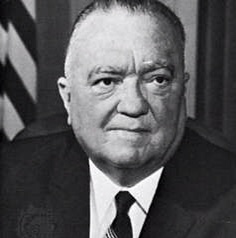

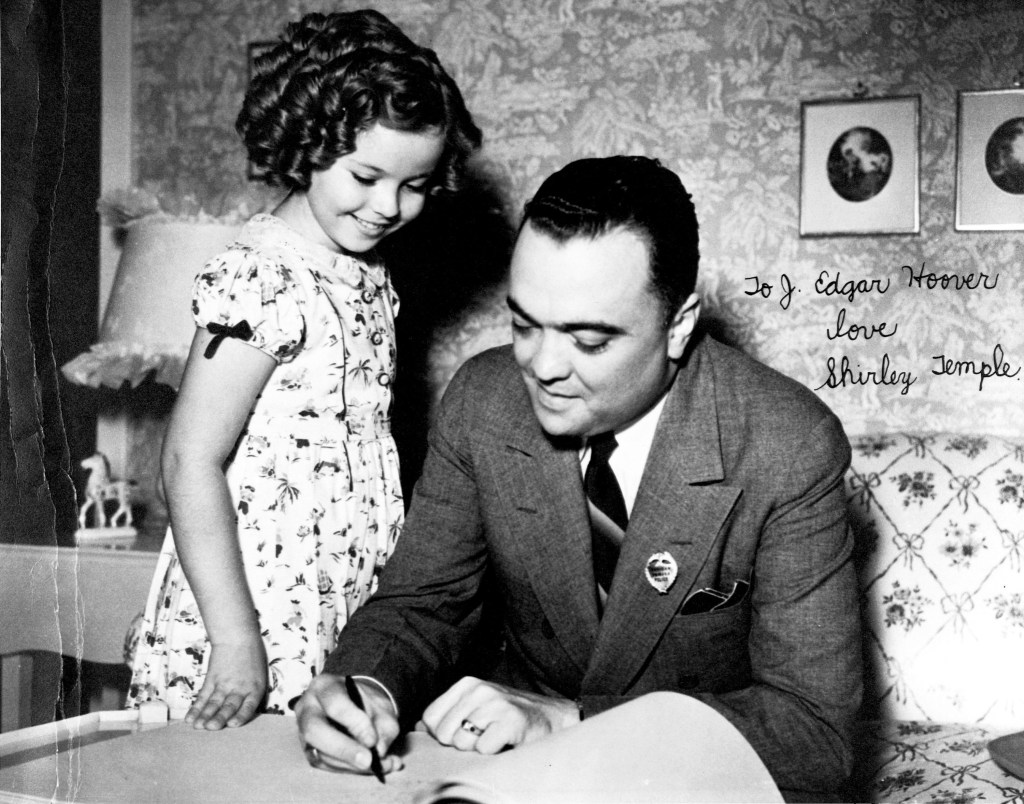

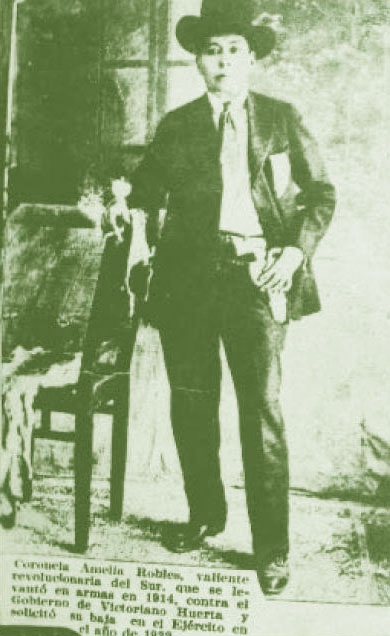
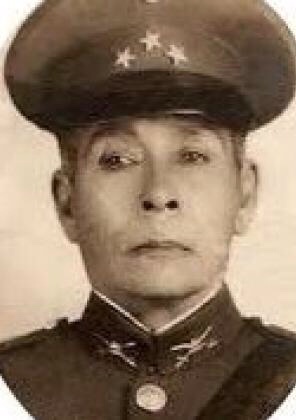
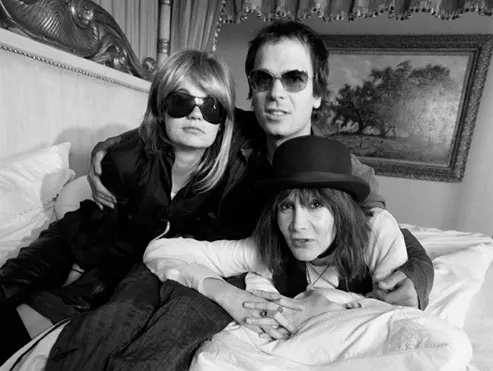





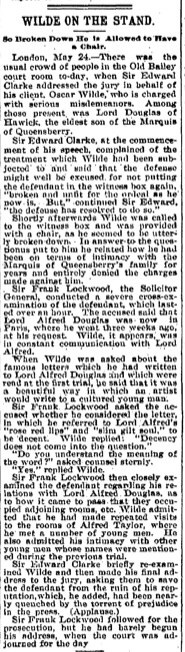
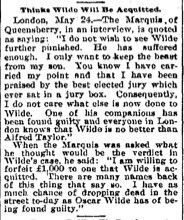







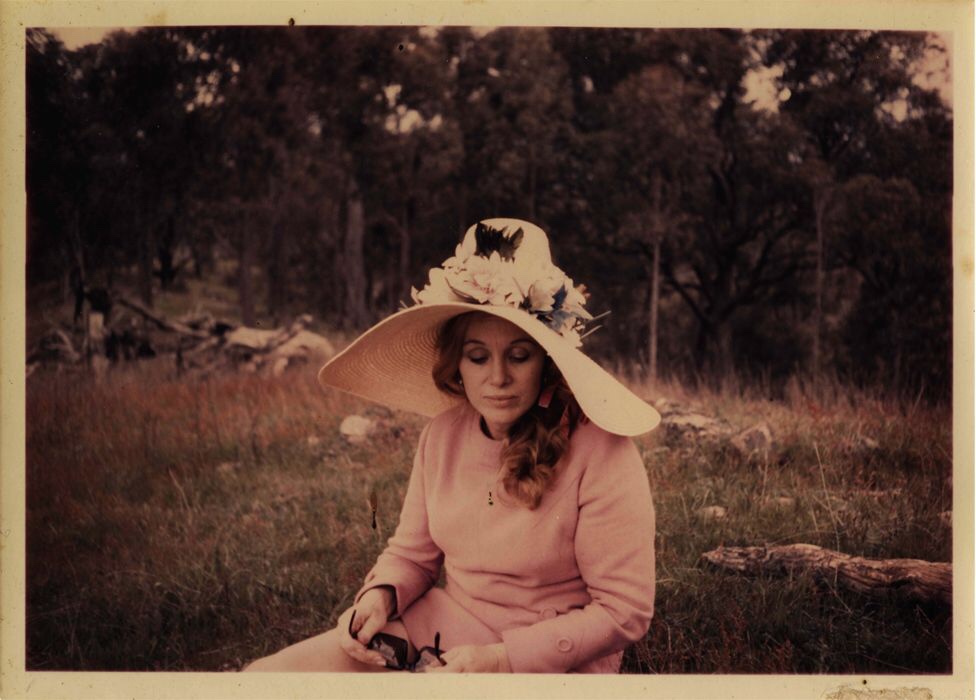











 timalderman