Category Archives: biography
Daily (Or When The Mood Takes Me) Gripe; Christmas Bah-Humbug!
I hate Christmas! There, I’ve said it! And don’t argue with me about it because you won’t change my mind! And whatever you do…don’t try the “baby Jesus was born” line on me…it is the one time of the year I am glad to be Atheist.
Truly! Saves me a fortune on gifts, and I just love sending people in Darwin, Far North Queensland and Adelaide “Season’s Greetings” cards with snow, sleighs and people wrapped up to the nines on them.
People are stocking up on baked goodies with “Palm Oil” listed amongst the ingredients…a couple of rainforests have probably been destroyed to plant plantations of palms to provide the oil…but it’s Christmas, so I really shouldn’t think about that.
Nor about the back alley sweatshops in India and Asia where the Trade Practices Act doesn’t exist, and they are bent over machines making all the multitude of Christmas stuffed toys, stockings, tablecloths, serviettes and a myriad of other products so that you can over-laden your tables with enough food to last for weeks…but again, it’s Christmas, so I really shouldn’t be thinking about that either.
But these aren’t the real reasons I hate Christmas…though they are important issues. No, the real reasons are a lot sadder than that. On the 8th December 1965, my father – Frederick Pickhills…known to his friends and family as Joe – took his 7yo son Kevin – my brother – out to The Gap at Watson’s Bay in Sydney, and went over the edge with him. My father, unfortunately, survived. My brothers body turned up in Broken Bay three days later. My father got off with a slap on the wrist and a five-year good behaviour bond. Merry Christmas for 1965!
Christmas Day 1980: my company – a religious retailer of long repute in Australia – had sent me to Melbourne to troubleshoot two businesses down there just prior to Christmas. With so much to do I had no time to meet people or arrange anything. I spent my first Christmas ever on my own. There was fuck-all on television and I amused myself with a bottle of scotch!
Boxing Day 1986: the beginning of what was to become a 10 -year path of sorrow called the HIV/AIDS epidemic. My tiny 24yo friend Andrew Todd finally succumbed after a long period of illness, in the dark times when they could offer him no hope. It broke my heart!
Every Christmas from 1998 until 2013: spent with my then partners family…and yes, he dreaded it every bit as much as I did. The years we went away were the worst – Werri Beach; Port Stevens; the far South Coast of NSW; Port Macquarie! Sheer boredom and bloody misery. Everyone tried to be oh so happy…but nobody was. My poor ex has to face it on his own this year.
But it hasn’t been all misery. There were 4 Christmas’s in Darlinghurst when, having found that a number of friends had nowhere to go on Christmas Day, I arranged an “Orphan’s Christmas” at home, often with 10-15 people turning up. It started off with me preparing everything, then became a bring-a-plate. These were the happiest Christmas Days I ever had, in the company of good friends, eating, drinking, laughing a lot and exchanging gifts. So, I am not lost after all lol.
And this year? On my own for the first time in a long, long time. I am looking forward to it, actually. It will be peaceful and quiet with the dogs. I’ll prepare a nice meal, drink a few glasses of white, and I think a friend from Sydney – also out to escape the family Christmas – may visit.
So as much as I bah-humbug it, most of you will celebrate it in one form or another. As an Atheist, I will not wish you a merry Christmas , but a happy holiday season.
Tim Alderman
(C) 2014

Have I Missed the Joke?
This article was written in 2001, but the sad thing is that HIV quackery, cons and bogus inventions are still going on. There is no end to the lengths some low-life’s will go to to make money, and it is not just the HIV community they target. This is a few of the rorts going on back when this was written.
Type the query “HIV/AIDS+hoaxes” into the Yahoo search engine and see what comes back. You may be surprised to find that it will come back with 187 matches, and that is just for HIV/AIDS.
To follow all these links, or only to select a couple for investigation takes you into another world. You can look into fraud on a one-to-one basis by people who are simply unscrupulous, treatments and therapies that are on the verge of frightening, an underground antiretroviral drug trade, suspect complementary therapies, internet and email chain letter HIV/AIDS hoaxes, and urban myths.
The home page of the ‘Texas AIDS Health Fraud Information Network’ (TAHFIN(1)simply states that “The HIV epidemic has created business opportunities for many people. In many cases, people and companies pursue these opportunities with the sincere intention of helping while staying within the bounds of the law and maintaining fiscal integrity. The same motives can sometimes lead to harm even with the best of intentions. In some cases, the motive is to simply make a buck regardless of the consequences to those affected. The latter is what opens the door to fraud.” The Quackwatch site expands this further by saying that “The fact that HIV causes great suffering and is deadly has encouraged the marketing of hundreds of unproven remedies to AIDS victims. In addition, many companies in the ‘health food’ industry have produced concoctions claimed to ‘strengthen the immune system’ of healthy persons…many of the expert quacks in arthritis, cancer and heart disease have now shifted into AIDS” and that “…every quack remedy seems to have been converted into an AIDS treatment.”(2)
To explore all these areas, and the much vaunted question of ‘Does HIV cause AIDS?” debated on sites such as ‘Nexus’(3), ‘Is AIDS man-made?’ and the hoax of a new air-borne strain of HIV would require a lot more than the word allotment for this article.
The ‘cures’ observed on the Quackwatch site have included processed blue-green algae (pond scum), BHT (an antioxidant used as a food preservative), pills derived from mice given the AIDS virus, herbal capsules, bottles of “T-cells,” and thumping on the thymus gland. There is also Autohemotherapy – a worthless procedure in which a sample of the patient’s blood is withdrawn, exposed to hydrogen peroxide and then replaced. Add to this the entrepreneurs who have marketed covers for public toilets and telephone receivers with claims that this will prevent you from contracting the AIDS virus, and you have some idea of exactly what to expect.
Over at the “Educate-Yourself”(4) site, you will find yourself in for a real education. There are articles on ‘low voltage electricity’ to make HIV inactive. Dr Bob Beck designed the blood electrifier. The site claims to have seen laboratory reports and Institutional Review Board studies that seem to clearly support claims made by Dr Bob Beck that his blood electrification device has caused ‘complete spontaneous remission’ in literally thousands of AIDS patients, cancer patients, and chronic fatigue sufferers, to name just a few. There appears to be a lot of ‘claims’ and no documentation to support them. The two methods used to treat AIDS patients consist of either removing a small amount of blood, electrifying it then returning it to the body, or sewing a miniature electrifying power supply along with two tiny electrodes directly into the lumen of an artery. The small unit had to be moved every 30-45 days, as scar tissue and calcification occurred around the implant unit, and could lead to artery blockage. The site also reports that hundreds of HIV sero-positive patients have been converted to HIV sero-negative with the use of ‘Ozone Therapy’. “Help is available to AIDS patients right now but the medical establishment is ignoring it” the site informs us. It does state, however, that ‘no evidence for the claims exists in RELIABLE scientific literature.
On December 22, 2000 the FDA(5) issued a safety alert on unapproved ‘Goat Serum Treatment” for HIV/AIDS. This unapproved product, produced in goats as an antiserum against HIV/AIDS, was already the subject of a ‘clinical hold’ by FDA, prohibiting its use until previously existing safety questions are resolved. (Since researching this article, this hold has now been lifted, and the Goat Serum Treatment is undergoing clinical trials).
In 1999, the FTC (Federal Trade Commission)(6) issued a warning about bogus Home-Use Test Kits for HIV. The kits were advertised and sold on the Internet for self-diagnosis at home. The kits showed a negative result even when testing a positive sample. The kits could give someone who was actually HIV+ a false impression that he/she was not infected. Some of the ads stated that the World Health Organisation and the FDA had approved the kits for use.
As far as AIDS urban legends go, the one about ‘AIDS Mary’(7) is probably the most famous. The legend is that the morning after a one-night fling, a man walks into his bathroom and finds the words ‘WELCOME TO THE WORLD OF AIDS’ scrawled on the mirror in lipstick. The legend is also known as ‘AIDS Harry’ (obviously depending on who is telling the story), and it was begun back in 1986, and basically expressed the fears surrounding HIV/AIDS at the time. This legend was actually used as a defense in a criminal trial in 19908. Jeffrey Hengehold murdered Linda Hoberg after sleeping with her, then being told by her that she had AIDS. There was no evidence to support the allegation, as Hoberg had been cremated, and Hengehold had never tested positive. In a similar vein, a 1998 Internet urban legend stated that AIDS-infected blood is being injected into unsuspecting moviegoers and young people dancing in bars or at raves(9). Somebody’s (no name mentioned) co-worker went to sit in a seat at the cinema, felt a prick and found a needle poking up out of the chair with a note on it saying “Welcome to the real world, you’re HIV POSITIVE”. “It’s all false,” said Sgt.Jim Chandler, a Dallas police spokesman. “This has not happened, and we would ask people to stop forwarding this message to their friends because it’s creating situations where police departments and emergency personnel are having to respond to inquiries about this hoax.”(10) Other reports of needle sticks at bars and raves were investigated, and found to be false.
Even the seemingly innocuous world of email communication has not been spared its share of AIDS hoaxes. On the 7th December 1995, the following email chain-letter was sent to J.Beda(11) by several of his acquaintances. It had an email address at SYR.EDU, and in the SUBJECT: aids.
>For a class project, I was wondering if this could be passed on to prove
>a point. In my human sex class, we learned that if somebody has received
>the HIV disease, and they don’t know about it, they could pass it onto
>people who they don’t even know.
> Could you all pretend that I have HIV, and I gave it to you.
>Then could you pass it onto your friends? Let’s see if the entire
>email population could get infected by me alone.
> Please remember that this is a lab experiment. I have to say that I am not intending to offend any one in any way.
> By the way, don’t erase this or the forwards from your computer.
>
>Thank you
>Young Bradley
People pointed out the parallels between receiving this sort of email and having nonconsentual, unprotected sex with a knowingly infected partner. This is commonly known as rape, and potentially as murder. The recipient pointed out to the sender some of the faults of the project, not the least of which is that chain-letters are a BAD THING no matter what the cause. The project also had problems with its implementation in other areas. It never ends. When is the school project finished? It contains no instructions on where to look for more information. It contains nothing indicating who was responsible, or who to contact if there are problems. It does not offer any education on HIV/AIDS. Apart from anything else, sending out this sort of email is against the terms of service of every computer system ISP.
Generally, emails of this type take one of two forms: those that promise/threaten good/bad luck, and illegal pyramid-scheme letters that promise to make you lots of money.
The most recent scam is one to come out of Thailand, and notified to all TAHFIN(12) subscribers on 27th August 2001. It tells of 5,000 HIV-stricken people sitting a soccer stadium for several hours to collect a drug called V-1, a supposed cure for HIV/AIDS. Unlike conventional HIV/AIDS cures, it works on the digestive system instead of within the blood stream. The apparent food supplement is distributed free. There are a reported 755,000 AIDS patients in Thailand, which is one of the major reasons the scam has managed to succeed in a country where the average earnings are $2,000 per annum. Distributors are touting the cure as ‘an oral vaccine’. The Thai Ministry of Public Health tested the drug on 50 people, and found it to have no effect whatsoever, positive or negative. V-1s creators rebuffed Ministry officials who requested the drug be tested by the CDC in the USA. It is feared that soon V-1 will be marketed in other emerging nations who are being overwhelmed by AIDS, and have few resources. It is felt that if governments are put under pressure by the mass-hysteria these sorts of cures create, they will just allow nothing to be done to halt the distribution. Salag Bannag, the distributor of the little pink pill claims that over 100,000 people will have received the drug by the end of this year.
Now, we haven’t touched Low Frequency Sound, Induced Remission Therapy, Colloidal Silver, Bio-Engineering, T-Up or a plethora of other products available on the internet, and through quacks masquerading as practitioners. This article is not attempting to stop people trying alternative therapies. What it is saying is please be careful! Do not part with your precious money for anything unless you have investigated any claims thoroughly. Don’t be taken for a sucker. In Australia, any drug or item that is promoted for use by the general public must not only contain details about what the product actually does, but also what side-effects it can cause. The most blatant element of a lot of the products that are advertised on the Internet is that they only state the positive effects of the drug or devise, and that no side-effects are reported. This sort of situation should automatically make you think twice about the efficacy of a product.
In an attempt to tighten up legislation, and make people aware of their responsibilities when promoting drugs or gadgets, in 1998 the FDA proposed to issue new regulations pertaining to the dissemination of information on unapproved uses for marketed drugs, including biologics, and devices.
Of cause, this only becomes relevant if you are caught!
Tim Alderman
Copyright ©2001
1 http://www.tahfin.org
2 http://www.quackwatch.com
3 http://www.nexusmagazine.com
4 http://www.educate-yourself.org
5 http://www.fda.gov
6 http://www.ftc.gov
7 http://www.snopes.com/horrors/madmen/aidsmary.htm
8 Ibidem
9 Ibidem
10 Ibidem
11 http://pobox.com/~j-beda/chain-letter.htm
12 http://www.tahfin.org

The Hidden Side of Sex Offences
As a kid who spent three years in a Catholic boarding school I was exposed to an underworld of dark sex offenses without realising what was going on around me. When I think back on it now, it was quite scary…
In 1967, due to some family problems – a book of stories on it’s own – and with moving the family home from Sylvania to Kogarah, it was decided that instead of sending me to James Cook High School, I would be taken out of the public school system, and sent to a private school. Mind you, being the era it was, I didn’t have a lot of say in this decision.
As a late applicant – and Protestant – to Marist Brothers St Gregory’s Agricultural College at Campbelltown, I had to wait for all the Catholic applications to be processed first, to see if there were any vacancies available. I was to eventually spend three years there, attaining my School Certificate un 1969. There are two events that occurred in my time there that are quire disturbing, and probably part of the current investigations and Royal Commissiom into child sexual abuse.
Being a boarding school, we all spent our mornings and nights in large open dormitories – just called dorms. Brother Brian was the Dorm Master of Dorn 2, and had an enclosed bedroom just off the entry to the dorm. He was also the Instructor for the school swimming team. As with most school swimming teams, we had our own swimming trunks – burgundy and blue – especially made. With the arrival of the swim trunks, along came their time for distribution. It took me a while to work out what was going on. As I lay in bed after lights-out, there would be a stream of kids on the swimming team individually visiting Brother Brian in his room at night. Evidently, Brother was giving the boys specialised fitting of their swim trunks, getting them to strip off, and try the trunks on to “ensure the correct fit”. Shortly after this event, Brother Brian mysteriously disappeared…transferred to somewhere or other. I had just, unwittingly, observed my first instance of sexual abuse. In keeping with the era, no explanation was given, and the incident was never discussed.
Being a Protestant – Congregational – in a Catholic environment, and voluntarily not exempting myself from Mass , rosary, Station of the Cross. Retreats etc, eventually the religion rubbed off on me. Being raised in the simplicity of Protestantism, I found the rituals, devotions and customs of the Catholic church overwhelming, and in 1969 I converted.
Reverend Father Peter Comensoli was the Parish Priest of St John the Evangelist Church in Campbelltown, and St Gregory’s College Chaplain. As such, he baptized me in the college chapel, and in fact bestowed on me his Christian name Peter as my baptismal name, and later that year I was confirmed in the Parish Church in Campbelltown. Yet another name – Francis – to add to my collection. Father Comensoli spent a lot of time at the college, and was very friendly to all the boys.
So you can only imagine my total lack of surprise, when watching the news many, many years later, at seeing Father Cominsole being arrested for molesting his altar boys.
Both incidents made me realise just how close I could have been to being a victim of sexual abuse myself!
http://www.abc.net.au/7.30/content/2013/s3810321.htm
http://www.brokenrites.org.au/drupal/node/194
http://www.christianchat.com.au/christian-chat-articles/1996/4/16/police-were-slow-to-act-on-clergy-sex-assault-claim/
Please – if you have been a victim of sexual abuse, or know of instances of sexual abuse please report it to authorities.
Tim Alderman (C) 2014

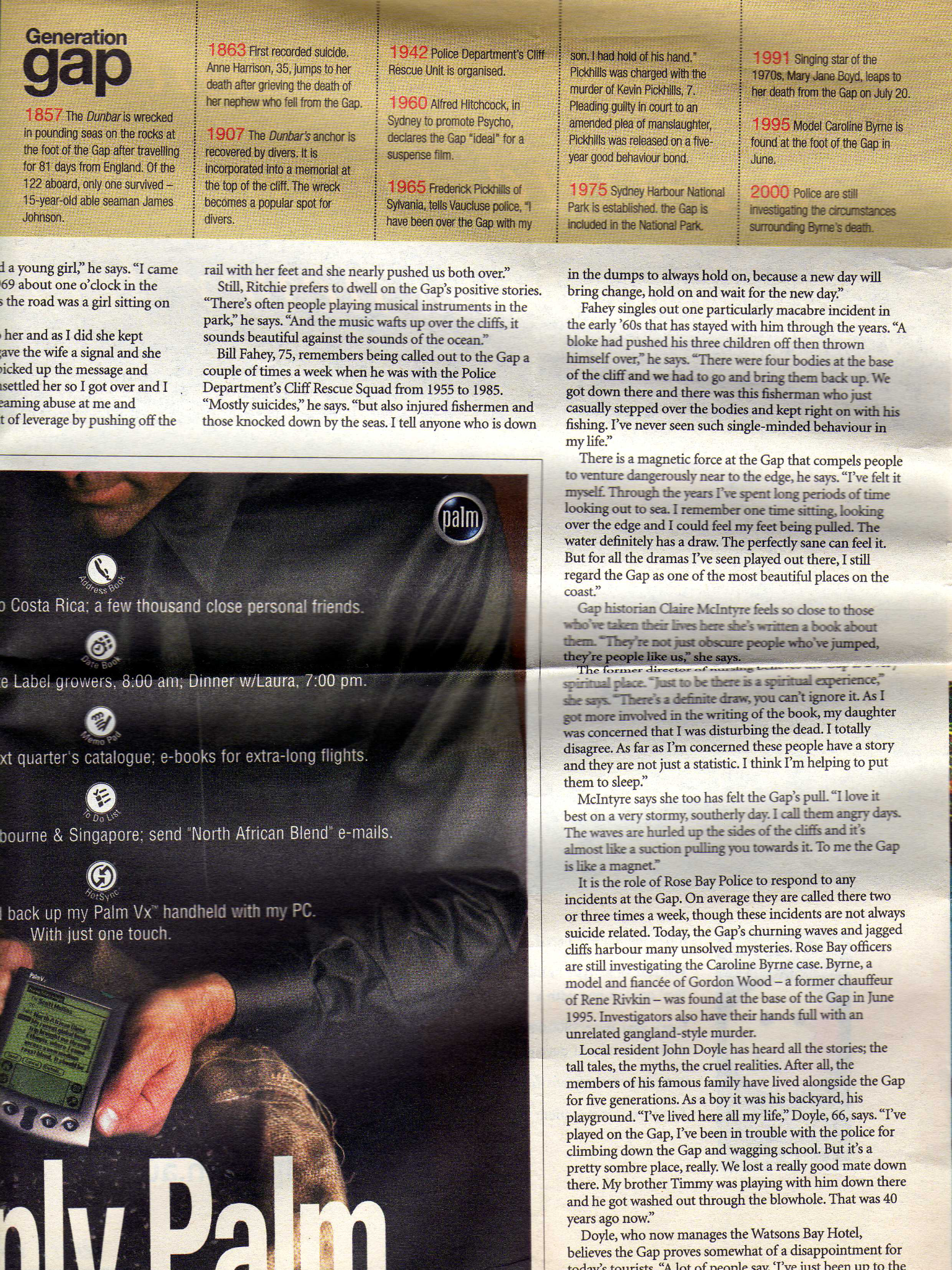
Mind The Gap – Sun Herald, Sunday May 28, 2000
The 1965 incident with Frederick Pickhills was my family, and my brothers death. I have covered the case in my article “Kevin Pickhills – The Unspoken Name.”
Words by Glen Williams
Like the Opera House and Harbour Bridge, Bondi and the beaches, the Gap is a must-see for tourists and locals alike – a place of shattered deams, unsolved mysteries and dramatic beauty.
You are lured here by the view – high above a seething ocean, veiled by sea spray and circled by noisy gulls. The final 25 steps rise from a road that winds back toward the city and all of a sudden here you are – white knuckled, clutching the safety rail, yet drawn closer to the edge. Free-spirited sightseers and single-minded fishermen have all looked down from this spot, captivated by the churning sea and beckoning rocks below. To get this far you must turn your back on Sydney and when you do, its soaring towers and sparkling harbour disappear – replaced by a vast, distant and empty horizon. See the tourists turn their backs to take a photo, of a windswept spot where others before them turned their backs on life.
This is the Gap, Sydney’s infamous “drop off” point, a sweeping arc of wave-blasted sandstone gouged into South Head. Long before there was a Bridge to climb and way before the Opera House welcomed its hordes, this majestic sweep of coastline, in places more than 100m high, played lively in the imaginations of locals. It still does.
It is a place of intense contrasts. Stand at the safety rail, look straight out to sea, and the full brunt of nature hurtles toward you. The noise, a screaming fury, almost knocks you over. Turn around and the harbour and city skyline are displayed in all their glory. And, like the contrasting views, life and death manage to co-exist here.
Ask a Sydneysider their impressions of the Gap and they’ll tell you it’s lunch at Doyles, and a beer at the Watsons Bay Hotel. They’ll say it’s the best vantage point from which to catch the start of the Sydney to Hobart yacht race. And, either in hushed tones or with insensitive grins they’ll tell you, “It’s where people go to jump.”
Howard Courtney will tell you about the night out with his wife and friends which began with dinner at Doyles. One moment he was enjoying the company, the next, he was over the cliff’s edge. “We’d just finished eating and decided to take a walk up there to show our friends what the place looked like in the dark,” he recalls. “We got up to the safety rail and there we found a pair of shoes and a handbag. I looked over the Gap, and down on a ledge was a woman. I could see she was ready to go again. She was crawling out towards the edge. It was dark but I could clearly see her.”
Overcome by the woman’s plight, Courtney kicked off his shoes and socks and, calling to his stunned wife and friends to run for help, leapt over the safety rail and out of sight.
“I didn’t think,” he says with a laugh. “I don’t remember how I got down, and I suppose had it been light, and I’d seen the reality of the drop, I might not have gone. I only know my wife wasn’t too pleased. I managed to make it to the girl. She was crying and I held her and tried to pacify her until the police came. I clearly remember she had scars on her wrists.”
It was March 1973 and newspapers reported how Courtney had clambered 40 feet (12.9m) down the cliff face to reach the 21-year-old woman. She was taken to St Vincent’s Hospital in a satisfactory condition despite a broken leg, internal injuries and shock. Police said the narrow ledge had stopped the woman from plunging 200 feet (60.96m).
“I’ve often wondered what happened to her. Where she ended up,” Courtney, 65, says. “I haven’t been back to the Gap since, but I remember it as a place of dramatic beauty.”
A fence – a sturdy hardwood affair mostly, waist-high and wrapped in cyclone mesh – is intended to prevent people from getting too close to that “dramatic beauty”. But as Woollahra Council carpenters Stuart McKinlay and Bill McLeary know only too well, those wanting to be at one with the view will find a way over the barrier. “There’s a lot of maintenance work,” says McLeary, 56. “We’re often up here fixing the fence. We can’t really stop anyone,” adds McKinlay. “Most are just trying to get a closer look.”
The cheerful tradesmen double as unofficial tour guides of the area and are well-versed in the Gap’s history. As the tourist buses pull up, sometimes 72 in one day, the amiable pair will don their second hat. They’ll point tourists to the rusted anchor from the ill-fated Dunbar, wrecked in 1857 after surviving an 81-day journey from England. Before it could reach the shelter of Port Jackson the ship hit enormous seas and a gale force wind smashed it onto the rocks below. Of the 122 people aboard, only one, Able Seaman James Johnson, 15, survived. “Imagine coming all that way to die here,” says McLeary. “It’s just not fair, is it?”
The men will also gladly help tourists take what they believe is the perfect Gap photograph. “A bus will come along and disgorge a whole heap of Japanese tourists,” McKinlay says. “They’ll race to the rail and take a photo straight out to sea. I mean that photo could be of any sea, any horizon. I tell them to look behind them at one of the best views they’ll ever see. So we’ll take a photo for them, we usually try and line up the Bridge, something that says ‘Sydney’. We’re like ambassadors for tourism.”
Ask them to explain the Gap’s attraction and their initial answer is the view. “Well, as you can see, it is spectacular,” says McKinlay. “It’s also such a well-known place for the obvious reason,” he says, then falls silent. “Um … people like to jump. It still goes on but it’s kept real quiet.”
Indeed, the great unspoken has been associated with the Gap since the mid 1800s. The first recorded case of someone taking their own life here was of 35-year-old Anne Harrison, a publican’s wife who leapt to her death in 1863, after grieving for her nephew who fell from the cliff top. But the two men, who recently nailed plaques detailing the telephone numbers of Lifeline and The Salvos onto the fence, are reminded of more recent tragedies.
There was the man who, in 1993, murdered his former girlfriend then tried to end his own life by driving off the Gap at great speed. “He meant business,” McLeary says. “He tore down here at a million miles an hour, smashed through the fence and became airborne over Jacob’s Ladder – that part of the Gap where the rock fishermen clamber down.”
The car flipped mid-flight and became wedged on a ledge. Miraculously the man survived. “He’s in jail now. They called us straight away to fix the fence.”
Neither man underestimates the dangers of their work, especially McLeary, who admits to being scared of heights. “I’ll climb over the fence, no worries,” he says. “But there’s some spots where you’re right up on the edge. Stu does those.”
Residents of the area moved here to enjoy the ceaseless roar of the ocean and that view. They didn’t intend to be caught up in the broken lives of others or to become heroes. But that is what has happened to some over the years. In the 1960s, Mrs Eve Bettke and her husband Anthony were known as “The Guardians Of the Gap”. Together they brought scores of people back from the edge. In one week alone they dragged back 27 people. News reports from the time tell how the Bettkes, who once lived across the road, kept a vigil from their house, scouring the cliffs for anyone lurking too near the edge. Often they’d invite potential suicides back to their house for a comforting chat.
Don Ritchie, 73, has lived in Watsons Bay all his life and has been involved in several rescues at the Gap. Some of the people he’s saved have actually sent him thank-you cards and gone on to enjoy life. Like the Bettkes before him, he keeps watch over the Gap from his house and has climbed over the fence to talk to people who are contemplating taking their own lives.
Ritchie has lost count of the number of rescues in which he’s been involved. He was awarded a Bravery Medal from the Royal Humane Society in 1970. “That involved a young girl,” he says. “I came home from a function in 1969 about one o’clock in the morning and straight across the road was a girl sitting on the edge in the dark.
“I went over and talked to her and as I did she kept moving close to the edge. I gave the wife a signal and she called the police. The press picked up the message and arrived first. Their arrival unsettled her so I got over and I pulled her back. She was screaming abuse at me and kicking like hell. She got a bit of leverage by pushing off the rail with her feet and she nearly pushed us both over.”
Still, Ritchie prefers to dwell on the Gap’s positive stories. “There’s often people playing musical instruments in the park,” he says. “And the music wafts up over the cliffs, it sounds beautiful against the sounds of the ocean.”
Bill Fahey, 75, remembers being called out to the Gap a couple of times a week when he was with the Police Department’s Cliff Rescue Squad from 1955 to 1985. “Mostly suicides,” he says. “but also injured fishermen and those knocked down by the seas. I tell anyone who is down in the dumps to always hold on, because a new day will bring change, hold on and wait for the new day.”
Fahey singles out one particularly macabre incident in the early ’60s that has stayed with him through the years. “A bloke had pushed his three children off then thrown himself over,” he says. “There were four bodies at the base of the cliff and we had to go and bring them back up. We got down there and there was this fisherman who just casually stepped over the bodies and kept right on with his fishing. I’ve never seen such single-minded behaviour in my life.”
There is a magnetic force at the Gap that compels people to venture dangerously near to the edge, he says. “I’ve felt it myself. Through the years I’ve spent long periods of time looking out to sea. I remember one time sitting, looking over the edge and I could feel my feet being pulled. The water definitely has a draw. The perfectly sane can feel it. But for all the dramas I’ve seen played out there, I still regard the Gap as one of the most beautiful places on the coast.”
Gap historian Claire McIntyre feels so close to those who’ve taken their lives here she’s written a book about them. “They’re not just obscure people who’ve jumped, they’re people like us,” she says.
The former director of nursing believes the Gap is a very spiritual place. “Just to be there is a spiritual experience,” she says. “There’s a definite draw, you can’t ignore it. As I got more involved in the writing of the book, my daughter was concerned that I was disturbing the dead. I totally disagree. As far as I’m concerned these people have a story and they are not just a statistic. I think I’m helping to put them to sleep.”
McIntyre says she too has felt the Gap’s pull. “I love it best on a very stormy, southerly day. I call them angry days. The waves are hurled up the sides of the cliffs and it’s almost like a suction pulling you towards it. To me the Gap is like a magnet.”
It is the role of Rose Bay Police to respond to any incidents at the Gap. On average they are called there two or three times a week, though these incidents are not always suicide related. Today, the Gap’s churning waves and jagged cliffs harbour many unsolved mysteries. Rose Bay officers are still investigating the Caroline Byrne case. Byrne, a model and fiancee of Gordon Wood – a former chauffeur of Rene Rivkin – was found at the base of the Gap in June 1995. Investigators also have their hands full with an unrelated gangland-style murder.
Local resident John Doyle has heard all the stories; the tall tales, the myths, the cruel realities. After all, the members of his famous family have lived alongside the Gap for five generations. As a boy it was his backyard, his playground. “I’ve lived here all my life,” Doyle, 66, says. “I’ve played on the Gap, I’ve been in trouble with the police for climbing down the Gap and wagging school. But it’s a pretty sombre place, really. We lost a really good mate down there. My brother Timmy was playing with him down there and he got washed out through the blowhole. That was 40 years ago now.”
Doyle, who now manages the Watsons Bay Hotel, believes the Gap proves somewhat of a disappointment for today’s tourists. “A lot of people say, ‘I’ve just been up to the Gap and I couldn’t find it’. Or they’ll tell you they’ve seen bigger Gaps in their own backyards.”
Master of suspense inspired by the Gap
How appropriate that the master of the cliffhanger, Alfred Hitchcock, should find himself drawn to the ominous cliffs of the Gap.
It was Friday, 6 May, 1960, and Hitch was in Australia to promote what has become an all-time classic motion picture, Psycho.
“Alfred Hitchcock thinks Sydney’s Gap would be ‘ideal’ for a suspense movie,” David Burke reported in The Sun-Herald, on 8 May, 1960.
He took an umbrella with him. “Just in case I decide to float over the edge,” he explained. “Before I make a picture I must always experience the hero’s emotions myself.”
“He poised his roly poly figure on a railing of the safety fence and looked down on the rocks hundreds of feet below,” Burke wrote. “The westerly blew his umbrella inside out; the renowned chins and jowl quivered with the cold. But his eyes lit up to saucer-like proportions.
“Ah, yes, ideal,” beamed the master of suspense. “I can see it all. The villain has the hero on the edge of the cliff and is slowly pushing him over backwards. We have close-up shots of their faces. Then we have close-ups of their feet, scuffling on the brink. The wind is shrieking … the waves are boiling far beneath … we know how far the hero has to fall.
“At the last moment he wrenches himself free and the villain goes over the Gap. Yes, a really ideal setting for suspense.”
Generation gap
1857 The Dunbar is wrecked in pounding seas on the rocks at the foot of the Gap after travelling for 81 days from England. Of the 122 aboard, only one survived – 15-year-old able seaman James Johnson.
1863 First recorded suicide. Anne Harrison, 35, jumps to her death after grieving the death of her nephew who fell from the Gap.
1857 The Dunbar is wrecked in pounding seas on the rocks at the foot of the Gap after travelling for 81 days from England. Of the 122 aboard, only one survived – 15-year-old able seaman James Johnson.
1907 The Dunbar’s anchor is recovered by divers. It is incorporated into a memorial at the top of the cliff. The wreck becomes a popular spot for divers.
1942 Police Department’s Cliff Rescue Unit is organised.
1960 Alfred Hitchcock, in Sydney to promote Psycho, declares the Gap “ideal” for a suspense film.
1965 Frederick Pickhills of Sylvania, tells Vaucluse police, “I have been over the Gap with my son. I had hold of his hand.” Pickhills was charged with the murder of Kevin Pickhills, 7. Pleading guilty in court to an amended plea of manslaughter, Pickhills was released on a five-year good behaviour bond.
1975 Sydney Harbour National Park is established. the Gap is included in the National Park.
1991 Singing star of the 1970s, Mary Jane Boyd, leaps to her death from the Gap on July 20.
1995 Model Caroline Byrne is found at the foot of the Gap in June.
2000 Police are still investigating the circumstances surrounding Byrne’s death.
© 2000 Sun Herald
Daily (Or When The Mood Takes Me) Gripe : Be Afraid and Be Alarmed!
Fear is a complex emotion but it comes in two main forms. There’s anticipatory fear where we perceive a threat, know what to do about it, and take the necessary evasive action.
That happens when you see a dangerous situation looming on the road, or someone threatens you with violence.
Then there’s inhibitory fear, where the threat is too great, too amorphous or too appalling for us to know how to deal with it. Because there’s no way to discharge the fear through action, we are inhibited rather than energised. The term ‘paralysed by fear’ is a good description of inhibitory fear at work.
Hugh Mackay Speech “Be Afraid” 2007
We are again experiencing the politics of fear…however, I don’t know how effective it is going to be this time around. It is not so much that we are immune from it, but in an age of social media, and historical introspection we are all more aware of what it is all about.
There has been so many examples of this whipped up in our own lifetime: fear of Jews; reds-under-the-bed; nuclear holocaust; fear of terrorists; fear of muslims; fear of extremists etc etc,always led by both politicians, and the media. Tony Abbott’s mob are currently trying to whip up both fear of extremists in the follow-up to the crash of flight MH17 in the Ukraine (and by proxy the loss of MH370) implying that we are suddenly involved in the war going on there by sending in both the AFP AND ADF personnel not just to secure the crash sight, but that our army would train Ukrainian army personnel! (Reported 3rd Sept 2014 SMH, then denied on 4th Sept 2014 in The Guardian). We were suddenly confronted by a range of statements between then and now, not only about involvement in the Ukraine, but our insolvent in Iran in the face of the ISAS/ISOS/Islamic State (or whatever they are calling themselves today) THREAT (how quickly did the Ukraine crash become a poor cousin when all this started!), naturally, the media are just wallowing in all this pandemonium that is being whipped up. We were constantly seeing headlines and leading news reports about our sudden involvement in scuffles that have nothing to do with us – though it us essential for us to crawl up the arse of America – because they want to whip up hysteria that this MIGHT (though won’t) happen here! Naturally the lead-on from all this at home has been a redneck hatred of Muslims here – irrespective of their individual or community response – resulting in Mosques being desecrated, the burqa becoming a weapon of fear, new laws covering “supposed” civilian terrorists entering and leaving the country, additional laws allowing police to have even yet mire powers than they already have, and the general generating OF an atmosphere of FEAR, making us, the regular run-of-the-mill Australian (emphasis on that) joe-blow citizens to constantly look over our shoulders, to denigrate anyone who was Muslim or wore a burqa, too generally feel….ill at ease in our day to day lives. This is a frightening scenario, and goes to show how easy it is to manipulate a population using Politics of Fear!
I just loved how after every alarmist report, there was a request to not be afraid and to “carry on as normal”! My response, and that if many others in social media was: like we’ve been doing otherwise!
Of course, that has now carried over to the wanker G20 conference up here in Queensland! What a fucking waste of taxpayer money this giant waste of time is! Police given extra powers; control of protesting ( a supposed democratic right); shutting off of areas weeks before the bloody thing even happens; exclusion zones; cutting off access to roadways while they transport the wankers around; removing…garbage bins (potential terrorists sees no garbage bin…cancel action and go home…not!). Naturally, all the fear being whipped up about a potential terrorist attack over this period (assumes we would miss any of them if anything DID happen!) has been sugar-coated by granting additional public holidays, and telling us not to be scared to shop in the CBD over this period. To my thinking…doesn’t both these actions place more people at risk if anything does happen! Just me being paranoid! Oh no….they’ve got to me!
So are the Politics of Fear really affecting our daily lives? I don’t think it has been as successful as perhaps they like to think. All I see is people “carrying on as normal”. Certainly on social media it has been treated as a joke. Amongst those who think and evaluate, it is just another example if government stupidity, with Tony Abbott and Julie Bishop (who has scored rather well out of all this) striding the world stage like circus clowns, making us out to be bigger and more powerful than we actually are! In some respects…making us a target!
Will be interesting to see what happens here after the G20! My bet…there will be no revocation of given “specific period” powers…and no fucking garbage bins to put my rubbish in!
Tim Alderman
Copyright 2014

Daily (Or When The Mood Takes Me) Gripe: Being 60!
WTF! Since when did turning 60 move me into the world of the addled dolts! I look in the mirror and see a guy who has aged, for sure, but not so that I can see a retirement in my near future. In fact, as far as a mature aged guy goes, I don’t look all that bad at all! I still have all my hair, it is still primarily black, body is gym-toned and looking a bit bulked up, not many wrinkles to speak of, grooms well, and dresses in trendy clothing though for my age. So why is it that so many think I’m an idiot!
Don’t get me wrong! This attitude that I am a gullible dolt doesn’t come from friends and acquaintances. It is the sole territory of young shitheads on sex sites! Excuse me while I B-Pay some funds to Russia so that yet ANOTHER personal trainer can escape his life of misery and deprivation there, and join us in the land of fucking eternal sunshine and imbecility!
Has happened to me four times in the period of one week! Four 20-somethings that think grandpa Timmy is the National Treasury, and either a free ride to the Promised Land, or a subject of ridicule! Now…I know all 60-year-olds aren’t computer and internet savvy…but this one is! I’ve survived enough Nigerian millions which are possibly still on there way, and had enough relatives that I knew nothing about – that lot didn’t know my hobby.. is genealogy – dying and leaving me zillions…just forward us your banking details and we’ll get this money to you right away…to know when someone is taking the piss!
Funny how they often trip themselves up! This one on Saturday night appeared on Grindr. There was a chat window with a picture posted in it of a very cute 20-something.,no profile! Thought that was very odd but proceeded with chat anyway. Mentioned he was visiting and going out…a bit further down said he was arriving on Sunday. The usual dirty talk…said ye was staying at McDowell…was willing to supply condoms and travel here…would message me on Monday…knew he wouldn’t and he didn’t! But I’m not sure what it was all about. He got no information off me, no personal stuff like address…maybe he worked out I’m poor snd just gave up lol.
Then you have the guts from India looking for hubbies in a little hit too much of a rush…and if you respond suddenly there is a rush of them! And always in too much of a hurry to move on to Skype.
The Asian guys who respond to profiles 60-seconds after all t goes up…without even reading it, and always between 20 and 24.
The “Blow ‘n Go” guys nearly always in their early 20s…and on Grindr!
Guys who don’t read your profile, so miss the information about raw sex!
Or sites like BBRTS which are a total waste of time if you are over 60! Plenty of ‘oinks’ but no bloody subsequent action…though a good site for excuses as to why none!
Hey guys…would it shock you to find out I’m still sexually active! I’m not dead! I.m not wrinkly and saggy! I don’t smell of old person! I don’t really want sex…or scams…or rip-offs…from people a third my age!
Get a life, guys. Don’t waste my time…it’s as precious as yours. Read my fucking profile and respond to what I want..las I do to yours!
I’m not an imbecile nor a dolt!
Don’t treat me as one!
Tim Alderman
Copyright 2014
So Can You Cook? 4
AUBERGINE & MARROW IN BANANA LEAVES
2 tablespoons peanut oil (or other if allergic)
3 cloves garlic, crushed
3cm piece ginger, peeled, grated
½ banana chilli, deseeded and cut into strips
2 medium banana eggplants, cut into fine strips
200g marrow or squash, peeled, deseeded, cut into fine strips
1 tablespoon spice paste (recipe to follow)
Salt to taste
6 pieces banana leaf, each 20cm square (available from Harris Farm or quality grocer)
SPICE PASTE
8 shallots, peeled
10 cloves garlic, peeled
1 teaspoon coriander seeds
10 cm piece fresh turmeric, peeled (try Asian grocers, or use dried to taste)
6 lge red chillies, deseeded
5cm galangal, peeled (Asian member of the ginger family. Substitute ginger)
1 teaspoon salt
¼ teaspoon white pepper
2 kaffir lime leaves (Harris Farm grocers)
100g candlenuts (try a health food store, or Asian grocers. “Herbies” at Rozelle stock them. They are used to thicken the paste)
1 stalk lemongrass, bruised (use the flat of your knife_
2 tablespoons peanut oil (or other if allergic)
Coarsely grind all ingredients except lemongrass in a mortar and pestle(prefered), or a food processor. Heat oil in a heavy-based pan, add the paste. Add lemongrass and cook over a LOW heat for 30 minutes. Cool completely before using.
This will keep in the fridge for 1 week, or freeze small quantities.
Recipe continues
Heat a wok or heavy-based frying pan. Add oil. When smoking, add garlic, ginger, chilli, eggplant and marrow. Sauté for 2 minutes until golden, then add spice paste. Stir, season, then remove from heat. Wash and dry banana leaf. Soften for 5 minutes in a moderate (180C) oven, so they will fold without splitting. Set on a bench, and divide mixture between them. Fold ends of leaf in, then roll to seal the parcel. Secure with a toothpick. Steam for 20 minutes and serve as a snack.
NB Banana leaves are not eaten. They are used to protect their contents, and give a subtle flavour. Wrap and freeze extra parcels for later use.
Makes 6 parcels
Approx $2.00 per parcel
FRUIT SALAD with TAMARIND & PALM SUGAR SYRUP
I adore the flavour of tamarind. It’so sweet/sour. You can get it from Asian grocers, or from “Herbies” at Rozelle.
Fresh fruit such as papaya, mango, pineapple, lychees, rambutans, pawpaw, berries and passionfruit.
FOR THE SAUCE:
¾ cup palm sugar, chopped
½ cup water
1 pandanus leaf (Harris Farm or Asian grocer)
4 tablespoons tamarind paste (no seeds)
4 red birds-eye chillies, whole
Pinch of salt
Bring palm sugar, water and pandanus leaf to the boil, and simmer for 5 minutes. Add tamarind paste, chillies and salt and simmer 5-10 minutes. Cool before drizzling over fruit salad for an unusual hot-sweet-sour dressing.
Serves 4-6 (depending on size and quantity of fruit)
Approx $2.80 per head
Tim Alderman 2015

The Evolution/Devolution of Cleo
In 2001, while doing my writing degree at UTS, I submitted a 13,000 word tome for evaluation, titled “Cleo’s Reflection” – my recollections of my past to my hairdresser as he did up my wig for my final drag appearance. My tutor, a tiny Asian fag-hag (love or hate the phrase), was ecstatic about it, and on questioning the class on what the story represented, and getting the usual crap replies that you would expect from 20-year-olds, enlightened them to it being ” A Sydney story!”, which actually gave me goosebumps.
I have done a couple of edits over the years, but recently decided it was time to get to the bare bones of what “Cleo’s Reflection was really all about. I do intend to publish the full-length tome, but it has bern sitting around for 13 years now, and I imagine a few more won’t matter much. So, here in a nutshell – sort of – is the chopped down version of “Cleo’s Reflection”…”The Evolution/Devolution of Cleo”.
My writing tutor at UTS called this a “Sydney story”, but as I got right to the root of what Cleo was (escapism, flipping the coin, daring) I realised more and more just what a “gay” story it was, and perhaps more importantly – for Cleo was born at the very beginning of the HIV era, and bowed out at its height – that it is a “HIV” story, and of its time..
Cleo’s persona was born, so I like to say, out of pure curiosity. In late 1983, ‘she’ made ‘her’ first public appearance at one of Sydney’s annual parties, called Sleaze Ball, put on annually by the Sydney Gay and Lesbian community. It was a daring move for me, and a move into unexplored territory.
I have had a fascination with ‘gutter drag’ since coming out in 1980. Drag has always been synonymous with the gay community here, though usually more in a serious vein than as send-up or parody. ‘The Oxford Hotel’ opened in 1983 on Sydney’s gay ghetto of Oxford Street, and become an instant hangout for the city’s clone brigade. Simultaneous to the growth of the clone phenomenon was the growth in popularity of gutter drag, and several troupes routinely plied their talents between bars along the gay strip. Most famous of these were ‘The Planet Sluts’, and many a Saturday night out was brightened up by their sudden appearance in ‘The Oxford’.
They had a look that I was always slightly envious of, in that they were cocks in frocks, an over-exaggerating of the femaleness of drag without losing the masculine aspects. It was a phenomena that could only have happened in the gay community and though there were mixed reactions, permission was granted for its continuance. It was a look that I wanted to try – badly!
One minute I would be having a quiet drink with friends in the bar, and a bit of a bop to the music, and the next thing I knew, all hell had broken loose. These four guys would barge in from the street. They would have wigs backcombed to within an inch of their lives and absolutely huge; totally over the top make-up; and frocks that would have been the envy of even serious drag queens (sort of!) – tulle for days, and totally outrageous. But what really made it for me was the fact that they shaved neither faces, chests nor arms and legs, and that was what gave gutter drag not only its name, but also its appeal.

So Sleaze Ball 1983 was the first time I decided to attempt to emulate this form of drag. I have to admit it wasn’t terribly successful! My flatmate (who was also my lover at that time) had done a bit of drag during the 70’s. I didn’t really want to spend a lot of money on this one particular occasion, and asked him if he would do the wig up for me. Mistake number one! The poor wig ended up looking like a poor relation to Dusty Springfield, but he had done his best, and I felt it was unwarranted to criticise his efforts. Mistake number two! Choice of frock. It was a Marilyn Monroe crepe Halston style rip-off, and by the time the whole outfit came together, I looked like a bloody society matron heading off for a Sunday luncheon. It also didn’t go down well at the party, especially considering the look was nowhere near the Planet Slut look that I wanted to achieve.
The Sydney parties in those days were small affairs (5,000 – 6,000 gay guys), not the huge extravaganza’s they are now, and needless to say, I would have slutted around and slept with at least half the party-goers. My reputation as an aggressive little bottom was ruined, and the message columns in the local gay rags ran hot with malicious gossip about me for the next couple of issues. Undaunted, I decided to forge on!
That night, Cleo was born. She may only have been a name, but the seeds of creation were planted.

My next attempt was in the Sydney Gay Mardi Gras parade in 1984 – it had not become The Sydney Gay and Lesbian Mardi Gras at that stage – and it wasn’t much better than my first attempt, except that I did myself up so that nobody would recognise me this time around. The floats in the parade were all pretty tragic. The Mardi Gras organisation had not set up workshops in these early days, so organisations and businesses just put floats together as best they could, with little taste, and no artistic direction. The one I was on was exceptionally tacky, with everyone on the float being workers for one of the local sex shops, (Numbers Bookshop), and the owner giving us a zero budget to work with. The back of the truck was covered in aluminium foil – very flashy indeed, with a sound system that only worked when the mood took it, which wasn’t very often. The manager of the store, who went under the drag persona of Miss Phoenix had a fairly over the top drag style, though a bit too serious to be gutter drag. Still, he managed to outshine the rest of us on the night, who looked like aliens out of the early days of Dr Who, and I was rather thankful for the anonymity that It afforded me. No photographs exist of that tragic episode in history…I am so glad to say!
In late 1984 I met my next lover, Damien. Frank, the one who had been the creator of the first Cleo wig had been very unceremoniously dumped. Damien was a pretty boy, and a bit of a devil, and liked to think that I didn’t know about him trashing around behind my back. His longevity as a partner was terminated after he faked a suicide attempt. However, before I pissed him off, he talked me into doing drag with him on two occasions, and still I could not get the look together. In fact, the first time I went out with him in drag, I was mistaken for his mother! Really! Not impressed! What was I doing wrong, I asked myself? I knew how I wanted to look. I had the mustache and hairy chest and legs, but somehow my image kept coming across a little bit too seriously. The realisation slowly dawned that I had to stop myself from holding back, that I just had to let my head go, and revel in the whole concept of being a cock-in-a-frock, instead of trying to look like a man dressed as a woman.

In 1985, I met Stella, a.k.a. Stuart. I also met my next lover Tony. It wasn’t an auspicious beginning for a new relationship, as I was trying, as I had been trying for many months, to get Stuart into the sack. On this particular afternoon, success was within reach, with Stuart in an apt state of inebriation for seduction, and me moving in for the kill. Well, almost moving in for the kill! Tony sort of got in the way. He had been eyeing me off for most of the afternoon, and I had already gathered that he was a new boy in town – the spider moving in on the fly. He proceeded to start talking with me in the middle of the Stuart seduction, and came over so cute and naïve that by the time night settled in, I had him at home instead of my original quarry.
In some respects, I don’t regret that it happened that way. Tony ended up as my lover for the next four years – and was the main reason for my getting tested for HIV in 1985, and coming up positive (which had nothing to do with Tony) – and though he thought it was the perfect relationship, he was the only one who ever saw it through rose tinted glasses. This time, it was me who plated up…and got caught out! As for Stuart and I, well we ended up good friends, and became drag buddies after Don died – but I am getting ahead of myself here. I will introduce you to Don shortly, and more on Stuart a bit later.
By Mardi Gras 1986, Cleo’s evolution had started. I hunted around the second-hand stores, and eventually managed to find the perfect wig. It was as white-as-white, and it could be hammered into just about any style that you wanted. The wig quickly became my signature, and many years later when I gave up gutter drag, many people would not believe I had stopped until I told them I had given ‘Cleo’ – as the wig also came to be called – away.
I made a huge fishtail frock for that Mardi Gras, in the most gorgeous Thai-silk green fabric, and for the first time – though not the last – got a hairdresser friend in to style the wig. He loved working with it, and had it pulled and stretched into this fantastic wild, white storm. The frock looked great, and there were huge plumes of emerald green ostrich feathers pouring out the back of it. I did the make-up myself, and though in the transitionary phase, it looked better than it ever had before. Add a profusion of diamante jewellery, stiletto shoes, and fishnet stockings, and it was all starting to happen.
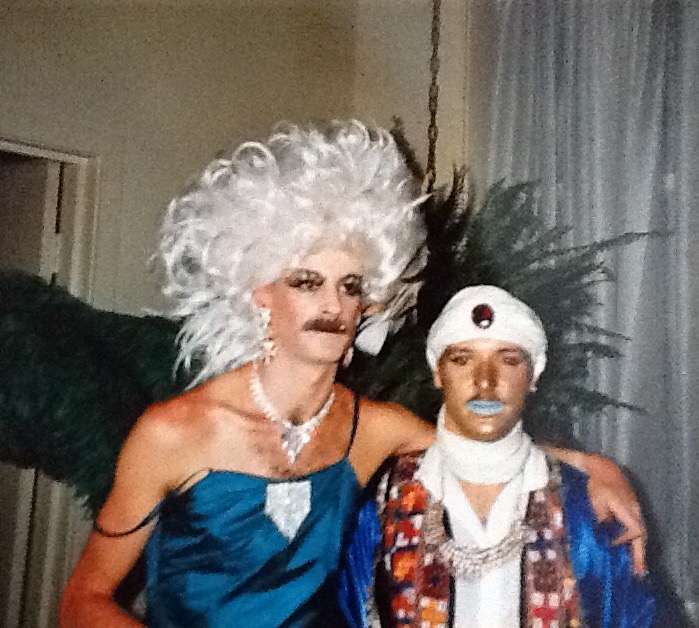
Unfortunately, the one thing I hadn’t counted on that year was rain. Mardi Gras night has traditionally been a night when you are never quite sure what the weather is going to do, and this one was no exception. Half way through the parade, the rain poured down. I decided to go home and get out of the sopping wet frock and into something dry before going on to the party. Well, my lovely emerald green ostrich feathers decided to run, didn’t they! I had skin in the most subtle shade of green. It took hours to scrub it off. I gave up feathers after that. Much too risky!
Later that year, a DJ mate of mine who worked at ‘The Oxford’ invited me to his annual colour-themed party. That year, it was ‘Green with Envy’. The object of these parties were that if you decided to go, you had to wear the specified colour, and you had to wear drag. A little leather mate of mine called Andrew was also given an invite. We all got quite a laugh out of this, as Andrew was a leather munchkin – through and through. None of us could ever have envisioned him in drag. But he wanted to go to the party. Andrew. was one of the first in my circle of friends to contract AIDS, and he spent most of his time then going in and out of hospital – more in than out. He told me he had never done drag, and he didn’t want to exit this world feeling that there was one experience that he had missed. However, he didn’t want to do it seriously, and I had to couple with him. I agreed, and together we put together this rather macho little drag number, with green wig, and army boots, and this tacky little skirt. He looked a hoot, and had the time of his life. I’m glad I spent that night with him, and I’m glad I helped him get that whole ‘thing’ together, even if my own outfit was an abomination. I hated wearing green, and decided most definitely, that if Andrew was going to look bad, I was going to look worse. I succeeded beyond all expectation! He ended up back in hospital shortly after that party, and he didn’t come back out this time. He died on Boxing Day (December 26th) that year, and I’m sad to say that he was just the first of many.

Cleo was defined by the time Sleaze Ball 1986 rolled around. She had come into her own. A persona – and for many years an icon (Yeah! Right!) – was born. Surprisingly, I didn’t wear Cleo for this event, opting instead for a no.2 buzz cut, jelled straight up into the air, and sprayed bright red. The make-up matched, with lots of red, and very unsubtle use of other bright colours. But the outfit was the defining point, and was to be how Cleo was to be seen up to the day I finally decided to hang up the heels. I spent a fortune on a leather corse – not an easy item to obtain in Sydney back in those days – and teamed it with a leather garter belt, fishnet stockings and stilettos. The jewellery was all huge and red, and over all, the effect was beyond even my expectations. That year, I was photographed at every turn, and ended up in a Sleaze Ball montage in one of the gay rags. My boss was so smitten with this sleazy, slutty, trashy look that he used the pictures in the shop’s advertising the following year. Three ‘British Airways’ boys whom I had regular threesomes with when they were in town fell in love with the ‘new’ Cleo, and proceeded to not only give her picture pride of place in a return flight to Britain, but proceeded to stick her photo up on lightpoles from one end of England to the other. This was notoriety, and I relished it!
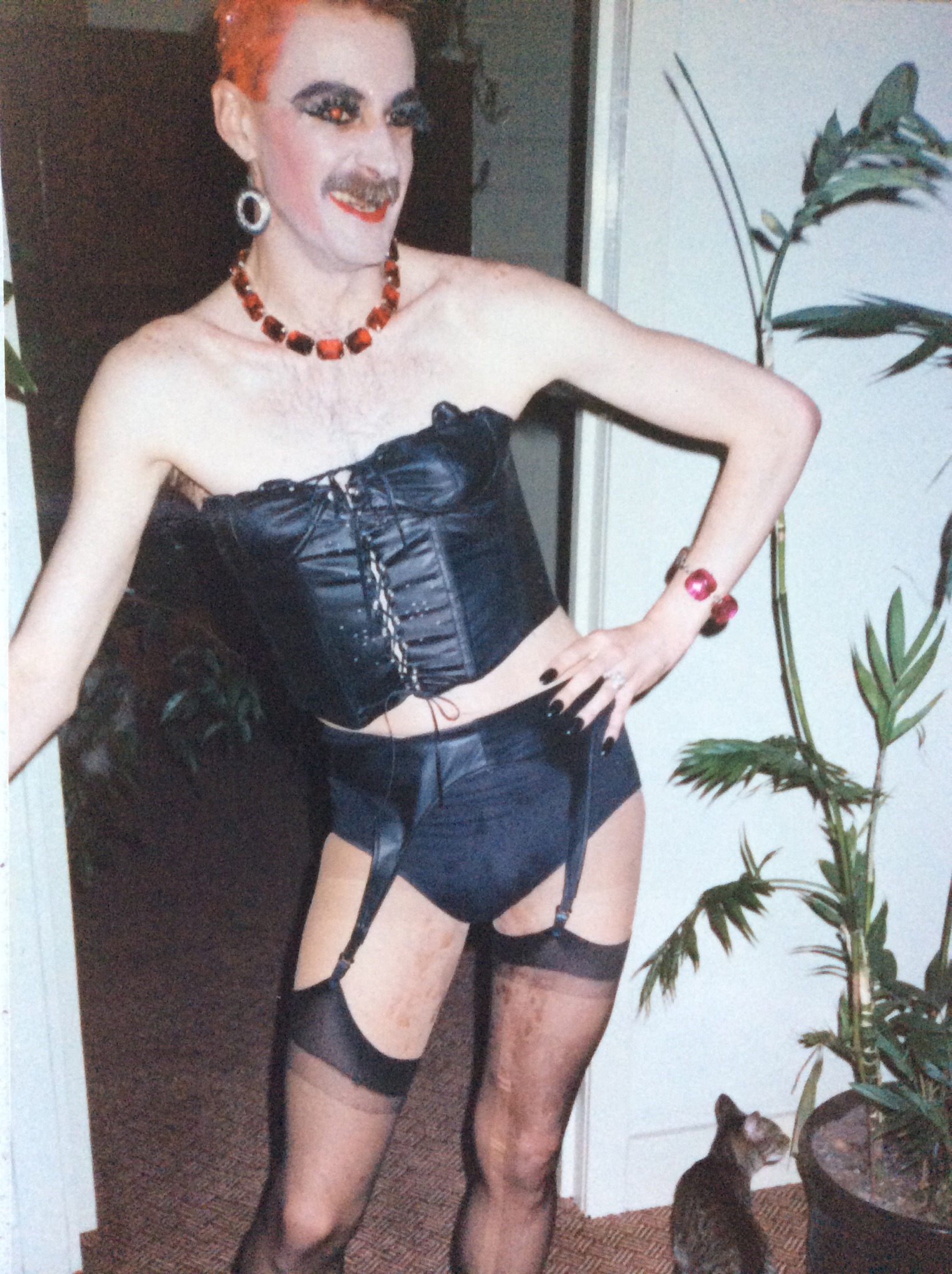
Needless to say, for the next couple of years, I took every opportunity to put the new Cleo on show, and she created her own demand!
I was not to be a solo act for very long. The story of how Don and I came to be partnered is odd, and was a lesson for me in how easy it is to misjudge people. He was a friend of another couple I knew, Steve and Geoff. Every year, they held a large party in their Glebe terrace called ‘The Annual Port and Cheese Party’. It was a much looked-forward to event, and to get an invitation was to be ‘in the right group’,though not in a snobby way. I had met Don at ‘The Oxford’ on several occasions, and he was one of those people who on a first meeting , comes across as loud mouthed, and rather crass. It was for these reasons that I had spent a considerable amount of time avoiding him. He was one of the privileged who got an invite to the ‘Port and Cheese’, and he wanted to go in drag, so Geoff rang me up and asked me if I would make a frock for him. Now, I should point out that Geoff was someone who it was very difficult, if not impossible, to say NO to. He was one of Gods true gentlemen, and a kinder, gentler, more generous man I have never met to this day. What could I do? I gritted my teeth, and said yes!
So a couple of nights later, Don showed up on my doorstep with an armload of gold lame. As I was to find out over the next couple of nights, he was not the loudmouth that I had originally imagined him to be. Sure, he was loud, but he had a heart of gold, and a great sense of humour. He was also a bastard to fit with a frock, as I soon found out. He wanted to look really elegant, but he had this damn gut, and trying to fit him into even my largest pattern just wasn’t going to happen. I ended up making the frock to the pattern, then inserting this huge gusset into the back of the frock to get it around his stomach. I told him he might have to wear either a corset, or a longline bra. He just laughed. I also told him that I had this great hairdresser,and offered to lend him some jewellery (this was his first time in drag, after all!), but he insisted that he knew what he was doing, and he had the rest of the outfit at home. I should have argued a bit harder! He turned up at the party looking great in the frock, but the wig looked like one of his mothers rejects after a wind storm, and he wore – wait for it – plastic jewellery! I never let him live that down. Plastic jewellery on a drag queen! I mean tawdry is tawdry, but plastic is stooping too low even for gutter drag. He accessorised a lot more carefully after that party. This was also the night that I was photographed in The Oxford…and made the cover of The Star Observer!

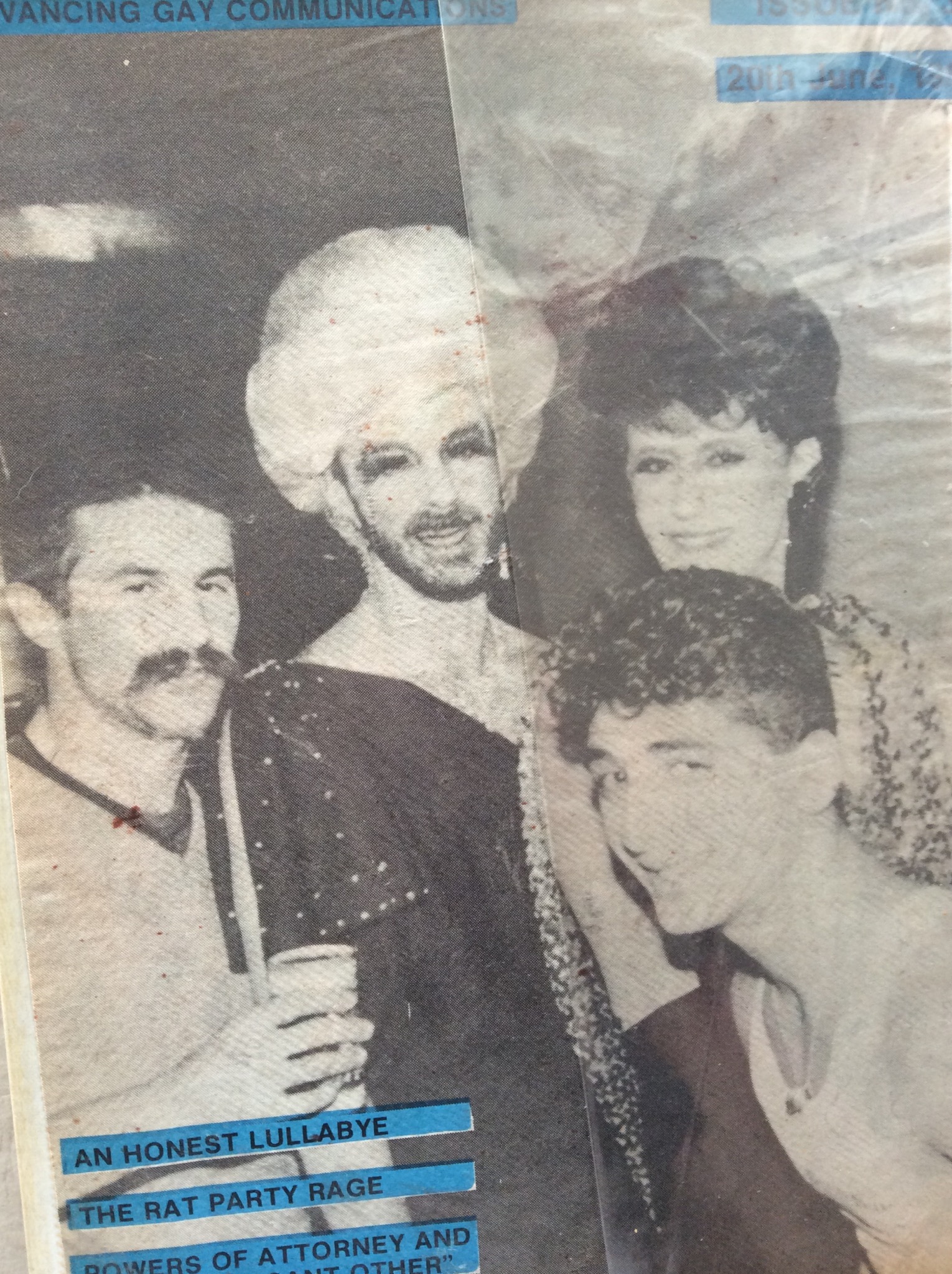
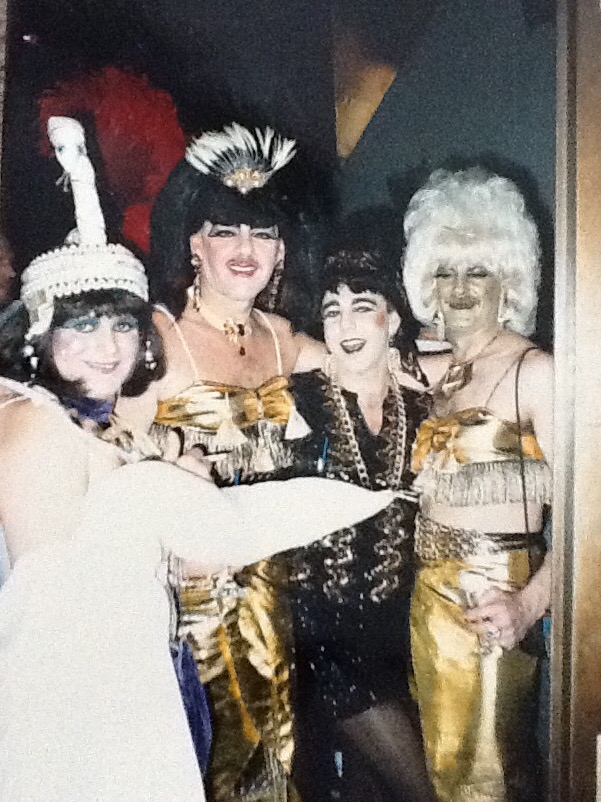
He and I did a few drag outings together after that. There was one occasion when I stupidly allowed him to make his own frock. I never let him do that again either. It was hideous! And it was all everyone at the party we attended could do to not tell him to his face. Oh sure, they had the time of their lives behind his back, but not even an under-the-breath-mutter to his face. I have to admire queens sometimes. They’re not always bitchy! I think the most memorable of our outings was ‘The Oxford’s’ 5th birthday party in 1987. They had a themed party every year for their birthday, and that year they chose Egyptian. If you were one of the ‘regulars’ at the hotel, which meant pretty much drinking there every day and night of the week – which we did then – you were invited to a private reception with free cocktails at 2.00pm. The pub was officially opened to the general public at 3.00pm, so you made sure you got there at dead on 2.00, and got as many drinks in as you could before you had to start paying. Don and I decided to do Egyptian drag, and spent the whole night before the party putting together these fabulous Egyptian outfits from gold lurex, with lots of gold fringing and braid, and got the hairdresser over in the after noon to do the wigs up, complete with intertwined gold serpents. We really looked great, and made quite a spectacle walking from Don’s place in Darlinghurst to the pub. Nothing like a bit of street theatre in broad daylight! The look was almost perfect. Almost! Nobody warned me about the non-photogenic aspects of gold grease paint, which I had covered my entire face in. It looks green in photographs, and you can imagine my horror when the first photos appeared after the event. I looked like I had green fungus growing all over my face. Tony never let me live that little mistake down. I’m so glad he had a raging hangover the next morning. Little prick!
Don and I did a disastrous cocktail party at a serious-type drag queens place shortly after that. Same party was seriously marred by some stupid queens passing around spiked joints without checking what they were spiking them with. The party came to a very abrupt end after everyone either tried to cram into the very small toilet to throw-up, or passed out on the hostesses bed. Ah, good old 80s parties. Nothing like them for disaster, and humiliation. We were so out if it that we were caught not looking glamorous at one stage. I know! Unbelievable!

By far the best night out that Don and I did was Anzac Day ’87! We both decided to go out as Army Strumpets. So this involved mini skirts, with belted army shirts, fishnet stockings, leopard print socks and gloves, stiletto’s, and our trademark wigs with forces caps. For my part, I decided to wear a set of blue plastic inflatable tits under my shirt to make sure the boys had something to look at. Thankfully, I crammed the pump into my handbag! The night started very quietly in The Oxford…not! We both got stuck into the shots. By the time we teamed up with the rest of our battalion – my flatmate, Steve & Geoff, and another friend James we were strumpeting along nicely. It was around about this stage that I realised my tits were not going to stay fully inflated for the entirety of our bivouac. Geoff jumped in, took control of the pump, and made himself official titty pumper for the night. So just before we were about to enter any venue, we would stop outside, I would unbutton my army shirt, flop the saggy blue plastics out, and Geoff would pump them up, shirt would be rebuttoned…and we would enter said venue. And it was a long march…The Flinders, The Albury, The Unicorn, and The Paddo Green – who definitely weren’t pleased to see us due to the “macho” image of the pub…though I was mates with the owner, so a wink was exchanged, and it was “fuck you boys…we’re out for fun!”. We returned to The Oxford at some stage, in some condition only to be told that The Flinders had been looking for us as we had won a costume prize there! We never did claim it, but it went down as one of the best nights out I have ever had in Sydney.

Don only did one solo drag outing after that. I suspected that he was ill, but he was a lot worse than he let on to any of us. For once, it wasn’t HIV, which in a very perverse way a lot of us were glad about – a reality-check that people were still dying from ordinary, everyday diseases, instead of the dreaded lergy. Don was dying from stomach cancer. We worked together in the sex shop at this stage, and I often filled in his shifts when he was too ill to get in to work. I finally managed, after getting a very frightening phone call from him one night, to get him to admit himself to hospital. Most of us thought it would be a long period of palliative care for him, but as I was about to go and visit him the following night, I ran into a friend coming back from the hospital. Don had just died. I was quite devastated, as we had become quite close over the short time we had spent together, and we had so much fun doing our gutter drag together. I suddenly felt very lonely. We gave him a fitting, gay send-off, and I and another friend scattered his ashes in the Mardi Gras parade that year. We sieved all the chunky bits out, and mixed him with glitter. Nobody was aware of what was going on, but Don would have loved the thought of being sprinkled over people in the parade. He had always been a real party boy. My only misgiving was coming home from the party the next morning. I was wandering down Oxford Street, and suddenly saw the street sweepers going up the parade route. I thought to myself, with a sudden feeling of horror “My God, poor Don’s ended up in a bloody street sweeping machine!” Fortunately, and to their merit, everyone saw the funny side of it. I regaled many a dinner party with THAT story.

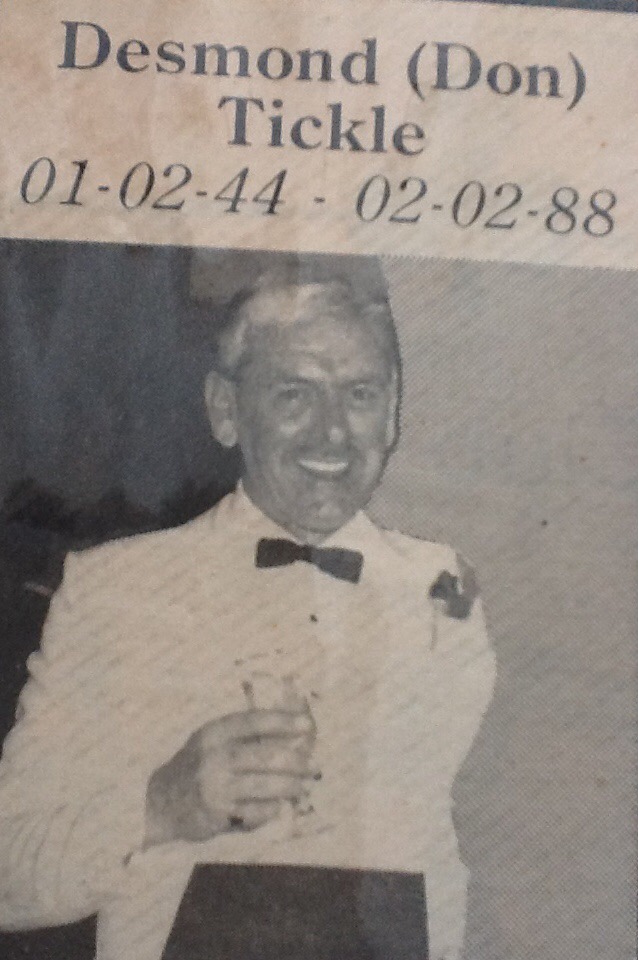
Stuart – or Stella to most – and I buddied up shortly after that event. Seeing as we both worked in the sex industry, we decided to throw a sex toy party at my apartment in Darlinghurst, using stock from the store to put together what might be called a deviates version of a ‘Tupperware’ party. About 200 invites went out, but with it being held on a Saturday night, we thought everyone would be too busy doing other things to turn up. Wrong! About 108 people crammed themselves into my apartment. Drag shows that we had planned – we both wore drag, naturally – had to be cancelled due to a lack of space, and we didn’t even have a table available to be able to do the dildo and vibrator demonstrations that we had planned. People flocked in from near and far to purchase sex toys of every shape and size, blow-up dolls, leather goods of every description from the shortest cockrings to the longest stock whip, S/M & B/D gear and devices, and lubes and condoms in every size, shape and flavour imaginable. We made a small fortune out of the night, and it was a good way to show the boss how good merchandising can really work.

At the end of ’88 I did a ‘Port and Cheese’ party in a Cleo-goes-punk type outfit. I had made a corset for a friend out of some black vinyl, and as payment for the job, which wasn’t difficult, he told me to keep the leftover vinyl. I made a full circle skirt with a plunging neckline corset top out of it, with a matching collar attached to the frock with chains. I spent about a week at work studding the damn thing, and I have to say it looked great, and was a huge smash at the party.

Toward the end of that year, Stella and I attended a charity party for The Far West Children’s Home at a friend’s apartment in Bondi. On a dare from another friend, we performed live, doing both a Christmas carol, and the Pointer Sisters ‘Dare Me’. Well, we brought the house down, and I don’t think many of us had laughed so much for quite a while. HIV had really taken a heavy toll on most of our lives, and many, including myself, found it best to hide all the sadness under a veneer of happiness, and a haze of cigarette smoke and alcohol. That at least made it bearable. Stella borrowed my punk frock for that party, and I never did get it back off her. Bitch! She wore it everywhere for a while after that, and I’m glad she got so much enjoyment out of it. She deserved the good times.

Our last outing together was in mid ’89. I made Stella this fabby frock out of royal blue velvet and taffeta with these huge jewelled shoulder pads. I had a mile of red loose-thread Lurex at home, and made myself this huge bubble frock with a silver and black Lurex top. We got made-up in my apartment, and as we waddled our way over to The Oxford for a drink before going on to a party, two lesbians followed us down the street, flattering us with compliments about how great we looked, that real women could never get it together to look as good as drag queens, and how well we walked in heels (it’s a weight thing, I swear!). Well, if that didn’t put the night off to a great start! Who would ever have thought that lesbians liked to see men dressed as women? Gives you something to think about, doesn’t it? Anyway, after this old guy chased me around the bar for about an hour, harassing me to go home with him for a fuck (there always has to be one, doesn’t there! I mean, if I was half ways attractive in gutter drag, I could understand it, but…) we decided to leave for the party. Halfway down Oxford Street, the next thrill for the night is about to happen, apart from dancing briefly with two police men who were silly enough to smile at us as we giggled and staggered about. Yes, the ultimate drag queen delight – a tour bus full of Japanese tourists! I don’t know who was more thrilled – the driver, or the tourists. Everyone knows that Sydney’s Oxford Street is the home of gaydom, but you just can’t expect to drive up the street, and see two drag queens coming toward you. Well let me tell you, didn’t Stella and I put on a pose-and-vogue show for all those clicking cameras. Just to think, drag photos of me not just in Britain, but in Japan as well. My image has traveled further than I have, for Gods sake! Well, we did make it to the party, but it seemed a bit of a let down after all the other events of that evening.
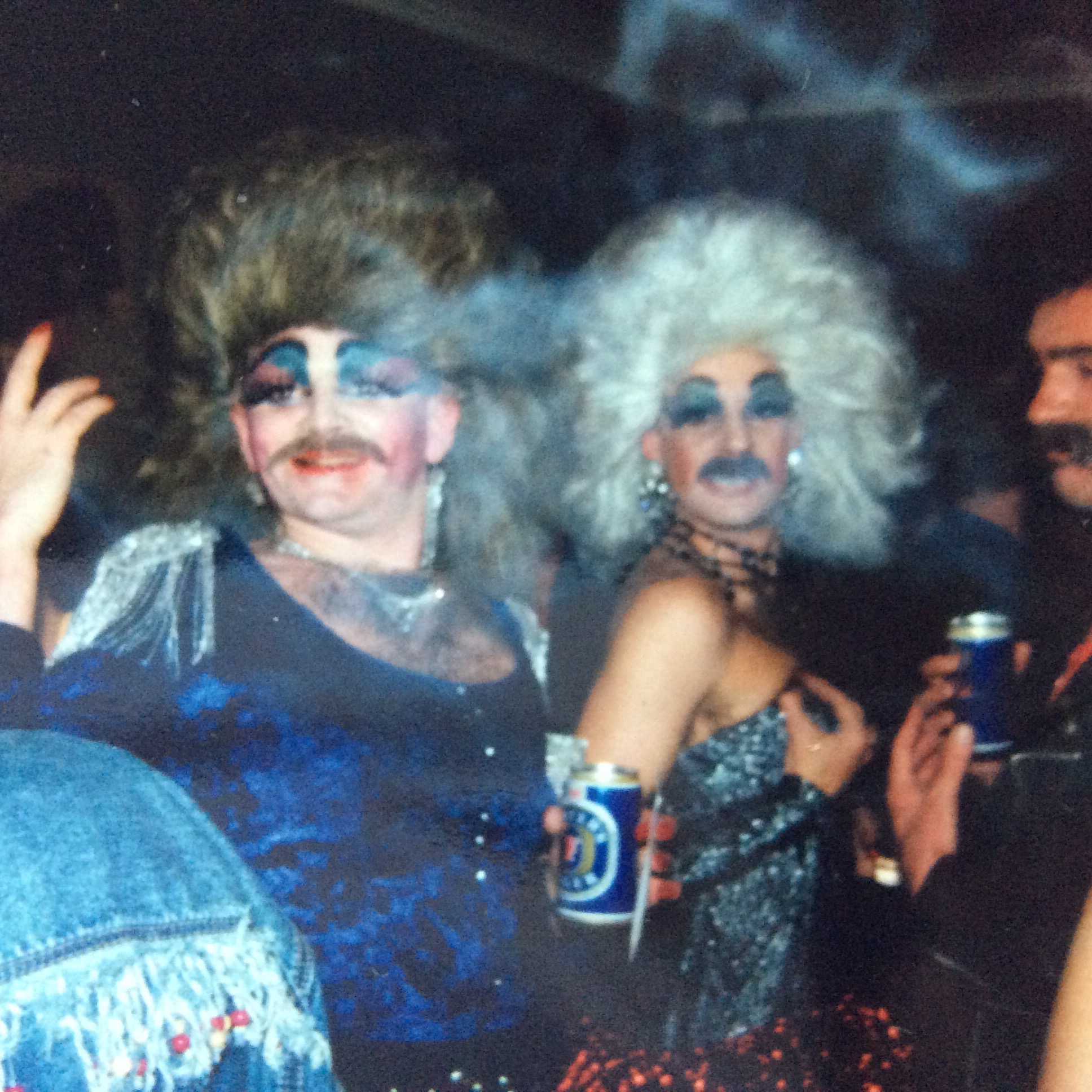
I have photos of Stella from that evening. The ones taken at the party show a happy, fun-loving, carefree boy. The ones at home as he is getting changed show something else entirely. I think Stella knew that night that he would never be doing this sort of thing again, and for just one instant in time, the camera caught the look that said it.
About two weeks later, Stella was admitted to the Sacred Heart Hospice in Darlinghurst. I went to visit him just before the end. He was really doped up, but was really glad to see me, and I sat on the bed and held his hand, and we reminisced about all the good times we had together. As I left his room and headed towards the elevator, I had this sudden urge to turn around. Stella was sitting up in bed, watching me leave. Our eyes locked for a second, and I knew that I would never see him again. I cried all the way home. He died the following night.
His death absolutely tore the heart out of me. First Don, now Stuart. I felt as if everything was falling apart around me. I attended two functions in drag after that, but the fun was sort of missing without a mate to share it with. Don’t get me wrong…I had a great time…after all, I was with friends. A progressive dinner with three couples – 3 in drag, 3 in dinner suits was a welcome panacea after all that had gone on. The itinerary for the night was cocktails in Glebe, entree in North Bondi, main in Bourke St Darlinghurst, and dessert in Goulburn St, Darlinghurst. The first signs of the night going down hill rapidly occurred when one of the drag artistes – for some unknown reason – decided that in the absence of hairspray, they would spray there wig with hobby glue. Naturally, the fumes from said glue caused the artistes eyes to run copiously…which resulted in make-up running everywhere. So there were frequent stops in bathrooms to repair damage…only to hav.e it happen again et al. I had not stopped to think of how hard it would be to prepare a main with nails on. I admire anyone who can, so that took forever. Heedless to say, ,copious amounts of alcohol were consumed at every stop, so by the time we got to dessert in Darlington Towers we were totally sloshed. Evidently we made so much noise that someone in the building called the police! All us girls screamed, and disappeared into the bathroom giggling drunkenly, leaving the butch (not!) boys to handle the cops.


The final party I attended with “the group” was in Glebe, and was a 50s party. Two of my ex’s decided to stir me up by both attending together in drag. That was a laugh. A friend attended as “an orphan baby dumped on the doorstep”…literally. I’m glad I went. I had a great time but there was a sadness in the air, a feeling of something completing its course and coming to an end. Geoff died not long after this, so life as we had known it at Glebe ceased.
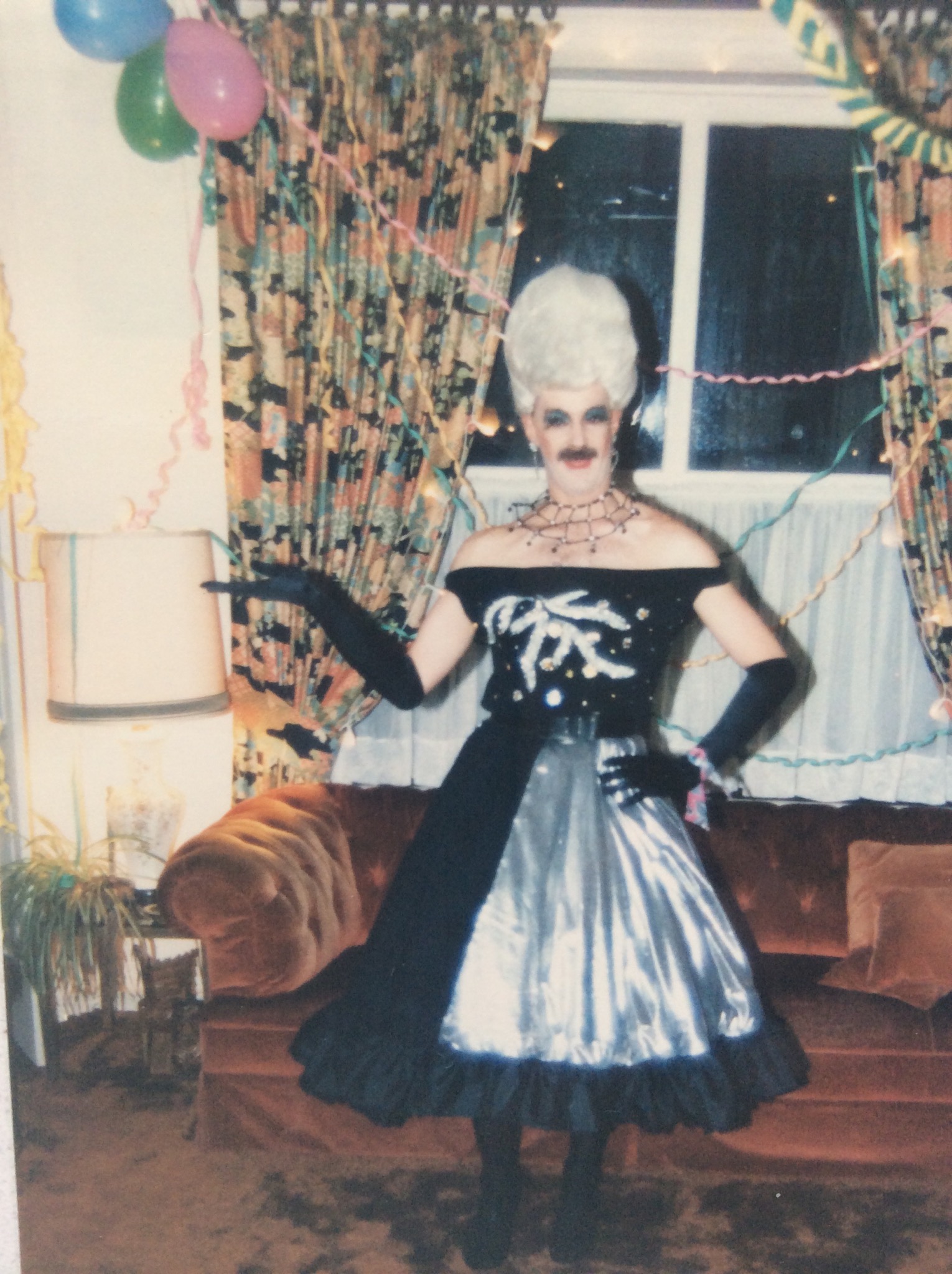

My 36th birthday was in early 1990. I decided to throw a party to sell off all the drag and costumes that I had accumulated over the years. My health wasn’t the best at the time, perhaps because I smoked 100 cigarettes a day and drank myself into oblivion every night, or perhaps because HIV had decided that it was my turn. Whatever the reason, I couldn’t maintain my weight, and my energy would give out very quickly. I hoped that I would see my 40th birthday (at that time, 50 definitely seemed out of the question), but even that hope was in doubt. I dressed myself in drag for the last time, using all borrowed items except for the famous wig. By the time the last person left my apartment that night, there would not be a scrap of drag, a single accessory, shoe, bag, piece of jewellery, fragment of fabric or a pair of laddered pantyhose left in the place. A friend called Philip (or Phyllis, as he preferred to be called) was the last to leave, and as he went out the door, I yelled at him to come back for a second. As he turned around, I pulled Cleo off my head, and threw her to him, saying simply “Give her a good time. She deserves it”.

So Cleo hung up her heels. It was time to exorcise some of the past, and move on. I had spent too much time feeling disempowered. It was time to empower myself, and get my life back into some order. There was a group of eighteen of us that used to hang out in one corner of ‘The Oxford’. It was our corner, and if we were around, nobody else would come near it. Well, there were only six of us left at that stage. Fucking virus! It was a sure means of depleting your social circle. There were still times when I wished I didn’t have to remember people and things, that memories were more like a curse. I wished I could just leave everything in the past where it belonged. Life just didn’t happen that way. Then I thought it was maybe my gift to remember them, to tell all their stories and keep their memories alive in some way. You see, none of them ended up with headstones, and none had books written about them. This was perhaps the only testament to their lives. I think those memories were my tribute to their fun, their love of life, and their bravery. Without them, I would never have been the person I was, and I would never have experienced life the way I did. I realised then that none of us is the sum of our whole existence; we were the sum of a whole lot of people who floated into our lives, and floated out, and profoundly changed things forever. If I had ever been afraid to die, I no longer was. Through dying, I would have been meeting up with them again, having a good old gossip, and discussing what frocks we were going to wear to the next party. I firmly believed that. I believed that after you died, you were reunited with everyone and everything you had ever loved. At least I had that hope to hang onto.
Fuck, I needed it!
And now I need a fucking drink!
FOOTNOTE: It is now mid 2001, and I am still alive. I have seen my 40th birthday (just!), and am only three years away from 50. It hasn’t been an easy time. I have been disabled by AIDS, and was whisked (literally) from the arms of death in 1996 when they started me on the then new combination therapy. I have never done drag since that final party, and I don’t think the peripheral neuropathy in my feet would take too kindly to me levering my poor toes into stilettos these days. But I have all the photos (and all the memories) from those days, and I often look through them for both a laugh and a cry. I am attending The University of Technology in Sydney at the moment, hoping to finish my Graduate Diploma in Writing around my 51st birthday. Part of my writing has been to put the memories of these people onto paper. They were wonderful friends, and a true inspiration, and I want their memories to live on. This is my tribute to them.
And as much as I hate to admit it, there is in the life of every gutter drag quean those rare occasions where errors of taste and sins of design occur. Not one to want you all to think it was a life of glamour – I offer you Cleo’s blooper reel * Cringes and hangs head in shame*.
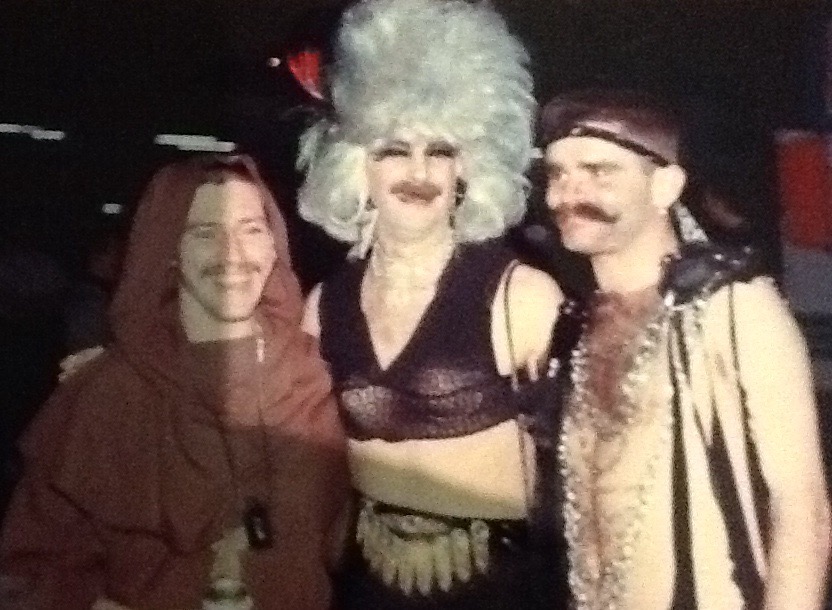
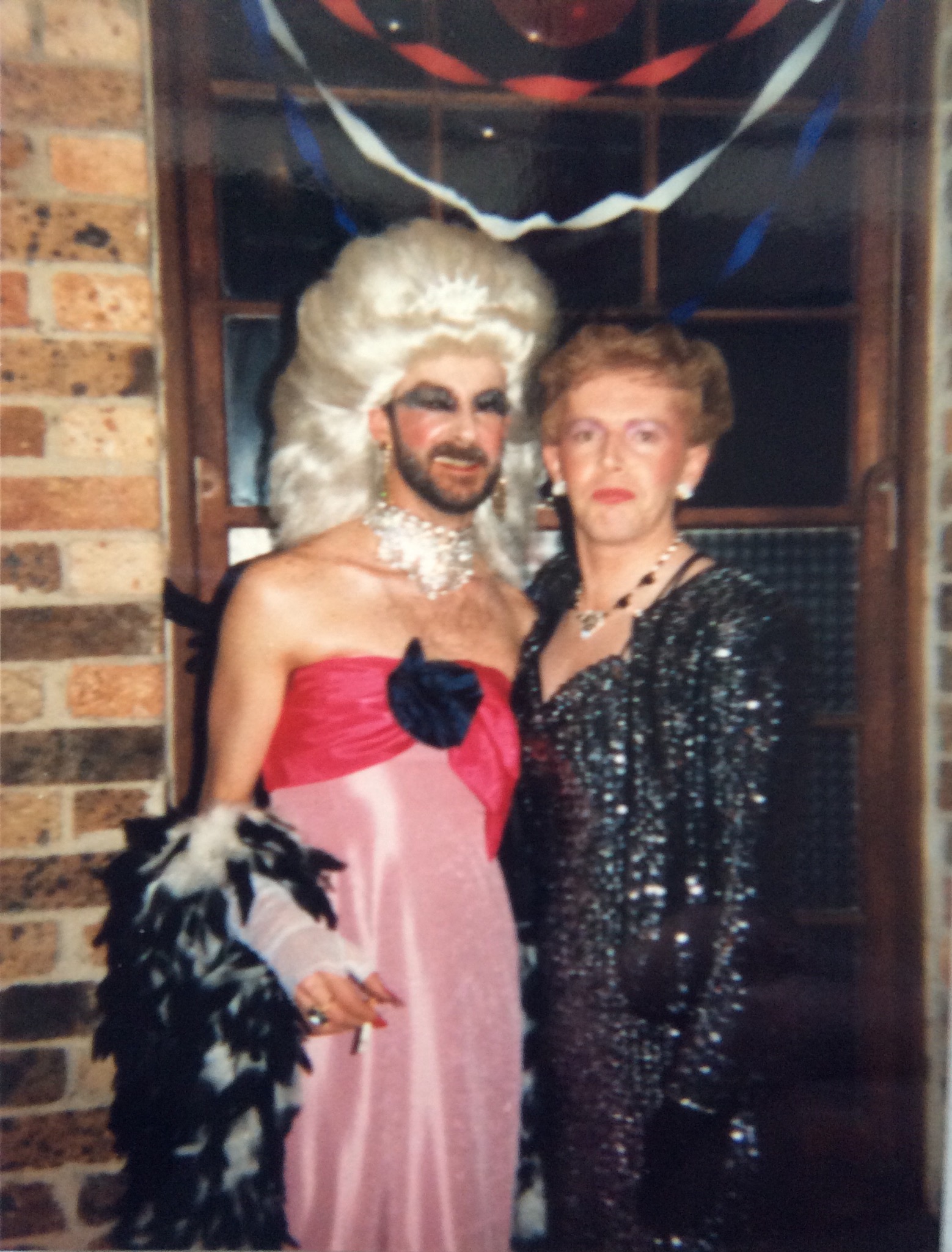


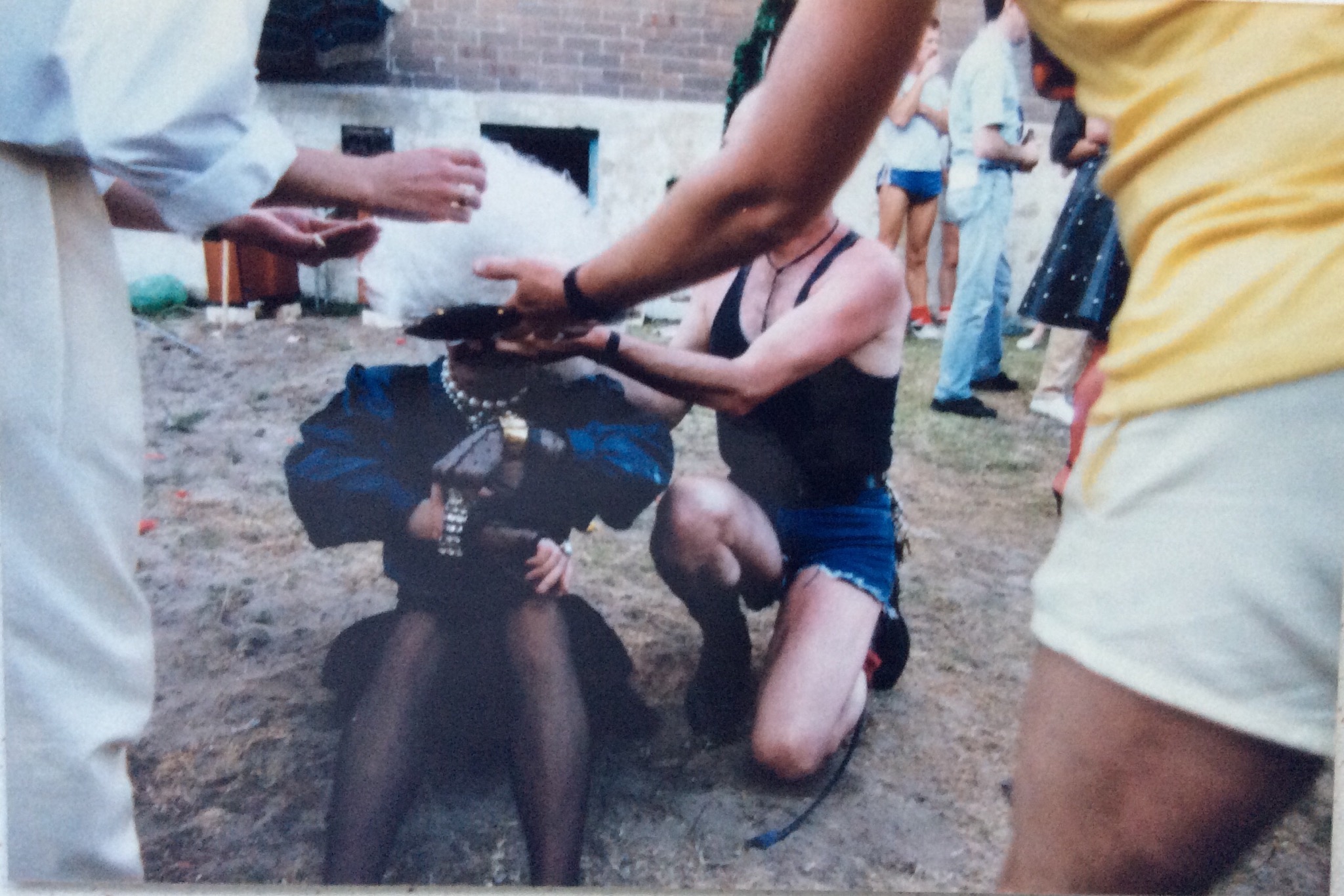
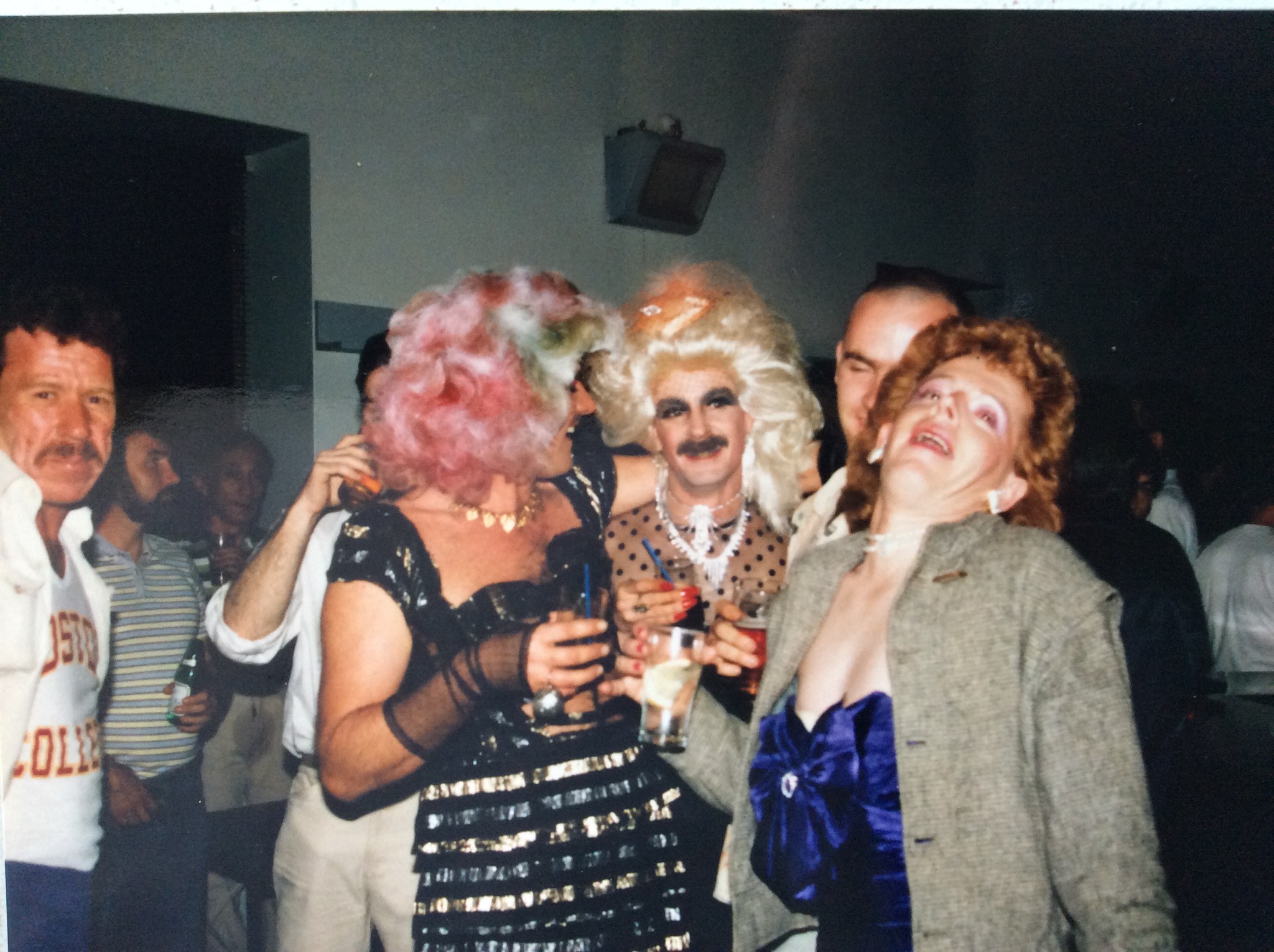
Tim Alderman
Final edit
Copyright 2014
Cleo loves ya, baby!


The Reverend Alfred Pickles

Anyway, this much we do know about Alfred. He was born in the rapidly growing West Riding textile town of Bradford, Yorkshire, in 1843. The son of Seth Pickhills and Jane Bracher, we know little of their actual lives except that they were working class. Seth was a journeyman printer (journeymen, after serving their apprenticeship, were able to move amongst employers), and according to the 1851 census the family were living in Belgrave Place in Bradford, and 8-year-old Alfred was a scholar. Moving on 10 years to the 1861 census, we know that he was 18-years-old, and living with his aunt, Priscilla (Seth’s sister) at 46 Belgrave Place, Bradford, and that he is listed as being a watchmaker. Seth had died in 1859, and it would appear that his sister had taken over the running of the household, though we are unsure of what had happened to Jane. His next mention in the records is in the 1871 census, and both he and Priscilla had moved to 95 Mitchell St in Rochdale, and he was listed as being a Baptist Minister.
We know from his memoir printed in “Memoirs of Ministers and Missionaries who died between 15th January 1917 and 31st October 1919” that he was involved with the Baptist church from a young age, and he became a member of Westgate Church in Rochdale under the pastorate of Henry Dowson, whose teachings had a lifelong influence on him.
On the 19th August, 1864 the following article appeared in the “Bradford Observer” regarding his ordination; “Ordination of a Bradford gentleman at Rochdale – On Tuesday, Mr A. Pickles, son of the late Mr. Seth Pickles, of Belgrave Place, Bradford, was ordained pastor of the Lyceum Baptist Church, Rochdale. A prayer meeting was held in the morning, the ordination followed in the afternoon, when a sermon eas preached. In the evening there was a tea meeting in the Milton Congregational School, presided over by the Rev. A. Pickles. Amongst those who were present at the ceremony were the Rev. E. Parker, Farsley; Rev. J. Smith, Bacup; Rev. H. Dowson, President of the Baptist Theological Institute, Bury; Rev. J. Home, Waterbarn; Rev. L. Nuttal, Ogden; Rev. J. Williams, Oldham; Rev. J. Bloomfield, Bradford; Rev. J. Wilkinson; Rev. A. Pitt; Rev. A. C. McCoffin; Rev. A. H. Drysdale, and several friends from Bradford. The Rev. A. Pickles was formerly a scholar at the Bradford Grammar School, and afterwards pursued his studies at Bury College under the Rev. H. Dowson.”
In 1874 he married Margaret Elizabeth Shepherd, who was born in Waterbarn, Lancashire in 1844. The couple had two children whilst living in Rochdale – George (1876) and Henry Shepherd (1878). Initially, Alfred’s ministry consisted mainly of cottage and outdoor meetings. He became one of the earliest students of the Baptist Theological Institute, which at the time was newly established at Chamber Hall in Bury, and under the presidency of Henry Dowson. In 1866 the Institute moved from Bury to Manchester and became the Manchester Baptist College, founded on strict Baptist communion lines. The College was to become a founding member of the Theological Faculty of Manchester University. Alfred’s name was the first on the roll of minister’s trained at the college. His pastoral work began in 1870 at the Lyceum in Rochdale, and soon afterwards at the church purchased in Water Street, Rochdale.
The society had been formed by Edward Miall (8 May 1809 – 30 April, 1881) who was a Portsmouth-born journalist, apostle of disestablishment and a Liberal politician. He was also a Congregational minister at Ware, Hertfordshire (1831) and Leicester (1834), and in 1841 founded ”The Nonconformist”, a weekly newspaper in which he advocated the cause of disestablishment.
Miall saw that if the programme of Nonconformity was to be carried through it must have more effective representation in Parliament.
One of the first fruits of his work was the entrance of a John Bright into parliamentary life; and by 1852 forty Dissenters were members of the House of Commons.
This was due largely to the efforts of the British Anti-State-Church Association, which Miall was instrumental in founding in 1844. It was renamed in 1853 as the Society for the Liberation of Religion from State Patronage and Control, known for short as the “Liberation Society”. The Society was never able to secure a parliamentary majority for the disestablishment of the Church of England, but the long fight for the abolition of Compulsory Church Rates was finally successful in 1868. In 1870 Miall was prominent in the discussions aroused by the Education Bill. He was at this time Parliamentary member for Bradford (Yorkshire) from 1860-1874, having previously sat for Rochdale (where Alfred would undoubtedly have encountered him in person) in 1852-1857. In 1874 he retired from public life, and received from his admirers a gift of 10,000 guineas. He died in 1881 at Sevenoaks in Kent.
After ten prosperous years at Water Street Chapel, throat problems forced Alfred to accept a call to Towcester, in Northamptonshire, which was more rural and had a milder climate. He officially became pastor after a three month trial period. However, it would seem that this move to the North End Baptist Chapel was to have its own trials and tribulations. The chapel at Towcester was opened on 3 October, 1853. There appears to be little interaction with other churches in the area, though the Towcester Baptist Church does record that after re-forming in 1871, it received a letter from the North End Chapel to “renew contacts severed with the old church, as the basis for fellowship was now seen to be biblically established”. What was often referred to as “the Baptist Church”, almost as though it were a separate denomination, later came to be known as the South End Church, though there appears to be no desire to unite the two churches on the part of North End. Most of what we know of Alfred’s pastorate is from the Church Book. The Church Book was used to record baptisms, reception of people previously baptized by the laying on of hands, expulsions, and rebukes of a serious nature. Under the previous pastorate of Samuel Cooper Tite, the book had not been filled out prior to the 1880’s, and he had in fact taken the book with him when he left the church. He returned the Church Book to Alfred in 1886, after his return to the Baptist church. There was a fairly small congregation, possibly due to it being a sect of the Baptist church commonly referred to as Johnsonian Baptists. Founded by John Johnson (1706-1791) who was a Baptist Minister of High Calvinist views, he taught that faith was not a duty required of God, but a grace which it is impossible to convert into a duty. Want of faith, therefore, is no sin. He was repudiated by the local association for “bizarre ideas” , as he questioned whether the Incarnation would have been necessary if man had not sinned, he denied the doctrine of the Trinity, and was highly insular and exclusive. Johnsonian’s were not even allowed to associate with other Baptists, which would have explained the division between the two Baptist churches in Towcester. Other Johnsonian churches were founded in Blackburn, Norwich, Chesterfield, Halifax, Bromley, Duncote and Dublin.
In Towcester, for the 64 years leading up to Alfred’s appointment, about 80 people were associated with the church at one time or another. In 1886 there were 37 members, and Alfred baptized 20 in the 6 years since he became pastor. With the return of the Church Book, he started to record church meetings and one or two other “events”. There is a record of a visit from a person from a nearby congregation to communion “at the Lord’s Table October 2nd 1887 Mr Davidson a Member of the Church of Christ at Banbury requested and was allowed to commune. At the request of the Church he also preached in the evening from 1 Cor 15c 1 – 4 vs”. This is obviously an “Event” and reveals the small congregations isolation. The Churches income was about ₤20 per year, which appeared to cover their expenses. A welcome gift mentioned in the Church Book is of an amount of ₤100, which was on its way in five installments from the sale of a church in Comus Street, Liverpool.
In the meantime, Alfred and Margaret had another two children – Thomas Edward (1881) and Ruth (1884). The family first appear in Towcester in the 1881 census, living in High Street. Alfred and Margaret are listed along with George who is 5-years-old; Henry who is three; infant Pickles (Thomas, and just born); a Maude Clegwidden who is 12-years-old and occupation given as nurse maid (at 12?) born in London, Middlesex; and a Margaret Taylor, 68-years-old and a visitor. Alfred appears to have left his position as pastor of North End Chapel in 1891. The church may have been too small to warrant a pastor at that point, as thirteen members passed the following resolution at a Church Meeting towards the end of 1891 “that in harmony with the suggestion of the Trustees, we request Mr Fidler to preside at our Church Meetings and to advise and assist so that the Services at North End & Duncote Chapels may be maintained in as orderly and efficient manner as possible. Signed by Alfred Pickles. Pastor.” William Fidler accepted the invitation. By July 1893 there was obvious concern about the viability of the Church. Many of the church members had been elderly and had died. The Sunday School had just 11 pupils. A church meeting was held with 8 people present which decided to try to carry on for another few months. “There appeared no disposition to unite with the South End Church. Still the prospects of continuing as at present were doubtful. Mr Garlick was specially anxious that they should try to revive the work by prayer and united effort”. Early in 1894, after the services had been held in the vestry for all winter to save money, the church was officially closed on March 25. There were 16 members listed, 4 of which were discovered to have died. The contents were distributed between the Duncote Chapel, and Towcester Baptist. Church (South End Chapel). Obviously they weren’t too proud to take a donation from a church with opposing views to theirs.

In the 1891 census, Alfred and Margaret are listed as living at 19 The Drapery, Northampton. George is now 15 and an apprentice; Henry is 13 and a school boy; Thomas is 10 and a school boy; and Ruth, the new addition since the last census, is 7 and listed as a “school boy”. Margaret Lyack, 66-years-old, is living with them as a boarder living on her own means. 19 The Drapery (a store) is still there, and currently occupied by Oxfam. I think Alfred would like that.
For the following 6 years, after the official closure of North End Chapel, Alfred travelled from Northampton back to Towcester every Sunday in order to break the bread of life for the Towcester Church, this being done for no renumeration.
Another interesting item that came out of the 1891 census is that Alfred’s occupation is listed as a “Hatter & Hosier” at 19 The Drapery, and he is also listed as a Hatter in two directories of Northampton for that period. However, I am led to the thinking that this was the year they moved to London, possibly in the latter half of that year.. A notice appeared in the “Edinburgh Gazette” dated August 4, 1891 whereby in a listing taken from the “London Gazette” he was listed as bankrupt whilst living in Northampton. We know that at the time of the first meeting and first examination regarding his bankruptcy that he was residing at 160 Regents Park Rd, London, though he returned to Northampton for these meetings. He was still at the Regent’s Park Road address in 1893, when the Public Trustee Alfred Lister Blow was acting on his behalf. It is open to suggestion as to why he declared himself bankrupt. One reason may be that he used all his available cash trying to keep the North End Chapel viable. Another reason might be that with the church being so poor, and with him having to resign his position as pastor (and receiving no pension or renumeration) that there was just no money left for him and his family to survive on until he either obtained work, or started his own business. Who knows! I have tried researching the prevalence of bankruptcy in the 19th century with little success. Alfred is the second family member to have declared bankrupcy. He also started work for the Baptist Tract and Book Society, where he worked for some years. still preaching whenever and wherever he was needed. By the time the 1901 census rolled around, he was residing at 10 Oppidans Road in Hampstead. He is listed as a “Tay Dealer” which I can find nothing about, and suspect it is a deciphering error. Margaret is still listed, as are George (now 25, single and a clerk); Henry (now 23, single and a printer); Ruth (now 17, single and a shop assistant); and Thomas (now 20, single and a printer). They still have a boarder, now an Edward Gounersall, a 24-year-old single electrical engineer. By now Alfred’s eyesight was failing, and The Memoir notes that for several years before his death he was quite blind, and bore it with great patience. It would appear that he did continue to work, possibly as a hatter and hosier seller (perhaps Ruth was a shop assistant in his store), as well as continuing an occasional ministry for as long as his failing eyesight allowed.
Margaret died in 1911, and I think this would have devastated him, as he had described her as “a true help in all his labours”. At the time of the 1911 census he is living at 23 Ainger Road, St Pancras in London. He is listed as a Baptist Minister Retired. Thomas Edward is still with him at 30, and it would seem still single and now a Painter Machine Manager. Ruth is also still listed as being with him at 27, and it would seem that she also is still single and now a costumier.
Alfred died in his sleep (according to The Memoir, which can tend to prettify things) on the 20 February 1920, aged 72, at Hendon. He left behind a family who cherished his memory. “He was a man of faith and prayer, and faithful to the principle, even when fidelity meant loss. His one passion was to preach the gospel and he has now gone to hear his Lord’s “well done” and receive the reward of many soul’s for his hire”. It would appear from The Memoir that he was a very committed and devout man.
Although research continues into this side of the family, it would appear that only two of Alfred’s children married. The 1911 census lists at 10 Oppidans Road in Primrose Hill in London a George Pickles. He is now 35, in the Motor Accessory Trade, and head of the household. His wife is Mary Ellen Pickles who is 39, and born in Co Kildare, Ireland (a resident of Clonkeeran). They have been married for 8 years, though no children mentioned. Thomas Edward appears in the 1917 register of marriages for St Savior in Hampstead. He is 35 and marrying a Mary Turner who is 29. There is a listing for Thomas E Pickles Death in 1965 in Greater London, though if this is indeed Thomas Edward is yet to be verified. He was 84 at the time of his death. There is a death registration for Ruth Pickles, aged 81, at Sidcup in Kent. Again, this needs to be verified.
Further to the Water Street Ebenezer Baptist Chapel in Rochdale. The Water Street Chapel was demolished in 1915, and the demolition was witnessed by a parishioner by the name of “Owd Dob “who was inspired to write an account of his personal memories of the chapel in a short treatise entitled “Th’ Owd Chapel”, for private circulation. It is difficult to read as it is written in the Lancashire dialect, though with perseverance an interesting account of the chapel (including a mention of the pastorate of Alfred Pickles at the beginning) unfolds, and includes a picture of the Church, its banner, a sketch of its interior, and photographs of pastors, the choir and the woman’s class – all looking very “Baptist” in their 19th century severity.
This biography has been put together using information gleaned from census records, Alfred’s memorium in The Memoir, and various newspaper reports from the time. Some suppositions have had to be made, and I hope that some of my conjectures at least are correct. It has been an interesting exercise cobbling someones life together from whatever information is still available. At this time I am still waiting to hear from Northamptonshire Archives of any information they may have on file for Alfred. NB: they never got back to me. There is a payment request for searches on their web site, but I am nit willing to pay money to find they either have nothing, or I already have what they hold. A request to know if they have any information on Alfred before I pay has been ignored. This is the first archive in England to be unhelpful with an information request.
I would personally like to thank Emily Burgoyne from Regent’s Park College Library at the University of Oxford for abridging the “Memoirs of Ministers Who Died Between 15th January 1915 and 31st October 1919” and sending it to me (the Memoir itself is the only copy and is in to fragile a state to scan. It was compiled by the Baptist Union after they decided to stop printing the Baptist Union Handbook during the First World War, as paper was scarce, and printing expensive), along with scanning in his lecture “Turkey, Russia, England and the Jews”. It has all been an invaluable aid in helping to trace my long-lost cousin.
Tim Alderman (formerly Robert John Pickhills)
Note: Ebenezer Baptist Chapel, Water Street (pp 139-140)
This church was formed of members formerly in connection with the West-street Church, and met at first for divine worship in Baillie-street, on the 8th of January, 1867; it continued there up to the time of its removal to the chapel in Water-street. The last mentioned place was built in 1834, by the New Connexion Methodists, and was purchased from them by the Baptists, and re-opened for divine service on the 1st of May, 1870. [a little more]
 timalderman