
How a breakfast table staple sparked solidarity and protest in the queer community
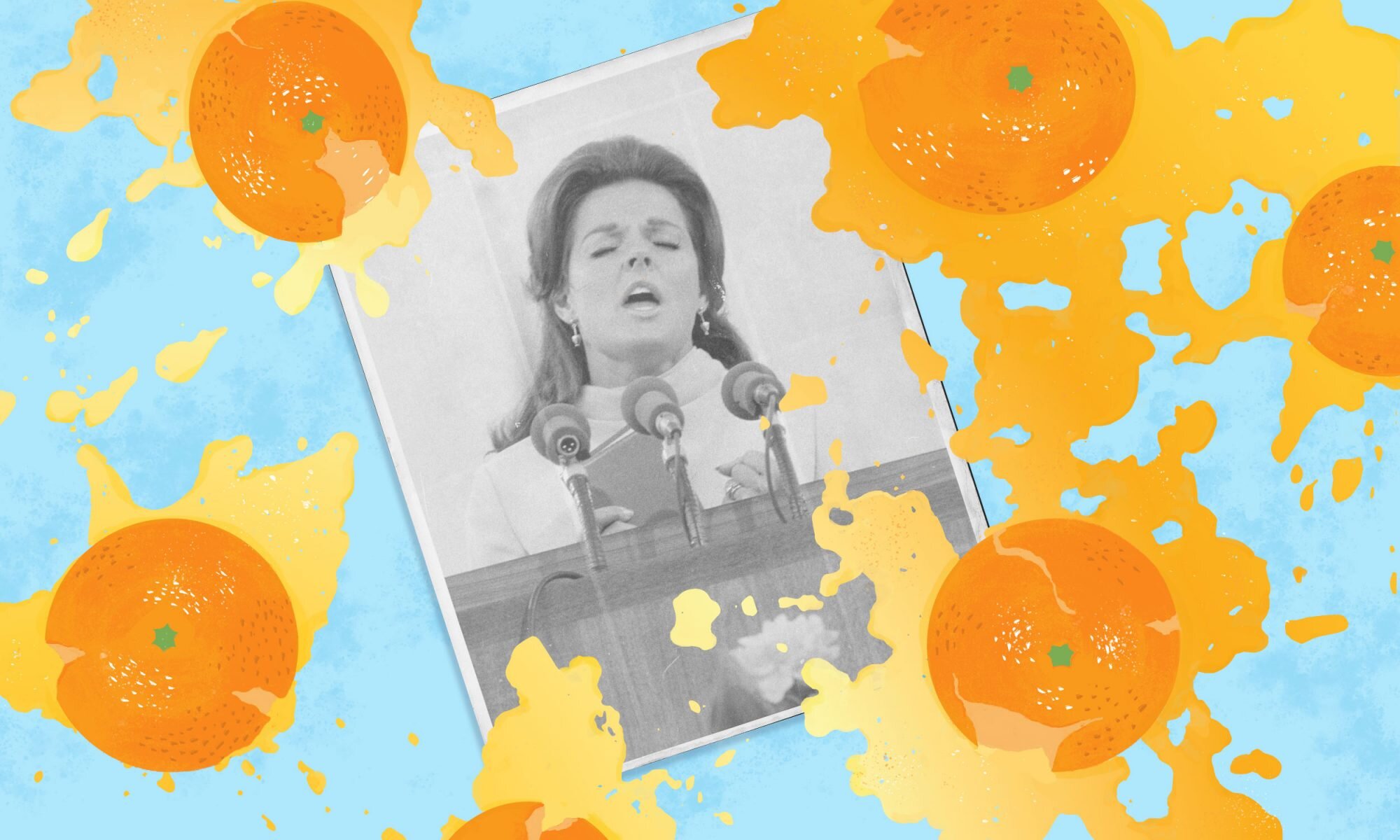
As she heeded the call to come on down, descending the Price Is Right’s audience riser wearing a headscarf with juicy swirls of lemon, tangerine, and lime, Yolanda Bowsley’s breasts jiggled out of her tube top. Producers flashed a thick blue bar over the contestant’s naked bits, people in the studio howled, but Bowsley looked neither freaked nor ashamed. Meanwhile, on ABC’s new sitcom Three’s Company—a show with double entendres about three-ways and casual lust—a pair of tangy orange throw pillows on the set’s central couch visually throbbed, the implied accoutrements of seduction. Sexual freedom in 1977 tended to express itself in fearless, provocative hues of citrus.
But not for the queen of orange juice herself. Not for Anita Bryant, who wore shirt-dresses the color of lemon meringue pie filling and tangerine cap-sleeve bodices as if they were the armor of the righteous in battle. Bryant saw sexual openness as a challenge to God’s order, a threat to what she liked to call “straight and normal America.” It lacked decency. It corrupted children. It had to be stopped.
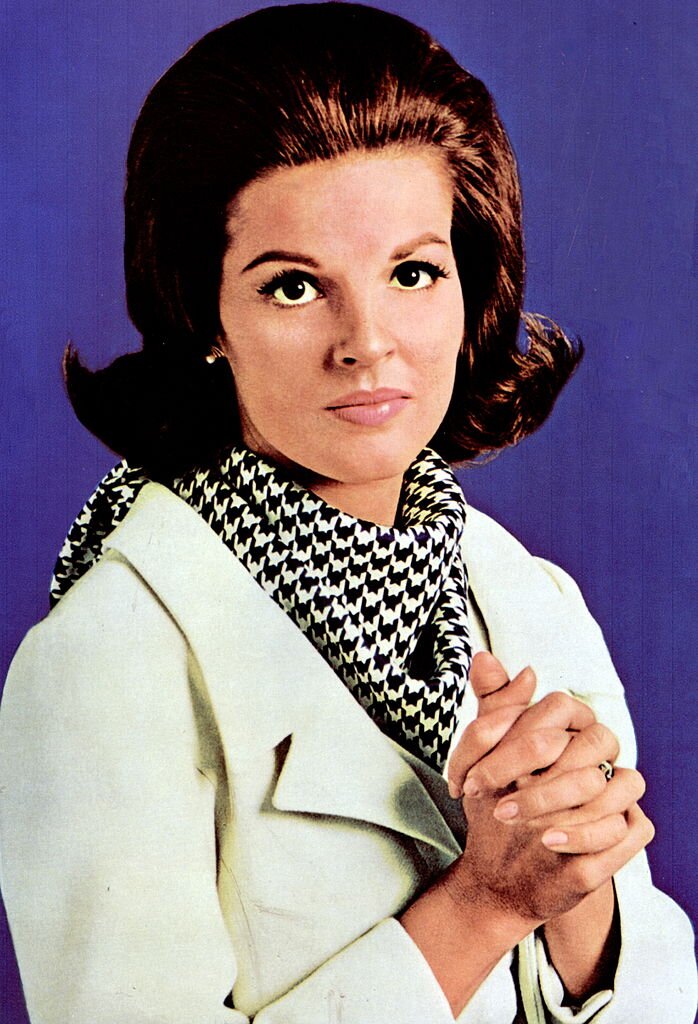
Bryant had been Miss Oklahoma once, beautiful, with pale skin and dark eyes. She was Jackie Kennedy with a hard-spray flip and a soft country twang, raised on church suppers and sticky flour gravy. As a tightly poised pop singer in the early ‘60s, she’d built a shortstack of hits, earning three gold records. She married her manager, Bob Green, a hunk with a handsome mess of sandy hair who knew how to pair a blazer with a turtleneck. They were a dream couple, country stylish like Elvis and Priscilla but without the obvious diet pills and demons. They lived in a six-bedroom mansion on Miami Beach’s North Bay Road, where palms rustled and clouds billowed like Rococo scrollwork, framing a crystal blue sky.
In 1969 Bryant began her second and most lucrative career—the Florida Citrus Commission, a politically powerful consortium of the state’s largest growers, crowned Bryant the Sunshine State’s official OJ Sweetheart. She became the star of TV spots and magazine ads, a lifestyle ambassador for frozen concentrated orange juice.
In an early commercial, Bryant strolls a sunny citrus grove, stabs a spigot in a dangling orange and sings a loping jingle, “Come to the Florida Sunshine Tree,” as a five-foot glass fills with juice. She tugs the spigot out and collects the last golden sluice in a tumbler of normal size. She sips. And in an Oklahoma drag that’s genuine, gentle, and perfect, with just enough post-production echo to make it sound infallible, Bryant drops the tagline: “Breakfast without orange juice is like a day without sunshine.”
Orange juice was, in a way, the Sun Belt’s symbol: healthy, wholesome, and optimistic, like… well, sunshine. Anita was its avatar. Then she became its avenging angel.
Per capita American OJ consumption would end up just about filling the Citrus Commission’s mighty sloshing prop glass. Houseware manufacturers like Libbey included pony-size juice tumblers in starter sets. Bars invited in a back squad of OJ party cocktails—Screwdrivers and Tequila Sunrises—to soak up the glut of concentrated juice. They invented the Alabama Slammer and the Harvey Wallbanger to keep things percolating in fern bars and fairway lounges.
There was something else bending in OJ’s favor: a cultural tilt south. Starting in 1969, the collapse of the Rust Belt—factories in the Northeast and Upper Midwest closing, towns boarding up, labor unions shrinking—became an unavoidable narrative for papers and the evening news. The Sun Belt, a made-up political projection encompassing a westward sweep of the map from Jacksonville to San Diego, was where a new conservatism was spreading like the creep of subdivisions in the desert near Phoenix. Orange juice was, in a way, the Sun Belt’s symbol: healthy, wholesome, and optimistic, like… well, sunshine. Anita was its avatar. Then she became its avenging angel.
The year Bryant stabbed that orange with a spigot, 1969, was a year of events more tumultuous billowing up north. At New York City’s Stonewall Inn, demonstrations smoldered for days following a routine bust of queers, trans women, and drag queens that set off a riot, the official start of the gay liberation movement. In spite of an ambient distaste for homosexuals and the lack of even one openly gay or lesbian elected official anywhere in the nation, by the end of 1976, legislative bodies in 40 cities and counties and one state (Pennsylvania) had passed LGBT nondiscrimination laws in some form. An enlightened consensus was jelling. It said citizens shouldn’t be fired, or evicted, or denied service because they were gay, all standard under the old rules, when America discriminated righteously to thwart sodomy and other acts of moral degeneracy. But righteousness didn’t evaporate in the heat of Stonewall. Righteousness festered, biding its time.
As 1977 dawned in South Florida, liberals on the Miami–Dade County Commission passed a pretty standard homosexual nondiscrimination ordinance. Religious conservatives, including Bryant, representing her church, drew a line in the pale, sugar-fine sand. They spoke against the ordinance at a Commission hearing, arguing that the ordinance violated her rights as a person of faith. When it passed anyway, Bryant promised retribution, spinning a metaphor that, consciously or not, conjured a vision of Florida orange groves choked by a homosexual radicalism inching its sinister tendrils toward Washington and the Constitution. “The seed of sexual sickness,” Bryant said, “that germinated in Dade County has already been transplanted by misguided liberals in the U.S. Congress.”
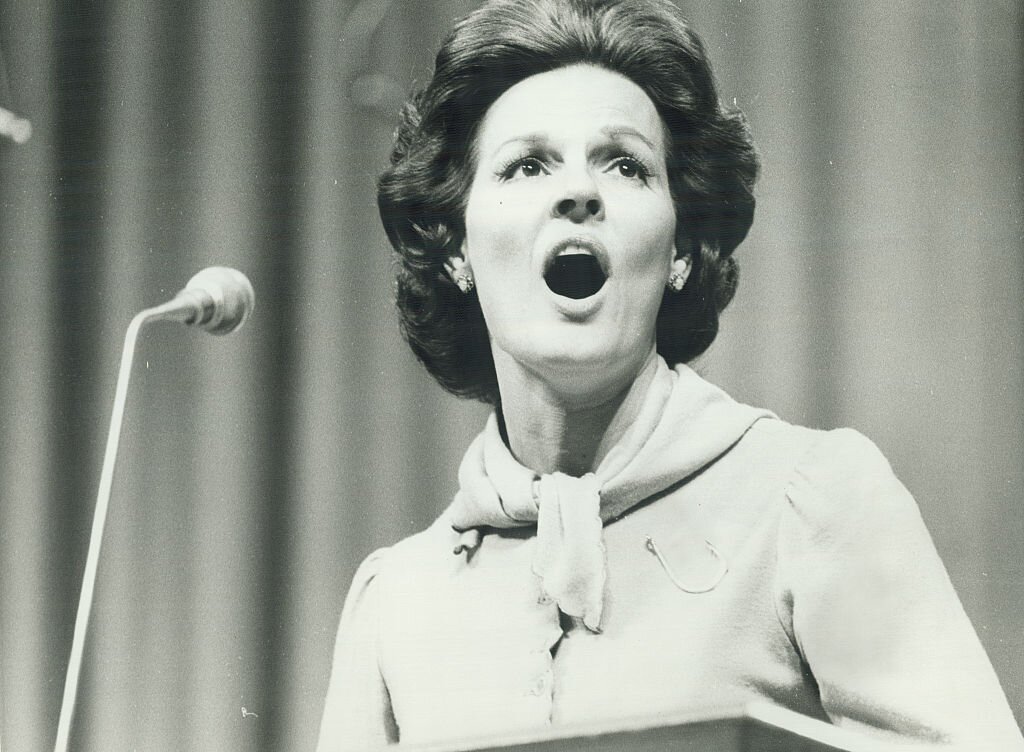
Bryant’s retribution came weeks later, when she and her allies delivered, in an enormous bulging old suitcase wheeled into the county registrar’s office on a dolly, signatures in favor of calling a special referendum on the Miami-Dade ordinance. Bryant and her allies launched Save Our Children, to urge voters to bury the homosexual nondiscrimination ordinance with a special referendum in June. Children were the true victims of the ordinance, which enabled homosexuals (and especially gay teachers) to bend the innocent ones toward a mincing evil. “Gays can’t reproduce,” Bryant would say—often—in variations on the line, “so they have to recruit.”
Gay and lesbian political groups nationally saw what was happening: Suddenly, Miami was America’s test case for the strength of the nascent homosexual civil rights movement. And they were going up against a star, a woman with a national profile, with the strength of one of Florida’s major industries tacitly, at least, behind her. They were up against the queen of frozen concentrated orange juice herself.
Some raised money to send to activists in Miami defending the ordinance. Jim Toy, an LGBT-rights pioneer in Michigan, remembers driving from Ann Arbor to Detroit to make the round of gay bars with a donation jar. Others tried to hurt Bryant at the source of her fame. “We didn’t know any way to get back at her,” says Wayne Friday, who in 1977 was president of San Francisco’s Tavern Guild, a powerful association of gay bar owners and employees. “So we just targeted orange juice.”
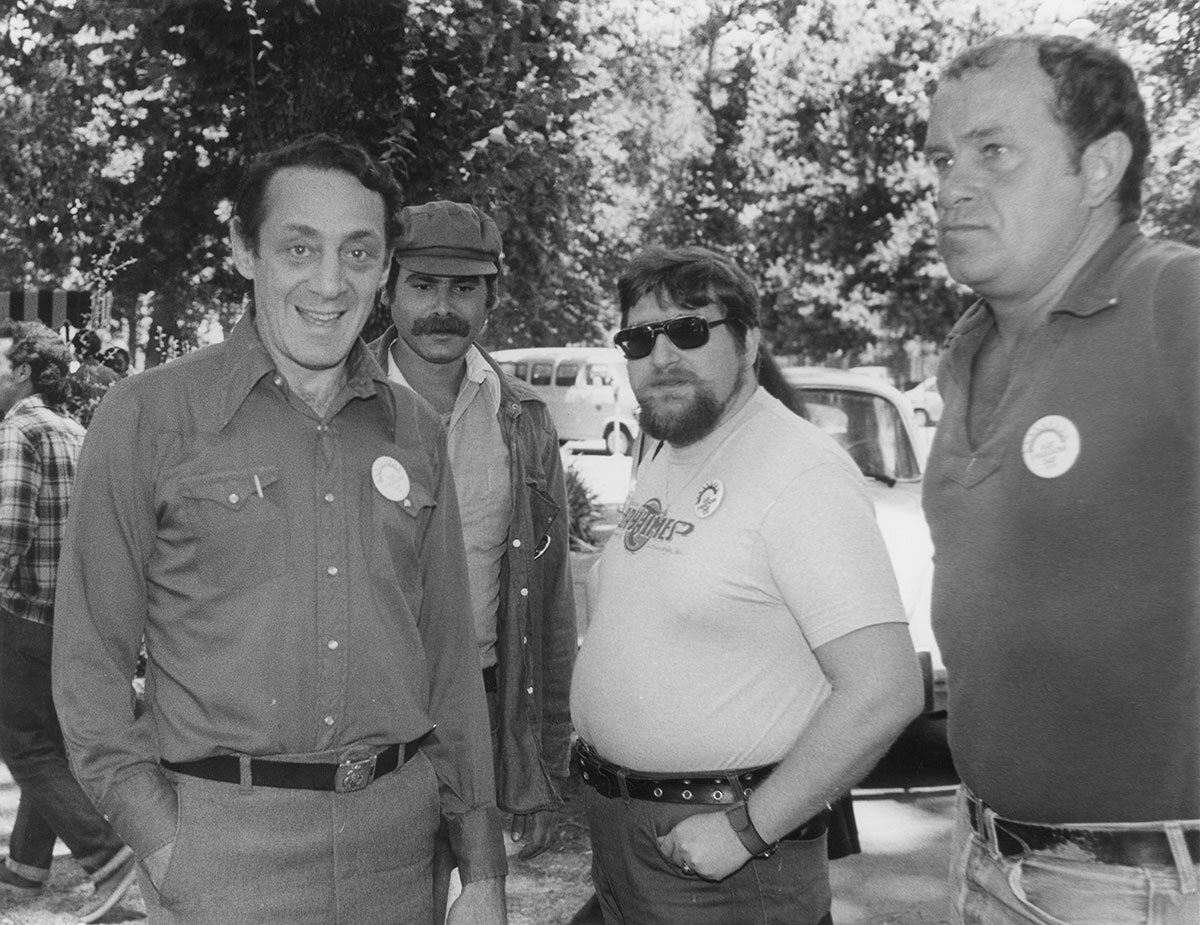
Weeks after the Miami-Dade special referendum was called, gay bars across the U.S. were boycotting orange juice from the Sunshine State, and activists including Harvey Milk, a vocal organizer in the new queer scene in San Francisco’s Castro neighborhood, were urging people to drop it at breakfast. Consumer boycotts were a persuasive tactic of the left, starting with farm labor organizer César Chávez’s call in 1966 for shoppers to shun California grapes and lettuce. In 1977, organized labor called for a boycott of Coors beer to protest the company’s labor practices, its union-busting and alleged racism and homophobia. But the Florida orange juice boycott was the first organized by gay and lesbian activists. They called it a gaycott. And it was strongest in what was, in 1977, the gayest city in America.
In April, San Francisco’s Tavern Guild printed up notices on orange construction paper for its member bars to post. The signs didn’t state so much as throw down: “TO PROMOTE HUMAN RIGHTS this establishment DOES NOT SERVE FLORIDA ORANGE JUICE or orange juice from CONCENTRATE.”
Wayne Friday says the public boycott started at a Polk Street bar, the N’Touch. Friday tended bar there. “Bars up and down Polk Street,” Friday says, “they’d have a thing where they’d say, ‘Okay, at 11 in the morning everybody pour out your orange juice in the street.’ We even got some non-gay bars to do it. The police would get a little mad but the city would just wash down the street.”
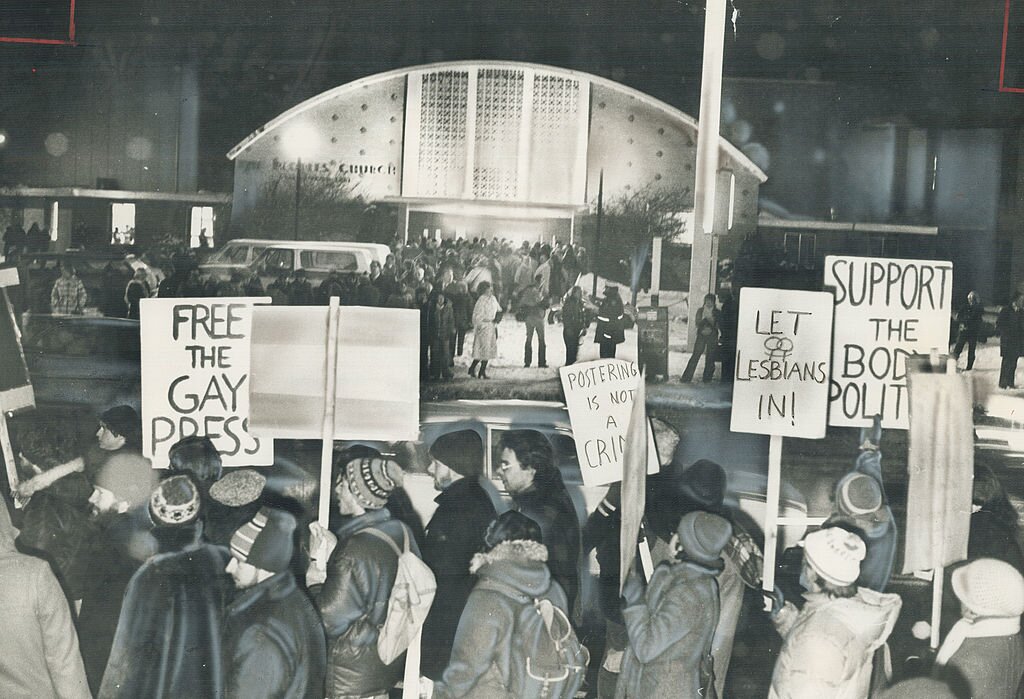
In some bars you could get a Screwdriver for half price if you brought in your own sack of oranges and squeezed them yourself, on little hand squeezers set out on the bar. You could bring in your own juice, but you had to know what you were carrying. “God help you if you brought a bottle of orange juice that was from Florida,” Friday says. “I’ve seen a bartender take it off the bar, look at the label, and pour it right down the drain.” Other bars pushed Greyhounds (vodka and grapefruit juice). Dan Perlman, a member of Ann Arbor’s Gay Student Union during the boycott, remembers a horrible grapefruit Tequila Sunrise, though a grapefruit Alabama Slammer tasted better (and still tastes better, he says) than the OJ original.
In his April 14 column for the Bay Area Reporter, a weekly gay newspaper, Harvey Milk urged readers to switch to pineapple juice for breakfast. “Some say that ONE can of OJ won’t make any difference,” he wrote. “Before Bryant becomes more powerful, remember that your ONE can adds up to millions of ONE cans throughout the nation. The only way to stop this bigot is to have a fully effective economic boycott.”
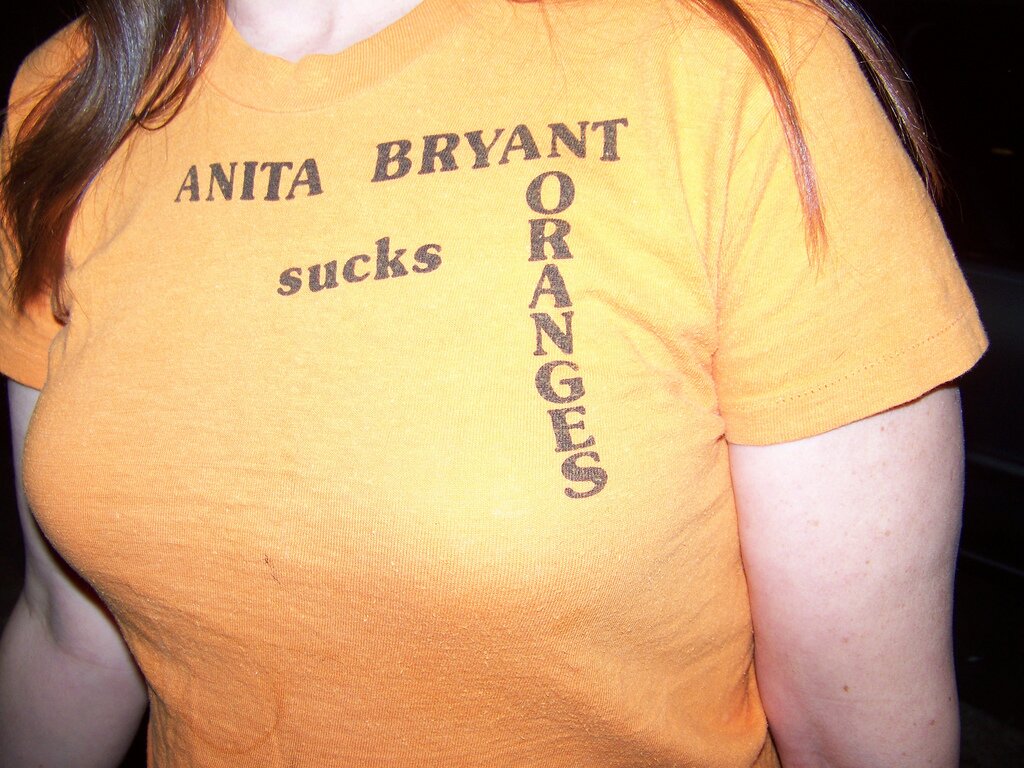
A queer cottage industry of anti-Anita protest gear popped up, with oranges as symbols of active (and sometimes passive) defiance: “Anita, Dear… Cram It”; “Stop V.D. Fuck Oranges.” People wore orange buttons that said “Squeeze Anita!” “A Day Without Human Rights Is Like a Day Without Sunshine,” read a popular T-shirt in all-caps bold, under a rough-skinned orange lurking like the Death Star.
Bryant spent the five months of the Miami-Dade campaign defiant, showing up at her church school to sing “Glory, Glory Hallelujah” with kindergartners as props. “Anita Bryant was once known as an orange juice saleswoman,” the local Miami NBC affiliate reported. “Not anymore. With a religious fervor that has made her the nation’s most controversial woman overnight, she has been selling her Save Our Children group.”
Bryant portrayed her own martyrdom at the hand of the gaycott. “They’re coming, attacking my livelihood,” Bryant told a TV reporter, “and it has undermined a 10-year relationship with Florida citrus of goodwill. But I feel strongly, and I have great faith in God, that he’s going to take care of me. I’m not afraid. I have not been moved in that respect. And I do not believe that the product and the people I represent will be intimidated by that kind of a force.” She vowed to fight on, even if what she called her livelihood (in 1977 the Florida Citrus Commission paid her $100,000; adjusted for inflation that’s a little over $400,000 today) was stripped from her.
“We’re dealing with a vile and a vicious and a vulgar gang,” a young Jerry Falwell, Bryant’s supporter, said of Save Our Children’s foes.
The gays and their allies were simply outplayed. Save Our Children hired a Republican political consultant to produce a devastating ad, contrasting Miami’s annual Orange Bowl Parade with the San Francisco Pride march. The image of a baton twirler at the Orange Bowl, a girl with rosy cheeks, in a white, stylized military uniform, gives way to washed-out footage from San Francisco of a shirtless man in worn jeans and feathered hair, pelvic-thrusting on a float with a sad-looking palm tree, then cuts to another man in a black jockstrap and studded leather halter.
“The Orange Bowl Parade,” you hear a man say in voiceover, “Miami’s gift to the nation, wholesome entertainment. But in San Francisco, when they take to the streets, it’s a parade of homosexuals, men hugging other men, cavorting with little boys. The same people who turned San Francisco into a hotbed of homosexuality want to do the same thing to Dade County.” The dystopian gay metropolis appears furtive and frantic, fueled by speed and menace.
They never really had a chance, the gays and lesbians on OJ pickets at supermarkets or arguing their case at grocery co-op meetings, squeezing oranges or passing donation jars in gay bars. They thought the cause of civil rights, pretty much alone, would rally voters of conscience. They expected easier grounds for common cause with other minorities who’d suffered oppression.
As election news from 3,000 miles away seeped in through TVs, bars bumping Thelma Houston and Donna Summer emptied onto the streets of San Francisco’s burgeoning gay neighborhood that chilly night in June. By a two-to-one margin, voters in Dade County had killed the nondiscrimination ordinance. At an event she called the Lord’s victory supper, Anita Bryant was gleamingly triumphant. She vowed to take the fight to every city, county seat, and state capitol in the nation with laws protecting gay people.
The crowd in San Francisco marched from the Castro to Polk Street, chanting, carrying candles in Dixie cups.. They milled around City Hall, returned to the Castro, and sat down in a busy intersection. Harvey Milk marched at the head of the crowd; later he spoke. Nobody had seen such a large and spontaneous takeover of the streets by so many calling themselves “faggots” and “dykes.” “I feel like the bill of rights has been wadded up on a cheap piece of paper and thrown in the wastebasket,” a woman told a radio reporter that night. You could hear her anger.
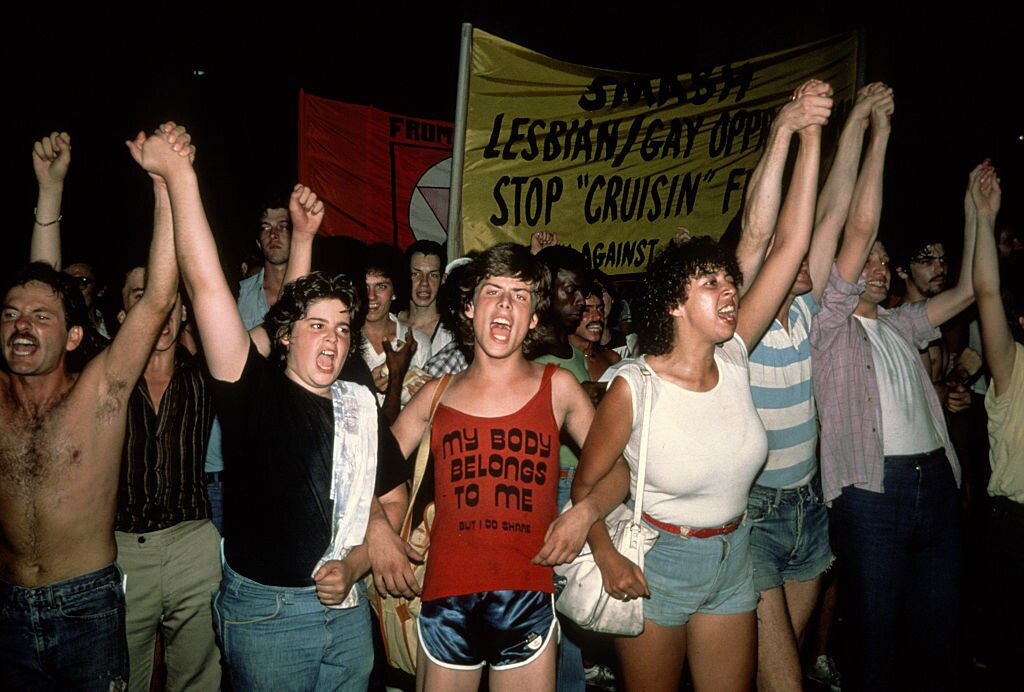
Others glimpsed a measure of victory in defeat. Bob Kunst, Bryant’s opponent on the ground in Miami, said the ordinance fight had galvanized world opinion. “She gave us every access to world media,” Kunst said from the post-referendum party in a quietly reflective at the Fontainebleau in Miami Beach. “We had over 50,000 news clippings, this was the turning point where ‘gay’ became a household word, and we opened up the entire debate on human sexuality.”
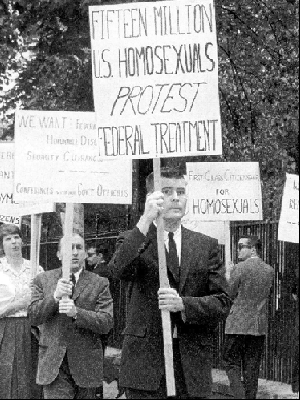
For Milk, defeat was a reckoning, a reminder that gays and lesbians had to unify, to organize, and most of all to come out. Later that year, Milk would become the first openly gay person to be elected to public office in America. Just 17 months later he’d be assassinated, shot by a former cop, but not before he’d inspired a more active national LGBT movement and urged every one of the estimated 15 million queer Americans to come out to President Jimmy Carter, by letter. It wasn’t until 1998, 20 years later, that Dade County passed a new gay and lesbian rights ordinance. It’s still in effect, though conservative groups tried to repeal it in 2002.
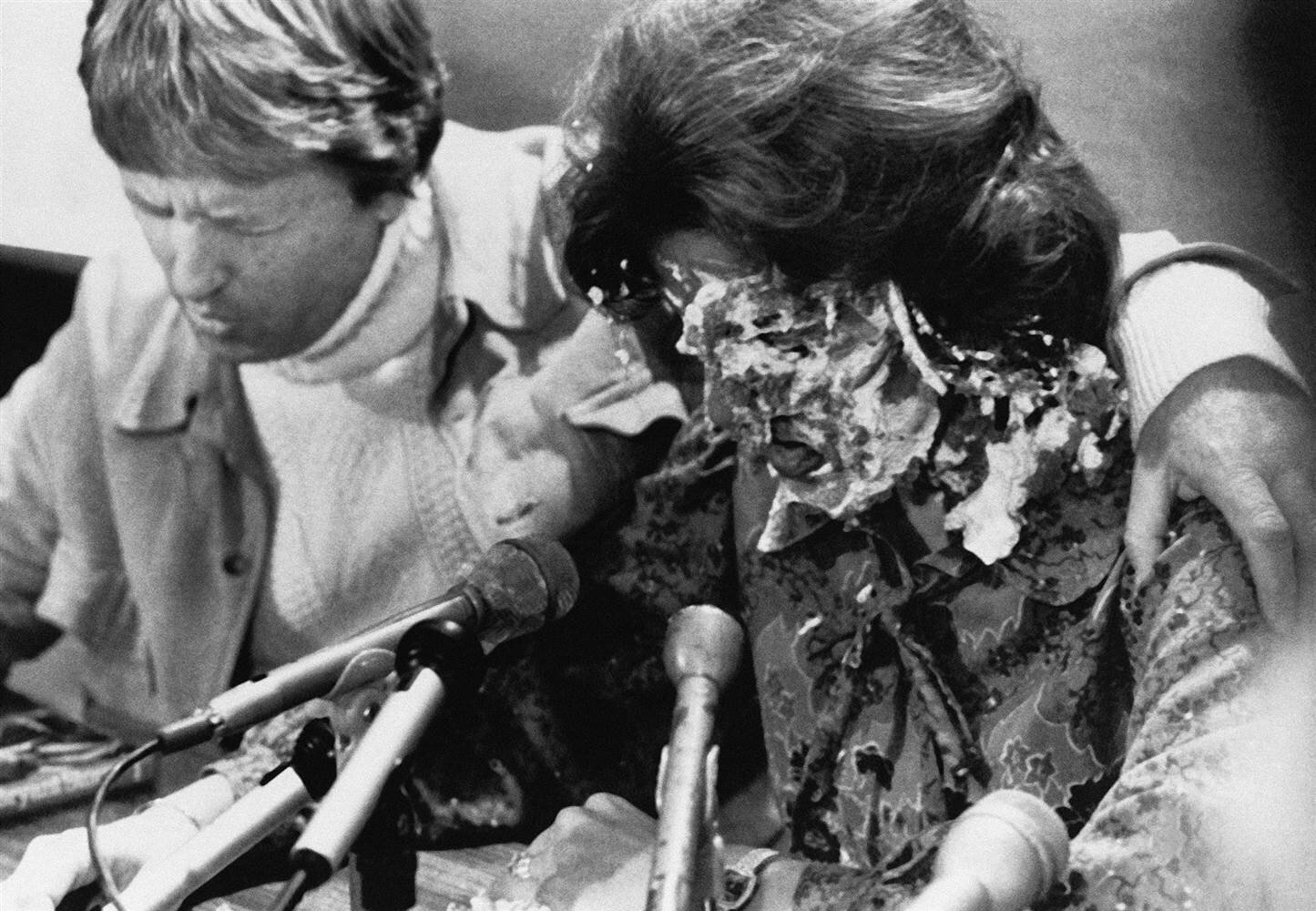
The orange juice gaycott went on after the referendum, petering out gradually. Bryant continued the work of Save Our Children; she was met with picket lines and protests everywhere she went. In Iowa, a protester nailed her with a cream pie. It is, perhaps, the enduring image of Anita, flicking pie crust out of one eye, praying for the man who threw it.
“At first the Florida Citrus Commission was bombarded,” Bryant told the Miami Herald after the referendum. “I guess people had nothing better to do than to write and to boycott. Then the mothers of America retaliated, I think. Sales are up 15 percent over last year. The citrus people say I’m a private citizen, that I can express my views.” It was an exaggeration, or wishful thinking. Two weeks after the referendum the public relations spokesman for Florida citrus said he wished Bryant would resign. At the end of 1978, in the same month Milk was assassinated, Bryant was fired. In 1980 she and Bob Green divorced. She experienced bankruptcy and decline. In 1990, trying to make a comeback with a new album, Bryant told Inside Story she had no regrets about what she did in Dade County in 1977. “I don’t regret it because I did the right thing.” She now lives quietly in Oklahoma.
On the night of the referendum, people called in to Fruit Punch, a gay radio show broadcast across the bay from San Francisco in Berkeley, to express their anger, fear, or despair. “I just about broke down in tears, something like this happening in our country,” a woman said in a weary tone. Another seemed almost chipper in her resolve. “I’m not gay myself,” she explained. “I just want to say that Anita Bryant has made me really mad because she’s wasting her time on negative things.”
She said she had a solution, said it with the optimism of the perpetually just. “We are giving up orange juice.”
Bob Green, Anti-Gay Bigot, Dies As Resentful As He Lived
Most people have no idea who he was. You can’t blame them. He was just a speed bump on the road toward equality of rights. Behind the scenes, however, he played an important role in creating the “culture war” that still plagues this nation.
Anita Bryant, the anti-gay crusader, was his wife. He didn’t play the role of sidekick; he was the power behind the throne.
Bryant was a would-be beauty queen, a Miss America runner-up who tried a singing career. She managed a small number of songs in the top 100 but was never star material. Green met her when he was a radio station DJ and escorted her to a music industry convention. They married in 1960, and he took control of Anita’s career.
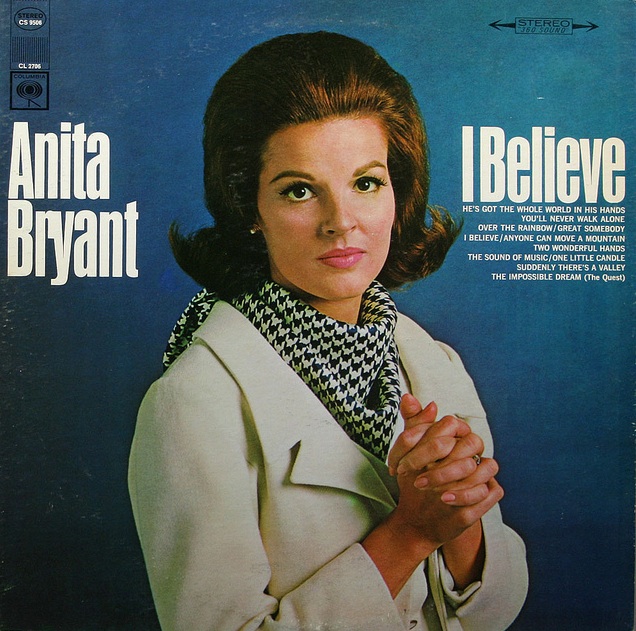
Her career peaked when the Florida Citrus Commission hired her as a spokeswoman. Her commercials hawking orange juice made her a familiar face in American living rooms, something she used to her advantage in 1977 when she and Bob launched their anti-gay campaign. The couple trotted out all the usual anti-gay stereotypes, right down to naming their organization Save Our Children.
Their campaign resulted in numerous copycats working to repeal anti-discrimination laws around the country — but only those anti-discrimination laws that protected the LGBT community. Jerry Falwell rushed to Miami to support her but stole the lucrative anti-gay issue from under her by forming his Moral Majority.
In addition to pushing the usual stereotypes, Bryant even claimed that her “ministry” was capable of “curing” gay people through prayer. Save Our Children originated most of the talking points still used by the religious right in regard to gay people.
I made my way to Indianapolis on Oct. 7, 1977 to witness Bryant and Green in action. They were there to promote a “Right to Decency” bill introduced by Rep. Don Boys, a fundamentalist minister. Anita Bryant and Jerry Falwell were the draw for an evening rally. Earlier, her fundamentalist followers held a march in support of the bill. Some carried protest signs demanding that gay people be executed. Others seriously told me that the presence of homosexuals caused droughts. I jokingly asked if it were possible to control flooding by busing homosexuals, and one person seriously told me it would work.
Bryant had a concert/rally scheduled in South Bend on the Oct. 27, so I called the sponsoring minister and persuaded him to allow me to spend the day at the auditorium with Bryant and Green. It was eye-opening. Bryant was practicing, but between numbers she and Green would talk with me. When they weren’t talking to me, I was watching them.
Anita was plastered in make-up, though she was only 37 at time. Green, nine years her senior, dominated her completely.
Through the rehearsal he’d chastised her, pointing out every error or flaw. He wasn’t kindly, either. He barked at her. She didn’t talk back, but her body language was unmistakable. She tensed when he neared; her eyes shot barbs of contemptuous anger in his direction. Theirs was obviously a terminally ill marriage. Having experienced an abusive father at home, I was sensitive to the signs. I wondered how much worse it was behind closed doors, without a stranger watching.
At first, Save Our Children was rolling in money. But Falwell and other hate-mongers jumped into the market. Falwell’s television empire easily pushed Save Our Children out of the cash-generating limelight. Bryant’s records weren’t going to make her rich, and by publicly taking a political position, Bryant was poison as a spokeswoman. In 1979 the Florida Citrus Commission didn’t renew her expiring contract.
The final straw was a 1980 divorce. She claimed emotional abuse as the reason. Green insisted that they were still married according to the Bible and opposed her, publicly urging her to return to his side. The messy public divorce angered fundamentalists, her last source of support, guaranteeing her a well-deserved decline into obscurity. And when she was no longer in the public eye, Bob Green became a nobody. It took the media over a month to notice he had died.
Green remained bitter until the end. Bryant had told the world what I already knew, that their marriage “was never much good to begin with.” He never took responsibility for the decline and fall of Anita Bryant. He blamed gays, saying, “Blame gay people? I do. Their stated goal was to put her out of business and destroy her career. And that’s what they did. It’s unfair.” But Bob Green was the one who managed her into obscurity. He encouraged the crusade that lost her the spokeswoman career, and they couldn’t out-compete Falwell in the anti-gay market.
In The Miami Herald Steve Rothaus wrote, “For more than 30 years, Mr. Green lived quietly, alone and resentful.” He didn’t take responsibility for the choices he made. He convinced himself that it was all the fault of “the gays” and his ex-wife. Anita told Rothaus, “Bob internalized a lot of his own anger and frustration and disappointments. … I tried to be his friend, but you can only go so far.”
Reference
- The Orange Juice Boycott That Changed America, My Recipes, 13 February 2018, by John Birdsall https://www.myrecipes.com/extracrispy/the-orange-juice-boycott-that-changed-america
- Bob Green, Anti-Gay Bigot, Dies As Resentful As He Lived, HuffPost, 27 February 2012 Updated 6 December 2017, by James Peron https://www.huffpost.com/entry/bob-green_b_1300792


















 timalderman