Monthly Archives: May 2021

‘Dickensian’ Good Shepherd Institutions Covered Up Dysfunction In Canadian Society, As Late As The 1960s

Operated in reality as a form of incarceration, they sentenced women and girls as young as 12 or 13 to back-breaking, indefinite labour

A Magdalene Laundry in England in the early Twentieth Century, from Frances Finnegan, Do Penance or Perish, Congrave Press, 2001. PHOTO BY WIKIMEDIA COMMONS

Thousands of academics gathered in Vancouver for the annual Congress of the Humanities and Social Sciences from June 1-7. They presented papers on everything from child marriage in Canada to why dodgeball is problematic. In its Oh, The Humanities! series, the National Post showcases some of the most interesting research.

If you saw the Oscar-nominated 2013 movie Philomena, you’ve heard of the Magdalene laundries — Catholic institutions that persisted in Ireland until, incredibly, 1996. They supposedly provided asylum to “fallen” women, such as former prostitutes and unwed mothers.

In reality, these institutions were understood, and operated, as a form of incarceration. They sentenced women and girls as young as 12 or 13 to back-breaking labour, living out their days boiling and stirring and rinsing and wringing and hanging laundry for the wealthy, respectable members of society

Until recently, the laundries were thought of as “an Irish phenomenon,” but they also existed in the U.K, Australia, New Zealand, the United States and, yes, Canada, says Rie Croll, associate professor of social cultural studies at Memorial University of Newfoundland and author of the new book Shaped by Silence: Stories from Inmates of the Good Shepherd Laundries and Reformatories.

The Sisters of the Good Shepherd ran more than a dozen institutions for girls and women across the country, from the Maritimes to Ottawa to Vancouver. They proliferated in the 19th century and were variously called homes, training schools, asylums, refuges, reformatories and laundries, Croll said. Of the Canadian institutions she examined, the last to close was the St. Mary’s Training School in Toronto, in 1973.

Croll presented two talks based on her research at the annual conference of the Canadian Sociological Association, part of the larger Congress of the Humanities and Social Sciences in Vancouver.

She interviewed survivors who entered institutions between the 1930s and 1960s, not long before they closed for good. Their accounts provide some of the most detailed information we have about Good Shepherd homes in Canada, which, despite being relatively recent, are now nearly forgotten. No one knows how many Canadian women were incarcerated in them or how many survive, though it’s “more than single digits,” Croll said. Few records were kept and the survivors and their families were shamed into silence. In fact, it took years for Croll to gain enough trust to sit down with survivors and hear their tales. She spoke to inmates from Canada, Australia and Ireland.

Almost to a body, the women described them as Dickensian

What she heard beggars belief. The institutions were so draconian that it seems impossible they existed within living memory, during the same period as the flappers were tearing up dance halls, as Civil Rights activists were marching, as The Beatles were scoring hits.

Their stated purposes varied and their practices were different across regions and over time. The Good Shepherd sisters had a set way of doing things that was quite uniform, Croll explained, and “almost to a body, the women described them as Dickensian.”

The day began before dawn. The nuns clapped their hands and the women jumped out of bed and dropped to their knees for prayers. They pulled their heavy, long cotton dresses and aprons over their nightgowns: It was forbidden to show their bodies even to other inmates. After a quick wash, they filed in silence into chapel for mass, in silence into the dining hall for a starchy, flavourless meal, and in silence into the heat of the workroom to do laundry, or sometimes other menial chores, all day. Depending on the institution, they may have had a few hours of basic schooling each day. For an hour before bed, they had a break. Often this time was used to make rosaries for sale.

“Everything was taken away that was a reminder of a possession of identity,” Croll said. Their street clothes were confiscated, their hair and nails chopped short and, in the laundries, they were given new names and forbidden to use their own.

This made it hard for survivors to find each other and organize in the years since — though the shame did that much more effectively.

The institutions were based on the idea of contagious “moral pollution,” Croll explained. Their purpose was not only to segregate the women and give them asylum from a cruel, judgmental society, but to keep society safe from their corrupting influence.

“They’re told that they are bad, they’re shameful, they’re sluts, that they have done something really wrong. The state has imprisoned them, and the Church has imprisoned them, and their families have abandoned them. The language that’s used to describe them is shameful — you need to clean, you need to clean, you need to clean, you need to be penitent. You are not worthy of your old name. You may not mention your former life. This is a stripping away, through ideology and words, that creates a stigma that becomes internalized and believed — believed as fact,” she said.

In one of her talks, Croll argued this breaking of the human spirit was a form of “symbolic violence,” a sociological concept articulated by the French theorist Pierre Bourdieu. “It broke their resistance to other more immediate and explicit forms of violence in their lives,” she said.

The state was working with the church and families were, too

Canadian women and girls were committed to Good Shepherd institutions for a huge variety of reasons. Their sentences could be indefinite or extended at will. Some had been involved in sex work or gotten pregnant out of wedlock, but others were simply considered “defiant,” “incorrigible,” or “wayward” because they’d been caught “lipping off to their parents, smoking cigarettes, stuff that in those days that would have been shocking,” Croll said.

None of the survivors she interviewed had done anything that would be considered a crime today. One was declared “unmanageable” and sentenced to a Toronto reformatory in 1961 for sneaking away from her abusive parents to spend the evenings with friends. Another was born into a Good Shepherd laundry in Saint John, N.B. in 1934 to a 13-year-old Indigenous girl who got pregnant after a gang rape. The two remained incarcerated together, working side-by-side from the time the girl was eight until she escaped over the fence at the age of 18.

These institutions were supposed to respond to some of the worst violence and dysfunction in society, but they ended up covering it up, Croll said, adding that adolescent girls who had been victims of incest often ended up in them. So it’s not surprising that there has been no big movement from surviving family members to get recognition and restitution for what happened.

“The state was working with the Church, and families were too,” she said.

Croll’s other academic talk was on the concept of the moral double standard. There’s the obvious, gendered double standard, in that women were committed to these institutions while men were not. Women were seen as “solely responsible for any sexual transgression that’s happening in society.”

Then there’s another layer of double standard: The gulf between the stated purpose of the institutions and their real effects.

“The very system of incarceration that was supposed to reform them, became a significant factor in shaping their lifelong inequality,” Croll said. “Those who the Church and state targeted for saving were simultaneously treated as bad, dirty and unsalvageable.”

The sisters, obviously, saw their work quite differently. Their motto then and now is, “One person is of more value than the whole world.”

The National Post’s attempts to contact the order for comment by phone, email and letter have so far been unsuccessful.

A call to the Good Shepherd office in St. Louis, Mo., was not returned by press time and a visit to the sisters’ listed address in Etobicoke, Ont. yielded nothing. A staff member at nearby St. Gregory’s church, though, remembered a nun called Sister Doris who loved to tell stories about her days working at St. Mary’s, a Good Shepherd reform school in Toronto.

Sister Doris died in 2018.

Croll argues the institutionalization of women created a lifelong loss of self-confidence and difficulty reintegrating into society. She spoke to an Irish politician who remembers the day in 1996 when the last Magdalene laundry was closed in Dublin.

“Those poor women. They staggered on to the street. He said they didn’t even know how to cross a busy, modern street. They were so institutionalized. It was heartbreaking.”

Reference

The Strange Power Of The ‘Evil Eye’

(Image credit: Alamy)

From the Eye of Horus to Gigi Hadid, ‘for thousands of years the eye has maintained its steady hold on the human imagination,’ writes Quinn Hargitai.

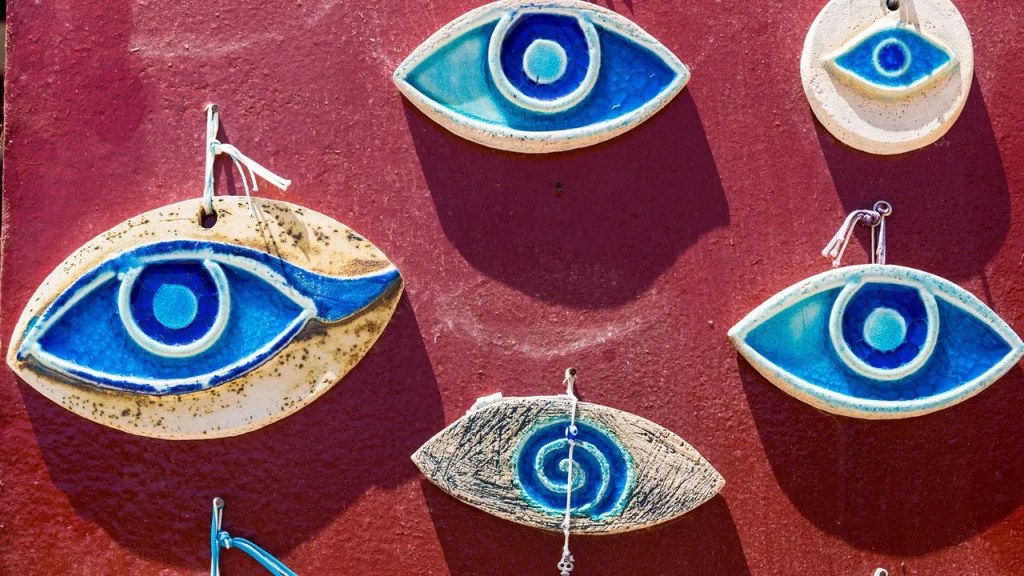
When it comes to warding off the mystic malevolent forces of the world, there is perhaps no charm more recognised or renowned than the ‘evil eye’. Ubiquitous in its use, the striking image of the cobalt-blue eye has appeared not only in the bazaars of Istanbul, but everywhere from the sides of planes to the pages of comic books.

This recent endorsement from A-list celebrities has resulted in the surfacing of countless online tutorials for making your own evil eye bracelets, necklaces and keychains. Though all this attention would suggest the evil eye is seeing a sudden surge in popularity, the truth is that for thousands of years the symbol has maintained its steady hold on the human imagination.

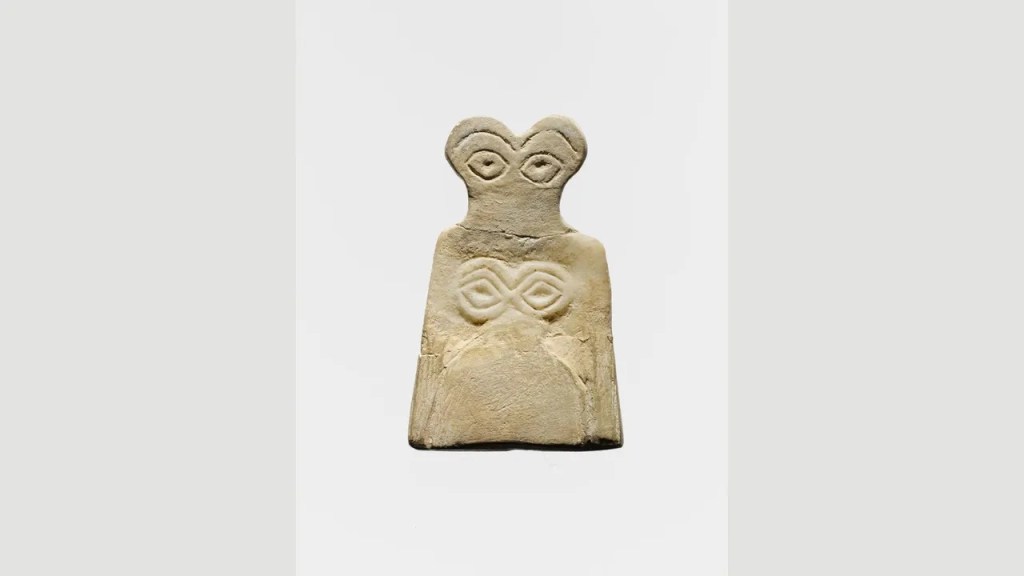
Eye idols carved out of gypsum alabaster have been excavated at Tell Brak, Syria and are believed to date from before 3500 BC (Credit: Metropolitan Museum of Art)

To understand the origins of the evil eye, one must first understand the distinction between the amulet and the evil eye itself. Though often dubbed as ‘the evil eye’, the ocular amulet is actually the charm meant to ward off the trueevil eye: a curse transmitted through a malicious glare, usually one inspired by envy. Though the amulet – often referred to as a nazar – has existed in various permutations for thousands of years, the curse which it repels is far older and more difficult to trace.

The Hamsa is an amulet in the shape of a palm with an eye in the middle embraced by Jews, Christians and Muslims in North Africa and the Middle East (Credit: Alamy)

The belief in this curse spans cultures as well as generations; to date one of the most exhaustive compilations of legends regarding the evil eye is Frederick Thomas Elworthy’s The Evil Eye: The Classic Account of an Ancient SuperstitionElworthy explores instances of the symbol in a number of cultures; from the petrifying gaze of Greek gorgons to Irish folktales of men able to bewitch horses with a single stare, virtually every culture has a legend related to the evil eye. The eye symbol is so deeply embedded in culture that, in spite of its potentially pagan connotations, it even finds a place within religious texts, including the Bible and the Quran.

Plutarch said those best at delivering the curse were blue-eyed

An eye for an eye

Belief in the evil eye has transcended mere superstition, with a number of celebrated thinkers attesting to its veracity. One of the most notable examples was the Greek philosopher Plutarch, who in his Symposiacs suggested a scientific explanation: that the human eye had the power of releasing invisible rays of energy that were in some cases potent enough to kill children or small animals. What’s more, Plutarch claims that certain people possessed an even stronger ability to fascinate, citing groups of people to the south of the Black Sea as being uncannily proficient at bestowing the curse. More often than not, those said to be most adept at delivering the curse are blue-eyed, likely due to the fact that this is a genetic rarity in the Mediterranean area.

The ancient Phoenicians put eye symbols on beads they strung together as necklaces (Credit: Metropolitan Museum of Art)

With such an ardent and widespread belief that a stare held the power to inflict catastrophic misfortune, it’s no surprise that the people of these ancient civilizations sought out a means to repel it, which led to the earliest iterations of the nazar amulet that we know today. Just how far back do these go? “The earliest version of eye amulets goes back to 3,300 BC,” Dr Nese Yildiran, an art history professor at Istanbul’s Bahçeşehir University, tells BBC Culture. “The amulets had been excavated in Tell Brak, one of the oldest cities of Mesopotamia – modern day Syria. They were in the form of some abstract alabaster idols made with incised eyes.”

The Eye of Providence, often embraced by Freemasons and meant to symbolise God’s omniscience, appears on the back of the US one-dollar bill (Credit: Alamy)

While the alabaster idols of Tell Brak seem to be one of the oldest eye amulets discovered, they are a far cry from the typical blue glass we know today, the earliest iterations of which didn’t begin appearing in the Mediterranean until around 1500 BCE. How were these early prototypes of Tell Brak distilled into the more modern versions?

“The glass beads of the Aegean islands and Asia Minor were directly dependent upon improvements in glass production,” Yildiran explains. “As for the colour blue, it definitely first comes from Egyptian glazed mud, which contains a high percentage of oxides; the copper and cobalt give the blue colour when baked.”

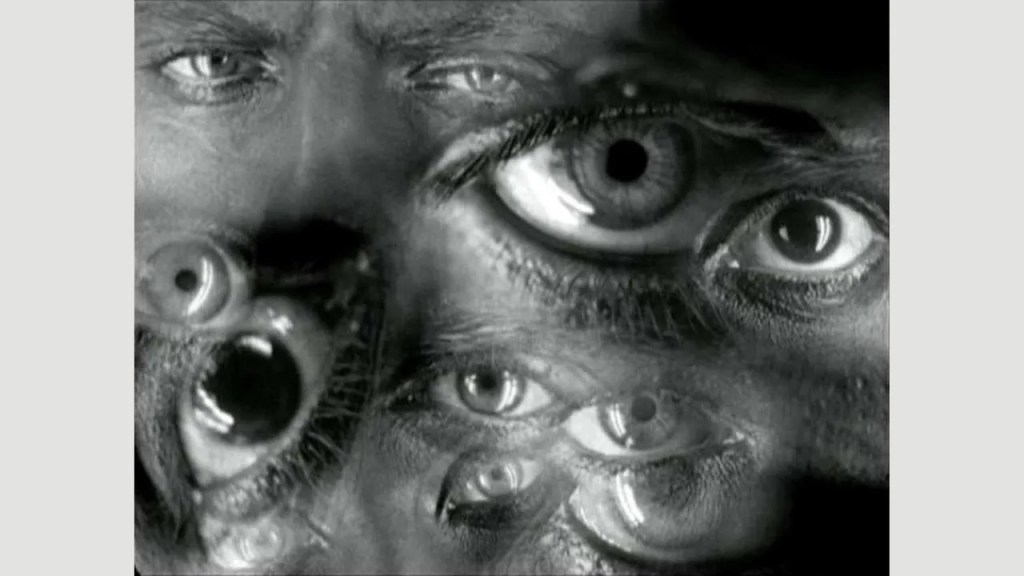
The eye has come to represent surveillance and the fear of being watched, as in Fritz Lang’s 1927 silent sci-fi film Metropolis (Credit: Kino)

Yildiran makes reference to several blue Eye of Horus pendants excavated in Egypt, asserting that these could in a way be seen as the most influential predecessor to the modern nazar. According to Yildiran, early Turkic tribes held a strong fascination with this shade of blue because of its connections with their sky deity, Tengri, and likely co-opted the use of cobalt and copper as a result.

It’s still a tradition in Turkey to bring an evil eye token to newborn children

The blue evil eye beads underwent a widespread circulation in the region, being used by the Phoenicians, Assyrians, Greeks, Romans and, perhaps most famously, the Ottomans. Though their usage was most concentrated in the Mediterranean and the Levant, through means of trade and the expansion of empires the blue eye beads began to find their way to all different corners of the globe.

Blind to its meaning?

What’s most fascinating about the evil eye isn’t its mere longevity, but the fact that its usage has deviated little over the course of millennia. We’re still affixing the evil eye to the sides of our planes in the same way that the Egyptians and Etruscans painted the eye on the prows of their ships to ensure safe passage. It’s still a tradition in Turkey to bring an evil eye token to newborn babies, echoing the belief that young children are often the most susceptible to the curse.

In The Lord of the Rings, the Dark Lord Sauron is a supreme intelligence that exists as a disembodied eye, holding all of Middle Earth under his gaze (Credit: Alamy)

But one can’t help but wonder if as the eye morphs along with the mediums of the modern world, its meaning and history will eventually fall by the wayside. Some current interpretations have already incited fears of cultural appropriation, especially regarding fashion’s use of the evil eye in the Hamsa, which holds a sacred place in both Judaism and Islam.

The eye’s history is far-reaching and intertwines with many peoples, so many of the modern users do in fact hold a connection to it in terms of heritage; the aforementioned Kim Kardashian and Gigi Hadid, for instance, both hail from cultures in which the evil eye is a staple.

Yildiran doesn’t believe it is an issue.“The evil eye transcends this concern because it has been a part of a rather big geography, and open to all sorts of practices. It’s not difficult to imagine we will keep seeing motifs derived from the evil eye.”

Although the symbol may have the ability to transcend boundaries – be they cultural, geographical or religious – it may be worth considering its meaning beyond a mere trinket or fashion statement. The evil eye is a remnant from the very dawn of civilisation, harking back to some of humanity’s most enduring and profound beliefs. To wear an amulet flippantly without such knowledge might not only render its protective abilities useless, but incur an even more potent curse – if that’s something you believe in, of course.

Reference

Gay History: All The Kings And Queens Who Were Allegedly LGBTQ+

For much of history, LGBTQ+ royalty needed to hide their identities. Even though some societies embraced homosexuality, most refused to accept a gay monarch. But before we talk about LGBTQ+ kings and queens, let’s start with the history of sexual identity.

The terms heterosexual and homosexual didn’t exist until the 1860s. And until the 1930s, heterosexual meant an abnormal attraction to the opposite sex. For centuries, many societies didn’t see sexuality in binary terms at all. Ancient Greeks and Renaissance Florentines took both male and female lovers. King Edward II of England openly kissed his male lover on his wedding day. And the Roman emperor Hadrian named a city after his male lover. Many kings and queens needed to keep their sexuality quiet, but others defended their lifestyle openly.

Queen Anne Was Clos4 With Her “Lady Of The Bedchamber”

Photo: Charles Jervas / Wikimedia Commons / Public Domain

The last of the Stuart monarchs, Queen Anne of Great Britain maintained a long-term relationship with Sarah Churchill in the early 1700s. Anne wrote to Sarah, “I hope I shall get a moment or two to be with my dear… that I may have one dear embrace, which I long for more than I can express.”

Anne has been called England’s lesbian queen because of her close relationship with Churchill, who served as “Lady of the Bedchamber.” But when Queen Anne pulled back, Sarah publicly accused the monarch of choosing another woman over her. Anne stayed above the fray, however, and remained popular through her death in 1714.

Pope Julius III Named His Lover A Cardinal

Photo: Girolamo Sicciolante / Wikimedia Commons / Public Doma

Pope Julius III ran the Catholic Church from 1550 to 1555. He also created a scandal thanks to his young male lover. Julius met Innocenzo, a 15-year-old beggar, in 1548, when Innocenzo was fighting with his pet ape on the street. The future pope swept the boy away and named him a cathedral provost.

When Julius became pope two years later, he convinced his brother to adopt Innocenzo, and later named his alleged lover a cardinal. Julius’s enemies called Innocenzo “Cardinal-Monkey” and complained the boy shared the pope’s bed.

Edward II Kissed His Male Lover In Front Of His Bride

Photo: Unknown / Wikimedia Commons / Public Domain

Most stories about a royal’s sexuality were only mentioned in secret and whispers. That’s not the case for King Edward II of England, who openly showed affection for his male lover, Piers Gaveston. When Edward married Isabella of France, he showered kisses on Piers in front of the entire court. 

As chroniclers wrote at the time, Edward’s affection for Gaveston was “beyond measure and reason,” “excessive,” and “immoderate.” One writer even said, “I do not remember to have heard that one man so loved another.” The relationship didn’t end well: Edward’s barons beheaded Gaveston.

Queen Elizabeth’s Partying Sister Allegedly Had A Female Lover

Photo: David S. Paton / Wikimedia Commons / Public Doma

The younger sister of Queen Elizabeth II, Princess Margaret, was known for being a party girl. In addition to multiple affairs, she married bisexual photographer Antony Armstrong-Jones, who explained, “I didn’t fall in love with boys, but a few men have been in love with me.”

Royal reporter Noel Botham claimed in his book Margaret: The Last Real Princess that Margaret had an affair with the American ambassador’s daughter, Sharman Douglas, known as Sass. One of Douglas’s close friends told Botham that Sass confessed to being the princess’s lover in the 1950s.

Richard The Lionheart Shared His Bed With France’s King

Photo: Unknown / Wikimedia Commons / Public Domain

Richard the Lionheart became King of England in 1189. Today, he’s famous for his role in the Third Crusade and his alleged association with Robin Hood. To others, though, Richard I is a gay icon. The king chose not to marry and never fathered an heir. Instead of having a queen by his side at his coronation, Richard invited his mother, Eleanor of Aquitaine, to play the role of his partner. 

According to historical documents written at the time, Richard shared a bed with King Philip II of France. One chronicler even wrote the men were so close that “at night the bed did not separate them.”

Prince George Had A Ménage A Trois With An Ambassador’s Son

Photo: Unknown / Wikimedia Commons / Public Domain

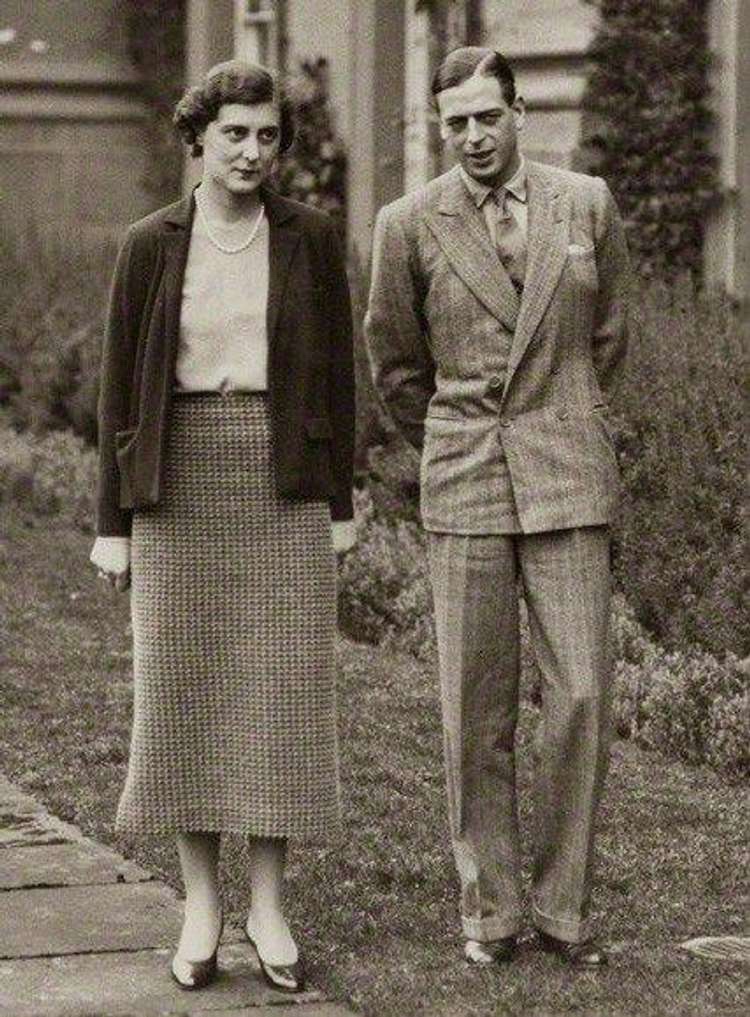
Prince George was the son of George V and the brother to Edward VIII and George VI. Called “the most interesting, intelligent and cultivated member of his generation” by biographer Christopher Warwick, George also allegedly carried on multiple bisexual affairs.

Married to Princess Marina of Greece and Denmark, Prince George never stopped partying. In the 1920s, George became addicted to morphine and cocaine during an affair with American socialite Kiki Preston – known as the girl with the silver syringe. George reportedly had a ménage à trois with Kiki and Jorge Ferrara, the son of Argentina’s ambassador. George died in 1942 in a tragic plane crash.

Hadrian Named A City After His Male Lover

Photo: Unknown / Wikimedia Commons / Public Domai

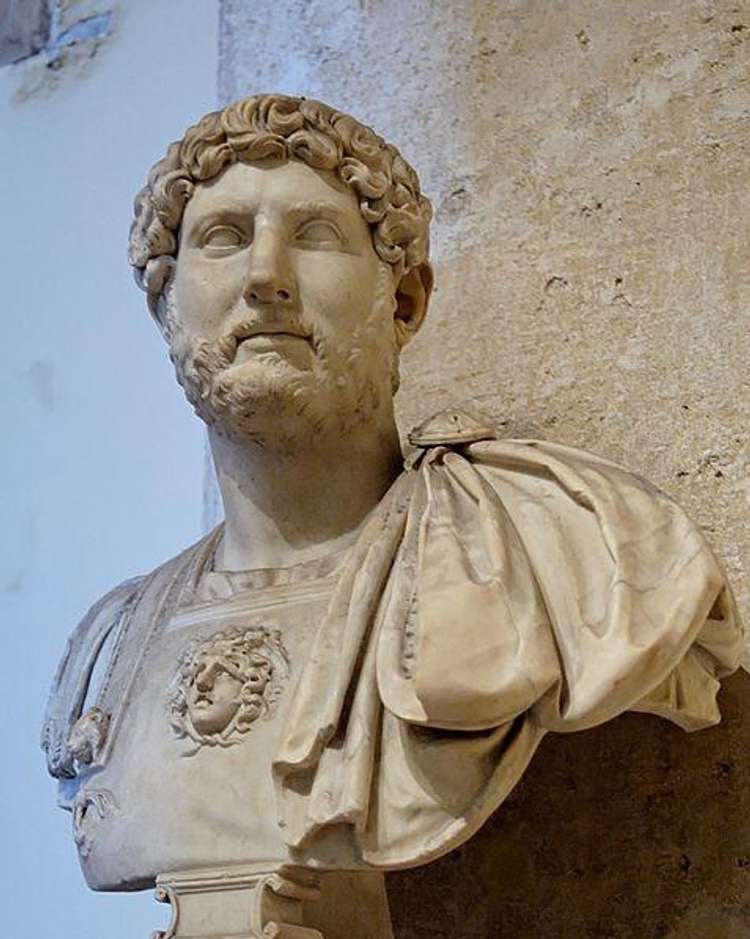
Roman emperor Hadrian is best remembered for building Hadrian’s Wall, marking the northern border of his empire. And although Hadrian married around the year 100 CE, he also had a male lover. Hadrian’s partner was a young Greek named Antinous. When his lover drowned, Hadrian founded a city in Egypt and named it Antinopolis in his honor. 

The Romans didn’t care about men taking male lovers. It was only important what part a man played during sex:

older men always needed to take a dominant, active role.

Alexander The Great Had Sex With A Eunuch

Photo: Meister der Alexanderschlacht / Wikimedia Commons / Public Domain

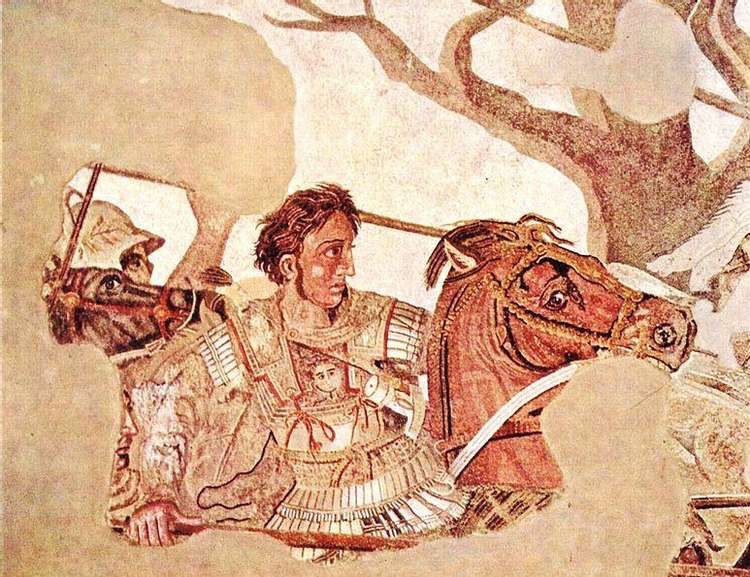
Alexander the Great conquered enough land to rule one of the largest empires in ancient history. During a whirlwind military campaign, Alexander toppled the Persian Empire and invaded India. But where did he fall on the spectrum of sexual identity? Historians still debateAlexander’s sexual preferences, but most agree he had sex with men and women.

Alexander’s most likely male lover was Bagoas, a eunuch. Being a eunuch, the Greeks didn’t see him as a man – instead, he was in a third category, between man and woman. Many also believe Alexander maintained a relationship with his companion Hephaestion. The ancient Greeks were very open-minded about homosexuality.

James I Defended His Right To Love Other Men

Photo: John de Critz / Wikimedia Commons / Public Domai

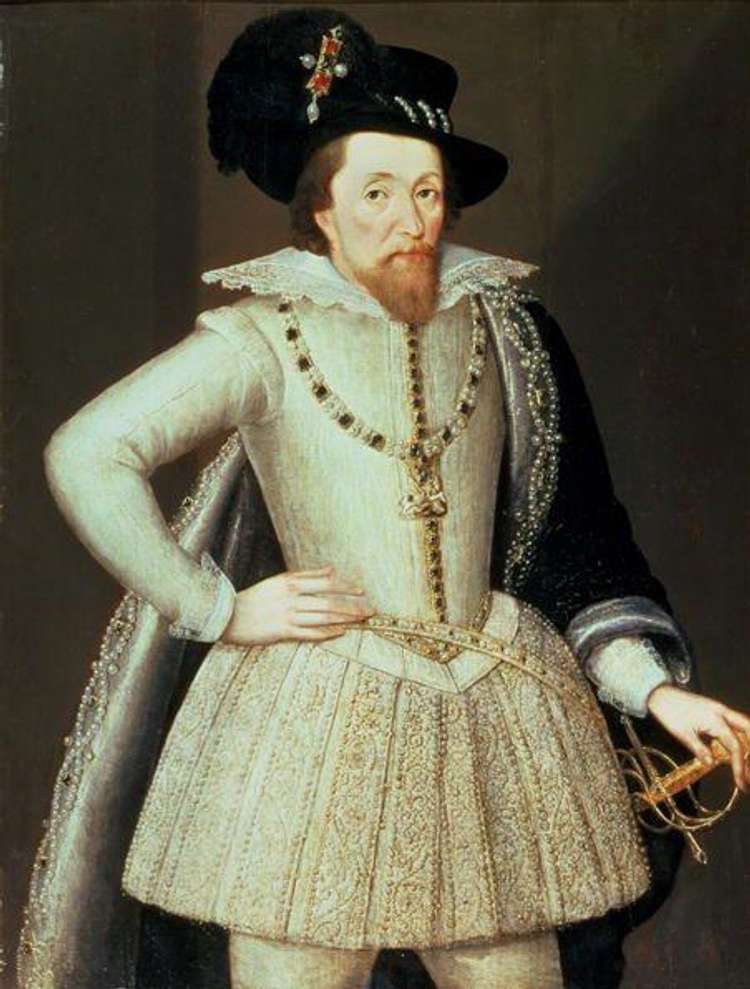
When James I of England took the throne in 1603 after the death of Elizabeth, he had big shoes to fill. England loved Elizabeth, and they remained uncertain of the Scottish ruler with a reputation for homosexual love affairs. In his early years, his new subjects circulated a Latin phrase which translates to “Elizabeth was King: now James is Queen.”

As James rode through the streets of London, people yelled out “Long live Queen James!” James himself defended his right to love other men in 1617, in a speech to his Privy Council: 

I, James, am neither a god nor an angel, but a man like any other. Therefore I act like a man and confess to loving those dear to me more than other men. You may be sure that I love the Earl of Buckingham more than anyone else, and more than you who are here assembled. I wish to speak in my own behalf and not to have it thought to be a defect, for Jesus Christ did the same, and therefore I cannot be blamed. Christ had John, and I have George.

The Last Medici Ruler Lost Tuscany Because He Wouldn’t Have Sex With His Wife

Photo: Franz Ferdinand Richter / Wikimedia Commons / Public Dom

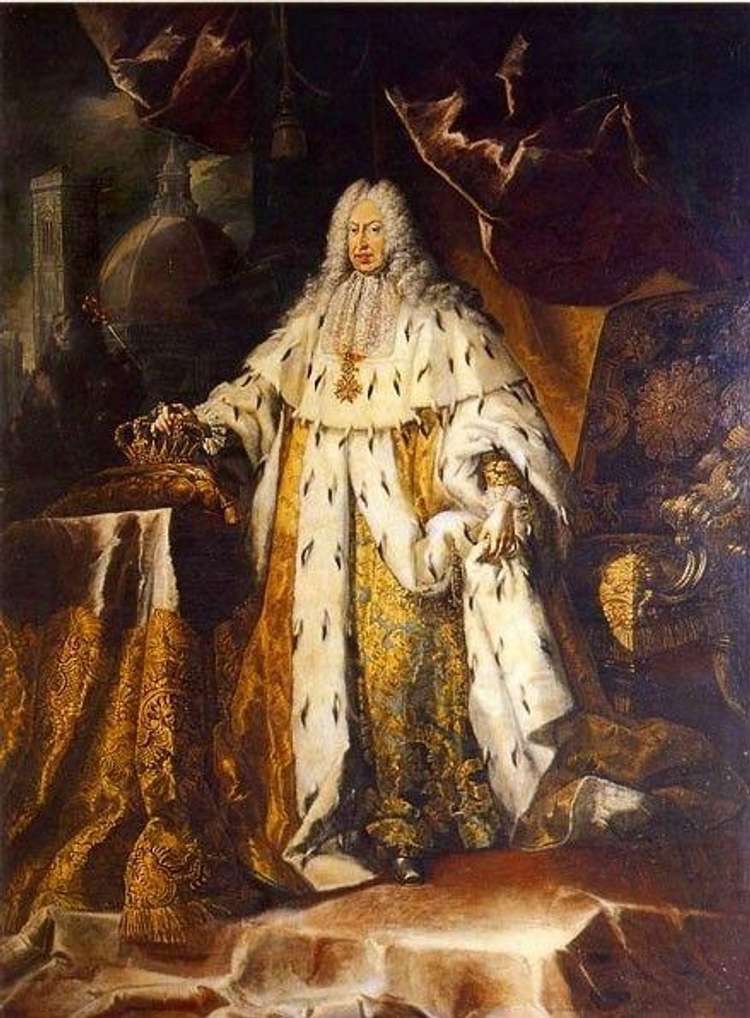
The last Medici to be Grand Duke of Tuscany, Gian Gastone, knew if he didn’t issue a male heir, his domain would go to the Bourbon rulers of Spain. Gian Gastone’s sister arranged his marriage to a German princess, but she refused to move to Florence. Gian moved to her small village, but eventually ignored her and spent his time with a male groom, Giuliano Dami, who reportedly became his lover. 

Gian Gastone also allegedly paid young male prostitutes for sex. They became known as the Ruspanti, after the coins (ruspi) Gastone gave them. Needless to say, Gian Gastone never produced an heir and the Spanish seized Tuscany when he died.

Henry III Of France Was Called A Buggerer And A Sodomite

Photo: Francois Quesnel / Wikimedia Commons / Public Dom

King Henry III of France was the son of Catherine de Medici and the last Valois king of France. In 1589, one of his subjects called the king “Henry of Valois, buggerer, son of a whore, tyrant.” During his lifetime, Henry was attacked for sexual deviancy, and people blamed the calamities of his reign on his sexuality. 

Although Henry endured repeated accusations of sodomy, most historians believe they were just rumors. As Nicolas Le Roux argued, “It is less the supposed or real sexual practices of the king and those close to him that interests the historian than the image of illegitimacy conveyed by the discussion of sex.” In short, regardless of his sexual identity, Henry’s enemies used slurs to attack his masculinity.

King William II May Have Had An Affair With A Bishop

Photo: Matthew Paris / Wikimedia Commons / Public Doma

The third son of William the Conqueror became King of England in 1087. William II, also known as William Rufus, was his father’s favorite, explaining why William the Conqueror skipped over his older sons to make him king. 

For centuries, rumors swirled about William Rufus’s sexuality. The king never married or fathered a child. His close advisor, Ranulf Flambard, is considered a possible sexual partner. William appointed Flambard as the Bishop of Durham in 1099. As William’s reign was over a thousand years ago, however, historians don’t have much to extrapolate from, other than the king’s close friendship with Flambard and his reputation for surrounding himself with attractive men.

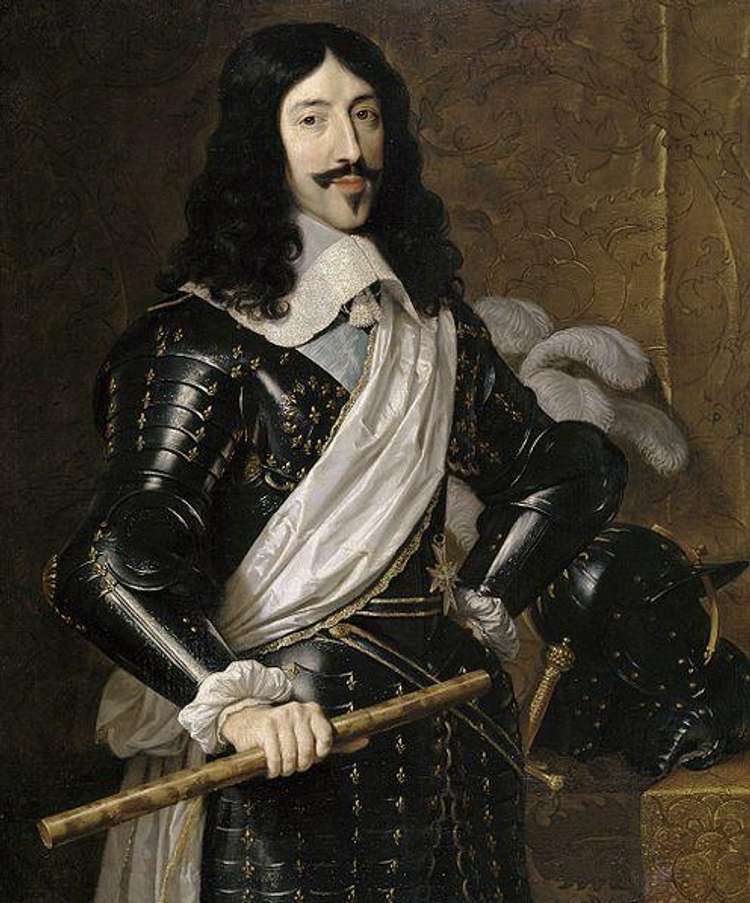
Louis XIII Of France Might Not Be The Sun King’s Father

Photo: Philippe de Champaigne / Wikimedia Commons / Public Domain

Most famous for his son, the Sun King, Louis XIII of France became king at 9 and helped transform France into a major European power. He married Anne of Austria at 14, and loathed her. Many assume Louis XIII was gay, and believe Louis XIV might not have been his son at all.

According to rumors, Louis carried on relationships with two men: Charles d’Albert, Duke of Luynes and Henri Coiffier de Ruzé, Marquis de Cinq-Mars. While little proof remains that Louis had sexual relationships with these men, many generally accept the king did not enjoy sex with women.

Reference

Victorian Party People Unrolled Mummies For Fun

Examination of a Mummy by Paul Dominique Philippoteaux c 1891. (Photo: Public Domain/ArtMight)

IF YOU WERE LOOKING TO have a great night out on January 15, 1834, Thomas Pettigrew’s sold-out event was definitely the place to be. The lucky Londoners who had managed to acquire a ticket for the Royal College of Surgeons that night, were looking forward to a rare sensation: before their eyes, Pettigrew was going to slowly unroll an authentic Egyptian mummy of the 21st dynasty–for science!

Mummy unrollings were only one symptom of the Egyptomania sweeping England in the 19th century. Europeans had been buying mummies since Shakespeare’s times to use them as medicine, pigment or even charms; now, the Napoleonic wars and England’s colonial expanse had created a renewed interest in Egypt’s past, to the point that, as the French aristocrat and Trappist monk Abbot Ferdinand de Géramb wrote to Pasha Mohammed Ali in 1833, “it would be hardly respectable, on one’s return from Egypt, to present oneself without a mummy in one hand and a crocodile in the other.”

Demand was so high that the fledgling tourist industry in Egypt transported mummies from the least visited places of the country to place in their more popular ruins, in order to satisfy foreign visitors.

Thomas Pettigrew. (Photo: Public Domain/WikiCommons)

Thomas Pettigrew was uniquely qualified to take this love affair with Egypt’s dead to the next level. A highly respected surgeon now focusing on his antiquarian interests, Pettigrew had just published his very well-received History of Egyptian Mummies (1834). As a friend to many artists and authors–including Charles Dickens–he also knew how to spin scientific theory into fascinating spectacle. While he was not the first to unroll a mummy in front of an audience, he was the one to turn the procedure into a performance.

The recipe was guaranteed to succeed: mixing Egypt, science and the macabre proved irresistible to the Victorians. The same people who thought it vulgar to take off their gloves in mixed company, delighted in having a millennia old corpse divested of its wrappings in front of them.

Gaston Maspero, French egyptologist, working on a mummy in Cairo, 1886. (Photo: Public Domain/WikiCommons)

Englishmen were not the only ones to be swept by this macabre romance with mummies. In his books The Romance of a Mummy and Egypt, French author Theophile Gautier describes one unrolling that took place in the Exhibition of 1857; he suggests that Edgar Allan Poe or E.T.A. Hoffman would find inspiration for their “weird tales” in the spectacle, but his own rendering is no less evocative.

According to Gautier, there was, of course, a storm raging outside the Anthropology Museum where the unrolling took place. Nes Khons, the woman to be de-mummified, was placed in a contraption that made it seem like she danced as her bandages unraveled around her. Slowly, as the linens were removed, a number of funerary jewels were revealed on her person (Gautier lets us know that curiosity shops were filled with their likes). Even though he is touched by the addition of the now-colorless but perfectly preserved flowers under the woman’s armpits, he also does not fail to point out that the “beautiful microscopic hawk” in her necklace would make for a “lovely watch-charm”.

An unwrapped mummy. (Photo: TIMEA Archive/CC BY 2.5)

His awe for the spectacle in front of him –a woman who, as he puts it, “walked in the sunshine, (…) lived and loved five hundred years before Moses, two thousand years before Jesus Christ”–is palpable, yet one wonders if his feeling, that the woman’s eyes look upon the living with disdain, is not rooted in a bit of guilt.


Across the channel, Thomas “Mummy” Pettigrew probably wasn’t experiencing many such qualms. It has been suggested that one of his aims was to prove through cranial measurements that the ancient Egyptians were actually Caucasian, and not of African or “Negro” origin. Even though not every unrolling went according to plan–at one point the bandages had fused with the body, at another a mummy was found to have a head filled with sand and there is even a tale of a princess who turned out to be a man–his fame grew and he was the founding treasurer of the British Archaeological Society.

Illustrations from Pettigrew’s History of Egyptian Mummies. (Photo: Internet Archive)

The Duke of Hamilton was so appreciative of his work, that he engaged him to mummify his own corpse after his death. Pettigrew obliged him, and in 1852 the Duke was interred in the sarcophagus of a nameless Princess which he had acquired years earlier in France, supposedly with the intention of donating it to the British Museum. As a result, the very British Hamilton, (who is still buried in the sarcophagus), truly earned his place in Matt Cardin’s Encyclopedia of Mummies (2014).

Egyptian mummies were not Pettigrew’s only love. In one of his most famous parties, he displayed to his guests the mummified head of Yagan, an indigenous Australian rebel who opposed colonial rule.

After Yagan was killed by bounty hunters, Pettigrew acquired exclusive use of his head for 18 months. He decorated it with cockatoo feathers and a headband, and displayed it in front of a specially commissioned painting which depicted the two cultures, British and indigenous, living in harmony. The guests were encouraged to buy the accompanying pamphlet as a memento of the evening.

A postcard from Egypt, c.1900. (Photo: TIMEA Archive/CC BY 2.5)

Eventually, mummy unrollings fell out of favor with the scientific community as the idea of preserving ancient cultures rose in popularity. One wonders, though, if their most persistent inheritance is not to be found in archaeology but in literature.

Perhaps the idea of a mummy as a vengeful monster was brought to life in one of these gatherings, as the sight of a sacred ritual reversed for the sake of science and entertainment struck a buried chord in those present. Such qualms would be hard to admit out loud, but this is what horror stories are for.

Reference

Gay History: Things You Should Never Say To Your Gay Mates

‘Which one is the man and which one is the woman?’ just isn’t cool, says The Guyliner

It’s the 21st century, so there’s a very, very good chance you already have at least one gay friend in your circle – but how do you talk to these most precious and rare of beasts? Will they still understand your banter? Does your chitchat have to be a no-fun zone, packed with PC platitudes and virtue signalling? Well, no, of course not. But if you’re going to be getting tanked up with your ‘mo mates, it might be worth remembering there are some subjects that might make them a little… prickly.

Which one is the man and which one is the woman?

If being a gay guy around straight men has taught me anything, it’s that they’re all secretly fascinated by gay sex. Usually this curiosity manifests itself in fear or suspicion that they’ll catch whatever mythical illness it is that makes you want gay sex, but occasionally straight guys will go on a fact-finding mission. The detailed machinations seemingly beyond them, one of the first questions they’ll ask – and usually the deepest level they’re prepared to go to – is who plays at being man and who is the woman. It’s like the only way they can process what happens is to apply it to what they do. The thing is, when two gay men are doing it, there is no woman present – that’s generally the whole point of it, to be honest – so this doesn’t really make sense. Also, it’s not particularly appropriate to ask anyone what they do in the sack, let alone when you’re steamrolling in there with your clumsy comparisons. Get a gay man drunk enough and he’ll tell you what they get up to. Just don’t wince when he does. We literally get to hear about your ins and outs all the time; your turn now.

When did you first decide you were gay?

It was a beautiful day, a proud day. I’d spent quite a long time planning it all, making sure I’d got everything just right. I scanned hundreds of brochures, tried on a variety of outfits, and listened to mixtapes of Ocean Colour Scene, Kylie, Madonna, PJ Harvey, Guns N Roses and Will Young – just to make sure this was what I wanted. And then I made the decision and my life changed for ever. OK, OK, you’re trying to show an interest, but very few people actually “decide” to be gay. It can be a long drawn-out process marked with self-doubt, worry and disastrous experimentation.

But don’t get the idea that it’s a touchy subject or we don’t want to talk about it. We do, even years after coming out, and most of us will be pleased a straight guy is interested in hearing it, because historically it’s been the opposite. “When did you first realise?” or “What was it like growing up gay?” might be better ways to put it. Calling our gayness a “lifestyle choice” might seem innocuous but it’s an old stealth insult used by terrible old homophobes who like to think gay people are taking over the world and are just being gay to annoy everyone. No.

Do you fancy me?

We’re not dead inside. We may have idly wondered what you might be like with no clothes on and maybe we’ve had an awkward dream about you. But the idea we’re panting and pining over you in the hope that one day you’ll clear your throat, tell us you’ve got something you always wanted to say, and then touch our bare knee – because suddenly we’re in sports gear in some locker room we’ve never seen before and oh wow it’s just like all the movies said it would be – is, frankly, way off the mark. Any man-crush we may have been harbouring vanished the first time we saw you light your own farts or cry because you lost a life on Super Mario.

Can we go to a gay club? I’m dying to know what it’s like

You’re our straight friend and we know you’re brilliant – that’s why we’re friends with you – and we know you’d enjoy yourself and be totally respectful but, and here’s the thing, everyone else in the bar or club doesn’t. They don’t know you and they don’t particularly care, but once you get too many straight guys in a gay venue, the vibe changes and the LGBT+ lot (that’s us) start getting a bit edgy that we can’t be ourselves, that we’re kind of an exhibit for your amusement. So it’s probably going to be a no for now, unless we can sneak you in somewhere relatively anonymously. Sometimes they might make you snog a man to prove you’re gay so you can get in, by the way, and we’re not offering. Don’t get mad this is closed off to you – practically the entire world welcomes you wherever you go. Let us have this.

No offence, but…

As far as I know, preceding something heinous or offensive or homophobic with “no offence” doesn’t stand up in a court of law. There is, apparently, no guarantee available to make sure whoever you’re saying this to won’t be offended. You’re right: life is unfair.

I can’t say anything these days

We live in cautious times, where many are afraid to be lighthearted or risqué in case it offends someone. We don’t want to be the killjoys in any situation, and you forcibly checking your own behaviour and sitting in furious silence because you can’t let rip is sometimes more uncomfortable for us than hearing a few poof jokes. Know your audience, be sensitive if there’s someone new and, generally, take the lead from us. We spent most of our formative years trying to laugh our way out of awkward situations, so we know how to take the piss out of ourselves – just make sure we get to set the tone. And if you really want to say a certain word or talk in a particular way and feel vexed that you can’t “be yourself”, ask yourself a couple of questions: why would you want to say it in the first place, and is this really the “yourself” you want to be?

I’ll kiss you for a dare

Don’t f*ck with us. Don’t use our sexuality as something for your own amusement, our emotions a toy for you to play with and then toss aside, like they’re meaningless. Gay men want to kiss men who are interested in them, who want our precious and passionate snogs – not guys who want to show how “cool they are with the gay thing” or how much of a man they are. If you’re that cool with it, then treat us with respect and acknowledge the fact that if we were to kiss another gay guy in public we could expect, at the very least, some verbal abuse or rancid leering from people who didn’t approve. Like the toilets in The Ivy, our tongues are for customers only – fire up Grindr if you’re determined to snog a stranger.

I hope you’re not going to try it on with me

Maaaaaate, why would we waste all this effort trying to chase after you and recruit you to our cause when there are plenty of gay men out there we wouldn’t have to try anywhere near as hard with? Gay hookup apps have rendered lusting after our straight mates all but obsolete. Seriously, we can’t even be bothered to wank over you any more. Team Straight has nothing to fear – unless you want to star in our new webcam series.

That’s so gay

When you’re using “gay” as an insult, or to describe something as inferior you are, whether you realise it or not, saying that gayness itself is equally inferior. Imagine if your name were Alex and overnight, whenever someone wanted to mock a thing, or signify that it was second-rate, they said it was “so Alex”. You might laugh it off for a bit, but if it carried on, you’d eventually feel like shit, wouldn’t you, Alex? So typical of you, Alex. What a load of Alex. If some of your gay mates use “gay” in this way, that’s very unfortunate for them and everyone else, and they should probably have a think about that – but, either way, it doesn’t mean you can.

I know a gay guy who’d be perfect for you

This is very kind of you, but gay people don’t automatically like each other. In fact, spend a good 20 minutes in a gay bar and you’ll see the reality is quite the reverse. Leave the matchmaking to characters in Jane Austen novels. We’ve probably already shagged him anyway, tbh.

Can you get me some drugs?

No.

When are you getting married?

Just because we can, doesn’t mean we want to. Anyway, your lot have booked up all the best venues years in advance, so we’ll just come to your wedding and get drunk without all the responsibility, if it’s all the same to you.

You can’t tell you’re gay!

When straight people say this to gay people it’s meant to be a compliment, but if you stop and think about it, why is the ability to “pass” as a straight person supposed to be such an honour? Why should we be pleased you didn’t notice? It suggests we should act a certain way so that you can tell us apart from everyone else. It exposes that you have a very stereotypical way of thinking about gay people. And it also hints that our behaviour is all about pleasing, or deceiving you. You can’t tell we’re gay? That’s because you’ve never seen us suck a dick. Are you offering?

Reference

Buddhism 101: Tathagata-garbha

wei wei / Getty Images

Tathagatagarbha, or Tathagata-garbha, means “womb” (garbha) of Buddha (Tathagata). This refers to a Mahayana Buddhist doctrine that Buddha Nature is within all beings. Because this is so, all beings may realize enlightenment. Tathagatagarbha often is described as a seed, embryo or potentiality within each individual to be developed.

Tathagatagarbha was never a separate philosophical school, but more of a proposal and the doctrine is understood in various ways. And it sometimes has been controversial. Critics of this doctrine say that it amounts to a self or atmanby another name, and the teaching of atman is something the Buddha specifically denied.

Origins of Tathagatagarbha 

The doctrine was taken from a number of Mahayana sutras. The Mahayana Tathagatagarbha sutras include the Tathagatagarbha and Srimaladevi Simhanada sutras, both thought to have been written in the 3rd century CE, and several others. The Mahayana Mahaparinirvana Sutra, probably also written about the 3rd century, is considered the most influential.null

The proposal developed in these sutras appears primarily to have been a response to Madhyamika philosophy, which says that phenomena are empty of self-essence and have no independent existence. Phenomena appear distinctive to us only as they relate to other phenomena, in function and position. Thus, it cannot be said that phenomena either exist or don’t exist. 

Tathagatagarbha proposed that Buddha Nature is a permanent essence in all things. This was sometimes described as a seed and at other times pictured as a fully formed Buddha in each of us.

Somewhat later some other scholars, possibly in China, connected Tathagatagarbha to the Yogacara teaching of Alaya vijnana, which is sometimes called “storehouse consciousness.” This is a level of awareness that contains all the impressions of previous experiences, which become the seeds of karma.null

The combination of Tathagatagarbha and Yogacara would become especially important in Tibetan Buddhism as well as in Zen and other Mahayana traditions. The association of Buddha Nature

with a level of vijnana is significant because vijnana is a kind of pure, direct awareness not marked by thoughts or concepts. This caused Zen and other traditions to emphasize the practice of direct contemplation or awareness of mind above intellectual understanding.

Is Tathagatagarbha a Self? 

In the religions of the Buddha’s day that were the forerunners of today’s Hinduism, one of the central beliefs as (and is) the doctrine of atman. Atman means “breath” or “spirit,” and it refers to a soul or individual essence of self. Another is the teaching of Brahman, which is understood as something like the absolute reality or the ground of being. In the several traditions of Hinduism, the precise relationship of atman to Brahman varies, but they could be understood as the small, individual self and the big, universal self.

However, the Buddha specifically rejected this teaching. The doctrine of anatman, which he articulated many times, is a direct refutation of atman.

Through the centuries many have accused the Tathagatagarbha doctrine of being an attempt to sneak an atman back into Buddhism by another name. In this case, the potentiality or Buddha-seed within each being is compared to atman, and Buddha Nature — which is sometimes identified with the dharmakaya — is compared to Brahman.

You can find many Buddhist teachers speaking of a small mind and a big mind, or small self and big self. What they mean may not be exactly like the atman and Brahman of Vedanta, but it’s common for people to understand them that way. Understanding Tathagatagarbha this way, however, would violate basic Buddhist teaching.

No Dualities 

Today, in some Buddhist traditions influence by Tathagatagarbha doctrine, Buddha Nature often is still described as a kind of seed or potentiality within each of us. Others, however, teach that Buddha Nature is simply what we are; the essential nature of all beings.

The teachings of small self and big self are sometimes used today in a kind of provisional way, but ultimately this duality must be fused. This is done in several ways. For example, the Zen koan Mu, or Chao-chou’s Dog, is (among other things) intended to smash through the concept that Buddha Nature is something that one has.

And it’s very possible today, depending on the school, to be a Mahayana Buddhist practitioner for many years and never hear the word Tathagatagarbha. But because it was a popular idea at a critical time during the development of Mahayana, its influence lingers.

Reference

  • Tathagata-garbha, O’Brien, Barbara. “Tathagata-garbha.” Learn Religions, Aug. 27, 2020, learnreligions.com/tathagatagarbha-womb-of-buddha-450013.

Buddhism 101: Buddha Nature

squaredpixels

Buddha Nature is a term used often in Mahayana Buddhism that is not easy to define. To add to the confusion, understanding of what it is varies from school to school.null

Basically, Buddha Nature is the fundamental nature of all beings. Part of this fundamental nature is the tenet that all beings may realize enlightenment. Beyond this basic definition, one can find all manner of commentaries and theories and doctrines about Buddha Nature that may be more difficult to understand. This is because Buddha Nature is not part of our conventional, conceptual understanding of things, and language does not function well to explain it.null

This article is a beginner’s introduction to Buddha Nature

Origin of the Buddha Nature Doctrine 

The origin of the Buddha Nature doctrine can be traced to something the historical Buddha said, as recorded in the Pali Tipitika (Pabhassara Sutta, Anguttara Nikaya 1.49-52):

“Luminous, monks, is the mind. And it is defiled by incoming defilements. The uninstructed run-of-the-mill person doesn’t discern that as it actually is present, which is why I tell you that – for the uninstructed run-of-the-mill person – there is no development of the mind. 

“Luminous, monks, is the mind. And it is freed from incoming defilements. The well-instructed disciple of the noble ones discerns that as it actually is present, which is why I tell you that – for the well-instructed disciple of the noble ones – there is development of the mind.” Thanissaro Bhikkhu translation]

This passage gave rise to many theories and interpretations within early Buddhism. Monastics and scholars also struggled with questions about anatta, no self, and how a no-self could be reborn, affected by karma, or become a Buddha. The luminous mind that is present whether one is aware of it or not offered an answer.null

Theravada Buddhism did not develop a doctrine of Buddha Nature. However, other early schools of Buddhism began to describe the luminous mind as a subtle, basic consciousness present in all sentient beings, or as a potentiality for enlightenment that pervades everywhere.

Buddha Nature in China and Tibet 

In the 5th century, a text called the Mahayana Mahaparinirvana Sutra – or the Nirvana Sutra – was translated from Sanskrit into Chinese. The Nirvana Sutra is one of three Mahayana sutras that make up a collection called the Tathagatagarbha (“womb of the Buddhas”) sutras. Today some scholars believe these texts were developed from earlier Mahasanghika texts. Mahasanghika was an early sect of Buddhism that emerged in the 4th century BCE and which was an important forerunner of Mahayana.https://7f07498aa52e8908810c7a61f3a1afe1.safeframe.googlesyndication.com/safeframe/1-0-38/html/container.html

The Tathagatagarbha sutras are credited with presenting the fully developed doctrine of Buddha Dhatu, or Buddha Nature. The Nirvana Sutra, in particular, was enormously influential in the development of Buddhism in China. Buddha Nature remains an essential teaching in the several schools of Mahayana Buddhism that emerged in China, such as T’ien T’ai and Chan (Zen).

At least some of the Tathagatagarbha sutras also were translated into Tibetan, probably late in the 8th century. Buddha Nature is an important teaching in

Tibetan Buddhism, although the various schools of Tibetan Buddhism do not entirely agree on what it is. For example, the Sakya and Nyingma schools emphasize that Buddha Nature is the essential nature of the mind, while Gelugpa treats it more as a potentiality within the mind.

Note that “Tathagatagarbha” sometimes appears in texts as a synonym for Buddha Nature, although it doesn’t mean exactly the same thing.

Is Buddha Nature a Self? 

Sometimes Buddha Nature is described as a “true self” or “original self.” And sometimes it is said that everyone has Buddha Nature. This is not wrong. But sometimes people hear this and imagine that Buddha Nature is something like a soul, or some attribute that we possess, like intelligence or a bad temper. This is not a correct view.

Smashing the “me and my Buddha nature” dichotomy appears to be the point of a famous dialogue between the Chan master Chao-chou Ts’ung-shen (778-897) and a monk, who inquired if a dog has Buddha nature. Chao-chou’s answer – Mu (no, or does not have) has been contemplated as a koan by generations of Zen students.

Eihei Dogen (1200-1253) “made a paradigm shift when he translated a phrase rendered in the Chinese version of the Nirvana Sutra from ‘All sentient beings have Buddha nature’ to ‘All existents are Buddha nature,'” wrote Buddhist scholar Paula Arai in Bringing Zen Home, the Healing Heart of Japanese Women’s Rituals. “Moreover, by removing an explicit verb the whole phrase becomes an activity. The implications of this grammatical shift continue to reverberate. Some could interpret this move as the logical conclusion of a nondualistic philosophy.”

Very simply, Dogen’s point is that Buddha Nature is not something we have, it is what we are. And this something that we are is an activity or process that involves all beings. Dogen also emphasized that practice is not something that will give us enlightenment but instead is the activity of our already enlightened nature, or Buddha Nature.

Let’s go back to the original idea of a luminous mind that is always present, whether we are aware of it or not. The Tibetan teacher Dzogchen Ponlop Rinpoche described Buddha Nature this way:

“… our fundamental nature of mind is a luminous expanse of awareness that is beyond all conceptual fabrication and completely free from the movement of thoughts. It is the union of emptiness and clarity, of space and radiant awareness that is endowed with supreme and immeasurable qualities. From this basic nature of emptiness everything is expressed; from this everything arises and manifests.”

Another way of putting this is to say that Buddha Nature is “something” that you are, together with all beings. And this “something” is already enlightened. Because beings cling to a false idea of a finite self, set apart from everything else, they do not experience themselves as Buddhas. But when beings clarify the nature of their existence they experience the Buddha Nature that was always there.

If this explanation is difficult to understand at first, do not be discouraged. It is better to not try to “figure it out.” Instead, keep open, and let it clarify itself.

Reference

  • O’Brien, Barbara. “Buddha Nature.” Learn Religions, Aug. 26, 2020, learnreligions.com/buddha-nature-doctrine-450001.

The Monks Who Spent Years Turning Themselves into Mummies—While Alive

Japan’s self-sacrificing sokushinbutsu were a very determined lot.

Danjōgaran, a temple on Mount Kōya in Japan. (Photo: V663highland/CC BY-SA 3.0)

THE JAPANESE CLIMATE IS NOT exactly conducive to mummification. There are no peat bogs, no arid deserts, and no alpine peaks perennially encased in ice. The summers are hot and humid. Yet somehow a group of Buddhist monks from the Shingon sect discovered a way to mummify themselves through rigorous ascetic training in the shadow of a particularly sacred peak in the mountainous northern prefecture of Yamagata.

Between 1081 and 1903, at least 17 monks managed to mummify themselves. The number may well be higher, however, as it is likely some mummies were never recovered from the alpine tombs.

These monks undertook such a practice in emulation of a ninth-century monk named Kūkai, known posthumously as Kōbō Daishi, who founded the esoteric Shingon school of Buddhism in 806. In the 11th century a hagiography of Kūkai appeared claiming that, upon his death in 835, the monk did not die at all, but crawled into his tomb and entered nyūjō, a state of meditation so profound that it induces suspended animation. According to this hagiography, Kūkai plans to emerge in approximately 5.67 million years to usher a predetermined number of souls into nirvana.

The first recorded attempt at becoming a sokushinbutsu, or “a Buddha in this very body,” through the act of self-mummification took place in the late 11th century. In 1081, a man named Shōjin attempted to follow Kūkai into nyūjō by burying himself alive. He, too, was hoping to come back in a far distant future for the good of mankind, but when Shōjin’s disciples went to retrieve his body, rot had set in. It would take nearly two more centuries of trial and error before someone figured out how to mummify himself and, they believed, cheat death to enter a state of eternal meditation.

A portrait of Kōbō Daishi from the 14th century. (Photo: Art Institute of Chicago/Public Domain)

The process of self-mummification is long and arduous, taking at minimum three years of preparation before death. Central to this preparation is a diet called mokujikigyō, literally “tree-eating training.” This diet can be traced through Shugendō to the Taoist practice of abstention from cultivated grains.

For a thousand days, the mokujikigyō diet limits practitioners to only what can be foraged on the mountain, namely nuts, buds, and roots from trees. Some sources also report that berries may have entered the diet, as well as tree bark and pine needles. Time not spent foraging for food was passed in meditation on the mountain.

From a spiritual perspective, this regimen was intended to toughen the spirit and distance oneself from the common human world. From a biological point of view, the severe diet rid the body of fat, muscle, and moisture while also withholding nutrients from the body’s natural biosphere of bacteria and parasites. The cumulative effect was to arrest decomposition after death.

At the completion of a thousand-day cycle on this diet, practitioners were considered spiritually ready to enter nyūjō. However, most monks completed two or even three cycles to fully prepare themselves. After the final cycle, the devout would cut out all food, drink a limited amount of salinized water for a hundred days, and otherwise meditate upon the salvation of mankind while waiting to die.

A wooden statue of Kōbō Daishi. (Photo: PHGCOM/CC BY-SA 3.0)

Many believe that some adherents at this stage drank tea made from Toxicodendron verniculum tree bark. A kind of sumac, the Japanese lacquer tree is called such because it is used to make traditional Japanese lacquer, urushi. Its bark contains the same toxic compound that makes poison ivy so poisonous. If ingested by these monks, urushi tea would have both hastened death and made the body even less hospitable to the bacteria and parasites that aid in decomposition.

When the devout felt death approaching, his disciples would lower him into a pine box at the bottom of pit three meters deep in a predetermined spot. They would then pack charcoal around the box, insert a bamboo airway through the lid, and bury their master alive. Sitting in total darkness, the monk would meditate and regularly ring a bell to signal that he was still alive. When the ringing ceased, the disciples would open the tomb to confirm their master’s death, remove the bamboo airway, and seal the tomb.

A thousand days later, the monk would be disinterred and inspected for signs of decay. If any such signs were found, the body would be exorcised and reinterred with little fanfare. If not, the body was determined to be a true sokushinbutsu and enshrined.

The last person to become a sokushinbutsu did so illegally. A monk named Bukkai died in 1903, more than three decades after the ritual act was criminalized during the Meiji Restoration because the new government deemed it barbaric and backwards.

By then Japan had entered the modern age, and most people considered Bukkai more madman than sage. His remains were not disinterred until 1961 by a team of researchers from Tohoku University, who were amazed by Bukkai’s pristine condition. Though he entered nyūjōin Yamagata, his remains now rest in Kanzeonji in neighboring Niigata Prefecture. There are 16 extant sokushibutsu in Japan, 13 of which are preserved in the Tohoku region. Seven of the eight found in Yamagata remain in the vicinity of Mt. Yudono, making it the ideal place for a pilgrimage.

The oldest and best preserved of these mummified monks can be found at Dainichibō, mentioned above. His name is Shinnyokai, and he entered nyūjō in 1783 at the age of 96. Like all the others, he sits in the lotus position behind glass in a box on small shrine within the temple that looks after him. His skin is an ashen grey, pulled taught over the bones of his hands, wrists, and face. His mouth is stretched into an eternal jackal’s grin, his face turned towards his lap.

Shinnyokai’s elaborate robes are ritually changed every six years, twice as often as all the other sokushinbutsu. The old robes are cut into small squares and placed inside padded silk pouches that can be purchased for ¥1,000 as protective amulets. Testimonials sent in by people swearing by these talismans’ miraculous effects are plastered around the base of Shinnyokai’s shrine.

Another sokushinbutsu, Tetsumonkai, resides at nearby Churenji, also mentioned above. Tetsumonkai entered nyūjō in 1829 at the age of 71, and of all the sokushinbutsu, his life is perhaps the best documented. Tetsumonkai was a commoner who killed a samurai and ran away to join the priesthood, an act that allowed him full legal protection. Later, Tetsumonkai visited the capital city Edo, present-day Tokyo. There he heard about an ophthalmic disease afflicting the city and gouged out his own left eye as an act of merit that might counteract the malady. Incredibly, Tetsumonkai is one of several sokushinbutsu to auto-enucleate—remove one’s own eye—as a charitable act.

Samantabhadra, one of the 13 Buddhas of Shingon Buddhism. (Photo: PHGCOM/CC BY-SA 3.0)

Tetsumonkai once served as head priest at Honmyōji, a short drive from where his remains are now kept. Here he was charged with looking after another sokushinbutsu, Honmyōkai, the oldest self-mummified monk in Yamagata. The samurai-turned-priest Honmyōkai spent a mindboggling 20 years in ascetic training until May 8, 1681, when his disciples lowered him, delirious with hunger, into a pit behind the temple and buried him alive. A massive, moss-covered stone epitaph marks the site where Honmyōkai entered nyūjō amid a grove of pine trees only a few dozen meters beyond the hall where his remains are now displayed.

These three sokushinbutsu are by far the closest to Mt. Yudono and the sites of their respective training. Dainichibō and Churenji are accustomed to tourists, and on weekends visitors are likely to encounter gaggles of retirees being ushered on and off the air-conditioned coaches that stop by these temples on their way to or from Mt. Yudono. The ¥500 admission Dainichibō and Churenji each charge, along with sales from protective amulets and other trinkets, keep the temple doors open and their history alive. Honmyōji charges no admission and receives fewer guests, but they’re still happy to show off their wish-granting mummy. The temples are happy with the attention and even went so far as to issue a sokushinbutsu stamp card in 2015, along with Nangakuji in the nearby city of Tsuruoka, to encourage visitors to stop by all four temples.

Nangakuji houses Tetsuryūkai, who was mummified in 1878, a decade after the practice was made illegal. Tetsuryūkai died of illness before he could complete his training and so is not technically a sokushinbutsu. His body is artificially treated in order to better preserve it, and the relatively simple shrine surrounding his remains offer the closest look one can get of a mummified monk in Yamagata. Tetsuryūkai’s failure to properly enter nyūjō is written all over his face, the skin of which is peeling away from his nasal cavity.

Kaikōji houses two sokushinbutsu. Chūkai, who died in 1755, and his former disciple, Enmyōkai, who died in 1822, now sit side by side in eternal meditation. Despite their difference in age you’d think they were brothers. They have the same taut, glossy and blackened skin, as well as the same bony hands, sunken eyes, and gaping toothy mouths.

Reference

Gay History: The Crossdresser From Dublin Who Tricked The British Army

Christian Davies donned her missing husband’s clothes and went to war to find him

Even after she found her husband, Christian Davies continued her soldier’s life until she fractured her skull at the Battle of Ramillies.

Historical stories of cross-dressing never fail to fascinate. Ideas of what constitutes “normal” sexual identity have shifted over the centuries. Christian Davies is a unique Irish example, in that we hear her account ostensibly in her own voice, as recounted to Robinson Crusoe author Daniel Defoe in The Life and Adventures of Mrs Christian Davies.  

“I had too much Mercury in me, to lead a sedentary life,” Davies tells Defoe. Born Christian Cavanagh in Dublin in 1667 and raised on a farm near Leixlipby industrious parents, her upbringing was comfortable, her education sound. But Davies was happier breaking a horse than doing needle-point: “…my inclinations, while a Girl, were always masculine.”

Adventure

Davies inherited her aunt’s public house in Dublin. There she met and married Richard Welsh, a former servant of her aunt’s, and the man whose disappearance would prompt her greatest adventure.

In 1691 Welsh went to pay a bill and never came back. A year later Davies received a letter saying he had stopped for a drink with an old school friend, and had woken up on a ship bound for the Netherlands. With no money to his name, he had been forced to enlist in the British Army.

Davies’ thoughts turned to finding her husband and she left her children with her mother, dressed in her husband’s clothes, and enlisted. The recruiting officer in Dublin called her “a clever brisk young fellow”. Soon, she was on a ship bound for the Netherlands and the Nine Years War.

Her first battle was at Landen, where she suffered a leg injury and was captured by the French. Upon her release, she addressed her suit to a Burgher’s daughter, dismissing the affair as “a frolick”. However, when the girl was assaulted by a sergeant, Davies fought a duel with him, leading to her discharge from the army.

Still ostensibly on the hunt for her husband, Davies enlisted again in the second North Royal British Dragoons in 1697, fighting with them until the Peace of Ryswick. She recounts to Defoe an accusation by a prostitute that she was the father of her child. Initially insulted, Davies then agreed to support the child: “…it left me the reputation of being a Father, till my sex was discovered.”

After 13 years, Davies found her husband among French prisoners after the Battle of Blenheim. He was in a relationship with a Dutch woman and Davies decided not to take him back. The pair fought side by side for some time as brothers, and she continued her soldier’s life until she fractured her skull at the Battle of Ramillies.

A surgeon discovered her identity, but when the story got to Lord Hay, the Scots Gray commander, he ordered that she should be given a pension.

Military honours

Somewhat unusually among historical cross-dressers, Christian Davies returned to life as a woman, marrying again twice. She ended her life at the Royal Hospital Chelsea as one of its pensioners, having been honoured by Queen Anne, and was buried with full military honours.

So what are we to make of the rollicking tale of Christian Davies, as told to Daniel Defoe? By the time the story was recorded, Davies had had the benefit of many years’ practice at regaling an audience and perhaps a narrative framework had been created that fitted her audience’s ideas of what the story should be. The account begs the questions: did Davies want to find her husband? Or did she see his disappearance as an opportunity? Why would a woman of means throw herself into the life of a foot soldier? The questions that emerge from the gaps in this tale are perhaps as compelling as the narrative itself.

Reference

Gay History: Amelio Robles Ávila Was Mexico’s First Trans Soldier And A Revolutionary Hero, More Than 100 Years Ago

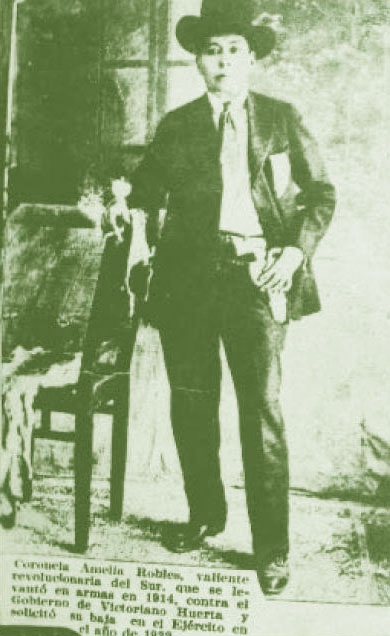
Robles in 1915

Today is Mexico’s Independence Day! After a war that lasted over 11 years, Mexico achieved independence from Spanish rule and would begin a path toward self-determination. On September 16, 1810, Miguel Hidalgo y Costilla, a Catholic priest, launched the Mexican War of Independence. Yes, decolonize!

To celebrate Mexican history, we’ll be focusing on one hero today, not of the Mexican War of Independence but of the Mexican Revolution. Colonel Amelio Robles Ávila is recognized as the first trans soldier in the Mexican military’s history. A decorated colonel, Amelio Robles Ávila lived as a man from the age of roughly 22 or 24 until the day he died at 95 years old. 

While some believe it was Ávila’s wealthy family that allowed him to live life as his truest self, it certainly may have helped, but his courage in battle and in life must be honored and celebrated. Ávila’s identity was not always met with kindness, but the soldier was well-equipped to deal with challenges to his gender. The pistol-whipping colonel was a ladies man, skilled marksmen, and hero. This is the story of Colonel Amelio Robles Ávila. 

Amelio Robles Ávila

Amelio Robles Ávila was born to a wealthy family on November 3, 1889, in Xochipala, Guerrero. In his youth, Ávila attended a Catholic school for little girls where he was taught to cook, clean, and sew. However, at a young age, he began to express his gender identity. He showed an aptitude for things that were, at the time perceived to be, masculine like handling weapons, taming horses, and marksmanship.

Perhaps, it was a natural response, if not the only response, to being pressured to conform to a gender identity that isn’t yours —  Ávila was perceived as stubborn, rebellious, and too much to handle for the school nuns. But it would be his tenacity and obstinance that served him in the long run. 

In 1911, when Amelio robles was arranged to be married to a man, he enlisted as a revolutionary instead. 

Not a woman dressed as a man, just a man.

To force the resignation of President Porfirio Dîaz and later, to ensure a social justice-centered government, Mexico needed to engage much of its population in warfare. This meant that eventually women were welcomed with many limitations. Soldaderas were able to tend to wounded soldiers or provide food for the militia but were prohibited from combat and could not have official titles. 

Amelio Robles legally changed his first name from Amelia to Amelio, cut his hair, and became one of Mexico’s most valuable and regarded revolutionaries. 

“To appear physically male, Robles Ávila deliberately chose shirts with large chest pockets, common in rural areas, and assumed the mannerisms common among men at the time,” according to History.com

While he was not the only person assigned female to adopt a male persona to join the war, unlike many others Ávila kept his name and lived as a man until the day he died. 

“After the war was over, their part in it was dissolved along with whatever rank they held during the fight, and they were expected to return to subservient roles. Some did,” writes Alex Velasquez of Into. “Others, like Amelio Robles Ávila, lived the rest of their lives under the male identities they had adopted during the war.”

You come at the king, you best not miss.

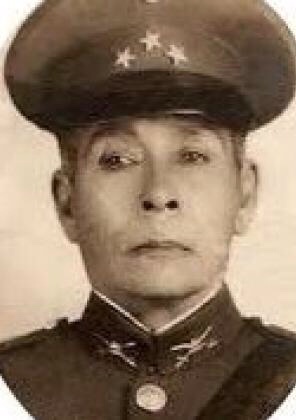
Ávila fought courageously in the war until its end. Becoming a Colonel with his own command, he was decorated with three stars by revolutionary general Emiliano Zapata. He led and won multiple pivotal battles where his identity and contributions were respected. 

However, that respect was sometimes earned through empathy other times through the whip of his pistol. Ávila was a man and anyone who chose to ignore this fact would be taught by force. On one occasion, when a group of men tried to “expose” him by tearing off his clothes, Ávila shot and killed two of the men in self-defense. 

Colonel Amelio Robles Ávila

Unsurprisingly, Amelio Robles was a bit of a ladies man, though he finally settled down with Angela Torres and together they adopted their daughter Regula Robles Torres. In 1970, he was recognized by the Mexican Secretary of National Defense as a veterano as opposed to a veterana of the Mexican Revolution, thus Colonel Amelio Robles Ávila is considered the first trans soldier documented in Mexican military history. The swag is infinite! 

After the war, Ávila was able to live comfortably as a man where he devoted his life to agriculture. He lived a life, that still for so many trans people around the world seems unfathomable. Colonel Ávila lived to be 95 years old and the rest — no all of it — is history.

Reference