Did you know churches blessed gay marriages in the ‘Dark Ages’? Discover more here

1. The world’s oldest porn, which dates back over 3,000 years, features both male/male, female/female and male/female couples
2. The oldest ever known chat up line was apparently said between two men. A mythological story from the 20th dynasty of Ancient Egypt is between Horus and Seth, who quarrelled for 80 years on who should rule. Seth attempted to persuade Horus to sleep with him, saying: ‘How lovely are your buttocks! And how muscular your thighs!’ They then have sex.
3. In Egypt, two male royal manicurists named Niankhkhnum and Khnumhotep were found buried together in a shared tomb similar to the way married couples were often buried. Their epigraph reads: ‘Joined in life and joined in death’. Having lived in 2400 BC, they are believed to be history’s oldest recorded gay couple.
4. Some historical gay and bi figures have turned their lovers into gods. Alexander the Great wanted to make his boyhood lover Hephaestion a god when he died, but was only allowed to declare him a Divine Hero. The Roman Emperor Hadrian, of wall-building fame, was successful in making his lover, Antinous, a god after he drowned in the Nile.

5. The church sanctified gay marriages in the so-called Dark Ages, with one being the Byzantine Emperor Basil 1 (867-886) and his partner John.
6. In a creation myth by Aristophanes, there were three sexes: those with two male heads (which were descended from the sun), those with two female heads (from the earth) and those with a male and a female head (descended from the moon). Displeased with them, Zeus crippled them by chopping them in half. Since that day, according to the story, we are looking for the other half to create our whole. This is known as the Origin of Love.
7. Mercury represents male and female principles in harmony. In mythology, Mercury fathered Hermaphroditus, who had both male and female sex organs.
8. Ancient Greeks didn’t believe in heterosexual and homosexual. However they did believe in passive and active. The most common form of same-sex relationships were when an older male, the erastes, acted as a mentor and lover to a younger boy, the eromenos. They believed sperm was the source of knowledge and it was able to be ‘passed on’.
9. There was a band of 150 gay couples from Thebes who defeated a Spartan army, and went undefeated for 30 years.
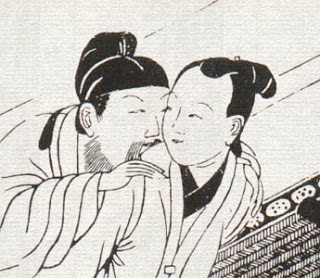
10. In ancient China, homosexuality was referred to as ‘the cut sleeve’ and ‘pleasures of the bitten peach’.
11. Until the late 1400s the word ‘girl’ just meant a child of either sex. If you had to differentiate between them, male children were referred to as ‘knave girls’ and females were ‘gay girls‘.
12. The word drag is apparently an acronym, a stage direction coined by Shakespeare and his contemporaries meaning ‘Dressed Resembling A Girl’.
13. The Virginia Court in 1629 recorded the first gender ambiguity among the American colonists. A servant named Thomas(ine) Hall was officially declared by the governor to be both ‘a man and a woman’. To stop everyone else from being confused, Hall was ordered to wear articles of each sex’s clothing every day.
14. In early 17th century London, there was a gay brothel on the site where Buckingham Palace is today.
15. Nicholas Biddle, an early explorer of America, found in 1806 that among Minitarees (Native American tribe), ‘if a boy shows any symptom of effeminacy or girlish inclinations, he is put among the girls, dressed in their way, brought up with them and sometimes married to men’.
16. Uganda had a gay king. King Mwanga II, who reigned from 1884 to 1888, is widely reported to have had affairs with his male servants.

17. In the 19th century the word gay referred to a woman who was a prostitute and a gay man was a man who slept with a lot of women.
18. Homosexual men in 1900s London made up an entire slang language so they could communicate in public without fear of being arrested – Polari. Some words survived into today’s slang, such as ‘naff’ – meaning lacking style, TBH, standing for ‘to be honest’ or ‘to be had’, and tjuz, meaning to primp or improve.
19. Carmilla, a story of a lesbian vampire that preyed on young women, was written 25 years before Dracula.
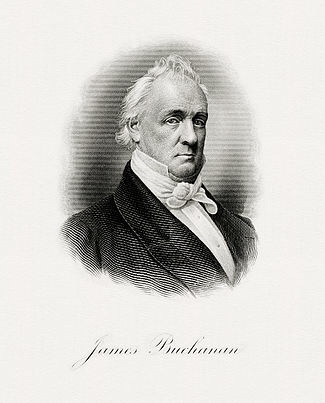
20. The US has apparently already had a gay president, James Buchanan. He shacked up for 10 years with a future VP, William Rufus King, and was referred to by President Andrew Jackson as ‘Miss Nancy’ and ‘Aunt Fancy’.
21. The modern use of gay comes from gaycat, a slang term among hobos meaning a boy who accomapnies an older, more experienced tramp, with the implication of sexual favors being exchanged for protection.
22. While the monocle might have gone out of use, it had a huge following in the ‘stylish lesbian circles of the earlier 20th century’.
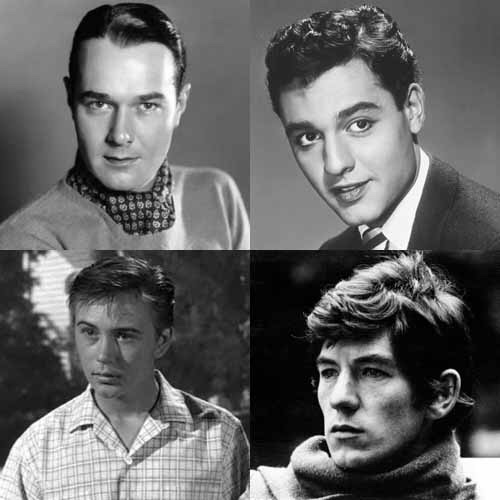
23. The first celebrity to come out as openly gay was Billy Haines, who came out in 1933.
24. The oldest surviving LGBT organization in the world is Netherlands’ Center for Culture and Leisure (COC), which was founded in 1946, and used a ‘cover name’ to mask its taboo purpose.
25. Gay male victims of the Holocaust, who wore the downward-facing pink triangle, were still considered to be criminals when they were freed from concentration camps. They were often sent back to prison to serve out their terms.
26. Mensa, launched in 1946, claims its name was always chosen to mean ‘table’ in Latin to demonstrate the coming together of equals. Really, it was intended to be called ‘Mens’, meaning ‘mind’. They changed it in order to avoid confusion with a men-only magazine. Not so smart.
27. The 1950s saw gay people try to change ‘homosexual’ to ‘homophile’. They hoped an emphasis on same-sex love, instead of sex, would help.

The October 1957 edition of The Ladder, mailed to hundreds of women in the San Francisco area, urged women to take off their masks. The motif of masks and unmasking was prevalent in the homophile era, prefiguring the political strategy of coming out and giving the Mattachine Society its name.
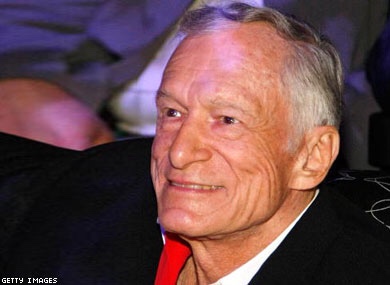
28. Playboy has been loved by straight men for decades, but it was a gay short story that built its reputation. Hugh Hefner was the only one to accept a science fiction story about heterosexuals being the minority against homosexuals in 1955. When letters poured in, he said: ‘If it was wrong to persecute heterosexuals in a homosexual society, then the reverse was wrong too.’
29. The Royal Navy commissioned a class of fast patrol boats during the 1950s which were prefixed with the word ‘gay’. Names included the Gay Bruiser and the Gay Charger.

HMS Gay Bombardier, fitted out in the motor torpedo gunboat design, undergoing trials in Portsmouth Harbour in 1953
30. While many know the handkerchief code, it was popular for gay women to wear blue stars on their wrists in the 1950s and the 1970s to identify themselves in clubs.

31. Jimi Hendrix pretended to be gay to get out of the army in 1962.
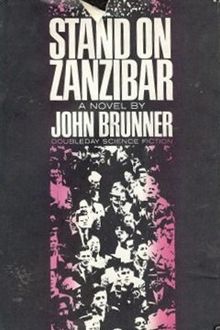
32. A 1969 sci-fi novel accurately predicted the mainstream acceptance of LGBTI people. It also predicted rise of China as a global economy, the EU, TiVO, satellite TV, laser printers and the popularity of marijuana.
33. In the 1960s, the term AC/DC became a popular slang for bisexual. It came from the abbreviations for two types of electrical currents.
34. Barbara Jordan was the first African American to be elected in Texas in 1973. She was also a woman, a Democrat, and gay. She later became the first black woman to give the keynote address at the Democratic National Convention.

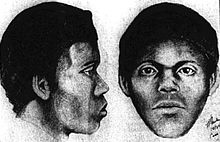
35. A serial killer, the Doodler, targeted gay men in 1970s San Francisco. He would sketch his victims nude before murdering them. While three victims survived, and a suspect was identified, no one was willing to out themselves in order to convict the suspect.
36. Bruce Banner’s name was changed to David Banner in 1970s show The Incredible Hulk, as ‘Bruce’ was considered a stereotypically gay name.
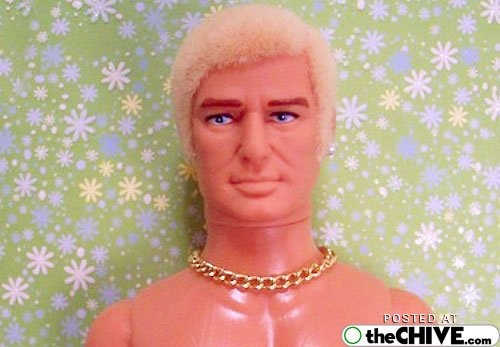
37. The first openly gay doll, Gay Bob, was launched in 1977. He had a pierced ear and his box was shaped like a closet.
38. Leonard Matlovich was the first gay US service member to come out. When he died, he was buried without a name and known only as Gay Vietnam Veteran. His epitaph reads: ‘When I was in the military, they gave me a medal for killing two men and a discharge for loving one.’

39. In the early 1980s, a book claims the Naval Investigative Service was investigating homosexuality in Chicago. Having heard gay men refer to themselves as ‘friends of Dorothy’, they went on a futile search for the elusive woman clearly at the center of a homosexual ring.

Judy Garland in her role as Dorothy from The Wizard of Oz is one of two likely origins for the phrase “friend of Dorothy” referring to a gay man or LGBT person.
40. The 1985 film Back To The Future had a deleted scene where Marty tells Doc that he’s worried hitting on his mother could make him gay.
41. Ben Affleck’s 1993 directorial debut was titled: ‘I Killed My Lesbian Wife, Hung Her on a Meat Hook, and Now I Have a Three-Picture Deal at Disney’.

42. The US government considered making a ‘gay bomb’. Scientists figured in 1994 that discharging female sex pheromones over enemy forces would make them sexually attracted to each other.
43. Doctor Who actor John Barrowman nearly got the role of Will in Will and Grace in 1998. But he lost the part when producers thought he was ‘too straight’. Barrowman is gay and Eric McCormack, who got the part, is straight.

44. Peter Tatchell, an Australian gay rights activist living in Britain, attempted a citizen’s arrest on Zimbabwean president Robert Mugabe in 1999. He walked up to Mugabe, grabbed the dictator by the arm, and said: ‘President Mugabe, you are under arrest for torture’.
45. Founded in 2004, LGBTI activists in Australia created a micronation called the Gay and Lesbian Kingdom of the Coral Sea Islands. The national flag is the LGBT color flag, the official currency is the Euro, and it still exists today.
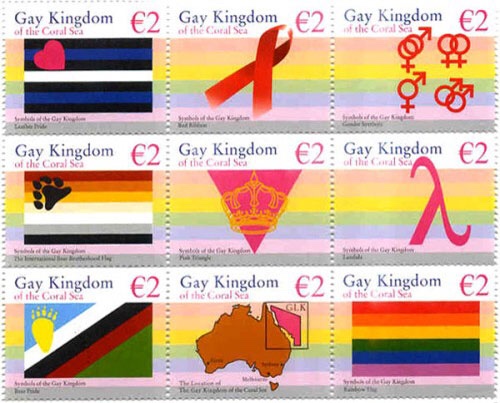
46. A group from the Greek island of Lesbos requested a legal injunction to ban gay groups from using the word ‘lesbian’ in their names in 2008, claiming it was ‘insulting’ them around the world. It failed.
47. Chinese news agency Xinhua dubiously reported on the apparent existence of a Swedish town in 2009, a town of 25,000 lesbians forbidden to speak to men. Several Swedish tourism sites crashed due to the number of Chinese visitors.
48. In 2010, Microsoft banned a user from Xbox Live for putting Fort Gay as his address. When he tried to tell them that Fort Gay actually exists in West Virginia, it took an appeal from the town’s mayor for it to be corrected.
49. A Hong Kong billionaire offered $65 million to the man that was able to woo and marry his lesbian daughter. It didn’t work.

50. The first gay kiss to be screened in Saudi Arabia was seen in 2012. It was from UK soap Brookside, the first ever televised lesbian kiss in the UK, which originally aired in 1993. It was only thanks to the London 2012 Olympics opening ceremony.

Reference
- The 50 coolest and weirdest facts from lgbti history, Gay Star News, 1 October 2016, by Joe Morgan https://www.gaystarnews.com/article/50-weirdest-and-coolest-facts-lgbti-history200215/#gs.ttprhx

 timalderman