Tag Archives: homophobia

Shunned, Abused and Tortured: David Berry Portrays What Many Gay Men Endured In 1950s Australia

Needless to say, this has already screened, but as a fairly accurate portrayal of a gay man’s life in 1950s rural Australia, it is important to acknowledge this truly realistic acting on David Berry’s part, and the affect it had on him.

SHUNNED by society, treated like criminals and tortured. Actor David Berry was deeply impacted portraying what so many gay men endured.

ACTOR David Berry would be so traumatised by his television character some days that he’d break down in hysterics on set.

The 31-year-old star of A Place To Call Home would be totally inconsolable — a sobbing mess. And he began to take the heavy experiences of James Bligh with him at the end of a day’s filming.

It wasn’t just the heavy storylines from the Foxtel period drama, set in 1950s Australia — it was that so much truth was woven in to the fictional heir to a farming fortune.

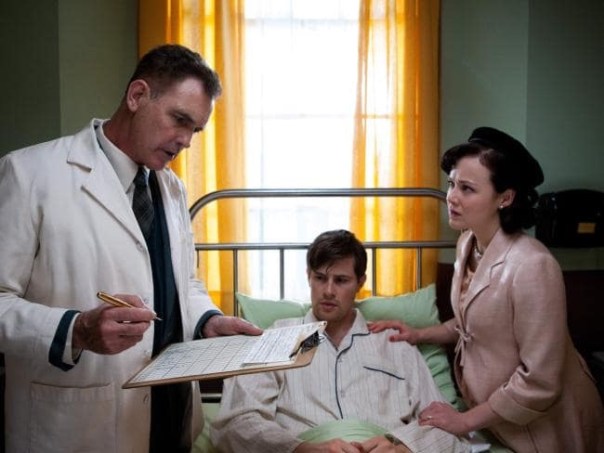
James is married but gay and, in the previous two seasons, has experienced everything from forbidden love to family disapproval and even horrific “treatments” including electroshock.

“In the beginning, I did a lot of research about what it meant to be a gay man in this era,” Berry said.

“But I also interviewed men who lived through this time, as well as those ordeals — including the so-called therapies. I looked at real stories so I could tell an honest one with these characters.

“That’s why I feel an enormous burden. I have a very real possibility to do James well because there are so many people who can relate to him.”

Elements of truth … David Berry interviewed gay men who lived through a far less accepting era to help shape his character James. Picture: SuppliedSource:Foxte

Berry has heard from many of those men, who say seeing a familiar battle waged on the small screen has had a profound impact.

For many, it helped them to come to terms with the often barbaric events they lived through. A few said they felt closure — an inner peace.

“That’s humbling,” Berry said. “It’s also very scary. I owe these people — they’re invested in the character.”

Those investments include very vivid recollections of being held against their will in hospitals, electrocuted, pumped full of drugs and mentally abused.

Things have certainly changed in 60 years. It’s no longer illegal to be a homosexual, society is far more accepting and horrific medical torture like that no longer takes place.

Shameful treatment … Some doctors in that era tried to “cure” homosexuality with barbaric practices like electroshock and drug aversion. Picture: SuppliedSource:Supplied

But Berry said things are still far from perfect.

“You only need to look at the gay marriage debate to see that,” he said.

“There’s still a certain amount of prejudice in society. I think if James was a character set in present day he’d still have his own battles.”

In fact, he’s heard from young gay men who say James has helped them to accept who they are.

“He’s relatable to those who can’t be who they are, whose families and communities don’t or won’t accept them.”

When Channel Seven axed A Place To Call Home in mid-2014, Berry and the rest of the cast bid farewell to their much-loved personas.

Several months later when Foxtel saved the drama — an unprecedented move in television — most of the actors were ecstatic. But Berry admits he felt sick with anxiety.

“It’s not that I was reluctant … let’s say apprehensive. I didn’t sleep very well. I even developed an eye twitch!”

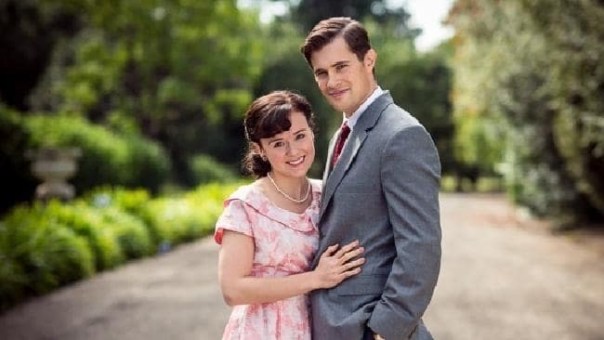
Dynamic duo … David Berry and Arianwen Parkes-Lockwood, who plays his on-screen wife Olivia Bligh. Picture: Chris PavlichSource:News Limited

It wasn’t just that he’d moved on — Berry was in two war-themed documentaries in that year — but he was nervous to go back.

“Everything that James had gone through, I was terrified about having to live through that again.”

It’s why the actor argued for a progression of his character’s storyline in season three. Berry wanted to see James with a bit more strength, after so many episodes of being the victim.

“At the end of the day, he’s a wealthy and influential heir who’s a born leader. I thought more of that should come through.”

And while it will in the new episodes to air from this Sunday, there’s no shortage of heavy drama either.

Haunting storyline … There’s a scene in the new season of A Place To Call Home that left David Berry an emotional wreck for days. Picture: SuppliedSource:Supplied

There’s one particular scene coming up that Berry said still haunts him.

“I can’t say too much without giving it away, but there’s an argument between James (and his wife) Olivia that gets extremely heated. It really shook me.

“When you see it, I think you’ll understand why.

“For a week after, I had total anxiety. I’d start crying for no reason — just totally bawling on set or at home. I had zero control over it.”

The emotion of someone who doesn’t exist bleeding into his own world was a frightening experience, Berry said.

“I guess that’s all good for the character,” he laughed. “Probably not so much for my wife (in real life).”

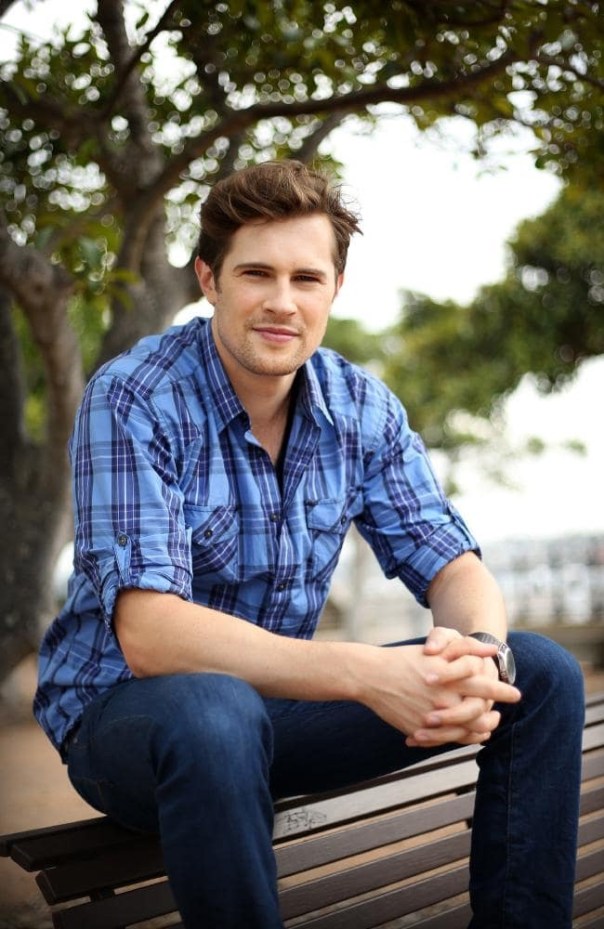
Grateful actor … David Berry says he’s thrilled to have a part in such a quality production.Source:News Corp Australia

There are many things about this show that Berry is fond of. The opportunity to tell such a rich story, for one, as well as the high production values and quality feel of the show.

But the young performer has also discovered something a white, heterosexual man rarely does.

“I’ve experienced what it feels like to not be loved or accepted for who you are,” he said.

“That’s a very potent emotion. It’s such a big, important part of life, and not having it is pretty rough — you end up wanting and yearning for it and there’s not a lot of room for anything else.”

But will James ever get the one thing he desperately wants? Berry said to watch this space.

In teasers for the upcoming season, his character is seen in flirtatious situations with a handsome doctor, hinting at a possible romantic dalliance to come.

“I think James will always fight to be at peace. Whether he gets there is another story. It’ll be difficult, given the time and his circumstances.

“But I know I’ll fight to get him there.”

Reference

Gay History: History Of The Ex-Gay Ministries and; The Abominable Legacy of Gay-Conversion Therapy

For most of the twentieth century, homosexuals were considered mentally ill by the psychiatric profession. This diagnosis was due entirely to prejudice and was not backed by legitimate science. Studies on homosexuality were poorly conceived, culturally biased and often used institutionalized mental patients as study subjects.

After reviewing the evidence, in 1973 the American Psychiatric Association removed homosexuality from its Diagnostic and Statistical Manual (DSM), which is its list of mental disorders. There was simply no logical or coherent reason to stigmatize gay and lesbian Americans. Not long after, every respected mainstream medical and mental heath association followed the APA’ lead.

Only four years before this monumental decision, the Stonewall riots in New York City’ Greenwich Village ushered in the dawn of the modern gay liberation movement. For the first time, GLBT people began to receive media visibility and coming out finally seemed like a viable option.

As more people chose to live honestly and openly, and gay communities began to flourish in areas such as New York and San Francisco, this presented a challenge to conservative churches, which had long believed that homosexuality was sinful behavior. Many conservative gay Christians were deeply conflicted between their beliefs and their sexual orientation. Their answer to this heart-wrenching dilemma was starting ex-gay ministries. Influenced by the miracle-seeking Jesus Movement, the ex-gay ministries adopted name and claim theology. Essentially, this meant if you kept repeating you had “changed” — even if you had not — God would eventually grant you the miracle of heterosexuality as a reward for your faith.
Love In Action was the first contemporary ex-gay ministry and was founded in 1973 in San Raphael, CA, by three men: John Evans, Rev. Kent Philpott, and Frank Worthen.

Evans ultimately denounced Love In Action after his best friend Jack McIntyre committed suicide in despair over not being able to “change.” Today, Evans assists people in healing from the psychological damage incurred by the ex-gay industry. Frank Worthen still remains with the ex-gay ministries.

Philpott, who is straight, wrote “The Third Sex? ” which featured six people who supposedly converted to heterosexuality through prayer.

Eventually, it was revealed no one in his book actually had changed, but the people reading it had no idea about the unsuccessful outcomes. As far as they knew, there was a magical place in California that had figured out the secret for making gays into straights.

As a result of Philpott’ book, within three years more than a dozen “ex-gay” ministries spontaneously sprung up across America. Two leading “ex-gay” counselors at Melodyland Christian Center in Anaheim, California – Gary Cooper and Michael Bussee – decided to organize a conference where members of the budding ex-gay movement could meet each other and network.

In September 1976, Cooper and Bussee’ vision came to fruition as sixty-two “ex-gays” journeyed to Melodyland for the world’ first “ex-gay” conference. The outcome of the retreat was the formation of Exodus International, an umbrella organization for “ex-gay” groups worldwide.

The group was rocked to its core a few years later when Bussee and Cooper acknowledged that they had not changed and were in love with each other. They soon divorced their wives, moved in together and held a commitment ceremony. In June 2007, Bussee issued an apology at an Ex-Gay Survivors Conference to all of the people he helped get involved in ex-gay ministries.

The Expansion of the Ex-Gay Industry

In 1979, Seventh Day Adventist minister Colin Cook founded Homosexuals Anonymous (HA). But Cook’ “ex-gay” empire crumbled a few years later after he was scandalized for having phone sex and giving nude massages to those he was supposedly helping become heterosexual.

As acceptance for homosexuality grew in the late 1970′, the “ex-gay” ministries had trouble attracting new recruits and growth of these programs stagnated. With the advent of AIDS, however, the ex-gay ministries found fertile growth potential from gay men who were terrified of contracting the virus.

Nonetheless, even as the epidemic spurred new growth, the “ex-gay” ministries remained relatively obscure in mainstream society. This dramatically changed in 1998 when the politically motivated Religious Right embraced the “ex-gay” ministries. Fifteen anti-gay organizations launched the “Truth In Love” newspaper and television ad campaign, with an estimated one million dollar price tag.

But the ad campaign soon backfired after University of Wyoming student Matthew Shepard was murdered because of his sexual orientation. Americans began to see the Truth In Love campaign as discriminatory and debated whether it had contributed to a climate of intolerance where hate could flourish. Due to withering criticism in the media, the anti-gay coalition ended its campaign prematurely.
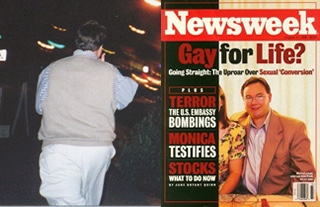
Additionally, “ex-gay” poster boy John Paulk, who the ad campaign sponsors placed on the cover of Newsweek under the large headline, “Gay for Life?,” was photographed in a Washington, DC gay bar in 2000. In 2003, Michael Johnston, the star of the Truth In Love television campaign, stepped down after allegedly having sex with men he met on the Internet. He has since moved to a residential sex addiction facility in Kentucky.

Today, the main financier and facilitator of ex-gay ministries is Focus on the Family, which hosts a quarterly symposium called Love Won Out. Exodus International has also grown to more than 100 ministries and has a Washington lobbyist. Recently, the Southern Baptist Convention has entered the fray by hiring a staff member to oversee ex-gay programs.

Sadly, as long as people are made to feel ashamed for who they are, these groups will exist. The best way to counter their negative influence is showing an honest and accurate portrayal of GLBT life. When people learn that they can live rich and fulfilling lives out of the closet, the appeal of these dangerous and ineffective groups invariably wanes.

The Abominable Legacy of Gay-Conversion Therapy

Joseph Nicolosi, one of the pioneers of the practice, died last week. But his contribution to the field of psychology lives on.

“I don’t believe anyone is really gay,” Joseph Nicolosi told the New York Times in 2012. “I believe that all people are heterosexual, but that some have a homosexual problem.” Nicolosi, a psychologist, had by then written four books, with titles like Healing Homosexuality and A Parents’ Guide to Preventing Homosexuality. In 1992, he founded the National Organization for Research and Therapy of Homosexuality, or NARTH, an organization of psychologists that aims to help gay people “realize their heterosexual potential” through a practice that is alternately known as “conversion therapy,” “reparative therapy,” and “reorientation therapy.” Nicolosi died on Thursday, March 8, at age 70; NARTH’s announcement said that the cause of death was the flu.

Before NARTH’s founding, there was a small but violent history of gay conversion attempts by doctors and psychologists. In the early 20th century, Freud made attempts using hypnosis. In the 1950s, Edmund Berger advocated a “confrontational therapy” approach to gay patients, which consisted of having practitioners yell at them that they were liars and worthless. Other attempts to convert LGBT people to heterosexuality throughout history have included methods like lobotomy, electroshock to the hands, head, and genitals, testicle transplants from dead straight men “bladder washing,” castration, female circumcision, nausea-inducing drugs, and beatings. But it was Nicolosi who brought gay conversion therapy into the mainstream, popularizing it among religious communities and the American right, and turning what was once a scattered practice of abuse into a multi-million-dollar worldwide industry.

Nicolosi grew up in New York; he received a master’s degree from the New School and spoke in a thick Long Island accent. But he spent his career in Los Angeles. He received a PhD in clinical psychology from an obscure school there, and opened his own clinic in Encino in 1980. He seems to have focused his practice entirely on gay conversion attempts. The time was ripe. The social movements of the 1960s and the gay rights activism that flourished after the Stonewall Riots in 1969 ignited profound fear on the American right. Nicolosi found an eager audience for his claim that heterosexuality and traditional gender conformity were not only superior, but that deviations from them were pathological.

What Nicolosi offered was a way for homophobic parents, patients, and psychologists to validate their anti-gay feelings as being legitimated by nature, science, and psychological evidence.

The field of psychology had never been particularly welcoming to queers, but by the time Nicolosi began practicing, attempts to convert gays had already been relegated to quackery. Freud wrote that the prognosis for heterosexual feeling in homosexual patients was grim (though he did believe that gay impulses could be reduced under some circumstances). In 1932, Helene Deutsch published her study “On Female Homosexuality,” which recounted Deutsch’s attempts to instill heterosexuality in a lesbian, only to find that her patient had begun a relationship with another woman while the study was ongoing. In her conclusion, Deutsch noted that a straight relationship would have been her preferred outcome, but also seemed to acknowledge her patient’s lesbian partnership as psychologically healthy.
In 1948, just a year after Nicolosi was born, Alfred Kinsey published his groundbreaking report Sexual Behavior in the Human Male, which found that homosexual tendencies were much, much more common than had previously been assumed. In 1978, the American Psychological Association removed homosexuality from its list of clinical disorders in its Diagnostic and Statistical Manual. Anti-gay stigma and bigotry were still rampant, both within the culture and within the field, but establishment psychologists had given up conversion attempts as a lost cause.

What Nicolosi offered was a way for homophobic parents, patients, and psychologists to validate their anti-gay feelings as being legitimated by nature, science, and psychological evidence. He established NARTH in 1992 alongside Benjamin Kaufman and Charles Socarides, two other obsessively anti-gay psychologists, explicitly in reaction to the removal of homosexuality from the DSM. They spoke in appealingly professional jargon, using phrases like “trauma” and “bad attachment.”

The organization became a network for homophobic psychologists, as well as a link between the industry and the growing number of ex-gay ministries and “pray away the gay” programs on the Christian right. Nominally secular, NARTH and Nicolosi frequently embraced religious rhetoric and prayer tactics, and were listed as ministry partners by a number of homophobic Christian organizations. The Thomas Aquinas Psychological Clinic, where NARTH is headquartered, is named after a Catholic saint. “We, as citizens, need to articulate God’s intent for human sexuality,” Nicolosi told Anderson Cooper in 2007. That same year, he told an ex-gay conference, “When we live our God-given integrity and our human dignity, there is no space for sex with a guy.”

Nicolosi’s treatments often involved multiple one-on-one sessions per week. According to accounts given by former patients, he seems to have used a mix of Berger’s “confrontational therapy” methods of emotional abuse with what’s known as aversion therapy. Aversion therapy applies pain or discomfort to patients in conjunction with homosexual impulses or behaviors: Everything from snapping a rubber band around a patient’s wrist to giving them electric shocks to making them vomit. He believed that gay people had bad relationships with their parents in absolutely all cases, and spent a great deal of therapeutic time probing patients for incidents of humiliation, neglect, or contempt in their childhoods.

In his books, he instructed parents to monitor their children for supposed early signs of queerness, including shyness or “artistic” tendencies in boys.

For unclear reasons, he also believed that viewing pornography could cure homosexuality, an idea he repeatedly defended to professional gatherings. Programs associated with NARTH have been found to administer beatings to their patients. The majority of Nicolosi’s patients, like the majority of conversion therapy victims generally, were children and adolescents, forced into his care by parents who were bigoted, sadistic, or merely scared. Nicolosi encouraged these impulses; he claimed to be able to identify and reverse homosexuality in children as young as three. In his books, he instructed parents to monitor their children for supposed early signs of queerness, including shyness or “artistic” tendencies in boys.

But even before Nicolosi died, NARTH was facing a host of challenges. It lost its nonprofit status in 2012, and an important accreditation from the California Board of Behavioral Sciences was revoked in 2011. Prominent members of the group have been embroiled in controversy, including George Rekers, a conversion therapy psychologist who was discovered to have hired a 20-year-old male sex worker in 2010. California outlawed the practice for minors in 2012, cutting deeply into NARTH’s L.A.-based operations; New Jersey, Illinois, New York, Vermont, and Oregon have since passed their own bans. But the group and its imitators continue to harm both children and adults.

Discovering that you are gay, or that your child is gay, is frightening. It means confronting a future that will not look like the one that you expected, and it means realizing that you and people you love will be subjected to stigma, discrimination, harassment, and the punitive whims of the state. It means staring down a life with fewer certainties and more vulnerabilities than a straight person’s. Scared and misguided people went to Nicolosi for help, and he exploited their fear to perpetuate hate, inflicting horrible pain and incalculable psychological damage on his victims in the process. It is unfortunate that his legacy won’t die with him.

References

Gay History: Rev. Fred Niles ‘Cleansing March”, October 2, 1989. A Spectacular FAIL!

On this day in 1989, I was running the “Expectations” store, opposite the Oxford Hotel, in Oxford Street. It was almost like the entire gay community, and its supporters, had been waiting for this day. There was a palpable feeling of excitement – almost Mardi Gras-like – mixed with a strong undercurrent of rebellion on the strip. Watching from the 2nd floor window of my store, you could see people starting to line the footpaths early. By the time Nile’s parade participants started their march down the other end of Oxford Street, the paths were packed, and you could follow the progress of the parade from the roar of the crowd! Only for this parade, the roar was not of encouragement, or light-hearted joy, but of hate and vitriol! The communities hatred of Nile, and his constant gay-bashing was being fully voiced. As it passed by our section of the street, I notices a car load of Islanders, roped in by Nile to add bodies to his parade numbers. I don’t know what he had told them, or what they expected,but the looked cowered and terrified! As much as I didn’t feel sorry for Nile, or his cross-on-wheels, I did feel sorry for them. It would have been a very frightening situation from their perspective. Nile got everything he deserved – and then some. As far as the gay community was concerned, the parade was a great success – but not for Nile, or his supporters. He would have gone home with his tail tucked very firmly between his legs.

1989. Politics: Evangelist attempts ‘Cleansing March’ on Sydney’s queer heartland

Queer protestors prepare to give Fred Nile and his followers a rousing reception on Oxford Street. Photograph: Terrence Bell, courtesy of Australian Lesbian and Gay Archives

Australia’s ‘Reverend’ Fred Nile has built a career out of homophobic opportunism. He is the man to whom the media could turn whenever they needed a ‘controversial’ sound-byte on topics such as decriminalisation, HIV/AIDS and anti-discrimination.

For several years he topped up his profile with his annual stunt of a prayer meeting by the route of Sydney’s Gay and Lesbian Mardi Gras Parade. As tens of thousands gathered to celebrate Mardi Gras, Nile and his small band of followers portrayed themselves as brave martyrs standing against a sea of depravity. And on those rare occasions when it rained on the night of the Parade, Nile would claim it was all the result of his prayers – conveniently ignoring the fact that Mardi Gras was held in the middle of Sydney’s rainy season.

By 1989, however, even Nile must have begun to realise that his prayer meeting was being ignored – by God and, more importantly, the media. And so it came to pass that he announced that he would lead a “Cleansing March of Witness for Jesus” up Oxford Street – Sydney’s gay ‘golden mile’ – on October 2nd. The march would end with a “Pro-decency ‘Solemn Assembly of Repentance and Intercession’”.

Never one for under-statement, Nile claimed there would be 100,000 Christians on the march. It’s most unlikely that even he believed he would attract that level of support, but it always makes good Press to come up with such numbers. But whilst he was clearly pre-occupied with boosting the numbers of his likely supporters, he obviously failed to consider the size of the opposition.

This was the first demonstration that I had attended since my arrival in Sydney the previous year and is was quite an eye-opener. It was obvious from the outset that Sydney’s queer community was extremely well-organised and that, in itself, signalled that Nile had bitten off far more than he could chew.

The Gay and Lesbian Rights Lobby, Sydney Gay Solidarity Group and the Gay and Lesbian Mardi Gras were three of the key organisations involved in the counter-demonstration. As we assembled in Green Park, just off Oxford Street, we were all given a cardboard mask with a caricature of Nile’s face on it. The plan, we were told, was to greet Nile and his followers, with thousands of Niles staring right back at them!

But there was more to the masks than mere caricature. They came in a number of different colours and the reason for this soon became obvious. Protestors were despatched to different areas of Oxford Street based on the colour of their masks. This ensured that there was an even spread of people along the route of the Cleansing March.

A couple of protestors in Fred Nile masks. Photograph courtesy of Australian Lesbian and Gay Archives. http://www.alga.org.au

It wasn’t long before we were all in position to greet Nile and his followers. Apparently they were all in high spirits for the first section of the march. Led by a young bearded man carrying a cross (with wheels, unlike the original) they seemed happy and confident – until they turned the corner into Oxford Street. The 1500 or so ‘Christians’ that Nile had managed to muster came face-to-face with 5,000+  vocal, angry queers. More accurately, they came-face-to-face with thousands of Fred Nile faces.

To most people, the fact that they were out-numbered four-to-one by members of the local community would be a clear sign that they weren’t welcome and that they should go back to their own neighbourhoods. But evangelical Christians like nothing more than playing the martyr and so they persisted on their inflammatory course, carrying placards with ‘Christian’ messages like “What’s so gay about AIDS?”

Counter-demonstrators responded with messages like “Repent, Relent, Re-decorate!” and chants of “Two, four, six eight. Are you sure your priest is straight?” The Christians processed dismally up Oxford Street, the queers turned their protest into a party.

At the site of the planned ‘Repentance and Intercession’, Fred Nile was drowned out by boos and chants from the protestors. Then Jamie Dunbar, a photographer from the local gay newspaper, leapt to the microphone and chanted “Go to Hell Fred. Gay love is best!”. He chanted repeatedly until he was removed by Christian heavies.

It was clear to everyone that Nile’s stunt had seriously backfired. Even the media opined that his march had been a deliberate and unnecessary provocation. Yet Nile continued to dig a hole for himself. When interviewed on one news programme he complained that counter-demonstrators had used portable toilets that had been installed for his supporters. In consequence his supporters had been unable to use them because of the risk of AIDS. His interviewer could barely believe her ears and left her audience in no doubt as to what an ignorant and bigoted remark this was. Nile never went near Oxford Street again.

Gay History: The UpStairs Lounge Arson Attack.

http://www.patheos.com/blogs/friendlyatheist/2013/06/24/remembering-the-upstairs-lounge-the-u-s-a-s-largest-lgbt-massacre-happened-40-years-ago-today/
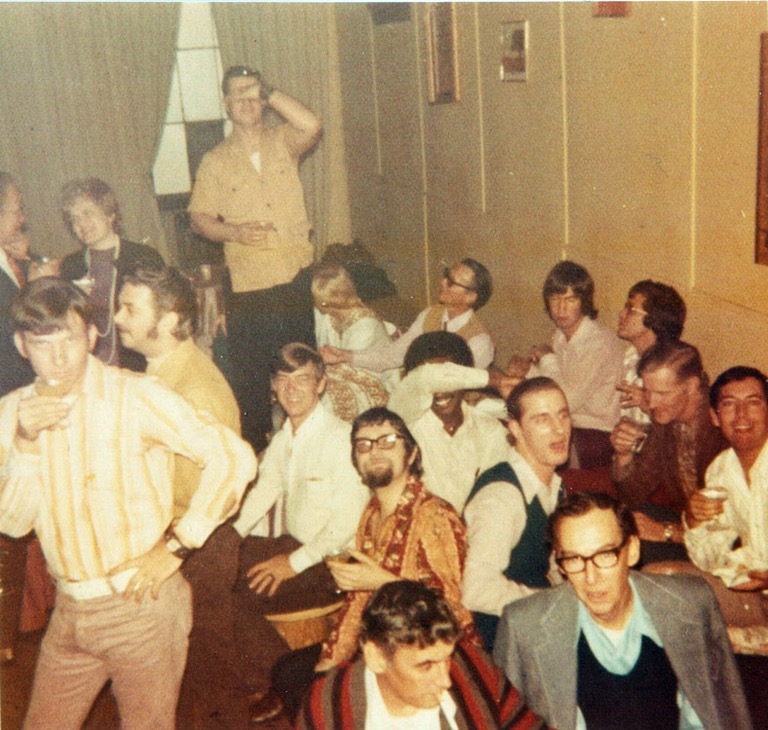
The 24th of June in 1973 was a Sunday. For New Orleans’ gay community, it was the last day of national Pride Weekend, as well as the fourth anniversary of 1969’s Stonewall uprising. You couldn’t really have an open celebration of those events — in ’73, anti-gay slurs, discrimination, and even violence were still as common as sin — but the revelers had few concerns. They had their own gathering spots in the sweltering city, places where people tended to leave them be, including a second-floor bar on the corner of Iberville and Chartres Street called the UpStairs Lounge.

That Sunday, dozens of members of the Metropolitan Community Church (MCC), the nation’s first gay church, founded in Los Angeles in 1969, got together there for drinks and conversation. It seems to have been an amiable group. The atmosphere was welcoming enough that two gay brothers, Eddie and Jim Warren, even brought their mom, Inez, and proudly introduced her to the other patrons. Beer flowed. Laughter filled the room.


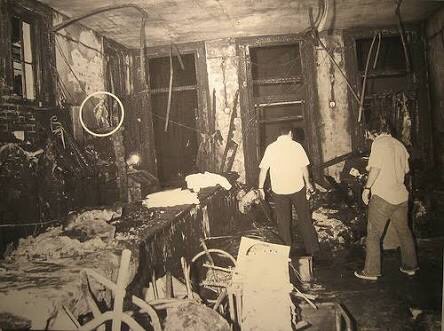
Just before 8:00p, the doorbell rang insistently. To answer it, you had to unlock a steel door that opened onto a flight of stairs leading down to the ground floor. Bartender Buddy Rasmussen, expecting a taxi driver, asked his friend Luther Boggs to let the man in. Perhaps Boggs, after he pulled the door open, had just enough time to smell the Ronsonol lighter fluid that the attacker of the UpStairs Lounge had sprayed on the steps. In the next instant, he found himself in unimaginable pain as the fireball exploded, pushing upward and into the bar.

The ensuing 15 minutes were the most horrific that any of the 65 or so customers had ever endured — full of flames, smoke, panic, breaking glass, and screams.

MCC assistant pastor George “Mitch” Mitchell escaped, but soon returned to try to rescue his boyfriend, Louis Broussard. Both died in the fire, their bodies clinging together in death, like a scene from the aftermath of Pompeii.

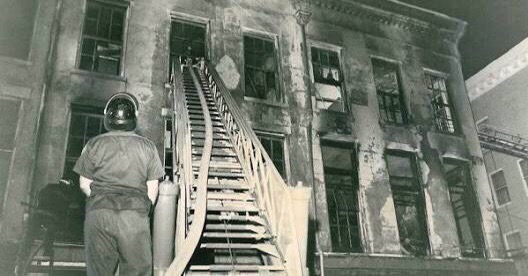
Metal bars on the UpStairs Lounge windows, meant to keep people from falling out, were just 14 inches apart; while some managed to squeeze through and jump, others got stuck. That’s how the MCC’s pastor, Rev. Bill Larson, died, screaming, “Oh, God, no!” as the flames charred his flesh. When police and firefighters surveyed and began clearing the scene, they left Larson fused to the window frame until the next morning.

This news photo is among the most indelible I’ve ever seen

Thirty-two people lost their lives that Sunday 40 years ago — Luther Boggs, Inez Warren, and Warren’s sons among them.

Homophobia being what it was, several families declined to claim the bodies and one church after another refused to bury or memorialize the dead. Three victims were never identified or claimed, and were interred at the local potter’s field.

When the Rev. William Richardson, of St. George’s Episcopal Church, agreed to hold a small prayer service for the victims, about 80 people attended, but many more complained about Richardson to Iveson Noland, the Episcopalian bishop of New Orleans. Noland reportedly rebuked Richardson for his kindness, and the latter received volumes of hate mail.

The UpStairs Lounge arson was the deadliest fire in New Orleans history and the largest massacre of gay people ever in the U.S. Yet it didn’t make much of an impact news-wise. The few respectable news organizations that deigned to cover the tragedy made little of the fact that the majority of the victims had been gay, while talk-radio hosts tended to take a jocular or sneering tone: What do we bury them in? Fruit jars, sniggered one, on the air, only a day after the massacre.

Other, smaller disasters resulted in City Hall press conferences or statements of condolence from the governor, but no civil authorities publicly spoke out about the fire, other than to mumble about needed improvements to the city’s fire code.

Continuing this pattern of neglect, the New Orleans police department appeared lackluster about the investigation (the officers involved denied it). The detectives wouldn’t even acknowledge that it was an arson case, saying the cause of the fire was of “undetermined origin.” No one was ever charged with the crime, although an itinerant troublemaker with known mental problems, Rogder Dale Nunez, is said to have claimed responsibility multiple times. Nunez, a sometime visitor to the UpStairs Lounge, committed suicide in 1974.

The following Wikipedia article goes into more detail, and provides a huge list of references for anyone who wants to read more on this tragedy.

https://en.m.wikipedia.org/wiki/UpStairs_Lounge_arson_attack

The UpStairs Lounge arson attack took place on June 24, 1973, at a gay bar located on the second floor of the three-story building at 141 Chartres Street in the French Quarter of New Orleans, Louisiana, in the United States.[1] Thirty-two people died as a result of fire or smoke inhalation. The official cause is still listed as “undetermined origin”.[2] The most likely suspect, a gay man who had been thrown out of the bar earlier in the day, was never charged.[3] Until the 2016 Orlando nightclub shooting, it was the deadliest known attack on a gay club in U.S. history.

INCIDENT

On Sunday, June 24, 1973, the final day of Pride Weekend,[4] members of the Metropolitan Community Church, a pro-LGBT Protestant denomination, held services inside the club, located on the second floor of a three-story building at the corner of Chartres and Iberville Streets. The MCC was the United States’ first gay church, founded in Los Angeles in 1968.[5] After the service, the club hosted free beer and dinner for 125 patrons. At the time of the evening fire, some 60 people were listening to pianist David Gary perform[6] and discussing an upcoming MCC fundraiser for the local Crippled Children’s Hospital.At 7:56 p.m., a buzzer from downstairs sounded, and bartender Buddy Rasmussen, an Air Force veteran, asked Luther Boggs to answer the door, anticipating a taxi cab driver. Boggs opened the door to find the front staircase engulfed in flames, along with the smell of lighter fluid.[3] Rasmussen immediately led some twenty patrons out of the back exit to the roof, where the group could access a neighboring building’s roof and climb down to the ground floor. The others were accidentally locked inside the second-floor club,[7] some attempting to escape by squeezing through barred windows. One man managed to squeeze through the 14-inch gap, only to fall to his death while burning. Reverend Bill Larson of the MCC clung to the bars of one window until he died, and his charred remains were visible to onlookers for hours afterwards. MCC assistant pastor George “Mitch” Mitchell managed to escape, but then returned to attempt to rescue his boyfriend, Louis Broussard. Both died in the fire, their remains showing them clinging to each other.[8]

Firefighters stationed two blocks away found themselves blocked by cars and pedestrian traffic. One fire truck tried to maneuver on the sidewalk but crashed into a taxi. They arrived to find bar patrons struggling against the security bars and quickly brought the fire under control.[9] Twenty-eight people died at the scene of the sixteen-minute fire, and one died en route to the hospital. Another 18 suffered injuries, of whom three, including Boggs, died.
AFTERMATH

The official investigation failed to yield any convictions. The only suspect for the attack was Rodger Dale Nunez, a local hustler and troublemaker who had been ejected from the bar earlier in the evening after fighting with another customer.[3] Police attempted to question Nunez shortly after, but he was hospitalized with a broken jaw and could not respond. When questioned later on, police records show that he did not appear nervous at all. Nunez had a witness who claimed that he had been in and out of the bar during the 10–20 minutes before the fire, and that he had seen nobody enter or leave the building. Because police observed that the witness was stressed, and had lots of nervous tension, they dismissed the witness as a liar.[10]

Nunez had previously been diagnosed with “conversion hysteria” in 1970 and had visited numerous psychiatric clinics. He had been released from a treatment facility in the year before the fire.[11] After his arrest, Nunez escaped from psychiatric custody and was never picked up again by police, despite frequent appearances in the French Quarter. A friend later told investigators that Nunez confessed on at least four occasions to starting the fire. He told the friend that he squirted the bottom steps with Ronsonol lighter fluid bought at a local Walgreens and tossed a match. He did not realize, he claimed, that the whole place would go up in flames.[3] Nunez took his own life in November 1974.[9]
In 1980, the state fire marshal’s office, lacking leads, closed the case.[9]
MEDIA COVERAGE

Coverage of the fire by news outlets minimized the fact that LGBT patrons had constituted the majority of the victims, while editorials and talk radio hosts made light of the event.[6] No government officials made mention of the fire: as Robert L. Camina, writer/director of a documentary about the fire (Upstairs Inferno), said in 2013, “I was shocked at the disproportionate reaction by the city government. The city declared days of mourning for victims of other mass tragedies in the city. It shocked me that despite the magnitude of the fire, it was largely ignored.”[7]

CHRISTIANS’ REACTIONS

Reverend William P. Richardson of St. George’s Episcopal Church, agreed to hold a small prayer service for the victims on June 25. Approximately 80 people attended the event. The next day, Iveson B. Noland, the Episcopal bishop of New Orleans, rebuked Richardson for hosting the service. Noland received over 100 complaints from parishioners concerning the service, and Richardson’s mailbox filled with hate mail.[12]

Soon after two additional memorial services were held on July 1 at a Unitarian church and St. Mark’s United Methodist Church, headed by Louisiana’s Methodist bishop Finis Crutchfield and led by MCC founder Reverend Troy Perry, who came from Los Angeles to participate. Mourners exited through the church’s main door rather than an available side exit, a demonstration of a new willingness to be identified on camera.[9] Several families did not step forward to claim the bodies of the deceased. A few anonymous individuals stepped forward and paid for the three unknown men’s burials, and they were buried with another victim identified as Ferris LeBlanc in a mass grave at Holt Cemetery.[5] LeBlanc’s family would not learn of his death in the arson attack until January of 2015.[13]
In June 1998, the 25th anniversary of the fire, as part of Gay Pride celebrations, a memorial service was organized by Rev. Dexter Brecht of Big Easy Metropolitan Community Church (also known as Vieux Carre MCC) and Toni J. P. Pizanie.[7] It was held at the Royal Sonesta Hotel Grand Ball Room and attended by New Orleans Councilman Troy Carter, Rev. Carole Cotton Winn, Senior Rabbi Edward Paul Cohn of Temple Sinai, Rev. Kay Thomas from Grace Fellowship in Christ Jesus, Rev. Perry, and 32 members of the New Orleans community representing the victims. Carter then led a jazz funeral procession to the building on the corner of Chartres and Iberville Streets, the site of the club, and members of the local MCC laid a memorial plaque and wreaths. Among the attendees was the niece of victim Clarence McCloskey.[14]

LEGACY

  • In 1998 the reconstituted MCC congregation in New Orleans (Big Easy Metropolitan Community Church, since renamed again to MCC of New Orleans) held a 25th anniversary service to commemorate the arson and its 32 deaths. This event is significant because, unlike the one it memorialized, the 300 members of the congregation refused to hide their faces and instead insisted on entering and leaving the event through the church’s front doors.
  • In 2008 The North American Convocation of Pro-LGBT Christians planned to hold its “Many Stories, One Voice” event in New Orleans to commemorate the 25th anniversary of the conference (and the 35th anniversary of the tragedy), but eventually canceled the conference for the year due to Hurricane Gustav.[15]
  • In 2008 local artist Skylar Fein constructed an art installation titled Remember the Upstairs Lounge.[16] The New Orleans Museum of Art has since acquired Fein’s art exhibit, which includes a reproduction of the bar.[7]
  • A TAPS group in episode 15, Season 8 of Ghost Hunters visited the lounge to encounter alleged ghosts of the fire’s casualties. The episode identified the event as the “Jimani Lounge Massacre.”[17]
  • In 2013, noting the 40th anniversary of the fire, the Roman Catholic Archbishop of New Orleans, Gregory Michael Aymond, issued a statement of regret that his predecessor, Archbishop Philip Hannan, and the local church leadership ignored the arson attack. Aymond wrote to Time magazine that “In retrospect, if we did not release a statement we should have to be in solidarity with the victims and their families … The church does not condone violence and hatred. If we did not extend our care and condolences, I deeply apologize.”[18]
  • In 2013, Royd Anderson wrote, directed, and produced a documentary about the tragedy titled The UpStairs Lounge Fire.[19][20][21]
  • Also in 2013, Wayne Self (a playwright and composer from Natchitoches, Louisiana), first presented a musical called Upstairs about the tragedy.[22]
  • In 2014, McFarland & Company released the Clayton Delery-Edwards-penned account of the arson The Up Stairs Lounge Arson: Thirty-two Deaths in a New Orleans Gay Bar, June 24, 1973. The book was selected as one of the Louisiana Endowment for the Humanities 2015 Books of the Year.[23]
  • In 2014, Melange Dance Company of New Orleans performed a tribute show as part of the New Orleans Fringe Festival. ‘The UpStairs Lounge’ show aimed to uplift with a combination of dance and film that celebrate the Lounge, its patrons, and the strides taken towards Human Rights since the incident.[24]
  • In 2015, Melange Dance Company of New Orleans presented an extended performance of ‘The UpStairs Lounge’ show originally performed as part of the 2014 New Orleans Fringe Festival.[25]

RELATED

  • The space on the second floor formerly known as the UpStairs Lounge now contains business offices and a kitchen for the Jimani Lounge (established 1971), which is located on the first floor. The current owner, Jimmy Massacci, and his father, the former owner, personally witnessed the arson and its aftermath.[5] The third floor, then owned by the UpStairs Lounge, remains unused and partially damaged. The building itself dates back to at least 1848, when the earliest-known sale of the building is documented.[26]
  • The fire was the third arson attack to affect the MCC,[27] following a January 27, 1973, arson at the church’s headquarters in Los Angeles (resulting in the destruction and collapse of the building with no injuries) and another 1973 arson at an MCC church in Nashville, Tennessee (also with complete destruction of the church and its furnishings but no injuries).[28][29]

REFERENCES

  1.  “Upstairs Lounge Fire Memorial, 40 Years Later – NOLA DEFENDER”. Retrieved September 21, 2014.
  2. “The Up Stairs Lounge Arson: Thirty-Two Deaths in a New Orleans Gay Bar. By Clayton Delery-Edwards. P.118
  3. a b c d Townsend, Johnny (2011). Let the Faggots Burn: The UpStairs Lounge Fire. BookLocker.com, Inc. ISBN 9781614344537.
  4. “The Tragedy of THE UPSTAIRS LOUNGE”. The Jimani Lounge.
  5. a b c Alyne A. Pustanio (2010). “The Haunting Tragedy of the UpStairs Lounge”. AlynePustiano.com.
  6.  a b Erik Ose (July 3, 2008). “Gay Weddings and 32 Funerals: Remembering the UpStairs Lounge Fire”. Huffington Post.
  7. a b c d Diane Anderson-Minshall (November 15, 2013). Remembering the Worst Mass Killing of LGBT People in U.S. History. The Advocate.
  8. Eric Newhouse, Associated Press (1973-06-25). “Arson Eyed in New Orleans Fire”. Abilene Reporter-News, Texas.a b c d Freund, Helen (June 22, 2013). “UpStairs Lounge fire provokes powerful memories 40 years later”. New Orleans Times-Picayune. Retrieved June 26, 2013.
  9. The Up Stairs Lounge Arson: Thirty-Two Deaths in a New Orleans Gay Bar. By Clayton Delery-Edwards. P.122
  10. The Up Stairs Lounge Arson: Thirty-Two Deaths in a New Orleans Gay Bar. By Clayton Delery-Edwards. P.127
  11. William P. Richardson – Profile – LGBN-RAN
  12. The New Orleans Advocate. Family solves mystery after learning uncle died in infamous UpStairs Lounge Fire 40-plus years ago in New Orleans. June 6, 2015. Retrieved June 20, 2016.
  13.  “The Upstairs Fire – June 24, 1973 – 25th Anniversary Memorial Service”. Retrieved September 21, 2014.
  14. “Pro-LGBT Christians to mark 35th anniversary of deadliest fire in New Orleans’ history”.
  15. Doug MacCash (November 2, 2008). “Skylar Fein: Installation reignites memory of a deadly fire”. The Times-Picayune.
  16. “Ghost Hunters – Season 8, Episode 15: French Quarter Massacre”. Syfy. September 19, 2012.
  17. “The Upstairs Lounge Fire: The Little Known Story of the Largest Killing of Gays in US History”. Time. June 21, 2013. Retrieved June 25, 2013.
  18. “Mass killing at New Orleans gay lounge remembered 40 years later”. Nicole, Erin. WGNO-ABC. June 24, 2013.
  19. “The UpStairs Lounge Fire (2013 trailer)”. Royd Anderson Productions. Retrieved June 16, 2013.
  20. “Acadiana Pride Festival, “a celebration of culture””. Berry, Brheanna. KLFY-CBS. March 29, 2015.
  21. Wayne Self. “Upstairs”.
  22. The Advocate: Book of the Year: Biography Documenting Worst Mass Killing of Gays in U.S. History
  23. “Melange Dance Company Events”. November 20, 2014.
  24.  “Melange Dance Company Events”. March 27, 2015.
  25. “The Building”. The Jimani Lounge.
  26. Vicki Lynn Eaklor (2008). Queer America: A GLBT History of the 20th Century. p. 136.
  27. Dudley Clendinen; Adam Nagourney (June 5, 2001). Out For Good: The Struggle to Build a Gay Rights Movement in America. Simon and Schuster. p. 181. ISBN 978-0-684-86743-4. Retrieved December 13, 2012.
  28. The Rev. Elder Troy D. Perry; The Rev. Elder Nancy Wilson (November 1, 1997). Report to the President for the White House Conference On Hate Crimes (PDF). UFMCC.