Tag Archives: Gay

Gay History: NOT The Only Gay In Village! Plans Revealed For ‘No Straights’ Commune

A PLAN to build a “gays only” gated housing estate “with all mod cons” has been revealed as an elaborate hoax.

ALL ABOARD: Would a gays only commune be of any benefit at all to society? [GETTY]

The Gay Village project described itself as a scheme to create a prejudice-free community in Tilbery, Netherlands, complete with a cooking school and tennis courts.

The plan was endorsed by officials, estate agents and developers when it looked like building may go ahead.

Tilburg mayor, Peter Noordanus, welcomed the plan.https://get-latest.convrse.media/?url=https%3A%2F%2Fwww.dailystar.co.uk%2Fnews%2Flatest-news%2Fgay-only-commune-in-netherlands-18734601&cre=top&cip=6&view=web

He said: “A tolerant city is pleased to have a gay community within its borders.”

It later emerged that the officials were persuaded to play along by the Roze Maandag (Pink Monday) foundation which hosts an annual day at the Tilburg Fair, dedicated to LGBT issues.

HOAX: The plan for the housing estate was an elaborate joke to raise awareness [GETTY]

Roze Maandag posted on its website stating: “Although Gay Village is not real, intolerance against the gay community is.”null

The website explained how they were inspired to act by recent surveys showing that nearly a quarter of all gay men in the Netherlands – regarded as one of the most tolerant countries in the world – did not feel safe in their own neighbourhoods.

Despite being a hoax the story was met with intense criticism when it was first revealed.

Many argued that by “ghettoising” itself the LGBT community were doing nothing to help tackle homophobia and transphobia.

The group said it was pleased that the story gathered negative attention, stating: “to the effect that a gay village is indeed ‘ridiculous’”.

A spokesperson told the Netherlands Times: “We are happy with the thousands of negative, and the fewer positive, reactions.

“It is great to hear that the majority is against the idea. All we wanted was to create an awareness, and we are certain that we succeeded in this.”

EQUAL: The hoax highlighted the need for society to be more inclusive of all members of all communities [GETTY]

Reference

Gay History: Gangster Twins Ronnie And Reggie Kray ‘Had Secret Gay Sex With Each Other’

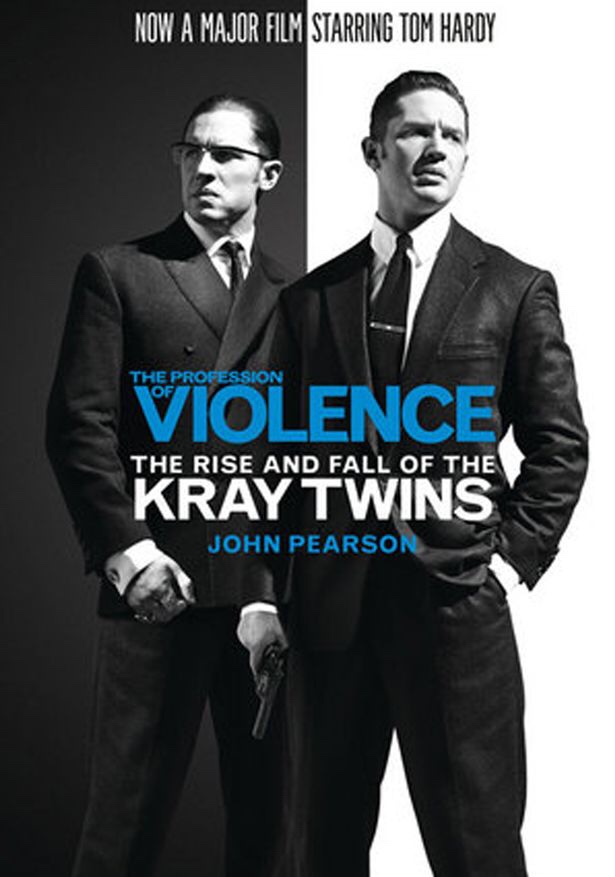
Ronnie and Reggie Kray had a secret incestuous relationship with each other so criminal rivals would not discover they were gay according to author John Pearson who interviewed them both

Kray Twins

Vicious gangster twins Ronnie and Reggie Kray had an incestuous sexual relationship with each other as they were growing up.

The pair, who ran a cruel and violent criminal empire in London’s East End in the 1960s, were terrified of their secret coming out.

They were worried that rivals would see their sexuality – Ronnie was a homosexual and Reggie was bisexual – as a sign of weakness so only had sex with each other in order to keep the secret.

Author John Pearson who extensively interviewed the brothers and their associates has made the revelation as a new film comes out on the twins.

John said: “Homosexuality was nothing to be proud of in the East End.

“But as they became more notorious, Ronniebecame quite shameless about it.

“According to Ron in the early days they had sex with each other because they were terrified about people finding out.”

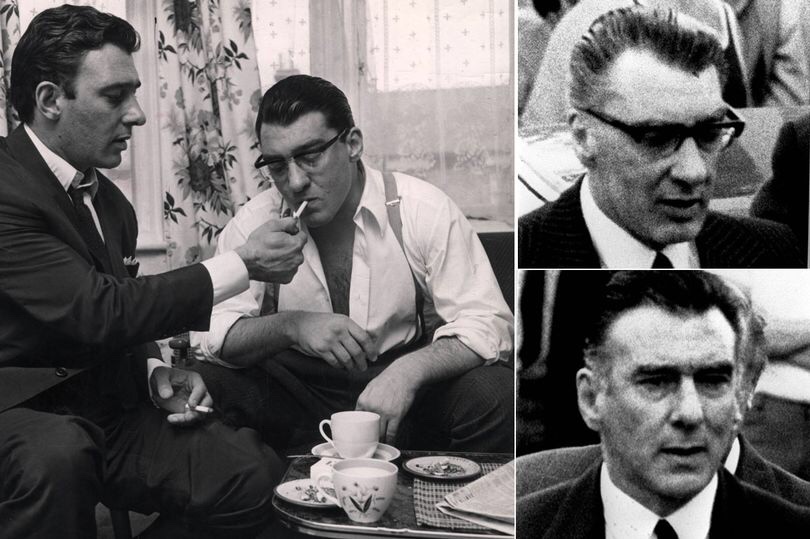
Smart: Twin brothers and organised crime bosses Ronnie and Reggie Kray (Image: Getty)

It has long been known that Ronnie was a homosexual and Reggie was bisexual but the news they had a sexual relationship with each other gives a telling insight into their close connection.

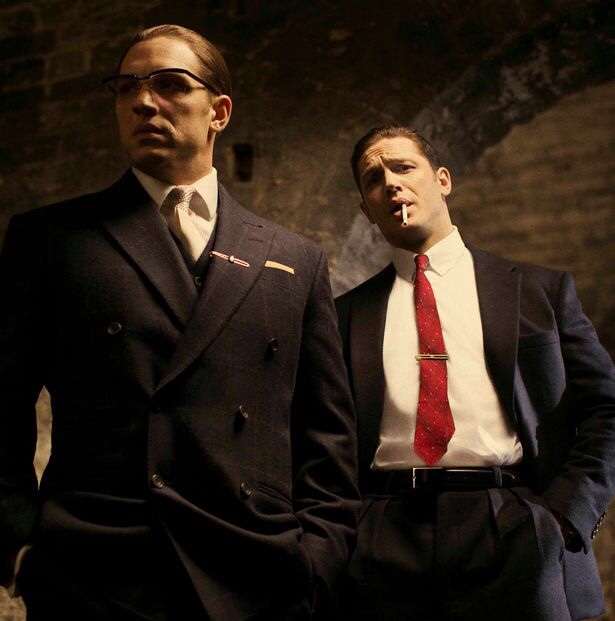
Actor Tom Hardy stars as both brothers in a new film , Legend, based on the lives of the murderous pair as told in a book by John.

Actor: Tom Hardy in his latest roles as Ronnie (left) and Reggie Kray in the film, Legend (Image: PA)

John has written three books on the brothers and says Ronnie told him the twins dark secret during one of their chats.

He says while he knew about the the incest he waited until the brothers were both dead before revealing it for fear of retribution.

Ronnie died in Broadmoor secure hospital of a heart attack in 1995 and Reggie died of cancer in 2000 having been released from prison on compassionate grounds.

In his book Notorious: The Immortal Legend of the Kray Twins , John said the pair were spoilt by their mother Violet, Grandma Lee and their two aunties, May and Rose, while their father was soon dominated by the increasingly violent brothers.

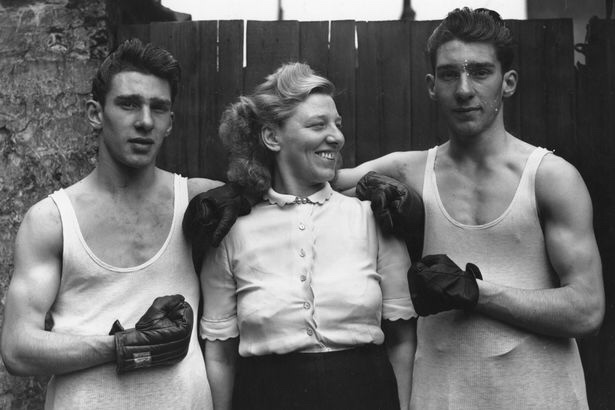
Brotherly love: Amateur boxers Reggie (left) and Ronnie Kray with their mother Violet Kray (Image: Getty)

John wrote: “All of which conformed, of course, to a classic pattern; and with their warm, indulgent mother, their ineffectual father, and their surrounding cast of loving women, it was not surprising that, with adolescence, the Twins discovered that they were gay.

Given their identical genetic make-up, it was virtually inevitable that if one twin was, the other would be too.”

Tome: Author John Pearson’s book on the Kray Twins

However there was a problem for the twins as back in the macho world of 1950s East End it was seen as a weakness to be gay.

John wrote: “So it was hardly surprising that, for the time being, both the twins kept their sexual preferences to themselves.

Claims: Author John Pearson says the brothers had an incestuous relationship(Image: Twitter)

The brothers ran a notorious criminal network in the 1960s building up an empire of nightclubs though hijacking, armed robbery and arson.

Fighters: Ronnie and Reggie during their amateur boxing days in their youth

As they moved from the East End to the West End their became big names rubbing shoulders with Frank Sinatra and Judy Garland and being photographed by David Bailey.

Eventually the police got them and the Krays went to prison for murdering fellow gangsters George Cornell and Jack McVitie.

Reference

Gay History: Pride, Prejudice and Punishment: Gay Rights Around The World

Australians have voted in favour of legalising same-sex marriage — but elsewhere in the world gay people can struggle to simply stay out of jail.

Being openly gay is effectively illegal in more than 70 countries — and can result in severe punishment, sometimes even death.

See how Australia’s position on same-sex marriage compares around the world.

The state of marriage rights

Voters’ ‘yes’ response to the SSM postal survey is Australia’s latest step towards allowing same-sex couples to marry, and may prove close to the culmination of a long campaign.

Campaigners have suggested Australia is lagging behind rest of the world.

It is fair to say that most countries with similar cultural backgrounds to Australia have now legalised same-sex marriage, but based on total country numbers, Australia remains part of the majority in restricting marriage to couples made up of a man and a woman.

Out of 209 countries the ABC examined, only 24 allow same-sex couples to marry.

There is no same-sex marriage in Asia or the Middle East, and South Africa is the only country in Africa to have legalised it.

In Europe, the legal status of same-sex marriage is mixed. The Netherlands was the first country in the world to legalise same-sex marriage in 2001, with other Western countries including the United KingdomFrance, Spain and Germany following it.

Yet more than half of European Union members have not.

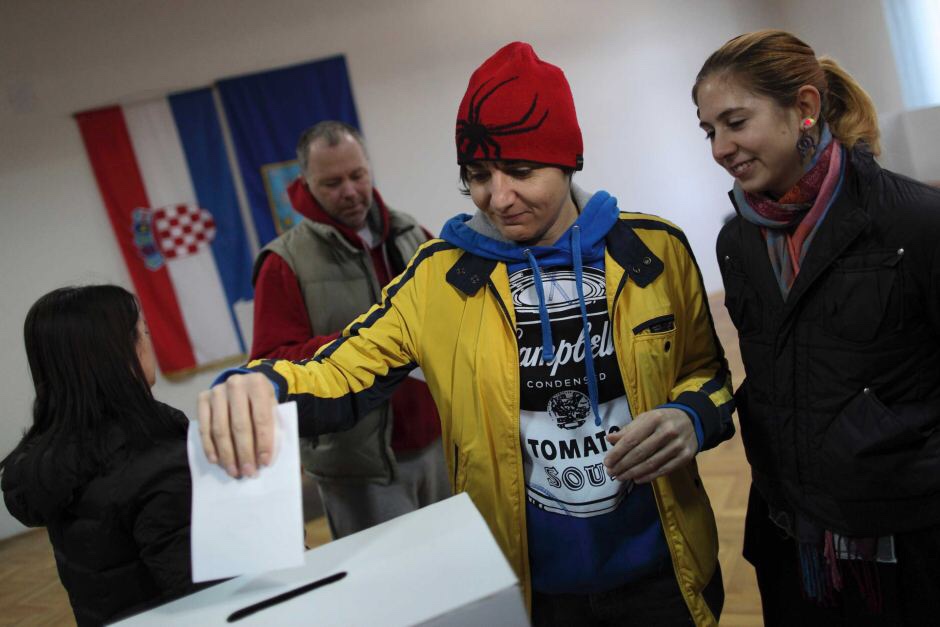
Mima Simic and her girlfriend Marta Sisak vote in Croatia’s referendum on defining marriage as a “union of man and woman”.
Reuters: Antonio Bronic

Some countries in Eastern Europe have recently sought to amend their constitutions to entrench the “traditional definition” of marriage:

  • Hungary brought in a new constitution in 2011 that specifically restricts marriage to heterosexual couples.
  • Voters in Croatia (2013) and Slovakia (2015) voted to change the definition of marriage in their constitutions so that it applies only to a union of a man and a woman, although the Slovakian referendum was invalid due to a low turnout.
  • In December 2015, Slovenian voters rejected the legalisation of same-sex marriage in a referendum.

Australia made a similar amendment to its Marriage Act in 2004, adding a definition of marriage as “the union of a man and a woman to the exclusion of all others”.

How have countries legalised same-sex marriage?

In Australia, Parliament can legalise same-sex marriage by amending the Marriage Act but the Government’s policy has been that its MPs will only be able to vote for same-sex marriage if a majority of Australians support the change via a plebiscite.

The Government’s compulsory plebiscite proposal was defeatedin the Senate. Instead, the non-compulsory Australian Marriage Law Postal Survey was run by the Australian Bureau of Statistics between September 12 and November 7.

After the survey returned a yes outcome, a private member’s bill will now be debated in Parliament to legalise marriage between people of the same sex.

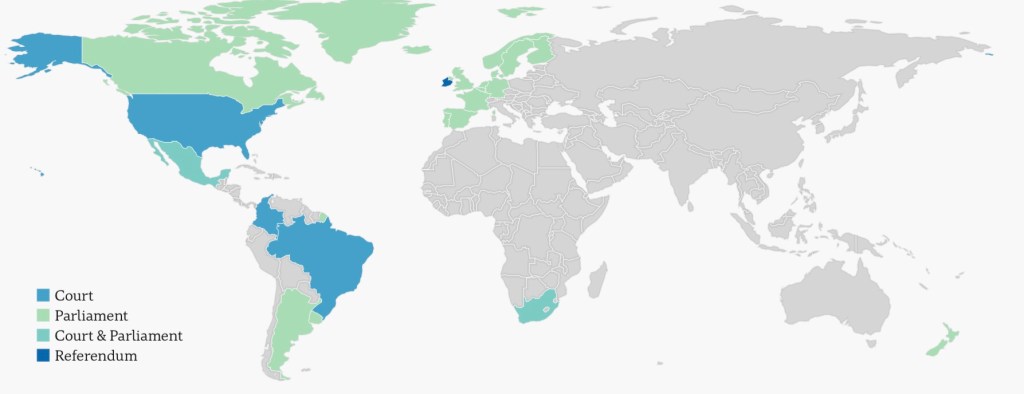
Out of the countries that have legalised same-sex marriage:

  • Only one country, Ireland, put the change to a people’s vote. A referendum was legally required, held in May 2015, and overwhelmingly passed.
  • Parliaments legalised same-sex marriage in 20 countries.
  • Court rulings prompted the change in five countries.
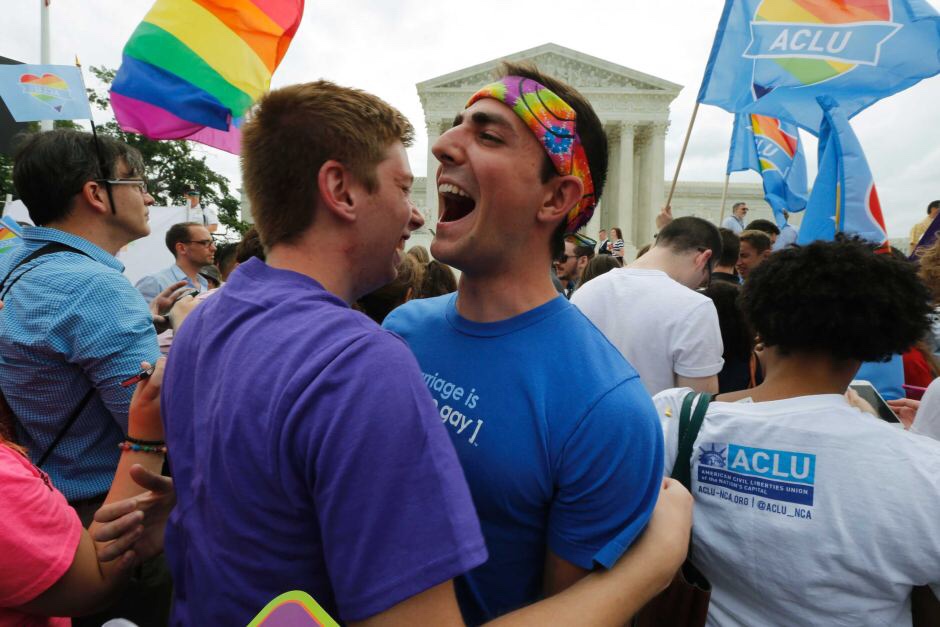
Gay rights supporters celebrate after a US Supreme Court ruling that same-sex couples have the right to marry

The highest-profile court decision was in the United States in 2013, when the Supreme Court effectively legalised same-sex marriage by finding the Defence of Marriage Act was unconstitutional.

Most recently, in April 2017, the Constitutional Court of Taiwan (Republic of China) ruled that the Taiwanese law defining marriage as a union between a man and a woman was unconstitutional. It ordered that a change in the law had to occur within two years. At the time of writing, same-sex marriage is still unavailable in Taiwan.

Where is being gay illegal?

Marriage is an important issue in Western countries but elsewhere in the world, LGBT people can struggle to simply stay out of jail.

There are more than 70 countries where homosexual acts are illegal.

The countries shaded in the map above are those where there is a law that prohibits homosexual acts in part or all of the country.

Most of these countries fall within two main categories — just over half are former colonies mostly in Africa that inherited discriminatory laws but never repealed them, while the others are majority-Muslim countries.

The International Lesbian, Gay, Bisexual, Trans and Intersex Association (ILGA) publishes an annual report of “state-sponsored homophobia”.

What exactly is outlawed varies from country to country. Twenty-eight states only prohibit relations between men.

A common formulation is a prohibition of “carnal intercourse against the order of nature”.

Sometimes gay sex is placed in the same category as bestiality.

  • In India it is an offence to “voluntarily [have] carnal intercourse against the order of nature with any man, woman or animal”.
  • In Mauritius, it is a crime to commit “sodomy or bestiality”.
  • In Uganda, a law provides for a seven-year jail term for anyone who conducts a same-sex marriage ceremony.
Kenyan MP Irungu Kang’ata leads an anti-gay caucus protest in Kenya’s capital, Nairobi.
Reuters: Thomas Mukoya

Not all the countries with these laws actually enforce them for consensual sex at home.

The Singapore Penal Code prohibits “any act of gross indecency with another male person” in “public or private”, with a maximum penalty of two years in prison.

But National University of Singapore Assistant Professor Lynette Chua says the ban has “seldom been applied in private, consensual situations and [is] typically used in non-consensual situations or cases involving minors”.

Similarly, Shakira Hussein of the National Centre of Excellence for Islamic Studies at the University of Melbourne suggests that in Islam “on all sexual matters … it isn’t the act itself that is to be punished but the public commission of it”.

“Some sharia scholars say that the laws against illicit sex should basically be regarded as laws against public indecency, since they require four witnesses.”

Even if bans aren’t strictly enforced, they often still have a harmful impact on LGBT people.

Achim Hildebrandt of the University of Stuttgart says such bans “represent an ever-present threat of blackmail and public disgrace … they drive gays and lesbians out of public life and prevent them from demanding more far-reaching reforms such as the outlawing of discrimination in the workplace and the housing market”.

Where do LGBT people risk the death penalty?

The death penalty is in place for same-sex sexual acts in at least 11 countries.

According to the IGLA, the death penalty applies in Sudan, Iran, Saudi Arabia and Yemen and in parts of Nigeria and Somalia.

In theory the death penalty could also be imposed in Mauritania, Afghanistan, Pakistan, Qatar and the United Arab Emiratesthrough sharia law, but this does not appear to have occurred in practice.

Information on when the death penalty has been carried out is not readily available.

The “Erasing 76 Crimes” blog, which advocates for the repeal of anti-LGBT laws around the world, indicates that only Iran and Saudi Arabia have actually carried out executions for same-sex activity in recent times.

The blog’s founder, Colin Stewart, says that in Saudi Arabia“beheadings have been imposed for homosexual behaviour in the past, including three men in 2002, but imprisonment and lashings are a more common punishment”.

Iran is second in the world for frequency of executions [after China], including executions for homosexual activity, although the facts about the offences being punished are often unclear or misrepresented in news accounts.”

Pakistanis rally in Peshawar in support of a trans woman who was arrested at her wedding.
Reuters: Fayaz Aziz

At the same time, Dr Hussein points out the existence of established trans communities in Iran and Pakistan. She tells the ABC:

“Some same-sex male couples circumvent laws against homosexuality by getting a doctors’ certificate to say that one half of the couple is a trans woman. Supposedly, this is meant to be followed up with surgery, but that isn’t necessarily carried through.

“Pakistan has had a ‘third gender’ option on the national ID card for a few years now [and] Iran has one of the highest rates of male-to-female trans surgery in the world.”

What other forms of harassment take place?

Intimidation of LGBT people is not restricted to the threat of jail or death.

Homosexuality is legal in Russia but in recent years the Government has imposed laws that ban “promotion” of “sodomy, lesbianism, bisexuality and transgenderism”.

Omar G Encarnacion of Bard College in New York suggests thatRussia’s law “is so broad that it outlaws gay pride parades, public displays of affection by same-sex couples, gay symbols such as the rainbow flag, and even a public admission of homosexuality, unless made in the way that casts homosexuality in a negative light”.

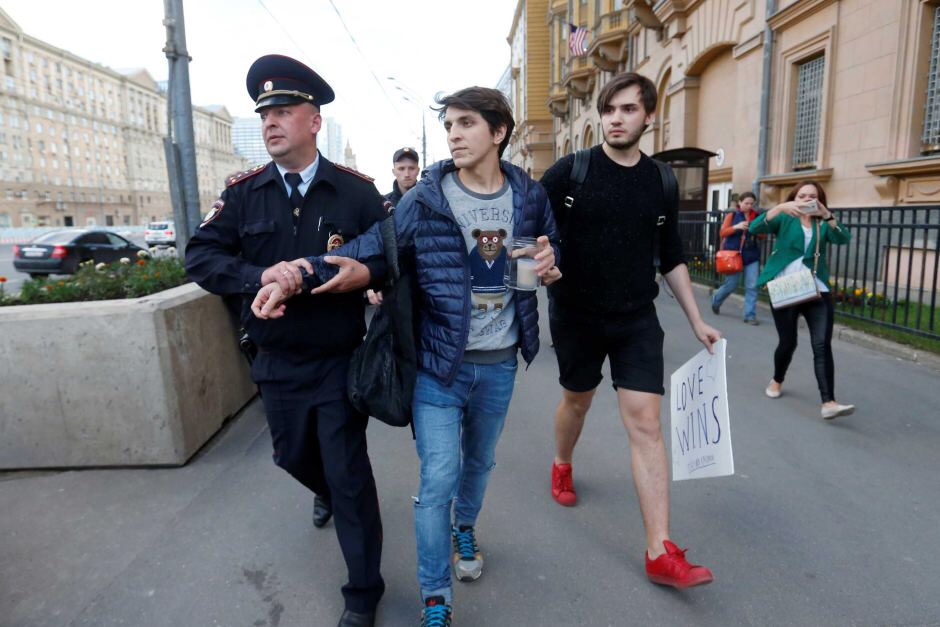
A Russian police officer detains a man who planned to place a tribute to the victims of a shooting at a gay nightclub in Orlando in front of the US Embassy in Moscow.
Reuters: Maxim Zmeyev

Closer to home, Singapore takes a tough line on “promotion” of LGBT issues — on paper at least.

According to Assistant Professor Chua, “Singaporean media are banned from carrying content that “promotes”, “justifies” or “glamorises” “lifestyles such as homosexuality, lesbianism, bisexualism, transsexualism [and] transvestism”.

In mid-2014, the National Library of Singapore announced it would pulp its copies of three children’s books with LGBT themes. According to the Government-linked Straits Times Newspaper:

“And Tango Makes Three is based on the true story of a pair of male penguins who raise a chick together; The White Swan Express features adoptive parents such as a lesbian couple; and Who’s In My Family highlights different family structures and includes same-sex parents.”

After a public outcry, two of the books were returned to the library but placed in the adults’ section.

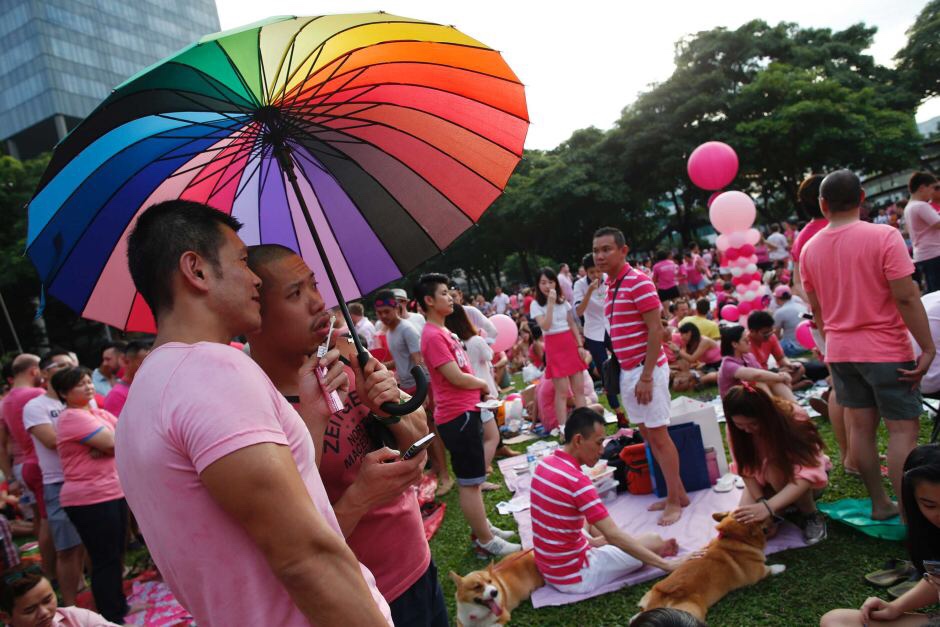
In June 2016, the Singapore Government announced that“foreign entities should not fund, support or influence” Pinkdot, an annual LGBT event held in a Singapore park.

Brad Adams, Asia director of Human Rights Watch, suggests“Singapore’s demand that foreign companies stop sponsoring PinkDot encourages corporations to discriminate against LGBT people”.

Singapore’s annual Pink Dot event promotes acceptance of the LGBT community.
Reuters: Edgar Su

Leaders in other countries freely use discriminatory language against LGBT people: 

  • In 2015, the mayor of Budapest in Hungary described the city’s Gay Pride rally as “repulsive”.
  • In Africa, Ugandan president Yoweri Museveni has describedhomosexual people as “disgusting”.

The ABC has recently reported on LGBT Ugandans fleeing the country as refugees.

Members of a breakaway faction of the Anglican Church in Zimbabwe protest against homosexuality in Harare.
Reuters: Philimon Bulawayo

Zimbabwe President Robert Mugabe has previously said that:“Homosexuals are worse than dogs and pigs; dogs and pigs will never engage in homosexual madness,” and followed this up in 2013 by stating that LGBT people were “worse than pigs, goats and birds”.

In 2016 the ageing ruler vowed that Zimbabwe would reject any foreign aid that is “given on the basis that we accept the principle of gay marriages”.

Are things getting better for LGBT people?

With LGBT harassment and criminal penalties continuing in AfricaAsia, the Middle East and parts of Europe, the picture may seem bleak.

But veteran campaigner Peter Tatchell, who famously attempted a citizen’s arrest of Robert Mugabe in March 2001 and was then beaten by the president’s bodyguards, is more optimistic.

“There are rays of hope [in Africa], with the Seychelles, Mozambique and Sao Tome & Principe recently decriminalising homosexuality [and] in 2014, the African Commission on Human Rights and People’s Rights urged member states to protect LGBT people against discrimination and violence,” he says. 

Ty Cobb from Human Rights Campaign said: “We have seen great progress with regards to global LGBTQ rights in recent years, with three countries decriminalising same-sex activity just [in 2016], 20 countries and certain jurisdictions in Mexico have marriage equality and more and more countries are taking measures to improve the lives of trans individuals.”

At the same time, Mr Cobb notes that anti-LGBT movements continue to work against the community.

“Extremists have organised marches against marriage equality efforts in MexicoAmerican evangelicals have resorted to exporting their dangerous messages of hate from Eastern Europe to Africa, and [Islamic State] continues to target and kill members of the LGBTQ community throughout the Arab world,” he says.

In Singapore, there are signs of increased cultural acceptance of the LGBT community, with the 2016 release of home-grown web drama People Like Us taking place with no real backlash.

Telling the stories of four gay men in Singapore, the series has been well-received by the local community.

Filmaker Leon Cheo says apart from some “thumbs-down” on YouTube, “we haven’t received flak or negative emails or comments from Singaporeans at large”.

Mr Cheo says while the situation for LGBT people in Singapore is improving, “challenges such as censorship of neutral and positive LGBT news, film and TV, and archaic anti-sodomy laws still exist”.

“One of our creative objectives was to portray Asian gay men neutrally or positively [so that the] series could play a part in changing the hearts and minds of the citizens and government of Singapore,” he says.

In the Middle East, LGBT rights remain strongest in Israel although it is unclear whether or when same-sex marriage might be legalised there.

Reference

When Mom Blamed Eldest Son Of “Spreading Gayness” To Gay Teen Brother, He Adopted Him

Sadly, not every coming out story has a happy ending – but this recent Reddit post by a gay brother has a beautiful happy ending.

jason45q originally posted:My mother is a very complicated woman. She can be really sweet, but fucking batshit crazy at other times. I moved out a long time ago, I’m 27 and I left the house as soon as I turned 18 (also right after coming out). She didn’t disown me, but made a lot of homophobic remarks about me “joining the fags” and denying her grandchildren.

Today, I received a very angry phone call from my mom. I have a younger brother who’s 14 who lives with my parents and my sister. My mom snooped through his phone and apparently found a few texts to his friend confessing that he was gay. Suddenly, I’m responsible for engulfing him with my rainbow wrath when I barely see him.

I have considered trying to get him to move here with me but I don’t think he’d want to leave everything behind. My family would also have a fit.

Jason was overwhelmed by the flood of advice he received from his original post, and he updated his supportive Redditors on the dramatic turn of events that came next:I read all the comments, each and every single one. However, about an hour after writing the post, I grew impatient and just drove to my parents’ house…My mom lost her shit when I came, said that I was going to make it worse. She’s kept a little quiet though (probably because she realized she can’t do much at this point).

My younger brother is fine…He believes he’s 90% gay. He doesn’t notice girls, but notices guys. He said he’s felt deeper connections with them and is crushing on his friend (basically all the things we all had to deal with when we were young anyway).

I told him about moving in with me and switching schools. I tried to make him understand that he needs to be in a healthier environment and does not need to be taking any shit from my mom. He was very hesitant about leaving his friends, but he’s agreed to move in with me in the next month or so. And for those of you asking if I can afford it, I very much can.

Today morning I told my mother he was going to stay with me. She wanted to argue, but held back. She knows she crossed my patience limit a long time ago, so it was relatively easy. I’m getting forms from the lawyer tomorrow about making me his legal guardian. My mom agreed to sign it saying “it’s probably better for me that you two will be gone anyway” and my dad gives negative two shits about anything so that’ll be easy.

I guess I can say this is off to a more positive start. I can get to know him better now and at the same time protect him from emotional abuse. He’s a very soft spoken kid, a little too passive and lets people run over him. I was the opposite- and by that I mean very stubborn, rebellious and maybe a bit of an asshole…but it’s what helped me move out I guess. Now I’ll be able to toughen him up a little and build some more confidence in him.

Thanks for all the advice, it was very much appreciated. I will not call child services anymore, since he’s not going back anyway. I’d rather she suffers in silence as she realizes she drove her sons away. She’ll never admit it but I’m sure it’s there.

Reference

Gay History: Omnisexual, Gynosexual, Demisexual: What’s Behind The Surge In Sexual Identities?

There’s been a proliferation of sexual identities.

In 1976, the French philosopher Michel Foucault made themeticulously researched case that sexuality is a social construct used as a form of control. In the 40 years since, society has been busy constructing sexualities. Alongside the traditional orientations of heterosexual, homosexual, and bisexual, a myriad other options now exist in the lexicon, including:

  • pansexual (gender-blind sexual attraction to all people)
  • omnisexual (similar to pansexual, but actively attracted to all genders, rather than gender-blind)
  • gynosexual (someone who’s sexually attracted to women—this doesn’t specify the subject’s own gender, as both “lesbian” and “heterosexual” do)
  • demisexual (sexually attracted to someone based on a strong emotional connection)
  • sapiosexual (sexually attracted to intelligence)
  • objectumsexual (sexual attraction to inanimate objects)
  • autosexual (someone who prefers masturbation to sexual activity with others)
  • androgynosexual (sexual attraction to both men and women with an androgynous appearance)
  • androsexual (sexual attraction towards men)
  • asexual (someone who doesn’t experience sexual attraction)
  • graysexual (occasionally experiencing sexual attraction, but usually not)

Clearly, people felt that the few existing labels didn’t apply to them. There’s a “demand being made to have more available scripts than just heterosexual, homosexual, and bisexual,” says Robin Dembroff, philosophy professor at Yale University who researches feminist theory and construction.

Labels might seem reductive, but they’re useful. Creating a label allows people to find those with similar sexual interests to them; it’s also a way of acknowledging that such interests exist. “In order to be recognized, to even exist, you need a name,” says Jeanne Proust, philosophy professor at City University of New York. “That’s a very powerful function of language: the performative function. It makes something exist, it creates a reality.”

The newly created identities, many of which originated in the past decade, reduce the focus on gender—for either the subject or object of desire—in establishing sexual attraction. “Demisexual,” for example, is entirely unrelated to gender, while other terms emphasize the gender of the object of attraction, but not the gender of the subject. “Saying that you’re gay or straight doesn’t mean that you’re attracted to everyone of a certain gender,” says Dembroff. The proliferation of sexual identities means that, rather than emphasizing gender as the primary factor of who someone finds attractive, people are able to identify other features that attract them, and, in part or in full, de-couple gender from sexual attraction.

Dembroff believes the recent proliferation of sexual identities reflects a contemporary rejection of the morally prescriptive attitudes towards sex that were founded on the Christian belief that sex should be linked to reproduction. “We live in a culture where, increasingly, sex is being seen as something that has less to do with kinship and reproduction, and more about individual expression and forming intimate bonds with more than one partner,” Dembroff says. “I think as there’s more of an individual focus it makes sense that we have these hyper-personalized categories.”

The same individuality that permeates western culture, leading people to focus on the self and value their own well-being over the group’s, is reflected in the desire to fracture group sexual identities into increasingly narrow categories that reflect personal preferences.

Some believe this could restrict individuals’ freedom in expressing fluid sexuality. Each newly codified sexual orientation demands that people adopt increasingly specific criteria to define their sexual orientation.

“Language fixes reality, it sets reality,” says Proust. “It paralyzes it, in a way. It puts it in a box, under a tag. The problem with that is it doesn’t move. It negates or denies any instability or fluidity.”

There’s also the danger that self-definition inadvertently defines other people. Just as the terms “heterosexual” and “homosexual” demand that people clarify their sexual preference according to their and their partner’s gender, “sapiosexual” asks that we each of us define our stance towards intelligence. Likewise, the word “pansexual” requires people who once identified as “bisexual” clarify their sexual attraction towards those who don’t identify as male or female. And “omnisexual” suggests that people should address whether they’re attracted to all genders or oblivious to them.

In Foucault’s analysis, contemporary society turns sex into an academic, scientific discipline, and this mode of perceiving sex dominates both understanding and experience of it. The Stanford Encyclopedia of Philosophy summarizes this idea neatly:

Not only is there control exercised via others’ knowledge of individuals; there is also control via individuals’ knowledge of themselves. Individuals internalize the norms laid down by the sciences of sexuality and monitor themselves in an effort to conform to these norms.

The new terms for sexual orientations similarly infiltrate the political discourse on sexuality, and individuals then define themselves accordingly. Though there’s nothing that prevents someone from having a demisexual phase, for example, the labels suggest an inherent identity. William Wilkerson, a philosophy professor at the University of Alabama-Huntsville who focuses on gender studies, says this is the distinctive feature of sexual identities today. In the past, he points out, there were plenty of different sexual interests, but these were presented as desires rather than intrinsic identities. The notion of innate sexual identities “seems profoundly different to me,” he says. “The model of sexuality as an inborn thing has become so prevalent that people want to say ‘this is how I feel, so perhaps I will constitute myself in a particular way and understand this as an identity’,” he adds.

In the 1970s and 80s there was a proliferation of sexual groups and interests similar to what we’ve seen over the past five to 10 years, notes Wilkerson. The identities that originated in earlier decades—such as bears, leather daddies, and femme and butch women—are deeply influenced by lifestyle and appearance. It’s difficult to be a butch woman without looking butch, for example. Contemporary identities, such as gynosexual or pansexual, suggest nothing about appearance or lifestyle, but are entirely defined by intrinsic sexual desire.

Dissatisfaction with existing labels doesn’t necessarily have to lead to creating new ones. Wilkerson notes that the queer movement in earlier decades was focused on anti-identity and refusing to define yourself. “It’s interesting that now, it’s like, ‘We really want to define ourselves,’” says Wilkerson.

The trend reflects an impulse to cut the legs out from under religious invectives against non-heteronormative sexualities. If you’re “born this way,” it’s impossible for your sexuality to be sinful because it’s natural, made of biological desires rather than a conscious choice. More recently, this line of thinking has been criticized by those who argue all sexualities should be accepted regardless of any link to biology; that sexuality is socially constructed, and the reason no given sexuality is “sinful” is simply because any consenting sexual choice is perfectly moral.

Though it may sound ideal to be utterly undefined and beyond categories, Proust says it’s impossible. “We have to use categories. It’s sad, it’s tragic. But that’s how it is.” Constructs aren’t simply necessary for sexual identity or gender; they’re an essential feature of language, she adds. We cannot comprehend the world without this “tag-fixing process.”

The proliferation of specific sexual identities today may seem at odds with the anti-identity values of queer culture, but Dembroff suggests that both work towards the same ultimate goal of eroding the impact and importance of the old-fashioned binary sexual identities. “Social change always happens in non-ideal increments,” Dembroff notes. So while today we may have dozens of sexual identities, they may become so individualized and specific that they lose any significance for group identities, and the entire concept of a fixed sexual identity is eroded.

“We demand that sex speak the truth,” wrote Foucault in The History of Sexuality. “We demand that it tell us our truth, or rather, the deeply buried truth of that truth about ourselves which we think we possess in our immediate consciousness.” We still believe sex reveals an inner truth; now, however, we are more readily able to recognize that the process of discovering and identifying that truth is always ongoing.

Reference

Gay History: Things You Should Never Say To Your Gay Mates

‘Which one is the man and which one is the woman?’ just isn’t cool, says The Guyliner

It’s the 21st century, so there’s a very, very good chance you already have at least one gay friend in your circle – but how do you talk to these most precious and rare of beasts? Will they still understand your banter? Does your chitchat have to be a no-fun zone, packed with PC platitudes and virtue signalling? Well, no, of course not. But if you’re going to be getting tanked up with your ‘mo mates, it might be worth remembering there are some subjects that might make them a little… prickly.

Which one is the man and which one is the woman?

If being a gay guy around straight men has taught me anything, it’s that they’re all secretly fascinated by gay sex. Usually this curiosity manifests itself in fear or suspicion that they’ll catch whatever mythical illness it is that makes you want gay sex, but occasionally straight guys will go on a fact-finding mission. The detailed machinations seemingly beyond them, one of the first questions they’ll ask – and usually the deepest level they’re prepared to go to – is who plays at being man and who is the woman. It’s like the only way they can process what happens is to apply it to what they do. The thing is, when two gay men are doing it, there is no woman present – that’s generally the whole point of it, to be honest – so this doesn’t really make sense. Also, it’s not particularly appropriate to ask anyone what they do in the sack, let alone when you’re steamrolling in there with your clumsy comparisons. Get a gay man drunk enough and he’ll tell you what they get up to. Just don’t wince when he does. We literally get to hear about your ins and outs all the time; your turn now.

When did you first decide you were gay?

It was a beautiful day, a proud day. I’d spent quite a long time planning it all, making sure I’d got everything just right. I scanned hundreds of brochures, tried on a variety of outfits, and listened to mixtapes of Ocean Colour Scene, Kylie, Madonna, PJ Harvey, Guns N Roses and Will Young – just to make sure this was what I wanted. And then I made the decision and my life changed for ever. OK, OK, you’re trying to show an interest, but very few people actually “decide” to be gay. It can be a long drawn-out process marked with self-doubt, worry and disastrous experimentation.

But don’t get the idea that it’s a touchy subject or we don’t want to talk about it. We do, even years after coming out, and most of us will be pleased a straight guy is interested in hearing it, because historically it’s been the opposite. “When did you first realise?” or “What was it like growing up gay?” might be better ways to put it. Calling our gayness a “lifestyle choice” might seem innocuous but it’s an old stealth insult used by terrible old homophobes who like to think gay people are taking over the world and are just being gay to annoy everyone. No.

Do you fancy me?

We’re not dead inside. We may have idly wondered what you might be like with no clothes on and maybe we’ve had an awkward dream about you. But the idea we’re panting and pining over you in the hope that one day you’ll clear your throat, tell us you’ve got something you always wanted to say, and then touch our bare knee – because suddenly we’re in sports gear in some locker room we’ve never seen before and oh wow it’s just like all the movies said it would be – is, frankly, way off the mark. Any man-crush we may have been harbouring vanished the first time we saw you light your own farts or cry because you lost a life on Super Mario.

Can we go to a gay club? I’m dying to know what it’s like

You’re our straight friend and we know you’re brilliant – that’s why we’re friends with you – and we know you’d enjoy yourself and be totally respectful but, and here’s the thing, everyone else in the bar or club doesn’t. They don’t know you and they don’t particularly care, but once you get too many straight guys in a gay venue, the vibe changes and the LGBT+ lot (that’s us) start getting a bit edgy that we can’t be ourselves, that we’re kind of an exhibit for your amusement. So it’s probably going to be a no for now, unless we can sneak you in somewhere relatively anonymously. Sometimes they might make you snog a man to prove you’re gay so you can get in, by the way, and we’re not offering. Don’t get mad this is closed off to you – practically the entire world welcomes you wherever you go. Let us have this.

No offence, but…

As far as I know, preceding something heinous or offensive or homophobic with “no offence” doesn’t stand up in a court of law. There is, apparently, no guarantee available to make sure whoever you’re saying this to won’t be offended. You’re right: life is unfair.

I can’t say anything these days

We live in cautious times, where many are afraid to be lighthearted or risqué in case it offends someone. We don’t want to be the killjoys in any situation, and you forcibly checking your own behaviour and sitting in furious silence because you can’t let rip is sometimes more uncomfortable for us than hearing a few poof jokes. Know your audience, be sensitive if there’s someone new and, generally, take the lead from us. We spent most of our formative years trying to laugh our way out of awkward situations, so we know how to take the piss out of ourselves – just make sure we get to set the tone. And if you really want to say a certain word or talk in a particular way and feel vexed that you can’t “be yourself”, ask yourself a couple of questions: why would you want to say it in the first place, and is this really the “yourself” you want to be?

I’ll kiss you for a dare

Don’t f*ck with us. Don’t use our sexuality as something for your own amusement, our emotions a toy for you to play with and then toss aside, like they’re meaningless. Gay men want to kiss men who are interested in them, who want our precious and passionate snogs – not guys who want to show how “cool they are with the gay thing” or how much of a man they are. If you’re that cool with it, then treat us with respect and acknowledge the fact that if we were to kiss another gay guy in public we could expect, at the very least, some verbal abuse or rancid leering from people who didn’t approve. Like the toilets in The Ivy, our tongues are for customers only – fire up Grindr if you’re determined to snog a stranger.

I hope you’re not going to try it on with me

Maaaaaate, why would we waste all this effort trying to chase after you and recruit you to our cause when there are plenty of gay men out there we wouldn’t have to try anywhere near as hard with? Gay hookup apps have rendered lusting after our straight mates all but obsolete. Seriously, we can’t even be bothered to wank over you any more. Team Straight has nothing to fear – unless you want to star in our new webcam series.

That’s so gay

When you’re using “gay” as an insult, or to describe something as inferior you are, whether you realise it or not, saying that gayness itself is equally inferior. Imagine if your name were Alex and overnight, whenever someone wanted to mock a thing, or signify that it was second-rate, they said it was “so Alex”. You might laugh it off for a bit, but if it carried on, you’d eventually feel like shit, wouldn’t you, Alex? So typical of you, Alex. What a load of Alex. If some of your gay mates use “gay” in this way, that’s very unfortunate for them and everyone else, and they should probably have a think about that – but, either way, it doesn’t mean you can.

I know a gay guy who’d be perfect for you

This is very kind of you, but gay people don’t automatically like each other. In fact, spend a good 20 minutes in a gay bar and you’ll see the reality is quite the reverse. Leave the matchmaking to characters in Jane Austen novels. We’ve probably already shagged him anyway, tbh.

Can you get me some drugs?

No.

When are you getting married?

Just because we can, doesn’t mean we want to. Anyway, your lot have booked up all the best venues years in advance, so we’ll just come to your wedding and get drunk without all the responsibility, if it’s all the same to you.

You can’t tell you’re gay!

When straight people say this to gay people it’s meant to be a compliment, but if you stop and think about it, why is the ability to “pass” as a straight person supposed to be such an honour? Why should we be pleased you didn’t notice? It suggests we should act a certain way so that you can tell us apart from everyone else. It exposes that you have a very stereotypical way of thinking about gay people. And it also hints that our behaviour is all about pleasing, or deceiving you. You can’t tell we’re gay? That’s because you’ve never seen us suck a dick. Are you offering?

Reference

What Would Happen If We Made Our Gay Movie About The Bible?

From dusty-sandal epic to zany comedy, these LGBTI characters from the Bible deserve some movie magic.

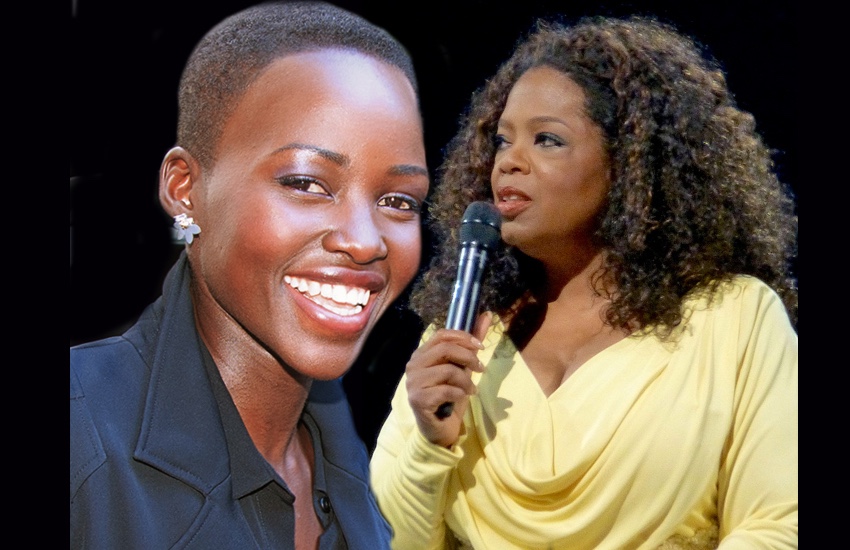
Lupita Nyong’o and Oprah Winfrey.

Ruth and Naomi

Category: Drama

Starring: Lupita Nyong’o (Ruth) and Oprah Winfrey (Naomi)

Premise: At a time of famine, a mother who has lost her sons finds love, strength and hope in the unlikeliest place.

Plot: Naomi and her family flee to Moab to find food. Her husband and then her sons die. One of her daughters-in-law leaves, but the other, Ruth, refuses to go.

‘Don’t urge me to leave you or to turn back from you. Where you go I will go, and where you stay I will stay. Your people will be my people and your God my God.  Where you die I will die, and there I will be buried. May the Lord deal with me, be it ever so severely, if even death separates you and me.’ (Ruth 1:16)

Together they travel to Bethlehem and build a new life.

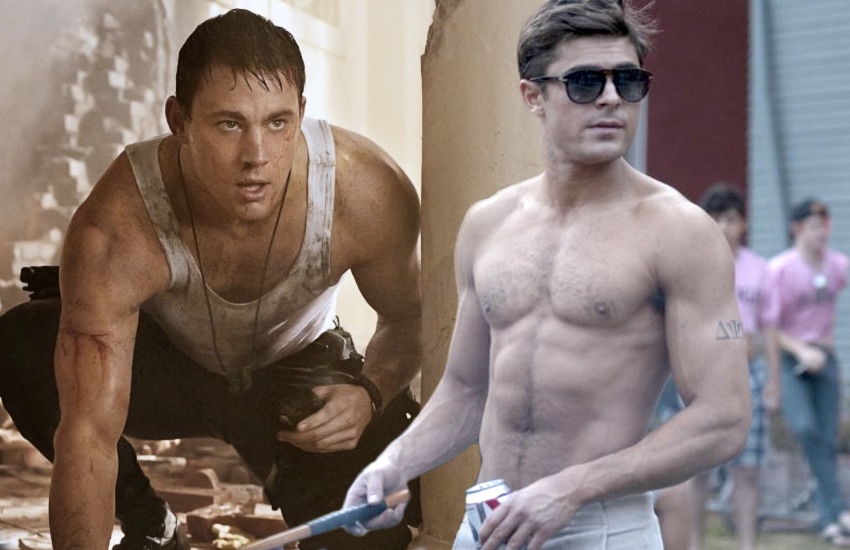
Channing Tatum and Zac Efron.

David and Jonathan

Category: Action

Starring: Channing Tatum (David) and Zac Efron (Jonathan)

Premise: One was the lowly shepherd who slew the giant Goliath. The other was the Prince of the Israelites. Their love would rock a nation.

Plot: David kills Goliath and becomes a great warrior. Prince Jonathan, heir to King Saul, falls in love with him.

They make a ‘covenant’, a sworn, lifelong friendship agreement – more marriage than bromance.

‘Jonathan made a covenant with David because he loved him as himself. Jonathan took off the robe he was wearing and gave it to David, along with his tunic, and even his sword, his bow and his belt.’ (1 Samuel 18:4)

They make out: ‘They kissed each other and wept together’.

Saul tries to kill David, fearing he would take the crown. Jonathan repeatedly warns his lover, saving his life.

Saul and Jonathan die in battle. David becomes king and writes the ancient world’s gayest song of mourning:

‘I grieve for you, Jonathan my brother;
you were very dear to me.
Your love for me was wonderful,
more wonderful than that of women.’ (2 Samuel 1:17)

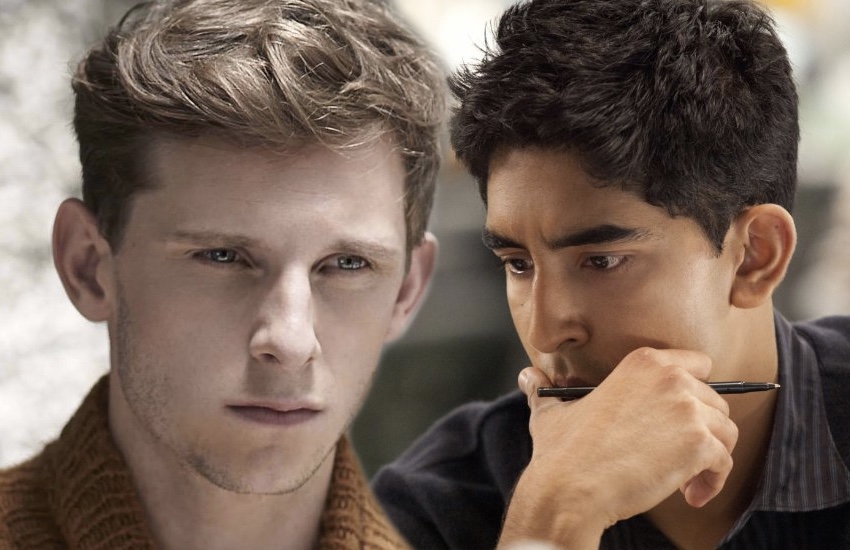
Jamie Bell and Dev Patel.

Daniel and Ashpanez

Category: Action

Starring: Jamie Bell (Daniel) and Dev Patel (Ashpanez)

Premise: Babylon. The greatest city on Earth. A slave finds love with his eunuch overlord. Together they will defy the king and win eternal glory.

Plot: King Nebuchanezzer overruns Jerusalem and brings Daniel to Babylon to be his slave.

‘Now God brought Daniel into favor and tender [physical] love with the prince of the eunuchs’, Ashpanez, the man whose job it was to train the slaves to serve the king. (Daniel 1:9)

When Daniel refuses to eat the food the king commands, Ashpanez helps him. Daniel becomes the most ribbed and powerful of the king’s servants and goes on to survive action sequences in a fiery furnace and den of lions.

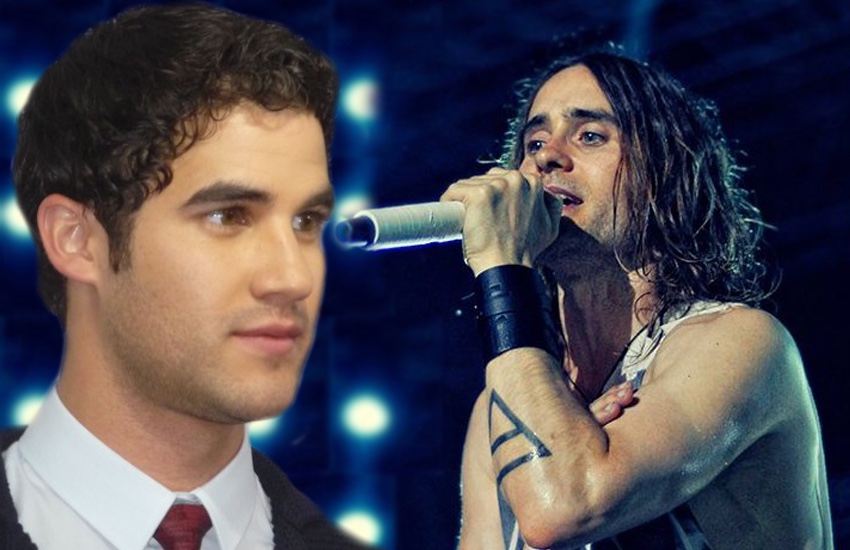
Darren Criss and Jared Leto.

Jesus and the Beloved Disciple

Category: Epic

Starring: Jared Leto (Jesus) and Darren Criss (John)

Premise: The Greatest Love Story Never Told.

Plot: John is one of Jesus’ first disciples and is repeatedly called ‘The Beloved Disciple’. He is next to him at The Last Supper.

‘Now there was leaning on Jesus’ bosom one of his disciples, whom Jesus loved.’ (John 13:23)

At the crucifixion, Jesus tells his mother Mary that this ‘beloved disciple’ is ‘your son’ and tells him that she is ‘your mother’.

Later, he is one of the first to find Jesus’ tomb empty and is visited by Jesus after his death.

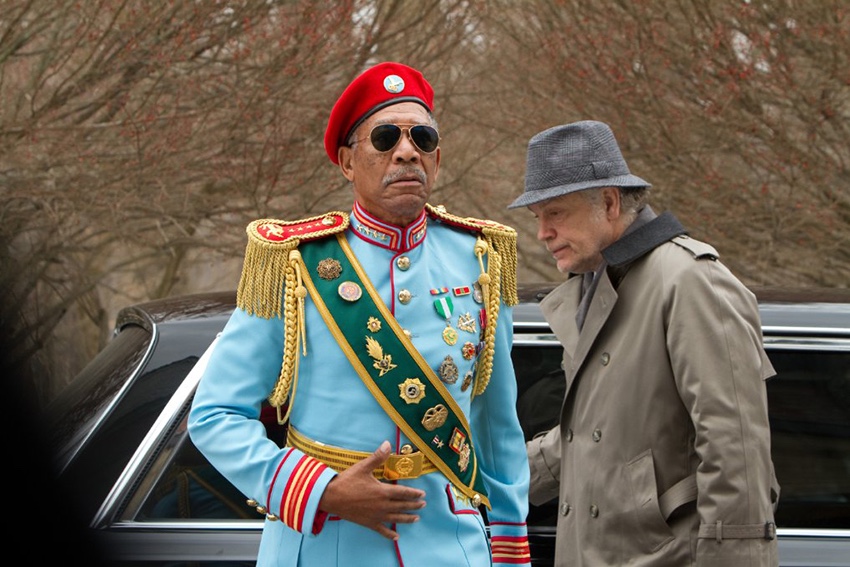
Morgan Freeman in the film Red.

The Ethiopian Eunuch

Category: Comedy

Starring: Morgan Freeman

Premise: Judea. 31 AD. Around about teatime. And it doesn’t take much to save a eunuch.

Plot: An angel sends Philip to a desert road between Jerusalem and Gaza. He comes across a ‘born’ eunuch (gay man or possibly intersex person) who is the treasurer of the queen of the Ethiopians. (Acts 8:27)

When the Ethiopian Eunuch sees some water, he asks Philip to baptize him. But after they emerge from the water, Philip has simply disappeared…

Hugh Jackman and Russell Tovey.

The Centurion and his Lover

Category: Romantic comedy

Starring: Hugh Jackman (the centurion) and Russell Tovey (his lover)

Premise: Boy meets centurion. Centurion falls in love with boy. Boy falls sick. Centurion visits Jesus and asks for miracle.

Plot: Hugh Jackman stars as the beefy Roman Centurion who falls in love with his slave. But when the young man falls sick, nothing will stop him from finding a cure, even if it means humbling himself in front of a conquered Jew, Jesus.

‘Lord, my “pais” [servant or same-gender lover] lies at home paralyzed, suffering terribly… I do not deserve to have you come under my roof. But just say the word, and my servant will be healed.’ (Matthew 8:6)

Spoiler: They all live happily ever after.

Reference

Gay History: What The “Q” In LGBTQ+ Stands For

PHOTOGRAPHED BY NICOLAS BLOISE.

Most people can agree with the L, G, B, and T in the acronym LGBTQ+ stand for: lesbian, gay, bisexual, and transgender. But when it comes to the Q, it gets a little more complicated. According to the Human Rights Campaign, the Q stands for queer. But according to Planned Parenthood, the Q stands for “questioning (or queer).” For PFlag and The Trevor Project, the Q stands for both, equally.

Even style guides don’t agree. The Associated Press Style Guide notes that the Q stands for “questioning and/or queer,” but the Los Angeles Times’ style guide notes that the Q “most commonly means ‘queer,’ but can also mean ‘questioning.” Similarly, GLAAD’s media glossary notes that the Q “typically means queer and, less often, questioning.”

Though activists have been using the acronyms “LGBTQ” and “LGBTQ+” for much longer, the Q has only come into mainstream use in the past few years. HRC officially began using “LGBTQ” across their work in 2016, though they had been using it in youth programs earlier. In 2016, GLAAD issued an announcement, “for the first time, encourag[ing] journalists and other media content creators to adopt the use of ‘LGBTQ’ as the preferred acronym to most inclusively describe the community.” One year later, the Associated Press changed its style guide to allow either “LGBT” or “LGBTQ.”Both HRC and GLAAD added the letter in response to a growing number of young people identifying as queer. While “questioning” simply means you’re still figuring out how you identify, “queer” is a little more complicated. “Queer” can be used as an umbrella term for anyone not cis and straight — for example, a person might identify as both bisexual and queer — but a growing number of young people identify simply as queer, with no other label.While some LGBTQ+ folks use the word queer to describe the whole community, others would prefer not to use it at all. The word technically means “strange” or “odd,” but as Cara Giaimo detailed for Autostraddle, beginning around the 1890s, the word “queer” was used as a derogatory term for LGBTQ+ individuals. In 1970, a linguistics researcher noted that while the majority of gays and lesbians were familiar with the term, they had only experienced it as a slur.

Then, beginning in the 1980s, some LGBTQ+ activists began reclaiming the word “queer.” In 1990, some AIDS/HIV activists from the group ACT UP formed a new group that they named Queer Nation. In a 1990 leaflet, they addressed the name, writing, “Well, yes, ‘gay’ is great. It has its place. But when a lot of lesbians and gay men wake up in the morning we feel angry and disgusted, not gay. So we’ve chosen to call ourselves queer. Using ‘queer’ is a way of reminding us how we are perceived by the rest of the world. It’s a way of telling ourselves we don’t have to be witty and charming people who keep our lives discreet and marginalized in the straight world… Yeah, QUEER can be a rough word but it is also a sly and ironic weapon we can steal from the homophobe’s hands and use against him.”While Queer Nation was only active for a few years, Giaimo notes, “the reclamation it had started struck a chord and stuck around.” The word “queer” grew and was increasingly used as a positive term for the LGBTQ+ community throughout the 1990s, 2000s, and 2010s. And while some LGBTQ+ folks still avoid using the word “queer” because of its history as a slur, others find it’s the best way to describe themselves. “For me, it felt like the only word that was all-encompassing enough to accurately describe my sexuality,” Daisy, 25,previously told Refinery29.As for the +, it’s meant to indicate everyone else who isn’t straight, but doesn’t identify with the L, G, B, T, or Q. You may also be familiar with other acronyms to describe the LGBTQ+ community — such as LGBTQIA (the I stands for intersex and the A for asexual), LGBTQQIA (the two Qs are for both queer and questioning), LGBTQ2 (the 2 stands for Two-Spirit, a term used for gender non-conforming or genderqueer folks in the indigenous community in North America), LGBTTQQIAAP (lesbian, gay, bisexual, transgender, transsexual, queer, questioning, intersex, asexual, ally, pansexual), and QUILTBAG (queer, intersex, lesbian, transgender, bisexual, asexual, and gay).The language we use to refer to the LGBTQ+ community is always growing and changing to become more inclusive — and that’s definitely a good thing.

Reference

Gay History: History of Lesbian, Gay, Bisexual and Transgender Social Movements

Most historians agree that there is evidence of homosexual activity and same-sex love, whether such relationships were accepted or persecuted, in every documented culture.

A brief history of lesbian, gay, bisexual and transgender social movements/Bonnie J. Morris, PhD

On June 12, 2016, the popular gay dance club Pulse in Orlando was the site of a mass shooting by one assailant. With at least 49 dead and another 50 injured, this hate crime is being called the worst mass shooting in U.S. history. It occurred during what was LGBT Pride weekend for towns and cities in and beyond the United States. The immediate, caring response from mayors, police and FBI authorities, local and national politicians, and the President of the United States, who reached out to express outrage and concern, demonstrates the enormous shift toward acceptance and public support for the LGBT community. Although the LGBT community and individuals remain targets for hate violence and backlash throughout the world, the hard work of activists and allies made it possible to reach this era, where the perpetrators of violence, not the victims, are condemned as sick.

Social movements, organizing around the acceptance and rights of persons who might today identify as LGBT or queer, began as responses to centuries of persecution by church, state and medical authorities. Where homosexual activity or deviance from established gender roles/dress was banned by law or traditional custom, such condemnation might be communicated through sensational public trials, exile, medical warnings and language from the pulpit. These paths of persecution entrenched homophobia for centuries—but also alerted entire populations to the existence of difference. Whether an individual recognized they, too, shared this identity and were at risk, or dared to speak out for tolerance and change, there were few organizations or resources before the scientific and political revolutions of the 18th and 19th centuries. Gradually, the growth of a public media and ideals of human rights drew together activists from all walks of life, who drew courage from sympathetic medical studies, banned literature, emerging sex research and a climate of greater democracy. By the 20th century, a movement in recognition of gays and lesbians was underway, abetted by the social climate of feminism and new anthropologies of difference. However, throughout 150 years of homosexual social movements (roughly from the 1870s to today), leaders and organizers struggled to address the very different concerns and identity issues of gay men, women identifying as lesbians, and others identifying as gender variant or nonbinary. White, male and Western activists whose groups and theories gained leverage against homophobia did not necessarily represent the range of racial, class and national identities complicating a broader LGBT agenda. Women were often left out altogether.

What is the pre-history of LGBT activism? Most historians agree that there is evidence of homosexual activity and same-sex love, whether such relationships were accepted or persecuted, in every documented culture. We know that homosexuality existed in ancient Israel simply because it is prohibited in the Bible, whereas it flourished between both men and women in Ancient Greece. Substantial evidence also exists for individuals who lived at least part of their lives as a different gender than assigned at birth. From the lyrics of same-sex desire inscribed by Sappho in the seventh century BCE to youths raised as the opposite sex in cultures ranging from Albania to Afghanistan; from the “female husbands” of Kenya to the Native American “Two-Spirit,” alternatives to the Western male-female and heterosexual binaries thrived across millennia and culture. These realities gradually became known to the West via travelers’ diaries, the church records of missionaries, diplomats’ journals, and in reports by medical anthropologists. Such eyewitness accounts in the era before other media were of course riddled with the biases of the (often) Western or white observer, and added to beliefs that homosexual practices were other, foreign, savage, a medical issue, or evidence of a lower racial hierarchy. The peaceful flowering of early trans or bisexual acceptance in different indigenous civilizations met with opposition from European and Christian colonizers.

In the age of European exploration and empire-building, Native American, North African and Pacific Islander cultures accepting of “Two-Spirit” people or same-sex love shocked European invaders who objected to any deviation from a limited understanding of “masculine” and “feminine” roles. The European powers enforced their own criminal codes against what was called sodomy in the New World: the first known case of homosexual activity receiving a death sentence in North America occurred in 1566, when the Spanish executed a Frenchman in Florida. Against the emerging backdrop of national power and Christian faith, what might have been learned about same-sex love or gender identity was buried in scandal. Ironically, both wartime conflict between emerging nations and the departure or deaths of male soldiers left women behind to live together and fostered strong alliances between men as well. Same-sex companionship thrived where it was frowned upon for unmarried, unrelated males and females to mingle or socialize freely. Women’s relationships in particular escaped scrutiny since there was no threat of pregnancy. Nonetheless, in much of the world, female sexual activity and sensation were curtailed wherever genital circumcision practices made clitoridectomy an ongoing custom.

Where European dress—a clear marker of gender—was enforced by missionaries, we find another complicated history of both gender identity and resistance. Biblical interpretation made it illegal for a woman to wear pants or a man to adopt female dress, and sensationalized public trials warned against “deviants” but also made such martyrs and heroes popular: Joan of Arc is one example, and the chilling origins of the word “faggot” include a stick of wood used in public burnings of gay men. Despite the risks of defying severe legal codes, cross-dressing flourished in early modern Europe and America. Women and girls, economically oppressed by the sexism which kept them from jobs and economic/education opportunities designated for men only, might pass as male in order to gain access to coveted experiences or income. This was a choice made by many women who were not necessarily transgender in identity. Women “disguised” themselves as men, sometimes for extended periods of years, in order to fight in the military (Deborah Sampson), to work as pirates (Mary Read and Anne Bonney), attend medical school, etc. Both men and women who lived as a different gender were often only discovered after their deaths, as the extreme differences in male vs. female clothing and grooming in much of Western culture made “passing” surprisingly easy in certain environments. Moreover, roles in the arts where women were banned from working required that men be recruited to play female roles, often creating a high-status, competitive market for those we might today identify as transwomen, in venues from Shakespeare’s theatre to Japanese Kabuki to the Chinese opera. This acceptance of performance artists, and the popularity of “drag” humor cross-culturally, did not necessarily mark the start of transgender advocacy, but made the arts an often accepting sanctuary for LGBT individuals who built theatrical careers based around disguise and illusion.

The era of sexology studies is where we first see a small, privileged cluster of medical authorities begin promoting a limited tolerance of those born “invert.” In Western history, we find little formal study of what was later called homosexuality before the 19th century, beyond medical texts identifying women with large clitorises as “tribades” and severe punishment codes for male homosexual acts. Early efforts to understand the range of human sexual behavior came from European doctors and scientists including Carl von Westphal (1869), Richard von Krafft-Ebing (1882) and Havelock Ellis (1897). Their writings were sympathetic to the concept of a homosexual or bisexual orientation occurring naturally in an identifiable segment of humankind, but the writings of Krafft-Ebing and Ellis also labeled a “third sex” degenerate and abnormal. Sigmund Freud, writing in the same era, did not consider homosexuality an illness or a crime and believed bisexuality to be an innate aspect beginning with undetermined gender development in the womb. Yet Freud also felt that lesbian desires were an immaturity women could overcome through heterosexual marriage and male dominance. These writings gradually trickled down to a curious public through magazines and presentations, reaching men and women desperate to learn more about those like themselves, including some like English writer Radclyffe Hall who willingly accepted the idea of being a “congenital invert.” German researcher Magnus Hirschfeld went on to gather a broader range of information by founding Berlin’s Institute for Sexual Science, Europe’s best library archive of materials on gay cultural history. His efforts, and Germany’s more liberal laws and thriving gay bar scene between the two World Wars, contrasted with the backlash, in England, against gay and lesbian writers such as Oscar Wilde and Radclyffe Hall. With the rise of Hitler’s Third Reich, however, the former tolerance demonstrated by Germany’s Scientific Humanitarian Committee vanished. Hirschfeld’s great library was destroyed and the books burnt by Nazis on May 10, 1933.

In the United States, there were few attempts to create advocacy groups supporting gay and lesbian relationships until after World War II. However, prewar gay life flourished in urban centers such as New York’s Greenwich Village and Harlem during the Harlem Renaissance of the 1920s. The blues music of African-American women showcased varieties of lesbian desire, struggle and humor; these performances, along with male and female drag stars, introduced a gay underworld to straight patrons during Prohibition’s defiance of race and sex codes in speakeasy clubs. The disruptions of World War II allowed formerly isolated gay men and women to meet as soldiers and war workers; and other volunteers were uprooted from small towns and posted worldwide. Many minds were opened by wartime, during which LGBT people were both tolerated in military service and officially sentenced to death camps in the Holocaust. This increasing awareness of an existing and vulnerable population, coupled with Sen. Joseph McCarthy’s investigation of homosexuals holding government jobs during the early 1950s outraged writers and federal employees whose own lives were shown to be second-class under the law, including Frank Kameny, Barbara Gittings, Allen Ginsberg and Harry Hay. Awareness of a burgeoning civil rights movement (Martin Luther King’s key organizer Bayard Rustin was a gay man) led to the first American- based political demands for fair treatment of gays and lesbians in mental health, public policy and employment. Studies such as Alfred Kinsey’s 1947 Kinsey Report suggested a far greater range of homosexual identities and behaviors than previously understood, with Kinsey creating a “scale” or spectrum ranging from complete heterosexual to complete homosexual.

The primary organization for gay men as an oppressed cultural minority was the Mattachine Society, founded in 1950 by Harry Hay and Chuck Rowland. Other important homophile organizations on the West Coast included One, Inc., founded in 1952, and the first lesbian support network Daughters of Bilitis, founded in 1955 by Phyllis Lyon and Del Martin. Through meetings and publications, these groups offered information and outreach to thousands. These first organizations soon found support from prominent sociologists and psychologists. In 1951, Donald Webster Cory published “The Homosexual in America”, asserting that gay men and lesbians were a legitimate minority group, and in 1953 Evelyn Hooker, PhD, won a grant from the National Institute of Mental Health to study gay men. Her groundbreaking paper, presented in 1956, demonstrated that gay men were as well-adjusted as heterosexual men, often more so. But it would not be until 1973 that the American Psychiatric Association removed homosexuality as an “illness” classification in its diagnostic manual. Throughout the 1950s and 60s, gay men and lesbians continued to be at risk for psychiatric lockup as well as jail, losing jobs, and/or child custody when courts and clinics defined gay love as sick, criminal or immoral.

In 1965, as the civil rights movement won new legislation outlawing racial discrimination, the first gay rights demonstrations took place in Philadelphia and Washington, D.C., led by longtime activists Frank Kameny and Barbara Gittings. The turning point for gay liberation came on June 28, 1969, when patrons of the popular Stonewall Inn in New York’s Greenwich Village fought back against ongoing police raids of their neighborhood bar. Stonewall is still considered a watershed moment of gay pride and has been commemorated since the 1970s with “pride marches” held every June across the United States. Recent scholarship has called for better acknowledgement of the roles that drag performers, people of color, bisexuals and transgender patrons played in the Stonewall Riots.

The gay liberation movement of the 1970s saw myriad political organizations spring up, often at odds with one another. Frustrated with the male leadership of most gay liberation groups, lesbians influenced by the feminist movement of the 1970s formed their own collectives, record labels, music festivals, newspapers, bookstores, and publishing houses, and called for lesbian rights in mainstream feminist groups like the National Organization for Women (NOW). Gatherings such as women’s music concerts, bookstore readings and lesbian festivals well beyond the United States were extraordinarily successful in organizing women to become activists; the feminist movement against domestic violence also assisted women to leave abusive marriages, while retaining custody of children became a paramount issue for lesbian mothers.

Expanding religious acceptance for gay men and women of faith, the first out gay minister was ordained by the United Church of Christ in 1972. Other gay and lesbian church and synagogue congregations soon followed. Parents and Friends of Lesbians and Gays (PFLAG), formed in 1972, offered family members greater support roles in the gay rights movement. And political action exploded through the National Gay and Lesbian Task Force, the Human Rights Campaign, the election of openly gay and lesbian representatives like Elaine Noble and Barney Frank, and, in 1979, the first march on Washington for gay rights. The increasing expansion of a global LGBT rights movement suffered a setback during the 1980s, as the gay male community was decimated by the AIDS epidemic, demands for compassion and medical funding led to renewed coalitions between men and women as well as angry street theatre by groups like AIDS Coalition to Unleash Power (ACT UP) and Queer Nation. Enormous marches on Washington drew as many as one million gay rights supporters in 1987 and again in 1993. Right wing religious movements, spurred on by beliefs that AIDS was God’s punishment, expanded via direct mail. A New Right coalition of political lobby groups competed with national LGBT organizations in Washington, seeking to create religious exemptions from any new LGBT rights protections. In the same era, one wing of the political gay movement called for an end to military expulsion of gay, lesbian and bisexual soldiers, with the high-profile case of Col. Margarethe Cammermeyer publicized through a made-for- television movie, “Serving in Silence.” In spite of the patriotism and service of gay men and lesbians in uniform, the uncomfortable and unjust compromise “Don’t Ask, Don’t Tell” emerged as an alternative to decades of military witch hunts and dishonorable discharges. Yet more service members ended up being discharged under DADT.

During in the last decade of the 20th century, millions of Americans watched as actress Ellen DeGeneres came out on national television in April 1997, heralding a new era of gay celebrity power and media visibility—although not without risks. Celebrity performers, both gay and heterosexual, continued to be among the most vocal activists calling for tolerance and equal rights. With greater media attention to gay and lesbian civil rights in the 1990s, trans and intersex voices began to gain space through works such as Kate Boernstein’s “Gender Outlaw” (1994) and “My Gender Workbook” (1998), Ann Fausto-Sterling’s “Myths of Gender” (1992) and Leslie Feinberg’s Transgender Warriors (1998), enhancing shifts in women’s and gender studies to become more inclusive of transgender and nonbinary identities. As a result of hard work by countless organizations and individuals, helped by internet and direct-mail campaign networking, the 21st century heralded new legal gains for gay and lesbian couples. Same-sex civil unions were recognized under Vermont law in 2000 and Massachusetts became the first state to perform same-sex marriages in 2004; with the end of state sodomy laws (Lawrence v. Texas, 2003), gay and lesbian Americans were finally free from criminal classification. Gay marriage was first legal in the Netherlands, Belgium, Spain and Canada; but the recognition of gay marriage by church and state continued to divide opinion worldwide. After the impressive gains for LGBT rights in post-apartheid South Africa, conservative evangelicals in the U.S. began providing support and funding for homophobic campaigns overseas. Uganda’s dramatic death penalty for gays and lesbians was perhaps the most severe in Africa.

The first part of the 21st century saw new emphasis on transgender activism and the increasing usage of terminology that questioned binary gender identification. Images of trans women became more prevalent in film and television, as did programming with same-sex couples raising children. Transphobia, cissexism and other language (such as “hir” and “them”) became standardized, and film and television programming featured more openly trans youth and adult characters. Tensions between lesbian and trans activists, however, remained, with the long-running Michigan Womyn’s Music Festival boycotted by national LGBT groups over the issue of trans inclusion; like many woman-only events with a primarily lesbian base, Michfest had supported an ideal of ingathering women and girls born female. The festival ended after its fortieth anniversary in August 2015.

Internet activism burgeoned, while many of the public, physical gathering spaces that once defined LGBT activism (bars, bookstores, women’s music festivals) began to vanish, and the usage of “queer” replaced lesbian identification for many younger women activists. Attention shifted to global activism as U.S. gains were not matched by similar equal rights laws in the 75 other countries where homosexuality remained illegal. As of 2016, LGBT identification and activism was still punishable by death in ten countries: Iran, Iraq, Mauritania, Nigeria, Qatar, Saudi Arabia, Somalia, Sudan, Uganda and Yemen; the plight of the LGBT community in Russia received intense focus during the 2014 Winter Olympic Games, to which President Obama sent a contingent of out LGBT athletes. Supportive remarks from the new Pope Francis (“Who am I to judge?”) gave hope to LGBT Catholics worldwide.

Perhaps the greatest changes in the U.S. occurred between spring 2015 and spring 2016: in late spring 2015 Alison Bechdel’s lesbian-themed Broadway production Fun Home won several Tony awards, former Olympic champion Bruce Jenner transitioned to Caitlyn Jenner, and then in June of 2015, the Supreme Court decision recognized same-sex marriage (Obergefell v. Hodges). By spring 2016 the Academy Awards recognized films with both lesbian and transgender themes: Carol and The Danish Girl. And the Supreme Court had avowed that a lesbian family adoption in one state had to be recognized in all states. However, the United States also saw intense racial profiling confrontations and tragedies in this same period, turning LGBT activism to “intersectionality,” or recognition of intersections issues of race, class, gender identity and sexism. With the June 12 attacks on the Pulse Club in Orlando, that intersectionality was made plain as straight allies held vigils grieving the loss of young Latino drag queens and lesbians of color; with unanswered questions about the killer’s possible identification with ISIS terrorism, other voices now call for alliances between the LGBT and Muslim communities, and the greater recognition of perspectives from those who are both Muslim and LGBT in the U.S. and beyond. The possible repression of identity which may have played a role in the killer’s choice of target has generated new attention to the price of homophobia –internalized, or culturally expressed— in and beyond the United States.

Reference

  • History of Lesbian, Gay, Bisexual and Transgender Social Movements, American Psychological Association, 2009, by Bonnie J. Morris, PhD George Washington University Washington, D.C. https://www.apa.org/pi/lgbt/resources/history
  • Article References
    • Alison Bechdel, Fun Home: A Family Tragicomic, Houghton Mifflin, 2006
    • Kate Bornstein, Gender Outlaws: On Men, Women, and the Rest of Us, Routledge, 1994
    • Michael Bronski, A Queer History of the United States, Beacon Press, 2011
    • Devon Carbado and Dwight McBride, eds. Black Like Us: A Century of Lesbian, Gay and Bisexual African-American Fiction, Cleis Press, 2002
    • David Carter, Stonewall: The Riots That Sparked the Gay Revolution, Macmillan, 2004
    • Debbie Cenziper and Jim Obergefell, Love Wins: The Lovers and Lawyers Who Fought the Landmark Case for Marriage Equality, Harper Collins Publishers, 2016
    • Lillian Faderman, The Gay Revolution: The Story of the Struggle, Simon & Schuster, 2015; and To Believe in Women: What Lesbians Have Done for America – A History, Houghton Mifflin, 1999
    • Leslie Feinberg, Transgender Warriors, Beacon Press, 1996
    • Sue-Ellen Jacobs, Two-Spirit People: Native American Gender Identity, Sexuality and Spirituality, University of Illinois, 1997
    • David Johnson, The Lavender Scare: The Cold War Persecution of Gays and Lesbians in the Federal Government, University of Chicago Press Books, 2004
    • Cherrie Moraga and Gloria Anzaldua, This Bridge Called My Back: Writings by Radical Women of Color, Persephone Press, 1981
    • Daphne Scholinski, The Last Time I Wore a Dress, Riverhead Books 1998
    • Randy Shilts, And the Band Played On: Politics, People, and the AIDS Epidemic, St. Martin’s Press, 1987
    • Donn Short, Don’t Be So Gay! Queers, Bullying, and Making Schools Safe, UBC Press, 2013
    • Ryan Thoreson, Transnational LGBT Activism, University of Minnesota Press, 2014
    • Urvashi Vaid, Virtual Equality, Anchor Books, 1995

    Gay History: February 12, 1976: Actor Sal Mineo Murdered In West Hollywood

    Salvatore  Mineo Jr. better known to the world as Sal Mineo, was the baby-faced American actor whose legend and cult following largely stems from his iconic role as the doomed ‘Plato’ in Nicholas Ray’s 1955 classic of ‘switchblade cinema’ – ‘Rebel Without A Cause’. In the movie Mineo played a troubled high-school kid who emulates (actually as far as 50’s cinema could push that envelope)  falls in love with James Dean’s character Jim Stark, although there are reports of a real-life love affair between the two off-set).This was the role for which he would earn the first of two Academy Award nominations.

    In 1962 Jill Haworth Mineo’s “girlfriend” kicked open Mineo’s closet door, catching the 35-year-old actor bedding his buddy Bobby Sherman. (Yes. thatBobby Sherman.)  “But he didn’t stop,” she said. “He kept going at it.” Rumors of Mineo’s sexuality circulated. He found serious work even more difficult to procure, predominantly because filmmakers saw him as an embarrassing relic of the 1950s.

    On the night of February 12, 1976, actor Sal Mineo returned home following a rehearsal for the play P.S. Your Cat Is Dead. After parking his car in the carport below his West Hollywood apartment, the 37-year-old actor was stabbed in the heart by a mugger who quickly fled the scene. At first, the e police  suspected that Mineo’s work for prison reform had put him in contact with a dangerous ex-con. Then their focus shifted to Mineo’s personal life. Investigators had discovered that his home was filled with pictures of nude men. But the gay pornography also failed to turn up any leads and later became the basis for a hotbed of rumors that Mineo was killed by a “trick gone wrong”

    Out of the blue, Michigan authorities reported that Lionel Williams was arrested on bad check charges and was bragging to everyone that he had killed Mineo. Although he later retracted his stories at about the same time Williams’ his wife back in Los Angeles told police that he had come home the night of the murder drenched in blood. However, there was one major discrepancy in the case, Williams was black with an Afro and all of the eyewitnesses had described the perpetrator as a white man with long brown hair.

    Fortunately, the police were able to unearth an old photo of Williams in which his hair had been dyed brown and processed so that it was straight and long. In addition, the medical examiner had made a cast of Mineo’s knife wound and police were able to match it to the description of the knife provided by Williams’ wife. Lionel Williams was eventually convicted and given a sentence of life in prison. He was paroled in the early 1990s but rearrested after committing other crimes. Today, Williams whereabouts is unknown or weather or not he is still even alive.

    ***NOTE:  Because of the time period many are unsure of Mineo’s true sexuality.  Some have said that Mineo was “bisexual” but because of the time period in the 1970’s many gay men used the claim of bisexuality as a stepping stone to fully “coming out”.

    Reference