
The story of HIV’s so-called “Patient Zero” sits at the intersection of science, stigma, and storytelling. For decades, it has been repeated in media and public discourse as the tale of a single individual who allegedly introduced HIV to North America and triggered the AIDS epidemic. But is this narrative grounded in fact, or is it a myth that took on a life of its own?
The origins of the “Patient Zero” concept trace back to the early years of the AIDS crisis in the late 1970s and early 1980s, when doctors and epidemiologists were scrambling to understand a mysterious and deadly illness. One key figure in this story is Gaëtan Dugas, a French-Canadian flight attendant who was identified during a U.S. Center for Disease Control and Prevention (CDC) study investigating sexual networks among gay men with AIDS.
In that study, Dugas was labeled as “Patient O,” with the “O” standing for “Outside California,” since he was not based in the state where many early cases were identified. Over time, however, this “O” was misread or reinterpreted as the number zero. This seemingly minor clerical or typographical confusion had enormous consequences. The label “Patient Zero” implied that Dugas was the original source of HIV in North America—a claim that would later prove to be unfounded.
The idea gained widespread attention with the publication of “And the Band Played On” by journalist Randy Shilts in 1987. The book, while groundbreaking in its chronicling of the early AIDS epidemic, portrayed Dugas as a central figure in the spread of the virus. This depiction cemented the “Patient Zero” narrative in the public imagination, casting Dugas as a kind of villain who knowingly transmitted HIV to others.
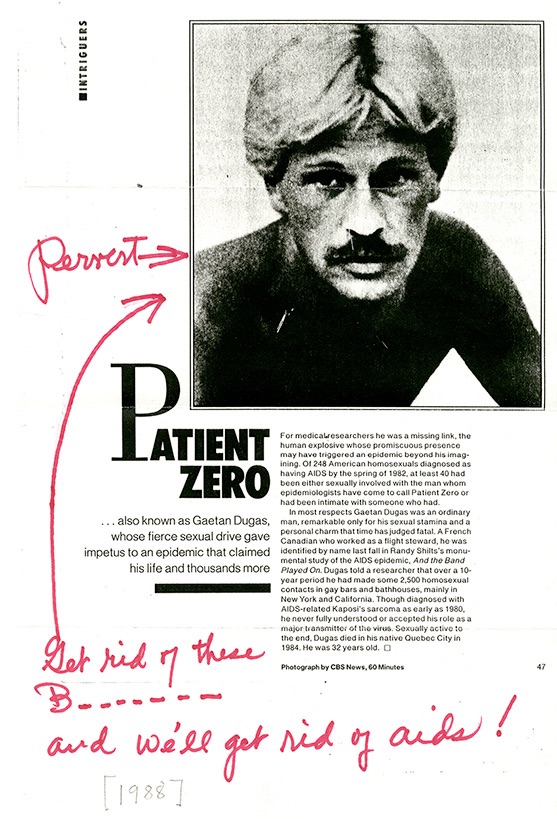
However, subsequent scientific research has dismantled this narrative. Advances in genetic analysis of the virus…particularly phylogenetic studies…have allowed scientists to trace the evolution and spread of HIV with much greater precision. These studies show that HIV was present in North America well before Dugas became infected. In fact, the virus likely entered the United States from the Caribbean in the early 1970s, years before the first recognised AIDS cases.
A landmark 2016 study published in the journal “Nature” used preserved blood samples from the 1970s to reconstruct the early history of HIV in North America. The findings revealed that the virus was already circulating in New York City by around 1970 and had spread to San Francisco shortly thereafter. Crucially, the analysis demonstrated that Dugas was not the earliest case, nor was he uniquely responsible for spreading the virus.
This evidence underscores a key point: epidemics do not begin with a single individual in the simplistic way that the “Patient Zero” myth suggests. Infectious diseases spread through complex networks of human interaction, often silently and undetected for years before they are recognised. The notion of a single “originator” is more a narrative convenience than a scientific reality.
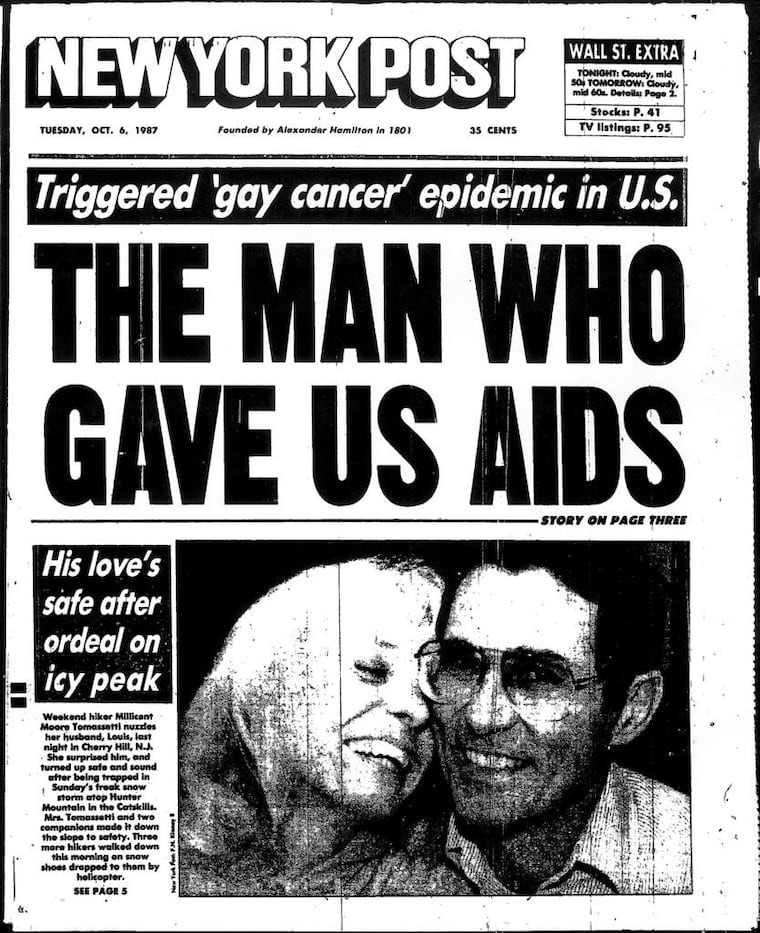
The persistence of the “Patient Zero” story also reflects broader social and cultural dynamics. During the early years of the AIDS crisis, fear and misunderstanding were rampant, and marginalised communities—particularly gay men—were often stigmatised and blamed. The idea of a single, identifiable individual responsible for the epidemic provided a focal point for that fear and blame.
In retrospect, the story of “Patient Zero” can be seen as a cautionary tale about how misinformation and stigma can shape public understanding of disease. While Gaëtan Dugas was indeed part of early epidemiological investigations, he was not the origin of HIV in North America, nor was he uniquely culpable in its spread.
Today, historians and scientists widely regard the “Patient Zero” narrative as a myth—one rooted in misunderstanding and amplified by media representation. It serves as a reminder of the importance of careful scientific communication and the dangers of oversimplifying complex public health issues.
HIV’s “Patient Zero” is not an actual fact but largely an urban legend that emerged from a combination of misinterpretation, incomplete knowledge, and social stigma. While it may have once seemed like a compelling explanation for a frightening new disease, modern science has shown that the reality is far more nuanced—and far less accusatory.
Tim Alderman ©️2026

