The WordPress.com stats helper monkeys prepared a 2015 annual report for this blog.
Here’s an excerpt:
A San Francisco cable car holds 60 people. This blog was viewed about 2,500 times in 2015. If it were a cable car, it would take about 42 trips to carry that many people.
“I thought it was really important as a city leader to stress that this is a one-off, isolated event by someone who shouldn’t have been out on bail, a very violent background, clearly a mental illness,”
So said Clver Moore, the City of Sydney Lord Mayor, on 15 December – the day of the first anniversary of the Lindt Cafe shootings, in Martin Place. It caused an outcry.
Now, I’ll be the first to say that Clover Moore has outlived her usefulness as Lord Mayor. She has been in the job for too long, and is mainly notable for her outrageous (or is it a touch of genius?) suggestions for moving Sydney, kicking and screaming, into the 21st century.
And here, I have to say…I agree with her in this instance! This was not a terrorist attack – it was an event planned and carried out by a mentally disturbed man. Now before you all start jumping up and down – and trolling me on social media – let me explain my point-of-view.
The statement by Clover created commentary on just about every front – and considering the particular day she chose to make this controversial statement – that is probably the appropriate response, and in many regards it was a heartless and tactless comment that should have been better thought out.
But it does raise the question – just what is terrorism?
Dictionary.com defines it as
[ter-uh-riz-uh m]
noun
1.the use of violence and threats to intimidate or coerce, especially for political purposes.
2.the state of fear and submission produced by terrorism or terrorization.
3.a terroristic method of governing or of resisting a government.
And the Oxford Dictionary as “The unofficial or unauthorized use of violence and intimidation in the pursuit of political aims:
the fight against terrorism
international terrorism”
In my mind, and looking at terrorism as I have seen it over the last 15-odd years, in the wake of 9/11, Iran, Iraq, Syria, Afghanistan, and the rise of ISOL it is acts of terrorism caused by, and enacted, by individuals or groups in the pursuit of political and religious aims. How they achieve these aims is usually through violence, acts designed to shock and alienate, and uncaring of collateral damage.
In times past, Man Haron Monis would have been called a nutter! He was not associated with ISOL, despite having their flag with him in the cafe, and any connection to them was either just in his mind, or to create a statement implicating a group that he knew ignited public fear and outrage.
On one particular chat show, it was stated by one of the commentators that to him, tertorism was any act that caused terror, the act of colloquially terrorising people. This is a huge step in the public perception of terrorism…so much so that it concerns me that we are not only pandering to terrorist organisations in that EVERY act will now be tied back to them – something that would please them greatly – but that our use of the word is now distorted. If we look at it from the commentators perspective, every mentally disturbed person who goes out and takes a life, or creates a hostage situation, will no longer be what they are – mentally disturbed. They are now terrorists! Ipso facto, how then do we define those who deliberately go out, with full knowledge and consent, and create acts of violence? Do we need a new word?
In the court of punlic opinion, the Lindt Cafe seige was an act of terrorism. And Paris was an act of terrorism! The differences to me are immediate – Paris was a planned incursion, deliberately designed and enacted to take lives, to create havoc and fear and deliberately push the cause of the ISOL politico-religious group. The Lndt Cafe situation was instigated by an individual with a clear history of mental illness, someone who had slipped through the cracks of both the police force and the court system. He didn’t select the Lindt Cafe for religious or political reasons – he picked it for its close proximity to a local news service, to draw attention to himself. The outcome of his demand for notoriety had tragic consequences, and is now a part of the history of the dark sude of this city. But an act of terrorism? Or the act of a lone nutter?
I don’t feel that Clover’s statement was inaccurate…though I do feel it was badly timed! Maybe it is a discussion that we need to continue having. We cannot allow ourselves to pander to the ego and demands of terrorist organisations…nor can we neglect the needs and care of those who commit acts without really realising what they are doing. And we need to have this discussion away from the sensationalism of social media, talk-back and television chat shows.
Language can be used as a way to create or alleviate fear in our society. We need to use it carefully, and with consideration.
John Church (1780 – c. 1835) was an Independent minister who was most famous for his involvement in the homosexual scandal of the Vere Street Coterie. He is often claimed as the first openly gay ordained Christian minister in England. Contemporary rumours about this are unproveable one way or the other, though circumstantial evidence may suggest that his “inordinate affections which led me into error”[1] can be equated with homosexual inclinations. LIFE
EARLY LIFE
A foundling discovered as a toddler barely able to walk on the steps of St John’s Church Clerkenwell (hence his name) or St Andrew’s Church Holborn, Church’s parents are unknown. He was sent to the Foundling Hospital and spent his first six years in the care of a woman at Hadlow, near Tonbridge in Kent, before returning to the hospital. There he remained, receiving a rudimentary education, including how to read but not how to write, until he was indentured at the age of 10 to a carver and gilder in Great Portland Street. This was broken off after only eight years due to a quarrel with the master but, though he complained of poverty during this time, he managed some self-education and acquired a small personal library.
EARLY PREACHING
Church then moved from job to job and, on 22 March 1801, married the daughter of a Mr Elliott of Hampshire at the (Swedenborgian) New Church in the Strand. He may have been introduced to Swedenborgianism by his first employer, despite claiming to have regularly attended Anglican services during his apprenticeship. Becoming more openly an evangelical dissenter, from about 1801 he attended Itinerant Society meetings, a few years later began to preach publicly and organise a Sunday school. In 1807 he was baptised at the Grafton Street congregation under the ministry of its minister, the Revd Richard Burnham. Tried and approved as a preacher there, he admired William Huntington’s high Calvinism, though it is unclear that this led, as his detractors claimed, to his practicing Huntingdon’s “practical antinomianism” or showing wanton disregard for accepted Christian morality.
Church almost immediately accepted a permanent appointment at an Independent chapel at Banbury, Oxfordshire, being ordained on 15 September 1807 before a group of Baptist and Independent ministers, but had this office curtailed the following year as a result of rumours that he was sodomising young men in the congregation. He moved back to London, to the Grub Street congregation, but despite admitting that he had acted “imprudently”[2] he refused to submit to their investigation of these allegations and moved on to many and various other short-term preaching appointments before joining the Obelisk Chapel, St George’s Fields, as its regular minister.
VERE STREET
In the course of 1813 rumours began to spread in the Weekly Dispatch and other pamphlets and broadsides connecting Church with the White Swan (a well-known homosexual brothel or ‘gay bar’ in modern parlance, in Vere Street, Clare Market), saying that Church was its chaplain and had performed mock marriage ceremonies for its male customers subsequently recognised by some modern historians as same sex marriages). Church denied this connection with Vere Street, claiming that it was propaganda by his clerical opponents and successfully taking legal action to prevent the Dispatch from publishing further reports. Attempted prosecutions against him for sodomy failed and his following did not decline – indeed, in 1814 he founded a new chapel, later known as the Obelisk Tabernacle, designed to accommodate larger numbers. His first wife died, having borne him 4 children, and he remarried not long afterwards to a wife of unknown name (though she is thought to have been the proprietor of a ladies’ seminary at Hammersmith).
IMPRISONMENT
In 1816 Church states that he dreamed of seeing a number of scorpions crawling about the floor of his chapel and being able to kill all but two of them “which fled to the very seat that was occupied by ******* and another”.[3] Soon afterwards, on 26 September, he was indicted at the Surrey assizes, Croydon, for attempted sodomy. His accuser was Adam Foreman, a 19 year old apprentice potter in his congregation who alleged that Church had entered his room one night, placed a hand upon his genitals, and feigned his mistress’s voice, upon which Foreman claimed to have fled. The trial was a cause célèbre, lasting to 17 August the following year and returning a guilty verdict and sentencing Church to two years’ imprisonment. Upon the verdict, Church was burned in effigy by a large and violent crowd outside the Obelisk Tabernacle. During the 730 days he served of his sentence at Newington and Horsemonger Lane gaols, he was often in great anguish according to his autobiography, but he received many visitors, had access to books, retained many of his followers (especially women) and had his four children cared for. He soon recommenced regular services on release, including preaching to more than 1000 people on the evening of his release.
Though his correspondence survives, he did not incur further controversy and nothing more is known of him after 1826 (the date of his last published sermon), when he disappears from the public record – his date of death is unknown.
LITERARY WORKS
A number of sermons.
Autobiography, in which he represented himself as “a child of providence”, a latter-day Moses with a life marked by divinely appointed trials and triumphs.
NOTES
SOURCES
Famous adoptees
R. Norton, Mother Clap’s molly house: the gay subculture in England, 1700–1830 (1992)
Anon, “The trial and conviction of John Church … for an assault with intent to commit an unnatural crime” (1817)
Anon, “The infamous life of John Church, the St George’s Fields preacher” (1817)
I. McCalman, Radical underworld: prophets, revolutionaries, and pornographers in London, 1795–1840 (1988)
W. Benbow, The crimes of the clergy (1823) – an ultra-radical anti-clericalist pamphlet
R. Norton, in Who’s who in Gay and Lesbian History Aldrich, Robert and Wotherspoon, Garry (Eds) (2001)
HELP IMPROVE THIS ARTICLE
Sourced from World Heritage Encyclopedia™ licensed under CC BY-SA 3.0
Help to improve this article, make contributions at the Citational Source
This article was sourced from Creative Commons Attribution-ShareAlike License; additional terms may apply. World Heritage Encyclopedia content is assembled from numerous content providers, Open Access Publishing, and in compliance with The Fair Access to Science and Technology Research Act (FASTR), Wikimedia Foundation, Inc., Public Library of Science, The Encyclopedia of Life, Open Book Publishers (OBP), PubMed, U.S. National Library of Medicine, National Center for Biotechnology Information, U.S. National Library of Medicine, National Institutes of Health (NIH), U.S. Department of Health & Human Services, and USA.gov, which sources content from all federal, state, local, tribal, and territorial government publication portals (.gov, .mil, .edu). Funding for USA.gov and content contributors is made possible from the U.S. Congress, E-Government Act of 2002. Crowd sourced content that is contributed to World Heritage Encyclopedia is peer reviewed and edited by our editorial staff to ensure quality scholarly research articles. By using this site, you agree to the Terms of Use and Privacy Policy. World Heritage Encyclopedia™ is a registered trademark of the World Public Library Association, a non-profit organization.
Due to the unique circumstances of d’Éon’s life, this article avoids the use of gendered pronouns by repeating the name instead (see talk page).
Portrait of d’Éon by Thomas Stewart (1792), at the National Portrait Gallery Caricature of d’Éon dressed half in women’s clothes, half in men’s clothes D’Eon’s name listed on the south face of the Burdett Coutts memorial
Charles-Geneviève-Louis-Auguste-André-Timothée d’Éon de Beaumont (5 October 1728 – 21 May 1810), usually known as the Chevalier d’Éon, was a French diplomat, spy, freemason[1] and soldier who fought in the Seven Years’ War. D’Éon had androgynous physical characteristics and natural abilities as a mimic, good features for a spy. D’Éon appeared publicly as a man and pursued masculine occupations for 49 years, although during that time d’Éon successfully infiltrated the court of Empress Elizabeth of Russia by presenting as a woman. For 33 years, from 1777, d’Éon dressed as a woman, claiming to have been female at birth. Doctors who examined d’Éon’s body after d’Éon’s death discovered that d’Éon would have actually been designated male at birth. Early life
D’Éon was born at the Hôtel d’Uzès in Tonnerre, Burgundy, into a poor noble family. D’Éon’s father, Louis d’Éon de Beaumont, was an attorney and director of the king’s dominions, later mayor of Tonnerre and sub-delegate of the intendant of the généralité of Paris.[2] D’Éon’s mother, Françoise de Charanton, was the daughter of a Commissioner General to the armies of the wars of Spain and Italy. Most of what is known about d’Éon’s early life comes from a partly ghost-written autobiography, The Interests of the Chevalier d’Éon de Beaumont.[3]
D’Éon excelled in school, moving from Tonnerre to Paris in 1743, graduating in civil law and canon law from the Collège Mazarin in 1749 at age 21. D’Éon became secretary to Bertier de Sauvigny, intendant of Paris, served as a secretary to the administrator of the fiscal department, and was appointed a royal censor for history and literature by Malesherbes in 1758.[3] Life as a spy
In 1756, d’Éon joined the secret network of spies called the Secret du Roi, employed by King Louis XV without the knowledge of the government. It sometimes promoted policies that contradicted official policies and treaties. According to d’Éon’s memoirs (although there is no documentary evidence to support that account) the monarch sent d’Éon with the Chevalier Douglas, Alexandre-Pierre de Mackensie-Douglas, baron de Kildin, a Scottish Jacobite in French service, on a secret mission to Russia in order to meet Empress Elizabeth and conspire with the pro-French faction against the Habsburg monarchy. At that time the English and French were at odds, and the English were attempting to deny the French access to the Empress by allowing only women and children to cross the border into Russia. D’Éon had to pass convincingly as a woman or risk being executed by the English upon discovery. In the course of this mission, d’Éon was disguised as the lady Lea de Beaumont, and served as a maid of honour to the Empress. Eventually, Chevalier Douglas became French ambassador to Russia, and d’Éon was secretary to the embassy in Saint Petersburg from 1756 to 1760, serving Douglas and his successor, the marquis de l’Hôpital.[4] D’Éon’s career in Russia is the subject of one of Valentin Pikul’s novels, Le chevalier d’Éon et la guerre de Sept ans.
D’Éon returned to France in October 1760, and was granted a pension of 2,000 livres as reward for service in Russia. In May 1761, d’Éon became a captain of dragoons under the maréchal de Broglie and fought in the later stages of the Seven Years’ War. D’Éon served at the Battle of Villinghausen in July 1761, and was wounded at Ulstrop. After Empress Elizabeth died in January 1762, d’Éon was considered for further service in Russia, but instead was appointed secretary to the duc de Nivernais, awarded 1,000 livres, and sent to London to draft the peace treaty that formally ended the Seven Years’ War. The treaty was signed in Paris on 10 February 1763, and d’Éon was awarded a further 6,000 livres, and received the Order of Saint-Louis on 30 March 1763, becoming the Chevalier d’Éon.[4] The title chevalier, French for knight, is also sometimes used for French noblemen.
Back in London, d’Éon became chargé d’affaires in April 1763, and then plenipotentiary minister – essentially interim ambassador – when the duc de Nivernais returned to Paris in July. D’Éon used this position also to spy for the king. D’Éon collected information for a potential invasion – an unfortunate and clumsy initiative of Louis XV, of which Louis’s own ministers were unaware – assisting a French agent, Louis François Carlet de la Rozière, who was surveying the British coastal defences. D’Éon formed connections with English nobility by sending them the produce of d’Éon’s vineyard in France and abundantly enjoyed the splendour of this interim embassy.[4]
Upon the arrival of the new ambassador, the comte de Guerchy in October 1763, d’Éon was demoted to the rank of secretary and humiliated by the count. D’Éon was trapped between two French factions: Guerchy was a supporter of the duc de Choiseul, duc de Praslin and Madame de Pompadour, in opposition to the comte de Broglie and his brother the maréchal de Broglie. D’Éon complained, and eventually decided to disobey orders to return to France. In a letter to the king, d’Éon claimed that the new ambassador had tried to drug d’Éon at a dinner at the ambassador’s residence in Monmouth House in Soho Square. The British government declined a French request to extradite d’Éon, and the 2,000 livres pension that had been granted in 1760 was stopped in February 1764. In an effort to save d’Éon’s station in London, d’Éon published much of the secret diplomatic correspondence about d’Éon’s recall under the title Lettres, mémoires et négociations particulières du chevalier d’Éon in March 1764, disavowing Guerchy and calling him unfit for his job.[5] This breach of diplomatic discretion was scandalous to the point of being unheard of, but d’Éon had not yet published everything (the King’s secret invasion documents and those relative to the Secret du Roi were kept back as “insurance”), and the French government became very cautious in its dealings with d’Éon, even when d’Éon sued Guerchy for attempted murder. With the invasion documents in hand, d’Éon held the king in check.[6] D’Éon did not offer any defense when Guerchy sued for libel, and d’Éon was declared an outlaw and went into hiding. However, d’Éon secured the sympathy of the British public: the mob jeered Guerchy in public, and threw stones at his residence. D’Éon then wrote a book on public administration, Les loisirs du Chevalier d’Éon, which was published in thirteen volumes in Amsterdam in 1774.[7]
Guerchy was recalled to France, and in July 1766 Louis XV granted d’Éon a pension (possibly a pay-off for d’Éon’s silence) and a 12,000-livre annuity, but refused a demand for over 100,000 livres to clear d’Éon’s extensive debts. D’Éon continued to work as a spy, but lived in political exile in London. D’Éon’s possession of the king’s secret letters provided protection against further actions, but d’Éon could not return to France.[6] The Chevalière d’Éon The Chevalier d’Éon Fencing Match between Monsieur de Saint-George et Mademoiselle La chevalière d’Éon de Beaumont at Carlton House on 9 April 1787. Engraving by Victor Marie Picot, based on the original painting by Charles Jean Robineau. Life as a woman
Despite the fact that d’Éon habitually wore a dragoon’s uniform, rumours circulated in London that d’Éon was actually a woman. A betting pool was started on the London Stock Exchange about d’Éon’s true sex. D’Éon was invited to join, but declined, saying that an examination would be dishonouring, whatever the result. After a year without progress, the wager was abandoned. Following the death of Louis XV in 1774, the secret du roi was abolished, and d’Éon tried to negotiate a return from exile. The writer Pierre de Beaumarchais represented the French government in the negotiations. The resulting twenty-page treaty permitted d’Éon to return to France and retain the ministerial pension, but required that d’Éon turn over the correspondence regarding the secret du roi.[6]
The Chevalier d’Éon claimed to have been assigned female at birth, and demanded recognition by the government as such. D’Éon claimed to have been raised as a boy because Louis d’Éon de Beaumont could only inherit from his in-laws if he had a son. King Louis XVI and his court complied with this demand, but required in turn that d’Éon dress appropriately in women’s clothing, although d’Éon was allowed to continue to wear the insignia of the Order of Saint-Louis. When the king’s offer included funds for a new wardrobe of women’s clothes, d’Éon agreed. In 1777, after fourteen months of negotiation, d’Éon returned to France and as punishment was banished to Tonnerre.[6]
When France began to help the rebels during the American War of Independence, d’Éon asked to join the French troops in America, but d’Éon’s banishment prevented it.[6] In 1779, d’Éon published a books of memoirs: La Vie Militaire, politique, et privée de Mademoiselle d’Éon. They were ghostwritten by a friend named La Fortelle and are probably embellished.[4] D’Éon was allowed to return to England in 1785.
The pension that Louis XV had granted was ended by the French Revolution, and d’Éon had to sell personal possessions, including books, jewellery and plate. The family’s properties in Tonnerre were confiscated by the revolutionary government. In 1792, d’Éon sent a letter to the French National Assembly offering to lead a division of female soldiers against the Habsburgs, but the offer was rebuffed. D’Éon participated in fencing tournaments until seriously wounded in Southampton in 1796. D’Éon’s last years were spent with a widow, Mrs. Cole.[6] In 1804, d’Éon was sent to a debtors’ prison for five months, and signed a contract for a biography to be written by Thomas William Plummer, which was never published. D’Éon became paralyzed following a fall, and spent a final four years bedridden, dying in poverty in London on 21 May 1810 at the age of 81.[6]
Doctors who examined the body after d’Éon’s death discovered that the Chevalier had “male organs in every respect perfectly formed”, while at the same time displaying feminine characteristics such as rounded limbs and “breast remarkably full”.[8] D’Éon’s body was buried in the churchyard of St Pancras Old Church, and d’Éon’s remaining possessions were sold by Christie’s in 1813. D’Éon’s grave is listed on Baroness Burdett Coutts’s memorial there as one of the important graves lost. Legacy
Havelock Ellis coined the term eonism to describe similar cases of transgender behavior; it is rarely used now.[4]
The Chevalière d’Eon, by Charles Dupeuty and the Baron de Maldigny (1837), Théâtre du Vaudeville[9]
The Chevalier d’Eon, a comedy in 3 acts by Dumanoir and Jean-François Bayard (1837), Théâtre des Variétés[10]
The Beaumont Society, a long-standing organisation for transgender people, is named after the Chevalier d’Éon.
Le secret du Chevalier d’Éon (1959), a film loosely based on the life of the Chevalier that portrays d’Éon as a woman masquerading as a man.
Le Chevallier D’eon, a series of manga written by Tou Ubukata and illustrated by Kiriko Yumeji; it is published by Del Rey Manga
Le Chevalier d’Eon (2006), an anime series loosely based on the Chevalier d’Éon.
Eonnagata, a 2010 theatre piece by Canadian Robert Lepage, combining drama and dance, based on the life of the Chevalier d’Éon.
Some of d’Éon’s papers are at the Brotherton Library in Leeds, U.K.[4]
In 2012, a painting owned by the Philip Mould Gallery was identified as a portrait of d’Éon[11] and purchased by the National Portrait Gallery, London.[12]
Appeared as one of the summonable servants in mobile game Fate/Grand Order.
References
Initiated at London’s Immortality Lodge number 376 in 1768 and later member of Les Amis réunis lodge in Tonnerre (in Le Chevalier d’Eon, franc-maçon et espionne – Daniel Tougne – Trajectoires ed. 2012)
J. M. J. Rogister, D’Éon de Beaumont, Charles Geneviève Louis Auguste André Timothée, Chevalier D’Éon in the French nobility (1728–1810), Oxford Dictionary of National Biography, Oxford University Press, 2004; online edn, Sept 2012 accessed 26 April 2013
a b Lever, Evelyne; Maurice Lever (19 February 2009). Le Chevalier d’Éon : Une vie sans queue ni tête. Fayard. pp. 384 pages. ISBN 978-2-213-61630-8.
a b c d e f Burrows, Simon; Russell Goulbourne; Jonathan Conlin; Valerie Mainz (23 April 2010). The Chevalier d’Éon and his worlds: gender, espionage and politics in the eighteenth century. Continuum. pp. 272 pages.
Lettres, mémoires et négociations particulières du Chevalier D’Éon, ministre plénipotentiaire auprès du roi de Grande-Bretagne; avec M.M. les Ducs de Praslin, de Nivernois, de Sainte-Foy, & Regnier de Guerchy, Ambassad. Extr. &c.&c.&c. (1765)
a b c d e f g Burrows, Simon (October 2006). Blackmail, scandal and revolution London’s French libellistes, 1758–92. Manchester, UK: Manchester University Press. 9780719065262.
Chisholm, Hugh, ed. (1911). “Eon de Beaumont”. Encyclopædia Britannica 9 (11th ed.). Cambridge University Press.
Laughton, John Knox (1888). “D’Éon de Beaumont, Charles Geneviève Louis Auguste André Timothée”. In Stephen, Leslie. Dictionary of National Biography 14. London: Smith, Elder & Co.
The Chevalier d’Eon and Other Short Farces from the Eighteenth and Nineteenth Century French Theatre, By Frank J. Morlock
Theatrical Costume, Masks, Make-up and Wigs: A Bibliography and Iconography, by Sidney Jackson Jowers, p. 314
Bryner, Jeanna (19 April 2012). “Earliest Painting of Transvestite Uncovered”. Live Science. Retrieved 20 April 2012.
Brown, Mark (6 June 2012). “Portrait mistaken for 18th-century lady is early painting of transvestite”. The Guardian (UK). Retrieved 22 September 2014.
Further reading
Decker, Michel de. Madame Le Chevalier d’Éon, Paris: Perrin, 1987, ISBN 978-2-7242-3612-5.
d’Éon De Beaumont, Charles. The Maiden of Tonnerre: The Vicissitudes of the Chevalier and the Chevalière d’Éon, Baltimore, MD: Johns Hopkins University Press, 2001, ISBN 978-0-8018-6687-6.
d’Éon, Leonard J. The Cavalier, New York: G.P. Putnam’s Sons, 1987, ISBN 0-399-13227-9.
Frank, André, with Jean Chaumely. D’Éon chevalier et chevalière: sa confession inédite, Paris: Amiot-Dumont, 1953.
Fortelle M. de la. La Vie militaire, politique et privée de Demoiselle Charles-Geneviève-Auguste-Andrée-Thimothée Éon ou d’Èon de Beaumont, [… etc.], Paris: Lambert, 1779.
Gaillardet, F. (ed.), Mémoires du chevalier d’Éon, Paris, 1836, 2 vols.
Gontier, Fernande. Homme ou femme? La confusion des sexes, Paris: Perrin, 2006, Chapter 6. ISBN 978-2262024918.
Homberg, O., and F. Jousselin, Un Aventurier au XVIIIe siècle: Le Chevalier D’Éon (1728-1810), Paris: Plon-Nourrit, 1904.
Kates, Gary. Monsieur d’Éon Is a Woman: A Tale of Political Intrigue and Sexual Masquerade, Baltimore, MD: Johns Hopkins University Press, 2001, ISBN 978-0-8018-6731-6.
Lever, Évelyne and Maurice. Le Chevalier d’Éon: Une vie sans queue ni tête, Paris: Fayard, 2009, ISBN 978-2-213-61630-8.
Luyt, Philippe. D’Éon de Tonnerre. Iconographie et histoire, 2007, OCLC 163617123
Mourousy, Paul. Le Chevalier d’Éon: un travesti malgré lui, Paris: Le Rocher, 1998, ISBN 978-2-268-02917-7.
Musée municipal de Tonnerre, Catalogue bilingue de l’exposition, Le Chevalier d’Éon: secrets et lumières, 2007.
Royer, Jean-Michel. Le Double Je, ou les Mémoires du chevalier d’Éon, Paris: Grasset & Fasquelle, 1986, ISBN 978-2-246-38001-6.
Telfer, John Buchan, The strange career of the Chevalier d’Eon de Beaumont, minister plenipotentiary from France to Great Britain in 1763, 1885, OCLC 2745013
Introduction
The theft of the Irish Crown Jewels by a person or persons unknown in 1907 is one of the most famous and puzzling mysteries of Irish history, and has been the subject of numerous books and articles. (1) The Jewels were worn during functions of the Order of St Patrick and were entrusted to the care of Ulster King of Arms, Ireland’s chief herald and genealogist. Many and various are the theories which have been advanced over the years to explain what happened to the Jewels, with allegations that they were stolen by insiders, or by Unionist conspirators eager to derail Home Rule, or by Republican plotters seeking to embarrass the British government. On the occasion of the hundredth anniversary of the issue of the report of an official commission of investigation into the loss of the Jewels, (2) it might be worthwhile to revisit the affair.
As an historian, genealogist and heraldist the present writer has taken upon himself the task of compiling this centenary report, and the following were set as the terms of reference:
(1) To examine as much as possible of the surviving documentary evidence relating to the theft of the Irish Crown Jewels in 1907.
(2) To review the proceedings of the Viceregal Commission of investigation into the circumstances of the theft of the Jewels which was published in 1908.
(3) To evaluate various theories advanced over the years as to who might have been responsible for the theft, and in the light of the available evidence to try and identify the most likely culprit or culprits.
The Theft of the Jewels
It should be pointed out firstly that the ‘Irish Crown Jewels’ were not the equivalent of the English Crown Jewels in the Tower of London, but were in fact the regalia or insignia of the Order of St Patrick. This was a chivalric order founded by the government in 1783, designed to be the Irish counterpart of the British Order of the Garter, and equally a source of honour and patronage. The first Grand Master was the Third Earl Temple, who was Lord Lieutenant of Ireland and the prime mover in founding the Order. The Jewels or regalia were presented to the Order by King William IV in 1831, and are believed to have been made up from diamonds belonging to Queen Charlotte. The Jewels were crafted by Rundell, Bridge and Company of London, and consisted of a Star and a Badge composed of rubies, emeralds and Brazilian diamonds, mounted in silver, which were to be worn by the Lord Lieutenant as Grand Master on formal occasions. The membership of the Order was composed of leading peers titled Knights Companions. The Ulster King of Arms, the state heraldic and genealogical officer in charge of the Office of Arms, was made responsible for registering the Order’s membership and caring for its insignia. (3)
The statutes or rules of the Order of St Patrick were revised in 1905, and it was ordered that the jewelled insignia of the Grand Master and the collars and badges of the members should be deposited in a steel safe in the strongroom of the Office of Arms. The Office of Arms was located in Dublin Castle, and in 1903 moved from the Bermingham Tower to the Bedford Tower. The serving Ulster King of Arms was Sir Arthur Vicars, who had been appointed in 1893. Other, largely honorary office-holders under Vicars were Pierce Gun Mahony, Cork Herald, Francis (Frank) Shackleton, Dublin Herald, and Francis Bennett Goldney, Athlone Pursuivant. Mahony was a nephew of Vicars, while Shackleton, the brother of the famous explorer Sir Ernest Shackleton, was a housemate of Vicars. After fitting out of the new premises in the Bedford Tower had been completed, it was found that the Ratner safe in which the Order’s insignia were to be kept was too large to fit through the door of the strongroom. By agreement with the Board of Works it was therefore decided to leave the safe in the Library until a more suitably-sized safe could be obtained, but this was never done. While seven latch keys to the door of the Office of Arms were held by Vicars and his staff, there were only two keys to the safe containing the insignia, both held by Vicars. (4)
The last occasion on which the Jewels were seen in the safe was on 11 June 1907, when Vicars showed them to John Crawford Hodgson, the librarian of the Duke of Northumberland. On the morning of Wednesday 3 July there was a strange occurrence, when Mrs Farrell the office cleaner found the entrance door unlocked, told William Stivey the messenger, who on informing Vicars received the rather offhand reply, ‘Is that so?’, or ‘Did she?’. On the morning of Saturday 6 July there was an even more alarming occurrence, when Mrs Farrell found the door of the strongroom ajar, and on being informed by Stivey, Vicars again replied casually, taking no further action.
At about 2.15pm on the same day, 6 July, Vicars gave Stivey the key of the safe and a box containing the collar of a deceased knight, asking him to deposit it in the safe. This was most unusual, as Stivey had never before held the safe key in his hand. Stivey found the safe door unlocked and immediately informed Vicars, who came and opened the safe to find that the Jewels, five Knights’ collars and some diamonds belonging to Vicars’s mother were all gone. The police were called, and in the subsequent investigation lock experts established that the safe lock had not been tampered with, but had been opened with a key. While Mahony was not in the Office of Arms from April until 4 July, except one day in May, Shackleton and Goldney appeared not to have visited the premises or indeed been in Ireland between 11 June and 6 July. (5)
The discovery of the theft of the Jewels caused great concern to government, and indeed King Edward VII was particularly angered, as he was within days of visiting Ireland and intended to invest a knight of the Order of St Patrick. Apparently largely on the King’s insistence, it was decided to reconstitute the Office of Arms and replace Vicars. Vicars, however, refused to resign, being supported by his half-brother, Pierce O’Mahony, father of Pierce Gun Mahony and a self-styled Gaelic Chief titled The O’Mahony. (6) O’Mahony senior became the most prominent figure in a campaign for a public enquiry which it was hoped would vindicate Vicars.
The Viceregal Commission of Investigation
Lord Aberdeen, the Lord Lieutenant of Ireland, decided to appoint a Viceregal Commission of inquiry in January 1908, whose terms of reference were ‘to investigate the circumstances of the loss of the regalia of the Order of St Patrick’, and ‘to inquire whether Sir Arthur Vicars exercised due vigilance and proper care as the custodian thereof’. (7)
The examination of witnesses was led by the Solicitor General, Redmond Barry. The members of the Commission were Judge James J Shaw, Robert F Starkie and Chester Jones. The Commission commenced its sittings on 10 January 1908 in the Library of Ulster’s Office, the very room from which the Jewels had been removed, and would complete its hearings fairly quickly on 16 January. A problem arose immediately, in that it was found that the Commission was to sit in private and would not have power to compel the attendance of witnesses or take evidence on oath. Vicars wanted a sworn public enquiry, and therefore withdrew from the proceedings with his counsel, so that the Commission had to continue without its most important witness. However, the Commission was able to use written statements made by Vicars to the police, as well as oral statements made by him to the police and various witnesses. (8)
Some twenty-two individuals agreed to give evidence when called. These included firstly members of the staff of Ulster’s office, including George D Burtchaell, Vicars’s secretary, the trio of unpaid assistant heralds, Pierce Gun Mahony, Cork Herald, Francis Shackleton, Dublin Herald, and Francis Bennett Goldney, Athlone Pursuivant. Then there were various policemen and officials, including M V Harrel, Assistant Commissioner of the Dublin Metropolitan Police, Superintendent John Lowe of the same force, Chief Inspector John Kane of Scotland Yard, and Sir George C V Holmes, Chairman of the Board of Works. Joining Vicars in refusing to give evidence were Sydney Horlock, his clerk, and Mary Gibbon, the office typist. (9)
Burtchaell was examined on three occasions and his evidence elucidated the workings of Ulster’s Office, as well as giving the impression that Vicars perhaps was not as careful as he should have been in his custody of office keys, and that he was in habit of proudly showing off the Jewels to a wide range of people. Burtchaell also confirmed that of the three heralds, Goldney had not been in the office since May, Shackleton since early June, but that Mahony had been present in the period immediately before the discovery of the loss of the Jewels in July 1908. The testimony of Peirce Mahony junior was taken at two sittings and was largely taken up with establishing his role in Ulster’s Office, his access to keys and his attendance at Ulster’s Office, but was not otherwise very informative.
Goldney was examined at two sessions, and his evidence in contrast was very lively. The drift of his testimony became evident when Goldney stated that on one occasion when Vicars was displaying the Jewels to callers there were ‘some strange gentlemen in the room’. While claiming to have no idea as to who might have taken the Jewels, Goldney coyly referred to ‘another matter’, which after some hesitation the Commission decided to enter on the record. This other matter turned out relate to complicated and strange financial relationships between Vicars, Shackleton and Goldney. Vicars had guaranteed two bills for Shackleton, which it was beyond his means to support, and accordingly he persuaded Goldney to take responsibility, a task which involved dealings with a money lender associated with Shackleton. This aspect of Goldney’s evidence certainly did not have the effect of presenting Vicars in a good light.
Of the policemen who gave evidence, Chief Inspector Kane was the most interesting. Kane stated that he believed that the theft of the Jewels had been carried out by an insider, and that it had occurred before 5 July. Kane explained the doors found open in Ulster’s Office as a deliberate device ‘to precipitate an investigation’. Kane also testified that Vicars and Goldney had stated to him that they believed Shackleton to have been responsible for the theft, a charge he rejected emphatically:
I have repeated to Sir Arthur Vicars and his friends over and over again, and I desire to say that now, when they pestered me with not only suggestions, but direct accusations of Mr Shackleton, that they might as well accuse me, so far as the evidence they produced went to justify them. (10)
Unfortunately, Kane’s report on the loss of the Jewels is among the official documentation now missing, and this might have thrown further light on just why he was so certain that the man who remains the prime suspect was innocent.
Shackleton was among the final witnesses to give evidence, travelling back to Dublin from San Remo in Italy for the purpose. Shackleton gave the impression of being a helpful and composed witness, which of course might not have been the case had Vicars’s counsel been there to cross-examine him. He candidly outlined his connection with Vicars, stating that he had made his acquaintance through his heraldic and genealogical work, that he was a co-tenant with him of a house in Clonskeagh, that indeed Sir Arthur had guaranteed bills for him when he was in some temporary financial difficulties. He admitted that he had in the past spoken of the Jewels as being likely to be stolen, but took every opportunity to claim that the suspicions against him were groundless. Read into the record was a letter from Vicars to Shackleton, sent on 25 August 1907 from Goldney’s residence Abbots Barton in Canterbury, in which Vicars commented:
Now that you evidently know the whereabouts of the Jewels, from what you have said to both Frank [Goldney] and me, I hope that you have told Mr Kane everything calculated to facilitate matters. (11)
Shackleton indicated that this exchange was based on nothing more than his reference to a newspaper report that the Jewels had been recovered, which turned out to be incorrect. In answer to direct questions as to whether he or a confederate had taken the Jewels, Shackleton replied:
I did not take them; I know nothing of their disappearance; I have no suspicion of anybody. . . . . . I had no hand in it, nor do I know anybody that took them, nor have I the least suspicion. (12)
Taking advantage of his social contacts, Shackleton dropped many prominent names, and referred several times to his poor health and the distance he had travelled from San Remo to give evidence. At one point Shackleton stated that he had even been accused of aiding Lord Haddo, Lord Aberdeen’s son, in taking the Jewels, whereupon the Solicitor General intervened quickly to indicate that he ‘need not mention that’. (13)
The Viceregal Commission issued its report on 25 January 1908, and the key finding was as follows:
Having fully investigated all the circumstances connected with the loss of the Regalia of the Order of St Patrick, and having examined and considered carefully the arrangements of the Office of Arms in which the Regalia were deposited, and the provisions made by Sir Arthur Vicars, or under his direction, for their safe keeping, and having regard especially to the inactivity of Sir Arthur Vicars on the occasions immediately preceding the disappearance of the Jewels, when he knew that the Office and the Strong Room had been opened at night by unauthorised persons, we feel bound to report to Your Excellency that, in our opinion, Sir Arthur Vicars did not exercise due vigilance or proper care as the custodian of the Regalia. (14)
While admitting it was not part of their terms of reference, the Commissioners also stated that as Francis Richard Shackleton had been more than once named as the ‘probable or possible author of this great crime’, they though it only due to that gentleman to say that
. . . he appeared to us to be a perfectly truthful and candid witness, and that there was no evidence whatever before us which would support the suggestion that he was the person who stole the Jewels. (15)
The Viceregal Commission hearings had in effect been converted into a trial in absentia of Sir Arthur Vicars, and his own withdrawal together with his counsel had left the field clear for his accusers. Although the Viceregal Commission’s terms of reference specified both the circumstances of the loss of the Jewels and the conduct of Vicars, it would seem that highlighting the latter’s failings took precedence over trying to establish just who had purloined the Jewels. The Commission’s findings were couched in terms of allocating most blame for the loss of the Jewels to Vicars, indeed on making him a scapegoat, and in this the Commissioners could not really be accused of failing to do what was expected of them. There can be a level of cynicism attached to official reports, in which while no palpable untruths are told, certain facts can be manipulated and others ignored in order to arrive at a predetermined result. While the Commission’s finding that Vicars was careless in his custody of the Jewels was essentially accurate, the exculpation of Shackleton seems remarkable when not accompanied by closer analysis of the alleged exploit of Lord Haddo, or the security failings of other Castle staff, for example. Another factor explaining the kid gloves with which Frank Shackleton was treated may have been the status of his brother Sir Ernest as a national hero and favourite of King Edward VII. Although it would appear that Ernest’s own finances were in a parlous state due to the expenses of his polar expeditions, he felt obliged to borrow £1,000 in order to help his brother Frank repay the above mentioned debts. (16) It would not be unjust to conclude that the Viceregal Commission report was in essence a whitewash designed to draw a veil over an intensely embarrassing episode for the establishment and to allocate most of the blame to Vicars.
On 30 January 1908 Vicars was informed that his appointment as Ulster King of Arms had been terminated, and Captain Nevile Rodwell Wilkinson was appointed in his place. As the disgruntled Vicars refused to hand over the keys to the Office of Arms strongroom, Wilkinson found himself obliged to stage another break-in in order to gain entry! Shackleton too and Goldney were removed, but Pierce Gun Mahony perhaps unexpectedly was left in place. Pierce Mahony senior responded to the Commission’s report with an even more robust and public defence of his half-brother Vicars. In early February 1908 he released to the press copies of his copious correspondence with members of the Irish administration, in which he alleged that while officially Vicars was charged only with negligence, graver charges relating to his character were being circulated in secret. In particular, Mahony alleged that he had been informed by Lord Aberdeen and the Chief Secretary Augustine Birrell that Vicars stood accused of introducing into his office ‘a man of very bad character’, and while the name of the individual was deleted in the press report, it is considered that this must have been a reference to Frank Shackleton. Mahony and Vicars continued to press for a full public and judicial enquiry so that the dismissed Ulster could clear his name. A letter sent to the press by Vicars on 1 February 1908 provided his initial response to the charges of the Viceregal Commission: he declared that the Board of Works were responsible for not providing a safe which would fit in the strong room of his office, and explained his failure to react to the reports of open doors by reference to his being overwhelmed with work in advance of the royal visit. Government was unmoved, considering that the matter had been resolved by the report of the Viceregal Commission and the replacement of Vicars as Ulster. (17)
Shackleton, Goldney and Other Suspects
The Viceregal Commission clearly provided the official view of the Jewels theft, but a much murkier account of the whole affair found its way into the public domain in July 1908 via an article in an Irish-American nationalist newspaper the Gaelic American. Based apparently on information provided by Vicars’s half-brother Pierce O’Mahony, this article asserted that drunken parties had been held in the Office of Arms, with an implication of homosexual activity (‘nightly orgies’, ‘unnatural vice’). It was claimed that Shackleton and a disreputable associate named Captain Richard Gorges (for some reason disguised as ‘Captain Gaudeons’ in the article), were responsible for stealing the Jewels, and the two had escaped punishment by threatening to expose the scandalous conduct in the Castle. The article also alleged that there had been a secret Dublin Metropolitan Police enquiry operating in parallel with that of the Commission, which had subjected Shackleton to a less benign interrogation when he had completed his evidence before the commissioners. Although the authorities allegedly knew the identities of those who had stolen the Jewels, they could not secure hard evidence against them or persuade them to reveal the whereabouts of their booty. In consequence of this, and out of a desire to avoid further scandal and revelations, it was said that the police contented themselves merely with ordering Shackleton and Gorges to leave the country. (18)
The author of the Gaelic American article, the Irish Republican Brotherhood member Bulmer Hobson, had a chance encounter some years later with Gorges, who essentially verified the main points in the story. Gorges reportedly added some further details, stating that the Jewels had once been taken as a joke during a drinking party by Lord Haddo, and returned the next day. This is said to have inspired Shackleton and Gorges to repeat the theft, but this time there was to be no return of the Jewels. According to Hobson, Shackleton disposed of the Jewels in Amsterdam, stipulating that they were not to be broken up for three years, perhaps indicating that some sort of ransom back of the stolen goods was intended. (19)
This whole account has the merit of plausibility, even though of course it comes from a biased source and is uncorroborated in its details. It would not be unreasonable to suggest that Shackleton’s reference to Haddo in his evidence to the Viceregal Commission was clearly calculated, a scarcely veiled threat that he was in a position to reveal embarrassing details about prominent individuals if pressed too hard by his interrogators. The public exculpation of Shackleton by the Viceregal Commission is at odds with the exploitation of his association with Vicars in order to blacken the latter’s name, and points to a remarkable degree of cynicism on the part of the Government.
It is generally agreed that the doors and safe in Ulster’s Office were left open deliberately in order to force discovery of the robbery. It is possible that it was Vicars himself who orchestrated these events when he realised that the Jewels were not going to be returned, and was thus desperately trying to arrange that someone other than himself should be on record as discovering the theft, as it happened, the unfortunate Stivey, who was also to lose his job in the Castle.
Of course it should be noted that Shackleton was not in Ireland in the period leading up to the theft, and it is suggested that Gorges may have been the one who actually removed the Jewels, acting on a plan conceived by Shackleton, with both men sharing in the proceeds of the crime. If this is what happened, it is likely that Shackleton exploited his intimacy with Vicars to borrow temporarily one of the keys to the safe, and either the original or a copy may have been used by Gorges to remove the Jewels. Vicars kept one key on his person and the other concealed in his house in Clonskeagh, which as already noted he shared with Shackleton. It is only fair to record that members of the Shackleton family today are not convinced of Frank’s guilt, pointing to his absence from the country at the time of the theft of the Jewels and to Chief Inspector Kane’s declaration that no evidence could be found to show that he was involved. (20) If Shackleton and Gorges were guilty, then they got clean away with the theft, although both men were later to end up in prison for unconnected cases involving fraud and manslaughter respectively. Following his release from prison Shackleton changed his surname to Mellor and died in 1941 in Chichester, while Gorges appears to have boasted about his role in the Jewels theft in prison but was not believed, and after his release survived until 1944, when he lost his life after being struck by a train in London. (21)
Understandably embittered and believing that he had been made a scapegoat for the theft of the Jewels, Vicars retired to County Kerry, and spent the remainder of his life in Kilmorna House, which had been made available to him by his sister, Mrs Edith de Janasz. Vicars married Gertrude Wright in 1917, and on 14 April 1921 he was shot dead by a local IRA unit after it had set fire to Kilmorna. (22) It is not known whether Vicars was just an incidental victim of the Troubles, or whether he had actually been providing intelligence on the IRA in an effort to win back official favour, but it is believed that the killing was a local initiative rather than an act sanctioned by Republican headquarters. While Shackleton and Gorges were relatively long-lived, others involved in the Jewels affair came to premature ends: Pierce Gun Mahony was found shot through the heart in 1914 what appears to have been a hunting accident, although suspicions of murder were voiced, while Francis Bennett Goldney died in France in 1918 as a result of a motoring accident. (23)
The full text of Vicars’s last will and testament was not released for public examination until 1976, as the following rather sensational passage was obviously considered too incendiary:
I might have had more to dispose of had it not been for the outrageous way in which I was treated by the Irish Government over the loss of the Irish Crown Jewels in 1907, backed up by the late King Edward VII whom I had always loyally and faithfully served, when I was made a scapegoat to save other departments responsible and when they shielded the real culprit and thief Francis R Shackleton (brother of the explorer who didn’t reach the South Pole). My whole life and work was ruined by this cruel misfortune and by the wicked and blackguardly acts of the Irish Government. (24)
It is not usual to employ a will to make such serious accusations effectively from beyond the grave, and this rather sad and bitter document has certainly helped to fix the idea of Shackleton’s guilt in the minds of many, without of course providing any conclusive evidence that he was the culprit.
It should be noted that Francis Bennett Goldney has also come under suspicion in relation to the Jewels theft, in that after his death in 1918 he was discovered to have been something of a thieving magpie, and among his possessions were found ancient charters and documents belonging to the City of Canterbury, as well as a painting by Romanelli which was the property of the Duke of Bedford. (25) Goldney’s opportunities and inside knowledge were much less than Shackleton’s, but we are now aware of his track record, and the theft of the Jewels occurred just five months after his appointment as Athlone Pursuivant in February 1907. Goldney’s testimony to the Commission is certainly a masterpiece of deflection and obfuscation, although it is not possible to say whether this proceeded from elements of his character or a desire to hide something sinister. It must be pointed out as well that like Shackleton, Goldney was not in Ireland for some months before the discovery of the loss of the Jewels, but again this does not rule out a possible organisational involvement in the crime.
Something of Goldney’s style can be seen in an episode when he borrowed two silver communion cups from Canterbury Cathedral supposedly for exhibition in America, and on being asked about their return after some months, he claimed coolly that he been given them to sell, and they are now to be found in the possession of the Metropolitan Museum of Art in New York. (26) Audrey Bateman, the principle chronicler of Goldney’s misdeeds, has located Canterbury lore which shows that there was local suspicion that the mayor had been involved in the theft of the Irish Crown Jewels. J A Jennings, proprietor of the Kent Herald, recalled that he had been told by the chauffeur of an American millionaire staying with Goldney in the Autumn of 1907 that a bigger petrol tank had been fitted to his car before he and his employer travelled via Dover to Amsterdam, and he was convinced that this provided the means for the Irish Crown Jewels to be smuggled away. While Jennings declined to reveal the name of the American, Bateman noted that the famous and fabulously wealthy art collector John Pierpont Morgan attended Cricket Week in Canterbury with Goldney in early August 1907. (27) Again it must be stressed that while there are good grounds for suspicion, there is no conclusive evidence that Goldney was responsible for stealing the Jewels. Neither should we hastily convict Morgan, even though there is an indication that he may have been involved with the export of looted antiquities in the early 1900s, as it has recently been alleged that he purchased and shipped to New York an Etruscan chariot, which interestingly is now also in the Metropolitan Museum of Art, and whose return to Italy has been demanded. (28)
The fate of the stolen Crown Jewels remains a subject of speculation and controversy to the present day. In 1976 an intriguing Irish Government memorandum dated 1927 was released, indicating that ‘the Castle Jewels are for sale and that they could be got for £2,000 or £3,000′. (29) Gregory Allen has interpreted these words to mean that the stolen Jewels were still intact in 1927 and that the thieves or their agents were effectively endeavouring to ransom them to the Irish Government. Allen then proceeded to put forward a rather implausible theory that the Jewels may have been stolen by patriots intent on furthering Arthur Griffith’s plan to secure Irish independence through the device of a ‘dual monarchy’. (30) Some commentators have followed Allen in believing that the 1927 memorandum was referring to the stolen Jewels, (31) but the present writer is not so sure. Might not the reference have been to the elements of the regalia of the Order of St Patrick not stolen in 1907, the last remnants of which were returned to England as late as the 1940s? (32) If this interpretation is correct, the belief that the stolen Jewels survived intact for many years after 1907 appears to be unsupported. As against this, Myles Dungan has written that a Dublin jeweller, James Weldon, was contacted in 1927 by Shackleton offering to provide information on the location of the Jewels in return for money, but this story is based only on Weldon family recollections and is not documented. (33)
Of course facts or the absence of same should not be allowed to get in the way of a good yarn, and rumours and legends have abounded over the years, with claims that the Jewels may still be hidden in Ireland, or somewhere in England, or alternatively are in the possession of a wealthy collector in America or elsewhere abroad. The theft of the Irish Crown Jewels has been made the subject of a sexually graphic novel, which concludes with a mischievous hint that diamonds from the Jewels may have been incorporated in a magnificent brooch worn by Queen Elizabeth II. (34) A field in the foothills of the Dublin Mountains was dug up in 1983 by the Gardaí, acting on information received from the granddaughter of an old republican who had claimed to have been involved in stealing the Jewels, but nothing was found. On a visit to Listowel some years back the present writer was shown a clearly forged letter referring cryptically to the Jewels and allegedly written by Vicars, and an account of strange nocturnal activities among the ruins of Kilmorna appeared in a newspaper in 1998. (35) The latter shenanigans appear to have been organised by local jokers for the benefit of two researchers working on the case, whose account of the Crown Jewels affair has since been published. The authors claim that the 1907 theft was organised by a Unionist conspiracy in order to undermine attempts to introduce Home Rule, and that the Jewels were eventually secretly returned to King Edward. While the authors have uncovered some hitherto unknown or little used documentation, the present writer does not find the evidence presented in support of this interpretation of events to be convincing. (36)
Sir Arthur Vicars’s brother, Harry Vicars, featured very little in the story of the Irish Crown Jewels, and then only in the context of supporting his brother in trying times. It has recently been suggested to the present writer that Harry Vicars also should be a suspect in the case, in that there is family lore that he was basically a crook who cheated his wife Edith Long of her possessions, including having stones in her jewellery replaced by paste copies. (37) This is interesting information which deserves further investigation, but again nothing has been proven.
Missing Documents
Reconstructing the story of the Irish Crown Jewels is rendered more difficult by the fact that a good part of the relevant documentation is wanting or difficult to access. Thus it is recorded that eight British Home Office files relating to the theft were officially destroyed, and there is a gap in Ulster’s Office official correspondence between 1902 and 1908. (38) As noted above, the key report of Chief Inspector Kane cannot be located. Ulster’s Office actually survived the achievement of Irish independence in 1922 by some decades, until it was transferred to the College of Arms in London in 1943 and replaced in the twenty-six counties by the Genealogical Office/Office of the Chief Herald of Ireland. The surviving records of Ulster’s Office and the Office of the Chief Herald are combined in a series titled Genealogical Office Manuscripts in the National Library of Ireland, Kildare Street, Dublin. (39) Although permitted to other researchers, access to the unsorted elements of Ulster’s Office records was refused to the present writer until the intervention of the Ombudsman resulted in the opening of a proportion only of the material in 2006. Bamford and Bankes wrote in 1965 of the ‘cloak of secrecy and evasion’ then still surrounding the Irish Crown Jewels case, (40) and while most officials approached were glad to assist the present writer’s research, it seems that old attitudes have not entirely died out in certain quarters. (41)
From my necessarily constrained research in Ulster’s Office records, I can confirm that there may well have been contemporary official weeding of material relating to the theft of the Jewels, which tends to support the view that this was no ordinary crime, but a wider scandal drawing in members of the establishment and their connections. One is also struck by the disorder in which the surviving Ulster’s Office correspondence of the period remains, which problem is complicated by the chaos into which some of the records of the Office of the Chief Herald collapsed in the course of the Mac Carthy Mór scandal, a more recent event which bears not a few passing similarities to the Irish Crown Jewels affair. (42) Thus the volumes of copies of Ulster’s outward correspondence are not all clearly dated and numbered, while files of inward correspondence are very disordered (the writer was intrigued to find inserted among correspondence of the early 1900s a 1983 letter to Chief Herald Donal Begley from the bogus Irish chief Terence MacCarthy!). (43) All of this puts National Library staff to considerable trouble to produce specific material, as well as multiplying the number of visits which a researcher must make. The writer has recommended to the Library Board that it should remedy without further delay the long-standing problem of the inadequately catalogued and sometimes disordered state of Genealogical Office manuscripts. These are important records historically as well as in relation to heraldry and genealogy, and until they are properly arranged and catalogued one cannot be certain that they do not contain any additional information relating to the theft of the Irish Crown Jewels in particular.
It is a commonplace observation that the relentless development of Dublin in recent decades, and particularly during the Celtic Tiger boom, has seen the destruction of much of the old fabric of the city. Yet remnants and relics of the past sometimes surprisingly survive, and this is certainly true in the case of the Irish Crown Jewels. For a start, despite the internal reconstruction of the Bedford Tower in Dublin Castle as a conference centre, still effectively intact is the old Ulster’s Office Library in which stood the safe from which the Jewels were stolen in 1907. The Ratner safe itself was transferred to Kevin Street police station in 1908, remaining there until returned in December 2007 to Dublin Castle, where it may be viewed in the Garda Museum now occupying the Bermingham Tower (ironically this was where the safe was first located before Ulster’s Office moved to the Bedford Tower in 1903). The house shared by Vicars and Shackleton still stands in St James’s Terrace, Clonskeagh. There was formerly a display case containing a police reward poster and other items relating to the Irish Crown Jewels in the State Heraldic Museum in the National Library in Kildare Street, but the Museum was removed during the very centenary of the theft in 2007 to make way for a new National Library exhibition on the Irish in Europe, and it has not been possible to clarify the fate of the display case. Of the Irish Crown Jewels themselves no trace of course can be found, and the writer inclines to the view that whoever stole them, they would have been broken up and sold on at some point subsequent to the theft.
Conclusions
In the light of the foregoing analysis of documentary evidence relating to the theft of the Irish Crown Jewels in 1907 and study of various accounts of the crime, the conclusions of this report are as follows:
(1) While considerable documentation relating to the loss of the Irish Crown Jewels survives, certain key official records appear to have been deliberately destroyed, making it difficult if not impossible to establish exactly what happened.
(2) The Viceregal Commission of investigation into the loss of the Irish Crown Jewels was more concerned with scapegoating Sir Arthur Vicars than uncovering the full facts relating to the affair, and was in essence a whitewash.
(3) Those accounts of the theft of the Irish Crown Jewels which postulate that it was probably an inside job are most likely correct, and while the identity of the mastermind behind the crime has not and may never be proven conclusively, the prime suspect remains Francis Shackleton, with Francis Bennett Goldney a strong suspect number two.
Sean J Murphy
25 January 2008, last updated 29 April
References
(1) The present report is a development of the author’s Irish Historical Mysteries series article, ‘The Theft of the Irish Crown Jewels’, which it now replaces. Thanks are due to the staffs of the National Library of Ireland, the National Archives of Ireland, Dublin Castle, the Garda Museum, the National Archives (Kew) and other individuals mentioned in the notes below. The best general chronicle of the affair remains Francis Bamford and Viola Bankes, Vicious Circle: The Case of the Missing Irish Crown Jewels, London 1965, and the author has also made use of other accounts as cited below.
(2) Report of the Viceregal Commission Appointed to Investigate the Circumstances of the Loss of the Regalia of the Order of St Patrick, London 1908, hereafter cited as Crown Jewels Commission (Ireland). The National Archives of Ireland has placed online copies of the Commission’s report (excluding the appendices) and a range of official records relating to the Irish Crown Jewels affair at http://www.nationalarchives.ie/topics/crown_jewels/gallery.html. The most important National Archives file is CSORP/1913/18119, portions of which are included in the online reproductions.
(3) Peter Galloway, The Most Illustrious Order of St Patrick 1783-1983, Chichester, Sussex, 1983, page 96.
(4) Crown Jewels Commission (Ireland), Report, page iv.
(5) Same, pages vi-viii.
(6) Séamus Shortall and Maria Spassova, Pierce O’Mahony: An Irishman in Bulgaria, [2002].
(7) Crown Jewels Commission (Ireland), Report, page ii.
(8) Same, page iii.
(9) Same, Appendix, Minutes of Evidence.
(10) Same, page 79.
(11) Same, page 70.
(12) Same, page 76.
(13) Same, page 77.
(14) Same, Report, page xi.
(15) Same.
(16) Roland Huntford, Shackleton, London 1996 edition, page 184.
(20) Communications from two members of the Shackleton family, January 2008. It was not long before the reputations of Shackleton and Gorges came to the attention of the authorities, for example, the Earl of Kilmorey sent Lord Aberdeen a letter (undated, pre-December 1907?) in which he described the two as ‘unspeakable scoundrels’ of ‘filthy character’, accusing them of responsibility for the theft (Public Record Office of Northern Ireland, D2638/D/46/4, copy courtesy of Kevin Hannafin).
(21) David Murphy, Letter to History Ireland, 10, Number 1, 2002, page 11; death certificate of Richard Gorges 1944 (copy courtesy of Kevin Hannafin).
(22) Bamford and Bankes, Vicious Circle, pages 189, 197-201.
(24) Will and Probate of Sir Arthur Vicars, 1922, National Archives of Ireland.
(25) Bateman, Magpie Tendency, pages 82-83, 85 and generally.
(26) Same, page 85.
(27) Bateman, An account by J A Jennings, proprietor of the Kent Herald at the time the Irish Crown Jewels were stolen, unpublished, 2004 (copy courtesy of Arthur Evans).
(28) ‘Umbrian Umbrage: Send Back That Etruscan Chariot’, New York Times, 5 April 2007, http://www.nytimes.com, visited 24 January 2008; it has since been claimed that the chariot is in fact a fake.
(29) Portion of Memorandum 1 June 1927, National Archives of Ireland, S 3926 A.
(30) Gregory Allen, ‘The Great Jewel Mystery’, Garda Review, August 1876, pages 16-22.
(31) Tomás O’Riordan, ‘The Theft of the Irish Crown Jewels, 1907′, History Ireland, 9, Number 4, 2001, page 27.
(32) Galloway, Illustrious Order of St Patrick, page 72.
(33) Myles Dungan, The Stealing of the Irish Crown Jewels: An Unsolved Crime, Dublin 2003, pages 250-51.
(34) Robert Perrin, Jewels, London and Henley 1977, page 269.
(35) The Kerryman, 21 August 1998.
(36) John Cafferky and Kevin Hannafin, Scandal and Betrayal: Shackleton and the Irish Crown Jewels, Cork 2002, pages 216-234 and passim.
(37) Information of Ian Macalpine-Leny, November 2007.
(38) Susan Hood, Royal Roots, Republican Inheritance: The Survival of the Office of Arms, Dublin 2002, pages 62-63. The surviving documentation on the Irish Crown Jewels in the English National Archives is substantial but clearly weeded , for example, HO 144/1648/156610, marked ‘Closed until 2022′, yet inspection now permitted (copy of file ordered online at http://www.nationalarchives.gov.uk).
(39) Of particular interest is Ulster’s Office Correspondence, bound volumes (outward) and files (inward), Genealogical Office Manuscripts, National Library of Ireland, not fully sorted or referenced. GO MS 507, a useful scrapbook of newspaper cuttings and correspondence relating to the loss of the Irish Crown Jewels, compiled by J C Hodgson and presented to Ulster’s Office in 1942, compensates in some measure for removed or misplaced official documentation. See also Fuller Papers 1904-15, NLI microfilm POS 4944, which contains correspondence of Vicars, some of it relating to the Irish Crown Jewels.
(40) Bamford and Bankes, Vicious Circle, page 202.
(41) While National Library desk staff have been consistently helpful in relation to the writer’s Irish Crown Jewels research, e-mail queries sent on 17 December 2007 to the Office of the Chief Herald and on 14 January 2008 to the Director of the National Library and the Chairman of the Library Board, have not been dealt with (as of April 2008).
(43) The writer’s initial examination of the newly released Ulster’s Office material among the Genealogical Office manuscripts has uncovered evidence that the removal of records may have been unauthorised as well as official, in that one volume of correspondence dated 1901-02 has a note attached to the flyleaf which reads, ‘Bought from Townley Searle, 30 Gerrard Street W I for 10s, 10.10.1941′. Searle appears to have been a London author and bookseller, and his possession of this volume and perhaps other records simply adds another layer of mystery (one might point to the coincidence that 1941 was also the year of Frank Shackleton’s death).
A CENTURY has passed since the Irish Crown Jewels were stolen from Dublin Castle in what is still considered one of the most bizarre and baffling mysteries in Irish criminal history, but a new review of the evidence suggests that Francis Shackleton, the disreputable brother of polar explorer Ernest, should be considered the prime suspect.
Historical researcher and author Sean J Murphy will later this month publish his findings, which will finger Shackleton as the probable thief. The theft of the jewels, worth €1m in today’s money, was discovered on July 6, 1907.
The jewels, encrusted with rubies, emeralds and Brazilian diamonds, were the regalia, or insignia, of the Order of St Patrick. The safe had been opened with a key and the theft was clearly an inside job.
Last month, after 101 years, the empty safe was returned to Dublin Castle, having been kept in Kevin Street Garda Station since the theft.
The jewels were discovered to be missing four days before the state visit of King Edward VII and Queen Alexandra and angered the monarch, though the visit went ahead.
In 1903, the jewels had been transferred to a safe, which was to be placed in a newly constructed strongroom, but the new safe was too large for the doorway to the room.
Instead Arthur Vicars, the Officer of Arms of Dublin Castle, stored the jewels in his office. Seven people had keys to the office, but the two safe keys were in the sole possession of Vicars.
Vicars came under intense pressure following the theft, but refused to resign or appear at a Viceregal Commission into the incident. He argued for a public royal inquiry and accused his second in command, Francis Shackleton, who had been staying at his house. The Commission concluded Vicars “did not exercise due vigilance or proper care as the custodian of the regalia”, but Vicars believed he had been made a scapegoat.
Mr Murphy, whose new research coincides with the centenary of the publication of the Viceregal Commission of Enquiry, points out the Commission’s report also contained an unusual paragraph specifically stating that there was no evidence that Shackleton, who had severe money worries at the time, had stolen the jewels.
However, “having reviewed the evidence, my view is that Francis Shackleton is the prime suspect”, he says.
Mr Murphy said there is another possible suspect, Francis Bennett Goldney, who had access to the castle and the room where the safe was stored. After his death Goldney was found to be, as Mr Murphy puts it, “a thieving magpie”, stealing artefacts and documents from various institutions.
The case against Shackleton is stronger, however. Mr Murphy points out that Shackleton’s criminal leanings were confirmed when he was convicted of fraud in 1913. Following his release from prison, Shackleton assumed the surname Mellor and died in 1941 in Chichester.
The unfortunate Vicars retired to Kerry and was shot be the IRA in 1921. They also burned down his home, Kilmorna House, near Listowel.
In his will, Vicars condemned the authorities and King Edward for shielding “the real culprit and thief”, who he named as Francis Shackleton.
Vicars’ bitterness is clear, though the full contents of his will were not made available for public inspection until 1976.
The censored excerpt follows his various bequests and states: “I might have had more to dispose of had it not been for the outrageous way in which I was treated by the Irish Government over the loss of the Irish Crown Jewels in 1907, backed up by the late King Edward VII, when I was made a scapegoat to save other departments responsible and when they shielded the real culprit and thief, Francis R. Shackleton (brother of the explorer who didn’t reach the South Pole).
“My whole life & work was ruined by this cruel misfortune and by the wicked and blackguardly acts of the Irish Government.
“I had hoped to leave a legacy to my dear little dog Ronnie, had he not been taken from me this year — well we shall meet in the next world.”
Compiled by Tim Alderman 2016
Sodom And Begorrah
Case Of The Crown Jewels, The Courtiers And A Gay Cover-Up
By David McKittrick, Ireland Correspondent, The Independent – UK
11-12-3
Now it can be told: a huge scandal involving the disappearance of valuable royal goods, coteries of gay courtiers, drunken parties, inquiries that lead nowhere and a cover-up at the very highest level.
And all this is on a scale big enough to rock the monarchy and appal the citizenry, with an amazing cast of characters, some of whom end up disgraced, in prison or meeting sudden mysterious ends.
It all happened in the Ireland of 1907, when Edward VII went ballistic after somebody stole the Irish Crown Jewels from Dublin Castle. The extraordinary details of the theft, and the facts that the jewels have never been recovered and the culprits never found, have given rise to a rich crop of theories about what really happened.
Last night, RTE, the Irish state television station, aired a documentary on the topic, which suggested investigations into the theft had been pursued with less than maximum vigour. One theory is that the King hastily ended inquiries after being informed of a homosexual network based at the castle, which included Frank Shackleton, the disreputable brother of the polar explorer Ernest Shackleton, and the Duke of Argyll, the King’s brother-in-law, who had a known fondness for Guardsmen.
The King, though himself no model of marital rectitude, had seen the German monarchy damaged by a homosexual scandal and certainly would have wanted things hushed up. He reportedly declared: “I will not have a scandal. I will not have mud stirred up and thrown about – the matter must be dropped.”
The historian Owen Dudley Edwards commented in last night’s programme, The Strange Case of the Irish Crown Jewels: “The very same people who may condemn homosexuality – maybe if not necking themselves with attractive footmen in the conservatory – may certainly be on the very best of terms with people whom they know are.”
The Irish Crown Jewels consisted of a star and a badge encrusted with diamonds, emeralds and rubies. They had great symbolic value, as well as being worth millions at today’s prices.
They went missing on the eve of a visit to Dublin by the King in 1907. No doors or locks were forced during the burglary, indicating an inside job.
A Scotland Yard detective was brought in to investigate, but his reports have gone missing. Another inquiry laid the blame on the hapless Sir Arthur Vicars, Ulster King of Arms. He was blamed not because he had taken the gems but because he was responsible for their safety. He was dismissed, and years later killed by the IRA for entertaining British officers at his home in Co Kerry.
He always maintained his innocence, complaining in his will that he had been treated in an “outrageous way by the Government backed up by the late King Edward VII when they shielded the real culprit and thief, Francis Shackleton.”
Shackleton, Vicars’ assistant, remains the prime suspect. He was one of a number of homosexual residents and employees at the castle, some of whom had colourful pasts. There were said to be drunken parties on the premises, with decades of rumours of “unnatural vice” going on behind its well-guarded walls. One nationalist politician intent on emphasising British corruption, referred to it as “Sodom and Begorrah”. The fact that Shackleton was a friend of the Duke of Argyll is one reason George VII may have been his protector. Certainly someone up there liked Shackleton: one official report was generally inconclusive but made a point of declaring his innocence.
Any protection ended after the King’s death, with Shackleton sentenced to 15 months’ hard labour for fraud. Some say the jewel theft was Frank’s way of helping Ernest, who was short of money to finance his polar expedition.
Frank’s friend Richard Gorges, also homosexual, is suspected of being the man who took the jewels. He was later jailed for the manslaughter of a policeman in London. Another suspect died when he accidentally shot himself in the chest with his shotgun while climbing over a fence.
Today, the Crown Jewels remain unrecovered. Some say they were offered for sale to the Irish government in 1927; some say they are buried somewhere in Ireland; others say they were discreetly returned and that some of them are worn today by Queen Elizabeth. The official assumption, outlined recently by Jeremy Bagwell Purefoy of the Central Chancery of the Orders of Knighthood, is that they were broken up and sold in the Netherlands.
But every decade or so, an anonymous phone call or letter arrives, and Irish police dig up a piece of land in search of them. Whatever the true fate of the jewels, the episode continues to provide a rich vein of royal and Irish folklore.
I can’t believe stigmatisation and internalised homophobia like this still goes on, and we need to have a dialogue about it! However, my own experiences as a 61 year-old with HIV, and a disability who used (note tense) gay dating sites tells me we do! We no longer have the shared experience of the 80s & 90s, so ignorance keeps on rearing it’s ugly head! Both the gay and HIV communities should be ashamed of themselves. The lessons of the past have quickly been forgotten!
This year I “celebrate” 33 years of being HIV+ (yeah, cheers, thanks). It doesn’t take a brilliant mathematician to work out the percentages – I have spent over half my life with this dubious honour. This is not braggodocio, me looking for a chest to pin a medal on, or leaning my head forward for a pat. This has also included a brush with AIDS – not to be confused with HIV, despite the still incorrectly used AIDS misnomer to describe someone with HIV. For those who think that just because I am walking around it has been an easy road, or similarly think that now, thanks to drugs, my life is a dream…think again. Every single day is a challenge, not so much something I dwell on daily, but certainly live daily.
Over those years I have seen stigma and discrimination of pretty well every variety – reluctance of governments to fund in the early day; religious intolerance, including a call for segregation and for internment camps; hospital staff refusing service to those with HIV; the incident with young Eve van Grafhorst (if you don’t know of it, look it up); social stigma; advertising scare campaigns; HIV denialists (while thousands drop dead around them); the deathly silence of many world leaders (mainly US presidents); ignorance and misinformation on every level. Personally, I have experienced workplace discrimination and bullying both as a gay and a HIV+ man. As the mother in the above video states, if this was cancer you would receive nothing but sympathy and support. But as soon as you say HIV, people back off, and the implication is that you are dirty, a sexual deviant. After all this time, and the misnomer that it is a “gay”disease with its prominent creep into the straight world at about the same time – can’t have them as scapegoats, can we! – one would have thought that all the misconceptions about HIV would have been pretty well eliminated. Well, I’m afraid not!
Even now, on Gay dating sites you eill encounter many instances of people adding labels like “clean” to both their profiles, and sexualpartner requests! The insinuation is that if you have HIV, uou are domehow “unclean” or “dirty” – and it has nothing to do with me having a shower! Ironically, the profiles making this request don’t seem to think that the same language applies to them. Let’s face it, if I don’t disclose my status, you are going to be none the wiser…no I, for that matter! I have to take your word for it as much as you have to take mine! You haven’t really made any sort of a point, have you!
I hate condoms, and haven’t worn one for decades. Back in my pick- up days, I deliberately seeked other HIV+ guys, as within that circle unprotected sex was a norm, of more recent times I have used sites like BBRT – a barebacking site – for sex. At least on this site there is no foubt about what you get. If I had to ge honest – and the same would apply to the HIVphobes from the other sites – you have a getter chance of picking up a garden-variety STD than HIV…something that is conveniently overlooked!
Perhaps rather than education – which to-date has got us absolutely nowhere – people just heed to get some manners…and a life!
Only a month or so ago, a 15-year-old Muslim boy left his home, paid a fleeting visit to his local Mosque, chaned his clothes from everyday wear to a robe, then walked to the Parramatta Police Centre, and shot a non-police pencil pusher as he left the building to go home, all the time yelling religious quotes. Police officers shot him dead. Good tiddance, I say! Appears that he had been indoctrinated online by ISOS.
The real horror of this is…RELIGION! That a 15-year-old…caught at the most confused and influential time of his life…can be turned into a religious fanatic through technology is frightening! As usual, we are told it’s a solitary event, and to get on with our daily lives without letting it frighten us…but even liberal-minded lefties like myself are getting concerned. I’m not frightened in the literal sense of the word…it’s more like a nagging, unsettled feeling. That I am now expecting all attacks like this to beMuslim-centric speaks heaps about the worrying changes in my thinking – from tolerance and acceptance, to actually siding withthose fighting the building of Mosques in their communities. And I hate myself for even beginning to think that way. Why is it that the examples of this type of terror are becoming the predominant face of the Islam religion! Yet, now we have the Paris attacks! Even more innocent bystanders! People out for a meal in a cafe, or attending a concert are now dead, and the sheer barbarity of the attacks harks back to the dark days of the Crusades.
And therein, once again, lies the crux of the problem…RELIGION! What is it about religion that promulgates so much hate, intolerance, discrimination and death – the EXACT opposite of everything it is supposed to stand for…according to those who lead and preach it, anyway!
I’m an Athiest, as is just about everyone I know. I’m an intelligent, thinking, analytical man. After many years of blindly following theologies, tenets, doctrines, philosophies and faith that I was always sort of suspicious about, I sat down and had a good, long think about it. After getting up from this self-imposed think tank, I tossed it all overboard! What intelligent, thinking person could actually fall for that crap! A man wandering around a desert with 12 other men; dying, coming back to life (after creating a mysterifying shroud), moving a stone wighing many tons and just toddling off; flying up to heaven on a cloud; popping back down occasionally for a visit; likewise for his mother..a virgin impregnated by a spirit (a hortor movie in the making there); she seems to keep her dead self busy by appearing at the most unlikely places, usually to neurotic women or fanatical men; a Jew and Jewess who are depicted as anything but; a fierce, sadistic, demanding, megalomaniacal God who evidently has a very long beard, and sits around all day listening to a lot of griping, and judging people – whilst seated up amongst the clouds on a throne, reached through some pearly gates and along a gold road. He’s surrounded by all these winged people playing harps and blowing trumpets – who are also busy popping down to earth and creating a bit of havoc – and whose arch-enemy lives in this fiery place under the eath, where he is busy torturing people, wearing red outfits topped off with forked tail, horns and a pitchfork. If you believe the bible – which all true creationists do – then the earth was made in 7 days, Adam and Eve played with snakes under apple trees, and had two SONS from whom we all came…and to think – the people who follow these fairy tales obstruct marriage equality…mmmm! Then we have huge floods with two of EVERY animal, bird and insect cramned onto a boat…with no deaths, or fights…or preying. We have wine being created from water, 5,000 people being fed from one loaf of bread and a fish, some walking on water, healing some lepers and blind people by touching them…and these are just the biblical foundations of belief! No wonder I’m Athiest!
Mind you, the Muslim religion – which I confess to knowing bugger-all about – is not the first religion to try to claim world domination. The Catholic religion had dibs on that long before they came along. If you didn’t follow all the tenets of the One Holy Roman Catholic and Apostolic Church..then….well, lets have a look at that! As soon as anyone started to think outside the square – take the Cathars as an example – then the church got antsy and sent out a group of very umpleasant men called the Inquisition (or Spanish Inquisition, depending on where you lived) who, as a way of helping you back to the one true faith, would judge, torture and burn you at the stake…unless you recanted your heretical ways! Henry VIII got a bit jack of not being able to divorce his wife – who was his brothers wife originally, and who he married to keep the peace – and told the same One Holy Catholic etc etc to go to buggery, as he was starting his own church, which was going to be way better than theirs, and he’d divorce and marry anyone he liked, even if he had to lop their heads off to do it. The Catholic church got a bit miffed. And as a way of getting his revenge Henry tore down all the monasteries – who, by the way, provided most of the assistance to the poor and dispossessed, so he just added to any social problems they already had – and stripped the churches, cashed in all the art, artifacts and building materials, and killed or burnt anyone who defied him. For the next couple of hundred years, including the rise and fall of the religiously fanatical (Protestant) Thomas Cromwell, England swung between Catholicism and extremist Protestantism, with thousands of people being killed as they tried to keep up with the latest religious trend. What a fuck-up…all in the name of God!
But that wasn’t even the worst of it! The Holy Roman etc etc Church was intent on displaying just how Holy and Apostolic it really was…not! One hardly knows where to start here. Well, on top of forcing itself on the poor folk of Britain, France, Spain, Portugal, Italy, Greece, Holland etc etc, it decided it needed to be totally inclusive, and force any other infidels to come into the fold. Jerusalem looks good, as does Byzantium. Those pesky Muhammad-pushers are also interested..so, let’s have a war, but we’ll call it a Crusade. That way, everyone can get involved, and have a jolly good time raping and pillaging their way across Europe, and take Jerusalem away from both the Jews AND the Turks. This went on for about 200 years (1095-1291), with no clear outcome, though once again many thousands died in the name of The One Holy etc etc. Naturally, both Popes and Kings had nothing better to do with their time, and got involved. Holy indeed!
This broughts heaps of money, art and treasure into the hands of the One Holy Roman etc etc, so it got richer and richer, greedier and greedier. The richer and greedier it got, the more demanding and controlling it got. It created prelates and princes. Popes married, or were just licencious, fucked around, had kids…but…don’t do what I do, do what I say. All these Popes, and prelates and princes covered themselves in gold bling, ran around in silk damask robes lined with ermine furs…drag taken to its most devout degree! To make even more money, they promised that if you parted with some cash and bought some of their recently released indulgences…hey presto! You get to skip purgatory! Feeling a bit bored? Hey..,go for a pilgrimage to some far flung corner of the earth to pray in front of some fake blood, or fake “saints” bones, or a rigged statue that bleeds. Don’t forget to buy some souvenirs! Part with that hard-earned cash, and buy your way into heaven. Let’s create an institution….no, we’ll make it a sacrament…called “marriage”. It has no legality as it is just a ritual, but we’ll hijack it anyway, and use it as another way to control people! We’ll bedazzle you with rites and splendour, intone ceremonies in ancient language, convince you that sin is bad, gulit is good! Make women a sub-class, and deny our priests a fulfilling life by enforcing celibacy. Want to molest some children as an outlet for repeessed sexuality and control? That’s fine, as long as no one finds out. After all, you are a Cardinal, or a Bishop, or a Monsignor, or a monk, or a nun. You are way beyond reproach! Let’s totally confuse you with rhetoric and theology…words like “transubstantiation” sound so much better than “cannabilism”, don’t you reckon! Want to become a saint by becoming a martyr in defence of all this “faith”? Then get yourself spit-roasted, or pack-raped, or see visions, or get frenetic enough about it all to develop stigmata, or get burnt at the stake, or whatever…then off you go! In 200 years, after appearing on a fence post and curing someone of something you’ll be sainted!
Books? Don’t try and educate yourself, or read anything alternative or progressive! We’re burning all those, and if we catch you reading it…we’ll burn you too!
And with all our Catholic humanity and compassion, we realise that there are primitives and cannibals around. Look at all those tiny islands, South America and Africa…full of them! We need to make them all Catholic or Protestant so they have something genuine to believe in! Destroy their culture? Don’t be silly…they never had a culture, fucking little pagans! Some nice missionaries will knock dome sense into them! They must be saved from themselves!
Even in more enlightened times we remain in the past, locked in a time when we could influence the gullible, instil fear, create guilt. Want to take the pill, or use a condom? Of course you can’t! Nothing quire like a religion that promotes STDs, and unwanred children! Sex for PLEASURE! Who are you to even think that! Missionary position, everyone…and NO pleasurable sounds, please! This is your duty!
And that was just the Catholics! The Protestants – who broke away from Catholicism for all these reasons – were no better! Subjugate everyone with excessive guilt! Rob them of every single pleasure and joy life has! Convince them that deprivation, hardship, blandness and fanatical devotion and zeal were the sure paths to heaven! Thousands died so that these beliefs could be upheld.
There is not one single, solitary off-shoot of Chritianity that is redemptive, or lives up to the so-called precepts of said religion. We have Opus Dei; evangelicals; glossolalia; snake charming; Jim Jones and Jonestown; Hillsong (sing alleluia and pass the plate); Mormons…who are themselves divided; Scientologists…yeah, lets base a cult (it is NOT a religion) on science fiction; Baptists; Methodists; Uniting Church; Church of Christ; Unitarians; Westboro Baptist Church…where hate and intolerance is openly preached; Right to Life movements…who ignore the most basic of human rights…choice; Jehovah’s Witnesses; Bahai..the list just goes on…and on…and on! A whole raft of idealogical theologies that do NOTHING but promote hate, intolerance, injustice, prejudice, stigma, discrimination…and yet blame everyone else for their own shortfallings. It disgusts me!
The most blatant lies of all…that the bible has the answers for starters! This heavily quoted tome is a collection of stories passed down through word of mouth, and eventually put into writing by civilisations and lifestyles long dead. And should remain so! Every single Christian religion has added and subtracred from this book…depending on what met their needs, or what was surplus to requirements. It is so corrupted, distorted and misquoted for all the wrong reasons that I just laugh when I read it being quoted…usually by half-witted fundamentalists. The other lies belie and degrade the true nature of our humanity, of how we would be if we were just left to sort out right and wrong for ourselves. After all, Christianity is only 2000 years old, and does not have the history to define the most basic of human precepts. Civilisations were doing just that LONG before the Christians came along. You see, we do not need Christianity, or any other religion, to prescribe morals and ethics. We can do that…and indeed have, in times past..as a society. We all intrinsically know what is right, and what is wrong! What we need to do to live in harmony and peace, to respect each other, to not judge, to not pontificate. Religion seems to think that without them, there would be no charity, no humanity, no help for the dispossessed or those in need. It would appear to the unthinking that we need obscure Jews wandering the deserts of the Middle East, bearded men in the sky, and fanatical prophets to achieve these things. Wrong!
If we cannot achieve morals and ethics through our own humanity, through our own sense of self worth,through a sense of justice that is all encompassing, through our collective belief in the good that is inherent in all of us (and acknowledge that aberrations exist, for better or worse), that I cannot help and support my friends and family as part of a living, thriving society that does not need to resort to fallacy, misconceptions and gobbledygook for its existence…then perhaps we don’t deserve to exist at all!
I am not sure why we fail to acknowledge that almost every single genocide, mass instances of torture, sadistic, unnecessary deaths, indeed most wars are religion-based. Millions have died in the name of religion! Millions! And still are! Isn’t it time we grew up, and admitted that as an institution, religion has failed! The current Royal Commission into institutionalised child abuse is one of the most horrifying instances of religious and secular abuse imaginable. All the disgraceful hush-ups, turning a blind eye, shuffling the problems around, and disbelieving everything that was being said by the victims is staggering! Many committed suicide, many others live every day with the aftermath of this abuse. It hasn’t been going on for decades, it has been happening for hundreds of years! Every single religion, every single religious order, every single charity is involved! To be on the commission panel must be heartbreaking! To sit through every day listening to that horror!
It is time to say…enough is enough! Begone religion! Leave us in peace!
Portrait of Henri with waxed moustache, sitting backwards on a chair, 3/4 to camera, wearing a formal jacket and white bowtie. Studio portrait of Henri, 1876
Henri L’Estrange, known as the Australian Blondin, was an Australian successful funambulist and accident prone aeronautical balloonist.[1] Modelling himself on the famous French wire-walker Charles Blondin, L’Estrange performed a number of tightrope walks in the 1870s, culminating in three walks across Sydney’s Middle Harbour in 1877. He remains the only tightrope performer ever to have walked across a part of Sydney Harbour.[1] L’Estrange was an early balloonist, and attempted a series of flights in the early 1880s – one being successful, one ending in Australia’s first emergency parachute descent, and the last culminating in a massive fireball causing property damage, personal injury and a human stampede. He tried to return to his original career of tightrope walking but, with new forms of entertainment, humiliating falls and other Blondin imitators, he found success elusive. Public benefits were held in his honour to recoup financial losses and he dabbled in setting up amusement rides but ultimately he faded from public attention and was last recorded to be living in Fitzroy, Victoria in 1894.
Contents
Early performance
Henri L’Estrange was born about 1842 in Fitzroy, a suburb of Melbourne.[2] Little is known of his early years, family or private life. He first came to public attention in 1873 as a member of a Melbourne performance group, the Royal Comet Variety Troupe, a gymnastic, dancing and comedic vocal combination with Miss Lulu L’Estrange and Monsieur Julian. As part of this troupe, L’Estrange performed in Melbourne and Tasmania throughout 1873 and 1874, with Henri and Lulu performing together on the tightrope.[3] In 1876, L’Estrange performed solo for the first time in Melbourne, and quickly gained a reputation as a fearless performer.
Tightrope walking had grown in popularity in Australia through the 1860s, following reports reaching the Australian Colonies of the exploits of the great French walker, Charles Blondin, who crossed Niagara Falls in 1859. By the mid-1860s, Australian wire walkers (funambulists) were modelling themselves on Blondin, copying his techniques, with several even calling themselves “the Australian Blondin”. The popularity of the name surged after the original Blondin visited Australia in 1874, performing his highwire act in Brisbane, Sydney and Melbourne. By the mid-1880s, there were at least five “Blondins” performing regularly in Sydney and elsewhere.
L’Estrange began using the moniker “the Australian Blondin” from early 1876. Arriving in Sydney from Melbourne, L’Estrange erected a large canvas enclosure in the Domain and began a regular series of performances on the tightrope, copying the location and stunts of the real Blondin who had performed there in August 1874.[4] His opening night on 26 January 1877 attracted a reported crowd of between two and three thousand people. Newspaper reports commented that his performance was so like that of the original Blondin that people could be forgiven for thinking they had seen the world-renowned rope-walker. With his rope suspended 40 feet (12 metres) above the ground, L’Estrange walked backwards and forwards, walked in armour, walked covered in a sack, used and sat on a chair, cooked and rode a bicycle, all on the rope. His show also included a fireworks display for the public’s entertainment.[5]
L’Estrange performed in the Domain from January through to April 1877, but not without incident. On 7 February 1877, as L’Estrange neared the end of his wire act, sparks from the fireworks going off around him fell into the nearby store of gunpowder and fireworks, igniting them. The store’s shed was demolished, a surrounding fence knocked down, part of L’Estrange’s performance tent caught fire, and two young boys were injured.[1]
Sydney Harbour crossing
L’Estrange, the Australian Blondin, crossing Middle Harbour in the Illustrated Sydney News 28 April 1877.
In late March 1877, advertisements began to appear in the Sydney newspapers for L’Estrange’s proposed harbour crossing. The first public performance was set for Saturday 31 March, with L’Estrange having organised 21 steamers to convey spectators from Circular Quay to a special landing stage close to his performance area. L’Estrange advised those wishing to see his performance to travel on his steamers as they were the only ones with permission to land passengers. This, of course this did not stop other entrepreneurs and captains from carrying spectators of their own.[2] Whilst the event was profitable L’Estrange considered that the majority of viewers were non-paying “dead-heads”.[6]
Prior to the public performance, L’Estrange undertook the crossing for a select audience including members of the press. That crossing was a success, and was well reviewed in the papers, no doubt adding to the crowd’s anticipation for the Saturday show.[7] Sadly, bad weather postponed the performance, which did not go ahead until 14 April.[2][8]
At 1 o’clock on Saturday 14 April, the steamers began leaving Circular Quay, conveying 8,000 of an estimated 10,000-strong crowd to Middle Harbour – a large crowd considering the alternative attractions that day of Sydney Royal Easter Show (known then simply as “the Exhibition”) and horse racing.[2] The remainder were reported to be walking from St Leonards, with a toll being collected along the way. Spectators clambered up the sides of the bay for vantage points, while hundreds more stayed on board steamboats, yachts and in row boats below.[2] The rope was strung across the entrance to Willoughby Bay, from Folly Point to the head of the bay, a reported length of 1,420 feet (430 m), 340 feet (100 m) above the waters below.[7] The distance meant that two ropes were required, spliced together in the centre, to reach the other side, with 16 stays fixed to the shore and into the harbour to steady the structure.
Everything being ready, precisely at 4 o’clock L’Estrange come out of his tent on the eastern shore, dressed in a dark tunic and a red cap and turban. Without hesitation or delay he stepped onto the narrow rope, and, with his heavy balancing-pole, at once set out on his journey across the lofty pathway. As has been before stated, the rope is stretched across the harbour at a great altitude, the width apparently being three hundred yards. At the western end it is higher than at the eastern, and as the weight of the rope causes a dip in the centre, the western end is at a considerable incline. Starting off amidst the cheers of the spectators, L’Estrange walked fearlessly at the rate of eighty steps to a minute across the rope, until he reached a spliced part near the centre, some twenty feet in length, which he passed more deliberately. Then he stood on his right foot, with his left resting against his right leg. This feat being safely accomplished, he dropped onto his knee, and afterwards sat down and waived [sic] his handkerchief to the crowd of spectator. Next he lay on his back along the rope. Resuming the sitting posture, he took out a small telescope and for a moment or two surveyed the onlookers, who warmly applauded his performances. Raising the balancing pole, he lifted one foot onto the rope, then the other, and continued his walk. He took a few steps backward and then proceeded up the inclined part of the rope steadily to the western shore, at the slower speed of about sixty steps a minute, the rope swaying considerably as he went. The remaining part of the distance was safely traversed, the last few steps being walked more quickly: and the intrepid performer stepped on terra firma amidst the enthusiastic cheers of the spectators, the inspiring strains of the bands of music, and the shrill whistling of the steamers.
— Sydney Morning Herald, April 16[2] and 4 May 1877[8]
The successful crossing was greeted with enthusiastic cheers, the tunes of the Young Australian Band, the Albion Brass Band and Cooper and Bailey’s International Show Band, who had all come to entertain the crowds, and the shrilling of the steamers’ whistles. L’Estrange soon reappeared in a small row boat to greet the crowds, although many had already rushed the steamers to leave, resulting in a few being jostled into the harbour.[2]
While the Illustrated Sydney News proclaimed it a truly wonderful feat, performed with the greatest coolness and consummate ability, not all of Sydney’s press were so enthusiastic. The Sydney Mail questioned the worth of such a performance beyond the profits made, commenting that it was, “…a mystery to many minds why such large concourses of people should gather together to witness a spectacle which has so little intrinsic merit. There is nothing about it to charm the taste or delight the fancy.”[9]
Despite the criticism, L’Estrange performed at least once more at Middle Harbour, although crowds were down to a few hundred, requiring only four steamers to transport them. The same night he was guest of honour at a testimonial dinner held at the Victoria Theatre where The Young Australian Band played “The Blondin March”, a piece composed specially by their conductor Mr J. Devlin. He was presented with a large gold star, engraved with a scene of his latest triumph, the date of his public performance. Measuring 3 inches (76 mm) across, it was centred with a 1½ carat diamond and suspended by a blue ribbon to a clasp featuring the Australian coat of arms in silver. An illuminated address and a bag of sovereigns, collected from his admirers, were also given.[10] L’Estrange thereafter took his show on the road, going first to Brisbane in May 1877,[6] and reportedly afterwards to Singapore, England and America.[1]
Ballooning
In April 1878, L’Estrange reappeared on the Australian scene with a new performance – gas ballooning. The first balloon ascent in Australia had been made in Melbourne in 1853, with Sydney following five years later in December 1858. The idea that people could be lifted from the ground to fly and return safely fired the imagination of the public, and the novelty of balloon ascents continued to draw large crowds through the 1860s and 1870s. No doubt the very real chance of disaster and injury added to the crowd’s keen interest, as mishaps were not uncommon.
L’Estrange came to Sydney with his balloon in November 1878, accompanied by reports of successful flights already made in India.[11] In a confident appraisal of L’Estrange’s new venture, the Sydney Morning Herald wrote:
[L’Estrange’s] balloon has been fitted with the newest applications, amongst others a parachute, which in the event of anything going wrong, would prevent the too rapid descent of the aerial voyager. Another novelty is the fixing of bags of sand round the mesh which covers the balloon, the principle of which is that by emptying these, and so lessening the weight, the balloon will ascend. The process is chiefly intended to be an easy method of avoiding buildings… He is perfectly confident that he will prove successful in travelling amongst the regions of the clouds, and, if so it will prove an agreeable variety after the many failures we have had.
— Sydney Morning Herald, 1 November 1878[11]
In a letter to the Sydney City Council, L’Estrange sought permission for the use of the Exhibition grounds in Prince Alfred Park, behind Sydney Central Station for his first attempt.[12] L’Estrange struggled to fill the balloon through the afternoon of 17 November 1878, with gas supplied by the Australian Gas Light Company. By 5pm, the crowd was getting restless and L’Estrange decided to attempt liftoff, despite the balloon not being fully inflated. To lighten the load he removed the car in which he was to sit and instead sat in a loop of rope. The balloon managed only to drag him across the park before clearing the fenceline and landing on a railway truck in the yards of Sydney’s Central railway station next to the park. L’Estrange blamed the failure on having been supplied with “dense” gas and a filling pipe that was too narrow and leaky.[13]
L’Estrange wrote to the Council again, this time asking for permission to use Belmore Park for a second attempt.[14] Much like his first attempt, the second ended in failure. Once again the balloon took much of the day to fill, with the lift going ahead at 5 pm on the afternoon of 7 December 1878. The first attempt dragged him approximately 100 yards (91 m) through the crowd. Returning to the start point, L’Estrange tried again, shooting up into the air approximately 50 feet (15 m) and sailing away towards the south, before descending again and being dragged across the park. The crowd feared the balloon would crash but once more it lifted, up and over the roof of Carters’ Barracks. L’Estrange, realising that the balloon was not going to lift higher, threw out the anchor, which caught in the spouting of a building and threw the balloon into the drying yard of the Benevolent Asylum, where it caught in the washing lines and wires and was practically destroyed.[15] Still, L’Estrange’s place in Sydney hearts had been established and a well-attended benefit was held at the Theatre Royal on 19 December 1878.
L’Estrange survived an even more disastrous attempt in Melbourne less than six months later at the grounds of the Agricultural Society in a balloon named Aurora. Having been supplied with a much higher quality gas from the Metropolitan Gas Company he miscalculated the speed at which the balloon would ascend. Having floated much higher than originally anticipated the balloon greatly expanded and a weak seam in the calico fabric suddenly burst. L’Estrange had the presence of mind to deploy the silk parachute which slowed the rate of descent. His landing was softened by a tree and although severely shaken, L’Estrange was uninjured. The whole journey took nine minutes.[16] The “catastrophe” was widely reported with the story appearing in local newspapers in Adelaide,[17] Canberra,[18] Sydney[19] and Brisbane[20] within the week. This was the first emergency descent by parachute in Australia,[21] predating the Caterpillar Club by over 50 years.
Despite these setbacks, L’Estrange persisted, returning to Sydney in August 1880 to prepare for another attempt. Success finally came with a flight on 25 September 1880 from Cook Park, Northwards over the Garden Palace and Sydney harbour to Manly.[22].
Final balloon flight
Buoyed by his achievement, L’Estrange set himself a second flight day in March 1881. With his reputation already well known in Sydney, and a successful flight on record, a crowd of over 10,000 turned up in the Outer Domain.
As a result of high atmospheric pressure and heavy dew weighing down the balloon, inflation took longer than anticipated, and the crowd grew restless. The officer representing the company supplying the gas also refused to provide a new supply. L’Estrange was presented with what was described as a “Hobson’s choice”,[23] “…either to abandon the attempt and risking being seriously maltreated by the mob, or proceed heavenwards without the car, accepting the attendant [risks] of such an aerial voyage.”[24] He chose the latter and the lift commenced at 9.30 pm with L’Estrange sitting in a loop of rope much like his attempt three years previously. At first all seemed well, as the balloon lifted above the heads of the crowd, hovering for a moment before first heading over Hyde Park. He described the rest of his voyage in a letter to a friend:
I then got into a westerly current that took me out to sea, on which I determined to come down to mother earth without delay, but picture to yourself my horror when I found the escape valve would not act. I tried with all the strength of the one hand I had to spare to move it, for with the other I had to hold myself in the loop of rope, but all to no purpose, it would not budge an inch. In sheer desperation I took the valve rope in both hands, and it opened with a bang ; but in the effort I had lost my seat in the loop, falling about six feet, and there I was dangling in mid air, clutching the valve rope, the gas rushing out of the balloon as though she had burst…
— printed in Illustrated Sydney News, 23 April 1881[25]
Managing to right himself, he became faint from the escaping gas and lashed himself to the ropes to prevent a fall. Realising the attempt was now a danger to himself and the balloon, L’Estrange set out the grappling hooks to catch onto something and bring the balloon down. However the ropes had become tangled and the hooks were too short.[23]
L’Estrange’s balloon descended rapidly over the rooftops of Woolloomooloo, slamming into a house near the corner of Palmer Street and Robinson Lane. L’Estrange managed to disentangle himself and fell first onto a chimney then a shed 25 feet (7.6 m) below. He scrambled down from the rooftops to a waiting mob, who whisked him away to Robinson’s hotel on the William Street corner and would not let him leave.[25] At the crash site, during an attempt to free the balloon, the escaping gas was ignited when the resident of the house opened a window to see what the commotion was and the gas came into contact with the open flame of the room’s chandelier. The resulting fireball destroyed the balloon, burnt a number of bystanders and was bright enough to “…cast a brief but vivid illumination over the entire suburb”.[24] A panicked crush developed as groups tried to both flee from and rush towards the brief, but extremely bright, conflagration while those further away at the launch site assumed L’Estrange had been killed.[23] Several people were injured in the crush or burned by the fire with one lady reportedly being blinded.[26]
Although a Masonic benefit was held in his honour to try to recoup some of his financial losses, the fiasco spelt the end of L’Estrange’s aeronautical career.
Return to tightrope walking
In a change of direction in March 1882, L’Estrange applied to the Sydney City Council to establish a juvenile pleasure gardens at the Paddington Reservoir. The fun park was to have a variety of rides, a maze, merry-go-round and a donkey racecourse. L’Estrange proposed the park to be free entry with all monies being made via the sale of refreshments on site. While he was given permission, the park does not appear ever to have opened.[27] Studio portrait of L’Estrange demonstrating riding a bicycle on a tightrope
Following the disastrous balloon attempt and the failed pleasure grounds, L’Estrange decided to return to what he knew best, tightrope walking. In April 1881 L’Estrange, given top billing as “the hero of Middle Harbour”, performed at the Garden Palace on the high-rope as part of the Juvenile Fete, with other acrobats, contortionists and actors.[28] With proof of the continuing popularity of the rope act, he decided to return to his greatest triumph; the spectacular crossing of the harbour in 1877 which had still not been repeated. On 23 December 1882, L’Estrange advised the public that he would cross the harbour once more, this time riding a bicycle across Banbury Bay, close to the site of his original success.[29]
As with his previous crossings, steamers took the crowds from Circular Quay, although this time only four were needed, while another 600–700 people made their own way to the site. The ride was scheduled for 3 pm on 23 December, but delays meant L’Estrange did not appear until 6 pm. Although the length of rope was over 182 metres, it was only just over nine metres above the water. The stay wires were held in boats on either side, with the crews rowing against each other to keep it steady. L’Estrange rode his bicycle towards the centre, where, with the rope swinging to and fro, he stopped briefly to steady himself but instead, realising he was losing his balance, he was forced to leap from the rope and fell into the water below. Although he was unhurt, it was another knock to his reputation. A repeat attempt was announced for the following weekend. Again steamers took a dwindling crowd to Banbury Bay where they found L’Estrange’s rope had been mysteriously cut, and he cancelled the performance. The Daily Telegraph reported that many in the crowd, who had paid for tickets on the steamers, felt they had been scammed.[30]
Late career
With his reputation in tatters after the balloon crash and the attempted second harbour crossing, L’Estrange slowly slipped out of the public eye. In December 1883 he was reported as performing again on the highwire at the Parramatta Industrial Juvenile exhibition. While his act attracted favourable publicity, “his efforts were not received with the amount of enthusiasm they certainly deserved”.[31]
In April 1885 a benefit was held for L’Estrange, again at the Masonic Lodge, like the one held after his balloon misadventure. It was advertised that the benefit, under the patronage of the Mayor and Aldermen of Sydney, and with Bill Beach, world champion sculler in attendance, was prompted because L’Estrange had “lately met with a severe accident”.[32] The nature of the accident is unknown, but it is speculated to have been a fall from his tightrope, explaining the end of his performances.[1]
His apparent decline in popularity may have been as much a reflection of the public’s changing taste for entertainment as it was a comment on his act. By the time L’Estrange returned to Sydney to attempt his second harbour crossing in 1882, the city was awash with Blondin imitators performing increasingly dangerous, and probably illegal, feats.[33] At least five were performing in Sydney from 1880 under variations of the title from the “Young Blondin” (Alfred Row) to the “Blondin Brothers” (Alexander and Collins), the “Great Australian Blondin” (James Alexander), the “original Australian Blondin” (Collins), the “Great Australian Blondin” (Signor Vertelli), the “Female Australian Blondin” (Azella) and another “Australian Blondin” (Charles Jackson).[1]
In 1886 L’Estrange again applied to the Sydney City Council for permission to establish an amusement ride called “The Rocker” in Belmore Park. The Rocker consisted of a boat which, propelled by horsepower, gave the impression of being at sea. Permission was granted but like his juvenile pleasure grounds, there is no evidence that it was ever erected.[34] After this, L’Estrange slipped from view in Sydney. In 1894 Edwin L’Estrange “who a few years ago acquired some celebrity as the Australian Blondin” appeared in court in Fitzroy, Victoria having been knocked down and run over by a horse and buggy being driven by a commercial traveller. The driver was fined and L’Estrange’s injuries are not recorded.[35]
References
^ a b c d e f Mark Dunn (2011). “L’Estrange, Henri”. Dictionary of Sydney. Dictionary of Sydney Trust. Archived from the original on 20 March 2012. Retrieved 19 December 2011.
^ a b c d e f g “(?) ROPE-WALK OVER MIDDLE HARBOUR.”. The Sydney Morning Herald (National Library of Australia). 16 April 1877. p. 5. Retrieved 19 December 2011.
^ The Mercury (Hobart). 28 February 1873. p. 2. Missing or empty |title= (help)
^ “BLONDIN’S FIRST APPEARANCE.”. The Empire (Sydney: National Library of Australia). 31 August 1874. p. 2. Retrieved 19 December 2011.
^ “CRICKET.”. The Sydney Morning Herald (National Library of Australia). 27 January 1877. p. 3. Retrieved 19 December 2011.
^ a b “Intercolonial News.”. The Queenslander (Brisbane: National Library of Australia). 28 April 1877. p. 27. Retrieved 19 December 2011.
^ a b Town and Country Journal. 7 April 1877. p. 540. Missing or empty |title= (help) Cited in Dictionary of Sydney.
^ a b “SOCIAL.”. The Sydney Morning Herald (National Library of Australia). 4 May 1877. p. 7. Retrieved 19 December 2011.
^ Sydney Mail. 21 April 1877. p. 496. Missing or empty |title= (help) Cited in Dictionary of Sydney.
^ “The Sydney Morning Herald.”. The Sydney Morning Herald (National Library of Australia). 24 April 1877. p. 4. Retrieved 19 December 2011.
^ a b “The Sydney Morning Herald.”. The Sydney Morning Herald date=1 November 1878 (National Library of Australia). p. 4. Retrieved 19 December 2011.
^ City of Sydney Archives, 2 November 1878, Letters Received 26/154/0981. Cited in Dictionary of Sydney.
^ “AMUSEMENTS.”. The Sydney Morning Herald (National Library of Australia). 18 November 1878. p. 5. Retrieved 20 December 2011.
^ City of Sydney Archives, 21 November 1878, Letters Received 26/154/1044. Cited in Dictionary of Sydney.
^ “AMUSEMENTS.”. The Sydney Morning Herald (National Library of Australia). 9 December 1878. p. 5. Retrieved 19 December 2011.
^ “A BALLOON CATASTROPHE.”. The Argus (Melbourne: National Library of Australia). 15 April 1879. p. 5. Retrieved 20 December 2011.
^ “A BALLOON CATASTROPHE.”. South Australian Register (Adelaide: National Library of Australia). 18 April 1879. p. 5. Retrieved 20 December 2011.
^ “A BALLOON CATASTROPHE.”. Queanbeyan Age (NSW: National Library of Australia). 19 April 1879. p. 3. Retrieved 20 December 2011.
^ “VICTORIA.”. The Sydney Morning Herald (National Library of Australia). 16 April 1879. p. 5. Retrieved 20 December 2011.
^ “Melbourne.”. The Brisbane Courier (National Library of Australia). 16 April 1879. p. 2. Retrieved 20 December 2011.
^ Frank Mines. “A Draft History Of Parachuting In Australia Up To The Foundation Of Sport Parachuting In 1958: The First Emergency Descent”. Australian Parachuting Foundation. Retrieved 20 December 2011.
^ “L’ESTRANGE’S BALLOON ASCENT.”. The Sydney Morning Herald (National Library of Australia). 27 September 1880. p. 6. Retrieved 19 December 2011.
^ a b c “L’ESTRANGE’S BALLOON ASCENT.”. The Sydney Morning Herald (National Library of Australia). 16 March 1881. p. 6. Retrieved 20 December 2011.
^ a b “L’Estrange’s Balloon Ascent.”. The Queenslander (Brisbane: National Library of Australia). 26 March 1881. p. 406. Retrieved 19 December 2011.
^ a b “The Ballon Explosion in Sydney.”. Illustrated Sydney News (National Library of Australia). 23 April 1881. p. 14. Retrieved 20 December 2011.
^ “DISTRIBUTION OF AWARDS AT THE EXHIBITION.”. The Australasian Sketcher with Pen and Pencil (Melbourne: National Library of Australia). 9 April 1881. p. 113. Retrieved 20 December 2011.
^ City of Sydney Archives, 22 March 1882, Letters Received 26/183/475. Cited in Dictionary of Sydney.
^ “Advertising.”. The Sydney Morning Herald (National Library of Australia). 16 April 1881. p. 2. Retrieved 20 December 2011.
^ “Advertising.”. The Sydney Morning Herald (National Library of Australia). 23 December 1882. p. 2. Retrieved 20 December 2011.
^ “The Blondin Fiasco”. Daily Telegraph. 1 January 1883.. Cited in Dictionary of Sydney.
^ “PARRAMATTA INDUSTRIAL JUVENILE EXHIBITION.”. The Sydney Morning Herald (National Library of Australia). 31 December 1883. p. 4. Retrieved 20 December 2011.
^ “Advertising.”. The Sydney Morning Herald (National Library of Australia). 14 April 1885. p. 2. Retrieved 20 December 2011.
^ “DANGEROUS SPORTS.”. The Sydney Morning Herald (National Library of Australia). 19 February 1880. p. 8. Retrieved 19 December 2011.
^ City of Sydney Archives, 12 January 1886, Letters Received 26/209/0105. Cited in Dictionary of Sydney.
^ “FITZROY.—THURSDAY.”. Fitzroy City Press (Vic.: National Library of Australia). 28 September 1894. p. 3. Retrieved 20 December 2011.
This Wikipedia article is substantially built upon the essay “L’Estrange, Henri” in the Dictionary of Sydney
written by Mark Dunn, 2011 and licensed under CC by-sa. Imported on 18 December 2011 (Archive of the original)
Sometime, I just don’t get the one-eyed views of our modern world, how we discern that one aspect of an issue is important, but other aspects aren’t! Our current anti-domestic violence campaigns are a classic example of blinkered views. The whole domestic violence issue, which for many decades has been a problem swept under the rug, has recently – thanks to a public outcry, and government incentives – had one corner lifted for a good spring clean.
Let’s get one thing straight right from the start – I am not trying to trivialise domestic violence! I detest any “man” who raises a hand to a woman, or a child! It is the ultimate abuse of trust, and power! It is pure cowardice! I grew up in a generation where this just did not happen – or so we thought, as it was either well hidden, or people just turned a blind eye!
What I don’t get is – why are we only focusing on one aspect of domestic violence…that of men-to-women! Why is female to male, female to female, and male to male domestic violence been overlooked? Surely that ANY form of domestic violence happens should be of concern to all of us! That one woman a week dies as a direct result of domestic violence is a frightening statistic. However, the fact that the “One In Three” site exists – dedicated to female to male domestic violence – speaks loudly that the problem is a lot bigger than that being focused on. The definition of domestic violence from their site is “Family violence and abuse is a serious and deeply entrenched problem in Australia. It has significant impacts upon the lives of men, women and children. It knows no boundaries of gender, geography, socio-economic status, age, ability, sexual preference, culture, race or religion. Domestic violence between partners, boyfriends and girlfriends (also known as intimate partner violence or IPV); violence between other family members (siblings, parents, children, aunts, uncles, and grandparents); most elder abuse, child abuse and sexual abuse are all different forms of family violence. Thankfully reducing family violence against women and children has been firmly on the agendas of government for many years. Now is the time to move to the next, more sophisticated stage of tackling the problem: recognising men as victims as well.” (http://www.oneinthree.com.au/).
According to their statistics, one in every three instances of domestic violence is a male. 94% of these instances is committed by a female. Between 2010 and 2012, 75 males were killed as a result of DV by a woman. This equates to one death every 10 days. Yet these acts of DV are neglected by government agencies such as Our Watch, and ANROWS.
Imagine this personal scenario from the early 90s. I was picked up one night in a local gay bar my a guy – Graeme, who I fancied – and his partner Peter – who was okay – for a threesome. Everything went fine back at their home, with no indication of any undercurrants…until breakfast the next morning. Right in front of me, as if I wasn’t there, Peter openly abused and humiliated Peter almost continually. It was incredibly uncomfortable, and not just for me. After breakfast, Greame drove me back home, apologising for the incident almost as if it had been his fault. When I asked him in for a coffee, he declined, saying that the clock was on him, and he had to get home to avoid any further problems. I was staggered that I had actually witnessed these events. Fortunately for Peter, the relationship did end. Funnily enough, we ended up as fuck-buddies for the next five years. In that time, he never discussed that issue with me, nor did I ask.
The statistics all round are frightening. No one – adult, child, male or female – should ever have to suffer violence as a way of control, or power play, or anger outlet. It is time to shift the focus from male-to-female violence, and rackke the oroblem in its broader context.


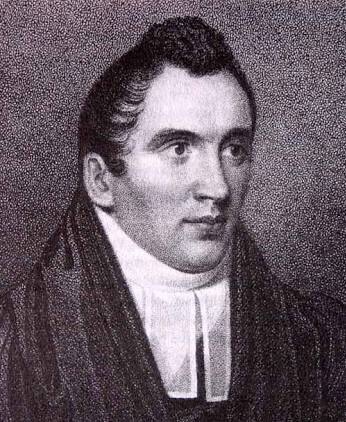


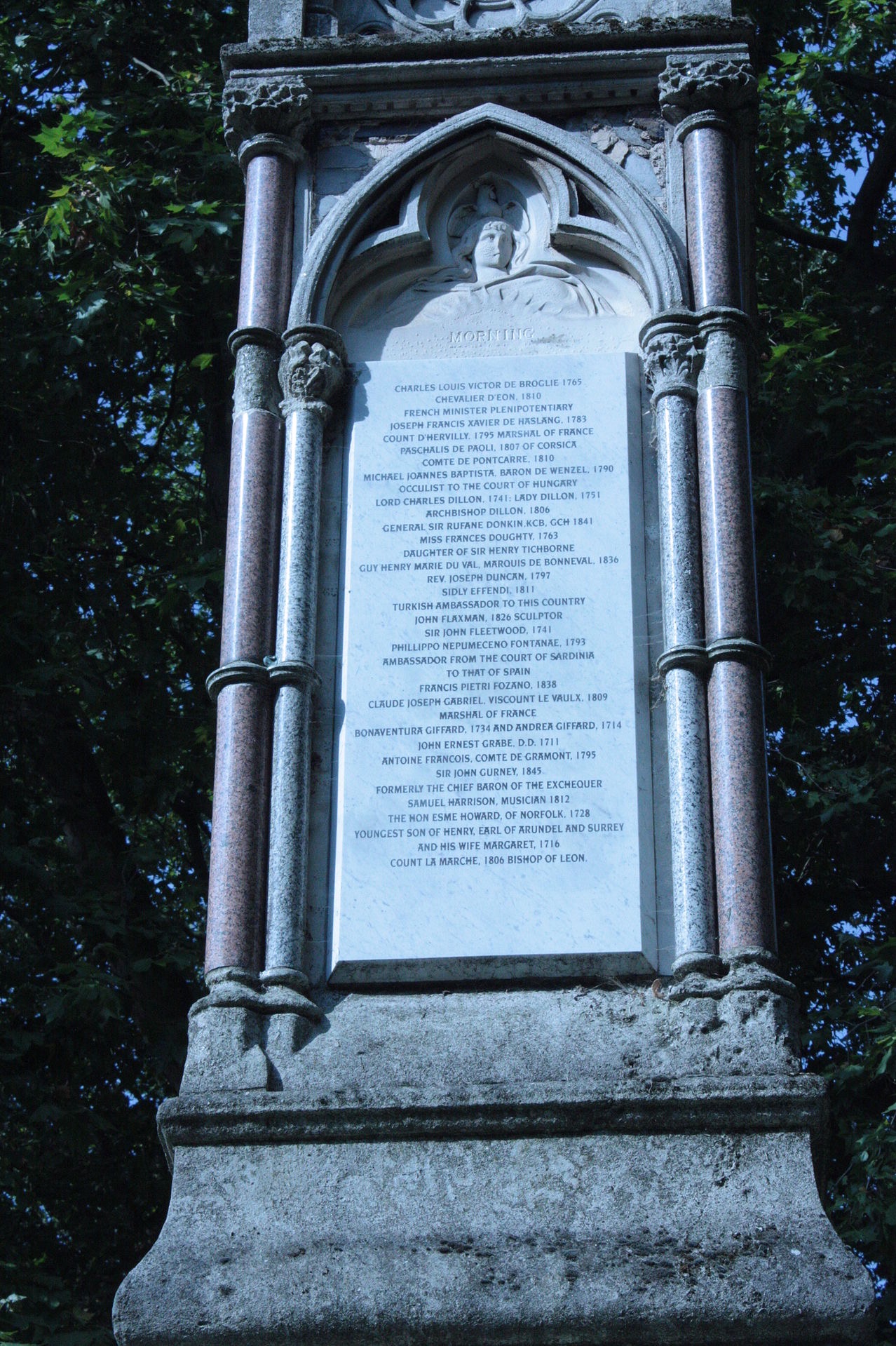


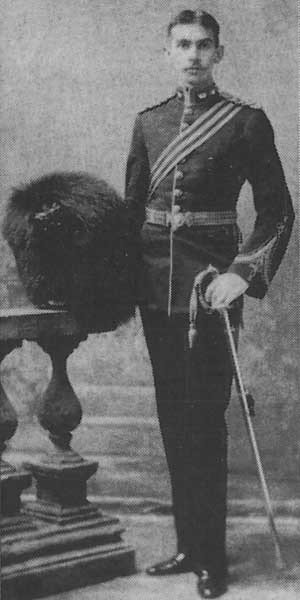





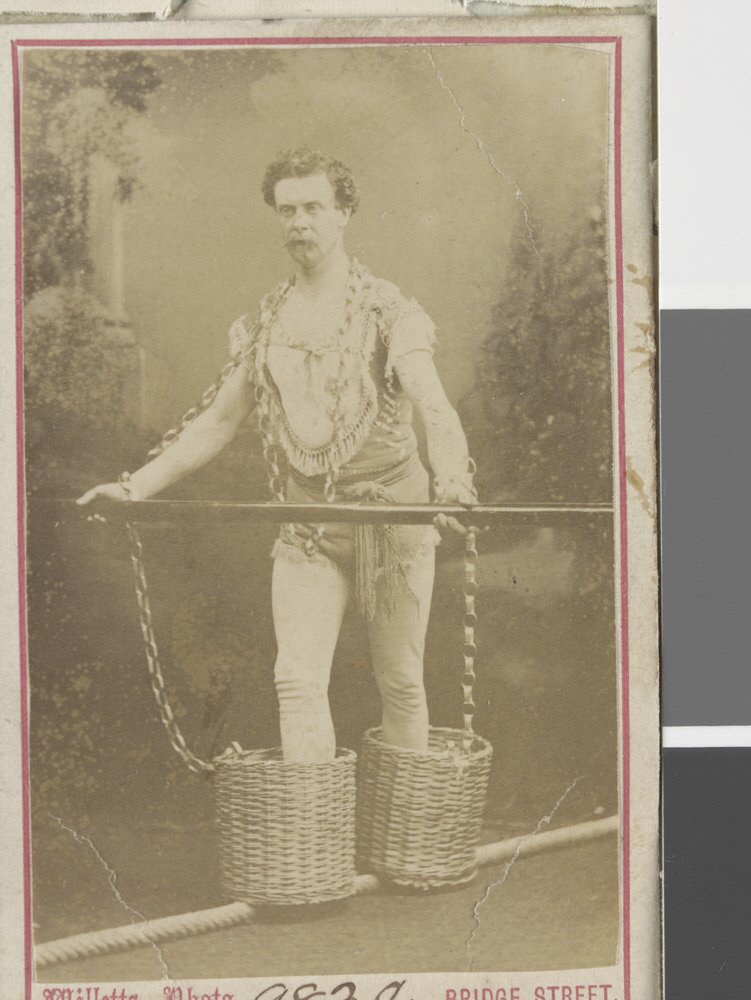
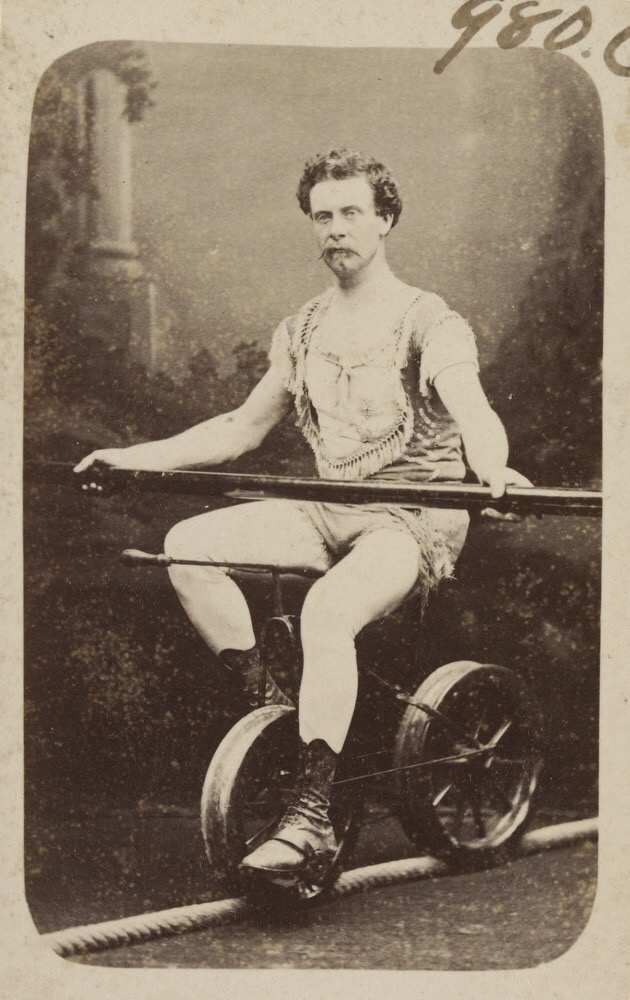




 timalderman