J. Edgar Hoover led a deeply repressed sexual life, living with his mother until he was 40, awkwardly rejecting the attention of women and pouring his emotional, and at times, physical attention on his handsome deputy at the FBI, according to the new movie, “J. Edgar,” directed by Clint Eastwood.
Filmgoers never see the decades-long romance between the former FBI director, and his number two, Clyde Tolson, consummated, but there’s plenty of loving glances, hand-holding and one scene with an aggressive, long, deep kiss.
So was the most powerful man in America, who died in 1972 — three years after the Stonewall riots marked the modern gay civil rights movement — homosexual?
Eastwood admits the relationship between Hoover, played by Leonardo DiCaprio, and Clyde Tolson, played by Armie Hammer, is ambiguous.
“He was a man of mystery,” he told ABC’s “Good Morning America” last week. “He might have been [gay]. I am agnostic about it. I don’t really know and nobody really knew.”
In public, Hoover waged a vendetta against homosexuals and kept “confidential and secret” files on the sex lives of congressmen and presidents. But privately, according to some biographers, he had numerous trysts with men, including a lifelong affair with Tolson.
Dissociation — denying homosexuality, but displaying sexual behavior — is “not uncommon,” according to Dr. Jack Drescher, a New York City psychiatrist who is an expert in gender and sexuality.
Men with strong attractions to other men can have different degrees of acceptance from being fully closeted to being openly gay. And even if they are homosexually self-aware, they can embrace it or reject it publicly.
“We confuse sexual orientation with sexual identity,” said Drescher. “Some men do not publicly identify as gay, regardless of their sexual behavior.”
Even the Centers for Disease Control and Prevention (CDC) tracks a group that is not labeled “gay” but “men who have sex with men.“
Roy Cohn, the lawyer who served as chief counsel to Sen. Joseph McCarthy in his anti-communist campaign of the 1950s and who successfully convicted Julius and Ethel Rosenberg of espionage, denied he was gay, despite an attraction to men.
Cohn, who died of AIDS in 1986, was a contemporary of Hoover and according to one biography, the two attended sex parties together in New York in the 1950s.
Cohn was characterized in a scene from Tony Kuschner’s play, “Angels in America,” speaking to his doctor: “…you are hung up on words, on labels, that you believe they mean what they seem to mean. AIDS. Homosexual. Gay. Lesbian. You think these are names that tell you who someone sleeps with, but they don’t tell you that … Roy Cohn is a heterosexual man, Henry, who f****s around with guys.”
Hoover’s degree of self-awareness may have been the same as Cohn’s. Despite his same-sex dalliances, he occasionally sought a “Mrs. Hoover” and even courted — albeit uncomfortably — actress Ginger Rogers’ mother and actress Dorothy Lamour.
Hoover and his constant companion for decades, Clyde Tolson. Getty Images
Hoover’s neuroses were likely rooted in childhood: He was ashamed of his mentally ill father and was dependent on his morally righteous mother, Annie, well into middle age. Until her death in 1938, Hoover had no social life outside the office.
In the film, Annie chastises her powerful son as he wilted before some of his FBI critics, telling him, “I’d rather have a dead son than a daffodil for a son.”
In a 2004 biography by Richard Hack, “Puppetmaster,” which was culled from the notes of Truman Capote, who had begun interviews on Hoover and Tolson’s relationship, the author says Hoover was not gay, but suggests the man was vicariously turned on by the smut he collected on others.
One 200-page secret document was on the extracurricular activities of Capote himself, who was openly gay.
But Anthony Summers, who exposed the secret sex life of Hoover in his 1993 book, “Official and Confidential: The Secret Life of J. Edgar Hoover,” said there was no ambiguity about the FBI director’s sexual proclivities.
“What does Clint Eastwood know about it?” he asked ABCNews.com. Summers collaborated with historians and conducted 800 interviews for the book, including nieces and those who were young enough at the time to have known the man personally.
“We were able to get a close view of the man as an individual and as a human being — as close as anybody who had not been afraid of him since he died,” said Summers.
With interest in the Eastwood film, publishers in the U.S. and in Britain are issuing a remake of the book.
One medical expert told Summers that Hoover was “strongly predominant homosexual orientation” and another categorized him as a “bisexual with failed heterosexuality.”
J. Edgar Hoover with child film star Shirley Temple. Getty Images
Hoover often suppressed his urges, but would break out in lapses that could have destroyed him — alleged orgies in New York City hotels and affairs with teenage boys in a limousine, according to interviews conducted by Summers.
“He was a sadly repressed individual, but most people, even J. Edgar Hoover, let go on occasion,” he said.
Hoover as a Cross-Dresser Is Controversial
One short scene in the film showed the FBI director in anguish over his mother’s death, putting on her dress and beads, a nod to Summers expose that Hoover had been a cross-dresser.
The Washington Post recently dismissed that account because of a discredited source, but Summers maintains he had two other independent sources from different periods in Hoover’s life.
Hoover often frequented New York City’s Stork Club and one observer — soap model Luisa Stuart, who was 18 or 19 at the time — told Summers she saw Hoover holding hands with Tolson as they all rode in a limo uptown to the Cotton Club in 1936.
“I didn’t really understand anything about homosexuality at the time,” said Stuart. “But I’d never seen two men holding hands. And I remember asking Art [Arthur] about it in the car on the way home that night. And he just said, ‘Oh, come on. You know,’ or something like that. And he told me they were queers or fairies — the sort of terms they used in those days.”
Hoover promoted men inclined to homosexual indiscretions, including Tolson, who had barely 18 months experience with the FBI when he became Hoover’s deputy.
The pair used to make “saucy jokes” about some of the other agents, like Melvin Purvis, who was a hero for arresting John Dillinger, according to Summers.
Purvis’s son shared his father’s 500-letter correspondence with Hoover, who teased the good-looking, blond-haired agent as “the Clark Gable of the FBI,” even though he was heterosexual.
Many were intimate and one was highly charged with innuendo, as Hoover referred to himself as the “Chairman of the Moral Uplift Squad.”
Ethel Merman, who had known Hoover since 1938, knew his sexual orientation, according to Summers. In 1978 when the actress was asked to comment on Anita Bryant’s anti-gay campaign, Merman told the reporter, “Some of my best friends are homosexual. Everybody knew about J. Edgar Hoover, but he was the best chief the FBI ever had.”
Harry Hay, founder of the Mattachine Society, one of the first gay rights organizations, confirmed that Hoover and Tolson sat in boxes owned by and used exclusively by gay men at their racing haunt Del Mar in California.
“They were nodded together as lovers,” he told Summers.
Another FBI agent who had gone on fishing trips with Hoover and Tolson revealed that the director liked to “sunbathe all day in the nude.” Even novelist William Styron told Summers that he once spotted Hoover and Tolson in a California beach house — the director painting his friends toenails.
But, according to Summers, “Nobody dared say anything, he was so powerful.”
The author interviewed the widow of respected Washington, D.C. psychiatrist Dr. Marshall de G. Ruffin, who treated Hoover in 1946 after his general practitioner had been “puzzled by a strange malaise in his patient.”
Monteen Ruffin told Summers that Hoover was “very paranoid” about anyone finding out, and he eventually stopped seeing the psychiatrist. She said her husband burned the evidence.
“He was definitely troubled by homosexuality,” she said in 1990, “and my husband’s notes would have proved that … I might stir a kettle of worms by making that statement, but everybody then understood that he was a homosexual, not just the doctors.”
As the movie depicts, after Hoover’s death, his loyal secretary Helen Gandy destroys the “official and confidential” files.
When Hoover died in 1972, President Richard Nixon ordered his “dirty tricks man” Gordon Liddy to scour the FBI director’s office for files. But when they arrived, someone had taken “drastic action,” said Summers. Nothing but tables and chairs remained.
Summers said he is often asked, but rarely answers the question about what he personally thought of Hoover as a human being.
“Yes, I had sympathy for somebody who has to bury their real preferences through a long life in the public eye,” he said. “But not sympathy for the way in which he was dictatorial, the way he behaved politically and personally to people right from the beginning in his late teens and early 20s.
“He was totally self-serving and the way in which he was a repressed homosexual didn’t require him to abuse individual rights and human liberties the way he did,” said Summers. “It does not begin to justify his behavior toward blacks and concoct an anonymous letter to Martin Luther King and suggest he end it all and kill himself.”
Psychiatrists have concluded that Hoover “no doubt” had a narcissistic personality disorder, perhaps because of his dependency on a forceful mother who had “great expectations for her son,” he said.
“Studies suggest that people with such backgrounds block their feelings and cut meaningful relationships,” according to Summers, who said Hoover would have been a “perfect high-level Nazi.”
However, Eastwood, who is a Republican, contends that J. Edgar Hoover was “probably good for the country,” and whether he was homosexual or not makes no difference.
“I don’t really know and nobody really knew,” he told ABC. “It’s definitely a love story. You can love a person and whether it goes into the realm of being gay or not, is here nor there.”
A younger generation of gays was moved by the film precisely because it portrayed such an iconic figure’s struggle with his sexuality.
“The audience I was in clearly rooted for Hoover to be gay and to have happiness in his sex and love life,” said Ben Ryan, a 33-year-old novelist from New York City. “In a pivotal scene between DiCaprio and Hammer in which the two men engage in the classic brawl-leads-to-furious-kiss, everyone got so excited when they finally locked lips.”
“Anyone in their right mind would see this movie and say, ‘Oh, well, of course Hoover was gay,'” he said. “The more suspicious among us might think that the filmmakers were still afraid of Hoover’s ghost suing them for libel if they just put it right out there that he was gay.”
Still, he said, the film is a “tragic story that should hopefully teach society lessons about how dangerous sexual repression is.”
For much of history, LGBTQ+ royalty needed to hide their identities. Even though some societies embraced homosexuality, most refused to accept a gay monarch. But before we talk about LGBTQ+ kings and queens, let’s start with the history of sexual identity.
The terms heterosexual and homosexual didn’t exist until the 1860s. And until the 1930s, heterosexual meant an abnormal attraction to the opposite sex. For centuries, many societies didn’t see sexuality in binary terms at all. Ancient Greeks and Renaissance Florentines took both male and female lovers. King Edward II of England openly kissed his male lover on his wedding day. And the Roman emperor Hadrian named a city after his male lover. Many kings and queens needed to keep their sexuality quiet, but others defended their lifestyle openly.
Queen Anne Was Clos4 With Her “Lady Of The Bedchamber”
The last of the Stuart monarchs, Queen Anne of Great Britain maintained a long-term relationship with Sarah Churchill in the early 1700s. Anne wrote to Sarah, “I hope I shall get a moment or two to be with my dear… that I may have one dear embrace, which I long for more than I can express.”
Anne has been called England’s lesbian queen because of her close relationship with Churchill, who served as “Lady of the Bedchamber.” But when Queen Anne pulled back, Sarah publicly accused the monarch of choosing another woman over her. Anne stayed above the fray, however, and remained popular through her death in 1714.
Pope Julius III ran the Catholic Church from 1550 to 1555. He also created a scandal thanks to his young male lover. Julius met Innocenzo, a 15-year-old beggar, in 1548, when Innocenzo was fighting with his pet ape on the street. The future pope swept the boy away and named him a cathedral provost.
When Julius became pope two years later, he convinced his brother to adopt Innocenzo, and later named his alleged lover a cardinal. Julius’s enemies called Innocenzo “Cardinal-Monkey” and complained the boy shared the pope’s bed.
Edward II Kissed His Male Lover In Front Of His Bride
Most stories about a royal’s sexuality were only mentioned in secret and whispers. That’s not the case for King Edward II of England, who openly showed affection for his male lover, Piers Gaveston. When Edward married Isabella of France, he showered kisses on Piers in front of the entire court.
As chroniclers wrote at the time, Edward’s affection for Gaveston was “beyond measure and reason,” “excessive,” and “immoderate.” One writer even said, “I do not remember to have heard that one man so loved another.” The relationship didn’t end well: Edward’s barons beheaded Gaveston.
Queen Elizabeth’s Partying Sister Allegedly Had A Female Lover
The younger sister of Queen Elizabeth II, Princess Margaret, was known for being a party girl. In addition to multiple affairs, she married bisexual photographer Antony Armstrong-Jones, who explained, “I didn’t fall in love with boys, but a few men have been in love with me.”
Royal reporter Noel Botham claimed in his book Margaret: The Last Real Princess that Margaret had an affair with the American ambassador’s daughter, Sharman Douglas, known as Sass. One of Douglas’s close friends told Botham that Sass confessed to being the princess’s lover in the 1950s.
Richard The Lionheart Shared His Bed With France’s King
Richard the Lionheart became King of England in 1189. Today, he’s famous for his role in the Third Crusade and his alleged association with Robin Hood. To others, though, Richard I is a gay icon. The king chose not to marry and never fathered an heir. Instead of having a queen by his side at his coronation, Richard invited his mother, Eleanor of Aquitaine, to play the role of his partner.
According to historical documents written at the time, Richard shared a bed with King Philip II of France. One chronicler even wrote the men were so close that “at night the bed did not separate them.”
Prince George Had A Ménage A Trois With An Ambassador’s Son
Prince George was the son of George V and the brother to Edward VIII and George VI. Called “the most interesting, intelligent and cultivated member of his generation” by biographer Christopher Warwick, George also allegedly carried on multiple bisexual affairs.
Married to Princess Marina of Greece and Denmark, Prince George never stopped partying. In the 1920s, George became addicted to morphine and cocaine during an affair with American socialite Kiki Preston – known as the girl with the silver syringe. George reportedly had a ménage à trois with Kiki and Jorge Ferrara, the son of Argentina’s ambassador. George died in 1942 in a tragic plane crash.
Roman emperor Hadrian is best remembered for building Hadrian’s Wall, marking the northern border of his empire. And although Hadrian married around the year 100 CE, he also had a male lover. Hadrian’s partner was a young Greek named Antinous. When his lover drowned, Hadrian founded a city in Egypt and named it Antinopolis in his honor.
The Romans didn’t care about men taking male lovers. It was only important what part a man played during sex:
older men always needed to take a dominant, active role.
Alexander the Great conquered enough land to rule one of the largest empires in ancient history. During a whirlwind military campaign, Alexander toppled the Persian Empire and invaded India. But where did he fall on the spectrum of sexual identity? Historians still debateAlexander’s sexual preferences, but most agree he had sex with men and women.
Alexander’s most likely male lover was Bagoas, a eunuch. Being a eunuch, the Greeks didn’t see him as a man – instead, he was in a third category, between man and woman. Many also believe Alexander maintained a relationship with his companion Hephaestion. The ancient Greeks were very open-minded about homosexuality.
When James I of England took the throne in 1603 after the death of Elizabeth, he had big shoes to fill. England loved Elizabeth, and they remained uncertain of the Scottish ruler with a reputation for homosexual love affairs. In his early years, his new subjects circulated a Latin phrase which translates to “Elizabeth was King: now James is Queen.”
As James rode through the streets of London, people yelled out “Long live Queen James!” James himself defended his right to love other men in 1617, in a speech to his Privy Council:
I, James, am neither a god nor an angel, but a man like any other. Therefore I act like a man and confess to loving those dear to me more than other men. You may be sure that I love the Earl of Buckingham more than anyone else, and more than you who are here assembled. I wish to speak in my own behalf and not to have it thought to be a defect, for Jesus Christ did the same, and therefore I cannot be blamed. Christ had John, and I have George.
The Last Medici Ruler Lost Tuscany Because He Wouldn’t Have Sex With His Wife
The last Medici to be Grand Duke of Tuscany, Gian Gastone, knew if he didn’t issue a male heir, his domain would go to the Bourbon rulers of Spain. Gian Gastone’s sister arranged his marriage to a German princess, but she refused to move to Florence. Gian moved to her small village, but eventually ignored her and spent his time with a male groom, Giuliano Dami, who reportedly became his lover.
Gian Gastone also allegedly paid young male prostitutes for sex. They became known as the Ruspanti, after the coins (ruspi) Gastone gave them. Needless to say, Gian Gastone never produced an heir and the Spanish seized Tuscany when he died.
Henry III Of France Was Called A Buggerer And A Sodomite
King Henry III of France was the son of Catherine de Medici and the last Valois king of France. In 1589, one of his subjects called the king “Henry of Valois, buggerer, son of a whore, tyrant.” During his lifetime, Henry was attacked for sexual deviancy, and people blamed the calamities of his reign on his sexuality.
Although Henry endured repeated accusations of sodomy, most historians believe they were just rumors. As Nicolas Le Roux argued, “It is less the supposed or real sexual practices of the king and those close to him that interests the historian than the image of illegitimacy conveyed by the discussion of sex.” In short, regardless of his sexual identity, Henry’s enemies used slurs to attack his masculinity.
King William II May Have Had An Affair With A Bishop
The third son of William the Conqueror became King of England in 1087. William II, also known as William Rufus, was his father’s favorite, explaining why William the Conqueror skipped over his older sons to make him king.
For centuries, rumors swirled about William Rufus’s sexuality. The king never married or fathered a child. His close advisor, Ranulf Flambard, is considered a possible sexual partner. William appointed Flambard as the Bishop of Durham in 1099. As William’s reign was over a thousand years ago, however, historians don’t have much to extrapolate from, other than the king’s close friendship with Flambard and his reputation for surrounding himself with attractive men.
Louis XIII Of France Might Not Be The Sun King’s Father
Most famous for his son, the Sun King, Louis XIII of France became king at 9 and helped transform France into a major European power. He married Anne of Austria at 14, and loathed her. Many assume Louis XIII was gay, and believe Louis XIV might not have been his son at all.
According to rumors, Louis carried on relationships with two men: Charles d’Albert, Duke of Luynes and Henri Coiffier de Ruzé, Marquis de Cinq-Mars. While little proof remains that Louis had sexual relationships with these men, many generally accept the king did not enjoy sex with women.
The Hopetoun Blunder was a political event immediately prior to the Federation of the British colonies in Australia.
Federation was scheduled to occur on 1 January 1901, but since the general election for the first Parliament of Australia was not to be held until March of that year, it was not possible to follow the conventions of the Westminster system and appoint the leader of the majority in the House of Representatives as Prime Minister. Instead, an interim government would be appointed, holding office from 1 January until the result of the election was known.
The first Governor-General of Australia was John Hope, 7th Earl of Hopetoun. His initial task on arriving in Australia on 15 December 1900 was to appoint a Prime Minister to lead the interim government. It appears that Hopetoun had little knowledge of the Australian political scene and had no formal instructions from the Colonial Office. On 19 December, following the precedent of the Canadian Confederation, Hopetoun commissioned the premier of the most populous colony to form a government. That state was New South Wales, and its premier was Sir William Lyne.
This was an unfortunate choice as Lyne had become premier in September 1899 only after the government of the more popular and experienced George Reid had lost its majority in the New South Wales Legislative Assembly. Lyne supported federation only at the last minute after long being a strong opponent and, as a result, he was unpopular with other leading colonial, pro-federation politicians including Edmund Barton and Alfred Deakin. The Bulletinsummed up many people’s view when it editorialised, “Among the men who can claim by merit or accident, to be front-rank politicians of Australia, Lyne stands out conspicuously as almost the dullest and most ordinary”.
Despite significant efforts, Lyne was unable to persuade other colonial politicians to join his government and was forced to return his commission to Hopetoun. Alfred Deakin, amongst others, then persuaded Hopetoun to appoint Edmund Barton as Prime Minister. Barton was successful in forming a government, which took office on 1 January 1901. He appointed Lyne as his Minister for Home Affairs in what many saw as a gesture of reconciliation.
Hopetoun’s error in calling on Lyne to form a government became known as the “Hopetoun Blunder”, and it marked the beginning of what many historians consider to be his unsuccessful term as Governor-General.
Politicians and journalists are more unpopular today than ever. But in the past in London they stood a very real risk of being lynched.
One of the many politicians to be lynched was Walter Stapleton, Lord Treasurer of England, who came to a sticky end around 1326.
Victim of the London mob
Not only was he in charge of the country’s finances, Walter was a leading adviser to King Edward II and – typical of the Middle Ages – also the Bishop of Exeter. Men of the cloth often held top political positions. It wasn’t seen as unusual or ungodly. However, the conduct of King Edward II was seen as less than godly – with accusations of sodomy and vice swirling around him.
Edward’s own queen launched a rebellion to overthrow her husband the king in alliance with her lover. Londoners came out in the queen’s support. The king fled towards Wales while his Lord High Treasurer, the unfortunate Walter, tried to lock the gates of the city to stop Queen Isabella getting in.
Stapleton is one of many medieval lynched politicians
However, he’d misjudged the mood of London very badly.
The hapless politician galloped as fast as he could towards St Paul’s cathedral to plead for sanctuary but was intercepted by the mob. They pulled Walter from his horse, stripped his clothes (worth a pretty penny I’m sure) and dragged him naked to the stone cross that once stood in Cheapside.
There, they proclaimed him a traitor and cut off his head – putting it on a pole and processing around with it. The same fate befell his servants whose headless bodies were tossed on a heap of rubbish by the river.
Over fifty years later, a similar gory end came to Simon Sudbury, the Lord Chancellor of England. Like Walter, Simon held some ecclesiastical positions as well as being a politician. He was both Bishop of London and Archbishop of Canterbury – so a top nob in medieval society. But the London mob soon cut him down to size – literally.
Poll tax leads to politicians being lynched
Regrettably, Sudbury supported the introduction of a poll tax. The peasants hated it. They marched on the capital and surrounded the Tower of London where Simon was holed up with the Lord Treasurer Sir Robert Hales.
Eventually, the two men were handed over to the mob and beheaded. Apparently, it took something like eight blows to take Simon’s head off. His skull can still be seen in the church of St Gregory in the town of Sudbury, Suffolk today.
Londoners have frequently rioted and attacked top politicians with no regard to their rank or position. During the 1780 anti-Catholic “Gordon Riots”, the house of Lord Mansfield was thoroughly plundered. In 1815, Lord Eldon – the Lord Chancellor – confronted a mob that was breaking the windows of his home with a shotgun in his hand!
Eldon was hated by the city populace as he’d managed to oppose just about every progressive measure you could imagine including the abolition of slavery and attempts to secure affordable bread for the poor (the Corn Laws).
But the pelting of Eldon’s house with stones wasn’t a one off incident. Lord Wellington – hero of Waterloo – was assailed in his carriage by Londoners – as was King George III and King George IV.
So if politicians think they’ve got it tough today – pick up a history book. They’re getting off lightly in our times – with just a few hostile tweets. In the past they were lynched – their lives cruelly cut short.
The Peasant’s Revolt: The Death Of Simon Of Sudbury
The death of the Black Prince in 1376 can be equated to an ocean landslide that eventually causes a devastating Tsunami on the other side of the world. I consider it the starting point of the Wars of the Roses, and also the catalyst for all that occurred after the arrival of Edward’s ten year old son on the English throne up to his usurpation in 1399. Putting the many effects of Edwards death aside, I would like to write of one man, Simon of Sudbury, who was caught up in all of this.
His Grace Simon of Sudbury” by Raden Ajeng Wahyuni
It was the events that occurred in six months of 1381 that lead to Sudbury’s violent death.
Sudbury, as his name suggests, was from the village of Sudbury in Suffolk, its not known when he left this small East Anglian village or if he ever revisited but he certainly had a great fondness for place. He founded St Leonard’s, a leper hospital in 1372 and the College of St Gregory two years later, in which his brother John said to have been warden.
In the late 1340’s Sudbury had studied in Paris, moved to Rome and then back again to England for a post in the court of Edward III. It was as Archbishop of Canterbury, at Westminster Abbey, that he crowned the little son of the Black Prince as Richard II King of England. Five years later it was Sudbury, in his new post as Chancellor of England, that the rioters used to vent their anger.
England had not recovered from the Black Death, workers were few, jobs were many, the treasury was empty and in an effort to counter this taxation was increased. This, of course, angered the the poor, for they had come to like their ‘freedom.’ In 1380, to rectify the situation, a poll tax to raise money to help England financial situation was introduced, those in authority thought it a grand idea the rest of the country did not, consequently, there was trouble. Between 13th and the 15th June over 100,000 peasants marched on the countries capital led by one Wat Tyler. No doubt, watching the proceedings from within the Tower of London, Sudbury may have seen the young king do his bit in appeasing the men, making promises (that he didn’t keep). Sudbury and Robert Hales, England’s Treasurer soon realised that their lives where in danger when they saw that the rioters had siezed an opportunity and entered through the gates of the Tower of London. Hiding in the White Tower, Sudbury was found praying. Both men were dragged out and both were decapitated. Sudbury must have suffered greatly, his ear was sliced and the bone in his neck had more than one cut leading us to believe that it must have taken more than two strokes to take off his head. Both Sudbury and Hales heads put on poles and carried about the city by the rioters. As mentioned earlier, the boy king never kept his promise to the peasants and eventually Wat Tyler’s head was exchanged for that of Sudbury’s.
His body was taken to Canterbury but his head elsewhere.
Sudbury’s mummified skull rest in a small cupboard in St Gregory’s Sudbury and here we can see poor Simon’s skull, with skin still attached.
In 2011, over six hundred years after his death, forensic artist Adrienne Barker from the University of Dundee reconstructed Sudbury’s head using detail from skull. Adrienne said,
“I hope people in Sudbury like what we’ve done but he’s a strange looking fellow so it’ll be interesting to see their reactions.”
Sudbury’s mummified skull rest in a small cupboard in St Gregory’s Sudbury and here we can see poor Simon’s skull, with skin still attached.
In 2011, over six hundred years after his death, forensic artist Adrienne Barker from the University of Dundee reconstructed Sudbury’s head using detail from skull. Adrienne said,
“I hope people in Sudbury like what we’ve done but he’s a strange looking fellow so it’ll be interesting to see their reactions.”
In an effort to scare people away from drinking alcohol, the American government once poisoned certain alcohol supplies; this resulted in the death of over 10,000 American Citizens.
This, of course, was during Prohibition. The government became frustrated with the fact that despite the manufacture, sale, and transportation of alcohol being banned, the number of people drinking alcoholic beverages was markedly higher than it was before Prohibition. So to try to get people to stop drinking, the government decided to try a scare tactic.
One way bootleggers of this time made alcoholic beverages was to use denatured, industrial alcohol as the base. Denaturing the alcohol is simply a process to make it undrinkable, usually by adding something that makes it taste or smell disgusting or will induce vomiting. This was originally done (and is still done to this day) in order to allow companies to get around having to pay the high taxes associated with the manufacturing and sale of alcohol meant to be drunk. Alcohol used industrially, for non-beverage applications, are denatured and thus, they don’t have to pay these taxes and so it is significantly cheaper, gallon for gallon. Without this tax break, literally thousands of industrial products would become drastically more expensive than they currently are.
During prohibition, this denatured alcohol was often stolen from companies that made industrial alcohol used in various paints and solvents and the like. The bootleggers would then have their own chemists whose job it was to make the alcohol palatable again, basically undoing the denaturing process or to “renature” the alcohol.
With an estimated 60 million gallons of industrial alcohol stolen annually in the 1920s to be later renatured and sold as drinkable alcohol, the government, under President Coolidge, decided to up the stakes and make some of the denaturing formulas lethal, instead of just designed to make the alcohol unpalatable. To do this, they’d generally add things like methyl alcohol (the main denaturing chemical at 10% added, even today); other chemicals added are things such as kerosene, brucine, gasoline, benzene, cadmium, formaldehyde, chloroform, carbolic acid, acetone, and many others that were difficult for the bootlegger’s chemists to get out when they’d renature the alcohol.
After the first 100 or so people died shortly after the new denaturing process was released around Christmas, health officials were outraged and the news media picked up the story as intended. Unfortunately, the government’s plan didn’t quite work from that point on. It didn’t scare people away from drinking and rather had little to no effect on people’s consumption of alcohol; instead, the estimates are that it resulted in the deaths of over 10,000 people with a much larger number severely sickened and many blinded by the poisoning.
As New York City’s medical examiner Charles Norris stated: “The government knows it is not stopping drinking by putting poison in alcohol. Yet it continues its poisoning processes, heedless of the fact that people determined to drink are daily absorbing that poison. Knowing this to be true, the United States government must be charged with the moral responsibility for the deaths that poisoned liquor causes, although it cannot be held legally responsible.” (Chuck Norris fighting the man even back then) 😉
People at the time, though, were split on the poisoning program, even with the deaths that were happening because of it. One side felt that the people who were drinking the illegal alcohol got what they deserved, particularly because they knew the risks and broke the law anyways; the other side felt it was a national experiment on exterminating members of society that the government felt were undesirable as American citizens. As one Chicago Tribune article in 1927 stated: “Normally, no American government would engage in such business. … It is only in the curious fanaticism of Prohibition that any means, however barbarous, are considered justified.”
Now, to be clear, the various governments of the world still require denaturing of alcohol that is not for oral consumption and the standard requirement of 10% methyl alcohol is still in effect in most countries. This isn’t really a problem anymore because people have much better ways to get their alcohol than trying to deal with denatured alcohol. The problem at the time was that the government knew full well that people would be drinking this poisoned alcohol and they hoped the deaths that resulted from this would scare other people away from drinking. Further, when it was clear that it wasn’t scaring anyone away from drinking and literally thousands were dying per year with significantly more than that severely sickened, they kept the program going anyways, though it was hotly debated in Congress.
So next time you start thinking the U.S. government is impossibly screwed up today; headed down the tubes; and beyond fixing, well, if you study American history much at all, it’s pretty clear it used to be a lot more screwed up than it is today, not just concerning this issue, but many, many others. And yet, we’re still here. 🙂
If you liked this article, you might also enjoy our new popular podcast, The BrainFood Show (iTunes, Spotify, Google Play Music, Feed), as well as:
Boring facts
The term “The Real McCoy” originated in the prohibition era. Captain William S. McCoy was a rum runner who coordinated most rum transported by ship during prohibition. He was known for never watering down his imports; thus, his product was “The Real McCoy”.
This wasn’t the only time the U.S. Government decided to poison the supply of some illegal substance in order to try to scare people away from using it. In the 1970s the government sprayed marijuana fields with Paraquat, which is an herbicide. They thought this had the dual benefit of killing large portions of the crop and also scaring people away from buying marijuana in those areas because the surviving plants would essentially be laced with a mild toxin. Public outcry at the time however, forced the government to stop doing this.
It was the 18th Amendment, passed in 1919, which banned the manufacture, sale, and transportation of alcoholic beverages in the United States (note: it didn’t ban the consumption of alcohol). The Volstead Act, officially the “National Prohibition Act”, then laid out the rules for this ban and was passed on October 28, 1919, despite President Wilson’s veto; prohibition itself began on January 1st, 1920. Only 1,520 Federal Prohibition agents were hired to enforce this act, nationwide.
The Volstead Act was amended on March 22, 1933 by the Cullen-Harrison Act, which allowed the manufacturing and sale of certain kinds of alcoholic beverages. The 18th Amendment itself was repealed in December of 1933. When President Roosevelt signed the Cullen-Harrison Act, he made the now famous remark, “I think this would be a good time for a beer.” A mere one day after the Cullen-Harrison Act went into effect on April 7, 1933, Anheuser-Busch, Inc, sent a case of Budweiser to the White House as a gift to President Roosevelt.
As happens quite often when people are told they can’t do something, the banning of alcohol resulted in alcoholic beverages being consumed at an estimated three times the rate it was before the banning took effect.
Prohibition was widely supported by diverse groups across the nation when it first was made law, even among the heavy drinkers. It was widely thought that a ban on alcohol would drastically improve society as a whole (many of society’s problems of the day were thought to be a result of rampant alcohol use; some were even actually valid points, though many were not). Thus, sacrificing alcoholic drinks was a little thing compared to creating a better society. Will Rogers often joked about the southern prohibitionists: “The South is dry and will vote dry. That is, everybody sober enough to stagger to the polls.”
One of the chief controversies of the day among medical professionals was that alcohol was prescribed by physicians for medicinal purposes. As such, medical professionals across the nation lobbied for the repeal of prohibition as it applied to medicinal liquors, such as beer, which was often prescribed.
While the Volstead Act banned the manufacturing, sale, and transport of alcohol, it did allow home brewing of wine and cider from fruit. An individual home was allowed to produce up to 200 gallons per year.
Grape growers of the day began selling “bricks of wine”, which were primarily blocks of “Rhine Wine”. These often included the following instructions: “After dissolving the brick in a gallon of water, do not place the liquid in a jug away in the cupboard for twenty days, because then it would turn into wine.”
Also because the Volstead Act did not ban the consumption or storage of alcohol, before the act went into effect, many people stockpiled various alcoholic beverages.
Notorious gangster Al Capone, Bugs Moran, and many others made their riches primarily through illegal alcohol sales and distribution. Capone controlled over 10,000 speakeasies in Chicago alone. Speakeasies were basically places that discreetly served liquor. They often also served food and had live bands to make themselves look like credible institutions. Others were simply regular businesses that kept alcohol on hand to sell to patrons who knew of their side-business.
The term “speakeasy” comes from bartenders telling patrons to “speak easy” when ordering, so as not to be overheard.
The repeal of the Volstead Act not only took the primary funding away from numerous gangsters, but also created thousands of new jobs at a time when they were desperately needed in the United States.
The Bureau of Alcohol, Tobacco, Firearms, and Explosives (BATF) maintains a list of approved formulas by which torender the ethanol undrinkable, which can be found here. These range from formulas to make it taste gross all the way to being very lethal.
Today in the United States about 50% of people report drinking more than 12 alcoholic beverages in the last year; about 14% say they drank 1-11 alcoholic beverages in the last year; with the remaining 36% abstaining from alcoholic beverages in the calendar year the survey was done.Source: Summary Health Statistics for U.S. Adults: National Health Interview Survey, 2008, table 27
The total for all alcohol related deaths per year in the United States is around 85,000 deaths a year. For comparison, the number of deaths associated with Tobacco annually is around 400,000-500,000; poor diet and physical inactivity at around 365,000; prescription drug related deaths around 32,000; suicide around 30,600; homicide around 20,000; gun-related deaths around 29,000; aspirin related deaths around 7,000; all illicit drug use at around 17,000; and Marijuana deaths around 0. 😉
The word “prohibition” comes from the Latin “prohibitionem”, meaning “hindering or forbidding”. It was used to mean “forced alcohol abstinence” as early as 1851.
Outside the Black Cat on February 11, 1967 Photograph: Courtesy ONE Archives at the USC Libraries
On New Year’s Eve in 1966, undercover officers atthe Black Cat Tavern inSilver Lakebegan to handcuff and beat the patrons and staff as everyone was exchanging celebratory midnight kisses. An estimated 14 people were arrested, many charged with lewd conduct and forced to register as sex offenders for the rest of their lives.
Other Silver Lake gay bars, including New Faces, a few doors down, were targeted the same evening. Two years before the Stonewall uprising, more than 200 people came together outside the Black Cat for one of the earliest U.S. LGBTQ-rights demonstrations. Picketers gathered on February 11, 1967, to peacefully protest the police raids that had been conducted weeks before. Alexei Romanoff, a former owner of New Faces, describes the Black Cat demonstration as a turning point. During a time in which homosexuality was illegal in most states, LGBTQ people developed elaborate codes and survival strategies to avoid arrest. But that February night, Romanoff says, the community stood up and fought back.
Now 82, he is the last surviving organizer of Personal Rights in Defense and Education (P.R.I.D.E.), one of the groups that helped stage the 1967 stand. We traveled back to that monumental moment with Romanoff.
Romanoff in 1968 Photograph: Courtesy Alexei Romanoff
How were the protests organized?
We didn’t have computers, we didn’t have cell phones, but what we did have was called a phone tree. One person would immediately call another 10 people and tell them what had happened, and then each of them would call 10 more people. It took us about two weeks to organize the protest. The Hub Bar [in Alhambra] was the only place that allowed us to meet. We were cautious. We kept moving the demonstration up and down the block so we couldn’t be charged with loitering. We had flyers printed up. People would ask what was going on. We’d give them a flyer, and if they dropped it, we would rush over, grab it and pick it up so we wouldn’t be considered to be littering.
What was the protest like?
If you look at the pictures, none of the regular news media covered us. They were all from the Free Press at the time. They were the only ones that covered the demonstration. A couple of years ago, I met with [former] police chief [William J.] Bratton, and we were looking at the pictures, when I said, “Do you see anybody smiling there?” He said no. And I said, “That’s because [the protesters] were all terrified to do this, but they knew they had to.” It took place in the evening because they had jobs they would likely lose the next day.
What were the risks?
If the major news media would have covered that demonstration, their faces would have been in the newspapers, but the newspapers didn’t think it was very important because it was only those “unhappy homosexuals.” At that time, we could be put into a sanitarium for being gay. And our families could have us committed if they were embarrassed by us. There, you were subject to shock treatments and chemically castrated. We were afraid, but we couldn’t take it anymore. You couldn’t just come in, beat us up and take us to jail because we were who we were.
What was the aftermath of the protests?
Once you let the cat out of the bag, there’s no stopping it. I started an organization, Santa Monica Bay Coalition for Human Rights. In 1970, we were marching in the LA Pride parade, and we had this big banner. I was in the front, and there were mounted police officers. I was nervous, but one of them turned his horse away from all the rest and gave me a V-for-victory sign. I knew we were going to be okay.
And what was the legacy at the Black Cat?
We got the Black Cat designated as a historic landmark. There’s a plaque on the front of the building now. When I went back one time, there was a note that was attached to the plaque, and all it said was “thank you.” That was enough for everything.
Romanoff discussed the evening’s events with Time Out, and his account has been edited and condensed for length and clarity.
Abbie Hoffman arrives for a 1968 hearing at the Capitol Building in Washington, where he was arrested for wearing a shirt made out of the American flag. Credit… Associated Press
Why it’s impossible to Sorkin-ize the great revolutionary clown.
At the end of his autobiography,Soon to be a Major Motion Picture,60s radical activist Abbie Hoffman includes a sarcastic epilogue retracting everything he has ever believed. At the time he wrote the book, Hoffman was living underground, on the run from the law on drug charges, and he offered to give the following “confession” in exchange for readmission into respectable society:
You know, I’m really sorry and I wanna come home. I love the flag, blue for truth. White for right. Red for blood our boys shed in war. I love my mother. I was wrong to tell kids to kill their parents… Spoiled, selfish brats made the sixties. Forgive me, Mother. I love Jesus, the smooth arch of his back, his long blond curls. Jesus died for all of us, even us Jews. Thank you, Lord. … I love Israel as protector of Western civilization. Most of my thinking was the result of brainwashing by KGB agents… I hate drugs. They are bad for you. Marijuana has a terrible effect on the brain. It makes you forget everything you learned in school… I only used it to lure young virgins into bed. I’m very ashamed of this. Cocaine is murderous. It makes you sex crazy and gets uneducated people all worked up. Friends are kidding themselves when they say it’s nonaddictive. The nose knows, and the nose says no… Once I burned money at the stock exchange. This was way out of line. People work hard to make money. Even stockbrokers work hard. No one works hard in Bangladesh—that’s why they are starving today and we are not. … Communism is evil incarnate. You can see it in Karl Marx’s beady eyes, long nose, and the sneering smile behind his beard….Our artists are all perverts except, of course, for the late Norman Rockwell. …Our system of democracy is the best in the world… Now can I come back?
Part of Hoffman’s life is now indeed a major motion picture, Netflix’sThe Trial of the Chicago 7,written and directed byTheWest Wingcreator Aaron Sorkin. Sorkin is an unfortunate choice to bring Abbie Hoffman to the screen, since Sorkin’s basic worldview is one Hoffman completely rejected.TheWest Wingis known for showing a faith in good liberal technocrats to govern wisely, yet Hoffman was a “burn down the system” anarchistic radical. Sure enough, Sorkin’s Hoffman is almost the Jesus-loving patriot of the actual Hoffman’s biting satire.
The story of the Chicago 7 is one that needs to be remembered, so we can be glad that Netflix chose to bring it to the screen. After the 1968 Democratic convention, at which antiwar protesters clashed with Chicago police and were savagely beaten, shocking the country, the Nixon administration brought charges against a number of the event organizers.Nixon’s justice departmentwanted to teach the New Left a lesson in order to demonstrate it was serious about “restoring law and order,” and the charges against the defendants were flimsy. The trial itself was a farce, thanks in part to a biased judge who saw conviction as a foregone conclusion. But the defendants, instead of accepting their fate, decided to use the media attention being paid to the trial to publicize the cause of the antiwar movement, and called an array of celebrity witnesses (Dick Gregory, Allen Ginsberg, Jesse Jackson, Judy Collins, Norman Mailer, Arlo Guthrie, and even former attorney general Ramsey Clark) to “put the government on trial” and turn a political persecution into a media event that would keep the left’s message on the national agenda. Ultimately, while most of the defendants were convicted of conspiracy to riot, the convictions were overturned on appeal and the government dropped the case. The Chicago 7 trial’s historical significance is (1) as an example of the American government trying to criminalize dissent and intimidate the political left through selective prosecution and (2) as an example of how defendants can successfully fight back through turning a trial into a media spectacle and winning in the “court of public opinion.”
Abbie Hoffman, the most charismatic and media-savvy defendant, was one of the most colorful figures of the ‘60s left. Coming from a serious activist background as part of the Student Nonviolent Coordinating Committee, Hoffman’s Youth International Party (Yippies) engaged in attention-grabbing stunts to publicize left causes. Infamously, Hoffman sneaked into the New York Stock Exchange and dumped dollar bills onto the trading floor, sending brokers scrambling for cash. In a giant antiwar march, he led a group trying to perform an “exorcism” of the Pentagon and send it off into space. At Woodstock, Hoffman scuffled with Pete Townshend of The Who when Hoffman stormed the stage to give a political speech. Hoffman’sSteal This Bookgives advice on how to shoplift, deal drugs, and live free through all manner of scams.
Hoffman was an attention-seeker and provocateur, but he was also serious in his moral commitment to ending the Vietnam War, and his often-ludicrous counterculture antics came from a hatred of selfishness, authoritarianism, racism, and militarism. He was a utopian and an absurdist, but by pushing the boundaries of what civilized society could tolerate, he helped to make it freer.
Sorkin’s film does portray Hoffman relatively positively—even though Sorkinadmittedhe couldn’t really relate to him and found him somewhat intolerable—and Sacha Baron Cohen gives a strong performance. In fact,The Trial of the Chicago 7presents Hoffman as charming, colorful, rebellious, and committed to using theatrics as a serious form of protest, a un-loving counterweight to fellow defendant Tom Hayden, who comes across as a humorless prig (though a somewhat unpleasant note at the end of the film mentions that Hayden went on to serve a number of terms in the California legislature while Hoffman ultimately “killed himself,” perhaps Sorkin’s way of suggesting that in the long run the ‘work within the system’ types will prevail). Sorkin’s Hoffman is not held up as a figure of ridicule, but rather as someone who has a different notion of how to help the antiwar movement.
Yet whileThe Trial of the Chicago 7is sympathetic to Hoffman, it also softens him in a way that ultimately amounts to historical fabrication. In the climax of Sorkin’s film, Hoffman takes to the stand and defends the protesters actions by invoking Lincoln and Jesus, and gives a tribute to democracy that could have come fromTheWest Wing.[Update: have since discovered Sorkin in factdirectly recycledWest Wingdialogue for theChicago 7movie.] “I think our institutions of democracy are a wonderful thing that right now are populated by some terrible people,” Hoffman tells the court. In the film, Hoffman is a relatively benign spokesman for the basic right of dissent.
In reality,Hoffman’s testimonywas far more radical. He even read out the Yippies’ list of demands, which included, among other things:
an immediate end to the war
“a restructuring of our foreign policy which totally eliminates aspects of military, economic and cultural imperialism
the withdrawal of all foreign based troops and the abolition of military draft”
“immediate freedom for Huey Newton of the Black Panthers and all other black people”
“the legalization of marijuana and all other psychedelic drugs;
the freeing of all prisoners currently imprisoned on narcotics charges,”
“the abolition of all laws related to crimes without victims,”
“the total disarmament of all the people beginning with the police,”
“the abolition of money, the abolition of pay housing, pay media, pay transportation, pay food, pay education. pay clothing, pay medical health, and pay toilets,”
“a program of ecological development that would provide incentives for the decentralization of crowded cities and encourage rural living,”
“a program which provides not only free birth control information and devices, but also abortions when desired.”
Hoffman was a revolutionary, not just a critic of the war, and he said so plainly. But Sorkin cuts the bits of Hoffman’s speech that would endear him far less to a mainstream audience. For instance, Sorkin keeps the part of Hoffman’ssentencing statementin which he suggested Lincoln would have been arrested if he had done what the defendants did. He removes the parts where Hoffman offers the judge LSD, says riots are fun, calls George Washington a pothead, and says that Alexander Hamilton probably deserved to be shot. This stuff is, yes, clownish, but it was part of Hoffman’s effort to turn the whole proceeding into an absurdity.
Sorkin takes other creative liberties with history that end up distorting it. Sometimes these are arbitrary, small, and relatively harmless (defendant Lee Weiner wasextremely hairy and hippie-ishbut is presented in the film as clean-cut and nerdy). Bobby Seale, the Black Panther defendant who was infamously bound and gagged in the courtroom when he continuously spoke out about the violation of his right to counsel, actually managed to repeatedly wriggle out of the physical restraints the government put on him; the film portrays the government as effective in silencing him. Worse are things like portraying the prosecutor (an anti-communist ideologue in real life) as an agonized, conflicted idealist who sticks up for civil rights. Or showing Quaker pacifist Dave Dellinger punching a cop. Or treating the Panthers, armed revolutionaries, as peaceniks who preferred words to guns.
The film’s biggest problems come from the fact that Aaron Sorkin subscribes to an ideology I call Obamaism-Sorkinism (like Marxism-Leninism). The tenets of this ideology are that American institutions are fundamentally good, and that while we argue, ultimately our interests do not conflict, and nobody is evil or irredeemable. So of course the prosecutor is good. It could not be that Hoffman et al. want to destroy everything the prosecutor holds dear and create a society of sex, drugs, and rock & roll that would horrify him.
To me, the most disturbing way in which Obamaism-Sorkinism infiltrates the film is in the treatment of the Vietnam War. American liberalshave a tendency to think of the war as a noble mistake, and to focus on the deaths of American troops rather than Vietnamese civilians. In reality, antiwar radicals did not usually speak in the name of the troops against the government, but instead spoke up for the Vietnamese.The Trial of the Chicago 7shows protesters waving American flags; they would probably have been waving Viet Cong flags. (Hoffman got into a tussle with a court marshal when he tried to bring a Viet Cong flag into the courtroom, an incidentcaptured in the courtroom sketches.) The film ends with Tom Hayden upsetting the judge by reading out the names of the American war dead. This incident didn’t happen, but whatdidhappen at sentencing was David Dellinger making a plea on behalf of those oppressed by the United States:
[W]hatever happens to us, however unjustified, will be slight compared to what has happened already to the Vietnamese people, to the black people in this country, to the criminals with whom we are now spending our days in the Cook County jail. I must have already lived longer than the normal life expectancy of a black person born when I was born, or born now. I must have already lived longer, 20 years longer, than the normal life expectancy in the underdeveloped countries which this country is trying to profiteer from and keep under its domain and control… [S]ending us to prison, any punishment the Government can impose upon us, will not solve the problem of this country’s rampant racism, will not solve the problem of economic injustice, it will not solve the problem of the foreign policy and the attacks upon the underdeveloped people of the world. The Government has misread the times in which we live, just like there was a time when it was possible to keep young people, women, black people, Mexican-American, anti-war people, people who believe in truth and justice and really believe in democracy, which it is going to be possible to keep them quiet or suppress them.
Instead of choosing to end with a moment of tribute to American soldiers (as uncontroversial a statement as it is possible to make), Sorkin could have ended with the defendants’ real-life statements calling out the country for its hypocrisy and injustice. He decided not to.
There is something odd and troubling in the way that Sorkin has Abbie Hoffman cite the Book of Matthew on the stand, as if to suggest that every real American is a flag-waving patriot who loves Jesus and the troops. (Recall Hoffman’s epilogue.) In fact, one of the most interesting elements of the real Chicago 7 trial was an ongoing tussle between Abbie and the judge, Julius Hoffman, over the meaning of their shared Jewish identity (not to mention surname). Abbie Hoffman infamously threw Yiddish slang at Judge Hoffman, calling him a “schtunk” (stinker/vulgar person) and a “shanda fur die goyim” (a Jew who embarrasses other Jewish people by doing the dirty work of the gentiles). Abbie called the judge “Julie” and said he would have been a glad servant of the Nazi regime. Abbie Hoffman drew much of his approach to rebellion from Jewish culture—from Jewish anarchism and the prophetic tradition to the comedy records of Lenny Bruce—and he believed the judge was choosing to serve the WASP elite in its persecution of racial and religious minorities. (Interestingly, Judge Hoffman seemed to have a strange soft spot for Abbie; many of Abbie’s most savage criticisms were grounded in a moral appeal to their shared cultural ties.)
WITH THE AID OF A BLACKBOARD, ABBIE HOFFMAN TELLS THE PRESS THE DEFINITIONS OF THE YIDDISH TERMS HE USED TO INSULT JUDGE JULIUS HOFFMAN.
We see, inThe Trial of the Chicago 7, some of the ways that the defendants mocked the court (such as, for example, by coming in wearing judicial robes and talking out of turn). But the transcripts are rich with absurdity, and I think Sorkin left most of it out because it doesn’t really make for a good courtroomdrama, since it was a ridiculous courtroomcomedy. Below are a few of my favorite snippets from a transcript loaded with ludicrousness:
From Allen Ginsberg’s testimony
MR. WEINGLASS (DEFENSE ATTORNEY):
Let me ask this: Mr. Ginsberg, I show you an object marked 150 for identification, and I ask you to examine that object.
THE WITNESS:
Yes. [Ginsberg is handed a harmonium and begins to play it.]
MR. FORAN (PROSECUTOR):
All right. Your Honor, that is enough. I object to it, your Honor. I think it is outrageous for counsel to—
THE COURT:
You asked him to examine it, and instead of that he played a tune on it. I sustain the objection.
THE WITNESS:
It adds spirituality to the case, sir.
THE COURT:
Will you remain quiet, sir.
THE WITNESS:
I am sorry.
MR. WEINGLASS:
Having examined that, could you identify it for the court and jury?
THE WITNESS:
It is an instrument known as the harmonium, which I used at the press conference at the Americana Hotel. It is commonly used in India.
MR. FORAN:
I object to that.
THE COURT:
I sustain the objection.
MR. WEINGLASS:
Will you explain to the Court and to the jury what chant you were chanting at the press conference?
THE WITNESS:
I was chanting a mantra called the “Mala Mantra,” the great mantra of preservation of that aspect of the Indian religion called Vishnu the Preserver. Every time human evil rises so high that the planet itself is threatened, and all of its inhabitants and their children are threatened, Vishnu will preserve a return.
Abbie Hoffman pipes up about the jailing of David Dellinger
THE COURT:
Mr. Marshall, will you ask the defendant Hoffman to remain quiet?
MR. HOFFMAN:
Schtunk.
MR. RUBIN:
You are a tyrant, you know that.
MR. HOFFMAN:
The judges in Nazi Germany ordered sterilization. Why don’t you do that, Judge Hoffman?
MARSHAL DOBKOWSKI:
Just keep quiet.
MR. HOFFMAN:
We should have done this long ago when you chained and gagged Bobby Seale. Mafia-controlled pigs. We should have done it. It’s a shame this building wasn’t ripped down.
THE COURT:
Mr. Marshal, order him to remain quiet.
MR. HOFFMAN:
Order us? Order us? You got to cut our tongues out to order us, Julie. You railroaded Seale so he wouldn’t get a jury trial either. Four years for contempt without a jury trial. No, I won’t shut up. I ain’t an automaton like you. Best friend the blacks ever had, huh? How many blacks are in the Drake Towers? How many are in the Standard Club? How many own stock in Brunswick Corporation? [references to the judge’s condo building andan exclusive club for local Jewish leaders]
THE MARSHAL:
Shut up.
THE COURT:
Bring in the jury, please.
From the testimony of Timothy Leary
MR. KUNSTLER (DEFENSE ATTORNEY):
I call your attention to March of 1968, somewhere in the middle of March, and I ask you if you can recall being present at a press conference?
THE WITNESS:
Yes.
MR. KUNSTLER:
Prior to this press conference had you had any other meetings with Jerry and Abbie?
THE WITNESS:
Yes, we had met two or three times during the spring.
MR. FORAN:
Your Honor, I object to the constant use of the diminutives in the reference to the defendants.
MR. KUNSTLER:
Your Honor, sometimes it is hard because we work together in this case, we use first names constantly.
THE COURT:
I know, but if I knew you that well, and I don’t, how would it seem for me to say, “Now, Billy—”
MR. KUNSTLER:
Your Honor, it is perfectly acceptable to me—if I could have the reverse privilege.
THE COURT:
I don’t like it. I have disapproved of it before and I ask you now to refer to the defendants by their surnames.
MR. KUNSTLER:
I was just thinking I hadn’t been called “Billy” since my mother used that word the first time.
THE COURT:
I haven’t called you that.
MR. KUNSTLER:
It evokes some memories.
THE COURT:
I was trying to point out to you how absurd it sounds in a courtroom.
From the testimony of Judy Collins
MR. KUNSTLER:
Who was present at that press conference?
THE WITNESS:
There were a number of people who were singers, entertainers. Jerry Rubin was there, Abbie Hoffman was there. Allen Ginsberg was there, and sang a mantra.
MR. KUNSTLER:
Now what did you do at that press conference?
THE WITNESS:
Well—[sings] “Where have all the flowers…”
THE COURT:
Just a minute, young lady.
THE WITNESS:
[sings] “—where have all the flowers gone?”
DEPUTY MARSHAL JOHN J. GRACIOUS:
I’m sorry. The Judge would like to speak to you.
THE COURT:
We don’t allow any singing in this Court. I’m sorry.
THE WITNESS:
May I recite the words?
MR. KUNSTLER:
Well, your Honor, we have had films. I think it is as legitimate as a movie. It is the actual thing she did, she sang “Where Have All the Flowers Gone,” which is a well-known peace song, and she sang it, and the jury is not getting the flavor.
THE COURT:
You asked her what she did, and she proceeded to sing.
MR. KUNSTLER:
That is what she did, your Honor.
THE WITNESS:
That’s what I do.
THE COURT:
And that has no place in a United States District Court. We are not here to be entertained, sir. We are trying a very important case.
MR. KUNSTLER:
This song is not an entertainment, your Honor. This is a song of peace, and what happens to young men and women during wartime.
THE COURT:
I forbid her from singing during the trial. I will not permit singing in this Courtroom.
MR. KUNSTLER:
Why not, your Honor? What’s wrong with singing?
MR. FORAN:
May I respond? This is about the fifth time this has occurred. Each time your Honor has directed Mr. Kunstler that it was improper in the courtroom. It is an old and stale joke in this Courtroom, your Honor. Now, there is no question that Miss Collins is a fine singer. In my family my six kids and I all agree that she is a fine singer, but that doesn’t have a thing to do with this lawsuit nor what my profession is, which is the practice of law in the Federal District Court, your Honor, and I protest Mr. Kunstler constantly failing to advise his witnesses of what proper decorum is, and I object to it on behalf of the Government.
THE COURT:
I sustain the objection.
From the testimony of Abbie Hoffman
MR. WEINGLASS:
Did you intend that the people who surrounded the Pentagon should do anything of a violent nature whatever to cause the building to rise 300 feet in the air and be exorcised of evil spirits?
MR. SCHULTZ:
Objection.
THE COURT:
I sustain the objection.
MR. WEINGLASS:
Could you indicate to the Court and jury whether or not the Pentagon was, in fact, exorcised of its evil spirits?
THE WITNESS:
Yes, I believe it was. . . .
The defendants and the witnesses sang, they shouted, they showed utter contempt for the entire process. Defense attorney William Kunstler says that that “defense table was strewn with dozens and dozens of books (plus clothing, papers, candywrappers, and other assorted debris)” because the defendants treated the courtroom like their living room. They read books throughout the trial. They undermined the authority of the court at every turn, calling the judge by his first name (when they weren’t calling him a fascist) and thumbing their noses at all of his rulings. “Our whole defense strategy was geared around trying to give the judge a heart attack,” Hoffmanjoked, “because we weren’t going to beat the charge.” Sorkin portrays little of this, and I’m not surprised: how can someone who believes in process and institutions accurately portray the total breakdown of process and institutions that occurred in the Chicago 7 trial?
I have had a feeling of spiritual kinship toward Abbie Hoffman since my undergraduate years at Brandeis University. He loomed large among leftists on campus when I was there, as one of the university’s most famous alums—although one never boasted about on the admissions brochures. (The Sorkin film does contain a wonderful exchange in which buttoned-up Tom Hayden says to “tell Abbie we’re going to Chicago to protest the war, not to fuck around,” and Abbie replies, “Tell Tom Hayden I went to Brandeis and I can do both.”) Abbie was an inspiration because he was joyous, funny, and never sold out. He did somersaults in front of the courthouse. His colleague Jerry Rubin may have entered the world of business, but Abbie spent much of his post-1960s life fleeing from the government on drug charges, and then as part of the environmental movement. In the years just before his death in 1989, hewas stilla proud warrior for the counterculture. Fellow defendant Lee Weiner, in his autobiographyConspiracy to Riot, describes Abbie as“vibrant, aglow with energy and political wit and satire in the service of changing America and ending the war,” with “long untamed hair and a joyful, full faced smile.” He says Abbie was “impossible not to like—at least most of the time.” Abbie was a revolutionary with a spirit of optimism and fun, the kind of person the left needs if it’s going to build mass support.
ABBIE HOFFMAN IN VARIOUS COURTROOM SKETCHES, 1970
Far from being a Jesus-loving patriot, Abbie Hoffman was a proud loudmouthed communist Jew who spat at everything pious and self-serious. (The epigraph of his autobiography is an anonymous hate letter he received that reads: “Dear Abbie: wait till Jesus gets his hands on you—you little bastard.”) Far from giving sermons on “the institutions of our democracy,” Hoffmandefendedthe true spirit of democracyagainstour institutions. “I believe in democracy with a passion,” he said, “but it’s more than something you believe in, it’s something you do. We are very complacent because we live in Canada or the United States, we live in ‘democracies’—democracy’s not a place you live in, it’s something you learn how to do and then you go out and do it. And if you don’t do it, you don’t have it.”
I like Abbie Hoffman because he knew how to, in his words, “make outrage contagious.” He pissed people off, but he did it in the name of values worth defending. When he wore his American flag shirt on the Merv Griffin show, the network censors were so horrified that they turned the entire screen blue for the duration of his appearance. In retrospect, it seems incredible that this could ever have been controversial, but the counterculture had not yet won. This was a time when people were roughed up and arrested for having long hair, before the right to abortion had been secured. America had to be liberated from the reactionaries and squares, and the hippies and yippies were a vital part of it.
When Hoffman spoke, he said, he “never tr[ied] to play on the audience’s guilt, and instead appeal to feelings of liberation, a sense of comradeship, and a call to make history. I played all authority as if it were a deranged lumbering bull and the daring matador.” This gleeful “fuck you” anarchist spirit is valuable. It is not people like the Abbie Hoffman ofThe Trial of the Chicago 7—those who dare to memorialize the troops and celebrate our institutions while critiquing them within reason—who are most essential to a thriving democracy. It is people like the actual Abbie Hoffman, who could never have been the subject of an Aaron Sorkin film, because Sorkin would never have been able to get a square liberal audience to like him. Abbie Hoffman was an American original, a great dissident clown who could never, and should never, be considered part of respectable society.
Steal This Archive? Abbie Hoffman’s Papers Become a College Collection
Thousands of letters and other artifacts from the life of the radical prankster of the counterculture are sold to the University of Texas at Austin.
There are notes and letters from other icons of the 1960s. Cards from John and Yoko. A letter from Allen Ginsberg, the poet, offering to help him raise defense money. A plea by Norman Mailer to the governor of New York, seeking executive leniency on his behalf.
The papers of Abbie Hoffman, the puckish activist who gained a national reputation as a radical hippie, make clear the extent to which the tumult of that era regularly swirled around him: the showering of the New York Stock Exchange with dollar bills, the nomination of a pig as a presidential candidate, the turbulent demonstrations that rattled the 1968 Democratic National Convention in Chicago.
Now the trove of letters, manuscripts, photographs, F.B.I. surveillance reports, Christmas cards and thousands of other papers that memorialize Mr. Hoffman and his contentious role in American history have been sold to the University of Texas at Austin by Johanna Hoffman Lawrenson, his third wife and companion for the last 15 years of his life.
They will be housed at the university’s Dolph Briscoe Center for American History where some of the items are to go on display Tuesday after a ceremony to mark the acquisition. Later, after much sorting and cataloging, the rest of the collection will become available to scholars and students.
Abbie Hoffman has not gotten his proper due historically,” Don Carleton, executive director of the Briscoe Center, said. “He really was a pathbreaking guy in terms of the street theater approach to gain attention for the causes he advocated, particularly the anti-Vietnam War movement.”
Mr. Hoffman, whose infamously anarchic work, “Steal This Book,” included tips on how to shoplift, might be amused to have his papers end up in so solemn a setting as a university research library. He was arguably the most emblematic figure of the youthful protest movements of the 1960s and 1970s, a man who helped coin the term “Yippie” and co-founded the group that took that name. But he was always more of a comic provocateur than an ideologue, specializing in thumbing his nose at institutions and formalities in zany ways.
In 1971, the New York Times wrote Mr. Hoffman’s publisher to say that it would not accept an ad for his book, “Steal This Book.” Credit… via The University of Texas at Austin
In 1970, for example, when he and the other so-called Chicago Seven were being tried on charges of conspiring to disrupt the 1968 convention, he taunted the judge, Julius C. Hoffman, for having the same last name by calling him his “illegitimate father.”
The Briscoe Center, which has major collections of papers from figures in the civil rights and antiwar movements, paid Mr. Hoffman’s widow $300,000 for the collection. The payment was covered by a donor’
In an interview, Ms. Lawrenson, a photographer and former fashion model, said she had been living in a one-room Manhattan apartment with 75 boxes of Mr. Hoffman’s papers for 30 years, and felt it was time to give them a useful home.
“I’m hoping the archive will help keep his spirit and his radical legacy alive and serve as a great resource for scholars studying 20th-century activism and organizing,” she said. “Abbie dedicated his life to social change, to creating a more egalitarian, compassionate world.”
Another archive of Abbie Hoffman’s letters and family photographs was collected by his younger brother Jack, who donated it about 10 years ago to the University of Connecticut’s Thomas J. Dodd Research Center.
The Dolph Briscoe Center for American History at the University of Texas at Austin, where Mr. Hoffman’s papers will be kept. Credit… The University of Texas at Austin
The trial of the Chicago Seven ended with Mr. Hoffman’s conviction for crossing state lines with intent to riot, but an appellate court overturned that decision in 1973. The same year, he was arrested on cocaine trafficking charges, later jumped bail and spent years as a fugitive, living with Ms. Lawrenson partly in Europe and partly in a remote hamlet in upstate New York, where, under the name Barry Freed, he campaigned to protect the St. Lawrence River.
He surfaced in 1980 with typical Hoffman panache, appearing for a Barbara Walters interview on national television. He pleaded guilty to a reduced charge in the cocaine case and served a four-month sentence. (Mr. Mailer later wrote Gov. Hugh Carey seeking a pardon for this offense.) Through most of the 1980s, he earned a living lecturing at colleges, focusing his activism on environmental issues. Mr. Hoffman, who had long experienced bouts of depression, was found dead at 52 in 1989 at his home in New Hope, Pa., an apparent suicide.
Some of the artifacts in the collection display other sides of Mr. Hoffman’s protean personality: a sober term paper he wrote at Brandeis University about “Internal Group Conflict in the Jewish Community of Worcester, Massachusetts,” for which he received an A grade; a stub of a $150 ticket to Madison Square Garden for the 1971 so- called Fight of the Century between Joe Frazier and Muhammad Ali; several letters defending his authorship of “Steal This Book” in the face of charges from an East Village buddy that he had stolen the text from him.
After Mr. Hoffman’s 1973 arrest on cocaine trafficking charges, supporters created a legal defense fund for him. Credit… via The University of Texas at Austin
One note in the collection suggests that despite Mr. Hoffman’s reputation as an anti-establishment prankster, the seriousness of his intentions was apparent to a broader audience. Former President Jimmy Carter wrote him in 1988, two years after his daughter, Amy, had been arrested with Mr. Hoffman at a protest over campus recruiting by the C.I.A., and discussed the delays in securing the release of American hostages in Iran, who were notably held until the day of Ronald Reagan’s inauguration in 1981. In the note, the former president absolved Mr. Hoffman of any responsibility for the arrest of his daughter, whom he referred to as a “strong and independent” woman. All the protesters were acquitted in 1987.
Robert H. Abzug, a professor of history and American studies at the University of Texas, said he was particularly intrigued by documents that outlined the changes in Mr. Hoffman during his years at Brandeis.
He came to the school as a relatively conventional student, wearing a jacket and tie, winning spots on the tennis and wrestling teams, even becoming the tennis team’s captain. But two unconventional professors, Dr. Abzug said, exerted significant influence: Herbert Marcuse, a Marxist who advocated social revolutions, and Abraham Maslow, a psychologist who argued that fostering human growth and self-actualization was more important than repairing neuroses.
Mr. Hoffman, shown at his bar mitzvah, grew up in Worcester, Massachusetts.
Drawing on their ideas during rising ferment among the young, Mr. Hoffman felt liberated and was able to “unleash his personality” and lead “the theatrics ring of the New Left,” Dr. Abzug said. An example in the collection is a poster featured during the 1968 Democratic convention protests picturing Mr. Hoffman with an obscenity scrawled on his forehead and the caption: “The system is falling apart by itself. We’re just here to give it a little push.”
Mr. Hoffman’s style, Dr. Abzug said, entertained young people drawn to the movements of the 1960s and helped break down a stodgy culture as quickly as the ideas of more serious-minded radicals like Tom Hayden.
“It would have been a different era without the yeast of the Yippies and his making fun of a culture that was about to be challenged,” Dr. Abzug said.
At Bill Clinton’s impeachment trial, Arkansas Senator Dale Bumpers gave an eloquent summation of why a semen-stained dress and the manifold uses of a cigar had become of such absorbing interest: “HL Mencken said one time, ‘When you hear somebody say, “This is not about money” – it’s about money. And when you hear somebody say, “This is not about sex” – it’s about sex.’”
Many of those involved in Britain’s Profumo affair, which took place 50 years ago, also liked to pretend that it wasn’t really about sex. The allegation to which they repeatedly returned was that the Secretary of State for War, John Profumo, 48 years old and married to former actress Valerie Hobson, and a Soviet naval attaché, Yevgeni “Eugene” Ivanov, were sharing the favours of Christine Keeler, a young, beautiful woman who eked out a living by combining erotic dancing and modelling with occasional sex for money. Keeler, who was raised on London’s fringes in a converted railway carriage, met both men at the Cliveden estate of Lord Astor on which her friend, society osteopath Stephen Ward, lived in a cottage. Profumo had been impressed when he and Astor encountered a naked Keeler, trying to shield herself with a towel, at the estate’s swimming pool on a warm July evening in 1961.
That a Tory minister had been involved in some naughtiness was the subject of rumour for several months. While there had been sly hints concerning that minister’s identity in the press, Profumo’s threat of a libel suit managed to keep all but a low-circulation Westminster newsletter in line. But several players in the affair – Keeler, Ward and Mandy Rice-Davies, another “party girl” – were already hawking their stories around Fleet Street. The scandal fully broke on 5 June 1963 when Profumo admitted that he had lied about his relationship with Keeler in an earlier parliamentary statement. Profumo immediately resigned as a minister.
The effect on a conservative government already seen to be reaching its use-by date was dramatic, especially after a blistering attack in the Commons by new Labour leader Harold Wilson. A bewildered Harold Macmillan, the Tory prime minister, never quite seemed to recover from the sordidness of it all, and soon resigned citing ill health (although he would live another 23 years). In the meantime, Macmillan had appointed the eminent judge Lord Denning to investigate the affair’s security ramifications. Denning took his duties seriously, to the extent of arranging for a doctor to inspect a government minister’s penis to see whether it matched one shown being fellated in a photograph. Denning’s published findings, unusually for a government report, became a bestseller.
It was a grubby little book. Richard Davenport-Hines’s fine new account of the scandal, An English Affair (HarperCollins; $35), justly describes the report as “awash with the spite of a lascivious, conceited old man”. Whereas Denning found kindly things to say about Profumo’s loyalty and Astor’s philanthropy, the best he could manage for Keeler was to acknowledge her “undoubted physical attractions”.
Denning could not ignore the fact that Profumo had enjoyed an extramarital affair with a woman less than half his age and then lied about it to both parliament and his party colleagues. Nonetheless, the war minister was spared the lashing that Ward received. An admittedly unattractive figure, whose hobbies included “collecting” aristocrats, celebrities and young, pretty working-class women, Ward served as a convenient scapegoat in the affair. Denning called him “utterly immoral” and a communist sympathiser, and elsewhere accused him of “vicious sexual activities”. In her memoirs, Keeler went so far as to claim he was spying for the Soviets. In August 1963, Ward took his own life during a trial for pimping, a trumped-up charge made to stick through police blackmail of witnesses.
Davenport-Hines has produced a lively book, more than two thirds of which is devoted to establishing the affair’s historical background and main players. Davenport-Hines has no time for the humbug that the scandal was about national security. Rather he sees it as a manifestation of a crisis in a class-bound and hypocritical Britain. In this respect, Davenport-Hines follows other recent scholarship, such as Frank Mort’s Capital Affairs. Mort puts much greater stress on the affair as a product of a changing city, but he is as insistent as Davenport-Hines that the episode was not primarily about its Cold War connections: the scandal crystallised wider apprehensions in Britain about sex, morality, crime, race and gender.
John Profumo
Anxieties about postwar immigration were a critical ingredient. Keeler had relationships with two Caribbean immigrants, “Lucky” Gordon and Johnny Edgecombe, an aspect of the affair that many would later find particularly shocking. In 1963, we are just five years away from Enoch Powell’s notorious “Rivers of Blood” speech, in which the Tory politician warned of the likely violent consequences for British society of mass non-white immigration. The presence in the story of the Caribbean men affected public judgements of Keeler, Ward and even Profumo, connecting Whitehall and Westminster with the unsavoury suburb of Notting Hill. By the early 1960s, this centre of West Indian settlement had acquired a reputation as a hub of violence, prostitution and drugs. The adventurous Keeler and Ward couldn’t resist its offerings of pot and sex. In October 1962, arguing over Keeler, Edgecombe slashed Gordon’s face with a knife in a nightclub. Later, Edgecombe fired shots at Keeler and her companion, Mandy Rice-Davies, after they refused to let him into Ward’s flat.
Keeler and Rice-Davies were not the liberated young women of second-wave feminism, yet nor were they mute and passive victims of the men who wanted to possess them. They sold access to their bodies and their stories because they understood their market value. They were true children of the consumer age. Had Keeler been born 35 years later, says Davenport-Hines, “she would have starred on Celebrity Big Brother and consulted her publicist every time her footballer boyfriend knocked her about”. But, equally, had this troubled working-class girl landed in the Swinging London of 1965 instead of the very different city of 1957, she might well have fallen into a lucrative career in the media or fashion, for she had the look that model Jean Shrimpton was already, by 1963, turning to fame and fortune.
Instead, it was her destiny to be recalled as the “tart” who helped bring down a government. There is a brief comment in Keeler’s recently updated autobiography Secrets and Lies that neatly illustrates how these women were carefully fashioning themselves for the age of celebrity. On trial for perjury, she recalled of herself and Rice-Davies: “We were having our hair done every day for the trial, trying to look our best, at Vidal Sassoon’s in Bond Street.”
This attention to image was not in vain, for the scandal produced one of the most famous photos of the century. The Lewis Morley picture of Keeler sitting naked behind the back of a chair whose lines are almost as sensual and alluring as her own hints at the sexual liberation to come, while leaving enough to the imagination to evoke the more straitlaced era being left behind.
Denning remarked that scandalous material about the famous had turned into “a marketable commodity”. That market was now global. The Australian newspapers of mid 1963 were full of the affair, while models complained about the name of their profession being attached to Keeler: “That tramp never has been and never could be a model,” trilled a former Miss Australia, Patricia Woodley. Pictures of Keeler and Rice-Davies covered the tabloids. The case was debated in serious magazines such as the Bulletin and Nation, and less earnestly among Australia’s schoolchildren, who in a witty playground rhyme calculated that a half a pound of Rice and a half a pound of Keeler added up to one pound of sexy sheila.
Davenport-Hines shows that the Profumo affair was fundamentally a media event. Some newspaper proprietors had scores to settle with the affair’s key players and many journalists were fed up with the government and the self-serving establishment it was seen to embody. Chequebook journalism, which was commonplace, fuelled the scandal, as the major protagonists sought to cash in on their stories. Journalists adopted tactics, such as burglary, that make the phone-hacking scandals of the recent past seem unexceptional.
The media used the Profumo affair as a means of attacking the whole upper class and its way of life. If journalists and newspaper owners were ruthless in their methods, collecting too many innocent victims along the way, there was at least something constructive about the outcome. Old forms of class-based deference were eroded. Women would in future would be able to exercise more independence with less risk. There would be greater sexual freedom. A country that just a few years before looked to have settled in to a decline towards comfortable mediocrity, could once again seem – if only for a few brief years – dynamic, creative and exciting.
The WWII hero saved millions of lives before being chemically castrated for being gay. He killed himself two years later.
“[Alan Turing] was and is a hero of all time…a man who is a gay icon, who didn’t deny his nature, his being, and for that he suffered. … This is a story that celebrates him, that celebrates outsiders; it celebrates anybody who’s ever felt different and ostracized and ever suffered prejudice.”
—Benedict Cumberbatch
I usually find movie award shows to project primarily fluff and silliness, and they rarely stir deep emotions in me. But listening to Benedict Cumberbatch accept the award for Best Actor at the American Film Awards for his portrayal of Alan Turing in the film The Imitation Game two years ago brought me to tears.
This stemmed from a sense of deep pride and an endless abyss of sadness. Cumberbatch’s commitment and passion shined through on stage as he talked about transforming Turing’s story, his brilliance, and his humanity to the silver screen, helping to give Turing the long-overdue wide-scale recognition he rightly deserves.
Alan Mathison Turing was a pioneering computer scientist, and he served as a mid-20th century British mathematician, logician, and cryptanalyst who, working during World War II at England’s Government Code and Cypher School at Bletchley Park, succeeded with his team of scientists and linguists in cracking the “Enigma code” used by the Nazi command to conduct covert communication operations.
Because of Turing and his colleagues’ efforts, Cumberbatch said, there is now general agreement that they shortened the war by at least two years, saving an estimated 17 million lives. Prime Minister Winston Churchill singled out Turing as the person whose work contributed the most to defeating the Germans.
The Imitation Game also highlights the enormous obstacles placed in the way of women entering the sciences, especially mid-century. In this regard, Keira Knightley made an equally moving speech at the American Film Awards in accepting theBest Supporting Actress award for her portrayal of Joan Clarke, who worked with Turing in deciphering the code.
“Particularly now, when women are such a minority in all fields, her story and the fact that she really perseveres, and she had space and time and grace, is really inspiring,” she said.
Though initially considered a national hero in Britain, in 1952, government officials arrested and prosecuted Turing on the antiquated charge of “gross indecency” when he “admitted” to maintaining a same-sex relationship. Rather than serving time in prison, Turing chose to undergo estrogen injections then considered in men a form of “chemical castration” eliminating sex drive. Turing took his life two years later by swallowing cyanide just two weeks short of his 42nd birthday.
I find it deeply ironic that while Turing and his team helped defeat the Nazi war machine, a nation intolerant of any form of difference including same-sex relations (especially between men), the primary “allied” nations fighting Nazi Germany – United States, Britain, and the Soviet Union – all maintained laws criminalizing homosexuality.
Under King Henry VIII in 1533, England passed a “buggery” (or sodomy) law, doling out the penalty of death for “the detestable and abominable Vice of Buggery committed with mankind or beast.” Under the rule of Elizabeth I in 1564, death for same-sex acts between men became a permanent part of English law until the 1880s. British courts at the time concluded that sex between two women was impossible and, therefore, exempted women from the statute. By 1885, English Criminal Law punished homosexuality with imprisonment up to two years. This remained in effect until homosexuality was decriminalized in 1967.
In addition, Soviet dictator Joseph Stalin criminalized homosexuality with eight years imprisonment or exile to Siberia. And in the United States, consensual same-sex relations were against the law at one time in all states, and remained illegal in some states as late as 2003, when the Supreme Court finally overturned such bans in its Lawrence v. Texas decision.
In 2009, British Prime Minister Gordon Brown officially apologized to Alan Turing on behalf of the people of his nation for “the appalling way he was treated.” Parliament finally brought up a bill of “pardon” in 2013, and on 24 December, 2013, Queen Elizabeth granted Turing a posthumous pardon.
Though the English government never actually forced a physical stigma onto Turing’s body, they branded the symbol of the outsider, the pervert, the enemy deeply into his soul. This branding seriously deprived the British nation and the larger world community of his continued genius, his generosity, and the many additional gifts he could have imparted.
I agree with Benedict Cumberbatch that Turing’s wide-scale recognition is long overdue.
Hell Division: Pentridge Prison’s section for the baddest and maddest
It is pretty trendy now – the development that was once Pentridge Prison.
You wonder if the customers at the coffee shop just outside the imposing bluestone walls know or care about the brutality that went on for decades in what was Victoria’s biggest jail.
The former Pentridge prison. CREDIT: MICHAEL CLAYTON-JONES
Down the bottom end was H Division, reserved for the baddest, the maddest and sometimes the meekest (it was used for protection as well as punishment).
As part of the redevelopment of the prime real estate the old labour yards were recently demolished – pens open to the weather where inmates broke rocks until 1976.
Support for hunger strikers in 1994. CREDIT: MICHAEL CLAYTON-JONES
The place was rebuilt so often it did not resemble the original design and the developers have promised to rebuild a section to the original 19th-century specs.
The days of breaking rocks are long gone and anyone who still advocates “old-style” brutal punishment for inmates has rocks in their head.
If animals at the Melbourne Zoo were kept in such conditions there would have been mass protests but few ever saw what went on down in Hell Division.
New inmates learnt the first lesson on the way in. It was known as the “Liquorice Mile”, where prison officers formed a guard of honour reception to beat prisoners (often naked) to the point of submission.
When Building Society bandit Greg “Doc” Smith arrived he was advised by standover man Mark “Chopper” Read to walk slowly and keep his head up to show hecould take the beating.
Strangely, both inmates became best-selling authors. Smith, also known as Gregory David Roberts, escaped and was recaptured 10 years later. His autobiographical novel Shantaram became a runaway success, much like “Doc” himself.
The labour yard of H Division in 1975.
Another who used the suffering to create was Ray Mooney, now an acclaimed playwright.
But many who ended up there were beyond redemption or the barbaric conditions made them so. It was the chicken and egg argument – leaving most of them either stuffed or scrambled.
It was here in 1958 that police killer William O’Meally became the last man flogged with the cat-o’-nine-tails as a punishment.
Back in 1990 I went to H Division to interview long-term inmate “Chopper” Read after he complained about a critical profile I had written about him.
It was certainly nothing like the movies with a glass screen and a telephone link. We sat in a small room at the end of the division separated by a cheap table.
Read chatted and I took notes. The subsequent story amused many but not the Parole Board, which delayed his release for another six months.
A violent world
The first impression inside the bluestone and concrete complex was the sense of cold. When it rained in winter the damp would get into your bones and stay there for months.
It was bleak. A place of rape, drugs, despair and overwhelming hopelessness. To make it less grim they white washed the walls, built a swimming pool and introduced contact visits.
During one such visit an man jailed for armed robbery took the opportunity to punch his mother in the face, breaking her nose. So much for humanitarianism.
During the famed Overcoat Gang War inmates were bashed and stabbed with home-made shivs. A razor blade buried in a soap bar would slice open an inmate in the showers. Cells doors were left open to facilitate beatings of non-favoured inmates.
With no video the attacks followed a pattern. The offender would stab his victim and then cut his own hands to make it look as if he had been attacked – then plead self defence.
In most cases it worked.
One prison officer who worked there said, “It was very heavy but there were rules. They could fight among themselves but if they touched a prison officer they got hell for 48 hours.”
There are few left in the system who served time at H and they remain among the most notorious in Australia. One was an old murderer who came out of retirement to become a contract killer in the Melbourne underworld war. He was caught, proving that hitmen, boxers and country and western singers should never make comebacks.
There is Paul Steven Haigh, who had killed six people, including a nine-year-old boy, before he turned 22.
“It takes no hero to murder. The most puny man in the world can pull a trigger. The obstacle is a psychological one,” he told me inside Pentridge.
In 1991, he helped kill fellow prisoner Donald George Hatherley. Haigh assisted Hatherley to hang himself inside his cell by hanging on to his dangling legs.
But this was no mercy killing. Prison officers say he was miffed that, after Julian Knight killed seven people in Hoddle Street in 1987, he was no longer Victoria’s most prolific killer. And so he needed another victim to break even.
Pentridge staff say Haigh had a Grim Reaper costume delivered to the jail, which he intended to wear to his trial. He was told he could wear a bad brown suit like every other crook.
He is now serving six life sentences, plus 15 years for the Hatherley murder and a further 15 for armed robberies. So much for fancy dress.
Knight was another to spend time in H and was a polarising figure. Russell Street bomber Craig Minogue was a mate whereas other equally violent men hated his guts.
Minogue was a strong ally and a bad enemy. He disliked businessman-turned-killer Alex Tsakmakis and in 1988 caved his head in with a pillow case filled with weights, proving that not all exercise is good for you.
The former H officer said Tsakmakis and Peter David McEvoy, one of the men accused and acquitted of the 1988 killing of constables Steven Tynan and Damian Eyre in Walsh Street, were the worst. “They were both pure evil.”
In 1993 prison authorities discovered an escape plot involving up to 30 H Division inmates.
They found one prisoner’s diary that detailed a plan to free the 30 inmates from their cells and then attack Knight.
The four alleged ringleaders were the best escape artists in the system but the plan was foiled when the division was locked down after a prison officer was stabbed 17 times with a pair of tailor’s scissors.
The investigation found locks cut with a hacksaw blade and a fake prison officer’s uniform hidden in a cell.
It was the beginning of the end for H Division. The hard heads were slowly transferred to the new Barwon maximum-security jail and Pentridge was closed three years later.
One of the hard heads was Badness – Christopher Dean Binse. As one of Australia’s most prolific escape artists he was sent to H Division and still remains in maximum security.
Binse has spent most of his adult life in jail. He was declared a ward of the state at 13, transferred to Pentridge at 17 and moved to H Division at 18. He has tried to escape eight times and has succeeded in both Melbourne and Sydney.
Never one to believe that crooks should keep a low profile he took out a classified ad in the Herald Sun to declare “Badness is back”. He paid with stick-up money.
He bought a Queensland country property with the proceeds of bank jobs and called it “Badlands” and had personalised number plates – “Badness”.
His last arrest was after a 2012 East Keilor siege that ended after 44 hours when he was shot repeatedly by Special Operations Group police using a beanbag shot. He survived and was sentenced to another long prison stint.
Possibly the hardest of his generation was Gregory John “Bluey” Brazel now a convicted triple killer who in 1991 held a prison officer hostage during a siege by holding a knife to his throat for three hours.
Convicted 78 times he has proved to be as bad inside as outside of prison.
His jail record shows there is no chance of him changing. He has stabbed three prisoners, broken the noses of two prison officers, assaulted police, set fire to his cell, cut the tip off his left ear, threatened to kill staff, smashed a governor’s head through a plate-glass window and threatened witnesses using a jail telephone.
One prison officer said Brazel was beaten after he punched a prison officer. “He sooked all afternoon but didn’t complain. He was good as gold the next day.”
He also went on a protracted hunger strike that he cancelled only when it was discovered he was surviving on a stash of Mars Bars hidden in his cell.
But in prison there is the law of the jungle. The toughest get old and are replaced by the new bad boys.
Bluey Brazel was eventually severely beaten by Matthew “The General” Johnson, who went on to murder Carl Williams in Barwon Prison much the way Minogue killed Tsakmakis years earlier.
And so the cycle of death continues.
We have more than 6000 prisoners in the system. Nearly all will one day get out. Although it is human nature to want revenge we have to make sure jails don’t just nurture violence. Not for them but for us.
‘Nightmare like and unreal’: the letter from Pentridge
The following letter was smuggled out of Pentridge Prison in July 1972 by Barry York, when he was imprisoned in the ‘A’ Division.
A preamble – Barry York
The letter was written secretly in my cell in ‘A’ Division when I was a prisoner in Pentridge Gaol with two comrades, Brian Pola and Fergus Robinson. There was no shortage of time to write it, as we were in solitary confinement, in our separate cells, for sixteen hours each day.
In writing the letter, I was careful not to be detected by the screws. They would have been very angry about it. So, I hid it under my mattress, folding the letter narrowly so that I could hide it under the side of the mattress nearest to the wall. One day, the warders came in to do a cell inspection. They did the usual finger across the top of the door checking for dust, and then checked that the blankets were folded into perfect squares and then – to my horror – they decided to check under the mattress. They pushed it up from the bed frame but not far enough, so my letter was still hidden at the side of the bed nearest to the wall. I was very worried, I can tell you.
I forget how the letter was smuggled out – possibly by Ted Hill, chairman of the CPA(ML), on one of his visits as our ‘legal adviser’. I recall that Ted used to smuggle the newspaper Vanguard into the gaol by rolling it up and putting it under his trouser leg. He would then give it to me, during a ‘legal visit’, and I’d do the same and carry it in my sock and trouser leg to ‘A’ Division.
Vanguard, the newspaper of the Communist Party of Australia (Marxist-Leninist), published the letter on 17 August 1972, after we were released (on 4 August). They knew not to publish it while we were still inside. Thank heavens.
We were gaoled for contempt of the Supreme Court of Victoria in 1972.
We had been leaders of the militant student movement at La Trobe University and prohibited from entering the campus under an injunction taken out by the University authorities. We defied the injunction, seeing it as an encroachment on free speech and an attempt to quell campus militancy. For ‘stepping foot upon the premises known as La Trobe University’, we were gaoled without trial, without sentence (i.e., indefinitely), without rights of bail or appeal.
Fergus was captured first and did four months. Brian Pola next, did three months. I was caught last, and served six weeks. Rodney Taylor, the fourth named in the injunction, avoided capture. We were released when the University authorities surrendered to the mass campaign against the gaolings and approached the Supreme Court for the abandonment of the injunctions.
*
When I read my letter today – forty-five years on – I stand by its description of prison life. However, I would moderate some of my language. For instance, I wouldn’t refer to the gaol as a concentration camp; though technically it was similar. But, ‘concentration camp’ brings to mind the Nazi rule of terror in Germany in the 1930s and Pentridge was nothing like that. (Did I even have to say that?)
Also, the analysis that concluded that ‘all prisoners are political prisoners’ because they were victims of the class war was manifestly wrong. There was, and is, a big difference between people who are imprisoned for their political activities or beliefs and those who rob banks and steal cars. I’m not sure now why I would have gone along with that anarchist slogan. I identified as a communist, after all.
*In 1973, Fergus and Brian and I, and others, revived the Victorian Prisoners’ Action Committee (PAC). I became its spokesman for three or four years. The PAC fought for prison reform but tried to connect the issue to the bigger question of capitalism and its overthrow. We supported the rebellion that was taking place inside Pentridge and other gaols, led by inmates with whom we had become friendly, and perhaps influenced, on the inside. (We used to hide works by Marx, Lenin and Mao on the very top of the bookcase in the prison library, laying them flat and out of view of the prison officers. We were able to receive such books from the outside, after a La Trobe academic comrade assured the prison authorities they were ‘for educational purposes’! Sympathetic prisoners knew of this secret stash of subversive material that was allowed in only for the ‘La Trobe Three’).
In campaigning for prison reform, we were able to assist individuals on their release. This experience was double-edged, and some negative experiences led me to better understand that there is such a thing as personal responsibility and agency, not just victimhood. Even the most oppressed individuals can make choices for the better within the confines of socio-economic limitation. Too many didn’t. Bad culture perpetuates oppression.
*This year, I came across the letter as published in Vanguard while sorting and culling folders of old paperwork. It reminded me of how genuine we were in our commitment to revolutionary change back then, and how lucky I was to have been active in those years of global solidarity from 1967 to 1972. We really believed we were approaching a revolutionary situation. Perhaps the State had similar feelings, and that may explain why they came down so heavily on those who went beyond reformism and challenged the system itself.
Of course, the revolution didn’t materialise but the broader social movement, of which we were part, won changes that cannot be reversed.
And, perhaps best of all: we certainly gave some bad reactionaries a very hard time!
The letter from Pentridge, July 1972
As I write this letter from my cell in ‘A’ Division, two very significant occurrences are taking place.
Firstly a radio announcement from the Prison Committee’s prisoners’ representative has called for prisoners in remand to submit affidavits to Mr. Kelly, a solicitor on the Government Prison Inquiry, regarding a vicious attack by about 30 screws (N.B. prison slang for warders) on 4 Bendigo escapees and about 6 other prisoners. Pentridge is buzzing with the news. The escapees, according to eye witness reports, were beaten with 3 ft. long night sticks. Apparently, one had his head forced through a railing on a staircase. The scalp split wide open and he lost much blood.
Other prisoners in remand who objected to the screws’ violent attack were also bashed. One of the prisoners who received a bashing has identified [name removed] not only as one of those most active in the baton attack, but also as one who laid in the boot after some of the prisoners were beaten unconscious!! The escapees, still without medical aid, have been placed in Pentridge’s ‘maximum security’ division, ‘H’ Division.
HELL DIVISION
‘H’ Division stands for ‘Hell’ Division. And this leads me to the second significant occurrence taking place as I write.
From his cell in ‘H’, Paul Hertzell [correct spelling is Hetzel] is screaming out the following statement:–
‘Hey all you toffs (N.B. prison slang for ‘good blokes’) out there! You’re doing a terrific job! We’ve got to get rid of this incompetent government!’, ‘Down with the imperial government!’, ‘This is Paul Hertzell in ‘H’. All ‘H’ prisoners are political prisoners – a result of the government’s incompetency!’, ‘Free all political prisoners!’, ‘Abolish ‘H’!’, ‘Hey you toffs out there! This is Paul Hertzell in ‘H’…’
I have an almost uncontrollable urge to climb up to my window and scream back my complete support, but unfortunately, I lack the courage of Paul Hertzell. Confronted in an isolated prison cell by overpowering violence, Hertzell’s protests prove conclusively what we already know to be true – namely, that where there is repression there is resistance.
SYMBOL OF IMPERIALISM
Pentridge was born out of the domination of Australia by British imperialism in the 19th Century. Today it serves as a monument to the fascist bestiality of the U.S., British and Japanese imperialists and the local quislings who dominate Australia economically, politically, and culturally. This statement may seem rhetorical and emotional but the situation in Pentridge, with its emphasis on psychological as well as physical punishment, is similar to a concentration camp. It is an institution of fascism in the sense that it is an institution based on overt reactionary violence. Its existence and present function and nature proves that the state is a machine for the oppression of one class by another, and, that under capitalism this means the oppression of the working class by the capitalist class.
Let me elaborate by relating my own personal experiences and some of the experiences of other prisoners, in the form of a brief description of the divisions which constitute Pentridge.
‘A’ DIVISION
We are currently located in ‘A’ Division. Relatively speaking, ‘A’ is the ‘best’ Division in Pentridge. The prisoners throughout Pentridge have waged heroic struggles which have improved conditions in ‘A’ Division and led to a reduction in the use of violence against the prisoners by the screws. Applying the old colonial principle of ‘divide and rule’, one very small section of ‘A’ Division is reserved for the elite of prisoners; the ‘aristocracy of prisoners’ if you like. This section (consisting of about ten out of 160 cells) is used as a public relations centre. Any visiting magistrates of government inquiry teams are promptly directed to this section. The prisoners there are the ‘good boys’ who earn $2.50 a week in positions as head librarian and the like. The real ‘A’ Division is the ‘A’ in which the vast majority of prisoners exist. No T.V. sets, record players or heaters for these prisoners on $1.30 a week – just mental and psychological anguish, pre-planned long term physical destruction, and cruel, sadistic humiliation. This is the real ‘A’ Division, the ‘A’ Division in which the vast majority exist.
‘B’ DIVISION
‘B’ Division lacks the relative freedom of life in ‘A’. Conditions are far worse and the intensity of manual labour and degradation by the authorities are far more extreme. ‘B’ is organised on the basis of strict regimented discipline. One prisoner who spent some years in ‘B’ has informed me that the discipline in ‘B’ reminded him of the discipline enforced upon him in ‘H’ Division. Unlike in ‘A’ where you are permitted to occasionally forget to address the screws as ‘sir’ in ‘B’ any such omission is sometimes met with physical assault, but more typically, verbal abuse. A report received from another prisoner who had just ‘graduated’ from ‘B’ to ‘A’ claims that ‘the tense atmosphere in ‘B’ can be sliced with a knife’. Again, I could not help but recall those words of Chairman Mao’s ‘Where there is repression there is resistance’.
‘C’ DIVISION
‘C’ Division looks like a scene from a ghost town in one of those old cowboy movies. The cells are literally iron bolted stables. Even the government declared ‘C’ Division a ‘condemned’ division some years ago but still nothing has been done about it. ‘C’ is renowned throughout Pentridge for its rat problem. Huge gaps exist in the cell doors which allow the rats to enter each cell. Naturally, there is a much higher rate of disease in ‘C’ than in ‘A’. ‘C’ remains unsewered. Prisoners must contend with only a small night pan. One old prisoner who spent several years in ‘C’, explained to me that during summer he used to sleep on the floor of his cell with his face near the gap below the door because the general stench of ‘C’ and the specific smell of his cell used to become unbearable.
‘D’ DIVISION
‘D’ Division or ‘Remand’ is second only to ‘H’ Division. I spent some time in remand. The cells in ‘D’ are basically toilets equipped with a bed. The entire cell smells of semi-sewered toilet. Even by the lowly standards of bourgeois morality the conditions are appalling. The ‘D’ prisoners spend all day long pacing up and down the remand yard. This yard consists of a small triangular concrete yard surrounded by three huge blue-stone walls which block out any sunlight. One shower, one open toilet, and one clothes hoist allegedly make the yard suitable for fifty men. One prisoner I met had spent 12 months in remand awaiting trial. In this sense, remand is a sort of ‘limbo’. It represents an in-between world between the courts and prison.
‘E’ DIVISION
Any prisoner may see the prison doctor at ‘E’ Division and receive medical or dental attention. ‘E’ is basically a dormitory for sick prisoners. It is apparently based on very strict discipline and I have been told some prisoners are sent to ‘E’ as a form of punishment. There is only one doctor to cater for Pentridge’s 1,200 prisoners.
‘F’ DIVISION
‘F’ is simply a dormitory for about 30 prisoners from the remand yard. The rest of the remand prisoners retire in ‘D’ Division cells which I have already described.
‘G’ DIVISION
‘G’ is the Prison Psychiatric Centre. Not all prisoners who need psychiatric care get it though. In ‘A’ at the moment, for one example, is a prisoner who just sits in the sun trembling all day. He studies his hands as though inspecting each intricate part of the mechanics of a clock, for hours on end. He showers each day but can never remember where the shower room is located. He clearly requires urgent psychiatric attention.
‘J’ DIVISION
Before describing the notorious ‘H’ Division, let me say something about ‘J’ Division. Presumably ‘J’ stands for ‘Junior’ as the prisoners here are aged between 18 and 21. Some of these lads are beaten and humiliated by the senior authorities and their lackeys, the screws. All sorts of sexually perverted acts are launched against some of these basically decent young Australians. Looking down into the ‘J’ Division Labour Yard and seeing these tired, ragged, illiterate, scruffy uniformed young prisoners, I could not help but recollect some of the apt descriptions of the Pentridges of yesteryear as reported by Charles Dickens in ‘Little Dorrit’.
‘THE SLOT’, ‘H’ DIVISION
The maximum security Division is ‘H’ Division or, to use the prison slang, the ‘Slot’. The ‘H’ stands for ‘Hell’. I have interviewed ex-’H’ prisoners who have informed me of the heinous sadistic crimes launched against them by the screws in ‘H’. I entered ‘H’ two days ago to collect some laundry. It would not be an exaggeration if I were to describe the effect ‘H’ had on me as ‘spine chilling’. The ‘Slot’ is a small building guarded at the front entrance by two huge brutal looking screws. The first thing I noticed on entering the front doors with my laundry trolley was a large mirror (used to observe anyone approaching) with a long horizontal crack in it. I later discovered that a prisoner had been thrown onto the mirror. The whole situation struck me as nightmare like and unreal. It was very macabre, like something out of Luna Park’s Chamber of Horrors, only extremely serious. The two screws reminded me of ‘heavies’ from a Boris Karloff movie. They abused me and attempted to humiliate me. Why? Simply because I dared enter the ‘Slot’ and leave with my trolley full of laundry. ‘H’ prisoners are put to work in the ‘Labour Yard’ where they spend hours each day breaking up rocks. They are marched around the yard with military discipline. Most of these men have been sent to ‘H’ for breaches of internal discipline. Many of those who have visited ‘H’ still have the signs to prove it: scars, broken noses, etc. Conditions are so bad that two ‘H’ prisoners have hung themselves during the past few years. Others cut their wrists or throat in order to be removed from ‘H’ and sent to hospital. One ‘H’ prisoner swallowed a 12 inch long metal towel rack. He was sent to hospital and the rack was removed by surgical operation. He was then returned to ‘H’ and promptly swallowed the metal towel rack once more.
‘H’ from what I can fathom, rightly deserves the title: ‘Hell’. You have probably heard about the infamous ‘Bash’, or at least seen the slogans painted on factory walls around North Melbourne, ‘Ban the Bash’. The ‘Bash’ has recently been abolished as a result of the prisoner’s rebellion and the government’s inquiry. I met one 26 year-old prisoner who had just been released from ‘H’ after 3 and a half years! Snowy white hair, badly injured eyes, and sickly yellow skin, this once dark haired, normal, healthy young Australian has been subjected to one of capitalism’s ‘rehabilitation’ programmes. He related to me his experiences in ‘H’ when the ‘Bash’ was a formal daily occurrence. The screws would order individual ‘H’ prisoners to jump into the air. When the prisoner landed after having jumped into the air, he would be told: ‘You were ordered to jump into the air, you were not told to land’ and promptly given a bashing. On other occasions prisoners in ‘H’ would be directed to march into cell walls and keep marching until badly bruised and bleeding. Others would be humiliated and forced to imitate animals.
All this in the name of ‘rehabilitation’!!
A few days ago a riot broke out in ‘H’. I saw the smoke, heard the screams, and saw the screws frantically running hither and thither. Again I recalled those wise and correct words, ‘Where there is repression there is resistance’.
THE PRISONERS AND THE SCREWS
Now I would like to give you my general impressions of my fellow prisoners and the screws.
My fellow prisoners are, generally speaking, courageous and kind-hearted men. Most have an instinctive hatred of the capitalist class. They are all political prisoners in the sense that their alleged crimes are socially induced. No murderer is born a murderer, no rapist born a rapist. The various types of social pressures exerted on decent working people by the corrupt and exploitative capitalist class force some people to resort to crime. But what do we mean by ‘crime’? Is the man who steals food (or money to buy food) for his family really a criminal? And what of the unemployed or unemployable, the so called ‘vagrant’? Ah, but, you will ask, what of the man who murdered and raped his sister? Surely, I reply, he needs help and pity, not sadist-based punishment. He should be, to coin the popular stereotyped expression, ‘rehabilitated’. But the notion of ‘rehabilitation’ is by no means a neutral concept. The fundamental question remains ‘rehabilitated’ to what sort of social system and to what sort of value system? The capitalist class can be so hypocritical! They maintain and profit from the social system based on exploitation in the form of private appropriation and the value system based on selfishness and yet they seek to ‘rehabilitate’ the convicted criminal to re-accept those very same social conditions and values which engender crime in the first place!!
This is the same capitalist class which gives out-and-out ‘Sanctity of Law’ to mass destruction of property and people in Indo-China and to the foreign plunder of Australia, yet send basically decent working people to the Pentridge concentration camp for alleged ‘crimes against private property’. Of course there are criminals and there are criminals. But getting to the root cause of the problem, the real criminals are the very same hypocrites who uphold the present penal system. I refer of course to the criminal capitalist class which, like a lowly parasitic thief, thrives off the labour of others.
‘PRISON POLICE’
Now let me comment on the screws, the prison police. Just as it is often claimed that there are ‘good’ as well as ‘bad’ police, so it is said there are the ‘good’ screws and the ‘bad’ screws. The role of the screws is really indefensible. They maintain ‘law-n-order’ within the concentration camp. Some do it with a smile, others don’t give a damn, others take great pride in their work. This latter type is the most prominent, active, and vocal within Pentridge. All the screws are armed with either batons, guns, or .303 rifles. The latter type of screw is sadistic and gains pleasure from humiliating the prisoners. They abuse and try to humiliate us. In ‘H’ Division for example, prisoners are forced to lie on their stomachs naked on their beds and hold the cheeks of their back-sides wide apart for the screws to examine. In ‘A’ Division, one cold frosty morning I was ordered by a clenched fisted screw to ‘Get you f…… hands out of your f…… pockets’. (They are very foul-mouthed creatures.) However, in trying so desperately to humiliate others, they really only humiliate themselves.
The screws and prison authorities fear the prisoners’ rebellion. Like all reactionaries they are superficially strong but essentially weak. Like the vast majority of prisoners I hate the screws and prison authorities with an intense class hatred.
The day is not far off when justice will be dealt to the screws, the prison authorities, and the entire ruling class!
Barry, Brian and Fergus outside Pentridge in 2012
Pentridge Prison’s history of horror
THE crumbling prison walls of Pentridge will soon take on a new role and it couldn’t be further from it’s bloody past.
CRIMINALS could probably hear the faint torturous screams of their inmates echoing through cold, crumbling prison walls as they were hung among the cells.
Pentridge Prison, which closed in 1997, housed some of Victoria’s most notorious criminals, including Melbourne underworld figure Carl Williams and members of the Kelly Gang.
But now the prison’s D Division, the execution wing and the place many sadistic criminals took their last breaths, will be turned into a new dining hotspot.
The dining precinct is part of developer, Future Estate’s $1 billion ‘Coburg Quarter’ project and some of the site’s key heritage features such as laundry machinery and solitary confinement cells will be restored and showcased as a feature within the venue.
The restaurant, bar, brewery and laneway precinct should be complete in October and will have an ambience that couldn’t be further from chained prisoners and bloody brutality.
Graeme Alford, a former Pentridge inmate, told the Herald Sun it wasn’t an area for the faint-hearted.
“The first couple of weeks I was in Pentridge were really unnerving,” he said.
“D Division wasn’t a great place because people were on remand, so they hadn’t been sentenced, and you had a lot of people who couldn’t handle it.”
“At night you would often hear guys yelling and screaming, maybe withdrawing from drugs or whatever,” the former embezzler and armed robber said.
When parts of Pentridge were turned into luxury apartments just over a decade ago, it was feared the history would be demolished along with some of the bluestone walls.
The D Division, in the heritage-listed jail, was a place where Ronald Ryan and Mark ‘Chopper’ Read served parts of their sentences.
Ryan was found guilty of murdering prison guard George Hodson and was the last person to be legally executed in Australia in 1967.
He became a notorious criminal after he planned a great escape from the prison when he discovered his wife was seeking a divorce.
In December 1965, Ryan and a fellow prisoner, Peter Walker, scaled a 5m wall with help from two wooden benches, a blanket and a hook.
They were then caught by prison warder Helmut Lange but the pair overpowered him, stuck a rifle into his back and demanded he open the prison gate.
While on the run the prisoners robbed a bank in Ormond.
They were recaptured 19 days after escaping, when police received a tip-off about their whereabouts.
In the hours before Ryan was executed, he scribed a noted on some toilet roll, one to authorities protesting his innocence and one to his daughter saying his conscience was clear.
Pentridge Prison walls also smothered Gregory John “Bluey” Brazel, described as one of the prison’s most vicious and manipulative inmates.
He is serving three life sentences for murdering prostitutes Sharon Taylor and Roslyn Hayward 26 years ago and gift store owner Mildred Hanmer in 1982.
He will be eligible for parole in just four years time.
The cruel crim also conned an old lady into depositing $30,000 into a TAB telephone betting account, stabbed three prisoners and assaulted police and prison officers.
Prisoners were kept in their cells 23 hours a day and the Herald Sun reported the shocking tales of former chaplain Peter Norden.
“One of the first experiences I had when I visited in 1976 was meeting a 17-year-old who had been raped the night before in one of the dormitories. Now that was a very significant experience, a shocking experience, for me,” he said.
“In many ways the chaplain was the only person in the place that could be trusted because the prisoners did not trust one another, they didn’t trust staff and they didn’t trust those employed by the prison service because everything would be used against them.”
Pentridge Prison is one of the most haunted in Australia, with the “ghost” of Chopper Read said to be lurking in the prison shadows.
During a 2014 ghost tour, a group of Pentridge Prison visitors claimed they heard the voice of Mark ‘Chopper’ Read tormenting them.
Read was depraved, beyond robbing drug dealers and tormenting underworld figures, he also convinced a fellow inmate to cut off both his ears to help Read escape the H Division, which protected high security prisoners and disciplined them.
It is also believed the brutal crim used bolt cutters and blowtorches to amputate the toes of his victims.
He died from liver cancer in a Melbourne hospital just three years ago.
Jeremy Kewley, who has led ghost tours throughout the prison, told the Today showthere was a loud bellow coming from Read’s cell in the D Division.
“We had a group of lawyers on the tour and suddenly from the dark end of the cell we heard an incredibly loud and aggressive voice yell ‘get out’,” Mr Kewley said.
“It echoed through the entire building and we just sort of froze, it was just such a shock to me.”
Some of the lawyers on the tour smirked and Mr Kewley had to assure them it had never happened before and they weren’t being conned.
They even called police and security to search the D Division, where 11 prisoners were hanged.
“It’s a sad and scary place,” he said.
H Division exercise yard
1997 Pentridge – Stone breaking exhibit, ‘H’ Division.
Pentridge: Infamous prison’s ‘extreme’ transformation into luxury village
The front gates of the old Pentridge Prison now dressed up for a community display.(Facebook: @PentridgeCoburg
Its towering bluestone walls have housed some of Australia’s most notorious criminals, but now the infamous Pentridge Prison is shedding its image of convicts and cutthroats in favour of cafes and cinemas.
After being decommissioned in 1997, and trading hands between private developers for more than a decade, the sprawling grounds, guard towers and cell blocks of Pentridge Prison are now being turned into a luxury development.
The site will include apartments, boutique shops, cafes and a 15-screen cinema in what developers say will be a “well-designed urban village that invigorates an important historical asset.”
So is this a necessary modernisation, or papering over our history in search of a dollar?
‘Where the bad people go’
Author and photographer Rupert Mann has spent years documenting the site and interviewing former prisoners and staff who called the prison home.
Mann has compiled his findings in a new book, Pentridge: Voices From The Other Side, and said like many Australians, his fascination with the place began at an early age.
The solid metal gates and thick walls stood in place for more than a decade after the prison was decommissioned.(Supplied: Rupert Mann)
“I remember Pentridge when I was much younger, maybe six years old, going past the walls with my father and asking him ‘What’s that place?’,” he told News Breakfast.
“He told me, ‘That’s where the bad people go.’ I kind of had this fascination from then with Pentridge.”
The name alone is part of Australia’s folklore and the infamy is well deserved.
Between 1850 and 1997 it bore witness to scenes of great violence and depravity, including the last legal execution in Australia, held in 1967. And it housed the likes of Ned Kelly and Chopper Read.
The sparse insides show row after row of small cells.(Supplied: Rupert Mann)
As Mann notes in his book, there were 75 deaths at the prison between 1973 and 1997 — of which only 13 were by natural causes.
And when the Jesuit social services opened it up for public tours only a few months after the last prisoners departed, they had to invest $100,000 to bring it in line with basic health and safety standards.
Back in 1978 former governor Bob Gill made headlines when he remarked to a journalist that the facilities were so bad “if I put my dogs in conditions like this, I’m sure I’d be reported to the RSPCA.”
Former Pentridge Prison governor Bob Gill returned to the abandoned site with Mr Mann.(Supplied: Rupert Mann)
Mr Gill is one of 15 people to offer their account of Pentridge in Mann’s book, saying some “bloody crazy crap” went on there.
“Morale in that bloody place was at rock bottom. It had an effect on the staff, working in there,” he said.
Indigenous actor Jack Charles also offers his story, detailing how he spent time in and out of jail in his younger days, including arriving at Pentridge about the age of 18
“I saw really nasty things. Pentridge was a violent place,” he said.
“I remember thinking sometimes that the screws (guards) could come in to your cell at any time and kill you … It was a young man’s paranoia, I suppose.”
Jack Charles takes a look around Pentridge decades after he first arrived as a prisoner.(Supplied: Rupert Mann)
‘Don’t sweep history under the carpet’
Mann doesn’t romanticise the stories of Pentridge Prison, but he does seek to preserve them.
He worries the redevelopment will disconnect Australians from the past and the lessons it can teach us.
“By physically demolishing the more recent layers of the prison, a chasm is placed between us and the events that happened there,” Mann wrote.
He hopes his book can bridge that chasm.
The solid stones that created the original entrance still stand.(Supplied: Rupert Mann)
The Shayher Group bought the land in 2013 and is in the process of developing it.
Public events are already held at the site — both cultural and historical — and this week a guest criminologist will give a talk on the way crime has changed over the years.
Mann said more than half of the former prison inmates and staff he approached didn’t feel comfortable talking or revisiting the site, and many had mixed feelings about the development.
History of Pentridge Prison
Pentridge was built in 1850 in Coburg in Melbourne’s north
H-Division was for high security, discipline and protection of prisoners
Jika Jika or K-Division housed the maximum-security-risk inmates
Ned Kelly, Julian Knight, Chopper Read and Squizzy Taylor all served time there
Ronald Ryan, the last man executed in Australia, was hanged at Pentridge
It closed in 1997
“Many people said raze the place, demolish it, make it into a park, and forget it,” he said.
“But many people do feel that the development is too extreme and too much has been lost at Pentridge and it really can’t tell its story any more, not in the way it could when I did the book.
“I think that’s why a lot of people, a lot of these guys got into the book because they could see that their personal history, their personal story that they lived was being swept under the carpet in order to make the place palatable and sellable.”
Blending the old with the new
An artist impression of what the redeveloped Pentridge grounds will look like.(Supplied: Shayher Group)
“What we’ve realised over the years is that this site needs to be activated in terms of the public,” spokesman Anthony Goh said.
“We’re really trying to create an open space where you can come have lunch, dinner, breakfast as well.
“It’s a place where you come and meet people [and] go to the fancy Palace Cinemas.
“The majority is supporting us and unfortunately the majority, when they support something, don’t say that much.”
The exteriors of many heritage buildings will need to be preserved.(Supplied: Shayher Group)
It’s estimated the redevelopment will cost about $1 billion and take up to 10 years to complete.
Heritage Victoria guidelines mean Shayher Group must preserve the exterior of certain buildings of significance, but the developers have plans to repurpose the insides.
This could mean turning cell blocks into an art gallery, or turning four small cells into one large hotel room.
The final development will include boutique shops and restaurants.(Supplied: Shayher Group)
“There’s a line of thought which says that in preserving heritage, ok preserve what is old, but then we need to offset it with the new,” Mr Goh said.
“We’re trying to get the message across that we’re not destroying heritage here. Everything has gone through Heritage Victoria.
“And secondly, there is some balance here in making the site economic in order for it to go forward by itself in the future.”
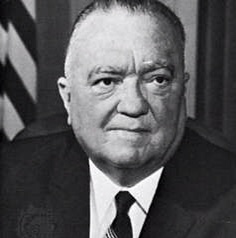

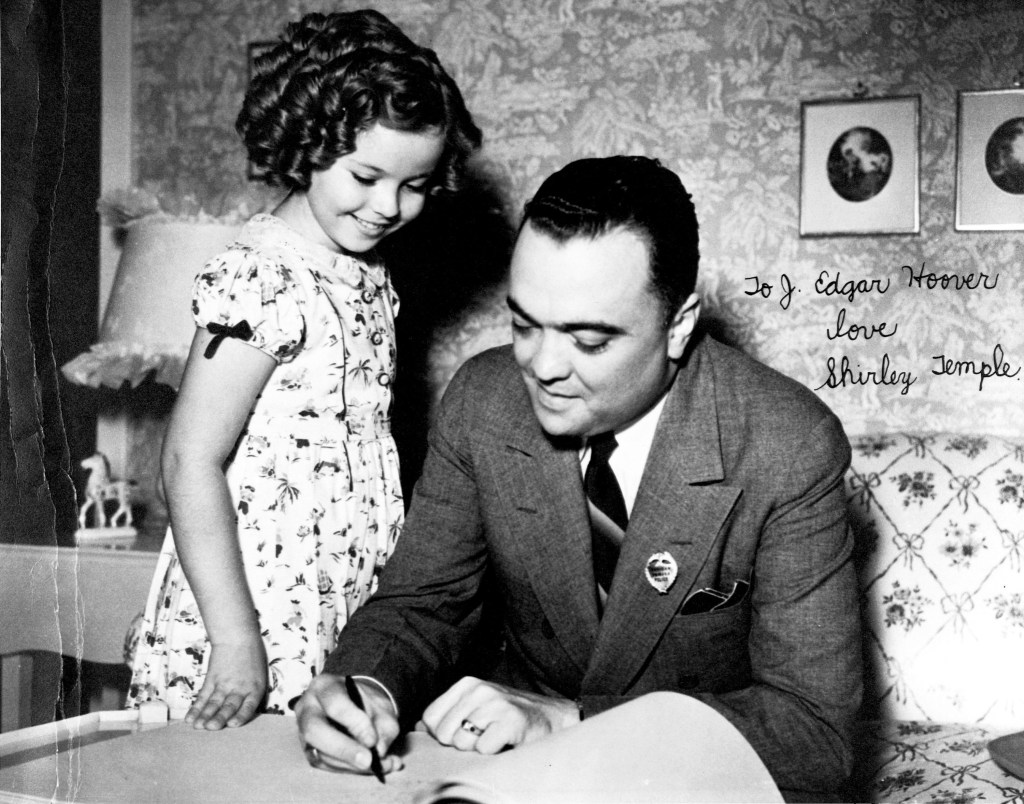




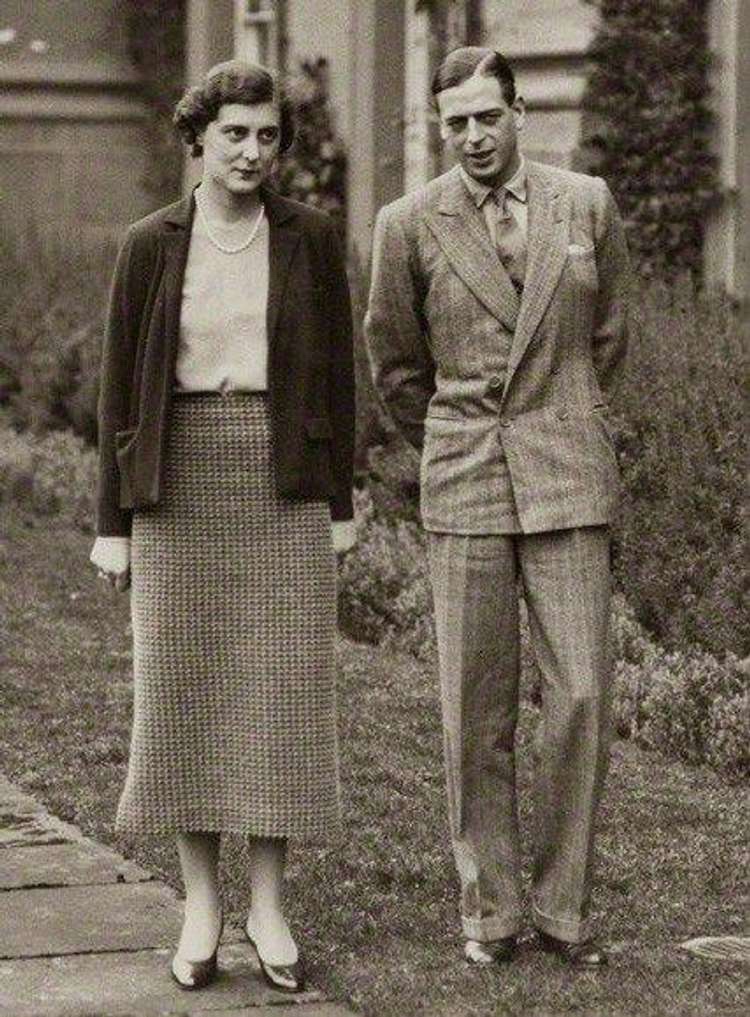
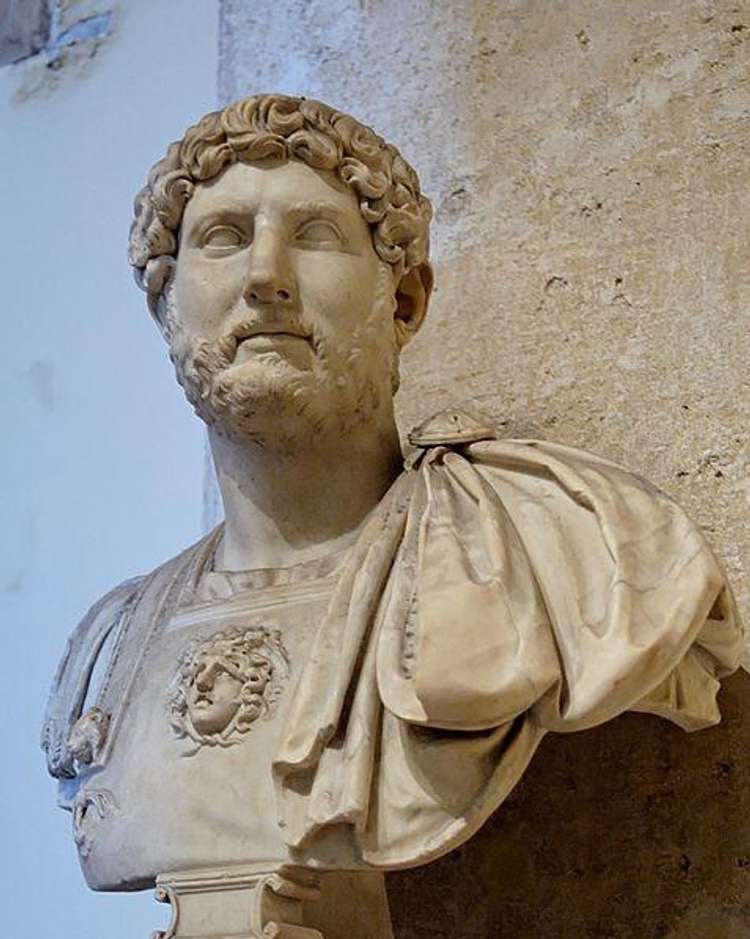

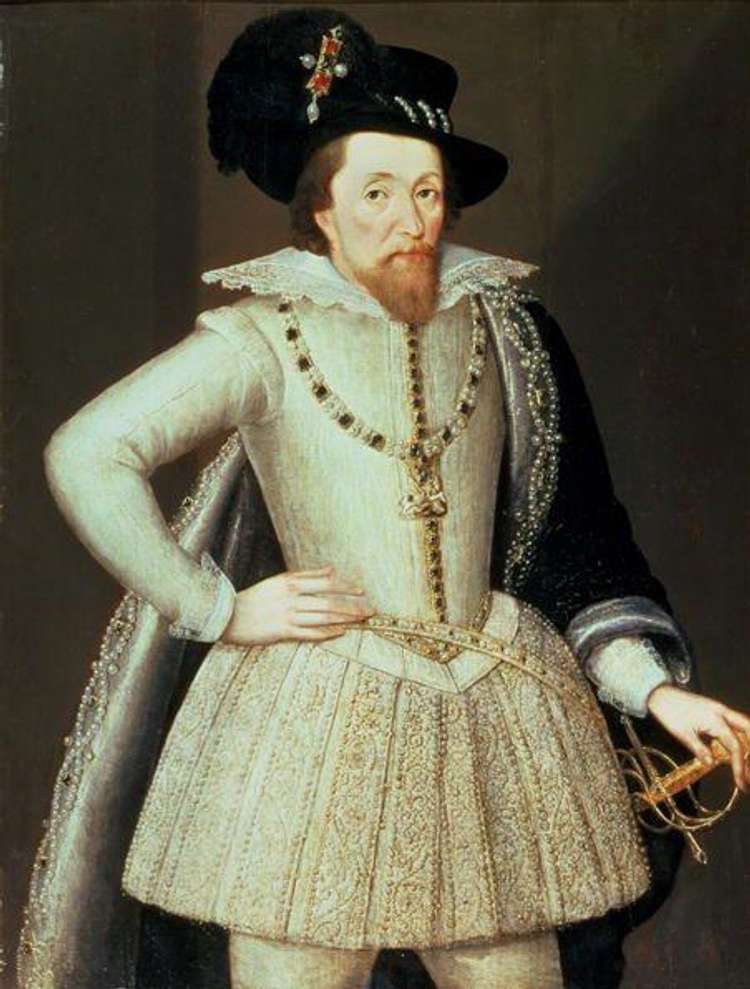



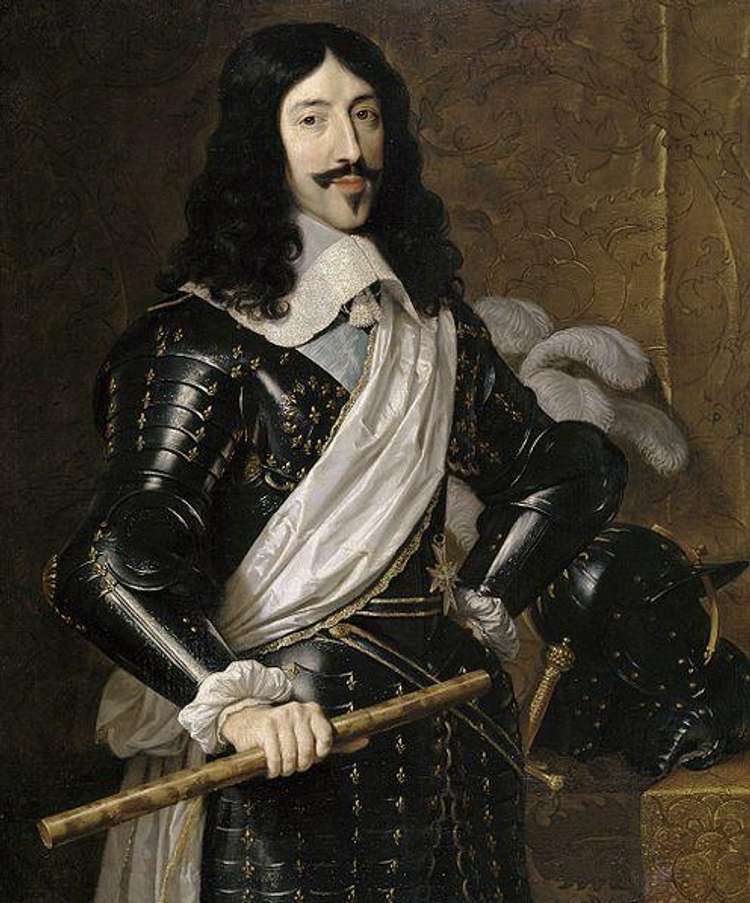
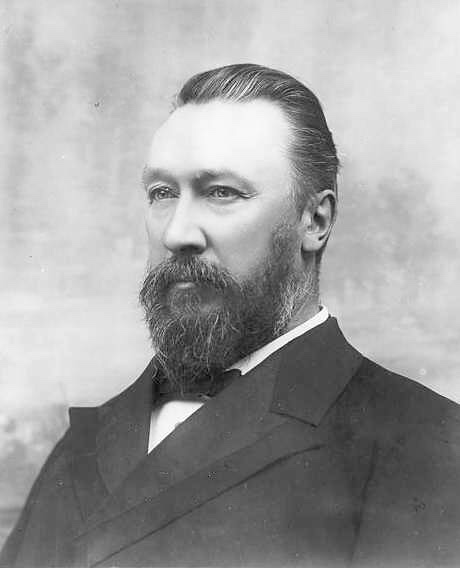
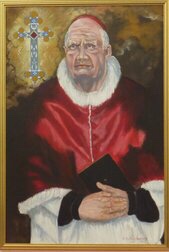


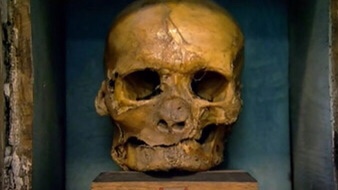
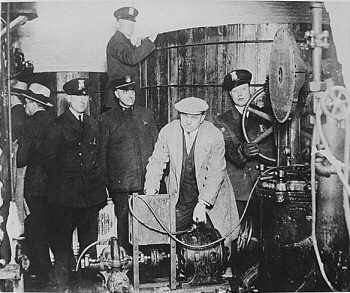
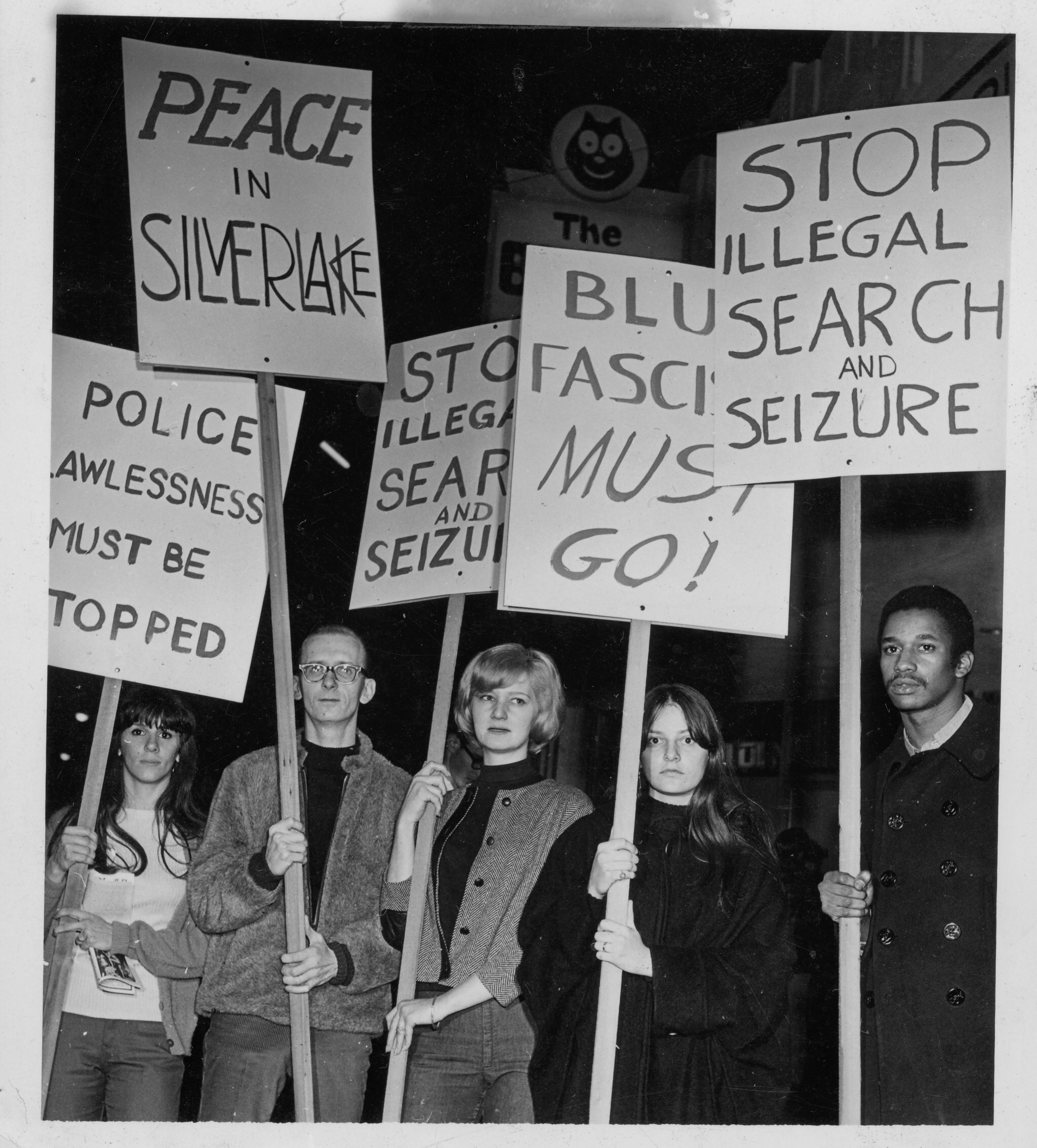

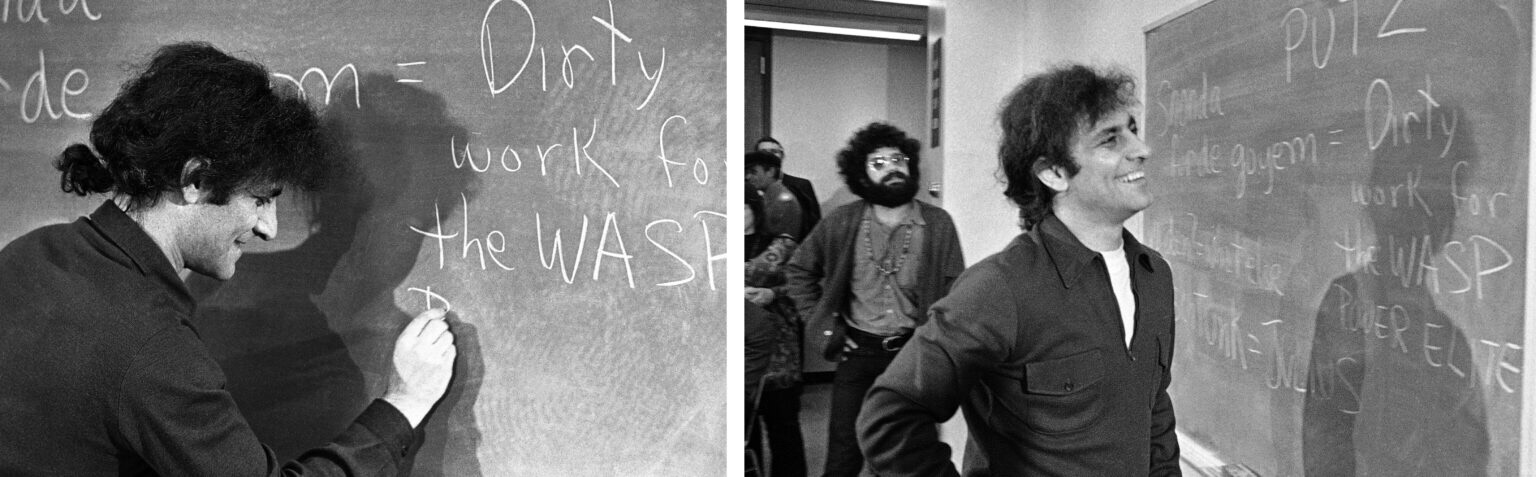
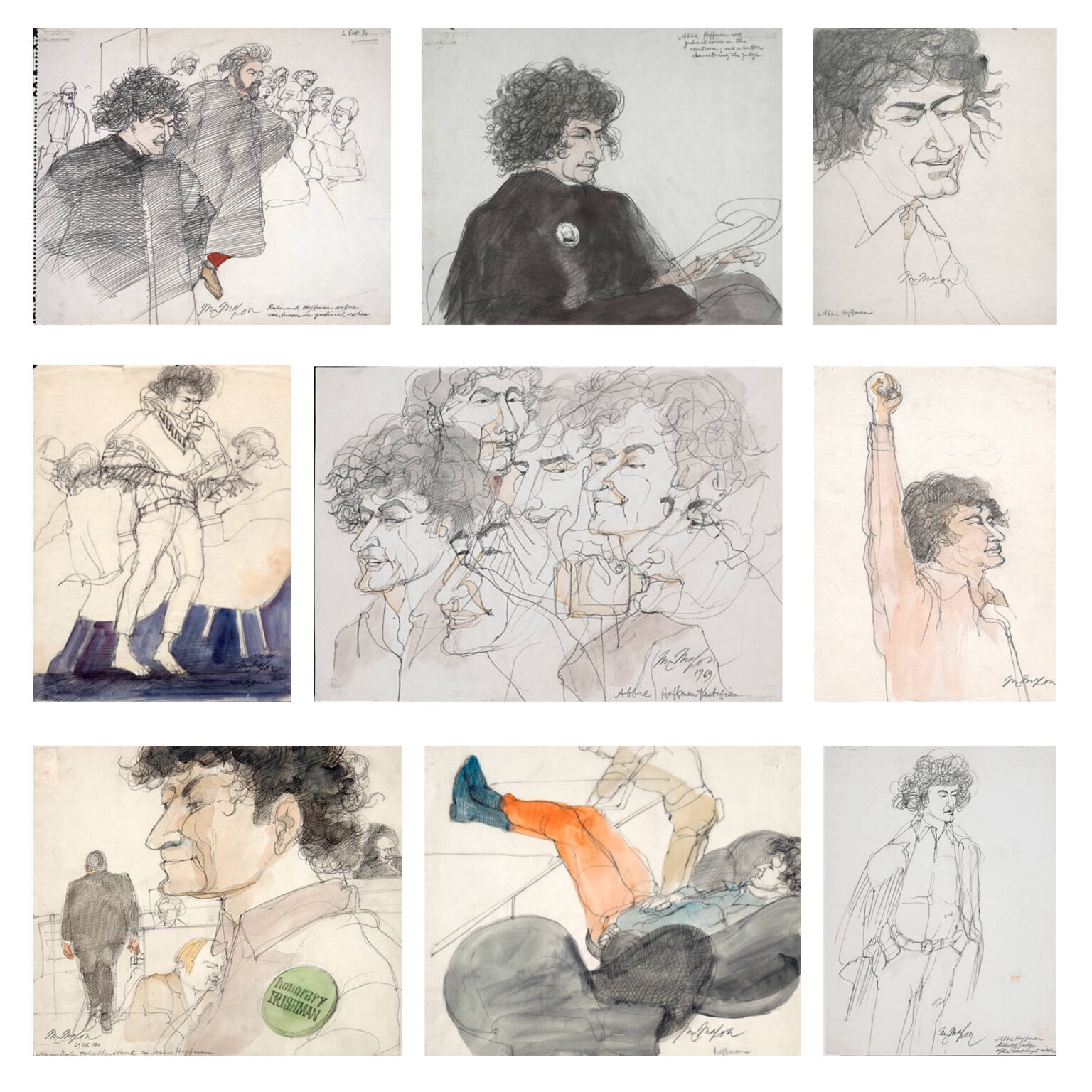
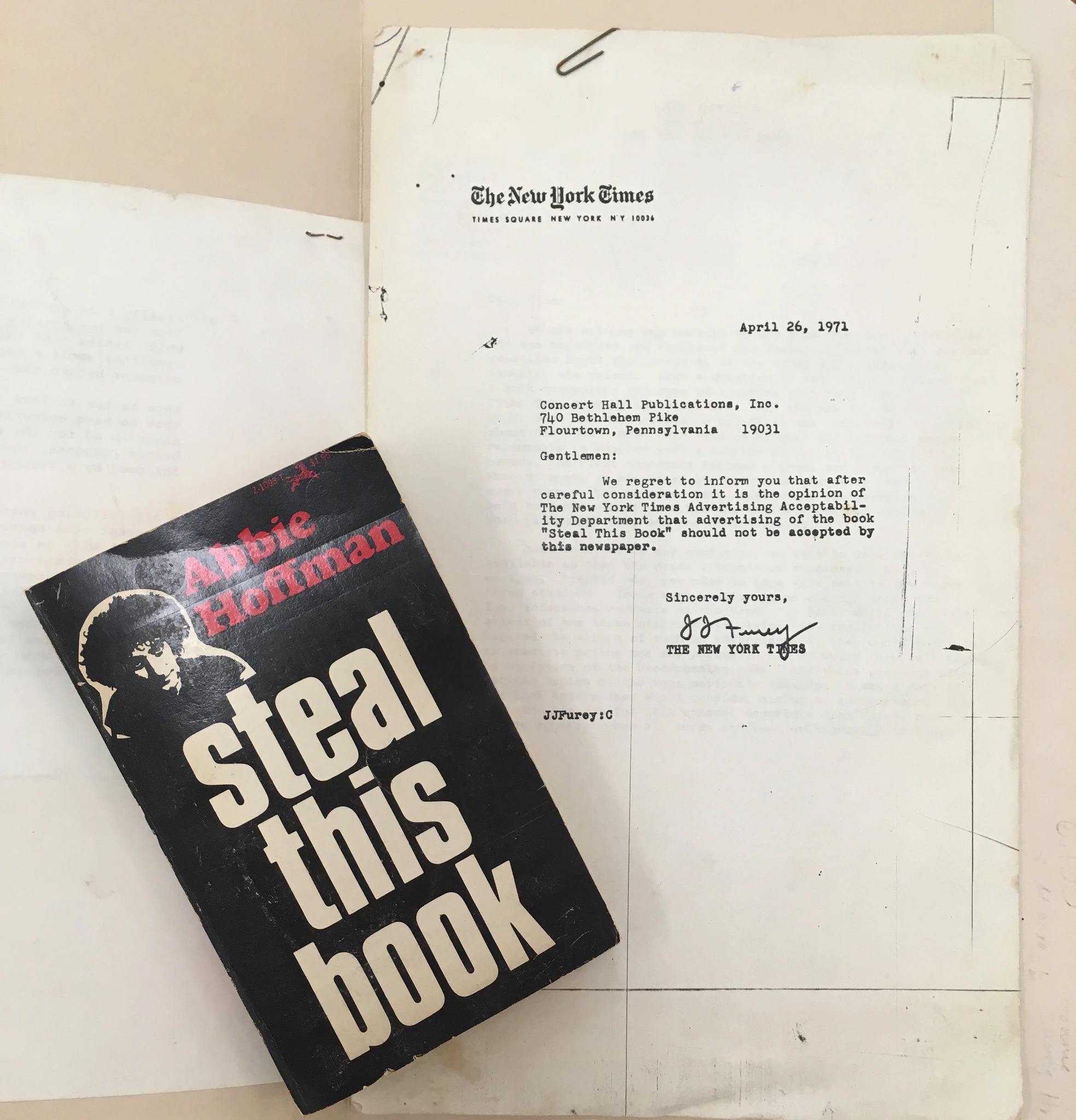










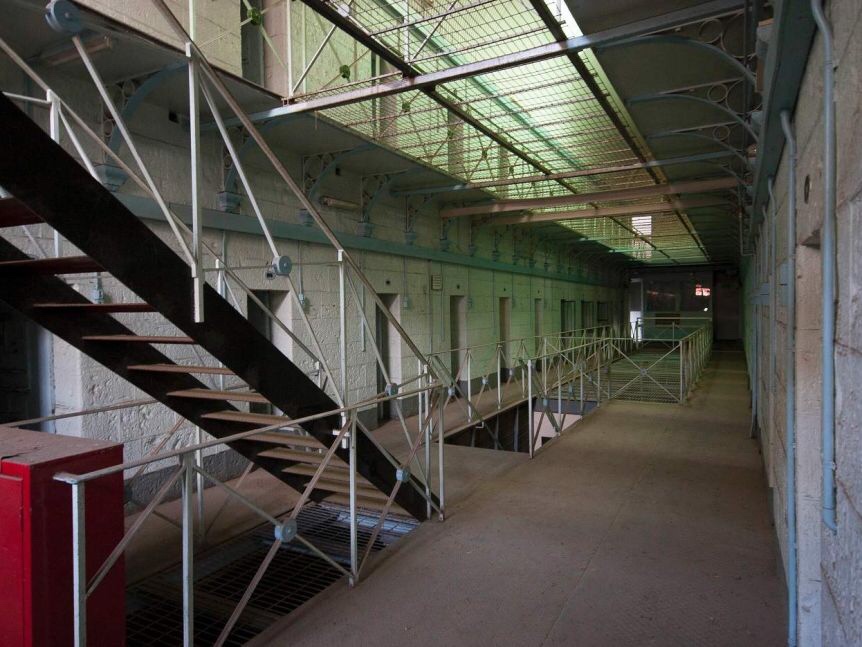




 timalderman
