When Hachikō’s owner failed to come home from work one day, the faithful dog returned to his master’s train station the day after just to wait for him. He did this every day for nearly a decade.
Hachikō the dog was more than a pet. As the canine companion to a university professor, Hachikō patiently waited his owner’s return from work at their local train station each evening.
But when the professor died suddenly one day at work, Hachikō was left waiting at the station — for nearly a decade. Every day after his master passed, Hachikō the dog returned to the train station, often to the chagrin of the employees who worked there. But his fidelity soon won them over, and he became an international sensation and a symbol of loyalty.
This is his story.
When Hachikō Met Ueno
This statue commemorates the meeting of Hachikō and his master.
Hachikō the golden brown Akita was born on Nov. 10, 1923, on a farm located in Japan’s Akita Prefecture.
In 1924, Professor Hidesaburō Ueno, who taught in the agriculture department at Tokyo Imperial University, acquired the puppy and brought him to live with him in the Shibuya neighborhood of Tokyo.
The pair followed the same routine every day: In the morning Ueno would walk to the Shibuya Station with Hachikō and take the train to work. After finishing the day’s classes, he would take the train back and return to the station at 3 p.m. on the dot, where Hachikō would be waiting to accompany him on the walk home.
Shibuya Station in the 1920s, where Hachikō would meet his master.
The pair kept up this schedule religiously until one day in May 1925 when Professor Ueno suffered a fatal brain hemorrhage while teaching.
That same day, Hachikō showed up at 3 p.m. as usual, but his beloved owner never got off the train.
Despite this disruption in his routine, Hachikō returned the next day at the same time, hoping that Ueno would be there to meet him. Of course, the professor failed to return home once again, but his loyal Akita never gave up hope.
Becoming A National Sensation
Hachikō was only one of 30 purebred Akitas on record at the time.
Hachikō was reportedly given away after his master’s death, but he regularly ran off to Shibuya Station at 3 p.m. hoping to meet the professor. Soon, the lone dog began to draw the attention of other commuters.
At first, the station workers were not all that friendly to Hachikō, but his fidelity won them over. Soon, station employees began to bring treats for the devoted canine and sometimes sat beside him to keep him company.
The days turned into weeks, then months, then years, and still Hachikō returned to the station each day to wait. His presence had a great impact on the local community of Shibuya and he became something of an icon.
In fact, one of Professor Ueno’s former students, Hirokichi Saito, who also happened to be an expert on the Akita breed, got wind of Hachikō’s routine.
He decided to take the train to Shibuya to see for himself if his professor’s pet would still be waiting.
When he arrived, he saw Hachikō there, as usual. He followed the dog from the station to the home of Ueno’s former gardener, Kuzaburo Kobayashi. There, Kobayashi filled him in on the story of Hachikō’s life.
Visitors came from far and wide to meet Hachikō, a symbol of loyalty.
Shortly after this fateful meeting with the gardener, Saito published a census on Akita dogs in Japan. He found that there were only 30 documented purebred Akitas — one being Hachikō.
The former student was so intrigued by the dog’s story that he published several articles detailing his loyalty.
In 1932, one of his articles was published in the national daily Asahi Shimbun, and Hachikō’s tale spread throughout Japan. The dog quickly found nationwide fame.
People from all over the country came to visit Hachikō, who had become a symbol of loyalty and something of a good-luck charm.
The faithful pet never let old age or arthritis interrupt his routine. For the next nine years and nine months, Hachikō still returned to the station every day to wait.
Sometimes he was accompanied by people who had traveled great distances just to sit with him.
A Legacy Of Loyalty
Since his death, a number of statues have been erected in his honor.
Hachikō’s great vigil finally came to an end on March 8, 1935, when he was found dead in the streets of Shibuya at the age of 11.
Scientists, who weren’t able to determine his cause of death until 2011, found that the dog Hachikō likely died of a filaria infection and cancer. He even had four yakitori skewers in his stomach, but researchers concluded that the skewers were not the cause of Hachikō’s death.
Hachikō’s passing made national headlines. He was cremated and his ashes were placed next to Professor Ueno’s grave in Aoyama Cemetery in Tokyo. The master and his loyal dog had finally reunited.
His fur, however, was preserved, stuffed, and mounted. It’s now housed in the National Museum of Nature and Science in Ueno, Tokyo.
The dog had become such an important symbol in Japan that donations were made to erect a bronze statue of him in the exact spot he had faithfully waited for his master. But soon after this statue went up, the nation became consumed by World War II. Consequently, Hachikō’s statue was melted down to use for ammunition.
But in 1948, the beloved pet was immortalized in a new statue erected in Shibuya Station, where it remains to this day.
As millions of passengers pass through this station daily, Hachikō stands proud.
Hidesaburo Ueno’s partner Yaeko Ueno and the station staff sit in mourning with the deceased Hachiko in Tokyo on March 8, 1935.
The station entrance near where the statue is located is even devoted to the beloved canine. It’s called Hachikō-guchi, simply meaning the Hachikō entrance and exit.
A similar statue, erected in 2004, can be found in Odate, Hachikō’s original hometown, where it stands in front of the Akita Dog Museum. And in 2015, the Faculty of Agriculture at the University of Tokyo erected yet another brass statue of the dog in 2015, which was unveiled on the 80th anniversary of Hachikō’s death.
In 2016, Hachikō’s story took yet another turn when his late master’s partner was buried alongside him. When Yaeko Sakano, Ueno’s unmarried partner, died in 1961, she explicitly asked to be buried alongside the professor. Her request was rejected and she was buried in a temple far from Ueno’s grave.
This stuffed replica of Hachikō is currently on display at the National Science Museum of Japan in Ueno, Tokyo.
But in 2013, University of Tokyo professor Sho Shiozawa, found a record of Sakano’s request and a buried her ashes beside both Ueno and Hachikō.
Her name was also inscribed on the side of his tombstone.
Hachikō’s Story In Pop Culture
Hachikō’s story first made it to film in the 1987 Japanese blockbuster titled Hachiko Monogatari, directed by Seijirō Kōyama.
The movie trailer for Hachi: A Dog’s Tale.
It became even more well-known when the tale of a master and his loyal dog served as the plot to Hachi: A Dog’s Tale, an American movie starring Richard Gere and directed by Lasse Hallström.
This version is loosely based on the story of Hachikō, though set in Rhode Island and centered on the relationship between Professor Parker Wilson (Gere) and a lost puppy that had been freighted from Japan to the United States.
The professor’s wife Cate (Joan Allen) is initially opposed to keeping the dog and when he dies, Cate sells their house and sends the dog to their daughter. Yet the dog always manages to find his way back to the train station where he used to go to greet his former owner.
The stuffed Hachikō on display at the National Museum of Nature and Science.
Despite the different setting and culture of the 2009 movie, the central themes of loyalty remain at the forefront.
Hachikō the dog might have symbolized the quintessential values of Japan, but his story and faithfulness continue to resonate with humans around the world.
Classic cartoon enemy musclemen Popeye and Bluto haven’t kissed but they have made up in this animated campaign behind Minute Maid orange juice. The two have overcome their differences to such a degree that some in the gay community (and the straight media too, such as Slate.com ad reviewer Rob Davis) have wondered if the sailors are supposed to suddenly be romantic partners.
The two play like school children on a swing, a see-saw, bury each other in sand on the beach, and get tattoos together that say “Buddies for Life.” At the end, they ride a two-person bicycleùpassing usual romantic interest Olive Oyl, who calls out “Oh, boys!” and they ride past her without notice. She offers a confused, if not suspicious, look as they pedal away.
An ironic development for Minute Maid, given the anti-gay “Save Our Children” crusades by former Florida Orange Juice spokeswoman Anita Bryant in the 1970s.
Before the campaign was conceived, Dave Linne, the Popeye ad’s creative director at ad agency Leo Burnett Co says the concept is “the opposite of the clich? of getting up on the wrong side of the bedö where people wake up in a good mood.
Linne came up with about 12 conceptual examples of people acting out of character and being nicer than normal, including an elementary school cafeteria line that resembles a Depression-era soup kitchen — except for one cheery server. Another example has a husband doing “wifely” weekend activities such as laundry and brings breakfast in bed to his wife to her surprise as she wakes up.
They also wanted an example of classic enemies who become friends. “We looked at movie villains and there are so many arch enemies, so we thought, ‘Let’s do an animated spot.’ We looked at lots of cartoon characters and we liked Popeye and Bluto for two reasons: I haven’t seen them in a commercial before, and they’re human characters instead of animals.”
So as they were making the ad, the creative team decided to put Popeye and Bluto in various playful situations. “The only reason we put them on a two-person bicycle was because it seemed so stupid,” Linne says. As they pass Olive Oyl, who Linne notes “is usually the catalyst to make them fight” not even she can get between them this time.
Linne says gay innuendo was not intentional but is intrigued about its possibility. “I think it’s interesting if you can read it both ways. I guess it’s working on all kinds of levels,” he mused.
While Linne seems impressed that his work can be read into by the gay community, the same cannot be said for officials at Minute Maid headquarters. “We’re not going to go there,” says Dan Shafer, a spokesman for Houston-based Minute Maid. “Any intent to draw a (gay relationship) parallel would be wrong. Anyone who knows Popeye and Bluto understands that’s not the case, there’s no intent like that.”
Commercials: Out of the Closet
Is Popeye gay? An ad company using the cartoon sailor’s likeness says no, but the commercial is still being featured on a new site of gay-themed ads.
POPEYE AND BLUTO may be the most recent celebrity couple to be outed by the media.
In a recent Minute Maid orange juice ad, the pair is seen palling around on a swing-set, burying each other in sand on the beach and riding a bicycle built for two as they gleefully pass by a scorned Olive Oyl. They even get matching tattoos that say “Buddies for Life.”
The animated spot, created by the ad agency Leo Burnett, is one of the latest additions to The Commercial Closet, an online museum of gay-themed ads from around the world, which launched Monday.
CommercialCloset.org compiles video clips and storyboard stills of hundreds of commercials featuring gay characters or themes, including several that never made it on the air. The archive includes ads representing 150 different ad agencies and 250 major advertisers, including American Express, Coca-Cola, Nike and the Gap.
Ranging from innocuous to offensive, the ads are grouped into four major categories: positive, negative, neutral and gay vague; and 50 subcategories such as “hustlers/ pornographers/murderers/pedophiles” and “sissies and queens.”
Michael Wilke, a former reporter for Advertising Age, created the site to promote awareness of the “evolution in the portrayal of lesbians and gays in advertising as it reflects the public’s perception of them,” and to raise money for a documentary film he’s making to further explore that theme.
Over the past 30 years, “there’s been an evolution from complete invisibility to popular stereotypes to more neutral and positive portrayals of gays in advertising,” Wilke said.
While there’s an increasing number of gay-themed ad campaigns cropping up today, according to Wilke, it’s still a mixed bag. “There’s definitely an increase in gay-positive ads, but the negative stereotypes continue to be a popular source of comedy in commercials,” he said.
Transgendered individuals in particular almost always end up the butt of the joke in commercials, which earned them their own sub-category in Wilke’s archive, called “(Straight) Dude Looks Like A Lady.”
But not all ads in this category are negative. Some manage to cast transgender characters in funny situations without making them out to be villains or clowns.
A 1996 Australian commercial for air-freshening spray Domestos, for instance, riffs off the cult classic Priscilla: Queen of the Desert, featuring a Terrance Stamp look-alike who asks to use the ladies’ room in a roadside bar. Finding it filthy, she pulls Domestos out of her purse and clears the air. Later she proclaims the bathroom “fit for a queen.”
“It’s not that transgendered people can’t be funny,” Wilke said, “but there’s a difference between laughing at someone and laughing with them.”
Although there may be more gay-themed ads on the air today, there’s a popular misconception in the media about who gay people are and what motivates them as consumers, according to Kathy Renna, a director at the media advocacy organization Gay & Lesbian Alliance Against Defamation (GLAAD).
“There’s the perception that gays and lesbians are very affluent, own three cars and buy 100 CDs,” Renna said. “That’s not reflective of the whole gay community. One thing that is true is that it’s a very loyal demographic.”
Companies with gay-positive reputations include American Airlines, Absolut vodka and Coors, she said.
But while marketing to gays and lesbians is an important priority for many corporations, advertisers and ad agencies must still walk a fine line when depicting them in ads.
Today, ads featuring gay people among other minorities in a happy-people world are relatively safe bets for corporations wanting to project a multicultural image.
A 1994 Ikea ad about a gay couple buying a dining table together, for instance, was controversial as one of the first gay-positive commercials by a major corporation.
Part of a three-part ad campaign depicting people in alternative lifestyles buying furniture -– the other two being a single mom and a white couple with an adopted Asian baby -– the ad was meant to “reflect real life and real people and not the middle-of-the-road all-American family,” according to Kathy Delaney, the executive creative director at Deutsch, the agency that made the ad.
But while homosexuality remains a touchy subject fraught with political correctness, that doesn’t mean advertisers should only approach it with kid gloves, Wilke said. Still, many agencies and advertisers would rather avoid the topic altogether than open a can of worms.
Then there’re companies such as Calvin Klein, Diesel and Benetton that, instead of shying away from controversy, promote a fashion-forward or youth-oriented brand and deliberately provoke people with their ads.
A notorious example is Benetton’s 1992 “Pieta” print ad depicting AIDS activist David Kirby on his deathbed. The emaciated Kirby, surrounded by his friends and family, bore an eerie resemblance to Jesus, which sparked controversy among Christian groups and AIDs activists who were uncomfortable with the religious tone used in association with the disease and, ultimately, to sell clothes.
On the other hand, the ad was also one of the first in many countries to show AIDs in the context of real human suffering and compassion. Although it was singularly criticized, the ad was part of a larger, ongoing campaign for AIDs prevention and awareness that included the distribution of condoms in Benetton stores.
Some companies, by contrast, seem reluctant to acknowledge any controversy their ads may create.
The Popeye and Bluto spot, for instance, is included in the “Gay Vague” category, because the advertiser’s message related to gay people isn’t very clear. In fact, there’s no substantial proof that the two adversaries are in fact lovers, as they are never seen kissing.
In a interview with Wilke, the creative director for the Popeye ad seemed pleasantly surprised at the suggestion that it implied a relationship between the two erstwhile foes, and that the spot was simply meant to show two enemies who become friends, supposedly transformed by drinking Minute Maid orange juice.
Minute Maid, meanwhile, firmly denied that Popeye and Bluto are an item.
“Any intent to draw a (gay relationship) parallel would be wrong,” Minute Maid spokesman Dan Shafer told Wilke. “Anyone who knows Popeye and Bluto understands that’s not the case, there’s no intent like that.”
Ad Report Card: Minute Maid Makes You Gay! (Happy, That Is)
Some months ago the Ad Report Card devoted not one but two installments to commercials that turned on references (oblique or otherwise) to homosexuality. Often the reference served as a punch line of one sort or another, and in some cases I was critical of the way in which this or that advertiser used gayness as a joke. Responses were many and spirited. Some suggested I was being ridiculous, seeing gay themes where there were none. Others, some claiming to have inside knowledge of the ad business, argued I was naïve, overlooking the benign influence of gays who work in “ad creative.” I have no way of checking the latter claim, but both critiques came to mind when a couple of people e-mailed me recently about a Minute Maid orange juice spot featuring Popeye and Bluto. The ad is part of a series, the theme of which is that drinking Minute Maid makes you gay.
As in happy.
Now, some observers have suggested that, in addition to promoting the happy-making power of Minute Maid, the Popeye spot might just be an example of “gay vague,” along with another commercial that I haven’t seen, which is airing in Europe—read this for more. You can see the spots in the U.S. campaign below: the Popeye one, another featuring Bobby Knight, a third about a “helpful hubby,” and a fourth centered on a suspiciously cheerful lunch lady. My main focus is the Popeye spot.
Popeye The ad: Here they are, two of the most famous rivals in cartoondom, playing happily together on a swing and then a seesaw. Popeye good-naturedly pats sand over Bluto on the beach; sappy pal music plays. The pair gets matching “Buddies for Life” tattoos. What’s going on? An announcer says cheerfully: “Somebody had their Minute Maid this morning. It takes a minute, but the feeling”—the unbridled joy and affection we’re seeing here—“lasts all day.” Popeye and Bluto pedal along on a tandem bike. Olive Oyl waves (“Oh boys!” she calls), but they ride straight past, blithely ignoring the object of their traditional erotic rivalry.ADVERTISEMENThttps://39598048fe002d9e70fc861e576fdf63.safeframe.googlesyndication.com/safeframe/1-0-38/html/container.html
CoachHmmm. Perhaps it’s ridiculous of me to ask, but what exactly is it that’s preventing these Minute-Maid-drunk boys from including Olive in their fun? On the other hand, what is it that makes it inevitable that almost any prominent male pair is inevitably subject to some kind of what-if-they-were-gay speculation—good-natured, homophobic, or somewhere in between? (Perhaps you’ve heard spurious gossip about the relationship between Ben Affleck and Matt Damon. Or read my Slatecolleague David Plotz’s exploration of the fan fiction subgenre devoted to the imagined couplings of Kirk and Spock, among others. Or recall a New Yorkercartoon that one of my correspondents remembers, featuring none other than Popeye and Bluto holding hands, having finally figured out “where all that anger was coming from.”)
Bed What about the other Minute Maid spots? You could say that they all play it straight. Hothead basketball coach Bobby Knight, having had his Minute Maid, coddles and dotes on his players, bursting into the post-game locker room to ask “Who wants a treat?” A spot featuring a surprisingly helpful husband has him forsaking football to bustle around neatening things up, heading off to “market,” and setting his iron for chiffon. A chipper lunch lady minces through a school cafeteria asking, “Who wants tiramisu?”
School Anyway, subtext or no subtext, this is a pretty good campaign. All the spots, but especially the Popeye one, are attention-getting and make a clear case for the alleged powers of a morning glass of Minute Maid. The helpful hubby installment is the weakest, but the Bobby Knight one is hilarious. Mushing together grades for all four into one composite score, I’d give them a solid B. When I watch these ads, I feel … happy.
More than six decades after his untimely death, James Dean remains one of Hollywood’s most enduring and enigmatic icons.
It’s been more than 60 years since his tragic death and still Hollywood is looking for “the next James Dean.” The young actor made only three movies in his career – East of Eden (1955) where he played the bad boy brother in the “Cain and Abel” retelling, his signature role as an angst-fueled teen in Rebel Without a Cause (1955), and Giant (1956) where he stepped into the cowboy boots of a nonconformist ranch hand. All of his movies became Hollywood classics, but he only saw one, East of Eden, completed.
He was only 24 years old on September 30, 1955, when he was driving down Route 466 in his Porsche 550 Spyder and a car collided with his, killing him almost instantly. The young star’s life and career was cut short, but his premature death contributed to the legend he would become. Rebel Without a Cause and Giant were released posthumously, and Dean came to epitomize the sensitive, troubled rebel who fans still connect with today. Who was the man behind the brooding Hollywood sex symbol? Here are 7 revealing facts that might give you a clue.
He had family issues
Dean was born in Marion, Indiana on February 8, 1931. Dean’s father Winton left farming to become a dentist and moved the family to Santa Monica, California. But when Dean’s mother died from cervical cancer when he was 9, the family broke apart. His father sent him back to Indiana to live on his aunt and uncle’s Quaker farm, and this was the beginning of an estrangement between father and son that would haunt them for the rest of their lives.
Dean had some dirty habits
He was the symbol of sexy cool onscreen, but off-camera the 5’8,” 135-pound star had some quirky and dirty (as in unwashed) habits. Dean supposedly didn’t care much about his public appearance and went for the disheveled look. At one formal luncheon, he showed up barefoot and in filthy jeans and was known to appear at rehearsals in pants held together with safety pins. He was also known for having pretty extreme mood swings, according to friends, who said he also had the habit of calling or visiting them late at night. “He’d be up one minute, down the next. He was uncomfortable in his own skin,” one of them said.
Just hours before his crash, James Dean takes a cigarette break at a gas station next to his beloved silver Porsche 550 Spyder that he named Little Bastard. Photo: Bettmann/Getty Images
He looked up to Marlon Brando
Dean respected another brooding actor of the day, Marlon Brando. While Dean was just emerging in Hollywood, the slightly older Brando had major success as Stanley Kowalski in A Streetcar Named Desire (1951), his iconic role as a motorcycle gang leader in The Wild One (1953), and he won an Oscar for On the Waterfront (1954). Dean attempted to call Brando and see him socially, but Brando rebuffed his attempts at a friendship. “I gave him the name of a [psycho]-analyst, and he went. At least his work improved,” Brando said.
Dean wanted to be Billy the Kid
In his short career, Dean played fictional non-conformists who played by their own rules, but if he had lived he may have taken on the role of a real-life outlaw. He read and re-read the book The Authentic Life of Billy the Kid and frequently spoke of wanting to portray the Wild West gunslinger in a film.
He confused Ronald Reagan with his acting method
Before he made it in the movies, Dean worked a lot on live television. A fan of improvising, he went off-script on one show and threw a few ad-libs at one of his co-stars, actor and future president Ronald Reagan, who was totally confused by Dean’s acting method. Reagan wasn’t the only one who disliked Dean’s spontaneity. “Just make him say the lines as they’re written,” one actor said once.
His sexuality has been a matter of debate
Although Dean was briefly engaged to actress Pier Angeli, his sexuality has been a matter of debate. A number of biographers doubt his relationship with Angeli was a physical one. Some biographers believe he was bisexual; others characterize him as a homosexual who had one or two brief affairs with women. It was rumored that his first sexual experience occurred as a teenager when a local minister seduced him.
Dean liked to perform magic tricks
When he wasn’t acting or racing cars, Dean liked to practice magic tricks. A smoker, who was often photographed with a cigarette dangling from his mouth, Dean put a magical spin on his tobacco habit: he would put an unlit cigarette and a flaming match into his mouth and then pull out a burning cigarette. Another reason why Dean was smoking hot.
James Dean’s Death: Inside His Tragic Passing at Age 24
Though he only released one film before his dying in a car crash, the actor became a lasting figure in pop culture.
At the time of his sudden death on September 30, 1955, at age 24, James Dean had starred in only one motion picture released in theaters. He would become a cultural icon to generations and a touchstone for the burgeoning youth movement of the era, due largely to his shocking demise in a car accident that would make international headlines in a pre-digital world, and the subsequent movies that would be released posthumously in which he portrayed inward-looking, disaffected adolescents on the verge of adulthood.
When the word “teenager” was still in relatively new usage, Dean’s brief life — on- and of-screen — and sudden death from injuries sustained in a car accident would come to represent a symbol of modern masculinity in the mid-to-late 1950s, a precursor to the counter-culture movement of the 1960s and 1970s.
“Jimmy represented something that was happening in the States after the Second World War. Until that moment in time, grown-ups — adults — set the style for clothing, set the styles for music, set the styles for everything that was going on,” Dean’s acting contemporary Martin Landau once saidof his friend’s cultural legacy.
Dean got his start acting in commercials and TV shows
Born James Byron Dean on February 8, 1931, in Marion, Indiana, his father was a farmer-turned-dentist father who moved his family to Santa Monica, California, where his son attended Brentwood Public School. An only child, Dean’s adored mother died of cancer when he was age 9 and he was sent to live on his aunt and uncle’s Quaker farm. He returned to California after graduating high school, studying theater at the University of California, Los Angeles.
After dropping out of college, the aspiring actor first appeared on television in a Pepsi advertisement followed by uncredited parts in minor Hollywood pictures before heading to New York City in 1951, where he studied at the Actors Studio under Lee Strasberg. Television roles followed in Danger, Omnibus and General Electric Theater and he appeared on Broadway in See the Jaguar and The Immoralist before Hollywood took notice of his talent and brooding good looks.
Dean on the set of ‘Rebel Without a Cause’ Photo: Sunset Boulevard/Corbis via Getty Images
He filmed his three most-famous films shortly before his death
Dean was soon cast as Cal Trask in the 1954 film adaptation of the John Steinbeck novel East of Eden. It would be the only film released prior to the actor’s death and for which he would be nominated posthumously for Best Actor in a Leading Role at the 1955 Academy Awards. As misunderstood, rebellious Cal, the role foreshadowed Jim Stark, the late-adolescent, angst-ridden character he portrayed in Rebel Without a Cause(1955) alongside Natalie Wood, which would become a teen favorite of the era and forever be identified with the image and legacy of Dean, the tragic movie star.
Fearing he would be typecast as an angry, rebellious teen, Dean’s next role was as a rags-to-riches Texan ranch hand in Giant (1956), co-starring Elizabeth Taylor and Rock Hudson. It would be his final film and would garner him another posthumous Academy Award nomination, making him the only actor ever to be nominated twice following death.
It was soon after wrapping shooting on Giant that Dean returned to his other love – motorsport, in which he first competed professionally prior to filming Rebel Without a Cause. With reported ambition of one day competing in the Indianapolis 500 race, Dean’s financial success from East of Eden had allowed him to purchase a Triumph Tiger motorcycle and Porsche 356 speedster, the latter he traded in on the more powerful convertible Porsche 550 Spyder.
Dean in his Porsche 550 Spyder. Photo: Bettmann/Getty Images
Dean was ticketed for speeding hours before his deadly crash
German Porsche-trained mechanic Rolf Wütherich encouraged Dean to drive the Porsche from Los Angeles to Salinas to get a feel for the new automobile, rather than tow it on a trailer behind the Ford station wagon in which he originally planned to make the journey. Dean was ticketed for speeding at 3:30 p.m., just over two hours before his untimely death.
Dean was killed when the 550 Spyder he was driving collided with a Ford Tudor sedan along then-U.S. Route 446 near Cholame, California. The Ford, driven by 23-year-old Cal Poly student Donald Turnupseed, was turning at an intersection when the two cars hit almost head-on, resulting in massive damage to Dean’s Porsche. The actor died almost instantly while his passenger, Wütherich, was badly injured but survived.
His left foot crushed between the clutch and brake pedal, Dean’s neck was broken and he suffered massive internal injuries. Along with Wütherich, he was transported to the Paso Robles War Memorial hospital 28 miles away where he was pronounced dead on arrival at 6:20 p.m. As well as a broken neck, both his arms were broken, he had fractures of the upper and lower jaw and massive internal injuries. Wütherich suffered a fractured jaw, fractured hip and body lacerations. Turnupseed received only minor injuries and after being interviewed by attending California Highway Patrol officers at the scene, was released.
Dean’s legacy has grown in the decades since his death
An inquest into the crash in the days following found Dean at fault due to speeding, though a 2005 article in the Los Angeles Times cited an attending Highway Patrol Officer who recalled the wreckage and position of Dean’s body indicated a speed around 55 mph, not the 90 mph that had been widely reported.
Following the tragic collision, rumors spread over the years and decades that Dean had not really died but was living a secret, hidden life; that he was a closeted homosexual; that the Porsche in which he was driving on that fateful day was cursed. Alongside such rumors, the myth of Dean — the man and the actor — only grew as the years passed. “An actor must interpret life,” Dean once said. On screens and in photographs he remains forever on the cusp of adulthood, a representation of anti-establishment teenage disillusionment and social estrangement, an enduring representation generations have looked to as an interpretation and projection of their own inner lives.
Was John Lennon gay? “Why are you bringing up such a ridiculous question? Who cares if he was gay? I thought this article was about John Lennon almost beating a guy to death.” Well, it is, it is, keep reading and you will see all the pieces to this incredible, little-known chapter in the life of John Lennon and how perilously close his temper came to ending the Beatles entirely, almost before they really got started. This savage beating also helped change Lennon’s life, as he said “It was the last fight I ever got into. That’s when I gave up violence, because all my life I’d been like that.”
In 1963, the Beatles’ were beginning to become famous in England and Europe. A little over a year earlier, they signed with a manager named Brian Epstein (who incidentally died of a drug overdose just four years after this). Epstein was unequivocal in his sexual preferences- he was as gay as they come. (As a point of note, being gay was actually against the law in Britain at the time, and was to remain so until 1966.)
According to Pete Best, the Beatles drummer before Ringo, Brian had tried making passes at all four Beatles (including himself) and was met, each time, with a polite but firm, rejection. Many Beatles fans knew about Brian’s “secret life” and assumed that Paul, the “cute Beatle”, and the one most of the girls liked, was the object of his affections. Nothing could be further from the truth. It was the loud, overbearing, and aggressive John Lennon who Brian was crazy about.
In April of 1963, the Beatles were now one of the hottest acts in Europe. Their records were selling like the proverbial hotcakes. The first album was sitting in the #1 spot on the charts; their concerts were selling out to capacity crowds; and within a few brief months, they would be playing the Royal Variety Performance in front of the Queen herself.
The Beatles arrived at London Airport on Sept. 22, 1964, after a tour of the United States and Canada. From left, George Harrison, Paul McCartney, Ringo Starr, Brian Epstein — the group’s original manager — and John Lennon. Credit… Keystone/Getty Images
It was at this time, out of the blue, that John and Brian decided to take a break in the Beatles’ very busy schedule and go off together for a holiday in Spain. The first suspicious thing about this amongst fans was “Why did John go on holiday, as his wife had recently given birth to a new son?” (Cynthia had gave birth to Julian, John’s first son, on March 8, 1963). John admitted, years later, what a rotten and selfish thing this was for him to have done, but nonetheless, he went with Brian, sparking rumors that it was a romantic get-a-way.
Fellow Beatle, Paul McCartney, has his own take on John’s Spain trip with Brian. According to Paul, the trip’s purpose was for John to assert who the real leader of the Beatles was with Brian. That John took Brian on the holiday “…to make sure Mr. Epstein knew who to listen to in this group”. It is interesting that even in these very early Beatles’ days, John and Paul were already jockeying for an upper hand.
Whatever the case, John and Brian spent 12 days together in Spain. “We used to sit in cafes together”, recalled John, “looking at the boys. I’d say, ‘do you like that one? Do you like this one?’ …I was rather enjoying the experience, thinking like a writer all the time.”
The details of the trip were sketchy, at best, but soon John and Brian had returned and were ready to get back to the business of making Beatles records, performing concerts, and making appearances. But in Liverpool, the “gay” rumors were now intensely swirling. Things came to a head with a disc jockey the Beatles knew named Bob Wooler (1926-2002).
Wooler was a very close friend of the Beatles and had introduced them on stage some 300 times. This incident happened at Paul’s 21st birthday party, on June 18, 1963. At the party, Wooler was joking around with John and said (with heavy gay intimations): “Come on John, what really happened with you and Brian? Everybody knows anyway, so tell us.”
John had been heavily drinking that night and Lennon was a notorious “bad drunk”. In a blind rage, John proceeded to beat the stuffing out of a very surprised Bob Wooler, literally kicking him repeatedly in the ribs as he lay on the ground in a bloody heap.
According to John, the only reason he actually stopped the savage beating was because, “I realized I was actually going to kill him… I just saw it like a screen. If I hit him once more, that’s really going to be it. I really got shocked and for the first time thought: ‘I can kill this guy.’”
Wooler was rushed to the hospital by Brian, who was also present at Paul’s party, and given treatment for a variety of things, including broken ribs. Luckily for John Lennon- and the Beatles’ future amazing run- Wooler survived the ordeal.
Incredibly, John refused to apologize. “He called me a bloody queer, and I bashed in his ribs for it”, he said defiantly. Because of this refusal to apologize, Brian had a writer for The Daily Mirror, Don Short, send a telegram on John’s behalf, apologizing. The telegram read, “Really sorry Bob. Terribly sorry for what I have done. What more can I say? -Signed, John Lennon” In addition to that, a payment of 200 pounds (around $2200 today) was also given as compensation.
Despite their very recent fame in Europe in musical circles, this incident actually got the Beatles their first national press coverage in England in an article in the Daily Mirror. (One can easily imagine what kind of coverage an incident like this would have gotten nowadays, with our current tabloids, twitter, and the blogosphere. And, of course, had Bob Wooler not been the forgiving type, he could easily have raked John over the coals, but chose not to. Or what if John had actually killed Wooler by perhaps kicking him a few more times with Wooler’s broken ribs perhaps puncturing his lungs? It would have finished the Beatles as we remember them right there, not to mention the fact that John Lennon would have been sent to prison for murder!)
Despite the severity of the incident and the coverage in the Daily Mirror, the incident was soon forgotten and the Beatles went on to conquer the musical world.
The one murky question for Beatles fans is obviously “Did John and Brian really?…” Beatles fans and aficionados have been debating the question all these years later.
In 1971, in his classic “Rolling Stone” interview, John stated that of all the Beatles he “was the closest to Brian”. (was this one of John’s inside jokes, did he really mean?…) John later briefly commented on the lingering question about Brian and himself shortly before his tragic death in 1980. “It was almost a love affair, but not quite. It was not consummated. But it was a pretty intense relationship”, he said.
About the gay accusations setting him off, Lennon went on to add, “You know, when you’re 21, you want to be a man. If someone said it now, I wouldn’t give a shit”. (1980). But at the time, John was a very macho, young rock star and he had to prove it to everyone.
One marvels when looking at the incredible, unbelievable career of John Lennon- and the Beatles- at just how close it all came to going up in smoke, because of a needless, drunken beating, all those years ago at a birthday party.
BonusFact:
While he may or may not had a romantic encounter with Brian Epstein, Lennon definitely also loved the ladies. In 1968, he confessed to his first wife, Cynthia, that he had had over 300 extra-marital affairs with women during their six-year marriage. He may have been underestimating himself.
He was not faster than a speeding bullet. He was not more powerful than a locomotive. He was not able to leap tall buildings in a single bound.
In the great pantheon of characters to emerge from the “Superman” universe — Lois Lane, Lex Luthor, Jor-El, General Zod — Jimmy Olsen probably ranks below even Richard Pryor’s wisecracking embezzler in the much-maligned “Superman III.” Jimmy just isn’t that cool. He’s often described as a “cub” reporter. He needs saving more than he saves. He says “Golly.” And he’s sometimes drawn as a redhead.
“Oh, I’m not going in there!” Jimmy whines when hustled into a secret prison after falling prey to the treacherous Von Klaven brothers, identical twins who steal radium, during the 1952 Superman adventure “Double Trouble.” Jimmy’s line when rescued by Man of Steel George Reeves: “Right now, you’re prettier to me than all the movie stars in the world!”
But in a franchise that’s seen its share of tragedy — George Reeves’s reported suicide, Christopher Reeve’s spinal injury — the woes of the actor who played Jimmy in the 1950s went underreported. Jack Larson, who died at 87 on Sunday, was a gifted writer and gay man whose talents and personal struggles were overshadowed by his role as Superman’s flunky.
Even worse: He knew it would turn out this way.
“If I won the Nobel Prize for Literature at 75 and died, they would still say, ‘Jack Larson, best remembered as Jimmy Olsen in the ‘Superman’ series,”’ he said in 1982.
Though Larson never won the Nobel, his swipes at literary greatness were more than the flailing of a teen star gone to seed. Born in California, Larson had dreams of making it big on Broadway as an actor and playwright. After being signed by Warner Brothers while still in high school and a stint in the Marines, the budding thespian found himself at a crossroads.
It was 1951. The old studio system was dying. Though just in his early 20s, Larson had done a few films, but was running out of work — and wanted to get to the Great White Way.
His agent came up with a solution: Play the terrible supporting role of Jimmy Olsen in “Adventures of Superman.”
“I didn’t want to do it,” Larson said, ”but my agent said, ‘Look, you want to get to New York. You don’t have any money. Nobody will ever see this show so take the money and run.”’
Larson did. For $350 an episode, he completed the show and went to the Big Apple. And he was living there when the show he had dismissed became one of the most iconic in TV history — even though it was pretty bad.
“Adventures Of Superman was frequently barely a superhero show — it was more like a dirt-cheap police procedural sprinkled with a few minutes of unconvincing special effects — but it still featured the most famous, popular superhero of all time,” the Onion’s A.V. Club wrote in 2013. “So what else was the nascent geek clan going to watch?”
Larson, meanwhile, became a would-be aesthete fixed in amber as a hapless hanger-on. With a terrible bowtie, no less.
“To me, it was a nightmare,” he said in 2006. “Everywhere I went, it was, ‘Jimmy! Jimmy! Hey, Jimmy, where’s Superman?’ Suddenly, I couldn’t take the bus or the subway anymore. It absolutely freaked me out.”
However, Larson rode the wave. He played Jimmy in 101 episodes of “Adventures of Superman” between 1952 and 1958. And after Reeves’s death — which Larson never believed was a suicide — they tried to get him to do more.
“I refused point blank,” he said. “It made me sick that George had died. He was Superman, and that was the show. I felt, ‘Why go on with it?’ I decided then to quit acting.”
Feeling typecast, he “took up the life of a playwright in New York,” he told the New York Times in 1976 — in a piece that identified him as a “bachelor.”
Larson was far from that. It seemed that one good thing had come of his time as Jimmy: a sexual awakening. While in Hollywood, he became involved with screen legend Montgomery Clift, and met his future longtime companion, director James Bridges (“The Paper Chase,” “The China Syndrome”).
“He realized, in retrospect, that some of his adolescent angst had been due to turmoil over his sexual orientation,” the Times wrote in 1998.
Jack Larson in 2011. (Fred Prouser/Reuters)
That turmoil would be given voice in “The Relativity of Icarus,” a dance piece that premiered at New York’s prestigious Joffrey Ballet in 1974. Larson wrote a poem that accompanied the work. Four decades ago, what some saw as an attempt to mask gay themes in the charged relationship between Daedalus and Icarus was met with controversy.
“It is strange in this day of liberation movements that a homosexual pas de deux has to masquerade as a duet between father and son,” the Times wrote.
Amid the “Icarus” publicity, Larson was outed — as Jimmy Olsen. But Jimmy, he found, was no longer repugnant to him. He began to work the TV nostalgia circuit, and was contemplating hosting a tribute show in 1982.
“I want to host it,” he said. ”I want very much to do it — join up my life with Jimmy Olsen. If you can’t beat ’em, join ’em.”
In the coming decades, he would produce films directed by Bridges and write more plays. And he would appear in what CNN called “winking roles” in “Superman” fare such as “Superboy,” “Lois & Clark” and the film “Superman Returns.”
His sexuality — once hidden — was now an asset.
“Gay fans are gushing over the fact that the director of the new ‘Superman Returns’ (opening June 28) is a gay man, Bryan Singer,” the Chicago Tribune wrote in 2006, “and that, besides the fact that Superman is a real hunk, a new trading card featuring scenes from the film shows the big guy — get this! — actually emerging from a closet.”
The paper, noting Larson’s sexual orientation, added: “What was fun about that show was just the ambiguity of it all. It wouldn’t have mattered if Clark was secretly in love with a co-worker named Lois or Louis Lane.”
Somehow, Larson had ended up with it all: a literary career bolstered by his status as a pop-culture footnote, and both inextricably linked to his life as a gay man.
In some ways, Jimmy had given it to him.
“Everywhere I go, I get the warmest feelings from people about Jimmy,” he said. “They love him, and I grew to feel that I could never have done anything more special than be Jimmy Olsen.”
Los Angeles: Actor and playwright Jack Larson (1928–2015) died yesterday at the age of 87. Best known for his role as Jimmy Olsen, Clark Kent’s boy-reporter sidekick in the 1950s television series “Superman,” Larson met his longtime partner, film producer James Bridges, in 1957; they had been a couple for nearly four decades when Bridges died in 1993.
For many years, Larson and Bridges shared a home in the Brentwood Heights neighborhood. Known as the Sturges House, the structure was designed in 1939 by architect Frank Lloyd Wright. “It was obvious to anyone that since we lived together we were partners,” Larson told the Los Angeles Times in 2011. “We always went places together. We never pretended.'”
Located at 449 Skyway Road, Sturges House is formally listed as a Historic-Cultural Monument by the City of Los Angeles. Larson continued living in the house until his death.
Knowing the Sturges House
I first encountered Frank Lloyd Wright’s Sturges House in courses in the History of Architecture at the University of Wisconsin, Madison, where I was a graduate student in the 1960s. This was indisputably “FLW Country.” He had been born nearby in 1867 in Richland Center, Wisconsin and had lived as a child and teenager and had gone to high school in Madison and had then matriculated as “special student” at the University of Wisconsin. Long after that he had built “Taliesin,” his great longtime home and studio in Spring Green, Wisconsin, northwest of Madison. In 1937, also in Madison, Wright had built his first so-called “Usonian” house for Herbert and Katherine Jacobs, a small, wood and brick, two bedroom, flat-roofed, moderately-priced structure that took its name from various sources, including a play on “US-ian.” It was followed, in the late 1930s and 1940s, by other Usonians in Wisconsin, and in neighboring Illinois and Michigan. Wright’s similar, though distinctive, Sturges house (1939) in the Brentwood district of Los Angeles is generally considered to be his “California Usonian.”
Selma Sturges on the roof of the residence, 1940. Image used with permission, courtesy of the Sturges family. Photographer unknown.
When, in 1968, I received an appointment at UCLA to teach urban, architectural and cultural history, I was fortunate to live first in the 1937 Strathmore Apartments in Westwood, designed by Richard Neutra, one of Wright’s already famous former apprentices—about whom I would soon begin to write a book. At the same time, I began to explore Los Angeles architecture, including ten Neutra structures in Westwood alone and not far away, in neighboring Brentwood: Wright’s great Sturges house. Unlike the generally flat sites of the Usonians in the Middle West, I was surprised to find the Sturges residence perched high on a steep lot among rolling hills. Eager to explore this treasure, I unabashedly knocked on the door one day and was cordially welcomed by its owners, the film director James Bridges and his longtime partner, the actor and writer Jack Larson.
Bridges (1936–1993) directed such acclaimed films as: The Paper Chase (1973), The China Syndrome (1979), and Urban Cowboy (1980). Larson (1928–2015) was best known–to his eternal dismay–for his role as Jimmy Olsen, the cub reporter, in the long-developing series Adventures of Superman. He always lamented that he was not as well known for the libretto he wrote for his and Virgil Thomson’s opera Lord Byron (1972). The couple acquired the house in 1967 and lived there together until Bridges’ death in 1993. Larson continued to inhabit it alone until his death in 2015.
Jack Larson as ‘Jimmy Olsen’ and Noel Neill as ‘Lois Lane’ (Photo by ABC Photo Archives/ABC via Getty Images), c. 1951. Vintage print from the collection of Jack Larson sold to benefit The Bridges/Larson Foundation.
Film Director James Bridges on location. Vintage print from the collection of Jack Larson sold to benefit The Bridges/Larson Foundation.
Jim and Jack were the first to tell me of how the Sturgeses were told that it was medically impossible for them to have children and how, as a consolation, they decided to commission a house by Wright, whom they had long admired. It was an ideal cottage for two people, but soon after they moved in, Mrs. Sturges realized that she was, in fact, pregnant. Wright altered the house design to accommodate a nursery. But after another child came along, the couple gave up their dream house and moved around the corner to a larger residence. Their name, however, would always be attached to their Wright-designed home as it went through several owners until Bridges and Larson acquired it.
Robert Imandt photograph of the residence, c. 1946. Vintage print from the collection of Jack Larson sold to benefit The Bridges/Larson Foundation.
Built of steel, concrete, brick and wood, the house is approached from the west at the rear just off the carport at the top of the hill. Visitors could either proceed around the encircling deck to enter through the living room on the eastern side or, as most did, through the small kitchen to the west. With less square footage than the Usonians in the Middle West, the house contains a relatively large living-dining room, two small bedrooms, and one bath on the main level. Tiny stairs lead up to the roof deck and down into the windowless basement, which Bridges used as a dark room and studio. In 1939, Wright had deputized his recent Taliesin disciple, John Lautner, to complete final details of the design and to supervise construction. Both Wright and Lautner created specially designed furniture and other accouterments, such as lamps. Small cabinet spaces were cleverly concealed behind fold-out wall panels. Larson and Bridges would also enjoy pointing out various movie treasures they had acquired over the years such as the actual wrench used by Charlie Chaplin in Modern Times (1936).
Sturges Residence appears on the cover of California Arts and Architecture magazine, April 1940. Vintage magazine from the collection of Jack Larson sold to benefit The Bridges/Larson Foundation.
The house was long enjoyed by such Hollywood visitors as writer Gore Vidal and director John Houseman as well as by actors Jane Fonda and Debra Winger, who starred in Bridges’ films and continued to be friends. Jack and Jim also seemed happy to open the house to admiring architecture people such as historians Vincent Scully and Colin Rowe, museum curators Arthur Drexler and Carter Brown, and architects Richard Meier, Peter Eisenman, Richard Weinstein, Jaque Robertson and Frank Israel. The house thus had several incarnations in the public imagination, first, as it was initially published in the Forties and Fifties and again in later years after it had become so famous that it seemed indispensable to any publication on Wright or on modernist Los Angeles.
It remains a vitally significant monument in the history of both.
Yma Sumac poses for a portrait seen on the cover of her legendary 1950 album, “Voice of the Yxtabay.”(Michael Ochs Archives / Getty Images)
As a Peruvian kid growing up in Southern California, I’d pick through my father’s record collection, between the LPs of Peruvian creole waltzes and Mexican ballads, to admire a strange album by an alluring woman dripping in jewelry, posing before an erupting volcano.
The album was “Voice of the Xtabay.” And the woman was Yma Sumac, the Peruvian songstress with the four-octave voice that launched the musical genre known as exotica, a cinematic fusion of international styles that allowed mid-20th century audiences a taste of the mysterious and the remote.
Sumac was the imperious, raven-haired Inca princess — “descendant of the last of the Incan kings,” according to lore — who maintained an extensive wardrobe stocked with sumptuous gowns, her crimson lipstick always applied to perfection. It was this Peruvian girl’s ultimate fantasy.
It was also a piece of fiction. Yma Sumac may have been from Peru. But her exotic Peruvian persona was invented in Los Angeles.
“Hollywood took this nice girl who wanted to be a folk singer, dressed her up and said she was a princess,” says her biographer, Nicholas E. Limansky, author of“Yma Sumac: The Art Behind the Legend.”
“And she acted like it.”
“Voice of the Xtabay,” the 1950 album that introduced her to global audiences, seemed like otherworldly evidence of her power.
It opens with the smash of a gong, ringing in “Taita Inty,” a song described as a “traditional Incan hymn that dates back to 1000 B.C.” (Never mind that the Inca civilization didn’t get rolling until more than 2,000 years later.) It segues to tunes like “Tumpa,” full of guttural scatting that evokes a wah-wah trumpet. All of it is held together by Sumac’s operatic trills, which could leap from low growls to high-C coloratura that sounded as if it could shatter glass.
“She took Peruvian traditional music, set it in the popular music vein and sang it with the voice of a coloratura soprano but infused it with jazz and blues,” says Limansky. “It’s a fascinating concoction.”
With composer Les Baxter setting Sumac’s Andean stylings and symphonic interludes against groovier beats, “Xtabay” bore no resemblance to any Peruvian music I grew up with or have heard on any trip to Peru. (Gongs, for one, are from Asia, not the Andes.) The album sounds more like a soundtrack for a ’50s-era jungle epic, featuring melodies that beg for a rum drink in a ceramic Polynesian tumbler. It was irresistible.
Added to this were the machinations of the overheated publicity department at Hollywood’sCapitol Records, which fabricated all manner of legends about Sumac, the supposed Inca blue-blood, crooner of “mysterious” Andean hymns, as a way of drawing the public’s attention.
Among them: that the album’s title song, “Xtabay,” was about the legend of a “young Incan virgin” who had a “forbidden love” with a “high prince of an Aztec kingdom.” No such legend exists.
Audiences, however, ate it up. So did I. To me, Sumac was a rare representation of the Andean in U.S. popular culture (albeit one distorted by the funhouse mirror that is the entertainment industry). And it was a representation soaked in glamour.
Sumac’s boom years were in the ’50s and ’60s, but thanks in part to Capitol’s epic myth-making, she had a surprisingly long career. performing into the 1990s, when she was well into her 70s.
Her first significant appearance, at the Hollywood Bowl in August 1950, was received with astonishment followed by rapturous applause. From there flowed numerous albums — including my favorite, “Mambo!” from 1954 — as well as performances all over the U.S. and Europe. In 1960, she undertook a historic 40-city tour of what was then the Soviet Union that lasted for months.
Cult following
Over the course of her life, Sumac appeared on television talk shows from Steve Allen toDavid Letterman. Her music has appeared in commercials and on numerous Hollywood soundtracks, including “The Big Lebowski” and “Mad Men.” And it’s been sampled by hip-hop musicians. The Black Eyed Peas employed the groovy opening from “Bo Mambo” in their 2003 single “Hands Up.”
Today, eight years afterher deathat age 86, Sumac remains the subject of fan sites, Pinterest pages and Facebook groups. She’s inspired a veritable rabbit hole of lip-sync videos on YouTube. (One by Argentine actorLuciano Rosso, looking piratical, is particularly delirious.) Last fall, she received the ultimate digital nod when she was featured as theGoogle Doodleon the 94th anniversary of her birth.
Sumac could have easily gone down in the history books as a musical footnote. And if she’d remained a run-of-the-mill folk singer, she probably would have. But the combination of her beauty, her unusual music and the colorful stories that surrounded her transformed her into a legend with a devoted cult following. (I was once chastised on social media by a fan for not being sufficiently reverent.)
The high camp didn’t hurt either — the feathered headdresses and eyeliner on fleek — not to mention her stage design, with Styrofoam volcanoes and totems. A Times review of a 1955 concert at the Shrine Auditorium notes her “phenomenal voice” as well as “a touch of the ridiculous,” namely a set studded with “pillars of fire.”
“She was unique in the combination of things that she embodied,” says Peruvian anthropologist Zoila Mendoza, chair of UC Davis’ Native American studies department and daughter of a woman who was close friends with Sumac as a teen. “It was a whole fantasy.”
Sumac was born Zoila Augusta Emperatriz Chavarri del Castillo in Peru’s Cajamarca region of the northern Andes on Sept. 13, 1922. (She later took the stage name Imma Summack, her mother’s name, which morphed into Yma Sumac after her move to the U.S.)
She was not, as one Parisian publication once wrote, raised in a “miserable hut of dried earth.” In fact, her well-to-do family included a physician and a judge. Her father was involved in local civic affairs; her mother was a school teacher.
“Definitely she was elite in the area,” says Mendoza, who’s studied indigenous performance in the Andes andwritten about Sumac.
As a teen, Sumac moved to Lima to go to school. It was there in Peru’s capital that she met Moisés Vivanco, a noted folk musician who would shape her early career — and whom she would ultimately marry and divorce (twice). One popular Sumac legend, crafted by the fabulists at Capitol Records, has Vivanco traveling for days to a “remote mountain region” to seek out the singer known for “talking” with the “birds, the beasts, the winds.”
Not quite. Vivanco met Sumac at a rehearsal in Lima, where, after hearing her sing, he invited her to participate in a folkloric event.
L.A. is full of people like her. People like Angelyne — these self-invented people. Joy Silverman, former director of LACE
All of this raises the issue of Sumac’s supposed Inca lineage. Her mother’s surname, Atahualpa, was that of the last Inca emperor. Whether that made Sumac a real-deal royal (or someone who could even claim indigenous identity) is unknown.
She likely spoke some Quechua, one of the principal indigenous languages of the Andes, as did most people who then lived in the highlands. But she was a fair-skinned mestiza, a mix of Spanish and Indian. “She was white compared to most Andean people,” Mendoza notes. “She had green eyes. She and my mother were very close friends. My mom also has green eyes. So they were these two pretty Andean women with green eyes.”
But Sumac emerged at a time when Peru was paying more attention to its indigenous roots. The wide dissemination of the archaeological wonders at Machu Picchu after 1911 brought attention to the country’s resplendent Inca past.
“In that context, the whole institution of folklore emerged,” says Mendoza, referring to the burgeoning industry built around Andean indigenous music. Recordings were made, radio programs launched and festivals held.
Sumac’s early repertoire reflected this musical current, including, for example,huaynos, brisk Andean highland ballads featuring strings and flute. (Some of these are in the 2013 compilation album by Blue Orchid Records: “Early Yma Sumac: The Imma Summack Sessions.”)
“By the time Yma Sumac came about, there was a whole infrastructure that allowed her to become a national figure,” Mendoza explains. “Before that, it wouldn’t have happened.”
Incas in the deli
Sumac and Vivanco became well known in Peru and had successful engagements in the important Latin American media centers of Argentina and Mexico. A successful recital at Mexico City’s prestigious Palacio de Bellas Artes came at the invitation of Mexico’s president. In 1946, the pair moved to New York City, figuring that their success in Latin America boded well for the U.S. market.
But American audiences weren’t exactly rushing out to see Andean folk music. Sumac’s early years in New York, as part of a group called the Inca Taqui Trio, were spartan. They played supper clubs, Borscht Belt resorts, business conventions and, for a time, a delicatessen in New York’s Greenwich Village, where a magazine writer for Collier’s would later write that Sumac could be found performing “in a back room richly blanketed with the aroma of pickled herring, salami and liverwurst.”
Hollywood took this nice girl who wanted to be a folk singer, dressed her up and said she was a princess. And she acted like it.
— Nicholas E. Limansky, biographer of Yma Sumac
The trio nonetheless developed a following. One local television appearance sparked the interest of a talent agent who helped Sumac land a deal at Capitol. The Inca Taqui Trio was too folkloric for the label, so the label instead built an album around Sumac’s voice.
Enter: Exotica master Baxter, and a post-World War II U.S. public ready to be seduced by fantasy.
Also, enter: Los Angeles.
The record deal necessitated a move to Southern California, and by the late 1940s the couple were comfortably ensconced in tony Cheviot Hills on L.A.’s Westside. The move was key in Sumac’s metamorphosis from talented folk singer to Inca exotica pioneer.
“I don’t know if this could have happened in another city,” says Limanksy. “New York has Carnegie Hall and the Metropolitan Opera … famous classical institutions, and things were geared around that. But in Los Angeles, you had the film industry and everything that entailed. Her whole transformation, it does smack of Hollywood. … It was very cinematic.”
The tarted-up Inca princess identity was not something that Sumac was initially wild about. “She wanted to be a folk performer,” says Limansky. “She really didn’t like it at all.”
But once Sumac re-invented herself, forced like many performers to create a new sound in the name of success, she embraced the role with haughty grandeur. Known for striding on stage as if she’d arrived to reclaim her empire, she demanded the undivided attention of her public. In later years, she’d storm off if spectators so much as opened their mouths.
“She looked like a princess and she acted like one,” says Limansky, who attended some of her New York shows in the ’80s. “She was entertaining, but not in a ‘let me get in your face and laugh with you’ kind of way. … She was very formal with the audience.”
This regal quality translated to her roles in Hollywood films.
In 1954, she appeared in the Charlton Heston adventure flick “Secret of the Incas” as Quechua maiden Kori-Tika. In it, Sumac gives a pair of surreal mountain-top performances at Machu Picchu. She also throws serious side eye at Heston’s European love interest, played by Nicole Maurey. When Maurey tells her, “You speak English very well,” Kori-Tika replies cattily, “So do you.”
It’s a very different depiction from that other mid-century South American icon, Carmen Miranda, “the Brazilian bombshell,” seen as the flirty Latin party girl in the towering fruit hat. Sumac was way too royal for that.
Interestingly, Sumac’s noble persona (a role some say she came to believe) was built around ideas of Inca culture that had blossomed during Peru’s indigenist period ideas that weren’t always rooted in fact.
“When she became a folkloric artist in the ’30s, there had been a couple of decades in Peru of composers and musicians who had been creating symphonies and these really sophisticated pieces of music based on an invented idea of what the Inca sound was like,” says Mendoza. “It had very little to do with what contemporary indigenous people were actually playing.”
Sumac was channeling a concocted notion of Inca identity as an invented Inca princess. A fiction born in Peru adds another layer of fiction in Hollywood, and from that fiction rises Yma Sumac. What could be more Los Angeles?
“L.A. is full of people like her,” says Joy Silverman, director of Los Angeles Contemporary Exhibitions through most of the ’80s. “People like Angelyne — these self-invented people.”
In the late 1980s, Silverman asked Sumac to perform at a LACE fundraiser when the organization was located in downtown L.A., a pioneer in what is now the thriving Arts District.
“She was exactly what you would imagine,” Silverman says. “You were in the presence of this dramatic Peruvian songbird. She was never out of character.”
Around the same time, Sumac also appeared — in sleek shades and plumed hat — in one of l.a.Eyeworks’ iconic magazine ads, part of a campaign that featured entertainers such asGrace Jonesand Iggy Pop.
“It was Yma Sumac — wehadto do it!” says l.a.Eyeworks co-founder Gai Gherardi, who recalls a petite woman of monarchical bearing with a taste for bananas. “Her image, she knew what it looked like, and she lived up to it.”
In her late years, Sumac played regular cabaret engagements at the now-defunct Cinegrill and the Vine St. Bar & Grill jazz club, not far from her star on the Hollywood Walk of Fame. (She’s the only Peruvian with that honor.) Her cabaret shows brought out a crowd that author Tom Lang, who worked at Vine St. in the ’80s, describes as “Sunset Boulevard on ayahuasca.”
“The pre-show atmosphere was anticipatory, a legend returns,” he says via e-mail from Bali, where he now lives. “Opening night, sold out. A group of tiny Peruvians, impeccably dressed, at one table. [Pianist and author] Leonard Feather in his regular booth (throne). Bill Murray and his entourage, up front.”
Sumac was an uneven performer in those years — with good nights, as well as terrible ones, her voice cracking, her temper foul. The show at Vine St. was one of the latter. “I wanted to take her off the stage and hug her and tell everyone else to leave her alone,” recalls Lang.
There are other L.A. stories, too. About her taste for El Pollo Loco and her shopping trips to Bullocks Wilshire. “She must have had 300 pairs of vintage shoes from throughout the ’50s,” recalls her friend and former assistant Damon Devine, who runs the tribute websiteyma-sumac.com.
The singer, who was sold to American audiences as a wonder from a strange land, was, in the end, just another grand dame living on the Westside (she later moved to West Hollywood), who might enjoy an afternoon of listening to Eurodance with her assistant.
Ultimately, it was in L.A., the city that made her who she was, that Yma Sumac would ultimately come to rest.
Not long ago, on a warm afternoon, I paid a visit to Sumac’s grave at Hollywood Forever Cemetery. It’s in the same mausoleum asIron Eyes Cody, a second-generation Italian American performer also known for a manufactured indigenous identity. (He frequently played a Native American in the movies and told the press he was Cree and Cherokee.) In another part of the building lies Constance Talmadge, the silent-screen star.
My father used to roll his eyes at Sumac’s claims of Inca nobility. But Los Angeles, a mestizo city and land of the faux historic, requires a ruler. Why not Sumac? In the photo displayed on her tomb, she is perfectly made up, wearing an indigenous textile and earrings as big as chandeliers. Just like an Inca queen.
FOR THE RECORD:
March 24, 2017, 4 p.m.:An earlier version of this story reported that Yma Sumac was the only Peruvian with a star on the Hollywood Walk of Fame. She is one of two; radio personality Pepe Barreto is the other.
The Beatles were famous for their beautiful, inspired love songs dedicated to women- “Michelle”, “Lucy in the Sky With Diamonds”, “Eleanor Rigby”, “Julia”, “Lovely Rita”, “Lady Madonna”, “Dear Prudence”. Even other Beatles’ classics, not graced with titles using proper nouns: “She Loves You”, “She’s a Woman”, “Girl”; and of course “I Want to Hold Your Hand”, “Love Me Do”, “P.S. I Love You” et al were all written about and centered around different women who had touched the Beatles in different ways (sometimes literally).
But which Beatles song sounds like it was written about a woman, but was in reality, written about a man? In 1968, the Beatles were on a quest, searching, just like many of us- to find “The Truth”. Yes, they were rich, famous, and materially successful beyond any of their wildest dreams. But they all- especially George and John- felt something was missing.
The Beatles, in their search, came upon an interesting spiritual guide named Maharishi Mahesh Yogi. They traveled to his meditation camp in Rishikesh, India to study, meditate, and hopefully “become enlightened”.
The fab four arrived and spent their days at the Maharishi’s retreat, with their respective wives, girlfriends, pals, and entourage. After a pleasant start, the Beatles’ spiritual revival stay at Rishikesh started to unravel. Ringo left first; after only ten days, he packed his bags and declared he’d had enough (Ringo’s excuse cited missing his children in London, plus the fact that his wife, Maureen, hated the prevalence of insects in their bungalow). Paul lasted a few days longer and departed, leaving John and George- the most sincerely hopeful to find “the answer” at the Ashram.
George and John remained for several more weeks, each meditating several hours a day. But a rumor, supposedly started and spread by John’s friend “Magic Alex” Mardas, filtered through to the Beatles’ camp. (“Magic Alex” was a would-be-inventor and full-time hanger-on (i.e. parasite) of the Beatles and was accompanying the boys at the retreat). According to Magic Alex’s salacious rumor, the holy Maharishi had made an overt pass at one or more of the pretty girls studying there. (Different sources cite the anonymous girl as being either Mia Farrow, her sister Prudence Farrow, or another cute short-haired blonde bombshell at the camp).
John Lennon- impulsive, quick-tempered, and trusting of his pal, Magic Alex- immediately rounded up his wife and friends and decided to leave. It was John who confronted the surprised guru, the Maharishi, and told him they were all hitting the road. “But why are you leaving?” Maharishi asked.
“If you’re so cosmic, you’ll know!” Lennon spat. According to John, the Maharishi shot him a look of daggers at that point and John immediately knew he was a fake and a fraud. And, thus, John, George, their respective wives and their retinue peremptorily left India.
Upon arriving back in England, John unwrapped the final song he had written while in India- a disillusioned, angry song called “Maharishi”. Lennon supposedly scratched out the original lyrics on a piece of wood at the London apple offices. (Ringo’s wife, Maureen, actually owned the piece of wood John carved the song on. She later sold the carved, seminal “Maharishi” song to a Beatles collector years later.)
The original lyrics were incredibly cruel and vile, as Paul remembers John first playing the tune for him. “Who the f**k do you think you are?” was about the mildest of the original lyrics.
John’s song referred to the Maharishi in the worst possible sexual epithets. It was George who advised John to tone the song down and change the title from “Maharishi” to “Sexy Sadie”. (For legal reasons, but also, George was not as upset or disillusioned as John. After initially leaving the camp with John, George returned to India for a few more weeks of meditation, peace, and quiet).
When “Sexy Sadie” was recorded over four sessions in July and August of ’68, John spent much of the time cursing and sputtering about the whole Maharishi experience, still deeply hurt and disillusioned.
“Sexy Sadie” was to appear in a few months on the Beatles’ legendary “White Album” later in 1968. The finished song is a very nice one, like most of John Lennon’s brilliant body of work. And to this day, I am sure many uneducated listeners assume “Sexy Sadie” was written about a sexy, unscrupulous woman who took the writer and other men for a ride and used them. The truth is that it was written as an angry, hostile “homage” to a short, bearded, gray-haired Indian guru.
But why did John so wholeheartedly and immediately believe Magic Alex’s gossip and story about the Maharishi? After all, Paul, George, and John’s wife, Cynthia, were all to later state that the story was a hoax and was concocted entirely by the nefarious Magic Alex. And even if the alleged story was true, as Paul was to later say, the Maharishi made no claims to being some god with no carnal desires. “Don’t treat me like a god. I’m a meditation teacher” was Paul’s quote from the guru. “There was no deal that you mustn’t touch women. There wasn’t a vow of chastity involved”, Paul added.
Maybe John just simply bought the malicious accusation, but Beatle scholars offer up a few different views. One is that John was just bored and tired of being the Maharishi’s disciple and wanted to return to England. As a bit of a stretch, others offer the theory that John even got Magic Alex to cook up the story so he’d have an excuse to blow the Ashram.
But a more accurate and likely theory lies a bit deeper, under the radar screen at the time. Every day he was at the Maharishi’s camp, John would happily hop to the local post office branch, where he was receiving strange, mysterious letters and postcards from an odd Japanese performance artist named Yoko Ono.
Lennon had met Yoko Ono previously, but these mailings fascinated and intrigued him. The feminine-scrawled mailings contained enigmatic lines of poetry like, “Look up at the sky and see my face” or “Take your thoughts and dig a hole and bury them.”
These postcards and letters and their “messages” spellbound Lennon and captured his imagination. He may have been dying to get back to London to give this Yoko Ono a call and get together with her. And this is exactly what happened, almost as soon as John arrived back home.
Cynthia Lennon, John’s wife of six years, was unceremoniously dumped and John cast his lot with Yoko. The Beatles were, after all, just four human beings. And human beings look for answers- and find them in many different places.
Years later, Paul, George, and Ringo were all to publicly state their gratitude to the Maharishi for what he had given them, and all three were to indulge in the transcendental meditation he had taught them, throughout their lives. The three Beatles (but not John) were to have only kind words about their old friend and teacher, the Maharishi. And, ironically, it was in his beloved Yoko Ono that the earnestly searching John Lennon was to find his own particular “truth” in life.
Boys in the Sand is a landmark. American gay pornographic film released at the very beginnings of the Golden Age of Porn. The 1971 film was directed by Wakefield Poole and stars Casey Donovan. Boys in the Sand was the first gay porn film to include credits, to achieve crossover success, to be reviewed by Variety, and one of the earliest porn films, after 1969’s Blue Movie by Andy Warhol, to gain mainstream credibility, preceding 1972’s Deep Throat by nearly a year.
Produced on a budget of $8,000, the film is a loose collection of three segments depicting Donovan’s sexual adventures at a gay beach resort community. Promoted by Poole with an advertising campaign unprecedented for a pornographic feature, Boys in the Sand, which premiered in 1971 at the 253-seat 55th Street Playhouse (154 E. 55th Street, New York, New York 10022) in New York City, was an immediate critical and commercial success. The film brought star Donovan international recognition. A sequel, Boys in the Sand II, was released in 1986 but was unable to match the success of the original.
The film’s title is a parodic reference to the Mart Crowley play and film, The Boys in the Band.
Plot
Boys in the Sand is composed of three segments set on Fire Island.
• Bayside: The dark, bearded Peter Fisk walks along the wooded paths of the island until reaching a beach. He strips and sunbathes on a blanket. Suddenly, out in the water, the blond naked Donovan appears and runs up onto the beach to Fisk. Fisk performs oral sex on Donovan, who then leads Fisk into the woods. Fisk grabs the blanket and follows, catching up to Donovan in a clearing. They kiss and touch each other, then Donovan takes a studded leather strap from Fisk’s wrist and attaches it around Fisk’s genitalia. They continue the scene, with each performing oral sex on the other and Donovan penetrating Fisk. Following Donovan’s climax he returns to servicing Fisk orally and, as Fisk is climaxing, momentary flashes of previous scenes are intercut. The scene ends with Fisk taking the strap from his genitals and attaching it around Donovan’s wrist. Fisk runs into the ocean and vanishes, mirroring Donovan’s entrance. Donovan dons Fisk’s abandoned clothes and heads off down the beach.
• Poolside: The segment opens with Donovan on a pier, holding a newspaper. He returns to his house, strips by the pool and begins reading. Intrigued by an ad in the back of the paper, Donovan writes a letter in response. After a number of days pass (marked by the cliché device of fluttering calendar pages), he receives a reply in the form of a package. Inside is a tablet, which he throws into the pool. The water starts to churn and the dark-haired Danny Di Cioccio emerges to Donovan’s delight. The two couple by the pool, with each performing oral sex on the other and Donovan penetrating Di Cioccio in a variety of positions. Di Cioccio turns the tables and tops Donovan until Donovan’s climax. The scene closes with the two engaged in horseplay in the pool and then walking off together down a boardwalk.
• Inside: This final segment opens with shots of Donovan showering, toweling off and wandering idly around his room, intercut with shots of African-American telephone repairman Tommy Moore checking various poles and lines outside, Donovan spots Moore from his balcony. Moore sees Donovan as well. The remainder of the segment consists of Donovan’s fantasized sexual encounters with Moore throughout the house intercut with shots of Donovan sniffing poppers and penetrating himself with a large black dildo. The segment ends following Donovan’s climax with the dildo, with the real Moore coming inside the house and closing the door behind them.
Production
Poole was inspired to make the film after he went with some friends to see a film called Highway Hustler. After watching the film, he said to a friend, “This is the worst, ugliest movie I’ve ever seen! Somebody oughta be able to do something better than this. “Poole was convinced that he was that somebody; “I wanted [to make] a film that gay people could look at and say, ‘I don’t mind being gay – it’s beautiful to see those people do what they’re doing.’ Having enlisted the help of his lover, Peter Fisk, and another man, Poole first shot a ten-minute segment entitled Bayside.
The success of that initial shoot convinced Poole to plan two more segments and seek theatrical distribution for the completed work. He hired Tommy Moore and Casey Donovan for the third segment, Inside. When Fisk’s scene partner from Bayside heard about the potential distribution deal, he refused to sign release forms until he was guaranteed 20% of the profits. Instead, Poole decided to scrap the segment and re-shoot with Fisk and Donovan. The resulting footage was so good that Poole decided to use Donovan for the second segment as well, entitled Poolside, and construct the loose storyline around him. The three segments were filmed on a budget of $8,000 over three successive weekends in August 1971 in the gay resort area of Cherry Grove, New York, on Fire Island.
Popular and critical reception
Boys in the Sand had its theatrical debut on December 29, 1971, at the 55th Street Playhouse in New York City. Poole engaged in an unprecedented pre-release publicity campaign, including screening parties and full-page ads in The New York Times and Variety.
The line, for the first showing, reached 7th Avenue. The film made back most of its production and promotions budget the day it opened, grossing close to $6,000 in the first hour, and nearly $25,000 during its first week, landing it on Variety’s list of the week’s 50 top-grossing films. Positive word of mouth spread and the film was favorably reviewed in Variety (“There are no more closets!”), The Advocate (“Everyone will fall in love with this philandering fellator”), and other outlets, which previously had completely ignored the genre. While some critics were less impressed, others saw the film as akin to the avant-garde work of directors, like Kenneth Anger and Andy Warhol. Within six months the film had grossed $140,000 and was continuing to open in theatres across the United States and around the world.
The film’s mainstream popularity helped usher in the era of “porno chic”, a brief period of mainstream cultural acceptability afforded hardcore pornographic film, having been cited as “very much a precursor” to the following year’s crossover success of Deep Throat. The film would continue to attract critical and scholarly attention from pornography historians and researchers for years after its release. The film is credited with beginning the trend of giving pornographic films titles that spoof the names of non-porn films.
With the success of Boys in the Sand, Casey Donovan became an underground celebrity. While he never achieved the mainstream film career for which he had hoped, he continued his career in pornography and translated his fame into some appearances on the legitimate stage, including a successful national tour in the gay-themed play Tubstrip and an unsuccessful attempt to produce a revival of The Ritz. His fame also allowed him success as a high-priced escort. He remained a bankable commodity in the adult industry, making films for the next fifteen years until his death from AIDS-related illness in 1987.
Legacy
Poole and Donovan had long wanted to make a sequel to Boys in the Sand. In 1984, they finally shot Boys in the Sand II. Also filmed on Fire Island, the film featured Donovan, the only cast member from the original to return. The original opening sequence, Bayside, was recreated for the sequel, with Pat Allen performing the run from the water. Litigation tied up the release of Boys in the Sand II until 1986 and with the advent of the home video market, there was a glut of gay porn titles available. Boys in the Sand II did not distinguish itself from the competition and was not particularly successful.
In 2002, TLA Releasing released The Wakefield Poole Collection. The two-DVD set includes Boys in the Sand and Boys in the Sand II along with a third Poole/Donovan collaboration, Bijou (1972), and other shorts and material shot by Poole. The collection won a 2003 GayVN Award for “Best Classic Gay DVD” and is now out of print.
In May 2014, filmmaker and writer Jim Tushinski’s full-length documentary I Always Said Yes: The Many Lives of Wakefield Poole which features extensive interviews with Poole, “Boys in the Sand” producer Marvin Schulman, and many contemporaries, began playing at film festivals. In June 2014, the DVD company Vinegar Syndrome restored “Boys in the Sand” from the remaining film elements and released this new version on DVD along with early short films by Wakefield Poole and several documentary shorts about the filming and reception of Boys in the Sand.
Who is Wakefield Poole and Why Haven’t You Heard of Him?
In late 1971, a little over two years after the Stonewall Riots, there were no out celebrities. That changed on December 27, when a respected Broadway choreographer/director and his business manager opened a low budget 16mm movie in a rundown art house theater on 55th Street.
“Boys in the Sand” was a phenomenon and utterly new—an artistically photographed, sexually explicit narrative film, set to classical music and featuring only male actors. These actors had unsimulated sex with each other on the beach, by a pool, and in a glamorous Fire Island house. It was presented and advertised as a legitimate film because it had no precedent. It wasn’t like the seedy loops that ran at the 42nd Street porno houses. It was gay sex positive, showing gay male sex and sexuality as something beautiful and to be admired. And the film made a lot of money. Variety took notice and trumpeted “Amateurs Bring in Bonanza.” Straight couples and women showed up. Rudolf Nureyev drove hundreds of miles to see the film. Going to a screening, you might see Angela Lansbury, Liza Minnelli, or Halston in the audience.
Director Wakefield Poole, well-known in Broadway circles, put his real name above the title in all advertisements and on the marquee of the 55th Street Playhouse. Proudly. Poole became one of the most famous gay men in the world along with “Boys in the Sand” star Casey Donovan. Pirated copies of the film played for years in Europe. Outside New York, people heard about the film through enthusiastic coverage in magazines like After Dark and The Advocate.
Placing ads in these magazines, Poole and producer Marvin Shulman started selling “Boys in the Sand” to the home 8mm film market – making the film available on multiple reels for $99 with a suggested soundtrack insert sheet so folks in Oklahoma or Idaho could enjoy the film just as the New York theatergoers had. The money rolled in, even though sending “pornography” through the mail was punishable with a prison sentence. Actor John Gielgud arranged to buy a 16mm copy and take it back to the UK so he could show it to all his friends. Hugh Hefner and Sammy Davis, Jr, also purchased 16mm copies directly from Poole and Shulman for their film libraries. Even several Hollywood studios asked for a copy, thinking they could hire Poole for something more mainstream.
Less than a year later, Poole and Shulman had another hit. “Bijou” was a dark, enigmatic, hardcore experimental narrative featuring actor and Robert Redford lookalike Bill Harrison, who shocked audiences when he unveiled the largest penis most people had ever seen on a movie screen or in real life. “Bijou” was such a success and had such a psychological effect that audience members by the hundreds went and talked to their analysts about it. Eventually, the head of the Columbia University Psychology department summoned Poole to his home on Easter Sunday to screen the film for some colleagues, his wife, his teenage children, and his mother. The National Organization for Women screened “Bijou” as an example of a non-degrading sexually explicit film.
Then “Deep Throat” opened, copying the advertising and promotional campaigns of “Boys in the Sand” and “Bijou.” When “Deep Throat” became a crossover phenomenon, mainstream media declared it as the start of porno chic, a brief period in the 1970s when hardcore films with stories, humor, and good production values suddenly were acceptable. In reality, it all started a year prior, ushered in by two gay men who had no idea if anyone would even come to see their little movie.
So why haven’t you heard of Wakefield Poole? Why isn’t he acknowledged by film historians and gay cultural gatekeepers as one of the true pioneers? Fandor just released an infographic highlighting the history of sex in film. “Deep Throat” is there, but no mention of “Boys in the Sand.” It’s not Fandor’s fault. They are repeating the well worn notions of official film history which states that gay cinema started in the 1990s. But when Out Magazine or one of the other mainstream gay magazines names the most influential LGBT people of the 20th Century, you’ll never find Poole listed. When an LGBT film festival in the US gives out a Lifetime Achievement Award, it’s not to Wakefield Poole (though he has received two from non-US film festivals). Some US festivals are brave enough to show his films, but many cower at the feet of their corporate sponsors, who do not want to be associated with “porn.”
There is an effort among LGBT cultural gatekeepers to de-sexualize our history. They want our pioneers to be G or PG-rated because they want LGBT people to be seen as just like everyone else – parents, husbands, wives, and respectable members of society. The sexual parts of LGBT history make most heterosexuals uncomfortable. They even make many LGBT people uncomfortable. So it’s best if these things are swept under the rug and forgotten.
But this denial of sex started years before the gay mainstreaming movement. By the time AIDS ravaged the community, sex was suspect and dangerous. Gay men who survived didn’t want to talk about porn or the sexual component of gay history because they had an enormous amount of shame. Sexual hedonism killed their friends. Porn contributed. It didn’t help that Poole’s classic films were always released on home video as “pre-condom porn” by less than respectable adult film companies and in versions that made the gorgeous photography look like someone smeared mud all over the negative. Poole and his films faded from collective gay memory, known only to vintage porn collectors and a few film fans.
In 2010, I accompanied Wakefield Poole to the Fire Island Pines, where two brave locals were doing benefit screenings of “Boys in the Sand.” The screenings were to help fund a 24/7 doctor living in the Pines, something the community didn’t have. Filmmaker Crayton Robey and artist Philip Monaghan were shut down by all official Fire Island Pines organizations m but forged ahead. When the two men started advertising the event, some locals were horrified, telling the organizers that porn had no place being screened at the Community Center and that the organizers were guilty of spreading AIDS because no condoms appear in the film. The loudest complaints came from gay men who owned property in the Pines—property that would not be worth nearly as much had it not been for “Boys in the Sand” making the Pines an international tourist destination in the early 1970s. The film is an integral part of the history of the Pines and yet some of the gay community there wanted the film demonized.
I hope this is changing. Five of Poole’s films have been completely restored from 2K scans of their original elements and released by the highly respected exploitation film DVD company Vinegar Syndrome, who is marketing them to cult film fans. The response so far has been exciting and unexpected. But mainstream film history and mainstream LGBT recognition still eludes Poole, his legacy, and his work. Without Poole’s work and its influence on other LGBT filmmakers, there would be no independent gay film, no big LGBT film festivals, and certainly, no accurate depictions of gay male sex on the screen. For most straight folk, that doesn’t seem like a big deal. For LGBT people, however, Poole is a key figure in their culture and art. Too bad most of them don’t have the slightest idea who he is.
Matthew Shepard was abducted, beaten and killed 20 years ago because he was gay.
Twenty years ago, Matthew Shepard was a “smart, funny” 21-year-old, no different than any other young man that age.
He was an “ordinary kid who wanted to make the world a better place,” his parents remembered.
But in October 1998, that all changed, when the openly gay college student was abducted, beaten and tied to a fence in Wyoming.
His life ended a few days later, and with it came a widespread awareness of the dangers that members of the LGBTQ community face every day. The homophobic brutal killing also served as a catalyst for progress in America’s laws and culture.
In the two decades that have passed, however, it remains debatable how far the country has come since the shock of that crime.
A gruesome attack
Shepard, a student at the University of Wyoming in Laramie, spent Oct. 6, 1998, at a meeting of the school’s LGBTQ student group planning upcoming events for LGBTQ awareness week, Jason Marsden, executive director of the Matthew Shepard Foundation, told ABC News.
He then grabbed coffee with friends before heading to a bar in Laramie in southeastern Wyoming.
Shepard was sitting alone at the bar, drinking a beer, when he was approached by Aaron McKinney and Russell Henderson. They later confessed they had “developed a rouse in which they’d pretend to be gay to win Matt’s confidence,” Marsden said.
“They could offer him a ride home and rob him,” he added.
Matthew Shepard is seen in this undated photo. Matthew Shepard is seen in this undated photo. Matthew Shepard Foundation
McKinney and Henderson kidnapped Shepard and told him he was being robbed, Marsden said.
“(MORE: ‘Gay panic’ defense still used in violence cases may be banned by new federal bill)
McKinney hit Shepard about 20 times in the head and face with the end of the pistol, Marsden said, before the two stole Shepard’s shoes, got in their truck and drove back to town.
Shepard was found the next day, 18 hours later, by a passing cyclist. He was taken to a Laramie hospital but his head injuries were so severe that he needed a neurosurgeon, so he was moved to a Colorado hospital, Marsden said.
Shepard’s parents at the time were in Saudi Arabia, where his father worked. They flew back and were with their son at the hospital for his final few days, Marsden said.
When his mother, Judy Shepard, saw the badly beaten college student in the hospital, “he was all bandaged, face swollen, stitches everywhere,” she told ABC News’ “Nightline.” “His fingers curled, toes curled, one eye was a little bit open.”
Shepard died on Oct. 12.
Judy and Dennis Shepard speak at the Democratic National Convention at the Staples Center in Los Angeles, Aug. 16, 2000. Judy and Dennis Shepard speak at the Democratic National Convention at the Staples Center in Los Angeles, Aug. 16, 2000. Paul J. Richards/AFP/Getty Images, FILE
The loss “never heals,” his father, Dennis Shepard, told “Nightline.” “He was just an ordinary kid who wanted to make the world a better place. And they took that away from him. And from us.”
A promising young life cut short
Matthew Shepard was a mischievous, stubborn and argumentative child, his father said.
“We didn’t realize the amount of violence and discrimination … against the gay community until after he died.”
He grew up to become very interested in international human rights, particularly women’s rights in the Middle East and Asia, and he studied political science, said Marsden.
“His goal was to work for the State Department to try to bring the same privileges and rights he thought he had in America to other countries,” Dennis Shepard said.
A few years before his death, Matthew Shepard came out to his mother on the phone.
“He said, ‘Mom I’m gay.’ And I said, ‘What took you so long to tell me?'” she recalled. “Rejection was not ever an issue in our family.”
Their son was then living an openly out life.
“Everybody he met, he said, ‘Just to let you know ahead of time, I’m gay,'” Dennis Shepard said.
“It was like, ‘This is who I am, and that’s the way it’s going to be,'” added Judy Shepard.
Dennis Shepard wasn’t worried about his son’s safety.
“We didn’t realize the amount of violence and discrimination … against the gay community until after he died,” he said. “We thought, he was born here … he has all the rights, responsibilities, duties and privileges of every other American citizen.”
The nation mourns
The shocking homophobic crime in the sparsely-populated state garnered national sympathy. The outpouring of love was immediate as flowers and stuffed animals filled the hospital.
“This is before the term viral existed, but it really did go viral,” Marsden said.
“It spawned candlelight vigils all over the country. There was a mass protest on Fifth Avenue in New York in which almost 100 people were arrested,” Marsden said, as well as a vigil at the U.S. Capitol with celebrities and members of Congress.
A candlelight vigil is held for Slain gay Wyoming student Matthew Shepard, Oct. 19, 1998. A candlelight vigil is held for Slain gay Wyoming student Matthew Shepard, Oct. 19, 1998. Evan Agostini/Getty Images FILE
“All of these spontaneous vigils were organized by volunteers independently of one another. All of the calls to action for hate crime legislation were the work of individual civic and political leaders,” Marsden explained. “It was a spontaneous outrage about the severity of this crime and the overall phenomenon of hate crimes against LGBT people, which were starting to get more social attention around this time than they had received in previous years.”
But it wasn’t all sympathy.
Members of the Westboro Baptist Church protested the funeral, picketing with anti-gay signs.
Rev. Fred Phelps and his parishioners traveled from Kansas to Laramie for the funeral and trial, protesting with brightly colored signs and spewing hatred.
Friends of the slain student dressed in angel costumes and staged a counter-protest encircling the parishioners so their signs wouldn’t be visible.
Matthew Shepard’s friends Walter Boulden and Alex Trout, from left, get emotional as they speak during a national vigil for Shepard,Oct. 14, 1998, at the steps of the U.S. Capitol. Matthew Shepard’s friends Walter Boulden and Alex Trout, from left, get emotional as they speak during a national vigil for Shepard,Oct. 14, 1998, at the steps of the U.S. Capitol. Juana Arias/The Washington Post/AP
Two killers head to court
After McKinney and Henderson were arrested, Henderson waived his pre-trial investigation and took a plea agreement, agreeing to two life sentences.
McKinney went to trial, and defense attorneys argued his violent actions were “gay panic” — a reaction to Shepard making a sexual advance.
“When the defense gets out there and starts talking out of, the victim’s fault, you know, ‘gay panic,’ … you just really want to scream,” Judy Shepard said. “One of the portions of his statement was that Matt was coming onto him … if that’s your defense, then every woman in a bar who gets hit on, she has the right to murder the guy sitting on her? That’s just absurd.”
The “gay panic” defense is still legal in most states but has been outlawed in a few. It’s been used since the 1960s in more than half of the states in the country, according to the Williams Institute at UCLA School of Law.
McKinney was convicted on numerous kidnapping and murder charges. Before sentencing, his attorneys, the Shepards and the prosecutors agreed to two consecutive life sentences in exchange for taking the death penalty off the table.
McKinney has declined to speak to ABC News while Henderson did not immediately respond to a request for comment.
Change in Washington
Shepard’s murder shined a light on the scope of federal hate crime laws, which at the time did not include sexual orientation or gender identity.
Two gay activists demonstrate in the streets of North Hollywood to protest against the death of Wyoming University student Mathew Shepard, Oct. 13, 1998. Two gay activists demonstrate in the streets of North Hollywood to protest against the death of Wyoming University student Mathew Shepard, Oct. 13, 1998. Hector Mata/AFP via Getty Images FILE
Demonstrators protest the hate killing of gay student Matthew Shepard, Oct. 19, 1998. Demonstrators protest the hate killing of gay student Matthew Shepard, Oct. 19, 1998. Andrew Savulich/NY Daily News Archive via Getty Images
“Matt’s murder immediately raised the visibility of that effort and, although it took until 2009, it did eventually pass and was signed into law by President Obama,” Marsden said.
The Matthew Shepard and James Byrd, Jr. Hate Crimes Prevention Act added crimes motivated by the victim’s gender, sexual orientation, gender identity and disability to the federal hate crime law.
James Byrd Jr., who was black, was murdered by three white supremacists in Texas in June 1998. Byrd was dragged behind a pickup truck, decapitated and dismembered.
The moment Obama signed the hate crimes law “was amazing,” Judy Shepard said. “He understood social injustice. And to be there with James Byrd’s sisters when they, when he actually signed, signed into law, it was an incredible experience. And it was a relief and it was also a total understanding that there was just really a lot more left to do.”
Judy Shepard and Dennis Shepard speak onstage at Logo’s “Trailblazer Honors” 2015 at the Cathedral of St. John the Divine in New York City, June 25, 2015. Judy Shepard and Dennis Shepard speak onstage at Logo’s “Trailblazer Honors” 2015 at the Cathedral of St. John the Divine in New York City, June 25, 2015. Michael Loccisano/Getty Images, FILE
For Judy Shepard, one of the best signs of cultural progress is seeing Gay Straight Alliance groups ramping up in schools. In Wyoming, where there’s a population of just 500,000, she said there are 19 Gay Straight Alliances.
Matthew Shepard’s story has also lived on through various creative works, including the “The Laramie Project” and “The Laramie Project: Ten Years Later” plays, which tell the story of how Laramie residents reacted to the murder.
They are among the most performed plays in American high schools, Marsden said, and have even been performed across the world in different languages, Judy Shepard said.
“It’s a universal story,” she said. “If you remove the sexuality from the story and insert race or religion, it’s exactly the same story of intolerance in a community or intolerance of individuals and how it affects a community.”
“Matt’s story, I think, was inspirational to many people, especially people his age who had not previously been active in LGBT rights who started doing so. Some have gone on to be really prominent activists in the community,” Marsden said
Back to ‘ground zero’
“I thought we were making such great progress in the Obama administration,” Judy Shepard said, but after the 2016 presidential election, she felt the progress of the foundation was at “ground zero again.”
The Trump administration has brought changes including an order to ban transgender troops in the military and a new “religious liberty task force” that advocates fear will provide an excuse for discrimination.
Just this month, a new policy went into effect in which the Trump administration will no longer provide visas for same-sex domestic partners of foreign diplomats and U.N. officials serving in the U.S.
“I’m just so mad that we are regressing,” Judy Shepard said. “We’re back on the road talking about hate and acceptance and loving your neighbor and, you know, all those things again.”
During the Obama administration, the Department of Justice “was working with us.”
“They would set up conferences to educate law enforcement, NGOs and nonprofits on how to deal with hate crimes. How to address them, how to identify them, how to work with victims. And they would invite us to come,” Judy Shepard said. “We visited several countries, 25 countries with [the] State Department. Now we’re not.”
“Now the [Department of Justice] definitely does not want to work with us,” she continued. “Civil rights is not an issue, a primary issue, for the DOJ anymore. … So we don’t get calls from them anymore.”
To Marsden, the degrees of progress for LGBTQ rights in the past 20 years vary.
Especially in urban areas, Marsden said he thinks “LGBT people have a good deal more personal freedom, career opportunities, are much less subject to discrimination. I think a lot of our schools are safer, including bullying issues, which of course affect people way beyond the LGBT community — they affect anyone who is different in some way or another than the perceived norm.
“However, if you look back in history every time there’s great progress there’s also a great backlash going on,” he said, citing how the end of slavery prompted the evolution of KKK and Jim Crow, while the 1960s Civil Rights movement ignited racial violence.
“All of the advances we’ve made have been great but they haven’t reached everyone. It’s still a very hard time to be a [transgender] kid in America even in more enlightened parts of the country, certainly in more rural parts of the country.”
A Gallup poll from May 2018 found that 31 percent of people don’t think marriages between same-sex couples should be recognized by the law as valid, with the same rights as traditional marriages.
“The overall lesson about looking back on progress is you have to fight to keep it. It can be very easy politically in this time in America to reverse the accomplishments made in the last 10 or 15 years,” Marsden said.
“I want people to be very conscious of their safety,” said Judy Shepard, warning that hate is still very much out there and that women, people and members of the LGBT community are especially vulnerable. “Especially now, when we hear so much vitriol being shouted from our leaders.”
“The number of hate crimes against LGBT people has gone up in the last two years, just like racial and religious hate crimes have,” Marsden said.
Reported hate crimes in the nation’s 10 biggest cities rose 12.5 percent last year — the fourth consecutive annual rise in a row and the highest total in over 10 years, according to an analysis from California State University San Bernardino’s Center for the Study of Hate & Extremism.
“Most hate crimes and discrimination are racial or religious — LGBT is a smaller percentage,” Marsden said. “We see, sadly, the kind of person who hates a certain race it’s pretty likely you’re the kind of person that hates a certain religion or a certain sexual orientation or gender identity, as well.”
A legacy — and life — memorialized
To the slain student’s mother, Matthew Shepard shouldn’t just be remembered for his legacy — he should be remembered for his life.
“I want people to remember that he was a person, that he was more than this icon in the photograph and the stories,” Judy Shepard said. “He was just, he was a 21-year-old college student who drank too much, who smoked too much and didn’t go to class enough. Just like every other 21-year-old college student. He had flaws. He was smart, funny. People just were drawn to him. And there was a great loss not just to us, but to all his friends. And people who hadn’t met him yet.”
Three Melbourne Builder & Co tradies on a worksite in Prahran sport different length shorts: Dale Cheesman, Dylan Milligan and Shaun Caton from L to R. Picture: Tim Carrafa
TRADIES are pulling up short this summer.
According to a new survey by RSEA Safety, which asked tradesmen how short they like to wear their shorts, a staggering 60 per cent of blue-collar workers quizzed have revealed they prefer their shorts “as short as possible”.
While some of those who voted in the social media campaign preferred the modesty of a longer hemline of nine or ten inches, the much more revealing four inch short-length proved the most popular.
The shorter the better — they’re easier to work in and the legs are getting a good tan,” says Dylan Milligan (middle). Picture: Tim Carrafa
Brands are competing to offer tradies the “shortest short”. Picture: Tim Carrafa
Lilly Lee, general manager of marketing at RSEA Safety, said many new season shorts combine functionality with style, and the trend was definitely thigh-high.
“We are expecting at least a 30 per cent increase in short sales in the coming months, and this season we are noticing an increase in shorter styles, with brands almost in competition with each other over who can offer the shortest short,” Ms Lee said.
“ELEVEN have launched a 4-inch ‘Chizeled’ short and FXD WS-2 have designed a ‘short short’ while Corc’s have introduced a ‘shorty short’ style. We thought it would be fun to ask tradies in our #shortorshorter campaign how they wear theirs and we’ve had some hilarious responses with an overwhelming number of tradies voting for “as short as possible’”
Melbourne tradies Dale Cheesman, Shaun Caton-Robertson and Dyllan Milligan, from The Melbourne Builder & Co, showcased an array of summer shorts at a Prahran building site this week.
Mr Milligan is among those advocating for shorter shorts this summer.
“The shorter the better — they’re easier to work in and the legs are getting a good tan.”

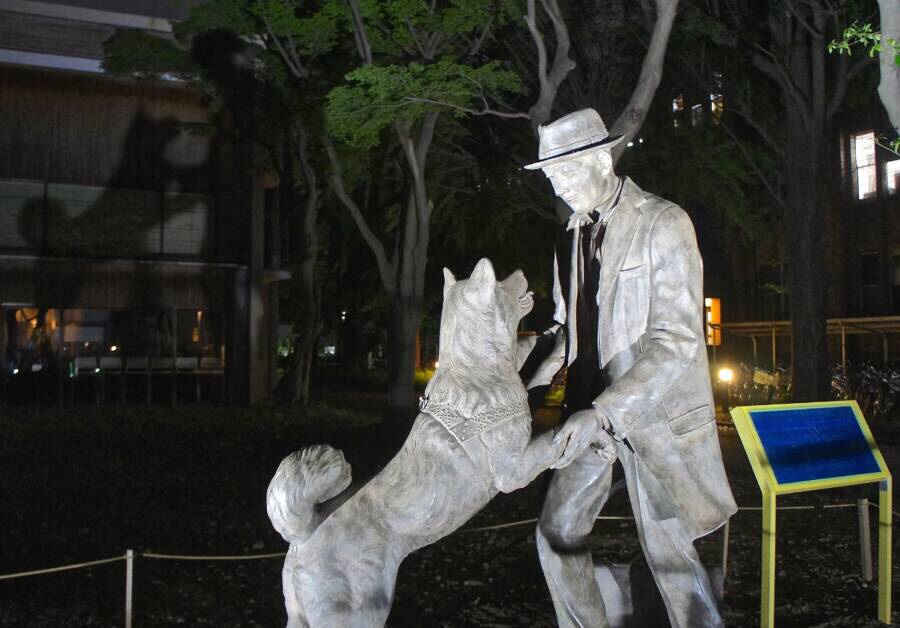


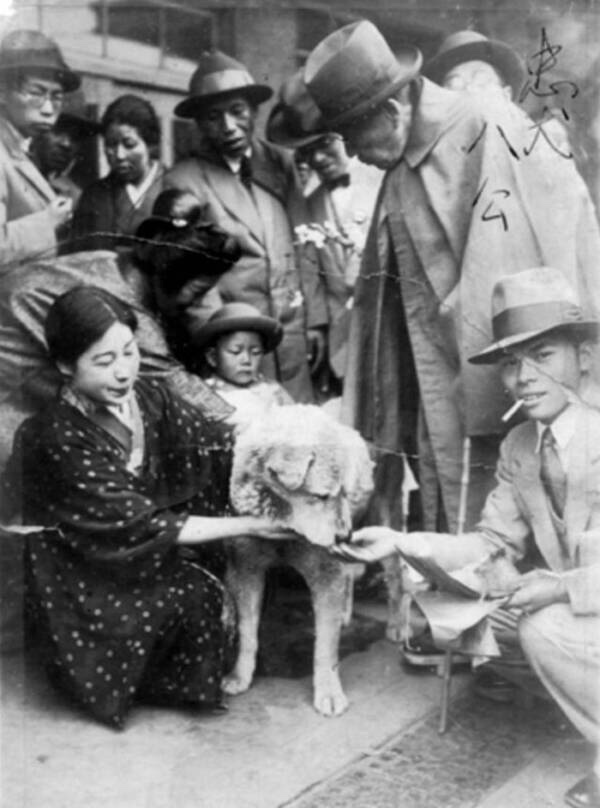
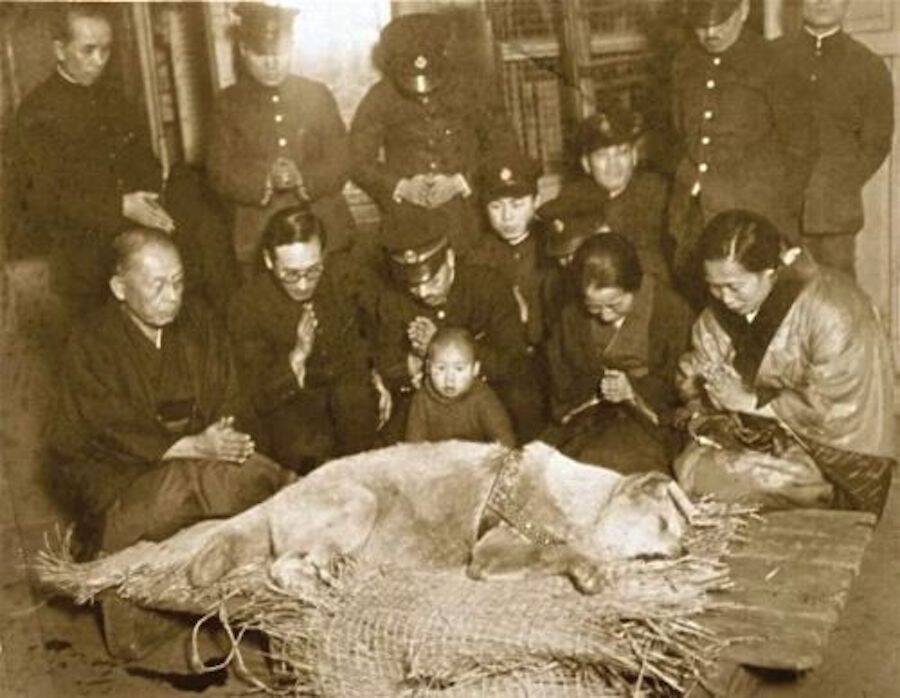



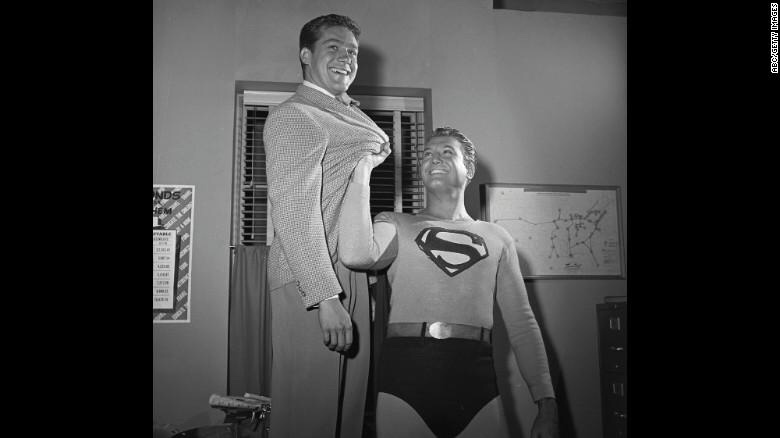


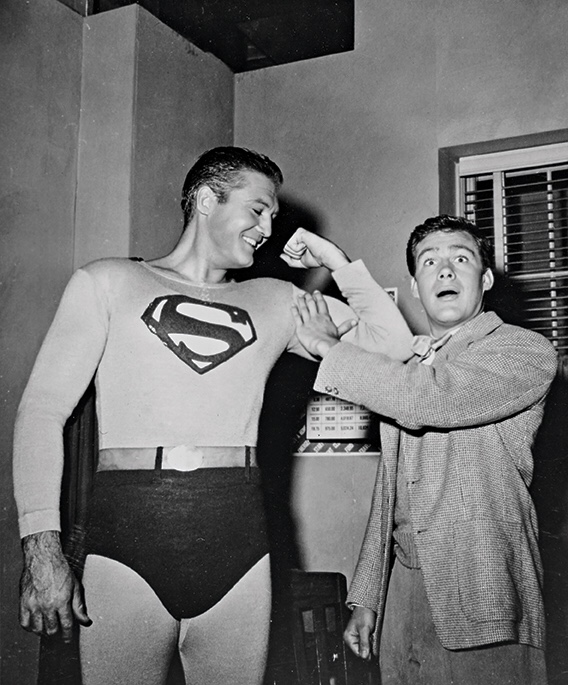


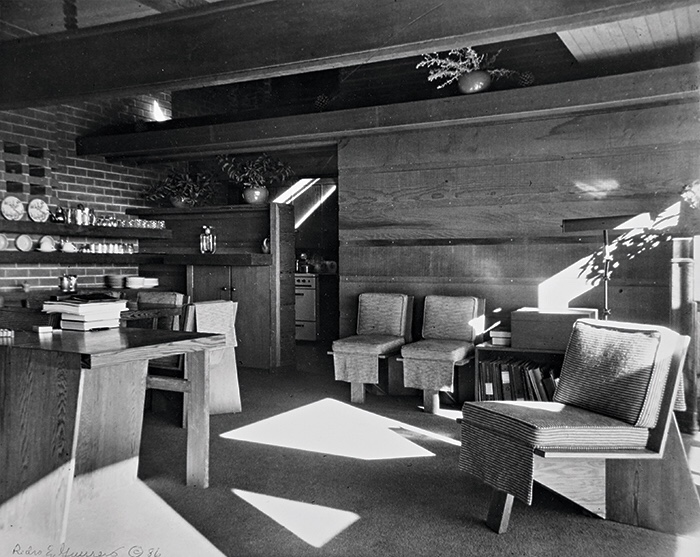
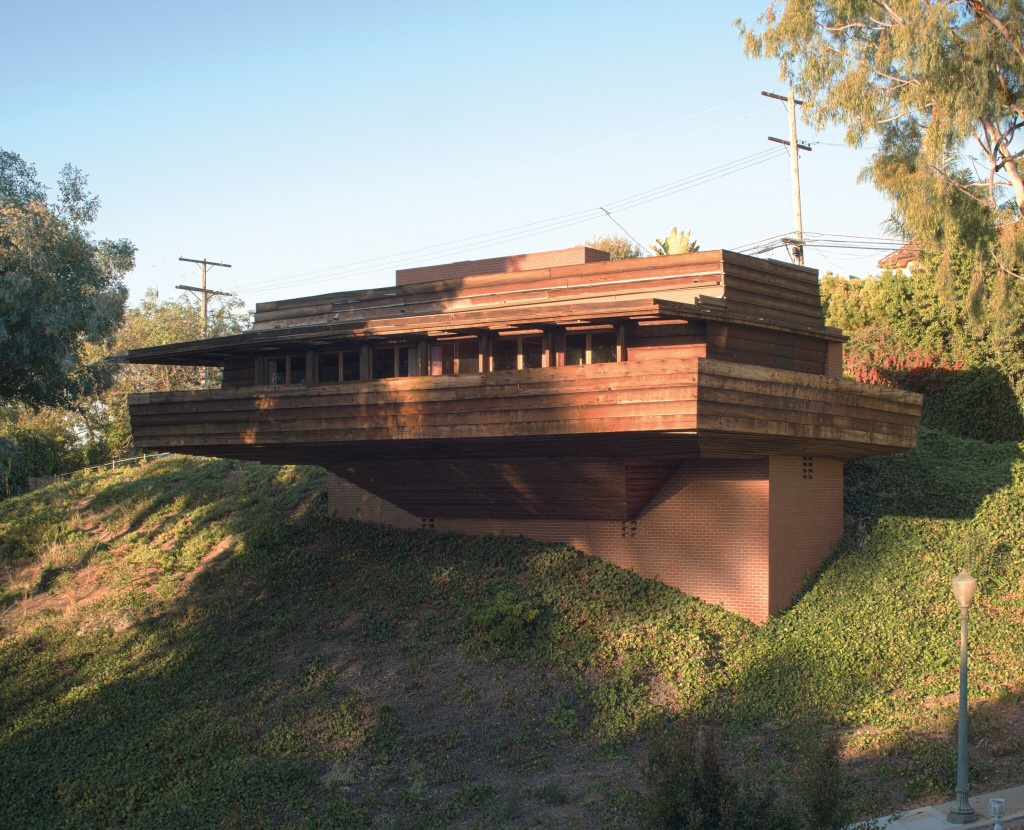



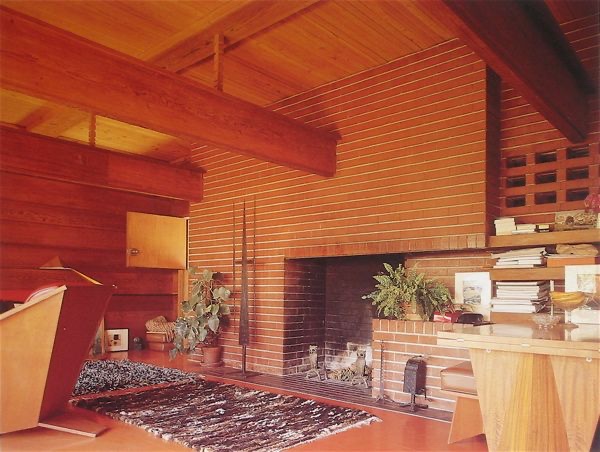
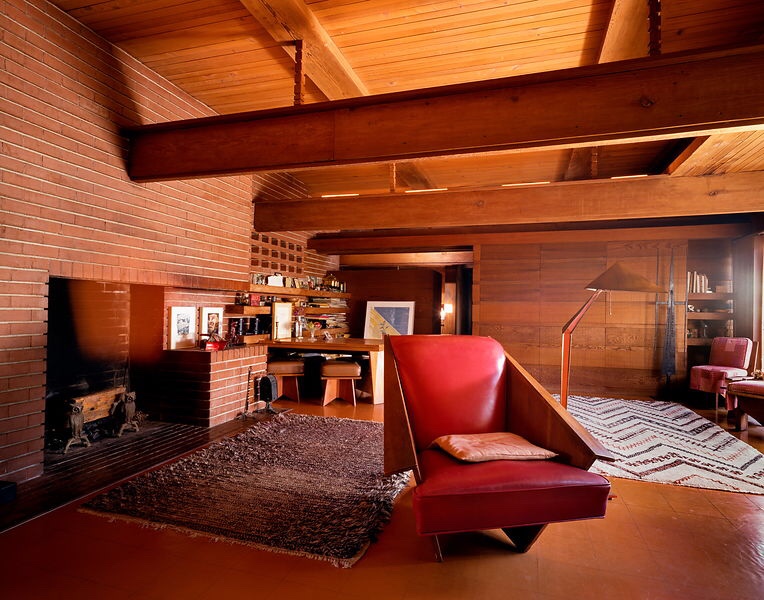

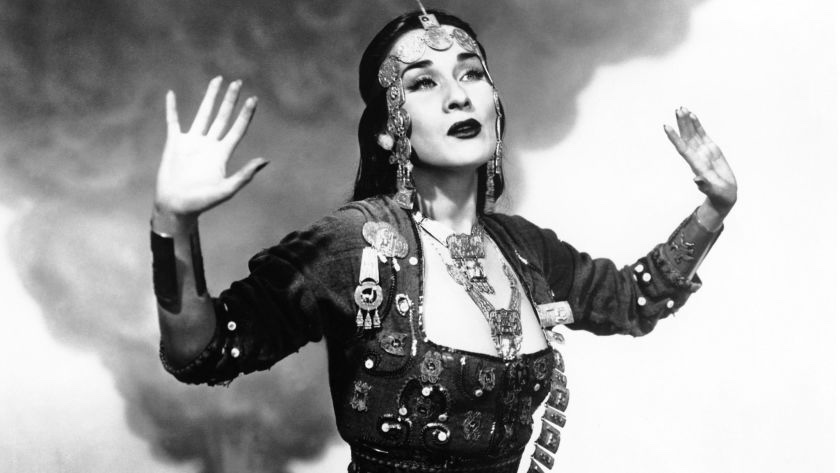
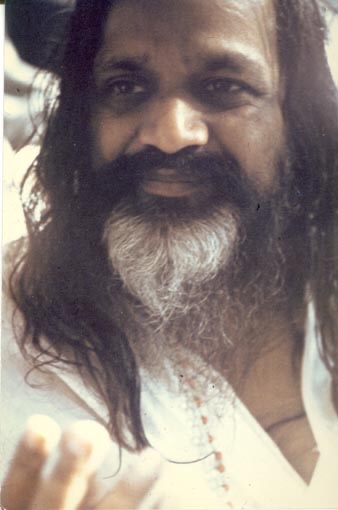
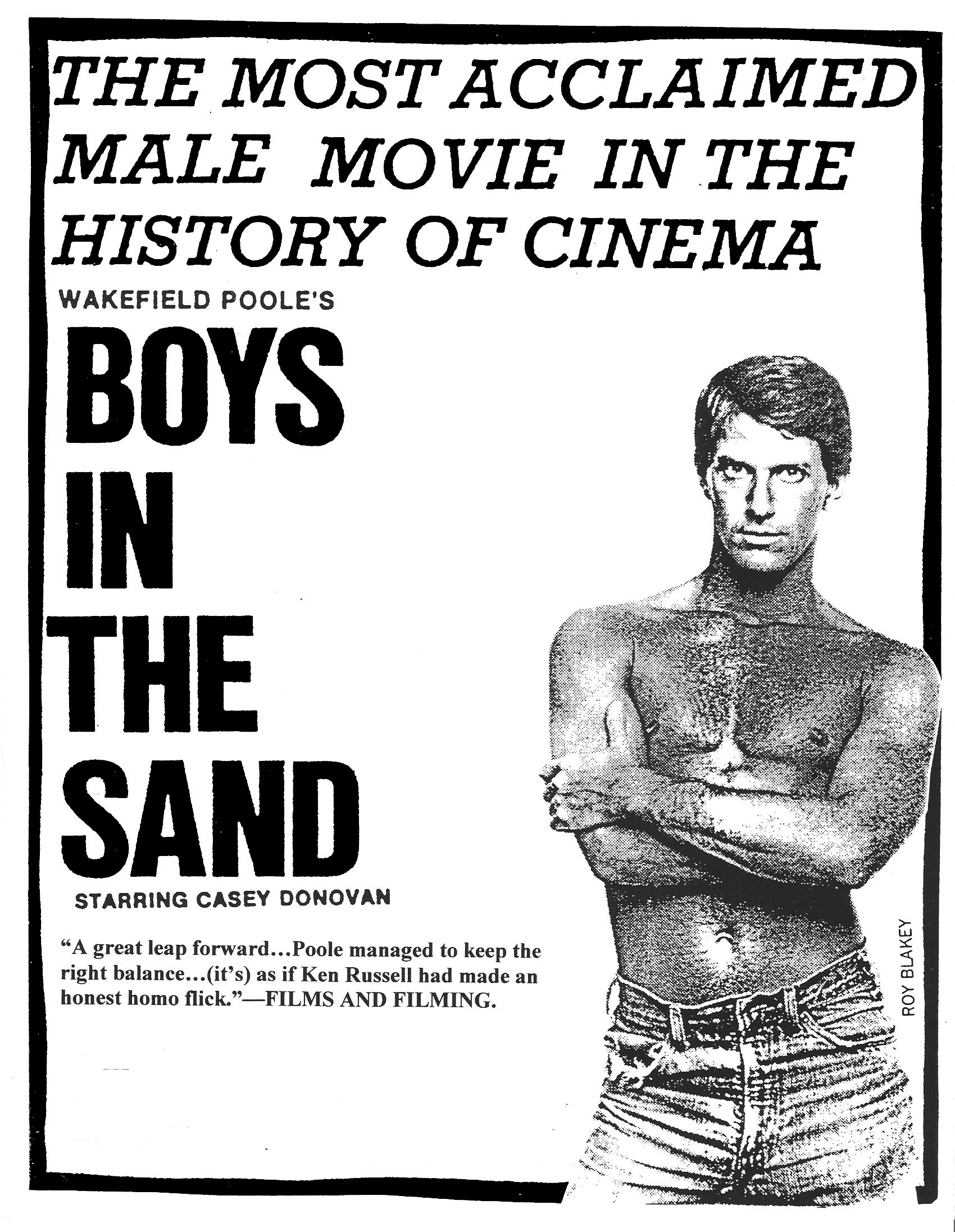
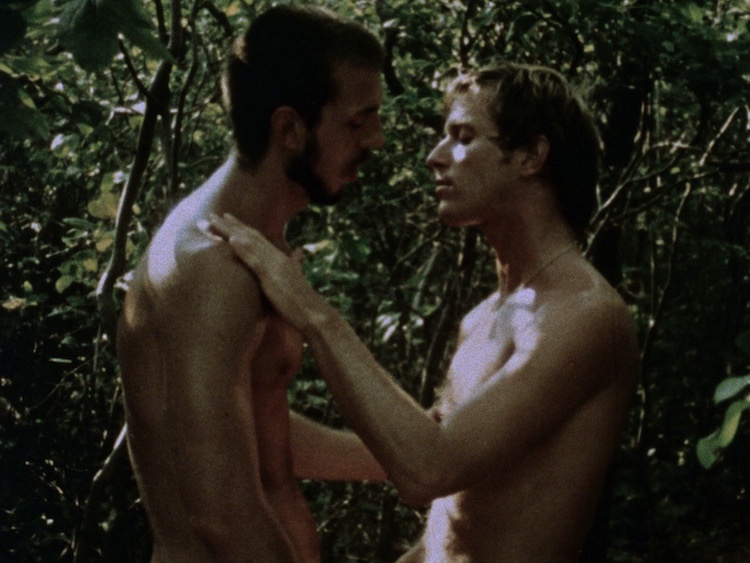
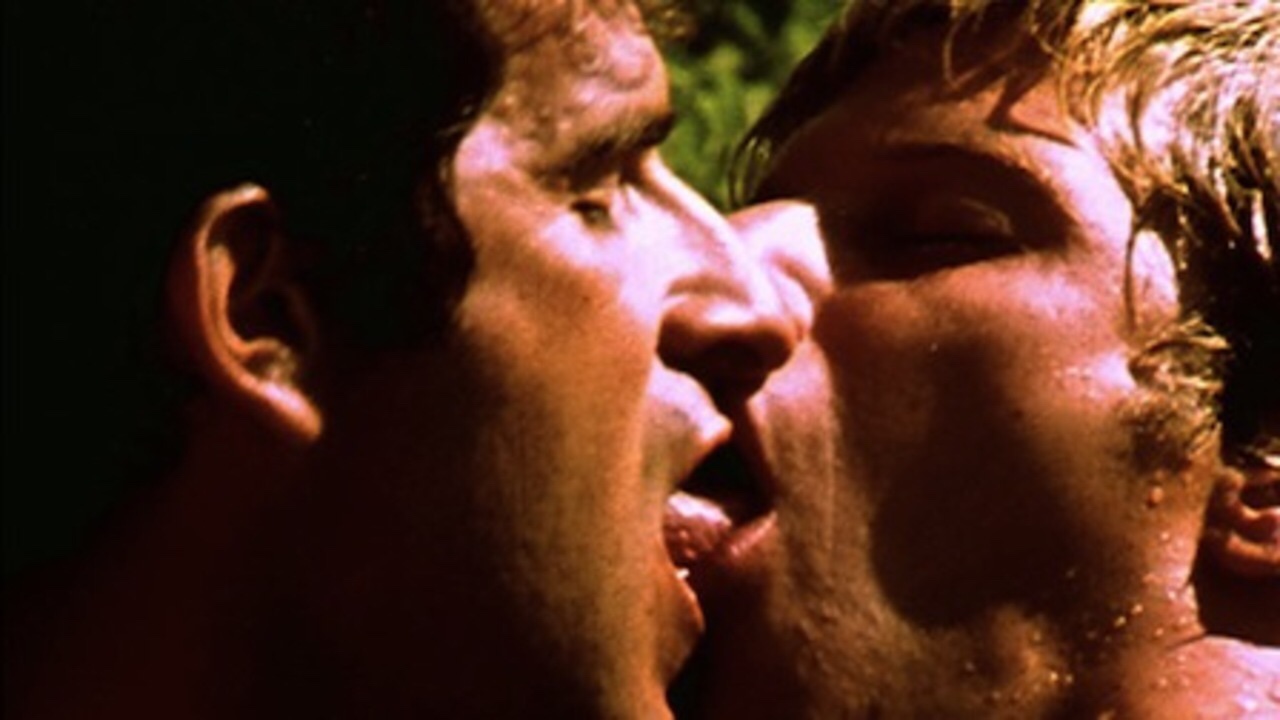
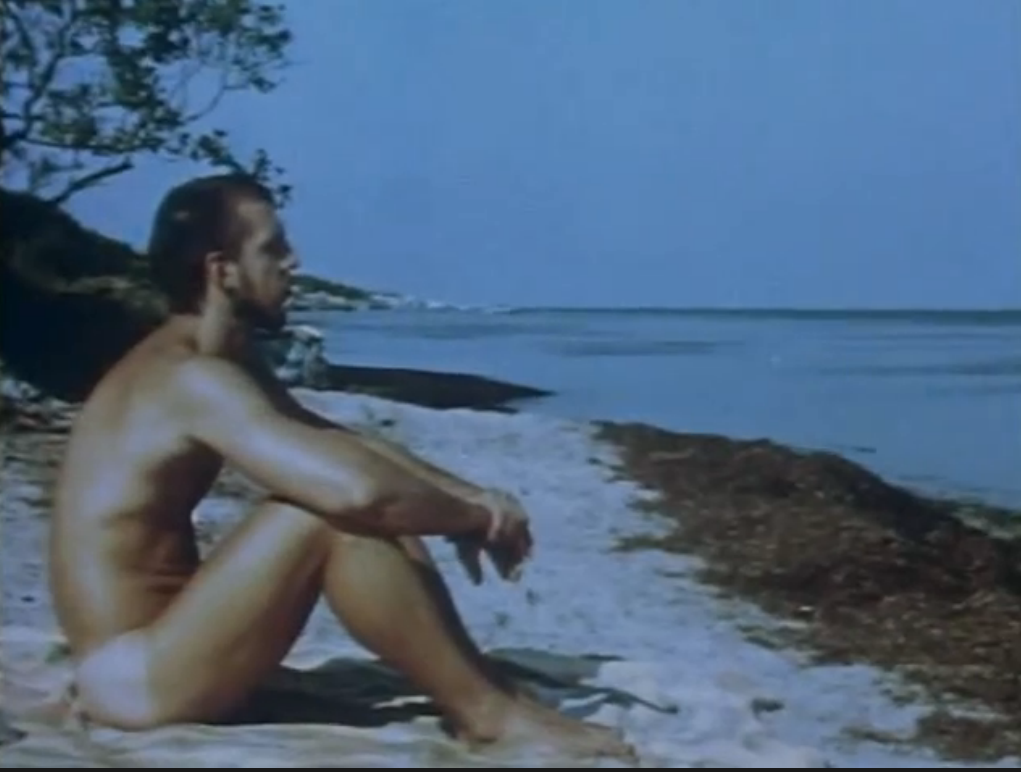
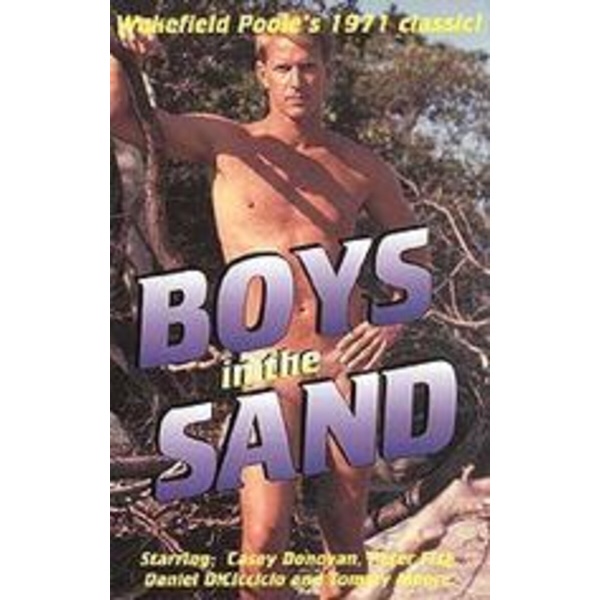
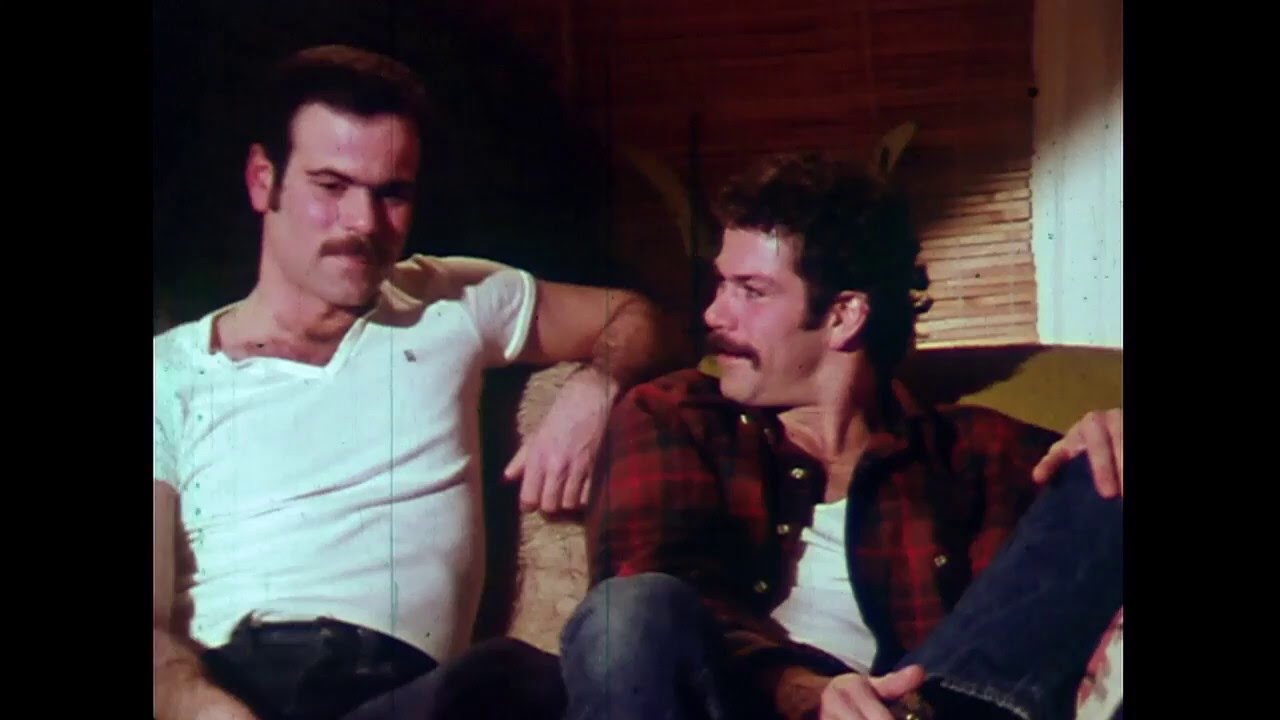


 timalderman