The WWII hero saved millions of lives before being chemically castrated for being gay. He killed himself two years later.
“[Alan Turing] was and is a hero of all time…a man who is a gay icon, who didn’t deny his nature, his being, and for that he suffered. … This is a story that celebrates him, that celebrates outsiders; it celebrates anybody who’s ever felt different and ostracized and ever suffered prejudice.”
—Benedict Cumberbatch
I usually find movie award shows to project primarily fluff and silliness, and they rarely stir deep emotions in me. But listening to Benedict Cumberbatch accept the award for Best Actor at the American Film Awards for his portrayal of Alan Turing in the film The Imitation Game two years ago brought me to tears.
This stemmed from a sense of deep pride and an endless abyss of sadness. Cumberbatch’s commitment and passion shined through on stage as he talked about transforming Turing’s story, his brilliance, and his humanity to the silver screen, helping to give Turing the long-overdue wide-scale recognition he rightly deserves.
Alan Mathison Turing was a pioneering computer scientist, and he served as a mid-20th century British mathematician, logician, and cryptanalyst who, working during World War II at England’s Government Code and Cypher School at Bletchley Park, succeeded with his team of scientists and linguists in cracking the “Enigma code” used by the Nazi command to conduct covert communication operations.
Because of Turing and his colleagues’ efforts, Cumberbatch said, there is now general agreement that they shortened the war by at least two years, saving an estimated 17 million lives. Prime Minister Winston Churchill singled out Turing as the person whose work contributed the most to defeating the Germans.
The Imitation Game also highlights the enormous obstacles placed in the way of women entering the sciences, especially mid-century. In this regard, Keira Knightley made an equally moving speech at the American Film Awards in accepting theBest Supporting Actress award for her portrayal of Joan Clarke, who worked with Turing in deciphering the code.
“Particularly now, when women are such a minority in all fields, her story and the fact that she really perseveres, and she had space and time and grace, is really inspiring,” she said.
Though initially considered a national hero in Britain, in 1952, government officials arrested and prosecuted Turing on the antiquated charge of “gross indecency” when he “admitted” to maintaining a same-sex relationship. Rather than serving time in prison, Turing chose to undergo estrogen injections then considered in men a form of “chemical castration” eliminating sex drive. Turing took his life two years later by swallowing cyanide just two weeks short of his 42nd birthday.
I find it deeply ironic that while Turing and his team helped defeat the Nazi war machine, a nation intolerant of any form of difference including same-sex relations (especially between men), the primary “allied” nations fighting Nazi Germany – United States, Britain, and the Soviet Union – all maintained laws criminalizing homosexuality.
Under King Henry VIII in 1533, England passed a “buggery” (or sodomy) law, doling out the penalty of death for “the detestable and abominable Vice of Buggery committed with mankind or beast.” Under the rule of Elizabeth I in 1564, death for same-sex acts between men became a permanent part of English law until the 1880s. British courts at the time concluded that sex between two women was impossible and, therefore, exempted women from the statute. By 1885, English Criminal Law punished homosexuality with imprisonment up to two years. This remained in effect until homosexuality was decriminalized in 1967.
In addition, Soviet dictator Joseph Stalin criminalized homosexuality with eight years imprisonment or exile to Siberia. And in the United States, consensual same-sex relations were against the law at one time in all states, and remained illegal in some states as late as 2003, when the Supreme Court finally overturned such bans in its Lawrence v. Texas decision.
In 2009, British Prime Minister Gordon Brown officially apologized to Alan Turing on behalf of the people of his nation for “the appalling way he was treated.” Parliament finally brought up a bill of “pardon” in 2013, and on 24 December, 2013, Queen Elizabeth granted Turing a posthumous pardon.
Though the English government never actually forced a physical stigma onto Turing’s body, they branded the symbol of the outsider, the pervert, the enemy deeply into his soul. This branding seriously deprived the British nation and the larger world community of his continued genius, his generosity, and the many additional gifts he could have imparted.
I agree with Benedict Cumberbatch that Turing’s wide-scale recognition is long overdue.
Americans rarely use the word “penis” in conversation. We say pecker or prick, willie or wang. Or whopper, wiener, wiggle stick, wrinkle beast, wobbly warhead, even wife’s worst enemy. “We, as humans, love to play with language, and mixing taboo language with clever wordplay to get coinages is a really common endeavor simply because it gets such a great reaction in others,” slang lexicographer Grand Barrett says. As a result, we’re always creating new slang for “penis,” and a lot of it can be traced back to these 11 words.
11 c. Sword
An instrument of death and destruction. A symbol of power and strength. A protector. An avenger. A slayer. The mighty sword is the ultimate symbol of masculinity. So, of course, it became one of the earliest slang terms for the penis, although a flaccid penis does not necessarily benefit from the comparison. Suddenly, swordplay is much less impressive.
While it’s possible that “cock” developed its sexual affiliation from its second meaning, “spout,” it’s more likely that it came from similarities to the wobbly red bits on a rooster’s neck. Just as a man’s penis reacts to arousal, an angry or excited cock’s wattles fill with blood, swell and brighten. Additionally, when a rooster crows, he arches his neck and tips his head back. Sound familiar? “Cock” eventually became so associated with the penis that the word “rooster” was created in the late 18th century to replace it.
Modern derivations: pillicock, peacock, cockroach, cockaroony, doodle
1676 Penis
“Tail” has been used to refer to both male and female genitals since the 14th century, but “penis,” the Latin word for “tail,” was not introduced to the English language until 1676. And it wasn’t until 1965 that “schwanz,” the German word for “tail,” was assimilated. The usage creates an entirely new meaning to the phrase “tail wagging the dog.”
Before its induction into the dick-tionary, “doodle” was used to denote a simpleton. In the late 18th century, this became associated with a man who thinks not with his “big brain” but with his small one. Of course, “doodle” could also be a distant cousin of “cock,” born from a rooster’s crow—cockadoodle-doo. Either way, the word is at its best from the lips of Rainn Wilson in Juno, “This is one doodle that can’t be undid, home skillet.”
More derivations: doodad, doohicky, loodle, whangdoodle, wang
1800s Roger
While Richards everywhere have borne the modern weight of the penis-name burden, they aren’t alone. In fact, “Roger” was the first in a long line of names applied to the penis. “Thomas” was second, introduced in 1811, followed by “Dick,” “Peter” and “Willie.” In general, these poor gentlemen are simply victims of having a common name. But let’s be honest, all Richards who choose to go by Dick are asking for it.
More derivations: Pete, Pepe, Rudy, Willer, Stanley, Johnson
1888 Dingus
The 19th century was a time of discretion and delicacy, not description. Americans were prone to replacing distastefully specific words with more general and thus less offensive ones. “Breasts” was replaced with “bosom,” a word that referred to a woman’s entire midsection. “Legs” was replaced with “limbs.” And “penis” was replaced with “dingus,” a word derived from Dutch dinges that simply means “thing.”
It is said that “dong” first became associated with the penis after the publication of Edward Lear’s poem “The Dong with a Luminous Nose.” As the story goes, a one-eyed creature referred to as The Dong attempts to find himself a lady using a long, red lamplike probe. Tragically, light-up noses are not great lady-finders, and all his searching is in vain. Good thing he has his flesh light to keep him company.
Wienerwursts, literally “sausages of Vienna,” became familiar in the United States in the late 19th century. But the word “wiener” was not created until the “-wurst” was dropped in 1905. The wiener was not commonly associated with the penis until five years later. This means it took more than a decade for the most phallic food in history to be officially associated with the penis. How disappointing.
More derivations: wienie, wee, weeter, wee wee, weedle, wenis, sausage
1932 Putz
German and Yiddish — both Germanic languages — share many of the same words. For example, “putz” and “schmuck” roughly translate to “ornament or decoration” in both languages. However, Jews used “schmuck” and “putz” to refer to a penis, and Germans used them to denote jewelry or Christ’s manger in a Nativity scene. Despite the inevitable miscommunications the holiday season may bring, Jews and Germans agree that there’s nothing like a good “putz” to put everyone in a festive mood.
More derivations: wantz, schmeck, schmeckel
1986 Junk
While the exact origination of “junk” is unclear, there are theories that claim “junk” was a common word for male genitalia in gay culture in the early ’80s. During that time, “junk” was usually associated with being kicked. Since then, “junk” has ameliorated; it has lost some of its potency. Today, “junk” is commonplace. It could mean anything from male or female genitalia to worthless stuff.
More derivations: package, lunch box, picnic basket
2009 Disco Stick
Although Lady Gaga’s homemade euphemism confused audiences at first, the infamous hook “I wanna take a ride on your disco stick” would carry “LoveGame” into top-ten charts in more than ten countries. Gaga cleared up any confusion on the words’ meaning in an interview with Rolling Stone, saying, “It’s another of my very thoughtful metaphors for a cock.” Barrett attributes creations like this to young people’s propensity to be “a hell of a lot more fun, which leads to lots more wordplay and goofing with language just for the heck of it.”
More derivations: meat stick, blow stick, jolly stick
Before A Penis Was A Penis: Sex Slang Throughout History
What word did people use for “vagina” in 1714? Or for “testicles” in 1300? Along with the rest of language, sex terminology has been evolving since humans started talking. Lest you assume that the vestiges of modern-day sex talk have been lost in the annals of time, the world’s foremost slang lexicographer is here to say it ain’t so. And, he should know; he can tell you exactly what a vagina was called in 1714.
Jonathon Green has dedicated his life to studying slang. His book, Green’s Dictionary of Slang, chronicles the march of English-language slang through the past five centuries — an epic Urban Dictionary for the ages that covers 10.3 million words (with citations) and has understandably solidified Green’s role as slang lexicography’s finest.
Now, Green and TimeGlider have graced us with interactive online charts that break out perhaps the most fascinating genre of Green’s research: sex slang. Humans have been “bumping uglies” since our cave days, but we certainly didn’t call it that back then. So, which period in history lays claim to the most inventive terms for genitalia and sex?
TheTimeline of Slang Words for the Vaginabegins in 1250, with the first recorded appearance of the (now-derogatory) word “cunt.” Fortunately, the vagina was eventually lavished with more poetic euphemisms, including “Venus’s honeypot” (early 1700s), “quim whiskers” (late 1800s), and, descriptively, “that thing” (early 1900s). The minds of vagina-label innovators apparently turned to food by the end of the 20th century, as evidenced by the monikers “bikini burger,” “hairy doughnut,” and “bacon sandwich.”
Thepenis slang timelinebegins with the year 1300 and the first known usage of the word “ballocks.” This term’s proved its worth via longevity; you can find it on the lips of frustrated Brits even today, with a slight vowel adjustment. And, English speakers only got more creative from there. “Fiddle,” “spindle,” and “pulling prick” all cropped up in the Middle Ages to describe the penis, while “bush-whacker,” “cranny hunter,” “fornicating engine,” and “Captain Standish” (yes, seriously) are just a few of the nicknames born at the turn of the 20th century. And, the sexy-talk walk through history doesn’t end there.
For even more linguistic amazingness, explore the charts that track the evolution of slang for intercourse, oral sex, anal sex, orgasm, bodily fluids, and contraception. In honor of this week’s #tbt, why not sprinkle some seriously old-timey diction into your sexting? While the effect would be most dramatic if you delivered your message by horse (or raven), your iPhone will do just fine. And, if your partner asks if you’d like to “navigate the windward passage,” just be sure to consult Green’s chart before you agree. It may be safer to stick with the word “fuck” — thatone’s been around since the 1500s, and still means the same exact thing.
101 Funny Slang Names for the Male Penis
Did you know that Inuit people have 50 different words for snow? It’s an indicator that snow is an important part of their lives and has been for a long time. That’s really telling when you think about how many words there are for a man’s genitals. While “penis” is the technical medical term, it’s the one we use the least. This list has 101 different names for your junk (that makes 102). You’ll get a laugh out of at least a few of them.
1. Womb Broom
Any ladies need help cleaning their closet? Ok, that might not make sense, but this is still a good one. 2. Womb Raider
We’d play all 20 installments of this game series. 3. Weapon of Ass Destruction
This one speaks for itself. 4. Vlad the Impaler
It’s a classic for a reason. 5. UncleReamus
This probably has British origins. They’re still the masters of dirty language. 6. Trouser Snake
Sometimes this is a euphemism. Sometimes it’s a terrifying camping story. 7. Tan Banana
This is only true for the bold. Some might find the prospect of a sunburned penis terrifying. 8. Sex Pistol
Which came first — the band or the slang term? 9. Russell the One-Eyed Muscle
If you can think of another name that rhymes with muscle, feel free to sub it. 10. One-Eyed Monster
There are a lot of “one-eyed” slang terms. It’s important to have variety. 11. One-Eyed Trouser Trout
Whoever decided to call a penis a trouser trout probably has an interesting story. 12.Rumpleforeskin
Be honest. You’re disappointed youdidn’t think of this first. 13. Richard and the Twins
Speaking of Richard, a kid called us a Richard Cranium once. It took us a while to get it. 14. Purple Helmeted Warrior of Love
Any reference to the dong being a purple helmet is gold in my book. 15. Puff the One-Eyed Dragon
It breathes fire when it gets puffed! Well, sort of. 16. PrinceEverhardof the Netherlands
This could also be the name of a band. Or an album! 17. Pleasure Pump
It’s accurate, simple, and effective. 18. Moby Dick
Every young boy in the world laughed the first time he heard this book title. It had to be on the list. 19. LordHardwick
Our penises are definitely nobility. How about yours? 20. Long Dong Silver
Have you ever read Treasure Island? Now you don’t have to! 21. Lap Rocket
Well, it can be explosive at times. 22.Knobgoblin
This has to be the most demeaning term you can level at another human being. 23. King Dong
I mean, obviously. Right? 24. Just-in Beaver
Easily the best thing to come from Bieber’s famed career. 25. Herman vonLongschlongenstein
Remember it’s pronounced “Stine” and not “Steen.”
26. Heat Seeking Moisture Missile If thisdoesn’t make you rethink everything about your own penis . . . 27. Frank n’ Beans It’s a weird mental image if you think about it too hard. 28. Fuck Puppet Right to the point! 29. Excalibur You’ve made this joke. Don’t lie. 30. Energizer Bunny That ad campaign has been around for a long time. So has this nickname. 31. Disco Stick This feels dated until you realize disco is still a thing in Europe. No, really. 32. TheDicktator You just chuckled, didn’t you? Welcome to your future. It’s all dad jokes from here. 33.Cocktapus If you have eight members, you need to see a doctor. Or a publicist. 34. Clam Hammer It even helps produce pearl necklaces. 35. Cave Hunter It’s not the funniest name on the list, but it still feels appropriate. 36. Blue Veined Aristocrat The little guy only has to be an aristocrat in public. Behind closed doors is another story. 37. Atomic Turtle We’re honestly not sure why it’s atomic, but it feels right. 38. Action Jackson Try not to conflate this with a Disney Channel show you watched as a young child. 39. Mutton Dagger There seems to be a recurring theme of objects that pierce and meat. 40. Yogurt Slinger An all-time classic. It’s funny. It’s gross. It has everything. 41. Meat Scepter Remember gents, mushroom stamps are a form of harassment. 42. Wedding Wrecker Oofa. This might be a little too true. 43. Spam Javelin Another meat piercer. Cool. 44. Tuna Torpedo The theme reigns. 45. Dora the Explorer It’s a joke that had to be made. But at what expense?! 46. Vagina Miner Is this a real occupation??? 47. Jurassic Pork You’ll never watch those movies the same way again. 48. Tiny Tim Hopefully, thisdoesn’t imply your Tiny Tim needs a crutch. Although, he probably has a nasty cough. 49. The Bone Ranger Hi-yo Silver! 50. Woody Womb Pecker At some point, you’re going to have to come to terms with your fear of children. 51. Ass Opener You might not believe it, but this is actually a very old nickname. It stems from the1890s. 52. Ass Wedge This is also from the1890s. It’s hard to say which is better. 53. Bayonet Does this make implications aboutBayonetta? 54. Beard Splitter Great. Now we’re associating vaginas with dwarves or some shit.
55. Best Leg of Three
This is just truth. 56. Brat Getter
Well, go get ‘em. 57. Bum Tickler
It’s ok if you giggled. It’s the right response. 58. Bush Whacker
This does not mean you should attach a hair trimmer to your penis. Put it down! 59. Creamy Hunter
Well, yeah. 60. Customs Officer
This is my new favorite. 61. Dr. Johnson
Let’s be real. The little guy has earned a title of respect. 62. Eye Opener
Sometimes it’s also an eye closer. 63. Father Confessor
If he can elicit cries to God, then this sounds about right. 64. Foreman
Yes, it’s a pun. You know you like it. 65. Lance of Love
An oldie but a goodie. 66. Leather Stretcher
Try not to associate this one withLeatherface. 67. Life Preserver
If someone is drowning, don’t throw them your penis. 68. The Heimlich
The next time someone shouts “Giver her the Heimlich!” You know what to do. 69. Love Dart
It’s important to practice your aim. 70.Manroot
This makes an odd amount of sense. 71. Master of Ceremonies
He’s good at it too. 72. Meat Skewer
This one isn’t trying too hard, is it? 73. Milkman
What does this make the milkman’s daughter? 74. Mole
He does like to burrow into a hole. 75. Pee-Wee
This got meta when Pee-Wee Herman got in trouble for showing his Pee-Wee.
76. Skyscraper You wish. 77.Tentpeg Youshouldn’t be pitching a tent right now . . . 78. Silent Flute Well, sometimes sound comes out. 79. Skin Flute But it’s not always melodic. 80. Sweetener If you tell this lie enough times it might actually work. 81. Redcap Maybepurplecapwould be better, but that’s not a pun. 82. Majesty Forget aristocracy! He’s royalty. 83. Charmer When the snake becomes the charmer . . . 84. Champion He really is. After all that abuse you’ve put him through, it’s the only right word. 85. Baby Fetcher You’re still flinching? You know where babies come from, right? 86. Axe If the female counterpart is called an axe wound, then this one has to be on the list. 87. Nightstick You can use it during the day too. It’s ok. 88. Joystick There might never have been a truer name for a man’s junk. 89. Gospel Pipe You just want to believe this one. 90. Drill I took this too literally once. I’m still dizzy. 91. Family Organ Get it? Eh? 92. Crown Jewels Also known as the family jewels. 93. Ham Bone I’ll never understand why the male member is associated with pork. 94. Old Boy This is actually the most British thing ever said. 95. Ambassador He is vital to foreign relations. 96. Organ Grinder Ouch. 97. Bald-Headed Sailor We probably don’t relate to the baldness of our penises enough. 98. One-Eyed Rattlesnake Thankfully he’s not venomous. 99. Tonsil Tickler Only on a good day. 100. Toothpick It might imply a small penis, but the oral connotation is worth it. 101. The Fantastic Four This name can be adapted to many forms: the furious five, the salacious six, the dirty dozen. The idea is that you’re implying the length of your penis in the joke. The key is to never use the same phrase twice. You want to keep people guessing.
Ten Words That Have Surprisingly Offensive Origins
While the etymology of many words we use today has faded into obscurity, there are some that are more offensive than we can ever imagine. There may be some words you use every day without a thought to their original meanings. Here are ten that it pays to be aware of.
#1 Bugger
noun | bug·ger | \ˈbə-gər, ˈbu̇-gər\
1. sodomite
2. a worthless person
3. a small or annoying thing
eg. “put down my keys and now I can’t find the buggers”
As well as being a noun as described above, Australians tend to use this word as a tamer expletive than some of its four-lettered cousins. However, though many people know its secondary meaning as ‘a sodomite’ or ‘sodomy’, not many know that the word was originally racially charged as well. Bugger comes from Middle English bougre which was derived from Medieval Latin Bulgarus — a literal translation for ‘Bulgarian’. This came by through association with a Bulgarian religious sect called the Bogomils, whose ways were so unorthodox that they were accused of sodomy.
Use instead: Depending on the context in which you’re using the word, you might instead call someone a ‘nuisance’. If you’re use it as an expletive… well, there’s really no reason not to enjoy the four-lettered classics.
#2 Uppity
adjective | up·pi·ty | \ˈə-pə-tē\
•putting on or marked by airs of superiority, eg. “uppity technicians” “a small uppity country”
The word uppity is commonly used to put down someone who is seen to be acting above their station — putting on airs and speaking out of turn, generally being a nuisance. While the word can be applied to pretty much anyone these days, its origins were in the United States’ racist heyday, during segregation. In this period, Southerners used the term “uppity” to describe black people who didn’t know their place in society. The word doesn’t sound so casual anymore when you consider that people have likely been lynched at one point in history due to being too “uppity”.
Use instead: ‘Arrogant’ and ‘pretentious’ are both great words to knock someone down a peg, without those nasty racist overtones.
#3 Gyp
noun | \ˈjip\
•cheat, swindler, eg. “Is that all they give you? What a gyp!” “we were very disappointed when the “free weekend in Las Vegas” offer turned out to be a gyp”
“Gyp” or “gypped” has universally come to mean being cheated or swindled, and though there’s no solid evidence for the origin of this slang term, it’s highly likely that it is derived from ‘gypsy’, a derogative term for the Romani people. While many people know little of “gypsies” other than what we see in Disney movies and costume shops, the Romani people have a long history of persecution — including their attempted genocide at the hands of the Nazis during World War II.
Use instead: ‘Swindled’ is an oldie but a goodie, or if you’re feeling ripped off, ‘highway robbery’ is a fun phrase without the racist undertones.
#4 Paddy wagon
noun | pad·dy wagon | \ˈpa-dē-\
•an enclosed motortruck used by police to carry prisoners, eg. “The cooperative family was being escorted into the paddy wagon”
While the racist meaning of paddy wagon is more overt to anyone who stops to think about it, it’s also so ingrained in our lexicon that it’s hard to stop and think in the first place. For those who are blissfully unaware, paddy wagon is the slang term for a police car. And where it came from? “Paddy”, short for “Patrick”, was a pejorative term for any Irishman — a group who have been the butt of many jokes for much of the last century. Whether the term came into use because there were many Irish criminals or because of a large number of Irish policemen, the association is still not the best one to be making. Interestingly enough the similar term ‘meat wagon’ seems to be used by people misinterpreting this phrase as ‘patty wagon’.
Use instead: “Police car” or “police van” should suffice.
#5 Hooligan
noun | hoo·li·gan | \ˈhü-li-gən\
%bull;a usually young man who does noisy and violent things as part of a group or gang, eg. “shouldn’t you hooligans be in school instead of threatening old ladies?”
While the term ‘hooligan’ is fairly dated these days — I can only seem to think of that crotchety old man yelling “you hooligans get off my lawn!” — other forms of the word are still in common usage. ‘Hooliganism’ in particular is one that the media seems keen to trot out as often as they can. But as in the case of ‘paddy wagon’ hooligan originally came from some poor sod’s surname — Houlihan. The name was used for a rowdy fictional Irish family in a popular drinking song, and soon after the word came to be a catchall for anyone displaying rowdy, violent tendencies.
Use instead: ‘Hoodlum’ is a word with a longer, non-racist history. ‘Hoon’ is also a uniquely Australian take on the concept.
#6 Eskimo
noun | Es·ki·mo | \ˈes-kə-ˌmō\
•a member of a group of peoples of northern Canada, Greenland, Alaska, and eastern Siberia
Far from being those cute, fur-wearing, nose-kissing people of the Arctic regions, this is actually an offensive term for the Inuit people. The reason? The word ‘Eskimo’ comes from the Danish loanword ‘ashkimeq,’ literally translated to ‘eaters of raw meat’. Calling an extensive group of different societies by such a gross generalisation is a great way to limit understanding of the entire culture.
Use instead: The proper term is Inuit, meaning “the people”. That’s it, unless you know the proper name of each individual nation.
#7 Hip hip hooray!
•an exclamation of congratulations especially in response to a call for ‘Three cheers for’ the person.
The racist origin of this common celebratory cry is controversial, but it potentially stems from the Hep Hep Riots — anti-Semetic riots conducted throughout Germany in the 19th century. The participants in these demonstrations reportedly cheered “hep hep” as they chased Jews from their homes. “Hep hep” was a traditional German call that shepherds would use while herding their sheep, but was given another meaning entirely in 1819 when it was Jews who were hunted under this rallying cry.
Use instead: ‘Hooray’ by itself is completely harmless, or the more old-timey ‘hoorah’.
#8 No Can Do
informal + humorous
•used in speech to say that one cannot do something that he or she has been asked or told to do, eg. “Can you give me a ride to work tomorrow?” “Sorry— no can do. My car is in the shop.”
The game of Chinese Whispers has been renamed in the past few years for its racist connotations, but few know that the common phrase “no can do” is a similar riff on the idea that Chinese people speak broken English. While it has since moved into common parlance, this phrase was originally used as a mimicry of a Chinese person with a heavy accent — and the same is true of ‘long time, no see’.
Use instead: Going back to the origin of the phrase “I can’t” or “I can’t do it” would be your safest option.
#9 Basket case
noun
1. a person who is very nervous, tired, etc., and is not able to think or act normally
2. something (such as a company or a government) that is in very bad condition and close to failure
eg. “I was so worried about losing my job that I was a complete basket case.”
Oddly enough the term basket case is not commonly used by its dictionary meaning today, and seems to now have connotations of someone being crazy (perhaps being mixed up with terms like head case and mental case). As it was originally used, however, a basket case refers to someone who is useless or not functioning well. The reason for this has its origins in WWI, when a ‘basket case’ was someone who had lost all four limbs and therefore had to be carried around in a basket. Not the best mental image and potentially offensive to amputees.
Use instead: ‘Nervous wreck’ or ‘bundle of nerves’ are nicely evocative terms that don’t risk making fun of quadruple amputees.
#10 Hysterical
noun | hys·te·ria | \his-ˈter-ē-ə, -ˈtir-\
1. a state in which your emotions (such as fear) are so strong that you behave in an uncontrolled way
2. a situation in which many people behave or react in an extreme or uncontrolled way because of fear, anger, etc.
eg. “A few of the children began to scream, and soon they were all caught up in the hysteria.”
Hysterical’s modern usage is problematic enough by itself, with the word most often being applied to women — looking at the first dictionary definition, you might be able to tell why that’s an issue. However the connotations behind calling a woman ‘hysterical’ have far-reaching implications beyond even the 2011 film Hysteria.
The term comes from the Greek ‘hysterikos’, meaning ‘of the womb’ or ‘suffering in the womb’. The Greeks believed that the uterus was the direct cause of a number of female ailments, based on the premise that the uterus was essentially its own organism. The womb was said to be so obsessed with creating children that it would wander the body, pressing up against other organs and causing medical havoc unless it was pregnant. Yup.
Use instead: Try ‘overwrought’, ‘frenzied’ or ‘agitated’ if you really have to call someone ‘hysterical’ without resorting to womb-based comparisons.
NEW ORLEANS – Here in the oldest church building in New Orleans, tucked into a dark corner by the door as far away from the main altar as possible, stands the statue of St. Expedite – the unofficial patron saint of hackers.
Unofficial because the Roman Catholic Church doesn’t know what to do aboutSt. Expedite. He’s too pagan to be a proper saint, and too popular for his statues to be simply tossed out the door.
Statues of St. Expedite seem to appear at some churches, a puzzling phenomenon. Where do the statues come from? Who sends them? No one really seems to know who St. Expedite was in life or even if he ever existed.
But whatever St. Expedite may or may not be, geeks, hackers, repentant slackers, folks who run e-commerce sites and those who rely on brains and sheer luck to survive have all claimed the saint as their own.
In 2002, the Catholic Church offered up St. Isidore of Seville as the saint of computer programmers. Isidore seemed to be a fine choice – in the 7th century, he produced one of the world’s first databases, a 20-volume encyclopedia called The Etymologies, intended to be a summation of everything that was known about the world he lived in.
But Isidore somehow seems a bit too plodding for hackers, plus his life story includes none of the weird wordplay that makes so many hackers happy.
St. Expedite’s name obviously relates to his attested ability to deliver favors quickly to the faithful. But wait! There’s more – a joke about how St. Expedite manages to maneuver his statues into churches.
In 1781, or so the story goes, a packing case containing the body of a saint who’d been buried in the Denfert-Rochereau catacombs of Paris was sent to a community of nuns in the city. Those who sent the body wrote “Expedite” on the case, to ensure fast delivery of the corpse for the obvious reasons.
The nuns got confused, assumed Expedite was the name of a martyr, prayed to him, had a bunch of prayers answered amazingly quickly and the cult of St. Expedite was born. News of this saint who cheerfully dispensed quick miracles soon spread rapidly through France and on to other Catholic countries.
It’s a swell story, but Italians were asking St. Expedite to grant their wishes well before 1781, so either the date or the entire story is wrong. And the whole thing just screams urban legend anyway.
A different version of the same story is told in New Orleans. Supposedly, the church of Our Lady of Guadalupe received a big shipment of assorted saint statues. Only one didn’t have a proper label on the case identifying the saint whose statue was contained within. But the crate did have an “Expedite” label on it, so the locals decided that must be the saint’s name.
A century and a half later, according to the story, they found out there was no saint called Expedite. However, a little research turned up the obscure St. Expeditus, whose status as a possible Armenian martyr gave the Expedite myth legitimacy.
St. Expedite is typically depicted as a young Roman centurion squashing a crow beneath his right foot and hoisting a clock or, in later versions, a cross inscribed with the word hodie (“today” in Latin). A ribbon with the word cras (“tomorrow” in Latin) emerges from the squished crow’s mouth. The idea is that St. Expedite destroys people’s proclivity to procrastinate and vanquishes vague promises of joyous tomorrows in favor of making things happen right now.
Why a crow? English-speaking people tend to mimic the sound a crow makes as “caw caw.” Italians hear it as “cras cras.” In Italian folk tales, crows and ravens are forever yapping on about tomorrow.
St. Expedite is also widely considered, among people who consider such things, to provide real-time assistance on problems – he’s the saint of the fast solution. He is also is the patron saint of people who have to deliver work or products on a tight schedule.
While visiting St. Expedite in New Orleans, we saw half a dozen people come in and tuck notes and flowers by the saint’s statue, ignoring the official saints in the front of the church.
“St. Expedite got me a job fast after my company closed down last month,” said Letish Jackson of New Orleans, who’d come to the church to thank the saint. “If you knew how hard it is to get jobs here you’d know that me being employed is a very big miracle.”
She’s not the only one who turned to the saint for financial help. A recent article that appeared on the front page of The Wall Street Journal noted that St. Expedite has also become the patron of victims of outsourcing.
Jackson, and other Our Lady of Guadalupe parishioners, said that “computer people,” as Jackson described them, often come to visit St. Expedite.
“I asked my friend who runs a computer repair service why those people come here, and he says Expedite is the nerd’s saint,” said Jackson. “My friend said St. Expedite is all about delivering information fast.”
Patron saints in general are broadband connections to the Almighty, passing along messages from the desperate or faithful. And the Catholic Church seems to have a patron saint for every possible need.
St. Joseph of Cupertino, the “flying friar,” is not the patron saint of Mac users – he’s appealed to by skittish air travelers (it’s said the good friar levitated whenever he was happy). Girls who live in rural areas can pray to St. Germaine of Pibrac, the patron of peasant females.
“I’m not a big believer in the saints, but St. Expedite is another whole story – he’s so good he’s scary,” said freelance computer support consultant Kathy Dupon, a resident of New Orleans. “My clients were forever paying me late until I taped a card with the saint’s picture behind my mailbox as a joke last year. Now my checks almost always arrive on time.”
ST ISIDORE OF SEVILLE
St. Isidore of Seville
Born:c.560 in Cartagena, Spain
Died:April 4, 636
Canonized:pre-Congregation
Feast Day:April 4
Patron Saint of:computers, computer users, computer programmers, Internet
Isidore was born in Cartagena, Spain, about 560 AD, the son of Severianus and Theodora. His elder brother Leander was his immediate predecessor in the Metropolitan See of Seville; whilst a younger brother St. Fulgentius presided over the Bishopric of Astigi. His sister Florentina was a nun, and is said to have ruled over forty convents and one thousand religious. Isidore received his elementary education in the Cathedral school of Seville. In this institution, which was the first of its kind in Spain, the trivium and quadrivium were taught by a body of learned men, among whom was the archbishop, Leander. With such diligence did he apply himself to study that in a remarkably short time mastered Latin, Greek, and Hebrew. Whether Isidore ever embraced monastic life or not is still an open question, but though he himself may never have been affiliated with any of the religious orders, he esteemed them highly. On his elevation to the episcopate he immediately constituted himself protector of the monks. In 619 he pronounced anathema against any ecclesiastic who should in any way molest the monasteries.
On the death of Leander, Isidore succeeded to the See of Seville. His long incumbency to this office was spent in a period of disintegration and transition. The ancient institutions and classic learning of the Roman Empire were fast disappearing. In Spain a new civilization was beginning to evolve itself from the blending racial elements that made up its population. For almost two centuries the Goths had been in full control of Spain, and their barbarous manners and contempt of learning threatened greatly to put back her progress in civilization. Realizing that the spiritual as well as the material well-being of the nation depended on the full assimilation of the foreign elements, St. Isidore set himself to the task of welding into a homogeneous nation the various peoples who made up the Hispano-Gothic kingdom. To this end he availed himself of all the resources of religion and education. His efforts were attended with complete success. Arianism, which had taken deep root among the Visigoths, was eradicated, and the new heresy of Acephales was completely stifled at the very outset; religious discipline was everywhere strengthened. Like Leander, he took a most prominent part in the Councils of Toledo and Seville. In all justice it may be said that it was in a great measure due to the enlightened statecraft of these two illustrious brothers the Visigothic legislation, which emanated from these councils, is regarded by modern historians as exercising a most important influence on the beginnings of representative government. Isidore presided over the Second Council of Seville, begun 13 November, 619, in the reign of Sisebut. But it was the Fourth National Council of Toledo that afforded him the opportunity of being of the greatest service to his county. At this council, begun 5 December, 633, all the bishops of Spain were in attendance. St. Isidore, though far advanced in years, presided over its deliberations, and was the originator of most of its enactments. It was at this council and through his influence that a decree was promulgated commanding all bishops to establish seminaries in their Cathedral Cities, along the lines of the school already existing at Seville. Within his own jurisdiction he had availed himself of the resources of education to counteract the growing influence of Gothic barbarism. His was the quickening spirit that animated the educational movement of which Seville was the centre. The study of Greek and Hebrew as well as the liberal arts, was prescribed. Interest in law and medicine was also encouraged. Through the authority of the fourth council this policy of education was made obligatory upon all the bishops of the kingdom. Long before the Arabs had awakened to an appreciation of Greek Philosophy, he had introduced Aristotle to his countrymen. He was the first Christian writer to essay the task of compiling for his co-religionists a summa of universal knowledge. This encyclopedia epitomized all learning, ancient as well as modern. In it many fragments of classical learning are preserved which otherwise had been hopelessly lost. The fame of this work imparted a new impetus to encyclopedic writing, which bore abundant fruit in the subsequent centuries of the Middle Ages. His style, though simple and lucid, cannot be said to be classical. It discloses most of the imperfections peculiar to all ages of transition. It particularly reveals a growing Visigothic influence. Arevalo counts in all Isidore’s writing 1640 Spanish words.
Isidore was the last of the ancient Christian Philosophers, as he was the last of the great Latin Fathers. He was undoubtedly the most learned man of his age and exercised a far-reaching and immeasurable influence on the educational life of the Middle Ages. His contemporary and friend, Braulio, Bishop of Saragossa, regarded him as a man raised up by God to save the Spanish people from the tidal wave of barbarism that threatened to inundate the ancient civilization of Spain, The Eighth Council of Toledo (653) recorded its admiration of his character in these glowing terms: “The extraordinary doctor, the latest ornament of the Catholic Church, the most learned man of the latter ages, always to be named with reverence, Isidore”. This tribute was endorsed by the Fifteenth Council of Toledo, held in 688.
As a writer, Isidore was prolific and versatile to an extraordinary degree. His voluminous writings may be truly said to constitute the first chapter of Spanish literature. It is not, however, in the capacity of an original and independent writer, but as an indefatigable compiler of all existing knowledge, that literature is most deeply indebted to him. The most important and by far the best-known of all his writings is the “Etymologiae”, or “Origines”, as it is sometimes called. This work takes its name from the subject-matter of one of its constituent books. It was written shortly before his death, in the full maturity of his wonderful scholarship, at the request. of his friend Braulio, Bishop of Saragossa. It is a vast storehouse in which is gathered, systematized, and condensed, all the learning possessed by his time. Throughout the greater part of the Middle Ages it was the textbook most in use in educational institutions. So highly was it regarded as a depository of classical learning that in a great measure, it superseded the use of the individual works of the classics themselves. Not even the Renaissance seemed to diminish the high esteem in which it was held, and according to Arevalo, it was printed ten times between 1470 and 1529. Besides these numerous reprints, the popularity of the “Etymologiae” gave rise to many inferior imitations. It furnishes, abundant evidence that the writer possessed a most intimate knowledge of the Greek and Latin poets. In all, he quotes from one hundred and fifty-four authors, Christian and pagan. Many of these he had read in the originals and the others he consulted in current compilations. In style this encyclopedic work is concise and clear and in order, admirable. Braulio, to whom Isidore sent it for correction, and to whom he dedicated it, divided it into twenty books.
The first three of these books are taken up with the trivium and quadrivium. The entire first book is devoted to grammar, including metre. Imitating the example of Cassiodorus and Boethius he preserves the logical tradition of the schools by reserving the second book for rhetoric and dialectic. Book four, treats of medicine and libraries; book five, of law and chronology; book six, of ecclesiastical books and offices; book seven, of God and of the heavenly and earthly hierarchies; book eight, of the Church and of the sects, of which latter he numbers no less than sixty-eight; book nine, of languages, peoples, kingdoms, and official titles; book ten, of etymology: book eleven, of man; book twelve, of beasts and birds; book thirteen, of the world and its parts; book fourteen, of physical geography; book fifteen, of public buildings and roadmaking; book sixteen, of stones and metals; book seventeen, of agriculture; book eighteen, of the terminology of war, of jurisprudence, and public games; book nineteen, of ships, houses, and clothes; book twenty, of victuals, domestic and agricultural tools, and furniture.
In the second book, dealing with dialectic and rhetoric, Isidore is heavily indebted to translations from the Greek by Boethius. Caelius Aurelianus contributes generously to that part of the fourth book which deals with medicine. Lactantius is the author most extensively quoted in the eleventh book, concerning man. The twelfth, thirteenth, and fourteenth books are largely based on the writings of Pliny and Solinus; whilst the lost “Prata” of Suetonius seems to have inspired the general plan of the “Etymologiae“, as well as many of its details.
Similar in its general character to the “Etymologiae” is a work entitled “Libri duo differentiarum“. The two books of which it is composed are entitled respectively, “De differentiis verborum” and “De differentiis rerum“. The former is a dictionary of synonyms, treating of the differences of words with considerable erudition, and not a little ingenuity; the latter an exposition of theological and ascetical ideas, dealing in particular with the, Trinity and with the Divine and human nature of Christ. It suggests, and probably was inspired by, a similar work of Cato’s, It is supplementary to the first two books of the “Etymologiae“. The “Synonyma“, or, as it is sometimes called on account of its peculiar treatment, “Liber lamentationum“, is in a manner illustrative of the first book of the “Differentiae“. It is cast in the form of a dialogue between Man and Reason. The general burden of the dialogue is that Man mourns the condition to which he has been reduced through sin, and Reason comforts him with the knowledge of how he may still realize eternal happiness. The second part of this work consists of a dissertation on vice and virtue. The “De natura rerum” a manual of elementary physics, was composed at the request of King Sisebut, to whom it is dedicated. It treats of astronomy, geography, and miscellanea. It is one of Isidore’s best known books and enjoyed a wide popularity during the Middle Ages. The authenticity of “De ordine creaturarum” has been questioned by some critics, though apparently without good reason. Arevalo unhesitatingly attributes it to Isidore. It deals with various spiritual and physical questions, such as the Trinity, the consequences of sin, eternity, the ocean, the heavens, and the celestial bodies.
The subjects of history and biography are represented by three important works. Of these the first, “Chronicon“, is a universal chronicle. In its preface Isidore acknowledges, his indebtedness to Julius Africanus; toSt. Jerome’srendering of Eusebius; and to Victor of Tunnuna. The “Historia de regibus Gothorum, Wandalorum, et Suevorum” concerns itself chiefly with the Gothic kings whose conquests and government deeply influenced the civilization of Spain. The history of the Vandals and the Suevi is treated in two short appendixes. This work is regarded as the chief authority on Gothic history in the West. It contains the interesting statement that the Goths descended from Gog and Magog. Like the other Historical writings of Isidore, it is largely based on earlier works of history, of which it is a compendium- It has come down to us in two recensions, one of which ends at the death of Sisebut (621), and the other continues to the fifth year of the reign of Swintila, his successor. “De viris illustribus” is a work of Christian biography and constitutes a most interesting chapter in the literature of patrology. To the number of illustrious writers mentioned therein Braulio added the name of Isidore himself. A short appendix containing a list of Spanish theologians was added by Braulio’s disciple, Ildephonsus of Toledo. It is the continuation of the work of Gennadius, a Semipelagian priest of Marseilles, who wrote between 467 and 480. This work of Gennadius was in turn, but the continuation of the work ofSt. Jerome.
[ Source: The Catholic Encyclopedia ]
So, how does Saint Isidore of Seville become the patron saint for the Internet?The Observation Service for Internet, who drew it’s mission from the Pontifical Council for Social Communications, researched the Internet and related technologies to select a patron saint that best reflects the concerns and ideals of computer designers, programmers and users. The saint chosen by the Observation Service for Internet was Saint Isidore. “The saint who wrote the well-known ‘Etymologies’ (a type of dictionary), gave his work a structure akin to that of the database. He began a system of thought known today as ‘flashes;’ it is very modern, notwithstanding the fact it was discovered in the sixth century. Saint Isidore accomplished his work with great coherence: it is complete and its features are complementary in themselves.
ST EXPEDITE
Expeditus with his typical iconographical attributes
How Humanity’s Response To Epidemic Disease Has Stayed The Same Throughout History
For millennia, societies have faced destructive epidemics that caused a major loss of life. Although the germs that cause epidemics change over time, and people may pretend humanity has too, responses to epidemics show startling similarities across centuries. During Justinian’s Plague, 40% of Constantinople’s population perished. When the plague of Athens struck, it took out up to 30% of the city. And when the Black Death swept Europe in the 14th century, it ended the lives of millions, with population losses of over 50% in some areas. Even epidemics with lower mortality rates cause major disruptions, like the Spanish flu of 1918. But regardless of era or disease, people have shown many of the same responses: flee from the source of the danger, look for a scapegoat, propagate pseudoscientific cures, and question scientific authority.
In a time of crisis all bets are off; we fall into the most primal fears and patterns. And though people will do what they can to save themselves, not all behaviors are bad. Some may even better prepare humanity for future epidemics and crises.
People Try To Find A Scapegoat, Leading To Instances Of Extreme Prejudice And Racism
When epidemics spread, communities often look for a scapegoat. During the Black Death, Europeans blamed Jewish communities for spreading the disease. One chronicle reported, “Death went from one end of the earth to the other, on that side and this side of the sea . . . In some lands everyone died so that no one was left.”
In Strasbourg, the plague took out thousands, and Christians blamed the city’s Jewish population. “On Saturday – that was St. Valentine’s Day – they burnt the Jews on a wooden platform,” the chronicle recorded. “There were about 2,000 people.” The same happened in other cities. “In some towns they burnt the Jews after a trial, in others, without a trial.”
Just as the Jews became scapegoats during the plague, racism against Chinese people increased during the 2003 SARS epidemic and the 2020 coronavirus epidemic because they both originated in China. In New York City, during the 2020 epidemic, tourists have even avoided Chinese restaurants for fear of catching the virus despite there being no evidence to suggest people of East Asian origin are more likely to spread the disease.
These are not the only cases in modern history, however, and people of East Asian origin are not the only targets of prejudice. During the Ebola outbreak of 2015, people from West Africa were targets of xenophobia; while the LGBTQ+ community was stigamatized during the AIDS crisis of the 1980s.
People Peddle Pseudoscientific Cures And Spread Disinformation
In 1900, the bubonic plague reached the shores of America. An outbreak in San Francisco threatened to spread the disease. Doctors warned that bacteria spread the plague, but government officials undermined their efforts by questioning the science.
In California, Governor Henry Gage was skeptical about germ theory. He couldn’t personally see the bacteria that caused plague, and thus denied its existence. As the plague swept through Chinatown, white San Franciscans claimed they were immune from the disease, blaming its spread on poor hygiene. But they, too, soon faced a plague epidemic, regardless of their scientific skepticism and denial.
Similarly, during Justinian’s Plague in the sixth century, people turned to cures with no basis in science. Some claimed taking cold baths protected people from plague, while others sold magic amulets.
Similar pseudoscientific claims continue into the 21st. During the 2015 Zika virus epidemic a rash of conspiracy theories made their way through social media platforms. One such claim blamed one of the viruses symptoms, microcephaly, a condition which causes babies’ heads and brains to develop abnormally, on MMR and DTAP vaccines in an effort for pharmaceutical companies to profit off of Zika vaccines.
Psedoscientific claims can cause adverse effects to individual and societal health. In the case of the Zika virus, doctors and scholars looking to limit the disease’s reach claimed the disinformation threatened the legitimacy of healthcare institutions, potentially exposing more people to the disease as people refused to trust healthcare professionals. In other cases, the pseudoscientific claims and cures, like drinking bleach, have caused more direct health issues.
Due To Extreme Population Loss, Affected States Experience A Loss In Military And Political Strength
In the sixth century, the Byzantine Empire experienced a horrific plague that caused a massive drop in population. Under the Emperor Justinian, the Byzantines had expanded their borders and fought to regain parts of the western Roman Empire. But Justinian’s Plague threatened to destroy the empire.
Thanks to population loss, the Byzantines could no longer defend their overseas territories. In addition to the military losses, the Byzantines also endured economic and administrative problems that decreased the empire’s political power. Though the empire survived the plague, it never again achieved the reach it had under Justinian.
Justinian’s Plague was not the only Ancient historical case. In the fifth century BCE, the Greek city-states of Athens and Sparta faced each other through a nearly 30-year war. During the second year of the war, however, while Sparta had laid siege on the Athens, the defending city was swept by an unknown epidemic disease, which ended a third of its entire population including the states leader, Pericles.
Some historians and scholars have attributed this unexpected loss of life to Athens’s ultimate defeat and the eventual decline of Ancient Greece’s cultural output. Others would not go that far, citing Athens’s eventual regrowth and victories throughout the battles, but they do agree the city state did lose prestige and power due to the political aftermath of the disease.
Similarly, historians have attributed Germany’s loss at the end of WWI to the emergence of the Spanish Flu epidemic in the summer of 1918. Beginning the year with a military advantage against the Triple Entente and looking to end the war before American soldiers could be deployed, the Germans launched an offensive in hopes of breaking through enemy lines and reaching Paris. They, however, lost about half a million men due to the virus, making it impossible for the army to make that final charge.
Because They Feel A Personal Responsibility To Help, Healthcare Personnel Experience The Worst Of The Disease
Doctors, nurses, and other healthcare workers often experience high mortality rates during epidemics. The famous plague doctor costume, developed in the 17th century as the bubonic plague continued to ravage Europe, attempted to protect doctors from miasmas, or disease-transmitting clouds. In modern epidemics, doctors wear personal protective equipment, including masks and gloves.
Due to the close proximity and extended time healthcare personnel spend among epidemic diseases, the high mortality rate among healthcare workers is still the norm despite technological advances.
In the fifth century BCE, Athens experienced a horrific plague that took out one in three Athenians in a single summer. As the Peloponnesian War raged, Athenians battled against an unknown enemy riskier than combat. Doctors experienced an even higher mortality rate during the plague of Athens. That year, according to Thucydides, “Neither were the physicians at first of any service, ignorant as they were of the proper way to treat it, but they died themselves the most thickly, as they visited the sick most often.”
But during the 2015 Ebola epidemic in West Africa, doctors and nurses also perished at a much greater percentage the rest of the population. The World Health Organization attributed the high mortality to fairly regular problems within epidemics, including shortages of both medical supplies and staff, improper use of equipment, and longer than recommended exposure to the disease most often due to a sense of duty to help.
Societies Affected By Major Epidemics Have Resorted To Mass Burial
When the Black Death swept across Europe, millions perished in its wake. And the disease’s mortality rate left societies with a troubling logistical problem: How should they dispose of the bodies piling up in the streets?
In Lincolnshire, England, Black Death victims were buried in a mass grave. Discovered in 2013, the grave contains the bodies of nearly 50 people. The community apparently left the grave open and filled it as people perished. According to a journal article in Antiquity, the grave was “filled over the course of several days or weeks.”
Large cities experienced an even more critical problem. According to a 14th century Florentine chronicle, bodies were thrown into deep trenches every night. “The next morning, if there were many [bodies] in the trench, they covered them over with dirt. And then more bodies were put on top of them, with a little more dirt over those; they put layer on layer just like one puts layers of cheese in a lasagna.”
Similar action was taken during the 1918 Spanish Flu epidemic. In 2015, a Pennsylvania Department of Transportation contractor looking to widen the 61 Freeway dug into a 2.25 acre field in Schuylkill County, 100 miles northwest of Philadelphia. Many of the regions residents who perished from the Spanish Flu were found to be buried without caskets. Historians and archaeologists believe there was such a high mortality rate the grave diggers and casket makers could not keep up with the demand, forcing them to unsystematically bury the victims in a large pit.
A Certain Contingent Of People Resort To Hedonism When Death Seems Inevitable
In an era before people understood bacteria and viruses, epidemics brought even more confusion. And when succumbing to the disease seemed inevitable, some people cast off social restrictions and turned to hedonism.
Boccaccio described the response to the Black Death in Florence. Some shunned the sick and avoided any contact with them. “There were those who thought that to live temperately and avoid all excess would count for much,” Boccaccio related. These people secluded themselves from society while “eating and drinking moderately.”
Others took the opposite tactic. They believed “that to drink freely, frequent places of public resort, and take their pleasure with song and revel, sparing to satisfy no appetite, and to laugh and mock at no event, was the sovereign remedy for so great an evil.”
These hedonists traveled from tavern to tavern, “drinking with an entire disregard of rule or measure.”
Boccaccio reported that many of the hedonists perished – but so did those who chose to live moderately.
Similar behavior transpired during the Plague of Athens in the 430 BCE. According to Thucydides:
Men now coolly ventured on what they had formerly done in a corner, and not just as they pleased, seeing the rapid transitions produced by persons in prosperity suddenly dying and those who before had nothing succeeding to their property.
So they resolved to spend quickly and enjoy themselves, regarding their lives and riches as alike things of a day. Perseverance in what men called honor was popular with none, it was so uncertain whether they would be spared to attain the object; but it was settled that present enjoyment, and all that contributed to it, was both honorable and useful. Fear of gods or law of man there was none to restrain them.
In The Wake Of Epidemics, Artists Focus On Macabre Themes
Throughout history, epidemics shape culture as well as society. After living through an epidemic, artists in many eras turn to macabre themes.
During the Black Death, artists emphasized the end of life itself. Historian Frank M. Snowden says that the plague “had a transformative effect on the iconography of European art.”
Artists drew the “dance of death,” showing skeletons reveling, and also emphasized perishing through including hourglasses in their art. Art reminded viewers that there was no escape from the inevitable.
People Change Their Personal Religious Beliefs And Practices
A dangerous epidemic can either shake people’s faith or reinforce it. During the Black Death, Europeans worried the disease had been sent by God as a punishment for their sins. Although many flocked to church for protection, faith didn’t protect Europeans from the plague.
In the 14th century, the plague swept through religious communities, wiping out entire monasteries and convents. The pope himself withdrew from society instead of stepping up as a religious leader. Zealots like the flagellants swept across the continent, atoning for sin by publicly whipping themselves.
During modern epidemics, backed by knowledge of germ theory, religious communities modify traditions to stop the spread of disease. Others simply stop attending church to avoid exposure to large crowds.
For centuries, people separated the sick from the healthy. The Old Testament even lists rules for isolating lepers.
But quarantines in the modern sense began in the 14th century during the bubonic plague. Venice, a trade hub in the Mediterranean, established the first quarantine by banning ships from the city for 40 days after arriving. Our word for “quarantine” comes from the Italian word “quaranta” which means 40.
The idea quickly spread. In the second major plague outbreak in 1374, Milan adopted a quasi-quarantine by sending plague victims to a field outside the city, where they remained until they recovered or perished. The coastal town of Ragusa on the Dalmatian coast created its own quarantine station, an idea that quickly caught on. Several islands in the Venetian lagoon were used as quarantine stations for centuries.
Quarantines continued into the 20th century. During the Spanish flu, one city protected itself from influenza by shutting down the roads and quarantining anyone who arrived by trains. In that city, Gunnison, Colorado, no one perished from influenza.
Educating the public about the spread of disease has been an important tool in fighting epidemics. In the early 20th century, public health campaigns warned people not to carelessly spit, cough, or sneeze, since these helped spread infectious diseases like influenza.
In the 1980s, public education was an important tool in fighting the AIDs epidemic. To slow the spread of the disease, these campaigns focused on changing at-risk behavior. These efforts warned against sharing needles or having unprotected sex. After peaking in the early 1990s, the number of HIV cases in the US dropped in large part thanks to public education.
During epidemics, large groups of people often migrate to avoid disease. Boccaccio’s Decameron tells the story of Italians who fled Florence during the plague.
In 14th century Egypt, the bubonic plague destroyed villages and forced many from rural areas to migrate into Cairo. In one district in Upper Egypt, a survey counted 6,000 workers in the fields before the plague. Thanks to those perishing and migrating, only 116 laborers remained after the plague.
Similarly, in January 2020, about 5 million people left the city of Wuhan, China, before the lockdown. According to Mayor Zhou Xianwang, millions fled days before the quarantine went into place. However, migrants fleeing an epidemic potentially spread the disease, undoing the impact of quarantines.
While Bad For The Economy In The Short Term, Epidemics Tend To Bring Positive Long-Term Economic Changes
In the short term, epidemics bring massive economic disruptions. During Justinian’s Plague, trade nearly came to a halt and agricultural prices soared thanks to fewer farmers. In Constantinople, where up to 40% of the population perished, the Byzantine Empire faced an economic crisis when tax revenues collapsed.
During the Black Death, the high mortality rate meant fewer laborers in the fields. In the short term, that meant higher prices. The bubonic plague, however, brought some unexpected long-term improvements to Europe’s economy. Thanks to a labor shortage, wages rose in the decades after the plague. In England, wages roughly doubled. In Suffolk, laborers made 67% more for reaping after the Black Death.
Increased wages for the laboring classes meant higher spending and a greater standard of living. Agricultural workers could suddenly afford “luxury” items like butter. In cities, people benefited from more disposable income. In effect, the Black Death redistributed wealth from the aristocrats to the peasants and urban workers, helping drive Europe’s economic engine for centuries.
The Bubonic Plague Ravaged San Francisco In The 1900s—And The Government Tried A Massive Cover Up
The San Francisco bubonic plague outbreak was one of the biggest health crises — and controversies — of the 20th-century United States. The plague was a disease most thought had disappeared with the medieval period, but when it resurfaced, it became one of the worst epidemics in US history. The state of California was forced to contend with an illness not yet entirely understood, as government officials and the press actively covered it up. Not only did they have to pioneer treatments for the bubonic plague, but the entire problem was also wrapped up in anti-immigrant and specifically anti-Chinese racism. Some people even referred to it as the San Francisco Chinatown plague, implying a problem specific to the Chinese residents of the city.
But that wasn’t the case. Blaming a select group of people meant that the cause itself — flea-infested rats carrying the same strain of plague causing deaths in China — went unaddressed. The San Francisco plague death toll rose, taking the lives of many of the city’s underprivileged residents. It wasn’t until a second plague swept the city, this time primarily affecting San Francisco’s white population and spreading to further areas of the US, that the root cause was identified and put to rest. While modern-day humanity still deals with tragedy incurred by the flu, the plague of the early 1900s incited racist tension and social horror simply because of the ignorance of its causes and the inexplicable death it left in its wake.
The San Francisco Plague Was The First Major Plague Outbreak In The Continental US
Though the San Francisco plague was hardly the first major illness that residents of the continental US had to address, it was the first major outbreak of the plague. The illness — named the Black Plague or the Black Death when it ravaged Europe in the 1300s and caused some 50 million deaths — made a comeback in the 1800s, seriously affecting China and much of east Asia.
Because of global trade and increasing numbers of people emigrating and immigrating worldwide, it was only a matter of time before epidemics began to spread. However, people did not yet understand exactly how the disease was transmitted — many believed it spread through open wounds, food, or the “miasma” theory, which claimed that diseases like the plague spread through “bad air.” Because of these conflicting, erroneous theories, the world wasn’t prepared to respond to a wide-scale epidemic.
The First San Francisco Plague Victim Was A Chinese Immigrant
The first person to die in the San Francisco plague was Wong Chut King, a lumber salesman and Chinese immigrant who was found unconscious in the flophouse where he lived after suffering an intense fever. In a morbidly preemptive move, he was brought to a nearby coffin shop where he died.
Examination of his body revealed swollen lymph nodes — called buboes, hence the disease’s name — consistent with a plague infection, as well as an insect bite. Flea transmission was not yet a popular theory to explain plague infection, so while it was noted, the report did nothing to quell the subsequently rampant xenophobic explanations for the disease. When microscopic investigation revealed plague bacteria in Wong Chut King’s blood, Chinatown was quarantined to stop the spread, though the fleas and rats that carried the disease were not hindered by arbitrary barriers.
The Outbreak Centered On San Francisco’s Chinatown District
San Francisco’s plague outbreak was concentrated in the Chinatown district, just a few blocks from what is now the Port of San Francisco. Because Chinatown was particularly overpopulated, had poor sanitation, and had many people living in poor conditions, those features were blamed for the outbreak rather than the actual cause: flea-ridden rats brought from plague-stricken China on the ships that came to the harbor. Instead of treating the cause, the city quarantined its Chinese residents.
But quarantines don’t stop rats, and the disease continued to spread outside of the quarantined zones. Because conditions were poor, and racism was rampant, the quarantined residents didn’t get proper medical treatment. Thus, the concentration of infected people, fleas, and rats could grow, leading to even more infections.
Rats From China Probably Carried The Plague To America On Ships
In the late 1800s and early 1900s, scientists and medical professionals weren’t yet sure what caused the plague. The miasma theory, which suggested the disease was spread through “bad air,” was popular, as were suggestions that the plague might travel through contaminated food or open wounds. The bubonic plague is actually transmitted via flea bite, with the carrier fleas often living on rats.
China was dealing with a plague outbreak of its own in the mid-late 1850s, which soon made its way to Hong Kong. Since Chinese immigrants and imports commonly made the journey to San Francisco, it was only a matter of time before the plague reached American soil.
Racism Was Undoubtedly A Factor In The Plague’s Outbreak
The plague itself was a problem, but anti-immigrant sentiment and racism against Chinese people exacerbated the issue. Around this same time, the Chinese Exclusion Act, which prevented Chinese people who were not merchants from immigrating to the US, was extended. Rampant, unfounded anti-Chinese sentiment promoted racist policy, which in turn validated racist viewpoints because of state-sanctioned rules.
In the initial quarantine, white people in Chinatown were told to leave while Chinese residents were forced to stay. Miasma theory, which posited the disease was spread via contact with contaminated air, was blamed for the plague in Chinatown.
Rather than the poor sanitation being a symptom of the area’s poverty, it was instead said to be evidence that the Chinese people themselves were the problem. Some went so far as to claim that a rice-based diet made them susceptible to the plague.
San Francisco’s Governor Denied The Outbreak Out Of Fear It Would Hurt The City’s Reputation
One of the biggest stumbling blocks to stopping the plague’s initial four-year hold on San Francisco was the city government. The governor, Henry Gage, actively denied the city had a problem, fearing it would hurt tourism and trade. Worse, he didn’t just deny the problem — he actively thwarted efforts to stop it. Gage claimed funds were being diverted to stop a plague that didn’t exist. He also suggested Dr. Joseph J. Kinyoun, who led the quarantine effort, had fabricated or caused the plague himself by injecting Chinese residents with the disease.
Though there was little help available for victims, Gage’s denial — as well as his active attempts to stoke tension between Kinyoun’s efforts and the Chinese people whose civil rights were being violated — ensured the plague continued to ravage the city’s ostracized citizens.
The City Ran A Defamation Campaign Against The Officer Who Discovered The Outbreak
Dr. Joseph James Kinyoun was the leader of the plague eradication movement, but, due to both concentrated misinformation efforts and lack of scientific information, his plans to stop the plague were thwarted. Kinyoun was unsure how to curtail the plague’s spread, and he ineffectively quarantined Chinatown in the hopes that it would keep the infection isolated. When animals were infected with the disease and didn’t immediately die, the quarantine was lifted, and the city government, particularly Governor Henry Gage, seized on it as proof that Kinyoun had no idea what he was doing. He warned that shipments of goods could spread the illness out of San Francisco and around the country, leading to other states refusing to accept goods from California.
Gage responded to the lost profits by claiming Kinyoun himself had created the plague by injecting Chinese corpses. Furthermore, he stoked the flames of the poor treatment Chinese people were receiving by encouraging them to fight back. Combined with Kinyoun’s reportedly uptight demeanor, which did not mesh well with the Chinese population he was meant to be helping, his efforts were undercut, and he was eventually transferred. The plague raged on until Dr. Rupert Blue replaced Kinyoun and shifted the treatment from quarantine to pest eradication.
Governor Gage’s Denial Helped Seal His Loss In The Elections
Governor Gage’s actions were not without consequences. Anti-Chinese sentiment, along with the tensions that arose from the quarantine and Gage’s efforts to create a divide between health officials and Chinese residents most threatened by the outbreak, meant that people hid the deceased bodies of plague victims, furthering the infectious spread. People continued to get sick and die, and not just in Chinatown.
Though the disease was concentrated in the slums, it wasn’t thwarted by barbed-wire quarantines. As it became increasingly clear that the illness was real, the citizens of San Francisco realized Gage’s denial and shifting of the blame to Dr. Joseph Kinyoun were actively hurting people. The state’s conservative party refused his nomination, and Gage left office in 1903. He continued to blame Kinyoun for the barring of California goods in other states and the subsequent economic hardship.
The next governor, George Pardee, shared Gage’s concerns regarding public address of the situation but immediately took ownership of the situation. He removed health officials from the case and worked privately to provide medical attention, research, and eradication of the plague.
Some Of The City’s Treatments Actually Spread The Disease Further
Because the plague was not well understood, many of the treatments San Francisco health officials initially used to combat the illness actually made things worse. The quarantine, the first line of defense when the plague’s initial victim was found, concentrated the Chinese-American population in an area with poor sanitation and did nothing for the actual cause of the plague — the rats that were drawn there precisely because of the poor sanitation. The city also used carbolic acid in an attempt to rid the air of the alleged miasma, which drove rats out of sewers and into the streets carrying their plague-riddle fleas with them.
In addition, because relations between the Chinese people of San Francisco and the health officials were so poor, people in Chinatown started hiding the bodies of the deceased. Without proper disposal, the health crisis worsened. Nobody knew that the disease was mostly transmitted through flea bites, thus, nobody was doing anything to stop the spread. All of these factors combined to make the plague even worse.
Another Outbreak Occurred After The 1906 Earthquake
The first plague outbreak occurred from 1900 to 1904, but it wasn’t the last to affect San Francisco in the early 1900s. A second outbreak occurred in 1906 following the enormous San Francisco earthquake, which killed some 3,000 people and displaced 250,000 more. But people weren’t the only ones displaced.
As humans fled their damaged homes, so did infected rats. As they spread, the chaos of the post-earthquake city and the concentration of people in refugee camps meant that the illness was allowed to spread once again. This outbreak was even stronger than the first, but it was more quickly contained thanks to scientific advancements between 1904 and 1906.
The Second Outbreak Was Dealt With Far More Efficiently
While the second outbreak of plague hit San Francisco just two short years after the first one, it was handled much more quickly. Scientific advancements meant people better understood the plague’s transmission, and instead of quarantining infected people, Dr. Joseph Kinyoun’s replacement, Dr. Rupert Blue, targeted the rats. They were rounded up in great rat-catching efforts thanks to financial bounties, which ultimately prevented some of the spread and allowed scientists to test and kill infected rats.
Not only was the threat identified before the plague’s second time around, but the city government also could no longer scapegoat the Chinese residents of the city: all the victims of the second plague were white. Though anti-Chinese sentiment was still prominent, the blame couldn’t be shifted — it wasn’t miasma, diet, or any xenophobic cause, which meant it had to be dealt with scientifically and medically.
119 people died during the San Francisco plague outbreak, many of them in the concentrated, quarantined region of Chinatown. Without access to health professionals and pest control, infected victims spread the plague inadvertently but rapidly. Although it’s certainly a deadly disease, the city’s failure to isolate the actual cause and treat infected people ensured its spread and ability to affect more people.
Though it’s not the absolute deadliest outbreak in US history — the introduction of smallpox by European settlers killed almost all indigenous people in what is now North America, for example — the San Francisco plague is one that could have been prevented or had its harm minimized if those in authority had taken action.
Instead, it was allowed to fester in the city’s most impoverished communities, sowing further anti-Chinese sentiment.
Honolulu’s Chinatown Burned To The Ground When Authorities Attempted To Eradicate The Plague
The plague resurfaced in China on the backs of rats in the 1850s and wound up in Hong Kong. Chinese immigrants and imports often passed this way en route to San Franciso via port stopovers in Hawaii. Following one ship’s stop in Hawaii in 1899, a case of the plague broke out in the Honolulu Chinatown, spreading quickly to four more people. In an attempt to contain the plague and eradicate the conditions fostering its rapid spread, The Hawaii Board of Health isolated the victims and quarantined 14 blocks of the area complete with military guards. According to historical record, “To clear contaminated areas, the Board set 41 controlled fires, cleaned and disinfected buildings, burned garbage, filled old cesspools and dug new ones.”
However, when this failed to quell the problem and new cases of the plague arose, the Board set another fire which quickly spun out of control and resulted in all of Honolulu’s Chinatown burning to the ground. The problematic ships nonetheless continued to San Francisco where, because people on the ships did not show plague symptoms, they were allowed to dock. Along with humans also disembarked infected rats, carrying the disease straight into the port city.
The Mysterious ‘Sleeping Sickness’ That Plagued New York In The 1920s
Medical science has come a long way in the last hundred years, but that doesn’t mean every medical mystery has been solved. The cause of the mysterious sleeping sickness that struck New York in the 1920s, Encephalitis lethargica, remains unsolved to this day.
Originally called “the sleeping sickness” because the first few cases involved active people spontaneously falling asleep, it had a wide variety of symptoms and presentations. Some neurologists and pathologists believed it was an unusual manifestation of a concurrent flu epidemic, while others believed it was completely unrelated. It was also theorized that the mysterious illness was related to the polio virus, but nothing conclusive has been proven. This is despite the fact that the disease still pops up in isolated cases around the world.
From its first reported cases in 1915 to its abatement in the 1930s, Encephalitis lethargica is estimated to have infected half a million people in Europe alone. Those who survived often had crippling side effects, with some remaining borderline catatonic for the rest of their lives.
The sleeping sickness of the 1920s was never solved, but it has drawn the attention of scientists for years, including Oliver Sacks, whose work on the disease was adapted into the film Awakenings starring Robert De Niro and Robin Williams.
During The 1920s And ’30s, The ‘Sleeping Sickness’ Perplexed Doctors Around The World
In 1917, as WWI brought mass destruction like the world had never seen, two epidemics began tearing through the shell-shocked world. The first, which would become known as the Spanish Flu of 1918, remains one of the worst pandemics in human history, wiping out an estimated 50 million people and affecting up to half a billion. While this crisis understandably took precedence, it was accompanied by a lesser-known but far more perplexing virus: the sleeping sickness.
The sleeping sickness is believed to have originated in Romania in 1915, but WWI disguised its true impact in Europe. It became more noticeable in New York, and doctors across Europe scrambled to identify the disease. There was plenty of confusion, but no clear answers.
It Was First Described By The Prolific Austrian Neurologist Constantin von Economo
Due to the varied presentations of the disease, the overwhelming demands of WWI, and the appearance of other epidemics around the same time, many doctors treated individual cases of Encephalitis lethargica without realizing they were dealing with a wholly new illness. It took the work of Austrian neurologist Constantin von Economo to fully isolate and categorize the disease.
Economo was a wealthy aristocrat and a Renaissance man. He was the first Austrian man to hold the equivalent of a pilot’s license, and he was trained as an engineer before he moved on to psychiatry.
Economo gave the disease its name, based on what he determined to be its principal manifestation: lethargy and catatonia. In a series of monographs that are studied to this day, he argued his case on the nature of the disease from its categorization as encephalitis (an illness resulting from inflammation of the brain) to its varied pathologies.
Some Of The Afflicted Reported Feeling No Discomfort In Their Sleep
The sleeping sickness prompted, among other things, an examination of the nature of sleep and the difference between sleep and catatonia. However, there was a wide array of experiences reported, some of which were quite pleasant. Take this account, written by Eleanore Carey, who suffered from the illness in 1923:
After two months of illness I was in little pain, in fact… It was so heavenly just to be allowed to sleep, but these people around me seemed determined to prevent my being comfortable! When the idea finally crept through my sleeping brain that I must waken, it seemed to be a physical impossibility. I wanted to be obliging, but I just could not.
Other victims reported dreams and vivid hallucinations. Often, it was possible to wake the patient, but only for a few moments before they succumbed to sleep again.
Some Victims Perished Within Days, While Others Slowly Recovered
During the course of the epidemic, most doctors kept and compared rigorous notes. This allows us to examine a wide variety of case histories, although it is difficult to derive clarity from them because of the wide range of symptoms. However, one thing that does emerge is the unpredictable nature of the sleeping sickness.
One case study details a woman who suffered the sleeping sickness in 1917. She came to the clinic exhausted, and then slid further into somnolence. These symptoms were accompanied by a fever and the paralysis of her right arm. This woman seemed lucky, as her condition slowly improved, and two months later, she was discharged from the hospital with no signs of fever or paralysis. Unfortunately, she passed a month afterward due to pneumonia.
However, not everyone was lucky enough to stage a partial recovery. One young boy was brought to a clinic on April 20 already in a comatose state. He passed on April 28. Both of these cases were common, and there was no known indicator of who might survive and who might not.
Many Who ‘Recovered’ Developed Disabilities Later In Life
During its acute phase, the disease caused somnolence, lethargy, paralysis, fever, and sometimes ended the patient altogether. Some patients, however, made a full recovery, often without any treatment. While this must have come as a relief, the disease was not quite finished with them.
After recovery, many of these patients developed some form of Parkinson’s disease, a progressive nervous disorder that often causes the loss of various forms of muscular control. Parkinson’s can include wide variety of symptoms, and one of the most extreme forms was often seen in survivors of the sleeping sickness: akinesia.
Essentially, this means total body paralysis. Some of these patients remained in a paralytic coma for many years. Robert De Niro’s character in Awakenings, Leonard Lowe, is exactly this sort of patient.
Some Survivors Remained In A Sleep-Like State For Years
At various points during a case of Encephalitis lethargica, it is possible for the patient to fall into a deep, akinetic coma. Chiefly, this was experienced by people who thought they had completely survived the disease, only to develop a worsening case of Parkinson’s years later that culminated in the coma.
Because the cause of the disease was unknown, these comas were thought to be irreversible, and those who suffered them were largely forgotten, as long-term coma patients often are. However, when Oliver Sacks began treating them with L-DOPA, some of them were able to interact with the world for the first time in 40 or more years.
Awakenings’ Showed What Happened To Those Who Temporarily Recovered
Overshadowed as it was by the Spanish Flu and WWI, the sleeping sickness didn’t really come to the public eye until the renowned British neurologist Oliver Sacks wrote his groundbreaking Awakenings, a book that movingly detailed his interactions with patients who suffered from the disease. Sacks was responsible for the proliferation of L-Dopa, the medication that awakened many of these patients. In the book, he describes the challenges of bringing people from the 1920s into the 1960s.
The book was a massive success, and is still considered one of the best pieces of medical nonfiction ever written. It should come as little surprise, then, that it was adapted into a major Hollywood motion picture, starring Robin Williams as a fictionalized version of Sacks, and Robert De Niro as the man who wakes up in a new decade. After it was released, Roger Ebert wrote:
What both the movie and the book convey is the immense courage of the patients and the profound experience of their doctors, as in a small way they reexperienced what it means to be born, to open your eyes and discover to your astonishment that “you” are alive.
Nobody Knows What Caused It
Despite Oliver Sacks’s groundbreaking work with the treatment L-DOPA, there remains no complete cure for Encephalitis lethargica, as the medication often only provides temporary relief. It is perhaps unsurprising that there is no cure, because scientists don’t really understand what causes the sleeping sickness in the first place.
During the outbreak, there were many different theories as to the cause. When the disease first appeared in England, doctors believed that it was a form of botulism. However, botulism is the result of detectable bacteria, and the bacteria simply was not present. Many other theories were proposed regarding the mystifying disease.
At the end of the day, the truth is simply unknown. Papers are still written advancing various theories, but none have been proven or widely accepted.
Cases Continue To Pop Up Today
Because of the mysteries surrounding the illness, it is difficult to truly define when it began and ended. It is also difficult to identify whether there have been any new cases, although conventional wisdom says that at least a few more cases have popped up.
In 2015, a paper was published about a young boy who had contracted HIV. However, when he came to the hospital, he quickly developed symptoms similar to Encephalitis lethargica: lethargy, mutism, and muscular weakness of the optical nerves. There are numerous examples of similar cases, but cautious doctors are reluctant to label them as sleeping sickness.
Some Believe Adolf Hitler’s Parkinson’s Disease Was An Aftereffect Of The Sleeping Sickness
Adolf Hitler may be one of the most over-diagnosed individuals in human history. Due to his morphine addiction, his illness-plagued youth, and his high profile, modern doctors love to retroactively diagnose him with everything from borderline personality disorder to irritable bowel syndrome. While many of these assumptions are sensationalist and based on wild assumptions, there has emerged something of a consensus that the German dictator could well have suffered from Parkinson’s disease.
If that’s true, it is likely that he also suffered from the sleeping sickness in his youth. Due to the relatively late onset of his Parkinson’s disease and his age at the time of the epidemic, the sleeping sickness makes a great deal of sense as the source of his Parkinson’s. A medical paper also makes the case based on his symptoms:
Hitler had oculogyric crises [deviation of the eyes], phenomena only associated with post-encephalitic parkinsonism. In addition, he had dystonic facial spasms, palilalia and a sleep disorder, phenomena more likely to be associated with post-encephalitic than idiopathic parkinsonism.
It is always dicey to retroactively diagnose historical figures, due to both the lack of contemporaneous material and our own modern biases. This is made doubly difficult in the case of someone like Woodrow Wilson, who had a battalion of health issues independent of whatever we may diagnose him with today.
However, that hasn’t stopped a number of modern doctors and pathologists from using historical sources and medical records to diagnose Wilson as a sufferer of Encephalitis lethargica. Edwin Weinstein, one of Wilson’s most prominent biographers, believes that a complicated series of medical disasters accounted for Wilson’s famously altered behavior during the peace negotiations at the end of WWI.
Weinstein believes that after a number of strokes throughout his life, Wilson contracted the flu, which left him vulnerable to the sleeping sickness. Regardless, Wilson didn’t have long to live after the 1919 Peace Conference; he passed five years later in 1924.
Inside The Brutal Realities of the Spanish Flu That Killed 100 Million People
Of all the horrors of World War I, it wasn’t the bombs, bullets, or even the mustard gas that ended up as the greatest killer. In reality, the act of moving that many people around the world turned out to be the most deadly fruit of war. The last year of the war, 1918, saw the most deadly pandemic the world has ever known. With all those millions of soldiers being shipped around the globe, it spread like wildfire.
This was the Spanish influenza pandemic. In terms of sheer numbers killed, the Spanish influenza beats out the Black Death as the king of historical epidemics. The statistics of the Spanish flu are just brutal, and the disease touched every corner of the globe. Survivors tell of heartbreaking scenes of misery and quarantine, and today the flu ranks as one of the worst diseases in history, a reminder of how deadly influenza can really be.
The Spanish influenza pandemic killed people on the scale of the fourth rider of the Apocalypse. It is estimated to have killed between 50 and 100 million people worldwide between 1918 and 1919 alone. To put that into perspective, the four years of WWI only killed 17 million people total. Just in the US, over half a million people were killed by the flu, five times as many Americans as were killed in the war.
The flu infected (but didn’t necessarily kill) even more: about 1/3 of the world’s population was believed to have been infected by some form of the Spanish flu. That’s 500 million people at a time when there were only about 1.5 billion people on the entire planet.
The normal victims of the flu are typically babies and really, really old people – like, spare hip, dinner at 4:00 pm kind of old. When a 50 year old dies of the flu, it’s a pretty big deal. And a 25-year-old gym rat might think of the flu as a crummy week or two in bed, but the term “life threatening” wouldn’t even come to mind. The Spanish flu turned all that on its head. Young, healthy guys would get home from work one day feeling a little sluggish, and then get carried off in a body bag the next morning. Suffice it to say, that freaked a lot of people out.
Unlike normal flu viruses, Spanish influenza seemed to target those between 20 and 35. The reason for this is that people born after 1889 had no exposure to anything similar to the 1918 virus strain. Those born before that date had some exposure to a similar flu strain; therefore, they had some immunity. That discovery didn’t come until 2014, though, so people at the time were left guessing why Johnny-six-pack next door just dropped dead while Aunt Gertrude was still going strong.
Like college basketball champions and the world’s supply of corn, the Spanish flu seems to have come from unassuming Kansas. While the state boasts many fine and comfortable establishments, Fort Riley was not one of them. In 1918, the army camp housed 26,000 men and was described as bone-chilling in the winter and sweltering in the summer. Oh yeah, and they burned tons of manure from the many horses and donkeys on the base, so it probably always smelled like a paper mill.
On March 9, conditions at the base got a lot worse. The cook, Albert Gitchell, reported to the infirmary with a bad cold. By noon, there were over 100 soldiers in the infirmary, apparently suffering from the same malady. In total, 1,127 soldiers came down with the flu, 46 of whom died.
The condition spread to other camps but, given that war was declared, the brass kept a tight grip on the information. Besides, an outbreak of illness among a bunch of men closely quartered in less than ideal living conditions was hardly that unusual.
In March of 1918, 84,000 American soldiers were shipped off to Europe. In April, another 118,000 crossed the pond. Along with them, the soldiers brought a chance at victory for the Allied Powers. That, and also the deadly influenza virus.
Imagine that you’ve been living in a muddy trench for the past three years, dodging bullets, ducking artillery, and chasing off rats. Somehow, you are still alive. Finally, some serious reinforcements are coming in, and things are looking up. Then, out of the blue, you catch the worst flu you could possibly imagine. Before you know it, you are lying on an army cot jammed next to a bunch of fellow flu victims, dying in a state of complete delirium because of your high-grade fever.
In the month of June, 31,000 influenza cases were reported in Great Britain. The virus rapidly spread across enemy lines and beyond into Russia, India, and North Africa. By July, the disease had spread across the Pacific to China, Japan, the Philippines, and New Zealand.
Spain Was The First Country To Announce The Epidemic
Though Spain was not the first place to be stricken with the illness, it was the first country to openly report it. That is because it was the first country that was not actively involved in WWI to experience the flu’s incredibly high mortality rate. Where other countries (including the US) censored the news for fear of damaging “public morale,” Spain reported on the outbreak freely, which is how the infamous influenza gained the name Spanish flu.
Even Remote Villages Were Not Immune To The Disease
It wasn’t only the large population centers that suffered from outbreaks of the Spanish flu. Even Inuit villages in Alaska suffered from outbreaks of the disease. In some cases, entire villages were completely wiped out from the disease. In other cases, all the adults were killed, leaving only orphans behind to fend for themselves.
One such infected village was the small, Inuit town of Brevig Mission, Alaska. The disease claimed the lives of 90% of the town’s Inuit population. It was so bad that the Alaskan Territorial government had to pay gold miners from Nome to go up and bury the bodies. When the miners arrived, they tossed the bodies into a pit two meters deep and covered it with permafrost.
The Second Wave Of The Flu Was Much Deadlier Than The First
By the end of the summer, the first wave of the flu was starting to die down. People who hadn’t been tagged by the disease undoubtedly felt pretty good about themselves, having dodged that bullet. Then the second wave of the pandemic hit.
It began at a naval facility in Boston in September of 1918, and it pretty much wrecked everyone. Around this same time, the flu hit the port towns of Brest, France, and Freetown, Sierra Leone. It was at this point that the situation escalated from standard pandemic to full-blown crisis of biblical proportions.
In the month of October, 195,000 Americans died from the flu. The death rate during the second wave was a full five-times higher than that of the first. The “lucky” ones who escaped the first wave were much more likely to catch the second wave and subsequently die from it. With such high communicability and mortality rates, things quickly got out of hand.
Symptoms Included Turning Blue And Bleeding Internally
Catching Spanish influenza was not fun. Initial symptoms were similar to normal influenza (fatigue, fever, and headache) but more severe. When the coughing and sneezing set in, things started to get really nasty. People would cough with such force that their abdominal muscles tore.
The flu was so virulent that it would cause internal bleeding around the lungs. People would bleed from their mouths, noses, and sometimes ears. People’s skin would actually turn blue, to the point where it was hard to identify their initial skin color. With all that damage to the lungs, pneumonia set in pretty quickly. People would usually die within a day or two of developing their first symptoms, sometimes mere hours after figuring out they were sick.
The world’s worst day is the undertaker’s best day, but the booming coffin industry simply could not keep up with the staggering rate of death caused by the Spanish influenza. We’re talking tens of thousands of people dying in a matter of a month or two… in just about every big city around the world. To prevent the infectious bodies that were slowly rotting in the morgue corridors from causing secondary infections, many places restored to digging mass graves.
In 2015, a mass grave was rediscovered in Pennsylvania. Located around 100 miles northwest of Philadelphia, the bodies were uncovered after a heavy rain washed away the topsoil near a highway embankment. There were no coffins, just human bones jutting up from the soil.
Many of the trained medical personnel at the time the Spanish influenza struck had already joined up with the military to help the war effort. Even before America entered the war, many doctors and nurses volunteered to serve in field hospitals through the Red Cross. So when the flu hit, a great deal of those medical resources were tied up in the trenches of Europe.
As a result, many of those tending for the sick at home were volunteers. They had varying degrees of experience in medicine, from retired doctors pulled back into service to medical students who were still in training.
In some cases, women whose only medical experience was tending to their families found themselves nursing for entire communities. These volunteers risked and sometimes gave their lives caring for the infectious sick. In many cases, their care was the difference between life and death for flu victims.
In The US, Philadelphia Had The Highest Rate Of Sickness And Death
Philadelphia really dropped the ball on this one. City officials knew about the second-wave outbreak of the flu in Boston; they had even issued a bulletin about the dangers of Spanish influenza as early as July, but they still figured that it was no big deal in late September of 1918. They didn’t even have it listed as a reportable disease. Sh*t was about to get real.
In late September, the public was getting mixed signals about the influenza problem. Assurances were made that the disease was contained to military personnel. Dr. Paul Lewis, director of the Philips Institute of Philadelphia announced that they had identified the cause of influenza (incorrectly of course). Then on September 28, the city threw a massive parade, of all things, where 200,000 people gathered to support the war effort. Within days, hundreds of new influenza cases were being reported. The city was forced to admit that they had a problem. Churches, schools, and theaters were all closed.
Unfortunately, about 75% of the city’s medical personnel were unavailable due to the war. Hospitals quickly became overcrowded, necessitating churches and state armories to double as shelters for the sick. The corpses started piling up, posing a real public health problem. The city appealed to the federal government to send embalmers, and individuals were being conscripted to dig graves for $15 a pop. By the time the epidemic abated in early November, almost 13,000 people were dead.
In some cities, schools, churches, and other public places were closed, and additional quarantine measures were also put into place. The medical community knew enough to realize that public gatherings and bodily fluids contributed to the spread of the disease. Aggressive public information campaigns were disseminated akin to the hand-washing and “cover your cough” campaigns in circulation today.
Perhaps the most hilarious of the public health measures, though, was an ordinance adopted in several locations that banned spitting. In New Castle, Pennsylvania, spitting in public was met with a $1 fine and possible jail time. In all fairness, though, spitting isn’t just bad manners. Apparently, it actually does kill people.
Like The Bubonic Plague, Children Created A Nursery Rhyme About It
The Spanish flu came around before penicillin and viruses were even discovered. No viral vaccines even existed, let alone one for the flu. The vaccinations that did exist were bacteria-based, and, at the time, people actually thought that influenza was caused by a bacterium called Bacillus Influenzae. Though they may have helped prevent secondary infections in some cases, they had no hope in stopping the viral influenza.
It wasn’t until 1933 that scientists discovered that influenza was caused by a virus. The first vaccine was developed in 1938, but due to the countless strains and mutations of the ever adapting influenza viruses, the vaccine remains a hit-or-miss proposition to this day. Influenza simply mutates too quickly for a vaccine with broad universality to effectively eradicate it.
It Is Literally The Mother Of All Modern Pandemics
Almost all modern strains of the Influenza A virus descend in some way from the Spanish flu. The 1918 strain was of the H1N1 variety, with its genetic descendants still alive and infectious to this day. Pretty much any flu you get is a mutated version of the 1918 H1N1 virus. The 1918 outbreak, though, was much more infectious and virulent than any other H1N1 strain to date. Part of this has been attributed to a lack of immunity to the strain in the human population of the time.
The Spanish flu taught people at the time a very important lesson that is still applicable today. That is, at any given point, influenza is pretty much just a mutation or two away from a massive blight of death that humans are powerless to stop. That’s something to chew on the next time your employer asks you to come in because, “it’s just a cough.”
Like All Influenza Viruses, It Ultimately Came From Birds
Ultimately, all human borne influenza originated as avian influenza. Yes, those cute, chirping, balls of feathers are really disease-ridden harbingers of the apocalypse. Sometimes the virus hangs out in some pigs before jumping to humans, giving us the swine flu. There are two key factors that make an influenza strain hit with the pandemic force of the 1918 variety: infectivity and virulence.
In order for a disease to pose the danger of a pandemic, it really needs to be readily transmissible from human to human. While bird flu can sometimes be transferred from birds to humans (or swine flu from pigs to humans), that danger is generally limited to those who work in the food industry. It is only after the influenza strain develops the ability to be transmitted easily between humans that a real pandemic breaks out.
The second factor, virulence, is basically how bad the virus is (how likely is it to kill you). A global pandemic of the sniffles might be inconvenient, but it is hardly something to stay up at night about. A flu that kills over 50% of the people infected by it… well, that’s another story.
These two aspects combined in the Spanish flu in a way that has not been seen since. Certainly, there have been more virulent and more infectious pandemics, but no other pandemic had both these qualities in such a high degree. For example, the H5N1 virus has had periodic outbreaks where the fatality rate is over 50%. That virus, however virulent, is not very infectious as it has not become easily transmittable from human to human. All it takes, though, is a few small mutations.
Corsets became popular in the 16th century allegedly because Catherine de’ Medici, wife of French King Henry II, banned women with thick waists from attending court. She was a tyrannical monarch, but the Italian-born woman created beauty standards that held up exceptionally well. Corsets remained incredibly common during the Renaissance, up until the 20th century. Certain historians, however, suggested the restrictive undergarments contributed to the patriarchal system of female oppression.
The inherent tightness of the shapewear appealed to the male-dictated understanding of femininity and attractiveness. So unsurprisingly, women wore corsets to their own detriment. They suffered to achieve a smaller, more socially acceptable waist. Many 21st century beauty trends are as focused on the hourglass shape as well, but there are so many things people don’t know about corsets.
Napoleon Claimed Corsets Contributed To The Decline Of Humanity
Napoleon Bonaparte not only quested to rule Europe, he also campaigned to do away with corsets. The dictator called the shaping undergarment “the implement of detestable coquetry which not only betrays a frivolous bent but forecasts the decline of humanity.” And while Bonaparte’s female lovers still wore corsets, less hypocritical medical professionals believed the clothing could cause infertility. In fact, C.J. Dickinson, professor emeritus at Wolfson Institute of Preventive Medicine, says that extremely tight clothing may result in endometriosis, causing lesions on the uterus lining. When constricted, these lesions can’t shed during menstruation; internal bleeding may occur, and scar tissue might form.
Women were not the only aristocrats wearing corsets to create more socially acceptable figures. Specifically, in the latter part of the 18th century men wore form-fitting trousers and jackets. Corsets helped gentlemen achieve a smoother silhouette. However, French and Englishmen grew tired of the trend by the middle of the 19th century. Those who continued to wear the undergarments were teased.
Austrian men continued to wear corsets despite changing fashion standards in the rest of Europe, though. One English gentleman who attended an elite Austrian boarding school noted in the 1867 issue of The Englishwoman’s Domestic Magazine:
From personal experience, I beg to express a decided and unqualified approval of corsets. I was early sent to school in Austria where lacing was not considered ridiculous in a gentleman as in England, and I objected in the thoroughly English way. A sturdy [school attendant] was deaf to my remonstrance, and speedily laced me up tightly in a fashionable Viennese corset… It is from no feeling of vanity that I have ever since continued to wear them fro, not caring to incur ridicule, I take good care that my dress shall not betray me…
Corsets date back at least as early as the 16th century. Aristocratic women started to wear bodices reinforced with whale bones and tusks, instead of the original ones made from cloth and silk. Eventually, pieces of wood and metal were added to the front of most corsets to create even more structure. Duchess of Montpeniser Anne Marie Louise d’Orléans actually had a predominantly metal corset decorated with a crown and fleur-de-lis.
Some 19th-Century Medical Professionals Discouraged Tightly Laced Corsets
Not all citizens condoned corsets or the tight lacing that became popular once metal eyelets were added to the undergarments. In fact, Lancet, one of the oldest medical journals, produced a few articles about the dangers of corsets in the 1880s and ’90s. Additionally, The Sacred Heart Review mentioned in 1890:
Tight lacing] cannot be but hurtful… the veriest novice in anatomy understands how by this process almost every important organ is subjected to cramping pressure, its functions interfered with, and its relations to other structures so altered as to render it, even if it were itself competent, a positive source of danger to them.
Moreover, surgeon William Henry Flowers wrote in his 1881 book, Fashion in Deformity, that tightly-laced corsets were just as harmful as skull-shaping and foot-binding.
Women wore corsets for centuries, but when metal eyelets were added to the undergarments in the 1820s and 1830s, tight-lacing became incredibly popular. This trend involved threading the strings of the corset through the eyelets and pulling considerably. Women were able to be tied in without concern of reverting back to their natural forms. This tight-lacing allegedly caused young women to faint, though; their breathing was constricted. When ladies passed out from lack of oxygen, acquaintances loosened their corset laces or stays. Air then flowed more freely into the lungs. Certain analysts believe excessively tight clothing results in heartburn, distension, and varicose veins because of restricted blood flow.
Not All Corsets Were Used To Make The Waist Appear Slimmer
European corsets in the beginning of the 16th century created an exceedingly recognizable form. An aristocratic woman’s bosom was pushed upward when she wore the shaping garment; her upper half appeared fuller. The torso was shaped like a cylinder because of an unyielding material that ran down the front of the corset. The shaping devices looked more like cones in the 17th century, though. Two pieces of fabric with thick boning were combined to make the waist seem even more narrow.
From about 1800 to 1830, corsets were more forgiving. Women’s stomachs were left unbridled. The undergarments were smaller and more like 21st century bras.
Corsets Changed Shape As Different Monarchs Took The Crown
The Victorian era began when Queen Victoria took the crown in 1837. Corsets during her reign, once again, restricted the belly. Hourglass figures were incredibly popular, so even longer restrictive undergarments were necessary, extending past the natural waist. Steel boning helped create the shape. To make ladies appear appear more shapely, Victorian fashion called for tops with large shoulders and hoop skirts covering multiple layers of crinoline. Clothing designers also began to mass-produce corsets during the Industrial Revolution; people were able to access them more easily.
When Queen Victoria died in 1901, the style changed again. King Edward’s courtiers wore corsets with an “S-bend.” These undergarments typically forced women to tilt forward; their hips and bosom pushed forward, while their backs had an unnatural dip.
Women Who Wore Them Were More Susceptible To Tuberculosis & Pneumonia
Corsets didn’t only cause fainting spells. They also tightly restricted female wearers’ lungs. The vital organs weren’t able to fully expand, making breathing painful. Deep breathing was almost impossible. Additionally, lung conditions, like tuberculosis and pneumonia, could be exacerbated by the corset. Women were especially susceptible to these illnesses before vaccines were invented in the 20th century because their lower lungs were almost constantly bound.
They Caused Back Problems & Women Increasingly Relied On Them
Women who wore corsets for an extended period of time often experienced painful back problems. The boning in the undergarments was mostly immobile; posture remained straight as long as the corsets were laced. This rigidity sometimes led to back and pectoral muscle atrophy, though. The tissue just wasted away. As a result, some corset wearers were forced to rely on their corsets to stay upright.
Women May Have Started Wearing Them As Early As 2000 BCE
In the late 19th century, British archaeologist Sir Arthur Evans discovered a Cretan figure dating back to about 2000 BCE. The sculpture depicted a topless woman with an extremely small waist that looked to be cinched by a belt. Ancient Greeks also wrote about women’s undergarments which made waists tiny and perhaps flattened the bosom.
Fashion trends change frequently. And by the 1920s, nobody wanted to wear corsets anymore. Flapper dresses came into style. The more forgiving clothing gave wearers a more androgynous look. An hourglass figure was no longer the epitome of feminine beauty. The women who wore these flowing garments were usually young and single. Many of them held jobs during the day and partied at night. In addition to removing their corsets, flappers also chopped off the long locks that were characteristic of Victorian women.
Hell Division: Pentridge Prison’s section for the baddest and maddest
It is pretty trendy now – the development that was once Pentridge Prison.
You wonder if the customers at the coffee shop just outside the imposing bluestone walls know or care about the brutality that went on for decades in what was Victoria’s biggest jail.
The former Pentridge prison. CREDIT: MICHAEL CLAYTON-JONES
Down the bottom end was H Division, reserved for the baddest, the maddest and sometimes the meekest (it was used for protection as well as punishment).
As part of the redevelopment of the prime real estate the old labour yards were recently demolished – pens open to the weather where inmates broke rocks until 1976.
Support for hunger strikers in 1994. CREDIT: MICHAEL CLAYTON-JONES
The place was rebuilt so often it did not resemble the original design and the developers have promised to rebuild a section to the original 19th-century specs.
The days of breaking rocks are long gone and anyone who still advocates “old-style” brutal punishment for inmates has rocks in their head.
If animals at the Melbourne Zoo were kept in such conditions there would have been mass protests but few ever saw what went on down in Hell Division.
New inmates learnt the first lesson on the way in. It was known as the “Liquorice Mile”, where prison officers formed a guard of honour reception to beat prisoners (often naked) to the point of submission.
When Building Society bandit Greg “Doc” Smith arrived he was advised by standover man Mark “Chopper” Read to walk slowly and keep his head up to show hecould take the beating.
Strangely, both inmates became best-selling authors. Smith, also known as Gregory David Roberts, escaped and was recaptured 10 years later. His autobiographical novel Shantaram became a runaway success, much like “Doc” himself.
The labour yard of H Division in 1975.
Another who used the suffering to create was Ray Mooney, now an acclaimed playwright.
But many who ended up there were beyond redemption or the barbaric conditions made them so. It was the chicken and egg argument – leaving most of them either stuffed or scrambled.
It was here in 1958 that police killer William O’Meally became the last man flogged with the cat-o’-nine-tails as a punishment.
Back in 1990 I went to H Division to interview long-term inmate “Chopper” Read after he complained about a critical profile I had written about him.
It was certainly nothing like the movies with a glass screen and a telephone link. We sat in a small room at the end of the division separated by a cheap table.
Read chatted and I took notes. The subsequent story amused many but not the Parole Board, which delayed his release for another six months.
A violent world
The first impression inside the bluestone and concrete complex was the sense of cold. When it rained in winter the damp would get into your bones and stay there for months.
It was bleak. A place of rape, drugs, despair and overwhelming hopelessness. To make it less grim they white washed the walls, built a swimming pool and introduced contact visits.
During one such visit an man jailed for armed robbery took the opportunity to punch his mother in the face, breaking her nose. So much for humanitarianism.
During the famed Overcoat Gang War inmates were bashed and stabbed with home-made shivs. A razor blade buried in a soap bar would slice open an inmate in the showers. Cells doors were left open to facilitate beatings of non-favoured inmates.
With no video the attacks followed a pattern. The offender would stab his victim and then cut his own hands to make it look as if he had been attacked – then plead self defence.
In most cases it worked.
One prison officer who worked there said, “It was very heavy but there were rules. They could fight among themselves but if they touched a prison officer they got hell for 48 hours.”
There are few left in the system who served time at H and they remain among the most notorious in Australia. One was an old murderer who came out of retirement to become a contract killer in the Melbourne underworld war. He was caught, proving that hitmen, boxers and country and western singers should never make comebacks.
There is Paul Steven Haigh, who had killed six people, including a nine-year-old boy, before he turned 22.
“It takes no hero to murder. The most puny man in the world can pull a trigger. The obstacle is a psychological one,” he told me inside Pentridge.
In 1991, he helped kill fellow prisoner Donald George Hatherley. Haigh assisted Hatherley to hang himself inside his cell by hanging on to his dangling legs.
But this was no mercy killing. Prison officers say he was miffed that, after Julian Knight killed seven people in Hoddle Street in 1987, he was no longer Victoria’s most prolific killer. And so he needed another victim to break even.
Pentridge staff say Haigh had a Grim Reaper costume delivered to the jail, which he intended to wear to his trial. He was told he could wear a bad brown suit like every other crook.
He is now serving six life sentences, plus 15 years for the Hatherley murder and a further 15 for armed robberies. So much for fancy dress.
Knight was another to spend time in H and was a polarising figure. Russell Street bomber Craig Minogue was a mate whereas other equally violent men hated his guts.
Minogue was a strong ally and a bad enemy. He disliked businessman-turned-killer Alex Tsakmakis and in 1988 caved his head in with a pillow case filled with weights, proving that not all exercise is good for you.
The former H officer said Tsakmakis and Peter David McEvoy, one of the men accused and acquitted of the 1988 killing of constables Steven Tynan and Damian Eyre in Walsh Street, were the worst. “They were both pure evil.”
In 1993 prison authorities discovered an escape plot involving up to 30 H Division inmates.
They found one prisoner’s diary that detailed a plan to free the 30 inmates from their cells and then attack Knight.
The four alleged ringleaders were the best escape artists in the system but the plan was foiled when the division was locked down after a prison officer was stabbed 17 times with a pair of tailor’s scissors.
The investigation found locks cut with a hacksaw blade and a fake prison officer’s uniform hidden in a cell.
It was the beginning of the end for H Division. The hard heads were slowly transferred to the new Barwon maximum-security jail and Pentridge was closed three years later.
One of the hard heads was Badness – Christopher Dean Binse. As one of Australia’s most prolific escape artists he was sent to H Division and still remains in maximum security.
Binse has spent most of his adult life in jail. He was declared a ward of the state at 13, transferred to Pentridge at 17 and moved to H Division at 18. He has tried to escape eight times and has succeeded in both Melbourne and Sydney.
Never one to believe that crooks should keep a low profile he took out a classified ad in the Herald Sun to declare “Badness is back”. He paid with stick-up money.
He bought a Queensland country property with the proceeds of bank jobs and called it “Badlands” and had personalised number plates – “Badness”.
His last arrest was after a 2012 East Keilor siege that ended after 44 hours when he was shot repeatedly by Special Operations Group police using a beanbag shot. He survived and was sentenced to another long prison stint.
Possibly the hardest of his generation was Gregory John “Bluey” Brazel now a convicted triple killer who in 1991 held a prison officer hostage during a siege by holding a knife to his throat for three hours.
Convicted 78 times he has proved to be as bad inside as outside of prison.
His jail record shows there is no chance of him changing. He has stabbed three prisoners, broken the noses of two prison officers, assaulted police, set fire to his cell, cut the tip off his left ear, threatened to kill staff, smashed a governor’s head through a plate-glass window and threatened witnesses using a jail telephone.
One prison officer said Brazel was beaten after he punched a prison officer. “He sooked all afternoon but didn’t complain. He was good as gold the next day.”
He also went on a protracted hunger strike that he cancelled only when it was discovered he was surviving on a stash of Mars Bars hidden in his cell.
But in prison there is the law of the jungle. The toughest get old and are replaced by the new bad boys.
Bluey Brazel was eventually severely beaten by Matthew “The General” Johnson, who went on to murder Carl Williams in Barwon Prison much the way Minogue killed Tsakmakis years earlier.
And so the cycle of death continues.
We have more than 6000 prisoners in the system. Nearly all will one day get out. Although it is human nature to want revenge we have to make sure jails don’t just nurture violence. Not for them but for us.
‘Nightmare like and unreal’: the letter from Pentridge
The following letter was smuggled out of Pentridge Prison in July 1972 by Barry York, when he was imprisoned in the ‘A’ Division.
A preamble – Barry York
The letter was written secretly in my cell in ‘A’ Division when I was a prisoner in Pentridge Gaol with two comrades, Brian Pola and Fergus Robinson. There was no shortage of time to write it, as we were in solitary confinement, in our separate cells, for sixteen hours each day.
In writing the letter, I was careful not to be detected by the screws. They would have been very angry about it. So, I hid it under my mattress, folding the letter narrowly so that I could hide it under the side of the mattress nearest to the wall. One day, the warders came in to do a cell inspection. They did the usual finger across the top of the door checking for dust, and then checked that the blankets were folded into perfect squares and then – to my horror – they decided to check under the mattress. They pushed it up from the bed frame but not far enough, so my letter was still hidden at the side of the bed nearest to the wall. I was very worried, I can tell you.
I forget how the letter was smuggled out – possibly by Ted Hill, chairman of the CPA(ML), on one of his visits as our ‘legal adviser’. I recall that Ted used to smuggle the newspaper Vanguard into the gaol by rolling it up and putting it under his trouser leg. He would then give it to me, during a ‘legal visit’, and I’d do the same and carry it in my sock and trouser leg to ‘A’ Division.
Vanguard, the newspaper of the Communist Party of Australia (Marxist-Leninist), published the letter on 17 August 1972, after we were released (on 4 August). They knew not to publish it while we were still inside. Thank heavens.
We were gaoled for contempt of the Supreme Court of Victoria in 1972.
We had been leaders of the militant student movement at La Trobe University and prohibited from entering the campus under an injunction taken out by the University authorities. We defied the injunction, seeing it as an encroachment on free speech and an attempt to quell campus militancy. For ‘stepping foot upon the premises known as La Trobe University’, we were gaoled without trial, without sentence (i.e., indefinitely), without rights of bail or appeal.
Fergus was captured first and did four months. Brian Pola next, did three months. I was caught last, and served six weeks. Rodney Taylor, the fourth named in the injunction, avoided capture. We were released when the University authorities surrendered to the mass campaign against the gaolings and approached the Supreme Court for the abandonment of the injunctions.
*
When I read my letter today – forty-five years on – I stand by its description of prison life. However, I would moderate some of my language. For instance, I wouldn’t refer to the gaol as a concentration camp; though technically it was similar. But, ‘concentration camp’ brings to mind the Nazi rule of terror in Germany in the 1930s and Pentridge was nothing like that. (Did I even have to say that?)
Also, the analysis that concluded that ‘all prisoners are political prisoners’ because they were victims of the class war was manifestly wrong. There was, and is, a big difference between people who are imprisoned for their political activities or beliefs and those who rob banks and steal cars. I’m not sure now why I would have gone along with that anarchist slogan. I identified as a communist, after all.
*In 1973, Fergus and Brian and I, and others, revived the Victorian Prisoners’ Action Committee (PAC). I became its spokesman for three or four years. The PAC fought for prison reform but tried to connect the issue to the bigger question of capitalism and its overthrow. We supported the rebellion that was taking place inside Pentridge and other gaols, led by inmates with whom we had become friendly, and perhaps influenced, on the inside. (We used to hide works by Marx, Lenin and Mao on the very top of the bookcase in the prison library, laying them flat and out of view of the prison officers. We were able to receive such books from the outside, after a La Trobe academic comrade assured the prison authorities they were ‘for educational purposes’! Sympathetic prisoners knew of this secret stash of subversive material that was allowed in only for the ‘La Trobe Three’).
In campaigning for prison reform, we were able to assist individuals on their release. This experience was double-edged, and some negative experiences led me to better understand that there is such a thing as personal responsibility and agency, not just victimhood. Even the most oppressed individuals can make choices for the better within the confines of socio-economic limitation. Too many didn’t. Bad culture perpetuates oppression.
*This year, I came across the letter as published in Vanguard while sorting and culling folders of old paperwork. It reminded me of how genuine we were in our commitment to revolutionary change back then, and how lucky I was to have been active in those years of global solidarity from 1967 to 1972. We really believed we were approaching a revolutionary situation. Perhaps the State had similar feelings, and that may explain why they came down so heavily on those who went beyond reformism and challenged the system itself.
Of course, the revolution didn’t materialise but the broader social movement, of which we were part, won changes that cannot be reversed.
And, perhaps best of all: we certainly gave some bad reactionaries a very hard time!
The letter from Pentridge, July 1972
As I write this letter from my cell in ‘A’ Division, two very significant occurrences are taking place.
Firstly a radio announcement from the Prison Committee’s prisoners’ representative has called for prisoners in remand to submit affidavits to Mr. Kelly, a solicitor on the Government Prison Inquiry, regarding a vicious attack by about 30 screws (N.B. prison slang for warders) on 4 Bendigo escapees and about 6 other prisoners. Pentridge is buzzing with the news. The escapees, according to eye witness reports, were beaten with 3 ft. long night sticks. Apparently, one had his head forced through a railing on a staircase. The scalp split wide open and he lost much blood.
Other prisoners in remand who objected to the screws’ violent attack were also bashed. One of the prisoners who received a bashing has identified [name removed] not only as one of those most active in the baton attack, but also as one who laid in the boot after some of the prisoners were beaten unconscious!! The escapees, still without medical aid, have been placed in Pentridge’s ‘maximum security’ division, ‘H’ Division.
HELL DIVISION
‘H’ Division stands for ‘Hell’ Division. And this leads me to the second significant occurrence taking place as I write.
From his cell in ‘H’, Paul Hertzell [correct spelling is Hetzel] is screaming out the following statement:–
‘Hey all you toffs (N.B. prison slang for ‘good blokes’) out there! You’re doing a terrific job! We’ve got to get rid of this incompetent government!’, ‘Down with the imperial government!’, ‘This is Paul Hertzell in ‘H’. All ‘H’ prisoners are political prisoners – a result of the government’s incompetency!’, ‘Free all political prisoners!’, ‘Abolish ‘H’!’, ‘Hey you toffs out there! This is Paul Hertzell in ‘H’…’
I have an almost uncontrollable urge to climb up to my window and scream back my complete support, but unfortunately, I lack the courage of Paul Hertzell. Confronted in an isolated prison cell by overpowering violence, Hertzell’s protests prove conclusively what we already know to be true – namely, that where there is repression there is resistance.
SYMBOL OF IMPERIALISM
Pentridge was born out of the domination of Australia by British imperialism in the 19th Century. Today it serves as a monument to the fascist bestiality of the U.S., British and Japanese imperialists and the local quislings who dominate Australia economically, politically, and culturally. This statement may seem rhetorical and emotional but the situation in Pentridge, with its emphasis on psychological as well as physical punishment, is similar to a concentration camp. It is an institution of fascism in the sense that it is an institution based on overt reactionary violence. Its existence and present function and nature proves that the state is a machine for the oppression of one class by another, and, that under capitalism this means the oppression of the working class by the capitalist class.
Let me elaborate by relating my own personal experiences and some of the experiences of other prisoners, in the form of a brief description of the divisions which constitute Pentridge.
‘A’ DIVISION
We are currently located in ‘A’ Division. Relatively speaking, ‘A’ is the ‘best’ Division in Pentridge. The prisoners throughout Pentridge have waged heroic struggles which have improved conditions in ‘A’ Division and led to a reduction in the use of violence against the prisoners by the screws. Applying the old colonial principle of ‘divide and rule’, one very small section of ‘A’ Division is reserved for the elite of prisoners; the ‘aristocracy of prisoners’ if you like. This section (consisting of about ten out of 160 cells) is used as a public relations centre. Any visiting magistrates of government inquiry teams are promptly directed to this section. The prisoners there are the ‘good boys’ who earn $2.50 a week in positions as head librarian and the like. The real ‘A’ Division is the ‘A’ in which the vast majority of prisoners exist. No T.V. sets, record players or heaters for these prisoners on $1.30 a week – just mental and psychological anguish, pre-planned long term physical destruction, and cruel, sadistic humiliation. This is the real ‘A’ Division, the ‘A’ Division in which the vast majority exist.
‘B’ DIVISION
‘B’ Division lacks the relative freedom of life in ‘A’. Conditions are far worse and the intensity of manual labour and degradation by the authorities are far more extreme. ‘B’ is organised on the basis of strict regimented discipline. One prisoner who spent some years in ‘B’ has informed me that the discipline in ‘B’ reminded him of the discipline enforced upon him in ‘H’ Division. Unlike in ‘A’ where you are permitted to occasionally forget to address the screws as ‘sir’ in ‘B’ any such omission is sometimes met with physical assault, but more typically, verbal abuse. A report received from another prisoner who had just ‘graduated’ from ‘B’ to ‘A’ claims that ‘the tense atmosphere in ‘B’ can be sliced with a knife’. Again, I could not help but recall those words of Chairman Mao’s ‘Where there is repression there is resistance’.
‘C’ DIVISION
‘C’ Division looks like a scene from a ghost town in one of those old cowboy movies. The cells are literally iron bolted stables. Even the government declared ‘C’ Division a ‘condemned’ division some years ago but still nothing has been done about it. ‘C’ is renowned throughout Pentridge for its rat problem. Huge gaps exist in the cell doors which allow the rats to enter each cell. Naturally, there is a much higher rate of disease in ‘C’ than in ‘A’. ‘C’ remains unsewered. Prisoners must contend with only a small night pan. One old prisoner who spent several years in ‘C’, explained to me that during summer he used to sleep on the floor of his cell with his face near the gap below the door because the general stench of ‘C’ and the specific smell of his cell used to become unbearable.
‘D’ DIVISION
‘D’ Division or ‘Remand’ is second only to ‘H’ Division. I spent some time in remand. The cells in ‘D’ are basically toilets equipped with a bed. The entire cell smells of semi-sewered toilet. Even by the lowly standards of bourgeois morality the conditions are appalling. The ‘D’ prisoners spend all day long pacing up and down the remand yard. This yard consists of a small triangular concrete yard surrounded by three huge blue-stone walls which block out any sunlight. One shower, one open toilet, and one clothes hoist allegedly make the yard suitable for fifty men. One prisoner I met had spent 12 months in remand awaiting trial. In this sense, remand is a sort of ‘limbo’. It represents an in-between world between the courts and prison.
‘E’ DIVISION
Any prisoner may see the prison doctor at ‘E’ Division and receive medical or dental attention. ‘E’ is basically a dormitory for sick prisoners. It is apparently based on very strict discipline and I have been told some prisoners are sent to ‘E’ as a form of punishment. There is only one doctor to cater for Pentridge’s 1,200 prisoners.
‘F’ DIVISION
‘F’ is simply a dormitory for about 30 prisoners from the remand yard. The rest of the remand prisoners retire in ‘D’ Division cells which I have already described.
‘G’ DIVISION
‘G’ is the Prison Psychiatric Centre. Not all prisoners who need psychiatric care get it though. In ‘A’ at the moment, for one example, is a prisoner who just sits in the sun trembling all day. He studies his hands as though inspecting each intricate part of the mechanics of a clock, for hours on end. He showers each day but can never remember where the shower room is located. He clearly requires urgent psychiatric attention.
‘J’ DIVISION
Before describing the notorious ‘H’ Division, let me say something about ‘J’ Division. Presumably ‘J’ stands for ‘Junior’ as the prisoners here are aged between 18 and 21. Some of these lads are beaten and humiliated by the senior authorities and their lackeys, the screws. All sorts of sexually perverted acts are launched against some of these basically decent young Australians. Looking down into the ‘J’ Division Labour Yard and seeing these tired, ragged, illiterate, scruffy uniformed young prisoners, I could not help but recollect some of the apt descriptions of the Pentridges of yesteryear as reported by Charles Dickens in ‘Little Dorrit’.
‘THE SLOT’, ‘H’ DIVISION
The maximum security Division is ‘H’ Division or, to use the prison slang, the ‘Slot’. The ‘H’ stands for ‘Hell’. I have interviewed ex-’H’ prisoners who have informed me of the heinous sadistic crimes launched against them by the screws in ‘H’. I entered ‘H’ two days ago to collect some laundry. It would not be an exaggeration if I were to describe the effect ‘H’ had on me as ‘spine chilling’. The ‘Slot’ is a small building guarded at the front entrance by two huge brutal looking screws. The first thing I noticed on entering the front doors with my laundry trolley was a large mirror (used to observe anyone approaching) with a long horizontal crack in it. I later discovered that a prisoner had been thrown onto the mirror. The whole situation struck me as nightmare like and unreal. It was very macabre, like something out of Luna Park’s Chamber of Horrors, only extremely serious. The two screws reminded me of ‘heavies’ from a Boris Karloff movie. They abused me and attempted to humiliate me. Why? Simply because I dared enter the ‘Slot’ and leave with my trolley full of laundry. ‘H’ prisoners are put to work in the ‘Labour Yard’ where they spend hours each day breaking up rocks. They are marched around the yard with military discipline. Most of these men have been sent to ‘H’ for breaches of internal discipline. Many of those who have visited ‘H’ still have the signs to prove it: scars, broken noses, etc. Conditions are so bad that two ‘H’ prisoners have hung themselves during the past few years. Others cut their wrists or throat in order to be removed from ‘H’ and sent to hospital. One ‘H’ prisoner swallowed a 12 inch long metal towel rack. He was sent to hospital and the rack was removed by surgical operation. He was then returned to ‘H’ and promptly swallowed the metal towel rack once more.
‘H’ from what I can fathom, rightly deserves the title: ‘Hell’. You have probably heard about the infamous ‘Bash’, or at least seen the slogans painted on factory walls around North Melbourne, ‘Ban the Bash’. The ‘Bash’ has recently been abolished as a result of the prisoner’s rebellion and the government’s inquiry. I met one 26 year-old prisoner who had just been released from ‘H’ after 3 and a half years! Snowy white hair, badly injured eyes, and sickly yellow skin, this once dark haired, normal, healthy young Australian has been subjected to one of capitalism’s ‘rehabilitation’ programmes. He related to me his experiences in ‘H’ when the ‘Bash’ was a formal daily occurrence. The screws would order individual ‘H’ prisoners to jump into the air. When the prisoner landed after having jumped into the air, he would be told: ‘You were ordered to jump into the air, you were not told to land’ and promptly given a bashing. On other occasions prisoners in ‘H’ would be directed to march into cell walls and keep marching until badly bruised and bleeding. Others would be humiliated and forced to imitate animals.
All this in the name of ‘rehabilitation’!!
A few days ago a riot broke out in ‘H’. I saw the smoke, heard the screams, and saw the screws frantically running hither and thither. Again I recalled those wise and correct words, ‘Where there is repression there is resistance’.
THE PRISONERS AND THE SCREWS
Now I would like to give you my general impressions of my fellow prisoners and the screws.
My fellow prisoners are, generally speaking, courageous and kind-hearted men. Most have an instinctive hatred of the capitalist class. They are all political prisoners in the sense that their alleged crimes are socially induced. No murderer is born a murderer, no rapist born a rapist. The various types of social pressures exerted on decent working people by the corrupt and exploitative capitalist class force some people to resort to crime. But what do we mean by ‘crime’? Is the man who steals food (or money to buy food) for his family really a criminal? And what of the unemployed or unemployable, the so called ‘vagrant’? Ah, but, you will ask, what of the man who murdered and raped his sister? Surely, I reply, he needs help and pity, not sadist-based punishment. He should be, to coin the popular stereotyped expression, ‘rehabilitated’. But the notion of ‘rehabilitation’ is by no means a neutral concept. The fundamental question remains ‘rehabilitated’ to what sort of social system and to what sort of value system? The capitalist class can be so hypocritical! They maintain and profit from the social system based on exploitation in the form of private appropriation and the value system based on selfishness and yet they seek to ‘rehabilitate’ the convicted criminal to re-accept those very same social conditions and values which engender crime in the first place!!
This is the same capitalist class which gives out-and-out ‘Sanctity of Law’ to mass destruction of property and people in Indo-China and to the foreign plunder of Australia, yet send basically decent working people to the Pentridge concentration camp for alleged ‘crimes against private property’. Of course there are criminals and there are criminals. But getting to the root cause of the problem, the real criminals are the very same hypocrites who uphold the present penal system. I refer of course to the criminal capitalist class which, like a lowly parasitic thief, thrives off the labour of others.
‘PRISON POLICE’
Now let me comment on the screws, the prison police. Just as it is often claimed that there are ‘good’ as well as ‘bad’ police, so it is said there are the ‘good’ screws and the ‘bad’ screws. The role of the screws is really indefensible. They maintain ‘law-n-order’ within the concentration camp. Some do it with a smile, others don’t give a damn, others take great pride in their work. This latter type is the most prominent, active, and vocal within Pentridge. All the screws are armed with either batons, guns, or .303 rifles. The latter type of screw is sadistic and gains pleasure from humiliating the prisoners. They abuse and try to humiliate us. In ‘H’ Division for example, prisoners are forced to lie on their stomachs naked on their beds and hold the cheeks of their back-sides wide apart for the screws to examine. In ‘A’ Division, one cold frosty morning I was ordered by a clenched fisted screw to ‘Get you f…… hands out of your f…… pockets’. (They are very foul-mouthed creatures.) However, in trying so desperately to humiliate others, they really only humiliate themselves.
The screws and prison authorities fear the prisoners’ rebellion. Like all reactionaries they are superficially strong but essentially weak. Like the vast majority of prisoners I hate the screws and prison authorities with an intense class hatred.
The day is not far off when justice will be dealt to the screws, the prison authorities, and the entire ruling class!
Barry, Brian and Fergus outside Pentridge in 2012
Pentridge Prison’s history of horror
THE crumbling prison walls of Pentridge will soon take on a new role and it couldn’t be further from it’s bloody past.
CRIMINALS could probably hear the faint torturous screams of their inmates echoing through cold, crumbling prison walls as they were hung among the cells.
Pentridge Prison, which closed in 1997, housed some of Victoria’s most notorious criminals, including Melbourne underworld figure Carl Williams and members of the Kelly Gang.
But now the prison’s D Division, the execution wing and the place many sadistic criminals took their last breaths, will be turned into a new dining hotspot.
The dining precinct is part of developer, Future Estate’s $1 billion ‘Coburg Quarter’ project and some of the site’s key heritage features such as laundry machinery and solitary confinement cells will be restored and showcased as a feature within the venue.
The restaurant, bar, brewery and laneway precinct should be complete in October and will have an ambience that couldn’t be further from chained prisoners and bloody brutality.
Graeme Alford, a former Pentridge inmate, told the Herald Sun it wasn’t an area for the faint-hearted.
“The first couple of weeks I was in Pentridge were really unnerving,” he said.
“D Division wasn’t a great place because people were on remand, so they hadn’t been sentenced, and you had a lot of people who couldn’t handle it.”
“At night you would often hear guys yelling and screaming, maybe withdrawing from drugs or whatever,” the former embezzler and armed robber said.
When parts of Pentridge were turned into luxury apartments just over a decade ago, it was feared the history would be demolished along with some of the bluestone walls.
The D Division, in the heritage-listed jail, was a place where Ronald Ryan and Mark ‘Chopper’ Read served parts of their sentences.
Ryan was found guilty of murdering prison guard George Hodson and was the last person to be legally executed in Australia in 1967.
He became a notorious criminal after he planned a great escape from the prison when he discovered his wife was seeking a divorce.
In December 1965, Ryan and a fellow prisoner, Peter Walker, scaled a 5m wall with help from two wooden benches, a blanket and a hook.
They were then caught by prison warder Helmut Lange but the pair overpowered him, stuck a rifle into his back and demanded he open the prison gate.
While on the run the prisoners robbed a bank in Ormond.
They were recaptured 19 days after escaping, when police received a tip-off about their whereabouts.
In the hours before Ryan was executed, he scribed a noted on some toilet roll, one to authorities protesting his innocence and one to his daughter saying his conscience was clear.
Pentridge Prison walls also smothered Gregory John “Bluey” Brazel, described as one of the prison’s most vicious and manipulative inmates.
He is serving three life sentences for murdering prostitutes Sharon Taylor and Roslyn Hayward 26 years ago and gift store owner Mildred Hanmer in 1982.
He will be eligible for parole in just four years time.
The cruel crim also conned an old lady into depositing $30,000 into a TAB telephone betting account, stabbed three prisoners and assaulted police and prison officers.
Prisoners were kept in their cells 23 hours a day and the Herald Sun reported the shocking tales of former chaplain Peter Norden.
“One of the first experiences I had when I visited in 1976 was meeting a 17-year-old who had been raped the night before in one of the dormitories. Now that was a very significant experience, a shocking experience, for me,” he said.
“In many ways the chaplain was the only person in the place that could be trusted because the prisoners did not trust one another, they didn’t trust staff and they didn’t trust those employed by the prison service because everything would be used against them.”
Pentridge Prison is one of the most haunted in Australia, with the “ghost” of Chopper Read said to be lurking in the prison shadows.
During a 2014 ghost tour, a group of Pentridge Prison visitors claimed they heard the voice of Mark ‘Chopper’ Read tormenting them.
Read was depraved, beyond robbing drug dealers and tormenting underworld figures, he also convinced a fellow inmate to cut off both his ears to help Read escape the H Division, which protected high security prisoners and disciplined them.
It is also believed the brutal crim used bolt cutters and blowtorches to amputate the toes of his victims.
He died from liver cancer in a Melbourne hospital just three years ago.
Jeremy Kewley, who has led ghost tours throughout the prison, told the Today showthere was a loud bellow coming from Read’s cell in the D Division.
“We had a group of lawyers on the tour and suddenly from the dark end of the cell we heard an incredibly loud and aggressive voice yell ‘get out’,” Mr Kewley said.
“It echoed through the entire building and we just sort of froze, it was just such a shock to me.”
Some of the lawyers on the tour smirked and Mr Kewley had to assure them it had never happened before and they weren’t being conned.
They even called police and security to search the D Division, where 11 prisoners were hanged.
“It’s a sad and scary place,” he said.
H Division exercise yard1997 Pentridge – Stone breaking exhibit, ‘H’ Division.
Pentridge: Infamous prison’s ‘extreme’ transformation into luxury village
The front gates of the old Pentridge Prison now dressed up for a community display.(Facebook: @PentridgeCoburg
Its towering bluestone walls have housed some of Australia’s most notorious criminals, but now the infamous Pentridge Prison is shedding its image of convicts and cutthroats in favour of cafes and cinemas.
After being decommissioned in 1997, and trading hands between private developers for more than a decade, the sprawling grounds, guard towers and cell blocks of Pentridge Prison are now being turned into a luxury development.
The site will include apartments, boutique shops, cafes and a 15-screen cinema in what developers say will be a “well-designed urban village that invigorates an important historical asset.”
So is this a necessary modernisation, or papering over our history in search of a dollar?
‘Where the bad people go’
Author and photographer Rupert Mann has spent years documenting the site and interviewing former prisoners and staff who called the prison home.
Mann has compiled his findings in a new book, Pentridge: Voices From The Other Side, and said like many Australians, his fascination with the place began at an early age.
The solid metal gates and thick walls stood in place for more than a decade after the prison was decommissioned.(Supplied: Rupert Mann)
“I remember Pentridge when I was much younger, maybe six years old, going past the walls with my father and asking him ‘What’s that place?’,” he told News Breakfast.
“He told me, ‘That’s where the bad people go.’ I kind of had this fascination from then with Pentridge.”
The name alone is part of Australia’s folklore and the infamy is well deserved.
Between 1850 and 1997 it bore witness to scenes of great violence and depravity, including the last legal execution in Australia, held in 1967. And it housed the likes of Ned Kelly and Chopper Read.
The sparse insides show row after row of small cells.(Supplied: Rupert Mann)
As Mann notes in his book, there were 75 deaths at the prison between 1973 and 1997 — of which only 13 were by natural causes.
And when the Jesuit social services opened it up for public tours only a few months after the last prisoners departed, they had to invest $100,000 to bring it in line with basic health and safety standards.
Back in 1978 former governor Bob Gill made headlines when he remarked to a journalist that the facilities were so bad “if I put my dogs in conditions like this, I’m sure I’d be reported to the RSPCA.”
Former Pentridge Prison governor Bob Gill returned to the abandoned site with Mr Mann.(Supplied: Rupert Mann)
Mr Gill is one of 15 people to offer their account of Pentridge in Mann’s book, saying some “bloody crazy crap” went on there.
“Morale in that bloody place was at rock bottom. It had an effect on the staff, working in there,” he said.
Indigenous actor Jack Charles also offers his story, detailing how he spent time in and out of jail in his younger days, including arriving at Pentridge about the age of 18
“I saw really nasty things. Pentridge was a violent place,” he said.
“I remember thinking sometimes that the screws (guards) could come in to your cell at any time and kill you … It was a young man’s paranoia, I suppose.”
Jack Charles takes a look around Pentridge decades after he first arrived as a prisoner.(Supplied: Rupert Mann)
‘Don’t sweep history under the carpet’
Mann doesn’t romanticise the stories of Pentridge Prison, but he does seek to preserve them.
He worries the redevelopment will disconnect Australians from the past and the lessons it can teach us.
“By physically demolishing the more recent layers of the prison, a chasm is placed between us and the events that happened there,” Mann wrote.
He hopes his book can bridge that chasm.
The solid stones that created the original entrance still stand.(Supplied: Rupert Mann)
The Shayher Group bought the land in 2013 and is in the process of developing it.
Public events are already held at the site — both cultural and historical — and this week a guest criminologist will give a talk on the way crime has changed over the years.
Mann said more than half of the former prison inmates and staff he approached didn’t feel comfortable talking or revisiting the site, and many had mixed feelings about the development.
History of Pentridge Prison
Pentridge was built in 1850 in Coburg in Melbourne’s north
H-Division was for high security, discipline and protection of prisoners
Jika Jika or K-Division housed the maximum-security-risk inmates
Ned Kelly, Julian Knight, Chopper Read and Squizzy Taylor all served time there
Ronald Ryan, the last man executed in Australia, was hanged at Pentridge
It closed in 1997
“Many people said raze the place, demolish it, make it into a park, and forget it,” he said.
“But many people do feel that the development is too extreme and too much has been lost at Pentridge and it really can’t tell its story any more, not in the way it could when I did the book.
“I think that’s why a lot of people, a lot of these guys got into the book because they could see that their personal history, their personal story that they lived was being swept under the carpet in order to make the place palatable and sellable.”
Blending the old with the new
An artist impression of what the redeveloped Pentridge grounds will look like.(Supplied: Shayher Group)
“What we’ve realised over the years is that this site needs to be activated in terms of the public,” spokesman Anthony Goh said.
“We’re really trying to create an open space where you can come have lunch, dinner, breakfast as well.
“It’s a place where you come and meet people [and] go to the fancy Palace Cinemas.
“The majority is supporting us and unfortunately the majority, when they support something, don’t say that much.”
The exteriors of many heritage buildings will need to be preserved.(Supplied: Shayher Group)
It’s estimated the redevelopment will cost about $1 billion and take up to 10 years to complete.
Heritage Victoria guidelines mean Shayher Group must preserve the exterior of certain buildings of significance, but the developers have plans to repurpose the insides.
This could mean turning cell blocks into an art gallery, or turning four small cells into one large hotel room.
The final development will include boutique shops and restaurants.(Supplied: Shayher Group)
“There’s a line of thought which says that in preserving heritage, ok preserve what is old, but then we need to offset it with the new,” Mr Goh said.
“We’re trying to get the message across that we’re not destroying heritage here. Everything has gone through Heritage Victoria.
“And secondly, there is some balance here in making the site economic in order for it to go forward by itself in the future.”
The 1911 factory blaze shocked the nation and spurred new regulations to protect factory workers.
Young women became trapped by tables, bulky equipment and doors that locked or opened the wrong way as flames enveloped the eighth, ninth and 10th floors of the Asch Building in New York City’s Greenwich Village on March 25, 1911. As people struggled to escape, several fell into the flames, their bodies piling by blocked exits. Others leapt—in twos and threes—out the burning building’s high windows.
The March 25, 1911 Triangle Shirtwaist Fire was one of the deadliest workplace catastrophes in U.S. history, claiming the lives of 146 workers, most of them women immigrants in their teens and twenties. The fire was so horrific it shocked the conscience of New Yorkers and others across the nation and, ultimately, led to changes in safety regulations and more diligent efforts to enforce them.
Fire hoses spray water on the upper floors of the Asch Building, housing the Triangle Shirtwaist Company, on Washington and Greene Streets in New York City, during the fire on March 25, 1911. Keystone/Getty Images
Deplorable Working Conditions
The fire, says Paul F. Cole, director of the American Labor Studies Center, “awakened a nation to the dangerous and deplorable conditions that many workers faced on a daily basis.”
The disaster’s causes were complex. In the early 1890s, immigrants from Italy and eastern Europe came to the United States in search of a better life, but instead often found themselves in places such as the Triangle Waist Company, where they worked 12-and-a-half-hour days for $6 a week, according to an AFL-CIO history of the fire. They had to supply their own needles, thread, irons and sometimes, even their own sewing machines.
Working conditions were so bad that the women didn’t even have access to a bathroom in the building, and doors were locked so that they couldn’t go outside and slow down production. And though the place was filled with highly flammable materials, there was little attention paid to fire prevention.
Discontent over wages and working conditions at Triangle and the city’s other garment factories led tens of thousands of workers to strike in 1909, seeking concessions such as a 20 percent pay hike and a 52-hour week, as well as safer working conditions. Most of the factory owners quickly settled, but Triangle’s owners resisted the demands. When the strike ended in February 1910, workers went back to their jobs without a union agreement, according to the AFL-CIO history.
“Triangle was the most hostile of the owners to the union,” explains Richard Greenwald, historian and dean of the College of Arts and Sciences at Fairfield University and author of a 2011 book, The Triangle Fire, Protocols Of Peace And Industrial Democracy In Progressive Era New York. “They moved production out of NYC in 1909 to avoid the strike, hired thugs to beat writers and most likely bribed the police to arrest strikers.”
Triangle Factory’s Fire Safety: Empty Water Buckets
On the afternoon of March 25, a Saturday, 500 people were working in Triangle’s factory, which occupied three floors in a building that had been built just 10 years before. Court testimony later placed the blame for the blaze on a fire that started in a fabric scrap bin on the eighth floor, which probably was ignited by a discarded cigarette, shortly before the factory’s 4 pm closing time.
Triangle had water buckets in place for extinguishing fires, a common practice in garment factories at the time. But as one worker, Mary Domsky-Abrams, later recalled in an early 1960s interview with author Leon Stein, the buckets were empty. “On that particular morning, the day of the tragedy, I remarked to my colleagues that the buckets were empty, and that if anything were to happen, they would be of no use,” she said.
Another worker, Cecilia Walker Friedman, who worked on the ninth floor, said that she was ready to leave work when she looked to the window and saw flames. Everyone around her started to scream and holler, but many were hindered in getting away. “The girls at the machines began to climb up on the machine tables, maybe because it was that they were frightened or maybe they thought they could run to the elevator doors on top of the machines,” Friedman said. “The aisles were narrow and blocked by the chairs and baskets. They began to fall in the fire.
The gutted remains of the tenth floor, with only the floors and walls intact. Bettmann Archive/Getty Images
Firefighters eventually found a six-foot-high pile of bodies jammed up against a door to the back stairway, according to the New York Tribune.
Friedman herself somehow made it to the elevator, only to watch as the elevator car went down the shaft, leaving the door open. Desperate, she wrapped a decorative muff around her hands, leaped into the shaft and grabbed the elevator cable, sliding all the way to the bottom. The impact broke her arm and finger, and she suffered a head injury and a burn that stretched the length of her body. But she survived.
Others weren’t so lucky. The fire escape bent under the weight of workers trying to flee. Some workers waited at the windows for help, only to watch in dismay as firefighters’ too-short ladders couldn’t reach them. Faced with being burned alive, some workers chose to leap—sometimes in twos and threes—to their deaths, according to a 2011 New York Times retrospective. The fire didn’t destroy the building itself, and by sunset, police and firemen were laying out bodies on the sidewalk.
New Yorkers Demand Reform
A week after the fire, New Yorkers packed an emergency meeting at the Metropolitan Opera House to call for action on fire safety. A few days later, an estimated 350,000 people joined in a massive funeral procession for the fire’s victims.
Demonstrators mourning the victims of the Triangle Shirtwaist Factory fire in New York City, 1911. PhotoQuest/Getty Images
The factory’s owners, Isaac Harris and Max Blanck, were put on trial for manslaughter, but were found not guilty in a trial that December, after the judge gave jury instructions that made it difficult to convict them. As journalist David Von Drehle, author of a book on the fire, notes in a 2018 essay, the pair had to be escorted out a side door of the courthouse to avoid an angry crowd. To settle lawsuits against them, they eventually paid $75 in compensation to each victim’s family—a fraction of the $400 per death that they were paid by their insurer, according to the U.S. Department of Labor.
While the factory had hazardous conditions inside, some of the blame also fell on New York City government, which hadn’t done much to ensure safe workplaces and wasn’t prepared for such a fire. “There was no clear city agency responsibility to insure the safety of workers and factories,” Greenwald says. “No one was responsible for building safety. There were no clear regulations for fire safety and no modern fire equipment.”
With public outrage growing, New York state legislators enacted a law creating the Factory Investigating Commission, a watchdog agency with sweeping powers to probe labor conditions throughout the state. Over the next two years, it would investigate thousands of workplaces—not just garment factories, but to meat-packing and chemical plants as well.
“The FIC was led by the Tammany Hall machine leaders, so the reforms that were suggested found their way into laws,” Greenwald says. “There were over 20 laws passed which changed fire safety, building safety, charged the state with worker safety.”
Reform Agenda Empowers FDR’s New Deal
Additionally, the fire helped unite organized labor and various reform-minded politicians, including progressive New York Governor Alfred E. Smith and Senator Robert F. Wagner, one of the legislative architects of President Franklin D. Roosevelt’s New Deal agenda. Frances Perkins, who served on a committee that helped to set up the FIC, would later become Roosevelt’s Secretary of Labor. “In a clear way, one can argue that the fire led to the New Deal,” Greenwald says. “Perkins said so herself in her oral history.”
On a larger scale, the Triangle fire convinced the nation that the government had a responsibility to ensure workers had a safe place to do their jobs.
What is a Shirtwaist?
An advertisement for shirtwaists, Courtesy: Fashion Institute of New York/SUNY
A button-down blouse, the functional shirtwaist was valued for its ready-to-wear, workplace appeal and its simple design, originally modeled on menswear shirts. It could be worn jacketless and fashionably tucked into the waistband of a skirt, and it was sold as both an individual piece and as an ensemble. By the early 20th century, designers added lace and frills to embellish the iconic blouse, which was already available in every color. Articles in Vogue magazine and advertisements showed various enhancements, including elaborate details and stitching to the collars, wrist cuffs, and bodies that elevated the simple blouse to haute mode. An article written for the Pittsburgh Press on September 16, 1906, stated, “A very fashionable woman with a half a hundred waists boasts that there are no two alike.”
At the turn of the 20th century, production of the shirtwaist was a competitive industry. Although sold across the country, the majority of shirtwaist blouses were created in Philadelphia and New York City. In Manhattan alone, there were over 450 textile factories, employing approximately 40,000 garment workers, many of them immigrants. The Triangle Shirtwaist Factory, located in the top floors of the Asch building in Greenwich Village, was one of many shirtwaist factories operating in Manhattan at the time. This boom in industry helped solidify New York’s status as an industrial center and provided jobs to the thousands of immigrants that arrived daily at Ellis Island.
The shirtwaist, however, came to represent more than a momentary fashion trend; the blouse was a symbol of newfound female independence in a time of progressive ideas. With their own jobs and wages, women were no longer dependent on men and sought new privileges at home and at work. The figure of the working woman, wearing the shirtwaist blouse and freed from domestic duties, was an iconic image for the women’s rights movement.












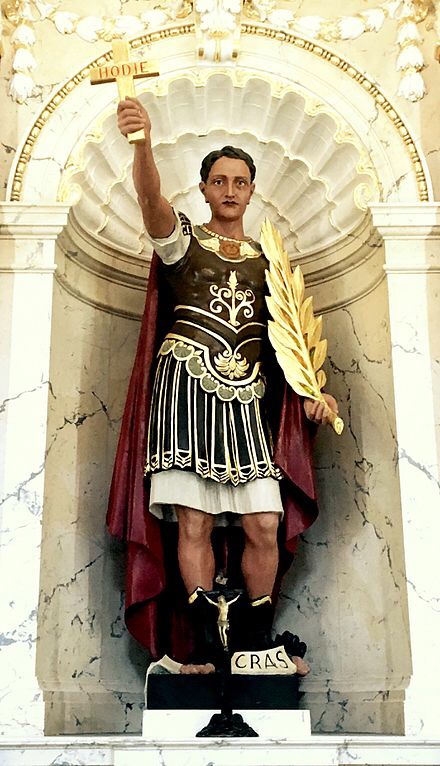


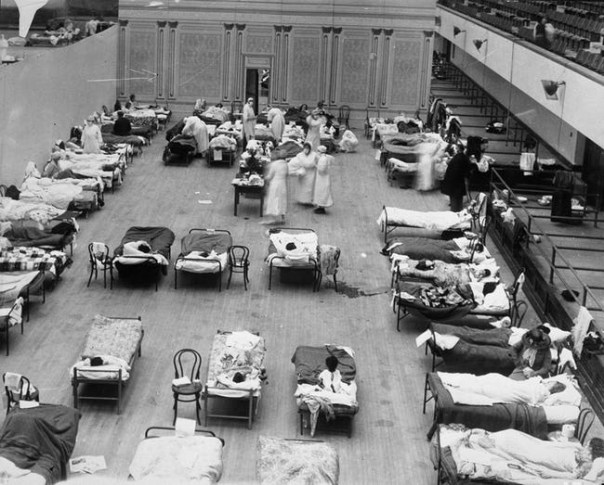

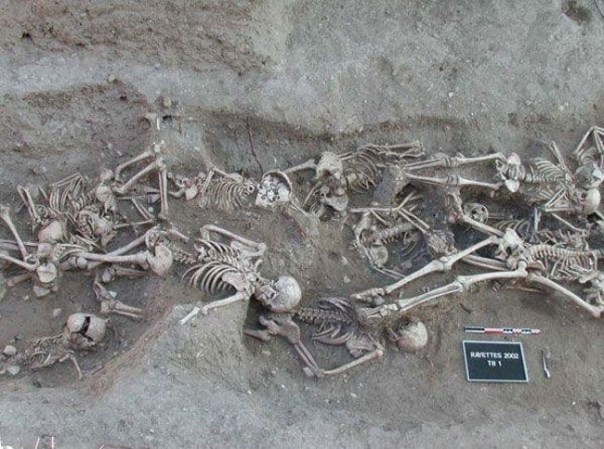





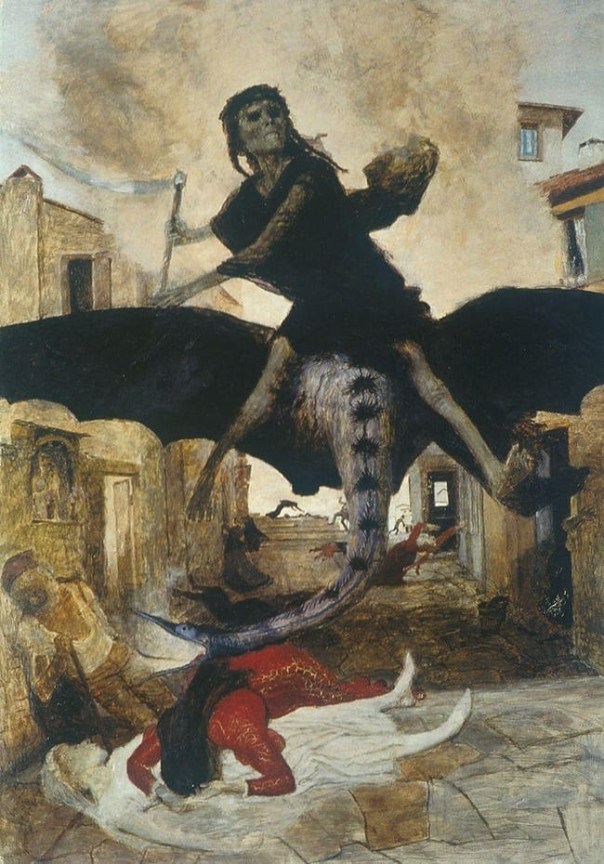

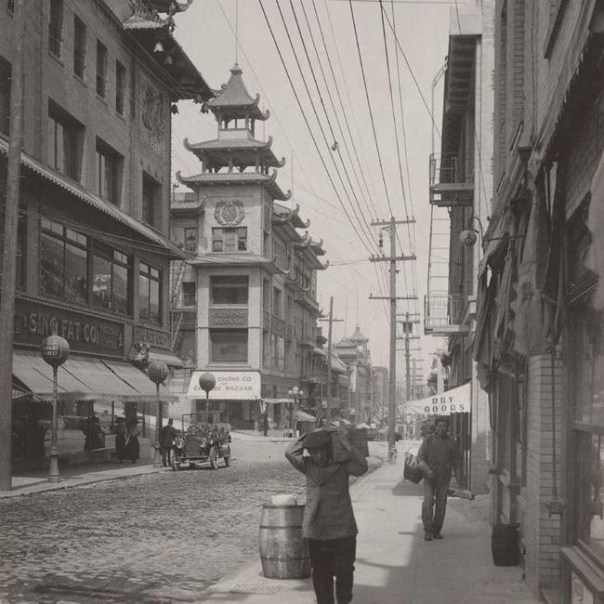
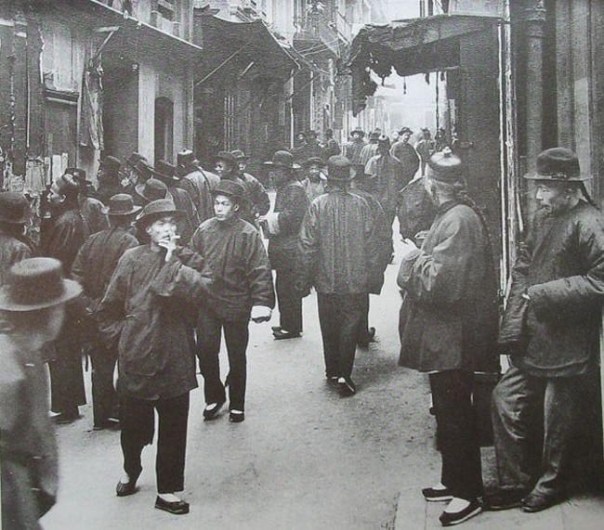
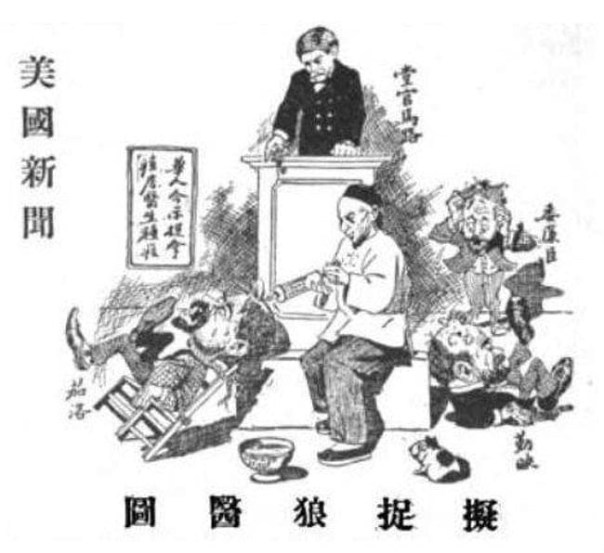
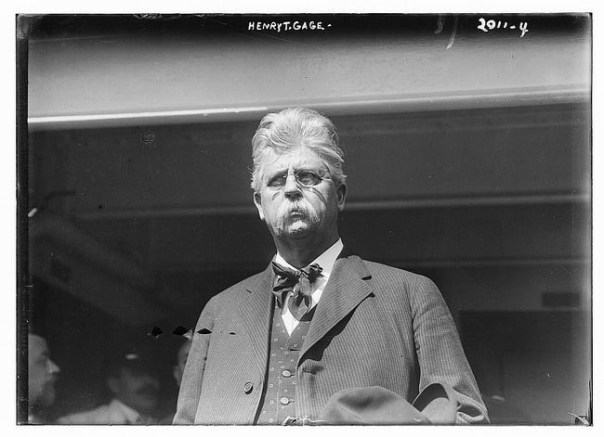
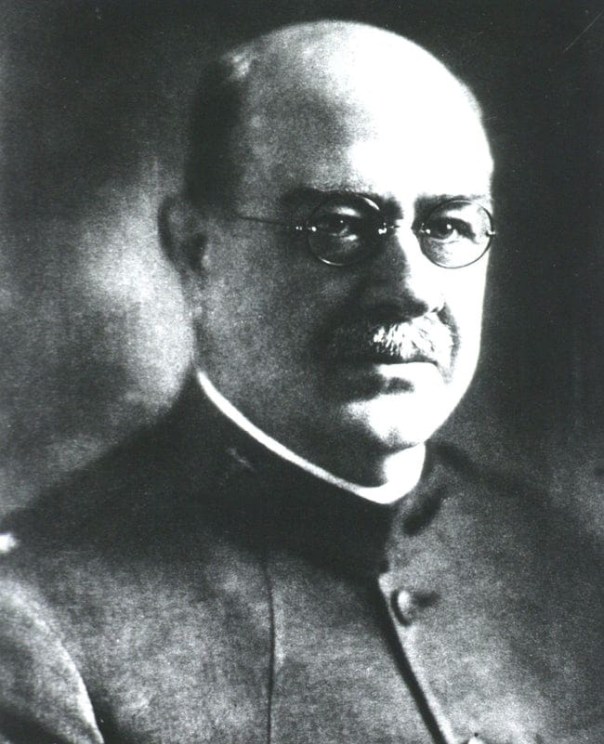


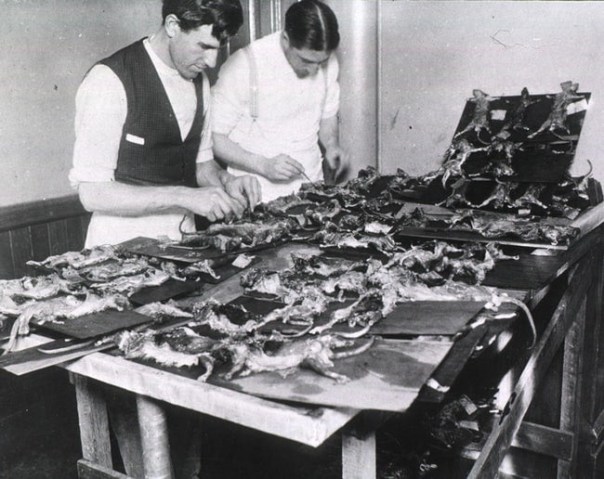


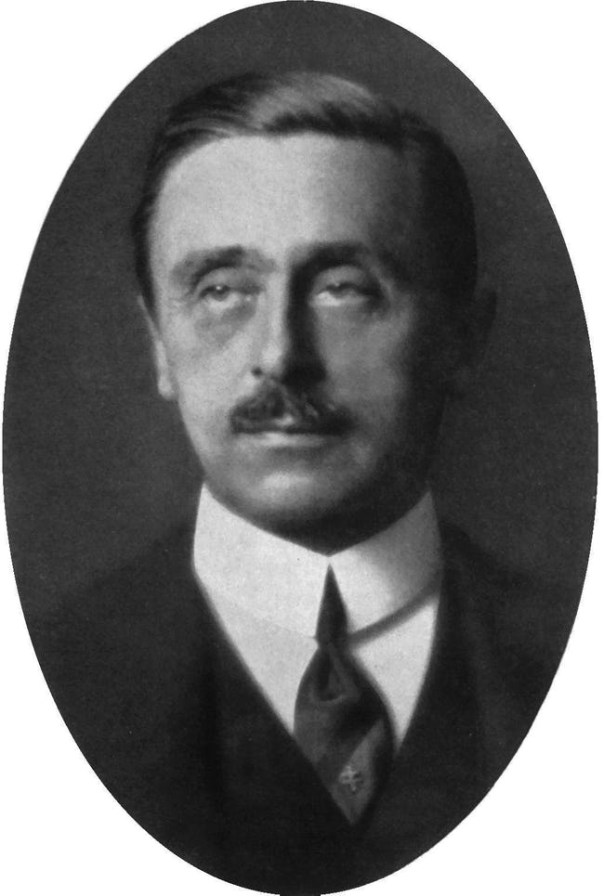
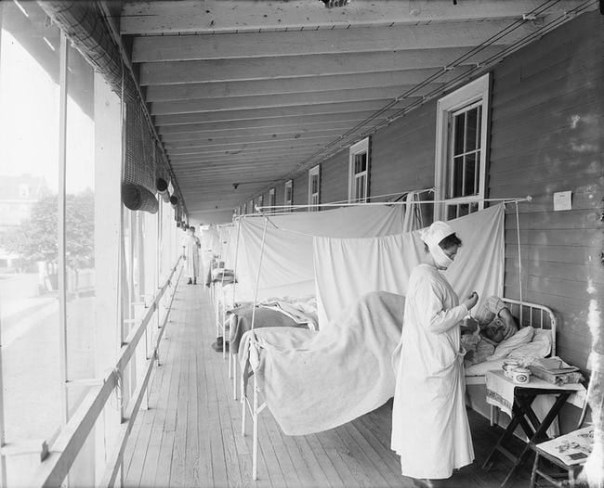



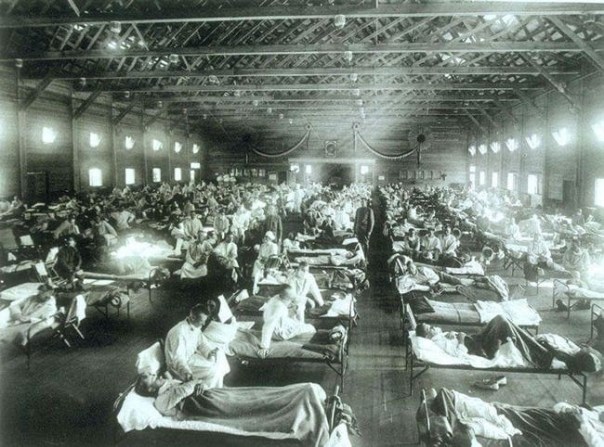
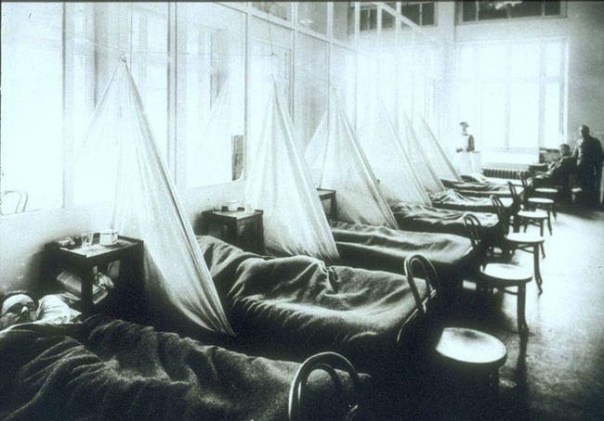


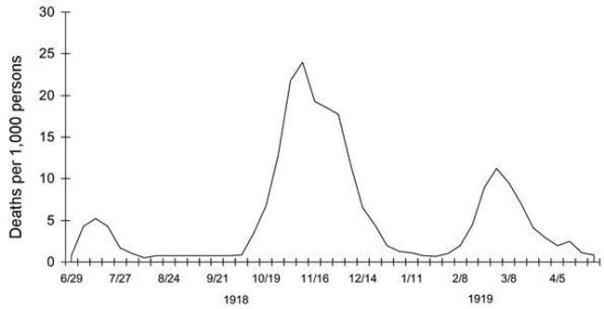
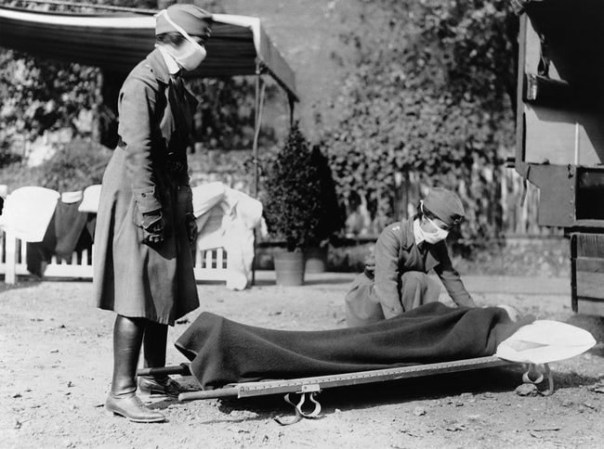
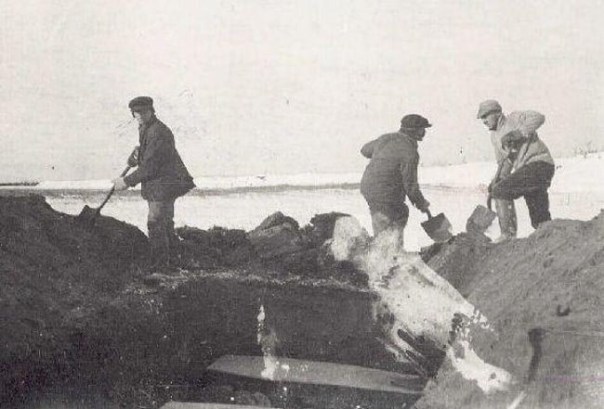
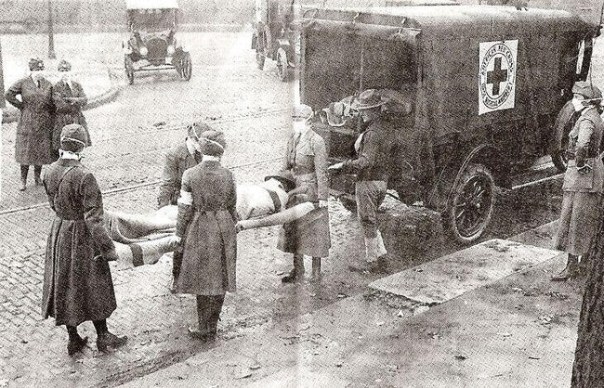

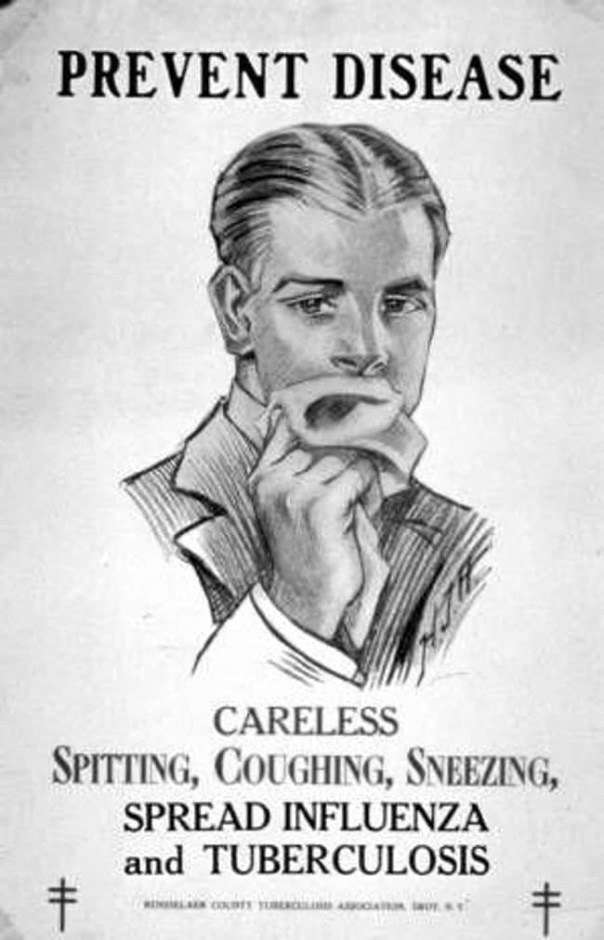
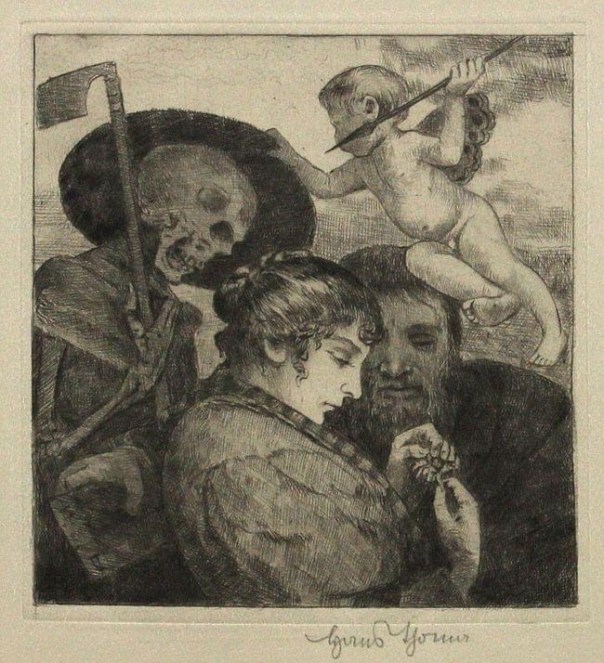

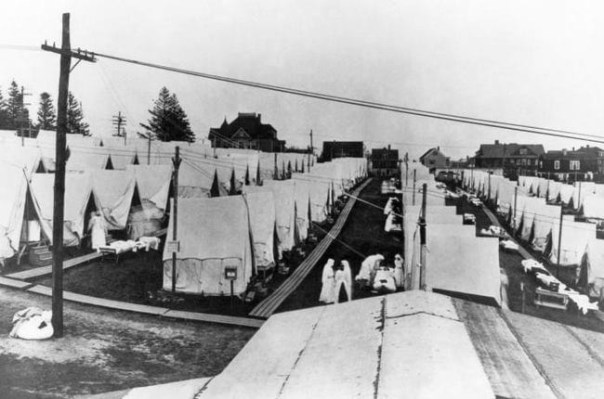


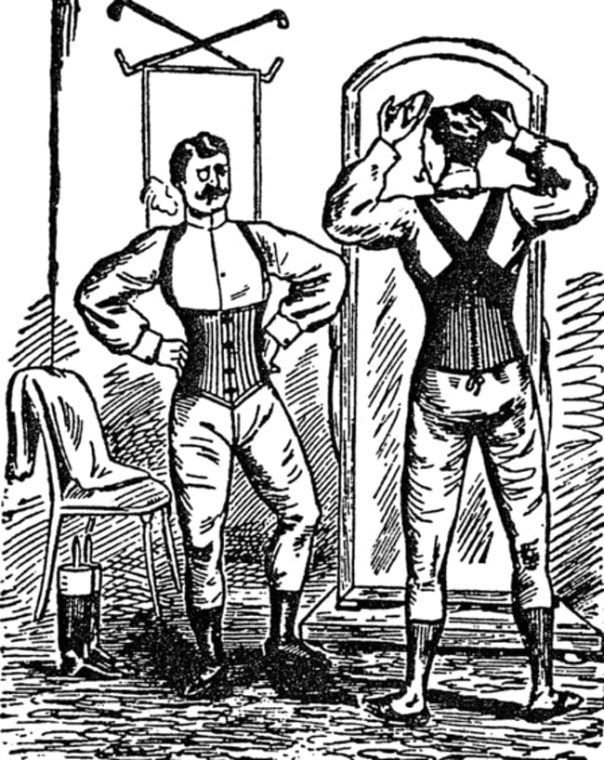


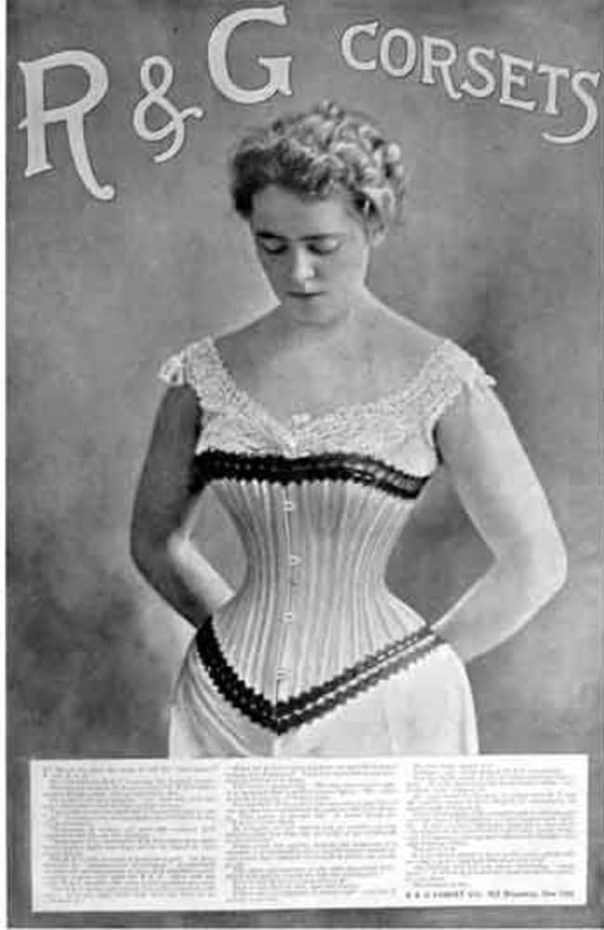
















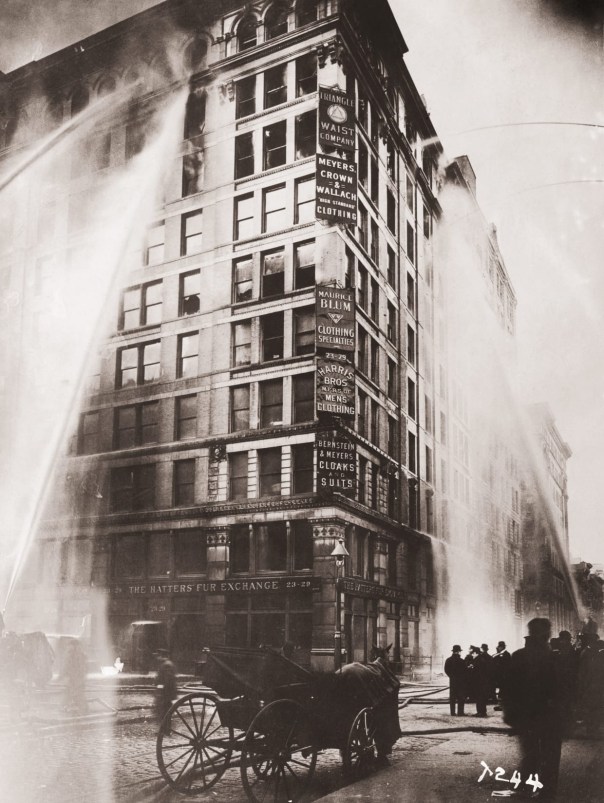


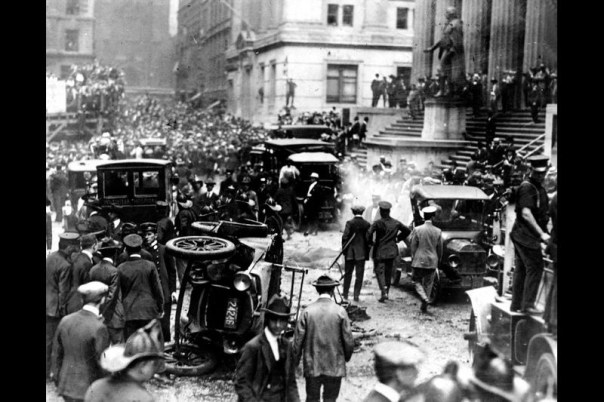
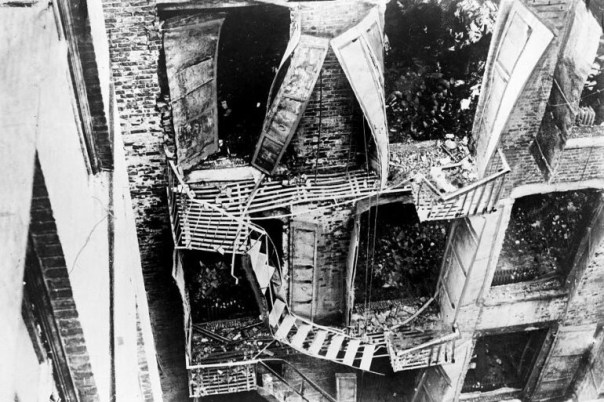




 timalderman


.jpg)


.jpg)


_(19180161878).jpg)


.gif)

