Category Archives: History

FEUD FACTS: The Real Story Of The Hatfields & McCoys

Hardly any person in America can hear the name “Hatfield” without thinking “McCoy.” This most infamous feud in American folklore happened right in the Tri-State’s back yard.

The 2012 release of the History channel’s “Hatfields & McCoys” miniseries, starring Kevin Costner and Bill Paxton, has sparked a renewed interest in the saga. You can find in the pages of the Tri-State Visitors’ Guide several feud-related attractions, activities and festivals. But before you go exploring, here’s a tutorial on what really happened in the hills of southern West Virginia and eastern Kentucky.

The feud between the Hatfields of West Virginia and the McCoys of Kentucky had its roots in the Civil War and continued through 1981. The feud was led by patriarchs William “Devil Anse” Hatfield and Randolph McCoy. Here are some key events in the feud:

THE CIVIL WAR

Both William “Devil Anse” Hatfield and Randolph McCoy were Confederates and were both along in a raid that killed Union Gen. Bill France in the fall of 1863. That raid sparked into action the Kentucky homeguards, who were sent to take Devil Anse and his men. One of France’s men, Asa Harmon McCoy (Randall’s brother), came after Anse in revenge.

He camped out in a rock house near his home. Anse found out and sent his Uncle Jim Vance and Jim Wheeler Wilson, a fellow soldier, to confront McCoy.

It is believed that one of those men shot and killed Asa McCoy.

COURT ORDERS

A couple of court decisions helped to fuel the feud. In the late 1870s, Devil Anse Hatfield got into a land dispute with McCoy’s cousin Perry Cline. Anse won the land dispute and was granted Cline’s entire 5,000-acre plot of land. A few months after the verdict, Randolph McCoy stopped to visit Floyd Hatfield, a cousin of Devil Anse. While visiting, McCoy saw a hog that he said bore the McCoy marking on its ear. Hatfield denied the accusation and the two were hauled into court with Preacher Anderson Hatfield (a Baptist preacher and justice of the peace) to settle the suit.

Both Hatfields and McCoys served as jurors. Randolph’s nephew Bill Staton, also a brother-in-law of Ellison Hatfield, swore that Floyd Hatfield owned the hog.

Floyd won the case. On June 18, 1880, Staton was killed in a shootout with Paris and Sam McCoy, who were sent to prison for their crime.

Ellison Hatfield testified at that trial.

ROMEO AND JULIET

Two months after the killing of Staton, Devil Anse’s son, Johnse met Roseanna McCoy, the daughter of Randolph McCoy, at an 1880 Election Day event.

They became lovers, but Randolph did not approve.

When she went to be with Johnse in West Virginia, a posse of McCoys rode to the cabin, took Johnse prisoner and set out for the Pikeville jail. Roseanna told Devil Anse, who gathered his own crew to cut off the McCoys and rescue his son. After that, the couple remained apart. Roseanna would give birth to their daughter, Sarah Elizabeth McCoy, in the spring of 1881. The baby died of measles later that year. Johnse Hatfield, who would be married four times in his life, met Nancy McCoy (the daughter of Asa Harmon McCoy, who had been killed by the Hatfields) and they were married on May 14, 1881.

TROUBLE AT THE POLLS

On Aug. 5, 1882, it was Election Day and at the polls on Blackberry Creek, Ellison Hatfield got into a fight with Tolbert McCoy (Randolph’s son). Tolbert’s two younger brothers, Pharmer and Randolph Jr., jumped in the fight with knives, and Pharmer McCoy shot Ellison.

HATFIELDS BURN WITH REVENGE

Preacher Anse Hatfield ordered constables to take the McCoy brothers to the Pikeville jail to face charges. They stopped at Floyd McCoy’s house for food and decided to spend the night further up Blackberry Creek. Devil Anse Hatfield found out and the next morning arrived on the scene, and a posse of nearly 20 family and friends took charge of the McCoy boys. When Ellison died, Devil Anse crossed into Kentucky, tied the boys to paw paw trees and the group of men executed the boys who had killed Ellison.

GOVERNORS GET INVOLVED

Hoping to leave no witnesses, the Hatfields raided the McCoy cabin in the dark of morning on New Year’s Day 1888. A firefight ensued, killing Randolph McCoy’s daughter Alifair and son Calvin. The raiders burned Randolph’s cabin to the ground. Randolph, his wife Sarah and the remaining children escaped.

The murders of the McCoys caused Kentucky’s governor Simon Buckner to unleash special officer Frank Phillips and 38 men to arrest the nearly 20 men and put out a special reward which brought a slew of bounty hunters to come after the Hatfields. Phillips captured several of those men, and Phillips shot and killed Uncle Jim Vance on Jan. 10, 1888.

On Jan. 19, a large firefight between Phillips and his men and Devil Anse Hatfield and his men happened, since known as the Battle of Grapevine Creek. Although no one was killed in the fight, it prompted Devil Anse to order 25 new Winchester repeating rifles to prepare for future attacks.

The raids brought the ire of West Virginia Gov. E. Willis Wilson, and many thought there might be another Civil War break out along the Tug Fork between factions in the two states. Both states ordered their National Guard units to prepare to defend their borders.

West Virginia’s governor sued Kentucky for the unlawful arrest of nine prisoners and unsuccessfully appealed the case to the U.S. Supreme Court in April 1888. The court ruled the Hatfields would have to stand trial in Kentucky whether or not the original arrests by Phillips were legal. Elison Mounts was hanged on Feb. 18, 1890, for the shooting of Alifair and Calvin McCoy, and the rest were given life sentences for their roles in killing the three McCoy brothers.

7 Things You Didn’t Know About the Hatfields and McCoys

1. Hollywood has always loved the Hatfields and McCoys.
The Hatfields and McCoys saga has been reflected in various forms of entertainment, including books, songs and Hollywood films. Some of the most memorable portrayals of the feud include a 1952 Abbot and Costello feature; a Hatfield- and McCoy-themed episode of the animated series “Scooby-Doo”; and Warner Bros.’ 1950 “Merrie Melodies” cartoon “Hillbilly Hare,” in which Bugs Bunny finds himself ensnared in a dispute between the rival Martin and Coy families.

Frankie McCoy and Shirley Hatfield pose together in a photograph that appeared in Life magazine in May 1944. (Credit: Walter Sanders//Time Life Pictures/Getty Images)

2. The Hatfields and McCoys inspired a famous game show.
The conflict is believed to have been the primary inspiration for the popular game show “Family Feud,” which premiered in 1976. In 1979 members of both families appeared on the show during a special Hatfields and McCoys theme week to battle it out for the usual cash rewards—with one unique twist. Also included in the prize package was a pig, symbolizing the origins of the feud. (It was the rumored theft of a valuable pig by a Hatfield ancestor that had served as a catalyst for the eruption of hostilities more than 100 years earlier.) The Hatfields won the contest.

3. The formerly feuding families were featured in Life magazine in the 1940s.
In May 1944, an issue of Life magazine revisited the Hatfields and McCoys nearly 50 years after violence among them rocked the Tug Valley area between Kentucky and West Virginia. The article was meant to show how the two “famous families now live together in peace,” and interviewed a number of descendants about the rivalry and relations between the two families five decades after the conflict. Among the photographs was a shot of two young women, Shirley Hatfield and Frankie McCoy, working together in a local factory that produced military uniforms. It was meant to symbolize the unifying effect of America’s war efforts at the height of World War II.

4. The feud between the Hatfields and the McCoys made it all the way to the U.S. Supreme Court.
In 1888 several Hatfields were arrested and stood trial for the murder of two of Randall McCoy’s children. West Virginia sued for the men’s release, arguing that they had been illegally extradited across state lines. The Supreme Court eventually became involved in the case, known as Mahon v. Justice. In its 7-2 decision, the court ruled in favor of Kentucky, allowing for the trials and subsequent convictions of all the Hatfield men. Seven of them received life sentences, and one, Ellison “Cotton Top” Mounts, was executed for his crimes.

5. A rare medical condition may be partly to blame for the violence of the notorious clash of clans.
In a 2007 study, a team of doctors and geneticists who had studied dozens of McCoy descendants noted an unusually high rate of Von Hippel-Lindau disease, a rare, inherited condition that produces tumors of the eyes, ears, pancreas and adrenal glands as well as high blood pressure, a racing heartbeat and increased “fight or flight” stress hormones. The researchers also collected numerous oral histories from family members detailing the combative and often violent nature of the McCoy family dating back to the feud’s roots.

6. The Tug Valley witnessed another violent clash nearly 30 years after the Hatfields and McCoys feud.
On May 19, 1920, detectives working for the anti-union Baldwin-Felts Agency evicted the families of workers who had attempted to unionize the Stone Mountain Coal Company mines outside Matewan, West Virginia. After Sid Hatfield, the Matewan chief of police and a Hatfield descendant, intervened on the miners’ behalf, a violent clash broke out that left seven detectives and four locals dead. The Matewan Massacre became a rallying cry for union activists across the country, with Sid Hatfield garnering fame for his defense of the miners. A year later, however, Hatfield was assassinated, purportedly by Baldwin-Felts agents. The events surrounding the Matewan Massacre and Sid Hatfield’s murder were depicted in the acclaimed 1987 film “Matewan.”

7. There are thousands of Hatfield and McCoy descendants—but not all of them are real.
Sid Hatfield is just one of many notable Hatfield and McCoy descendants. Others include Henry D. Hatfield, nephew of family patriarch Devil Anse, who served as a senator and governor of West Virginia; 1930s jazz musician Clyde McCoy; and basketball coach Mike D’Antoni. There have even been fictional descendants, including Leonard “Bones” McCoy from the television and film series “Star Trek,” who was supposedly dozens of generations removed from his McCoy family roots.

Reference

Everything You Didn’t Want To Know About Using The Toilet In The Medieval Period

From archaic toilet paper to moats made of feces, using the bathroom in the Middle Ages was no picnic.

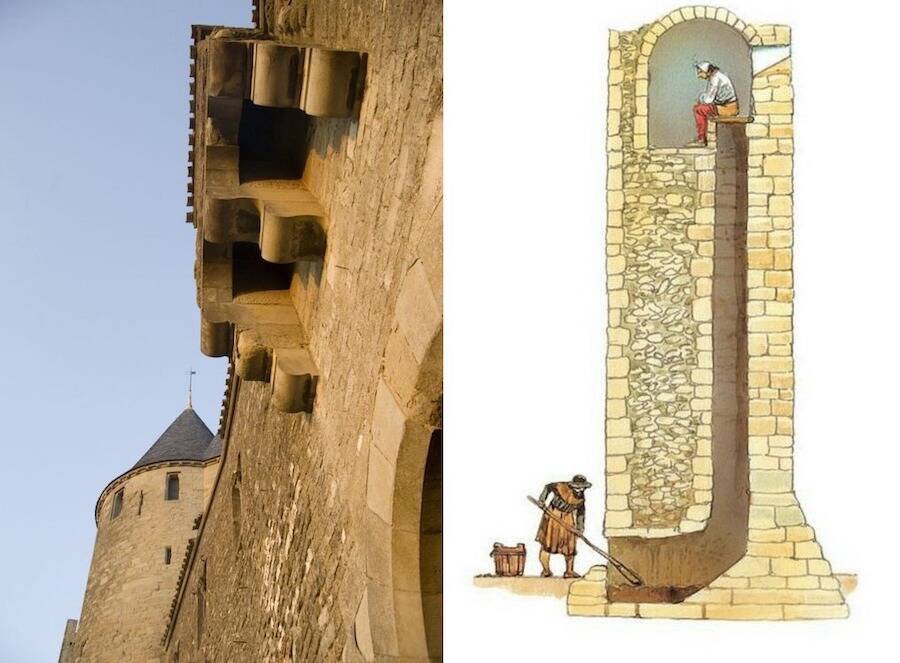
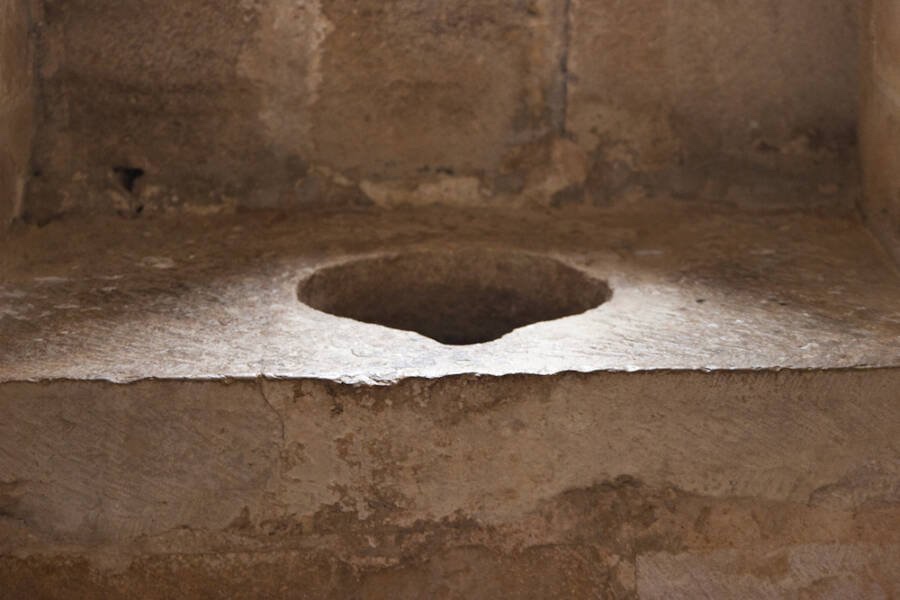
For those familiar with an outhouse, the medieval toilet is its massive stone-built predecessor. Relegated to the private alcoves of a fort, medieval toilets were nothing but openings that led into a latrine or castle moat below.

Designed mainly with function in mind, the medieval toilet was otherwise known as a garderobe or privy chamber and was often located on several floors of most castles and no bigger than the restroom of a modern-day coffee shop.

The exterior of a castle wall featuring a medieval toilet (left), and and an illustration of how the toilet emptied into the moat below (right).

The medieval toilet was a product of its time, before the advent of indoor plumbing refined the bathroom experience. How it came to be and meet its end, however, is worth a gander.

The History Of The Medieval Toilet

Despite the name, the Middle Ages were no mere intermediary between eras. This long and strenuous period in European history began with the fall of the Roman Empire in 467 A.D. and charged through the 14th-century Renaissance.

With the fall of the Roman Empire, Europe largely became feudal. Disbanded nations and a general scarcity of resources saw wealthy lords take power and war with one another from the lofty castles they built for themselves. 

Most average people were just lucky to eat and survive, but this time saw some luxuries were created as well, including the medieval toilet.

An exterior view of the privy, or “garderobe,” at Peveril Castle in Derbyshire, England.

Building castles was a lofty endeavor and could take up to 10 years, not to mention constructing them was rather expensive. At the tail-end of the Middle Ages, King Edward I nearly bankrupted the crown’s treasuries by using 100,000 pounds on his Walsh fortifications, with toilets being a major design priority.

There were a couple of different designs for these commodes. The waste shafts of some medieval toilets ran down the exterior of a fort into moats or rivers, while others were designed with internal castle channels that funneled waste into a courtyard or cesspit.

Other privy chambers, meanwhile, protruded out from the castle wall. Openings hung above open-air, allowing gravity to do the rest. Usually, a wooden bench separated the stone-carved hole from a user’s rear.

Building toilets within the palace walls, however, wasn’t just for convenience. Indeed, they also served as a hindrance to potential enemies.

By building toilets with shafts that emptied into courtyards or cesspits around the palace, invaders could be kept relatively at bay.

However, these shafts had to be built high enough off the ground that enemies couldn’t sneak in through the hole in the privy chamber. This is exactly what happened in 1203, when King Richard I’s French palace, Château Gaillard, was sieged.

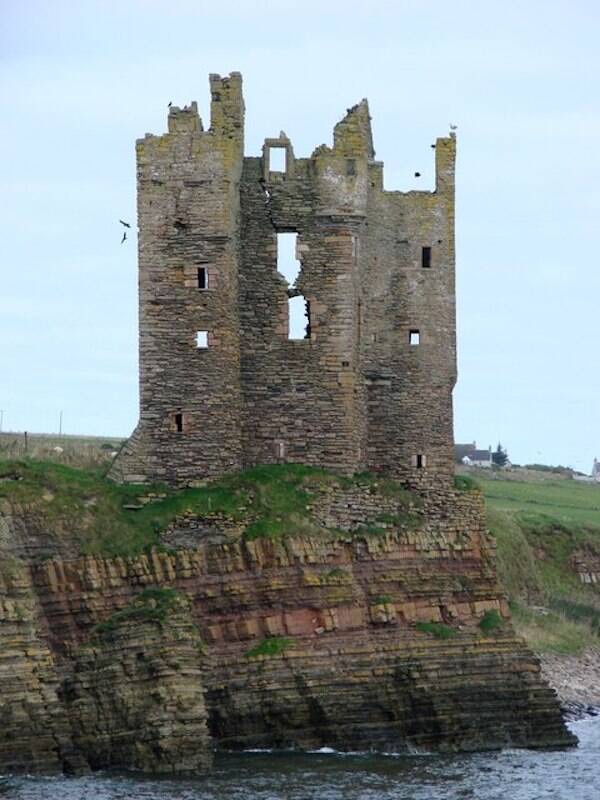
Keiss Castle in Scotland was resourcefully built atop a cliff, allowing for waste to fall directly into the ocean.

Ideally, of course, waste would simply fall into a river where no one had to deal with it, and so some castle toilets were built jutting out over a steep cliff.

Without that luxury, there had to be someone tending to the excrement, removing it, or making sure it was properly mixed with the surrounding moat. In Tudor England, this job was known as a gong farmer, and these unfortunate souls had to work only at night so others couldn’t be put off by their grisly job. 

Though they were forced to live in isolated homes, they reportedly received decent pay per ton of excrement that they removed.

Why Garderobes Met Their End

A medieval toilet, or garderobe, was merely a hole that directed the user’s discharge into the moat below

The largest downside to the medieval toilet was the fact that there was almost no practical way to avoid the stench. It was unfortunately not always the case that medieval toilets were situated in privy chambers containing a window, in which case aromatization through herbs was relied on. 

Some garderobes were also made without privacy, with no doors or dividers

Additionally, washing a medieval toilet was burdensome. Those unfortunate enough to be tasked with the duty threw buckets of water down the toilet shaft or rerouted rain from the gutters. 

As for the waste being collected down below, local farmers would often amass this human fecal matter as fertilizer.

Meanwhile, medieval toilet paper consisted of a bunch of hay. This was rarely an issue when it came to clogging or cleanliness, though 12th-century monk Jocelin de Brakelond recounted that this once nearly caused a fire.

While it would take until the advent of indoor plumbing in the mid-1800s to standardize the marvelous innovation of toilets, the medieval toilet was certainly an ingenious — and necessary — step toward that historic invention.

Reference


The 1969 Documentary That Tried to Humanize Queen Elizabeth II and the Royal Family

The idea was to show the royal family in their day-to-day lives. The results were mixed.

A well-groomed, staid British family sit around the breakfast table. Two young adult children and their middle-aged parents are dressed formally, without a hair out of place. In a high-pitched voice, the mother tells a funny story about her great-great grandmother, while everyone listens with their backs remarkably straight. 

But this is no ordinary English family. The storyteller is Queen Elizabeth II, and the subject of her tale is Queen Victoria. The scene was one part of a 105-minute color documentary named simply, “Royal Family,” that was broadcast across England on June 21, 1969. 

The concept behind the documentary was to soften and modernize the royal image. But members of the royal family, including the Queen, were reportedly dubious about the idea from the start. After its premiere, Buckingham Palace greatly limited the film’s circulation, at least in its entire form.

Lord Mountbatten’s Son-in-Law Suggests TV Special

Royal Family documentary, 1969
Queen Elizabeth II and Prince Philip fly back from a visit to Yorkshire in an Andover of the Queen’s Flight, in a photo taken during the filming of the documentary ‘Royal Family.’ Bettmann Archive/Getty Images

It was Lord Brabourne, the son-in-law of the royal cousin Lord Mountbatten, who suggested using the medium of television to provide the Queen’s subjects a sense of her personality. By the 1960s, the times were rapidly changing, and the shy, dutiful Queen and her young family were seen as increasingly irrelevant. A TV special, Brabourne suggested, could also introduce British subjects to 21-year-old Prince Charles, ahead of his investiture as Prince of Wales.

At the urging of Palace press officer William Heseltine, who was convinced that offering a humanized view of the royal family would strengthen the monarchy, Prince Philip agreed. The Queen cautiously gave her consent, while other family members were decidedly not on board.

“I never liked the idea of ‘Royal Family,’ I thought it was a rotten idea,” Princess Anne later recalled, according to an account in the 2015 book, Queen Elizabeth II and the Royal Family. “The attention which had been brought upon one ever since one was a child, you just didn’t need any more.” 

But the Mountbatten camp won the day and filming began in 1968. Richard Cawston, the chief of the BBC Documentary unit, was put in charge of shooting the royals at work and play. For months, he shot 43 hours of unscripted material at Buckingham Palace, Windsor Castle, on the royal yacht, the royal train, and even at the Queen’s beloved Balmoral Castle in Scotland.

Understandably, the royal family had a difficult time adjusting to the presence of the crew in their personal space. Peter Conradi writes in his 2012 book, Great SurvivorsHow Monarchy Made it into the Twenty-First Century, that during a film day at Balmoral, Philip snapped at the crew, “Get away from the Queen with your bloody cameras!” 

Endearing—And Controversial—Scenes

Royal Family documentary, 1969
Christmas at Windsor Castle is shown here with Queen Elizabeth II and Prince Philip putting finishing touches to their Christmas tree, in a photo made during the filming of the documentary. Bettmann Archive/Getty Images

While the documentary was meant to show the human side of the monarchy, its narration carried an official tone. The voice-over, read by English actor and broadcaster Michael Flanders, ruminated on the importance of the Crown to the country in florid terms like, “Monarchy does not lie in the power it gives to the sovereign, but in the power it denies to anyone else.”

The finished documentary claimed to show a year in the life of the royal family. Queen Elizabeth was featured tirelessly working and making small talk with world leaders like U.S. President Richard Nixon. During his state visit, she asked him, “World problems are so complex, aren’t they, now?” To which Nixon replied, “I was thinking how really much more complex they are than when we last met in 1957.”

There were also sweet scenes, like one where the Queen takes her youngest son, Edward, to a candy store, paying for his treats herself even though the monarch is technically never supposed to carry money. 

The royal family’s genuine sportiness was also highlighted—Prince Charles was shown waterskiing and fishing, Prince Philip flew an airplane and the Queen drove her own car surprisingly fast. 

But there were also strained moments, according to detractors. At one point Prince Philip describes an instance when King George VI the Queen Mother’s late husband, took out his rage with a pruning knife on a rhododendron bush, screaming curse words while hacking it to bits. “He had very odd habits,” Philip deadpanned. “’Sometimes I thought he was mad.”

Then there was when Queen Elizabeth jokes: “How do you keep a regally straight face when a footman tells you: “‘Your Majesty, your next audience is with a gorilla?… It was an official visitor, but he looked just like a gorilla.”

Millions Tuned in for 1969 Premiere

Cawston let Philip see a rough cut of the documentary before showing it to the Queen. “We were all a little bit nervous of showing it to the Queen because we had no idea what she would make of it,” the film’s editor Michael Bradsell told the Smithsonian channel in a 2017 special. “She was a little critical of the film in the sense she thought it was too long, but Dick Cawston, the director, persuaded her that two hours was not a minute too long.”

Royal Family documentary, 1969
Princess Margaret is shown with her two children, Viscount Linley and Lady Sarah Armstrong-Jones at Windsor Castle, during filming of the documentary. Bettmann Archive/Getty Images

The public was, in fact, intrigued—more than 30 million viewers in Britain alone viewed the premiere. It was said that during an intermission, toilets flushed all over London, causing a water shortage.

Less than a month later, on July 1, Prince Charles was invested at Caernarvon Castle in a carefully filmed spectacle organized by the photographer Lord Snowdon, Princess Margaret’s soon to be ex-husband. 

This double-whammy of royal TV was seen by some as a rousing success. “It redefined the nation’s view of the Queen,” Paul Moorhouse, former curator of the National Portrait Gallery, told Daily Telegraph in 2011. “The audience were amazed to be able to hear the Queen speaking spontaneously, and to see her in a domestic setting.”

Lifting the Veil on the Royal Family

The Royal Family
The royal family at Windsor, (from left) Prince Edward, the Duke of Edinburgh, Queen Elizabeth II , Princess Anne, Prince Charles and Prince Andrew. Fox Photos/Getty Images

But to many, the royal family had opened Pandora’s box, lifting the veil and making them easy targets for criticism and intrusive paparazzi activity.

“They were criticized for being stuffy, and not letting anybody know what they were doing, and my brother-in-law helped do up a film, and now people say, ‘Ah, of course, the rot set in when the film was made,’”royal cousin Lady Pamela Hicks and daughter of Lord Mountbatten told an interviewer. “You can’t do right; it’s catch-22.”

“Royal Family” was shown only once more in full, in 1977. And in 2011, Buckingham Palace gave the National Portrait Gallery a 90-second clip of the breakfast scene during the Diamond Jubilee celebration. The palace allowed a few more brief clips to be included in the 2011 documentary “The Duke at 90.”

https://youtu.be/WCI_KhfED2k

Reference

Crossbones Graveyard

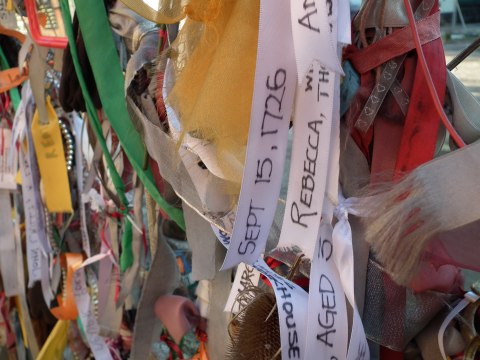
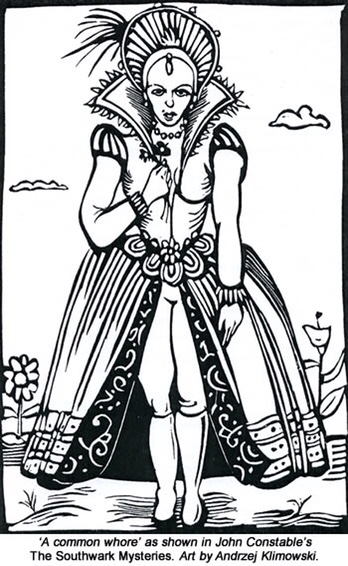
If you venture down Redcross Way, a quiet backstreet in SE1 running parallel to the busy Borough High Street, you’ll undoubtedly come across a large vacant plot of land. This is Cross Bones Graveyard, an unconsecrated memorial to the thousands of prostitutes who lived, worked and died in this once lawless corner of London.

This is, at least, how it started out in the late medieval period. During this time, the local prostitutes were known as “Winchester Geese”. These prostitutes were not licensed by the City of London or Surrey authorities, but by the Bishop of Winchester who owned the surrounding lands, hence their namesake. The earliest known reference to the Graveyard was by John Stow in his Survey of London in 1598:

“I have heard ancient men of good credit report, that these single women were forbidden the rights of the Church, so long as they continued that sinful life, and were excluded from Christian burial, if they were not reconciled before their death. And therefore there was a plot of ground, called the single woman’s churchyard, appointed for them, far from the parish church.”
Over time, Cross Brones Graveyard started to accommodate other members of society who were also denied a Christian burial, including paupers and criminals. With Southwark’s long and sordid past as “the pleasure-garden of London”, with legalised bear-baiting, bull fighting and theatres, the graveyard filled up extremely quickly.

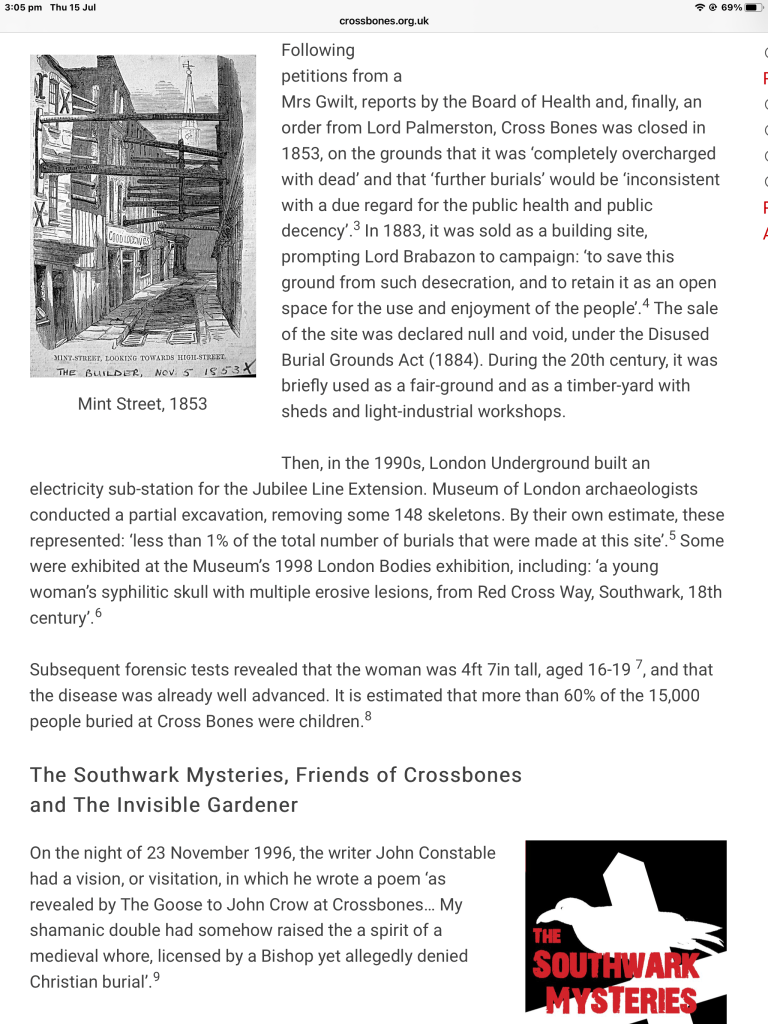
By the early 1850’s the graveyard was at bursting point, with one commentator writing that it was “completely overcharged with dead”. Due to health and safety concerns the graveyard was abandoned, and subsequent redevelopment plans (including one to turn it into a fairground!) were all fought off by local residents.In 1992, the Museum of London carried out an excavation on Cross Bones Graveyard, in collaboration with the ongoing construction of the Jubilee Line Extension. Out of the 148 graves they excavated, all dating from between 1800 to 1853, they found 66.2% of the bodies in the graveyard were aged 5 years or younger indicating a very high infant mortality rate (although the sampling strategy used may have overindexed this age group). It was also reported that the graveyard was extremely overcrowded, with bodies piled one on top of each other. In terms of the causes for death, these included common diseases of the time including smallpox, scurvy, rickets and tuberculosis.

Reference

The Southwark Stews And The Black Death

John of Gaddesden, an English doctor writing in the early 14th century, had some advice for women on how to protect themselves against venereal disease. Immediately after sex with any suspect man, he said, the woman should jump up and down, run backwards down the stairs and inhale some pepper to make herself sneeze. Next, she should tickle her vagina with a feather dipped in vinegar to flush infected sperm out of her body, then wash her genitals thoroughly in a concoction of roses and herbs boiled in vinegar. (45) 
It’s hard to imagine anyone actually following this advice – let alone one of the girls in Southwark’s stews. It would have puzzled the customer she’d just serviced for one thing, and running backwards downstairs sounds an excellent way to break your neck. Other doctors writing at about the same time as Gaddesden had equally eccentric remedies of their own, but at least everyone now recognised that diseases such as gonorrhoea were spread by sexual intercourse and that in itself was a big step forward. (46) 
In 1321, King Edward II founded the Lock Hospital in Southwark as a treatment centre for “lepers”, the name then used for anyone with an eruption of sores. It was located at what’s now the junction of Tabard Street and Great Dover Street, less than a mile from the stews of Bankside and this proximity meant it soon started to specialise in VD cases. “Lock Hospital” can still be found in slang dictionaries today as a generic term for any VD clinic. 
The filthy state of Southwark in those days ensured other disease was quick to spread there too. The Borough’s streets were still unpaved and there were no sewers. Residents who were out and about relieved their bladder (and bowels) in any quiet alleyway, while stay-at-homes emptied their brimming chamber pots at the nearest window. Once again, the informal street names coined by the locals give us a clue to what their lives were like. The area’s sex trade gave it place names like Codpiece Lane, Cuckold Court and Sluts’ Hole, while the sheer amount of filth in its streets christened Dirty Lane, Foul Lane and Pissing Lane. (47, 48) 
All this made Southwark an ideal breeding ground for the bubonic plague which hit London in 1348. “Historians estimate that the Black Death killed half the population of 14th century England,” Stephen Smith says in his 2004 book Underground London. “If anything, the devastation in London was even worse. The transmission of the disease was encouraged by the narrow, busy and filthy streets, crowded houses and noisome sanitary conditions. The toll among Londoners has been variously put at between 50,000 and 100,000.” (4) 
A year into the plague, Edward III urged London’s borough authorities to combat the infection by cleaning up their streets, but was told all the street cleaners were already dead. The more people died, the fewer were left to dispose of their remains and the faster the plague spread. “London burial grounds were soon full to overflowing and new ones were hastily dug,” Smith says. “The biggest was in Southwark, where some 200 corpses were interred every day.” One of these new grounds, opened just across the river from Southwark in East Smithfield, managed to stuff 2,400 bodies into its small plot by placing them five deep in long trenches rather than using individual graves. Measures like this were the only way to get each new wave of corpses buried before the next consignment arrived. One man who lived through the plague said the stews had been busier than ever in those years

Older bodies were dug up again with indecent despatch to make more space in the ground. All over London, disinterred bones were thrown into the graveyard’s charnel house. This was either a vault beneath the church itself or a small building on the grounds, where “clean” bones – those from which all the flesh had rotted away – could be consigned. In calmer times, these bones would be treated with great reverence, perhaps even prayed over by the priest, but when the pressure on graveyards hit these heights, speed was all that mattered. (49) 
“Burial arrangements could break down during epidemics,” writes Reading University’s Professor Ralph Houlbrooke. “The Black Death compelled urban communities in particular to find new burial space quickly.” There’s no evidence that Cross Bones itself was used for burials this early, but it may well have been a later outbreak of plague in London which forced St Saviour’s parish to requisition the site. (50) 
In 1349, Edward III suspended Parliament to let MPs escape London for the relative safety of the British countryside. Anyone else rich enough to flee the capital got out too. Southwark’s brothels seem to have remained open throughout the plague years, however, despite official warnings that casual copulation with multiple partners increased the risk of infection. Henry Knighton, a 14th century historian who lived through the Black Death, says the stews were actually busier than ever during the plague years. Many Londoners adopted an attitude of fatalistic abandon, thinking it was all but certain they’d catch the plague anyway, so why not do so in the arms of their favourite Bankside whore? At least that guaranteed you a little pleasure before you died. 
In the spring of 1350, the death toll in London started to abate at last and Edward turned his attention to the anarchy that now prevailed in Southwark. Many of the Bishop’s officials had fled during the plague years, leaving the Bankside brothels and their surrounding taverns more lawless than ever. Anyone committing a crime inside the city walls knew they had only to get across London Bridge to claim sanctuary and the welcome they now found there was warmer than ever. “Those who have committed manslaughter, robberies and diverse other felonies are privily departing into the town of Southwark, where they cannot be attached by the ministers of the City and there are openly received, ” said the King in an address to London’s people. “And so, for default of due punishment [they] are emboldened to commit more such felonies.” 
If those felonies had been limited to Southwark alone, Edward might have found them easier to bear. By now, though, Southwark’s thugs had grown so bold that gangs of 200 or more youths would periodically burst over the bridge into London, rob the passers-by there, loot the shops and then dash back across the river to safety. Only London had the men and resources needed to restore law and order in Southwark, but no-one who lived there was willing to call them in if it meant surrendering their borough’s treasured independence. The result was an uneasy stand-off. 
As far as London itself was concerned, the authorities concentrated on preventing prostitution within the city walls and on ensuring that the girls working designated areas like Cock Lane wore the proper clothing. This takes us back to the 1161 rules’ requirement that whores must clearly identify themselves by wearing some agreed garment. In 1351, the City of London passed an ordinance saying “lewd or common women” must wear a striped hood to identify themselves as such and refrain from beautifying their clothes with any fur trim or fancy lining. 
Any woman not of noble birth could be described as “common” in that sense and this sloppy wording made the ordinance such a wide one that it seemed to cover almost every female in the city. London’s proud womenfolk weren’t going to have men dictating what they could wear, so most simply ignored the ordinance and challenged any constable to arrest them if he dared. When Edward III put his own authority behind this law three years later, he was careful to specify it applied only to London’s “common whores”. The striped hoods and lack of decorative trim, his proclamation declared, would “set a deformed mark on foulness to make it appear more odious”. 
Some working girls continued to live inside the city walls but commuted to Cock Lane or the Liberty to earn their daily crust – perhaps finding somewhere to change on the way. But wasn’t long before they were banned from even lodging in the city and subject to very heavy penalties for doing so. A 1383 ordinance required whores caught in London to have their heads shaved and then be carted through the streets in a special wagon while minstrels played all around them to attract a crowd. The girl herself would have to wear that trademark hood as the cart carried her through town to the nearest prison, where she’d be placed in a pillory and publicly whipped. 
“The ineffectuality of all this punishment is evident in the ordinances themselves, which provide for repeated offences and increased penalties,” Burford says. Offenders caught a second time, for example, would serve ten days in jail on top of all the other penalties, while a third offence got you ten days’ prison and permanent expulsion from London. A girl in this final category would be taken to one of the city gates, where she’d be roughly thrown outside. If the authorities had been able to trace her origins to Bankside – as was often the case – she’d be escorted back there and warned to stay put. 
In 1393, these rules were tightened once again, saying no prostitute must “go about or lodge” in London or its suburbs, but “keep themselves in the places thereto assigned, that is to say, the stews on the other side of the Thames and in Cock Lane”. Offenders could face all the penalties detailed above and have their identifying hood confiscated too. Replacing this garment would presumably have been an expensive business, but the girl would be unable to resume her trade till she’d done so. 
We know there were at least two murders in the stews at around this time, because both are mentioned in the Bishop of Winchester’s court rolls for 1378. One was carried out by William Chepington of Northamptonshire, who killed a Scarborough man called John Drenge at The Cardinal’s Hat, one of the biggest brothels on Bankside. In the same year, a Flemish man was hanged for another murder in the stews. (51) 
Dutch people – then known as Flemings – had first come to Southwark as mercenaries in William the Conqueror’s army, but their relationship with the surrounding English population was sometimes thorny. Many Flemings were talented entrepreneurs and the stews they ran on Bankside operated with an efficiency and cleanliness that put their homegrown competitors to shame. We can judge their popularity by the fact that so many English whores chose to work under the Dutch name Petronella to indicate they were both fashionable and expert in their craft. 
The Dutch whorehouses may have been popular with punters, but their success did not go down well with English competitors. When Wat Tyler’s tax rebels arrived in Southwark in June 1381, one of their first targets was The Rose, a Dutch-operated whorehouse owned by William Walworth, the Lord Mayor of London. Until then, Tyler’s men had attacked only formal symbols of the King’s authority, such as prisons and the Inns of Court, so you have to wonder if it was Southwark’s resentful English brothel-keepers who suggested they burn The Rose. “It’s likely that the rebels destroyed the brothel not from outraged morality, but from hostility to the foreigners, specifically the Flemish,” says Derek Brewer in his 1978 book Chaucer and his World. Having sacked these premises, which stood near London Bridge, the rioters then went on a day-long rampage, killing as many as 160 Flemish people as they moved west through the Liberty. No doubt, a good number of Southwark folk joined in the mayhem just for a chance to kill their Flemish competitors or to eliminate a rival business. (52)

“[They] beheaded without judgement or trial all the Flemings they found,” one contemporary report tells us. “Mounds of corpses were to be seen in the streets and various spots were littered with the headless bodies of the slain. In this way, they passed the entire day, bent only on the massacre of the Flemings.” (53) 
A few months later, all the whorehouses destroyed were back in business again and the poll tax Tyler had objected to was sending out its demands for the year. That year’s returns from Southwark show seven men listed as stewholders in the Borough, all with addresses in the Bishop’s Liberty. “They evidently represent the proprietors of the Bankside stewhouses,” says Martha Carlin in her 1996 book Medieval Southwark. “All were married men, with both male and female servants; none had children aged 15 or older living at home.” (54) 
The seven stewholding couples listed, together with the tax assessed as due from each pair, are: 
StewholdersJoint assessmentWalter Shirborn & wife Christian  Six shillings & eightpenceRobert Power & wife Agnes Four shillingsYevan Wallchman & wife Isabella Four shillingsJohn David & wife Isabella Four shillings & eightpenceRobert [illegible] and wife Isabella Four shillings & sixpenceRichard Bailif & wife Margery Four shillings & sixpenceWilliam Brounes & wife Joan  [Figure missing]

The average tax payable per individual householder in Southwark that year was just one shilling, against an average of over five shillings for the stewholding couples above. That means the stewholders were being taxed at two-and-a-half times the rate of their neighbours and presumably that their earnings were that much higher too. But how much of that money actually found its way to the girls themselves? 
Of the 137 unmarried woman identified in the Southwark return, Carlin’s found a dozen who she believes worked as prostitutes. These were not the girls who worked in the Bankside stews, who’d be lumped in as “servants” with the families above, but freelance whores operating from the precinct of St Thomas’s Hospital and therefore outside the Liberty’s rule. “These women probably were independent or ‘private’ prostitutes, working from lodgings rather than from public brothels,” Carlin writes. “Their residence within the hospital precinct presumably shielded them from any interference by the officers.” 
Even among this relatively privileged group, only three of the twelve women paid assessments above the Southwark-wide average of one shilling and seven paid well under that. Their average assessment was only ninepence halfpenny – just over third of what even the poorest stewholder paid – and the richest girl of them all paid just one shilling and fourpence. Once again, it’s reasonable to assume that a much lower tax bill means a much lower income too. 
Whoever else was getting rich from the Bankside stews, then, it sure wasn’t the girls who worked there. The eminent men who owned brothels like The Cardinal’s Hat, the Boar’s Head and the rebuilt Rose did very nicely from renting them out to stewholders, some of whom were able to start building family dynasties on the trade. These families certainly weren’t in their landlords’ class, either for income or status, but they still managed to rake in a great deal more income than most other businesses in Southwark could provide. The girls’ whose sheer bloody resilience kept the whole trade going had to make do with its scraps. (55) 
Prostitution in Southwark was still officially licensed only in the Liberty’s designated Bankside area, but the seven whorehouses there couldn’t hope to satisfy total demand. At some point in the 1380s, local businessmen made a concerted effort to establish a new red light district in Southwark’s St Olave’s Parish, which lies west along the river from Bankside. The site they chose was not in the Liberty, but part of a manor still owned by the King himself, so opening unsanctioned brothels there was a risky business. Many Southwark folk joined in the mayhem just for a chance to kill their competitors

The men who owned the five new St Olave whorehouses included John Mokkyng, shown in the 1381 tax return as one of Southwark’s richest men and Robert Power, the Bankside stewholder mentioned above, who now hoped to make his own step up into the landlord class. We know this, because both men are named in a 1390 petition from the people of Southwark complaining the St Olave stews had turned their neighbourhood into a war zone and urging King Richard II to shut them down. There had always been violence and disorder on Bankside too but, with neither the 1161 rules nor the Bishop’s enforcers to keep a lid on things, St Olave’s became a hellhole. “The petitioners charged that the place had become notorious, a breeder of quarrels and homicides and a resort of thieves, to the peril of local residents,” Carlin writes. (56) 
The petitioners added that the new brothels’ customers included not only married men – who were hardly a novelty on Bankside either – but also “all manner of persons of religion, namely monks, canons, friars, parsons, vicars, priests”. Married women and female servants, they said, were being kidnapped, imprisoned at St Olaves and forced to work as whores there. The alternative was a slit throat. The King responded by demanding that all the landlords and stewholders responsible for the five new brothels appear before him and his court at Westminster on July 4, 1390. One of the landlords, John Brenchesle, who seems to have run his own St Olave stew personally, was sent to the Tower of London, as was John Osteler, his servant. Four others, all of whom were either stewholder tenant-managers or their staff, went to the Fleet Prison for ten days. (57) 
Efforts to police the stews at Southwark continued as the 15th Century got underway and it’s this period which gives us our earliest surviving records of real cases passing through the Liberty’s courts. Many of these involved the sort of minor offences which keep an English magistrates’ court busy today, like breaching the licensing laws, public drunkenness or fighting in the street. Other charges were far more serious, such as forcing a girl into whoredom against her will or officials developing selective blindness whenever a bribe was offered. The Bishop’s court convened every four to six weeks and kept its records on parchments called pipe rolls. Eight examples from the 15th Century have survived – all from the period 1446 to 1459 – and these show a steady tightening of the screw against corruption. By 1455, constables and bailiffs caught eating or drinking with the whores they policed faced a massive fine of £2.

Meanwhile, at the national level, three successive Kings – Henry IV, V and VI – each passed their own ordinances aimed at cleaning up the stews. First up to bat was Henry IV, who extended the Lord Mayor of London’s powers in 1406. For the first time, the City of London’s own police could now arrest criminals in Southwark – an area previously beyond their jurisdiction – and drag them back across the river to Newgate for trial. All this achieved was to stoke the good folk of Southwark’s customary resentment at interference from London. Any City constable brave enough to try and exercise his new powers in the Borough risked sparking a full-scale riot, as we can see from an incident that followed just a few years later.
This involved a Frenchman who murdered a Southwark widow in her own bed, then fled to St George Martyr’s church in Borough High Street to claim sanctuary. London’s authorities agreed not to arrest him on the condition that he leave England immediately and sent a constable to St George’s to escort him down to the south coast and make sure he caught the next boat out. But the outraged women of Southwark had other ideas. When the constable and his deputies came out of the church with their prisoner, they found a huge crowd waiting. “The women of that same parish where he had done the cursed deed came out with stones and canal dung,” one contemporary report tells us. “And they made an end of him in the High Street, notwithstanding the constable and the other men too. There was a great company of them and they had no mercy, no pity.” With the streets full of people like that, you can see why a lone constable might think twice before deciding to throw his weight about in Southwark. The new law was quietly shelved as a result. (58)
Henry V followed up with his own ordinance in 1417. He began by directing the Lord Mayor’s attention to “the many grievances and abominations, damages and disturbances, murders and larcenies” carried out by “lewd men and women of evil life” in the Bankside stews. Quite what the Mayor was supposed to do about it Henry didn’t say – beyond a peremptory command to sort it out.
The King’s own contribution was to ban London’s City aldermen and other respectable citizens from letting out any building they owned to tenants “charged or indicted of an evil and vicious life”. This was clearly aimed at the many churchmen, noblemen, City officials and wealthy merchants who happily rented out their property to known stewholders. There were only so many houses to be had in the Bankside’s licensed area, so anyone lucky enough to own a building there could command premium rents if he let it be turned into a brothel. Outside the licensed area – in Borough High Street, say – landlords could argue they were accepting more risk by taking an illegal stewholder on and insist the rent must be set higher to reflect this. Few other businesses in Southwark pulled in enough cash to match the rent stewholders could offer.
All this added up to a powerful financial incentive for landlords to accept stewholders as their tenants and that’s what the King’s ordinance was up against. It must have been simple enough to arrange your affairs to circumvent the new law – perhaps by renting your building out through a middleman – and like Henry IV’s measures before it, the ban had little effect in practice.Bankside jurors happily took cash to deliver whatever verdict the local gangsters required

It was Parliament’s turn to step in next and it decided to concentrate on a different problem. By the time Henry VI came to the throne in 1422, the Bankside stews were at the peak of their profitability and the money flooding in allowed many stewholders to buy themselves freehold property elsewhere in Southwark. Some used these additional properties to open inns or taverns which doubled as illegal brothels in Borough High Street, but that was only the beginning of the trouble their new riches brought. In order to serve on a 15th Century jury, you had to be a property-owner, which was taken as evidence you had a stake in society and so could be trusted to treat your responsibilities in court seriously. This gave the newly propertied stewholders a whole new opportunity for corruption. By hiring out their services to the highest bidder, stewholders on the jury could deliver whatever verdict their paymasters required.
The stews at this time were dominated by a handful of powerful families, creating a network of useful connections which every stewholder could draw on when he needed to fix a court case. The Gardiners, for example, were involved in running three of the Bankside’s 18 brothels: The Lion, The Hart’s Horn and The Boar’s Head. John Sandes’ name is found linked to both The Castle and The Unicorn, while jobbing managers like John Gray and Robert à Murray moved regularly from one establishment to the next. “The Gardiner family is so prominent that the conclusion is inevitable that they were a gang of brothleers, as also the brothers David and Robert à Murray,” Burford writes. “All seem to have been people of some substance and some of them seem to have been elected constables on occasion.”
Most the time, bent jurors were engaged to ensure a guilty man walked free, but sometimes it worked the other way round. Among the examples Carlin quotes is that of Henry Saunder, who had been taken to the Bishop’s court by a stewholder called Thomas Dyconson. Saunder asked that his case be transferred to the higher court of Chancery because the Bishop’s jury he faced was packed with stewholders who were determined to falsely condemn him. Another petitioner, Agnes Johnson, complained that she’d been falsely accused in the Bishop’s court. Her accuser, she said, was both rich and the court bailiff’s brother-in-law, which meant no juror would dare cross him and so ensured she’d never get a fair trail. A third prisoner dragged before the court described the jurors there as “bawds and watermen, the which regard neither God nor their conscience”. Only with these people in your corner, he complained, was there any hope of victory.
Parliament’s answer to this was to pass a 1433 law barring Southwark stewholders from serving on juries or accepting any other official post in the Borough. Three years later, MPs heard an urgent petition from a group of Southwark citizens complaining that illegal brothels were still operating along the length of Borough High Street. “Many women have been ravished and brought to evil living,” the petition said. “Neighbours and strangers are oft-time robbed and murdered.” Parliament responded by declaring once again that stewhouses must be restricted to the licensed area provided – but gave no clue as to how this might be achieved.
In 1460, Henry VI set up a commission of 20 respectable citizens from both Southwark and London to consider the Borough problem. Violence and thieving in Southwark had now reached such heights that its own people looked ready to accept some help from London at last. For their own part, the City authorities realised that shovelling wrongdoers across the river and hoping the Bishop’s courts could keep order there was no answer at all. Once, the fear of damnation had been enough to dampen some of the worst behaviour on Bankside, but now this ecclesiastical sanction was losing its power. “The impotence of the ministers and officers of the church was scarcely surprising,” Burford writes. “The corruption and sexual licence of that body had bred such scepticism and contempt that even the constant threats of Hell no longer deterred those who sought some little sexual pleasure in this world.”
Henry VI’s commission recommended that the City of London send men into Southwark to remove any prostitutes or stewholders found operating away from Bankside and if necessary imprison them. The King seemed sincere enough in his desire to clean up the Borough, but the War of the Roses deposed him just a few months after the commission’s report, so he had little chance to act.
The new King, Edward IV, took a more relaxed view of the stews – perhaps because his own sexual habits left him little room to criticise what went on in Southwark. The only significant measure he took to regulate them was a 1479 royal proclamation that all the licensed Bankside stews should clearly identify themselves by painting their riverside walls entirely white. Each house had its own symbol painted like a pub sign on the same wall and – as often as not – a couple of bare-breasted whores shouting from a riverside window to attract boat-bound customers. (59)
By the end of the 1400s, there was an unbroken line of 18 white-faced buildings like these lining the Thames’ south bank all the way from London Bridge to what’s now Tate Modern. Just five years later, every one of them was forcibly closed down in a 1505 crackdown launched by Henry VII. His action was prompted not by any desire to fight crime in Southwark, but by an unwelcome new guest which all the Bankside stews were now hosting. Syphilis had come to London.

Bankside’s 18 brothels & their ruling families

Court records from the 16thCentury give us an intriguing glimpse of how the Bankside brothels were then run. Stewholders were fined pretty regularly for one offence or another and the fact that so many of the family names involved pop up again and again shows the web of connections between them.
The list below shows the 18 legal Bankside brothels trading in 1500. Each stood in its own large grounds, stretching back as far as Maiden Lane on their southern boundaries. Burford estimates that they probably employed about 350 girls between them, or roughly a third of the 1,000-plus whores he believes were working Southwark at this time. The rest relied on the many illegal Borough whorehouses found in the High Street and beyond. (189)
Between them, the 18 licensed brothels formed an unbroken line along the river all the way from London Bridge to what’s now Tate Modern and that’s the east-west order I’ve given them here. (190)

The Castle: One of the two largest properties on Bankside (the other being The Unicorn). John Sandes’ name is found linked to both establishments, suggesting he may well have been the stewholders’ leader. He was also a member of the City’s Guild of Coopers.

The Gun: One of the six brothels never re-licensed after the 1505 closures. The others were The Swan, The Bull’s Head, The Rose, The Bell and The Cardinal’s Hat.

The Antelope: Managers included both David Arnold and John Gray, who’s linked at other times to The Castle and The Elephant.

The Swan: Another of the six brothels refused a new licence after the 1505 closures (see The Gun, above). Not to be confused with the Swan Theatre in nearby Paris Gardens, which opened in 1595.

The Bull’s Head: Like the other five brothels refused a new licence, The Bull’s Head probably re-opened anyway. From that point on, they had to operate outside the law, with all the risk that implies.

The Hart: Run by Margery Curson, who was fined £1 in 1500 for “living without a husband”. It was an offence for a single woman to run a stewhouse, but Margery went right on and did it anyway. She rented The Hart from the churchwardens of St Margaret’s Parish.

The Elephant: Managed at various times by Edward Wharton and Robert à Murray, whose name is also found linked to The Barge and The Antelope. Robert’s brother David was also involved in running the Bankside stews.

The Lion: At various times, both Richard Gardiner and Joan Gardiner are mentioned as running The Lion. On another occasion, Joan Gardiner’s said to be managing The Hart’s Horn.

The Hart’s Horn:Represented at a 1505 hearing by Margaret Toogood. She’s thought to be either the widow or the daughter of the Thomas Toogood pilloried for enticing women into prostitution in 1494.

The Bear: Re-opened for legal trade on August 29, 1506, under the management of Eleanor Kent.

The Rose: This is the brothel once owned by London Mayor William Walworth. By 1552, it was owned by Henry Polsted, who leased it to a manager called John Davison, who also ran The Unicorn at that time. (191)

The Barge: Re-opened for legal trade in June 1506, with Robert à Murray as its manager.

The Bell: Nothing known.

The Unicorn: The second of Bankside’s two biggest establishments and again managed by John Sandes. See The Castle.

The Boar’s Head: Run by first Agnes Gardiner and then by Annian Gardiner. Both were presumably related to the Gardiners who ran The Lion and The Hart’s Horn. A manager called William Aldersley spoke for The Boar’s Head at a 1505 hearing.

The Cross Keys:Managed in 1505 by Anna Ratclyffe.

The Fleur de Lys: Managed in 1505 by Joan Freeman and in 1664 by Robert Younger.

The Cardinal’s Hat:Mentioned by Shakespeare in Henry VI pt 1. Gloucester uses this infamous brothel’s name to taunt the Bishop of Winchester in Act I, Scene III. See main article for details.

Reference

Gay History: Lord Beauchamp, Walmer Castle And Homosexuality In 20th-Century England

The Beauchamp Hotel in Darlinghurst is named after this former governor of NSW.

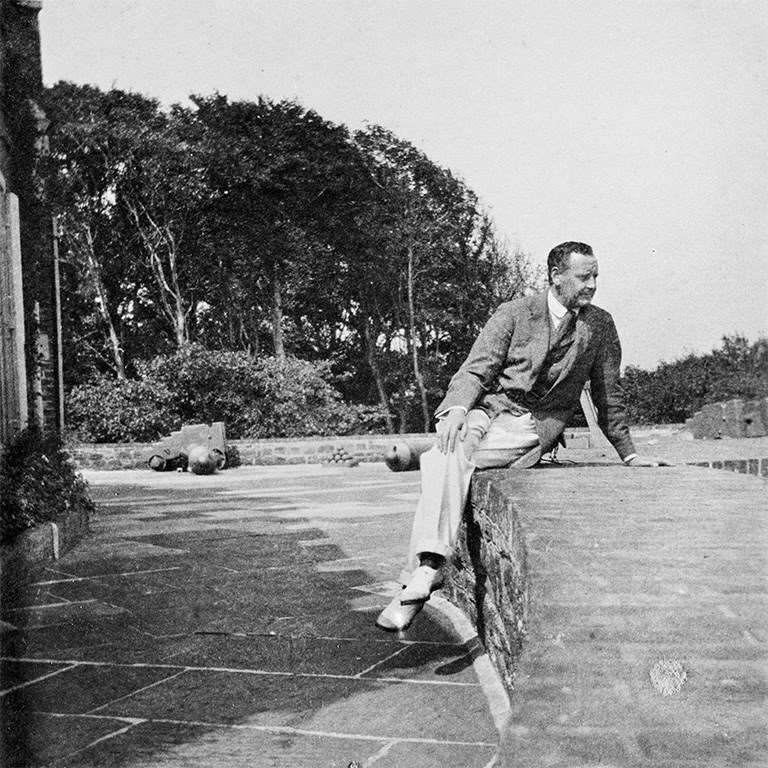
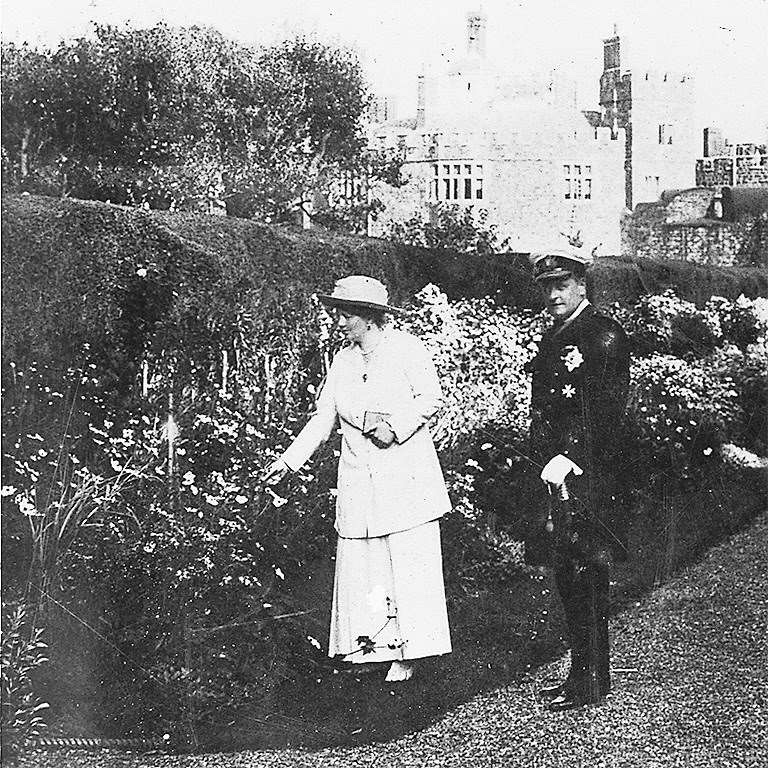
Built in 1540 to guard the English coast against foreign invasions, Walmer Castle is one of Kent’s most prominent landmarks. Since the 18th century it has been the official residence of the Lord Warden of the Cinque Ports. During the 1920s Walmer was home to William Lygon, 7th Earl of Beauchamp, who held lavish homosexual parties at the castle. This led eventually to his dramatic fall from grace, the break-up of his family, and the inspiration for Evelyn Waugh’s most famous novel, Brideshead Revisited.

CABINET MINISTER AND FAMILY MAN

Born in 1872, William Lygon was a well-known public figure from a young age. Succeeding his father as Earl Beauchamp in 1891, he became mayor of Worcester at the age of 23, and was appointed governor of New South Wales, Australia, in 1899. A high-flying figure in the Liberal Party, he rose to become a senior cabinet minister in 1910. He was also appointed First Commissioner of the Office of Works (later English Heritage), in charge of works to royal residences and government buildings.

In 1913, Beauchamp was appointed Lord Warden of the Cinque Ports. He enjoyed the pomp and ceremony that came with the role of Lord Warden: one of his duties was to welcome visiting foreign dignitaries at Dover on behalf of the king. Equally, however, he spent time at Walmer Castle with his family. In 1902, he had married Lettice Grosvenor, sister of Hugh Grosvenor, 2nd Duke of Westminster. Family photographs show Beauchamp, Lettice and their seven children enjoying their surroundings and each other’s company at Walmer.

Lord Beauchamp with five of his children on Walmer Beach in 1915 © Courtesy of Madresfield Estate

PARTY BOY

Beauchamp’s family life appeared conventional. However, during the 1920s he is known to have thrown some rather racy parties at Walmer, to which he invited his high-class friends, along with local fishermen and youths. A hint of their nature is given in the memoirs of Lady Christabel Aberconway, who wrote that:

One Sunday, my host, Lord Jowitt, asked my husband if he and I would like to see one of the famous castles of the Cinque Ports. Delightedly we accepted. … We arrived [at Walmer] and were shown into a garden surrounding a grass tennis court. There was the actor Ernest Thesiger, a friend of mine, nude to the waist and covered with pearls.

The gardens at Walmer Castle

CAUGHT OUT

In 1930 Beauchamp became embroiled in a scandal that would prove disastrous to his career and personal life. He had embarked on a round-the-world tour in August that year, spending two months in Sydney, Australia. He was accompanied by a young valet, who lived with him as his lover. This did not go unnoticed, and Beauchamp’s tastes were reported in the Australian Star newspaper:

The most striking feature of the vice-regal ménage is the youthfulness of its members … Rosy cheeked footmen, clad in liveries of fawn, heavily ornamented in silver and red brocade, with many lanyards of the same hanging in festoons from their broad shoulders, [who] stood in the doorway, and bowed as we passed in … Lord Beauchamp deserves great credit for his taste in footmen.

Following this report, Beauchamp’s brother-in-law, the Duke of Westminster, hired detectives and began to gather evidence of Beauchamp’s activities.

Lord Beauchamp at Walmer Castle in 1925 © Courtesy of Madresfield Estate

A RUINED REPUTATION

The Duke of Westminster was reported to be a bullying, womanising, angry man, once described as ‘nothing but a fatuous, spoilt, ageing playboy’. He had always disliked Beauchamp, jealous of his brother-in-law’s public office and apparent domestic happiness. In addition, the duke was a staunch Tory, whereas Beauchamp was the Liberal Party’s leader in the House of Lords. To ruin Beauchamp would not only satisfy Westminster’s personal vendetta, but would also be politically advantageous.

In 1931 Westminster publicly denounced Beauchamp as a homosexual to George V, who reportedly responded, ‘Why, I thought people like that always shot themselves’. Westminster insisted that Beauchamp be arrested, forcing him into exile.

Hugh Grosvenor, 2nd Duke of Westminster, some time before 1903. Westminster’s jealousy of his brother-in-law led to him denouncing Beauchamp as a homosexual
© National Portrait Gallery, London

EXILE ABROAD

Beauchamp fled first to Germany, where he contemplated suicide, but was dissuaded from it by his son Hugh. He later split his time between Paris, Venice, Sydney and San Francisco – four cities that were relatively tolerant of his sexual orientation.

Meanwhile, Westminster presented his evidence to his sister Lettice, who suffered a nervous breakdown at the news. She submitted a petition for divorce, moved to her brother’s Cheshire estate and took to her bed. The divorce petition described Beauchamp as:

A man of perverted sexual practices, [who] has committed acts of gross indecency with male servants and other male persons and has been guilty of sodomy … throughout the married life … the Respondent habitually committed acts of gross indecency with certain of his male servants.

Lord and Lady Beauchamp on the Broadwalk at Walmer in the 1920s. Lettice petitioned for a divorce upon being told of her husband’s homosexual activity
© Courtesy of Madresfield Estate

FAMILY SUPPORT

Westminster ordered Beauchamp’s children to testify against their father, but they all refused. Though his wife had deserted him, his children’s support never wavered. They shunned their mother and never made peace with her (except the youngest son, Dickie). Westminster became their worst enemy and he let it be known that anyone dealing with the Lygons would be dropped from society. In an extraordinary display of spite, Westminster wrote Beauchamp a short letter, simply stating:

Dear Bugger-in-Law, You got what you deserved. Yours, Westminster.

Cut off from the rest of society, Beauchamp’s children took turns to visit their father abroad. According to Beauchamp’s daughter Sibell, he never grumbled, nor mentioned Westminster again, but grew resigned to his exile.

Beauchamp’s four daughters, Lettice, Dorothy, Mary and Sibell, walking along the Broadwalk in Walmer Castle’s gardens in 1922. Beauchamp’s children all refused to testify against their father when he was accused of homosexuality
© Courtesy of Madresfield Estate

RETURN AND REPRIEVE

It was not until George VI came to the throne in 1936 that the warrant for Beauchamp’s arrest was lifted. Beauchamp returned to England in July 1937. He moved back to Madresfield, the family home, and wasted no time in painting out his wife’s image from a fresco in their personal chapel. The family threw her bust into the house’s moat.

Beauchamp died of cancer in 1938. His various misfortunes inspired Evelyn Waugh’s 1945 novel Brideshead Revisited – the character of Lord Marchmain was based on Beauchamp himself, while his son Hugh proved the inspiration for the ill-fated Sebastian Flyte.

Hugh Lygon lazing on the bastion at Walmer Castle in 1925. Hugh had met Evelyn Waugh while studying at Oxford, becoming the inspiration for the ill-fated Sebastian Flyte in Waugh’s novel ‘Brideshead Revisited’ © Courtesy of Madresfield Estate

Reference

Gay History: The Pink Triangle: From Nazi Label to Symbol of Gay Pride

Pink triangles were originally used in concentration camps to identify gay prisoners.

Before the pink triangle became a worldwide symbol of gay power and pride, it was intended as a badge of shame. In Nazi Germany, a downward-pointing pink triangle was sewn onto the shirts of gay men in concentration camps—to identify and further dehumanize them. It wasn’t until the 1970s that activists would reclaim the symbol as one of liberation.

Homosexuality was technically made illegal in Germany in 1871, but it was rarely enforced until the Nazi Party took power in 1933. As part of their mission to racially and culturally “purify” Germany, the Nazis arrested thousands of LGBT individuals, mostly gay men, whom they viewed as degenerate.

The United States Holocaust Memorial Museum estimates 100,000 gay men were arrested and between 5,000 and 15,000 were placed in concentration camps. Just as Jews were forced to identify themselves with yellow stars, gay men in concentration camps had to wear a large pink triangle. (Brown triangles were used for Romani people, red for political prisoners, green for criminals, blue for immigrants, purple for Jehovah’s Witnesses and black for “asocial” people, including prostitutes and lesbians.)

Homosexual prisoners at the concentration camp at Sachsenhausen, Germany, wearing pink triangles on their uniforms on December 19, 1938.
Homosexual prisoners at the concentration camp at Sachsenhausen, Germany, wearing pink triangles on their uniforms on December 19, 1938. Corbis/Getty Images

At the camps, gay men were treated especially harshly, by guards and fellow prisoners alike. “There was no solidarity for the homosexual prisoners; they belonged to the lowest caste,” Pierre Seel, a gay Holocaust survivor, wrote in his memoir I, Pierre Seel, Deported Homosexual: A Memoir of Nazi Terror.

An estimated 65 percent of gay men in concentration camps died between 1933 and 1945. Even after World War II, both East and West Germany upheld the country’s anti-gay law, and many gays remained incarcerated until the early 1970s. (The law was not officially repealed until 1994.)

The early 1970s was also when the gay rights movement began to emerge in Germany. In 1972, The Men with the Pink Triangle, the first autobiography of a gay concentration camp survivor, was published. The next year, post-war Germany’s first gay rights organization, Homosexuelle Aktion Westberlin (HAW), reclaimed the pink triangle as a symbol of liberation.

“At its core, the pink triangle represented a piece of our German history that still needed to be dealt with,” Peter Hedenström, one of HAW’s founding members said in 2014.

Memorial plaques for homosexuals, Jehovah's Witnesses and Wehrmacht deserters are placed where once stood one of the demolished barracks in Buchenwald concentration camp near Weimar, Germany.
Memorial plaques for homosexuals, Jehovah’s Witnesses and Wehrmacht deserters are placed where once stood one of the demolished barracks in Buchenwald concentration camp near Weimar, Germany. Horacio Villalobos/Corbis/Getty Images

Afterwards, it began cropping up in other LGBT circles around the world. In 1986, six New York City activists created a poster with the words SILENCE = DEATH and a bright pink upward-facing triangle, meant to call attention to the AIDs crisis that was decimating populations of gay men across the country. The poster was soon adopted by the organization ACT UP and became a lasting symbol of the AIDS advocacy movement.

The triangle continues to figure prominently in imaging for various LGBT organizations and events. Since the 1990s, signs bearing a pink triangle enclosed in a green circle have been used as a symbol identifying “safe spaces” for queer people. There are pink triangle memorials in San Francisco and Sydney, which honor LGBT victims of the Holocaust. In 2018, for Pride Month, Nike released acollection of shoes featuring pink triangles.

Although the pink triangle has been reclaimed as an empowering symbol, it is ultimately a reminder to never forget the past—and to recognize the persecution LGBT people still face around the world.

Reference

Buddhism 101: Ten Famous Buddhas: Where They Came From; What They Represent

01of 12

1. The Giant Faces of Bayon 

The stone faces of Angkor Thom
The stone faces of Angkor Thom are known for their smiling serenity.Mike Harrington / Getty Images

Strictly speaking, this isn’t just one Buddha; it is 200 or so faces decorating the towers of the Bayon, a temple in Cambodia very near the famous Angkor Wat. The Bayon probably was constructed at the end of the 12th century.

Although the faces are often assumed to be of the Buddha, they may have been intended to represent Avalokiteshvara Bodhisattva. Scholars believe they were all made in the likeness of King Jayavarman VII (1181-1219), the Khmer monarch who built the Angkor Thom temple complex that contains the Bayon temple and the many faces.

2. The Standing Buddha of Gandhara 

Gandhara_Buddha_-tnm.jpeg
Standing Buddha of Gandhara, Tokyo National Museum. Public Domain, via Wikipedia Commons

This exquisite Buddha was found near modern-day Peshawar, Pakistan. In ancient times, much of what is now Afghanistan and Pakistan was a Buddhist kingdom called Gandhara. Gandhara is remembered today for its art, particularly while being ruled by the Kushan Dynasty, from the 1st century BCE to the 3rd century CE. The first depictions of the Buddha in human form were made by the artists of Kushan Gandhara.

This Buddha was sculpted in the 2nd or 3rd century CE and today is in the Tokyo National Museum. The style of the sculpture is sometimes described as Greek, but the Tokyo National Museum insists it is Roman.

3. A Head of Buddha from Afghanistan 

Head of Buddha from Afghanistan
Head of Buddha from Afghanistan, 300-400 CE.Michel Wal / Wikipedia / GNU Free Documentation License

This head, believed to represent Shakyamuni Buddha, was excavated from an archaeological site in Hadda, Afghanistan, which is ten kilometers south of present-day Jalalabad. It probably was made in the 4th or 5th century CE, although the style is similar to the Graeco-Roman art of earlier times. 

The head now is in the Victoria and Albert Museum in London. Museum curators say the head is made of stucco and was once painted. It’s believed the original statue was attached to a wall and was part of a narrative panel.

4. The Fasting Buddha of Pakistan 

Fasting buddha at lahore museum
The “Fasting Buddha,” a sculpture of ancient Gandhara, was found in Pakistan.Patrik Germann / Wikipedia Commons, Creative Commons License

The “Fasting Buddha” is another masterpiece from ancient Gandhara that was excavated in Sikri, Pakistan, in the 19th century. It probably dates to the 2nd century CE. The sculpture was donated to the Lahore Museum of Pakistan in 1894, where it is still displayed.

Strictly speaking, the statue should be called the “Fasting Bodhisattva” or the “Fasting Siddhartha,” since it portrays an event that took place before the Buddha’s enlightenment. On his spiritual quest, Siddhartha Gautama tried many aesthetic practices, including starving himself until he resembled a living skeleton. Eventually, he realized that mental cultivation and insight, not bodily deprivation, would lead to enlightenment.

5. The Tree Root Buddha of Ayuthaya 

Ayutthaya-Buddha-Head.jpg
© Prachanart Viriyaraks / Contributor / Getty Images

This quirky Buddha appears to be growing from tree roots. This stone head is near a 14th-century temple called Wat Mahathat in Ayutthaya, which was once the capital of Siam, and is now in Thailand. In 1767 a Burmese army attacked Ayutthaya and reduced much of it to ruins, including the temple. Burmese soldier vandalized the temple by cutting off the heads of the Buddhas. 

The temple was abandoned until the 1950s when the government of Thailandbegan to restore it. This head was discovered outside the temple grounds, tree roots growing around it.

Another View of the Tree Root Buddha 

Ayutthaya Buddha Head closer
A closer look at the Ayutthaya Buddha. © GUIZIOU Franck / hemis.fr/ Getty Images

The tree root Buddha sometimes called the Ayuthaya Buddha, is a popular subject of Thai postcards and travel guidebooks. It is such a popular tourist attraction it must be watched by a guard, to prevent visitors from touching it.

6. The Longmen Grottoes Vairocana 

longmen Vairocana
Vairocana and Other Figures at Longmen Grottoes. © Feifei Cui-Paoluzzo / Getty Images

The Longmen Grottoes of Henan Province, China, are a formation of limestone rock carved into tens of thousands of statues over a period of many centuries, beginning about 493 CE. The large (17.14 meters) Vairocana Buddha that dominates the Fengxian Cave was carved in the 7th century. It is regarded to this day as one of the most beautiful representations of Chinese Buddhist art. To get an idea of the size of the figures, find the man in the blue jacket beneath them.

Face of the Longmen Grottoes Vairocana Buddha 

Vairocana Buddha
This face of Vairocana may have been modeled after the Empress Wu Zetian. © Luis Castaneda Inc. / The Image Bank

Here is a closer look at the face of the Longmen Grottoes Vairocana Buddha. This section of the grottoes was carved during the life of the Empress Wu Zetian (625-705 CE). An inscription at the base of the Vairocana honors the Empress, and it is said that the face of the Empress served as the model for the face of Vairocana.

7. The Giant Leshan Buddha 

Leshan-Buddha.jpg
Tourists flock around the giant Buddha of Leshan, China. © Marius Hepp / EyeEm / Getty Images

He’s not the most beautiful Buddha, but the giant Maitreya Buddha of Leshan, China, does make an impression. He’s held the record for world’s largest seated stone Buddha for more than 13 centuries. He is 233 feet (about 71 meters) tall. His shoulders are about 92 feet (28 meters) wide. His fingers are 11 feet (3 meters) long.

The giant Buddha sits at the confluence of three rivers — the Dadu, Qingyi, and Minjiang. According to legend, a monk named Hai Tong decided to erect a Buddha to placate water spirits that were causing boat accidents. Hai Tong begged for 20 years to raise the money to carve the Buddha. Work began in 713 CE and was completed in 803 CE.

8. The Seated Buddha of Gal Vihara 

Gal-Vihara-Sitting-Buddha.jpg
The Buddhas of Gal Vihara remain popular with pilgrims and tourists alike. © Peter Barritt / Getty Images

Gal Vihara is a rock temple in north-central Sri Lanka that was built in the 12th century. Although it has fallen into ruin, Gal Vihara today is a popular destination for tourists and pilgrims. The dominant feature is a giant granite block, from which four images of the Buddha were carved. Archaeologists say the four figures were originally covered in gold. The seated Buddha in the photograph is over 15 feet tall.

9. The Kamakura Daibutsu, or Great Buddha of Kamakura 

kamakura.jpg
The Great Buddha (Daibutsu) of Kamakura, Honshu, Kanagawa Japan. © Peter Wilson / Getty Images

He isn’t the biggest Buddha in Japan​ or the oldest, but the Daibutsu — Great Buddha — of Kamakura has long been the most iconic Buddha in Japan. Japanese artists and poets have celebrated this Buddha for centuries; Rudyard Kipling also made the Kamakura Daibutsu the subject of a poem, and the American artist John La Farge painted a popular watercolor of the Daibutsu in 1887 that introduced him to the West.

The bronze statue, believed to have been made in 1252, depicts Amitabha Buddha, called Amida Butsu in Japan.

10. The Tian Tan Buddha 

Tian Tan Buddha
The Tian Tan Buddha is the world’s tallest outdoor seated bronze Buddha. It is located at Ngong Ping, Lantau Island, in Hong Kong. Oye-sensei, Flickr.com, Creative Commons License

The tenth Buddha in our list is the only modern one. The Tian Tan Buddha of Hong Kong was completed in 1993. But he’s quickly turning into one of the most photographed Buddhas in the world. The Tian Tan Buddha is 110 feet (34 meters) tall and weighs 250 metric tons (280 short tons). It is located at Ngong Ping, Lantau Island, in Hong Kong. The statue is called the “Tian Tan” because its base is a replica of Tian Tan, the Temple of Heaven in Beijing.

The Tian Tan Buddha’s right hand is raised to remove affliction. His left hand rests on his knee, representing happiness. It is said that on a clear day the Tian Tan Buddha can be seen as far away as Macau, which is 40 miles west of Hong Kong.

He’s no rival in size to the stone Leshan Buddha, but the Tian Tan Buddha is the largest outdoor seated bronze Buddha in the world. The massive statue took ten years to cast.

Reference

  • O’Brien, Barbara. “Ten Famous Buddhas: Where They Came From; What They Represent.” Learn Religions, Aug. 25, 2020, learnreligions.com/famous-buddhas-where-they-came-from-what-they-represent-449986.

Gay History: Darlinghurst’s Green Park Hotel Was Once The Home Of Sydney’s Bohemian Community

The Green Park Hotel, Darlinghurst, 2017. Picture: Mick Roberts Collection

Gus Wangenheim, a man about town

JUST around the corner from Maccabean Hall, built in 1923 to commemorate Jewish men and women who served in the Great War, and where the Sydney Jewish Museum is housed at Darlinghurst, trades the Green Park Hotel.

Like Maccabean Hall, the Green Park Hotel has a link to Sydney’s Jewish history, along with the harbour city’s early bohemian community.

The Green Park Hotel, established in 1879, was bought by one of Sydney’s wealthiest Jewish families, Gus and Betsey Wangenheim in 1881.

The Wangenheim family would later replace the two story brick pub with the magnificent, heritage listed hotel, with its splendid long bar, currently sitting at the corner of Liverpool and Victoria Streets in Darlinghurst in 1893. 

The history of the Green Park Hotel begins in the early days of white settlement, when a 28-year-old Gustave Wangenheim arrived in Sydney Town, from Germany, in 1853.

Gus, as he was known, was one of Sydney’s most colourful characters, a cartoonist, painter, comedian and publican. He opened his first pub, the Post Office Hotel in York Street, Sydney in 1854.

In 1855 he married a fellow Jew, 21-year-old Elizabeth Simmons, daughter of James Simmons, a successful trader and brother of the proprietor of the Jerusalem Warehouse, now the site of David Jones department store.

Gus was also the foundation president of the NSW German Club, established in 1858, which hosted monthly balls at their premises in Pitt Street, Sydney. The Club was described by the Sydney Morning Herald as combining the social with the intellectual, and supplied “convivial pleasures and rational edification in a wholesome promiscuous form”.

A much-loved bohemian, who’s “humour was irresistible”, Gus could “reproduce characteristics with a happy exaggeration that few other artists could effect”. His artworks were a feature of his pubs, often drawn directly onto the walls. Besides an artist and comedian, he was also a splendid fencer and boxer, and spoke fluently several languages.

post office hotel york street sydney
Gus Wangenheim’s first pub, the Post Office Hotel, York Street Sydney. Picture: Supplied

Just five years into his hospitality business, the Jewish publican suffered a major set-back after he was declared insolvent. He disappeared from Sydney social life in 1858, taking his wife Elizabeth and newly born child north to a Port Curtis, near today’s Gladstone in Queensland. Gus’s inability to maintain a healthy cash flow in business was a constant battle throughout his life, and he was declared insolvent at least four or five times.

After his departure from Sydney, another Jewish businessman, Saul Lyons offered a reward to “anyone who will prosecute to conviction” Gus “or the party or parties who took the passage for him, and assisted in his escape”.

The advertisement stated that he had “absconded from his creditors… in assumed name, with his wife and child, in the Maid of Judah”. Gus eventually made good his creditors, and returned to Sydney during the 1860s, where he took the reins of the Café de Paris, in King Street, and continued his “amusing repertoire of musical comicalities” at the Prince of Wales Opera House.

ELIZABETH WANGENHEIM
Elizabeth Wangenheim. Picture: Supplied

While the Wangenheims ran the Café de Paris, it was said to be “a picturesque resort of Bohemians, where the Duke of Edinburgh dined more than once while in Sydney”.

Gus and Betsey entered a new business venture in the 1870s, when they built Wangenheim’s Hotel, near the junction of Castlereagh-street with King-street. The hotel became an artistic landmark, with Wangenheims’ customers – the “bohemians and prominent members of all the artistic professions” – following their charismatic publican to his new business venture.

In a series of history articles published in the Truth during 1912, the author, “Old Chum”, revealed it was Betsey who was the brains behind the business of the Wangenheims’ business success.

The remaining interesting item in Castlereagh-street, north of King-street, was a public house, opened in 1875 by Gus Wangenheim, who had previously kept a hotel in King-street. In the Castlereagh-street house, the walls and tables in the bar, every available inch, were decored with character sketches by Gus, who was not half a bad artist. About the year 1881 the house passed to Richmond Thatcher, a clever Bohemian of much literary talent, but neither Dick Thatcher nor Gus Wangenheim was made of the stuff that successful publicans are composed of. The Bohemian strain in the character of each, good fellows though they were, was against the accumulation of large bank balances. Mr Wangenheim, however, was not entirely dependent on his exertions as a hotel-keeper; his wife – who, I believe, is still living – being the daughter of a very wealthy citizeness. Richmond Thatcher could do much better with his pen than with a beer engine.

Wangenheim’s Hotel later became known as the Bulletin Hotel and in 1885 the Burlington. It was demolished sometime before 1905.

A year before Gus’ death, the Wangenheims invested in a brick corner pub with a 90 feet frontage to Liverpool Street and 30 feet facing Victoria Streets, in Darlinghurst. Established in 1879, the slate roofed Green Park Hotel, with bar, cellar, two parlours, hall, five bedrooms and kitchen, had been trading for less than three years, when the Wangenheims added to their growing property portfolio in March 1881. The Green Park Hotel provided £3 14s a week in rent for the Wangenheims.

gus drawing
A caricature of Gus Wangenheim by Sydney Morning Herald cartoonist and reporter, Percy Tanner, C1870. Picture: State Library of NSW.

The death of the flamboyant publican at the age of 57 in 1882 came on the heels of the demise of another of Sydney’s bohemian identities, the well-known poet, Henry Kendall. Gus’ death reportedly left a void in the social life of Sydney that “can never be filled up”. The Queenslander reported on Saturday August 12 1882:

Following close upon the demise of Kendall was the sudden taking off of poor Gus Wangenheim. Gus was one of the identities of Sydney life. Not to have known this genial German was to argue yourself unknown. He was a genuine artist, though his range of accomplishments was not by any means restricted to the pencil. Art, however, was his forte. As his thoroughly genial and withal kindly disposition invariably led him to look upon the humorous side of everything, his genius naturally affected caricature, and as a caricaturist Wangenheim can scarcely be said to have had a superior… When he was hotel-keeping the walls of his hostelry were literally covered with caricatures of politicians, actors, and other celebrities, and these curious sketches were the admiration and the delight of the host of frequenters of his popular “pub” in Castlereagh-Street; but the vandals who succeeded Gus knew not their worth, and remorselessly rubbed them out – only awakening to a sense of their value when the gifted caricaturist himself was rubbed out. Gus was a competent musical and dramatic critic in addition to his qualities as an artist. Miss Emma Wangenheim, who is, I believe, pretty well known in Queensland, was his daughter, and doubtless inherited such lyrical gifts as nature may have endowed her with from her paternal relative. Perhaps, though, after all, Gus Wangenheim will be longest remembered for his social qualities – his homely, easy, unaffected conversational powers being the delight of all his companions. There was just the faintest approach to egotism in Gus Wangenheim. Egotism, perhaps, is too offensive a word to use. Gus’ self-appreciation, as it may be more fitly termed, may be said to have resembled the quality of egotism much in the same way as the mist resembles the rain.” So far from its being objectionable it really constituted one of the charms of his conversation, and was thus, in its way, as pardonable and as tolerable as was the egotism of Bousseau. Now that he is gone, all who knew him feel that a void has been created in the social life of Sydney, which at any rate, as far as the present generation is concerned, can never be filled up. 

The Sydney Evening News reported the artistic publican’s death on August 4 1882:

Death of Mr. Gus Wangenheim.

People who frequent the town at night were yesterday startled by a report that Mr. Wangenheim, popularly called Gus Wangenheim, the well-known caricaturist, had “dropped down dead.” The rumour was not credited at first, as one of a similar character, that turned out to, be a canard, had been circulated before. Unfortunately, however, it is only too true; for the clever, genial, loveable, “man about town,” died suddenly at his residence, Pendennis, Lower William-street, Woolloomooloo, last evening, shortly after 5. Gas, may be said to have “passed away” rather than died. He was out at Waverley with his wife in the afternoon, and on their return, had a cup of cocoa, after which he went on the balcony, where he sat down and smoked a cigar. That finished, he took a book and commenced to read. Mrs. Wangenheim noticed that he put it down shortly afterwards, and thinking he slept told one of the children not to make a noise and ‘wake pa’. A few moments afterwards noticing that his head was very much to one side she looked closely at him, and to her horror found that he was dead. His head then was cold, the eyes were glassy and he must have died almost instantaneously. His hands were folded, and there was not the slightest trace of suffering on the face. The deceased man had been before the public for some years as a hotel-keeper and a sketcher and caricaturist of considerable power and facility. Though not so good at likenesses as Lascelles or Clint, Gus’ humour was irresistible, and he could reproduce characteristics with a happy exaggeration that few other artists could effect. The best collections of his drawings are on the walls of the Bulletin Hotel, which he kept for several years. Unfortunately the vandal landlord in possession at present papered over a whole room full. Besides being an artist, Wangenheim possessed a marked ability in other ways. He was a splendid fencer and boxer, and spoke several languages with fluency but he will, doubtless, be longest remembered for his genial ways and loveable nature and disuation. Of late he gave up all other business to look after the princely estate – chiefly town property— of his mother-in-law, Mrs. Simmons. Though forced at times to assert the rights of landlady against tenants, he never made an enemy; and it is said that on the few occasions when he was “in possession,” the folks levied on never had such a time of it in their lives. As a raconteur, who could illustrate his stories with lightning like rapidity, Gus had no superior and few equals. Mr. Wangenheim was a native of Germany, and about 50 years of age.

Green Park Hotel Darlinghurst 1930
The Green Park Hotel, Darlinghurst 1930. Picture: Australian National University, Noel Butlin Archives.

After Elizabeth’s wealthy mother died at the age of 98 in 1891, she decided to redevelop the Darlinghurst property.

The police had objected to the renewal of the license of the Green Park Hotel in July 1891. The pub was repeatedly falling foul of the law for Sunday trading, and allowing gambling on the premises. The pub was dilapidated and the court ruled it was unsuitable to trade as a pub.

Elizabeth, who was now aged 58, applied for a conditional publican’s license for a new pub for the site in October 1891.

The police opposed the application on the ground that there were at present more than sufficient pubs in the neighbourhood, there being four hotels within 250 yards of the proposed site.

The police argued that owing the number of hotels, in order to make a living publicans were resorting to Sunday trading and selling liquor at prohibited hours. Inspector Bremner said that since the Green Park Hotel had closed in June 1891, there had been a marked improvement in the neighbourhood. Interestingly the United Licensed Victuallers’ Association also opposed the application.

In support of the application, the court heard that the existing pubs in the area were of an inferior character, and that a first class hotel, such as Elizabeth’s was urgently. The existing hotels were merely drinking shops, Elizabeth’s lawyers argued.

The wealthy widow was granted a condition license for her proposed £2000 hotel after her legal team explained how it would bring a superior quality business to Darlinghurst. Elizabeth was granted confirmation of the conditional license after the completion of the hotel on June 29 1893. She remained as licensee for a year, before handing the reins over to Fred Moorehouse in 1893.

Several licensees were at the helm of the Green Park Hotel over the next 32 years during Elizabeth Wangenheim’s ownership. In 1921 professional boxer, Sid Godfrey became host of the Green Park Hotel. He won the Australian featherweight title fight in 1917, and earned £20,000 prize money during his boxing career. Out of 109 professional fights he won 79 (41 by knockout) and drew 12.

Godfrey had a short stay at the Green Park Hotel, and went on to host the Bald Faced Stag, Leichhardt, the Carrington at Petersham, and the Horse and Jockey at Homebush. He retired from business in 1957 and lived at Bronte. He died in 1965.

Betsey or Elizabeth Wangenheim died on August 8 1925, at the age of 91 and was buried in the Jewish section of Rookwood Cemetery. The Blue Mountain Echo reported on Friday August 14 1925: 

OBITUARY

MRS. ELIZABETH WANGENHEIM.

On Saturday last there passed away an old and respected resident of Katoomba in the person of Mrs Elizabeth Wangenheim, of ‘Thorley,’ Lurline Street, at the ripe age of 90. The late Mrs. Wangenheim was a daughter of the late Mr. James Simmons, who was the first importer of general goods to Australia. He chartered a special fleet of ships for this purpose, and his enterprise was rewarded handsomely. Later Mr. Simmons went into the hotel business, and also dabbled greatly in land speculation. The present site of David Jones’ huge emporium at one time was occupied by the famous ‘Jerusalem Store’ of Mr. Simmons. In 1855 the late Mrs. Wangenheim married Mr. Gustavus Wangenhiem, who also was an hotel licensee. Subsequent, to his death, she continued in the hotel business, and displayed great business acumen. She retired from active business nearly half a century ago, and during the latter days of her life resided in her palatial home at Katoomba. The deceased lady left one son (Mr. Joseph Wangenheim), and three daughters, (Mrs. J. F. Gavin, now in America; Mrs. Fred Morris, Elizabeth Bay; and Mrs. J. R. Stewart, Tahmoor, near Picton). She also was the mother of the late Emma Wangenheim (Mrs. J. A. Carroll) well known in operatic circles, and the grandmother of Mrs. Cliff Hardaker. She was interred in the Jewish section of Rookwood Cemetery on Sunday last, the last rites being performed by Rev. M. Einfield.

At her death Elizabeth was considered to be the wealthiest woman in Sydney, with a probate of £164,376. Her son Joseph Moritz Wangenheim inherited the Green Park Hotel, which was to be held in trust after his death for the benefit of his children. However, it seems Joseph followed in his father’s foot steps, and not his mothers. The hotel was mortgaged to Tooth and Company during the late 1920s, and by 1930 the family had lost the freehold of the Green Park Hotel to the brewery giant.

 Green Park Hotel, Darlinghurst 1949. Photo: ANU, Noel Butlin Archives.

Green Park Hotel 1939. Photo: ANU, Noel Butlin Archives.

Footnote

The Sydney Morning Herald reports that the Green Park Hotel is to close for business in December 2020. The newspaper reported on November 24 2020:

“One of Sydney’s most historic inner city pubs will call last drinks this Christmas, before becoming a mental health clinic next year. The Green Park Hotel on Victoria Rd, Darlinghurst has been purchased by St Vincent’s Hospital as part of a planned expansion of its mental health and community outreach services. Affectionately known by locals as the ‘Greeny’, the hotel has been pulling beers for the past 127 years and has long been beloved by the LGBTQI community and a landmark venue for Mardi Gras celebrations. Hospitality group Solotel, which has owned the pub for more than 30 years, finalised the sale at between $5 to $10 million to the trustees of St Vincent’s Hospital on Monday, before staff were told on Tuesday morning.”

Reference

Gay History: From Stonewall To The White Horse: The Bay Area’s Part In Uprisings That Changed The World

Flyer for Gay Liberation Front protest at the Examiner Building October 31, 1969, Courtesy of the GLBT Historical Society

“San Francisco is a refugee camp for homosexuals. We have fled here from every part of the nation, and like refugees elsewhere, we came not because it is so great here, but because it was so bad there. By the tens of thousands, we fled small towns where tobe ourselves would endanger our jobs and any hope of a decent life….”

Refugees from Amerika: A Gay Manifesto — Carl Wittman, December, 1969

Cover of Gay Sunshine, October 1970

By the time of the first night of protests at New York City’s Stonewall Inn, San Francisco had experienced months of demonstrations related to gay rights that would continue for the next few years. 

Unlike Stonewall, the disturbances in San Francisco started over job rights, and a bar was not involved. But because the disturbances spread and issues multiplied, they would eventually include at least three bars, including Oakland’s White Horse.

The people who lit the fuse were recent arrivals. Gale Chester Whittington came from Denver in 1968 and Leo Laurence from Indianapolis in 1966. 

Whittington got a job as an accounting clerk at the States Steamship Company (320 California). 

Laurence was a journalist for the underground newspaper Berkeley Barb and the editor of the Society for Individual Rights magazine Vector.They met when Whittington volunteered to write for Vector.

A Vector photographer shared a photo from a shoot of Laurence and Whittington with The Barb. It was paired with an article from March 23, 1969, titled “Homo Revolt: Don’t Hide it.” 

The article covered Laurence’s editorial call for gay revolution in Vector. Since the Barb had sex ads, it was read by several of Whittington’s straight colleagues at the shipping company. The day it was published, Whittington was fired. Because of the editorial Laurence was removed as editor of Vector.

Homo Revolt, Dont Hide It, Berkeley Barb, March 28, 1969

Whittington and Laurence then formed the Committee for Homosexual Freedom. Max Scheer, editor of The Barb, promised to cover their actions. On April 9, 1969 the picketing of the steamship company began with signs saying, “Let Gays Live,” “Free The Queers” and “Freedom for Homos Now.” 

The protests continued for months. In May, The Advocate picked up coverage of the protests and by June the Rev. Troy Perry had begun a sympathy strike at the company’s Los Angeles offices. 

Ultimately the protests didn’t succeed in getting Whittington’s job back, but because the San Francisco Chronicle, The Advocate and The Barb covered the protest (on an almost weekly basis) it spread the word nationally and CHF grew. 

In Whittington’s autobiographical work, Beyond Normal: The Birth of Gay Pride, he mentions that Hibiscus and Lendon Sadler (of the Cockettes) and Carl Wittman (author of Refugees from Amerika: A Gay Manifesto) all took part in early CHF protests. Wittman read early drafts of his manifesto to the group.

By May protests spread to a second site: Tower Records. Employee Frank Denaro was fired after a security guard reported to management that he had returned the wink of a male customer. Unlike the steamship company, however, the record store was swayed by public opinion and by June the management offered Denaro his job back.

States Steamship Protest, Berkeley Barb, April 25 – May 1, 1969

Purple rain
News about what was happening in San Francisco continued to spread. Berkeley Tribeprinted a letter saying Laurence’s articles, reprinted in a Minneapolis campus newspaper, had inspired a class in Homosexual Revolution from their Free University. In Beyond Normal, Whittington relates he received a telegram from New Yorkers who were at Stonewall and had been inspired by articles in The Barb. In October, both Laurence and Whittington were interviewed in the L.A. magazine Tangents.

By October 1969, Gay Liberation Front chapters opened in Berkeley and San Francisco. Two protests on Halloween show both coordination and fragmentation between new and old organizations. 

At the first, called “Friday of the Purple Hand,” the Society for Individual Rights worked with CHF and both GLF groups to protest the editorial policies of the San Francisco Examiner. Earlier that week, Robert Patterson of the Examiner had written “The Dreary Revels of S.F. ‘Gay’ Clubs” which referred to gays as “semi-males” and lesbians as “women who aren’t exactly women” as well as referring to both as deviates.

Around 100 protesters picketed the Examiner building, and then had printers ink dumped on them from an upper floor by Examiner employees. The protesters used the ink to make purple hand prints all over the building (which gave the protest its name). The protesters were then attacked by the police Tactical Squad. Twelve people were injured and fifteen were arrested.

Friday of the Purple Hand coverage, San Francisco Free Press

The second event that day was a protest of the Beaux Arts Ball in the Merchandise Mart by Gay Guerrilla Theater and the Gay Liberation Coalition. Laurence reported in the Berkeley Tribe that the protest was focused on the acceptance of laws that only allowed drag on Halloween and New Year’s. He reported:

“I don’t dig drag myself (can’t imagine being a bearded lady)…but by God, I do feel the drags should have the right to do their thing; not just twice a year, but every day; not just at a drag ball, but at work, school, church and on the streets.”

This was among the first confrontations between older gay organizations and newer, more radical groups. Others included a protest of a S.I.R. dinner in February 1972 where Willie Brown was speaking on reforming sex laws (protested because of the cover charge of $12) and a takeover of the North American Conference of Homophile Organizations (NACHO) by the Gay Liberation Front in August 1970. GLF demanded that NACHO affirm its support of the Black Panther Party and Women’s Liberation and organize a national gay strike.

Clearly there was a generational difference between members of homophile organizations and the gay liberationists. Many of the younger generation had ties to the New Left and anti-war movements. 

Laurence had been in Chicago for the ’68 Democratic convention and Wittman had written for the SDS before, for example. GLF members formed a gay contingent for the Nov. 15, 1969 Moratorium March Against the War. And by and large they read the underground press, not the gay press.

Demands for White Horse Protest, Gay Sunshine, October 1970

Horse sense
The most dramatic confrontation between gay liberationists and gay bars came at the White Horse Bar in Oakland. Konstantin Berlandt, a long-time gay activist in Berkeley, was thrown out of the bar for selling Gay Sunshine by the owner Joe Johansen. The Gay Sunshine collective worked with the Berkeley GLF and picketed the bar. A list of demands included one that patrons be allowed to touch one another and slow dance. Within a week the bar capitulated to the protesters.

The White Horse wasn’t the only bar to raise the ire of liberationists.

Leonarda’s also refused to sell Gay Sunshineand a boycott was suggested (it’s hard to know how serious to take this, as the underground press kept reporting the bar’s name as “Leonardo’s”). The Stud also upset writers at the Berkeley Tribe by checking IDs at the door. They may, however, have just been opposed to bars as institutions. The article in the Tribesuggested:

“The bars can’t be liberated, they must be destroyed. They rip off our money, keep us in ghettos playing the same old weary games thinking that we are satisfied, and maintain all the divisions in Amerika — women and men, gay women and gay men, black and white, young and old. The Stud mentality in our heads has to be rooted out and killed too.”

Ultimately it was not the bars but the gay liberationists that disappeared as the 1970s progressed. I asked Gary Alinder, who was a member of Berkeley’s GLF, about burnout and the disappearance of Gay Lib in the ’70s.

“It evolved,” he said. “Gay liberation was a sudden uprising. Most of us were anti-organization. It was not meant to stay around for a long time. It was a burst of energy — an explosion. A second generation would come along that was more organized. But the message — to make people happy in themselves and come out — was valid.”

That burst of energy had a massive effect — it spread through LGBT organizations with programs like gay rap sessions to campuses across the country and created an explosion of new publications. Those publications and organizations did reach people. As a teen who picked up the Detroit Gay Liberator in the early ’70s, and who attended a gay rap meeting on my college campus, I can testify that those of us who followed were grateful for the work of the Stonewall generation.

Reference