When many Westerners think of “Buddha,” usually they don’t visualize the Buddha of history, meditating or teaching. This “true” Buddha is known more completely as Gautama Buddha or Shakyamuni Buddha and is almost always depicted in deep meditation or contemplation. The image is very often of a very thin individual with a serious though the sublimely peaceful expression on his face.
The Laughing Buddha
Most Westerners, though, think of a fat, bald, jolly character called “The Laughing Buddha” when they think of the Buddha. Just where did this figure come from?
The Laughing Buddha emerged from Chinese folktales of the 10th century. The original stories of the Laughing Buddha centered on a Ch’an monk named Ch’i-t’zu, or Qieci, from Fenghua, in what is now the province of Zhejiang. Ch’i-t’zu was an eccentric but much-loved character who worked small wonders, such as predicting the weather. Chinese history assigned the date of 907-923 CE to Ch’t’zu’s life, which means he lived considerably later than the historical Shakyamuni, the true Buddha.
Maitreya Buddha
According to tradition, just before Ch’i-t’zu died, he revealed himself to be an incarnation of Maitreya Buddha. Maitreya is named in the Tripitaka as the Buddha of a future age. Ch’i-t’zu’s last words were:
Maitreya, true Maitreya Reborn innumerable times From time to time manifested among men The men of the age do not recognize him.
Pu-tai, Protector of Children
The tales of Ch’i-t’zu spread throughout China, and he came to be called Pu-tai (Budai), which means “hempen sack.” He carries a sack with him full of good things, such as sweets for children, and he is often pictured with children. Pu-tai represents happiness, generosity and wealth, and he is a protector of children as well as of the poor and the weak.
Today, a statue of Pu-tai can often be found near the entrance of Chinese Buddhist temples. The tradition of rubbing Pu-tai’s belly for good luck is a folk practice, however, not a genuine Buddhist teaching. It is indicative of Buddhism’s broad tolerance of diversity that this laughing Buddha of folklore is accepted into the official practice. For Buddhists, any quality that represents Buddha-nature is to be encouraged, and the folklore of the kind, laughing Buddha is not regarded as any kind of sacrilege, even though people unwittingly may confuse him with Shakyamuni Buddha.
An Ideal Enlightened Master
Pu-tai also is associated with the last panel of the Ten Ox-herding Pictures. These are 10 images that represent stages of enlightenment in Ch’an (Zen) Buddhism. The last panel shows an enlightened master who enters towns and marketplaces to give to ordinary people the blessings of enlightenment.
Pu-tai followed the spread of Buddhism into other parts of Asia. In Japan, he became one of the Seven Lucky Gods of Shinto and is called Hotei. He also was incorporated into Chinese Taoism as a deity of abundance.
Reference
O’Brien, Barbara. “The Laughing Buddha.” Learn Religions, Aug. 25, 2020, learnreligions.com/the-laughing-buddha-449784.
When Hachikō’s owner failed to come home from work one day, the faithful dog returned to his master’s train station the day after just to wait for him. He did this every day for nearly a decade.
Hachikō the dog was more than a pet. As the canine companion to a university professor, Hachikō patiently waited his owner’s return from work at their local train station each evening.
But when the professor died suddenly one day at work, Hachikō was left waiting at the station — for nearly a decade. Every day after his master passed, Hachikō the dog returned to the train station, often to the chagrin of the employees who worked there. But his fidelity soon won them over, and he became an international sensation and a symbol of loyalty.
This is his story.
When Hachikō Met Ueno
This statue commemorates the meeting of Hachikō and his master.
Hachikō the golden brown Akita was born on Nov. 10, 1923, on a farm located in Japan’s Akita Prefecture.
In 1924, Professor Hidesaburō Ueno, who taught in the agriculture department at Tokyo Imperial University, acquired the puppy and brought him to live with him in the Shibuya neighborhood of Tokyo.
The pair followed the same routine every day: In the morning Ueno would walk to the Shibuya Station with Hachikō and take the train to work. After finishing the day’s classes, he would take the train back and return to the station at 3 p.m. on the dot, where Hachikō would be waiting to accompany him on the walk home.
Shibuya Station in the 1920s, where Hachikō would meet his master.
The pair kept up this schedule religiously until one day in May 1925 when Professor Ueno suffered a fatal brain hemorrhage while teaching.
That same day, Hachikō showed up at 3 p.m. as usual, but his beloved owner never got off the train.
Despite this disruption in his routine, Hachikō returned the next day at the same time, hoping that Ueno would be there to meet him. Of course, the professor failed to return home once again, but his loyal Akita never gave up hope.
Becoming A National Sensation
Hachikō was only one of 30 purebred Akitas on record at the time.
Hachikō was reportedly given away after his master’s death, but he regularly ran off to Shibuya Station at 3 p.m. hoping to meet the professor. Soon, the lone dog began to draw the attention of other commuters.
At first, the station workers were not all that friendly to Hachikō, but his fidelity won them over. Soon, station employees began to bring treats for the devoted canine and sometimes sat beside him to keep him company.
The days turned into weeks, then months, then years, and still Hachikō returned to the station each day to wait. His presence had a great impact on the local community of Shibuya and he became something of an icon.
In fact, one of Professor Ueno’s former students, Hirokichi Saito, who also happened to be an expert on the Akita breed, got wind of Hachikō’s routine.
He decided to take the train to Shibuya to see for himself if his professor’s pet would still be waiting.
When he arrived, he saw Hachikō there, as usual. He followed the dog from the station to the home of Ueno’s former gardener, Kuzaburo Kobayashi. There, Kobayashi filled him in on the story of Hachikō’s life.
Visitors came from far and wide to meet Hachikō, a symbol of loyalty.
Shortly after this fateful meeting with the gardener, Saito published a census on Akita dogs in Japan. He found that there were only 30 documented purebred Akitas — one being Hachikō.
The former student was so intrigued by the dog’s story that he published several articles detailing his loyalty.
In 1932, one of his articles was published in the national daily Asahi Shimbun, and Hachikō’s tale spread throughout Japan. The dog quickly found nationwide fame.
People from all over the country came to visit Hachikō, who had become a symbol of loyalty and something of a good-luck charm.
The faithful pet never let old age or arthritis interrupt his routine. For the next nine years and nine months, Hachikō still returned to the station every day to wait.
Sometimes he was accompanied by people who had traveled great distances just to sit with him.
A Legacy Of Loyalty
Since his death, a number of statues have been erected in his honor.
Hachikō’s great vigil finally came to an end on March 8, 1935, when he was found dead in the streets of Shibuya at the age of 11.
Scientists, who weren’t able to determine his cause of death until 2011, found that the dog Hachikō likely died of a filaria infection and cancer. He even had four yakitori skewers in his stomach, but researchers concluded that the skewers were not the cause of Hachikō’s death.
Hachikō’s passing made national headlines. He was cremated and his ashes were placed next to Professor Ueno’s grave in Aoyama Cemetery in Tokyo. The master and his loyal dog had finally reunited.
His fur, however, was preserved, stuffed, and mounted. It’s now housed in the National Museum of Nature and Science in Ueno, Tokyo.
The dog had become such an important symbol in Japan that donations were made to erect a bronze statue of him in the exact spot he had faithfully waited for his master. But soon after this statue went up, the nation became consumed by World War II. Consequently, Hachikō’s statue was melted down to use for ammunition.
But in 1948, the beloved pet was immortalized in a new statue erected in Shibuya Station, where it remains to this day.
As millions of passengers pass through this station daily, Hachikō stands proud.
Hidesaburo Ueno’s partner Yaeko Ueno and the station staff sit in mourning with the deceased Hachiko in Tokyo on March 8, 1935.
The station entrance near where the statue is located is even devoted to the beloved canine. It’s called Hachikō-guchi, simply meaning the Hachikō entrance and exit.
A similar statue, erected in 2004, can be found in Odate, Hachikō’s original hometown, where it stands in front of the Akita Dog Museum. And in 2015, the Faculty of Agriculture at the University of Tokyo erected yet another brass statue of the dog in 2015, which was unveiled on the 80th anniversary of Hachikō’s death.
In 2016, Hachikō’s story took yet another turn when his late master’s partner was buried alongside him. When Yaeko Sakano, Ueno’s unmarried partner, died in 1961, she explicitly asked to be buried alongside the professor. Her request was rejected and she was buried in a temple far from Ueno’s grave.
This stuffed replica of Hachikō is currently on display at the National Science Museum of Japan in Ueno, Tokyo.
But in 2013, University of Tokyo professor Sho Shiozawa, found a record of Sakano’s request and a buried her ashes beside both Ueno and Hachikō.
Her name was also inscribed on the side of his tombstone.
Hachikō’s Story In Pop Culture
Hachikō’s story first made it to film in the 1987 Japanese blockbuster titled Hachiko Monogatari, directed by Seijirō Kōyama.
The movie trailer for Hachi: A Dog’s Tale.
It became even more well-known when the tale of a master and his loyal dog served as the plot to Hachi: A Dog’s Tale, an American movie starring Richard Gere and directed by Lasse Hallström.
This version is loosely based on the story of Hachikō, though set in Rhode Island and centered on the relationship between Professor Parker Wilson (Gere) and a lost puppy that had been freighted from Japan to the United States.
The professor’s wife Cate (Joan Allen) is initially opposed to keeping the dog and when he dies, Cate sells their house and sends the dog to their daughter. Yet the dog always manages to find his way back to the train station where he used to go to greet his former owner.
The stuffed Hachikō on display at the National Museum of Nature and Science.
Despite the different setting and culture of the 2009 movie, the central themes of loyalty remain at the forefront.
Hachikō the dog might have symbolized the quintessential values of Japan, but his story and faithfulness continue to resonate with humans around the world.
Kids are often told that you can’t judge a book by its cover.
Even so, people often believe they can rely on their gut to intuit things about other people. Stereotypes often influence these impressions, whether it’s that a black man is dangerous, a woman won’t be a good leader or a fashionable man is gay.
Stereotypes related to gay men and lesbians often operate under the guise of “gaydar” rather than stereotyping. “Gaydar” (a portmanteau of “gay” and “radar”) is a term that first appeared in the 1980s and refers to a “sixth sense” for identifying who is gay. Like many purported intuitions, however, gaydar often relies on stereotypes.
While many people believe stereotyping is wrong, calling it “gaydar” merely provides a cover for using stereotypical traits – like someone’s fashion sense, profession or hairstyle – to jump to conclusions about someone being gay. Nonetheless, some researchers have published studies that, at first glance, appear to show that people have accurate gaydar.
In some recent work, my colleagues and I have been able to demonstrate how the perpetuation of the gaydar myth has unintended negative consequences. We’ve also identified a mathematical flaw in some previous gaydar research, calling into question the results.
Stereotyping in disguise
My colleagues and I suspected that even people who would normally try to refrain from stereotyping might be more likely to use gay stereotypes if they are led to believe they have gaydar.
To test this idea, we conducted an experiment. We told some participants that scientific evidence says gaydar was a real ability, led others to believe that gaydar is just another term for stereotyping and said nothing about gaydar to a third group (the control).
Participants then judged whether men were gay or straight based on information ostensibly taken from social media profiles. Some of the men had interests (or “likes”) that related to gay stereotypes, like fashion, shopping or theater. Others had interests related to straight stereotypes, like sports, hunting or cars, or “neutral” interests unrelated to stereotypes, like reading or movies. This design allowed us to assess how often people jumped to the conclusion that men were gay based on stereotypically gay interests. Those who were told gaydar is real stereotyped much more than the control group, and participants stereotyped much less when they had been told that gaydar is just another term for stereotyping.
These patterns provided strong support for the idea that belief in gaydar encourages stereotyping by simply disguising it under a different label.
What’s the big deal?
In some ways, the idea of gaydar – even if it’s just stereotyping – seems useful at best and harmless at worst. But the very fact that it seems harmless may actually be responsible for its most pernicious effects. Using gaydar as a way to talk innocuously or jokingly about stereotyping – “Oh, that guy sets off my gaydar” – trivializes stereotyping and makes it seem like no big deal.
But we know that stereotypes have many negative consequences, so we shouldn’t be encouraging it on any level.
First, stereotyping can facilitate prejudice. In a study on prejudice-based aggression, we had participants play a game that involved administering electric shocks to a subject in the other room. Participants learned only one thing about this other person, either that he was gay or simply liked shopping (people tend to assume men who like shopping are gay).
In one condition, therefore, the participants knew that the man was gay and in the other they might have privately inferred that he was gay though it wasn’t confirmed, but that wasn’t known to anyone else (who might have accused them of being prejudiced).
These conditions are especially important for a subset of people who are covertly prejudiced: They’re aware that they’re prejudiced and ok with it, but don’t want others to know. We can identify these people with some well-established questionnaire measures, and we know that they express prejudice only when they’re able to get away with it.
As we predicted, these covertly prejudiced people tended to refrain from shocking the man who was confirmed as gay, but delivered extremely high levels of shocks to the man who liked shopping. If they had shocked the first man, people could accuse them of prejudice (“You shocked him because he was gay!”). But if others accused participants of prejudice in the second condition, it could be plausibly denied (“I didn’t think he was gay!”). In other words, stereotyping can give people opportunities to express prejudices without fear of reprisal.
Second, stereotypes – even innocuous ones – are troublesome for a number of reasons: They lead us to think narrowly about people before we get to know them, they can justify discrimination and oppression, and, for members of stereotyped groups, they can even lead to depression and other mental health problems. Encouraging stereotyping under the guise of gaydar contributes – directly or indirectly – to stereotyping’s downstream consequences.
But what if gaydar is actually accurate?
Some researchers say that stereotypes about gay people possess a grain of truth, which could lend credence to the idea of having accurate gaydar.
In these studies, researchers presented pictures, sound clips and videos of real gay and straight people to the participants, who then categorized them as gay or straight.
Half of the people in the pictures, clips and videos were gay and half were straight, which meant that the participants would demonstrate an accurate gaydar if their accuracy rate were significantly higher than 50 percent. Indeed, participants tended to have about 60 percent accuracy, and the researchers concluded that people really do possess an accurate gaydar. Many studies have replicated these results, with their authors – and the media – touting them as evidence that gaydar exists.
Not so fast…
But as we’ve been able to show in two recentpapers, all of these previous studies fall prey to a mathematical error that, when corrected, actually leads to the opposite conclusion: Most of the time, gaydar will be highly inaccurate.
How can this be, if people in these studies are accurate at rates significantly higher than 50 percent?
There’s a problem in the basic premise of these studies: Namely, having a pool of people in which 50 percent of the targets are gay. In the real world, only around 3 to 8 percent of adults identify as gay, lesbian or bisexual.
What does this mean for interpreting the 60 percent accuracy rate? Think about what the 60 percent accuracy means for the straight targets in these studies. If people have 60 percent accuracy in identifying who is straight, it means that 40 percent of the time, straight people are incorrectly categorized. In a world where 95 percent of people are straight, 60 percent accuracy means that for every 100 people, there will be 38 straight people incorrectly assumed to be gay, but only three gay people correctly categorized.
Therefore, the 60 percent accuracy in the lab studies translates to 93 percent inaccuracy for identifying who is gay in the real world (38 / [38 + 3] = 92.7 percent). Even when people seem gay – and set off all the alarms on your gaydar – it’s far more likely that they’re straight. More straight people will seem to be gay than there are actual gay people in total.
If you’re disappointed to learn that your gaydar might not operate as well as you think it does, there’s a quick fix: Rather than coming to a snap judgment about people based on what they wear or how they talk, you’re probably better off just asking them.
The invention of AI ‘gaydar’ could be the start of something much worse
Researchers claim they can spot gay people from a photo, but critics say we’re revisiting pseudoscience
Two weeks ago, a pair of researchers from Stanford University made a startling claim. Using hundreds of thousands of images taken from a dating website, they said they had trained a facial recognition system that could identify whether someone was straight or gay just by looking at them. The work was first covered by The Economist, and other publications soon followed suit, with headlines like “New AI can guess whether you’re gay or straight from a photograph” and “AI Can Tell If You’re Gay From a Photo, and It’s Terrifying.”
As you might have guessed, it’s not as straightforward as that. (And to be clear, based on this work alone, AI can’t tell whether someone is gay or straight from a photo.) But the research captures common fears about artificial intelligence: that it will open up new avenues for surveillance and control, and could be particularly harmful for marginalized people. One of the paper’s authors, Dr Michal Kosinski, says his intent is to sound the alarm about the dangers of AI, and warns that facial recognition will soon be able to identify not only someone’s sexual orientation, but their political views, criminality, and even their IQ. SOME WARN WE’RE REPLACING THE CALIPERS OF PHYSIOGNOMY WITH NEURAL NETWORKS
With statements like these, some worry we’re reviving an old belief with a bad history: that you can intuit character from appearance. This pseudoscience, physiognomy, was fuel for the scientific racism of the 19th and 20th centuries, and gave moral cover to some of humanity’s worst impulses: to demonize, condemn, and exterminate fellow humans. Critics of Kosinski’s work accuse him of replacing the calipers of the 19th century with the neural networks of the 21st, while the professor himself says he is horrified by his findings, and happy to be proved wrong. “It’s a controversial and upsetting subject, and it’s also upsetting to us,” he tells The Verge.
But is it possible that pseudoscience is sneaking back into the world, disguised in new garb thanks to AI? Some people say machines are simply able to read more about us than we can ourselves, but what if we’re training them to carry out our prejudices, and, in doing so, giving new life to old ideas we rightly dismissed? How are we going to know the difference?
CAN AI REALLY SPOT SEXUAL ORIENTATION?
First, we need to look at the study at the heart of the recent debate, written by Kosinski and his co-author Yilun Wang. Its results have been poorly reported, with a lot of the hype coming from misrepresentations of the system’s accuracy. The paper states: “Given a single facial image, [the software] could correctly distinguish between gay and heterosexual men in 81 percent of cases, and in 71 percent of cases for women.” These rates increase when the system is given five pictures of an individual: up to 91 percent for men, and 83 percent for women.
On the face of it, this sounds like “AI can tell if a man is gay or straight 81 percent of the time by looking at his photo.” (Thus the headlines.) But that’s not what the figures mean. The AI wasn’t 81 percent correct when being shown random photos: it was tested on a pair of photos, one of a gay person and one of a straight person, and then asked which individual was more likely to be gay. It guessed right 81 percent of the time for men and 71 percent of the time for women, but the structure of the test means it started with a baseline of 50 percent — that’s what it’d get guessing at random. And although it was significantly better than that, the results aren’t the same as saying it can identify anyone’s sexual orientation 81 percent of the time. “PEOPLE ARE SCARED OF A SITUATION WHERE [YOU’RE IN A CROWD] AND A COMPUTER IDENTIFIES WHETHER YOU’RE GAY.”
As Philip Cohen, a sociologist at the University of Maryland who wrote a blog post critiquing the paper, told The Verge: “People are scared of a situation where you have a private life and your sexual orientation isn’t known, and you go to an airport or a sporting event and a computer scans the crowd and identifies whether you’re gay or straight. But there’s just not much evidence this technology can do that.”
Kosinski and Wang make this clear themselves toward the end of the paper when they test their system against 1,000 photographs instead of two. They ask the AI to pick out who is most likely to be gay in a dataset in which 7 percent of the photo subjects are gay, roughlyreflecting the proportion of straight and gay men in the US population. When asked to select the 100 individuals most likely to be gay, the system gets only 47 out of 70 possible hits. The remaining 53 have been incorrectly identified. And when asked to identify a top 10, nine are right.
If you were a bad actor trying to use this system to identify gay people, you couldn’t know for sure you were getting correct answers. Although, if you used it against a large enough dataset, you might get mostly correct guesses. Is this dangerous? If the system is being used to target gay people, then yes, of course. But the rest of the study suggests the program has even further limitations.
WHAT CAN COMPUTERS REALLY SEE THAT HUMANS CAN’T?
It’s also not clear what factors the facial recognition system is using to make its judgements. Kosinski and Wang’s hypothesis is that it’s primarily identifying structural differences: feminine features in the faces of gay men and masculine features in the faces of gay women. But it’s possible that the AI is being confused by other stimuli — like facial expressions in the photos. THE AI MIGHT BE IDENTIFYING STEREOTYPES, NOT BIOLOGICAL DIFFERENCES
This is particularly relevant because the images used in the study were taken from a dating website. As Greggor Mattson, a professor of sociology at Oberlin College, pointed out in a blog post, this means that the images themselves are biased, as they were selected specifically to attract someone of a certain sexual orientation. They almost certainly play up to our cultural expectations of how gay and straight people should look, and, to further narrow their applicability, all the subjects were white, with no inclusion of bisexual or self-identified trans individuals. If a straight male chooses the most stereotypically “manly” picture of himself for a dating site, it says more about what he thinks society wants from him than a link between the shape of his jaw and his sexual orientation.
To try and ensure their system was looking at facial structure only, Kosinski and Wang used software called VGG-Face, which encodes faces as strings of numbers and has been used for tasks like spotting celebrity lookalikes in paintings. This program, they write, allows them to “minimize the role [of] transient features” like lighting, pose, and facial expression.
But researcher Tom White, who works on AI facial system, says VGG-Face is actually very good at picking up on these elements. White pointed this out on Twitter, and explained to The Verge over email how he’d tested the software and used it to successfully distinguish between faces with expressions like “neutral” and “happy,” as well as poses and background color.
A figure from the paper showing the average faces of the participants, and the difference in facial structures that they identified between the two sets. Image: Kosinski and Wang
Speaking to The Verge, Kosinski says he and Wang have been explicit that things like facial hair and makeup could be a factor in the AI’s decision-making, but he maintains that facial structure is the most important. “If you look at the overall properties of VGG-Face, it tends to put very little weight on transient facial features,” Kosinski says. “We also provide evidence that non-transient facial features seem to be predictive of sexual orientation.”
The problem is, we can’t know for sure. Kosinski and Wang haven’t released the program they created or the pictures they used to train it. They do test their AI on other picture sources, to see if it’s identifying some factor common to all gay and straight, but these tests were limited and also drew from a biased dataset — Facebook profile pictures from men who liked pages such as “I love being Gay,” and “Gay and Fabulous.”
Do men in these groups serve as reasonable proxies for all gay men? Probably not, and Kosinski says it’s possible his work is wrong. “Many more studies will need to be conducted to verify [this],” he says. But it’s tricky to say how one could completely eliminate selection bias to perform a conclusive test. Kosinski tells The Verge, “You don’t need to understand how the model works to test whether it’s correct or not.” However, it’s the acceptance of the opacity of algorithms that makes this sort of research so fraught.
IF AI CAN’T SHOW ITS WORKING, CAN WE TRUST IT?
AI researchers can’t fully explain why their machines do the things they do. It’s a challenge that runs through the entire field, and is sometimes referred to as the “black box” problem. Because of the methods used to train AI, these programs can’t show their work in the same way normal software does, although researchers are working to amend this.
In the meantime, it leads to all sorts of problems. A common one is that sexist and racist biases are captured from humans in the training data and reproduced by the AI. In the case of Kosinski and Wang’s work, the “black box” allows them to make a particular scientific leap of faith. Because they’re confident their system is primarily analyzing facial structures, they say their research shows that facial structures predict sexual orientation. (“Study 1a showed that facial features extracted by a [neural network] can be used to accurately identify the sexual orientation of both men and women.”)“BIOLOGY’S A LITTLE BIT MORE NUANCED THAN WE OFTEN GIVE IT CREDIT FOR.”
Experts say this is a misleading claim that isn’t supported by the latest science. There may be a common cause for face shape and sexual orientation — the most probable cause is the balance of hormones in the womb — but that doesn’t mean face shape reliably predicts sexual orientation, says Qazi Rahman, an academic at King’s College London who studies the biology of sexual orientation. “Biology’s a little bit more nuanced than we often give it credit for,” he tells The Verge. “The issue here is the strength of the association.”
The idea that sexual orientation comes primarily from biology is itself controversial. Rahman, who believes that sexual orientation is mostly biological, praises Kosinski and Wang’s work. “It’s not junk science,” he says. “More like science someone doesn’t like.” But when it comes to predicting sexual orientation, he says there’s a whole package of “atypical gender behavior” that needs to be considered. “The issue for me is more that [the study] misses the point, and that’s behavior.”
s there a gay gene? Or is sexuality equally shaped by society and culture? Illustration by Alex Castro / The Verge
Reducing the question of sexual orientation to a single, measurable factor in the body has a long and often inglorious history. As Matton writes in his blog post, approaches have ranged from “19th century measurements of lesbians’ clitorises and homosexual men’s hips, to late 20th century claims to have discovered ‘gay genes,’ ‘gay brains,’ ‘gay ring fingers,’ ‘lesbian ears,’ and ‘gay scalp hair.’” The impact of this work is mixed, but at its worst it’s a tool of oppression: it gives people who want to dehumanize and persecute sexual minorities a “scientific” pretext.
Jenny Davis, a lecturer in sociology at the Australian National University, describes it as a form of biological essentialism. This is the belief that things like sexual orientation are rooted in the body. This approach, she says, is double-edged. On the one hand, it “does a useful political thing: detaching blame from same-sex desire. But on the other hand, it reinforces the devalued position of that kind of desire,” setting up hetrosexuality as the norm and framing homosexuality as “less valuable … a sort of illness.”
And it’s when we consider Kosinski and Wang’s research in this context that AI-powered facial recognition takes on an even darker aspect — namely, say some critics, as part of a trend to the return of physiognomy, powered by AI.
YOUR CHARACTER, AS PLAIN AS THE NOSE ON YOUR FACE
For centuries, people have believed that the face held the key to the character. The notion has its roots in ancient Greece, but was particularly influential in the 19th century. Proponents of physiognomy suggested that by measuring things like the angle of someone’s forehead or the shape of their nose, they could determine if a person was honest or a criminal. Last year in China, AI researchers claimed they could do the same thing using facial recognition.
Their research, published as “Automated Inference on Criminality Using Face Images,” caused a minor uproar in the AI community. Scientists pointed out flaws in the study, and concluded that that work was replicating human prejudices about what constitutes a “mean” or a “nice” face. In a widely shared rebuttal titled “Physiognomy’s New Clothes,” Google researcher Blaise Agüera y Arcas and two co-authors wrote that we should expect “more research in the coming years that has similar … false claims to scientific objectivity in order to ‘launder’ human prejudice and discrimination.” (Google declined to make Agüera y Arcas available to comment on this report.)
Kosinski and Wang’s paper clearly acknowledges the dangers of physiognomy, noting that the practice “is now universally, and rightly, rejected as a mix of superstition and racism disguised as science.” But, they continue, just because a subject is “taboo,” doesn’t mean it has no basis in truth. They say that because humans are able to read characteristics like personality in other people’s faces with “low accuracy,” machines should be able to do the same but more accurately.
Kosinski says his research isn’t physiognomy because it’s using rigorous scientific methods, and his paper cites a number of studies showing that we can deduce (with varying accuracy) traits about people by looking at them. “I was educated and made to believe that it’s absolutely impossible that the face contains any information about your intimate traits, because physiognomy and phrenology were just pseudosciences,” he says. “But the fact that they were claiming things without any basis in fact, that they were making stuff up, doesn’t mean that this stuff is not real.” He agrees that physiognomy is not science, but says there may be truth in its basic concepts that computers can reveal.
For Davis, this sort of attitude comes from a widespread and mistaken belief in the neutrality and objectivity of AI. “Artificial intelligence is not in fact artificial,” she tells The Verge. “Machines learn like humans learn. We’re taught through culture and absorb the norms of social structure, and so does artificial intelligence. So it will re-create, amplify, and continue on the trajectories we’ve taught it, which are always going to reflect existing cultural norms.”
We’ve already created sexist and racist algorithms, and these sorts of cultural biases and physiognomy are really just two sides of the same coin: both rely on bad evidence to judge others. The work by the Chinese researchers is an extreme example, but it’s certainly not the only one. There’s at least one startup already active that claims it can spot terrorists and pedophiles using face recognition, and there are many others offering to analyze “emotional intelligence” and conduct AI-powered surveillance.
FACING UP TO WHAT’S COMING
But to return to the questions implied by those alarming headlines about Kosinski and Wang’s paper: is AI going to be used to persecute sexual minorities?
This system? No. A different one? Maybe.
Kosinski and Wang’s work is not invalid, but its results need serious qualifications and further testing. Without that, all we know about their system is that it can spot with some reliability the difference between self-identified gay and straight white people on one particular dating site. We don’t know that it’s spotted a biological difference common to all gay and straight people; we don’t know if it would work with a wider set of photos; and the work doesn’t show that sexual orientation can be deduced with nothing more than, say, a measurement of the jaw. It’s not decoded human sexuality any more than AI chatbots have decoded the art of a good conversation. (Nor do its authors make such a claim.)
Startup Faception claims it can identify how likely people are to be terrorists just by looking at their face. Image: Faception
The research was published to warn people, say Kosinski, but he admits it’s an “unavoidable paradox” that to do so you have to explain how you did what you did. All the tools used in the paper are available for anyone to find and put together themselves. Writing at the deep learning education site Fast.ai, researcher Jeremy Howard concludes: “It is probably reasonably [sic] to assume that many organizations have already completed similar projects, but without publishing them in the academic literature.”
We’ve already mentioned startups working on this tech, and it’s not hard to find government regimes that would use it. In countries like Iran and Saudi Arabia homosexuality is still punishable by death; in many other countries, being gay means being hounded, imprisoned, and tortured by the state. Recent reports have spoken of the opening of concentration camps for gay men in the Chechen Republic, so what if someone there decides to make their own AI gaydar, and scan profile pictures from Russian social media?
Here, it becomes clear that the accuracy of systems like Kosinski and Wang’s isn’t really the point. If people believe AI can be used to determine sexual preference, they will use it. With that in mind, it’s more important than ever that we understand the limitations of artificial intelligence, to try and neutralize dangers before they start impacting people. Before we teach machines our prejudices, we need to first teach ourselves.
Born Eric Clinton Kirk NewmanClassification: MurdererCharacteristics: Cannibalism – Necrophilia – Dismemberment – Snuff movieNumber of victims: 1Date of murder: May 24, 2012Date of arrest: June 4, 2012 (in Berlin)Date of birth: July 24, 1982Victim profile: Jun Lin, 33 (Chinese university student)Method of murder: Stabbing with an ice pick and a kitchen knifeLocation: Griffintown, Montreal, Quebec, CanadaStatus: In prison awaiting trial
Newman’s Grade 10 yearbook photo from 1999. (Jon Hembry/CBC)
Luka Magnotta
Police remove a bag containing a human foot that was delivered to the Conservative Party of Canada’s headquarters in downtown Ottawa.
Montreal police said the grisly garbage discovery was the city’s 11th homicide of the year.
Interpol released images reportedly showing suspect Luka Magnotta passing through security at an airport. (Interpol)
Here, CCTV footage from the café shows Magnotta, second from left, being taken into custody by police on June 4, 2012 (Associated Press)
Kadir Anlayisli, who identified Luka Rocco Magnotta and warned police, stands next to the Berlin internet café where the suspect was arrested. (Markus Schreiber/Associated Press)
Mugshot of Luka Magnotta, taken by German police after his arrest in Berlin on June 4, 2012.
Luka Magnotta is taken from plane in Canada.
Lin (30 December 1978 – May 2012) also known as Justin Lin, was an international student from Wuhan and an undergraduate in the engineering and computer science faculty at Concordia University.
Luka Rocco Magnotta (born Eric Clinton Kirk Newman; July 24, 1982) is a Canadian pornographic actor and model accused of killing and dismembering Lin Jun, a Chinese international student, then mailing his severed limbs to political parties and elementary schools.
After a video allegedly depicting the murder was posted online, Magnotta fled the country, becoming the subject of an Interpol Red Notice and prompting an international manhunt. He was apprehended at an Internet café in Berlin while reading news about himself.
He was previously sought by animal rights groups for allegedly uploading videos of himself killing kittens.
Biography
Eric Clinton Kirk Newman was born in July 24, 1982 in Scarborough, Ontario. He attended I. E. Weldon Secondary School in Lindsay. He legally changed his name to Luka Rocco Magnotta on August 12, 2006.
In 2003, he began to appear in gay pornographic videos, occasionally working as a stripper and a male escort. He appeared as a pin-up model in a 2005 issue of Toronto’s fab magazine using the pseudonym “Jimmy”. In 2007, he was an unsuccessful competitor in OUTtv’s reality series COVERguy. Magnotta had multiple cosmetic surgeries and auditioned for Slice network show Plastic Makes Perfect in February 2008.
In 2005, he was convicted of one count of impersonation and three counts of fraud (against Sears Canada, The Brick, and 2001 Audio Video) after impersonating a woman to apply for a credit card and purchasing over $10,000 worth of goods. He pleaded guilty and received a nine-month conditional sentence with 12 months of probation.
Magnotta declared bankruptcy in March 2007, owing $17,000 in various debts. The bankruptcy was fully discharged in December 2007.
Rumors emerged in 2007 claiming Magnotta was in a relationship with Karla Homolka, a high-profile Canadian murderer, though he denied this in an interview with the Toronto Sun. During the murder investigation, Montreal police initially announced the pair had dated but subsequently retracted the statement and acknowledged that they had no evidence to corroborate the claim.
Many profiles on various internet social media and discussion forums were created over several years to plant false or unverified claims about Magnotta. Magnotta himself repeatedly dismissed such accounts as hoaxes and part of a campaign of cyber stalking against him. According to police, Magnotta set up at least 70 Facebook pages and 20 websites under different names.
Murder of Lin Jun
Lin Jun (Chinese: 林俊; pinyin: Lín Jùn) (30 December 1978 – May 2012) also known as Justin Lin, was an international student from Wuhan and an undergraduate in the engineering and computer science faculty at Concordia University. He worked part-time as a convenience store clerk in Pointe-Saint-Charles. Lin had been studying in Montreal since July 2011. Lin moved into a Griffintown-area apartment with a roommate on May 1. He was last seen on May 24, 2012 and his friends reported getting a text message from his phone at 9 PM. His boss became suspicious when he didn’t show up for his shift the next day. Three of his friends went into his apartment on May 27. He was reported missing to police on May 29.
On May 25, 2012, an 11-minute video titled 1 Lunatic 1 Ice Pick was uploaded to Bestgore.com depicting a naked male tied to a bed frame being repeatedly stabbed with an ice pick and a kitchen knife, then dismembered, followed by acts of necrophilia. The perpetrator uses a knife and fork to cut off some of the flesh and gets a dog to chew on the body.
During the video, the 1987 New Order song “True Faith” plays in the background, and a poster for the 1942 film Casablanca is visible on the wall. Canadian authorities were able to obtain a “more extensive” version of the video and confirmed that cannibalism may have been performed. Materials promoting the video appeared online at least 10 days before the murder took place.
On May 26, an attorney from Montana attempted to report the video to Toronto Police, his local Sheriff, and the FBI, but the report was dismissed by officials. Bestgore viewers also attempted to report the video. Police later confirmed it as authentic and identified the victim, an Asian male, as the same one whose body parts were sent to Ottawa.
At 11 AM on May 29, 2012, a package containing a left foot was delivered to the national headquarters of the Conservative Party of Canada. The package was stained with blood and had a foul smell. It was marked with a red heart symbol. Another package containing a left hand was intercepted in a Canada Post processing facility, addressed to the Liberal Party. A janitor discovered a decomposing torso inside a suitcase, left in a garbage pile in the alley behind an apartment building in the Snowdon area of Montreal. He first saw the suitcase on the 25th, but it was not picked up due to the large amount of garbage that day.
After searching the scene, police recovered human remains, bloody clothes, papers identifying the suspect, as well as “sharp and blunt objects” from the back alley. Footage from surveillance cameras inside the building showed a suspect bringing numerous garbage bags outside, and the images matched a suspect captured on video at the post office in Côte-des-Neiges.
At 23:33 EDT (03:33 UTC), police searched apartment 208, which Luka Rocco Magnotta was renting. He moved in four months prior, and his rent was paid up to June 1. The apartment had been mostly emptied before he left. Blood was found on different items including the mattress, the refrigerator, the table, and the bathtub. “If you don’t like the reflection. Don’t look in the mirror. I don’t care.” was written in red ink on the inside of a closet.
On May 30, 2012, it was confirmed that the body parts belonged to the same individual, later identified as Lin Jun. The suspect in the case was quickly identified as Magnotta, who had by then fled.
A note was found with the package sent to the Conservative Party, stating that a total of six body parts have been distributed and that the perpetrator would kill again. Notes were also included in the other three packages, but police declined to disclose their contents, citing concerns about possible copycats.
On June 5, 2012, a package containing a right foot was delivered to St. George’s School and another package containing a right hand to False Creek Elementary School in Vancouver. Both schools opened as normal the following morning. It was confirmed that both packages were sent from Montreal.
On June 13, the four limbs and the torso were matched to Lin Jun using DNA samples from his family. On July 1, his head was recovered at the edge of a small lake in Montreal’s Angrignon Park after police received an anonymous tip.
Lin’s body was cremated on July 11 and his ashes were buried on July 26 at Notre-Dame-des-Neiges cemetery in Montreal.
Luka Magnotta with his mother.
Luka Magnotta
Luka Magnotta
Luka Magnotta
Manhunt
An arrest warrant for him was issued by the Service de police de la Ville de Montréal (SPVM), later upgraded to a Canada-wide warrant by the Royal Canadian Mounted Police (RCMP), accusing him of the following crimes:
1.First degree murder; 2.Committing an indignity to a dead body; 3.Publishing obscene material; 4.Mailing obscene, indecent, immoral or scurrilous material; and 5.Criminally harassing Canadian Prime Minister Stephen Harper and several (unnamed) members of Parliament.
On May 31, 2012, Interpol issued a Red Notice for Magnotta at the request of Canadian authorities, and for several days before and after his arrest his name and photo were displayed prominently at the top of the homepage of the Interpol website. The Red Notice requested that Magnotta be provisionally arrested pending extradition back to Canada by any Interpol member state.
Magnotta flew from Montreal to Paris on May 26, using a false passport under the name Kirk Trammel. His cell phone signal was traced to a hotel in Bagnolet, but he had left by the time police arrived. Pornographic magazines and an air-sickness bag were found in the hotel room. He had contacts in Paris from a previous visit in 2010, and police were following a large-framed man who had been in contact with Magnotta. Another man he stayed with for two nights did not realize who he was until he had left. Magnotta then boarded a Eurolines bus at the Bagnolet coach station bound for Berlin, Germany.
On June 4, 2012, Magnotta was apprehended by Berlin Police at an Internet café in the Neukölln district while reading news stories about himself. He tried giving fake names before admitting who he was. His identity was confirmed through fingerprint evidence. Magnotta appeared in a Berlin court on June 5, 2012. According to German officials, he had not opposed his extradition. There was sufficient evidence to keep him in custody until extradition, and he agreed to a simplified process.
On June 18, 2012, Magnotta was delivered to Canadian authorities in Berlin and flown aboard a Royal Canadian Air Force CC-150 Polaris to Mirabel International Airport, north of Montreal. A military transport was necessary due to safety concerns with using a commercial flight and potential legal difficulties if the plane was diverted to another country. He was placed into solitary confinement at the Rivière-des-Prairies detention centre.
Aftermath
Reactions in China were highly critical, with some believing the murder was racially motivated. Some Chinese questioned public safety in Canada, as the killing was the second high-profile murder of a Chinese student there in slightly over a year. Foreign Affairs Minister John Baird called Chinese ambassador Zhang Junsai to convey his condolences.
On June 4, 2012, Canadian Prime Minister Stephen Harper said he was pleased that the suspect was arrested and congratulated the police forces on their good work in apprehending him. Interim Liberal Party leader Bob Rae said that Canadians should mourn the victim rather than “in any way, shape or form” celebrate Magnotta’s notoriety.
Two days later, Lin Jun’s family arrived at Trudeau Airport in Montreal. The Chinese Students and Scholars Association of Concordia University established a fund to defray expenses incurred by Lin’s family while in Canada and an award was created in his honor. A candlelight vigil was held in Montreal.
Magnotta was named Canadian Newsmaker of the Year by Canadian media, which caused controversy.
On July 16, 2013, Edmonton police charged BestGore.com owner Mark Marek with “corrupting morals”, a rarely used obscenity charge, for posting the 1 Lunatic 1 Icepick video online.
Luke Magnotta
Legal proceedings
Preliminary hearing
On June 19, Magnotta appeared in court by video link to plead not guilty to all charges through his lawyer. On June 21, Magnotta appeared in person at a high-security Montreal courtroom to request a trial by jury.
A preliminary hearing began on March 11, 2013. The evidence presented is subject to a publication ban. Magnotta’s defence team requested the media and the public be barred entirely from the hearing; this was declined the next day. Lin Jun’s father, Lin Diran, travelled from China to attend the hearing. On March 13, one of Magnotta’s lawyers resigned, due to a possible conflict of interest. Expert witnesses testified, including a forensic pathologist, a forensic toxicologist, a forensic odontologist, a bloodstain analyst, data recovery specialists and an Internet investigations officer. The prosecution also displayed video evidence. Both Magnotta and Lin physically collapsed at separate times during the proceedings.
On April 12, 2013, Luka Magnotta was indicted on charges of first degree murder, offering indignities to a human body, distributing obscene materials, using the postal service to distribute obscene materials and criminal harassment.
Trial
Following committal for trial, the preliminary inquiry judge set a tentative trial for the fall of 2014 on April 29, 2013. Magnotta elected to be tried by judge and jury.
Investigation into other possible crimes
Magnotta is alleged to be the person behind a series of videos of animal cruelty involving cats which were posted to YouTube beginning in 2010, including one titled “1 boy 2 kittens” which showed a man deliberately suffocating two kittens with a vacuum cleaner.
In January 2011, professional model and animal rights activist Sia Barbi joined a private Facebook group who had identified Magnotta as the person in these videos; subsequently animal rights activist groups offered a $5,000 reward for bringing him to justice.
In February 2011, Toronto police began investigating Magnotta in connection with the videos after receiving a complaint from the Ontario Society for the Prevention of Cruelty to Animals The OSPCA also contacted the Royal Society for the Prevention of Cruelty to Animals in England, the FBI, and police in Montreal due to the suspect’s extensive travels.
Alex West, a journalist for British tabloid newspaper The Sun, met Magnotta while he was living in London in 2011, following claims that he had made “Python Christmas”, an online video showing a kitten being eaten alive by a Burmese Python. The Sun contacted Scotland Yard, which denied that the python video incident had occurred within its jurisdiction, stating that the video had been “posted from somewhere in North America.” Following his meeting with Magnotta, Alex West said he received a threatening email, which he believed was sent by Magnotta.
On June 8, the Los Angeles Police Department announced they were in contact with Montreal police to determine if Magnotta was involved in the unsolved murder and decapitation of Hervey Medellin, known as the “Hollywood Sign Murder” but later announced that they did not believe he was involved in the crime. The animal rights group Last Chance for Animals claimed responsibility for posting YouTube videos linking him to the Hollywood Sign Murder in an attempt to lure Magnotta into contacting them. LCA offered a $7500 reward for information leading to his arrest while he was on the run.
The case also drew comparisons across North America to Mark Twitchell, a convicted murderer inspired by Dexter, who used social media in his crimes and to self-promote his work.[98] Author Steve Lillebuen, who wrote a book on the case, described a new trend in crime where social media allows killers to become “online broadcasters” and have direct, instant access to a global audience they may crave.
Wikipedia.org
Luka Magnotta: Owner of gore website rearrested in Edmonton
The Canadian Press
July 26, 2013
EDMONTON – Police in Edmonton say they have arrested a website owner who faces charges over a grisly video at the centre of the Luka Magnotta murder case.
A warrant was issued Thursday for Mark Marek on a charge of breaching conditions of his bail, which a judge granted last week.
Police say the 38-year-old was picked up at a gas station after they received a tip that led them to a nearby Edmonton-area storage facility.
Marek was originally charged with one count of corrupting morals for allegedly posting a video from Magnotta while knowing it depicted a real killing.
The video allegedly showed the killing and dismemberment of Chinese university student Jun Lin in Montreal.
Magnotta has pleaded not guilty to murder and is to stand trial in September 2014.
At Marek’s bail hearing, the Crown opposed his release, pointing out he had no Edmonton address and had made it clear to police that he planned to go back to his native Slovakia. Police had said he had been living out of his car since he returned to the city.
The defence said Marek had planned to visit family in the eastern European country in September, but didn’t intend to run away from his legal problems.
Marek told the judge that officers had already seized his passport.
Why Luka Magnotta’s trial won’t happen until 2014
Judge, courtroom availability key factors
By Daniel Schwartz, CBC News
May 7, 2013
Luka Magnotta’s murder trial is set for Sept. 15, 2014. Although that date is more than two years after his arrest in connection with the death of Jun Lin, that is not an unusual amount of time for a high-profile murder case to reach the trial stage.
Some have questioned why it takes so long for cases like Magnotta’s to get to court. Lukatrial.com, for example, the popular website that has been following the case from the beginning, says, “I will never understand how we can delay justice for so long in a case like this.”
The key determinant in most cases has to do with judicial resources, rather than issues related to the defence or the prosecution.
Ottawa criminal lawyer Ian Carter told CBC News that the 16-month delay between the preliminary hearing and Magnotta’s trial before judge and jury is not unusual. A trial like Magnotta’s “is normally set that far in advance because they need to find a courtroom and a judge.”
The Magnotta trial is expected to last six to eight weeks, a relatively big block of court time. The court facilities, the judge, the lawyers and the witnesses all need to be available at the same time, and there are always other trials in the queue competing for timeslots.
In the Magnotta case, his lawyer, Luc Leclair, had requested an earlier start date — April 2014 — but last week Justice Andre Vincent said September was the earliest possibility. “It’s a busy courthouse,” Leclair told reporters, adding, “I’m not completely surprised.”
Reasonable time
There are others factors as well that play a role in setting the date. The starting point is the Charter of Rights and Freedoms, which states, “Any person charged with an offence has the right … to be tried within a reasonable time.”
Section 11 of the Charter is also the one that says anyone charged should “be presumed innocent until proven guilty.”
A defendant who is to be tried by a superior court judge alone or a judge and jury usually has the right to a preliminary hearing. Magnotta’s wrapped up April 12 with an order to stand trial for first-degree murder and four other charges.
Carter says Magnotta’s preliminary hearing happened relatively quickly. “In terms of judicial resources, there’s a longer period of delay from the initial charge to the preliminary inquiry than there is between the preliminary and the superior court trial.”
“Technically, the preliminary is there to serve as a screening mechanism to see if there is some evidence of the offence you’ve been charged with, [but] in the vast majority of cases there’s no argument about committal to stand trial,” Carter said.
Where that does happen, sometimes, is in murder cases, with an argument over whether the charge should be first- or second-degree murder or manslaughter. Leclair argued unsuccessfully that Magnotta should be tried for second-degree.
However, Carter explained that the reality with preliminary inquiries is that, “In the vast majority of cases it’s used by the defence as discovery-type process, to get information about certain parts of the crown’s case,” and to get an idea of how witnesses will perform in the courtroom.
The Crown can avoid a preliminary inquiry by getting the attorney general to approve a direct indictment.
The decision to do so is made unilaterally by the prosecutors and the defence has no ability to argue against it. Last year, the Crown got a direct indictment in a terrorism case in which Carter is representing one of the accused, Misbahuddin Ahmed, who was arrested in 2010. In that case, the jury trial won’t begin until April 2014.
The availability of the lawyers for both sides, and the witnesses, is also taken into account when setting a trial date. Once the available date for a judge and courtroom are known, the two sides usually work out which option to choose.
After a trial date is set
Once the trial date is set, both sides have more work to do. Although most of the investigative materials should have been handed over to the defence ahead of the preliminary hearing, both sides will study the transcripts from the hearing.
The prosecution probably won’t put forward its full case at the inquiry, and “it’s a much bigger task doing it in front of a jury,” Carter explains.
The defence has to work out their strategy, line-up expert opinion, get extra evidence, and prepare to cross-examine witnesses, which Carter says will be different in front of a jury compared to the preliminary. And it’s likely there will be additional witnesses called.
“In a jury trial, there is always more work to be done,” he said. “As defence counsel you don’t necessarily want to show your entire hand at the preliminary.”
Pickton, Shafia, Bernardo murder trials
Compared to some other high profile murder trials in Canada, the expected timeline for the Magnotta trial appears to be about average. As a comparison:
For Robert Pickton, who was charged in 2002 in connection with the disappearance of dozens of women in Vancouver, it was four years, 11 months before his murder trial began.
For the three accused in the 2009 Shafia family murder case, two years and three months would elapse between the arrests and the start of the trial.
Paul Bernardo was arrested in 1993 for the murders of school girls Leslie Mahaffy and Kristen French. His trial began two years, three months later.
Magnotta’s trial is set to begin two years, three months after his arrest.
Luka Magnotta & his troubled history
CBC.ca
November 2012
Most of the world first learned of Luka Magnotta on May 30, 2012, when he was named as a suspect in a grisly Montreal killing involving the shipping of body parts to the headquarters of two political party.
But some online communities had taken notice of the man long before that. Over the years, Magnotta had littered the internet with information about himself – both untrue and true – using dozens of pseudonyms, all in an effort to attract the worldwide fame he craved.
Over time, friends, acquaintances and family members became concerned that something was amiss with the Scarborough, Ont.- born man.
Troubling signs
The following is a timeline of Magnotta’s life, the troubling signs that emerged and how an online community tracked him down, based on exclusive interviews and information obtained by CBC’s the fifth estate.
July 24, 1982
Born in Scarborough, Ont.
Magnotta is born Eric Clinton Kirk Newman in Scarborough, a suburban community on the eastern outskirts of Toronto, to mother Anna Yourkin and father Donald Newman. He is the eldest of three kids. His parents split while Eric is still young. Newman later goes to live with his grandmother, Phyllis.
1998
Attends high school
1998-2000: At some point, Newman’s grandmother and grandfather also divorce. Newman is home schooled for a period of time; in one blog post, he later writes that it was because he was told the world is a dirty and dangerous place. However, for at least two years, from 1998 to 2000, he does attend I.E. Weldon Secondary School in Lindsay, a rural community in the Kawartha Lakes region of southeastern Ontario. Former teachers and classmates remember him for his vanity and preoccupation with looks. He changes his hair colour often.
2002
Starts stripping
Around 2002 or 2003, Newman begins stripping at Remingtons, a nightclub in Toronto. By 2003, he has appeared in his first two pornography films, both as a straight man turned gay. The following year, he appears in at least two other pornographic films, including one where he appears as Jimmy – a name he would also adopt while working as a male escort.
2004
Allegations of sexual assault
Newman catches the attention of the Toronto Police after he befriends a 21-year-old woman with the mental capacity of a child eight to 12 years of age, convinces her to apply for credit cards and then racks up $10,000 in unpaid bills. He is charged with fraud. Initially, police allege he sexually assaulted the woman and videotaped it, but the Crown drops the charge before the case goes to trial. Newman’s lawyer at the time, Peter Scully, now says that the decision changed the course of Newman’s life “immeasurably, with huge ramifications to our society eventually.”
2005
Convicted of fraud
June 2005: Newman pleads guilty and is convicted of four fraud charges. Before sentencing, Newman’s lawyer shows the court a medical report revealing his client has “significant psychiatric issues.” In handing down the sentence, Madam Justice Lauren Marshall issues a stern warning: “You have a medical problem and you need to always take medication. If you do not, your life is going to get messed up.” Newman is given a nine-month community-service sentence and 12 months of probation.
2005
Dreams of policing
Newman continues to appear in low-level porn films. He also appears in Fab Magazine, a gay bi-weekly in Toronto, on the “Fab Boy” page as “Jimmy.” There, he describes himself as a “22-year-old soccer fan” born in Russia and living in Toronto who hopes to become a vice or homicide police officer.
2006
Changes name
Early in 2006, Newman meets Barbie, a transgendered woman, and they begin dating. “He said he wanted to be famous one day,” Barbie told the fifth estate in a recent interview. She recalls his apartment looking like a shrine dedicated to himself. “He would always beg me to take pictures of him,” she says. In April, several months after meeting Newman, Barbie breaks up with him. That summer, Newman legally changes his name to Luka Rocco Magnotta.
2007
Bankruptcy
March 2007: Magnotta files for bankruptcy, listing the cause as “illness, lack of employment and insufficient income to pay off debts.” He claims that he had to pay $200 each month in expenses relating to an unspecified medical condition.
2007
Reality show auditions
2007-2008: Throughout 2007, Magnotta continues his attempts to make a name for himself. In the summer, he auditions for the reality show Cover Guy, telling the judges, “Some people say I am devastatingly good-looking.” The judges reject him. In February of 2008, he also tries out for the reality show Plastic Makes Perfect. “I’ve had my nose done. I’ve had two hair transplants,” he tells them. “And I’m planning on having muscle implants in my pecs and my arms.”
September 14, 2007
Denies Homolka rumours
The Toronto Sun publishes a story by reporter Joe Warmington about how Magnotta had dropped by the newspaper’s headquarters to deny online rumours he was dating notorious schoolgirl killer Karla Homolka. The rumours were likely started by Magnotta himself. In later years, a tribute video to Homolka was created by a Luka Magnotta alias account on YouTube; all the videos uploaded/favourited are Magnotta- or Homolka-related.
2008
Online personas
Magnotta continues to try to garner attention online, posting comments about himself to create rumours and then using other profiles to deny them. Twice this year, he loses battles with Wikipedia to keep a page up about himself. He also posts an online escort ad under the alias Jimmy. One client posts an unflattering review describing him as cold and remote.
October 2009
A travel companion
Magnotta meets a 70-year-old man in Toronto who ends up becoming his travel companion. Together, they visit Russia, Italy and France. Henry, a fake name used to protect his identity, told the fifth estate they met at the Pickle Barrel restaurant located near Toronto’s Yonge and Eglinton intersection. “He walked as if he was on a stage or as if he was on a ramp for modeling clothes,” said Henry.
2010
Darker postings
Fall of 2010: In 2010, Magnotta’s online postings get progressively darker. On his Facebook page, he posts a link to a video called, 3 guys 1 hammer that shows a man being viciously beaten to death. The video was not by Magnotta. The myth about Magnotta’s relationship with killer Homolka grows. In one posting about Magnotta and Homolka, the user — likely Magnotta — writes, “Luka is unable to live unless there is chaos in his life, it makes him feel as though he matters.”
2010
Kitten-killing video
Dec. 21, 2010: Shortly before Christmas, a video called 1 guy – 2 kittens started circulating on discussion boards. Posted on Dec. 21, the video depicts an unidentified man, whose face is concealed, placing two kittens in a sealed bag and then sucking out the air with a vacuum to suffocate them. Though the video is quickly removed from YouTube, animal activists learn of it.
December 2010
Group seeks kitten killer
Soon after, Ryan Boyle, a former U.S. soldier who uses the online name Save Kitty, forms a Facebook group called “Find the Vacuum Kitten Killer for Great Justice.” About 4,000 people sign up. “These were not people who were doing it for money,” said Boyle, referring to the online activists. “They all had the same thing in mind: we want to catch this guy.” The group believes Magnotta joined the group under an alias, based on certain users’ online patterns of behaviour. When the group goes astray in its search for the kitten killer, they believe that Magnotta himself anonymously went on a message board frequented by the group and posted pictures from the video with the face no longer blurred.
December 28, 2010
$5,000 award posted
Rescue Ink, an animal protection group, posts a $5,000 reward for information leading to the arrest of the Vacuum Kitten Killer (VKK). “It’s a gateway crime, animal abuse,” Joe Panz, a founding member of the group, told the fifth estate. “Once somebody starts to open that door, that’s when things start to get really dangerous.”
2011
Contacts N.Y. lawyer
Jan. 4, 2011: Magnotta, now in New York, makes contact with lawyer Romeo Salta, expressing alarm about the firestorm over the kitten killer. “He was convinced the animal activists were closing in,” said Salta. Magnotta asks whether any arrest warrants are pending on him. There aren’t any.
2011
New online hunt starts
Early 2011: A new 11-member online group, called the Animal Beta Project or the AB Project, emerges in early 2011 with the goal of stopping Magnotta before he kills again. “We felt he would continue, that he would harm other animals and eventually move onto something even more violent, like hurting a person,” said John Green, an online alias. He spoke to the fifth estate on the condition of anonymity. The amateur sleuths analyze the kitten-killing videos frame by frame. They claim that furnishings and the kitten killer’s clothing in the videos are the same as those in other images of Magnotta posted on the web.
February 2011
Police file opened
Though the secretive AB Project group discovers a wealth of information about Magnotta online, they struggle to track down his physical location. The AB Project had been using exif (exchangeable image file) data from pictures posted of Magnotta online that told them when and where photos were taken. One innocuous photo from October 2010 taken on a cellphone stamped with a GPS locator finally suggests to them that Magnotta was in Toronto. The group contacted the Ontario Society for the Prevention of Cruelty to Animals with all their findings, who then reach out to the Toronto Police. The police open a file on Magnotta in February of 2011.
November 2011
New kitten videos
Late November and early December 2011: A year after the original kitten-killing videos appear online, more videos are posted. A man wearing a Santa hat is shown feeding a live kitten to a python. In another, a kitten is duct taped to a broom handle then drowned in a bathtub. “He was basically saying, ‘Look, I’ve done it again. You’re not going to catch me,'” said AB Project member John Green.
December 8, 2011
London encounter with reporter
After The Sun in London, U.K., publishes a story about the kitten killer, Magnotta turns up at their office to deny that he had killed a kitten. The paper has not asked about him and reporter Alex West describes the behaviour as “highly suspicious.” West wrote, “But behind the denials it seemed he was getting some sort of bizarre pleasure out of the attention.” Two days later, threatening emails are sent to the Sun’s offices, believed to be from Magnotta. “Next time you hear from me it will be in a movie I am producing that will have some humans in it, not just pussies,” the email says. The London police are notified but say it was outside their jurisdiction.
2012
Ties to Montreal
Early 2012: Investigators with the AB Project receive a tip in early 2012 that Magnotta might have moved to Montreal. The project members then begin searching through their archive of Magnotta pictures looking for any that connects him to the city. One photo with unique streetlights catches their attention. The online sleuths begin systematically looking at Montreal intersections using Google’s Street View and track the one in the picture to a neighbourhood in Montreal. Around this time, Magnotta’s online activity begins to accelerate with blog postings about necrophilia and sedatives.
May 15, 2012
New video promoted
May 15-16, 2012: Over the course of two days, from May 15 to 16, repeated references are made online to a new video, 1 Lunatic 1 Ice Pick, that hasn’t even been posted. One reference depicts a person in a purple hoodie with a fist holding an ice pick. On one site, a user asks, “Where can I watch the 1 lunatic 1 ice pick video?” Ryan Boyle, a former soldier who started a Facebook group looking for the kitten killer, believes this is similar to earlier patterns where Magnotta would build buzz about a video via aliases before actually releasing the video.
May 24, 2012
Silence, then a disappearance
After a flurry of online postings, Magnotta’s online activity appears to go black for a few days.
On May 24, Concordia University student Jun Lin fails to show up for his job.
May 25, 2012
Video posted
On May 25, a video titled, 1 Lunatic 1 Ice Pick, is posted on the web. It depicts a young male bound on a bed, initially alive and then lifeless. Then someone is seen repeatedly stabbing the corpse with an ice pick and dismembering the body with a knife. There are also acts of necrophilia and cannibalism.
May 29, 2012
1st body parts found
Staffers at Conservative Party HQ in Ottawa call police after receiving a package containing a foot. Ottawa police later say they found a second package containing a hand. Montreal police confirm they’re investigating a human torso found in a garbage pile in that city.
May 30, 2012
Suspect named
Montreal police say Luka Rocco Magnotta is wanted in the homicide investigation stemming from the body parts. He’s been on their radar since the day before, and can be seen on surveillance video of his apartment building and a Canada Post outlet.
May 30, 2012
Video analyzed
A video allegedly showing the murder and dismemberment of a man had appeared on a website days before. Mark Marek, the owner of the website, tells CBC News members of his site identified Magnotta. Police view the video for the first time this morning.
June 2012
Victim identified
Authorities identify the victim of the gruesome killing and dismemberment as Jun Lin, a Chinese national who was studying at Concordia University in Montreal. Meanwhile, police announce that Magnotta left Canada for France on May 26.
June 3, 2012
Magnotta spotted in Paris
Now at the centre of a global manhunt, Magnotta, who has been dubbed the “Butcher of Montreal” by French media, may have been spotted in a Paris café, according to eyewitness accounts being investigated by local police.
June 4, 2012
Magnotta arrested
Luka Rocco Magnotta is arrested at an internet café in Berlin, where he was reportedly reading stories about himself.
June 5, 2012
Magnotta awaiting extradition
Suspect Luka Rocco Magnotta is held in a Berlin jail awaiting extradition to Canada on charges of first-degree murder and other offences, after a global dragnet tracked him down in the German capital.
June 5, 2012
Hand & foot sent to B.C.
Staff opening the mail at two Vancouver elementary schools discover a human hand and a foot, and it’s later determined they came from Montreal — prompting speculation about a Magnotta link.
June 7, 2012
Link to L.A. homicide rejected
Law enforcement sources in California confirm there is no link between Magnotta and a case in which severed hands, feet and a head were found near the Hollywood sign, according to the L.A. Times.
June 8, 2012
Jun Lin Award created
Concordia University announces the creation of an award commemorating the life of Jun Lin, the Chinese student who was killed in late May and dismembered.
June 12, 2012
Jun Lin was family’s ‘pride and joy’
The family of Chinese student Jun Lin, who was brutally murdered and dismembered in Montreal last month, says his death was a “destructive blow” that left them physically and psychologically spent.
June 13, 2012
Vancouver body parts belong to Jun Lin
Montreal police Cmdr. Ian Lafrenière says DNA test results confirm that body parts delivered to Vancouver schools last week belong to Jun Lin.
June 18, 2012
Magnotta arrives home to face Canadian justice
Magnotta arrives at Quebec’s Mirabel airport by military plane in a highly controlled and secretive extradition operation orchestrated to minimize media attention on his return from Germany
June 19, 2012
Magnotta pleads not guilty
Appearing via teleconference at a Montreal courthouse, Magnotta pleads not guilty to a number of charges including first-degree murder, committing an indignity to a human body, posting obscene material, mailing obscene material and criminally harassing Stephen Harper and other members of Parliament.
June 21, 2012
Magnotta back in court for possible psychiatric evaluation
Luka Rocco Magnotta will appear in Montreal court via video-link today for a possible psychiatric evaluation request.
July 2, 2012
Investigators follow tip to remains in park
A tip led police to a Montreal park where remains were discovered near a small lake. Montreal police have not publicly linked the remains, which have yet to be confirmed as coming from a human, to the case.
July 4, 2012
Head found in Montreal park belongs to Jun Lin
Quebec authorities have confirmed that a severed human head found in Angrignon Park over the weekend belongs to Chinese student Jun Lin.
July 21, 2012
Jun Lin honoured at Montreal memorial
The parents of Jun Lin took part in an emotional and often tearful public memorial, as Montreal’s Chinese community gathered to remember the student two months after he was brutally killed.
Luke Magnotta
Luka Rocco Magnotta arrested in Germany
CBC News
June 4, 2012
Luka Rocco Magnotta, suspected of killing a Chinese university student in Montreal and mailing the dismembered body parts to Canadian political parties, has been arrested at an internet café in Berlin where he was reportedly reading stories about himself.
Magnotta, 29, is wanted by Montreal authorities on first-degree murder and other charges, including threatening Canadian politicians, in a case that has drawn international attention and spawned one of the largest manhunts in Montreal police history.
Montreal police Cmdr. Ian Lafrenière said Magnotta’s identity was confirmed through fingerprint evidence.
“The investigation is far from being over. We’ve got to bring the suspect down to Canada to face justice,” said Lafrenière, who added that some of the dead student’s body parts are still missing.
“There will be tons of questions to answer,” he said.
Magnotta was arrested in Berlin on an Interpol “red notice,” which under German law is considered a “provisional request from Canada for his extradition,” Julie Di Mambo, press secretary for Justice Minister Rob Nicholson said in a statement.
Canada is now required to submit a formal request for Magnotta’s extradition, accompanied by “documentation outlining the evidence supporting the request,” the statement said.
It’s unclear, however, when Magnotta will actually set foot on Canadian soil.
“It could take a very long time,” said Rene Verret, a spokesman for Quebec’s bureau of prosecutions.
Verret said his office will send a request in the coming days to Nicholson for Magnotta’s extradition, asking that it be forwarded to German officials. However, the legal process could extend for months if the extradition is contested.
Investigators are scheduled to hold a news conference Tuesday to provide more details on the case. It is their priority to return the accused killer to Canada.
Magnotta is suspected of killing Jun Lin — a 33-year-old Chinese university student with whom he had a relationship — recording video of the attack and mailing the victim’s dismembered body parts to federal political parties in Ottawa.
Berlin police spokesman Chief Supt. Stefan Redlich told CBC News that authorities arrested Magnotta at 2 p.m. Berlin time (8 a.m. ET) at the Helin Café on Karl Marx Street.
Seven officers were involved in the arrest, which was made after police were tipped off.
“As far as I know he was arrested alone, and there was no struggle,” Redlich said.
There is no doubt about the suspect’s identity, and “he is the person Canada is looking for,” he added.
Magnotta ‘went quietly’
The café’s owner, who spoke on condition of anonymity, said he witnessed the arrest.
“A colleague recognized him from his photo, because he’d just read the newspaper,” said the owner. “Nothing happened, it all went very quietly,” he said.
Kadir Anlayisli, the man who recognized the suspect and called police, works in the after-hours tobacco shop of the café. Berlin police confirmed that the arrest was mostly straightforward, but added that Magnotta initially denied his identity. Eventually he admitted, “OK, you got me.”
Magnotta is being held at the Berlin prison and is expected to be brought before a German judge on Tuesday.
But he likely won’t be questioned about the alleged crimes in Montreal, as “this is a Canadian case,” Redlich said.
Montreal police say they learned of Magnotta’s arrest at 12:40 p.m. ET, and the news came as a great relief for many investigators, said Lafrenière.
“We thank the media who broadcast his photo, and information on the web also had a part in coming to this result,” said Lafrenière.
Police will hold a full briefing on the case on Tuesday morning. Magnotta, dubbed the “Butcher of Montreal” by European media and “Canadian Psycho” at large, was spotted in Paris on the weekend, at a local café and in a hotel, after fleeing Montreal last week.
Magnotta had been reading stories about himself
Berlin-based freelance reporter Allan Hall said Anlayisli, who identified Magnotta, immediately recognized the man.
The café employee said Magnotta had been seated at computer number 25 reading stories about himself online. Anlayisli ran outside to flag down police.
“Anlayisli said the first police car stopped and the guy didn’t take him seriously,” Hall told CBC News in a telephone interview. “He had to stop another police car, then come into the internet café. The second police car called for backup.”
Hall added that Magnotta left his hotel in Paris on Friday and paid €100 to travel 14 hours from Paris to Berlin. Magnotta did not have to show a passport due to open border policies, he added. Police are working to reconstruct the timeline of Magnotta’s movements.
If investigators discover that Magnotta committed crimes while in Germany, the extradition process may become more complicated, reported Hall.
Harper congratulates police
Prime Minister Stephen Harper, who is in London for the Queen’s jubilee celebration, told reporters he is “pleased” Magnotta has been arrested.
“I just want to congratulate the police forces on their good work,” Harper said.
he prime minister is named, along with other Canadian politicians, in the police arrest warrant issued after Lin’s murder.
Magnotta is accused of criminally harassing Harper and other members of Parliament.
Interim Liberal Leader Bob Rae asked Canadians to remember the victim.
“Let’s not forget that a young man was killed in the most terrible of circumstances. He came to Canada to improve himself, and to improve his life, and he is dead.
“His family in China is mourning, and his friends are in mourning, and all of Canada should be mourning for the person who died, rather than … celebrate the notoriety of Mr. Magnotta.”
Magnotta also faces charges of first-degree murder, committing an indignity to a dead body, publishing an obscene thing, and mailing obscene matter.
Body parts suspect focus of global manhunt
Interpol joins search for Luka Rocco Magnotta after torso, foot, hand found
CBC News
May 31, 2012
Police say the intense media spotlight and international search for Luka Rocco Magnotta, the 29-year-old suspect in the grisly slaying and dismemberment of a victim whose body parts were sent in the mail, will make it difficult for him to remain on the lam.
Interpol posted a picture and information on Magnotta, a Montreal resident, on its website Thursday among a group of nine international suspects wanted for crimes including homicide, kidnapping and organized crime.
Interpol’s involvement came after Montreal police issued a worldwide warrant for first-degree murder.
Clues at the Montreal crime scene led police to expand their search abroad.
“We found some evidence,” said Montreal police Cmdr. Ian Lafrenière. “We found, also, a letter that was posted on a website making us believe he might be gone out of the country.”
He said the suspect may have fled to a different continent — but he would not confirm a report that the possible destination was France.
“There is no country in the world that is not talking about him,” Lafrenière said. “There’s a lot of heat on him. There’s a lot of pressure on him, so we believe that it’s going to be hard for him.”
“If you look on different websites, you see the appearance of that person could change dramatically — from a male to a female, wearing and things like that — so that’s the reason we’ve put a lot of effort trying to locate this suspect,” Lafrenière said.
Magnotta has family in the Toronto area, so investigators are still working with domestic police agencies in case, he said.
Victim likely in a relationship with suspect
Magnotta is wanted in connection with the slaying of a man whose body parts were sent through the mail and found stuffed in a suitcase behind a low-rise apartment in west-end Montreal, near the Décarie Expressway.
Police believe Magnotta was in “a relationship” with the victim, said to be a man in his 30s.
Investigators haven’t released the victim’s name and are awaiting autopsy results to confirm his identity.
However, Montreal police said they believe the victim was reported missing in Montreal several days earlier.
“There’s no family in Montreal, that’s why it’s going to be even more complicated,” Lafrenière said.
He said police believe the victim was killed last week. The property manager at the Montreal building where a torso was discovered stuffed in a suitcase in a trash pile said he first saw the luggage out on Friday.
Montreal police said they had received 15 solid tips about Magnotta’s whereabouts within two hours of releasing his photo Wednesday afternoon.
“We received many calls because a lot of people were shocked about this story,” Lafrenière said.
He said police are holding some information back to weed out false leads from the public.
Online investigation
Police said much of their investigation has been focused on the internet, because Magnotta did not have an extensive criminal record.
“There’s a heck of a history on the website now,” Lafrenière said. “We’re finding all kinds of images, all kinds of information.” Several websites show pictures of the suspect in modelling poses.
Sources have told CBC News that police believe they have evidence of the suspect videotaping the killing and dismembering the victim.
Police said they’re being careful in their release of images and video to help find the suspect, but cautioned this could be the kind of attention he is after.
“That type of suspect, I call him a suspect but a very deranged man, is looking for publicity,” Lafrenière said.
U.S. lawyer says he warned police about graphic video
A lawyer based in Montana told CBC News that he notified Toronto authorities over the weekend about a graphic online video that appears to depict the stabbing and dismemberment of a man.
Roger Renville, a civil litigation lawyer, said he came across the 10½-minute video Saturday morning on a website that showcases gory footage. Renville said he believes the video documents the killing and dismemberment of a man.
There isn’t any confirmation that the victim in the video is the same one that Magnotta is alleged to have killed.
But Renville said he is “extremely frustrated” at how Toronto police handled his weekend call.
“I kept insisting, and he told me that my story didn’t make sense,” he said in a Skype video interview Thursday. “Why would a killer film himself and then put it on the internet?”
Toronto police denied that they ignored Renville’s tip.
Remains still unaccounted for
The full scope of the crime came to light Tuesday when a torso was discovered in Montreal and the hand and foot surfaced in Ottawa.
The foot was sent to Conservative headquarters and a hand found at a Canada Post terminal that was addressed to the Liberal Party of Canada headquarters.
Montreal police said there are still remains that are unaccounted for, but they have no reason to believe they were also sent in the mail.
Magnotta, believed to be originally from Toronto, is also known as Eric Clinton Newman and as Vladimir Romanov. Montreal police give this description of Magnotta:
Five feet 10 inches tall. 135 pounds. Black or dark brown hair. Blue eyes.
Building manager Eric Schorer said Magnotta had lived there for four months but hadn’t been seen around in a while. He said there were never any complaints about noise in the unit, and that Magnotta passed a credit test to rent there.
Police in masks combed through the blood-soaked apartment Wednesday, having zeroed in on the source of a stench locals described as rotting meat, said a building resident.
A neighbour said police were showing neighbours pictures of two men — the suspected victim and the homicide suspect.
Montreal police said Magnotta was not known to them and had no criminal record. CBC News has learned, however, that he was convicted on four counts of fraud in Ontario in 2005. He served 16 days in pre-trial custody and was given a further nine-month conditional sentence and 12 months probation.
The suspect’s name has also come up in association with videos showing the killing of kittens. A CBC News source said police are also investigating a possible connection between the suspect and Karla Homolka.
Lafrenière said he would not substantiate internet rumours about the suspect.
Staff Sgt. Marc Habgood of the Peterborough Lakefield police service said they were contacted by Montreal investigators looking for Magnotta on Thursday.
“They advised us that they had a warrant for the arrest of a male party for [murder] and that he had family members in Peterborough, so he asked us to check a couple of residences,” he told CBC’s Peterborough affiliate, CHEX.
“We spoke to two family members and they hadn’t seen or heard of him in over a year… His family is here. They really stress that they’ve had nothing to do with him for over a year. They’re not anticipating hearing from him or seeing him.”
‘Horrible’ crime scene
The hand and foot mailed to Ottawa were sent from a fake Montreal address, police said.
Lafrenière described the scene of the alleged crime as “horrible” but said investigators would be releasing few details for now.
“The most important thing for us is to nab the suspect, and to make sure we don’t jeopardize a future trial. I’d have a lot of trouble, as a father, to sleep if that happened.”
Police find 2nd body part after foot mailed to Tory HQ
Reports of severed hand found after human foot delivered to Conservative HQ
CBC News
May 29, 2012
Ottawa police say they have found a second body part in a package as they investigate the delivery of a human foot to the Conservative Party of Canada’s headquarters in downtown Ottawa.
Police would not say what the body part was, nor where it was found, though they did say it was not found at the Conservative Party offices on 130 Albert St. where the foot was sent.
Media reports said the second package, containing a human hand, was not addressed to the Tory headquarters. Police said the major crime unit continues to investigate.
Police were called to the building at 11:20 a.m. ET after a suspicious package was delivered there. Police called for the hazardous materials unit after they noticed what appeared to be blood on the package.
The Hazmat Unit and Emergency Operations Section inspected the package and determined that there was possibly a human foot in the box. A coroner later confirmed it was a human foot.
Package delivered through Canada Post
Major Crimes Staff Sgt. Bruce Pirt said the suspicious package was delivered through Canada Post and conceded it’s possible it was sent as a “gruesome message.”
The foot was decomposing and there was a stench when a CPC employee opened it, said Pirt. He would not say whether the foot belonged to a male or female.
Police found the second package in the course of the investigation, but would not reveal any more details.
Police are working with Canada Post to determine the origins of the packages and said they may also be in touch with morgues and funeral homes to see if they are missing any body parts.
Ottawa police are also checking to see if their case is connected with an RCMP investigation in Montreal after police there found a human torso in a pile of garbage in the Côte-des-Neiges borough.
News shocks MPs
Sgt. Steve Hodgson said Conservative Party staff members were shaken up by the incident.
Conservative Party spokesman Fred DeLorey said Ottawa police are investigating and all questions should be referred to them.
Several members of Parliament said they were caught off guard by the news.
“It’s shocking for somebody to do that,” said Labour Minister Lisa Raitt. “I’d hate to be the one opening that.”
Torso found in Montreal garbage pile
Suitcase stuffed with human remains
CBC News
May 29, 2012
The major crimes unit of the Montreal police is investigating the discovery of a torso in a pile of garbage in the Côte-des-Neiges borough, west of Décarie Boulevard.
Police said a suitcase holding the human remains was found behind an apartment building at the corner of Place Lucy and the Décarie.
The building’s janitor made the grisly discovery Tuesday morning at about 10:15 a.m.
Mike Nadeau told CBC News he first noticed the suitcase in a large garbage pile last week, but only opened it Tuesday after people complained about a stench in the air.
He said there were maggots crawling all over the suitcase.
“As soon as we opened it, we just saw the body, with no head, and said, ‘We’re out of here, call the cops.'”
Police in Ottawa are working with Montreal police to see if a human foot dropped off at Conservative party headquarters Tuesday belongs to the same body.
Montreal authorities aren’t releasing any details about the age or gender of the body, but say it’s too soon to tell whether the torso belongs to a man or a woman.
They say more information will be available after an autopsy is performed.
Betty Makoni is a former teacher who lives and works in Zimbabwe, where she directs the Girl Child Network, which she herself set up. In a 2007 article entitled “Giving Zimbabwe’s Girls a Voice”, she explained the reasons that led her to give up her official teaching job and devote herself to protecting and supporting the young girls of her country. “It is my own personal story that led me to do what I have done. I had been raped at the age of six by a man who raped young girls without any embarrassment and, at the age of nine, my mother died due to an act of violence in my family. When I was eight, I had rebelled and tried to convince my mother to report the violence she suffered at the hands of my father, but she had placed a finger against my mouth to stop me broaching that subject in public. That order, so common all over Africa, is precisely what I was determined to reject when I grew up. It was not only I and my mother that suffered but virtually every girl or woman that saw such abuse ‘hidden under the carpet’. That was the norm”. As an adult Betty chose to work as a teacher. She used part of the money she earned selling fruit and vegetables in the street markets to pay for her studies. Having graduated in socio-linguistics and with various specializations, she was assigned a teaching job in Chitungwiza, a densely populated suburb of Harare. In her position as a teacher, she frequently heard about abuse being committed against her pupils and she was frustrated to see how many girls dropped out of the education system at the beginning of each school year. In 1998 she decided to set up a group with nine girls, in which they all shared their stories and problems and tried to find solutions to them together. In 1999 she founded the “Girl Child Network” (GCN), with the aim of providing school-age girls with economic support, assisting them psychologically, offering them hospitality and advice, rehabilitating those who had suffered abuse and placing cases of violence and sexual abuse against children into the public domain. Betty sees to the material needs of the girls she takes in, but above all ensures them an education. Since GCN was first set up, Betty has rescued over 7,000 girls from child labour, forced marriages, abuse, human trafficking and sexual aggression. By 2007 there were 500 such groups in 49 of Zimbabwe’s 58 districts, providing services to some 30,000 girls. One of Betty’s commitments is to denounce sexual abuse committed by high-ranking members of society, who expect impunity thanks to their power of blackmail. In a context like the one in which Betty Makoni works, hers is a high-risk occupation, as demonstrated by the constant threats and acts of intimidation against her, as well as arbitrary arrests. Over the years Betty Makoni has received awards and acknowledgements from numerous children’s rights and human rights organizations.
The virgin cleansing myth (also referred to as the virgin cure myth, virgin rape myth, or simply virgin myth) is the belief that having sex with a virgin girl cures a man of HIV/AIDS or other sexually transmitted diseases.
Anthropologist Suzanne Leclerc-Madlala says the myth is a potential factor in infant rape by HIV-positive men in South Africa. In addition to young girls, who are presumed to be virgins because of their age, people who are “blind, deaf, physically impaired, intellectually disabled, or who have mental-health disabilities” are sometimes raped under the erroneous presumption that individuals with disabilities are sexually inactive and therefore virgins.
History
The myth was first reported in 16th-century Europe and gained prominence in 19th-century Victorian England as a cure for syphilis and gonorrhea among other sexually transmitted diseases. The origin is unknown, but historian Hanne Blank writes that the idea may have evolved from Christian legends of virgin–martyrs, whose purity served as a form of protection in battling demons.
Prevalence
People all over the world have heard this myth, including in sub-Saharan Africa, Asia, Europe and the Americas.
A survey by the University of South Africa (UNISA) in South Africa found that 18 percent of laborers thought that having sex with a virgin cures HIV/AIDS. An earlier study in 1999 by sexual health educators in Gauteng reported that 32 percent of the survey participants believed the myth.
According to Betty Makoni of the Girl Child Network in Zimbabwe, the myth is perpetuated by traditional healers advising HIV-positive men to cure their disease by having sex with virgin girls. In Zimbabwe, some people also believe that the blood produced by raping a virgin will cleanse the infected person’s blood of the disease.
In 2002, psychologist Mike Earl-Taylor wrote that the virgin cure myth may explain the staggering rise in child or infant rapes in South Africa, which is facing an HIV/AIDS epidemic. UNICEF has attributed the rape of hundreds of girls to the virgin cleansing myth.
However, it is unknown exactly how common the myth is and to what degree rapes happen because of the belief in it. The claim that the myth drives either HIV infection or child sexual abuse in Africa is disputed by researchers Rachel Jewkes and Helen Epstein, as well as by research on convicted sex offenders in Malawi, where no evidence was found to support the idea that the virgin cleansing myth prompted any rapes.
Importance of education
Ignorance with regards to HIV and AIDS infection serves as a barrier to prevention in numerous African nations.
Education has helped women such as Betty Makoni speak out against the myth and attempt to dissuade people from believing the virgin cleansing myth.
According to UNICEF, culture-based gender roles that prize innocence and ignorance in girls and that accept sexual licentiousness in men promote this myth. Girls may be forced to marry older men, which can increase the likelihood of HIV transmission to girls. The stigma attached to AIDS also stops many people from seeking information or health services to shield their status, contributing to further transmission.
In popular culture
The virgin cleansing myth is referenced in the Broadway musical The Book of Mormon. The minor character Mattumbo is stopped from raping a baby based on the belief that sex with a virgin will cure his AIDS. During the song “Making Things Up Again”, Elder Cunningham tells Mattumbo that raping babies is against God’s will, and invents a passage in the Book of Mormon in which God tells Joseph Smith to instead have sex with a frog to cure his AIDS.
Classic cartoon enemy musclemen Popeye and Bluto haven’t kissed but they have made up in this animated campaign behind Minute Maid orange juice. The two have overcome their differences to such a degree that some in the gay community (and the straight media too, such as Slate.com ad reviewer Rob Davis) have wondered if the sailors are supposed to suddenly be romantic partners.
The two play like school children on a swing, a see-saw, bury each other in sand on the beach, and get tattoos together that say “Buddies for Life.” At the end, they ride a two-person bicycleùpassing usual romantic interest Olive Oyl, who calls out “Oh, boys!” and they ride past her without notice. She offers a confused, if not suspicious, look as they pedal away.
An ironic development for Minute Maid, given the anti-gay “Save Our Children” crusades by former Florida Orange Juice spokeswoman Anita Bryant in the 1970s.
Before the campaign was conceived, Dave Linne, the Popeye ad’s creative director at ad agency Leo Burnett Co says the concept is “the opposite of the clich? of getting up on the wrong side of the bedö where people wake up in a good mood.
Linne came up with about 12 conceptual examples of people acting out of character and being nicer than normal, including an elementary school cafeteria line that resembles a Depression-era soup kitchen — except for one cheery server. Another example has a husband doing “wifely” weekend activities such as laundry and brings breakfast in bed to his wife to her surprise as she wakes up.
They also wanted an example of classic enemies who become friends. “We looked at movie villains and there are so many arch enemies, so we thought, ‘Let’s do an animated spot.’ We looked at lots of cartoon characters and we liked Popeye and Bluto for two reasons: I haven’t seen them in a commercial before, and they’re human characters instead of animals.”
So as they were making the ad, the creative team decided to put Popeye and Bluto in various playful situations. “The only reason we put them on a two-person bicycle was because it seemed so stupid,” Linne says. As they pass Olive Oyl, who Linne notes “is usually the catalyst to make them fight” not even she can get between them this time.
Linne says gay innuendo was not intentional but is intrigued about its possibility. “I think it’s interesting if you can read it both ways. I guess it’s working on all kinds of levels,” he mused.
While Linne seems impressed that his work can be read into by the gay community, the same cannot be said for officials at Minute Maid headquarters. “We’re not going to go there,” says Dan Shafer, a spokesman for Houston-based Minute Maid. “Any intent to draw a (gay relationship) parallel would be wrong. Anyone who knows Popeye and Bluto understands that’s not the case, there’s no intent like that.”
Commercials: Out of the Closet
Is Popeye gay? An ad company using the cartoon sailor’s likeness says no, but the commercial is still being featured on a new site of gay-themed ads.
POPEYE AND BLUTO may be the most recent celebrity couple to be outed by the media.
In a recent Minute Maid orange juice ad, the pair is seen palling around on a swing-set, burying each other in sand on the beach and riding a bicycle built for two as they gleefully pass by a scorned Olive Oyl. They even get matching tattoos that say “Buddies for Life.”
The animated spot, created by the ad agency Leo Burnett, is one of the latest additions to The Commercial Closet, an online museum of gay-themed ads from around the world, which launched Monday.
CommercialCloset.org compiles video clips and storyboard stills of hundreds of commercials featuring gay characters or themes, including several that never made it on the air. The archive includes ads representing 150 different ad agencies and 250 major advertisers, including American Express, Coca-Cola, Nike and the Gap.
Ranging from innocuous to offensive, the ads are grouped into four major categories: positive, negative, neutral and gay vague; and 50 subcategories such as “hustlers/ pornographers/murderers/pedophiles” and “sissies and queens.”
Michael Wilke, a former reporter for Advertising Age, created the site to promote awareness of the “evolution in the portrayal of lesbians and gays in advertising as it reflects the public’s perception of them,” and to raise money for a documentary film he’s making to further explore that theme.
Over the past 30 years, “there’s been an evolution from complete invisibility to popular stereotypes to more neutral and positive portrayals of gays in advertising,” Wilke said.
While there’s an increasing number of gay-themed ad campaigns cropping up today, according to Wilke, it’s still a mixed bag. “There’s definitely an increase in gay-positive ads, but the negative stereotypes continue to be a popular source of comedy in commercials,” he said.
Transgendered individuals in particular almost always end up the butt of the joke in commercials, which earned them their own sub-category in Wilke’s archive, called “(Straight) Dude Looks Like A Lady.”
But not all ads in this category are negative. Some manage to cast transgender characters in funny situations without making them out to be villains or clowns.
A 1996 Australian commercial for air-freshening spray Domestos, for instance, riffs off the cult classic Priscilla: Queen of the Desert, featuring a Terrance Stamp look-alike who asks to use the ladies’ room in a roadside bar. Finding it filthy, she pulls Domestos out of her purse and clears the air. Later she proclaims the bathroom “fit for a queen.”
“It’s not that transgendered people can’t be funny,” Wilke said, “but there’s a difference between laughing at someone and laughing with them.”
Although there may be more gay-themed ads on the air today, there’s a popular misconception in the media about who gay people are and what motivates them as consumers, according to Kathy Renna, a director at the media advocacy organization Gay & Lesbian Alliance Against Defamation (GLAAD).
“There’s the perception that gays and lesbians are very affluent, own three cars and buy 100 CDs,” Renna said. “That’s not reflective of the whole gay community. One thing that is true is that it’s a very loyal demographic.”
Companies with gay-positive reputations include American Airlines, Absolut vodka and Coors, she said.
But while marketing to gays and lesbians is an important priority for many corporations, advertisers and ad agencies must still walk a fine line when depicting them in ads.
Today, ads featuring gay people among other minorities in a happy-people world are relatively safe bets for corporations wanting to project a multicultural image.
A 1994 Ikea ad about a gay couple buying a dining table together, for instance, was controversial as one of the first gay-positive commercials by a major corporation.
Part of a three-part ad campaign depicting people in alternative lifestyles buying furniture -– the other two being a single mom and a white couple with an adopted Asian baby -– the ad was meant to “reflect real life and real people and not the middle-of-the-road all-American family,” according to Kathy Delaney, the executive creative director at Deutsch, the agency that made the ad.
But while homosexuality remains a touchy subject fraught with political correctness, that doesn’t mean advertisers should only approach it with kid gloves, Wilke said. Still, many agencies and advertisers would rather avoid the topic altogether than open a can of worms.
Then there’re companies such as Calvin Klein, Diesel and Benetton that, instead of shying away from controversy, promote a fashion-forward or youth-oriented brand and deliberately provoke people with their ads.
A notorious example is Benetton’s 1992 “Pieta” print ad depicting AIDS activist David Kirby on his deathbed. The emaciated Kirby, surrounded by his friends and family, bore an eerie resemblance to Jesus, which sparked controversy among Christian groups and AIDs activists who were uncomfortable with the religious tone used in association with the disease and, ultimately, to sell clothes.
On the other hand, the ad was also one of the first in many countries to show AIDs in the context of real human suffering and compassion. Although it was singularly criticized, the ad was part of a larger, ongoing campaign for AIDs prevention and awareness that included the distribution of condoms in Benetton stores.
Some companies, by contrast, seem reluctant to acknowledge any controversy their ads may create.
The Popeye and Bluto spot, for instance, is included in the “Gay Vague” category, because the advertiser’s message related to gay people isn’t very clear. In fact, there’s no substantial proof that the two adversaries are in fact lovers, as they are never seen kissing.
In a interview with Wilke, the creative director for the Popeye ad seemed pleasantly surprised at the suggestion that it implied a relationship between the two erstwhile foes, and that the spot was simply meant to show two enemies who become friends, supposedly transformed by drinking Minute Maid orange juice.
Minute Maid, meanwhile, firmly denied that Popeye and Bluto are an item.
“Any intent to draw a (gay relationship) parallel would be wrong,” Minute Maid spokesman Dan Shafer told Wilke. “Anyone who knows Popeye and Bluto understands that’s not the case, there’s no intent like that.”
Ad Report Card: Minute Maid Makes You Gay! (Happy, That Is)
Some months ago the Ad Report Card devoted not one but two installments to commercials that turned on references (oblique or otherwise) to homosexuality. Often the reference served as a punch line of one sort or another, and in some cases I was critical of the way in which this or that advertiser used gayness as a joke. Responses were many and spirited. Some suggested I was being ridiculous, seeing gay themes where there were none. Others, some claiming to have inside knowledge of the ad business, argued I was naïve, overlooking the benign influence of gays who work in “ad creative.” I have no way of checking the latter claim, but both critiques came to mind when a couple of people e-mailed me recently about a Minute Maid orange juice spot featuring Popeye and Bluto. The ad is part of a series, the theme of which is that drinking Minute Maid makes you gay.
As in happy.
Now, some observers have suggested that, in addition to promoting the happy-making power of Minute Maid, the Popeye spot might just be an example of “gay vague,” along with another commercial that I haven’t seen, which is airing in Europe—read this for more. You can see the spots in the U.S. campaign below: the Popeye one, another featuring Bobby Knight, a third about a “helpful hubby,” and a fourth centered on a suspiciously cheerful lunch lady. My main focus is the Popeye spot.
Popeye The ad: Here they are, two of the most famous rivals in cartoondom, playing happily together on a swing and then a seesaw. Popeye good-naturedly pats sand over Bluto on the beach; sappy pal music plays. The pair gets matching “Buddies for Life” tattoos. What’s going on? An announcer says cheerfully: “Somebody had their Minute Maid this morning. It takes a minute, but the feeling”—the unbridled joy and affection we’re seeing here—“lasts all day.” Popeye and Bluto pedal along on a tandem bike. Olive Oyl waves (“Oh boys!” she calls), but they ride straight past, blithely ignoring the object of their traditional erotic rivalry.ADVERTISEMENThttps://39598048fe002d9e70fc861e576fdf63.safeframe.googlesyndication.com/safeframe/1-0-38/html/container.html
CoachHmmm. Perhaps it’s ridiculous of me to ask, but what exactly is it that’s preventing these Minute-Maid-drunk boys from including Olive in their fun? On the other hand, what is it that makes it inevitable that almost any prominent male pair is inevitably subject to some kind of what-if-they-were-gay speculation—good-natured, homophobic, or somewhere in between? (Perhaps you’ve heard spurious gossip about the relationship between Ben Affleck and Matt Damon. Or read my Slatecolleague David Plotz’s exploration of the fan fiction subgenre devoted to the imagined couplings of Kirk and Spock, among others. Or recall a New Yorkercartoon that one of my correspondents remembers, featuring none other than Popeye and Bluto holding hands, having finally figured out “where all that anger was coming from.”)
Bed What about the other Minute Maid spots? You could say that they all play it straight. Hothead basketball coach Bobby Knight, having had his Minute Maid, coddles and dotes on his players, bursting into the post-game locker room to ask “Who wants a treat?” A spot featuring a surprisingly helpful husband has him forsaking football to bustle around neatening things up, heading off to “market,” and setting his iron for chiffon. A chipper lunch lady minces through a school cafeteria asking, “Who wants tiramisu?”
School Anyway, subtext or no subtext, this is a pretty good campaign. All the spots, but especially the Popeye one, are attention-getting and make a clear case for the alleged powers of a morning glass of Minute Maid. The helpful hubby installment is the weakest, but the Bobby Knight one is hilarious. Mushing together grades for all four into one composite score, I’d give them a solid B. When I watch these ads, I feel … happy.
Darlinghurst Gaol record of AG Scott, alias Captain Moonlite, November 1879. Image courtesy of State Records NSW
The tale of Captain Moonlite
I first learned of Captain Moonlite from the historian Graham Willett. In Secret Histories of Queer Melbourne, a book Willett co-edited, Moonlite features “as the bushranger most likely to qualify as queer”.
Andrew George Scott – George to his friends – was born in 1845 (some records say 1843) to a wealthy family in Ireland. He emigrated with them to New Zealand in 1861, where his father served as a clergyman and magistrate. Arriving in Australia six years later, the young Scott, too, became a lay preacher, before turning to crime. In 1879, he held up a cattle station in New South Wales. Two of his associates were killed when the police arrived, as was a constable – and Scott was hanged in Sydney at the start of the following year.
But it was Scott’s relationship with James Nesbitt, one of his gang members, that attracted Willett’s attention. “Nesbitt and I were united by every tie which could bind human friendship,” wrote Scott (underlining and all) during his final incarceration. “We were one in hopes, one in heart and souland this unity lasted until he died in my arms.” Awaiting execution, Scott wore a ring made from Nesbitt’s hair, and pleaded with his gaolers to bury him with the younger man in the graveyard at Gundagai.
“I long to join him where there shall be no more parting,” he wrote.
The request wasn’t granted, of course, but Willett’s account concludes by explaining how, in 1995, “a group of [Scott’s] admirers persuaded the government to surrender Moonlite’s body to be re-interred in the Gundagai cemetery”.
That struck me as entirely remarkable. Exhumation requests are seldom granted. Given the context, I’d assumed Moonlite’s “admirers” to be queer agitators. One of them was a woman called Christine Ferguson, who was definitely an activist – but her activism centred on the National Party, of which she’d been federal president until earlier this year.
What was going on? Why had a leader of a staunchly socially conservative party gone to such trouble to re-bury an executed murderer next to the man he loved?
I found the phone number of the cattle and sheep station Ferguson runs near Gundagai. Oh, yes, she said, she’d love to talk about Moonlite.
When Scott landed in Victoria in 1868, he may well have been fleeing a scandal concerning his military service in New Zealand. Regardless, the Bishop of Melbourne offered the well-spoken newcomer a plum post as a lay preacher in the Bacchus Marsh settlement. At the time, worshippers there were still gathering each Sunday in a building known as the Iron Church, one of many pieces of prefabricated infrastructure imported during the Victorian gold rush. In archival photos, it looks like a corrugated-iron shed, unflatteringly supplemented with a steeple.
Such was the colony at the time: a still fluid society in which the stone certainties of Anglicanism were replicated with ersatz materials entirely unsuited to the local climate. The setting suited Scott, who emerges from Paul Terry’s authoritative biography In Search of Captain Moonlite as charming, self-centred, and almost entirely amoral.
The Reverend WH Cooper of Bacchus Marsh presented the recruit to his flock “as a young warrior who now has a firm grip on the sword of righteousness”. And, at first, Scott justified Cooper’s faith. The archivist at Bacchus Marsh’s present-day Holy Trinity Church showed me a weathered ledger where Scott’s beautiful copperplate signature repeatedly appeared alongside the number of parishioners he attracted – generally, close to 100 each week.
But in early 1869 a man called Robert Crook faced the Bacchus Marsh Court House accused of breaking a neighbour’s fences and stealing his cattle. Scott had ingratiated himself with the Crook clan, one of the grandest families in the parish, and obligingly provided the young squire with an alibi. Unfortunately, it was immediately contradicted by one of his Sunday school students, who swore she’d seen Scott and Crook loitering near the crime scene.
Naturally, the court believed a churchman over a teenage girl. But the acquittal did not quell the Anglican hierarchy’s unease about its lay preacher, who was abruptly banished to the isolated mining town of Mount Egerton.
The remains of the Iron Church were sold for scrap in the 1870s to make way for a stone chapel, but the archivist directed me to a decaying house on the corner of Waddell and Graham streets where pieces had been dumped. In the knee-high grass of the backyard I found rusted slabs of iron – remnants of the church – now crudely fashioned into a garden shed. Wasps were nesting on one panel; there was a strong smell of rot coming from inside.
It felt, perhaps fittingly, like a crime scene.
In dusty Mount Egerton, Scott befriended the few respectable people he could find, including a 17-year-old banker, Ludwig Julius Wilhelm Bruun, and the town’s schoolteacher, James Simpson.
On 8 May 1869, Bruun told authorities that a masked man had forced him to open the bank’s safe and hand over its gold. The intruder left a note: “I hereby certify that LW Bruun has done everything within his power to withstand this intrusion and the taking of money which was done with firearms.”
It was signed “Captain Moonlite”.
The whole implausible story was probably a fabrication, a scam cooked up by Scott, Bruun and Simpson. Their friendship, however, had soured, and Bruun said he recognised the gunman as his former friend, tying Scott to the Moonlite moniker. Scott hotly denied the charge and threw the blame back at Bruun and Simpson, who were sent to trial (and later acquitted); Scott departed hurriedly, taking himself to Fiji and then to Sydney, where he began spending the wealth he’d mysteriously acquired.
James Nesbitt
In late 1870, he was arrested for passing bad cheques. Confined in Maitland Gaol, he feigned madness and was transferred to the more comfortable Parramatta Lunatic Asylum, where the medical registry described him as a “civil but … unprincipled fellow without a spark of honour or decency to him”.
Upon his release in 1872, Scott was charged with the Mount Egerton robbery. While on remand, he dug through the brickwork in his cell and scaled the walls of the gaol. He was quickly recaptured. Redmond Barry (the judge who later sentenced Ned Kelly to death) sentenced Scott to ten years in Melbourne’s Pentridge prison for the robbery, adding one for his attempted escape.
As a criminal, Scott was always more urban hustler than highwayman. But he was handsome and athletic, had reportedly seen heavy combat in the so-called Maori Wars, and was a skilled rider and crack shot. The Captain Moonlite sobriquet, with its irresistible hint of midnight romance, took on a life of its own. His attempted escape further popularised the reputation of the bold and dashing Moonlite. “Brave to the verge of recklessness,” a journalist wrote, “cool, clear-headed and sagacious, and with a certain chivalrous dash, he is the beau ideal of a brigand chief.”
The press thought him a bushranger – and a bushranger he would become.
It was a long drive from Bacchus Marsh to Gundagai. The spring rain had left the wheatfields a deep green and those of canola garishly yellow. The landscape tramped by George Scott and James Nesbitt and their four young companions, in drought-stricken 1879, must have been very different.
Scott met Nesbitt – a petty criminal from Carlton – in Pentridge, where the younger man was once disciplined for “taking tea to Prisoner Scott”. As biographer Terry says, it’s an affectingly tender infraction.
Upon Scott’s release in March 1879, the men shared a rundown house in Fitzroy. But how would they live? Scott tried lecturing on prison reform but, though he drew huge crowds, theatres often refused to book him, particularly with the press linking the notorious Moonlite with every unsolved crime. Police warned potential employers against him; he was dragged in for questioning about the most preposterous allegations.
Scott resolved to walk to New South Wales in search of work and a new start. He took with him a coterie of young men from the slums of inner Melbourne. Like Nesbitt, Thomas Rogan was 21. Frank Johns, Graham Bennett and Augustus Wernicke were in their teens. Exiled from polite society, the 34-year-old Scott basked in the admiration of these youths, to whom, as an urbane intellectual, he seemed like a visitor from another world.
The journey proved an utter disaster, a weary trudge along a hot and inhospitable track. The privations were exacerbated by constant police harassment.
“As long as our money lasted,” Scott explained later, “we bought bread, and when our money was gone we sold our clothes and bought bread, with what we obtained for them. We tried to get work, but could not, and we fasted day after day.”
They’d been living on damper and tea and koala meat – and then no food at all – when they approached Wantabadgery Station, near Gundagai. The property was known for its hospitality but, unbeknown to Scott, it had recently changed hands and the new owner harboured little sympathy for itinerants.
Abruptly ordered to leave, Scott snapped.
“Misery and hunger produced despair,” he wrote later, “and in one wild hour we proved how much the wretched dare.” He retreated into the bush and then returned with gun in hand – transforming, at last, into the persona that had been created for him.
The men with Scott had never previously left the city, let alone ridden a horse. Suddenly, though, they too were bushrangers.
Scott acquired nothing of value at the station. Instead, he demanded food and drink. Leaving his men, he then bailed up the Australian Arms Hotel and detained everyone inside before forcing them back to Wantabadgery: he was more concerned about playing the gentlemanly host than planning an escape.
Inevitably, the police arrived; inevitably, a gunfight ensued.
Scott and his small gang then decamped to a nearby farmhouse, which was soon surrounded by troopers. “Come and fight!” Scott yelled, even though the rest of his gang could barely hold a rifle. Poor Tom Rogan spent the whole shootout hiding under a bed.
Wernicke was mortally wounded. “I am only fifteen,” he cried. A short time later, Nesbitt was shot in the head. A journalist of the time described how, as Nesbitt died, Scott “wept over him like a child, laid his head upon his breast, and kissed him passionately”.
In the exchange of fire, Senior Constable Edward Webb-Bowen took a bullet in the spine – his subsequent death sealed Scott’s fate. The surviving “bushrangers” were tried for murder. With the Kelly Gang still at large, the court set an example, handing down death sentences to all. Johns and Bennett received an eventual commutation on the grounds of their youth; Scott and Rogan (who hadn’t even fired a shot) walked to the gallows on 20 January 1880 and were buried at Sydney’s Rookwood Cemetery.
I drove to Kimo Estate, about 20 minutes from Gundagai, where a troop of dogs romped up to greet me. A minute later, Christine Ferguson roared into view on a ride-on mower. She was wearing a pullover emblazoned with a Captain Moonlite logo.
“G’day,” she said, wiping clean her hands. “You find the place all right?”
Kimo’s house dates back to the 1870s, and is pleasantly weathered. In spite of recent renovations for the bed-and-breakfast trade, Kimo is still a working farm. We sat in a lounge room crowded with books and framed photos, and talked about the exhumation in 1995.
Ferguson confirmed that disinterring a corpse wasn’t easy.
“We were actually the first people who weren’t relatives or the state to get a body exhumed. The only reason it was possible was because of Moonlite’s last letter, in which he wished to be buried in Gundagai next to his friends.”
But why had Ferguson gone to such trouble? “Here you are putting money and time into re-burying a convicted murderer who seems to have been involved in a same-sex relationship. It does seem, well, a bit strange.”
“Well, it was really only after the whole event that people raised that he might be gay,” Ferguson explained. “For a long time, we said, ‘Look, we believe they were just good mates, good friends.’ Just recently Sam Asimus, my partner in crime in the whole affair, told me she’d done some more research and she thinks Scott might have been bisexual. But who knows?”
As well as exhumation approval from the state, the women needed permission from the Anglican Church – eventually, both were granted. Ferguson’s team enlisted a local undertaker (“He was terribly excited!”), and they brought an ornate horse-drawn hearse to Gundagai on the back roads. The pallbearers wore period costumes.
“The locals here aren’t terribly excited about anything much,” Ferguson said, shrugging. “But when it was all done and it didn’t cost them any money, they did get into the swing of things. We had people lining the roads to watch.”
I still wanted to talk about sexuality. I’d learned about Moonlite from Willett and other gay historians, I explained. “Here was someone saying in those last letters, ‘I love this man, I want to be buried with him.’”
“He actually didn’t say that,” Ferguson said, then corrected herself. “Well, he did say it – in a way. But it was a long time ago, and mates were mates. We don’t know if he was gay or not. It comes down to your interpretation of ‘mate’ and what ‘mateship’ would have meant at the time.”
Fair enough. But mateship was a lot queerer than most people thought. In his 1958 book The Australian Legend, which popularised the concept as a national trait, Russel Ward suggested that, in the masculine environment of the frontier, the typical bushman satisfied himself sexually with prostitutes and indigenous women, then assuaged his “spiritual hunger” with “a sublimated homosexual relationship with a mate, or a number of mates”.
Was that how to think about Scott? In Bacchus Marsh, he seems to have been involved with a woman named Mrs Ames, who felt strongly enough about Scott to visit him regularly before his execution. Yet she barely registers in Scott’s death-cell writings, in which he returns again and again to Nesbitt.
“He died in my arms,” Scott wrote. “His death has broken my heart.”
That didn’t seem sublimated.
In one of his letters, Scott ended his plea for burial alongside Nesbitt with a quotation:
Now call me hence by thy side to be: The world thou leavest has no place for me. Give me my home on thy noble heart, Well have we loved – let us both depart.
The lines came from a Felicia Hemans poem entitled ‘The Lady of Provence’.
“The original was about the feelings of a woman for her dead lover,” I mentioned to Ferguson. “So here’s Scott including what seems to me clearly a love poem to a man.”
“Well, that was never brought up at the time,” she said. “But, again, we don’t have the evidence. Do homosexuals now write poems to each other? It’s an odd thing to do, writing poems – not something people do these days.”
Until quite recently, I’d been the editor of Overland, a literary journal that regularly publishes poetry. Nevertheless, I took the point. The more I read about sexuality in the 19th century, the more it seemed both strikingly familiar and disconcertingly strange.
During Scott’s criminal career, the police in Victoria had been led by Chief Commissioner Frederick Standish. He was a gambler and libertine, who, at one notorious dinner, decorated the room with naked women seated on black chairs to better show off their white bodies. When Prince Alfred, the second son of Queen Victoria, toured Melbourne in 1867, Standish acted as royal pimp, escorting the prince to Sarah Fraser’s brothel in Stephen Street.
But, as Willett says in Secret Histories of Queer Melbourne, the commissioner was also infatuated with men – in particular with Frank Hare, another policeman chasing the Kellys. “It was almost pathetic to see …” wrote one of their contemporaries, “how restless and uneasy [Standish] became were Hare out of his company. I have seen Standish on the top rail of a fence watching anxiously for Hare’s return from a short ride.”
And then there was the story of Edward Feeney, who, eight years before Scott’s execution, was put to death at Melbourne Gaol for his part in a bizarre suicide pact.
In March 1872, Feeney had accompanied Charles Marks into Melbourne’s Treasury Gardens, where, according to a pre-arranged plan, they attempted to shoot each other. Feeney’s gun fired; Marks’ didn’t. This left Feeney on trial for murder.
Feeney refused to offer any explanation. But the court heard that he and Marks exchanged letters about their passionate love for each other. A bar owner testified that they regularly cuddled in his premises, sometimes laying their heads on each other’s laps. In her article about the case, historian Amanda Kaladelfos points out that while the proprietor believed their behaviour unusual, “he expressed no malice toward Marks and Feeney; nor did he give evidence that he ever asked them to stop showing their affections in his place of business”.
“Men often slept together in the same beds,” historian Clive Moore explains in his study of sexuality on the frontier, “without raising the slightest suspicion that they were involved in what we would call a homosexual affair, were physically affectionate, had romantic crushes, wrote lovingly to each other and fretted when they were apart … For most of the 19th century there was no clear social, medical or legal concept of homosexuality; homosexual acts were recognised, particularly sodomy, but not a personal disposition or social identity.”
Today, of course, matters are very different.
“Is there a gay community in Gundagai?” I asked Christine Ferguson.
“Hmm. I know one who’s come here, used to be with Qantas and he’s here … I’ve only met him once but I know he’s here. A couple of others in town who are probably bachelors but most people say they are [gay]. But that’s about it.”
“Do they have a hard time?”
“No, I don’t think so. You really wouldn’t know. They’re not openly living with a bloke or anything. Gundagai is conservative but I don’t think it’s really bothered by homosexuality.”
“Would the town be open to the tourist potential of Moonlite as a gay icon?”
“No, I didn’t think Gundagai would be into that,” Ferguson replied. “A lot of the old people want to keep Gundagai how it is and how it has been in the past. They don’t see … they’re not very progressive.”
She told me that she and Samantha Asimus had wanted to establish a bushrangers and police museum in the old gaol, when a property there became available. They’d had plans for holograms; they’d spoken to the Justice & Police Museum in Sydney about borrowing exhibits.
“We thought it would be fabulous for the town. But no, no one was interested.”
We talked for a little while about politics in general – Ferguson is close friends with Tony Abbott and struggled to sound enthusiastic about Malcolm Turnbull – and then she showed me through the station.
“I like to have a project,” she said. “I like to keep myself busy.”
And that, it seemed, helped to explain her involvement in the re-burial, a cause she’d taken on almost because of its inherent difficulty.
In his cell, Scott had described the headstone he wanted:
[A] rough unhewn rock would be most fit, one that skilled hands could have made into something better. It will be like those it marks, as kindness and charity could have shaped us to better ends.
The words were now carved into a suitably craggy stone located at the very edge of the North Gundagai Cemetery.
In some ways, the sentiment seemed less apposite for Scott (who, in his early life at least, had scarcely been deprived of opportunities) than for the slum kids who died with him.
Ever since I stumbled upon Edward Feeney and Charles Marks’ story, I’d been thinking about the inner-city origins of Moonlite’s unhappy gang, and the strange visual connection between the past and present. Before Marks and Feeney went to the Treasury Gardens to kill each other, they’d posed for final portraits in a Bourke Street photographer’s studio. The resulting images are utterly compelling. In one picture, they’re holding hands – and, with their bushy whiskers and cloth trousers, they look disconcertingly contemporary. You would not blink an eye to see them strolling in Fitzroy or Carlton today.
On the scaffold, Feeney had issued a statement denying he’d been “improperly intimate” with Marks. The doctors who dissected his body inspected his rectum for signs of sodomy. In that posthumous indignity, we can detect, Amanda Kaladelfos says, the beginning of the modern science of sexuality, which in the decades to come would establish “homosexuality” as a distinct and all-consuming pathology.
A second photo of Marks and Feeney depicts them with pistols against each other’s breast. The photographer had suggested they pose as “bushrangers”, a comment that made me wonder if, by the 1870s, the life of the outlaw gang was seen as representing a kind of male intimacy that the cities were beginning to exclude.
Was Feeney gay? Was Moonlite? In one sense, asking such questions is almost silly, the projection of contemporary categories onto a past where they did not belong. Yet, in another sense, the rediscovery of men who loved other men (as both Feeney and Moonlite clearly did) matters a great deal.
I’d also asked Christine Ferguson whether, in today’s Gundagai, men who wrote love poems to other men would be welcome in the local pub.
“Yeah, they probably wouldn’t go to the pub,” she replied, amused at the thought. “The pubs in here are pretty blokey.” She didn’t drink in them much herself, and nor did many women.
Surely that was the value of the Moonlite story. It revealed the traditional masculinity enforced in public bars, sporting clubs and other bastions of heterosexuality to be neither innate nor eternal.
Scott had designed his own epitaph. He’d wanted it to read “This stone covers the remains of two friends”. He’d then written Nesbitt’s name and his own, with Nesbitt’s death listed as the date the pair were “separated”, and his own execution recorded as when they were “united by death”.
The exact location of Nesbitt’s body in this cemetery is no longer known. When Scott’s body was re-buried, the tombstone noted that he had been “laid to final rest near his friends James Nesbitt and Augustus Wernicke who lie in unmarked graves close by”.
The inscription diffused Scott’s passion for one man into a more conventional friendship with two.
The morning was starting to warm, but Scott’s grave was pleasantly shaded by a beautiful old gum tree. Its slight separation from the rest of the cemetery gave it an unmistakeable prominence – a gesture that the always-vain Scott would have liked.
Why bushranger Captain Moonlite died with a lock of hair in his hand
HISTORY Moonlite: The True and Tragic Love Story of Captain Moonlite and the Dying Days of the Bushrangers Garry Linnell Michael Joseph, $34.99
In the annals of bushranging, Andrew George Scott (aka Captain Moonlite) is not as familiar a name as Ned Kelly, though arguably he was just as complex and interesting a character as well as being similarly accomplished as a horseman. Scott was Irish – technically more so than Kelly, having been born there – but he came from a very different background from the leader of the Kelly Gang, being well-educated and Protestant. But both had occasion to be tried in a courtroom presided over by Sir Redmond Barry, also an Irishman.
The grave of Captain Moonlite. CREDIT:LUKE WATSON
The story of the life and misadventures of Captain Moonlite is recounted with gusto in this book.
The front cover boldly announces “A New Era of Australian Storytelling”, with Garry Linnell explaining that he tried to write a work of non-fiction “in a style that borrows heavily from novels and movies – using character development, pacing, dialogue and sub-plots” to enliven material drawn exclusively from archival sources.
Linnell consciously departs from the conventions of popular history by declaring “I despise footnotes” and questioning whether anyone ever reads them.
The armour notwithstanding, Kelly was not as showy as Scott, who created the legend of Captain Moonlite, dressing himself in a black crepe mask and cape-like coat as though he was a stage villain in some provincial melodrama.
Captain Moonlite was frank about his feelings for James Nesbitt.
For all its theatricality, the criminal persona was somewhat effective in obscuring Scott’s true identity. The performance was designed to instil fear and awe in Moonlite’s victims though it did have an absurd aspect, since Scott had a limp that tended to give him away no matter how impressively he tried to present himself to the world as a swashbuckling land pirate.
These days Kelly is regarded by many Australians as a prototypical bogan who, if he had been born a century or more later, would have worn flannelette and performed burnouts in a stolen Commodore. By contrast, Captain Moonlite was the nearest thing to a dandy highwayman in the tough yet surprisingly sentimental frontier culture that produced the bushrangers and their networks of supporters. We can imagine Kelly enjoying AC/DC while Scott might have preferred to listen to Adam and the Ants.
Like so many of the misfits and ne’er-do-wells from privileged families in Britain and Ireland that fetched up in far-flung colonies, Scott tried different careers but could not settle down to anything respectable. Linnell speculates that Scott, who pleaded insanity at a trial for fraud and was confined to the Parramatta Lunatic Asylum, was bipolar. The authorities concluded that Scott was feigning mental illness while plotting to escape and had him transferred to a regular prison.
Like Kelly, Scott’s career as a bushranger was curtailed in part by the then new modern technology of the telegraph and the railway, as well as more effective policing.
Perhaps the most compelling section of Moonlite features the extraordinary tenderness with which Scott regarded his last partner in crime and the love of his life, James Nesbitt, whom he met while both men were doing time in Pentridge. Scott was disarmingly frank about his feelings for the younger man, especially in an era during the 19th century when sex was not discussed publicly and homosexuality was harshly suppressed by the state.
Scott was captured following a deadly shootout and condemned to be executed. Linnell writes that at the end of his troubled life he thought only of Nesbitt, who had died in his arms during the last stand of Captain Moonlite.
“When they finally hauled Scott to his feet, handcuffed him and led him away, Scott took with him a lock of Nesbitt’s hair. In the years to come, as legend and myth and fact all merged into one, it would be said that Captain Moonlite went to the gallows with that lock of hair forming a ring on the wedding finger of his left hand.”
Reference
A queer bushranger, The Monthly, November 2015, by Jeff Sparrow
Ronnie and Reggie Kray had a secret incestuous relationship with each other so criminal rivals would not discover they were gay according to author John Pearson who interviewed them both
Kray Twins
Vicious gangster twins Ronnie and Reggie Kray had an incestuous sexual relationship with each other as they were growing up.
The pair, who ran a cruel and violent criminal empire in London’s East End in the 1960s, were terrified of their secret coming out.
They were worried that rivals would see their sexuality – Ronnie was a homosexual and Reggie was bisexual – as a sign of weakness so only had sex with each other in order to keep the secret.
Author John Pearson who extensively interviewed the brothers and their associates has made the revelation as a new film comes out on the twins.
John said: “Homosexuality was nothing to be proud of in the East End.
“But as they became more notorious, Ronniebecame quite shameless about it.
“According to Ron in the early days they had sex with each other because they were terrified about people finding out.”
Smart: Twin brothers and organised crime bosses Ronnie and Reggie Kray (Image: Getty)
It has long been known that Ronnie was a homosexual and Reggie was bisexual but the news they had a sexual relationship with each other gives a telling insight into their close connection.
Actor Tom Hardy stars as both brothers in a new film , Legend, based on the lives of the murderous pair as told in a book by John.
Actor: Tom Hardy in his latest roles as Ronnie (left) and Reggie Kray in the film, Legend (Image: PA)
John has written three books on the brothers and says Ronnie told him the twins dark secret during one of their chats.
He says while he knew about the the incest he waited until the brothers were both dead before revealing it for fear of retribution.
Ronnie died in Broadmoor secure hospital of a heart attack in 1995 and Reggie died of cancer in 2000 having been released from prison on compassionate grounds.
In his book Notorious: The Immortal Legend of the Kray Twins , John said the pair were spoilt by their mother Violet, Grandma Lee and their two aunties, May and Rose, while their father was soon dominated by the increasingly violent brothers.
Brotherly love: Amateur boxers Reggie (left) and Ronnie Kray with their mother Violet Kray (Image: Getty)
John wrote: “All of which conformed, of course, to a classic pattern; and with their warm, indulgent mother, their ineffectual father, and their surrounding cast of loving women, it was not surprising that, with adolescence, the Twins discovered that they were gay.
Given their identical genetic make-up, it was virtually inevitable that if one twin was, the other would be too.”
Tome: Author John Pearson’s book on the Kray Twins
However there was a problem for the twins as back in the macho world of 1950s East End it was seen as a weakness to be gay.
John wrote: “So it was hardly surprising that, for the time being, both the twins kept their sexual preferences to themselves.
Claims: Author John Pearson says the brothers had an incestuous relationship(Image: Twitter)
The brothers ran a notorious criminal network in the 1960s building up an empire of nightclubs though hijacking, armed robbery and arson.
Fighters: Ronnie and Reggie during their amateur boxing days in their youth
As they moved from the East End to the West End their became big names rubbing shoulders with Frank Sinatra and Judy Garland and being photographed by David Bailey.
Eventually the police got them and the Krays went to prison for murdering fellow gangsters George Cornell and Jack McVitie.
Grand old pubs dot the corners of many an Australian main street. Many are still buzzing with activity, but the abandoned Broadway Hotel, in the Brisbane suburb of Woolloongabba, had stood proudly since it was built in 1889 until fire gutted it in 2010, leaving it derelict. There have been plans to redevelop the site, but the hotel has been listed on the Queensland Heritage Register since 1992 and cannot be demolished.
This former textile factory was discovered by an urban exploration group back in 2012, somewhere in the industrial suburbs of Brisbane. They uncovered a warehouse full of machines, with fabric still in the feeds and rolls of material lining the timber floors, looking as though everyone had just up and left — not even having finished the day’s work. Still today the exact location has been kept a secret and the former business name of the factory also remains unknown.
Some buildings become derelict and abandoned due to hard times, development deals gone wrong, or even government intervention. And that is the story behind the Balmain Leagues Clubs site in Sydney’s inner city. The club was forced out in 2010 when the site was earmarked for a metro station, which in the end never eventuated. The site has since been proposed for redevelopment with developers, council, and residents’ groups at an impasse over what is to be built.
Atlantis Marine Park — Two Rocks, WA
Photo: WAToday
What was supposed to be Western Australia’s answer to the Gold Coast theme parks – Atlantis Marine Park – opened in 1981, on the back of Perth’s economic boom. However, just nine years after its opening, the park shut its gates and the business magnate responsible for the nautical-themed park, Alan Bond, was soon after declared bankrupt, and later imprisoned for fraud. Today the amusement park still lies empty, although in 2015 the famous King Neptune statue was cleaned up by local developers and the owner of the land, after being vandalised in the intervening years.
This factory was an important part of the mid-north coast of NSW for more than 50 years. It was built in 1939 and served the once-booming dairy industry around Taree, originally producing condensed milk for the manufacture of ice cream. The factory ceased operation in the 1990s, but still holds a significant place in the hearts of local residents, with a “Dairy Factory Reunion” held there in 2016, as part of the National Trust Heritage Festival.
A single abandoned building can be intriguing, but there’s something about almost a whole town that is much more eerie. Several ghost towns dot the southern Flinders Ranges region of South Australia, yet Hammond stands out, due to the large number of buildings that still remain intact. The town began in 1879 and existed to service the rail line and surrounding farming community, but saw its decline in population start from as early as the 1930s, leaving just several houses with full-time residents today.
Wangi Power Station — Wangi Wangi, NSW
Photo: Lost Collective
The Wangi Power Station came into operation in 1958, and at one point was the largest power station in NSW. At the time of construction, 1000-odd workers camped onsite during its entire ten years it took to build. The station was eventually deemed surplus to requirements and decommissioned in 1986 with all power generation & associated equipment removed, save for a few heavy gears and skid mounts. Since then, there has been a heritage listing placed over part of the site and there have been numerous proposals for redevelopment, though none have come to fruition.
This article has been updated to show a more recent image of the restored King Neptune, and the item about the Wangi Power Station replaces one about a former zoo in western Sydney.


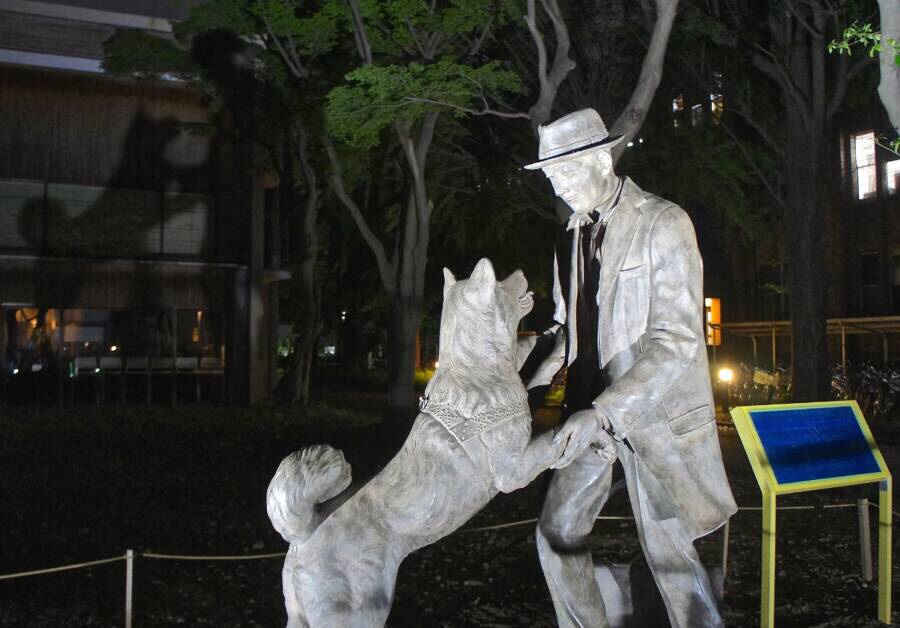


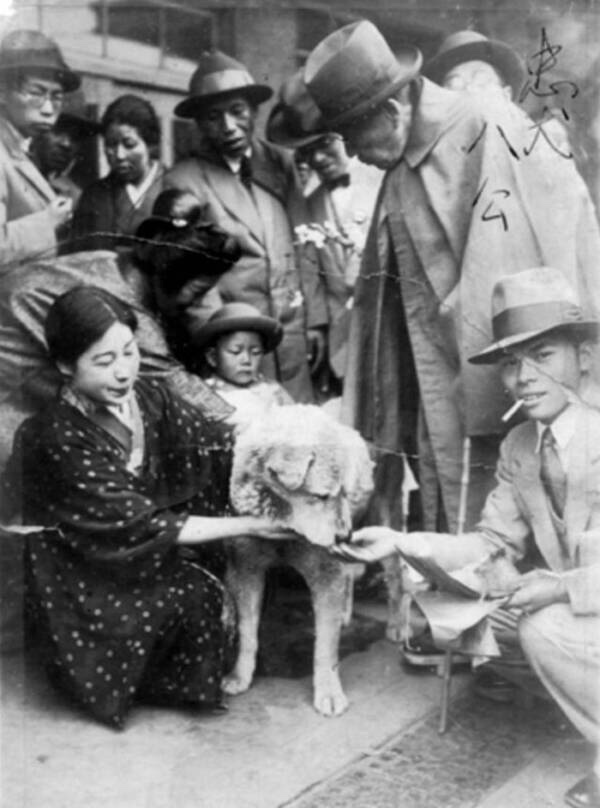
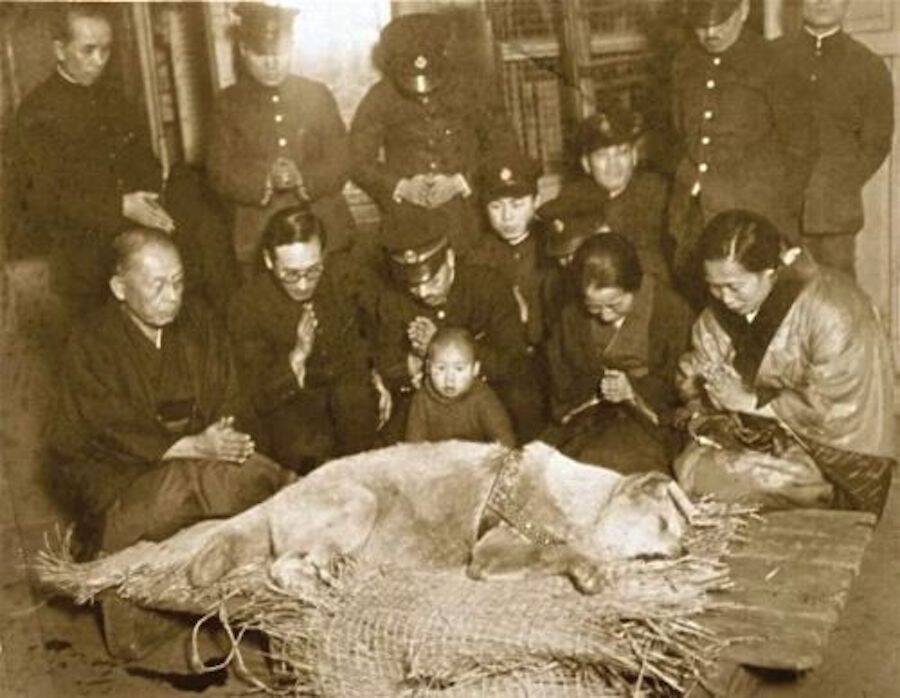


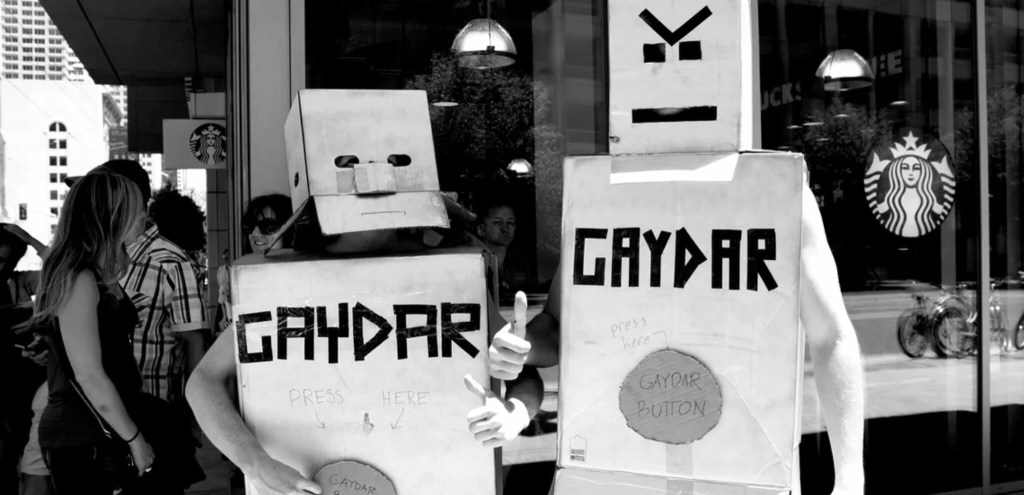



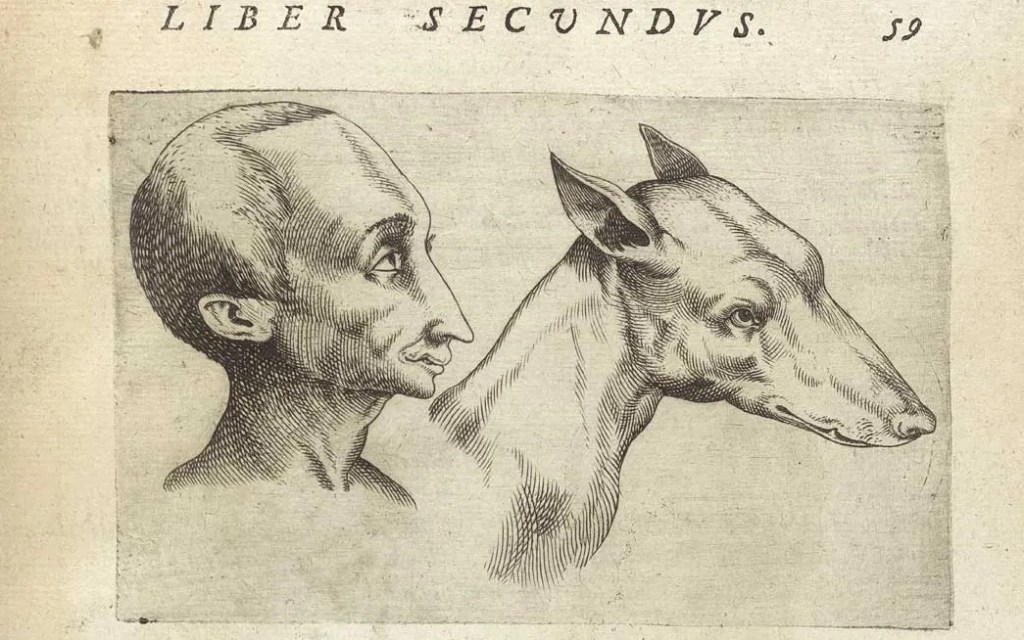



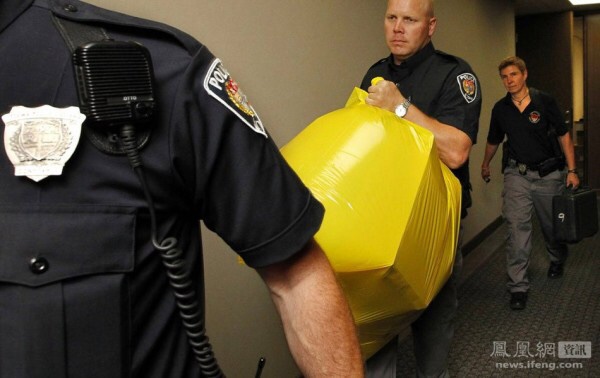
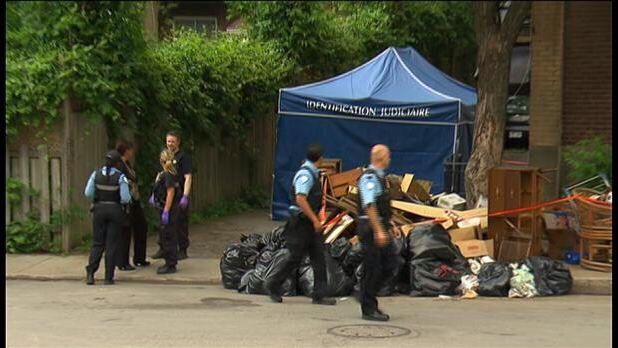


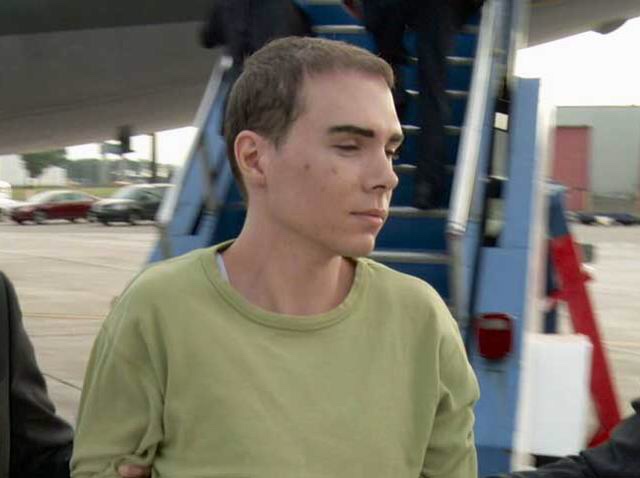







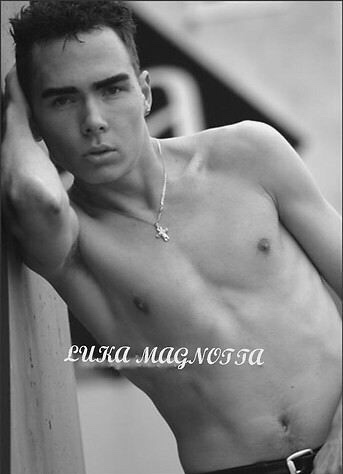





















 timalderman