Category Archives: General Interest

Gay History: Alan McKail, Designer, Melbourne (1888-1931).

Alan McKail

b. 31 January 1888,

Beaumont, Hay, New South Wales

d. 5 November 1931

Warrandyte, Victoria

Buried Box Hill, Melbourne, Victoria

Also known as Hugh John Alan McKail, Alan M’Kail, Allan McKail

Designer (Textile Artist / Fashion Designer), Designer (Theatre / Film Designer)

A Melburnian auctioneer, fashion and theatre designer known for his costumes at Melbourne’s Artists’ Balls. Contemporary police and media reactions to his more flamboyant costumes give an insight into attitudes towards gay male and transgender identity in early twentieth century Melbourne.

AS EARLY AS 1868, the Block on Collins Street’s north side, stretching from Elizabeth to Swanston Street, was fashionable: ‘ablaze with its crowds of colonial fashionables and celebrities . . . passing the hour in an easy, careless, lounging, gossipy manner’. Whilst ‘doing the block’ on Saturday mornings, middle-class Melbourne showed that it was the best dressed in Australia. So popular indeed, that soon this celebrated stretch was sold, demolished and replaced, as it has been twice since.

Back then, the most desirable place to be seen in Melbourne was Café Gunsler on the Block, later known as the Vienna Café. In 1916 it was remodelled as the splendid, spacious Café Australia, and in 1927 became the Australia Hotel. In 1939 this was demolished and replaced by the larger, glamorous Hotel Australia, some of whose bars immediately became the most popular meeting place in Melbourne for homosexual (‘camp’) men, particularly the Collins Street first floor cocktail bar and the basement public bar, which from 1970-80 became the Woolshed. In 1992 the Hotel Australia and an adjoining hotel were demolished and replaced by Australia on Collins. This site has a significant architectural history in which creative women played a strong role, but after briefly tracing its development, I want to explore the much less known experiences and memories of its gay clientele, mainly from 1930-1992, as far as evidence allows.

Most of the rich experiences of gay men recounted in this article were concealed from the community and straight historians at least until the 1970s, and even today. Most of the gay men whose stories are quoted here seem to have led happy lives and did not feel oppressed, but they knew the limit of their behaviour, without exposing themselves and their friends to risk. So describing their lives openly for the public record was risky. Aberrant lives are known from court records, but until ALGA oral history interviews, the social experience of ordinary lesbians and gay men in Melbourne before about 1980 remained systematically unexplored. For instance, although it describes other underworlds and minority behaviour, Andrew Brown-May’s Melbourne Street Life, published in 1988, only once mentions homosexuality, and that as a nuisance in public urinals.

There is only the slightest evidence of whether the Café Australia, or the pre-war Prince of Wales supported a gay culture, or even that one existed in private. Other than the legal records and Truth’s prurient histrionics, the earliest evidence of generalised gay social life is from c.1930, from the gays born during the Great War who lived long enough and were courageous enough to record their memories on tape.

The eminent architect Lloyd Tayler designed Harrington’s Buildings (1879-1939) for the new owner and in 1891 the first building of the ambitious Block Arcade was completed. Soon after, Café Gunsler’s (to its left) was bought by Austrians who renamed it the Vienna Café (1890-1915). It remained fashionable and popular: theatre celebrities and famous men gathered there and its Melbourne Cup festivities were the highlight of the year, when Collins Street was thick with hansom cabs and often the vice-regal party attended. Oral history interviews can take us back as far as living memory allows (to about 1930). Before that often the only information about unconventional behaviour we have comes from court records. On 22 September 1908, Alan McKail (aged 20), Douglas Ogilvie (22) and Tom Page (25) were three young men-about-town who decided to dress as fashionable ladies, and have a champagne supper at the Vienna Cafe on the fashionable “Block” of Collins Street. The three were observed “going the pace” at the Vienna Cafe on the evening of 22 September, 1908. According to their statements, the three had come into the city that Saturday night in disguise to attempt to gain entry to the Scandinavian Ball. When refused entry to that function, they went to the theatre and decided to finish off their evening with supper at the most fashionable restaurant in Melbourne. Apparently, while there, “their behaviour was such to attract attention.” As they left the restaurant, a hostile crowd gathered in the street and the three were roughly handled by some of the toughs in the crowd. The police were called and the three found themselves in the City Court. They were charged with behaving indecently in a public place, Collins Street.

The presiding magistrate was unsure as to whether the defendants were “sexual perverts or brainless young idiots who needed to be brought up with a round turn.” He was of the firm opinion that “such conduct as theirs was a menace to every respectable woman, and not only a riot, but even murder, might take place if young men were permitted to carry on in that manner in a public cafe” and stated that the difference between male and female apparel was one of the “cornerstones of civilisation and no-one could be allowed to flaunt that convention.” Page and Ogilvie worked for the Melbourne Steamship Company, whilst McKail was ‘well connected’, had £500 a year and trained as a fashion designer in Paris.

Mr. Fogarty, for defendants, without calling any evidence in defence contended that not the slightest testimony had been given that defendants had behaved in an improper or an indecent manner. Their disguise was obvious. If they could not go to a fancy dress ball in female costume the’ University students’ precession and characters in this Eight-hours demonstration,were also illegal.

Mr. Dwyer, P.M., said the suggestions made against the defendants in the case had not been justified by the evidence. They had not conducted themselves improperly, nor taken other undue advantages of tho costumes they were wearing. Unless there was a law which forbade man to assume the garb of woman, or vice versa, there seemed to be nothing against defendants. Still, they wore silly young donkeys, and he (Mr. Dwyer) did not for a: moment regard their action as a proper proceeding, which only tended to raise scandal and injure their reputations; They were treading on thin ice, and might get themselves into trouble without the intervention of the law if they were not more careful.

‘Defendants were discharged.

In late 1915, the significant Chicago architect of Canberra, Walter Burley Griffin (1876-1937) and his wife Marion Mahony (1871-1961) redesigned and rebuilt the interiors as ‘the most beautiful café in Australia’, and our earliest architectural modernism. When it opened in November 1916 Australia was at war with the Austro-Hungarian Empire whose capital was Vienna, so the name was sensibly switched to Café Australia. Six o’clock closing had been imposed that October, substantially reducing its opening hours. At least one patron remembered the Café Australia as being ‘slightly gay’ in the 1930s.

In 1927 it was renamed the Australia Hotel and by 1932, sold to hotelier Norman Carlyon’s company, The Australia Hotel Pty Ltd.10 Later, Carlyon owned the freehold with Frederick Matear (1888-1968). The State Library of Victoria holds an evocative mid-1930s street photograph looking east, depicting the Block Arcade, the Australia, the Tatler Bar and their neighbours.
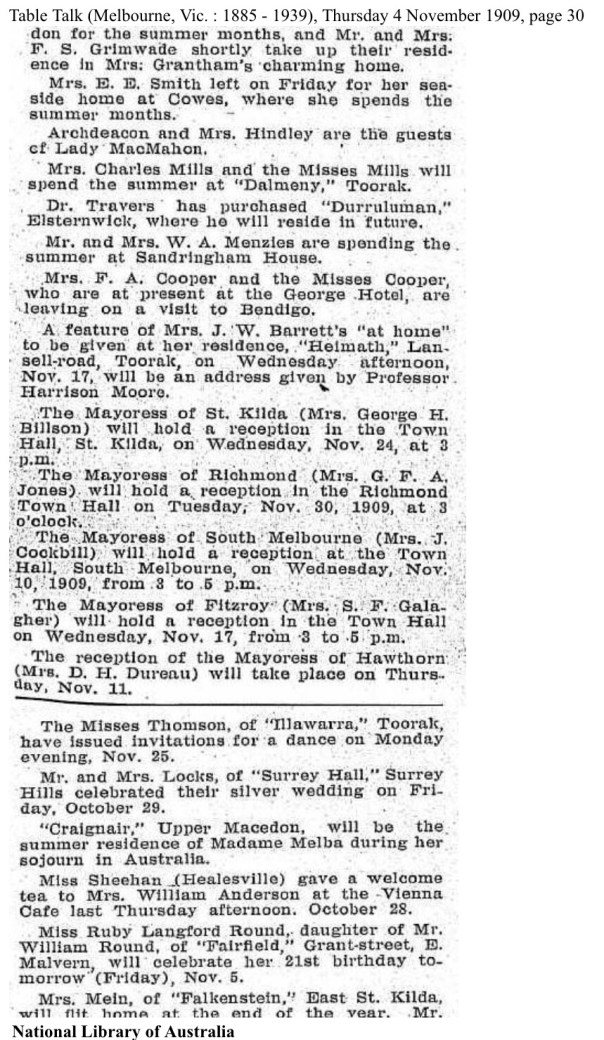
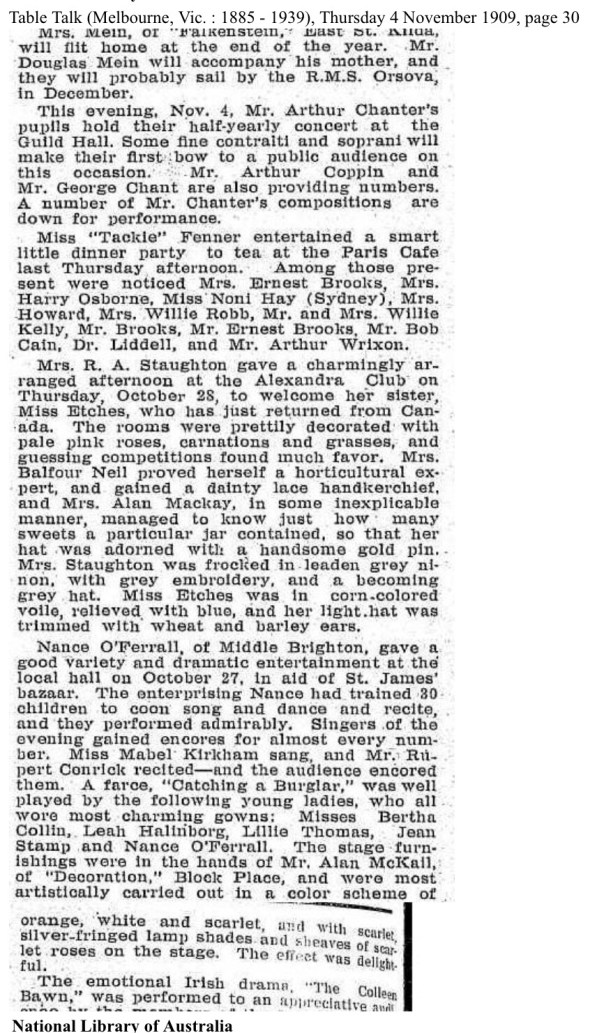
The twenties: the decline and fall of our hero Alan McKail.

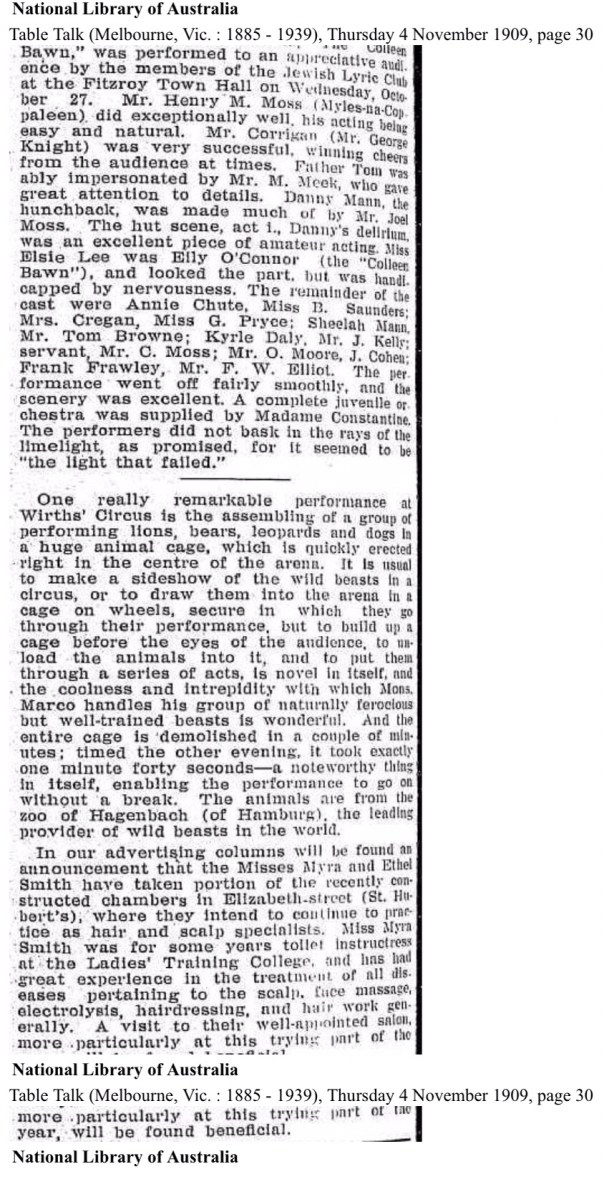
After getting so much unwanted attention parading around Melbourne’s ‘Block’ dragged-up as a Gibson Girl in the Edwardian years, then charming the social pages as a cubist Pierrot during the Indian Summer of the pre-war era, one would have imagined the Roaring Twenties would have been Alan McKail’s crowning glory. But, although our Alan could obviously still turn heads in the Jazz Age, noted among the well-dressed patrons of the Moonee Valley racecourse in ‘Table Talk’ in January 1925, he seems to have been falling out of the social spotlight.

The twenties began with McKail in a sound enough position to help out friends in need, purchasing ‘The Robins’, artist Penleigh Boyd’s Warrandyte retreat, after Boyd’s tragic death in a car accident in 1923 had left his family in financial limbo. McKail’s company, Decoration Co., who had worked with Penleigh Boyd on the sale of his studio contents only a few month earlier, handled the sale of Boyd’s estate. As Steve Duke pointed out, the security afforded by McKail’s purchase and the estate sale ensured that Boyd’s youngest son Robin would go on to write ‘The Australian Ugliness’, his influential book about poor aesthetic standards in local architecture and design, among many other career highlights.In February 1926 the Decoration Co. auction business, whose shareholders included Alan McKail, his former life partner Cyril John McClelland and his aunt Effie Eliza Ball, was valued by Melbourne ‘Herald’ at £20,000 (about A$1,500,000 in today’s money). Later that year ‘The Herald’ reported that McKail was about to head off to Colombo, Ceylon (Sri Lanka), for a holiday.

But things weren’t all going well in The Robins. Steve Duke often speculated that Alan McKail’s poverty-stricken death from tuberculosis in 1931 may have been caused by the renowned excesses of the age. Evidence has recently emerged from Victoria’s health records which, sadly, confirms Steve’s theory.

In November 1925 Alan McKail checked into the Pleasant View licensed house in his childhood home suburb of Preston, staying there for a week. The idyllic name of the house, which looked across the Lower Yarra Valley towards the Dandenongs, disguised its purpose; it was a clinic for recovering alcoholics. Nineteen months later, and not too long after his return from Colombo, McKail voluntarily checked into the less euphemistically-titled Lara Inebriates Retreat, north of Geelong, for another week’s drying out.

On the 2nd July 1927, Alan McKail checked out of the Lara Inebriates Retreat. At the time of writing, there are no further known references to him in the Melbourne press until his death notices appeared in November 1931. [1]
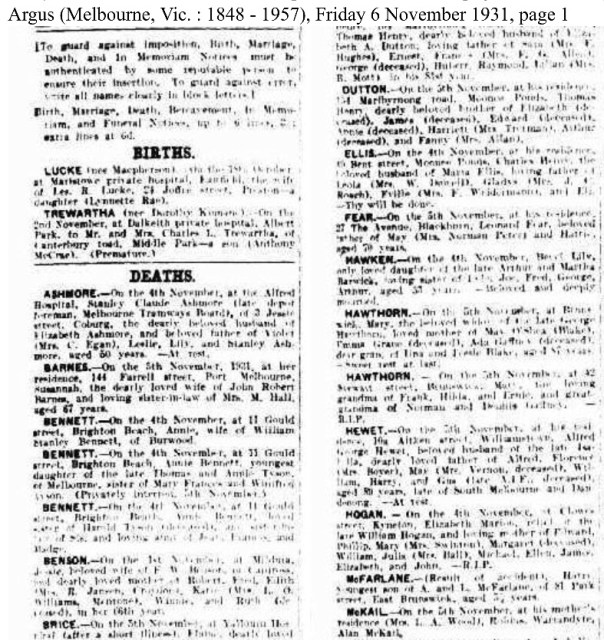
There is an Alan McKail Day cemetery walk at Box Hill cemetery in January (see link in References) which visits LGBT graves in the cemetery and plants rainbow flags on them.

Citation [1] The twenties: the decline and fall of our hero Alan McKail by Steve Duke BA FRGS (1957-2017) and Eric Ridder. By permission, and with thanks to Eric Riddler, and the Three Mullets Club https://www.facebook.com/threemulletsclub/?fref=ts

References

The Demon Dentist of Wynyard Square – Henry Louis Bertrand.

Originally published in the Daily Telegraph, March 10, 2015. By Naomi White.

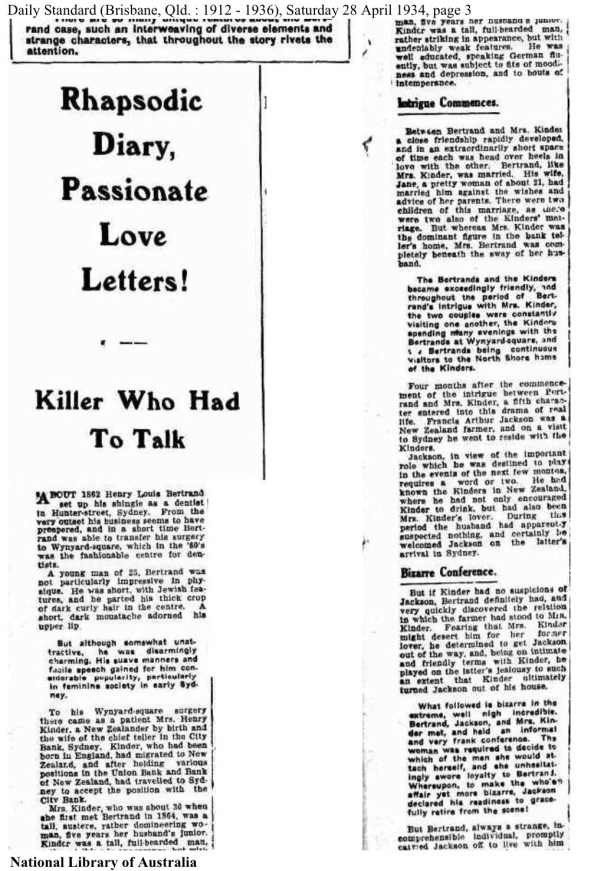
HENRY Louis Bertrand was many things. Husband, father, dentist, self-proclaimed mesmeriser, philanderer… murderer.

His tale of murderous desire and betrayal took place on the streets of Sydney 150 years ago, but is proving intriguing today, revived in an exhibition of historical crime held at the Justice and Police Museum, the former site of the Water Police Courts that operated from 1856-1924, whose walls Bertrand would have passed through after his arrest.

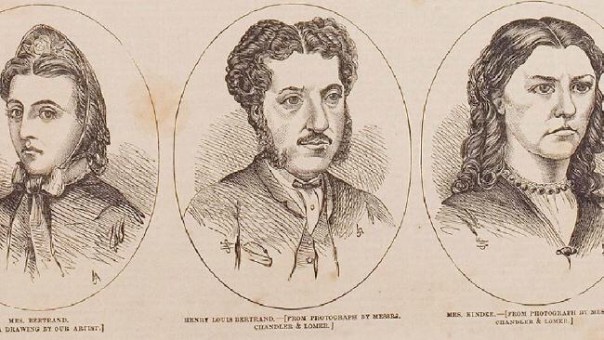
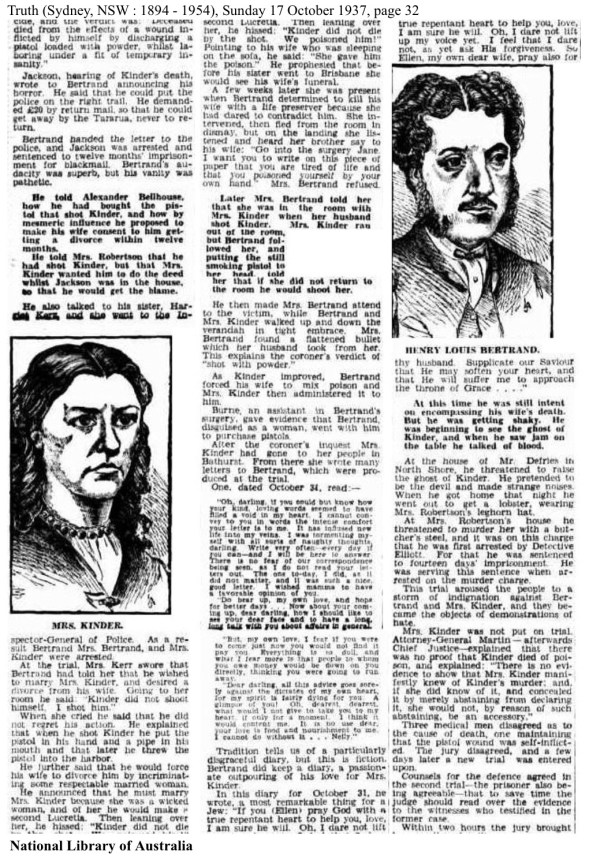
Portraits of Mrs Bertrand, Henry Louis Bertrand and Mrs Kinder, from the Illustrated Sydney News, circa 1865. Picture: NSW State Library

Bertrand, a native of London, had moved to Australia as a young man and set up a dentistry practise in the CBD, building a thriving business on claims he could mesmerise patients so they would feel no pain.

But it would be one of these patients who would be his undoing, after he struck up an affair with a married woman that ended with the murder of her husband in 1865.

“It’s one of those really incredible stories in criminal history and one that not only the Australian public were really interested in, it also ignited quite a bit of interest overseas in New Zealand and London and throughout Europe because it just had so many unusual and dramatic twists and turns in it,” exhibition curator Nerida Campbell said.

As his obsession intensified, his assistant took to arming himself with an axe

“And Bertrand himself was such an unusual character, you know, he was larger than life. The things he said were quite often just remarkable and the way he acted was also. One of the journalists at the time thought he had been influenced by reading too many romantic novels and that was part of the character he had chosen to create for himself.”

THE AFFAIR

Maria ‘Ellen’ Kinder had been married to Henry Kinder, 35, a heavy drinker and teller at City Bank who was in financial strife, for five years when she booked in as a patient at Bertrand’s dental practice.

The two quickly began an affair, with 25-year-old Bertrand imposing himself and his wife Jane and their two children into the Kinders’ lives, striking up a friendship with Mr Kinder and making regular calls to their north shore home over 10 months on the pretence of cards and suppers.

But it would not be the only visits he’d make, with Bertrand regularly forcing his dental assistant, a young man known as Byrne, to row him across the harbour for midnight reconnaissance missions to spy on the couple.

Henry & Ellen Kinder in early undated portrait, Ellen allowed lover Henry Bertrand to kill her husband in 1865 before she moved in with him and his wife.

He reportedly went as far as breaking into their home to survey its layout as part of his master plan to dispose of Mr Kinder.

As his obsession intensified, his behaviour became increasingly erratic, so much so that Byrne, in fear of his own safety, had taken to secretly arming himself with an axe.

Bertrand continued to force him to do his dirty work, dressing as a woman and accompanying Byrne as he visited a gun-shop and negotiated the purchase of two pistols to use in the murder.

Sydney dentist Henry Louis Bertrand in early undated portrait, mastermind of one of the most bizarre ‘crimes of passion’ in Australia when he killed his lover Ellen Kinder’s husband. Picture: Supplied

He then bought a pig’s head which he kept at the surgery to practise his aim on.

“He fell in love, heavily in love with her and she returned his affection and they started an adulterous affair,” Ms Campbell said.

“This went on for a period of time until it became clear to Bertrand that he needed her, that he had to have her, that he wasn’t prepared to share her with her husband any longer. And his plan was to kill her husband, Henry Kinder and divorce his own wife Jane so that the two of them could be together”.

THE CRIME

After travelling to the home several times with the intent to murder him, he finally found the courage to fire a single shot at Kinder’s head, as he sat on a chair in his home, in front of both his wife Jane and his lover.

But it failed to kill him and Kinder was carried to his bed to recover, while Bertrand, with the help of both women, convinced police Kinder’s financial woes and drinking had got the better of him and he had tried to kill himself.

Looking down Margaret Street to George Street showing Wynyard Square on the right where Bertrand worked as a dentist. Picture: NSW State Library

“So Kinder is upstairs in bed and the police have visited, they’ve accepted the story of this attempted suicide, but he’s not dying, he seems to be getting better. It’s at this stage that Bertrand apparently convinced the two women to poison Kinder and apparently it was his own wife Maria that allegedly fed him the poison which ended his life.”

The coroner assessed his death on the evidence of a past suicide attempt and ruled it non-suspicious.

“I am satisfied, thus once more I perish my enemies”

A diary entry from Bertrand

However it brought him no closer to Maria Kinder, who moved to her parent’s home in Bathurst to preserve her reputation. Bertrand at least appeared to have got away with it.

THE BLACKMAILING

That was until a past lover of Maria Kinder’s turned up, got wind of Bertrand’s involvement and sent him a note demanding 20 pounds (more than $2,000 AUD today) for his silence.

“And Bertrand then showed what kind of a daring and quite heartless criminal he could be. He took that letter to the police and said ‘look, this man is attempting to blackmail me, smirch my reputation’ and they charged him. So Francis Jackson actually went through the Water Police Court, which is the current Justice and Police Museum, on trial for attempted blackmail and he was convicted to spend time in prison.”

Water Police Court at Phillip Street, Sydney. Picture: NSW State Library

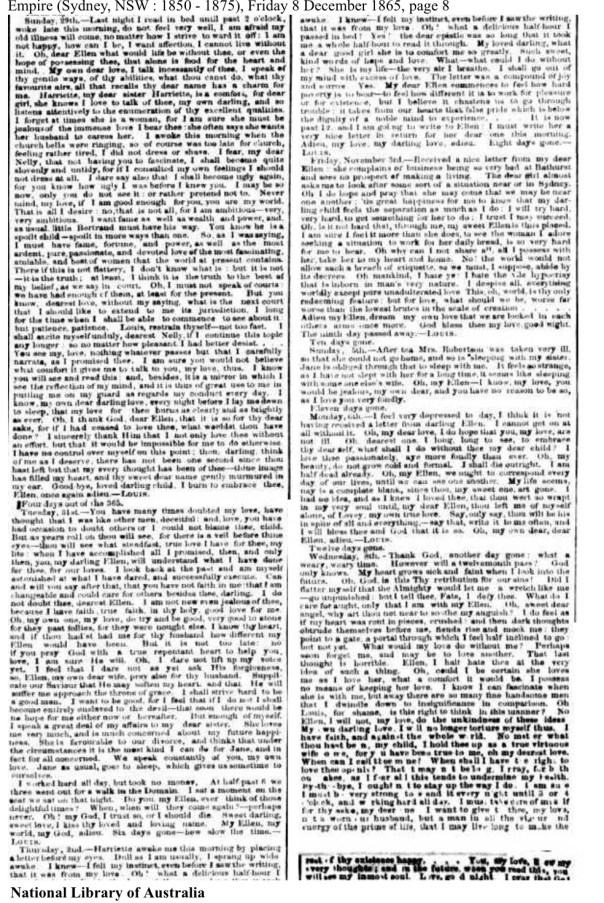
Bertrand noting in his diary, kept to communicate with Maria Kinder, that “’I am satisfied, thus once more I perish my enemies” after Jackson was handed a 12 month gaol sentence.

And so he may have if it wasn’t for his own boastings that he had murdered Kinder.

This got back to an original juror of the blackmailing trial, who took it to the police who arrested both Bertrand, his wife and Mrs Kinder, charging all three with murder.

THE TRIAL

The cases against the women were dismissed quickly, Mrs Bertrand’s as she could not give evidence against her husband, Mrs Kinder due to lack of evidence.

But Bertrand’s trial was a long and messy affair that captured headlines.

It was said Bertrand had several uncles who had been committed to asylums and there was much speculation that Bertrand, too, was ‘mad.’

“It was really he who stood trial and during that trial of course the media were incredibly interested. It was very salacious, there were stories about the three of them sharing a bedroom and poison and mesmerism and how he could control people and make them do his will through his mesmeric powers. There were all kinds of rumours and I suppose to an extent the journalists beating up the story and making it even more sensational than it was,” Ms Campbell said.

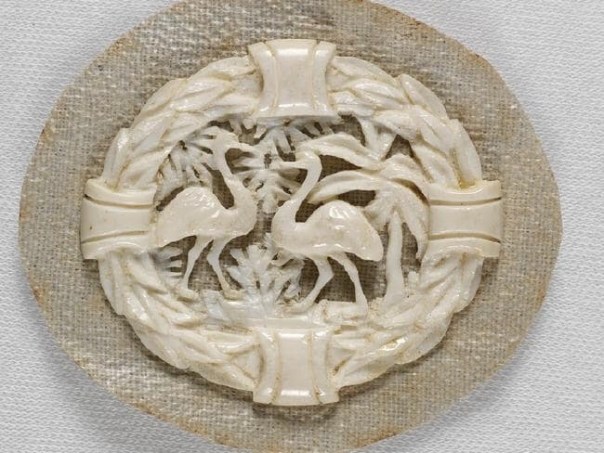
Bone carving by Henry Louis Bertrand while in hospital. Picture: NSW State Libra

Not only the details of the affair, but the cruel treatment of his own wife was exposed in the trial, showing a history of “dreadful” domestic violence, beatings, whippings, control and humiliation in Bertrand inviting Mrs Kinder to live in their home.

“One of the things about Bertrand, one of the things that shocked many people was the way he treated his wife,” Ms Campbell said.

“At that time, because her family had disowned her when she married him, she had two young children and she really had nowhere else to go, there was a lot of sympathy for her and for what she had endured.”

DARLINGHURST GAOL

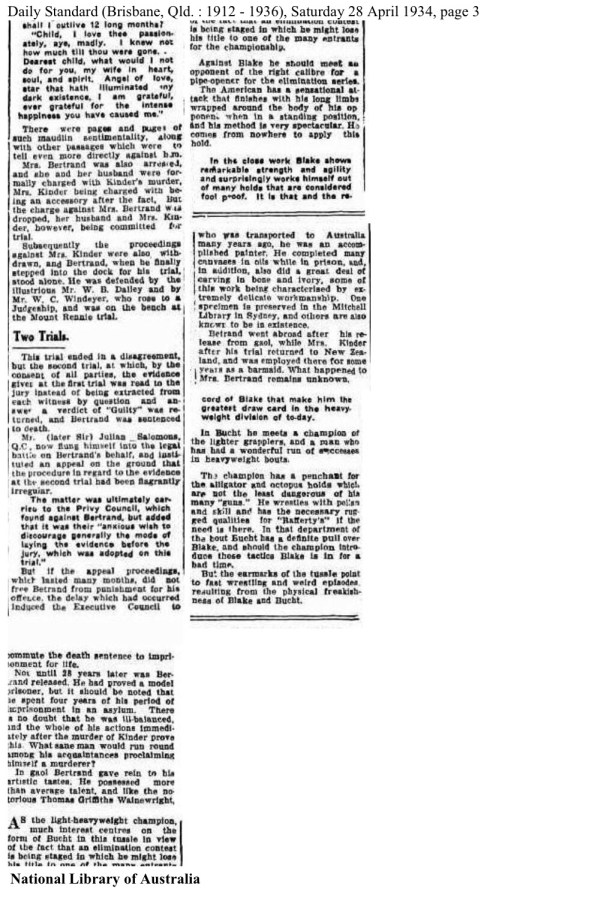
Bertrand was found guilty of Kinder’s murder, but controversially, spared the nominal punishment of the day — hanging, sentenced instead to 28 years at Darlinghurst Gaol.

The murderer spent his prison time honing his artistic side, producing accomplished watercolours of the inside of the gaol and making intricate bone carvings.

Until his release in 1893 when he slipped into obscurity after boarding a boat to London, believed to have been en-route to live with a well off aunt.

A watercolour of the inside of Darlinghurst Gaol painted by Henry Louis Bertrand in 1891, two years before his release Picture: State Library of NSW

While Jane Bertrand, overwhelmed by the public attention of the case, moved to New Zealand with their two children to begin a new life.

Mrs Kinder is also believed to have settled there, where she had lived previously with late husband.

The two pistols, along with two pen holders carved by Bertrand during his prison term can be seen at the Notorious Criminals exhibition currently on show at the Justice and Police Museum.

A photo of Henry Louis Bertrand by the Zimmer Brothers. National Library of Australia.

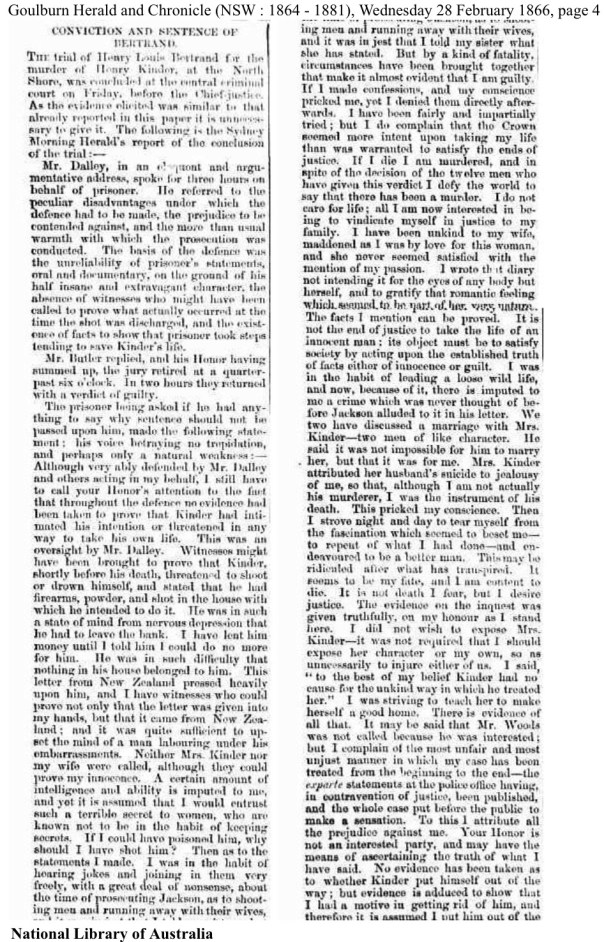
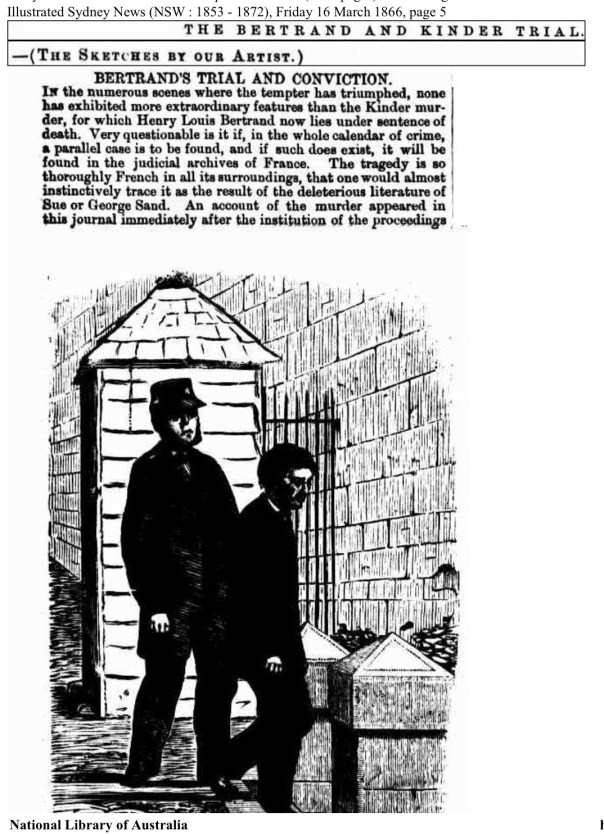
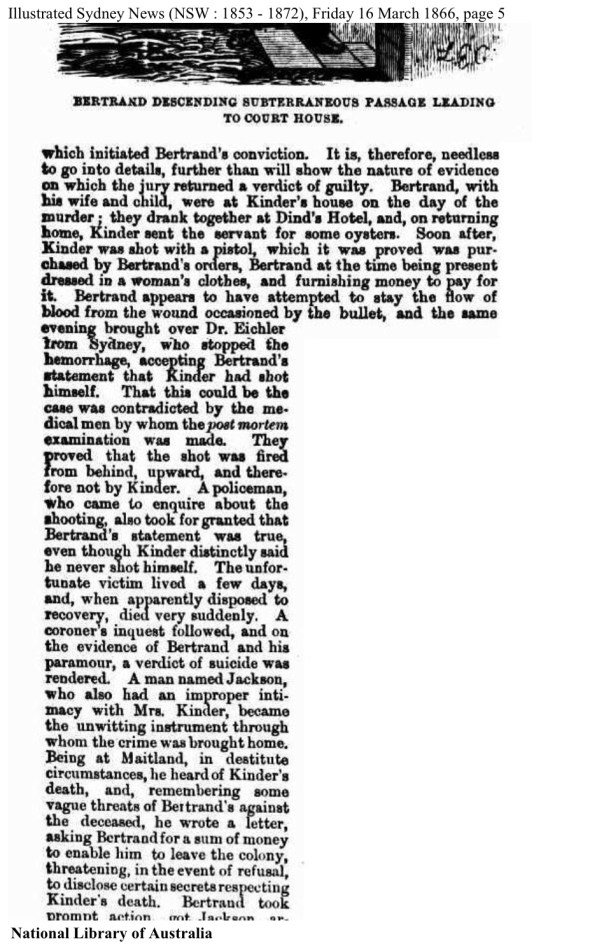
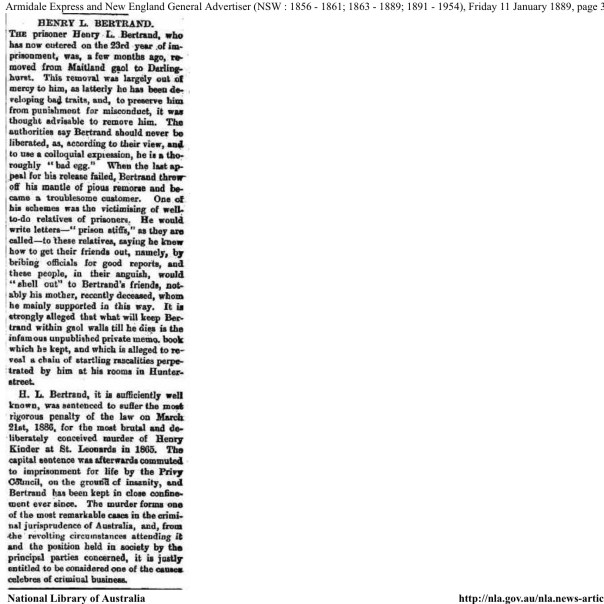
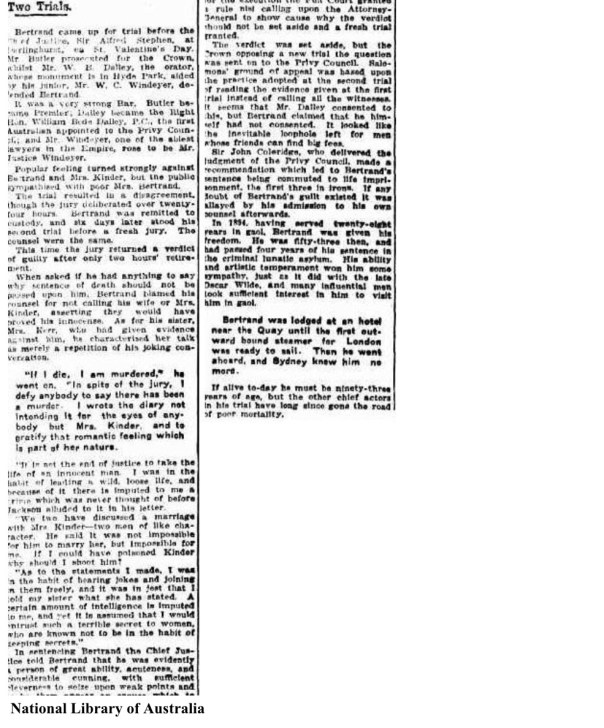
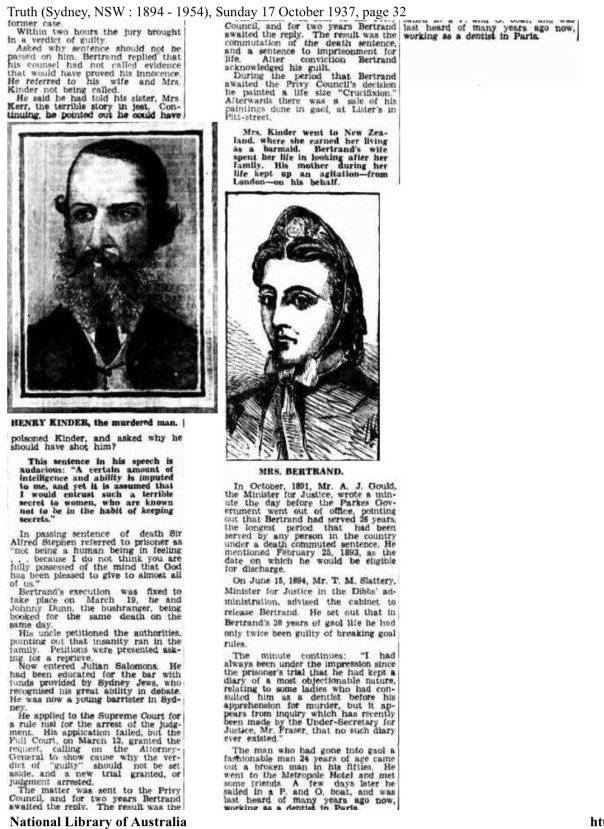
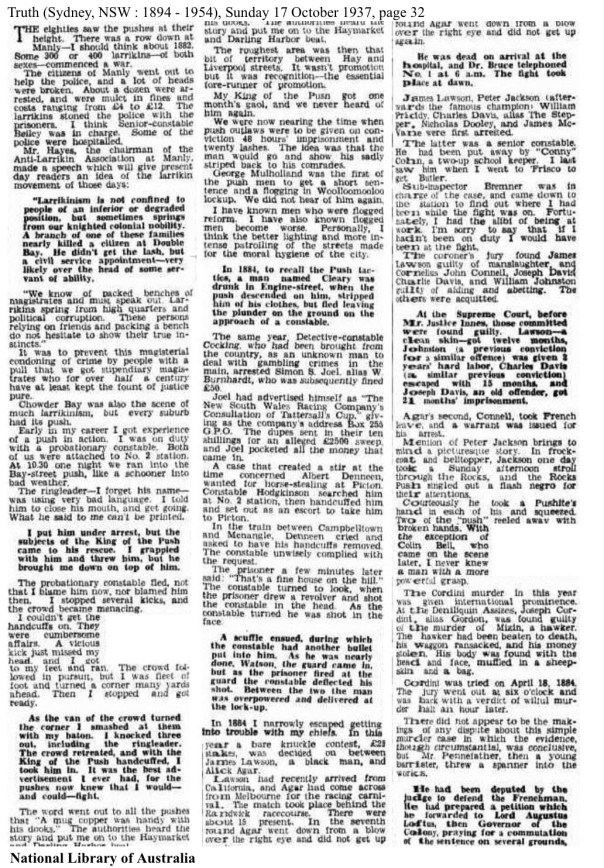
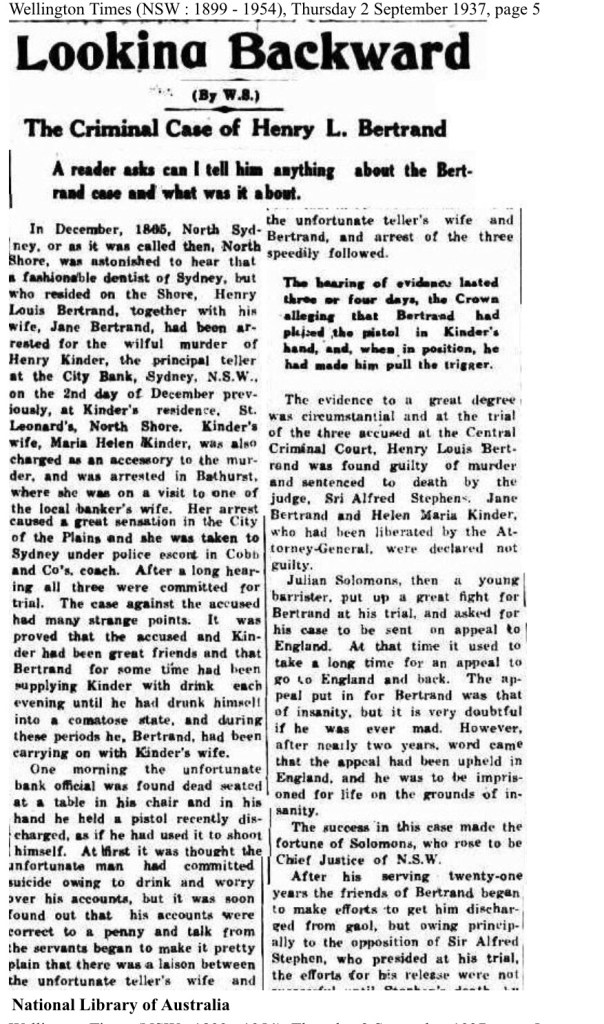
The following are newspaper accounts of the life, times, crimes and trials of Henry Louis Bertrand. The details are repeated in many of them, but I am posting them because of the many differences in how individual papers and journalists handled the facts, both at the time, and further down the line.

Sydney Morning Herald, 16 October 1865

Empire, 8 December 1865

Goulburn Herald and Chronicl, 28 February 1866

Illustrated Sydney News, 16 March 1866

Empire, 17 September, 1866

Sydney Mail, 7 September 1867

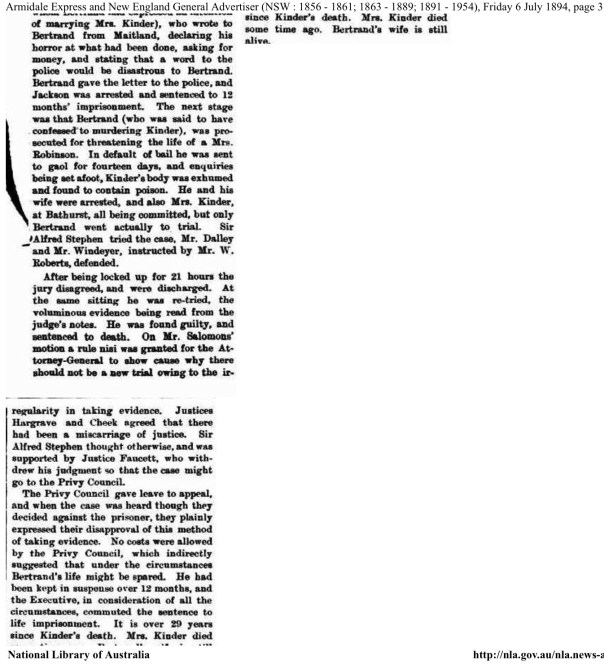
Armidale Express and New England General Advertiser, 11 January 1889,

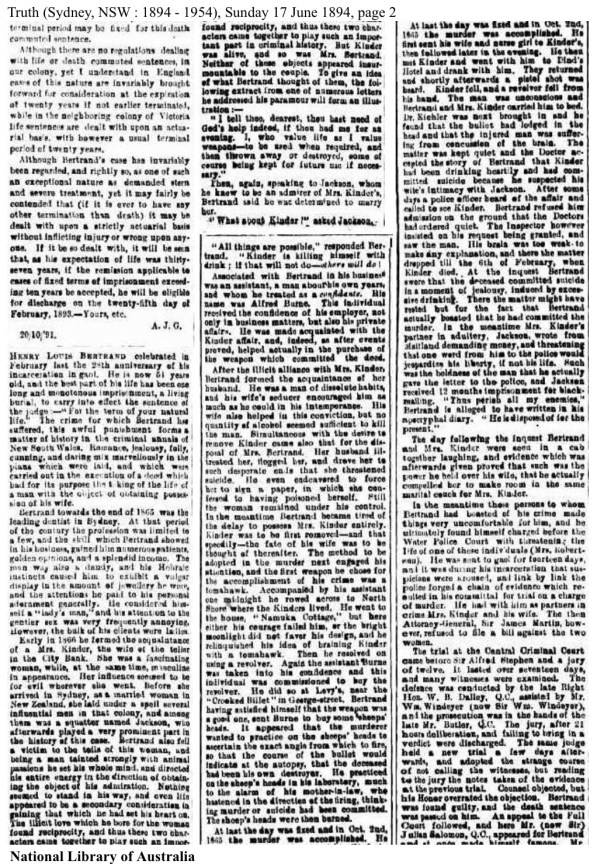
Truth, 17 June, 1894

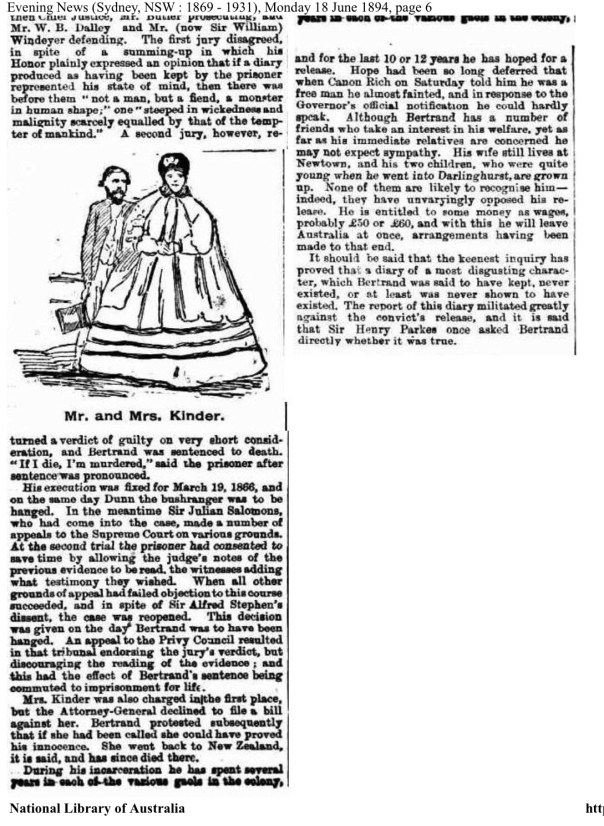
Evening News, 18 June 1894

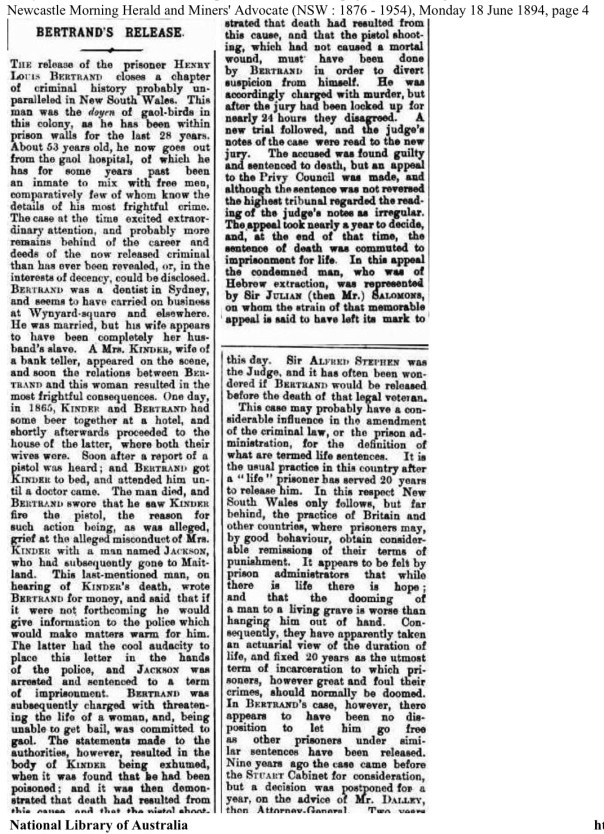
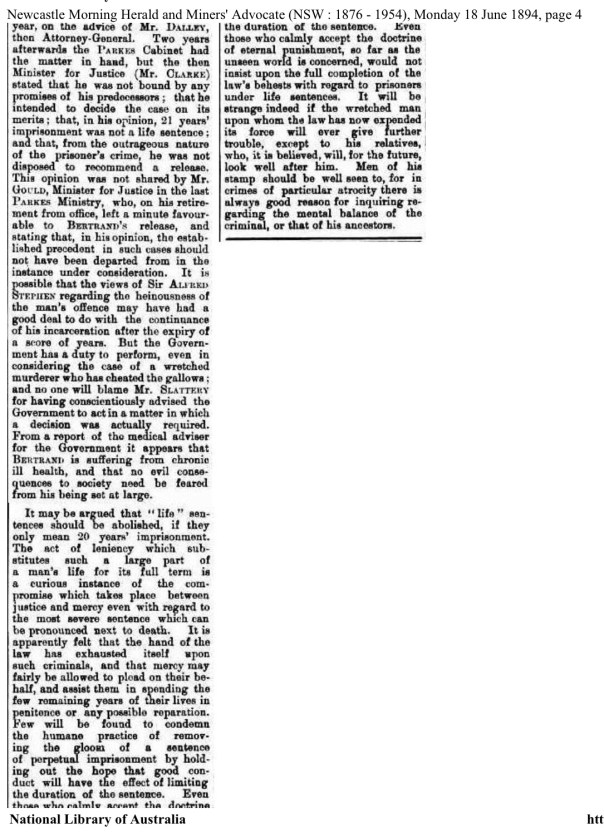
Newcastle Morning Herald, 18 June, 1894

Crookwell Gazette, 20 June, 1894

Armidale Express and New England General Advertise, 6 July 1894

Zeehan and Dundas Herald, 4 July 1894

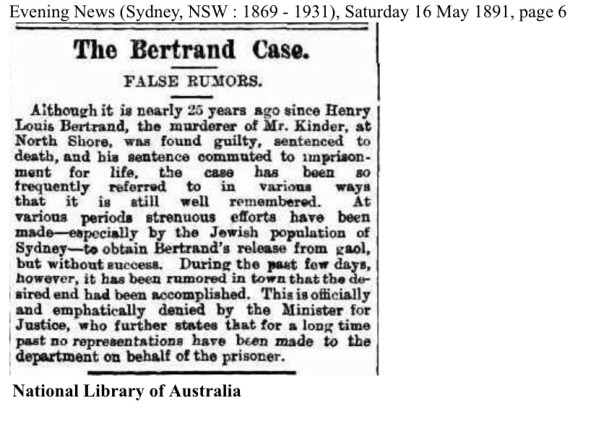
Evening News, 16 May 1891

Herald, 18 June 1894

Richmond River Herald and Northern Districts Advertise, 15 February 1895.

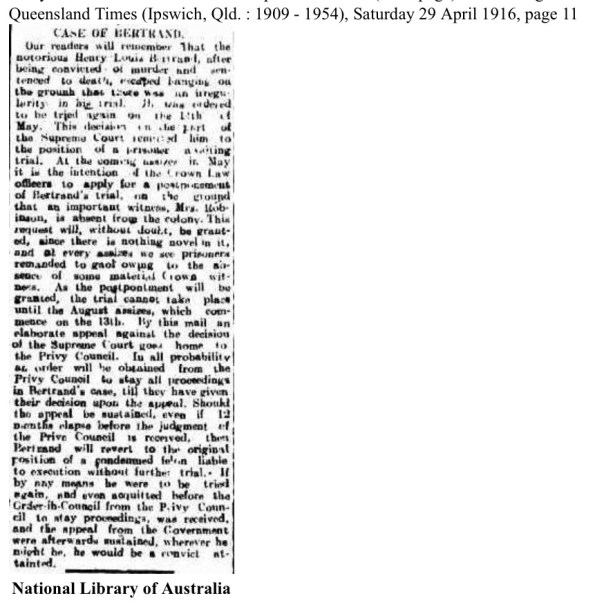
Queensland Times, 29 April, 1916

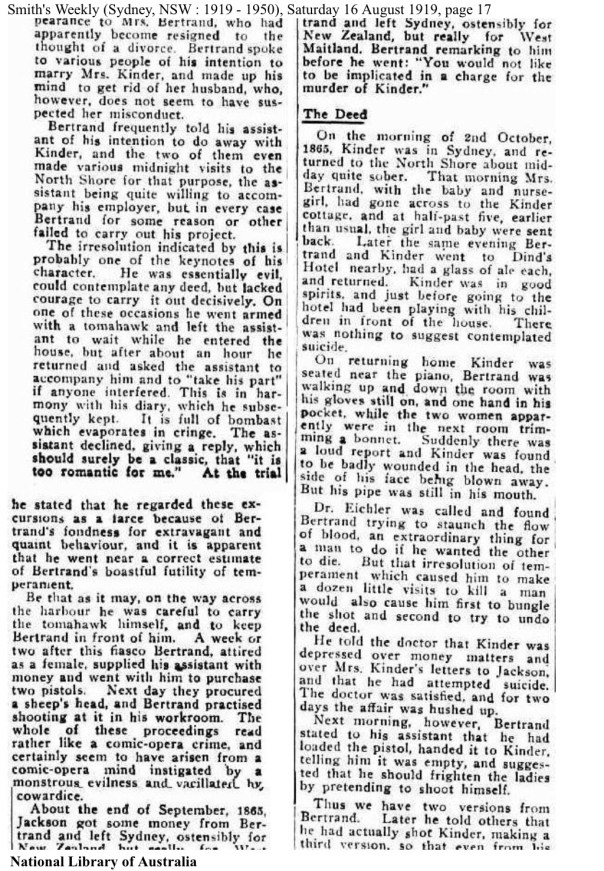
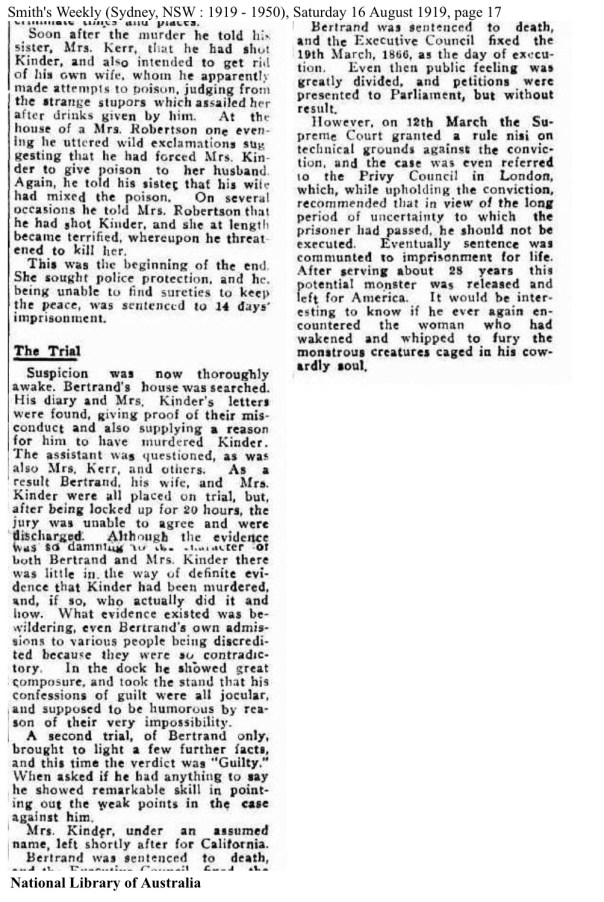
Smith’s Weekly, 16 August 1919

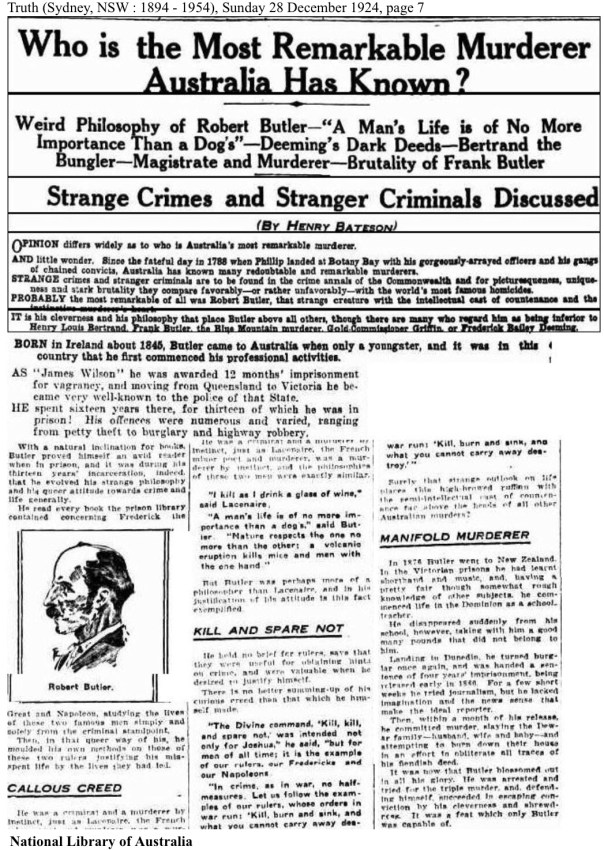
Truth, 28 December 1924

Truth, 15 March, 1925

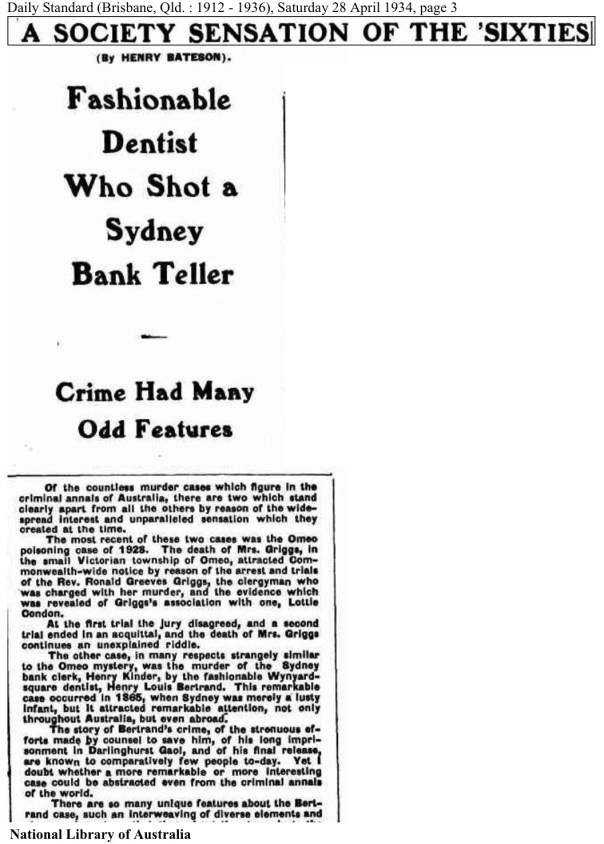
Daily Standard (Brisbane), 28 April 1934

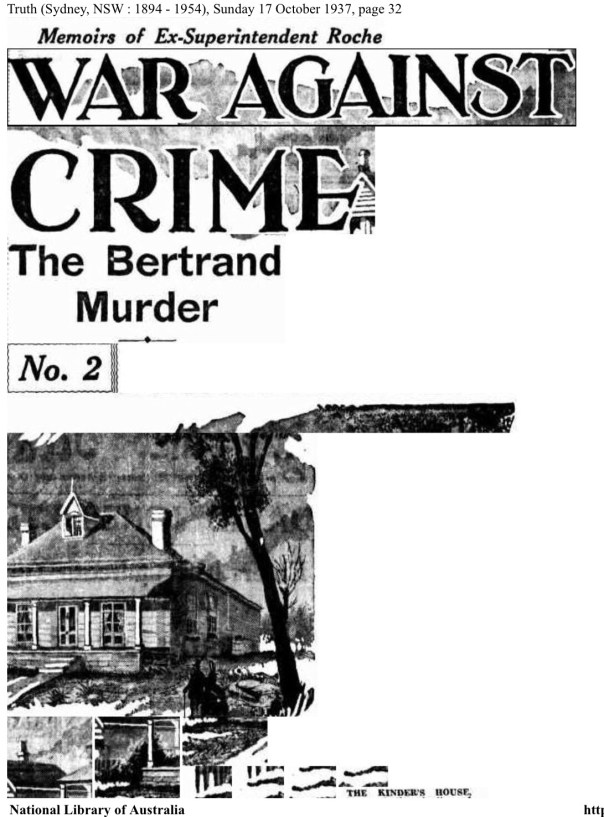
Truth, 17 October 1937

Wellington Times, 2 September 1937

Preface to the Poems Composed at the Orchid Pavilion, by Wang Xizhi

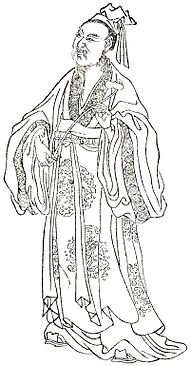
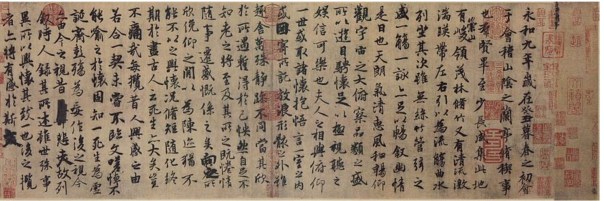
The Orchid Pavilion Gathering of 353 CE was a cultural and poetic event during the Six Dynasties era, in China. This event itself has a certain inherent and poetic interest in regard to the development of landscape poetry and the philosophical ideas of Zhuangzi. The gathering at the Orchid Pavilion is also famous for the artistry of the calligraphy of Wang Xizhi who was both one of the participants as well as the author and calligrapher of the Lantingti Xu, or Preface To The Poems Composed At The Orchid Pavilion, not to mention the literary mastery of this introduction.

The Orchid Pavilion Gathering of 42 literati included Xie An and Sun Chuo, and Wang Pin-Chih at the Orchid Pavilion (Lanting) on Mount Kuaiji just south of Kuaiji (present-day Shaoxing in Zhajiang), during the Spring Purification Ceremony on the third day of the third month, to compose poems and enjoy huangjiu. The gentlemen had engaged in a drinking contest: rice-wine cups were floated down a small winding creek as the men sat along its banks; whenever a cup stopped, the man closest to the cup was required to empty it and write a poem. This was known as “floating goblets” (流觴, liúshāng). In the end, twenty-six of the participants composed thirty-seven poems.

蘭亭集序 lán tíng jí xù

王羲之 Wáng Xīzhī

永和九Y年, Yǒnghé jiǔ nián

歲在癸丑, suì zài guǐ chǒu

暮春之初, lán tíng jí xù

會于會稽山陰之蘭亭, huì yú Guìjī Shānyīn zhī lán

修禊事也。 xiūxì shì yě

群賢畢至, qún xián bì zh

少長咸集。 shào zhǎng xián jí

此地有崇山峻嶺, cǐdì yǒu chóngshānjùnlǐng

茂林修竹, màolínxiūzhú

又有清流激湍, yòu yǒu qīngliú jī tuān

映帶左右。 yìng dài zuǒyòu

引以為流觴曲水, 列坐其次; yǐn yǐ wéi liú shāng qū shuǐ, lièzuò qícì

雖無絲竹管弦之盛, suī wú sīzhú guǎnxián zhī shèng

一觴一詠, 亦足以暢敘幽情。yī shāng yī yǒng, yì zúyǐ chàngxù yōuqíng

是日也, 天朗氣清, shì rì yě, tiān lǎng qì qīng

惠風和暢, 仰觀宇宙之大, huìfēnghéchàng, yǎng guān yǔzhòu zhī dà

俯察品類之盛, 所以遊目騁懷, fǔ chá pǐn lèi zhī shèng, suǒyǐ yóu mù chěnghuái

足以極視聽之娛, 信可樂也。zúyǐ jí shìtīng zhī yú, xìn kě lè yě

夫人之相與俯仰一世, fú rén zhī xiāngyǔ fǔyǎng yī shì

或因寄所托, 放浪形骸之外。huò yīn jì suǒ tuō, fànglàngxínghái zhī wài

雖趣舍萬殊, 靜躁 不同, suī qǔshě wàn shū, jìng zào bùtóng

當其欣于所遇, 暫得于己, dāng qí xīn yú suǒ yù, zàn dé yú jǐ

快然自足, 不知老之將至。kuài rán zìzú, bùzhī lǎo zhī jiāng zhì

及其所之既倦, 情隨事, jí qí suǒ zhī jì juàn, qíng suí shì qiān

感慨係之矣。gǎnkǎi xì zhī yǐ

向之所欣, 俯仰之間, xiàng zhī suǒ xīn, fǔyǎng zhī jiān

已為陳迹, 猶不能不以之興懷; yǐ wéi chén jī, yóu bùnéngbù yǐ zhī xìng huái

況修短隨化, 終期于盡。kuàng xiū duǎn suí huà, zhōng qī yú jìn

古人云: [死生亦大矣。] gǔrén yún: sǐ shēng yì dà yǐ

豈不痛哉! qǐbù tòng zāi

每覽昔人興感之由, měi lǎn xí rén xìng gǎn zhī yóu

若合一契, 未嘗不臨文嗟悼, ruò hé yī qì, wèicháng bù lín wén jiē dào

不能喻之于懷。bùnéng yù zhī yú huái

固知一死生為虛誕, gù zhī yī sǐ shēng wéi xūdàn

齊彭殤為妄作。qí péng shāng wéi wàngzuò

後之視今, 亦由今之視昔。hòu zhī shì jīn, yì yóu jīn zhī shì xī

悲夫! 故列敘時人, bēi fú! gù liè xù shí rén

錄其所述, 雖世殊事異, lù qí suǒ shù, suī shì shū shì yì

所以興懷, 其致一也。suǒ yǐ xìng huái, qí zhì yī yě

後之覽者, 亦將有感於斯文。hòu zhī lǎn zhě, yì jiāng yǒu gǎn yú sī wén

Translation

Preface to the poems composed at the Orchid Pavilion/ (by Wang Xizhi)/ It is the ninth year of Emperor Mu of Jin‘s Yongheera (20 Feb 353 – 8 Feb 354)/ The year of the Yin Water Ox/ At the beginning of the third lunar month (after April 20, 353),/ We are all gathered at the orchid pavilion in Shanyin County, GuijiCommandery,/ For the Spring Purification Festival./ All of the prominent people have arrived,/ From old to young./ This is an area of high mountains and lofty peaks,/ With an exuberant growth of trees and bamboos,/ It also has clear rushing water,/ Reflecting the sunlight as it flows past either side of the pavilion./ The guests are seated side by side to play the drinking game where a wine cup is floated down the stream and the first person sitting in front of the cup when it stops must drink./ Although we lack the boisterousness of a live orchestra,/ With a cup of wine here and a reciting of poetry there, it is sufficient to allow for a pleasant exchange of cordial conversations./ Today, the sky is bright and the air is clear,/ With a gentle breeze that is blowing freely. When looking up, one can see the vastness of the heavens,/ And when looking down, one can observe the abundance of things. The contentment of allowing one’s eyes to wander,/ Is enough to reach the heights of delight for the sight and sound. What a joy./ Now all people live in this world together,/ Still others will abandon themselves to reckless pursuits./ Even though everyone makes different choices in life, some thoughtful and some rash,/ When a person meets with joy, he will temporarily be pleased,/ And will feel content, but he is not mindful that old age will soon overtake him./ Wait until that person becomes weary, or has a change of heart about something,/ And will thus be filled with regrets./ The happiness of the past, in the blink of an eye,/ Will have already become a distant memory, and this cannot but cause one to sigh./ In any case, the length of a man’s life is determined by the Creator, and we will all turn to dust in the end./ The ancients have said, “Birth and Death are both momentous occasions.”/ Isn’t that sad!/ Every time I consider the reasons for why the people of old had regrets,/ I am always moved to sadness by their writings,/ And I can not explain why I am saddened./ I most certainly know that it is false and absurd to treat life and death as one and the same,/ And it is equally absurd to think of dying at an old age as being the same as dying at a young age./ When future generations look back to my time, it will probably be similar to how I now think of the past./ What a shame! Therefore, when I list out the people that were here,/ And record their musings, even though times and circumstances will change,/ As for the things that we regret, they are the same./ For the people who read this in future generations, perhaps you will likewise be moved by these words.

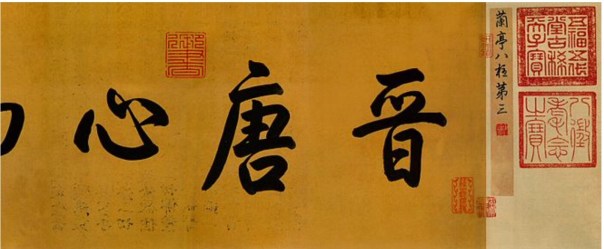
Lantingji Xu is Wang Xizhi‘s most famous work, which described the beauty of the landscape around the Orchid Pavilion and the get-together of Wang Xizhi and 41 literati friends. The original is lost. Some believed that it was buried with Emperor Taizong of the Tang dynasty in his mausoleum. This Tang era copy by Feng Chengsu (馮承素), dated between 627-650, is considered the best of all the subsequent copies.[4] It is located in the Palace Museum in Beijing. The scroll is meant to read right to left.

References

Larger Than Life: Rosaleen Norton – The Witch of King’s Cross!

Australia can’t claim many famous witches but Rosaleen ”Roie” Norton, a talented bohemian painter, adhering to a form of pantheistic / Neopagan witchcraft which was devoted to the pagan god Pan, was known for most of her life as the ”Witch of Kings Cross”.

Rosaleen Miriam “Roie” Norton was born on the 2 October 1917, in Dunedin, New Zealand to Beena & Albert Norton, an English middle class, Anglican family who had moved to the country a number of years before. She was the third of three sisters and her siblings, Cecily and Phyllis, were each over a decade older than her.

When she herself was eight, in June 1925, her family emigrated to Sydney, Australia, where they settled in Wolseley Street, Lindfield. As a child, she never liked being conventional, and disliked most other children, as well as authority figures, including her mother, with whom her relationship was very strained. Her father, who was a sailor, was regularly away from home, although provided enough of an income so that the Nortons were able to live comfortably. Nonetheless, she would later describe her life at this time as being “a generally wearisome period of senseless shibboleths, prying adults, detestable or depressing children whom I was supposed to like, and parental reproaches. Due to this, she kept herself to herself, sleeping not in the house, but in a tent which she pitched in the garden for three years, and kept a pet spider at the entrance which she named Horatius, as well as other pets including cats, lizards, tortoises, toads, dogs and a goat.

She later claimed she was born with certain markings that set her apart as a witch, such as pointed ears, blue markings on her left knee and a strand of flesh that hung on her body.

Norton was enrolled at a Church of England girls’ school, where she was eventually expelled for being disruptive and drawing images of demons, vampires and other such beings which the teachers claimed had a corrupting influence on other pupils. She subsequently began attending East Sydney Technical College, studying art under the sculptor Rayner Hoff, a man who encouraged her artistic talent and whom she greatly admired.

Following her art college studies, Norton set herself up to become a professional writer, with the newspaper Smith’s Weekly publishing a number of her horror stories in 1934, when she was sixteen, after which they gave her the job as a cadet journalist and then as an illustrator. However, her graphic illustrations were deemed too controversial, and she lost her job at the paper. Leaving Smith’s Weekly, Norton moved out of her family home following the death of her mother, and sought employment as an artists’ model, working for such painters as Norman Lindsay. To supplement this income, she also took up other forms of work, including as a hospital’s kitchen maid, a waitress and a toy designer. Meanwhile, she had taken up a room in the Ship and Mermaid Inn, which overlooked Circular Quay, Sydney, where she began reading various books on the subject of the Western Esoteric Tradition, including those on demonology, the Qabalah and comparative religion.

In 1935, Rosaleen met a man named Beresford Lionel Conroy and they married on 14 December 1940, before going on a hitch-hiking trip across Australia, from Sydney to Melbourne, and on through to Brisbane and Cairns. Returning to Sydney, Conroy enlisted as a commando and went off to serve in New Guinea during the Second World War, and upon his return, Norton, who had been forced to live in a stable during this period, demanded a divorce, which was finally settled in 1951. During their marriage, the couple lived at 46 Bayswater Road, Kings Cross in 1943. Now single once more, Norton took up residence in a boarding house known as the Merangaroo in the Rocks area, which she enjoyed for its “eccentric, communal living.”. She began looking for illustration work once more, being employed by a monthly free-thinking magazine known as Pertinent, which had been founded in 1940 and which was edited by the poet Leon Batt. Batt admired Norton’s work, which was being increasingly influenced by pagan themes, describing her as “an artist worthy of comparison with some of the best Continental, American and English contemporaries.”

By the age of 32, she had held an exhibition of her art at the University of Melbourne’s Rowden White Library, where four paintings were removed by the prudish Melbourne police, who argued they were obscene.

Norton was subsequently charged under the Police Offences Act of 1928. At the court case, held in Melbourne’s Carlton Court, she was defended by A.L. Abrahams, who argued that the images in the recently published The History of Sexual Magic, a book that the Australian censors permitted, were of a far more obscene nature than Norton’s paintings. She won the case, and was awarded £4/4/- in compensation from the police department.

Artist Rosaleen Norton, known as the Witch of Kings Cross, at her home in 1950.

While working at Pertinent, she met a younger man named Gavin Greenlees (1930–1983). Greenlees had grown up in a middle-class family where he had developed an early interest in surrealism, and had become a relatively successful poet, having his work published in such newspapers as ABC Weekly and Australia Monthly. By mid-1949, the two had become good friends.

She returned to Sydney in 1951 and settled in Kings Cross, becoming an integral part of the suburb’s bohemian scene. Norton and Greenlees (who had become lovers), moved into the house at 179 Brougham Street. This was in the area known as Kings Cross, which at the time was renowned for being a red light district and for housing many of those living bohemian lifestyles, particularly artists, writers and poets. and mixing with the likes of Dulcie Deamer the ”Queen of Bohemia”, drawing large occult murals. Visitors were greeted with a sign declaring: ”Welcome to the house of ghosts, goblins, werewolves, vampires, witches, wizards and poltergeists.”

The police saw her as a menace and arrested her for vagrancy. When she appeared in court, she was saved from prosecution by Walter Glover, a publisher who employed her and subsequently published The Art of Rosaleen Norton, which ensured her enduring infamy. Glover was charged with the production of an obscene publication and two images had to be blacked out before the book could be sold. Norton was called into court to explain the nature of her works. The judge ruled that two of the images in the book, The Adversary and Fohat, did qualify as being obscene under Australian law, and that they had to be removed from all existing copies of the book. The authorities in the United States were even stricter, and actively destroyed any copies of the book that were imported into their country.[21] The controversy had helped gain publicity for Norton’s work, although the whole affair had bankrupted Glover, and the book’s binder Alan Cross, realising that he would never get paid, was instead given his pick of Norton’s work, for which he chose Fohat

Norton’s “Seance”

Norton’s reputation as a witch was compounded in 1955, when she was falsely accused of holding a satanic Black Mass. In 1955, a mentally ill vagrant named Anna Karina Hoffman swore at a police officer, and was subsequently charged, but at her trial claimed that her life had fallen apart after taking part in a SatanicBlack Mass run by Rosaleen Norton, a claim which was picked up in by the sensationalist tabloids. Norton, who did not consider herself to be a Satanist but a pagan, denied these claims, and indeed Hoffman later admitted that she had made them up. However, by this time, the press had picked up on the idea of Norton as a devil worshipper, and spun stories around the idea, for instance claiming that she committed animal sacrifice, a practice which in reality Norton abhorred. With this public outcry against her work, the police once more began to act against her and those who supported her. In 1955, they successfully took the proprietor of a local restaurant, the Kashmir, to court, for displaying some of her works publicly.That year the police raided Norton and Greenless’ home, and accused them of performing “an unnatural sexual act”, evidence for which they had obtained in a photograph displaying Greenless in ritual garb flagellating Norton’s buttocks. It was subsequently revealed that the photos had been taken at Norton’s birthday party, and stolen by two members of their coven, Francis Honer and Raymond Ager, who planned to sell it to The Sun newspaper for £200.

The following year, she was caught up in an obscenity scandal surrounding British conductor Sir Eugene Goossens, who was then in Australia and who had an interest in the occult, read a copy of The Art of Rosaleen Norton and decided to write to the artist herself. She invited him to meet her, and the two, alongside Gavin Greenless, became friends and lovers. In March 1956, Goossens was arrested attempting to bring 800 erotic photographs, some film and ritual masks into Australia from London, and was charged under Section 233 of the Customs Act. In court, he pleaded guilty to bringing “blasphemous, indecent or obscene works” into the country and was fined £100. He resigned his positions at both the Sydney Symphony Orchestra and New South Wales Conservatorium of Music and returned to Britain, his international career ending in disgrace. Norton’s relationship with Goossens ended, and soon the life that she had held with Greenless also collapsed, as he was admitted to Callan Park Hospital with schizophrenia. She would continue to visit and support him, and in 1964 he was let off on temporary release, but suffered a schizophrenic attack and attempted to kill Norton with a knife before being re-admitted. He would only be discharged permanently in 1983, approximately four years after her death.

Norton openly declared herself to be a Witch. She tried to explain her beliefs to interviewers, emphasising her faith in pantheism. Along with selling her paintings, she was also making charms and casting hexes for people, using witchcraft to supplement her income.

For a short period, Norton moved in to live with her sister Cecily, one of the few family members whom she got on well with, at her flat in Kirribilli, although in 1967 moved back to Kings Cross, taking up residence in a derelict house in Bourke Street, Darlinghurst. She later moved into a block of flats in Roslyn Gardens, Elizabeth Bay, accompanied by her pets. Here she began to live a more reclusive and private existence, avoiding the media attention of previous decades.

Although her two main sexual relationships in her life were with men (Gavin Greenlees and Sir Eugene Goossens respectively), Norton was bisexual, and allegedly enjoyed all forms of sexual activity with both men and women, including bondage and sado-masochism. She was also known to enjoy sexual intercourse with gay men, believing that in such situations she could play the active role. She also actively engaged in sex magic amongst her coven, having learned much about it from the writings of Aleister Crowley and from Goossens, who himself had been very much interested in Crowley’s work.Norton died in 1979 from colon cancer at the Sacred Heart Hospice for the Dying, in Darlinghurst, Sydney, still worshiping Pan;[21] a pagan until her death. Shortly before she died she is reported as saying: “I came into the world bravely; I’ll go out bravely. A plaque dedicated to her has since been installed in Darlinghurst Road, Kings Cross.

Rosaleen’s commemorative plaque in Bourke Street

In December 1982, a play opened at the Tom Mann Theatre in Sydney entitled Rosaleen – Wicked Witch of the Cross, by Barry Lowe. It starred Jane Parker as Norton, Peter Laurence as Glover, Christopher Lyons as Greenlees and Alan Archer as Pan, and was attended by both Wally Glover and Gavin Greenlees themselves. However, according to Nevill Drury, who was invited to the show by Glover, “the play itself had most of the weaknesses of an amateur production – it was unconvincingly acted and was not acclaimed a critical success.

In 1988, the anthropologist Nevill Drury, who had published a number of books on the subject of witchcraft and magic, released a biography of Norton entitled Pan’s Daughter: The Strange World of Rosaleen Norton. This volume was subsequently re-released under the title The Witch of Kings Cross. He later “substantially expanded and reworked” this into a new book titled Homage to Pan: The Life, Art and Sex-Magic of Rosaleen Norton, which was published in 2009. Drury had himself met her only on one occasion, at her apartment in 1977, at a time when she had become somewhat of a recluse.[34]

In 2000, an exhibition of Norton’s paintings was held in Kings Cross, Sydney, organised by various enthusiasts including Keith Richmond, and Barry Hale of the Australian Ordo Templi Orientis. A full-colour catalogue, The Occult Visions of Rosaleen Norton was published to accompany this exhibition.In 2009, Teitan Press published Thorn in the Flesh: A Grim-memoir by Norton, with an introduction by Australian Norton scholar Keith Richmond. The volume comprises poetry (often humorous), reminiscences, and various occult jottings by Rosaleen Norton, with reproductions of two stunning photographs of Norton, as well as some half-a-dozen examples of her art (mainly in color).

In 2012 Norton’s work was including in the major exhibition, “Windows to the Sacred” curated by Robert Buratti, which toured a number of Australian museums until 2016. The exhibition drew together drawings and paintings alongside work by Aleister Crowley, Austin Osman Spare, surrealist James Gleeson and many others.

References

The New Genocide?

What is happening in Myanmar (Burma) is truly terrible, but seems to be a microcosm of events currently occuring in many corners of the world! A toxic mix of religious intolerance (religion, as always, causing problems, no matter its breed or creed!); intolerance of ethnicity (when are we going to accept others for just being what they are -people!); environmental vandalism (FFS leave things alone!); brought about by multi-national corporate greed! These huge, unethical, money-grabbing corporations are going to destroy us long before climate change does!; politics – a hedonistic institution at its best, destructive and nihilistic at its worst! Add media misinformation, and bias, into the mix, often stirring up trouble that was never there in the first place, and you have a sure recipe for disaster. This beautiful country, once famous for its ancient culture and tea, is now a place of potential genocide. This is how we manage to change beautiful landscapes into ruination! The following article sheds interesting insights into the current state of affairs in Myanmar.


Religion is not the only reason Rohingyas are being forced out of Myanmar
September 12, 2017 4.35am SAST

Updated September 19, 2017 3.43am SAST

 Giuseppe Forino, Jason von Meding, and Thomas Johnson

Minorities in Myanmar, including the Rohingya, are resilient in the face of persecution. Giuseppe Forino, Author provided
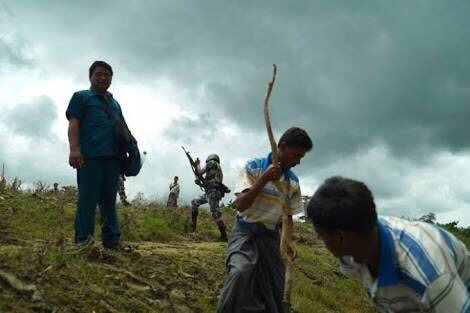
Recent weeks have seen an escalation of violence against the Rohingya in Rakhine, the poorest state of Myanmar. A tide of displaced people are seeking refuge from atrocities – they are fleeing both on foot and by boat to Bangladesh. It is the latest surge of displaced people, and is exacerbated by the recent activity of the Arakan Rohingya Salvation Army (ARSA).

Religious and ethnic differences have been widely considered the leading cause of the persecution. But it is becoming increasingly hard to believe that there are not other factors at play. Especially given that Myanmar is home to 135 official recognised ethnic groups (the Rohingya were removed from this list in 1982).
In analysing the recent violence, much of the western media has focused on the role of the military and the figure of the de facto leader Aung San Suu Kyi. Her status as a Nobel Peace prize laureate has been widely questioned since the latest evidence of atrocities emerged.
She continues to avoid condemning the systematic violence against the Rohingya. At least the media gaze has finally shifted somewhat towards their plight.
But there remain issues that are not being explored. It is also critical to look beyond religious and ethnic differences towards other root causes of persecution, vulnerability and displacement.
We must consider vested political and economic interests as contributing factors to forced displacement in Myanmar, not just of the Rohingya people but of other minorities such as the Kachin, the Shan, the Karen, the Chin, and the Mon.
Major ethnic groups in Myanmar. Al Jazeera

Land grabbing

Land grabbing and confiscation in Myanmar is widespread. It is not a new phenomenon.
Since the 1990s, military juntas have been taking away the land of smallholders across the country, without any compensation and regardless of ethnicity or religious status.
Land has often been acquired for “development” projects, including military base expansions, natural resource exploitation and extraction, large agriculture projects, infrastructure and tourism. For example, in Kachin state the military confiscated more than 500 acres of villagers’ land to support extensive gold mining.
Development has forcibly displaced thousands of people – both internally and across borders with Bangladesh, India, and Thailand – or compelled them to set out by sea to Indonesia, Malaysia and Australia.
In 2011, Myanmar instituted economic and political reforms that led it to be dubbed “Asia’s final frontier” as it opened up to foreign investment. Shortly afterwards, in 2012, violent attacks escalated against the Rohingya in Rakhine state and, to a lesser extent, against the Karen. Meanwhile, the government of Myanmar established several laws relating to the management and distribution of farmland.
These moves were severely criticised for reinforcing the ability of large corporations to profit from land grabs. For instance, agribusiness multinationals such as POSCO Daewoo have eagerly entered the market, contracted by the government.

A regional prize

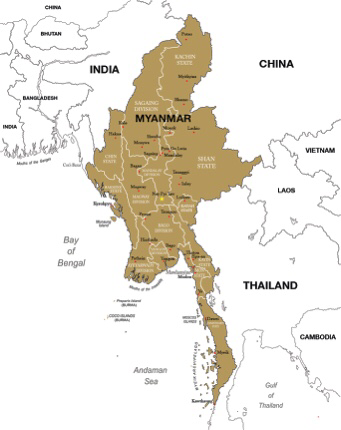
Myanmar is positioned between countries that have long eyed its resources, such as China and India. Since the 1990s, Chinese companies have exploited timber, rivers and minerals in Shan State in the North.
This led to violent armed conflicts between the military regime and armed groups, including the Kachin Independence Organization (KIO) and its ethnic allies in eastern Kachin State and northern Shan State.
In Rakhine State, Chinese and Indian interests are part of broader China-India relations. These interests revolve principally around the construction of infrastructure and pipelines in the region. Such projects claim to guarantee employment, transit fees and oil and gas revenues for the whole of Myanmar.
Among numerous development projects, a transnational pipeline built by China National Petroleum Company (CNPC) connecting Sittwe, the capital of Rakhine, to Kunming, China, began operations in September 2013. The wider efforts to take Myanmar oil and gas from the Shwe gas field to Guangzhou, China, are well documented.

Rohingya Muslims tell of gang rapes and secret killings in Myanmar’s hidden region

Pipeline from the Shwe gas field to China. The Shwe Gas Movement

A parallel pipeline is also expected to send Middle East oil from the Kyaukphyu port to China. However, the neutral Advisory Commission on Rakhine State has urged the Myanmar government to carry out a comprehensive impact assessment.

In fact, the Commission recognises that pipelines put local communities at risk. There is significant local tension related to land seizures, insufficient compensation for damages, environmental degradation, and an influx of foreign workers rather than increased local employment opportunities.
Meanwhile, the Sittwe deep-sea port was financed and constructed by India as part of the Kaladan Multi-modal Transit Transport Project. The aim is to connect the northeast Mizoram state in India with the Bay of Bengal.
Coastal areas of Rakhine State are clearly of strategic importance to both India and China. The government of Myanmar therefore has vested interests in clearing land to prepare for further development and to boost its already rapid economic growth.
All of this takes place within the wider context of geopolitical maneuvering. The role of Bangladesh in fuelling ethnic tensions is also hotly contested. In such power struggles, the human cost is terribly high.

Compounding the vulnerability of minorities

In Myanmar, the groups that fall victim to land grabbing have often started in an extremely vulnerable state and are left even worse off. The treatment of the Rohingya in Rakhine State is the highest profile example of broader expulsion that is inflicted on minorities.
When a group is marginalised and oppressed it is difficult to reduce their vulnerability and protect their rights, including their property. In the case of the Rohingya, their ability to protect their homes was decimated through the revocation of their Burmese citizenship.
Rohingya settlement near Sittwe. Thomas Johnson
Since the late 1970s around a million Rohingya have fled Myanmar to escape persecution. Tragically, they are often marginalised in their host countries.

With no country willing to take responsibility for them, they are either forced or encouraged to continuously cross borders. The techniques used to encourage this movement have trapped the Rohingya in a vulnerable state.
The tragedy of the Rohingya is part of a bigger picture which sees the oppression and displacement of minorities across Myanmar and into neighbouring countries.
The relevance and complexity of religious and ethnic issues in Myanmar are undeniable. But we cannot ignore the political and economic context and the root causes of displacement that often go undetected.

This article was amended after publication to correct the mislabelling of the Karen as Muslim.

Rickinson & Elizabeth Pickhills: The Original Yorkshire/Lancashire Grey Nomads?

My Great Great Grandparents.

As I’ve noted before, it is difficult to piece together the everyday lives of people from 150 years ago, using a disjointed set of records that covers just sporadic moments in their lives. And so it is with my Great Great Grandparents – Rickinson Pickhills and Elizabeth Appleyard – though what we do have provides an interesting, insightful, and poignant story. The question that I asked myself as I collated the records and miscellany of their lives is – did Elizabeth realise just what was ahead for her when she married Rickinson?

St Peter’s Cathedral, Bradford, Yorkshire

Rickinson was born around November 8, 1811 at Bradford, in Yorkshire, and Christened on the 8th of November in St Peter’s Cathedral in Bradford, inheriting his mother’s maiden name as a Chritian name – something I am eternally thankful for, as it makes name searches easy!. His parents, Joseph Pickhills & Clara (Clarissa) Rickinson – his mother was previously married to a John Brown, with no issue – and his granmother (Margaret Moorsom) and grandfather (Roger Rickinson) were from well-established, and highly respected families from the Robin Hood’s Bay/Whitby/Fylingdales area of Yorkshire. He had one brother (Seth (1808-1859)), and one sister (Priscilla (1804-1873)). Apart from Rickinson, they were not prolific reproducers, with Seth having only one son, Alfred (who was to become a Johnsonian Baptist Minister – see his story here https://timalderman.com/2012/01/30/the-reverend-alfred-pickles/ – in Rochdale, Lancashire and Towcester in Northumberland), and Priscilla never marrying, but becoming companion and housekeeper to her nephew for many years until he married. Rickinson’s age also varies in some census: in the 1841 he is noted as 27: In the 1851 as 39; 1861 is difficult to read but could be 50.

Rickinson’s Christening record. My interpretation of this record is that his father, Joseph, lived in Bowling, Bradford, and his occupation was as a (wool) comber.

Elizabeth Appleyard is a harder story to follow, and research is ongoing. We have what we think is her baptism record, on 22 May, 1825 at Farnley-by-Leeds in Yorkshire, with William Appleyard and Sarah named as her parents. However, gauging from census records, we are deducing that she was born around 1822, and baptised much later – a common practise back then. We know she was underage when she married Rickinson. We certainly know her father’s name was William, from her marriage certificate, but on no actual documents is her mother named. At the moment, we are thinking it may possibly be Sarah Lamby, as the dates and places fit. The census records tell us that she was born in Bradford (1851census), though in the 1861 she gives it as Clayton. There appears to be no census records for her under the name Elizabeth Pickhills in the 1871/81/91 census, though we know she used that name up until her death. The 1901 census lists her birth town also as Clayton. As to age, it is noted as 19 in the 1841 census; on the 1851 as 28; 1861 as 37. We know that in the 1841 census (taken on 7 June) the following instruction was given “The census takers were instructed to give the exact ages of children but to round the ages of those older than 15 down to a lower multiple of 5. For example, a 59-year-old person would be listed as 55. Not all census enumerators followed these instructions. Some recorded the exact age; some even rounded the age up to the nearest multiple of 5”, though seeing as Rickinson is stated as 27, it would seem that rounding down wasn’t done on this form. 

Rickinson and Elizabeth married on the 29 January, 1840 at St James Church, Halifax. 

St James Church, Halifax.
Marriage certificate for Rickinson & Elizabeth

There are a couple of things of note on the marriage certificate – Rickinson is at full-age, but Elizabeth is a minor; his rank or profession is listed as a “Gentleman” from Halifax, and she is listed as being from Northowram; Joseph Pickhills (Rickinson’s father) is also listed as a “Gentleman”, while William Appleyard is listed as being a “Worsted Stuff Manufacturer”. This was considered a good profession (it is possible that William conducted his business from Old Dolphin), and really seems to indicate a marriage between two reasonably well-off families, though otherwise would seem to be the case. There are three very interesting events that indicate that all may not have been as it seems! 

In 1839, their first son, George Rickinson Swan, was born (he emigrated to Australia in the 1858, and died in Bourke, New South wales, on August 13, 1912 from Senile Decay (Dementia or Alzheimer’s), and was buried in Bourke the following day. Unfortunately, all the grave markers in Bourke cemetery were destroyed in a severe bushfire, so their actual burial plots are unknown.. He lived an amazingly interesting life there, and his story is yet to be written). He married Ellen Fanning on February 18, 1862 at Port Eliot in South Australia. He was a steamer captain on the Darling River, resided in Goolwa, South Austealia, and Bourke New South Wales. They had no children.

Captain George Rickinson Swan Pickhills

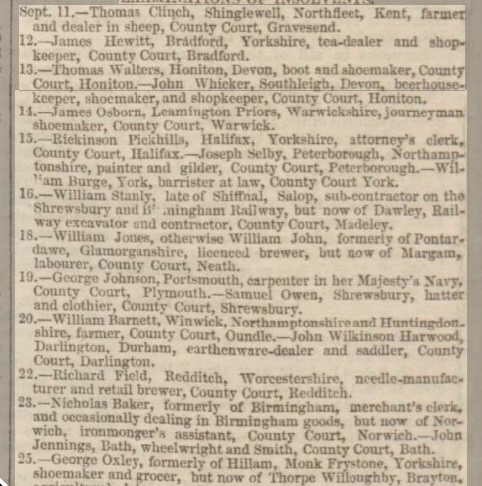
By the time they married in January 1840, Elizabeth was 2 months pregnant with their second son, William Moorsom (given his second name from his great grandmother, Margaret Moorsom, he joined the Royal Navy at 14, and dird from Cholera in Bengal, India in 1866. His story is here https://timalderman.com/2016/06/26/henry-moorsom-pickhills/). Whether this caused any scandal or not, we will never know. The third interesting event for 1840 was that Rickinson declared insolvency on September 11, 1840. For what reasons, we do not know. It would appear that financial difficulties started early on in their married life.

Rickinson’s Insolvency, Birmingham Gazette, September 1840.

By the time of the 1841 census, they are listed as living in the district of Fold, and George and Henry are listed with them. Rickinson appears to be given the profession of “agricultural labourer”. Also, note that in this census, the family name is spelt as “Pickles“.  

We can see from all the following records that the family moved around – a lot! One assumes it was for work purposes, though it is possible that Rickinson was just an unreliable employee.  

Catherine was born on January 13, 1842 in Halifax (she married Jurgen Nickolas Andreas Knoop (1840-1900) on February 16, 1864 in West Derby, Lancashire. They had one daughter, Clara Priscilla Marie (1869-1871). Catherine’s death date is unknown at this time). 

Jane was born on January 1, 1844 in Northowram. She died on August 6, 1844 in Northowram from “Disease of the Liver”. Present at her death in Northowram village is John Appleyard. It is still to be ascertained if this is Elizabeth’s brother, or an uncle.

Edward was born on November 1, 1845 in Halifax. He died on April 30, 1846 in Halifax of “Pneumonia, 7 days certified”. Rickinson is listed as an “Attorney’s Clerk”, and was in attendance at the death.

On the evening of November 5, 1846 a James Greenwood broke into the “lonely house in the neighbourhood of Halifax”, belonging to Rickinson & Eluzabeth, in the absence of the family, and stole 2 pistols, 3 dresses, and other property. He was charged, pleaded guilty, and sentenced to 18 months hard labour.

York Herald, 20 March 1847

Charles Edward was born in 1847, in Halifax. He died on February 15, 1869 on the Murray River, Victoria, Australia. He was visiting his brothers George Rickinson Swan, and Frederick William, when he fell overboard from the steamer “Moira”, at The Devil’s Elbow on the Murray River, and drowned. He was buried at Lake Victoria, Victoria. I am still attempting to ascertain his actual burial place.

Charles Edwards Death, Western Herald, Wednesday 12 March 1890

 In 1848, Rickinson again declared insolvency in Halifax.  The reasons why we will,possibly never know.

Frederick William was born in 1849, in Bradford. He died on April 15, 1850 in Bradford from “Diarrhea 6 Days certified”. Rickinson was in attendance at Bridge St, Bradford, and is an Attorney’s Clerk. 

This brings us to the 1851 census, held on March 30, and has been updated to include more information than the 1841. In 1851, they lived at 12 Duckworth Lane, Manningham, Bradford. Rickinson is a Solicitor’s Managing Clerk, having previously been an Articled Clerk (this is noted on the census form). Along with Elizabeth, George (11), Henry Moorsom (10), Catherine (9), and Charles Edward (4) are listed.

Priscilla (named after her aunt) was born on January 4, 1852 at Thornton. She was married twice, to William Wallace Pratt on September 20, 1869 at Liverpool, in Lancashire. They had no children. It is assumed William died around 1872/73, and she them married William Frederick Stafford (1840-) on February 20, 1873 at Kirkdale in Lancashire. They went on to have 8 children, born in Cheshire, Ireland and Scotland. We do not currently have a death date for her, though we assume in Scotland. It is interesting to note that they named their first child – a girl – Clara Priscilla Marie (a family tilt to her Great grandmother, and great grand aunt), which was the same name her sister Catherine had given to her daughter, who only lived for 18-odd months. I wonder if her sister was still alive, and the daughter was named as a tribute to her lost daughter, or as a tribute because her sister had died?

Frederick William (MY GREAT GRANDFATHER) was born on February 28, 1855 in Everton.  He was Christened 30 August 1862 at St Nicholas parish, Liverpool, Lancashire. He emigrated to Australia, and arrived in Sydney in 1880. He married Ellen McConnell (1854-1935) in Sydney on February 23, 1866 before moving to Bourke, New South Wales. He was a steamer captain, and they had 3 children – George Rickinson, Elizabeth Barwon (middle name from the Barwon River, which ran near Bourke) and my GRANDFATHER Frederick George (1891-1945) – all born in Boyrke. He died on September 13, 1891 at Newtown (Royal Prince Henry Hospital) from chronic Brights Disease (kidney nephritis) and Ascites (accumulation of liquid in the abdominal cavity), and spent 10 days in hospital. He was buried in Rookwood cemetery (Anglican section) on September 16, 1891. It should be noted that the two brothers wives – Ellen Fanning, and Ellen McConnell brought some Irish blood into the family.

Clara was born on April 4, 1857 in Liscard, Cheshire. She emigrated to Australia with her mother in 1871, and ended up in Goolwa, in South Australia, where her brother George resided, as also was her mother, Elizabeth – more on this further on. They returned to Launceston, had one daughter, Hilda Dulcie Elizabeth (1891-1941), and she died in Launceston on July 7, 1921. The newspapers give her age as 56, though she was, in fact, 64.

Walter was born on May 16, 1859 in Everton, Lancashire. He died on November 6, 1862 in Liverpool, Lancashire from Diptheria. He is buried in Toxteth Park cemetery – possibly with his father.

The 1861 census was held on April 7. They lived in Parkfield Road, Toxteth Park, West Derby, Lancashire. Also present were Elizabeth (37), Catherine (19), Charles (14), Priscilla (9), Frederick William (6), Clara (4), and Walter (1). Rickinson is a Solicitor’s General Clerk; Catherine is a Cigar Maker; Charles, Priscilla, Frederick William are Scholars. 

Mary was born on August 16, 1861 in West Derby, Lancashire. She died on February 17, 1863 in Liverpool, Lancashire, from “Dentition Gum Disease Certified”. Henry Moorsom was present at her death. He could possibly have been on shore leave. 

Rickinson died on May 12, 1862 at Toxteth Park, Lancashire. His obituary read “On the 12th instant, of disease of the heart at his office, 30 Castle St, aged 41 years, Mr Rickinson Pickhills“. According to his death certificate, his son Charles Edward was present at his death. He was buried at Toxteth Park Cemetery.

Rickinson “Pickles” Pickhills death certificate. He died at his workplace in Castle Street from a heart attack.

There is a possibility that Elizabeth arrived in Australia in 1871, on the “Orient”. There is a record of a KG Pickhills and daughter arriving in Sydney on the 4th January that year. So, time for a “possible scenario”! The newspapers would have printed the passenger list from a hand-written document, so mistakes are inevitable. We know Elizabeth came out here around this time, and with Clara, who would have been 14 at this time, her only surviving child at home, it is more than likely – and with 2 son’s here already – that they emigrated together. There is no independent emigration record for Clara. They would have made their way to Goolwa, where George had a home. We have records – to follow – that definitely place Elizabeth there in 1876. We know that Clara married William Francis Bomford there in 1889 – thus it is possible she met him there, and moved to Launceston after their marriage.  The marriage announcement also states that the wedding was held “in the residence of the bride”, so Clara was obviously in Goolwa at that time. At this stage, I am accepting the emigration record on the “Orient” as their arrival here. PS Have just discovered a “Thank You” letter to the Captain of the “Orient”, regarding their appreciation to the ship’s doctor for his kindness and care on what appears to be a rough voyage, and published in December 1870. Two of the signatrees are Clara & Elizabeth Pickhills. My assumption was right.

Adelaide Telegraph, Tuesday 20 December 1870, Page 1.
William Feancis Bomford & Clara Pickhills wedding announcement in Goolwa, South Australia

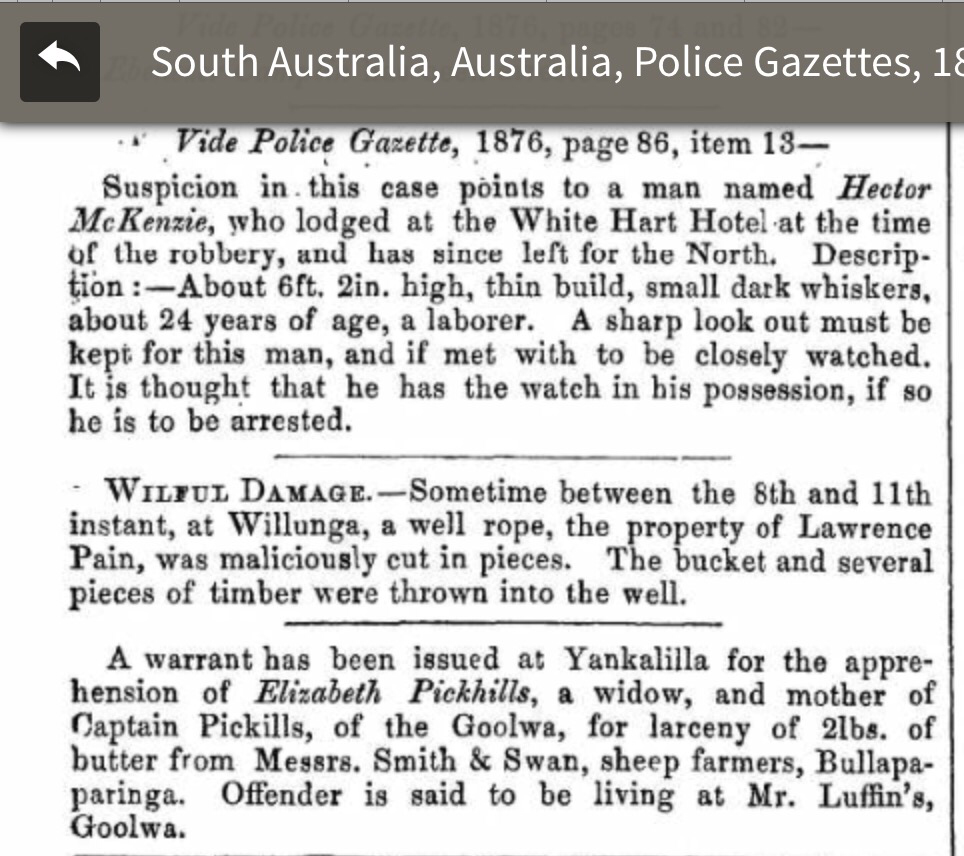
The second actual record we have of her here is in 1876 – and it’s in the form of a police warrant in Goolwa, South Australia. On June 21, 1876, the following notice appeared in the South Australian Police Gazette “A warrant has been issued at Yankalilla for the apprehension of Elizabeth Pickhills, a widow, and mother of Captain Pickills, of the Goolwa, for larceny of 2lbs. of butter from Messrs. Smith & Swan, sheep farmers, Bullapabaringa. Offender is said to be living at Mr. Luffin’s, Goolwa.” . Why she would feel the need to steal 2lb of butter is anybodies guess, and despite knowing that she is to end up with Alzheimer’s, I feel it is a bit early at this stage for that to be affecting her life or mental condition.

The following then appears in the Police Gazette to say that the original charge had been withdrawn.


We then hear nothing of Elizabeth for quite a few years. I dare say that as time went on, her mental condition would have begun to deteriorate at an ever alarming speed Then, on April 28, 1889 at Goolwa, the following incident occured: A writ appears with the Goolwa police dated 2nd May, 1889 against Elizabeth Pickhills . She appeared before a Justice of the Peace, Thomas Goode, charged with that on the 28th April 1889 she did “unlawfully use abusive words in a certain public place, to wit The Parade in North Goolwa, with intent to invoke a breach of the peace”. She had to pay a fine of £2. This incident received a mention in “A Land Abounding – A History of the Port Elliot and Goolwa Region, South Australia” by Rob Linn, chapter 5. Being a Yorkshire lass, I dare say the language would have been very colourful!

The book “A Land Abounding” mentions Elizabeth’s 1989 public indiscretion.

 November 1892 finds Elizabeth onboard the “Masilia” emigrating back to England. As with so many aspects of her life, assumptions have to be drawn about the reasons behind her actions. I feel there are two scenario’s that could have prompted her return to England: (A) She just didn’t like it here, being a bit more casual, and not as “modern” as England, with a totally different climate, the tyranny of distance, the remoteness, or (B) her dementia was becoming a problem for her son’s, and they were finding her just too difficult to handle. With Clara in Tasmania, Frederick William and George Rickinson Swan living in Bourke, Goolwa must have become a very lonely place. Anyway, whatever the reason, it was back to England she went, but not to Yorkshire nor Lancashire.

Passenger & Immigration list for the “Masilia”

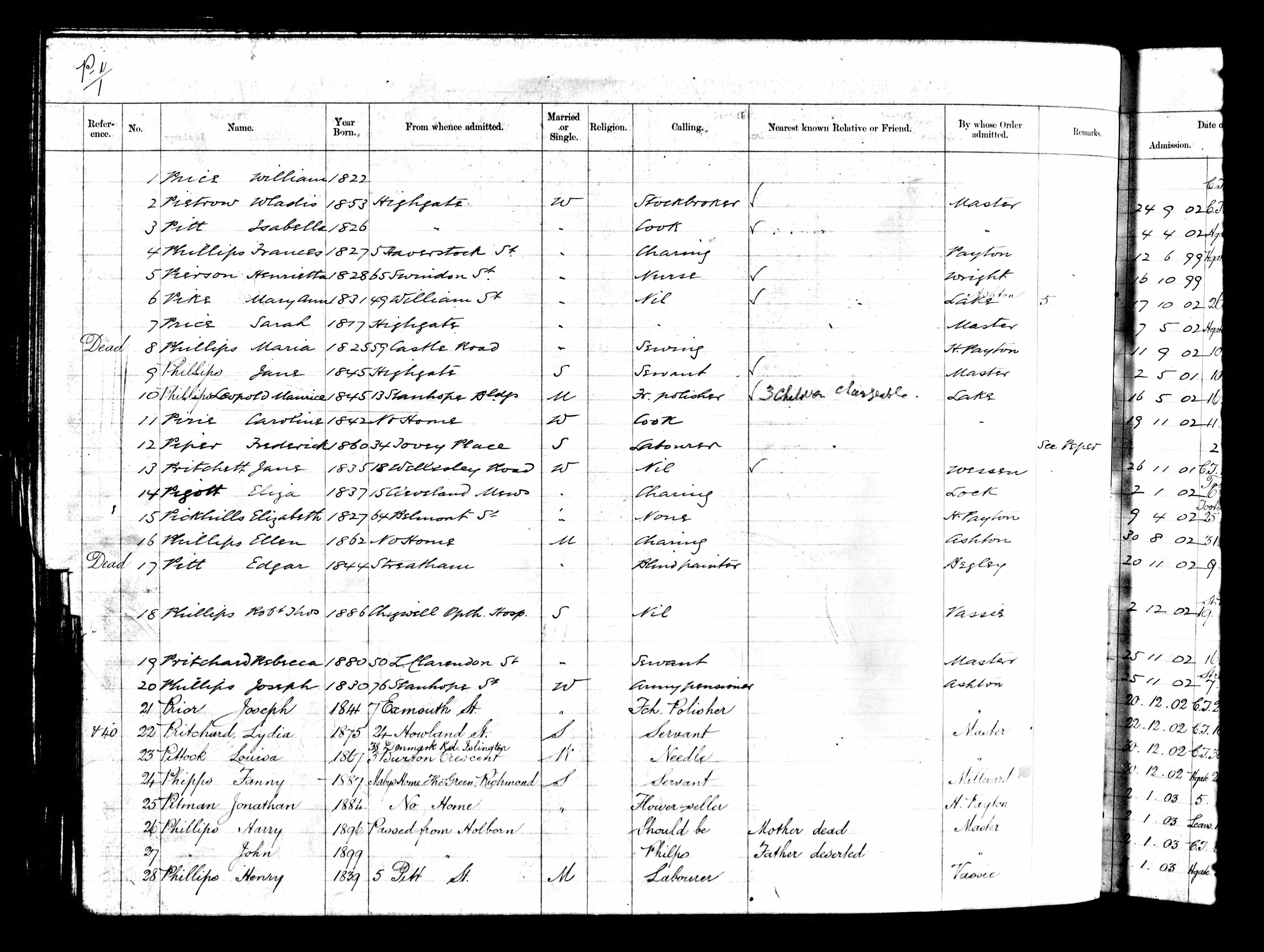
The Masilia arrived in London on November 22, 1892. We hear no more of her until the 1901 census, held on March 31 that year. Elizabeth is living in St Pancras, in a house with 4 other people, and “living on her own means”. Her age is 74. Then in 1902, she appears in the St Pancras Workhouse records “St Pancras Workhouse at 64 Belmont Street, Admitted 9-4-02, discharged 25-2-03”. This would indicate that she had fallen on hard times.

St Pancras Workhouse at 64 Belmont Street, Admitted 9-4-02, discharged 25-2-03
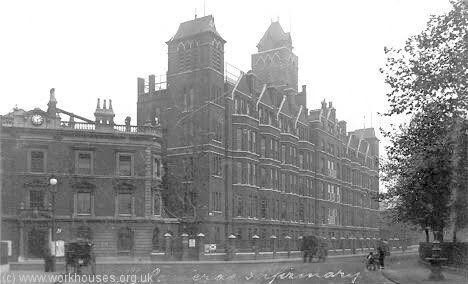
St Pancras Workhouse

There is no more about her until her death in Tooting Bec Mental Asylum in 1906. It is a bit frightening to contemplate what the path to the asylum could have been. Elizabeth died in the asylum on February 20, 1906. Her official place of death was Wandsworth Common. She died from “Senile Decay”, which can mean dementia, or a progressive, abnormally accelerated deterioration of mental faculties and emotional stability in old age, occurring especially in Alzheimer’s disease. There appears to be no record of her burial.

Elizabeth Pickhills death certificate, Tooting Bec Mental Asylum.
Tooting Bec Mental Asylum.

Ever since I started gathering information on Elizabeth, many years ago, I have had this feeling of great sadness regarding her life. I get the feeling that life with Rickinson may have been one of erratic employment, not to mention his two instances of insolvency, and being dragged from village to town throughout Yorkshire and Lancashire. She was literally an incubator for children…many of whom had very short lives. Of the 12 children she had over a 22-year period, 5 died in infancy. Two daughters married and moved away, 2 son’s and a daughter moved to Australia and married here, one son died when visiting here, and one son died overseas in the naval service. That is a very sad litany, and after Rickinson’s death, life in Lancashire must have felt vety lonely indeed. Even the move to Australia, to be closer to her sons, didn’t work out well, with several public arrests, and life in Goolwa must have ended up feeling as lonely as England. A return to England, and the humbling by life in a workhouse, and the increasingly detrimental affects of Alzheimers, leading to a sad, lonely death in a mental asylum! It just breaks your heart! Yet despite this, her children here went on to live very productive lives, and she would have been proud of them.

Below is a letter concerning senile decay in London.

Tim Alderman © 2017

What’s In A Name?: The Derivation of the Pickhills Surname.

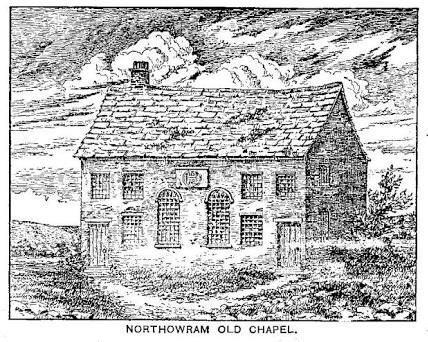
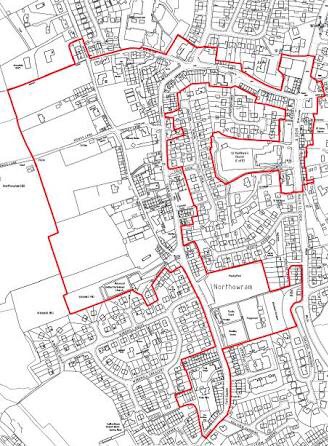
My Great Great Grandmother, Elizabeth Pickhills nee Appleyard, and my Great Great Great Grandmother, Clara Pickhills nee Rickinson both have associations with the Northowram area in Yorkshire, so the below description came as quite a surprise to me. The family also has tie-ins to Halifax. My Great Geeat Grandfather, Rickinson Pickhills cannot trace back far with that surname – Hus father, Joseph Pickhills, we only know about through his marriage record to Clara Brown (Clara Rickinson was first married to John Brown). When I hired Mintwood genealogy researchers to do some tracing of the family in 2011, they could find no records for him, and thought there was a probability of him being an itinerant worker. Likewise, there are difficulties tracing Elizabeth Appleyards parentage, despite Appleyard being a common hame in the Northowram area. We only know her father’s was William (through her marriage record to Rickinson), and a possible sibling or uncle – John Appleyard – present at the Northowram death of Jane Pickhills, the daugter of Rickinson & Elizabeth. Research is ongoing, but it is possible that both families are from that area.

Pickhills is a very old name coming from the medieval period where it was written as ‘Pighills’. I have seen the name on entries in relation to early research in the Shibden valley area. Northowram old Township was a very large area covering the village and skirting the edge of Halifax right up to the other side of Queensbury (Queenshead as it was in earlier times). 

This interesting name is of early medieval English origin, and is from a topographical surname for someone who lived by a small field or paddock. The name derives from the Middle English word “pightel, pighel”, small enclosure, field, or paddock. Topographical names were among the earliest group of surnames to be created in England and other countries in Europe, as they became necessary, since both natural and man-made features in the landscape provided instant and easily recognisable identifying names for the inhabitants of the small communities of the Middle Ages. 

The modern surname can be found as Pickles, Pickless, Pickle and Pighills, and is found recorded mainly in Yorkshire. The marriage of Thomas Pickles and Sarah Tennard was recorded in Bingley, Yorkshire, on January 28th 1649. One R. Pickles, a famine emigrant, sailed from Liverpool aboard the “New World” bound for New York on June 7th 1847. The first recorded spelling of the family name is shown to be that of Richard de Righkeleys, which was dated 1379, in the “Poll Tax Returns of Yorkshire”, during the reign of King Richard 11, known as “Richard of Bordeaux”, 1377 – 1399. Surnames became necessary when governments introduced personal taxation. In England this was known as Poll Tax. Throughout the centuries, surnames in every country have continued to “develop” often leading to astonishing variants of the original spelling.

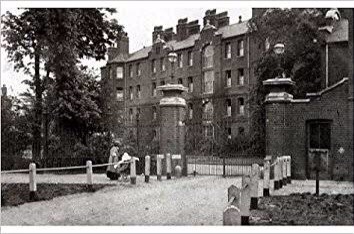
Northowram Primary School
Old Northowram village before the developers moved in
Northowram Village

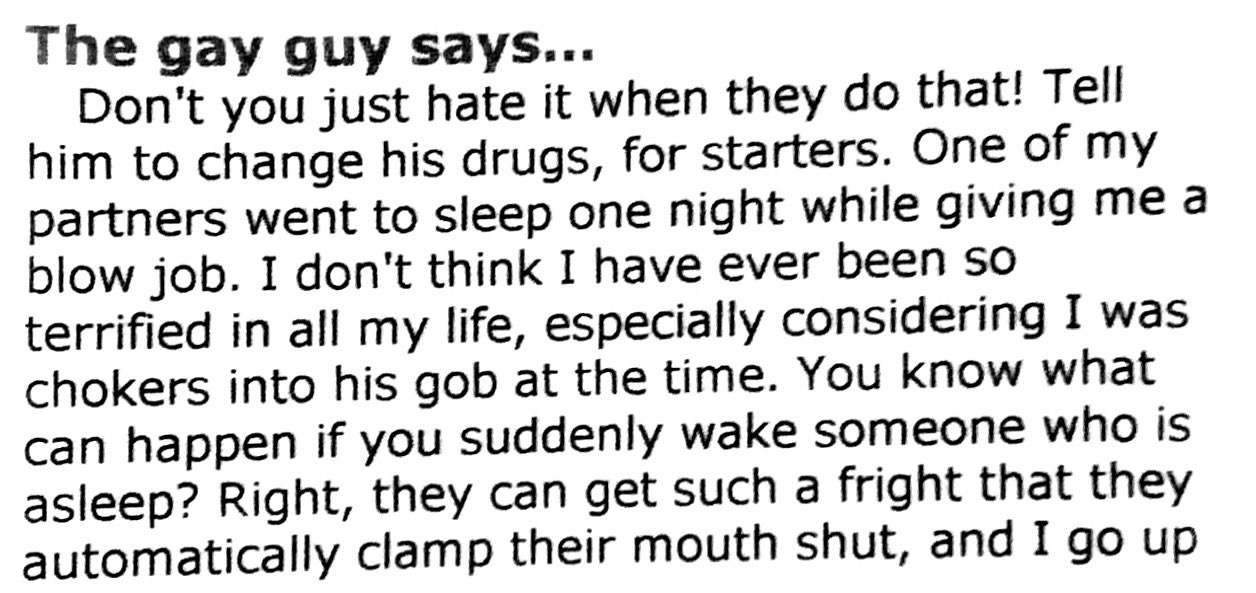
Sex Tycoon: “Sex4Cast” Agony Aunt Column, Friday 27 June 2003 *Is This Gay?*.

In 2003, after making a witty, sarcastic comment on an article published in an online emagazine called “Sex Tycoon”, I was contacted by them, and asked to be “The Gay Man” commenting on a series of subscriber personal-problem-questions. The panel of “experts” consisted of a “Straight Dude”, “Straight Gal”, ‘The Gay Guy” and “The Lipstick Lesbian”, and each week, under the column title Sex4Cast, we were emailed a “problem” question with a link, which we would then write a reply, offering personal advice on solving the problem. The four panellists had no knowledge, or contact, with each other, so all advice was offered independently. As “The Gay Guy”, I never treated the questions seriously, offering – in my inimitable style – witty (I hoped), sarcastic advice, which, according to feedback from the site owners, was very popular with their subscribers. Sex Tycoon was operated by a group called FocusBlue Media LLC. Unfortunately, as was common in those days on the internet, after 14 columns the owners decided to close the site down, and that was the end of my Agony Aunt career. Sex Tycoon has disappeared into that great cyber-space grave

Sex Tycoon: “Sex4Cast” Agony Aunt Column, Friday 20 June 2003 *Put That Camera Away!*.

In 2003, after making a witty, sarcastic comment on an article published in an online emagazine called “Sex Tycoon”, I was contacted by them, and asked to be “The Gay Man” commenting on a series of subscriber personal-problem-questions. The panel of “experts” consisted of a “Straight Dude”, “Straight Gal”, ‘The Gay Guy” and “The Lipstick Lesbian”, and each week, under the column title Sex4Cast, we were emailed a “problem” question with a link, which we would then write a reply, offering personal advice on solving the problem. The four panellists had no knowledge, or contact, with each other, so all advice was offered independently. As “The Gay Guy”, I never treated the questions seriously, offering – in my inimitable style – witty (I hoped), sarcastic advice, which, according to feedback from the site owners, was very popular with their subscribers. Sex Tycoon was operated by a group called FocusBlue Media LLC. Unfortunately, as was common in those days on the internet, after 14 columns the owners decided to close the site down, and that was the end of my Agony Aunt career. Sex Tycoon has disappeared into that great cyber-space graveyard, but I’ve kept copies of the columns, and publish them here for your amusement.

Sex Tycoon: “Sex4Cast” Agony Aunt Column, Friday 13 June 2003 *Close the Blinds!*.

In 2003, after making a witty, sarcastic comment on an article published in an online emagazine called “Sex Tycoon”, I was contacted by them, and asked to be “The Gay Man” commenting on a series of subscriber personal-problem-questions. The panel of “experts” consisted of a “Straight Dude”, “Straight Gal”, ‘The Gay Guy” and “The Lipstick Lesbian”, and each week, under the column title Sex4Cast, we were emailed a “problem” question with a link, which we would then write a reply, offering personal advice on solving the problem. The four panellists had no knowledge, or contact, with each other, so all advice was offered independently. As “The Gay Guy”, I never treated the questions seriously, offering – in my inimitable style – witty (I hoped), sarcastic advice, which, according to feedback from the site owners, was very popular with their subscribers. Sex Tycoon was operated by a group called FocusBlue Media LLC. Unfortunately, as was common in those days on the internet, after 14 columns the owners decided to close the site down, and that was the end of my Agony Aunt career. Sex Tycoon has disappeared into that great cyber-space graveyard, but I’ve kept copies of the columns, and publish them here for your amusement.