Category Archives: General Interest

Today’s Whinge: Sunday 3rd February 2019

A question for you guys out there – are you finding men’s underwear really uncomfortable these days?

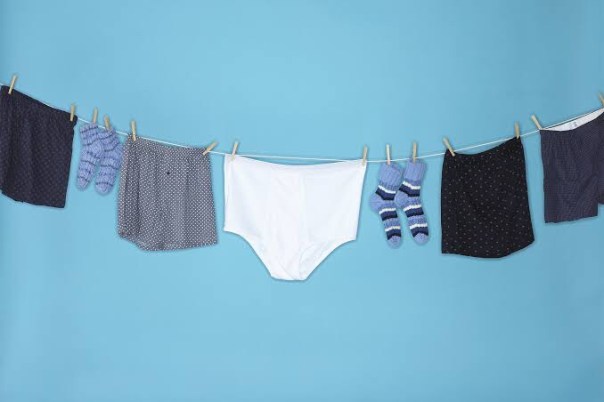
There seems to have become, amongst designers and manufacturers, this obsession with “emphasising” underwear. Now, I don’t know about you, but in my day-to-day life, just running around doing the mundane everyday things, I don’t really stop to think “is anybody looking at how big my cock looks in these undies?”. Add to this some really strange fabrics to make them from, and you have the perfect recipe for uncomfortable undies. There is simply no worst scenario than walking along a crowded street and realising that you either have to pull your briefs out of your bum crack, or you need to rearrange the jiggly bits…including having to hoy your balls back in after a fallout! Next time you see a guy furtively ducking into a dark lane way, or hiding in a doorway…ask yourself…does he have to rearrange?

It seems that just about every pair of briefs you buy these day has to have instructions on how to put them on. There is a whole world of special pouches, holes, double linings, and specially sewn front panels to navigate when you put them on! Push down, pull up, manipulate, mould, insert here, put this bit here and that bit there – it’s a world of intricacy! Bad waistbands that are either too wide (and act like corsets), too narrow, too loose or too tight. Fabric mixtures that are too smooth and slinky, or just seem to…embarrassingly…just…get smelly! And all for what!

If you’re already married or partnered, then your other half already knows how big – or small – you are, so you are going through a lot of discomfort for nothing. If you are looking for a partner, or a pick up…is it a good idea to falsely advertise! Let’s face it…sooner or later the briefs are off, and the truth is just sitting there (or otherwise). And how do you go about hiding your excitement at the thought of some potential rumpy-pumpy? In the old days, you’d just jiggle it down your trouser leg, but with these new-fangled undies, well…there it is! Hello world…I have a hard-on!

They are just not working for me. I’m sick of looking like a dirty old man, constantly fiddling with myself when I realise the head is caught in an uncomfortable position!

About 12 months ago, I went back to cotton classic y-fronts. Perhaps not surprisingly, I am seeing many photos of guys in the same, in my Insta feed. And a lot of them are young guys…the ones I would expect to see in Andrew Christian. I know that classic y-fronts have an image problem! There are associations with fathers and uncles, high school locker rooms, and conservative ads. There is an image of oldish men with their undies midway up their chest, looking remarkably unsexy. But that image is slowly being turned around as it becomes more obvious that they are not going to be pushed out of our wardrobe by those cock emphasising youngsters.

I don’t want undies midway up my chest, in “dad” style. I’m getting on…but not that much. To counteract that really bad look, I’ve gone down a size when buying them. And it works. Sits them very nicely just above the hips. They are roomy enough to do this, and in the case of American “Jockey” (as distinct from Australian “Jockey” – yes, there is a difference!), you get some shrinkage with the first wash.

And I have to say – America wins hands down in the y-front stakes. “Hanes”, “Jockey”, “Fruit of the Loom”, ‘Polo Ralph Lauren”, “BVD” (have to be bought from Asia now), “Roundtree and Yorke”, “Stafford”, “Calvin Klein”, “Tommy Hilfiger”, “Lee”, “Gildan”, “2Xist’, and “Dockers”…along with many others, gives a great choice to those considering an undie rethink. Even contemporary labels like “Box” and “Aussiebum” are putting them out. All these brands fit well,in a smaller size. Australia does its own “Jockey” (the branding on the waistband is in grey…black in America…and our fabric is a softer, smoother cotton than the weave of the American), and we also do a very cool “Teamm8”, not forgetting our traditional “Bonds” with the horizontal fly (labelled as a S’port brief).

My biggest disappointments have been the British y-fronts. I’ve tried 3 brands so far, and they have ALL had the same problem – the bias binding on the leg bands. Within an hour of wearing them, the leg bands have stretched…and I’m falling out of them!

Do they have sex appeal? Am I ashamed to drop my duds when wearing them? Yes, they are sexy, and the number of guys who find y-fronts a fetish item is quite staggering. No, I am not ashamed to be caught in them. They cling where they should cling, and definitely show off ones merchandise with no uncomfortable contraptions. They sit comfortably on the hips…and you are totally unaware of their presence when going about your everyday affairs.

In a word…they are just damn comfortable!

Sometimes it pays to look back instead of forward. For those who feel a need to twist and manipulate their bits into junk-emphasising undies…you are welcome to them! But this guy is proudly striding out in his y-fronts!

Tim Alderman ©️2019

Today’s Whinge: Saturday 2nd February 2019

“Gender neutrality (adjective form: gender-neutral), also known as gender-neutralism or the gender neutrality movement, describes the idea that policies, language, and other social institutions should avoid distinguishing roles according to people’s sex or gender, in order to avoid discrimination arising from the impression that there are social roles for which one gender is more suited than another” – Wikipedia

Gender neutral language! Once again the PC brigade – a continuing blight on our society with their intolerance and narrow-minded attitudes – and a minority… a very small minority…try to foster their own language on to the community at large. Now, I come from a small minority, but we have always fought for rights without attempting to change language. Any language change that did happen came about through a historic process, not a demanding of!

I refer to myself as Gay, as do the majority of those in my circle. But I do not expect everyone around me to use that term when referring to me. Indeed, many in the general community don’t, but choose instead to use the term homosexual…a medical term for our sexuality. We’ll keep the more derogatory terms out of this conversation. I admit to having issues with the word Queer, and do not associate my self with Queer culture. That is not to say that I do not recognise that a Queer culture exists! It does, but is not my cultural language. Likewise, I recognise that gender neutral people exist, and are entitled to their own culture, but as with Queer, as far as I’m concerned it does not include me.

If you want to use a gender neutral language, then you go for it, but don’t expect the whole of society to just fall into line! As it is, it’s not going t\o happen anyway. The whole concept is so Orwellian it is frightening. Gender neutral toilets are one thing – I have no issue there – but to take people’s identity away from them is just wrong!

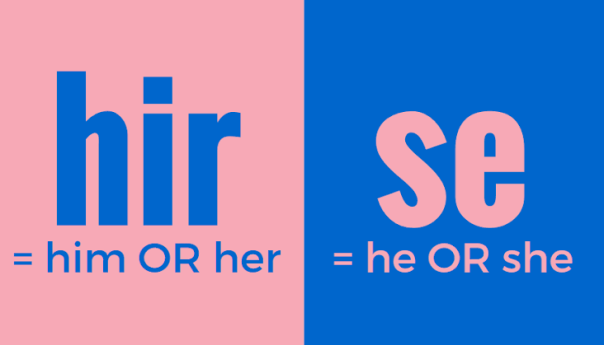
Let’s get it straight right here…I am a male, a man, a he, a him! I am a man, and have always been proud to be a man. Nobody…but nobody…is going to rob me of that identity. I am NOT an it, a they, a them or any other form of non-identity these people want to foster on me.

There is a lot in contemporary society I don’t like, but accept because there is a natural attrition that happens as the generations change. But I will not see our language distorted and obliterated by a few that don’t want to be recognised in traditional ways. Sure, demand that people use this language when referring to you…but don’t expect everyone else to want the same thing.

That is all I have to say on the non-issue! My prediction – another “trend” that will be just a flash in the pan! A movement (thankful for that) that defies sanity!

Tim Alderman 2019.

Seriously! No!

Today’s Whinge: Friday 1st February 2019

It would seem, according to those I follow on Instagram, that pretty well everyone in the world is either (a) a model (B) a blogger (c) a gym and fitness fanatic, or PT (d) a photographer (e) a traveller, (f) a Lifestyler or (g) an influencer! The latter absolutely intrigue me, as it appears to be someone who gets a whole lot of goodie bags of “stuff”, and through whatever means influences others to buy it, or tells them what they should be wearing, or where they should travel to! In my day, this was called marketing…but then – I’m old! I sort of feel sorry for people who lack the individuality to decide these things for themselves. A bit like the young royal wives stepping out in a rather plain outfit…and suddenly it’s copied, then snapped up by all those with no imagination to dress themselves!

Now don’t get me wrong – as a gay guy (or some would say an old queen…yet others that I’m a dirty old man) I’m only human, and get a big thrill out of looking at all these buff, toned, six-packed, shaved smooth men in their sweaty gym gear, Speedo’s, or Calvin Kleins (even the odd occasional tight, naked rear). Let’s face it…I’m not going to get there…not at my age!

But this does raise some questions. Reading some posts, I’ve detected some calls for help…depression…and have to wonder if this platform is a healthy place to be if you suffer from depression, or problems of self-esteem. There is a certain eroticism, hedonism, exhibitionism, egoism, even megalomania on Instagram. Photoshopping is rife! You just know that a lot of the guys…and girls…on here, given the opportunity, would get off on being naked. Amongst men, the image of the undies/swimmers clad body beautiful, and the buffed guys who live in the gym and happily snap themselves posing their bulging muscles, or at the cable machines present an image of health and happiness that few of us can ever hope to gain. Again, I have nothing against a healthy lifestyle, nor guys staying fit – I am a vegetarian, and do fitness Bodyweight training at home 2-3 times a week – but when we are saturated with it, when this is presented as the norm on social media platforms, in fashion and health magazines, in television shows, it has an unhealthy knock-on effect! Those who don’t have the body type, or the access to gyms, or the monetary resources, or just the addictive inclination needed to be constantly working out in gyms, start thinking there is something wrong with their bodies, that they are not up to scratch, are unable to fit into this mould, so start out on a cycle of self-destruction, self-harming, eating disorders, self destructive thinking, and low self-esteem. This in turn can lead to depression, and even suicide.

It is time to have more balance in how we depict both men and women, and like the death of the man-bun, and the hoped death of every man wearing a beard…even one’s who don’t suit them…it is time to move away from the over buffed body that requires an unrealistic amount of time to maintain. It would be interesting to know if these guys who pretty live in the gym, and can talk about nothing else, have looked forward 20 or 30 years and thought…is this lifestyle sustainable in the long run! It is time to push a model of attainable fitness, and a healthy diet that has more than chicken and lettuce in it. There is also a dietary model of veganism being “fashionable” at the moment (caused by Influencers, perhaps…), and though there is nothing wrong with the vegan diet, it is an extreme (though the advocates will never admit it). It’s like healthy people eating gluten-free…you are not doing yourself, or your body, any favours.

But I guess the question that all these models/photographers/bloggers/travellers/influencers raises is…who the fuck is doing all the hard work! Whose policing us? Putting out fires? Sweeping the streets? Being builders, electricians and plumbers? Car repairers? Are they all on another social platform? Are they all on Facebook, with their overalls around their hips, flexing with their greasy spanners? Looking uber butch in their King Gee shorts and footy socks and boots? I guess in 20 years, when everything just falls to pieces, we’ll find out!

I love Instagram. My way of counteracting all this blatant sexualism, is to post selfies. I want guys to realise that there is also a sexuality in getting older, that it is not something to be ashamed off, or hidden away, or denied. I am proud of being my age…I’ve done a lot to get here! Okay, you are not going to see me naked, or flaunting myself in my Hanes, but you are going to see my wrinkles, my graying hair, my white goatee and moustache, my chooky neck. I am what is a life well lived! The most disturbing part of this is the number of young guys who “like” my posts! I guess if one can be easily flattered…then, believe me…I am! I also want to show that extraordinary lives are lived in ordinary places, that disabilities are not disabling, and that self care doesn’t have to be an extreme!

Live the life you want to live, not the one you think everyone else wants you to live! Be proud of your individuality, your creativity, and striding outside the square. You can be an Influencer of a different kind, one who, just by being themselves, demonstrates the true beauty of a human being!

Tim Alderman 2019

Today’s Whinge: Thursday 31st January 2019

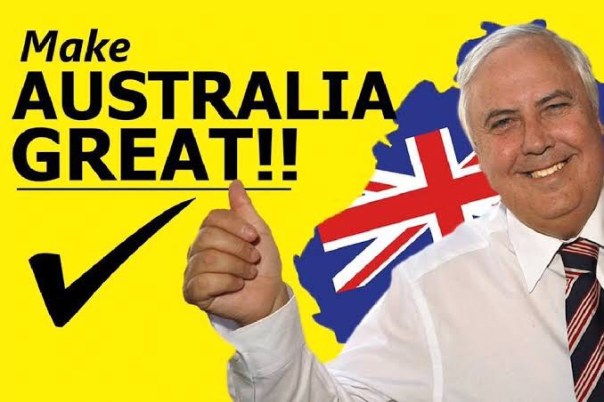
Clive Palmer! What can one say! Like we didn’t have enough of you the first time around! You , sir, are a charlatan! And a dishonest one, to boot! Not only stealing Twisted Sisters song “We’re Not Gonna Take it” and adding your own imbecilic lyrics, but stealing Trumps catch-cry to Make Australia Great Again! What a circus. Not only are you a dishonest businessman, but the same can be said for your party…and you! The United Australia Party was something you came up with in a bored moment, was a way to get paid for mouthing platitudes, and really showing off just how ignorant and rude you actually are. And claiming you were voted a Living Icon! Since when, mate! Not in my lifetime! Living moron would be more like it!

The only people who would vote for you are the same people who vote for Pauline Hanson – the ignorant, prejudiced and uneducated minority.

Twisted Sister’s Dee Snider Goes After Clive Palmer On Today Show

Written by Jackson Langford on January 31, 2019

The weirdest music feud of 2019 only gets weirder, as Twisted Sister frontman Dee Snider was invited to Today to talk about his ongoing issues with Aussie politician Clive Palmer.

ICYMI, Palmer was accused of ripping off Twisted Sister seminal track ‘We’re Not Gonna Take It’ for a political campaign and Snider, well, isn’t gonna take it.

Snider, who is currently in the country on a solo tour (including spoken shows), said to Today co-host Richard Wilkins that it is, indeed, a blatant rip-off.

Wilkins pointed out that politicians using songs from popular artists is nothing new, but Snider notes that Palmer is using it in a commercial.

“He’s using it, he’s breaking law, he’s a common criminal…he’s stealing my music,” he said.

“He’s refusing to pay royalties that he’s supposed to pay to use it in a commercial campaign.”

“It’s a theft of services basically and it’s going on in the courts, but it also makes me look bad,” he said later.

“As I’ve looked into Clive’s thing, he does not represent what I represent.”

Snider also said that his publishing company is in the process of suing the politician, after Palmer approached them but never actually paid them anything.

Snider took to Twitter yesterday to call Palmer “nothing but a low life, piece of kangaroo dung, criminal without an ounce of dignity.”

And this is what we can expect from this sponge on the Australian taxpayers:

“Clive Palmer has succeeded in his bid to have a second supreme court judge step down from a three-month trial next year, when liquidators for his failed Queensland Nickel company will seek to recover millions of dollars owed to creditors.

However, as Justice David Jackson recused himself on Monday, he described Palmer’s claims that he may been negatively influenced against the former MP, or discussed the case with other judges, as “scandalising conduct”. 

Palmer had asked the Queensland supreme court judge at an earlier hearing to recuse himself from the legal fight, alleging the judge might have made offensive comments about him to another court official.

Palmer said he was not sure if it was true but asked Jackson to step aside anyway.

Jackson ruled on Monday that he would step down. But he would continue to oversee proceedings until the case goes to trial in April, when another judge will step in.

Last week he suggested the businessman could be trying to get around limits on what lawyers can say in court, by representing himself. 

Palmer has rejected that suggestion. 

“These are mostly matters of a scandalising tendency that should not have been raised, if there was no reasonable basis for them,” Jackson said in his judgment. “He is a wealthy man who has available to him any legal assistance he desires or could need.”

The ruling follows the recusal of Justice John Bond, who stepped down in September after a decision to freeze more than $200m of Palmer’s assets.

Liquidators for Palmer’s Queensland Nickel business will try to claw back hundreds of millions of dollars owed to creditors when the matter goes to trial in April.

Queensland Nickel’s Townsville refinery closed in 2016, leaving 800 workers out of their jobs.”

And this man expects people to vote for him through inundating us with his rubbish ad!!

I think not, Clive!

Tim Alderman 2019

References

Today’s Whinge: Wednesday January 30th 2019.

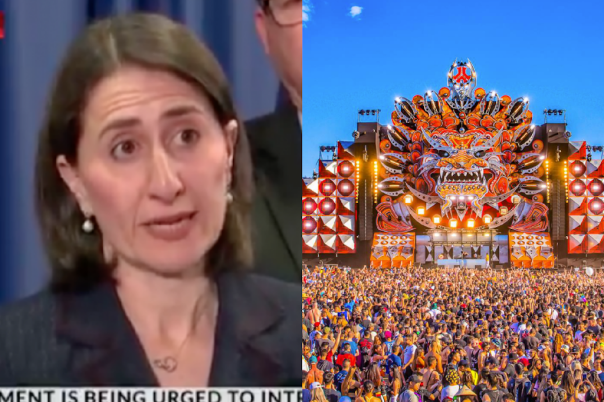
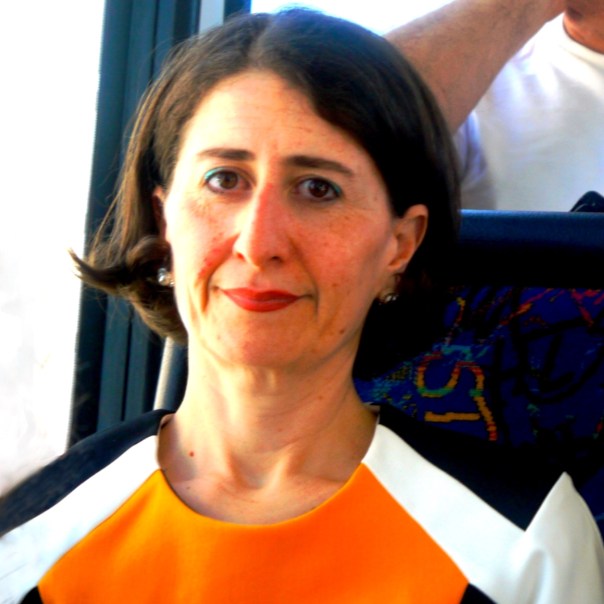
Seems to be my week for bashing Premier Gladys Berejiklian! Tends to happen when you bury your head in the sand, ignore evidence-based advice, and refuse to listen to the voices of reason.

Our Gladdie doesn’t want pill testing at big event dance parties. Like with the dead fish in the Darling River (see last nights whinge), it’s the people she cares about, and doesn’t want to see any more young people die from drug overdoses, and toxic drugs at said parties! It seems that the thinking is that if pill testing is introduced, it will appear that they are advocating the use of illegal party drugs at these events.

Now, I’m not ashamed to say that I did party drugs back in the 80s & 90s. I would never have been classed as a big time druggie, but whenever Mardi Gras, Sleaze Ball, and any otherbodd occasional dance parties rolled around, I would do an ekkie or some acid. Mind you, I never bought at the parties, and had a regular middle man I got them through who was reliable, and only ever had “clean” drugs. I always had a great time at the parties, didn’t drink alcohol, and drank a lot of overpriced water. It seems we all sailed in the same boat back then, as to my knowledge, there was never any deaths from overdoses at the parties. But the fact is, if for whatever reason they had pill testing back then, and whatever I had tested showed a dangerous result, I would not have taken it. I wanted to have a good time at the parties…not end up a statistic.

I guess we have to be realistic, and acknowledge that there will always be a percentage of people who, despite the best of advice, will decide to try to hedge the bets on their side, and will take drugs irrespective of the danger. But we also have to at least hope that the voice of reason will discourage the majority of people whose pills test negatively will vote in favour of an ongoing life, and dispose of said drugs.

The issue in both these scenarios is choice. If your pills test negatively, and you choose to take them, then you shoulder the risk, though knowing that you are putting yourself in danger of either ending up in A&E, or in the morgue. Pill testing at least gives people choice, when without it, everyone will just take the drugs and cross their fingers.

One of the main concerns about pill testing is that it may provide people with a “false sense of security”, and therefore lead to an increase in drug-related harm.

“What would be horrific would be if you had such a regime, something was deemed safe, and you have multiple deaths as a result,” Ms Berejiklian said in September.

But Dr Caldicott said this is a fundamental misunderstanding of how pill testing works.

“You will not be told at any stage that your drug is safe,” he said.

Prior to the testing process, each person is advised (and required to sign a legal waiver confirming they understand) the test does not provide evidence of drug purity, safety, dosage, or information about how they will individually respond to the substance being tested.

“We advise people that it’s not a medical consult … we don’t know enough about them to tell them whether it is safe for them or not,” Dr Caldicott said.

It has also been suggested that introducing pill testing at music festivals would lead to “an increase in drugs and a greater rates of death and greater harm to our society”.

But Alison Ritter, a drug policy expert from the University of New South Wales who co-authored a global review of drug checking services in 2017, said there is no evidence to support this claim.

“We know that it doesn’t produce an increase in drug use … and there’s no evidence of harm associated with pill testing,” said Professor Ritter.

Both Professor Ritter, director of the Drug Policy Modelling Program at UNSW, and Dr Caldicott said pill testing was about targeting people who already have the intention of consuming illicit substances — and helping to mitigate their risks.

It’s a view backed by the Alcohol and Drug Foundation: “Drug checking does not promote illicit drug taking, and people who choose to get their substances tested have already purchased their drug with the intention to use them.”

Research shows pill testing can reduce harm

Despite concern about pill testing increasing the appeal of illicit substances, research shows it can lead to less drug taking, and help people consume drugs in a safer way.

“What’s clear from the results of the services operating [in Europe] is that people make different choices based on the results of the testing — some choose to put their drugs into an amnesty bin, others choose to take half as much as perhaps they thought they would,” Professor Ritter said.

In the US-Australian study published today in the Drug and Alcohol Review journal, 54 per cent of ecstasy users surveyed said they were less likely to use ecstasy again if they learned their ecstasy contained ‘bath salts’ (synthetic cathinones) or methamphetamine.

Similarly, an evaluation of the UK’s first pill testing trial found one in five substances tested at the festival was not what people expected, and among people mis-sold substances, two thirds chose to hand over further substances to be destroyed.

Lead researcher Fiona Measham, a professor of criminology at Durham University, said by identifying toxic and potentially lethal contaminants, the pill testing service was able to reduce drug use and “therefore reduce drug-related harm”.

“There was a 95 per cent reduction in hospital admissions that year when we were testing on site,” Professor Measham told ABC Radio Sydney.

She added that pill testing provided an opportunity for healthcare workers to engage in a dialogue about health and harm with a group of young people who don’t usually access drug and alcohol services.

In April, at Australia’s first pill testing trial, 42 per cent of people who brought drugs for testing reported that their drug consumption behaviour would change as a result of the testing.

Dr Caldicott said in addition to reducing harm at an individual level, pill testing services are able to obtain valuable information about what drugs are circulating on the black market, which can be used to tailor public health alerts and assist law enforcement.

“One of the biggest problems in Australia right now is the diversity of the drug market,” he said.

He said new drugs were emerging at such a rate that it was possible the test would not recognise some substances, in which case, they would be given a ‘red’ classification.

One of the biggest problems is those who keep insisting that their should be NO pill testing, but we should adopt a zero tolerance, and education, approach. We already know these approaches don’t work. Young people are always going to be young people. If they are told not to do something…they will go and do it. And how are they going to police a zero tolerance policy. People will either find alternative ways to smuggle drugs in..and they will, don’t doubt that, or do stupid, impulsive things like taking all their drugs upon seeing police and dogs waiting for them at the entry to events. I truly feel for Anna Wood’s father, after his daughter died of an ecstasy overdose at a dance event in 1995, but he needs to stop his blinkered zero tolerance stance, and look at the evidence for other ways of stopping young partygoers from overdosing, or taking toxic drugs.

Our Premier seems to be on a crusade against pill testing despite many MPs, including those from other states and federal politics, moving in favour of it. There is also a strong public voice calling for pill testing at major events. If we have to be truly honest about it, we know that the parents of many of those attending big dance events, and a long list of journalists, tradies, lawyers, public servants, doctors, police, and yes, politicians (most well into their forties) have done the same in their younger years. Let’s try to avoid hypocrisy.

One of the bigger questions is how to stop the dealers who peddle toxic and adulterated drugs at these events. Once upon a time, you purchased your drugs well before attending events such as Mardi Gras, so they were often “tested” at events leading up to the main party, and you knew what they were like. It is a fact that in the 80s and 90s, drugs were a lot cleaner than they seem to be now, and unpleasant incidences were minimalised.

Personally, I think we need a broad, open-minded approach to drug use amongst partygoers. Education, yes! But not lecturing! Not shaking fingers! Perhaps we need some shock tactics, like those used to stop smoking. Some peer education would be advantageous…if kids think it’s their parents talking, they won’t listen! And pill testing, but not just at the events. There should be safe places made available for anonymous testing before events take place, and if reliable, personal pill testing kits.

It serves no purpose turning a blind eye to drug-g use at major dance events. No matter how you feel about it, the hard truth is that partygoers are not going to stop taking drugs. We have to be careful that we do not create situations whereby parties are pushed underground in remote warehouses and sporting venues, without the benefits of medical personnel to handle emergencies, and a long way from hospitals.

We need to care about our youngsters. They should be able to go to big events, as we did in our day, and be able to party safely, be it with or without drugs. Pill testing will at least stack the odds in their favour.

Tim Alderman 2019

References

https://www.abc.net.au/news/health/2018-12-21/guide-to-pill-testing-at-australian-music-festivals/10638732

Today’s Whinge: Tuesday 29th January 2019.

MASS FISH DEATHS IN THE DARLING RIVER SPARK BLAME GAME

Close to a million fish have died in the Darling river near Menindee. This is due to the increased amount of algae in the river which rob the water of oxygen, forcing the fish to suffocate. Some of the fish had been found to be over 100 years old. The increased levels of algae can be linked to a number of factors including the rising temperature, drought, or even a man-made influence.

The Daily was joined by Maryanne Slattery the senior researcher at the Institute to shed some light on the issue.

Gladys Bigjigglybits, aka NSW Premier Gladys Berejiklian, claims – regarding all the dead and dying fish in the Darling River – that she cares more about people than the fish! Gee Gladdie, do you even care that many of the people you claim to care about use that water for bathing, drinking, washing etc! I sort of think that the blue green algae bloom, which, along with poor water flow (caused in large part by the abuse of water allocations, which your government…along with others…has done NOTHING about) has caused the fish deaths…not to mention the rotting fish…may negate your “care”! Are you even aware of this problem, or are you too busy sorting out your light rail fiasco!

https://www.theguardian.com/australia-news/2019/jan/28/menindee-fish-kill-another-mass-death-on-darling-river-worse-than-last-time

The Honorable Gladys Berejiklian, MP.

UPDATE 31/01/2019

The Murray-Darling Basin Royal Commission has found Commonwealth officials committed gross maladministration, negligence and unlawful actions in drawing up the multi-billion-dollar deal to save Australia’s largest river system.

Key points:

• The royal commission started after an ABC investigation into NSW irrigators

• Royal Commissioner Bret Walker said the MDBA was “unwilling or incapable of acting lawfully”

• He accused the original architects of the plan of being driven by “politics rather than science”

Commissioner Bret Walker SC recommended a complete overhaul of the Murray-Darling Basin Plan, including reallocating more water from irrigation to the environment.

The 746-page report, which made 111 findings and 44 recommendations, found the original plan ignored potentially “catastrophic” risks of climate change.

The investigation into the Murray-Darling Basin Plan, prompted by allegations of water theft by NSW cotton farmers which first aired on Four Corners in 2017, recommended major reform including resetting water saving limits, repealing the outcome of the Northern Basin Review and new measurements for water on flood plains.

The plan, signed into law in 2012 by basin states and the federal government, aimed to remove 2,750 gigalitres (GL) of water through irrigated agriculture and return it to the river system to help the environment.

References:

Stifled Words: How Social Media is Creating Self-Censorship!

“People don’t often say what they think but rather what they think is permissible.”

― Michael Rectenwald, Springtime for Snowflakes: Social Justice and Its Postmodern Parentage

“In general, opinions contrary to those commonly received can only obtain a hearing by studied moderation of language, and the most cautious avoidance of unnecessary offence, from which they hardly ever deviate even in a slight degree without losing ground: while unmeasured vituperation employed on the side of the prevailing opinion, really does deter people from professing contrary opinions, and from listening to those who profess them.”

― John Stuart Mill, On Liberty

There was a time, not that far a distance past, where we thought social media such as Facebook, Twitter, Instagram, Smartchat et el were the way of the future, a form of media that would give us all a voice, allow us an opinion on myriad subjects, give us new, fertile ground for debate. Somewhere along the line, that freedom became twisted into silence!

It started simply enough, with memes seeming to do endless loops…for years! Then we had the video clips, often displaying graphic acts of deplorable violence, which also did the rounds regularly, though, oh course, often to a new audience who displayed their abject horror, and commented so, until being told “oh…that old chestnut again! Been doing the rounds for yonks!”. Then, of course, there was all the shit that was just made up, to elicit a response. It was about this time that many of us started to evaluate just how valid and pertinent this new media was. Many users canned the apps at that stage, though a good many more, like me, dithered to leave, due to the amount of contact we had with friends on social media. With the tyranny of distance, it was often the sole point of contact we had.

As a writer, I love the medium for the opportunity it gives me to have an individual voice, to share an opinion, to be, if I choose, controversial, to go against the grain, or step outside the square. My opinions lean left, and no apology is made for that. I believe in social justice, a fair judging for all (provided no harm is perpetrated on others), equality, the separation of church and state (I’m a professed Atheist, but with a tendency towards Buddhism), a fair deal for all through good government, unbiased charities, and the inherent good nature of the majority of people. However, social media is slowly silencing many of my beliefs, forcing me to hold back when I encounter unfairness, prejudice, and hate-speech. It’s turning me into someone I don’t like!

The rot started to set in a few years back! In the first instance, I reposted a meme. The meme held a very pertinent message – lost on me, this far down the line – and had something to do with American Indians, and had the face of one on it. Within minutes, a vehement, aggressive comment was received back from someone on my friends list, stating that it had nothing to do with Indians, that I was being racist, and demanded that I remove it immediately! I remember exactly how I felt when I read the tirade – shocked at the aggression, embarrassed (to the point where I blushed, despite being on my own), belittled, yet furious that someone would dare accuse me of being a racist! But, I was so taken aback by surprise that I made the wrong decision! Instead of replying “No, I won’t”, and sticking to my guns…I deleted it! I remember only too well how angry I felt with myself for days after that, that I’d allowed myself to be bullied by someone I knew. If by standing up for myself they unfriended me, would ai miss them? The trueful answer was…no! And let’s face it – ANY face that wasn’t white would have exhibited that response from THAT person, because they like to be seen as non-judgemental as far as other races go. The hypocrisy is lost on them! As for me? Well, let’s just say…don’t test me!

In the second instance, I liked a Facebook page called Barebackers. My personal opinion on barebacking is that, as two mature, consenting adults, we have every right to make any decisions pertaining to having sex together, ourselves. This particular page never sent out offensive posts, nor did they promote the use of barebacking in posts, though they did send out some quite amusing gay memes. I quite regularly reposted their memes, without any judgement at all…until one point in time! There always has to be one! This particular “friend”…who I didn’t know personally, but was only friended because we had both gone to “Mandate” in Melbourne in the 80s, and had similar memories…took personal offence to the fact that I received posts from a Barebacking page. Not only did he take offence, he reported the page to Facebook, then had the hide to inform me of that fact, along with a tirade about his displeasure. I knew this person had issues from other posts he made, but this was going to far! Not only had he reported a page purely because of its name, despite the inoffensive posts, but was, in effect, dictating to me what I could – or could not – look at, or practise! I wasn’t silent this time! Not only a long, angry comment on him minding his own business, and not inflicting his personal beliefs on others…but I immediately unfriendly him! Goodbye, and good riddance! Facebook did – rightly – absolutely nothing about the page! He has sent me friends requests in the intervening years, but to no avail. Such a betrayal of friendship is unforgivable.

In the third instance, I was walking my dogs one morning in Glebe, and noticed some cottages in one of the local streets that had a frontage no wider than 6-8 feet, with these tiny old houses from another era on them. When I got home, I made an innocuous post about my observation, that the frontages and houses were so narrow that they had to be claustrophobic to live in. That was it! An observation! An abusive comment came back…this time from someone I knew…regarding how first world my opinion was, that there were people in the world who would be more than happy to live in such places etc etc. Again, a reply went back that I had not been making a social statement about the houses, but purely an opinion about them based on what I saw. He unfriendly me this time. Truthfully, I laughed this one off – as did others – as he had a reputation for being self-opinionated, and commenting just to provoke argument! But a point was made…we were not supposed to comment negatively on anything, or comment contrary to commonly held opinions, or be, in any way, an individual with an opinion. The realisation that social media was not a fair-minded or democratic place to be came into being. It changed how I dealt with things, with what I commented on, with how I interacted with people, even those I knew!

Many people take social media way too seriously, and many…too many…post more than they should! It shouldn’t be a medium to discuss personal arguments, obscure comments with no referencing point, and anything about yourself that is a little too personal. Another person on my friends list,- who was there for no other reason that he was friends with others I knew – made a rather heart-wrenching post about himself, perhaps exposing more vulnerability than is healthy! There are times where you should just seek medical help, not rely on social media to diagnose mental or physical problems! Anyway, I was quite touched by his vulnerability, “Liked” the post to acknowledge that I’d read it, then commented sympathetically, and non-judgementally. *Ding* goes Facebook Messenger minutes later. A message from said person! “Gee, thanks for liking my current situation, you fucking arsehole. I hope you have a life of fucking misery. You deserve it. You shallow arsehole”. I was incredulous. I tried a calming response “That’s a bit unfair. A like is a recognition of having read something. I actually empathise with you, and have commented likewise. I’m sorry that you took an actual acknowledgement as an insult!”. I waited…and waited. No response! I was getting a bit cranky by now that he had been so rude, so fired off another response “It seems it was a bit much to expect an apology for an abusive message…to someone you don’t even know! I’ll save you the trouble of doing the obvious”. He then came back with “I’m not apologising. You took pleasure in my suffering”. By now, all empathy and niceness had gone out the window “You’re obviously a self indulgent brat! Goodbye”, and I hit *Block* before he could respond. You just can’t win with some people. Perhaps not surprisingly, I don’t respond to these sorts of posts anymore, no matter how I feel.

So I started – and still do – self-censoring. My posts are pretty bland, and uncontroversial. I often find myself about to comment on a post, then deciding…no! It will only cause an argument! Or worse still…*name* will see the comment, and take it personally! Or *name* will see the comment, and take it the wrong way! So I delete what I was starting to type. It seems as though if I can’t be 100% positive and light-hearted…I just don’t comment! It has also made me realise that I am often way too liberal in maintaining friendships on social media. Some terrible things float through my Facebook feed these days, by people I’ve known for a long time., and who have the ability to shock me with their posts. Prejudice, misogyny, intolerance! There are times when I’m stunned by just how blatant people are on social media…and feel no shame! I don’t “get” how people from a community that is prejudiced against by so many, for so long, can, in turn, be prejudiced against others! It makes no sense.

Like many, it’s not about making a comment, or instigating debate! It’s that fair debate doesn’t happen anymore. We all maintain individual friends lists, and quite often there is no cross-over with friends. So you will comment on a friends post…perhaps not agreeing with their opinion…and the next thing you know, someone who you don’t even know is aggressively throwing in their two cents worth. If you then reply to them, it just gets more aggressive, and you end up just letting it lie because it’s getting out-of-hand!. The other annoying thing is people who take comments off in totally different directions to what the post is about! FFS…stick to the point!

So is social media stifling our individual opinions, causing us to self-censor, to reel in our own opinions even if they are contradictory? Yes, it is! We are even careful about how we use humour now, as it is often taken out of context! Social media has brought out our blandness, forcing us into an unreal world of niceness, and never ending positivity. It has made children out of adults. It is, like the daily news, dumbing us down!

As an intelligent, reasoning adult, I keep telling myself to just quit it. I stopped using Twitter because it is just a nasty bitchfest. I’m moving myself more to Instagram these days, as with a world-wide audience of followers, it tends to not be so judgemental and negative. As stated earlier, I’m loathe to quit Facebook due to my friends there, but having said that, those who actually like or comment on my posts is minimal in number, so maybe I need to reassess my priorities. Maybe I just need to be brutal. Maybe the qualifying question that needs to be asked is…

Are you suffocating my voice!

Tim Alderman ©️2018.

Gay History: Ronnie Kray – “The Queen Mother”.

When Ronnie Kray fancied you, you made yourself scarce says veteran entertainer Jess Conrad – Mirror Online

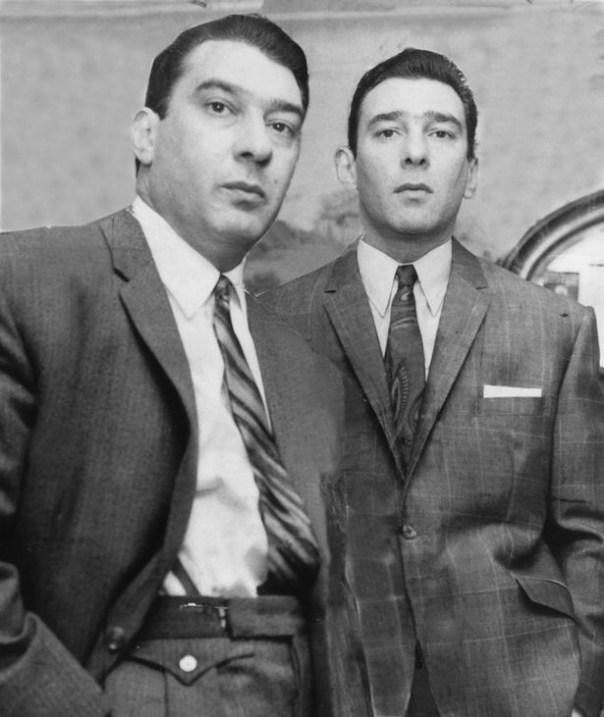
It is pretty hard not to have heard of the Kray twins, Reggie and Ronnie, especially after the film “Legend”. The two London gangsters robbed, bashed and murdered their way through the London underworld in the 60s, and owned and ran a string of nightclubs and protection rackets.

As boys in 1940s England, Ronald and Reginald Kray were wartime evacuees. They called Bethnal Green home, had a dog named Freda, an older brother named Charlie, and a sister who died as a baby.

No strangers to malfeasance, the two got started early, racking up a lengthy rap sheet before they could even order a pint. Violence, gang activity, and running from the law were all just after-school activities for the twins. They even knocked a police constable around and were briefly imprisoned in the Tower of London—two of the last inmates to be locked up in the infamous facility.

In the early 1950s, the Kray twins displayed a talent for boxing as young men. Reggie was a particularly potent force in the ring. Yet a life of crime kept calling them back. So a life of crime it was.

Glamorous as they were, trouble loomed in the shadows. Ronnie was diagnosed as a paranoid schizophrenic in 1959, a disorder that came to haunt him in the coming years. After helping a criminal associate named Frank “The Mad Axeman” Mitchell escape prison in December 1966, the brothers struggled to keep their newly freed friend under control and allegedly had him killed.

Ronnie had a thing for orgies mixed with politics, and carried on an affair with Tory peer Lord Boothby. And while Ronnie was known as “The Queen Mother” in London’s gay underworld, they both had alleged bisexual tendencies. Reggie married a woman named Frances Shea in 1965, though the tumultuous relationship allegedly involved Reggie’s attempted rape of his wife’s brother.

It is rumoured that both brothers had gay sex encounters, though Reggie has been labelled more as a bisexual than a gay male. In a Mirror (UK) article dated 31 August, 2015, Deputy Features Editor, Steve Myall, headlined an article claiming that the brothers had had secret gay sex with each other. The eye-opening revelation was made by author John Pearson, who interviewed them both. “Ronnie and Reggie Kray had a secret incestuous relationship with each other (as they were growing up) so criminal rivals would not discover they were gay”, he claimed. The cruel and violent East End pair were terrified of coming out (as gay). He further revealed “They were worried that rivals would see their sexuality as a sign of weakness so only had sex with each other in order to keep the secret”.

It has long been known that Ronnie was a homosexual and Reggie was bisexual but the news they had a sexual relationship with each other gives a telling insight into their close connection. John said the pair were spoilt by their mother Violet, Grandma Lee and their two aunties, May and Rose, while their father was soon dominated by the increasingly violent brothers.

Smart: Twin brothers and organised crime bosses Ronnie and Reggie Kray (Image: Getty)

He says while he knew about the incest he waited until the brothers were both dead before revealing it for fear of retribution. John wrote: “All of which conformed, of course, to a classic pattern; and with their warm, indulgent mother, their ineffectual father, and their surrounding cast of loving women, it was not surprising that, with adolescence, the Twins discovered that they were gay“. The brothers ran a notorious criminal network in the 1960s building up an empire of nightclubs though hijacking, armed robbery and arson. As they moved from the East End to the West End they became big names, rubbing shoulders with Frank Sinatra and Judy Garland and being photographed by David Bailey.

Brotherly love: Amateur boxers Reggie (left) and Ronnie Kray with their mother Violet Kray (Image: Getty)

But onto Ronnie.

Veteran entertainer Jess Conrad was a young man in London and in awe of the Kray twins and recalls the fear they instilled, the protection they offered to stars like Barbara Windsor and Diana Dors, and a very strange gig in Broadmoor Prison.

Ronnie Kray was a predatory homosexual who terrified young men in Soho in the 1960s so much that they hid when they knew he was coming. According to legendary singer and actor Jess Conrad, who knew the Kray twins well, good looking young men used to vanish for fear of catching Ronnie’s eye and being invited back to “a party”. He said: “You had to keep your wits about you if you were a young man and Ronnie really fancied you. Word used to go out that the Krays were on their way to a certain pub and all the good looking boys used to piss off. Because otherwise if he asked you to go back to the house you had to go back and that was it“.

It’s always been known Ronnie Kray was gay with a fondness for violence but Jess’ recollection is one of the few accounts of how he exerted power for sexual ends. Jess said many men, including himself, were in awe of the gangsters and the way they dressed and carried themselves and were attracted to them.

Sharp dressers: Ronnie and Reggie Kray in their heyday (Image: Mirrorpix)

In an interview with author John Pearson, Ronnie indicated he identified with the 19th century soldier Gordon of Khartoum (Lawrence of Arabia): “Gordon was like me, homosexual, and he met his death like a man. When it’s time for me to go, I hope I do the same.” A British television documentary, The Gangster and the Pervert Peer (2009), showed that Ronnie Kray was a rapist of men. The programme also detailed his relationship with Conservative peer Bob Boothby, as well as an ongoing Daily Mirror investigation into Lord Boothby’s dealings with the Kray brothers.

Ronnie Kray shocked his older brother Charlie by admitting his homosexuality and goaded his twin brother Reg into experimenting with gay sex, a new (2001) biography reveals.

Laurie O’Leary, author of A Man Among Men and a childhood friend of the Krays, says Ronnie summoned him to Broadmoor Hospital eight weeks before he died. Kray asked him to write the ‘warts-and-all’ story of his life. ‘Don’t make me into a nice person,’ he told O’Leary. ‘Just say I was nice with nice people, but a bastard with bastards.’

O’Leary, who grew up next door to the Kray brothers, was a pallbearer at Reggie Kray’s funeral on 11 October last year. ‘Ron discussed his homosexuality with only a very few people, but put simply it was a part of his nature he discovered, explored and enjoyed,’ O’Leary said. ‘He was at ease with it. It did not seem to conflict with his “tough guy” image or cause him any problems on any level.’

Ronnie Kray first admitted to O’Leary he was gay in his mid-teens, after falling in love with a younger boy called Willy. But when O’Leary told Willy, who ran an unofficial school for card sharps, of Kray’s attachment, he reacted badly.

‘He was terrified and said he would never dare go round to Ron’s house again unless I was there too,’ O’Leary said. ‘But I refused: Ron would have assumed [Willy and I] were having an affair.

‘I could easily understand Willy’s feelings, though_ [Ron] could be frightening.’

The members of the twins’ gang, known as the Firm, were overwhelmingly tolerant of Kray’s homosexuality. ‘Even if they objected, Ron just smiled at them and told them they didn’t know what they were missing,’ O’Leary said.

Kray’s mother, Violet, was comfortable with her son’s homosexuality, but his father and older brother, both called Charlie, were horrified.

‘Ron’s father thought it was degrading and disgusting, and his older brother was totally flabbergasted,’ O’Leary said. ‘But Ronnie told him that he had been like it for years and that not only could nobody change him but that he wouldn’t let them try. He said his brother Charlie just had to accept him as he was.’

Ronnie further shocked Charlie by telling him that Reggie was a bisexual. When Charlie confronted Reggie, according to O’Leary, the twin confirmed the claim, adding: ‘Don’t you think that boys are nice, Charlie? I think I could fancy a few myself.’

Despite this acknowledgment, Reggie habitually denied he was a bisexual. ‘I would say that Reg fought the fact he could also be bisexual more than Ron, but I knew of his affection for quite a few young male teenagers with whom he kept company,’ said O’Leary.

‘Ron would goad Reg when he went out with women and tried to influence Reg with his own appetite for young men.’

Although Ronnie Kray did have a number of regular sexual partners and strong friendships with other homosexual men – including Lord Boothby, for whom he obtained youths – O’Leary says he had a particular penchant for dark, clean-cut, boys with very white teeth.

During the Sixties, Ronnie fell in love with a young Arab boy on one of his many trips to Tangier in North Africa. ‘Ronnie showed me a photo,’ O’Leary said.

‘He told me that the boy loved him and showed me a letter the boy had written. It was a real love letter that said how much the boy wanted to come to England and live with Ronnie.’

Although Kray lost interest in the Arab boy, O’Leary says Ronnie was often very possessive of his boyfriends. ‘When he was sentenced, he still had many boyfriends and would do anything he could to make them happy,’ he said.

But perhaps Ronnie’s greatest claim to notoriety was his headline grabbing involvement with Tory peer, Lord Boothby.

According to BBC News, 23 October, 2015 “An association between Conservative peer Robert Boothby and London gangster Ronnie Kray was the subject of an MI5 investigation, documents have revealed. The men went to “homosexual parties” together and were “hunters” of young men, declassified MI5 files claim.

Allegations in 1964 about the pair’s relationship caused such concern within Downing Street that the then head of MI5 was summoned to the Home Office.

The government feared a scandal greater than the so-called Profumo Affair.

Rumours that notorious gangster Kray and Lord Boothby – a popular TV presenter and former MP for East Aberdeenshire – were having an affair were published in 1964.

The Sunday Mirror – which did not name the pair – claimed to have a photo of Kray and Boothby together with the bisexual peer’s chauffeur and lover, Leslie Holt.

The men were later identified in a German magazine.

Lord Boothby publicly denied having a homosexual or any other close relationship with Kray.

At the time, he said the photograph showed them discussing “business matters”, dismissing rumours about his personal life as a “tissue of atrocious lies”.

The Sunday Mirror ended up paying £40,000 in damages to Boothby.

But the papers – released as part of 400 declassified files by the Security Service (MI5), Foreign Office and Cabinet Office – reveal new information about their association.

They show how home secretary Henry Brooke was so concerned about the matter he summoned the head of MI5, Sir Roger Hollis, to ask what the security services knew.

Brooke feared the allegations might erupt into a scandal to rival the Profumo affair, which helped to bring down the Conservative government of Harold Macmillan.

Sir Roger told the home secretary how MI5 had received reports that Lord Boothby was bisexual and had contacts with the Krays.

But, since he had no access to official secrets, MI5 concluded that Boothby’s private life was of no concern, the papers reveal.

According to an MI5 source, Lord Boothby was in a relationship with Holt – his chauffer and ex-boxer who also went by the name Johnny Kidd.

Holt told the source how Lord Boothby and Kray had “been to a couple of (homosexual) parties together”.

The report suggested the Sunday Mirror was tipped off about the “affair” between Lord Boothby and Kray by the rival Nash gang.

The MI5 report said: “Certainly the suggestion that Boothby has been having an affair with the gangster Kray is hardly true.”

Dr Richard Dunley, records specialist at the National Archives, said the story was “one of the greatest scandals that never was”.

“If this had come out in 1964 it would have been a huge scandal,” he said.

Dr Dunley said the files do not mention well-known claims that Lord Boothby had a long-term relationship with former prime minister Harold Macmillian’s wife.

“As tabloid headlines go, you can imagine what would have happened,” he said.

“The Mirror did effectively get hold of the story but couldn’t publish it, they got sued for libel.”

Lord Boothby, left, with Ronnie Kray, centre, and Leslie Holt, the former’s chauffeur and lover ( )

Footnote:

9 Interesting facts about the Kay brothers.

1) In 1952 after refusing to do National Service the twins were jailed and became among the last prisoners held at the Tower of London, before being transferred to Shepton Mallet military prison in Somerset for a month, to await court-martial.

2) In 1960 the notorious slum landlord Peter Rachman gave Reggie a nightclub called Esmeralda’s Barn in Wilton Place where the Berkeley Hotel now stands.

3) In 1964 the Sunday Mirror reported Scotland Yard was investigating a homosexual relationship between an unnamed peer and a major figure in the criminal underworld – Ronnie and Conservative MP Robert Boothby. Despite the pair not being named Boothby chose to go public with a letter to The Times in which he denied being gay and stated that he had only ever met Kray three times, always to discuss business matters and always in the company of other people. Facing the threat of a libel defeat, the Sunday Mirror issued an apology to the peer and paid out £40,000, equivalent to £500,000 today while newspaper’s editor, Reg Payne, lost his job over the affair.

4) In 2000 when Reggie died those sending wreaths included Barbara Windsor, Who singer Roger Daltry and pop star Morrissey. There was also a wreath believed to be from the American Mafia – next to a photo of Manhattan was the message: “In deep respect, from your friends in New York.”

5) Jack “the Hat” McVitie, was a minor member of the Kray gang who had failed to fulfil a £1,500 contract paid to him in advance to kill a rival. As punishment McVitie was lured to a basement flat in Stoke Newington, on the pretence of a party. As he entered, Reggie Kray pointed a handgun at his head and pulled the trigger twice, but the gun failed to discharge. Instead Ronnie held McVitie in a bearhug and Reggie stabbed him to death with a carving knife – at one stage his liver came out and had to be flushed down the toilet.

6) In 1985, officials at Broadmoor Hospital discovered a business card of Ronnie’s, which prompted an investigation.It revealed the twins – incarcerated at separate institutions – plus their older brother Charlie Kray and an accomplice were operating a “lucrative bodyguard and ‘protection’ business for Hollywood stars” called Krayleigh Enterprises. Documentation of the investigation showed that Frank Sinatra hired 18 bodyguards from Krayleigh Enterprises during 1985.

7) In prison Reggie claimed to have become a born-again Christian while Ronnie got married in Broadmoor to a twice-divorced former topless kissogram girl.

8) Patsy Kensit’s dad James ‘Jimmy The Dip’ Kensit was not only a member of the notorious Richardson gang – who made most of their money from fraud and earned a terrifying reputation as ruthless torturers who nailed their victims to the floor – but was also a close friend of their rivals, Reggie and Ronnie Kray.

9) Artist Lucian Freud ran up half a million pounds in gambling debts with the Krays. The late artist confessed he once cancelled an exhibition out of fear they would demand more money if they saw he was earning.

Splash: Daily Mirror announces the pair GUILTY OF MURDER (Image: Daily Mirror)

References

  1. “Gangster twins Ronnie and Reggie Kray ‘had secret gay sex with EACH OTHER” Mirror.co.uk 31 August 2015 by Steve Myall. https://www.mirror.co.uk/news/real-life-stories/gangster-twins-ronnie-reggie-kray-6354591
  1. When Ronnie Kray fancied you, you made yourself scarce says veteran entertainer Jess Conrad, Mirror.co.uk. By John Myall 3 Sept 2015. https://www.mirror.co.uk/news/uk-news/ronnie-kray-fancied-you-you-6376849
  2. Krause Twins: The killer truth behind the killer legends. Huffington Post, 6th December 2016, by DeAnna James. https://www.huffingtonpost.com/the-lineup/kray-twins-the-killer-tru_b_8631552.html
  3. Katy’s death bed secrets revealed. The Guardian (UK). 25th March 2001, by Amelia Hill. https://www.theguardian.com/uk/2001/mar/25/ameliahill.theobserver
  4. BBC News, 23 October, 2015. https://www.bbc.com/news/uk-34612729
  5. 9 things you never knew about the notorious Kray twins. Mirror.co.uk. 31 August 2015, by Steve Myall. https://www.mirror.co.uk/news/uk-news/9-things-you-never-knew-6357210

Gay History: A Contradiction in Terms; Nicky Crane, and Kevin Wilshaw- Gay Neo-Nazi’s. Part 2.

KEVIN WILSHAW

I’ve had threats from people on the far left who think I’m insincere but especially people on the far right who think I’m a traitor,

A white supremacist active as recently as the start of this year says today he is publicly renouncing 40 years of hate. Speaking on Channel 4 News he comes out as gay for the first time – and admits to a violent past.

Much of Kevin Wilshaw’s life has been defined by a belief in white supremacy.

He said he had hurt people, “but not unprovoked, in defence. In a by-election in Leeds I smashed a chair over someone’s head.”

But he denied ever having approached minorities and assaulted them.

“I’d never do that, but I have seen incidents where people were singled out because they were black by a group of people. It turned my stomach, I rejected that, I pushed it to the back of my mind.”

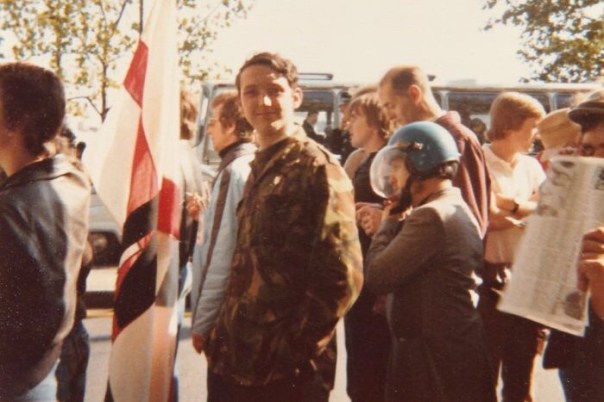
He joined the BNP after being part of the National Front and flirted with dangerous fringe groups like the Racial Volunteer Force.

Mr Wilshaw says he remembers meeting David Copeland – the Brixton and Soho nail bomber. More recently he took to social media – and until the start of year was still speaking at rallies (2017).

In his interview with Britain’s Channel 4 news, Wilshaw showed a few of the decorative items in his apartment, including a Nazi flag and a bronze bust of Adolf Hitler.

When the interviewer asked Wilshaw “at what point did — well, Nazism — start to be attractive to you?” Wilshaw thought for a moment, then said “I must’ve been about 11 years old…. my father was very right-wing, and I think I took it a bit further than him.”

Wilshaw did not discuss specific dates or timelines, but according to HOPE Not Hate, a British non-profit that “campaigns to counter racism and fascism,” WIlshaw had belonged to the far right “since 1974 and even a little before.”

He admitted he hadn’t had many friends at school, and thought joining far-right groups would bring him a sense of “comradeship.” By age 18, he’d joined Britain’s far-right National Front party, and was a party organizer by age 20. He was particularly notorious (or just well-known) in Britain during the 1980s. Wilshaw’s original membership card, made out in the name of John Kevin Wilshaw, calls for “Racial preservation” and adds “Coloured Immigrants and their descendants must be returned to their lads of ethnic origin.”

Over the past 44 years, between the ages of 14 and 58, he has worked with UK far-right extremist groups peddling Neo-Nazi ideology.

His actions ranged from mundane “leafletting” to “occasionally getting involved in political violence”.

But now he claims to have put his days as a Mein Kampf-reading racist behind him to address the contradictions that have plagued him in private.

Mr Wilshaw is not only gay, but has Jewish blood through his mother.

Despite Wilshaw’s father’s “very right wing” tendencies, he married a partly Jewish woman, Kevin’s mother. “Her maiden name was Benjamin,” Wilshaw said. “We do have Jewish blood in the family on that side.”

Under Jewish law, a child is considered Jewish if his mother was. Yet Wilshaw’s own background clearly did not prevent him from joining a political group dedicated in part to the notion that this very background made him an inherent threat. This might be largely due to the fact that Wilshaw’s physical appearance has nothing in common with anti-Semitic caricatures regarding what Jews “look like.” (His mother died in 2015.)

HOPE Not Hate reports that other aspects of Wilshaw’s family life were at odds with far-right doctrines: despite the official Islamophobia of British far-right parties (he was once arrested for vandalizing a mosque in Aylesbury), he has a close relationship with his sister, who married a Muslim man and converted to Islam in 1970, and is also close to her Muslim children.

On an application form to join the National Front, he wrote about his hatred of “the Jews”.

“That term ‘the Jews’ is the global faceless mass of people you can’t personalise it, not individuals. That’s the generalisation that leads to 6 million people being deliberately murdered.

“I tended to compartmentalise things,” he said.

“I put my political life in one section and my normal life in the other.”

Mr Wilshaw was recently arrested on online abuse charges — the second time he has been arrested.

He said he quit the movement for good after being attacked for his sexuality.

“On one or two occasions in the recent past I’ve actually been the recipient of the very hatred of the people I want to belong to … if you’re gay it is acceptable in society but with these group of people it’s not acceptable, and I found on one or two occasions when I was suspected of being gay I was subjected to abuse.”

Mr Wilshaw admits that being a Nazi who is gay – but with a Jewish background – is a contradiction.

“It’s a terribly selfish thing to say but it’s true, I saw people being abused, shouted at, spat at in the street – it’s not until it’s directed at you that you suddenly realise that what you’re doing is wrong.”

“You have other members leading National Front who are overtly gay. And nobody could see the contradiction of it that you have an overtly gay person leading a homophobic organisation, makes no sense.”

“Then you have someone like Nicky Crane, one of the hardest people who would be gay.”

“Even when people found out, they’d rationalise it, ‘He’s not really gay’ or ‘gay and ok’.””I’ve had threats from people on the far left who think I’m insincere but especially people on the far right who think I’m a traitor,” he said.

“I can’t win!”.

Support has come from a fellow former extremist.

Matthew Collins was once an organiser for a far-right group and knew Neo-Nazis “who were involved in extreme violence … and did kill people”.

He turned informant and fled to Australia between 1993 and 2003 for his own safety.

Now he works for anti-fascist campaign group Hope Not Hate, researching the state of the UK far right and trying to convince people to leave the movement.

“Is Kevin cured? No, I don’t think so … but Kevin’s on the way,” Mr Collins said.

“The work with Kevin is about socialisation. He wants to walk down the streets with another man and maybe hold hands.

“Our thing is to mix him in with regular normal people, drinking beer without dressing up like a [WWII German] tank commander, [and] having nice pictures on your living room wall, not pictures of Hitler.”

Kevin Wilshaw & Matthew Collins

“I feel appallingly guilty as well, I really do feel guilty, not only that, this is also a barrier to me having a relationship with my own family, and I want to get rid of it, it’s too much of a weight.”

“I want to do some damage as well, not to ordinary people but the people who are propagating this kind of rubbish – want to hurt them, show what it’s like for those who are living a lie and be on the receiving end of this type of propaganda, I want to hurt them.”

Fearing some level of revenge, Mr Wilshaw says “one or two would want to sort me.. they’d see it as betrayal.”

“I am going to find it difficult, granted, to fill a void that has occupied my life since childhood.”

The latest figures show right-wing extremism only makes up about 10 per cent of cases dealt with by the UK Government’s main deradicalisation program.

Anti-fascist campaigners believe the country’s extreme far right has declined significantly in recent years, perhaps to its lowest point in two decades, and some commentators have dismissed the remaining members as weird, uneducated white men with uniform fetishes.

But the murder of Labour MP Jo Cox by a Nazi sympathiser, just before last years Brexit referendum, showed the danger posed by elements of the movement has not passed.

Since then, three far-right groups have been banned by the UK Government and two people have been charged over a plot to kill another politician.

“We are very concerned by the number of the arrests and the nature of the arrests”, Mr Collins said, when asked about the most extreme end of the movement.

“What we are looking at are groups that look like terrorists, talk like terrorists, act like terrorists and our belief for the last 18-months to two years is that they will eventually become terrorists.”

References

The Potala Palace (Winter Palace); Norbulingka (Summer Palace); and Jokhang Temple Monastery, Lhasa, Tibet.

The saddest thing about the Potala is that it is devoid of its spiritual head, the Dalai Lama. There is something desolate about lines of tourists and pilgrims circumnavigating the massive, empty complex. One can only hope that, given time, His Holiness will return, and give life back to this icon.

Namaste.

POTALA PALACE
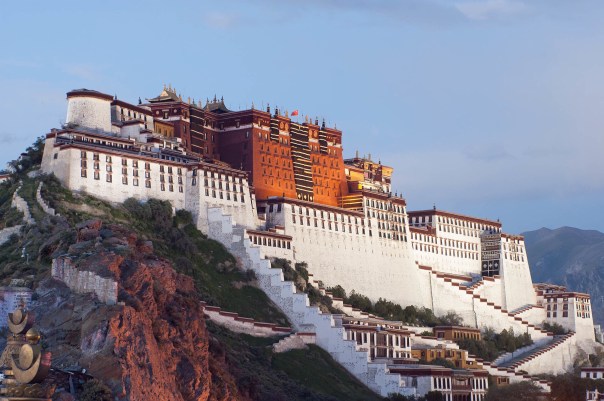
Potala Palace in simplified Chinese (top), traditional Chinese (middle) and Tibetan (bottom).

The Potala Palace (Tibetan: ཕོ་བྲང་པོ་ཏ་ལ་, Wylie: pho brang Potala) inLhasa,Tibet AutonomousRegion,China was the residence of theDalaiLama until the 14th Dalai Lama fled to India during the1959 Tibetan Uprising. It is now a museum and World Heritage Site

The palace is named afterMount , the mythical abode of the Bodhisattva Avalokiteśvara. The 5th Dalai Lama started its construction in 1645 after one of his spiritual advisers, Konchog Chophel (died 1646), pointed out that the site was ideal as a seat of government, situated as it is between Drepung and Sera monasteries and the old city of Lhasa. It may overlay the remains of an earlier fortress called the White or Red Palace on the site, built by Songtsen Gampon 637.

The building measures 400 metres east-west and 350 metres north-south, with sloping stone walls averaging 3 m. thick, and 5 m. (more than 16 ft) thick at the base, and with copper poured into the foundations to help proof it against earthquakes. Thirteen stories of buildings—containing over 1,000 rooms, 10,000 shrines and about 200,000 statues—soar 117 metres (384 ft) on top of Marpo Ri, the “Red Hill”, rising more than 300 m (about 1,000 ft) in total above the valley floor.

Tradition has it that the three main hills of Lhasa represent the “Three Protectors of Tibet”. Chokpon, just to the south of the Potala, is the soul-mountain (Wylie: bla ri) of Vajrapani , Pongwari that of Manjushri, and Marpori, the hill on which the Potala stands, represents Avalokiteśvara.

The walls of the Red Palace

The site on which the Potala Palace rises is built over a palace erected by Songtsen Gampo on the Red Hill. The Potala contains two chapels on its northwest corner that conserve parts of the original building. One is the Phakpa Lhakhang, the other the Chogyel Drupuk, a recessed cavern identified as Songtsen Gampo’s meditation cave. Lozang Gyatso, the Great Fifth Dalai Lama, started the construction of the modern Potala Palace in 1645. The external structure was built in 3 years, while the interior, together with its furnishings, took 45 years to complete. The Dalai Lama and his government moved into the Potrang Karpo (‘White Palace’) in 1649. Construction lasted until 1694, some twelve years after his death. The Potala was used as a winter palace by the Dalai Lama from that time. The Potrang Marpo (‘Red Palace’) was added between 1690 and 1694.

The new palace got its name from a hill on Cape Comorin (Kanyakumari) att the southern tip of India—a rocky point sacred to the bodhisattva of compassion, who is known as Avalokiteśvara, or Chenrezi. The Tibetans themselves rarely speak of the sacred place as the “Potala”, but rather as “Peak Potala” (Tse Potala), or most commonly as “the Peak”.

The palace was slightly damaged during the Tibetan uprising against the Chinese in 1959, when Chinese shells were launched into the palace’s windows. Before Chamdo Jampa Kalden was shot and taken prisoner by soldiers of the People’s Liberation Army, he witnessed “Chinese cannon shells began landing on Norbulingka past midnight on March 19th, 1959… The sky lit up as the Chinese shells hit the Chakpori Medical College and the Potala.” It also escaped damage during the Cultural Revolution in 1966 through the personal intervention of Zhou Enlai who was then the Premier of the People’s Republic of China. Tibetan activist Tsering Woeser claims that the palace, which harboured “over 100,000 volumes of scriptures and historical documents” and “many store rooms for housing precious objects, handicrafts, paintings, wall hangings, statues, and ancient armour”, “was almost robbed empty.”On the other hand, tibetologist Amy Heller writes that “the invaluable library and artistic treasures accumulated over the centuries in the Potala have been preserved.”

The Potala Palace was inscribed to the UNRSCO World Heritage List in 1994. In 2000 and 2001Jokhang Temple and Norbulingka were added to the list as extensions to the sites. Rapid modernisation has been a concern for UNESCO, however, which expressed concern over the building of modern structures immediately around the palace which threaten the palace’s unique atmosphere.[18] The Chinese government responded by enacting a rule barring the building of any structure taller than 21 metres in the area. UNESCO was also concerned over the materials used during the restoration of the palace, which commenced in 2002 at a cost of RMB180 million (US$22.5 million), although the palace’s director, Qiangba Gesang, has clarified that only traditional materials and craftsmanship were used. The palace has also received restoration works between 1989 and 1994, costing RMB55 million (US$6.875 million).

The number of visitors to the palace was restricted to 1,600 a day, with opening hours reduced to six hours daily to avoid over-crowding from 1 May 2003. The palace was receiving an average of 1,500 a day prior to the introduction of the quota, sometimes peaking to over 5,000 in one day.[19] Visits to the structure’s roof were banned after restoration efforts were completed in 2006 to avoid further structural damage.[20] Visitorship quotas were raised to 2,300 daily to accommodate a 30% increase in visitorship since the opening of the Quinsang railway into Lhasa on 1 July 2006, but the quota is often reached by midmorning . Opening hours were extended during the peak period in the months of July to September, where over 6,000 visitors would descend on the site.
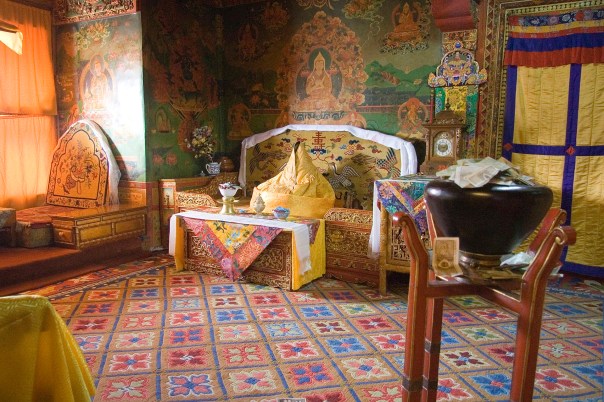
The former quarters of the Dalai Lama. The figure in the throne represents Tenzin Gyatso,The incumbent Dalai Lama

Built at an altitude of 3,700 m (12,100 ft), on the side of Marpo Ri (‘Red Mountain’) in the center of Lhasa Valley,[23] the Potala Palace, with its vast inward-sloping walls broken only in the upper parts by straight rows of many windows, and its flat roofs at various levels, is not unlike a fortress in appearance. At the south base of the rock is a large space enclosed by walls and gates, with gold porticos on the inner side. A series of tolerably easy staircases, broken by intervals of gentle ascent, leads to the summit of the rock. The whole width of this is occupied by the palace.

The central part of this group of buildings rises in a vast quadrangular mass above its satellites to a great height, terminating in gilt canopies similar to those on the Jokhang. This central member of Potala is called the “red palace” from its crimson colour, which distinguishes it from the rest. It contains the principal halls and chapels and shrines of past Dalai Lamas. There is in these much rich decorative painting, with jewelled work, carving and other ornamentation.

The Chinese Putuo Zongchen Temple, UNESCO World Heritage Site, built between 1767 and 1771, was in part modeled after the Potala Palace. The palace was named by the American television show Good Morning America and newspaper USA Today as one of the “New Seven Wonders”.

The Leh Palace in Leh, Ladakh, India is also modelled after the Potala Palace.
The Lhasa Zhol Pillars

Lhasa Zhol Village has two stone pillars or rdo-rings, an interior stone pillar or doring nangma, which stands within the village fortification walls, and the exterior stone pillar or doring chima, which originally stood outside the South entrance to the village. Today the pillar stands neglected to the East of the Liberation Square, on the South side of Beijing Avenue.

The doring chima dates as far back as c. 764, “or only a little later”, and is inscribed with what may be the oldest known example of Tibetan writing.

The creation of the Tibetan script is traditionally attributed to Thonmi Sambhota who is said to have been sent to India early in the reign of Songsten Gampo where he devised an alphabet suitable for the Tibetan language by adapting elements of Indian scripts.

The pillar was erected during the reign of the early Tibetan emperor, Trisong Detsen (755 until 797 or 804 CE) in the village of Zhol (which has disappeared because of recent construction), which stood just before the Potala Palace. It was commissioned by the powerful minister Nganlam Takdra Lukhong, generally considered an opponent of Buddhism.

The inscription starts off by announcing that Nganlam Takdra Lukhong had been appointed Great Inner Minister and Great Yo-gal ‘chos-pa (a title difficult to translate). It goes on to say that Klu-khong brought to Trisong Detsen the facts of the murder of his father, Me Agtsom (704-754) by two of his Great Ministers, ‘Bal Ldong-tsab and LangMyes-zigs, and that they intended to harm him also. They were then condemned and Klu-kong was appointed Inner Minister of the Royal Council.

It then gives an account of his services to the king including campaigns against Tang China which culminated in the brief capture of the Chinese capital Chang’an (modern Xi’an) in 763 CE during which the Tibetans temporarily installed as Emperor a relative of Princess Jincheng Gongzhu (Kim-sheng Kong co), the Chinese wife of Trisong Detsen’s father, Me Agtsom.

It is a testament to the generally tolerant attitude of Tibetan culture that this proud memorial by a subject was allowed to stand after the re-establishment of Buddhism under Trisong Detsen and has survived until modern times.

The pillar contains dedications to a famous Tibetan general and gives an account of his services to the king including campaigns against China which culminated in the brief capture of the Chinese capital Chang’an (modern Xian) in 763 during which the Tibetans temporarily installed as Emperor a relative of Princess Jincheng Gongzhu (Kim-sheng Kong co), the Chinese wife of Trisong Detsen’s father, Me Agtsom.

Traditionally among the celebrations for Tibetan New Year, or Losar, a team of sportsmen, usually from Shigatse, would perform daredevil feats such as sliding down a rope from the top of the highest roof of the Potala, to the Zhol Pillar at the foot of the hill. However, the 13th Dalai Lama banned this performance because it was dangerous and sometimes even fatal.

As of 1993 the pillar was fenced off so it could not be approached closely (see accompanying photo).

Potala adorned with two Buddhist silk banners, Koku, (gos sku) for the Sertreng ceremony (tshogs mchod ser spreng) with the Shol Doring (pillar) is in the foreground in 1949
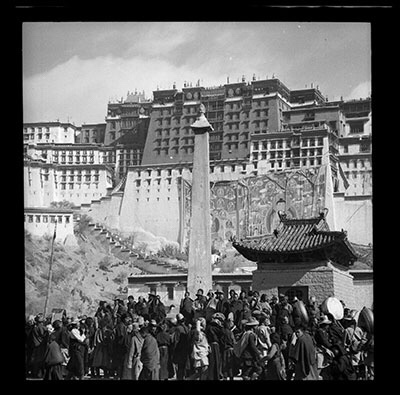
The Lhasa Zhol pillars in 1993.

NORBULINGKA

(Standard Tibetan: ནོར་བུ་གླིང་ཀ་; Wylie: Nor-bu-gling-ka; simplified Chinese: 罗布林卡; traditional Chinese: 羅布林卡; literally “The Jewelled Park”) is a palace and surrounding park in Lhasa, Tibet, China, built from 1755. It served as the traditional summer residence of the successive Dalai Lamas from the 1780s up until the 14th Dalai Lama’s exile in 1959. Part of the “Historic Ensemble of the Potala Palace”, Norbulingka is recognized as a UNESCO World Heritage Site, and was added as an extension of this Historic Ensemble in 2001. It was built by the 7th Dalai Lama and served both as administrative centre and religious centre. It is a unique representation of Tibetan palace architecture.

Norbulingka Palace is situated in the west side of Lhasa, a short distance to the southwest of Potala Palace. Norbulingka covers an area of around 36 hectares (89 acres) and considered to be the largest man made garden in Tibet.

Norbulingka park is considered the premier park of all such horticultural parks in similar ethnic settings in Tibet. During the summer and autumn months, the parks in Tibet, including the Norbulinga, become hubs of entertainment with dancing, singing, music and festivities. The park is where the annual Sho Dun or ‘Yoghurt Festival’ is held.

The Norbulingka palace has been mostly identified with the 13th and the 14th Dalai Lamas who commissioned most of the structures seen here now. During the invasion of Tibet in 1950, a number of buildings were damaged, but were rebuilt beginning in 2003, when the Chinese government initiated renovation works here to restore some of the damaged structures, and also the greenery, the flower gardens and the lakes.

In Tibetan, Norbulingka means “Treasure Garden.” or Treasure Park”. The word ‘Lingka’ is commonly used in Tibet to define all horticultural parks in Lhasa and other cities. When the Cultural Revolution began in 1966, Norbulingka was renamed People’s Park and opened to the public.

The palace, with 374 rooms, is located 3 kilometres (1.9 mi) west of the Potala Palace, which was the winter palace. It is in the western suburb of Lhasa City on the bank of the Kyichu River. When construction of the palace was started (during the 7th Dalai Lama’s period) in the 1740s, the site was a barren land, overgrown with weeds and scrub and infested with wild animals.

The park, situated at an elevation of 3,650 metres (11,980 ft) had flower gardens of roses, petunias, hollyhocks, marigolds, chrysanthemums and rows of herbs in pots and rare plants. Fruit trees including apple, peach and apricot were also reported (but the fruits did not ripen in Lhasa), and also poplar trees and bamboo. In its heyday, the Norbulingka grounds were also home to wildlife in the form of peacocks and brahminy ducks in the lakes. The park was so large and well-laid-out, that cycling around the area was even permitted to enjoy the beauty of the environment. The gardens are a favourite picnic spot, and provide a beautiful venue for theatre, dancing and festivals, particularly the Shodun or ‘Yoghurt Festival’, which is at the beginning of August, with families camping in the grounds for days, surrounded by colourful makeshift windbreaks of rugs and scarves and enjoying the height of summer weather.

There is also a zoo at Norbulingka, originally to house the animals which were given to the Dalai Lamas. Heinrich Harrer helped the 14th Dalai Lama build a small movie theatre there in the 1950s.

Norbulingka Palace of the Dalai Lamas was built about 100 years after the Potala Palace was built on the Parkori peak, over a 36 hectares (89 acres) land area. It was built a little away to the west of the Potala for the exclusive use by the Dalai Lama to stay in during the summer months. Tenzing Gyatso, the present 14th Dalai Lama, stayed here before he fled to India. The building of the palace and the park was undertaken by the 7th Dalai Lama from 1755. The Norbulingka Park and Summer Palace were completed in 1783 under Jampel Gyatso, the 8th Dalai Lama, on the outskirts of Lhasa. and became the summer residence during the reign of the Eighth Dalai Lama.

The earliest history of Norbulingka is traced originally to a spring at this location, which was used during the summer months by the 7th Dalai Lama to cure his health problems. Qing Dynasty permitted the Dalai Lama to build a palace at this location for his stay, as a resting pavilion. Since subsequent Dalai Lamas also used to stay here for their studies (before enthronement) and as a summer resort, Norbulingka came to be known as the Summer Palace of the Dalai LamaThe 8th Dalai Lama was responsible for many additions to the Norbulingka complex in the form of palaces and gardens.

However, it is sometimes reported that 6th 5(4@through to 12th Dalai Lamas died young and under mysterious circumstances, conjectured as having been poisoned. Most of the credit for the expansion of Norbulingka is given to the 13th and the 14th Dalai Lamas.

It was from the Norbulingka palace that the Dalai Lama escaped to India on 17 March 1959, under the strong belief that he would be captured by the Chinese. On this day, the Dalai Lama dressed like an ordinary Tibetan, and, carrying a rifle across his shoulder, left the Norbulinga palace and Tibet to seek asylum in India. As there was a dust storm blowing at that time, he was not recognized. According to Reuters, “The Dalai Lama and his officials, who had also escaped from the palace, rode out of the city on horses to join his family for the trek to India”. The Chinese discovered this “great escape” only two days later. The party journeyed through the Himalayas for two weeks, and finally crossed the Indian border where they received political asylum. Norbulingka was later surrounded by protesters and subject to an attack by the Chinese.

The summer residence of the Dalai Lama, located in the Norbulingka Park, is now a tourist attraction. The palace has a large collection of Italian chandeliers, Ajanta frescoes, Tibetan carpets, and many other artifacts. Murals of Buddha and the 5th Dalai Lama are seen in some rooms. The 14th Dalai Lama’s (who fled from Tibet and took asylum in India) meditation room, bedroom, conference room and bathroom are part of the display and are explained to tourists.

Built in the 18th century, the Norbulingka Palace and the garden within its precincts have undergone several additions over the years. The vast complex covers a garden area of 3.6 km2 including 3.4 km2 of lush green pasture land covered with forests. It is said to be the “highest garden” anywhere in the world and has earned the epithet “Plateau Oxygen Bar.”

The Norbulingka is the “world’s highest, largest and best-preserved ancient artificial horticultural garden”., which also blends gardening with architecture and sculpture arts from several Tibetan ethnic groups; 30,000 cultural relics of ancient Tibetan history are preserved here. The complex is demarcated under five distinct sections. A cluster of buildings to the left of the entrance gate is the Kelsang Phodang (The full name of this palace is “bskal bzang bde skyid pho brang”), named after the 7th Dalai Lama, Kelsang Gyatso (1708–1757). It is a three-storied palace with chambers for the worship of Buddha, bedrooms, reading rooms and shelters at the centre. The Khamsum Zilnon, a two-storied pavilion, is opposite the entry gate. The 8th Dalai Lama, Jamphel Gyatso (1758–1804) substantially enlarged the palace by adding three temples and the perimeter walls on the south east sector and the park also came to life with plantation of fruit trees and evergreens brought from various parts of Tibet. The garden was well developed with a large retinue of gardeners. To the northwest of Kelsang Phodrong is the Tsokyil Phodrong, which is a pavilion in the midst of a lake and the Chensil Phodrong. On the west side of Norbulingka is the Golden Phodron, built by a benefactor in 1922, and a cluster of buildings which were built during the 13th Dalai Lama’s time. The 13th Dalai Lama was responsible for architectural modifications, including the large red doors to the palace; he also improved the Chensel Lingkha garden to the northwest. To the north of Tsokyil Phodrong is the Takten Migyur Phodrong which was built in 1954 by 14th Dalai Lama and is the most elegant palace in the complex, a fusion of a temple and villa. The new summer palace, which faces south, was built with Central Government funds, and completed in 1956.

The earliest building is the Kelsang Palace built by the Seventh Dalai Lama which is “a beautiful example of Yellow Hat architecture. Dalai Lamas watched, from the first floor of this palace, the folk operas held opposite to the Khamsum Zilnon during the Shoton festival. Its fully restored throne room is also of interest.”

The Norbulingka ’s most dramatic area was the Lake Palace, built in the southwest area. In the centre of the lake, three islands were connected to the land by short bridges. A palace was built on each island. A horse stable and a row of four houses contained the gifts received by the Dalai Lamas from the Chinese emperors and other foreign dignitaries.

Construction of the ‘New Palace’ was begun in 1954 by the present Dalai Lama, and completed in 1956. It is a double-story structure with a Tibetan flat roof. It has an elaborate layout with a maze of rooms and halls. This modern complex contains chapels, gardens, fountains and pools. It is a modern Tibetan-style building embellished with ornamentation and facilities. In the first floor of this building, there are 301 paintings (frescoes) on Tibetan history, dated to the time when Dalai Lama and the Panchen Lama met Chairman Mao Zedong As of 1986, the palace had an antique Russian radio, and a Philips console still containing old 78 rpm records.

The entire Norbulingka complex was delimited by two sets of walls. The area encompassed by the inner wall, painted yellow, was exclusively for the use of the Dalai Lama and his attendants. Officials and the Dalai Lama’s royal family lived in the area between the inner yellow wall and the outer wall. A dress code was followed for visitors to enter the palace; those wearing Tibetan dress were allowed; guards posted at the gates controlled the entry, and ensured that no western hat-wearing people (which was made popular in Tibet during Lhamdo Dhondups time) were allowed inside. Wearing shoes inside the park was banned. Guards at the gate offered a formal arms salute to the nobles and high-ranking officials. Even the officials at the lower category also received a salute. The gates outside the yellow wall were heavily protected. Only the Dalai Lama and his guardians could pass through these gates. Tibetan mastiff dogs kept in niches of the compound walls, and tied with long yak hair leashes, were the guard dogs that patrolled the perimeter of the Norbulingka.

On the east gate to the Norbulingka there are two Snow Lion statues covered in khatas (thin white scarves offered as a mark of respect), the Snow Lion on the left is accompanied by a lion cub. The mythical Snow Lion is the symbol of Tibet; according to legend they jump from one snow peak to another. Most of the buildings are closed now; have become storehouses or used as offices for those who take care of the maintenance works. Some additional buildings seen now are souvenir kiosks catering to the visitors.

During the Cultural Revolution, the Norbulingka complex suffered extensive damage. However, in 2001, the Central Committee of the Chinese Government in its 4th Tibet Session resolved to restore the complex to its original glory. Grant funds to the extent of 67.4 million Yuan (US$8.14 million) were sanctioned in 2002 by the Central Government for restoration work; restoration work beginning in 2003 mainly covered the Kelsang Phodron Palace, the Kashak Cabinet offices and many other structures.

Norbulingka was declared a “National Important Cultural Relic Unit”, in 1988 by the State council. On 14 December 2001, UNESCO inscribed it as a World Heritage Site as part of the “Historic Ensemble of the Potala Palace”.The historic ensemble covers three monuments namely, the Potala Palace, winter palace of the Dalai Lama, the Jokhang Temple Monastery and the Norbulingka, the Dalai Lama’s former summer palace built in the 18th century considered a masterpiece of Tibetan art. The citation states: “preservation of vestiges of the traditional Tibetan architecture”. This is viewed in the context of extensive modern development that has taken place under Chinese suzerainty in Tibet. The Chinese State Tourism Administration has also categorized Norbulingka at a “Grade 4 A at the National Tourism (spot) level,” in 2001. It was also declared a public park in 1959.

Takten Migyur Potrang
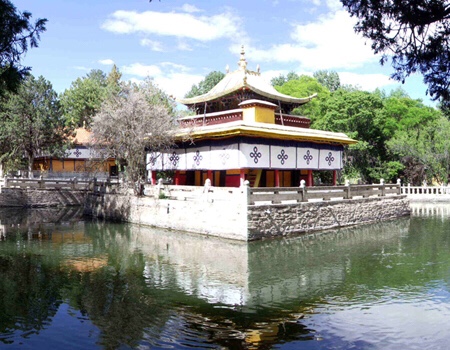
Tyokyil Potrang

Norbulingka Shoton Festival
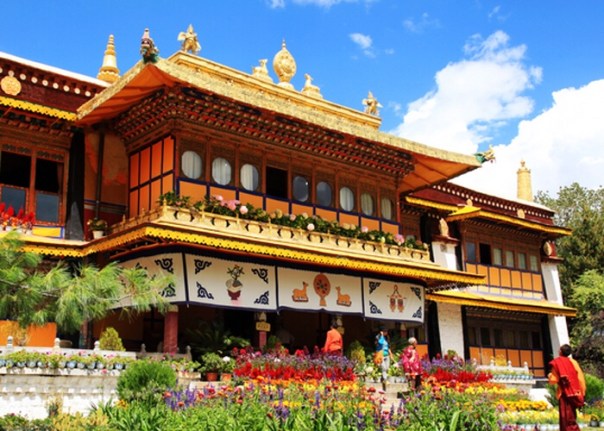
Beautiful Norbulingka Park

JOKHANG TEMPLE MONASTERY
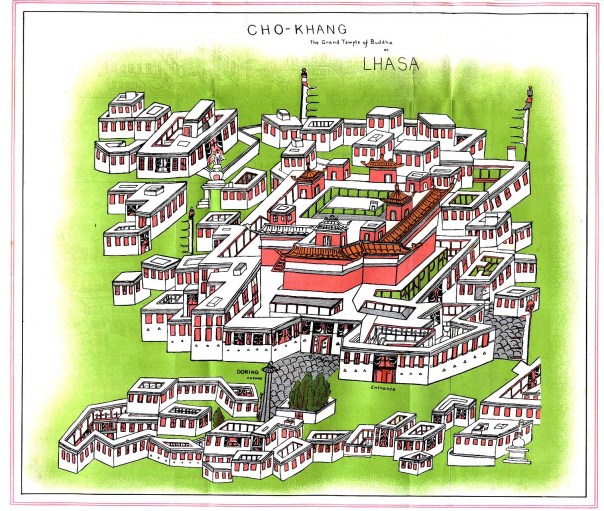
Plan of the complex from Journey to Lhasa and Central Tibet by Sarat Chandra Das, 1902

The Jokhang (Tibetan: ཇོ་ཁང།, Chinese: 大昭寺), also known as the Qoikang Monastery, Jokang, Jokhang Temple, Jokhang Monastery and Zuglagkang (Tibetan: གཙུག་ལག་ཁང༌།, Wylie: gtsug-lag-khang, ZYPY: Zuglagkang or Tsuklakang), is a Buddhist temple in Barkhor Square in Lhasa, the capital city of Tibet. Tibetans, in general, consider this temple as the most sacred and important temple in Tibet. The temple is currently maintained by the Gelug school, but they accept worshipers from all sects of Buddhism. The temple’s architectural style is a mixture of Indian vihara design, Tibetan and Nepalese design.

The Jokhang was founded during the reign of King Songtsen Gampo. According to tradition, the temple was built for the king’s two brides: Princess Wencheng of the Chinese Tang dynasty and Princess Bhrikuti of Nepal. Both are said to have brought important Buddhist statues and images from China and Nepal to Tibet, which were housed here, as part of their dowries. The oldest part of the temple was built in 652. Over the next 900 years, the temple was enlarged several times with the last renovation done in 1610 by the Fifth Dalai Lama. Following the death of Gampo, the image in Ramcho Lake temple was moved to the Jokhang temple for security reasons. When King Tresang Detsen ruled from 755 to 797, the Buddha image of the Jokhang temple was hidden, as the king’s minister was hostile to the spread of Buddhism in Tibet. During the late ninth and early tenth centuries, the Jokhang and Ramoche temples were said to have been used as stables. In 1049 Atisha, a renowned teacher of Buddhism from Bengal taught in Jokhang.

Around the 14th century, the temple was associated with the Vajrasana in India. In the 18th century the Qianlong Emperor of the Qing dynasty, following the Gorkha-Tibetan war in 1792, did not allow the Nepalese to visit this temple and it became an exclusive place of worship for the Tibetans. During the Chinese development of Lhasa, the Barkhor Square in front of the temple was encroached. During the Cultural Revolution, Red Guards attacked the Jokhang temple in 1966 and for a decade there was no worship. Renovation of the Jokhang took place from 1972 to 1980. In 2000, the Jokhang became a UNESCO World Heritage Site as an extension of the Potala Palace (a World Heritage Site since 1994). Many Nepalese artists have worked on the temple’s design and construction.

The temple, considered the “spiritual heart of the city” and the most sacred in Tibet, is at the centre of an ancient network of Buddhist temples in Lhasa. It is the focal point of commercial activity in the city, with a maze of streets radiating from it. The Jokhang is 1,000 metres (3,300 ft) east of the Potala Palace. Barkhor, the market square in central Lhasa, has a walkway for pilgrims to walk around the temple (which takes about 20 minutes). Barkhor Square is marked by four stone sankang (incense burners), two of which are in front of the temple and two in the rear.
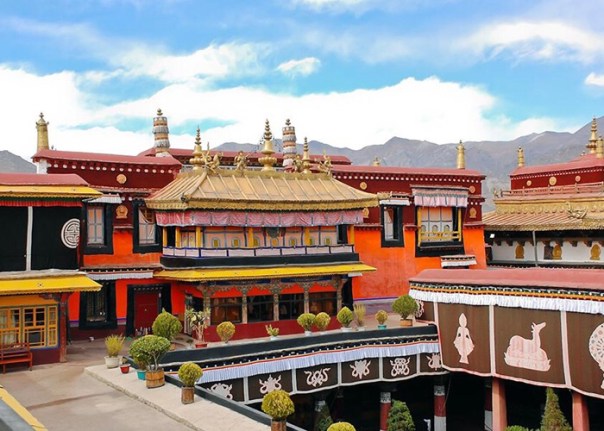
Jokhang Temple interior building

Rasa Thrulnag Tsuklakang (“House of Mysteries” or “House of Religious Science”) was the Jokhang’s ancient name. When King Songtsen built the temple his capital city was known as Rasa (“Goats”), since goats were used to move earth during its construction. After the king’s death, Rasa became known as Lhasa (Place of the Gods); the temple was called Jokhang—”Temple of the Lord”—derived from Jowo Shakyamuni Buddha, its primary image. The Jokhnag’s Chinese name is Dazhao; it is also known as Zuglagkang, Qoikang Monastery, Tsuglakhang and Tsuglhakhange.

Tibetans viewed their country as a living entity controlled by srin ma (pronounced “sinma”), a wild demoness who opposed the propagation of Buddhism in the country. To thwart her evil intentions, King Songtsen Gampo (the first king of a unified Tibet) developed a plan to build twelve temples across the country. The temples were built in three stages. In the first stage central Tibet was covered with four temples, known as the “four horns” (ru bzhi). Four more temples, (mtha’dul), were built in the outer areas in the second stage; the last four, the yang’dul, were built on the country’s frontiers. The Jokhang temple was finally built in the heart of the srin ma, ensuring her subjugation.

To forge ties with neighbouring Nepal, Songtsen Gampo sent envoys to King Amsuvarman seeking his daughter’s hand in marriage and the king accepted. His daughter, Bhrikuti, came to Tibet as the king’s Nepalese wife (tritsun; belsa in Tibetan). The image of Akshobhya Buddha, which she had brought as part of her dowry, was deified in a temple in the middle of a lake known as Ramoche.

Gampo, wishing to obtain a second wife from China, sent his ambassador to Emperor Taizong (627–650) of the Tang dynasty for one of his daughters. Taizong rejected the king’s proposal, considering Tibetans “barbarians”, and announced the marriage of one of his daughters to the king of Duyu, a Hun. This infuriated Gampo, who mounted attacks on tribal areas affiliated with the Tang dynasty and then attacked the Tang city of Songzhou. Telling the emperor that he would escalate his aggression unless the emperor agreed to his proposal, Gampo sent a conciliatory gift of a gold-studded “suit of armour” with another request for marriage. Taizong conceded, giving Princess Wencheng to the Tibetan king. When Wencheng went to Tibet in 640 as the Chinese wife of the king (known as Gyasa in Tibet), she brought an image of Sakyamuni Buddha as a young prince. The image was deified in a temple originally named Trulnang, which became the Jokhang. The temple became the holiest shrine in Tibet and the image, known as Jowo Rinpoche, has become the country’s most-revered idol.

The oldest part of the temple was built in 652 by Songtsen Gampo. To find a location for the temple, the king reportedly tossed his hat (a ring in another version) ahead of him with a promise to build a temple where the hat landed. It landed in a lake, where a white stupa (memorial monument) suddenly emerged over which the temple was built. In another version of the legend, Queen Bhrikuti founded the temple to install the statue she had brought and Queen Wencheng selected the site according to Chinese geomancy and feng shui. The lake was filled, leaving a small pond now visible as a well fed by the ancient lake, and a temple was built on the filled area. Over the next nine centuries, the temple was enlarged; its last renovation was carried out in 1610 by the Fifth Dalai Lama.

The temple’s design and construction are attributed to Nepalese craftsmen. After Songtsen Gampo’s death, Queen Wencheng reportedly moved the statue of Jowo from the Ramoche temple to the Jokhang temple to secure it from Chinese attack. The part of the temple known as the Chapel was the hiding place of the Jowo Sakyamuni.

During the reign of King Tresang Detsan from 755 to 797, Buddhists were persecuted because the king’s minister, Marshang Zongbagyi (a devotee of Bon), was hostile to Buddhism. During this time the image of Akshobya Buddha in the Jokhang temple was hidden underground, reportedly 200 people failed to locate it. The images in the Jokhang and Ramoche temples were moved to Jizong in Ngari, and the monks were persecuted and driven from Jokhang. During the anti-Buddhist activity of the late ninth and early tenth centuries, the Jokhang and Ramoche temples were said to be used as stables. In 1049 Atisha, a renowned teacher of Buddhism from Bengal who taught in Jokhang and died in 1054, found the “Royal Testament of the Pillar” (Bka’ chems ka khol ma) in a pillar at Jokhang; the document was said to be the testament of Songtsen Gampo.

Life-sized Statue of Shykamuni

Beginning in about the 14th century, the temple was associated with the Vajrasana in India. It is said that the image of Buddha deified in the Jokhang is the 12-year-old Buddha earlier located in the Bodh Gaya Temple in India, indicating “historical and ritual” links between India and Tibet. Tibetans call Jokhang the “Vajrasana of Tibet” (Bod yul gyi rDo rje gdani), the “second Vajrasana” (rDo rje gdan pal} and “Vajrasan, the navel of the land of snow” (Gangs can sa yi lte ba rDo rje gdani).

After the occupation of Nepal by the Gorkhas in 1769, during the Gorkha-Tibetan war in 1792 the Qianlong Emperor of the Qing dynasty drove the Gorkhas from Tibet and the Tibetans were isolated from their neighbors. The period, lasting for more than a century, has been called “the Dark Age of Tibet”. Pilgrimages outside the country were forbidden for Tibetans, and the Qianlong Emperor suggested that it would be equally effective to worship the Jowo Buddha at the Jokhang.

In Chinese development of Lhasa, Barkhor Square was encroached when the walkway around the temple was destroyed. An inner walkway was converted into a plaza, leaving only a short walkway as a pilgrimage route. In the square, religious objects related to the pilgrimage are sold.

During the Cultural Revolution, Red Guards attacked the Jokhang in 1966 and for a decade there was no worship in Tibetan monasteries. Renovation of the Jokhang began in 1972, and was mostly complete by 1980. After this and the end of persecution, the temple was re-consecrated. It is now visited by a large number of Tibetans, who come to worship Jowo in the temple’s inner sanctum. During the Revolution, the temple was spared destruction and was reportedly boarded up until 1979. At that time, portions of the Jokhang reportedly housed pigs, a slaughterhouse and Chinese army barracks. Soldiers burned historic Tibetan scriptures. For a time, it was a hotel.

Two flagstone doring (inscribed pillars) outside the temple, flanking its north and south entrances, are worshiped by Tibetans. The first monument, a March 1794 edict known as the “Forever Following Tablet” in Chinese, records advice on hygiene to prevent smallpox; some has been chiseled out by Tibetans who believed that the stone itself had curative powers. The second, far older, pillar is 5.5 metres (18 ft) high with a crown in the shape of a palace and an inscription dated 821 or 822. The tablet has a number of names; “Number One Tablet in Asia”, “Lhasa Alliance Tablet”, “Changing Alliance Tablet”, “Uncle and Nephew Alliance Tablet” and the “Tang Dynasty-Tubo Peace Alliance Tablet”. Its inscription, in Tibetan and Chinese, is a treaty between the Tibetan king Ralpacan and the Chinese emperor Muzong delineating the boundary between their countries. Both inscriptions were enclosed by brick walls when Barkhor Square was developed in 1985. The Sino-Tibetan treaty reads, “Tibet and China shall abide by the frontiers of which they are now in occupation. All to the east is the country of Great China; and all to the west is, without question, the country of Great Tibet. Henceforth on neither side shall there be waging of war nor seizing of territory. If any person incurs suspicion he shall be arrested; his business shall be inquired into and he shall be escorted back”.

According to the Dalai Lama, among the many images in the temple was an image of Chenrizi, made of clay in the temple, within which the small wooden statue of the Buddha brought from Nepal was hidden. The image was in the temple for 1300 years, and when Songtsen Gampo died his soul was believed to have entered the small wooden statue. During the Cultural Revolution, the clay image was smashed and the smaller Buddha was given by a Tibetan to the Dalai Lama.

In 2000, the Jokhang became a UNESCO World Heritage Site as an extension of the Potala Palace (a World Heritage Site since 1994) to facilitate conservation efforts. The temple is listed in the first group of State Cultural Protection Relic Units, and has been categorized as a 4A-level tourist site.
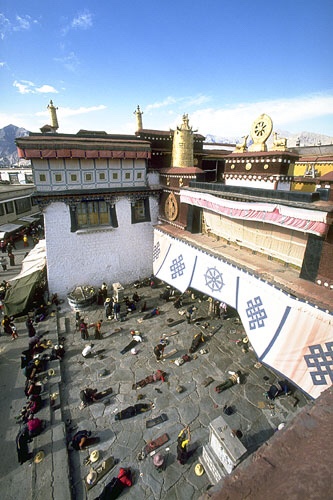
Pilgrims prostrating before entering the Johkang Temple, Lhasa, Tibet

On February 17, 2018, the temple caught fire at 6:40 p.m. (local time), before sunset in Lhasa, with the blaze lasting until late that evening. Although photos and videos about the fire were spread on Chinese social media, which showed the eaved roof of a section of the building lit with roaring yellow flames and emitting a haze of smoke, these images were quickly censored and disappeared. The official newspaper Tibet Daily briefly claimed online that the fire was “quickly extinguished” with “no deaths or injuries” at the late night, while The People’s Daily published the same words online and added that there had been “no damage to relics” in the temple; both of these reports contained no photos. The temple was temporarily closed after the fire but were reopened to public on February 18, according to official Xinhua news agency. But the yellow draperies had been newly hung behind the temple’s central image, the Jowo statue. And no one was allowed to enter the second floor of the temple, according to the source of Radio Free Asia’s Tibetan Service. The fire burned an area of about 50 square meters. The temple’s golden cupola had been removed to guard against any collapse and protective supports had been added around the Jowo statue, according to Xinhua On February 19, 2018, the Dalai Lama’s supporters based in India reported eyewitness accounts that “the source of the fire is not the Jowo chapel but from an adjacent chapel within the Jokhang temple premises known in Tibetan as Tsuglakhang” and confirming that there were “no casualties and damage to property is yet to be ascertained”.

The Jokhang temple covers an area of 2.51 hectares (6.2 acres). When it was built during the seventh century, it had eight rooms on two floors to house scriptures and sculptures of the Buddha. The temple had brick-lined floors, columns and door frames and carvings made of wood. During the Tubo period, there was conflict between followers of Buddhism and the indigenous Bon religion. Changes in dynastic rule affected the Jokhang Monastery; after 1409, during the Ming dynasty, many improvements were made to the temple. The second and third floors of the Buddha Hall and the annex buildings were built during the 11th century. The main hall is the four-story Buddha Hall.

The temple has an east-west orientation, facing Nepal to the west in honour of Princess Bhrikuti. Additionally, the monastery’s main gate faces west. The Jokhang is aligned along an axis, beginning with an arch gate and followed by the Buddha Hall, an enclosed passage, a cloister, atriums and a hostel for the lamas (monks). Inside the entrance are four “Guardian Kings” (Chokyong), two on each side. The main shrine is on the ground floor. On the first floor are murals, residences for the monks and a private room for the Dalai Lama, and there are residences for the monks and chapels on all four sides of the shrine. The temple is made of wood and stone. Its architecture features the Tibetan Buddhist style, with influences from China, Indian vihara design and Nepal. The roof is covered with gilded bronze tiles, figurines and decorated pavilions

The central Buddha Hall is tall, with a large, paved courtyard. A porch leads to the open courtyard, which is two concentric circles with two temples: one in the outer circle and another in the inner circle. The outer circle has a circular path, with a number of large prayer wheels (nangkhor); this path leads to the main shrine, which is surrounded by chapels. Only one of the temple murals remains, depicting the arrival of Queen Wencheng and an image of the Buddha. The image, brought by the king’s Nepalese wife and initially kept at Ramoche, was moved to Jokhang and kept in the rear center of the inner temple. This Buddha has remained on a platform since the eighth century; on a number of occasions, it was moved for safekeeping. The image, amidst those of the king and his two consorts, has been gilded several times. In the main hall on the ground floor is a gilded bronze statue of Jowo Sakyamuni, 1.5 metres (4 ft 11 in) tall, representing the Buddha at age twelve. The image has a bejewelled crown, cover around its shoulder, a diamond on its forehead and wears a pearl-studded garment. The Buddha is seated in a lotus position on a three-tiered lotus throne, with his left hand on his lap and his right hand touching the earth. A number of chapels surround the Jowo Sakayamuni, dedicated to gods and bodhisattvas. The most important bodhisattva here is the Avalokiteshwara, the patron saint of Tibet, with a thousand eyes and a thousand arms. Flanking the main hall are halls for Amitabha (the Buddha of the past) and Qamba (the Buddha of the future). Incarnations of Sakyamuni are enshrined on either side of a central axis, and the Buddha’s warrior guard is in the middle of the halls on the left side.

In addition to the main hall and its adjoining halls, on both sides of the Buddha Hall are dozens of 20-square-metre (220 sq ft) chapels. The Prince of Dharma chapel is on the third floor, including sculptures of Songtsen Gampo, Princess Wencheng, Princess Bhrikuti, Gar Tongtsan (the Tabo minister) and Thonmi Sambhota, the inventor of Tibetan script. The halls are surrounded by enclosed walkways.

Decorations of winged apsaras, human and animal figurines, flowers and grasses are carved on the superstructure. Images of sphinxes with a variety of expressions are carved below the roof.

The temple complex has more than 3,000 images of the Buddha and other deities (including an 85-foot (26 m) image of the Buddha)[9] and historical figures, in addition to manuscripts and other objects. The temple walls are decorated with religious and historical murals.

On the rooftop and roof ridges are iconic statues of golden deer flanking a Dharma wheel, victory flags and monstrous fish. The temple interior is a dark labyrinth of chapels, illuminated by votive candles and filled with incense. Although portions of the temple has been rebuilt, original elements remain. The wooden beams and rafters have been shown by carbon dating to be original, and the Newari door frames, columns and finials dating to the seventh and eighth centuries were brought from the Kathmandu Valley of Nepal.

In addition to walking around the temple and spinning prayer wheels, pilgrims prostrate themselves before approaching the main deity; some crawl a considerable distance to the main shrine. The prayer chanted during this worship is “Om mani padme hum” (Hail to the jewel in the lotus). Pilgrims queue on both sides of the platform to place a ceremonial scarf (katak) around the Buddha’s neck or touch the image’s knee. A walled enclosure in front of the Jokhang, near the Tang Dynasty-Tubo Peace Alliance Tablet, contains the stump of a willow known as the “Tang Dynstay Willow” or the “Princess Willow”. The willow was reportedly planted by Princess Wencheng.

The Jokhang has a sizeable, significant collection of cultural artefacts, including Tang-dynasty bronze sculptures and finely-sculpted figures in different shapes from the Ming dynasty. Among hundreds of thangkas, two notable paintings of Chakrasamvara and Yamanataka date to the reign of the Yongle Emperor; both are embroidered on silk and well-preserved. The collection also has 54 boxes of Tripiṭaka printed in red, 108 carved sandalwood boxes with sutras and a vase (a gift from the Qianlong Emperor) used to select the Dalai Lama and the Panchen Lama.

SYDNEY MORNING HERALD

FEARS FOR ANCIENT TIBETAN JOKHANG TEMPLE AFTER FIRE

By KIRSTY NEEDHAM

18 February 2018 — 3:47pm

The most important Tibetan pilgrimage site, the Jokhang Temple in old Lhasa, was ablaze on Saturday night but few details have been released by the Chinese government about the extent of the damage.

The 7th Century Tibetan building, which sprawls over 2.5 hectares, is protected by law and is listed for its “outstanding universal value” by the United Nations cultural protection agency, UNESCO.
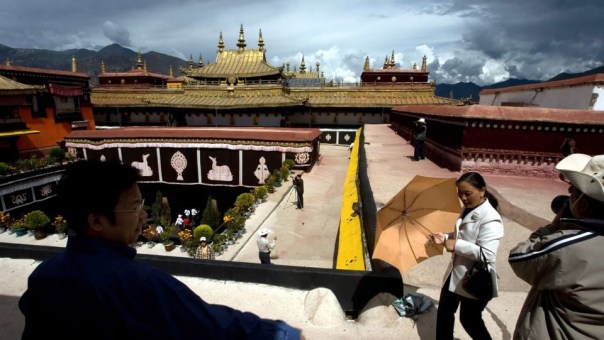
Jokhang Monastery, one of the oldest Tibetan monastery in Lhasa, western China’s Tibet province, in 2007.

Photo: AP

London-based Tibetan expert Robert Barnett told Fairfax Media: “The Jokhang is widely regarded as the most sacred site in Tibetan Buddhism, with thousands of pilgrims travelling across the plateau for centuries to reach there and still doing so today, when allowed to.”

“It was the earliest Buddhist temple to be built in Tibet and is seen by many Tibetans as the symbolic heart of the country and of its cultural heritage.”

A UNESCO report in 2016 stated the temple was in a good state of conservation but noted fire was a “high disaster risk” and prevention measures were in place.

After multiple videos of the large fire in Lhasa’s old town, in which Tibetans can be heard gasping and crying, spread on social media on Saturday night, Chinese state media confirmed there had been “a partial fire in the Jokhang Temple. The fire was quickly extinguished and no casualties reported”.
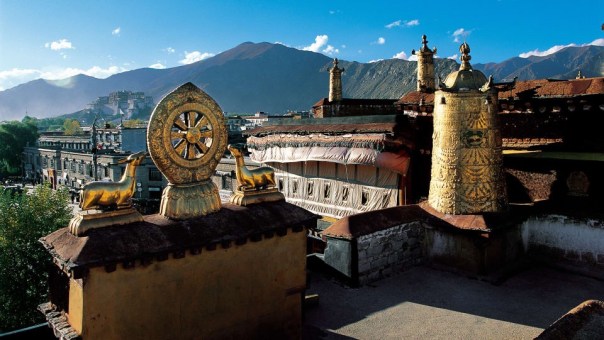
Dharma wheel on Jokhang Temple.

Photo: Alamy

The fire had broken out at 6.40pm, and the Communist Party secretary for the district, Wu Yingjie, had “rushed to the scene”, the official Tibet Daily reported on its social media account.

Barnett, author of Lhasa: Streets with Memories, dismissed later reports by some people on social media that the Jokhang Temple was not affected.

“This kind of confusion reflects the control on information in Tibet, where there is extremely limited official news as well as constant campaigns threatening people who ‘spread rumours’, meaning anything seen by the authorities as supporting the Dalai Lama and ‘hostile forces’ or as potentially leading to unrest,” he said.

While the fire may have started in the adjoining Meru Nyingpa on the Barkor Circuit, it had spread to the eastern part of the main Jokhang Temple, and could be seen on the video, he said.

“The extent of the damage remains unclear.”

The news agency Xinhua was among the Chinese official media outlets reporting the fire, and said the Jokhang Temple was “renowned” for Tibetan Buddhism and had a “history of more than 1300 years and houses many cultural treasures, including a life-sized statue of Sakyamuni when he was 12 years old”.

According to UNESCO reports, the hall surrounded by accommodation for monks on four sides was constructed of wood and stone, and housed more than 3000 images of Buddha and other deities, as well as treasures and manuscripts. Its murals depicted historical scenes.

Tibetan scholars said official information about the fire was limited, raising concerns about damage. Access to the temple area was said to have been restricted.

Tibetans had celebrated the start of the Losar Tibetan New Year on Friday.

Xinhua reported on Sunday afternoon that the Barkhor square around the temple had reopened to the public after a closure caused by the fire.

The Jokhang Temple would be closed from Monday to Thursday in a “scheduled” closure, Xinhua said.”

View Potala Palace from Jokhang Temple

Devouted Pilgrim in front of Barkhor Temple

* A note on Dhvaja (flags or banners)

These are not how Westerners perceive flags to be.

Dhvaja (Victory banner) – pole design with silk scarfs, on the background the Potala Palace

Kosigrim at English Wikipedia • Public domain

Dhvaja (Skt. also Dhwaja; Tibetan: རྒྱལ་མཚན, Wylie: rgyal-msthan), meaning banner or flag, is composed of the Ashtamangala, the “eight auspicious symbols.”Dhvaja in Hindu or vedic tradition takes on the appearance of a high column (dhvaja-stambha) erected in front of temples. Dhvaja, meaning a flag banner, was a military standard of ancient Indian warfare. Notable flags, belonging to the Gods, are as follows:

▪ Garuda Dhwaja – The flag of Vishnu.

▪ Indra Dhwaja – The flag of Indra. Also a festival of Indra.

▪ Kakkai kodi – The flag of Jyestha, goddess of inauspicious things and misfortune.

▪ Kapi Dhwaja or Vanara dwaja (monkey flag) – The flag of Arjuna in the Mahabharata, in which the Lord Hanuman himself resided

▪ Makaradhvaja – The flag of Kama, god of love.

▪ Seval Kodi – The war flag of Lord Murugan, god of war. It depicts the rooster, Krichi.
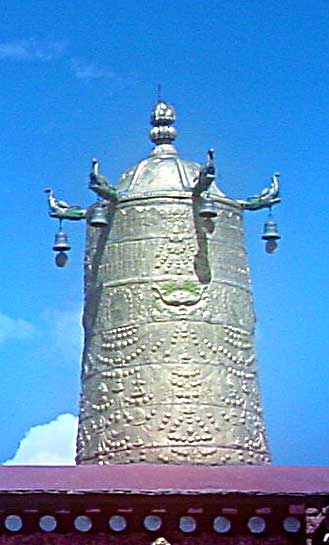
Dhvaja (‘victory banner’), on the roof of Jokhang Monastery.

Within the Tibetan tradition a list of eleven different forms of the victory banner is given to represent eleven specific methods for overcoming “defilements” (Sanskrit: klesha). Many variations of the dhvaja’s design can be seen on the roofs of Tibetan monasteries (Gompa, Vihara) to symbolyze the Buddha’s victory over four maras.

In its most traditional form the victory banner is fashioned as a cylindrical ensign mounted upon a long wooden axel-pole. The top of the banner takes the form of a small white “parasol” (Sanskrit: chhatra), which is surrounded by a central “wish granting gem” (Sanskrit: cintamani). This domed parasol is rimmed by an ornate golden crest-bar or moon-crest with makara-trailed ends, from which hangs a billowing yellow or “white silk scarf'”(Sanskrit: khata) (see top right).
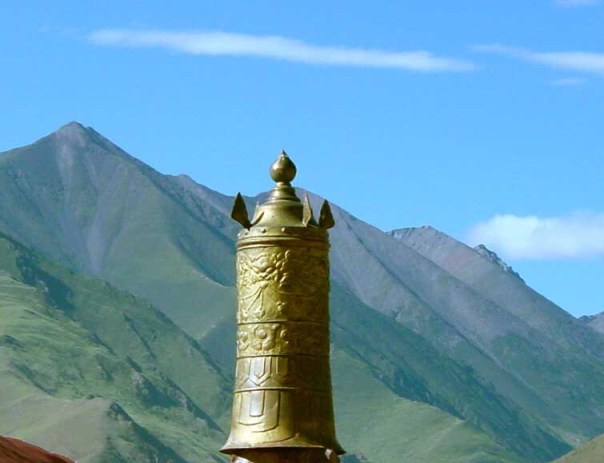
Dhvaja (‘victory banner’), on the roof of Sanga Monastery.

As a hand-held ensign the victory banner is an attribute of many deities, particularly those associated with wealth and power, such as Vaiśravaṇa, the Great Guardian King of the north. As roof-mounted ensign the victory banners are cylinders usually made of beaten copper (similar to toreutics) and are traditionally placed on the four corners of monastery and temple roofs. Those roof ornaments usually take the form of a small circular parasol surmounted by the wish-fulfilling gem, with four or eight makara heads at the parasol edge, supporting little silver bells (see the Jokhang Dhvaja on the left). A smaller victory banner fashioned on a beaten copper frame, hung with black silk, and surmounted by a flaming “trident” (Sanskrit: trishula) is also commonly displayed on roofs (see the dhvaja on the roof of the Potala Palace below.

References

▪ Bass, Catriona. 1990. Inside the Treasure House: A Time in Tibet. Victor Gollancz, London. Paperback reprint: Rupa & Co., India, 1993

▪ Dowman, Keith. 1988. The Power-places of Central Tibet: The Pilgrim’s Guide. Routledge & Kegan Paul, London and New York. ISBN 0-7102-1370-0

▪ Palin, Michael (2009). Himalaya. London: Penguin. ISBN 978-0-7538-1990-6.

▪ Seth, Vikram (1990). From Heaven Lake: Travels through Sinkiang and Tibet. Penguin. ISBN 0-14-013919-2.

▪ Tibet: A Fascinating Look at the Roof of the World, Its People and Culture. Passport Books. 1988. p. 71.

▪ This article incorporates text from a publication now in the public domain: Chisholm, Hugh, ed. (1911). “Lhasa”. Encyclopædia Britannica. 16 (11th ed.). Cambridge University Press. pp. 529–532. (See p. 530.)

▪Beckwith, Christopher I. (1987). The Tibetan Empire in Central Asia. Princeton University Press. Princeton, New Jersey. ISBN 0-691-02469-3.

▪ “Reading the Potala”. Peter Bishop. In: Sacred Spaces and Powerful Places In Tibetan Culture: A Collection of Essays. (1999) Edited by Toni Huber, pp. 367–388. The Library of Tibetan Works and Archives, Dharamsala, H.P., India. ISBN 81-86470-22-0.

▪ Das, Sarat Chandra. Lhasa and Central Tibet. (1902). Edited by W. W. Rockhill. Reprint: Mehra Offset Press, Delhi (1988), pp. 145–146; 166-169; 262-263 and illustration opposite p. 154.

▪ Larsen and Sinding-Larsen (2001). The Lhasa Atlas: Traditional Tibetan Architecture and Landscape, Knud Larsen and Amund Sinding-Larsen. Shambhala Books, Boston. ISBN 1-57062-867-X.

▪Richardson, Hugh E. (1984) Tibet & Its History. 1st edition 1962. Second Edition, Revised and Updated. Shambhala Publications. Boston ISBN 0-87773-376-7.

▪ Richardson, Hugh E. (1985). A Corpus of Early Tibetan Inscriptions. Royal Asiatic Society. ISBN 0-94759300-4.

▪ Snellgrove, David & Hugh Richardson. (1995). A Cultural History of Tibet. 1st edition 1968. 1995 edition with new material. Shambhala. Boston & London. ISBN 1-57062-102-0.

▪ von Schroeder, Ulrich. (1981). Indo-Tibetan Bronzes. (608 pages, 1244 illustrations). Hong Kong: Visual Dharma Publications Ltd. ISBN 962-7049-01-8

▪ von Schroeder, Ulrich. (2001). Buddhist Sculptures in Tibet. Vol. One: India & Nepal; Vol. Two: Tibet & China. (Volume One: 655 pages with 766 illustrations; Volume Two: 675 pages with 987 illustrations). Hong Kong: Visual Dharma Publications, Ltd. ISBN 962-7049-07-7

▪ von Schroeder, Ulrich. 2008. 108 Buddhist Statues in Tibet. (212 p., 112 colour illustrations) (DVD with 527 digital photographs). Chicago: Serindia Publications. ISBN 962-7049-08-5
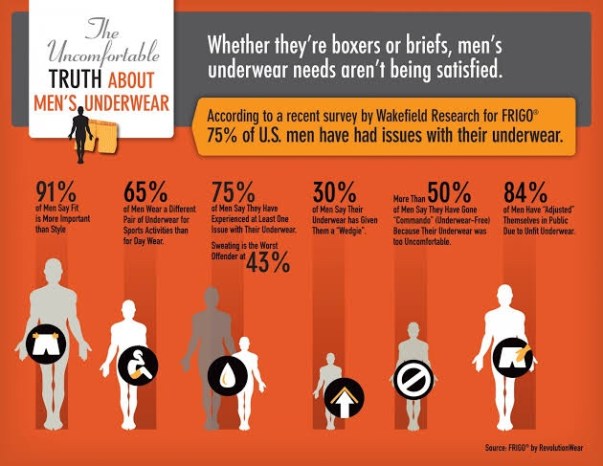
▪ An, Caidan (2003). Tibet China: Travel Guide. 五洲传播出版社. ISBN 978-7-5085-0374-5.

▪ Barnett, Robert (2010). Lhasa: Streets with Memories. Columbia University Press. ISBN 978-0-231-13681-5.

▪ Barron, Richard (10 February 2003). The Autobiography of Jamgon Kongtrul: A Gem of Many Colors. Snow Lion Publications. ISBN 978-1-55939-970-8.

▪ Brockman, Norbert C. (13 September 2011). Encyclopedia of Sacred Places. ABC-CLIO. ISBN 978-1-59884-655-3.

▪ Buckley, Michael (2012). Tibet. Bradt Travel Guides. ISBN 978-1-84162-382-5.

▪ Dalton, Robert H. (2004). Sacred Places of the World: A Religious Journey Across the Globe. Abhishek. ISBN 978-81-8247-051-4.

▪ Davidson, Linda Kay; Gitlitz, David Martin (2002). Pilgrimage: From the Ganges to Graceland : an Encyclopedia. ABC-CLIO. ISBN 978-1-57607-004-8.

▪ Dorje, Gyurme (2010). Jokhang: Tibet’s Most Sacred Buddhist Temple. Edition Hansjorg Mayer. ISBN 978-5-00-097692-0.

▪ Huber, Toni (15 September 2008). The Holy Land Reborn: Pilgrimage and the Tibetan Reinvention of Buddhist India. University of Chicago Press. ISBN 978-0-226-35650-1.

▪ Jabb, Lama (10 June 2015). Oral and Literary Continuities in Modern Tibetan Literature: The Inescapable Nation. Lexington Books. ISBN 978-1-4985-0334-1.

▪ Klimczuk, Stephen; Warner, Gerald (2009). Secret Places, Hidden Sanctuaries: Uncovering Mysterious Sites, Symbols, and Societies. Sterling Publishing Company, Inc. ISBN 978-1-4027-6207-9.

▪ Laird, Thomas (10 October 2007). The Story of Tibet: Conversations with the Dalai Lama. Grove Press. ISBN 978-0-8021-4327-3.

▪ Mayhew, Bradley; Kelly, Robert; Bellezza, John Vincent (2008). Tibet. Ediz. Inglese. Lonely Planet. ISBN 978-1-74104-569-7.

▪ McCue, Gary (1 March 2011). Trekking Tibet. The Mountaineers Books. ISBN 978-1-59485-411-8.

▪ Perkins, Dorothy (19 November 2013). Encyclopedia of China: History and Culture. Taylor & Francis. ISBN 978-1-135-93569-6.

▪ Powers, John (25 December 2007). Introduction to Tibetan Buddhism. Snow Lion Publications. ISBN 978-1-55939-835-0.

▪ Representatives, Australia. Parliament. House of (1994). Parliamentary Debates Australia: House of Representatives. Commonwealth Government Printer.

▪ Service, United States. Foreign Broadcast Information (1983). Daily Report: People’s Republic of China. National Technical Information Service.

▪ von Schroeder, Ulrich. 2001. Buddhist Sculptures in Tibet. Vol. One: India & Nepal; Vol. Two: Tibet & China. (Volume One: 655 pages with 766 illustrations; Volume Two: 675 pages with 987 illustrations). Hong Kong: Visual Dharma Publications, Ltd. ISBN 962-7049-07-7

▪ von Schroeder, Ulrich. 2008. 108 Buddhist Statues in Tibet. (212 p., 112 colour illustrations) (DVD with 527 digital photographs mostly of Jokhang Bronzes). Chicago: Serindia Publications. ISBN 962-7049-08-5