As mainstream gay culture transforms “geeky” into little more than a sexy look, how does an actual geek find his people?
Photo illustration by Slate. Photos by THPStock/iStock/Getty Images Plus; ajr_images/iStock/Getty Images Plus.
You’ve probably heard of the idea of a queer “scene,” perhaps most often from people who don’t care for it. But what, exactly, is this scene? Who’s a part of it? Who isn’t? Who decides? Is there more than one? What happens when a scene evolves—or when it doesn’t? These are the questions we’ve gathered a group of writers to consider for an Outward special issue on “The Scene” in LGBTQ life today. You can read all of the stories in the issue here, and you can listen to a full episode of the Outward podcast covering more of the queer scene by subscribing on iTunes, Spotify, or wherever you get your audio.
So when I first came out as gay, it was easy to embrace my new identity because of the experiences I’d already had as a geek. In a sense, both involve rebuffing the expectations of society and taking pride in what made me me, regardless of what anyone else thought. But socially, there were big differences. Connecting with friends who share your geeky affinities is relatively easy, but finding community among other gay men has proved to be more of a Water Temple–level task.
Comparing the gay community to a stereotypical high school’s clique culture is unoriginal, but apt. Social capital is valuable and similarly earned by being attractive, cool, and “popular.” As I figured out how being gay intersected with the rest of my life, I immediately felt that participating in “the scene”—here meaning social clubs or bars—came with certain expectations about how I should look, what I should prioritize in my life, and what I should take an interest in. It was like there was a direct contradiction between what it meant to be a proud non-conforming geek and what it would take to be a proudly conforming gay man. As the dating apps came about, however, I noticed that they universally provided an option to self-identify as a “geek,” and I wondered if it was becoming increasingly possible to have the best of both worlds. But that’s not what happened.
When the Borg assimilate an individual, they retain any attributes that would add value to the Collective and replace all other parts with cybernetic adaptations. As the traditional lodestars of geekdom (like fantasy, sci-fi, and video games) have achieved more mainstream appeal with the advent of superhero blockbusters and binge-able prestige television, I’ve watched the gay community process the “geek” identity in much the same way, incorporating certain aspects into the calculus for how to achieve gay social capital while dismissing the rest. I’m now left feeling like the word “geek” just means “a jock with glasses”—and I’ve only got the glasses.
There was a somewhat recent milestone that demarcated the progress of this assimilation for me. In the first week of September 2016, many of the gay blogs were tittering about a new Men.com porn film called “Fuckémon Go.” With stars Johnny Rapid as Ash and Will Braun as Brock, the film capitalized on the popularity of the Pokémon Go app with campy fanfare. What struck me, however, is that unlike the rest of the site’s musclebound superhero-themed films, this particular parody took something I personally considered purely geeky and sexualized it with stereotypically twinkish, fit bodies. My takeaway: Geeks are welcome in a mainstream gay fantasy space like Men.com so long as they’re hot enough to turn a profit.
As someone who also identifies with the “bear” tribe (and not the similarly appropriated muscle- and daddy- varieties), it’s been hard not to see body image superficiality as the main gravitational force at the center of almost all gay scenes. Particularly as apps increasingly dominate our social interactions, what I have to offer in terms of personality, hobbies, or sense of humor takes a back seat to whether or not I measure up aesthetically. This has left me feeling betrayed by those who check the “geek” box on their profiles—and who maybe even list some geeky interests that catch my eye—then refuse to engage whatsoever. Are you really a geek if you’d let a person’s looks get in the way of connecting with someone who shares your niche interests?
But even among people I already know, engagement doesn’t always meet my expectations. I remember one brunch a few years ago with a group of gay men who I believed shared at least some of my geeky affinities. Not knowing all of them well, I tried to engage on topics I thought would serve up some stimulating dialogue. The brunch, however, ended up being dominated by discussion about the gym, including but not limited to: workout preferences, stories about other men they’d seen at the gym, and encounters flirting with men at the gym. It was a topic I had little interest in and little to contribute to.
Finding community among other gay men has proved to be more of a Water Temple-leveltask.”
I’ve been a geek as long as I can remember, certainly as far back as fourth grade, when I’d regularly wear the Star Trek: The Next Generation T-shirt I’d picked up at a convention. This aspect of my identity has meant having a deep (if not obsessive) appreciation for aspects of culture that are nuanced, complicated, high-minded, and importantly, not caring how anyone else feels about it. For example, I refused to read Harry Potter—for years—just to spite my friends who said it was “so much better” than “boring” The Lord of the Rings, even though they had only made it halfway through The Fellowship of the Ring. Popularity could not sway me from what I personally enjoyed.
I left the brunch feeling ostracized, like the admission price to communing even with fellow gay geeks was buying into an obsession with improving my body and feeding into others’ same concerns. But whatever other people think of my body, I’m not insecure about it, I don’t enjoy exercise, and I know—from trying—that forcing myself into that world was not a positive experience. I’m a geek: I want to like the things I like and not worry about conforming to everyone else’s expectations. I’m not here to demand anyone take up my geeky passions, but I don’t feel like the same respect is reciprocated when it comes to my disinterest in fitness.
That’s not to say I haven’t found occasional opportunities for my gay and geek identities to intersect. Groups like Geeks OUT create great little social meetups, and D.C.’s newest gay sports bar is equipped with some video game consoles. These inconsistently available experiences, however, still pale in comparison to what feels like the weekly takeover of the bars by the kickball teams. In high school, the jocks might have picked on us gays, but as gay adults, we’ve re-created the exact same social structure for ourselves.
Another entry point to the stereotypical scene I’ve found has been watching RuPaul’s Drag Race out at bars with friends. They might not admit it, but many people have a geek-like obsession when it comes to following their favorite queens, and discussing who should win the current season is a great icebreaker. The kink and leather community has also felt far more geek-friendly, which is not surprising given the similar investment many people make in that aspect of their lives (not to mention the taboo it still faces in society). But I don’t love drag or leather nearly as much as others do, so I’m still on the hunt for my gaggle.
To be sure, as a cisgender, white gay man, I know that my request for “the scene” to be more welcoming of geeks is small potatoes compared to some of the other work the queer community must undertake in terms of inclusion, particularly around race, gender, and gender identity. But with so many gay men already identifying as “geeks,” it seems like there’s an easy opportunity for the community to mature beyond the high school cafeteria and show that it’s capable of becoming a bit more heterogeneous without losing its distinct
A great place to start would be on the apps, which are increasingly serving as a substitute for the bars and community centers where the queer community traditionally communed. Don’t be afraid to let your geek flag fly in your profile! And if you see someone with some similar interests, why not throw a fellow geek a bone? For example, you could ask me about my favorite captain, Doctor, or Final Fantasy, come to a live West Wing Weekly taping with me, or help me theory-craft my next Path of Exile character build.
It’s fine if we’re not a sexual match. There’s still something joyous about finding someone who’s as obsessed with a certain fantasy universe as you are. And if we start building more social bridges that way, maybe someday we’ll be the ones taking over “the scene” in our brightly colored Stonewall Board Games or Stonewall Smash Bros. T-shirts. I happen to think there’s room for all of us. Can I get a “so say we all” up in here?
In an effort to scare people away from drinking alcohol, the American government once poisoned certain alcohol supplies; this resulted in the death of over 10,000 American Citizens.
This, of course, was during Prohibition. The government became frustrated with the fact that despite the manufacture, sale, and transportation of alcohol being banned, the number of people drinking alcoholic beverages was markedly higher than it was before Prohibition. So to try to get people to stop drinking, the government decided to try a scare tactic.
One way bootleggers of this time made alcoholic beverages was to use denatured, industrial alcohol as the base. Denaturing the alcohol is simply a process to make it undrinkable, usually by adding something that makes it taste or smell disgusting or will induce vomiting. This was originally done (and is still done to this day) in order to allow companies to get around having to pay the high taxes associated with the manufacturing and sale of alcohol meant to be drunk. Alcohol used industrially, for non-beverage applications, are denatured and thus, they don’t have to pay these taxes and so it is significantly cheaper, gallon for gallon. Without this tax break, literally thousands of industrial products would become drastically more expensive than they currently are.
During prohibition, this denatured alcohol was often stolen from companies that made industrial alcohol used in various paints and solvents and the like. The bootleggers would then have their own chemists whose job it was to make the alcohol palatable again, basically undoing the denaturing process or to “renature” the alcohol.
With an estimated 60 million gallons of industrial alcohol stolen annually in the 1920s to be later renatured and sold as drinkable alcohol, the government, under President Coolidge, decided to up the stakes and make some of the denaturing formulas lethal, instead of just designed to make the alcohol unpalatable. To do this, they’d generally add things like methyl alcohol (the main denaturing chemical at 10% added, even today); other chemicals added are things such as kerosene, brucine, gasoline, benzene, cadmium, formaldehyde, chloroform, carbolic acid, acetone, and many others that were difficult for the bootlegger’s chemists to get out when they’d renature the alcohol.
After the first 100 or so people died shortly after the new denaturing process was released around Christmas, health officials were outraged and the news media picked up the story as intended. Unfortunately, the government’s plan didn’t quite work from that point on. It didn’t scare people away from drinking and rather had little to no effect on people’s consumption of alcohol; instead, the estimates are that it resulted in the deaths of over 10,000 people with a much larger number severely sickened and many blinded by the poisoning.
As New York City’s medical examiner Charles Norris stated: “The government knows it is not stopping drinking by putting poison in alcohol. Yet it continues its poisoning processes, heedless of the fact that people determined to drink are daily absorbing that poison. Knowing this to be true, the United States government must be charged with the moral responsibility for the deaths that poisoned liquor causes, although it cannot be held legally responsible.” (Chuck Norris fighting the man even back then) 😉
People at the time, though, were split on the poisoning program, even with the deaths that were happening because of it. One side felt that the people who were drinking the illegal alcohol got what they deserved, particularly because they knew the risks and broke the law anyways; the other side felt it was a national experiment on exterminating members of society that the government felt were undesirable as American citizens. As one Chicago Tribune article in 1927 stated: “Normally, no American government would engage in such business. … It is only in the curious fanaticism of Prohibition that any means, however barbarous, are considered justified.”
Now, to be clear, the various governments of the world still require denaturing of alcohol that is not for oral consumption and the standard requirement of 10% methyl alcohol is still in effect in most countries. This isn’t really a problem anymore because people have much better ways to get their alcohol than trying to deal with denatured alcohol. The problem at the time was that the government knew full well that people would be drinking this poisoned alcohol and they hoped the deaths that resulted from this would scare other people away from drinking. Further, when it was clear that it wasn’t scaring anyone away from drinking and literally thousands were dying per year with significantly more than that severely sickened, they kept the program going anyways, though it was hotly debated in Congress.
So next time you start thinking the U.S. government is impossibly screwed up today; headed down the tubes; and beyond fixing, well, if you study American history much at all, it’s pretty clear it used to be a lot more screwed up than it is today, not just concerning this issue, but many, many others. And yet, we’re still here. 🙂
If you liked this article, you might also enjoy our new popular podcast, The BrainFood Show (iTunes, Spotify, Google Play Music, Feed), as well as:
Boring facts
The term “The Real McCoy” originated in the prohibition era. Captain William S. McCoy was a rum runner who coordinated most rum transported by ship during prohibition. He was known for never watering down his imports; thus, his product was “The Real McCoy”.
This wasn’t the only time the U.S. Government decided to poison the supply of some illegal substance in order to try to scare people away from using it. In the 1970s the government sprayed marijuana fields with Paraquat, which is an herbicide. They thought this had the dual benefit of killing large portions of the crop and also scaring people away from buying marijuana in those areas because the surviving plants would essentially be laced with a mild toxin. Public outcry at the time however, forced the government to stop doing this.
It was the 18th Amendment, passed in 1919, which banned the manufacture, sale, and transportation of alcoholic beverages in the United States (note: it didn’t ban the consumption of alcohol). The Volstead Act, officially the “National Prohibition Act”, then laid out the rules for this ban and was passed on October 28, 1919, despite President Wilson’s veto; prohibition itself began on January 1st, 1920. Only 1,520 Federal Prohibition agents were hired to enforce this act, nationwide.
The Volstead Act was amended on March 22, 1933 by the Cullen-Harrison Act, which allowed the manufacturing and sale of certain kinds of alcoholic beverages. The 18th Amendment itself was repealed in December of 1933. When President Roosevelt signed the Cullen-Harrison Act, he made the now famous remark, “I think this would be a good time for a beer.” A mere one day after the Cullen-Harrison Act went into effect on April 7, 1933, Anheuser-Busch, Inc, sent a case of Budweiser to the White House as a gift to President Roosevelt.
As happens quite often when people are told they can’t do something, the banning of alcohol resulted in alcoholic beverages being consumed at an estimated three times the rate it was before the banning took effect.
Prohibition was widely supported by diverse groups across the nation when it first was made law, even among the heavy drinkers. It was widely thought that a ban on alcohol would drastically improve society as a whole (many of society’s problems of the day were thought to be a result of rampant alcohol use; some were even actually valid points, though many were not). Thus, sacrificing alcoholic drinks was a little thing compared to creating a better society. Will Rogers often joked about the southern prohibitionists: “The South is dry and will vote dry. That is, everybody sober enough to stagger to the polls.”
One of the chief controversies of the day among medical professionals was that alcohol was prescribed by physicians for medicinal purposes. As such, medical professionals across the nation lobbied for the repeal of prohibition as it applied to medicinal liquors, such as beer, which was often prescribed.
While the Volstead Act banned the manufacturing, sale, and transport of alcohol, it did allow home brewing of wine and cider from fruit. An individual home was allowed to produce up to 200 gallons per year.
Grape growers of the day began selling “bricks of wine”, which were primarily blocks of “Rhine Wine”. These often included the following instructions: “After dissolving the brick in a gallon of water, do not place the liquid in a jug away in the cupboard for twenty days, because then it would turn into wine.”
Also because the Volstead Act did not ban the consumption or storage of alcohol, before the act went into effect, many people stockpiled various alcoholic beverages.
Notorious gangster Al Capone, Bugs Moran, and many others made their riches primarily through illegal alcohol sales and distribution. Capone controlled over 10,000 speakeasies in Chicago alone. Speakeasies were basically places that discreetly served liquor. They often also served food and had live bands to make themselves look like credible institutions. Others were simply regular businesses that kept alcohol on hand to sell to patrons who knew of their side-business.
The term “speakeasy” comes from bartenders telling patrons to “speak easy” when ordering, so as not to be overheard.
The repeal of the Volstead Act not only took the primary funding away from numerous gangsters, but also created thousands of new jobs at a time when they were desperately needed in the United States.
The Bureau of Alcohol, Tobacco, Firearms, and Explosives (BATF) maintains a list of approved formulas by which torender the ethanol undrinkable, which can be found here. These range from formulas to make it taste gross all the way to being very lethal.
Today in the United States about 50% of people report drinking more than 12 alcoholic beverages in the last year; about 14% say they drank 1-11 alcoholic beverages in the last year; with the remaining 36% abstaining from alcoholic beverages in the calendar year the survey was done.Source: Summary Health Statistics for U.S. Adults: National Health Interview Survey, 2008, table 27
The total for all alcohol related deaths per year in the United States is around 85,000 deaths a year. For comparison, the number of deaths associated with Tobacco annually is around 400,000-500,000; poor diet and physical inactivity at around 365,000; prescription drug related deaths around 32,000; suicide around 30,600; homicide around 20,000; gun-related deaths around 29,000; aspirin related deaths around 7,000; all illicit drug use at around 17,000; and Marijuana deaths around 0. 😉
The word “prohibition” comes from the Latin “prohibitionem”, meaning “hindering or forbidding”. It was used to mean “forced alcohol abstinence” as early as 1851.
Salvatore Mineo Jr. better known to the world as Sal Mineo, was the baby-faced American actor whose legend and cult following largely stems from his iconic role as the doomed ‘Plato’ in Nicholas Ray’s 1955 classic of ‘switchblade cinema’ – ‘Rebel Without A Cause’. In the movie Mineo played a troubled high-school kid who emulates (actually as far as 50’s cinema could push that envelope) falls in love with James Dean’s character Jim Stark, although there are reports of a real-life love affair between the two off-set).This was the role for which he would earn the first of two Academy Award nominations.
In 1962 Jill Haworth Mineo’s “girlfriend” kicked open Mineo’s closet door, catching the 35-year-old actor bedding his buddy Bobby Sherman. (Yes. thatBobby Sherman.) “But he didn’t stop,” she said. “He kept going at it.” Rumors of Mineo’s sexuality circulated. He found serious work even more difficult to procure, predominantly because filmmakers saw him as an embarrassing relic of the 1950s.
On the night of February 12, 1976, actor Sal Mineo returned home following a rehearsal for the play P.S. Your Cat Is Dead. After parking his car in the carport below his West Hollywood apartment, the 37-year-old actor was stabbed in the heart by a mugger who quickly fled the scene. At first, the e police suspected that Mineo’s work for prison reform had put him in contact with a dangerous ex-con. Then their focus shifted to Mineo’s personal life. Investigators had discovered that his home was filled with pictures of nude men. But the gay pornography also failed to turn up any leads and later became the basis for a hotbed of rumors that Mineo was killed by a “trick gone wrong”
Out of the blue, Michigan authorities reported that Lionel Williams was arrested on bad check charges and was bragging to everyone that he had killed Mineo. Although he later retracted his stories at about the same time Williams’ his wife back in Los Angeles told police that he had come home the night of the murder drenched in blood. However, there was one major discrepancy in the case, Williams was black with an Afro and all of the eyewitnesses had described the perpetrator as a white man with long brown hair.
Fortunately, the police were able to unearth an old photo of Williams in which his hair had been dyed brown and processed so that it was straight and long. In addition, the medical examiner had made a cast of Mineo’s knife wound and police were able to match it to the description of the knife provided by Williams’ wife. Lionel Williams was eventually convicted and given a sentence of life in prison. He was paroled in the early 1990s but rearrested after committing other crimes. Today, Williams whereabouts is unknown or weather or not he is still even alive.
***NOTE: Because of the time period many are unsure of Mineo’s true sexuality. Some have said that Mineo was “bisexual” but because of the time period in the 1970’s many gay men used the claim of bisexuality as a stepping stone to fully “coming out”.
It was the biggest set ever built for a Hollywood film in the 1920s, and then it was buried in the sands of the California Coast. The real story begins when a young filmmaker embarks on a decades-long attempt to excavate it.
Thirty-three years ago, Peter Brosnan heard a story that seemed too crazy to be true: buried somewhere along California’s rugged Central Coast, beneath acres of sand dunes, lay the remains of a lost city. According to his friend at New York University’s film school, the remains of a massive Egyptian temple, a dozen plaster sphinxes, eight mammoth lions, and four 40-ton statues of Ramses II were all supposedly entombed in the sands 150 some-odd miles north of Los Angeles.
“It was an absolutely cockamamie story,” Brosnan says. “I thought he was nuts.” The ruins weren’t authentic Egyptian ones, of course. They were the 60-year-old remains of a massive Hollywood set—the biggest, most expensive one ever built at the time. The faux Egyptian scenery had played the role of the City of the Pharaoh in one of Hollywood’s first true epics, Cecil B DeMille’s 1923 filmThe Ten Commandments. The set had required more than 1,500 carpenters to build and used over 25,000 pounds of nails. The production nearly ruined DeMille and his studio. When the shoot wrapped, the tempestuous director supposedly strapped dynamite to the structures and razed the whole set, burying it in the sands near Guadalupe, California, to ensure no rival director could benefit from his vision.
“If 1,000 years from now archaeologists happen to dig beneath the sands of Guadalupe,” the director teased, “I hope they will not rush into print with the amazing news that Egyptian civilization…extended all the way to the Pacific Coast.”
Bullshit, Brosnan thought. But then his buddy pointed him to a line in DeMille’s posthumously published autobiography. “If 1,000 years from now archaeologists happen to dig beneath the sands of Guadalupe,” the director teased, “I hope they will not rush into print with the amazing news that Egyptian civilization…extended all the way to the Pacific Coast.”
By 1982, Brosnan had graduated from film school and was earning a living as a freelance journalist, but he couldn’t shake his friend’s story. The film student in him was enchanted by the idea of uncovering and preserving a forgotten bit of Hollywood’s history. That summer, Brosnan and his friend drove across the country, from New York City to a stretch of coast near Santa Barbara, to see the ruins for themselves. The whole affair, he thought, would make for a hell of a documentary.
“We were young, wannabe filmmakers, and I thought this was golden,” Brosnan says today. “We’ll find some archeologists, we’ll find the set, we’ll dig it up. The story writes itself.”
The City of the Pharaoh was not so much a movie set as it was a monument to the man who built it. DeMille was already a towering star in the early days of Hollywood, but in 1922 he was recovering from a streak of critical flops. He had gained a reputation for his sense of spectacle in films likeJoan the WomanandMale and Female, andThe Ten Commandmentswas to be his comeback.
Delivering DeMille’s blockbuster meant deploying a barrage of special effects, at least by the standards of the day. In 1923, set design was the only way to visually transport viewers to the Sinai in the time of Moses. The “desert” DeMille chose for his Israelites to wander, while certainly more convenient than filming on location in Egypt, presented a logistical nightmare. There were no nearby cities, no paved roads, and no place for his cast of thousands to stay. The 22,000 acres of sand dunes that separated the small farming town of Guadalupe from the Pacific Ocean was harsh and desolate. The sharp-grained sand that gives the wind there its added sting is devoid of nutrients, and, combined with constant salt sprays from the sea, makes life a rarity in the dunes. For DeMille, it was perfect.
The sphinx on set in 1923. (Photo: Courtesy of the Guadalupe-Nipomo Dunes Center)
“Your skin will be cooked raw,” DeMille told his army of 3,500 actors and extras, according to aLos Angeles Timesreporter on the scene. “You will miss the comforts of home. You will be asked to endure perhaps the most unpleasant location in cinema history. I expect of you your supreme efforts.”
The costs were mounting even before DeMille arrived in Guadalupe to begin shooting. Preproduction expenses were already approaching $700,000—an astronomical sum in the early days of Hollywood. More than a million pounds of statuary, concrete, and plaster were used to construct the 120-foot-tall, 800-foot-long temple and surrounding structures, and whole plaster sphinxes were sculpted and loaded onto trucks bound for the dunes. Every day on location meant feeding and housing the thousands of workers and animals. DeMille drove his construction team to work faster. Paramount Studios, the film’s backer, began sending DeMille increasingly desperate letters demanding that he cut costs. One receipt, for $3,000 spent on a “magnificent team of horses” for the pharaoh, pushed the studio over the edge, according to Sumiko Higashi, a professor emeritus at The College at Brockport, SUNY, and author ofCecil B. DeMille and American Culture: the Silent Era,a biography of DeMille.
“You have lost your mind,” telegraphed Adolph Zukor, founder of Paramount Pictures. “Stop filming and return to Los Angeles at once.” DeMille refused. He took out a personal loan and waived his guaranteed percentage of the movie’s gross to ensure the production continued. “I cannot and will not make pictures with a yardstick,” he wired back to the studio. “What do they want me to do?” he was rumored to have said, according to Higashi. “Stop now and release it asThe Five Commandments?”
Despite the warnings, DeMille pushed on. Bugles sounded every morning to 4:30 a.m. to wake the 5,000 workers and actors that populated the 24-square-mile tent city he’d built in the dunes. (It earned the nickname the City of DeMille.) His workers raised the 109-foot-tall Great Gate—an archway covered in intricate busts of rearing stallions—and buttressed it with two 35-foot-tall clay-and-plaster statues of the Pharaoh. They erected a “city wall”—built 750 feet long because DeMille refused to work with painted backgrounds or limit his cinematic choices. Five mammoth sphinxes, weighing over five tons each, lined the entrance to the ersatz Egyptian city.
Filming was done at a madcap pace and condensed into a mere three weeks, according to Scott Eyman’s biography,Empire of Dreams: The Epic Life of Cecil B. DeMille. But even with the Exodus in the can, one more problem loomed. According to a prior agreement with the landowners, DeMille’s monumental set had to be dismantled before he left. Production costs had already ballooned to over $1.4 million, more than any other film previously made. DeMille considered reneging on the deal, Brosnan says, but likely worried about another issue: If he left is city standing, rival directors from other studios could easily swoop into Guadalupe and produce an epic on the cheap. DeMille would not have that. Rather than pay workers to take the set down, he settled on a faster method. Dynamite was supposedly strapped to the great temple he had built, and the City of the Pharaoh was brought down. According to legend, he ordered bulldozers to mound sand over the scattered remains and quickly left town.
Sixty years later, in 1983, Brosnan arrived at the dunes like the Children of Israel before him—completely lost. He knew the set was buried somewhere, but the dunes stretched nearly 30 miles, across two counties. Looking for clues, he called the Air Force base that occupied much of the coastline. (“Sir,” he says the sergeant on the other end of the line told him, “There is no Egyptian city buried at Vandenberg Air Force Base.”) He haunted local libraries. He hounded municipal politicians. No one could provide hints about the set’s exact location.
Then he stumbled upon an old ranch hand at a local tavern who had run cattle through the dunes for decades. On a cold and dark morning, after a savage storm had rearranged the topography of the dunes, Brosnan and the rancher hiked the sea of hundred-foot-high peaks, making their way a mile toward the pounding surf of the Pacific. Eventually they spied what locals called “the dune that never moves”—the sandy tomb that covered DeMille’s set—and saw a chunk of Plaster of Paris statuary poking through.
The sphinx before excavation. (Photo: Courtesy of the Guadalupe-Nipomo Dunes Center)
The discovery made headlines around the world and Brosnan fielded calls fromThe New York Times,NBC Nightly News, andPeoplemagazine. His documentary idea, which had seemed pie-in-the-sky a few months earlier, looked promising. And his pitch—that the lost city is the oldest existing Hollywood set left; that props from more modern shoots have already been preserved for posterity; that early set design was, in a sense, an American art form—struck a chord in the industry. Brosnan tentatively called his documentary projectThe Lost City.
Charlton Heston, star of DeMille’s 1956 remake of the film, publicly wished the project well, and local archaeologists volunteered their time to help in the excavation. A curator at the Smithsonian expressed interest in acquiring some pieces, once the dig wrapped. Promises for funding came in from Paramount Pictures and Bank of America. Brosnan moved to Hollywood with the intention of pursuing a career in the ‘biz. But first, he had to start digging.
“This will be a scientific exploration by highly trained personnel,” said a Cambridge-educated archaeologist who signed on in 1983. “Not a case of simply digging up stuff like potatoes. And if we’re serious about documenting movie history, then let’s do it properly.”
Excavating the City of the Pharaoh. (Photo: Courtesy of the Guadalupe-Nipomo Dunes Center)
The excavation and documentary progressed, but Brosnan constantly faced two problems: funding and permitting. When he had the money, the county wouldn’t let him touch the environmentally sensitive area. (The western snowy plover, a federally protected species that nests along california’s coast, keeps the dunes off limits to people for half the year during breeding season.) By the time he got permission to dig, seven years later, funding had dried up. In 1990, several organizations, including the Smithsonian and the DeMille Family Trust, agreed to partially fund the project, and Brosnan and an archeologist used ground-penetrating radar to show that much of the set remained intact. But he couldn’t raise enough money to excavate the actual ruins. He needed $175,000 for an archeological dig to recover 60-year-old fake relics. “We don’t see this as a fake Egypt,” Brosnan told a reporter at the time. “We see this as real cinema history.”
But by the mid-1990s, Brosnan had been scraping by in the movie business for a decade, writing scripts and directing small projects. Lacking the money, he gave up the dig.
That DeMille’s ruins have survived intact to this day, albeit buried in the sands, is a quirk of geography. The dunes, which cover some 35 square miles of the coast here, formed about 15,000 years ago, according to Doug Jenzen, executive director of the non-profit Dunes Center in Guadalupe. Jenzen and his team run a small museum out of a craftsman on the town’s main (and only) drag and head up conservation efforts for the Dunes preserve. It’s a charming little museum that seems out of place among the shuttered movie theater and boarded up buildings of Guadalupe, but the Dunes and DeMille are the only source of tourism dollars in this largely agricultural area, Jenzen says.
Thousands of years ago, rivers swept mineral-dense rocks and boulders from the nearby coastal range down to the sea, eventually pummeling the earth into fine grain sand. “One of the reasons the movie set is preserved so well is because of the minerals in the sand,” Jenzen says. “You know how when you order something mail order and it comes with the silica packets? The sand actually acted as a natural desiccant that preserved the plaster for the statues.”
For 15 years, the ruins were left undisturbed. Every few years a reporter or a researcher would call and Brosnan would humor him or her with details of his odyssey in the dunes. Each time, he hoped the new round of publicity would inject dollars into the effort, but nothing ever came through.
In October 2014, archeologists preserve decaying remains from wind-blown sand at Guadalupe Dunes. (Photo: AP)
In 2010, though, after theLos Angeles Timesran yet another piece on his unfinished dig, a woman—who wishes to remain anonymous—contacted Brosnan and offered to put up the money needed to finish the film. But by then he was married with children and had been away from the project for two decades. “My first response was a moment of panic,” Brosnan says. “There’s no way I could do this.”
But Brosnan hired a producer and an editor, and last fall, with the help of a Santa Barbara County grant, a team of archeologists excavated most of a sphinx. Brosnan was on hand to film it. “We had always wanted to end with a shot of the sphinx being found. And we got it,” he says. Using his early footage shot in the 1980s, Brosnan has pulled together a rough cut and has an editor working on a final draft. He says he’s looking for distributors and considering the film festival circuit soon.
In the Dune Center, Jenzen and his team display parts of one of the large plaster sphinxes and smaller relics that have been successfully pulled from the sand. “All of the statues were made of plaster,” he says. “They were built to last two months—92 years ago. I don’t think this could have happened anywhere else on earth.”
However, Jenzen says the ruins may not survive another 92 years. Powerful storms in the last few years have shifted the sands of the dunes dramatically—more of the set is now exposed to the elements than ever before. The Dunes Center needs $100,000 to unearth another sphinx to add it to the display, Jenzen says, before it’s too late. “It’s disappearing so fast,” he says, “Archeologists originally thought it’d last until 2090—but every time we go out, more is gone.”
Woody Harrelson plays psychopaths brilliantly. It couldn’t be anything to do with his dad’s day job, could it? He talks about coming to terms with the terrible truth and his new film, Rampart
Woody Harrelson: ‘He wasn’t the greatest husband. Or father. But…’ Photograph: Luke Stephenson for the Guardian. Click on image for full portrait
I’m not looking forward to meetingWoody Harrelson. I’m a bit scared, to be honest. I’ve just seenRampart, his new movie in which he plays a racist, psychopathic police officer. Harrelson is terrifying in it. Terrifying when he’s chasing villains, bullying juniors, beating the crap out of innocents, stalking the mothers of his children. He’s even terrifying when he’s making love. His body, specially slimmed-down and muscled-up for the part, pulses with a tension permanently on the cusp of violence.
It’s not as if this is a one-off – there’s his sickening Mickey Knox inNatural Born Killers(“At birth, I was cast into a flaming pit of scum”), deranged killer Tallahassee inZombieland, Charlie in the forthcomingSeven Psychopathswhose title says it all, and we’ve barely started. Even when he plays it nice, like he did inCheersall those years ago as dopey bartender Woody, there’s something in the goofy smile that makes you worry – for his sanity, and your safety. And it’s not as if the weird stuff is just confined to acting – there are numerous stories of him hitting photographers or police officers or taxi doors.
It’s Sunday afternoon and when I arrive at the London hotel, there’s no sign of Harrelson. His publicist apologises and says the bad news is he’s still in bed, but the good news is he’s woken up. A few minutes later he arrives, looking a little the worse for wear. He stretches, gulps from a hefty bottle of water, and drawls a lazy Texan apology. “I tied one on last night,” he says, “I drank too much.” Where did he go? “We went to a few places… but I’m waking up now and everything seems nice and, erm, Victorian in this room.” Harrelson takes another swig, and as he does, I’m again thinking of the crazed cop in Rampart
Even when Harrelson plays it nice, like he did in Cheers all those years ago as dopey bartender Woody, there’s something in the goofy smile that makes you worry. Photograph: NBCUPHOTOBANK/Rex
Doesn’t it take a lot out of him making a film like that – after all, he’s in virtually every scene, inflicting damage of one sort or another? “It was an intense time,” he says. “The problem was being seeped in paranoia because that was so much the attitude of the character. That really affected me because I don’t normally do paranoia.” He pauses. “Well, sometimes, of course. But it’s an emotion I try not to affect myself with. I had weird shit happening.” What weird shit? “Not stuff I’d care to talk about. But being aggressive and strange with friends who had not been offensive, but I took it as offensive. A couple of friends said, ‘I can’t wait till you’re done with this role because I know this ain’t you doing it.’ “
What messed with his head more, Rampart or Natural Born Killers? The latter film, directed byOliver Stone, was blamed for a series of copycat killings after it was released in 1994. “I’d say this, but then when I was doing Natural Born Killers I was doing some weird shit, too.” I tell him I can’t bear watching it; that it freaks me out. He smiles. “Really, it’s a misunderstood romantic comedy.” And now his smile is truly worrying. “It’s a dark comedy.” Pah. I tell him Ireckon Natural Born Killers features more Hollywood headcases than any film made – Harrelson,Robert Downey Jr,Tom Sizemore,Tommy Lee Jones,Juliette Lewis. “I know, it was a mad little time. After we’d been working on it for a while, I felt I was the sanest guy in it. I really did. This has never happened… I’m the sanest guy in the whole deal.” He whoops at the very idea. Who was the most insane? “Tom and Juliette went a little crazy. Yeah. I felt in a way Oliver encouraged madness. He needed to create that mayhem because that’s what was on the screen.”
Harrelson, 50, is one of Hollywood’s most interesting actors. It’s not only the roles he plays (he has often worked outside the mainstream with directors such asMichael WinterbottominWelcome To SarajevoandMilos FormaninThe People Vs Larry Flynt) and the way he plays them, it’s his whole backstory – disturbing family history, sexcapades of youth, militant veganism, political
campaigning (not all of it forthe legalisation of marijuana). It’s the multiple contradictions and what-ifs that make him fascinating.
He could, for instance, easily have ended up as a minister of the church. His mother is a religious presbyterian and so was he through his childhood. Did he see it as a calling? “I did a little bit.” He studied theology alongside drama at university, and it was only then that his belief system started to collapse. “I remember Dr Matthews; a great teacher teaching progressive ideas. I started seeing through the way the Bible got constructed. For example, there were two angels outside the tomb when Jesus rolled back the stone and rose from the dead. Why? Because in Jewish law there had to be two witnesses for it to be legal. But when it was first written it was one, so little things like that.”
Talk to Harrelson and you might think his reverse Damascene conversion was the first significant event in his life. But it wasn’t – by a long stretch. In the past, he’s been surprisingly private about his family life. He would talk about the love for his mother, his two brothers, growing up in Texas and Ohio, and it seemed a pretty regular childhood. I’ve read that Harrelson’s father was a contract killer but assume it’s an urban myth – one of those apocryphal stories actors come up with when bored. I ask him how he got on with his father. “Pretty good,” he says. “They separated young, he was not around too much.” Then nothing. He ended up in prison? “Yeaah,” he says slowly as if chewing on a tobacco leaf. “Yes. That explains his absence.” He laughs wryly, and waits for the subject to change.
You’re the first star I’ve interviewed whose dad was a professional killer, I say. No comment. I tell him I recently interviewed a woman whose son became a serial killer, and that she had been suicidal as a result. He looks interested. “Ah man, that must have been devastating for her. You never really think of that shit when you hear these stories,” he says quietly. He tells me a bit more about his father. “I think they separated when I was seven. But he was gone a lot before that, in prison. Away and back. Away and back. It wasn’t like he was there all the time prior to that.”
“They call him a contract killer in the cuttings,” I say. “Is that a glamorisation or simplification of what he did?” Harrelson chews some more on the imaginary tobacco. “Yeah, I mean that’s probably a fair, erm…” He stops. Fair job summary? “Yeah, job summary. I was 11 or 12 when I heard his name mentioned on a car radio. I was in the car waiting for a lady who was picking me up from school, helping my mum, and anyway I was listening to the radio and it was talking about Charles V Harrelson and his trial for murder and blah blah blah blah and I’m sitting there thinking there can’t be another Charles V Harrelson. I mean, that’s my dad! It was a wild realisation. Then the woman got in the car and saw my face and realised something was up. She was a very kind lady.”
He says he went home, in shock, and tried to talk to his mother about it. But there was little to say – the truth was out there, on the radio and in the papers. Did your mum know what he did for a living? “Oh yeah, she was pretty hip to all that.” Did she love him? “Well, no, she was well out of love with him. You know, I’ve got to give her credit because she never really soured us on him, she didn’t talk negative about him, never, ever. And she could have – he wasn’t the greatest husband. Or father. But…”
Charles V Harrelsonwas jailed in 1973 for the murder of grain dealer Sam Degelia Jr. He was sentenced to 15 years, but released after five for good behaviour. In 1981 he was given two life sentences for the assassination of district judge John H Wood – the first murder of an American judge in the 20th century. At times, he also claimed to have assassinatedJohn F Kennedy.
It was in 1981, after he heard his father had been arrested for killing the judge, that Woody tried to get in touch with him, aged 20. Were they ever reconciled? “Oh yeah, oh yeah. I tried for years to get him out. To get him a new trial.” Why did you think he deserved a new trial? Harrelson stops, and thinks about it as if for the first time. “I don’t know he did deserve a new trial… just being a son trying to help his dad. Then I spent a couple of million beating my head against the wall.” A couple of million, I say, astonished. “Easily. Lawyers upon lawyers…”
Do you see much of your father in you? “Quite a bit… I was born on his birthday. They have a thing in Japan where they say if you’re born on your father’s birthday, you’re not like your father, you are your father, and it’s so weird when I would sit and talk with him. It was just mind-blowing to see all the things he did just like me.” Such as? “Idiosyncratic things. The way he laughed. The face, very similar.”
Did it scare you that you were so similar? “No, no.” He laughs, uncertainly.
Charles V Harrelson died in prison in 2007. Were they friends by then? “Yeah, we got along pretty good. When you can’t hang out and go to a pub, you know what I mean, it’s hard.”
Harrelson in Rampart, his latest film. Photograph: Everett Collection/Rex
It’s difficult to imagine that Harrelson’s character has not been shaped to some degree by his father – the early religion, the subsequent hell-raising, the campaigning (against environmental devastation, testing on monkeys, unethical energy, defence spending). He says if it were down to him, he’d scrap the defence budget and reallocate it. “The first thing I’d do is buy up every bit of rainforest or ancient forest – you could buy it all up with $2.5tn, no problem.”
It’s funny that you make such a convincing redneck, I say, when you are famous for your lefty-liberal views. He grins, and says it wasn’t always like that. “I was a freshman in college in 1980, the year thatReaganwas elected, and I went around badgering people to vote for him.”What? Why?“I was part of the Young Republicans and bought all the bullshit. I’m embarrassed to tell you this because I really think he’s one of the worst presidents in history. I was 18 when he went into office. Then almost immediately I noticed these cuts to the aid that I had to go to school – Reagan’s first thing was to cut all the social shit.”
By his early 20s, Harrelson had long given up on God and Reagan – he was starring in Cheers, had been introduced to environmental politics by fellow actor Ted Danson, and was having a wild time. He had a voracious appetite for pretty much everything. At one point, he was quoted as saying he slept with three women a day. Was that true? “No, no, no, no, not at all.” He realises he might be protesting slightly too much, and starts again. “There was definitely a time of, what would you call it… of Satyricon. A time of definite excess, but I like to think everybody in that situation is probably going to go through that. I’ve always believed the road of excess leads to the palace of wisdom.” He goof-grins. “It’s been one of those thoughts that consoles me.”
One of the many surprising things about Harrelson is that he has been with the same woman for 22 years. You wouldn’t expect it, I say. “None of my friends did either. It is kind of shocking.” Then he shocks me even more by telling the lovely, soppy story of how he and his wife got together.Laurawas his assistant, and it was only over time he realised he was in love with her. “I went to Africa and I’m sitting around the fire out there, in Nairobi, thinking about her, fantasising about her.” He looks embarrassed. “She’s my assistant. It’s baaaad! I came back from Africa and I couldn’t even say I was in love with her because I was so nervous. I’d been sitting there with a guitar, so I wrote this song to her, and I sang it to her and at the end of it she goes, ‘Woody, I’ve been in love with you for the last two and a half years.’ Then I picked her up and carried her in.” He and Laura finally married in 2008.
Harrelson takes out his phone to show me photos of Laura and his three daughters. “They are the best thing going. The oldest has just gone off to college. It was one of the single most difficult experiences of my life when it was time to separate and she walked off to the dorm and we drove away. I bawled my eyes out.”
Twelve years ago the family moved to Hawaii. He’d been introduced to America’s 50th state by the country singerWillie Nelson. “I went to see Willie play and at the end up comes Annie his wife and she goes, ‘Willie wants to hang with you on the bus.’ We open the door, and I see through the fog this guy holding up a big fatty. So I go in and start hanging with the Willie and I don’t know this is going to become one of my best buddies in life.” Nelson invited him to his home in Hawaii, Harrelson and Laura discovered Maui, the remote part of the island, and that was that. For three years he didn’t make a movie – he just got on with remaking a life, hanging with the Willie on his porch, strumming guitar, smoking big fatties and writing (his play,Bullet For Adolf, co-written by Frankie Hyman, premiered in Toronto in 2003).
Are the hell-raising days over, then, or is he going to walk out of here and smack another photographer? “Oh yeah. I will never, ever even touch a cameraman. Never.” It’s funny how your sweet and scary sides happily coexist, I say. “Yeah. Heh! Heh! Heh! Heh!” And now he really does laugh like crazy. “Hey, man, the paparazzi, they will make you angry, that’s their whole thing. It’s a better picture. I’ve had a lot of expensive lessons on that score.” With anger or the paparazzi? “The combination.” Did something change in you? “No, I still have emotions bubble up, but I think I probably have a better rein on them. My whole thing now is I put my head down and keep walking.”
A man comes into the room carrying two huge green smoothies.
“Hey, buddy!” Harrelson says.
“Hey, buddy!” the man says.
“This is Simon,” Harrelson says. “This is Stan the man.” He tastes the smoothie. “That is just awesome, the best smoothie on earth. Lots of berries, kale, kiwi, plum, pineapple, cinnamon, hemp seed.” Harrelson eats mainly raw food. “There’s a spoon right there, have some.”
So I do, and it tastes wonderful.
“Wo, I can see you transforming in front of me,” Harrelson says.
“It’s good. Did you say that was kiwi in it?” I say.
“No,” says Stan the man. “Ki-weed!”
“I forgot to tell you, it’s spiked!” Harrelson says. And the pair of them fall about laughing.
As he finishes his smoothie, I say to Harrelson that he seems to have had a pretty amazing life. He nods and slurps. “It’s quite a dichotomy,” he says and he tells me one last story. “I was in a taxi the other night, and we started talking about life and the taxi driver goes, ‘Chaos and creativity go together. If you lose one per cent of your chaos, you lose your creativity.’ I said that’s the most brilliant thing I’ve heard. I needed to hear that years ago.”
The term vajra is a Sanskrit word that is usually defined as “diamond” or “thunderbolt.” It also defines a kind of battle club that achieved its name through its reputation for hardness and invincibility. The vajra has special significance in Tibetan Buddhism, and the word is adopted as a label for the Vajrayana branch of Buddhism, one of the three major forms of Buddhism. The visual icon of the vajra club, along with the bell (ghanta), form a principal symbol of the Vajrayana Buddhism of Tibet.
A diamond is spotlessly pure and indestructible. The Sanskrit word means “unbreakable or impregnable, being durable and eternal”. As such, the word vajra sometimes signifies the lighting-bolt power of enlightenment and the absolute, indestructible reality of shunyata, “emptiness.”
Buddism integrates the word vajra into many of its legends and practices. Vajrasana is the location where the Buddha attained enlightenment. The vajra asana body posture is the lotus position. The highest concentrated mental state is vajra samadhi
Ritual Object in Tibetan Buddhism
Thevajra also is a literal ritual object associated withTibetan Buddhism, also called by its Tibetan name,Dorje. It is the symbol of the Vajrayana school of Buddhism, which is the tantric branch that contains rituals said to allow a follower to achieve enlightenment in a single lifetime, in a thunderbolt flash of indestructible clarity.
The vajra objects usually are made of bronze, vary in size, and have three, five or nine spokes that usually close at each end in a lotus shape. The number of spokes and the way they meet at the ends have numerous symbolic meanings.
In Tibetan ritual, the vajra often is used together with a bell (ghanta). The vajra is held in the left hand and represents the male principle—upaya, referring to action or means. The bell is held in the right hand and represents the female principle—prajna, or wisdom.
A double Dorje, or vishvavajra, are two Dorjes connected to form a cross. A double Dorje represents the foundation of the physical world and is also associated with certain tantric deities.
Tantric Buddhist Iconography
Thevajraas symbol predates Buddhism and was found in ancient Hinduism. The Hindu rain god Indra, who later evolved into Buddhist Sakra figure, had the thunderbolt as his symbol. And the 8th-century tantric master, Padmasambhava, used thevajrato conquer the non-Buddhist gods of Tibet.
In tantric iconography, several figures often hold the vajra, including Vajrasattva, Vajrapani, and Padmasambhava. Vajrasttva is seen in a peaceful pose with the vajra held to his heart. Wrathful Vajrapani wields it as a weapon above his head. When used as a weapon, it is thrown to stun the opponent, and then bind him with a vajra lasso.
Symbolic Meaning of the Vajra Ritual Object
At the center of thevajrais a small flattened sphere which is said to represent the underlying nature of the universe. It is sealed by the syllablehum (hung), representing freedom from karma, conceptual thought, and the groundlessness of all dharmas. Outward from the sphere, there are three rings on each side, which symbolize the three-fold bliss of Buddha nature. The next symbol found on thevajraas we progress outward are two lotus flowers, representing Samsara (the endless cycle of suffering) and Nirvana (release from Samsara). The outer prongs emerge from symbols of Makaras, sea monsters.
The number of prongs and whether they have closed or open tines is variable, with different forms having different symbolic meanings. The most common form is the five-pronged vajra, with four outer prongs and one central prong. These may be considered to represent the five elements, the five poisons, and the five wisdoms. The tip of the central prong is often shaped like a tapering pyramid.
Reference
O’Brien, Barbara. “The Vajra (Dorje) as a Symbol in Buddhism.” Learn Religions, Aug. 27, 2020, learnreligions.com/vajra-or-dorje-449881.
Abbie Hoffman arrives for a 1968 hearing at the Capitol Building in Washington, where he was arrested for wearing a shirt made out of the American flag. Credit… Associated Press
Why it’s impossible to Sorkin-ize the great revolutionary clown.
At the end of his autobiography,Soon to be a Major Motion Picture,60s radical activist Abbie Hoffman includes a sarcastic epilogue retracting everything he has ever believed. At the time he wrote the book, Hoffman was living underground, on the run from the law on drug charges, and he offered to give the following “confession” in exchange for readmission into respectable society:
You know, I’m really sorry and I wanna come home. I love the flag, blue for truth. White for right. Red for blood our boys shed in war. I love my mother. I was wrong to tell kids to kill their parents… Spoiled, selfish brats made the sixties. Forgive me, Mother. I love Jesus, the smooth arch of his back, his long blond curls. Jesus died for all of us, even us Jews. Thank you, Lord. … I love Israel as protector of Western civilization. Most of my thinking was the result of brainwashing by KGB agents… I hate drugs. They are bad for you. Marijuana has a terrible effect on the brain. It makes you forget everything you learned in school… I only used it to lure young virgins into bed. I’m very ashamed of this. Cocaine is murderous. It makes you sex crazy and gets uneducated people all worked up. Friends are kidding themselves when they say it’s nonaddictive. The nose knows, and the nose says no… Once I burned money at the stock exchange. This was way out of line. People work hard to make money. Even stockbrokers work hard. No one works hard in Bangladesh—that’s why they are starving today and we are not. … Communism is evil incarnate. You can see it in Karl Marx’s beady eyes, long nose, and the sneering smile behind his beard….Our artists are all perverts except, of course, for the late Norman Rockwell. …Our system of democracy is the best in the world… Now can I come back?
Part of Hoffman’s life is now indeed a major motion picture, Netflix’sThe Trial of the Chicago 7,written and directed byTheWest Wingcreator Aaron Sorkin. Sorkin is an unfortunate choice to bring Abbie Hoffman to the screen, since Sorkin’s basic worldview is one Hoffman completely rejected.TheWest Wingis known for showing a faith in good liberal technocrats to govern wisely, yet Hoffman was a “burn down the system” anarchistic radical. Sure enough, Sorkin’s Hoffman is almost the Jesus-loving patriot of the actual Hoffman’s biting satire.
The story of the Chicago 7 is one that needs to be remembered, so we can be glad that Netflix chose to bring it to the screen. After the 1968 Democratic convention, at which antiwar protesters clashed with Chicago police and were savagely beaten, shocking the country, the Nixon administration brought charges against a number of the event organizers.Nixon’s justice departmentwanted to teach the New Left a lesson in order to demonstrate it was serious about “restoring law and order,” and the charges against the defendants were flimsy. The trial itself was a farce, thanks in part to a biased judge who saw conviction as a foregone conclusion. But the defendants, instead of accepting their fate, decided to use the media attention being paid to the trial to publicize the cause of the antiwar movement, and called an array of celebrity witnesses (Dick Gregory, Allen Ginsberg, Jesse Jackson, Judy Collins, Norman Mailer, Arlo Guthrie, and even former attorney general Ramsey Clark) to “put the government on trial” and turn a political persecution into a media event that would keep the left’s message on the national agenda. Ultimately, while most of the defendants were convicted of conspiracy to riot, the convictions were overturned on appeal and the government dropped the case. The Chicago 7 trial’s historical significance is (1) as an example of the American government trying to criminalize dissent and intimidate the political left through selective prosecution and (2) as an example of how defendants can successfully fight back through turning a trial into a media spectacle and winning in the “court of public opinion.”
Abbie Hoffman, the most charismatic and media-savvy defendant, was one of the most colorful figures of the ‘60s left. Coming from a serious activist background as part of the Student Nonviolent Coordinating Committee, Hoffman’s Youth International Party (Yippies) engaged in attention-grabbing stunts to publicize left causes. Infamously, Hoffman sneaked into the New York Stock Exchange and dumped dollar bills onto the trading floor, sending brokers scrambling for cash. In a giant antiwar march, he led a group trying to perform an “exorcism” of the Pentagon and send it off into space. At Woodstock, Hoffman scuffled with Pete Townshend of The Who when Hoffman stormed the stage to give a political speech. Hoffman’sSteal This Bookgives advice on how to shoplift, deal drugs, and live free through all manner of scams.
Hoffman was an attention-seeker and provocateur, but he was also serious in his moral commitment to ending the Vietnam War, and his often-ludicrous counterculture antics came from a hatred of selfishness, authoritarianism, racism, and militarism. He was a utopian and an absurdist, but by pushing the boundaries of what civilized society could tolerate, he helped to make it freer.
Sorkin’s film does portray Hoffman relatively positively—even though Sorkinadmittedhe couldn’t really relate to him and found him somewhat intolerable—and Sacha Baron Cohen gives a strong performance. In fact,The Trial of the Chicago 7presents Hoffman as charming, colorful, rebellious, and committed to using theatrics as a serious form of protest, a un-loving counterweight to fellow defendant Tom Hayden, who comes across as a humorless prig (though a somewhat unpleasant note at the end of the film mentions that Hayden went on to serve a number of terms in the California legislature while Hoffman ultimately “killed himself,” perhaps Sorkin’s way of suggesting that in the long run the ‘work within the system’ types will prevail). Sorkin’s Hoffman is not held up as a figure of ridicule, but rather as someone who has a different notion of how to help the antiwar movement.
Yet whileThe Trial of the Chicago 7is sympathetic to Hoffman, it also softens him in a way that ultimately amounts to historical fabrication. In the climax of Sorkin’s film, Hoffman takes to the stand and defends the protesters actions by invoking Lincoln and Jesus, and gives a tribute to democracy that could have come fromTheWest Wing.[Update: have since discovered Sorkin in factdirectly recycledWest Wingdialogue for theChicago 7movie.] “I think our institutions of democracy are a wonderful thing that right now are populated by some terrible people,” Hoffman tells the court. In the film, Hoffman is a relatively benign spokesman for the basic right of dissent.
In reality,Hoffman’s testimonywas far more radical. He even read out the Yippies’ list of demands, which included, among other things:
an immediate end to the war
“a restructuring of our foreign policy which totally eliminates aspects of military, economic and cultural imperialism
the withdrawal of all foreign based troops and the abolition of military draft”
“immediate freedom for Huey Newton of the Black Panthers and all other black people”
“the legalization of marijuana and all other psychedelic drugs;
the freeing of all prisoners currently imprisoned on narcotics charges,”
“the abolition of all laws related to crimes without victims,”
“the total disarmament of all the people beginning with the police,”
“the abolition of money, the abolition of pay housing, pay media, pay transportation, pay food, pay education. pay clothing, pay medical health, and pay toilets,”
“a program of ecological development that would provide incentives for the decentralization of crowded cities and encourage rural living,”
“a program which provides not only free birth control information and devices, but also abortions when desired.”
Hoffman was a revolutionary, not just a critic of the war, and he said so plainly. But Sorkin cuts the bits of Hoffman’s speech that would endear him far less to a mainstream audience. For instance, Sorkin keeps the part of Hoffman’ssentencing statementin which he suggested Lincoln would have been arrested if he had done what the defendants did. He removes the parts where Hoffman offers the judge LSD, says riots are fun, calls George Washington a pothead, and says that Alexander Hamilton probably deserved to be shot. This stuff is, yes, clownish, but it was part of Hoffman’s effort to turn the whole proceeding into an absurdity.
Sorkin takes other creative liberties with history that end up distorting it. Sometimes these are arbitrary, small, and relatively harmless (defendant Lee Weiner wasextremely hairy and hippie-ishbut is presented in the film as clean-cut and nerdy). Bobby Seale, the Black Panther defendant who was infamously bound and gagged in the courtroom when he continuously spoke out about the violation of his right to counsel, actually managed to repeatedly wriggle out of the physical restraints the government put on him; the film portrays the government as effective in silencing him. Worse are things like portraying the prosecutor (an anti-communist ideologue in real life) as an agonized, conflicted idealist who sticks up for civil rights. Or showing Quaker pacifist Dave Dellinger punching a cop. Or treating the Panthers, armed revolutionaries, as peaceniks who preferred words to guns.
The film’s biggest problems come from the fact that Aaron Sorkin subscribes to an ideology I call Obamaism-Sorkinism (like Marxism-Leninism). The tenets of this ideology are that American institutions are fundamentally good, and that while we argue, ultimately our interests do not conflict, and nobody is evil or irredeemable. So of course the prosecutor is good. It could not be that Hoffman et al. want to destroy everything the prosecutor holds dear and create a society of sex, drugs, and rock & roll that would horrify him.
To me, the most disturbing way in which Obamaism-Sorkinism infiltrates the film is in the treatment of the Vietnam War. American liberalshave a tendency to think of the war as a noble mistake, and to focus on the deaths of American troops rather than Vietnamese civilians. In reality, antiwar radicals did not usually speak in the name of the troops against the government, but instead spoke up for the Vietnamese.The Trial of the Chicago 7shows protesters waving American flags; they would probably have been waving Viet Cong flags. (Hoffman got into a tussle with a court marshal when he tried to bring a Viet Cong flag into the courtroom, an incidentcaptured in the courtroom sketches.) The film ends with Tom Hayden upsetting the judge by reading out the names of the American war dead. This incident didn’t happen, but whatdidhappen at sentencing was David Dellinger making a plea on behalf of those oppressed by the United States:
[W]hatever happens to us, however unjustified, will be slight compared to what has happened already to the Vietnamese people, to the black people in this country, to the criminals with whom we are now spending our days in the Cook County jail. I must have already lived longer than the normal life expectancy of a black person born when I was born, or born now. I must have already lived longer, 20 years longer, than the normal life expectancy in the underdeveloped countries which this country is trying to profiteer from and keep under its domain and control… [S]ending us to prison, any punishment the Government can impose upon us, will not solve the problem of this country’s rampant racism, will not solve the problem of economic injustice, it will not solve the problem of the foreign policy and the attacks upon the underdeveloped people of the world. The Government has misread the times in which we live, just like there was a time when it was possible to keep young people, women, black people, Mexican-American, anti-war people, people who believe in truth and justice and really believe in democracy, which it is going to be possible to keep them quiet or suppress them.
Instead of choosing to end with a moment of tribute to American soldiers (as uncontroversial a statement as it is possible to make), Sorkin could have ended with the defendants’ real-life statements calling out the country for its hypocrisy and injustice. He decided not to.
There is something odd and troubling in the way that Sorkin has Abbie Hoffman cite the Book of Matthew on the stand, as if to suggest that every real American is a flag-waving patriot who loves Jesus and the troops. (Recall Hoffman’s epilogue.) In fact, one of the most interesting elements of the real Chicago 7 trial was an ongoing tussle between Abbie and the judge, Julius Hoffman, over the meaning of their shared Jewish identity (not to mention surname). Abbie Hoffman infamously threw Yiddish slang at Judge Hoffman, calling him a “schtunk” (stinker/vulgar person) and a “shanda fur die goyim” (a Jew who embarrasses other Jewish people by doing the dirty work of the gentiles). Abbie called the judge “Julie” and said he would have been a glad servant of the Nazi regime. Abbie Hoffman drew much of his approach to rebellion from Jewish culture—from Jewish anarchism and the prophetic tradition to the comedy records of Lenny Bruce—and he believed the judge was choosing to serve the WASP elite in its persecution of racial and religious minorities. (Interestingly, Judge Hoffman seemed to have a strange soft spot for Abbie; many of Abbie’s most savage criticisms were grounded in a moral appeal to their shared cultural ties.)
WITH THE AID OF A BLACKBOARD, ABBIE HOFFMAN TELLS THE PRESS THE DEFINITIONS OF THE YIDDISH TERMS HE USED TO INSULT JUDGE JULIUS HOFFMAN.
We see, inThe Trial of the Chicago 7, some of the ways that the defendants mocked the court (such as, for example, by coming in wearing judicial robes and talking out of turn). But the transcripts are rich with absurdity, and I think Sorkin left most of it out because it doesn’t really make for a good courtroomdrama, since it was a ridiculous courtroomcomedy. Below are a few of my favorite snippets from a transcript loaded with ludicrousness:
From Allen Ginsberg’s testimony
MR. WEINGLASS (DEFENSE ATTORNEY):
Let me ask this: Mr. Ginsberg, I show you an object marked 150 for identification, and I ask you to examine that object.
THE WITNESS:
Yes. [Ginsberg is handed a harmonium and begins to play it.]
MR. FORAN (PROSECUTOR):
All right. Your Honor, that is enough. I object to it, your Honor. I think it is outrageous for counsel to—
THE COURT:
You asked him to examine it, and instead of that he played a tune on it. I sustain the objection.
THE WITNESS:
It adds spirituality to the case, sir.
THE COURT:
Will you remain quiet, sir.
THE WITNESS:
I am sorry.
MR. WEINGLASS:
Having examined that, could you identify it for the court and jury?
THE WITNESS:
It is an instrument known as the harmonium, which I used at the press conference at the Americana Hotel. It is commonly used in India.
MR. FORAN:
I object to that.
THE COURT:
I sustain the objection.
MR. WEINGLASS:
Will you explain to the Court and to the jury what chant you were chanting at the press conference?
THE WITNESS:
I was chanting a mantra called the “Mala Mantra,” the great mantra of preservation of that aspect of the Indian religion called Vishnu the Preserver. Every time human evil rises so high that the planet itself is threatened, and all of its inhabitants and their children are threatened, Vishnu will preserve a return.
Abbie Hoffman pipes up about the jailing of David Dellinger
THE COURT:
Mr. Marshall, will you ask the defendant Hoffman to remain quiet?
MR. HOFFMAN:
Schtunk.
MR. RUBIN:
You are a tyrant, you know that.
MR. HOFFMAN:
The judges in Nazi Germany ordered sterilization. Why don’t you do that, Judge Hoffman?
MARSHAL DOBKOWSKI:
Just keep quiet.
MR. HOFFMAN:
We should have done this long ago when you chained and gagged Bobby Seale. Mafia-controlled pigs. We should have done it. It’s a shame this building wasn’t ripped down.
THE COURT:
Mr. Marshal, order him to remain quiet.
MR. HOFFMAN:
Order us? Order us? You got to cut our tongues out to order us, Julie. You railroaded Seale so he wouldn’t get a jury trial either. Four years for contempt without a jury trial. No, I won’t shut up. I ain’t an automaton like you. Best friend the blacks ever had, huh? How many blacks are in the Drake Towers? How many are in the Standard Club? How many own stock in Brunswick Corporation? [references to the judge’s condo building andan exclusive club for local Jewish leaders]
THE MARSHAL:
Shut up.
THE COURT:
Bring in the jury, please.
From the testimony of Timothy Leary
MR. KUNSTLER (DEFENSE ATTORNEY):
I call your attention to March of 1968, somewhere in the middle of March, and I ask you if you can recall being present at a press conference?
THE WITNESS:
Yes.
MR. KUNSTLER:
Prior to this press conference had you had any other meetings with Jerry and Abbie?
THE WITNESS:
Yes, we had met two or three times during the spring.
MR. FORAN:
Your Honor, I object to the constant use of the diminutives in the reference to the defendants.
MR. KUNSTLER:
Your Honor, sometimes it is hard because we work together in this case, we use first names constantly.
THE COURT:
I know, but if I knew you that well, and I don’t, how would it seem for me to say, “Now, Billy—”
MR. KUNSTLER:
Your Honor, it is perfectly acceptable to me—if I could have the reverse privilege.
THE COURT:
I don’t like it. I have disapproved of it before and I ask you now to refer to the defendants by their surnames.
MR. KUNSTLER:
I was just thinking I hadn’t been called “Billy” since my mother used that word the first time.
THE COURT:
I haven’t called you that.
MR. KUNSTLER:
It evokes some memories.
THE COURT:
I was trying to point out to you how absurd it sounds in a courtroom.
From the testimony of Judy Collins
MR. KUNSTLER:
Who was present at that press conference?
THE WITNESS:
There were a number of people who were singers, entertainers. Jerry Rubin was there, Abbie Hoffman was there. Allen Ginsberg was there, and sang a mantra.
MR. KUNSTLER:
Now what did you do at that press conference?
THE WITNESS:
Well—[sings] “Where have all the flowers…”
THE COURT:
Just a minute, young lady.
THE WITNESS:
[sings] “—where have all the flowers gone?”
DEPUTY MARSHAL JOHN J. GRACIOUS:
I’m sorry. The Judge would like to speak to you.
THE COURT:
We don’t allow any singing in this Court. I’m sorry.
THE WITNESS:
May I recite the words?
MR. KUNSTLER:
Well, your Honor, we have had films. I think it is as legitimate as a movie. It is the actual thing she did, she sang “Where Have All the Flowers Gone,” which is a well-known peace song, and she sang it, and the jury is not getting the flavor.
THE COURT:
You asked her what she did, and she proceeded to sing.
MR. KUNSTLER:
That is what she did, your Honor.
THE WITNESS:
That’s what I do.
THE COURT:
And that has no place in a United States District Court. We are not here to be entertained, sir. We are trying a very important case.
MR. KUNSTLER:
This song is not an entertainment, your Honor. This is a song of peace, and what happens to young men and women during wartime.
THE COURT:
I forbid her from singing during the trial. I will not permit singing in this Courtroom.
MR. KUNSTLER:
Why not, your Honor? What’s wrong with singing?
MR. FORAN:
May I respond? This is about the fifth time this has occurred. Each time your Honor has directed Mr. Kunstler that it was improper in the courtroom. It is an old and stale joke in this Courtroom, your Honor. Now, there is no question that Miss Collins is a fine singer. In my family my six kids and I all agree that she is a fine singer, but that doesn’t have a thing to do with this lawsuit nor what my profession is, which is the practice of law in the Federal District Court, your Honor, and I protest Mr. Kunstler constantly failing to advise his witnesses of what proper decorum is, and I object to it on behalf of the Government.
THE COURT:
I sustain the objection.
From the testimony of Abbie Hoffman
MR. WEINGLASS:
Did you intend that the people who surrounded the Pentagon should do anything of a violent nature whatever to cause the building to rise 300 feet in the air and be exorcised of evil spirits?
MR. SCHULTZ:
Objection.
THE COURT:
I sustain the objection.
MR. WEINGLASS:
Could you indicate to the Court and jury whether or not the Pentagon was, in fact, exorcised of its evil spirits?
THE WITNESS:
Yes, I believe it was. . . .
The defendants and the witnesses sang, they shouted, they showed utter contempt for the entire process. Defense attorney William Kunstler says that that “defense table was strewn with dozens and dozens of books (plus clothing, papers, candywrappers, and other assorted debris)” because the defendants treated the courtroom like their living room. They read books throughout the trial. They undermined the authority of the court at every turn, calling the judge by his first name (when they weren’t calling him a fascist) and thumbing their noses at all of his rulings. “Our whole defense strategy was geared around trying to give the judge a heart attack,” Hoffmanjoked, “because we weren’t going to beat the charge.” Sorkin portrays little of this, and I’m not surprised: how can someone who believes in process and institutions accurately portray the total breakdown of process and institutions that occurred in the Chicago 7 trial?
I have had a feeling of spiritual kinship toward Abbie Hoffman since my undergraduate years at Brandeis University. He loomed large among leftists on campus when I was there, as one of the university’s most famous alums—although one never boasted about on the admissions brochures. (The Sorkin film does contain a wonderful exchange in which buttoned-up Tom Hayden says to “tell Abbie we’re going to Chicago to protest the war, not to fuck around,” and Abbie replies, “Tell Tom Hayden I went to Brandeis and I can do both.”) Abbie was an inspiration because he was joyous, funny, and never sold out. He did somersaults in front of the courthouse. His colleague Jerry Rubin may have entered the world of business, but Abbie spent much of his post-1960s life fleeing from the government on drug charges, and then as part of the environmental movement. In the years just before his death in 1989, hewas stilla proud warrior for the counterculture. Fellow defendant Lee Weiner, in his autobiographyConspiracy to Riot, describes Abbie as“vibrant, aglow with energy and political wit and satire in the service of changing America and ending the war,” with “long untamed hair and a joyful, full faced smile.” He says Abbie was “impossible not to like—at least most of the time.” Abbie was a revolutionary with a spirit of optimism and fun, the kind of person the left needs if it’s going to build mass support.
ABBIE HOFFMAN IN VARIOUS COURTROOM SKETCHES, 1970
Far from being a Jesus-loving patriot, Abbie Hoffman was a proud loudmouthed communist Jew who spat at everything pious and self-serious. (The epigraph of his autobiography is an anonymous hate letter he received that reads: “Dear Abbie: wait till Jesus gets his hands on you—you little bastard.”) Far from giving sermons on “the institutions of our democracy,” Hoffmandefendedthe true spirit of democracyagainstour institutions. “I believe in democracy with a passion,” he said, “but it’s more than something you believe in, it’s something you do. We are very complacent because we live in Canada or the United States, we live in ‘democracies’—democracy’s not a place you live in, it’s something you learn how to do and then you go out and do it. And if you don’t do it, you don’t have it.”
I like Abbie Hoffman because he knew how to, in his words, “make outrage contagious.” He pissed people off, but he did it in the name of values worth defending. When he wore his American flag shirt on the Merv Griffin show, the network censors were so horrified that they turned the entire screen blue for the duration of his appearance. In retrospect, it seems incredible that this could ever have been controversial, but the counterculture had not yet won. This was a time when people were roughed up and arrested for having long hair, before the right to abortion had been secured. America had to be liberated from the reactionaries and squares, and the hippies and yippies were a vital part of it.
When Hoffman spoke, he said, he “never tr[ied] to play on the audience’s guilt, and instead appeal to feelings of liberation, a sense of comradeship, and a call to make history. I played all authority as if it were a deranged lumbering bull and the daring matador.” This gleeful “fuck you” anarchist spirit is valuable. It is not people like the Abbie Hoffman ofThe Trial of the Chicago 7—those who dare to memorialize the troops and celebrate our institutions while critiquing them within reason—who are most essential to a thriving democracy. It is people like the actual Abbie Hoffman, who could never have been the subject of an Aaron Sorkin film, because Sorkin would never have been able to get a square liberal audience to like him. Abbie Hoffman was an American original, a great dissident clown who could never, and should never, be considered part of respectable society.
Steal This Archive? Abbie Hoffman’s Papers Become a College Collection
Thousands of letters and other artifacts from the life of the radical prankster of the counterculture are sold to the University of Texas at Austin.
There are notes and letters from other icons of the 1960s. Cards from John and Yoko. A letter from Allen Ginsberg, the poet, offering to help him raise defense money. A plea by Norman Mailer to the governor of New York, seeking executive leniency on his behalf.
The papers of Abbie Hoffman, the puckish activist who gained a national reputation as a radical hippie, make clear the extent to which the tumult of that era regularly swirled around him: the showering of the New York Stock Exchange with dollar bills, the nomination of a pig as a presidential candidate, the turbulent demonstrations that rattled the 1968 Democratic National Convention in Chicago.
Now the trove of letters, manuscripts, photographs, F.B.I. surveillance reports, Christmas cards and thousands of other papers that memorialize Mr. Hoffman and his contentious role in American history have been sold to the University of Texas at Austin by Johanna Hoffman Lawrenson, his third wife and companion for the last 15 years of his life.
They will be housed at the university’s Dolph Briscoe Center for American History where some of the items are to go on display Tuesday after a ceremony to mark the acquisition. Later, after much sorting and cataloging, the rest of the collection will become available to scholars and students.
Abbie Hoffman has not gotten his proper due historically,” Don Carleton, executive director of the Briscoe Center, said. “He really was a pathbreaking guy in terms of the street theater approach to gain attention for the causes he advocated, particularly the anti-Vietnam War movement.”
Mr. Hoffman, whose infamously anarchic work, “Steal This Book,” included tips on how to shoplift, might be amused to have his papers end up in so solemn a setting as a university research library. He was arguably the most emblematic figure of the youthful protest movements of the 1960s and 1970s, a man who helped coin the term “Yippie” and co-founded the group that took that name. But he was always more of a comic provocateur than an ideologue, specializing in thumbing his nose at institutions and formalities in zany ways.
In 1971, the New York Times wrote Mr. Hoffman’s publisher to say that it would not accept an ad for his book, “Steal This Book.” Credit… via The University of Texas at Austin
In 1970, for example, when he and the other so-called Chicago Seven were being tried on charges of conspiring to disrupt the 1968 convention, he taunted the judge, Julius C. Hoffman, for having the same last name by calling him his “illegitimate father.”
The Briscoe Center, which has major collections of papers from figures in the civil rights and antiwar movements, paid Mr. Hoffman’s widow $300,000 for the collection. The payment was covered by a donor’
In an interview, Ms. Lawrenson, a photographer and former fashion model, said she had been living in a one-room Manhattan apartment with 75 boxes of Mr. Hoffman’s papers for 30 years, and felt it was time to give them a useful home.
“I’m hoping the archive will help keep his spirit and his radical legacy alive and serve as a great resource for scholars studying 20th-century activism and organizing,” she said. “Abbie dedicated his life to social change, to creating a more egalitarian, compassionate world.”
Another archive of Abbie Hoffman’s letters and family photographs was collected by his younger brother Jack, who donated it about 10 years ago to the University of Connecticut’s Thomas J. Dodd Research Center.
The Dolph Briscoe Center for American History at the University of Texas at Austin, where Mr. Hoffman’s papers will be kept. Credit… The University of Texas at Austin
The trial of the Chicago Seven ended with Mr. Hoffman’s conviction for crossing state lines with intent to riot, but an appellate court overturned that decision in 1973. The same year, he was arrested on cocaine trafficking charges, later jumped bail and spent years as a fugitive, living with Ms. Lawrenson partly in Europe and partly in a remote hamlet in upstate New York, where, under the name Barry Freed, he campaigned to protect the St. Lawrence River.
He surfaced in 1980 with typical Hoffman panache, appearing for a Barbara Walters interview on national television. He pleaded guilty to a reduced charge in the cocaine case and served a four-month sentence. (Mr. Mailer later wrote Gov. Hugh Carey seeking a pardon for this offense.) Through most of the 1980s, he earned a living lecturing at colleges, focusing his activism on environmental issues. Mr. Hoffman, who had long experienced bouts of depression, was found dead at 52 in 1989 at his home in New Hope, Pa., an apparent suicide.
Some of the artifacts in the collection display other sides of Mr. Hoffman’s protean personality: a sober term paper he wrote at Brandeis University about “Internal Group Conflict in the Jewish Community of Worcester, Massachusetts,” for which he received an A grade; a stub of a $150 ticket to Madison Square Garden for the 1971 so- called Fight of the Century between Joe Frazier and Muhammad Ali; several letters defending his authorship of “Steal This Book” in the face of charges from an East Village buddy that he had stolen the text from him.
After Mr. Hoffman’s 1973 arrest on cocaine trafficking charges, supporters created a legal defense fund for him. Credit… via The University of Texas at Austin
One note in the collection suggests that despite Mr. Hoffman’s reputation as an anti-establishment prankster, the seriousness of his intentions was apparent to a broader audience. Former President Jimmy Carter wrote him in 1988, two years after his daughter, Amy, had been arrested with Mr. Hoffman at a protest over campus recruiting by the C.I.A., and discussed the delays in securing the release of American hostages in Iran, who were notably held until the day of Ronald Reagan’s inauguration in 1981. In the note, the former president absolved Mr. Hoffman of any responsibility for the arrest of his daughter, whom he referred to as a “strong and independent” woman. All the protesters were acquitted in 1987.
Robert H. Abzug, a professor of history and American studies at the University of Texas, said he was particularly intrigued by documents that outlined the changes in Mr. Hoffman during his years at Brandeis.
He came to the school as a relatively conventional student, wearing a jacket and tie, winning spots on the tennis and wrestling teams, even becoming the tennis team’s captain. But two unconventional professors, Dr. Abzug said, exerted significant influence: Herbert Marcuse, a Marxist who advocated social revolutions, and Abraham Maslow, a psychologist who argued that fostering human growth and self-actualization was more important than repairing neuroses.
Mr. Hoffman, shown at his bar mitzvah, grew up in Worcester, Massachusetts.
Drawing on their ideas during rising ferment among the young, Mr. Hoffman felt liberated and was able to “unleash his personality” and lead “the theatrics ring of the New Left,” Dr. Abzug said. An example in the collection is a poster featured during the 1968 Democratic convention protests picturing Mr. Hoffman with an obscenity scrawled on his forehead and the caption: “The system is falling apart by itself. We’re just here to give it a little push.”
Mr. Hoffman’s style, Dr. Abzug said, entertained young people drawn to the movements of the 1960s and helped break down a stodgy culture as quickly as the ideas of more serious-minded radicals like Tom Hayden.
“It would have been a different era without the yeast of the Yippies and his making fun of a culture that was about to be challenged,” Dr. Abzug said.
In a private cemetery in small-town Arkansas, a woman single-handedly buried and gave funerals to more than 40 gay men during the height of the AIDS epidemic, when their families wouldn’t claim them.
One person who found the courage to push the wheel is Ruth Coker Burks. Now a grandmother living a quiet life in Rogers, in the mid-1980s Burks took it as a calling to care for people with AIDS at the dawn of the epidemic, when survival from diagnosis to death was sometimes measured in weeks. For about a decade, between 1984 and the mid-1990s and before better HIV drugs and more enlightened medical care for AIDS patients effectively rendered her obsolete, Burks cared for hundreds of dying people, many of them gay men who had been abandoned by their families. She had no medical training, but she took them to their appointments, picked up their medications, helped them fill out forms for assistance, and talked them through their despair. Sometimes she paid for their cremations. She buried over three dozen of them with her own two hands, after their families refused to claim their bodies. For many of those people, she is now the only person who knows the location of their graves.
“When Burks was a girl, she said, her mother got in a final, epic row with Burks’ uncle. To make sure he and his branch of the family tree would never lie in the same dirt as the rest of them, Burks said, her mother quietly bought every available grave space in the cemetery: 262 plots. They visited the cemetery most Sundays after church when she was young, Burks said, and her mother would often sarcastically remark on her holdings, looking out over the cemetery and telling her daughter: ‘Someday, all of this is going to be yours.’
‘I always wondered what I was going to do with a cemetery,’ she said. ‘Who knew there’d come a time when people didn’t want to bury their children?’”
The monk’s robe goes back to the Buddha’s own time for, it was He who introduced it to the early monks. The “triple robe” (tricivara) comprises an inner garment or waistcloth (antaravasaka), an upper robe (uttarsanga) and outer robe (sanghati) (Vin 1:94 289). In addition to these, the nun also wears a vest or bodice (samkacchika) and has a bathing-cloth (udakasatika) (Vin 2:272) which altogether comprise her “fivefold robe”.
The Sutras often mention: “Then early in the forenoon, the Blessed One, having robed himself and taking his bowl and (upper) robe, approach . . . “. Those unfamiliar with monastic ways may wonder if the Buddha only half-dressed on His alms-round.
According to the Buddhist Scriptures and the Commentaries, in the early monastic days, the monks would go out on their alms-round dressed only in their waistcloth which was neatly worn, and carrying their upper robe and bowl in their hands. When the monks were in the vicinity of houses, they would put on their upper robe before going to collect alms.
The waistcloth is about the size of a sarong, both the other robes measure about 2m by 7m (about 6 feet by 9 feet). The Vibhanga says that “A monk should wear the waistcloth even all around, covering the area of the navel and the area of the knees.” It is secured to the waist with a flat waistband.
The third robe, the outer robe (sanghati), is not often mentioned in the Scriptures but was permitted by the Buddha for additional use during the cold season. These robes measure about 2m by 3m (about 6 feet by 9 feet). Unlike the upper robe which is only of one layer, the outer robe has two. This is the real meaning of the term, “the triple robe”.
According to the Pali tradition, six kinds of cloth are allowed for making the upper and outer robes: plant fibres, cotton, silk, animal hair (e.g. wool, but not human), hemp, and a mixture of some or all of them. The Buddha recommended that the robe design should be cut in the pattern of the Magadha padi-fields.
Burmese Nuns Robes
The robe dye is allowed to be obtained from six kinds of substances: roots and tubers, plants, bark, leaves, flowers and fruits. They should be boiled in water for a long time to get the dun dye. Saffron and ochre (from the jackfruit’s heartwood) are the most prevalent colours today. Though there is a tendency amongst forest monks to wear ochre and city monks to wear saffron, but this is not always the rule.
There are a number of ways the monks wear their robes (depending usually on their sect and country). The most universal one is that which is worn for the alms-round when the robe is covering both the shoulders. The two top corners are held together and the edges rolled tightly together. The roll is then pushed over the left shoulder, down the back, under the armpit and is pressed down with the left arm. The roll is parted in front through which protrudes the right arm.
Within the monastery or residence and when having an audience with a more senior monk, a simpler style is adopted (as a gesture of respect and to facilitate work). The right side of the robe is pushed under the armpit and over the robe on the left leaving the right shoulder bare.
The Buddhist monastic robe is so versatile that it can be used, besides what is already mentioned, as a blanket, a seat-spread, a groundsheet, a head-cover, a windbreak, etc. It is easy to clean and repair. It is perhaps the oldest style of dress still in fashion after 2,500 years.
The robes serve not just as a kind of uniform to remind the wearer that he or she is a member of a larger universal community, but is itself an object of reflection to be worn “properly considering them: only to ward off cold, to ward off heat, to ward off the touch of insects, wind, sun and reptiles; only for keeping myself decent” (M 1:10). Above all, they remind the wearer that he or she has committed him or herself to high spiritual ideals — to master the Dharma, liberate oneself and show others the Way.
Robes
In Western society where people are wealthier than in other places, it is literally possible to dress in any kind of clothing. Nevertheless, despite all the possibilities, most people wear more or less the same kind of thing. Ritual garments are few and far between: The flowing black robe of a judge is not seen on the street, nor is Queen Victoria’s innovation — the white wedding dress. Gold braid is left for military officers on parade.
Nowadays, elaborate garments are generally reserved for ceremonial occasions. Yet only fifty years ago, certain people went about their public business dressed in sombre medieval costume; some with what appeared to be enormous white birds as head gear. We would know to which order the nun or monk belonged by the features of the various habits (as the robes of Catholic religious are known.)
Hats
The four Tibetan Buddhist denominations are Nyingma, Sakya, Kagyu and Gelug. We sometimes hear them referred to in the following way: Nyingma are called Red Hats, Kagyu are also called Red but sometimes, Black Hats, andGelug, of whom the Dalai Lama is a representative,Yellow Hats. The epithets derive from the crowns or ceremonial headdresses of the lineage-holders and are especially used by speakers of Chinese. That is not to say that these expressions are correct.
Kagyupa
TheKarmapa‘s Black Crown [Tib.:shwa-nag] an image of which is currently displayed on theKhandro.Nethome page, is the actual headdress conferred by the Chinese ruler when he, among many others, witnessed a crown woven from the hair of dakinis suspended above Karmapa’s head.
This crown continues to signify his realization, but it also is reputed to have the ability of instantly liberating those who see it. Hence, in Sanskrit it is calledvajra mukut (thunderbolt crown.)
It is being kept for now at the Karmapa’s monastery in Rumtek, Sikkim. In this photo, we see the replica that is used in certain practices.
Sakyapa
TheSakya(pron. in East Tib.:Shacha) have a distinctive ceremonial hat generally known as thesa-zhu. At a distance itresembles a turban adorned with a diagonal ribbon of rank. This effect is due to the fact that the lappets of the hood are kept in a raised and crossed position. Thoughthis headdress is red, it is not generally referred to by colour.
The original version came into use towards the end of theSakya Pandita‘s (1182 CE) life.It is calledkyang-zhu[sounds likechong ju] meaningextended —a reference to the original long side flaps that formerly were left hanging down on either side of the face.Because of their auspicious benefit for the Sakyas, the lappets that once may have served a utilitarian purpose were folded and crossed like the forearms of meditation deity,Vajradhara.
Gelugpa
The Gelugpa’s pointedyellow hoodhas come to be known as theTsongkhapahat after the 15th century Kadampa reformer who established that denomination.
The fringed hat that resembles a horse’s mane or a Roman helmet, is worn in procession by monks of all 3 of the younger (or, Sarma) denominations. It is often referred to as the Vinaya hat. Here we also see some red pandita or, scholars, hoods.
More About Head-coverings
Like the pointed red hood, a scoop-shaped sun hat is often depicted in historical images ofpanditas. Under the blindingly bright sunlight of the region, it is still common custom, though mainly by country folk, to fold a cloth in such a way that it will sit on the top of the head to act as a sun shade.
According to Vinaya, Buddhist monastic rule, the wearing of hats except for ritual headdresses is prohibited. When His Holiness the Dalai Lama received an International University honorary degree the strength of that prohibition mandated that he immediately remove the “mortar board,” which he held in his hands for the rest of the ceremony.
For public appearances under theatrical lighting, the Dalai Lama has popularized the crown-less eye-shade that was formerly used mainly by tennis players. It is permissible since it is not a head-covering.
In denominations where people’s heads are shaven on a regular basis, when they need to go outdoors in a cold climate the rule is sensibly relaxed. Protection is usually some kind of plain woollen tuque (knitted tubular cap.)
Red Hats in the Kagyu Context
Besides the Black Crown of the Karmapa, there is a distinctive headdress though not as significant, for two other high tulkus [incarnate lamas]:The Red Hat Lamaand that of His Eminence Tai Situpa. The role of these two eminent lamas has traditionally been intertwined with that of the Karmapas. They are teacher and disciple to one another across incarnations in a relationship that is calledthe Golden Rosaryof Mahamudra (GreatSeal, ie.SymbolorAttitude,) which is the supreme teaching of the Kagyu.
Also, at the ritual of celebration of the successful traditional three-year three-month and three-day retreat, celebrants wear the red Kagyu hatassociated with a red form of Chenrezi. Red is also the traditional colour of joy and festivity in many Asian countries.
Since the expressionRed Hatcan refer to two very different things, the Old Schools (Nyingmapa, Shakya and Kagyu) and also the Shemarpas of the latter group, it can perhaps contribute to confusion. This mix-up happened, to the dismay of some members of the media, in a few reports about the emergence of the 17th Gyalwa Karmapa from Tibet.
When it means the Old denominations, it is a reference to the color of the Pandit hats worn by the scholars of these schools.
Later, the Indian tradition of saffron yellow for the pandita hoods was reintroduced and the Gelugpas became known as “Yellow Hats”.
Colours and Clothing
Why Yellow?
There is a kind of irony in the fact that “saffron yellow” is associated with those who reject the pursuit of material goals. Yellow robes are worn, not only by some Buddhist lineages (for example, the Chinese monks of Shao Lin) but also by wandering Hindu ascetics. The contradiction comes from the fact that yellow is the colour of gold — it stands for great wealth.
By association, gold is also the color of nobility. However, although the historical Buddha was the son of a king, it is his Dharma (teachings and methods) that is considered most noble.
In a great part of Asia, the very soil itself is yellowish, so that colour “refers” to our Earth. By extension then, yellow also symbolizes a basis — the Foundation.
“. . . according to Tibetan oral tradition the ceremonial monastic hat in early India had been yellow, the color of the earth, symbol of discipline and the foundation from which all good things are born. However, this had been changed to red, symbol of fire and victory, after the Hindus began gaining the upper hand over the Buddhists in public debate . . . the hat remained red thereafter. The tradition carried over in Tibet during both the early and late phases of the spread of the doctrine, but Tsongkhapa felt that the main threat to Buddhism in Tibet was not unsuccessful debate with non-Buddhists, as it had been in classical India; rather, it was the general laziness and lack of discipline of the Tibetan practitioners. Therefore he changed the color of the hat back to the original yellow, bringing it back to the earth element and the firm foundation required for successful engagement in the higher practices.”
Yellow is also associated with death and dying; it is the colour of dead leaves.
The correct colour is yellow, orange or tawny brown, the same as the kaṇikāra flower,Pterospermum acerifolium(Ja.II,25).<Shravasti Dhammika. buddhismatoz.com/r/Robes.html>
The Tibetan denominations are associated with various colors that distinguish their robes.
For example, theGelugpais sometimes known as the Yellow School. As we have seen, yellow/gold signifiesshilaor discipline. That is the emphasis in the practice of Gelugpas who were known as Kadampa prior to their reformation.
TheNyingma is known as the Red School because of their deep red clothing. Instead of the saffron yellow shirt worn by monks of other denminations, they wear a red or maroon one.
There are several famous Nyingma lineages and two types of religious communities:gendün marpowho are celibate monks and nuns that wear red, andgendün karpo, or white sangha of non-celibate practitioners referred to asgö-kar changlo’i-dé, or “long hair and white kilts.” However, these yogis drape a red shawl (Tib.:zhen) over their white robes.
TheSakyaare known as the Multi-colored School, not after their garments but the stripes that border the outer wall of the original and main Sakya Monastery.
Sa-kyameanspale, orgrey,eartha name referring to the soil’s color at their first monastery’s site. The red stripe stands for Manjushri, the white for Avalokitesvara and the black for Vajrapani. Together they symbolize knowledge, compassion and self-control.
Their distinctive hat identifies them, but its colour does not. Sakya and Kagyu, too, also have traditions in which people dress inwhite.
In fact, theKagyuhave been called the White School, because of the thin white clothing of founders, Marpa and Milarepa (repa: cotton-clad.) Their Indian tantric teachers, Tilopa and Naropa had worn white cotton draped garments. These founders of Kagyu were not monks, but householder-yogis who may also have worn their thin cotton to demonstrate their mastery of tummo(Skt.tapas, heat [generation.]) In Chinese, Kagyupas are referred to as “white robes,” due to the profound impression made by the cotton-clad yogis.
Somengakpas (non-celibate tantric practitioners) wear white to symbolize their life-long commitments. It is meant to underline their having fully accomplished the essence of the Vinaya (the monastic code,) and that they now, in outwardly living in contradiction to the Rule, are trying to transcend it while inwardly scrupulously following its spirit.
That path emulates that of Mahasiddha Saraha who is said to have been able to juggle three iron balls so that all were aloft at the same time. When he left the monastery in order to apply his accomplishments to worldly activity as a yogi, he said, “I have been a monk in name only all my life, but from this day on, I truly am.”
In many cultures, individuals undergoing ritual purification dress in white. Because the cloth is un-dyed, it is considered purer. Also, it resembles snow, clouds and other clean or unearthly substances. White is also the colour of a shroud, the final garment. Therefore when white is worn by a yogi, it can serve as a remembrance of the that there is an urgency to practice. It also indicates to others that the practitioner is in a special state as a result of their proximity to death.
Dyes usedto tint the coarse material used for the robes of religious (and also, military) orders are generally the cheapest — the most readily available. They used mainly to come from plants. In the countries near India the choice was yellow, as from onion skins, and the dark reds fromlacor madder root. Farther east, grey, black and brown are the choice. They can be derived from tree bark.
In China, yellow and red were reserved for the emperor, nobility and officials. There the blue, gray and brown hues worn by peasants are also worn by monastics. The dark blue is from the indigo plant.
Bright blue is the color of the vests of Bonpos, the non-Buddhist practitioners of the old religion of Tibet.
There are two different explanations given for the bright blue border around the armholes of Tibetan monastic robes and vests. One is that it symbolizes Padmasambhava, since it is the bright shade of lapis lazuli, a color that, like purple, is associated with royalty. In depictions, he is portrayed wearing a bright blue inner robe of quality befitting a prince. The other is that it commemoratesHuashang, and though his view of spontaneous enlightenment was defeated, nevertheless it is commemorated and the connection with China is maintained in this symbolic way.
If someone is dressed in a traditional garment, but in unusual colours, you can be reasonably sure that the person is not a celibate monk or nun.
Thezhenor shawl is draped in such a way as to bare the right arm or shoulder. Priests in the earliest cities, as far west as Sumer (Mesopotamia) wore their garments in this fashion. So did those of Mohenjodaro (in the Indus Valley,) as portrayed by the clay figure at left.
In ancient times, cloth was generally not tailored to the body, which entails cutting a precious length of cloth. It was merely draped, or gathered and wrapped. A right-handed person generally finds it awkward to wrap a shawl in such a way as to bare the left side, so this ancient style is also related to modesty as it demonstrates that no other person assisted in dressing. The sari of Indian women when worn in the national style, is also draped in such a way so as to bare the right arm.
But the side a garment is attached can also convey status. Compare the fastening side of the tunics of subjugated peoples with that of the ruling class in traditional China. Notice, too, the subservience inherent in the buttoning practices of western women’s clothing. The garments are meant to be detached by a person facing them!
The exposed right arm is also related to the Western shaking of hands — no weapons are concealed. It is also a sign of the readiness to work, since most people are right-handed. Also, in many parts of the world the left hand is discretely hidden since it is used for cleaning after using the toilet.
This mark of deference is a customary sign of respect to the Buddha. The Sutras mention it speaking of the disciples’ actions as they knelt to ask for teachings. In formal portraits we see garments arranged deliberately to expose the right but conceal the left arm.
Hairdos
Monks shave their heads primarily as a gesture of renunciation in imitation of the Buddha. He cut off his princely topknot in imitation of the wandering ascetics and forest-dwelling yogis of his time.
Itinerant Hindu renunciate practitioners known as sadhus, and other kinds of yogis too may, according to their tradition, dress and act in contrast to monastics. Instead of a shaven head, they may vow to keep their hair (and sometimes, their nails) long. Instead of saffron, they dress in white (seetummoabove) and so on. However, those with high realization may consider such symbolic contradiction elaborate and unnecessary. They dress in whatever way they are used to, including in monastic robes.
When their hair is long it is braided or made into dreadlocks to keep it out of the way and to prevent tiny sentient beings from making their homes in it. Braids can sometimes serve as a kind of mala — a counting device for keeping track of mantras.
Among monks and yogis, as it is in society at large, we cannot judge the importance or role of someone by the details of their garb or general appearance. Therefore, we need to be mindful of the way we react to and behave with people, especially if we are inclined to evaluate status based on appearances only.
~Clothing: The Bare Essentials
Habits or Robes of Monks andNunsCan we judge the book by its cover?
The habit or uniform of Buddhist monastics consists of three outer garments that symbolize the Three Jewels. The robes probably will have been generously donated by lay people.
The main garment in Tibetan orders is the traditionalchubawhich is worn by both men and women in Tibet. It is a wrap-around type of gown that is economically cut and that attaches at the right arm-pit with a special button, brooch or buckle. The sleeveless versiontre.cheis worn by monastics, and it should be visibly repaired or patched to commemorate, among other things,Buddha Shakyamuni‘s poverty after he left his royal estate.
Often the upper-body garment — thezhenor shawl of a ritual costume — is sewn of three pieces, or made of rows of folded squares in such a way as to simulate patchwork. This is especially noticeable intangkas depicting renowned teachers.
The sleeveless robe of women is a wrap-around tunic, or what is called a jumper in North America, that can be adjusted to fit the changing form of a woman. The very generous folds of the traditional pattern has, since the 1970’s, given way to a sleeker contemporary model. It is generally worn with a short, square and complementary-coloured paler, blouse. Often, the collar of the blouse is folded outside the diagonal closing of the outer garment to form a cuffed border resembling a shawl collar.
A similar garment made of thin material can be worn underneath, and there can be more than one of those, as was the custom of Japanese women before Westernization.
Married women wear thepang.den,an apron made of 3 lengths of striped woven cloth sewn longitudinally. Its corners may be embroidered or appliqued with triangular patches in a flower motif. These welcome, frame and protect any new life beneath the apron.
There are prescribed undergarments for both ordained men and women. An outer sleeveless vest was developed for the use of women and it is popular with men, too. As noted above, the various denominations or schools have characteristic colors.
In the West,some individuals and groups have adapted the robes to suit individual occupations or personal requirements. For example, polo shirts or t-shirts or suit jackets in the appropriate hue are an option, and a tubular lower garment (Hindi:lunghi) or a divided skirt similar to that worn by Japanese martial artists may be worn by a woman who prefers to wear trousers.
The wearing of a robe, like other precepts and vows comprisingthepratimoksharule of monastic order, functions as a protection for the wearer. It frees him or her from the problems or attentions associated with the wearing of everyday clothing, and it functions as a reminder to the wearer (and the public) of his or her vows as a renunciate.
There are many other rules concerning distinctions in monastic garb, such as those underlying the differences between the dress of those who have embarked on the renunciate’s path and those who have entirely renounced worldly life. It is considered all right for a yogi (especially one who started out as a monk, e.g. Kyabje Dilgo Khyentse Dorje Chang) to dress as a monk, but it is not all right for a monk to dress as a yogi, or as a “householder.”
It could be considered disrespectful for a layperson to wear these robes, but it is a breach of vows for a monastic NOT to dress in them.
If you like to dress in a Tibetanchuba, try not to emulate monastic dress. Perhaps it is a good idea to ask the lama whether it appears misleading.
Keith Raniere targeted wealthy and seemingly happy women. But by preying on their insecurities, he got them to do things they never imagined
Keith Raniere was the mastermind behind NXIVM, a self-help group with a sinister side. Photo-illustration by Kyle Rice for Rolling Stone. Photographs used in illustration by Keith Raniere Conversations/Youtube, Seth Wenig/AP/Shutterstock, Justin Lane/EPA-EFE/Shutterstock, Ruth Fremson/The New York Times/Redux, and Jemal Countess/Getty Images
There was a method to the branding. It was supposed to be precisely seven strokes — one line across, and two diagonal lines down to form the sideways K; then four smaller lines to form the sideways R beneath, the little spoon to the big spoon of the K. The women were supposed to be naked. They were supposed to be videotaped. They were supposed to be held down on a table, arms above the head, legs spread, ankles and wrists bound; helpless, vulnerable, exposed. And they were supposed to say the following: “Please brand me. It would be an honor. An honor I want to wear for the rest of my life.”
This last part was the most important. “They should probably say that before they’re held down, so it doesn’t seem like they were being coerced,” Keith Raniere told actress Allison Mack, his lover, disciple, and slave.
“OK,” Mack responded in a soft voice. She already knew most of this, because she had already been branded.
Later, Raniere instructs Mack what to tell the women unwittingly being branded with his initials: “Pain is how we know how much we love. We know the depth of our love through pain. When they feel the pain, they think of that love.”
A recording of this January 9, 2016 conversation was presented as evidence in the criminal trial against Raniere, the 59-year-old head of NXIVM, a company offering self-improvement seminars and workshops that was based in Clifton Park, an Albany, New York, suburb dappled with shopping centers and two-story colonials. NXIVM was founded by Raniere and Nancy Salzman, a former registered nurse with schoolmarm glasses and a sensible haircut; he was called “Vanguard,” while she was known as “Prefect.” Recruits paid more than $7,500 for grueling, 12-hour “intensives” featuring NXIVM’s patented Executive Success Program (ESP) technology, a patchwork of various self-help programs, religious ideologies, and hypnosis techniques. They could also take classes through the smaller companies under the NXIVM umbrella: the Source, a workshop for actors led by Mack; Delegates, a Task Rabbit-esque startup primarily staffed by younger, female members; and JNESS, a female empowerment group whose Facebook wall features Martin Luther King Jr. quotes juxtaposed against a pastel-pink template.
At the head of all of these companies was Raniere, 59, a self-proclaimed former-child-prodigy-turned-guru, who stood trial last summer on sex trafficking, racketeering, and racketeering conspiracy charges. Raniere was accused, among other things, of using NXIVM as a recruitment network for DOS, which prosecutors referred to as a secret “sex cult” within NXIVM. Mack and other female NXIVM members were the “masters,” while Raniere was the “grandmaster” at the head of the group, instructing women in DOS to recruit “slaves” for the purpose of his sexual pleasure. The branding Raniere described in the January 2016 conversation with Mack was part of the slaves’ initiation ritual.
Conversations with Keith Raniere’ episode featuring Alison Mack, Youtube Keith Raniere Conversations, Youtube
The women recruited as DOS slaves, as they recounted on the stand, were told to give up “collateral” as the price of entry, such as videos of themselves masturbating or postmarked “confessions” that relatives or loved ones had sexually abused them. They were told to text their “masters” up-close photos of their unshaven vulvas, always keeping their faces in the shot so they were fully identifiable. They were told to stick to low-calorie diets, to wake up in the middle of the night to respond to “readiness drills” or texts from their “masters” or risk being paddled, and to abstain from sexual activity with anyone but Raniere. They talked about how they were instructed to buy BDSM sex toys as part of a “dungeon” to be built in the basement of DOS headquarters that would include cages, vibrating rubber paddles, and “puppy plugs … perfect for puppy play or naughty slaves.” (Plans for the dungeon were scrapped when the Feds started closing in.) Many, though not all of them, were branded, and they talked about how excruciatingly painful it was: how you could hear the cauterizing pen sizzle against raw skin, how one woman squealed and screamed so loud and so long that the women gave her a cloth to bite on.
DOS slaves weren’t told that they were being branded with Raniere’s initials, nor were they told that Raniere was the mastermind behind the group. Instead, they were told by Mack and other top-line “masters” that DOS was a badass, if slightly unorthodox, feminist group meant to help women build discipline and overcome their intimacy issues. As assistant U.S. attorney Tanya Hajaar put it during opening remarks, “The defendant maintained a charade: Even though he controlled the victims’ lives, it was about female empowerment.” Through it all, Raniere sat quietly, occasionally scribbling notes on Post-Its to his attorney. On most days, he wore a jewel-toned crewneck and khakis, looking less like the head of a BDSM sex cult than a Latin instructor at a New England prep school.
This contrast between Raniere’s nebbishy, avuncular appearance and his seduction abilities was the second-most frequent topic of conversation among the press during breaks in the trial.
By far the most popular topic of discussion, however, was how these women could have possibly convinced themselves they were signing up for a female-oriented wellness and empowerment group in the first place. No one went so far as to blame the women or accuse them of perpetuating their trauma — as journalists covering sensitive subjects like abuse and consent, we ostensibly knew better than that. Yet on days when the testimony was particularly brutal, the tenor of the discussions would come uncomfortably close. The branding, the nude photos, the seduction tasks, the sexually explicit collateral: Why would they agree to do these things? How could they have not suspected that the man they were being tasked to seduce, ostensibly as a sort of Abrahamic test of faith, was the one pulling the strings all along? How could this endless parade of smart, attractive, accomplished women so easily have given up their freedom and their bodies to this hairy, middle-aged guy who looked like an extra on the set ofRushmore?How could they not have known?
Raniere’s ability to persuadedozens of beautiful women to send him photos of their genitalia was arguably without precedent. But otherwise, very little about him or NXIVM was original.
Executive Success Program (ESP), the patented “technology” that served as the basis of its curriculum, was little more than a mélange of psychotherapeutic and self-help teachings, with a dash of early wellness industry-speak thrown in. It has been referred to as a combination of the 1970s self-help program EST and Objectivism, the ideological system founded by neoliberal icon Ayn Rand.
NXIVM “was an old bag of tricks, repackaged,” regurgitating “universal truths about how to improve yourself and how to look closer at the things that are getting in your way of success and your fears,” says Diane Benscoter, a cult expert who has closely worked with former members. Indeed, Teah Banks, a former NXIVM member in its early years, says that after she left the group, she recognized many ESP techniques in the book Stress Management for Dummies.
Keith Raniere (center) in a courtroom sketch from June <br />Photo by Elizabeth Williams/AP/Shutterstock Elizabeth Williams/AP/Shuttersto
Raniere’s taste for kink — the conflation of love with pain as heard on his call with Mack about DOS — was arguably derivative, too. According to Toni Natalie, Raniere’s ex-girlfriend and an early NXIVM whistleblower, Raniere had little interest in BDSM while they were dating in the 1990s, crediting the popularity ofFifty Shades of Greywith inspiring Raniere’s taste for sadomasochism — or, at the very least, co-opting the language of the consensual-kink community to further his own desires to exploit and control women. “Like I’ve always said, the man is not capable of having an original thought,” Natalie says dryly.
A dark-haired woman in her early sixties with wide eyes and a predilection for understated silver, tribal jewelry, Natalie has spent the past two decades of her life vacillating between trying to fight her ex-boyfriend in court and trying to get people to understand him. Her new bookThe Program: Inside the Mind of Keith Raniere and the Rise and Fall of NXIVM,co-written with journalist Chet Hardin, documents both efforts, detailing her relationship with Raniere and her lengthy legal battles with NXIVM.
Natalie met Raniere in the early 1990s while he was running Consumers’ Buyline, a multilevel marketing scheme. At the time, Raniere was being branded by the company as the “smartest man in the world,” a label that stemmed from the results of a take-home IQ test he took in the 1980s that led to him being included inThe Guinness Book of World Records(albeit just one Australian edition).
At the time she met Raniere, Natalie was 29 and in what she describes as a sexless marriage to her third husband, a tanning-salon owner. Raniere, she says, made her feel special — but perhaps more importantly, he made her feel smart. She’d left high school to get married for the first time at 17, and she was deeply self-conscious about her lack of formal education. “What Keith was able to do was immediately ascertain your weak points and insecurities,” Natalie says. “And then he takes those insecurities and convinces you he’s helping you with them. But it’s just things he uses to hold you hostage.”
For eight years, Raniere and Natalie lived together, with him serving as a father figure of sorts to her young son. All the while, Raniere was surrounded by a cohort of women who worked for his company, including Pam Cafritz, Karen Unterreiner, and Kristin Keeffe. These women, whom Raniere referred to as “the girls,” came from a wide range of backgrounds: Cafritz was the daughter of D.C. Republican socialites, while Keeffe was a former waitress who had met Raniere while waiting tables in Albany. All, however, were united in their fierce devotion to him.
Following the failure of Consumers’ Buyline, Raniere and Natalie opened a health-food store and cafe in upstate New York. It was through this business that Natalie met Salzman, who visited the store to find relief for her chronic constipation (“she was, quite literally, full of shit,” as Natalie puts it). Salzman touted herself as an expert in NLP (neurolinguistic programming), a form of therapy that uses tactics such as body language mirroring and hypnotherapy to help followers overcome personal obstacles. (It haslargely been dismissed as pseudoscience.) She offered to give Raniere and Natalie private NLP sessions to help them with their relationship issues, which led to Raniere taking private meetings with Salzman in the back of the health-food store.
The result of their collaboration, Natalie writes, was “like putting two volatile chemicals together in a mad scientist’s lab: The resulting compound was both explosive and dangerous.” Disillusioned by what Natalie viewed as the exploitative NLP method and Raniere’s increasingly arrogant behavior, the two broke up in 1999. Almost immediately, “the girls” jumped into offense mode, urging Natalie to take him back; when that failed, she says, they stole her mail, hacked into her hard drives, and filed multiple lawsuits accusing her of stealing money from Raniere, strategies they would use against Natalie and any other perceived Raniere enemies for almost two decades.
In 2000, Raniere filed a patent for the “rational inquiry method,” which would serve as the basis for ESP. Raniere’s reputation as the “smartest man alive,” combined with Salzman’s credentials as a nurse and NLP expert, allowed the group to rack up many high-profile supporters fairly early on, most notably Clare and Sara Bronfman, the heiresses to the Seagram’s liquor fortune, who would later go on to spend nearly $140 million bankrolling the group’s lawsuits against Natalie and other detractors. The patented ESP “technology” allowed Raniere to “couch” the group’s methods by basing them in “rational thought,” says Josh Bloch, an investigative journalist and host of the CBC podcast Escaping NXIVM: “I could see how that would sound very attractive to someone who might be turned off by flaky or nonscientific messaging.”
Underneath that thin patina of pseudoscience, however, the leader of NXIVM had some pretty strange ideas. Chief among them were his theories about gender, which emerged into sharper relief as the group gained influence. “One thing that was [taught] was that men biologically, by their nature are primitive. They want to propagate. They want to create more children to create a tribe,” says Barbara Bouchey, a former Raniere girlfriend and high-ranking NXIVM member who left the group in 2009. “So men and their biological chemistry were prone to want to have multiple partners, whereas women based on their biological nature were at home in the cave caring for people.”
Toni Natalie and Keith Raniere. Courtesy of Joan Schneier Courtesy of Joan Schneier
During the trial, it was often argued by the prosecution that such teachings served as a way to justify Raniere’s polyamorous lifestyle. But this is not exactly true. Only the highest-ranking NXIVM members were aware that Raniere was sleeping with most of the female board members, with most of the group’s lower-ranking members believing him to be something akin to a renunciate. The group “operated in silos,” says Bloch. “[The leadership] did a very good job with the left hand not knowing what the right hand was doing.” Indeed, both Bouchey and Natalie deny having had any knowledge of Raniere’s extracurricular sexual activities while they were involved with him; when Natalie discovered graphic nude photos of “the girls” after their breakup, she said she felt devastated by the betrayal, particularly by Cafritz, whom she had considered “like a sister.”
But as NXIVM grew and Raniere expanded his reach, his views on the biological differences between men and women became more difficult to ignore. JNESS, the women’s group co-founded by Cafritz in 2007, taught that men inherently had more character and fortitude than women, who were more prone to flightiness and “game-playing,” a Raniere term for deceit and manipulation. The male equivalent to JNESS, the Society of Protectors (SOP), took these theories to the next level: according to one former member who testified at the trial, a coed SOP module gave female members tiaras or princess wands for being too “princess-y,” while one woman wearing a low-cut top to a meeting was given a blue ribbon for showing off her “udders.”
It’s difficult to pinpoint exactly what attracted women to this type of messaging. Part of its success was attributable to the fact that Raniere was well-versed enough in the language of corporate female empowerment for his misogyny to escape notice. Indeed, a large part of what attracted women to NXIVM was Raniere openly advocating for women in leadership roles. “His thing was always that the company would be better if there were women in power, because women are stronger, women are this, women are that,” Natalie says. Of course, Raniere did not install women in high-ranking positions within NXIVM because he thought they were smarter or stronger or better qualified; he did it says Natalie, because he believed “women were easier to control.” But it’s easy to see how a female recruit could see the largely female executive board and assume that the company promoted the interests of women.
Yet the misogyny inherent in Raniere’s teachings also appealed to some women on a much deeper level. Some of the women in NXIVM had come of age in an era of body-positive Dove ads and girl-power messaging, and had largely felt failed by its promises. Having sampled all of the wellness industry’s offerings on their path to enlightenment — the teas, the classes, the pastel-hued self-help paperbacks , the meditation apps, the rose-quartz vagina-tightening sticks — many felt disillusioned and more spiritually depleted than before. For many of these women, the goal wasn’t so much toward enlightenment or even fulfillment so much as it was feeling some semblance of OK. But the journey toward self-love proved so exhausting that the prospect of simply accepting their biological fate and ceding all of their power to men proved not just alluring, but irresistible.
This seemed to have been especially true for women like Mack, whom a friend described to the New York Times as someone “constantly searching for something that was missing in her life.” (Mack did not return Rolling Stone’s requests for comment.) Mack started taking NXIVM classes in 2006 when she was 23, in the hopes that she could learn to become a better actress; after Smallville ended in 2011, she struggled to find work and began to immerse herself even deeper into NXIVM, withdrawing from her friends and family members. One of the witnesses at trial, former board member Mark Vicente, testified that he viewed Mack as “unbalanced,” and became concerned about her mental health during this time.
But Mack felt otherwise. In an email to Raniere read at trial, she explained how grateful she was to be deep in his thrall, how disappointing her own strides toward self-empowerment had been, how nothing made her feel so powerful as to be made by him to feel powerless. “I spent so much time throughout my life listening to music about being ‘beautiful without doing anything,’ being ‘an independent woman,’ being every woman,” Mack lamented. “The ‘fierce’ and phenomenal woman’ lie is so encouraged and pervasive. It is the root of such pride, such violence, such prejudice.”” She then thanked Raniere for the threesome they had with another NXIVM member the night before.
Prior to NXIVM, Raniere’s weapon of choice was his small group of “girls” — namely, Unterreiner, Keeffe, and most importantly, Cafritz. But as NXIVM grew, so too did what prosecutors referred to during the trial as Raniere’s “inner circle.” There was Mack, Bouchey, Cafritz, Unterreiner, Keeffe, and Bronfman, but also Lauren Salzman, the daughter of “Prefect” Nancy, a wan, frail woman with dark circles under her eyes; Nicki Clyne, the saucer-eyed blond Canadian Battlestar Galactica actress; and Rosa Laura Junco, the improbably pretty daughter of a powerful Mexican publisher, who was so devoted to Raniere that she offered him her teenage daughter Lauris as his DOS slave and virgin successor.
Actress Allison Mack leaves court in Brooklyn on February 6th, 2019.<br />Photo by Justin Lane/EPA-EFE/Shutterstock Justin Lane/EPA-EFE/Shutterstock
The women all looked somewhat similar: in their early thirties to mid-forties, dark-eyed, tastefully dressed. Above all else, they were slender, almost painfully so: Raniere was obsessed with controlling women’s weight, to the degree that some of their fingers became stained with the color of the carrots and squash they exclusively ate at dinner. He was unabashed about weaponizing their insecurities about weight, telling one partner that the extra 10 pounds she’d gained “hurts my heart physically” and refusing to sleep with her till she shed them.
Within the “inner circle,” sex with Raniere was positioned as a crucial step toward achieving enlightenment, a spiritual reward in and of itself, and women who were having sex with Raniere were said to be “working with” him. Unsurprisingly, this idea was primarily propagated by Raniere himself, who claimed that women who swallowed his semen sometimes saw an ethereal “blue light,” and that those who refused to participate in a group oral sex session weren’t “committed to [their] personal growth.”
The NXIVM inner circle was not just a source of sexual gratification for Raniere. It was also his ultimate weapon. If one girlfriend was unhappy with Raniere, or had committed what was perceived as an ethical “breach” (NXIVM jargon for an act that ran counter to the group’s values), other members of the inner circle, primarily Cafritz, were tasked to bring them back into the fold.
They were tasked with going after NXIVM “enemies,” an ever-growing cast of journalists, defectors, and Raniere ex-girlfriends perceived as threats to the organization. “Alone, he would’ve just been a man,” U.S. attorney Marc Lesko said during closing. “Within his inner circle, he was the ruler of the universe in Clifton Park.”
Bronfman led the charge on this front, funneling $150 million into the group’s legal efforts. A former champion equestrian, Bronfman rose in the ranks to become Raniere’s capo, patron, and arguably most cutthroat defender. “Keith took her and put her on a pedestal. He made her important in the community and gave her a leadership role. She’d never had that before,” Bouchey tells me. The Bronfman-funded lawsuits were intended to, and ultimately did, completely decimate NXIVM critics like Natalie, whose own mother was forced to file for bankruptcy when she could no longer afford to help her daughter fight the suits. “Financially, how do you go up against the Bronfmans? They wiped us out,” Natalie says. “There’s no equalizer there.”
As the inner circle expanded, Raniere exerted ultimate control over his followers. He dictated everything from what they ate to who they slept with (no one but him and other women in the inner circle), and how they groomed their pubic hair. He was particularly skilled at capitalizing on the insecurities shared by many women of mid-to-late childbearing age: whether they were thin enough, whether they were sexual enough, whether they would be able to balance career with family. This was especially true for Salzman, who testified that she desperately wanted to have a child with Raniere, and spent 15 years with him dangling this over her head, only to have it abruptly yanked away after a perceived “ethical breach.” “I committed to stay with nothing. No relationship, no baby. Nothing,” she testified through choked sobs.
Bouchey, who left the group in 2009 and has also been embroiled for years in legal battles with Raniere and NXIVM, believes that the women who were willing to sacrifice so much for Raniere, only to get so little in return, had one trait in common. “They were what I would call weak-willed women,” she says. “They were smart, they were sensitive, they were caring. But were they confident? No.” Raniere, she says, went out of his way to surround himself with women who were successful by societal standards — privileged, attractive, well-educated — but who did not have the financial independence nor street smarts to assert themselves and their own autonomy.
Natalie has a similar theory. While the women in Raniere’s inner circle were all extremely bright, they tended to lack substantive family ties, and all were “insecure and damaged in some fundamental way,” making them easier to control. “He convinces you that your successes are not your own. Your successes are only because he exists,” she says.
Both of these theories, however, actually contradict much of the available research on cults. Aside from a few general demographic traits, such as being white, middle-to-upper-middle-class, and having an above-average IQ, there is no one set of characteristics that differentiates people who join cults from people who don’t, says Dr. Steve Eichel, one of the world’s foremost cult-studies experts. Cult leaders don’t look for people who are any more “broken” than most of the population. What they look for, he says, is people who are in transition, who have just lost a job or ended a marriage or had a child. “You look for people who are vulnerable. And the problem is we are all vulnerable to cultic influence at various times in our lives,” he says. “[The] primary cause of cult membership is bad luck.”
It’s fair to be skeptical about this explanation. After all, in the grand scheme of things, very few people join a cult; even fewer people (about 16,000) actually took NXIVM classes, and fewer still joined DOS. It seems like a bit of a stretch to say that anyone is vulnerable to joining a cult when so few people actually do. But when you consider all of the women who spend thousands on spin classes or serums or pastel-branded all-female co-working startups, who whittle themselves down to nothing to run a race that has no finish line in sight, who are told to surrender all of their power in order to ostensibly build up their own, then, of course, it makes sense that women would feel empowered by Keith Raniere. When you’re taught for years that pain is love and love is pain and one is the only way to measure the depths of the other, it doesn’t make a difference if the person telling you that is your boyfriend or your spin instructor or an Instagram ad for laxative tea or a fleshy-cheeked, nebbishy, middle-aged guy with a seemingly endless supply of crewneck sweaters. It’s the same message from a different messenger. It’s an old bag of tricks, repackaged.
In November 2016, Cafritz died after a lengthy battle with cancer. Her death was devastating for NXIVM members, some of whom shared a meme on Facebook memorializing her work with JNESS, with the quote: “If we want to have more women’s empowerment, we need to have a core essence of what it means to be female and how to uphold the female principle within ourselves.”
But it was arguably more devastating to Raniere, who had been involved with Cafritz for nearly 30 years and who relied on her as a fixer of sorts. She was the one Raniere dispatched to calm down angry girlfriends, and she became such a frequent presence at the local Planned Parenthood, where Raniere would send his partners to get abortions, that the staff recognized her. Natalie, who knew her former best friend had been sick and had been waiting for her to call toward the end of her life, believes Cafritz was both one of Raniere’s last ties to humanity, and one of his most tragic victims. “I wonder what he did to Pam. I wonder why she did the things that she did,” Natalie tells me. “It still haunts me.”
Lauren Salzman leaves Brooklyn federal court on January 28th, 2019. Photo by Seth Wenig/AP/Shutterstock Seth Wenig/AP/Shutterstock
During the trial, both the defense and the prosecution framed Cafritz’s death as formative in Raniere’s decision to create DOS, albeit in totally different ways. Raniere’s lead attorney, Marc Agnifilo, said Cafritz’s death prompted Raniere to consider his “legacy” and what he hoped to leave behind, eventually settling on DOS, which he created with “the best of intentions” as a support system for women. Assistant U.S. district attorney Moira Penza argued that DOS was created to fulfill the role that Cafritz had always played: a pimp for Raniere. She cited 2016 texts between Raniere and a DOS slave named Camilla, in which he tells her it would be good for her “to own a fuck toy slave for me that you could groom as a tool.” The texts were sent in 2015, a year before Cafritz died of cancer.
On paper, the goal of DOS was the same as set forth by Cafritz in JNESS: female empowerment. “It was pitched as women getting together, women supporting women, that kind of thing,” says a a 43-year-old writer whom Mack attempted to recruit to DOS in 2016. (She asked that Rolling Stone keep her anonymous, citing a concern over any potential ties to NXIVM threatening her job security.) “It was not specific at all in terms of the mission,” she says. Raniere wanted to create a worldwide network of female “slaves” and “masters,” using NXIVM’s marketing tools and high-profile members like Mack to cultivate women of influence, such as Emma Watson, Beverley Mitchell, and Jill Filipovic, to join the group. (None ever did.) His vision was dizzyingly ambitious: in one recorded call played during the trial, Raniere envisioned the organization becoming so powerful it would sway the U.S. 2020 general election.
Raniere had a few requirements for admission. You had to be attractive, young, and thin (or at least, willing to become thin in a short period of time). And with a few exceptions, you had to be single, with the logic being it’s easier to persuade women to send you photos of their vulvas if their spouses aren’t around to get in the way. But this criterion also helped winnow down the applicant pool to a specific kind of woman, the type of woman who had felt failed by the “fierce and phenomenal woman” stereotype Mack had maligned in her email, the type of woman who had not yet ticked off the requisite wife and mother and career boxes society demands women to check off one by one, and whose perceived failure to do so likely made her insecure, and therefore more pliable.
Nicole, an aspiring actress with glossy brown hair and the craniofacial structure of a baby sparrow, was one of these women. Unlike Mack, she still believed in the concept of the fierce and phenomenal woman. In fact, as she testified, she dreamed of playing a role like Wonder Woman. “That was the kind of woman I wanted to become,” she said. A Los Angeles transplant in her late twenties who’d moved to New York to kick-start her acting career, Nicole had taken a few classes with the Source, NXIVM’s company for actors. Nicole was in transition: She’d just broken up with her boyfriend, her career was in a downslide, and she was regretting her move to New York to the point that she was borderline suicidal, as she confided in Mack, whom she considered a mentor. A concerned Mack invited her to coffee, where she pitched her on an “an intense, growing empowerment group where women pushed each other to be stronger physically [and] mentally.”
Nicole was intrigued. Her curiosity was further piqued when Mack promised Nicole this secret group would help her live the kind of life she wanted and build the kind of career she wanted; it could, she told her, help her become Wonder Woman. A few days later, Nicole supplied Mack with her collateral: a video of herself masturbating, as well as a letter falsely claiming her father had sexually abused her. A few months later, she would be instructed by Mack to seduce Raniere; a few months after that, she would be branded.
DOS was predicated on the illusion that Raniere had absolutely nothing to do with the organization. “I thought I was getting into a women’s empowerment group,” Nicole testified on the stand through sobs. “[Somehow], I’d become a man’s sex slave.” But even though Raniere’s involvement in DOS was a secret known only to top-line slaves like Mack, so great was his ego that he simply couldn’t help but drop the occasional hint that he was behind it all. Once, while they were in his library together, Raniere told Nicole about how, in the army, recruits would be tasked with scrubbing a tank with a toothbrush, then told they needed to do it all over again when they were done.
When Nicole asked him about the relevance of this anecdote, Raniere responded that just like in the military, “he needed to break me in order to build me back up into a strong woman.”
A man was behind the creation of NXIVM’s secret female empowerment organization.But it took multiple women to help bring it down: Sarah Edmondson, a Vancouver-based actress who had been recruited to DOS by Salzman, then left the group when she was told Raniere was behind it all; and Catherine Oxenberg, theDynastystar and concerned mother of India Oxenberg, who worked for the NXIVM company Delegates and had also been recruited to DOS by Mack.
In the fall of 2017, former NXIVM employee and whistleblower Frank Parlato published a series of articles about DOS on his website, followed byTheNew York Timespublishing a bombshell investigation into the group, featuring photos of Edmondson showing her brand. Oxenberg, too, went to the press, telling Megyn Kelly in November 2017 that India had been branded and instructed to go on a near-starvation diet.
The revelation that the women of NXIVM were running a secret sex cult came as a shock to most within the organization, who had little knowledge of such unsavory activities in the upper ranks. Raniere had, in fact, been so skilled at keeping church and state separate that not even NXIVM co-founder Nancy Salzman knew about DOS, and she was furious that her daughter and other women “went out and got Keith’s initials branded next to their vaginas,” Lauren testified.
Ever the student of 21st-century feminist discourse, Raniere drafted a statement in his defense to the Times, accusing it of waging a “primitive, covertly misogynistic” campaign to shame his female acolytes for their “alternative lifestyles.” At one point, he compared DOS slaves to the authors of the Declaration of Independence. But the damage had already been done. Disgusted by the report, longtime members started slowly peeling off one by one.
True to form, the “inner circle” stayed strong, even after FBI investigators closed in and Raniere fled to Mexico in late 2017, staying in a lavish home in a gated community outside Puerto Vallarta. Somehow, DOS was still active during this time, with Raniere asking a number of the first-line slaves to join him in Mexico for a “recommitment ceremony” — essentially, a group blow job.
The recommitment ceremony never happened. In March 2018, Mexican federales arrested Raniere at the plush mansion where he was staying; as Salzman testified, when they arrived, he tried to hide in a closet. Video footage of the arrest shows the women trailing behind the police as they push Raniere into a car; Mack, looking ever the gringa tourist in a black tank and floral drawstring pants, leads the pack, in a daze. Mack, Salzman, her mother Nancy, bookkeeper Kathy Russell, and Bronfman would be arrested later that spring. All of them would enter guilty pleas rather than stand trial with Raniere.
Sarah Edmondson shows the brand she received as part of a secret sorority ritual while part of the self-help group Nxivm, in Vancouver, Canada, July 27, 2017.<br />Photo by Ruth Fremson/The New York Times/Redux Ruth Fremson/The New York Times/Redux
Every once in a while, during the trial, NXIVM members would show up at the courthouse. Though they rarely sat in the defense’s section, it was easy to pick them out in the crowd: They were clean-cut, tanned, and almost eerily handsome. One of them, Mark Elliott, an inspirational speaker who credits Raniere with curing his Tourette’s syndrome, posted an ad on Instagram for a lecture, “Who’s Next? [TM]. The Rise of Character Assassination and Loss of Human Decency,” which promised to tell the true story behind the media’s attacks on NXIVM. After the media caught wind of it, it was quietly deleted. (Elliott, and all others believed to be current NXIVM members that RS reached out to, declined to be interviewed.)
In light of the evidence presented at trial, the fact that Raniere still had his supporters baffled everyone in the press corps. Vicente, the former board member, a rakishly handsome man in his fifties with thick gray hair and a fondness for profanity, says the NXIVM true believers think that despite the paddlings and the brandings and the calorie-counting and the abuse, the good that Raniere did outweighed the bad. He summarized their line of thinking: “Let’s not focus on what happened in the ovens. Let’s focus on what happened on the train on the way there.”
But it’s not just current members who swear that they got something out of NXIVM. Banks told me that ESP taught her to forgive her parents, who had ignored her as a child when she said she was molested. Bouchey spoke highly of Salzman’s skills as a therapist, and told me a story about a woman in NXIVM with stage fright whom Raniere encouraged to participate in NXIVM’s a cappella group. “In order for him to have gotten away with the bad things he did, there had to be a lot of good people doing a lot of good things,” Bouchey told me.
A few days before Raniere was convicted on all charges, the author Jessica Knoll wrote an op-ed on the wellness industry forThe New York Timesthat quickly went viral. The wellness industry, Knoll argued, is a “function of the patriarchal beauty standard under which women either punish themselves to become smaller or are punished for failing to comply.” “When you have to deprive, punish, and isolate yourself to look ‘good,’ it is impossible tofeelgood,” she notes. Wellness, she wrote, isn’t about being freer or stronger. It isn’t about loosening the shackles of oppression and throwing them to the wind. It’s about slipping them onto our wrists and letting someone else tighten the screws. It’s about powerlessness. It’s about surrender. It’s about love, and pain, and letting people tell us we don’t know the difference. What Knoll’s piece exposed wasn’t so much the stark truth of the wellness industry, but the brutal truth about the condition of womanhood in general, which is that so many of us hate ourselves so intensely and so often that there is no limit to the amount of pain we are willing to endure to change that.
Keith Raniere was wrong about a lot of things. He was right about one: Women are raised to believe that their ability to solve all of their problems is directly correlated with their proximity to a man. And when you are raised to believe that men carry with them the solutions to all of your problems, it isn’t so much of a stretch to conclude that this could mean any man: that one with the ring, or that one with the job offer, or that one with the soft patient voice and the floppy hair and seemingly endless supply of crewneck sweaters, who looks at you like you are his breakfast and tells you, in a soft, patient voice, that breaking you down is the only way for you to become stronger.
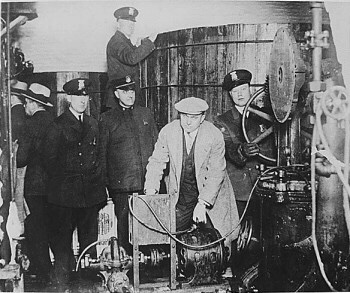


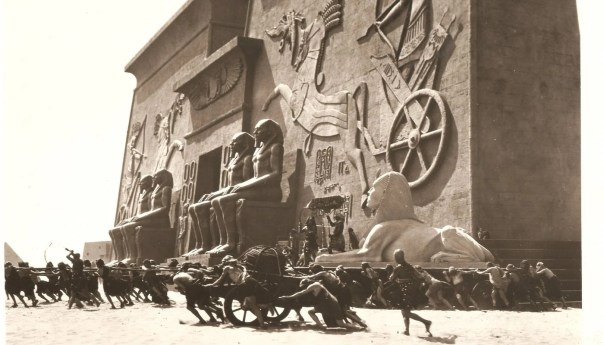



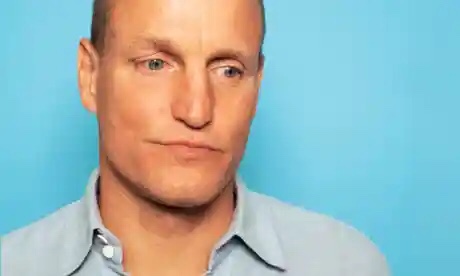





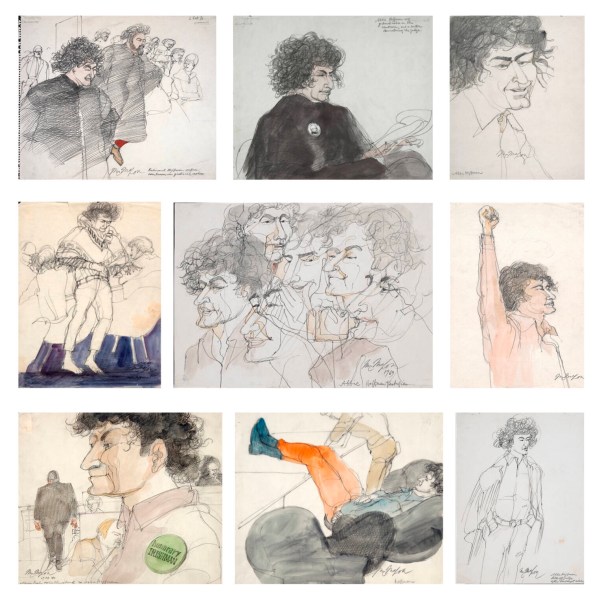
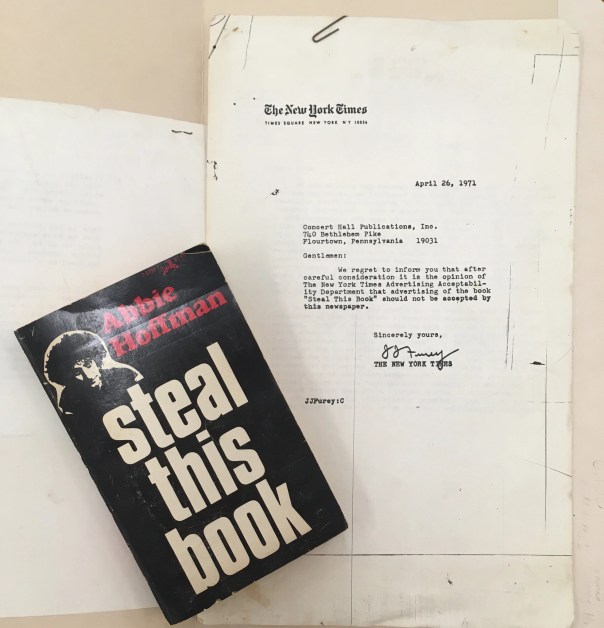


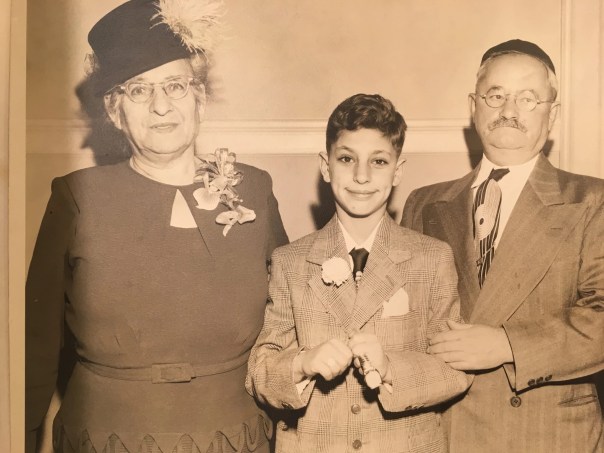


 The
The The Gelugpa’s pointed
 The
The The
The




 timalderman
