Category Archives: biography

Rumination of the Day (6th January 2017)

UNANSWERABLE QUESTIONS

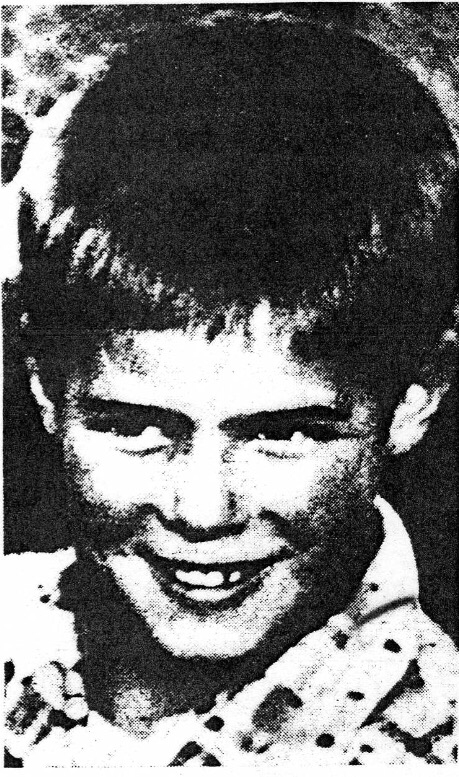
It is no secret that my brother Kevin died a horrendous death at the hands of my father, in December 1965 (https://timalderman.com/2012/04/23/kevin-pickhills-the-unspoken-name/). It is a long time ago now, though the memories have never dimmed, and despite the sage advice that time heals all wounds, it may dull the starkness of the memory, but it never really disappears. The filing cabinet we call a brain shifts the files around, but always leaves the drawer slightly ajar. 

I am not obsessed by my hrothers death, but whenever it does a flit across my mind, the questions surrounding it flit along just behind. The frustration of severed relationships is the unanswered questions! With my father long dead, my mother out of the picture at the time, and my fathers sisters all now dead, I know the questions will never be answered – ever! But that knowledge doesn’t make them go away! So, here are my demons. My reasons for listing them is purely to dump them! To many, the questions will be unfathomable without the back story. For a few, the poignancy of them will hit a feeling of deja vu in their own lives. There are many sad stories out there, and they nearly all have their unanswered questions.

Some questions are simple and straight forward – almost ruminations in their own right. Others are complex. Because questions demand answers, the fact that answers will not be forthcoming almost negates them. But they live on, and I will go to my grave knowing that only at that point do they no longer exist.

  • Where in the hell did Nancy Thompson come from! How did my father find her, and what possessed him to think that bringing such a hard, unfeeling woman into the house would be a good thing! I mean…she smoked, and he hated smoking! What were the conditions of her employment? She certainly had more disposable income than my mother ever had! I went clothes shopping with her, so I know! Was he seeing her before bringing her home? Was she a fling? It certainly went from plutonic to sexual very quickly – even as a 12yo I knew that! Her, and her son Stephen were such hateful, spiteful people, and I can’t believe he wasn’t aware of that. When questioned in court at the hearings into Kevin’s death, she stated that I was an effeminate child! Was that opinion voiced to my father? And after he finally got her out of the home unit in Kogarah – whatever happened to her? I pray that no other family was subjected to her! For someone who blew into our lives for such a short period of time, chaos followed in her wake! She is as much responsible for Kevin’s death as my father, yet I have little doubt that she left with a clear conscience! I hope Kharma has delivered justice!
  • What were my fathers thought processes on the day of Kevin’s death? It had been such an ordinary evening up until the instant he pulled up in front of our house! Was it a spontaneous action, or was it pre-meditated? At any stage, had the same course been set out for me? Frightening…but the thought remains! What was going on in his head as he drove to The Gap? Surely you can’t take your own sons life blithely, with no thought to the implications, the trauma, the horror! It’s a long drive from Sylvania. At no time did he not want to turn back! It’s not a question – it’s a nightmare!
  • And the most harrowing thought of all – did Kevin suffer! How quickly did he die in the cold waters of Watson’s Bay. Was he knocked out or killed on impact – I truly hope so! He trusted my father – was he aware of the betrayal? What flashes of thought as he eent over that cliff! The sheer horror wrenches at the heart!
  • Was my father guilty about his own survival? The actual event – threw Kevin over, or jumped over with him – has never been ascertained! It is one of the great unanswered questions. Did he invent a story to cover-up the deed? Indeed, we’ll never know!
  • After being released from gaol – what a joke all that was, and no justice for Kevin – did he seriously think…in typical 60s fashion…that life would just go on like nothing had happened? Did not talking about it mean it never happened? Was the thinking that the events of that time had had no affect on me whatsoever? Kevin was swept under the rug like a pile of dust! It was like he never existed! On the day he arrived home, Nancy took me to the front gate and told me to run to mert and embrace him! I didn’t even want to know of his existence! The only thing crossing my mind was – why was he back here! And did I still have to call him dad! His touch was abhorrent! For all the years up until his suicide there was no love, or respect! And I think Kevin’s death was his demon up until the day he died!
  • And then the great questions about Kevin and myself as siblings. What would our relationship have been like as we got oldrr? Would he have been straight or gay? If he was straight, would he have married…surely, one would think! Would he have had children? Would I be a great uncle? Would we have shared confidences? Would we be close – as when we were children – or distant?
  • And what is perhaps the first and greatest question – how totally different would life have been if mum never left home, for this was the catalyst for all that was to come! I like my life, and I like that for much of it I have had the freedom to live it my own way, with no questions, and few fears. Would it have panned out the same if circumstances had been different! That is a very interesting question. That I would end up gay wss inevitable…but would the process be different? I actually don’t want an answer to that one!

It is said, probably with great wisdom, that one should never question what is, try to imagine the “what ifs” of life, as that is not how it has gone. It is what it is! We all know that, but as thinking, reasoning beings it is inevitable that what could be seen as sage advice is not going to be heeded. We are curious animals, and life’s great unknowns frustrate and intrigue us! Any relationship that is abruptly terminated is always going to leave questions in its wake. The worst of it is knowing that even if my father were still alive, the questions would, in large part, still be unanswered! 

Perhaps that is what destiny held in store. At least now, they have been voiced!

Tim Alderman (2017)
 

Henry Moorsom Pickhills (1840-1866)
We kniw very little about our early family histories, other than what we can glean from records. From these, we have to try to piece together some sort of story of their life. Some records are too-the-point, others sketchy – but very occasionally they can be gems that give us very intimate glimpses into who they were. My Great Grand Uncle, Henry Moorsam Pickhills, is one such. He lived for a very short 25 years, yet I feel I know him well.

Henry was born in Halifax, Yorkshire in 1840, just in time to be included in the very first census held in England. The second-born son of Rickinson Pickhills & Elizabeth Appleyard, he was given his  Great Grandmothers maiden name – Moorsom – as a middle name. Apart from being included in the 1851 census, where he resided in Manningham, Yorkshire along with two additions to the family – Catherine, and Charles Edward, this is all we know of his first ten years of life.

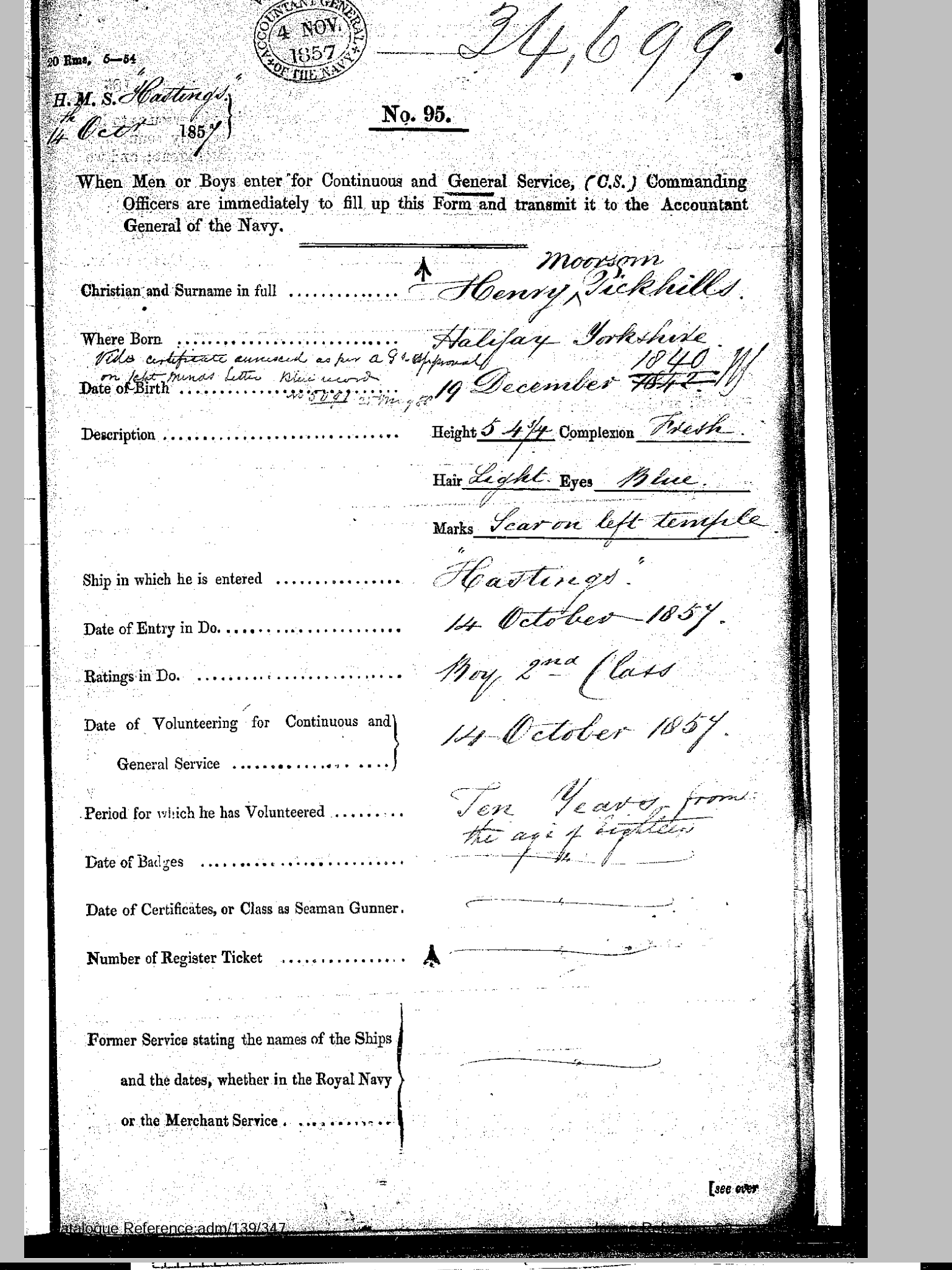
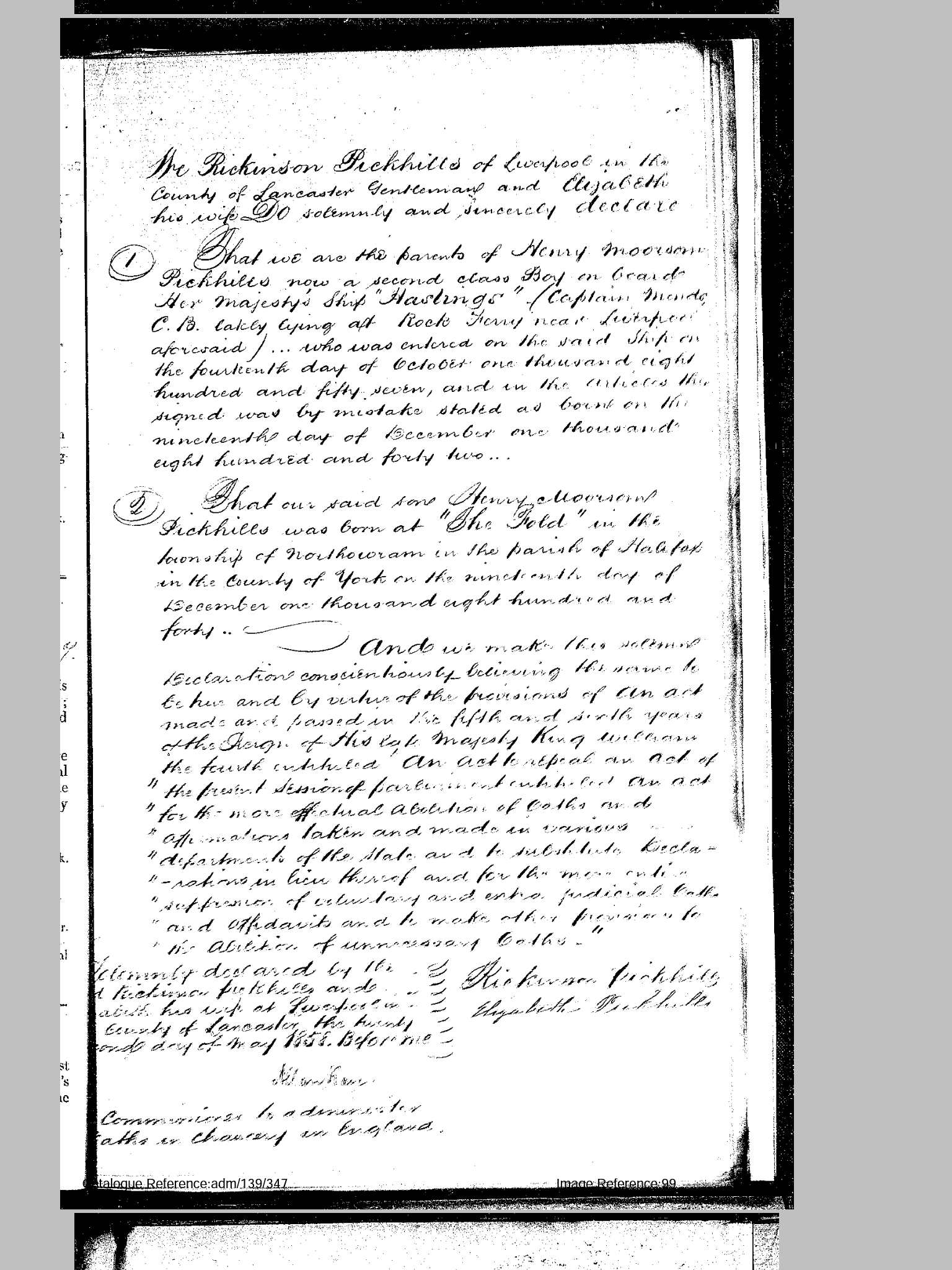
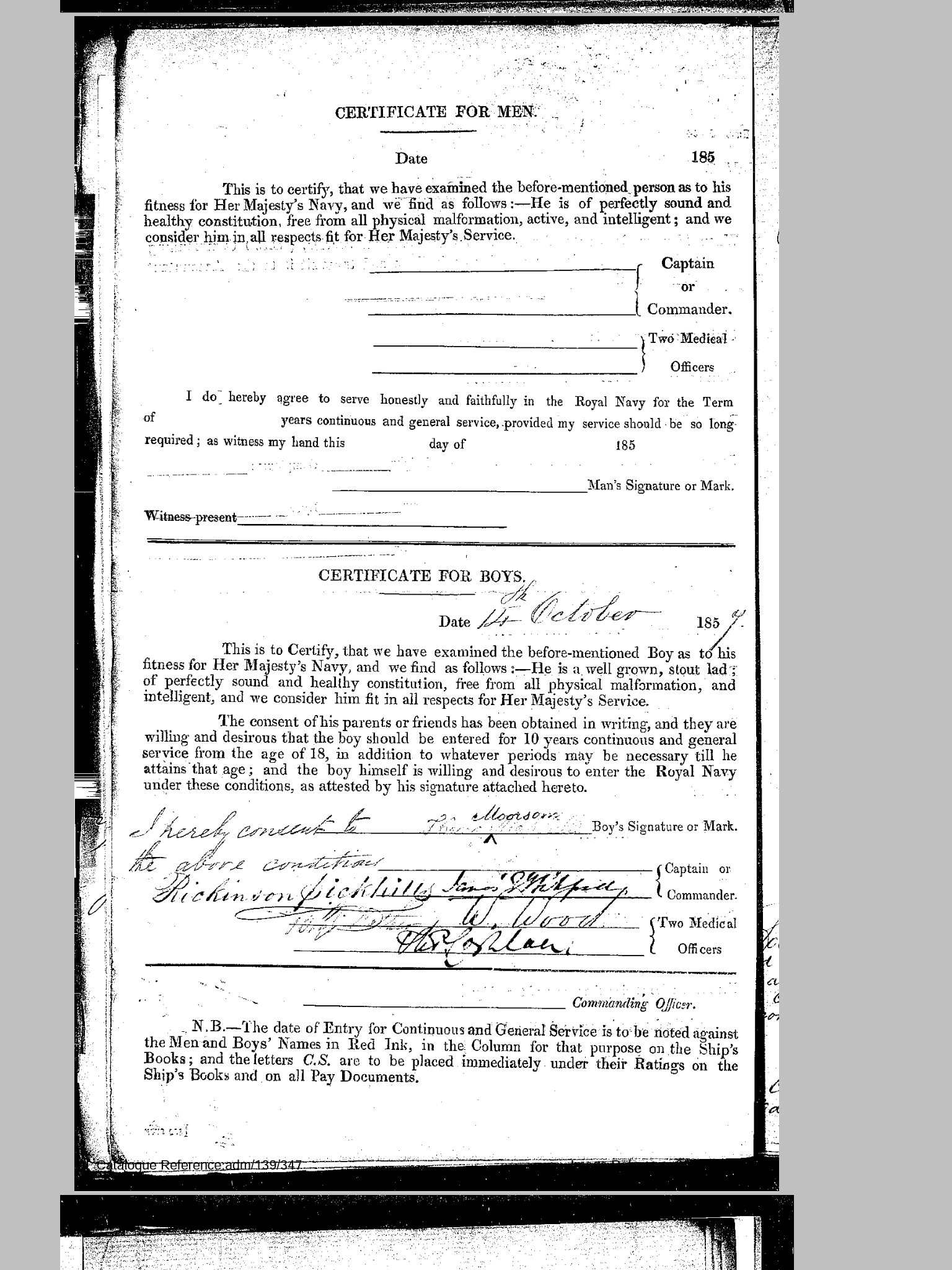
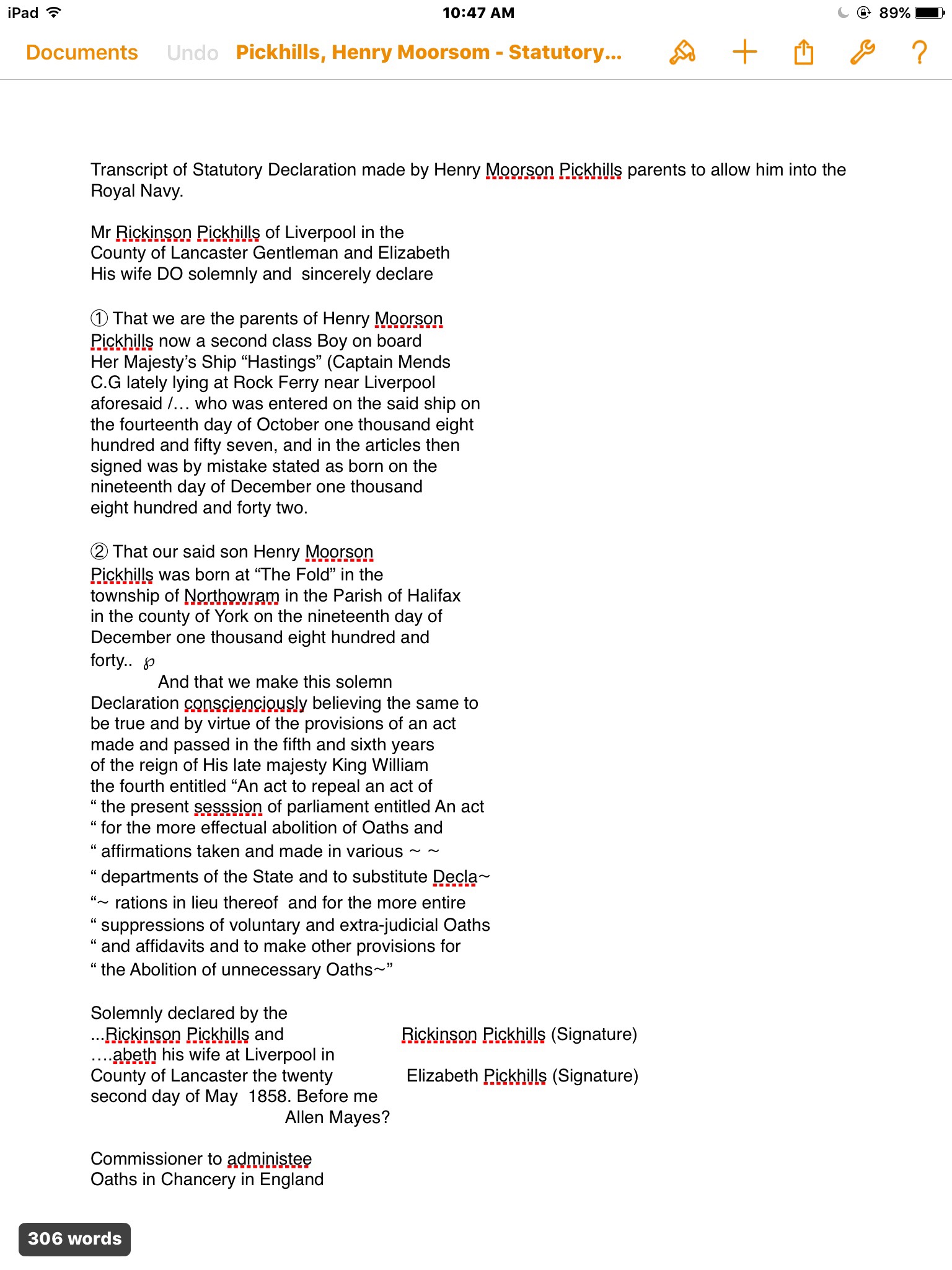
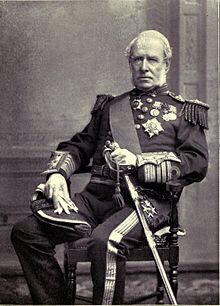
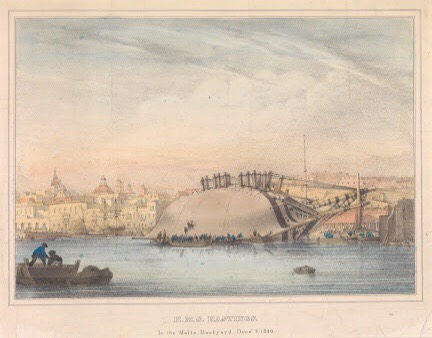
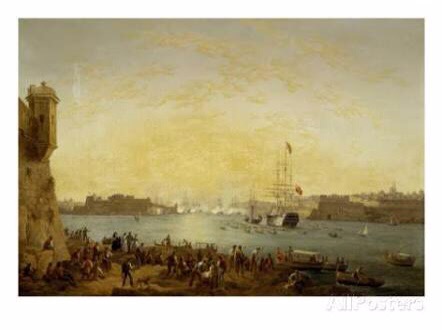
We hear nothing more about him until 14 October, 1847, when he volunteered for service with the Admiralty. Getting Henry’s Admiralty papers was a true find for several reasons – it gives us a description of him,, tells us his ranking and ship, who the captain was – and a statutoty declaration from Rickinson & Elizabeth, written in Rickinson’s hand, giving him permission to join, Henry being only 16 years-old at the time.

We know from this record of 3 pages that he enlisted on HMS Hastings. He was born on the 19 December 1940. He was 5’43/4″ tall, with a fresh complexion, light hair, and blue eyes. He has a scar on his left temple. His ranking is Boy, 2nd Class, and he has joined for 10 years from the age of 18. The actual Boy Certificate is signed by Rickinson, Henry, the Captain and 2 medical officers.The statutory declaration gives the Captains name as Captain Mends (William Robert, as per research). It tells us, rather unnecessarily, that at that time the ship was lying at Rock Ferry near Liverpool. Rickinson had mistakenly given Henry’s birth year as 1842. Henry was born at The Fold, in Northowram (Yorkshire). Rickinson goes into quite a starement in legalese towards the end of the declaration. Was he showing off? As an Articled Clerk training to be an Attorney did he want the readers of the declaration to know that he was a learned man? The reasoning is unknown, though it seems a quite unnecessary addition to the statement.

Our next encounter with Henry is on the 19 December 1858, in the UK Royal Navy Registers of Seaman’s Service, where he is noted on the Hastings. 

We next hear of Henry at the 1861 census, where he is counted amongst those “at sea”. 

We finally encounter Henry on the 8th April 1866. He had died onboard the SV Aracan, from Cholera, at Calcutta, Bengal. He was buried on the 9th October 1866 in Calcutta. £3/13/1 is owing to the family. Other goods sold. He was 25 years-old.

Notes

  • Captain William Robert Mends GCB (27 February 1812 – 26 June 1897), was a British admiral of the Royal Navy, son of Admiral William Bowen Mends[1] and nephew of Captain Robert Mends. William Mends was born at Plymouth into a naval family. He married Melita, daughter of Dr Joseph Stilon R.N. on 6 January 1839. From 3 April 1857 to 1 February 1860 he was captain of HMS Hastings on Coast Guard service. He moved to take command of HMS Majestic on 1 February 1860 when she replaced Hastings on coast guard service and was then appointed deputy controller general of the coast-guard in 1861. He spent May 1862 to February 1883 as Director of Transport at the Admiralty. Mends retired at the rank of rear-admiral on 1 January 1869, was promoted to vice-admiral on 1 January 1874 and then a full admiral on 15 June 1879.
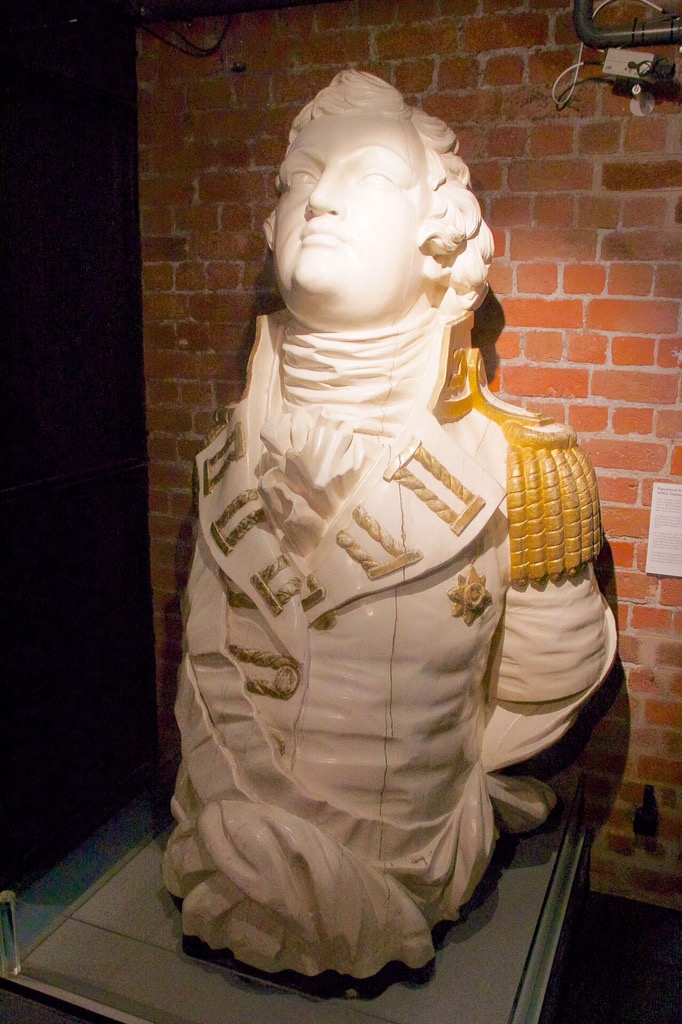
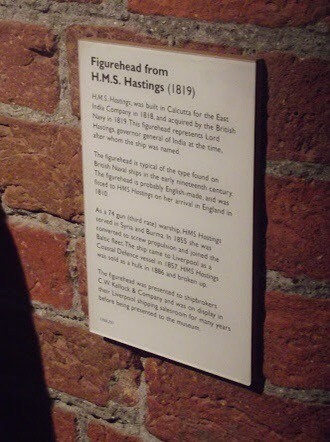
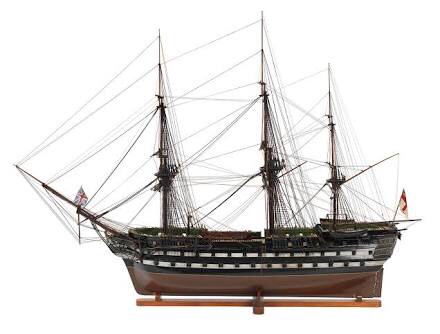
  • HMS Hastings was a 74-gun third rate ship of the line of the Royal Navy. She was built in Calcutta for the Honourable East India Company, but the Royal Navy purchased her in 1819. The Navy sold her in 1886. Hastings was built of the highest quality “saul”, “sissoo”, “Pegue”, and “Java” teak wood, following Sir Robert Seppings’s principles, which resulted in a vessel both longitudinal and transverse support. Her construction cost Sicca ruppees (Sa.Rs.) 8,71,406 (£108,938), which the merchants of Calcutta and other patriotic individuals subscribed via shares. The full cost of getting her ready for sea was Sa.Rs. 8,71,406 (£116,375). Captain John Hayes sailed Hastings from Calcutta on 28 March 1818. She reached Madras on 13 April, and Port Louis on 2 July. From there she reached St Helena on 15 September, and arrived at The Downs on 3 November. The Ship’s figurehead is now on display at the Merseyside Maritime Museum.
  • SV Aracan; nationality: British; purpose: transport; type: fully rigged ship; propulsion: sailing ship; date built: 1854; tonnage: 864 grt; dimensions: 56.8 x 9.8 x 6.6 m; rigging: 3 masts full rigged; IMO/Off. no.: 1080; call sign: HGMW H G M W; about the loss cause lost: collision; date lost: 09/03/1874; casualties: 0; builder: Whitehaven Shipbuilding Co. Ltd., Whitehaven; owner:   Brocklebank T. & J. Ltd. – Thomas & John; captain: Charles Hartwood. 
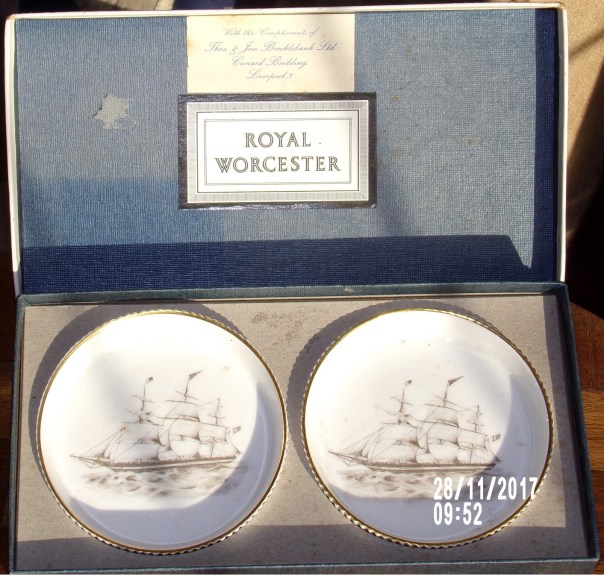
  • The Brocklebank family who owned the Aracan that traded between England, India and China from the opening of Chinese ports in 1858. She was sunk in collision with the SS American at 10 p.m. on 9th March 1874, 16 miles off Portland Bill, England, with 116 men on board. All survived and were taken on board the SS Syria that was being towed by the American on a 0.25 mile long hawser. I still have a presentation case containing two Worcester dishes, as was given to 1st class passengers, and a copy of the newspaper articles about the accident and the subsequent court cases that found the captain of the American solely to blame.The Aracan was for many years known as the unknown vessel as it took 18 years after the wreck was found in 1996 by diver Grahame Knott of Weymouth. The wreck is now a prime dive site and attracts many divers. Unfortunately it sits in the middle of a military bombing range and can only be accessed during cease-fire periods.

Photo curtesy of Jonathan Clarke-Irons

  • Rock Ferry is an area of Birkenhead on the Wirral Peninsula, England. Administratively it is a ward of the Metropolitan Borough of Wirral. Before local government reorganisation on 1 April 1974, it was part of the county of Cheshire. At the 2001 Census, the population of Rock Ferry was 13,676 (6,444 males, 7,232 females),[2] increasing to 14,298 (6870 males, 7,428 females) at the Census 2011.[3]. In the 17th century Derby House, an occasional seat of the Minshull family, covered most of the grounds covered by present-day Rock Ferry. Thomas Oakshott, Mayor of Liverpool, lived there in the 19th century. The house, located on Rock Lane West close to the New Chester Road, was demolished in the early 20th century. Residential building did not really happen until the early part of the 19th century, the rise of the ferry and the railway, and the establishment of the Royal Rock Hotel and bath house in 1836. Between then and 1870, the area received an influx of luxurious housing, the villas of Rock Park and many other large houses around the Old Chester Road making Rock Ferry one of the most desirable addresses in the North West.[citation needed] In the later part of the 19th century, Rock Ferry expanded due to the need to house the increasing population of workers, especially at Birkenhead’s Cammell Laird shipyard. By 1901, the population stood at 2,971. In 1910, the Olympian Gardens were opened adjacent to the Royal Rock Hotel. These pleasure gardens were considered a great attraction and customers travelled from the whole of Wirral and, using the nearby ferry terminal, from Liverpool. The gardens hosted classical piano concerts and also slapstick comedy shows, with performers including Arthur Askey and Tommy Handley. At times the gardens held a prestige similar to the more famous Vauxhall Gardens in London. Shows were held in a large tent set amongst the trees and shrubs of land owned by Charles Boult. The gardens closed in the late 1920s after Mr Boult’s death. The decline of local industries in the 1950s took its toll. Many of the splendid buildings were dilapidated and unrestored. This decline was reflected in the loss of the Royal Rock Hotel, as well as many of the shops in the Old Chester Road and Bedford Road; whereas before Bedford Road had supported a wine merchant, a jeweller, two tailors, three banks, and two bookshops, most shops stood vacant. Large-scale regeneration work in the 1990s, which involved the demolition or restoration of many such derelict properties, and the building of new housing, means that the area has improved considerably, although many buildings of considerable character have been lost.

Tim Alderman 2016


    Captain William Robert Mends
    Figurehead from HMS Hastings

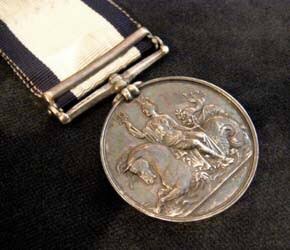
    General Service Medal HMS Hastings
    HMS Hastings
    HMS Hastings
    HMS Hastings
    HMS Hastings
    Newspaper piece on the collision and sinking of SV Aracan

    Daily (Or When The Mood Takes Me) Gripe: The Quiet Desperation of Getting Older…and Being Gay!

    Recently, anothe member of a group I am a member of posted that, at 45 and again single, he felt that it was now so hard to meet people that he feared he was destined to never have a serious, long-term relationship again. At 60, a short two years ago, I was at the end of a 16-year relationship – monogamous on my part, polygamous on his – and churned back to my single status. I had thought -naively – that this would be the relationship that I would grow old(er) in, that may finally give me the security of home-ownership, of stability, and a sense of contentment. Being cast adrift into the sea of old age – at least as far as the gay community is concerned – has given ne cause to consider this situation exactly as that much younger man has…that I will probably never have a relationship again. It is a scary prospect, though in the gay world, not unique to me.

    The one thing technology has not given us is the tools to meet people. The whole online/app approaches to dating or even attempting to meet others with views to friendships or relationships is just not happening for many of us. In a past time – not all that long ago, mind you – meeting people was as easy as planning a night out to your local pub or bar. Going out to your “local” gave you an impressive number of alternatives for how, planned or unplanned, your night could pan out. You could ring friends and arrange to meet them; go out on your own and choose to be solitary; just turn up, knowing there was a good chance of meeting people you know. Having progressed this far, the middle and end of the night also offered many alternatives, all in the atmosphere of the bar, or in the convivial company of friends. You could get pissed, go home and pass out. Or you could peruse the bar, decide the pickings were slim and go home alone. You could make plans with your friends to move on, or decide that the guy you are playing eye games with could be a bit of fun, and so you stay, buy him a drink, sit down and have a chat, and if the vibe is right, decide where to take it from there! However it did – or didn’t – turn out you, still had a set of alternatives all based around a real place, with flesh and blood people. There was potential for scenarios to happen, and you had control over them. But this us a bygone world! You didn’t have to lie about your age, or your body type, or your sexual preferences…it was there for everyone to see!

    Unless you want sex and nothing else but sex, the world of online gay dating abd apps is an alien one, full of lies, deception and fakery. I spent 12-months – unsuccessfully – on them! It has left me disillusioned, feeling belittled and degraded,  and with an eerie sense of futility. It is a shallow, dishones, ageist, prejudicial, and stigmatising world! To enter this world at 60, subtract 10-15 years from your ago, drop – or lie about –  around 15-20 kgs of weight, tell everyone you are versatile, add a few centimetres to the length of your cock, lie about uour HIV status, don’t admit to any disabilities, and upload a profile photo that is a few years old. I’m not kidding! You need to invent-a-person…but it doesn’t really matter, as you are unlikely to mert anyone for a date, and anyone you invite over for sex isn’t going to be there long enough to evaluate. I subscribed to Grindr, Gaydar, Scruff, Squirt, Man Hunt, BBRT, and a HIV+ apps or sites. At the beginning of last year, I either deleted or stopped using them altogether. The list of my encounters from these “dating” services is brief, and tragic.

    • Gaydar – Michael. A guy I just messaged out-of-the-blue because I liked his profile. We messaged each other for a while, then arranged for him to come over for dinner one night. We hit it off really well, had a great night, and decided to meet again. He “forgot” about our second meeting. Messages got more and more abrupt, and I took the hint. I still don’t know what happened. Lecko – a Russian boy. Yes, I do know what it was all about, but I wanted the experience of seeing where it went. I called it off, but I did let him know that I realised where it was heading. Some guy who kept conracting me, and telling me that taw sex needed discussion, despite me messaging him back a number of times to tell him it wasn’t open to discussion. Yes, I do negotiate raw sex – I’m a mature adult, and hopefully dealing with same. I have done so since the 80s.
    • BBRTS – Phil. Phil liked playing hard-to-get. I wore him down, and we finally met up at my home, in the company of mutual friends. Phil had evidently worked for Bretts Boys back in the 80s. We liked the look of each other (he was 55, and like me, lied about his age on dating sites). However, he was either damaged, or screwed up. He liked the tease, but that was as far as it went. Turns out he had his 80yo parents flating with him, who actually dictated what time he should get home. I know…very sad! Once again, messages got vety abrupt and I eventually gave up. Not even a head job there! Also the site for my one and only encounter with blow ‘n go sex – the coldest, most unfulfilling sexual encounter of my life. Just leaves you feeling empty and used. Daniel. Nice guy, but a bit too hairy, and a bit too overweight for my taste…though good sex. We arranged to meet again, but then with my eye operations, and a potential return to Sydney, it never happened. Out of a sense of politeness, I messaged him that I was returning to Sydney. He couldn’t remember who I was! Nice! Oliver. Just messaged me out of the blue one night and asked if he could visit. He turned up shortly after…good looking, very tall, and stating that he was waiting for a message from a friend he was about to visit in Logan. I really couldn’t work out what he was about. He got his message, and left. 2 glasses of wine wasted.
    • Grndr – nothing but wank chat – something I’m (evidently) good at, judging from the number of return requests. Probably due to me having a vivid imagination, and taking them on a sexual journey. Good for them – you always knew when they had blown, as chat suddenly stopped – but not for me.
    • Scruff – see above, but really massively overweight, overly hairy American guys. The ultimate turn-off for me, and I ignored return requests. 

    So, that was the sum total of my online sex life. Sending winks, woofs or anything else to other guys resulted in either being ignored, or a nice thanks-but-no-thanks. The only people who consistently contacted me were Asians and Indians, despite my profile stating I was only interested in Caucasian guys. The whole sordid affair was unpleasant, and I just breathed a sigh of relief when I gave it all away. I have since subscribed to Elite Dating Services, and Disabled Dating, but as soon as they start hassling me to subscribe – at between $25-$40 a month, I just dropped it. I’m setiously not thst desperate!

    So, I am reconciled to the ageist, body fascism of the gay community. I am very fit for a 62yo, but my days of six-packs and bulging muscles are long gone. And I really don’t need to impress people that way anymore. 

    Oh, don’t get me wrong! I think I have a lot to offer a guy. I’m past the shallow stage of my life, and I know who I am, and what I want. I’m not dog ugly, have a full head of hair – a plus at my age, I’m still slim, and when I have the opportunity to work out, quite fit looking. I eat a healthy diet, I have a university degree (and several others), a great sense of humour, intelligent (I can hold a conversation), articulate. I’m a great cook, love entertaining, love eating out, and know a good bottle of wine. I dress well – fashionably, but not to extremes – and groom well. I’m houseproud, and collect glass and Asian teawares…all controlled collections. I love technology, have a modernist view to social issues, not bogged down in tradition, and still get the urge to throw an Ecstacy down my throat (or some acid, if I could get my hands on it) and let my hair down on a dance floor in a nightclub – though I’d rather be leaving at 1am than arriving!

    So, I have it all to offer. The oroblem is, the only people I have to offer it to are friends and acquaintances! That is not going to get me anywhere, and there is no longer any other alternative. With the disassembly of the gay ghetto, there is really nowhere I can go to meet anyone. Oh yeah, I could go to places like The Bank, or Coopers…but I’d be in with a younger, and baducally straight, group. It is a true contradiction that the very community I belong to, and with a reputation for acceptance, intergeation and tolerance is, in fact, the fery community that alienates those who reach an age whereby they no longer fulfil the perceptions of youth. The straight community seems to be better placed as far as dating services go, and though sex is there, is not the defining end to getting to meet someone. Likewise, their gars are far more inclusive, and orientated to having a good time, and potentially going able to meet someone. For me to sit on my own in a gay gar these days – if I could find one I felt comfortable in – is to be ignored. 

    So, like many others, I’m reconciled to a life of quiet desperation. As I joked with a friend recently, I’m glad my hand is a good kisser! Short of meeting someone by sheer coincidence, it’s the single life from hereon in. Not something I am going to relish. If there us light at the end of the tunnel, it is not as yet visible to me. Though I have made the conscious decision to not let it bother me, in the recesses of my mind the doubt lingers. 

    In the words of Mae West “Save a boyfriend for a rainy day – and another in case ut doesn’t rain”

    Tim Alderman (C) 2016


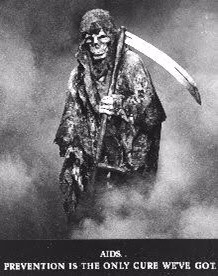
      World AIDS  Day

      I remember these lost friends and acquaintences today.

      “They sparkle like jewels in my mind, like stars at night”.

      Steven Breeze

      Andrew Todd

      Trevor Eyden

      Gavin Murdoch

      Mark Silcock AKA Marcus Craig

      Kenneth John Smith

      Mark ‘Davo’ Davies

      Geoffrey Gordon Smith

      Michael Fletcher

      Michael Lavis

      Peter Greentree

      Leslie Albert Heathfield

      Glen Evans

      Gary Mayall

      Stuart ‘Stella’ Law

      Damien ‘Alexis’ Colby aka Damien Guy

      John Doyle

      Allen John Deith

      Peter Bringolf

      John ‘Goanna’ Ellison

      Peter Vanzella

      Frank Currie

      Jonal Fenn

      Jack Allen

      Gareth Paull

      Michael Bradley

      Philip Boyd

      Shane Pascoe

      Graeme Baird

      Vincent Dobbin

      Peter Fehlberg

      Gerald Lawrence

      Peter Shepherd

      Ray Hopkins

      Paul Costello

      Michael Beazley

      Michael Gregory

      David Edwards aka Sr Mary Daisychain OPI

      Wayne

      John ‘Sway’

      Kevin Bailey

      Gary Salton

      Steve Allen

      Philip Metcalf


      Australian Icons: Henri L’Estrange – the Australian Blondin

        Portrait of Henri with waxed moustache, sitting backwards on a chair, 3/4 to camera, wearing a formal jacket and white bowtie. Studio portrait of Henri, 1876

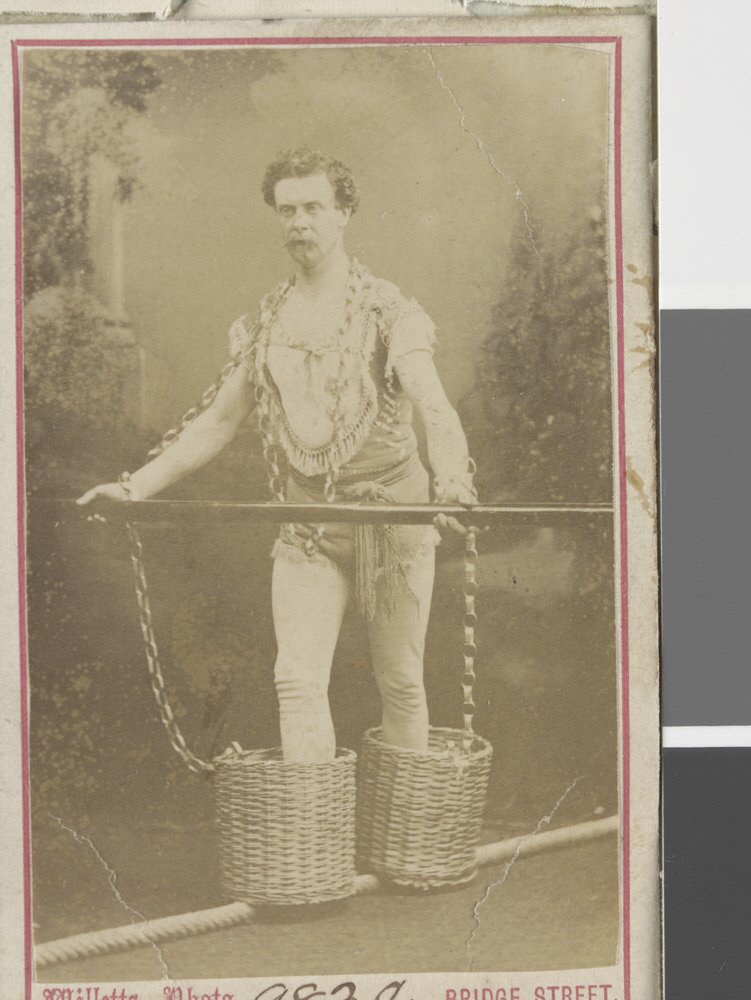
      Henri L’Estrange, known as the Australian Blondin, was an Australian successful funambulist and accident prone aeronautical balloonist.[1] Modelling himself on the famous French wire-walker Charles Blondin, L’Estrange performed a number of tightrope walks in the 1870s, culminating in three walks across Sydney’s Middle Harbour in 1877. He remains the only tightrope performer ever to have walked across a part of Sydney Harbour.[1] L’Estrange was an early balloonist, and attempted a series of flights in the early 1880s – one being successful, one ending in Australia’s first emergency parachute descent, and the last culminating in a massive fireball causing property damage, personal injury and a human stampede. He tried to return to his original career of tightrope walking but, with new forms of entertainment, humiliating falls and other Blondin imitators, he found success elusive. Public benefits were held in his honour to recoup financial losses and he dabbled in setting up amusement rides but ultimately he faded from public attention and was last recorded to be living in Fitzroy, Victoria in 1894.
      Contents

      Early performance

      Henri L’Estrange was born about 1842 in Fitzroy, a suburb of Melbourne.[2] Little is known of his early years, family or private life. He first came to public attention in 1873 as a member of a Melbourne performance group, the Royal Comet Variety Troupe, a gymnastic, dancing and comedic vocal combination with Miss Lulu L’Estrange and Monsieur Julian. As part of this troupe, L’Estrange performed in Melbourne and Tasmania throughout 1873 and 1874, with Henri and Lulu performing together on the tightrope.[3] In 1876, L’Estrange performed solo for the first time in Melbourne, and quickly gained a reputation as a fearless performer.
      Tightrope walking had grown in popularity in Australia through the 1860s, following reports reaching the Australian Colonies of the exploits of the great French walker, Charles Blondin, who crossed Niagara Falls in 1859. By the mid-1860s, Australian wire walkers (funambulists) were modelling themselves on Blondin, copying his techniques, with several even calling themselves “the Australian Blondin”. The popularity of the name surged after the original Blondin visited Australia in 1874, performing his highwire act in Brisbane, Sydney and Melbourne. By the mid-1880s, there were at least five “Blondins” performing regularly in Sydney and elsewhere.

      L’Estrange began using the moniker “the Australian Blondin” from early 1876. Arriving in Sydney from Melbourne, L’Estrange erected a large canvas enclosure in the Domain and began a regular series of performances on the tightrope, copying the location and stunts of the real Blondin who had performed there in August 1874.[4] His opening night on 26 January 1877 attracted a reported crowd of between two and three thousand people. Newspaper reports commented that his performance was so like that of the original Blondin that people could be forgiven for thinking they had seen the world-renowned rope-walker. With his rope suspended 40 feet (12 metres) above the ground, L’Estrange walked backwards and forwards, walked in armour, walked covered in a sack, used and sat on a chair, cooked and rode a bicycle, all on the rope. His show also included a fireworks display for the public’s entertainment.[5]
      L’Estrange performed in the Domain from January through to April 1877, but not without incident. On 7 February 1877, as L’Estrange neared the end of his wire act, sparks from the fireworks going off around him fell into the nearby store of gunpowder and fireworks, igniting them. The store’s shed was demolished, a surrounding fence knocked down, part of L’Estrange’s performance tent caught fire, and two young boys were injured.[1]

      Sydney Harbour crossing

       L’Estrange, the Australian Blondin, crossing Middle Harbour in the Illustrated Sydney News 28 April 1877.

      In late March 1877, advertisements began to appear in the Sydney newspapers for L’Estrange’s proposed harbour crossing. The first public performance was set for Saturday 31 March, with L’Estrange having organised 21 steamers to convey spectators from Circular Quay to a special landing stage close to his performance area. L’Estrange advised those wishing to see his performance to travel on his steamers as they were the only ones with permission to land passengers. This, of course this did not stop other entrepreneurs and captains from carrying spectators of their own.[2] Whilst the event was profitable L’Estrange considered that the majority of viewers were non-paying “dead-heads”.[6]
      Prior to the public performance, L’Estrange undertook the crossing for a select audience including members of the press. That crossing was a success, and was well reviewed in the papers, no doubt adding to the crowd’s anticipation for the Saturday show.[7] Sadly, bad weather postponed the performance, which did not go ahead until 14 April.[2][8]
      At 1 o’clock on Saturday 14 April, the steamers began leaving Circular Quay, conveying 8,000 of an estimated 10,000-strong crowd to Middle Harbour – a large crowd considering the alternative attractions that day of Sydney Royal Easter Show (known then simply as “the Exhibition”) and horse racing.[2] The remainder were reported to be walking from St Leonards, with a toll being collected along the way. Spectators clambered up the sides of the bay for vantage points, while hundreds more stayed on board steamboats, yachts and in row boats below.[2] The rope was strung across the entrance to Willoughby Bay, from Folly Point to the head of the bay, a reported length of 1,420 feet (430 m), 340 feet (100 m) above the waters below.[7] The distance meant that two ropes were required, spliced together in the centre, to reach the other side, with 16 stays fixed to the shore and into the harbour to steady the structure.
      Everything being ready, precisely at 4 o’clock L’Estrange come out of his tent on the eastern shore, dressed in a dark tunic and a red cap and turban. Without hesitation or delay he stepped onto the narrow rope, and, with his heavy balancing-pole, at once set out on his journey across the lofty pathway. As has been before stated, the rope is stretched across the harbour at a great altitude, the width apparently being three hundred yards. At the western end it is higher than at the eastern, and as the weight of the rope causes a dip in the centre, the western end is at a considerable incline. Starting off amidst the cheers of the spectators, L’Estrange walked fearlessly at the rate of eighty steps to a minute across the rope, until he reached a spliced part near the centre, some twenty feet in length, which he passed more deliberately. Then he stood on his right foot, with his left resting against his right leg. This feat being safely accomplished, he dropped onto his knee, and afterwards sat down and waived [sic] his handkerchief to the crowd of spectator. Next he lay on his back along the rope. Resuming the sitting posture, he took out a small telescope and for a moment or two surveyed the onlookers, who warmly applauded his performances. Raising the balancing pole, he lifted one foot onto the rope, then the other, and continued his walk. He took a few steps backward and then proceeded up the inclined part of the rope steadily to the western shore, at the slower speed of about sixty steps a minute, the rope swaying considerably as he went. The remaining part of the distance was safely traversed, the last few steps being walked more quickly: and the intrepid performer stepped on terra firma amidst the enthusiastic cheers of the spectators, the inspiring strains of the bands of music, and the shrill whistling of the steamers.

      — Sydney Morning Herald, April 16[2] and 4 May 1877[8]

      The successful crossing was greeted with enthusiastic cheers, the tunes of the Young Australian Band, the Albion Brass Band and Cooper and Bailey’s International Show Band, who had all come to entertain the crowds, and the shrilling of the steamers’ whistles. L’Estrange soon reappeared in a small row boat to greet the crowds, although many had already rushed the steamers to leave, resulting in a few being jostled into the harbour.[2]
      While the Illustrated Sydney News proclaimed it a truly wonderful feat, performed with the greatest coolness and consummate ability, not all of Sydney’s press were so enthusiastic. The Sydney Mail questioned the worth of such a performance beyond the profits made, commenting that it was, “…a mystery to many minds why such large concourses of people should gather together to witness a spectacle which has so little intrinsic merit. There is nothing about it to charm the taste or delight the fancy.”[9]
      Despite the criticism, L’Estrange performed at least once more at Middle Harbour, although crowds were down to a few hundred, requiring only four steamers to transport them. The same night he was guest of honour at a testimonial dinner held at the Victoria Theatre where The Young Australian Band played “The Blondin March”, a piece composed specially by their conductor Mr J. Devlin. He was presented with a large gold star, engraved with a scene of his latest triumph, the date of his public performance. Measuring 3 inches (76 mm) across, it was centred with a 1½ carat diamond and suspended by a blue ribbon to a clasp featuring the Australian coat of arms in silver. An illuminated address and a bag of sovereigns, collected from his admirers, were also given.[10] L’Estrange thereafter took his show on the road, going first to Brisbane in May 1877,[6] and reportedly afterwards to Singapore, England and America.[1]

      Ballooning

      In April 1878, L’Estrange reappeared on the Australian scene with a new performance – gas ballooning. The first balloon ascent in Australia had been made in Melbourne in 1853, with Sydney following five years later in December 1858. The idea that people could be lifted from the ground to fly and return safely fired the imagination of the public, and the novelty of balloon ascents continued to draw large crowds through the 1860s and 1870s. No doubt the very real chance of disaster and injury added to the crowd’s keen interest, as mishaps were not uncommon.

      L’Estrange came to Sydney with his balloon in November 1878, accompanied by reports of successful flights already made in India.[11] In a confident appraisal of L’Estrange’s new venture, the Sydney Morning Herald wrote:
      [L’Estrange’s] balloon has been fitted with the newest applications, amongst others a parachute, which in the event of anything going wrong, would prevent the too rapid descent of the aerial voyager. Another novelty is the fixing of bags of sand round the mesh which covers the balloon, the principle of which is that by emptying these, and so lessening the weight, the balloon will ascend. The process is chiefly intended to be an easy method of avoiding buildings… He is perfectly confident that he will prove successful in travelling amongst the regions of the clouds, and, if so it will prove an agreeable variety after the many failures we have had.

      — Sydney Morning Herald, 1 November 1878[11]

      In a letter to the Sydney City Council, L’Estrange sought permission for the use of the Exhibition grounds in Prince Alfred Park, behind Sydney Central Station for his first attempt.[12] L’Estrange struggled to fill the balloon through the afternoon of 17 November 1878, with gas supplied by the Australian Gas Light Company. By 5pm, the crowd was getting restless and L’Estrange decided to attempt liftoff, despite the balloon not being fully inflated. To lighten the load he removed the car in which he was to sit and instead sat in a loop of rope. The balloon managed only to drag him across the park before clearing the fenceline and landing on a railway truck in the yards of Sydney’s Central railway station next to the park. L’Estrange blamed the failure on having been supplied with “dense” gas and a filling pipe that was too narrow and leaky.[13]
      L’Estrange wrote to the Council again, this time asking for permission to use Belmore Park for a second attempt.[14] Much like his first attempt, the second ended in failure. Once again the balloon took much of the day to fill, with the lift going ahead at 5 pm on the afternoon of 7 December 1878. The first attempt dragged him approximately 100 yards (91 m) through the crowd. Returning to the start point, L’Estrange tried again, shooting up into the air approximately 50 feet (15 m) and sailing away towards the south, before descending again and being dragged across the park. The crowd feared the balloon would crash but once more it lifted, up and over the roof of Carters’ Barracks. L’Estrange, realising that the balloon was not going to lift higher, threw out the anchor, which caught in the spouting of a building and threw the balloon into the drying yard of the Benevolent Asylum, where it caught in the washing lines and wires and was practically destroyed.[15] Still, L’Estrange’s place in Sydney hearts had been established and a well-attended benefit was held at the Theatre Royal on 19 December 1878.
      L’Estrange survived an even more disastrous attempt in Melbourne less than six months later at the grounds of the Agricultural Society in a balloon named Aurora. Having been supplied with a much higher quality gas from the Metropolitan Gas Company he miscalculated the speed at which the balloon would ascend. Having floated much higher than originally anticipated the balloon greatly expanded and a weak seam in the calico fabric suddenly burst. L’Estrange had the presence of mind to deploy the silk parachute which slowed the rate of descent. His landing was softened by a tree and although severely shaken, L’Estrange was uninjured. The whole journey took nine minutes.[16] The “catastrophe” was widely reported with the story appearing in local newspapers in Adelaide,[17] Canberra,[18] Sydney[19] and Brisbane[20] within the week. This was the first emergency descent by parachute in Australia,[21] predating the Caterpillar Club by over 50 years.
      Despite these setbacks, L’Estrange persisted, returning to Sydney in August 1880 to prepare for another attempt. Success finally came with a flight on 25 September 1880 from Cook Park, Northwards over the Garden Palace and Sydney harbour to Manly.[22].


      Final balloon flight

       Buoyed by his achievement, L’Estrange set himself a second flight day in March 1881. With his reputation already well known in Sydney, and a successful flight on record, a crowd of over 10,000 turned up in the Outer Domain.
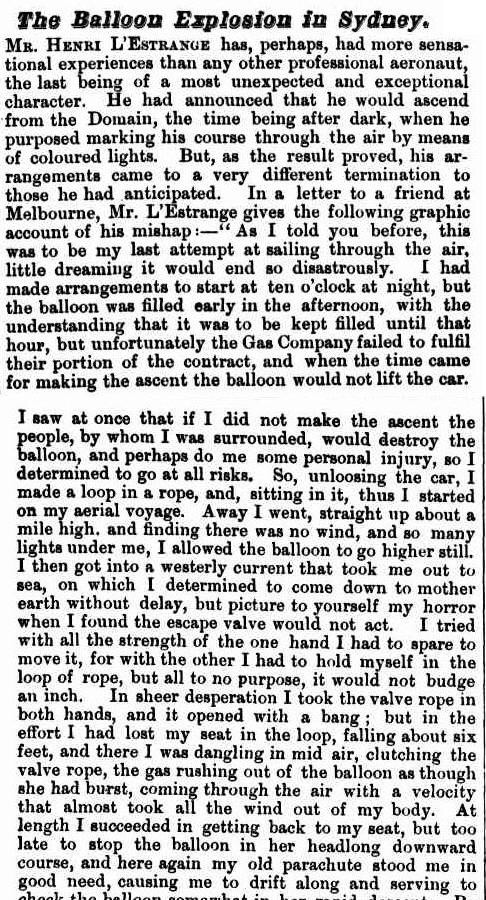
      As a result of high atmospheric pressure and heavy dew weighing down the balloon, inflation took longer than anticipated, and the crowd grew restless. The officer representing the company supplying the gas also refused to provide a new supply. L’Estrange was presented with what was described as a “Hobson’s choice”,[23] “…either to abandon the attempt and risking being seriously maltreated by the mob, or proceed heavenwards without the car, accepting the attendant [risks] of such an aerial voyage.”[24] He chose the latter and the lift commenced at 9.30 pm with L’Estrange sitting in a loop of rope much like his attempt three years previously. At first all seemed well, as the balloon lifted above the heads of the crowd, hovering for a moment before first heading over Hyde Park. He described the rest of his voyage in a letter to a friend:
      I then got into a westerly current that took me out to sea, on which I determined to come down to mother earth without delay, but picture to yourself my horror when I found the escape valve would not act. I tried with all the strength of the one hand I had to spare to move it, for with the other I had to hold myself in the loop of rope, but all to no purpose, it would not budge an inch. In sheer desperation I took the valve rope in both hands, and it opened with a bang ; but in the effort I had lost my seat in the loop, falling about six feet, and there I was dangling in mid air, clutching the valve rope, the gas rushing out of the balloon as though she had burst…

      — printed in Illustrated Sydney News, 23 April 1881[25]

      Managing to right himself, he became faint from the escaping gas and lashed himself to the ropes to prevent a fall. Realising the attempt was now a danger to himself and the balloon, L’Estrange set out the grappling hooks to catch onto something and bring the balloon down. However the ropes had become tangled and the hooks were too short.[23]
      L’Estrange’s balloon descended rapidly over the rooftops of Woolloomooloo, slamming into a house near the corner of Palmer Street and Robinson Lane. L’Estrange managed to disentangle himself and fell first onto a chimney then a shed 25 feet (7.6 m) below. He scrambled down from the rooftops to a waiting mob, who whisked him away to Robinson’s hotel on the William Street corner and would not let him leave.[25] At the crash site, during an attempt to free the balloon, the escaping gas was ignited when the resident of the house opened a window to see what the commotion was and the gas came into contact with the open flame of the room’s chandelier. The resulting fireball destroyed the balloon, burnt a number of bystanders and was bright enough to “…cast a brief but vivid illumination over the entire suburb”.[24] A panicked crush developed as groups tried to both flee from and rush towards the brief, but extremely bright, conflagration while those further away at the launch site assumed L’Estrange had been killed.[23] Several people were injured in the crush or burned by the fire with one lady reportedly being blinded.[26]
      Although a Masonic benefit was held in his honour to try to recoup some of his financial losses, the fiasco spelt the end of L’Estrange’s aeronautical career.

      Return to tightrope walking 

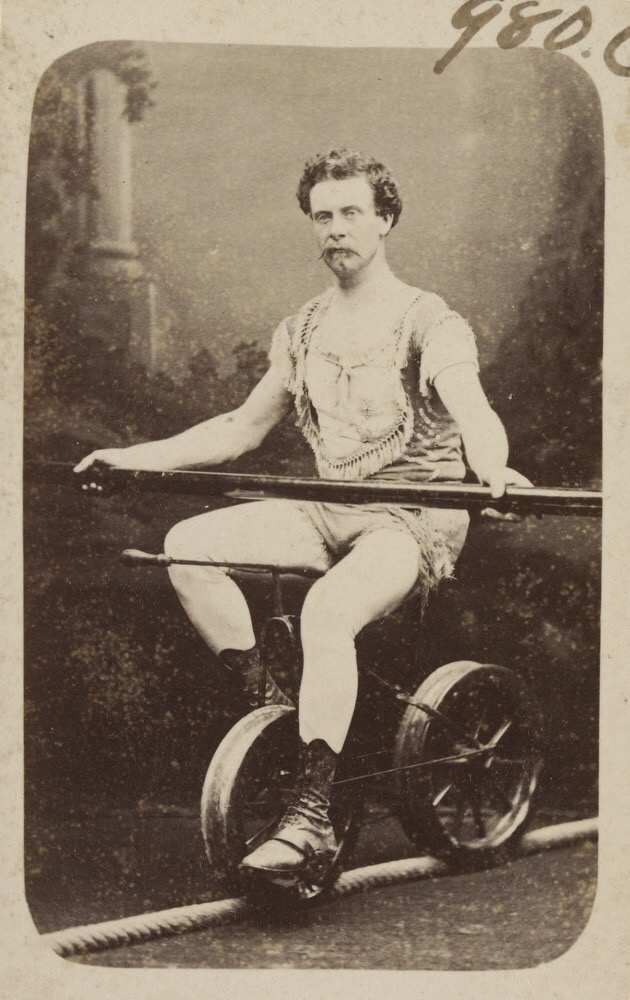
      In a change of direction in March 1882, L’Estrange applied to the Sydney City Council to establish a juvenile pleasure gardens at the Paddington Reservoir. The fun park was to have a variety of rides, a maze, merry-go-round and a donkey racecourse. L’Estrange proposed the park to be free entry with all monies being made via the sale of refreshments on site. While he was given permission, the park does not appear ever to have opened.[27]  Studio portrait of L’Estrange demonstrating riding a bicycle on a tightrope

      Following the disastrous balloon attempt and the failed pleasure grounds, L’Estrange decided to return to what he knew best, tightrope walking. In April 1881 L’Estrange, given top billing as “the hero of Middle Harbour”, performed at the Garden Palace on the high-rope as part of the Juvenile Fete, with other acrobats, contortionists and actors.[28] With proof of the continuing popularity of the rope act, he decided to return to his greatest triumph; the spectacular crossing of the harbour in 1877 which had still not been repeated. On 23 December 1882, L’Estrange advised the public that he would cross the harbour once more, this time riding a bicycle across Banbury Bay, close to the site of his original success.[29]
      As with his previous crossings, steamers took the crowds from Circular Quay, although this time only four were needed, while another 600–700 people made their own way to the site. The ride was scheduled for 3 pm on 23 December, but delays meant L’Estrange did not appear until 6 pm. Although the length of rope was over 182 metres, it was only just over nine metres above the water. The stay wires were held in boats on either side, with the crews rowing against each other to keep it steady. L’Estrange rode his bicycle towards the centre, where, with the rope swinging to and fro, he stopped briefly to steady himself but instead, realising he was losing his balance, he was forced to leap from the rope and fell into the water below. Although he was unhurt, it was another knock to his reputation. A repeat attempt was announced for the following weekend. Again steamers took a dwindling crowd to Banbury Bay where they found L’Estrange’s rope had been mysteriously cut, and he cancelled the performance. The Daily Telegraph reported that many in the crowd, who had paid for tickets on the steamers, felt they had been scammed.[30]

      Late career 

      With his reputation in tatters after the balloon crash and the attempted second harbour crossing, L’Estrange slowly slipped out of the public eye. In December 1883 he was reported as performing again on the highwire at the Parramatta Industrial Juvenile exhibition. While his act attracted favourable publicity, “his efforts were not received with the amount of enthusiasm they certainly deserved”.[31]
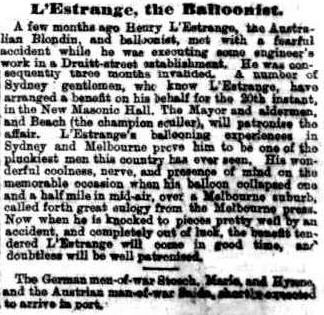
      In April 1885 a benefit was held for L’Estrange, again at the Masonic Lodge, like the one held after his balloon misadventure. It was advertised that the benefit, under the patronage of the Mayor and Aldermen of Sydney, and with Bill Beach, world champion sculler in attendance, was prompted because L’Estrange had “lately met with a severe accident”.[32] The nature of the accident is unknown, but it is speculated to have been a fall from his tightrope, explaining the end of his performances.[1]
      His apparent decline in popularity may have been as much a reflection of the public’s changing taste for entertainment as it was a comment on his act. By the time L’Estrange returned to Sydney to attempt his second harbour crossing in 1882, the city was awash with Blondin imitators performing increasingly dangerous, and probably illegal, feats.[33] At least five were performing in Sydney from 1880 under variations of the title from the “Young Blondin” (Alfred Row) to the “Blondin Brothers” (Alexander and Collins), the “Great Australian Blondin” (James Alexander), the “original Australian Blondin” (Collins), the “Great Australian Blondin” (Signor Vertelli), the “Female Australian Blondin” (Azella) and another “Australian Blondin” (Charles Jackson).[1]
      In 1886 L’Estrange again applied to the Sydney City Council for permission to establish an amusement ride called “The Rocker” in Belmore Park. The Rocker consisted of a boat which, propelled by horsepower, gave the impression of being at sea. Permission was granted but like his juvenile pleasure grounds, there is no evidence that it was ever erected.[34] After this, L’Estrange slipped from view in Sydney. In 1894 Edwin L’Estrange “who a few years ago acquired some celebrity as the Australian Blondin” appeared in court in Fitzroy, Victoria having been knocked down and run over by a horse and buggy being driven by a commercial traveller. The driver was fined and L’Estrange’s injuries are not recorded.[35]


      References 
      ^ a b c d e f Mark Dunn (2011). “L’Estrange, Henri”. Dictionary of Sydney. Dictionary of Sydney Trust. Archived from the original on 20 March 2012. Retrieved 19 December 2011.

      ^ a b c d e f g “(?) ROPE-WALK OVER MIDDLE HARBOUR.”. The Sydney Morning Herald (National Library of Australia). 16 April 1877. p. 5. Retrieved 19 December 2011.

      ^ The Mercury (Hobart). 28 February 1873. p. 2. Missing or empty |title= (help)

      ^ “BLONDIN’S FIRST APPEARANCE.”. The Empire (Sydney: National Library of Australia). 31 August 1874. p. 2. Retrieved 19 December 2011.

      ^ “CRICKET.”. The Sydney Morning Herald (National Library of Australia). 27 January 1877. p. 3. Retrieved 19 December 2011.

      ^ a b “Intercolonial News.”. The Queenslander (Brisbane: National Library of Australia). 28 April 1877. p. 27. Retrieved 19 December 2011.

      ^ a b Town and Country Journal. 7 April 1877. p. 540. Missing or empty |title= (help) Cited in Dictionary of Sydney.

      ^ a b “SOCIAL.”. The Sydney Morning Herald (National Library of Australia). 4 May 1877. p. 7. Retrieved 19 December 2011.

      ^ Sydney Mail. 21 April 1877. p. 496. Missing or empty |title= (help) Cited in Dictionary of Sydney.

      ^ “The Sydney Morning Herald.”. The Sydney Morning Herald (National Library of Australia). 24 April 1877. p. 4. Retrieved 19 December 2011.

      ^ a b “The Sydney Morning Herald.”. The Sydney Morning Herald date=1 November 1878 (National Library of Australia). p. 4. Retrieved 19 December 2011.

      ^ City of Sydney Archives, 2 November 1878, Letters Received 26/154/0981. Cited in Dictionary of Sydney.

      ^ “AMUSEMENTS.”. The Sydney Morning Herald (National Library of Australia). 18 November 1878. p. 5. Retrieved 20 December 2011.

      ^ City of Sydney Archives, 21 November 1878, Letters Received 26/154/1044. Cited in Dictionary of Sydney.

      ^ “AMUSEMENTS.”. The Sydney Morning Herald (National Library of Australia). 9 December 1878. p. 5. Retrieved 19 December 2011.

      ^ “A BALLOON CATASTROPHE.”. The Argus (Melbourne: National Library of Australia). 15 April 1879. p. 5. Retrieved 20 December 2011.

      ^ “A BALLOON CATASTROPHE.”. South Australian Register (Adelaide: National Library of Australia). 18 April 1879. p. 5. Retrieved 20 December 2011.

      ^ “A BALLOON CATASTROPHE.”. Queanbeyan Age (NSW: National Library of Australia). 19 April 1879. p. 3. Retrieved 20 December 2011.

      ^ “VICTORIA.”. The Sydney Morning Herald (National Library of Australia). 16 April 1879. p. 5. Retrieved 20 December 2011.

      ^ “Melbourne.”. The Brisbane Courier (National Library of Australia). 16 April 1879. p. 2. Retrieved 20 December 2011.

      ^ Frank Mines. “A Draft History Of Parachuting In Australia Up To The Foundation Of Sport Parachuting In 1958: The First Emergency Descent”. Australian Parachuting Foundation. Retrieved 20 December 2011.

      ^ “L’ESTRANGE’S BALLOON ASCENT.”. The Sydney Morning Herald (National Library of Australia). 27 September 1880. p. 6. Retrieved 19 December 2011.

      ^ a b c “L’ESTRANGE’S BALLOON ASCENT.”. The Sydney Morning Herald (National Library of Australia). 16 March 1881. p. 6. Retrieved 20 December 2011.

      ^ a b “L’Estrange’s Balloon Ascent.”. The Queenslander (Brisbane: National Library of Australia). 26 March 1881. p. 406. Retrieved 19 December 2011.

      ^ a b “The Ballon Explosion in Sydney.”. Illustrated Sydney News (National Library of Australia). 23 April 1881. p. 14. Retrieved 20 December 2011.

      ^ “DISTRIBUTION OF AWARDS AT THE EXHIBITION.”. The Australasian Sketcher with Pen and Pencil (Melbourne: National Library of Australia). 9 April 1881. p. 113. Retrieved 20 December 2011.

      ^ City of Sydney Archives, 22 March 1882, Letters Received 26/183/475. Cited in Dictionary of Sydney.

      ^ “Advertising.”. The Sydney Morning Herald (National Library of Australia). 16 April 1881. p. 2. Retrieved 20 December 2011.

      ^ “Advertising.”. The Sydney Morning Herald (National Library of Australia). 23 December 1882. p. 2. Retrieved 20 December 2011.

      ^ “The Blondin Fiasco”. Daily Telegraph. 1 January 1883.. Cited in Dictionary of Sydney.

      ^ “PARRAMATTA INDUSTRIAL JUVENILE EXHIBITION.”. The Sydney Morning Herald (National Library of Australia). 31 December 1883. p. 4. Retrieved 20 December 2011.

      ^ “Advertising.”. The Sydney Morning Herald (National Library of Australia). 14 April 1885. p. 2. Retrieved 20 December 2011.

      ^ “DANGEROUS SPORTS.”. The Sydney Morning Herald (National Library of Australia). 19 February 1880. p. 8. Retrieved 19 December 2011.

      ^ City of Sydney Archives, 12 January 1886, Letters Received 26/209/0105. Cited in Dictionary of Sydney.

      ^ “FITZROY.—THURSDAY.”. Fitzroy City Press (Vic.: National Library of Australia). 28 September 1894. p. 3. Retrieved 20 December 2011.

      This Wikipedia article is substantially built upon the essay “L’Estrange, Henri” in the Dictionary of Sydney

      written by Mark Dunn, 2011 and licensed under CC by-sa. Imported on 18 December 2011 (Archive of the original)

      Daily (Or When The Mood Takes Me) Gripe: Christmas In July!

      I must confess to not understanding the whole ‘Christmas in July’ thing, or why people go ape over it, trundling themselves off to the coldest climes to celebrate something that has no relevance here whatsoever. This is Australia, and Christmas means heatwaves, bushfires and flies. If you are an American, or English, it kind of makes sense to want to have snow for Christmas, but if you’re an Aussie, and only ever associate Christmas with summer, it just doesn’t work. And apart from that, it is hard to imagine Christmas happening in the middle of the year – snow or no snow.The whole Christmas thing in Australia has always been too tied up with English and European traditions, and catering to our climate at this time of the year never seems to be something anyone used to consider. I remember my mother slaving over hot stoves months before Christmas even started to get the cake and pudding done on time for it to mature before being reheated and eaten with hot custard in steamy 30-odd-degree heat. Everyone sweated in the hot house, just wanting it to end so that they could kick back with a cold beer. When I lived with my stepfamily back in the 70’s, I remember my poor sister-in-law catering a hot lunch for twenty people every Christmas day. Her reward was a stinking headache, and near dehydration. You have to query if this is the right way to celebrate Christmas day in Australia, especially with our tradition of breaking traditions, and our usual irreverence for anything considered over-the-top.

      When I lived in Darlinghurst, I used to cater a orphans Christmas lunch on Christmas day, for anyone who had nowhere else to go. I used to do the full traditional thing for anywhere from 12-15 people, with glazed ham, pork, turkey and pudding. I used to get to bed at about 3am on Christmas Eve, to be back up again at 7am to finish all the prep work. After my last of these – many years ago now – and finding myself with a migraine, I decided it was time to change my approach to Christmas eating.

      My partners mother was quick to realize the advantages of having a chef in the family. She swings a couple of hundred dollars my way, and I do the whole thing – but not the old way. I have started a tradition of fresh oysters in the half-shell, with various toppings arranged in small bowls, as an entrée. Everybody in his family – bar his Grandmother – loves them. We go to the fish markets about 10pm on Christmas Eve to get them – take this as a time hint. This is followed by cold ham, cold lamb and cold chicken with a range of salads, and finished off with an ice cream fruit pudding. On a hot day, this is a really refreshing meal, and no one has sweated themselves into oblivion to put it all together. I still do mince fruit tarts, a cake and shortbread but this is all easy to do, and involves little stress on my part. If you are still doing it all the traditional way, I suggest you consider a rethink, and start your own Christmas traditions.

      I hope everyone else can enjoy a stress-free and refreshing Christmas day.

      Tim Alderman (C) 2015


      Political Snippet: Paris & the Facebook Flag.

      I have chosen to NOT nake my Facebook profile picture a French flag. I wasn’t surprised to see it appear on FB profile pictures only hours after the Paris violence. This is a typical social media response to what is a huge tragedy. But there is more to this than an apparent simple, empathetic responce from social media, and those who use it.

      Mark Zuckerberg posted an opinion on the FB flag app that, whether you like the man or not, pretty well hit the nail on the head.

        
      My nterpretation of the above is:  It is the response tothe Paris attacks that is part of thethe problem. We are so selective in how we – “we” used in the universal sense – chose which tragedies are important enough to warrant a widespread response – or a FB flag app – and which aren’t. It is a response that is basically saying only certain human lives have value. Other deaths due to extremism of any – and many – types happen every day, and yet go unacknowledged both in news services…and on social media! The incidents are either too remote, or victims too poor, or of no political value, or of no financial value or – horrifically – insignificent! The whole world doesn’t revolve around iconic cities, which is how it could be viewed, though knowing that, I also live in a city that is a potential target. Surely in a world where we hope for universal compassion, universal responses to terrorism of ALL types, universal sorrow and empathy…even the death of one bystander would be considered too many, and worthy of a universal response. Unfortunately, thousands die, and go unacknowledged…by FB, or otherwise. 

      In another article I read – which was empathetic, but realistic – they stated that “By making ISIS go viral, we are helping them promote their own sadistic ends” which was exactly my initial thinking a day after the tragedy, when the blanket reportage ramped up to hysterical levels. They don’t need a PR machine – they have our nedia to keep their name up in lights. The ISIS hierarchy must be clapping each other on the back, and saying…job well done! 

       Sometimes I wonder if we are not our own worst enemy. Reporting the same information over and over infinitum dulls us to the impact of it, as we change channels again, as yet another news service blanket covers the event. The dead of Paris deserve better! 

      Facebook blows with the wind. If it’s a gay issue, create a rainbow flag app. If it’s a sensationalist terror attack, create a flag app for (insert name of country here)! What of Kenya! Palestine! Beirut! What of the “collateral damage” in Syria and Iraq! Perhaps multi-flag profile pictures will come next! 

      Despite my assumed cynacism of how we now approach tragedy, I do send my heartfelt sympathy and empathy out to Paris. I would be a poor example of humanity if I felt otherwise in the face of so many innocent people dying. It is just that my FB profile picture will not indicate so!

      Liberty; Equality; Fraternity!

      Tim Alderman (C) 2015

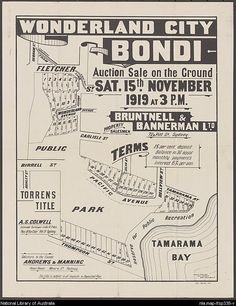
      Australian Icons: Wonderland City, Tamarama NSW. Formerly the Royal Aquarium and Pleasure Grounds.

      IMG_0233

      To look at Tamarama beach today, it is hard to envisage that it was once the site of the largest open-air amusement park in the southern hemisphere, nor that there were attempts in the early 20th century to ban swimmers from the area.

      Originally the site for the Royal Aquarium and Pleasure Grounds (commonly referred to as the Bondi Aquarium), it was an amusement park situated in Fletcher’s Glen at Tamarama beach.


      It opened on the 1st October 1887 and touted a Great Military Band, merry-go-rounds, swings, shooting gallery, water boats, Camera Obscura, Punch ‘n Judy show, and dancing in the Grand Hall.

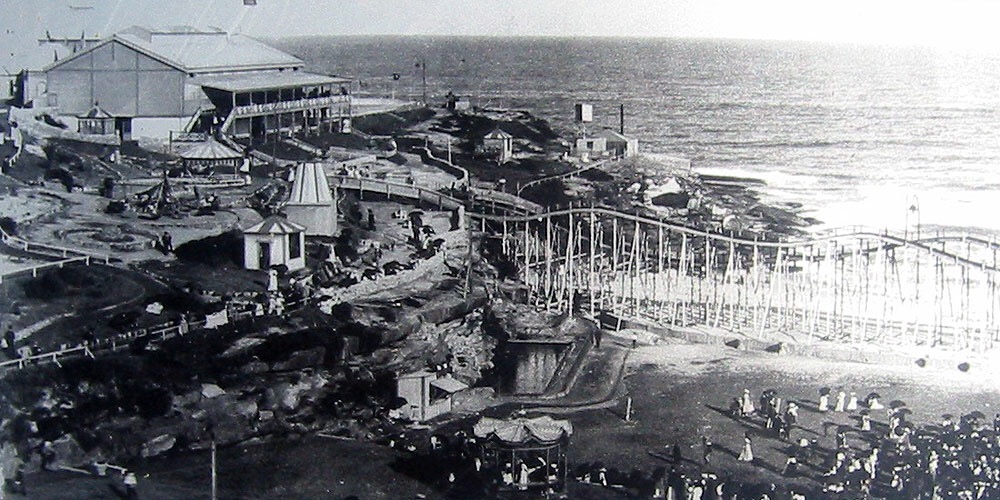
      There were huge marine aquarium tanks featuring many fish varieties, sting rays, lobsters, turtles, wobbegong and tiger sharks. Seals shared a pond with a solitary penguin. There was a switchback railway, a roller coaster ride above the sand on Tamarama beach, two roller skating rinks, which eere “illiminated by the electric light”. Every Wednesday, Pain’s Grand Fireworks exploded overhead, and there were Sacred and Classical concerts every Sunday.

      In typical early 1900s tradition, feats of daring-do were a must. Alexander, an Australian wire walker, walked a wire from cliff to cliff. Captain George Drevar floated on a “cask raft” in the surf. There was a Grand Balloon Ascent and Parachute Descent. Headliners from the Tivoli Theatre perforned on the Aquarium Curcuit.


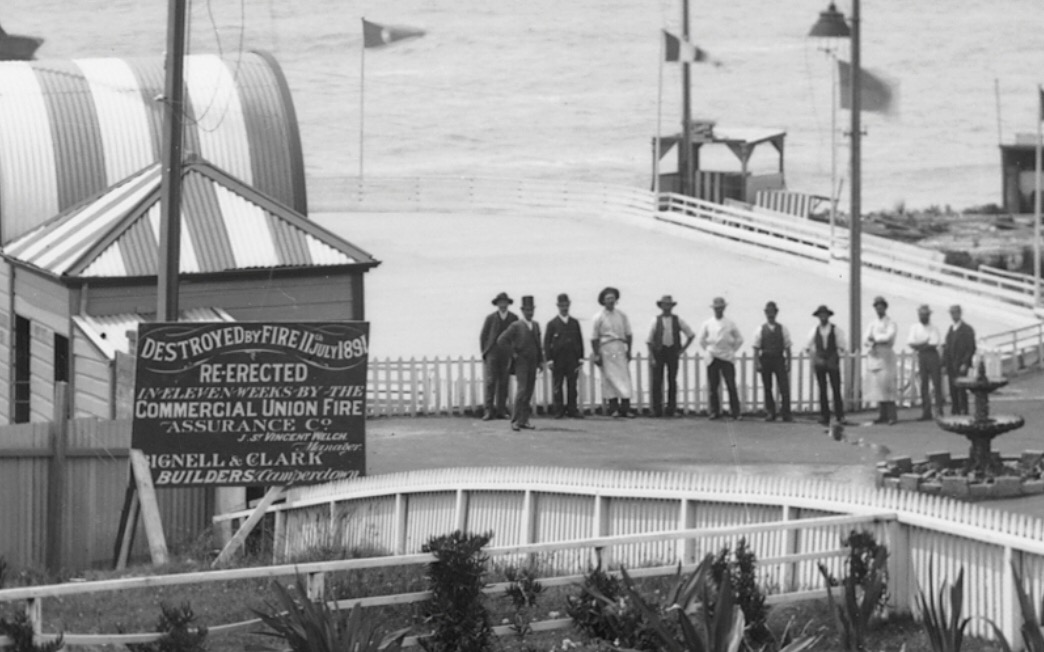
      Fire destroyed the Aquarium and Pavilion on 11th July 1891, but it rose from the ashes in September the same year, and continued on. The ladt known concert there was a fund-raiser for the Waverley Benevolent Society in 1906. Ownership and management chantes several times over the coarse of its existence, and it was finally sold by Mrs Margaret J Lachaume to William Anderson in 1906. He transformed and renamed it Wonderland City.                                                                        IMG_0232
      Anderson was a Prominent theatrical entrepreneur, leased the land in Tamarama Park, minus a 12-footbstrip of coastline, to allow the public access to the beach. He also leased a further 20-acres of land in Tamarama Gully – formerly Tamarama Glen, or “the Glen” – and started to transform it into an amusement park.

      The main entrance was a large white weatherboard building in Wonderland Avenue near the point at which it joins Fletcher Street. The entry price was 6 pence for adults and 3 pence for children with all rides costing an additional fee.

      Opening on Saturday, 1 December 1906 Wonderland claimed to equal ‘those amusement grounds… of the far famed Coney Island, New York, or White City, Chicago’. William Anderson also claimed “there weren’t sufficient trams in Sydney to transport the crowd … for the opening.” On this opening night approximately 20,00 people travelled out to Wonderland to go on fairground rides, view the novelty attractions and walk among the natural beauty of Tamarama Glen, which was lit by strings of electric lights and described as a ‘fairy city’.

      Some of the attraction included an artificial lake; the first outdoor ice skating timk in Australia; a roller skating rink which doubled as a boxing ring; double-decker merry-go-round; Haunted House and Helter Skelter; steam-driven swutchback railway; maze; circus ring; fun factory; the Airum Scarum, an airship that moved on a cable from cliff to cliff, was supported at bith ends by huge wooden structures, and at high tide moved over the sea; wax works; Katzenjammer Castle; Hall of Laughter; Box Ball Alley; Alice the elephant; a sea pond and aquarium; Japanese tearooms; Alpine slide;  and The King’s Theatre – a music hall – that could seat 1,000 people.

      IMG_0236

      Employing over 160 people, Wonderland set a new standard for Australian outdoor pleasure grounds. Large crowds, estimated at 2,000 people came every summer weekend, with seventy turnstiles at the entrance doing a brisk trade. Wonderland was known for its novelty and ‘shocking’ acts, with William Anderson the consummate showman. He organised for a couple to be married at Wonderland, and then paraded through the grounds on the back of Alice the elephant. One daredevil performer,  Jack Lewis,  roller skated down a ramp, through a hoop of fire and landed in a tank with sharks – much to the horror of the crowd. Miraculously Jack always survived unharmed.

      Unfortunately, conflict with swimmers was bound to happen. Despite the 12-foot public beach access strip being excluded from his lease, William Anderson erected a 8-foot high wire fence over it anyway, insisting it wss hecessary, as fare-evaders wrre using the strip as a way to access the park via his beachfront boundary fence.

      The barbed wire fence extended down the cliff on the southern end of the beach, across the rocks and sand to the rocks at the beach’s northern end. However this wire fence also blocked access for swimmers to the beach. Some of these swimmers were influential businessmen and having their local beach cut off incensed them. The swimmers started an ongoing battle with Anderson; they would cut his wire fence, he would repair it and contact the police. The police would arrive and warn the swimmers and the following weekend the same scenario would be re-enacted. George B. Philip, the foundation President of the Tamarama Surf Life Saving Club, was one of these swimmers and he later recalled how he got around one particular wire fence gatekeeper. ‘I scaled under the barbed wire fence practically every day, I knew every nook and corner of it – until I was caught by the gatekeeper. The outcome of this was that I came to an arrangement with him whereby that if I carried his billy of tea from the kiosk to (the) main gate at 5 o’clock each day, I could walk in and out when I liked (much to the envy of my mates, who were not caught)…’

      The stalemate between the swimmers and William Anderson continued, with the swimmers eventually taking a deputation to NSW Parliament. On 6 March 1907, the Minister for Lands, James Ashton, issued an order to resume the 12-foot strip of land fronting the beach to “give free access for all time to the beach at Tamarama Bay.” At the Tamarama Surf Life Saving Club’s centenary celebrations Ken Stewart, grandson of one of the original fence cutters Bill Stewart, reenacts his grandfather’s cutting of the barbed wire in 19061907 Many of these victorious swimmers formed the nucleus of a new surf club, the Tamarama Surf Life Saving Club. On 11 February 1908 the first surf ‘gymkhana’, equivalent to a surf carnival, was held at Wonderland on Tamarama Beach and was held each year until Wonderland closed.

      Meanwhile, bad publicity dogged Wonderland. The conflict with local swimmers and the wire fence incident soured the public image of Wonderland, as did complaints that the animals were being poorly housed and mistreated. The occasional breakdown of the Airem Scarem airship above the dangerous surf caused accusations of safety breaches and resident opposition to the weekend revellers at Wonderland grew.

      The crowd numbers dropped but Williams Anderson fought back bringing in famous entertainers and more daring acts from his national touring circuit to perform at the King’s Theatre. Anderson responded with more elaborate public exhibitions, but the public was tiring of Wonderland and the crowds dropped. It struggled on from March 1908 to December 1910 with poor crowds and low revenue, finally closing in 1911. William Anderson is said to have lost £15,000 on Wonderland City. Wonderland was the precursor of Luna Park, setting unprecedented standards for popular outdoor entertainment in Sydney. In its day it was the largest open-air amusement park in the Southern Hemisphere, and its decline does not diminish the grandeur of William Anderson’s vision.

      Although little visible evidence of Wonderland survives today, with the possible exception of the two paths on the northern boundary of Tamarama Gully, the NSW Heritage Office still considers the site to be of archaeological significance. Today a mural commissioned by the Tamarama Surf Life Saving Club on the side of their clubhouse celebrates the history of Wonderland and the part it played in the formation of their club.


      Published by Waverley Library from sources in the Local History Collection, 2008.


      Tamarama Beach today. The beach is popular with the gay community, and is referred to as “Glamarama” due to the number of muscle boys who like to pose around there.

      Exorcising Demons!

      I hate my parents! No…perhaps that is a bit strong, having now written it. I dislike my parents…closer to the point, but now a little too soft.. I’m indifferent towards my parents is perhaps closer to the truth. Yes, I choose to ignore them, and in many instances, regret having to admit that they ever existed at all.

      Maybe they loved each other, maybe they didn’t. God knows, love wasn’t exactly a subject openly discussed or displayed as my brother, Kevin, and I grew up. It is sad that Kevin had to be the one to pay the price for whatever did not exist (https://timalderman.com/2012/04/23/kevin-pickhills-the-unspoken-name/) and for what was not discussed, in their relationship. Did we have a happy childhood? In truth, I would have to say yes, though I’m aware that having said that, it is only myself that I speak for. Kevin may have been of another opinion, though, of course, we will never know if that is so.. He has been in his grave for the last 49 years, but I can assume that he would agree with me on that one point – a happy childhood.

      It wasn’t difficult to have a happy childhood in the 50’s, and early 60’s. In fact, it appeared that childhood was destined to be that way, almost as if preordained. The weather was perfect – though there are those who say that idyllic weather is part of a co-joined memory of everyone’s childhood – we had perfect neighbour’s, perfect house, perfect pets, and apart from the fact that this is Australia we are talking about, it could almost have been a real-life episode of ‘Father Knows Best’. I was given reasonably free rein to roam Sylvania with my mates, and my dog, Trixie. Kevin in those days was a bit of a millstone around an older brothers neck, but who did not see younger siblings in that light? A necessary evil, in fact.

      My childhood, like most who lived through those times was, in many respects, an urban myth. Up until the end of the first decade of our lives, the Easter bunny still delivered Easter eggs, the tooth fairy still left money for dearly departed teeth, and Santa stll came on Christmas Eve to deliver pre-ordered gifts. The only swear word I knew was ‘bloody’ – and had my backside beaten for using it – girls were definitely yucky; and when a school pal whispered into my ear one day about what I actually had to do to a girl to get her pregnant, I screamed, threw my hands in the air and ran!. Nobody would ever do anything that disgusting! Perhaps an inkling of my future lifestyle there! Anyway, I had watched a movie on television by this time, and had it on full authority – in my own mind – that women got pregnant by being kissed, which is why I went out of my way to avoid those situations.

      Was it obvious that my mother was unhappy, and planned to desert our happy home? I wouldn’t say it was obvious, but I certainly knew that something wasn’t right. When I got home from school the afternoon she left, and found her gone, I can’t say I was really surprised. In later years, when I was temporarily reunited with her after my fathers suicide, she confided to me that she knew my father was having an affair.. I was more concerned with the issue of her leaving us with a father who was to prove mentally unstable. She claimed that when she left, she had no idea where she was going, or what she was going to do. She couldn’t have managed dragging two young children along with her. I accepted that explanation though must admit to never being entirely happy with it.

      That my father was unfaithful to her, I never doubted. Within a fortnight of her leaving, a housekeeper named Nancy was suddenly introduced into the home. It wasn’t that she was identified as ‘housekeeper’ so much as the fact that she knew a little bit too much about us, was a little too familiar with the house. Add to this the fact that she spent the first night on the divan on the back verandah, then suddenly moved into the master bedroom – on my mother’s side of the bed – and even a twelve-year-old doesn’t have problems doing the math. Kevin and I hated her from day one. She was trying to act like a mother, but she knew she wasn’t, so discipline was a problem from the beginning. I hated her because she wouldn’t take orders – well, not from me at any rate. As far as I was concerned, housekeepers took orders. That was something else I learnt from television, and it also proved to be a lie.

      For my poor brother, life became an absolute misery. You have to remember that these were still days of witchcraft, and ignorance. If my brother had lived another ten years, he would inevitably have been diagnosed with ADD (Attention Deficit Disorder). However, in a time of witchcraft, his chronic disobedience, his problems with learning, and his hyperactivity were considered to by symptomatic of mental deficiency, and that was exactly how Nancy treated him – as someone who wasn’t ‘all there’. I had no problems with him, he was my brother, and pain in the neck or not, I had the patience of a saint with him, teaching him language, and reciting nursery rhymes to him until he knew them verbatim. He spoke what my parents referred to as ‘double Dutch’, and even though they had trouble understanding a single thing he said, I was always there to translate. I could never work out why they could never understand him! He spoke quite clearly, as far as I was concerned. But Nancy wasn’t even liberal enough to want him to have a translator. She just wanted him out. She was about to get her way.

      Nag! Nag! Nag! God, if Nancy could do anything, she could nag. Some women are just born to it, and she was one of them. She treated Kevin and I like criminals and outcasts. We were watched 24 hours a day, 7 days a week, and nothing crept by her – believe me, I tried. But worse than dobbing on me to my father for my occasional raids on the sacred biscuit tin, worse than alienating us from our friends and neighbours – you wouldn’t believe how many people she poisoned my father against, or in turn poisoned them against us – was that she picked on Kevin. I couldn’t protect or defend him from her. She was like an unrelenting demon from hell. If he looked at her the wrong way, if he spoke to loudly, played when she wanted him to sleep, spoke when she wanted him to be silent, she was on his case. And she made sure the old man knew all about it when he got home from work – and that was ever the threat. Finally he cracked, just caved in to what she wanted.

      Fuck, he was a weak man! I think that shits me more than anything. He sprouted all the morality and principles on God’s earth, but when it came down to brass tacks, he just gave in to whatever was easiest. I could never believe that just getting rid of Nancy never seemed to be an option. Fuck knows, nobody else would have put up with her. Compared to my mother, she lived a life of royalty. I have tried to work out over the years how she
      managed to stretch the money my old man gave her to do things that mum never seemed able to manage. The only conclusions I can come to are that he either gave her a hell of a lot more money than mum ever saw, or she had an income outside of what she earned housekeeping for us. It is a question that will never be answered now. Christ, she even moved her son into the house, who in turn became Demon from Hell #2. My old man even did up a car for him, and moved him into my brothers bed, which heaven knows he had no need for, being dead at this time. Which I guess brings us to Nancy’s revenge, and what was to be her downfall.

      That Kevin would never have gone over The Gap at Watsons Bay, on that fateful 16 December 1965 night if Nancy had not come along is not even a debatable point. It would not have happened. Full stop! Even my mother suffered unaccountable guilt over my fathers actions, beating herself up over leaving home, leaving us in such volatile predicaments. Did Nancy herself ever feel guilt over what happened? In my observations…no! To her, a problem had been removed and life went on. Her alienation of people we knew now carried over to visiting sympathisers, close family, the media! She closed ranks, and not because it protected anyone, but because it was a further extension of her power. My curiosity at trying to come to terms with what had happened, trying to comprehend the sheer personal magnitude of it, was met with icy emotion, steel resolve that nothing and nobody was going to offer me any enrapturing arms, or sympathetic tears.

      While all this turmoil went on, several other events occurred – I was, at no time, informed about what was going on with my father! I was kept completely in the dark, and apart from what I have been able to glean from press reports at the time, I am still in the dark about. I wasn’t even notified of his court cases! There was an attempt by my mother to take me back, which happened with such sudden and unexpected ferocity that it had the opposite effect on me to what it should have had…it scared the life out of me, and sent me bolting to a neighbours home for protection. And there was a custody battle between my mother and father, accompanied by threats – truly – from my fathers sisters on what I was to say to the judge to ensure my father – certainly not my parent of choice – retained custody. Nobody gave a flying fuck about what I wanted…it was all about spite, vindictiveness and control! Being a 12 year-old in the 60s was not to have any rights. You just did what you were told!

      As for my fathers brief incarceration, there was one visit, and I was “encouraged” to write regularly, whether I wanted to or not.  Upon his release, Nancy stage managed his coming home to be a scene out of “Leave It To Beaver”, complete with me running up the road and into his loving arms! It was done reluctantly, I can assure you. My father and I effectively had no relationship from that time on, and when he committed suicide via carbon monoxide poisoning in 1978, there were no tears shed on my part. After his return, life’s disruptions continued, with the selling of our Melrose Ave home, moving to a shoebox flat in Kogarah – still with Nancy in tow – a name change from Pickhills to Phillips, and me having to change schools, leaving behind everything and everyone I knew. I ended up at a Marist Brothers boarding school in Campbelltown.

      Still, there was one consolation – and again, it was unexpected, and came like a bolt from the blue. Dad arrived home at the flat one day, just in time to hear Nancy in one of her vitriolic tirades at me, for having helped myself to a biscuit from the Sacred Biscuit Tin! Now, whether he suspected that this may have been going on, or whether he was surprised to find it going on I will never know. Suffice it to say that, for the only time in our relationship, he stuck up for me, and bundled me into the car and took me to an aunties. I never saw Nancy again! Like ai cared!

      My father and I never reconciled over Kevin’s death. Like with most of the unpleasant things that occurred in his life, he just pretended it never happened. Not Nancy, not my father, nor any of his family ever mentioned Kevin’s name again. It would be 35 years later before I felt comfortable, and able, to write about his death, to tell his story. A reconciliation with my mother just after his death likewise proved futile and fruitless. Too kuch water under the bridge by then. I believe she is still alive, and in her 80s. If my stepfathers death is any gauge, I will hear of her death several years after the event. I am not expecting to shed tears over that event, either’!

      Tim Alderman (C) 2015