Buddhist monks’ procession in the Loy Krathong and Yi Peng Festival on November 24, 2012, in Chiangmai, Thailand.Bidouze Stéphane / Dreamstime.com
Any history of Buddhism must begin with the life of the historical Buddha, who lived and taught in Nepal and India 25 centuries ago. This article is the next part of the history — what happened to Buddhism after the Buddha’s death, about 483 BCE.
This next chapter of Buddhist history begins with the Buddha’s disciples. The Buddha had many lay followers, but most of his disciples were ordained monks and nuns. These monks and nuns did not live in monasteries. Instead, they were homeless, wandering through forests and villages, begging for food, sleeping under the trees. The only possessions monks were allowed to keep were three robes, one alms bowl, one razor, one needle, and one water strainer.
The robes had to be made from discarded cloth. It was a common practice to use spices such as turmeric and saffron to dye the cloth to make it more presentable — and possibly smell better. To this day, Buddhist monks’ robes are called “saffron robes” and are often (although not always) orange, the color of saffron.
Preserving the Teachings: The First Buddhist Council
When the Buddha died, the monk who became a leader of the sangha was named Mahakashyapa. The early Pali texts tell us that, shortly after the Buddha’s death, Mahakashyapa called a meeting of 500 monks to discuss what to do next. This meeting came to be called the First Buddhist Council.
The questions at hand were: How would the Buddha’s teachings be preserved? And by what rules would the monks live? Monks recited and reviewed the Buddha’s sermons and his rules for monks and nuns, and agreed which were authentic.
According to historian Karen Armstrong (Buddha, 2001), about 50 years after the Buddha’s death, monks in the eastern part of North India began to collect and order the texts in a more systematic way. The sermons and rules were not written down but had been preserved by memorizing and reciting them. The Buddha’s words were set in verse, and in lists, to make them easier to memorize. Then the texts were grouped into sections, and monks were assigned what part of the canon they would memorize for the future.
Sectarian Divisions: The Second Buddhist Council
By about a century after the Buddha’s death, sectarian divisions were forming in the sangha. Some early texts refer to “eighteen schools,” which did not appear to be markedly different from one another. Monks of different schools often lived and studied together.
The biggest rifts formed around questions of monastic discipline and authority. Among the distinctive factions were these two schools:
Sthaviravada: “Sthaviravada” is Sanskrit for “the Way of the Elders.” The Sthaviavada school was conservative, adhering closely to the teachings and rules of the Pali Canon. The school lives today in parts of Asia by its Pali name, Theravada.
Mahasanghika: This school probably is a forerunner of Mahayana Buddhism. Mahasanghika developed the idea of the transcendent nature of a Buddha, the ideal of the bodhisattva, and the doctrine of shunyata, or “emptiness.” This school advocated a somewhat more liberal approach to the monastic rules.
A Second Buddhist Council was called about 386 BCE in an attempt to unify the sangha, but sectarian fissures continued to form.
The Emperor Ashoka
Ashoka (ca. 304–232 BCE; sometimes spelled Asoka) was a warrior-prince of India known for his ruthlessness. According to legend, he was first exposed to Buddhist teaching when some monks cared for him after he was wounded in battle. One of his wives, Devi, was a Buddhist. However, he was still a cruel and brutal conqueror until the day he walked into a city he had just conquered and saw the devastation. “What have I done?” he cried and vowed to observe the Buddhist path for himself and for his kingdom.
Ashoka came to be the ruler of most of the Indian subcontinent. He erected pillars throughout his empire inscribed with the Buddha’s teachings. According to legend, he opened seven of the original eight stupas of the Buddha, further divided the Buddha’s relics, and erected 84,000 stupas in which to enshrine them. He was a tireless supporter of the monastic sangha and supported missions to spread the teachings beyond India, in particular into present-day Pakistan, Afghanistan, and Sri Lanka. Ashoka’s patronage made Buddhism one of the major religions of Asia.
The Two Third Councils
By the time of Ashoka’s reign, the rift between Sthaviravada and Mahasanghika had grown large enough that the history of Buddhism splits into two very different versions of the Third Buddhist Council.
The Mahasanghika version of the Third Council was called to determine the nature of an Arhat. An arhat (Sanskrit) or arahant (Pali) is a person who has realized enlightenment and may enter Nirvana. In the Sthaviravada school, an arhat is the ideal of Buddhist practice.
A monk named Mahadeva proposed that an arhat is still subject to temptation, ignorance, and doubt, and still benefits from teaching and practice. These propositions were adopted by the Mahasanghika school but rejected by Sthaviravada.
In the Sthaviravada version of history, the Third Buddhist Council was called by Emperor Ashoka about 244 BCE to stop the spread of heresies. After this Council completed its work the monk Mahinda, thought to be a son of Ashoka, took the body of doctrine agreed upon by the Council into Sri Lanka, where it flourished. The Theravada school that exists today grew from this Sri Lankan lineage.
One More Council
The Fourth Buddhist Council probably was a synod of the emerging Theravada school, although there are multiple versions of this history, also. According to some versions, it was at this council, held in Sri Lanka in the 1st century BCE, that the final version of the Pali Canon was put in writing for the first time. Other accounts say the Canon was written down a few years later.
The Emergence of Mahayana
It was during the 1st century BCE that Mahayana Buddhism emerged as a distinctive school. Mahayana possibly was an offspring of Mahasanghika, but there probably were other influences also. The important point is that Mahayana views didn’t happen for the first time in the 1st century, but had been evolving for a long time.
During the 1st century BCE The name Mahayana, or “great vehicle,” was established to distinguish this divergent school from Theravada/Sthaviravada school. Theravada was derided as “Hinayana,” or the “lesser vehicle.” The names point to the distinction between Theravada’s emphasis on individual enlightenment and the Mahayana ideal of the enlightenment of all beings. The name “Hinayana” is generally considered to be a pejorative.
Today, Theravada and Mahayana remain the two primary doctrinal divisions of Buddhism. Theravada for centuries has been the dominant form of Buddhism in Sri Lanka, Thailand, Cambodia, Burma (Myanmar) and Laos. Mahayana is dominant in China, Japan, Taiwan, Tibet, Nepal, Mongolia, Korea, India, and Vietnam.
Buddhism at the Beginning of the Common Era
By the year 1 CE, Buddhism was a major religion in India and had been established in Sri Lanka. Buddhist communities also flourished as far west as present-day Pakistan and Afghanistan. Buddhism had divided into Mahayana and Theravada schools. By now some monastic sanghas were living in permanent communities or monasteries.
The Pali Canon was preserved in written form. It is possible some of the Mahayana sutras were written or being written, at the beginning of the 1st millennium, although some historians put the composition of most of the Mahayana sutras in the 1st and 2nd centuries CE.
About 1 CE, Buddhism began a vital new part of its history when Buddhist monks from India took the dharma to China. However, it would yet be many centuries before Buddhism reached Tibet, Korea, and Japan.
Reference
O’Brien, Barbara. “Early Buddhist History: The First Five Centuries.” Learn Religions, Aug. 25, 2020, learnreligions.com/early-buddhist-history-the-first-five-centuries-449898.
Sydney is today touted as a ‘festival hub’ and as one of the best festival cities in the world. Not a week seems to go by without a cultural festival taking place. But 60 years ago, Sydney (and indeed the rest of Australia) was a very different place; it was much more culturally conservative.
Waratah Princess lording it over some nymphettes aboard the City of Sydney float, 1965 (City of Sydney Archives, SRC18952)
The visit of Queen Elizabeth II to Australian shores in 1954marked a change in Australian cultural life. Her visits to the capital cities around the nation, in particular Sydney and Melbourne, attracted record crowds who gathered in the city centres to watch the royal spectacle. In the aftermath of her visit, civic forefathers in both cities saw an opportunity to attract people into the city centres with an annual festival.
Sutherland Shire Youth Crusade Gymea Baptist Sunday School float, 1965 (City of Sydney Archives, SRC18949)
Marching band in the Waratah Spring Festival procession, 1950s (City of Sydney Archives, SRC18287)
The festival was initiated by the Sydney Committee led by the NSW Premier and the Mayor of Sydney Municipal Council; it was organised by the Council.
An estimated 250,000 spectators lined up to watch the first Waratah Spring Festival procession in 1956 – there were 140 decorated floats, 26 bands and 5,000 ‘marchers’. It was a spring festival – so it was held in October – and because the theme was ‘spring’, over two million flowers (both natural and artificial) were used to decorate the floats. Every year, there was a Waratah Pageant and a ‘Waratah Princess’ was crowned. The first Waratah Princess was Colleen Pike from Newtown.
Sydney County Council’s float featuring a large plug, 1950s (City of Sydney Archives, SRC18258 )
In 1964, there were 45 decorated floats and up to 5,000 people took part in the procession, which extended almost two miles.
Eighteen Waratah Spring Festivals were held between 1956 and 1973. In addition to the public spectacle of the street parades, the festival grew to encompass other events including an art competition, a decorative floral competition in the lower town hall and cultural events including ballet and theatre.
Waratah Princess 1963 (City of Sydney Archives, SRC17470)
By the early 1970s, the Waratah Festival was attracting ever fewer visitors to the centre of Sydney, and was gaining the reputation of being ‘tatty’.
The final Waratah Spring Festival was held in 1973, to coincide with the opening of the Sydney Opera House. In a report prepared in 1974, the Sydney Committee noted that the major sponsors had withdrawn their support and that the Festival had outlived its usefulness as a major attraction. The event was abandoned.
Warning: Some people might find the following images to be offensive.
It seems like just yesterday that Little Suzy and Bobby were playing with miniature minstrel kits and toy dogs that could smoke cigarettes. Well… maybe not yesterday.
Thanks to a Kickstarter campaign titled “Politically Incorrect Toys,” our eyes have been opened to the ridiculous and highly insensitive world of vintage playthings. From a suspiciously accurate replica of a detective’s gun to a packet of “housewife” necessities aimed at young girls, the project seeks to bring odd relics of our past back into the spotlight.
“This project is a social commentary on how toys have changed over the years and how we, as a society can change our views about what is or is not socially acceptable,” explains Hawaii-based photographer David Murphey, the mastermind behind “Politically Incorrect Toys,” on his Kickstarter page.
“As a country, we’ve made great strides to equality, but at the same time we’ve gone backwards in some ways. We’ve lost the ability to laugh at ourselves and enjoy the individuality in each other. Wouldn’t it be great if we could put aside some of our sensitivities (once in a while) and find humor in our differences?”
Murphey has photographed a plethora of strange (and often shocking) toys, hoping to create a limited edition photography portfolio of all the knick knacks that somehow evaded exile on the Island of Misfit Toys. Scroll through a preview of the portfolio below, but be warned — your eyebrows will likely rise in confusion. If you’re hooked on the idea, you can help fund the project here.
We do not know how many monks and nuns were ordained by the Buddha during his lifetime. The early accounts sometimes describe monks and nuns by the thousands, but that is possibly exaggerated.
Of these unknown numbers some outstanding individuals emerge. These are individuals who contributed to the development of Buddhism and whose names one finds in the sutras. Through their life stories we can get at least a glimpse of the first generation of men and women who chose to follow the Buddha and practice his teaching.
Ananda was the historical Buddha‘s cousin and also his attendant during the latter part of his life. Ananda is also remembered as the disciple who recited the Buddha’s sermons from memory at the First Buddhist Council, after the Buddha had died.
According to a possibly apocryphal story in the Pali Tipitika, Ananda persuaded a reluctant Buddha to accept women as his disciples.
Ruins in Sravasti, India, thought to be of the Jeta Grove retreat center. Bpilgrim / Wikimedia Creative Commons
Anathapindika was a wealthy lay disciple and benefactor of the Buddha. His generosity to the poor earned him his name, which means “feeder of the orphans or helpless.”
The Buddha and his disciples traveled for most of the year, but they stayed indoors in seclusion during the summer monsoon season. With the Buddha’s permission, Anathapindika purchased a property that would be called the Jeta Grove. He then built a meeting hall, dining hall, sleeping cells, wells, lotus ponds, and whatever else the monks might need during their solitary rains retreats. This was the first Buddhist monastery.
Today, readers of the sutras may notice that the Buddha delivered many of his discourses “in the Jeta Grove, in Anathapindika’s Monastery.”null
Devadatta Incites an Elephant to Charge the Buddha. Tevaprapas, Wikipedia Commons, Creative Commons License
Devadatta was a kinsman of the Buddha who became a disciple. According to some traditions, Devadatta became consumed with jealousy of the Buddha. After receiving a particularly harsh rebuke from the Buddha, Devadatta plotted to have the Buddha assassinated.
When his plots failed, he split the sangha by persuading many younger monks to follow him instead of the Buddha. The monks Sariputra and Maudgalyayana were able to persuade the wayward monks to return.null
Dhammadinna and Visakha as a married couple. Anandajoti / Photo Dharma / Flickr.com, Creative Commons License
Some of the early sutras of Buddhism are about enlightened women who teach men. In Dhammadinna’s story, the man was the enlightened woman’s ex-husband. The Buddha praised Dhammadinna as “a woman of discerning wisdom.
Khema
กสิณธร ราชโอรส / Wikimedia Commons
Queen Khema was a great beauty who became a nun and one of the chief women disciples of the Buddha. In the Khema Sutta (Samyutta Nikaya 44), this enlightened nun gives a dharma lesson to a king.
After the historical Buddha died, Mahakasyapa assumed a leadership position among the Buddha’s surviving monks and nuns. He convened and presided over the First Buddhist Council. For this reason, he is called the “father of the sangha.” He is also a patriarch of Chan (Zen).
Maudgalyayana
Sariputra and Maudgalyayana become disciples of Buddha. Nomu420craftsmen / Wikimedia Commons
Maudgalyayana was a lifelong friend of Sariputra; the two entered the order together. The Buddha’s instructions to Maudgalyayana as he struggled with his early practice have been valued by the many generations.
Marraige of Suddhodana and Mahapajapati. Photo Dharma from / Wikimedia Commons
Pajapati is credited with being the first Buddhist nun. She is often called Mahapajapati.
Pajapati was the Buddha’s aunt who raised the young Prince Siddhartha as her own child after the death of his mother, Queen Maya. After the Buddha’s enlightenment she and many of her court ladies shaved their heads, dressed in patched mendicants’ robes, and walked many miles barefoot to find the Buddha and ask to be ordained. In a section of the Pali Tipitika that remains controversial, the Buddha refused the request until persuaded to change his mind by Ananda.
Patacara
The story of Patacara. Anandajoti, Wikipedia Commons, Creative Commons License
Patacara was a nun who overcame unimaginable grief to realize enlightenment and become a leading disciple. Some of her poems are preserved in a section of the Sutta-pitaka called the Therigatha, or Verses of the Elder Nuns, in the Khuddaka Nikaya.
Punnika
Punnika was a slave who, by chance, heard a sermon of the Buddha. In a famous story recorded in the Pali Sutta-pitaka, she inspired a Brahmin to seek out the Buddha. In time she became a nun and realized enlightenment.
Siddhartha leaving sleeping Yashodhara and Rahula. Nomu420 / Wikimedia Commons
Rahula was the historical Buddha’s only child, born shortly before the Buddha left his life as a prince to seek enlightenment. It is said Rahula was ordained a monk while still a child and realized enlightenment at the age of 18.
Buddha with Mogallana and Sariputta. Origamiemensch / Wikimedia Commons
It was said Sariputra was second only to the Buddha in his ability to teach. He is credited with mastering and codifying the Buddha’s Abhidharma teachings, which became the third “basket” of the Tripitika.
The Upali Thein temple. Tsaetre / Wikimedia Commons
Upali was a low-caste barber who met the Buddha when he was called upon to cut the Buddha’s hair. He came to the Buddha to ask to be ordained with a group of the Buddha’s high-born kinsmen. The Buddha insisted on ordaining Upali first so that he would be their senior, and superior, in the order.
Upali became known for his faithful devotion to the Precepts and his understanding of the rules of the monastic order. He was called upon to recite the rules from memory at the First Buddhist Council, and this recitation became the basis of the Vinaya.
Reference
O’Brien, Barbara. “The Historical Buddha’s Disciples.” Learn Religions, Aug. 27, 2020, learnreligions.com/first-generation-of-buddhas-disciples-449657.
The large Vairocana Buddha with disciples Ananda and Kasyapa. Public Domain
Of all the principal disciples, Ananda may have had the closest relationship to the historical Buddha. Particularly in the Buddha’s later years, Ananda was his attendant and closest companion. Ananda also is remembered as the disciple who recited the Buddha’s sermons from memory at the First Buddhist Council, after the Buddha had died.null
What do we know about Ananda? It is widely agreed that Buddha and Ananda were first cousins. Ananda’s father was a brother to King Suddhodana, many sources say. It is thought that when the Buddha returned home to Kapilavastu for the first time after his enlightenment, cousin Ananda heard him speak and became his disciple.null
Beyond that, there are several conflicting stories. According to some traditions, the future Buddha and his disciple Ananda were born on the same day and were exactly the same age. Other traditions say Ananda was still a child, maybe seven years old, when he entered the Sangha, which would have made him at least thirty years younger than the Buddha. Ananda survived the Buddha and most of the other principal disciples, which suggests that the latter version of the story is more probable.
Ananda was said to be a modest, quiet man who was completely devoted to the Buddha. He also was said to have a prodigious memory; he could recite every sermon of the Buddha-word for word after hearing it only once. Ananda is credited with persuading the Buddha to ordain women into the Sangha, according to one famous story. However, he was slower than other disciples to realize enlightenment and did so only after the Buddha had died.
The Buddha’s Attendant
When the Buddha was 55 years old, he told the sangha he needed a new attendant. The attendant’s job was a combination of servant, secretary, and confidant. He took care of “chores” such as washing and mending robes so that the Buddha could focus on teaching. He also relayed messages and sometimes acted as a gatekeeper, so that the Buddha would not be mobbed by too many visitors at once.
Many monks spoke up and nominated themselves for the job. Characteristically, Ananda remained quiet. When the Buddha asked his cousin to accept the job, however, Ananda accepted only with conditions. He asked that the Buddha never giver him food or robes or any special accommodations so that the position did not come with material gain.
Ananda also requested the privilege of discussing his doubts with the Buddha whenever he had them. And he asked that the Buddha repeat any sermons to him that he might have to miss while carrying out his duties. The Buddha agreed to these conditions, and Ananda served as attendant for the remaining 25 years of the Buddha’s life.
The Ordination of Pajapati
The story of the ordination of the first Buddhist nuns is one of the most controversial sections of the Pali Canon. This story has Ananda pleading with a reluctant Buddha to ordain his stepmother and aunt, Pajapati, and the women who had walked with her to become the Buddha’s disciples.
The Buddha eventually agreed that women can become enlightened as well as men, and could be ordained. But he also predicted that the inclusion of women would be the undoing of the sangha.
Some modern scholars have argued that if Ananda really was more than thirty years younger than the Buddha, he would still have been a child when Pajapati approached the Buddha for ordination. This suggests the story was added, or at least re-written, a long time later, by someone who didn’t approve of nuns. Still, Ananda is credited with advocating for the right of women to be ordained.
Parinirvana
One of the most poignant texts of the Pali Sutta-pitaka is the Maha-parinibbana Sutta, which describes the last days, death, and parinirvana of the Buddha. Again and again, in this sutta we see the Buddha addressing Ananda, testing him, giving him his final teachings and comfort. And as monks gather around him to witnesses his passing into Nirvana, the Buddha spoke in praise of Ananda—”Bhikkhus [monks], the Blessed Ones, Arahants, Fully Enlightened Ones of times past also had excellent and devoted attendant bhikkhus [monks], such as I have in Ananda.”
Enlightenment and the First Buddhist Council
After the Buddha had passed, 500 enlightened monks came together to discuss how their master’s teachings might be preserved. None of the Buddha’s sermons had been written down. Ananda’s memory of the sermons was respected, but he had not yet realized enlightenment. Would he be allowed to attend?
The Buddha’s death had relieved Ananda of many duties, and he now dedicated himself to meditation. The evening before the Council was to begin, Ananda realized enlightenment. He attended the Council and was called upon to recite the Buddha’s sermons.
Over the next several months he recited, and the assembly agreed to commit the sermons to memory also and preserve the teachings through oral recitation. Ananda came to be called “The Keeper of the Dharma Store.”
It is said Ananda lived to be more than 100 years old. In the 5th century CE, a Chinese pilgrim reported finding a stupa holding Ananda’s remains, lovingly attended by nun. His life remains a model of the path of devotion and service.
Reference
O’Brien, Barbara. “The Life of Ananda, Buddha’s Disciple and Attendant.” Learn Religions, Aug. 27, 2020, learnreligions.com/life-of-ananda-449647.
When many Westerners think of “Buddha,” usually they don’t visualize the Buddha of history, meditating or teaching. This “true” Buddha is known more completely as Gautama Buddha or Shakyamuni Buddha and is almost always depicted in deep meditation or contemplation. The image is very often of a very thin individual with a serious though the sublimely peaceful expression on his face.
The Laughing Buddha
Most Westerners, though, think of a fat, bald, jolly character called “The Laughing Buddha” when they think of the Buddha. Just where did this figure come from?
The Laughing Buddha emerged from Chinese folktales of the 10th century. The original stories of the Laughing Buddha centered on a Ch’an monk named Ch’i-t’zu, or Qieci, from Fenghua, in what is now the province of Zhejiang. Ch’i-t’zu was an eccentric but much-loved character who worked small wonders, such as predicting the weather. Chinese history assigned the date of 907-923 CE to Ch’t’zu’s life, which means he lived considerably later than the historical Shakyamuni, the true Buddha.
Maitreya Buddha
According to tradition, just before Ch’i-t’zu died, he revealed himself to be an incarnation of Maitreya Buddha. Maitreya is named in the Tripitaka as the Buddha of a future age. Ch’i-t’zu’s last words were:
Maitreya, true Maitreya Reborn innumerable times From time to time manifested among men The men of the age do not recognize him.
Pu-tai, Protector of Children
The tales of Ch’i-t’zu spread throughout China, and he came to be called Pu-tai (Budai), which means “hempen sack.” He carries a sack with him full of good things, such as sweets for children, and he is often pictured with children. Pu-tai represents happiness, generosity and wealth, and he is a protector of children as well as of the poor and the weak.
Today, a statue of Pu-tai can often be found near the entrance of Chinese Buddhist temples. The tradition of rubbing Pu-tai’s belly for good luck is a folk practice, however, not a genuine Buddhist teaching. It is indicative of Buddhism’s broad tolerance of diversity that this laughing Buddha of folklore is accepted into the official practice. For Buddhists, any quality that represents Buddha-nature is to be encouraged, and the folklore of the kind, laughing Buddha is not regarded as any kind of sacrilege, even though people unwittingly may confuse him with Shakyamuni Buddha.
An Ideal Enlightened Master
Pu-tai also is associated with the last panel of the Ten Ox-herding Pictures. These are 10 images that represent stages of enlightenment in Ch’an (Zen) Buddhism. The last panel shows an enlightened master who enters towns and marketplaces to give to ordinary people the blessings of enlightenment.
Pu-tai followed the spread of Buddhism into other parts of Asia. In Japan, he became one of the Seven Lucky Gods of Shinto and is called Hotei. He also was incorporated into Chinese Taoism as a deity of abundance.
Reference
O’Brien, Barbara. “The Laughing Buddha.” Learn Religions, Aug. 25, 2020, learnreligions.com/the-laughing-buddha-449784.
When Hachikō’s owner failed to come home from work one day, the faithful dog returned to his master’s train station the day after just to wait for him. He did this every day for nearly a decade.
Hachikō the dog was more than a pet. As the canine companion to a university professor, Hachikō patiently waited his owner’s return from work at their local train station each evening.
But when the professor died suddenly one day at work, Hachikō was left waiting at the station — for nearly a decade. Every day after his master passed, Hachikō the dog returned to the train station, often to the chagrin of the employees who worked there. But his fidelity soon won them over, and he became an international sensation and a symbol of loyalty.
This is his story.
When Hachikō Met Ueno
This statue commemorates the meeting of Hachikō and his master.
Hachikō the golden brown Akita was born on Nov. 10, 1923, on a farm located in Japan’s Akita Prefecture.
In 1924, Professor Hidesaburō Ueno, who taught in the agriculture department at Tokyo Imperial University, acquired the puppy and brought him to live with him in the Shibuya neighborhood of Tokyo.
The pair followed the same routine every day: In the morning Ueno would walk to the Shibuya Station with Hachikō and take the train to work. After finishing the day’s classes, he would take the train back and return to the station at 3 p.m. on the dot, where Hachikō would be waiting to accompany him on the walk home.
Shibuya Station in the 1920s, where Hachikō would meet his master.
The pair kept up this schedule religiously until one day in May 1925 when Professor Ueno suffered a fatal brain hemorrhage while teaching.
That same day, Hachikō showed up at 3 p.m. as usual, but his beloved owner never got off the train.
Despite this disruption in his routine, Hachikō returned the next day at the same time, hoping that Ueno would be there to meet him. Of course, the professor failed to return home once again, but his loyal Akita never gave up hope.
Becoming A National Sensation
Hachikō was only one of 30 purebred Akitas on record at the time.
Hachikō was reportedly given away after his master’s death, but he regularly ran off to Shibuya Station at 3 p.m. hoping to meet the professor. Soon, the lone dog began to draw the attention of other commuters.
At first, the station workers were not all that friendly to Hachikō, but his fidelity won them over. Soon, station employees began to bring treats for the devoted canine and sometimes sat beside him to keep him company.
The days turned into weeks, then months, then years, and still Hachikō returned to the station each day to wait. His presence had a great impact on the local community of Shibuya and he became something of an icon.
In fact, one of Professor Ueno’s former students, Hirokichi Saito, who also happened to be an expert on the Akita breed, got wind of Hachikō’s routine.
He decided to take the train to Shibuya to see for himself if his professor’s pet would still be waiting.
When he arrived, he saw Hachikō there, as usual. He followed the dog from the station to the home of Ueno’s former gardener, Kuzaburo Kobayashi. There, Kobayashi filled him in on the story of Hachikō’s life.
Visitors came from far and wide to meet Hachikō, a symbol of loyalty.
Shortly after this fateful meeting with the gardener, Saito published a census on Akita dogs in Japan. He found that there were only 30 documented purebred Akitas — one being Hachikō.
The former student was so intrigued by the dog’s story that he published several articles detailing his loyalty.
In 1932, one of his articles was published in the national daily Asahi Shimbun, and Hachikō’s tale spread throughout Japan. The dog quickly found nationwide fame.
People from all over the country came to visit Hachikō, who had become a symbol of loyalty and something of a good-luck charm.
The faithful pet never let old age or arthritis interrupt his routine. For the next nine years and nine months, Hachikō still returned to the station every day to wait.
Sometimes he was accompanied by people who had traveled great distances just to sit with him.
A Legacy Of Loyalty
Since his death, a number of statues have been erected in his honor.
Hachikō’s great vigil finally came to an end on March 8, 1935, when he was found dead in the streets of Shibuya at the age of 11.
Scientists, who weren’t able to determine his cause of death until 2011, found that the dog Hachikō likely died of a filaria infection and cancer. He even had four yakitori skewers in his stomach, but researchers concluded that the skewers were not the cause of Hachikō’s death.
Hachikō’s passing made national headlines. He was cremated and his ashes were placed next to Professor Ueno’s grave in Aoyama Cemetery in Tokyo. The master and his loyal dog had finally reunited.
His fur, however, was preserved, stuffed, and mounted. It’s now housed in the National Museum of Nature and Science in Ueno, Tokyo.
The dog had become such an important symbol in Japan that donations were made to erect a bronze statue of him in the exact spot he had faithfully waited for his master. But soon after this statue went up, the nation became consumed by World War II. Consequently, Hachikō’s statue was melted down to use for ammunition.
But in 1948, the beloved pet was immortalized in a new statue erected in Shibuya Station, where it remains to this day.
As millions of passengers pass through this station daily, Hachikō stands proud.
Hidesaburo Ueno’s partner Yaeko Ueno and the station staff sit in mourning with the deceased Hachiko in Tokyo on March 8, 1935.
The station entrance near where the statue is located is even devoted to the beloved canine. It’s called Hachikō-guchi, simply meaning the Hachikō entrance and exit.
A similar statue, erected in 2004, can be found in Odate, Hachikō’s original hometown, where it stands in front of the Akita Dog Museum. And in 2015, the Faculty of Agriculture at the University of Tokyo erected yet another brass statue of the dog in 2015, which was unveiled on the 80th anniversary of Hachikō’s death.
In 2016, Hachikō’s story took yet another turn when his late master’s partner was buried alongside him. When Yaeko Sakano, Ueno’s unmarried partner, died in 1961, she explicitly asked to be buried alongside the professor. Her request was rejected and she was buried in a temple far from Ueno’s grave.
This stuffed replica of Hachikō is currently on display at the National Science Museum of Japan in Ueno, Tokyo.
But in 2013, University of Tokyo professor Sho Shiozawa, found a record of Sakano’s request and a buried her ashes beside both Ueno and Hachikō.
Her name was also inscribed on the side of his tombstone.
Hachikō’s Story In Pop Culture
Hachikō’s story first made it to film in the 1987 Japanese blockbuster titled Hachiko Monogatari, directed by Seijirō Kōyama.
The movie trailer for Hachi: A Dog’s Tale.
It became even more well-known when the tale of a master and his loyal dog served as the plot to Hachi: A Dog’s Tale, an American movie starring Richard Gere and directed by Lasse Hallström.
This version is loosely based on the story of Hachikō, though set in Rhode Island and centered on the relationship between Professor Parker Wilson (Gere) and a lost puppy that had been freighted from Japan to the United States.
The professor’s wife Cate (Joan Allen) is initially opposed to keeping the dog and when he dies, Cate sells their house and sends the dog to their daughter. Yet the dog always manages to find his way back to the train station where he used to go to greet his former owner.
The stuffed Hachikō on display at the National Museum of Nature and Science.
Despite the different setting and culture of the 2009 movie, the central themes of loyalty remain at the forefront.
Hachikō the dog might have symbolized the quintessential values of Japan, but his story and faithfulness continue to resonate with humans around the world.
Kids are often told that you can’t judge a book by its cover.
Even so, people often believe they can rely on their gut to intuit things about other people. Stereotypes often influence these impressions, whether it’s that a black man is dangerous, a woman won’t be a good leader or a fashionable man is gay.
Stereotypes related to gay men and lesbians often operate under the guise of “gaydar” rather than stereotyping. “Gaydar” (a portmanteau of “gay” and “radar”) is a term that first appeared in the 1980s and refers to a “sixth sense” for identifying who is gay. Like many purported intuitions, however, gaydar often relies on stereotypes.
While many people believe stereotyping is wrong, calling it “gaydar” merely provides a cover for using stereotypical traits – like someone’s fashion sense, profession or hairstyle – to jump to conclusions about someone being gay. Nonetheless, some researchers have published studies that, at first glance, appear to show that people have accurate gaydar.
In some recent work, my colleagues and I have been able to demonstrate how the perpetuation of the gaydar myth has unintended negative consequences. We’ve also identified a mathematical flaw in some previous gaydar research, calling into question the results.
Stereotyping in disguise
My colleagues and I suspected that even people who would normally try to refrain from stereotyping might be more likely to use gay stereotypes if they are led to believe they have gaydar.
To test this idea, we conducted an experiment. We told some participants that scientific evidence says gaydar was a real ability, led others to believe that gaydar is just another term for stereotyping and said nothing about gaydar to a third group (the control).
Participants then judged whether men were gay or straight based on information ostensibly taken from social media profiles. Some of the men had interests (or “likes”) that related to gay stereotypes, like fashion, shopping or theater. Others had interests related to straight stereotypes, like sports, hunting or cars, or “neutral” interests unrelated to stereotypes, like reading or movies. This design allowed us to assess how often people jumped to the conclusion that men were gay based on stereotypically gay interests. Those who were told gaydar is real stereotyped much more than the control group, and participants stereotyped much less when they had been told that gaydar is just another term for stereotyping.
These patterns provided strong support for the idea that belief in gaydar encourages stereotyping by simply disguising it under a different label.
What’s the big deal?
In some ways, the idea of gaydar – even if it’s just stereotyping – seems useful at best and harmless at worst. But the very fact that it seems harmless may actually be responsible for its most pernicious effects. Using gaydar as a way to talk innocuously or jokingly about stereotyping – “Oh, that guy sets off my gaydar” – trivializes stereotyping and makes it seem like no big deal.
But we know that stereotypes have many negative consequences, so we shouldn’t be encouraging it on any level.
First, stereotyping can facilitate prejudice. In a study on prejudice-based aggression, we had participants play a game that involved administering electric shocks to a subject in the other room. Participants learned only one thing about this other person, either that he was gay or simply liked shopping (people tend to assume men who like shopping are gay).
In one condition, therefore, the participants knew that the man was gay and in the other they might have privately inferred that he was gay though it wasn’t confirmed, but that wasn’t known to anyone else (who might have accused them of being prejudiced).
These conditions are especially important for a subset of people who are covertly prejudiced: They’re aware that they’re prejudiced and ok with it, but don’t want others to know. We can identify these people with some well-established questionnaire measures, and we know that they express prejudice only when they’re able to get away with it.
As we predicted, these covertly prejudiced people tended to refrain from shocking the man who was confirmed as gay, but delivered extremely high levels of shocks to the man who liked shopping. If they had shocked the first man, people could accuse them of prejudice (“You shocked him because he was gay!”). But if others accused participants of prejudice in the second condition, it could be plausibly denied (“I didn’t think he was gay!”). In other words, stereotyping can give people opportunities to express prejudices without fear of reprisal.
Second, stereotypes – even innocuous ones – are troublesome for a number of reasons: They lead us to think narrowly about people before we get to know them, they can justify discrimination and oppression, and, for members of stereotyped groups, they can even lead to depression and other mental health problems. Encouraging stereotyping under the guise of gaydar contributes – directly or indirectly – to stereotyping’s downstream consequences.
But what if gaydar is actually accurate?
Some researchers say that stereotypes about gay people possess a grain of truth, which could lend credence to the idea of having accurate gaydar.
In these studies, researchers presented pictures, sound clips and videos of real gay and straight people to the participants, who then categorized them as gay or straight.
Half of the people in the pictures, clips and videos were gay and half were straight, which meant that the participants would demonstrate an accurate gaydar if their accuracy rate were significantly higher than 50 percent. Indeed, participants tended to have about 60 percent accuracy, and the researchers concluded that people really do possess an accurate gaydar. Many studies have replicated these results, with their authors – and the media – touting them as evidence that gaydar exists.
Not so fast…
But as we’ve been able to show in two recentpapers, all of these previous studies fall prey to a mathematical error that, when corrected, actually leads to the opposite conclusion: Most of the time, gaydar will be highly inaccurate.
How can this be, if people in these studies are accurate at rates significantly higher than 50 percent?
There’s a problem in the basic premise of these studies: Namely, having a pool of people in which 50 percent of the targets are gay. In the real world, only around 3 to 8 percent of adults identify as gay, lesbian or bisexual.
What does this mean for interpreting the 60 percent accuracy rate? Think about what the 60 percent accuracy means for the straight targets in these studies. If people have 60 percent accuracy in identifying who is straight, it means that 40 percent of the time, straight people are incorrectly categorized. In a world where 95 percent of people are straight, 60 percent accuracy means that for every 100 people, there will be 38 straight people incorrectly assumed to be gay, but only three gay people correctly categorized.
Therefore, the 60 percent accuracy in the lab studies translates to 93 percent inaccuracy for identifying who is gay in the real world (38 / [38 + 3] = 92.7 percent). Even when people seem gay – and set off all the alarms on your gaydar – it’s far more likely that they’re straight. More straight people will seem to be gay than there are actual gay people in total.
If you’re disappointed to learn that your gaydar might not operate as well as you think it does, there’s a quick fix: Rather than coming to a snap judgment about people based on what they wear or how they talk, you’re probably better off just asking them.
The invention of AI ‘gaydar’ could be the start of something much worse
Researchers claim they can spot gay people from a photo, but critics say we’re revisiting pseudoscience
Two weeks ago, a pair of researchers from Stanford University made a startling claim. Using hundreds of thousands of images taken from a dating website, they said they had trained a facial recognition system that could identify whether someone was straight or gay just by looking at them. The work was first covered by The Economist, and other publications soon followed suit, with headlines like “New AI can guess whether you’re gay or straight from a photograph” and “AI Can Tell If You’re Gay From a Photo, and It’s Terrifying.”
As you might have guessed, it’s not as straightforward as that. (And to be clear, based on this work alone, AI can’t tell whether someone is gay or straight from a photo.) But the research captures common fears about artificial intelligence: that it will open up new avenues for surveillance and control, and could be particularly harmful for marginalized people. One of the paper’s authors, Dr Michal Kosinski, says his intent is to sound the alarm about the dangers of AI, and warns that facial recognition will soon be able to identify not only someone’s sexual orientation, but their political views, criminality, and even their IQ. SOME WARN WE’RE REPLACING THE CALIPERS OF PHYSIOGNOMY WITH NEURAL NETWORKS
With statements like these, some worry we’re reviving an old belief with a bad history: that you can intuit character from appearance. This pseudoscience, physiognomy, was fuel for the scientific racism of the 19th and 20th centuries, and gave moral cover to some of humanity’s worst impulses: to demonize, condemn, and exterminate fellow humans. Critics of Kosinski’s work accuse him of replacing the calipers of the 19th century with the neural networks of the 21st, while the professor himself says he is horrified by his findings, and happy to be proved wrong. “It’s a controversial and upsetting subject, and it’s also upsetting to us,” he tells The Verge.
But is it possible that pseudoscience is sneaking back into the world, disguised in new garb thanks to AI? Some people say machines are simply able to read more about us than we can ourselves, but what if we’re training them to carry out our prejudices, and, in doing so, giving new life to old ideas we rightly dismissed? How are we going to know the difference?
CAN AI REALLY SPOT SEXUAL ORIENTATION?
First, we need to look at the study at the heart of the recent debate, written by Kosinski and his co-author Yilun Wang. Its results have been poorly reported, with a lot of the hype coming from misrepresentations of the system’s accuracy. The paper states: “Given a single facial image, [the software] could correctly distinguish between gay and heterosexual men in 81 percent of cases, and in 71 percent of cases for women.” These rates increase when the system is given five pictures of an individual: up to 91 percent for men, and 83 percent for women.
On the face of it, this sounds like “AI can tell if a man is gay or straight 81 percent of the time by looking at his photo.” (Thus the headlines.) But that’s not what the figures mean. The AI wasn’t 81 percent correct when being shown random photos: it was tested on a pair of photos, one of a gay person and one of a straight person, and then asked which individual was more likely to be gay. It guessed right 81 percent of the time for men and 71 percent of the time for women, but the structure of the test means it started with a baseline of 50 percent — that’s what it’d get guessing at random. And although it was significantly better than that, the results aren’t the same as saying it can identify anyone’s sexual orientation 81 percent of the time. “PEOPLE ARE SCARED OF A SITUATION WHERE [YOU’RE IN A CROWD] AND A COMPUTER IDENTIFIES WHETHER YOU’RE GAY.”
As Philip Cohen, a sociologist at the University of Maryland who wrote a blog post critiquing the paper, told The Verge: “People are scared of a situation where you have a private life and your sexual orientation isn’t known, and you go to an airport or a sporting event and a computer scans the crowd and identifies whether you’re gay or straight. But there’s just not much evidence this technology can do that.”
Kosinski and Wang make this clear themselves toward the end of the paper when they test their system against 1,000 photographs instead of two. They ask the AI to pick out who is most likely to be gay in a dataset in which 7 percent of the photo subjects are gay, roughlyreflecting the proportion of straight and gay men in the US population. When asked to select the 100 individuals most likely to be gay, the system gets only 47 out of 70 possible hits. The remaining 53 have been incorrectly identified. And when asked to identify a top 10, nine are right.
If you were a bad actor trying to use this system to identify gay people, you couldn’t know for sure you were getting correct answers. Although, if you used it against a large enough dataset, you might get mostly correct guesses. Is this dangerous? If the system is being used to target gay people, then yes, of course. But the rest of the study suggests the program has even further limitations.
WHAT CAN COMPUTERS REALLY SEE THAT HUMANS CAN’T?
It’s also not clear what factors the facial recognition system is using to make its judgements. Kosinski and Wang’s hypothesis is that it’s primarily identifying structural differences: feminine features in the faces of gay men and masculine features in the faces of gay women. But it’s possible that the AI is being confused by other stimuli — like facial expressions in the photos. THE AI MIGHT BE IDENTIFYING STEREOTYPES, NOT BIOLOGICAL DIFFERENCES
This is particularly relevant because the images used in the study were taken from a dating website. As Greggor Mattson, a professor of sociology at Oberlin College, pointed out in a blog post, this means that the images themselves are biased, as they were selected specifically to attract someone of a certain sexual orientation. They almost certainly play up to our cultural expectations of how gay and straight people should look, and, to further narrow their applicability, all the subjects were white, with no inclusion of bisexual or self-identified trans individuals. If a straight male chooses the most stereotypically “manly” picture of himself for a dating site, it says more about what he thinks society wants from him than a link between the shape of his jaw and his sexual orientation.
To try and ensure their system was looking at facial structure only, Kosinski and Wang used software called VGG-Face, which encodes faces as strings of numbers and has been used for tasks like spotting celebrity lookalikes in paintings. This program, they write, allows them to “minimize the role [of] transient features” like lighting, pose, and facial expression.
But researcher Tom White, who works on AI facial system, says VGG-Face is actually very good at picking up on these elements. White pointed this out on Twitter, and explained to The Verge over email how he’d tested the software and used it to successfully distinguish between faces with expressions like “neutral” and “happy,” as well as poses and background color.
A figure from the paper showing the average faces of the participants, and the difference in facial structures that they identified between the two sets. Image: Kosinski and Wang
Speaking to The Verge, Kosinski says he and Wang have been explicit that things like facial hair and makeup could be a factor in the AI’s decision-making, but he maintains that facial structure is the most important. “If you look at the overall properties of VGG-Face, it tends to put very little weight on transient facial features,” Kosinski says. “We also provide evidence that non-transient facial features seem to be predictive of sexual orientation.”
The problem is, we can’t know for sure. Kosinski and Wang haven’t released the program they created or the pictures they used to train it. They do test their AI on other picture sources, to see if it’s identifying some factor common to all gay and straight, but these tests were limited and also drew from a biased dataset — Facebook profile pictures from men who liked pages such as “I love being Gay,” and “Gay and Fabulous.”
Do men in these groups serve as reasonable proxies for all gay men? Probably not, and Kosinski says it’s possible his work is wrong. “Many more studies will need to be conducted to verify [this],” he says. But it’s tricky to say how one could completely eliminate selection bias to perform a conclusive test. Kosinski tells The Verge, “You don’t need to understand how the model works to test whether it’s correct or not.” However, it’s the acceptance of the opacity of algorithms that makes this sort of research so fraught.
IF AI CAN’T SHOW ITS WORKING, CAN WE TRUST IT?
AI researchers can’t fully explain why their machines do the things they do. It’s a challenge that runs through the entire field, and is sometimes referred to as the “black box” problem. Because of the methods used to train AI, these programs can’t show their work in the same way normal software does, although researchers are working to amend this.
In the meantime, it leads to all sorts of problems. A common one is that sexist and racist biases are captured from humans in the training data and reproduced by the AI. In the case of Kosinski and Wang’s work, the “black box” allows them to make a particular scientific leap of faith. Because they’re confident their system is primarily analyzing facial structures, they say their research shows that facial structures predict sexual orientation. (“Study 1a showed that facial features extracted by a [neural network] can be used to accurately identify the sexual orientation of both men and women.”)“BIOLOGY’S A LITTLE BIT MORE NUANCED THAN WE OFTEN GIVE IT CREDIT FOR.”
Experts say this is a misleading claim that isn’t supported by the latest science. There may be a common cause for face shape and sexual orientation — the most probable cause is the balance of hormones in the womb — but that doesn’t mean face shape reliably predicts sexual orientation, says Qazi Rahman, an academic at King’s College London who studies the biology of sexual orientation. “Biology’s a little bit more nuanced than we often give it credit for,” he tells The Verge. “The issue here is the strength of the association.”
The idea that sexual orientation comes primarily from biology is itself controversial. Rahman, who believes that sexual orientation is mostly biological, praises Kosinski and Wang’s work. “It’s not junk science,” he says. “More like science someone doesn’t like.” But when it comes to predicting sexual orientation, he says there’s a whole package of “atypical gender behavior” that needs to be considered. “The issue for me is more that [the study] misses the point, and that’s behavior.”
s there a gay gene? Or is sexuality equally shaped by society and culture? Illustration by Alex Castro / The Verge
Reducing the question of sexual orientation to a single, measurable factor in the body has a long and often inglorious history. As Matton writes in his blog post, approaches have ranged from “19th century measurements of lesbians’ clitorises and homosexual men’s hips, to late 20th century claims to have discovered ‘gay genes,’ ‘gay brains,’ ‘gay ring fingers,’ ‘lesbian ears,’ and ‘gay scalp hair.’” The impact of this work is mixed, but at its worst it’s a tool of oppression: it gives people who want to dehumanize and persecute sexual minorities a “scientific” pretext.
Jenny Davis, a lecturer in sociology at the Australian National University, describes it as a form of biological essentialism. This is the belief that things like sexual orientation are rooted in the body. This approach, she says, is double-edged. On the one hand, it “does a useful political thing: detaching blame from same-sex desire. But on the other hand, it reinforces the devalued position of that kind of desire,” setting up hetrosexuality as the norm and framing homosexuality as “less valuable … a sort of illness.”
And it’s when we consider Kosinski and Wang’s research in this context that AI-powered facial recognition takes on an even darker aspect — namely, say some critics, as part of a trend to the return of physiognomy, powered by AI.
YOUR CHARACTER, AS PLAIN AS THE NOSE ON YOUR FACE
For centuries, people have believed that the face held the key to the character. The notion has its roots in ancient Greece, but was particularly influential in the 19th century. Proponents of physiognomy suggested that by measuring things like the angle of someone’s forehead or the shape of their nose, they could determine if a person was honest or a criminal. Last year in China, AI researchers claimed they could do the same thing using facial recognition.
Their research, published as “Automated Inference on Criminality Using Face Images,” caused a minor uproar in the AI community. Scientists pointed out flaws in the study, and concluded that that work was replicating human prejudices about what constitutes a “mean” or a “nice” face. In a widely shared rebuttal titled “Physiognomy’s New Clothes,” Google researcher Blaise Agüera y Arcas and two co-authors wrote that we should expect “more research in the coming years that has similar … false claims to scientific objectivity in order to ‘launder’ human prejudice and discrimination.” (Google declined to make Agüera y Arcas available to comment on this report.)
Kosinski and Wang’s paper clearly acknowledges the dangers of physiognomy, noting that the practice “is now universally, and rightly, rejected as a mix of superstition and racism disguised as science.” But, they continue, just because a subject is “taboo,” doesn’t mean it has no basis in truth. They say that because humans are able to read characteristics like personality in other people’s faces with “low accuracy,” machines should be able to do the same but more accurately.
Kosinski says his research isn’t physiognomy because it’s using rigorous scientific methods, and his paper cites a number of studies showing that we can deduce (with varying accuracy) traits about people by looking at them. “I was educated and made to believe that it’s absolutely impossible that the face contains any information about your intimate traits, because physiognomy and phrenology were just pseudosciences,” he says. “But the fact that they were claiming things without any basis in fact, that they were making stuff up, doesn’t mean that this stuff is not real.” He agrees that physiognomy is not science, but says there may be truth in its basic concepts that computers can reveal.
For Davis, this sort of attitude comes from a widespread and mistaken belief in the neutrality and objectivity of AI. “Artificial intelligence is not in fact artificial,” she tells The Verge. “Machines learn like humans learn. We’re taught through culture and absorb the norms of social structure, and so does artificial intelligence. So it will re-create, amplify, and continue on the trajectories we’ve taught it, which are always going to reflect existing cultural norms.”
We’ve already created sexist and racist algorithms, and these sorts of cultural biases and physiognomy are really just two sides of the same coin: both rely on bad evidence to judge others. The work by the Chinese researchers is an extreme example, but it’s certainly not the only one. There’s at least one startup already active that claims it can spot terrorists and pedophiles using face recognition, and there are many others offering to analyze “emotional intelligence” and conduct AI-powered surveillance.
FACING UP TO WHAT’S COMING
But to return to the questions implied by those alarming headlines about Kosinski and Wang’s paper: is AI going to be used to persecute sexual minorities?
This system? No. A different one? Maybe.
Kosinski and Wang’s work is not invalid, but its results need serious qualifications and further testing. Without that, all we know about their system is that it can spot with some reliability the difference between self-identified gay and straight white people on one particular dating site. We don’t know that it’s spotted a biological difference common to all gay and straight people; we don’t know if it would work with a wider set of photos; and the work doesn’t show that sexual orientation can be deduced with nothing more than, say, a measurement of the jaw. It’s not decoded human sexuality any more than AI chatbots have decoded the art of a good conversation. (Nor do its authors make such a claim.)
Startup Faception claims it can identify how likely people are to be terrorists just by looking at their face. Image: Faception
The research was published to warn people, say Kosinski, but he admits it’s an “unavoidable paradox” that to do so you have to explain how you did what you did. All the tools used in the paper are available for anyone to find and put together themselves. Writing at the deep learning education site Fast.ai, researcher Jeremy Howard concludes: “It is probably reasonably [sic] to assume that many organizations have already completed similar projects, but without publishing them in the academic literature.”
We’ve already mentioned startups working on this tech, and it’s not hard to find government regimes that would use it. In countries like Iran and Saudi Arabia homosexuality is still punishable by death; in many other countries, being gay means being hounded, imprisoned, and tortured by the state. Recent reports have spoken of the opening of concentration camps for gay men in the Chechen Republic, so what if someone there decides to make their own AI gaydar, and scan profile pictures from Russian social media?
Here, it becomes clear that the accuracy of systems like Kosinski and Wang’s isn’t really the point. If people believe AI can be used to determine sexual preference, they will use it. With that in mind, it’s more important than ever that we understand the limitations of artificial intelligence, to try and neutralize dangers before they start impacting people. Before we teach machines our prejudices, we need to first teach ourselves.
Born Eric Clinton Kirk NewmanClassification: MurdererCharacteristics: Cannibalism – Necrophilia – Dismemberment – Snuff movieNumber of victims: 1Date of murder: May 24, 2012Date of arrest: June 4, 2012 (in Berlin)Date of birth: July 24, 1982Victim profile: Jun Lin, 33 (Chinese university student)Method of murder: Stabbing with an ice pick and a kitchen knifeLocation: Griffintown, Montreal, Quebec, CanadaStatus: In prison awaiting trial
Newman’s Grade 10 yearbook photo from 1999. (Jon Hembry/CBC)
Luka Magnotta
Police remove a bag containing a human foot that was delivered to the Conservative Party of Canada’s headquarters in downtown Ottawa.
Montreal police said the grisly garbage discovery was the city’s 11th homicide of the year.
Interpol released images reportedly showing suspect Luka Magnotta passing through security at an airport. (Interpol)
Here, CCTV footage from the café shows Magnotta, second from left, being taken into custody by police on June 4, 2012 (Associated Press)
Kadir Anlayisli, who identified Luka Rocco Magnotta and warned police, stands next to the Berlin internet café where the suspect was arrested. (Markus Schreiber/Associated Press)
Mugshot of Luka Magnotta, taken by German police after his arrest in Berlin on June 4, 2012.
Luka Magnotta is taken from plane in Canada.
Lin (30 December 1978 – May 2012) also known as Justin Lin, was an international student from Wuhan and an undergraduate in the engineering and computer science faculty at Concordia University.
Luka Rocco Magnotta (born Eric Clinton Kirk Newman; July 24, 1982) is a Canadian pornographic actor and model accused of killing and dismembering Lin Jun, a Chinese international student, then mailing his severed limbs to political parties and elementary schools.
After a video allegedly depicting the murder was posted online, Magnotta fled the country, becoming the subject of an Interpol Red Notice and prompting an international manhunt. He was apprehended at an Internet café in Berlin while reading news about himself.
He was previously sought by animal rights groups for allegedly uploading videos of himself killing kittens.
Biography
Eric Clinton Kirk Newman was born in July 24, 1982 in Scarborough, Ontario. He attended I. E. Weldon Secondary School in Lindsay. He legally changed his name to Luka Rocco Magnotta on August 12, 2006.
In 2003, he began to appear in gay pornographic videos, occasionally working as a stripper and a male escort. He appeared as a pin-up model in a 2005 issue of Toronto’s fab magazine using the pseudonym “Jimmy”. In 2007, he was an unsuccessful competitor in OUTtv’s reality series COVERguy. Magnotta had multiple cosmetic surgeries and auditioned for Slice network show Plastic Makes Perfect in February 2008.
In 2005, he was convicted of one count of impersonation and three counts of fraud (against Sears Canada, The Brick, and 2001 Audio Video) after impersonating a woman to apply for a credit card and purchasing over $10,000 worth of goods. He pleaded guilty and received a nine-month conditional sentence with 12 months of probation.
Magnotta declared bankruptcy in March 2007, owing $17,000 in various debts. The bankruptcy was fully discharged in December 2007.
Rumors emerged in 2007 claiming Magnotta was in a relationship with Karla Homolka, a high-profile Canadian murderer, though he denied this in an interview with the Toronto Sun. During the murder investigation, Montreal police initially announced the pair had dated but subsequently retracted the statement and acknowledged that they had no evidence to corroborate the claim.
Many profiles on various internet social media and discussion forums were created over several years to plant false or unverified claims about Magnotta. Magnotta himself repeatedly dismissed such accounts as hoaxes and part of a campaign of cyber stalking against him. According to police, Magnotta set up at least 70 Facebook pages and 20 websites under different names.
Murder of Lin Jun
Lin Jun (Chinese: 林俊; pinyin: Lín Jùn) (30 December 1978 – May 2012) also known as Justin Lin, was an international student from Wuhan and an undergraduate in the engineering and computer science faculty at Concordia University. He worked part-time as a convenience store clerk in Pointe-Saint-Charles. Lin had been studying in Montreal since July 2011. Lin moved into a Griffintown-area apartment with a roommate on May 1. He was last seen on May 24, 2012 and his friends reported getting a text message from his phone at 9 PM. His boss became suspicious when he didn’t show up for his shift the next day. Three of his friends went into his apartment on May 27. He was reported missing to police on May 29.
On May 25, 2012, an 11-minute video titled 1 Lunatic 1 Ice Pick was uploaded to Bestgore.com depicting a naked male tied to a bed frame being repeatedly stabbed with an ice pick and a kitchen knife, then dismembered, followed by acts of necrophilia. The perpetrator uses a knife and fork to cut off some of the flesh and gets a dog to chew on the body.
During the video, the 1987 New Order song “True Faith” plays in the background, and a poster for the 1942 film Casablanca is visible on the wall. Canadian authorities were able to obtain a “more extensive” version of the video and confirmed that cannibalism may have been performed. Materials promoting the video appeared online at least 10 days before the murder took place.
On May 26, an attorney from Montana attempted to report the video to Toronto Police, his local Sheriff, and the FBI, but the report was dismissed by officials. Bestgore viewers also attempted to report the video. Police later confirmed it as authentic and identified the victim, an Asian male, as the same one whose body parts were sent to Ottawa.
At 11 AM on May 29, 2012, a package containing a left foot was delivered to the national headquarters of the Conservative Party of Canada. The package was stained with blood and had a foul smell. It was marked with a red heart symbol. Another package containing a left hand was intercepted in a Canada Post processing facility, addressed to the Liberal Party. A janitor discovered a decomposing torso inside a suitcase, left in a garbage pile in the alley behind an apartment building in the Snowdon area of Montreal. He first saw the suitcase on the 25th, but it was not picked up due to the large amount of garbage that day.
After searching the scene, police recovered human remains, bloody clothes, papers identifying the suspect, as well as “sharp and blunt objects” from the back alley. Footage from surveillance cameras inside the building showed a suspect bringing numerous garbage bags outside, and the images matched a suspect captured on video at the post office in Côte-des-Neiges.
At 23:33 EDT (03:33 UTC), police searched apartment 208, which Luka Rocco Magnotta was renting. He moved in four months prior, and his rent was paid up to June 1. The apartment had been mostly emptied before he left. Blood was found on different items including the mattress, the refrigerator, the table, and the bathtub. “If you don’t like the reflection. Don’t look in the mirror. I don’t care.” was written in red ink on the inside of a closet.
On May 30, 2012, it was confirmed that the body parts belonged to the same individual, later identified as Lin Jun. The suspect in the case was quickly identified as Magnotta, who had by then fled.
A note was found with the package sent to the Conservative Party, stating that a total of six body parts have been distributed and that the perpetrator would kill again. Notes were also included in the other three packages, but police declined to disclose their contents, citing concerns about possible copycats.
On June 5, 2012, a package containing a right foot was delivered to St. George’s School and another package containing a right hand to False Creek Elementary School in Vancouver. Both schools opened as normal the following morning. It was confirmed that both packages were sent from Montreal.
On June 13, the four limbs and the torso were matched to Lin Jun using DNA samples from his family. On July 1, his head was recovered at the edge of a small lake in Montreal’s Angrignon Park after police received an anonymous tip.
Lin’s body was cremated on July 11 and his ashes were buried on July 26 at Notre-Dame-des-Neiges cemetery in Montreal.
Luka Magnotta with his mother.
Luka Magnotta
Luka Magnotta
Luka Magnotta
Manhunt
An arrest warrant for him was issued by the Service de police de la Ville de Montréal (SPVM), later upgraded to a Canada-wide warrant by the Royal Canadian Mounted Police (RCMP), accusing him of the following crimes:
1.First degree murder; 2.Committing an indignity to a dead body; 3.Publishing obscene material; 4.Mailing obscene, indecent, immoral or scurrilous material; and 5.Criminally harassing Canadian Prime Minister Stephen Harper and several (unnamed) members of Parliament.
On May 31, 2012, Interpol issued a Red Notice for Magnotta at the request of Canadian authorities, and for several days before and after his arrest his name and photo were displayed prominently at the top of the homepage of the Interpol website. The Red Notice requested that Magnotta be provisionally arrested pending extradition back to Canada by any Interpol member state.
Magnotta flew from Montreal to Paris on May 26, using a false passport under the name Kirk Trammel. His cell phone signal was traced to a hotel in Bagnolet, but he had left by the time police arrived. Pornographic magazines and an air-sickness bag were found in the hotel room. He had contacts in Paris from a previous visit in 2010, and police were following a large-framed man who had been in contact with Magnotta. Another man he stayed with for two nights did not realize who he was until he had left. Magnotta then boarded a Eurolines bus at the Bagnolet coach station bound for Berlin, Germany.
On June 4, 2012, Magnotta was apprehended by Berlin Police at an Internet café in the Neukölln district while reading news stories about himself. He tried giving fake names before admitting who he was. His identity was confirmed through fingerprint evidence. Magnotta appeared in a Berlin court on June 5, 2012. According to German officials, he had not opposed his extradition. There was sufficient evidence to keep him in custody until extradition, and he agreed to a simplified process.
On June 18, 2012, Magnotta was delivered to Canadian authorities in Berlin and flown aboard a Royal Canadian Air Force CC-150 Polaris to Mirabel International Airport, north of Montreal. A military transport was necessary due to safety concerns with using a commercial flight and potential legal difficulties if the plane was diverted to another country. He was placed into solitary confinement at the Rivière-des-Prairies detention centre.
Aftermath
Reactions in China were highly critical, with some believing the murder was racially motivated. Some Chinese questioned public safety in Canada, as the killing was the second high-profile murder of a Chinese student there in slightly over a year. Foreign Affairs Minister John Baird called Chinese ambassador Zhang Junsai to convey his condolences.
On June 4, 2012, Canadian Prime Minister Stephen Harper said he was pleased that the suspect was arrested and congratulated the police forces on their good work in apprehending him. Interim Liberal Party leader Bob Rae said that Canadians should mourn the victim rather than “in any way, shape or form” celebrate Magnotta’s notoriety.
Two days later, Lin Jun’s family arrived at Trudeau Airport in Montreal. The Chinese Students and Scholars Association of Concordia University established a fund to defray expenses incurred by Lin’s family while in Canada and an award was created in his honor. A candlelight vigil was held in Montreal.
Magnotta was named Canadian Newsmaker of the Year by Canadian media, which caused controversy.
On July 16, 2013, Edmonton police charged BestGore.com owner Mark Marek with “corrupting morals”, a rarely used obscenity charge, for posting the 1 Lunatic 1 Icepick video online.
Luke Magnotta
Legal proceedings
Preliminary hearing
On June 19, Magnotta appeared in court by video link to plead not guilty to all charges through his lawyer. On June 21, Magnotta appeared in person at a high-security Montreal courtroom to request a trial by jury.
A preliminary hearing began on March 11, 2013. The evidence presented is subject to a publication ban. Magnotta’s defence team requested the media and the public be barred entirely from the hearing; this was declined the next day. Lin Jun’s father, Lin Diran, travelled from China to attend the hearing. On March 13, one of Magnotta’s lawyers resigned, due to a possible conflict of interest. Expert witnesses testified, including a forensic pathologist, a forensic toxicologist, a forensic odontologist, a bloodstain analyst, data recovery specialists and an Internet investigations officer. The prosecution also displayed video evidence. Both Magnotta and Lin physically collapsed at separate times during the proceedings.
On April 12, 2013, Luka Magnotta was indicted on charges of first degree murder, offering indignities to a human body, distributing obscene materials, using the postal service to distribute obscene materials and criminal harassment.
Trial
Following committal for trial, the preliminary inquiry judge set a tentative trial for the fall of 2014 on April 29, 2013. Magnotta elected to be tried by judge and jury.
Investigation into other possible crimes
Magnotta is alleged to be the person behind a series of videos of animal cruelty involving cats which were posted to YouTube beginning in 2010, including one titled “1 boy 2 kittens” which showed a man deliberately suffocating two kittens with a vacuum cleaner.
In January 2011, professional model and animal rights activist Sia Barbi joined a private Facebook group who had identified Magnotta as the person in these videos; subsequently animal rights activist groups offered a $5,000 reward for bringing him to justice.
In February 2011, Toronto police began investigating Magnotta in connection with the videos after receiving a complaint from the Ontario Society for the Prevention of Cruelty to Animals The OSPCA also contacted the Royal Society for the Prevention of Cruelty to Animals in England, the FBI, and police in Montreal due to the suspect’s extensive travels.
Alex West, a journalist for British tabloid newspaper The Sun, met Magnotta while he was living in London in 2011, following claims that he had made “Python Christmas”, an online video showing a kitten being eaten alive by a Burmese Python. The Sun contacted Scotland Yard, which denied that the python video incident had occurred within its jurisdiction, stating that the video had been “posted from somewhere in North America.” Following his meeting with Magnotta, Alex West said he received a threatening email, which he believed was sent by Magnotta.
On June 8, the Los Angeles Police Department announced they were in contact with Montreal police to determine if Magnotta was involved in the unsolved murder and decapitation of Hervey Medellin, known as the “Hollywood Sign Murder” but later announced that they did not believe he was involved in the crime. The animal rights group Last Chance for Animals claimed responsibility for posting YouTube videos linking him to the Hollywood Sign Murder in an attempt to lure Magnotta into contacting them. LCA offered a $7500 reward for information leading to his arrest while he was on the run.
The case also drew comparisons across North America to Mark Twitchell, a convicted murderer inspired by Dexter, who used social media in his crimes and to self-promote his work.[98] Author Steve Lillebuen, who wrote a book on the case, described a new trend in crime where social media allows killers to become “online broadcasters” and have direct, instant access to a global audience they may crave.
Wikipedia.org
Luka Magnotta: Owner of gore website rearrested in Edmonton
The Canadian Press
July 26, 2013
EDMONTON – Police in Edmonton say they have arrested a website owner who faces charges over a grisly video at the centre of the Luka Magnotta murder case.
A warrant was issued Thursday for Mark Marek on a charge of breaching conditions of his bail, which a judge granted last week.
Police say the 38-year-old was picked up at a gas station after they received a tip that led them to a nearby Edmonton-area storage facility.
Marek was originally charged with one count of corrupting morals for allegedly posting a video from Magnotta while knowing it depicted a real killing.
The video allegedly showed the killing and dismemberment of Chinese university student Jun Lin in Montreal.
Magnotta has pleaded not guilty to murder and is to stand trial in September 2014.
At Marek’s bail hearing, the Crown opposed his release, pointing out he had no Edmonton address and had made it clear to police that he planned to go back to his native Slovakia. Police had said he had been living out of his car since he returned to the city.
The defence said Marek had planned to visit family in the eastern European country in September, but didn’t intend to run away from his legal problems.
Marek told the judge that officers had already seized his passport.
Why Luka Magnotta’s trial won’t happen until 2014
Judge, courtroom availability key factors
By Daniel Schwartz, CBC News
May 7, 2013
Luka Magnotta’s murder trial is set for Sept. 15, 2014. Although that date is more than two years after his arrest in connection with the death of Jun Lin, that is not an unusual amount of time for a high-profile murder case to reach the trial stage.
Some have questioned why it takes so long for cases like Magnotta’s to get to court. Lukatrial.com, for example, the popular website that has been following the case from the beginning, says, “I will never understand how we can delay justice for so long in a case like this.”
The key determinant in most cases has to do with judicial resources, rather than issues related to the defence or the prosecution.
Ottawa criminal lawyer Ian Carter told CBC News that the 16-month delay between the preliminary hearing and Magnotta’s trial before judge and jury is not unusual. A trial like Magnotta’s “is normally set that far in advance because they need to find a courtroom and a judge.”
The Magnotta trial is expected to last six to eight weeks, a relatively big block of court time. The court facilities, the judge, the lawyers and the witnesses all need to be available at the same time, and there are always other trials in the queue competing for timeslots.
In the Magnotta case, his lawyer, Luc Leclair, had requested an earlier start date — April 2014 — but last week Justice Andre Vincent said September was the earliest possibility. “It’s a busy courthouse,” Leclair told reporters, adding, “I’m not completely surprised.”
Reasonable time
There are others factors as well that play a role in setting the date. The starting point is the Charter of Rights and Freedoms, which states, “Any person charged with an offence has the right … to be tried within a reasonable time.”
Section 11 of the Charter is also the one that says anyone charged should “be presumed innocent until proven guilty.”
A defendant who is to be tried by a superior court judge alone or a judge and jury usually has the right to a preliminary hearing. Magnotta’s wrapped up April 12 with an order to stand trial for first-degree murder and four other charges.
Carter says Magnotta’s preliminary hearing happened relatively quickly. “In terms of judicial resources, there’s a longer period of delay from the initial charge to the preliminary inquiry than there is between the preliminary and the superior court trial.”
“Technically, the preliminary is there to serve as a screening mechanism to see if there is some evidence of the offence you’ve been charged with, [but] in the vast majority of cases there’s no argument about committal to stand trial,” Carter said.
Where that does happen, sometimes, is in murder cases, with an argument over whether the charge should be first- or second-degree murder or manslaughter. Leclair argued unsuccessfully that Magnotta should be tried for second-degree.
However, Carter explained that the reality with preliminary inquiries is that, “In the vast majority of cases it’s used by the defence as discovery-type process, to get information about certain parts of the crown’s case,” and to get an idea of how witnesses will perform in the courtroom.
The Crown can avoid a preliminary inquiry by getting the attorney general to approve a direct indictment.
The decision to do so is made unilaterally by the prosecutors and the defence has no ability to argue against it. Last year, the Crown got a direct indictment in a terrorism case in which Carter is representing one of the accused, Misbahuddin Ahmed, who was arrested in 2010. In that case, the jury trial won’t begin until April 2014.
The availability of the lawyers for both sides, and the witnesses, is also taken into account when setting a trial date. Once the available date for a judge and courtroom are known, the two sides usually work out which option to choose.
After a trial date is set
Once the trial date is set, both sides have more work to do. Although most of the investigative materials should have been handed over to the defence ahead of the preliminary hearing, both sides will study the transcripts from the hearing.
The prosecution probably won’t put forward its full case at the inquiry, and “it’s a much bigger task doing it in front of a jury,” Carter explains.
The defence has to work out their strategy, line-up expert opinion, get extra evidence, and prepare to cross-examine witnesses, which Carter says will be different in front of a jury compared to the preliminary. And it’s likely there will be additional witnesses called.
“In a jury trial, there is always more work to be done,” he said. “As defence counsel you don’t necessarily want to show your entire hand at the preliminary.”
Pickton, Shafia, Bernardo murder trials
Compared to some other high profile murder trials in Canada, the expected timeline for the Magnotta trial appears to be about average. As a comparison:
For Robert Pickton, who was charged in 2002 in connection with the disappearance of dozens of women in Vancouver, it was four years, 11 months before his murder trial began.
For the three accused in the 2009 Shafia family murder case, two years and three months would elapse between the arrests and the start of the trial.
Paul Bernardo was arrested in 1993 for the murders of school girls Leslie Mahaffy and Kristen French. His trial began two years, three months later.
Magnotta’s trial is set to begin two years, three months after his arrest.
Luka Magnotta & his troubled history
CBC.ca
November 2012
Most of the world first learned of Luka Magnotta on May 30, 2012, when he was named as a suspect in a grisly Montreal killing involving the shipping of body parts to the headquarters of two political party.
But some online communities had taken notice of the man long before that. Over the years, Magnotta had littered the internet with information about himself – both untrue and true – using dozens of pseudonyms, all in an effort to attract the worldwide fame he craved.
Over time, friends, acquaintances and family members became concerned that something was amiss with the Scarborough, Ont.- born man.
Troubling signs
The following is a timeline of Magnotta’s life, the troubling signs that emerged and how an online community tracked him down, based on exclusive interviews and information obtained by CBC’s the fifth estate.
July 24, 1982
Born in Scarborough, Ont.
Magnotta is born Eric Clinton Kirk Newman in Scarborough, a suburban community on the eastern outskirts of Toronto, to mother Anna Yourkin and father Donald Newman. He is the eldest of three kids. His parents split while Eric is still young. Newman later goes to live with his grandmother, Phyllis.
1998
Attends high school
1998-2000: At some point, Newman’s grandmother and grandfather also divorce. Newman is home schooled for a period of time; in one blog post, he later writes that it was because he was told the world is a dirty and dangerous place. However, for at least two years, from 1998 to 2000, he does attend I.E. Weldon Secondary School in Lindsay, a rural community in the Kawartha Lakes region of southeastern Ontario. Former teachers and classmates remember him for his vanity and preoccupation with looks. He changes his hair colour often.
2002
Starts stripping
Around 2002 or 2003, Newman begins stripping at Remingtons, a nightclub in Toronto. By 2003, he has appeared in his first two pornography films, both as a straight man turned gay. The following year, he appears in at least two other pornographic films, including one where he appears as Jimmy – a name he would also adopt while working as a male escort.
2004
Allegations of sexual assault
Newman catches the attention of the Toronto Police after he befriends a 21-year-old woman with the mental capacity of a child eight to 12 years of age, convinces her to apply for credit cards and then racks up $10,000 in unpaid bills. He is charged with fraud. Initially, police allege he sexually assaulted the woman and videotaped it, but the Crown drops the charge before the case goes to trial. Newman’s lawyer at the time, Peter Scully, now says that the decision changed the course of Newman’s life “immeasurably, with huge ramifications to our society eventually.”
2005
Convicted of fraud
June 2005: Newman pleads guilty and is convicted of four fraud charges. Before sentencing, Newman’s lawyer shows the court a medical report revealing his client has “significant psychiatric issues.” In handing down the sentence, Madam Justice Lauren Marshall issues a stern warning: “You have a medical problem and you need to always take medication. If you do not, your life is going to get messed up.” Newman is given a nine-month community-service sentence and 12 months of probation.
2005
Dreams of policing
Newman continues to appear in low-level porn films. He also appears in Fab Magazine, a gay bi-weekly in Toronto, on the “Fab Boy” page as “Jimmy.” There, he describes himself as a “22-year-old soccer fan” born in Russia and living in Toronto who hopes to become a vice or homicide police officer.
2006
Changes name
Early in 2006, Newman meets Barbie, a transgendered woman, and they begin dating. “He said he wanted to be famous one day,” Barbie told the fifth estate in a recent interview. She recalls his apartment looking like a shrine dedicated to himself. “He would always beg me to take pictures of him,” she says. In April, several months after meeting Newman, Barbie breaks up with him. That summer, Newman legally changes his name to Luka Rocco Magnotta.
2007
Bankruptcy
March 2007: Magnotta files for bankruptcy, listing the cause as “illness, lack of employment and insufficient income to pay off debts.” He claims that he had to pay $200 each month in expenses relating to an unspecified medical condition.
2007
Reality show auditions
2007-2008: Throughout 2007, Magnotta continues his attempts to make a name for himself. In the summer, he auditions for the reality show Cover Guy, telling the judges, “Some people say I am devastatingly good-looking.” The judges reject him. In February of 2008, he also tries out for the reality show Plastic Makes Perfect. “I’ve had my nose done. I’ve had two hair transplants,” he tells them. “And I’m planning on having muscle implants in my pecs and my arms.”
September 14, 2007
Denies Homolka rumours
The Toronto Sun publishes a story by reporter Joe Warmington about how Magnotta had dropped by the newspaper’s headquarters to deny online rumours he was dating notorious schoolgirl killer Karla Homolka. The rumours were likely started by Magnotta himself. In later years, a tribute video to Homolka was created by a Luka Magnotta alias account on YouTube; all the videos uploaded/favourited are Magnotta- or Homolka-related.
2008
Online personas
Magnotta continues to try to garner attention online, posting comments about himself to create rumours and then using other profiles to deny them. Twice this year, he loses battles with Wikipedia to keep a page up about himself. He also posts an online escort ad under the alias Jimmy. One client posts an unflattering review describing him as cold and remote.
October 2009
A travel companion
Magnotta meets a 70-year-old man in Toronto who ends up becoming his travel companion. Together, they visit Russia, Italy and France. Henry, a fake name used to protect his identity, told the fifth estate they met at the Pickle Barrel restaurant located near Toronto’s Yonge and Eglinton intersection. “He walked as if he was on a stage or as if he was on a ramp for modeling clothes,” said Henry.
2010
Darker postings
Fall of 2010: In 2010, Magnotta’s online postings get progressively darker. On his Facebook page, he posts a link to a video called, 3 guys 1 hammer that shows a man being viciously beaten to death. The video was not by Magnotta. The myth about Magnotta’s relationship with killer Homolka grows. In one posting about Magnotta and Homolka, the user — likely Magnotta — writes, “Luka is unable to live unless there is chaos in his life, it makes him feel as though he matters.”
2010
Kitten-killing video
Dec. 21, 2010: Shortly before Christmas, a video called 1 guy – 2 kittens started circulating on discussion boards. Posted on Dec. 21, the video depicts an unidentified man, whose face is concealed, placing two kittens in a sealed bag and then sucking out the air with a vacuum to suffocate them. Though the video is quickly removed from YouTube, animal activists learn of it.
December 2010
Group seeks kitten killer
Soon after, Ryan Boyle, a former U.S. soldier who uses the online name Save Kitty, forms a Facebook group called “Find the Vacuum Kitten Killer for Great Justice.” About 4,000 people sign up. “These were not people who were doing it for money,” said Boyle, referring to the online activists. “They all had the same thing in mind: we want to catch this guy.” The group believes Magnotta joined the group under an alias, based on certain users’ online patterns of behaviour. When the group goes astray in its search for the kitten killer, they believe that Magnotta himself anonymously went on a message board frequented by the group and posted pictures from the video with the face no longer blurred.
December 28, 2010
$5,000 award posted
Rescue Ink, an animal protection group, posts a $5,000 reward for information leading to the arrest of the Vacuum Kitten Killer (VKK). “It’s a gateway crime, animal abuse,” Joe Panz, a founding member of the group, told the fifth estate. “Once somebody starts to open that door, that’s when things start to get really dangerous.”
2011
Contacts N.Y. lawyer
Jan. 4, 2011: Magnotta, now in New York, makes contact with lawyer Romeo Salta, expressing alarm about the firestorm over the kitten killer. “He was convinced the animal activists were closing in,” said Salta. Magnotta asks whether any arrest warrants are pending on him. There aren’t any.
2011
New online hunt starts
Early 2011: A new 11-member online group, called the Animal Beta Project or the AB Project, emerges in early 2011 with the goal of stopping Magnotta before he kills again. “We felt he would continue, that he would harm other animals and eventually move onto something even more violent, like hurting a person,” said John Green, an online alias. He spoke to the fifth estate on the condition of anonymity. The amateur sleuths analyze the kitten-killing videos frame by frame. They claim that furnishings and the kitten killer’s clothing in the videos are the same as those in other images of Magnotta posted on the web.
February 2011
Police file opened
Though the secretive AB Project group discovers a wealth of information about Magnotta online, they struggle to track down his physical location. The AB Project had been using exif (exchangeable image file) data from pictures posted of Magnotta online that told them when and where photos were taken. One innocuous photo from October 2010 taken on a cellphone stamped with a GPS locator finally suggests to them that Magnotta was in Toronto. The group contacted the Ontario Society for the Prevention of Cruelty to Animals with all their findings, who then reach out to the Toronto Police. The police open a file on Magnotta in February of 2011.
November 2011
New kitten videos
Late November and early December 2011: A year after the original kitten-killing videos appear online, more videos are posted. A man wearing a Santa hat is shown feeding a live kitten to a python. In another, a kitten is duct taped to a broom handle then drowned in a bathtub. “He was basically saying, ‘Look, I’ve done it again. You’re not going to catch me,'” said AB Project member John Green.
December 8, 2011
London encounter with reporter
After The Sun in London, U.K., publishes a story about the kitten killer, Magnotta turns up at their office to deny that he had killed a kitten. The paper has not asked about him and reporter Alex West describes the behaviour as “highly suspicious.” West wrote, “But behind the denials it seemed he was getting some sort of bizarre pleasure out of the attention.” Two days later, threatening emails are sent to the Sun’s offices, believed to be from Magnotta. “Next time you hear from me it will be in a movie I am producing that will have some humans in it, not just pussies,” the email says. The London police are notified but say it was outside their jurisdiction.
2012
Ties to Montreal
Early 2012: Investigators with the AB Project receive a tip in early 2012 that Magnotta might have moved to Montreal. The project members then begin searching through their archive of Magnotta pictures looking for any that connects him to the city. One photo with unique streetlights catches their attention. The online sleuths begin systematically looking at Montreal intersections using Google’s Street View and track the one in the picture to a neighbourhood in Montreal. Around this time, Magnotta’s online activity begins to accelerate with blog postings about necrophilia and sedatives.
May 15, 2012
New video promoted
May 15-16, 2012: Over the course of two days, from May 15 to 16, repeated references are made online to a new video, 1 Lunatic 1 Ice Pick, that hasn’t even been posted. One reference depicts a person in a purple hoodie with a fist holding an ice pick. On one site, a user asks, “Where can I watch the 1 lunatic 1 ice pick video?” Ryan Boyle, a former soldier who started a Facebook group looking for the kitten killer, believes this is similar to earlier patterns where Magnotta would build buzz about a video via aliases before actually releasing the video.
May 24, 2012
Silence, then a disappearance
After a flurry of online postings, Magnotta’s online activity appears to go black for a few days.
On May 24, Concordia University student Jun Lin fails to show up for his job.
May 25, 2012
Video posted
On May 25, a video titled, 1 Lunatic 1 Ice Pick, is posted on the web. It depicts a young male bound on a bed, initially alive and then lifeless. Then someone is seen repeatedly stabbing the corpse with an ice pick and dismembering the body with a knife. There are also acts of necrophilia and cannibalism.
May 29, 2012
1st body parts found
Staffers at Conservative Party HQ in Ottawa call police after receiving a package containing a foot. Ottawa police later say they found a second package containing a hand. Montreal police confirm they’re investigating a human torso found in a garbage pile in that city.
May 30, 2012
Suspect named
Montreal police say Luka Rocco Magnotta is wanted in the homicide investigation stemming from the body parts. He’s been on their radar since the day before, and can be seen on surveillance video of his apartment building and a Canada Post outlet.
May 30, 2012
Video analyzed
A video allegedly showing the murder and dismemberment of a man had appeared on a website days before. Mark Marek, the owner of the website, tells CBC News members of his site identified Magnotta. Police view the video for the first time this morning.
June 2012
Victim identified
Authorities identify the victim of the gruesome killing and dismemberment as Jun Lin, a Chinese national who was studying at Concordia University in Montreal. Meanwhile, police announce that Magnotta left Canada for France on May 26.
June 3, 2012
Magnotta spotted in Paris
Now at the centre of a global manhunt, Magnotta, who has been dubbed the “Butcher of Montreal” by French media, may have been spotted in a Paris café, according to eyewitness accounts being investigated by local police.
June 4, 2012
Magnotta arrested
Luka Rocco Magnotta is arrested at an internet café in Berlin, where he was reportedly reading stories about himself.
June 5, 2012
Magnotta awaiting extradition
Suspect Luka Rocco Magnotta is held in a Berlin jail awaiting extradition to Canada on charges of first-degree murder and other offences, after a global dragnet tracked him down in the German capital.
June 5, 2012
Hand & foot sent to B.C.
Staff opening the mail at two Vancouver elementary schools discover a human hand and a foot, and it’s later determined they came from Montreal — prompting speculation about a Magnotta link.
June 7, 2012
Link to L.A. homicide rejected
Law enforcement sources in California confirm there is no link between Magnotta and a case in which severed hands, feet and a head were found near the Hollywood sign, according to the L.A. Times.
June 8, 2012
Jun Lin Award created
Concordia University announces the creation of an award commemorating the life of Jun Lin, the Chinese student who was killed in late May and dismembered.
June 12, 2012
Jun Lin was family’s ‘pride and joy’
The family of Chinese student Jun Lin, who was brutally murdered and dismembered in Montreal last month, says his death was a “destructive blow” that left them physically and psychologically spent.
June 13, 2012
Vancouver body parts belong to Jun Lin
Montreal police Cmdr. Ian Lafrenière says DNA test results confirm that body parts delivered to Vancouver schools last week belong to Jun Lin.
June 18, 2012
Magnotta arrives home to face Canadian justice
Magnotta arrives at Quebec’s Mirabel airport by military plane in a highly controlled and secretive extradition operation orchestrated to minimize media attention on his return from Germany
June 19, 2012
Magnotta pleads not guilty
Appearing via teleconference at a Montreal courthouse, Magnotta pleads not guilty to a number of charges including first-degree murder, committing an indignity to a human body, posting obscene material, mailing obscene material and criminally harassing Stephen Harper and other members of Parliament.
June 21, 2012
Magnotta back in court for possible psychiatric evaluation
Luka Rocco Magnotta will appear in Montreal court via video-link today for a possible psychiatric evaluation request.
July 2, 2012
Investigators follow tip to remains in park
A tip led police to a Montreal park where remains were discovered near a small lake. Montreal police have not publicly linked the remains, which have yet to be confirmed as coming from a human, to the case.
July 4, 2012
Head found in Montreal park belongs to Jun Lin
Quebec authorities have confirmed that a severed human head found in Angrignon Park over the weekend belongs to Chinese student Jun Lin.
July 21, 2012
Jun Lin honoured at Montreal memorial
The parents of Jun Lin took part in an emotional and often tearful public memorial, as Montreal’s Chinese community gathered to remember the student two months after he was brutally killed.
Luke Magnotta
Luka Rocco Magnotta arrested in Germany
CBC News
June 4, 2012
Luka Rocco Magnotta, suspected of killing a Chinese university student in Montreal and mailing the dismembered body parts to Canadian political parties, has been arrested at an internet café in Berlin where he was reportedly reading stories about himself.
Magnotta, 29, is wanted by Montreal authorities on first-degree murder and other charges, including threatening Canadian politicians, in a case that has drawn international attention and spawned one of the largest manhunts in Montreal police history.
Montreal police Cmdr. Ian Lafrenière said Magnotta’s identity was confirmed through fingerprint evidence.
“The investigation is far from being over. We’ve got to bring the suspect down to Canada to face justice,” said Lafrenière, who added that some of the dead student’s body parts are still missing.
“There will be tons of questions to answer,” he said.
Magnotta was arrested in Berlin on an Interpol “red notice,” which under German law is considered a “provisional request from Canada for his extradition,” Julie Di Mambo, press secretary for Justice Minister Rob Nicholson said in a statement.
Canada is now required to submit a formal request for Magnotta’s extradition, accompanied by “documentation outlining the evidence supporting the request,” the statement said.
It’s unclear, however, when Magnotta will actually set foot on Canadian soil.
“It could take a very long time,” said Rene Verret, a spokesman for Quebec’s bureau of prosecutions.
Verret said his office will send a request in the coming days to Nicholson for Magnotta’s extradition, asking that it be forwarded to German officials. However, the legal process could extend for months if the extradition is contested.
Investigators are scheduled to hold a news conference Tuesday to provide more details on the case. It is their priority to return the accused killer to Canada.
Magnotta is suspected of killing Jun Lin — a 33-year-old Chinese university student with whom he had a relationship — recording video of the attack and mailing the victim’s dismembered body parts to federal political parties in Ottawa.
Berlin police spokesman Chief Supt. Stefan Redlich told CBC News that authorities arrested Magnotta at 2 p.m. Berlin time (8 a.m. ET) at the Helin Café on Karl Marx Street.
Seven officers were involved in the arrest, which was made after police were tipped off.
“As far as I know he was arrested alone, and there was no struggle,” Redlich said.
There is no doubt about the suspect’s identity, and “he is the person Canada is looking for,” he added.
Magnotta ‘went quietly’
The café’s owner, who spoke on condition of anonymity, said he witnessed the arrest.
“A colleague recognized him from his photo, because he’d just read the newspaper,” said the owner. “Nothing happened, it all went very quietly,” he said.
Kadir Anlayisli, the man who recognized the suspect and called police, works in the after-hours tobacco shop of the café. Berlin police confirmed that the arrest was mostly straightforward, but added that Magnotta initially denied his identity. Eventually he admitted, “OK, you got me.”
Magnotta is being held at the Berlin prison and is expected to be brought before a German judge on Tuesday.
But he likely won’t be questioned about the alleged crimes in Montreal, as “this is a Canadian case,” Redlich said.
Montreal police say they learned of Magnotta’s arrest at 12:40 p.m. ET, and the news came as a great relief for many investigators, said Lafrenière.
“We thank the media who broadcast his photo, and information on the web also had a part in coming to this result,” said Lafrenière.
Police will hold a full briefing on the case on Tuesday morning. Magnotta, dubbed the “Butcher of Montreal” by European media and “Canadian Psycho” at large, was spotted in Paris on the weekend, at a local café and in a hotel, after fleeing Montreal last week.
Magnotta had been reading stories about himself
Berlin-based freelance reporter Allan Hall said Anlayisli, who identified Magnotta, immediately recognized the man.
The café employee said Magnotta had been seated at computer number 25 reading stories about himself online. Anlayisli ran outside to flag down police.
“Anlayisli said the first police car stopped and the guy didn’t take him seriously,” Hall told CBC News in a telephone interview. “He had to stop another police car, then come into the internet café. The second police car called for backup.”
Hall added that Magnotta left his hotel in Paris on Friday and paid €100 to travel 14 hours from Paris to Berlin. Magnotta did not have to show a passport due to open border policies, he added. Police are working to reconstruct the timeline of Magnotta’s movements.
If investigators discover that Magnotta committed crimes while in Germany, the extradition process may become more complicated, reported Hall.
Harper congratulates police
Prime Minister Stephen Harper, who is in London for the Queen’s jubilee celebration, told reporters he is “pleased” Magnotta has been arrested.
“I just want to congratulate the police forces on their good work,” Harper said.
he prime minister is named, along with other Canadian politicians, in the police arrest warrant issued after Lin’s murder.
Magnotta is accused of criminally harassing Harper and other members of Parliament.
Interim Liberal Leader Bob Rae asked Canadians to remember the victim.
“Let’s not forget that a young man was killed in the most terrible of circumstances. He came to Canada to improve himself, and to improve his life, and he is dead.
“His family in China is mourning, and his friends are in mourning, and all of Canada should be mourning for the person who died, rather than … celebrate the notoriety of Mr. Magnotta.”
Magnotta also faces charges of first-degree murder, committing an indignity to a dead body, publishing an obscene thing, and mailing obscene matter.
Body parts suspect focus of global manhunt
Interpol joins search for Luka Rocco Magnotta after torso, foot, hand found
CBC News
May 31, 2012
Police say the intense media spotlight and international search for Luka Rocco Magnotta, the 29-year-old suspect in the grisly slaying and dismemberment of a victim whose body parts were sent in the mail, will make it difficult for him to remain on the lam.
Interpol posted a picture and information on Magnotta, a Montreal resident, on its website Thursday among a group of nine international suspects wanted for crimes including homicide, kidnapping and organized crime.
Interpol’s involvement came after Montreal police issued a worldwide warrant for first-degree murder.
Clues at the Montreal crime scene led police to expand their search abroad.
“We found some evidence,” said Montreal police Cmdr. Ian Lafrenière. “We found, also, a letter that was posted on a website making us believe he might be gone out of the country.”
He said the suspect may have fled to a different continent — but he would not confirm a report that the possible destination was France.
“There is no country in the world that is not talking about him,” Lafrenière said. “There’s a lot of heat on him. There’s a lot of pressure on him, so we believe that it’s going to be hard for him.”
“If you look on different websites, you see the appearance of that person could change dramatically — from a male to a female, wearing and things like that — so that’s the reason we’ve put a lot of effort trying to locate this suspect,” Lafrenière said.
Magnotta has family in the Toronto area, so investigators are still working with domestic police agencies in case, he said.
Victim likely in a relationship with suspect
Magnotta is wanted in connection with the slaying of a man whose body parts were sent through the mail and found stuffed in a suitcase behind a low-rise apartment in west-end Montreal, near the Décarie Expressway.
Police believe Magnotta was in “a relationship” with the victim, said to be a man in his 30s.
Investigators haven’t released the victim’s name and are awaiting autopsy results to confirm his identity.
However, Montreal police said they believe the victim was reported missing in Montreal several days earlier.
“There’s no family in Montreal, that’s why it’s going to be even more complicated,” Lafrenière said.
He said police believe the victim was killed last week. The property manager at the Montreal building where a torso was discovered stuffed in a suitcase in a trash pile said he first saw the luggage out on Friday.
Montreal police said they had received 15 solid tips about Magnotta’s whereabouts within two hours of releasing his photo Wednesday afternoon.
“We received many calls because a lot of people were shocked about this story,” Lafrenière said.
He said police are holding some information back to weed out false leads from the public.
Online investigation
Police said much of their investigation has been focused on the internet, because Magnotta did not have an extensive criminal record.
“There’s a heck of a history on the website now,” Lafrenière said. “We’re finding all kinds of images, all kinds of information.” Several websites show pictures of the suspect in modelling poses.
Sources have told CBC News that police believe they have evidence of the suspect videotaping the killing and dismembering the victim.
Police said they’re being careful in their release of images and video to help find the suspect, but cautioned this could be the kind of attention he is after.
“That type of suspect, I call him a suspect but a very deranged man, is looking for publicity,” Lafrenière said.
U.S. lawyer says he warned police about graphic video
A lawyer based in Montana told CBC News that he notified Toronto authorities over the weekend about a graphic online video that appears to depict the stabbing and dismemberment of a man.
Roger Renville, a civil litigation lawyer, said he came across the 10½-minute video Saturday morning on a website that showcases gory footage. Renville said he believes the video documents the killing and dismemberment of a man.
There isn’t any confirmation that the victim in the video is the same one that Magnotta is alleged to have killed.
But Renville said he is “extremely frustrated” at how Toronto police handled his weekend call.
“I kept insisting, and he told me that my story didn’t make sense,” he said in a Skype video interview Thursday. “Why would a killer film himself and then put it on the internet?”
Toronto police denied that they ignored Renville’s tip.
Remains still unaccounted for
The full scope of the crime came to light Tuesday when a torso was discovered in Montreal and the hand and foot surfaced in Ottawa.
The foot was sent to Conservative headquarters and a hand found at a Canada Post terminal that was addressed to the Liberal Party of Canada headquarters.
Montreal police said there are still remains that are unaccounted for, but they have no reason to believe they were also sent in the mail.
Magnotta, believed to be originally from Toronto, is also known as Eric Clinton Newman and as Vladimir Romanov. Montreal police give this description of Magnotta:
Five feet 10 inches tall. 135 pounds. Black or dark brown hair. Blue eyes.
Building manager Eric Schorer said Magnotta had lived there for four months but hadn’t been seen around in a while. He said there were never any complaints about noise in the unit, and that Magnotta passed a credit test to rent there.
Police in masks combed through the blood-soaked apartment Wednesday, having zeroed in on the source of a stench locals described as rotting meat, said a building resident.
A neighbour said police were showing neighbours pictures of two men — the suspected victim and the homicide suspect.
Montreal police said Magnotta was not known to them and had no criminal record. CBC News has learned, however, that he was convicted on four counts of fraud in Ontario in 2005. He served 16 days in pre-trial custody and was given a further nine-month conditional sentence and 12 months probation.
The suspect’s name has also come up in association with videos showing the killing of kittens. A CBC News source said police are also investigating a possible connection between the suspect and Karla Homolka.
Lafrenière said he would not substantiate internet rumours about the suspect.
Staff Sgt. Marc Habgood of the Peterborough Lakefield police service said they were contacted by Montreal investigators looking for Magnotta on Thursday.
“They advised us that they had a warrant for the arrest of a male party for [murder] and that he had family members in Peterborough, so he asked us to check a couple of residences,” he told CBC’s Peterborough affiliate, CHEX.
“We spoke to two family members and they hadn’t seen or heard of him in over a year… His family is here. They really stress that they’ve had nothing to do with him for over a year. They’re not anticipating hearing from him or seeing him.”
‘Horrible’ crime scene
The hand and foot mailed to Ottawa were sent from a fake Montreal address, police said.
Lafrenière described the scene of the alleged crime as “horrible” but said investigators would be releasing few details for now.
“The most important thing for us is to nab the suspect, and to make sure we don’t jeopardize a future trial. I’d have a lot of trouble, as a father, to sleep if that happened.”
Police find 2nd body part after foot mailed to Tory HQ
Reports of severed hand found after human foot delivered to Conservative HQ
CBC News
May 29, 2012
Ottawa police say they have found a second body part in a package as they investigate the delivery of a human foot to the Conservative Party of Canada’s headquarters in downtown Ottawa.
Police would not say what the body part was, nor where it was found, though they did say it was not found at the Conservative Party offices on 130 Albert St. where the foot was sent.
Media reports said the second package, containing a human hand, was not addressed to the Tory headquarters. Police said the major crime unit continues to investigate.
Police were called to the building at 11:20 a.m. ET after a suspicious package was delivered there. Police called for the hazardous materials unit after they noticed what appeared to be blood on the package.
The Hazmat Unit and Emergency Operations Section inspected the package and determined that there was possibly a human foot in the box. A coroner later confirmed it was a human foot.
Package delivered through Canada Post
Major Crimes Staff Sgt. Bruce Pirt said the suspicious package was delivered through Canada Post and conceded it’s possible it was sent as a “gruesome message.”
The foot was decomposing and there was a stench when a CPC employee opened it, said Pirt. He would not say whether the foot belonged to a male or female.
Police found the second package in the course of the investigation, but would not reveal any more details.
Police are working with Canada Post to determine the origins of the packages and said they may also be in touch with morgues and funeral homes to see if they are missing any body parts.
Ottawa police are also checking to see if their case is connected with an RCMP investigation in Montreal after police there found a human torso in a pile of garbage in the Côte-des-Neiges borough.
News shocks MPs
Sgt. Steve Hodgson said Conservative Party staff members were shaken up by the incident.
Conservative Party spokesman Fred DeLorey said Ottawa police are investigating and all questions should be referred to them.
Several members of Parliament said they were caught off guard by the news.
“It’s shocking for somebody to do that,” said Labour Minister Lisa Raitt. “I’d hate to be the one opening that.”
Torso found in Montreal garbage pile
Suitcase stuffed with human remains
CBC News
May 29, 2012
The major crimes unit of the Montreal police is investigating the discovery of a torso in a pile of garbage in the Côte-des-Neiges borough, west of Décarie Boulevard.
Police said a suitcase holding the human remains was found behind an apartment building at the corner of Place Lucy and the Décarie.
The building’s janitor made the grisly discovery Tuesday morning at about 10:15 a.m.
Mike Nadeau told CBC News he first noticed the suitcase in a large garbage pile last week, but only opened it Tuesday after people complained about a stench in the air.
He said there were maggots crawling all over the suitcase.
“As soon as we opened it, we just saw the body, with no head, and said, ‘We’re out of here, call the cops.'”
Police in Ottawa are working with Montreal police to see if a human foot dropped off at Conservative party headquarters Tuesday belongs to the same body.
Montreal authorities aren’t releasing any details about the age or gender of the body, but say it’s too soon to tell whether the torso belongs to a man or a woman.
They say more information will be available after an autopsy is performed.
On the night of November 18, 1901, in Mexico City, a disgruntled citizen called for the authorities to break up a party being held nearby. This party was a ball not the first, nor the last of its kind in the city, in which male elites dressed to the nines and danced the night away, oftentimes concluding the evening with a raffle in which the coveted prize was a male escort.
At this particular event, 42 men were in attendance half wore suits, the other half in expensive gowns and wigs. All but one were detained and later subjected to public ridicule; forced to sweep up the streets in dresses in plain daylight where the public was free to throw things and hurl insults at them. This would become a common punishment, not excluding police brutality, for homosexual acts. The incident was dubbed by newspapers “The Dance of the Forty-One” or “El Baile De Los Cuarenta y Uno.”
Due in large part to their social status, and overall influence on the authorities, the names of the detainees were never publicly released after the fact. In addition, all publications mentioning the event were destroyed and banned from further coverage, leaving only folklore and a vague though negative association to the number 41 and the LGBTQ community in Mexico, as well as the legend of the 42nd guest, Ignacio De La Torre y Mier, son-in-law to then-President Porfirio Díaz.
Frida Kahlo, poet Juana Inéz de la Cruz, both queer women whose contributions to Literature and art have cemented them as greats within Mexico’s vast history, are generally depicted as straight. Though tolerance for the LGBTQ community has (slowly) spread, history and religion are still seen as sacred and not to be questioned. This is especially harmful to queer kids coming to terms with their identity because it paints homosexuality as a relatively new development.
Growing up I’d heard relatives occasionally refer to the number 41 when making some kind of tasteless gay joke. I didn’t know what it meant or where it came from, but going by tone alone, I could sense it was a homophobic slur of some sort. A few weeks ago, while reading on the Mexican Revolution of 1910, one name kept peripherally popping up, and this piqued my interest. One dive into a Google black hole later, I found myself reading through every small piece of information most of it in Spanish that I could find on this guy. Significant historical figures have always been whitewashed in favor of heterosexual culture, so it’s no surprise that even people briefly connected to, say, a former President would be difficult to successfully research.
Born into a prominent family of sugar manufacturers, Ignacio De La Torre was brought up knowing only the best. He attended private schools in both Mexico and the U.S., and he was praised as a gifted student, furthermore, he was generally well-liked. At the age of 15, after his father’s passing, Ignacio took over the family business and ran it surprisingly well. The already fruitful franchise thrived further under his direction, due greatly to the tunnel vision like ambition young Ignacio possessed; a stubborn and competitive attitude toward business and finance that made him infamous for his reckless actions.
On one occasion, he even went as far as blocking a river channel that passed through his land for the sake of aesthetic, effectively causing multiple floods in the surrounding towns, yet he managed to avoid legal consequence; the incident was never even acknowledged by the authorities.
More than business savvy, however, Ignacio was known for his recreational activities, often involving alcohol, and his affinity for men. Money allowed him to live lavishly as well as shamelessly, and while Mexico’s toxic general views on homosexuality were no less inflammatory then than they are now, his reputation as a well-respected businessman was never tattered. It helped that he was admired for his charisma. He was so charming, in fact, that President Porfirio Díaz offered Ignacio his daughter’s hand in marriage despite his problematic reputation. Ignacio accepted, but the marriage quickly took a turn.
Not long after they were married, Amada Díaz and De La Torre grew apart; his drinking and dalliances leading up The Dance of The 41 proving to be too much for his bride. Eventually, the pair split up, though they remained legally married and living under the same roof, in different wings of their estate.
Only a few years after his involvement with the raid, Ignacio found himself connected to yet another public figure: future hero of the Mexican Revolution Emiliano Zapata.
Emiliano Zapata was well known amongst peasant workers and farmers as an organizer of protests against Hacienda owners and the monopolizing of land and natural resources. He was also known for his extreme dislike of queer and effeminate men. In addition, it was common knowledge that Zapata held a general dislike for Dictator Diaz, who was the personification of everything the agricultural movement was against. This was the primary source for public speculation regarding his connection to Ignacio De La Torre.
A descendant of a long line of farmers, Zapata was an expert horse trainer. As such, he was hired by De La Torre to get his horses and stables in order. The pair spent a period of six months together, alone for the most part, before abruptly going their separate ways.
Of course whatever official records that may have existed documenting their encounter will likely never be found, as is the fate of most queer history. However, pieces of their connection have been discovered elsewhere; such as in prison records indicating that on one occasion, after the overthrow of Porfirio Díaz in 1911, Zapata personally had De La Torre freed from detainment. In addition, there is an account in Amada Díaz’s personal journals citing the discovery of her husband in a compromising position with Emiliano Zapata in the stables.
Having lost his influence due to his connection to the former President, De La Torre came to realize he was no longer held in as high regard, and his shenanigans landed him in jail on several occasions. In one particular instance, he attempted to pass himself off as Emiliano Zapata in order to pull off a grain manufacturing-related scheme. Upon discovering this, Zapata had him arrested. This is speculated to have been what finally severed ties between them.
Ignacio De La Torre died in New York in 1919 of complications during a surgery relating to a severe hemorrhoid condition. He had fled prosecution in 1913 for his suspected involvement in the assassination of President Francisco I. Madero. He left behind an obscene amount of debt and a tale as colorful as the man himself.
Mexico is a country of rituals and tradition, and it is rich in culture. However, a large portion of that culture is rooted in Misogynist Patriarchal ideals and deeply religious beliefs that have heavily and negatively impacted the progression or lack thereof of LGBTQ rights. It has buried its queer history behind an antiquated belief system, and while our icons are loved and admired, their identities are nearly always erased.
Ignacio De La Torre was not a great painter or writer, and his wealth didn’t make him a philanthropist, but denying his connection to great figures does more harm than good. That being said, the extra elbow grease it takes to track down our past is all the more rewarding when it leads us to characters like De La Torre if only to assure ourselves and the world that we’ve always held a significant place in history.
Today, the national Latinx non-profit organization Honor41 is named in those who attended the dance. They work to promote “positive images of our community, creates awareness about our issues and builds an online family/community” and say that “by adopting 41 in our name, we take away the negative, oppressive power associated to the number; we educate others about this important moment in LGBTQ history; we honor their legacy, and honor our own lives and contributions to society.”

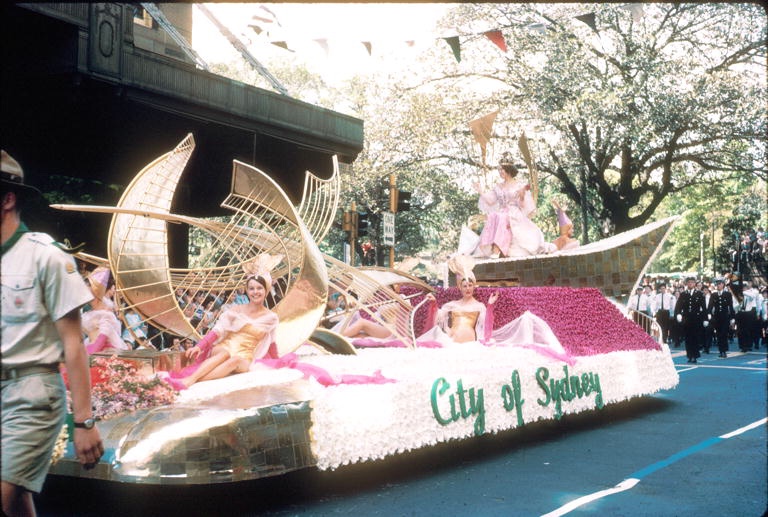
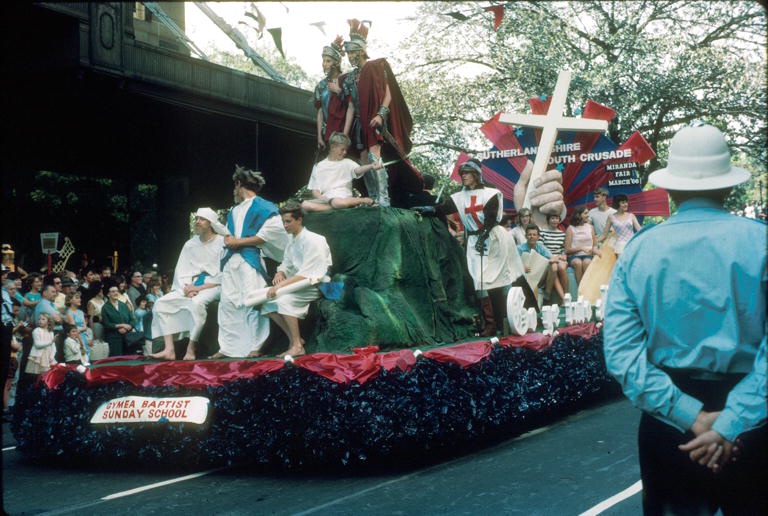





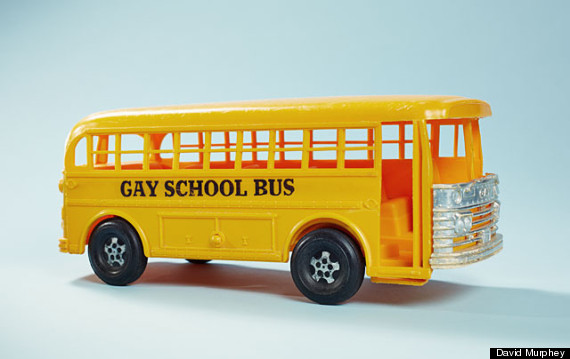
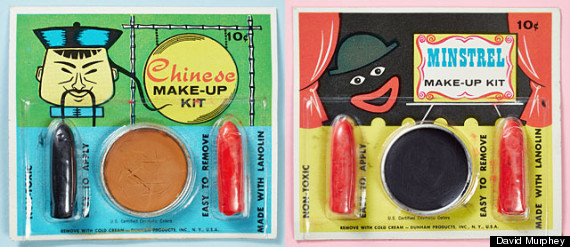
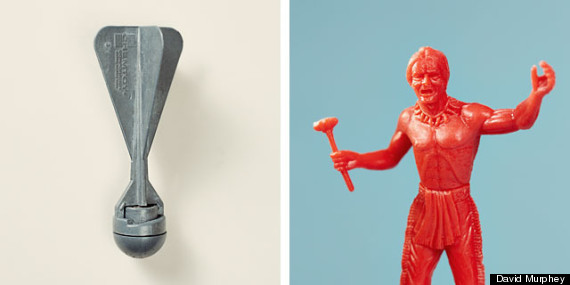

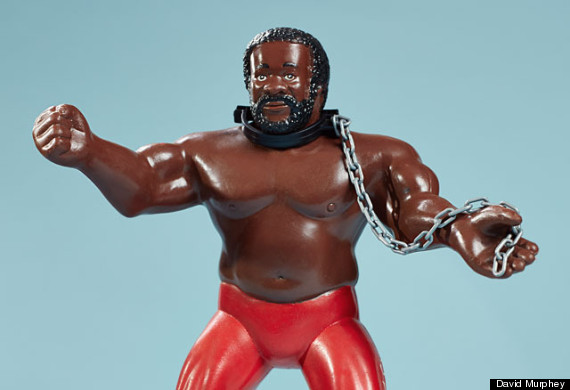


:max_bytes(150000):strip_icc()/GettyImages-152921912-56a0c56a5f9b58eba4b3ae0e.jpg)
:max_bytes(150000):strip_icc()/1280px-Jetavana-56a0c4d63df78cafdaa4dae0.jpg)
:max_bytes(150000):strip_icc()/Devadatta_-Inciting_an_elephant_to_charge_at_the_Buddha-56a0c5343df78cafdaa4de32.jpg)
:max_bytes(150000):strip_icc()/Dhammadinna-56a0c5375f9b58eba4b3ac5a.jpg)
:max_bytes(150000):strip_icc()/_._._14-5b031cb53128340037a927ee.jpg)
:max_bytes(150000):strip_icc()/The_head_of_Mahakasyapa-5b031d848e1b6e0036595607.jpg)
:max_bytes(150000):strip_icc()/Sariputra_and_Maudgalyayana_become_disciples_of_Buddha_Roundel_31_buddha_ivory_tusk-5b031e6ca474be0037acc63f.jpg)
:max_bytes(150000):strip_icc()/1024px-074_Marraige_of_Suddhodana_and_Mahapajapati_9189420589-5b031f33eb97de003dc88629.jpg)
:max_bytes(150000):strip_icc()/Bhikkhuni_Patacara-_Shwezigon-_Bagan-56a0c5353df78cafdaa4de40.jpg)
:max_bytes(150000):strip_icc()/Siddhartha_leaving_sleeping_Yashodhara_and_Rahula_Roundel_17_buddha_ivory_tusk-5b0320af119fa80037692d87.jpg)
:max_bytes(150000):strip_icc()/1024px-Buddha_mit_Mogallana_und_Sariputta-5b032172fa6bcc00363ca083.jpg)
:max_bytes(150000):strip_icc()/Upali_Thein_temple_02-5b0325dbeb97de003dc934ec.jpg)
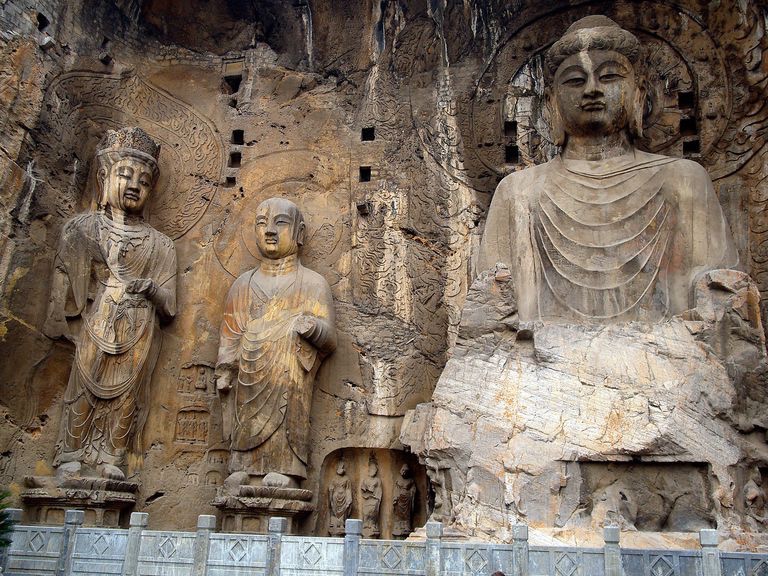


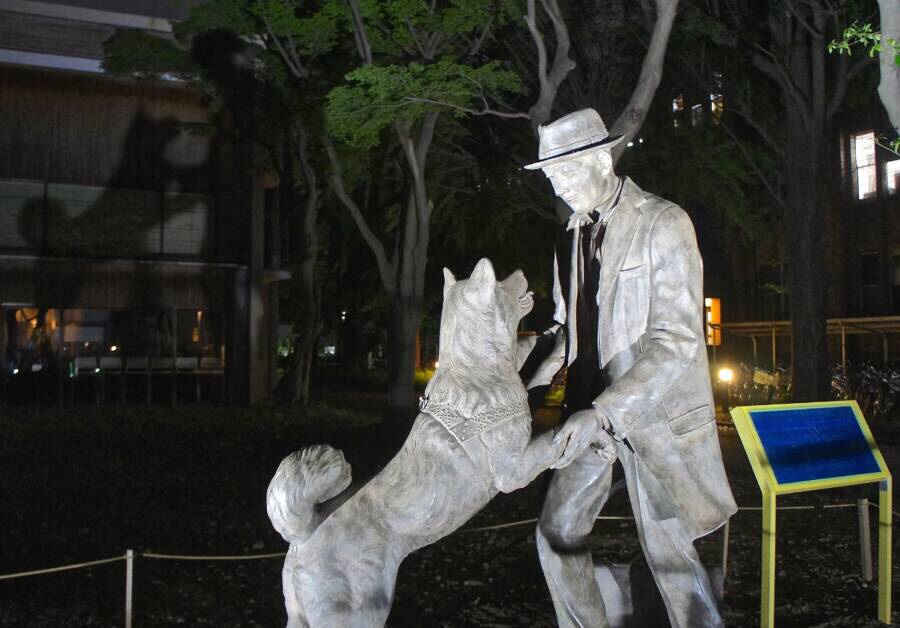


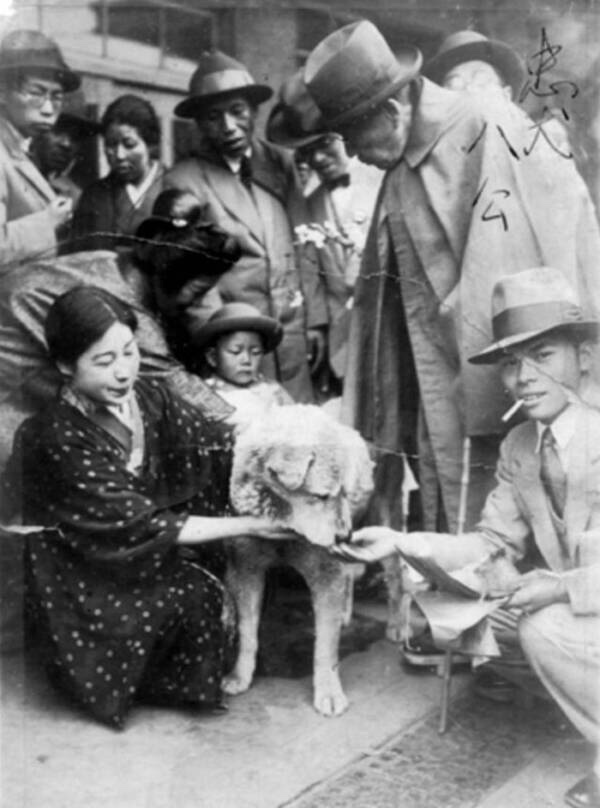
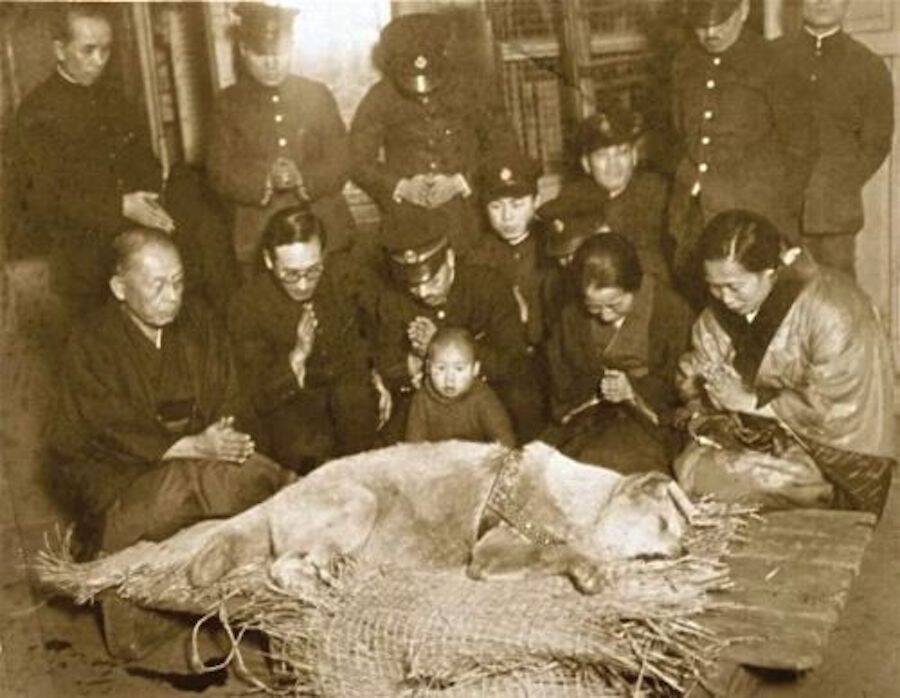


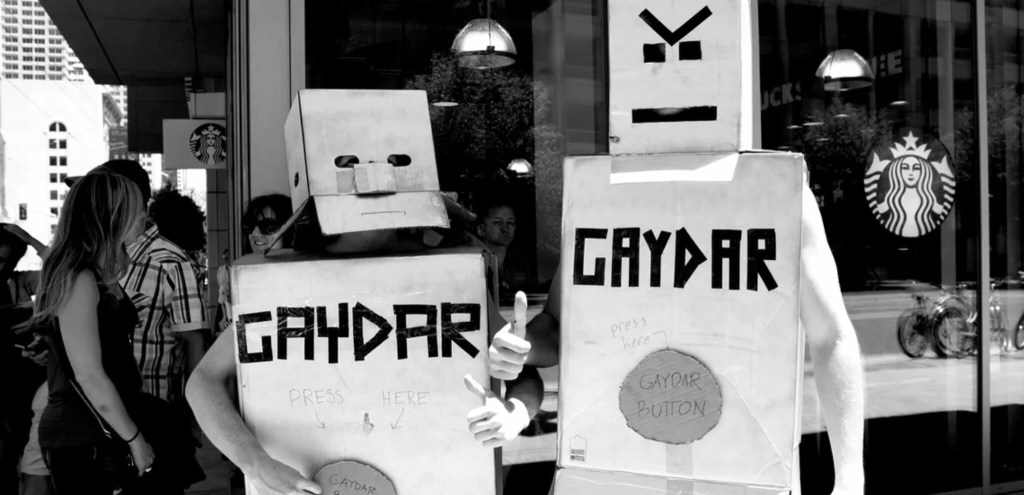



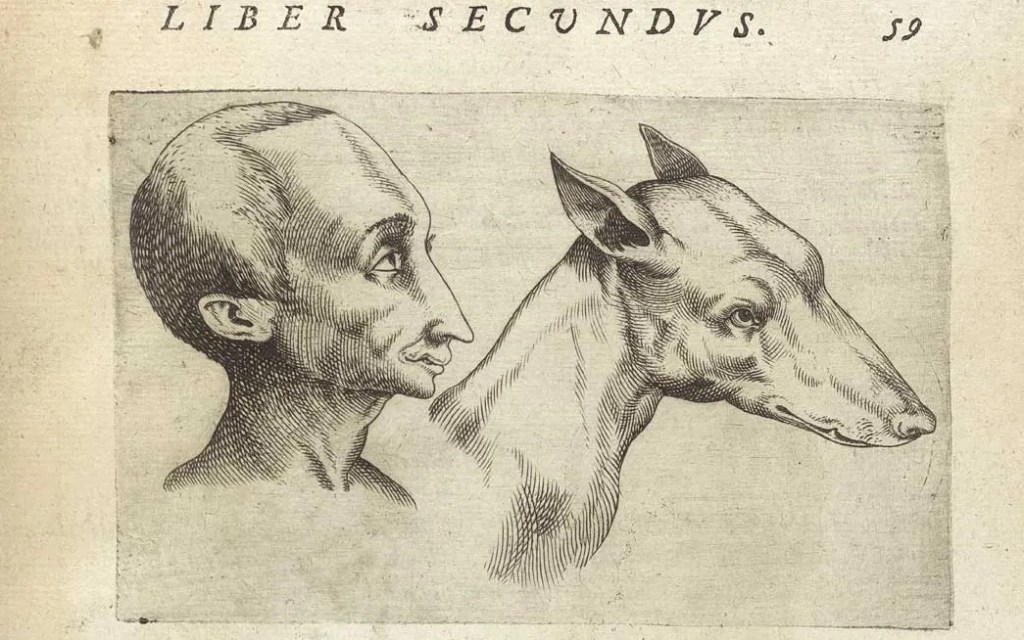
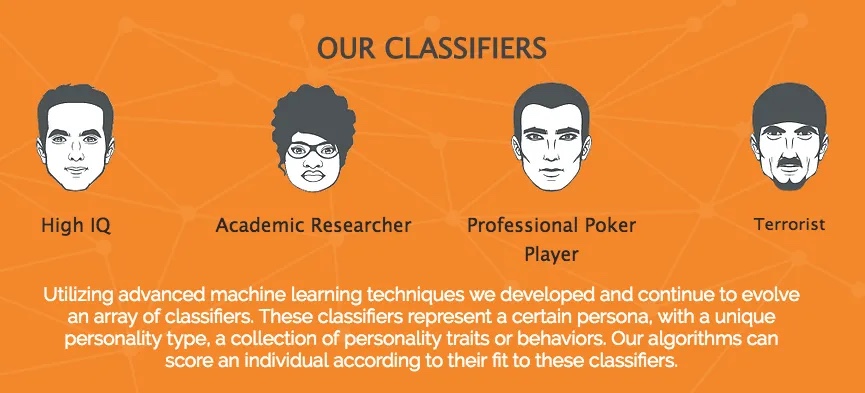


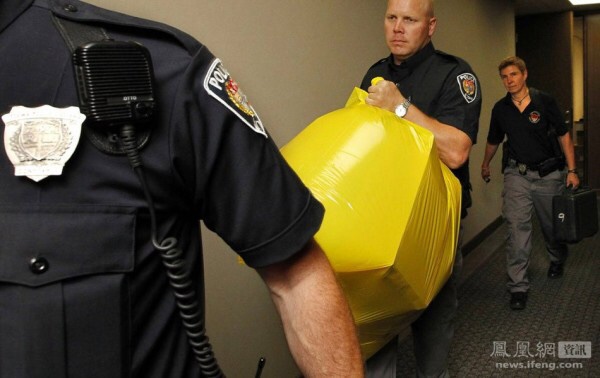
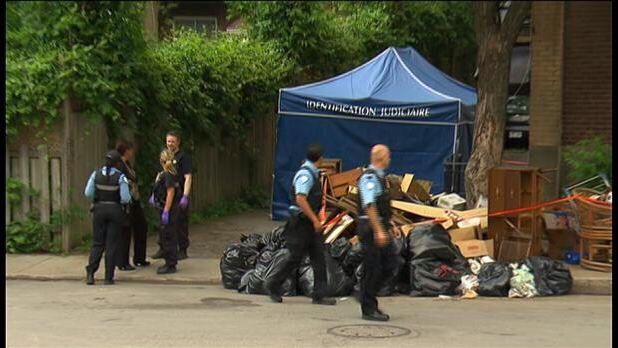


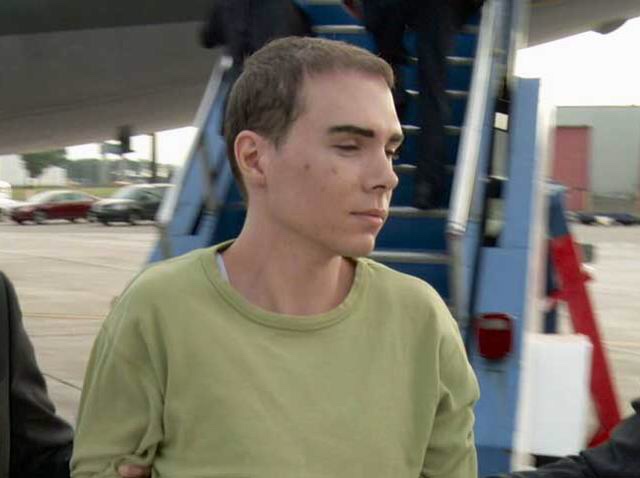






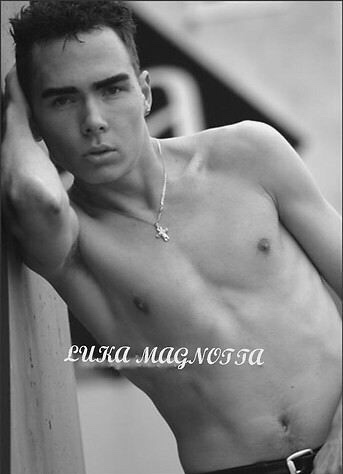








 timalderman