The Forgotten Sydney of AC/DC is a must watch mini documentary by the Sydney Morning Herald’s Tom Compagnoni, featuring the combined recollections of Mark Evans (Bass), Dave Evans (Vocals), Noel Taylor (drums) and Rob Bailey.
One of the most interesting revelations is that of session drummer Tony Currenti, owner of Tonino’s Penshurst Pizzeria, who played on High Voltage but had to turn the gig down due to passport issues.
Mark Evans also relates his views on the current Sydney scene, or lack of. Lets hope that it serves as a warning and that we fight to keep our local Perth music scene alive and kicking.
The view north-west from the State Office Block construction site in about 1964. Photograph: City of Sydney Archives
Over the past two centuries Sydney’s architectural landscape has been continually transformed and many buildings have been consigned to dust. A new exhibition at the Museum of Sydney, Demolished Sydney, which opens on 19 November, remembers the city’s lost buildings from the Garden Palace to the ‘Black Stump’
RURAL BANK OF NEW SOUTH WALES, 1936-82
The bank, pictured here in the 1950s, was torn down and replaced by the Colonial Centre in 1985, despite vehement opposition from 7,000 Sydneysiders. The building was an important element in the harmonious art deco streetscape of Martin Place, where a number of commercial buildings complemented one another in style and size. The campaign to save the Rural Bank galvanised a new appreciation of the city’s art deco architecture and saved many buildings in the central business district.
Photograph: Commonwealth Bank Archives
PYRMONT INCINERATOR, 1937-92
The incinerator stood on a high sandstone promontory overlooking the Blackwattle Bay, now occupied by a Meriton apartment block. Designed by the architects Walter Burley Griffin and Eric Nicholls, it was a remarkable building, as stylish as it was functional. It was decommissioned in 1971 and deteriorated until the late 80s, when the site was sold. Despite protests the incinerator was demolished in 1992 – one of many local landmarks swept away by urban consolidation.
Photograph: City of Sydney Archives
HOTEL AUSTRALIA, 1891-1971
The hotel – once the city’s grandest – was a landmark for 80 years. When it opened in 1891 its belle époque opulence ranked it with the best hotels in Europe and the US. But, as new city hotels were constructed in the 60s, the Hotel Australia went into decline, unable to compete with international ‘jet set’ standards. The last guests checked out in June 1971. Most of the buildings on the block were demolished for Harry Seidler’s award-winning MLC Centre.
Photograph: Hall & Co/State Library of NSW
REGENT THEATRE, 1928-89
The Regent Place arcade and apartment tower stand where the Regent Theatre once screened Hollywood’s finest films. This part of George Street was an amusement mecca in the 30s and 40s, with the Trocadero Palais de Dance next door, the Century and the Plaza theatres across the road and the Victory Theatre three doors down. Cinemas struggled after the arrival of television in 1956. The construction of the first Hoyts multiplex in 1976 marked the end for single-screen theatres. The Regent, the grandest of them all, couldn’t last.
Photograph: Sam Hood/State Library of NSW
GARDEN PALACE, 1879-82
The Garden Palace was built for the 1879 Sydney International Exhibition and was one of the city’s most significant buildings until it turned to ash in a spectacular fire. A southern rival to London’s Crystal Palace (built for the Great Exhibition of 1851) and a testament to the industry and resources of the colony, it was framed in timber and clad in bricks and glass. A memorial gate now stands in the Royal Botanic Gardens in Macquarie Street.
Photograph: Richards & Co/National Library of Australia
COMMISSARIAT BUILDINGS, 1809-1939
The Museum of Contemporary Art today occupies the site where once stood the two oldest government buildings in the state – the convict-hewn Commissariat buildings, built in 1809 and 1812. In 1938 The Royal Australian Historical Society urged that these heritage buildings be retained as a museum of Australian history. But they were demolished in 1939 as part of a plan to build an overhead railway and expressway at Circular Quay, along with a Maritime Services Board building.
Photograph: Eleanor Georgina Shaw/State Library of NSW
ROWE STREET, 1875-1972
Before its demolition, Rowe Street’s tiny shops with their swinging signs created a lively, artisan atmosphere. The laneway was absorbed into the plaza beneath the MLC Centre tower and most of the shops were demolished. The street’s loss continues to be mourned by many Sydneysiders, who relished its cosmopolitan ambience.
Photograph: City of Sydney Archives
FORT MACQUARIE TRAM DEPOT, 1902-58
Before the Sydney Opera House was built, Bennelong Point was the site of the Fort Macquarie tram depot. And before that, it was a place for lime production, naval defence, transport and, finally, entertainment. Earlier still, it was Point Bennelong, named for the Wangal man who befriended the British colonists. To the Gadigal people, the traditional owners of this land, this spit of sandstone is Dubbagullee.
Photograph: State Records Authority of NSW
ST STEPHEN’S CHURCH, 1857-1935
The steepled church stood cheek by jowl with Victorian terrace houses and colonial shops on Phillip Street. It was requisitioned for the creation of a broad thoroughfare that would become Martin Place. The development was envisaged in 1891 but not completed until 1935. St Stephen’s was just one of the buildings swept aside to improve traffic flow at a time when Sydney was undergoing a rapid transition.
Photograph: St Stephen’s Uniting Church
STATE OFFICE BLOCK, 1967-97
The tower was known as the ‘Black Stump’ until its demolition, when it was replaced by Aurora Place. Part of the 60s renewal and modernisation of the city, the block was, briefly, the tallest tower in Sydney. It will be remembered as one of the city’s earliest examples of modern office layout, complete with revolutionary open-plan and modular spaces and Scandinavian design. When government policy shifted to leasing office space in the late 80s, the building was sold.
Synopsis: A British Businessman in South Africa, Member of Parliament in the Cape Colony, Prime Minister of the Cape Colony, imperialist, acquired a British Royal Charter, formed the British South African Company (BSAC) that colonized Zimbabwe.First Name: Cecil JohnLast Name: RhodesDate of Birth: 5 July 1853Date of Death: 26 March 1902
The Early Years
Cecil John Rhodes was born on 5 July 1853 in the small hamlet of Bishops Stortford, England. He was the fifth son of Francis William Rhodes and his second wife, Louisa Peacock. A priest of the Church of England, his father served as curate of Brentwood Essex for fifteen years, until 1849, when he became the vicar of Bishop’s Stortford, where he remained until 1876. Rhodes had nine brothers and two sisters and attended the grammar school at Bishop’s Stortford. When he was growing up Rhodes read voraciously but vicariously, his favourite book being The Meditations by Marcus Aurelius, but he equally adored the highly esteemed historian Edward Gibbon and his works on the great Roman Empire.
Rhodes fell ill shortly after leaving school and, as his lungs were affected, it was decided that he should visit his brother, Herbert, who had recently immigrated to Natal. It was also believed, by both Rhodes and his father, that the business opportunities offered in South Africa would be able to provide Rhodes with a more promising future than staying in England. At the tender age of 17 Rhodes arrived in Durban on 1 September 1870. He brought with him three thousand pounds that his aunt had lent him and used it to invest in diamond diggings in Kimberley.
After a brief stay with the Surveyor-General of Natal, Dr. P. C. Sutherland, in Pietermaritzburg, Rhodes joined his brother on his cotton farm in the Umkomaas valley in Natal. By the time Rhodes arrived at the farm his brother had already left the farm to travel 650 kilometres north, to the diamond fields in Kimberley. Left on his own Rhodes began to work his brother’s farm, growing and selling its cotton, proving himself to be an astute businessman despite his young age. Cotton farming was not Rhodes’ passion and the diamond mines beckoned. At 18, in October 1871, Rhodes left the Natal colony to follow his brother to the diamond fields of Kimberley. In Kimberley he supervised the working of his brother’s claim and speculated on his behalf. Among his associates in the early days were John X Merriman and Charles D. Rudd, of the infamous Rudd Concession, who later became his partner in the De Beers Mining Company and the British South Africa Company.
In 1872 Rhodes suffered a slight heart attack. Partly to recuperate, but also to investigate the prospects of finding gold in the interior, the Rhodes brothers trekked north by ox wagon. Their trek took them along the missionary road in Bechuanaland as far north as Mafeking, then eastwards through the Transvaal as far as the Murchison range. The journey inspired a love of the country in Rhodes and marked the beginning of his interest in the road to the north and the northern interior itself.
In 1873 Rhodes left his diamond fields in the care of his partner, Rudd, and sailed for England to complete his studies. He was admitted to Oriel College Oxford, but only stayed for one term in 1873 and only returned for his second term in 1876. He was greatly influenced by John Ruskin’s inaugural lecture at Oxford, which reinforced his own attachment to the cause of British Imperialism. Among his Oxford associates were Rochefort Maguire, later a fellow of All Souls and a director of the British South Africa Company, and Charles Metcalfe. At university Rhodes was also taken up with the idea of creating a ‘secret society’ of British men who would be able to lead the world, and spread to all corners of the globe the spirit of the Englishman that Rhodes so admired. He wrote of this society,
Why should we not form a secret society with but one object the furtherance of the British Empire and the bringing of the whole uncivilised world under British rule for the recovery of the United States for the making the Anglo-Saxon race but one Empire.’
His university career engendered in Rhodes his admiration for the Oxford ‘system’ which was eventually to mature in his scholarship scheme: ‘Wherever you turn your eye – except in science – an Oxford man is at the top of the tree’.
An Arch Imperialist
One of Rhodes’ guiding principles throughout his life, that underpinned almost all of his actions, was his firm belief that the Englishman was the greatest human specimen in the world and that his rule would be a benefit to all. Rhodes was the ultimate imperialist, he believed, above all else, in the glory of the British Empire and the superiority of the Englishman and British Rule, and saw it as his God given task to expand the Empire, not only for the good of that Empire, but, as he believed, for the good of all peoples over whom she would rule. At the age of 24 he had already shared this vision with his fellows in a tiny shack in a mining town in Kimberley, when he told them,
‘The object of which I intend to devote my life is the defence and extension of the British Empire. I think that object a worthy one because the British Empire stands for the protection of all the inhabitants of a country in life, liberty, property, fair play and happiness and it is the greatest platform the world has ever seen for these purposes and for human enjoyment’.
Rhodes’ British Empire corridor through Africa. Source
A few months later, in a confession written at Oxford in 1877, Rhodes articulated this same imperial vision, but with words that clearly showed his disdain for the people whom the British Empire should rule:
“I contend that we are the first race in the world, and that the more of the world we inhabit the better it is for the human race. Just fancy those parts that are at present inhabited by the most despicable specimen of human being, what an alteration there would be in them if they were brought under Anglo-Saxon influence…if there be a God, I think that what he would like me to do is paint as much of the map of Africa British Red as possible…”
One of Rhodes’ greatest dreams was a ribbon of red, demarcating British territory, which would cross the whole of Africa, from South Africa to Egypt. Part of this vision was his desire to construct a Cape to Cairo railway, one of his most famous projects. It was this expansive vision of British Imperial control, and the great lengths that Rhodes went to in order to fulfil this vision, which led many of his contemporaries and his biographers to mark him as a great visionary and leader.
Rhodes was both ruthless and incredibly successful in his pursuit of this scheme of a great British Empire. His contemporaries marvelled both at his prowess and incredible energy and capacity, but they also shuddered at his callousness and depravity in all his pursuit. His contemporaries, both awed and appalled by the man, wrote of him as a man of original ideas who sought more than the mere ‘getting and spending which limits the ambitions and lays waste the powers of the average man’. Yet although many people at the time saw Rhodes as a man of great vision, an unconquerable leader with the ability to pursue his aims across the vast African continent, there were nonetheless dissident voices who were shocked by Rhodes’ actions and those of his British South Africa Company. One such voice was that of Olive Schreiner, who, initially awed by Rhodes, had come to abhor him. In April of 1897 she wrote, in a letter to her friend, John Merriman:
“We fight Rhodes because he means so much of oppression, injustice, & moral degradation to South Africa; – but if he passed away tomorrow there still remains the terrible fact that something in our society has formed the matrix which has fed, nourished, built up such a man!”
The King of Diamonds
Rhodes’ plans for the Cape To Cairo Railway, 1899 Source
Whilst at Oxford, Rhodes continued to prosper in Kimberley. Before his departure for Oxford Rhodes had realised that the changing laws in the Kimberley area would force the ‘small man’ out of the diamond fields and would only leave larger companies able to operate in the mines. In light of this he sought to consolidate a number of mines with his partner, Charles Rudd. Rhodes had also decided to move away from the ‘New Rush’ Kimberley mine fields, that were higher in the ground and thus more accessible, back to the lower yielding ‘Old Rush’ area. Here Rhodes and Rudd bought the costly claim of what was known as old De Beers (Vooruitzicht Farm) which owed its name to Johannes Nicolaas de Beer and his brother, Diederik Arnoldus de Beer, the original owners of the farm Vooruitzicht. It was this farm that would lend its name to Rhodes and Rudd’s ever growing diamond company.
In 1874 and 1875 the diamond fields were in the grip of depression, but Rhodes and Rudd were among those who stayed to consolidate their interests. They believed that diamonds would be numerous in the hard blue ground that had been exposed after the softer, yellow layer near the surface had been worked out. During this time the technical problem of clearing out the water that was flooding the mines became serious and he and Rudd obtained the contract for pumping the water out of the three main mines.
Rhodes had come to the realisation that the only way to avoid the cyclical boom and bust of the diamond industry was to have far greater control over the production and distribution of diamonds. And so, in April 1888, in search of an oligopoly over diamond production, Rhodes and Rudd launched the De Beers Consolidated Mines mining company. With 200 000 pounds capital the Company, of which Rhodes was secretary, owned the largest interest in mines in South Africa. Rhodes greatest coup was to get Barney Barnato, owner of the Kimberley mine, to go partnership with Rhodes’ De Beers Company. Of the encounter Barnato later wrote:
“When you have been with him half an hour you not only agree with him, but come to believe you have always held his opinion. No one else in the world could have induced me to into this partnership. But Rhodes had an extraordinary ascendancy over men: he tied them up, as he ties up everybody. It is his way. You can’t resist him; you must be with him.”
With his acquisition of most of the world’s diamond mines Rhodes became an incredibly rich man. But Rhodes was not after wealth for wealth’s sake, he was acutely aware of the relationship between money and power, and it was power which he sought. Hans Sauer wrote of a conversation he had had with Rhodes whilst looking over the Kimberley diamond mine, where Sauer had asked Rhodes, ‘what do you see here?’, and, Sauer writes, ‘with a slow sweep of his hand, Rhodes answered with the single word: “Power”.’
In the early 1880s gold was discovered in the Transvaal, sparking the Witwatersrand Gold Rush. Rhodes considered joining the rush to open gold mines in the region, but Rudd, convinced him that the Witwatersrand was merely the beginning, and that far greater gold fields lay to the north, in present day Zimbabwe and Zambia. As a result Rhodes held back while other Kimberley capitalists hastened to the Transvaal to stake the best claims. In 1887 when Rhodes finally did act and formed the Goldfields of South Africa Company with his brother Frank, most of the best claims were already taken. Goldfields South Africa performed very poorly, prompting Rhodes to look towards the north for the gold fields that Rudd had assured him were lying in wait.
The Statesman
In 1880 Rhodes prepared to enter public life at the Cape. With the incorporation of Griqualand West into the Cape Colony in 1877 the area obtained six seats in the Cape House of Assembly. Rhodes chose the constituency of Barkley West, a rural constituency in which Boer voters predominated, and at age 29 was elected as its parliamentary representative. Barkley West remained faithful to Rhodes even after the Jameson Raid and he continued as its member until his death.
The chief preoccupation of the Cape Parliament when Rhodes became a member was the future of Basutoland, where the ministry of Sir Gordon Sprigg was trying to restore order after a rebellion in 1880. The ministry had precipitated the revolt by applying its policy of disarmament to the Basuto. Seeking expansion to the north and with prospects of building his great dream of a Cape to Cairo railway, Rhodes persuaded Britain to establish a protectorate over Bechuanaland (now Botswana) in 1884, eventually leading to Britain annexing this territory.
Rhodes seemed to have immense influence in Parliament despite the fact that he was acknowledged to be a poor speaker, with a thin, high pitched voice, with little aptitude for oration and a poor physical presence. What made Rhodes nonetheless so incredibly convincing to his contemporaries has remained much of a mystery to his biographers.
The Push for Mashonaland
Rhodes’ imperial vision for Africa was never far from his mind. In 1888 Rhodes looked further north towards Matabeleland and Mashonaland, in present day Zimbabwe. Matabeleland fell squarely in the territory which Rhodes hoped to conquer, from the Cape to Cairo, in the name of the British Empire. It also was believed to hold vast, untapped gold fields, which Rudd believed would be of far greater value than those discovered in the Witwatersrand.
In pursuit of his imperial dream and in his desire to make up for the failure of his Gold Fields Mining Company, Rhodes began to explore ways in which to exploit the mineral wealth of Matabeleland and Mahsonaland. The King of Matabeleland, King Lobengula, who was believed by the British to also rule over Mashonaland, had already allowed a number of British miners mineral rights in his kingdom. He had also sent a number of his men to labour in the diamond mines, thus setting a precedence for engagement with him. However, the King had consistently stated quite clearly that he wanted no British interference in his own territory.
In 1887 Lobengula signed a treaty with the Transvaal Government, an act that convinced Rhodes that the Boere were trying to steal ‘his north’. By this stage the ‘scramble for Africa’ was also already well under way and Rhodes became convinced that the Germans, French and Portuguese were going to try to take Matabeleland. These fears made Rhodes rapidly mobilise in order to get Matabeleland under British control. Although the British government at the time was against further colonial expansion to the north of South Africa, Rhodes was able to use the threat of other imperial powers, such as Germany, taking over the land to push the British Government to take action.
The Government sent John Smith Moffat, the then Assistant Commissioner to Sir Sidney Shippard in Bechuanaland (now Botswana) who was well known to the Matabele Chief Lobengula as their fathers were friends, to negotiate a treaty with Lobengula. The result was the Moffat Treaty of February 1888, essentially a relaxed British protection treaty. The Moffat Treaty was however between Lobengula and the British Government, Rhodes himself was hardly a relevant player in this. Worried that the Moffat Treaty was too weak to hold Matabeleland, and convinced that the Dutch and Germans were making plans to take the territory and desperate for exclusive mining rights in the region, Rhodes concocted to his own plan to take control of the territory. With his business partner Rudd, Rhodes formed the British South Africa Company (BSAC), crafted on the British and Dutch East India company models. The BSAC was a commercial-political entity aiming at exploiting economic resources and political power to advance British finance capital.
Shortly after the Moffat Treaty, in March 1888, Rhodes sent his business partner Charles Rudd to get Lobengula to sign an exclusive mining concession to the British South Africa Company. When Rudd arrived at Lobengula’s kraal however, there were a number of other British concession hunters already there, seeking to undertake the exact same manoeuvre as Rhodes’ BSAC. Through Rhodes influence however, Rudd was able to win over the support of the local British officials staying with Lobengula, a move which ultimately convinced Lobengula that Rudd had more power and influence than any of the other petitioners seeking concessions from him.
After much negotiation Rudd was eventually able to get Lobengula to sign a concession giving exclusive mining rights to the BSAC in exchange for protection against the Boere and neighbouring tribes. This concession became known as the Rudd Concession. Lobengula’s young warriors were angry and inflamed and were itching to kill the white men who were entering their lands. Lobengula however feared his people would be defeated if they attacked the whites, and so it is likely that he signed the Rudd Concession in the hopes of gaining British protection and thereby preventing a Boer migration into his lands which would then incite his warriors to battle. For Lobengula his options were essentially to either concede to the British or to the Dutch. In the belief that he was protecting his interests he sided with the seemingly more lenient and liberal British. Like so many documents signed by Africans during the colonial period, the Rudd Concession was however not what it claimed to be, but rather became a justifying document for the colonisation of the Ndebele and the Shona.
Using the Rudd Concession, despite initial protests by the British Government, Rhodes managed to acquire a Royal Charter (approval from the British monarch) for his British South Africa Company. The Royal Charter allowed Rhodes to act on behalf of British interests in Matabeleland. It gave the company full imperial and colonial powers as it was allowed to create a police force, fly its own flag, construct roads, railways, telegraphs, engage in mining operations, settle on acquired territories and create financial institutions.
Rhodes convinced the British Government to give his company the right to control those parts of Matabeleland and Mashonaland that were ‘not in use’ by the African residents there and to provide ‘protection’ for the Africans on the land that was reserved for them. This proposal, which would cost the British taxpayer nothing but would extend the reaches of the British Empire, eventually found favour in London. The charter was officially granted on 29 October 1889. For Rhodes is BSAC with its Royal charter was the means whereby which to expand the British Empire, which a timid government and penurious British treasury were not about to accomplish
Rhodes reclining on one of his many voyages to the north. Source
After gaining his charter from the British Government Rhodes and his compatriots in the BSAC essentially felt that Matabeleland and Mashonaland were now under their control. Rhodes felt that war with the Ndebele was inevitable and would not allow his plans for extending the British Empire to be thwarted by “a savage chief with about 8 000 warriors”. Rhodes was determined that white settlers would soon occupy Matabeleland and Mashonaland, and the Ndebele could not resist them.
To gain power over Matabeleland and Mashonaland Rhodes hired Frank Johnson and Maurice Heany, two mercenaries, to raise a force of 5 00 white men who would support BammaNgwato, enemies of Lobengula’s, in an attack on Lobengula’s kraal. Johnson offered to deliver to Rhodes the Ndebele and Shona territory in nine month for £87 500. Johnson was joined by Frederick Selous, a hunter with professed close knowledge of Mashonaland. Rhodes advised Johnson to select as recruits primarily the sons of rich families, with the intention that, if the attack did fail and the British were captured, the British Government would be left with no choice but to send armed forces into Matabeleland to rescue the sons of Britain’s elite. In the end Johnson’s attack was called off because Rhodes had received news that Lobengula was going to allow Rhodes’ men into Matabele and Mashonaland without any opposition.
Despite Lobengula capitulating and giving permission for vast numbers of BSAC miners to enter his territory, Rhodes calculated a new plan to gain power in the region. In 1890 Rhodes sent a ‘Pioneer Column’ into Mashonaland, a column consisting of around 192 prospecting miners and around 480 armed troopers of the newly formed British South Africa Company Police, who were ostensibly there to ‘protect’ the miners. By sending in this column, Rhodes had deviously planned a move which would either force Lobengula to attack the settlers and then be crushed, or force him to allow a vast military force to take seat in his country. In the words of Rutherfoord Harris, a compatriot of Rhodes:
“….if he attack us, he is doomed, if he does not, his fangs will be drawn and the pressure of civilisation on all his border will press more and more heavily upon him, and the desired result, the disappearance of the Matabele as a power, if delayed is yet the more certain.”
The men who formed part of the Pioneer Column were all promised both gold concessions and land if they were successful in settling in Mashonaland.
On 13 September 1890, a day after the Pioneer Column arrived in Mashonaland,Rhodes’s BSAC invaded and occupied Mashonaland without any resistance from Lobengula. They settled at the site of what was later to become the town of Salisbury, present day Harare, marking the beginning of white settler occupation on the Zimbabwean plateau. They raised the Union Jack (the British national flag) in Salisbury, proclaiming it British territory.
The prospectors and the company had hoped to find a ‘second Rand’ from the ancient gold mines of the Mashona, but the gold had been worked out of the ground long before. After failing to find this perceived ‘Second Rand’, Rhodes, instead of allowing the settlers mining rights, as had been agreed to by Lobengula, granted farming land to settler pioneers, something which went expressly against the Rudd Concession.
The end of the Matabele
In conceding Mashonaland to the BSAC Lobengula had avoided going to war with the British and had kept his people alive, and much of his territory intact. But unfortunately he had only been able to delay the inevitable. With no gold was found in Mashonaland, Rhodes’ BSAC was facing complete financial ruin. Leander Jameson suggested to Rhodes that ‘getting Matabeleland open would give us a tremendous life in shares and everything else’. Gaining the Matabeleland territory would also play directly into Rhodes megalomaniac vision of expanding the British Empire across Africa.
And so, in 1893, the BSAC eventually clashed with the Ndebele, in what Rhodes had perceived as an inevitable war. The settlers justified their initial attacks against the Ndebele to the British Government by arguing that they were protecting the Shona against the ‘vicious’ and ‘savage’ Ndebele impis. This was however a ploy, consciously concucted by Jameson in conjunction with Rhodes, in order to ensure that the British Government would not object to their further intrusions into Matabeleland by creating the impression that the Ndebele were the first aggressors. To fight their war the company recruited large bands of young mercenaries who were promised land and gold in exchange for their fighting power.
The final blow any hopes that the Ndebele might avoid war, came when Jameson was able to convince the British Government that Lobengula had sent a massive impi of 7 000 men into Mashonaland, who then gave Jameson leave to engage in defensive tactics. There is no indication that the impi Jamseon reported on had ever existed. Lobengula himself, in a last appeal to the legal/rational system the British seemed to so fervently uphold, wrote to the British High Commissioner saying, “Every day I hear from you reports which are nothing but lies. I am tired of hearing nothing but lies. What Impi of mine have your people seen and where do they come from? I know nothing of them.”
An artist’s impression of the British battling against the Ndebele Source
It was however far too late for Lobengula. With the permission to engage in defensive action from the British Government Rhodes joined Jameson in Matabeleland and his group of mercenary soldiers struck a quick and fatal blow at the Ndebele. Rhodes’ mercenaries were in possession of the latest in munitions technology, carrying with them into the veld maxim guns, which, like machine guns, could fire rapid rounds. The Ndebele Impis were helpless in the face of this brutal killing technology and were slaughtered in their thousands. Lobengula himself realised he could not face the British in open combat and so he burnt down his own capital and fled with a few warriors. He is presumed to have died shortly afterwards in January of 1894 from ill health.
The war against the Matabele, fought mostly by voluntary mercenaries, cost around £66 000. Most of the money to pay for this war came directly from Rhodes Consolidated Goldfields Company, which by this point had begun to produce excellent yields from the deeper lying gold fields. The conquered lands were named Southern and Northern Rhodesia, to honour Rhodes. Today, these are the countries of Zimbabwe and Zambia. By the 1890s these conquered territories were being called Southern and Nothern Rhodesia.
The Precursor to Apartheid
In July 1890 Rhodes became the Prime Minister of the Cape colony, after getting support from the English-speaking white and non-white voters and a number of Afrikaner-bond, whom he had offered shares in the British South Africa Company. One of Rhodes most notorious and infamous undertakings as Prime Minister in South Africa, was his institution of the Glen Grey Act, a document that is often seen as the blueprint for the Apartheid regime that was to come.
On 27 July 1894, Rhodes gave a rousing speech, full of arrogance and optimism, to the Parliament of Cape Town that lasted more than 100 minutes. In this speech Rhodes was opening debate on the ‘Native’ Bill that he had been working on for two years. The bill had initially been intended merely as an administrative act to bring more order to the overcrowded eastern Cape district of Glen Grey, but in his typical fashion Rhodes had turned this routine administrative task into something far bigger, the formulation of what he described as a ‘Native Bill for Africa’. In much of his speech Rhodes set out, in clear cut terms, the chief purpose of his ‘Native Bill’, to force more Africans into the wage-labour market, a pursuit which would undoubtedly also help Rhodes in his own mining claims in Kimberley and the Transvaal.
Rhodes opened his speech on the Glen Grey Act with the following words:
‘There is, I think, a general feeling that the natives are a distinct source of trouble and loss to the country. Now, I take a different view. When I see the labour troubles that are occurring in the United States, and when I see the troubles that are going to occur with the English people in their own country on the social question and the labour question, I feel rather glad that the labour question here is connected with the native question.’
He then continued,
‘The proposition that I would wish to put to the House is this, that I do not feel that the fact of our having to live with the natives in this country is a reason for serious anxiety. In fact, I think the natives should be a source of great assistance to most of us. At any rate, if the whites maintain their position as the supreme race, the day may come when we shall all be thankful that we have the natives with us in their proper position….. I feel that I am responsible for about two millions of human beings. The question which has submitted itself to my mind with regard to the natives is this ”” What is their present state? I find that they are increasing enormously. I find that there are certain locations for them where, without any right or title to the land, they are herded together. They are multiplying to an enormous extent, and these locations are becoming too small…. The natives there are increasing at an enormous rate. The old diminutions by war and pestilence do not occur… W e have given them no share in the government ”” and I think rightly, too ”” and no interest in the local development of their country. What one feels is that there are questions like bridges, roads, education, plantations of trees, and various local questions, to which the natives might devote themselves with good results. At present we give them nothing to do, because we have taken away their power of making war ”” an excellent pursuit in its way ”” which once employed their minds…. We do not teach them the dignity of labour, and they simply loaf about in sloth and laziness. They never go out and work. This is what we have failed to consider with reference to our native population… What I would like in regard to a native area is that there should be no white men in its midst. I hold that the natives should be apart from white men, and not mixed up with them… The Government looks upon them as living in a native reserve, and desires to make the transfer and alienation of land as simple as possible… We fail utterly when we put natives on an equality with ourselves. If we deal with them differently and say, ” Yes, these people have their own ideas,” and so on, then we are all right ; but when once we depart from that position and put them on an equality with ourselves, we may give the matter up… As to the question of voting, we say that the natives are in a sense citizens, but not altogether citizens ”” they are still children….’
The Glen Grey Act was to pressure Africans to enter the labour market firstly by severely restricting African access to land and landownership rights so that they could not become owners of the means of production, and secondly by imposing a 10 shilling labour tax on all Africans who could not prove that they had been in ‘bona fide’ wage employment for at least three months in a year. This land shortage coupled with a tax for not engaging in wage labour would push thousands of Africans into the migrant labour market. These were all measures essentially designed to ensure a system of labour migration which would feed the mines in both Kimberley and the Rand with cheap migrant labour. This section of the act instigated the terrible migrant-labour system that was to be so destructive in 20th century South Africa.
Another pernicious outcome of the Glen Grey Act was its affected on African land rights claims and restricted and controlled where they could live. According to the act ‘natives’, as African peoples were then termed, were no longer allowed to sell land without the permission of the governor, nor where they allowed to divide or sublet the land or give it as inheritance to more than one heir. The act also laid out that the Glen Grey area and the Transkei should remain “purely native territories”. This act was eventually to become the foundation of the 1913 Natives Land Act, a precursor to much of the Apartheid policy of separate development and the creation of the Bantustans.
Lastly the Glen Grey Act radically reduced the voting franchise for Africans. One of Rhodes primary policies as Prime Minister was to aim for the creation of a South African Federation under the British flag. A unified South Africa was an incredibly important political goal for Rhodes, and so when the Afrikaner Bondsmen came to Rhodes to complain about the number and rise of propertied Africans, who were competing with the Afrikaners and characteristically voted for English, rather than Afrikaans, representative. In response to the Afrikaners’ complaints, Rhodes decided to give them, in the Glen Grey Act, a policy which would disenfranchise the Africans competing with Afrikaners whilst also ensuring Africans could not own farms which would compete with the Afrikaners.
To disenfranchise Africans the Act raised the property requirements for the franchise and required each voter to be able to write his own name, address and occupation before being allowed to vote. This radically curtailed the number of Africans who could vote, essentially marking the beginning of the end for the African franchise. This new law allowed for the voter-less annexation of Pondoland. The Glen Grey Act also denied the vote to Africans from Pondoland no matter their education or property. Through the adoption of the Act, Rhodes managed to gradually persuade Parliament to abandon Britain’s priceless nineteenth-century ideal that in principle all persons, irrespective of colour, were equal before the law.
The Glen Grey Act was vigorously opposed by the English speaking members of the Cape Parliament, but Rhodes, with his forceful character, was able to push the act through Parliament, and in August 1984 Rhodes’ Glen Grey Act became law. The Glen Grey Act, which created the migrant labour system, formalised the ‘native reserves’ and removed the franchise of almost all Africans, is seen by many as lying the ground work for the Apartheid system of the 20th century.
The Fall of Giants
By 1895, at the height of his powers, Rhodes was the unquestioned master of South Africa, ruling over the destiny of the Cape and its white and African subjects, controlling nearly all of the world’s diamonds and much of its gold, and effectively ruling over three colonial dependencies in the heart of Africa.
‘The Rhodes Colosuss striding from Cape Town to Cairo’, from Punch Magazine, 1892 Source
Although Rhodes’ policies were instrumental in the development of British imperial policies in South Africa, he did not, however, have direct political power over the Boer Republic of the Transvaal. He often disagreed with the Transvaal government’s policies and felt he could use his money and his power to overthrow the Boer government and install a British colonial government supporting mine-owners’ interests in its place. In 1895, Rhodes precipitated his own spectacular fall from power when he supported an attack on the Transvaal under the leadership of his old friend, Leander Jameson. It was a complete failure and Rhodes had to resign as Prime Minister of the Cape and head of the British South Africa Company in January 1896. After having befriended the Afrikaners for so many years, Rhodes’ support of the Jameson Raid and his attempts to get the miners in Johannesburg to rise up in a coup against the leaders of the Transvaal, were seen by the Bondsmen and Afrikaners as a complete betrayal, and Rhodes’ hopes of ever uniting South Africa under one flag were dashed against the rocks.
Despite his meteoric loss of power and prestige Rhodes nonetheless continued his political activities. In mid 1896 the Shona and Ndebele people in Southern Rhodesia, present day Zimbabwe, rose up against their colonial oppressors in a bid for freedom. Rhodes personally travelled to the region to take charge of the colonial response. In his attacks on the Ndebele and Shona he was vindictive, resorting to a scorched earth policy and destroying all their villages and crops.
After months of fighting Rhodes decided that conciliation was the only option. Looking to negotiate a peace settlement with the Ndebele and Shona he headed into the Matopo Mountains where a great indaba was held. Rhodes asked the chiefs why the Africans had risen up in war against the colonisers. The chiefs replied that the Africans had for decades been humiliated by the white settlers, subjected to police brutality and pushed into forced labour. Rhodes listened to the complaints and told the chiefs, “All that is over”. The chiefs saw this as a promise that the conditions for them and their countrymen would be improved, and so they agreed with Rhodes that they would end their hostilities. As a part of their agreement Rhodes spent many days in the Matopo hills, and every day the Ndebele would come to him and voice all their complaints. In belief that their worries and complaints would be given just recognition, the Ndebele and Shona chiefs laid down their arms and returned to their fields. When he left Rhodes was lauded by the people whose suffering by the hands of colonists was only to increase in the next century, as the ‘Umlamulanmkunzi’, the peacemaker.
Vintage postage stamp of Cecil John Rhodes, founder of Rhodesia former Zimbabwe.
Thereafter, Rhodes was in ill-health, but he began concentrating on developing Rhodesia and especially in extending the railway, which he dreamed would one day reach Cairo, Egypt.
After the Anglo-Boer war that broke out in October 1899, Rhodes rushed to Kimberley to organise the defence of the town. However, his health was worsened by the siege, and after travelling to Europe he returned to the Cape in February 1902. He died on 26 March 1902 at Muizenberg in the Cape Colony (now Cape Town). Reportedly some of his last words were, ‘so little done, so much to do’. Rhodes was buried at the Matopos Hills, Rhodesia (Zimbabwe). He left £6 million (approx USD 960 million in 2015), most of which went to Oxford University to establish the Rhodes scholarships to provide places at Oxford for students from the United States, the British colonies, and Germany.
Rhodes never married and he did not have any known children and there is some suggestion that he was homosexual. This suggestion is based on the care and concern he showed to some men, but it is not enough to offer any solid truth
Almost 114 years after the death of Cecil Rhodes his memory lives on, with the Rhodes Must Fall campaign spreading from Cape Town to Oxford.
Once glorified by white colonialists, Rhodes is now more widely viewed as a prime villain in southern African history. Since his death he has been the subject of more than 30 biographies, so one is left to wonder if there is anything new that could be said about him. An attempt is made in the latest book by Robin Brown, The Secret Society: Cecil John Rhodes’s Plan for a New World Order – an attempt that fails.
The main claim of the book is that Rhodes established a “secret society” whose task was to extend British rule across the globe. This society continued to exist in different guises long after Rhodes’ death in 1902. Thereafter the society came to operate within, or under the guise of, other bodies – the Rhodes Trust operating as the “top layer of the structure”; in 1909 the society was renamed the Round Table; and from 1920 the Institute of International Affairs became its new face.
… a homosexual hegemony – which was already operative in the Secret Society – went on to influence, if not control, British politics at the beginning of the twentieth century.
Rhodes himself, the book alleges, was gay, and because homosexuality was a criminal offence in Britain at the time, he realised that gays only survived if they operated in:
… a society that remained secret, ring-fenced by wealth and political influence.
So it appears that the society’s secrecy was necessitated by both imperial aspirations and sexual inclinations.
The book contains major flaws, the chief of which is the lack of solid, supporting evidence. Brown claims that “Rhodes documented everything” – which was not actually the case in this regard. Just about the only documentary evidence cited to support the existence of this secret society is the codicil attached to Rhodes’ first will, which did indeed proclaim his intention to form such a society.
The problem is that this will was drawn up in 1877 when Rhodes had not yet accumulated great wealth. According to this early will he would leave all his worldly goods in trust to allow for the formation of a secret society, but his limited wealth at the time could hardly have made this possible.
The plan to form such a society also did not appear in Rhodes’ final will. One has to agree with Robert L. Rotberg – whose biography of Rhodes is the most substantial – that to read Rhodes’ plan today is:
… to sense the ruminations and even fantasies of a madcap bumbler.
Each chapter of Brown’s book has just a handful of endnotes, and there are hardly any references to source material that might substantiate the claims made. The problem is highlighted on pages 237-38. First it is stated that there is “clear evidence” that Lord Alfred Milner took over and transformed the secret society after Rhodes’ death. But on the very next page Brown writes that during this transformation process Milner “kept things covert” so that ‘there is little hard evidence’ of the society’s existence at the time.
This is the problem throughout the book – because the society was so secret it presumably kept no surviving records, meaning that there is no proof of its existence. The book thus comes to be based heavily on surmise and assertion. While critics can argue that it is impossible to prove that the society existed at all, Brown can retort that it is impossible to prove that it did not exist. What cannot be contested is that the book lacks referenced source material to substantiate its claims.
The suggestion that the Rhodes Trust was closely linked to the secret society is not credible. In Anthony Kenny’s massive bookon the history of the trust there are only three brief references to the idea of a secret society – and one of those is to a letter by Leo Amery stating that there was no such society.
The book contains some basic errors which undermine one’s confidence in the content and analysis. The cotton farm where Rhodes joined his brother on arrival in Natal in 1870 was not north-east of Durban, but to the west (p.6). Rhodes was not “of the era of British reformers who caused slavery to be outlawed”, nor did he display “liberal attitudes towards blacks” (p.19). Jameson was imprisoned for four months, not one (p.22). Rhodes’ brokers were not John Rudd and Robert Moffat – they were Charles Rudd and J.S. Moffat (p.57).
George V did not precede Victoria (p.154). Clinton’s presidential nomination speech was in 1991, not 1981 (p.168). Chamberlain was the colonial secretary, not foreign secretary (p.222 and elsewhere).
The book would have worked better had it been presented as an examination of the personal networks that Rhodes developed. There is no doubt that he succeeded in cultivating influential figures in the world of politics, business and finance in Britain, but Brown’s attempt to conjure up a secret society out of these networks is misguided and not adequately substantiated.
he book adds another dimension to this central thesis, making a rather startling assertion on page 144:
Earlier called Twickenham Ait or simply ‘the Parish Ayte’, this is the largest island in London’s stretch of the Thames, lying between Twickenham and the Ham riverside lands
The ait is rumoured to have been the site of a monastery and much later was supposedly used as a ‘courting ground’ by Henry VIII. From at least the early 17th century it attracted day-trippers, who came to picnic or fish here, and later to enjoy the renowned pies that were made with locally caught eels and served at the White Cross public house. Although this culinary speciality is the most obvious (and likely) explanation of the island’s present-day name, another story suggests that a royal mistress who had a house here called it Île de Paix (island of peace), which was folk-anglicised as ‘Eel Pie’.
Twickenham Rowing Club has been based on Eel Pie Island since 1880, twenty years after it was founded by local resident Henri d’Orleans, Duc d’Aumale.
Many of the island’s wood-framed properties date from the early 1900s, when they were used as summer houses by wealthy Edwardian Londoners. The structures survive well and fetch high prices. The island’s pedestrian bridge was built in 1957.
In the 1950s and 60s the ait became famous for its noisy jazz club at the Eel Pie Island Hotel, where the Rolling Stones first emerged, and The Who, Pink Floyd and Genesis also played gigs early in their careers. Eel Pie Island has even been called ‘the place where the Sixties began’. The hotel closed in 1967 and briefly became something of a hippie commune before it burned down during its demoliton in 1971.
In 1996 a boatyard and 60 neighbouring artists’ studios also burnt down. An appeal brought donations from the local community in Twickenham as well as from several rock stars.
The island is nowadays home to around two dozen artists’ studios, situated in and around the boatyard. Twice a year, the studios open their doors to visitors, providing an opportunity to talk to the artists and buy or commission new artworks.
Most of the island is private property and there’s not much opportunity to wander off the sole arterial path. As Miss Immy points out in her delightfully illustrated blog post on the subject, “To be honest, unless it’s the artists’ open day weekend, or you happen to know someone who lives on the island, there is very little to see there these days.”
THERE’S no nice way to say this. These are Sydney’s ugliest buildings. Where are Miley and her wrecking ball when you need them?
Sirius … not exactly a star amongst buildings.Source:News Corp Australia
SIMPLY being old should not guarantee buildings protection from the wrecking ball.
Jack Mundey and his union green bans saved Sydney’s The Rocks area from certain demolition, the result of which would have been a tremendous aesthetic and cultural loss. They saved buildings that meant something.
Now we save buildings of questionable character, and protect others that are downright ugly.
This week’s battle is over the striking Sirius apartments. Too ugly too stay? Too ugly to go?
And there are plenty of other eyesores in Sydney that really shouldn’t be allowed to stand the test of time.
Devoid of anything attractive … Greenway Housing Commission Flats.Source:News Limited
One example is found in Kirribilli. Grounded in the housing shortages of the post-war era are the terrifyingly ugly Greenway Housing Commission Flats on McDougall Street. They are an eyesore for commuters who cross the bridge north to south each day, as deep red brick adds an unfortunate flash of colour to what should be one of the most beautiful commutes in the country.
The oddly shaped footprint was created by left-over public land after the completion of the Harbour Bridge. Perhaps inspired by the equally aggressive design elements in America, the building was completed in 1948 and its style nominated as “functionalist”.
I saw an eyesore … Greenway is in a prime harbour location.Source:News Limited
A heritage listing note conveys that the building is “devoid of decorative detailing”. No kidding.
The worst part of the whole debacle, beyond the sad window coverings and slogans that appear in the windows from time to time is that the block appears to have been named after a true architectural genius — Francis Greenway, a convict turned public servant who is responsible for many of the great buildings left to us from colonial times.
Ferry silly … the Sydney Tower looks like a pot plant on a spike.Source:News Corp Australia
There are more modern creations that many believe could be flattened without many tears shed.
Architect Vince Squillace, from the award-winning architectural firm Squillace, wouldn’t lose sleep if the Sydney Tower was dismantled.
“It looks like a plant room at the top of another building,” he said. He believes if it was a third taller, it might not be the eyesore it is today.
“Sydney has a height restriction that should be challenged,” he said.
UNIT BLOCKS: THE HORROR STORIES OF TOMORROW
Over to you, Miley … the city is yours (well, parts of it).Source:Supplied
More worrying for him is the standard of many of the unit blocks being built at breakneck speed today, that will surely be the architectural horror stories of tomorrow.
“Already you can see render cracking, and stains from tiles leeching,” he warned. But back to the bucket on a stick, the Sydney Tower. At 309 metres it’s very tall. You see, there is something good about it. And it does have the Skywalk attraction, and the restaurant, 360 Bar and Dining is really quite yummy. But the architecture is awful, and being capped off with a Westfiled sign makes Sydney appear to be one giant mall.
What might have been … Blues Point Tower apartment building.Source:News Corp Australia
Blues Point Tower, stands like a lost kid’s building block on the carpet of North Sydney’s beautiful foreshore. It was completed in the early 60s and designed by the revered Harry Seidler. It doesn’t fit, work or enhance the harbourside landscape, and stands as a monument to what might have been.
The backstory to this edifice is that the tower is just one of many that were planned in a high density proposition for the location, but a planning backflip resulted in just one coming to fruition. Over the years there have been calls to tear it down, but in 1993 it was added to a local heritage register. Its saving grace is that the apartments themselves are good, and perhaps the building does tell part of Sydney’s architectural story.
Check it out … Dr Chau Chak Wing Building at the UTS Business School is seen as a work of art.Source:Supplied
UTS architecture has had a lot of publicity over the years. Most recently headlines were made after the Frank Gehry designed campus was opened to the public. The $180m Dr Chau Chak Wing Building demands a response — as do many of the world’s great artworks. They challenge the audience, they provoke discussion, they take the architectural landscape forward.
Does that make them successful, or even acceptable as part of our city? Here is a building that polarised opinion, from those who decried the wet paper bag aesthetic, to others who felt it was exciting.
Brutal … the UTS Tower at Broadway. Understated doesn’t even touch the edges.Source:News Limited
At the very least it is a creative diversion from the other buildings in the UTS portfolio.
Who, in their right minds, could admire the brutalism (there’s that word again) of the UTS Broadway building? To say it lacks humanity is to underplay the ghastly functionality so popular in the late 60s.
It needs a makeover, as do so many of Sydney’s buildings, soon.
There was no missing these blocks of flats as you came out on the north side of the Harbour Bridge. Personally, I always thought they were a bit of an eyesore, though they undoubtedly would have been considered very contemporary living in the 1950s/60s.
‘Greenway Flats’ from Milson Park. Photograph by Zoltan Klinger, 2003. Stanton Library
When it opened in 1954, ‘Greenway’ was the largest flat complex in Australia.
Named after the colony’s first public architect, Francis Greenway, it comprised four buildings, housing 309 one and two bedroom flats. The two taller 11 storey-buildings, A and C blocks, have steel frames. The smaller B and D blocks are concrete framed. The thick brick walls helped to bear the load. Before 1957, building heights in Sydney were restricted to 150 feet. ‘Greenway’ was 130 feet high.
Materials and labour were in such short supply after World War Two that construction took six years. The few exterior design features and modest window size, despite the view across the harbour, helped to reduce cost. Flats were leased as each block was finished.
Mr and Mrs Morgan photographed on the eve of the 50th anniversary of ‘Greenway’, in the flat they moved into when the building opened in 1954. Photograph by Tony Peri 2003, Stanton Library
‘Greenway’ was designed in the modern Functionalist style, a European idiom widely adopted in Australia in the 1930s. This rejected unnecessary decoration while relating a building’s form to its function. However, the architect Percy J. Gordon of the firm Morrow and Gordon was almost certainly influenced as well by the huge housing ‘projects’ being built on the east side of Manhattan in the 1940s. ‘Greenway’ bears a striking resemblance to the post-war apartments in New York’s Bedford-Stuyvesant area.
Upon completion, the project was favourably compared to nearby Victorian-era terraces, then regarded as ‘slums’. The first tenants were delighted. When Mrs V.W.H Briggs moved into her flat in 1953 she declared ‘If I won the lottery seven times over I wouldn’t leave here. This will do me!’ (Sunday Herald, 1 March, 1953) Part of the appeal was the provision of modern appliances. Electric stoves were installed in favour of gas units, stainless steel sinks were standard and the old-style kitchen dresser gave way to built-in cupboards. ‘Greenway’ consumed so much electricity that the County Council had to install a special substation beneath the building to provide power to the many washers, dryers and lifts, as well as 2308 lights, 1666 power outlets and 309 electric stoves.
A sense of community was quick to develop. Residents came to regard others on their own floor as neighbours. However, getting to know everyone in such a large complex was difficult. For this reason, the shared laundry facilities in the basement of each block served as meeting places for women who were generally responsible for washing and cleaning.
The experiences of ‘Greenway’ residents have varied much over the five decades since its opening. At first, the Housing Commission let the flats primarily to families and couples – ‘working class’ people unable to get adequate housing in the inadequate private rental market. Tenants ‘won’ their place there in publicly announced ‘lotteries’. In the 1980s, tenants were being drawn from a wide range of groups – single parents, aged pensioners, the unemployed and the disabled. The result is an increasingly diverse body of residents. Similarly in 1954 Australia was still a predominantly Anglo-Celtic society and most of those who lived at ‘Greenway’ were English-speaking. In 2001 there were 23 language groups represented in the buildings.
A living room in ‘Greenway’, 1954. NSW Housing Commission photograph. State Library of New South Wales
Public attitudes towards ‘Greenway’ also vary. When the building was opened, Milsons Point still had a large working class population and the tenants of the flats were of similar social background to those in the surrounding streets. Today, the harbour suburb is gentrified and the presence of community housing in such a desirable area is sometimes seen as an anomaly. However, as ex-resident Penny McKeon said in 2004, ‘There’s no reason why being of modest economic means should mean you’re not entitled to live in a place that just happens to have harbour views’.
In 2004 the Greenway Tenants Group and North Sydney Council commemorated the 50th anniversary of their home with ceramics and photography workshops and the publication of two books on the history of the buildings. Then, resident and historian Geoffrey Barrett wrote from direct experience: ‘I’m sure that the people responsible for the construction of Greenway… would be delighted, if not amazed, to know that their efforts are still providing decent housing half a century on, and within their building is a proud, neighbourly community – a community that has survived. (Greenway the great survivor: Fifty Years in the Life of a Public Housing Estate, 2004)
Audio: Listen to Penny McKeon’s memories of growing up at ‘Greenway’ in the 1960s from an interview with historian Ian Hoskins in 2004. Merle Coppell Oral History Collection, OH303
A man was walking his dog through Centennial Park in Sydney on the morning of February 7, 1986 when he noticed the body of a woman floating in Busby Pond. After police were alerted, two uniformed constables rowed out and dragged her in.
When detectives rolled her over on the riverbank, they realised it was 31-year old Sallie-Anne Huckstepp – the high-profile police whistle-blower and sex worker.
Huckstepp knew her days were numbered when she appeared on 60 Minutes in 1981and accused NSW detective sergeant Roger Rogerson of being a cold-blooded killer. The man she claimed Rogerson had killed was her boyfriend, heroin dealer Warren Lanfranchi.
The Lanfranchi hit
After robbing another dealer, Lanfranchi fired shots at a young policeman. To avoid facing charges, he asked his associate, notorious standover man Neddy Smith, to negotiate a price with Rogerson.
At the time, Rogerson had a sterling reputation in the force, and was slated to potentially become the next police commissioner.
Rogerson arranged for Neddy to drop Lanfranchi at Dangar Place in Chippendale, where he was waiting with 18 police officers.
He then shot Lanfranchi twice, later claiming it was in self-defence. Subsequent investigations found that while Rogerson may not have acted in self-defence, he had not done anything untoward. Rogerson was commended for his bravery.
Lanfranchi was the third man Rogerson had shot dead in a public place in five years.
Whistle-blowing
Two weeks later, Huckstepp turned up at police headquarters with her father and detailed a string of allegations against NSW police.
The claims included that Rogerson had executed her boyfriend, and stolen the $10,000 Lanfranchi had turned up to bribe the officer with. Huckstepp also gave details of payments she had been making to Vice and Drug Squad detectives for the past 10 years, while she had been a sex worker on Darlinghurst Road.
A life on the wild side
Huckstepp was born into a middle-class Jewish family and grew up in Sydney’s Eastern Suburbs. She attended the exclusive Dover Heights High School. But there was trouble at home. She didn’t get on with her step-mother and her behaviour became unruly.
At 14, she was sent to the Minda Remand Centre in Lidcombe. After being released, she found a job as a waitress at the Kings Cross club Whiskey A Go Go. She then got into heroin, and to support both her and her boyfriend’s habits, she started working the streets.
It was through her associations in Sydney’s underworld that Huckstepp became keenly aware that NSW police were heavily involved in criminal activities, and that Rogerson was one of the kingpins.
Partners in crime
In 1980, when Rogerson was moved to the Darlinghurst police station, he was the star detective of the Armed Holdup Squad. At the time, the heroin market was going through the roof in Kings Cross, and the opportunity to make some extra cash was hard to resist.
Neddy Smith was one of the top heroin distributors in the city, and he was raking it in. He and Rogerson formed a mutually-beneficial association.
Smith became a police whistle-blower in the early 1990s, testifying at the Independent Commission Against Corruption that Armed Holdup Squad detectives had been supplying information that enabled him to carry out a string of holdups.
However, Smith refused to name Rogerson during the hearing.
Society pages
Huckstepp had always lived a charmed, and somewhat tragic life. She shot to stardom after her television appearance, coming across as an articulate and engaging figure. And she had a significant impact in alerting the public to the high level of corruption amongst NSW police.
Penguin publishers gave her an advance to write an autobiography, and author Richard Neville arranged for her to move into artist Martin Sharp’s house.
Many believe her notoriety prevented Huckstepp from being knocked-off straightaway.
A life cut short
But by the time her body was dragged out of the water, five years had passed. She was using again and back working the streets. No one was paying attention anymore.
On the night she was murdered, Huckstepp received a phone call from heroin dealer Warren Richards: an associate of Rogerson and Smith. She told her flatmate that she had to step out for a moment, and would be back in 10 minutes. That was the last time she was seen alive.
False confessions
Smith ended up serving two life sentences for beating a tow truck driver to death, and for shooting brothel-keeper Harvey Jones. Police suspected that Smith was connected with a string of drug-related murders, so they bugged his cell and got his cellmate to chat with him.
Sure enough, Neddy bragged about killing seven people, one of which was Sallie-Anne. He outlined how he strangled her to death, and held her head under the water. His confession led to her body being exhumed from Rookwood Cemetery for DNA testing.
Smith later claimed he’d made up the story, as he knew he was being recorded. He went to trial for her murder, but was acquitted in 1999.
He claimed Rogerson wanted Huckstepp dead because she was “bugging” him by “ringing him up and leaving messages that he was a dog.” He said it was an associate of Rogerson who strangled Huckstepp, performing the deed to get on the good side of the detective. He said the man had never been to prison.
Smith added that the reason Huckstepp was left floating in the pond was that Rogerson wanted to leave a message.
Just desserts
Rogerson had an alibi for the night of the murder – he was drinking with police prosecutor Mal Spence in a Merrylands pub.
But Rogerson had no alibi when he stood trial earlier this year for the murder of 20-year-old UTS student Jamie Gao, as he was captured on CCTV footage.
In June, he was found guilty of murdering Gao during a drug deal at a Padstow storage facility in May, 2014. In September, he was sentenced to life in prison.
Padmasambhava was an 8th-century master of Buddhist tantra who is credited with bringing Vajrayana to Tibet and Bhutan. He is revered today as one of the great patriarchs of Tibetan Buddhism and the founder of the Nyinmapa school as well as the builder of Tibet’s first monastery.
In Tibetan iconography, he is the embodiment of the dharmakaya. He is sometimes called “Guru Rinpoche,” or precious guru.
Padmasambhava may have been from Uddiyana, which was situated in what is now the Swat Valley of northern Pakistan. He was brought to Tibet during the reign of the Emperor Trisong Detsen, (742 to 797). He is associated with the building of the first Buddhist monastery in Tibet, Samye Gompa.
In History
The historical narrative of Padmasambhava’s life begins with another Buddhist master named Shantarakshita. Shantarakshita came from Nepal at the invitation of Emperor Trisong Detsen, who was interested in Buddhism.
Unfortunately, Tibetans worried that Shantarakshita practiced black magic and he was kept in detention for a few months. Further, no one spoke his language. Months passed before a translator was found.
Eventually, Shantarakshita gained the Emperor’s trust and was allowed to teach. Some time after that, the Emperor announced plans to build a grand monastery. But a series of natural disasters — flooded temples, castles struck by lightning — stirred Tibetans’ fears that their local gods were angry about the plans for the temple. The Emperor sent Shantarakshita back to Nepal.
Some time passed and the disasters were forgotten. The Emperor asked Shantarakshita to return. But this time Shantarakshita brought another guru with him — Padmasambhava, who was a master of rituals to tame demons.
Early accounts say Padmasambhava divined which demons were causing the problems, and one by one he called them forth by name. He threatened each demon, and Shantarakshita — through a translator — taught them about karma. When he was finished, Padmasambhava informed the Emperor that building of his monastery could begin.
However, Padmasambhava was still viewed with suspicion by many at Trisong Detsen’s court. Rumors circulated that he would use magic to seize power and depose the Emperor. Eventually, the Emperor was worried enough that he suggested Padmasambhava might leave Tibet.
Padmasambhava was angry but agreed to leave. The Emperor was still worried, so he sent archers after Padmasambhava to put an end to him. Legends say Padmasambhava used magic to freeze his assassins and so escaped.
In Tibetan Mythology
As time passed, Padmasambhava’s legend grew. The full account of Padmasambhava’s iconic and mythological role in Tibetan Buddhism would fill volumes, and there are stories and legends about him beyond counting. Here is a very abridged version of Padmasambhava’s mythic story.
Padmasambhava — whose name means “born of the lotus” — was born at the age of eight from a flowering lotus in Dhanakosha lake in Uddiyana. He was adopted by the king of Uddiyana. In adulthood, he was driven from Uddiyana by evil spirits.
Eventually, he came to Bodh Gaya, the place where the historical Buddharealized enlightenment and was ordained a monk. He studied at the great Buddhist university at Nalanda in India, and he was mentored by many significant teachers and spiritual guides.
He went to the Cima Valley and became the disciple of a great yogi named Sri Simha, and received tantric empowerments and teachings. Then he went to the Kathmandu Valley of Nepal, where he lived in a cave with the first of his consorts, Mandarava (also called Sukhavati). While there, the couple received texts on Vajrakilaya, an important tantric practice. Through Vajrakilaya, Padmasambhava and Mandarava realized great enlightenment.
Padmasambhava became a renowned teacher. On many occasions, he performed miracles that brought demons under control. This ability eventually took him to Tibet to cleanse the site of the Emperor’s monastery from demons. The demons — the gods of indigenous Tibetan religion — were converted to Buddhism and became dharmapalas, or protectors of the dharma.
Once the demons were pacified, the building of Tibet’s first monastery could be completed. The first monks of this monastery, Samye, were the first monks of Nyingmapa Buddhism.
Padmasambhava returned to Nepal, but seven years later he came back to Tibet. Emperor Trisong Detsen was so overjoyed to see him that he offered Padmasambhava all the wealth of Tibet. The tantric master refused these gifts. But he did accept a lady from the Emperor’s harem, the princess Yeshe Tsogyal, as his second consort, provided the princess accepted the relationship of her free will.
Together with Yeshe Tsogyal, Padmasambhava hid a number of mystic texts (terma) in Tibet and elsewhere. Terma are found when disciples are ready to understand them. One terma is the Bardo Thodol, known in English as the “Tibetan Book of the Dead.”
Yeshe Tsogyal became Padmasambhava’s dharma heir, and she transmitted the Dzogchen teachings to her disciples. Padmasambhava had three other consorts and the five women are called the Five Wisdom Dakinis.
The year after Tri-song Detsan died, Padmasambhava left Tibet for the last time. He dwells in spirit in a pure Buddha-field, Akanishta.
Iconography
In Tibetan art, Padmasambhava is depicted in eight aspects:
Pema Gyalpo (Padmaraja) of Uddiyana, the Lotus Prince. He is depicted as a young prince.
Lo-den Chokse (Sthiramati) of Kashmir, the Intelligent Youth, beats a drum and holds a skull bowl.
Sakya-seng-ge (Bhikshu Sakyasimha) of Bodh Gaya, Lion of the Sakyas, is portrayed as an ordained monk.
Nyima O-zer (Suryabhasa) of Cina, the Sunray Yogi, wears only a loincloth and holds a trident pointing to the sun.
Seng-ge Dra-dok (Vadisimha) of Nalanda University, the Lion of Debate. He is usually dark blue and holds a dorje in one hand and a scorpion in the other.
Pema Jung-ne (Padmasambhava) of Zahor, the Lotus-born, wears monks’ robes and holds a skull bowl.
Pemakara of Tibet, Lotus-creator, sits on a lotus, wearing Tibetan monk’s robes and Tibetan boots. He holds a vajra in his right hand and a skull bowl in his left. He has a trident staff and a Nepalese cloth crown.
Dorje Dro-lo of Bhutan is a wrathful manifestation known as “Diamond Guts.”
Reference
O’Brien, Barbara. “Padmasambhava the Precious Guru of Tibetan Buddhism.” Learn Religions, Aug. 27, 2020, learnreligions.com/padmasambhava-450201.
Shigatse monastery in Tibet. Ratnakorn Piyasirisorost/Getty Images
The history of Buddhism in Tibet begins with Bon. The Bon religion of Tibet was animistic and shamanistic, and elements of it live on today, to one degree or another, in Tibetan Buddhism.
Although Buddhist scriptures may have made their way into Tibet centuries earlier, the history of Buddhism in Tibet effectively begins in 641 CE. In that year, King Songtsen Gampo (d. ca. 650) unified Tibet through military conquest and took two Buddhist wives, Princess Bhrikuti of Nepal and Princess Wen Cheng of China. The princesses are credited with introducing their husband to Buddhism.
Songtsen Gampo built the first Buddhist temples in Tibet, including the Jokhang in Lhasa and the Changzhug in Nedong. He also put Tibetan translators to work on the Sanskrit scriptures.
Guru Rinpoche and Nyingma
During the reign of King Trisong Detsen, which began about 755 CE, Buddhism became the official religion of the Tibetan people. The King also invited famous Buddhist teachers such as Shantarakshita and Padmasambhava to Tibet.
Padmasambhava, remembered by Tibetans as Guru Rinpoche (“Precious Master”), was an Indian master of tantra whose influence on the development of Tibetan Buddhism is incalculable. He is credited with building Samye, the first monastery in Tibet, in the late 8th century. Nyingma, one of the four major schools of Tibetan Buddhism, claims Guru Rinpoche as its patriarch.
According to legend, when Guru Rinpoche arrived in Tibet he pacified the Bon demons and made them protectors of the Dharma.
Suppression
In 836 King Tri Ralpachen, a supporter of Buddhism died. His half brother Langdarma became the new King of Tibet. Langdarma suppressed Buddhism and re-established Bon as the official religion of Tibet. In 842, Langdarma was assassinated by a Buddhist monk. Rule of Tibet was divided between Langdarma’s two sons. However, in the centuries that followed Tibet disintegrated into many small kingdoms.
Mahamudra
While Tibet was plunged into chaos, there were developments in India that would be keenly important to Tibetan Buddhism. The Indian sage Tilopa (989-1069) developed a system of meditation and practice called Mahamudra. Mahamudra is, very simply, a methodology for understanding the intimate relation between mind and reality.
Tilopa transmitted the teachings of Mahamudra to his disciple, another Indian sage named Naropa (1016-1100).
Marpa and Milarepa
Marpa Chokyi Lodro (1012-1097) was a Tibetan who traveled to India and studied with Naropa. After years of study, Marpa was declared a dharma heir of Naropa. He returned to Tibet, bringing with him Buddhist scriptures in Sanskrit that Marpa translated into Tibetan. Hence, is he called “Marpa the Translator.”
Marpa’s most famous student was Milarepa (1040-1123), who is remembered especially for his beautiful songs and poems.
One of Milarepa’s students, Gampopa (1079-1153), founded the Kagyu school, one of the four major schools of Tibetan Buddhism.
The Second Dissemination
The great Indian scholar Dipamkara Shrijnana Atisha (ca. 980-1052) came to Tibet by invitation of King Jangchubwo. At the request of the King, Atisha wrote a book for the king’s subjects called Byang-chub lam-gyi sgron-ma, or “Lamp to the Path of Enlightenment.”
Although Tibet was still politically fragmented, Atisha’s arrival in Tibet in 1042 marked the beginning of what is called the “Second Dissemination” of Buddhism in Tibet. Through Atisha’s teachings and writings, Buddhism once again became the main religion of the people of Tibet.
Sakyas and Mongols
In 1073, Khon Konchok Gyelpo (1034-l 102) built Sakya Monastery in southern Tibet. His son and successor, Sakya Kunga Nyingpo, founded the Sakya sect, one of the four major schools of Tibetan Buddhism.
In 1207, Mongol armies invaded and occupied Tibet. In 1244, Sakya Pandita Kunga Gyeltsen (1182-1251), a Sakya master was invited to Mongolia by Godan Khan, grandson of Genghis Khan. Through Sakya Pandita’s teachings, Godon Khan became a Buddhist. In 1249, Sakya Pandita was appointed Viceroy of Tibet by the Mongols.
In 1253, Phagba (1235-1280) succeeded Sakya Pandita at the Mongol court. Phagba became a religious teacher to Godan Khan’s famous successor, Kublai Khan. In 1260, Kublai Khan named Phagpa the Imperial Preceptor of Tibet. Tibet would be ruled by a succession of Sakya lamas until 1358 when central Tibet came under control of the Kagyu sect.
The Fourth School: Gelug
The last of the four great schools of Tibetan Buddhism, the Gelug school, was founded by Je Tsongkhapa (1357-1419), one of Tibet’s greatest scholars. The first Gelug monastery, Ganden, was founded by Tsongkhapa in 1409.
The third head lama of the Gelug school, Sonam Gyatso (1543-1588) converted the Mongol leader Altan Khan to Buddhism. It is commonly believed that Altan Khan originated the title Dalai Lama, meaning “Ocean of Wisdom,” in 1578 to give to Sonam Gyatso. Others point out that since gyatso is Tibetan for “ocean,” the title “Dalai Lama” simply might have been a Mongol translation of Sonam Gyatso’s name—Lama Gyatso.
In any event, “Dalai Lama” became the title of the highest-ranking lama of the Gelug school. Since Sonam Gyatso was the third lama in that lineage, he became the 3rd Dalai Lama. The first two Dalai Lamas received the title posthumously.
It was the 5th Dalai Lama, Lobsang Gyatso (1617-1682), who first became ruler of all Tibet. The “Great Fifth” formed a military alliance with the Mongol leader Gushri Khan. When two other Mongol chiefs and the ruler of Kang, an ancient kingdom of central Asia, invaded Tibet, Gushri Khan routed them and declared himself king of Tibet. In 1642, Gushri Khan recognized the 5th Dalai Lama as the spiritual and temporal leader of Tibet.
The succeeding Dalai Lamas and their regents remained the chief administrators of Tibet until the invasion of Tibet by China in 1950 and the exile of the 14th Dalai Lama in 1959.
Reference
O’Brien, Barbara. “How Buddhism Came to Tibet.” Learn Religions, Aug. 27, 2020, learnreligions.com/how-buddhism-came-to-tibet-450177.
Buddhist monks’ procession in the Loy Krathong and Yi Peng Festival on November 24, 2012, in Chiangmai, Thailand.Bidouze Stéphane / Dreamstime.com
Any history of Buddhism must begin with the life of the historical Buddha, who lived and taught in Nepal and India 25 centuries ago. This article is the next part of the history — what happened to Buddhism after the Buddha’s death, about 483 BCE.
This next chapter of Buddhist history begins with the Buddha’s disciples. The Buddha had many lay followers, but most of his disciples were ordained monks and nuns. These monks and nuns did not live in monasteries. Instead, they were homeless, wandering through forests and villages, begging for food, sleeping under the trees. The only possessions monks were allowed to keep were three robes, one alms bowl, one razor, one needle, and one water strainer.
The robes had to be made from discarded cloth. It was a common practice to use spices such as turmeric and saffron to dye the cloth to make it more presentable — and possibly smell better. To this day, Buddhist monks’ robes are called “saffron robes” and are often (although not always) orange, the color of saffron.
Preserving the Teachings: The First Buddhist Council
When the Buddha died, the monk who became a leader of the sangha was named Mahakashyapa. The early Pali texts tell us that, shortly after the Buddha’s death, Mahakashyapa called a meeting of 500 monks to discuss what to do next. This meeting came to be called the First Buddhist Council.
The questions at hand were: How would the Buddha’s teachings be preserved? And by what rules would the monks live? Monks recited and reviewed the Buddha’s sermons and his rules for monks and nuns, and agreed which were authentic.
According to historian Karen Armstrong (Buddha, 2001), about 50 years after the Buddha’s death, monks in the eastern part of North India began to collect and order the texts in a more systematic way. The sermons and rules were not written down but had been preserved by memorizing and reciting them. The Buddha’s words were set in verse, and in lists, to make them easier to memorize. Then the texts were grouped into sections, and monks were assigned what part of the canon they would memorize for the future.
Sectarian Divisions: The Second Buddhist Council
By about a century after the Buddha’s death, sectarian divisions were forming in the sangha. Some early texts refer to “eighteen schools,” which did not appear to be markedly different from one another. Monks of different schools often lived and studied together.
The biggest rifts formed around questions of monastic discipline and authority. Among the distinctive factions were these two schools:
Sthaviravada: “Sthaviravada” is Sanskrit for “the Way of the Elders.” The Sthaviavada school was conservative, adhering closely to the teachings and rules of the Pali Canon. The school lives today in parts of Asia by its Pali name, Theravada.
Mahasanghika: This school probably is a forerunner of Mahayana Buddhism. Mahasanghika developed the idea of the transcendent nature of a Buddha, the ideal of the bodhisattva, and the doctrine of shunyata, or “emptiness.” This school advocated a somewhat more liberal approach to the monastic rules.
A Second Buddhist Council was called about 386 BCE in an attempt to unify the sangha, but sectarian fissures continued to form.
The Emperor Ashoka
Ashoka (ca. 304–232 BCE; sometimes spelled Asoka) was a warrior-prince of India known for his ruthlessness. According to legend, he was first exposed to Buddhist teaching when some monks cared for him after he was wounded in battle. One of his wives, Devi, was a Buddhist. However, he was still a cruel and brutal conqueror until the day he walked into a city he had just conquered and saw the devastation. “What have I done?” he cried and vowed to observe the Buddhist path for himself and for his kingdom.
Ashoka came to be the ruler of most of the Indian subcontinent. He erected pillars throughout his empire inscribed with the Buddha’s teachings. According to legend, he opened seven of the original eight stupas of the Buddha, further divided the Buddha’s relics, and erected 84,000 stupas in which to enshrine them. He was a tireless supporter of the monastic sangha and supported missions to spread the teachings beyond India, in particular into present-day Pakistan, Afghanistan, and Sri Lanka. Ashoka’s patronage made Buddhism one of the major religions of Asia.
The Two Third Councils
By the time of Ashoka’s reign, the rift between Sthaviravada and Mahasanghika had grown large enough that the history of Buddhism splits into two very different versions of the Third Buddhist Council.
The Mahasanghika version of the Third Council was called to determine the nature of an Arhat. An arhat (Sanskrit) or arahant (Pali) is a person who has realized enlightenment and may enter Nirvana. In the Sthaviravada school, an arhat is the ideal of Buddhist practice.
A monk named Mahadeva proposed that an arhat is still subject to temptation, ignorance, and doubt, and still benefits from teaching and practice. These propositions were adopted by the Mahasanghika school but rejected by Sthaviravada.
In the Sthaviravada version of history, the Third Buddhist Council was called by Emperor Ashoka about 244 BCE to stop the spread of heresies. After this Council completed its work the monk Mahinda, thought to be a son of Ashoka, took the body of doctrine agreed upon by the Council into Sri Lanka, where it flourished. The Theravada school that exists today grew from this Sri Lankan lineage.
One More Council
The Fourth Buddhist Council probably was a synod of the emerging Theravada school, although there are multiple versions of this history, also. According to some versions, it was at this council, held in Sri Lanka in the 1st century BCE, that the final version of the Pali Canon was put in writing for the first time. Other accounts say the Canon was written down a few years later.
The Emergence of Mahayana
It was during the 1st century BCE that Mahayana Buddhism emerged as a distinctive school. Mahayana possibly was an offspring of Mahasanghika, but there probably were other influences also. The important point is that Mahayana views didn’t happen for the first time in the 1st century, but had been evolving for a long time.
During the 1st century BCE The name Mahayana, or “great vehicle,” was established to distinguish this divergent school from Theravada/Sthaviravada school. Theravada was derided as “Hinayana,” or the “lesser vehicle.” The names point to the distinction between Theravada’s emphasis on individual enlightenment and the Mahayana ideal of the enlightenment of all beings. The name “Hinayana” is generally considered to be a pejorative.
Today, Theravada and Mahayana remain the two primary doctrinal divisions of Buddhism. Theravada for centuries has been the dominant form of Buddhism in Sri Lanka, Thailand, Cambodia, Burma (Myanmar) and Laos. Mahayana is dominant in China, Japan, Taiwan, Tibet, Nepal, Mongolia, Korea, India, and Vietnam.
Buddhism at the Beginning of the Common Era
By the year 1 CE, Buddhism was a major religion in India and had been established in Sri Lanka. Buddhist communities also flourished as far west as present-day Pakistan and Afghanistan. Buddhism had divided into Mahayana and Theravada schools. By now some monastic sanghas were living in permanent communities or monasteries.
The Pali Canon was preserved in written form. It is possible some of the Mahayana sutras were written or being written, at the beginning of the 1st millennium, although some historians put the composition of most of the Mahayana sutras in the 1st and 2nd centuries CE.
About 1 CE, Buddhism began a vital new part of its history when Buddhist monks from India took the dharma to China. However, it would yet be many centuries before Buddhism reached Tibet, Korea, and Japan.
Reference
O’Brien, Barbara. “Early Buddhist History: The First Five Centuries.” Learn Religions, Aug. 25, 2020, learnreligions.com/early-buddhist-history-the-first-five-centuries-449898.


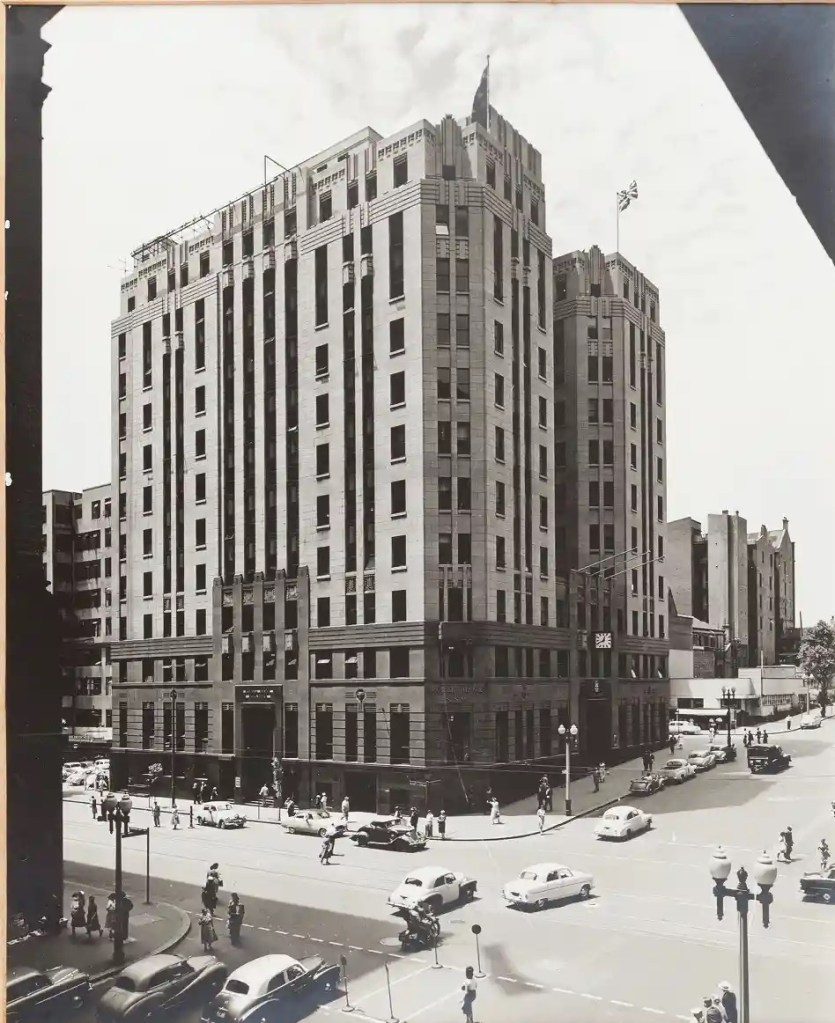
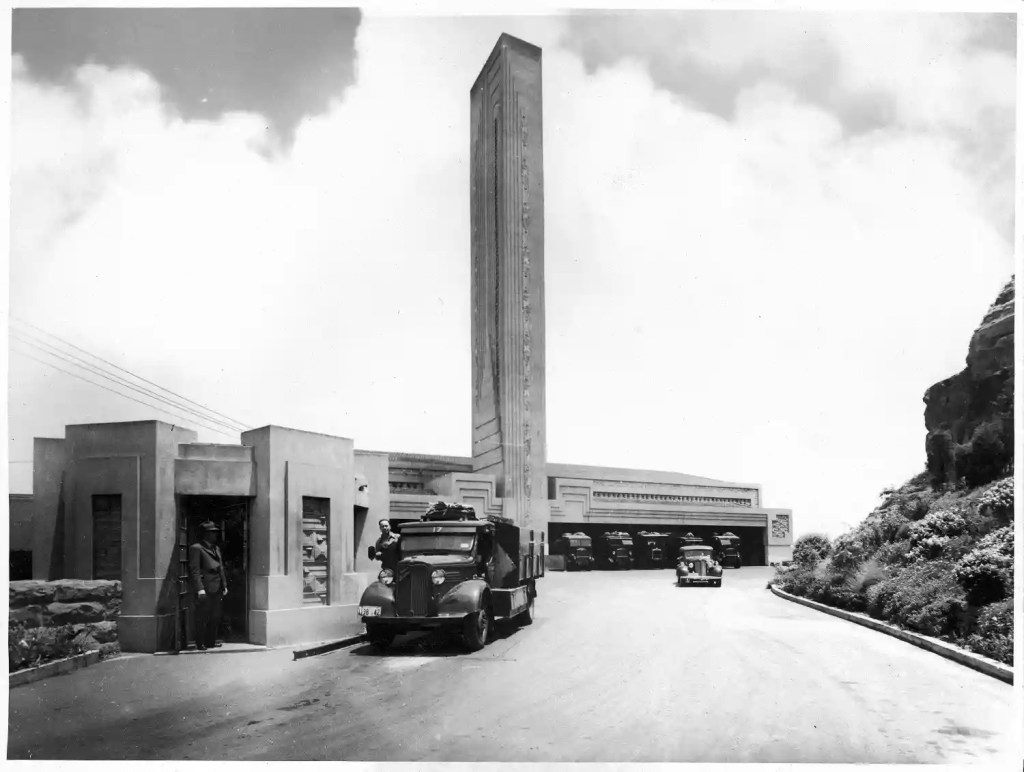
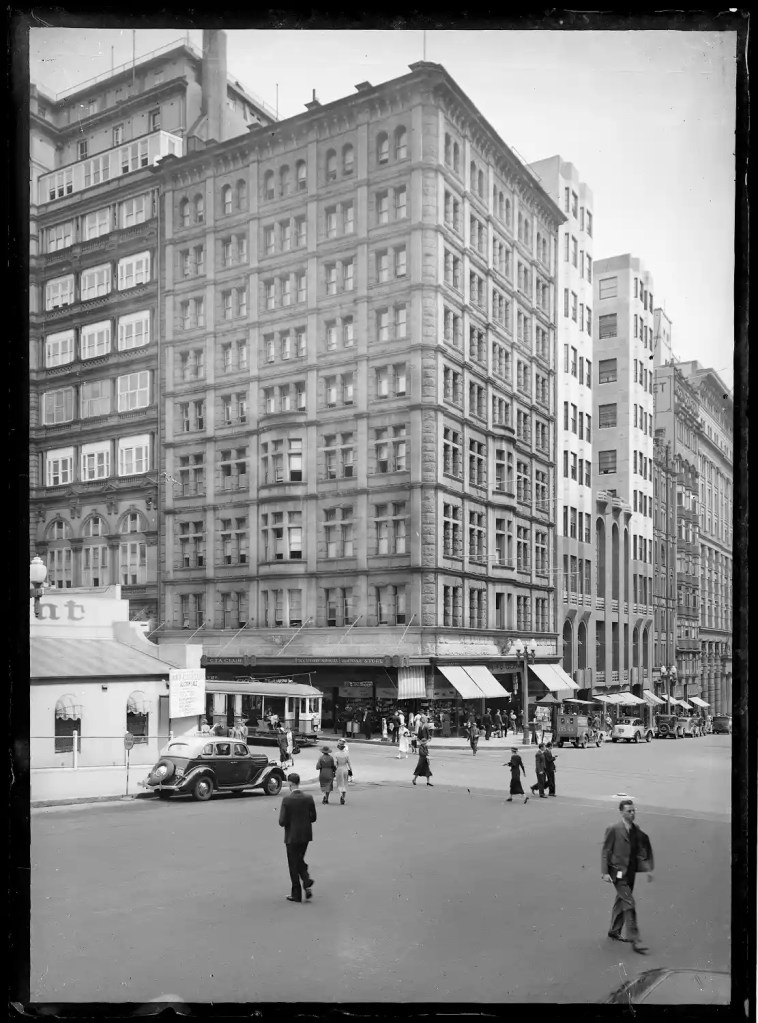


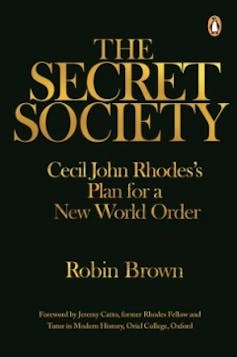


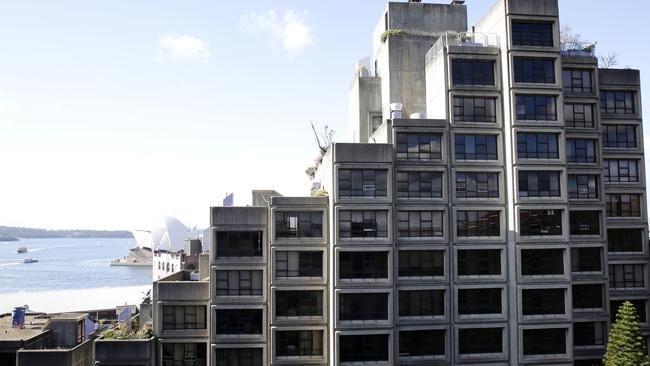
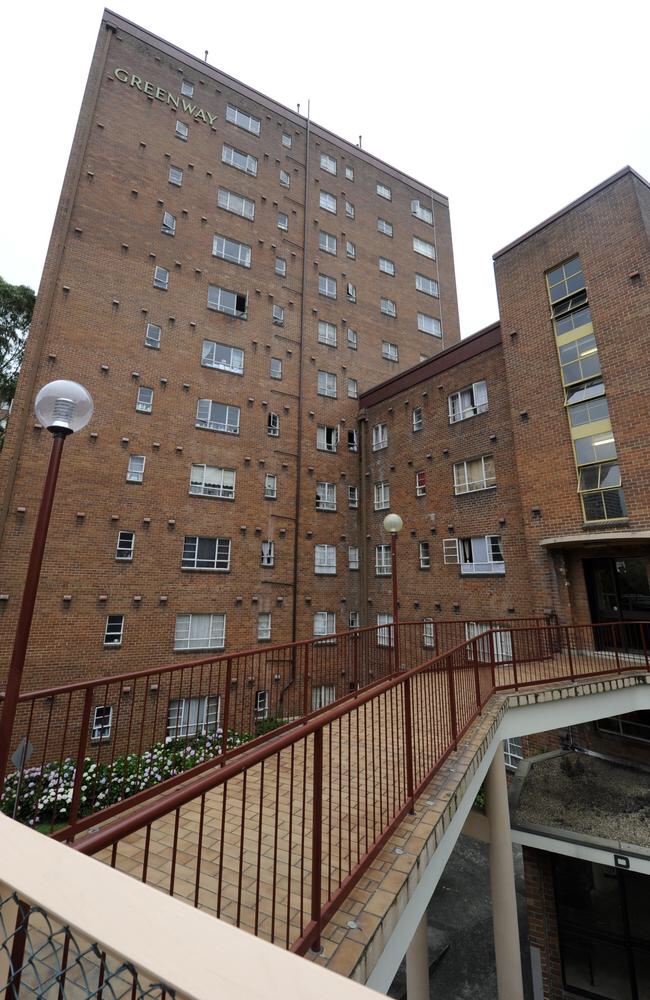
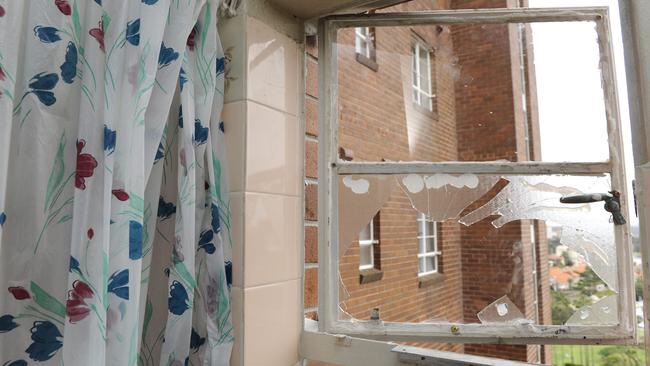
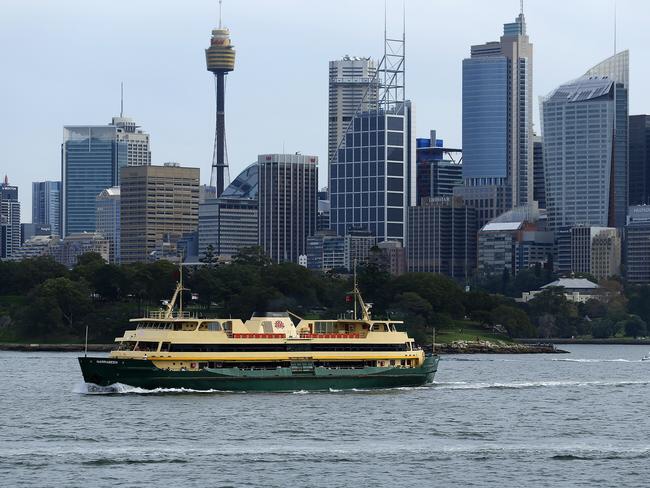


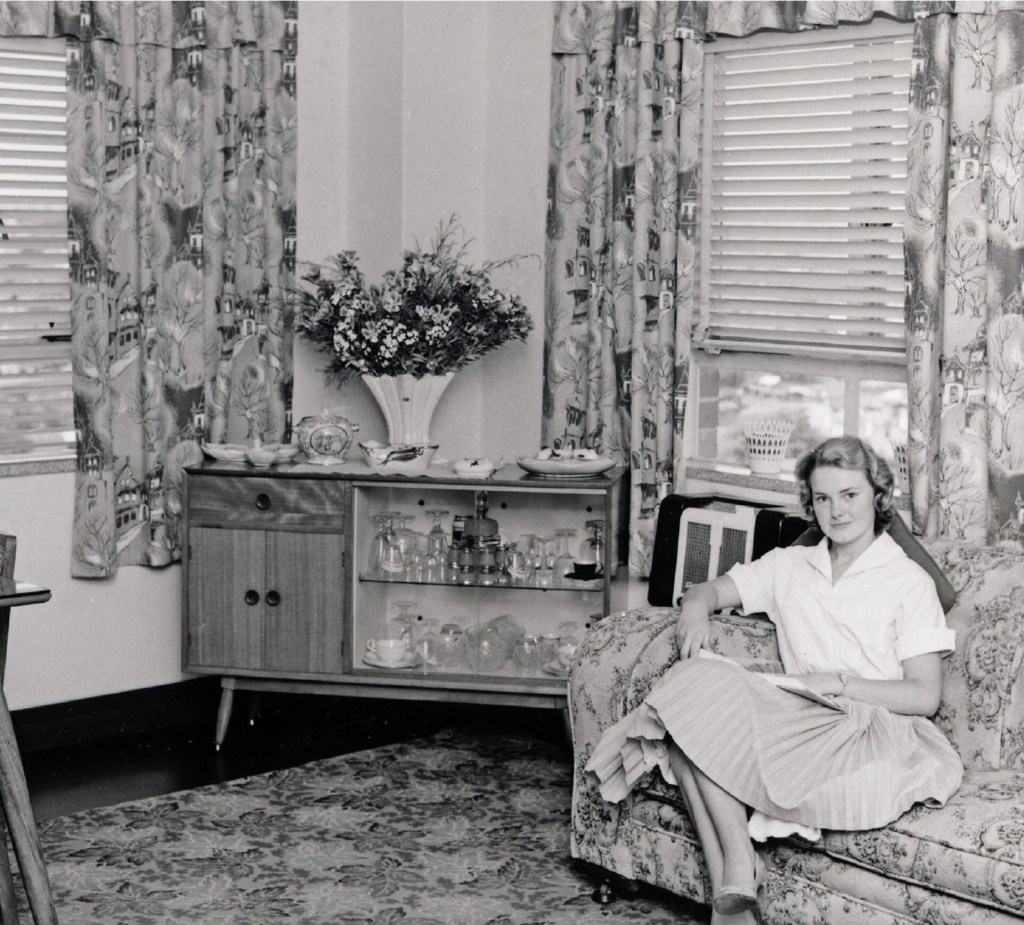


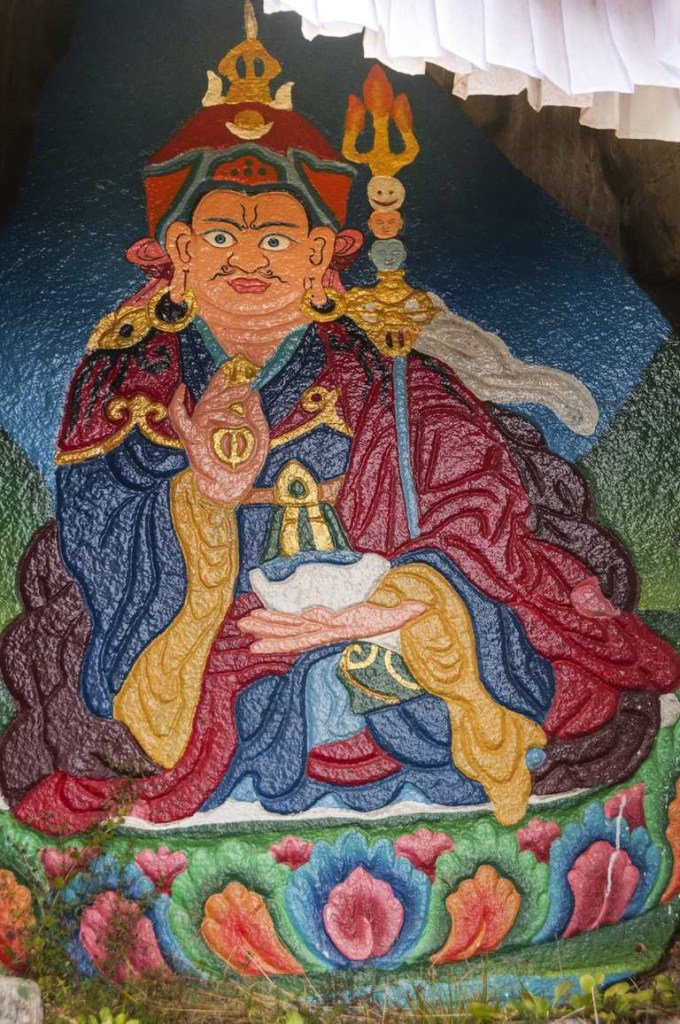
:max_bytes(150000):strip_icc()/MonasteryinTibet-5b5b9dacc9e77c004fc68ce5.jpg)

 timalderman


