Monthly Archives: May 2021

Buddhism 101: The Nyingmapa School; Tibetan Buddhist School of the Great Perfection

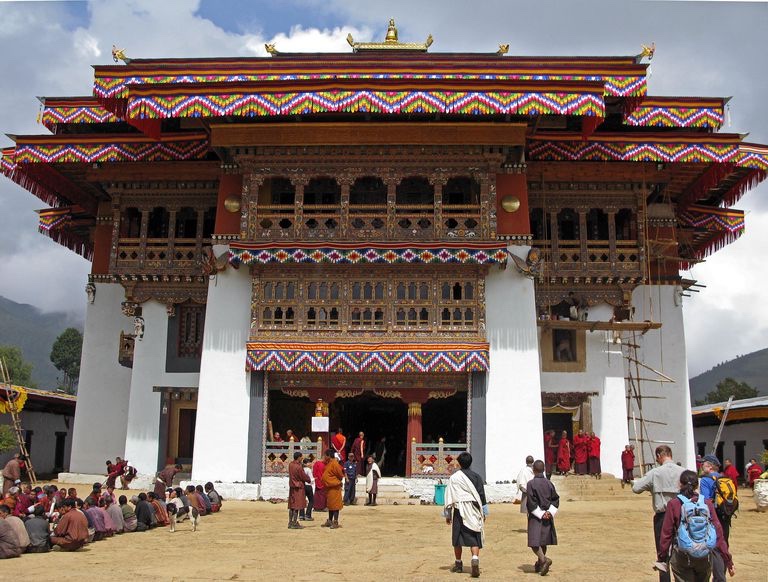
Gangtey Gonpa is a major Nyingmapa monastery in Bhutan.stull177/CC BY 2.0/ Wikimedia Commons

The Nyingma school, also called Nyingmapa, is the oldest of the schools of Tibetan Buddhism. It was established in Tibet during the reign of the Emperor Trisong Detsen (742-797 CE), who brought the tantric masters Shantarakshita and Padmasambhava to Tibet to teach and to found the first Buddhist monastery in Tibet.

Buddhism had been introduced to Tibet in 641 CE, when the Chinese Princess Wen Cheng became the bride of the Tibetan King Songtsen Gampo. The princess brought with her a statue of the Buddha, the first in Tibet, which today is enshrined in the Jokhang Temple in Lhasa. But the people of Tibet resisted Buddhism and preferred their indigenous religion, Bon.

According to Tibetan Buddhist mythology, that changed when Padmasambhava called forth the indigenous gods of Tibet and converted them to Buddhism. The fearsome gods agreed to become dharmapalas, or dharma protectors. From then on, Buddhism has been the principal religion of the Tibetan people.

The construction of Samye Gompa, or Samye Monastery, probably was completed about 779 CE. Here Tibetan Nyingmapa was established, although Nyingmapa also traces its origins to earlier masters in India and in Uddiyana, now the Swat Valley of Pakistan.

Padmasambhava is said to have had twenty-five disciples, and from them a vast and complex system of transmission lineages developed.

Nyingmapa was the only school of Tibetan Buddhism that never aspired to political power in Tibet. Indeed, it was uniquely disorganized, with no head overseeing the school until modern times.

Over time, six “mother” monasteries were built in Tibet and dedicated to Nyingmapa practice. These were Kathok Monastery, Thupten Dorje Drak Monastery, Ugyen Mindrolling Monastery, Palyul Namgyal Jangchup Ling Monastery, Dzogchen Ugyen Samten Chooling Monastery, and Zhechen Tenyi Dhargye Ling Monastery. From these, many satellite monasteries were built in Tibet, Bhutan and Nepal.

Dzogchen 

Nyingmapa classifies all Buddhist teachings into nine yanas, or vehicles. Dzogchen, or “great perfection,” is the highest yana and the central teaching of the Nyingma school.

According to Dzogchen teaching, the essence of all beings is a pure awareness. This purity (ka dog) correlates to the Mahayana doctrine of sunyata. Ka dog combined with natural formation—lhun sgrub, which corresponds to dependent origination—brings about rigpa, awakened awareness. The path of Dzogchen cultivates rigpa through meditation so that rigpa flows through our actions in everyday life.

Dzogchen is an esoteric path, and authentic practice must be learned from a Dzogchen master. It is a Vajrayana tradition, meaning that it combines use of symbols, ritual, and tantric practices to enable the flow of rigpa.

Dzogchen is not exclusive to Nyingmapa. There is a living Bon tradition that incorporates Dzogchen and claims it as its own. Dzogchen is sometimes practiced by followers of other Tibetan schools. The Fifth Dalai Lama, of the Gelug school, is known to have been devoted to Dzogchen practice, for example.

Nyingma Scriptures: Sutra, Tantra, Terma 

In addition to the sutras and other teachings common to all schools of Tibetan Buddhism, Nyingmapa follows a collection of tantras called the Nyingma Gyubum. In this usage, tantra refers to teachings and writings devoted to Vajrayana practice.

Nyingmapa also has a collection of revealed teachings called terma. Authorship of the terma is attributed to Padmasambhava and his consort Yeshe Tsogyal. The terma were hidden as they were written because people were not yet ready to receive their teachings. They are discovered at the appropriate time by realized masters called tertons, or treasure revealers.

Many of the terma discovered so far have been collected in a multi-volume work called the Rinchen Terdzo. The most widely known terma is the Bardo Thodol, commonly called the “Tibetan Book of the Dead.”

Unique Lineage Traditions 

One unique aspect of Nyingmapa is the “white sangha,” ordained masters and practitioners who are not celibate. Those who live a more traditionally monastic, and celibate, life are said to be in the “red sangha.”

One Nyingmapa tradition, the Mindrolling lineage, has supported a tradition of women masters, called the Jetsunma lineage. The Jetsunmas have been daughters of Mindrolling Trichens, or heads of the Mindrolling lineage, beginning with Jetsun Mingyur Paldrön (1699-1769). The current Jetsunma is Her Eminence Jetsun Khandro Rinpoche.

Nyingmapa in Exile

The Chinese invasion of Tibet and the 1959 uprising caused the heads of the major Nyingmapa lineages to leave Tibet. Monastic traditions re-established in India include Thekchok Namdrol Shedrub Dargye Ling, in Bylakuppe, Karnataka State; Ngedon Gatsal Ling, in Clementown, Dehradun; Palyul Chokhor Ling, E-Vam Gyurmed Ling, Nechung Drayang Ling, and Thubten E-vam Dorjey Drag in Himachal Pradesh.

Although the Nyingma school had never had a head, in exile a series of high lama have been appointed to the position for administration purposes. The most recent was Kyabjé Trulshik Rinpoche, who died in 2011.

Reference

  • O’Brien, Barbara. “The Nyingmapa School.” Learn Religions, Aug. 25, 2020, learnreligions.com/nyingma-school-450169.
Gretna Green

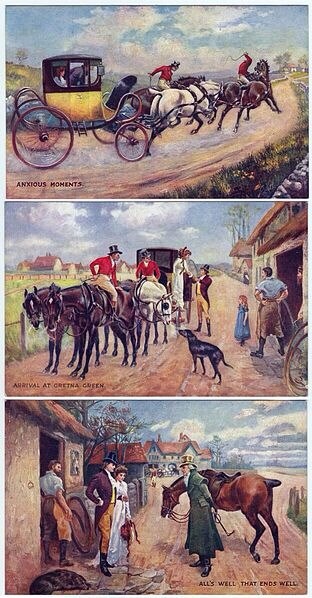
Gretna Green in Dumfries and Galloway is possibly the most romantic place in Scotland, if not in the UK. This small Scottish village has become synonymous with romance and runaway lovers.

In 1754 a new law, Lord Hardwicke’s Marriage Act, was brought into force in England. This law required young people to be over 21 years of age if they wished to marry without their parents’ or guardian’s consent. The marriage was required to be a public ceremony in the couple’s parish, with an official of the Church presiding. The new law was rigorously enforced and carried a sentence of 14 years transportation for any clergyman found breaking it.

The Scots however did not change the law and continued with their centuries-old marriage customs. The law in Scotland allowed anyone over the age of 15 to enter into marriage provided they were not closely related to each other and were not in a relationship with anyone else.

This marriage contract could be made wherever the couple liked, in private or in public, in the presence of others or no-one at all.

The ‘irregular marriage’ ceremony would be short and simple, something like:

“Are you of marriageable age? Yes

Are you free to marry? Yes

You are now married.”

A marriage in the Scottish tradition could take place anywhere on Scottish soil. Being so close to the English border, Gretna was popular with English couples wanting to marry but when in the 1770s a toll road was built running through the village making it even more accessible from south of the border, it soon became renowned as the destination for eloping couples.

Forbidden romance and runaway marriages were popularised in the fiction of the time, for example in the novel ‘Pride and Prejudice’ by Jane Austen.

English couples usually preferred to keep some English marriage traditions and so looked for someone in authority to oversee the ceremony. The most senior and respected craftsman or artisan in the countryside was the village blacksmith, and so the Blacksmith’s Forge at Gretna Green became a favourite place for weddings.

The tradition of the blacksmith sealing the marriage by striking his anvil led to the Gretna blacksmiths becoming known as ‘anvil priests’. Indeed the blacksmith and his anvil are now symbols of Gretna Green weddings. Gretna Green’s famous Blacksmiths Shop, the Old Smithy where lovers have come to marry since 1754, is still in the village and still a wedding venue.

There are now several other wedding venues in Gretna Green and marriage ceremonies are still performed over a blacksmith’s anvil. Gretna Green remains one of the most popular places for weddings and thousands of couples from all around the world flock to this Scottish village to be married each year.

Reference

Gay History: What The “Q” In LGBTQ+ Stands For

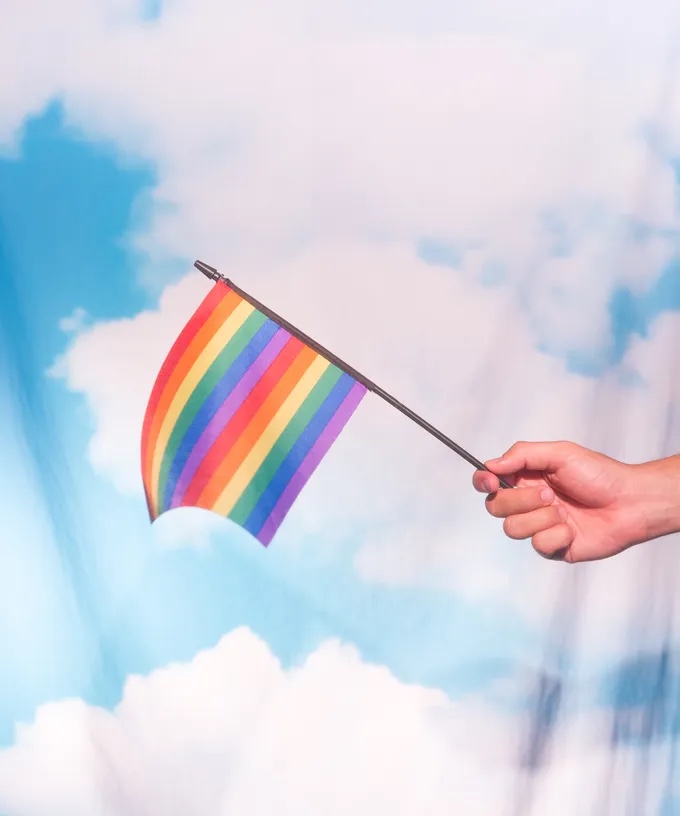
PHOTOGRAPHED BY NICOLAS BLOISE.

Most people can agree with the L, G, B, and T in the acronym LGBTQ+ stand for: lesbian, gay, bisexual, and transgender. But when it comes to the Q, it gets a little more complicated. According to the Human Rights Campaign, the Q stands for queer. But according to Planned Parenthood, the Q stands for “questioning (or queer).” For PFlag and The Trevor Project, the Q stands for both, equally.

Even style guides don’t agree. The Associated Press Style Guide notes that the Q stands for “questioning and/or queer,” but the Los Angeles Times’ style guide notes that the Q “most commonly means ‘queer,’ but can also mean ‘questioning.” Similarly, GLAAD’s media glossary notes that the Q “typically means queer and, less often, questioning.”

Though activists have been using the acronyms “LGBTQ” and “LGBTQ+” for much longer, the Q has only come into mainstream use in the past few years. HRC officially began using “LGBTQ” across their work in 2016, though they had been using it in youth programs earlier. In 2016, GLAAD issued an announcement, “for the first time, encourag[ing] journalists and other media content creators to adopt the use of ‘LGBTQ’ as the preferred acronym to most inclusively describe the community.” One year later, the Associated Press changed its style guide to allow either “LGBT” or “LGBTQ.”Both HRC and GLAAD added the letter in response to a growing number of young people identifying as queer. While “questioning” simply means you’re still figuring out how you identify, “queer” is a little more complicated. “Queer” can be used as an umbrella term for anyone not cis and straight — for example, a person might identify as both bisexual and queer — but a growing number of young people identify simply as queer, with no other label.While some LGBTQ+ folks use the word queer to describe the whole community, others would prefer not to use it at all. The word technically means “strange” or “odd,” but as Cara Giaimo detailed for Autostraddle, beginning around the 1890s, the word “queer” was used as a derogatory term for LGBTQ+ individuals. In 1970, a linguistics researcher noted that while the majority of gays and lesbians were familiar with the term, they had only experienced it as a slur.

Then, beginning in the 1980s, some LGBTQ+ activists began reclaiming the word “queer.” In 1990, some AIDS/HIV activists from the group ACT UP formed a new group that they named Queer Nation. In a 1990 leaflet, they addressed the name, writing, “Well, yes, ‘gay’ is great. It has its place. But when a lot of lesbians and gay men wake up in the morning we feel angry and disgusted, not gay. So we’ve chosen to call ourselves queer. Using ‘queer’ is a way of reminding us how we are perceived by the rest of the world. It’s a way of telling ourselves we don’t have to be witty and charming people who keep our lives discreet and marginalized in the straight world… Yeah, QUEER can be a rough word but it is also a sly and ironic weapon we can steal from the homophobe’s hands and use against him.”While Queer Nation was only active for a few years, Giaimo notes, “the reclamation it had started struck a chord and stuck around.” The word “queer” grew and was increasingly used as a positive term for the LGBTQ+ community throughout the 1990s, 2000s, and 2010s. And while some LGBTQ+ folks still avoid using the word “queer” because of its history as a slur, others find it’s the best way to describe themselves. “For me, it felt like the only word that was all-encompassing enough to accurately describe my sexuality,” Daisy, 25,previously told Refinery29.As for the +, it’s meant to indicate everyone else who isn’t straight, but doesn’t identify with the L, G, B, T, or Q. You may also be familiar with other acronyms to describe the LGBTQ+ community — such as LGBTQIA (the I stands for intersex and the A for asexual), LGBTQQIA (the two Qs are for both queer and questioning), LGBTQ2 (the 2 stands for Two-Spirit, a term used for gender non-conforming or genderqueer folks in the indigenous community in North America), LGBTTQQIAAP (lesbian, gay, bisexual, transgender, transsexual, queer, questioning, intersex, asexual, ally, pansexual), and QUILTBAG (queer, intersex, lesbian, transgender, bisexual, asexual, and gay).The language we use to refer to the LGBTQ+ community is always growing and changing to become more inclusive — and that’s definitely a good thing.

Reference

Buddhism 101: The 14 Dalai Lamas from 1391 to Present

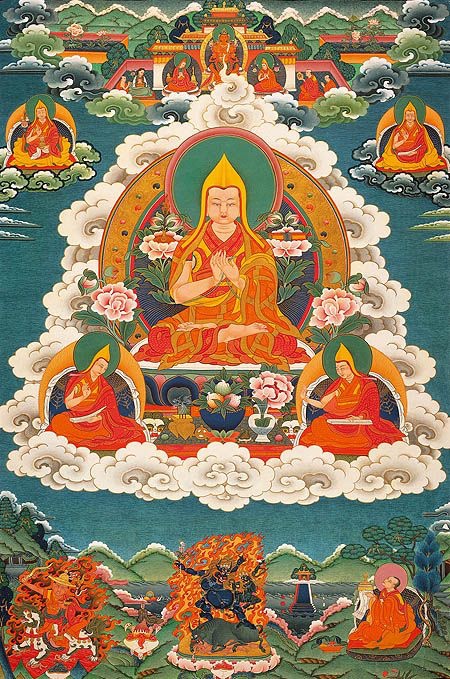
People often think of the current Dalai Lama who travels the world as the highly visible spokesman for Buddhism as THE Dalai Lama, but in reality, he is the only most recent in a long line of leaders of the Gelug branch of Tibetan Buddhism.  He is considered to be a tulku–a reincarnation of Avalokitesvara, the Bodhisattva of Compassion. In Tibetan, Avalokitesvara is known as Chenrezig.

In 1578 the Mongol ruler Altan Khan gave the title Dalai Lama to Sonyam Gyatso, third in a line of reborn lamas of the Gelug school of Tibetan Buddhism. The title means “ocean of wisdom” and was given posthumously to Sonyam Gyatso’s two predecessors.

In 1642, the 5th Dalai Lama, Lobsang Gyatso, became the spiritual and political leader of all of Tibet, an authority passed on to his successors. Since that time the succession of Dalai Lamas has been at the center of both Tibetan Buddhismand the history of the Tibetan people.

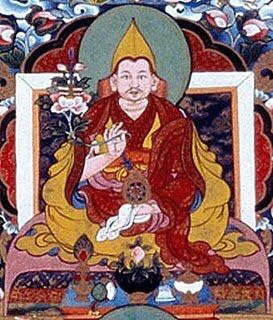
01: Gedun Drupa, the 1st Dalai Lama

Gendun Drupa, the First Dalai Lama. Public Domain

Gendun Drupa was born to a nomadic family in 1391 and died in 1474. His original name was Pema Dorjee.

He took novice monk’s vows in 1405 at Narthang monastery and received full monk’s ordination in 1411. In 1416, he became a disciple of Tsongkhapa, the founder of the Gelugpa School, and eventually became Tsongkhapa’s principle disciple. Gendun Drupa is remembered as a great scholar who wrote a number of books and who founded a major monastic university, Tashi Lhunpo.

Gendun Drupa was not called “Dalai Lama” during his lifetime, because the title did not yet exist. He was identified as the first Dalai Lama several years after his death.

02: Gendun Gyatso, the 2nd Dalai Lama

Gendun Gyatso was born in 1475 and died in 1542. His father, a well-known tantric practitioner of the Nyingma school, named him Sangye Phel and gave the boy a Buddhist education.

When he was 11 years old, he was recognized as an incarnation of Gedun Drupa and enthroned at Tashi Lhunpo monastery. He received the name Gendun Gyatso at his monk’s ordination. Like Gedun Drupa, Gendun Gyatso would not receive the title Dalai Lama until after his death.

Gedun Gyatso served as abbot of Drepung and Sera monasteries. He is also remembered for reviving the great prayer festival, the Monlam Chenmo.

03: Sonam Gyatso, the 3rd Dalai Lama

Sonam Gyatso was born in 1543 to a wealthy family living near Lhasa. He died in 1588. His given name was Ranu Sicho. At the age of 3 he was recognized to be the reincarnation of Gendun Gyatso and was then taken to Drepung Monastery for training. He received novice ordination at the age of 7 and full ordination at 22.

Sonam Gyatso received the title Dalai Lama, meaning “ocean of wisdom,” from the Mongolian king Altan Khan. He was the first Dalai Lama to be called by that title in his lifetime.

Sonam Gyatso served as abbot of Drepung and Sera monsteries, and he founded Namgyal and Kumbum monasteries. He died while teaching in Mongolia.

04: Yonten Gyatso, the 4th Dalai Lama

Yonten Gyatso was born in 1589 in Mongolia. His father was a Mongol tribal chief and a grandson of Altan Khan. He died in 1617.

Although Yonten Gyatso was recognized to be the reborn Dalai Lama as a small child, his parents did not allow him to leave Mongolia until he was 12. He received his early Buddhist education from lamas visiting from Tibet.

Yonten Gyatso finally came to Tibet in 1601 and soon after took novice monk’s ordination. He received full ordination at the age of 26 and was abbot of Drepung and Sera monasteries. He died at Drepung monastery only a year later.

05: Lobsang Gyatso, the 5th Dalai Lama

Lobsang Gyatso, the 5th Dalai Lama. Public Domain

Ngawang Lobsang Gyatso was born in 1617 to a noble family. His given name was Künga Nyingpo. He died in 1682.

Military victories by the Mongol Prince Gushi Kahn gave control of Tibet to the Dalai Lama. When Lobsang Gyatso was enthroned in 1642, he became the spiritual and political leader of Tibet. He is remembered in Tibetan history as the Great Fifth.

The Great Fifth established Lhasa as the capital of Tibet and began construction of Potala Palace. He appointed a regent, or desi, to handle the administrative duties of governing. Before his death, he advised the Desi Sangya Gyatso to keep his death a secret, possibly to prevent a power struggle before a new Dalai Lama was prepared to assume authority.

06: Tsangyang Gyatso, the 6th Dalai Lama

Tsangyang Gyatso was born in 1683 and died in 1706. His given name was Sanje Tenzin.

In 1688, the boy was brought to Nankartse, near Lhasa, and educated by teachers appointed by the Desi Sangya Gyatso. His identity as the Dalai Lama was kept secret until 1697 ​when the death of the 5th Dalai Lama finally was announced and Tsangyang Gyatso was enthroned.

The 6th Dalai Lama is most remembered for renouncing monastic life and spending time in taverns and with women. He also composed songs and poems.

In 1701, a descendant of Gushi Khan named Lhasang Khan killed Sangya Gyatso. Then, in 1706 Lhasang Khan abducted Tsangyang Gyatso and declared that another lama was the real 6th Dalai Lama. Tsangyang Gyatso died in Lhasang Khan’s custody.

07: Kelzang Gyatso, the 7th Dalai Lama

Kelzang Gyatso, the 7th Dalai Lama. Public Domain

Kelzang Gyatso was born in 1708. He died in 1757.

The lama who had replaced Tsangyang Gyatso as Sixth Dalai Lama was still enthroned in Lhasa, so Kelzang Gyatso’s identification as 7th Dalai Lama was kept secret for a time.

A tribe of Mongol warriors called the Dzungars invaded Lhasa in 1717. The Dzungars killed Lhasang Kahn and deposed the pretender 6th Dalai Lama. However, the Dzungars were lawless and destructive, and the Tibetans appealed to the Emperor Kangxi of China to help rid Tibet of the Dzungars. Chinese and Tibetan forces together expelled the Dzungars in 1720. Then they brought Kelzang Gyatso to Lhasa to be enthroned.

Kelzang Gyatso abolished the position of desi (regent) and replaced it with a council of ministers.

08: Jamphel Gyatso, the 8th Dalai Lama

Jamphel Gyatso was born in 1758, enthroned at Potala Palace in 1762 and died in 1804 at the age of 47.

During his reign, a war broke out between Tibet and the Gurkhas occupying Nepal. The war was joined by China, which blamed the war on a feud among lamas. China then attempted to change the process for choosing the rebirths of lamas by imposing the “golden urn” ceremony on Tibet. More than two centuries later, the current government of China has re-introduced the golden urn ceremony as a means of controlling the leadership of Tibetan Buddhism.

Jamphel Gyatso was the first Dalai Lama to be represented by a regent while he was a minor. He completed the building of Norbulingka Park and Summer Palace. By all accounts a quiet man devoted to meditation and study, as an adult he preferred to let others run the government of Tibet.

09: Lungtok Gyatso, the 9th Dalai Lama

Lungtok Gyatso was born in 1805 and died in 1815 before his tenth birthday from complications from a common cold. He was the only Dalai Lama to die in childhood and the first of four that would die before the age of 22. His reincarnated successor would not be recognized for eight years.

10: Tsultrim Gyatso, the 10th Dalai Lama

Tsultrim Gyatso was born in 1816 and died in 1837 at the age of 21. Though he sought to change the economic system of Tibet, he died before being able to enact any of his reforms.

11: Khendrup Gyatso, the 11th Dalai Lama

Khendrup Gyatso was born in 1838 and died in 1856 at the age of 18. Born in the same village as the 7th Dalai Lama, he was recognized as the reincarnation in 1840 and assumed full power over the government in 1855–only a year before his death.

12: Trinley Gyatso, the 12th Dalai Lama

Trinley Gyatso was born in 1857 and died in 1875. He assumed full authority over the Tibetan government at the age of 18 but died before his 20th birthday.

13: Thubten Gyatso, the 13th Dalai Lama

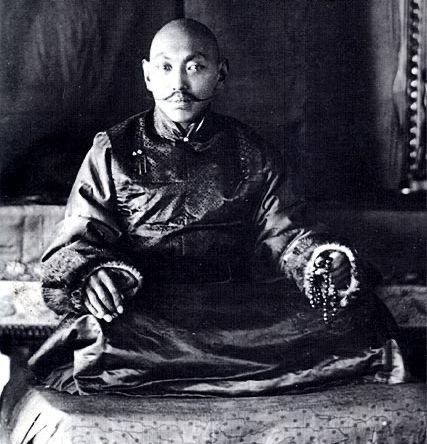
Thubten Gyatso, the 13th Dalai Lama. Public Domain

Thubten Gyatso was born in 1876 and died in 1933. He is remembered as the Great Thirteenth.

Thubten Gyatso assumed leadership in Tibet in 1895. At that time Czarist Russia and the British Empire had been sparring for decades over control of Asia. In the 1890s the two empires turned their attention eastward, to Tibet. A British force invaded in 1903, leaving after extracting a short-lived treaty from the Tibetans.

China invaded Tibet in 1910, and the Greath Thirteenth fled to India. When the Qing Dynasty collapsed in 1912, the Chinese were expelled. In 1913, the 13th Dalai Lama declared Tibet’s independence from China.

The Great Thirteenth worked to modernize Tibet, although he didn’t accomplish as much as he hoped.

14: Tenzin Gyatso, the 14th Dalai Lama

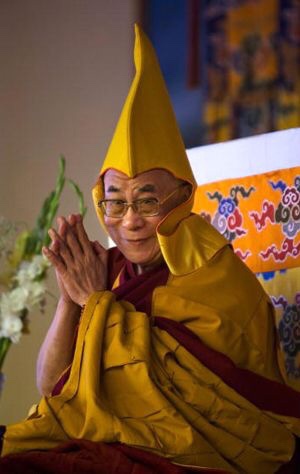
His Holiness the Dalai Lama at the Tsuklag Khang Temple on March 11, 2009 in Dharamsala, India. The Dalai Lama attended proceedings marking 50 years of exile in Mcleod Ganj, the seat of the exiled Tibetan government near the town of Dharamsala.Daniel Berehulak/Getty Images

Tenzin Gyatso was born in 1935 and recognized as the Dalai Lama at the age of three.

China invaded Tibet in 1950 when Tenzin Gyatso was only 15. For nine years he attempted to negotiate with the Chinese to save the Tibetan people from the dictatorship of Mao Zedong. However, the Tibetan Uprising of 1959 forced the Dalai Lama into exile, and he has never been allowed to return to Tibet.

The 14th Dalai Lama established a Tibetan government in exile in Dharamsala, India. In some ways, his exile has been to the world’s benefit, since he has spent his life bringing a message of peace and compassion to the world

The 14th Dalai Lama was awarded a Nobel Peace Prize in 1989. In 2011 he absolved himself of political power, although he is still the spiritual leader of Tibetan Buddhism. Future generations are likely to regard him in the same light as the Great Fifth and the Great Thirteenth for his contributions to spreading the message of Tibetan Buddhism to the world, thereby saving the tradition.

Reference

  • O’Brien, Barbara. “The 14 Dalai Lamas from 1391 to Present.” Learn Religions, Aug. 25, 2020, learnreligions.com/succession-of-dalai-lamas-450187.

Londoner Executed Not Once – But Twice!

How could somebody come to be executed not once – but twice? Such is the tale of one poor, unfortunate Londoner at a time of great cruelty and savagery.

Thomas Savage – appropriately named – was born in the parish of St Giles in the Fields and as a youth, became an apprentice to a certain Mr Collins, a vintner at the Ship Tavern at Ratcliff Cross. Three hundred years ago, when this story is set, Ratcliff was a hamlet by the river Thames with a strong ship building and provisioning tradition. It’s long been swallowed up by the borough of Tower Hamlets, located between Shadwell and LImehouse.

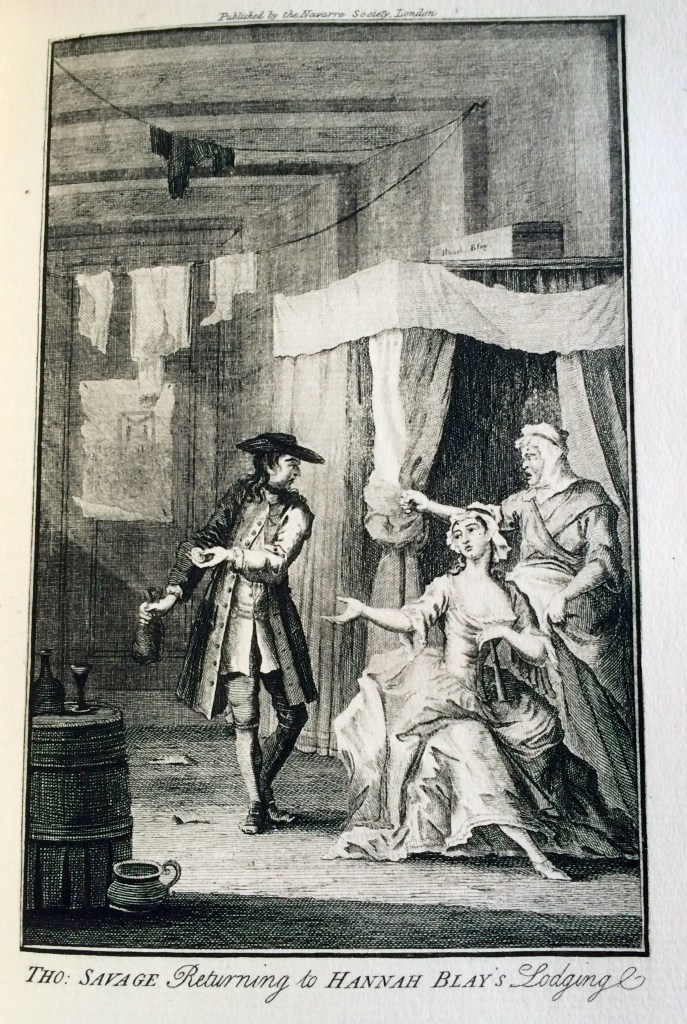
Thomas Savage at the “bawdy house” with Hannah Blay

turned up at the brothel with wine and he and the prostitute Hannah got merrily drunk and enjoyed themselves. But being a lady of the night, Hannah wanted money for her services. So she goaded Thomas into robbing Mr Collins. But Savage explained that Collins’ maid was always in the house. To which Hannah responded:

Hang her, a jade! Knock her brains out and I’ll receive the money and go anywhere with you beyond sea, to avoid the stroke of justice.

So the weak-willed Thomas headed back to the Collins house and avoided his master by climbing over a back wall. He then ran into the other servants having dinner including the ever-present maid. Rather unwisely, she took Savage to task for spending too much time at the bawdy house. He didn’t like this telling off and it convinced him to bash her brains out as Hannah had advised.

So one day he took a hammer and began hitting out at objects round the house to provoke her to anger. This presumably would have made it easier for him to do the foul deed. Thomas needed to psyche himself up to commit his first murder. Initially, the maid seems to have tried to ignore this bizarre behaviour but eventually she asked him to stop. He then threw the hammer and scored a direct blow on her head. Falling to the ground she screamed in pain and her assailant hesitated to deal the fatal blow. He just couldn’t quite do it.

But as she moaned and groaned, he set about her with the hammer and snuffed the maid’s life out. Breaking open a cupboard, he found a bag with sixty pounds of Collins’ money – a princely sum then – and escaped. Meeting up with Hannah, his behaviour became increasingly erratic. She asked for all of it but he only gave her half a crown and then fled. In the hours that followed, he sat by the roadside crying out loud about what he had done. Eventually, gathering his wits about him, he went down to a guest house in Greenwich.

The mistress of this guest house was very suspicious to find a seventeen year old with a bag bulging with so much money. She asked him what he was doing. Thomas lied that he was on his way to Gravesend to meet his master, a wine cooper. This story seemed a bit fishy and Thomas, now in a total panic, said she could contact his master and in fact, he’d leave the money with her until she did.

So without any of his ill-gotten gains, Savage wandered off to Woolwich. Shortly after, word of his murder filtered down from Ratcliff to Greenwich – it took much longer for news to get around in the days before mass media. The mistress of the guest house sent a group of men to go after him and he was found in a Woolwich ale house, head on the table and a pot of beer by his side. The men challenged him:

Tom – did you not live at Ratcliff?

Yes

And did you not murder your fellow servant? And you took so much money from your master? You must go along with us!

Yes, with all my heart.

In custody, Savage confessed everything. On the day he went to court, his fellow prisoners got him a bit drunk and he shopped Hannah Blay to the authorities. She was then arrested too. Thomas was sentenced to death – the punishment to be carried out at Ratcliff Cross. This was quite a common thing to do – to kill the criminal at the place where they had committed their crime. Savage’s hanging was postponed on one occasion and news was given to him as he was dressed up for the occasion.

What – have I got on my dying clothes? Dying clothes did I say? They are my living clothes, the clothes out of which I shall go into eternal glory. They are the best clothes that ever I put on!

At Ratcliff Cross, there seems to have been some sympathy among the crowd for this pathetic figure. He said a little prayer and the cart pulled away to leave him struggling at the end of the rope. A friend beat Thomas around the chest to shorten his misery. Motionless and left dangling for a while, everybody assumed Savage was dead. His friends then took him to a nearby house and laid his body on a table. Then something incredible happened. Thomas started breathing!

His throat rattled. He heaved upwards. Then his eyes and mouth opened. His teeth are described as having been “set before” – I assume that means in his death struggle, they’d been pushed out – and he couldn’t speak. Now you might think he’d have been let off but not in seventeenth century England. As word got out that Savage was alive, an embarrassed sheriff turned up and took him back to the gibbet. Poor Savage was then hanged all over again until he was properly dead.

His forlorn friends then spirited his seventeen year old body away to Islington where he was buried on the 28th October, 1668.

Reference

Politicians Lynched By The London Mob

Politicians and journalists are more unpopular today than ever. But in the past in London they stood a very real risk of being lynched.

One of the many politicians to be lynched was Walter Stapleton, Lord Treasurer of England, who came to a sticky end around 1326.

Victim of the London mob

Not only was he in charge of the country’s finances, Walter was a leading adviser to King Edward II and – typical of the Middle Ages – also the Bishop of Exeter. Men of the cloth often held top political positions. It wasn’t seen as unusual or ungodly. However, the conduct of King Edward II was seen as less than godly – with accusations of sodomy and vice swirling around him.

Edward’s own queen launched a rebellion to overthrow her husband the king in alliance with her lover. Londoners came out in the queen’s support. The king fled towards Wales while his Lord High Treasurer, the unfortunate Walter, tried to lock the gates of the city to stop Queen Isabella getting in.

Stapleton is one of many medieval lynched politicians

However, he’d misjudged the mood of London very badly.

The hapless politician galloped as fast as he could towards St Paul’s cathedral to plead for sanctuary but was intercepted by the mob. They pulled Walter from his horse, stripped his clothes (worth a pretty penny I’m sure) and dragged him naked to the stone cross that once stood in Cheapside.

There, they proclaimed him a traitor and cut off his head – putting it on a pole and processing around with it. The same fate befell his servants whose headless bodies were tossed on a heap of rubbish by the river.

Over fifty years later, a similar gory end came to Simon Sudbury, the Lord Chancellor of England. Like Walter, Simon held some ecclesiastical positions as well as being a politician. He was both Bishop of London and Archbishop of Canterbury – so a top nob in medieval society. But the London mob soon cut him down to size – literally.

Poll tax leads to politicians being lynched

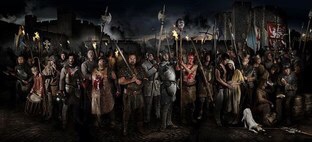
Regrettably, Sudbury supported the introduction of a poll tax. The peasants hated it. They marched on the capital and surrounded the Tower of London where Simon was holed up with the Lord Treasurer Sir Robert Hales.

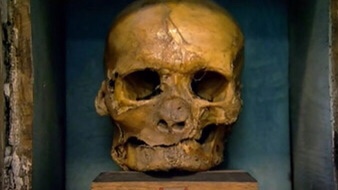
Eventually, the two men were handed over to the mob and beheaded. Apparently, it took something like eight blows to take Simon’s head off. His skull can still be seen in the church of St Gregory in the town of Sudbury, Suffolk today.

Londoners have frequently rioted and attacked top politicians with no regard to their rank or position. During the 1780 anti-Catholic “Gordon Riots”, the house of Lord Mansfield was thoroughly plundered. In 1815, Lord Eldon – the Lord Chancellor – confronted a mob that was breaking the windows of his home with a shotgun in his hand!

Eldon was hated by the city populace as he’d managed to oppose just about every progressive measure you could imagine including the abolition of slavery and attempts to secure affordable bread for the poor (the Corn Laws). 

But the pelting of Eldon’s house with stones wasn’t a one off incident. Lord Wellington – hero of Waterloo – was assailed in his carriage by Londoners – as was King George III and King George IV.

So if politicians think they’ve got it tough today – pick up a history book. They’re getting off lightly in our times – with just a few hostile tweets. In the past they were lynched – their lives cruelly cut short.

The Peasant’s Revolt: The Death Of Simon Of Sudbury

The death of the Black Prince in 1376 can be equated to an ocean landslide that eventually causes a devastating Tsunami on the other side of the world. I consider it the starting point of the Wars of the Roses, and also the catalyst for all that occurred after the arrival of Edward’s ten year old son on the English throne up to his usurpation in 1399. Putting the many effects of Edwards death aside, I would like to write of one man, Simon of Sudbury, who was caught up in all of this.

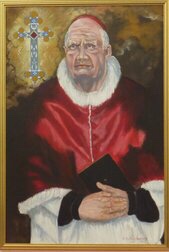
His Grace Simon of Sudbury” by Raden Ajeng Wahyuni

It was the events that occurred in six months of 1381 that lead to Sudbury’s violent death. 

Sudbury, as his name suggests, was from the village of Sudbury in Suffolk, its not known when he left this small East Anglian village or if he ever revisited but he certainly had a great fondness for place. He founded St Leonard’s, a leper hospital in 1372 and the College of St Gregory two years later, in which his brother John said to have been warden.

In the late 1340’s Sudbury had studied in Paris, moved to Rome and then back again to England for a post in the court of Edward III. It was as Archbishop of Canterbury, at Westminster Abbey, that he crowned the little son of the Black Prince as Richard II King of England. Five years later it was Sudbury, in his new post as Chancellor of England, that the rioters used to vent their anger.

England had not recovered from the Black Death, workers were few, jobs were many, the treasury was empty and in an effort to counter this taxation was increased. This, of course, angered the the poor, for they had come to like their ‘freedom.’ In 1380, to rectify the situation, a poll tax to raise money to help England financial situation was introduced, those in authority thought it a grand idea the rest of the country did not, consequently, there was trouble. Between 13th and the 15th June over 100,000 peasants marched on the countries capital led by one Wat Tyler. No doubt, watching the proceedings from within the Tower of London, Sudbury may have seen the young king do his bit in appeasing the men, making promises (that he didn’t keep). Sudbury and Robert Hales, England’s Treasurer soon realised that their lives where in danger when they saw that the rioters had siezed an opportunity and entered through the gates of the Tower of London. Hiding in the White Tower, Sudbury was found praying. Both men were dragged out and both were decapitated. Sudbury must have suffered greatly, his ear was sliced and the bone in his neck had more than one cut leading us to believe that it must have taken more than two strokes to take off his head. Both Sudbury and Hales heads put on poles and carried about the city by the rioters. As mentioned earlier, the boy king never kept his promise to the peasants and eventually Wat Tyler’s head was exchanged for that of Sudbury’s.

His body was taken to Canterbury but his head elsewhere.

Sudbury’s mummified skull rest in a small cupboard in St Gregory’s Sudbury and here we can see poor Simon’s skull, with skin still attached. 

In 2011, over six hundred years after his death, forensic artist Adrienne Barker from the University of Dundee reconstructed Sudbury’s head using detail from skull. Adrienne said,

“I hope people in Sudbury like what we’ve done but he’s a strange looking fellow so it’ll be interesting to see their reactions.”

Sudbury’s mummified skull rest in a small cupboard in St Gregory’s Sudbury and here we can see poor Simon’s skull, with skin still attached.

In 2011, over six hundred years after his death, forensic artist Adrienne Barker from the University of Dundee reconstructed Sudbury’s head using detail from skull. Adrienne said,

“I hope people in Sudbury like what we’ve done but he’s a strange looking fellow so it’ll be interesting to see their reactions.”

Reference