Monthly Archives: May 2021

Gay History: This Documentarian Is Fighting Back Against Gay Culture’s ‘No Fats, No Femmes’ Mantra

Being overweight carries with it a social stigma. So does being a man who embraces the feminine. But for those in the gay community who live at the intersection of such identities, life can be like the worst case of double jeopardy. To Jamal Lewis, however, who is also black and who identifies as “gender deviant,” being fat and effeminate is a source of power and a subject worthy of exploration in a documentary titled “No Fats, No Femmes.”

“For me, I’m just interested in the spaces that people are afraid to occupy,” said Lewis, who uses “he-she” as a gender pronoun. “I think there is something to be learned from what we are most afraid of, and so, if that’s what I was taught to be afraid of, well [forget] that. I am the Fat Femme.”
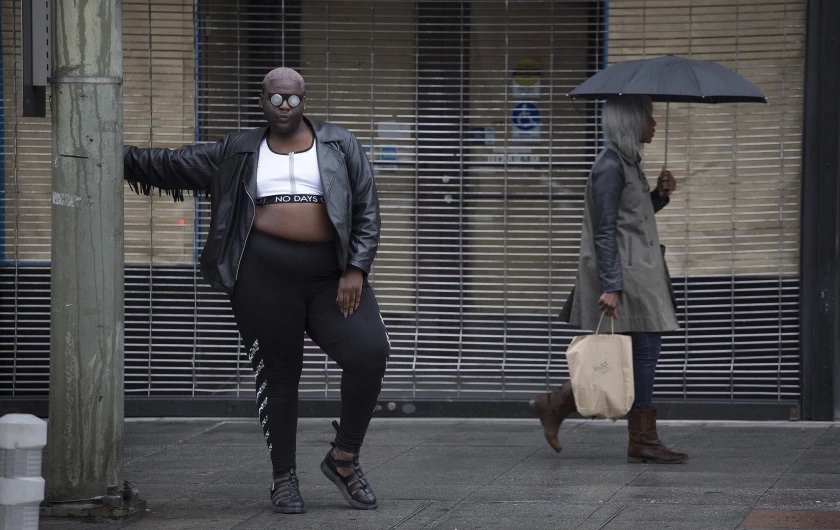
Jamal Lewis, director of “No Fats, No Femmes,” poses for a portrait on Third Street and Broadway in Los Angeles, Calif.
(Brian van der Brug / Los Angeles Times)

Originally from Atlanta, Lewis is a second-year graduate student in media studies at the New School by day and “cultural worker, performance artist and freedom fighter” by night. While an undergrad at the historically black, all-male Morehouse College, he-she used queer social networking and dating sites to meet people. Sprawled on many of the profiles were “no fats, no femmes” — along with things like “no blacks, no Asians, no ballroom kids.” Seeing the frequency of such language inspired Lewis years later to create a feature-length documentary to interrogate and explore race, desire and body image, and the ways in which they’re informed by media, pop culture and capitalism.

The documentary will feature interviews with five black people: a disabled person in South Africa; a queer New York rapper; a PhD student and blogger in Missouri; an agender writer of work on body positivity and a trans woman. Using archival research and performance art, Lewis’ goal is to discuss the many ways individual desires are rooted in problematic conceptions of varying identities.

Lewis has raised more than $17,000 from 550 backers for “No Fats, No Femmes,” which is still in pre-production. The attention he-she has received, which includes support from the gay dating app Jack’d and a mention from Tribeca Film, has taken him-her across the country to speak on body and femme positivity, including to Cal State Los Angeles.

The Times spoke with Lewis, who is known online as Fat Femme, following his-her recent West Coast visit about the documentary — which is slated for a 2017 completion date — about how (black) people “fail gender” and how gender deviant and trans people fit into the Black Lives Matter movement.

The problem is that many people are gender complacent. They are comfortable with how they understand and see gender because of what it affords them.

JAMAL LEWIS

What does “no fats, no femmes” mean?

The “no fats, no femmes” ideology is often used by gay men [on dating sites] situating their desires within a framework that excludes particular kinds of bodies, mostly those fat, feminine, disabled, HIV positive and the list goes on. Anything that reminds them of what the world thinks it means to be gay, they shun away from. Put simply, it’s prejudice masked as preference.

Where did you get the idea to explore the thought process behind this statement in a documentary?

I have always admired the work of Marlon Riggs. I thought for a very long time about what he’d be talking about today had he still been alive and making work as someone who in the 1980s dared to talk about his life at the intersection of being black and gay. He wasn’t interested in being seen in fragments and put out a very visual and explicit narrative [titled “Tongues Untied”] that was really inspiring to me. I wanted to talk about [what] I was experiencing [while trying to date] using that as a model.

In the film’s introduction you quote Mark Aghuar’s “A Litany for My Heavenly Brown Body” which rejects whiteness, beauty and privilege while at the same time blessing the “sissies, trans, high femmes.” What about that work made you want it as the start of the documentary?

If you’re taught to be afraid of and move away from the body that you occupy, you never see a possibility of living in that place. I thought that what Mark was exploring spoke beautifully to the message I wanted to convey with this film because it’s like I’m washing myself clean of all these things that I was told I needed to be to be accepted. It deeply resonated with me, so I wanted it as something to set the tone and let you know I’m not about to play with you.

You say that the documentary focuses on the “politics of desirability.” Explain what that is.

For so long, ideas around sex and sexuality have been relegated to the bedroom. That is so because people are afraid of what it means to engage the messiness of our desires and how it controls a lot of our lives outside of the bedroom. I’m thinking of desire as both a cognitive and emotional phenomenon that is informed by the environment around us and the media we consume. And we know from feminist scholarship that the personal is political. The things that happen in our private lives very much so influence and determine how we show up in public.

Why was it important for you to have an all-black cast?

It meant a lot for me to have an all-black cast because so many other [films] don’t, or they can’t commit to an all-black cast because they want the film palatable to a certain kind of audience. It means more to me that I’m doing it in a way that honors how I show up in the world and the people around and most dear to me. I also chose to rock with an all-black cast and crew because black lives really do matter to me, and when we center them in critical conversations, we all get free. I want the kids of tomorrow and future generations to know and be proud of my decision and the reflection they see when they watch the film. I want my people to see themselves and feel seen.

But some might say the politics of desirability also affect white people. Is there space for them?

I think they have a space as listener. I’m not excluding them from the conversation, but it’s really important for me [to have an all-black cast] because whiteness is often a standard in conversations around beauty. I didn’t want white talking heads talking about these ideas because they are deeply implicated.

You crowdfunded $17,384 as a first time filmmaker. What does that tell you about the subject of your work?

For a long time I was afraid to share ideas because not only are we taught not to see ourselves, we’re taught not to believe in ourselves because of how we show up on a gender spectrum. [The support] showed me that there is an audience for the work that I want to produce and I don’t have to compromise my ideas or myself to do it.
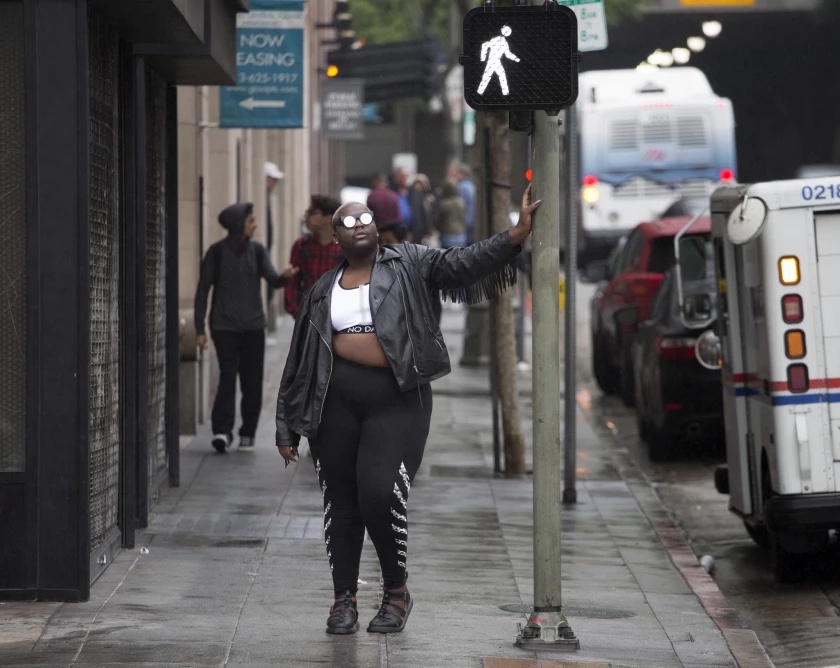
Art and activism together serves as a means to mobilize,” said Lewis.
(Brian van der Brug / Los Angeles Times)

How do the topics you’re raising in “No Fats, No Femmes” intersect with the Black Lives Matter movement and what seems like the exclusion of black trans and gender nonconforming people in that movement?

When you’re conditioned to only fight for a certain body, particularly black cisgender men, I think it’s hard to see anything outside of that as worth it because you only think black cis men are dying. No one thinks about the offset of that, the interpersonal violence that black women and gender deviant and effeminate people experience because of that. The problem is that so many people are what I have named gender complacent; they are comfortable with how they understand and see gender because of what it affords them and the convenience it provides them. People are afraid to wrestle with the fact that they too fail gender and are trans, in a way, and fail these normative notions of gender, particularly black people. People are afraid to show up for trans women in the streets because they are not really acknowledging how they are implicated in their murders and perpetuating transphobia.

What do you mean when you say people “fail gender”?

We see the conception of gender as this black, beastly, hyper masculine brute and this white, pristine, delicate trophy wife that’s meant to be protected from the black brute. If gender exists in those ways, so many people fail it because there is no space for nuance within that. Black women fail white womanhood. Black men fail the black brute stereotype. If we all understood how much we fail gender, we would approach conversations around trans-ness and gender nonconformity differently.

A number of recent videos of transgender and gender deviant people protesting police brutality and anti-LGBT laws using the voguing dance style have gone viral, including one of you. How can performance art be a tool for movement work? 

For so long, the house and ballroom community has been shunned, but a lot of celebrities now are using it in their music videos and shows. Many don’t know that it is very important to black queer history because we understand vogue as embodied resistance. When [the founders] were kicked out of their homes [usually for being gay], they found a beloved community and found joy in what was supposed to be a tragedy and built a culture around that. Vogue is a dance of creative and resilient folks. To show up at a protest and do that, knowing the context behind the dance, is so powerful.

Voguing is no longer a thing that has to be at a club or in a private space. Art and activism together serve as a means to mobilize, to take up and disrupt space in a creative way in spaces where they may not be able to typically do so because of how they show up in the world.

What do you want people to take away from the documentary? 

I want people to take away whatever they need from the film, most importantly healing, self reflexivity and honesty. May it be a mirror through which to engage their desires, internalized phobias and fears around who they are and what they have been told they are. And that’s my most honest response because sometimes I feel like I don’t know who exactly my work is speaking to and what people are taking from it. Most surprisingly, straight cis women and men are coming up to me after these talks at universities, community centers and movement spaces telling me how my work resonates with them, and they’ve helped me realize that this is bigger than [the] LGBT community and that it is bigger than all of our bedrooms. Desirability impacts so much around us, and I want healing for all.

Reference

Gay History: 9 Things To Know About ‘The Lavender Scare’

(Above, right, powerful and closeted gay lawyer Roy Cohn was instrumental in creating anti-Communist fervor.)

Filmmaker Josh Howard discusses his forthcoming documentary on dark days in American history.

Tomorrow’s a lamentable anniversary for the United States: it was 60 years ago, on April 27, 1953, that President Eisenhower put his John Hancock an executive order demanding all gay and lesbian government employees be fired. Not really something you want to celebrate, right? But it is something you should know about, which is why director Josh Howard began production on The Lavender Scare, a documentary based on Dr. David Johnson’s book of the same name. It’s also the first cinematic account of how our government tracked down gays and lesbians in the mid-20th Century.

This project began in 2009, when Howard, a former Emmy-winning producer for CBS’ 60 Minutes and later CNBC, stumbled across Johnson’s book. He hadn’t intended on turning it into anything, and certainly didn’t intend on leaving his job to direct a documentary, but as he read on, and researched on his own, the subject gripped him.

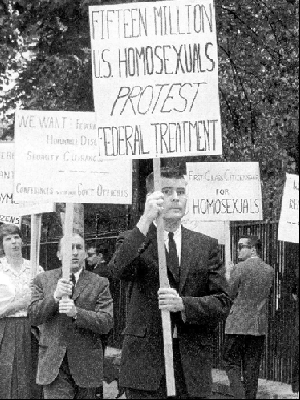
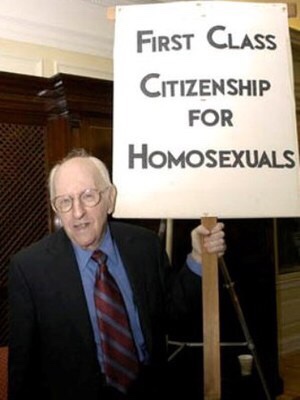
Unable to shake the feeling that there was more story to tell, Howard approached Johnson, now a professor at the University of South Florida, about optioning the book. Johnson agreed, and for the past two years Howard has tracked down as many sources as possible to fill in the gaps, including Frank Kameny, a government astronomer fired who was fired for being gay in 1957 and went on to lead the first public protests against the anti-American policy.

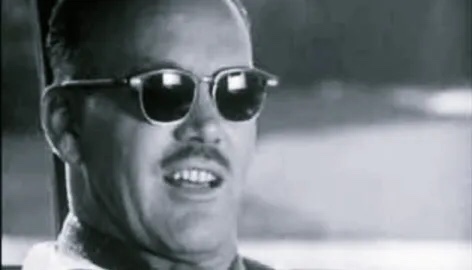
Howard also managed to find a few of the government agents tasked with spearheading the anti-gay witch hunt. One remains particularly unrepentant. “The people that I got rid of, they were faggots,” he says, under the cloak of darkness, inthe film’s trailer, included below. “I didn’t give a hoot; get rid of the son of a bitch. Put him in the bread line.”

As far away as this may all seem, keep in mind that lawmakers and activists are still fighting for Employment Non-Discrimination, policies that would finally create federal laws making illegal to fire LGBT people. (As you know, it’s legal in 29 states to fire gay and lesbian employees and legally acceptable in 34 to do the same for transgender people as well.) And this isn’t simply about homophobia or jobs. It’s about the nagging, tenacious ability of Americans to participate in or turn a blind eye to injustice, a trait foreign observer EM Forster saw right away. Whether it’s scapegoating gays during then Lavender Scare or Muslims after 9/11 or Japanese-Americans during World War II, this a completely unattractive and persistent quality, and it’s one that Howard hopes this film can help eradicate.

To get to that point, though, Howard and his team need to finish editing and licensing the bundle of archival materials they hope to include, and that requires money. Supporters can give them a little greenback love at Kickstarter. They’re shooting for $50,000 and donations end on May 21, which would have been Kameny’s 88th birthday.

Here, Howard offers us the basics on The Lavender Scare, the policies it spawned, what happened to those policies and why this son of a bitch story still matters.

(Left: Frank Kameny can be seen toward the left in this picture from a 1965 White House picket he helped organized. Right: an older Kameny poses with one of those signs.)

1. WHAT IS THE LAVENDER SCARE? It’s the first feature-length film documentary to tell the story of the U.S. government’s decades-long campaign to fire every federal employee found to be gay or lesbian. In what became the most successful witch hunt in American history, thousands and thousands of federal workers lost their jobs. More than a few, with their careers in ruins and unable to find work, committed suicide.

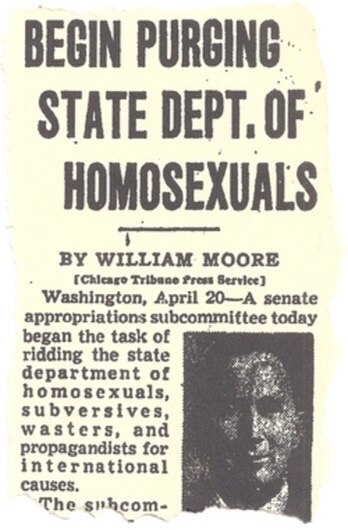
2. WHEN DID THIS HAPPEN, AND WHY? In the 1950s, Senator Joseph McCarthy ignited the Red Scare with his allegations that Communists had infiltrated the U.S. government. He then added the claim that gay men and lesbians were even more dangerous than Reds, because they were susceptible to blackmail by foreign enemy agents and would give up government secrets in order to keep their sexual orientation from being exposed. The fear of this supposed homosexual menace became known as the Lavender Scare.

3. HOW MANY HOMOSEXUALS ACTUALLY GAVE UP SECRETS IN ORDER TO AVOID BEING EXPOSED? After several investigations over many years, not a single case was ever found.

4. WERE LGBT PEOPLE ALWAYS FEARED IN WASHINGTON? No! In fact, in the 1930s and 40s, there was a vibrant and very open gay community in Washington. A large number of new government jobs were created after the Great Depression, and many of the people who came to Washington to fill those jobs were gay men and lesbians. They were eager to make a new life in the growing city, and the government was eager to hire them. Same sex couples could be seen holding hands on the trolley or even kissing on the grounds of the Washington Monument. They enjoyed a comfortable work environment and a lively social life. No one could have anticipated the devastating events that were to come.

5. WAIT, WHY IS THE DATE APRIL 27, 1953 IMPORTANT? That is the day President Eisenhower signed Executive Order 10450, which made it official government policy that gay and lesbian employees were to be hunted down and fired. More than a thousand federal agents – a couple of whom are interviewed in our film -were assigned to the task of determining who was a homosexual. People were subjected to grueling interrogation: “Who do you live with? Who are your friends? What bars do you frequent? Would you like us to call your family back home and ask these questions?” People were ordered to give up the names of their gay and lesbian friends. Most chose to resign immediately, rather than face continued pressure or further scrutiny.

6. DID ANY GOOD COME OF THIS? Yes! In 1957, Dr. Franklin Kameny, a Harvard PhD who had been working for the U.S. Army Map Service, was fired from his job when the government found out he was gay. But unlike the thousands who had been fired before him, he fought back! The purges created a sense of anger and militancy in the gay community that sowed the seeds of the gay rights movement. In 1965, years before Stonewall, Kameny and a small band of brave men and women staged a picket in front of the White House, in what is believed to be the first gay rights demonstration in the country. Kameny went on to devote his entire life to the fight for LGBT rights, and just before his death saw his achievements honored by President Obama.

7. HOW LONG DID THE BAN ON GAY AND LESBIAN WORKERS REMAIN IN EFFECT? People continued to lose their jobs simply through the 1950s, ‘60s, 70s, and 80s. In 1995, President Clinton officially rescinded the policy that had been put in place by President Eisenhower in 1953, and for the first time in four decades, LGBT people could freely work for the civilian agencies of the federal government. Of course, the ban on service in the military continued for many years beyond that.

8. DOES THIS STORY HAVE ANY PRESENT DAY RELEVANCE? Oh, definitely. There are still 29 states in the country in which it is perfectly legal to fire people simply because they are LGBT – a direct result of our government’s homophobic policies that were put in place in the 1950s. We think the story of The Lavender Scare will help educate people about the need for laws on both the state and national level to protect LGBT people from employment discrimination. The federal Employment Non-Discrimination Act, which would extend job protection to LGBT people nationwide, has just been re-introduced in Congress – ironically enough. just as we’re marking the 60th anniversary of the start of the government’s anti-gay witch hunts.

9. WHY DO SO FEW PEOPLE KNOW ABOUT THIS? This is a classic example of the way in which the struggles and contributions of gay men and lesbians are ignored in the telling of American history. It is shocking that with all the books and films about the Cold War and the Red Scare, the story of the Lavender Scare is almost completely ignored. The Lavender Scare will be the first film to shine a light on this important subject – if we can raise the funds to finish production. As philanthropist and activist Jim Hormel has said, “If LGBT people don’t take the lead in preserving our history, who will?”

Reference

Gay History: Watch the Scary 1961 Anti-Gay PSA – “Boys Beware” – Video

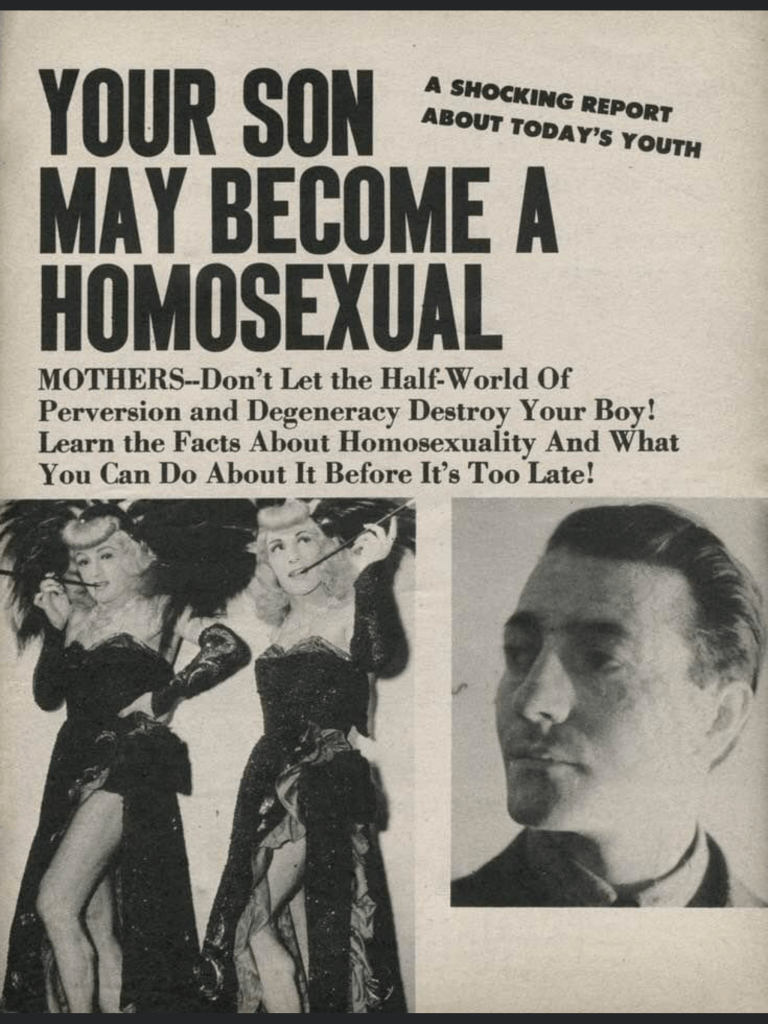
Boys Beware was a short PSA film produced by Sid Davis productions in 1959 on the suggestion of the Inglewood Police Department in Southern California. It was ostensibly was made to warn young boys of the danger of predatory men on purpose.

What Jimmy didn’t know was the Ralph was sick. A sickness not visible like smallpox, but no less dangerous and contagious- a sickness of the mind. You see Ralph was a homosexual, a person who demands an intimate relationship with members of their own sex.”

At one point in time Boys Beware was required viewing for males in many school districts across the country.

Reference

Gay History: Julian Eltinge The World’s Greatest Forgotten Female Impersonator – RARE 1929 Video

May 14, 1883 – On this day of America’s foremost female impersonator is born in Newtonville, Massachusetts. Julian Eltinge was a stage and silent film star who few actually realized was a man. So popular was he that during the Korean War a troop ship was named in his, or rather, her honor.

After appearing in the Boston Cadets Revue at the age of ten in feminine garb, Eltinge garnered notice from other producers and made his first appearance on Broadway in 1904. As his star began to rise, he appeared in vaudeville and toured Europe and the United States, even giving a command performance before King Edward VII. Eltinge appeared in a series of musical comedies written specifically for his talents starting in 1910 with The Fascinating Widow, returning to vaudeville in 1918. His popularity soon earned him the title of “Mr. Lillian Russell” for the equally popular beauty and musical comedy star.

Hollywood beckoned Eltinge and in 1917 he appeared in his first feature film, The Countess Charming. This would lead to other films including 1918s The Isle of Love with Rudolph Valentino and Virginia Rappe. By the time Eltinge arrived in Hollywood, he was considered one of the highest paid actors on the American stage,

Eltinge was an intimate of the top Hollywood stars and a wealthy man, worth over $250,000. He built Villa Capistrano, one of the most lavish villa’s in the Hollywood area, where he lived with his mother and entertained lavishly. He also built a ‘dude ranch’ for men in Alpine, CA near San Diego But times were changing. The outrageous performances of female impersonators Francis Renault and Bert Savoy, and the drag balls and gay speakeasies of the 20’s “pansy craze” in New York made Eltinge’s style appear old-fashioned. He began to drink heavily and in 1923 was caught smuggling liquor from Canada. Despite a sensational trial and bad press, he managed to get an acquittal. 

It was the beginning of his decline and with the arrival of the Great Depression and the death of vaudeville, Eltinge’s star began to fade..  Eltinge resorted to performing in nightclubs. Crackdowns on cross-dressing in public, a misguided attempt to curb homosexual activity, prevented Eltinge from performing in costume. At one appearance in a Los Angeles club, Eltinge stood next to displays of his gowns while describing his old characters.

On May 7, 1941, Eltinge fell ill while performing at Billy Rose’s Diamond Horseshoe nightclub. He was taken home and died in his apartment ten days later. His death certificate lists the cause of death as a cerebral hemorrhage.

Julian Eltinge leaves a legacy as one of the greatest and most forgotten female impersonators of the 20th.century.

Raise a glass and remember Julian/Vestta!

“My heart is simply melting at the thought of Julian Eltinge;
His alter ego, 
Vesta Tilley, too.
Since our language is so dexterous, let us call them ambi-sexterous –
Why hasn’t this occurred before to you?”

Dorothy Parker, “A Musical Comedy Thought” – Vanity Fair, June 1916

Reference

Gay History: John F. Kennedy Had A Gay Best Friend Who Even Had His Own Room At The White House

The book “Jack and Lem: John F. Kennedy and Lem Billings: The Untold Story of an Extraordinary Friendship,” details the extraordinary relationship between two unlikely friends.

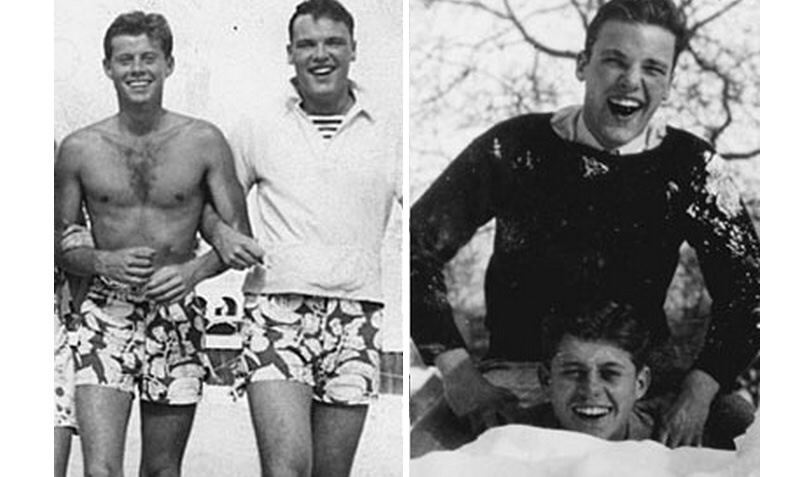
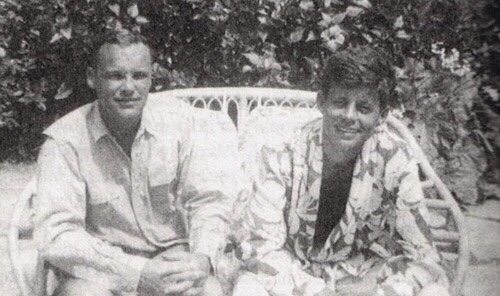
JFK, or ‘Jack’ as he was known by his close friends and family, had a gay best friend named Lem Billings, who he met in prep school when Kennedy was 15 and Lem was 16.

The pair became the best of friends who wrote letters to each other when they were apart, traveled to Europe together and were so close that Joseph Kennedy Sr. thought of Billings as another son, according to GregInHollywood.

The book details JFK’s angry reaction to Lem after he made a sexual advance towards him, saying: “I’m not that kind of boy.” But this misunderstanding did not end the duo’s relationship.

Writes GregInHollywood:

From the time he and Kirk LeMoyne “Lem” Billings met at Choate, until the President’s assassination thirty years later, they remained best friends.

Lem was a virtual fixture in the Kennedy family who even had his own room at the White House.

The book about their friendship draws on hundreds of letters and telegrams between the two, Billings’s oral history and interviews with family and friends like Ben Bradlee, Gore Vidal, and Ted Sorensen.

It was a friendship that endured despite an era of rampant homophobia.

Billings was a graduate of Princeton University and Harvard Business School and was an advertising executive at the Manhattan advertising firm Lennen & Newell. He put his business career on hold to work on Kennedy’s campaign for president.

Bradlee says in the book: “I suppose it’s known that Lem was gay….It impressed me that Jack had gay friends.”

Billings obviously never came out but did once say: “Jack made a big difference in my life. Because of him, I was never lonely. He may have been the reason I never got married.”

Kenneth Hill of WoolfAndWilde, conducted a fascinating interview with David Pitts, the author of ‘Jack and Lem’, to uncover some more details about the extraordinary relationship between the two unlikely friends:
Kenneth Hill: How would you characterize the friendship between JFK and Lem Billings?

David Pitts: The way I would characterize it is that is was a very close, deep, friendship across sexual orientation lines.

KH: You said that this was the story of a friendship that crossed sexual orientation lines, which I think is really an interesting element of it, but talk a little bit about the depth of this friendship. The fact that it started when they were very young and, from what I read in the book, they were basically inseparable for the rest of their lives except when circumstances had them in distant cities.

DP: Yes, indeed. I think there were a number of elements to it. First of all, there were a series of bonding events early on. One was the fact that they both hated that school [Choate] in which they met. And were engaged in all kinds of pranks which almost got them expelled twice. That was obviously a bonding phenomenon. Secondly, they roomed together for part of the time at the school.

Thirdly, and I think this is really important, John Kennedy was so sick most of his life, far earlier than when most people think, including when he was at Choate, and Lem was the person at boarding school — his mother and father did not come to the school when he was ill; Lem was there. Lem was the person who was always there for him and took care of him. And then fourthly, there was the two month trip to Europe that they took, just before WWII in 1937, just the two Americans at that pivotal time, I think that was obviously a very strong bonding event.

And then over and above these issues, I would say this — and this is kind of a complicated thought because we really don’t have language to express these kinds of relationships — and that is, I’m firmly convinced after working on this book that John Kennedy’s sexual interests were in women. We don’t need much evidence of that, the evidence is all over the place. But his strongest emotional attachments were to men — and principally, to Lem. We don’t have a word for that, right? Somebody who prefers the opposite gender for sexuality, and the same gender for deep, emotional attachments.

KH: We don’t really have a word for that. I guess “man’s man” used to sort of mean that, but JFK took it so much further in a way because he loved being around men, he knew some men were attracted to him and even seemed to enjoy it. He liked the stimulation of those relationships, there was nothing sexual about it, but there was something about that male-male dynamic that fed him.

DP: I think that’s exactly right. There was one reviewer who wrote, “What’s the big deal here? This guy’s writing that JFK was comfortable with gay men, so big deal, we all knew that.” But of course it’s not the fact that he had a friend named Lem Billings who was gay. This was the closest person in all the world to him outside of his family for 30 years. He wasn’t just “a gay friend” on the side.

KH: One of the very surprising facts that comes out in this book is that Lem had his own room at the White House?

DP:
 Yes, that’s one of the revelations in the book that’s really surprising. And actually some of the people who were working in the White House very close to JFK didn’t know it. For example, Ted Sorensen whom I interviewed for the book, perhaps the closest aide to JFK, saw Lem around the White House all the time, but he told me he didn’t know that he’d had his own room there and was staying there so much of the time. But yeah, that’s another indication of the depth of the attachment.

One thing I was intent on doing when I wrote this book, because I thought it would be open to various forms of attack, is that I never went beyond what the documents said. The book is a lot of quotes from documents, or that interviewees said. This friendship might have contained a lot of things that I wasn’t able to find out because I didn’t want to enter the area of speculation.

KH:
 It seems without a doubt that Lem was in love with JFK. But it’s never stated explicitly because you don’t have any record of his ever saying that.

DP:
 No, I think the closest … I mean, these were more sedate times, especially where homosexuality is concerned. Even in the various documents, Lem is never overt in his statements. But there was one statement from one of the documents, and I have it in front of me here, that I think is just expresses his feelings. Here’s the quote: “Jack made a big difference in my life. Because of him, I was never lonely. He may have been the reason I never got married.”

This is somewhat of a difficult thought as well, but I think gay people had a way back then of telegraphing to future generations what their feelings were that they could not express candidly at the time. And anybody who reads some of these words today would have no doubt what Lem’s feelings were, but in the context of that time it was not obviously understood.

Reference

Gay History: Pride, Prejudice and Punishment: Gay Rights Around The World

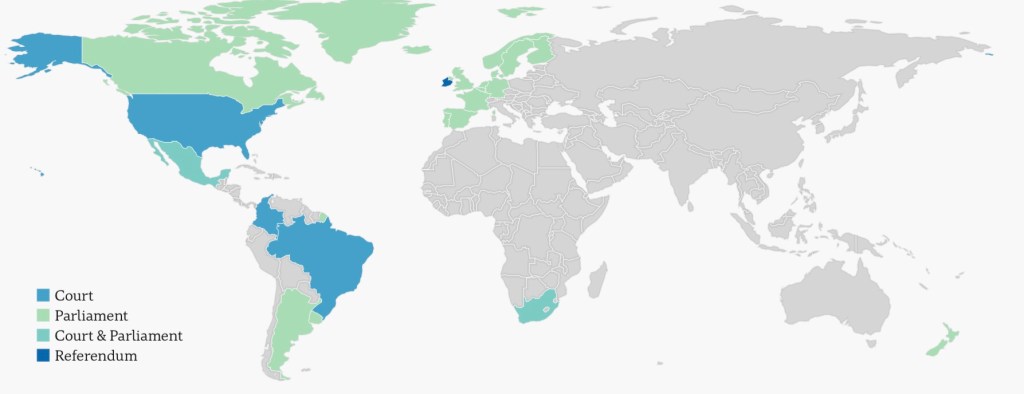
Australians have voted in favour of legalising same-sex marriage — but elsewhere in the world gay people can struggle to simply stay out of jail.

Being openly gay is effectively illegal in more than 70 countries — and can result in severe punishment, sometimes even death.

See how Australia’s position on same-sex marriage compares around the world.

The state of marriage rights

Voters’ ‘yes’ response to the SSM postal survey is Australia’s latest step towards allowing same-sex couples to marry, and may prove close to the culmination of a long campaign.

Campaigners have suggested Australia is lagging behind rest of the world.

It is fair to say that most countries with similar cultural backgrounds to Australia have now legalised same-sex marriage, but based on total country numbers, Australia remains part of the majority in restricting marriage to couples made up of a man and a woman.

Out of 209 countries the ABC examined, only 24 allow same-sex couples to marry.

There is no same-sex marriage in Asia or the Middle East, and South Africa is the only country in Africa to have legalised it.

In Europe, the legal status of same-sex marriage is mixed. The Netherlands was the first country in the world to legalise same-sex marriage in 2001, with other Western countries including the United KingdomFrance, Spain and Germany following it.

Yet more than half of European Union members have not.

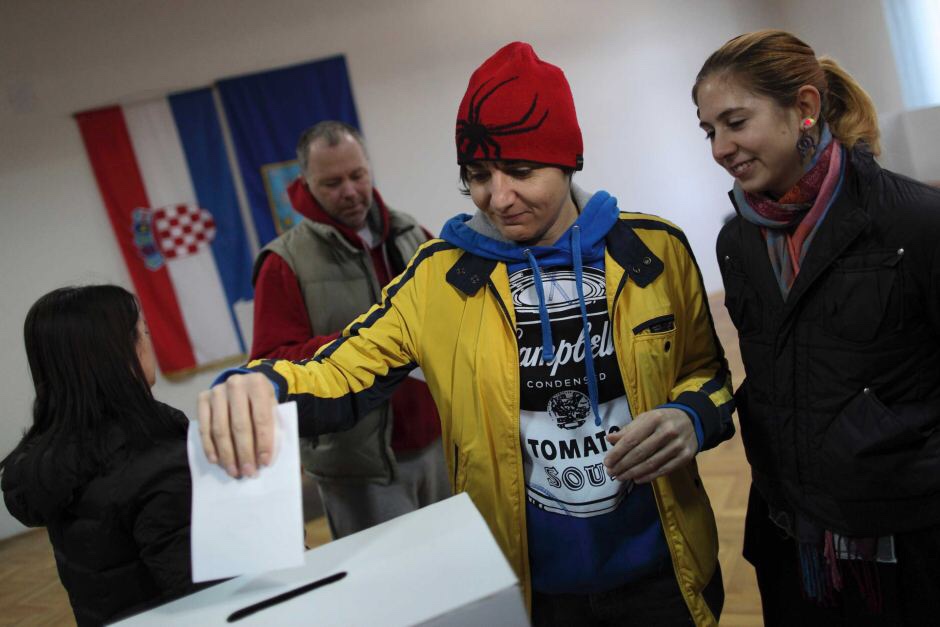
Mima Simic and her girlfriend Marta Sisak vote in Croatia’s referendum on defining marriage as a “union of man and woman”.
Reuters: Antonio Bronic

Some countries in Eastern Europe have recently sought to amend their constitutions to entrench the “traditional definition” of marriage:

  • Hungary brought in a new constitution in 2011 that specifically restricts marriage to heterosexual couples.
  • Voters in Croatia (2013) and Slovakia (2015) voted to change the definition of marriage in their constitutions so that it applies only to a union of a man and a woman, although the Slovakian referendum was invalid due to a low turnout.
  • In December 2015, Slovenian voters rejected the legalisation of same-sex marriage in a referendum.

Australia made a similar amendment to its Marriage Act in 2004, adding a definition of marriage as “the union of a man and a woman to the exclusion of all others”.

How have countries legalised same-sex marriage?

In Australia, Parliament can legalise same-sex marriage by amending the Marriage Act but the Government’s policy has been that its MPs will only be able to vote for same-sex marriage if a majority of Australians support the change via a plebiscite.

The Government’s compulsory plebiscite proposal was defeatedin the Senate. Instead, the non-compulsory Australian Marriage Law Postal Survey was run by the Australian Bureau of Statistics between September 12 and November 7.

After the survey returned a yes outcome, a private member’s bill will now be debated in Parliament to legalise marriage between people of the same sex.

Out of the countries that have legalised same-sex marriage:

  • Only one country, Ireland, put the change to a people’s vote. A referendum was legally required, held in May 2015, and overwhelmingly passed.
  • Parliaments legalised same-sex marriage in 20 countries.
  • Court rulings prompted the change in five countries.
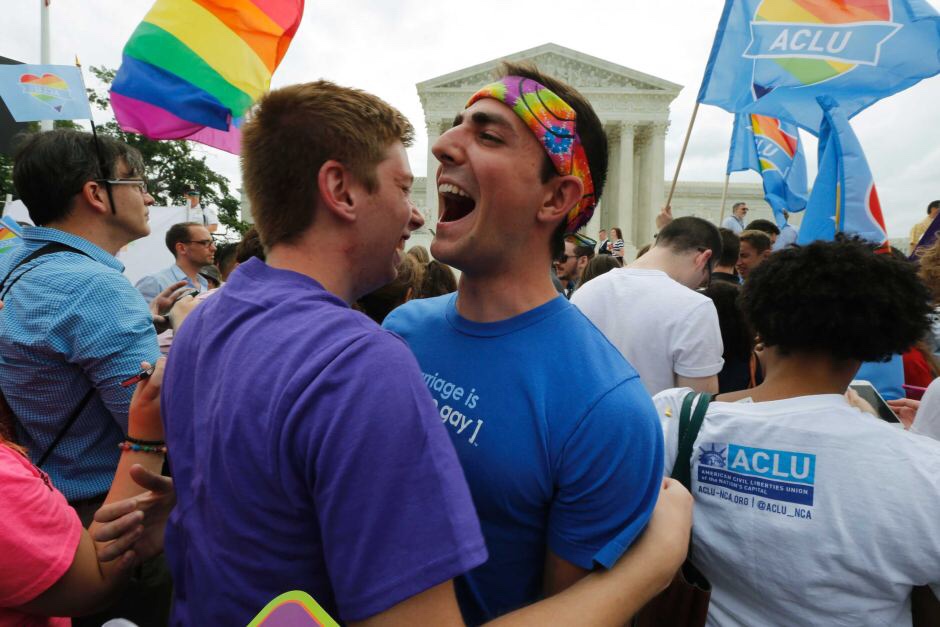
Gay rights supporters celebrate after a US Supreme Court ruling that same-sex couples have the right to marry

The highest-profile court decision was in the United States in 2013, when the Supreme Court effectively legalised same-sex marriage by finding the Defence of Marriage Act was unconstitutional.

Most recently, in April 2017, the Constitutional Court of Taiwan (Republic of China) ruled that the Taiwanese law defining marriage as a union between a man and a woman was unconstitutional. It ordered that a change in the law had to occur within two years. At the time of writing, same-sex marriage is still unavailable in Taiwan.

Where is being gay illegal?

Marriage is an important issue in Western countries but elsewhere in the world, LGBT people can struggle to simply stay out of jail.

There are more than 70 countries where homosexual acts are illegal.

The countries shaded in the map above are those where there is a law that prohibits homosexual acts in part or all of the country.

Most of these countries fall within two main categories — just over half are former colonies mostly in Africa that inherited discriminatory laws but never repealed them, while the others are majority-Muslim countries.

The International Lesbian, Gay, Bisexual, Trans and Intersex Association (ILGA) publishes an annual report of “state-sponsored homophobia”.

What exactly is outlawed varies from country to country. Twenty-eight states only prohibit relations between men.

A common formulation is a prohibition of “carnal intercourse against the order of nature”.

Sometimes gay sex is placed in the same category as bestiality.

  • In India it is an offence to “voluntarily [have] carnal intercourse against the order of nature with any man, woman or animal”.
  • In Mauritius, it is a crime to commit “sodomy or bestiality”.
  • In Uganda, a law provides for a seven-year jail term for anyone who conducts a same-sex marriage ceremony.
Kenyan MP Irungu Kang’ata leads an anti-gay caucus protest in Kenya’s capital, Nairobi.
Reuters: Thomas Mukoya

Not all the countries with these laws actually enforce them for consensual sex at home.

The Singapore Penal Code prohibits “any act of gross indecency with another male person” in “public or private”, with a maximum penalty of two years in prison.

But National University of Singapore Assistant Professor Lynette Chua says the ban has “seldom been applied in private, consensual situations and [is] typically used in non-consensual situations or cases involving minors”.

Similarly, Shakira Hussein of the National Centre of Excellence for Islamic Studies at the University of Melbourne suggests that in Islam “on all sexual matters … it isn’t the act itself that is to be punished but the public commission of it”.

“Some sharia scholars say that the laws against illicit sex should basically be regarded as laws against public indecency, since they require four witnesses.”

Even if bans aren’t strictly enforced, they often still have a harmful impact on LGBT people.

Achim Hildebrandt of the University of Stuttgart says such bans “represent an ever-present threat of blackmail and public disgrace … they drive gays and lesbians out of public life and prevent them from demanding more far-reaching reforms such as the outlawing of discrimination in the workplace and the housing market”.

Where do LGBT people risk the death penalty?

The death penalty is in place for same-sex sexual acts in at least 11 countries.

According to the IGLA, the death penalty applies in Sudan, Iran, Saudi Arabia and Yemen and in parts of Nigeria and Somalia.

In theory the death penalty could also be imposed in Mauritania, Afghanistan, Pakistan, Qatar and the United Arab Emiratesthrough sharia law, but this does not appear to have occurred in practice.

Information on when the death penalty has been carried out is not readily available.

The “Erasing 76 Crimes” blog, which advocates for the repeal of anti-LGBT laws around the world, indicates that only Iran and Saudi Arabia have actually carried out executions for same-sex activity in recent times.

The blog’s founder, Colin Stewart, says that in Saudi Arabia“beheadings have been imposed for homosexual behaviour in the past, including three men in 2002, but imprisonment and lashings are a more common punishment”.

Iran is second in the world for frequency of executions [after China], including executions for homosexual activity, although the facts about the offences being punished are often unclear or misrepresented in news accounts.”

Pakistanis rally in Peshawar in support of a trans woman who was arrested at her wedding.
Reuters: Fayaz Aziz

At the same time, Dr Hussein points out the existence of established trans communities in Iran and Pakistan. She tells the ABC:

“Some same-sex male couples circumvent laws against homosexuality by getting a doctors’ certificate to say that one half of the couple is a trans woman. Supposedly, this is meant to be followed up with surgery, but that isn’t necessarily carried through.

“Pakistan has had a ‘third gender’ option on the national ID card for a few years now [and] Iran has one of the highest rates of male-to-female trans surgery in the world.”

What other forms of harassment take place?

Intimidation of LGBT people is not restricted to the threat of jail or death.

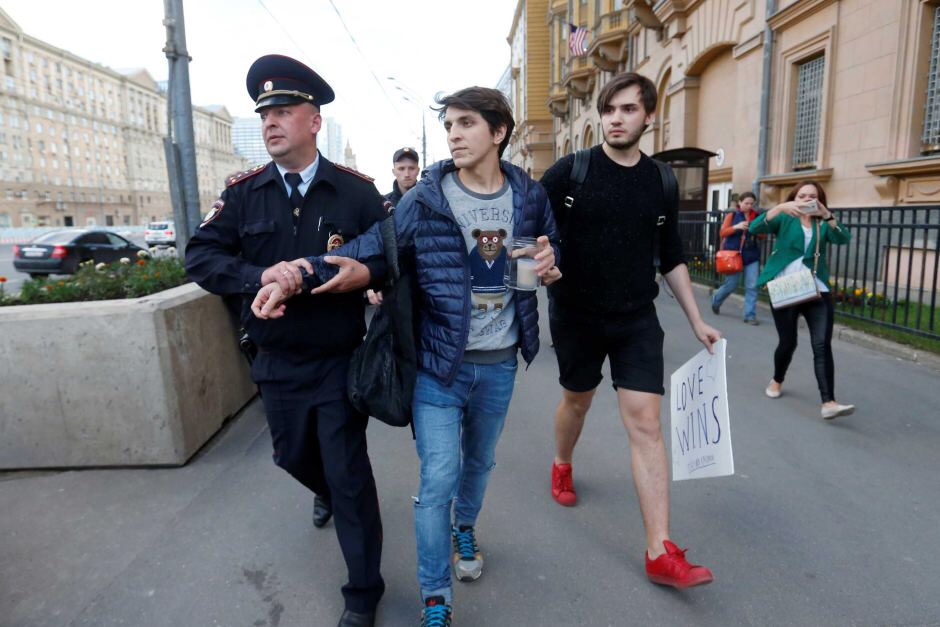
Homosexuality is legal in Russia but in recent years the Government has imposed laws that ban “promotion” of “sodomy, lesbianism, bisexuality and transgenderism”.

Omar G Encarnacion of Bard College in New York suggests thatRussia’s law “is so broad that it outlaws gay pride parades, public displays of affection by same-sex couples, gay symbols such as the rainbow flag, and even a public admission of homosexuality, unless made in the way that casts homosexuality in a negative light”.

A Russian police officer detains a man who planned to place a tribute to the victims of a shooting at a gay nightclub in Orlando in front of the US Embassy in Moscow.
Reuters: Maxim Zmeyev

Closer to home, Singapore takes a tough line on “promotion” of LGBT issues — on paper at least.

According to Assistant Professor Chua, “Singaporean media are banned from carrying content that “promotes”, “justifies” or “glamorises” “lifestyles such as homosexuality, lesbianism, bisexualism, transsexualism [and] transvestism”.

In mid-2014, the National Library of Singapore announced it would pulp its copies of three children’s books with LGBT themes. According to the Government-linked Straits Times Newspaper:

“And Tango Makes Three is based on the true story of a pair of male penguins who raise a chick together; The White Swan Express features adoptive parents such as a lesbian couple; and Who’s In My Family highlights different family structures and includes same-sex parents.”

After a public outcry, two of the books were returned to the library but placed in the adults’ section.

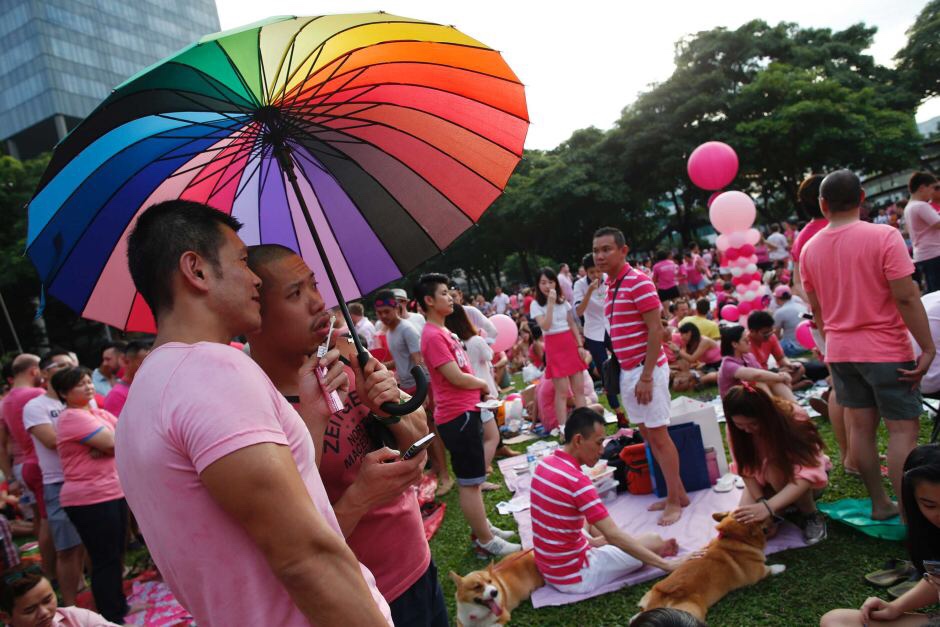
In June 2016, the Singapore Government announced that“foreign entities should not fund, support or influence” Pinkdot, an annual LGBT event held in a Singapore park.

Brad Adams, Asia director of Human Rights Watch, suggests“Singapore’s demand that foreign companies stop sponsoring PinkDot encourages corporations to discriminate against LGBT people”.

Singapore’s annual Pink Dot event promotes acceptance of the LGBT community.
Reuters: Edgar Su

Leaders in other countries freely use discriminatory language against LGBT people: 

  • In 2015, the mayor of Budapest in Hungary described the city’s Gay Pride rally as “repulsive”.
  • In Africa, Ugandan president Yoweri Museveni has describedhomosexual people as “disgusting”.

The ABC has recently reported on LGBT Ugandans fleeing the country as refugees.

Members of a breakaway faction of the Anglican Church in Zimbabwe protest against homosexuality in Harare.
Reuters: Philimon Bulawayo

Zimbabwe President Robert Mugabe has previously said that:“Homosexuals are worse than dogs and pigs; dogs and pigs will never engage in homosexual madness,” and followed this up in 2013 by stating that LGBT people were “worse than pigs, goats and birds”.

In 2016 the ageing ruler vowed that Zimbabwe would reject any foreign aid that is “given on the basis that we accept the principle of gay marriages”.

Are things getting better for LGBT people?

With LGBT harassment and criminal penalties continuing in AfricaAsia, the Middle East and parts of Europe, the picture may seem bleak.

But veteran campaigner Peter Tatchell, who famously attempted a citizen’s arrest of Robert Mugabe in March 2001 and was then beaten by the president’s bodyguards, is more optimistic.

“There are rays of hope [in Africa], with the Seychelles, Mozambique and Sao Tome & Principe recently decriminalising homosexuality [and] in 2014, the African Commission on Human Rights and People’s Rights urged member states to protect LGBT people against discrimination and violence,” he says. 

Ty Cobb from Human Rights Campaign said: “We have seen great progress with regards to global LGBTQ rights in recent years, with three countries decriminalising same-sex activity just [in 2016], 20 countries and certain jurisdictions in Mexico have marriage equality and more and more countries are taking measures to improve the lives of trans individuals.”

At the same time, Mr Cobb notes that anti-LGBT movements continue to work against the community.

“Extremists have organised marches against marriage equality efforts in MexicoAmerican evangelicals have resorted to exporting their dangerous messages of hate from Eastern Europe to Africa, and [Islamic State] continues to target and kill members of the LGBTQ community throughout the Arab world,” he says.

In Singapore, there are signs of increased cultural acceptance of the LGBT community, with the 2016 release of home-grown web drama People Like Us taking place with no real backlash.

Telling the stories of four gay men in Singapore, the series has been well-received by the local community.

Filmaker Leon Cheo says apart from some “thumbs-down” on YouTube, “we haven’t received flak or negative emails or comments from Singaporeans at large”.

Mr Cheo says while the situation for LGBT people in Singapore is improving, “challenges such as censorship of neutral and positive LGBT news, film and TV, and archaic anti-sodomy laws still exist”.

“One of our creative objectives was to portray Asian gay men neutrally or positively [so that the] series could play a part in changing the hearts and minds of the citizens and government of Singapore,” he says.

In the Middle East, LGBT rights remain strongest in Israel although it is unclear whether or when same-sex marriage might be legalised there.

Reference

When Mom Blamed Eldest Son Of “Spreading Gayness” To Gay Teen Brother, He Adopted Him

Sadly, not every coming out story has a happy ending – but this recent Reddit post by a gay brother has a beautiful happy ending.

jason45q originally posted:My mother is a very complicated woman. She can be really sweet, but fucking batshit crazy at other times. I moved out a long time ago, I’m 27 and I left the house as soon as I turned 18 (also right after coming out). She didn’t disown me, but made a lot of homophobic remarks about me “joining the fags” and denying her grandchildren.

Today, I received a very angry phone call from my mom. I have a younger brother who’s 14 who lives with my parents and my sister. My mom snooped through his phone and apparently found a few texts to his friend confessing that he was gay. Suddenly, I’m responsible for engulfing him with my rainbow wrath when I barely see him.

I have considered trying to get him to move here with me but I don’t think he’d want to leave everything behind. My family would also have a fit.

Jason was overwhelmed by the flood of advice he received from his original post, and he updated his supportive Redditors on the dramatic turn of events that came next:I read all the comments, each and every single one. However, about an hour after writing the post, I grew impatient and just drove to my parents’ house…My mom lost her shit when I came, said that I was going to make it worse. She’s kept a little quiet though (probably because she realized she can’t do much at this point).

My younger brother is fine…He believes he’s 90% gay. He doesn’t notice girls, but notices guys. He said he’s felt deeper connections with them and is crushing on his friend (basically all the things we all had to deal with when we were young anyway).

I told him about moving in with me and switching schools. I tried to make him understand that he needs to be in a healthier environment and does not need to be taking any shit from my mom. He was very hesitant about leaving his friends, but he’s agreed to move in with me in the next month or so. And for those of you asking if I can afford it, I very much can.

Today morning I told my mother he was going to stay with me. She wanted to argue, but held back. She knows she crossed my patience limit a long time ago, so it was relatively easy. I’m getting forms from the lawyer tomorrow about making me his legal guardian. My mom agreed to sign it saying “it’s probably better for me that you two will be gone anyway” and my dad gives negative two shits about anything so that’ll be easy.

I guess I can say this is off to a more positive start. I can get to know him better now and at the same time protect him from emotional abuse. He’s a very soft spoken kid, a little too passive and lets people run over him. I was the opposite- and by that I mean very stubborn, rebellious and maybe a bit of an asshole…but it’s what helped me move out I guess. Now I’ll be able to toughen him up a little and build some more confidence in him.

Thanks for all the advice, it was very much appreciated. I will not call child services anymore, since he’s not going back anyway. I’d rather she suffers in silence as she realizes she drove her sons away. She’ll never admit it but I’m sure it’s there.

Reference