(This article was originally published for World AIDS Day 2005. It is, with no modesty, the most powerful piece I have ever written. Written with love, it took me the longest time – about 2 months – to write. It is also the piece I have shed the most tears over. I received a huge amount of positive feedback from it, and nearly everyone who has read it has cried. I don’t know that the tears were over my stories so much, but rather that they had similar stories invoked by the writing. I have always hated the introduction to the snippets, and have taken this opportunity to totally rewrite it.)
Anyone who has been observing or participating in the Lost Gay (Insert your state) groups on Facebook would realise the immense value of collective memory. Writers, historians and archivists can churn out volume after volume on gay history, but nothing can match the real stories that come from individuals who lived within the community through its various phases. I personally submitted a tome of comments, stories, reflections and recollections – not to mention a plethora of photos – on other peoples submissions to the Sydney group. It was an energising, amusing, often happy, sometimes sad experience reliving what was, for me, a formative part of my life, and a period of gay history that was positive and empowering as a community.
No recollections of the 80s and 90s can skirt around or avoid the impact of HIV/AIDS on our lives. Indeed, reading through the groups posting on lost friends drove home the nightmare, the immense loss, the sorrow and the stories flowing from those of us left behind. It was a beautiful experience, and more than a few tears were shed. It also informed some of losses they had not been aware of. A friend of mine actually died during this period and his memorium was in real-time instead of being enclosed in the pages of a local paper.
HIV/AIDS was relentless and soul-destroying. There is nothing more helpless than being in the midst of all this obliteration and knowing there is absolutely nothing you can do. Many of us stood, stunned, and watched our entire social circle written off the face of the earth. It didn’t discriminate, it offered no mercy or compassion. Death and dying became an event that, even for those who left for nether regions, could not escape from. To write this piece, I have had to dig into photo albums not opened for years (with photos of groups of friends where not a single person is still alive), delve back into long buried memories. It was like a dam breaking. I cried, and cried and cried. Perhaps long overdue, it proved cathartic.
But the same question was being asked as I wrote – what of those who survived the carnage and live with its aftermath? However we have managed to come to terms with it, we are all scarred. Triggers are never far away – a photo, a memory, a casual conversation can produce a flood of emotion. So we learnt to tuck it away, to cope, to avoid. But how do we really feel about our survival? How do we place ourselves? What role have we adopted as a coping mechanism? Are we “long term survivors” (Like or lump the terminology)? Do we have “survivor guilt”? Are we in denial? “Victims of circumstance”? Or was it just “the luck of the draw”! Or have we found other ways to redefine ourselves! How ever we see ourselves there is one thing we can’t deny – we are the holders of all our departed friends memories,; the secrets that endeared them to us; their little irks and quirks. I have come to define myself as a Storyteller, and as a writer I could write tomes on all my departed friends lives, I could bash your ears for hours, and bore you to the point of sleep. But I won’t.
I have chosen the lives of three close friends to write about “in a nutshell”. This is not a biography about them. It is a random thought, that one thing that springs to mind when their name is invoked, that short story or snippet of their lives.
These are three people I love, three people I deeply miss. Their memories are jewels in my mind, are stars at night. I hope they glow and twinkle for you!
Andrew Keith Todd
4 February 1962 – 26 December 1986
“I am white lightening and protecting you all.”
Andrew was, to give a modern comparison, a Hobbit. He would laugh uproariously if he knew I had drawn that comparison.
I met Andrew when I was the manager of ‘Numbers’ Bookshop, which was one of ‘those’ sex shops on Oxford St. He didn’t actually work for me, but for the ‘Hellfire Club’ – later to become ‘The Den Club’ – a Club 80-style sex venue next door to ‘Numbers’, both owned by the same guy. I can never recollect seeing Andrew when he wasn’t smiling, or laughing, or doing someone a favour. He was one of those easy-going guys who was liked by everyone. He was also one of the first people I knew to become seriously ill from AIDS. We knew so little about it back then that I don’t think anyone, including Andrew, was particularly perturbed.
Over a period of about 6 months, we could see his health slowly deteriorating, weight loss being the most frightening symptom on someone his size. Shortly after that, his hospital stays started – or in his words, “just going in for a bit of a rest”. He was in and out quite regularly for the 6 months leading up to his death, with each outstay getting shorter and shorter. Several months before his death, the stay became permanent. There was no dedicated AIDS ward back in those dark days, so he would be placed in a ward for a while, then if the bed was required by someone else, he was moved down to A&E (St Christopher’s ward) until another bed became available. He had the dubious distinction of being one of our first HIV guinea pigs, suffering the discomfort of loads of antibiotics to try to help the PCP, and dozens of lumbar punctures as medical staff tried to work out how best to treat him. His back looked like a pincushion.
A couple of months before he died, he had been invited to Gareth Paull’s 1986 theme party “Green With Envy”. It was a blokes only party at Darling Point, and you had to wear drag. My reputation for doing “gutter” drag was well established, so Andrew asked me to accompany him, and help with his outfit. As you can see from the photo, he was very thin. I was so glad that I went with him, and that he enjoyed himself so much. It was the last party he attended.
By December 1986, we all knew he didn’t have all that long to go. Despite his constant good humour, his downhill slide was becoming more and more obvious. He looked dreadful! A Christmas lunch had been arranged by friends living at Glebe on Christmas Day that year. We called into St Vincent’s on our way there to deliver Christmas gifts to him. ‘I won’t die today,’ he said to me as we were about to leave. ‘I don’t want to ruin your Christmas’. Christmas lunch was a quiet, tense affair with everyone jumping every time the phone rang. But he kept his word.
I had to work on Boxing Day – sex doesn’t recognise public holidays. The rest of our friends were at a party in Darlinghurst. I received a phone call in the early afternoon to say Andrew had died, and then had to put a dampener on the party with a phone call. There was a huge wake that night at “The Oxford’, the first of many to come.
His funeral was held at Eastern Suburbs Crematorium, and at the exact moment that the curtains were closing in front of the coffin, every door in the crematorium chapel suddenly slammed shut.
He still managed the last laugh. In his will, he bequeathed me the books I had lent him to read in hospital.
Andrew was 24-years-old. He has no lasting memorial.
Stuart “Stella” Law
Died 1992
“Riding in my pink Cadillac”
My dear friend, how I still miss you! The mental image I have of you dressed in miles of pink tulle frou-frou, trying to not slide off the bonnet of that pink Cadillac as you were driven up Sims St in Darlo, to the sound of Stephanie Mills belting out “Pink Cadillac”, will stay with me forever. How we laughed! You were always such a ‘laydee’!
I had originally tried to pick Stuart up in ‘The Oxford’ one afternoon, but we had spent ages chatting, and the next thing I knew…we were friends. We proceeded to spend the next couple of years doing gutter drag together. How we turned this town on its ear! For those not familiar with the term ‘gutter drag’, imagine huge wigs, over-the-top make-up, miles of lurex and tulle, and body hair for days.
Never one to shun the spotlight, he could be seen doing mime shows at ‘The Oxfords” Egyptian-themed birthday party in 1987, and doing an impromptu performance at my ‘Nuns, Priests and Prostitutes’ party in 1988. My dining table centrepiece was never quite the same after that performance. We did our last drag gig together in 1990. I have a photo of him sitting in my apartment taking his false nails off, and there is a look of true sadness on his face. There was something wrong, and Stella wasn’t letting on!
When he had to quit work, he finally told me he was HIV+. He became a regular at the ‘Maitraya’ Centre – a forerunner to the Positive Living Centre – and he was not one to say no to a free service! This was a bad period for all of us.
In 1992, far too many died. Stuart was placed in the Sacred Heart Hospice. He looked as though he was just wasting away. I went to visit him one night, and lay on the bed with him, just holding him. There wasn’t a lot else we could do, even then. The hospice cat paid a fleeting visit. It came time to go, and I started walking towards the elevators. I remember this overwhelming compulsion to turn around. Stuart was watching me through the door, and suddenly I just knew that I would never see him again. I never did. He died that night.
“Like a soul without a mind In a body without a heart I’m missing every part”
Stuart’s life is celebrated on AIDS Quilt panel 057006.along with others from Maitraya
Geoffrey Gordon Smith
7 June 1943 – 9 June 1991
“The Sentimental Bloke”
Famous for their ‘Port and Cheese’ parties, Geoff and his partner Steve were the Hosts Supreme, and entertained many of us in style from their converted shop in Glebe. Geoff was without doubt the last of the true blue gentlemen. With never a bad word to say about anybody, he always had a joke to hand out, a smile that never stopped, and was generous to a fault. Need to move house? Geoff would be there in a flash with his van. Need a lift? Just give him a call.
At one function at their home, a stray cat suddenly appeared on the roof overlooking the yard. We managed to coax it down using Cabanosi and cheese, and noted that it was undoubtedly a stray, as it was very thin, and had some sort of skin ailment. Geoff spent all afternoon trying to shoo it away – if only he’d known that we kept coaxing it back with little tidbits. Later that night, Geoff rang me at home and said the cat was still hanging around the yard. A week later, the cat had been taken to the vet to get its skin cleared up, and had taken over one of the chairs in the lounge room. That was Geoff through and through.
He and Steve as The Minister and Mrs Smith made several appearances at parties over the years. The minister was always well behaved, but Mrs Smith had some problems with the sherry. In early 1991, in an attempt to control the rapidly on-setting symptoms of AIDS, Geoff went to a quack – used in its literal sense – dietician, and was presented with a diet that was principally meat with little else. I didn’t really approve, as I couldn’t see the benefits of it, but Geoff insisted that theoretically it could work, so it was left at that. His health deteriorated quite rapidly from that point.
He died in June 1991.
I stayed over at Glebe after his funeral, and late that night Steve climbed into bed with me and cuddled up. ‘I just don’t know what I’m going to do,’ he said. ‘I just miss him so much’.
All these years along and he is still missed. I am privileged to have had a hand in helping to make his quilt panel.
This is dedicated to my brother, whose life was far too short, and whose sudden death was the result of ignorance, intolerance and hate. I hope I give you a voice. I miss you! Your loving brother Robert. 13/8/1958 – 8/12/1965 R.I.P.
In 2001 I attended the University of Technology in Sydney to obtain my degree In writing. One of my tutorials involved doing a journalism piece on someone you knew. I chose to do my piece, against all reasoned advise, on Kevin’s death. It was the first time in 36 years that Kevin’sname had been uttered in public. It was an emotional and empowering moment.
Kevin (left) and Robert
Every family has skeletons, though not all are hidden away in closets. Some skeletons are the products of a particular age, a time when the proprieties of life seem to be more important than the actions going on around it. The 60’s was such a time. People, scarred from the effects of World War II, stuck in the time warp of 40’s and 50’s formality and etiquette, often made choices that today would be seen as unhealthy and strange, yet within that time frame were seen as normal. Looking back on those days, I can only see injustice and despair, a claustrophobic covering up of events that have, for me, never been reconciled. Kevin’s death should never have happened…but it did! The only story most people who remember these events know is the account from the newspapers of the day. As much as they tell a story of the events that occurred at Sylvania and The Gap on the 8th December 1965 – and the weeks after – there is another more personal story told through the eyes of an 11-about-to-turn-twelve year old – my story. So this is the background account of Kevin’s death, the warts and all story of what actually happened, and nobody but me knows.
BACKGROUND
Kevin was born on the 13th August 1958, the second and youngest son of Frederick Lindsay Pickhills (nicknamed Joe to avoid confusion with his father and grandfather, also named Frederick) and Betty Merle née Barron. At the time of his birth the family lived at 69 Melrose Ave, Sylvania. Initially, there was nothing exceptional about his birth, other than him having blond hair and blue eyes – a throwback to his maternal grandfathers line. Being only 5 myself at the time of his birth, I have no recollection of what I felt about having a younger brother, though as time moved on we developed a very strong sibling relationship. I know that we can often tend to sugar-coat our upbringings, but life in Sylvania at that particular time was idyllic. We had a comfortable home on a huge block of land, which was cheap in this newly developing suburb in the Sutherland Shire. Our father built the house himself, and at the time of my birth in January 1954 the family was living in the garage while the house went up.
Like many growing suburbs at that time the community spirit was strong, and our neighbors were all friendly and supportive. Though not a religious family – Joe was Catholic and Betty was Methodist – we were involved with the Sylvaia Heights Congregational Church, at least as attendees at the Sunday service and Sunday school, though it was never forced down our throats. Bert and Eadie Samways, who lived directly opposite us, were stalwarts of the church,and acted as Godparents to both Kevin and myself. We both attended Sylvania Heights Infants school, and I then moved onto the Primary school. If you add our faithful and much loved dog Trixie into the mix, on the surface we had a normal, happy family life.
The much loved and still missed Trixie
Frederick Lindsay Pickhills
Frederick Lindsay was born at Chatswood, New South Wales, on the 10th July 1922 to Frederick George Rickinson Pickhills and Ethel Osmond, both from Bourke. He was the second-eldest child of four siblings, and the only male. His sisters are Dorothy Ellen, Dulcie Margaret and Eileen Lucy. I know little about his younger years other than that he was trained as a motor mechanic and a carpenter, two trades he was proficient in till the day he died. Photographs of the young (and the older) Frederick are few and far between, though what I do have show a man who was perhaps happier pre-war than post-war. There are photographs of him in overalls outside a garage where he worked during the 30’s; in Army uniform, and with his slightly cocked hat shows quite a handsome man; a casual photo in shorts; a small photo with his three sisters as youngsters: on a motor bike with a friend, a personal passion until a serious accident in the late 50’s; a lovely photograph with my mother that looks very 40’s; and a wedding photograph outside the church they were married in. He never, ever spoke about his military service and I have no idea of how his war experiences affected him other than that, apart from taking me to several ANZAC day marches, he never really approved of this wartime celebration and had nothing to do with his war comrades.
However, I do have his war record and know that he enlisted at the Martin Place Recruiting Depot in Sydney on the 3rd of November 1941. His army number is NX50073. He had obviously lied about his age (he was 19 at the time of enlistment) as it is listed as 21 and three months which is then struck through and his true age inserted. He is listed as being single and a motor mechanic. A surprising find on the Attestation Form is his next of kin, noted as a Norman Emmanuel, who lived in Hillside Flats in Elizabeth St, Artarmon., and is an uncle. It is odd that he didn’t have a parent with him, and I have absolutely no idea who this supposed relative is. He took his oath of allegiance on the same day. There are small front and side photo’s at the bottom of the form. I also have his Army driving license no. 246312 which shows his rank as CFN (Craftsman), and lists the vehicle types he could drive. I also have his Record of Service Book which tells us he was 5’91/2″, weighed 131 lbs, had a 331/2″ chest, fair complexion, light brown hair, hazel eyes and a small scar right frontal region. He had qualified on the firing range, had done a motor mechanics course, he appears to have been appointed as a mechanic in 1941, and was a tester of motor vehicles in 1943. I’m of the thinking that he was a driving instructor. There is a listing of his leave, including in New Guinea and Borneo up till his discharge. We know he passed a chest x-ray in 1941. As for medals he received the 1939/45 Star, and the Pacific Star. His next of kin is listed here as Ethel Pickhills (mother) at 14 Saywell St, Chatswood. We also have all his Proceedings for Discharge, Determination of Demobilisation Priority, his Service and Casualty Forms and a copy of his Certificate of Discharge No. 401253 which informs us that No. NX50073 Craftsman Frederick Lindsay Pickhills of the 2/53 Aust Light Aid Detachment served on continuous full-time war service in the Australian Imperial Force from 3/11/1941 to 14/2/1946 for a total effective period of 1,565 days which included Active Service in Australia for 819 days and outside Australia for 584 days. He received the War Badge R.A.S. No. A.234189 and that he was discharged from the AIF on 14/2/1946.
I believe that the Australia he returned to was not the Australia he left, and I don’t think he ever came to terms with that. He maintained his 1940’s attitudes throughout the rest of his life, which made him a difficult father, as he could never reconcile himself to a more contemporary age. No wonder I rebelled. He never claimed his military service medals. I have recently applied to get them.
Joe was a motor mechanic by trade. During my childhood he worked for H.C, Sleigh (Golden Fleece) at Matraville, and did a lot of shift work. Betty was a housewife, and in the restricted community of Sylvania, large retail stores and cinemas were some distance away, in Miranda, Caringbah or Hurstville. She must often have felt that the life was being choked out of her. Mind you, raising two boys in this environment would not have been all that difficult. It was considered a safe area, somewhere that you could turn the kids out in the morning, leave them to play and run wild, only seeing them at lunch and when you finally called them in for dinner. With everyone knowing everyone there was nowhere you could go in the course of the day where there wasn’t someone to see you. Though Joe was the principal disciplinarian, Betty was not afraid to wield the feather duster or the wooden spoon. Joe’s temper could be flashpoint and this resulted in several instances of punishment where things went a little past what would have been considered reasonable. Two occasions stand out, one involving Kevin and one me. Kevin had been caught shoplifting some sweets from the local shop – what kid didn’t at least try this? Both Joe and Betty decided he needed to be taught a serious lesson, so they took him into the kitchen and held his hands over the element on the stove and threatened to turn it on. I was horrified, and ran screaming into the neighbors place, shouting hysterically that they were going to burn Kevin’s hands. They weren’t serious, but I have never forgotten it. On the occasion with me I had gone to buy some light globes from another local store and had spent three pence from the change on some sweets…without permission. My father cornered me in the hallway, and hoed into me with a belt until I was cowered and screaming. Again, neighbors came running to find out what was going on. This flashpoint temper was to pay a heavy price on my brother.
A classic and beautiful photo of Betty
By the time Kevin was at an age where he should have been talking it became increasingly obvious that something wasn’t quite right with him. His language was garbled, and unlike me he had difficulty picking up the basics of reading, writing and drawing. He was easily distracted, and could fly into serious temper tantrums. I seemed to be the one who could communicate easilywith him, and could quite clearly understand his garbled talk, to the point where our parents used me as a translator. It was through my pstience that he was taught nursery rhymes. It never occurred to me that he had a learning disability, and I often heard him being described as a slow learner. Truth be told, if he had been born a bit later, when learning problems in young children were better understood, he would have been diagnosed with ADHD. Because ADHD (ADD) was unknown at that time, children suffering such an illness were thought to be slow, retarded or dim-witted. I knew my brother was none of these. You just needed to spend time and patience with him. I remember sitting on the kitchen floor with him reciting bits of nursery rhymes to him over and over until he got the whole rhyme down pat.
In early 1965 Betty left home. There seemed to be no warning, no reason for her going. Kevin and I went to school one morning, and when we arrived home it was to an empty house. She left a note for my father but he never disclosed its contents. None of the neighbors appear to have seen her going, and she cleaned out both our money boxes, and our Commonwealth Bank savings accounts. I recollect my father quizzing us on who, if anyone, had visited and had anything strange been happening. We had no answers for him. I reconnected with Betty fourteen years later after Joe’s death and she assured me that she had not left for another man. My fathers inattention to her, his obsession with work, his inability to socialise, and the increasing isolation were primary motivators, though she also inferred that Joe had made some rather kinky sexual suggestion to her (kinky to her way of thinking at any rate) and at that point she decided to go. Initially she wanted to take us kids with her, but with having no job, and with no secure roof over her head she decided we would be better off with Joe. She would soon regret that decision.
So life at 69 Melrose Ave carried on minus our mother. Neighbors helped out with washing and ironing and meals. Joe acted as though nothing had happened – he was good at that – and proceeded to cut her out of every family photograph, and telling us kids that she was never to be spoken about in the house – another thing he was good at. Sooner or later something had to give.
Where Nancy Thompson and her son, Stephen, came from I do not know, and never will. She blew into our lives like a foul wind from hell, and everything we had ever known was about to change as a result of her paranoia and hate. Like everything that went on in our family, neither her arriving just after Betty left in 1965, nor her leaving around 1970, was ever spoken about. Did she get hired from a newspaper ad for a housekeeper? Was she a friend of someone Joe knew? Was Joe having some sort of affair with her? All questions which, this far down the line, will never be answered. Considering that Joe never seemed to have any spare cash for Betty to even occasionally indulge herself, I don’t know where he got the money from to pay a housekeeper, even with food and board being taken out of the equation.
But arrive she did, turning up with Joe one night. She took one look at Kevin and myself, I took one look at her (Kevin would not have understood what was going on) and the battle lines were drawn. To me, she was an unwelcome interloper, who should have been no more than a maid. To her, we were the two brats that she had to contend with and she was not going to make life easy for. And she certainly didn’t! The next few months were to be a real eye-opener for Kevin and I, and because of his shift work, Joe was to be totally oblivious too. Our idyllic life in Sylvania was at an end.
The first inkling to me that something odd was going on occurred within the first week of her arrival. Being a two bedroom home, Nancy was given the divan in the sunroom to sleep on. She progressed from the divan to the master bedroom within that first week. Now, I was pretty ignorant of the whole mechanics of sex, and it’s intricacies, but I was not comfortable with this. It seemed that mum had suddenly been replaced by this interloper. It felt…bad! The transition happened so naturally and smoothly that, later down the line, I was left wondering just what sort of relationship she and Joe had prior to her arrival in Sylvania. It was certainly more than plutonic, and certainly did not seem to be something casual in nature. The second strange thing was the sudden ban on Kevin and myself visiting the neighbours, including the Samways, whom we had always been close to. Within a couple of months she had effectively turned 69 Melrose Ave into a fort, and surprisingly Joe didn’t seem to object. We were no longer allowed to play with the neighbours kids, and had to go directly to school, and return directly home. Even relatives were told they were not welcome. And then she showed her true colours.
What Nancy’s agenda was, what she hoped to gain, or why she acted as she did I do not know. Whether she had a grudge against the world, some sort of hatred of children, an inability to deal with disabilities, or whether she was just a dictatorial bitch, who liked to exercise power and control over people who could not stand up for themselves, are again all questions that cannot now be answered. I was relatively safe from her vindictiveness, as I could sort of see through her, and would stand up for myself if I needed to. However, Kevin wasn’t so lucky, and I wasn’t able to defend him in the face of her onslaught. Every single thing that Kevin did wrong in the course of the day, was added to the nightly litany of complaints that she proudly (not an exaggeration) rattled off to Joe when he arrived home in the afternoon. Kevin was constantly being disciplined for things that, in the general day-to-day lives of most kids, would have been considered trivial or inconsequential, just kids being kids. I knew it was no use going up against her and telling Joe that she was a spiteful bitch, exaggerating these incidents. This was the mid-60s and the edicts of “children should be seen and not heard” were still strongly entrenched. In fact, if you were a child your opinion mattered not at all, and this was never truer than when the court case regarding my custody came up a short time later. So she nagged, and she nagged and she nagged, so I guess that in the passage of time, sooner or later something was bound to happen. With Joe’s unstable control,on his temper, it wouldn’t take much to trigger a response!
The 8th December 1965. Christmas was only 17 days away!
On the day of Kevin’s death I can recall absolutely nothing that was out of the ordinary. We both had library books that needed to be returned to Sylvania Library, and I remember that Joe came home from work sometime around 3.30 or 4.00 in the afternoon. We had already had baths, and were both in pyjamas and dressing gowns. We must have had dinner, and Joe drove us to the library. I can even recollect him chatting to the librarian while we picked out books to borrow. He then drove us back home and here was where things got very strange.
Pulling up outside the house, he reached across me and opened my door. “You go on inside,” he said. “if Nancy wants to know where your brother is, tell her I’m taking him to see a man”. With that, I got out of the car…puzzled, I have to say…and went into the house as they drove off. Now that wasn’t the exact message I passed onto Nancy. With relatives not welcome – I dare say they wouldn’t have wanted to visit anyway – Dulcie had told Joe that if he wanted to see them (her and Jack, that is), he would have to visit them. Not being able to think of any other man Joe would have taken Kevin to see, other than Jack, that is where I told her they went. After Kevin’s death, she accused me of being the cause of his death. She claimed that if I had told her exactly what Joe had said, she would have known exactly what he was going to do. I later realised that this was just not true, and even if she had known that something was going to happen, she would have had no knowledge of where or when. However, I carried the guilt of this accusation for many years after.
I would have gone to bed and read as usual, then off to sleep, though I do remember wondering when Kevin would get back home. The next thing I knew was being awakened by someone knocking on the front door. I knew it was late, and looking across at Kevin’s bed I noticed it was still empty. Stephen, Nancy’s son, had stayed over and was sleeping on the divan in the sunroom. I Gould hear him and Nancy talking to someone at the door for quite sometime. After the visitor (the police, as it turned out) left I heard them come down the hall and paused outside the room. I feigned sleep. They came in, woke me, and told me that the police had just visited and Kevin was dead. I couldn’t comprehend what that was about, didn’t understand what had happened. When I asked how, I was told that Joe had jumped over The Gap with him, that my father was okay but they hadn’t been able to find Kevin. It was left at that until the next morning. By the time I got up it was big news. All the radio news programs had it as a lead item, and evidently the papers had it as well. I listened to the radio news over and over. I think I was hoping that it would suddenly change. Nancy told me that I was being a ghoul listening to it every time it came on, and she then banned the radio news. Very sympathetic of her! Then the lines of neighbours and friends started. Nancy ensured that no one stepped into the house nor got beyond the side passage gate. I remember being in the yard and Mrs Rodgerson (our neighbour) called me to the fence. She was in tears and needed to know that what she heard was true. Then the reporters started knocking and it was at that stage we stopped answering the door. Nancy eventually gave the reporters her version of things, and I also got side-lined at one stage and told what little I had to tell. For the next two weeks there was always a reporter hanging around somewhere outside, and it was a little like being ambushed. I used the back fence to get to the local shop, which fortunately joined our property at the rear of the yard.
From here, I’ll let the newspaper reports – in chronological order – tell the story.
Betty and Joe in happier days
A Media Timeline of Events
I originally intended to abridge the media accounts of Kevin’s death, but on reading through them, changed my mind. The style of the reportage, the descriptive nature of it regarding things like names and clothing, the discrepancies regarding things like cliff height and injuries to my father, and the general changes to the story over several days makes for both fascinating reading, and raises more questions than it answers. It also demonstrates how often one paper had a news item at the time of printing, and others didn’t. I have added the actual newspaper cuttings at the end of this story. They give “atmosphere”, being in the style and format of the day. I was staggered at the sheer volume of reportage on the event. I knew nothing of this at the time.
DAILY MIRROR; Thursday December 9, 1965, Front Page HEADLINE: Boy Push Over Cliff BYLINE: Police probe man’s story REPORTER: William Jenkings, police reporter
PHOTOGRAPHS: Head shot of Kevin
Police today resumed their search for the body of a seven-year-old boy who they believe was pushed over The Gap last night.
The search began after the boy’s father, his clothing soaking wet, staggered into Vaucluse police station and told of the most amazing Gap tragedy police have ever investigated.
Police allege the man said he pushed his son Kevin over The Gap because he loved him and wanted to spare him further unhappiness.
Seconds later, according to police, the man said he jumped himself.
He said he felt himself hit the water and realised he had not been injured
He climbed up onto the rocks and then climbed a rope ladder used by fishermen to the top of the cliff. “Picked on”
Police at first did not believe his amazing story.
Dets. M. Hume and M. Vecera questioned him for about three hours.
He had become very unhappy and took in a housekeeper to look after them
He decided yesterday to kill himself and the seven-year-old boy because the lad was being “picked on”.
He drove to The Gap, climbed inside the safety fence and told his boy to follow him.
The boy at first was hesitant, the man’s story continued, then accepted his father’s assurance that everything was alright.
The man said he went to a spot near the top and said “Come and have a look at this”.
The father said, according to police, that while the boy was looking over he got behind him and pushed him.
He said the lad fell to his death without making a sound.
The father, according to police, said he then jumped himself.
Police said that the man said at first that he had jumped with his seven-year-old in his arms. However, he later changed this report.
The man was taken over his story time and again by the detectives.
He was quite sober and held his composure most of the time.
He broke down and cried when his sister came to the police station. She wept too.
After a check showed that the man had suffered no serious injury he was then taken to Paddington police station and lodged in a cell.
Checking the man’s story detectives went to his house and found the seven-year-old boy was missing.
THE SUN: Thursday December 9th, 1965, Page 2 HEADLINE: Search For Boy’s Body BYLINE: Father’s Story of Gap Fall; “Just Went Over” PHOTOGRAPHS: Rear window shot of police car with detective on left, and Frederick on the right, wrapped in a blanket with his hand over his head. Caption reads ‘ A detective and a man who claims he fell over The Gap with his son arrive at St. Vincent’s hospital in a police car.
A wide police search is under way for a seven-year-old boy whose father claims to have fallen with him 200 feet over a cliff at The Gap last night.
Detectives questioned the father, a 43-year-old mechanic, for eight hours and, at 4.15 a.m. today,, charged him with vagrancy.
Police hold grave fears for the boy’s safety and have circulated his description throughout N.S.W.
He is 3ft 8in tall, of solid build, with fair hair and complexion.
When he drove off with his father from a suburban home yesterday evening, the boy was wearing shortie pyjamas, dressing gown and slippers.
At 8.15 p.m yesterday the father, who has a crippled leg, limped into Vaucluse police station.
His white shirt and grey trousers were wringing wet and he had cuts on his hands and arms.
He appeared deeply distressed.
He told Constable Fred Kelhear, “Injust went over The Gap with my son…he’s seven.”
The father said he had come from his home with the boy and climbed over the cliff safety fence with the youngster in his arms.
Together they had fallen over the 200ft cliff, he told Constable Kelhear.
In the fall, he had lost his grip on the boy, the father said.
According to Constable Kelhear, the man said he had expected to fall on rocks and be killed.
Instead, he landed in a wave and survived.
He said he got back to the rocks and climbed up the fisherman’s rope ladder in the darkness.
Constable Kelhear called in Detectives M. Vecera and M. Hume, Rose Bay, who closely questioned the man.
At The Gap, the father pointed out the spot where he had fallen.
At St. Vincent’s Hospital doctors found that he was not seriously hurt.
Doctors expressed the opinion to the police that a 200ft fall would have expected to cause more serious injuries.
Check at the boy’s home revealed that the youngster disappeared with his father at 6.50 p.m. yesterday.
The Police Rescue Squad, under Sgt. R. Tyson, searched the rocks below The Gap.
Police from Vaucluse, Bondi, Rose Bay and Paddington explored the cliff top area using torches.
The Army supplied a powerful arc lamp.
Police launch Delaney patrolled the sea area throughout the night. “BROTHER”
The boy’s 10-year-old brother today said;
“We got home from school just after 3.30 p.m.
“Dad came home from work about 3.45 p.m.
“At 5.45, Dad took us in his car to the local library.
“My brother was in his pyjamas…they are pale blue…but he had his blue and grey dressing gown on, too.
“We got four books at the library and came back home.
“When we got to the front of our place, Dad said to me ‘You get out and go inside…I’m going to take your brother to see a man.’
“Dad just drove off. I didn’t see them again.
The housekeeper, who cares for the boys at the home, said the boy’s father had a crippled leg and would find it difficult to climb.
SYDNEY MORNING HERALD; Friday December 10th, 1965, Page 4 HEADLINE: Gap Plunge Report BYLINE: No Trace of Boy
Police yesterday found no trace if a seven-year-old boy they believe may have plunged to his death over The Gap on Wednesday night.
The boy’s father had told police an extraordinary story.
He said he survived when both he and the boy both fell 180 feet from the cliff top.
The man, 43, is separated from his wife and has a second son in a housekeeper’s care.
Dripping wet, and with some minor scratches, he staggered into Vaucluse police station on Wednesday night and gasped that his son, Kevin, was at the bottom of The Gap.
He said that he himself had been saved when he landed in the water and was washed over the rocks.
He said he had scrambled to the cliff top up a rope used by fishermen.
As the Police Rescue Squad searched at the base of the cliff yesterday and Water Police vessels searched close to the rocks, the missing boys description was issued to all police stations.
But no trace of the boy has been found.
The Rescue Sqyad led by Sergeant Ray Tyson called off the search at midday and will make another search today.
The police believe that if the boy did die in a fall over The Gap, his body might not be found for several days if it was washed to sea or wedged under rocks.
They said it might never be found. Body found but not boys
During yesterday’s search the Rescue Squad did discover a body – one the police had not suspected was there.
It was that of Bernard Kenny, 35, of Bondi.
It is believed Kenny fell from the cliff top on Wednesday night when their search for the missing boy was being organised.
His body was found only 100 feet from where the missing boy is said to have fallen.
HEADLINE: (Same Page) Man On Vagrancy Charge
A 43-year-old mechanic appeared in Paddington Court of Petty Sessions yesterday on a charge of vagrancy.
He is Frederick Lindsay Pickhill ( N.B. lack if ‘s’) of Melrose Ave, Sylvania.
Pickhill was charged with having insufficient lawful means of support, at Vaucluse on Wednesday.
Mr. F. Hale, S.M remanded him until December 16.
Pickhill appeared before the Court barefooted and wore only a pair of trousers.
With a grey blanket wrapped around him, he shivered violently while in the court.
Pickhill did not apply for bail.
DAILY MIRROR: Friday December 10th, 1965, Page 3 HEADLINE: Mother Prays Son Alive BYLINE: Gap Death Story REPORTER: Oliver Hogue
The anguished mother of Kevin, the seven-year-old boy police believe was pushed over The Gap on Wednesday night, said today she was praying he was still alive.
“As long as they don’t find his body I can hope,” she sobbed.
“Perhaps he wasn’t pushed over The Gap and is wandering around somewhere.”
Kevin’s mother, a slight brunette in her 30’s, wept again as she said “I tried to see my other boy today but they said he wasn’t there.” Father’s Story
She said she and her husband had parted last February when she left their Sylvania home to live in another suburb.
Kevin’s father told police an amazing story on Wednesday night.
He said he had pushed his son over the 250ft cliff at The Gap and then jumped over himself.
He arrived at Vaucluse police station with his clothes soaking wet and with minor bruises.
He said he had expected to fall on rocks but had landed on a wave.
Police said he told them he had got back to the rocks and had climbed up a fisherman’s ladder in the darkness. Idolized Him
At first the man told police ge had jumped over the edge with the son in his arms.
The man said his wife left him and his two son, even (sic) and 11, about nine months ago.
He took in a housekeeper but became unhappier and decided to kill himself and the younger son.
The boy’s mother told the Mirror today:
“Kevin was a lovely, affectionate and trusting little boy. He would be friendly with anyone. He idolized his father.
“Why, why can these things happen?”
Meanwhile Water Police and the Police Rescue Squad are continuing their search of The Gap area for the boy’s body.
Detective’s probing the man’s story are considering the following points.
. No one saw the man and boy inside the safety fence, although a number of people were about
. Although an intensive search was begun immediately, no trace has been found of the boy
. The absence of any serious injury on the man despite his report that he had fallen from such a great height.
Detective M. Hume and M. Vecera of Rose Bay with Senior Cont. R. Kelhear of Vaucluse are in charge in inquiries.
THE SUN: Friday December 10th, 1965, Page 5. HEADLINE: Gap Story Puzzle
Police said today they are puzzled by statements made by a man who claims to have pushed a seven-year-old boy over The Gap on Wednesday night.
Today they were examining their search for the boy.
Police from Vaucluse and Bondi made a check of rocks at the base of the cliff. Changed Story
The boy was last seen alive at his house at Sylvania at 6.50 p.m on Wednesday.
At 8.15 p.m., a man in wet clothes walked into Vaucluse police station.
He told police he had jumped off The Gap with the boy in his arms.
As they fell the boy broke free and disappeared, he said.
Yesterday the man, changed his account of the boy’s disappearance.
He said he had pushed the boy over the cliff and jumped himself later.
Later he said he “yanked the boy by the arm” over the cliff.
He followed by jumping himself he said.
Today the police said the man’s shoes were in good condition and would have shown signs of wear and tear had the wearer climbed a steep cliff.
He had only a light facial scratch.
The man is in police custody. He was again questioned today on the boy’s disappearance.
Police have circulated a description if the boy throughout the state, and to inter-State police.
DAILY TELEGRAPH: Friday December 10, 1965 HEADLINE: Gap Story Puzzle
Detectives investigating a father’s story that he pushed his seven-year-old son over The Gap on Wednesday night are still puzzled by some of his statements.
The man told Vaucluse police on Wednesday night that he pushed his son over the 250ft cliff at The Gap and jumped after him.
With his clothes dripping and suffering minor bruises, he told police he expected to land on rocks but had landed on a wave.
The police launch Delaney and members of the Cliff Rescue Squad spent all Thursday and yesterday searching fir the boy’s body in The Gap area.
They discontinued the search at dusk yesterday.
DAILY TELEGRAPH: Saturday December 11, 1965, Back Page HEADLINE: Search For Boy, 7, at Gap Fails. BYLINE: “Pushed Off Cliff”
Police failed yesterday in a search at The Gap to find the body of a seven-year-old boy. Father Tells of Jump
The boy’s father told police on Wednesday night he had pushed his son over the 250ft cliff at The Gap and jumped over himself.
The man arrived at Vaucluse police station with his clothes dripping and suffering minor bruises.
He said he had expected to fall on rocks but had landed on a wave.
The man, a 43-year-old mechanic said he had got back to the rocks and climbed up a fisherman’s ladder in the darkness. Changed Story
The first story the man told police was that he had jumped over the edge with his son in his arms, and the boy slipped from his arms during the fall.
He later changed this and told police that he had pushed the boy over because he loved him and wanted to spare him future unhappiness.
The man said his wife left him and his two sons, aged seven and 11, nine months ago.
He took in a housekeeper but became unhappier and in the end decided to kill himself and the younger son.
Yesterday the police launch Delaney and members of the Cliff Rescue Squad searched for the boy’s body.
During the search police found the body of a man, about 37, wedged between rocks 250ft. beneath Jacobs Ladder near The Gap.
Residents told them the man had been wandering about the cliff top late Wednesday night.
Police last night had not released the man’s name.
In Paddington court yesterday, a man was remanded in custody until next Thursday on a charge of vagrancy.
At the request of the Police Prosecutor (Sgt N. D. Whalen), Mr F. Hale SM, refused bail.
DAILY MIRROR: Saturday, December 11, 1965, Page 1 HEADLINE: Gap Boy – Body Found BYLINE: Floating Near Hawkesbury PHOTOGRAPH: Head shot of Kevin with caption ‘The dead boy’: map showing the route of the body.
The body of a 7-year-old boy, alleged to have been pushed over The Gap on Wednesday night, was found today floating near the mouth of Broken Bay.
A post-mortem later today revealed that death had been caused by drowning.
The CIB announced that the body was found in an area known as Maitland Bay.
Maitland Bay is two miles north of the north-head of Broken Bay and about 25 sea miles from Sydney.
A fisherman saw the body floating in shallow water and told Gosford police.
Sgt. Irvin, of Brooklyn, took a launch out and recovered the body.
It was dressed in shortie pyjamas, which the boy was wearing when he was reported missing.
Police said they were satisfied the body was that of the missing boy and called off the search which was being made by the police launch Delaney at The Gap.
Det.-Insp. H. Kennedy and Det.-Sgt. F. G. Baldwin, officer in charge of Paddington division detectives, went urgently to Maitland Bay.
Det. A. G. Follington, a CIB Scientific expert, was also called.
On Wednesday, a man staggered into the Vaucluse Police Station and reported that he had pushed the boy over The Gap.
He said that he had jumped shortly after the boy disappeared.
The man was not injured. He had only a few cuts and scratches.
He said that he had been washed onto the rocks and had managed to climb up a rope ladder used by fishermen.
This man aged 43 has been charged with vagrancy and remanded until next week in custody.
Skin divers and water police have searched the area st The Gap since then.
The boy’s body was officially identified by a relative in the Hornsby District Hospital morgue.
Until Government medical officers perform an autopsy police are unable to say what caused the boy’s death.
THE SUN: Saturday December 11, 1965, Front Page. HEADLINE: Boy’s Body Found BYLINE: Gap Search Ends PHOTOGRAPH: Head shot of Kevin with caption ‘The Dead Boy’
The Gap search for a seven-year-old boy was called off today when his body was found floating near the entrance to Broken Bay.
The search had been going on since Wednesday night when a man told police he and his son fell over The Gap.
A fisherman found the boy, Kevin Pickhills, floating face down hear the beach, 30 miles north of The Gap. Floating
The body was dressed in pyjamas and a green dressing gown.
An aunt and an uncle identified Kevin’s body at Hornsby morgue.
Police are arranging a post-mortem to establish the cause of death.
They believe the body has been in the water about 2 days.
The fisherman who found the boy’s body is Patrick Britton, builder, of Avoca Beach.
He was in his launch, 60 yards off Maitland Beach, when he saw the body near his boat.
Britton hailed two other fishermen nearby and asked them to watch the body while he informed police.
The other fishermen, on a camping holiday, are Mr George Hurley, of Stanley Street, Campsie and Mr Edwin Pasco, of George Street, Parramatta.
Sgt. P. Irwin, Brooklyn, went out in a launch to recover the body. Man’s Story
He was accompanied by Const. Craig Thomas and Mr Bede Merrick, real estate salesman.
Sgt. Irwin said, “The body was floating rapidly towards open sea.”
Det.-Insp. H. Kennedy and Det.-Sgt. G. Baldwin, of Paddington – the police leading the search for Kevin – were rushed from The Gap area to Brooklyn.
They had been investigating a man’s story that he and his son fell over a cliff at The Gap on Wednesday night.
The man is in custody at Long Bay.
DAILY MIRROR: Saturday December 11, 1965, Page 3. HEADLINE: Quiz in Gap Boy Mystery
Detectives investigating the death of a seven-year-old boy today will question a man in Long Bay gaol.
The boy’s body was recovered from the sea near Broken Bay on Saturday.
A post-mitten has revealed that Kevin drowned.
There were also injuries including bruises indicating that he had fallen from a great height.
Police began searching for him after a man who was soaking wet staggered into Vaucluse police station on Wednesdays night and reported that Kevin had been pushed over The Gap. Ladder Story
The man also told police that he had jumped over The Gap himself.
He said he had not been injured in the fall but had been washed onto the ticks and had managed to climb to the cliff top using a fisherman’s ladder.
On Thursday this man appeared before Paddington Court and was remanded until Thursday on a vagrancy charge.
He is being held without bail in Long Bay gaol.
The spot where Kevin’s body was found was about 25 sea miles from The Gap. Exhaustive
This is a puzzling angle which police today are carefully investigating.
They are making an exhaustive check of tides and currents.
Generally the bodies of people who have gone over The Gap have been found much closer than 25 miles away.
Detectives are trying to discover how a body could have travelled so far in a little over two days.
When found Kevin was still wearing shortie pyjamas in which he had been dressed when taken from his Sylvania home in Wednesday afternoon.
SUNDAY TELEGRAPH: Sunday December 12, 1965, Front Page. HEADLINE “Gap Boy” Found in Bay. BYLINE: Body in Pyjamas, Dressing Gown PHOTOGRAPHS: Diagram of the route the body took from The Gap to Broken Bay.
The body of a seven-year-old boy reported missing at The Gap last Wednesday was found today in Broken Bay.
The body was sighted about 6 a.m. In Maitland Bay about four miles north of Barrenjoey, and about 25 miles north from The Gap.
A post-mortem examination at the City Morgue revealed the boy had died from drowning.
Fisherman Patrick Britton of Avoca sighted the body floating face down in the water about 80 yards from the shore.
He left two other fishermen George Hurley of Campsie, and Edwin Pascoe of Psrramatta, to watch the body while he walked about 3 miles to a telephone.
Britton notified Gosford police who alerted the police launch at Brooklyn.
Sergeant G. H. Irwin and Constable C. Thomas of Brooklyn and local boatshed owner mr Bede Merrick went to Maitland Bay in the police launch. Kept Watch
Meanwhile police from Gosford led by Sergeant N.J. Barth kept watch on the body from the shore.
Brooklyn police recovered the body about 60 yards from shore hear the reef in Maitland Bay.
The body was clothed in a white singlet, blue shortie pyjamas and a green dressing gown.
Police took the body back to Brooklyn. Later it was taken to Hornsby Hospital morgue.
An uncle of the dead boy identified the body at the hospital.
The CIB Area Officer Detective Inspector H. Kennedy and a Detective Sergeant G. Baldwin of Paddington went to Hornsby Hospital. Changed Story
The search for the boy started after a man walked into Vaucluse Police Station last Wednesdsy night and told police he had jumped over The Gap with his seven-year-old son in his arms.
He later changed his story and told police he had pushed the boy over the 250ft cliff and then jumped over himself.
The man arrived st the police station with his clothes dripping wet and suffering from minor bruises.
He said ge had fallen on a wave and had been washed on to the rocks.
The man was remanded in custody last Thursday when he appeared in Paddington Court on a charge of vagrancy.
THE SUN HERALD: Sunday December 12, 1965, Front Page cont. Page 4 HEADLINE: Boy’s Body Found BYLINE: Gap Fall Report
A seven-year-old boy who was said to have crashed over the (sic) Gap last Wednesday night with his father, was found dead yesterday, floating off Broken Bay.
A fisherman saw the body, face down, two and a half miles off Maitland Bay on the ocean front of Broken Bay, about 32 miles north of Sydney.
Later, the body was identified as that of Kevin Pickhill (sic), of Melrose Avenue, Sylvania. Dressing Gown
The body was dressed in flannel pyjamas and a green dressing gown tied with a cord.
A preliminary examination showed that the body had apparently been in the water about three days.
A post-mortem conducted by the Director of Forensic Medicine Dr. J. Laine revealed that the boy suffered injuries consistent with having fallen from a height.
The cause of death was drowning.
The body was sighted by Mr. F. Britton, a builder, of Avoca Beach, who was fishing with two other men in a launch 60 yards from the beach.
His companions were Mr. G. Hurley, of Stanley Street, Sans Souci, and Mr. F. Paso, of George Street, Parramatta, both holidaying in the area.
Mr. Britton asked two men on shore to watch the body while he called the police.
By the time police arrived in the launch Vigilant, the body had drifted about two miles out to sea.
Sergeant Irwin, Constable G. Thomas and Mr. B. Mer
continued page 5 Fishermen Find Body
rick, a salesman, recovered the body at 8.15 am.
The body was found about 20 miles by sea from The Gap.
Navigation authorities said yesterday that all currents near the Heads and the Gap run in a southerly direction.
Authorities said that strong southerly winds over the last three days could have blown the body north.
The police search at the Gap, which began last Wednesday night, was immediately called off.
The search began when a 43-year-old man staggered into Vaucluse police station and told Sergeant F. Kierlow that he and the boy had fallen over the Gap.
The man was dripping wet and had minor scratches on his arms. He told police ge had climbed 150 feet to the top of the Gap.
Police said the man told them he was holding the boy and they became separated when they hit the water. Taken To Morgue
Police found the man’s car with a note in it.
On Thursday a man was charged in Paddington Court of Petty Sessions with vagrancy and remanded until December 16.
Leading the enquiries are Detective-Inspector H. Kennedy, in charge of Number 3 Sub-District, Detective-Sergeant G. Baldwin and R. Williams, of Paddington, and D. Still, C.I.B. Scientific Bureau, and Detective-Constable A. Follington of the C.I.B.
Detective-Sergeant Ray Williams brought the boy’s uncle and aunt to identify the body.
The uncle put his hands over his head and nodded when he was shown the body.
The body was later taken to the City Morgue.
Canberra Times (ACT : 1926 – 1995), Monday 13 December 1965, page 3
Headline: Boys Body Is Found At Sea
Sydney, Sunday. – The body of a seven year-old boy who was reported missing at The Gap lasypt Wednesday was found yesterday in Broken Bay.
A fisherman saw the body about two and a half miles off Maitland Bay, about 32 miles north of Sydney. It was identified as Kevin Pickhill, of Sylvania.
Mr. P. Britton, of Avoca Beach, who was fishing with two other men in a launch, saw the body floating about 60 yards from the beach.
The search for the boy began after a man, claiming to ge his father, staggered into Vaucluse police station last Wednesday night and said he had pushed the boy over The Gap.
The man said he then jumped over himself.
He was remanded in custody last Thursday when he appeared in Paddington court on a charge of Vagrancy.
THE SUN: Thursday December 16, 1965, Front Page cont. Page 2. HEADLINE: Son’s Gap Death BYLINE: Father Charged
Police alleged in Paddington Court today that Frederick Pickhills, 43, pushed his son, Kevin, 7, over the Gap on December 8.
Pickhills, a mechanic of Melrose Avenue, Sylvania, appeared before Mr. A. Locke S. M. charged with the murder of his son.
Police alleged Pickhills told them he jumped over the Gap himself after pushing the boy.
He climbed up a rope ladder and went to the police.
He was remanded in custody to George Street North Court on January 18, 1966.
FULL STORY, P. 2 BYLINES; Court Told “Boy Pushed Over Gap”; Father Charged.
A man pushed his seven-year-old son over The Gap, police alleged in Paddington Court today.
Frederick Lindsay Pickhills, 43, Mechanic, of Melrose Avenue, Sylvania, appeared in court charged with the murder of his son, Kevin, at Watson’s Bay on December 8.
Police Prosecutor Sgt. N. G. Whalan, said the allegation was that at 6.43p.m on December 8, Pivkhills picked up his two sons, aged 11 and seven, from the Sylvania Library.
Sgt. Whalan said the seven-year-old boy, Kevin, was the child involved in the alleged offense.
“He took them to his home, where he left his 11-year-old son, and took Kevin with him in his car to the Gap at Watson’s Bay” Sgt. Whalan said.
“It is alleged he pushed his son over the Gap
“He claimed he then walked a few yards further and jumped over himself
“He claims he climbed up a rope ladder and walked to Vsucluse police station where he informed police of the occurrence.
“The boy’s pyjama clad body was Fiund 23 miles away in Maitland Bay on December 11” Sgt. Whalen said. Inquiries
Mr. G. A. Locke S.M. asked if there was any substance to the claim that Pickhills jumped over the Gap.
Sgt.. Whalen “We are making further enquiries into the whole matter and I am not in a position to comment myself at this stage.
Solicitor Mr. C. Woodward (for Pickhills) then handed Mr. Locke a document issued by Dr. O. V. Brissie, Consultant Psychiatrist to the state penitentiary.
Mr. Woodward said there was some history of mental disorder in the defendant about the time of the alleged occurrence.
“The facts as stated by the police prosecutor were ‘pretty well true'”
Pickhills appeared in court wearing a sports coat with grey trousers and a white shirt buttoned to the neck but no tie.
Mr. Locke remanded Pickhills to George Street North Court on January 18, 1966. (NB My birthday)
While Mr. Locke was reading the document from the psychiatrist Mr. Woodward withdrew an application for bail he had made earlier.
A vagrancy charge against Pickhills was remanded to Paddington Court on March 18, 1966.
Canberra Times (ACT : 1926 – 1995), Tuesday 14 December 1965, page 8
Headline: Drowning Studied
Sydney, Monday. – Police are stillminvestigating the drowning of a young boy whose body was found floating in Broken Bay on Saturday.
The body was identified as that of Kevin Pickhills, 7, of Sylvania, alleged to have been thrown over The Gap at Watson’s Bay last week.
The boy’s body was found about 25 miles from The Gap, and police are studying tides and currents to determine how the body travelled so far in two days.
Canberra Times (ACT : 1926 – 1995), Friday 17 December 1965, page 4
Headline: Gap Murder Charge
SYDNEY, Thursday. – A man alleged to have murdered his seven year old son by throwing him over the cliff at The Gap, Watson’s Bay had no answer to the charge, Paddington Court was told today.
Before the court was Frederick Lindsay Pickhills, a mechanic if Melrose Avenue, Sylvania who was remanded until March 18 on a charge of murdering his son, Kevin.
Mr C Woodward, for Pickhills, told Mr GA Locke SM, the allergations were “substantially correct”.
The prosecutor Sargeant N D Whalen told the court that it would be alleged that Pickhills had picked up his two children, Kevin, and another aged 11, from the Sylvania Library on December 8.
Pickhills had driven the eldest boy home, then taken Kevin. In his car, to The Gap. Sargeant Whalen said evidence would be given that Pickhills had pushed the boy over The Gap and then thrown himself over a few yards further on.
Pickhills told detectives he climbed up a rope ladder then went to Vaucluse police station and surrendered.
The boy’s body, still clad in pygamas, had been recovered from Maitland Bay last Saturday, about 23 miles from The Gap.
Sargeant Whalen handed Mr Locke a document signed by Doctor O.V. Briscoe, consultant psychiatrist at Long Bay gaol when asked about mental disorder.
He said there would be a defence claim of mental disorder in Pickhills at the time of the alleged offence.
Canberra Times (ACT : 1926 – 1995), Wednesday 19 January 1966, page 12
Headline: Man Committed For Trial Over Son’s Death
Sydney, Tuesday. – A man who alledgedly told police he had thrown his seven year-old son over The Gap at Watson’s Bay, then jumped over himself, was committed for trial on a charge of murder in the George Street North Court today.
Frederick Lindsay Pickhills, 43, mechanic, of Sylvania, who is charged with the murder of his son at Watson’s Bay on December 8 was refused bail.
Pickhills broke down, yelling and crying, after a librarian gave evidence today about two children’s books the boy had borrowed on the eve of his death.
Earlier today, Mr Loomes, SM, as Coroner adjourned to a date to be fixed, the inquest on Kevin Pickhills death.
Found 22 miles away
The coroner was told the boy’s body was recovered from the water at Maitland Bay, near Gosford, 22 miles from The Gap on December 11.
Detective Constable M Hume told the court he went to The Gap on December 8 Pickhills was there.
Pickhills told him he had jumped over The Gap with his son earlier that night.
Later, at the Vaucluse police station, Pickhills allegedly told Constable F Kelhear “It is better this way. My wife cleared out nine months ago. She is no good”.
”The Child Welfare Board could have taken the boy. I have one seven, and one twelve”.
SYDNEY MORNING HERALD: Thursday May 5, 1966. HEADLINE: Man Given Bond on Son’s Gap Death
A man who pleaded guilty to the manslaughter of his seven-year-old son at the Gap was released on a $100 five-year good behavior bond yesterday.
Mr Justice Le Gay Brereton said in the Central Criminal Court he was satisfied that the man’s mind had been “tormented to a point where his personality was inadequate to sustain him in his difficulties”.
The man, Frederick Lindsay Pickhills, 43, mechanic of Melrose Avenue, Sylvania had pleaded not guilty to a charge of having murdered his son, Kevin, at Watson’s Bay on December 8 last.
Later, at the request of his councell, Mr M. J. N. Atwill, the judge directed the jury to accept Pickhills amended plea of manslaughter. “I had hold of his hand”
The Court was told that Pickhills had walked to Vaucluse Police Station at 8.15 pm on December 8.
Senior Constable F. T. Kelhear said Pickhills clothing had been “dripping water.”
He had said “I have been over the Gap with my son. I had hold if his hand.”
Senior Constable Kelhesr said he had gone with Pickhills to the Gap and Pickhills had indicated a spot on the cliff-top where he said he had gone over.
Pickhills had said he had not seen Kevin since they “hit the water.”
To Mr Justice Le Gay Brereton, Senior Constable Kelhear said it was possible to land in the water from the spot Pickhills claimed to have jumped from.
Kevin’s body was found in the sea 23 miles away three days later.
Constable W. C. Fahey of the Cliff Rescue Squad said he had searched the cliff- top on December 8 and 9 but had found no trace of Kevin.
He said he had told Pickhills on December 9 he did not think a person could have survived the fall from the position Pickhills indicated.
Mrs Nancy Thompson, a former housekeeper for Pickhills, told the Court that his life had “revolved around Kevin and his other son” and he had been a devoted father.
She said Pickhills’ wife left him and his son’s in March last year.
Life in the house had been one of continual stress in the months before Kevin’s death.
After directing the jury to accept the plea of guilty to manslaughter, His Honour said:
“Although I have heard no psychiatric evidence I am satisfied that the accused’s mind was tormented to the point at which his personality was inadequate to sustain him in his difficulties and he became, for the time being, a creature blindly and irrationally seeking a way to escape.
“Although planned, his actions could thus – in a sense – be said to be involuntary.
“To send him to gaol would do nothing but harm to him, and would do no good to anyone else.
“This is not a case in which the community demands vengeance.”
Canberra Times (ACT : 1926 – 1995), Thursday 5 May 1966, page 10
Headline: Father In Gap Jump Given Bond
Sydney, Wednesday. – A man who was said to have caused his seven year-old son to fall over The Gap, and was charged with his murder was released on a bond in the Central Criminal Court today.
The man had said he jumped hand-in-hand over The Gap with his son.
Frederick Lindsay Pickhills, 43, mechanic, of Melrose Street, Sylvania, was charged with the myrder of Kevin Pickhills.
Mr Justice Brereton released Pickhills on a $1000 bond to be of good behaviour for five years, after Pickhills changed his plea to not guilty of murder to guilty of manslaughter.
The court was told that Pickhills had told police he jumped over The Gap with his son on the night of December 8 last,
The boy’s body was recovered from the sea 62 hours later at Maitland Bay, at the mouth of the Hawkesbury River, 23 miles away.
Pickhills said he climbed up the rugged cliff-face on a rope, and gave himself up the same night to Vaucluse police.
After the trial had been underway for three hours, Pickhills changed his plea, which was accepted by the Crown Prosecutor, Mr. W.J.Knight, QC.
Earlier, Pickhills wept in the dock when a witness described him as a “devoted father” whose life revolved around his two sons, Kevin, 7, and Robert, 12.
Mrs Nancy Thompson, who told the court she was Pickhills housekeeper for about nine months last year, said he was devoted to the children. He was upset when she told him she thought Robert was effeminate, and Kevin was mentally-retarded.
The following article appeared in the “Weekly World New” (June 28, 1988, Page 3). I do not know where the information came from, but certainly not the court record. Was it made up, or did Nancy speak off-the-cuff? We will never know.
HEADLINE: Fibbing Kid Pays With His Life
Frederick Pickhills tried to cure his son of lying – and ended up killing the seven-year-old by mistake.
The angry dad held his struggling son Kevin over the edge of a 200-foot cliff near their home in Sydney, Australia, lost his balance and plunged with the little boy towards the rocks below.
Pickhills landed in deep water, but his son crashed into the rocks. The boy’s body washed ashore three days later.
“I wanted to give Kevin one terrible scare, hoping it would cure him forever of lying,” Pickhills said. “It was a stupid, silly thing to do.”
Police arrested Pickhills for murder.
Kevin’s death at The Gap has been mentioned in another magazine article over the years, and I know a book has been written about the tragedies at The Gap, though do not know if Kevin is mentioned in it. I would assume so, due to the huge amount of coverage his death received.
“Mind The Gap”, Sunday Life supplement, Sunday Herald, June 2000, Page 8. Written by Glen Williams, Photographs by Steve Baccon. Bylined “Generation Gap”, a timeline of events, it says “1965: Frederick Pickhills of Sylvania tells Vaucluse police “I have been over The Gap with my son. I had hold of his hand.”
Pickhills was charged with the murder of Kevin Pickhills, 7. Pleading guilty in court to an amended plea of manslaughter, Pickhills was released on a 5-year good behavior bond.”
“Suicide Watchman”, Reader’s Digest, (month and year not referenced), Pages 76 – 81. Authored by Kristen Gelineau is an interesting article on The Gap.
INQUEST: I have the following papers from Glebe Coroner’s Court pertaining to Kevin’s death. Being entered using a typewriter, the documents are now getting difficult to read.
“Information and Deposition of Witness (Inquest)” filled in by the coroner who received the body and the police officer who transferred it to the City Morgue.
Leslie James Barron’s statement identifying the body as Kevin’s.
The “Record of Exhibits” for the case, listing a note from Hornsby Hospital; the medical report of Dr Laing (Coroner); and Analysis Report.
FINALE:
I was not allowed closure on Kevin’s death by attending his funeral. I was sent to relatives for the day. I cried for the first time when Nanna and Pop turned up. I think I upset pop by hanging onto his legs while letting go. Kevin was buried in Rookwood Cemetery, Methodist section. Plot: Section 3B Row 16, plot no. 768. He is buried with our great grandparents, James Barron & Emily Rule.
In 1966 I started at Gymea High School. The kid’s I knew from Sylvania Heights Primary had been told not to discuss Kevin’s death. On the one occasion I mentioned it, I was shushed up.
Joe spent a total of 5 months in gaol for Kevin’s murder. Despite amending his plea to manslaughter, and what the courts found, I could not, and never will, see it as anything but murder. I visited him on one occasion in Long Bay Penitentiary, with Nancy. It was a surreal experience. When released after his court case in May, 1966, Nancy decided a show needed to be put on for the neighbours. I was instructed that as he walked down Melrose Ave, I was to run up the road into his arms. Even today the thought of this scenario makes me cringe. It was the last thing I wanted to do. Needless to say, Joe and I had no semblance of a relationship from the day Kevin died to the day Joe died.
There was one attempt to see me by my mother just after Kevin’s death. Nancy made sure that didn’t happen. There was also one attempt to get me away from her clutches but they went about it the wrong way. Mum turned up at the house with her sister Gwen, Uncle Les (Gwen’s husband), baby Donna and possibly Les and Jean. They knocked on the front door, and mum barged into the house. It all happened so quickly it frightened the life out of me! I ran out the back door, climbed through a gap in the fence into the Gill’s yard, up their side passage, bolted over their front gate and ran across the road to the Johnson’s house via their back door. Mr Johnson organised a meeting in their home where he informed them that they were just scaring me, to leave and let the law sort it out. When asked if I wanted to go, I replied no. I poked my tongue out at my baby cousin…what else could I do under the circumstances. They left without me. Given time to consider things, I may have acted differently.
There was the inevitable custody battle. I was coached by Dulcie (dad’s sister) prior to the hearing that the judge would ask me who I wanted to live with. I WAS to say I wanted to stay with my father. Oh for my own voice in all this!
In 1966 Joe changed the family name to Phillips in an attempt to ensure privacy after the event, and he also changed his middle name from Lindsay to Lionel…no better, in my opinion. The house was put on the market and sold shortly after, whereby he bought a flat at 12/1 Ocean Street, Kogarah. We moved there at the end of ’66, including Nancy. Her employment as housekeeper was about to come to an end. While berating me one day about helping myself to the biscuit tin, Joe came home. For the one and only time in my life, he stood up for me and told Nancy that he paid for the biscuits, and if his son wanted one, he could have one. He then packed a bag and took me to Jack and Dulcie’s at Arncliffe (his sister and brither-in-law) where I then lived until shortly after leaving school. Plans for me to go to James Cook High at Kogarah were scrapped, and I eventually ended up going to Marist Brother’s St. Gregory’s Agricultural College in Campbelltown as a boarder. Joe also moved into Arncliffe, and Nancy continued to live in the unit at Kogarah for the next couple of years. Considering all she had caused, Joe was way too generous with her.
On 1971, Joe bought a house at 81 Melvin Street, Beverly Hills. We lived there for several years until I moved out to my first apartment in Allawah. Joe then sold the house in 1975 after getting a ground curator’s job at the college, which was a live-in position. He purchased a property in Vincentia. He married the head cook, Gwen Quinn, who he met at the college, in 1977.
Joe committed suicide in 1978 in bushland near their home in Vincentia. I think it all just got to him in the end. I cried a few crocodile tears and inwardly rejoiced. Callous? Walk a mile in my shoes. A childhood destroyed, a sibling murdered, left in the clutches of a neurotic, bullying housekeeper, moved away from all the people, both relatives and friends and neighbours that I cared about, no voice in my own custody, then forced to live with a man I no longer trusted.! Well, my life has moved on.
After his death, dad’s sisters Dulcie and Eileen (who both also lived in Vincentia) started up the most horrendous campaign of vilification and harassment against my step-mother, Gwen, that you can imagine. They blamed her for my father’s death, though I have no reason why. I was totally disgusted by what they did, that they could stoop so low. Naturally, finding out that I was not a beneficiary in my father’s will added to the spite and vitriol. On one occasion when I was driven, by George, my step-brother, over to Dulcie’s home, she appeared downstairs and told George in no uncertain terms that though I was welcome, he certainly was not. Due to the harassment, they were not included in the funeral arrangements. On the day of the funeral, they avoided any contact with the step-family.
At the Coroners Court hearing into his death, I asked the police, prior to the hearing if the post-mortem had revealed any brain damage, as Joe suffered from migraine headaches for all his life, and I wanted to ensure that there was nothing medical to explain what had happened. I also asked if his sister’s had informed the police of Kevin’s death in 1965. The police were a bit stunned at this revelation as nothing had been said. It was added to the proceedings. When I was in the witness stand I was asked about Kevin’s death. I heard Dulcie gasp and say to her sister “That has nothing to do with this”. As if! Outside the court they tried to ambush me, however we drove off in my step-brother’s car before they got to me. This was the last time I saw any of them.
No longer the shunned family member after all this has been written, I feel that Kevin’s short life can now be celebrated. No longer is his life hidden away like some irrelevant fact, like some dirty family laundry. I hope this revelation has freed his spirit. It has been cathartic for me, and I can now hold him as a precious memory, and not just a secretive, tragic event in our lives.
I am so sorry your memory, until now, has been treated so shoddily. Rest In Peace, brother.
The Family Home at 69 Melrose Ave, Sylvania (sold 1966)
Kevin is interred with our Great Grandparents, James Barron & Emily Rule, in Rookwood Cemetery.
The Rev Alfred PicklesI have been researching my family tree for over 15 years now. In the early days it wasn’t so easy, and I probably had the sum total of about 10 names. The advent of the Internet has changed all that, and I now have four large arch files of information, including one entire file dedicated to one family member – more on him in a later post. I have gone as far back as the late 1500’s in Fylingdales and Robin Hood’s Bay in Yorkshire (the further you go back, the more difficult it gets), and can pretty well trace the family right down the male line to now, with a recent start being made on tracing the maternal lines back from my mother, and my Great Great Great Grandmother. A surprising find, in a site of graveyard inscriptions, were the names of not only my long searched for Great Great Great Grandmother (Clara Pickhills nee Rickinson), but also her husband (Joseph Pickhills), one son (Seth Pickhills) and daughter (Priscilla Pickhills). This was a great find as it connected me further back than my Great Great Grandfather (Rickinson Pickhills) and filled in a few blanks. I had to use a research company to find details, as the trace is difficult if you live in Australia. Clara’s son Seth Pickhills had one son – Alfred – who is important for two reasons (he is my first cousin three times removed). Firstly that he took off down his family line using Pickles instead of Pickhills – and I guess we will never know why. For a while in Rochdale (Lancashire) he lived with his aunt (Priscilla) and she was a Pickhills. Secondly, and the very last thing I would ever have expected to find in my family, after a stint at being a watchmaker he became a Baptist Minister in Rochdale. And here I was thinking that we had always been Catholics! I don’t know when religious affiliations changed, but I suspect it was after the families arrival in Australia, and probably after some Irish heritage had been added by way of the lineages of the Fanning’s and the McConnell’s. With Catholic’s being unable to marry outside the faith, potential spouses of other religions would have had to convert. Thankfully, my family never cared one way or the other, and despite being christened a Congregational, I am now a devout Atheist.
Anyway, this much we do know about Alfred. He was born in the rapidly growing West Riding textile town of Bradford, Yorkshire, in 1843. The son of Seth Pickhills and Jane Bracher, we know little of their actual lives except that they were working class. Seth was a journeyman printer (journeymen, after serving their apprenticeship, were able to move amongst employers), and according to the 1851 census the family were living in Belgrave Place in Bradford, and 8-year-old Alfred was a scholar. Moving on 10 years to the 1861 census, we know that he was 18-years-old, and living with his aunt, Priscilla (Seth’s sister) at 46 Belgrave Place, Bradford, and that he is listed as being a watchmaker. Seth had died in 1859, and it would appear that his sister had taken over the running of the household, though we are unsure of what had happened to Jane. His next mention in the records is in the 1871 census, and both he and Priscilla had moved to 95 Mitchell St in Rochdale, and he was listed as being a Baptist Minister.
We know from his memoir printed in “Memoirs of Ministers and Missionaries who died between 15th January 1917 and 31st October 1919” that he was involved with the Baptist church from a young age, and he became a member of Westgate Church in Rochdale under the pastorate of Henry Dowson, whose teachings had a lifelong influence on him.
On the 19th August, 1864 the following article appeared in the “Bradford Observer” regarding his ordination; “Ordination of a Bradford gentleman at Rochdale – On Tuesday, Mr A. Pickles, son of the late Mr. Seth Pickles, of Belgrave Place, Bradford, was ordained pastor of the Lyceum Baptist Church, Rochdale. A prayer meeting was held in the morning, the ordination followed in the afternoon, when a sermon eas preached. In the evening there was a tea meeting in the Milton Congregational School, presided over by the Rev. A. Pickles. Amongst those who were present at the ceremony were the Rev. E. Parker, Farsley; Rev. J. Smith, Bacup; Rev. H. Dowson, President of the Baptist Theological Institute, Bury; Rev. J. Home, Waterbarn; Rev. L. Nuttal, Ogden; Rev. J. Williams, Oldham; Rev. J. Bloomfield, Bradford; Rev. J. Wilkinson; Rev. A. Pitt; Rev. A. C. McCoffin; Rev. A. H. Drysdale, and several friends from Bradford. The Rev. A. Pickles was formerly a scholar at the Bradford Grammar School, and afterwards pursued his studies at Bury College under the Rev. H. Dowson.”
In 1874 he married Margaret Elizabeth Shepherd, who was born in Waterbarn, Lancashire in 1844. The couple had two children whilst living in Rochdale – George (1876) and Henry Shepherd (1878). Initially, Alfred’s ministry consisted mainly of cottage and outdoor meetings. He became one of the earliest students of the Baptist Theological Institute, which at the time was newly established at Chamber Hall in Bury, and under the presidency of Henry Dowson. In 1866 the Institute moved from Bury to Manchester and became the Manchester Baptist College, founded on strict Baptist communion lines. The College was to become a founding member of the Theological Faculty of Manchester University. Alfred’s name was the first on the roll of minister’s trained at the college. His pastoral work began in 1870 at the Lyceum in Rochdale, and soon afterwards at the church purchased in Water Street, Rochdale.
Manchester CollegeThis was to become the Water Street Ebenezer Baptist Chapel. During the pastorate of Alfred the congregation grew and prospered. On the evening of February 10, 1878 the Reverend gave a long lecture to his congregation entitled “Turkey, Russia, England and the Jews” which was published in booklet form shortly after. He was also secretary of the local branch of “The Liberation Society”.
The society had been formed by Edward Miall (8 May 1809 – 30 April, 1881) who was a Portsmouth-born journalist, apostle of disestablishment and a Liberal politician. He was also a Congregational minister at Ware, Hertfordshire (1831) and Leicester (1834), and in 1841 founded ”The Nonconformist”, a weekly newspaper in which he advocated the cause of disestablishment.
Miall saw that if the programme of Nonconformity was to be carried through it must have more effective representation in Parliament.
One of the first fruits of his work was the entrance of a John Bright into parliamentary life; and by 1852 forty Dissenters were members of the House of Commons.
This was due largely to the efforts of the British Anti-State-Church Association, which Miall was instrumental in founding in 1844. It was renamed in 1853 as the Society for the Liberation of Religion from State Patronage and Control, known for short as the “Liberation Society”. The Society was never able to secure a parliamentary majority for the disestablishment of the Church of England, but the long fight for the abolition of Compulsory Church Rates was finally successful in 1868. In 1870 Miall was prominent in the discussions aroused by the Education Bill. He was at this time Parliamentary member for Bradford (Yorkshire) from 1860-1874, having previously sat for Rochdale (where Alfred would undoubtedly have encountered him in person) in 1852-1857. In 1874 he retired from public life, and received from his admirers a gift of 10,000 guineas. He died in 1881 at Sevenoaks in Kent.
After ten prosperous years at Water Street Chapel, throat problems forced Alfred to accept a call to Towcester, in Northamptonshire, which was more rural and had a milder climate. He officially became pastor after a three month trial period. However, it would seem that this move to the North End Baptist Chapel was to have its own trials and tribulations. The chapel at Towcester was opened on 3 October, 1853. There appears to be little interaction with other churches in the area, though the Towcester Baptist Church does record that after re-forming in 1871, it received a letter from the North End Chapel to “renew contacts severed with the old church, as the basis for fellowship was now seen to be biblically established”. What was often referred to as “the Baptist Church”, almost as though it were a separate denomination, later came to be known as the South End Church, though there appears to be no desire to unite the two churches on the part of North End. Most of what we know of Alfred’s pastorate is from the Church Book. The Church Book was used to record baptisms, reception of people previously baptized by the laying on of hands, expulsions, and rebukes of a serious nature. Under the previous pastorate of Samuel Cooper Tite, the book had not been filled out prior to the 1880’s, and he had in fact taken the book with him when he left the church. He returned the Church Book to Alfred in 1886, after his return to the Baptist church. There was a fairly small congregation, possibly due to it being a sect of the Baptist church commonly referred to as Johnsonian Baptists. Founded by John Johnson (1706-1791) who was a Baptist Minister of High Calvinist views, he taught that faith was not a duty required of God, but a grace which it is impossible to convert into a duty. Want of faith, therefore, is no sin. He was repudiated by the local association for “bizarre ideas” , as he questioned whether the Incarnation would have been necessary if man had not sinned, he denied the doctrine of the Trinity, and was highly insular and exclusive. Johnsonian’s were not even allowed to associate with other Baptists, which would have explained the division between the two Baptist churches in Towcester. Other Johnsonian churches were founded in Blackburn, Norwich, Chesterfield, Halifax, Bromley, Duncote and Dublin.
In Towcester, for the 64 years leading up to Alfred’s appointment, about 80 people were associated with the church at one time or another. In 1886 there were 37 members, and Alfred baptized 20 in the 6 years since he became pastor. With the return of the Church Book, he started to record church meetings and one or two other “events”. There is a record of a visit from a person from a nearby congregation to communion “at the Lord’s Table October 2nd 1887 Mr Davidson a Member of the Church of Christ at Banbury requested and was allowed to commune. At the request of the Church he also preached in the evening from 1 Cor 15c 1 – 4 vs”. This is obviously an “Event” and reveals the small congregations isolation. The Churches income was about ₤20 per year, which appeared to cover their expenses. A welcome gift mentioned in the Church Book is of an amount of ₤100, which was on its way in five installments from the sale of a church in Comus Street, Liverpool.
In the meantime, Alfred and Margaret had another two children – Thomas Edward (1881) and Ruth (1884). The family first appear in Towcester in the 1881 census, living in High Street. Alfred and Margaret are listed along with George who is 5-years-old; Henry who is three; infant Pickles (Thomas, and just born); a Maude Clegwidden who is 12-years-old and occupation given as nurse maid (at 12?) born in London, Middlesex; and a Margaret Taylor, 68-years-old and a visitor. Alfred appears to have left his position as pastor of North End Chapel in 1891. The church may have been too small to warrant a pastor at that point, as thirteen members passed the following resolution at a Church Meeting towards the end of 1891 “that in harmony with the suggestion of the Trustees, we request Mr Fidler to preside at our Church Meetings and to advise and assist so that the Services at North End & Duncote Chapels may be maintained in as orderly and efficient manner as possible. Signed by Alfred Pickles. Pastor.” William Fidler accepted the invitation. By July 1893 there was obvious concern about the viability of the Church. Many of the church members had been elderly and had died. The Sunday School had just 11 pupils. A church meeting was held with 8 people present which decided to try to carry on for another few months. “There appeared no disposition to unite with the South End Church. Still the prospects of continuing as at present were doubtful. Mr Garlick was specially anxious that they should try to revive the work by prayer and united effort”. Early in 1894, after the services had been held in the vestry for all winter to save money, the church was officially closed on March 25. There were 16 members listed, 4 of which were discovered to have died. The contents were distributed between the Duncote Chapel, and Towcester Baptist. Church (South End Chapel). Obviously they weren’t too proud to take a donation from a church with opposing views to theirs.
In the 1891 census, Alfred and Margaret are listed as living at 19 The Drapery, Northampton. George is now 15 and an apprentice; Henry is 13 and a school boy; Thomas is 10 and a school boy; and Ruth, the new addition since the last census, is 7 and listed as a “school boy”. Margaret Lyack, 66-years-old, is living with them as a boarder living on her own means. 19 The Drapery (a store) is still there, and currently occupied by Oxfam. I think Alfred would like that.
For the following 6 years, after the official closure of North End Chapel, Alfred travelled from Northampton back to Towcester every Sunday in order to break the bread of life for the Towcester Church, this being done for no renumeration.
Another interesting item that came out of the 1891 census is that Alfred’s occupation is listed as a “Hatter & Hosier” at 19 The Drapery, and he is also listed as a Hatter in two directories of Northampton for that period. However, I am led to the thinking that this was the year they moved to London, possibly in the latter half of that year.. A notice appeared in the “Edinburgh Gazette” dated August 4, 1891 whereby in a listing taken from the “London Gazette” he was listed as bankrupt whilst living in Northampton. We know that at the time of the first meeting and first examination regarding his bankruptcy that he was residing at 160 Regents Park Rd, London, though he returned to Northampton for these meetings. He was still at the Regent’s Park Road address in 1893, when the Public Trustee Alfred Lister Blow was acting on his behalf. It is open to suggestion as to why he declared himself bankrupt. One reason may be that he used all his available cash trying to keep the North End Chapel viable. Another reason might be that with the church being so poor, and with him having to resign his position as pastor (and receiving no pension or renumeration) that there was just no money left for him and his family to survive on until he either obtained work, or started his own business. Who knows! I have tried researching the prevalence of bankruptcy in the 19th century with little success. Alfred is the second family member to have declared bankrupcy. He also started work for the Baptist Tract and Book Society, where he worked for some years. still preaching whenever and wherever he was needed. By the time the 1901 census rolled around, he was residing at 10 Oppidans Road in Hampstead. He is listed as a “Tay Dealer” which I can find nothing about, and suspect it is a deciphering error. Margaret is still listed, as are George (now 25, single and a clerk); Henry (now 23, single and a printer); Ruth (now 17, single and a shop assistant); and Thomas (now 20, single and a printer). They still have a boarder, now an Edward Gounersall, a 24-year-old single electrical engineer. By now Alfred’s eyesight was failing, and The Memoir notes that for several years before his death he was quite blind, and bore it with great patience. It would appear that he did continue to work, possibly as a hatter and hosier seller (perhaps Ruth was a shop assistant in his store), as well as continuing an occasional ministry for as long as his failing eyesight allowed.
Margaret died in 1911, and I think this would have devastated him, as he had described her as “a true help in all his labours”. At the time of the 1911 census he is living at 23 Ainger Road, St Pancras in London. He is listed as a Baptist Minister Retired. Thomas Edward is still with him at 30, and it would seem still single and now a Painter Machine Manager. Ruth is also still listed as being with him at 27, and it would seem that she also is still single and now a costumier.
Alfred died in his sleep (according to The Memoir, which can tend to prettify things) on the 20 February 1920, aged 72, at Hendon. He left behind a family who cherished his memory. “He was a man of faith and prayer, and faithful to the principle, even when fidelity meant loss. His one passion was to preach the gospel and he has now gone to hear his Lord’s “well done” and receive the reward of many soul’s for his hire”. It would appear from The Memoir that he was a very committed and devout man.
Although research continues into this side of the family, it would appear that only two of Alfred’s children married. The 1911 census lists at 10 Oppidans Road in Primrose Hill in London a George Pickles. He is now 35, in the Motor Accessory Trade, and head of the household. His wife is Mary Ellen Pickles who is 39, and born in Co Kildare, Ireland (a resident of Clonkeeran). They have been married for 8 years, though no children mentioned. Thomas Edward appears in the 1917 register of marriages for St Savior in Hampstead. He is 35 and marrying a Mary Turner who is 29. There is a listing for Thomas E Pickles Death in 1965 in Greater London, though if this is indeed Thomas Edward is yet to be verified. He was 84 at the time of his death. There is a death registration for Ruth Pickles, aged 81, at Sidcup in Kent. Again, this needs to be verified.
Further to the Water Street Ebenezer Baptist Chapel in Rochdale. The Water Street Chapel was demolished in 1915, and the demolition was witnessed by a parishioner by the name of “Owd Dob “who was inspired to write an account of his personal memories of the chapel in a short treatise entitled “Th’ Owd Chapel”, for private circulation. It is difficult to read as it is written in the Lancashire dialect, though with perseverance an interesting account of the chapel (including a mention of the pastorate of Alfred Pickles at the beginning) unfolds, and includes a picture of the Church, its banner, a sketch of its interior, and photographs of pastors, the choir and the woman’s class – all looking very “Baptist” in their 19th century severity.
This biography has been put together using information gleaned from census records, Alfred’s memorium in The Memoir, and various newspaper reports from the time. Some suppositions have had to be made, and I hope that some of my conjectures at least are correct. It has been an interesting exercise cobbling someones life together from whatever information is still available. At this time I am still waiting to hear from Northamptonshire Archives of any information they may have on file for Alfred. NB: they never got back to me. There is a payment request for searches on their web site, but I am nit willing to pay money to find they either have nothing, or I already have what they hold. A request to know if they have any information on Alfred before I pay has been ignored. This is the first archive in England to be unhelpful with an information request.
I would personally like to thank Emily Burgoyne from Regent’s Park College Library at the University of Oxford for abridging the “Memoirs of Ministers Who Died Between 15th January 1915 and 31st October 1919” and sending it to me (the Memoir itself is the only copy and is in to fragile a state to scan. It was compiled by the Baptist Union after they decided to stop printing the Baptist Union Handbook during the First World War, as paper was scarce, and printing expensive), along with scanning in his lecture “Turkey, Russia, England and the Jews”. It has all been an invaluable aid in helping to trace my long-lost cousin.
Tim Alderman (formerly Robert John Pickhills)
Note: Ebenezer Baptist Chapel, Water Street (pp 139-140)
This church was formed of members formerly in connection with the West-street Church, and met at first for divine worship in Baillie-street, on the 8th of January, 1867; it continued there up to the time of its removal to the chapel in Water-street. The last mentioned place was built in 1834, by the New Connexion Methodists, and was purchased from them by the Baptists, and re-opened for divine service on the 1st of May, 1870. [a little more]


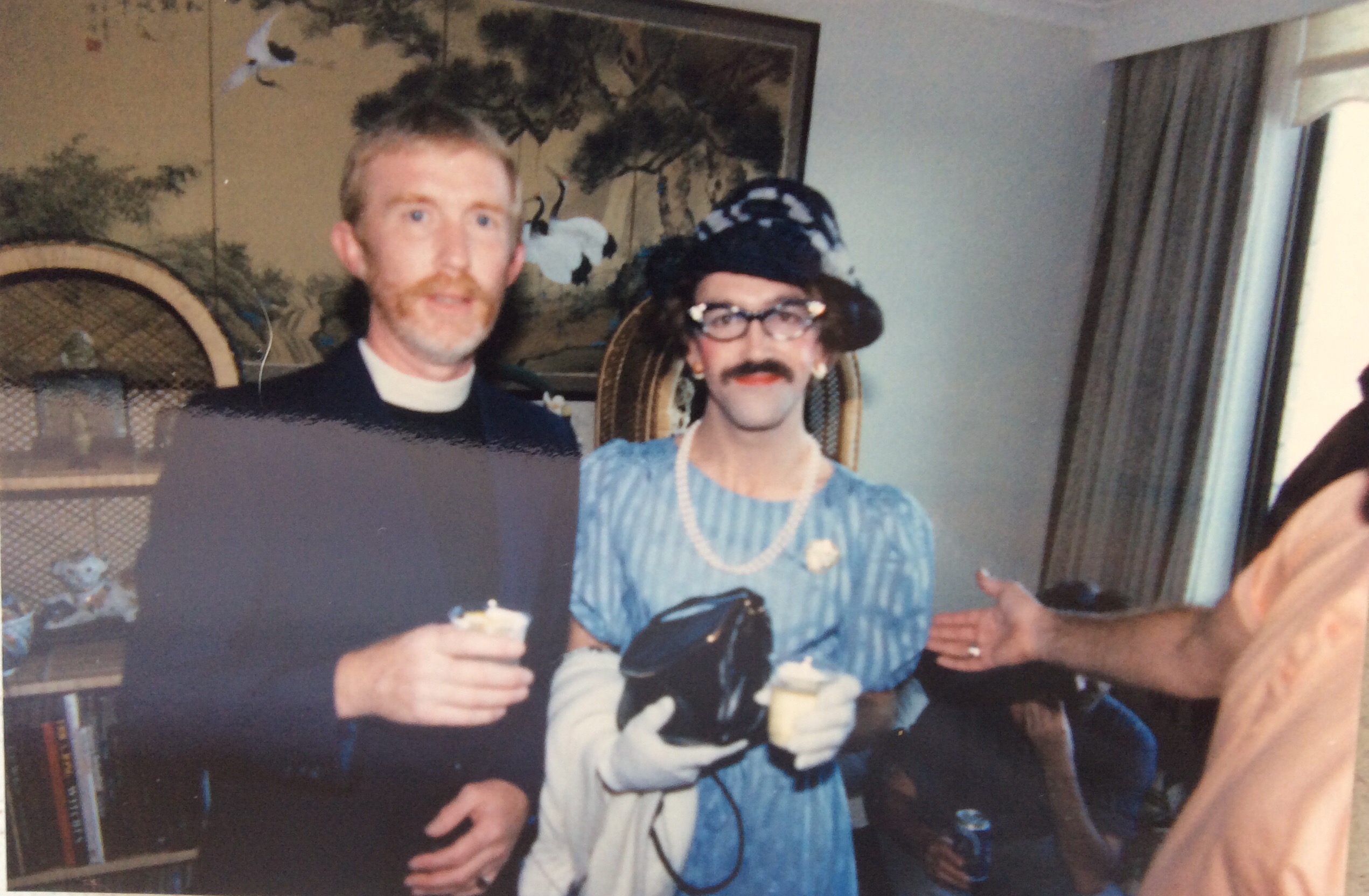


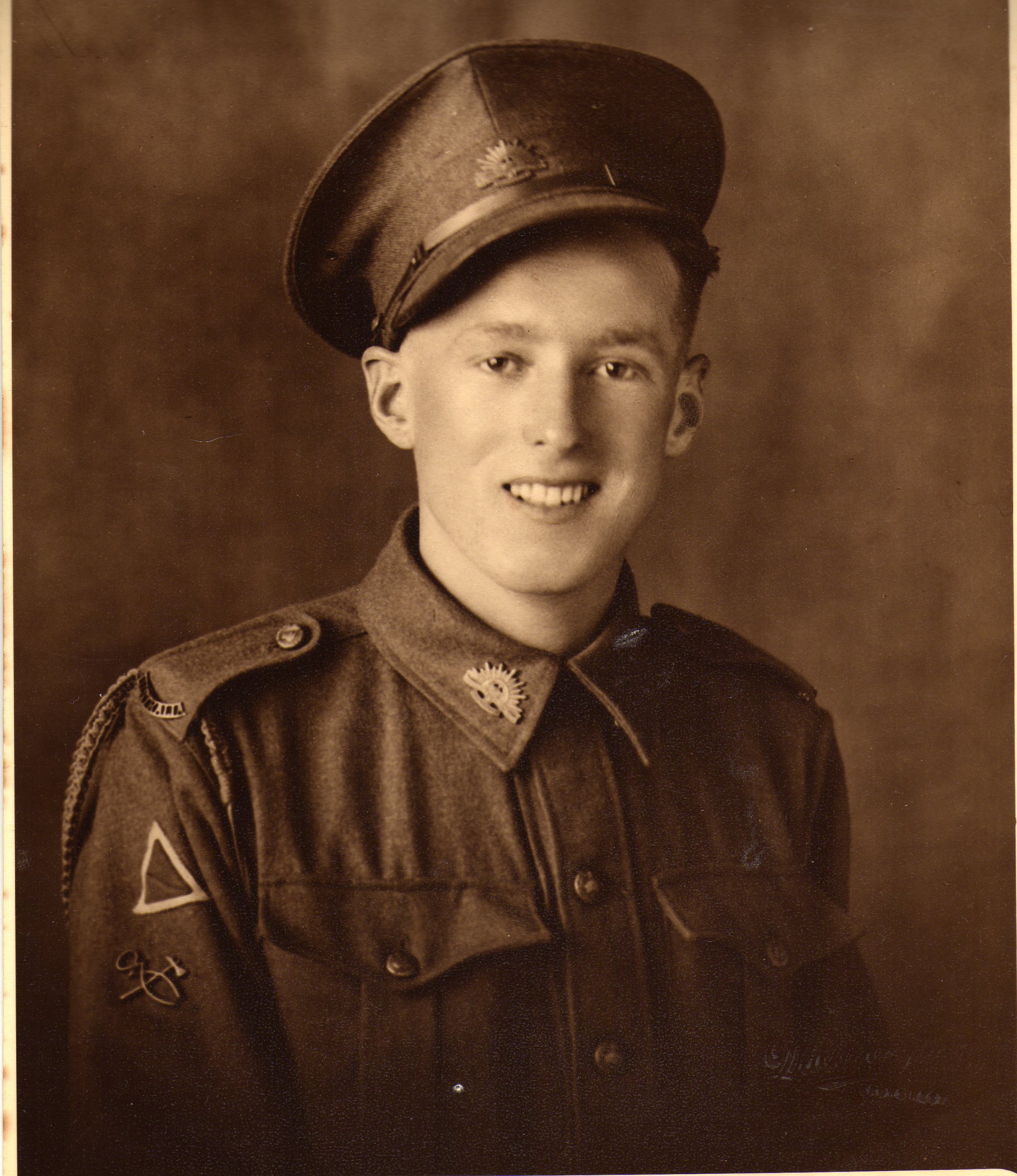


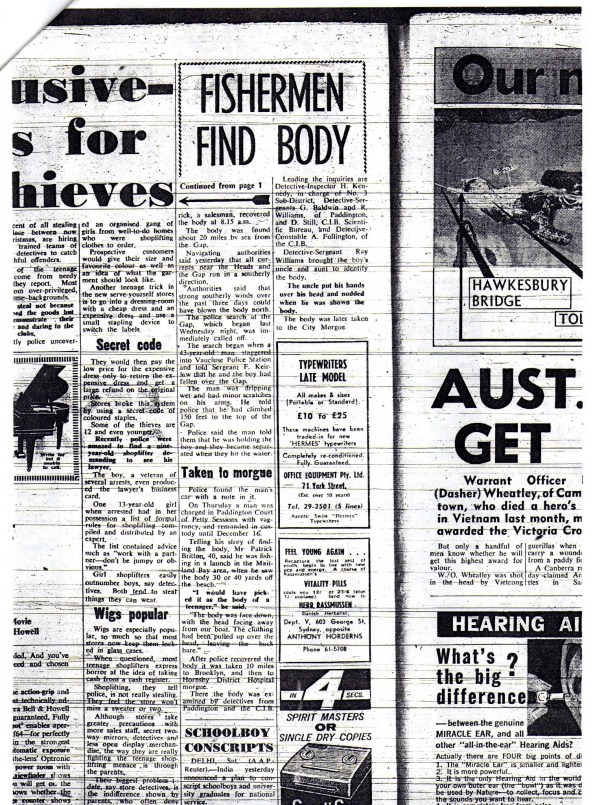
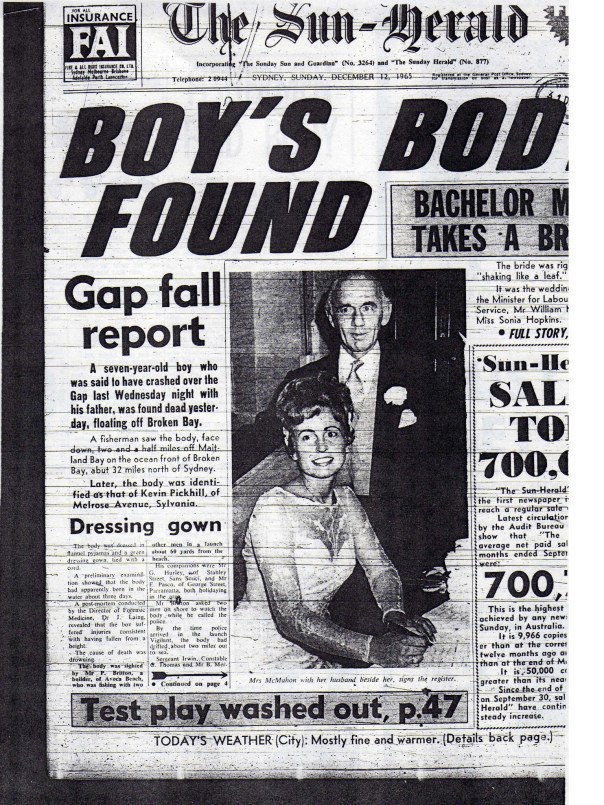

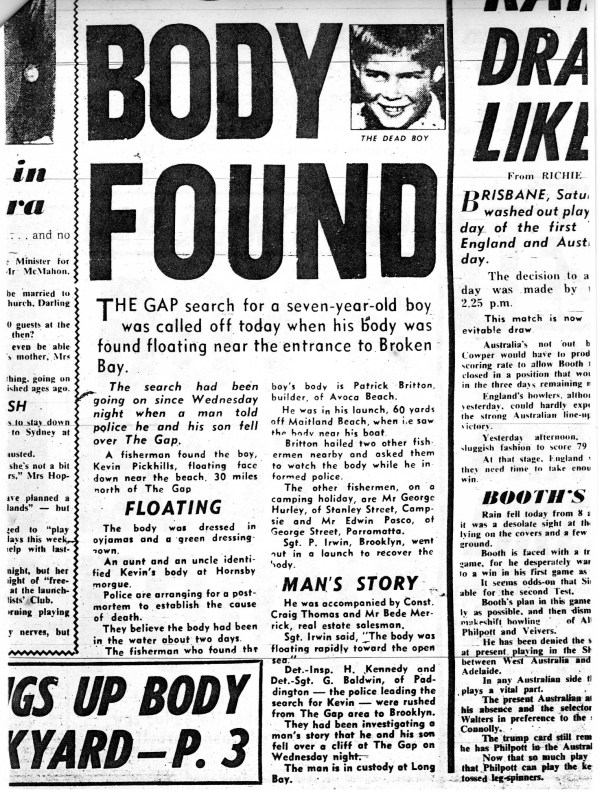
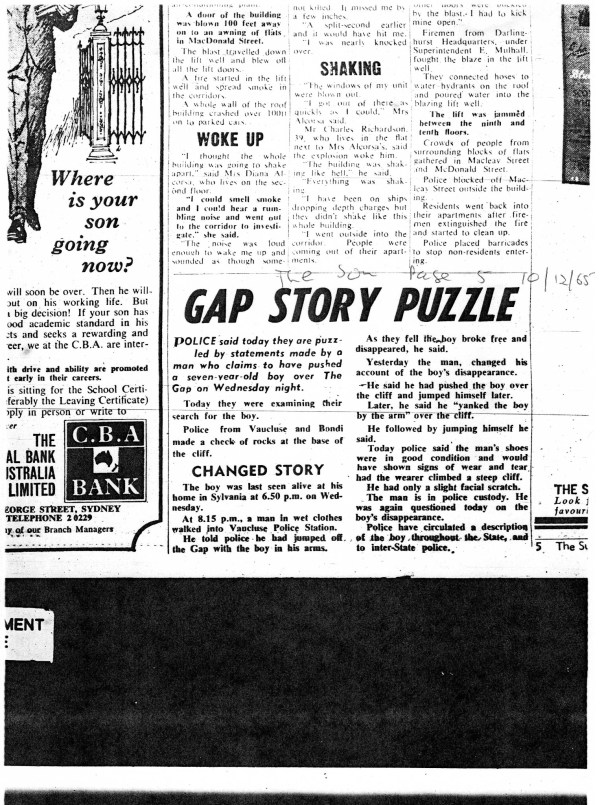


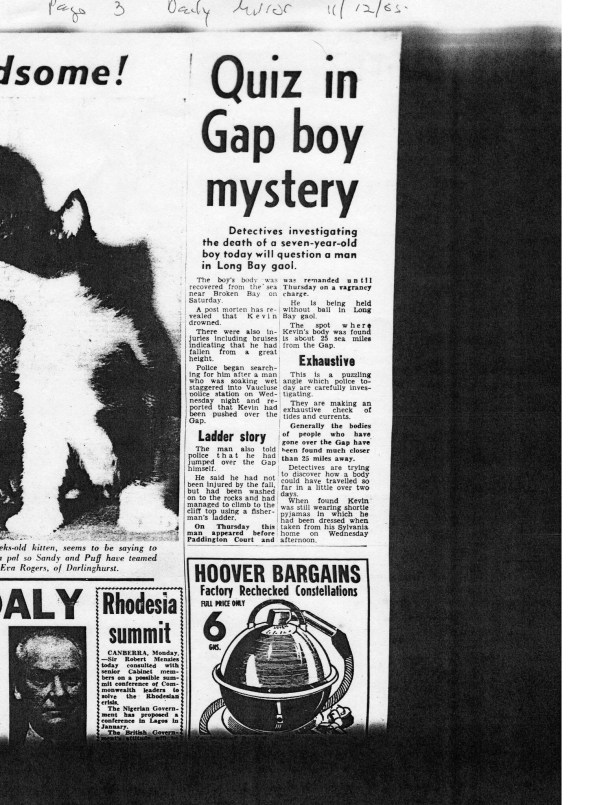
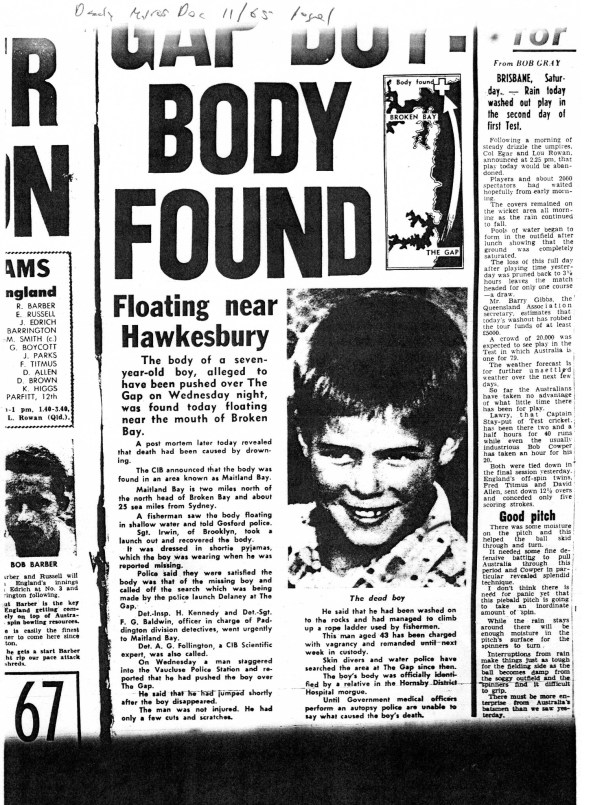



 timalderman