Pink Triangle Affixed to Gay Men’s Clothes in a Nazi Concentration Camp
Before the pink triangle became a worldwide symbol of gay power and pride, it was intended as a badge of shame. In Nazi Germany, a downward-pointing pink triangle was sewn onto the shirts of gay men in concentration camps—to identify and further dehumanize them. It wasn’t until the 1970s that activists would reclaim the symbol as one of liberation.
Homosexuality was technically made illegal in Germany in 1871, but it was rarely enforced until the Nazi Party took power in 1933. As part of their mission to racially and culturally “purify” Germany, the Nazis arrested thousands of LGBT individuals, mostly gay men, whom they viewed as degenerate.
The United States Holocaust Memorial Museum estimates 100,000 gay men were arrested and between 5,000 and 15,000 were placed in concentration camps. Just as Jews were forced to identify themselves with yellow stars, gay men in concentration camps had to wear a large pink triangle. (Brown triangles were used for Romani people, red for political prisoners, green for criminals, blue for immigrants, purple for Jehovah’s Witnesses and black for “asocial” people, including prostitutes and lesbians.)
Homosexual prisoners at the concentration camp at Sachsenhausen, Germany, wearing pink triangles on their uniforms on December 19, 1938. Corbis/Getty Images
At the camps, gay men were treated especially harshly, by guards and fellow prisoners alike. “There was no solidarity for the homosexual prisoners; they belonged to the lowest caste,” Pierre Seel, a gay Holocaust survivor, wrote in his memoir I, Pierre Seel, Deported Homosexual: A Memoir of Nazi Terror.
An estimated 65 percent of gay men in concentration camps died between 1933 and 1945. Even after World War II, both East and West Germany upheld the country’s anti-gay law, and many gays remained incarcerated until the early 1970s. (The law was not officially repealed until 1994.)
The early 1970s was also when the gay rights movement began to emerge in Germany. In 1972, The Men with the Pink Triangle, the first autobiography of a gay concentration camp survivor, was published. The next year, post-war Germany’s first gay rights organization, Homosexuelle Aktion Westberlin (HAW), reclaimed the pink triangle as a symbol of liberation.
“At its core, the pink triangle represented a piece of our German history that still needed to be dealt with,” Peter Hedenström, one of HAW’s founding members said in 2014.
Memorial plaques for homosexuals, Jehovah’s Witnesses and Wehrmacht deserters are placed where once stood one of the demolished barracks in Buchenwald concentration camp near Weimar, Germany. Horacio Villalobos/Corbis/Getty Images
Afterwards, it began cropping up in other LGBT circles around the world. In 1986, six New York City activists created a poster with the words SILENCE = DEATH and a bright pink upward-facing triangle, meant to call attention to the AIDs crisis that was decimating populations of gay men across the country. The poster was soon adopted by the organization ACT UP and became a lasting symbol of the AIDS advocacy movement.
The triangle continues to figure prominently in imaging for various LGBT organizations and events. Since the 1990s, signs bearing a pink triangle enclosed in a green circle have been used as a symbol identifying “safe spaces” for queer people. There are pink triangle memorials in San Francisco and Sydney, which honor LGBT victims of the Holocaust. In 2018, for Pride Month, Nike released a collection of shoes featuring pink triangles.
Although the pink triangle has been reclaimed as an empowering symbol, it is ultimately a reminder to never forget the past—and to recognize the persecution LGBT people still face around the world.
Nazi Concentration Camp Triangle Classification Flyer
It was a small mistake, but with great consequences. On September 2, 1666, Thomas Farrinor, baker to King Charles II of England, failed, in effect, to turn off his oven. He thought thefirewas out, but apparently the smouldering embers ignited some nearby firewood and by one o’clock in the morning, three hours after Farrinor went to bed, his house in Pudding Lane was in flames. Farrinor, along with his wife and daughter, and one servant, escaped from the burning building through an upstairs window, but the baker’s maid was not so fortunate, becoming the Great Fire’s first victim. Didthese cakesset fire to London?
The fire then leapt across Fish Street Hill and engulfed the Star Inn. The London of 1666 was a city of half-timbered, pitch-covered medieval buildings and sheds that ignited at the touch of a spark–and a strong wind on that September morning ensured that sparks flew everywhere. From the Inn, the fire spread into Thames Street, where riverfront warehouses were bursting with oil, tallow, and other combustible goods. By now the fire had grown too fierce to combat with the crude firefighting methods of the day, which consisted of little more than bucket brigades armed with wooden pails of water. The usual solution during a fire of such size was to demolish every building in the path of the flames in order to deprive the fire of fuel, but the city’s mayor hesitated, fearing the high cost of rebuilding. Meanwhile, the fire spread out of control, doing far more damage than anyone could possibly have managed.
Soon the flames were visible from Seething Lane, near the Tower of London, where Samuel Pepys first noted them without concern:
Pepys Diary Entry, September 2 1666
Some of our maids sitting up late last night to get things ready against our feast today, Jane called up about three in the morning, to tell us of a great fire they saw in the City. So I rose, and slipped on my night-gown and went to her window, and thought it to be on the back side of Mark Lane at the farthest; but, being unused to such fires as followed, I thought it far enough off, and so went to bed again, and to sleep. . . . By and by Jane comes and tells me that she hears that above 300 houses have been burned down tonight by the fire we saw, and that it is now burning down all Fish Street, by London Bridge. So I made myself ready presently, and walked to the Tower; and there got up upon one of the high places, . . .and there I did see the houses at the end of the bridge all on fire, and an infinite great fire on this and the other side . . . of the bridge. . . .
So down [I went], with my heart full of trouble, to the Lieutenant of the Tower, who tells me that it began this morning in the King’s baker’s house in Pudding Lane, and that it hath burned St. Magnus’s Church and most part of Fish Street already. So I rode down to the waterside, . . . and there saw a lamentable fire. . . . Everybody endeavouring to remove their goods, and flinging into the river or bringing them into lighters that lay off; poor people staying in their houses as long as till the very fire touched them, and then running into boats, or clambering from one pair of stairs by the waterside to another. And among other things, the poor pigeons, I perceive, were loth to leave their houses, but hovered about the windows and balconies, till they some of them burned their wings and fell down.
Having stayed, and in an hour’s time seen the fire rage every way, and nobody to my sight endeavouring to quench it, . . . I [went next] to Whitehall (with a gentleman with me, who desired to go off from the Tower to see the fire in my boat); and there up to the King’s closet in the Chapel, where people came about me, and I did give them an account [that]dismayed them all, and the word was carried into the King. so I was called for, and did tell the King and Duke of York what I saw; and that unless His Majesty did command houses to be pulled down, nothing could stop the fire. They seemed much troubled, and the King commanded me to go to my Lord Mayor from him, and command him to spare no houses. . . .
I hurried] to [St.] Paul’s; and there walked along Watling Street, as well as I could, every creature coming away laden with goods to save and, here and there, sick people carried away in beds. Extraordinary goods carried in carts and on backs. At last [I] met my Lord Mayor in Cannon Street, like a man spent, with a [handkerchief] about his neck. To the King’s message he cried, like a fainting woman, ‘Lord, what can I do? I am spent: people will not obey me. I have been pulling down houses, but the fire overtakes us faster than we can do it.’ . . . So he left me, and I him, and walked home; seeing people all distracted, and no manner of means used to quench the fire.
The houses, too, so very thick thereabouts, and full of matter for burning, as pitch and tar, in Thames Street; and warehouses of oil and wines and brandy and other things.
On February 24th 1667 Pepys notes in his diary:
Asking Sir R Viner what he thought was the cause of the fire, he tells me that the Baker, son and his daughter did all swear again and again that their Oven was drawn by 10 a-clock at night. That having occasion to light a candle about 12, there was not so much fire in the bakehouse as to light a match for a candle, so as they were fain to go into another place to light it. That about 2 in the morning they felt themselves almost choked with smoke; and rising, did find the fire coming upstairs – so they rose to save themselfs; but that at that time the bavins were not on fire in the yard. So that they are, as they swear, in absolute ignorance how this fire should come – which is a strange thing, that so horrid an effect should have so mean and uncertain a beginning.
Even on February 28th 1667 Pepys notes:
I did within these six days see smoke still remaining of the late fire in the City; and it is strange to think how to this very day I cannot sleep a-night without great terrors of fire; and this very night I could not sleep till almost 2 in the morning through thoughts of fire.
and on March 16th 1667:
The weather is now grown warm again, after much cold weather; and it is observable that within these eight days I did see smoke remaining, coming out of some cellars, from the late great Fire, now above six months since.
and on May 5th:
Sir Jo Robinson … doth tell me of at least six or eight fires within these few days, and continually stories of fires; and real fires there have been in one place or other almost ever since the late great Fire, as if there was a fate over people for fire.
John Evelyntook even less note of the fire during its first hours than had Pepys. His journal entry for the2nd, the day on which Pudding Lane first erupted, contains only the briefest of mentions. By the following day, however, Evelyn was drawn into the unfolding spectacle:
I had public prayers at home. The fire continuing, after dinner I took coach with my wife and son and went to the Bank side in Southwark, where we beheld that dismal spectacle, the whole city in flames near the water side; all the houses from the Bridge, all Thames street, and upwards towards Cheapside, down to the Three Cranes, were now consumed: and so [we] returned exceeding astonished what would become of the rest.
The fire having continued all this night (if I may call that night which was light as day for 10 miles round about, after a dreadful manner) when conspiring with a fierce eastern wind in a very dry season; I went on foot to the same place, and saw the whole south part of the city burning from Cheapside to the Thames, and all along Cornhill, (for it likewise kindled back against the wind as well as forward), Tower street, Fen-church street, Gracious street, and so along to Bainard’s Castle, and was now taking hold of St. Paul’s church, to which the scaffolds contributed exceedingly. The conflagration was so universal, and the people so astonished, that from the beginning, I know not by what despondency or fate, but crying out and lamentation, running about like distracted creatures without at all attempting to save even their goods; such a strange consternation there was among them, so as it burned both in breadth and length, the churches, public halls, Exchange, hospitals, monuments, and ornaments, leaping after a prodigious manner, from house to house and street to street, at great distances from one the other; for the heat with a long set of fair and warm weather had even ignited the air and prepared the materials to conceive the fire, which devoured after an incredible manner houses, furniture, and everything. Here we saw the Thames covered with goods floating, all the barges and boats laden with what some had time and courage to save, as, on the other, the carts, &c. carrying out to the fields, which for many miles were strewed with moveables of all sorts, and tents erecting to shelter both people and what goods they could get away.
Oh the miserable and calamitous spectacle!such as haply the world had not seen since the foundation of it, nor be outdone till the universal conflagration thereof. All the sky was of a fiery aspect, like the top of a burning oven, and the light seen above 40 miles round about for many nights. God grant mine eyes may never behold the like, who now saw above 10,000 houses all in one flame; the noise and cracking and thunder of people, the fall of towers, houses, and churches, was like an hideous storm, and the air all about so hot and inflamed that at last one was not able to approach it, so that they were forced to stand still and let the flames burn on, which they did for near two miles in length and one in breadth. The clouds also of smoke were dismal and reached upon computation near 50 miles in length. Thus I left it this afternoon burning, a resemblance of Sodom, or the last day. It forcibly called to my mind that passage–non enim hic habemus stabilem civitatum:the ruins resembling the picture of Troy. London was, but is no more! Thus, I returned.
September 4th
The burning still rages, and it was now gotten as far as the Inner Temple; all Fleet street, the Old Bailey, Ludgate hill, Warwick lane, Newgate, Paul’s chain, Watling street, now flaming, and most of it reduced to ashes; the stones of St. Paul’s flew like [grenades], the melting lead running down the streets in a stream, and the very pavements glowing with fiery redness, so as no horse nor man was able to tread on them, and the demolition had stopped all the passages, so that no help could be applied. The eastern wind still more impetuously driving the flames forward. Nothing but the Almighty power of God was able to stop them, for vain was the help of man.
September 5th
It crossed towards White-hall; but oh, the confusion there was then at that Court! It pleased his Majesty to command me among the rest to look after the quenching of Fetter lane end, to preserve if possible that part of Holborn, whilst the rest of the gentlemen took their several posts, some at one part, some at another (for they now began to bestir themselves, and not till now, who hitherto had stood as men intoxicated, with their hands across) and began to consider that nothing was likely to put a stop but the blowing up of so many houses as might make a wider gap than any had yet been made by the ordinary method of pulling them down with engines; this some stout seamen proposed early enough to have saved near the whole city, but this some tenacious and avaricious men, aldermen, &c. would not permit, because their houses must have been [among the first to be levelled]. It was therefore now commanded to be practised, and my concern being particularly for the Hospital of St. Bartholomew near Smithfield, where I had many wounded and sick men, made me the more diligent to promote it; nor was my care for the Savoy less.
It now pleased God by abating the wind, and by the industry of the people, when almost all was lost, infusing a new spirit into them, that the fury of [the fire] began sensibly to abate about noon, so as it came no farther than the Temple westward, nor than the entrance of Smithfield north: but continued all this day and night so impetuous toward Cripplegate and the Tower as made us all despair; it also broke out again in the Temple, but the courage of the multitude persisting, and many houses being blown up, such gaps and desolations were soon made, as with the former three days consumption, [that] the back fire did not so vehemently urge upon the rest as formerly. There was yet no standing near the burning and glowing ruins by near a furlong’s space.
The coal and wood wharfs and magazines of oil, rosin, &c. did infinite mischief, so as the invective which a little before I had dedicated to his Majesty and published, giving warning of what might probably be the issue of suffering those shops to be in the City, was looked on as a prophecy.
The poor inhabitants were dispersed about St. George’s Fields, and Moorfields, as far as Highgate, and several miles in circle, some under tents, some under miserable huts and hovels, many without a rag or any necessary utensils, bed or board, who from delicateness, riches, and easy accommodations in stately and well furnished houses, were now reduced to extremest misery and poverty.
In this calamitous condition I returned with a sad heart to my house, blessing and adoring the distinguishing mercy of God to me and mine, who in the midst of all this ruin was like Lot, in my little Zoar, safe and sound.
Pepys records 15 fires in his diary in addition to the Great Fire.
Most houses in London had timber frames. They were often high and were crammed together with little if any space between. Heating was by fires and lighting was by candles, whether rush, tallow or beeswax. Everywhere there were flammable materials – hay in stables, pitch and tar by the river for ships and boats, wood in yards everywhere, kindling in bakeries such as the one where the Great Fire began.
Fire fighters were not organised and had often little more than buckets and large syringes to spread the water. More effective was gunpowder to force a fire break and grappling irons to pull down thatch or weak timbers.
In January 1673 fire destroyed Pepys own house and in 1684 a later house was saved only by having his neighbour’s house blown up.
One of the results of these fires was that insurance companies began to take some responsibility for property loss and after about 1772 they established fire brigades. Houses rebuilt after the Great Fire were built to stricter regulations which included brick construction and improved water supplies.
The fire destroyed about four-fifths of the city, including roughly 13,200 houses, nearly 90 parish churches, and nearly 50 livery company halls–in all an area of more than 430 acres. In the aftermath, Sir Christopher Wren, the great architect, designed and oversaw the construction of 49 new churches, as well as the new St. Paul’s Cathedral. Amazingly, the fire claimed only 16 lives and may actually have saved countless more. After 5th September, the Black Plague, which had ravished London since 1664, abruptly declined, probably because so few of the rats that helped to transmit the disease escaped the flames.
Samuel Pepys is the best known diarist of his day. Although he was a minor public official, his diary contains more details of his private life than of London politics. Still, his accounts of both the Black Death and the Great Fire show that he was less than in awe of persons holding high office.
John Evelyn was an English writer best known for his diary, which, along with that of Samuel Pepys, provides us with our best glimpse into the social world of 17th century London. Evelyn was an ardent Royalist during the English Civil War, and held several minor offices after the Restoration.
The dome of St Paul’s Cathedral above the modern city skyline Credit: Art Kowalsky/Alamy
THE BLAZE IN SEPTEMBER 1666 RAGED FOR DAYS AND DESTROYED FOUR-FIFTHS OF THE CAPITAL, LEAVING BRITAIN’S TRADE, GOVERNMENT AND PROSPERITY IN RUINS
When, early on 2 September 1666, the famous diarist Samuel Pepys heard of a fire in the City of London that had already destroyed 300 houses, he hired a boat to view the scene from the Thames. To his horror he noted: “Everybody endeavouring to remove their goods, and flinging into the river or bringing them into lighters that lay off; poor people staying in their houses as long as till the very fire touched them, and then running into boats, or clambering from one pair of stairs … to another.”
The dramatic conflagration wasn’t the first – nor last – to strike the capital, but the Great Fire of London was one of the most devastating events in the city’s history. Raging from 1am on Sunday 2 September to dawn on Thursday 6 September, it resulted in four-fifths of the City being destroyed, including 13,200 houses and 87 churches. Miraculously, there were only six officially recorded deaths, but the very hub of Britain’s trade, government and prosperity stood in ruins.
Pudding Lane bakery
Seventeenth-century London was a turbulent place: the Great Plague had decimated a third of its population in 1665, while frictions between Protestants and Catholics, as well as England’s recent wars with France and the Netherlands, made its citizens nervous. In the event it was a spark in Thomas Farriner’s bakery in Pudding Lane that kindled the disaster. It’s thought his oven was not fully extinguished overnight and in the early hours wood beside it caught fire. While the baker and his family escaped, their unfortunate maid perished.
The fire could hardly have started in a more dangerous place, close to the river’s warehouses and shops packed with combustibles such as coal, timber, oil and alcohol. It had been a long, dry summer and, with a strong easterly wind fanning the flames, the City’s mainly timber-framed buildings were easily lit, their overhanging jetties and the crowded nature of the narrow streets inviting fire to spread. Yet the Lord Mayor Thomas Bludworth, called to the scene at 4am, dismissed the threat posed by the fire and returned to bed, saying: “A woman might piss it out.”
When Pepys conveyed the order to Bludworth in Cannon Street at noon, the Lord Mayor had changed his earlier tune. “To the King’s message he cried, like a fainting woman, ‘Lord, what can I do? I am spent: people will not obey me. I have been pulling down houses, but the fire overtakes us faster than we can do it.’”
A print of the Great Fire of London showing the ruins of a wall near Ludgate prison, with Old St Paul’s Church and Old Bow Church in the background Credit: Corbis
With no organised fire brigade in London in 1666, people were reliant on buckets and ladders, fire hooks to pull down buildings, and hand-pumped machines to squirt water. The fire rampaged down Fish Street Hill, onto London Bridge, along the Thames and north of Thames Street, destroying warehouses, St Magnus the Martyr Church and Fishmongers’ Hall, the first of dozens of livery company halls to be ruined. Terrified by such large-scale calamity, people began to fear a French or Dutch attack, and armed mobs hunted for foreign or Catholic arsonists. Militia were called in to control the crowds.
Over five days the conflagration spread across 436 acres, ripping through Lombard Street, Cornhill and the Royal Exchange, also Threadneedle Street, Baynard’s Castle, Cheapside, the Sessions House in the Old Bailey, Ludgate and Newgate Gaol (from which prisoners escaped), Temple and Fleet Street. When the fire reached within 300 yards of the Tower of London, all available resources rushed to the scene.
St Paul’s Cathedral, in wooden scaffolding awaiting restoration, was not so lucky; its roof collapsed and thousands of books stored in the crypt fuelled the inferno.
Local heroes
There are tales of heroism: a seaman and a soldier climbed onto the roof of Middle Temple Hall to beat out flames. And tragedy: an 80-year-old watchmaker refused to leave his home in Shoe Lane and it fell on him. But mainly people fled to the fields outside the City; the court packed its bags; even Pepys, hearing the fire was approaching Barking Church near his home, buried his wine and Parmesan cheese in the garden for safekeeping and temporarily absented himself.
During the fire, King Charles rode around the City distributing money to encourage fire-fighting efforts and he ordered supplies to be brought for the homeless thousands camped in the fields. His brother, James Duke of York, took command of operations from the second day and set up posts manned by civilians and soldiers to tackle the fires. From the third day, gunpowder was used to demolish houses more quickly than pulling them down and by that evening the wind had also dropped. The fire fighters gradually gained control.
Diarist John Evelyn records wandering through the eerie aftermath of the disaster, burning the soles of his shoes on smouldering ground and losing his way in the “dismal desert”. The next month an official day of fasting was held and £12,794 collected from across the country to provide aid to London’s newly destitute; many would move away.
The Monument
Much post-fire architecture has since vanished, but gems can still be found like the home (now museum) of the dictionary-compiler Dr Johnson in Gough Square. Visit, too, the Monument (junction of Monument Street and Fish Street Hill) constructed by Wren and Robert Hooke. Completed in 1677, the column is 61 metres tall – the exact distance between it and the site in Pudding Lane where the fire started – and 311 steps lead to a viewing platform offering superb vistas.
The most famous legacies of the rebuilding are Wren’s churches and his masterpiece, St Paul’s Cathedral. Twenty-nine of the 51 churches he designed still stand, remarkable for their striking array of steeples and spires: from the baroque of St Vedast to the Gothic of
St Dunstan-in-the-East, the slender spire of St Martin-within-Ludgate and the ‘wedding cake’ tiers of St Bride.
The ‘tabula rasa’ left by the Great Fire of London may not have been filled by a model renaissance city as proposed by visionaries like Wren, but it inspired some genuine treasures and made the capital an altogether safer city for generations to come.
The Untold Story of the Great Fire of London
The Great Fire of London started accidentally in a bakery, right? That wasn’t the view at the time – many believed it was a terrorist attack and violent reprisals against possible suspects soon followed.
The date 1666 is one burned on to the collective memory of a nation.
Everyone learns at school that the fire raging for four days in that hot, dry summer began in a bakery in Pudding Lane.
But a new Channel 4 documentary focuses on the lesser known story of the fire – it sparked a violent backlash against London’s immigrant population, prompted by the widely-held belief at the time that it was an act of arson committed by a foreign power.
In the days and weeks following the fire, ordinary Londoners – many of whom were displaced and homeless – gave evidence to a parliamentary inquiry swiftly launched to find out what happened.
GREAT FIRE IN NUMBERS…
Destroyed 373 acres of the City
13,200 houses, 84 churches and 44 company halls burned down
Raged from Sunday 2 Sept to Thursday 6 Sept
Fewer than 10 people thought to have died, although some perished in refugee camps
Rebuilding killed more than fire
All those witness statements can be found in the inquiry’s report, a 50-page document held in the capital’s Guildhall.
It suggests the city on the eve of the fire was one fraught with anxiety and paranoia, says Sue Horth, the documentary’s executive producer, and the finger of blame was pointed at two countries with which England was at war, Netherlands and France.
“We teach people about Pudding Lane and the hot summer but we don’t say that weeks before the Great Fire, the British Navy sailed into the city of West Terschelling in the Netherlands and set fire to it in an act of diplomatic piracy.
… AND IN QUOTES
‘Among other things, the poor pigeons, I perceive, were loth to leave their houses, but hovered about the windows and balconies, till they some of them burned their wings and fell down’
Samuel Pepys, 2 Sept 1666
‘God grant mine eyes may never behold the like, who now saw above 10,000 houses all in one flame; the noise and cracking and thunder of people, the fall of towers, houses, and churches, was like an hideous storm, and the air all about so hot and inflamed that at last one was not able to approach it’
John Evelyn, 2 Sept 1666
“London was expecting an act of reprisal against the city. It was expecting something bad to happen, not because it was superstitious or frightened, but because the government had done something bad. So when the fire happened, it was a natural and quite sensible suspicion for the people of London to have.”
As the fire raged, and rumours spread that the French had invaded, angry mobs hunted anyone who appeared to be foreign, says Ms Horth. A Swedish diplomat was lynched. A French woman trying to escape to a refugee camp in Spitalfields had her breast cut off because people thought the baby chicks she carried in her apron were fireballs.
“London was a city turned to constant night, with the ash cloud and smoke, and the sun couldn’t penetrate, so it was a frightening place to be. Thousands of buildings were razed. People either tried to escape or they fought the fire or they tried to find those responsible.”
This violence is the untold story of the fire, says Adrian Tinniswood, author of By Permission of Heaven: The True Story of the Great Fire of London.
The fire burned for four days
Most people thought it was an attack by the Dutch, because of the recent atrocity by the Royal Navy under Admiral Robert Holmes.
“There was cheering in the streets of London when that happened, so when the fire started, people thought it was the Dutch getting their own back.
“In fact, the fire was caused by a gale blowing across London for four days. It hit London in the early hours of Sunday morning, just as [Thomas] Farriner’s bakery goes up in flames. The gale blew embers and bits of straw across the city and fires broke out all over the place, so people said: ‘This isn’t a fire spreading, it has to be arson’.”
On the fourth day, when the fire was finally quelled, King Charles II, the newly restored monarch after years of civil war, tried to calm matters by going to a new camp of 100,000 homeless, and declaring the fire was an act of God.
Shaky confession
The king took a very enlightened view and always believed it was an accident, says Mr Tinniswood. His brother, James, Duke of York, went even further. He rode into the city with his bodyguards and rescued people from the mob, some of whom were in the very act of being hanged on street corners.
Hubert, in a detail of a wider picture of Catholic conspirators from 1667
The hunt for a foreign scapegoat continued, until one volunteered for the role. At the end of September, the parliamentary committee was appointed to investigate the fire, and a French Protestant watchmaker, Robert Hubert, confessed to having deliberately started the fire at the bakery with 23 conspirators.
Although his confession seemed to change and flounder under scrutiny, he was tried and hanged. Afterwards, colleagues told the inquiry Hubert had been at sea with them at the time, and the inquiry concluded the fire had indeed been an accident. No-one knows why he confessed.
Until the 19th Century, the plaque at London’s Monument stated that followers of the Pope were to blame, says Ms Horth, and named Hubert as the fire-starter. It was only after Catholic emancipation in the 19th Century that the government decided the plaque was inflammatory and had those inscriptions removed.
“This story [about it being an accident] is not necessarily the most helpful for us all to believe,” Ms Horth says. “The truth is that we will never know how it began. We now believe it was an accident but 350 years ago certain people thought differently. There are many perspectives to events and it’s up to us to understand them all.”
It’s natural the version of events told to youngsters should airbrush the gruesome details, says Meriel Jeater, curator at the Museum of London.
Christopher Wren built St Paul’s after the fire
“The traditional view taught in schools is that it all happened as a happily-ever-after sort of story. It was a terrible disaster, but not many people died, we rebuilt the city in brick so it was fireproof, and isn’t St Paul’s pretty?
“But the more you investigate, you realise it wasn’t all like that. The dark side was that the fire burst on to the surface religious tension and paranoia about national security.”
It’s a tale with echoes today, says Ms Jeater. “When I was curating the exhibition, it wasn’t long after the 7/7 bombings and when I was reading about the reactions against Catholics and the Dutch, it struck me that there were a lot of similarities with the backlash against Muslim people after the bombing. A lot of suspicion about people living in London.
“It’s different people and different events, but I think human nature is very similar.”
3 Myths About The Great Fire Of London You Probably Believe
The Great Fire of London is a very well-known disaster, and has been researched and written about extensively ever since 1666. However, there are still some enduring myths and misconceptions that the Museum of London’s Fire! Fire! exhibition (May 2016 – April 2017) aimed to tackle.
Myth #1: The Great Fire stopped the Great Plague
This is the myth that I hear people talking about most often. They may have read it in a children’s book or heard it at school. The idea is that there was a silver lining to the tragedy of the fire, as it ended the great plague that swept the city from 1665-66. This was the last major outbreak of the bubonic plague in London, and killed 100,000 Londoners- about 20% of the city’s population. The fire is supposed to have wiped out London’s rats and fleas that spread the plague and burned down the insanitary houses which were a breeding ground for the disease. If anyone asks you about this, you can tell them that it’s not true. Here’s why:
▪ The Great Fire only burnt about a quarter of the urban metropolis so it could not have purged the plague from the whole city.
▪ Though the outside walls of houses rebuilt after the fire had to be built from brick, there were no major improvements to hygiene and sanitation afterwards.
▪ Many of the areas that were worst affected by the plague, such as Whitechapel, Clerkenwell and Southwark, were not destroyed by the fire.
▪ The numbers of people dying from plague were already in decline from the winter of 1665 onwards.
▪ People continued to die from plague in London after the Great Fire was over.
This myth seems to have grown up because the two catastrophes were so close together and because the Great Plague of 1665-66 was the last major outbreak of the disease in this country. We are still not sure why the plague did not return to our shores after it faded out in the 1670s but it wasn’t due to London’s 1666 fire.
Myth #2: The Great Fire spread due to the thatched roofs of London’s houses
In fact, thatch had been banned within the City of London by building regulations dating back to 1189. These rules were reinforced after a terrible fire in 1212 when an estimated 3000 people died. Shortly after this fire, the City authorities ruled that all new houses had to be roofed with tiles, shingles or boards. Any existing roofs with thatch had to be plastered. The medieval regulations appear to have been successful in preventing large-scale fires. John Stow, in his 1598 Survey of London said ‘since which time [referring to introduction of the rules], thanks be given to God, there hath not happened the like often consuming fires in this city as afore.’
By 1666, the vast majority of houses in the City would have been tiled. Even if there were a small number of thatched buildings lurking in the densely-packed streets, they were not in significant numbers to be noted as a cause of the Great Fire by 17th-century authors. The London Gazette and Rege Sincera’s Observations both Historical and Moral upon the Burning of London both mention timber buildings as a problem but not thatch. Sincera wrote about ‘ the weakness of the buildings, which were almost all of wood, which by age was grown as dry as a chip’. The London Gazette’s reporting of the disaster says it began ‘in a quarter of Town so close built with wooden pitched houses’.
How many people died during the Great Fire?
We don’t know for sure. Amazingly, fewer than ten deaths were recorded. One of the people killed was 80-year-old watchmaker Paul Lowell. He refused to leave his house on Shoe Lane even though his son & friends begged him to go. His bones & keys were found in the ruins.
Myth #3: London was rebuilt in brick & stone thanks to the Great Fire
While it is true that the February 1667 Rebuilding Act stated that ‘all the outsides of all Buildings in and about the said Citty be henceforth made of Bricke or Stone’ there were many brick buildings in London beforehand. In fact, records show that there were even brick houses on Pudding Lane, that notorious street where the fire began, before 1666.
Royal proclamations dating back over 60 years demanded that new buildings be built from brick. In March 1605 James I said that no one was to build a new house in London unless it was made from brick or stone because he wanted to reserve the country’s timber for the navy’s ships. Uptake was slow, however, and later proclamations repeated this demand several times, such as in October 1607, when King James stated that new brick or stone buildings would ‘both adorne and beautifie his said City, and be lesse subject to danger of fire’.
As these rules only applied to new houses, and appear to have only been sporadically obeyed, the Great Fire became the opportunity to enforce, re-state and refine existing rules. The disaster affected such a large area that thousands of brick houses had to be built to replace those that had been destroyed. This has left us with a false impression that the fire introduced brick to London.
The Great Fire of London Was Blamed on Religious Terrorism
Why scores of Londoners thought the fire of 1666 was all part of a nefarious Catholic conspiracy
Oil painting of the Great Fire, seen from Newgate. ((C) Museum of London)
The rumors spread faster than the blaze that engulfed London over five days in September 1666: that the fire raging through the city’s dense heart was no accident – it was deliberate arson, an act of terror, the start of a battle. England was at war with both the Dutch and the French, after all. The fire was a “softening” of the city ahead of an invasion, or they were already here, whoever “they” were. Or maybe it was the Catholics, who’d long plotted the downfall of the Protestant nation.
Londoners responded in kind.
Before the flames were out, a Dutch baker was dragged from his bakery while an angry mob tore it apart. A Swedish diplomat was nearly hung, saved only by the Duke of York who happened to see him and demand he be let down. A blacksmith “felled” a Frenchman in the street with a vicious blow with an iron bar; a witness recalled seeing his “innocent blood flowing in a plentiful stream down his ankles”. A French woman’s breasts were cut off by Londoners who thought the chicks she carried in her apron were incendiaries. Another Frenchman was nearly dismembered by a mob that thought that he was carrying a chest of bombs; the bombs were tennis balls.
“The need to blame somebody was very, very strong,” attests Adrian Tinniswood, author of By Permission of Heaven: The Story of the Great Fire. The Londoners felt that “It can’t have been an accident, it can’t be God visiting this upon us, especially after the plague, this has to be an act of war.”
As far as we know, it wasn’t. The fire started in the early hours of the morning of September 2 on Pudding Lane in the bakery of Thomas Farriner. Pudding Lane was (and still is) located in the centre of the City of London, the medieval city of around one square mile ringed by ancient Roman walls and gates and rivers now covered and forgotten. Greater London built up around these walls in the years after the Romans left in the 4th century, sprawling out in all directions, but the City of London remained (and still remains) its own entity, with its own elected Mayor and home to around 80,000 people in 1666. That number would have been higher, but the Black Plague had killed roughly 15 percent of the entire city’s population the previous year.
Farriner was a maker of hard tack, the dry but durable biscuits that fed the King’s Navy; he’d closed for business on Saturday, September 1, at around 8 or 9 that night, extinguishing the fire in his oven. His daughter, Hanna, then 23, checked the kitchen at around midnight, making sure the oven was cold, then headed to bed. An hour later, the ground floor of the building was filled with smoke. The Farriners’ manservant, Teagh, raised the alarm, climbing to the upper floors where Thomas, Hanna, and their maid slept. Thomas, Hanna, and Teagh squeezed out of a window and scrambled along the gutter to a neighbor’s window. The maid, whose name remains unknown, did not and was the first to die in the fire.
At first, few were overly concerned about the fire. London was a cramped, overcrowded city lighted by candles and fireplaces. Buildings were largely made of wood; fires were common. The last major fire was in 1633, destroying 42 buildings at the northern end of London Bridge and 80 on Thames Street, but there were smaller fires all the time. The City of London’s Lord Mayor at the time, Sir Thomas Bloodworth, will ever be remembered as the man who declared that the 1666 fire was so small, “a woman might piss it out”. But Bloodworth, described by diarist Samuel Pepys as a “silly man”, wasn’t the only one to underestimate the fire: Pepys himself was woken at 3 that morning by his maid, but when he saw that the fire still seemed to be on the next street over, went back to sleep until 7. The London Gazette, the city’s twice-weekly newspaper, ran a small item about the fire in its Monday edition, among gossip about the Prince of Saxe’s unconsummated marriage to the Princess of Denmark and news of a storm in the English Channel.
A second report on the fire that week, however, was not forthcoming. Within hours of printing Monday’s paper, the Gazette’s press burned to the ground. By the time the newspaper had hit the streets, Londoners were very much aware that the fire that the Gazette reported “continues still with great violence” had yet to abate.
Several factors contributed to the fire’s slow but unstoppable spread: Many of the residents of Pudding Lane were asleep when the fire began and slow to react, not that they could have done much beyond throw buckets of whatever liquid – beer, milk, urine, water – was on hand. A hot summer had left London parched, its timber and plaster buildings like well-dried kindling. These buildings were so close together that people on opposite sides of the narrow, filthy streets could reach out their windows and shake hands. And because London was the manufacturing and trade engine of England, these buildings were also packed with flammable goods – rope, pitch, flour, brandy and wool.
But by Monday evening, Londoners began to suspect that this fire was no accident. The fire itself was behaving suspiciously; it would be subdued, only to break out somewhere else, as far as 200 yards away. This led people to believe that the fire was being intentionally set, although the real cause was an unusually strong wind that was picking up embers and depositing them all over the city.
“This wind blowing from the east was forcing the fire across the city much quicker than people were expecting,” explains Meriel Jeater, curator of the Museum of London’s “Fire! Fire! Exhibition,” commemorating the 350th anniversary of the fire. Sparks would fly up and set fire to whatever they landed on. “It seemed that suddenly, another building was on fire and it was, ‘Why did that happen?’ They didn’t necessarily think there was spark involved, or another natural cause… England was at war, so it was perhaps natural to assume that there might have been some element of foreign attack to it.”
Embers and wind didn’t feel like a satisfying or likely answer, so Londoners started to feel around for someone to blame. And they found them.
This map shows the spread of the Great Fire. ((C) Museum of London)Samuel Rolle’s book about the Great Fire revealed the extent of the emotional and financial toll on Londoners ((C) Museum of London)17th-century glass found beneath burnt debris in the Great Fire ((C) Museum of London)
At the time, London was the third largest city in the Western world, behind Constantinople and Paris, and roughly 30 times larger than any other English town. And it was international, with trade links all over the world, including countries that it was at war with, Holland and France, and those it wasn’t entirely comfortable with, including Spain. London was also a refuge for foreign Protestants fleeing persecution in their majority Catholic homelands, including the Flemish and French Huguenots.
That people believed that the city was under attack, that the fire was the plot of either the Dutch or the French, was logical, not paranoia. The English had just burnt the Dutch port city of West-Terschelling to the ground just two weeks earlier. As soon as the fire broke out, Dutch and French immigrants were immediately under suspicion; as the fire burned, the English authorities stopped and interrogated foreigners at ports. More troubling, however, was that Londoners began to take vengeance into their own hands, says Tinniswood. “You’re not looking at a population that can distinguish between a Dutchman, a Frenchman, a Spaniard, a Swede. If you’re not English, good enough.”
“The rumors reach a kind of crescendo on the Wednesday night when the fire is subsiding and then breaks out just around Fleet Street,” says Tinniswood. Homeless Londoners fleeing the fire were camped in the fields around the City. A rumor went up that the French were invading the city, then the cry: “Arms, arms, arms!”
“They’re traumatized, they’re bruised, and they all, hundreds and thousands of them, they take up sticks and come pouring into the city,” says Tinniswood. “It’s very real… A lot of what the authorities are doing is trying to damp down that sort of panic.”
But extinguishing the rumors proved almost as difficult as putting out the fire itself. Rumors traveled fast, for one thing: “The streets are full of people, moving their goods… They’re having to evacuate two, three, four times,” Tinniswood explains, and with each move, they’re out in the street, passing information. Compounding the problem was that there were few official ways able to contradict the rumors – not only had the newspaper’s printing press burned down, but so too did the post office. Charles II and his courtiers maintained that the fire was an accident, and though they were themselves involved in fighting the fire on the streets, there was only so much they could do to also stop the misinformation spreading. Says Tinniswood, “There’s no TV, no radio, no press, things are spread by word of mouth, and that means there must have been a thousand different rumors. But that’s the point of it: nobody knew.”
Several people judged to be foreigners were hurt during Wednesday’s riot; contemporaries were surprised that no one had been killed. The next day, Charles II issued an order, posted in places around the city not on fire, that people should “attend the business of quenching the fire” and nothing else, noting that there were enough soldiers to protect the city should the French actually attack, and explicitly stating that the fire was an act of God, not a “Papist plot”. Whether or not anyone believed him was another issue: Charles II had only been restored to his throne in 1660, 11 years after his father, Charles I, was beheaded by Oliver Cromwell’s Parliamentarian forces. The City of London had sided with the Parliamentarians; six years later, Londoners still didn’t entirely trust their monarch.
The fire finally stopped on the morning of September 6. Official records put the number of deaths as fewer than 10, although Tinniswood and Jeater both believe that number was higher, probably more like 50. It’s still a surprisingly small number, given the huge amount of property damage: 80 percent of the city within the walls had burned, some 87 churches and 13,200 homes were destroyed, leaving 70,000 to 80,000 people homeless. The total financial loss was in the region of £9.9 million, at a time when the annual income of the city was put at only £12,000.
On September 25, 1666, the government set up a committee to investigate the fire, hearing testimony from dozens of people about what they saw and heard. Many were compelled to come forward with “suspicious” stories. The report was given to Parliament on January 22, 1667, but excerpts from the proceedings transcripts were leaked to the public, published in a pamphlet. By this time, just a few months after the fire, the narrative had changed. Demonstrably, the Dutch and the French hadn’t invaded, so blaming a foreign power was no longer plausible. But the people still wanted someone to blame, so they settled on the Catholics.
“After the fire, there seems be a lot of paranoia that is was a Catholic plot, that Catholics in London would conspire with Catholics abroad and force the Protestant population to convert to Catholicism,” Jeater explains. The struggle between Catholicism and Protestantism in England had been long and bloody, and neither side was above what amounted to terrorism: The Gunpowder Plot of 1605 was, after all, an English Catholic plot to assassinate James I.
The official report issued to Parliament rejected much of the testimony as unbelievable – one committee member called the allegations “very frivolous”, and the conclusion declared there was no evidence “to prove it to be a general design of wicked agents, Papists or Frenchmen, to burn the city”. It didn’t matter: The leaked excerpts did much to solidify the story that the fire was the work of shadowy Catholic agents. For example:
William Tisdale informs, That he being about the beginning of July at the Greyhound in St. Martins, with one Fitz Harris an Irish Papist, heard him say, ‘There would be a sad Desolation in September, in November a worse, in December all would be united into one.’ Whereupon he asked him, ‘where this Desolation would be?’ He answered, ‘In London.’
Or
Mr. Light of Ratcliff, having some discourse with Mr. Longhorn of the Middle-Temple, Barrister, [reputed a zealous Papist] about February 15 last, after some discourse in disputation about Religion, he took him by the hand, and said to him, ‘You expect great things in Sixty Six, and think that Rome will be destroyed, but what if it be London?’
“You’ve got hundreds of tales like that: With hindsight, people are saying that guy said something like, ‘London better look out’,” said Tinniswood. “It’s that kind of level, it’s that vague.”
What’s even more confusing is that by the time the testimonies were leaked, someone had already confessed to and been hung for the crime of starting the fire. Robert Hubert. a 26-year-old watchmaker’s son from Rouen, France, had been stopped at Romford, in Essex, trying to make it to the east coast ports. He was brought in for questioning and bizarrely, told authorities that he’d set the fire, that he was part of a gang, that it was all a French plot. He was indicted on felony charges, transported back to London under heavy guard and installed at the White Lion Gaol in Southwark, the City’s gaols having burned down.
In October 1666, he was brought to trial at the Old Bailey. There, Hubert’s story twisted and turned – the number of people in his gang went from 24 to just four; he’d said he’d started it in Westminster, then later, after spending some time in jail, said the bakery at Pudding Lane; other evidence suggested that he hadn’t even been in London when the fire started; Hubert claimed to be a Catholic, but everyone who knew him said he was a Protestant and a Hugeunot. The presiding Lord Chief Justice declared Hubert’s confession so “disjointed” he couldn’t possibly believe him guilty. And yet, Hubert insisted that he’d set the fire. On that evidence, the strength of his own conviction that he had done it, Hubert was found guilty and sentenced to death. He was hung at Tyburn on October 29, 1666.
Why Hubert said he did it remains unclear, although there is a significant body of literature on why people confess to things they couldn’t possibly have done. Officials were in the strange position of trying to prove he hadn’t done what he said he did, but Hubert was adamant – and everyone else simply thought he was, to put it in contemporary terms, mad. The Earl of Clarendon, in his memoirs, described Hubert as a “poor distracted wretch, weary of his life, and chose to part with it this way” – in other words, suicide by confession.
Having someone to blame was certainly better than the alternative being preached from the city’s remaining pulpits: That the fire was God’s vengeance on a sinful city. They’d even named a particular sin – because the fire started at a bakery on Pudding Lane and ended at Pie Corner, opportunistic preachers took the line that Londoners were gluttonous reprobates who needed to repent now. Pie Corner is still marked with a statue of a plump golden boy, formerly known as the Fat Boy, which was intended as a reminder of London’s sinning ways.
The Catholic conspiracy story persisted for years: In 1681, the local ward erected a plaque on the site of the Pudding Lane bakery reading, “Here by the permission of Heaven, Hell broke loose upon this Protestant city from the malicious hearts of barbarous Papists, by the hand of their agent Hubert, who confessed…”. The plaque remained in place until the middle of the 18th century, when it was removed not because people had had a change of heart, but because visitors stopping to read the plaque were causing a traffic hazard. The plaque, which appears to have cracked in half, is on display at the Fire! Fire! exhibition. Also in 1681, a final line was added to the north-face inscription on the public monument to the fire: “But Popish frenzy, which wrought such horrors, is not yet quenched.” The words weren’t removed until 1830, with the Catholic Emancipation Act that lifted restrictions on practicing Catholics.
“Whenever there is a new bout of anti-Catholic sentiment, everybody harks back to the fire,” says Tinniswood. And 1681 was a big year for anti-Catholic rhetoric, prompted in part by the dragonnades in France that forced French Protestants to convert to Catholicism and, closer to home, by the so-called “Popish Plot,” a fictitious Catholic conspiracy to assassinate Charles II entirely invented by a former Church of England curate whose false claims resulted in the executions of as many as 35 innocent people.
In the immediate aftermath of the fire of 1666, London was a smoking ruin, smoldering with suspicion and religious hatred and xenophobia. And yet within three years, the city had rebuilt. Bigotry and xenophobia subsided – immigrants remained and rebuilt, more immigrants joined them later.
But that need to blame, often the person last through the door or the person whose faith is different, never really goes away. “The outsider is to blame, they are to blame, they are attacking us, we’ve got to stop them – that kind of rhetoric is sadly is very obvious… and everywhere at the moment, and it’s the same thing, just as ill-founded,” Tinniswood said, continuing, “There is still a sense that we need to blame. We need to blame them, whoever they are.”
In 1726, Mary Toft gave birth to rabbits. The case became a test of the doctors’ scientific principles.
‘Rabbet’, etching, 18th century. Wellcome Images
On a Friday two weeks before Christmas 1726 news reached Exeter of a curious theatrical performance which had taken place in London the previous Saturday night, on 10 December. An Exeter newspaper reported that, at the end of the main play at the Lincoln’s Inn Fields theatre, the audience witnessed an unexpected short entertainment called ‘Harlequin the Sorcerer’:
Harlequin, assisted by a Man Midwife, was delivered of 4 Rabbits, which ran about the Stage, and raised such a Laughter as perhaps has not been heard upon any other Occasion.
Whether these four rabbits were played by actors in costumes, took the form of some kind of model or puppet, or were actual living animals skipping about the London stage was not entirely clear from the report. But the hilarity of the audience was palpable: this performance of a sorcerer giving birth to rabbits provoked perhaps the loudest laughter ever to be heard in a London theatre.
Everyone at that performance understood the joke. London had been captivated by rabbit births since October, when a newspaper reported that three women working in a field in Surrey had chased a rabbit:
One of the Women has since, by the help of a Man Midwife, been delivered of something in the Form of a dissected Rabit.
Newspaper reports quickly became ever more detailed: the ‘poor Woman’ lived in Godalming, near Guildford, and was married with two children; the midwife was the ‘eminent’ John Howard and he was in contact with the Royal Society to discuss this ‘strange but well attested piece of News’. Several rabbit parts continued to appear but, during keen investigation by several doctors and other learned men, doubts emerged. By early December, the British Journal scoffed, ‘A fine Story!’ The hoax was revealed on 5 December, followed fast by Harlequin’s rabbit births on the stage at Lincoln’s Inn Fields. As the Exeter report made clear, the theatrical performance was ‘a Representation ridiculing the aforesaid Imposture’. But it also ridiculed those who had believed in the rabbit births in the first place. The play was part of a wave of print, poems and engravings that relished the evident absurdity of a woman giving birth to rabbits, as well as the credulity of the group of learned men who believed that she had.
Women’s imaginations
The woman at the centre of this affair was Mary Toft. Born in 1703, Mary Denyer was 17 when she married the 18-year-old Joshua Toft. She had already given birth to two children: Ann had died the year she was born but James was aged two and Mary was pregnant with a third child when the rabbit births began in 1726. Like other poor women, Mary made shift with seasonal agricultural work and, according to her testimony, the rabbit birth affair was triggered as she was weeding in a field. In several accounts, Mary explained that she had been pregnant when she saw and chased a rabbit that got away. She continued to think about the rabbit until, a short while later, she started to bleed and pass unidentified and fleshy parts. Toft appears to have experienced a prolonged and painful miscarriage and her account of this is moving and unique. It was only some time after this miscarriage that the rabbit parts began to appear. Her account – that something she had seen, desired but failed to capture had disrupted the normal course of a pregnancy and transformed the form of the unborn child within her – made the entire story both believable and captivating. Toft knew that this account might convince her audience. Later questioned about the affair, she began her first statement: ‘I was delivered of a true monstrous birth.’
Mary Toft of Godelman the pretended rabbit breeder’, mezzotint by J. Faber, c.1726. Wellcome Images.
An ancient medical theory, found in the works of Aristotle, Galen and Pliny, supposed that what a woman saw or felt when pregnant might make a literal impression on her mind, and that this could be imprinted upon her foetus. In the case of Mary Toft, the process was still going on. Her repeated rabbit births looked like the first live evidence that the pregnant woman’s imagination was so powerful as to transform a human foetus into a monster. As Nathaniel St André, the Swiss émigré doctor and surgeon and anatomist to George I’s Royal Household, put it, he visited Toft in order to be, ‘convinced personally of a Fact of which there was no Instance in Nature’. He meticulously described his findings in his pamphlet account, in which he was sure to separate himself from those ‘flying Reports and Conjectures’ already circulating. Here in Surrey, the classical theory of the maternal imagination appeared to have moved from hypothesis to observable scientific fact.
Scrupulous examination
The chance of a live performance of a monstrous birth generated considerable urgency; a steady stream of highly regarded doctors flowed to see Toft in Guildford. There they each witnessed deliveries of real animal parts. St André was there for the birth of the skinned torso of a rabbit, with the heart and lungs still intact. Cyriacus Ahlers, a German surgeon attached to George I’s German household, delivered the hind part of a skinned rabbit which bore both flesh and bones. Hearing reports of this, the physician and midwife Richard Manningham, who had been knighted in 1722, stayed up until the early hours waiting for his companion to take him to Guildford so he could see for himself. Manningham delivered a piece that he subsequently described as ‘like a piece of Hog’s Bladder’. Instead of immediately declaring the affair a fraud, he placed the piece between the pages of his pocket book and took it to London, where he would later show his fellow doctors. One of these men was James Douglas, a Scottish anatomist, midwife and member of the Royal College of Physicians. Douglas was to receive a note about the case from St André, written at midnight on 29 November:
I have brought the Woman from Guildford to the Bagnio in Leicester fields. She now has a Live Rabbit in her and I Expect shortly a Delivery: you will infinitely oblige me to deliver her your Self.
Douglas responded immediately and would arrive at the bagnio shortly afterwards.
Empirical observation, a hallmark of early modern science, was a principal tool of these doctors. The signs of pregnancy in Mary’s body were carefully scrutinised. A white substance emitting from her breast was checked to see if she was lactating. The animal parts that were taken from her body were tested to assess whether they had gestated within her body or had been placed there by human hand. Her swollen belly was examined and she underwent several vaginal examinations. The efforts undertaken by these men suggest that they took seriously the possibility of a monstrous birth.
It is striking, then, that none of the doctors discussed the theory of the maternal imagination as the cause of what they witnessed. Most were highly cautious and sceptical throughout. In his book, written after the hoax was exposed, Ahlers was careful to proclaim that he was the first doctor whose suspicions were aroused in Guildford. Nonetheless, the book closed with his five-page ‘Anatomical Description of the several Parts of the Sixteenth Rabbet’, which he took to show the king. Manningham retrospectively claimed that he had always suspected fraud, though he, too, took that supposed hog’s bladder back to London for verification.
The considerable efforts of these doctors can be explained partly by professional ambition. If this was a case of a genuine monstrous birth, they each wanted to be involved. This clearly drove St André, who, in claiming to several correspondents – including Sir Hans Sloane, president of the Royal College of Physicians and secretary of the Royal Society – that he had brought Mary Toft to London, sought out professional esteem and better connections. In turn, each of the doctors entered the newly dynamic 18th-century public sphere through print, making their case, giving their judgement and establishing their public status.
Cunicularii or the Wise men of Godliman in consultation, engraving by William Hogarth, 1726. Wellcome Images.
More important than the opportunity for professional advancement was the occupation of scientific enquiry. The strenuous efforts at investigation by these doctors showed not that they believed Toft, but instead that they were so committed to scientific examination of the available evidence that they would only denounce the monstrous births with certain proof. As James Douglas commented of his own motivation in investigating the case, his aim was:
to come at a speedy Discovery of the Imposture, by plain, sensible, and undeniable Facts, of which all the World might be Judges, and not Physicians and Anatomists only, who were capable of determining the Matter upon other Principles.
In Guildford and then in London, a group of trained medical men and respectable gentleman scholars debated the evidence before them. The rooms of the bagnio were put to good use, with Mary kept in a lodging room while the men would gather in the nearby dining room to view some of the animal parts. Historians have often viewed Mary Toft’s monstrous births as an example of the credulity of early-18th-century doctors and their ill-informed theories about conception and reproduction. Yet most of their efforts were not intended to uncover the truth of the monstrous births. Instead, in the context of the Scientific Revolution and the burgeoning medical fields on reproduction and foetal development, they went to considerable lengths to discern the limits of falsehood. Their treatment of Toft was disdainful and often cruel, but their attempts at scrupulous investigation exemplify the development of medical practice.
Royal curiosity
News of the case had reached the Royal Court by the middle of November. St André was accompanied to Guildford on 15 November by Samuel Molyneux, secretary to the Prince of Wales. Ahlers arrived in Guildford on 20 November at the behest, he wrote, of the king himself. He would return to show him the rabbit parts. St André, who claimed to have written to Richard Manningham on the suggestion of the king, also suggested that he had displayed animal parts to His Majesty. George I examining those that had exited Mary Toft’s body is one of the most remarkable scenes of this whole affair. This royal curiosity was most likely what propelled Mary Toft from Guildford to London. When, late on 29 November, Mary Toft was brought to the Leicester Square bagnio, one newspaper reported that this was ‘by Order of his Majesty’. The king’s stake in the affair was thus publicly declared. As long as Mary Toft went on producing rabbits, this was a legitimate interest in something that was potentially medically groundbreaking. But, if the rabbit births were revealed to be nothing more than a trick, this royal interest risked appearing faintly ridiculous. Just days after the king had supposedly brought Mary Toft to London, the porter at the bagnio reported that her family had asked him to smuggle in dead rabbits through the back door. The case in which George I had made a very public investment promptly crumbled.
The hoax will out
Initial interest in the case was driven by curiosity, professional ambition and medical enquiry among the doctors. When it was revealed that the rabbits were not a genuine monstrous birth, though, different questions were raised. If Mary Toft had not gestated rabbits, then what had happened and why? Efforts to uncover the truth of the hoax redoubled. Press interest intensified and the tone of the reports changed. If Mary Toft had once been described as the ‘poor’ woman, she now became a ‘wicked’ woman. She was taken into custody, aggressively questioned and subject to a criminal prosecution against her and the Guildford doctor, John Howard. Over night the case transformed from a medical to a political affair. Though the evidence does not show who initiated the prosecution, it is clear that those in positions of power – representatives of the state and the monarchy – were the protagonists.
One of the outstanding puzzles of the affair is why Mary Toft was subject to a criminal prosecution. Toft was accused of an ‘Abominable Cheat & Imposture’. In other words, she was prosecuted for pretending to have given birth to rabbits.
Yet no one had been defrauded of any money and no one – save the rabbits – had been harmed. A prosecution in the Westminster Quarter Sessions seems to be the proverbial sledgehammer to crack a nut. The public embarrassment of the king was surely one important factor and there is evidence that the man who prosecuted the case – the MP Thomas Clarges – was directly instructed by the king. But Clarges did not work alone; he was flanked by several men with government posts, royal court positions and active involvement in the criminal justice system. In acting against Mary Toft, these men were shoring up their authority at precisely the moment that it appeared to be under attack.
The Doctors in Labour; or a New Whim Wham from Guildford, engraving, 1726. Wellcome Images.
Mary Toft’s rabbits linked her directly to perceived threats to authority in the early 18th century, among them longstanding protests on the property of wealthy landowners. During the 1720s, direct social conflict had emerged within royal forests, originating in the area around the county borders between Berkshire, Hampshire and Surrey. Known to contemporaries as the ‘Blacks’ because they acted in disguise, often by blackening their faces, these groups damaged or stole property, including buildings and animals. Deer were a common target for these poachers, though other animals such as fish were also taken. Rabbits had been a focus for several protests: escaping from their warrens to wreck the land and livelihood of nearby tenants and freeholders, rabbits became a symbol of the exploitative and unchecked power of the landed elite. Rabbits were also a focus for social tensions because, as the prices of wool and grain declined between 1660 and 1750, rabbit farming had replaced dairy and arable farming in the sandy areas suited to warrens. The decline of the clothing trade in some areas went hand in hand with the growth of commercial warrening.
Godalming, Mary Toft’s home town, stood at the heart of this area. It was a particularly poor area of Surrey and had been damaged by the depression in the clothing industry. Though it escaped the protests seen in other places, there is evidence that the wider political unrest reached Godalming. Mary Toft’s husband, Joshua, was an unskilled clothworker. In the summer of 1726, he appeared at the Surrey Quarter Sessions alongside 37 other men charged ‘for a trespass in entering the ground or pond of James Stringer … with an intent to steale fish’. As Joshua Toft was facing prosecution for trespass and an attempt to steal fish, his wife was preparing to give birth to rabbits. Within a few short months, husband and wife had each been brought before the courts for disruptive and provocative behaviour that centred on problematic animals.
Perhaps the most unsettling of the couple was the woman whose force of mind had allowed her to use her own body to mysteriously produce those animals. Suspicions about women’s unbounded desire and unruly bodies underpinned the theory of the maternal imagination. The harsh treatment meted out to Toft by the stream of male doctors and elite observers also sprang partly from an undercurrent of misogyny, as did the vitriolic press coverage. Mary Toft represented not just potential unrest on the part of the poor but a potential threat to the social order: the conscious actions of a thinking woman.
Performance
By the time that Harlequin the Sorcerer took to the boards to deliver his rabbits, Mary Toft had been denigrated for her own fraudulent performance. Whether or not she had any choice in playing this role is difficult to judge. We do know that the performance was watched by crowds of people. The evidence describes the original scene in her home town of Godalming as one busy with family and neighbours, particularly women. Moved to nearby Guildford, ‘most of the People’ came to see her installed in the building of the local doctor, John Howard. While in the Leicester Square bagnio in London, not only was she kept under constant surveillance by the doctors and visited by a stream of prominent men investigating the case, it was reported that ‘Every creature in town, both men and women’ came to look. Finally, once incarcerated in the Westminster house of correction and awaiting the outcome of the criminal prosecution against her, one newspaper reported on ‘the infinite Crowds of People that resort to see her’.
Vicious prurience characterised this public fascination. And there is no doubt that this alone could sell newspapers. Yet the evidence suggests something even more sinister. Public opinion was being manipulated by those behind the prosecution. In the end, the public and the prosecutors were thwarted; the criminal case against both Mary Toft and John Howard was dropped because no criminal act could be proven. Marginal and lacking in formal power due to both her social position and gender, Mary Toft was nevertheless a profoundly unsettling figure for those who wished to preserve the early 18th-century status quo.
Poetry challenges known as ‘flyting’ duels were the medieval equivalent of the modern-day rap battle.
The 16th century manuscript contains a poetry duel that uses the word “fukkit.”
Centuries ago, during a plague lockdown in Edinburgh, a bored student poet put pen to paper. The result became a collection of 400 poems featuring the works of numerous Scottish writers.
The anthology contains a poem that historians believe is one of the earliest recorded uses of the F-word in the English language.
According to local news outlet The Scotsman, the written F-bomb appears in a 16th-century manuscript known as the Bannatyne Manuscript. It was compiled by George Bannatyne and features his work alongside that of other writers.
As linguistic expert Joanna Kopaczyk from Glasgow University puts it in a forthcoming BBC documentary about the historic manuscript, the document contains “some very juicy language,” a sentiment echoed by the National Library of Scotland where the document is kept.
“It has long been known that the manuscript contains some strong swearwords that are now common in everyday language, although at the time, they were very much used in good-natured jest,” a spokeswoman for the National Library said of the Medieval manuscript.
The Bannatyne Manuscript is an impressive collection of Medieval Scots writing.
Back then, these exchanges of banter were called “flyting” duels and usually occurred between two poets — akin to the knock-downs exchanged during a modern-day rap battle.
In the Bannatyne Manuscript, a word battle titled The Flyting Of Dunbar And Kennedy, written by the poet William Dunbar of a duel with Walter Kennedy, features the insulting phrase “wan fukkit funling.”
The Flyting Of Dunbar And Kennedy is said to have been held before the court of King James IV of Scotland sometime around 1500, making “fukkit” one of the first recorded use of the f— word anywhere in the world.
In 1568, George Bannatyne, a merchant who was then a student at St Andrews, compiled the writings when the plague hit Edinburgh, forcing its residents into lockdown to contain its spread.
At the time, Europe was in the grip of the Black Plague which tore through the continent for decades before it finally began to subside in the late 1700s.
The Black Plague ravaged Europe beginning in the 14th century.
Public health measures such as citywide lockdowns and 40-day quarantines on traded goods were put in place to slow the spread. Sadly, by the end of its peak, the Black Plague had decimated 60 percent of Europe’s population, cementing it as one of the worst pandemics in world history.
Many credit Bannatyne’s boredom during his town’s lockdown as the motivation behind his poetry compilation project. Now, centuries later, the Bannatyne Manuscript is a historic piece of Scottish Medieval literature.
The impressive body of writing contains roughly 400 poems from 40 different authors. Among them William Dunbar, Alexander Scott, Sir David Lindsay, and William Stewart.
While many of the poems have been printed in other earlier manuscripts, the Bannatyne Manuscript’s unique anthology as a whole is of historic importance.
The Medieval document is considered “one of the most important surviving sources of Older Scots poetry,” the library’s spokeswoman told IFLScience.
The physical manuscript was kept by the descendants of George Bannatyne until it was donated to the Faculty of Advocates — a predecessor to the National Library — in 1772.
The National Library of Scotland in Edinburgh now holds the Bannatyne Manuscript.
“It might never quite make the tourist trail, but here in the National Library we have the first written ‘f—’ in the world. I think that’s something to be proud of,” Kopaczyk says.
But the Bannatyne Manuscript isn’t quite the oldest written record of the f-bomb.
The curse word was first cited in an English court case in 1310 of a man named Roger Fuckebythenavele whose peculiar name was believed to be a reference to “an inexperienced copulator… someone trying to have sex with the navel, or it’s a rather extravagant explanation for a dimwit, someone so stupid they think that this is the way to have sex.”
The discovery was made accidentally by Paul Booth, a former lecturer in Medieval history and an honorary senior research fellow in history at the UK’s Keele University.
Booth, who initially thought the name was a joke by the court clerk, stumbled upon it while combing through a set of Chester County court documents during his research on the reign of Edward II.
Prior to that, another historic incident with the f— word was the phrase “O d fuckin Abbot” which was scrawled by a monk in the margins of a manuscript by Cicero in 1528 — 40 years before the creation of the Bannatyne Manuscript.
.H. Holmes, also known as Henry Howard Holmes, was born Hermann Webster Mudgett in 1861. He changed his name after graduating from high school and embarking on a medical career that provided him with the skills needed to conduct his twisted experiments and gruesome acts.
What H.H. Holmes did to his victims lives on in infamy, as he is credited with being one of the first serial slayers in America. Holmes built his murder castle – named for its specific purpose of providing him with a place to slay his targets – in Chicago, and opened its doors to tourists visiting the nearby World’s Fair in 1893. Some, if not all, of those tourists never made it home from the White City. What did the Devil in the White City do to them?
Holmes was detained by police in 1894 for insurance fraud, although the charges against him quickly expanded to include mass slaying. He received a capital sentence, and was hanged in May 1896. It’s believed that he took hundreds of lives, although he only confessed to ending 27. These H.H. Holmes facts are just the tip of the proverbial iceberg.
Holmes used the money that he received from committing insurance fraud to construct his “murder castle” in Chicago. It was technically a three-story hotel, complete with a uniquely constructed second and third floor. There were gas chambers, trap doors, hidden rooms, disorienting maze-like hallways, chutes leading down into the basement (perfect for dumping cadavers), and other horrific features. In some rooms, blowtorches would set people on fire, while another was dubbed “the hanging room.” He also had each floor set up so that if someone moved around on it, an alarm system would sound.
The structure was technically a hotel, but it quickly became used as a machine for ending lives.
He Made His Fiancée Vanish Without A Trace
Holmes met Minnie Williams while out of town on a business trip. Williams was a teacher in Texas, and she fell for him very fast. They entered into a relationship, and she moved to Chicago to be with him. Her sister Annie joined them, too. Holmes proposed to Minnie, and suggested that she give him ownership of her property in Fort Worth, Texas.
After the transfer went through, she disappeared without a trace. Only some of her belongings, including a distinctive gold chain, were ever found.
He Suffocated His Fiancée’s Sister In A Hotel Bank Vault
Annie Williams was the sister of his wealthy fiancée Minnie. Unlike Minnie, who vanished, Annie’s remains were later recovered from Holmes’s creepy hotel. His hotel had been designed with a bank vault, which he used to keep records, store valuables – and commit heinous acts.
He asked Annie to go into the vault and retrieve some files for him, and then he swung the door shut, sealing her inside. She perished of suffocation after slowly using up all of the oxygen in the vault. Investigators found scratches from her fingernails, showing that she had tried to claw her way out.
He Gassed A Friend And Set Him On Fire, Then Took His Children
The demise of Benjamin Pitezel was a tricky one, since he was one of Holmes’s co-conspirators, as well as one of his targets. He and Holmes arranged for Pitezel to fake his own passing so that Holmes could collect his life insurance money. Some of that money would then go to Pitezel himself.
However, the plan went awry when Holmes actually ended Pitezel. Holmes then ran off with several of Pitezel’s children.
Holmes’s hotel was filled with all kinds of treacherous spaces. The rooms had well-sealed windows and doors that made it easy for Holmes to turn them into gas chambers. All that he had to do was lock the door and turn on the gas jets that he had built into the space.
There was also a room that had no windows or doors. The only access to it was via a trapdoor in the ceiling. Holmes would drop a person down there, seal up the trapdoor, and let them perish of thirst and starvation.
He Sold His Targets’ Organs And Bones To Medical Schools
After Holmes ended some of his targets, they wound up in his basement laboratory, where they were dissected and then sold to medical schools.
He sold their organs, their bones, and in some cases, their fully articulated skeletons. This made it tough to determine exactly how many lives he took.
Julia Smythe was one of Holmes’s mistresses. Smythe, one of his pharmacy employees, was married when the affair began. Her husband found out and ran off, leaving her and their daughter Pearl in Holmes’s clutches.
Smythe and her daughter eventually disappeared, with Holmes claiming that Smythe perished from a botched abortion attempt.
He Burned Some People Alive With Blowtorches Hidden In The Walls
During the World’s Fair in Chicago, Holmes offered rooms to out-of-town visitors. They paid to stay in his hotel, only to end up never leaving the city again.
Some rooms had blowtorches built into them. All Holmes had to do was pull a switch and the person in that space would burn alive.
He Made The Widow Who Owned His Building Disappear
H.H. Holmes began his life of villainy while still in medical school. He took out life insurance policies on the school cadavers, then mutilated them to look as though they had perished in a tragic accident. He would then collect the policy money.
While this helped him cover his expenses, he had to get a job after graduating and receiving his medical license. He started out working as a pharmacist in Chicago. The owner of the drugstore perished, and Holmes offered to buy the entire store from the owner’s widow. She agreed, and then vanished after the paperwork was signed and Holmes officially took possession of the store. She was never to be heard from again, although Holmes claimed she moved to California. It is believed that she was one of his first targets.
The Floor Plan Was Designed Just To Disorient And Trap Guests
Even the hallways and doors of the Murder Castle were designed to guide H. H. Holmes’s victims to their deaths. Some rooms had multiple doors, while others had none at all. With so many ways to get from one side of the hotel to another, only someone familiar with the design would really know the best way to get around quickly.
The south end of the hotel’s second floor, on the other hand, was a claustrophobic mess of narrow, doorless hallways set at odd angles. Holmes used this carefully planned layout to mislead, confuse, and ambush his guests, who never stood a chance of finding the right way out again.
His Perverse Interests Started With Childhood Bullying
Holmes’s father abused Holmes, who was unusually bright. Holmes was also often picked on by his classmates. One day, a group of schoolmates locked him in a doctor’s office with a human skeleton.
At first, Holmes was scared, but as he stood there, he found himself overcome with morbid fascination. Soon after, he became obsessed with lifeless bodies and began dissecting animals.
He Wanted To Make Sure His Body Would Never Be Dissected
Holmes received capital punishment on May 7, 1896. He reportedly acted extremely calm in the moments leading up to his passing, but he did have one unusual request. He asked that his coffin be encased in cement and buried 10 feet deep. Possibly, Holmes feared becoming the target of grave robbers like himself.
Holmes’s hanging was not a neat affair. The initial fall failed to break his neck, and instead he dangled from the rope until he perished from a slow asphyxiation almost 15 minutes later.
How HH Holmes Went From Troubled Youth To America’s First Serial Killer
By the time H. H. Holmes was hanged for murdering his business partner in 1896, he had already committed numerous atrocities in Chicago, IL, as well as various scams and frauds throughout the United States.
Holmes is thought to have killed at least nine people, although some research estimates his kill count is much higher, potentially in the hundreds as a result of his Murder Castle in Chicago during the World’s Fair in 1893.
H.H. Holmes’s origin story has been widely sensationalized by both curious readers and writers (2003’s The Devil in the White City by Erik Larson details Holmes’s murder spree in Chicago and was a National Book Award Finalist) as well as by Holmes himself.
Before his execution, Holmes wrote several lengthy confessions at the payment of Hearst, all of which made contradictory claims about his life and his participation in various murders. In the confessions, Holmes claimed to have killed 27 people, although many of those named were still alive when he wrote it.
No details about Holmes’s childhood (real or fabricated) can make sense of the horror he unleashed on the world as America’s first serial killer through his web of murder and deceit.
Holmes’s Parents (May Have Been) Physically And Mentally Abusive
H.H. Holmes was born Herman Webster Mudgett in the small town of Gilmanton, NH, in 1861. Both Holmes’s parents were intensely religious, and used their Methodist beliefs to parent with cold, strict discipline.
According to some sources, this mistreatment included forcing the children into long periods of isolation and making them go without food. There are also claims that Holmes’s father used rags dunked in kerosene to quiet the cries of his children.
However, other researchers believe such claims about Holmes’s parents are false, and by all accounts he had a regular upbringing. Holmes himself wrote:
That I was well trained by loving and religious parents, I know, and any deviations in my after life from the straight and narrow way of rectitude are not attributable to the want of a tender mother’s prayers or a father’s control, emphasized, when necessary, by the liberal use of the rod wielded by no sparing hand.
Known as a serial liar and fraudster, it’s difficult to know what to believe about Holmes’s childhood years.
His Fascination With Dead Bodies Started From Being Bullied
At school, Holmes was bullied for his intelligence and odd nature. The bullying climaxed in a traumatic episode wherein schoolmates ambushed Holmes and forced him into a doctor’s office where they placed the hands of a skeleton on his face. Holmes claimed the incident sparked his interest in anatomy and medicine:
It was a wicked and dangerous thing to do to a child of tender years and health… but it proved an heroic method of treatment, destined ultimately of curing me of my fears, and to inculcate in me, first, a strong feeling of curiosity, and, later a desire to learn, which resulted years afterwards in my adopting medicine as a profession.
Seeking respite from his home life, young Holmes often retreated into the forest around his family’s house where he started to experiment with the dissection of animals.
Holmes began by cutting up the bodies of small reptiles and other small creatures, then moved on to mammals, including rabbits and dogs. This type of behavior is said to have sparked Holmes’s interest in human anatomy. It also made him comfortable with dissection.
He May Have Killed His Childhood Best Friend
When Holmes was 11 years old, his childhood best friend Tom – who was older – fell from the landing of an abandoned home the two boys had been exploring.
Holmes said he saw Tom fall, but in hindsight, many believe that he could’ve been close enough to push Tom off the landing.
Holmes Won Over His First Wife By Threatening Other Suitors
Holmes (although he still went by Herman Webster Mudgett at the time) met his future first wife Clara Lovering when they were both teenagers. After he saw Lovering flirting with someone else at a church gathering, Holmes approached the couple and threatened the boy with violence if he didn’t leave.
Holmes then escorted the seemingly impressed Lovering home, officially beginning their courtship which quickly escalated into a marriage when they were both 17.
According to some sources, housemates from Clara Lovering’s short time living with Holmes at the University of Michigan remembered regular arguments between the two and seeing Lovering with bruises.
While it’s difficult to say if these events occurred – as no police report was filed – Lovering and the baby did eventually leave Holmes, and the two never reunited. They were, however, still formally married when Holmes died.
When He Was In College, He Began Using Dead Bodies To Commit Insurance Fraud
During his medical studies at the University of Michigan, Holmes began to steal bodies from the school’s laboratory then mangeling or burning the remains. By making the bodies unrecognizable, he collected money on life insurance policies after the bodies were found and deemed accidental deaths.
Holmes also stole bodies from graves and morgues to sell them to medical schools, or to use for his own research and dissection. This scam earned Holmes thousands of dollars.
His Landlord Found A Dead Baby Under His Bed
There are many stories recalling Holmes’s fascination with anatomy and the body during his childhood and subsequent years in medical school. One claim came from his landlady who recalled following a foul stench into Holmes’s room where she found a dead infant underneath his bed.
Allegedly, Holmes claimed the body was part of his homework. While this didn’t result in any legal action, he was told not to bring his work home with him again.
He Regularly Got Engaged To Steal Money From His Fianceés
Holmes married Clara Lovering, the daughter of a wealthy farmer, in 1878 and she gave birth to their son Robert Lovering Mudgett. Holmes then used a combination of Lovering’s money and the funds from various life insurance scams to pay for medical school at the University of Michigan.
This was not the last time Holmes preyed upon the women who loved him for financial gain. On his way to Chicago after medical school (while still legally married to Lovering), Holmes tied the knot with Myrta Belknap. Belknap’s parents were wealthy and provided Holmes with enough money to purchase the vacant lot where his Murder Castle was eventually built when he got to Chicago.
Holmes put the deed under the name of his new wife and her mother in order to keep the creditors from catching on.
After Holmes graduated from medical school he worked a variety of odd jobs, including teaching school and working as a doctor in Mooers Forks, NY. Holmes wracked up a great deal of debt during this time, often making up excuses to default on rent.
Eventually Holmes left town in the middle of the night to avoid paying. He wound up in Chicago, IL, the city where he later built his Murder Castle and kill at least nine people, although some estimates reach up into the hundreds of victims.
Contrary to popular belief, Holmes did not change his name to reflect or comment on Sir Arthur Conan Doyle’s Sherlock Holmes in any way.The Great Detective Holmes didn’t appear in print until 1887, a year after real-life Holmes changed his name.
Instead, Herman Webster Mudgett changed his name to Harry Howard Holmes when he sat for his pharmaceutical licensure test in May of 1886, just after moving to Chicago to find work in a drug store.In doing so, Holmes kicked off his career as a serial killer that peaked during the 1893 World’s Fair.
He Was Quite The Womanizer
Holmes was notoriously charming and likeable. Apparently it was common practice for him to become engaged to a woman, ask her to sign over her property and wealth to him, then tell any suspicious people his beloved had left town suddenly.
This charm and ease served Holmes well when he employed and hosted young women in his Murder Castle in 1893 Chicago, IL. Preying upon women who were new in town, Holmes gained their trust before murdering them. He also reportedly got in trouble while in school for making a woman believe they were engaged.
He Was Constantly In Trouble With The Law, But Not For Murder
Even before his murder spree, H.H. Holmes was a notorious scammer and conman. He swindled money from various women, insurance companies, and landlords in multiple cities. Holmes also refused to pay bills, even on his Murder Castle. He told the builders he was not responsible or liable for their payment, as he’d put the building under his mother-in-law’s name.
Holmes was also known to buy items on credit and sell them for cash, and he was constantly the target of lawsuits. He even sold scam cures for various health problems at his pharmacy. In Erik Larson’s book The Devil in the White City, the author claims the Chicago chief of police had even represented Holmes in small “routine commercial lawsuits” before Holmes was brought in on murder charges.
Authorities Never Found The Bodies Of His First Victims
While accounts vary on who Holmes’s first victim was, it’s widely accepted that Julia Connor – Holmes’s lover – and her 8-year-old daughter Pearl were the first casualties of Holmes’s murder spree.
Holmes had been taking out debts in Connor’s name and listing her as a co-founder of multiple businesses. Connor and Pearl vanished on July 4, 1891, and their bodies were never found.
Not long after Connor’s disappearance, Holmes installed a basement furnace, and his secretary Emeline Cigrand also went missing. Around this time, many women in Holmes’s circle went missing.
Holmes Completed And Operated His Murder Castle
In 1887, Holmes purchased a vacant lot on the same street as the pharmacy where he worked and began construction on his Murder Castle, complete with hidden passageways and compartments, trapdoors, and secret staircases.
While estimates vary, some sources suggest Holmes may have killed hundreds of people while the Castle was in operation, mostly young women who were visiting or working in Chicago for the World’s Fair. Holmes confessed to 27 murders, however only nine have been plausibly attributed to him, and many of those he confessed to murdering were still alive.
Ultimately, it was the murder of his business partner Benjamin Pietzel (and allegedly Pietzel’s three children) that finally put Holmes behind bars and eventually on the gallows, effectively ending the first serial killing spree in America.
Columbus Day has become an occasion not just to celebrate the first steps toward founding America, but a time to re-examine what we know about the famed explorer. The accomplishments of Christopher Columbus are myriad and well-known, but much of his life’s story, as well as his subsequent voyages to the Americas, is lost in mythos and misconception.
While he did in fact “sail the ocean blue” in 1492, the biography of Christopher Columbus is filled with obscure facts and historical oddities that never make it into any school nursery rhyme – or even into many textbooks. Many people still believe that Columbus set out from Spain to prove the Earth was round – but we know he didn’t. We also believe he made peaceful contact with the natives of what he thought was India – but he didn’t, and he actually believed he’d reached the mythical land of Japan.
Could he have even made it there? What about his other trips to the New World? Or his revisionist reputation for brutality and cruel treatment of the natives? Here are some facts about Columbus that, despite decades of re-examination, most people don’t know.
The famed explorer was born Cristoforo Colombo – or Cristóbal Colón, if you speak Spanish. “Christopher Columbus” is the Anglicized version of his name, but he likely wouldn’t have answered to that. Among other unknowns about Colón/Columbus’s life is what he looked like – as no portrait of him was painted during his lifetime.
Columbus sailed under the Crown of Spain, but definitely wasn’t Spanish by birth. Little is known of his early life, but it’s generally agreed upon that he was born in Genoa, at the time an independent city-state and satellite of Spain. He would be considered Italian today.
Writers like Washington Irving have implanted in the popular consciousness that Columbus set out to prove Catholic teaching wrong about the Earth being flat. But it was already widely believed that the Earth was round. As early as the sixth century BCE, the Greek mathematician Pythagoras used mathematics to surmise the world was round, and later, Aristotle proved it with astronomical observations. By 1492 most educated people knew the planet was not a flat disc.
While Columbus found the unexplored land that came to be known as “the New World,” it wasn’t what he was looking for. He was seeking a quicker passage to Asia that wouldn’t involve crossing the Silk Road, which had been sealed off due to the Fall of Constantinople in 1453 to the Ottoman Empire. The aims of his voyage were exploiting the gold and spices believed to be found in abundance in the Orient – and to grab some for himself.
Columbus estimated that the distance from the Canary Islands, where his voyage began, to Japan (known then as “Cipangu”), which he was attempting to reach, was about 3,700 kilometers. This was a vast underestimate, as the distance is actually about 12,000 kilometers. Columbus’s small fleet could never have carried enough provisions to last such a voyage, nor would these ships have survived the harsh conditions of the Pacific.
His first proposal to sail to the Orient, submitted to King John II of Portugal, involved him walking away with quite a bounty. He requested to be given the title “Great Admiral of the Ocean,” to be appointed governor of any and all lands he discovered, and be given one-tenth of all revenue from those lands – which would have involved a huge amount of gold. Portugal rejected this proposal, and several others, before Spanish monarchs Ferdinand and Isabella agreed to fund Columbus. But even they rejected him at first, thinking his plan unfeasible.
Columbus Almost Certainly Wasn’t the First European to Find the New World
Historians generally believe that the Norse Viking Leif Eriksson landed in present-day Newfoundland around 1000 CE, 500 years before Columbus set sail. It’s also been hypothesized, though not proven, that Celtic explorers crossed the Atlantic before Eriksson.
Columbus was looking for Japan, but what he found was the modern day Bahamas. After leaving the Canary Islands on September 6, strong winds pushed his three-ship fleet westward until they sighted land on October 12. Columbus called this island “San Salvador” – and believed he’d found Asia. The exact location of where he first set foot is still unknown, though it’s been narrowed down to three possible islands.
As Soon as He Landed, He Began Doing Horrible Things
Columbus’ actions as a slave trader and by-the-sword evangelist are starting to become more and more widely known in popular culture. And these actions started almost immediately. The first natives he encountered on San Salvador were the Arawak people (also called the Taino), natives to the islands. Columbus found them to be peaceful and loving – and promptly took a group of them prisoner so he could interrogate them as to the location of the Orient’s gold. Subsequent Spanish colonization of the Bahamas was brutal to the Arawaks, and within half a century, they’d almost all be gone.
Columbus and his crew, which had dwindled due to disease and mutiny, spent three months sailing up and down the Bahamas, from October 12 through January 15, 1493. But it’s not common knowledge that the Santa Maria didn’t survive the trip, having grounded on Christmas Day. Columbus ordered the ship evacuated and blown up with cannons – to impress the natives with Spanish firepower. Columbus then snapped up about two dozen natives to take back as slaves, left 39 men to establish a colony on what’s now Haiti, then headed back to Spain.
The Second Voyage of Columbus Was All About Conquest
Columbus’s first voyage to the Orient was a trip of exploration. But the second could never be mistaken for anything other than one of colonization and, if necessary, armed conflict. He left Spain on September 23, 1493, with a huge fleet consisting of 17 ships and 1,200 men. Among the passengers were farmers, priests meant to convert natives to Christianity, and armed soldiers to impose Columbus’s will.
Columbus and his fleet made landfall in Dominica, now a small island nation in the Caribbean. He sailed up and down the Lesser Antilles, went back to check on the 39 men he’d left behind at the colony of La Navidad (which had been destroyed with 11 men murdered by the natives for raping local women), and, in an omen of things to come, had an armed skirmish with several tribesmen caught castrating two boys from a different tribe. He established several small colonies, took about 500 Caribbean people as slaves, and headed back to Spain again.
He Still Hoped to Find the Orient on the Third Voyage
Columbus’s third voyage to the New World was delayed almost two years thanks to machinations in the Spanish court. When he finally set sail from Spain in May 1498, he had just seven ships. Several headed for previously established colonies, while Columbus himself and the bulk of his fleet headed south, still hoping to find the mythical passage to the Orient. Instead, he found Trinidad, as well as Venezuela. But the worst was yet to come.
Several months of exploring South America left Columbus in poor health and exhausted, so he returned to the colony of Hispaniola, where the Santa Maria had grounded on the first voyage. When he arrived, he was greeted by chaos.
The colonists were unhappy, starving, and threatening to mutiny. The natives were treated horribly, and often responded by murdering the colonists. Columbus and his brothers were cruel governors, and the Taino natives had engaged in armed revolt, which was crushed in 1497. Faced with a number of complaints about his governorship and cruelty, Ferdinand and Isabella ordered Columbus and his brothers arrested, and taken back to Spain in chains.
After spending a few months in prison, Columbus went before Ferdinand and Isabella. They pardoned him and financed a fourth voyage, but stripped him of his governorship. Leaving Cadiz in May 1502 on four decrepit ships, Columbus set forth to find passage to the Indian Ocean.
Instead, he got lost, sailed through a hurricane that annihilated the first Spanish treasure fleet, had two ships sink, and finally had to beach the other two in Jamaica, where he spent a year stranded. While there, he persuaded the natives to supply his desperate men with food and water by predicting a lunar eclipse on February 29, 1504. A relief fleet finally arrived in June, and Columbus reached Spain empty handed in November.
As befitting someone who wanted to explore new lands primarily to cash in, Columbus spent a lot of time and effort making sure he got what was coming to him. In 1502, shortly before the fourth voyage, Columbus wrote Book of Privileges, a long testimony of all of the titles, riches, positions of power, and rewards he was expecting the Spanish Crown to give him and his descendants as part of his ten percent cut of his exploration.
Like many luminaries of his day, Columbus balanced a keen instinct for exploration with a fervent belief in Biblical prophecy nonsense. He complied a number of apocalyptic “revelations” in Book of Prophecies, which was published in 1501. Among his “revelations” were that Christianity must be spread throughout the world, the Garden of Eden is out there waiting to be found, and that Spain’s King Ferdinand would be the Last World Emperor.
Food poisoning on one of his voyages led Columbus to develop a case of reactive arthritis, thought at the time to be gout. Suffering from that, as well as various other ailments he contracted during the four voyages, Columbus died in 1506 in Valliadolid, Spain.
Columbus’s remains were first interred there, then in Seville by his son Diego, who had become governor of Hispaniola. In 1542 the remains were transferred to the present-day Dominican Republic. In 1795, when France took over Hispaniola, Columbus’s remains were again moved, this time to Havana, Cuba. After Cuba became independent following the Spanish–American War in 1898, the remains were moved back to Spain. But it’s likely that not all were moved, and Columbus might actually have resting places in both Cuba and Spain.
After he died, the children of Columbus waged a lengthy legal battle with the Spanish crown, claiming that the monarchy had short-changed them on money, titles, and property they were due. Most of the Columbian lawsuits were settled by 1536, with the Colón family walking away with the perpetual title of “Admiral of the Indies,” claims on land in Jamaica, Hispaniola, and several other islands; and a large sum of money to be paid annually.
There were still numerous claims to untangle, and the legal proceedings, called the Pleitos colombinos, dragged on until well into the 18th century.
For centuries, Columbus was venerated as the heroic discoverer of America and he’s still honored with a Federal holiday on October 12. But in recent decades, Columbus’s legacy of brutality toward natives, capturing and movement of slaves, and his pronounced ignorance on many aspects of ocean travel have become more and more well known.
It’s not in dispute that Columbus was a tyrannical governor of Hispaniola, creating a governing system where natives were mutilated for not making their gold-mining quotas, and slaves were regularly shipped back to Spain. But he was also a courageous explorer, making four Atlantic voyages through dangerous waters, rough weather, and totally unexplored territory.
Colonization of the New World also leaves a complex legacy. It wiped out native peoples from San Salvador all the way through the American west – but at the same time, set in motion the events that would lead to the United States and the modern world. Is Columbus a hero or a villain? A conquering monster or a courageous pioneer? In reality, probably all of them
Columbus Day? True Legacy: Cruelty and Slavery
We do not celebrate Columbus Day here in Australia, so I found this article intriguing, especially in the light of what we now know about Columbus and his governorships and brutality to natives,
Italian-Spanish explorer Christopher Columbus is shown in this work by Italian painter Sebastiano Del Piombo. (AP Photo)
Once again, it’s time to celebrate Columbus Day. Yet, the stunning truth is: If Christopher Columbus were alive today, he would be put on trial for crimes against humanity. Columbus’ reign of terror, as documented by noted historians, was so bloody, his legacy so unspeakably cruel, that Columbus makes a modern villain like Saddam Hussein look like a pale codfish.
Question: Why do we honor a man who, if he were alive today, would almost certainly be sitting on Death Row awaiting execution?
If you’d like to know the true story about Christopher Columbus, please read on. But I warn you, it’s not for the faint of heart.
Here’s the basics. On the second Monday in October each year, we celebrate Columbus Day (this year, it’s on October 11th). We teach our school kids a cute little song that goes: “In 1492, Columbus sailed the ocean blue.” It’s an American tradition, as American as pizza pie. Or is it? Surprisingly, the true story of Christopher Columbus has very little in common with the myth we all learned in school.
Columbus Day, as we know it in the United States, was invented by the Knights of Columbus, a Catholic fraternal service organization. Back in the 1930s, they were looking for a Catholic hero as a role-model their kids could look up to. In 1934, as a result of lobbying by the Knights of Columbus, Congress and President Franklin Roosevelt signed Columbus Day into law as a federal holiday to honor this courageous explorer. Or so we thought.
There are several problems with this. First of all, Columbus wasn’t the first European to discover America. As we all know, the Viking, Leif Ericson probably founded a Norse village on Newfoundland some 500 years earlier. So, hat’s off to Leif. But if you think about it, the whole concept of discovering America is, well, arrogant. After all, the Native Americans discovered North America about 14,000 years before Columbus was even born! Surprisingly, DNA evidence now suggests that courageous Polynesian adventurers sailed dugout canoes across the Pacific and settled in South America long before the Vikings.
Second, Columbus wasn’t a hero. When he set foot on that sandy beach in the Bahamas on October 12, 1492, Columbus discovered that the islands were inhabited by friendly, peaceful people called the Lucayans, Taínos and Arawaks. Writing in his diary, Columbus said they were a handsome, smart and kind people. He noted that the gentle Arawaks were remarkable for their hospitality. “They offered to share with anyone and when you ask for something, they never say no,” he said. The Arawaks had no weapons; their society had neither criminals, prisons nor prisoners. They were so kind-hearted that Columbus noted in his diary that on the day the Santa Maria was shipwrecked, the Arawaks labored for hours to save his crew and cargo. The native people were so honest that not one thing was missing.
Columbus was so impressed with the hard work of these gentle islanders, that he immediately seized their land for Spain and enslaved them to work in his brutal gold mines. Within only two years, 125,000 (half of the population) of the original natives on the island were dead.
If I were a Native American, I would mark October 12, 1492, as a black day on my calendar.
Shockingly, Columbus supervised the selling of native girls into sexual slavery. Young girls of the ages 9 to 10 were the most desired by his men. In 1500, Columbus casually wrote about it in his log. He said: “A hundred castellanoes are as easily obtained for a woman as for a farm, and it is very general and there are plenty of dealers who go about looking for girls; those from nine to ten are now in demand.”
He forced these peaceful natives work in his gold mines until they died of exhaustion. If an “Indian” worker did not deliver his full quota of gold dust by Columbus’ deadline, soldiers would cut off the man’s hands and tie them around his neck to send a message. Slavery was so intolerable for these sweet, gentle island people that at one point, 100 of them committed mass suicide. Catholic law forbade the enslavement of Christians, but Columbus solved this problem. He simply refused to baptize the native people of Hispaniola.
On his second trip to the New World, Columbus brought cannons and attack dogs. If a native resisted slavery, he would cut off a nose or an ear. If slaves tried to escape, Columbus had them burned alive. Other times, he sent attack dogs to hunt them down, and the dogs would tear off the arms and legs of the screaming natives while they were still alive. If the Spaniards ran short of meat to feed the dogs, Arawak babies were killed for dog food.
Columbus’ acts of cruelty were so unspeakable and so legendary – even in his own day – that Governor Francisco De Bobadilla arrested Columbus and his two brothers, slapped them into chains, and shipped them off to Spain to answer for their crimes against the Arawaks. But the King and Queen of Spain, their treasury filling up with gold, pardoned Columbus and let him go free.
One of Columbus’ men, Bartolome De Las Casas, was so mortified by Columbus’ brutal atrocities against the native peoples, that he quit working for Columbus and became a Catholic priest. He described how the Spaniards under Columbus’ command cut off the legs of children who ran from them, to test the sharpness of their blades. According to De Las Casas, the men made bets as to who, with one sweep of his sword, could cut a person in half. He says that Columbus’ men poured people full of boiling soap. In a single day, De Las Casas was an eye witness as the Spanish soldiers dismembered, beheaded, or raped 3000 native people. “Such inhumanities and barbarisms were committed in my sight as no age can parallel,” De Las Casas wrote. “My eyes have seen these acts so foreign to human nature that now I tremble as I write.”
De Las Casas spent the rest of his life trying to protect the helpless native people. But after a while, there were no more natives to protect. Experts generally agree that before 1492, the population on the island of Hispaniola probably numbered above 3 million. Within 20 years of Spanish arrival, it was reduced to only 60,000. Within 50 years, not a single original native inhabitant could be found.
In 1516, Spanish historian Peter Martyr wrote: “… a ship without compass, chart, or guide, but only following the trail of dead Indians who had been thrown from the ships could find its way from the Bahamas to Hispaniola.”
Christopher Columbus derived most of his income from slavery, De Las Casas noted. In fact, Columbus was the first slave trader in the Americas. As the native slaves died off, they were replaced with black slaves. Columbus’ son became the first African slave trader in 1505.
Are you surprised you never learned about any of this in school? I am too. Why do we have this extraordinary gap in our American ethos? Columbus himself kept detailed diaries, as did some of his men including De Las Casas and Michele de Cuneo. (If you don’t believe me, just Google the words Columbus, sex slave, and gold mine.)
Columbus’ reign of terror is one of the darkest chapters in our history. The REAL question is: Why do we celebrate a holiday in honor of this man? (Take three deep breaths. If you’re like me, your stomach is heaving at this point. I’m sorry. Sometimes the truth hurts. That said, I’d like to turn in a more positive direction.)
Call me crazy, but I think holidays ought to honor people who are worthy of our admiration, true heroes who are positive role models for our children. If we’re looking for heroes we can truly admire, I’d like to offer a few candidates. Foremost among them are school kids.
Let me tell you about some school kids who are changing the world. I think they are worthy of a holiday. My friend Nan Peterson is the director of the Blake School, a K-12 school in Minnesota. She recently visited Kenya. Nan says there are 33 million people in Kenya… and 11 million of them are orphans! Can you imagine that? She went to Kibera, the slum outside Nairobi, and a boy walked up to her and handed her a baby. He said: My father died. My mother died… and I’m not feeling so good myself. Here, take my sister. If I die, they will throw her into the street to die.
There are so many orphans in Kenya, the baby girls are throwaways!
Nan visited an orphanage for girls. The girls were starving to death. They had one old cow that only gave one cup of milk a day. So each girl only got ONE TEASPOON of milk a day!
After this heartbreaking experience, Nan went home to her school in Minnesota and asked the kids… what can we do? The kids got the idea to make homemade paper and sell it to buy a cow. So they made a bunch of paper, and sold the paper, and when they were done they had enough money to buy… FOUR COWS! And enough food to feed all of the cows for ONE FULL YEAR! These are kids… from 6 years old to 18… saving the lives of kids halfway around the world. And I thought: If a 6-year-old could do that… what could I do?
At Casady School in Oklahoma City, Oklahoma, seemingly “average” school kids raised $20,000 to dig clean water wells for children in Ethiopia. These kids are heroes. Why don’t we celebrate “Kids Who Are Changing the Planet” Day?
Let me ask you a question: Would we celebrate Columbus Day if the story of Christopher Columbus were told from the point-of-view of his victims? No way!
The truth about Columbus is going to be a hard pill for some folks to swallow. Please, don’t think I’m picking on Catholics. All the Catholics I know are wonderful people. I don’t want to take away their holiday or their hero. But if we’re looking for a Catholic our kids can admire, the Catholic church has many, many amazing people we could name a holiday after. How about Mother Teresa day? Or St. Francis of Assisi day? Or Betty Williams day (another Catholic Nobel Peace Prize winner). These men and women are truly heroes of peace, not just for Catholics, but for all of us.
Let’s come clean. Let’s tell the truth about Christopher Columbus. Let’s boycott this outrageous holiday because it honors a mass murderer. If we skip the cute song about “In 1492 Columbus sailed the ocean blue,” I don’t think our first graders will miss it much, do you? True, Columbus’ brutal treatment of peaceful Native Americans was so horrific… maybe we should hide the truth about Columbus until our kids reach at least High School age. Let’s teach it to them about the same time we tell them about the Nazi death camps.
While we’re at it, let’s rewrite our history books. From now on, instead of glorifying the exploits of mass murderers like Alexander the Great, Julius Caesar, Genghis Khan, and Napoleon Bonaparte, let’s teach our kids about true heroes, men and women of courage and kindness who devoted their lives to the good of others. There’s a long list, starting with Florence Nightingale, Mahatma Gandhi, Rev. Martin Luther King, and John F. Kennedy.
These people were not adventurers who “discovered” an island in the Caribbean. They were noble souls who discovered what is best in the human spirit.
Why don’t we create a holiday to replace Columbus Day?
As we have already mentioned, the United Kingdom is one of the oldest countries in the world, and as such, has a long legal history. Therefore, it should not surprise us that it still features some century-old laws that no longer make sense but are still in power. Trying to stay on the good side of the law? So do we, that is why we have selected a number of weird British laws that all locals and tourists should be aware of.
#1. Do Not Handle Salmon… Suspiciously
We are warning you!Do not handle your salmon suspiciously, or you might get into trouble.Now, you do not need to panic. Technically speaking, you can still clutch your favourite fish in dark corners, although we would not recommend such behaviour. As odd as it sounds, this law could actually be found underSection 32 of the Salmon Act 1986. Although it actually refers to selling salmon gained through illicit means, it sounds crazy enough to become a part of our list of strange UK laws.
#2. Do Not Play Knock Knock Ginger
Do you think it is fun to ring on someone’s doorbell and then run away? Even though all kids think it is, and most of us have probably done it, we must warn you that according to the Metropolitan Police Act 1854, such behaviour is actually illegal. To be exact, you should never“wilfully and wantonly disturb any inhabitant by pulling or ringing any doorbell or knocking at any door without lawful excuse”.If you cannot help but misbehave, you may face a fine of up to £500.Even though it makes our list of crazy UK laws, we advise you to follow the no knock-down ginger rule accordingly.
#3. Do Not Shake Your Rug Before 8 a.m
As outrageous as it sounds, you should never shake or in any way clean your rug before 8 a.m. According tosection 60, subsection 3 of the Metropolitan Police Act 1854,it is an offence to beat or shake any carpet, rug, or mat before 8 in the morning. On the bright side, you can engage into all these actions at 8:01 a.m.! Though, you should also keep in mind that you should avoid throwing any dirt, litter or ashes, or any carrion, fish, offal, or rubbish into“any sewer, pipe, or drain, or into any well, stream, or watercourse, pond, or reservoir for water …”. The penalty? A fine of up to £500 should be enough motivation to keep your urge to clean under control.
#4. Do Not Get Drunk in a Pub
Shocking, yet apparently true one of the weird UK laws claims that you should not get drunk in a pub. In fact, according toSection 12 of the Licensing Act 1872,“every person found drunk in any highway or other public place, whether a building or not, or on any licensed premises”could be penalised. In other words,if you drink 3 or 5 ciders outside your house, you could be facing a fine of up to £200. Our advice? A night out could be pricey enough, so keep a count on those drinks.
#5. Do Not Wear a Suit of Armour in Parliament
Talking about crazy UK laws, how about the one that states that you cannot enter the Houses of Parliament wearing a suit of armour. Were planning to dress up? Sorry to burst your bubble, but you cannot show off by wearing your suit of armour in Parliament. The law dates back from 1313 when times were different, and probably someone did try to get into Parliament wearing inappropriate clothing.Even though the law is not relevant nowadays, it is still applicable.Nevertheless, we cannot tell what would be the actual punishment for breaking it, though we assume that such actions would get a lot of media coverage.
#6. In Scotland Strangers Are Welcome to Use Your Toilet
Did you know that if a stranger knocks on your door and asks to use your toilet, you are legally obliged to let them? Neither did we, butaccording to an old Scottish law, hospitality must be shown to all guests even if they are uninvited. Surprisingly, even though the law has not been officially authorised by parliament, it is enforceable. Wondering where it comes from? One of the strange UK laws first came into power back in the days when travellers on foot would cross the land of hard-working clansmen. Even though it is not a common practice, nowadays, you can still expect strangers to knock on your door every once in a while. Still, as you will not be fined, it is completely up to you to decide whether to let them use your toilet or not.
#7. Do Not Walk Around Carrying Wood Planks in London
Do you live in London? If you are planning a home improvement project, remember that you cannot carry planks across the pavement. Wondering why?Section 54 of the Metropolitan Police Act 1839says it all.It is an offence to carry planks across the pavement in London and offenders could be fined up to £500.While we cannot tell you if anyone has actually been charged for violating this particular law, we advise to stay out trouble and find another way to transport your wood planks home.
#8. Do Not Hang Out Your Washing
According to one of the weird British laws,residents of Beverley, East Yorkshire are not allowed to hang their washing outside. In fact, residents of a luxury complex in the city are asked to “to refrain from hanging washing in a manner that may detract from the visual enjoyment of the building or otherwise cause offence to fellow residents”. While we are not certain where you could actually be fined for breaking the law, we advise you to get a tumble drier or make sure you have sufficient space to dry your clothing inside your house and to do your best to avoid getting fined for… washing your clothes and hanging them to dry.
#9. Do Not Gamble in Libraries
Were you planning to play a friendly poker game at the local library? We are sorry to inform you that you will have to look for another place to play.An old British law states that it is illegal to gamble in a library.Wondering why? As we have already mentioned, the law is quite outdated, so we suppose that back in time, some people loved to assemble in libraries and cause disturbances to the otherwise peaceful environment. The law used to be a part of theLibrary Offences Act of 1998until it was eventually repealed in 2005. Nevertheless, we decided to include it on our list as it certainly deserves your attention.
#10. Flying a Kite May Not Be the Best Idea
Do not get us wrong – flying a kite is perfectly legal in the United Kingdom. You are free to engage in your favourite activity as much as you please. We must warn you, however, thatif your kite happens to annoy any inhabitants or passengers, you might be fined. Yes, you understood correctly. An odd British law claims that“who shall fly any kite or play at any game to the annoyance of the inhabitants or passengers, or who shall make or use any slide upon ice or snow in any street or other thoroughfare, to the common danger of the passengers”, could be asked to pay a fine of up to £500. While we are not certain whether this law is still applicable, we strongly advise you to be careful where and when you fly your kite.
#11. You Cannot Import Polish Potatoes to Britain
One of the weird British laws that we encountered claims thatno one can import Polish potatoes to Britain without first notifying the authorities. Wondering why the UK Government came up with such an odd law in the first place? In a nutshell, the authorities were concerned because back in 2004 there was a massive outbreak of a potato disease called ring rot. While it does not seem to be dangerous for human consumers, the condition seriously affects yield and the quality of the potato crops. Even though the threat is no longer relevant, the law remains valid.
#12. If You Catch a Sturgeon, You Should Offer It to the Reigning Monarch
Yes, that is right. One of our favourite strange UK laws claims that“All beached whales and sturgeons must be offered to the Reigning Monarch”. The Prerogativa Regis 1322 is clear enough and still valid nowadays. While we cannot tell you what are the exact reasons behind this rule,a theory claims that King Edward II probably wanted to control the levels of overly conspicuous consumption in the realm. Believe it or not, this law was actually tested in modern times.
Back in 2004, Mr Robert Davies caught a 9lb sturgeon off the coast of Wales and offered it to the Queen. He soon received a note from Her Majesty, informing him that she was happy for him to dispose of the fish as he saw fit. After that, though, Mr Davis became a subject of a short criminal investigation based on the fact that sturgeons are protected species, and catching or killing them is considered illegal. The particular sturgeon now resides at the Natural History Museum in London.
#13. You Should Not Sing Profane or Indecent Ballads
Listening to the newest hip hop tracks on your way to work? We know how catchy the new Kanye West or Jay-Z’s tunes could be, but we strongly recommend you to fight your urges to sing along. According to the Metropolitan Police Act of 1839, no one should“sing any profane, indecent, or obscene song or ballad, or use any profane, indecent or obscene language to the annoyance of the inhabitants or passengers.”If you love singing in public, however, just make sure your favourite track does not include any offensive lyrics.Breaking one of the weirdest UK laws could lead to a possible fine, that could certainly affect your budget.
#14. It Is Legal to Shoot a Scotsman Under Certain Circumstances
Yes, as bizarre as it may sound,according to an outdated English law, it is perfectly legal to shoot a Scotsman under specific circumstances. Still, there are certain factors that must be present. To begin with, you must be located in York. One of the strange UK laws claims that only in York if they happen to cross paths with a Scotsman, people are allowed to shoot him with a crossbow. Please note, however, that shooting Scots on Sundays remains forbidden. Or at least with a bow and an arrow… The same law claims that any Scotsman caught drunk or armed on Sunday, can still be shot, just not with a crossbow.
Interestingly,a similar law claims that in Chester, it is also allowed to shoot a Welsh person with a bow and an arrow, as long as it happens within the city walls and after midnight. We remind you, however, that all mentioned regulations are outdated and no longer apply. Nevertheless, we found them weird enough to include in our list of crazy UK laws.
#15. Do Not Jump the Queue at a Subway in London
Have you ever felt tempted to jump the queue while waiting for a subway in London? If so, we sincerely hope that you have managed to wait your turn, otherwise you could have committed a crime. That is right.Jumping the queue at a subway is not only rude but also illegal.At least if you are in London. While we could not find proof that the law is still in power, we strongly recommend you to obey it. Though it is unlikely to get arrested for jumping the queue, such behaviour could lead to unpleasant confrontations with the rest of the people.
Gambling Is Not a Part of the Weird Laws in the UK
Did you enjoy our list of strange laws in the UK? If so, you may also enjoy our article aboutUK Gambling Law. Worried that you may not be able to try your luck on your favourite slot games? Fear not asall forms of gambling, including online and land-based are perfectly legal in the United Kingdom. In fact, you may pick the right operator for you from our list of thebest gambling sites. We remind you, however, to gamble responsibly and choose your preferred games carefully.
14 Weird British Laws That Everyone Thinks Are True
James Ross / Getty Image
1.It is illegal to carry a plank along a pavement.
True.This has been illegal since 1839. The Act also bans you from sliding on snow, playing “annoying games”, and flying kites in the street. No fun please, we’re British.
2.It is illegal to die in parliament.
False.There’s a longstanding myth that you’re not “allowed” to die in parliament, because the government would have to give you a state funeral. They wouldn’t. At least four people have died in parliament, including Guy Fawkes, who was executed on site.
Hulton Archive / Getty Images
3.It is illegal not to carry out at least two hours of longbow practice a week.
Not any more.Englishmen aged between 17 and 60 were required to own a longbow and practise using it regularly by a law enacted in 1541. This law was eventually repealed, but much later than you might think: It was on the statute books until 1960.
4.It is illegal to beat or shake any carpet or rug in any street.
True.This has been illegal since 1839, but you are allowed to beat a doormat, provided you do it before 8am. It’s also illegal to keep a pigsty in front of your house, slaughter cattle in the street, sing rude songs in the street, or to ring your neighbour’s doorbell and run away. So don’t do that.
Matt Cardy / Getty Images
5.It is illegal to be drunk on licensed premises (i.e. in a pub).
True.This one is enforced under at least three separate laws. Under the 1872 Licensing Act, there’s a penalty for “every person found drunk” in a licensed premises, while 1839’s Policing Act forbids landlords from permitting drunkenness. The 2003 Licensing Act also makes it an offence to sell alcohol to a drunk person, or to buy a drunk person a drink.
Everyone who has been to the UK knows these laws are, of course, unfailingly obeyed.
6.It is illegal to be drunk in charge of a horse.
True.This dates back to 1872, and you’re also not allowed to be drunk in charge of a cow, or while you’re carrying a loaded firearm, which seems… pretty sensible, actually.
7.It is legal to shoot a Welshman with a longbow on Sunday in the Cathedral Close in Hereford; or inside the city walls of Chester after midnight; or a Scotsman within the city walls of York, other than on a Sunday.
All of these are FALSE.Please do not do any of these. The Law Commission couldn’t find any evidence any of these laws ever existed.
“It is illegal to shoot a Welsh or Scottish (or any other) person regardless of the day, location, or choice of weaponry,” they state.
PS Please do not shoot or otherwise kill any people. This is definitely illegal.
Matt Cardy / Getty Images
8.It is illegal to eat mince pies on Christmas Day.
This happenedone time.Christmas Day in 1644 fell on a legally mandated fast day, so it would have been illegal to eat a mince pie, even though they weren’t specifically mentioned. The UK did, under Oliver Cromwell, ban Christmas itself for a while, but those laws were invalidated when the monarchy was restored.
9.It is illegal to jump the queue in the tube ticket hall.
True.So long as there’s a sign telling you to queue (or a member of staff), queue-jumping is illegal under TfL byelaws: You have to join from the back. This is possibly the most British law in existence.
10.It is illegal to destroy or deface money.
Mostly true.If you want to destroy a banknote for some reason, that’s actually legal. But under the Currency and Banknotes Act of 1928, it’s illegal to deface a banknote by drawing, stamping, or printing on it. It’s also illegal to destroy coins.
Richard Stonehouse / Getty Images
11.It is illegal to place a stamp of the Queen upside down on a letter.
False.It’s illegal to do anything with the intention of deposing the Queen (sorry, republicans), but this is fine. The Royal Mail will deliver the letter as normal.
12.It is illegal to stand within 100 yards of the reigning monarch without wearing socks.
False.Fear not, you can go sockless near royals. Queen Elizabeth I did make it illegal to be in her presence wearing shirts with “outrageous double ruffs”, or hose of “monstrous and outrageous greatness” — which seems fair enough — but these laws were repealed by James I.
13.It is illegal to handle salmon in suspicious circumstances.
True.This is illegal under the Salmon Act of 1986, apparently. Alas, the Law Commission did not elaborate on what counts as a suspicious way to handle salmon. You can check the original lawhere, but it won’t help all that much.
14.All swans are the property of the Queen, and killing one is an act of treason.
Not ALL swans.The Queen has first dibs on all “wild, unmarked mute swans in open water”, and has since the 12th century, but only actually claims ones on the Thames and some tributaries. It’s illegal to kill one of those, but it isn’t actually treason.
And the Queen has no claim on tame swans, or other types of swan. Who knew
Witty Prankster Tries to Break as Many Ancient British Laws as Possible While in the Presence of Police
PranksterOobah Butler(previously), who also works as a freelance writer forVicehilariously tried to break as many seemingly ridiculous, ancient British laws while in the presence of police, military and other forms of official security.
Britain is an old-fashioned, weird place, and its esoteric laws are among the most ridiculous things about the place. From it being illegal to handle a salmon suspiciously, to the threat of having your head chopped off for wearing a suit of armour in Parliament, VICE’s Oobah Butler sees if anyone takes any of these laws seriously by trying to break as many as he can—in front of policemen.
In the post-truth era, it’s becoming harder and harder to separate fact from fiction – but history books, and especially the images contained within, are still considered as solid and inarguable as they come. But maybe they shouldn’t be; after all, the list of famous retouched photos and outright staged historical photos is a long one. Some of the most iconic historical pictures have been staged, and although the notion of old photoshopped photos sounds anachronistic, history books are filled with manipulated and forged imagery.
Is there any way to determine the truth? Can we ever truly find out what WWII looked like from the frontlines or how Bonnie and Clyde appeared after their gruesome end? Of course! All it takes is a critical mind and a willingness to check citations in order to find out which historical images are legitimate and which have been edited for one reason or another. The truth is out there – it’s just in the footnotes.
“Raising the Flag on Iwo Jima” is one of the most inspiring images in the history of the American military, but it’s also a somewhat staged recreation of the initial triumph. Candid photographs of the actual flag-raising reveal a much smaller flag and less heroic posing. Then, photographer Joe Rosenthal got a chance to take it from the top.
Upon conquering the island of Iwo Jima in 1945, after some of the most intense fighting in the entire Pacific Theater, a small flag was raised, and some less-than-thrilling photographs were taken. When Rosenthal heard some higher-ups had ordered the modest flag replaced by a more impressive version, he knew he had a rare opportunity to re-capture history; and this time, the soldiers made sure to do so with suitably gallant flair.
It’s long been debated just how much actual staging and posing Rosenthal did, but he adamantly denied the charges throughout his life.
“Lunch Atop a Skyscraper” has long been passed around as indicative of an era with slacker safety standards – or perhaps an era with tougher people. Instead, it’s actually a demonstration of a societal ill that is all too familiar in the modern world: the power of publicity.
Instead of being a candid snap of workers enjoying a lunch break one September 1932 afternoon, the photo is one of a series of staged shots ordered to promote the building itself, which would one day be known as 30 Rockefeller Plaza. Other shots included workers tossing a football around or taking naps. The entire thing was a publicity stunt, albeit one that still carried considerable risk, and not truly demonstrative of the daily working conditions in ‘30s New York City.
The Most Famous Image Of The Kent State Massacre Is Missing A Fencepost
The photograph of 14-year-old Mary Ann Vecchio over the body of Jeffrey Miller, a protestor who had just been shot by the National Guard at Kent State, is one of the most striking and iconic images of the era. It’s easy to see why, since few photos so perfectly capture the horror of a historical event as clearly as this one does, even in its original form. The seriousness of the subject matter makes it far more acceptable to learn that most versions of the photo passed around have been slightly altered to increase the dignity of the composition.
John Filo’s original photo won the Pulitzer Prize, but it also included an unfortunately placed fencepost directly above Vecchio’s head that gives the whole thing an off-putting vibe. Most reprintings of the image choose to edit out the fencepost to improve the quality of the photo, allowing it to be as impactful as possible without any unnecessary distractions.
The photograph known in English as “Raising a Flag over the Reichstag” is an important – and triumphant – one in the history of the Soviet Union. Most students growing up in the Soviet education system would never get to see the original image though. While the iconic image of Russian soldiers erecting a Soviet flag over the German government building is inspiring under any conditions, certain changes were ordered as a way to “airbrush” history.
In order to stop (well-founded) rumors of Soviet looting from spreading, the photo was edited to remove the multiple wristwatches on the arm of the soldier raising the flag. For further dramatic effect, more smoke was also added to the background, along with a few smaller cosmetic changes that are also difficult to notice even up close. These alterations were performed by the photographer, Yevgeny Khaldei, himself.
Mussolini’s Equestrian Bravado Photo Removes The Horse Handler
In many ways, Benito Mussolini was the original fascist – he did literally write the book on it, after all. He was also a pioneer in the use of personal branding to strengthen his regime. Fascist Italy was festooned with strong images of Il Duce wherever one looked, and they generally featured Mussolini in his favored pose – chin up and chest out – even if they didn’t always line up with the original compositions.
The photo of Mussolini sitting atop a horse in Tripoli with his sword held proudly in the air certainly matches with the Italian dictator’s general aesthetic, but only thanks to some clever airbrushing. Mussolini had a horse-handler edited out of the image so that it looked like the dictator was actually in command of the animal. One could see this as a powerful metaphor for Mussolini’s reign in general.
There may be no more infamous photoshopper in history than Joseph Stalin, who was able to make his opponents vanish in more ways than one. That’s the idea behind “The Commissar Vanishes,” a photograph that originally showed Stalin walking along the waterfront with Nikolai Yezhov – until it was edited to cut Yezhov out completely.
Typically, Stalin put his image manipulators to work whenever he had one of his political enemies – or former allies, like Yezhov – slain or sent to the Gulag. Not satisfied with simply erasing his antagonists from existence, Stalin also sought to erase them from history, hiding his growing body count as if the individuals were never real in the first place.
Joseph Stalin’s habit of editing his slain opponents out of photographs is legendary, and few images demonstrate that more clearly than one infamous composition that originally showed Stalin alongside three political allies – then two, then one. In the final edition of the photo, Stalin stands alone.
As Nikolai Antipov, Sergei Kirov, and Nikolai Shvernik each fell out of favor with the Soviet dictator, they were removed from the photo in turn. Out of the three aides originally pictured, two would fall to Stalin as he consolidated his power. Only Shvernik would outlive Stalin.
The final product is so heavily edited that it looks more like a portrait of Stalin than a photograph – yet another example of him literally painting over history.
“Valley of the Shadow of Death” is one of the earliest notable examples of combat photography – and it’s also an early instance of image manipulation. Taken by Roger Fenton during the Crimean War, the photo depicts a post-fight roadway strewn with cannonballs. Other pictures snapped by Fenton earlier in the day, however, show a completely clear road.
The veracity of the photo has been debated ever since, with the general conclusion being that someone moved the cannonballs onto the road from the ditch sometime after the fight. Whether the rearranging was done for the purposes of the photo – and whether it was done by Fenton himself – remains a mystery that will likely never be solved.
A Ulysses S. Grant Composite Fooled Historians For Generations
The image of General Ulysses S. Grant standing proudly astride his horse in front of a Union camp is one of the most iconic of the Civil War – and it’s also a complete forgery. Instead of capturing a real moment in Grant’s campaign, the photo is instead a clever composite of three different images, only one of which actually contained Grant at all.
Though the photo was purported to be taken during the siege of Richmond in 1864, it’s actually an earlier image of Grant pasted onto the head of a different general on a horse and then superimposed over a photo of the Union camp. The forgery fooled historians for generations and the deception wasn’t discovered until 2007, more than a century after it was supposedly taken.
Leon Trotsky Was Disappeared By Stalin In More Ways Than One
At one point, Leon Trotsky looked like the heir apparent to Vladimir Lenin – until Joseph Stalin made him disappear in more ways than one. Not only did Stalin run Trotsky out of the party and out of the country in the late ‘20s – not to mention having him slain a decade later – he also took pains to have Trotsky removed from the history books, as in this photograph which initially depicted Trotsky at a Lenin speech.
By altering the image, from which Lev Borisovich Kamenev was also removed, Stalin allowed himself to continue building his regime upon the legacy of Lenin without having to pay homage to Lenin’s ideological compatriots.
The Canadian Prime Minister Airbrushed His Way Into Alone Time With The Queen
Canadians are known for their polite and easy-going nature, which makes Prime Minister William Lyon Mackenzie King’s decision to cut King George VI out of a photograph so surprising. In the original snapshot, King can be seen laughing alongside George and Queen Elizabeth II against a beautiful Banff backdrop, but the version published by the Canadian government painted George out so it would look like the Prime Minister was charming the queen on his own.
Known for his campaign for Canadian autonomy from the British Crown, this would not be the only time that King acted out against the royal family. The goal in this case, however, had nothing to do with sovereignty; King simply used this image on the posters for his next election campaign.
National Geographic’s Most Famous Cover Is A Phony
The February 1982 cover of National Geographic is one of the magazine’s most famous – and also their deepest shame. The editorial staff decided that Gordon Gahan’s original picture of the pyramids, which is gorgeous in its own right, didn’t fit nicely enough within the bounds of their cover. They ultimately decided to manipulate the images so the pyramids would sit closer together, and they certainly heard about it.
While editor Wilbur E. Garrett initially defended the decision as little more than a change of perspective, the public was not buying it and the magazine’s reputation was damaged. National Geographic later claimed the alteration was a mistake and pledged never to do it again.
Between the Statue of Liberty in New York and South Dakota’s Mount Rushmore, the concrete heads of 43 US presidents lie deteriorating in a Virginia field. And the Presidents Park statues have only grown more popular since the short-lived attraction shut down in 2010 due to lack of attendance. Rather than symbols of American history, the heads are now another remnant of an abandoned amusement park.
Presidents Park was envisioned as an educational landmark dedicated to preserving the memory of America’s presidents. The busts – from George Washington to George W. Bush – allowed visitors to approach them, inspect the detailed faces, and compare the likenesses to actual presidential photos. Instead of being destroyed when the park closed, however, the heads were moved to a nearby field where they still sit – waiting for another chance to stare blankly at tourists.
The Heads Were Damaged When Moved To A Nearby Farm After The Park Closed
For two years after the park closed, the heads of Presidents Park fell into disrepair. Eventually, the land was auctioned off and the park became a car rental company – but the heads survived. Park owner Haley Newman asked local concrete recycler Howard Hankins to crush the heads and get rid of them. Feeling guilty about destroying the works of art, Hankins instead kept the heads and stored them on his 400-acre farm, about 10 miles from the park grounds.
Transporting 43 concrete heads weighing at least 20,000 pounds each wasn’t cheap, costing Hankins about $50,000. Holes were made in the top of the heads so cranes could pick them up, and many of the presidents’ necks cracked when the heads were lifted off the ground. Noses were broken, chins were scraped, and the crew made other openings as they experimented with the best methods for moving the giant sculptures. Lincoln suffered the most damage, as he was dropped and suffered a morbidly apt hole in the back of his head.
The Heads Fell Into Disrepair Because The Park Couldn’t Afford Upkeep
Displayed outdoors, the heads required a lot of maintenance and upkeep. But low attendance meant the park couldn’t afford many necessary repairs, and the heads began showing wear long before the park shut down. The rain and sun took their toll on the stone, and birds left stains as well. Ronald Reagan even suffered a lightning strike, which badly damaged half his face.
After the park closed, the disrepair grew worse as pieces crumbled and stains appeared that almost resembled tears. Along with damage from the move to a now-overgrown field, the heads look more horrific than presidential.
Poor Attendance Forced Presidents Park To Close Six Years After It Opened
Presidents Park opened to the public in 2004 with the intention of teaching visitors, especially children, about America’s journey and the part each president played. An open-air museum covering 10 acres of land, the park included manicured walking paths and informational signs about history.
If the park were closer to the bigger tourist destination of Colonial Williamsburg, it might have drawn larger crowds. Instead, the attraction resided behind a motel and a wooded area. After a $10 million investment and six years of operation, poor attendance forced the park to shut down in 2010.
Each Head Weighs At Least 22,000 Pounds And Stands Around 20 Feet Tall
Each of the heads weighs about 22,000 pounds – thanks to a steel skeleton covered in fabric and concrete – and stands between 18 and 20 feet tall. Visitors who saw the statues up close said it was quite powerful having a life-like historic figure loom over them.
Artist David Adickes allegedly wanted the busts up to ten times the size of the final versions and planned to make George Washington a full-body statue standing 92 feet high – about the size of a 10-story building. The idea for the gigantic Washington was scrapped, however, in part because officials told Adickes it needed a lightning rod on top of the head.
Since the park was open until 2010, you may wonder why there isn’t a bust for President Barack Obama. The reason, however, was practical rather than political: the park didn’t have enough money for one. Artist David Adickes wanted $60,000 to create a sculpture of the 44th president. But with barely any visitors, the park couldn’t afford it. Considering the fate of the attraction and the state of the heads now, Obama is probably glad he wasn’t included.
When Presidents Park opened, it had problems beyond a lack of visitors. Members of the community worried the park would discourage tourists from visiting the more established attractions at Colonial Williamsburg. While that didn’t prove true, many locals still considered the heads tacky.
Multiple oversized monuments exist along highways and interstates around the country, but residents believed the park was merely a showy piece of entertainment designed to trick tourists into paying money to visit. Throughout its run, however, the owner defended the park as an earnest ode to history and a unique method for teaching visitors about America’s presidents.
Washington DC Turned Down A Chance To Host The Presidential Heads
David Adickes originally wanted to set up the presidential busts alongside other monuments celebrating America’s history in the nation’s capital. Unfortunately, no one in Washington DC agreed, and Adickes was forced to consider other locations. After looking at land around Williamsburg, VA, Adickes contacted Haley Newman, the developer of a large water park in the area. Williamsburg, less than three hours from DC, seemed like the next best place for Presidents Park.
Adickes began making the heads before the park received display permits, forcing Newman to hide several of the busts until the attraction opened. Abraham Lincoln and several others were taken to a hillside in nearby Buena Vista, causing confusion among campers and other visitors. Several other presidents ended up at the Norfolk Botanical Gardens before the park officially opened.
A Presidents Park In South Dakota Met A Similar Fate
Since a mold was used to create the presidents’ heads, more than one copy could be made. In fact, the Virginia park wasn’t even the first Presidents Park. Sculptor David Adickes made heads for a park 40 miles from Mount Rushmore on a wooded hillside in Lead, South Dakota. Richard Nixon had a “Watergate” picnic area behind him, and close to Bill Clinton was a stone painted with the words “Monica Rock.” The lettering was later removed from the stone, however, as it was considered disrespectful.
Unfortunately, the park suffered the same fate as its counterpart in Virginia and closed down due to under-attendance. Instead of ending up abandoned together in a field, however, many of the heads remained in the woods to become homes for South Dakota wildlife.
The Presidential Busts Were Inspired By A Trip To Mount Rushmore
Houston artist David Adickes decided to create the collection of heads after an inspirational visit to Mount Rushmore in the early 2000s. While stopping by the monument on his way home from Canada, he got the idea to celebrate all the US presidents. Adickes also wanted to make the experience more personal by creating sculptures “big enough to get in front of and look in the eyes.”
As a Texan, Adickes believed bigger was better. He created the heads on a grand scale, noting how the Statue of Liberty is impressive due to its size and location overlooking a harbor.
The Presidential Heads Aren’t The First Large-Scale Sculptures From Artist David Adickes
David Adickes, the artist behind the heads of Presidents Park, is well-known around Houston, TX, for his giant sculptures. Adickes has created a 67-foot-tall version of Sam Houston, the man the city is named after, and 36-foot-tall renditions of The Beatles. Many critics find the size of his work annoying and intrusive, while others argue it’s simply a gimmick. Perhaps the people who avoided Presidents Parks thought the same things.
The Heads Aren’t Currently Open To The Public, But Curious People Still Seek Them Out
Without a tourist attraction license, Howard Hankins can’t allow the public see the heads on his property. Though many have tried visiting, Hankins often turns people away and rejects most special viewing requests. He has allowed a few people from the media to visit the heads, considering the photographs and articles good for publicity. Hankins also appears in the documentary All The Presidents’ Heads, which chronicles his efforts to preserve the sculptures.
The Heads’ Current Owner Hopes To Open A New Museum To House The Statues
Howard Hankins is trying to find a new home for his heads. Hankins hopes to fulfill the original promise of Presidents Park and expand it to create an educational and fun attraction for families.
Aspects of the original museum, including presidential memorabilia, a life-sized Oval Office, and a visitor center, are also in his plans; along with a fuselage from Air Force One, a collection of First Lady memorabilia, and a space dedicated to the Secret Service.
And while the owner of the heads claims they can still be repaired, their current state has gathered plenty of interest from lovers of all things abandoned.

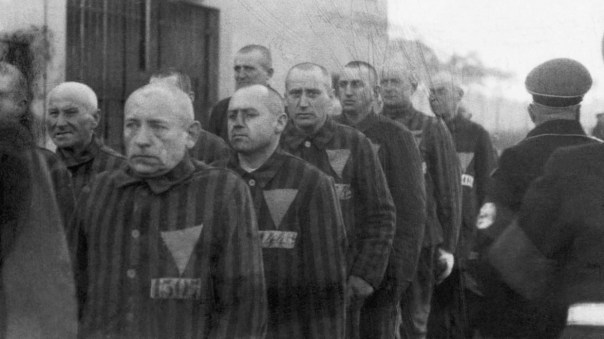


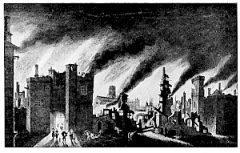
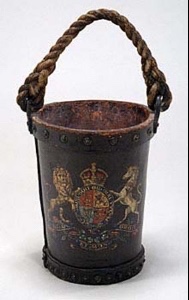
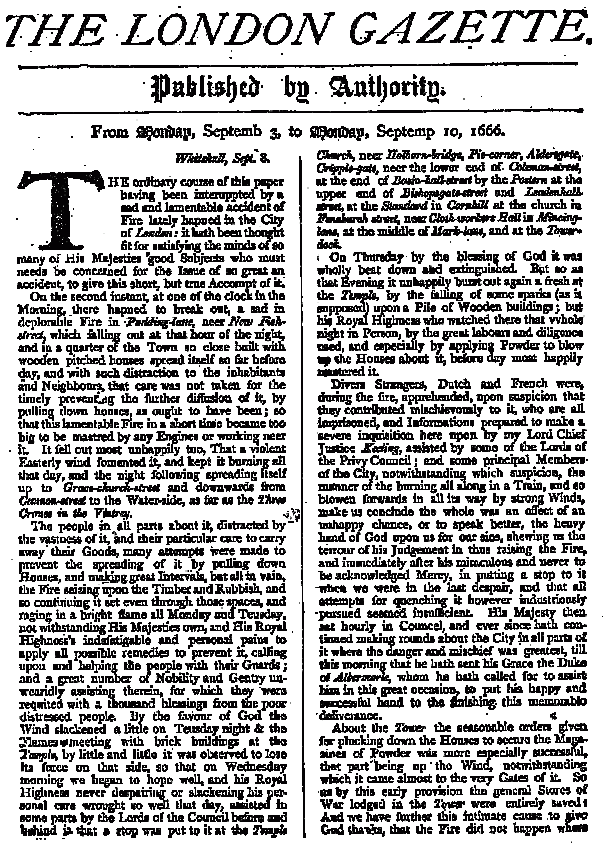



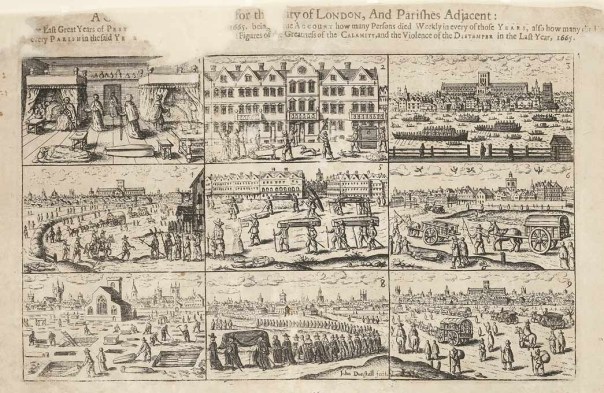


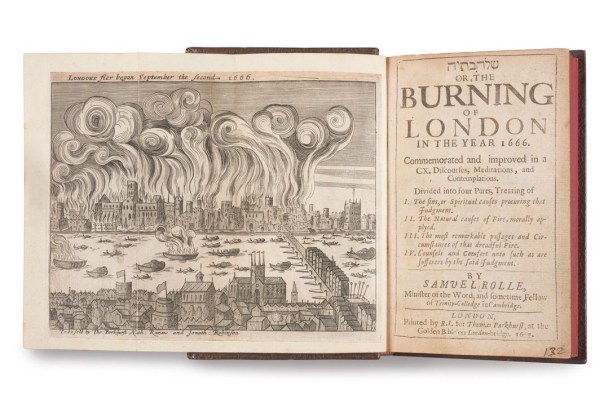


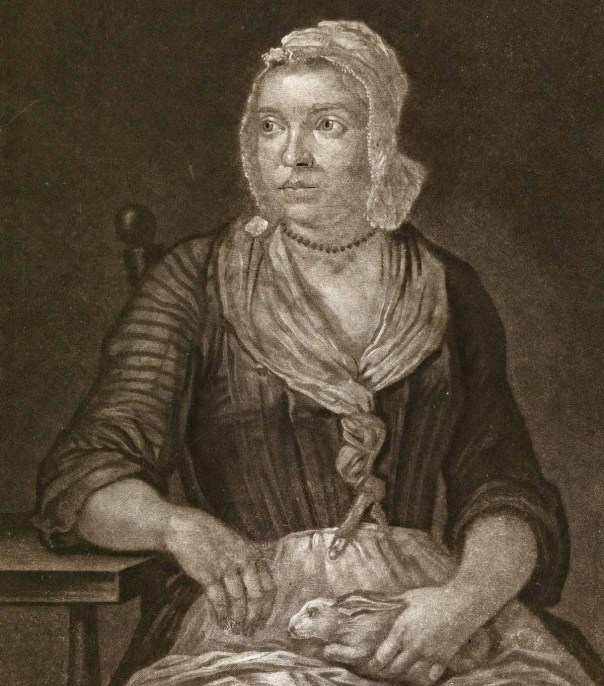


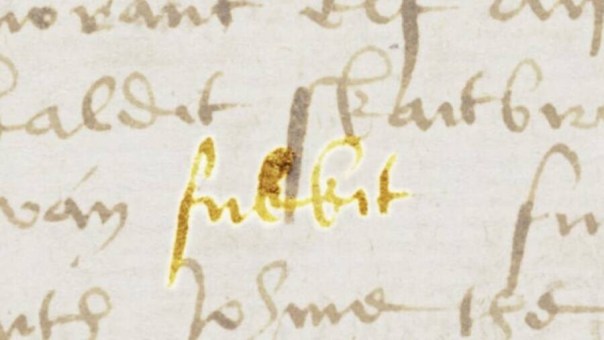


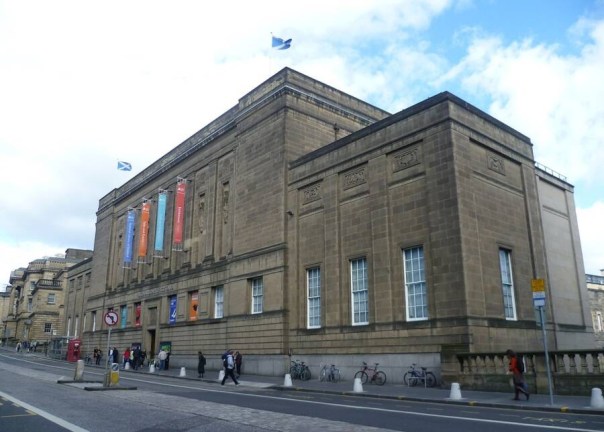
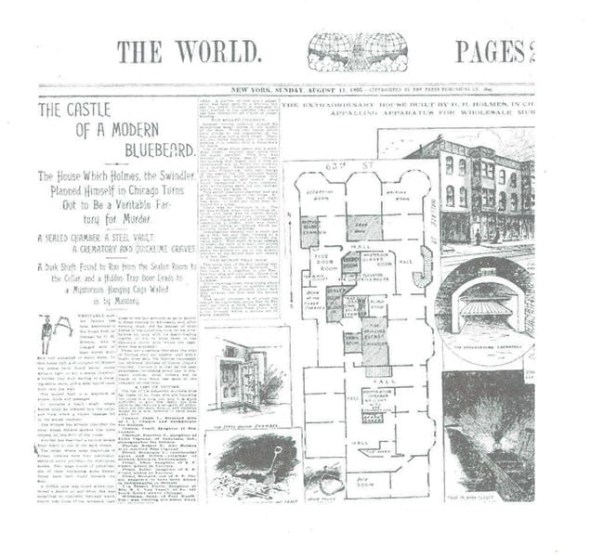

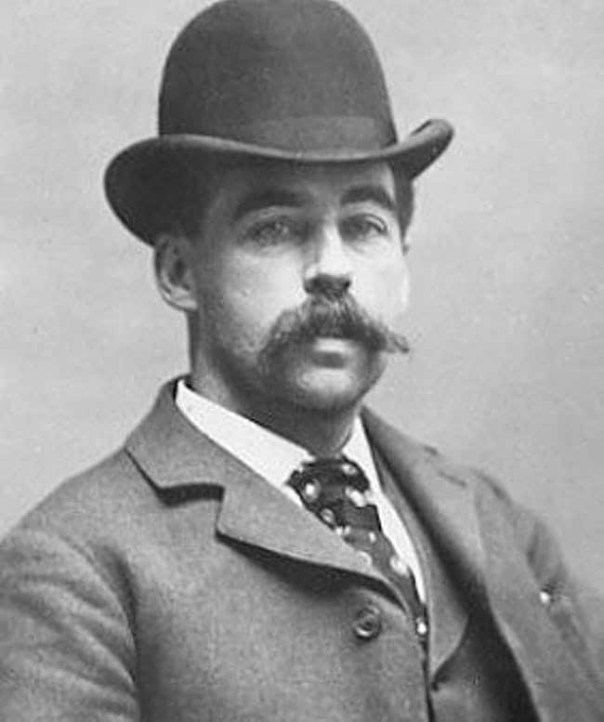



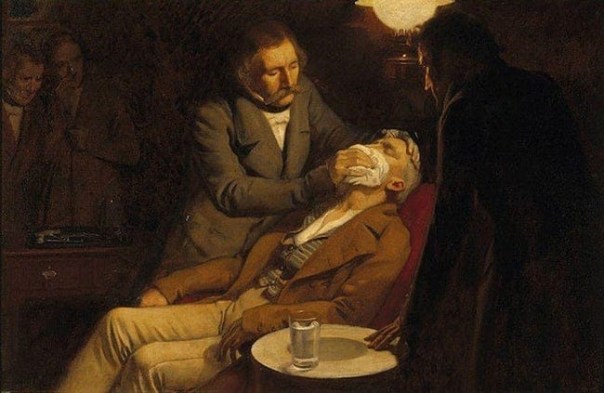


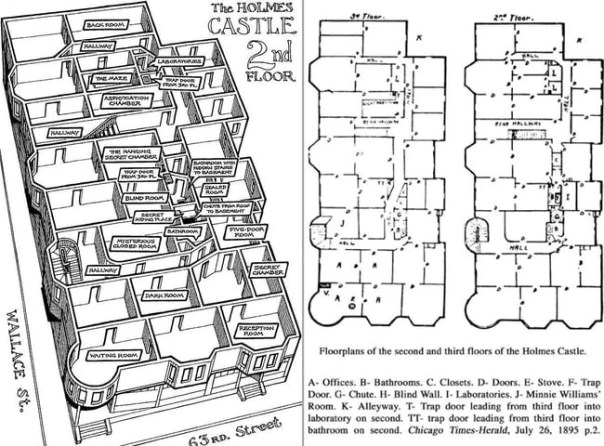
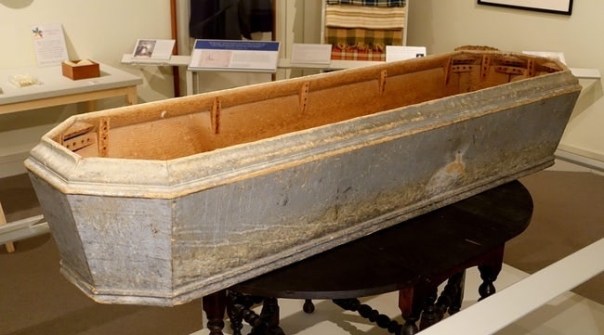

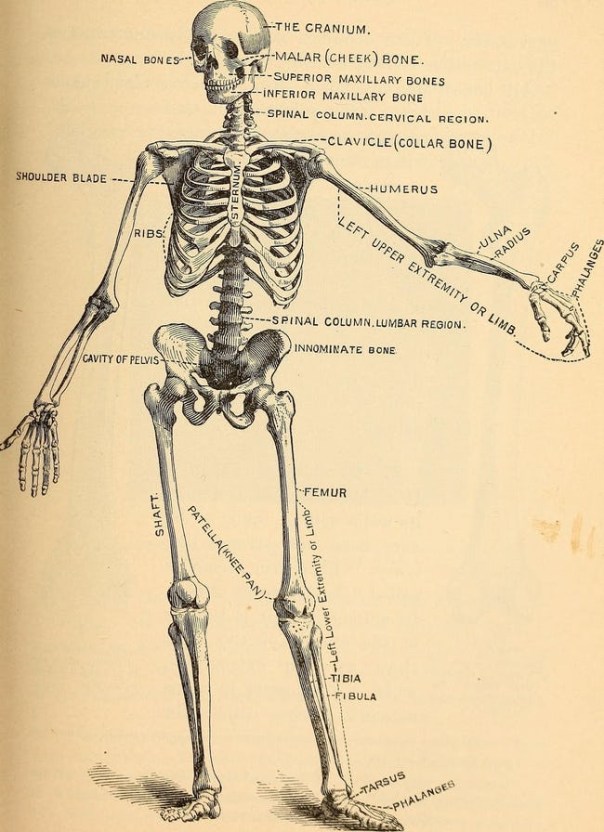

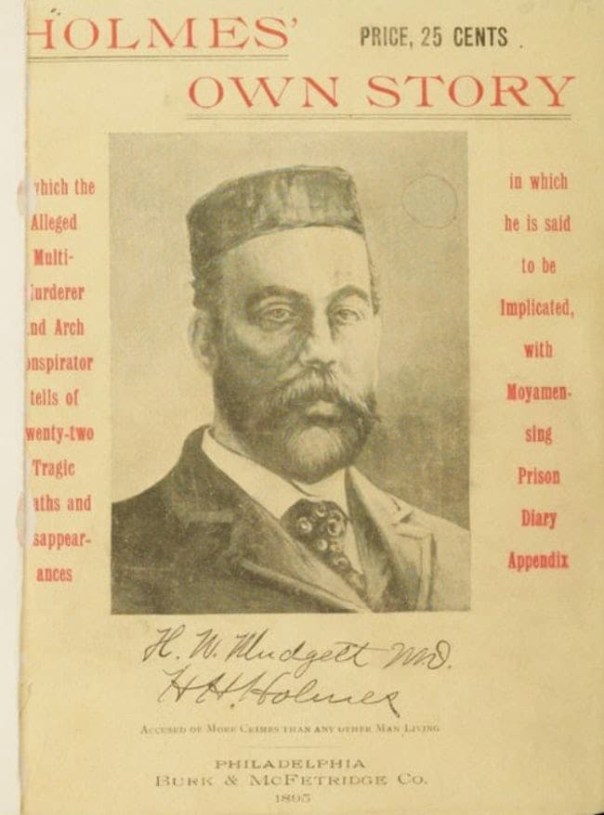





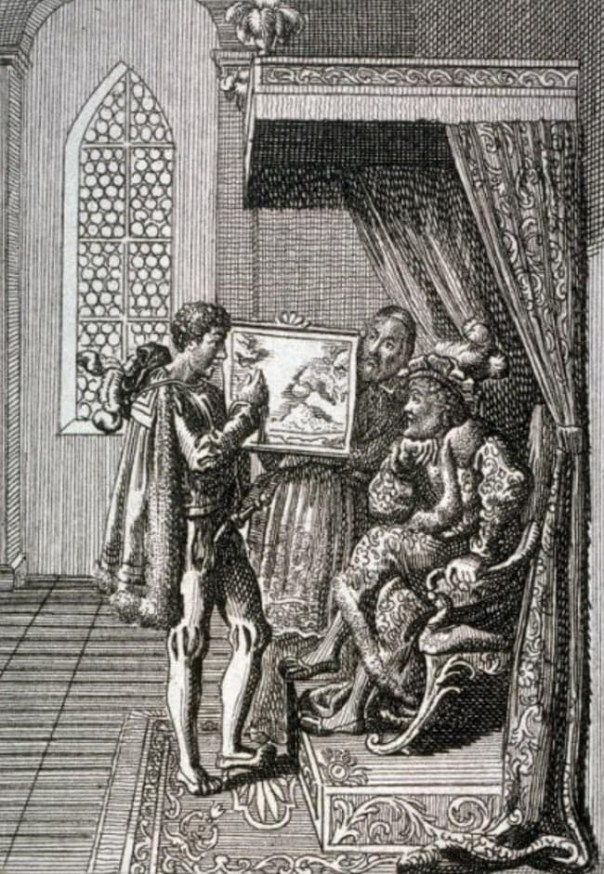



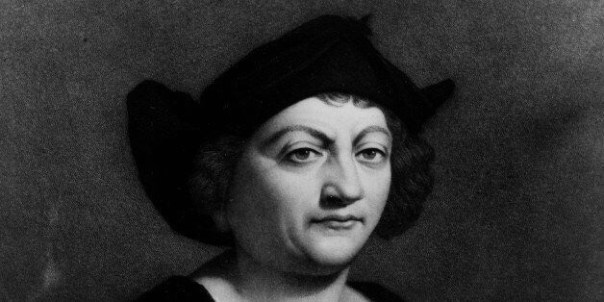

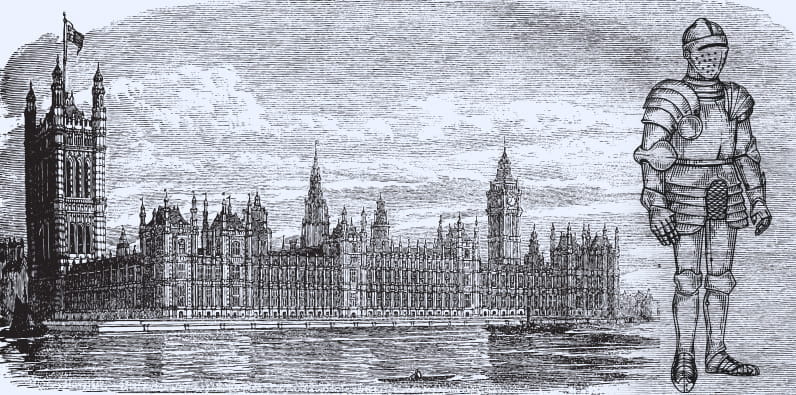


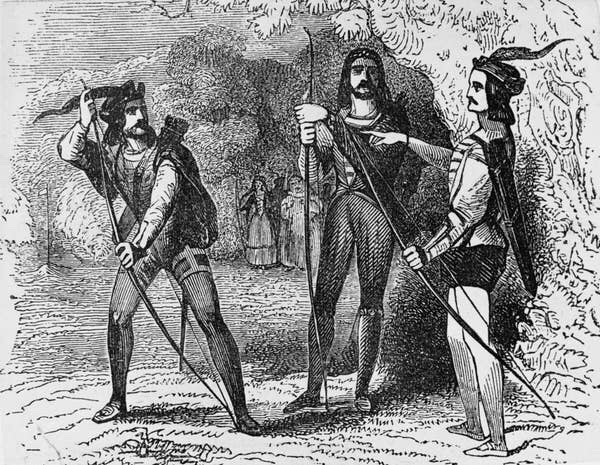

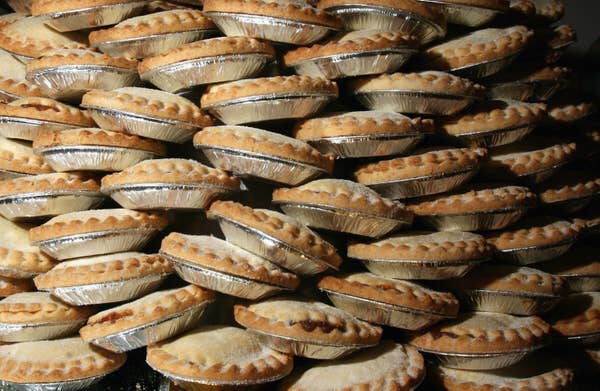

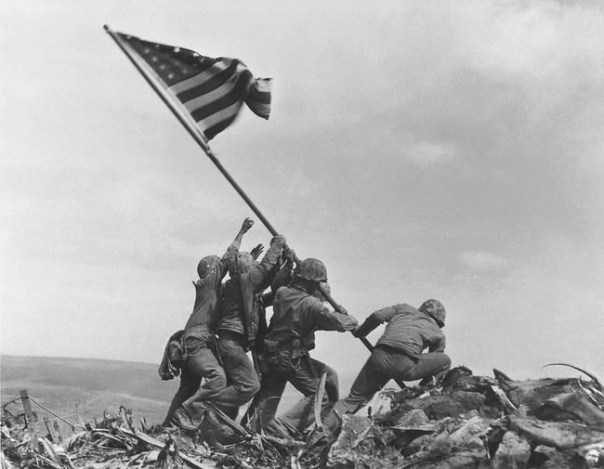





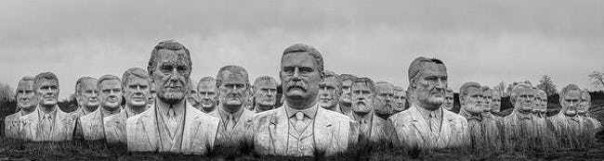


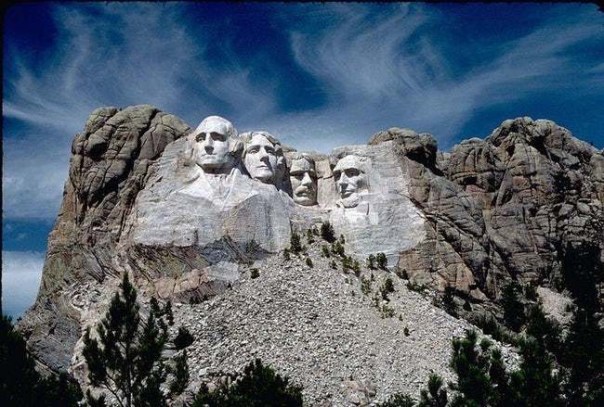


 timalderman


.jpg#/media/File:Full_confession_of_H._H._Holmes_(page_1_crop).jpg)
_(14592371058).jpg#/media/File:Anatomy,_physiology_and_hygiene_(1900)_(14592371058).jpg)
_(14578875868).jpg)
.jpg#/media/File:Michigan_Union_Building,_University_of_Michigan,_Ann_Arbor,_Michigan_(68207).jpg)
.jpg#/media/File:Full_confession_of_H._H._Holmes_(page_2).jpg)

.jpg)


.png)


.JPG)
_(14781436122).jpg)


.jpg)


)


)


)


