You might assume that hanging people in public had died out in England after the 18th century but in fact, these gruesome events continued right up until 1868. The authors Charles Dickens and William Makepeace Thackeray both witnessed some of the last hangings – which still drew crowds of tens of thousands. In fact, Dickens seems to have been a serial attender at executions while also condemning them. He was present, for example, when murderer Marie Manning gasped her last outside the Surrey County Gaol in 1849 and outside Newgate prison when Francis Courvoisier dangled from the rope.
I have a battered old guide to the city – London As It Is Today – published for the Great Exhibition of 1851 and it tells visitors all about the delights of London’s prisons and even how they could be visited. It even lists some of the most recent executions!
Newgate prison was a huge jail standing where the Old Bailey is today. 19th century public hangings there included:
John Bellingham – executed in June, 1812 for shooting dead the prime minister Spencer Perceval. This was the only assassination of a prime minister in British history
Henry Fauntleroy – a banker hanged for forgery in November, 1824
Joseph Hunton – a well-known Quaker executed for forgery in December, 1828
George Widgett – the last person to be hanged for sheep stealing in May, 1831
John Bishop and Thomas Williams – for the murder of an Italian boy in December, 1831
Francis Benjamin Courvoisier – who killed Lord William Russell, his master, July 1840
Daniel Good – for the murder of Jane Jones at Putney in May, 1842
William Henry Hocker – for the murder of James De La Rue at Hampstead in April, 1845
My 1851 guide remarks on the imposing aspect of Newgate prison with its solid masses of granite walls.
In the open space in front of this prison, executions (now happily of rare occurrence), usually take place, with all their terrors; how many a young heart has here had its pulsation stopped! how many who once were the pride of their parents, and the joy and hope of their circle of friends, have here had their careers of profligacy and crime cut short, and in the pride of their strength, been “lighted away the way to dusty death”
In the prison chapel, there were galleries for male and female prisoners and at the centre – a chair for the following day’s condemned “shedder of blood”. Before the 19th century, his or her coffin would be placed at their feet during their last service just to rub the point home. In a small ante-room near the entrance to the prison was a collection of casts of the heads of well known executed individuals. Duplicates could also be seen in the Chamber of Horrors at Madame Tussaud’s.
Newgate prison dated back to the 12th century but the last building dated from 1770 to 1783 and was designed by George Dance, who was the son of the architect of the Mansion House in the City of London (still standing).
When it was decided to stop dragging condemned criminals from Newgate to Tyburn to be hanged (roughly where Marble Arch is today), they were simply led out to the front of Newgate and executed there – the first hanging being on the 7th November, 1783.
In another old guide to London in my possession, it states that on public execution days, local coffee shops and gin palaces would be bursting with people bargaining for seats to get the best view away from the crowds aside. You would hear the punters saying “excellent situation, comfortable room, splendid view”. The crush of people extended down Giltspur Street with criminals boasting loudly how their mates had been hanged, transported or imprisoned while they were still at large committing their foul deeds. City clerks often lingered too long and were late for work or even sacked.
When public hangings stopped in 1868 (Michael Barrett on the 26th May that year – an Irish Fenian), you would know that a life had been cut short within the prison walls by the flying of a black flag.
Should Victorian visitors wish to take a tour of the prison, they could apply to the Secretary of State for the Home Department (Home Office today), the Lord Mayor or the Sheriffs of London. Newgate Prison was finally torn down at the turn of the 20th century and the Central Criminal Court, or Old Bailey, was constructed between 1903 and 1906.
Who would join a club that celebrated the beheading of a 17th century king? Well, rich Londoners it seems…
On the 30th January, 1649, king Charles I stepped out of a first floor window of the Banqueting House in Whitehall (a building you can still see today though much restored) and on to a wooden scaffold. In front of a great crowd, the king’s head was chopped off. This was the culmination of the English Civil War – a bitter conflict between the forces of the king and those of parliament. The latter, under the leadership of Oliver Cromwell, won. The decision to kill Charles wasn’t taken lightly and followed a trial after which 59 Commissioners signed his death warrant.
Not something to be celebrated!
When the monarchy was restored in 1660, several of those Commissioners were hunted down and then hanged, drawn and quartered – a slow and dreadful way to die. Any talk of sympathy for the regicides was treason. So it’s rather surprising to find that reports began to emerge in the early eighteenth century of a gentlemen’s club that actually celebrated the beheading of Charles I.
They did this in a rather macabre way. At a tavern in Suffolk Street, a large dish of calves’ heads was served up each dressed in a different way to represent the late king and other royalists who’d died in a similar manner. When the cloth was whipped away to reveal the strange meal, the revellers sang an anniversary song. A calf’s skull filled with wine was then passed around and every man toasted the regicides and their good work.
In 1735, the gentlemen got a little carried away and chucked a bloodied calve’s head out of the tavern window. According to an account titled the Secret History of the Calves’ Head Club or the Republican unmasked, this act – on the anniversary of the king’s beheading, provoked a riot. At least that was the widely circulated version of events.
Lord Middlesex, who was one of the revellers, wrote an indignant letter to a friend of his, Mr Spence, who he referred to playfully as “Spanco”. According to his lordship, there was indeed a drunken party and the gentlemen even made a bonfire outside the tavern door for a bit of fun. But they suddenly realised that such an act on the 30th January would make it look as if they were celebrating the execution of Charles I, which they definitely weren’t, he wrote.
However, a mob of royalist Londoners was not so easily convinced and gathered round the tavern to rain rocks through the windows for an hour . To try and fend off the mob, the party shouted “The King, Queen and Royal Family!” Only the arrival of some soldiers saved the gathering from getting their heads bloodied. After that incident, we don’t hear about the Calves Head Club again.
The secret history of the Calves-head Club, or, The republican unmask’d : With a large continuation, and an appendix to the history : Wherein is fully shewn, the religion of the Calves-Head heroes, in their anniversary thanksgiving songs on the xxxth of January, by them called anthems, with reflections thereupon. ; To which is annex’d A vindication of the royal martyr, King Charles the First … / Written in the time of the Usurpation, by the celebrated Mr. Butler … ; With A character of a Presbyterian, written by Sir John Denham, Knight ; and The character of a modern Whig; or, The Republican in fashion
From the web site of Pascal Bonenfant
THE CALVES’ HEAD CLUB
The Calves’ Head Club, in “ridicule of the memory of Charles I.,” has a strange history. It is first noticed in a tract reprinted in the Harleian Miscellany. It is entitled “The Secret History of the Calves’ Head Club; or the Republican unmasked. Wherein is fully shown the Religion of the Calves’ Head Heroes, in their Anniversary Thanksgiving Songs on the 30th of January, by them called Anthems, for the years 1693, 1694, 1695, 1696, 1697. Now published to demonstrate the restless implacable Spirit of a certain party still amongst us, who are never to be satisfied until the present Establishment in Church and State is subverted. The Second Edition. London, 1703.” The Author of this Secret History, supposed to be Ned Ward, attributed the origin of the Club to Milton, and some other friends of the Commonwealth, in opposition to Bishop Nixon, Dr. Sanderson, and others, who met privately every 30th of January, and compiled a private form of service for the day, not very different from that long used. “After the Restoration,” says the writer, “the eyes of the government being upon the whole party, they were obliged to meet with a great deal of precaution; but in the reign of King William they met almost in a public manner, apprehending no danger.” The writer further tells us, he was informed that it was kept in no fixed house, but that they moved as they thought convenient. The place where they met when his informant was with them was in a blind alley near Moorfields, where an axe hung up in the club-room, and was reverenced as a principal symbol in this diabolical sacrament. Their bill of fare was a large dish of calves’ heads, dressed several ways, by which they represented the king and his friends who had suffered in his cause; a large pike, with a small one in his mouth, as an emblem of tyranny; a large cod’s head, by which they intended to represent the person of the king singly; a boar’s head with an apple in its mouth, to represent the king by this as bestial, as by their other hieroglyphics they had done foolish and tyrannical. After the repast was over, one of their elders presented an Icon Basilike, which was with great solemnity burnt upon the table, whilst the other anthems were singing. After this, another produced Milton’s Defensio Populi Anglicani, upon which all laid their hands, and made a protestation in form of an oath for ever to stand by and maintain the same. The company only consisted of Independents and Anabaptists; and the famous Jeremy White, formerly chaplain to Oliver Cromwell, who no doubt came to sanctify with his pious exhortations the ribaldry of the day, said grace. After the table-cloth was removed, the anniversary anthem, as they impiously called it, was sung, and a calf’s skull filled with wine, or other liquor; and then a brimmer went about to the pious memory of those worthy patriots who had killed the tyrant and relieved their country from his arbitrary sway: and, lastly, a collection was made for the mercenary scribbler, to which every man contributed according to his zeal for the cause and ability of his purse.
The tract passed, with many augmentations as valueless as the original trash, through no less than nine editions, the last dated 1716. Indeed, it would appear to be a literary fraud, to keep alive the calumny. All the evidence produced concerning the meetings is from hearsay: the writer of the Secret History had never himself been present at the Club; and his friend from whom he professes to have received his information, though a Whig, had no personal knowledge of the Club. The slanderous rumour about Milton having to do with the institution of the Club may be passed over as unworthy of notice, this untrustworthy tract being the only authority for it. Lowndes says, “this miserable tract has been attributed to the author of Hudibras;” but it is altogether unworthy of him.
Observances, insulting to the memory of Charles I., were not altogether unknown. Hearne tells us that on the 30th of January, 1706-7, some young men in All Souls College, Oxford, dined together at twelve o’clock, and amused themselves with cutting off the heads of a number of woodcocks, “in contempt of the memory of the blessed martyr.” They tried to get calves’-heads, but the cook refused to dress them.
Some thirty years after, there occurred a scene which seemed to give colour to the truth of the Secret History. On January 30, 1735, “Some young noblemen and gentlemen met at a tavern in Suffolk-street, called themselves the Calves’ Head Club, dressed up a calf’s head in a napkin, and after some hurras threw it into a bonfire, and dipped napkins in their red wine and waved them out of the window. The mob had strong beer given them, and for a time hallooed as well as the best, but taking disgust at some healths proposed, grew so outrageous that they broke all the windows, and forced themselves into the house; but the guards being sent for, prevented further mischief. The Weekly Chronicle of February 1, 1735, states that the damage was estimated at ‘some hundred pounds,’ and that the guards were posted all night in the street, for the security of the neighbourhood.”
In L’Abbé Le Blanc’s Letters we find this account of the affair:—”Some young men of quality chose to abandon themselves to the debauchery of drinking healths on the 30th of January, a day appointed by the Church of England for a general fast, to expiate the murder of Charles I., whom they honour as a martyr. As soon as they were heated with wine, they began to sing. This gave great offence to the people, who stopped before the tavern, and gave them abusive language. One of these rash young men put his head out of the window and drank to the memory of the army which dethroned this King, and to the rebels which cut off his head upon a scaffold. The stones immediately flew from all parts, the furious populace broke the windows of the house, and would have set fire to it; and these silly young men had a great deal of difficulty to save themselves.”
Miss Banks tells us that “Lord Middlesex, Lord Boyne, and Mr. Seawallis Shirley, were certainly present; probably, Lord John Sackville, Mr. Ponsonby, afterwards Lord Besborough, was not there. Lord Boyne’s finger was broken by a stone which came in at the window. Lord Harcourt was supposed to be present.” Horace Walpole adds: “The mob destroyed part of the house; Sir William (called Hellfire) Stanhope was one of the members.”
This riotous occurrence was the occasion of some verses in The Grub-street Journal, from which the following lines may be quoted as throwing additional light on the scene:—
“Strange times! when noble peers, secure from riot,
Can’t keep Noll’s annual festival in quiet,
Through sashes broke, dirt, stones, and brands thrown at ’em,
Which, if not scand- was brand-alum magnatum.
Forced to run down to vaults for safer quarters,
And in coal-holes their ribbons hide and garters.
They thought their feast in dismal fray thus ending,
Themselves to shades of death and hell descending;
This might have been, had stout Clare Market mobsters,
With cleavers arm’d, outmarch’d St. James’s lobsters;
Numskulls they’d split, to furnish other revels,
And make a Calves’-head Feast for worms and devils.”
The manner in which Noll’s (Oliver Cromwell’s) “annual festival” is here alluded to, seems to show that the bonfire, with the calf’s-head and other accompaniments, had been exhibited in previous years. In confirmation of this fact, there exists a print entitled The True Effigies of the Members of the Calves’-Head Club, held on the 30th of January, 1734, in Suffolk Street, in the County of Middlesex; being the year before the riotous occurrence above related. This print shows a bonfire in the centre of the foreground, with the mob; in the background, a house with three windows, the central window exhibiting two men, one of whom is about to throw the calf’s-head into the bonfire below. The window on the right shows three persons drinking healths; that on the left, two other persons, one of whom wears a mask, and has an axe in his hand.
There are two other prints, one engraved by the father of Vandergucht, from a drawing by Hogarth.
After the tablecloth was removed (says the author), an anniversary anthem was sung, and a calf’s-skull filled with wine or other liquor, and out of which the company drank to the pious memory of those worthy patriots who had killed the tyrant; and lastly, a collection was made for the writer of the anthem, to which every man contributed according to his zeal or his means. The concluding lines of the anthem for the year 1697 are as follow:—
“Advance the emblem of the action,
Fill the calf’s skull full of wine;
Drinking ne’er was counted faction,
Men and gods adore the vine.
To the heroes gone before us,
Let’s renew the flowing bowl;
While the lustre of their glories
Shines like stars from pole to pole.”
The laureate of the Club and of this doggrel was Benjamin Bridgwater, who, alluding to the observance of the 30th of January by zealous Royalists, wrote:—
“They and we, this day observing,
Differ only in one thing;
They are canting, whining, starving;
We, rejoicing, drink, and sing.”
Among Swift’s poems will be remembered “Roland’s Invitation to Dismal to dine with the Calf’s-Head Club”:—
“While an alluding hymn some artist sings,
We toast ‘Confusion to the race of kings.'”Wilson, in his Life of De Foe, doubts the truthfulness of Ward’s narrative, but adds: “In the frighted mind of a high-flying churchman, which was continually haunted by such scenes, the caricature would easily pass for a likeness.” “It is probable,” adds the honest biographer of De Foe, “that the persons thus collected together to commemorate the triumph of their principles, although in a manner dictated by bad taste, and outrageous to humanity, would have confined themselves to the ordinary methods of eating and drinking, if it had not been for the ridiculous farce so generally acted by the Royalists upon the same day. The trash that issued from the pulpit in this reign, upon the 30th of January, was such as to excite the worst passions in the hearers. Nothing can exceed the grosness of language employed upon these occasions. Forgetful even of common decorum, the speakers ransacked the vocabulary of the vulgar for terms of vituperation, and hurled their anathemas with wrath and fury against the objects of their hatred. The terms rebel and fanatic were so often upon their lips, that they became the reproach of honest men, who preferred the scandal to the slavery they attempted to establish. Those who could profane the pulpit with so much rancour in the support of senseless theories, and deal it out to the people for religion, had little reason to complain of a few absurd men who mixed politics and calves’ heads at a tavern; and still less, to brand a whole religious community with their actions.”
The strange story was believed till our own time, when it was fully disproved by two letters written a few days after the riotous occurrence, by Mr. A. Smyth, to Mr. Spence, and printed in the Appendix to his Anecdotes, 2nd edit. 1858: in one it is stated, “The affair has been grossly misrepresented all over the town, and in most of the public papers: there was no calf’s-head exposed at the window, and afterwards thrown into the fire, no napkins dipt in claret to represent blood, nor nothing that could give any colour to any such reports. The meeting (at least with regard to our friends) was entirely accidental,” etc. The second letter alike contradicts the whole story; and both attribute much of the disturbance to the unpopularity of the Administration; their health being unluckily proposed, raised a few faint claps but a general hiss, and then the disturbance began. A letter from Lord Middlesex to Spence, gives a still fuller account of the affair. By the style of the letter one may judge what sort of heads the members had, and what was reckoned the polite way of speaking to a waiter in those days:—
“Whitehall, Feb. ye 9th, 1735.
“Dear Spanco,—I don’t in the least doubt but long before this time the noise of the riot on the 30th of January has reached you at Oxford; and though there has been as many lies and false reports raised upon the occasion in this good city as any reasonable man could expect, yet I fancy even those may be improved or increased before they come to you. Now, that you may be able to defend your friends (as I don’t in the least doubt you have an inclination to do), I’ll send you the matter of fact literally and truly as it happened, upon my honour. Eight of us happened to meet together the 30th of January, it might have been the 10th of June, or any other day in the year, but the mixture of the company has convinced most reasonable people by this time that it was not a designed or premeditated affair. We met, then, as I told you before, by chance upon this day, and after dinner, having drunk very plentifully, especially some of the company, some of us going to the window unluckily saw a little nasty fire made by some boys in the street, of straw I think it was, and immediately cried out, ‘D—n it, why should not we have a fire as well as anybody else?’ Up comes the drawer, ‘D—n you, you rascal, get us a bonfire.’ Upon which the imprudent puppy runs down, and without making any difficulty (which he might have done by a thousand excuses, and which if he had, in all probability, some of us would have come more to our senses), sends for the faggots, and in an instant behold a large fire blazing before the door. Upon which some of us, wiser, or rather soberer than the rest, bethinking themselves then, for the first time, what day it was, and fearing the consequences a bonfire on that day might have, proposed drinking loyal and popular healths to the mob (out of the window), which by this time was very great, in order to convince them we did not intend it as a ridicule upon that day. The healths that were drank out of the window were these, and these only: The King, Queen, and Royal Family, the Protestant Succession, Liberty and Property, the present Administration. Upon which the first stone was flung, and then began our siege: which, for the time it lasted, was at least as furious as that of Philipsbourg; it was more than an hour before we got any assistance; the more sober part of us, doing this, had a fine time of it, fighting to prevent fighting; in danger of being knocked on the head by the stones that came in at the windows; in danger of being run through by our mad friends, who, sword in hand, swore they would go out, though they first made their way through us. At length the justice, attended by a strong body of guards, came and dispersed the populace. The person who first stirred up the mob is known; he first gave them money, and then harangued them in a most violent manner; I don’t know if he did not fling the first stone himself. He is an Irishman and a priest, and belonging to Imberti, the Venetian Envoy. This is the whole story from which so many calves’ heads, bloody napkins, and the Lord knows what, has been made; it has been the talk of the town and the country, and small beer and bread and cheese to my friends the garretteers in Grub-street, for these few days past. I, as well as your friends, hope to see you soon in town. After so much prose, I can’t help ending with a few verses:—
“O had I lived in merry Charles’s days,
When dull the wise were called, and wit had praise;
When deepest politics could never pass
For aught, but surer tokens of an ass;
When not the frolicks of one drunken night
Could touch your honour, make your fame less bright;
Tho’ mob-form’d scandal rag’d, and Papal spight.”
“Middlesex.”
To sum up, the whole affair was a hoax, kept alive by the pretended “Secret History.” An accidental riot, following a debauch on one 30th of January, has been distributed between two successive years, owing to a misapprehension of the mode of reckoning time prevalent in the early part of the last century; and there is no more reason for believing in the existence of a Calves’ Head Club in 1734-5 than there is for believing it exists in 1864.
John Timbs Club Life of London Vol. I London, 1866
Gangtey Gonpa is a major Nyingmapa monastery in Bhutan.stull177/CC BY 2.0/ Wikimedia Commons
The Nyingma school, also called Nyingmapa, is the oldest of the schools of Tibetan Buddhism. It was established in Tibet during the reign of the Emperor Trisong Detsen (742-797 CE), who brought the tantric masters Shantarakshita and Padmasambhava to Tibet to teach and to found the first Buddhist monastery in Tibet.
Buddhism had been introduced to Tibet in 641 CE, when the Chinese Princess Wen Cheng became the bride of the Tibetan King Songtsen Gampo. The princess brought with her a statue of the Buddha, the first in Tibet, which today is enshrined in the Jokhang Temple in Lhasa. But the people of Tibet resisted Buddhism and preferred their indigenous religion, Bon.
According to Tibetan Buddhist mythology, that changed when Padmasambhava called forth the indigenous gods of Tibet and converted them to Buddhism. The fearsome gods agreed to become dharmapalas, or dharma protectors. From then on, Buddhism has been the principal religion of the Tibetan people.
The construction of Samye Gompa, or Samye Monastery, probably was completed about 779 CE. Here Tibetan Nyingmapa was established, although Nyingmapa also traces its origins to earlier masters in India and in Uddiyana, now the Swat Valley of Pakistan.
Padmasambhava is said to have had twenty-five disciples, and from them a vast and complex system of transmission lineages developed.
Nyingmapa was the only school of Tibetan Buddhism that never aspired to political power in Tibet. Indeed, it was uniquely disorganized, with no head overseeing the school until modern times.
Over time, six “mother” monasteries were built in Tibet and dedicated to Nyingmapa practice. These were Kathok Monastery, Thupten Dorje Drak Monastery, Ugyen Mindrolling Monastery, Palyul Namgyal Jangchup Ling Monastery, Dzogchen Ugyen Samten Chooling Monastery, and Zhechen Tenyi Dhargye Ling Monastery. From these, many satellite monasteries were built in Tibet, Bhutan and Nepal.
Dzogchen
Nyingmapa classifies all Buddhist teachings into nine yanas, or vehicles. Dzogchen, or “great perfection,” is the highest yana and the central teaching of the Nyingma school.
According to Dzogchen teaching, the essence of all beings is a pure awareness. This purity (ka dog) correlates to the Mahayana doctrine of sunyata. Ka dog combined with natural formation—lhun sgrub, which corresponds to dependent origination—brings about rigpa, awakened awareness. The path of Dzogchen cultivates rigpa through meditation so that rigpa flows through our actions in everyday life.
Dzogchen is an esoteric path, and authentic practice must be learned from a Dzogchen master. It is a Vajrayana tradition, meaning that it combines use of symbols, ritual, and tantric practices to enable the flow of rigpa.
Dzogchen is not exclusive to Nyingmapa. There is a living Bon tradition that incorporates Dzogchen and claims it as its own. Dzogchen is sometimes practiced by followers of other Tibetan schools. The Fifth Dalai Lama, of the Gelug school, is known to have been devoted to Dzogchen practice, for example.
Nyingma Scriptures: Sutra, Tantra, Terma
In addition to the sutras and other teachings common to all schools of Tibetan Buddhism, Nyingmapa follows a collection of tantras called the Nyingma Gyubum. In this usage, tantra refers to teachings and writings devoted to Vajrayana practice.
Nyingmapa also has a collection of revealed teachings called terma. Authorship of the terma is attributed to Padmasambhava and his consort Yeshe Tsogyal. The terma were hidden as they were written because people were not yet ready to receive their teachings. They are discovered at the appropriate time by realized masters called tertons, or treasure revealers.
Many of the terma discovered so far have been collected in a multi-volume work called the Rinchen Terdzo. The most widely known terma is the Bardo Thodol, commonly called the “Tibetan Book of the Dead.”
Unique Lineage Traditions
One unique aspect of Nyingmapa is the “white sangha,” ordained masters and practitioners who are not celibate. Those who live a more traditionally monastic, and celibate, life are said to be in the “red sangha.”
One Nyingmapa tradition, the Mindrolling lineage, has supported a tradition of women masters, called the Jetsunma lineage. The Jetsunmas have been daughters of Mindrolling Trichens, or heads of the Mindrolling lineage, beginning with Jetsun Mingyur Paldrön (1699-1769). The current Jetsunma is Her Eminence Jetsun Khandro Rinpoche.
Nyingmapa in Exile
The Chinese invasion of Tibet and the 1959 uprising caused the heads of the major Nyingmapa lineages to leave Tibet. Monastic traditions re-established in India include Thekchok Namdrol Shedrub Dargye Ling, in Bylakuppe, Karnataka State; Ngedon Gatsal Ling, in Clementown, Dehradun; Palyul Chokhor Ling, E-Vam Gyurmed Ling, Nechung Drayang Ling, and Thubten E-vam Dorjey Drag in Himachal Pradesh.
Although the Nyingma school had never had a head, in exile a series of high lama have been appointed to the position for administration purposes. The most recent was Kyabjé Trulshik Rinpoche, who died in 2011.
Reference
O’Brien, Barbara. “The Nyingmapa School.” Learn Religions, Aug. 25, 2020, learnreligions.com/nyingma-school-450169.
Gretna Green in Dumfries and Galloway is possibly the most romantic place in Scotland, if not in the UK. This small Scottish village has become synonymous with romance and runaway lovers.
In 1754 a new law, Lord Hardwicke’s Marriage Act, was brought into force in England. This law required young people to be over 21 years of age if they wished to marry without their parents’ or guardian’s consent. The marriage was required to be a public ceremony in the couple’s parish, with an official of the Church presiding. The new law was rigorously enforced and carried a sentence of 14 years transportation for any clergyman found breaking it.
The Scots however did not change the law and continued with their centuries-old marriage customs. The law in Scotland allowed anyone over the age of 15 to enter into marriage provided they were not closely related to each other and were not in a relationship with anyone else.
This marriage contract could be made wherever the couple liked, in private or in public, in the presence of others or no-one at all.
The ‘irregular marriage’ ceremony would be short and simple, something like:
“Are you of marriageable age? Yes
Are you free to marry? Yes
You are now married.”
A marriage in the Scottish tradition could take place anywhere on Scottish soil. Being so close to the English border, Gretna was popular with English couples wanting to marry but when in the 1770s a toll road was built running through the village making it even more accessible from south of the border, it soon became renowned as the destination for eloping couples.
Forbidden romance and runaway marriages were popularised in the fiction of the time, for example in the novel ‘Pride and Prejudice’ by Jane Austen.
English couples usually preferred to keep some English marriage traditions and so looked for someone in authority to oversee the ceremony. The most senior and respected craftsman or artisan in the countryside was the village blacksmith, and so the Blacksmith’s Forge at Gretna Green became a favourite place for weddings.
The tradition of the blacksmith sealing the marriage by striking his anvil led to the Gretna blacksmiths becoming known as ‘anvil priests’. Indeed the blacksmith and his anvil are now symbols of Gretna Green weddings. Gretna Green’s famous Blacksmiths Shop, the Old Smithy where lovers have come to marry since 1754, is still in the village and still a wedding venue.
There are now several other wedding venues in Gretna Green and marriage ceremonies are still performed over a blacksmith’s anvil. Gretna Green remains one of the most popular places for weddings and thousands of couples from all around the world flock to this Scottish village to be married each year.
People often think of the current Dalai Lama who travels the world as the highly visible spokesman for Buddhism as THE Dalai Lama, but in reality, he is the only most recent in a long line of leaders of the Gelug branch of Tibetan Buddhism. He is considered to be a tulku–a reincarnation of Avalokitesvara, the Bodhisattva of Compassion. In Tibetan, Avalokitesvara is known as Chenrezig.
In 1578 the Mongol ruler Altan Khan gave the title Dalai Lama to Sonyam Gyatso, third in a line of reborn lamas of the Gelug school of Tibetan Buddhism. The title means “ocean of wisdom” and was given posthumously to Sonyam Gyatso’s two predecessors.
In 1642, the 5th Dalai Lama, Lobsang Gyatso, became the spiritual and political leader of all of Tibet, an authority passed on to his successors. Since that time the succession of Dalai Lamas has been at the center of both Tibetan Buddhismand the history of the Tibetan people.
01: Gedun Drupa, the 1st Dalai Lama
Gendun Drupa, the First Dalai Lama. Public Domain
Gendun Drupa was born to a nomadic family in 1391 and died in 1474. His original name was Pema Dorjee.
He took novice monk’s vows in 1405 at Narthang monastery and received full monk’s ordination in 1411. In 1416, he became a disciple of Tsongkhapa, the founder of the Gelugpa School, and eventually became Tsongkhapa’s principle disciple. Gendun Drupa is remembered as a great scholar who wrote a number of books and who founded a major monastic university, Tashi Lhunpo.
Gendun Drupa was not called “Dalai Lama” during his lifetime, because the title did not yet exist. He was identified as the first Dalai Lama several years after his death.
02: Gendun Gyatso, the 2nd Dalai Lama
Gendun Gyatso was born in 1475 and died in 1542. His father, a well-known tantric practitioner of the Nyingma school, named him Sangye Phel and gave the boy a Buddhist education.
When he was 11 years old, he was recognized as an incarnation of Gedun Drupa and enthroned at Tashi Lhunpo monastery. He received the name Gendun Gyatso at his monk’s ordination. Like Gedun Drupa, Gendun Gyatso would not receive the title Dalai Lama until after his death.
Gedun Gyatso served as abbot of Drepung and Sera monasteries. He is also remembered for reviving the great prayer festival, the Monlam Chenmo.
03: Sonam Gyatso, the 3rd Dalai Lama
Sonam Gyatso was born in 1543 to a wealthy family living near Lhasa. He died in 1588. His given name was Ranu Sicho. At the age of 3 he was recognized to be the reincarnation of Gendun Gyatso and was then taken to Drepung Monastery for training. He received novice ordination at the age of 7 and full ordination at 22.
Sonam Gyatso received the title Dalai Lama, meaning “ocean of wisdom,” from the Mongolian king Altan Khan. He was the first Dalai Lama to be called by that title in his lifetime.
Sonam Gyatso served as abbot of Drepung and Sera monsteries, and he founded Namgyal and Kumbum monasteries. He died while teaching in Mongolia.
04: Yonten Gyatso, the 4th Dalai Lama
Yonten Gyatso was born in 1589 in Mongolia. His father was a Mongol tribal chief and a grandson of Altan Khan. He died in 1617.
Although Yonten Gyatso was recognized to be the reborn Dalai Lama as a small child, his parents did not allow him to leave Mongolia until he was 12. He received his early Buddhist education from lamas visiting from Tibet.
Yonten Gyatso finally came to Tibet in 1601 and soon after took novice monk’s ordination. He received full ordination at the age of 26 and was abbot of Drepung and Sera monasteries. He died at Drepung monastery only a year later.
Ngawang Lobsang Gyatso was born in 1617 to a noble family. His given name was Künga Nyingpo. He died in 1682.
Military victories by the Mongol Prince Gushi Kahn gave control of Tibet to the Dalai Lama. When Lobsang Gyatso was enthroned in 1642, he became the spiritual and political leader of Tibet. He is remembered in Tibetan history as the Great Fifth.
The Great Fifth established Lhasa as the capital of Tibet and began construction of Potala Palace. He appointed a regent, or desi, to handle the administrative duties of governing. Before his death, he advised the Desi Sangya Gyatso to keep his death a secret, possibly to prevent a power struggle before a new Dalai Lama was prepared to assume authority.
Tsangyang Gyatso was born in 1683 and died in 1706. His given name was Sanje Tenzin.
In 1688, the boy was brought to Nankartse, near Lhasa, and educated by teachers appointed by the Desi Sangya Gyatso. His identity as the Dalai Lama was kept secret until 1697 when the death of the 5th Dalai Lama finally was announced and Tsangyang Gyatso was enthroned.
The 6th Dalai Lama is most remembered for renouncing monastic life and spending time in taverns and with women. He also composed songs and poems.
In 1701, a descendant of Gushi Khan named Lhasang Khan killed Sangya Gyatso. Then, in 1706 Lhasang Khan abducted Tsangyang Gyatso and declared that another lama was the real 6th Dalai Lama. Tsangyang Gyatso died in Lhasang Khan’s custody.
The lama who had replaced Tsangyang Gyatso as Sixth Dalai Lama was still enthroned in Lhasa, so Kelzang Gyatso’s identification as 7th Dalai Lama was kept secret for a time.
A tribe of Mongol warriors called the Dzungars invaded Lhasa in 1717. The Dzungars killed Lhasang Kahn and deposed the pretender 6th Dalai Lama. However, the Dzungars were lawless and destructive, and the Tibetans appealed to the Emperor Kangxi of China to help rid Tibet of the Dzungars. Chinese and Tibetan forces together expelled the Dzungars in 1720. Then they brought Kelzang Gyatso to Lhasa to be enthroned.
Kelzang Gyatso abolished the position of desi (regent) and replaced it with a council of ministers.
08: Jamphel Gyatso, the 8th Dalai Lama
Jamphel Gyatso was born in 1758, enthroned at Potala Palace in 1762 and died in 1804 at the age of 47.
During his reign, a war broke out between Tibet and the Gurkhas occupying Nepal. The war was joined by China, which blamed the war on a feud among lamas. China then attempted to change the process for choosing the rebirths of lamas by imposing the “golden urn” ceremony on Tibet. More than two centuries later, the current government of China has re-introduced the golden urn ceremony as a means of controlling the leadership of Tibetan Buddhism.
Jamphel Gyatso was the first Dalai Lama to be represented by a regent while he was a minor. He completed the building of Norbulingka Park and Summer Palace. By all accounts a quiet man devoted to meditation and study, as an adult he preferred to let others run the government of Tibet.
09: Lungtok Gyatso, the 9th Dalai Lama
Lungtok Gyatso was born in 1805 and died in 1815 before his tenth birthday from complications from a common cold. He was the only Dalai Lama to die in childhood and the first of four that would die before the age of 22. His reincarnated successor would not be recognized for eight years.
10: Tsultrim Gyatso, the 10th Dalai Lama
Tsultrim Gyatso was born in 1816 and died in 1837 at the age of 21. Though he sought to change the economic system of Tibet, he died before being able to enact any of his reforms.
11: Khendrup Gyatso, the 11th Dalai Lama
Khendrup Gyatso was born in 1838 and died in 1856 at the age of 18. Born in the same village as the 7th Dalai Lama, he was recognized as the reincarnation in 1840 and assumed full power over the government in 1855–only a year before his death.
12: Trinley Gyatso, the 12th Dalai Lama
Trinley Gyatso was born in 1857 and died in 1875. He assumed full authority over the Tibetan government at the age of 18 but died before his 20th birthday.
Thubten Gyatso, the 13th Dalai Lama. Public Domain
Thubten Gyatso was born in 1876 and died in 1933. He is remembered as the Great Thirteenth.
Thubten Gyatso assumed leadership in Tibet in 1895. At that time Czarist Russia and the British Empire had been sparring for decades over control of Asia. In the 1890s the two empires turned their attention eastward, to Tibet. A British force invaded in 1903, leaving after extracting a short-lived treaty from the Tibetans.
His Holiness the Dalai Lama at the Tsuklag Khang Temple on March 11, 2009 in Dharamsala, India. The Dalai Lama attended proceedings marking 50 years of exile in Mcleod Ganj, the seat of the exiled Tibetan government near the town of Dharamsala.Daniel Berehulak/Getty Images
Tenzin Gyatso was born in 1935 and recognized as the Dalai Lama at the age of three.
China invaded Tibet in 1950 when Tenzin Gyatso was only 15. For nine years he attempted to negotiate with the Chinese to save the Tibetan people from the dictatorship of Mao Zedong. However, the Tibetan Uprising of 1959 forced the Dalai Lama into exile, and he has never been allowed to return to Tibet.
The 14th Dalai Lama established a Tibetan government in exile in Dharamsala, India. In some ways, his exile has been to the world’s benefit, since he has spent his life bringing a message of peace and compassion to the world
The 14th Dalai Lama was awarded a Nobel Peace Prize in 1989. In 2011 he absolved himself of political power, although he is still the spiritual leader of Tibetan Buddhism. Future generations are likely to regard him in the same light as the Great Fifth and the Great Thirteenth for his contributions to spreading the message of Tibetan Buddhism to the world, thereby saving the tradition.
Reference
O’Brien, Barbara. “The 14 Dalai Lamas from 1391 to Present.” Learn Religions, Aug. 25, 2020, learnreligions.com/succession-of-dalai-lamas-450187.
How could somebody come to be executed not once – but twice? Such is the tale of one poor, unfortunate Londoner at a time of great cruelty and savagery.
Thomas Savage – appropriately named – was born in the parish of St Giles in the Fields and as a youth, became an apprentice to a certain Mr Collins, a vintner at the Ship Tavern at Ratcliff Cross. Three hundred years ago, when this story is set, Ratcliff was a hamlet by the river Thames with a strong ship building and provisioning tradition. It’s long been swallowed up by the borough of Tower Hamlets, located between Shadwell and LImehouse.
Thomas Savage at the “bawdy house” with Hannah Blay
turned up at the brothel with wine and he and the prostitute Hannah got merrily drunk and enjoyed themselves. But being a lady of the night, Hannah wanted money for her services. So she goaded Thomas into robbing Mr Collins. But Savage explained that Collins’ maid was always in the house. To which Hannah responded:
Hang her, a jade! Knock her brains out and I’ll receive the money and go anywhere with you beyond sea, to avoid the stroke of justice.
So the weak-willed Thomas headed back to the Collins house and avoided his master by climbing over a back wall. He then ran into the other servants having dinner including the ever-present maid. Rather unwisely, she took Savage to task for spending too much time at the bawdy house. He didn’t like this telling off and it convinced him to bash her brains out as Hannah had advised.
So one day he took a hammer and began hitting out at objects round the house to provoke her to anger. This presumably would have made it easier for him to do the foul deed. Thomas needed to psyche himself up to commit his first murder. Initially, the maid seems to have tried to ignore this bizarre behaviour but eventually she asked him to stop. He then threw the hammer and scored a direct blow on her head. Falling to the ground she screamed in pain and her assailant hesitated to deal the fatal blow. He just couldn’t quite do it.
But as she moaned and groaned, he set about her with the hammer and snuffed the maid’s life out. Breaking open a cupboard, he found a bag with sixty pounds of Collins’ money – a princely sum then – and escaped. Meeting up with Hannah, his behaviour became increasingly erratic. She asked for all of it but he only gave her half a crown and then fled. In the hours that followed, he sat by the roadside crying out loud about what he had done. Eventually, gathering his wits about him, he went down to a guest house in Greenwich.
The mistress of this guest house was very suspicious to find a seventeen year old with a bag bulging with so much money. She asked him what he was doing. Thomas lied that he was on his way to Gravesend to meet his master, a wine cooper. This story seemed a bit fishy and Thomas, now in a total panic, said she could contact his master and in fact, he’d leave the money with her until she did.
So without any of his ill-gotten gains, Savage wandered off to Woolwich. Shortly after, word of his murder filtered down from Ratcliff to Greenwich – it took much longer for news to get around in the days before mass media. The mistress of the guest house sent a group of men to go after him and he was found in a Woolwich ale house, head on the table and a pot of beer by his side. The men challenged him:
Tom – did you not live at Ratcliff?
Yes
And did you not murder your fellow servant? And you took so much money from your master? You must go along with us!
Yes, with all my heart.
In custody, Savage confessed everything. On the day he went to court, his fellow prisoners got him a bit drunk and he shopped Hannah Blay to the authorities. She was then arrested too. Thomas was sentenced to death – the punishment to be carried out at Ratcliff Cross. This was quite a common thing to do – to kill the criminal at the place where they had committed their crime. Savage’s hanging was postponed on one occasion and news was given to him as he was dressed up for the occasion.
What – have I got on my dying clothes? Dying clothes did I say? They are my living clothes, the clothes out of which I shall go into eternal glory. They are the best clothes that ever I put on!
At Ratcliff Cross, there seems to have been some sympathy among the crowd for this pathetic figure. He said a little prayer and the cart pulled away to leave him struggling at the end of the rope. A friend beat Thomas around the chest to shorten his misery. Motionless and left dangling for a while, everybody assumed Savage was dead. His friends then took him to a nearby house and laid his body on a table. Then something incredible happened. Thomas started breathing!
His throat rattled. He heaved upwards. Then his eyes and mouth opened. His teeth are described as having been “set before” – I assume that means in his death struggle, they’d been pushed out – and he couldn’t speak. Now you might think he’d have been let off but not in seventeenth century England. As word got out that Savage was alive, an embarrassed sheriff turned up and took him back to the gibbet. Poor Savage was then hanged all over again until he was properly dead.
His forlorn friends then spirited his seventeen year old body away to Islington where he was buried on the 28th October, 1668.
Politicians and journalists are more unpopular today than ever. But in the past in London they stood a very real risk of being lynched.
One of the many politicians to be lynched was Walter Stapleton, Lord Treasurer of England, who came to a sticky end around 1326.
Victim of the London mob
Not only was he in charge of the country’s finances, Walter was a leading adviser to King Edward II and – typical of the Middle Ages – also the Bishop of Exeter. Men of the cloth often held top political positions. It wasn’t seen as unusual or ungodly. However, the conduct of King Edward II was seen as less than godly – with accusations of sodomy and vice swirling around him.
Edward’s own queen launched a rebellion to overthrow her husband the king in alliance with her lover. Londoners came out in the queen’s support. The king fled towards Wales while his Lord High Treasurer, the unfortunate Walter, tried to lock the gates of the city to stop Queen Isabella getting in.
Stapleton is one of many medieval lynched politicians
However, he’d misjudged the mood of London very badly.
The hapless politician galloped as fast as he could towards St Paul’s cathedral to plead for sanctuary but was intercepted by the mob. They pulled Walter from his horse, stripped his clothes (worth a pretty penny I’m sure) and dragged him naked to the stone cross that once stood in Cheapside.
There, they proclaimed him a traitor and cut off his head – putting it on a pole and processing around with it. The same fate befell his servants whose headless bodies were tossed on a heap of rubbish by the river.
Over fifty years later, a similar gory end came to Simon Sudbury, the Lord Chancellor of England. Like Walter, Simon held some ecclesiastical positions as well as being a politician. He was both Bishop of London and Archbishop of Canterbury – so a top nob in medieval society. But the London mob soon cut him down to size – literally.
Poll tax leads to politicians being lynched
Regrettably, Sudbury supported the introduction of a poll tax. The peasants hated it. They marched on the capital and surrounded the Tower of London where Simon was holed up with the Lord Treasurer Sir Robert Hales.
Eventually, the two men were handed over to the mob and beheaded. Apparently, it took something like eight blows to take Simon’s head off. His skull can still be seen in the church of St Gregory in the town of Sudbury, Suffolk today.
Londoners have frequently rioted and attacked top politicians with no regard to their rank or position. During the 1780 anti-Catholic “Gordon Riots”, the house of Lord Mansfield was thoroughly plundered. In 1815, Lord Eldon – the Lord Chancellor – confronted a mob that was breaking the windows of his home with a shotgun in his hand!
Eldon was hated by the city populace as he’d managed to oppose just about every progressive measure you could imagine including the abolition of slavery and attempts to secure affordable bread for the poor (the Corn Laws).
But the pelting of Eldon’s house with stones wasn’t a one off incident. Lord Wellington – hero of Waterloo – was assailed in his carriage by Londoners – as was King George III and King George IV.
So if politicians think they’ve got it tough today – pick up a history book. They’re getting off lightly in our times – with just a few hostile tweets. In the past they were lynched – their lives cruelly cut short.
The Peasant’s Revolt: The Death Of Simon Of Sudbury
The death of the Black Prince in 1376 can be equated to an ocean landslide that eventually causes a devastating Tsunami on the other side of the world. I consider it the starting point of the Wars of the Roses, and also the catalyst for all that occurred after the arrival of Edward’s ten year old son on the English throne up to his usurpation in 1399. Putting the many effects of Edwards death aside, I would like to write of one man, Simon of Sudbury, who was caught up in all of this.
His Grace Simon of Sudbury” by Raden Ajeng Wahyuni
It was the events that occurred in six months of 1381 that lead to Sudbury’s violent death.
Sudbury, as his name suggests, was from the village of Sudbury in Suffolk, its not known when he left this small East Anglian village or if he ever revisited but he certainly had a great fondness for place. He founded St Leonard’s, a leper hospital in 1372 and the College of St Gregory two years later, in which his brother John said to have been warden.
In the late 1340’s Sudbury had studied in Paris, moved to Rome and then back again to England for a post in the court of Edward III. It was as Archbishop of Canterbury, at Westminster Abbey, that he crowned the little son of the Black Prince as Richard II King of England. Five years later it was Sudbury, in his new post as Chancellor of England, that the rioters used to vent their anger.
England had not recovered from the Black Death, workers were few, jobs were many, the treasury was empty and in an effort to counter this taxation was increased. This, of course, angered the the poor, for they had come to like their ‘freedom.’ In 1380, to rectify the situation, a poll tax to raise money to help England financial situation was introduced, those in authority thought it a grand idea the rest of the country did not, consequently, there was trouble. Between 13th and the 15th June over 100,000 peasants marched on the countries capital led by one Wat Tyler. No doubt, watching the proceedings from within the Tower of London, Sudbury may have seen the young king do his bit in appeasing the men, making promises (that he didn’t keep). Sudbury and Robert Hales, England’s Treasurer soon realised that their lives where in danger when they saw that the rioters had siezed an opportunity and entered through the gates of the Tower of London. Hiding in the White Tower, Sudbury was found praying. Both men were dragged out and both were decapitated. Sudbury must have suffered greatly, his ear was sliced and the bone in his neck had more than one cut leading us to believe that it must have taken more than two strokes to take off his head. Both Sudbury and Hales heads put on poles and carried about the city by the rioters. As mentioned earlier, the boy king never kept his promise to the peasants and eventually Wat Tyler’s head was exchanged for that of Sudbury’s.
His body was taken to Canterbury but his head elsewhere.
Sudbury’s mummified skull rest in a small cupboard in St Gregory’s Sudbury and here we can see poor Simon’s skull, with skin still attached.
In 2011, over six hundred years after his death, forensic artist Adrienne Barker from the University of Dundee reconstructed Sudbury’s head using detail from skull. Adrienne said,
“I hope people in Sudbury like what we’ve done but he’s a strange looking fellow so it’ll be interesting to see their reactions.”
Sudbury’s mummified skull rest in a small cupboard in St Gregory’s Sudbury and here we can see poor Simon’s skull, with skin still attached.
In 2011, over six hundred years after his death, forensic artist Adrienne Barker from the University of Dundee reconstructed Sudbury’s head using detail from skull. Adrienne said,
“I hope people in Sudbury like what we’ve done but he’s a strange looking fellow so it’ll be interesting to see their reactions.”
Islam once considered homosexuality to be one of the most normal things in the world.
The Ottoman Empire, the seat of power in the Muslim world, didn’t view lesbian or gay sex as taboo for centuries. They formally ruled gay sex wasn’t a crime in 1858.
But as Christians came over from the west to colonize, they infected Islam with homophobia.
The truth is many Muslims alive today believe the prophet Muhammad supported and protected sexual and gender minorities.
But go back to the beginning, and you’ll see there is far mre homosexuality in Islam than you might have ever thought before.
1 Ancient Muslim borrowed culture from the boy-loving Ancient Greeks
The Islamic empires, (Ottoman, Safavid/Qajar, Mughals), shared a common culture. And it shared a lot of similarities with the Ancient Greeks.
Persianate cultures, all of them Muslim, dominated modern day India and Arab world. And it was very common for older men to have sex with younger, beardless men. These younger men were called ‘amrad’.
Once these men had grown his beard (or ‘khatt’), he then became the pursuer of his own younger male desires.
And in this time, once you had fulfilled your reproductive responsibilities as a man you could do what you like with younger men, prostitutes and other women.
Society completely accepted this, at least in elite circles. Iranian historian Afsaneh Najmabadi writes how official Safavid chroniclers would describe the sexual lives of various Shahs, the ruling class, without judgment.
There was some judgment over ‘mukhannas’. These were men (some researchers consider them to be transgender or third gender people) who would shave their beards as adults to show they wished to continue being the object of desire for men. But even they had their place in society. They would often be used as servants for prophets.
‘It wasn’t exactly how we would define homosexuality as we would today, it was about patriarchy,’ Ludovic-Mohamed Zahed, a gay imam who lives in Marseilles, France, told GSN.
‘It was saying, “I’m a man, I’m a patriarch, I earn money so I can rape anyone including boys, other slaves and women.” We shouldn’t idealize antique culture.’
2 Paradise included male virgins, not just female ones
There is nowhere in the Qu’ran that states the ‘virgins’ in paradise are only female.
The ‘hur’, or ‘houris’, are female. They have a male counterpart, the ‘ghilman’, who are immortal young men who wait and serve people in paradise.
‘Immortal [male] youths shall surround them, waiting upon them,’ it is written in the Qu’ran. ‘When you see them, you would think they are scattered pearls.’
Zahed says you should look at Ancient Muslim culture with the same eyes as Ancient Greek culture.
‘These amrads are not having sex in a perfectly consenting way because of power relationships and pressures and so on.
‘However, it’s not as heteronormative as it might seem at first. There’s far more sexual diversity.’
3 Sodom and Gomorrah is not an excuse for homophobia in Islam
Like the Bible, the Qu’ran tells the story of how Allah punished the ancient inhabitants of the city of Sodom.
Two angels arrive at Sodom, and they meet Lot who insists they stay the night in his house. Then other men learn about the strangers, and insist on raping them.
While many may use this as an excuse to hate gay people, it’s not. It’s about Allah punishing rape, violence and refusing hospitality.
Historians often rely on literary representations for evidence of history. And many of the poems from ancient Muslim culture celebrate reciprocal love between two men. There are also factual reports saying it was illegal to force your way onto a young man.
The punishment for a rape of a young man was caning the feet of the perpetrator, or cutting off an ear, Najmabadi writes. Authorities are documented as carrying these punishments out in Qajar Iran.
4 Lesbian sex used as a ‘cure’
Fitting a patriarchal society, we know very little about the sex lives of women in ancient Muslim culture.
But ‘Sihaq’, translated literally as ‘rubbing’, is referenced as lesbian sex.
Sex between two women was decriminalized in the Ottoman Empire in the 16th century, probably because it was deemed to have very little importance.
Physicians believed lesbianism developed from a hot itch on a woman’s vulva that could only be soothed by another woman’s sexual fluid. This derived from Greek medicine.
Much later, the 16th century Italian scientist Prosper Alpini claimed the hot climate caused ‘excessive sexual desire and overeating’ in women. This caused a humor imbalance that caused illnesses, like ‘lesbianism’. He recommended bathing to ‘remedy’ this. However, because men feared women were having sex with other women at private baths, many husbands tried to restrict women from going.
5 Lesbian ‘marriage’ and legendary couples
In Arabic folklore, al-Zarqa al-Yamama (‘the blue-eyed woman of Yamama’) fell in love with Christian princess Hind of the Lakhmids. When al-Zarqa, who had the ability to see events in the future, was crucified, it was said the princess cut her hair and mourned until she died.
Many books, especially in the 10th century, celebrated lesbian couples. Sapphic love features in the Book of Salma and Suvad; the Book of Sawab and Surur (of Justice and Happiness); the Book of al-Dahma’ and Nisma (of the Dark One and the Gift from God).
‘In palaces, there is evidence hundreds of women established some kind of contract. Two women would sign a contract swearing to protect and care for one another. Almost like a civil partnership or a marriage,’ Zahed said.
‘Outside of these palaces, this was also very common. There was a lot of Sapphic poetry showing same-sex love.’
As Europeans colonized these countries, depictions of lesbian love changed.
Samar Habib, who studied Arabo-Islamic texts, says the Arab epic One Thousand and One Nights proves this. He claims some stories in this classic show non-Muslim women preferred other women as sexual partners. But the ‘hero’ of the tale converts these women to Islam, and to heterosexuality.
6 Muhammad protected trans people
‘Muhammad housed and protected transgender or third gender people,’ Zahed said. ‘The leader of the Arab-Muslim world welcomed trans and queer people into his home.
‘If you look at the traditions some use to justify gay killings, you find much more evidence – clear evidence – that Muhammad was very inclusive.
‘He was protecting these people from those who wanted to beat them and kill them.’
7 How patriarchy transformed Islam
Europeans forced their way into the Muslim world, either through full on colonialism, like in India or Egypt, or economically and socially, like in the Ottoman Empire.
They pushed their cultural practices and attitudes on to Muslims: modern Islamic fundamentalism flourished.
While the Ottoman Empire resisted European culture at first, hence gay sex being allowed in 1858, nationalization soon won out. Twelve years later, in 1870, India’s Penal Code declared gay sex a crime. LGBTI Indians finally won against this colonial law in 2018.
But what is it like to be colonized? And why did homophobia get so much more extreme?
‘With the west coming in and colonizing, they think [Muslims] are lazy and passive and weak,’ Zahed said.
‘As Arab men, we have to prove we are more powerful and virile and manly. Modern German history is like that, showing how German nationalization rose after [defeat in] the First World War.
‘It’s tribalism, it’s the same problem. It’s about killing everyone against my tribe. I’m going to kill the weak. I’m going to kill anyone who doesn’t fulfil this aggressive nationalistic stereotype.’
Considering the male-dominant society already existed, it was easy for the ‘modern’ patriarchy to end up suppressing women and criminalizing LGBTI lives.
‘In the early 20th century, Arabs were ashamed of their ancient history,’ Zahed added. ‘They tried to purify it, censor it, to make it more masculine. There had to be nothing about femininity, homosexuality or anything. That’s how we got to how are today.’
8 What would Muhammad think about LGBTI rights?
Muhammad protected sexual and gender minorities, supporting those at the fringes of society.
And if Muslims are to follow in the steps of early Islamic culture and the prophet’s life, there is no reason Islam should oppose LGBTI people.
For Zahed, an imam, this is what he considers a true Muslim.
‘What should we do if we call ourselves Muslims now? Defend human rights, diversity and respect identity. If we trust the tradition, he was proactively defending sexual and gender minorities, and human rights.’
Dick Hughes is mentioned in the Newgate Calendar as a robber who came to London at the start of the eighteenth century to make money the dishonest way. He’d already been arrested and tried in Worcester for theft. On that occasion he’d been whipped at the cart’s tail “crying carrots and turnips” as he was dragged along and beaten.
Hughes fell into bad company the moment he arrived in the capital. After being caught stealing three shillings from a house in Lambeth, he pleaded for mercy at the Kingston-upon-Thames assizes and was not hanged – as could easily have happened. But instead of turning a new leaf, Hughes became ever more audacious.
He robbed houses in Tottenham Cross, Harrow-on-the-Hill, Hackney, Hammersmith and a tobacconist in Red Cross Street. His luck run out when Hughes was caught breaking into the house of a certain George Clark in Twickenham. Very soon, he was languishing in Newgate prison.
During a previous short stretch of imprisonment at the Fleet Prison, Hughes had married a very kind-hearted woman. On the 24th June, 1709, she had to watch her husband transported in a cart through the parish of St Giles towards the gallows at Tyburn. As the cart paused, she ran up to Hughes and asked whether she or the sheriff were supposed to buy the rope to hang him!
Her husband, a bit thrown by this question, said it was the sheriff’s business to do that. Rather sheepishly, his wife produced a length of rope:
I wish I had known so much before. it would have saved me twopence for I have been and bought one already.
Sarcastically, Hughes advised her to keep it as it might come in useful for her second husband. And so, aged 30, Hughes dangled at the end of rope provided by the authorities and not his dear lady wife. Afterwards, he was taken to the Surgeons’ Hall and dissected – a common practice for the bodies of poor criminals.
A closer look at the doomsday group at the center of the new docuseries Heaven’s Gate: Cult of Cults—and why organizations like it (hello, QAnon) have long found a welcoming home in the United States.
COURTESY OF HBO MAX.
A little more than two weeks after 39 bodies were discovered in a Rancho Santa Fe, California, mansion in 1997, the dead were being mocked onSaturday Night Live.Will Ferrellplayed Marshall Applewhite, the leader of the Heaven’s Gate cult, transmitting from outer space as if he and his followers had successfully boarded the alien spacecraft they believed trailed the Hale-Bopp comet—and had tried to reach by ingesting phenobarbital, then wrapping plastic bags around their heads.
A clip from the sketch appears in the fourth and final episode ofHeaven’s Gate: The Cult of Cults,a new documentary series on HBO Max. While researching the cult and its grisly conclusion, directorClay Tweelwas surprised by the glut of punch lines. “This is suicide. This is dark. Within days, they were the butt of so many jokes,” he said in an interview.
For years, the members of Heaven’s Gate were discounted as kooks. The HBO Max series, and the 2018 podcast byGlynn Washingtonon which it’s based, push back against that assessment with an in-depth, empathetic investigation into the group’s 22-year journey from innocuous New Age movement to isolated doomsday cult.
Through interviews with scholars, former cult members, and children of the deceased, viewers gain an understanding of how these 39 people came to believe a UFO was swinging by to take them to heaven, and why they needed to shed their earthly vehicles in order to hitch the ride. The series also contextualizes Heaven’s Gate as an offshoot of a far more familia phenomenon: Christian apocalypticism.
Applewhite, the son of a Presbyterian minister, founded the group with Bonnie Nettles. They believed they were the two witnesses mentioned in the Book of Revelation, and that their bodies would literally transform into ascended beings when they were picked up by the UFO. Later, Applewhite determined he was the second coming of Jesus—and that the turn of the millennium was the time to take his group to the “next level,” as they called it.
Heaven’s Gate developed in the mid 1970s, around the time of the end of the Vietnam War and Nixon impeachment. Times of turmoil, transition, and uncertainty are often accompanied by increases in apocalyptic movements, saidLorne Dawson, professor of sociology and religious studies at the University of Waterloo. “People lose their sense of bearing in the world, and then the apocalyptic scenario provides a clean, simple answer.” For example: God has a plan; there’s a clear demarcation between who’s good and evil; following a specific set of behaviors will ensure that good triumphs; and since it’s God’s plan, extreme actions are justified.
The public clings to its own beliefs that doomsday cult members are outliers—that getting suckered into one would never happen to me. In truth, though, most of us are much closer to embracing those beliefs than we think. The Pilgrims and Puritans, for instance, were apocalyptic thinkers themselves. Overt doomsday groups have proliferated in America since at least as far back as Johannes Kelpius’s Society of the Woman in the Wilderness—which believed the world would end in 1694. “Part of the vision was to go to the new promised land,” Dawson said. “It’s all in the early discourse: the destiny of America to be a special nation that will save the world.”
Tweel started makingHeaven’s Gate: The Cult of Cultsin 2018, smack in the middle of another time of turmoil, transition, and uncertainty. While watching the news, he heard echoes of the scholars he was interviewing for the film: the scenario of one leader claiming to have sole access to truth, that everything else is fake news and only he knows what’s really going on, and that he’s the only person who can fix anything. “As the cult of personality aroundDonald Trumphas grown, the parallels become stronger,” he said.
Although the series does not address current events, the present social and political division were part of what motivated Tweel to clarify the group’s extreme beliefs. “Seeing other people’s ideas broken down to something [viewers] can relate to is important,” he said. Recent phenomena like QAnon share disturbing similarities with the doomsday groups that have preceded them, including Heaven’s Gate. “The same language is there,” Dawson said. “‘Trust the plan. Enjoy the show.’ The idea that it’s all about to wrap up and the bad guys will be punished. Trump is a Messiah figure here to drain the swamp.”
These groups have rarely ended in violence; often, when a predicted end date passes without consequence, followers simply disperse. But sometimes they dig in their heels. InHeaven’s Gate: Cult of Cults, religion scholarReza Aslanexplains the theory of cognitive dissonance as it applies to failed prophecies. Basically, since the brain doesn’t like holding contradictory beliefs, it will bring divergent ideas back into consonance—either by accepting that a prophecy was false, or by creating an explanation for why the end will come later instead or in a different way. The latter happened in the case of Heaven’s Gate.
In 1985 Nettles succumbed to cancer. How can a body turn into an alien if the body no longer exists? “When Nettles dies, it undermines the entire point of the bodily transformation,” Aslan says in the series. “And now it’s a spiritual transformation. We are going to leave our bodies behind.” He speculates that the group would not have ended in mass suicide if she’d lived. Just as the members of Heaven’s Gate looked to Applewhite for direction, so Applewhite looked to Nettles. Once he stopped receiving her guidance, the group changed in fundamental, extreme ways.
Such cognitive dissonance is happening now in the QAnon community. Its leader, the anonymous Q, had predicted a red wave—but then Trump lost the election. And QAnon went silent for 11 days. “People were freaking out,” Dawson said, “like, ‘We need our prophetic leader to explain this disconcerting stuff.’” Now it’s been 26 days and counting since a Q drop. Will followers accept the prophecy as false—or dig in their heels? Q, though silent, appears not to have backed down yet. Two of its last three posts include this ominous prediction: “Nothing can stop what is coming.”
7 creepy things we learned about cult leader and former UA teacher Marshall Applewhite
Marshall Applewhite, leader of the Heaven’s Gate cult, is shown in an undated image. Applewhite and 38 followers died in a mass suicide in 1997. They believed they would abandon their “human containers” and their souls would be transported via comet Hale-Bopp, soaring through space to a better and more enlightened place.(AP Photo/APTV)
The story of the Heaven’s Gate cult is bizarre, fascinating and ultimately, extremely sad.
Thirty-nine people, including cult leader Marshall Herff Applewhite, participated in a mass suicide in 1997, convinced that their souls would leave their “human containers” and be transformed into enlightened alien beings. Hitching a ride on comet Hale-Bopp, they would soar through space to a better place, known as “the Next Level.”
For folks back on Earth, though, their demise was baffling as well as tragic. How could anyone believe such a thing? How could anyone go through with it?
News reports of the time attempted to unravel the thinking of the cult, and explain the philosophies espoused by its leader. Applewhite, who died at age 65, evidently was a charismatic figure — an apocalyptic Pied Piper, of sorts — who could convince his followers to leave their homes, abandon their families and adopt a mindset that fused principles of Christian religion with “Star Trek”-style science fiction.
Now, a new documentary series on HBO Max takes another look at the origins, development and shocking culmination of Heaven’s Gate. The four-part series, “Heaven’s Gate: The Cult of Cults,” made its streaming debut on Dec. 3.
The project, directed by Clay Tweel, relies on the testimony of former cult members — some of whom still believe in the concepts Heaven’s Gate espoused — as well as family members and friends of those who died, sociologists, researchers who specialize in alternative religious movements and more.
Viewers in Alabama may have a special interest in the series, courtesy of alink to our state. Applewhite, the cult’s guru, was a former music teacher at the University of Alabama in Tuscaloosa. His tenure at the school was brief — about two years in the early 1960s — and took place about 12 years before Heaven’s Gate was formed.
The new docuseries indicates, however, that Applewhite’s music background played a role in the Heaven’s Gate cult. Also, the traits he exhibited at UA — his talent as a performer, his ability to engage students — were early touchstones on his path to cult leader.
There’s plenty more to unpack in “Heaven’s Gate,” which explores and illuminates about two decades in the cult’s history, roughly 1975-1997. Applewhite looms large, of course, and although viewers aren’t likely to sympathize with him, they’ll certainly know more about his ideas and motivations when the final credits roll.
Here are seven things we learned about Applewhite by watching the series — all of them specific, all important to the cult and all rather creepy in retrospect.
Marshall Applewhite founded the Heaven’s Gate cult in the 1970s with Bonnie Lu Nettles, a nurse with a penchant for mysticism, astrology and New Age philosophies.(Courtesy of HBO Max)
1. Applewhite was a follower before he was a leader.
Applewhite was not the original mastermind of the Heaven’s Gate cult. According to the docuseries, he was recruited by Bonnie Lu Nettles, a nurse he encountered in a Texas hospital in the early 1970s. Nettles had a mystical bent; she was interested in astrology, UFOs and various New Age philosophies.
“I think most people don’t think of (Nettles) as the real leader of the group, but she met (Applewhite) when he was obviously at a vulnerable point,” says sociologist Janja Lalich. “She convinced him that he was her soulmate. (Nettles) really recruited (Applewhite), and (Applewhite) was her follower. … She was very much the force behind the founding of the group, and the way the group functioned.”
Benjamin Zeller, a religious scholar and the author of “Heaven’s Gate: America’s UFO Religion,” agrees.
“She deduces that they are fated to work together on some grand project,” Zeller says in the series. “They are destined to be spiritual partners.”
Nettles and Applewhite grew close, although they were never romantically involved, the docuseries says. After an “awakening” in the mid-70s, they decided they were “the Two,” alien beings in human “vehicles” who would teach others about the Next Level and lead followers into outer space.
Neely Bruce, a composer, performer and former music professor at Wesleyan University, was a student of Marshall Applewhite’s at the University of Alabama. Bruce talks about Applewhite’s time at UA in “Heaven’s Gate: The Cult of Cults.”(Courtesy of HBO Max)
2. Applewhite’s music background was a factor in the cult, where he and Nettles were known as “Do” and “Ti.”
At various points in cult history, Applewhite and Nettles were known as “the Two,” “Bo” and “Peep,” and “Do” and “Ti.” The names “Do” and “Ti” were linked to their fondness for musical theater and in particular, Nettles’ admiration for “The Sound of Music.” The show includes the song “Do-Re-Mi,” performed as the main character, the free-spirited governess Maria, teaches her young charges about the musical scale.
To please Applewhite, Heaven’s Gate members sang their own version of “Do-Re-Mi,” altering the lyrics to suit cult lore. A performance of the tune, “When You Know Ti and Do,” was filmed about three months before the group committed suicide.
“Do’s first love was music,” author Zeller says in the docuseries. “Before he got into religion and spirituality, it was music.”
In the first episode of the series, titled “The Awakening,” composer Neely Bruce, a former student of Applewhite’s, offers his recollections of Applewhite at the University of Alabama.
“It’s very disorienting when you call him Marshall,” Bruce says. “Nobody called him Marshall; everybody called him Herff. So when Herff Applewhite came to the University of Alabama, he didn’t look at all like a professor. He was very casual, very laid-back. There was no hint that all this catastrophe was looming in his future. He had a fantastic voice. He had a lot of charisma. He was such a natural performer. He would have the audience in the palm of his hand.
“But it was widely rumored that he was having an affair with one of the male graduate students, and his father was a very, very hard-nosed Presbyterian minister who did not like the fact that he had a gay son. His wife divorced him. I remember her very well, very nice family,” Bruce says. “Then that seems to put him in a bit of a tailspin, and so on. He left Alabama for Houston. I got a call, telling me that this notorious couple in the news was actually, you know, Herff Applewhite and his former nurse.
“This is the story that I heard: He was going to attempt a career on the opera stage in Houston Grand Opera. He was going to do his biggest role there, which was the role of Olin Blitch. He’s a traveling preacher who seduces Susannah in the opera ‘Susannah.’ He was in rehearsal, and he has some sort of a psychotic episode, and was actually hospitalized,” Bruce says.
At this point, the docuseries indicates, Applewhite had his fateful encounter with Nettles. They forged a strong connection, and a cult was born.
A longtime member of the Heaven’s Gate cult, known as Sawyer, talks about his experiences in the cult in “Heaven’s Gate: The Cult of Cults,” a docuseries on HBO Max.(Courtesy of HBO Max)
3. Applewhite and Nettles gave cult members new names, all of which ended in “ODY.”
New names were part of the cult’s indoctrination, which aimed to separate followers from their previous lives.
“What cults need to do is to turn you into a conformist, to get you to hopefully become a true believer,” sociologist Lalich says in the docuseries. “They need to break down ‘you,’ and create a new you.”
Names chosen for Heaven’s Gate members had six letters: three letters plus “ODY,” all of which were capitalized. Examples included MLLODY, SRRODY, TLLODY, RTHODY, CHKODY and ALXODY.
“Ti and Do said that the Next Level was adopting us into their family,” explains Sawyer, a longtime cult member known as SWYODY(pronounced “soy-oh-dee”). “So the family name was O-D-Y.”
Applewhite and Nettles said the “ODY” names identified their followers as children of the Next Level.
“When we became adults, they would drop the Y so we would be the family of OD,” Sawyer says, “which was like a little Next Level humor, because we were kind of odd.”
Members of the Heaven’s Gate cult wore patches that said “Away Team.” This was a reference to “Star Trek,” indicating their real home was a spaceship, and they would eventually return to it.(Courtesy of HBO Max)
4. Applewhite, in crisis, reformulated the cult’s philosophy after Nettles died in 1985.
Initially, Applewhite and Nettles preached that followers would undergo a biological transformation and become perfect alien beings. (The docuseries compares this to a caterpillar becoming a butterfly.) When the time was right, Applewhite and Nettles said, everyone in the group would physically travel on a UFO to an outer-space version of heaven.
The two said they’d already reached a state of alien perfection, and were now existing in human “vehicles” to help others achieve the miraculous change. Reality intruded, however, when Nettles became ill with cancer. Her death in 1985 — which did not resemble a glorious alien rebirth — was in direct conflict with Heaven’s Gate teachings.
“We were all devastated, most of all Do,” recalls Frank Lyford, a former member known as ANDODY. “How could this happen? This wasn’t supposed to happen. We were all supposed to graduate together.”
To make sense of this, Applewhite altered the cult’s philosophy. He announced that death was actually necessary for the alien transformation. Their souls, not their bodies, would evolve into alien beings and be whisked away to outer-space nirvana. Nettles had left her body behind and was waiting for them.
This crucial shift in thinking, the docuseries says, led to the mass suicide in 1997.
Members of the Heaven’s Gate cult considered themselves to be students in a class led by Bonnie Nettles and Marshall Applewhite, and later by Applewhite alone.(Courtesy of HBO Max)
5. Applewhite, as sole leader of the cult, asked members to marry him in a group ceremony.
Applewhite had always deferred to Nettles and called her the “older member.” She leaned to metaphysical philosophies, and Applewhite followed her lead. But in her absence, Applewhite’s ideas about religion and spirituality came to the fore, and the cult became more biblical in its outlook.
“It’s no more than a decade after her death that Do publicly declares himself Jesus returned to Earth and declares that Ti was the one known as God the Father,” author Zeller says in the docuseries.
Applewhite also designed a loyalty test, asking his followers: If each of you had $100 to spend on yourself, what would you buy? The correct answer, it turned out, was a wedding ring — a simple gold band that symbolized commitment and devotion.
“Do became even more obsessed with control after (Nettles) passed on,” Lyford, a former cult member, says in the docuseries.
“And so he had a little ceremony, to where we were marrying him,” Sawyer says. “He was birthing students into the next level.”
Marshall Applewhite, the leader of the Heaven’s Gate cult, was a former music instructor at the University of Alabama. He’s the key figure in a new docuseries, “Heaven’s Gate: The Cult of Cults,” streaming on HBO Max.(Courtesy of HBO Max)
6. Applewhite and several other members of the cult were castrated.
Heaven’s Gate required its members to adopt a uniform — unisex shirt-and pants ensembles — and a blunt pixie haircut. Sensuality and sexual contact were outlawed, because Next Level aliens were said to be asexual.
“Since we are moving into a world that is genderless, we are doing everything that we can do to not identify with gender,” Applewhite said in a training video.
The concept was heightened after Applewhite took control of the cult — so much so that he said the men of Heaven’s Gate should consider castration. Sex was a powerful drug, Applewhite said, and cult members had to go through a withdrawal process to overcome it.
“Marshall Applewhite didn’t like his homosexuality, so he created a myth around that piece that he didn’t like,” a former cult member says in the docuseries. “He came to a conclusion about his body, that it was abhorrent.”
“Do held a meeting and he said that he had a nocturnal emission, and he was investigating having himself castrated,” Sawyer says in the docuseries. “Would any of you have reservations of having the same procedure done?”
The cult attempted its own castrations, but the first try resulted in a hospital visit for Steven McCarter, known as SRRODY. (Sawyer says he threw SRRODY’s testicles off a pier, to get rid of the evidence.) After that, Sawyer says, the cult found doctors to perform the surgery, and Applewhite was among those who were castrated.
“Eventually, there were, depending on which source you look to, between seven and nine men within the group that had been castrated,” author Zeller says in the docuseries. “But most of the men were not interested in having the surgery done.”
This message on the Heaven’s Gate website announces that members of the cult will soon be leaving for another dimension, as triggered by the appearance of the Hale-Bopp comet.(AL.com file photo)
7. Applewhite committed suicide with his followers, and was not the last to die.
By the mid-1990s, cult membership had dwindled and efforts to recruit others — via a website, radio interviews and other methods — were finding little success. Applewhite decided it was time to leave the planet. The group needed a sign from above, however, and found it in comet Hale-Bopp, which appeared in the sky in 1996 and burned brightly overhead in early 1997.
Rumor had it that a giant spaceship was hiding behind the comet, but the members of Heaven’s Gate said that was irrelevant.
“The joy is that our Older Member in the Evolutionary Level Above Human (the ‘Kingdom of Heaven’) has made it clear to us that Hale-Bopp’s approach is the ‘marker’ we’ve been waiting for — the time for the arrival of the spacecraft from the Level Above Human to take us home to ‘Their World’ — in the literal Heavens,” the Heaven’s Gate website said. “Our 22 years of classroom here on planet Earth is finally coming to conclusion — ‘graduation’ from the Human Evolutionary Level. We are happily prepared to leave ‘this world’ and go with Ti’s crew.”
At this point, members of Heaven’s Gate were living in a large house in Rancho Santa Fe, California. To prompt their exit, Applewhite and 38 followers ingested a lethal concoction of phenobarbital and vodka, mixed into applesauce or pudding.
Their bodies were found by police on March 26, 1997. All cult members were wearing black uniforms and black Nike sneakers with a white swoosh, and most were covered with purple shrouds. Applewhite’s body was separate from the others, lying on a king-size bed in the master bedroom.
According to the docuseries, members of the group “laid down their vehicles” in three shifts on March 23, with each shift cleaning up after the preceding one. Applewhite joined the second group, instead of waiting for all of his followers to die.
“One last thing we’d like to say is, ‘39 to beam up,’ cult member Denise Thurman says in a farewell video.


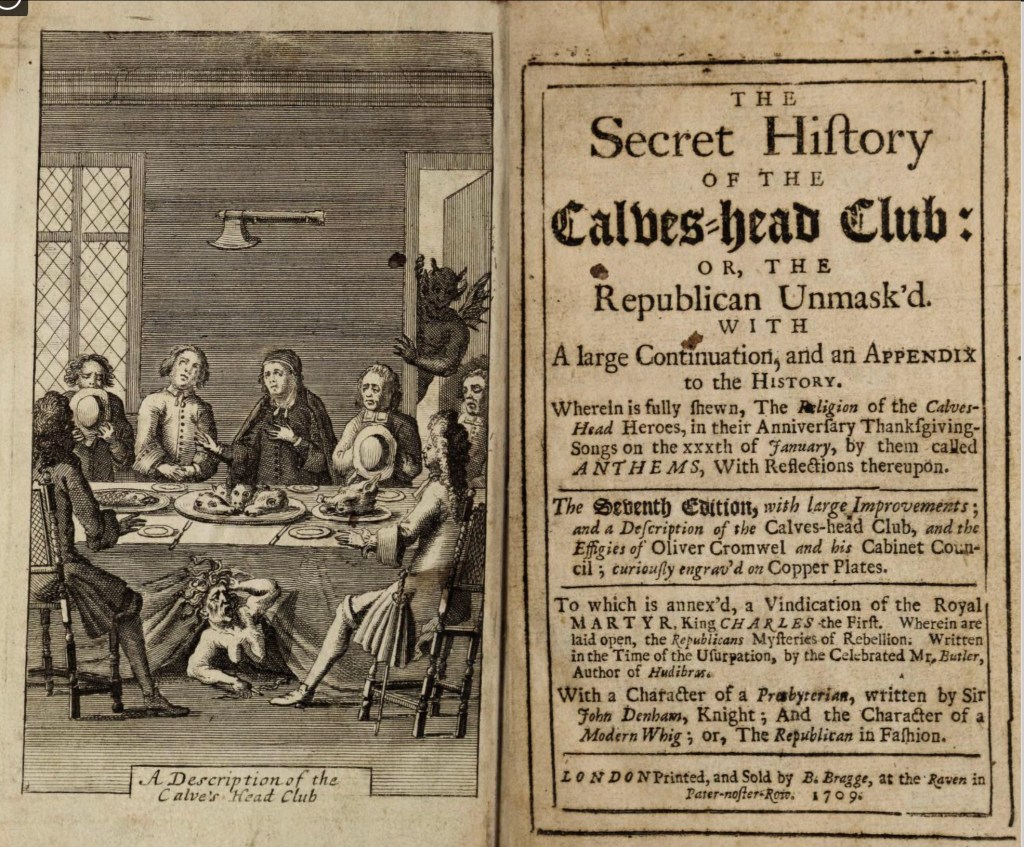
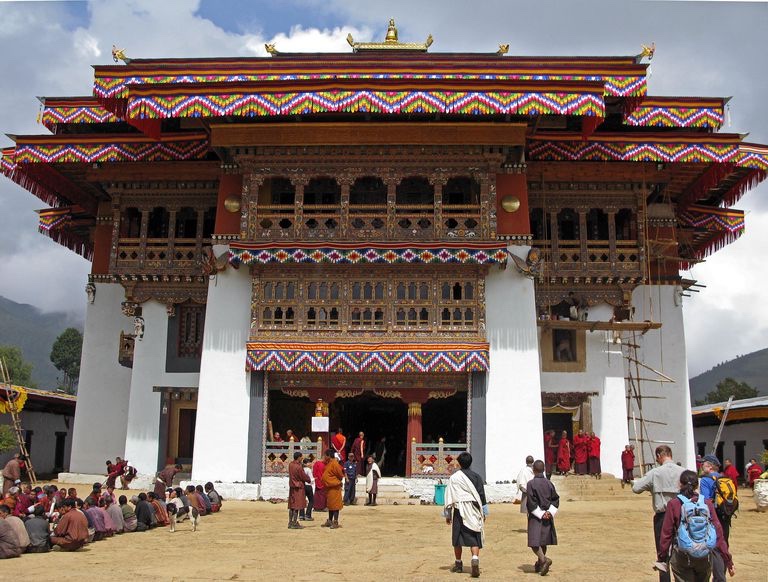
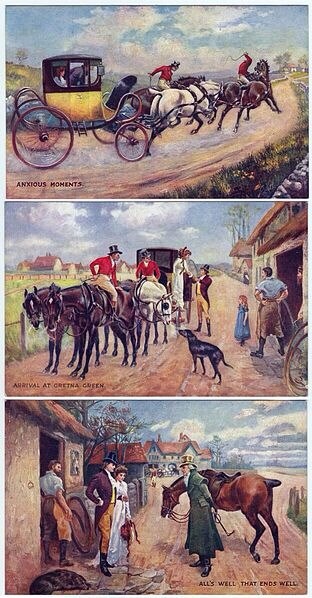
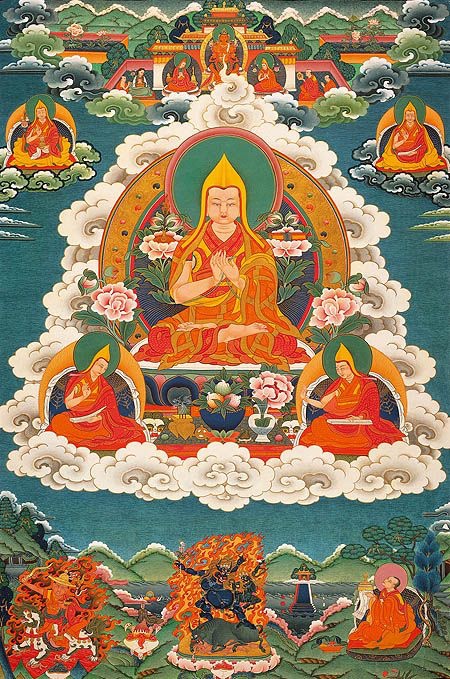
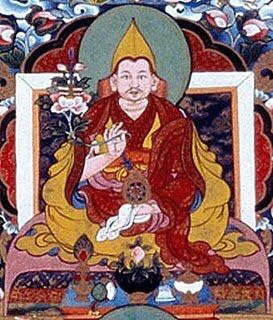

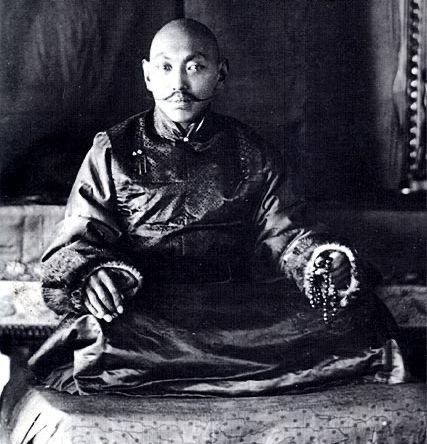
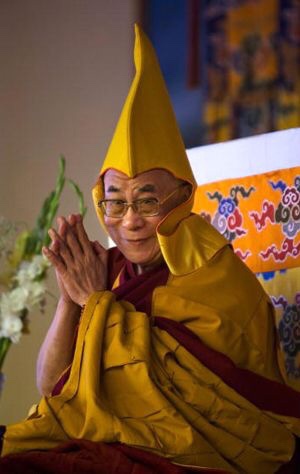
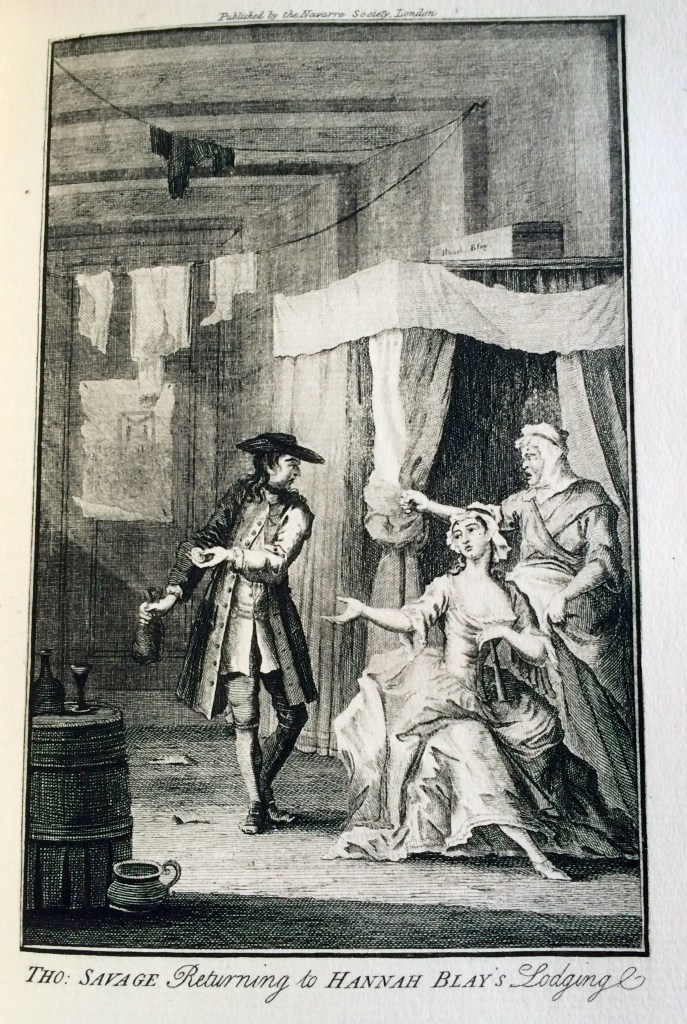
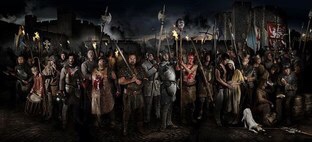
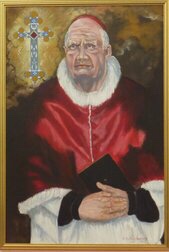


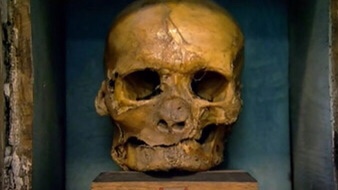
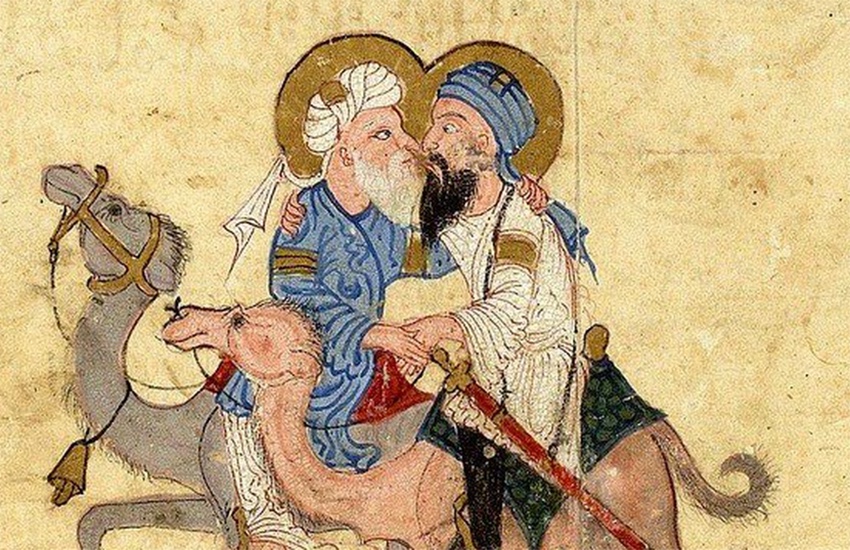


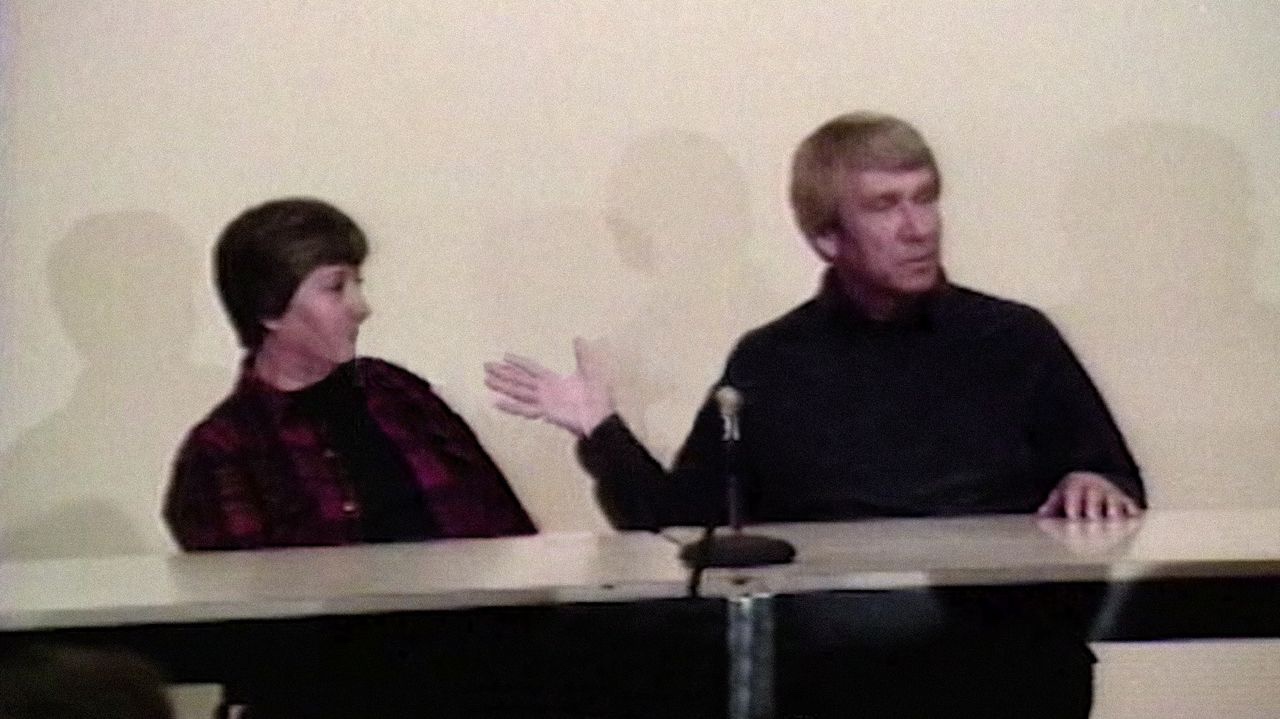
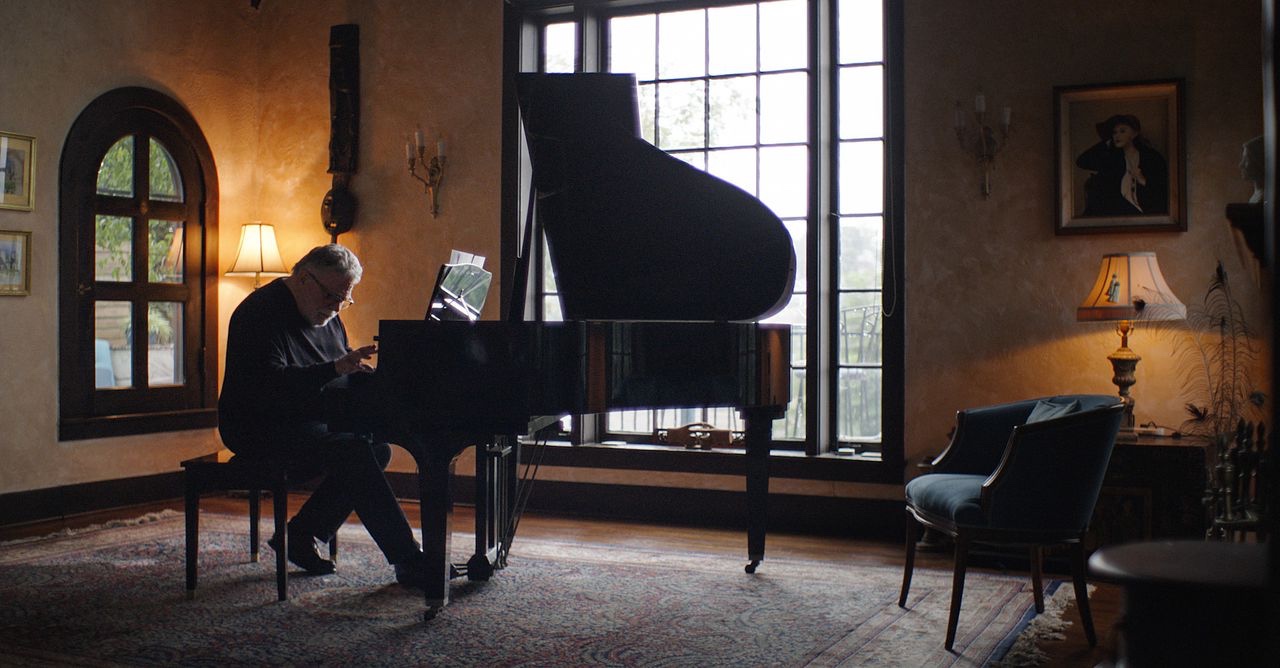

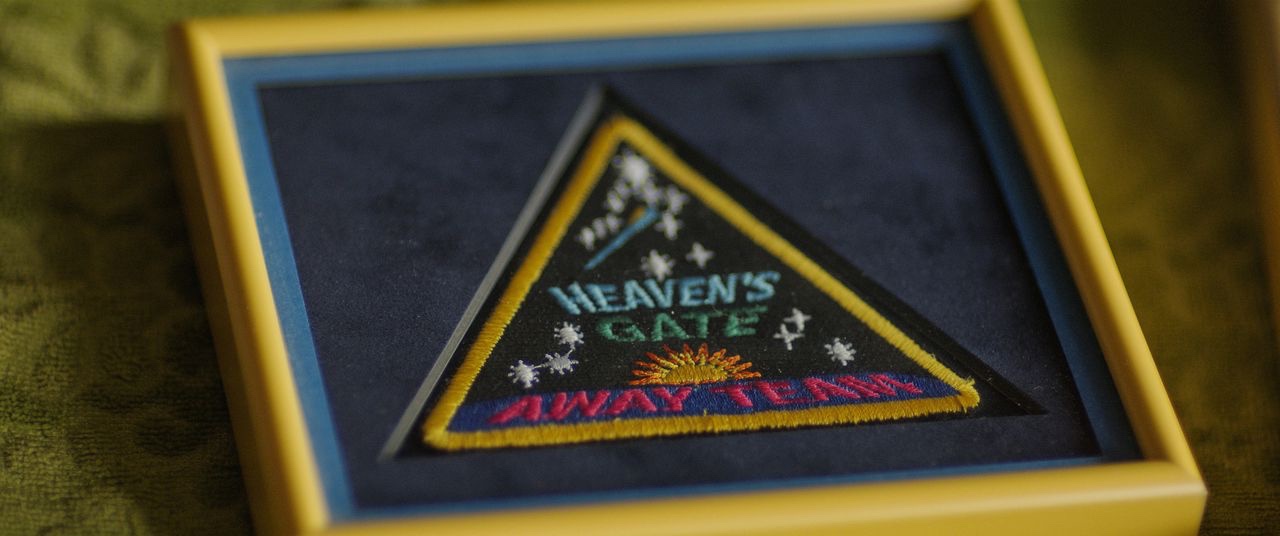

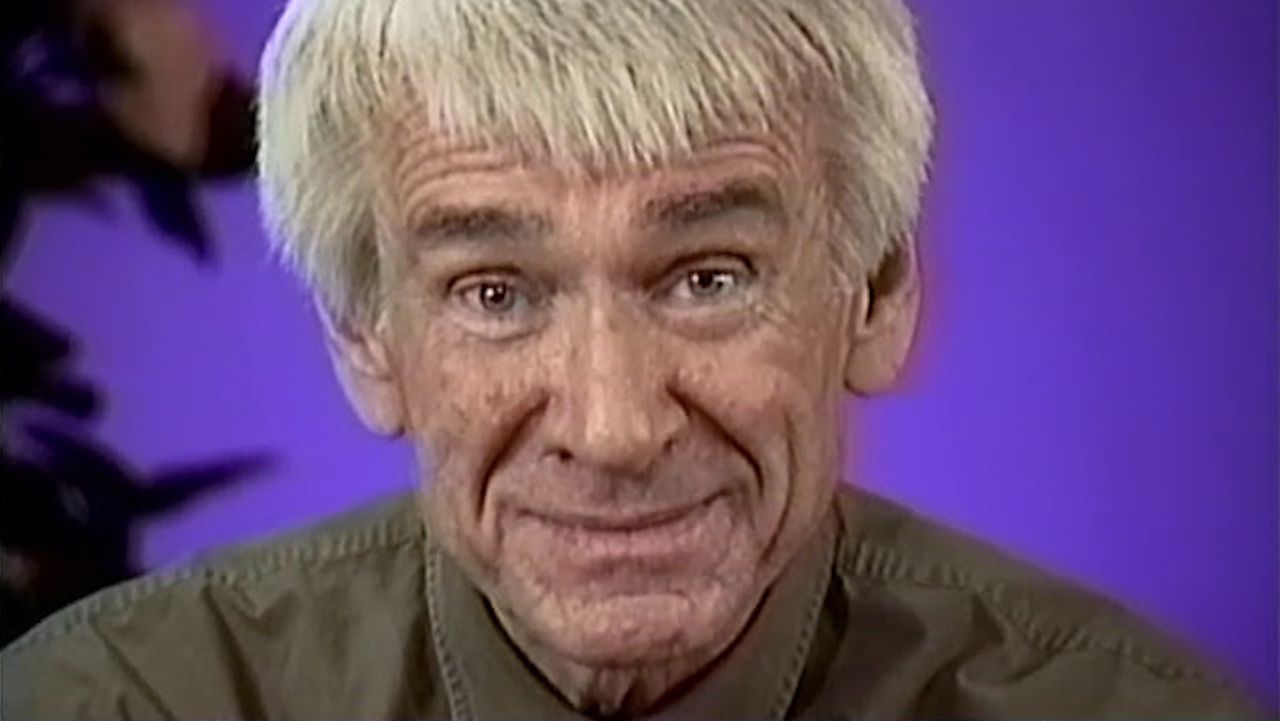

 timalderman
