Born in Shanghai just before the war, Judy the dog was adopted by British sailors and protected them across Indonesia — where she became the only animal imprisoned as a POW.
People’s Dispensary For Sick AnimalsJudy the dog survived three years as a prisoner of war.
From Greco-Roman war elephants and medieval horses to World War I carrier pigeons, animals have been used in military conflicts throughout human history. But perhaps one of the most inspiring stories of an animal in battle might be that of Judy the dog — the British Royal Navy canine who became a prisoner of war.
From surviving a crocodile attack to abandoning ship in the middle of the South China Sea, Judy navigated the perils of life at war like a fearless soldier.
Even after three years in an Indonesian POW camp, she never stopped wagging her tail — and saved countless men from despair.
Early Adventures In Asia For Judy The Dog
Judy was born in a Shanghai dog kennel in February 1936, when Adolf Hitler rejected the Versailles Treaty and placed his troops on the eastern border of France.
The white English Pointer found her way onto one of the British Royal Navy ships stationed in Shanghai that fall when she was purchased by Lieutenant Commander J. Waldergrave. Originally named Shudi, her name was anglicized to Judy, and The Royal Navy’s official paperwork crowned her “Judy of Sussex.”
It was a precarious time in China as Japan invaded the country the following year. As global war loomed on the horizon, Judy became a beloved crew member of the HMS Gnat. When she fell into the Yangtze River, the crew ordered a full stop to rescue her.
Fred Morley/Fox Photos/Hulton Archive/Getty ImagesJudy and Frank Williams, her lifelong caretaker who she met while a prisoner of war.
Judy also had an uncanny ability to sense danger. She could alert the crew to incoming enemy aircraft and once even notified her sleeping peers of pirates who tried boarding the ship. She survived being dognapped by the crew of an American gunboat, and in 1938, gave birth to 13 puppies.
And then in September 1939, Britain officially declared war on Nazi Germany. With Large British Royal Navy gunboats deployed to the Yangtze that summer, Judy and part of her crew were transferred to the HMS Grasshopper, a 585-ton gunboat headed for Singapore.
The ship remained stationed there in relative peace until Japan invaded in January 1942. The crew escaped with their lives and set sail for the Dutch East Indies but were bombed by Japanese aircraft in the South China Sea. Judy and some of the crew survived, marooned on an island.
While there, Judy saved the crew when she sniffed out a fresh-water spring. After days of starvation, the sailors discovered a Chinese sailboat that they commandeered upriver to Sumatra. They arrived, only for a 200-mile hike through the jungle to lead them into enemy hands.
Bringing Joy As A Prisoner Of War
Topical Press Agency/Hulton Archive/Getty ImagesJudy receiving the Dickin Medal from Major Roderick Mackenzie at London’s Returned British Prisoner of War Association on May 2, 1946.
The journey had taken five weeks, during which the sailors were stalked by a Sumatran tiger, and Judy was attacked by a crocodile. They had not only missed the final British evacuation boat by nine days but arrived in an Indonesian village that was occupied by Japanese troops.
The group was taken to the Gloegoer Camp in Medan, Indonesia. Aware that their captors would likely kill Judy, the sailors hid her under rice sacks.
While at that camp, Judy met Frank Williams, a leading aircraftman in the Royal Air Force. He won her over in February 1942 after letting her eat his entire bowl of rice, and in return, Judy snarled at the guards who beat him.
Williams knew Judy would be shot dead for her defensive behavior, so he wisely waited for a night when the camp’s commander was properly inebriated in order to convince them to garner her official POW 81A status, which protected her.
As the only animal to be registered as an official prisoner of war during the global conflict, Judy’s presence provided psychological relief for the inmates. Williams later said her loving look in the mornings gave him the will to survive for the years he spent as a prisoner.
Finally, in June 1944, the prisoners were transferred onto the Harukiki Maru, formerly the SS Van Warwyk. But the ship was torpedoed on June 26. Williams shoved Judy out of a porthole and navigated his own way off the ship.
While more than 500 men drowned, Judy paddled to debris and showed many the way to safety. The survivors were tragically reinterred at another camp, but Judy and Williams survived and were finally freed when the camp was liberated at the end of the war in 1945.
Her friendship with Williams continued for the rest of her life and she received the Dickin Medal of valor for her bravery in May 1946. Though Judy died of cancer at 13 in 1950, her legacy lives on as one who selflessly protected and gave joy to those without hope in a deadly conflict.
The death in custody of 31-year-old Stefano Cucchi has brought the abuse of police power under scrutiny in Italy. After losing her brother and enduring the subsequent trial, Ilaria Cucchi is now receiving harassment and online threats from police officers. Sociologists say Stefano’s case is not isolated and ask what the country will do to clean up its policing.
The Netflix film On My Skin (Sulla Mia Pelle), directed by Alessio Cremonini and starring Alessandro Borghi, premiered at the Venice Film Festival in August 2018.
At the end of the screening, Ilaria, a woman wearing a red dress, walked towards the film’s director, who was standing in the front row of the cinema receiving applause, and wrapped her arms around his neck.
The embrace momentarily hid their noticeably moved faces from the gaze of the surrounding crowd.
On My Skin (featured in our collection of human rights documentaries) tells the story of a man who was arrested by Carabinieri (Italy’s domestic police) officers in Rome and died in unclear circumstances after seven days of being in precautionary custody.
The man was Ilaria’s younger brother, Stefano Cucchi.
Since his death in 2009, Stefano, 31, has become an icon of the abuse of police power in Italy.
He was arrested on 15 October 2009, after being caught handing a dose of cannabis to his friend Emanuele Mancini.
He spent his first night in custody in a Carabinieri cell. The next day he was taken to a prison wing of the local general hospital with distinct marks and bruises on his eyes, back pain and injuries to his legs.
Seven days after his arrest, at 6.15am on 22 October, Stefano was found dead in his hospital bed.
This young amateur boxer was in good health before his arrest but his family obtained photographs from the morgue showing Stefano’s emaciated body covered in purple bruises. They rejected the assertion that Stefano had died of natural causes and began a campaign for justice.
A SISTER’S FIGHT FOR JUSTICE
Stefano’s story sparked a debate about the abuse of police power at a national level. The case polarised the Italian public, as the story was heavily politicised and peppered with accusations, slander, threats and cover-ups.
Stefano’s sister Ilaria received support from many, but she also received criticism and scorn from those who believed the Carabinieri officers’ integrity and innocence.
However, this year – seven years after the first trial – one of the Carabinieri officers involved in the trial added a new twist to the story.
On My Skin (Sulla Mia Pelle) film poster
On 11 October 2018, Francesco Tedesco, one of the three indicted officers, confessed that Stefano had been beaten, accusing his two colleagues, Alessio di Bernardo and Raffaele D’Alessandro. Tedesco claimed he was only a witness to the abuse and tried to stop the other two officers as they beat him for refusing to cooperate.
Furthermore, he accused his superiors of forcing him to stay silent about what happened that night.
He claimed to have written a report about the beating, but said it was suppressed by his managers.
Seven years after the first trial, following 45 hearings, dozens of reports, investigations and more than 100 testimonies collected from witnesses, the second trial is still not concluded. The confession of Francesco Tedesco, however, could add a new direction.
Stefano’s sister Ilaria Cucchi hasn’t been alone in her battle as she has significant public support in fighting for justice.
Nevertheless, since the release of On My Skin, Ilaria has been receiving death threats on Facebook from supporters of the Northern League (one of Italy’s two co-ruling political parties) and from accounts she believes belong to police officers.
On 20 October 2018, Ilaria posted one such comment on Facebook, saying she feels that she and her loved ones (as well as lawyer Fabio Anselmo, who followed Stefano’s case from the beginning) are in danger.
SHINING A LIGHT ON POLICE BRUTALITY IN ITALY
Anselmo’s law career spans some of the most renowed cases of abuse of power in Italy.
In 2005, he represented the family of 18-year-old Federico Aldrovandi, who was killed by four police officers when he was returning to his home in Ferrara. The trial ended in 2012 with the four officers sentenced to three years and six months each. This was later reduced by the Italian parliament to just six months each and the officers have now returned to work.
Lawyer Fabio Anselmo
Anselmo was also involved in the case of Giuseppe Uva, who died in unclear circumstances in 2008 while in police custody. The trial is ongoing.
These and other cases have brought to public opinion the concept of “morti di Stato” (deaths at the hands of the Italian State), a term which defines all those incidents of violent deaths in police custody and the corresponding abuse of power.
While the abuse of police power is not unusual in Italy, it’s not easy to obtain statistics or figures on the topic as the only available sources are the witnesses in the trials.
And while the stories of Stefano Cucchi, Federico Aldrovandi and Giuseppe Uva are the most well known among the Italian public, there are many more cases which have not yet had media coverage.
Federico Aldrovandi before his death
International organisations such as the UN and the EU have criticised Italian policing of certain events.
One of the most widely reported episodes in recent years of abuse of police power in Italy occurred in July 2001, during the 27th G8 summit hosted by Italy, in Genoa.
The two-day summit was attended by leaders of Canada, France, Germany, Italy, Japan, Russia, the UK and the US. The summit drew 200,000 protesters from all over the world for a mass demonstration.
Between July 19 and 22, hundreds of demonstrators were involved in clashes with Italian police officers. Many were injured and 23-year-old Carlo Giuliani, was shot dead by officer Mario Placanica as he and other protesters attacked the officer’s van.
On 21st July, the day after Giuliani’s death, 250 police officers raided the Armando Diaz school with additional support from Carabinieri officers, beat demonstrators who were spending the night there. Police authorities justified the assault claiming that they were looking for black-bloc members (hard left protesters who wear black and obscure their faces) who had devastated part of the city of Genoa during the previous days of the summit. They arrested 93 people, but only one belonged to the black-bloc group. Nevertheless, 61 of them were taken to hospital with injuries.
In the same night, the police brought some of the activists and demonstrators arrested in the school to holding cells in the barracks of Bolzaneto, a suburb of Genoa. There, some of the officers tortured several people, mentally and physically, using humiliation, threats and beatings. They even forced some to exalt Fascism.
In 2015, The European Court of Human Rights (ECHR) condemned Italy for the events, defining the violence committed by police officers as acts of torture. Later, Italy financially compensated 29 people who were beaten at Armando Diaz School and six who were tortured in the Bolzaneto barracks.
ITALIAN LAWS FAIL TO MEET INTERNATIONAL STANDARDS
At an international level, Italy ratified the United Nations Convention against Torture in 1989, but did not introduce the convention into its legal system. In 2016, Ilaria Cucchi launched a petition on Change.orgto introduce a law against torture. She gained more than 240,000 signatures. Eventually, Italy introduced the law in 2017, motivated by the verdicts of the ECHR
However, according to the UN, as well as some experts and international human rights associations, the new law doesn’t respect international standards. As Human Rights Watch highlighted in their report, “the text of the new law requires ‘multiple acts’ for torture to occur. The [UN] convention, reflecting the international law, affirms ‘any act’ might be torture if it meets the gravity standard. The new law also requires that psychological trauma be ‘verifiable’ to establish ‘psychological’ torture”.
In the same report, Human Rights Watch said the discrepancy between the definition of torture drafted in the UN convention and the new law adopted by Italy (article 613-bis of the Penal Code) implies that “the restrictive definition and short statute of limitations – in a country whose judiciary system is infamous for its lengthy trials – raises the risks that torture will go unpunished, as well as hinder the ability of victims to get redress. This means that Italy will continue to be in violation of its international obligations.”.
Criticism about the new law, but for opposite reasons, came from some Italian right-wing movements too. On 12th July 2018, Fratelli D’Italia (Brothers of Italy) leader Giorgia Meloni announced on Twitter two proposals to abolish the crime of torture in Italy, on the grounds that the law would hinder the police officers to work properly. Her tweet has been widely criticised.
Two years before the introduction of the law, the current Deputy Prime Minister of Italy and Minister of the Interior Matteo Salvini criticised the verdict of the ECHR concerning the G8 in 2001 and said that a law against torture is a nonsense law that would allow criminals to blackmail police officers.
COULD CUCCHI’S CASE LEAD TO IMPROVEMENTS IN POLICING?
Based at the University of Genoa, professor of sociology Salvatore Palidda is one of the few Italian researchers focusing on the relationship between police and civil society.
Stefano Cucchi before his death
According to Palidda, there are hundreds of cases like Cucchi’s, Aldrovandi’s and Uva’s that have not received media coverage, because they concern outcasts or immigrants without residency permits.
“The activity of police forces is always characterised by the coexistence of a peaceful management and a violent one. The discretion of power held by officers may turn into free will and lead to torture and murder”, Palidda said.
Key to understanding the violence perpetrated by some officers is their sense of impunity. “Some police managers tolerate and cover up illicit behaviours of officers in order to earn the respect of other subordinates and police trade unions,” Palidda explained.
Another factor that facilitates impunity is the reticence of police force members to report their colleagues. The stories of Aldrovandi, Cucchi and Uva, as well as the facts of the 2001 G8 in Genoa and many others are characterised by cover-ups and silence imposed by the officer’s superiors and colleagues. Indeed, the unexpected confession of the Carabinieri officer Francesco Tedesco regarding the death of Stefano Cucchi is a rare breach of this convention.
Palidda says one practical method of containing and controlling police brutality in Italy is to “establish an independent authority that would monitor and regulate the activities of police forces. This should bring impunity to an end and tribunals would investigate the alleged crimes without the support of police”.
However, he added, “these measures are possible only in a country where most of the population has an effective sense of democracy”.
The stone faces of Angkor Thom are known for their smiling serenity.Mike Harrington / Getty Images
Strictly speaking, this isn’t just one Buddha; it is 200 or so faces decorating the towers of the Bayon, a temple in Cambodia very near the famous Angkor Wat. The Bayon probably was constructed at the end of the 12th century.
Although the faces are often assumed to be of the Buddha, they may have been intended to represent Avalokiteshvara Bodhisattva. Scholars believe they were all made in the likeness of King Jayavarman VII (1181-1219), the Khmer monarch who built the Angkor Thom temple complex that contains the Bayon temple and the many faces.
2. The Standing Buddha of Gandhara
Standing Buddha of Gandhara, Tokyo National Museum. Public Domain, via Wikipedia Commons
This exquisite Buddha was found near modern-day Peshawar, Pakistan. In ancient times, much of what is now Afghanistan and Pakistan was a Buddhist kingdom called Gandhara. Gandhara is remembered today for its art, particularly while being ruled by the Kushan Dynasty, from the 1st century BCE to the 3rd century CE. The first depictions of the Buddha in human form were made by the artists of Kushan Gandhara.
This Buddha was sculpted in the 2nd or 3rd century CE and today is in the Tokyo National Museum. The style of the sculpture is sometimes described as Greek, but the Tokyo National Museum insists it is Roman.
3. A Head of Buddha from Afghanistan
Head of Buddha from Afghanistan, 300-400 CE.Michel Wal / Wikipedia / GNU Free Documentation License
This head, believed to represent Shakyamuni Buddha, was excavated from an archaeological site in Hadda, Afghanistan, which is ten kilometers south of present-day Jalalabad. It probably was made in the 4th or 5th century CE, although the style is similar to the Graeco-Roman art of earlier times.
The head now is in the Victoria and Albert Museum in London. Museum curators say the head is made of stucco and was once painted. It’s believed the original statue was attached to a wall and was part of a narrative panel.
4. The Fasting Buddha of Pakistan
The “Fasting Buddha,” a sculpture of ancient Gandhara, was found in Pakistan.Patrik Germann / Wikipedia Commons, Creative Commons License
The “Fasting Buddha” is another masterpiece from ancient Gandhara that was excavated in Sikri, Pakistan, in the 19th century. It probably dates to the 2nd century CE. The sculpture was donated to the Lahore Museum of Pakistan in 1894, where it is still displayed.
Strictly speaking, the statue should be called the “Fasting Bodhisattva” or the “Fasting Siddhartha,” since it portrays an event that took place before the Buddha’s enlightenment. On his spiritual quest, Siddhartha Gautama tried many aesthetic practices, including starving himself until he resembled a living skeleton. Eventually, he realized that mental cultivation and insight, not bodily deprivation, would lead to enlightenment.
This quirky Buddha appears to be growing from tree roots. This stone head is near a 14th-century temple called Wat Mahathat in Ayutthaya, which was once the capital of Siam, and is now in Thailand. In 1767 a Burmese army attacked Ayutthaya and reduced much of it to ruins, including the temple. Burmese soldier vandalized the temple by cutting off the heads of the Buddhas.
The temple was abandoned until the 1950s when the government of Thailandbegan to restore it. This head was discovered outside the temple grounds, tree roots growing around it.
The tree root Buddha sometimes called the Ayuthaya Buddha, is a popular subject of Thai postcards and travel guidebooks. It is such a popular tourist attraction it must be watched by a guard, to prevent visitors from touching it.
The Longmen Grottoes of Henan Province, China, are a formation of limestone rock carved into tens of thousands of statues over a period of many centuries, beginning about 493 CE. The large (17.14 meters) Vairocana Buddha that dominates the Fengxian Cave was carved in the 7th century. It is regarded to this day as one of the most beautiful representations of Chinese Buddhist art. To get an idea of the size of the figures, find the man in the blue jacket beneath them.
Here is a closer look at the face of the Longmen Grottoes Vairocana Buddha. This section of the grottoes was carved during the life of the Empress Wu Zetian (625-705 CE). An inscription at the base of the Vairocana honors the Empress, and it is said that the face of the Empress served as the model for the face of Vairocana.
He’s not the most beautiful Buddha, but the giant Maitreya Buddha of Leshan, China, does make an impression. He’s held the record for world’s largest seated stone Buddha for more than 13 centuries. He is 233 feet (about 71 meters) tall. His shoulders are about 92 feet (28 meters) wide. His fingers are 11 feet (3 meters) long.
The giant Buddha sits at the confluence of three rivers — the Dadu, Qingyi, and Minjiang. According to legend, a monk named Hai Tong decided to erect a Buddha to placate water spirits that were causing boat accidents. Hai Tong begged for 20 years to raise the money to carve the Buddha. Work began in 713 CE and was completed in 803 CE.
Gal Vihara is a rock temple in north-central Sri Lanka that was built in the 12th century. Although it has fallen into ruin, Gal Vihara today is a popular destination for tourists and pilgrims. The dominant feature is a giant granite block, from which four images of the Buddha were carved. Archaeologists say the four figures were originally covered in gold. The seated Buddha in the photograph is over 15 feet tall.
9. The Kamakura Daibutsu, or Great Buddha of Kamakura
He isn’t the biggest Buddha in Japan or the oldest, but the Daibutsu — Great Buddha — of Kamakura has long been the most iconic Buddha in Japan. Japanese artists and poets have celebrated this Buddha for centuries; Rudyard Kipling also made the Kamakura Daibutsu the subject of a poem, and the American artist John La Farge painted a popular watercolor of the Daibutsu in 1887 that introduced him to the West.
The bronze statue, believed to have been made in 1252, depicts Amitabha Buddha, called Amida Butsu in Japan.
The tenth Buddha in our list is the only modern one. The Tian Tan Buddha of Hong Kong was completed in 1993. But he’s quickly turning into one of the most photographed Buddhas in the world. The Tian Tan Buddha is 110 feet (34 meters) tall and weighs 250 metric tons (280 short tons). It is located at Ngong Ping, Lantau Island, in Hong Kong. The statue is called the “Tian Tan” because its base is a replica of Tian Tan, the Temple of Heaven in Beijing.
The Tian Tan Buddha’s right hand is raised to remove affliction. His left hand rests on his knee, representing happiness. It is said that on a clear day the Tian Tan Buddha can be seen as far away as Macau, which is 40 miles west of Hong Kong.
He’s no rival in size to the stone Leshan Buddha, but the Tian Tan Buddha is the largest outdoor seated bronze Buddha in the world. The massive statue took ten years to cast.
Reference
O’Brien, Barbara. “Ten Famous Buddhas: Where They Came From; What They Represent.” Learn Religions, Aug. 25, 2020, learnreligions.com/famous-buddhas-where-they-came-from-what-they-represent-449986.
The Green Park Hotel, Darlinghurst, 2017. Picture: Mick Roberts Collection
Gus Wangenheim, a man about town
JUST around the corner from Maccabean Hall, built in 1923 to commemorate Jewish men and women who served in the Great War, and where the Sydney Jewish Museum is housed at Darlinghurst, trades the Green Park Hotel.
Like Maccabean Hall, the Green Park Hotel has a link to Sydney’s Jewish history, along with the harbour city’s early bohemian community.
The Green Park Hotel, established in 1879, was bought by one of Sydney’s wealthiest Jewish families, Gus and Betsey Wangenheim in 1881.
The Wangenheim family would later replace the two story brick pub with the magnificent, heritage listed hotel, with its splendid long bar, currently sitting at the corner of Liverpool and Victoria Streets in Darlinghurst in 1893.
The history of the Green Park Hotel begins in the early days of white settlement, when a 28-year-old Gustave Wangenheim arrived in Sydney Town, from Germany, in 1853.
Gus, as he was known, was one of Sydney’s most colourful characters, a cartoonist, painter, comedian and publican. He opened his first pub, the Post Office Hotel in York Street, Sydney in 1854.
In 1855 he married a fellow Jew, 21-year-old Elizabeth Simmons, daughter of James Simmons, a successful trader and brother of the proprietor of the Jerusalem Warehouse, now the site of David Jones department store.
Gus was also the foundation president of the NSW German Club, established in 1858, which hosted monthly balls at their premises in Pitt Street, Sydney. The Club was described by the Sydney Morning Herald as combining the social with the intellectual, and supplied “convivial pleasures and rational edification in a wholesome promiscuous form”.
A much-loved bohemian, who’s “humour was irresistible”, Gus could “reproduce characteristics with a happy exaggeration that few other artists could effect”. His artworks were a feature of his pubs, often drawn directly onto the walls. Besides an artist and comedian, he was also a splendid fencer and boxer, and spoke fluently several languages.
Gus Wangenheim’s first pub, the Post Office Hotel, York Street Sydney. Picture: Supplied
Just five years into his hospitality business, the Jewish publican suffered a major set-back after he was declared insolvent. He disappeared from Sydney social life in 1858, taking his wife Elizabeth and newly born child north to a Port Curtis, near today’s Gladstone in Queensland. Gus’s inability to maintain a healthy cash flow in business was a constant battle throughout his life, and he was declared insolvent at least four or five times.
After his departure from Sydney, another Jewish businessman, Saul Lyons offered a reward to “anyone who will prosecute to conviction” Gus “or the party or parties who took the passage for him, and assisted in his escape”.
The advertisement stated that he had “absconded from his creditors… in assumed name, with his wife and child, in the Maid of Judah”. Gus eventually made good his creditors, and returned to Sydney during the 1860s, where he took the reins of the Café de Paris, in King Street, and continued his “amusing repertoire of musical comicalities” at the Prince of Wales Opera House.
Elizabeth Wangenheim. Picture: Supplied
While the Wangenheims ran the Café de Paris, it was said to be “a picturesque resort of Bohemians, where the Duke of Edinburgh dined more than once while in Sydney”.
Gus and Betsey entered a new business venture in the 1870s, when they built Wangenheim’s Hotel, near the junction of Castlereagh-street with King-street. The hotel became an artistic landmark, with Wangenheims’ customers – the “bohemians and prominent members of all the artistic professions” – following their charismatic publican to his new business venture.
In a series of history articles published in the Truth during 1912, the author, “Old Chum”, revealed it was Betsey who was the brains behind the business of the Wangenheims’ business success.
The remaining interesting item in Castlereagh-street, north of King-street, was a public house, opened in 1875 by Gus Wangenheim, who had previously kept a hotel in King-street. In the Castlereagh-street house, the walls and tables in the bar, every available inch, were decored with character sketches by Gus, who was not half a bad artist. About the year 1881 the house passed to Richmond Thatcher, a clever Bohemian of much literary talent, but neither Dick Thatcher nor Gus Wangenheim was made of the stuff that successful publicans are composed of. The Bohemian strain in the character of each, good fellows though they were, was against the accumulation of large bank balances. Mr Wangenheim, however, was not entirely dependent on his exertions as a hotel-keeper; his wife – who, I believe, is still living – being the daughter of a very wealthy citizeness. Richmond Thatcher could do much better with his pen than with a beer engine.
Wangenheim’s Hotel later became known as the Bulletin Hotel and in 1885 the Burlington. It was demolished sometime before 1905.
A year before Gus’ death, the Wangenheims invested in a brick corner pub with a 90 feet frontage to Liverpool Street and 30 feet facing Victoria Streets, in Darlinghurst. Established in 1879, the slate roofed Green Park Hotel, with bar, cellar, two parlours, hall, five bedrooms and kitchen, had been trading for less than three years, when the Wangenheims added to their growing property portfolio in March 1881. The Green Park Hotel provided £3 14s a week in rent for the Wangenheims.
A caricature of Gus Wangenheim by Sydney Morning Herald cartoonist and reporter, Percy Tanner, C1870. Picture: State Library of NSW.
The death of the flamboyant publican at the age of 57 in 1882 came on the heels of the demise of another of Sydney’s bohemian identities, the well-known poet, Henry Kendall. Gus’ death reportedly left a void in the social life of Sydney that “can never be filled up”. The Queenslander reported on Saturday August 12 1882:
Following close upon the demise of Kendall was the sudden taking off of poor Gus Wangenheim. Gus was one of the identities of Sydney life. Not to have known this genial German was to argue yourself unknown. He was a genuine artist, though his range of accomplishments was not by any means restricted to the pencil. Art, however, was his forte. As his thoroughly genial and withal kindly disposition invariably led him to look upon the humorous side of everything, his genius naturally affected caricature, and as a caricaturist Wangenheim can scarcely be said to have had a superior… When he was hotel-keeping the walls of his hostelry were literally covered with caricatures of politicians, actors, and other celebrities, and these curious sketches were the admiration and the delight of the host of frequenters of his popular “pub” in Castlereagh-Street; but the vandals who succeeded Gus knew not their worth, and remorselessly rubbed them out – only awakening to a sense of their value when the gifted caricaturist himself was rubbed out. Gus was a competent musical and dramatic critic in addition to his qualities as an artist. Miss Emma Wangenheim, who is, I believe, pretty well known in Queensland, was his daughter, and doubtless inherited such lyrical gifts as nature may have endowed her with from her paternal relative. Perhaps, though, after all, Gus Wangenheim will be longest remembered for his social qualities – his homely, easy, unaffected conversational powers being the delight of all his companions. There was just the faintest approach to egotism in Gus Wangenheim. Egotism, perhaps, is too offensive a word to use. Gus’ self-appreciation, as it may be more fitly termed, may be said to have resembled the quality of egotism much in the same way as the mist resembles the rain.” So far from its being objectionable it really constituted one of the charms of his conversation, and was thus, in its way, as pardonable and as tolerable as was the egotism of Bousseau. Now that he is gone, all who knew him feel that a void has been created in the social life of Sydney, which at any rate, as far as the present generation is concerned, can never be filled up.
The Sydney Evening News reported the artistic publican’s death on August 4 1882:
Death of Mr. Gus Wangenheim.
People who frequent the town at night were yesterday startled by a report that Mr. Wangenheim, popularly called Gus Wangenheim, the well-known caricaturist, had “dropped down dead.” The rumour was not credited at first, as one of a similar character, that turned out to, be a canard, had been circulated before. Unfortunately, however, it is only too true; for the clever, genial, loveable, “man about town,” died suddenly at his residence, Pendennis, Lower William-street, Woolloomooloo, last evening, shortly after 5. Gas, may be said to have “passed away” rather than died. He was out at Waverley with his wife in the afternoon, and on their return, had a cup of cocoa, after which he went on the balcony, where he sat down and smoked a cigar. That finished, he took a book and commenced to read. Mrs. Wangenheim noticed that he put it down shortly afterwards, and thinking he slept told one of the children not to make a noise and ‘wake pa’. A few moments afterwards noticing that his head was very much to one side she looked closely at him, and to her horror found that he was dead. His head then was cold, the eyes were glassy and he must have died almost instantaneously. His hands were folded, and there was not the slightest trace of suffering on the face. The deceased man had been before the public for some years as a hotel-keeper and a sketcher and caricaturist of considerable power and facility. Though not so good at likenesses as Lascelles or Clint, Gus’ humour was irresistible, and he could reproduce characteristics with a happy exaggeration that few other artists could effect. The best collections of his drawings are on the walls of the Bulletin Hotel, which he kept for several years. Unfortunately the vandal landlord in possession at present papered over a whole room full. Besides being an artist, Wangenheim possessed a marked ability in other ways. He was a splendid fencer and boxer, and spoke several languages with fluency but he will, doubtless, be longest remembered for his genial ways and loveable nature and disuation. Of late he gave up all other business to look after the princely estate – chiefly town property— of his mother-in-law, Mrs. Simmons. Though forced at times to assert the rights of landlady against tenants, he never made an enemy; and it is said that on the few occasions when he was “in possession,” the folks levied on never had such a time of it in their lives. As a raconteur, who could illustrate his stories with lightning like rapidity, Gus had no superior and few equals. Mr. Wangenheim was a native of Germany, and about 50 years of age.
The Green Park Hotel, Darlinghurst 1930. Picture: Australian National University, Noel Butlin Archives.
After Elizabeth’s wealthy mother died at the age of 98 in 1891, she decided to redevelop the Darlinghurst property.
The police had objected to the renewal of the license of the Green Park Hotel in July 1891. The pub was repeatedly falling foul of the law for Sunday trading, and allowing gambling on the premises. The pub was dilapidated and the court ruled it was unsuitable to trade as a pub.
Elizabeth, who was now aged 58, applied for a conditional publican’s license for a new pub for the site in October 1891.
The police opposed the application on the ground that there were at present more than sufficient pubs in the neighbourhood, there being four hotels within 250 yards of the proposed site.
The police argued that owing the number of hotels, in order to make a living publicans were resorting to Sunday trading and selling liquor at prohibited hours. Inspector Bremner said that since the Green Park Hotel had closed in June 1891, there had been a marked improvement in the neighbourhood. Interestingly the United Licensed Victuallers’ Association also opposed the application.
In support of the application, the court heard that the existing pubs in the area were of an inferior character, and that a first class hotel, such as Elizabeth’s was urgently. The existing hotels were merely drinking shops, Elizabeth’s lawyers argued.
The wealthy widow was granted a condition license for her proposed £2000 hotel after her legal team explained how it would bring a superior quality business to Darlinghurst. Elizabeth was granted confirmation of the conditional license after the completion of the hotel on June 29 1893. She remained as licensee for a year, before handing the reins over to Fred Moorehouse in 1893.
Several licensees were at the helm of the Green Park Hotel over the next 32 years during Elizabeth Wangenheim’s ownership. In 1921 professional boxer, Sid Godfrey became host of the Green Park Hotel. He won the Australian featherweight title fight in 1917, and earned £20,000 prize money during his boxing career. Out of 109 professional fights he won 79 (41 by knockout) and drew 12.
Godfrey had a short stay at the Green Park Hotel, and went on to host the Bald Faced Stag, Leichhardt, the Carrington at Petersham, and the Horse and Jockey at Homebush. He retired from business in 1957 and lived at Bronte. He died in 1965.
Betsey or Elizabeth Wangenheim died on August 8 1925, at the age of 91 and was buried in the Jewish section of Rookwood Cemetery. The Blue Mountain Echo reported on Friday August 14 1925:
OBITUARY
MRS. ELIZABETH WANGENHEIM.
On Saturday last there passed away an old and respected resident of Katoomba in the person of Mrs Elizabeth Wangenheim, of ‘Thorley,’ Lurline Street, at the ripe age of 90. The late Mrs. Wangenheim was a daughter of the late Mr. James Simmons, who was the first importer of general goods to Australia. He chartered a special fleet of ships for this purpose, and his enterprise was rewarded handsomely. Later Mr. Simmons went into the hotel business, and also dabbled greatly in land speculation. The present site of David Jones’ huge emporium at one time was occupied by the famous ‘Jerusalem Store’ of Mr. Simmons. In 1855 the late Mrs. Wangenheim married Mr. Gustavus Wangenhiem, who also was an hotel licensee. Subsequent, to his death, she continued in the hotel business, and displayed great business acumen. She retired from active business nearly half a century ago, and during the latter days of her life resided in her palatial home at Katoomba. The deceased lady left one son (Mr. Joseph Wangenheim), and three daughters, (Mrs. J. F. Gavin, now in America; Mrs. Fred Morris, Elizabeth Bay; and Mrs. J. R. Stewart, Tahmoor, near Picton). She also was the mother of the late Emma Wangenheim (Mrs. J. A. Carroll) well known in operatic circles, and the grandmother of Mrs. Cliff Hardaker. She was interred in the Jewish section of Rookwood Cemetery on Sunday last, the last rites being performed by Rev. M. Einfield.
At her death Elizabeth was considered to be the wealthiest woman in Sydney, with a probate of £164,376. Her son Joseph Moritz Wangenheim inherited the Green Park Hotel, which was to be held in trust after his death for the benefit of his children. However, it seems Joseph followed in his father’s foot steps, and not his mothers. The hotel was mortgaged to Tooth and Company during the late 1920s, and by 1930 the family had lost the freehold of the Green Park Hotel to the brewery giant.
Green Park Hotel, Darlinghurst 1949. Photo: ANU, Noel Butlin Archives.
Green Park Hotel 1939. Photo: ANU, Noel Butlin Archives.
Footnote
The Sydney Morning Herald reports that the Green Park Hotel is to close for business in December 2020. The newspaper reported on November 24 2020:
“One of Sydney’s most historic inner city pubs will call last drinks this Christmas, before becoming a mental health clinic next year. The Green Park Hotel on Victoria Rd, Darlinghurst has been purchased by St Vincent’s Hospital as part of a planned expansion of its mental health and community outreach services. Affectionately known by locals as the ‘Greeny’, the hotel has been pulling beers for the past 127 years and has long been beloved by the LGBTQI community and a landmark venue for Mardi Gras celebrations. Hospitality group Solotel, which has owned the pub for more than 30 years, finalised the sale at between $5 to $10 million to the trustees of St Vincent’s Hospital on Monday, before staff were told on Tuesday morning.”
In the 56 years since Deirdre Cusack called the Green Park Hotel home, she has never forgotten the brown paper that covered the cellar windows.
It had been there ever since the Japanese tried to invade Sydney Harbour in 1942, carefully placed to block out lights across a city fearing submarine attack.
The Green Park hotel in 1954.
The image feels a world away from the vibrant inner city watering hole the “Greenie” has become in 2020. Today it is both a haven and a refuge for Sydney’s LGBTQI community – “more than just a bar,” as one columnist said.
On Sunday night the 127-year-old hotel will call last drinks, after it was sold to the surrounding St Vincent’s Hospital to become a mental health clinic.
It caught the eye of Mrs Cusack, who was just one year old when her parents Sam and Fay McIntyre leased the Darlinghurst pub from Tooth’s Brewery in 1941. She would live above the corner pub –through a side door, past the ladies’ parlour and up the stairs – for 23 years until she married in 1964.
Deirdre Cusack at her home in Ormoston, Queensland.CREDIT:PAUL HARRIS
Sydney felt different then. By law, publicans were not allowed to live off premises and the beer came in wooden barrels (the rum, too).
The pub closed at 6pm and never opened on Sundays. Across the road from the Green Park was a paper shop, a flower shop and a butcher with sawdust on the floor.
Darlinghurst was a place where everyone knew everyone,” Mrs Cusack said. “I can still remember the SP bookies. They had a place down in one of the terrace houses and you’d see this trail of men going to down to put a bet on the horses and coming back to the pub to have a beer.”
Until 1931 Australians were only allowed to bet on horse races with an on-course bookmaker, before radio and television gave rise to “starting price bookies”, who hung around the city’s pubs and clubs.
“I didn’t have any outside playing space, so I used to play out in the lane behind the pub and hit a tennis ball up against a brick wall with my friends,” Mrs Cusack said.
“Kings Cross then was not as bad as it became. My mother had no problem letting me and a girlfriend walk up to the Cross on Saturday night, when the [first-edition] papers would come out for Sunday.”
She still recalls the mouthwatering burgers she used to eye off at the Hasty Tasty diner under the Coca-Cola sign. “God, they looked delicious.”
When her father Sam died in 1952, Mrs Cusack said there was never any question that her mother would carry on managing the “drinking pub”.
“It didn’t have meals or anything like that. And the main bar was for men only, mainly doctors from the hospital.”
The ladies sat in the parlour. It was their meeting place, like going out for coffee, Mrs Cusack said. “One lady used to always wear a hat with a short veil over her face as she sipped her sherry. Another shelled her peas before going home to prepare dinner.”
And then there were the steel troughs under the beer taps, filled with gentian violet (a purple dye), “so when the beer overflowed, you couldn’t reuse it.”
When the Queen came to town: The royal tour drives past the Green Park hotel in 1954.
Nothing stands out in Mrs Cusack’s memory quite as much as a 27-year-old Queen Elizabeth II arriving in Sydney on the Royal tour of 1954; a trip five years in the planning and the first televised event in Australian history.
But never mind the telly. “Queen Elizabeth and Prince Philip drove right past the hotel, decorated with all the flags. Every time there was a Royal visit everyone came out. To think they went past our place, it was very exciting.”
Less exciting were the years after Mrs Cusack returned from living in the UK, aged 20, and her mother put her to work in the pub, “a gruelling job”.
“I remember, she said to me one day, ‘for goodness sake. Go and get a job – the look on your face would turn the beer sour.'”
She didn’t wait a second, running out to grab the paper before finding a job in the office at Qantas.
Hotel licence plates of Mrs Cusack’s father, Sam McIntyre.
From her home in Queensland, Mrs Cusack said it was sad to see the Green Park serve its final drinks, although she was glad the facade and features will be protected under heritage laws.
“In Australia they knock down too many buildings,” she said. “We go to Europe and we admire all the old buildings. In Australia, often all you’ve got is concrete and glass.
After 55 years, Manly Sea Life Sanctuary closed its doors for the final time over the weekend, with hundreds turning out to bid farewell to a chunk of Sydney history.
But it’s not the only piece of our childhoods that’s shut down in recent years; from Wonderland Sydney to Mt Druitt Waterworks, we had plenty of amusement parks to pick from in the ’80s.
Old Sydney Town
Image via Old Sydney Town Facebook
Did you even go to school if you didn’t have at least one excursion to Old Sydney Town? Based on a map from the 1800s, the recreation of colonial Sydney opened in 1975 and saw actors taking on the roles of convicts and redcoats for re-enactments. Those bloody public floggings are still burned into our brains. Old Sydney Town eventually closed down in 2003.
Sega World
Image via Creative Commons
Sega World lived for just three short years, gracing us with the Ghost Hunter train, the Rail Chase indoor roller coaster and Aqua Nova, a 3D motion simulator back in 1997. But it was a victim of its own success; as technology improved, we left our Sega Mega Drives – and Sega World – behind.
African Lion Safari
Image via YouTube
How our parents ever thought that it was a good idea to take us to a theme park with the tagline “It’s scary, but nobody cares!” is beyond us. Vistors regularly had lions and tigers paw at, climb on and try to take a bite out of their cars and the park was eventually shut down in 1991. The animals, for a time, stayed behind but after a series of breakouts by resident lionesses, a bear and a number of water buffaloes, they were eventually relocated.
Australia’s Wonderland
Image via Creative Commons
How lucky were we to have Australia’s Wonderland right on our doorstep? Opening in 1985, the amusement park boasted rides like the Bush Beast, Space Probe and Bounty’s Revenge, with Hannah Barbera Land holding a special place in Sydneysiders hearts. Unfortunately, massive profits losses led to the closure of Wonderland in 2004, with the site demolished the following year.
Magic Kingdom Amusement Park
Image via YouTube
Australia’s Wonderland’s predecessor, Magic Kingdom Amusement Park opened in the 1970s and promised a massive day out for just $6. Waterslides, astro spin, dry slides, trampolines, stage shows, mini golf and magic… the 27-acre park, between Bankstown and Liverpool, was a huge draw for western Sydney families. When it came to the battle of the theme parks, though, Magic Kingdom lost out to Wonderland’s thrilling roller coaster rides and shut towards the end of the 1990s.
El Caballo Blanco
Image via YouTube
The Spanish-inspired amusement park, which opened in 1972, was as famous for its dancing Andalusian horses as it was for its waterslides, train rides and mini zoo. Owner Ray Williams’ beautiful performing stallions were such an attraction, he went on to establish a sister park at Disneyland in the US. The Sydney site eventually closed in 2003 after Williams’ death.
Mt Druitt Waterworks
Mt Druitt Waterworks had everything a theme park in the 1980s should have: waterslides, a beach pool and an urban myth about razor blades on the slippery dips. It was rumoured that the razors were what closed the park but the gossip was unfounded; Mt Druitt Waterworks, like pretty much every other Sydney amusement park, was simply losing money hand-over-fist. We’ll always have those ’80s summers, though.
The Forgotten Sydney of AC/DC is a must watch mini documentary by the Sydney Morning Herald’s Tom Compagnoni, featuring the combined recollections of Mark Evans (Bass), Dave Evans (Vocals), Noel Taylor (drums) and Rob Bailey.
One of the most interesting revelations is that of session drummer Tony Currenti, owner of Tonino’s Penshurst Pizzeria, who played on High Voltage but had to turn the gig down due to passport issues.
Mark Evans also relates his views on the current Sydney scene, or lack of. Lets hope that it serves as a warning and that we fight to keep our local Perth music scene alive and kicking.
The view north-west from the State Office Block construction site in about 1964. Photograph: City of Sydney Archives
Over the past two centuries Sydney’s architectural landscape has been continually transformed and many buildings have been consigned to dust. A new exhibition at the Museum of Sydney, Demolished Sydney, which opens on 19 November, remembers the city’s lost buildings from the Garden Palace to the ‘Black Stump’
RURAL BANK OF NEW SOUTH WALES, 1936-82
The bank, pictured here in the 1950s, was torn down and replaced by the Colonial Centre in 1985, despite vehement opposition from 7,000 Sydneysiders. The building was an important element in the harmonious art deco streetscape of Martin Place, where a number of commercial buildings complemented one another in style and size. The campaign to save the Rural Bank galvanised a new appreciation of the city’s art deco architecture and saved many buildings in the central business district.
Photograph: Commonwealth Bank Archives
PYRMONT INCINERATOR, 1937-92
The incinerator stood on a high sandstone promontory overlooking the Blackwattle Bay, now occupied by a Meriton apartment block. Designed by the architects Walter Burley Griffin and Eric Nicholls, it was a remarkable building, as stylish as it was functional. It was decommissioned in 1971 and deteriorated until the late 80s, when the site was sold. Despite protests the incinerator was demolished in 1992 – one of many local landmarks swept away by urban consolidation.
Photograph: City of Sydney Archives
HOTEL AUSTRALIA, 1891-1971
The hotel – once the city’s grandest – was a landmark for 80 years. When it opened in 1891 its belle époque opulence ranked it with the best hotels in Europe and the US. But, as new city hotels were constructed in the 60s, the Hotel Australia went into decline, unable to compete with international ‘jet set’ standards. The last guests checked out in June 1971. Most of the buildings on the block were demolished for Harry Seidler’s award-winning MLC Centre.
Photograph: Hall & Co/State Library of NSW
REGENT THEATRE, 1928-89
The Regent Place arcade and apartment tower stand where the Regent Theatre once screened Hollywood’s finest films. This part of George Street was an amusement mecca in the 30s and 40s, with the Trocadero Palais de Dance next door, the Century and the Plaza theatres across the road and the Victory Theatre three doors down. Cinemas struggled after the arrival of television in 1956. The construction of the first Hoyts multiplex in 1976 marked the end for single-screen theatres. The Regent, the grandest of them all, couldn’t last.
Photograph: Sam Hood/State Library of NSW
GARDEN PALACE, 1879-82
The Garden Palace was built for the 1879 Sydney International Exhibition and was one of the city’s most significant buildings until it turned to ash in a spectacular fire. A southern rival to London’s Crystal Palace (built for the Great Exhibition of 1851) and a testament to the industry and resources of the colony, it was framed in timber and clad in bricks and glass. A memorial gate now stands in the Royal Botanic Gardens in Macquarie Street.
Photograph: Richards & Co/National Library of Australia
COMMISSARIAT BUILDINGS, 1809-1939
The Museum of Contemporary Art today occupies the site where once stood the two oldest government buildings in the state – the convict-hewn Commissariat buildings, built in 1809 and 1812. In 1938 The Royal Australian Historical Society urged that these heritage buildings be retained as a museum of Australian history. But they were demolished in 1939 as part of a plan to build an overhead railway and expressway at Circular Quay, along with a Maritime Services Board building.
Photograph: Eleanor Georgina Shaw/State Library of NSW
ROWE STREET, 1875-1972
Before its demolition, Rowe Street’s tiny shops with their swinging signs created a lively, artisan atmosphere. The laneway was absorbed into the plaza beneath the MLC Centre tower and most of the shops were demolished. The street’s loss continues to be mourned by many Sydneysiders, who relished its cosmopolitan ambience.
Photograph: City of Sydney Archives
FORT MACQUARIE TRAM DEPOT, 1902-58
Before the Sydney Opera House was built, Bennelong Point was the site of the Fort Macquarie tram depot. And before that, it was a place for lime production, naval defence, transport and, finally, entertainment. Earlier still, it was Point Bennelong, named for the Wangal man who befriended the British colonists. To the Gadigal people, the traditional owners of this land, this spit of sandstone is Dubbagullee.
Photograph: State Records Authority of NSW
ST STEPHEN’S CHURCH, 1857-1935
The steepled church stood cheek by jowl with Victorian terrace houses and colonial shops on Phillip Street. It was requisitioned for the creation of a broad thoroughfare that would become Martin Place. The development was envisaged in 1891 but not completed until 1935. St Stephen’s was just one of the buildings swept aside to improve traffic flow at a time when Sydney was undergoing a rapid transition.
Photograph: St Stephen’s Uniting Church
STATE OFFICE BLOCK, 1967-97
The tower was known as the ‘Black Stump’ until its demolition, when it was replaced by Aurora Place. Part of the 60s renewal and modernisation of the city, the block was, briefly, the tallest tower in Sydney. It will be remembered as one of the city’s earliest examples of modern office layout, complete with revolutionary open-plan and modular spaces and Scandinavian design. When government policy shifted to leasing office space in the late 80s, the building was sold.
Synopsis: A British Businessman in South Africa, Member of Parliament in the Cape Colony, Prime Minister of the Cape Colony, imperialist, acquired a British Royal Charter, formed the British South African Company (BSAC) that colonized Zimbabwe.First Name: Cecil JohnLast Name: RhodesDate of Birth: 5 July 1853Date of Death: 26 March 1902
The Early Years
Cecil John Rhodes was born on 5 July 1853 in the small hamlet of Bishops Stortford, England. He was the fifth son of Francis William Rhodes and his second wife, Louisa Peacock. A priest of the Church of England, his father served as curate of Brentwood Essex for fifteen years, until 1849, when he became the vicar of Bishop’s Stortford, where he remained until 1876. Rhodes had nine brothers and two sisters and attended the grammar school at Bishop’s Stortford. When he was growing up Rhodes read voraciously but vicariously, his favourite book being The Meditations by Marcus Aurelius, but he equally adored the highly esteemed historian Edward Gibbon and his works on the great Roman Empire.
Rhodes fell ill shortly after leaving school and, as his lungs were affected, it was decided that he should visit his brother, Herbert, who had recently immigrated to Natal. It was also believed, by both Rhodes and his father, that the business opportunities offered in South Africa would be able to provide Rhodes with a more promising future than staying in England. At the tender age of 17 Rhodes arrived in Durban on 1 September 1870. He brought with him three thousand pounds that his aunt had lent him and used it to invest in diamond diggings in Kimberley.
After a brief stay with the Surveyor-General of Natal, Dr. P. C. Sutherland, in Pietermaritzburg, Rhodes joined his brother on his cotton farm in the Umkomaas valley in Natal. By the time Rhodes arrived at the farm his brother had already left the farm to travel 650 kilometres north, to the diamond fields in Kimberley. Left on his own Rhodes began to work his brother’s farm, growing and selling its cotton, proving himself to be an astute businessman despite his young age. Cotton farming was not Rhodes’ passion and the diamond mines beckoned. At 18, in October 1871, Rhodes left the Natal colony to follow his brother to the diamond fields of Kimberley. In Kimberley he supervised the working of his brother’s claim and speculated on his behalf. Among his associates in the early days were John X Merriman and Charles D. Rudd, of the infamous Rudd Concession, who later became his partner in the De Beers Mining Company and the British South Africa Company.
In 1872 Rhodes suffered a slight heart attack. Partly to recuperate, but also to investigate the prospects of finding gold in the interior, the Rhodes brothers trekked north by ox wagon. Their trek took them along the missionary road in Bechuanaland as far north as Mafeking, then eastwards through the Transvaal as far as the Murchison range. The journey inspired a love of the country in Rhodes and marked the beginning of his interest in the road to the north and the northern interior itself.
In 1873 Rhodes left his diamond fields in the care of his partner, Rudd, and sailed for England to complete his studies. He was admitted to Oriel College Oxford, but only stayed for one term in 1873 and only returned for his second term in 1876. He was greatly influenced by John Ruskin’s inaugural lecture at Oxford, which reinforced his own attachment to the cause of British Imperialism. Among his Oxford associates were Rochefort Maguire, later a fellow of All Souls and a director of the British South Africa Company, and Charles Metcalfe. At university Rhodes was also taken up with the idea of creating a ‘secret society’ of British men who would be able to lead the world, and spread to all corners of the globe the spirit of the Englishman that Rhodes so admired. He wrote of this society,
Why should we not form a secret society with but one object the furtherance of the British Empire and the bringing of the whole uncivilised world under British rule for the recovery of the United States for the making the Anglo-Saxon race but one Empire.’
His university career engendered in Rhodes his admiration for the Oxford ‘system’ which was eventually to mature in his scholarship scheme: ‘Wherever you turn your eye – except in science – an Oxford man is at the top of the tree’.
An Arch Imperialist
One of Rhodes’ guiding principles throughout his life, that underpinned almost all of his actions, was his firm belief that the Englishman was the greatest human specimen in the world and that his rule would be a benefit to all. Rhodes was the ultimate imperialist, he believed, above all else, in the glory of the British Empire and the superiority of the Englishman and British Rule, and saw it as his God given task to expand the Empire, not only for the good of that Empire, but, as he believed, for the good of all peoples over whom she would rule. At the age of 24 he had already shared this vision with his fellows in a tiny shack in a mining town in Kimberley, when he told them,
‘The object of which I intend to devote my life is the defence and extension of the British Empire. I think that object a worthy one because the British Empire stands for the protection of all the inhabitants of a country in life, liberty, property, fair play and happiness and it is the greatest platform the world has ever seen for these purposes and for human enjoyment’.
Rhodes’ British Empire corridor through Africa. Source
A few months later, in a confession written at Oxford in 1877, Rhodes articulated this same imperial vision, but with words that clearly showed his disdain for the people whom the British Empire should rule:
“I contend that we are the first race in the world, and that the more of the world we inhabit the better it is for the human race. Just fancy those parts that are at present inhabited by the most despicable specimen of human being, what an alteration there would be in them if they were brought under Anglo-Saxon influence…if there be a God, I think that what he would like me to do is paint as much of the map of Africa British Red as possible…”
One of Rhodes’ greatest dreams was a ribbon of red, demarcating British territory, which would cross the whole of Africa, from South Africa to Egypt. Part of this vision was his desire to construct a Cape to Cairo railway, one of his most famous projects. It was this expansive vision of British Imperial control, and the great lengths that Rhodes went to in order to fulfil this vision, which led many of his contemporaries and his biographers to mark him as a great visionary and leader.
Rhodes was both ruthless and incredibly successful in his pursuit of this scheme of a great British Empire. His contemporaries marvelled both at his prowess and incredible energy and capacity, but they also shuddered at his callousness and depravity in all his pursuit. His contemporaries, both awed and appalled by the man, wrote of him as a man of original ideas who sought more than the mere ‘getting and spending which limits the ambitions and lays waste the powers of the average man’. Yet although many people at the time saw Rhodes as a man of great vision, an unconquerable leader with the ability to pursue his aims across the vast African continent, there were nonetheless dissident voices who were shocked by Rhodes’ actions and those of his British South Africa Company. One such voice was that of Olive Schreiner, who, initially awed by Rhodes, had come to abhor him. In April of 1897 she wrote, in a letter to her friend, John Merriman:
“We fight Rhodes because he means so much of oppression, injustice, & moral degradation to South Africa; – but if he passed away tomorrow there still remains the terrible fact that something in our society has formed the matrix which has fed, nourished, built up such a man!”
The King of Diamonds
Rhodes’ plans for the Cape To Cairo Railway, 1899 Source
Whilst at Oxford, Rhodes continued to prosper in Kimberley. Before his departure for Oxford Rhodes had realised that the changing laws in the Kimberley area would force the ‘small man’ out of the diamond fields and would only leave larger companies able to operate in the mines. In light of this he sought to consolidate a number of mines with his partner, Charles Rudd. Rhodes had also decided to move away from the ‘New Rush’ Kimberley mine fields, that were higher in the ground and thus more accessible, back to the lower yielding ‘Old Rush’ area. Here Rhodes and Rudd bought the costly claim of what was known as old De Beers (Vooruitzicht Farm) which owed its name to Johannes Nicolaas de Beer and his brother, Diederik Arnoldus de Beer, the original owners of the farm Vooruitzicht. It was this farm that would lend its name to Rhodes and Rudd’s ever growing diamond company.
In 1874 and 1875 the diamond fields were in the grip of depression, but Rhodes and Rudd were among those who stayed to consolidate their interests. They believed that diamonds would be numerous in the hard blue ground that had been exposed after the softer, yellow layer near the surface had been worked out. During this time the technical problem of clearing out the water that was flooding the mines became serious and he and Rudd obtained the contract for pumping the water out of the three main mines.
Rhodes had come to the realisation that the only way to avoid the cyclical boom and bust of the diamond industry was to have far greater control over the production and distribution of diamonds. And so, in April 1888, in search of an oligopoly over diamond production, Rhodes and Rudd launched the De Beers Consolidated Mines mining company. With 200 000 pounds capital the Company, of which Rhodes was secretary, owned the largest interest in mines in South Africa. Rhodes greatest coup was to get Barney Barnato, owner of the Kimberley mine, to go partnership with Rhodes’ De Beers Company. Of the encounter Barnato later wrote:
“When you have been with him half an hour you not only agree with him, but come to believe you have always held his opinion. No one else in the world could have induced me to into this partnership. But Rhodes had an extraordinary ascendancy over men: he tied them up, as he ties up everybody. It is his way. You can’t resist him; you must be with him.”
With his acquisition of most of the world’s diamond mines Rhodes became an incredibly rich man. But Rhodes was not after wealth for wealth’s sake, he was acutely aware of the relationship between money and power, and it was power which he sought. Hans Sauer wrote of a conversation he had had with Rhodes whilst looking over the Kimberley diamond mine, where Sauer had asked Rhodes, ‘what do you see here?’, and, Sauer writes, ‘with a slow sweep of his hand, Rhodes answered with the single word: “Power”.’
In the early 1880s gold was discovered in the Transvaal, sparking the Witwatersrand Gold Rush. Rhodes considered joining the rush to open gold mines in the region, but Rudd, convinced him that the Witwatersrand was merely the beginning, and that far greater gold fields lay to the north, in present day Zimbabwe and Zambia. As a result Rhodes held back while other Kimberley capitalists hastened to the Transvaal to stake the best claims. In 1887 when Rhodes finally did act and formed the Goldfields of South Africa Company with his brother Frank, most of the best claims were already taken. Goldfields South Africa performed very poorly, prompting Rhodes to look towards the north for the gold fields that Rudd had assured him were lying in wait.
The Statesman
In 1880 Rhodes prepared to enter public life at the Cape. With the incorporation of Griqualand West into the Cape Colony in 1877 the area obtained six seats in the Cape House of Assembly. Rhodes chose the constituency of Barkley West, a rural constituency in which Boer voters predominated, and at age 29 was elected as its parliamentary representative. Barkley West remained faithful to Rhodes even after the Jameson Raid and he continued as its member until his death.
The chief preoccupation of the Cape Parliament when Rhodes became a member was the future of Basutoland, where the ministry of Sir Gordon Sprigg was trying to restore order after a rebellion in 1880. The ministry had precipitated the revolt by applying its policy of disarmament to the Basuto. Seeking expansion to the north and with prospects of building his great dream of a Cape to Cairo railway, Rhodes persuaded Britain to establish a protectorate over Bechuanaland (now Botswana) in 1884, eventually leading to Britain annexing this territory.
Rhodes seemed to have immense influence in Parliament despite the fact that he was acknowledged to be a poor speaker, with a thin, high pitched voice, with little aptitude for oration and a poor physical presence. What made Rhodes nonetheless so incredibly convincing to his contemporaries has remained much of a mystery to his biographers.
The Push for Mashonaland
Rhodes’ imperial vision for Africa was never far from his mind. In 1888 Rhodes looked further north towards Matabeleland and Mashonaland, in present day Zimbabwe. Matabeleland fell squarely in the territory which Rhodes hoped to conquer, from the Cape to Cairo, in the name of the British Empire. It also was believed to hold vast, untapped gold fields, which Rudd believed would be of far greater value than those discovered in the Witwatersrand.
In pursuit of his imperial dream and in his desire to make up for the failure of his Gold Fields Mining Company, Rhodes began to explore ways in which to exploit the mineral wealth of Matabeleland and Mahsonaland. The King of Matabeleland, King Lobengula, who was believed by the British to also rule over Mashonaland, had already allowed a number of British miners mineral rights in his kingdom. He had also sent a number of his men to labour in the diamond mines, thus setting a precedence for engagement with him. However, the King had consistently stated quite clearly that he wanted no British interference in his own territory.
In 1887 Lobengula signed a treaty with the Transvaal Government, an act that convinced Rhodes that the Boere were trying to steal ‘his north’. By this stage the ‘scramble for Africa’ was also already well under way and Rhodes became convinced that the Germans, French and Portuguese were going to try to take Matabeleland. These fears made Rhodes rapidly mobilise in order to get Matabeleland under British control. Although the British government at the time was against further colonial expansion to the north of South Africa, Rhodes was able to use the threat of other imperial powers, such as Germany, taking over the land to push the British Government to take action.
The Government sent John Smith Moffat, the then Assistant Commissioner to Sir Sidney Shippard in Bechuanaland (now Botswana) who was well known to the Matabele Chief Lobengula as their fathers were friends, to negotiate a treaty with Lobengula. The result was the Moffat Treaty of February 1888, essentially a relaxed British protection treaty. The Moffat Treaty was however between Lobengula and the British Government, Rhodes himself was hardly a relevant player in this. Worried that the Moffat Treaty was too weak to hold Matabeleland, and convinced that the Dutch and Germans were making plans to take the territory and desperate for exclusive mining rights in the region, Rhodes concocted to his own plan to take control of the territory. With his business partner Rudd, Rhodes formed the British South Africa Company (BSAC), crafted on the British and Dutch East India company models. The BSAC was a commercial-political entity aiming at exploiting economic resources and political power to advance British finance capital.
Shortly after the Moffat Treaty, in March 1888, Rhodes sent his business partner Charles Rudd to get Lobengula to sign an exclusive mining concession to the British South Africa Company. When Rudd arrived at Lobengula’s kraal however, there were a number of other British concession hunters already there, seeking to undertake the exact same manoeuvre as Rhodes’ BSAC. Through Rhodes influence however, Rudd was able to win over the support of the local British officials staying with Lobengula, a move which ultimately convinced Lobengula that Rudd had more power and influence than any of the other petitioners seeking concessions from him.
After much negotiation Rudd was eventually able to get Lobengula to sign a concession giving exclusive mining rights to the BSAC in exchange for protection against the Boere and neighbouring tribes. This concession became known as the Rudd Concession. Lobengula’s young warriors were angry and inflamed and were itching to kill the white men who were entering their lands. Lobengula however feared his people would be defeated if they attacked the whites, and so it is likely that he signed the Rudd Concession in the hopes of gaining British protection and thereby preventing a Boer migration into his lands which would then incite his warriors to battle. For Lobengula his options were essentially to either concede to the British or to the Dutch. In the belief that he was protecting his interests he sided with the seemingly more lenient and liberal British. Like so many documents signed by Africans during the colonial period, the Rudd Concession was however not what it claimed to be, but rather became a justifying document for the colonisation of the Ndebele and the Shona.
Using the Rudd Concession, despite initial protests by the British Government, Rhodes managed to acquire a Royal Charter (approval from the British monarch) for his British South Africa Company. The Royal Charter allowed Rhodes to act on behalf of British interests in Matabeleland. It gave the company full imperial and colonial powers as it was allowed to create a police force, fly its own flag, construct roads, railways, telegraphs, engage in mining operations, settle on acquired territories and create financial institutions.
Rhodes convinced the British Government to give his company the right to control those parts of Matabeleland and Mashonaland that were ‘not in use’ by the African residents there and to provide ‘protection’ for the Africans on the land that was reserved for them. This proposal, which would cost the British taxpayer nothing but would extend the reaches of the British Empire, eventually found favour in London. The charter was officially granted on 29 October 1889. For Rhodes is BSAC with its Royal charter was the means whereby which to expand the British Empire, which a timid government and penurious British treasury were not about to accomplish
Rhodes reclining on one of his many voyages to the north. Source
After gaining his charter from the British Government Rhodes and his compatriots in the BSAC essentially felt that Matabeleland and Mashonaland were now under their control. Rhodes felt that war with the Ndebele was inevitable and would not allow his plans for extending the British Empire to be thwarted by “a savage chief with about 8 000 warriors”. Rhodes was determined that white settlers would soon occupy Matabeleland and Mashonaland, and the Ndebele could not resist them.
To gain power over Matabeleland and Mashonaland Rhodes hired Frank Johnson and Maurice Heany, two mercenaries, to raise a force of 5 00 white men who would support BammaNgwato, enemies of Lobengula’s, in an attack on Lobengula’s kraal. Johnson offered to deliver to Rhodes the Ndebele and Shona territory in nine month for £87 500. Johnson was joined by Frederick Selous, a hunter with professed close knowledge of Mashonaland. Rhodes advised Johnson to select as recruits primarily the sons of rich families, with the intention that, if the attack did fail and the British were captured, the British Government would be left with no choice but to send armed forces into Matabeleland to rescue the sons of Britain’s elite. In the end Johnson’s attack was called off because Rhodes had received news that Lobengula was going to allow Rhodes’ men into Matabele and Mashonaland without any opposition.
Despite Lobengula capitulating and giving permission for vast numbers of BSAC miners to enter his territory, Rhodes calculated a new plan to gain power in the region. In 1890 Rhodes sent a ‘Pioneer Column’ into Mashonaland, a column consisting of around 192 prospecting miners and around 480 armed troopers of the newly formed British South Africa Company Police, who were ostensibly there to ‘protect’ the miners. By sending in this column, Rhodes had deviously planned a move which would either force Lobengula to attack the settlers and then be crushed, or force him to allow a vast military force to take seat in his country. In the words of Rutherfoord Harris, a compatriot of Rhodes:
“….if he attack us, he is doomed, if he does not, his fangs will be drawn and the pressure of civilisation on all his border will press more and more heavily upon him, and the desired result, the disappearance of the Matabele as a power, if delayed is yet the more certain.”
The men who formed part of the Pioneer Column were all promised both gold concessions and land if they were successful in settling in Mashonaland.
On 13 September 1890, a day after the Pioneer Column arrived in Mashonaland,Rhodes’s BSAC invaded and occupied Mashonaland without any resistance from Lobengula. They settled at the site of what was later to become the town of Salisbury, present day Harare, marking the beginning of white settler occupation on the Zimbabwean plateau. They raised the Union Jack (the British national flag) in Salisbury, proclaiming it British territory.
The prospectors and the company had hoped to find a ‘second Rand’ from the ancient gold mines of the Mashona, but the gold had been worked out of the ground long before. After failing to find this perceived ‘Second Rand’, Rhodes, instead of allowing the settlers mining rights, as had been agreed to by Lobengula, granted farming land to settler pioneers, something which went expressly against the Rudd Concession.
The end of the Matabele
In conceding Mashonaland to the BSAC Lobengula had avoided going to war with the British and had kept his people alive, and much of his territory intact. But unfortunately he had only been able to delay the inevitable. With no gold was found in Mashonaland, Rhodes’ BSAC was facing complete financial ruin. Leander Jameson suggested to Rhodes that ‘getting Matabeleland open would give us a tremendous life in shares and everything else’. Gaining the Matabeleland territory would also play directly into Rhodes megalomaniac vision of expanding the British Empire across Africa.
And so, in 1893, the BSAC eventually clashed with the Ndebele, in what Rhodes had perceived as an inevitable war. The settlers justified their initial attacks against the Ndebele to the British Government by arguing that they were protecting the Shona against the ‘vicious’ and ‘savage’ Ndebele impis. This was however a ploy, consciously concucted by Jameson in conjunction with Rhodes, in order to ensure that the British Government would not object to their further intrusions into Matabeleland by creating the impression that the Ndebele were the first aggressors. To fight their war the company recruited large bands of young mercenaries who were promised land and gold in exchange for their fighting power.
The final blow any hopes that the Ndebele might avoid war, came when Jameson was able to convince the British Government that Lobengula had sent a massive impi of 7 000 men into Mashonaland, who then gave Jameson leave to engage in defensive tactics. There is no indication that the impi Jamseon reported on had ever existed. Lobengula himself, in a last appeal to the legal/rational system the British seemed to so fervently uphold, wrote to the British High Commissioner saying, “Every day I hear from you reports which are nothing but lies. I am tired of hearing nothing but lies. What Impi of mine have your people seen and where do they come from? I know nothing of them.”
An artist’s impression of the British battling against the Ndebele Source
It was however far too late for Lobengula. With the permission to engage in defensive action from the British Government Rhodes joined Jameson in Matabeleland and his group of mercenary soldiers struck a quick and fatal blow at the Ndebele. Rhodes’ mercenaries were in possession of the latest in munitions technology, carrying with them into the veld maxim guns, which, like machine guns, could fire rapid rounds. The Ndebele Impis were helpless in the face of this brutal killing technology and were slaughtered in their thousands. Lobengula himself realised he could not face the British in open combat and so he burnt down his own capital and fled with a few warriors. He is presumed to have died shortly afterwards in January of 1894 from ill health.
The war against the Matabele, fought mostly by voluntary mercenaries, cost around £66 000. Most of the money to pay for this war came directly from Rhodes Consolidated Goldfields Company, which by this point had begun to produce excellent yields from the deeper lying gold fields. The conquered lands were named Southern and Northern Rhodesia, to honour Rhodes. Today, these are the countries of Zimbabwe and Zambia. By the 1890s these conquered territories were being called Southern and Nothern Rhodesia.
The Precursor to Apartheid
In July 1890 Rhodes became the Prime Minister of the Cape colony, after getting support from the English-speaking white and non-white voters and a number of Afrikaner-bond, whom he had offered shares in the British South Africa Company. One of Rhodes most notorious and infamous undertakings as Prime Minister in South Africa, was his institution of the Glen Grey Act, a document that is often seen as the blueprint for the Apartheid regime that was to come.
On 27 July 1894, Rhodes gave a rousing speech, full of arrogance and optimism, to the Parliament of Cape Town that lasted more than 100 minutes. In this speech Rhodes was opening debate on the ‘Native’ Bill that he had been working on for two years. The bill had initially been intended merely as an administrative act to bring more order to the overcrowded eastern Cape district of Glen Grey, but in his typical fashion Rhodes had turned this routine administrative task into something far bigger, the formulation of what he described as a ‘Native Bill for Africa’. In much of his speech Rhodes set out, in clear cut terms, the chief purpose of his ‘Native Bill’, to force more Africans into the wage-labour market, a pursuit which would undoubtedly also help Rhodes in his own mining claims in Kimberley and the Transvaal.
Rhodes opened his speech on the Glen Grey Act with the following words:
‘There is, I think, a general feeling that the natives are a distinct source of trouble and loss to the country. Now, I take a different view. When I see the labour troubles that are occurring in the United States, and when I see the troubles that are going to occur with the English people in their own country on the social question and the labour question, I feel rather glad that the labour question here is connected with the native question.’
He then continued,
‘The proposition that I would wish to put to the House is this, that I do not feel that the fact of our having to live with the natives in this country is a reason for serious anxiety. In fact, I think the natives should be a source of great assistance to most of us. At any rate, if the whites maintain their position as the supreme race, the day may come when we shall all be thankful that we have the natives with us in their proper position….. I feel that I am responsible for about two millions of human beings. The question which has submitted itself to my mind with regard to the natives is this ”” What is their present state? I find that they are increasing enormously. I find that there are certain locations for them where, without any right or title to the land, they are herded together. They are multiplying to an enormous extent, and these locations are becoming too small…. The natives there are increasing at an enormous rate. The old diminutions by war and pestilence do not occur… W e have given them no share in the government ”” and I think rightly, too ”” and no interest in the local development of their country. What one feels is that there are questions like bridges, roads, education, plantations of trees, and various local questions, to which the natives might devote themselves with good results. At present we give them nothing to do, because we have taken away their power of making war ”” an excellent pursuit in its way ”” which once employed their minds…. We do not teach them the dignity of labour, and they simply loaf about in sloth and laziness. They never go out and work. This is what we have failed to consider with reference to our native population… What I would like in regard to a native area is that there should be no white men in its midst. I hold that the natives should be apart from white men, and not mixed up with them… The Government looks upon them as living in a native reserve, and desires to make the transfer and alienation of land as simple as possible… We fail utterly when we put natives on an equality with ourselves. If we deal with them differently and say, ” Yes, these people have their own ideas,” and so on, then we are all right ; but when once we depart from that position and put them on an equality with ourselves, we may give the matter up… As to the question of voting, we say that the natives are in a sense citizens, but not altogether citizens ”” they are still children….’
The Glen Grey Act was to pressure Africans to enter the labour market firstly by severely restricting African access to land and landownership rights so that they could not become owners of the means of production, and secondly by imposing a 10 shilling labour tax on all Africans who could not prove that they had been in ‘bona fide’ wage employment for at least three months in a year. This land shortage coupled with a tax for not engaging in wage labour would push thousands of Africans into the migrant labour market. These were all measures essentially designed to ensure a system of labour migration which would feed the mines in both Kimberley and the Rand with cheap migrant labour. This section of the act instigated the terrible migrant-labour system that was to be so destructive in 20th century South Africa.
Another pernicious outcome of the Glen Grey Act was its affected on African land rights claims and restricted and controlled where they could live. According to the act ‘natives’, as African peoples were then termed, were no longer allowed to sell land without the permission of the governor, nor where they allowed to divide or sublet the land or give it as inheritance to more than one heir. The act also laid out that the Glen Grey area and the Transkei should remain “purely native territories”. This act was eventually to become the foundation of the 1913 Natives Land Act, a precursor to much of the Apartheid policy of separate development and the creation of the Bantustans.
Lastly the Glen Grey Act radically reduced the voting franchise for Africans. One of Rhodes primary policies as Prime Minister was to aim for the creation of a South African Federation under the British flag. A unified South Africa was an incredibly important political goal for Rhodes, and so when the Afrikaner Bondsmen came to Rhodes to complain about the number and rise of propertied Africans, who were competing with the Afrikaners and characteristically voted for English, rather than Afrikaans, representative. In response to the Afrikaners’ complaints, Rhodes decided to give them, in the Glen Grey Act, a policy which would disenfranchise the Africans competing with Afrikaners whilst also ensuring Africans could not own farms which would compete with the Afrikaners.
To disenfranchise Africans the Act raised the property requirements for the franchise and required each voter to be able to write his own name, address and occupation before being allowed to vote. This radically curtailed the number of Africans who could vote, essentially marking the beginning of the end for the African franchise. This new law allowed for the voter-less annexation of Pondoland. The Glen Grey Act also denied the vote to Africans from Pondoland no matter their education or property. Through the adoption of the Act, Rhodes managed to gradually persuade Parliament to abandon Britain’s priceless nineteenth-century ideal that in principle all persons, irrespective of colour, were equal before the law.
The Glen Grey Act was vigorously opposed by the English speaking members of the Cape Parliament, but Rhodes, with his forceful character, was able to push the act through Parliament, and in August 1984 Rhodes’ Glen Grey Act became law. The Glen Grey Act, which created the migrant labour system, formalised the ‘native reserves’ and removed the franchise of almost all Africans, is seen by many as lying the ground work for the Apartheid system of the 20th century.
The Fall of Giants
By 1895, at the height of his powers, Rhodes was the unquestioned master of South Africa, ruling over the destiny of the Cape and its white and African subjects, controlling nearly all of the world’s diamonds and much of its gold, and effectively ruling over three colonial dependencies in the heart of Africa.
‘The Rhodes Colosuss striding from Cape Town to Cairo’, from Punch Magazine, 1892 Source
Although Rhodes’ policies were instrumental in the development of British imperial policies in South Africa, he did not, however, have direct political power over the Boer Republic of the Transvaal. He often disagreed with the Transvaal government’s policies and felt he could use his money and his power to overthrow the Boer government and install a British colonial government supporting mine-owners’ interests in its place. In 1895, Rhodes precipitated his own spectacular fall from power when he supported an attack on the Transvaal under the leadership of his old friend, Leander Jameson. It was a complete failure and Rhodes had to resign as Prime Minister of the Cape and head of the British South Africa Company in January 1896. After having befriended the Afrikaners for so many years, Rhodes’ support of the Jameson Raid and his attempts to get the miners in Johannesburg to rise up in a coup against the leaders of the Transvaal, were seen by the Bondsmen and Afrikaners as a complete betrayal, and Rhodes’ hopes of ever uniting South Africa under one flag were dashed against the rocks.
Despite his meteoric loss of power and prestige Rhodes nonetheless continued his political activities. In mid 1896 the Shona and Ndebele people in Southern Rhodesia, present day Zimbabwe, rose up against their colonial oppressors in a bid for freedom. Rhodes personally travelled to the region to take charge of the colonial response. In his attacks on the Ndebele and Shona he was vindictive, resorting to a scorched earth policy and destroying all their villages and crops.
After months of fighting Rhodes decided that conciliation was the only option. Looking to negotiate a peace settlement with the Ndebele and Shona he headed into the Matopo Mountains where a great indaba was held. Rhodes asked the chiefs why the Africans had risen up in war against the colonisers. The chiefs replied that the Africans had for decades been humiliated by the white settlers, subjected to police brutality and pushed into forced labour. Rhodes listened to the complaints and told the chiefs, “All that is over”. The chiefs saw this as a promise that the conditions for them and their countrymen would be improved, and so they agreed with Rhodes that they would end their hostilities. As a part of their agreement Rhodes spent many days in the Matopo hills, and every day the Ndebele would come to him and voice all their complaints. In belief that their worries and complaints would be given just recognition, the Ndebele and Shona chiefs laid down their arms and returned to their fields. When he left Rhodes was lauded by the people whose suffering by the hands of colonists was only to increase in the next century, as the ‘Umlamulanmkunzi’, the peacemaker.
Vintage postage stamp of Cecil John Rhodes, founder of Rhodesia former Zimbabwe.
Thereafter, Rhodes was in ill-health, but he began concentrating on developing Rhodesia and especially in extending the railway, which he dreamed would one day reach Cairo, Egypt.
After the Anglo-Boer war that broke out in October 1899, Rhodes rushed to Kimberley to organise the defence of the town. However, his health was worsened by the siege, and after travelling to Europe he returned to the Cape in February 1902. He died on 26 March 1902 at Muizenberg in the Cape Colony (now Cape Town). Reportedly some of his last words were, ‘so little done, so much to do’. Rhodes was buried at the Matopos Hills, Rhodesia (Zimbabwe). He left £6 million (approx USD 960 million in 2015), most of which went to Oxford University to establish the Rhodes scholarships to provide places at Oxford for students from the United States, the British colonies, and Germany.
Rhodes never married and he did not have any known children and there is some suggestion that he was homosexual. This suggestion is based on the care and concern he showed to some men, but it is not enough to offer any solid truth
Almost 114 years after the death of Cecil Rhodes his memory lives on, with the Rhodes Must Fall campaign spreading from Cape Town to Oxford.
Once glorified by white colonialists, Rhodes is now more widely viewed as a prime villain in southern African history. Since his death he has been the subject of more than 30 biographies, so one is left to wonder if there is anything new that could be said about him. An attempt is made in the latest book by Robin Brown, The Secret Society: Cecil John Rhodes’s Plan for a New World Order – an attempt that fails.
The main claim of the book is that Rhodes established a “secret society” whose task was to extend British rule across the globe. This society continued to exist in different guises long after Rhodes’ death in 1902. Thereafter the society came to operate within, or under the guise of, other bodies – the Rhodes Trust operating as the “top layer of the structure”; in 1909 the society was renamed the Round Table; and from 1920 the Institute of International Affairs became its new face.
… a homosexual hegemony – which was already operative in the Secret Society – went on to influence, if not control, British politics at the beginning of the twentieth century.
Rhodes himself, the book alleges, was gay, and because homosexuality was a criminal offence in Britain at the time, he realised that gays only survived if they operated in:
… a society that remained secret, ring-fenced by wealth and political influence.
So it appears that the society’s secrecy was necessitated by both imperial aspirations and sexual inclinations.
The book contains major flaws, the chief of which is the lack of solid, supporting evidence. Brown claims that “Rhodes documented everything” – which was not actually the case in this regard. Just about the only documentary evidence cited to support the existence of this secret society is the codicil attached to Rhodes’ first will, which did indeed proclaim his intention to form such a society.
The problem is that this will was drawn up in 1877 when Rhodes had not yet accumulated great wealth. According to this early will he would leave all his worldly goods in trust to allow for the formation of a secret society, but his limited wealth at the time could hardly have made this possible.
The plan to form such a society also did not appear in Rhodes’ final will. One has to agree with Robert L. Rotberg – whose biography of Rhodes is the most substantial – that to read Rhodes’ plan today is:
… to sense the ruminations and even fantasies of a madcap bumbler.
Each chapter of Brown’s book has just a handful of endnotes, and there are hardly any references to source material that might substantiate the claims made. The problem is highlighted on pages 237-38. First it is stated that there is “clear evidence” that Lord Alfred Milner took over and transformed the secret society after Rhodes’ death. But on the very next page Brown writes that during this transformation process Milner “kept things covert” so that ‘there is little hard evidence’ of the society’s existence at the time.
This is the problem throughout the book – because the society was so secret it presumably kept no surviving records, meaning that there is no proof of its existence. The book thus comes to be based heavily on surmise and assertion. While critics can argue that it is impossible to prove that the society existed at all, Brown can retort that it is impossible to prove that it did not exist. What cannot be contested is that the book lacks referenced source material to substantiate its claims.
The suggestion that the Rhodes Trust was closely linked to the secret society is not credible. In Anthony Kenny’s massive bookon the history of the trust there are only three brief references to the idea of a secret society – and one of those is to a letter by Leo Amery stating that there was no such society.
The book contains some basic errors which undermine one’s confidence in the content and analysis. The cotton farm where Rhodes joined his brother on arrival in Natal in 1870 was not north-east of Durban, but to the west (p.6). Rhodes was not “of the era of British reformers who caused slavery to be outlawed”, nor did he display “liberal attitudes towards blacks” (p.19). Jameson was imprisoned for four months, not one (p.22). Rhodes’ brokers were not John Rudd and Robert Moffat – they were Charles Rudd and J.S. Moffat (p.57).
George V did not precede Victoria (p.154). Clinton’s presidential nomination speech was in 1991, not 1981 (p.168). Chamberlain was the colonial secretary, not foreign secretary (p.222 and elsewhere).
The book would have worked better had it been presented as an examination of the personal networks that Rhodes developed. There is no doubt that he succeeded in cultivating influential figures in the world of politics, business and finance in Britain, but Brown’s attempt to conjure up a secret society out of these networks is misguided and not adequately substantiated.
he book adds another dimension to this central thesis, making a rather startling assertion on page 144:
Earlier called Twickenham Ait or simply ‘the Parish Ayte’, this is the largest island in London’s stretch of the Thames, lying between Twickenham and the Ham riverside lands
The ait is rumoured to have been the site of a monastery and much later was supposedly used as a ‘courting ground’ by Henry VIII. From at least the early 17th century it attracted day-trippers, who came to picnic or fish here, and later to enjoy the renowned pies that were made with locally caught eels and served at the White Cross public house. Although this culinary speciality is the most obvious (and likely) explanation of the island’s present-day name, another story suggests that a royal mistress who had a house here called it Île de Paix (island of peace), which was folk-anglicised as ‘Eel Pie’.
Twickenham Rowing Club has been based on Eel Pie Island since 1880, twenty years after it was founded by local resident Henri d’Orleans, Duc d’Aumale.
Many of the island’s wood-framed properties date from the early 1900s, when they were used as summer houses by wealthy Edwardian Londoners. The structures survive well and fetch high prices. The island’s pedestrian bridge was built in 1957.
In the 1950s and 60s the ait became famous for its noisy jazz club at the Eel Pie Island Hotel, where the Rolling Stones first emerged, and The Who, Pink Floyd and Genesis also played gigs early in their careers. Eel Pie Island has even been called ‘the place where the Sixties began’. The hotel closed in 1967 and briefly became something of a hippie commune before it burned down during its demoliton in 1971.
In 1996 a boatyard and 60 neighbouring artists’ studios also burnt down. An appeal brought donations from the local community in Twickenham as well as from several rock stars.
The island is nowadays home to around two dozen artists’ studios, situated in and around the boatyard. Twice a year, the studios open their doors to visitors, providing an opportunity to talk to the artists and buy or commission new artworks.
Most of the island is private property and there’s not much opportunity to wander off the sole arterial path. As Miss Immy points out in her delightfully illustrated blog post on the subject, “To be honest, unless it’s the artists’ open day weekend, or you happen to know someone who lives on the island, there is very little to see there these days.”
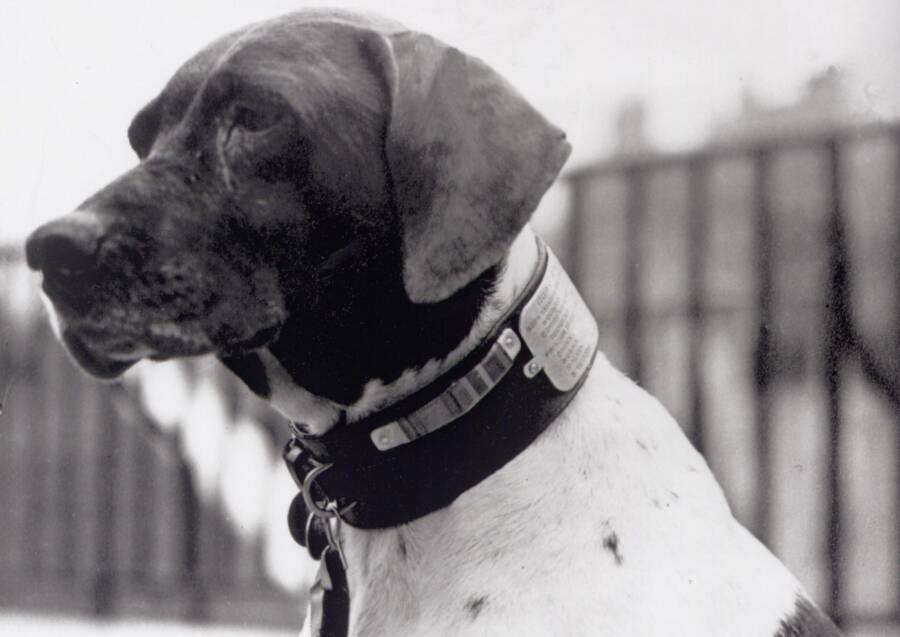
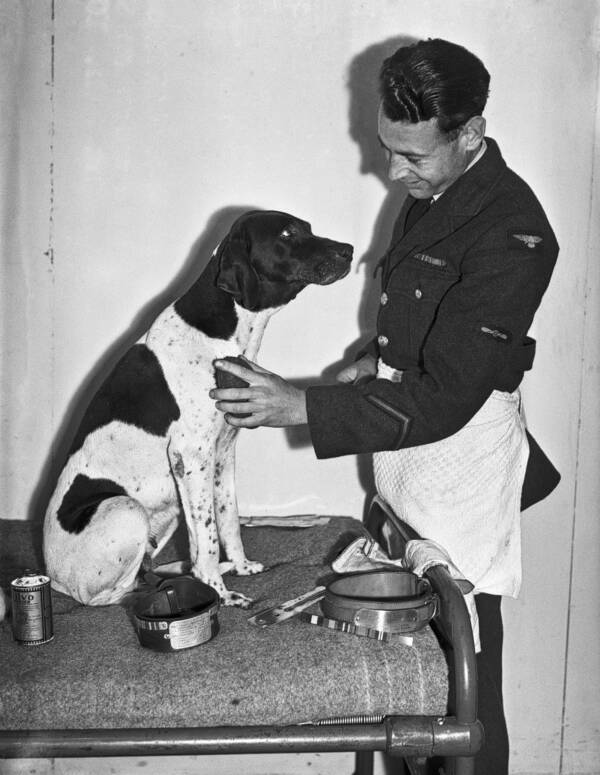
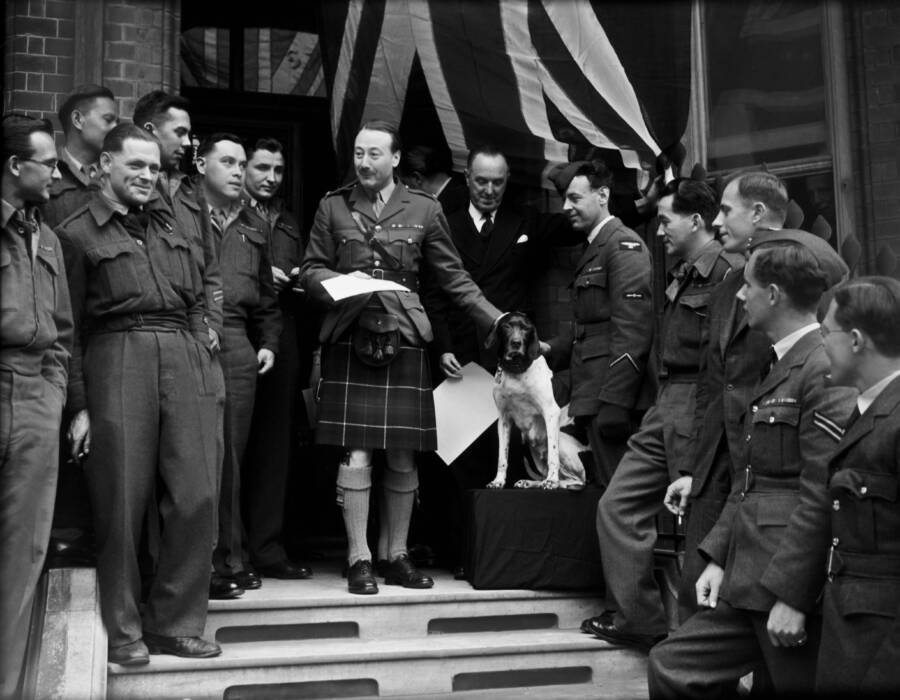
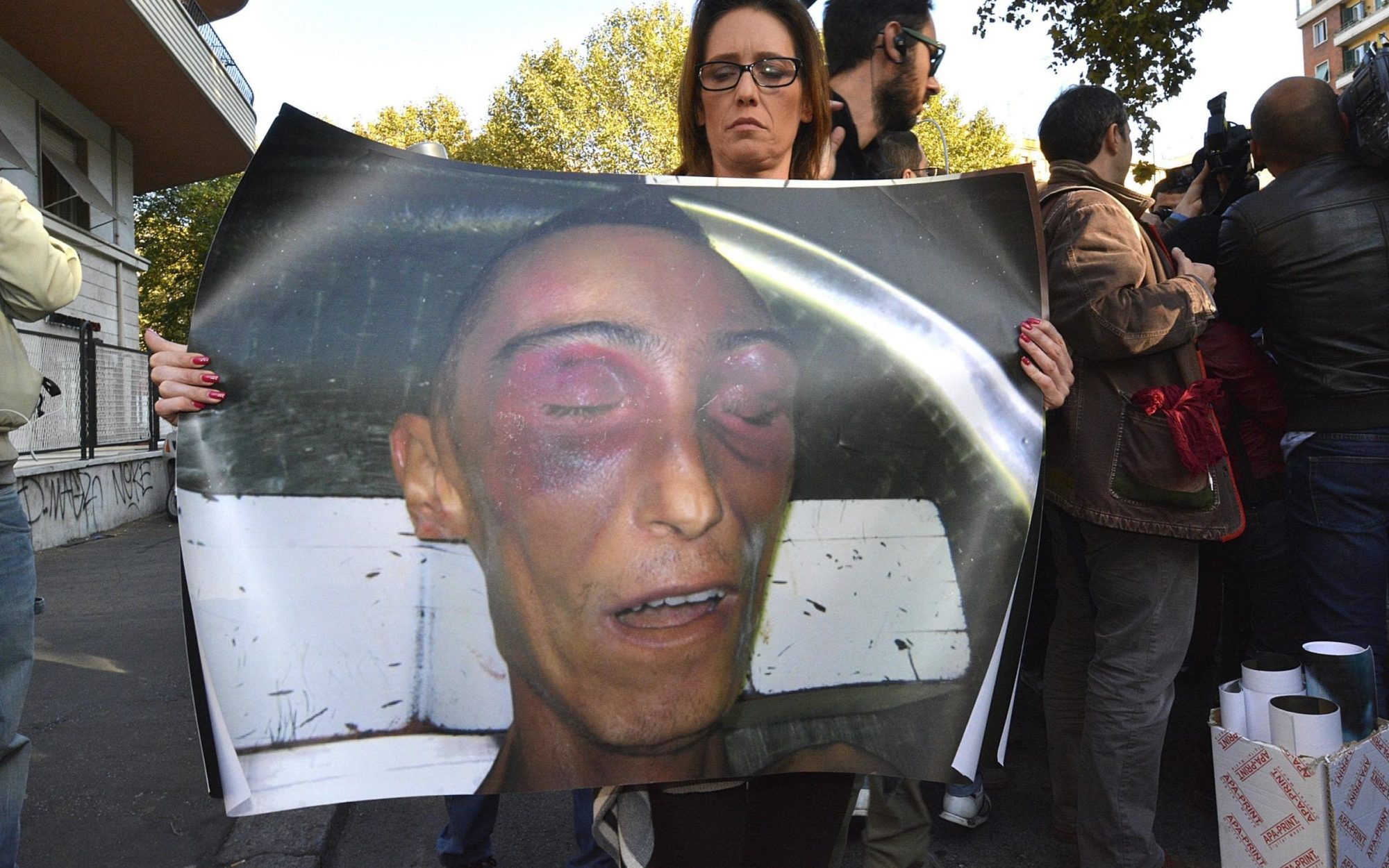




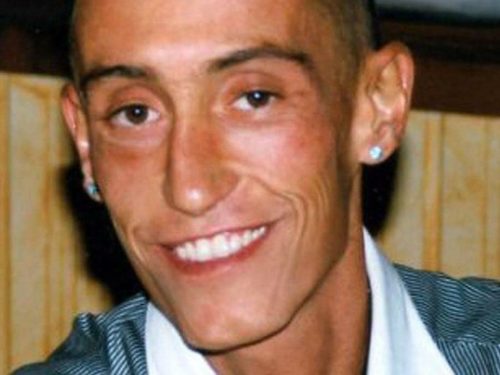
:max_bytes(150000):strip_icc()/angkor-wat-buddha-56a0c4e35f9b58eba4b3a93c.jpg)
:max_bytes(150000):strip_icc()/Gandhara_Buddha_-tnm-56a0c4e15f9b58eba4b3a927.jpeg)
:max_bytes(150000):strip_icc()/Buddha_Victoria_-_Albert-56a0c4df3df78cafdaa4db12.jpg)
:max_bytes(150000):strip_icc()/Fasting_buddha_at_lahore_museum-56a0c4e45f9b58eba4b3a945.jpg)
:max_bytes(150000):strip_icc()/Ayutthaya-Buddha-Head-56a0c4db5f9b58eba4b3a905.jpg)
:max_bytes(150000):strip_icc()/Ayutthaya-Buddha-Head-closer-56a0c4e55f9b58eba4b3a94d.jpg)
:max_bytes(150000):strip_icc()/longmen-vairocana-56a0c4d93df78cafdaa4dafa.jpg)
:max_bytes(150000):strip_icc()/vairocana-2-56a0c4e25f9b58eba4b3a930.jpg)
:max_bytes(150000):strip_icc()/Leshan-Buddha-56a0c4dd5f9b58eba4b3a911.jpg)
:max_bytes(150000):strip_icc()/Gal-Vihara-Sitting-Buddha-56a0c4e75f9b58eba4b3a95f.jpg)
:max_bytes(150000):strip_icc()/kamakura-56a0c4dc3df78cafdaa4db08.jpg)
:max_bytes(150000):strip_icc()/TianTanBuddha-56a0c43e5f9b58eba4b3a309.jpg)


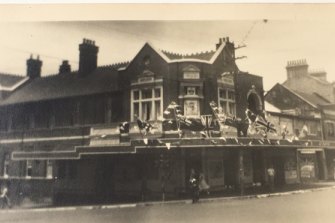
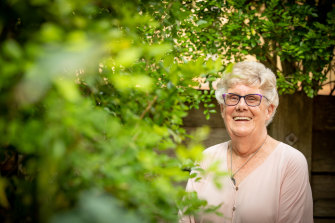
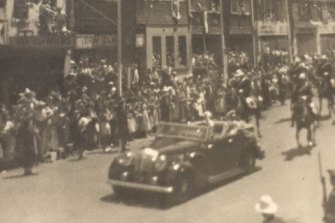
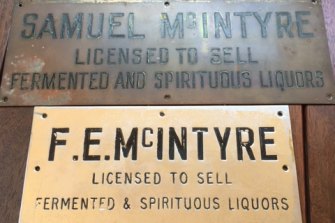
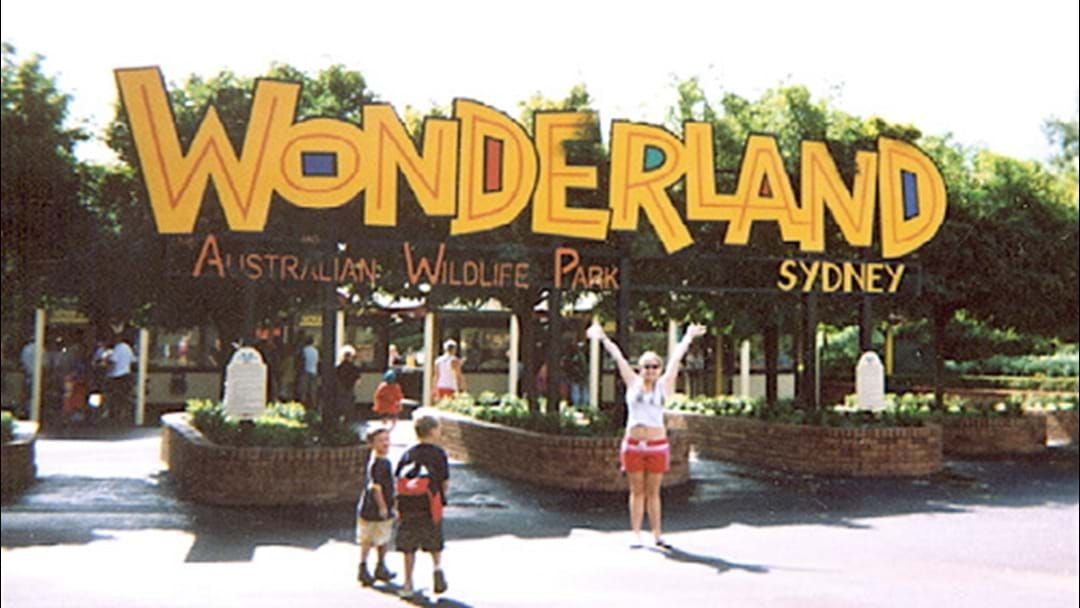


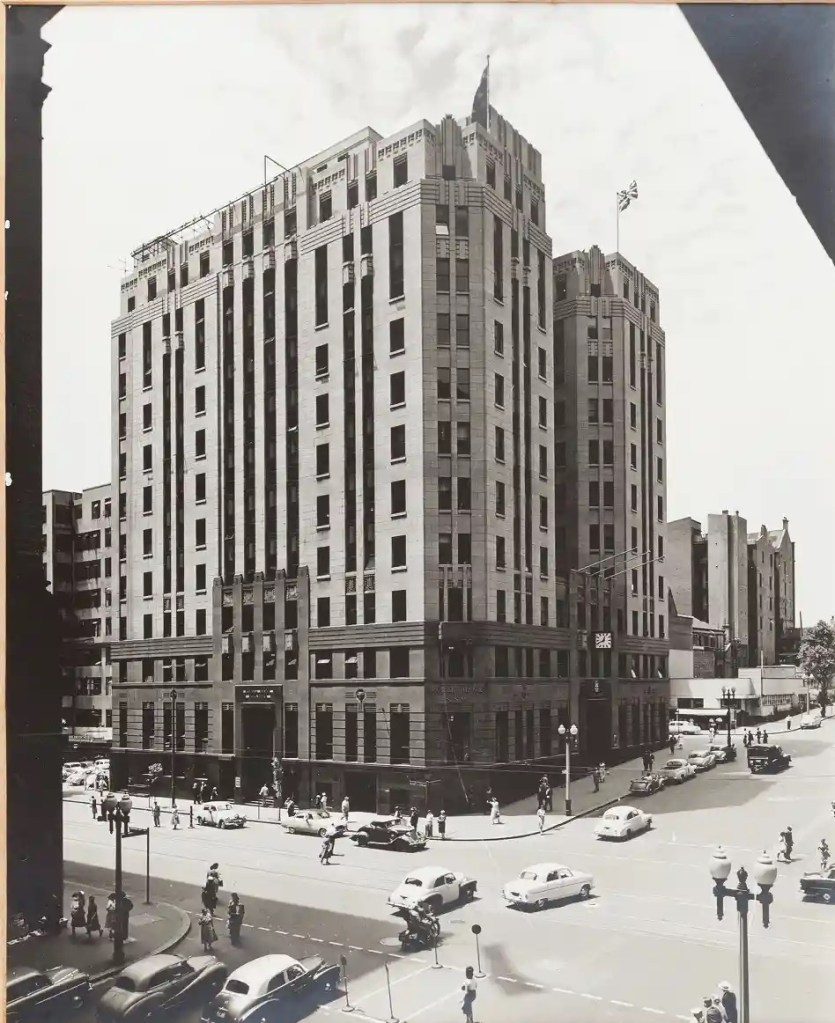
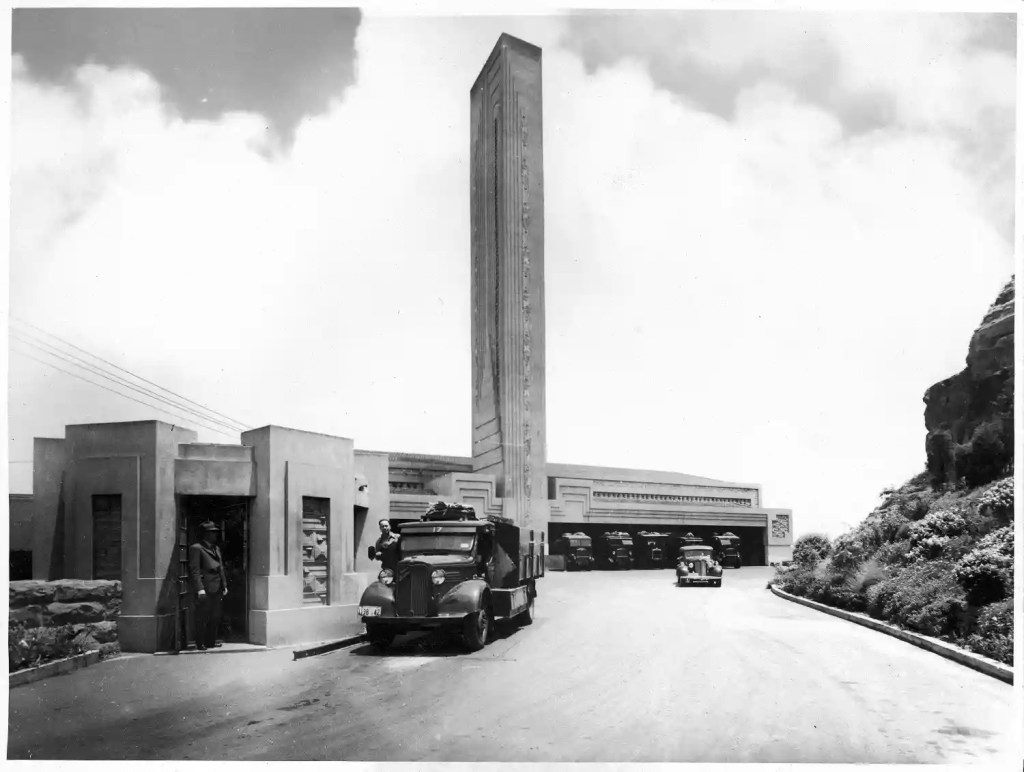
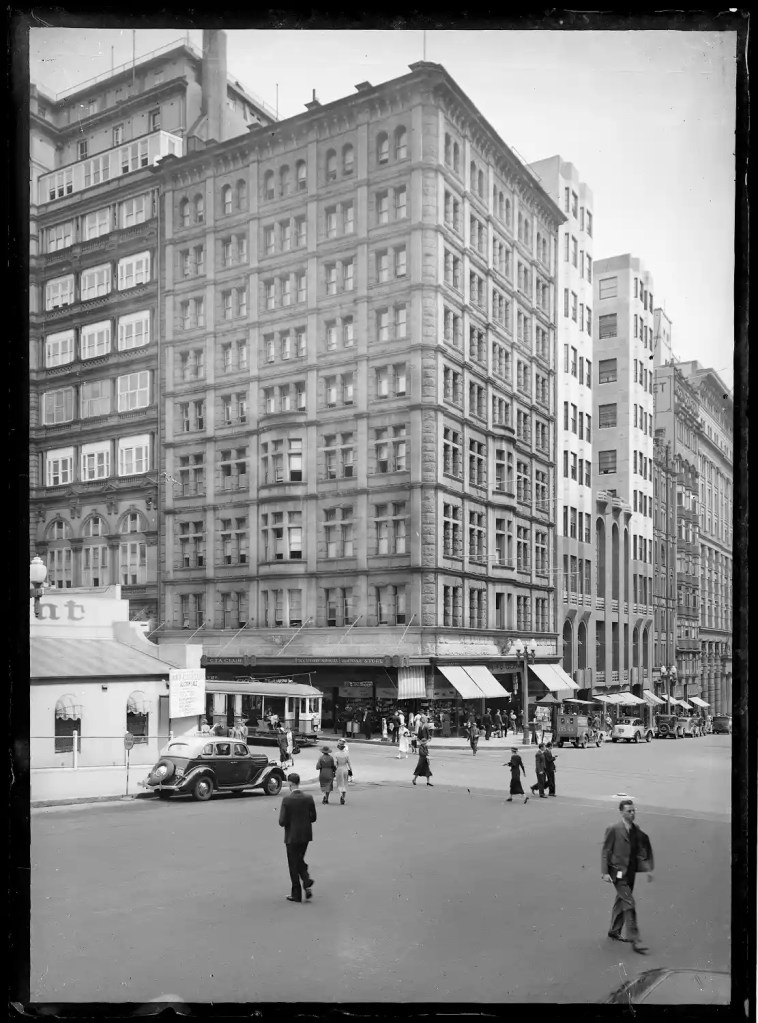




 timalderman


