Category Archives: biography

A 40 Year Journey Into (And Out Of) Fear Part 7

One of the major problems that concerned both my doctor and myself was my weight. Having dropped to 48kg when admitted to Marks Pavilion, and being of slight build, I was having trouble putting it back on. Fortunately for me, the Albion Street Clinic started running a Deca-Durabolin (an injectable anabolic steroid) trial at this time to attempt to counter the effects of Wasting Syndrome, a common problem within the AIDS demographic. I’m not sure this far down the line of it’s duration, but I think it was 6-8 weeks, with a weekly injection, and weigh-in. What I do remember about it was the drastic change to my eating habits. For the period of the trial, I was obsessed with eating! From the moment I woke up, to the time I went to bed…all I thought about was food! I was continually planning my next meal, my next snacks! The (successful) end to this was a meteoric weight gain in a very short period of time. My usual weight was around 64kg…by the time the trial ended I was at 84kg. On going out for dinner with friends I hadn’t seen for a while, one guy exclaimed “What have you done…you look like a teddy bear!”. To be honest, I was thrilled to have put so much on, especially seeing how I had seen myself in the low, and scary, weight range. I’m thankful to say that after the trial ended, my weight dropped back to my usual range.

There is a big problem with surviving AIDS, and spending 18 months recovering and keeping busy with doctors, clinics, hospitals, peer groups, and treatment compliance sessions…and having a lot of same either end, or become more spread out…BOREDOM! Sitting at home watching “Days of Our Lives” and “The Bold and the Beautiful” daily is not a fulfilling experience! But what to do was the big question. Not fit enough to return to full-time work, and not wanting to return to my old profession in retail. As frightening as the whole AIDS experience had been, its lasting legacy was the overwhelming desire to change my life direction. It made me realise how much of my life I’d wasted doing work I hated, and never being brave enough to take the leap to follow my dreams, to step into the unknown with confidence! This was the point where everything changed, where I finally found enjoyment and fulfilment in my life’s choices.

But the question still remained…how to take the first step? I had been receiving “Talkabout” for some time, and recollected that I had seen an ad for volunteering at the…then…PLWHA office in Darlinghurst. A phone call, and a meeting with another volunteer in the Oxford Street offices…and I found myself on the reception desk, initially one day a week, but it was a fun office to be in, so I started turning up daily. This was also my first encounter with computers (other than my experiences in the 80s with owning a Commodore 64). This pushed me to do courses in basic computing, and the Microsoft Office Suite. Around the same time I did a Peer Group Facilitator course with ACON, brought about by me having done a HIV/AIDS survivor group with them. I went on to facilitate some groups.

After around 6 months on reception, Jo Watson…the then Research Officer…asked me if I’d like to work with her as an assistant research officer. The office manager (Ryan McGlaughlin) interviewed me and I got the job. It was here that I wrote my first article for “Talkabout”, a quite humorous piece on my doctor, Cassy Workman. Though not named, it was obvious (by those who knew her, or were patients) who it was about. From this point I became a regular contributor to Talkabout, and 28 years later, I’m still writing for the magazine…with occasional breaks! I also became a member of the Talkabout Working Group. Like many occasions in community groups, funding dried up, and I had to move on.

It was just after this that I was informed that a research position was opening up with another community-funded project called Positively Working. Having survived AIDS, and now being in a position to orientate myself to new work experiences…outside what I had been doing post AIDS… it was a position I slotted into quite neatly. At Positively Working, we were compiling a report (I was working with Sonia Lawless) on the return-to-work needs of guys like me who had survived AIDS, and we’re now faced with the very real situation of…what do I do now; and where the hell do I go now! I personally interviewed a number of the guys, and it was quite eye opening! Once again, after six months the funding dried up. We got the report out, and once again I was faced with what to do!

There was one very interesting…and disturbing…occurance that resulted from my time there. Several of the guys I interviewed mentioned that they had used the “services” of a supposed HIV/AIDS employment service on Oxford Street called “Options”. Evidently Options had been using guys attending there as a free workforce in the office under the guise of “work experience”. I was very angry to hear this, and decided, as a writer for Talkabout, to investigate and expose this issue. I approached the office as a return-to-work client. Not only were they using their clients as an unpaid workforce, they were also not providing the services they were touting, to help guys break back into the workforce. Clients were being placed in front of computer screens with the usual run-of-the-mill employment services, and told to find a job. Contrary to their name, Optoons provided no options.

I wrote a scathing article on them for Talkabout. The editor forwarded the draft onto them, basically saying this is about to come out! Well, didn’t the shit hit the fan! The manager, Peter somebody, demanded to see me. I turned up at his office, and he tried the good old sweet talk! Naw, didn’t sway me. The threats came next, to sue Talkabout, the editor, and me! I was amused! Anyway, to calm the waters, and ensure no action was taken, the editor did a rewrite. I wasn’t happy about it, but at least wanted Options thrown into the spotlight, so allowed a very, very watered down piece to be published. Several months later, Options closed. I just smiled!

I undertook Positive Speaker Bureau training in 1998. My first gig was to a group of nurses at the Albion Street Centre. At the end of the talk, I opened the floor to questions. The final question floored me, as training hadn’t prepared me for this one…did I have survivor guilt? I did…after a long pause…give an answer. Yes, I did! I spent 12 years as a PSB speaker, being quite in demand with community groups, universities, and nurse training talks. I had no problems filling an hour. I was also on the PSB working group.

Two of our major community groups instigated return-to-work groups, but in many respects they missed the mark. The Positively Working report pointed out that one of the major requirements of AIDS survivors contemplating how to move on, or approach a return to the workforce, was choices, be it returning to their previous profession, or taking up education or training, or a myriad of other options such as opening a business, or moving a hobby to a business. What they were finding in the groups that were set up was a repeat of information that wasn’t new to them, or of no use at all. There needed to be more options than resume writing, or interview techniques. One project that did have a different approach was “Reconstruction”, a group facilitated by Pene Manolas. In my own time, I did a number of talks at these group meetings, encouraging guys to follow dreams and desires to find more fulfilment in lives now “reset to zero” and going off in new directions.

In 1999, I was on a very unpleasant…understatement…liquid protease inhibitor called Retonavir. It was very effective, but disgusting to take. Cassy Workman supplied her patients on it with gel capsules and a dropper. Putting it into the capsules made it a lot easier to take. I made an appearance on a popular television series at the time called “Healthy, Wealthy & Wise”, who were doing a segment on HIV and it’s impacts. I can be seen sitting in a park in The Rocks, and filling gel capsules with Retonavir. I guess that was my 15 minutes of fame!

Also in 1999, following my stint with the Positively Working project, I briefly returned to my old retail career…but as a cash office supervisor this time, with Angus & Robertson booksellers in the city. The manager there had a large group of gay friends, so when, during my interview, I explained a long absence from employment on AIDS and recovery, she understood exactly what was going on. It wasn’t why I got the job, but my long retail background on cash handling.

1999 was another busy, and scary, year. I noticed I was having problems walking a straight line up the footpath. It wasn’t neuropathy, as at that stage it wasn’t as bad as now. As I walked, I drifted to the left of the path, and had difficulty getting myself back to the centre. Over a few weeks, it got progressively worse. At one stage I was using a walking stick to maintain balance. Cassy sent me to see Bruce Brew, a well known neurologist at St. Vincents. He was baffled, as was Cassy. At one stage he sent a letter to Cassy saying he suspected it may be PML (Progressive multifocal leukoencephalopathy is a rare, severe, and often fatal viral brain infection characterised by progressive white matter damage. It is caused by the JC virus (JCV), which lies dormant in most adults but activates in individuals with severely compromised immunity. Common in HIV/AIDS, cancer, or patients on specific immunosuppressants, it causes rapid neurological decline). A very scary prospect! AIDS dementia was another possibility.For her part, Cassy ordered up a raft of tests…iron, folate, B12, cortisol, thyroid, CT scan, gallium scan, Addison’s disease. The last resort was an MRI! And there it was! THE VIRUS…on my brain! It could frightened be seen in the scans! During a drug combination change, it had picked a small opportunity when the new combination was starting to kick in to cross the blood/brain barrier, and up into my head. The solution was actually very simple…when the new combination kicked in, it kicked the virus out.

I was at A & R’s for about 4 months…and encountered the difficulties other guys had of obtaining meds from hospital pharmacies during lunch breaks, and fitting in doctors appointments…when I got a phone call from Bill Whittaker (now deceased) to help out doing data entry for the AIDS Research Initiative, which was run out of Cassy’s medical practice in Little Oxford Street (called Ground Zero Medical, as it was on the site of the original Club 80). So I returned to Darlinghurst!

It turned out to be a double job. On days I wasn’t working for the ARI, I was doing reception work in the medical practice. It was here on a working day in the practice that I developed excruciating pain in my back, in the kidney area. Cassy diagnosed Indinavir sludge, a build up of Indinavir in the kidneys. I was told to drink a lot of water…it didn’t help! I spent a good part of the day in the nurses station with Janice (the practices nurse) unable to keep still because of the pain, which just wouldn’t let up! Cassy checked on me a couple of times, but didn’t suggest I go to A & E. By mid afternoon, Janice took it upon herself to call a taxi to take me to St. Vincent’s. I needed to have a stent inserted in my kidneys to drain the sludge.

I was so disappointed that Cassy had been so blasé about it that I quit her practice. And her as my doctor!

A new relationship started with Dr David Austin, at Holdsworth House Medical Centre.

Tim Alderman ©️ 2026

Buddhism 101: Rahula: Son of Buddha

Feifei Cui-Paoluzzo / Getty Images

Rahula was the historical Buddha’s only child. He was born shortly before his father left on his quest for enlightenment. Indeed, Rahula’s birth appears to have been one of the factors that fueled Prince Siddhartha’s determination to become a wandering mendicant.

Buddha Leaving His Son 

According to Buddhist legend, Prince Siddhartha already had been shaken deeply by the realization he could not escape sickness, old age, and death. And he was beginning to think of leaving his privileged life to seek peace of mind. When his wife Yasodhara gave birth to a son, the Prince bitterly called the boy Rahula, which means “fetter.”

Soon Prince Siddhartha left his wife and son to become the Buddha. Some modern wits have called the Buddha a “deadbeat dad.” But the infant Rahula was the grandson of King Suddhodana of the Shakya clan. He would be well cared for.

null

When Rahula was about nine years old, his father returned to his home city of Kapilavastu. Yasodhara took Rahula to see his father, who was now the Buddha. She told Rahula to ask his father for his inheritance so that he would become king when Suddhodana died.

So the child, as children will, attached himself to his father. He followed the Buddha, asking incessantly for his inheritance. After a time the Buddha complied by having the boy ordained as a monk. His would be the inheritance of the dharma.

Rahula Learns to Be Truthful 

The Buddha showed his son no favoritism, and Rahula followed the same rules as other new monks and lived under the same conditions, which were a far cry from his life in a palace.

It is recorded that once a senior monk took his sleeping spot during a rainstorm, forcing Rahula to seek shelter in a latrine. He was awakened by his father’s voice, asking Who is there?

null

It is I, Rahula, the boy responded. I see, replied the Buddha, who walked away. Although the Buddha was determined to not show his son special privileges, perhaps he had heard Rahula had been turned out in the rain and had gone to check on the boy. Finding him safe, even if uncomfortable, the Buddha left him there.

Rahula was a high-spirited boy who loved pranks. Once he deliberately misdirected a layperson who had come to see the Buddha. Learning of this, the Buddha decided it was time for a fatherly, or at least teacherly, sit down with Rahula. What happened next is recorded in the Ambalatthika-rahulovada Sutta in the Pali Tipitika.

Rahula was astonished but pleased when his father called on him. He filled a basin with water and washed his father’s feet. When he finished, the Buddha pointed to the small amount of water left in a dipper.

“Rahula, do you see this little bit of leftover water?”

“Yes, sir.”

“That’s how little of a monk there is in one who feels no shame at telling a lie.”

When the leftover water was tossed away, the Buddha said, “Rahula, do you see how this little bit of water is tossed away?”

“Yes, sir.”

“Rahula, whatever there is of a monk in anyone who feels no shame at telling a lie is tossed away just like that.”

The Budha turned the water dipper upside down and said to Rahula, “Do you see how this water dipper is turned upside down?”

“Yes, sir.”

“Rahula, whatever there is of a monk in anyone who feels no shame at telling a lie is turned upside down just like that.”

Then the Buddha turned the water dipper right side up. “Rahula, do you see how empty and hollow this water dipper is?”

“Yes, sir.”

“Rahula, whatever there is of a monk in anyone who feels no shame at telling a deliberate lie is empty and hollow just like that.”

The Buddha then taught Rahula how to reflect carefully on everything he thought, said, and consider consequences, and how his actions affected others and himself. Chastised, Rahula learned to purify his practice. It was said he realized enlightenment when he was only 18 years old

Rahula’s Adulthood 

We know only a little about Rahula in his later life. It is said that through his efforts his mother, Yasodhara, eventually became a nun and realized enlightenment also. His friends called him Rahula the Lucky. He said that he was twice lucky, being born the son of the Buddha and also realizing enlightenment.

It is also recorded that he died relatively young, while his father was still alive. The Emperor Ashoka the Great is said to have built a stupa in Rahula’s honor, dedicated to novice monks

Reference

O’Brien, Barbara. “Rahula: Son of Buddha.” Learn Religions, Sep. 5, 2021, learnreligions.com/profile-of-rahula-449644. https://www.learnreligions.com/profile-of-rahula-449644

FEUD FACTS: The Real Story Of The Hatfields & McCoys

Hardly any person in America can hear the name “Hatfield” without thinking “McCoy.” This most infamous feud in American folklore happened right in the Tri-State’s back yard.

The 2012 release of the History channel’s “Hatfields & McCoys” miniseries, starring Kevin Costner and Bill Paxton, has sparked a renewed interest in the saga. You can find in the pages of the Tri-State Visitors’ Guide several feud-related attractions, activities and festivals. But before you go exploring, here’s a tutorial on what really happened in the hills of southern West Virginia and eastern Kentucky.

The feud between the Hatfields of West Virginia and the McCoys of Kentucky had its roots in the Civil War and continued through 1981. The feud was led by patriarchs William “Devil Anse” Hatfield and Randolph McCoy. Here are some key events in the feud:

THE CIVIL WAR

Both William “Devil Anse” Hatfield and Randolph McCoy were Confederates and were both along in a raid that killed Union Gen. Bill France in the fall of 1863. That raid sparked into action the Kentucky homeguards, who were sent to take Devil Anse and his men. One of France’s men, Asa Harmon McCoy (Randall’s brother), came after Anse in revenge.

He camped out in a rock house near his home. Anse found out and sent his Uncle Jim Vance and Jim Wheeler Wilson, a fellow soldier, to confront McCoy.

It is believed that one of those men shot and killed Asa McCoy.

COURT ORDERS

A couple of court decisions helped to fuel the feud. In the late 1870s, Devil Anse Hatfield got into a land dispute with McCoy’s cousin Perry Cline. Anse won the land dispute and was granted Cline’s entire 5,000-acre plot of land. A few months after the verdict, Randolph McCoy stopped to visit Floyd Hatfield, a cousin of Devil Anse. While visiting, McCoy saw a hog that he said bore the McCoy marking on its ear. Hatfield denied the accusation and the two were hauled into court with Preacher Anderson Hatfield (a Baptist preacher and justice of the peace) to settle the suit.

Both Hatfields and McCoys served as jurors. Randolph’s nephew Bill Staton, also a brother-in-law of Ellison Hatfield, swore that Floyd Hatfield owned the hog.

Floyd won the case. On June 18, 1880, Staton was killed in a shootout with Paris and Sam McCoy, who were sent to prison for their crime.

Ellison Hatfield testified at that trial.

ROMEO AND JULIET

Two months after the killing of Staton, Devil Anse’s son, Johnse met Roseanna McCoy, the daughter of Randolph McCoy, at an 1880 Election Day event.

They became lovers, but Randolph did not approve.

When she went to be with Johnse in West Virginia, a posse of McCoys rode to the cabin, took Johnse prisoner and set out for the Pikeville jail. Roseanna told Devil Anse, who gathered his own crew to cut off the McCoys and rescue his son. After that, the couple remained apart. Roseanna would give birth to their daughter, Sarah Elizabeth McCoy, in the spring of 1881. The baby died of measles later that year. Johnse Hatfield, who would be married four times in his life, met Nancy McCoy (the daughter of Asa Harmon McCoy, who had been killed by the Hatfields) and they were married on May 14, 1881.

TROUBLE AT THE POLLS

On Aug. 5, 1882, it was Election Day and at the polls on Blackberry Creek, Ellison Hatfield got into a fight with Tolbert McCoy (Randolph’s son). Tolbert’s two younger brothers, Pharmer and Randolph Jr., jumped in the fight with knives, and Pharmer McCoy shot Ellison.

HATFIELDS BURN WITH REVENGE

Preacher Anse Hatfield ordered constables to take the McCoy brothers to the Pikeville jail to face charges. They stopped at Floyd McCoy’s house for food and decided to spend the night further up Blackberry Creek. Devil Anse Hatfield found out and the next morning arrived on the scene, and a posse of nearly 20 family and friends took charge of the McCoy boys. When Ellison died, Devil Anse crossed into Kentucky, tied the boys to paw paw trees and the group of men executed the boys who had killed Ellison.

GOVERNORS GET INVOLVED

Hoping to leave no witnesses, the Hatfields raided the McCoy cabin in the dark of morning on New Year’s Day 1888. A firefight ensued, killing Randolph McCoy’s daughter Alifair and son Calvin. The raiders burned Randolph’s cabin to the ground. Randolph, his wife Sarah and the remaining children escaped.

The murders of the McCoys caused Kentucky’s governor Simon Buckner to unleash special officer Frank Phillips and 38 men to arrest the nearly 20 men and put out a special reward which brought a slew of bounty hunters to come after the Hatfields. Phillips captured several of those men, and Phillips shot and killed Uncle Jim Vance on Jan. 10, 1888.

On Jan. 19, a large firefight between Phillips and his men and Devil Anse Hatfield and his men happened, since known as the Battle of Grapevine Creek. Although no one was killed in the fight, it prompted Devil Anse to order 25 new Winchester repeating rifles to prepare for future attacks.

The raids brought the ire of West Virginia Gov. E. Willis Wilson, and many thought there might be another Civil War break out along the Tug Fork between factions in the two states. Both states ordered their National Guard units to prepare to defend their borders.

West Virginia’s governor sued Kentucky for the unlawful arrest of nine prisoners and unsuccessfully appealed the case to the U.S. Supreme Court in April 1888. The court ruled the Hatfields would have to stand trial in Kentucky whether or not the original arrests by Phillips were legal. Elison Mounts was hanged on Feb. 18, 1890, for the shooting of Alifair and Calvin McCoy, and the rest were given life sentences for their roles in killing the three McCoy brothers.

7 Things You Didn’t Know About the Hatfields and McCoys

1. Hollywood has always loved the Hatfields and McCoys.
The Hatfields and McCoys saga has been reflected in various forms of entertainment, including books, songs and Hollywood films. Some of the most memorable portrayals of the feud include a 1952 Abbot and Costello feature; a Hatfield- and McCoy-themed episode of the animated series “Scooby-Doo”; and Warner Bros.’ 1950 “Merrie Melodies” cartoon “Hillbilly Hare,” in which Bugs Bunny finds himself ensnared in a dispute between the rival Martin and Coy families.

Frankie McCoy and Shirley Hatfield pose together in a photograph that appeared in Life magazine in May 1944. (Credit: Walter Sanders//Time Life Pictures/Getty Images)

2. The Hatfields and McCoys inspired a famous game show.
The conflict is believed to have been the primary inspiration for the popular game show “Family Feud,” which premiered in 1976. In 1979 members of both families appeared on the show during a special Hatfields and McCoys theme week to battle it out for the usual cash rewards—with one unique twist. Also included in the prize package was a pig, symbolizing the origins of the feud. (It was the rumored theft of a valuable pig by a Hatfield ancestor that had served as a catalyst for the eruption of hostilities more than 100 years earlier.) The Hatfields won the contest.

3. The formerly feuding families were featured in Life magazine in the 1940s.
In May 1944, an issue of Life magazine revisited the Hatfields and McCoys nearly 50 years after violence among them rocked the Tug Valley area between Kentucky and West Virginia. The article was meant to show how the two “famous families now live together in peace,” and interviewed a number of descendants about the rivalry and relations between the two families five decades after the conflict. Among the photographs was a shot of two young women, Shirley Hatfield and Frankie McCoy, working together in a local factory that produced military uniforms. It was meant to symbolize the unifying effect of America’s war efforts at the height of World War II.

4. The feud between the Hatfields and the McCoys made it all the way to the U.S. Supreme Court.
In 1888 several Hatfields were arrested and stood trial for the murder of two of Randall McCoy’s children. West Virginia sued for the men’s release, arguing that they had been illegally extradited across state lines. The Supreme Court eventually became involved in the case, known as Mahon v. Justice. In its 7-2 decision, the court ruled in favor of Kentucky, allowing for the trials and subsequent convictions of all the Hatfield men. Seven of them received life sentences, and one, Ellison “Cotton Top” Mounts, was executed for his crimes.

5. A rare medical condition may be partly to blame for the violence of the notorious clash of clans.
In a 2007 study, a team of doctors and geneticists who had studied dozens of McCoy descendants noted an unusually high rate of Von Hippel-Lindau disease, a rare, inherited condition that produces tumors of the eyes, ears, pancreas and adrenal glands as well as high blood pressure, a racing heartbeat and increased “fight or flight” stress hormones. The researchers also collected numerous oral histories from family members detailing the combative and often violent nature of the McCoy family dating back to the feud’s roots.

6. The Tug Valley witnessed another violent clash nearly 30 years after the Hatfields and McCoys feud.
On May 19, 1920, detectives working for the anti-union Baldwin-Felts Agency evicted the families of workers who had attempted to unionize the Stone Mountain Coal Company mines outside Matewan, West Virginia. After Sid Hatfield, the Matewan chief of police and a Hatfield descendant, intervened on the miners’ behalf, a violent clash broke out that left seven detectives and four locals dead. The Matewan Massacre became a rallying cry for union activists across the country, with Sid Hatfield garnering fame for his defense of the miners. A year later, however, Hatfield was assassinated, purportedly by Baldwin-Felts agents. The events surrounding the Matewan Massacre and Sid Hatfield’s murder were depicted in the acclaimed 1987 film “Matewan.”

7. There are thousands of Hatfield and McCoy descendants—but not all of them are real.
Sid Hatfield is just one of many notable Hatfield and McCoy descendants. Others include Henry D. Hatfield, nephew of family patriarch Devil Anse, who served as a senator and governor of West Virginia; 1930s jazz musician Clyde McCoy; and basketball coach Mike D’Antoni. There have even been fictional descendants, including Leonard “Bones” McCoy from the television and film series “Star Trek,” who was supposedly dozens of generations removed from his McCoy family roots.

Reference

The 1969 Documentary That Tried to Humanize Queen Elizabeth II and the Royal Family

The idea was to show the royal family in their day-to-day lives. The results were mixed.

A well-groomed, staid British family sit around the breakfast table. Two young adult children and their middle-aged parents are dressed formally, without a hair out of place. In a high-pitched voice, the mother tells a funny story about her great-great grandmother, while everyone listens with their backs remarkably straight. 

But this is no ordinary English family. The storyteller is Queen Elizabeth II, and the subject of her tale is Queen Victoria. The scene was one part of a 105-minute color documentary named simply, “Royal Family,” that was broadcast across England on June 21, 1969. 

The concept behind the documentary was to soften and modernize the royal image. But members of the royal family, including the Queen, were reportedly dubious about the idea from the start. After its premiere, Buckingham Palace greatly limited the film’s circulation, at least in its entire form.

Lord Mountbatten’s Son-in-Law Suggests TV Special

Royal Family documentary, 1969
Queen Elizabeth II and Prince Philip fly back from a visit to Yorkshire in an Andover of the Queen’s Flight, in a photo taken during the filming of the documentary ‘Royal Family.’ Bettmann Archive/Getty Images

It was Lord Brabourne, the son-in-law of the royal cousin Lord Mountbatten, who suggested using the medium of television to provide the Queen’s subjects a sense of her personality. By the 1960s, the times were rapidly changing, and the shy, dutiful Queen and her young family were seen as increasingly irrelevant. A TV special, Brabourne suggested, could also introduce British subjects to 21-year-old Prince Charles, ahead of his investiture as Prince of Wales.

At the urging of Palace press officer William Heseltine, who was convinced that offering a humanized view of the royal family would strengthen the monarchy, Prince Philip agreed. The Queen cautiously gave her consent, while other family members were decidedly not on board.

“I never liked the idea of ‘Royal Family,’ I thought it was a rotten idea,” Princess Anne later recalled, according to an account in the 2015 book, Queen Elizabeth II and the Royal Family. “The attention which had been brought upon one ever since one was a child, you just didn’t need any more.” 

But the Mountbatten camp won the day and filming began in 1968. Richard Cawston, the chief of the BBC Documentary unit, was put in charge of shooting the royals at work and play. For months, he shot 43 hours of unscripted material at Buckingham Palace, Windsor Castle, on the royal yacht, the royal train, and even at the Queen’s beloved Balmoral Castle in Scotland.

Understandably, the royal family had a difficult time adjusting to the presence of the crew in their personal space. Peter Conradi writes in his 2012 book, Great SurvivorsHow Monarchy Made it into the Twenty-First Century, that during a film day at Balmoral, Philip snapped at the crew, “Get away from the Queen with your bloody cameras!” 

Endearing—And Controversial—Scenes

Royal Family documentary, 1969
Christmas at Windsor Castle is shown here with Queen Elizabeth II and Prince Philip putting finishing touches to their Christmas tree, in a photo made during the filming of the documentary. Bettmann Archive/Getty Images

While the documentary was meant to show the human side of the monarchy, its narration carried an official tone. The voice-over, read by English actor and broadcaster Michael Flanders, ruminated on the importance of the Crown to the country in florid terms like, “Monarchy does not lie in the power it gives to the sovereign, but in the power it denies to anyone else.”

The finished documentary claimed to show a year in the life of the royal family. Queen Elizabeth was featured tirelessly working and making small talk with world leaders like U.S. President Richard Nixon. During his state visit, she asked him, “World problems are so complex, aren’t they, now?” To which Nixon replied, “I was thinking how really much more complex they are than when we last met in 1957.”

There were also sweet scenes, like one where the Queen takes her youngest son, Edward, to a candy store, paying for his treats herself even though the monarch is technically never supposed to carry money. 

The royal family’s genuine sportiness was also highlighted—Prince Charles was shown waterskiing and fishing, Prince Philip flew an airplane and the Queen drove her own car surprisingly fast. 

But there were also strained moments, according to detractors. At one point Prince Philip describes an instance when King George VI the Queen Mother’s late husband, took out his rage with a pruning knife on a rhododendron bush, screaming curse words while hacking it to bits. “He had very odd habits,” Philip deadpanned. “’Sometimes I thought he was mad.”

Then there was when Queen Elizabeth jokes: “How do you keep a regally straight face when a footman tells you: “‘Your Majesty, your next audience is with a gorilla?… It was an official visitor, but he looked just like a gorilla.”

Millions Tuned in for 1969 Premiere

Cawston let Philip see a rough cut of the documentary before showing it to the Queen. “We were all a little bit nervous of showing it to the Queen because we had no idea what she would make of it,” the film’s editor Michael Bradsell told the Smithsonian channel in a 2017 special. “She was a little critical of the film in the sense she thought it was too long, but Dick Cawston, the director, persuaded her that two hours was not a minute too long.”

Royal Family documentary, 1969
Princess Margaret is shown with her two children, Viscount Linley and Lady Sarah Armstrong-Jones at Windsor Castle, during filming of the documentary. Bettmann Archive/Getty Images

The public was, in fact, intrigued—more than 30 million viewers in Britain alone viewed the premiere. It was said that during an intermission, toilets flushed all over London, causing a water shortage.

Less than a month later, on July 1, Prince Charles was invested at Caernarvon Castle in a carefully filmed spectacle organized by the photographer Lord Snowdon, Princess Margaret’s soon to be ex-husband. 

This double-whammy of royal TV was seen by some as a rousing success. “It redefined the nation’s view of the Queen,” Paul Moorhouse, former curator of the National Portrait Gallery, told Daily Telegraph in 2011. “The audience were amazed to be able to hear the Queen speaking spontaneously, and to see her in a domestic setting.”

Lifting the Veil on the Royal Family

The Royal Family
The royal family at Windsor, (from left) Prince Edward, the Duke of Edinburgh, Queen Elizabeth II , Princess Anne, Prince Charles and Prince Andrew. Fox Photos/Getty Images

But to many, the royal family had opened Pandora’s box, lifting the veil and making them easy targets for criticism and intrusive paparazzi activity.

“They were criticized for being stuffy, and not letting anybody know what they were doing, and my brother-in-law helped do up a film, and now people say, ‘Ah, of course, the rot set in when the film was made,’”royal cousin Lady Pamela Hicks and daughter of Lord Mountbatten told an interviewer. “You can’t do right; it’s catch-22.”

“Royal Family” was shown only once more in full, in 1977. And in 2011, Buckingham Palace gave the National Portrait Gallery a 90-second clip of the breakfast scene during the Diamond Jubilee celebration. The palace allowed a few more brief clips to be included in the 2011 documentary “The Duke at 90.”

Reference

Gay History: Lord Beauchamp, Walmer Castle And Homosexuality In 20th-Century England

The Beauchamp Hotel in Darlinghurst is named after this former governor of NSW.

Built in 1540 to guard the English coast against foreign invasions, Walmer Castle is one of Kent’s most prominent landmarks. Since the 18th century it has been the official residence of the Lord Warden of the Cinque Ports. During the 1920s Walmer was home to William Lygon, 7th Earl of Beauchamp, who held lavish homosexual parties at the castle. This led eventually to his dramatic fall from grace, the break-up of his family, and the inspiration for Evelyn Waugh’s most famous novel, Brideshead Revisited.

CABINET MINISTER AND FAMILY MAN

Born in 1872, William Lygon was a well-known public figure from a young age. Succeeding his father as Earl Beauchamp in 1891, he became mayor of Worcester at the age of 23, and was appointed governor of New South Wales, Australia, in 1899. A high-flying figure in the Liberal Party, he rose to become a senior cabinet minister in 1910. He was also appointed First Commissioner of the Office of Works (later English Heritage), in charge of works to royal residences and government buildings.

In 1913, Beauchamp was appointed Lord Warden of the Cinque Ports. He enjoyed the pomp and ceremony that came with the role of Lord Warden: one of his duties was to welcome visiting foreign dignitaries at Dover on behalf of the king. Equally, however, he spent time at Walmer Castle with his family. In 1902, he had married Lettice Grosvenor, sister of Hugh Grosvenor, 2nd Duke of Westminster. Family photographs show Beauchamp, Lettice and their seven children enjoying their surroundings and each other’s company at Walmer.

Lord Beauchamp with five of his children on Walmer Beach in 1915 © Courtesy of Madresfield Estate

PARTY BOY

Beauchamp’s family life appeared conventional. However, during the 1920s he is known to have thrown some rather racy parties at Walmer, to which he invited his high-class friends, along with local fishermen and youths. A hint of their nature is given in the memoirs of Lady Christabel Aberconway, who wrote that:

One Sunday, my host, Lord Jowitt, asked my husband if he and I would like to see one of the famous castles of the Cinque Ports. Delightedly we accepted. … We arrived [at Walmer] and were shown into a garden surrounding a grass tennis court. There was the actor Ernest Thesiger, a friend of mine, nude to the waist and covered with pearls.

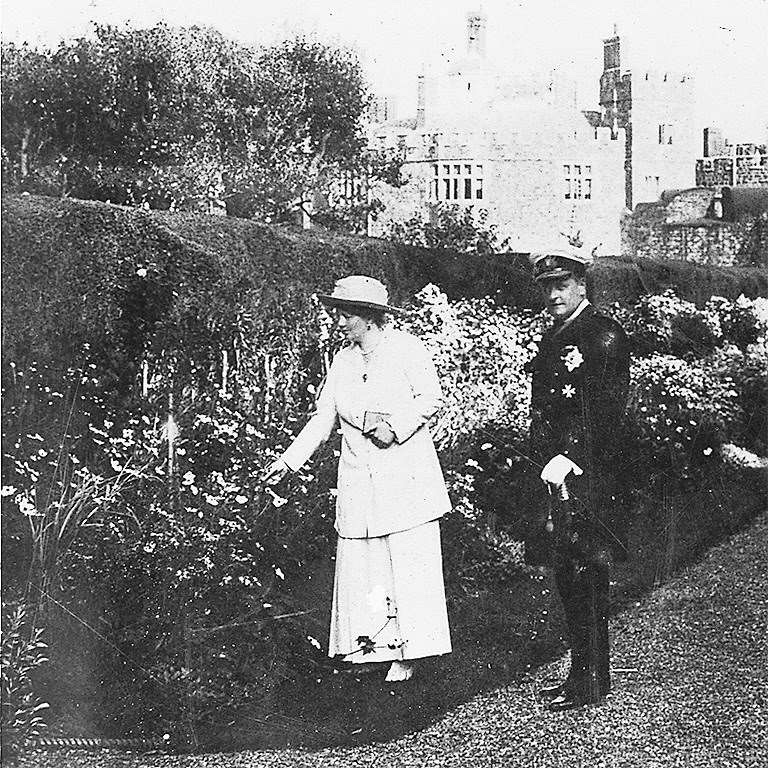
The gardens at Walmer Castle

CAUGHT OUT

In 1930 Beauchamp became embroiled in a scandal that would prove disastrous to his career and personal life. He had embarked on a round-the-world tour in August that year, spending two months in Sydney, Australia. He was accompanied by a young valet, who lived with him as his lover. This did not go unnoticed, and Beauchamp’s tastes were reported in the Australian Star newspaper:

The most striking feature of the vice-regal ménage is the youthfulness of its members … Rosy cheeked footmen, clad in liveries of fawn, heavily ornamented in silver and red brocade, with many lanyards of the same hanging in festoons from their broad shoulders, [who] stood in the doorway, and bowed as we passed in … Lord Beauchamp deserves great credit for his taste in footmen.

Following this report, Beauchamp’s brother-in-law, the Duke of Westminster, hired detectives and began to gather evidence of Beauchamp’s activities.

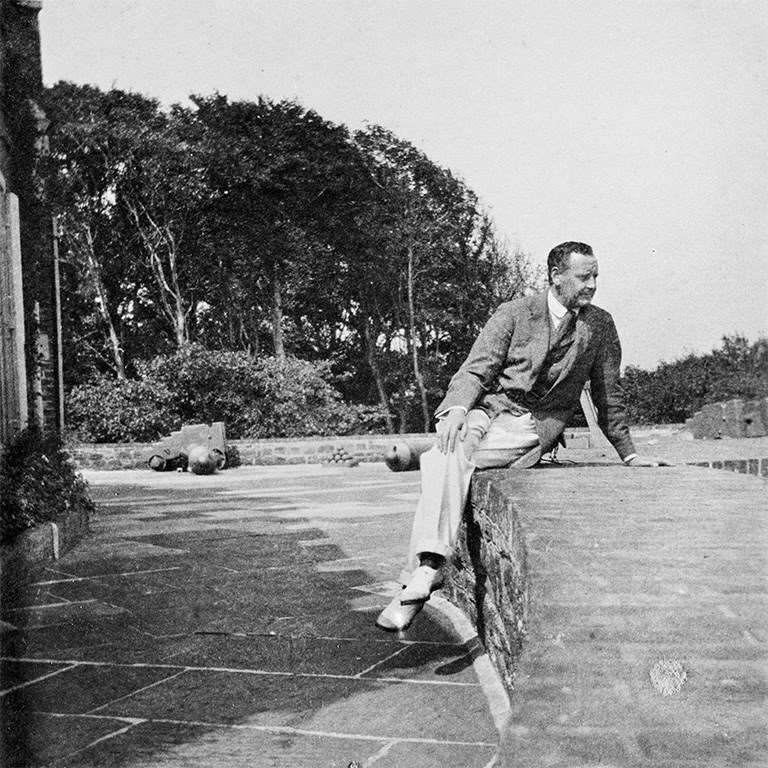
Lord Beauchamp at Walmer Castle in 1925 © Courtesy of Madresfield Estate

A RUINED REPUTATION

The Duke of Westminster was reported to be a bullying, womanising, angry man, once described as ‘nothing but a fatuous, spoilt, ageing playboy’. He had always disliked Beauchamp, jealous of his brother-in-law’s public office and apparent domestic happiness. In addition, the duke was a staunch Tory, whereas Beauchamp was the Liberal Party’s leader in the House of Lords. To ruin Beauchamp would not only satisfy Westminster’s personal vendetta, but would also be politically advantageous.

In 1931 Westminster publicly denounced Beauchamp as a homosexual to George V, who reportedly responded, ‘Why, I thought people like that always shot themselves’. Westminster insisted that Beauchamp be arrested, forcing him into exile.

Hugh Grosvenor, 2nd Duke of Westminster, some time before 1903. Westminster’s jealousy of his brother-in-law led to him denouncing Beauchamp as a homosexual
© National Portrait Gallery, London

EXILE ABROAD

Beauchamp fled first to Germany, where he contemplated suicide, but was dissuaded from it by his son Hugh. He later split his time between Paris, Venice, Sydney and San Francisco – four cities that were relatively tolerant of his sexual orientation.

Meanwhile, Westminster presented his evidence to his sister Lettice, who suffered a nervous breakdown at the news. She submitted a petition for divorce, moved to her brother’s Cheshire estate and took to her bed. The divorce petition described Beauchamp as:

A man of perverted sexual practices, [who] has committed acts of gross indecency with male servants and other male persons and has been guilty of sodomy … throughout the married life … the Respondent habitually committed acts of gross indecency with certain of his male servants.

Lord and Lady Beauchamp on the Broadwalk at Walmer in the 1920s. Lettice petitioned for a divorce upon being told of her husband’s homosexual activity
© Courtesy of Madresfield Estate

FAMILY SUPPORT

Westminster ordered Beauchamp’s children to testify against their father, but they all refused. Though his wife had deserted him, his children’s support never wavered. They shunned their mother and never made peace with her (except the youngest son, Dickie). Westminster became their worst enemy and he let it be known that anyone dealing with the Lygons would be dropped from society. In an extraordinary display of spite, Westminster wrote Beauchamp a short letter, simply stating:

Dear Bugger-in-Law, You got what you deserved. Yours, Westminster.

Cut off from the rest of society, Beauchamp’s children took turns to visit their father abroad. According to Beauchamp’s daughter Sibell, he never grumbled, nor mentioned Westminster again, but grew resigned to his exile.

Beauchamp’s four daughters, Lettice, Dorothy, Mary and Sibell, walking along the Broadwalk in Walmer Castle’s gardens in 1922. Beauchamp’s children all refused to testify against their father when he was accused of homosexuality
© Courtesy of Madresfield Estate

RETURN AND REPRIEVE

It was not until George VI came to the throne in 1936 that the warrant for Beauchamp’s arrest was lifted. Beauchamp returned to England in July 1937. He moved back to Madresfield, the family home, and wasted no time in painting out his wife’s image from a fresco in their personal chapel. The family threw her bust into the house’s moat.

Beauchamp died of cancer in 1938. His various misfortunes inspired Evelyn Waugh’s 1945 novel Brideshead Revisited – the character of Lord Marchmain was based on Beauchamp himself, while his son Hugh proved the inspiration for the ill-fated Sebastian Flyte.

Hugh Lygon lazing on the bastion at Walmer Castle in 1925. Hugh had met Evelyn Waugh while studying at Oxford, becoming the inspiration for the ill-fated Sebastian Flyte in Waugh’s novel ‘Brideshead Revisited’ © Courtesy of Madresfield Estate

Reference

Ross D. Wylie: Pop Star and Uptight Presenter

Ross D. Wyllie (born 21 November 1944) is an Australian pop music singer, television presenter and producer from the 1960s and 1970s. Wyllie had a top 20 hit with his cover of Ray Stevens‘ song “Funny Man” and an Australian No. 1 with “The Star”, both in 1969. Originally from Brisbane, he hosted, Uptight, a weekly four-hour music series, on Channel 0 in Melbourne from 1967 to 1969. In 1970 he followed with a similar show, Happening ’70, and from 1978 to 1980, he presented films on a late-night time slot.

Biography

Ross D. Wyllie was born in Ashgrove, Queensland on 21 November 1944,[1][2] to Harold John Wyllie (1913–), an army sergeant serving during world war 2, and Jean nee Jennings (c. 1920–2002).[3][4] He was raised in Brisbane with two siblings.[3][5] As a child he contracted poliomyelitis and for most of his adult life he had a limp.[1] In 1964 he joined a pop band, the Kodiaks, as lead singer.[6] By 1967, as a solo artist, he signed with the Ivan Dayman‘s label, Sunshine Records, and released his debut single, “Short Skirts”.[7] He was backed by label-mates, the Escorts.[6] His next single, “A Bit of Love”, followed later that year,[7] using only studio musicians.

Wyllie relocated to Melbourne and, on 28 October 1967, became the host of a new pop music TV show, Uptight, for local Channel 0.[6] He signed with Festival Records and released a non-charting single, “Smile”, in April 1968.[6] Uptight ran as a Saturday morning three-hour show until 1969.[6][8] By that time it was being produced by Bob Fraser and the presenter’s wife, Eileen Wyllie, for Jardine Productions.[9][10][11] Molly Meldrum was a regular member of the on-air team. Uptight – Party Time, by Ross D. Wyllie and the Uptight Party Team, was issued via Calendar/Festival Records in 1968.[10][12] The record was produced by Roger Savage.[10] It contains two side-long medleys of then-current songs including, “Midnight Hour”, “You Are My Sunshine” and “Day Tripper”.[13]

Wyllie had a No. 17 hit on Go-Set‘s National Top 40 in July 1969, with his cover of Ray Stevens‘ song, “Funny Man”.[14][15] His National No. 1 hit, “The Star”, followed in November.[16]“The Star”, written by Johnny Young, was later covered by United Kingdom act Herman’s Hermits as “Here Comes the Star”.[8][17]

In 1970 Uptight was replaced on Channel 0 by a one-hour pop music series, Happening ’70, with Wyllie retained as host and Eileen as producer.[9] In April he released a double-A-sided single, “Free Born Man” / “My Little Girl”, but its sales were affected by the radio ban, during which commercial stations refused to play recordings by Festival Records (among others) from May to October.[18] The singer, presenter left Melbourne to return to Brisbane late in 1970 and was replaced on Happening ’71, in April 1971, by Jeff Phillips.[6][19]

In 1971 Wyllie signed with the Fable label and released a single, “He Gives Us All His Love”, in April. He followed with “It Takes Time” in August and “Sweet White Dove” in May 1972. He then turned to the pub and club circuit. Later he formed a production company with fellow pop singer, Ronnie Burns, and talent manager, Jeff Joseph. With Tony Healy he created a public relations company. In the late 1970s he presented a late-night movie show on Melbourne’s Channel 0–10.[6] During the mid-1970s Wyllie opened and operated a record retail store in Bayswater, Arch Rivals.

In May 1988 Festival Records released, Smile: The Festival Files Volume Ten, a compilation album of Wyllie’s singles, as a part of their Festival File series.[10][20] In a review of the collection for The Canberra Times, Stuart Coupe observed, “Star of Uptight, Wyllie’s run of hits ended in the early ’70s. This is probably the least interesting of the albums in this series, but at worst is a curio item.”[20] In August 2003 Wyllie performed an Uptight-themed variety show at the Palais Theatre, Melbourne, reuniting with other 1960s performers.[21]

Aztec Records released another compilation, Ross D. Wyllie: the Complete Collection, in August 2014.[22][23][24] Paul Cashmere of Noise11 described it as “the first definitive career overview of 60s pop star.”[23] Toorak Times‘ Gary Turner observed, “[it features] all the classic hits including ‘Funny Man’, ‘The Star’, ‘My Little Girl’, ‘Smile’, ‘Uptight Party Medley’, ‘Short Skirts’ and many more tracks including tracks live from Festival Hall Melbourne in 1994.”[24] Wyllie and Eileen were still living in Melbourne as from September 2014.[24] During November 2016 Wyllie used a crowd funding site to attempt to raise money for a motorised wheelchair.[1]

Discography

Compilation albums

TitleDetailsUptight – Party Time(by Ross D. Wyllie and the Uptight Party Team)

  • Released: 1969
  • Label: Calendar / Festival Records (R66-522)

Smile: The Festival Files Volume Ten

  • Released: May 1988
  • Label: Festival Records (L-19010)

Ross D. Wyllie: The Complete Collection[22]

  • Released: 14 August 2014
  • Label: Aztec Records (AVSCD071)

EPs

Title Details Funny Man

  • Released: 1969
  • Label: Festival Records (FX11618)

Singles

List of singles, with Australianchart positions

Year

1967

1968

1969

1970

1971

1972

Title

Short Skirts

A Bit Of Love

Smile

Funny Man (No.17 on charts)

The Star (No.1 on charts)

My Little Girl (No.65 on charts)

He Gives Us All His Love (No.42 on charts)

It Takes Time (No78 on charts)

Sweet White Dove (No.99 on charts)

Reference

General

Specific

  1. ^ a b c Knox, David (30 November 2016). “GoFundMe Page for 60s Pop Star Ross D. Wyllie”. TV Tonight. Archived from the original on 1 December 2016. Retrieved 20 January 2018. Ross contracted polio at an early age and now at age 72 is in need of a customised, motorised wheelchair and a scooter to get around.
  2. ^ “‘Childs Dream’ at APRA search engine”. Australasian Performing Right Association(APRA). Retrieved 15 March 2013.
  3. ^ a b “Family Notices”. The Sunday Mail (762). Brisbane, Qld. 26 November 1944. p. 8. Retrieved 25 July 2018 – via National Library of Australia.
  4. ^ “Wyllie, Harold John Marshall”. World War Two Nominal Roll. Commonwealth of Australia. 2002. Retrieved 25 July 2018.
  5. ^ “Family Notices”. The Telegraph. City Final Last Minute News. Brisbane, Qld. 14 July 1947. p. 4. Retrieved 25 July 2018 – via National Library of Australia.
  6. ^ a b c d e f g McFarlane (1999). Encyclopedia entry for “Ross D. Wyllie”. Archived from the original on 19 April 2004. Retrieved 11 June2016.. Retrieved 20 November 2010. Note: McFarlane gives birth year as 1948.
  7. ^ a b Kimball, Duncan (2002). “Record Labels – Sunshine Records”. Milesago: Australasian Music and Popular Culture 1964–1975. Ice Productions. Archived from the original on 7 March 2008. Retrieved 11 November 2017.
  8. ^ a b “The Star”. Where Did They Get That Song?. PopArchives (Lyn Nuttall). Retrieved 20 November 2010.
  9. ^ a b Nelson, Stuart (2013), Stammer your way to success: From a suburban orphanage to an international career, Xlibris, pp. 56–8, ISBN 978-1-4836-0207-3
  10. ^ a b c d Uptight. Australian Television Memorabilia Guide. Nodette Enterprises Pty Ltd. 2009. Archived from the original on 20 January 2018. Retrieved 20 January 2018.
  11. ^ Nichols, David (2016), Dig: Australian rock and pop music, 1960-85, Portland, OR: Verse Chorus Press, p. 202, ISBN 978-1-891241-61-1
  12. ^ Kimball, Duncan (2002). “Record Labels – Calendar Records”. Milesago: Australasian Music and Popular Culture 1964–1975. Ice Productions. Archived from the original on 15 March 2010. Retrieved 11 November 2017.
  13. ^ Wyllie, Ross D; Uptight Party Team (1960), Uptight Party Time, Calendar, retrieved 11 November 2017
  14. ^ a b Nimmervoll, Ed (19 July 1969). Go-SetNational Top 40 with Ed Nimmervoll”. Go-Set. Waverley Press. Retrieved 20 November2010.
  15. ^ “Funny Man”. Where Did They Get That Song?. PopArchives (Lyn Nuttall). Retrieved 20 November 2010.
  16. ^ a b Nimmervoll, Ed (15 November 1969). Go-Set National Top 40 with Ed Nimmervoll”. Go-Set. Waverley Press. Retrieved 20 November 2010.
  17. ^ Nichols, David (2006). “‘Does the meaning mean a thing?’ Johnny Young’s Hit Songs of the 60s–70s – DRO”. ACH: The Journal of the History of Culture in Australia. Routledge. 24: 163–84. hdl:10536/DRO/DU:30003708. ISBN 1-92084-525-9. ISSN 0728-8433.
  18. ^ Kent, David Martin (September 2002). “Appendix 6: The Record Ban” (PDF). The place of Go-Set in rock and pop music culture in Australia, 1966 to 1974 (MA). Canberra, ACT: University of Canberra. pp. 265–269. Archived from the original (Portable Document Format (PDF)) on 4 September 2015. Retrieved 11 November 2017. Note: This PDF is 282 pages.
  19. ^ McFarlane, Ian (1999). “Encyclopedia entry for ‘Jeff Phillips'”. Encyclopedia of Australian Rock and Pop. St Leonards, New South Wales: Allen & Unwin. ISBN 1-86508-072-1. Archived from the original on 20 April 2004. Retrieved 23 June 2013.
  20. ^ a b Coupe, Stuart (29 May 1988). “Music: New Release a Festival of Australian Memories”. The Canberra Times (ACT : 1926 – 1995). National Library of Australia. p. 18. Retrieved 24 August 2013.
  21. ^ Cashmere, Paul. (28 July 2003), “Melbourne Gets Uptight”. Archived from the original on 15 December 2003. Retrieved 28 June 2007.. Undercover Music News(Undercover Media). Retrieved on 20 November 2010.
  22. ^ a b Wyllie, Ross D (2014), Ross D. Wyllie: the Complete Collection, Collingwood, Vic: Aztec Records, retrieved 11 November 2017
  23. ^ a b Cashmere, Paul (1 September 2014). “Ross D Wyllie Complete Collection Released”. Noise11. Paul Cashmere, Ros O’Gorman. Retrieved 11 November 2017.
  24. ^ a b c Turner, Gary (18 September 2014). Ross D. Wylie The Complete Collectionremastered”. Toorak Times. Retrieved 20 January 2018. Note: Last name is incorrectly given as “Wylie”, although corrected in first sentence.
  25. ^ Kent, David (1993). Australian Chart Book 1970–1992 (illustrated ed.). St Ives, N.S.W.: Austr
  26. alian Chart Book. p. 344. ISBN 0-646-11917-6.
  27. ^ “Who’s who of Australian rock / compiled by Chris Spencer, Zbig Nowara & Paul McHenry”. catalogue. National Library of Australia. Retrieved 8 November 2

The Outrageous Story Of Amelia Bloomer And The Fashion Trend That Infuriated Victorian Men

In 1851, an American editor named Amelia Bloomer wrote an article in support of female pantaloons — inspiring women to wear a controversial garment called “bloomers.”

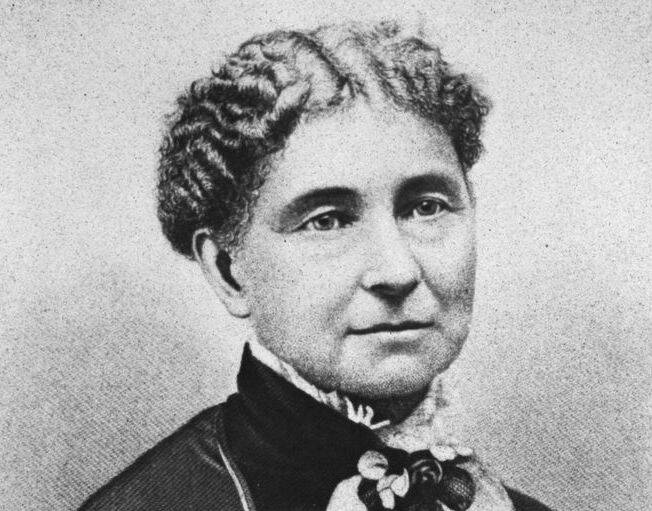
Amelia Bloomer
Getty ImagesAmerican suffragist Amelia Bloomer dared to suggest that women wear trousers under their skirts.

In the 1850s, crushing corsets, heavy skirts, and a half-dozen petticoats weighed women down as a literal hamper to their quest for liberation. So one women’s rights activist named Amelia Bloomer thought to change that by way of an outfit that became known as “bloomers.”

Even though bloomers still kept women covered from their necks to their feet, the garment sparked a backlash from anti-suffragists that was so fierce even Bloomer herself abandoned the new fashion. 

As Amelia Bloomer’s suffragist friend Elizabeth Cady Stanton privately confessed, “Had I counted the cost of the short dress, I would never have put it on.”

This is the story of how bloomers completely backfired — and almost stalled the women’s rights movement in America.

Who Was Amelia Bloomer?

Amelia Jenks Bloomer
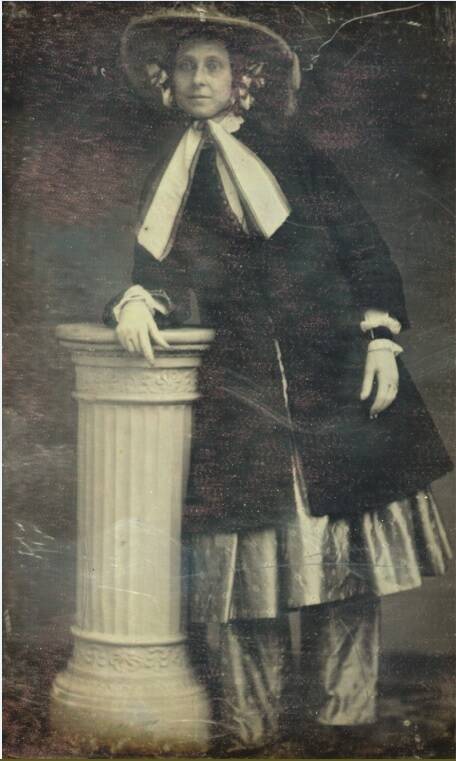
Seneca Falls Historical SocietyBloomer in the notorious pantaloons or “pantalettes.”

Born in 1818 in rural New York, Amelia Bloomer began her career as a humble teacher, but then she moved to Seneca Falls, a city that hosted a vibrant community of women’s rights activists.

In 1848, Bloomer attended the historic Seneca Falls Convention, where suffragists Elizabeth Cady Stanton and Lucretia Mott discussed the condition of women’s rights in the United States. 

The experience inspired Bloomer to found a newspaper called The Lily, which was dedicated to the growing fight for gender equality. It was the first American newspaper edited by a woman.

While encouraging increased access for women in education and in the ballot box, Bloomer waded into another major issue in the 19th-century women’s rights movement: fashion.

Victorian women were weighed down by pounds of petticoats and heavy corsets, a stark representation of their muted voices outside of the home. Additionally, the heavy styles of the mid-1800s weren’t just uncomfortable — they could prove deadly. 

Tightly laced corsets impaired breathing, and flammable crinolines burned3,000 women to death between 1850 and 1860. Additionally, bulky garments got caught in newfangled machines, injuring and killing women. 

Bloomer thus wondered, could a change in style change the condition of women?

The Invention Of Bloomers

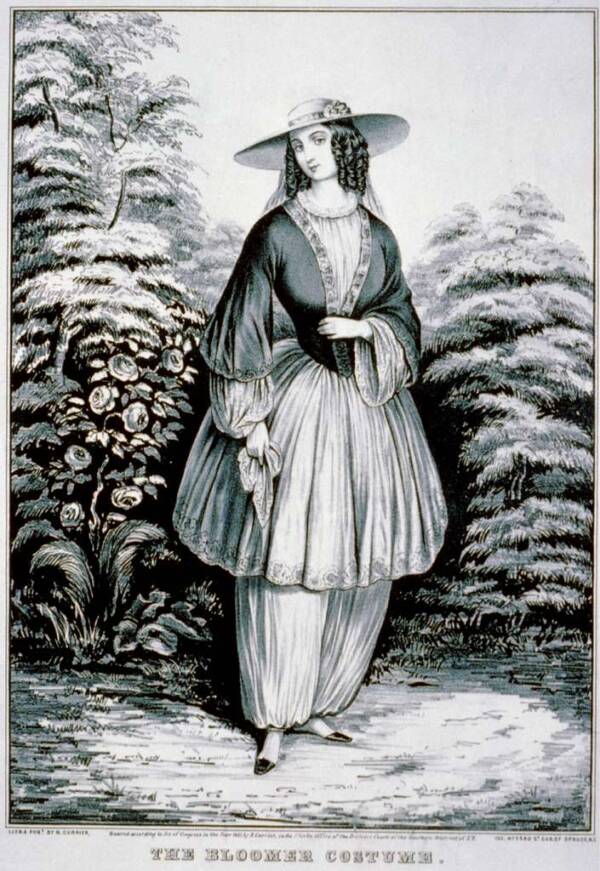
In 1851, Amelia Bloomer read an editorial from a man who recently became supportive of the women’s suffrage movement in which he suggested that women adopt “Turkish pantaloons and a skirt reaching a little below the knee” as an alternative their current clothes.

The notion of loose pantaloons stuck with her.

Around the same time, Elizabeth Cady Stanton’s cousin, Elizabeth Smith Miller, showed up in “Turkish trousers” that she’d designed herself. 

Miller explained that long skirts impeded her work in the garden. In a moment of frustration, she declared, “This shackle should no longer be endured.” Miller donned “Turkish trousers to the ankle with a skirt reaching some four inches below the knee.”

Bloomer quickly adopted the style herself. Then, she promoted the new fashion to her readers.

The idea caught fire. Women wrote from across the country and subscriptions to The Lily skyrocketed. The outfit, once called a “freedom dress” or “Turkish pantaloons,” had earned a new name: bloomers. 

“As soon as it became known that I was wearing the new dress,” Bloomer wrote, “letters came pouring in upon me by hundreds from women all over the country making inquiries about the dress and asking for patterns—showing how ready and anxious women were to throw off the burden of long, heavy skirts.”

Stanton declared that bloomers made her feel “like a captive set free from his ball and chain.” In August 1851, American suffragists made the trend international when they wore bloomers to the World’s Peace Congress in London. 

The Backlash Against Amelia Bloomer’s Costume

The style certainly caused an uproar. Magazines demonized bloomers as “a sort of shemale dress.” Gangs of boys harassed “Bloomerites” on the streets. 

Stanton confessed that her own father banned her from wearing bloomers at his house and her sister “actually wept.” Men declared “they would not vote for a man whose wife wore the Bloomers.”

Stanton eventually gave up on bloomers herself, returning to “uncomfortable, inconvenient, and many times dangerous” Victorian dresses. “We put the dress on for greater freedom, but what is physical freedom compared with mental bondage?” She wrote. “By all means have the new dress made long.”

Women In Bloomers
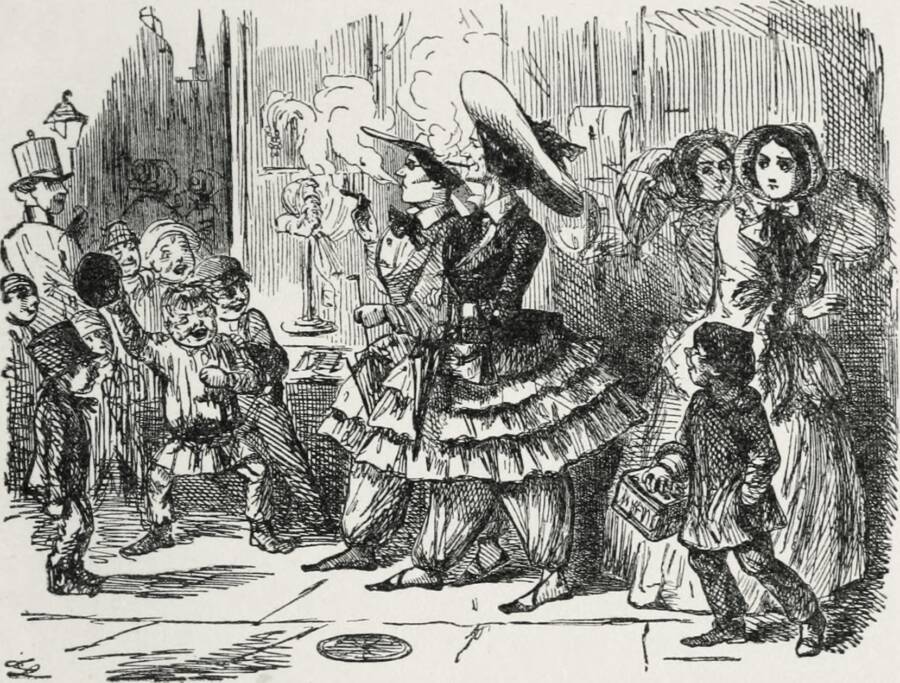
Punch/Wikimedia CommonsWomen who dared to wear bloomers marked themselves as radicals, according to critics. “Bloomerites” would surely break other gender norms, like smoking in public.

But Amelia Bloomer continued to wear her namesake trousers for years. She did eventually return to petticoats and full-length skirts and tried to frame the retreat as a victory. 

“We all felt that the dress was drawing attention from what we thought of far greater importance — the question of woman’s right to better education, to a wider field of employment, to better remuneration for her labor, and to the ballot for the protection of her rights,” she wrote.

“In the minds of some people, the short dress and woman’s rights were inseparably connected. With us, the dress was but an incident, and we were not willing to sacrifice greater questions to it.”

Suffragists Abandon Bloomers

Why did bloomers spark such a backlash? Amelia Bloomer had a theory. By donning pants, women visibly likened themselves to men. The bloomers hinted at a larger-scale “usurpation of the rights of man,” Bloomer lamented. 

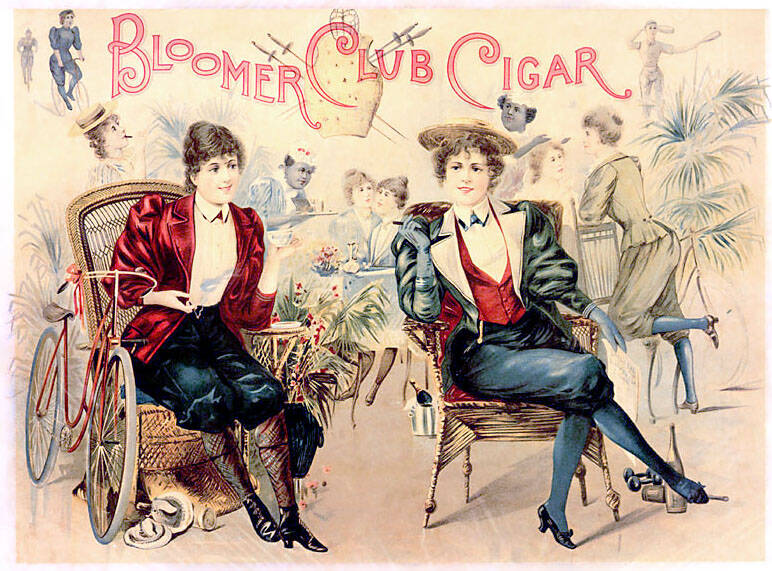
For generations, bloomers were linked with all kinds of subversive female behavior. Once women put on trousers, critics argued, they’d begin smoking cigars, working as police officers, and engaging in lewd behavior. 

In Bloomer’s day, suffragists thus retreated to a less controversial fashion statement: Susan B. Anthony tied a simple red shawl around her neck. The Philadelphia Press lavished praise on Anthony for her “plain dress and quaint red shawl,” a look deemed appropriately matronly.

Anthony’s clothes offered “not a hint of mannishness but all that man loves and respects. What man could deny any right to a woman like that?”

Amelia Bloomer tried to improve women’s lives by lightening their burden and increasing their mobility. But trousers were men’s domain, and when women donned them, they threatened the gender order. 

A quiet, red shawl could be forgiven — but bloomers were apparently too much.

Best known for her trousers today, Amelia Bloomer devoted her life to women’s suffrage.

Reference

  • The Outrageous Story Of Amelia Bloomer And The Fashion Trend That Infuriated Victorian Men, All That’s Interesting, 9 June 2021, by , By Genevieve Carlton | Checked By Jaclyn Anglis https://allthatsinteresting.com/amelia-bloomer

Stefano Cucchi: How One Death In Custody Has Become The Symbol Of Police Brutality In Italy

Stefano Cucchi's siter, Ilaria Cucchi

The death in custody of 31-year-old Stefano Cucchi has brought the abuse of police power under scrutiny in Italy. After losing her brother and enduring the subsequent trial, Ilaria Cucchi is now receiving harassment and online threats from police officers. Sociologists say Stefano’s case is not isolated and ask what the country will do to clean up its policing.

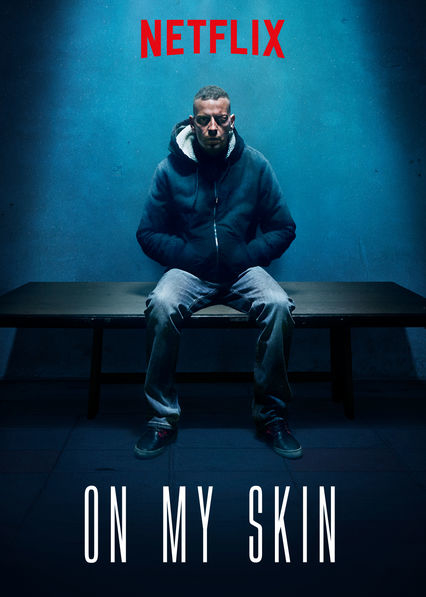
The Netflix film On My Skin (Sulla Mia Pelle), directed by Alessio Cremonini and starring Alessandro Borghi, premiered at the Venice Film Festival in August 2018.

At the end of the screening, Ilaria, a woman wearing a red dress, walked towards the film’s director, who was standing in the front row of the cinema receiving applause, and wrapped her arms around his neck.

The embrace momentarily hid their noticeably moved faces from the gaze of the surrounding crowd.

On My Skin (featured in our collection of human rights documentaries) tells the story of a man who was arrested by Carabinieri (Italy’s domestic police) officers in Rome and died in unclear circumstances after seven days of being in precautionary custody.

The man was Ilaria’s younger brother, Stefano Cucchi.

Since his death in 2009, Stefano, 31, has become an icon of the abuse of police power in Italy.

He was arrested on 15 October 2009, after being caught handing a dose of cannabis to his friend Emanuele Mancini.

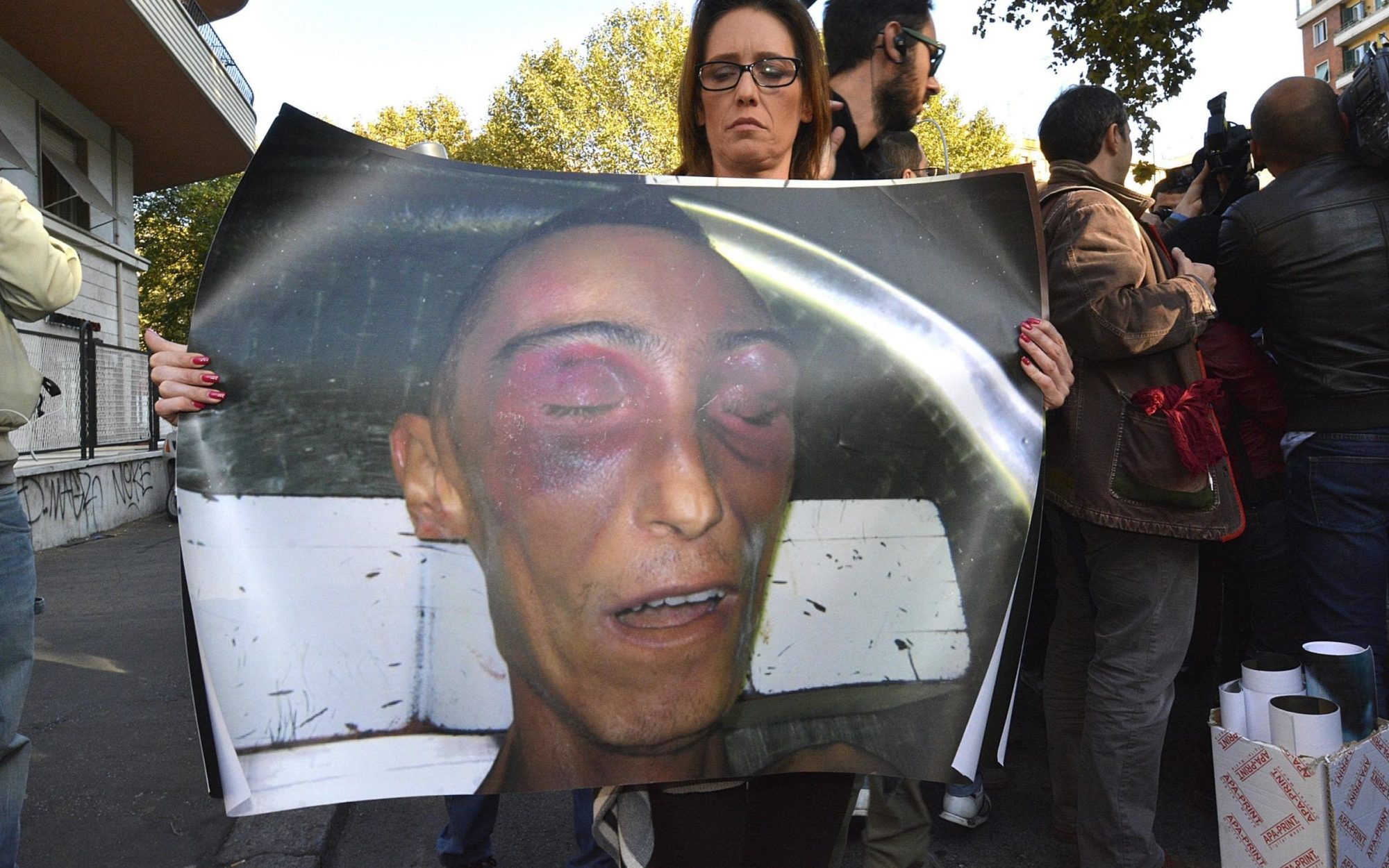
He spent his first night in custody in a Carabinieri cell. The next day he was taken to a prison wing of the local general hospital with distinct marks and bruises on his eyes, back pain and injuries to his legs.

Seven days after his arrest, at 6.15am on 22 October, Stefano was found dead in his hospital bed.

This young amateur boxer was in good health before his arrest but his family obtained photographs from the morgue showing Stefano’s emaciated body covered in purple bruises. They rejected the assertion that Stefano had died of natural causes and began a campaign for justice.

A SISTER’S FIGHT FOR JUSTICE

Stefano’s story sparked a debate about the abuse of police power at a national level. The case polarised the Italian public, as the story was heavily politicised and peppered with accusations, slander, threats and cover-ups.

Stefano’s sister Ilaria received support from many, but she also received criticism and scorn from those who believed the Carabinieri officers’ integrity and innocence.

However, this year – seven years after the first trial – one of the Carabinieri officers involved in the trial added a new twist to the story.

On My Skin Sulla Mia Pelle film poster

On My Skin (Sulla Mia Pelle) film poster

On 11 October 2018, Francesco Tedesco, one of the three indicted officers, confessed that Stefano had been beaten, accusing his two colleagues, Alessio di Bernardo and Raffaele D’Alessandro. Tedesco claimed he was only a witness to the abuse and tried to stop the other two officers as they beat him for refusing to cooperate.

Furthermore, he accused his superiors of forcing him to stay silent about what happened that night.

He claimed to have written a report about the beating, but said it was suppressed by his managers.

Seven years after the first trial, following 45 hearings, dozens of reports, investigations and more than 100 testimonies collected from witnesses, the second trial is still not concluded. The confession of Francesco Tedesco, however, could add a new direction.

Stefano’s sister Ilaria Cucchi hasn’t been alone in her battle as she has significant public support in fighting for justice.

Nevertheless, since the release of On My Skin, Ilaria has been receiving death threats on Facebook from supporters of the Northern League (one of Italy’s two co-ruling political parties) and from accounts she believes belong to police officers.

On 20 October 2018, Ilaria posted one such comment on Facebook, saying she feels that she and her loved ones (as well as lawyer Fabio Anselmo, who followed Stefano’s case from the beginning) are in danger.

SHINING A LIGHT ON POLICE BRUTALITY IN ITALY

Anselmo’s law career spans some of the most renowed cases of abuse of power in Italy.

In 2005, he represented the family of 18-year-old Federico Aldrovandi, who was killed by four police officers when he was returning to his home in Ferrara. The trial ended in 2012 with the four officers sentenced to three years and six months each. This was later reduced by the Italian parliament to just six months each and the officers have now returned to work.

Lawyer Fabio Anselmo

Anselmo was also involved in the case of Giuseppe Uva, who died in unclear circumstances in 2008 while in police custody. The trial is ongoing.

These and other cases have brought to public opinion the concept of “morti di Stato” (deaths at the hands of the Italian State), a term which defines all those incidents of violent deaths in police custody and the corresponding abuse of power.

While the abuse of police power is not unusual in Italy, it’s not easy to obtain statistics or figures on the topic as the only available sources are the witnesses in the trials.

And while the stories of Stefano Cucchi, Federico Aldrovandi and Giuseppe Uva are the most well known among the Italian public, there are many more cases which have not yet had media coverage.

Federico Aldrovandi before his death

International organisations such as the UN and the EU have criticised Italian policing of certain events.

One of the most widely reported episodes in recent years of abuse of police power in Italy occurred in July 2001, during the 27th G8 summit hosted by Italy, in Genoa.

The two-day summit was attended by leaders of Canada, France, Germany, Italy, Japan, Russia, the UK and the US. The summit drew 200,000 protesters from all over the world for a mass demonstration.

Between July 19 and 22, hundreds of demonstrators were involved in clashes with Italian police officers. Many were injured and 23-year-old Carlo Giuliani, was shot dead by officer Mario Placanica as he and other protesters attacked the officer’s van.

On 21st July, the day after Giuliani’s death, 250 police officers raided the Armando Diaz school with additional support from Carabinieri officers, beat demonstrators who were spending the night there. Police authorities justified the assault claiming that they were looking for black-bloc members (hard left protesters who wear black and obscure their faces) who had devastated part of the city of Genoa during the previous days of the summit. They arrested 93 people, but only one belonged to the black-bloc group. Nevertheless, 61 of them were taken to hospital with injuries.

In the same night, the police brought some of the activists and demonstrators arrested in the school to holding cells in the barracks of Bolzaneto, a suburb of Genoa. There, some of the officers tortured several people, mentally and physically, using humiliation, threats and beatings. They even forced some to exalt Fascism.

Amnesty International labelled the incidents during 2001’s G8 “the most serious suspension of democratic rights in a Western country since the Second World War”.

In 2015, The European Court of Human Rights (ECHR) condemned Italy for the events, defining the violence committed by police officers as acts of torture. Later, Italy financially compensated 29 people who were beaten at Armando Diaz School and six who were tortured in the Bolzaneto barracks.

ITALIAN LAWS FAIL TO MEET INTERNATIONAL STANDARDS

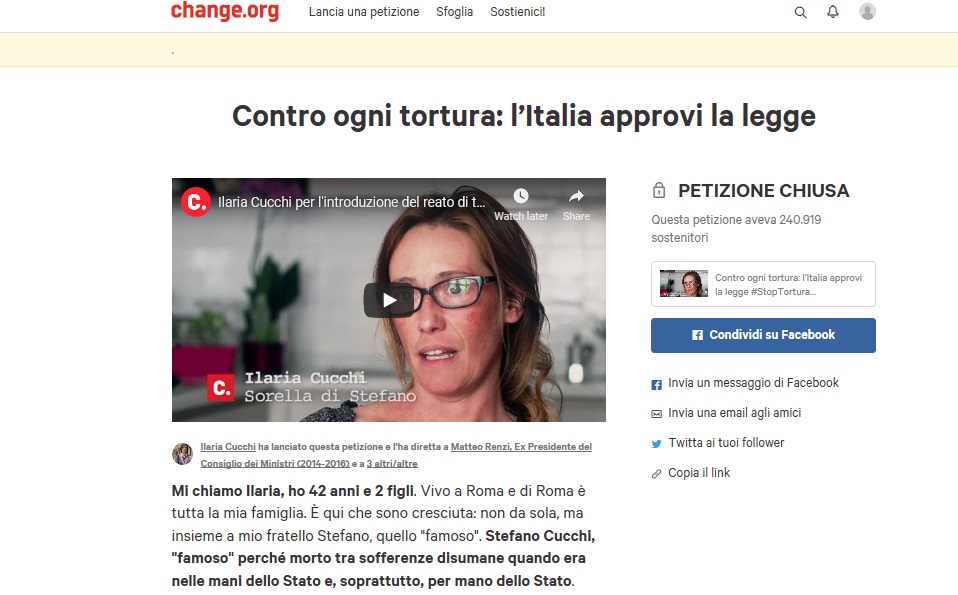
At an international level, Italy ratified the United Nations Convention against Torture in 1989, but did not introduce the convention into its legal system. In 2016, Ilaria Cucchi launched a petition on Change.orgto introduce a law against torture. She gained more than 240,000 signatures. Eventually, Italy introduced the law in 2017, motivated by the verdicts of the ECHR

Ilaria Cucchi's Change petition for Stefano Cucchi

However, according to the UN, as well as some experts and international human rights associations, the new law doesn’t respect international standards. As Human Rights Watch highlighted in their report, “the text of the new law requires ‘multiple acts’ for torture to occur. The [UN] convention, reflecting the international law, affirms ‘any act’ might be torture if it meets the gravity standard. The new law also requires that psychological trauma be ‘verifiable’ to establish ‘psychological’ torture”.

In the same report, Human Rights Watch said the discrepancy between the definition of torture drafted in the UN convention and the new law adopted by Italy (article 613-bis of the Penal Code) implies that “the restrictive definition and short statute of limitations – in a country whose judiciary system is infamous for its lengthy trials – raises the risks that torture will go unpunished, as well as hinder the ability of victims to get redress. This means that Italy will continue to be in violation of its international obligations.”.

Criticism about the new law, but for opposite reasons, came from some Italian right-wing movements too. On 12th July 2018, Fratelli D’Italia (Brothers of Italy) leader Giorgia Meloni announced on Twitter two proposals to abolish the crime of torture in Italy, on the grounds that the law would hinder the police officers to work properly. Her tweet has been widely criticised.

Two years before the introduction of the law, the current Deputy Prime Minister of Italy and Minister of the Interior Matteo Salvini criticised the verdict of the ECHR concerning the G8 in 2001 and said that a law against torture is a nonsense law that would allow criminals to blackmail police officers.

COULD CUCCHI’S CASE LEAD TO IMPROVEMENTS IN POLICING?

Based at the University of Genoa, professor of sociology Salvatore Palidda is one of the few Italian researchers focusing on the relationship between police and civil society.

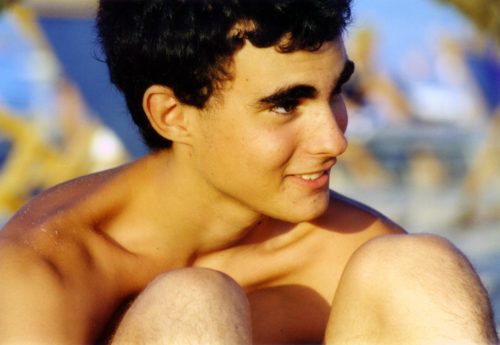
Stefano Cucchi before his death

According to Palidda, there are hundreds of cases like Cucchi’s, Aldrovandi’s and Uva’s that have not received media coverage, because they concern outcasts or immigrants without residency permits.

“The activity of police forces is always characterised by the coexistence of a peaceful management and a violent one. The discretion of power held by officers may turn into free will and lead to torture and murder”, Palidda said.

Key to understanding the violence perpetrated by some officers is their sense of impunity. “Some police managers tolerate and cover up illicit behaviours of officers in order to earn the respect of other subordinates and police trade unions,” Palidda explained.

Another factor that facilitates impunity is the reticence of police force members to report their colleagues. The stories of Aldrovandi, Cucchi and Uva, as well as the facts of the 2001 G8 in Genoa and many others are characterised by cover-ups and silence imposed by the officer’s superiors and colleagues. Indeed, the unexpected confession of the Carabinieri officer Francesco Tedesco regarding the death of Stefano Cucchi is a rare breach of this convention.

Palidda says one practical method of containing and controlling police brutality in Italy is to “establish an independent authority that would monitor and regulate the activities of police forces. This should bring impunity to an end and tribunals would investigate the alleged crimes without the support of police”.

However, he added, “these measures are possible only in a country where most of the population has an effective sense of democracy”.

Reference

Gay History: Remembering A Forgotten Sydney, Growing Up Above The Green Park Hotel

In the 56 years since Deirdre Cusack called the Green Park Hotel home, she has never forgotten the brown paper that covered the cellar windows.

It had been there ever since the Japanese tried to invade Sydney Harbour in 1942, carefully placed to block out lights across a city fearing submarine attack.

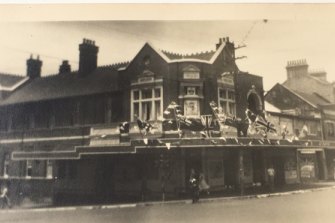
The Green Park hotel in 1954.

The image feels a world away from the vibrant inner city watering hole the “Greenie” has become in 2020. Today it is both a haven and a refuge for Sydney’s LGBTQI community – “more than just a bar,” as one columnist said.

On Sunday night the 127-year-old hotel will call last drinks, after it was sold to the surrounding St Vincent’s Hospital to become a mental health clinic.

Hospitality group Solotel, which has owned the pub for more than 30 years, finalised the $5 to $10 million sale to the hospital trustees last month.

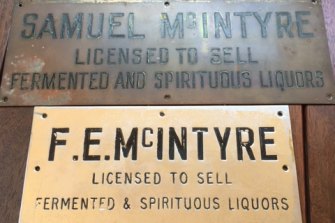
It caught the eye of Mrs Cusack, who was just one year old when her parents Sam and Fay McIntyre leased the Darlinghurst pub from Tooth’s Brewery in 1941. She would live above the corner pub –through a side door, past the ladies’ parlour and up the stairs – for 23 years until she married in 1964.

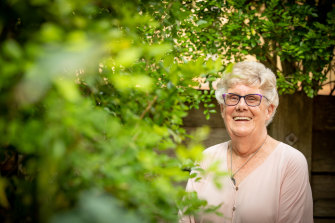
Deirdre Cusack at her home in Ormoston, Queensland.
Deirdre Cusack at her home in Ormoston, Queensland.CREDIT:PAUL HARRIS

Sydney felt different then. By law, publicans were not allowed to live off premises and the beer came in wooden barrels (the rum, too).

The pub closed at 6pm and never opened on Sundays. Across the road from the Green Park was a paper shop, a flower shop and a butcher with sawdust on the floor.

Darlinghurst was a place where everyone knew everyone,” Mrs Cusack said. “I can still remember the SP bookies. They had a place down in one of the terrace houses and you’d see this trail of men going to down to put a bet on the horses and coming back to the pub to have a beer.”

Until 1931 Australians were only allowed to bet on horse races with an on-course bookmaker, before radio and television gave rise to “starting price bookies”, who hung around the city’s pubs and clubs.

“I didn’t have any outside playing space, so I used to play out in the lane behind the pub and hit a tennis ball up against a brick wall with my friends,” Mrs Cusack said.

“Kings Cross then was not as bad as it became. My mother had no problem letting me and a girlfriend walk up to the Cross on Saturday night, when the [first-edition] papers would come out for Sunday.”

She still recalls the mouthwatering burgers she used to eye off at the Hasty Tasty diner under the Coca-Cola sign. “God, they looked delicious.”

When her father Sam died in 1952, Mrs Cusack said there was never any question that her mother would carry on managing the “drinking pub”.

“It didn’t have meals or anything like that. And the main bar was for men only, mainly doctors from the hospital.”

The ladies sat in the parlour. It was their meeting place, like going out for coffee, Mrs Cusack said. “One lady used to always wear a hat with a short veil over her face as she sipped her sherry. Another shelled her peas before going home to prepare dinner.”

And then there were the steel troughs under the beer taps, filled with gentian violet (a purple dye), “so when the beer overflowed, you couldn’t reuse it.”

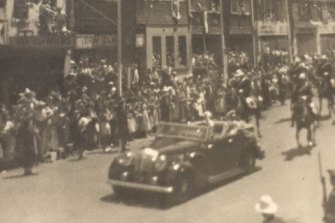
When the Queen came to town: The royal tour drives past the Green Park hotel in 1954.

Nothing stands out in Mrs Cusack’s memory quite as much as a 27-year-old Queen Elizabeth II arriving in Sydney on the Royal tour of 1954; a trip five years in the planning and the first televised event in Australian history.

But never mind the telly. “Queen Elizabeth and Prince Philip drove right past the hotel, decorated with all the flags. Every time there was a Royal visit everyone came out. To think they went past our place, it was very exciting.”

Less exciting were the years after Mrs Cusack returned from living in the UK, aged 20, and her mother put her to work in the pub, “a gruelling job”.

“I remember, she said to me one day, ‘for goodness sake. Go and get a job – the look on your face would turn the beer sour.'”

She didn’t wait a second, running out to grab the paper before finding a job in the office at Qantas.

Hotel licence plates of Mrs Cusack's father, Sam McIntyre.
Hotel licence plates of Mrs Cusack’s father, Sam McIntyre.

From her home in Queensland, Mrs Cusack said it was sad to see the Green Park serve its final drinks, although she was glad the facade and features will be protected under heritage laws.

“In Australia they knock down too many buildings,” she said. “We go to Europe and we admire all the old buildings. In Australia, often all you’ve got is concrete and glass.

Reference

The Forgotten Sydney of AC/DC

The Forgotten Sydney of AC/DC is a must watch mini documentary by the Sydney Morning Herald’s Tom Compagnoni, featuring the combined recollections of Mark Evans (Bass), Dave Evans (Vocals), Noel Taylor (drums) and Rob Bailey.

One of the most interesting revelations is that of session drummer Tony Currenti, owner of Tonino’s Penshurst Pizzeria, who played on High Voltage but had to turn the gig down due to passport issues.

Mark Evans also relates his views on the current Sydney scene, or lack of. Lets hope that it serves as a warning and that we fight to keep our local Perth music scene alive and kicking.

Reference