Category Archives: Article

Gay History: Shock the Gay Away: Secrets of Early Gay Aversion Therapy Revealed (PHOTOS)

With the recent announcement from Exodus International that it is closing its doors, and with its leaders offering apologies for their actions, the LGBT community is now left wondering, “Can this really be the end of ex-gay reparative therapy? Is it really over?” While the dust settles on all of this, we have to remind ourselves that it wasn’t too long ago that reparative therapies had less to do with praying the gay away and more to do with physically removing it.

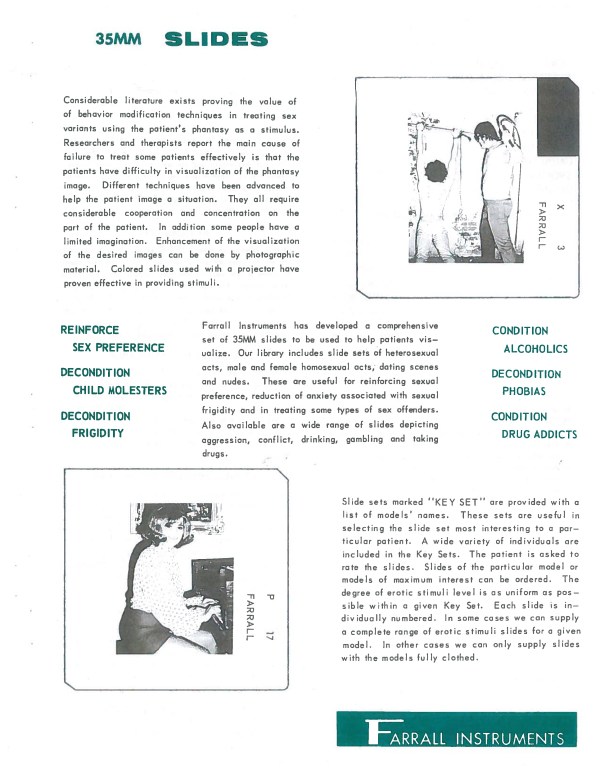
Before the American Psychiatric Association (APA) declassified homosexuality as a mental disorder in 1973, aversion therapy was used routinely in hopes that it would prevent or eliminate homosexual behavior. Devices like the one below were used by therapists treating homosexual patients, and some of them were even available for use in the convenience of your own home.

In the more brutal therapy sessions, the shock was delivered directly to the male patient’s genitals every time the patient experienced any form of positive response to the slides being shown to him. The following excerpt from a Farrall Instrument catalogue advertising electroshock therapy products details how the therapies worked:

Aversive conditioning has proven an effective aid in the treatment of child molesters, transvestites, exhibitionists, alcoholics, shop lifters, and other people with similar problems. Stimulus slides are shown to the patient intermixed with neutral slides. Shock is delivered with stimulus scenes but not with neutral scenes. In reinforcing heterosexual preference in latent male homosexuals, male slides give a shock while the stimulus relief slides of females do not give shock. The patient is given a “slide change” hand button which enables him to escape or avoid a shock by rejecting a shock cue scene.

In the 1940s, homosexuals were also involuntarily committed to psychiatric facilities by their families, with the hospitals promising that the patient would eventually leave the facility cured of their “sexual illness.” Not only were they not allowed to leave, but they were often subjected to cruel and inhumane treatments, including castrations, torture drugs, shock therapy, and lobotomies.

The surgeon most credited for the rise of lobotomies was Dr. Walter Freeman, who was best known for his transorbital lobotomy, or “ice pick lobotomy.” In this procedure, the surgeon entered the prefrontal area through the patient’s eye sockets, using an instrument that resembled a common household ice pick. Out of the thousands of lobotomies Freeman performed, up to 40 percent of them were on homosexuals.

In 1941, he performed a botched lobotomy on U.S. President John F. Kennedy’s sister, Rosemary, to help calm her mood swings and occasional violent outbursts. The results were abysmal. She lived the rest of her life seriously disabled in a private psychiatric hospital, along with most of Freeman’s homosexual patients, who were in perfect health before the surgery. By the end of the 1940s, lobotomies had won the acceptance of mainstream medicine and were being performed at Johns Hopkins, Mass General Hospital, the Mayo Clinic, and other top medical institutions.

Ultimately, the fate of the lobotomy would be decided by a pill. In 1954, a new drug called Thorazine began to make its way through state mental hospitals and was initially marketed as a chemical lobotomy. With a viable alternative now in hand that didn’t require surgery, the medical community turned definitively against lobotomy.

The APA removed homosexuality from its official Diagnostic and Statistical Manual of Mental Disorders (DSM) in 1973. This decision occurred against the backdrop of great cultural shifts brought on by the civil rights movements of the 1950s to the 1970s, beginning with the African-American civil rights movement and then continuing on with the women’s and gay rights movements.

In the late 1960s, Christianity Today began printing articles and editorials concerned with the growing homosexual movement. In the early 1970s, ex-gay ministries began to emerge. In 1973, the first contemporary ex-gay ministry, Love in Action, was started in Northern California. In 1976, the first national conference of “ex-gay” ministries was held, resulting in the formation of Exodus International.

Now, 37 years and 260 ministries later, Exodus International is closing its doors. It remains to be seen whether this is truly the demise of the ex-gay movement. What we at ONE National Gay & Lesbian Archives do know for sure is that the LGBT community has persevered, regardless of what was hurled at us physically, psychologically, or spiritually, then and now. We have endured and withstood, and have the history to prove it.

PHOTOS

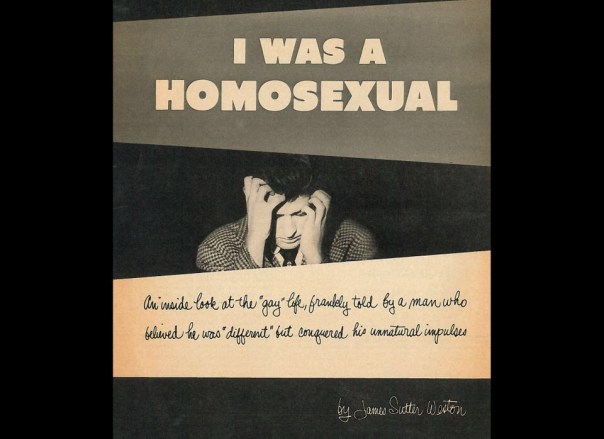
‘I Was A Homosexual’
Real Magazine, 1953 Courtesy of ONE National Gay & Lesbian Archives at USC Libraries Discover more images from LGBT history at www.onearchives.org

‘What Is A Homosexual?’

Confidential Magazine, 1957 Courtesy of ONE National Gay & Lesbian Archives at USC Libraries Discover more images from LGBT history at www.onearchives.org

‘Homosexuality Is A Mental Illness’
Confidential Magazine, 1957 Courtesy of ONE National Gay & Lesbian Archives at USC Libraries Discover more images from LGBT history at www.onearchives.org
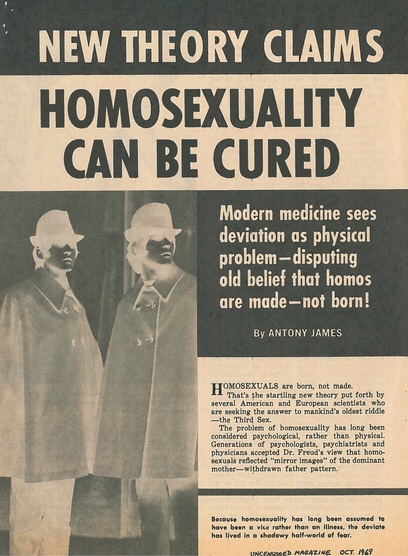
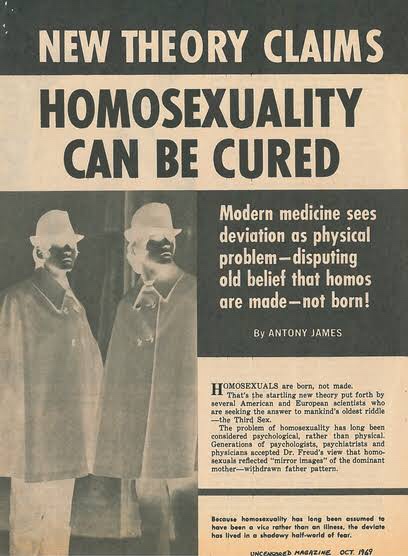
‘New Theory Claims Homosexuality Can Be Cured’
Uncensored Magazine, 1969 Courtesy of ONE National Gay & Lesbian Archives at USC Libraries Discover more images from LGBT history at www.onearchives.org
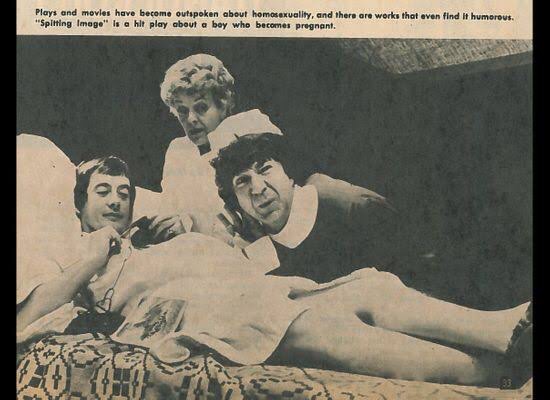
‘Spitting Image’
Uncensored Magazine, 1969 Courtesy of ONE National Gay & Lesbian Archives at USC Libraries Discover more images from LGBT history at www.onearchives.org

Reference

Gay History: Rules From A 1950s Gay Bar

An un-named Miami-area bar tried to make light of the hostile anti-gay atmosphere in the 1950s by posting the following set of sarcastic rules for its patrons to follow. They were published in One Magazine in 1955.

Rules and Regulations Covering The Behavior Of Our Customers:

1. First of all-remember that the customer is never right.

bostonspiritmagazine.com

2. Before drinking, each customer is to repeat six times “The customer is never right.”

nyinexile.com

3. When a customer wishes to go to the restroom–please raise hand and barmaid will direct you to proper door.

jonnodotcom.tumblr.com

4. Mother and daughter customers are not allowed to hold hands, kiss or pat each other on back. On week-ends they are not allowed to even talk to each other.

tucsongaymuseum.com

5. No after-shave lotion or talcum powder allowed on male customers.

vintageadbrowser.com

6. Lady customers may smoke only if male customer lights cigarette for them.

petermoruzzi.com

7. Lady customers may smoke only cigarettes with ivory tips, jewelled pipes or “Between the Acts” cigars.

chuckmanchicagonostalgia.wordpress.com

8. Male customers may NOT wave at friends or relatives passing by in the street because we’ll have none of those gestures in this place, my dear.

informercantile.com

9. Female customers may not talk at all–they are required to walk around the bar at least once every five minutes, dropping handkerchiefs and swooning at the far turn.

weheartit.com

10. Male customers must have hair on the chest–if you have none–please bring along another chest with the required hair on it. (We will gladly refrigerate it for you while you’re here).

serbagunamarine.com

11. Men may wear only stiff shirts and tails.

epgn.com

12. Women must wear make-up-false eyelashes and beauty marks will be provided at the bar for those women customers who have just come from the beach and don’t have their make-up kits with them.

founder.com

13. Male customers are required to spit periodically. Since we have no spittoons please use the guy next to you.

14. Any male customer caught buying a beer for another male customer will have to buy a beer for the barmaid too so that the management will know that the man customer is of high moral character and not one of those characters.

Brooklyn-lobular.brooklynpubliclibrary.com

15. Please do not be offended if we do not serve you. Here are but a few of the people we could not serve if they were able to patronize us : Socrates, Wilde, Proust, Da Vinci, Michelangelo, Queen Christina, Lord Tennyson etc. and far on into the night.

queermusicheritage.org

Reference

Gay History: Running A Gay Bar in the 1950s

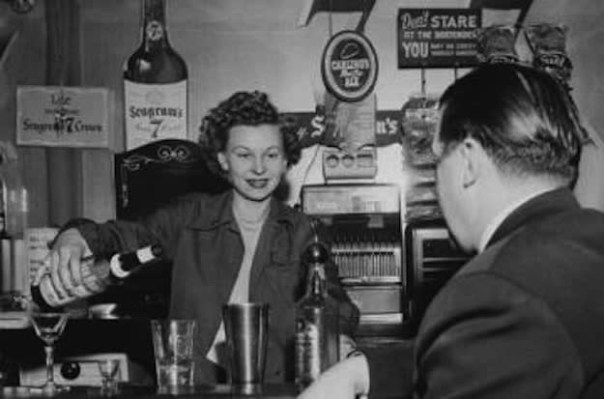
Back in 1950s Hollywood, a hole-in-the-wall neighborhood gay bar offered an attractive mix of fizz, friends and fabulousness. But the proprietor ran a tight ship, unlike any gay bar you might drop into today.

She didn’t allow anyone to buy a drink unless she knew them or a regular vouched for them. No kissing was allowed, and no hanky-panky in the restroom either. And she banned all effeminate behavior: absolutely no prancing around or wearing makeup.

As bar owner Helen P. Branson wrote in her 1957 memoir “Gay Bar,” she needed to lay low by keeping her standards high. Authorities from the police to the alcohol board preferred to keep gays from congregating anywhere, so she made sure to not draw attention.

But as her affectionate and perceptive book shows, Branson still managed to provide a safe and cozy place for men who liked men.

“Gay Bar” spent 60 years in obscurity. But then a Milwaukee author heard about it and brought it back to life in the newly published “Gay Bar: The Fabulous, True Story of a Daring Woman and Her Boys in the 1950s.”

In an interview, I asked author Will Fellows to describe what he discovered about gay life in Southern California more than six decades ago. I also rang up a local historian to learn about the history of gay bars in San Diego.

Randy Dotinga: What makes this book so unique?

Will Fellows: Helen Branson had many gay friends in the 1940s and 1950s, and she was an extraordinary straight ally at a time when being a straight ally of homosexuals was unheard of.

It occurred to me that a revival of the book seemed warranted. It struck me as a kind of curious, quaint and somewhat charming period piece of a book. Then I gradually began to realize it was more significant than that. It was a pretty groundbreaking book: by my estimation, the first book by a straight person that depicts the lives of gay people positively.

Q: What surprised you about the book and her story?

A: It was just really remarkable that a woman like Helen would have been courageous enough, or bold enough, to publish this book with her real name attached to it. She was writing this book when Senator McCarthy was still ranting and raving about things, a climate of what we could all call homophobia — great antagonism toward homosexuality and homosexuals, perversion and deviants, and all that sort of stuff.

Here she is working as a small bar proprietor, trying to make enough to live on until she could make it to retirement and Social Security checks. It would have been very reasonable and understandable if she would have elected to use a pseudonym, and she didn’t.

Q: What was her gay bar like?

Gay Bar in Philadelphia – Rittenhouse Square, 1953. John J. Wilcox Jr. LGBT Archives

A: There was nothing fancy, nothing high end about it. It was not a cocktail bar. It was bottled beer, bottled soft drinks and various things to munch on. She really saw it as a kind of public living room.

She had a lot of gay friends she’d developed since her divorce in the 1930s, and she had managed other gay bars for other owners. She didn’t like some of the practices that she had to go along with in managing the other establishments. She was able to do things her own way, in a way that created a hospitable, friendly and inviting atmosphere but still maintained safeguards against problems with law enforcement and hustlers and people who were not necessarily out to treat her gay friends well.

Q: Why did she have such a strong policy against acting too gay?

A: At that time, there some gay men who in their self-presentation, because of feeling so oppressed and belittled and beleaguered and trapped in their lives, they kind of acted out in almost wildly flamboyant ways, carrying on in ways that were more than just authentic expressions of maybe an degree of effeminacy on their parts.

These kinds of individuals — the screamers — were really a problem for these early homosexual rights organizations because they were just bad p.r. Many leaders of homosexual organizations tried to distance themselves from these people, whom they viewed as excessively flamboyant types.

There’s another thing that’s a fascinating dimension of homosexual thought at that time: even early gay rights organizations were very intent on enforcing pretty traditional standards of dress for men and women. In some ways, it’s similar to some of the early black civil rights organizers in the African-American population who felt the way to win acceptance was to be as white as possible in how you lived your life. Many gay men and lesbians had a similar kind of perspective: what we need to do is conform.

Q: It’s amazing how Branson discusses issues that are still big today: Can gays have healthy long-term relationships? (She said yes and proved it.) Does nature or nurture create homosexuality? Were you surprised by how modern the book sounds?

A: When I first read the book, I was kind of blinded by some of the things that rubbed me the wrong way. But I missed how she was insightful and progressive in some ways.

She had a real interest in finding patterns in life. When she realized that the men she found most appealing as friends when she was working as a palm reader in Los Angeles in the 1940s were gay, she became really intrigued by that.

She didn’t put gay men up on a pedestal and suggest they are paragons of virtue. But she points out that gay men are real people who have a fascinating mix of things going on in their lives, with various strengths and weaknesses.

In some ways, she’s very insightful. Some might read what she says and think she’s indulging in stereotypes, but I think some of the things are more like archetypes. There are some patterns that really hold up under modern-day scrutiny.

•••

Did San Diego have gay bars in the 1950s? Written sources suggest that it did indeed. “They were the one place where queer people could meet and come together,” said Frank Nobiletti, who teaches history at San Diego State and serves as president of the Lambda Archives of San Diego.

The bars were typically run by straight people, however, and were often less than fancy. “The drinks were watered down, and the places were not attractive,” Noblietti said. “It wasn’t until Lou Arko opened up the Brass Rail that someone really tried to create a bar that was worthy of its clientele.”

The Brass Rail, which opened its doors in Hillcrest in 1960 (after apparently moving from downtown), is still a gay bar — it’s now known for its ethnically diverse clientele — and sits at the corner of Robinson and Fifth. It’s said to be the oldest gay bar in the city.

Arko, a straight man who opened several gay bars in the city, died in 2009 at the age of 1992.

During the latter decades of his life, gay bars went from rarities in San Diego to common sights that serve a variety of types of gay people.

Unlike the past, kissing is most definitely allowed. And, as always, fabulousness is encouraged.

Reference

Back in 1950s Hollywood, a hole-in-the-wall neighborhood gay bar offered an attractive mix of fizz, friends and fabulousness. But the proprietor ran a tight ship, unlike any gay bar you might drop into today.

She didn’t allow anyone to buy a drink unless she knew them or a regular vouched for them. No kissing was allowed, and no hanky-panky in the restroom either. And she banned all effeminate behavior: absolutely no prancing around or wearing makeup.

As bar owner Helen P. Branson wrote in her 1957 memoir “Gay Bar,” she needed to lay low by keeping her standards high. Authorities from the police to the alcohol board preferred to keep gays from congregating anywhere, so she made sure to not draw attention.

But as her affectionate and perceptive book shows, Branson still managed to provide a safe and cozy place for men who liked men.

“Gay Bar” spent 60 years in obscurity. But then a Milwaukee author heard about it and brought it back to life in the newly published “Gay Bar: The Fabulous, True Story of a Daring Woman and Her Boys in the 1950s.”

In an interview, I asked author Will Fellows to describe what he discovered about gay life in Southern California more than six decades ago. I also rang up a local historian to learn about the history of gay bars in San Diego.

Randy Dotinga: What makes this book so unique?

Will Fellows: Helen Branson had many gay friends in the 1940s and 1950s, and she was an extraordinary straight ally at a time when being a straight ally of homosexuals was unheard of.

It occurred to me that a revival of the book seemed warranted. It struck me as a kind of curious, quaint and somewhat charming period piece of a book. Then I gradually began to realize it was more significant than that. It was a pretty groundbreaking book: by my estimation, the first book by a straight person that depicts the lives of gay people positively.

Q: What surprised you about the book and her story?

A: It was just really remarkable that a woman like Helen would have been courageous enough, or bold enough, to publish this book with her real name attached to it. She was writing this book when Senator McCarthy was still ranting and raving about things, a climate of what we could all call homophobia — great antagonism toward homosexuality and homosexuals, perversion and deviants, and all that sort of stuff.

Here she is working as a small bar proprietor, trying to make enough to live on until she could make it to retirement and Social Security checks. It would have been very reasonable and understandable if she would have elected to use a pseudonym, and she didn’t.

Q: What was her gay bar like?

A: There was nothing fancy, nothing high end about it. It was not a cocktail bar. It was bottled beer, bottled soft drinks and various things to munch on. She really saw it as a kind of public living room.

She had a lot of gay friends she’d developed since her divorce in the 1930s, and she had managed other gay bars for other owners. She didn’t like some of the practices that she had to go along with in managing the other establishments. She was able to do things her own way, in a way that created a hospitable, friendly and inviting atmosphere but still maintained safeguards against problems with law enforcement and hustlers and people who were not necessarily out to treat her gay friends well.

Q: Why did she have such a strong policy against acting too gay?

A: At that time, there some gay men who in their self-presentation, because of feeling so oppressed and belittled and beleaguered and trapped in their lives, they kind of acted out in almost wildly flamboyant ways, carrying on in ways that were more than just authentic expressions of maybe an degree of effeminacy on their parts.

These kinds of individuals — the screamers — were really a problem for these early homosexual rights organizations because they were just bad p.r. Many leaders of homosexual organizations tried to distance themselves from these people, whom they viewed as excessively flamboyant types.

There’s another thing that’s a fascinating dimension of homosexual thought at that time: even early gay rights organizations were very intent on enforcing pretty traditional standards of dress for men and women. In some ways, it’s similar to some of the early black civil rights organizers in the African-American population who felt the way to win acceptance was to be as white as possible in how you lived your life. Many gay men and lesbians had a similar kind of perspective: what we need to do is conform.

Q: It’s amazing how Branson discusses issues that are still big today: Can gays have healthy long-term relationships? (She said yes and proved it.) Does nature or nurture create homosexuality? Were you surprised by how modern the book sounds?

A: When I first read the book, I was kind of blinded by some of the things that rubbed me the wrong way. But I missed how she was insightful and progressive in some ways.

She had a real interest in finding patterns in life. When she realized that the men she found most appealing as friends when she was working as a palm reader in Los Angeles in the 1940s were gay, she became really intrigued by that.

She didn’t put gay men up on a pedestal and suggest they are paragons of virtue. But she points out that gay men are real people who have a fascinating mix of things going on in their lives, with various strengths and weaknesses.

In some ways, she’s very insightful. Some might read what she says and think she’s indulging in stereotypes, but I think some of the things are more like archetypes. There are some patterns that really hold up under modern-day scrutiny.

•••

Did San Diego have gay bars in the 1950s? Written sources suggest that it did indeed. “They were the one place where queer people could meet and come together,” said Frank Nobiletti, who teaches history at San Diego State and serves as president of the Lambda Archives of San Diego.

The bars were typically run by straight people, however, and were often less than fancy. “The drinks were watered down, and the places were not attractive,” Noblietti said. “It wasn’t until Lou Arko opened up the Brass Rail that someone really tried to create a bar that was worthy of its clientele.”

The Brass Rail, which opened its doors in Hillcrest in 1960 (after apparently moving from downtown), is still a gay bar — it’s now known for its ethnically diverse clientele — and sits at the corner of Robinson and Fifth. It’s said to be the oldest gay bar in the city.

Arko, a straight man who opened several gay bars in the city, died in 2009 at the age of 1992.

During the latter decades of his life, gay bars went from rarities in San Diego to common sights that serve a variety of types of gay people.

Unlike the past, kissing is most definitely allowed. And, as always, fabulousness is encouraged.

Reference

Shunned, Abused and Tortured: David Berry Portrays What Many Gay Men Endured In 1950s Australia

Needless to say, this has already screened, but as a fairly accurate portrayal of a gay man’s life in 1950s rural Australia, it is important to acknowledge this truly realistic acting on David Berry’s part, and the affect it had on him.

SHUNNED by society, treated like criminals and tortured. Actor David Berry was deeply impacted portraying what so many gay men endured.

ACTOR David Berry would be so traumatised by his television character some days that he’d break down in hysterics on set.

The 31-year-old star of A Place To Call Home would be totally inconsolable — a sobbing mess. And he began to take the heavy experiences of James Bligh with him at the end of a day’s filming.

It wasn’t just the heavy storylines from the Foxtel period drama, set in 1950s Australia — it was that so much truth was woven in to the fictional heir to a farming fortune.

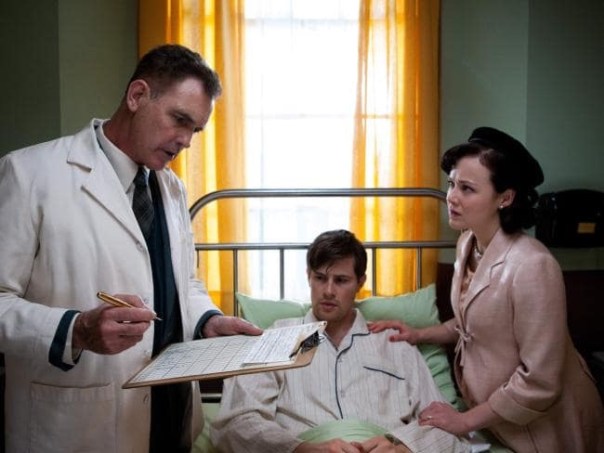
James is married but gay and, in the previous two seasons, has experienced everything from forbidden love to family disapproval and even horrific “treatments” including electroshock.

“In the beginning, I did a lot of research about what it meant to be a gay man in this era,” Berry said.

“But I also interviewed men who lived through this time, as well as those ordeals — including the so-called therapies. I looked at real stories so I could tell an honest one with these characters.

“That’s why I feel an enormous burden. I have a very real possibility to do James well because there are so many people who can relate to him.”

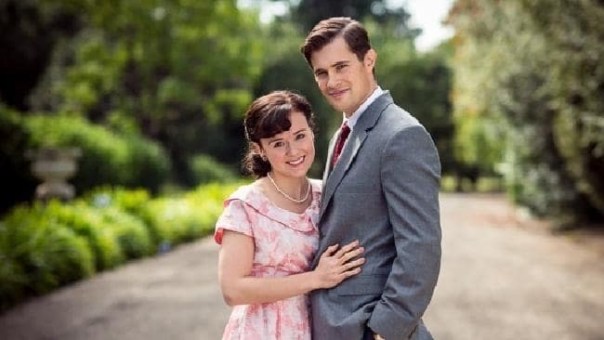
Elements of truth … David Berry interviewed gay men who lived through a far less accepting era to help shape his character James. Picture: SuppliedSource:Foxte

Berry has heard from many of those men, who say seeing a familiar battle waged on the small screen has had a profound impact.

For many, it helped them to come to terms with the often barbaric events they lived through. A few said they felt closure — an inner peace.

“That’s humbling,” Berry said. “It’s also very scary. I owe these people — they’re invested in the character.”

Those investments include very vivid recollections of being held against their will in hospitals, electrocuted, pumped full of drugs and mentally abused.

Things have certainly changed in 60 years. It’s no longer illegal to be a homosexual, society is far more accepting and horrific medical torture like that no longer takes place.

Shameful treatment … Some doctors in that era tried to “cure” homosexuality with barbaric practices like electroshock and drug aversion. Picture: SuppliedSource:Supplied

But Berry said things are still far from perfect.

“You only need to look at the gay marriage debate to see that,” he said.

“There’s still a certain amount of prejudice in society. I think if James was a character set in present day he’d still have his own battles.”

In fact, he’s heard from young gay men who say James has helped them to accept who they are.

“He’s relatable to those who can’t be who they are, whose families and communities don’t or won’t accept them.”

When Channel Seven axed A Place To Call Home in mid-2014, Berry and the rest of the cast bid farewell to their much-loved personas.

Several months later when Foxtel saved the drama — an unprecedented move in television — most of the actors were ecstatic. But Berry admits he felt sick with anxiety.

“It’s not that I was reluctant … let’s say apprehensive. I didn’t sleep very well. I even developed an eye twitch!”

Dynamic duo … David Berry and Arianwen Parkes-Lockwood, who plays his on-screen wife Olivia Bligh. Picture: Chris PavlichSource:News Limited

It wasn’t just that he’d moved on — Berry was in two war-themed documentaries in that year — but he was nervous to go back.

“Everything that James had gone through, I was terrified about having to live through that again.”

It’s why the actor argued for a progression of his character’s storyline in season three. Berry wanted to see James with a bit more strength, after so many episodes of being the victim.

“At the end of the day, he’s a wealthy and influential heir who’s a born leader. I thought more of that should come through.”

And while it will in the new episodes to air from this Sunday, there’s no shortage of heavy drama either.

Haunting storyline … There’s a scene in the new season of A Place To Call Home that left David Berry an emotional wreck for days. Picture: SuppliedSource:Supplied

There’s one particular scene coming up that Berry said still haunts him.

“I can’t say too much without giving it away, but there’s an argument between James (and his wife) Olivia that gets extremely heated. It really shook me.

“When you see it, I think you’ll understand why.

“For a week after, I had total anxiety. I’d start crying for no reason — just totally bawling on set or at home. I had zero control over it.”

The emotion of someone who doesn’t exist bleeding into his own world was a frightening experience, Berry said.

“I guess that’s all good for the character,” he laughed. “Probably not so much for my wife (in real life).”

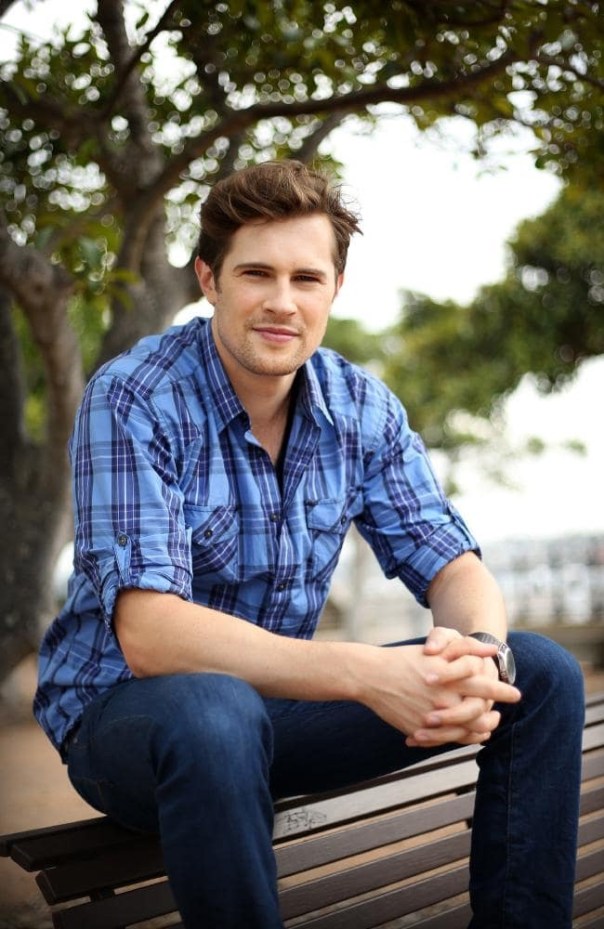
Grateful actor … David Berry says he’s thrilled to have a part in such a quality production.Source:News Corp Australia

There are many things about this show that Berry is fond of. The opportunity to tell such a rich story, for one, as well as the high production values and quality feel of the show.

But the young performer has also discovered something a white, heterosexual man rarely does.

“I’ve experienced what it feels like to not be loved or accepted for who you are,” he said.

“That’s a very potent emotion. It’s such a big, important part of life, and not having it is pretty rough — you end up wanting and yearning for it and there’s not a lot of room for anything else.”

But will James ever get the one thing he desperately wants? Berry said to watch this space.

In teasers for the upcoming season, his character is seen in flirtatious situations with a handsome doctor, hinting at a possible romantic dalliance to come.

“I think James will always fight to be at peace. Whether he gets there is another story. It’ll be difficult, given the time and his circumstances.

“But I know I’ll fight to get him there.”

Reference

Gay History: History Of The Ex-Gay Ministries and; The Abominable Legacy of Gay-Conversion Therapy

For most of the twentieth century, homosexuals were considered mentally ill by the psychiatric profession. This diagnosis was due entirely to prejudice and was not backed by legitimate science. Studies on homosexuality were poorly conceived, culturally biased and often used institutionalized mental patients as study subjects.

After reviewing the evidence, in 1973 the American Psychiatric Association removed homosexuality from its Diagnostic and Statistical Manual (DSM), which is its list of mental disorders. There was simply no logical or coherent reason to stigmatize gay and lesbian Americans. Not long after, every respected mainstream medical and mental heath association followed the APA’ lead.

Only four years before this monumental decision, the Stonewall riots in New York City’ Greenwich Village ushered in the dawn of the modern gay liberation movement. For the first time, GLBT people began to receive media visibility and coming out finally seemed like a viable option.

As more people chose to live honestly and openly, and gay communities began to flourish in areas such as New York and San Francisco, this presented a challenge to conservative churches, which had long believed that homosexuality was sinful behavior. Many conservative gay Christians were deeply conflicted between their beliefs and their sexual orientation. Their answer to this heart-wrenching dilemma was starting ex-gay ministries. Influenced by the miracle-seeking Jesus Movement, the ex-gay ministries adopted name and claim theology. Essentially, this meant if you kept repeating you had “changed” — even if you had not — God would eventually grant you the miracle of heterosexuality as a reward for your faith.

Love In Action was the first contemporary ex-gay ministry and was founded in 1973 in San Raphael, CA, by three men: John Evans, Rev. Kent Philpott, and Frank Worthen.

Evans ultimately denounced Love In Action after his best friend Jack McIntyre committed suicide in despair over not being able to “change.” Today, Evans assists people in healing from the psychological damage incurred by the ex-gay industry. Frank Worthen still remains with the ex-gay ministries.

Philpott, who is straight, wrote “The Third Sex? ” which featured six people who supposedly converted to heterosexuality through prayer.

Eventually, it was revealed no one in his book actually had changed, but the people reading it had no idea about the unsuccessful outcomes. As far as they knew, there was a magical place in California that had figured out the secret for making gays into straights.

As a result of Philpott’ book, within three years more than a dozen “ex-gay” ministries spontaneously sprung up across America. Two leading “ex-gay” counselors at Melodyland Christian Center in Anaheim, California – Gary Cooper and Michael Bussee – decided to organize a conference where members of the budding ex-gay movement could meet each other and network.

In September 1976, Cooper and Bussee’ vision came to fruition as sixty-two “ex-gays” journeyed to Melodyland for the world’ first “ex-gay” conference. The outcome of the retreat was the formation of Exodus International, an umbrella organization for “ex-gay” groups worldwide.

The group was rocked to its core a few years later when Bussee and Cooper acknowledged that they had not changed and were in love with each other. They soon divorced their wives, moved in together and held a commitment ceremony. In June 2007, Bussee issued an apology at an Ex-Gay Survivors Conference to all of the people he helped get involved in ex-gay ministries.

The Expansion of the Ex-Gay Industry

In 1979, Seventh Day Adventist minister Colin Cook founded Homosexuals Anonymous (HA). But Cook’ “ex-gay” empire crumbled a few years later after he was scandalized for having phone sex and giving nude massages to those he was supposedly helping become heterosexual.

As acceptance for homosexuality grew in the late 1970′, the “ex-gay” ministries had trouble attracting new recruits and growth of these programs stagnated. With the advent of AIDS, however, the ex-gay ministries found fertile growth potential from gay men who were terrified of contracting the virus.

Nonetheless, even as the epidemic spurred new growth, the “ex-gay” ministries remained relatively obscure in mainstream society. This dramatically changed in 1998 when the politically motivated Religious Right embraced the “ex-gay” ministries. Fifteen anti-gay organizations launched the “Truth In Love” newspaper and television ad campaign, with an estimated one million dollar price tag.

But the ad campaign soon backfired after University of Wyoming student Matthew Shepard was murdered because of his sexual orientation. Americans began to see the Truth In Love campaign as discriminatory and debated whether it had contributed to a climate of intolerance where hate could flourish. Due to withering criticism in the media, the anti-gay coalition ended its campaign prematurely.

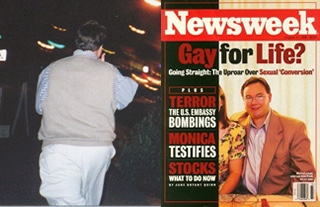
Additionally, “ex-gay” poster boy John Paulk, who the ad campaign sponsors placed on the cover of Newsweek under the large headline, “Gay for Life?,” was photographed in a Washington, DC gay bar in 2000. In 2003, Michael Johnston, the star of the Truth In Love television campaign, stepped down after allegedly having sex with men he met on the Internet. He has since moved to a residential sex addiction facility in Kentucky.

Today, the main financier and facilitator of ex-gay ministries is Focus on the Family, which hosts a quarterly symposium called Love Won Out. Exodus International has also grown to more than 100 ministries and has a Washington lobbyist. Recently, the Southern Baptist Convention has entered the fray by hiring a staff member to oversee ex-gay programs.

Sadly, as long as people are made to feel ashamed for who they are, these groups will exist. The best way to counter their negative influence is showing an honest and accurate portrayal of GLBT life. When people learn that they can live rich and fulfilling lives out of the closet, the appeal of these dangerous and ineffective groups invariably wanes.

The Abominable Legacy of Gay-Conversion Therapy

Joseph Nicolosi, one of the pioneers of the practice, died last week. But his contribution to the field of psychology lives on.

“I don’t believe anyone is really gay,” Joseph Nicolosi told the New York Times in 2012. “I believe that all people are heterosexual, but that some have a homosexual problem.” Nicolosi, a psychologist, had by then written four books, with titles like Healing Homosexuality and A Parents’ Guide to Preventing Homosexuality. In 1992, he founded the National Organization for Research and Therapy of Homosexuality, or NARTH, an organization of psychologists that aims to help gay people “realize their heterosexual potential” through a practice that is alternately known as “conversion therapy,” “reparative therapy,” and “reorientation therapy.” Nicolosi died on Thursday, March 8, at age 70; NARTH’s announcement said that the cause of death was the flu.

Before NARTH’s founding, there was a small but violent history of gay conversion attempts by doctors and psychologists. In the early 20th century, Freud made attempts using hypnosis. In the 1950s, Edmund Berger advocated a “confrontational therapy” approach to gay patients, which consisted of having practitioners yell at them that they were liars and worthless. Other attempts to convert LGBT people to heterosexuality throughout history have included methods like lobotomy, electroshock to the hands, head, and genitals, testicle transplants from dead straight men “bladder washing,” castration, female circumcision, nausea-inducing drugs, and beatings. But it was Nicolosi who brought gay conversion therapy into the mainstream, popularizing it among religious communities and the American right, and turning what was once a scattered practice of abuse into a multi-million-dollar worldwide industry.

Nicolosi grew up in New York; he received a master’s degree from the New School and spoke in a thick Long Island accent. But he spent his career in Los Angeles. He received a PhD in clinical psychology from an obscure school there, and opened his own clinic in Encino in 1980. He seems to have focused his practice entirely on gay conversion attempts. The time was ripe. The social movements of the 1960s and the gay rights activism that flourished after the Stonewall Riots in 1969 ignited profound fear on the American right. Nicolosi found an eager audience for his claim that heterosexuality and traditional gender conformity were not only superior, but that deviations from them were pathological.

What Nicolosi offered was a way for homophobic parents, patients, and psychologists to validate their anti-gay feelings as being legitimated by nature, science, and psychological evidence.

The field of psychology had never been particularly welcoming to queers, but by the time Nicolosi began practicing, attempts to convert gays had already been relegated to quackery. Freud wrote that the prognosis for heterosexual feeling in homosexual patients was grim (though he did believe that gay impulses could be reduced under some circumstances). In 1932, Helene Deutsch published her study “On Female Homosexuality,” which recounted Deutsch’s attempts to instill heterosexuality in a lesbian, only to find that her patient had begun a relationship with another woman while the study was ongoing. In her conclusion, Deutsch noted that a straight relationship would have been her preferred outcome, but also seemed to acknowledge her patient’s lesbian partnership as psychologically healthy.

In 1948, just a year after Nicolosi was born, Alfred Kinsey published his groundbreaking report Sexual Behavior in the Human Male, which found that homosexual tendencies were much, much more common than had previously been assumed. In 1978, the American Psychological Association removed homosexuality from its list of clinical disorders in its Diagnostic and Statistical Manual. Anti-gay stigma and bigotry were still rampant, both within the culture and within the field, but establishment psychologists had given up conversion attempts as a lost cause.

What Nicolosi offered was a way for homophobic parents, patients, and psychologists to validate their anti-gay feelings as being legitimated by nature, science, and psychological evidence. He established NARTH in 1992 alongside Benjamin Kaufman and Charles Socarides, two other obsessively anti-gay psychologists, explicitly in reaction to the removal of homosexuality from the DSM. They spoke in appealingly professional jargon, using phrases like “trauma” and “bad attachment.”

The organization became a network for homophobic psychologists, as well as a link between the industry and the growing number of ex-gay ministries and “pray away the gay” programs on the Christian right. Nominally secular, NARTH and Nicolosi frequently embraced religious rhetoric and prayer tactics, and were listed as ministry partners by a number of homophobic Christian organizations. The Thomas Aquinas Psychological Clinic, where NARTH is headquartered, is named after a Catholic saint. “We, as citizens, need to articulate God’s intent for human sexuality,” Nicolosi told Anderson Cooper in 2007. That same year, he told an ex-gay conference, “When we live our God-given integrity and our human dignity, there is no space for sex with a guy.”

Nicolosi’s treatments often involved multiple one-on-one sessions per week. According to accounts given by former patients, he seems to have used a mix of Berger’s “confrontational therapy” methods of emotional abuse with what’s known as aversion therapy. Aversion therapy applies pain or discomfort to patients in conjunction with homosexual impulses or behaviors: Everything from snapping a rubber band around a patient’s wrist to giving them electric shocks to making them vomit. He believed that gay people had bad relationships with their parents in absolutely all cases, and spent a great deal of therapeutic time probing patients for incidents of humiliation, neglect, or contempt in their childhoods.

In his books, he instructed parents to monitor their children for supposed early signs of queerness, including shyness or “artistic” tendencies in boys.

For unclear reasons, he also believed that viewing pornography could cure homosexuality, an idea he repeatedly defended to professional gatherings. Programs associated with NARTH have been found to administer beatings to their patients. The majority of Nicolosi’s patients, like the majority of conversion therapy victims generally, were children and adolescents, forced into his care by parents who were bigoted, sadistic, or merely scared. Nicolosi encouraged these impulses; he claimed to be able to identify and reverse homosexuality in children as young as three. In his books, he instructed parents to monitor their children for supposed early signs of queerness, including shyness or “artistic” tendencies in boys.

But even before Nicolosi died, NARTH was facing a host of challenges. It lost its nonprofit status in 2012, and an important accreditation from the California Board of Behavioral Sciences was revoked in 2011. Prominent members of the group have been embroiled in controversy, including George Rekers, a conversion therapy psychologist who was discovered to have hired a 20-year-old male sex worker in 2010. California outlawed the practice for minors in 2012, cutting deeply into NARTH’s L.A.-based operations; New Jersey, Illinois, New York, Vermont, and Oregon have since passed their own bans. But the group and its imitators continue to harm both children and adults.

Discovering that you are gay, or that your child is gay, is frightening. It means confronting a future that will not look like the one that you expected, and it means realizing that you and people you love will be subjected to stigma, discrimination, harassment, and the punitive whims of the state. It means staring down a life with fewer certainties and more vulnerabilities than a straight person’s. Scared and misguided people went to Nicolosi for help, and he exploited their fear to perpetuate hate, inflicting horrible pain and incalculable psychological damage on his victims in the process. It is unfortunate that his legacy won’t die with him.

References

Controversial Doctrines: Bishop Robert Clayton

Portrait c.1740 of Robert and Katherine Clayton, by James Latham.

CLAYTON, ROBERT (1695–1758), Irish bishop, born at Dublin in 1695, was a descendant of the Claytons of Fulwood, Lancashire, whose estates came to him by inheritance. He was the eldest of eight children of Dr. Robert Clayton, minister of St. Michael’s, Dublin, and dean of Kildare, and Eleanor, daughter of John Atherton of Busie. Zachary Pearce [q. v.] privately educated him at Westminster School. He entered Trinity College, Dublin, became B.A. 1714, a fellow the same year, M.A. 1717, LL.D. 1722, and D.D. 1730. He made the tour of Italy and France, and on his father’s death in 1728 came into possession of a good estate and married Catharine, daughter of Lord Chief Baron Donnellan. He gave his wife’s fortune to her sister, and doubled the bequest, under his father’s will, to his own three sisters.

A gift of 300l. to a distressed scholar recommended to him by Samuel Clarke (1675-1729) [q. v.] brought him the intimate friendship of Clarke. Clayton embraced Clarke’s doctrines and held to them through life. Queen Caroline, hearing from Dr. Clarke of Clayton’s remarkable beneficence, had him appointed to the bishopric of Killala and Achonry in 1729-1730. In 1735 he was translated to that of Cork and Ross, and in 1745 to that of Clogher. His first literary production was a letter in the ‘Philosophical Transactions,’ August 1738, on a French refugee, in Cork, suckling a child, with an account of a remarkable skeleton. In 1739 he published ‘The Bishop of Corke’s Letter to his Clergy,’ Dublin, 8vo, and ‘A Sermon preached before the Judges of Assize,’ Cork, 4to, and in 1740 ‘ The Religion of Labour,’ Dublin, 4to, for the Society for Promoting English Protestant Schools in Ireland. In 1743 he published ‘ A Replication . . . with the History of Popery,’ &c., Dublin, 4to, directed against the author of ‘A Brief Historical Account of the Vaudois.’ In 1747 appeared ‘The Chronology of the Hebrew Bible vindicated … to the Death of Moses,’ London, 4to, pp. 494. In 1749 he published ‘ A Dissertation on Prophesy . . . with an explanation of the Revelations of St. John,’ Dublin, 8vo; reprinted London, 8vo. This work aimed at reconciling Daniel and Revelation, and proving that the ruin of popery and the end of the dispersion of the Jews would take place in A.D. 2000. Two letters followed, printed separately, then together, 1751, London, 8vo, ‘An Impartial Enquiry into the Time of the Coming of the Messiah.’ In 1751 appeared the remarkable work written by him, though often asserted to be that of a young clergyman of his diocese, ‘Essay on Spirit . . . with some remarks on the Athanasian and Nicene Creeds,’ London, 1751, 8vo. This book, full of Arian doctrine, led to a long controversy. It was attacked by William Jones, Warburton (who described it as ‘the rubbish of old heresies’), Nathaniel Lardner, and many others. The Duke of Dorset, the lord-lieutenant, refused on account of this work to appoint him to the vacant archbishopric of Tuam. Several editions appeared in 8vo and 12mo, 1752, 1753, and 1759. In 1752 a work having appeared called ‘ A Sequel to the Essay on Spirit,’ London, 8vo, Clayton published ‘The Genuine Sequel to the Essay,’ &c., Dublin, 8vo. His next work was ‘A Vindication of the Histories of the Old and New Testament, in answer to the Objections of . . . Bolingbroke,’ pt. i., Dublin, 1752, 12mo. The same year he was made fellow of the Society of Antiquaries, having some years before been elected a fellow of the Royal Society. In 1753 he published ‘A Journey from Grand Cairo to Mount Sinai, and back again. In Company with some Missionaries de propaganda Fide,’ &c., translated from a manuscript which had been mentioned by Pococke in his ‘Travels.’ The chief interest lay in the account of the supposed inscriptions of the Israelites in the Gebel el Mokatab. The work was addressed to the Society of Antiquaries, and the author offered to give 500l., spread over five years, to assist an exploration in Mount Sinai, but the society took no steps in the matter. Mr. Wortley Montagu, however, was induced to visit the spot and give an account of the inscriptions. The same year Clayton published ‘A Defence of the Essay on Spirit,’ London, 8vo. His next work was ‘Some Thoughts on Self-love, Innate Ideas, Freewill,’ &c., occasioned by Hume’s works, London, 1754, 8vo. The same year he brought out the second part of the ‘Vindication of … the Old and New Testament,’ Dublin, 8vo, adorned with cuts. This produced Catcott’s attack on his theories of the earth’s form and the deluge. In 1756 appeared ‘Letters which passed between . . . the Bishop of Clogher and Mr. William Penn concerning Baptism,’ London, 8vo, in which he asserted the cessation of baptism by the Holy Ghost. Clayton’s friend Bowyer obtained a copy of the correspondence and published it. Clayton proposed, 2 Feb. 1756, in the Irish House of Lords, that the Athanasian and Nicene creeds should be expunged from the liturgy of the church of Ireland. His speech, taken in shorthand, was afterwards published, and passed through several editions. Some editions have appeared as late as Evesham, 1839, 12mo, and London, 1839, 12mo. It is also given in Sparke’s ‘Essays and Tracts on Theology,’ vol. vi. 12mo, Boston, U.S., 1826. No proceedings were taken against him until the publication of the third part of the ‘Vindication of … the Old and New Testament,’ Dublin, 1757, 8vo, when he renewed his attack on the Trinity and advanced so many doctrines contrary to the Thirty-nine Articles that the government was compelled to order a prosecution. A meeting of Irish prelates was called at the house of the primate, and Clayton was summoned to attend. Before the appointed time the bishop was seized with a nervous fever, and died 26 Feb. 1758. On being told that he would probably lose his bishopric, he replied that he should never survive the blow.

Clayton’s temper was amiable, his spirit catholic, his beneficence unbounded, and many of his gifts secret till after his death. As a member of the linen board he managed to get steady employment for the poor of his diocese of Clogher. His writings are fanciful, though not without ability.

Dr. Bernard, afterwards dean of Derry, who married Clayton’s niece, and was his executor, had several of his works in manuscript, but they have never been published. He gave copyright of all Clayton’s works for England to the learned printer Bowyer, who issued the three parts of the ‘Vindication’ and the ‘Essay on Spirit,’ with additional notes and index to the scripture texts, in 1 vol. 8vo, London, 1759, pp. 504.

WORKS

His first publication was a letter in the Philosophical Transactions, August 1738. In 1739 he published ‘The Bishop of Corke’s Letter to his Clergy,’ Dublin, and ‘A Sermon preached before the Judges of Assize,’ Cork, and in 1740 ‘The Religion of Labour,’ Dublin, for the Society for Promoting English Protestant Schools in Ireland. In 1743 he published ‘ A Replication . . . with the History of Popery,’ &c., Dublin, directed against the author of ‘A Brief Historical Account of the Vaudois.’ In 1747 appeared ‘The Chronology of the Hebrew Bible vindicated … to the Death of Moses,’ London, pp. 494. In 1749 he published ‘A Dissertation on Prophesy . . . with an explanation of the Revelations of St. John,’ Dublin; reprinted London. This work aimed at reconciling the Book of Daniel and the Book of Revelation, and proving that the ruin of popery and the end of the dispersion of the Jews would take place in 2000. Two letters followed, printed separately, then together, 1751, London, ‘An Impartial Enquiry into the Time of the Coming of the Messiah.’

In 1751 appeared the most notable work written by him (though often asserted to be that of a young clergyman of his diocese), ‘Essay on Spirit . . . with some remarks on the Athanasian and Nicene Creeds,’ London, 1751. This book, full of Arian doctrine, led to a long controversy. It was attacked by William Jones of Nayland, William Warburton (who described it as ‘the rubbish of old heresies’), Nathaniel Lardner, and others. The Duke of Dorset, the lord-lieutenant of Ireland, refused on account of this work to appoint him to the vacant archbishopric of Tuam. Several editions appeared in (1752, 1753, and 1759). In 1752 a work having appeared called ‘A Sequel to the Essay on Spirit,’ London; Clayton published ‘The Genuine Sequel to the Essay,’ &c., Dublin.

His next work was ‘A Vindication of the Histories of the Old and New Testament, in answer to the Objections of . . . Bolingbroke,’ pt. i., Dublin, 1752. In 1753 he published ‘A Journey from Grand Cairo to Mount Sinai, and back again. In Company with some Missionaries de propaganda Fide,’ &c., translated from a manuscript which had been mentioned by Edward Pococke in his ‘Travels.’ It included an account of the supposed inscriptions of the Israelites in the Gebel el Mokatab. The work was addressed to the Society of Antiquaries, and the author offered to assist an exploration in Mount Sinai, but the society took no steps in the matter. Edward Wortley Montagu, however, was induced to visit the spot and give an account of the inscriptions. The same year Clayton published ‘A Defence of the Essay on Spirit,’ London. His next work was ‘Some Thoughts on Self-love, Innate Ideas, Freewill,’ &c., occasioned by David Hume’s works, London, 1754. The same year he brought out the second part of the ‘Vindication of … the Old and New Testament,’ Dublin. This produced Alexander Catcott’s attack on his theories of the earth’s form and the deluge. In 1756 appeared ‘Letters which passed between . . . the Bishop of Clogher and Mr. William Penn concerning Baptism,’ London, in which he asserted the cessation of baptism by the Holy Ghost. Clayton’s friend William Bowyer obtained a copy of the correspondence and published it.

  • Thomas Barnard, later bishop of Limerick, who married Clayton’s niece, and was his executor, had several of his works in manuscript, but they were not published. He gave copyright of all Clayton’s works for England to the printer Bowyer, who issued the three parts of the ‘Vindication’ and the ‘Essay on Spirit,’ with additional notes and index to the scripture texts, London, 1759.

References

10 Strange And Obscure Secret Societies

Secret societies like the Illuminati and the Freemasons always seem to get the limelight. However, a good number of lesser-known groups have their own strange stories to tell that make them just as interesting as their more famous counterparts.

10: The Order Of Chaeronea

The Battle of Chaeronea in 338 B.C. saw the defeat of the Sacred Band Of Thebes, an elite ancient Greek fighting unit consisting of 150 soldiers and their male lovers. Years later, in 1899, Chaeronea lent its name to a slightly related but very different group—the Order of Chaeronea, an English political organization for gay men.

Cecil Ives founded the group as a means to communicate without fear of persecution. He patterned the order like a true secret society, devising ceremonies and passwords for its members. He also devised a strict set of rules, which kept members from using the society for sexual meet-ups.

Many prominent gay intellectuals joined—Oscar Wilde was reportedly a member. The organization soon spread around the world, enabling Ives to promote gay rights through books and numerous lectures. The order became a modern precursor to 20th-century rights organizations. After Ives’s death, the movement faltered, gaining steam again during the 1990s, especially in the US, and inspiring several offshoots.

9: The Knights Of The Apocalypse

This group formed in 1693 to protect the Catholic Church against the supposed coming of the Antichrist. Members were noted for their peculiar habits, such as bringing swords to work and wearing clothing with an elaborately drawn star on the breast.

The society’s strange behavior could be blamed on the founder himself, a merchant’s son by the name of Agostino Gabrino. A certifiably insane man, Gabrino was known to have disrupted two church masses by waving a sword and proclaiming he was the “King Of Glory.” At his group’s founding, he declared himself a “Monarch of the Holy Trinity” and devised a bizarre set of rules for his knights, which included the practice of polygamy and exclusive marriage to virgins.

A year after the group began, one knight betrayed its existence to the Inquisition. The order was disbanded, and its knights were thrown into prison.

8: The Order Of The Occult Hand

This group had just one goal. Its members inserted one particular phrase—“it was as if an occult hand had“—into newspapers and other publications.

The group had its beginnings when Joseph Flanders, a reporter for the Charlotte News, innocently used the phrase in a report. His friends liked the wording so much that they conspired to copy it as often as possible. Pretty soon, other reporters and journalists from all over the world began using the phrase in their own stories.

The conspiracy was undone in 2004, when James Fanega, a reporter for the Chicago Tribune, managed to track down the perpetrators and list the publications they had infiltrated. However, the group bounced back in 2006 when leader Paul Greenberg and the chief members announced that they had picked a new phrase to carry on the tradition. So far, no one has succeeded in finding out the new phrase, which Greenberg claims has already appeared in many major outlets.

7: The Calves’ Head Club

Shortly after the execution of King Charles I in 1649, his opponents formed the Calves’ Head Club to mock his memory. Members met once a year on January 30—the execution’s anniversary—and celebrated a very bizarre dinner, replete with a symbolic axe hung high over the dining room. The menu itself included calves’ heads (which represented the king’s royal office and supporters), a cod’s head (which represented the king himself), and a large pike and boar’s head stuffed with a smaller pike and an apple respectively (which represented the king’s tyranny).

The members had their own anthem that praised the king’s death, and they toasted it with wine from cups made of calf skulls. They also burned a copy of the king’s autobiography while swearing by John Milton’s treatise supporting his execution—Milton himself allegedly founded the group.

After the restoration of the monarchy in 1660, The Calves’ Head Club had to meet secretly. The club finally met its demise in February 1735, when a mob invaded a meeting and almost lynched several members.

6: The Arioi

The Arioi was a secret society that existed in Tahiti well before any Europeans found their way to the island. The group dedicated itself to the worship of its patron deity Oro, and it traveled extensively in search of new recruits.

To attract new applicants, members did elaborate ritual dances. Anyone could ask to join, but only the most handsome and beautiful were eventually selected, since the society linked beauty to spiritual prowess.

Members had to memorize their rituals perfectly to be recognized; otherwise, they were mocked mercilessly. In addition, the society preached a very free lifestyle, as evidenced by some of their sexually charged rituals. Their behavior evidently disgusted Christian missionaries assigned to the place, with one describing them as “privileged libertines who engaged in abominable, unutterable, and obscene exhibitions.”

For all their profligate habits, the Arioi had a strict rule that forbade childbirth; children would interfere with members’ duties. They routinely aborted the unborn and killed infants. Parents whose children did survive were demoted within the society.

Christian proselytizing eventually put an end to the Arioi by the 19th century.

5: The Scotch Cattle

In response to unfair working conditions, Welsh miners in the 1820s formed a secret union called the Scotch Cattle, named for the fearsome breed of Highland cattle. Each mining town in the region had its own chapter, led by a leader called “the Bull.” Together, members intimidated and attacked those perceived to oppose their cause. Their targets were not limited to oppressive bosses; scabs were also fair prey.

The group usually first sent a warning letter to the offending party. If it was ignored, the members—with blackened faces and dressed in cowskins—would invade the unlucky man’s home at midnight and destroy his property. Sometimes, the members would also beat the man; before leaving, the group would always paint a red bull’s head on the vicitm’s front door.

The Scotch Cattle continued its operations until the 1840s, when more organized trade unions took its place.

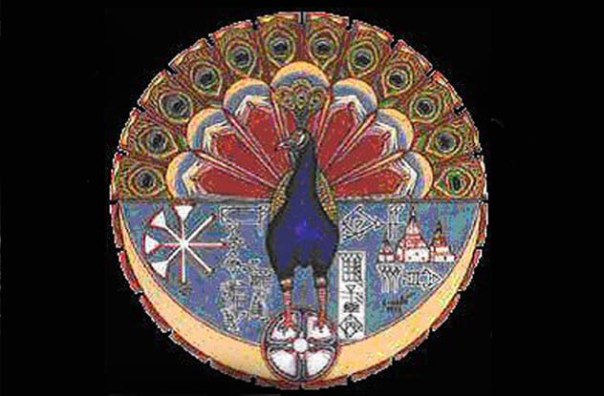
4: The Order Of The Peacock Angel

This secret society first formed in Britain in the 1960s, founded on the ancient religious beliefs of the Yezidis—a group that has faced accusations of devil worship from Muslims and Christians alike. The group actually worshiped Melek Taus, the Peacock Angel, represented by either a stone statue of a peacock or by a real live bird.

Members believe that the Peacock Angel has the power to answer prayers, and they revere it accordingly. Their meeting room is usually filled with hallowed images of the Peacock Angel; the altar itself is placed in the middle and contains the main symbol of veneration. Members often do a slow ritual dance around the altar while they silently express their wishes. The dance gradually takes on a frenzied pace as religious fervor builds. It ends in ecstatic bliss, with the members satisfied that they are now filled with the Peacock Angel’s divine power.

3: The Leopard Society

Although it had adherents in East Africa, the age-old bloodthirsty Leopard Society thrived mainly in West African nations such as Nigeria and Sierra Leone. Members of this cult engaged in ritual human sacrifice and cannibalism. Dressed up in a leopard skin and armed with sharp metal claws and teeth, a member would ambush and maul an unwary victim to death. Afterward, the leopard-man collected the victim’s blood and used it to make a potion that he believed would give him supernatural powers.

Following a spate of killings after World War I, colonial authorities in Sierra Leone and Nigeria wrongly thought they had successfully suppressed the cult. The Leopard Society again reared its ugly head after the Second World War, killing more than 40 people. Locals refused to provide any information about the cult because they believed in the leopard-men’s invulnerability. Only after the authorities managed to kill a member in 1948 did several witnesses express their willingness to help.

That breakthrough allowed authorities to find the cult’s hideout, imprison 34 members, and hang another 39. To spread the story that the members were just human, the authorities allowed several local chiefs to view the executions.

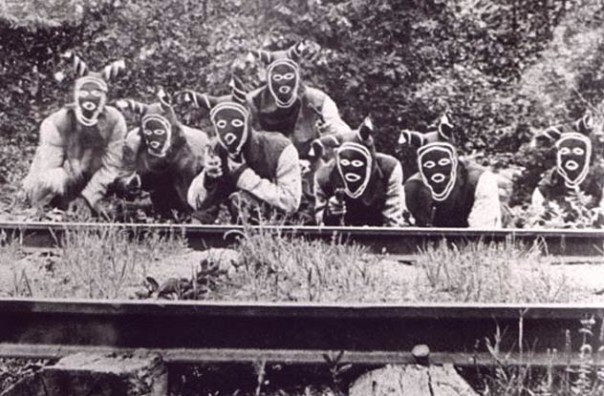
2: The Bald Knobbers

This secret vigilante group sprang up in response to the rampant crime and lawlessness that plagued southwest Missouri after the Civil War. Led by their founder, a hulking veteran named Nat Kinney, the Bald Knobbers of Taney Count—so-called because they held secret meetings above bare mountaintops—proceeded to take the law into their own hands. Wearing their coats backward and sporting odd, horned masks, the Bald Knobbers employed such heavy-handed tactics as whipping, beating, and even killing suspected criminals. Eventually, some Bald Knobbers began to use their membership to protect their own criminal activities.

The group’s notoriety peaked in 1887 when they killed two critics and injured their families. Authorities arrested 20 members and executed four others. A year later, Kinney—who had already left the group before the shootings—was killed by an opponent of the organization. Although minor conflicts continued after that, the Bald Knobbers had effectively reached their end by 1889.

1: The Secte Rouge

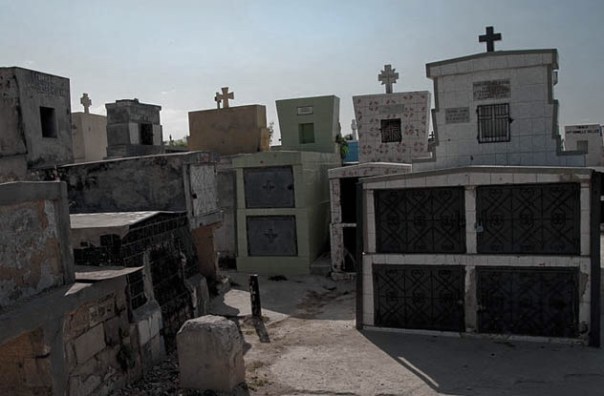
According to Zora Neale Hurston, an African-American author who traveled to Haiti in the 1930s, the Secte Rouge—also known as Cochon Gris or Vinbrindingue—was a secret society that practiced ritual cannibalism and grave robbing. Although she had no firsthand experience with the society, she had three indirect encounters with the cult.

The first occurred in 1936, when Hurston heard an odd beating of drums late one evening. She wanted to go out to investigate, but her house girl warned her to stay inside, or else they’d risk the cult’s wrath. The second time happened when she questioned a man burning rubber tires near her house. The man explained that the tire smoke was to deter the cult members from abducting his child. Finally, she saw militiamen on a secret operation to suppress an unknown group in a remote area of the island.

All this, plus accounts from locals who swore of the group’s existence, painted the portrait of a murderous cult that met at night in a cemetery and engaged in macabre rituals, including waylaying travelers for human sacrifices.

+: The Skoptsy

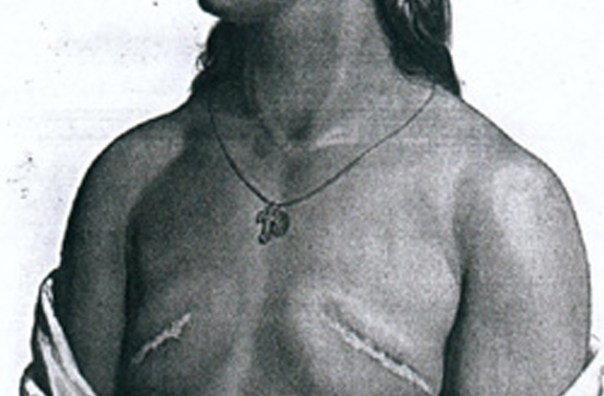
In line with some of the craziest rituals ever performed in the name of religion, the Skoptsy of Russia castrated themselves in the belief that it would lead to salvation. Founded in the mid-18th century by two peasants named Andrei Ivanov and Kondratii Selivanov, the Skoptsy believed that genitals and breasts appeared only after Adam and Eve ate the forbidden fruit; consequently, these organs must be removed to live a perfect life.

Shortly after the group’s founding, authorities arrested the two leaders and exiled them to Siberia. Selivanov managed to escape and traveled to St. Petersburg, where he titled himself the Messiah and claimed to be the reincarnation of Tsar Peter III. His preaching attracted many followers. It also attracted renewed attention from the authorities, who arrested him repeatedly and finally locked him up in a monastery for good.

Selivanov’s incarceration and subsequent death did nothing to dampen the sect’s growth. At its height, the Skoptsy were believed to number more than 100,000 and included members of the Russian elite. Following the Communist revolution, the sect’s numbers drastically declined. Today, it is estimated that there are just over 100 left, most located in the sect’s birthplace.

Reference

Gay History: 6 Sites Recognised By Britain For Significence To Gay History.

Originally published in the New York Times

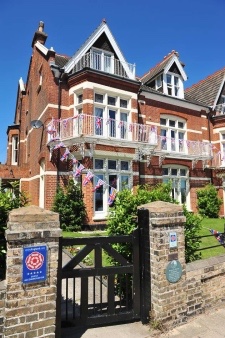
LONDON >> The former homes of the writer Oscar Wilde and the composer Benjamin Britten are among six sites that were recognized on Friday by an arm of the British government for their significance in lesbian, gay, bisexual and transgender history.

Oscar Wilde’s house, 34 Tite St, Chelsea

Historic England, a body that designates places worthy of legal protection, announced the decision, the latest in an effort to showcase “queer history.” Last September, Historic England gave the Royal Vauxhall Tavern, a well-known gay pub, a Grade II listing, meaning that it cannot be demolished, extended or altered without special permission.

Similar efforts to recognize gay history are underway in the United States. In June, President Barack Obama designated the Stonewall Inn, the location of a 1969 police raid and subsequent protest that galvanized the gay rights movement, and surrounding sites a national monument.

Duncan Wilson, the chief executive of Historic England, said in a telephone interview that the decision was “part of a deliberate policy of looking at what we protect and commemorate by a listing, to see that it is more representative of society as a whole.”

Through a research project called Pride of Place, people have been invited to submit places of importance to gay history, many of them forgotten or obscure. More than 1,600 submissions have come in. The project will in part serve to commemorate the 50th anniversary next year of the partial decriminalization of homosexuality in England and Wales (1967).

Britten House, Lowestoft. Home of the Suffolk born composer, Benjamin Britten.

There are about 500,000 listed buildings in England, of which 2.5 percent are in Grade I, reserved for buildings of “exceptional interest,” like Stonehenge and St. Paul’s Cathedral, and 5.5 percent are in Grade II*, which covers “particularly important buildings of more than special interest.” The rest are in Grade II.

Of the six sites announced Friday, one is a new Grade II listing: the grave of Amelia Edwards — a writer, musician and founder of Egyptology in St. Mary’s Churchyard, in Bristol. She and her partner, Ellen Braysher, lived in the nearby town of Weston-super-Mare, where Edwards died of pneumonia in 1892, a few months after Braysher’s death.

(The New York Times, which covered a lecture she delivered at the Brooklyn Academy of Music in 1889 on the hidden cities of ancient Egypt, said that an 1875 trip to that country was the “turning point” in her life.)

The Burdett-Coutts Memorial at St. Pancras Gardens in London, was given a higher listing, Grade II*. The memorial commemorates, among others, the Chevalier d’Eon, who was a French spy and diplomat in the 18th century.

A minor aristocrat from Burgundy, the chevalier was sent to Russia as a spy, fought in the Seven Years’ War and helped negotiate the treaty that ended war between Britain and France. The chevalier lived the first part of his life as a man, and the last few decades as a woman; the remarkable story has inspired art, plays and studies.

The Royal Vauxhall Tavern

The memorial is made of limestone, granite and marble, includes a sundial and is built in the High Victorian style.

The other four properties were given updated descriptions in the National Heritage List for England, the searchable online database that Historic England maintains, to better reflect their significance to gay history.

Two are well-known to arts lovers. One is the house at 34 Tite Street, in the Chelsea neighborhood of London, where Oscar Wilde lived with his wife, Constance Lloyd, and their two children from 1884 until his trial for “gross indecency” in 1895. Convicted of having sex with men, Wilde was sentenced to two years of hard labor. The law under which he was convicted was not repealed until 2003. (The house, which has a blue plaque outside, is still a private residence.)

After catching influenza, Edwards died on 15 April 1892 at Weston-super-Mare, having lived at Westbury-on-Trym, Bristol since 1864. She was buried in the churchyard of St Mary the Virgin, Henbury, Bristol, where her grave is marked by an obelisk, with a stone ankh at the foot.

The other is theRed House, in Aldeburgh, a town on the east coast of England. Benjamin Britten and his partner, the tenor Peter Pears, lived together there from 1957 until Britten’s death in 1976. (The house, run by the Britten-Pears Foundation, is open to the public.)

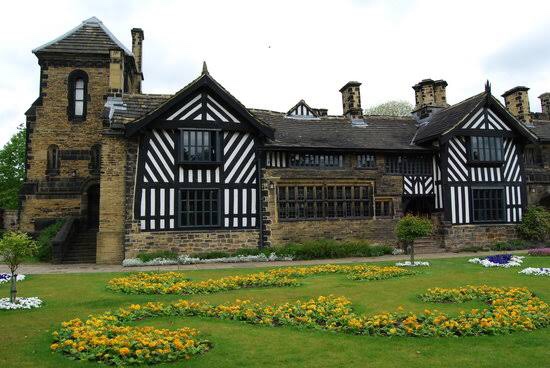
The remaining two sites were used by people who had to shield parts of their lives. n West Yorkshire, was the home of Anne Lister, a landowner who kept diaries, part of them in code, about her relationships with women. She lived in the house for several years with her partner, Ann Walker.

Shibden Hall, Halifax

In Chertsey, a suburban town in Surrey, is St. Ann’s Court, which Historic England cited as an example of “queer architecture.” The concrete house, built between 1936 and 1937, was the home of Gerald Schlesinger and Christopher Tunnard, a gay couple who designed their home in response to laws that made homosexual sex a crime, even in the privacy of one’s home.

Burdett-Coutts Memorial Sundial

The house’s master bedroom could be separated into two, promoting an image to visitors that the two men slept separately. Phil Manzanera, a guitarist with the rock band Roxy Music, later lived in the house.

St. Anne’s Court, Chertsey, Surrey

Reference

Gay History: The White Swan, The Gay Brothel in Vere Street.

By Lucy Inglis, @ The History Girls

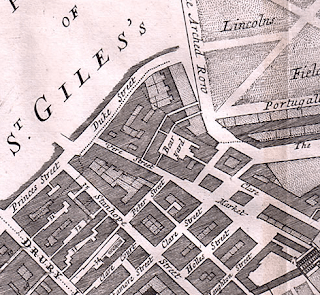
This weekend, the new Archbishop of Canterbury invoked the Easter spirit of tolerance and forgiveness into the debate over gay marriage and female bishops. As a state (if not a nation), we are still struggling to come to terms with the idea that gay people exist throughout society and may wish to avail themselves of the same legal rights and social status as their straight counterparts. I spend much of my working life researching and writing about the people on the margins of society in eighteenth century London, and in that work come across many ordinary gay men and women, trying to make their own way regardless of the strictures of their society. Gay men are usually more visible as their relationships were deemed criminal at the time and so it is court cases that illuminate their world. Two of the most famous are Mother Margaret Clapp’s Molly House (details of which can be found in the Old Bailey Online records) and The White Swan in Vere Street. Margaret Clapp’s was more of a coffee-house primarily for homosexual clientele, rather than a place where gay sex was traded for money and The White Swan was one of the first and most accurately recorded establishments had been set up with the aim of making money. It stood in a medieval street just to the west of Lincoln’s Inn and was part of the area of London obliterated by Kingsway.

On the 8th of July, 1810 the Bow Street Police raided The White Swan, a tumbledown pub of Tudor origin near Drury Lane. Twenty-seven men were arrested on suspicion of sodomy and attempted sodomy. The Swan had been going for less than six months, established by two men, Cook and Yardley, but already had a considerable following. Cook, whose wife ran an ordinary pub nearby called the White Horse, was proud of his amenities, and his clientele. ‘Cook states that a person in a respectable house in the city, frequently came to his pub, and stayed several days and nights together; during which time he generally amused himself with eight, ten, and sometimes a dozen different boys and men!’

Cook and Yardley had furnished their establishment for its purpose. ‘Four beds were provided in one room – another was fitted up for the ladies’ dressing-room, with a toilette, and every appendage of rouge, &c. &c….The upper part of the house was appropriated to youths who were constantly in waiting for casual customers; who practised all the allurements that are found in a brothel, by the more natural description of prostitutes. Men of rank, and respectable situations in life, might be seen wallowing either in or on beds with wretches of the lowest description’.

The account of The White Swan raid and the subsequent trials was told in 1813 by Robert Holloway, later Cook’s lawyer, who sold many copies of his account. In it there are some excellent observations of the behaviour within the house, where faux marriages were conducted to ‘bless’ the coming union. The descriptions of these weddings make them appear parodies of the traditional service, but they were common enough that on some level they must have had meaning for those performing in them.

Many of the clientele assumed feigned names, though often not very appropriate to their calling in life. ‘Kitty Cambric is a Coal Merchant; Miss Selina a Runner at a Police Office; Blackeyed Leonora, a Drummer; Pretty Harriet, a Butcher; Lady Godiva, a Waiter; the Duchess of Gloucester, a gentleman’s servant; Duchess of Devonshire, a Blacksmith; and Miss Sweet Lips, a Country Grocer. It is a generally received opinion, and a very natural one, that the prevalency of this passion has for its object effeminate delicate beings only: but this seems to be, by Cook’s account, a mistaken notion; and the reverse is so palpable in many instances, that Fanny Murry, Lucy Cooper, and Kitty Fisher, are now personified by an athletic bargeman, an Herculean Coal-heaver, and a deaf Tyre-Smith.’

It is Blackeyed Leonora, the drummer who stands out amongst this motley crowd, for Leonora was in fact most likely Thomas White, a 16 year old drummer in the Guards. Thomas was one of the ‘youths’ who stood and waited in the upper part of the house. He was a great favourite amongst the ‘more exalted’ visitors to the house, according to Holloway. Almost every single one of the people at The White Swan had an mainstream occupation. Of course, some were visitors, but White worked there. No doubt it was his youth, and probably his looks that drew attention from the richer customers. ‘White, being an universal favourite, was very deep in the secrets of the fashionable part of the coterie.’

Poor Thomas, who wasn’t even at The Swan on the night of the raid, was too quick to confess, and was executed for his ‘crime’ after almost a year in prison, although there was no doubt he was guilty of the charge. With him died a man called John Hepburn, aged 46, who had procured White’s services with the help of a witness who testified against him. White was prosecuted as the giver, rather than the receiver which made it almost impossible for the court to avoid the death sentence when the jury convicted him of ‘buggery’. At White’s execution, various people of note were recorded. ‘A vast concourse of people attended to witness the awful scene. The Duke of Cumberland, Lord Sefton, Lord Yarmouth, and several other noblemen were in the press-yard.’ The Duke of Cumberland had avoided a homosexual scandal by a razor thin margin in June 1810 when his servant was found with a cut throat after threatening to out his master after catching the Duke and his valet ‘in an improper and unnatural situation’. Perhaps Cumberland was one of White’s ‘fashionable’ guests.

Of the other 25 or so, only six were found guilty and they were pilloried and imprisoned, including Cook the landlord. Yardley seems to have got away with the whole thing. The White Swan affair raised the public ire, and the convicted men suffered at the hands of a mob. ‘The disgust felt by all ranks in Society at the detestable conduct of these wretches occasioned many thousands to become spectators of their punishment. At an early hour the Old Bailey was completely blockaded, and the increase of the mob about 12 o’clock, put a stop to the business of the sessions. The shops from Ludgate Hill to the Haymarket were shut up, and the streets lined with people, waiting to see the offenders pass….A number of fishwomen attended with stinking flounders and entrails of other fish which had been in preparation for several days.’

Cook refused to implicate any more clients, but on his release he began to blackmail two members of the clergy who had escaped prosecution during the raid and investigation. In what was probably a set-up, he ended up in prison for assault and debt and his whole family were systematically ruined in a series of evictions and persecutions that Holloway attributed to ‘influential persons’. Just how influential, we will never know.

Reference

Gay History: The Raid On The Tasty Nightclub, Victoria, 1994.

“There was an escalating feeling that the police weren’t finding what they were looking for. They knew they couldn’t find anything. They were getting angry.”

In the early hours of 7 August 1994, Victoria Police raided Tasty, a nightclub in Melbourne’s CBD with a predominately queer clientele. Hundreds were strip-searched under the pretence of a drug search. The police didn’t find a thing.

Ron Van Houwelingen is now a Melbourne LGBTI activist, but in 1994, he was a 27-year-old hospitality worker and Tasty regular. “You went down a laneway and the thumping music would get louder. It was a place for gays, lesbians, trans people, drag queens, artists – it was a place for freaks!” He describes the mood at Tasty as one of euphoria, of celebration. “We’d survived the ’80s, losing our friends to HIV. This was the start of something else.”

The venue managers had been tipped off several weeks prior that there would be a raid, but according to Van Houwelingen, no one had anticipated its scale. “Before it happened, it was just another fun night. The bar staff seemed apprehensive but the party went on.

“I happened to be in the ladies toilets, about 2am, with a friend having a chat. Suddenly we heard sirens and a female police officer stormed in and immediately separated my friend and me.”

What happened next was an ordeal that went for hours. Each of the 463 patrons at Tasty was made one-by-one to strip and bend over for Victoria Police to perform a search.

“I was one of the first to be stripped”, said Van Houwelingen, “but there were a couple of hours before of just standing with our hands against the wall, waiting to be searched. Anytime you got tired and your hands would slip, an officer would yell out: ‘Hey faggot! Hands back on the wall!’”

There was an added level of humiliation for Tasty’s drag queens and trans patrons, who were also forced to undergo a full strip-search.

By the time everyone was out of the club, a group of patrons had already begun planning their next move. Among the group was Melbourne lawyer Gary Singer, who mobilised activists to meet at LGBTI radio station Joy FM’s studios the next day. “We knew it was wrong, so we started the ball rolling, making some noise”, said Van Houwelingen.

The media backlash around the event was an embarrassment for the Kennett government at the time. There was disbelief in the LGBTI community and the wider public. Singer led a successful class action for some 250 Tasty patrons, on the grounds of false imprisonment and assault, winning each $10,000.

Tasty wasn’t the last time police assaulted queers in Australia. Last year, NSW police assaulted Jamie Jackson Reed, a young gay man attending Sydney’s Mardi Gras. The incident was followed some days later by a march of 1,500 people to a Sydney police station, against police brutality. Police around the country now routinely employ gay and lesbian liaison officers, but it’s clear from recent incidents like the one involving Jackson Reed that these liaison officers are nothing more than pinkwashing.

The police have a long history of terrorising the queer community. The first Mardi Gras itself was a political protest commemorating the Stonewall Riots. Although the protesters had originally obtained a permit to march, this was revoked, and the police violently suppressed the demonstration, arresting 53 people.

For many decades, day-to-day harassment of LGBTI individuals was par for the course. As homosexuality was widely criminalised until the 1980s, many men who were arrested for homosexuality still have that charge listed on their record.

Recently, Victoria Police apologised for the Tasty raid. While Van Houwelingen welcomed the apology, he had mixed feelings.  “Why has it taken 20 years?” More than an apology, the best thing to have come out of Tasty is the lesson that our strength lies in our ability to struggle collectively. For the patrons at Tasty, collectivity was something learned through the AIDS crisis. “AIDS was the reason we became active. There was a general camaraderie based on lost members of the community, lost friends. We were already a wounded community, but that gave us our strength.”

Victoria Police apologise for Tasty raid

Victoria Police has apologised for the “extreme” and “disturbing” 1994 Tasty raid in which more than 450 patrons at a Melbourne gay club were strip-searched.

Acting Chief Commissioner Lucinda Nolan apologised on behalf of the force on Monday night to coincide with the 20th anniversary of the raid this week.

“The events that took place that night caused distress to people and had a significant impact on the relationship between Victoria Police and the wider LGBTI [lesbian, gay, bi-sexual, transgender and intersex] community,” Acting Commissioner Nolan said.

“It is therefore appropriate we extend a sincere apology to the community members who were affected by the events on that night and also to the broader LGBTI community for the impact this event has had on our relationship over the past two decades.”

The apology took place during a meeting at the Victoria Police Museum with the police’s newly established LGBTI community reference group.

It was the morning of August 7, 1994, when the music died, the lights went on and, according to witnesses, police ordered the “faggots” to put their hands up.

The victims were not criminals, but clubbers targeted during a questionable drug raid.

The 463 patrons in Tasty Nightclub in Flinders Lane were subjected to a terrifying and humiliating strip search.

It was a political nightmare for Victoria Police and premier Jeff Kennett, who denounced the raid as “extreme” and “disturbing”.

A successful class action by about 250 patrons for false imprisonment and assault cost the state $6 million.

The class action was led by lawyer and former Melbourne deputy lord mayor Gary Singer, who was at the nightclub when 40 police burst through the doors.

He was one of first to receive the apology at the private function on Monday night.

“It’s really exciting. I think it’s a great leap forward when the Chief Commissioner comes out and apologises,” Mr Singer said.

“It’s never too late and 20 years is not a long time when it comes to governments or bureaucracies. This is the beginning of a new chapter and we are seeing the police force recognise they need to deal fairly with various sections of the community.”

Mr Singer led the class action on behalf of Sally Gordon, who was awarded $10,000. Other cases were settled for the same amount.

“We wind the clock back 20 years and they [Victoria Police] certainly weren’t doing anything then. We fought that case and it was a very difficult case to fight. It went on for six or seven weeks and every police witness gave a version of events that simply wasn’t true.”

Shaun Miller was also there during the raid.

“Even though it was 20 years ago, I still remember the lights going on,” he told LGBTI publication Melbourne Community Voice.

“I remember what the police said, I remember being strip-searched – the whole thing.

“In my view, the police apology is genuine and sincere and a wonderful milestone in the road to improving the relationship between the LGBTI community and the Victoria Police.”

Another vocal victim was pyjama king Peter Alexander: “The fact that innocent people in their hundreds were stripped and humiliated still haunts me and reminds me that we have to keep check on people in authority.”

Acting Commissioner Nolan said while the force has made “great strides” in the recognition and celebration of gender and sexual diversity, there was “still work to be done”.

“We know there is under-reporting of homophobic, biphobic and transphobic incidents and offences. We understand that in order for these reporting rates to increase, the LGBTI community needs to have confidence that their reports will be taken seriously and their complaints will be treated respectfully.

“We are committed to ensuring that every LGBTI Victorian has a positive experience with our organisation, whether they approach us for help, see us in the street, or indeed work within our ranks or aspire to do so.”

References