Gay, visually-impaired guy writing professionally (and freelance) about disabilities, being gay, articles, opinion pieces, poems and short stories for over 15 years, mainly for small, local magazines. Obtained my Graduate Certificate in Writing from the University of Technology, Sydney in 2004.
View all posts by timalderman →
How could somebody come to be executed not once – but twice? Such is the tale of one poor, unfortunate Londoner at a time of great cruelty and savagery.
Thomas Savage – appropriately named – was born in the parish of St Giles in the Fields and as a youth, became an apprentice to a certain Mr Collins, a vintner at the Ship Tavern at Ratcliff Cross. Three hundred years ago, when this story is set, Ratcliff was a hamlet by the river Thames with a strong ship building and provisioning tradition. It’s long been swallowed up by the borough of Tower Hamlets, located between Shadwell and LImehouse.
Thomas Savage at the “bawdy house” with Hannah Blay
turned up at the brothel with wine and he and the prostitute Hannah got merrily drunk and enjoyed themselves. But being a lady of the night, Hannah wanted money for her services. So she goaded Thomas into robbing Mr Collins. But Savage explained that Collins’ maid was always in the house. To which Hannah responded:
Hang her, a jade! Knock her brains out and I’ll receive the money and go anywhere with you beyond sea, to avoid the stroke of justice.
So the weak-willed Thomas headed back to the Collins house and avoided his master by climbing over a back wall. He then ran into the other servants having dinner including the ever-present maid. Rather unwisely, she took Savage to task for spending too much time at the bawdy house. He didn’t like this telling off and it convinced him to bash her brains out as Hannah had advised.
So one day he took a hammer and began hitting out at objects round the house to provoke her to anger. This presumably would have made it easier for him to do the foul deed. Thomas needed to psyche himself up to commit his first murder. Initially, the maid seems to have tried to ignore this bizarre behaviour but eventually she asked him to stop. He then threw the hammer and scored a direct blow on her head. Falling to the ground she screamed in pain and her assailant hesitated to deal the fatal blow. He just couldn’t quite do it.
But as she moaned and groaned, he set about her with the hammer and snuffed the maid’s life out. Breaking open a cupboard, he found a bag with sixty pounds of Collins’ money – a princely sum then – and escaped. Meeting up with Hannah, his behaviour became increasingly erratic. She asked for all of it but he only gave her half a crown and then fled. In the hours that followed, he sat by the roadside crying out loud about what he had done. Eventually, gathering his wits about him, he went down to a guest house in Greenwich.
The mistress of this guest house was very suspicious to find a seventeen year old with a bag bulging with so much money. She asked him what he was doing. Thomas lied that he was on his way to Gravesend to meet his master, a wine cooper. This story seemed a bit fishy and Thomas, now in a total panic, said she could contact his master and in fact, he’d leave the money with her until she did.
So without any of his ill-gotten gains, Savage wandered off to Woolwich. Shortly after, word of his murder filtered down from Ratcliff to Greenwich – it took much longer for news to get around in the days before mass media. The mistress of the guest house sent a group of men to go after him and he was found in a Woolwich ale house, head on the table and a pot of beer by his side. The men challenged him:
Tom – did you not live at Ratcliff?
Yes
And did you not murder your fellow servant? And you took so much money from your master? You must go along with us!
Yes, with all my heart.
In custody, Savage confessed everything. On the day he went to court, his fellow prisoners got him a bit drunk and he shopped Hannah Blay to the authorities. She was then arrested too. Thomas was sentenced to death – the punishment to be carried out at Ratcliff Cross. This was quite a common thing to do – to kill the criminal at the place where they had committed their crime. Savage’s hanging was postponed on one occasion and news was given to him as he was dressed up for the occasion.
What – have I got on my dying clothes? Dying clothes did I say? They are my living clothes, the clothes out of which I shall go into eternal glory. They are the best clothes that ever I put on!
At Ratcliff Cross, there seems to have been some sympathy among the crowd for this pathetic figure. He said a little prayer and the cart pulled away to leave him struggling at the end of the rope. A friend beat Thomas around the chest to shorten his misery. Motionless and left dangling for a while, everybody assumed Savage was dead. His friends then took him to a nearby house and laid his body on a table. Then something incredible happened. Thomas started breathing!
His throat rattled. He heaved upwards. Then his eyes and mouth opened. His teeth are described as having been “set before” – I assume that means in his death struggle, they’d been pushed out – and he couldn’t speak. Now you might think he’d have been let off but not in seventeenth century England. As word got out that Savage was alive, an embarrassed sheriff turned up and took him back to the gibbet. Poor Savage was then hanged all over again until he was properly dead.
His forlorn friends then spirited his seventeen year old body away to Islington where he was buried on the 28th October, 1668.
Politicians and journalists are more unpopular today than ever. But in the past in London they stood a very real risk of being lynched.
One of the many politicians to be lynched was Walter Stapleton, Lord Treasurer of England, who came to a sticky end around 1326.
Victim of the London mob
Not only was he in charge of the country’s finances, Walter was a leading adviser to King Edward II and – typical of the Middle Ages – also the Bishop of Exeter. Men of the cloth often held top political positions. It wasn’t seen as unusual or ungodly. However, the conduct of King Edward II was seen as less than godly – with accusations of sodomy and vice swirling around him.
Edward’s own queen launched a rebellion to overthrow her husband the king in alliance with her lover. Londoners came out in the queen’s support. The king fled towards Wales while his Lord High Treasurer, the unfortunate Walter, tried to lock the gates of the city to stop Queen Isabella getting in.
Stapleton is one of many medieval lynched politicians
However, he’d misjudged the mood of London very badly.
The hapless politician galloped as fast as he could towards St Paul’s cathedral to plead for sanctuary but was intercepted by the mob. They pulled Walter from his horse, stripped his clothes (worth a pretty penny I’m sure) and dragged him naked to the stone cross that once stood in Cheapside.
There, they proclaimed him a traitor and cut off his head – putting it on a pole and processing around with it. The same fate befell his servants whose headless bodies were tossed on a heap of rubbish by the river.
Over fifty years later, a similar gory end came to Simon Sudbury, the Lord Chancellor of England. Like Walter, Simon held some ecclesiastical positions as well as being a politician. He was both Bishop of London and Archbishop of Canterbury – so a top nob in medieval society. But the London mob soon cut him down to size – literally.
Poll tax leads to politicians being lynched
Regrettably, Sudbury supported the introduction of a poll tax. The peasants hated it. They marched on the capital and surrounded the Tower of London where Simon was holed up with the Lord Treasurer Sir Robert Hales.
Eventually, the two men were handed over to the mob and beheaded. Apparently, it took something like eight blows to take Simon’s head off. His skull can still be seen in the church of St Gregory in the town of Sudbury, Suffolk today.
Londoners have frequently rioted and attacked top politicians with no regard to their rank or position. During the 1780 anti-Catholic “Gordon Riots”, the house of Lord Mansfield was thoroughly plundered. In 1815, Lord Eldon – the Lord Chancellor – confronted a mob that was breaking the windows of his home with a shotgun in his hand!
Eldon was hated by the city populace as he’d managed to oppose just about every progressive measure you could imagine including the abolition of slavery and attempts to secure affordable bread for the poor (the Corn Laws).
But the pelting of Eldon’s house with stones wasn’t a one off incident. Lord Wellington – hero of Waterloo – was assailed in his carriage by Londoners – as was King George III and King George IV.
So if politicians think they’ve got it tough today – pick up a history book. They’re getting off lightly in our times – with just a few hostile tweets. In the past they were lynched – their lives cruelly cut short.
The Peasant’s Revolt: The Death Of Simon Of Sudbury
The death of the Black Prince in 1376 can be equated to an ocean landslide that eventually causes a devastating Tsunami on the other side of the world. I consider it the starting point of the Wars of the Roses, and also the catalyst for all that occurred after the arrival of Edward’s ten year old son on the English throne up to his usurpation in 1399. Putting the many effects of Edwards death aside, I would like to write of one man, Simon of Sudbury, who was caught up in all of this.
His Grace Simon of Sudbury” by Raden Ajeng Wahyuni
It was the events that occurred in six months of 1381 that lead to Sudbury’s violent death.
Sudbury, as his name suggests, was from the village of Sudbury in Suffolk, its not known when he left this small East Anglian village or if he ever revisited but he certainly had a great fondness for place. He founded St Leonard’s, a leper hospital in 1372 and the College of St Gregory two years later, in which his brother John said to have been warden.
In the late 1340’s Sudbury had studied in Paris, moved to Rome and then back again to England for a post in the court of Edward III. It was as Archbishop of Canterbury, at Westminster Abbey, that he crowned the little son of the Black Prince as Richard II King of England. Five years later it was Sudbury, in his new post as Chancellor of England, that the rioters used to vent their anger.
England had not recovered from the Black Death, workers were few, jobs were many, the treasury was empty and in an effort to counter this taxation was increased. This, of course, angered the the poor, for they had come to like their ‘freedom.’ In 1380, to rectify the situation, a poll tax to raise money to help England financial situation was introduced, those in authority thought it a grand idea the rest of the country did not, consequently, there was trouble. Between 13th and the 15th June over 100,000 peasants marched on the countries capital led by one Wat Tyler. No doubt, watching the proceedings from within the Tower of London, Sudbury may have seen the young king do his bit in appeasing the men, making promises (that he didn’t keep). Sudbury and Robert Hales, England’s Treasurer soon realised that their lives where in danger when they saw that the rioters had siezed an opportunity and entered through the gates of the Tower of London. Hiding in the White Tower, Sudbury was found praying. Both men were dragged out and both were decapitated. Sudbury must have suffered greatly, his ear was sliced and the bone in his neck had more than one cut leading us to believe that it must have taken more than two strokes to take off his head. Both Sudbury and Hales heads put on poles and carried about the city by the rioters. As mentioned earlier, the boy king never kept his promise to the peasants and eventually Wat Tyler’s head was exchanged for that of Sudbury’s.
His body was taken to Canterbury but his head elsewhere.
Sudbury’s mummified skull rest in a small cupboard in St Gregory’s Sudbury and here we can see poor Simon’s skull, with skin still attached.
In 2011, over six hundred years after his death, forensic artist Adrienne Barker from the University of Dundee reconstructed Sudbury’s head using detail from skull. Adrienne said,
“I hope people in Sudbury like what we’ve done but he’s a strange looking fellow so it’ll be interesting to see their reactions.”
Sudbury’s mummified skull rest in a small cupboard in St Gregory’s Sudbury and here we can see poor Simon’s skull, with skin still attached.
In 2011, over six hundred years after his death, forensic artist Adrienne Barker from the University of Dundee reconstructed Sudbury’s head using detail from skull. Adrienne said,
“I hope people in Sudbury like what we’ve done but he’s a strange looking fellow so it’ll be interesting to see their reactions.”
Islam once considered homosexuality to be one of the most normal things in the world.
The Ottoman Empire, the seat of power in the Muslim world, didn’t view lesbian or gay sex as taboo for centuries. They formally ruled gay sex wasn’t a crime in 1858.
But as Christians came over from the west to colonize, they infected Islam with homophobia.
The truth is many Muslims alive today believe the prophet Muhammad supported and protected sexual and gender minorities.
But go back to the beginning, and you’ll see there is far mre homosexuality in Islam than you might have ever thought before.
1 Ancient Muslim borrowed culture from the boy-loving Ancient Greeks
The Islamic empires, (Ottoman, Safavid/Qajar, Mughals), shared a common culture. And it shared a lot of similarities with the Ancient Greeks.
Persianate cultures, all of them Muslim, dominated modern day India and Arab world. And it was very common for older men to have sex with younger, beardless men. These younger men were called ‘amrad’.
Once these men had grown his beard (or ‘khatt’), he then became the pursuer of his own younger male desires.
And in this time, once you had fulfilled your reproductive responsibilities as a man you could do what you like with younger men, prostitutes and other women.
Society completely accepted this, at least in elite circles. Iranian historian Afsaneh Najmabadi writes how official Safavid chroniclers would describe the sexual lives of various Shahs, the ruling class, without judgment.
There was some judgment over ‘mukhannas’. These were men (some researchers consider them to be transgender or third gender people) who would shave their beards as adults to show they wished to continue being the object of desire for men. But even they had their place in society. They would often be used as servants for prophets.
‘It wasn’t exactly how we would define homosexuality as we would today, it was about patriarchy,’ Ludovic-Mohamed Zahed, a gay imam who lives in Marseilles, France, told GSN.
‘It was saying, “I’m a man, I’m a patriarch, I earn money so I can rape anyone including boys, other slaves and women.” We shouldn’t idealize antique culture.’
2 Paradise included male virgins, not just female ones
There is nowhere in the Qu’ran that states the ‘virgins’ in paradise are only female.
The ‘hur’, or ‘houris’, are female. They have a male counterpart, the ‘ghilman’, who are immortal young men who wait and serve people in paradise.
‘Immortal [male] youths shall surround them, waiting upon them,’ it is written in the Qu’ran. ‘When you see them, you would think they are scattered pearls.’
Zahed says you should look at Ancient Muslim culture with the same eyes as Ancient Greek culture.
‘These amrads are not having sex in a perfectly consenting way because of power relationships and pressures and so on.
‘However, it’s not as heteronormative as it might seem at first. There’s far more sexual diversity.’
3 Sodom and Gomorrah is not an excuse for homophobia in Islam
Like the Bible, the Qu’ran tells the story of how Allah punished the ancient inhabitants of the city of Sodom.
Two angels arrive at Sodom, and they meet Lot who insists they stay the night in his house. Then other men learn about the strangers, and insist on raping them.
While many may use this as an excuse to hate gay people, it’s not. It’s about Allah punishing rape, violence and refusing hospitality.
Historians often rely on literary representations for evidence of history. And many of the poems from ancient Muslim culture celebrate reciprocal love between two men. There are also factual reports saying it was illegal to force your way onto a young man.
The punishment for a rape of a young man was caning the feet of the perpetrator, or cutting off an ear, Najmabadi writes. Authorities are documented as carrying these punishments out in Qajar Iran.
4 Lesbian sex used as a ‘cure’
Fitting a patriarchal society, we know very little about the sex lives of women in ancient Muslim culture.
But ‘Sihaq’, translated literally as ‘rubbing’, is referenced as lesbian sex.
Sex between two women was decriminalized in the Ottoman Empire in the 16th century, probably because it was deemed to have very little importance.
Physicians believed lesbianism developed from a hot itch on a woman’s vulva that could only be soothed by another woman’s sexual fluid. This derived from Greek medicine.
Much later, the 16th century Italian scientist Prosper Alpini claimed the hot climate caused ‘excessive sexual desire and overeating’ in women. This caused a humor imbalance that caused illnesses, like ‘lesbianism’. He recommended bathing to ‘remedy’ this. However, because men feared women were having sex with other women at private baths, many husbands tried to restrict women from going.
5 Lesbian ‘marriage’ and legendary couples
In Arabic folklore, al-Zarqa al-Yamama (‘the blue-eyed woman of Yamama’) fell in love with Christian princess Hind of the Lakhmids. When al-Zarqa, who had the ability to see events in the future, was crucified, it was said the princess cut her hair and mourned until she died.
Many books, especially in the 10th century, celebrated lesbian couples. Sapphic love features in the Book of Salma and Suvad; the Book of Sawab and Surur (of Justice and Happiness); the Book of al-Dahma’ and Nisma (of the Dark One and the Gift from God).
‘In palaces, there is evidence hundreds of women established some kind of contract. Two women would sign a contract swearing to protect and care for one another. Almost like a civil partnership or a marriage,’ Zahed said.
‘Outside of these palaces, this was also very common. There was a lot of Sapphic poetry showing same-sex love.’
As Europeans colonized these countries, depictions of lesbian love changed.
Samar Habib, who studied Arabo-Islamic texts, says the Arab epic One Thousand and One Nights proves this. He claims some stories in this classic show non-Muslim women preferred other women as sexual partners. But the ‘hero’ of the tale converts these women to Islam, and to heterosexuality.
6 Muhammad protected trans people
‘Muhammad housed and protected transgender or third gender people,’ Zahed said. ‘The leader of the Arab-Muslim world welcomed trans and queer people into his home.
‘If you look at the traditions some use to justify gay killings, you find much more evidence – clear evidence – that Muhammad was very inclusive.
‘He was protecting these people from those who wanted to beat them and kill them.’
7 How patriarchy transformed Islam
Europeans forced their way into the Muslim world, either through full on colonialism, like in India or Egypt, or economically and socially, like in the Ottoman Empire.
They pushed their cultural practices and attitudes on to Muslims: modern Islamic fundamentalism flourished.
While the Ottoman Empire resisted European culture at first, hence gay sex being allowed in 1858, nationalization soon won out. Twelve years later, in 1870, India’s Penal Code declared gay sex a crime. LGBTI Indians finally won against this colonial law in 2018.
But what is it like to be colonized? And why did homophobia get so much more extreme?
‘With the west coming in and colonizing, they think [Muslims] are lazy and passive and weak,’ Zahed said.
‘As Arab men, we have to prove we are more powerful and virile and manly. Modern German history is like that, showing how German nationalization rose after [defeat in] the First World War.
‘It’s tribalism, it’s the same problem. It’s about killing everyone against my tribe. I’m going to kill the weak. I’m going to kill anyone who doesn’t fulfil this aggressive nationalistic stereotype.’
Considering the male-dominant society already existed, it was easy for the ‘modern’ patriarchy to end up suppressing women and criminalizing LGBTI lives.
‘In the early 20th century, Arabs were ashamed of their ancient history,’ Zahed added. ‘They tried to purify it, censor it, to make it more masculine. There had to be nothing about femininity, homosexuality or anything. That’s how we got to how are today.’
8 What would Muhammad think about LGBTI rights?
Muhammad protected sexual and gender minorities, supporting those at the fringes of society.
And if Muslims are to follow in the steps of early Islamic culture and the prophet’s life, there is no reason Islam should oppose LGBTI people.
For Zahed, an imam, this is what he considers a true Muslim.
‘What should we do if we call ourselves Muslims now? Defend human rights, diversity and respect identity. If we trust the tradition, he was proactively defending sexual and gender minorities, and human rights.’
Dick Hughes is mentioned in the Newgate Calendar as a robber who came to London at the start of the eighteenth century to make money the dishonest way. He’d already been arrested and tried in Worcester for theft. On that occasion he’d been whipped at the cart’s tail “crying carrots and turnips” as he was dragged along and beaten.
Hughes fell into bad company the moment he arrived in the capital. After being caught stealing three shillings from a house in Lambeth, he pleaded for mercy at the Kingston-upon-Thames assizes and was not hanged – as could easily have happened. But instead of turning a new leaf, Hughes became ever more audacious.
He robbed houses in Tottenham Cross, Harrow-on-the-Hill, Hackney, Hammersmith and a tobacconist in Red Cross Street. His luck run out when Hughes was caught breaking into the house of a certain George Clark in Twickenham. Very soon, he was languishing in Newgate prison.
During a previous short stretch of imprisonment at the Fleet Prison, Hughes had married a very kind-hearted woman. On the 24th June, 1709, she had to watch her husband transported in a cart through the parish of St Giles towards the gallows at Tyburn. As the cart paused, she ran up to Hughes and asked whether she or the sheriff were supposed to buy the rope to hang him!
Her husband, a bit thrown by this question, said it was the sheriff’s business to do that. Rather sheepishly, his wife produced a length of rope:
I wish I had known so much before. it would have saved me twopence for I have been and bought one already.
Sarcastically, Hughes advised her to keep it as it might come in useful for her second husband. And so, aged 30, Hughes dangled at the end of rope provided by the authorities and not his dear lady wife. Afterwards, he was taken to the Surgeons’ Hall and dissected – a common practice for the bodies of poor criminals.
Medicine balls, for those of you who haven’t been to a gym or never accidentally kicked one thinking it was like a soccer ball (true story), are heavy weighted balls coming in a variety of sizes and weights (with the biggest we could find ringing in at a whopping 150 pounds) with a diverse range of fitness applications. But why exactly are they called medicine balls when, at its core, a medicine ball is just a big heavy ball?
For starters, medicine balls are noted to be one of the most diverse pieces of exercise equipment one can own, useful for toning almost every part of the body, and are also extensively used in various forms of physical therapy.
While details are sparse on the history of medicine balls, we can reliably track their usage back around 3000 years, where they were used by Persian wrestlers looking to become stronger. In Ancient Greece, Hippocrates considered them to be an essential tool for helping injured people regain mobility and he advised people to use them as a general, all purpose way of remaining healthy.
This all brings us back to the origin of the name. The word “medicine” was long synonymous with the word “health”. For example, it’s noted that Renaissance physician Hieronymus Mercurialis advised that people of all fitness levels should use what we would recognise as medicine balls in his book De Arte Gymnastica, as part of what he called “medicinal gymnastics“. The use of the word “medicinal” in this case was to highlight how the exercises could be used as both a way of healing injuries and preventing them in the first place through general fitness.
Although devices we would recognise as being medicine balls have been commonplace for millennia, the word itself is only a few hundred years old, being attributed to one, Professor Roberts way back in 1889. According to a Scientific American article from the time, Roberts coined the term “medicine ball” in reference to the fact that using the ball “invigorates the body, promotes digestion, and restores and preserves one’s health“. As “health” and “medicine” were considered to be synonymous terms at the time, calling it a “medicine ball” was natural enough.
Today, we still refer to medicine balls as such, even though the terms “health” and “medicine” aren’t as synonymous as they once were. “Health ball” also doesn’t quite have the same ring to it.
In the ancient world, medicine balls often took the form of animal bladders filled with sand.
President Hoover was supposedly a big fan of exercising with a medicine ball and would reportedly spend a great deal of time throwing one over a net to a willing catcher who would then throw it back. This game is sometimes known as “Hoover-ball” in his honor.
Gay, lesbian, bisexual, trans, fluid: The spectrum of sexuality and the labels we use to describe it might seem very new, but if we look back, we can see that Australia’s past is chock-full of queerness, Graham Willett writes.
There was a time when we had fewer choices. Respectable people called us “homosexuals”. Vulgar people called us “poofters” and “lezzos”. Generally, we called ourselves “camps” — or sometimes it was spelled “kamps”, which was supposed to refer to a police abbreviation for “known as a male prostitute”.
These days we have a profusion of labels for “people” — gay, lesbian, bisexual, trans*, intersex, queer… It’s usually abbreviated to LGBTI, though I recently saw LGBTIQ+.
I assumed the + was for HIV-positive people, but I am told that it means “everyone else”, or at least those who are not unambiguously heterosexual and cisgendered. The asterisk on “trans” itself gestures towards a plethora of identities, behaviours, attractions.
It all seems very new — and it is. But not perhaps in the way that people think. What’s new, really, is that people are inventing and celebrating these labels in very public ways, and insisting that society take them seriously. It is the visibility of sexual diversity that is new, and the politics.
Because, when we bother to look, we discover that Australia’s past is chock-full of queerness.
Same-sex marriage in colonial days
There is, for example, a secret history of same-sex marriage (or “marriage-like relationships” if you prefer) in Australia that goes back to colonial days. One observer reported in 1846 that on Norfolk Island there were as many as 150 cohabiting male couples, happily describing themselves as married and referred to themselves as “man and wife”.
In Sydney, younger convicts had (or perhaps took) names such as Kitty, Nancy and Bet, and lived under the protection of older, more experienced men exactly in line with heterosexual norms of the time.
In the female prison-workhouses in Tasmania, women convicts flirted, and fought for the affections of the prettier girls, who “titivated” themselves to appeal to those they fancied.
Women sent out as servants were known to behave badly, so as to be sent back to the workhouse where their partner was still incarcerated.
So, too, with cross-dressing. When Edward De Lacy Evans was transferred from Bendigo Hospital to Kew Asylum in 1879 it was discovered that he was a woman.
Edward De Lacy Evans was in 1879 discovered to be a woman, but he had lived, dressed, worked and loved for many years as a man.(State Library Victoria: James Waltham Curtis)
He had lived and dressed and worked and loved for many years as a man. He had married three times — and his third wife had given birth to their daughter in 1877.
Then there was Bill Edwards, of Melbourne, who, in 1905, was discovered to have been born a woman and became known in the sensational media coverage thereafter as Marion-Bill Edwards.
Far from shame, though, s/he embraced infamy and turned it into something very much like celebrity, penning an entirely unreliable memoir entitled The Life and Adventures of Marion-Bill Edwards, the most celebrated man-woman of modern times: exciting incidents, strange sensations.
Ellen Maguire, of Fitzroy, was a notorious prostitute, which was bad enough. When it became known Maguire was a man, John Wilson, whom many young men had paid for sex, he was condemned to death by the courts.
More on gender and sexuality
(The sentence was commuted, but he died in prison not long after, broken by his sentence of hard labour, in chains).
Ellen/John is an interesting moment in our history. But so, too, are the young men. Could they really not have known Maguire’s true sex?
The sexual encounters took place in the dark, with both partners fully dressed, and sexual knowledge less widespread than it is today. It is possible they didn’t know; of course, the penalty for sodomy was death, so they had a pretty good reason for lying about it.
By the 1920s and thirties, Melbourne and Sydney had healthy kamp scenes, where men who loved men and women who loved women could mingle.
Cafes and pubs that catered to bohemians and theatricals and political agitators — and people “like that” were scattered around town. Parks and streets provided opportunities for smouldering glances, an exchange of pleasantries, coded conversations … leading to a quickie, or the start of something wonderful.
Always quick to adopt new technologies and turn them to their own nefarious ends, kamp men and women used telephones and the post to keep in touch, and found cars and trains to be convenient alternatives to bedrooms and alleyways.
Kamp scenes of the 1920s: the start of something wonderful
In the 1920s, flats became popular as a way of living away from family — perhaps sharing with a ‘friend’ to split the cost. First-wave feminist activism sparked many a romance between middle-class women
Monte Punshon, c. 1920s (Published in City Rhythm magazine, 1985)
Pretty much everything we know, however, we know because something went wrong. Court records and the tattle-tale tabloid press were ruining lives by outing and shaming people, to be sure — but they were recording our history for us, too.
Which means that what we know must be nothing more than the tip of the iceberg.
All those women who passed as men and who did not get caught, all those men who fell in love and lived happily ever after and whose family and friends and workmates did not notice, or pretended not to — these don’t turn up very often in our histories, although historians are still discovering them.
Monte Punshon was born 1882 in Melbourne and was a lover of women. Her great love was Debbie, but this was not her only love affair by any means. She mingled in a very camp world and when Debbie broke up with her, Punshon was consoled by a group of friends she called her “homosexual boyfriends”.
Monte Punshon, c. 1930s (Published in City Rhythm magazine, 1985)
We know about Monte’s life because, unlike many of her generation, she chose to talk about it — beginning at the age of 102! She never used the word lesbian, but she knew herself and created a life that allowed her to be that person.
All of these people — and many, many more than we will ever know — are part of our history. And by “our” I do not mean queer people only — these lives are part of the history of our cities, regions, states, nation.
We understand ourselves better if we know about them; they remind us that human beings have a remarkable capacity for self-invention: as individuals, and through the creation of scenes, subcultures, communities and movements. That self-invention generates more social diversity that we might realise — and always has.
How we respond to it is the challenge we always face.
A closer look at the doomsday group at the center of the new docuseries Heaven’s Gate: Cult of Cults—and why organizations like it (hello, QAnon) have long found a welcoming home in the United States.
COURTESY OF HBO MAX.
A little more than two weeks after 39 bodies were discovered in a Rancho Santa Fe, California, mansion in 1997, the dead were being mocked onSaturday Night Live.Will Ferrellplayed Marshall Applewhite, the leader of the Heaven’s Gate cult, transmitting from outer space as if he and his followers had successfully boarded the alien spacecraft they believed trailed the Hale-Bopp comet—and had tried to reach by ingesting phenobarbital, then wrapping plastic bags around their heads.
A clip from the sketch appears in the fourth and final episode ofHeaven’s Gate: The Cult of Cults,a new documentary series on HBO Max. While researching the cult and its grisly conclusion, directorClay Tweelwas surprised by the glut of punch lines. “This is suicide. This is dark. Within days, they were the butt of so many jokes,” he said in an interview.
For years, the members of Heaven’s Gate were discounted as kooks. The HBO Max series, and the 2018 podcast byGlynn Washingtonon which it’s based, push back against that assessment with an in-depth, empathetic investigation into the group’s 22-year journey from innocuous New Age movement to isolated doomsday cult.
Through interviews with scholars, former cult members, and children of the deceased, viewers gain an understanding of how these 39 people came to believe a UFO was swinging by to take them to heaven, and why they needed to shed their earthly vehicles in order to hitch the ride. The series also contextualizes Heaven’s Gate as an offshoot of a far more familia phenomenon: Christian apocalypticism.
Applewhite, the son of a Presbyterian minister, founded the group with Bonnie Nettles. They believed they were the two witnesses mentioned in the Book of Revelation, and that their bodies would literally transform into ascended beings when they were picked up by the UFO. Later, Applewhite determined he was the second coming of Jesus—and that the turn of the millennium was the time to take his group to the “next level,” as they called it.
Heaven’s Gate developed in the mid 1970s, around the time of the end of the Vietnam War and Nixon impeachment. Times of turmoil, transition, and uncertainty are often accompanied by increases in apocalyptic movements, saidLorne Dawson, professor of sociology and religious studies at the University of Waterloo. “People lose their sense of bearing in the world, and then the apocalyptic scenario provides a clean, simple answer.” For example: God has a plan; there’s a clear demarcation between who’s good and evil; following a specific set of behaviors will ensure that good triumphs; and since it’s God’s plan, extreme actions are justified.
The public clings to its own beliefs that doomsday cult members are outliers—that getting suckered into one would never happen to me. In truth, though, most of us are much closer to embracing those beliefs than we think. The Pilgrims and Puritans, for instance, were apocalyptic thinkers themselves. Overt doomsday groups have proliferated in America since at least as far back as Johannes Kelpius’s Society of the Woman in the Wilderness—which believed the world would end in 1694. “Part of the vision was to go to the new promised land,” Dawson said. “It’s all in the early discourse: the destiny of America to be a special nation that will save the world.”
Tweel started makingHeaven’s Gate: The Cult of Cultsin 2018, smack in the middle of another time of turmoil, transition, and uncertainty. While watching the news, he heard echoes of the scholars he was interviewing for the film: the scenario of one leader claiming to have sole access to truth, that everything else is fake news and only he knows what’s really going on, and that he’s the only person who can fix anything. “As the cult of personality aroundDonald Trumphas grown, the parallels become stronger,” he said.
Although the series does not address current events, the present social and political division were part of what motivated Tweel to clarify the group’s extreme beliefs. “Seeing other people’s ideas broken down to something [viewers] can relate to is important,” he said. Recent phenomena like QAnon share disturbing similarities with the doomsday groups that have preceded them, including Heaven’s Gate. “The same language is there,” Dawson said. “‘Trust the plan. Enjoy the show.’ The idea that it’s all about to wrap up and the bad guys will be punished. Trump is a Messiah figure here to drain the swamp.”
These groups have rarely ended in violence; often, when a predicted end date passes without consequence, followers simply disperse. But sometimes they dig in their heels. InHeaven’s Gate: Cult of Cults, religion scholarReza Aslanexplains the theory of cognitive dissonance as it applies to failed prophecies. Basically, since the brain doesn’t like holding contradictory beliefs, it will bring divergent ideas back into consonance—either by accepting that a prophecy was false, or by creating an explanation for why the end will come later instead or in a different way. The latter happened in the case of Heaven’s Gate.
In 1985 Nettles succumbed to cancer. How can a body turn into an alien if the body no longer exists? “When Nettles dies, it undermines the entire point of the bodily transformation,” Aslan says in the series. “And now it’s a spiritual transformation. We are going to leave our bodies behind.” He speculates that the group would not have ended in mass suicide if she’d lived. Just as the members of Heaven’s Gate looked to Applewhite for direction, so Applewhite looked to Nettles. Once he stopped receiving her guidance, the group changed in fundamental, extreme ways.
Such cognitive dissonance is happening now in the QAnon community. Its leader, the anonymous Q, had predicted a red wave—but then Trump lost the election. And QAnon went silent for 11 days. “People were freaking out,” Dawson said, “like, ‘We need our prophetic leader to explain this disconcerting stuff.’” Now it’s been 26 days and counting since a Q drop. Will followers accept the prophecy as false—or dig in their heels? Q, though silent, appears not to have backed down yet. Two of its last three posts include this ominous prediction: “Nothing can stop what is coming.”
7 creepy things we learned about cult leader and former UA teacher Marshall Applewhite
Marshall Applewhite, leader of the Heaven’s Gate cult, is shown in an undated image. Applewhite and 38 followers died in a mass suicide in 1997. They believed they would abandon their “human containers” and their souls would be transported via comet Hale-Bopp, soaring through space to a better and more enlightened place.(AP Photo/APTV)
The story of the Heaven’s Gate cult is bizarre, fascinating and ultimately, extremely sad.
Thirty-nine people, including cult leader Marshall Herff Applewhite, participated in a mass suicide in 1997, convinced that their souls would leave their “human containers” and be transformed into enlightened alien beings. Hitching a ride on comet Hale-Bopp, they would soar through space to a better place, known as “the Next Level.”
For folks back on Earth, though, their demise was baffling as well as tragic. How could anyone believe such a thing? How could anyone go through with it?
News reports of the time attempted to unravel the thinking of the cult, and explain the philosophies espoused by its leader. Applewhite, who died at age 65, evidently was a charismatic figure — an apocalyptic Pied Piper, of sorts — who could convince his followers to leave their homes, abandon their families and adopt a mindset that fused principles of Christian religion with “Star Trek”-style science fiction.
Now, a new documentary series on HBO Max takes another look at the origins, development and shocking culmination of Heaven’s Gate. The four-part series, “Heaven’s Gate: The Cult of Cults,” made its streaming debut on Dec. 3.
The project, directed by Clay Tweel, relies on the testimony of former cult members — some of whom still believe in the concepts Heaven’s Gate espoused — as well as family members and friends of those who died, sociologists, researchers who specialize in alternative religious movements and more.
Viewers in Alabama may have a special interest in the series, courtesy of alink to our state. Applewhite, the cult’s guru, was a former music teacher at the University of Alabama in Tuscaloosa. His tenure at the school was brief — about two years in the early 1960s — and took place about 12 years before Heaven’s Gate was formed.
The new docuseries indicates, however, that Applewhite’s music background played a role in the Heaven’s Gate cult. Also, the traits he exhibited at UA — his talent as a performer, his ability to engage students — were early touchstones on his path to cult leader.
There’s plenty more to unpack in “Heaven’s Gate,” which explores and illuminates about two decades in the cult’s history, roughly 1975-1997. Applewhite looms large, of course, and although viewers aren’t likely to sympathize with him, they’ll certainly know more about his ideas and motivations when the final credits roll.
Here are seven things we learned about Applewhite by watching the series — all of them specific, all important to the cult and all rather creepy in retrospect.
Marshall Applewhite founded the Heaven’s Gate cult in the 1970s with Bonnie Lu Nettles, a nurse with a penchant for mysticism, astrology and New Age philosophies.(Courtesy of HBO Max)
1. Applewhite was a follower before he was a leader.
Applewhite was not the original mastermind of the Heaven’s Gate cult. According to the docuseries, he was recruited by Bonnie Lu Nettles, a nurse he encountered in a Texas hospital in the early 1970s. Nettles had a mystical bent; she was interested in astrology, UFOs and various New Age philosophies.
“I think most people don’t think of (Nettles) as the real leader of the group, but she met (Applewhite) when he was obviously at a vulnerable point,” says sociologist Janja Lalich. “She convinced him that he was her soulmate. (Nettles) really recruited (Applewhite), and (Applewhite) was her follower. … She was very much the force behind the founding of the group, and the way the group functioned.”
Benjamin Zeller, a religious scholar and the author of “Heaven’s Gate: America’s UFO Religion,” agrees.
“She deduces that they are fated to work together on some grand project,” Zeller says in the series. “They are destined to be spiritual partners.”
Nettles and Applewhite grew close, although they were never romantically involved, the docuseries says. After an “awakening” in the mid-70s, they decided they were “the Two,” alien beings in human “vehicles” who would teach others about the Next Level and lead followers into outer space.
Neely Bruce, a composer, performer and former music professor at Wesleyan University, was a student of Marshall Applewhite’s at the University of Alabama. Bruce talks about Applewhite’s time at UA in “Heaven’s Gate: The Cult of Cults.”(Courtesy of HBO Max)
2. Applewhite’s music background was a factor in the cult, where he and Nettles were known as “Do” and “Ti.”
At various points in cult history, Applewhite and Nettles were known as “the Two,” “Bo” and “Peep,” and “Do” and “Ti.” The names “Do” and “Ti” were linked to their fondness for musical theater and in particular, Nettles’ admiration for “The Sound of Music.” The show includes the song “Do-Re-Mi,” performed as the main character, the free-spirited governess Maria, teaches her young charges about the musical scale.
To please Applewhite, Heaven’s Gate members sang their own version of “Do-Re-Mi,” altering the lyrics to suit cult lore. A performance of the tune, “When You Know Ti and Do,” was filmed about three months before the group committed suicide.
“Do’s first love was music,” author Zeller says in the docuseries. “Before he got into religion and spirituality, it was music.”
In the first episode of the series, titled “The Awakening,” composer Neely Bruce, a former student of Applewhite’s, offers his recollections of Applewhite at the University of Alabama.
“It’s very disorienting when you call him Marshall,” Bruce says. “Nobody called him Marshall; everybody called him Herff. So when Herff Applewhite came to the University of Alabama, he didn’t look at all like a professor. He was very casual, very laid-back. There was no hint that all this catastrophe was looming in his future. He had a fantastic voice. He had a lot of charisma. He was such a natural performer. He would have the audience in the palm of his hand.
“But it was widely rumored that he was having an affair with one of the male graduate students, and his father was a very, very hard-nosed Presbyterian minister who did not like the fact that he had a gay son. His wife divorced him. I remember her very well, very nice family,” Bruce says. “Then that seems to put him in a bit of a tailspin, and so on. He left Alabama for Houston. I got a call, telling me that this notorious couple in the news was actually, you know, Herff Applewhite and his former nurse.
“This is the story that I heard: He was going to attempt a career on the opera stage in Houston Grand Opera. He was going to do his biggest role there, which was the role of Olin Blitch. He’s a traveling preacher who seduces Susannah in the opera ‘Susannah.’ He was in rehearsal, and he has some sort of a psychotic episode, and was actually hospitalized,” Bruce says.
At this point, the docuseries indicates, Applewhite had his fateful encounter with Nettles. They forged a strong connection, and a cult was born.
A longtime member of the Heaven’s Gate cult, known as Sawyer, talks about his experiences in the cult in “Heaven’s Gate: The Cult of Cults,” a docuseries on HBO Max.(Courtesy of HBO Max)
3. Applewhite and Nettles gave cult members new names, all of which ended in “ODY.”
New names were part of the cult’s indoctrination, which aimed to separate followers from their previous lives.
“What cults need to do is to turn you into a conformist, to get you to hopefully become a true believer,” sociologist Lalich says in the docuseries. “They need to break down ‘you,’ and create a new you.”
Names chosen for Heaven’s Gate members had six letters: three letters plus “ODY,” all of which were capitalized. Examples included MLLODY, SRRODY, TLLODY, RTHODY, CHKODY and ALXODY.
“Ti and Do said that the Next Level was adopting us into their family,” explains Sawyer, a longtime cult member known as SWYODY(pronounced “soy-oh-dee”). “So the family name was O-D-Y.”
Applewhite and Nettles said the “ODY” names identified their followers as children of the Next Level.
“When we became adults, they would drop the Y so we would be the family of OD,” Sawyer says, “which was like a little Next Level humor, because we were kind of odd.”
Members of the Heaven’s Gate cult wore patches that said “Away Team.” This was a reference to “Star Trek,” indicating their real home was a spaceship, and they would eventually return to it.(Courtesy of HBO Max)
4. Applewhite, in crisis, reformulated the cult’s philosophy after Nettles died in 1985.
Initially, Applewhite and Nettles preached that followers would undergo a biological transformation and become perfect alien beings. (The docuseries compares this to a caterpillar becoming a butterfly.) When the time was right, Applewhite and Nettles said, everyone in the group would physically travel on a UFO to an outer-space version of heaven.
The two said they’d already reached a state of alien perfection, and were now existing in human “vehicles” to help others achieve the miraculous change. Reality intruded, however, when Nettles became ill with cancer. Her death in 1985 — which did not resemble a glorious alien rebirth — was in direct conflict with Heaven’s Gate teachings.
“We were all devastated, most of all Do,” recalls Frank Lyford, a former member known as ANDODY. “How could this happen? This wasn’t supposed to happen. We were all supposed to graduate together.”
To make sense of this, Applewhite altered the cult’s philosophy. He announced that death was actually necessary for the alien transformation. Their souls, not their bodies, would evolve into alien beings and be whisked away to outer-space nirvana. Nettles had left her body behind and was waiting for them.
This crucial shift in thinking, the docuseries says, led to the mass suicide in 1997.
Members of the Heaven’s Gate cult considered themselves to be students in a class led by Bonnie Nettles and Marshall Applewhite, and later by Applewhite alone.(Courtesy of HBO Max)
5. Applewhite, as sole leader of the cult, asked members to marry him in a group ceremony.
Applewhite had always deferred to Nettles and called her the “older member.” She leaned to metaphysical philosophies, and Applewhite followed her lead. But in her absence, Applewhite’s ideas about religion and spirituality came to the fore, and the cult became more biblical in its outlook.
“It’s no more than a decade after her death that Do publicly declares himself Jesus returned to Earth and declares that Ti was the one known as God the Father,” author Zeller says in the docuseries.
Applewhite also designed a loyalty test, asking his followers: If each of you had $100 to spend on yourself, what would you buy? The correct answer, it turned out, was a wedding ring — a simple gold band that symbolized commitment and devotion.
“Do became even more obsessed with control after (Nettles) passed on,” Lyford, a former cult member, says in the docuseries.
“And so he had a little ceremony, to where we were marrying him,” Sawyer says. “He was birthing students into the next level.”
Marshall Applewhite, the leader of the Heaven’s Gate cult, was a former music instructor at the University of Alabama. He’s the key figure in a new docuseries, “Heaven’s Gate: The Cult of Cults,” streaming on HBO Max.(Courtesy of HBO Max)
6. Applewhite and several other members of the cult were castrated.
Heaven’s Gate required its members to adopt a uniform — unisex shirt-and pants ensembles — and a blunt pixie haircut. Sensuality and sexual contact were outlawed, because Next Level aliens were said to be asexual.
“Since we are moving into a world that is genderless, we are doing everything that we can do to not identify with gender,” Applewhite said in a training video.
The concept was heightened after Applewhite took control of the cult — so much so that he said the men of Heaven’s Gate should consider castration. Sex was a powerful drug, Applewhite said, and cult members had to go through a withdrawal process to overcome it.
“Marshall Applewhite didn’t like his homosexuality, so he created a myth around that piece that he didn’t like,” a former cult member says in the docuseries. “He came to a conclusion about his body, that it was abhorrent.”
“Do held a meeting and he said that he had a nocturnal emission, and he was investigating having himself castrated,” Sawyer says in the docuseries. “Would any of you have reservations of having the same procedure done?”
The cult attempted its own castrations, but the first try resulted in a hospital visit for Steven McCarter, known as SRRODY. (Sawyer says he threw SRRODY’s testicles off a pier, to get rid of the evidence.) After that, Sawyer says, the cult found doctors to perform the surgery, and Applewhite was among those who were castrated.
“Eventually, there were, depending on which source you look to, between seven and nine men within the group that had been castrated,” author Zeller says in the docuseries. “But most of the men were not interested in having the surgery done.”
This message on the Heaven’s Gate website announces that members of the cult will soon be leaving for another dimension, as triggered by the appearance of the Hale-Bopp comet.(AL.com file photo)
7. Applewhite committed suicide with his followers, and was not the last to die.
By the mid-1990s, cult membership had dwindled and efforts to recruit others — via a website, radio interviews and other methods — were finding little success. Applewhite decided it was time to leave the planet. The group needed a sign from above, however, and found it in comet Hale-Bopp, which appeared in the sky in 1996 and burned brightly overhead in early 1997.
Rumor had it that a giant spaceship was hiding behind the comet, but the members of Heaven’s Gate said that was irrelevant.
“The joy is that our Older Member in the Evolutionary Level Above Human (the ‘Kingdom of Heaven’) has made it clear to us that Hale-Bopp’s approach is the ‘marker’ we’ve been waiting for — the time for the arrival of the spacecraft from the Level Above Human to take us home to ‘Their World’ — in the literal Heavens,” the Heaven’s Gate website said. “Our 22 years of classroom here on planet Earth is finally coming to conclusion — ‘graduation’ from the Human Evolutionary Level. We are happily prepared to leave ‘this world’ and go with Ti’s crew.”
At this point, members of Heaven’s Gate were living in a large house in Rancho Santa Fe, California. To prompt their exit, Applewhite and 38 followers ingested a lethal concoction of phenobarbital and vodka, mixed into applesauce or pudding.
Their bodies were found by police on March 26, 1997. All cult members were wearing black uniforms and black Nike sneakers with a white swoosh, and most were covered with purple shrouds. Applewhite’s body was separate from the others, lying on a king-size bed in the master bedroom.
According to the docuseries, members of the group “laid down their vehicles” in three shifts on March 23, with each shift cleaning up after the preceding one. Applewhite joined the second group, instead of waiting for all of his followers to die.
“One last thing we’d like to say is, ‘39 to beam up,’ cult member Denise Thurman says in a farewell video.
It was previously referred to as Ficket’s Fields and Whetstone’s Park and was considered very dangerous because of the high level of robberies
The square may also have been known as Cup and Purse Field
Queen Elizabeth I and then James I forbade the building of houses on top of Lincoln’s Inn Fields preserving it as a green space
Then James I changed his mind and the famed architect Inigo Jones was allowed to design a public square
The four sides of the square have distinct names: Newman’s Row, Arch Row, Portugal Row and Lincoln’s Inn Wall
Lord William Russell was beheaded in the middle of Lincoln’s Inn Fields on 21st July, 1683 and Algernon Sidney later that same year
In 1662, the Duke’s Theatre was opened on Portugal Street on the site of an old tennis court and was named after Charles II’s brother, James the Duke of York
After barbers and surgeons became separate professions in 1745 (no, really, that happened), Barber-Surgeons Hall was abandoned with surgeons wanting their own headquarters in London. They chose Lincoln’s Inn Fields
Being so close to Chancery Lane, several Lord Chancellors lived on the square
After the Great Fire of London in 1666, recent archaeology (conducted by Channel Four’s Time Team) suggests that refugees fleeing their burned homes camped in the square. Remains of large tent pegs were discovered
LINCOLN’S INN FIELDS.
“Laudaturque domus longos quæ prospicit agros.”—Horace.
Formation of Lincoln’s Inn Fields—Dimensions of the Square—Inigo Jones’s Plan—Noble Families resident here—The poet Gay’s estimate of the Place—”Mumpers” and “Rufflers”—Used as Training-grounds for Horses—Bad reputation of the Fields in Former Times—Execution of Lord William Russell—The Tennis Court—The Royal College of Surgeons—Sardinian Chapel—The Sardinian Ambassador’s Residence—The “Devil’s Gap”—Institution for the Remedy of Organic Defects, &c.—Society for Promoting Christian Knowledge—Newcastle House—The Soane Museum—Inns of Court Hotel—Whetstone Park—Milton’s Residence—Great and Little Turnstiles—Proposal to erect the Courts of Law in Lincoln’s Inx Fields.
This open space, which happily still serves to supply fresh air to the residents of the crowded courts of Drury Lane and Clare Market, affords in its central enclosure one of the largest and finest public gardens in London, and in point of antiquity is perhaps the oldest. In 1659, we find from Charles Knight’s “History of London,” James Cooper, Robert Henley, and Francis Finch, Esquires, and other owners of “certain parcels of ground in the fields, commonly called Lincoln’s Inn Fields, were exempted from all forfeitures and penalties which they might incur in regard to any new buildings they might erect on three sides of the same fields, previously to the 1st of October in that year, provided that they paid for the public service one year’s full value for every such house within one month of its erection; and provided that they should convey the ‘residue of the said fields’ to the Society of Lincoln’s Inn, for laying the same into walks for common use and benefit, whereby the annoyances which formerly have been in the same fields will be taken away, and passengers there for the future better secured.”
It has often been stated, and repeated until generally accepted as true, that the square of Lincoln’s Inn Fields was designedly laid out so as to be exactly of the size of the base of the Great Pyramid. “This,” remarks Horace Walpole, “would have been much admired in an age when the keep of Kenilworth Castle was erected in the form of a horse-fetter and the Escurial in the shape of St. Lawrence’s gridiron;” but a reference to Colonel Howard-Vyse’s work “On the Pyramids” will show that the fanciful idea is untrue, the Fields measuring 821 feet by 625, while the Great Pyramid covers a space of 764 feet square.
The “square” was formed in the seventeenth century by no less a person than Inigo Jones, to whom, along with other gentlemen and one or two members of the Court, a special commission was issued by James I., for the purpose of having the ground laid out and improved under his direction. Several of the houses on the west and south sides are of his design. “The expense of laying out the grounds,” as we learn from Northouck, “was levied on the surrounding parishes and Inns of Court.” The west side was originally known as Arch Row, the south as Portugal Row, and the north as Newman’s Row; but the names dropped out of use at the close of the last century.
The original plan for “laying out and planting” these fields, drawn by the hand of Inigo Jones, is still to be seen in Lord Pembroke’s collection at Wilton House. The chief feature in it is Lindsey (afterwards Ancaster) House, in the centre of the west side, now divided into two houses and cut up into chambers for lawyers. It is unchanged in all its external features, except that the balustrade along the front of the roof has lost the handsome vases with which it was formerly surmounted.
Among the noble families who lived in this spot was that of the Berties, Earls of Lindsey and afterwards Dukes of Ancaster; but they seem to have migrated to Chelsea in the reign of Charles II. In this square at various dates lived also the great Lord Somers; Digby, Earl of Bristol; Montague, Earl of Sandwich; the Countess of Middlesex, and the Duke of Newcastle; and in the present century Lords Kenyon and Erskine, Sir John Soane, and Mr. Spencer Percival. A century ago Lord Northington, Lord Chancellor, lived in a house on the south side of the square, on the site of the Royal College of Surgeons. At the birth of her first son, Charles Beauclerk, afterwards the great Duke of St. Albans, Nell Gwynne was living in lodgings in Lincoln’s Inn Fields, being up to that time regularly engaged at the theatre close by.
It is to be feared that although Lincoln’s Inn Fields is said to be the largest and handsomest square, not only in London, but in Europe, it has not borne a very good character in olden times. At all events Gay speaks of the Fields in his “Trivia” as the head-quarters of beggars by day and of robbers at night:—
“Where Lincoln’s Inn’s wide space is railed around,
Cross not with venturous step; there oft is found
The lurking thief, who, while the daylight shone,
Made the walls echo with his begging tone.
That crutch, which late compassion mov’d, shall wound
Thy bleeding head, and fell thee to the ground.
Though thou art tempted by the linkman’s call,
Yet trust him not along the lonely wall;
In the midway he’ll quench the flaming brand,
And share the booty with the pilfering band.”
Blount tells us, in his “Law Dictionary,” that he used to see idle fellows here playing at “the Wheel of Fortune;” and it is clear, from more than one contemporary allusion in popular comedies, that it was the regular haunt of cripples, with crutches, who lived by mendicancy, which they carried on in the most barefaced, if not intimidating, manner. Here, too, according to Peter Cunningham, “the astrologer Lilly, when a servant at Mr. Wright’s, at the corner house, over against Strand Bridge, spent his idle hours in ‘bowling,’ along with Wat the cobbler, Dick the blacksmith, and such-like.”
We occasionally find in the literature of the seventeenth century allusions to the “Mumpers” and “Rufflers” of Lincoln’s Inn Fields. These were, according to Mr. John Timbs, names given to troops of idle vagrants by whom the “Fields” were infested; and readers of theSpectatorwill hardly need to be reminded of “Scarecrow,” the beggar of that place, who, having disabled himself in his right leg, asks alms all day, in order to get a warm supper at night. The “Rufflers,” if we may accept the statement of the same authority, were “wretches who assumed the characters of maimed soldiers,” who had suffered in the battles of the Great Rebellion, and found a ready prey in the people of fashion and quality as they drove by.
The “railing” to which Gay alludes in his poem, it should be here remarked, was only a series of wooden posts and rails, the iron rails not having been put up until the year 1735, when the money for so enclosing and adorning the Fields was raised by a rate on the inhabitants. The plan of the railing, its gates, and its ornaments, was submitted to and approved by the Duke of Newcastle, the minister of George II., who was one of the residents of the square. We are told that before Lincoln’s Inn Fields were so railed in they were used as a training-ground by horse-breakers, and that many robberies were committed in its neighbourhood. And Ireland, in his “Inns of Court,” tells us a story which shows us that they were surrounded by a rough and lawless set of people: “Sir John Jekyll having been very active in bringing into Parliament a Bill to raise the price of gin, became very obnoxious to the poor, and, when walking one day in the Fields at the time of breaking the horses, the populace threw him down and trampled on him, from which his life was in great danger.”
Peter Cunningham, in his “Handbook of London,” tells another story which shows that the bad reputation of these Fields at the time of their enclosure was of more than half a century in standing: “Through these fields,” he writes, “in the reign of Charles II., Thomas Sadler, a wellknown thief, attended by his confederates, made his mock procession at night with the mace and purse of Lord Chancellor Finch, which they had stolen from the Lord Chancellor’s closet in Great Queen Street, and were carrying off to their lodging in Knightrider Street. One of the confederates walked before Sadler, with the mace of the Lord Chancellor exposed on his shoulder; while another, equally prominent, follows after him carrying the Chancellor’s purse. For this theft Sadler was executed at Tyburn.” And to go back a little further still. “Here,” he adds, “even in the place where they had used to meet and confer on their traitorous practices, were Ballard, Babington, and their accomplices beheaded, to the number of fourteen.” Here, too, in 1683, a far worthier man, whom it is almost a sin to mention in such company, Lord William Russell, laid his noble head on the block, Dr. Tillotson standing by his side. The reader of Burnet’s “Memoir of his Own Times,” will not forget his description of the scene of Lord William Russell’s execution in this square. He writes, “Tillotson and I went with him in the coach to the place of execution. Some of the crowd that filled the streets wept, while others insulted. He was singing psalms a great part of the way, and said he hoped to sing better ones soon. As he observed the great crowd of people all the way, he said to us, ‘I hope I shall quickly see a much better assembly.’ When he came to the scaffold, he walked about it four or five times; then he turned to the sheriffs and delivered his papers. … He prayed by himself, then Tillotson prayed with him. After that he prayed again by himself, then undressed himself, and laid his head on the block without the least change of countenance; and it was cut off at two strokes.” The death of this patriotic nobleman must for ever remain as a blot of deep dye on those who commanded his execution.
We learn incidentally that early in the last century Betterton and his company were playing at the “Tennis Court,”(fn. 1)in Lincoln’s Inn Fields, when it was first proposed to him by Vanbrugh and Congreve, as builder and writer, to join in starting a new theatre in the Haymarket.
On the south side of the square, the Hall of the Royal College of Surgeons is the principal ornament. The building was erected, or rather rebuilt, in 1835–6, under the superintendence of the late Sir Charles Barry. The College of Surgeons was chartered in the year 1800, since which time many valuable advantages have been conferred upon the society by the Legislature. The front of the hall consists of a noble portico, with fluted columns, whilst along the top of the edifice is a bold entablature, with enriched cornice. To the left of the entrance-hall are two or three spacious rooms for the use of the secretary and other officials, and on the right a doorway gives access to the museum, which forms perhaps the chief feature of the building. This occupies three large and lofty rooms, lighted from the top, and each surrounded by two galleries, in which are displayed, as well as in cases on the ground-floor, the valuable collection of objects of which the museum consists. The basis of this collection was originally formed by John Hunter, whose museum was situated in Leicester Square. It was purchased from his widow at his death, by the Government, for the sum of £15,000, and presented to the College of Surgeons. “The main object which he had in view in forming it,” says the writer of an admirable account of Hunter and his museum in thePenny Cyclopædia, was to illustrate, as far as possible, the whole subject of life by preparations of the bodies in which the phenomena are presented. The principal and most valuable part of the collection, forming the physiological series, consisted of dissections of the organs of plants and animals, classed according to their different vital functions, and in each arranged so as to present every variety of form, beginning from the most simple, and passing upwards to the most complex. They were disposed in two main divisions: the first, illustrative of the functions which minister to the necessities of the individual; the second, of those which provide for the continuance of the species. … The pathological part of the museum contained about 2,500 specimens, arranged in three principal departments: the first illustrating the processes of common diseases, and the actions of restoration; the second, the effects of specific diseases; and the third, the effects of various diseases, arranged according to their locality in the body. Appended to these was a collection of about 700 calculi and other inorganic concretions.” This, it may be added, has been considerably augmented by subsequent purchases, and also by gifts to the college; so that it may now be fairly said to form the richest collection of the kind in existence.
Among the objects of curiosity preserved here are the skeletons of several human beings and animals, which during the time of their existence had obtained some celebrity. Among them may be mentioned Jonathan Wild, the notorious thiefcatcher; Mlle. Crachani, a Sicilian dwarf, who at the age of ten years was just twenty inches high; Charles Byrne, or O’Brien, the Irish giant, who at his death measured eight feet four inches; and also the gigantic elephant “Chunee,” which was formerly exhibited on the stage at Covent Garden Theatre, and afterwards in the menagerie at Exeter Change, where, in 1824, “in consequence of the return of an annual paroxysm producing such ungovernable violence as to endanger the breaking down of the den,” its destruction caused so much sympathy at the time. Its death was effected by shooting, but not until the animal had received upwards of 100 musket and rifle shots. The skeleton of this animal is twelve feet four inches high.
In the first room of the museum is a very lifelike marble statue of John Hunter, the founder of the collection, by H. Weekes, Esq., R.A., erected by public subscription in 1864. The library of the institution is a noble room extending over the entrance-hall and adjoining offices, and contains a few portraits of eminent surgeons. The council room also has a few portraits hanging upon its walls, and also a cartoon of Holbein’s great picture of the “Grant of the Charter to the Barber-Surgeons,” of which the original is in the council room of the Barbers’ Company in Monkwell Street. The lectures to students, of which there are three courses during the year, take place in the theatre, a lofty but somewhat contracted-looking place, with wainscoted walls, crimson seats, and a square-panelled ceiling, in the centre of which is a lantern or skylight. The museum, it should be added, is not intended as a place of exhibition, but a place of study. Members of both Houses of Parliament, the dignitaries of the church and law, members of learned and scientific bodies, physicians, surgeons, &c., have not only the privilege of visiting it personally; but of introducing visitors.
On the western side of Lincoln’s Inn Fields, a little south of Lindsey House, is a heavy and gloomy archway (said, however, to be the work of Inigo Jones), which leads into Duke Street. On the south side of this, close to the archway, stands the Sardinian Chapel, the oldest Roman Catholic chapel in London. It was originally attached to the residence of the Sardinian Ambassador, and dates as a building from the year 1648. It is well known that during the reigns of the later Tudors and the Stuarts, the Roman Catholics in England were forbidden to hear mass, or have chapels of their own for the performance of their worship. They therefore resorted in large numbers to the chapels of the foreign ambassadors, where their attendance was at first connived at, and afterwards gradually tolerated and allowed. The ambassador’s residence stood in Lincoln’s Inn Fields, and originally the only way into it lay through the house. In the Gordon Riots, in 1780, this house and the chapel were attacked and partially destroyed, as being the chief resort of the Roman Catholic nobility and gentry, and of the Bishop or Vicar Apostolic of the London district, who lived in a small house in seclusion in Castle Street, Holborn. After the suppression of the riots, the chapel was rebuilt and enlarged westwards, by adding to it the ground formerly occupied by the ambassador’s stables. During the first twenty years of the present century this chapel formed the centre of the Roman Catholic worship and of the charities of that Church; but it was superseded by the erection of St. Mary’s, Moorfields, in 1820, and subsequently by the erection of other Roman Catholic Churches in Islington, Clerkenwell, Soho, &c. It formerly had a fine choir, and still shows in its fine ecclesiastical plate and pictures some remains of its former importance. It has now gradually come to be a chapel for the Catholics of its immediate neighbourhood, many of whom are foreigners. A body of Franciscans, we are told, was established in connection with the Sardinian Chapel, near Lincoln’s Inn Fields, in the reign of James II.
As late as the reign of George II. there was on this side of the square an archway with a tenement attached to it, known in common parlance as “the Devil’s Gap.” It was taken down in 1756, in consequence of the dilapidated state into which it had fallen. Its last permanent tenant, some century before, as we learn from theLondon Gazetteof that year, was an attorney or money-lender, Jonathan Crouch, a man who, in the days of Civil War, squeezed the life-blood out of his victims, regardless whether they were Puritans or Royalists. He over-reached himself in an effort to secure a rich and youthful heiress as a wife for his son; and his melancholy end in a death-struggle with the rival for the young lady’s hand forms one of the most sensational tales in Waters’ “Traditions of London.” The affair caused an intense excitement at the time, and it is said that the house, or rather den, of Crouch in the Devil’s Gap could never afterwards find a tenant for many a year.
On the same side of the square was, early in the present century, the “Institution for the Remedy of Organic Defects and Impediments of Speech,” established by Mr. Thelwall, who, having been in early life a somewhat revolutionary reformer, later turned his attention to philanthropy, and taught elocution with success. All remembrance, however, of the institution and its founder, has long since passed away.
At the northern end of the west side, at the corner of Great Queen Street, over the pathway of which one end of it is carried on arches, the visitor will be sure to note a large and handsome mansion which for the last half century has formed the headquarters of the Society for Promoting Christian Knowledge. It was originally built by the Marquis of Powis(fn. 2)in 1686, no doubt on account of its nearness to the Sardinian Chapel, as the family were at that time Roman Catholics. It afterwards became the residence of the Duke of Newcastle, the Prime Minister of George II.’s reign, after whom it was called Newcastle House.
Nearly in the centre of the north side of the square stands the museum founded in 1837, by a bequest of Sir John Soane, and called after his name. The son of a common bricklayer in a Berkshire village, he rose into celebrity as an architect, and designed, among other buildings, the Bank of England, and most of the terraces in the Regent’s Park. He was also clerk of the works of St. James’s Palace, and architect generally to the Houses of Parliament, and other public buildings. He was subsequently elected Professor of Architecture to the Royal Academy. All his life long he had been a collector of books, statues, pictures, coins, medals, and other curiosities mostly antique, with which he stored the house where he lived and died. The museum, filled from top to bottom with a beautifully arranged collection of models of art in every phase and form, small as it is, may be said to be almost as useful to the art student as is the Louvre at Paris. And yet, standing in the centre of London, it is but little known, though open to the public gratuitously. It is open always to students in painting, sculpture, and architecture; and (on application) to the general public on every Wednesday, Thursday, and Friday in April, May, June, and on Wednesdays in February, March, July, and August. Professional and amateur students can obtain from the curator, or from any of the trustees, permission to copy any of the pictures and other works of art.
In 1833 Sir John Soane obtained an Act of Parliament for settling and preserving his museum, library, and works of art “for the benefit of the public, and for establishing a sufficient endowment for the due maintenance of the same.” The building may be distinguished from the others in the row in which it stands from the peculiar semiGothic style in which it is erected. Between the windows of the ground and of the first floor are fragments of Gothic corbels from ancient buildings, erected, probably, about the close of the twelfth century. Upon each side of the gallery of the second floor are copies in terra-cotta from the Caryatides in front of the Temple of Pandrosus, at Athens.
The walls of the entrance-hall are coloured to imitate porphyry, and decorated with casts in plaster after the antique, medallion reliefs, and other sculptures. The dining-room and library, which may be considered as one room, being separated only by two projecting piers formed into book-cases, is the first apartment entered. The ceiling is formed into compartments, enriched by paintings by the late Henry Howard, R.A. Over the chimney-piece is a portrait of Sir John Soane, painted by Sir Thomas Lawrence, in 1829, almost the last picture painted by that distinguished artist; and beneath this is a highly-finished model in plaster of the Board of Trade and Privy Council Offices, &c., at Whitehall, being a design for completing the buildings north and south of Downing Street, made by Sir John Soane in 1826. This room contains a large number of plaster models of ancient Greek and Roman buildings, such as the Parthenon, the Pantheon, and the Tower of the Winds; and there is also a large model in cork of part of the ancient city of Pompeii.
The next room contains a considerable collection of marble fragments of Greek and Roman sculpture, of antique bronzes, and some curious natural productions. In what is called the Monument Court, the walls of which are enriched with various fragments of ancient buildings and pieces of sculpture, is an architectural group about thirty feet high, comprising works of various forms and nations.
One of the principal apartments in the basement of the building is called the Sepulchral Chamber; and in the centre of it is the splendid ancient Egyptian sarcophagus discovered by the traveller Belzoni in 1817, in a royal tomb in a valley near Thebes. It was purchased by Sir John Soane for the sum of £2,000. The pictures are chiefly in the rooms on the first and second floors, and among them will be seen several by Hogarth, Turner, and Sir Charles Eastlake, and a large number of architectural designs by Sir John Soane himself.
Near the above building stands a palatial carcass, an incomplete edifice once designed to form part of the Inns of Court Hotel. Its appearance is thus graphically described by a writer in one of the illustrated newspapers:—”It is windowless, doorless, and the sky can be seen through the skeleton bones of its untiled roof. It is blackening from exposure to our grimy, smokeladen atmosphere; and, for all its bigness of form and solidity of structure, already declining and decaying like a phthisical youth without ever having reached maturity or consummation. It might be a haunted grange, to judge by its looks, if there can be haunting when there has never been inhabiting; or a typical ‘house in Chancery,’ reared by way of compliment to the presiding spirit of the situation. Submitted for public sale, this handsome yet deplorable shell has found no purchasers. It is the monument—after the manner of the broken columns emblematic of mortality, so frequently to be found in cemeteries—of a rage that once existed for monster hotels. The rage is gone—here are its ruins.”
Parallel to the northern side of the “Fields,” and lying between them and Holborn, is an almost untenanted row of houses or buildings, now chiefly turned into stables, but formerly dignified by the name of “Whetstone Park.” Two hundred years ago it was a place of very bad reputation, and was attacked by the London apprentices in 1602. The loose character of Whetstone Park and its inhabitants is a frequent subject of allusion in the plays of Dryden and Shadwell, and occasionally in Butler’s “Hudibras” and Ned Ward’sLondon Spy. But Whetstone Park is not without at least one distinguished inmate. At all events we read in Philips’s “Life of Milton” that the author of “Paradise Lost” “left his great house in Barbican, and betook himself to a smaller (in Holborn) among them that open backward into Lincoln’s Inn Fields. Here he lived a private life, still prosecuting his studies and curious search into knowledge.”
At each end of this park are narrow footentrances leading into Holborn, called the Great and Little Turnstiles, names which bear testimony to the former rurality of the spot, when turnstiles were put up to let pedestrians pass through, whilst they checked the straying of the cattle that fed there. Mr. John Timbs says that Turnstile Alley, when first built, was “designed as a change for the sale of Welsh flannels;” but afterwards both of these narrow thoroughfares became the homes and haunts of booksellers and publishers. One of these booksellers, Cartwright, was also known in his day as a player, and he left his plays and his pictures to Alleyn’s College, of “God’s Gift,” at Dulwich.
The new law buildings belonging to the Society of Lincoln’s Inn harmonise finely with the associations of the neighbourhood; and these, with the low wall of Lincoln’s Inn Gardens, occupy the eastern side of the square. Before speaking of these buildings, we may add that this fine open space was very nearly being lost to the public a few years since, for in 1843 the late Sir Charles Barry designed a magnificent structure for the New Courts of Law—which even then were in contemplation—to occupy the centre of Lincoln’s Inn Fields. Nearly two hundred years before, a question had been mooted whether it would not be possible to establish an Academy of Painting, the head-quarters of which should have covered the self-same spot. Happily Providence preserved the square on each occasion of danger.
It has always been a matter of complaint that the access to so noble a square on all sides should have been so wretched as it is. It has no direct street leading into it from either Holborn or the Strand, though at the north-east and north-west corners there are narrow footways, known as the Old and New Turnstiles. Indeed, access to it is to be had only from Long Acre, by way of Great Queen Street. Northouck, as far back as the year 1785, suggested that “the situation” of Covent Garden Market, with the indifferent state of the buildings between, furnished a hint for continuing Great Russell Street in a straight line uniformly to the south-west corner, instead of the narrow, irregular, and dirty avenue through Prince’s Street and Duke Street. But up to the end of the year of grace 1874 nothing has been done, though it is supposed that the erection of the New Law Courts may possibly expedite the formation of a new street or two in this direction. Such an improvement, it must be clear to the most casual observer, is far more necessary for the improvement of our metropolis than the demolition of Northumberland House.
As mainstream gay culture transforms “geeky” into little more than a sexy look, how does an actual geek find his people?
Photo illustration by Slate. Photos by THPStock/iStock/Getty Images Plus; ajr_images/iStock/Getty Images Plus.
You’ve probably heard of the idea of a queer “scene,” perhaps most often from people who don’t care for it. But what, exactly, is this scene? Who’s a part of it? Who isn’t? Who decides? Is there more than one? What happens when a scene evolves—or when it doesn’t? These are the questions we’ve gathered a group of writers to consider for an Outward special issue on “The Scene” in LGBTQ life today. You can read all of the stories in the issue here, and you can listen to a full episode of the Outward podcast covering more of the queer scene by subscribing on iTunes, Spotify, or wherever you get your audio.
So when I first came out as gay, it was easy to embrace my new identity because of the experiences I’d already had as a geek. In a sense, both involve rebuffing the expectations of society and taking pride in what made me me, regardless of what anyone else thought. But socially, there were big differences. Connecting with friends who share your geeky affinities is relatively easy, but finding community among other gay men has proved to be more of a Water Temple–level task.
Comparing the gay community to a stereotypical high school’s clique culture is unoriginal, but apt. Social capital is valuable and similarly earned by being attractive, cool, and “popular.” As I figured out how being gay intersected with the rest of my life, I immediately felt that participating in “the scene”—here meaning social clubs or bars—came with certain expectations about how I should look, what I should prioritize in my life, and what I should take an interest in. It was like there was a direct contradiction between what it meant to be a proud non-conforming geek and what it would take to be a proudly conforming gay man. As the dating apps came about, however, I noticed that they universally provided an option to self-identify as a “geek,” and I wondered if it was becoming increasingly possible to have the best of both worlds. But that’s not what happened.
When the Borg assimilate an individual, they retain any attributes that would add value to the Collective and replace all other parts with cybernetic adaptations. As the traditional lodestars of geekdom (like fantasy, sci-fi, and video games) have achieved more mainstream appeal with the advent of superhero blockbusters and binge-able prestige television, I’ve watched the gay community process the “geek” identity in much the same way, incorporating certain aspects into the calculus for how to achieve gay social capital while dismissing the rest. I’m now left feeling like the word “geek” just means “a jock with glasses”—and I’ve only got the glasses.
There was a somewhat recent milestone that demarcated the progress of this assimilation for me. In the first week of September 2016, many of the gay blogs were tittering about a new Men.com porn film called “Fuckémon Go.” With stars Johnny Rapid as Ash and Will Braun as Brock, the film capitalized on the popularity of the Pokémon Go app with campy fanfare. What struck me, however, is that unlike the rest of the site’s musclebound superhero-themed films, this particular parody took something I personally considered purely geeky and sexualized it with stereotypically twinkish, fit bodies. My takeaway: Geeks are welcome in a mainstream gay fantasy space like Men.com so long as they’re hot enough to turn a profit.
As someone who also identifies with the “bear” tribe (and not the similarly appropriated muscle- and daddy- varieties), it’s been hard not to see body image superficiality as the main gravitational force at the center of almost all gay scenes. Particularly as apps increasingly dominate our social interactions, what I have to offer in terms of personality, hobbies, or sense of humor takes a back seat to whether or not I measure up aesthetically. This has left me feeling betrayed by those who check the “geek” box on their profiles—and who maybe even list some geeky interests that catch my eye—then refuse to engage whatsoever. Are you really a geek if you’d let a person’s looks get in the way of connecting with someone who shares your niche interests?
But even among people I already know, engagement doesn’t always meet my expectations. I remember one brunch a few years ago with a group of gay men who I believed shared at least some of my geeky affinities. Not knowing all of them well, I tried to engage on topics I thought would serve up some stimulating dialogue. The brunch, however, ended up being dominated by discussion about the gym, including but not limited to: workout preferences, stories about other men they’d seen at the gym, and encounters flirting with men at the gym. It was a topic I had little interest in and little to contribute to.
Finding community among other gay men has proved to be more of a Water Temple-leveltask.”
I’ve been a geek as long as I can remember, certainly as far back as fourth grade, when I’d regularly wear the Star Trek: The Next Generation T-shirt I’d picked up at a convention. This aspect of my identity has meant having a deep (if not obsessive) appreciation for aspects of culture that are nuanced, complicated, high-minded, and importantly, not caring how anyone else feels about it. For example, I refused to read Harry Potter—for years—just to spite my friends who said it was “so much better” than “boring” The Lord of the Rings, even though they had only made it halfway through The Fellowship of the Ring. Popularity could not sway me from what I personally enjoyed.
I left the brunch feeling ostracized, like the admission price to communing even with fellow gay geeks was buying into an obsession with improving my body and feeding into others’ same concerns. But whatever other people think of my body, I’m not insecure about it, I don’t enjoy exercise, and I know—from trying—that forcing myself into that world was not a positive experience. I’m a geek: I want to like the things I like and not worry about conforming to everyone else’s expectations. I’m not here to demand anyone take up my geeky passions, but I don’t feel like the same respect is reciprocated when it comes to my disinterest in fitness.
That’s not to say I haven’t found occasional opportunities for my gay and geek identities to intersect. Groups like Geeks OUT create great little social meetups, and D.C.’s newest gay sports bar is equipped with some video game consoles. These inconsistently available experiences, however, still pale in comparison to what feels like the weekly takeover of the bars by the kickball teams. In high school, the jocks might have picked on us gays, but as gay adults, we’ve re-created the exact same social structure for ourselves.
Another entry point to the stereotypical scene I’ve found has been watching RuPaul’s Drag Race out at bars with friends. They might not admit it, but many people have a geek-like obsession when it comes to following their favorite queens, and discussing who should win the current season is a great icebreaker. The kink and leather community has also felt far more geek-friendly, which is not surprising given the similar investment many people make in that aspect of their lives (not to mention the taboo it still faces in society). But I don’t love drag or leather nearly as much as others do, so I’m still on the hunt for my gaggle.
To be sure, as a cisgender, white gay man, I know that my request for “the scene” to be more welcoming of geeks is small potatoes compared to some of the other work the queer community must undertake in terms of inclusion, particularly around race, gender, and gender identity. But with so many gay men already identifying as “geeks,” it seems like there’s an easy opportunity for the community to mature beyond the high school cafeteria and show that it’s capable of becoming a bit more heterogeneous without losing its distinct
A great place to start would be on the apps, which are increasingly serving as a substitute for the bars and community centers where the queer community traditionally communed. Don’t be afraid to let your geek flag fly in your profile! And if you see someone with some similar interests, why not throw a fellow geek a bone? For example, you could ask me about my favorite captain, Doctor, or Final Fantasy, come to a live West Wing Weekly taping with me, or help me theory-craft my next Path of Exile character build.
It’s fine if we’re not a sexual match. There’s still something joyous about finding someone who’s as obsessed with a certain fantasy universe as you are. And if we start building more social bridges that way, maybe someday we’ll be the ones taking over “the scene” in our brightly colored Stonewall Board Games or Stonewall Smash Bros. T-shirts. I happen to think there’s room for all of us. Can I get a “so say we all” up in here?
In an effort to scare people away from drinking alcohol, the American government once poisoned certain alcohol supplies; this resulted in the death of over 10,000 American Citizens.
This, of course, was during Prohibition. The government became frustrated with the fact that despite the manufacture, sale, and transportation of alcohol being banned, the number of people drinking alcoholic beverages was markedly higher than it was before Prohibition. So to try to get people to stop drinking, the government decided to try a scare tactic.
One way bootleggers of this time made alcoholic beverages was to use denatured, industrial alcohol as the base. Denaturing the alcohol is simply a process to make it undrinkable, usually by adding something that makes it taste or smell disgusting or will induce vomiting. This was originally done (and is still done to this day) in order to allow companies to get around having to pay the high taxes associated with the manufacturing and sale of alcohol meant to be drunk. Alcohol used industrially, for non-beverage applications, are denatured and thus, they don’t have to pay these taxes and so it is significantly cheaper, gallon for gallon. Without this tax break, literally thousands of industrial products would become drastically more expensive than they currently are.
During prohibition, this denatured alcohol was often stolen from companies that made industrial alcohol used in various paints and solvents and the like. The bootleggers would then have their own chemists whose job it was to make the alcohol palatable again, basically undoing the denaturing process or to “renature” the alcohol.
With an estimated 60 million gallons of industrial alcohol stolen annually in the 1920s to be later renatured and sold as drinkable alcohol, the government, under President Coolidge, decided to up the stakes and make some of the denaturing formulas lethal, instead of just designed to make the alcohol unpalatable. To do this, they’d generally add things like methyl alcohol (the main denaturing chemical at 10% added, even today); other chemicals added are things such as kerosene, brucine, gasoline, benzene, cadmium, formaldehyde, chloroform, carbolic acid, acetone, and many others that were difficult for the bootlegger’s chemists to get out when they’d renature the alcohol.
After the first 100 or so people died shortly after the new denaturing process was released around Christmas, health officials were outraged and the news media picked up the story as intended. Unfortunately, the government’s plan didn’t quite work from that point on. It didn’t scare people away from drinking and rather had little to no effect on people’s consumption of alcohol; instead, the estimates are that it resulted in the deaths of over 10,000 people with a much larger number severely sickened and many blinded by the poisoning.
As New York City’s medical examiner Charles Norris stated: “The government knows it is not stopping drinking by putting poison in alcohol. Yet it continues its poisoning processes, heedless of the fact that people determined to drink are daily absorbing that poison. Knowing this to be true, the United States government must be charged with the moral responsibility for the deaths that poisoned liquor causes, although it cannot be held legally responsible.” (Chuck Norris fighting the man even back then) 😉
People at the time, though, were split on the poisoning program, even with the deaths that were happening because of it. One side felt that the people who were drinking the illegal alcohol got what they deserved, particularly because they knew the risks and broke the law anyways; the other side felt it was a national experiment on exterminating members of society that the government felt were undesirable as American citizens. As one Chicago Tribune article in 1927 stated: “Normally, no American government would engage in such business. … It is only in the curious fanaticism of Prohibition that any means, however barbarous, are considered justified.”
Now, to be clear, the various governments of the world still require denaturing of alcohol that is not for oral consumption and the standard requirement of 10% methyl alcohol is still in effect in most countries. This isn’t really a problem anymore because people have much better ways to get their alcohol than trying to deal with denatured alcohol. The problem at the time was that the government knew full well that people would be drinking this poisoned alcohol and they hoped the deaths that resulted from this would scare other people away from drinking. Further, when it was clear that it wasn’t scaring anyone away from drinking and literally thousands were dying per year with significantly more than that severely sickened, they kept the program going anyways, though it was hotly debated in Congress.
So next time you start thinking the U.S. government is impossibly screwed up today; headed down the tubes; and beyond fixing, well, if you study American history much at all, it’s pretty clear it used to be a lot more screwed up than it is today, not just concerning this issue, but many, many others. And yet, we’re still here. 🙂
If you liked this article, you might also enjoy our new popular podcast, The BrainFood Show (iTunes, Spotify, Google Play Music, Feed), as well as:
Boring facts
The term “The Real McCoy” originated in the prohibition era. Captain William S. McCoy was a rum runner who coordinated most rum transported by ship during prohibition. He was known for never watering down his imports; thus, his product was “The Real McCoy”.
This wasn’t the only time the U.S. Government decided to poison the supply of some illegal substance in order to try to scare people away from using it. In the 1970s the government sprayed marijuana fields with Paraquat, which is an herbicide. They thought this had the dual benefit of killing large portions of the crop and also scaring people away from buying marijuana in those areas because the surviving plants would essentially be laced with a mild toxin. Public outcry at the time however, forced the government to stop doing this.
It was the 18th Amendment, passed in 1919, which banned the manufacture, sale, and transportation of alcoholic beverages in the United States (note: it didn’t ban the consumption of alcohol). The Volstead Act, officially the “National Prohibition Act”, then laid out the rules for this ban and was passed on October 28, 1919, despite President Wilson’s veto; prohibition itself began on January 1st, 1920. Only 1,520 Federal Prohibition agents were hired to enforce this act, nationwide.
The Volstead Act was amended on March 22, 1933 by the Cullen-Harrison Act, which allowed the manufacturing and sale of certain kinds of alcoholic beverages. The 18th Amendment itself was repealed in December of 1933. When President Roosevelt signed the Cullen-Harrison Act, he made the now famous remark, “I think this would be a good time for a beer.” A mere one day after the Cullen-Harrison Act went into effect on April 7, 1933, Anheuser-Busch, Inc, sent a case of Budweiser to the White House as a gift to President Roosevelt.
As happens quite often when people are told they can’t do something, the banning of alcohol resulted in alcoholic beverages being consumed at an estimated three times the rate it was before the banning took effect.
Prohibition was widely supported by diverse groups across the nation when it first was made law, even among the heavy drinkers. It was widely thought that a ban on alcohol would drastically improve society as a whole (many of society’s problems of the day were thought to be a result of rampant alcohol use; some were even actually valid points, though many were not). Thus, sacrificing alcoholic drinks was a little thing compared to creating a better society. Will Rogers often joked about the southern prohibitionists: “The South is dry and will vote dry. That is, everybody sober enough to stagger to the polls.”
One of the chief controversies of the day among medical professionals was that alcohol was prescribed by physicians for medicinal purposes. As such, medical professionals across the nation lobbied for the repeal of prohibition as it applied to medicinal liquors, such as beer, which was often prescribed.
While the Volstead Act banned the manufacturing, sale, and transport of alcohol, it did allow home brewing of wine and cider from fruit. An individual home was allowed to produce up to 200 gallons per year.
Grape growers of the day began selling “bricks of wine”, which were primarily blocks of “Rhine Wine”. These often included the following instructions: “After dissolving the brick in a gallon of water, do not place the liquid in a jug away in the cupboard for twenty days, because then it would turn into wine.”
Also because the Volstead Act did not ban the consumption or storage of alcohol, before the act went into effect, many people stockpiled various alcoholic beverages.
Notorious gangster Al Capone, Bugs Moran, and many others made their riches primarily through illegal alcohol sales and distribution. Capone controlled over 10,000 speakeasies in Chicago alone. Speakeasies were basically places that discreetly served liquor. They often also served food and had live bands to make themselves look like credible institutions. Others were simply regular businesses that kept alcohol on hand to sell to patrons who knew of their side-business.
The term “speakeasy” comes from bartenders telling patrons to “speak easy” when ordering, so as not to be overheard.
The repeal of the Volstead Act not only took the primary funding away from numerous gangsters, but also created thousands of new jobs at a time when they were desperately needed in the United States.
The Bureau of Alcohol, Tobacco, Firearms, and Explosives (BATF) maintains a list of approved formulas by which torender the ethanol undrinkable, which can be found here. These range from formulas to make it taste gross all the way to being very lethal.
Today in the United States about 50% of people report drinking more than 12 alcoholic beverages in the last year; about 14% say they drank 1-11 alcoholic beverages in the last year; with the remaining 36% abstaining from alcoholic beverages in the calendar year the survey was done.Source: Summary Health Statistics for U.S. Adults: National Health Interview Survey, 2008, table 27
The total for all alcohol related deaths per year in the United States is around 85,000 deaths a year. For comparison, the number of deaths associated with Tobacco annually is around 400,000-500,000; poor diet and physical inactivity at around 365,000; prescription drug related deaths around 32,000; suicide around 30,600; homicide around 20,000; gun-related deaths around 29,000; aspirin related deaths around 7,000; all illicit drug use at around 17,000; and Marijuana deaths around 0. 😉
The word “prohibition” comes from the Latin “prohibitionem”, meaning “hindering or forbidding”. It was used to mean “forced alcohol abstinence” as early as 1851.

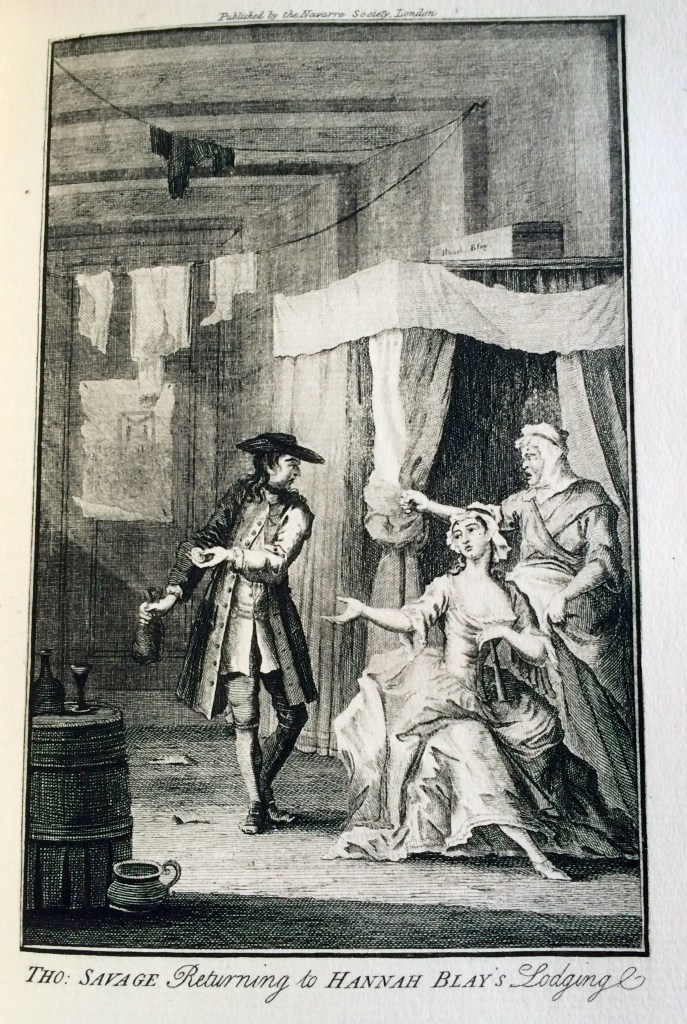
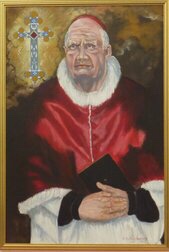


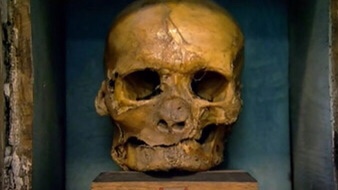
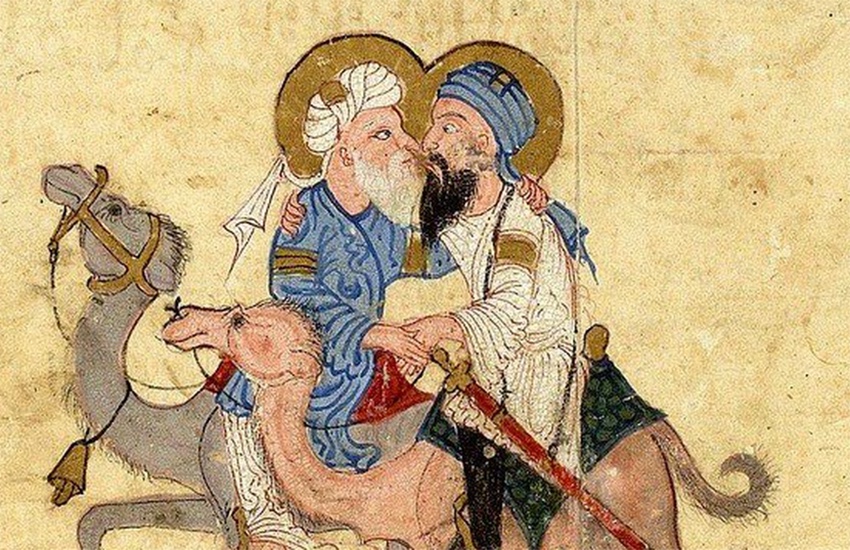




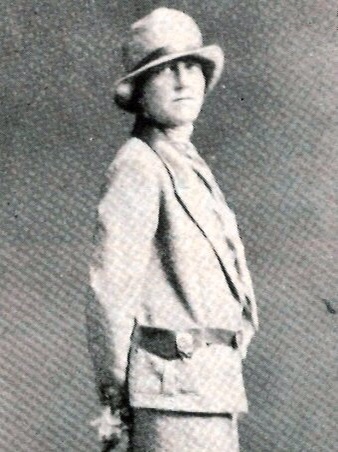


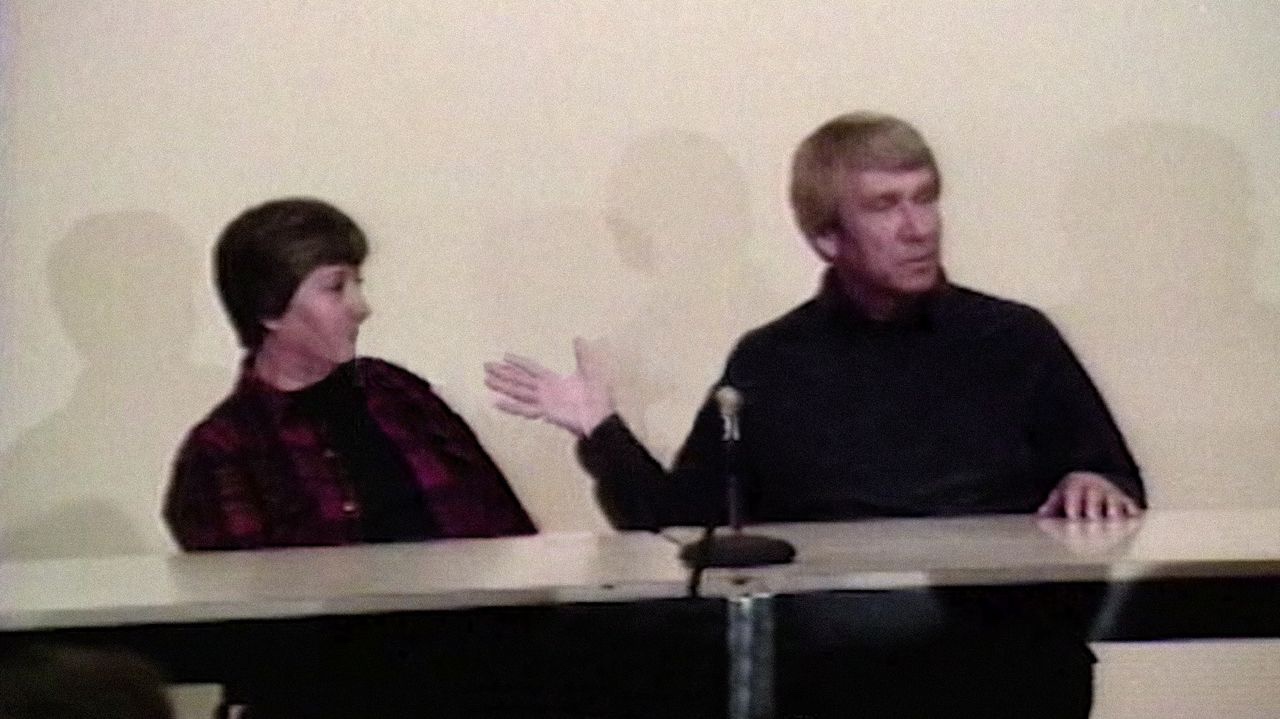
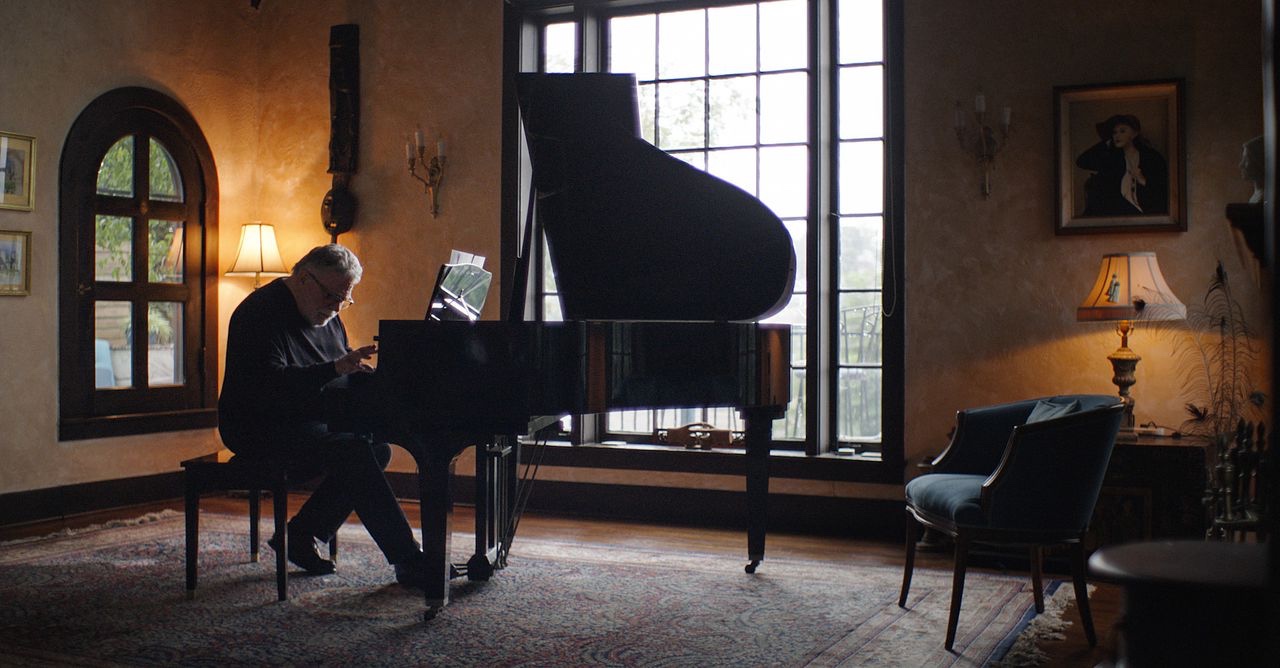

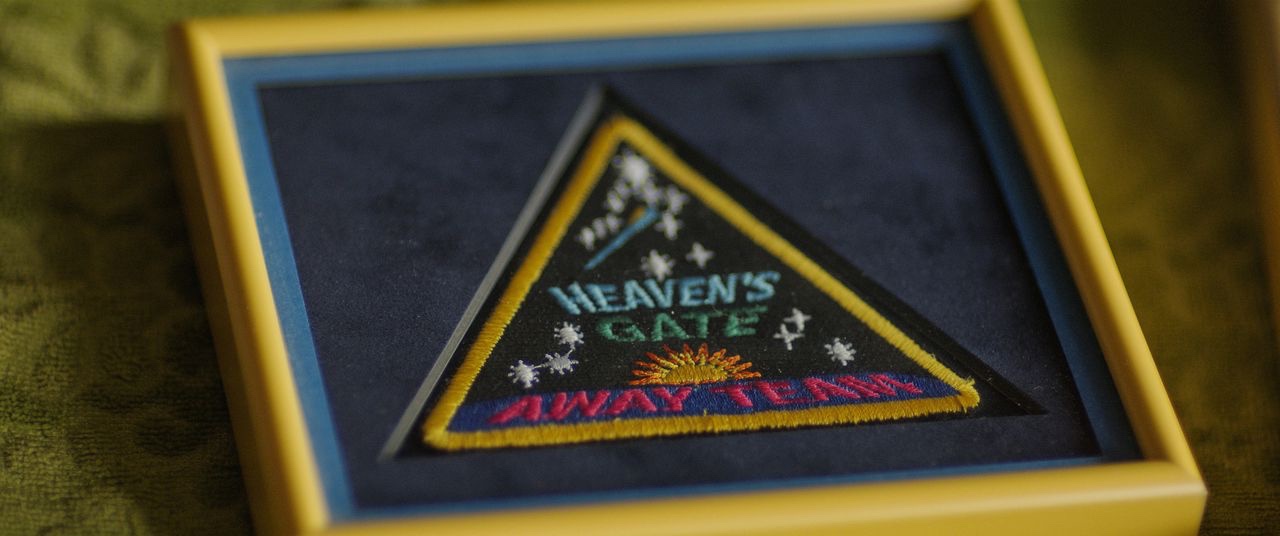



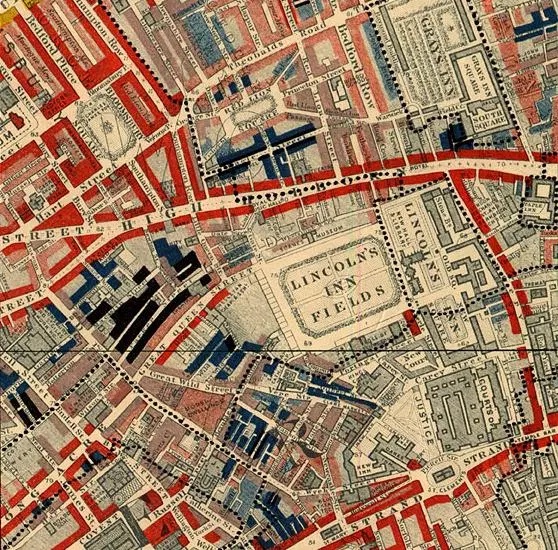
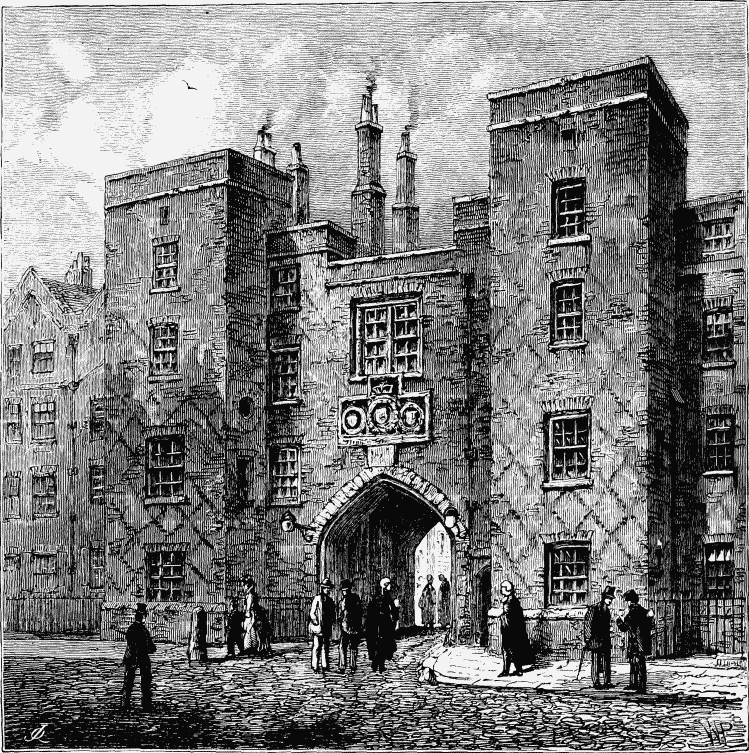
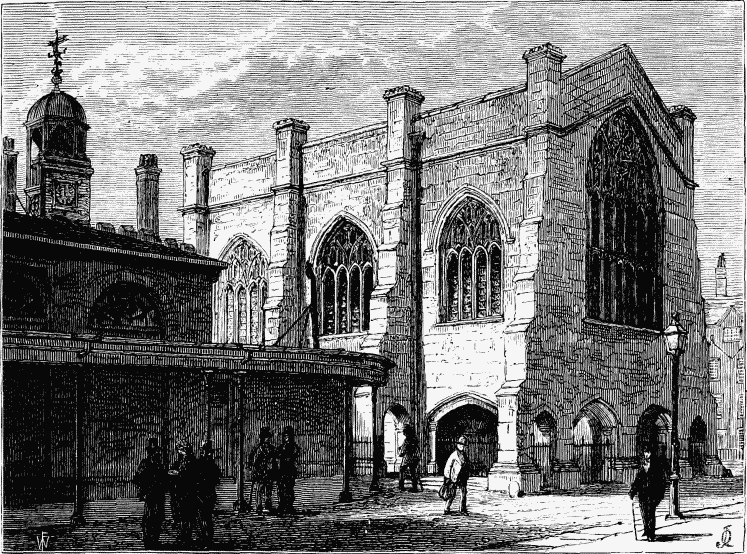
 timalderman
